Visual abstracts
New randomized trials and meta-analyses from leading journals at a glance: who was studied, what was compared, and what was found. Every paper is free to read in full.
All specialtiesCardiology 4763Oncology 4042Gastroenterology & Hepatology 1902Infectious Disease 3756Neurology 1872Psychiatry & Mental Health 2214Pulmonology 2042Critical Care 1319Endocrinology & Diabetes 2544Pediatrics 2889Surgery 2479Orthopedics & Sports Medicine 917Neurosurgery 525Cardiothoracic & Vascular Surgery 656Plastic & Reconstructive Surgery 574Nephrology 1107Rheumatology 810Hematology 1090Dermatology 611Ophthalmology 532Obstetrics & Gynecology 1645Public & Global Health 1037Radiology & Imaging 617Anesthesiology 957Urology 745ENT (Otolaryngology) 494Emergency Medicine 481Allergy & Immunology 309Geriatrics 972Family Medicine & Primary Care 533Medical Genetics & Genomics 659Pathology & Laboratory Medicine 156Physical Medicine & Rehabilitation 734Palliative Care 421Nutrition 1560Digital Health & AI 2133General Medicine 318
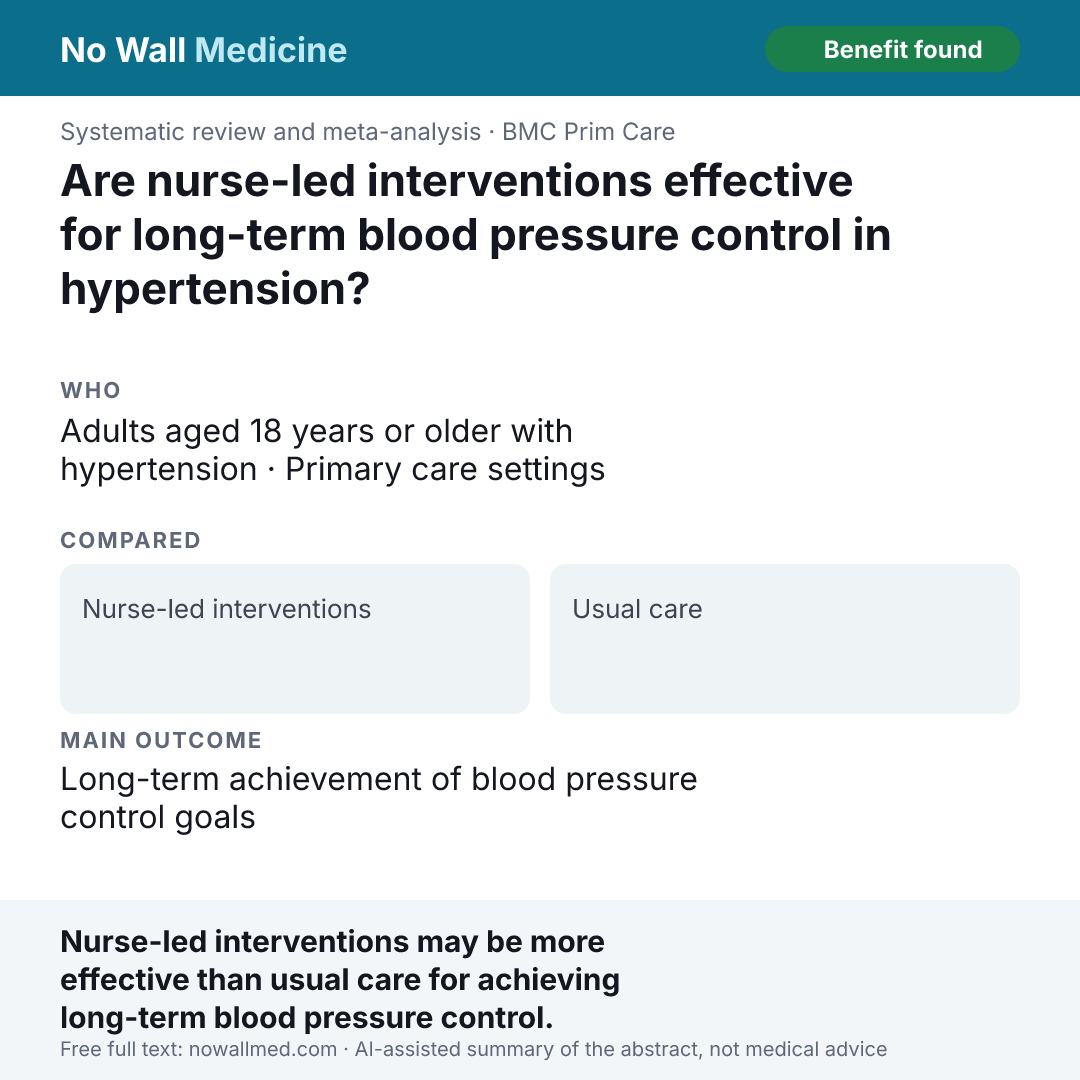
The short and long-term efficacy of nurse-led interventions for improving blood pressure control in people with hypertension in primary care settings: a systematic review and meta-analysis
Systematic review and meta-analysisBenefit found
Are nurse-led interventions effective for long-term blood pressure control in hypertension?
Who
Adults aged 18 years or older with hypertension · Primary care settings
Compared
Nurse-led interventions
Usual care
Main outcome
Long-term achievement of blood pressure control goals
Result: relative risk 1.10 (95% CI 1.03 to 1.18)
Bottom line: Nurse-led interventions may be more effective than usual care for achieving long-term blood pressure control.
Limitation: Little information on serious adverse events was available.
BMC Prim Care · 2024-04-27 · Save PNG
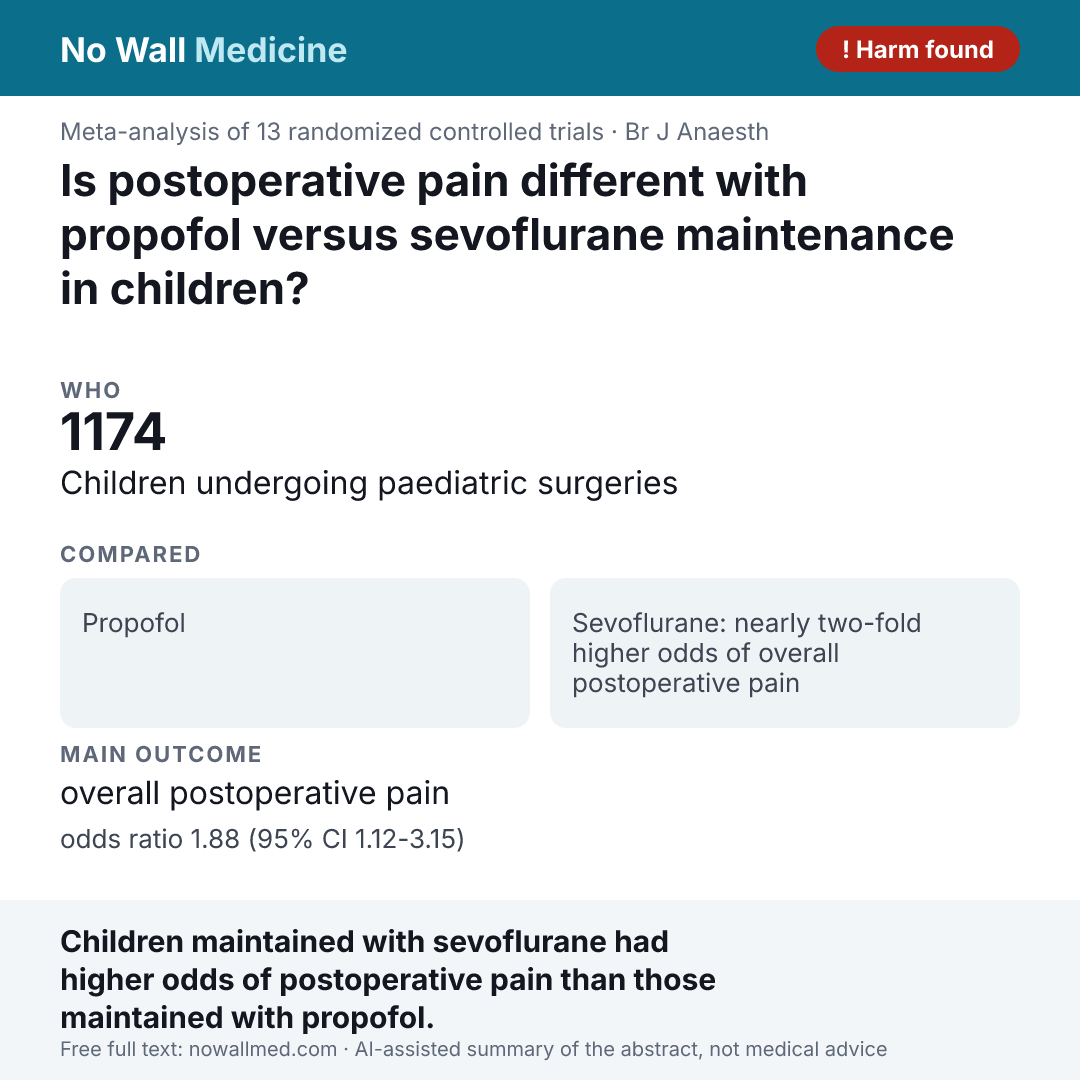
Comparison of postoperative pain in children after maintenance anaesthesia with propofol or sevoflurane: a systematic review and meta-analysis
Meta-analysis of 13 randomized controlled trialsHarm found
Is postoperative pain different with propofol versus sevoflurane maintenance in children?
Who
1174
Children undergoing paediatric surgeries
Compared
Propofol
Sevoflurane: nearly two-fold higher odds of overall postoperative pain
Main outcome
overall postoperative pain
Result: odds ratio 1.88 (95% CI 1.12-3.15)
Bottom line: Children maintained with sevoflurane had higher odds of postoperative pain than those maintained with propofol.
Br J Anaesth · 2024-04-26 · Save PNG
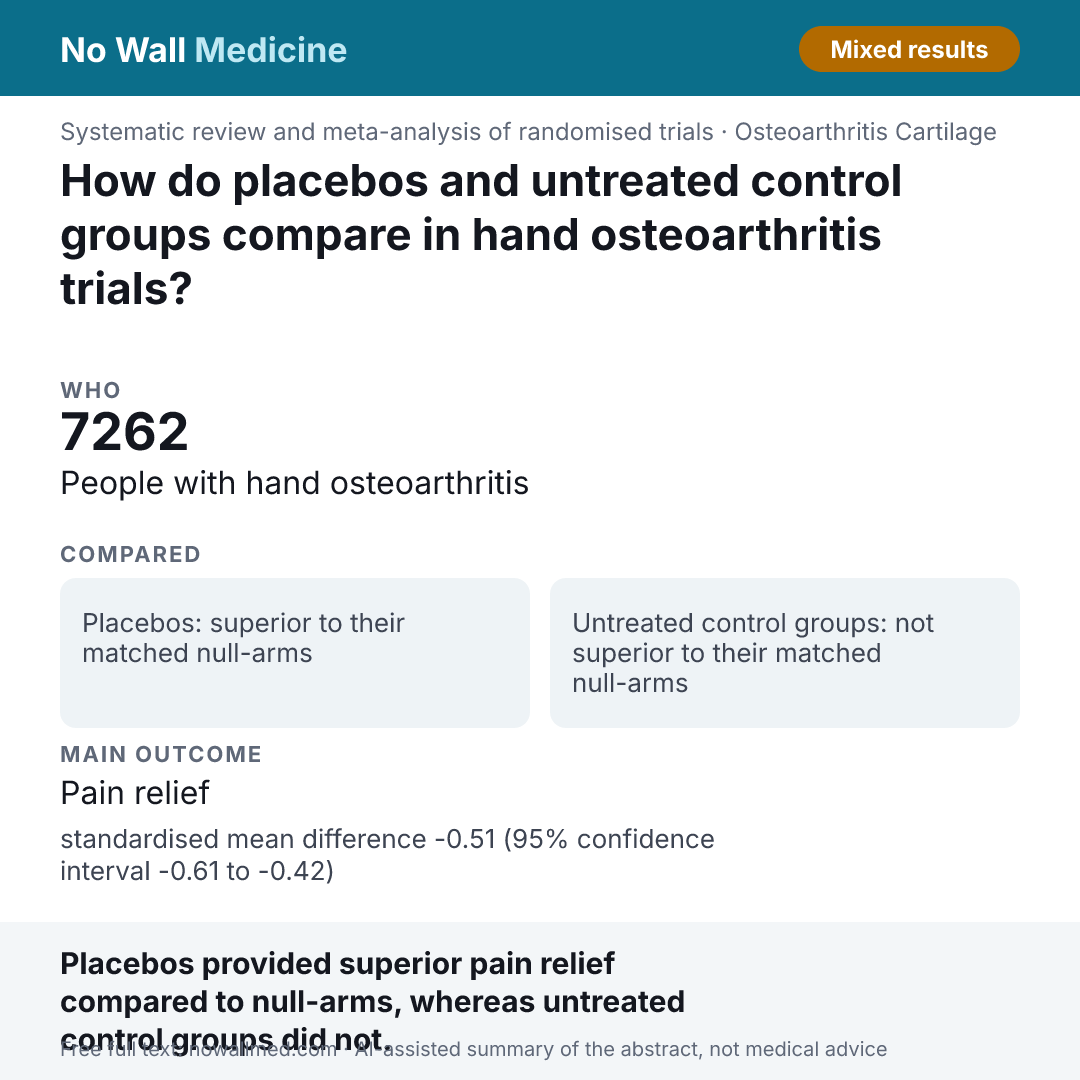
Comparative effectiveness of different placebos and comparator groups for hand osteoarthritis exploring the impact of contextual factors: A systematic review and meta-analysis of randomised trials
Systematic review and meta-analysis of randomised trialsMixed results
How do placebos and untreated control groups compare in hand osteoarthritis trials?
Who
7262
People with hand osteoarthritis
Compared
Placebos: superior to their matched null-arms
Untreated control groups: not superior to their matched null-arms
Main outcome
Pain relief
Result: standardised mean difference -0.51 (95% confidence interval -0.61 to -0.42)
Bottom line: Placebos provided superior pain relief compared to null-arms, whereas untreated control groups did not.
Osteoarthritis Cartilage · 2024-04-26 · Save PNG
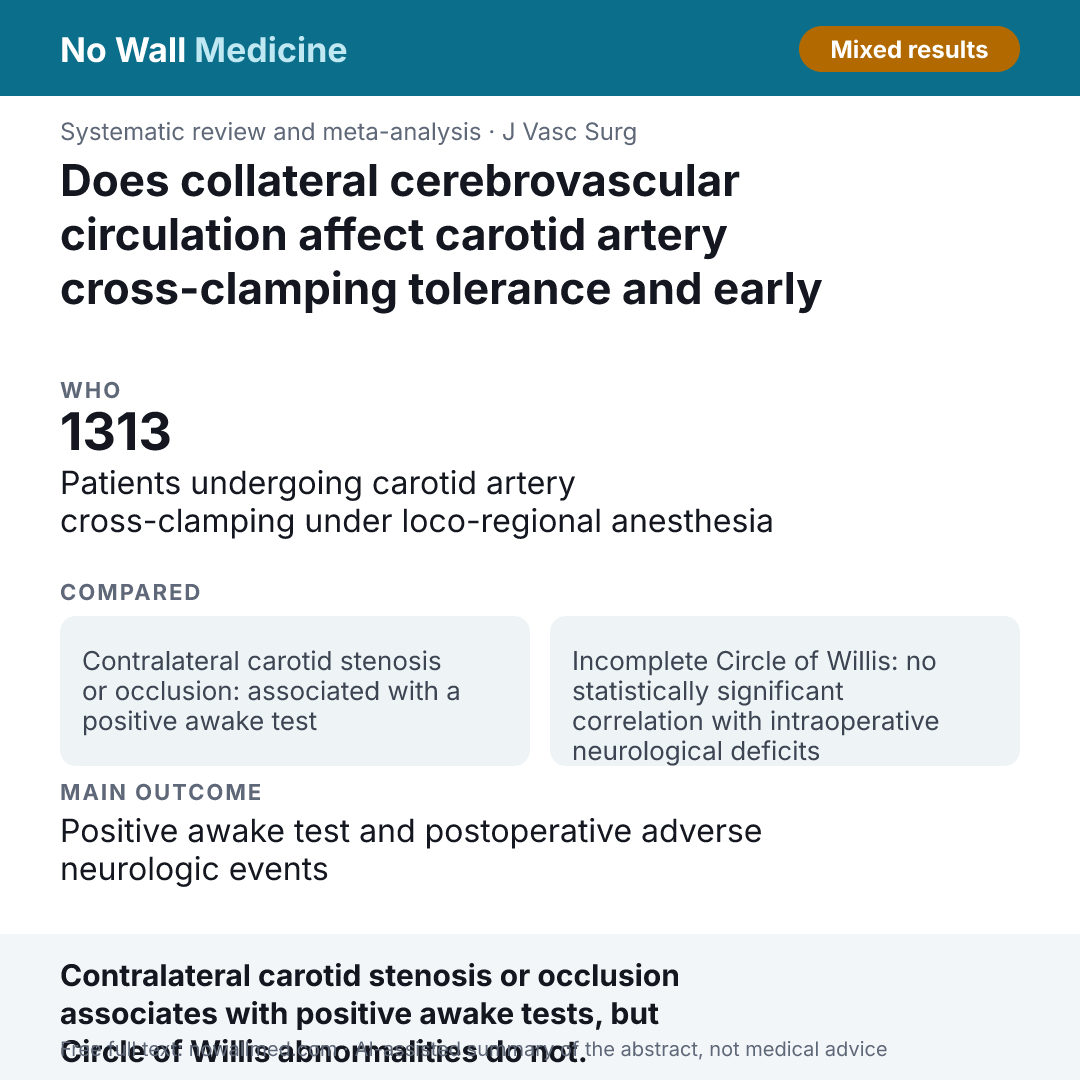
The effect of the collateral cerebrovascular circulation on tolerance to carotid artery cross-clamping and on early outcome after carotid endarterectomy
Systematic review and meta-analysisMixed results
Does collateral cerebrovascular circulation affect carotid artery cross-clamping tolerance and early outcomes?
Who
1313
Patients undergoing carotid artery cross-clamping under loco-regional anesthesia
Compared
Contralateral carotid stenosis or occlusion: associated with a positive awake test
Incomplete Circle of Willis: no statistically significant correlation with intraoperative neurological deficits
Main outcome
Positive awake test and postoperative adverse neurologic events
Bottom line: Contralateral carotid stenosis or occlusion associates with positive awake tests, but Circle of Willis abnormalities do not.
J Vasc Surg · 2024-04-26 · Save PNG
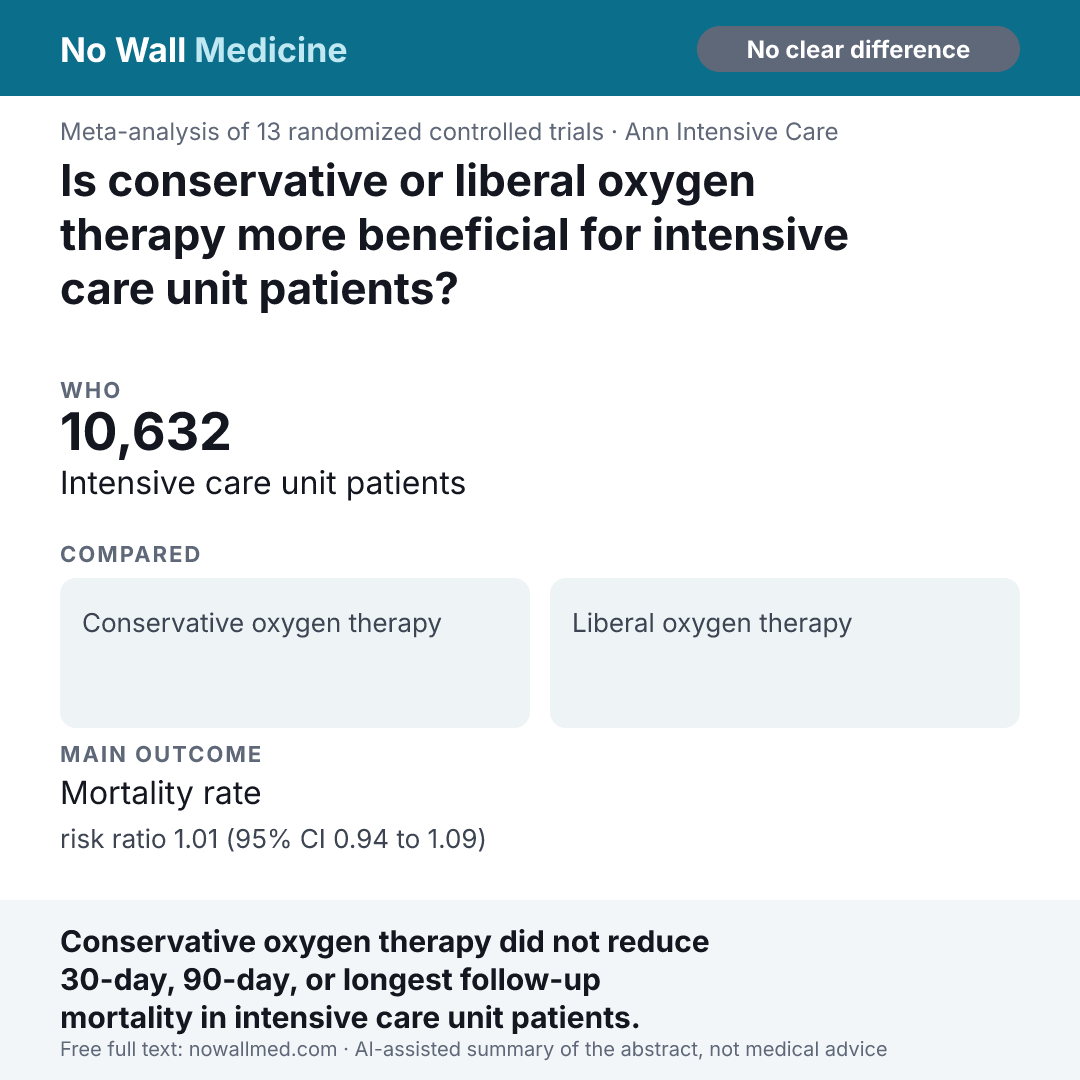
Conservative versus liberal oxygen therapy for intensive care unit patients: meta-analysis of randomized controlled trials
Meta-analysis of 13 randomized controlled trialsNo clear difference
Is conservative or liberal oxygen therapy more beneficial for intensive care unit patients?
Who
10,632
Intensive care unit patients
Compared
Conservative oxygen therapy
Liberal oxygen therapy
Main outcome
Mortality rate
Result: risk ratio 1.01 (95% CI 0.94 to 1.09)
Bottom line: Conservative oxygen therapy did not reduce 30-day, 90-day, or longest follow-up mortality in intensive care unit patients.
Ann Intensive Care · 2024-04-26 · Save PNG
Levels of autonomy in FDA-cleared surgical robots: a systematic review
Systematic reviewMixed results
What are the levels of autonomy in FDA-cleared surgical robots?
Who
49
Surgical robots cleared by the United States Food and Drug Administration · United States
Compared
86%Level 1 (Robot Assistance)
6%Level 3 (Conditional Autonomy)
Main outcome
Levels of autonomy in surgical robotics
Bottom line: Most FDA-cleared surgical robots are at Level 1 autonomy, though trends show increasing autonomy.
NPJ Digit Med · 2024-04-26 · Save PNG

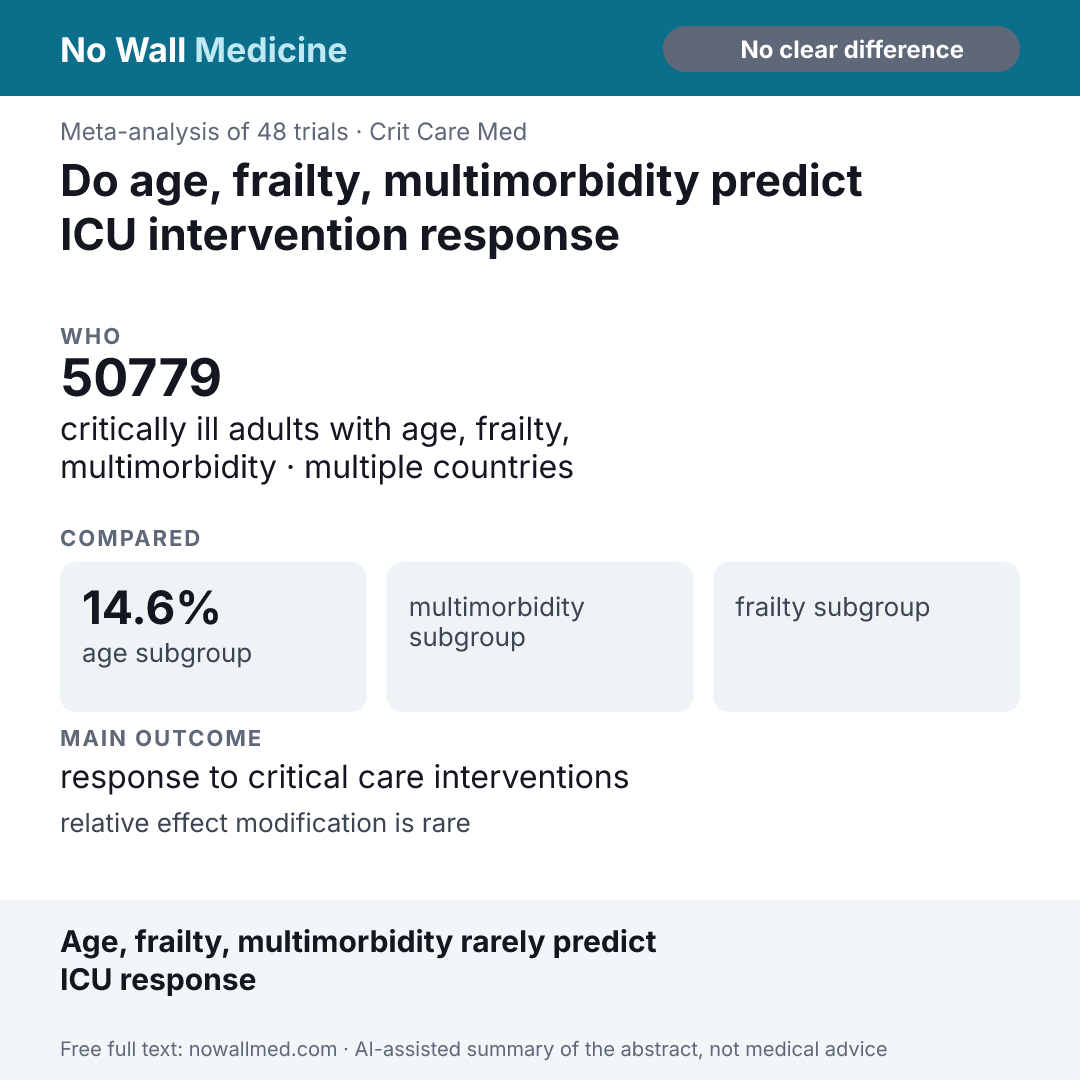
Exploring the Impact of Age, Frailty, and Multimorbidity on the Effect of ICU Interventions: A Systematic Review of Randomized Controlled Trials
Meta-analysis of 48 trialsNo clear difference
Do age, frailty, multimorbidity predict ICU intervention response
Who
50779
critically ill adults with age, frailty, multimorbidity · multiple countries
Compared
14.6%age subgroup
multimorbidity subgroup
frailty subgroup
Main outcome
response to critical care interventions
Result: relative effect modification is rare
Bottom line: Age, frailty, multimorbidity rarely predict ICU response
Limitation: subgroup credibility very low to moderate
Crit Care Med · 2024-04-25 · Save PNG
Efficacy and safety of antibiotics targeting Gram-negative bacteria in nosocomial pneumonia: a systematic review and Bayesian network meta-analysis
Bayesian network meta-analysisMixed results
What are the efficacy and safety of different antibiotic treatments for nosocomial pneumonia?
Who
4993
patients with nosocomial pneumonia and Gram-negative bacilli
Compared
meropenem plus aerosolized colistin
intravenous colistin alone
Main outcome
28 day mortality
Result: OR 0.43 (95% credible interval 0.17-0.94)
Bottom line: Most antibiotic regimens have similar efficacy and safety, though meropenem plus aerosolized colistin decreased mortality compared to intravenous colistin alone.
Ann Intensive Care · 2024-04-25 · Save PNG

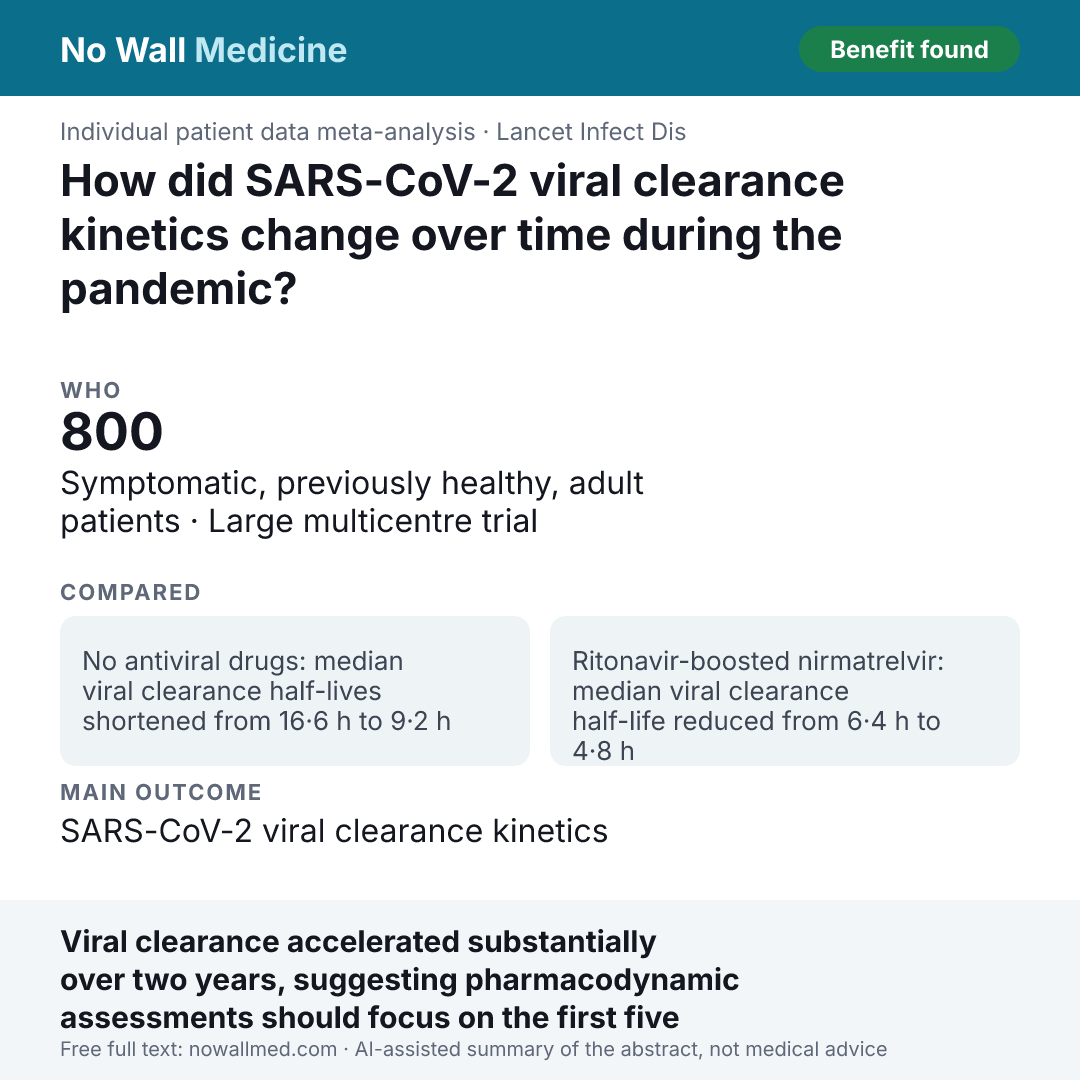
Temporal changes in SARS-CoV-2 clearance kinetics and the optimal design of antiviral pharmacodynamic studies: an individual patient data meta-analysis of a randomised, controlled, adaptive platform study (PLATCOV)
Individual patient data meta-analysisBenefit found
How did SARS-CoV-2 viral clearance kinetics change over time during the pandemic?
Who
800
Symptomatic, previously healthy, adult patients · Large multicentre trial
Compared
No antiviral drugs: median viral clearance half-lives shortened from 16·6 h to 9·2 h
Ritonavir-boosted nirmatrelvir: median viral clearance half-life reduced from 6·4 h to 4·8 h
Main outcome
SARS-CoV-2 viral clearance kinetics
Result: relative reduction of 44% (95% credible interval 19 to 64)
Bottom line: Viral clearance accelerated substantially over two years, suggesting pharmacodynamic assessments should focus on the first five days.
Funded by: Wellcome Trust
Lancet Infect Dis · 2024-04-24 · Save PNG
Incisional Wound Irrigation for the Prevention of Surgical Site Infection: A Systematic Review and Network Meta-Analysis
Systematic review and network meta-analysisBenefit found
Which incisional wound irrigation solutions best prevent surgical site infections?
Who
17188
Patients undergoing all types of surgery
Compared
7.7%No irrigation
Antiseptic solutions
Antibiotic solutions
Saline irrigation
Main outcome
Surgical site infection
Result: antiseptic solutions RR 0.60 (95% CI 0.44-0.81)
Bottom line: Antiseptic solutions significantly reduce surgical site infections compared to no irrigation with high certainty.
Limitation: Antibiotic solutions have a low level of certainty of evidence.
JAMA Surg · 2024-04-24 · Save PNG

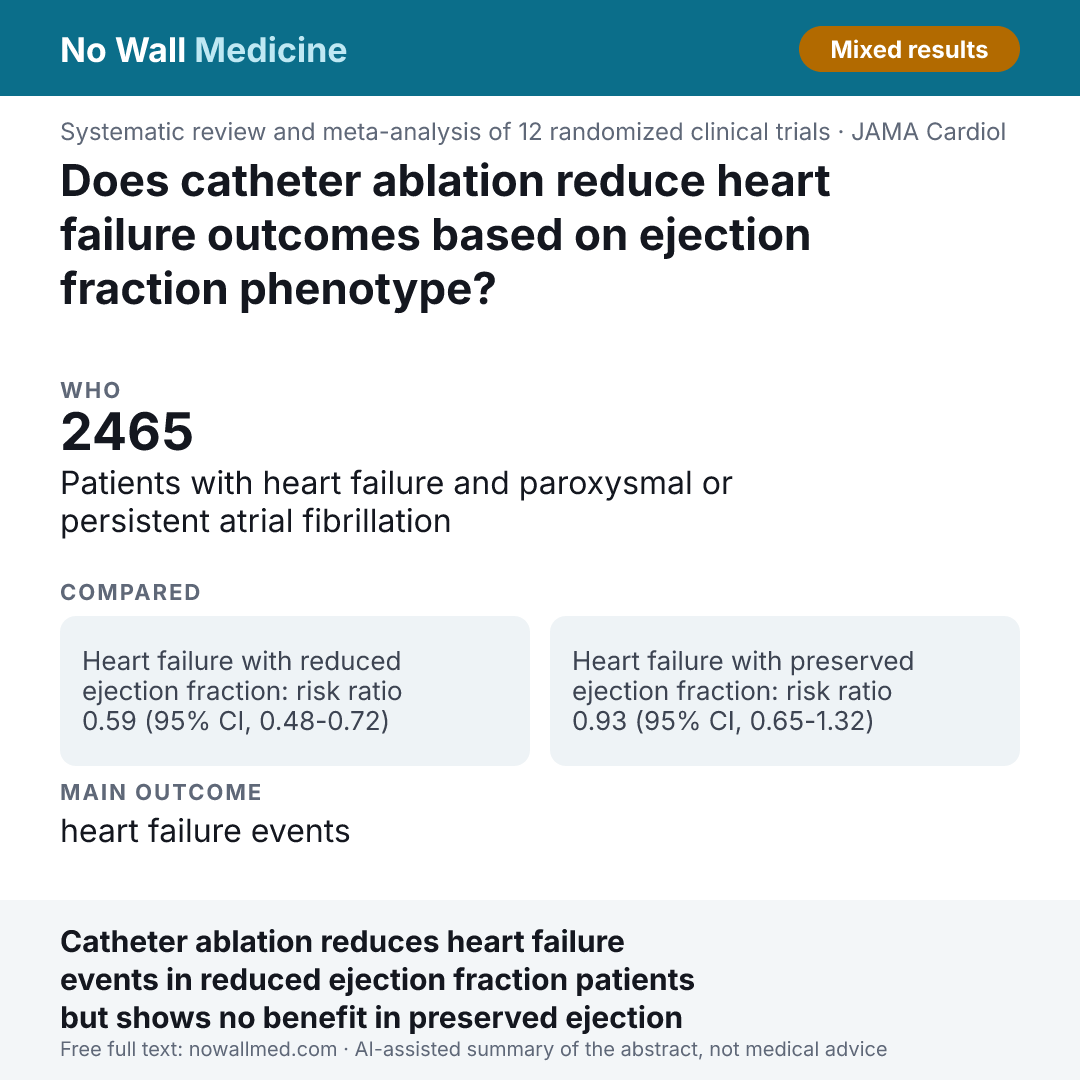
Atrial Fibrillation Ablation in Heart Failure With Reduced vs Preserved Ejection Fraction: A Systematic Review and Meta-Analysis
Systematic review and meta-analysis of 12 randomized clinical trialsMixed results
Does catheter ablation reduce heart failure outcomes based on ejection fraction phenotype?
Who
2465
Patients with heart failure and paroxysmal or persistent atrial fibrillation
Compared
Heart failure with reduced ejection fraction: risk ratio 0.59 (95% CI, 0.48-0.72)
Heart failure with preserved ejection fraction: risk ratio 0.93 (95% CI, 0.65-1.32)
Main outcome
heart failure events
Result: risk ratio 0.59 (95% CI, 0.48-0.72) in HFrEF vs 0.93 (95% CI, 0.65-1.32) in HFpEF
Bottom line: Catheter ablation reduces heart failure events in reduced ejection fraction patients but shows no benefit in preserved ejection fraction patients.
Limitation: Results from ongoing trials may further elucidate the role of catheter ablation in preserved ejection fraction.
JAMA Cardiol · 2024-04-24 · Save PNG
Barriers and motivators to undertaking physical activity in adults over 70-a systematic review of the quantitative literature
Systematic review of quantitative literatureMixed results
What are the barriers and motivators to physical activity in adults aged 70 and older?
Who
26,961
Adults aged 70 to 101 years
Compared
Barriers: concern about physical health/fitness (14 studies)
Motivators: support from family/friends (five studies)
Main outcome
Barriers and motivators to undertaking physical activity
Bottom line: Key barriers include health concerns and fear of falls, while social support and personal benefits act as motivators.
Limitation: Meta-analysis was not possible.
Age Ageing · 2024-04-23 · Save PNG

Genome-wide meta-analysis of short-tandem repeats for Parkinson's disease risk using genotype imputation
Genome-wide meta-analysisMixed results
Do short-tandem repeats increase the risk of Parkinson's disease?
Who
43844
Individuals with Parkinson's disease and controls
Compared
Short-tandem repeats
Control
Main outcome
Parkinson's disease risk
Bottom line: Meta-analysis identified seven novel suggestive short-tandem repeat risk loci, including one near MEIOSIN.
Limitation: Larger studies using short-tandem repeats from whole-sequencing data are needed.
Brain Commun · 2024-04-23 · Save PNG

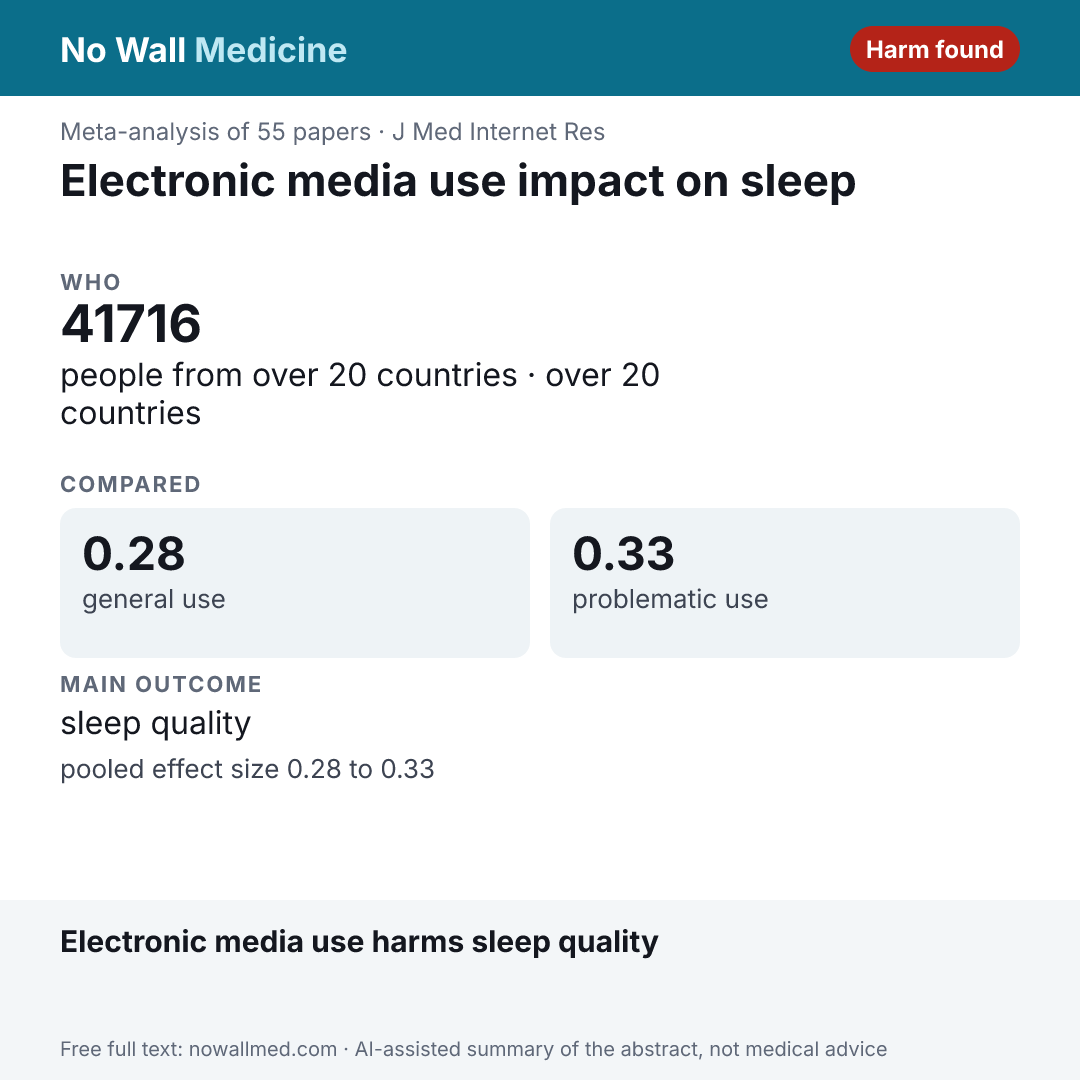
Electronic Media Use and Sleep Quality: Updated Systematic Review and Meta-Analysis
Meta-analysis of 55 papersHarm found
Electronic media use impact on sleep
Who
41716
people from over 20 countries · over 20 countries
Compared
0.28general use (95% CI 0.21-0.35)
0.33problematic use (95% CI 0.28-0.38)
Main outcome
sleep quality
Result: pooled effect size 0.28 to 0.33
Bottom line: Electronic media use harms sleep quality
Limitation: some variability
J Med Internet Res · 2024-04-23 · Save PNG
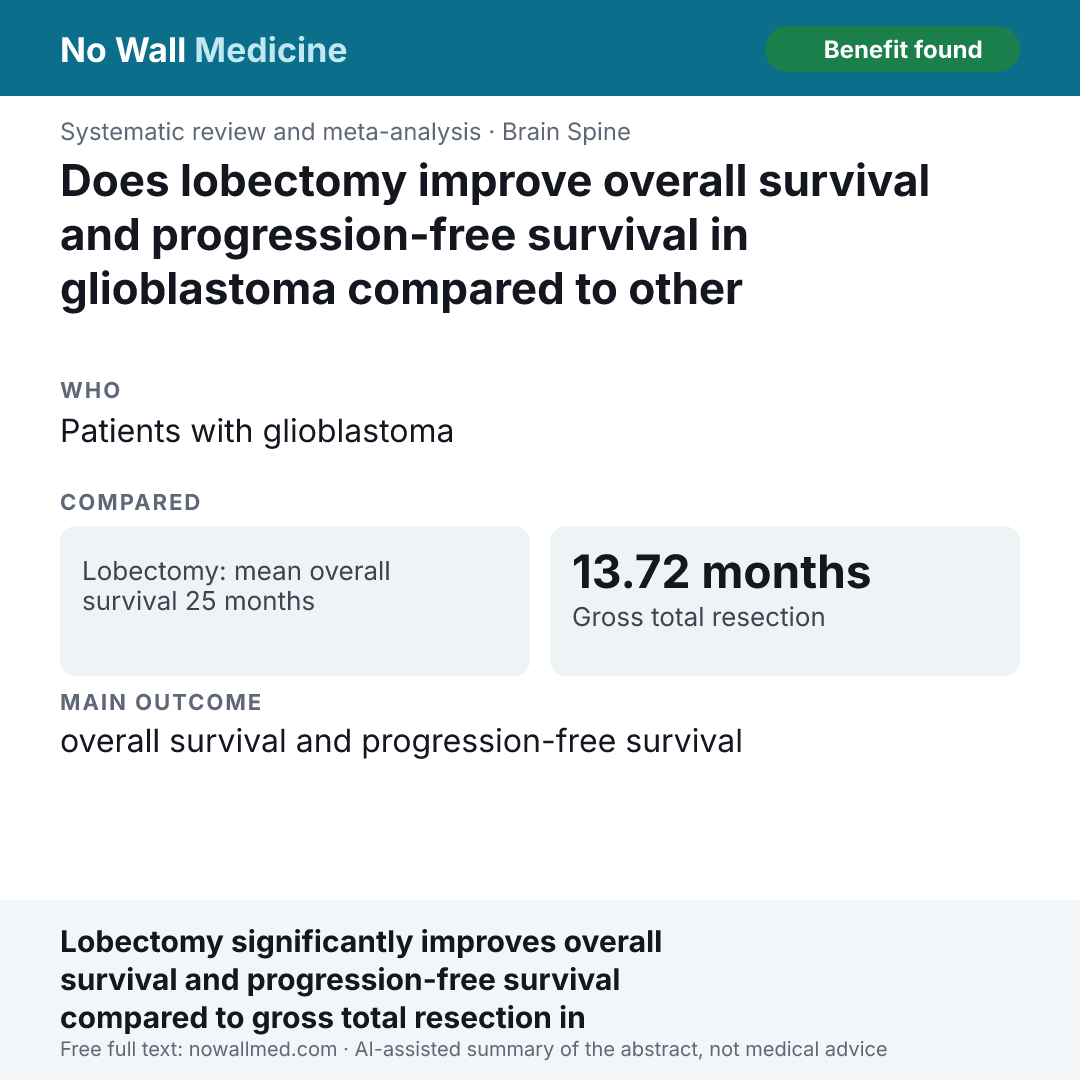
The role of lobectomy in glioblastoma management: A systematic review and meta-analysis
Systematic review and meta-analysisBenefit found
Does lobectomy improve overall survival and progression-free survival in glioblastoma compared to other techniques?
Who
Patients with glioblastoma
Compared
Lobectomy: mean overall survival 25 months
13.72 monthsGross total resection
Main outcome
overall survival and progression-free survival
Bottom line: Lobectomy significantly improves overall survival and progression-free survival compared to gross total resection in glioblastoma.
Limitation: limited amount of data regarding seizure management, length of stay, operation time, complications, and Karnofsky performance status
Brain Spine · 2024-04-23 · Save PNG
Associations Between Surrogate Markers and Clinical Outcomes for Nononcologic Chronic Disease Treatments
Systematic review and meta-analysisMixed results
How strongly are surrogate markers associated with clinical outcomes in nononcologic chronic diseases?
Who
90056
Surrogate markers used in nononcologic chronic disease clinical trials
Compared
Surrogate markers with reported r or R2: 17% reported high strength
Other reported surrogate marker associations: 54% reported at least 1 r or R2
Main outcome
Association between surrogate markers and clinical outcomes
Bottom line: Most surrogate markers used for drug approval lacked high-strength evidence of association with clinical outcomes.
JAMA · 2024-04-22 · Save PNG

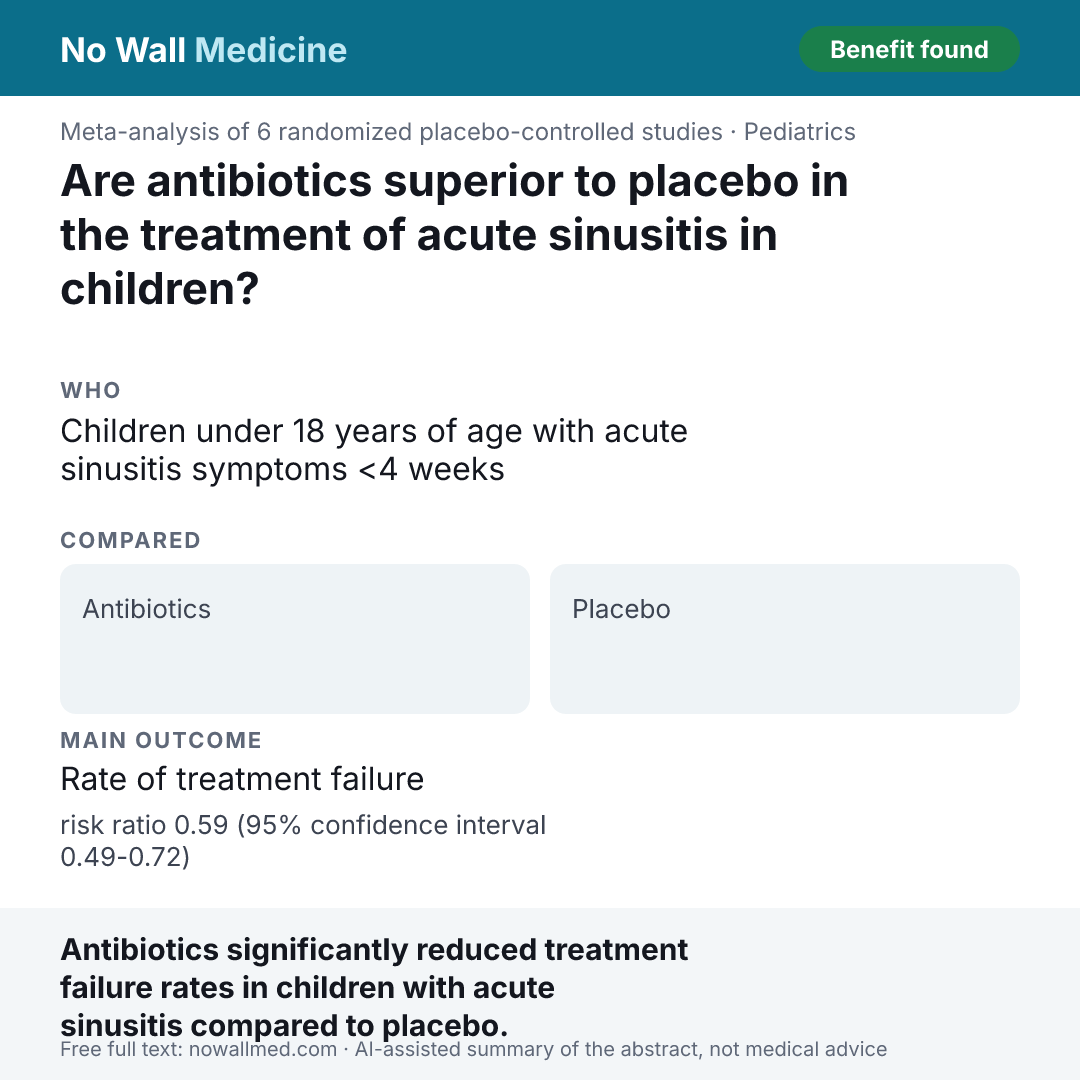
Antibiotics for Acute Sinusitis in Children: A Meta-Analysis
Meta-analysis of 6 randomized placebo-controlled studiesBenefit found
Are antibiotics superior to placebo in the treatment of acute sinusitis in children?
Who
Children under 18 years of age with acute sinusitis symptoms <4 weeks
Compared
Antibiotics
Placebo
Main outcome
Rate of treatment failure
Result: risk ratio 0.59 (95% confidence interval 0.49-0.72)
Bottom line: Antibiotics significantly reduced treatment failure rates in children with acute sinusitis compared to placebo.
Limitation: A small number of studies were eligible and included studies differed in methodology.
Pediatrics · 2024-04-22 · Save PNG
Personality changes related to presence and treatment of substance use (disorders): a systematic review
Systematic reviewMixed results
What are the personality changes related to presence and treatment of substance use?
Who
Individuals with substance use or substance use disorders
Compared
Observational studies: increases in impulsivity-related traits and neuroticism
Intervention studies: increases in conscientiousness and self-efficacy and decreases in neuroticism
Main outcome
Changes in personality traits
Bottom line: Substance use relates to increased impulsivity, while interventions may increase conscientiousness and decrease neuroticism.
Psychol Med · 2024-04-22 · Save PNG

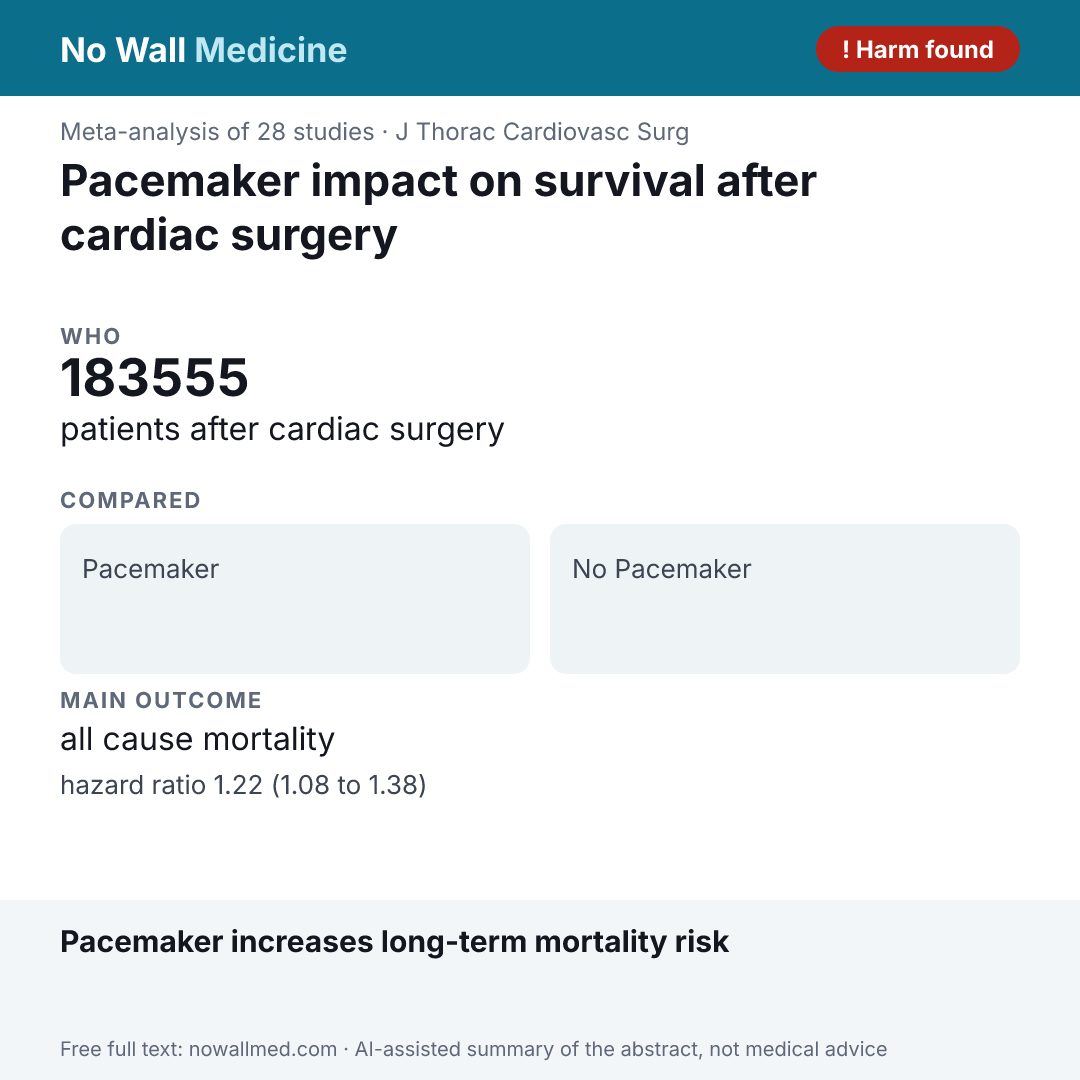
The impact of permanent pacemaker implantation on long-term survival after cardiac surgery: A systematic review and meta-analysis
Meta-analysis of 28 studiesHarm found
Pacemaker impact on survival after cardiac surgery
Who
183555
patients after cardiac surgery
Compared
Pacemaker
No Pacemaker
Main outcome
all cause mortality
Result: hazard ratio 1.22 (1.08 to 1.38)
Bottom line: Pacemaker increases long-term mortality risk
J Thorac Cardiovasc Surg · 2024-04-22 · Save PNG
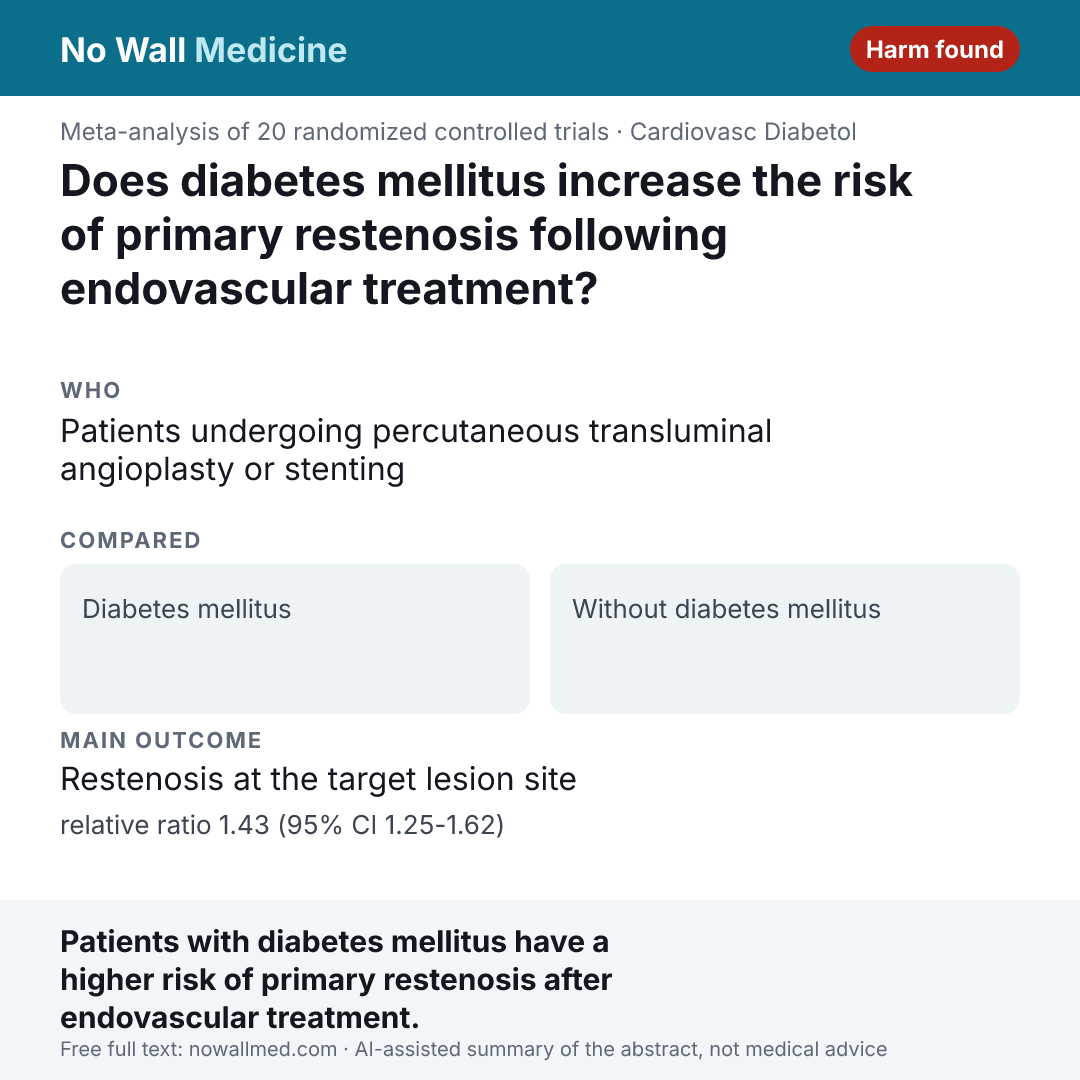
Association between diabetes mellitus and primary restenosis following endovascular treatment: a comprehensive meta-analysis of randomized controlled trials
Meta-analysis of 20 randomized controlled trialsHarm found
Does diabetes mellitus increase the risk of primary restenosis following endovascular treatment?
Who
Patients undergoing percutaneous transluminal angioplasty or stenting
Compared
Diabetes mellitus
Without diabetes mellitus
Main outcome
Restenosis at the target lesion site
Result: relative ratio 1.43 (95% CI 1.25-1.62)
Bottom line: Patients with diabetes mellitus have a higher risk of primary restenosis after endovascular treatment.
Cardiovasc Diabetol · 2024-04-22 · Save PNG