Visual abstracts
New randomized trials and meta-analyses from leading journals at a glance: who was studied, what was compared, and what was found. Every paper is free to read in full.
All specialtiesCardiology 4763Oncology 4043Gastroenterology & Hepatology 1903Infectious Disease 3756Neurology 1872Psychiatry & Mental Health 2216Pulmonology 2044Critical Care 1319Endocrinology & Diabetes 2544Pediatrics 2889Surgery 2480Orthopedics & Sports Medicine 917Neurosurgery 525Cardiothoracic & Vascular Surgery 656Plastic & Reconstructive Surgery 574Nephrology 1107Rheumatology 810Hematology 1090Dermatology 611Ophthalmology 532Obstetrics & Gynecology 1645Public & Global Health 1037Radiology & Imaging 619Anesthesiology 958Urology 745ENT (Otolaryngology) 494Emergency Medicine 481Allergy & Immunology 309Geriatrics 972Family Medicine & Primary Care 534Medical Genetics & Genomics 659Pathology & Laboratory Medicine 156Physical Medicine & Rehabilitation 734Palliative Care 421Nutrition 1560Digital Health & AI 2137General Medicine 318
Risk Stratification in Nonischemic Dilated Cardiomyopathy Using CMR Imaging: A Systematic Review and Meta-Analysis
Systematic review and meta-analysisKey finding
Do cardiac magnetic resonance imaging measurements associate with clinical outcomes in nonischemic dilated cardiomyopathy?
Who
29687
Patients with nonischemic dilated cardiomyopathy
Compared
Late gadolinium enhancement presence: hazard ratio 1.81 (95% CI, 1.60-2.04) for all-cause mortality
Late gadolinium enhancement extent: hazard ratio 1.07 (95% CI, 1.02-1.12) for all-cause mortality
Left ventricular ejection fraction: hazard ratio 0.98 (95% CI, 0.96-0.99) for major adverse cardiac events
Main outcome
All-cause mortality, cardiovascular mortality, arrhythmic events, heart failure, and major adverse cardiac events
Bottom line: Late gadolinium enhancement presence and extent predict adverse outcomes, while left ventricular ejection fraction does not predict mortality.
Limitation: Limited data precluded definitive analysis for native T1 relaxation times, global longitudinal strain, and extracellular volume fraction mortality.
JAMA · 2024-09-19 · Save PNG

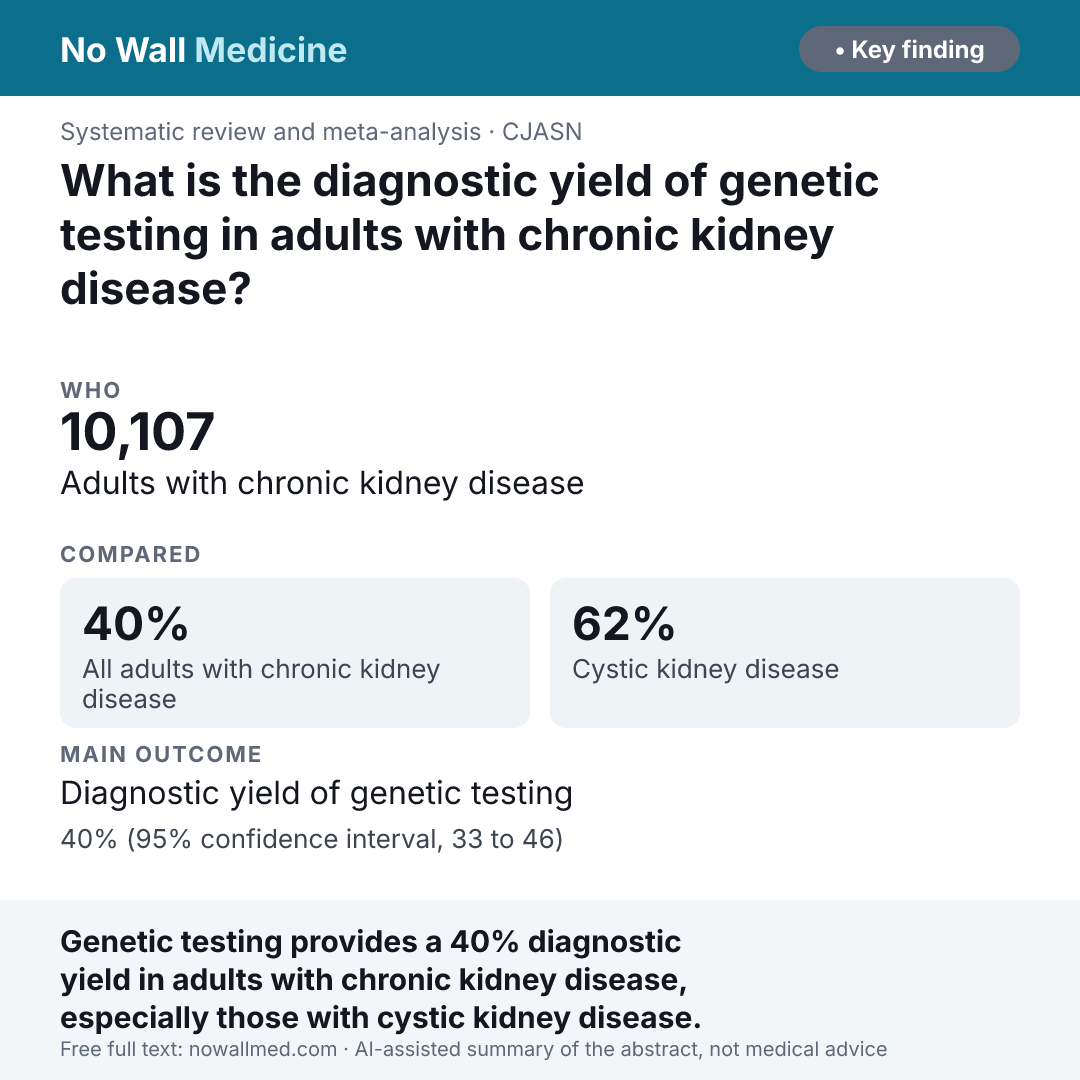
Utility of Genetic Testing in Adults with CKD: A Systematic Review and Meta-Analysis
Systematic review and meta-analysisKey finding
What is the diagnostic yield of genetic testing in adults with chronic kidney disease?
Who
10,107
Adults with chronic kidney disease
Compared
40%All adults with chronic kidney disease (95% confidence interval, 33 to 46)
62%Cystic kidney disease (95% confidence interval, 57 to 68)
Main outcome
Diagnostic yield of genetic testing
Result: 40% (95% confidence interval, 33 to 46)
Bottom line: Genetic testing provides a 40% diagnostic yield in adults with chronic kidney disease, especially those with cystic kidney disease.
Limitation: Heterogeneity in reporting, testing technologies, and cohort characteristics.
CJASN · 2024-09-19 · Save PNG
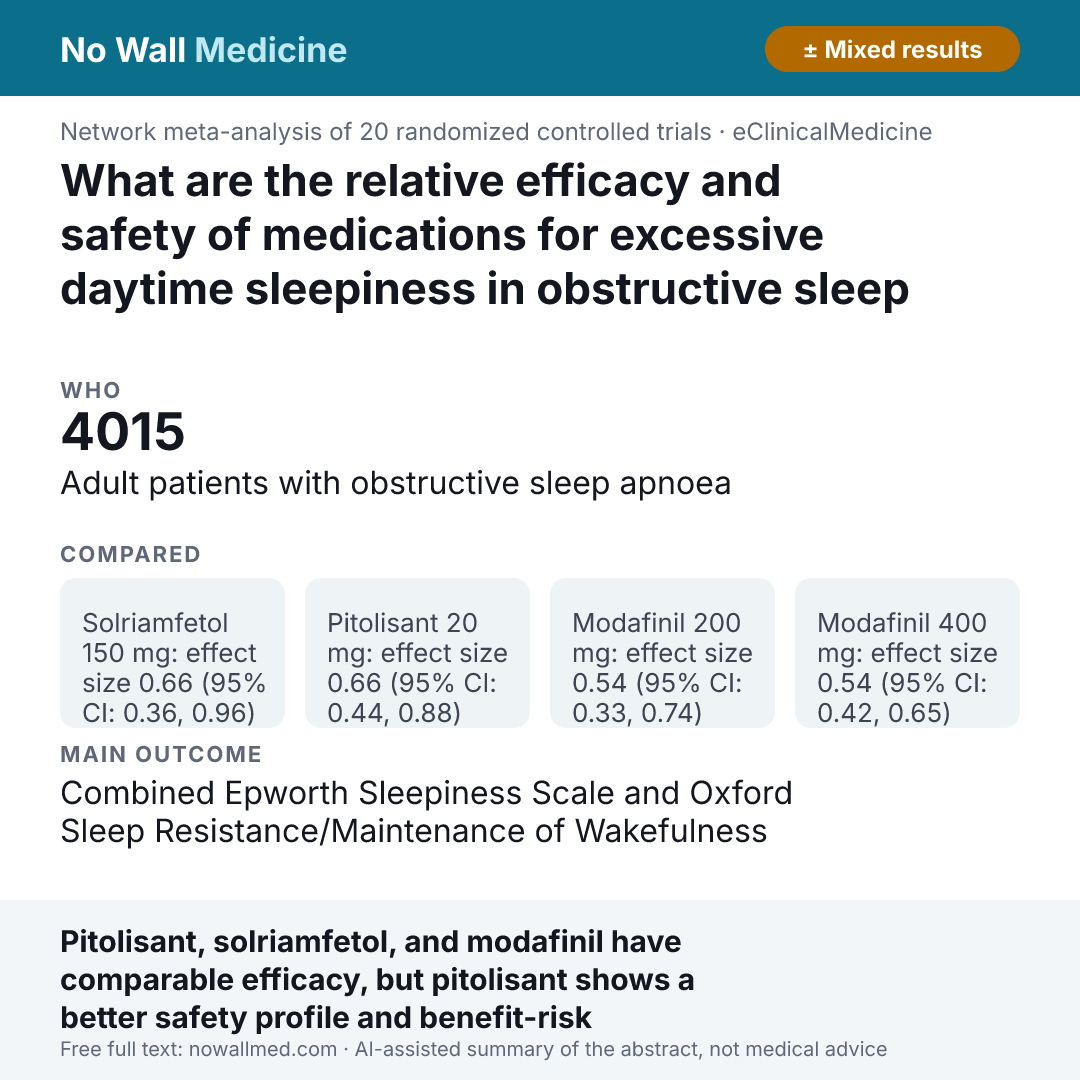
Comparative efficacy, safety and benefit/risk of alerting agents for excessive daytime sleepiness in patients with obstructive sleep apnoea: a network meta-analysis
Network meta-analysis of 20 randomized controlled trialsMixed results
What are the relative efficacy and safety of medications for excessive daytime sleepiness in obstructive sleep apnoea?
Who
4015
Adult patients with obstructive sleep apnoea
Compared
Solriamfetol 150 mg: effect size 0.66 (95% CI: 0.36, 0.96)
Pitolisant 20 mg: effect size 0.66 (95% CI: 0.44, 0.88)
Modafinil 200 mg: effect size 0.54 (95% CI: 0.33, 0.74)
Modafinil 400 mg: effect size 0.54 (95% CI: 0.42, 0.65)
Main outcome
Combined Epworth Sleepiness Scale and Oxford Sleep Resistance/Maintenance of Wakefulness Test Z-scores
Bottom line: Pitolisant, solriamfetol, and modafinil have comparable efficacy, but pitolisant shows a better safety profile and benefit-risk ratio.
Funded by: Bioprojet
eClinicalMedicine · 2024-09-19 · Save PNG
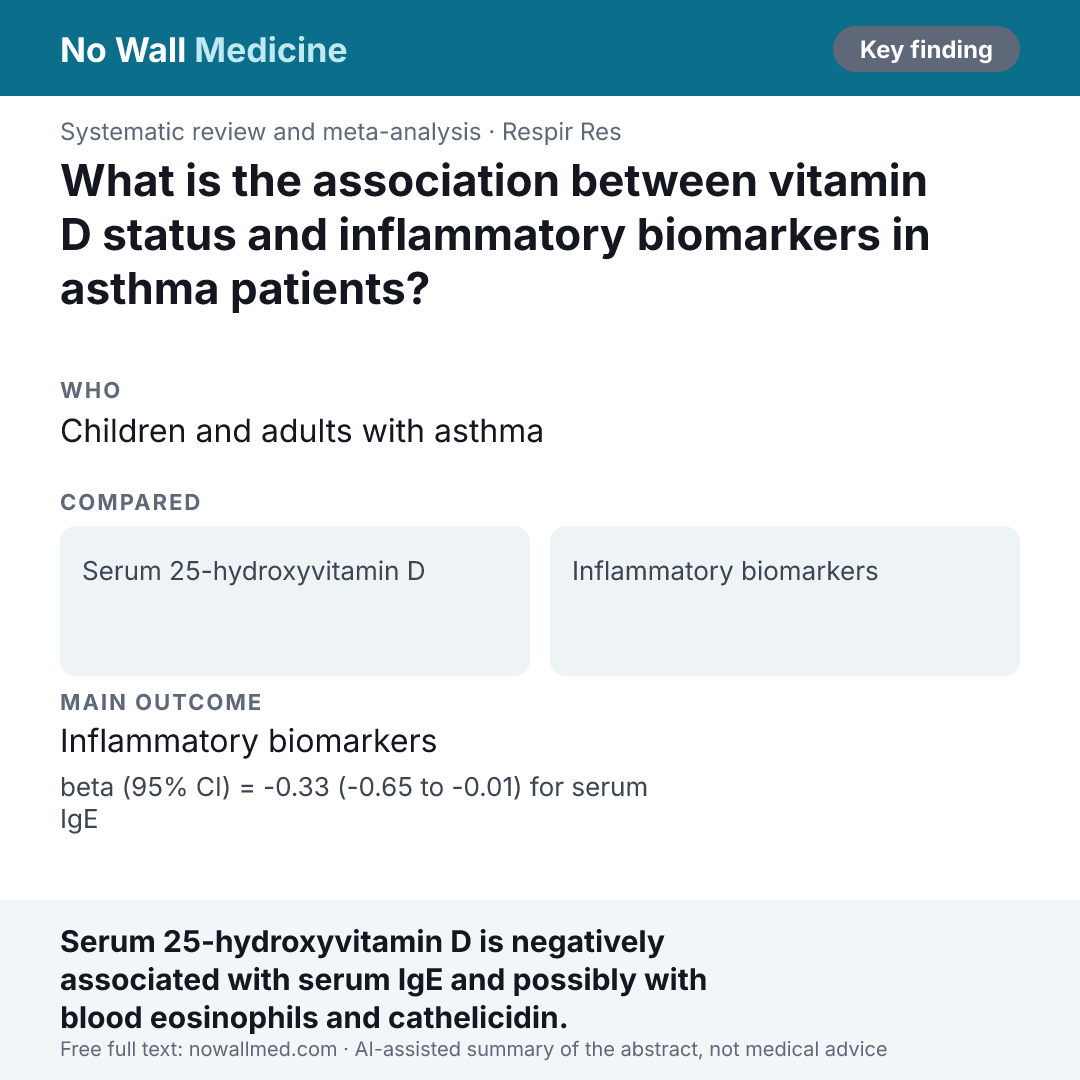
Associations between vitamin D status and biomarkers linked with inflammation in patients with asthma: a systematic review and meta-analysis of interventional and observational studies
Systematic review and meta-analysisKey finding
What is the association between vitamin D status and inflammatory biomarkers in asthma patients?
Who
Children and adults with asthma
Compared
Serum 25-hydroxyvitamin D
Inflammatory biomarkers
Main outcome
Inflammatory biomarkers
Result: beta (95% CI) = -0.33 (-0.65 to -0.01) for serum IgE
Bottom line: Serum 25-hydroxyvitamin D is negatively associated with serum IgE and possibly with blood eosinophils and cathelicidin.
Limitation: Future research should employ rigorous methodologies and standardized reporting for meta-analysis aggregation.
Respir Res · 2024-09-19 · Save PNG
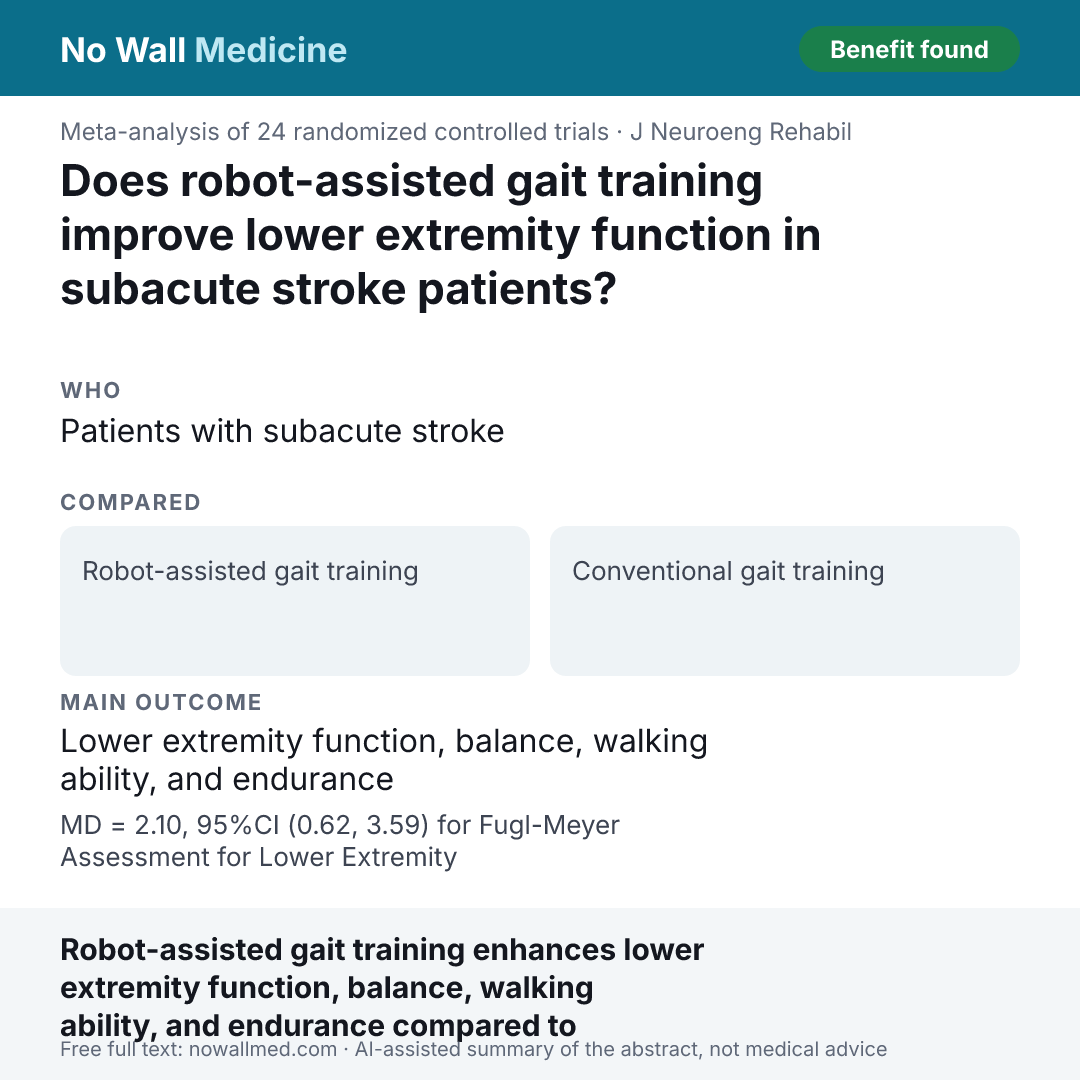
Efficacy of robot-assisted gait training on lower extremity function in subacute stroke patients: a systematic review and meta-analysis
Meta-analysis of 24 randomized controlled trialsBenefit found
Does robot-assisted gait training improve lower extremity function in subacute stroke patients?
Who
Patients with subacute stroke
Compared
Robot-assisted gait training
Conventional gait training
Main outcome
Lower extremity function, balance, walking ability, and endurance
Result: MD = 2.10, 95%CI (0.62, 3.59) for Fugl-Meyer Assessment for Lower Extremity
Bottom line: Robot-assisted gait training enhances lower extremity function, balance, walking ability, and endurance compared to conventional gait training.
Limitation: The quality of evidence for improvements in gait speed remains low.
J Neuroeng Rehabil · 2024-09-19 · Save PNG
Comparative effects of drug interventions for the acute management of migraine episodes in adults: systematic review and network meta-analysis
Systematic review and network meta-analysisBenefit found
Which oral monotherapies are most effective for acute migraine management in adults?
Who
89445
Adults with a diagnosis of migraine
Compared
Active interventions
Placebo
Main outcome
Pain freedom at two hours and sustained pain freedom to 24 hours
Result: odds ratios from 1.73 (95% CI 1.27 to 2.34) to 5.19 (4.25 to 6.33)
Bottom line: Eletriptan, rizatriptan, sumatriptan, and zolmitriptan were most effective for acute migraine treatment.
Limitation: Confidence in accordance with CINeMA ranged from high to very low.
BMJ · 2024-09-18 · Save PNG

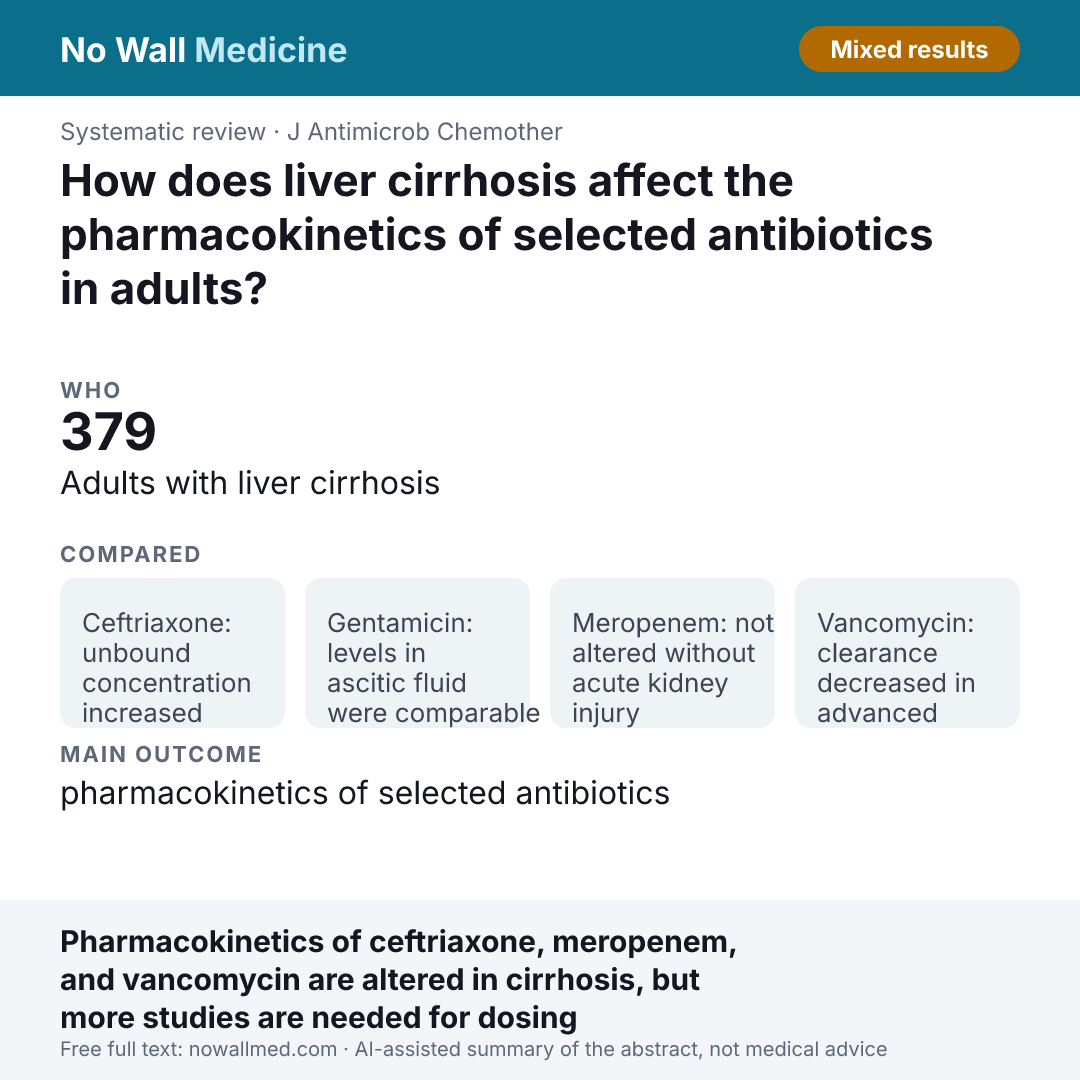
Pharmacokinetics of ceftriaxone, gentamicin, meropenem and vancomycin in liver cirrhosis: a systematic review
Systematic reviewMixed results
How does liver cirrhosis affect the pharmacokinetics of selected antibiotics in adults?
Who
379
Adults with liver cirrhosis
Compared
Ceftriaxone: unbound concentration increased
Gentamicin: levels in ascitic fluid were comparable to plasma
Meropenem: not altered without acute kidney injury
Vancomycin: clearance decreased in advanced cirrhosis
Main outcome
pharmacokinetics of selected antibiotics
Bottom line: Pharmacokinetics of ceftriaxone, meropenem, and vancomycin are altered in cirrhosis, but more studies are needed for dosing recommendations.
J Antimicrob Chemother · 2024-09-18 · Save PNG
Relationship between cumulative silica exposure and silicosis: a systematic review and dose-response meta-analysis
Systematic review and dose-response meta-analysisKey finding
Relationship between cumulative silica exposure and silicosis risk
Who
65977
Participants in cohorts with over 20 years follow-up
Compared
Miners: RR 0.23 (95% CI 0.18 to 0.29)
Non-miners: RR 0.55 (95% CI 0.36 to 0.83)
Main outcome
Silicosis risk from cumulative respirable crystalline silica exposure
Result: Miners RR 0.23 (95% CI 0.18 to 0.29); Non-miners RR 0.55 (95% CI 0.36 to 0.83)
Bottom line: Findings support reducing permissible exposure limits from 0.1 to 0.05 mg/m³, particularly among mining populations.
Thorax · 2024-09-18 · Save PNG

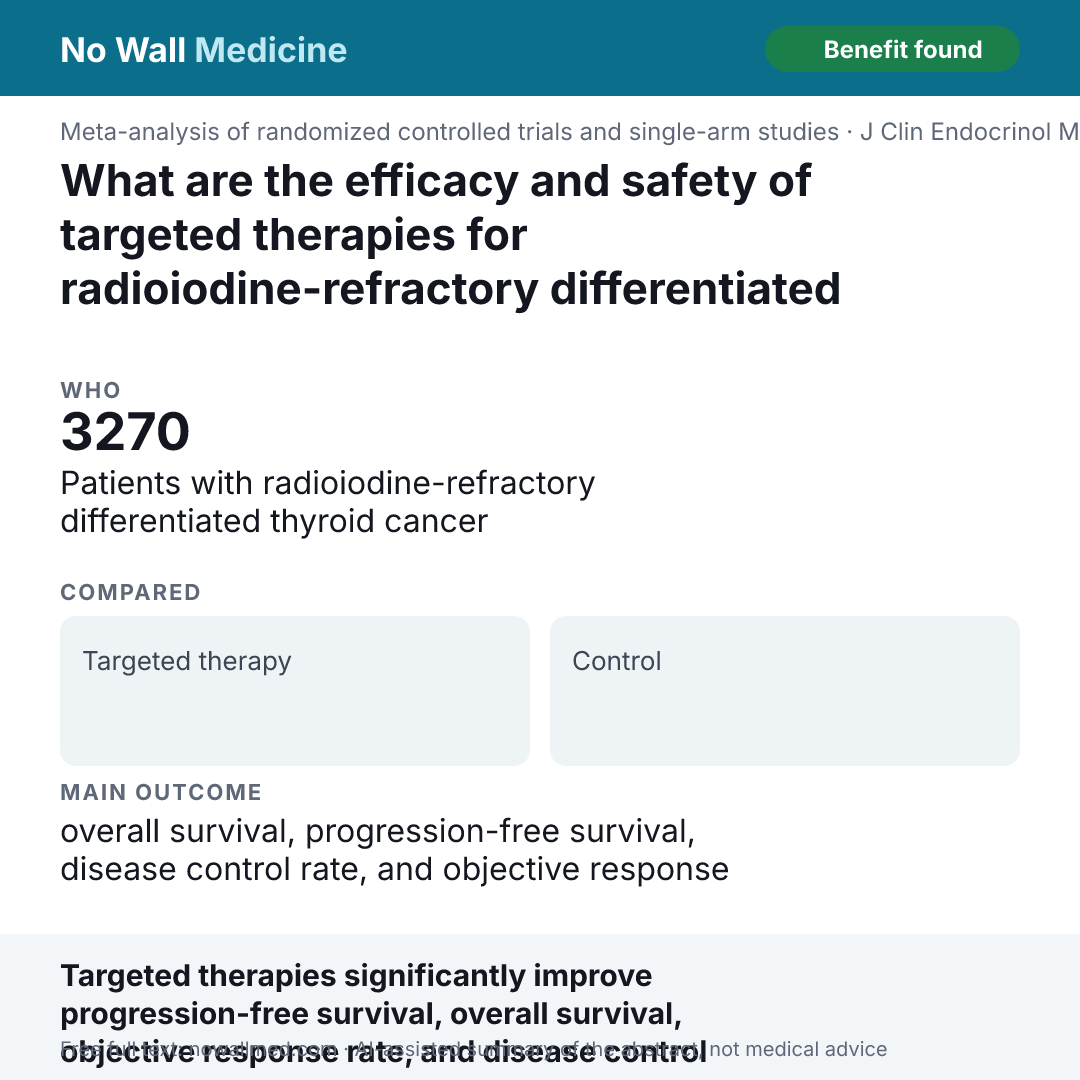
Efficacy and Safety of Targeted Therapy for Radioiodine-Refractory Differentiated Thyroid Cancer
Meta-analysis of randomized controlled trials and single-arm studiesBenefit found
What are the efficacy and safety of targeted therapies for radioiodine-refractory differentiated thyroid cancer?
Who
3270
Patients with radioiodine-refractory differentiated thyroid cancer
Compared
Targeted therapy
Control
Main outcome
overall survival, progression-free survival, disease control rate, and objective response rate
Result: hazard ratio 0.35 (95% CI 0.23-0.53) for progression-free survival and 0.53 (95% CI 0.32-0.86) for overall survival
Bottom line: Targeted therapies significantly improve progression-free survival, overall survival, objective response rate, and disease control rate in these patients.
J Clin Endocrinol Metab · 2024-09-18 · Save PNG
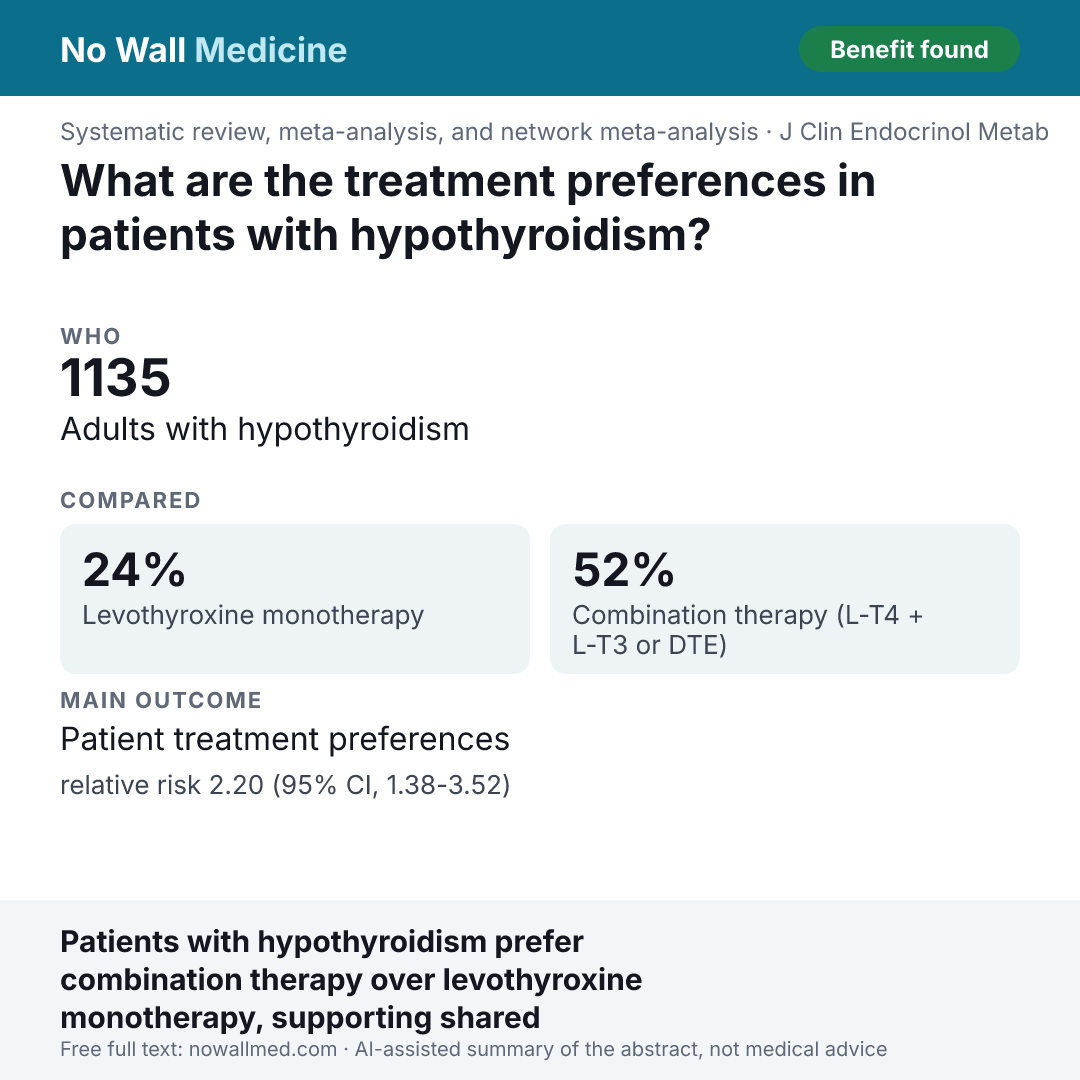
Treatment Preferences in Patients With Hypothyroidism
Systematic review, meta-analysis, and network meta-analysisBenefit found
What are the treatment preferences in patients with hypothyroidism?
Who
1135
Adults with hypothyroidism
Compared
24%Levothyroxine monotherapy
52%Combination therapy (L-T4 + L-T3 or DTE)
Main outcome
Patient treatment preferences
Result: relative risk 2.20 (95% CI, 1.38-3.52)
Bottom line: Patients with hypothyroidism prefer combination therapy over levothyroxine monotherapy, supporting shared decision-making in treatment.
J Clin Endocrinol Metab · 2024-09-18 · Save PNG
Current Insights on Lipidomics in Dermatology: A Systematic Review
Systematic reviewBenefit found
What are the recent findings regarding lipidomics and dermatologic diseases?
Who
2651
Participants with atopic dermatitis, acne, psoriasis, and hidradenitis suppurativa
Compared
Patients with skin diseases
Healthy controls
Main outcome
Lipidomic and lipid metabolism profiles in skin diseases
Bottom line: Skin lipidomic analysis is valuable for exploring skin diseases and has ample translational potential.
J Invest Dermatol · 2024-09-18 · Save PNG

International policies guiding the selection, analysis, and clinical management of secondary findings from genomic sequencing: A systematic review
Systematic reviewMixed results
What are the existing international policies for managing secondary findings from genomic sequencing?
Who
International policies from databases and human genetic societies
Compared
98%Clinical management policies (n = 62)
60%Analysis policies (n = 38)
48%Selection policies (n = 30)
Main outcome
Variations and gaps in secondary findings guidance
Bottom line: Policies exist for secondary findings but lack rigor, applicability, and guidance on analysis, validation, and follow-up.
Limitation: Policies were limited by their rigor and applicability.
Am J Hum Genet · 2024-09-18 · Save PNG

Surgery Versus Thrombolytic Therapy for the Management of Left-Sided Prosthetic Valve Thrombosis Without Hemodynamic Compromise: A Systematic Review and Meta-Analysis
Systematic review and meta-analysisBenefit found
Is surgery or systemic thrombolysis better for left-sided prosthetic valve thrombosis?
Who
1389
Patients with left-sided prosthetic valve thrombosis
Compared
10.8%Systemic thrombolysis
15.3%Cardiac surgery
Main outcome
Death
Result: risk difference 1.13 (exact CI, 0.74-1.79)
Bottom line: Thrombolysis may be the preferred option for managing prosthetic valve thrombosis without cardiogenic shock.
J Am Heart Assoc · 2024-09-18 · Save PNG

Implications of neuromuscular electrical stimulation on gait ability, balance and kinematic parameters after stroke: a systematic review and meta-analysis
Systematic review and meta-analysisBenefit found
Does neuromuscular electrical stimulation improve gait, balance, and kinematics after stroke?
Who
1711
Stroke survivors
Compared
Neuromuscular electrical stimulation
Conventional rehabilitation
Main outcome
Gait assessment through scales or quantitative parameters
Result: Six-Minute Walk Test WMD 14.83 (95% CI 13.55 to 16.11)
Bottom line: Neuromuscular electrical stimulation may improve gait speed, cadence, step length, ankle dorsiflexion, and six-minute walk test distance.
J Neuroeng Rehabil · 2024-09-18 · Save PNG

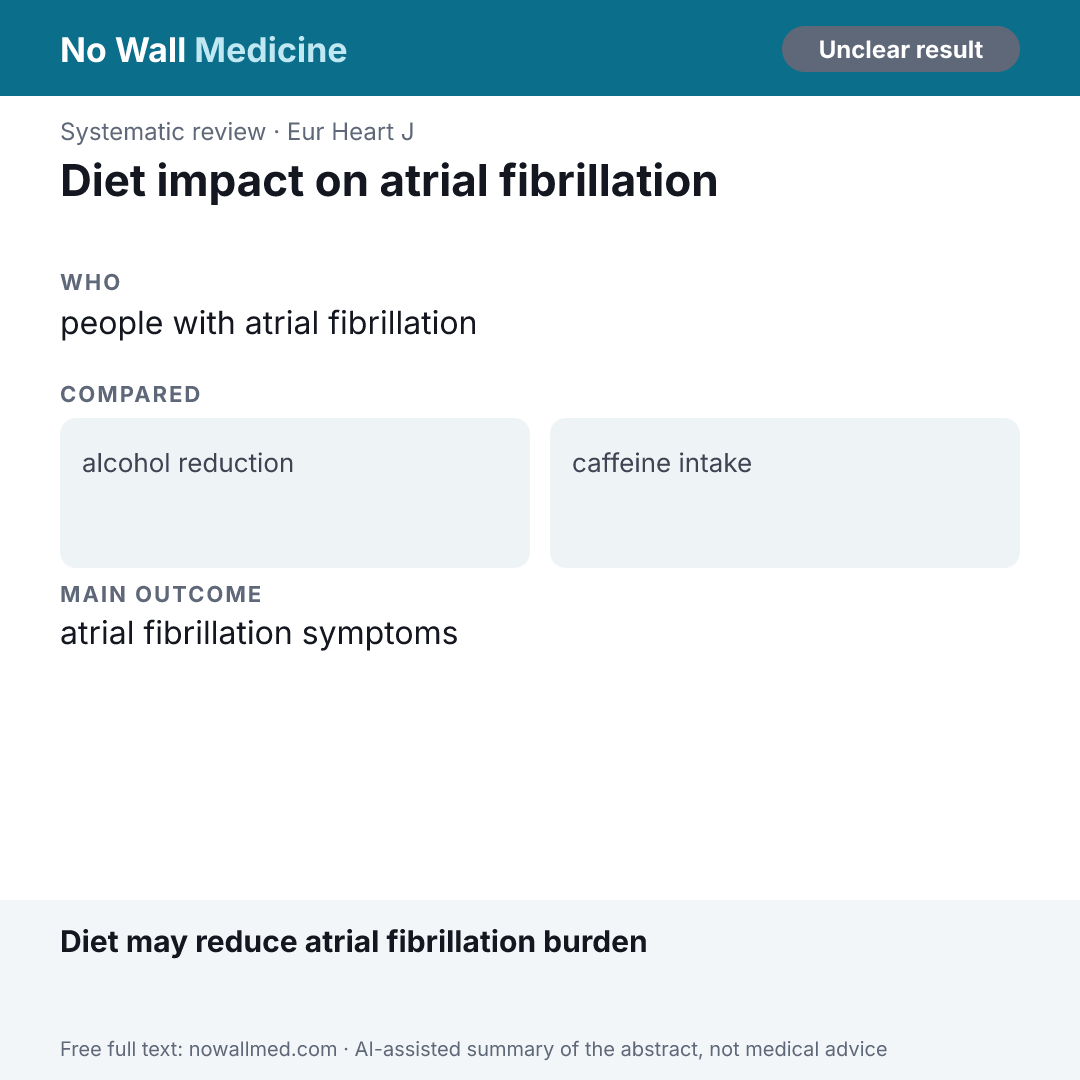
Diet and risk of atrial fibrillation: a systematic review
Systematic reviewUnclear result
Diet impact on atrial fibrillation
Who
people with atrial fibrillation
Compared
alcohol reduction
caffeine intake
Main outcome
atrial fibrillation symptoms
Bottom line: Diet may reduce atrial fibrillation burden
Eur Heart J · 2024-09-17 · Save PNG
Racial Differences in Breast Cancer Survival Between Black and White Women According to Tumor Subtype: A Systematic Review and Meta-Analysis
Systematic review and meta-analysisHarm found
Are there racial differences in breast cancer survival between Black and White women by tumor subtype?
Who
228885
Black and White female patients with breast cancer · United States
Compared
Black women: higher risk of breast cancer death for all tumor subtypes
White women
Main outcome
breast cancer-specific or overall survival
Result: RR 1.50 (95% CI 1.30 to 1.72) for hormone receptor-positive HER2-negative
Bottom line: Black women have a higher risk of breast cancer death than White women across all tumor subtypes.
J Clin Oncol · 2024-09-17 · Save PNG

Self-management interventions for chronic widespread pain including fibromyalgia: a systematic review and qualitative evidence synthesis
Systematic reviewMixed results
Do self-management interventions help chronic pain
Who
people with chronic widespread pain
Compared
self-management
control
Main outcome
effectiveness of self-management
Bottom line: Self-management helps, but has limitations
Pain · 2024-09-17 · Save PNG

Hospital-initiated palliative care interventions for adults with frailty: findings from a systematic review and narrative synthesis
Systematic literature review and narrative synthesisUnclear result
Does hospital-initiated palliative care improve outcomes for hospitalized adults with frailty?
Who
Hospitalized adults aged 65 years or older with frailty
Compared
Specialist palliative care interventions
Non-specialist interventions
Main outcome
Symptom burden and healthcare utilisation outcomes
Bottom line: Evidence suggests potential improvements in symptom burden, but heterogeneous evidence prevented establishing conclusive effects.
Age Ageing · 2024-09-17 · Save PNG

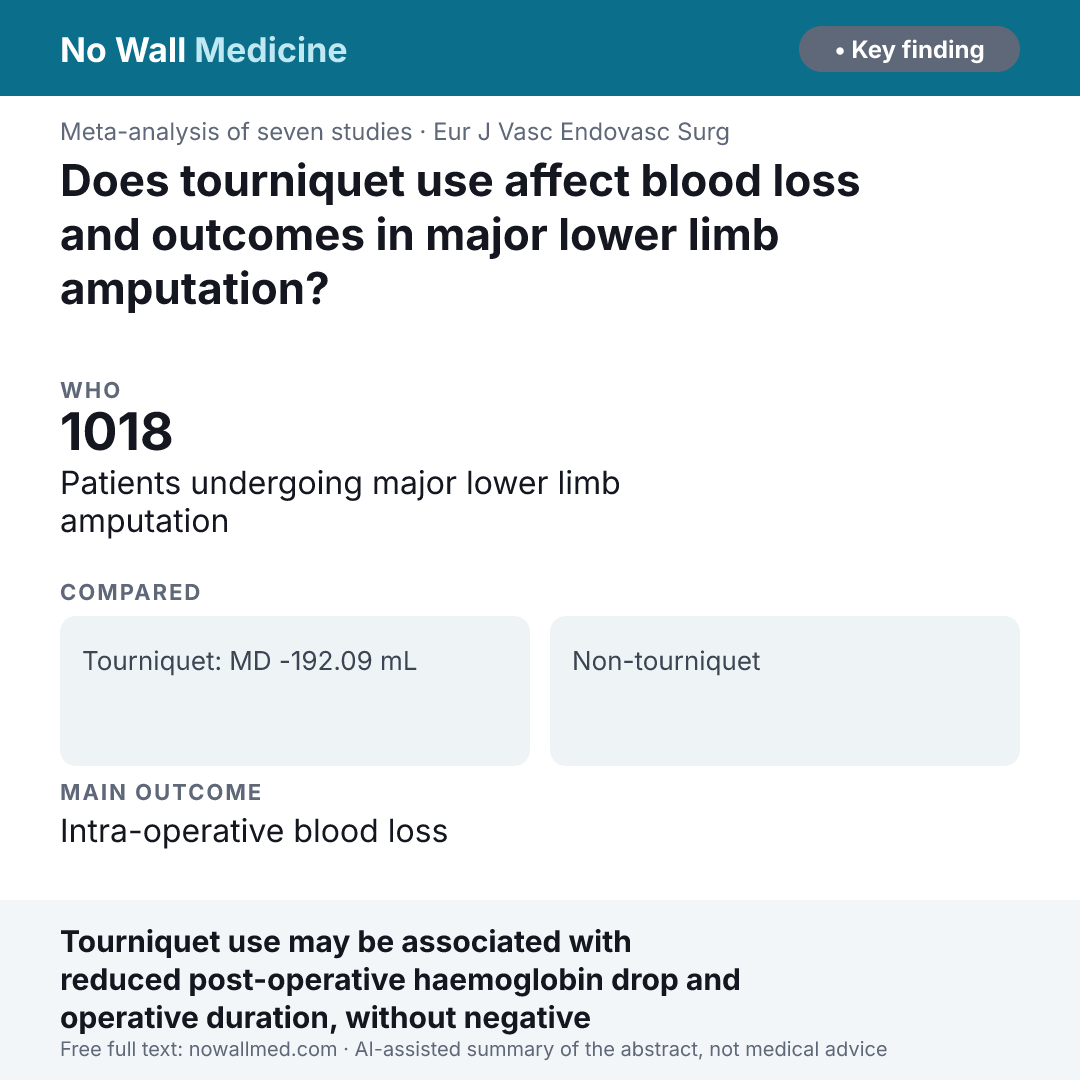
Impact of Tourniquet Use in Major Lower Limb Amputation: A Systematic Review and Meta-analysis
Meta-analysis of seven studiesKey finding
Does tourniquet use affect blood loss and outcomes in major lower limb amputation?
Who
1018
Patients undergoing major lower limb amputation
Compared
Tourniquet: MD -192.09 mL
Non-tourniquet
Main outcome
Intra-operative blood loss
Result: mean difference -192.09 mL; 95% confidence interval -291.67 - -92.52
Bottom line: Tourniquet use may be associated with reduced post-operative haemoglobin drop and operative duration, without negative consequences.
Limitation: Most data are observational and GRADE certainty was low or very low for all outcomes.
Eur J Vasc Endovasc Surg · 2024-09-17 · Save PNG
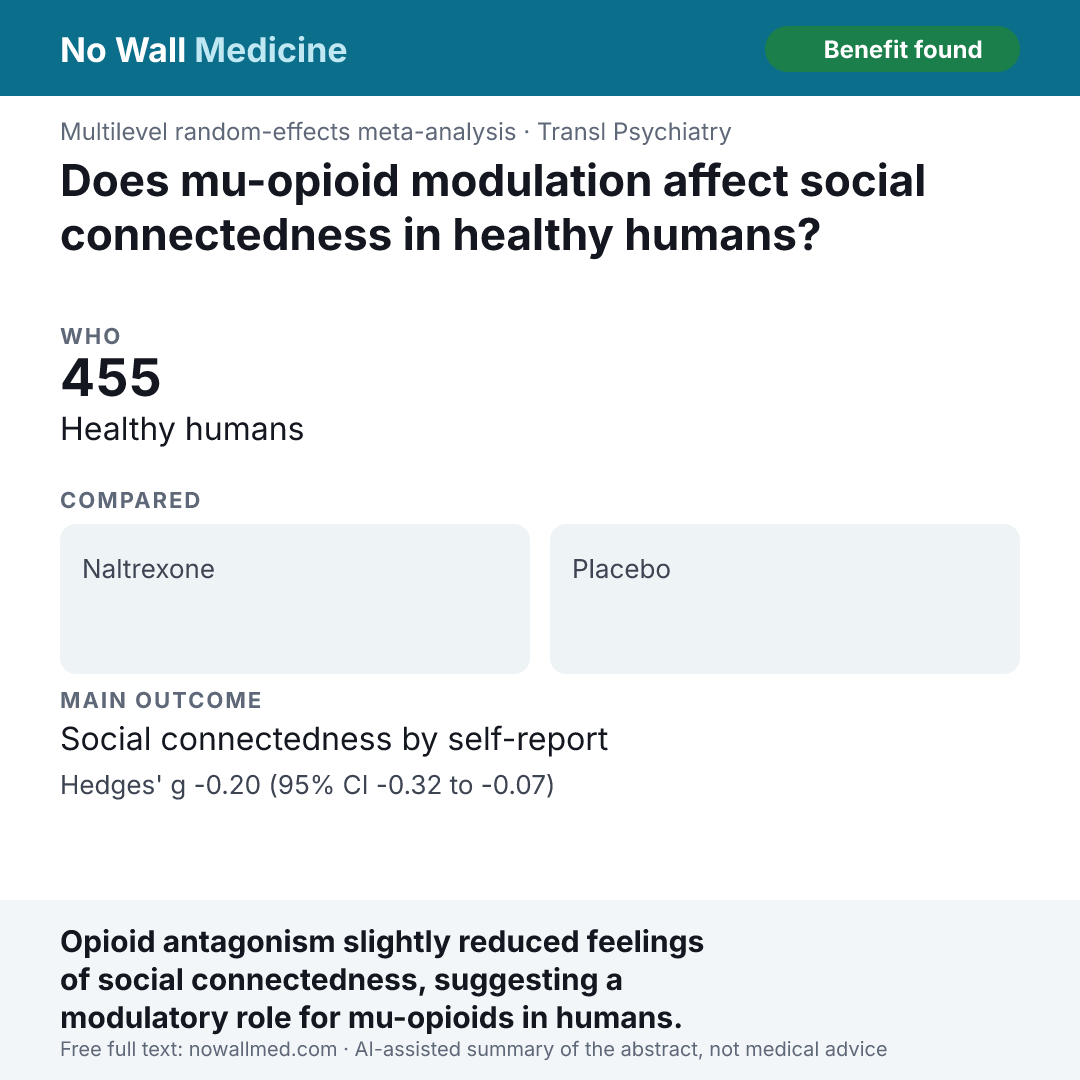
Endogenous mu-opioid modulation of social connection in humans: a systematic review and meta-analysis
Multilevel random-effects meta-analysisBenefit found
Does mu-opioid modulation affect social connectedness in healthy humans?
Who
455
Healthy humans
Compared
Naltrexone
Placebo
Main outcome
Social connectedness by self-report
Result: Hedges' g -0.20 (95% CI -0.32 to -0.07)
Bottom line: Opioid antagonism slightly reduced feelings of social connectedness, suggesting a modulatory role for mu-opioids in humans.
Limitation: Indication of bias in smaller studies and potential overestimation of the effect due to publication bias.
Transl Psychiatry · 2024-09-17 · Save PNG