Visual abstracts
New randomized trials and meta-analyses from leading journals at a glance: who was studied, what was compared, and what was found. Every paper is free to read in full.
All specialtiesCardiology 4766Oncology 4049Gastroenterology & Hepatology 1907Infectious Disease 3764Neurology 1874Psychiatry & Mental Health 2217Pulmonology 2047Critical Care 1325Endocrinology & Diabetes 2545Pediatrics 2893Surgery 2484Orthopedics & Sports Medicine 917Neurosurgery 526Cardiothoracic & Vascular Surgery 657Plastic & Reconstructive Surgery 574Nephrology 1108Rheumatology 810Hematology 1091Dermatology 612Ophthalmology 532Obstetrics & Gynecology 1646Public & Global Health 1037Radiology & Imaging 620Anesthesiology 959Urology 745ENT (Otolaryngology) 494Emergency Medicine 481Allergy & Immunology 309Geriatrics 973Family Medicine & Primary Care 534Medical Genetics & Genomics 659Pathology & Laboratory Medicine 156Physical Medicine & Rehabilitation 736Palliative Care 421Nutrition 1561Digital Health & AI 2137General Medicine 316
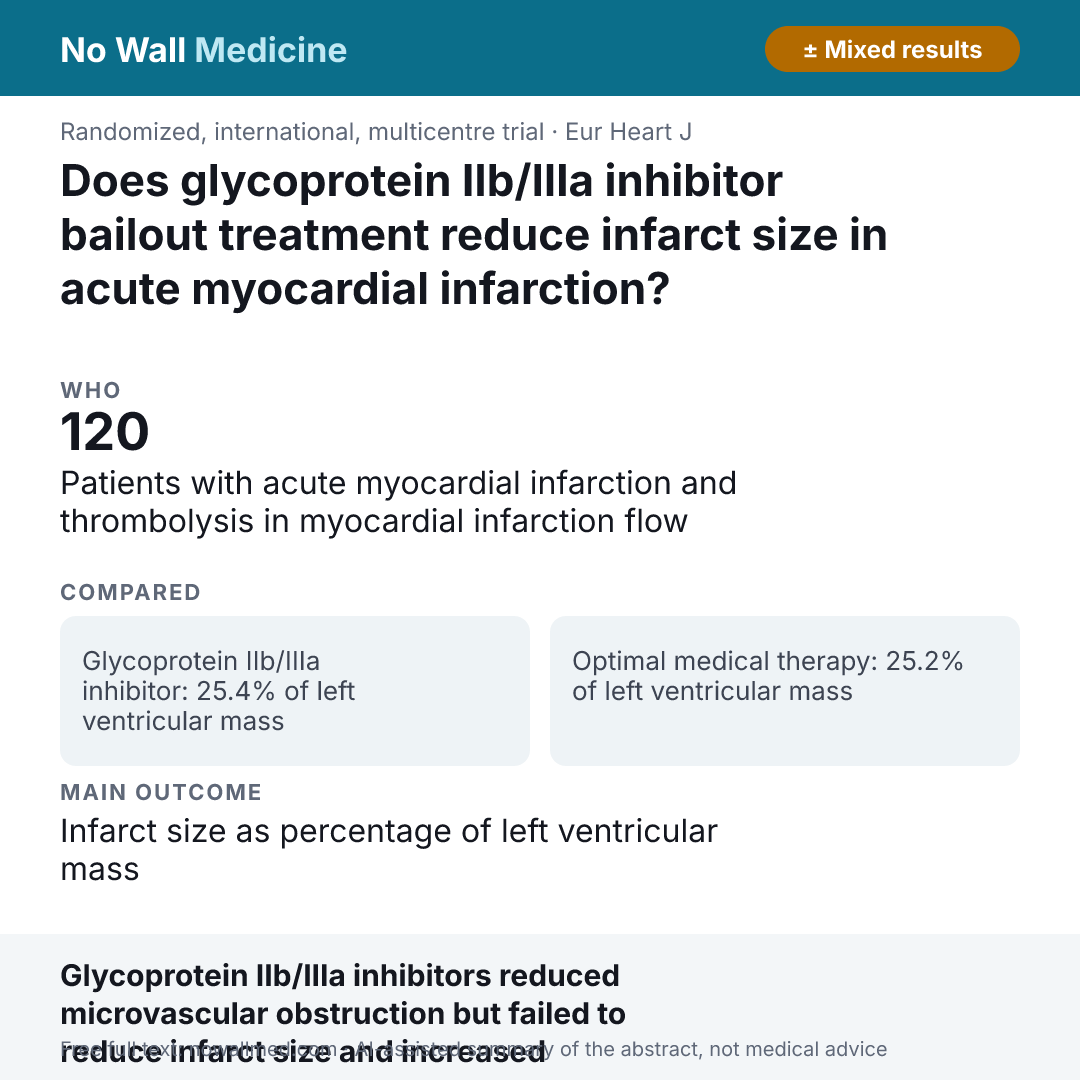
Glycoprotein IIb/IIIa inhibitors in acute myocardial infarction and angiographic microvascular obstruction: the REVERSE-FLOW trial
Randomized, international, multicentre trialMixed results
Does glycoprotein IIb/IIIa inhibitor bailout treatment reduce infarct size in acute myocardial infarction?
Who
120
Patients with acute myocardial infarction and thrombolysis in myocardial infarction flow grade ≤ 2 · International, multicentre
Compared
Glycoprotein IIb/IIIa inhibitor: 25.4% of left ventricular mass
Optimal medical therapy: 25.2% of left ventricular mass
Main outcome
Infarct size as percentage of left ventricular mass
Bottom line: Glycoprotein IIb/IIIa inhibitors reduced microvascular obstruction but failed to reduce infarct size and increased non-life-threatening bleeding.
Eur Heart J · 2024-09-01 · Save PNG
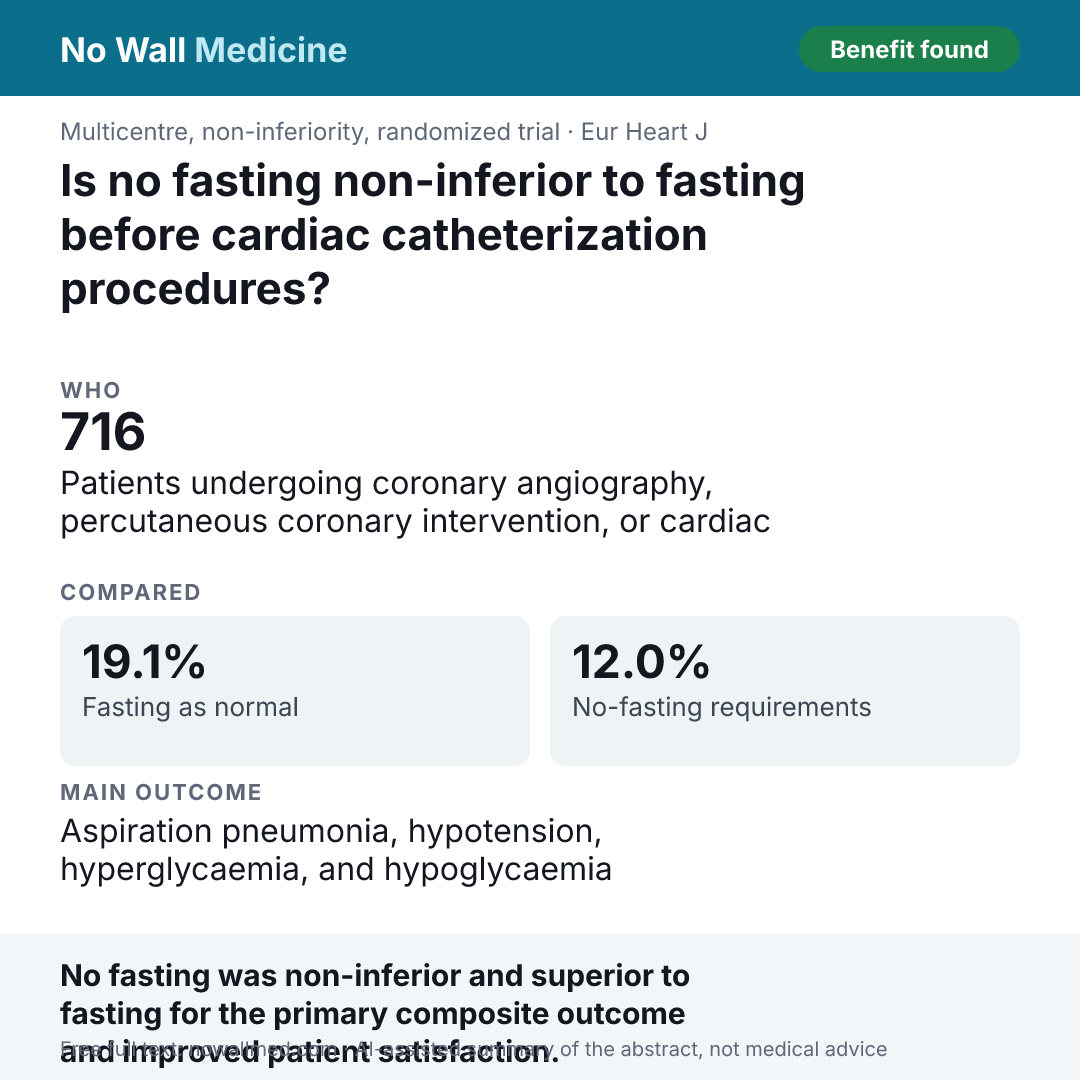
Fasting vs. no fasting prior to catheterization laboratory procedures: the SCOFF trial
Multicentre, non-inferiority, randomized trialBenefit found
Is no fasting non-inferior to fasting before cardiac catheterization procedures?
Who
716
Patients undergoing coronary angiography, percutaneous coronary intervention, or cardiac implantable electronic device procedures · Australia
Compared
19.1%Fasting as normal
12.0%No-fasting requirements
Main outcome
Aspiration pneumonia, hypotension, hyperglycaemia, and hypoglycaemia
Result: -5.2% (95% CI -9.6 to -.9)
Bottom line: No fasting was non-inferior and superior to fasting for the primary composite outcome and improved patient satisfaction.
Eur Heart J · 2024-09-01 · Save PNG
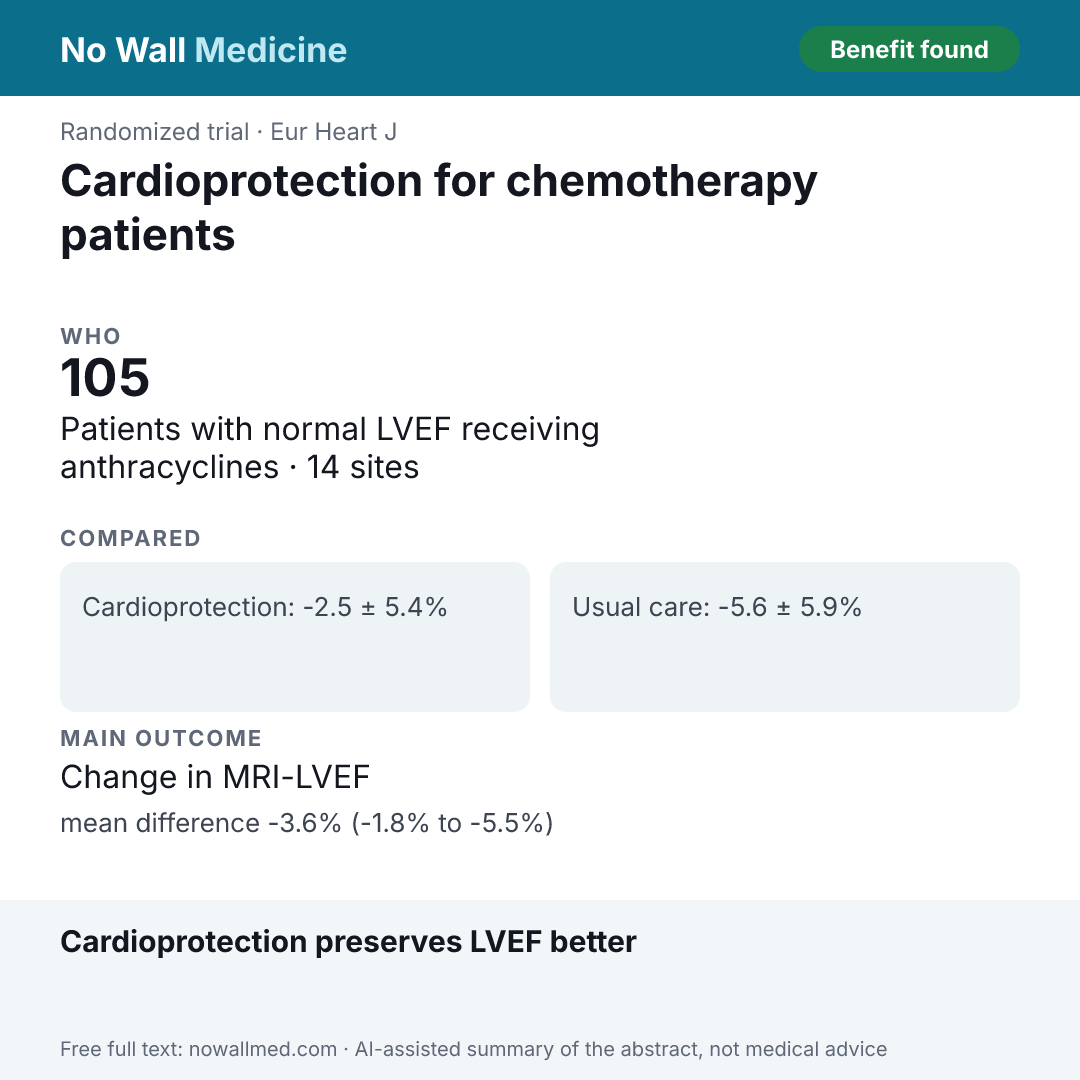
Strain surveillance during chemotherapy to improve cardiovascular outcomes: the SUCCOUR-MRI trial
Randomized trialBenefit found
Cardioprotection for chemotherapy patients
Who
105
Patients with normal LVEF receiving anthracyclines · 14 sites
Compared
Cardioprotection: -2.5 ± 5.4%
Usual care: -5.6 ± 5.9%
Main outcome
Change in MRI-LVEF
Result: mean difference -3.6% (-1.8% to -5.5%)
Bottom line: Cardioprotection preserves LVEF better
Eur Heart J · 2024-09-01 · Save PNG
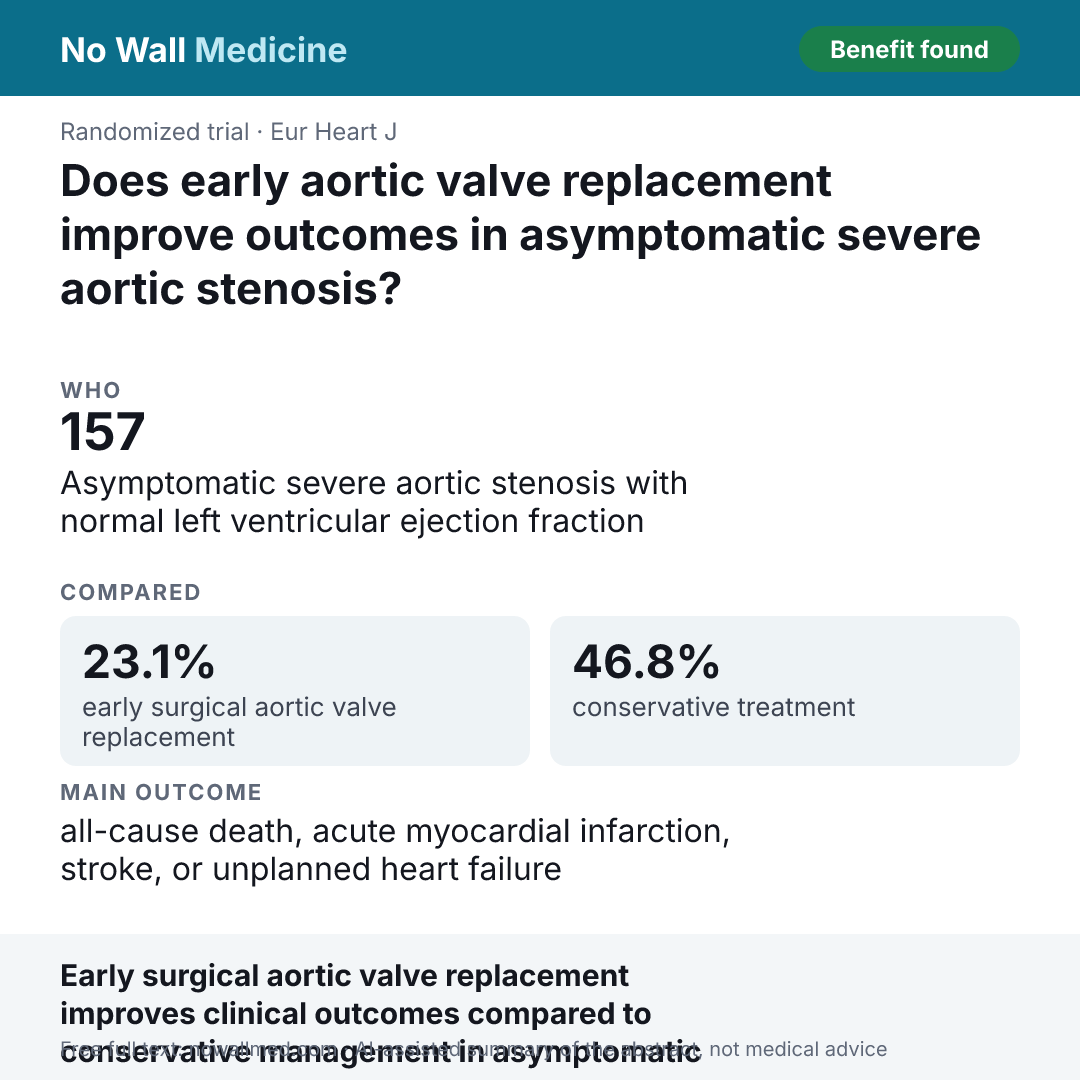
Aortic valve replacement vs. conservative treatment in asymptomatic severe aortic stenosis: long-term follow-up of the AVATAR trial
Randomized trialBenefit found
Does early aortic valve replacement improve outcomes in asymptomatic severe aortic stenosis?
Who
157
Asymptomatic severe aortic stenosis with normal left ventricular ejection fraction
Compared
23.1%early surgical aortic valve replacement
46.8%conservative treatment
Main outcome
all-cause death, acute myocardial infarction, stroke, or unplanned heart failure hospitalization
Result: hazard ratio 0.42 (95% CI 0.24-0.73)
Bottom line: Early surgical aortic valve replacement improves clinical outcomes compared to conservative management in asymptomatic severe aortic stenosis.
Eur Heart J · 2024-09-01 · Save PNG
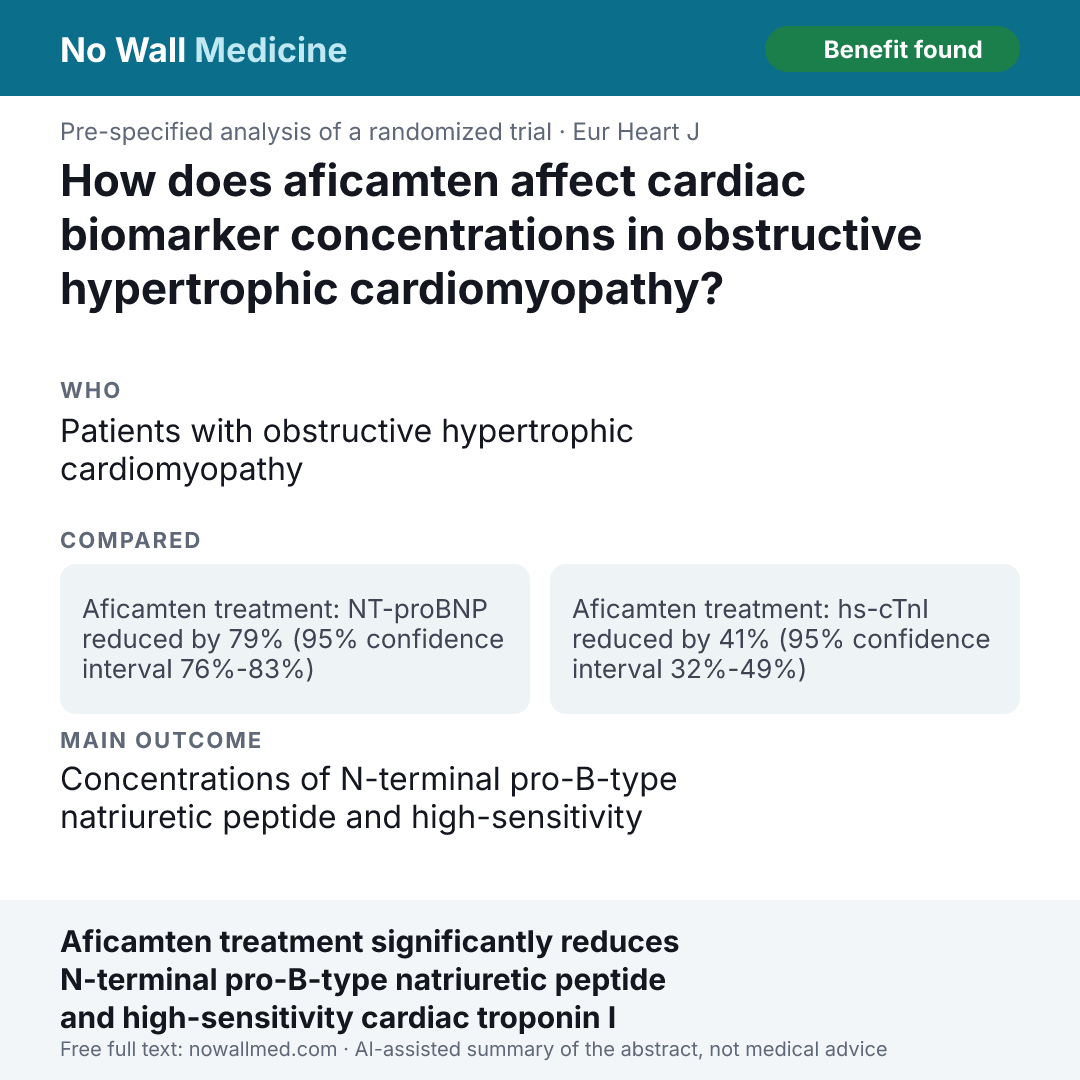
Cardiac biomarkers and effects of aficamten in obstructive hypertrophic cardiomyopathy: the SEQUOIA-HCM trial
Pre-specified analysis of a randomized trialBenefit found
How does aficamten affect cardiac biomarker concentrations in obstructive hypertrophic cardiomyopathy?
Who
Patients with obstructive hypertrophic cardiomyopathy
Compared
Aficamten treatment: NT-proBNP reduced by 79% (95% confidence interval 76%-83%)
Aficamten treatment: hs-cTnI reduced by 41% (95% confidence interval 32%-49%)
Main outcome
Concentrations of N-terminal pro-B-type natriuretic peptide and high-sensitivity cardiac troponin I
Bottom line: Aficamten treatment significantly reduces N-terminal pro-B-type natriuretic peptide and high-sensitivity cardiac troponin I concentrations.
Eur Heart J · 2024-09-01 · Save PNG
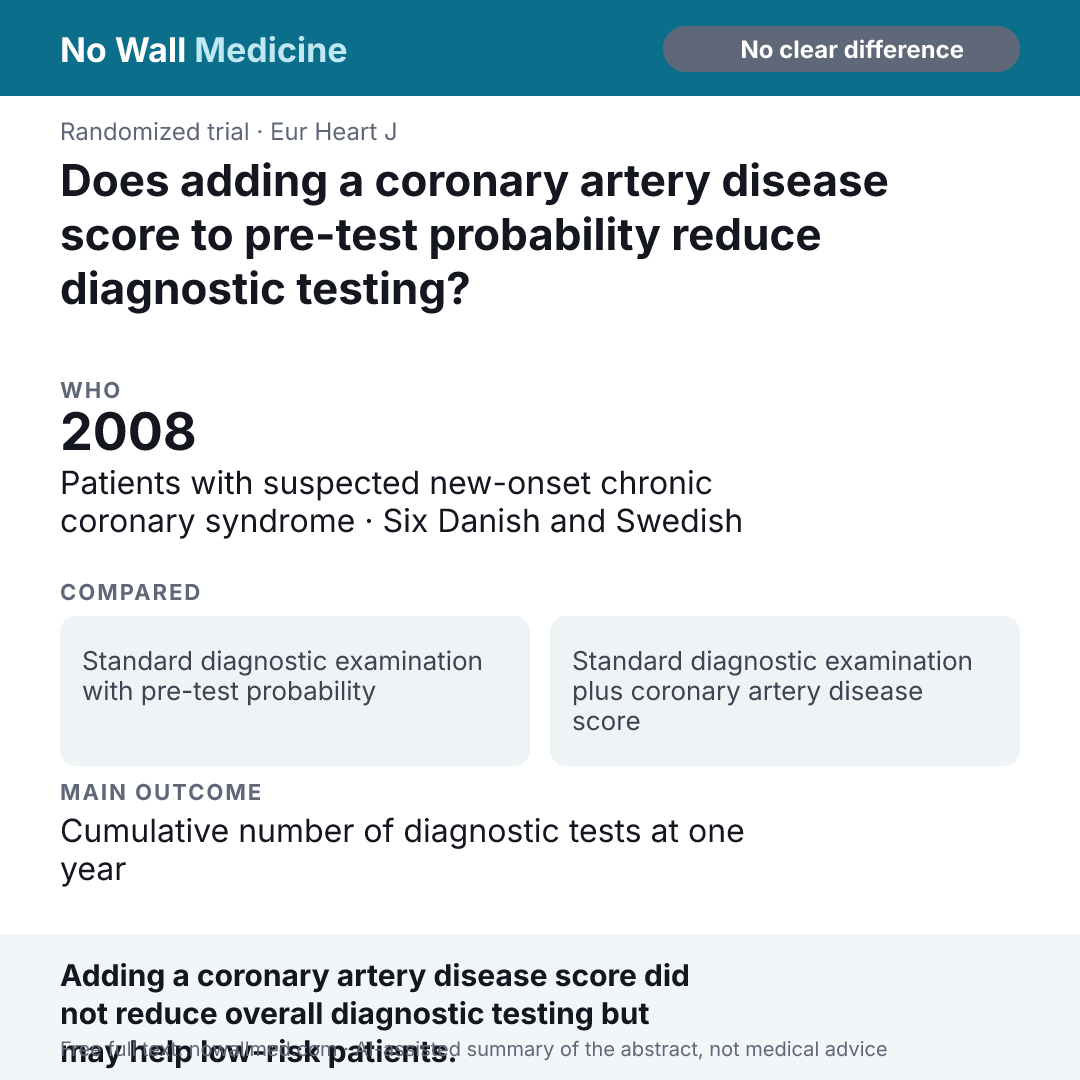
Acoustic-based rule-out of stable coronary artery disease: the FILTER-SCAD trial
Randomized trialNo clear difference
Does adding a coronary artery disease score to pre-test probability reduce diagnostic testing?
Who
2008
Patients with suspected new-onset chronic coronary syndrome · Six Danish and Swedish outpatient clinics
Compared
Standard diagnostic examination with pre-test probability
Standard diagnostic examination plus coronary artery disease score
Main outcome
Cumulative number of diagnostic tests at one year
Result: absolute risk difference 0.49% (95% confidence interval -1.96-0.97)
Bottom line: Adding a coronary artery disease score did not reduce overall diagnostic testing but may help low-risk patients.
Eur Heart J · 2024-09-01 · Save PNG
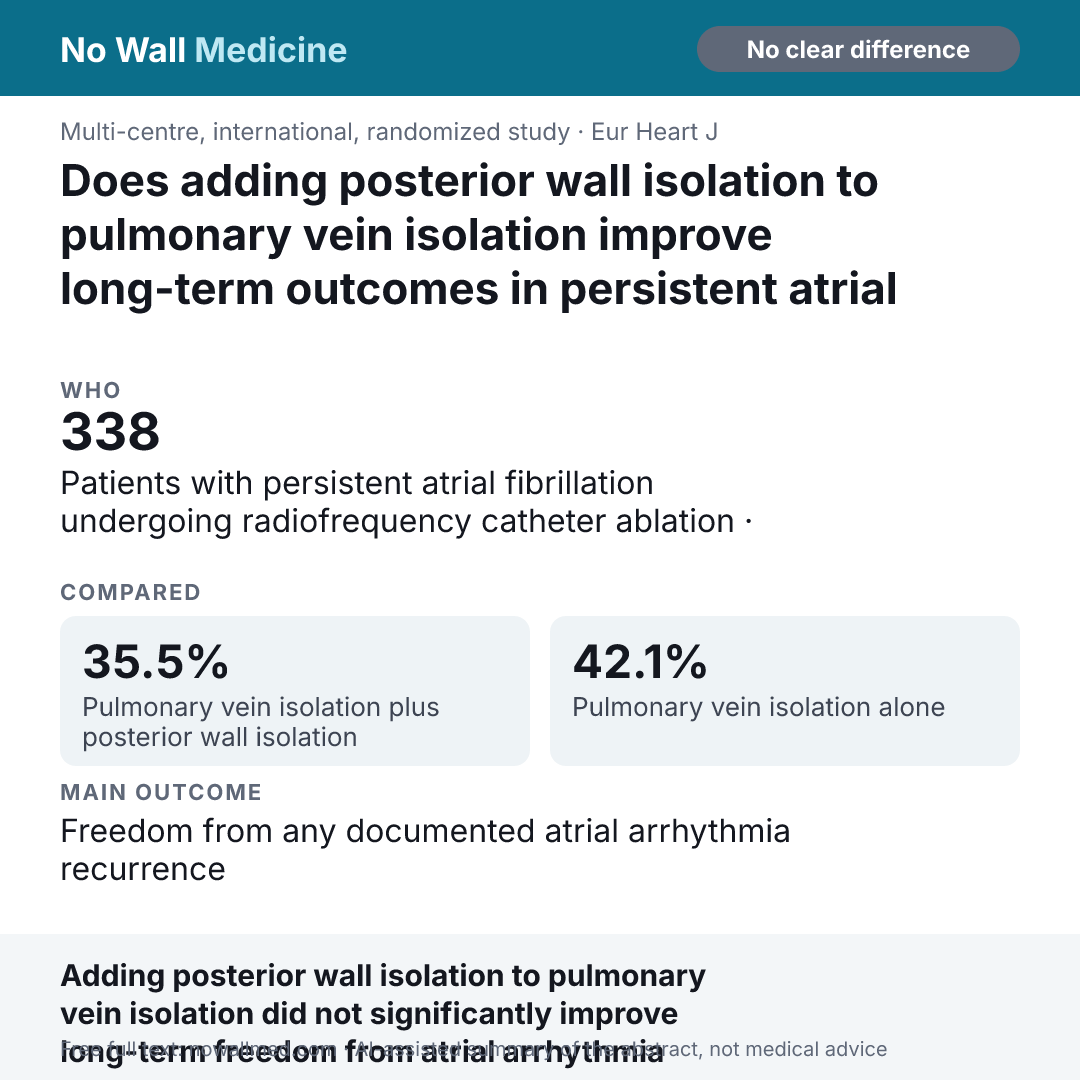
Radiofrequency catheter ablation of persistent atrial fibrillation by pulmonary vein isolation with or without left atrial posterior wall isolation: long-term outcomes of the CAPLA trial
Multi-centre, international, randomized studyNo clear difference
Does adding posterior wall isolation to pulmonary vein isolation improve long-term outcomes in persistent atrial fibrillation?
Who
338
Patients with persistent atrial fibrillation undergoing radiofrequency catheter ablation · Multi-centre, international
Compared
35.5%Pulmonary vein isolation plus posterior wall isolation
42.1%Pulmonary vein isolation alone
Main outcome
Freedom from any documented atrial arrhythmia recurrence
Result: hazard ratio 1.15, 95% confidence interval 0.88-1.51
Bottom line: Adding posterior wall isolation to pulmonary vein isolation did not significantly improve long-term freedom from atrial arrhythmia recurrence.
Eur Heart J · 2024-09-01 · Save PNG
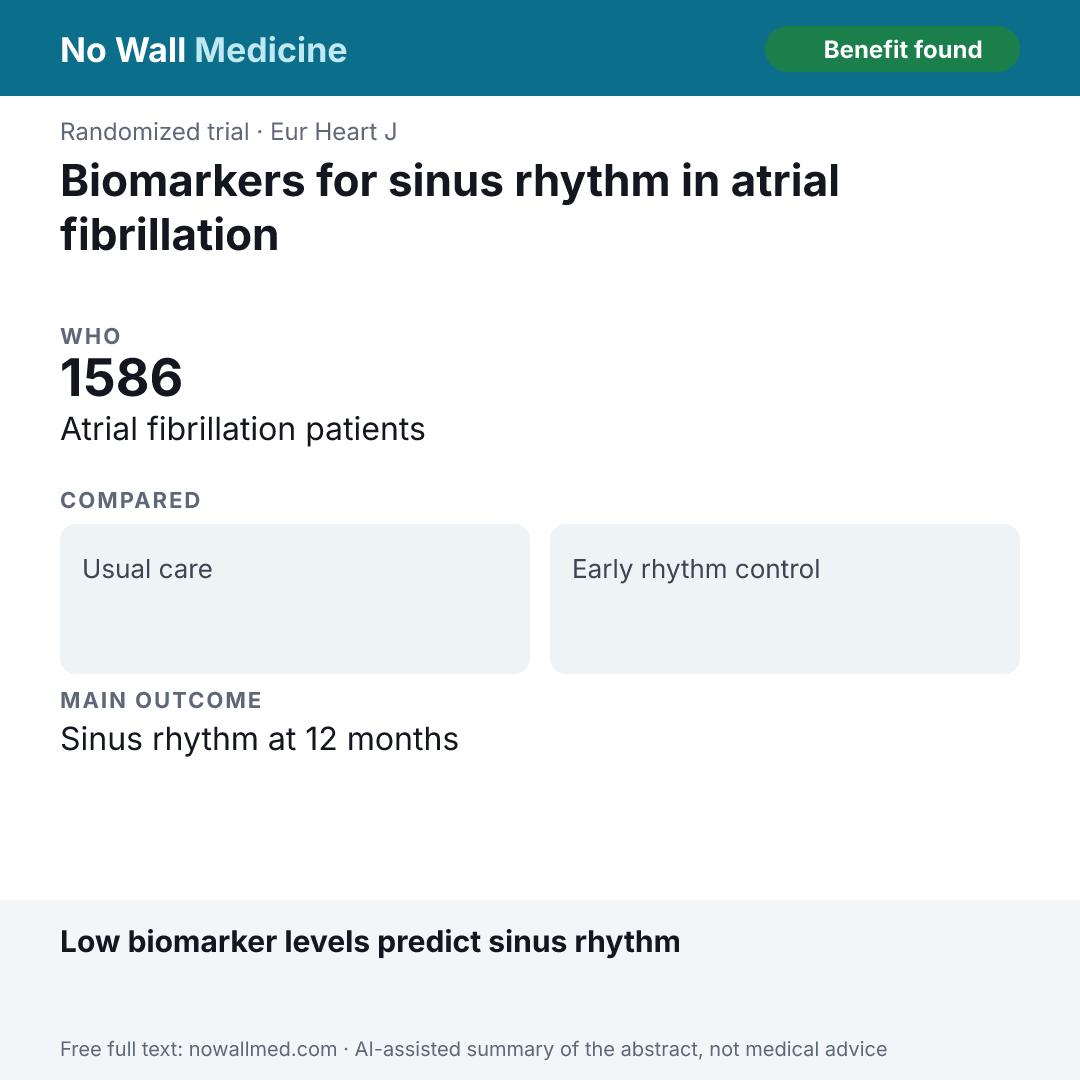
Biomarker-based prediction of sinus rhythm in atrial fibrillation patients: the EAST-AFNET 4 biomolecule study
Randomized trialBenefit found
Biomarkers for sinus rhythm in atrial fibrillation
Who
1586
Atrial fibrillation patients
Compared
Usual care
Early rhythm control
Main outcome
Sinus rhythm at 12 months
Bottom line: Low biomarker levels predict sinus rhythm
Eur Heart J · 2024-09-01 · Save PNG
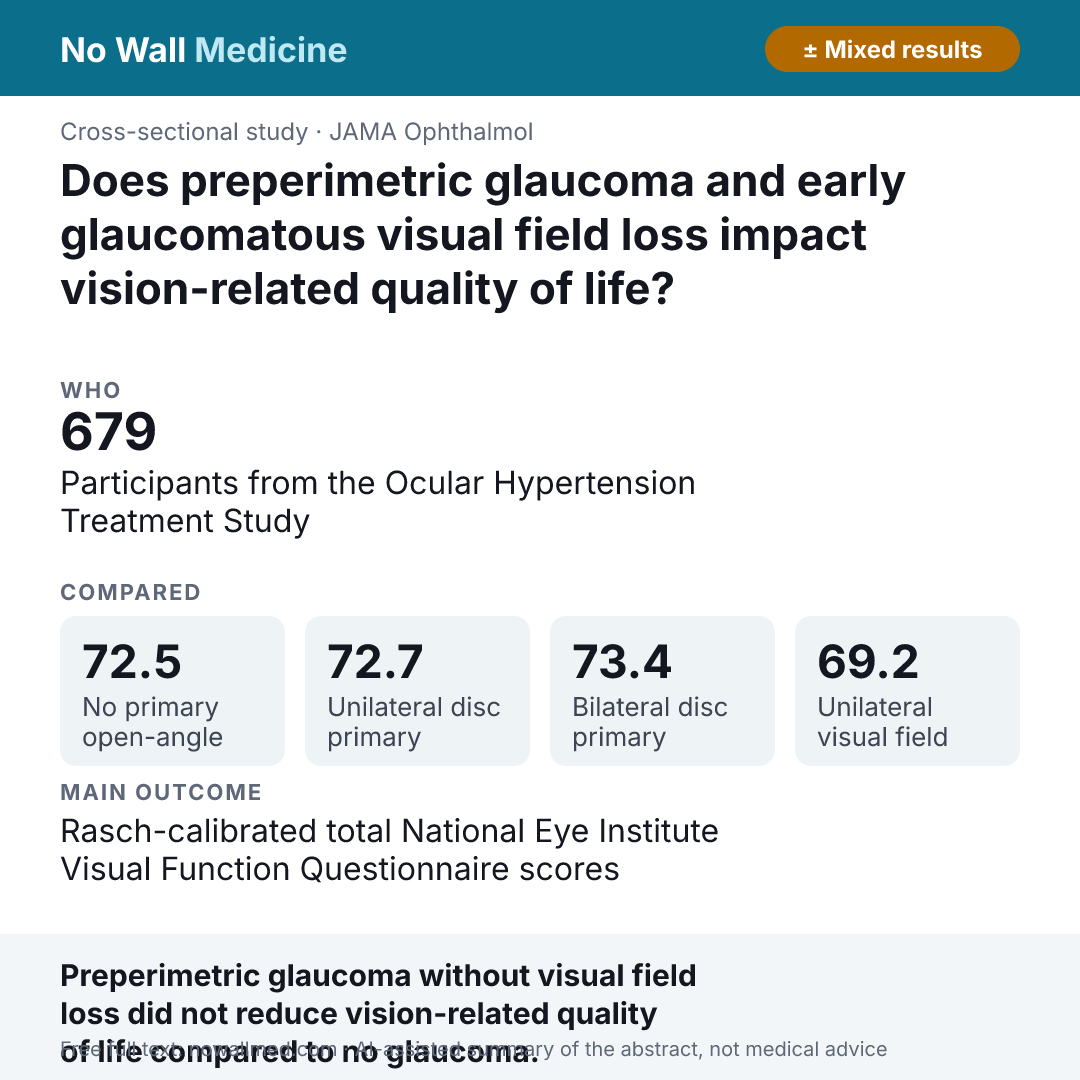
Quality of Life and Primary Open-Angle Glaucoma in the Ocular Hypertension Treatment Study
Cross-sectional studyMixed results
Does preperimetric glaucoma and early glaucomatous visual field loss impact vision-related quality of life?
Who
679
Participants from the Ocular Hypertension Treatment Study
Compared
72.5No primary open-angle glaucoma (13.4)
72.7Unilateral disc primary open-angle glaucoma (13.8)
73.4Bilateral disc primary open-angle glaucoma (14.0)
69.2Unilateral visual field primary open-angle glaucoma (14.5)
Main outcome
Rasch-calibrated total National Eye Institute Visual Function Questionnaire scores
Result: difference -13.96 (95% CI -17.73 to -10.19) for bilateral visual field glaucoma
Bottom line: Preperimetric glaucoma without visual field loss did not reduce vision-related quality of life compared to no glaucoma.
JAMA Ophthalmol · 2024-09-01 · Save PNG
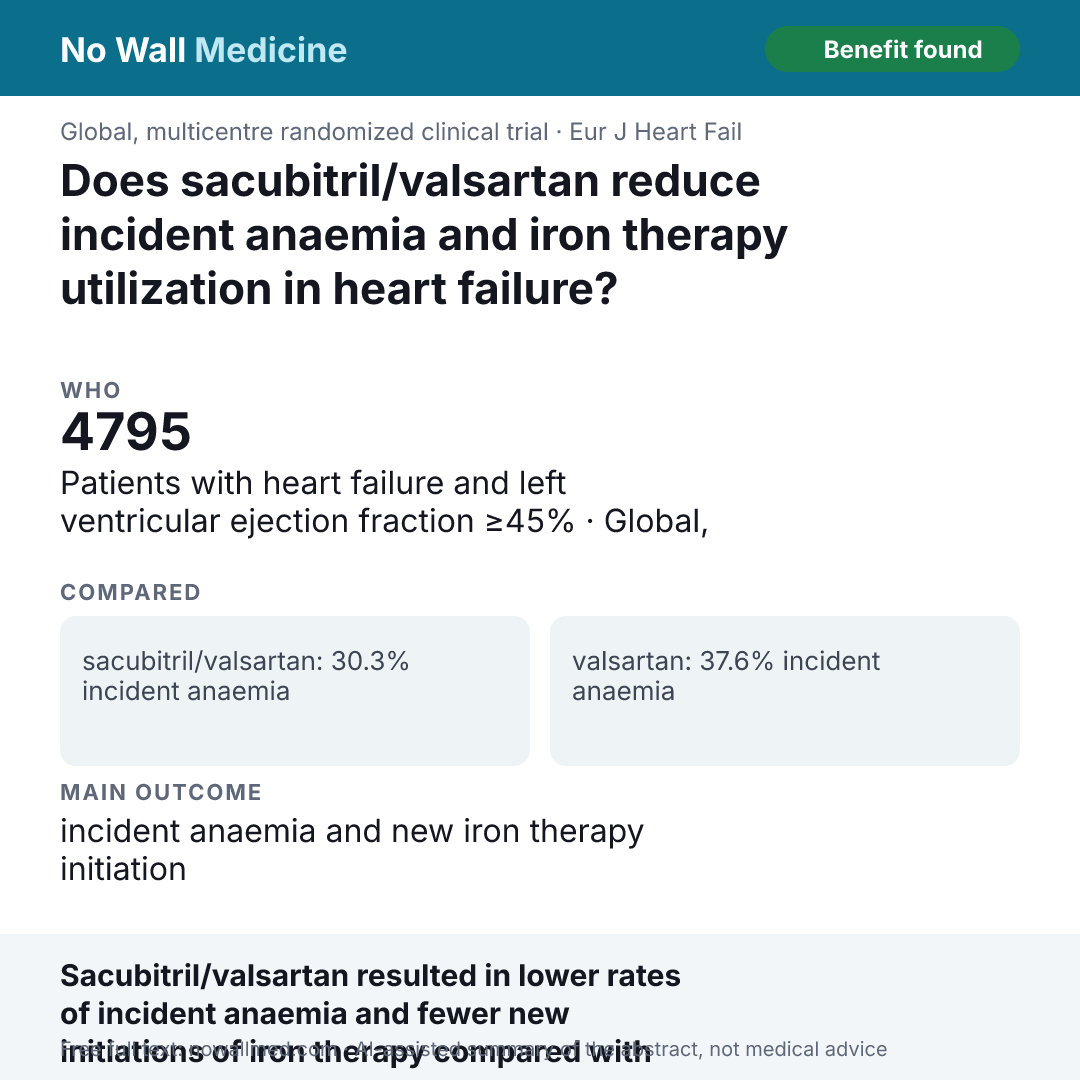
Sacubitril/valsartan reduces incident anaemia and iron therapy utilization in heart failure: The PARAGON-HF trial
Global, multicentre randomized clinical trialBenefit found
Does sacubitril/valsartan reduce incident anaemia and iron therapy utilization in heart failure?
Who
4795
Patients with heart failure and left ventricular ejection fraction ≥45% · Global, multicentre
Compared
sacubitril/valsartan: 30.3% incident anaemia
valsartan: 37.6% incident anaemia
Main outcome
incident anaemia and new iron therapy initiation
Result: hazard ratio 0.76 (95% CI 0.68-0.85)
Bottom line: Sacubitril/valsartan resulted in lower rates of incident anaemia and fewer new initiations of iron therapy compared with valsartan.
Eur J Heart Fail · 2024-09-01 · Save PNG
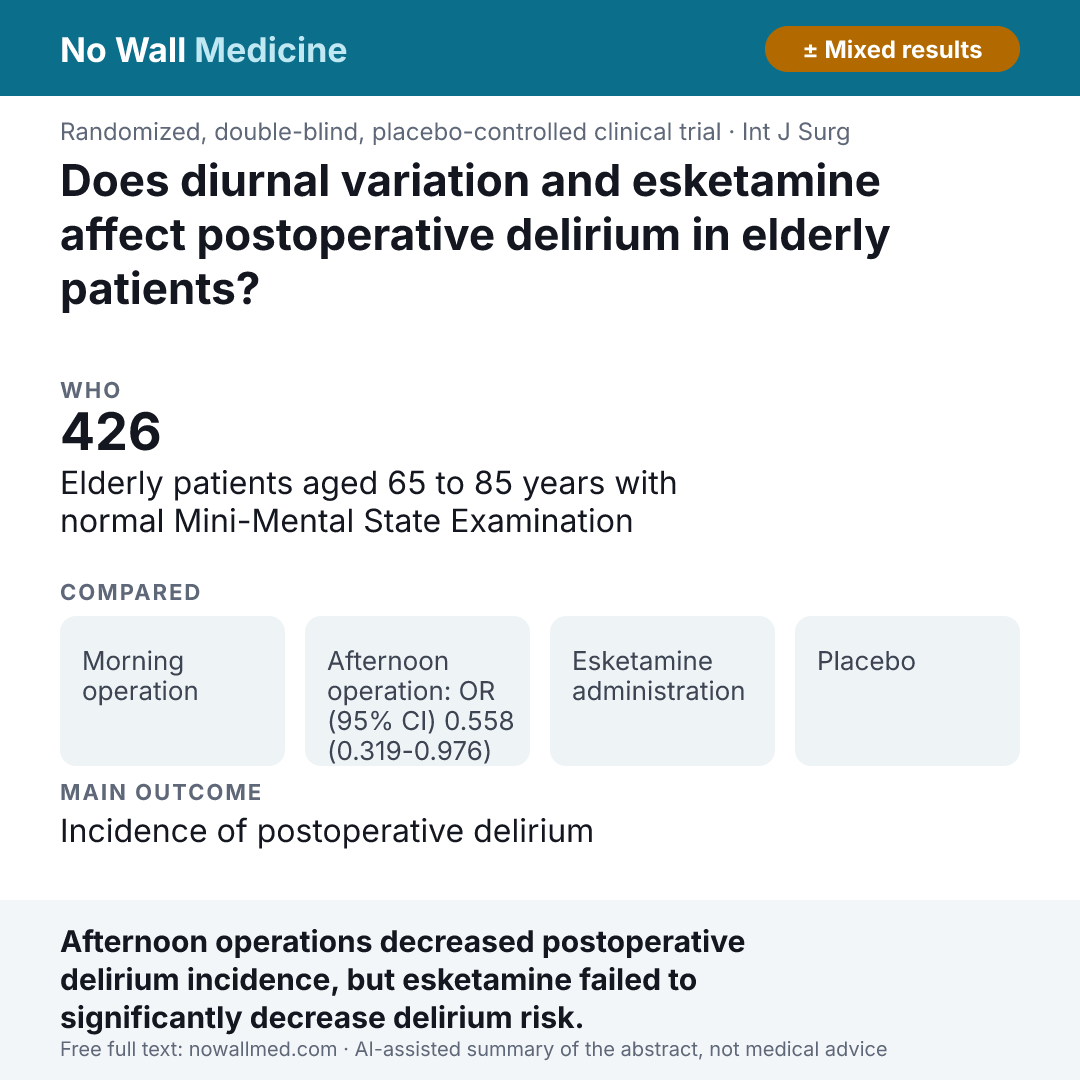
Diurnal variation of postoperative delirium in elderly patients undergoing esketamine anesthesia for elective noncardiac surgery: a randomized clinical trial
Randomized, double-blind, placebo-controlled clinical trialMixed results
Does diurnal variation and esketamine affect postoperative delirium in elderly patients?
Who
426
Elderly patients aged 65 to 85 years with normal Mini-Mental State Examination
Compared
Morning operation
Afternoon operation: OR (95% CI) 0.558 (0.319-0.976)
Esketamine administration
Placebo
Main outcome
Incidence of postoperative delirium
Result: OR (95% CI) 0.558 (0.319-0.976)
Bottom line: Afternoon operations decreased postoperative delirium incidence, but esketamine failed to significantly decrease delirium risk.
Int J Surg · 2024-09-01 · Save PNG
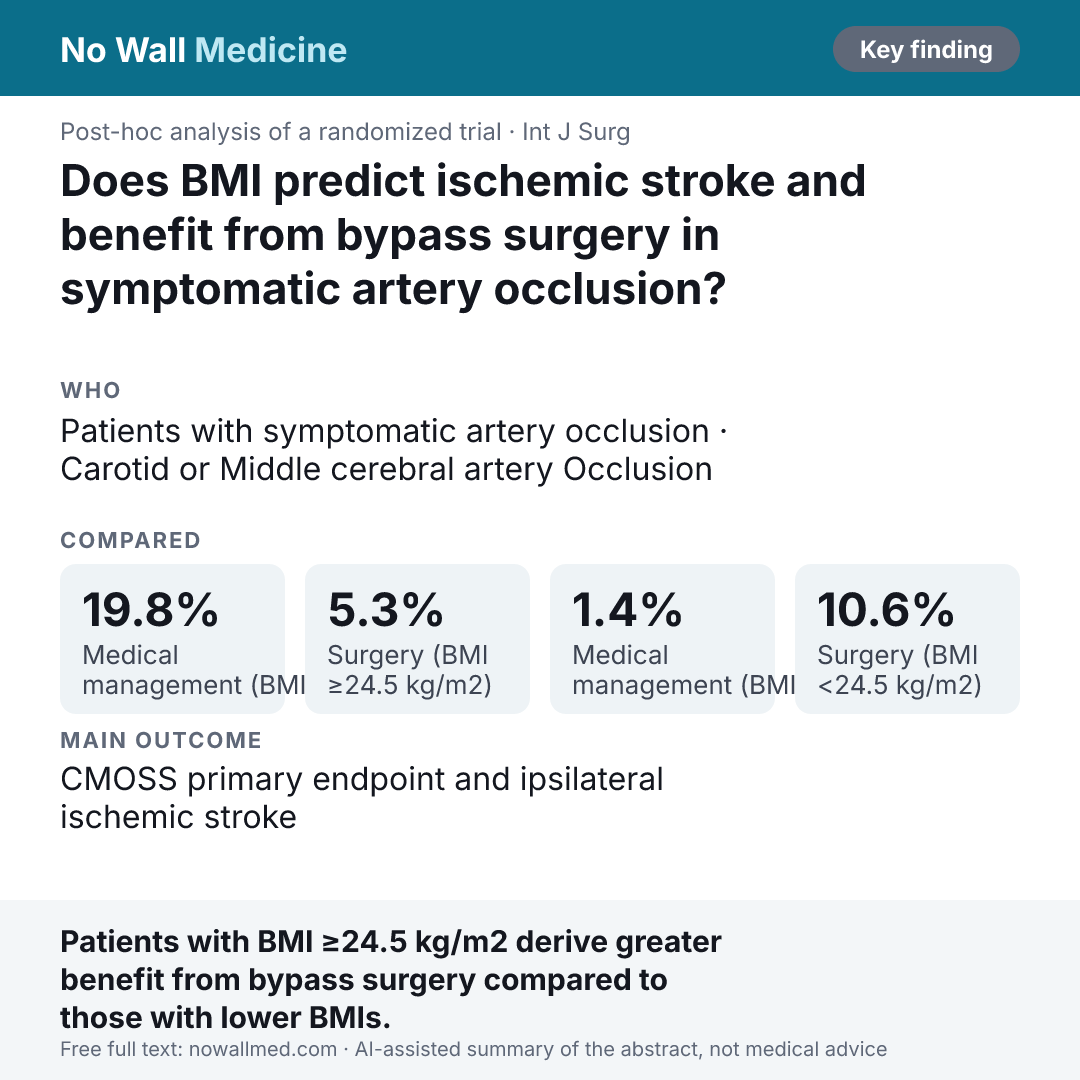
Potential of BMI as a screening indicator for extracranial-intracranial bypass surgery in patients with symptomatic artery occlusion: a post-hoc analysis of the CMOSS trial
Post-hoc analysis of a randomized trialKey finding
Does BMI predict ischemic stroke and benefit from bypass surgery in symptomatic artery occlusion?
Who
Patients with symptomatic artery occlusion · Carotid or Middle cerebral artery Occlusion Surgery Study
Compared
19.8%Medical management (BMI ≥24.5 kg/m2)
5.3%Surgery (BMI ≥24.5 kg/m2)
1.4%Medical management (BMI <24.5 kg/m2)
10.6%Surgery (BMI <24.5 kg/m2)
Main outcome
CMOSS primary endpoint and ipsilateral ischemic stroke
Result: hazard ratio 1.16 per kg/m 2 (95% CI 1.06-1.27)
Bottom line: Patients with BMI ≥24.5 kg/m2 derive greater benefit from bypass surgery compared to those with lower BMIs.
Limitation: Small sample size and inherent limitations of retrospective analyses.
Int J Surg · 2024-09-01 · Save PNG
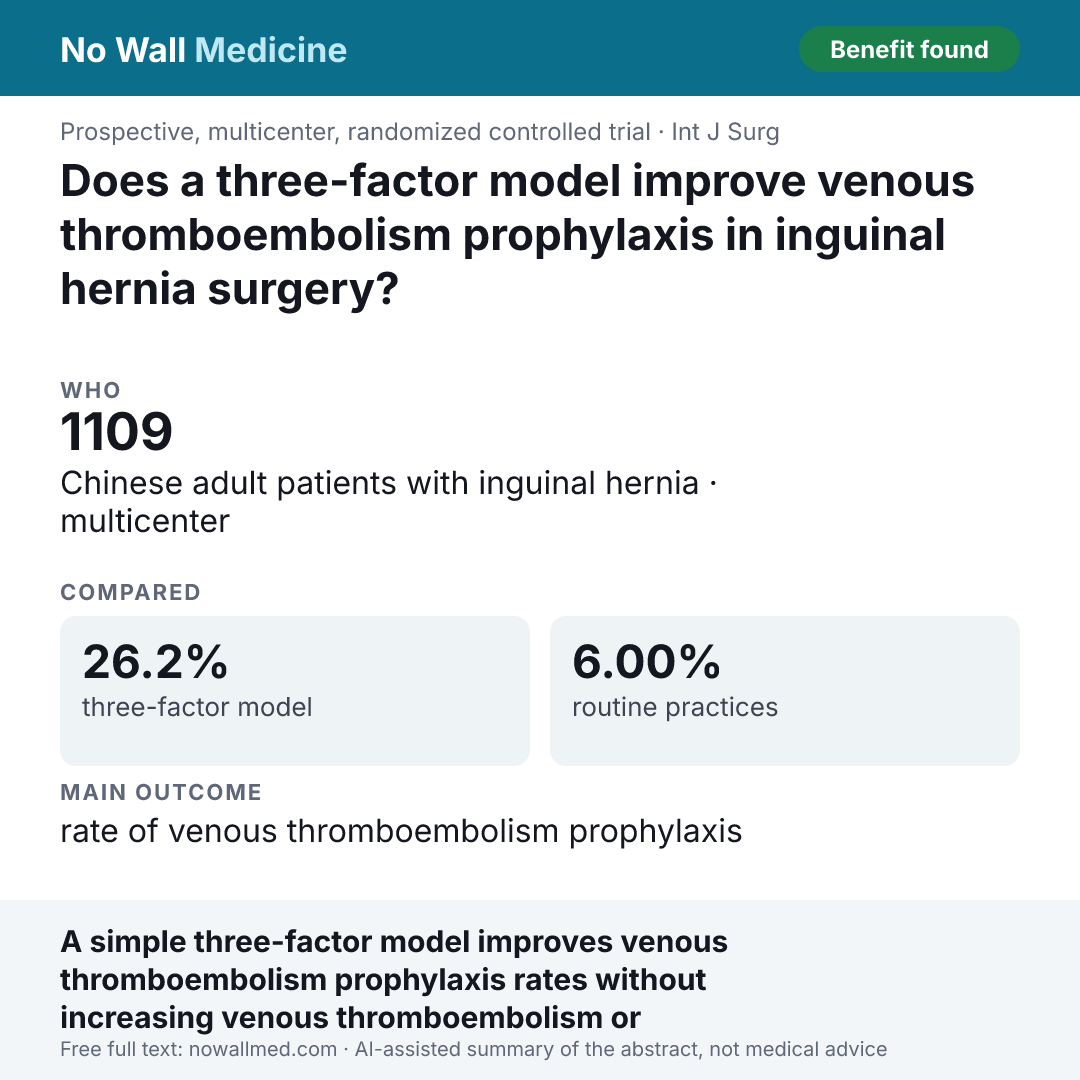
A new simplified risk assessment model enhances postoperative prophylaxis of venous thromboembolism in Chinese adult patients with inguinal hernia (CHAT-3): a prospective, multicenter, randomized controlled trial
Prospective, multicenter, randomized controlled trialBenefit found
Does a three-factor model improve venous thromboembolism prophylaxis in inguinal hernia surgery?
Who
1109
Chinese adult patients with inguinal hernia · multicenter
Compared
26.2%three-factor model
6.00%routine practices
Main outcome
rate of venous thromboembolism prophylaxis
Bottom line: A simple three-factor model improves venous thromboembolism prophylaxis rates without increasing venous thromboembolism or bleeding risks.
Int J Surg · 2024-09-01 · Save PNG
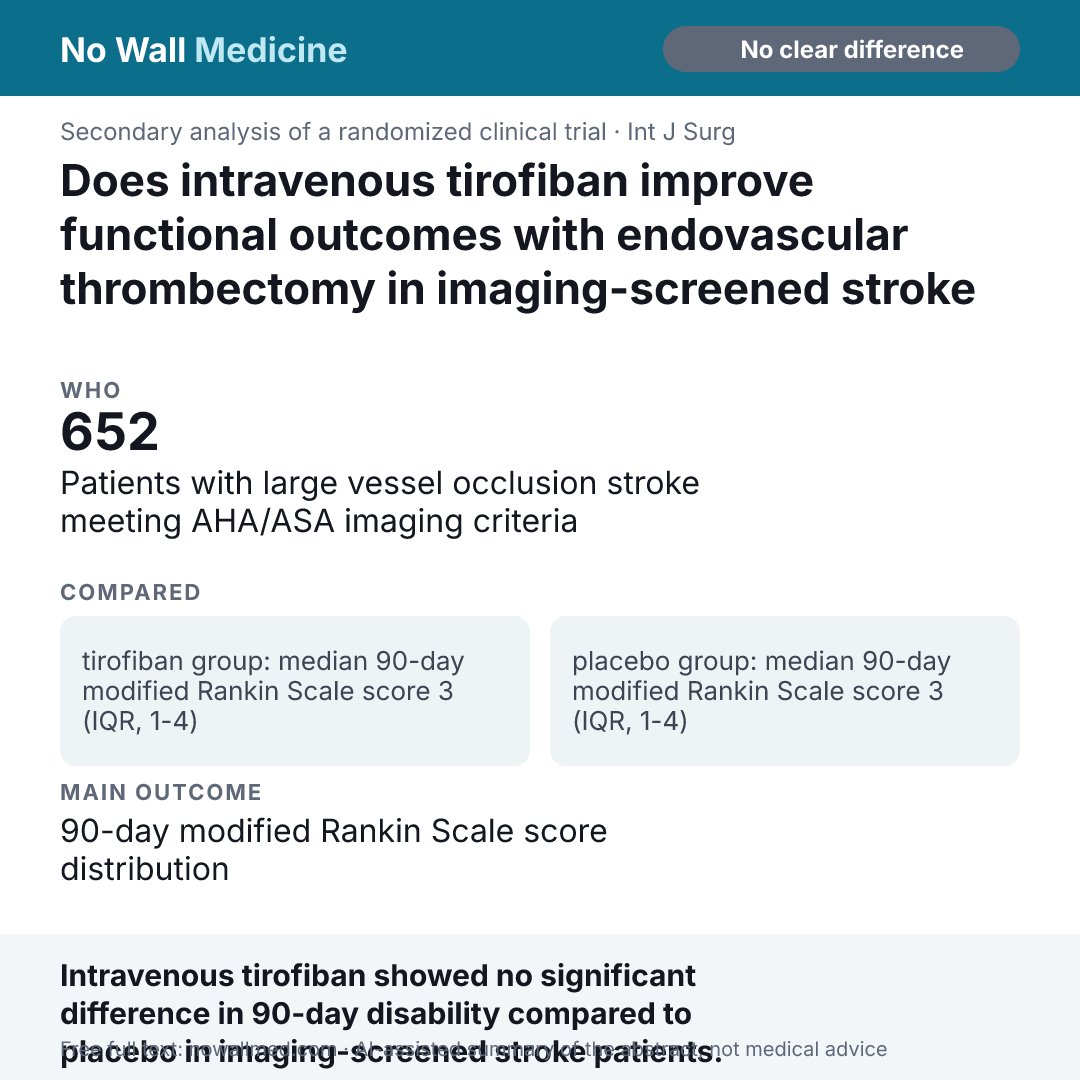
Association of functional outcomes between intravenous tirofiban and endovascular thrombectomy in imaging-screened patients with large vessel occlusion stroke: a secondary analysis of randomized clinical trial
Secondary analysis of a randomized clinical trialNo clear difference
Does intravenous tirofiban improve functional outcomes with endovascular thrombectomy in imaging-screened stroke patients?
Who
652
Patients with large vessel occlusion stroke meeting AHA/ASA imaging criteria
Compared
tirofiban group: median 90-day modified Rankin Scale score 3 (IQR, 1-4)
placebo group: median 90-day modified Rankin Scale score 3 (IQR, 1-4)
Main outcome
90-day modified Rankin Scale score distribution
Result: adjusted common odds ratio 1.08 (95% CI: 0.83-1.42)
Bottom line: Intravenous tirofiban showed no significant difference in 90-day disability compared to placebo in imaging-screened stroke patients.
Limitation: Potential increased risk of symptomatic intracranial hemorrhage in patients with cardioembolism stroke.
Int J Surg · 2024-09-01 · Save PNG
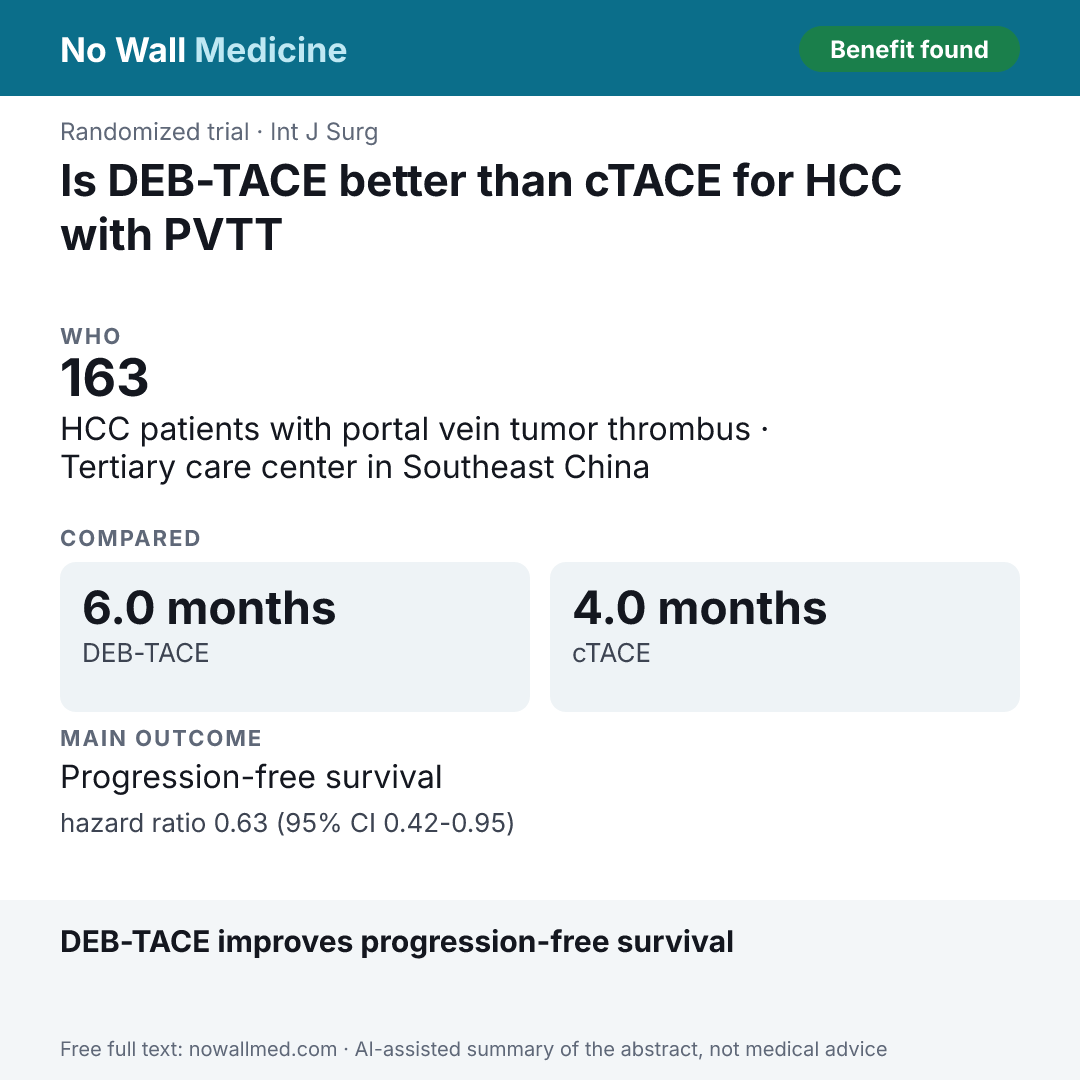
Comparison of drug-eluting bead with conventional transcatheter arterial chemoembolization for hepatocellular carcinoma with portal vein tumor thrombus: a randomized clinical trial
Randomized trialBenefit found
Is DEB-TACE better than cTACE for HCC with PVTT
Who
163
HCC patients with portal vein tumor thrombus · Tertiary care center in Southeast China
Compared
6.0 monthsDEB-TACE (95% CI, 5.0-10.0)
4.0 monthscTACE (95% CI, 3.0-5.0)
Main outcome
Progression-free survival
Result: hazard ratio 0.63 (95% CI 0.42-0.95)
Bottom line: DEB-TACE improves progression-free survival
Int J Surg · 2024-09-01 · Save PNG
Dexmedetomidine use during orthotopic liver transplantation surgery on early allograft dysfunction: a randomized controlled trial
Single-center, double-blinded, placebo-controlled randomized clinical trialNo clear difference
Does intraoperative dexmedetomidine reduce early allograft dysfunction following orthotopic liver transplantation?
Who
330
Adult patients undergoing orthotopic liver transplantation · Single-center
Compared
39dexmedetomidine (24.4%)
31normal saline (19.4%)
Main outcome
early allograft dysfunction
Bottom line: Intraoperative administration of dexmedetomidine did not reduce early allograft dysfunction rate after orthotopic liver transplantation.
Int J Surg · 2024-09-01 · Save PNG
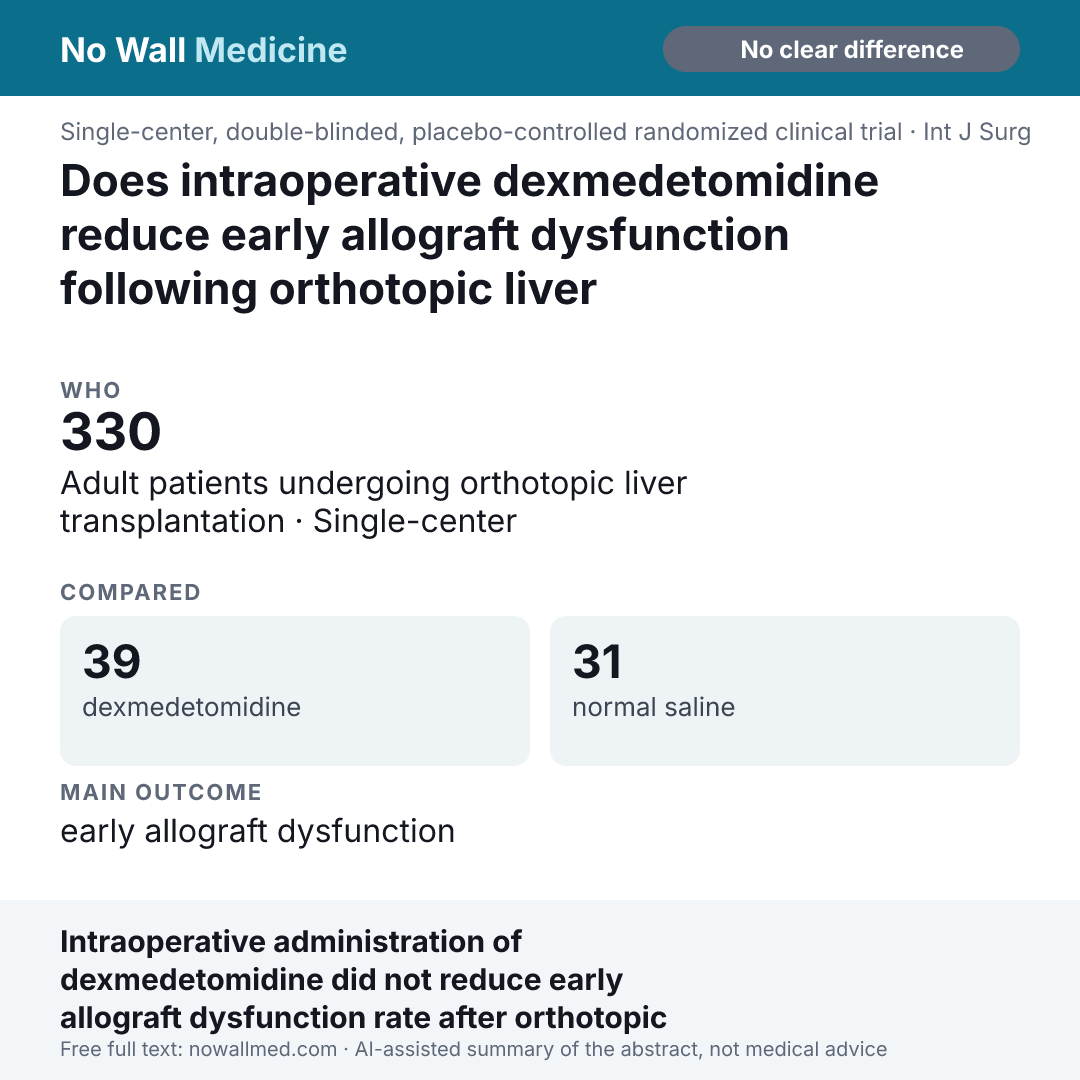
Effect of intranasal insulin on perioperative cognitive function in older adults: a randomized, placebo-controlled, double-blind clinical trial
Randomized, placebo-controlled, double-blind clinical trialBenefit found
Does intranasal insulin improve perioperative cognitive function in older surgical patients?
Who
140
Older patients scheduled for elective orthopaedic or pancreatic surgery
Compared
Group S (saline): 26.6% postoperative delirium incidence
Group I (insulin): 10.9% postoperative delirium incidence
Main outcome
Perioperative cognitive function and postoperative delirium incidence
Bottom line: Intranasal insulin administration may improve postoperative cognition and decrease delirium in older surgical patients.
Limitation: A more standardized multi-centre, large-sample study is needed to validate results.
Age Ageing · 2024-09-01 · Save PNG
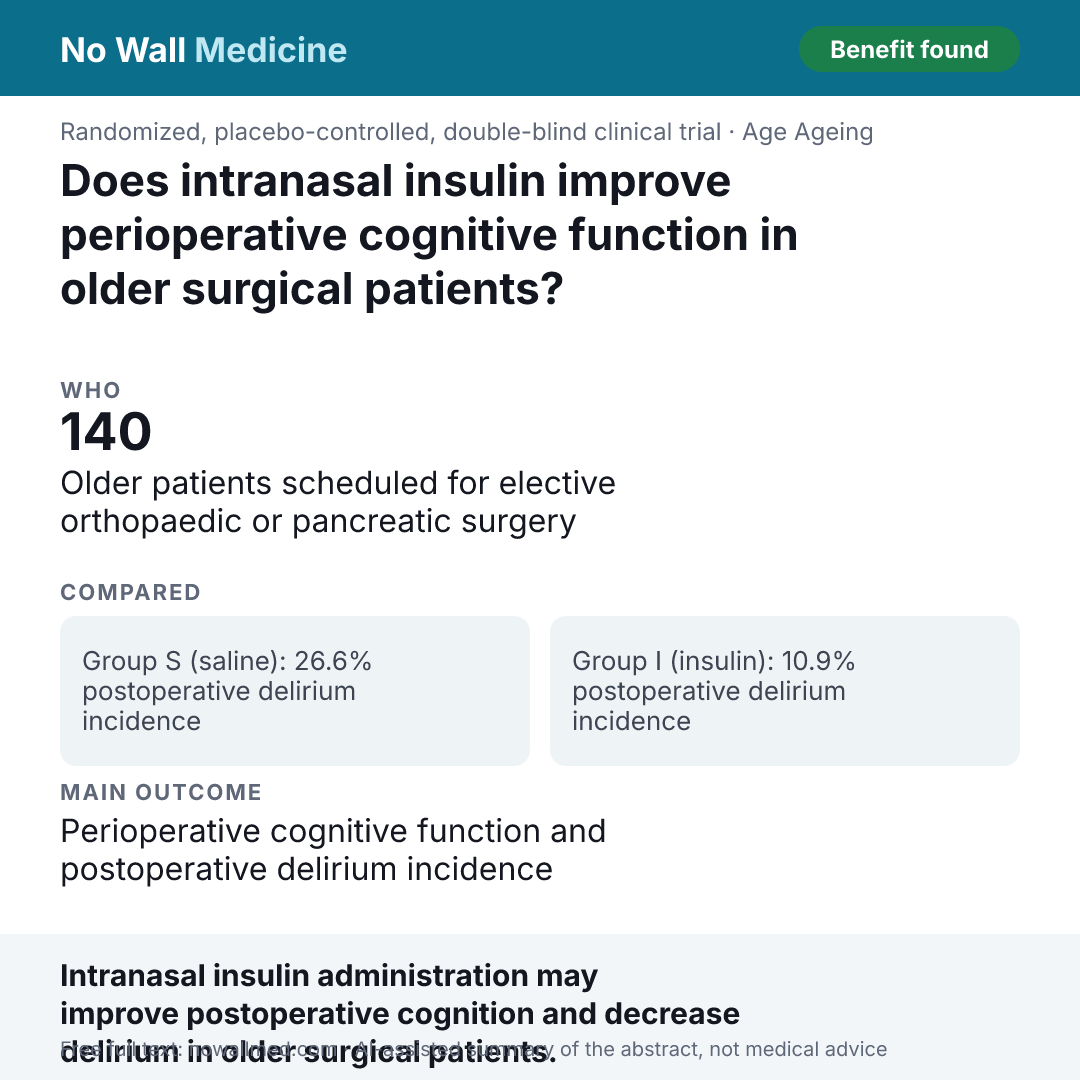
Efficacy and Safety of Postbiotic Contained Inactivated Lactobacillus reuteri ( Limosilactobacillus reuteri ) DSM 17648 as Adjuvant Therapy in the Eradication of Helicobacter pylori in Adults With Functional Dyspepsia: A Randomized Double-Blind Placebo-Controlled Trial
Randomized, double-blind, placebo-controlled, multicenter, parallel studyBenefit found
Does postbiotic Limosilactobacillus reuteri DSM 17648 improve Helicobacter pylori eradication in functional dyspepsia?
Who
Helicobacter pylori-positive patients with functional dyspepsia · multicenter
Compared
96.7%postbiotic group
86.0%placebo group
Main outcome
Helicobacter pylori eradication efficiency
Bottom line: Postbiotic Limosilactobacillus reuteri DSM 17648 improves Helicobacter pylori eradication and decreases digestive adverse effects.
Clin Transl Gastroenterol · 2024-09-01 · Save PNG
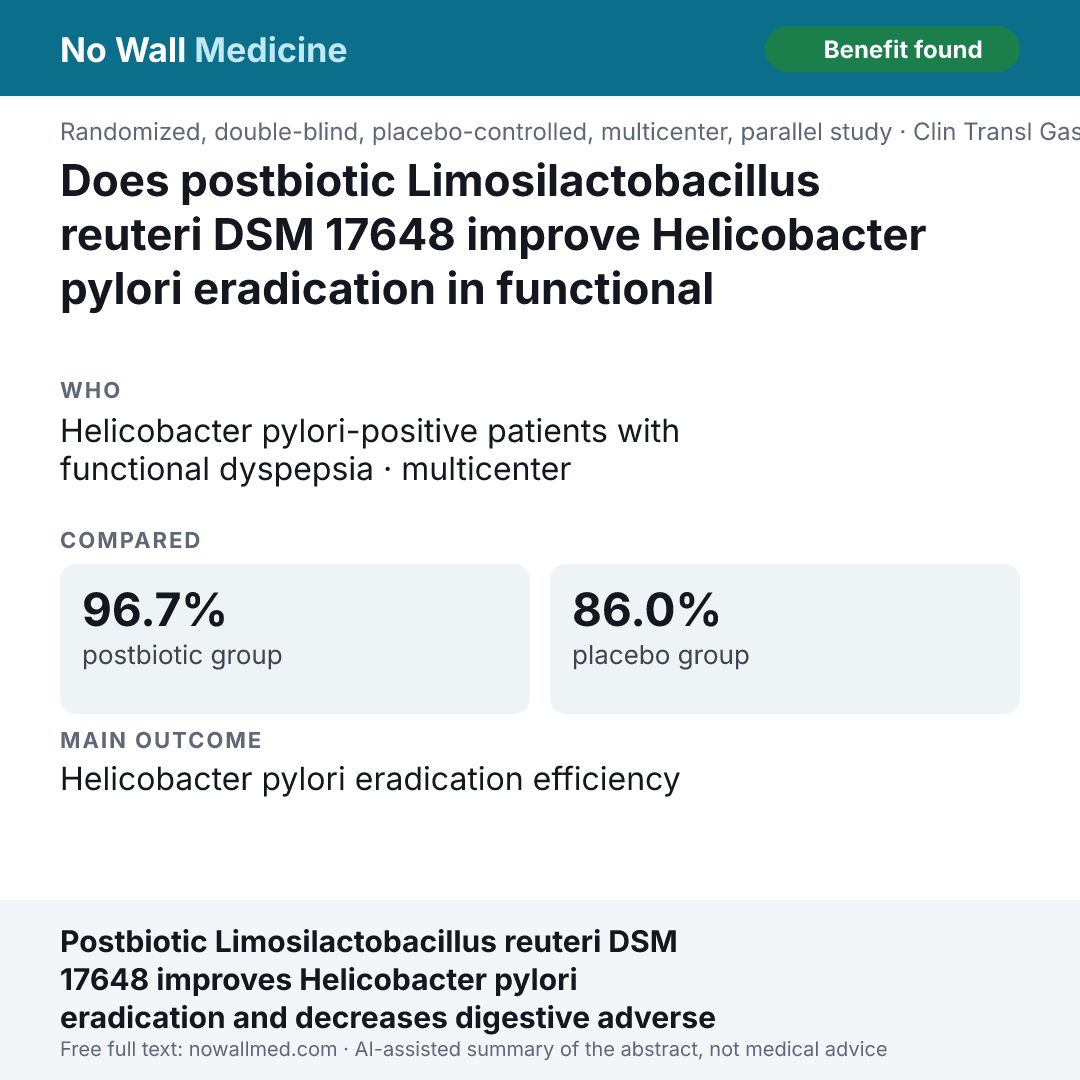
Inflammation, Cholesterol, Lipoprotein(a), and 30-Year Cardiovascular Outcomes in Women
Prospective cohort studyKey finding
Do inflammation, cholesterol, and lipoprotein(a) levels predict 30-year cardiovascular outcomes in women?
Who
27939
Initially healthy United States women · United States
Compared
High-sensitivity C-reactive protein top quintile: hazard ratio 1.70 (95% CI 1.52 to 1.90)
Low-density lipoprotein cholesterol top quintile: hazard ratio 1.36 (95% CI 1.23 to 1.52)
Lipoprotein(a) top quintile: hazard ratio 1.33 (95% CI 1.21 to 1.47)
Main outcome
First major adverse cardiovascular event
Bottom line: Higher levels of C-reactive protein, LDL cholesterol, and lipoprotein(a) predict increased 30-year cardiovascular risk in healthy women.
Funded by: National Institutes of Health
NEJM · 2024-08-31 · Save PNG
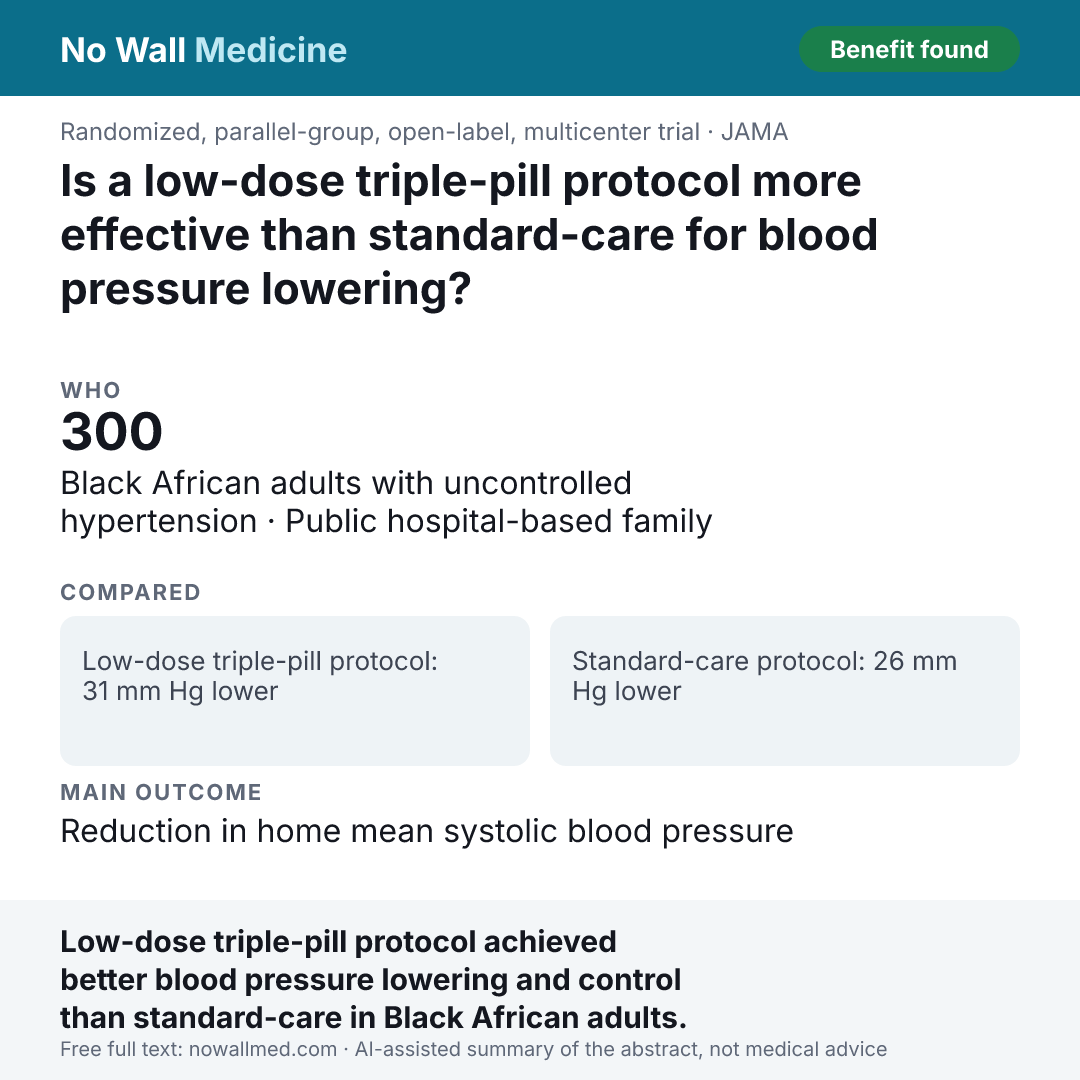
Low-Dose Triple-Pill vs Standard-Care Protocols for Hypertension Treatment in Nigeria: A Randomized Clinical Trial
Randomized, parallel-group, open-label, multicenter trialBenefit found
Is a low-dose triple-pill protocol more effective than standard-care for blood pressure lowering?
Who
300
Black African adults with uncontrolled hypertension · Public hospital-based family medicine clinics in Nigeria
Compared
Low-dose triple-pill protocol: 31 mm Hg lower
Standard-care protocol: 26 mm Hg lower
Main outcome
Reduction in home mean systolic blood pressure
Result: adjusted difference, -5.8 mm Hg (95% CI, -8.0 to -3.6)
Bottom line: Low-dose triple-pill protocol achieved better blood pressure lowering and control than standard-care in Black African adults.
JAMA · 2024-08-31 · Save PNG