Visual abstracts
New randomized trials and meta-analyses from leading journals at a glance: who was studied, what was compared, and what was found. Every paper is free to read in full.
All specialtiesCardiology 4763Oncology 4042Gastroenterology & Hepatology 1902Infectious Disease 3756Neurology 1872Psychiatry & Mental Health 2214Pulmonology 2042Critical Care 1319Endocrinology & Diabetes 2544Pediatrics 2889Surgery 2479Orthopedics & Sports Medicine 917Neurosurgery 525Cardiothoracic & Vascular Surgery 656Plastic & Reconstructive Surgery 574Nephrology 1107Rheumatology 810Hematology 1090Dermatology 611Ophthalmology 532Obstetrics & Gynecology 1645Public & Global Health 1037Radiology & Imaging 617Anesthesiology 957Urology 745ENT (Otolaryngology) 494Emergency Medicine 481Allergy & Immunology 309Geriatrics 972Family Medicine & Primary Care 533Medical Genetics & Genomics 659Pathology & Laboratory Medicine 156Physical Medicine & Rehabilitation 734Palliative Care 421Nutrition 1560Digital Health & AI 2133General Medicine 318
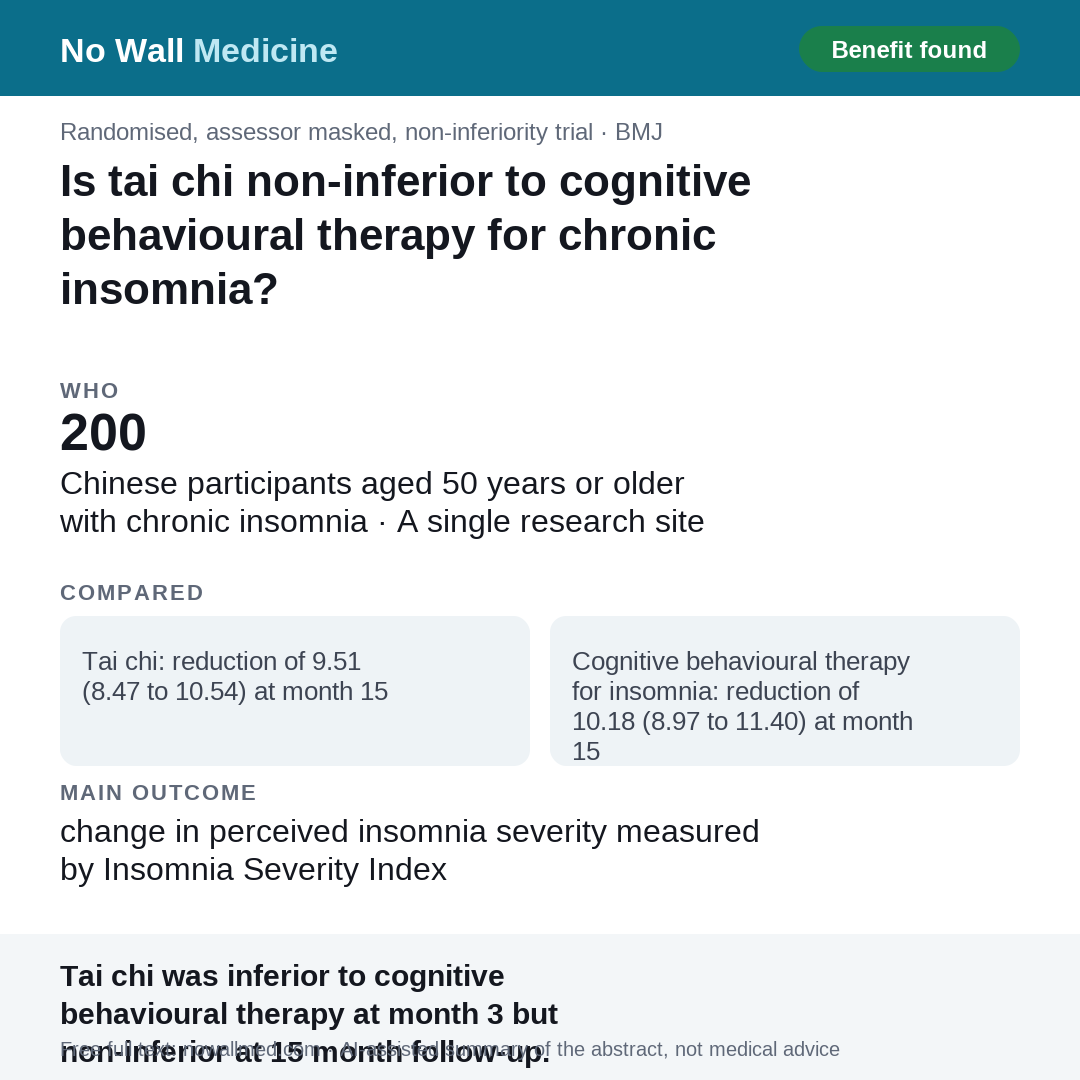
Tai chi or cognitive behavioural therapy for treating insomnia in middle aged and older adults: randomised non-inferiority trial
Randomised, assessor masked, non-inferiority trialBenefit found
Is tai chi non-inferior to cognitive behavioural therapy for chronic insomnia?
Who
200
Chinese participants aged 50 years or older with chronic insomnia · A single research site in Hong Kong
Compared
Tai chi: reduction of 9.51 (8.47 to 10.54) at month 15
Cognitive behavioural therapy for insomnia: reduction of 10.18 (8.97 to 11.40) at month 15
Main outcome
change in perceived insomnia severity measured by Insomnia Severity Index
Result: between group difference of 0.68 (-∞ to 2.00) at month 15
Bottom line: Tai chi was inferior to cognitive behavioural therapy at month 3 but non-inferior at 15 month follow-up.
BMJ · 2025-11-26Download image
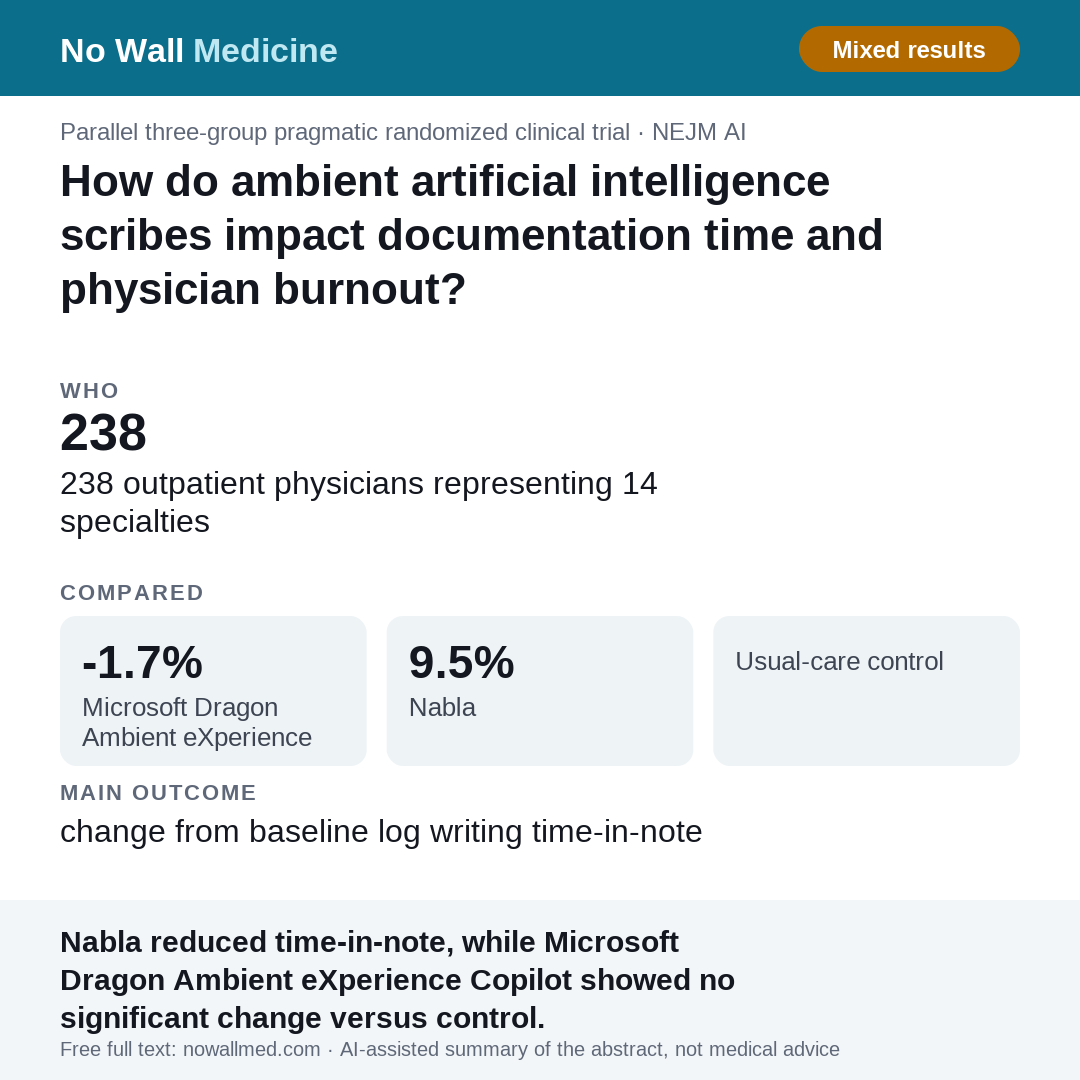
Ambient AI Scribes in Clinical Practice: A Randomized Trial
Parallel three-group pragmatic randomized clinical trialMixed results
How do ambient artificial intelligence scribes impact documentation time and physician burnout?
Who
238
238 outpatient physicians representing 14 specialties
Compared
-1.7%Microsoft Dragon Ambient eXperience Copilot (95% CI, -9.4% to +5.9%)
9.5%Nabla (95% CI, -17.2% to -1.8%)
Usual-care control
Main outcome
change from baseline log writing time-in-note
Result: 9.5% (95% CI, -17.2% to -1.8%) decrease in time-in-note for Nabla
Bottom line: Nabla reduced time-in-note, while Microsoft Dragon Ambient eXperience Copilot showed no significant change versus control.
Limitation: secondary end point findings need confirmation in larger, multicenter trials
Funded by: University of California, Los Angeles, Department of Medicine and others
NEJM AI · 2025-11-26Download image
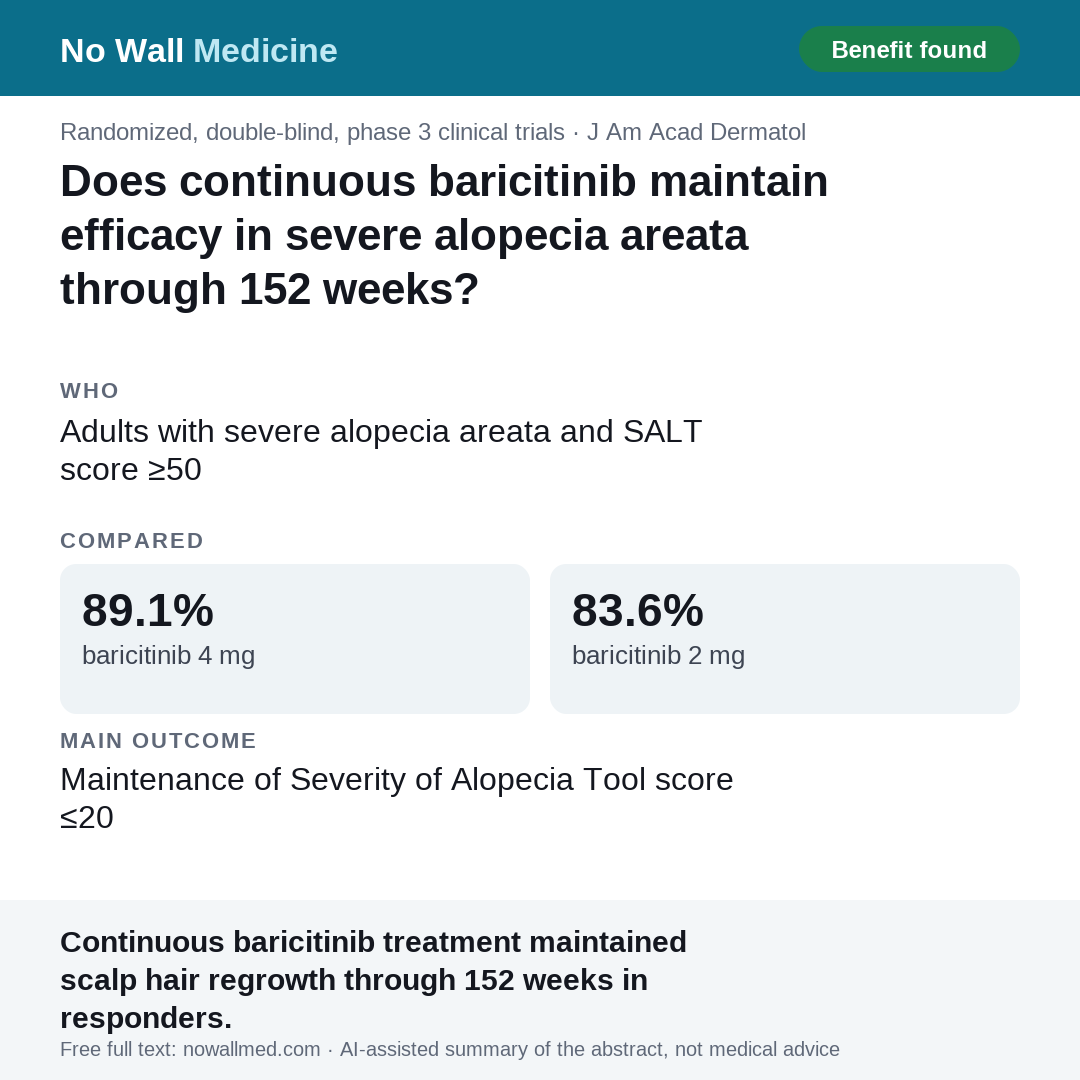
Maintenance of long-term efficacy with continuous baricitinib treatment in patients with severe alopecia areata: 3-year results from BRAVE-AA1 and BRAVE-AA2
Randomized, double-blind, phase 3 clinical trialsBenefit found
Does continuous baricitinib maintain efficacy in severe alopecia areata through 152 weeks?
Who
Adults with severe alopecia areata and SALT score ≥50
Compared
89.1%baricitinib 4 mg (115/129)
83.6%baricitinib 2 mg (56/67)
Main outcome
Maintenance of Severity of Alopecia Tool score ≤20
Bottom line: Continuous baricitinib treatment maintained scalp hair regrowth through 152 weeks in responders.
Limitation: Does not include outcomes of patients without SALT score ≤20 response at week 52.
J Am Acad Dermatol · 2025-11-26Download image
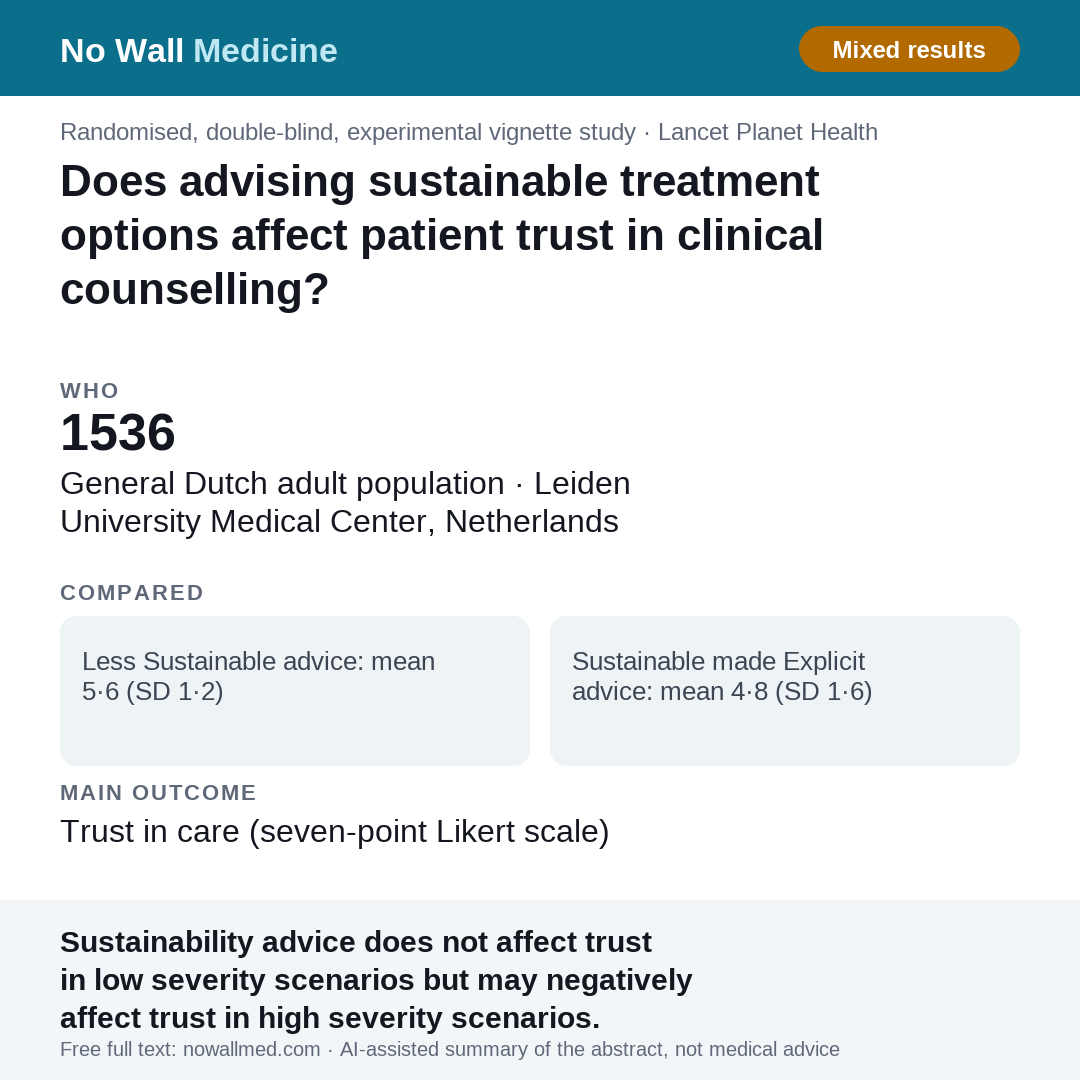
Integrating environmental sustainability in clinical counselling: a randomised, double-blind, experimental vignette study in the Netherlands
Randomised, double-blind, experimental vignette studyMixed results
Does advising sustainable treatment options affect patient trust in clinical counselling?
Who
1536
General Dutch adult population · Leiden University Medical Center, Netherlands
Compared
Less Sustainable advice: mean 5·6 (SD 1·2)
Sustainable made Explicit advice: mean 4·8 (SD 1·6)
Main outcome
Trust in care (seven-point Likert scale)
Bottom line: Sustainability advice does not affect trust in low severity scenarios but may negatively affect trust in high severity scenarios.
Limitation: Differences in trust scores varied across medical problems.
Funded by: Leiden University
Lancet Planet Health · 2025-11-26Download image
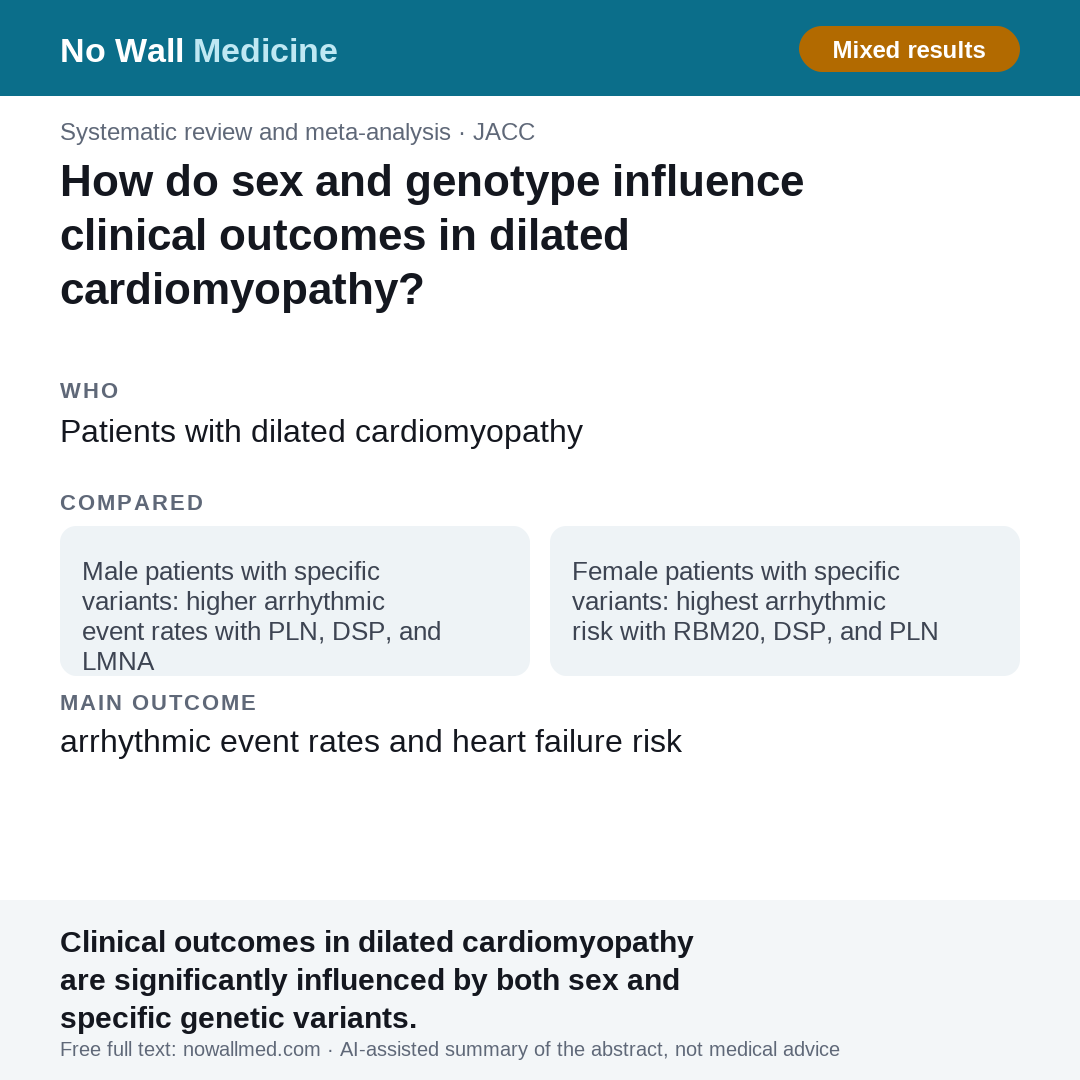
Sex Differences in Dilated Cardiomyopathy: Evidence Gaps and Future Directions
Systematic review and meta-analysisMixed results
How do sex and genotype influence clinical outcomes in dilated cardiomyopathy?
Who
Patients with dilated cardiomyopathy
Compared
Male patients with specific variants: higher arrhythmic event rates with PLN, DSP, and LMNA
Female patients with specific variants: highest arrhythmic risk with RBM20, DSP, and PLN
Main outcome
arrhythmic event rates and heart failure risk
Bottom line: Clinical outcomes in dilated cardiomyopathy are significantly influenced by both sex and specific genetic variants.
JACC · 2025-11-26Download image
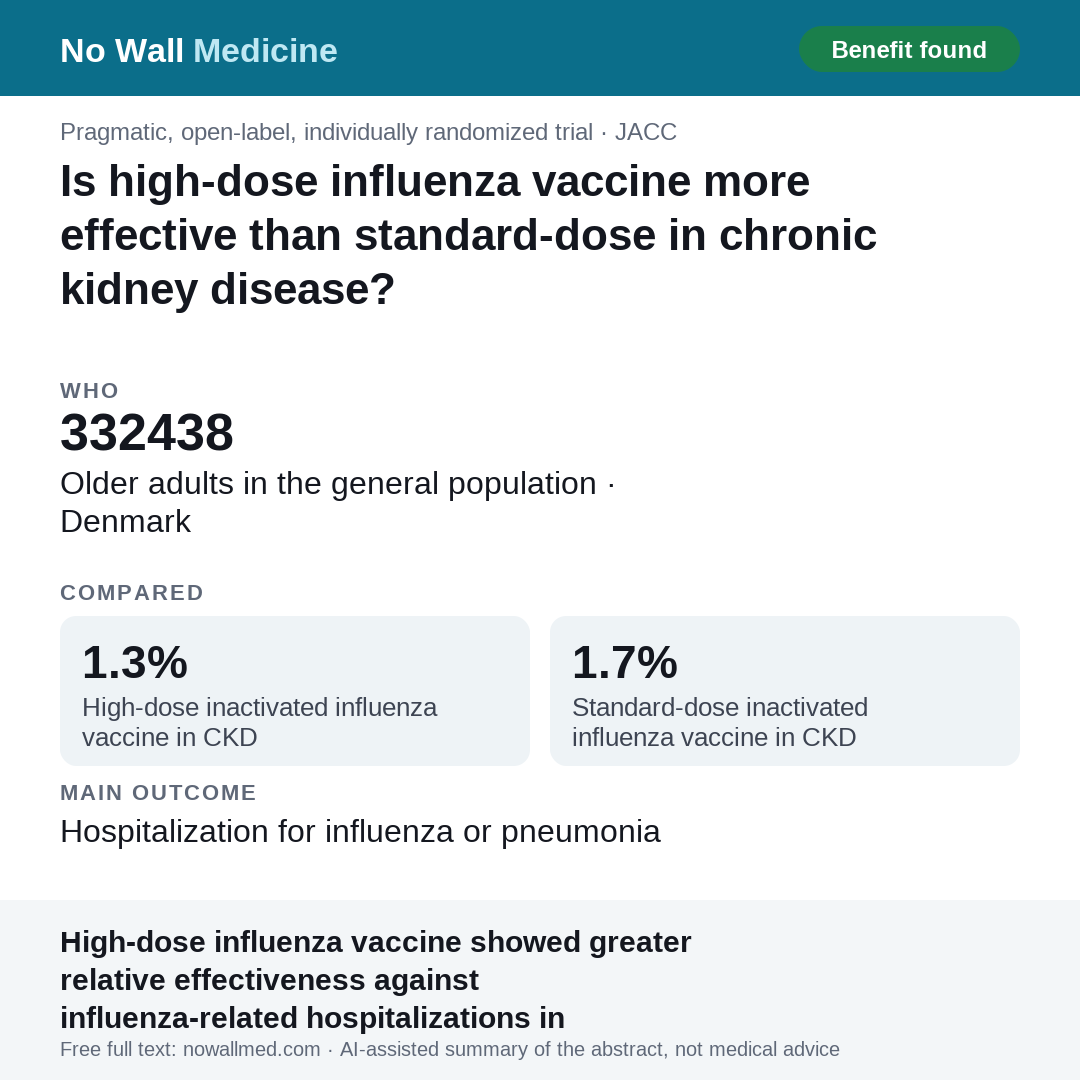
High-Dose vs Standard-Dose Influenza Vaccine in Chronic Kidney Disease: The DANFLU-2 Trial Subgroup Analysis
Pragmatic, open-label, individually randomized trialBenefit found
Is high-dose influenza vaccine more effective than standard-dose in chronic kidney disease?
Who
332438
Older adults in the general population · Denmark
Compared
1.3%High-dose inactivated influenza vaccine in CKD
1.7%Standard-dose inactivated influenza vaccine in CKD
Main outcome
Hospitalization for influenza or pneumonia
Result: relative vaccine effectiveness 16.9% (95% CI: 3.4%-28.5%)
Bottom line: High-dose influenza vaccine showed greater relative effectiveness against influenza-related hospitalizations in patients with chronic kidney disease.
JACC · 2025-11-26Download image
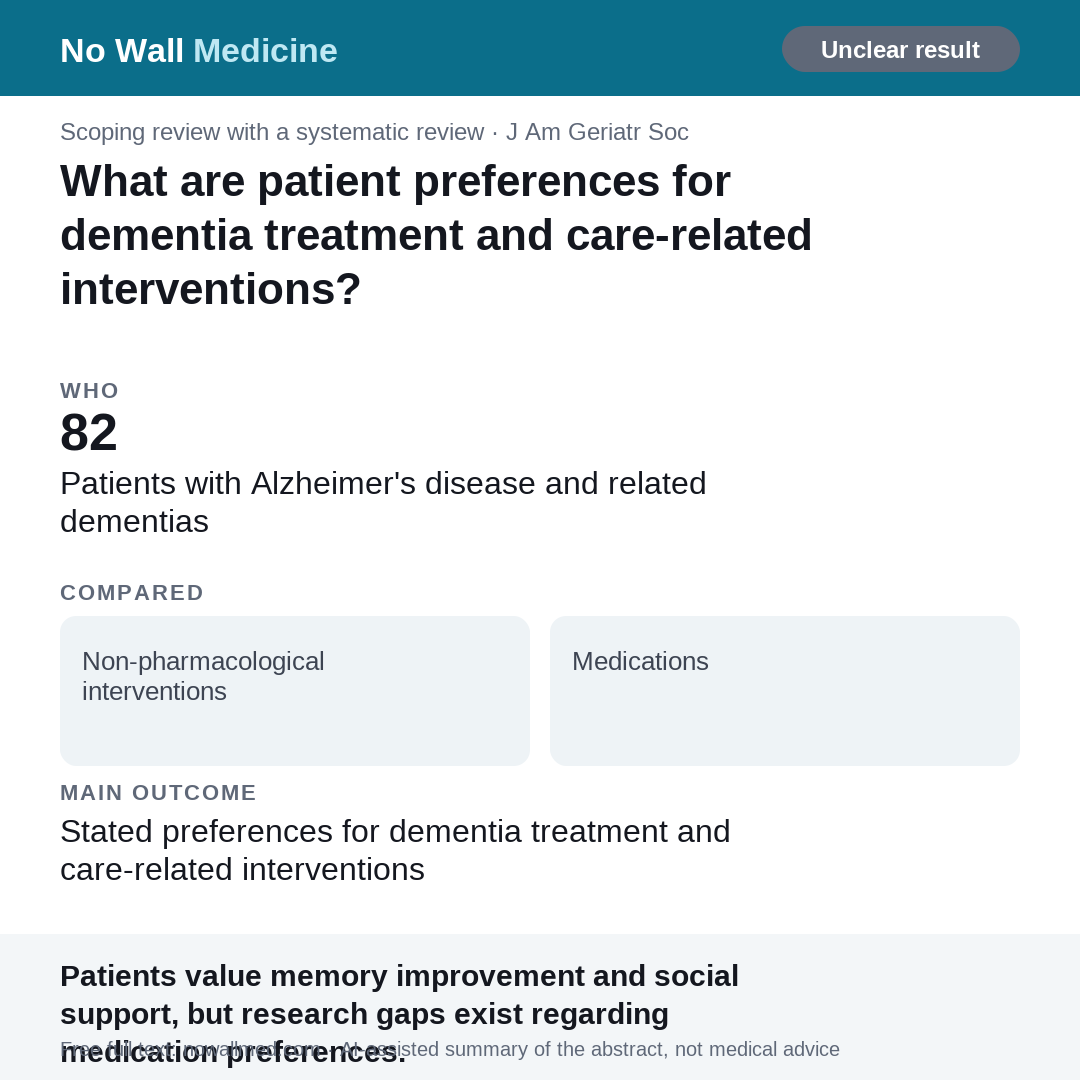
Patient Preferences for Dementia Interventions: A Scoping Review With a Systematic Review of Medications and Choice-Based Methods
Scoping review with a systematic reviewUnclear result
What are patient preferences for dementia treatment and care-related interventions?
Who
82
Patients with Alzheimer's disease and related dementias
Compared
Non-pharmacological interventions
Medications
Main outcome
Stated preferences for dementia treatment and care-related interventions
Bottom line: Patients value memory improvement and social support, but research gaps exist regarding medication preferences.
J Am Geriatr Soc · 2025-11-26Download image
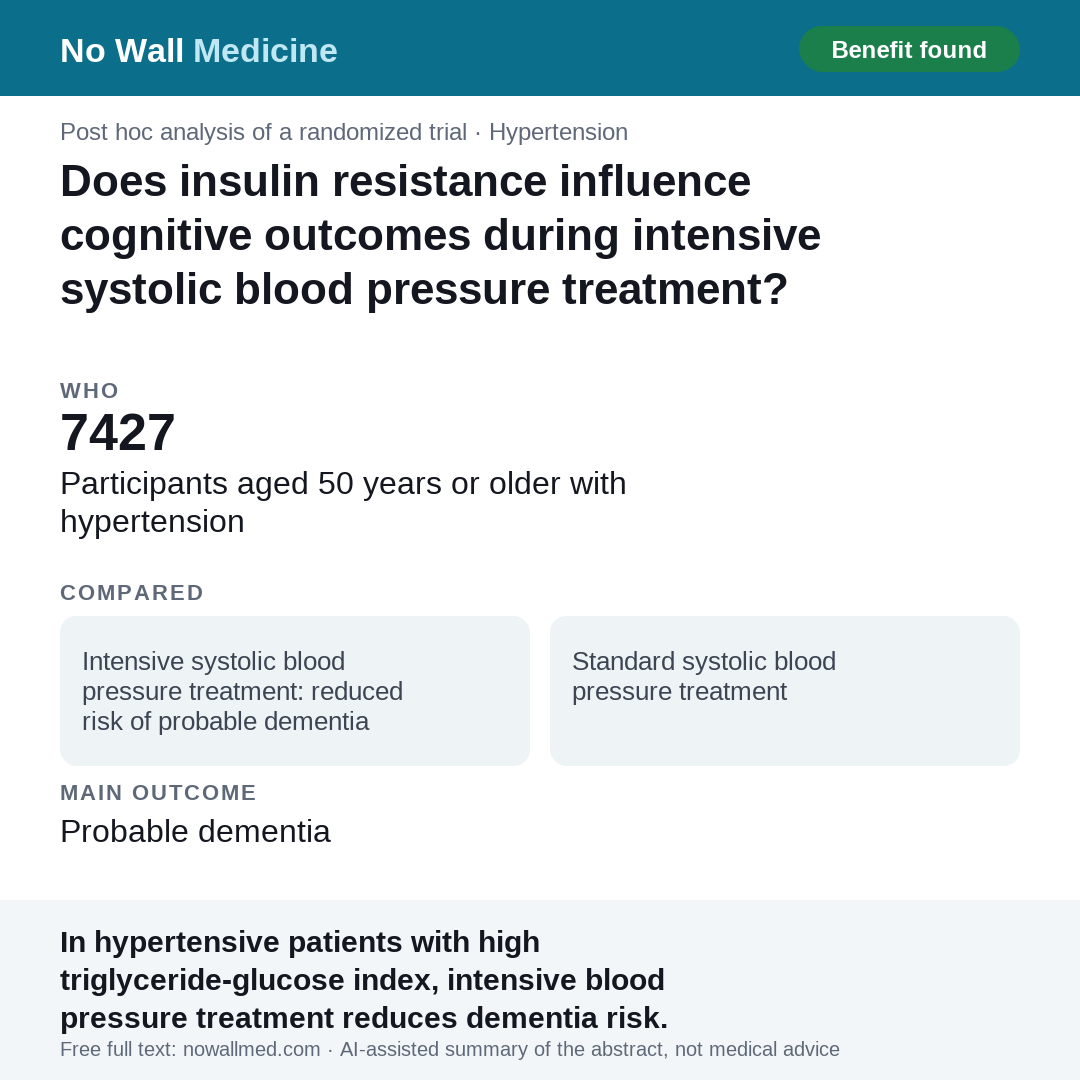
Insulin Resistance and Blood Pressure Control on Cognitive Outcomes
Post hoc analysis of a randomized trialBenefit found
Does insulin resistance influence cognitive outcomes during intensive systolic blood pressure treatment?
Who
7427
Participants aged 50 years or older with hypertension
Compared
Intensive systolic blood pressure treatment: reduced risk of probable dementia
Standard systolic blood pressure treatment
Main outcome
Probable dementia
Bottom line: In hypertensive patients with high triglyceride-glucose index, intensive blood pressure treatment reduces dementia risk.
Hypertension · 2025-11-26Download image
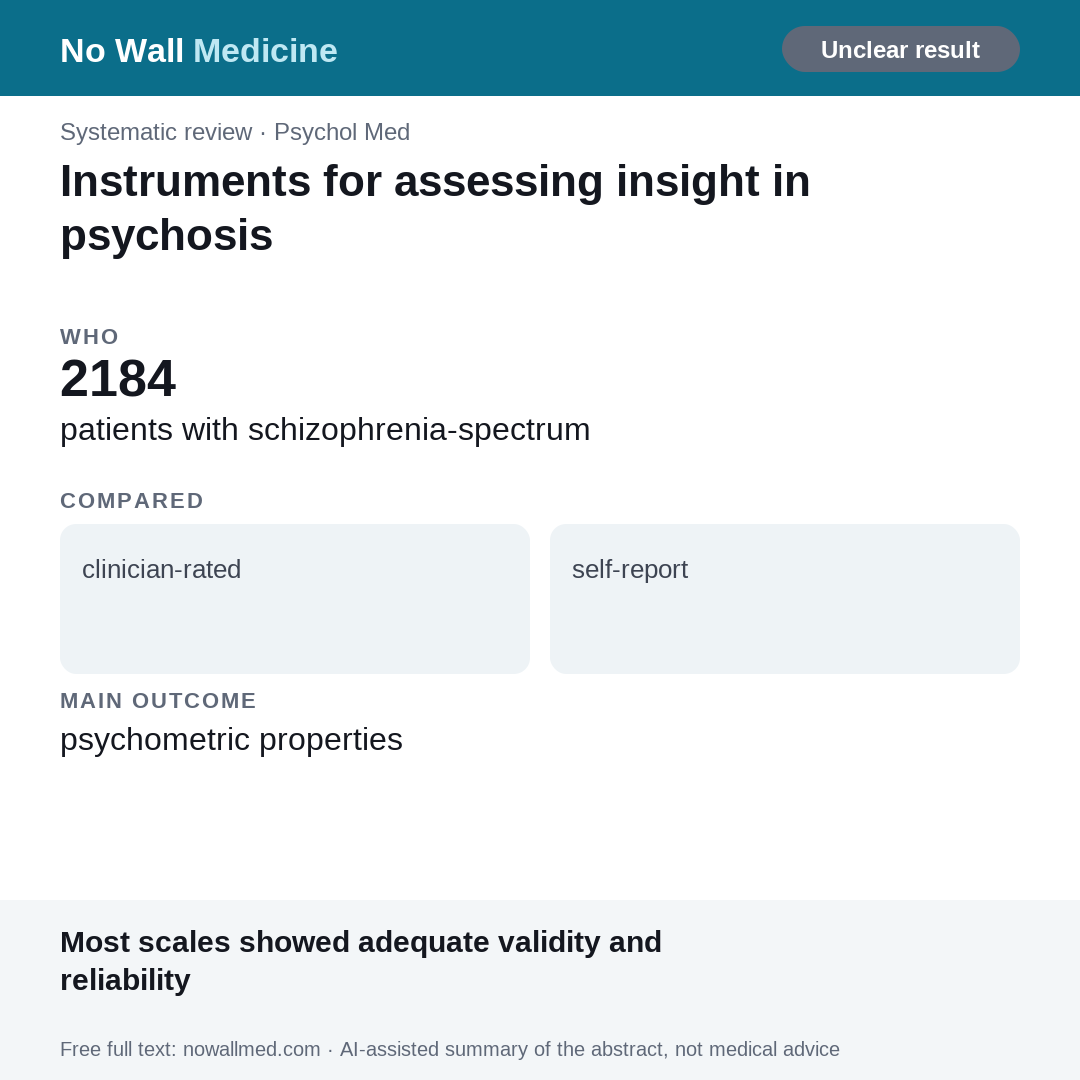
Instruments for assessing insight in psychosis: A systematic review of psychometric properties
Systematic reviewUnclear result
Instruments for assessing insight in psychosis
Who
2184
patients with schizophrenia-spectrum
Compared
clinician-rated
self-report
Main outcome
psychometric properties
Bottom line: Most scales showed adequate validity and reliability
Limitation: responsiveness to clinical change rarely tested
Psychol Med · 2025-11-26Download image
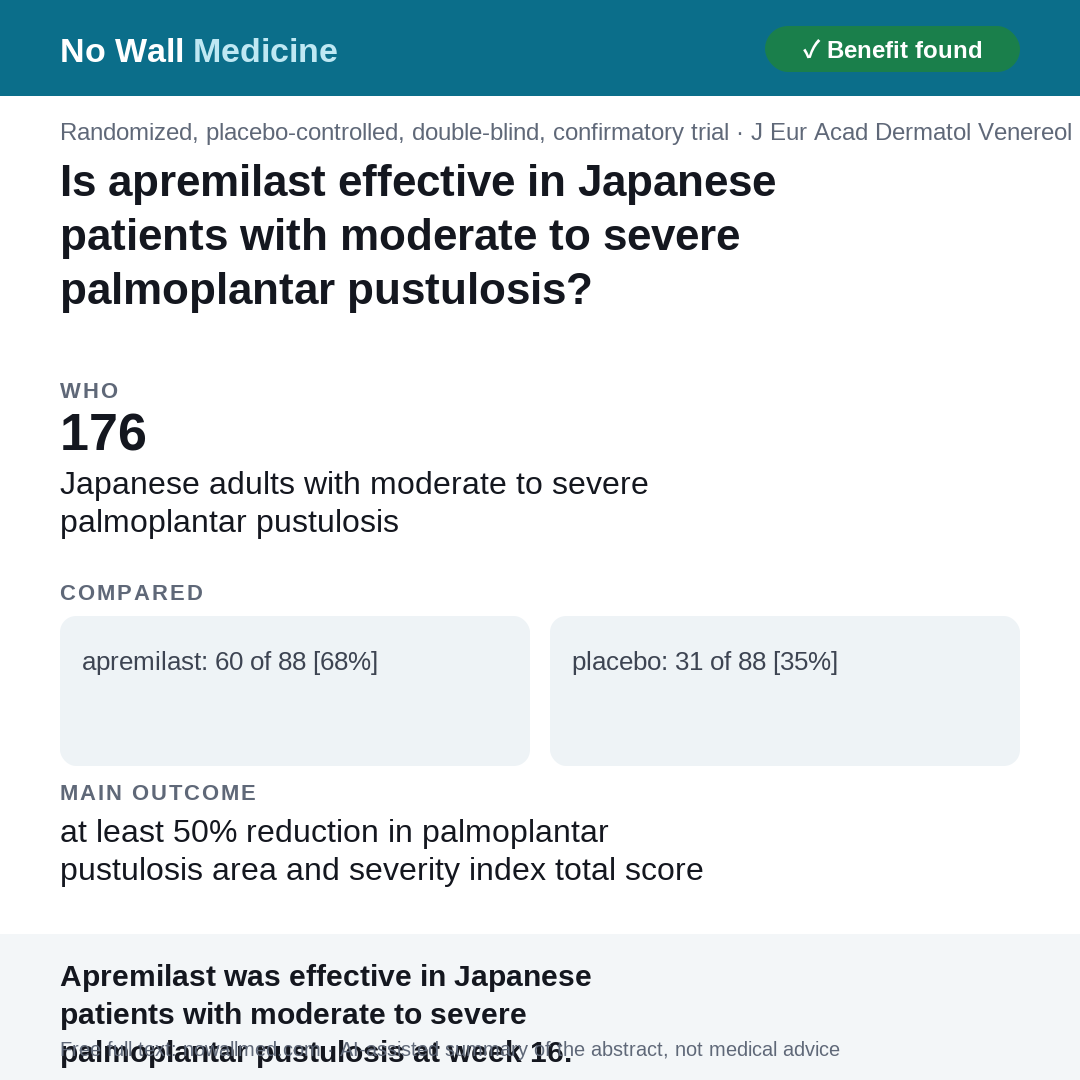
Apremilast in Japanese patients with palmoplantar pustulosis: A randomized, Phase 3 trial
Randomized, placebo-controlled, double-blind, confirmatory trialBenefit found
Is apremilast effective in Japanese patients with moderate to severe palmoplantar pustulosis?
Who
176
Japanese adults with moderate to severe palmoplantar pustulosis
Compared
apremilast: 60 of 88 [68%]
placebo: 31 of 88 [35%]
Main outcome
at least 50% reduction in palmoplantar pustulosis area and severity index total score
Result: treatment difference: 32.6% [95% CI: 18.7, 46.5]
Bottom line: Apremilast was effective in Japanese patients with moderate to severe palmoplantar pustulosis at week 16.
J Eur Acad Dermatol Venereol · 2025-11-26Download image
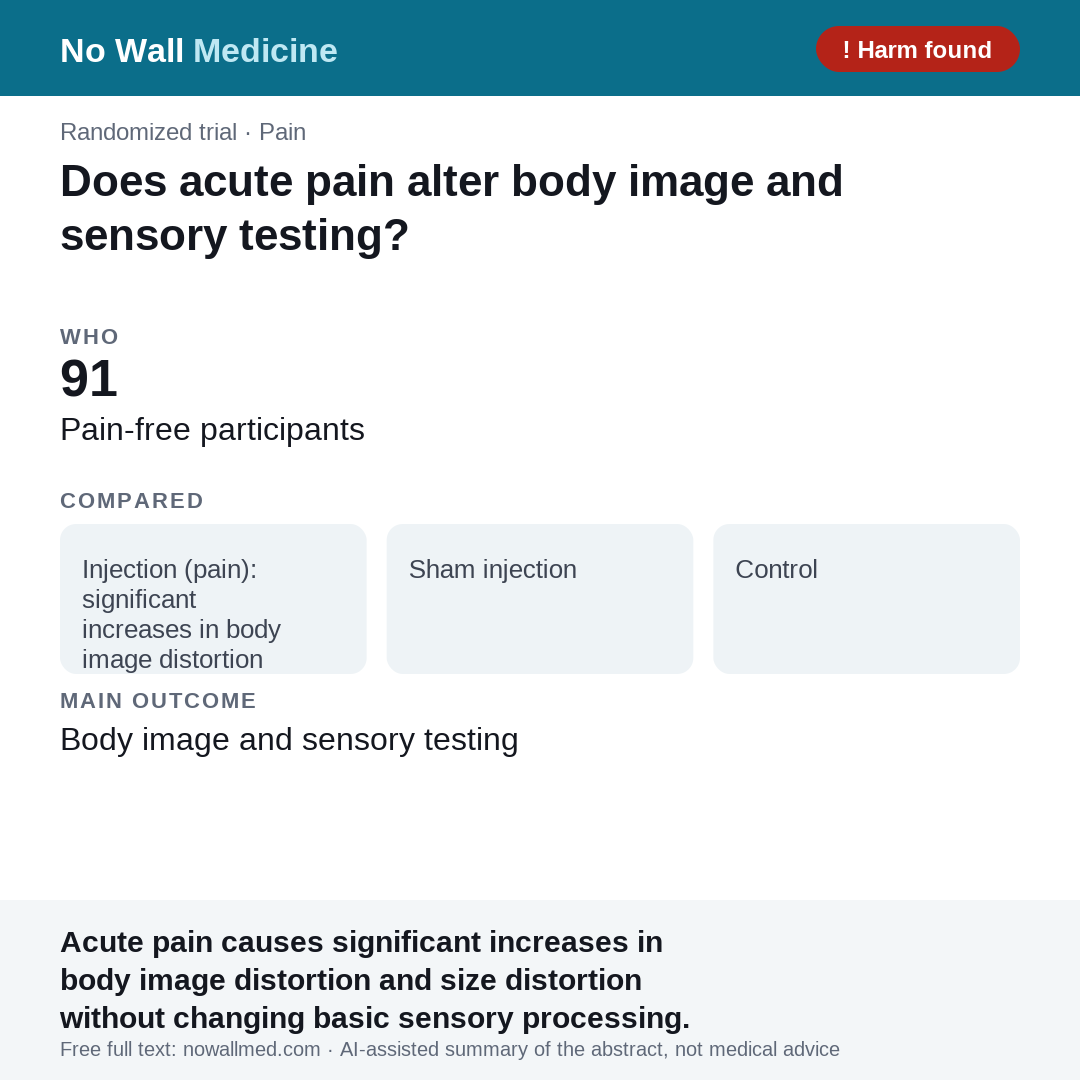
Perceiving pain alters body perception: the effects of acute pain on body image and sensory testing
Randomized trialHarm found
Does acute pain alter body image and sensory testing?
Who
91
Pain-free participants
Compared
Injection (pain): significant increases in body image distortion
Sham injection
Control
Main outcome
Body image and sensory testing
Bottom line: Acute pain causes significant increases in body image distortion and size distortion without changing basic sensory processing.
Pain · 2025-11-26Download image
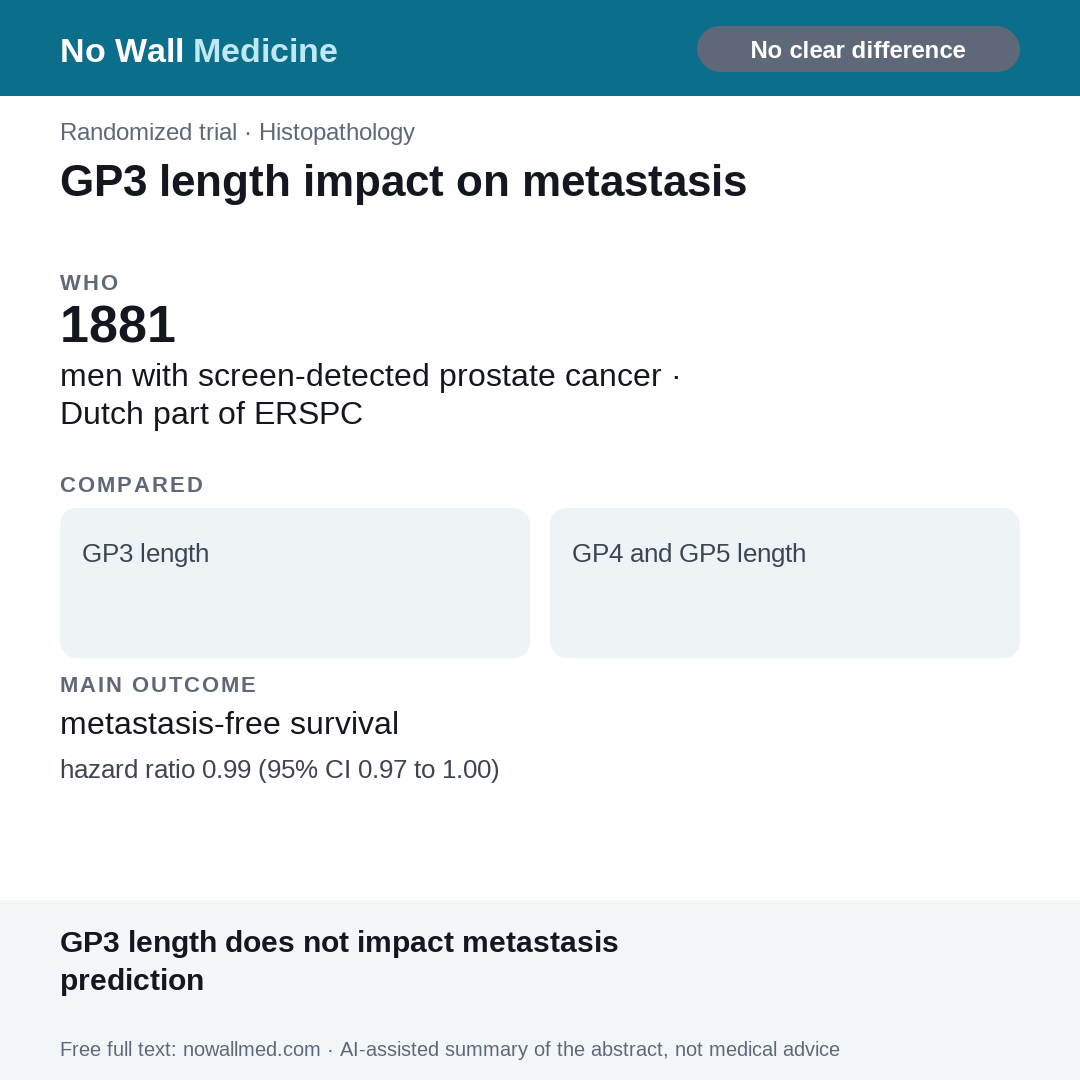
Rethinking Gleason pattern quantification in predicting metastasis: results of 20 years of follow-up in the Rotterdam section of the European Randomized Study of Screening for Prostate Cancer
Randomized trialNo clear difference
GP3 length impact on metastasis
Who
1881
men with screen-detected prostate cancer · Dutch part of ERSPC
Compared
GP3 length
GP4 and GP5 length
Main outcome
metastasis-free survival
Result: hazard ratio 0.99 (95% CI 0.97 to 1.00)
Bottom line: GP3 length does not impact metastasis prediction
Limitation: lack of targeted biopsies
Histopathology · 2025-11-26Download image
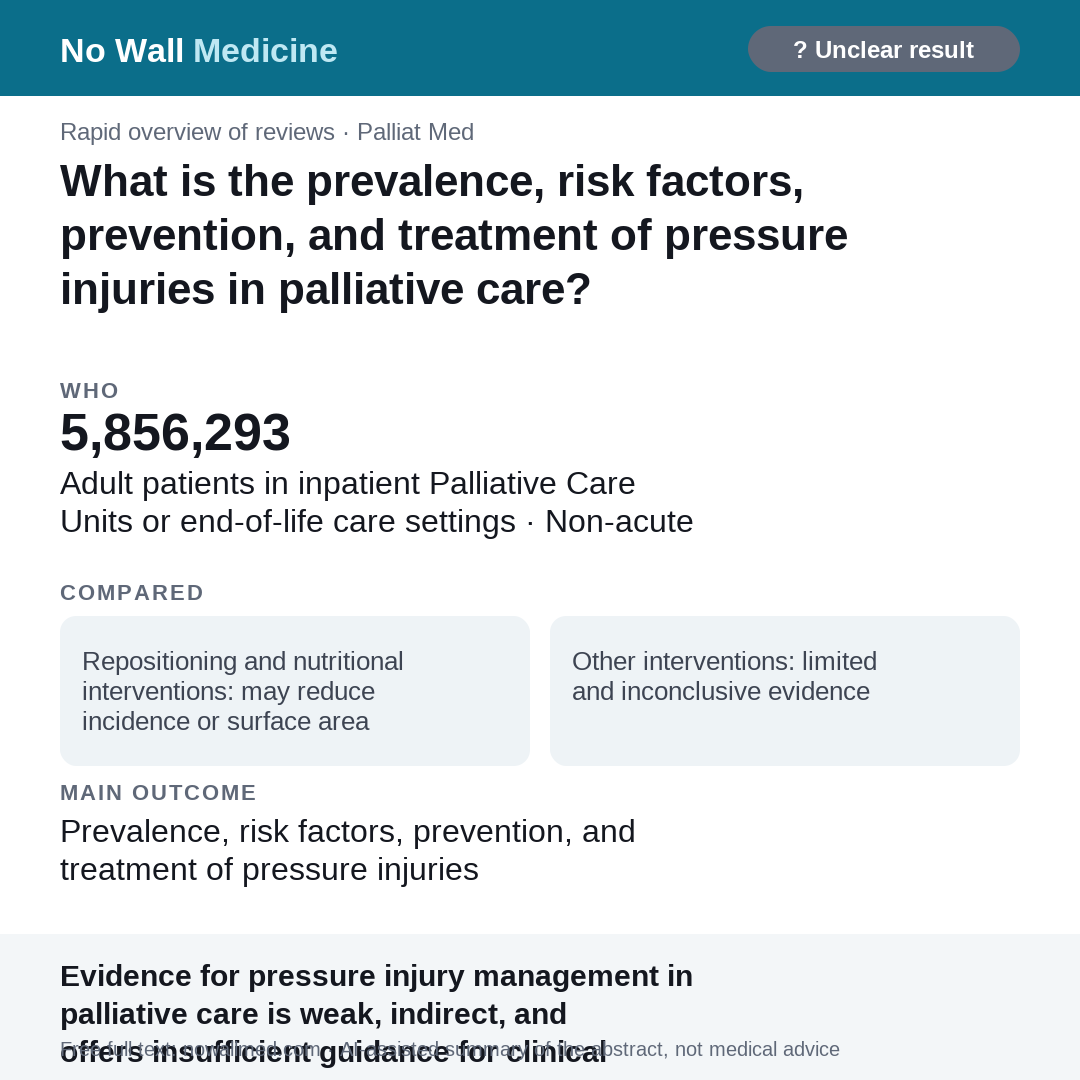
Prevalence, risk factors and management of pressure injuries and their implications for palliative care: A rapid overview of reviews
Rapid overview of reviewsUnclear result
What is the prevalence, risk factors, prevention, and treatment of pressure injuries in palliative care?
Who
5,856,293
Adult patients in inpatient Palliative Care Units or end-of-life care settings · Non-acute care settings
Compared
Repositioning and nutritional interventions: may reduce incidence or surface area
Other interventions: limited and inconclusive evidence
Main outcome
Prevalence, risk factors, prevention, and treatment of pressure injuries
Bottom line: Evidence for pressure injury management in palliative care is weak, indirect, and offers insufficient guidance for clinical practice.
Limitation: Low to very low certainty due to poor trial design and population and setting variations.
Palliat Med · 2025-11-26Download image
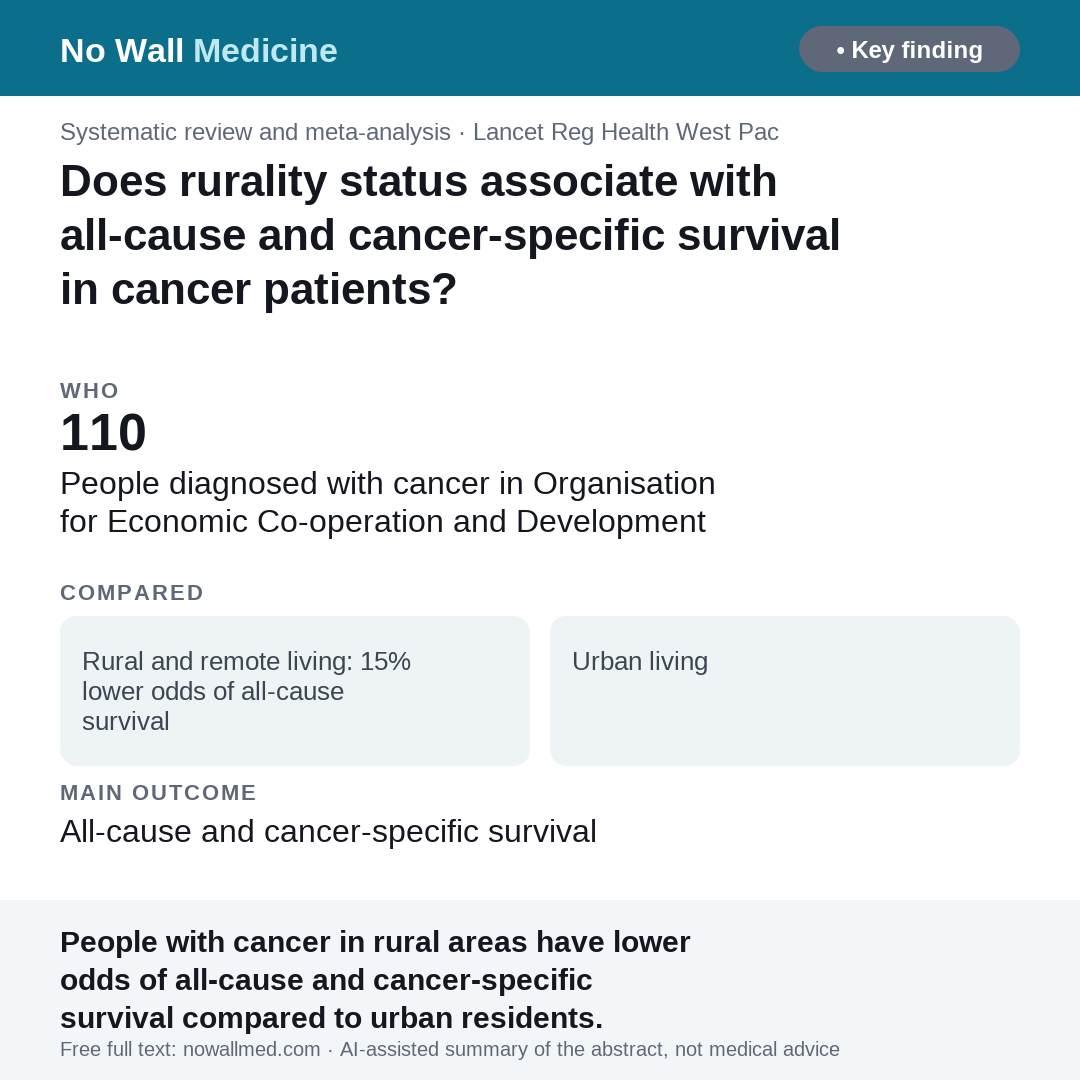
Association of rurality status with all-cause and cancer-specific survival: a systematic review and meta-analysis adjusting for clinical factors, demographics, and geographical remoteness
Systematic review and meta-analysisKey finding
Does rurality status associate with all-cause and cancer-specific survival in cancer patients?
Who
110
People diagnosed with cancer in Organisation for Economic Co-operation and Development countries · Organisation for Economic Co-operation and Development countries
Compared
Rural and remote living: 15% lower odds of all-cause survival
Urban living
Main outcome
All-cause and cancer-specific survival
Result: OR 0.85 (95% CI 0.74, 0.97) for all-cause survival; OR 0.90 (95% CI 0.86, 0.95) for cancer-specific survival
Bottom line: People with cancer in rural areas have lower odds of all-cause and cancer-specific survival compared to urban residents.
Funded by: Commonwealth of Australia's Medical Research Future Fund
Lancet Reg Health West Pac · 2025-11-26Download image
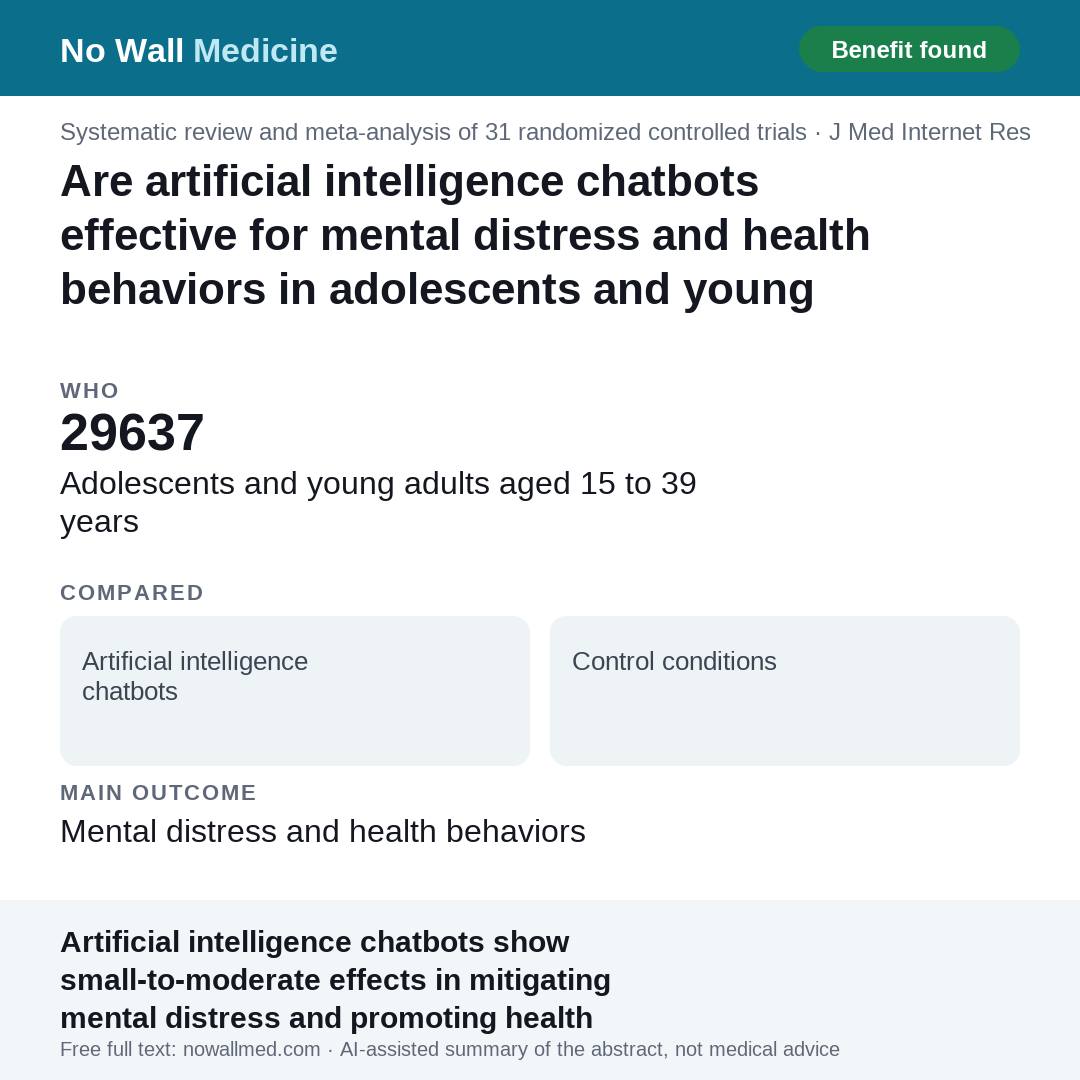
The Effectiveness of AI Chatbots in Alleviating Mental Distress and Promoting Health Behaviors Among Adolescents and Young Adults: Systematic Review and Meta-Analysis
Systematic review and meta-analysis of 31 randomized controlled trialsBenefit found
Are artificial intelligence chatbots effective for mental distress and health behaviors in adolescents and young adults?
Who
29637
Adolescents and young adults aged 15 to 39 years
Compared
Artificial intelligence chatbots
Control conditions
Main outcome
Mental distress and health behaviors
Result: standard mean difference -0.35 (95% CI -0.46 to -0.24) for mental distress; SMD 0.11 (95% CI 0.03 to 0.19) for health behaviors
Bottom line: Artificial intelligence chatbots show small-to-moderate effects in mitigating mental distress and promoting health behaviors among adolescents and young adults.
Limitation: Effectiveness varied by target samples, control conditions, design features, and user engagement barriers.
J Med Internet Res · 2025-11-26Download image
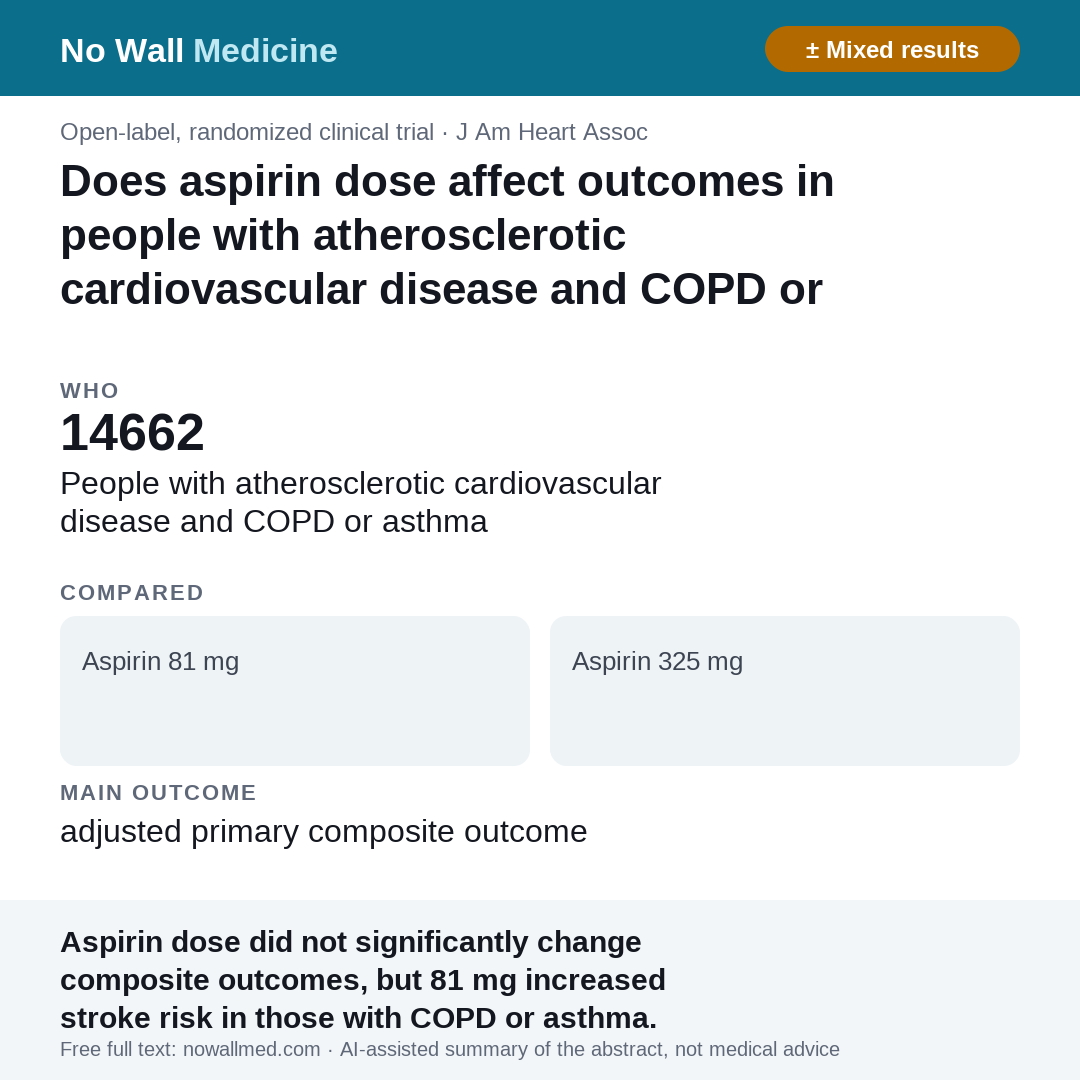
Aspirin Dosing for Secondary Prevention of Atherosclerotic Cardiovascular Disease in Chronic Obstructive Pulmonary Disease and Asthma: Insights From ADAPTABLE
Open-label, randomized clinical trialMixed results
Does aspirin dose affect outcomes in people with atherosclerotic cardiovascular disease and COPD or asthma?
Who
14662
People with atherosclerotic cardiovascular disease and COPD or asthma
Compared
Aspirin 81 mg
Aspirin 325 mg
Main outcome
adjusted primary composite outcome
Result: adjusted hazard ratio 1.15 (95% CI 0.92-1.43)
Bottom line: Aspirin dose did not significantly change composite outcomes, but 81 mg increased stroke risk in those with COPD or asthma.
J Am Heart Assoc · 2025-11-26Download image
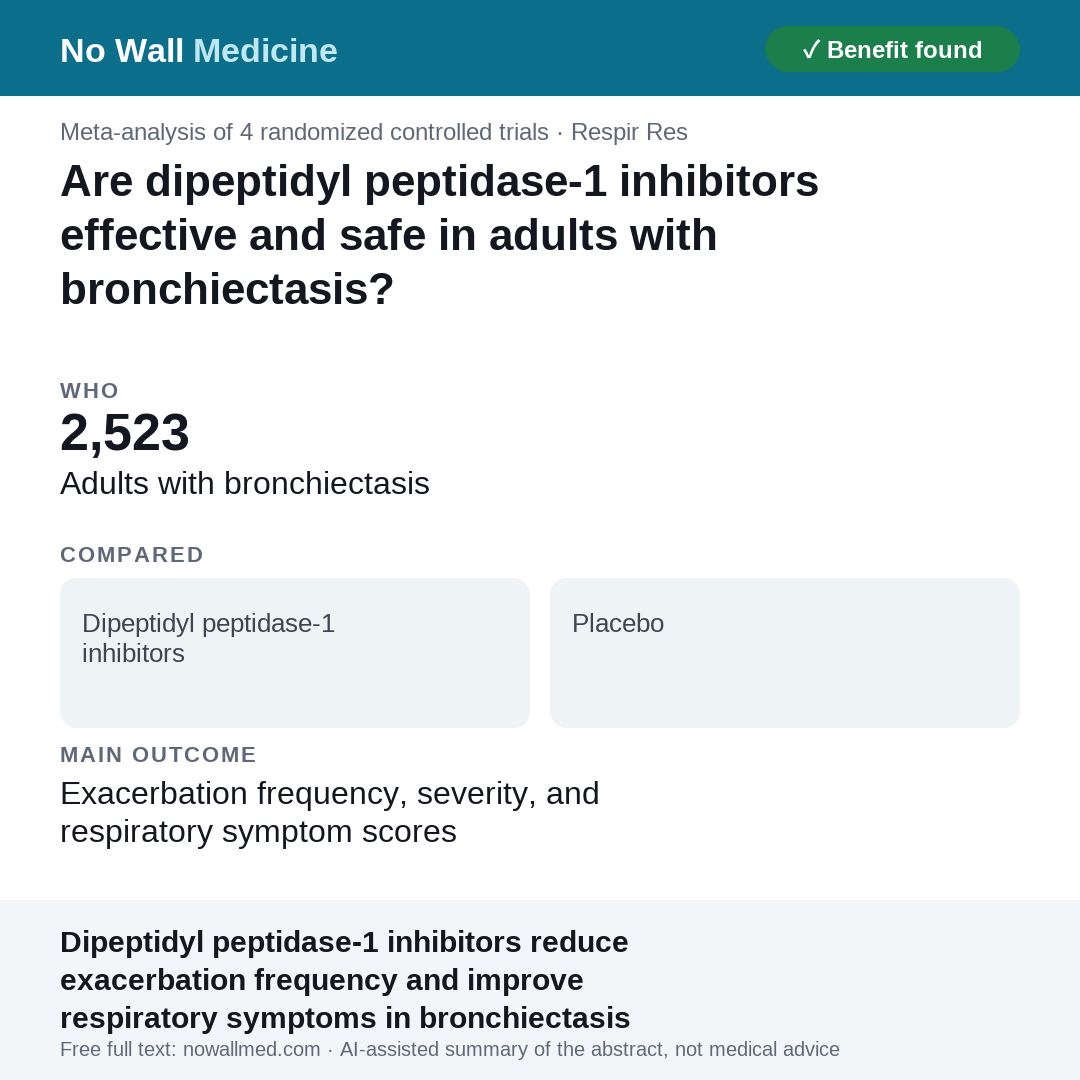
Efficacy and safety of DPP-1 inhibitors in bronchiectasis: a GRADE-assessed meta-analysis of randomized controlled trials
Meta-analysis of 4 randomized controlled trialsBenefit found
Are dipeptidyl peptidase-1 inhibitors effective and safe in adults with bronchiectasis?
Who
2,523
Adults with bronchiectasis
Compared
Dipeptidyl peptidase-1 inhibitors
Placebo
Main outcome
Exacerbation frequency, severity, and respiratory symptom scores
Result: risk ratio 0.64 (95% CI: 0.52-0.78) for one exacerbation
Bottom line: Dipeptidyl peptidase-1 inhibitors reduce exacerbation frequency and improve respiratory symptoms in bronchiectasis without compromising safety.
Respir Res · 2025-11-26Download image
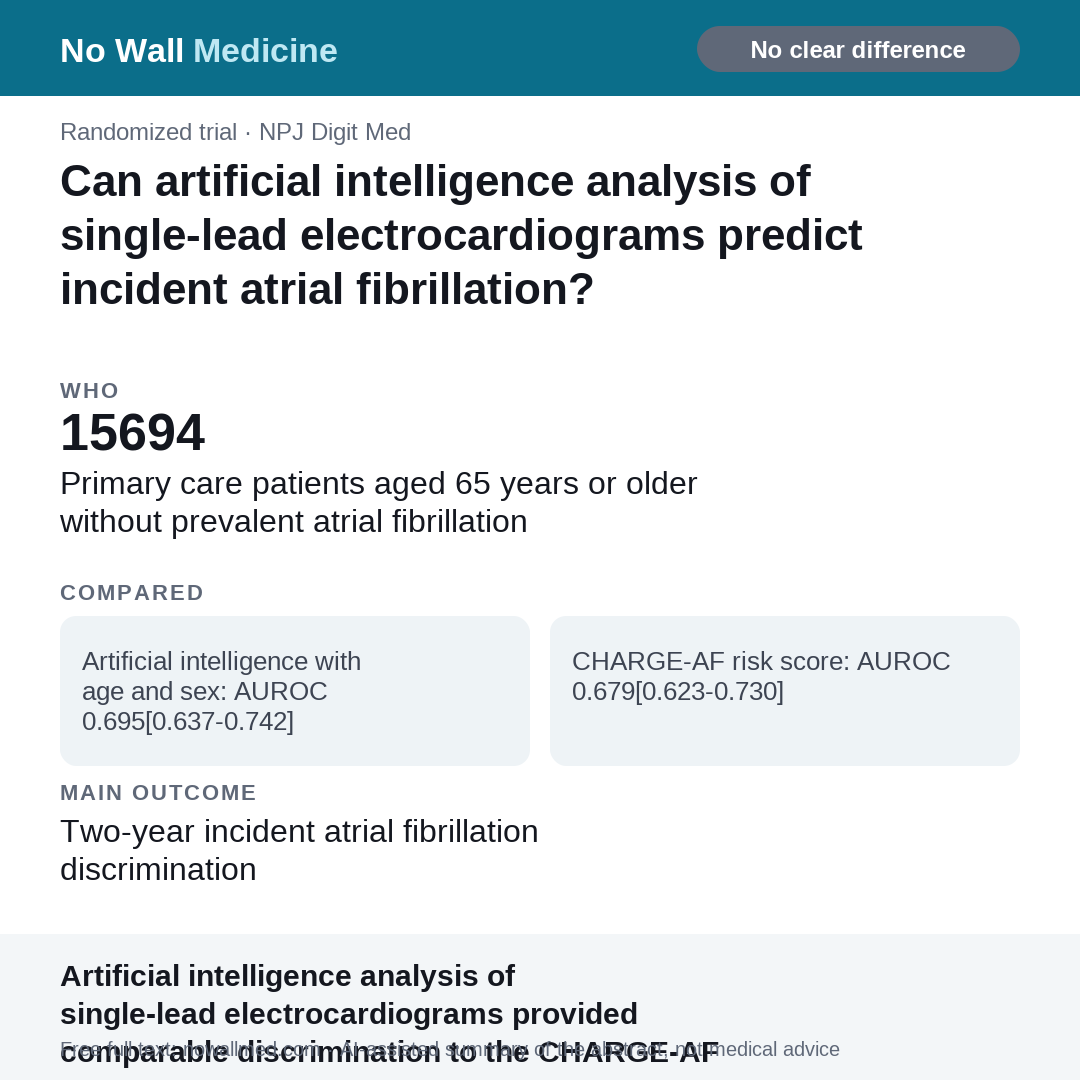
Artificial intelligence-enabled analysis of handheld single-lead electrocardiograms to predict incident atrial fibrillation: an analysis of the VITAL-AF randomized trial
Randomized trialNo clear difference
Can artificial intelligence analysis of single-lead electrocardiograms predict incident atrial fibrillation?
Who
15694
Primary care patients aged 65 years or older without prevalent atrial fibrillation
Compared
Artificial intelligence with age and sex: AUROC 0.695[0.637-0.742]
CHARGE-AF risk score: AUROC 0.679[0.623-0.730]
Main outcome
Two-year incident atrial fibrillation discrimination
Result: AUROC p = 0.46
Bottom line: Artificial intelligence analysis of single-lead electrocardiograms provided comparable discrimination to the CHARGE-AF risk score for predicting incident atrial fibrillation.
NPJ Digit Med · 2025-11-26Download image
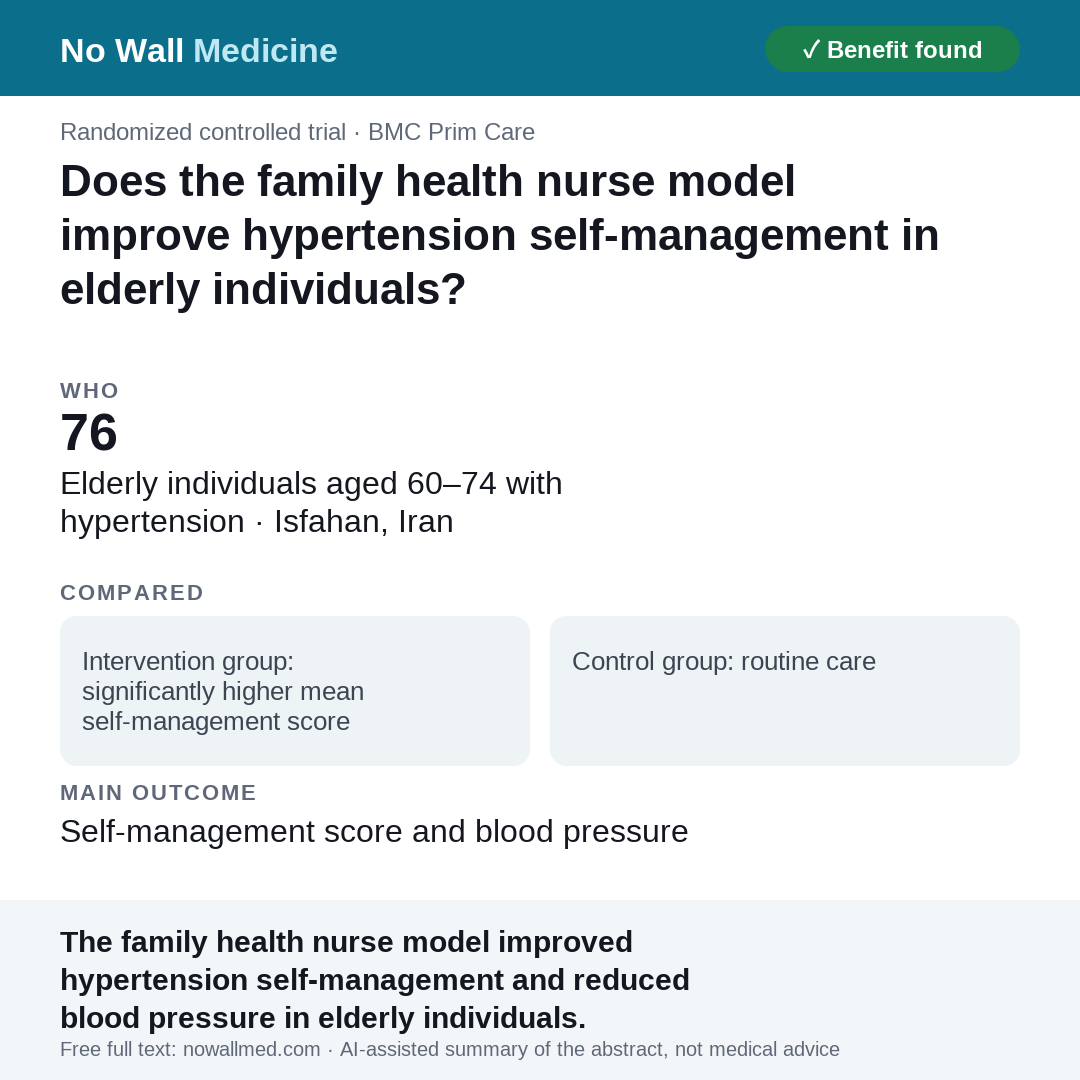
Investigating the effects of implementing the family health nurse model on the self-management of elderly individuals with hypertension: a randomized controlled trial
Randomized controlled trialBenefit found
Does the family health nurse model improve hypertension self-management in elderly individuals?
Who
76
Elderly individuals aged 60–74 with hypertension · Isfahan, Iran
Compared
Intervention group: significantly higher mean self-management score
Control group: routine care
Main outcome
Self-management score and blood pressure
Bottom line: The family health nurse model improved hypertension self-management and reduced blood pressure in elderly individuals.
Limitation: Conducted during only two home visits and no previous study of family health nurses in Iran.
BMC Prim Care · 2025-11-26Download image
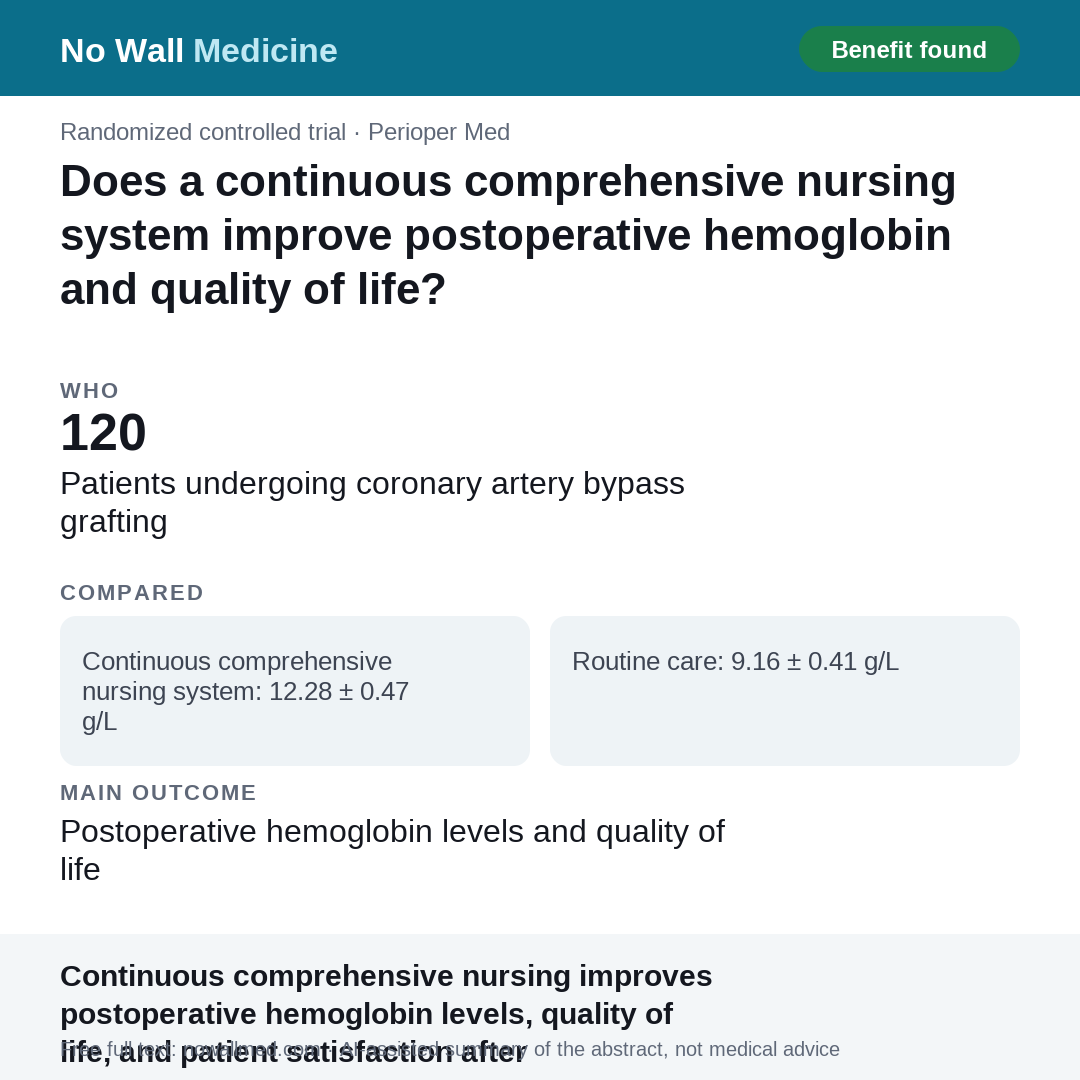
Evaluating the efficacy of a continuous comprehensive nursing system on postoperative hemoglobin levels and quality of life in coronary artery bypass surgery: a randomized controlled trial
Randomized controlled trialBenefit found
Does a continuous comprehensive nursing system improve postoperative hemoglobin and quality of life?
Who
120
Patients undergoing coronary artery bypass grafting
Compared
Continuous comprehensive nursing system: 12.28 ± 0.47 g/L
Routine care: 9.16 ± 0.41 g/L
Main outcome
Postoperative hemoglobin levels and quality of life
Bottom line: Continuous comprehensive nursing improves postoperative hemoglobin levels, quality of life, and patient satisfaction after coronary artery bypass grafting.
Perioper Med · 2025-11-26Download image