Visual abstracts
New randomized trials and meta-analyses from leading journals at a glance: who was studied, what was compared, and what was found. Every paper is free to read in full.
All specialtiesCardiology 1182Oncology 1030Gastroenterology & Hepatology 411Infectious Disease 775Neurology 481Psychiatry & Mental Health 594Pulmonology 500Critical Care 344Endocrinology & Diabetes 654Pediatrics 701Surgery 519Orthopedics & Sports Medicine 225Neurosurgery 161Cardiothoracic & Vascular Surgery 129Plastic & Reconstructive Surgery 186Nephrology 248Rheumatology 156Hematology 240Dermatology 112Ophthalmology 134Obstetrics & Gynecology 358Public & Global Health 226Radiology & Imaging 153Anesthesiology 210Urology 214ENT (Otolaryngology) 160Emergency Medicine 125Allergy & Immunology 79Geriatrics 235Family Medicine & Primary Care 147Medical Genetics & Genomics 122Pathology & Laboratory Medicine 36Physical Medicine & Rehabilitation 202Palliative Care 107Nutrition 306Digital Health & AI 588General Medicine 112
What Do We Know About Hospice Enrollment for Nursing Home Residents with Cognitive Disabilities? A Systematic Review
Systematic reviewHarm found
What is the hospice enrollment rate for nursing home residents with cognitive disabilities?
Who
United States nursing home residents with cognitive disabilities · United States
Compared
Residents with cognitive disabilities: consistently lower hospice enrollment
Residents without cognitive disabilities
Main outcome
Hospice enrollment at the time of death
Bottom line: Hospice enrollment is consistently lower for nursing home residents with cognitive disabilities compared to those without.
Limitation: Future research should include the broader cognitive disability community to assess more outcomes.
J Palliat Med · 2025-10-24Download image

Meta-analyses of clozapine, norclozapine levels and their ratio across three genome wide association studies
Meta-analysis of three genome wide association studiesBenefit found
What genetic polymorphisms are associated with clozapine and norclozapine serum levels and ratios?
Who
3643
Finnish, British, and Norwegian clozapine patients · Finland, United Kingdom, and Norway
Compared
clozapine concentration/dose ratio: rs2472297
norclozapine concentration/dose ratio: UGT2B10 and rs3732218
clozapine/norclozapine ratio: rs6827692
Main outcome
clozapine and norclozapine serum levels and ratios
Bottom line: Genetic variants in CYP1A1, CYP1A2, and UGT genes affect clozapine and norclozapine metabolism.
Transl Psychiatry · 2025-10-24Download image

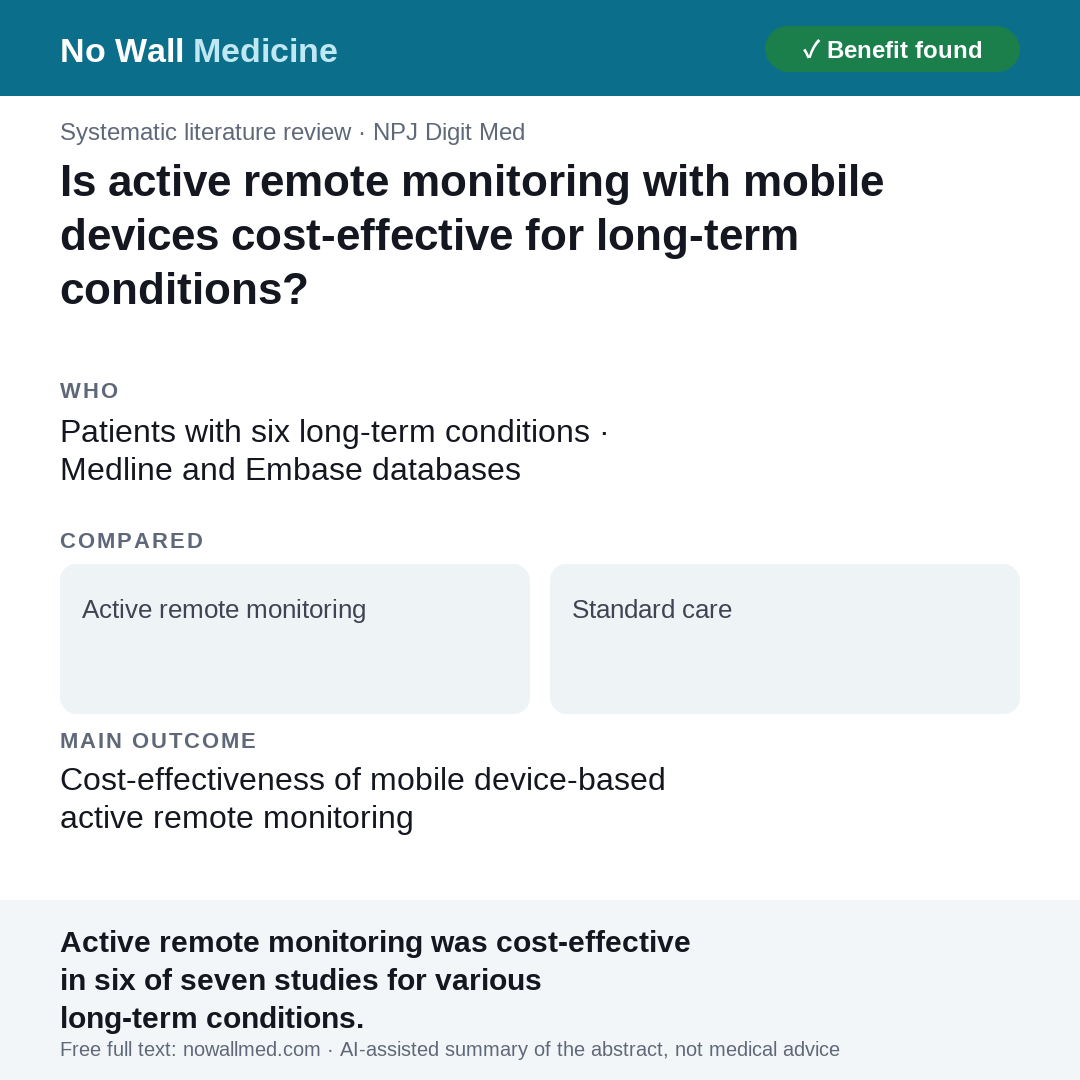
Active remote monitoring of long-term conditions with mobile devices: a systematic review of cost-effectiveness analyses
Systematic literature reviewBenefit found
Is active remote monitoring with mobile devices cost-effective for long-term conditions?
Who
Patients with six long-term conditions · Medline and Embase databases
Compared
Active remote monitoring
Standard care
Main outcome
Cost-effectiveness of mobile device-based active remote monitoring
Bottom line: Active remote monitoring was cost-effective in six of seven studies for various long-term conditions.
NPJ Digit Med · 2025-10-24Download image
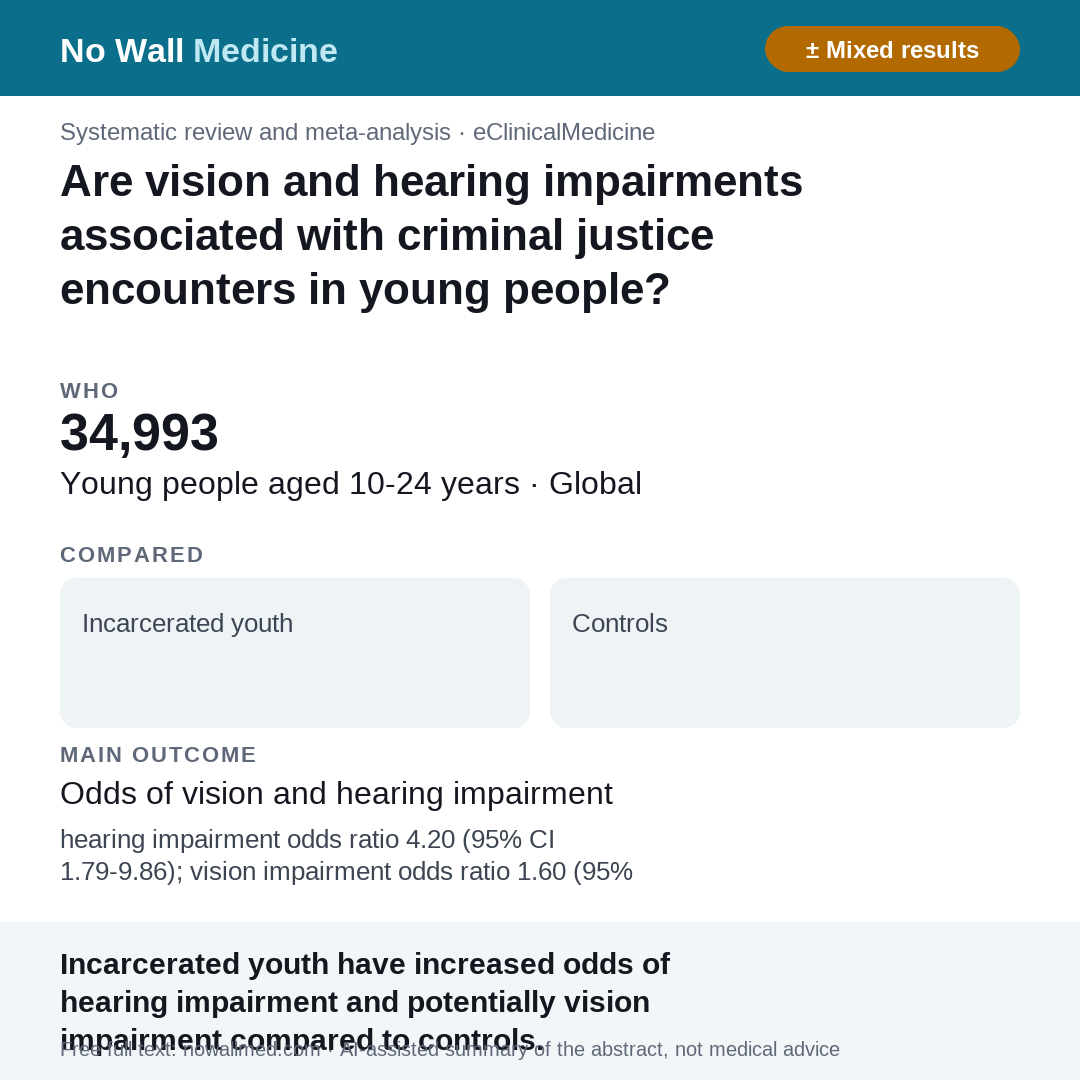
Association of vision impairment and hearing impairment with encounters in the criminal justice system among children and young people: a systematic review and meta-analysis
Systematic review and meta-analysisMixed results
Are vision and hearing impairments associated with criminal justice encounters in young people?
Who
34,993
Young people aged 10-24 years · Global
Compared
Incarcerated youth
Controls
Main outcome
Odds of vision and hearing impairment
Result: hearing impairment odds ratio 4.20 (95% CI 1.79-9.86); vision impairment odds ratio 1.60 (95% CI 0.95-2·70)
Bottom line: Incarcerated youth have increased odds of hearing impairment and potentially vision impairment compared to controls.
Limitation: High heterogeneity in reported prevalence rates
Funded by: Wellcome Trust United Kingdom, NIH, and Duke Hubert Yeargan Center
eClinicalMedicine · 2025-10-23Download image
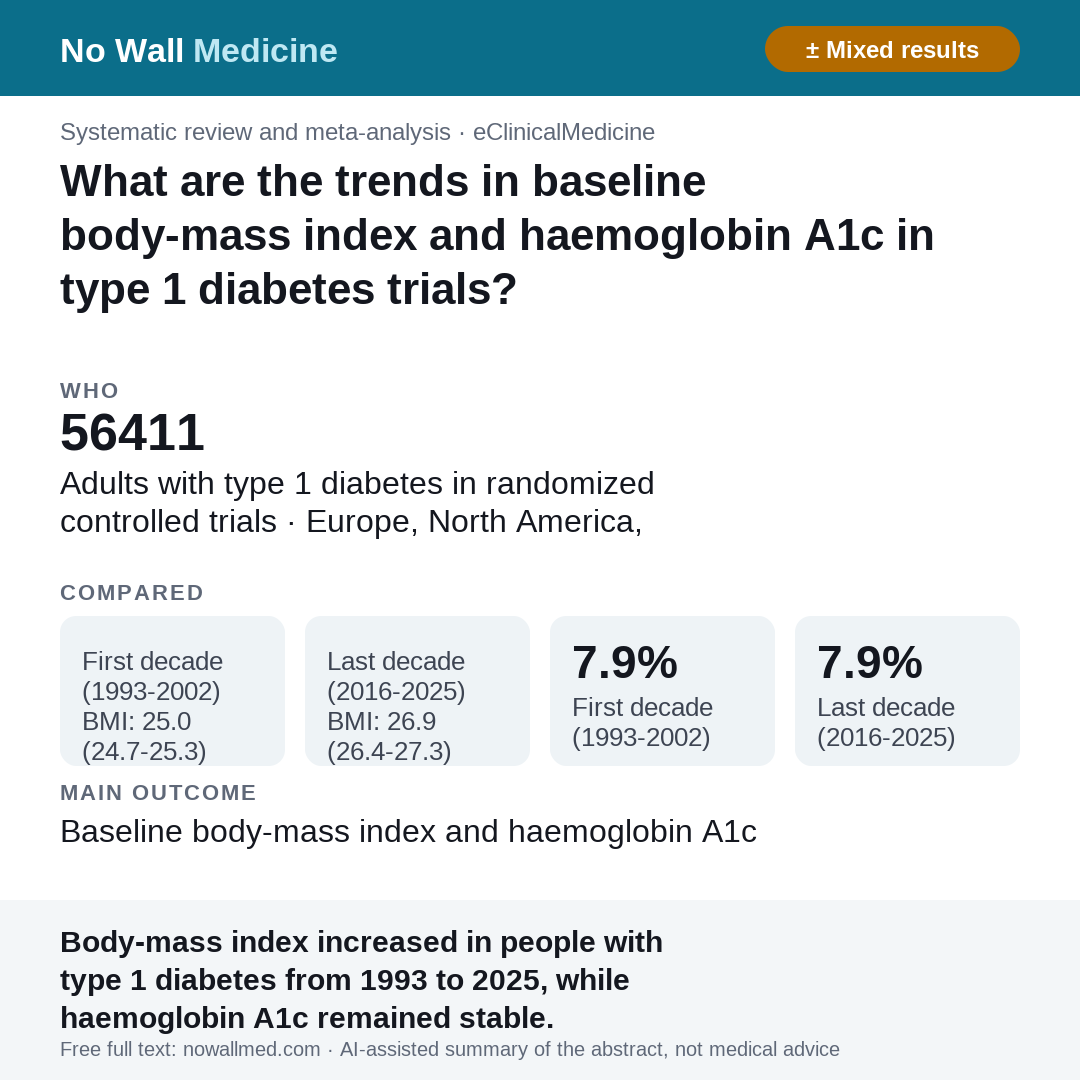
Trends in baseline HbA1c and body-mass index in randomised trials of people with type 1 diabetes from 1993 to 2025: an IMI2 SOPHIA systematic review and meta-analysis
Systematic review and meta-analysisMixed results
What are the trends in baseline body-mass index and haemoglobin A1c in type 1 diabetes trials?
Who
56411
Adults with type 1 diabetes in randomized controlled trials · Europe, North America, Asia, Oceania, and multicontinental
Compared
First decade (1993-2002) BMI: 25.0 (24.7-25.3) kg/m2
Last decade (2016-2025) BMI: 26.9 (26.4-27.3) kg/m2
7.9%First decade (1993-2002) HbA1c (7.6-8.2)
7.9%Last decade (2016-2025) HbA1c (7.8-8.0)
Main outcome
Baseline body-mass index and haemoglobin A1c
Bottom line: Body-mass index increased in people with type 1 diabetes from 1993 to 2025, while haemoglobin A1c remained stable.
Limitation: More research is needed using real-world data on the individual level.
Funded by: Innovative Medicines Initiative 2, European Union, EFPIA, T1D Exchange, Breakthrough T1D, Obesity Action Coalition
eClinicalMedicine · 2025-10-23Download image
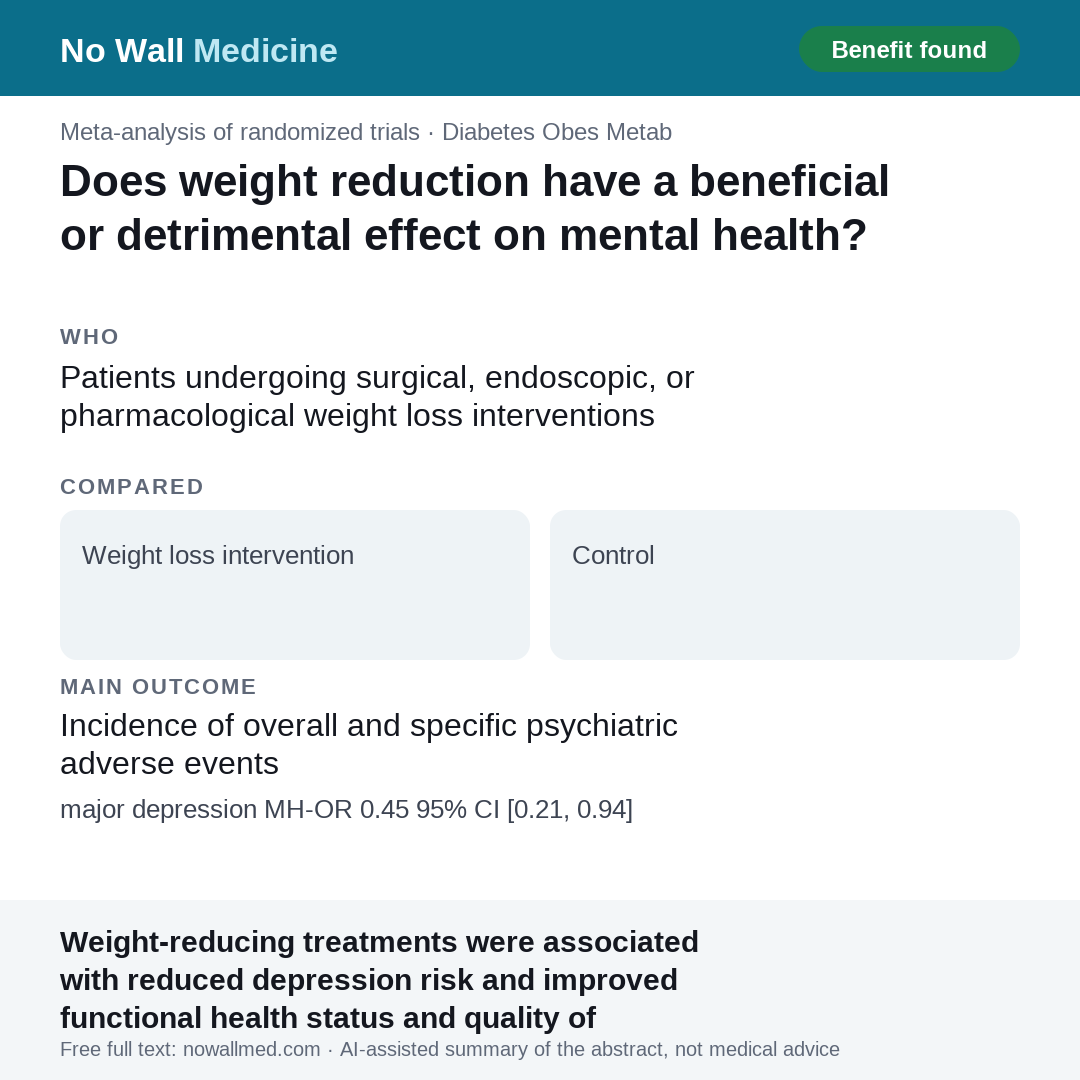
Weight-reducing treatments are associated with an improvement in depression, functional health status, and quality of life: A meta-analysis of randomized controlled trials
Meta-analysis of randomized trialsBenefit found
Does weight reduction have a beneficial or detrimental effect on mental health?
Who
Patients undergoing surgical, endoscopic, or pharmacological weight loss interventions
Compared
Weight loss intervention
Control
Main outcome
Incidence of overall and specific psychiatric adverse events
Result: major depression MH-OR 0.45 95% CI [0.21, 0.94]
Bottom line: Weight-reducing treatments were associated with reduced depression risk and improved functional health status and quality of life.
Diabetes Obes Metab · 2025-10-23Download image
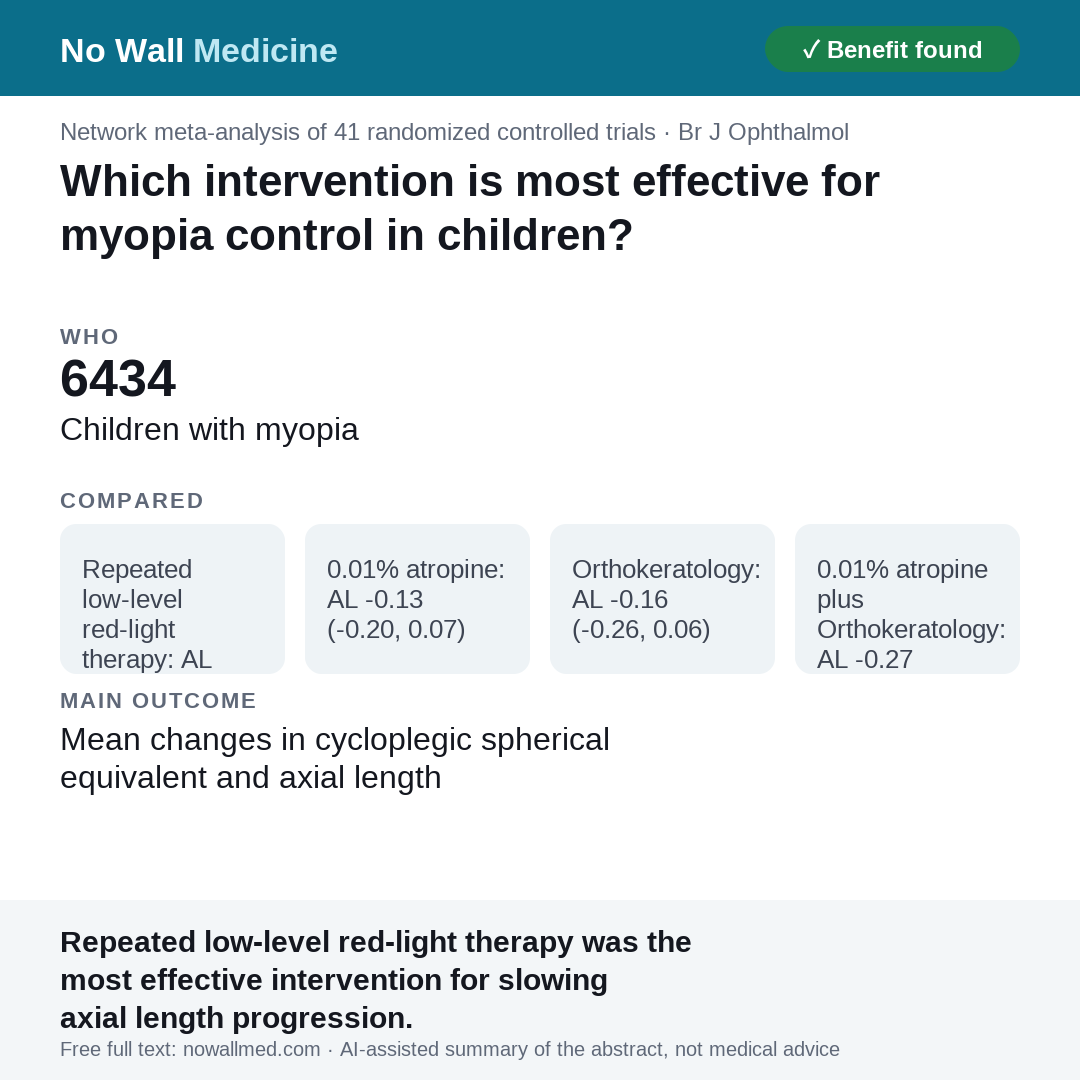
Efficacy comparison of atropine, orthokeratology and repeated low-level red-light therapy for myopia control in children: a systematic review and network meta-analysis
Network meta-analysis of 41 randomized controlled trialsBenefit found
Which intervention is most effective for myopia control in children?
Who
6434
Children with myopia
Compared
Repeated low-level red-light therapy: AL -0.31 (0.39, 0.24)
0.01% atropine: AL -0.13 (-0.20, 0.07)
Orthokeratology: AL -0.16 (-0.26, 0.06)
0.01% atropine plus Orthokeratology: AL -0.27 (-0.38, 0.16)
Main outcome
Mean changes in cycloplegic spherical equivalent and axial length
Bottom line: Repeated low-level red-light therapy was the most effective intervention for slowing axial length progression.
Br J Ophthalmol · 2025-10-23Download image
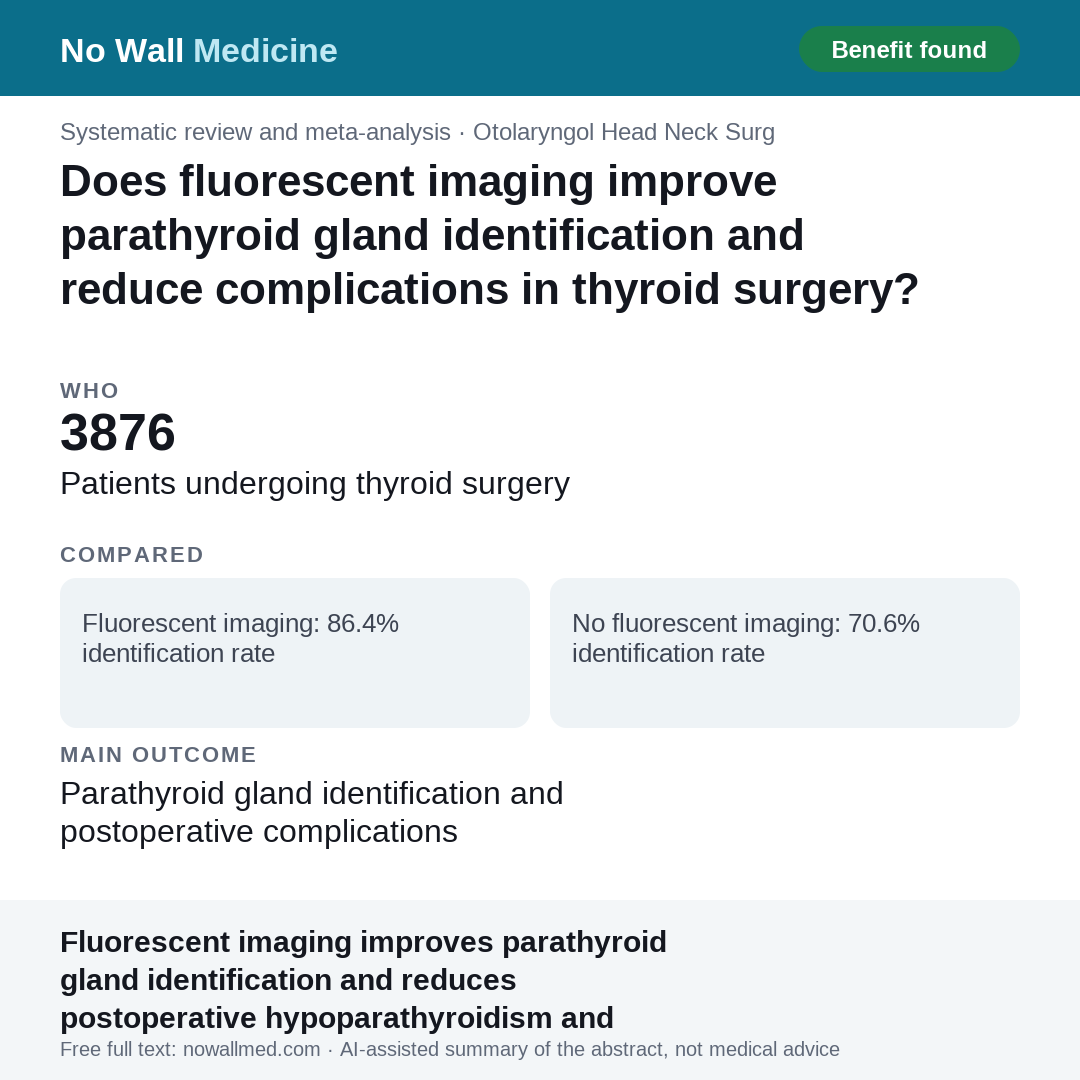
Fluorescent Imaging in Thyroid Surgery to Preserve Parathyroid Function: A Systematic Review and Meta-Analysis
Systematic review and meta-analysisBenefit found
Does fluorescent imaging improve parathyroid gland identification and reduce complications in thyroid surgery?
Who
3876
Patients undergoing thyroid surgery
Compared
Fluorescent imaging: 86.4% identification rate
No fluorescent imaging: 70.6% identification rate
Main outcome
Parathyroid gland identification and postoperative complications
Result: odds ratio 0.37
Bottom line: Fluorescent imaging improves parathyroid gland identification and reduces postoperative hypoparathyroidism and hypocalcemia rates.
Otolaryngol Head Neck Surg · 2025-10-23Download image
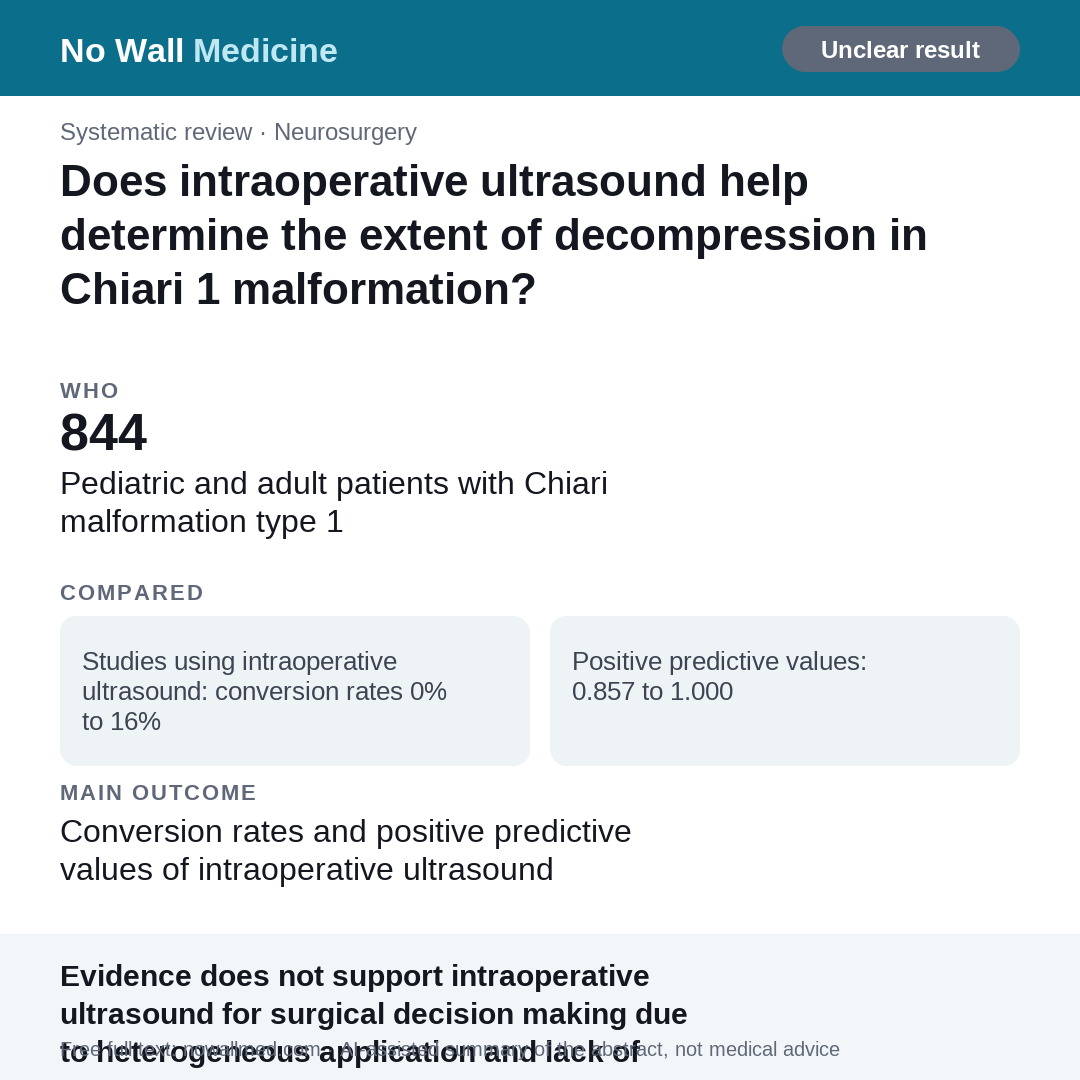
Intraoperative Ultrasound in Chiari 1 Decompression: Clarity or Confusion? A Systematic Review
Systematic reviewUnclear result
Does intraoperative ultrasound help determine the extent of decompression in Chiari 1 malformation?
Who
844
Pediatric and adult patients with Chiari malformation type 1
Compared
Studies using intraoperative ultrasound: conversion rates 0% to 16%
Positive predictive values: 0.857 to 1.000
Main outcome
Conversion rates and positive predictive values of intraoperative ultrasound
Bottom line: Evidence does not support intraoperative ultrasound for surgical decision making due to heterogeneous application and lack of standardized criteria.
Limitation: Heterogeneity of application and absence of standardized assessment criteria.
Neurosurgery · 2025-10-23Download image
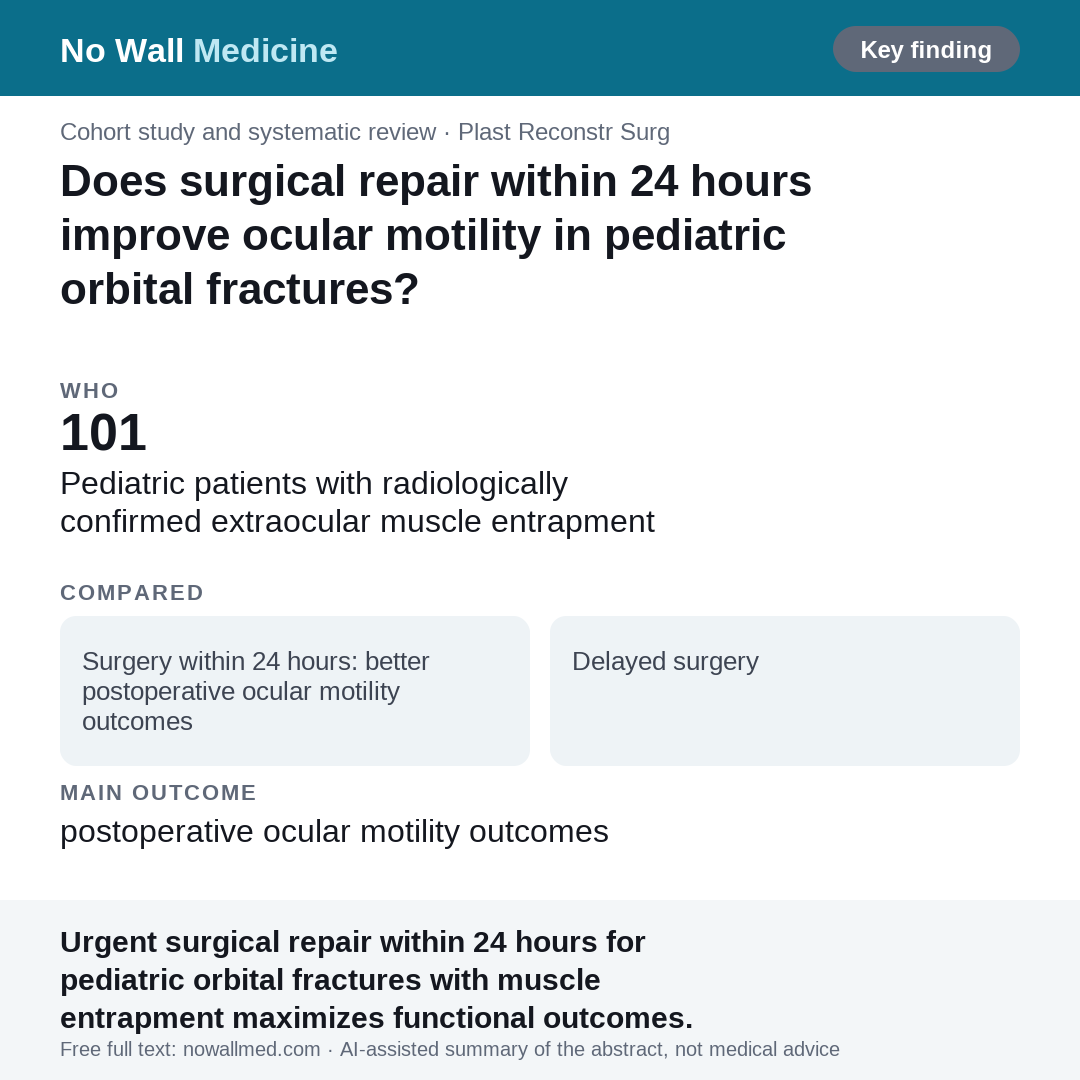
Surgical Repair within 24 Hours Improves Ocular Motility in Pediatric Orbital Fractures with Muscle Entrapment: Cohort and Systematic Review
Cohort study and systematic reviewBenefit found
Does surgical repair within 24 hours improve ocular motility in pediatric orbital fractures?
Who
101
Pediatric patients with radiologically confirmed extraocular muscle entrapment
Compared
Surgery within 24 hours: better postoperative ocular motility outcomes
Delayed surgery
Main outcome
postoperative ocular motility outcomes
Bottom line: Urgent surgical repair within 24 hours for pediatric orbital fractures with muscle entrapment maximizes functional outcomes.
Plast Reconstr Surg · 2025-10-23Download image
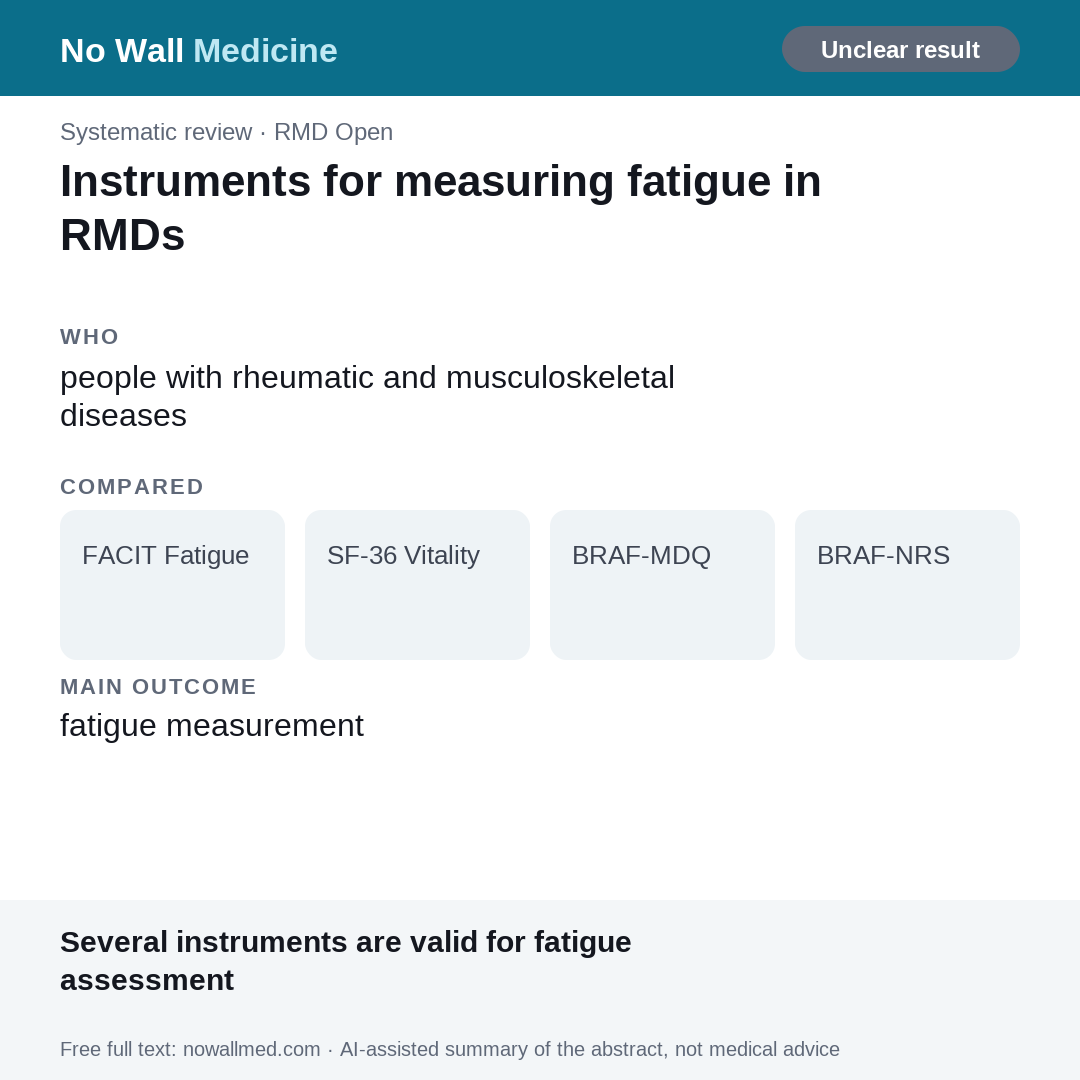
Instruments for measuring fatigue in people with rheumatic and musculoskeletal diseases: a systematic review of measurement properties
Systematic reviewUnclear result
Instruments for measuring fatigue in RMDs
Who
people with rheumatic and musculoskeletal diseases
Compared
FACIT Fatigue
SF-36 Vitality
BRAF-MDQ
BRAF-NRS
Main outcome
fatigue measurement
Bottom line: Several instruments are valid for fatigue assessment
Limitation: limited evidence on clinical trial discrimination
RMD Open · 2025-10-23Download image
Effects of New Media-Based Education on the Treatment of Helicobacter pylori Infection: Systematic Review and Meta-Analysis
Systematic review and meta-analysisBenefit found
Does new media-based education improve Helicobacter pylori treatment outcomes?
Who
2942
patients with Helicobacter pylori infection
Compared
81.9%New media-based education
67%Conventional education
Main outcome
Helicobacter pylori eradication rate
Result: risk ratio 1.22 (95% CI 1.11-1.33)
Bottom line: New media-based education significantly improves Helicobacter pylori eradication rates and patient compliance without increasing adverse events.
Limitation: Further high-quality randomized controlled trials are warranted to validate long-term efficacy and generalizability.
J Med Internet Res · 2025-10-23Download image

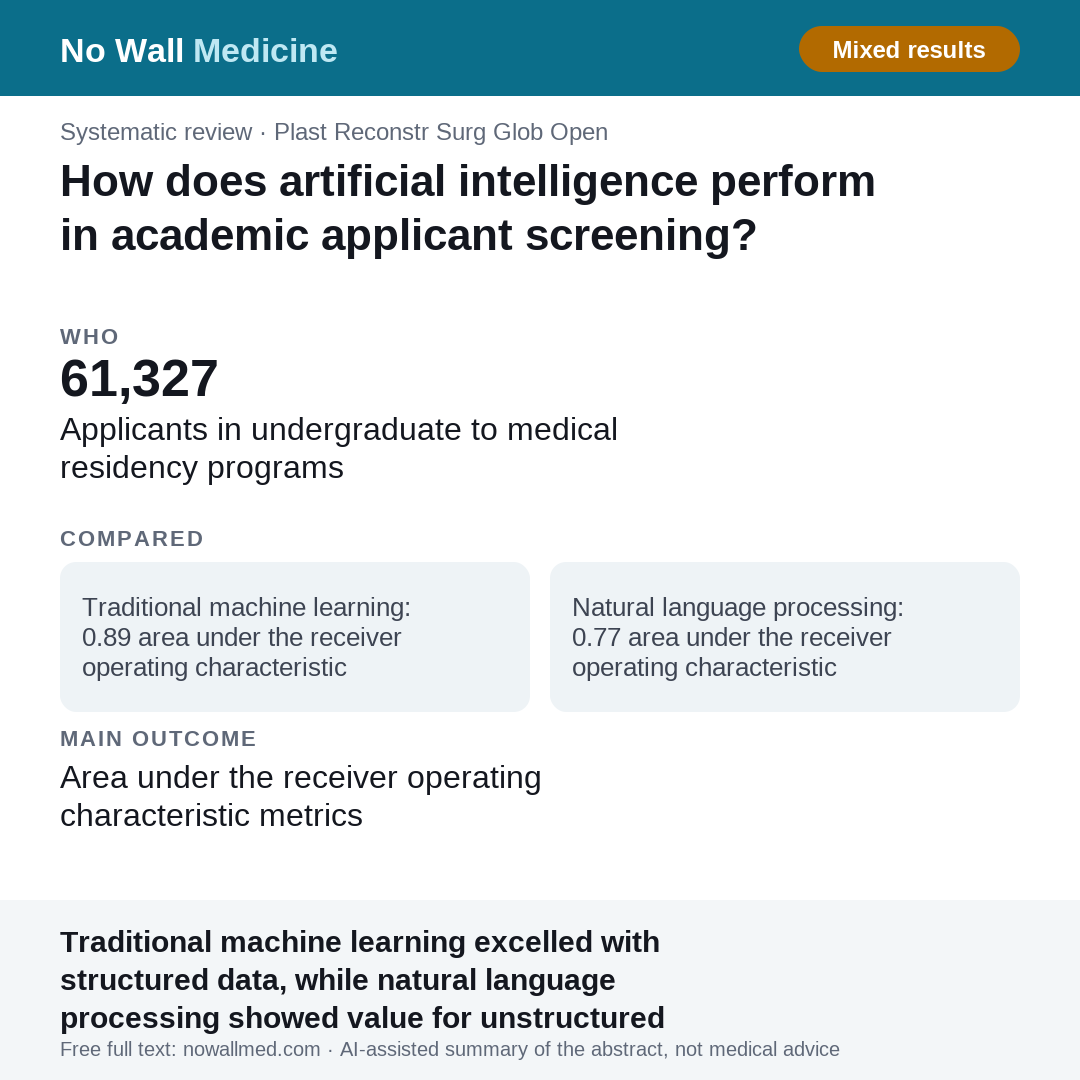
Artificial Intelligence Use in Academic Applicant Screening: A Systematic Review
Systematic reviewMixed results
How does artificial intelligence perform in academic applicant screening?
Who
61,327
Applicants in undergraduate to medical residency programs
Compared
Traditional machine learning: 0.89 area under the receiver operating characteristic
Natural language processing: 0.77 area under the receiver operating characteristic
Main outcome
Area under the receiver operating characteristic metrics
Bottom line: Traditional machine learning excelled with structured data, while natural language processing showed value for unstructured data.
Limitation: Ethical concerns including bias were reported in 50% of studies.
Plast Reconstr Surg Glob Open · 2025-10-23Download image
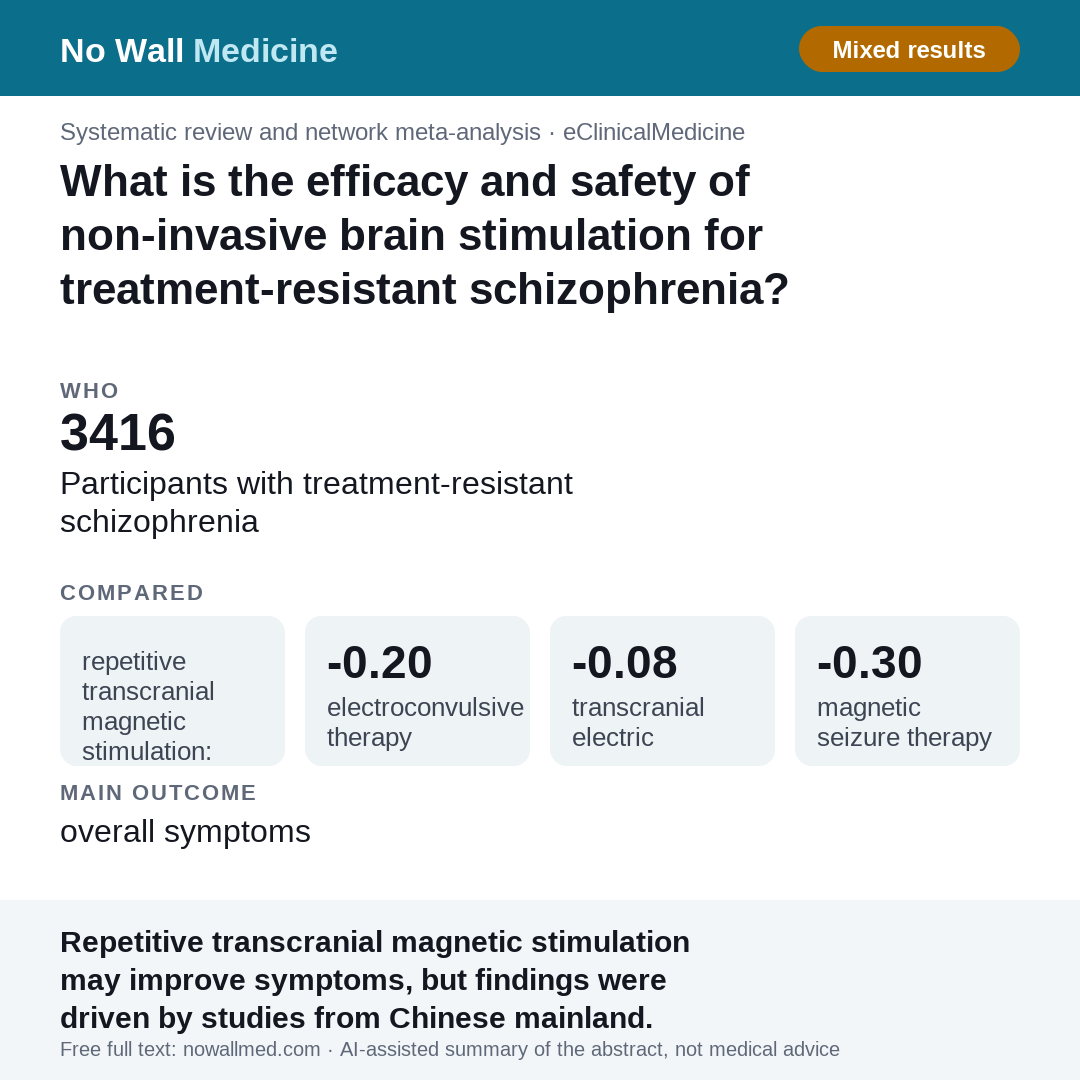
Non-invasive brain stimulation augmentation therapy for treatment-resistant schizophrenia: a systematic review and network meta-analysis
Systematic review and network meta-analysisMixed results
What is the efficacy and safety of non-invasive brain stimulation for treatment-resistant schizophrenia?
Who
3416
Participants with treatment-resistant schizophrenia
Compared
repetitive transcranial magnetic stimulation: SMD -0.47 (95% CI [-0.62; -0.31])
-0.20electroconvulsive therapy (95% CI [-0.78; 0.37])
-0.08transcranial electric stimulation (95% CI [-0.38; 0.22])
-0.30magnetic seizure therapy (95% CI [-1.73; 1.13])
Main outcome
overall symptoms
Result: SMD -0.47 (95% CI [-0.62; -0.31]) for rTMS
Bottom line: Repetitive transcranial magnetic stimulation may improve symptoms, but findings were driven by studies from Chinese mainland.
Funded by: German Federal Ministry of Education and Research
eClinicalMedicine · 2025-10-22Download image
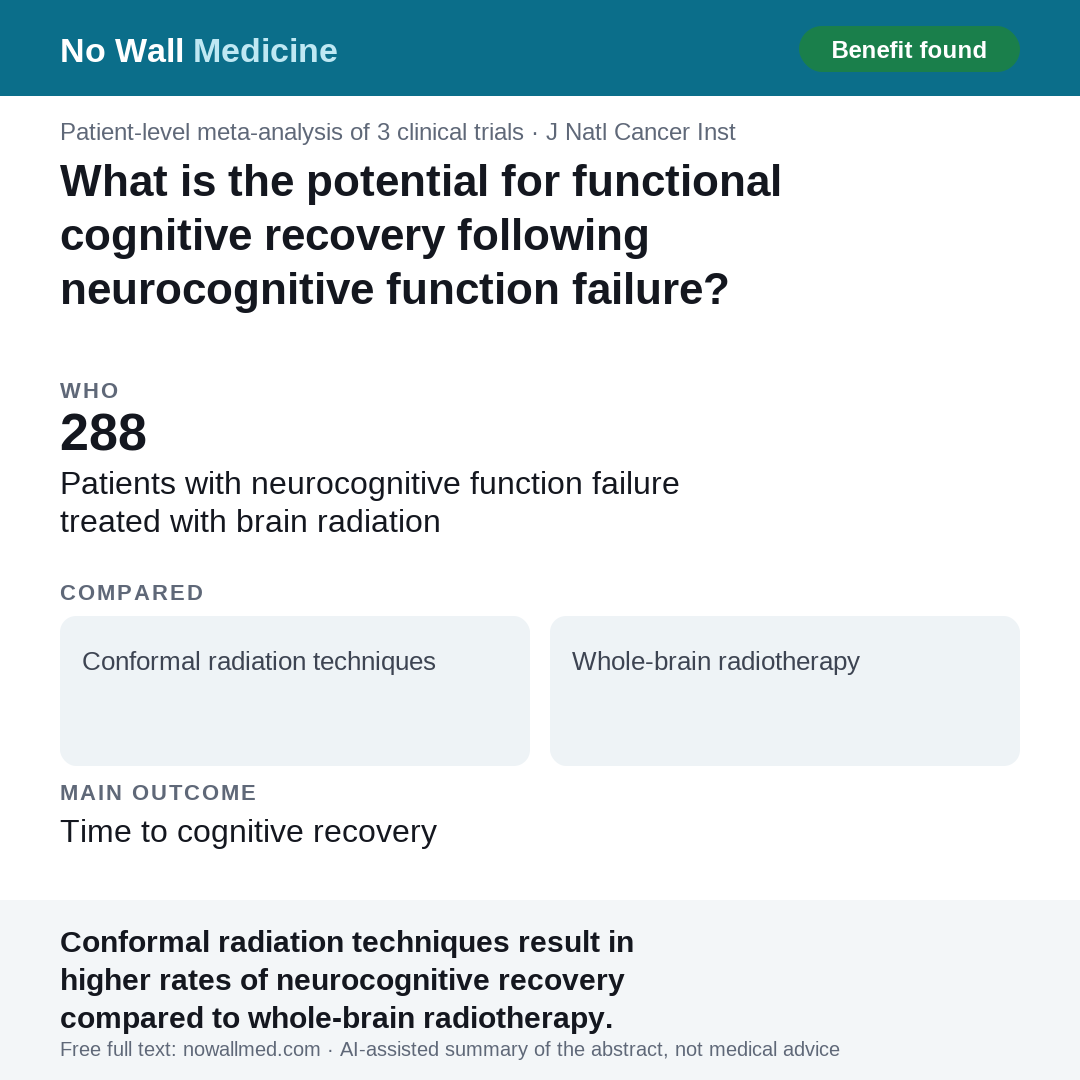
Redefining neurocognitive outcomes after radiation for brain metastases: a patient-level meta-analysis of recovery following initial decline
Patient-level meta-analysis of 3 clinical trialsBenefit found
What is the potential for functional cognitive recovery following neurocognitive function failure?
Who
288
Patients with neurocognitive function failure treated with brain radiation
Compared
Conformal radiation techniques
Whole-brain radiotherapy
Main outcome
Time to cognitive recovery
Result: pooled hazard ratio 2.12 (95% CI 1.49 to 3.02)
Bottom line: Conformal radiation techniques result in higher rates of neurocognitive recovery compared to whole-brain radiotherapy.
J Natl Cancer Inst · 2025-10-22Download image
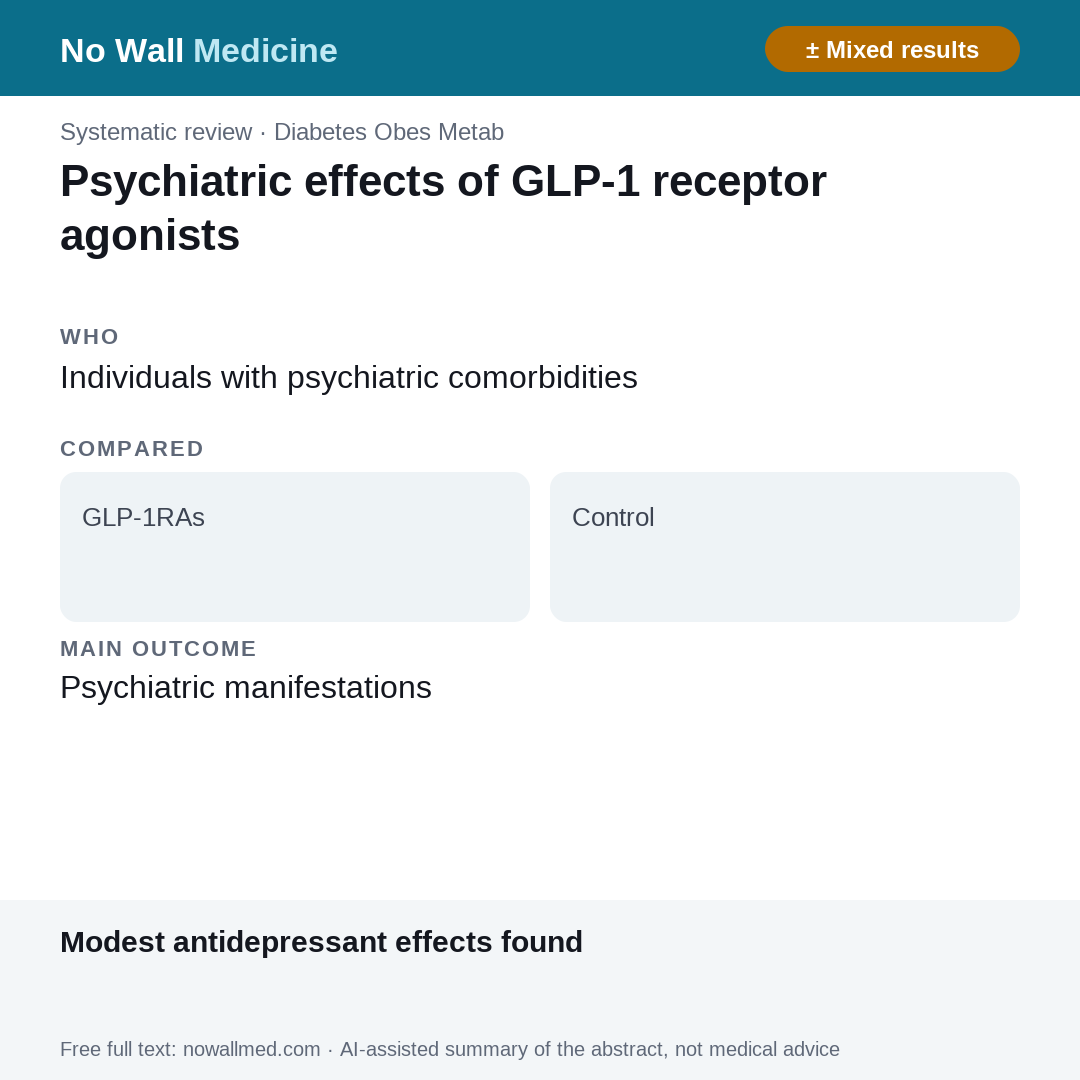
Psychiatric effects of GLP-1 receptor agonists: A systematic review of emerging evidence
Systematic reviewMixed results
Psychiatric effects of GLP-1 receptor agonists
Who
Individuals with psychiatric comorbidities
Compared
GLP-1RAs
Control
Main outcome
Psychiatric manifestations
Bottom line: Modest antidepressant effects found
Limitation: Limited sample diversity
Diabetes Obes Metab · 2025-10-22Download image
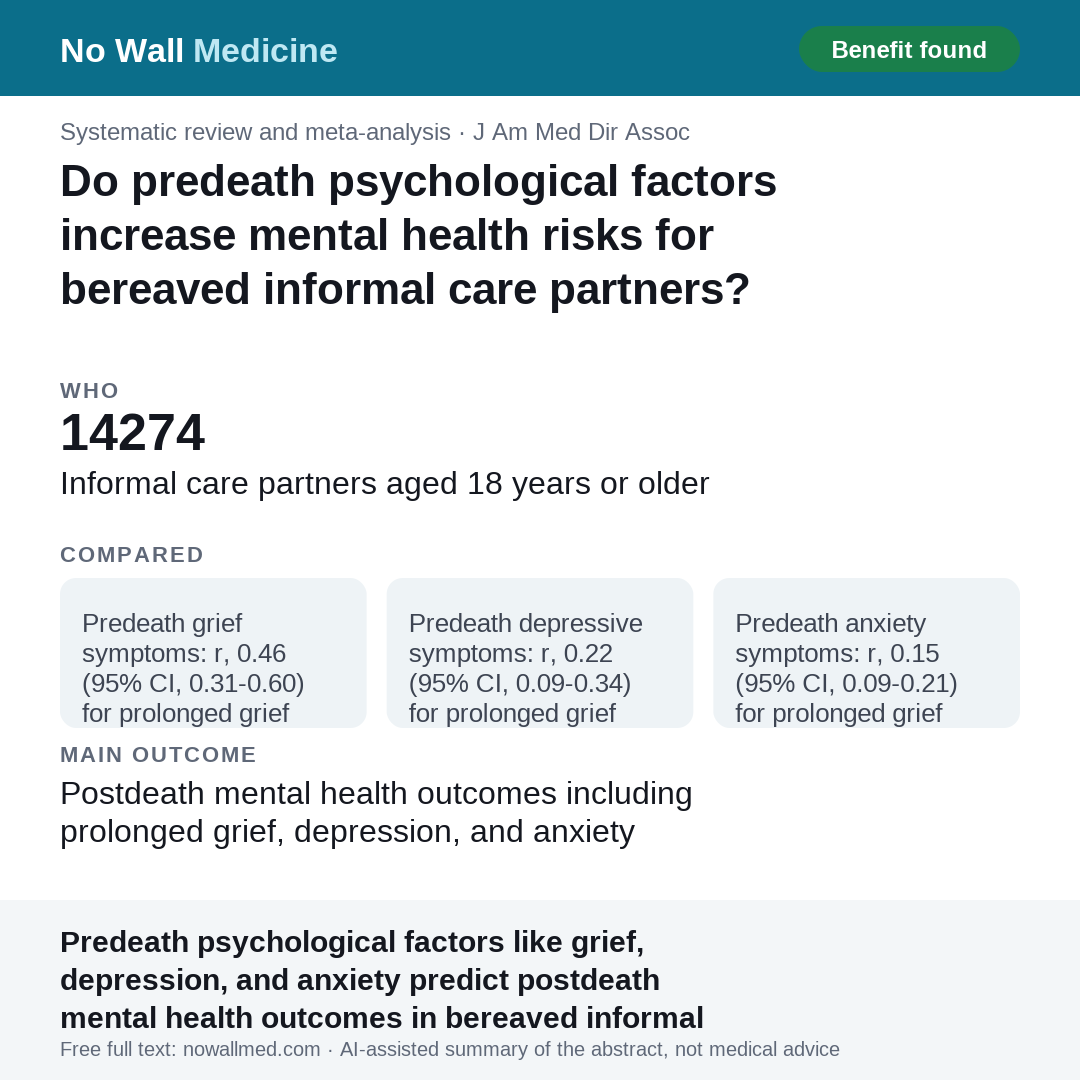
Psychological Risk Factors Associated With Mental Health Outcomes Among Bereaved Care Partners: A Meta-Regression Analysis of Prospective Studies
Systematic review and meta-analysisBenefit found
Do predeath psychological factors increase mental health risks for bereaved informal care partners?
Who
14274
Informal care partners aged 18 years or older
Compared
Predeath grief symptoms: r, 0.46 (95% CI, 0.31-0.60) for prolonged grief symptoms
Predeath depressive symptoms: r, 0.22 (95% CI, 0.09-0.34) for prolonged grief symptoms
Predeath anxiety symptoms: r, 0.15 (95% CI, 0.09-0.21) for prolonged grief symptoms
Main outcome
Postdeath mental health outcomes including prolonged grief, depression, and anxiety
Bottom line: Predeath psychological factors like grief, depression, and anxiety predict postdeath mental health outcomes in bereaved informal care partners.
J Am Med Dir Assoc · 2025-10-22Download image
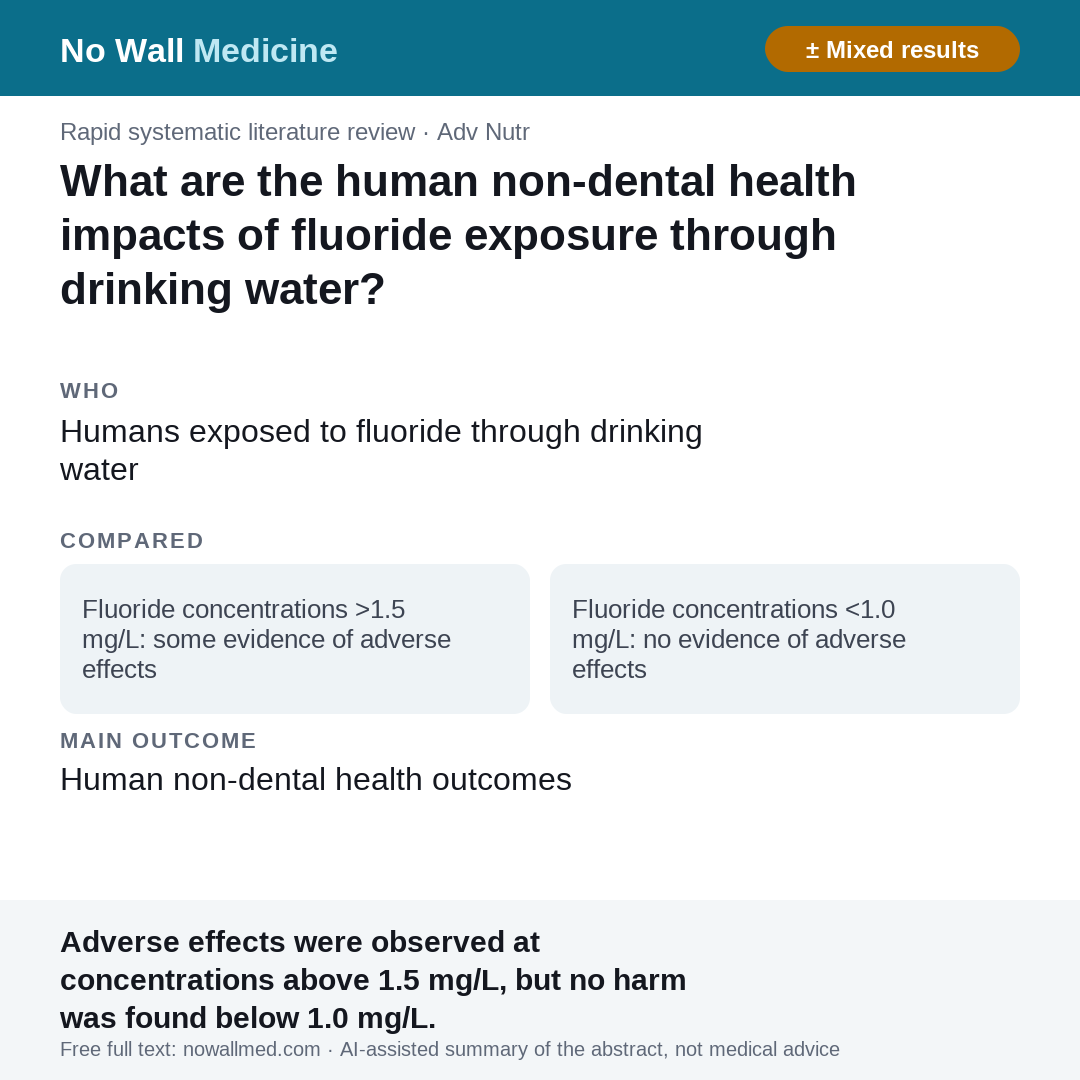
Public Health Impacts of Water Fluorides: Current Evidence from a Rapid Systematic Review
Rapid systematic literature reviewMixed results
What are the human non-dental health impacts of fluoride exposure through drinking water?
Who
Humans exposed to fluoride through drinking water
Compared
Fluoride concentrations >1.5 mg/L: some evidence of adverse effects
Fluoride concentrations <1.0 mg/L: no evidence of adverse effects
Main outcome
Human non-dental health outcomes
Bottom line: Adverse effects were observed at concentrations above 1.5 mg/L, but no harm was found below 1.0 mg/L.
Limitation: The nature of study designs and methodological limitations precluded causal inference.
Adv Nutr · 2025-10-22Download image
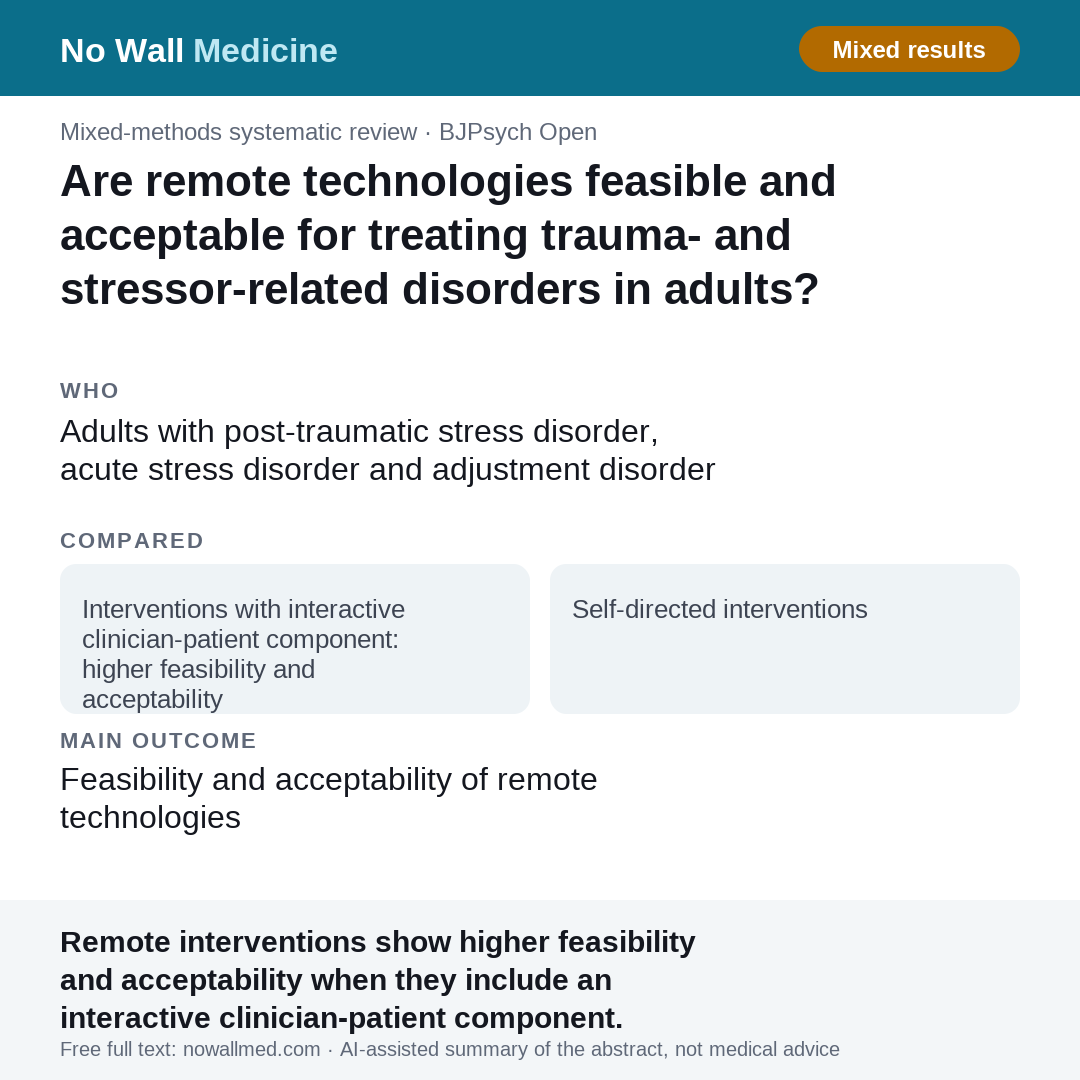
Feasibility and acceptability of remote technologies for the treatment of trauma- and stressor-related disorders in adults: mixed-methods systematic review
Mixed-methods systematic reviewMixed results
Are remote technologies feasible and acceptable for treating trauma- and stressor-related disorders in adults?
Who
Adults with post-traumatic stress disorder, acute stress disorder and adjustment disorder
Compared
Interventions with interactive clinician-patient component: higher feasibility and acceptability
Self-directed interventions
Main outcome
Feasibility and acceptability of remote technologies
Bottom line: Remote interventions show higher feasibility and acceptability when they include an interactive clinician-patient component.
BJPsych Open · 2025-10-22Download image
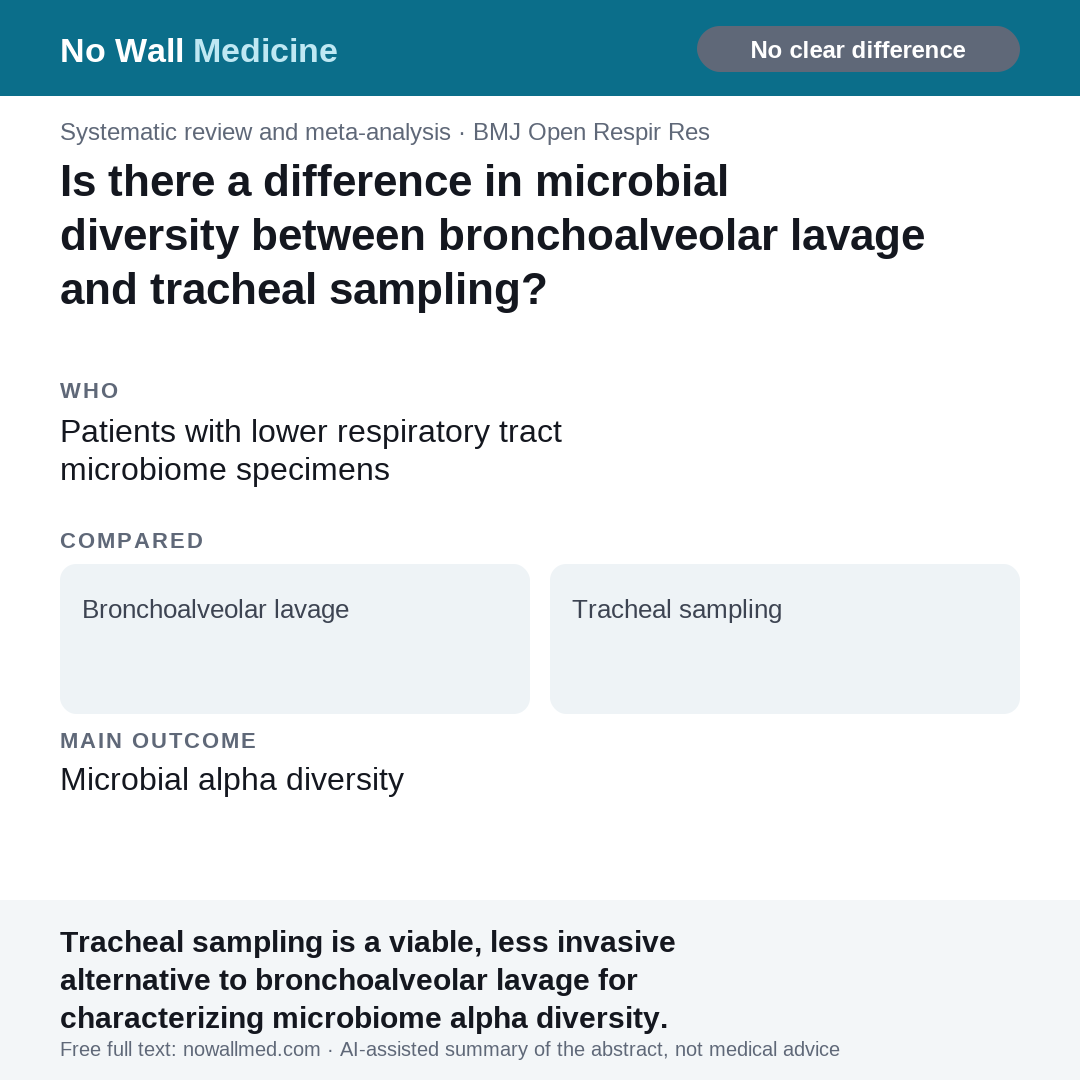
No difference in microbial diversity between bronchoalveolar lavage and tracheal sampling: a systematic review and meta-analysis
Systematic review and meta-analysisNo clear difference
Is there a difference in microbial diversity between bronchoalveolar lavage and tracheal sampling?
Who
Patients with lower respiratory tract microbiome specimens
Compared
Bronchoalveolar lavage
Tracheal sampling
Main outcome
Microbial alpha diversity
Bottom line: Tracheal sampling is a viable, less invasive alternative to bronchoalveolar lavage for characterizing microbiome alpha diversity.
Limitation: Further high-quality comparative studies are needed to confirm these findings.
BMJ Open Respir Res · 2025-10-22Download image