Visual abstracts
New randomized trials and meta-analyses from leading journals at a glance: who was studied, what was compared, and what was found. Every paper is free to read in full.
All specialtiesCardiology 1213Oncology 1053Gastroenterology & Hepatology 420Infectious Disease 795Neurology 500Psychiatry & Mental Health 614Pulmonology 511Critical Care 349Endocrinology & Diabetes 675Pediatrics 719Surgery 533Orthopedics & Sports Medicine 228Neurosurgery 163Cardiothoracic & Vascular Surgery 134Plastic & Reconstructive Surgery 187Nephrology 250Rheumatology 160Hematology 249Dermatology 117Ophthalmology 136Obstetrics & Gynecology 375Public & Global Health 236Radiology & Imaging 156Anesthesiology 215Urology 218ENT (Otolaryngology) 166Emergency Medicine 127Allergy & Immunology 82Geriatrics 247Family Medicine & Primary Care 150Medical Genetics & Genomics 126Pathology & Laboratory Medicine 36Physical Medicine & Rehabilitation 207Palliative Care 109Nutrition 313Digital Health & AI 609General Medicine 114
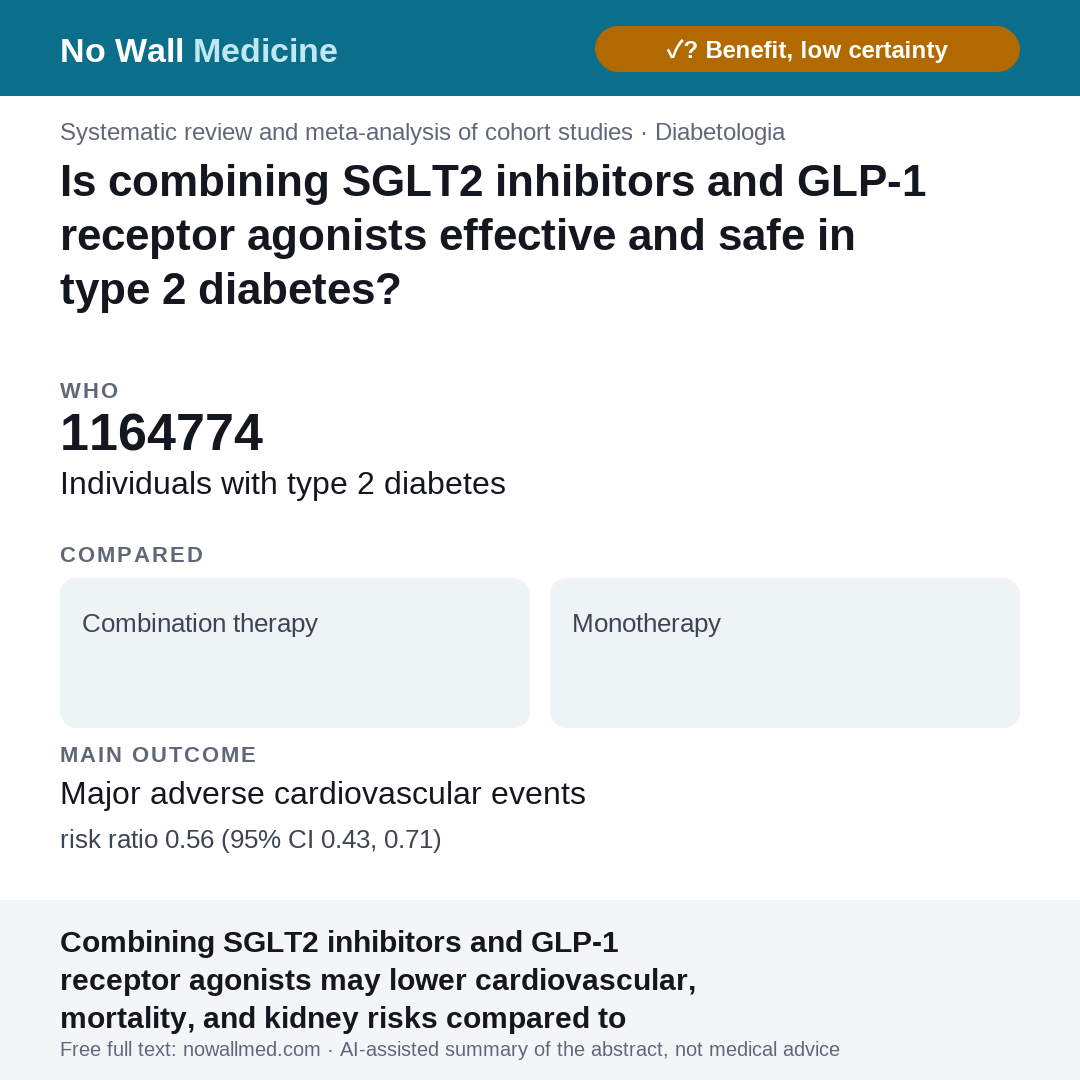
Effectiveness and safety of combining SGLT2 inhibitors and GLP-1 receptor agonists in individuals with type 2 diabetes: a systematic review and meta-analysis of cohort studies
Systematic review and meta-analysis of cohort studiesBenefit found
Is combining SGLT2 inhibitors and GLP-1 receptor agonists effective and safe in type 2 diabetes?
Who
1164774
Individuals with type 2 diabetes
Compared
Combination therapy
Monotherapy
Main outcome
Major adverse cardiovascular events
Result: risk ratio 0.56 (95% CI 0.43, 0.71)
Bottom line: Combining SGLT2 inhibitors and GLP-1 receptor agonists may lower cardiovascular, mortality, and kidney risks compared to monotherapy.
Limitation: Residual confounding cannot be overcome in these observational studies.
Diabetologia · 2025-10-21Download image
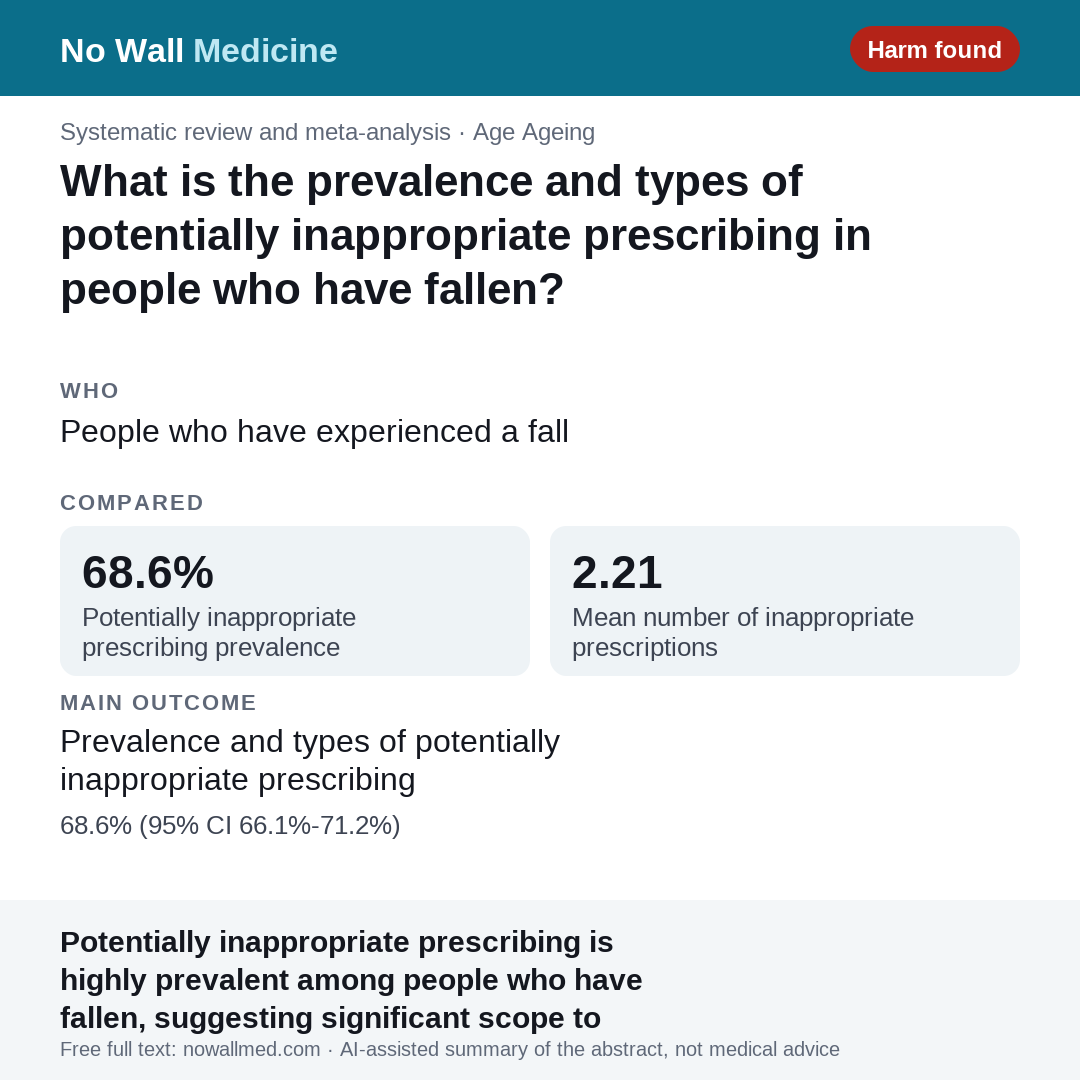
Potentially inappropriate prescribing and falls-risk increasing drugs in people who have experienced a fall: a systematic review and meta-analysis
Systematic review and meta-analysisHarm found
What is the prevalence and types of potentially inappropriate prescribing in people who have fallen?
Who
People who have experienced a fall
Compared
68.6%Potentially inappropriate prescribing prevalence (95% CI 66.1%-71.2%)
2.21Mean number of inappropriate prescriptions (95%CI 1.98-2.45)
Main outcome
Prevalence and types of potentially inappropriate prescribing
Result: 68.6% (95% CI 66.1%-71.2%)
Bottom line: Potentially inappropriate prescribing is highly prevalent among people who have fallen, suggesting significant scope to optimize medicine use.
Age Ageing · 2025-10-21Download image
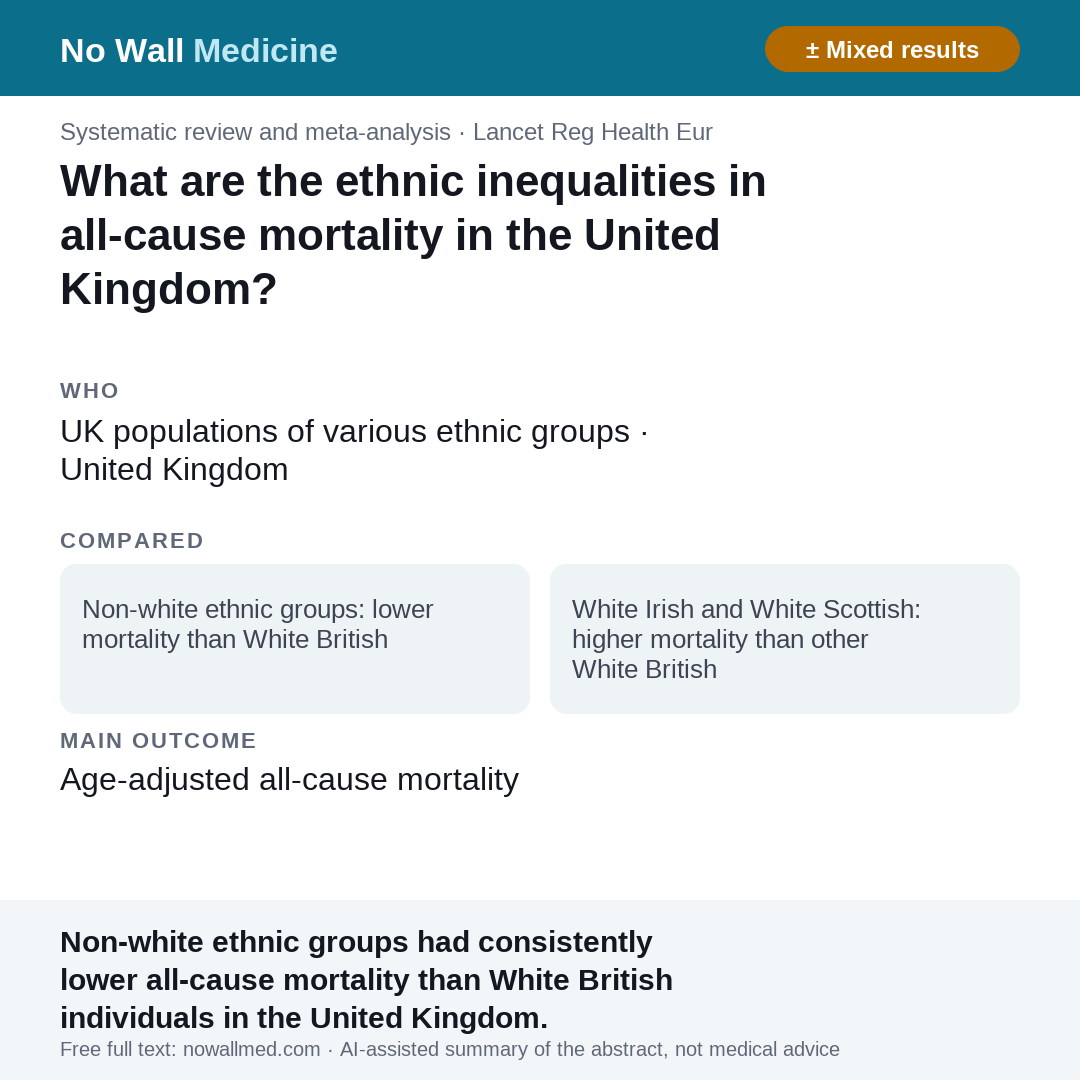
Inequalities in all-cause mortality by ethnicity in the United Kingdom: a systematic review and meta-analysis
Systematic review and meta-analysisMixed results
What are the ethnic inequalities in all-cause mortality in the United Kingdom?
Who
UK populations of various ethnic groups · United Kingdom
Compared
Non-white ethnic groups: lower mortality than White British
White Irish and White Scottish: higher mortality than other White British
Main outcome
Age-adjusted all-cause mortality
Bottom line: Non-white ethnic groups had consistently lower all-cause mortality than White British individuals in the United Kingdom.
Limitation: Evidence on socioeconomic position was inconclusive due to methodological heterogeneity.
Funded by: Australian Research Council Centre of Excellence in Population Ageing Research
Lancet Reg Health Eur · 2025-10-21Download image
The impact of sarcopenia and frailty on decompensation in compensated cirrhosis: A systematic review
Systematic reviewMixed results
Do sarcopenia and frailty impact decompensation in patients with compensated cirrhosis?
Who
Patients with compensated cirrhosis
Compared
Sarcopenia
Frailty: higher risk of decompensation and mortality
Main outcome
Decompensation and mortality
Bottom line: Sarcopenia and frailty did not consistently increase risk for first decompensation or death in most studies.
Limitation: Well-designed, prospective multicenter studies are essential to assess the association.
Hepatol Commun · 2025-10-21Download image
The impact of food insecurity on chronic liver disease: A systematic review of the literature
Systematic reviewHarm found
What is the impact of food insecurity on chronic liver disease?
Who
Pediatric and adult populations with chronic liver disease · Predominantly United States
Compared
Food insecurity
No food insecurity
Main outcome
Liver disease development, progression, and outcomes
Bottom line: Food insecurity is linked to increased odds of metabolic dysfunction-associated steatotic liver disease, advanced fibrosis, and mortality.
Hepatol Commun · 2025-10-21Download image
Critical appraise of inter-professional clinical practice guidelines for the spiritual care of patients with chronic illness: a systematic review
Systematic reviewMixed results
What constitutes the structure and content of an appropriate inter-professional spiritual care guideline?
Who
8
Clinical guidelines for spiritual care of patients with chronic illness
Compared
Strongly endorsed guidelines: achieved acceptable scores across all 6 domains
Other evaluated guidelines
Main outcome
evaluated quality of the clinical guidelines
Bottom line: Existing guidelines showed variable methodological quality and lacked cohesive guidance on various aspects of spiritual care.
BMC Palliat Care · 2025-10-21Download image
Glucagon-like peptide-1 receptor agonist treatment reduces body weight and improves glycaemic outcomes in patients with concurrent overweight/obesity and type 1 diabetes: A systematic review and meta-analysis
Systematic review and meta-analysisBenefit found
Do glucagon-like peptide-1 receptor agonists improve weight and glycaemic outcomes in type 1 diabetes?
Who
Adults with type 1 diabetes and body mass index ≥25 kg/m2
Compared
Glucagon-like peptide-1 receptor agonist
Control
Main outcome
Body weight, HbA1c, and insulin dose
Result: body weight reduction 4.31 kg (95% CI: 3.61-5.00 kg)
Bottom line: Glucagon-like peptide-1 receptor agonists reduce body weight, HbA1c, and insulin dose in type 1 diabetes.
Diabetes Obes Metab · 2025-10-20Download image

Optimal anthropometric discharge criteria from treatment of wasting: meta-analysis of individual patient data from 34 studies
Meta-analysis of individual patient dataUnclear result
Which anthropometric indices best predict reduced postdischarge relapse risk in malnourished children?
Who
21,989
Children aged 0-59 months treated for severe or moderate acute malnutrition · 16 countries
Compared
Weight-for-height Z-score: higher AUC in predicting lower SAM and MAM relapse risk
Mid-upper arm circumference: lower AUC than weight-for-height Z-score
Weight-for-age Z-score: lower AUC than weight-for-height Z-score
Main outcome
Severe or moderate acute malnutrition relapse risk
Bottom line: Weight-for-height Z-score predicted lower relapse risk better than mid-upper arm circumference or weight-for-age Z-score.
Am J Clin Nutr · 2025-10-20Download image
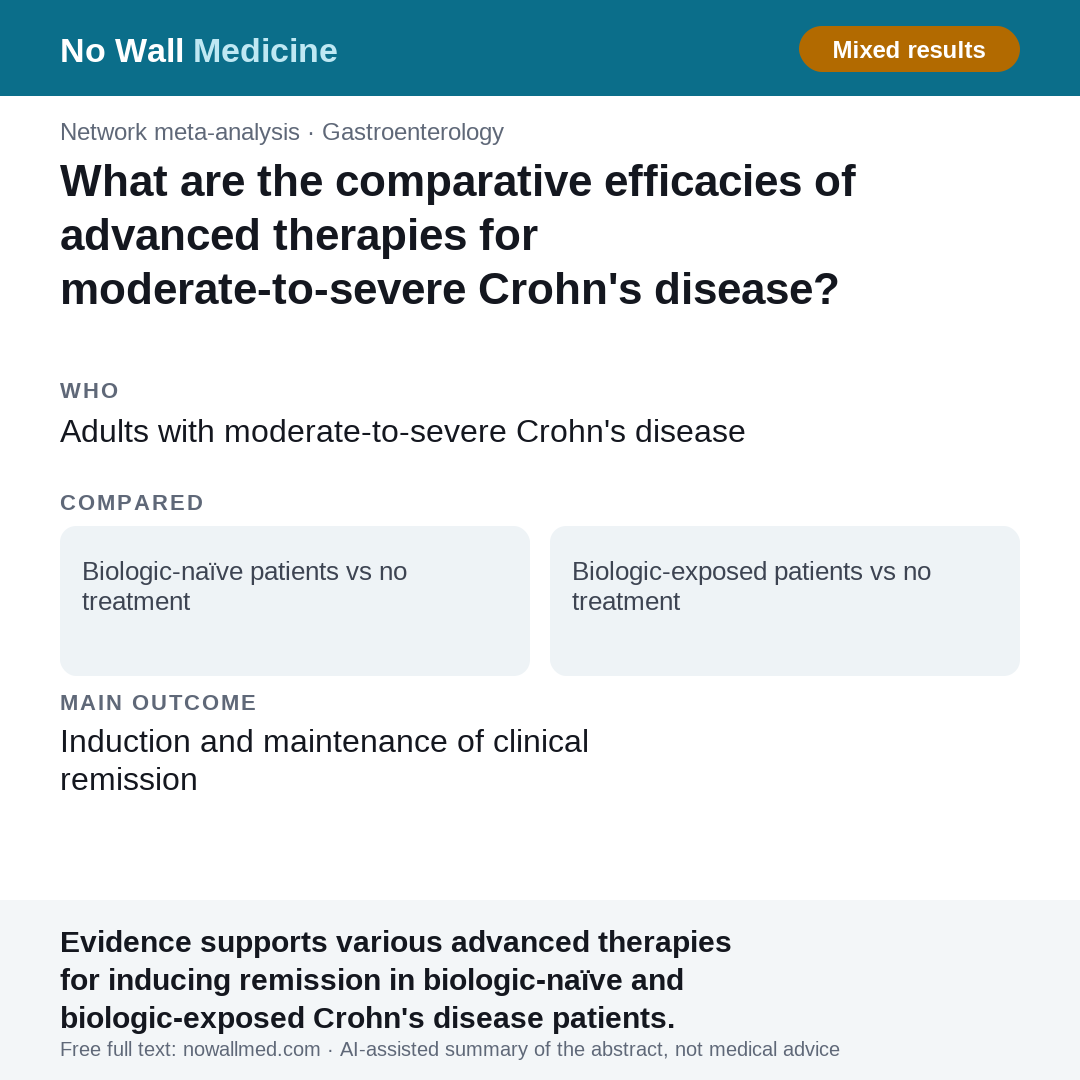
Comparative Efficacy of Advanced Therapies for Management of Moderate-to-Severe Crohn's Disease: 2025 AGA Evidence Synthesis
Network meta-analysisMixed results
What are the comparative efficacies of advanced therapies for moderate-to-severe Crohn's disease?
Who
Adults with moderate-to-severe Crohn's disease
Compared
Biologic-naïve patients vs no treatment
Biologic-exposed patients vs no treatment
Main outcome
Induction and maintenance of clinical remission
Bottom line: Evidence supports various advanced therapies for inducing remission in biologic-naïve and biologic-exposed Crohn's disease patients.
Gastroenterology · 2025-10-20Download image
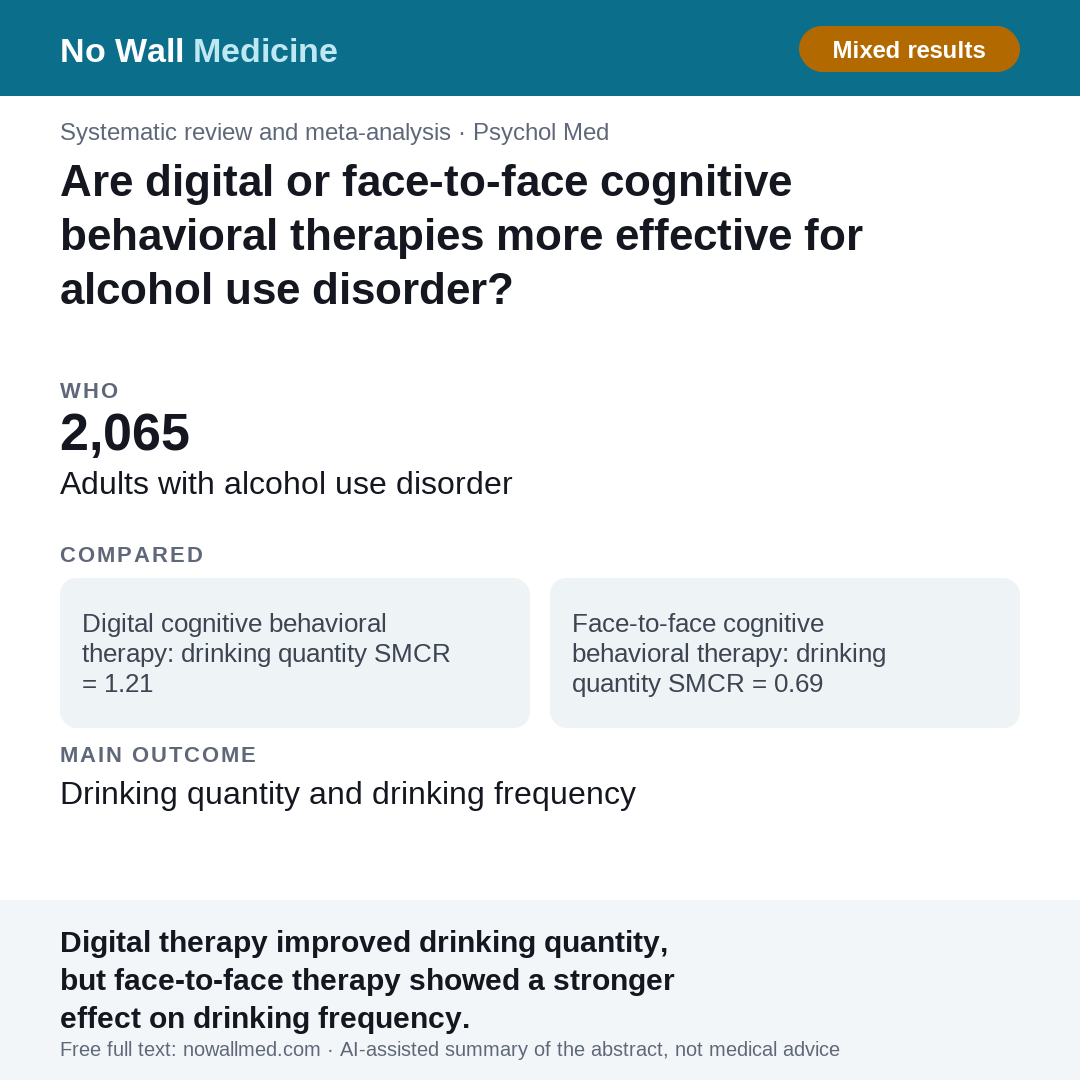
Comparative effectiveness of digital versus face-to-face cognitive behavioral therapy for alcohol use disorder: a systematic review and meta-analysis
Systematic review and meta-analysisMixed results
Are digital or face-to-face cognitive behavioral therapies more effective for alcohol use disorder?
Who
2,065
Adults with alcohol use disorder
Compared
Digital cognitive behavioral therapy: drinking quantity SMCR = 1.21
Face-to-face cognitive behavioral therapy: drinking quantity SMCR = 0.69
Main outcome
Drinking quantity and drinking frequency
Bottom line: Digital therapy improved drinking quantity, but face-to-face therapy showed a stronger effect on drinking frequency.
Psychol Med · 2025-10-20Download image
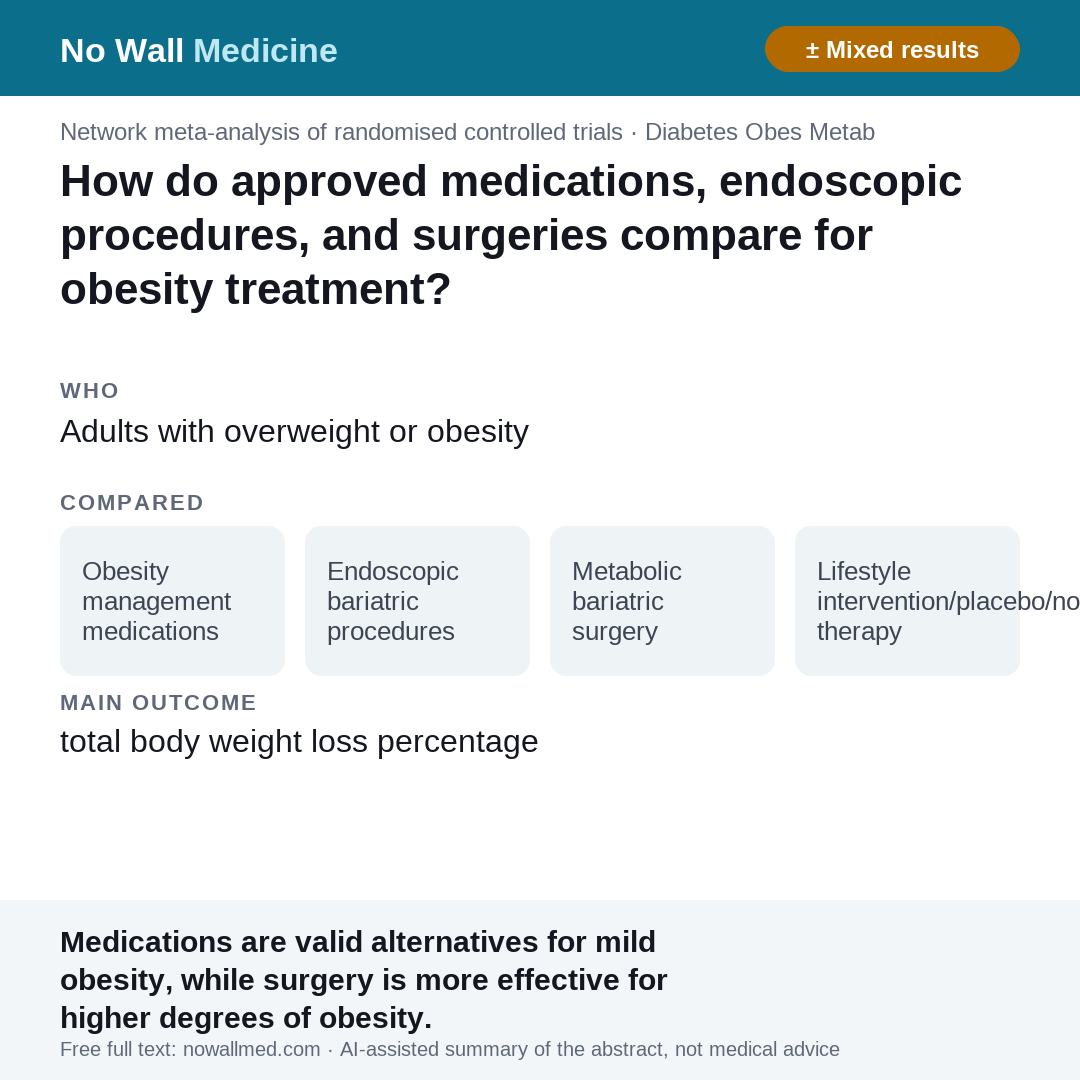
Efficacy and safety of European Medicines Agency (EMA)-approved pharmacological, endoscopic, and surgical treatments in different classes of obesity: A network meta-analysis of randomised controlled trials for the development of the SIO (Società Italiana Obesità) Italian guidelines for the diagnosis and treatment of overweight and obesity
Network meta-analysis of randomised controlled trialsMixed results
How do approved medications, endoscopic procedures, and surgeries compare for obesity treatment?
Who
Adults with overweight or obesity
Compared
Obesity management medications
Endoscopic bariatric procedures
Metabolic bariatric surgery
Lifestyle intervention/placebo/no therapy
Main outcome
total body weight loss percentage
Bottom line: Medications are valid alternatives for mild obesity, while surgery is more effective for higher degrees of obesity.
Diabetes Obes Metab · 2025-10-20Download image
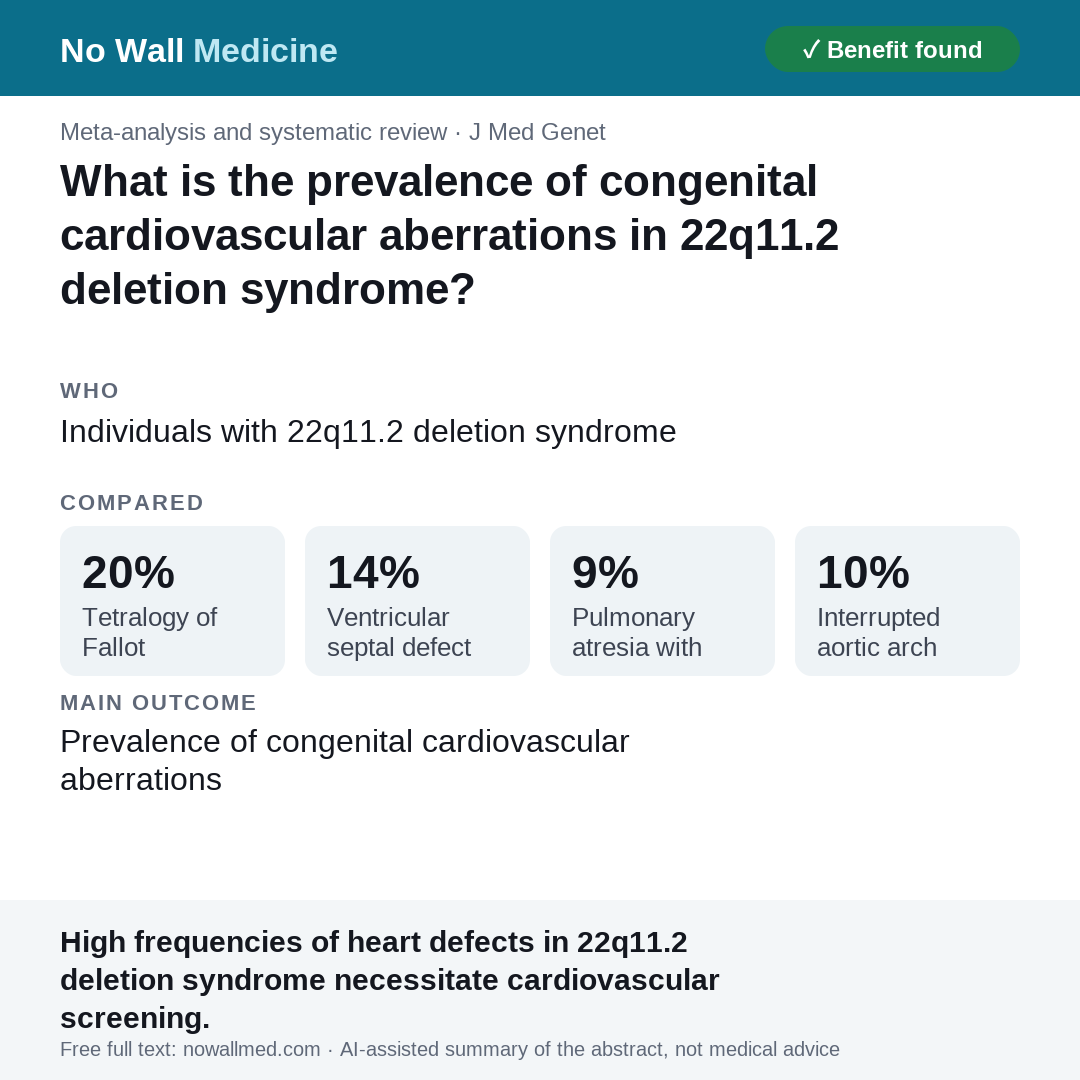
Congenital heart disease in 22q11.2 deletion syndrome: a meta-analysis and systematic review of the literature
Meta-analysis and systematic reviewBenefit found
What is the prevalence of congenital cardiovascular aberrations in 22q11.2 deletion syndrome?
Who
Individuals with 22q11.2 deletion syndrome
Compared
20%Tetralogy of Fallot (95% CI 0.17 to 0.23)
14%Ventricular septal defect (95% CI 0.12 to 0.16)
9%Pulmonary atresia with ventricular septal defect (95% CI 0.06 to 0.12)
10%Interrupted aortic arch (95% CI 0.06 to 0.15)
Main outcome
Prevalence of congenital cardiovascular aberrations
Bottom line: High frequencies of heart defects in 22q11.2 deletion syndrome necessitate cardiovascular screening.
J Med Genet · 2025-10-20Download image
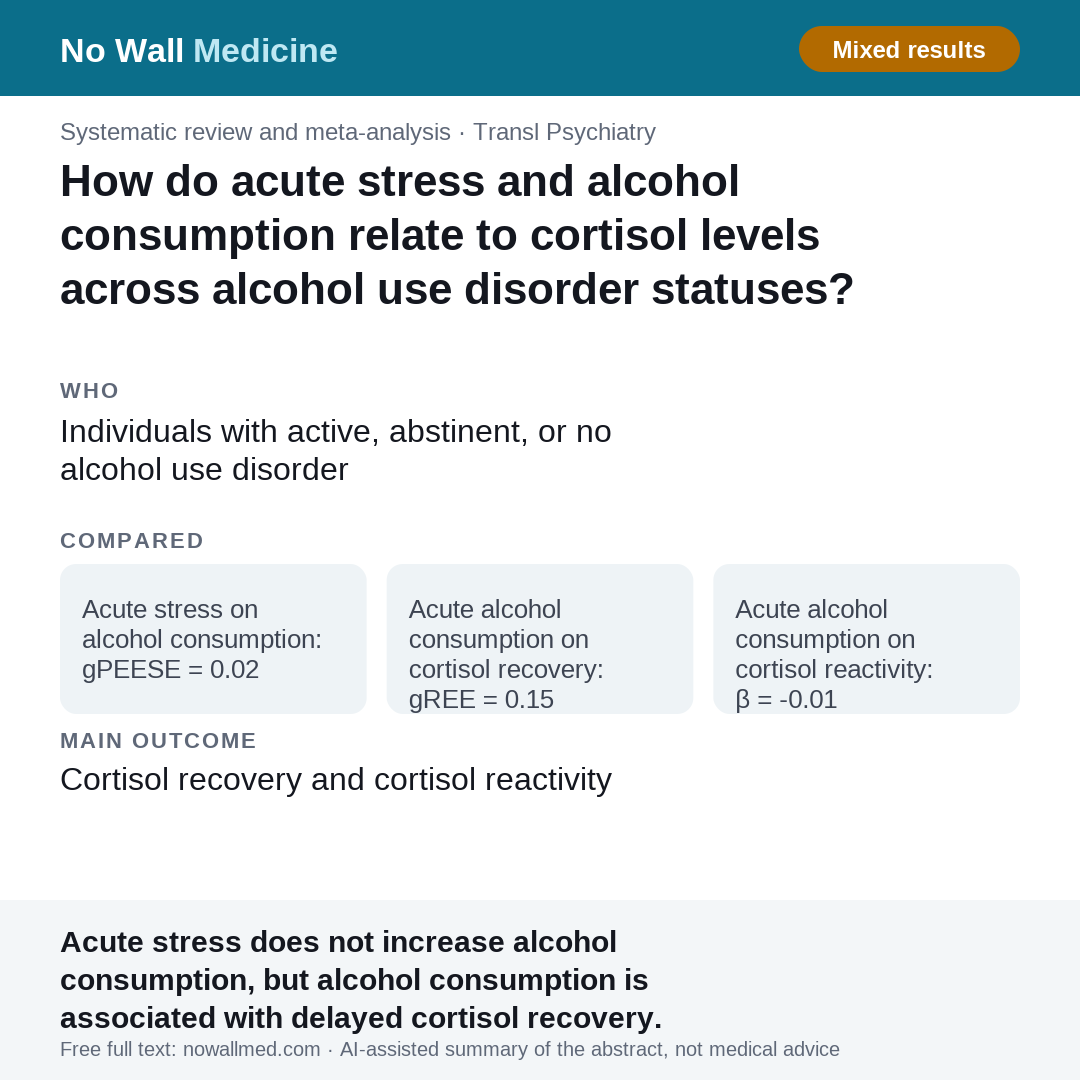
A systematic review with meta-analysis on the relation between acute stress, alcohol consumption and cortisol levels in individuals with a personal, familial or no alcohol use disorder
Systematic review and meta-analysisMixed results
How do acute stress and alcohol consumption relate to cortisol levels across alcohol use disorder statuses?
Who
Individuals with active, abstinent, or no alcohol use disorder
Compared
Acute stress on alcohol consumption: gPEESE = 0.02
Acute alcohol consumption on cortisol recovery: gREE = 0.15
Acute alcohol consumption on cortisol reactivity: β = -0.01
Main outcome
Cortisol recovery and cortisol reactivity
Bottom line: Acute stress does not increase alcohol consumption, but alcohol consumption is associated with delayed cortisol recovery.
Limitation: Small-study effects influenced initial findings regarding stress and alcohol consumption.
Transl Psychiatry · 2025-10-20Download image
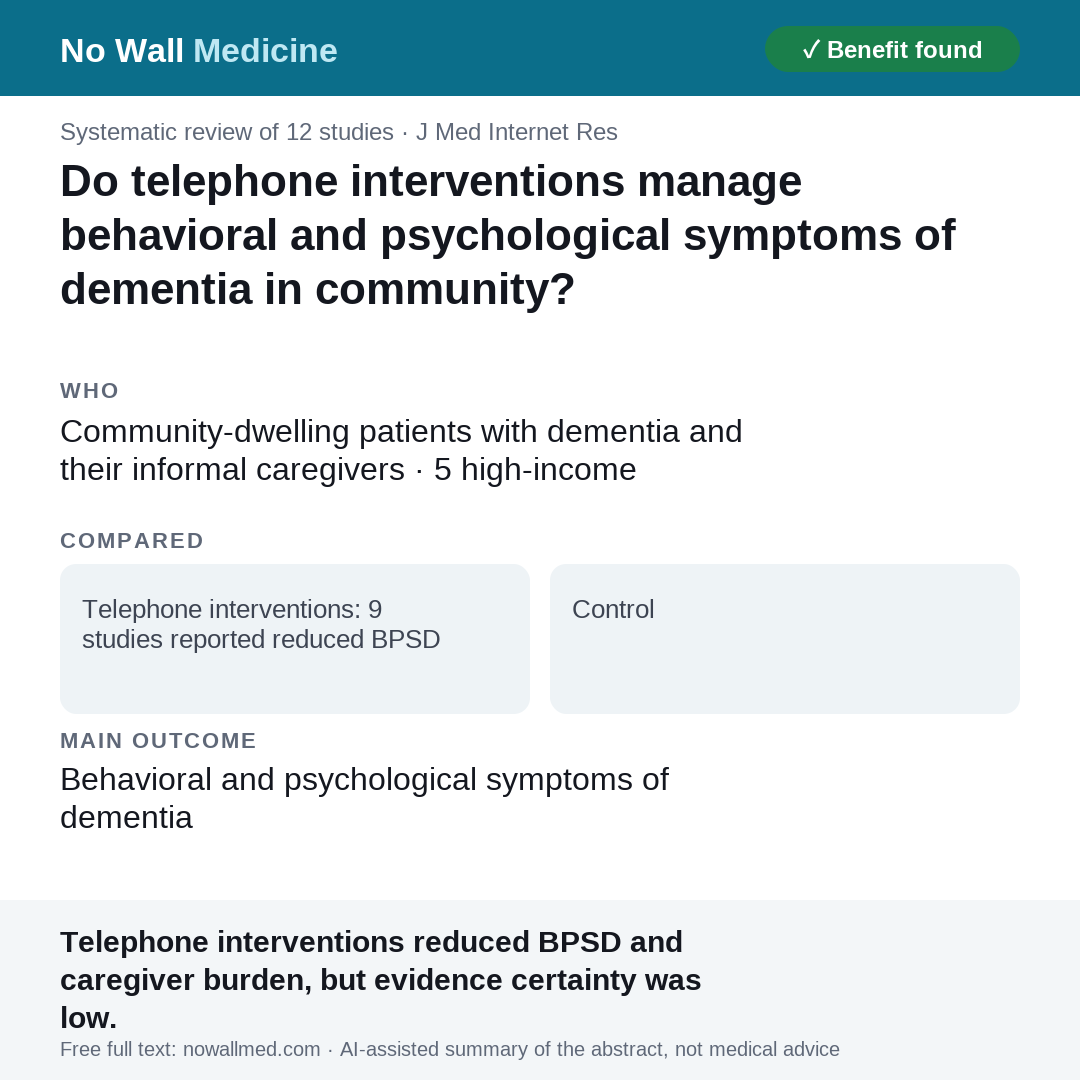
Effectiveness of Telephone Interventions for the Management of Behavioral and Psychological Symptoms of Dementia in the Community: Systematic Review
Systematic reviewBenefit found
Are telephone interventions effective for managing behavioral and psychological symptoms of dementia?
Who
Community-dwelling patients with dementia and their informal caregivers · 5 high-income countries
Compared
Telephone interventions
Control
Main outcome
Behavioral and psychological symptoms of dementia and caregiver burden
Bottom line: Telephone interventions show promise for reducing symptoms and caregiver burden, but the certainty of evidence is low.
Limitation: The certainty of evidence was rated as low according to the GRADE analysis.
J Med Internet Res · 2025-10-20Download image
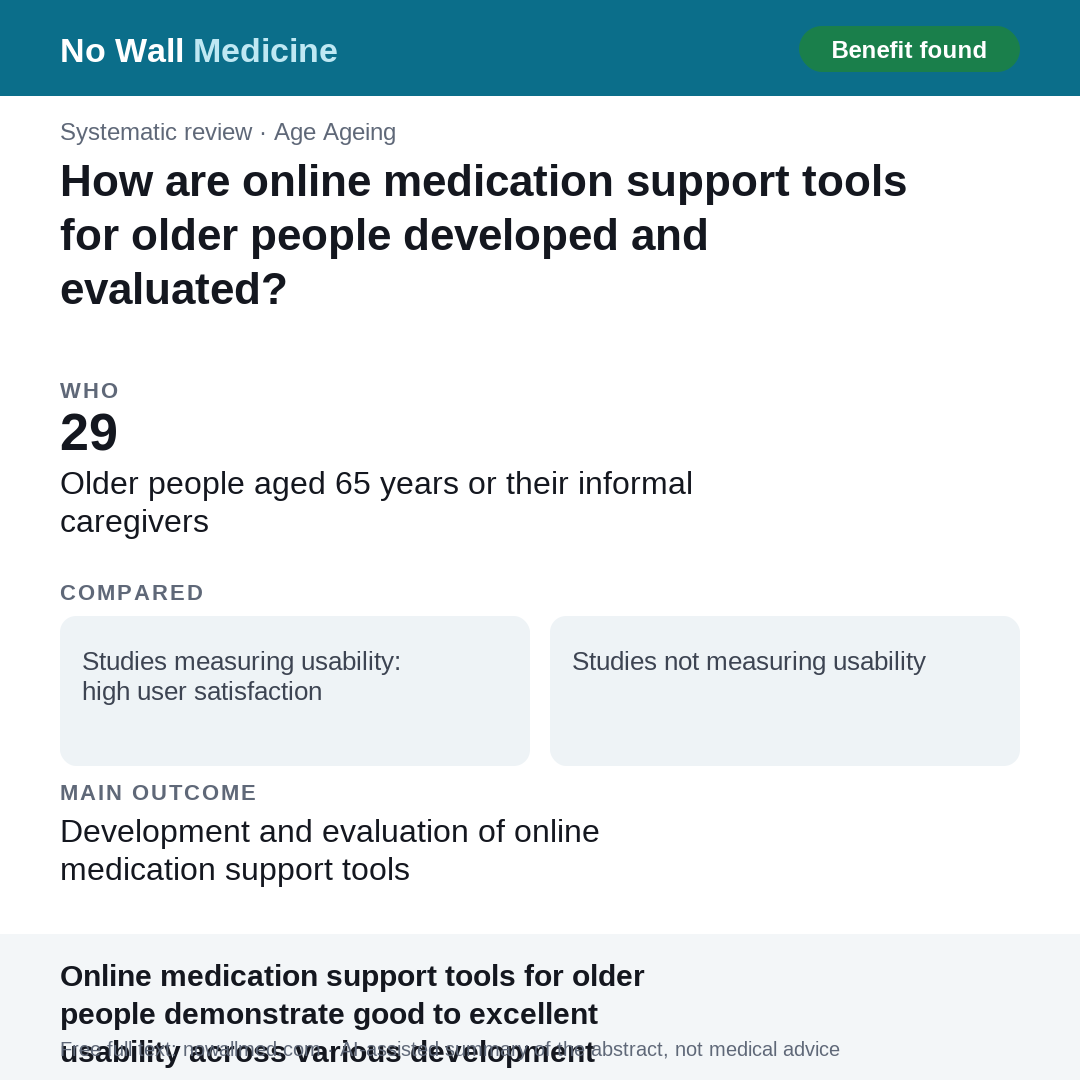
Development and evaluation of online medication support tools for older people: a systematic review
Systematic reviewBenefit found
How are online medication support tools for older people developed and evaluated?
Who
29
Older people aged 65 years or their informal caregivers
Compared
Studies measuring usability: high user satisfaction
Studies not measuring usability
Main outcome
Development and evaluation of online medication support tools
Bottom line: Online medication support tools for older people demonstrate good to excellent usability across various development methodologies.
Age Ageing · 2025-10-19Download image
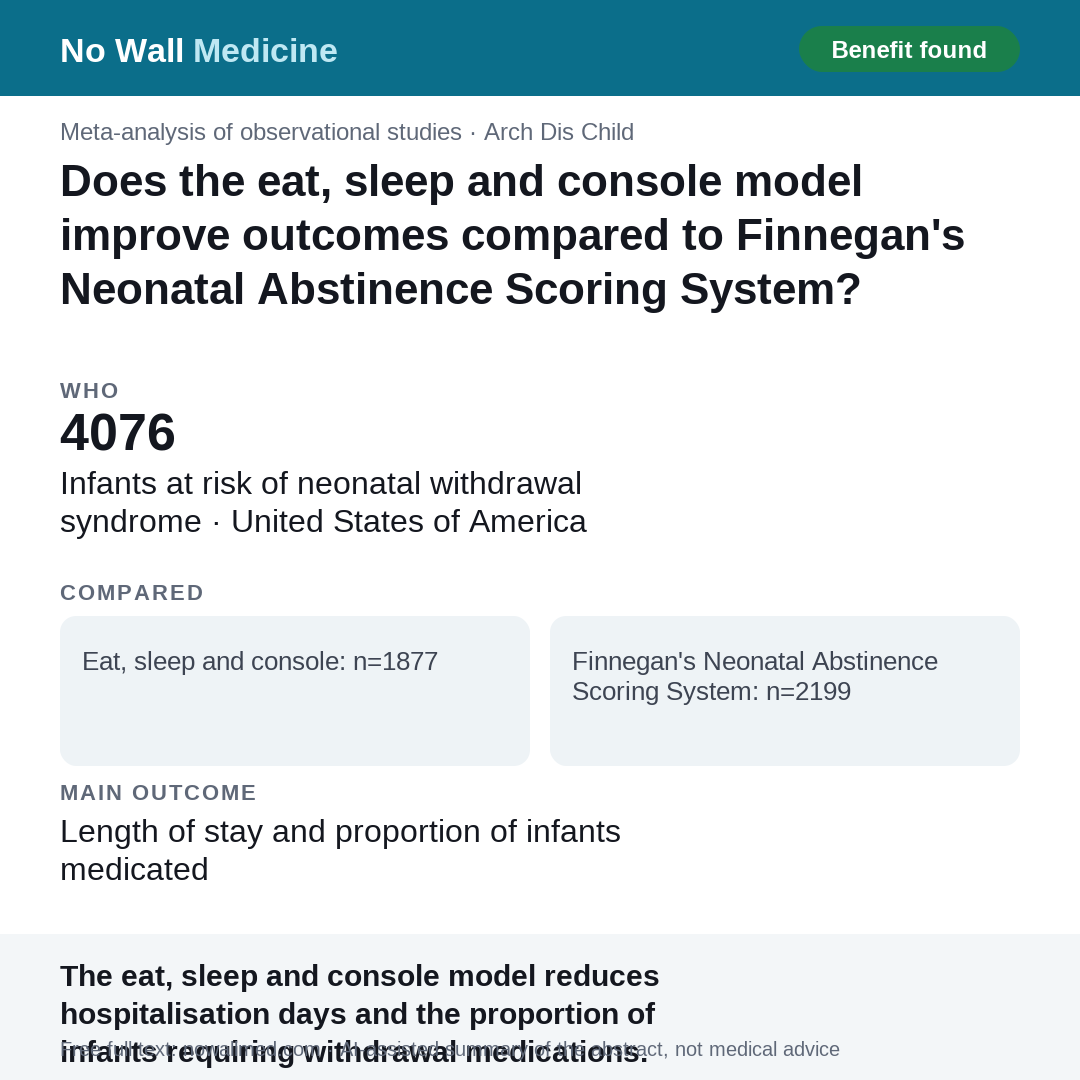
Eat, sleep and console model of care for managing infants with neonatal abstinence syndrome: a meta-analysis of observational studies
Meta-analysis of observational studiesBenefit found
Does the eat, sleep and console model improve outcomes compared to Finnegan's Neonatal Abstinence Scoring System?
Who
4076
Infants at risk of neonatal withdrawal syndrome · United States of America
Compared
Eat, sleep and console: n=1877
Finnegan's Neonatal Abstinence Scoring System: n=2199
Main outcome
Length of stay and proportion of infants medicated
Result: OR 0.36, 95% CI 0.22 to 0.60
Bottom line: The eat, sleep and console model reduces hospitalisation days and the proportion of infants requiring withdrawal medications.
Arch Dis Child · 2025-10-17Download image
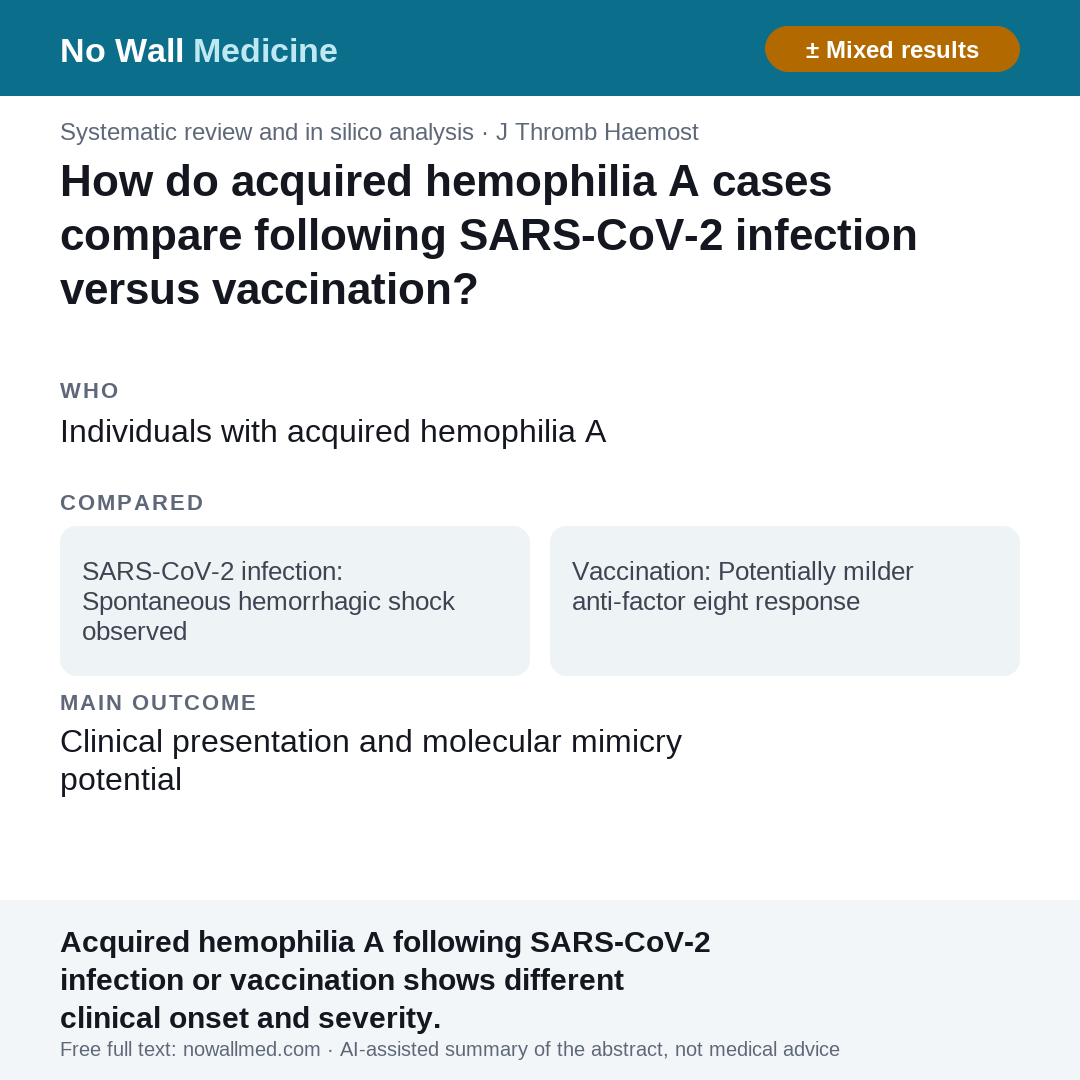
Acquired hemophilia A following SARS-CoV-2 infection and vaccination: clinical summary and insights
Systematic review and in silico analysisMixed results
How do acquired hemophilia A cases compare following SARS-CoV-2 infection versus vaccination?
Who
Individuals with acquired hemophilia A
Compared
SARS-CoV-2 infection: Spontaneous hemorrhagic shock observed
Vaccination: Potentially milder anti-factor eight response
Main outcome
Clinical presentation and molecular mimicry potential
Bottom line: Acquired hemophilia A following SARS-CoV-2 infection or vaccination shows different clinical onset and severity.
J Thromb Haemost · 2025-10-17Download image
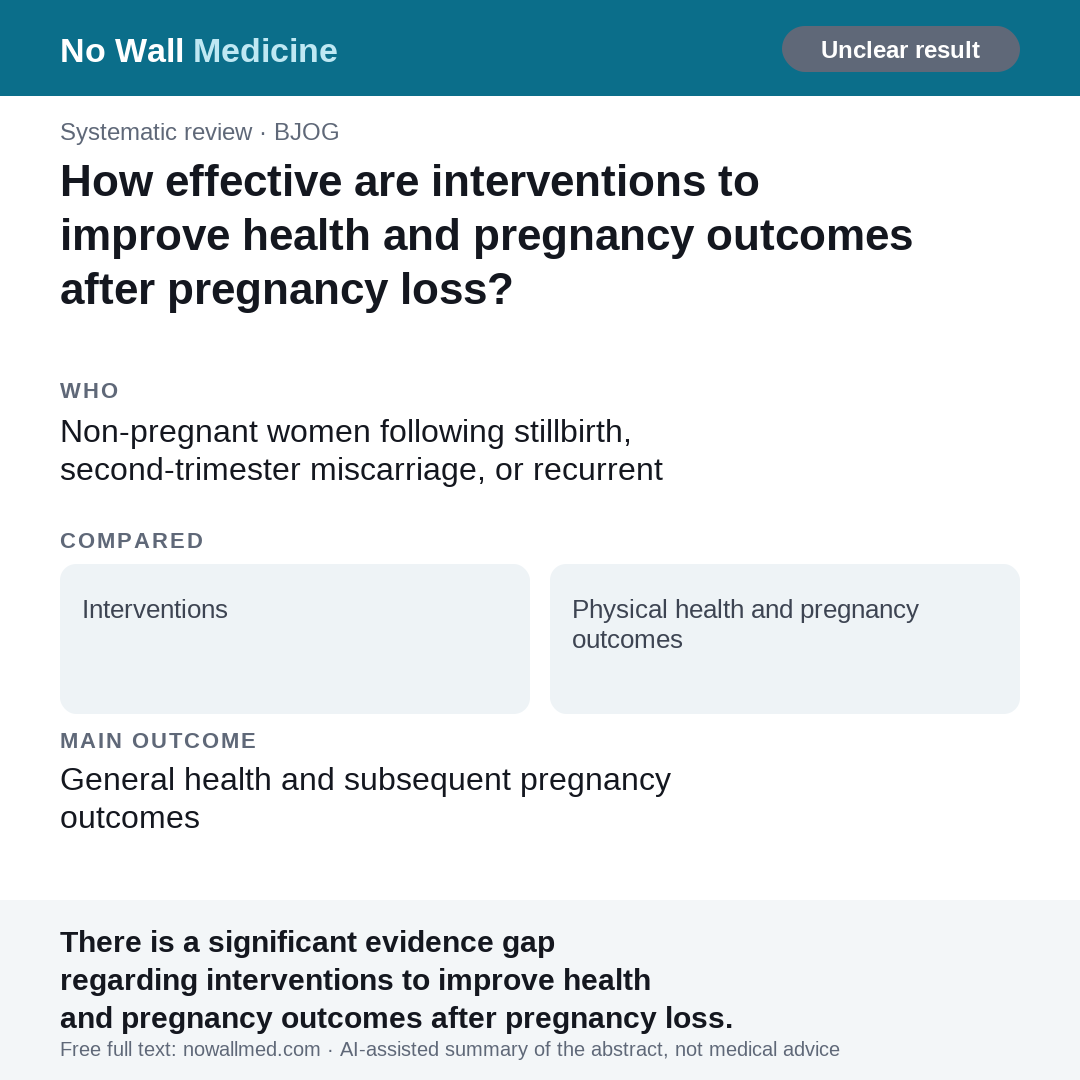
Interventions to Improve Outcomes After Pregnancy Loss: A Systematic Review
Systematic reviewUnclear result
How effective are interventions to improve health and pregnancy outcomes after pregnancy loss?
Who
Non-pregnant women following stillbirth, second-trimester miscarriage, or recurrent miscarriage
Compared
Interventions
Physical health and pregnancy outcomes
Main outcome
General health and subsequent pregnancy outcomes
Bottom line: There is a significant evidence gap regarding interventions to improve health and pregnancy outcomes after pregnancy loss.
Limitation: The quality of evidence was low and the primary aim was not met due to limited evidence.
BJOG · 2025-10-17Download image
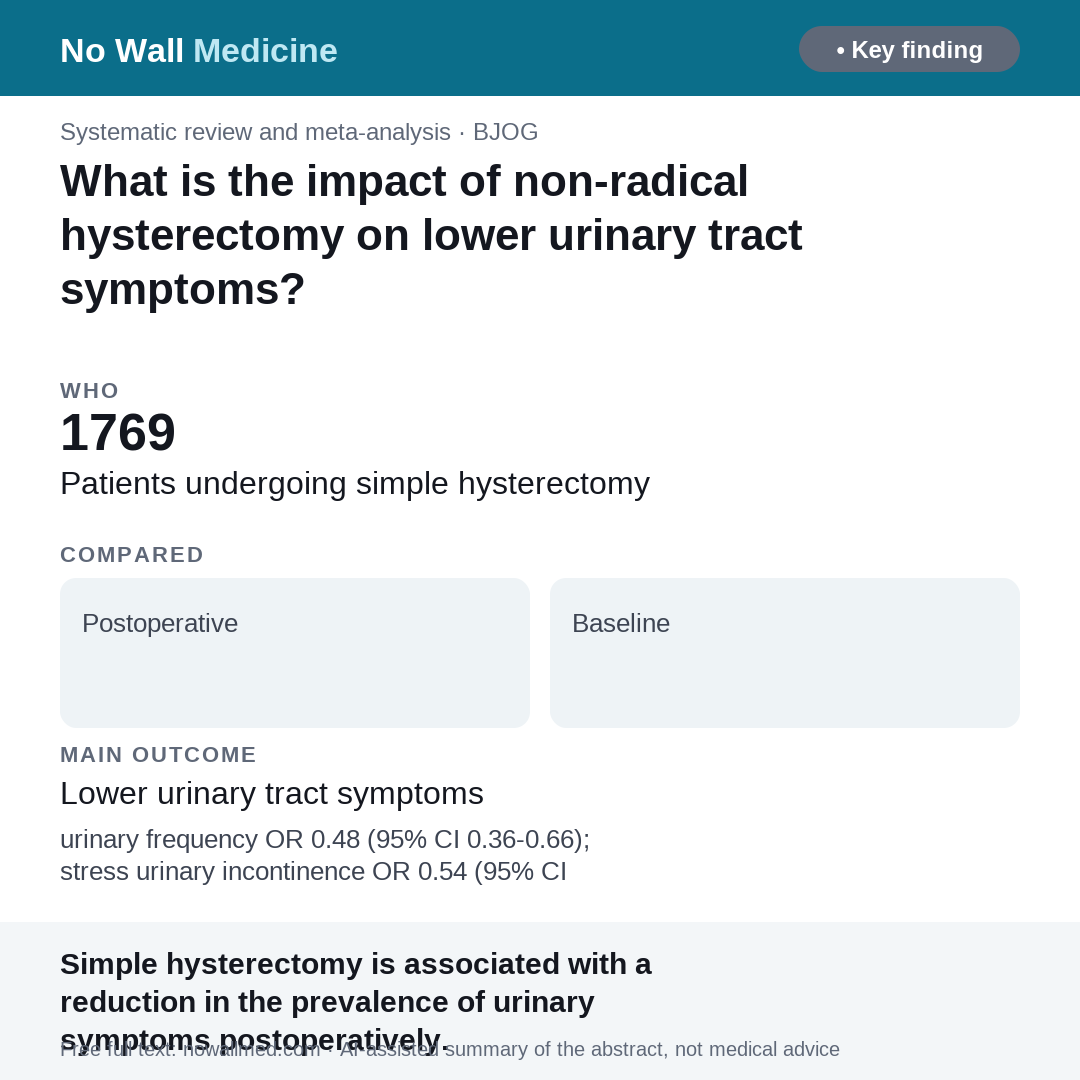
The Impact of Non-Radical Hysterectomy on Urinary Functions: Evaluation of Symptoms-A Systematic Review and Meta-Analysis
Systematic review and meta-analysisBenefit found
What is the impact of non-radical hysterectomy on lower urinary tract symptoms?
Who
1769
Patients undergoing simple hysterectomy
Compared
Postoperative
Baseline
Main outcome
Lower urinary tract symptoms
Result: urinary frequency OR 0.48 (95% CI 0.36-0.66); stress urinary incontinence OR 0.54 (95% CI 0.44-0.68); urge urinary incontinence OR 0.76 (95% CI 0.72-0.94); nocturia OR 0.55 (95% CI 0.36-0.84); incomplete bladder OR 0.95 (95% CI 0.66-1.36)
Bottom line: Simple hysterectomy is associated with a reduction in the prevalence of urinary symptoms postoperatively.
BJOG · 2025-10-17Download image
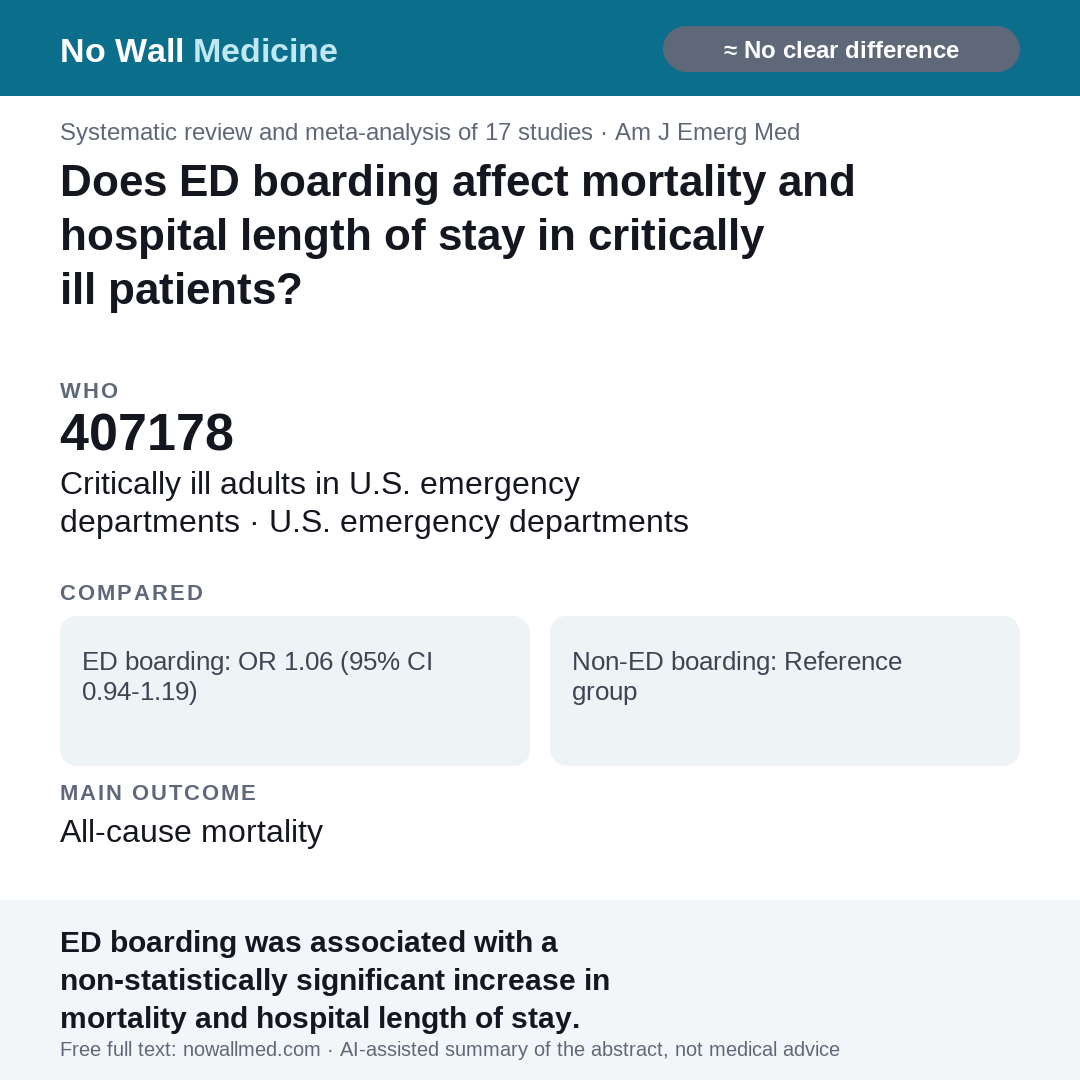
Outcomes of boarding critically ill patients in U.S. EDs: A systematic review and meta-analysis
Systematic review and meta-analysisNo clear difference
Do emergency department boarding outcomes differ from non-emergency department boarding for critically ill patients?
Who
407178
Critically ill adults in United States emergency departments · United States, mostly urban academic emergency departments
Compared
Emergency department boarding: OR 1.06, 95 % CI 0.94-1.19
Non-emergency department boarding
Main outcome
Mortality and hospital length of stay
Result: OR 1.06 (95 % CI 0.94-1.19)
Bottom line: Emergency department boarding was associated with non-statistically significant increases in mortality and hospital length of stay.
Limitation: High heterogeneity and inconsistent boarding definitions were noted.
Am J Emerg Med · 2025-10-17Download image