Visual abstracts
New randomized trials and meta-analyses from leading journals at a glance: who was studied, what was compared, and what was found. Every paper is free to read in full.
All specialtiesCardiology 4763Oncology 4043Gastroenterology & Hepatology 1903Infectious Disease 3756Neurology 1872Psychiatry & Mental Health 2216Pulmonology 2044Critical Care 1319Endocrinology & Diabetes 2544Pediatrics 2889Surgery 2480Orthopedics & Sports Medicine 917Neurosurgery 525Cardiothoracic & Vascular Surgery 656Plastic & Reconstructive Surgery 574Nephrology 1107Rheumatology 810Hematology 1090Dermatology 611Ophthalmology 532Obstetrics & Gynecology 1645Public & Global Health 1037Radiology & Imaging 619Anesthesiology 958Urology 745ENT (Otolaryngology) 494Emergency Medicine 481Allergy & Immunology 309Geriatrics 972Family Medicine & Primary Care 534Medical Genetics & Genomics 659Pathology & Laboratory Medicine 156Physical Medicine & Rehabilitation 734Palliative Care 421Nutrition 1560Digital Health & AI 2137General Medicine 318
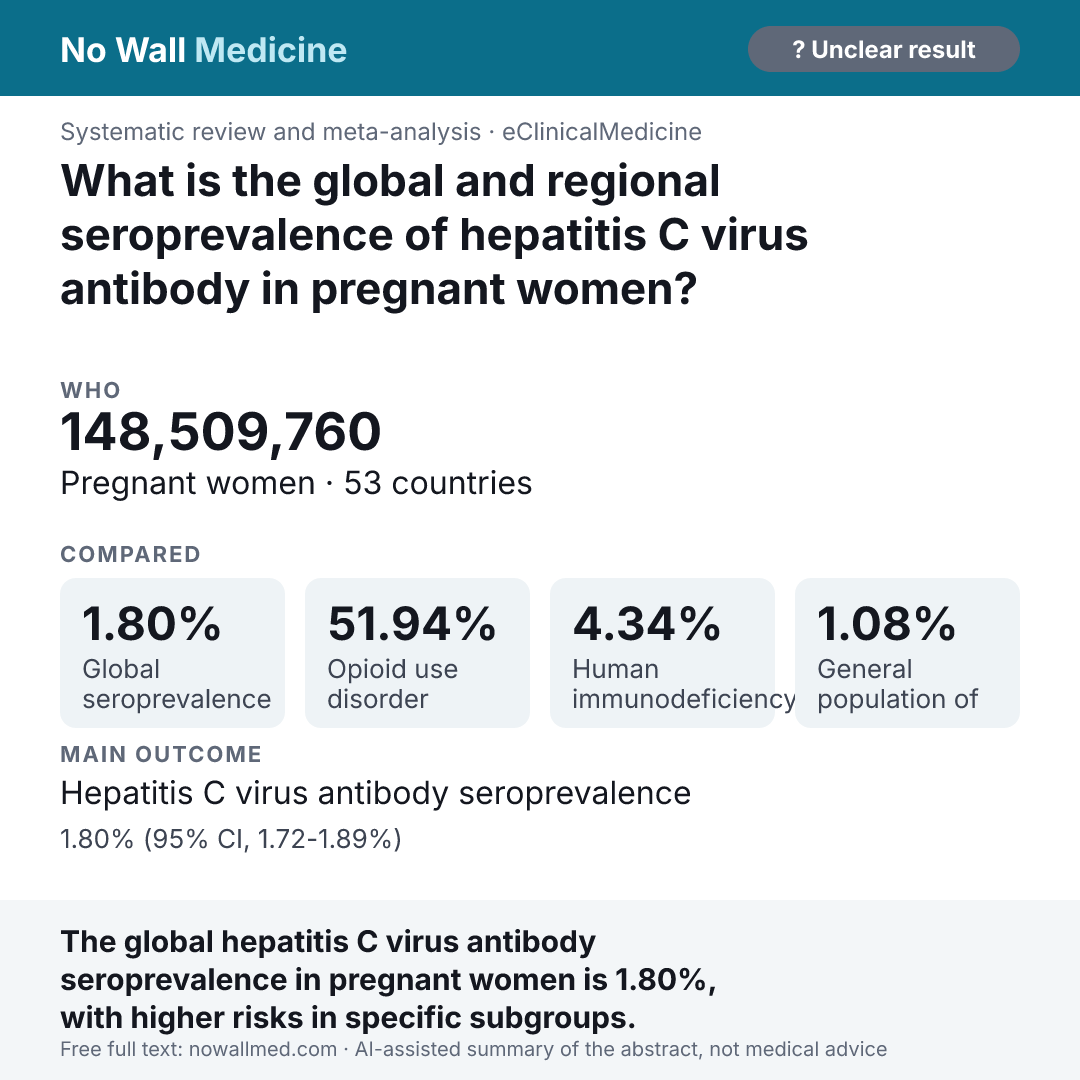
Hepatitis C infection seroprevalence in pregnant women worldwide: a systematic review and meta-analysis
Systematic review and meta-analysisUnclear result
What is the global and regional seroprevalence of hepatitis C virus antibody in pregnant women?
Who
148,509,760
Pregnant women · 53 countries
Compared
1.80%Global seroprevalence (95% CI, 1.72-1.89%)
51.94%Opioid use disorder (95% CI: 37.32-66.39)
4.34%Human immunodeficiency virus infection (95% CI: 2.21-7.06%)
1.08%General population of pregnant women (95% CI: 1.02-1.15%)
Main outcome
Hepatitis C virus antibody seroprevalence
Result: 1.80% (95% CI, 1.72-1.89%)
Bottom line: The global hepatitis C virus antibody seroprevalence in pregnant women is 1.80%, with higher risks in specific subgroups.
Limitation: Due to substantial heterogeneity between studies, estimates might be different than the true seroprevalence.
eClinicalMedicine · 2023-11-17 · Save PNG
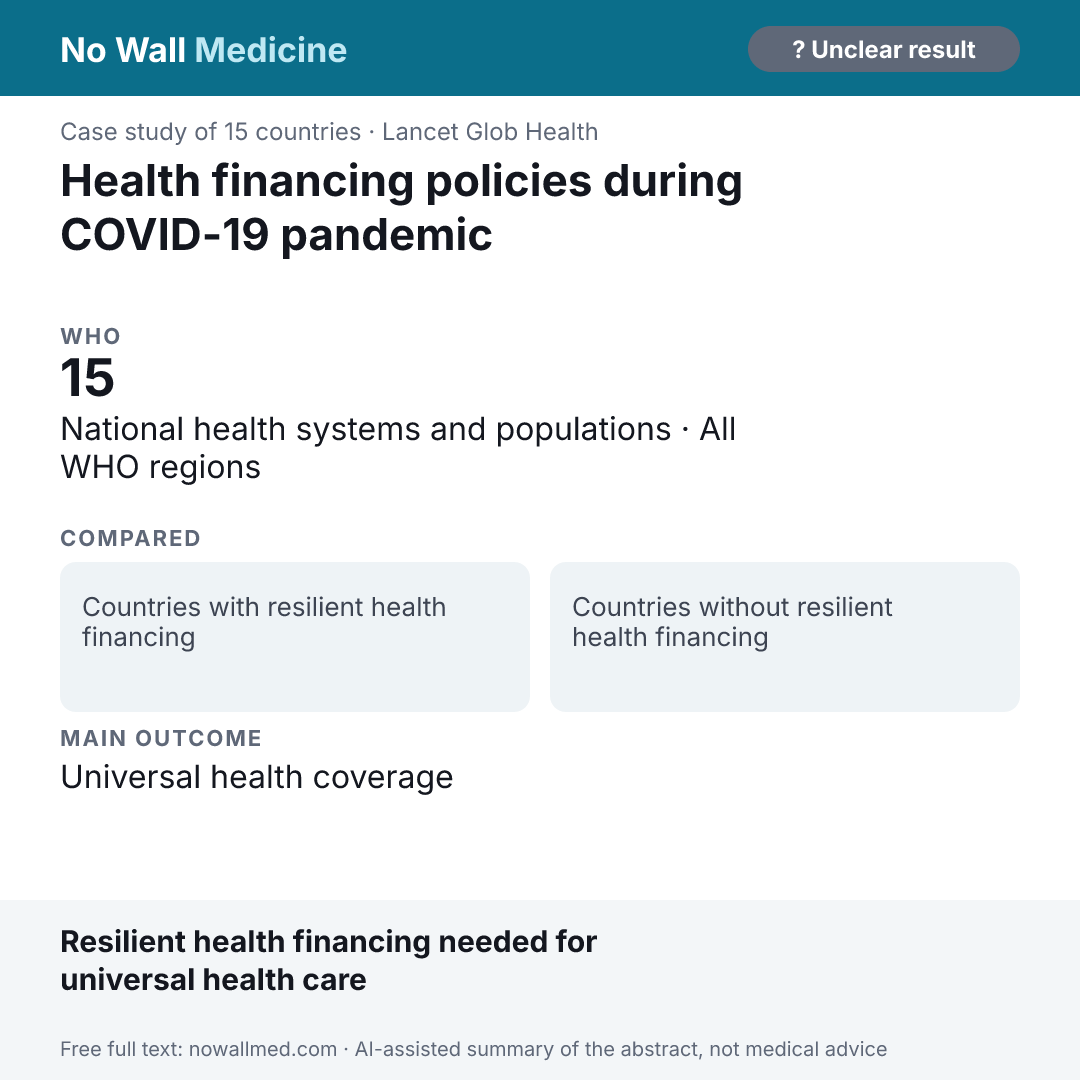
Health financing policies during the COVID-19 pandemic and implications for universal health care: a case study of 15 countries
Case study of 15 countriesUnclear result
Health financing policies during COVID-19 pandemic
Who
15
National health systems and populations · All WHO regions
Compared
Countries with resilient health financing
Countries without resilient health financing
Main outcome
Universal health coverage
Bottom line: Resilient health financing needed for universal health care
Funded by: Bill & Melinda Gates Foundation
Lancet Glob Health · 2023-11-17 · Save PNG
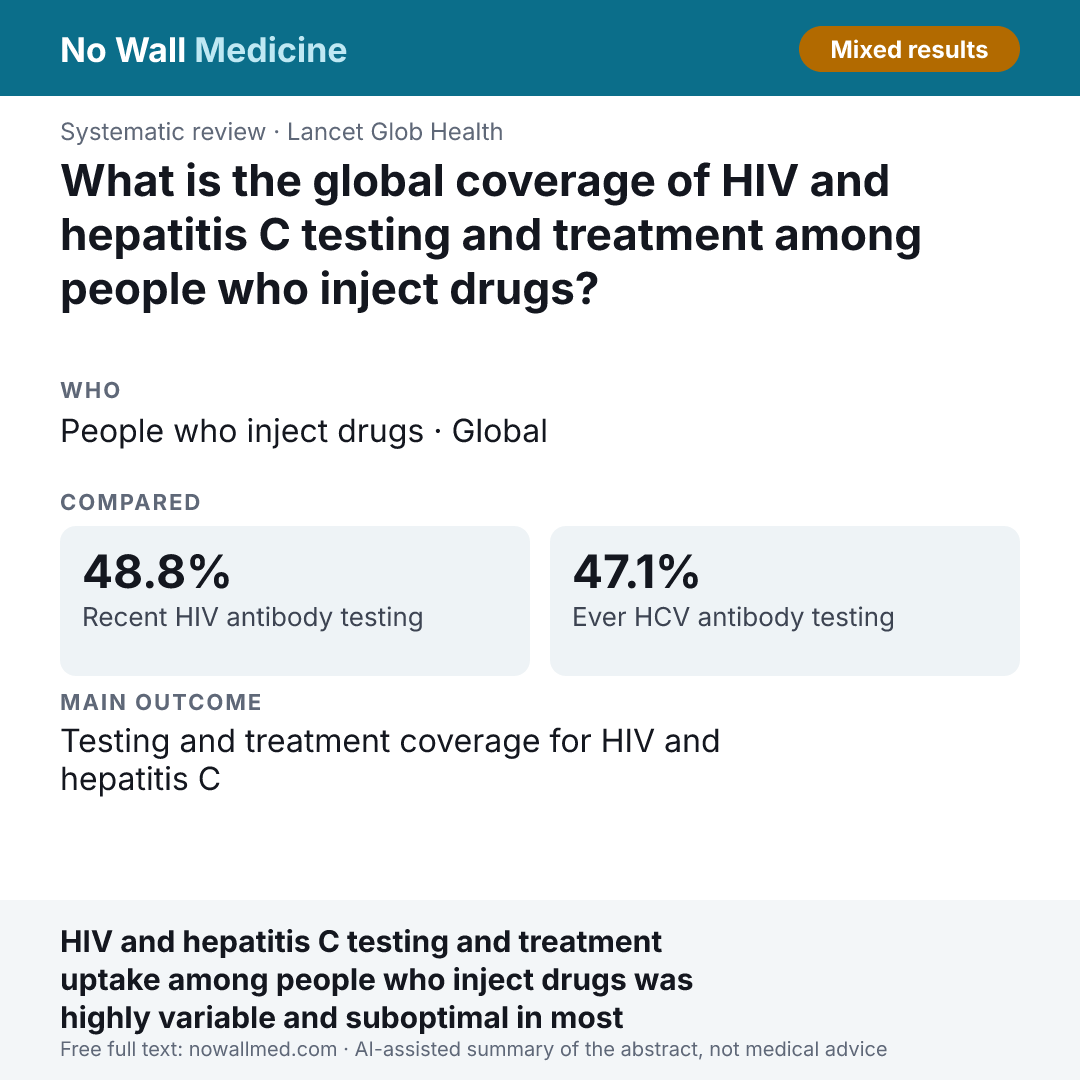
Global, regional, and country-level coverage of testing and treatment for HIV and hepatitis C infection among people who inject drugs: a systematic review
Systematic reviewMixed results
What is the global coverage of HIV and hepatitis C testing and treatment among people who inject drugs?
Who
People who inject drugs · Global
Compared
48.8%Recent HIV antibody testing (95% uncertainty interval 43.3-54.2%)
47.1%Ever HCV antibody testing (95% uncertainty interval 43.4-51.0%)
Main outcome
Testing and treatment coverage for HIV and hepatitis C
Bottom line: HIV and hepatitis C testing and treatment uptake among people who inject drugs was highly variable and suboptimal in most countries.
Lancet Glob Health · 2023-11-17 · Save PNG
Mendelian Randomization Studies in Atopic Dermatitis: A Systematic Review
Systematic review of Mendelian randomization studiesMixed results
What are the causal relationships between atopic dermatitis and other medical conditions?
Who
30
Mendelian randomization studies exploring atopic dermatitis
Compared
Causal factors for atopic dermatitis: Body mass index, gut microbial flora, IL-18 signaling pathway, and gastroesophageal reflux disease
Conditions caused by atopic dermatitis: Heart failure, rheumatoid arthritis, and conjunctivitis
Main outcome
Causal associations between atopic dermatitis and comorbidities
Bottom line: Mendelian randomization studies identify several causal factors for atopic dermatitis and conditions caused by it.
J Invest Dermatol · 2023-11-17 · Save PNG

Twelve Month Efficacy of Computer-Tailored Communication in Boosting Fruit and Vegetable Consumption Among Adults Aged Forty and over: A Three-Level Meta-Analysis and Systematic Review of Randomized Controlled Trials
Meta-analysis of 11 trialsBenefit found
Does computer-tailored communication boost fruit intake
Who
25496
adults aged forty and over
Compared
intervention
control
Main outcome
fruit and vegetable consumption
Result: standardized mean difference of 0.21 (confidence interval: 0.12, 0.30)
Bottom line: Computer-tailored communication increases fruit intake
Funded by: no external funding
Adv Nutr · 2023-11-17 · Save PNG

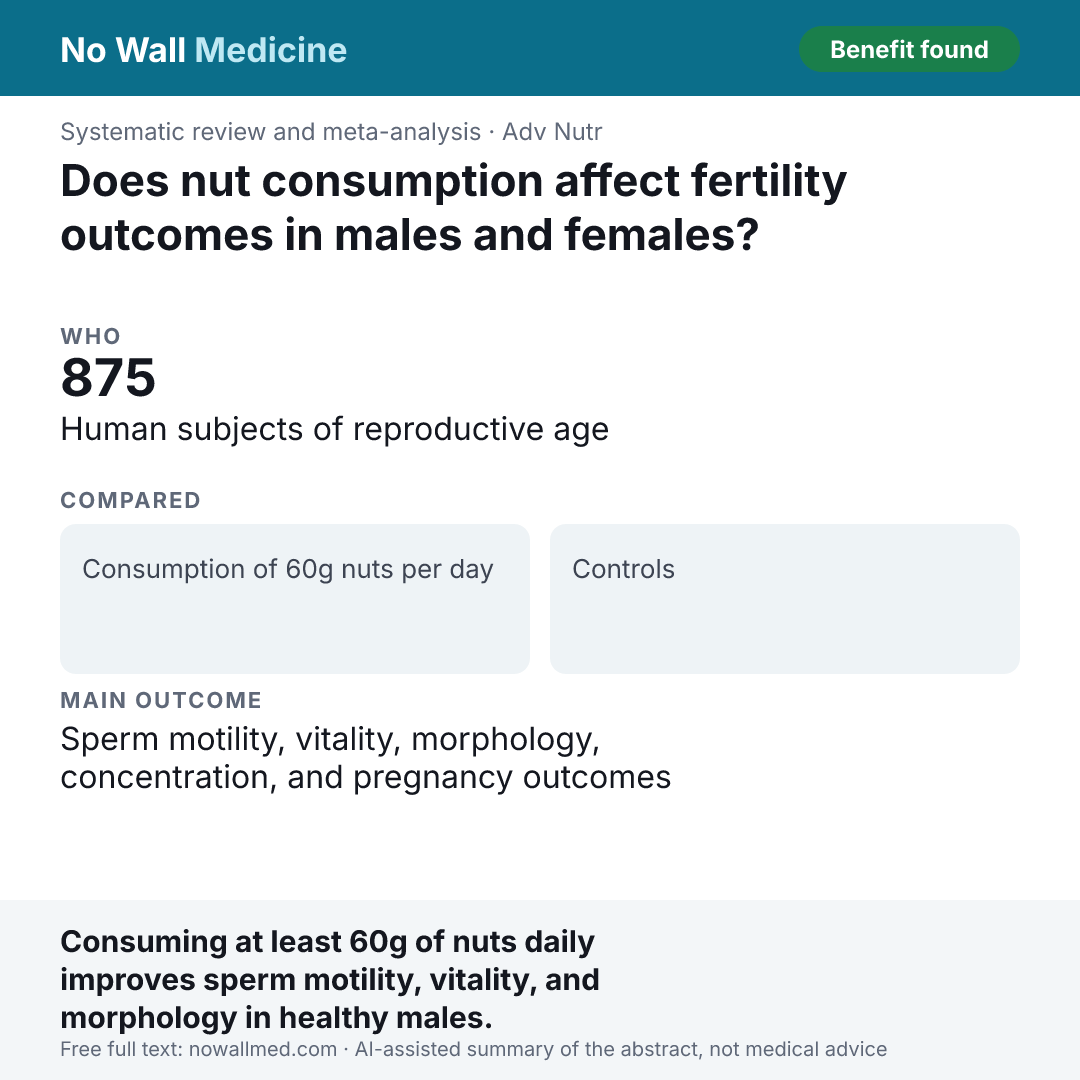
Nut Consumption and Fertility: a Systematic Review and Meta-Analysis
Systematic review and meta-analysisBenefit found
Does nut consumption affect fertility outcomes in males and females?
Who
875
Human subjects of reproductive age
Compared
Consumption of 60g nuts per day
Controls
Main outcome
Sperm motility, vitality, morphology, concentration, and pregnancy outcomes
Bottom line: Consuming at least 60g of nuts daily improves sperm motility, vitality, and morphology in healthy males.
Adv Nutr · 2023-11-17 · Save PNG
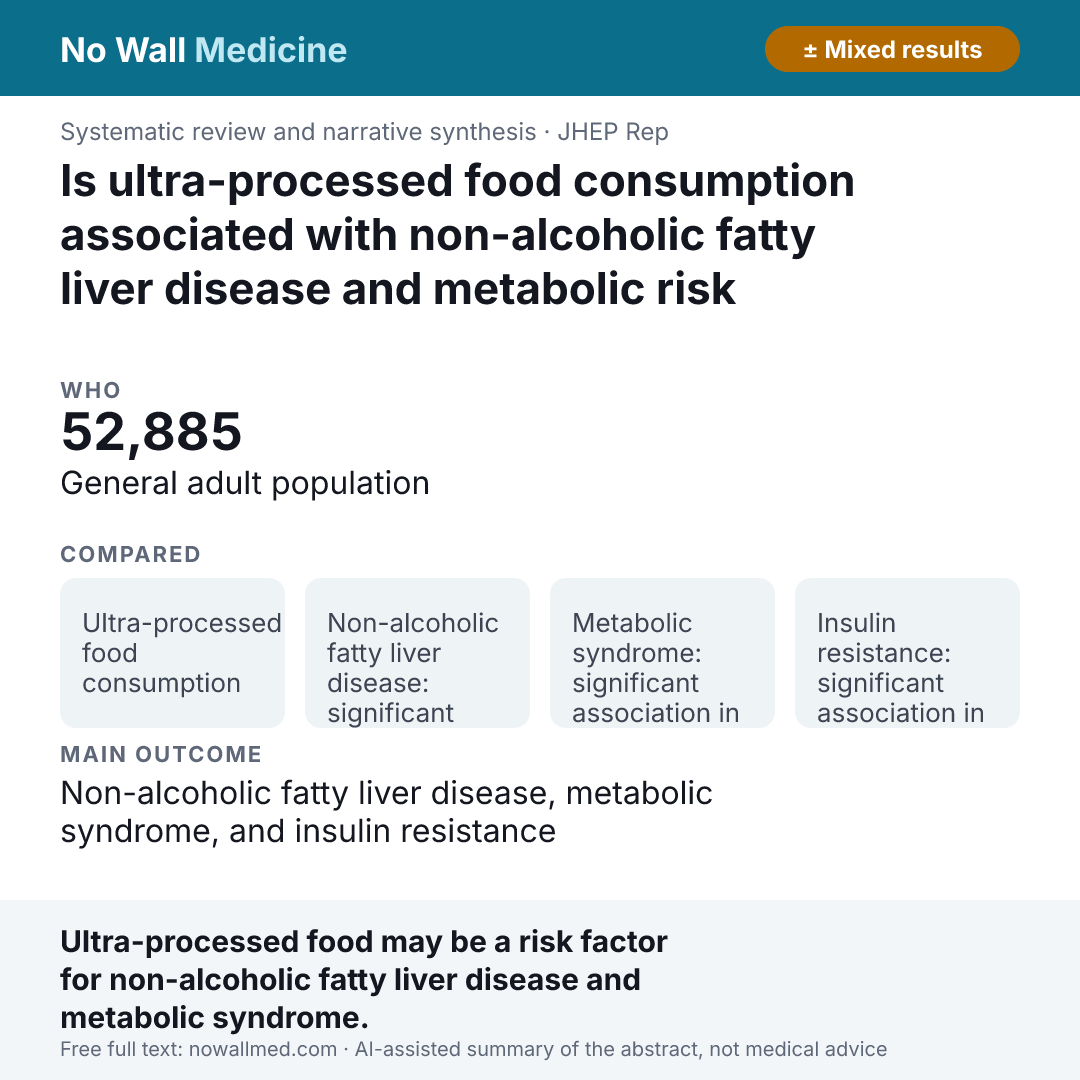
Ultra-processed food consumption and non-alcoholic fatty liver disease, metabolic syndrome and insulin resistance: A systematic review
Systematic review and narrative synthesisMixed results
Is ultra-processed food consumption associated with non-alcoholic fatty liver disease and metabolic risk factors?
Who
52,885
General adult population
Compared
Ultra-processed food consumption
Non-alcoholic fatty liver disease: significant association in three studies out of six
Metabolic syndrome: significant association in five studies out of eight
Insulin resistance: significant association in one study out of three
Main outcome
Non-alcoholic fatty liver disease, metabolic syndrome, and insulin resistance
Bottom line: Ultra-processed food may be a risk factor for non-alcoholic fatty liver disease and metabolic syndrome.
Limitation: Studies are few, observational, and based upon self-reported dietary assessment tools.
JHEP Rep · 2023-11-17 · Save PNG
Comparison of Telephone and Video Telehealth Consultations: Systematic Review
Systematic review of randomized controlled trialsNo clear difference
Are telephone and video telehealth consultations different in effectiveness, safety, cost, and satisfaction?
Who
1719
Outpatient cohorts receiving synchronous telehealth consultations · United States, United Kingdom, Canada, and Australia
Compared
Telephone consultations
Video consultations
Main outcome
Clinical effectiveness, patient safety, cost-effectiveness, and satisfaction
Bottom line: No substantial differences were found between telephone and video consultations regarding clinical effectiveness, patient satisfaction, and cost-effectiveness.
Limitation: High or unclear risk of bias and lack of research in primary care settings.
J Med Internet Res · 2023-11-17 · Save PNG

Loss of p53-DREAM-mediated repression of cell cycle genes as a driver of lymph node metastasis in head and neck cancer
Meta-analysis of 29 gene expression studiesUnclear result
What molecular pathways drive lymph node metastasis in head and neck cancer?
Who
2074
2074 primary head and neck cancer biopsies
Compared
Lymph node metastasis associated genes: overexpressed in proliferating malignant cells
Lymph node metastasis negatively associated genes: regulators of squamous epithelial differentiation
Main outcome
lymph node metastasis and patient survival
Bottom line: Lymph node metastasis is driven by loss of p53-DREAM-mediated repression of cell cycle genes and epithelial dedifferentiation.
Genome Med · 2023-11-17 · Save PNG

Intravascular imaging guided versus coronary angiography guided percutaneous coronary intervention: systematic review and meta-analysis
Systematic review and meta-analysisBenefit found
Does intravascular imaging guided versus angiography guided percutaneous coronary intervention improve outcomes in coronary artery disease?
Who
11698
Adults with coronary artery disease
Compared
Intravascular imaging guided
Coronary angiography guided
Main outcome
Cardiac death, myocardial infarction, stent thrombosis, and revascularization
Result: rate ratio 0.53 (95% confidence interval 0.39 to 0.72) for cardiac death
Bottom line: Intravascular imaging guided percutaneous coronary intervention reduces cardiac death and cardiovascular outcomes compared to angiography guided intervention.
BMJ · 2023-11-16 · Save PNG

Efficacy and safety of zuranolone in major depressive disorder: a meta-analysis of factor effect and dose-response analyses
Meta-analysis of seven randomized controlled studiesMixed results
What is the efficacy and safety of zuranolone in major depressive disorder?
Who
1789
Patients with major depressive disorder
Compared
Zuranolone
Control
Main outcome
Improvement in depressive symptoms
Result: standardised mean difference -0.37 (95% CIs -0.51 to -0.23)
Bottom line: Zuranolone effectively alleviates depression and anxiety, but increases side effects, with 30 mg being the optimal daily dose.
Funded by: Chang Gung Medical Foundation
eClinicalMedicine · 2023-11-16 · Save PNG

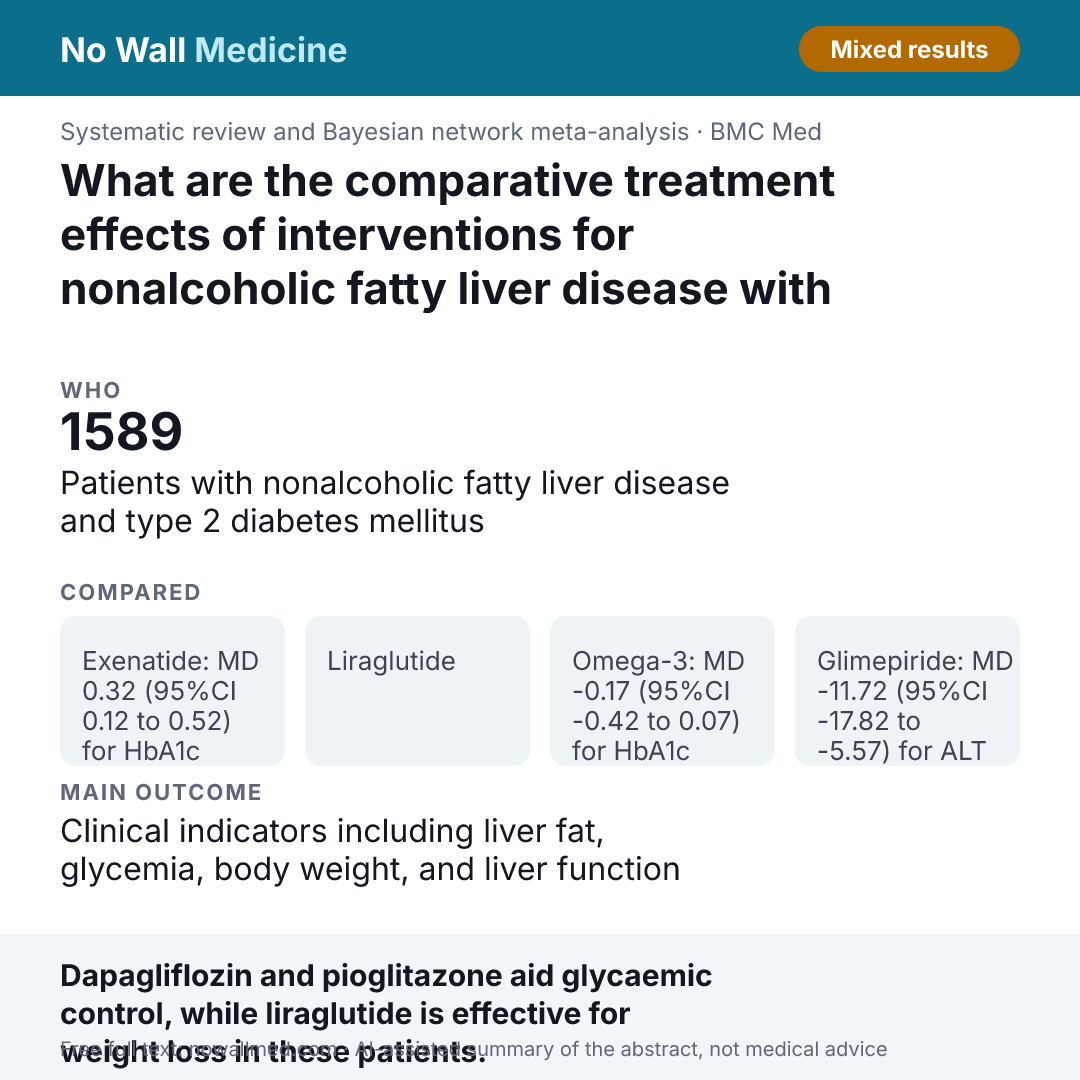
Comparative effectiveness of multiple different treatment regimens for nonalcoholic fatty liver disease with type 2 diabetes mellitus: a systematic review and Bayesian network meta-analysis of randomised controlled trials
Systematic review and Bayesian network meta-analysisMixed results
What are the comparative treatment effects of interventions for nonalcoholic fatty liver disease with type 2 diabetes mellitus?
Who
1589
Patients with nonalcoholic fatty liver disease and type 2 diabetes mellitus
Compared
Exenatide: MD 0.32 (95%CI 0.12 to 0.52) for HbA1c
Liraglutide
Omega-3: MD -0.17 (95%CI -0.42 to 0.07) for HbA1c
Glimepiride: MD -11.72 (95%CI -17.82 to -5.57) for ALT
Main outcome
Clinical indicators including liver fat, glycemia, body weight, and liver function
Bottom line: Dapagliflozin and pioglitazone aid glycaemic control, while liraglutide is effective for weight loss in these patients.
Limitation: The evidence for exenatide compared to liraglutide was assessed as low certainty.
BMC Med · 2023-11-16 · Save PNG
Substitution of animal-based with plant-based foods on cardiometabolic health and all-cause mortality: a systematic review and meta-analysis of prospective studies
Systematic review and meta-analysis of prospective studiesKey finding
Does substituting animal-based foods with plant-based foods improve cardiometabolic health and mortality?
Who
24 cohorts from 37 publications
Compared
Animal-based foods
Plant-based foods
Main outcome
Cardiovascular diseases, type 2 diabetes, and all-cause mortality
Bottom line: Substituting animal-based foods with plant-based foods is beneficially associated with cardiometabolic health and all-cause mortality.
BMC Med · 2023-11-16 · Save PNG

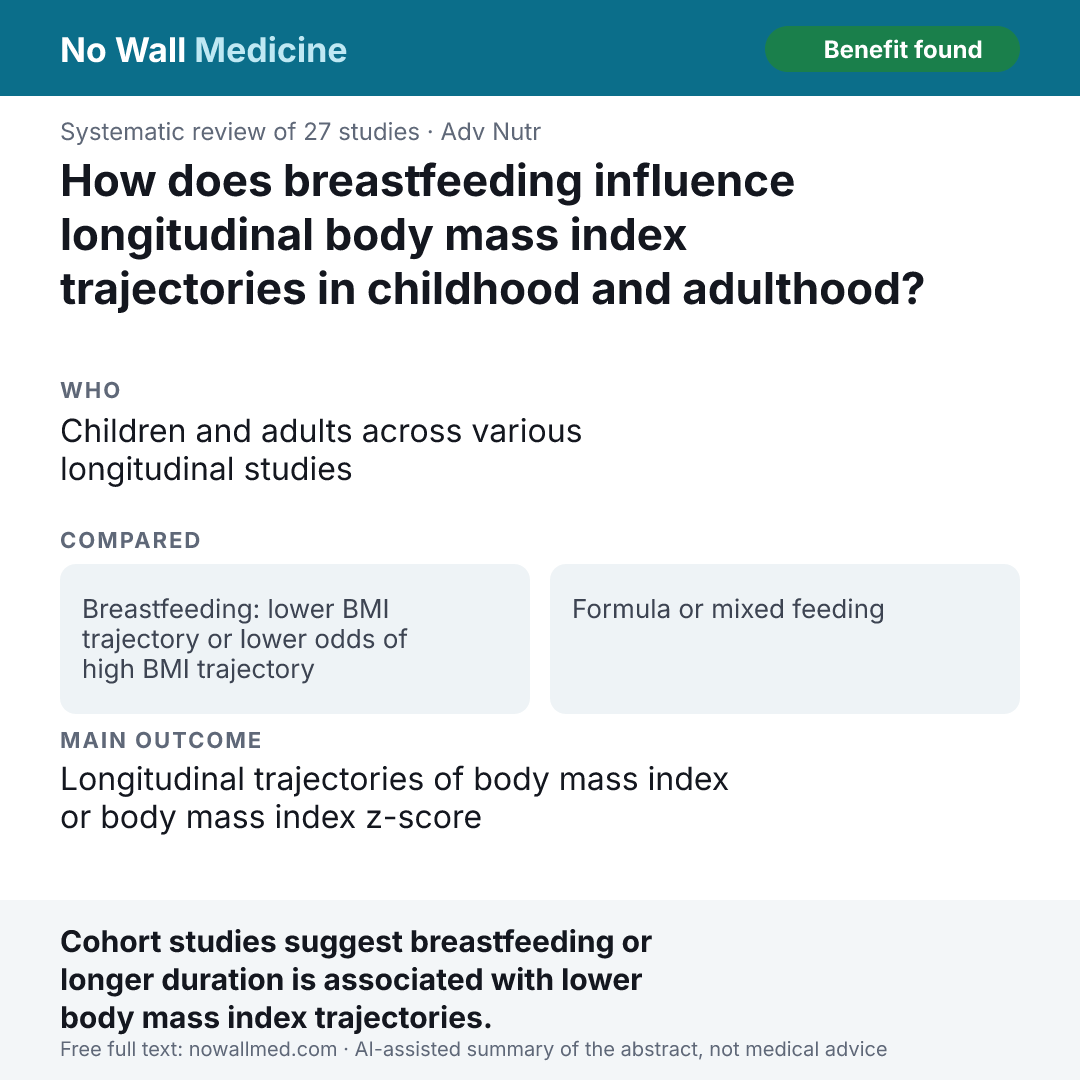
Breastfeeding and the Longitudinal Changes of Body Mass Index in Childhood and Adulthood: A Systematic Review
Systematic review of 27 studiesBenefit found
How does breastfeeding influence longitudinal body mass index trajectories in childhood and adulthood?
Who
Children and adults across various longitudinal studies
Compared
Breastfeeding: lower BMI trajectory or lower odds of high BMI trajectory
Formula or mixed feeding
Main outcome
Longitudinal trajectories of body mass index or body mass index z-score
Bottom line: Cohort studies suggest breastfeeding or longer duration is associated with lower body mass index trajectories.
Adv Nutr · 2023-11-16 · Save PNG
Frequency of bloodstream infections caused by six key antibiotic-resistant pathogens for prioritization of research and discovery of new therapies in Europe: a systematic review
Systematic review and meta-analysisUnclear result
What is the frequency of bloodstream infections caused by six key antibiotic-resistant pathogens in Europe?
Who
Bloodstream infections caused by six key antibiotic-resistant bacteria in Europe · 32 European countries
Compared
carbapenem-resistant Acinetobacter baumannii: 66% in Central Eastern Europe
carbapenem-resistant Klebsiella pneumoniae: 62.8% in Southern Europe
Main outcome
Frequency measures of antimicrobial resistance in bloodstream infections
Bottom line: Pathogen-specific frequency measures of antimicrobial resistance in bloodstream infections are insufficient to inform stewardship and research strategies.
Clin Microbiol Infect · 2023-11-15 · Save PNG

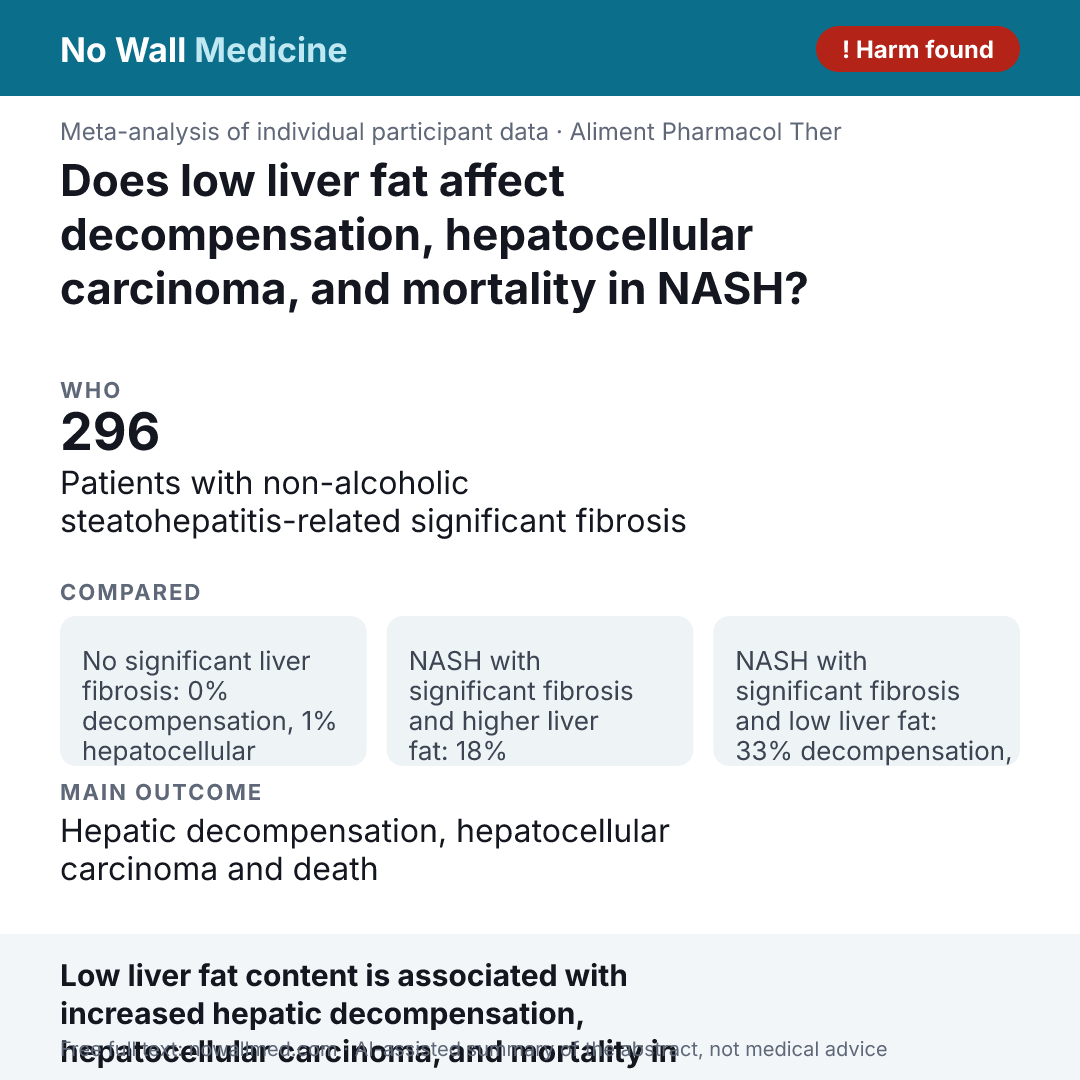
Low liver fat in non-alcoholic steatohepatitis-related significant fibrosis and cirrhosis is associated with hepatocellular carcinoma, decompensation and mortality
Meta-analysis of individual participant dataHarm found
Does low liver fat affect decompensation, hepatocellular carcinoma, and mortality in NASH?
Who
296
Patients with non-alcoholic steatohepatitis-related significant fibrosis and cirrhosis
Compared
No significant liver fibrosis: 0% decompensation, 1% hepatocellular carcinoma and 2% mortality
NASH with significant fibrosis and higher liver fat: 18% decompensation, 13% hepatocellular carcinoma and 13% mortality
NASH with significant fibrosis and low liver fat: 33% decompensation, 17% hepatocellular carcinoma and 17% mortality
Main outcome
Hepatic decompensation, hepatocellular carcinoma and death
Result: hazard ratio 42.2 (95% CI 7.5-235.5)
Bottom line: Low liver fat content is associated with increased hepatic decompensation, hepatocellular carcinoma, and mortality in NASH-related fibrosis and cirrhosis.
Aliment Pharmacol Ther · 2023-11-15 · Save PNG
Risk and Incidence of Endocrine Immune-Related Adverse Effects Under Checkpoint Inhibitor Mono- or Combination Therapy in Solid Tumors: A Meta-Analysis of Randomized Controlled Trials
Meta-analysis of 69 randomized controlled trialsHarm found
What are the risk and incidence of endocrine immune-related adverse effects under checkpoint inhibitor therapy?
Who
42 886
Patients with solid tumors
Compared
Immune checkpoint inhibitor therapy: 7.64% (95% CI, 6.23-9.17) incidence of any grade hypothyroidism
Control
Main outcome
Incidence and risk of endocrine immune-related adverse effects
Result: risk ratio 7.81 (95% CI, 5.68-10.74) for any grade hypothyroidism
Bottom line: Immune checkpoint inhibitor therapy substantially increases the risk and incidence of endocrine immune-related adverse effects.
J Clin Endocrinol Metab · 2023-11-15 · Save PNG

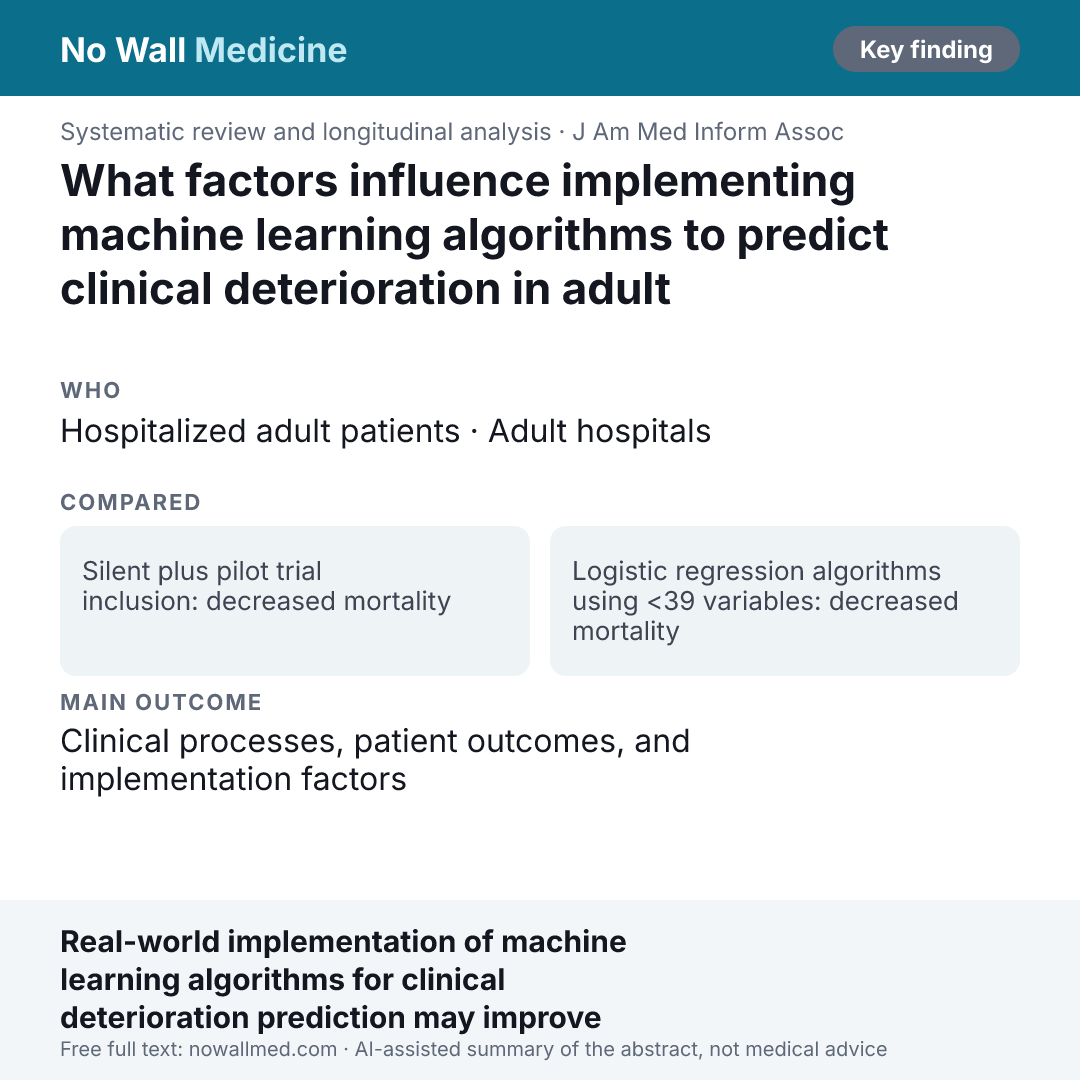
Systematic review and longitudinal analysis of implementing Artificial Intelligence to predict clinical deterioration in adult hospitals: what is known and what remains uncertain
Systematic review and longitudinal analysisKey finding
What factors influence implementing machine learning algorithms to predict clinical deterioration in adult hospitals?
Who
Hospitalized adult patients · Adult hospitals
Compared
Silent plus pilot trial inclusion: decreased mortality
Logistic regression algorithms using <39 variables: decreased mortality
Main outcome
Clinical processes, patient outcomes, and implementation factors
Bottom line: Real-world implementation of machine learning algorithms for clinical deterioration prediction may improve clinical outcomes.
J Am Med Inform Assoc · 2023-11-15 · Save PNG
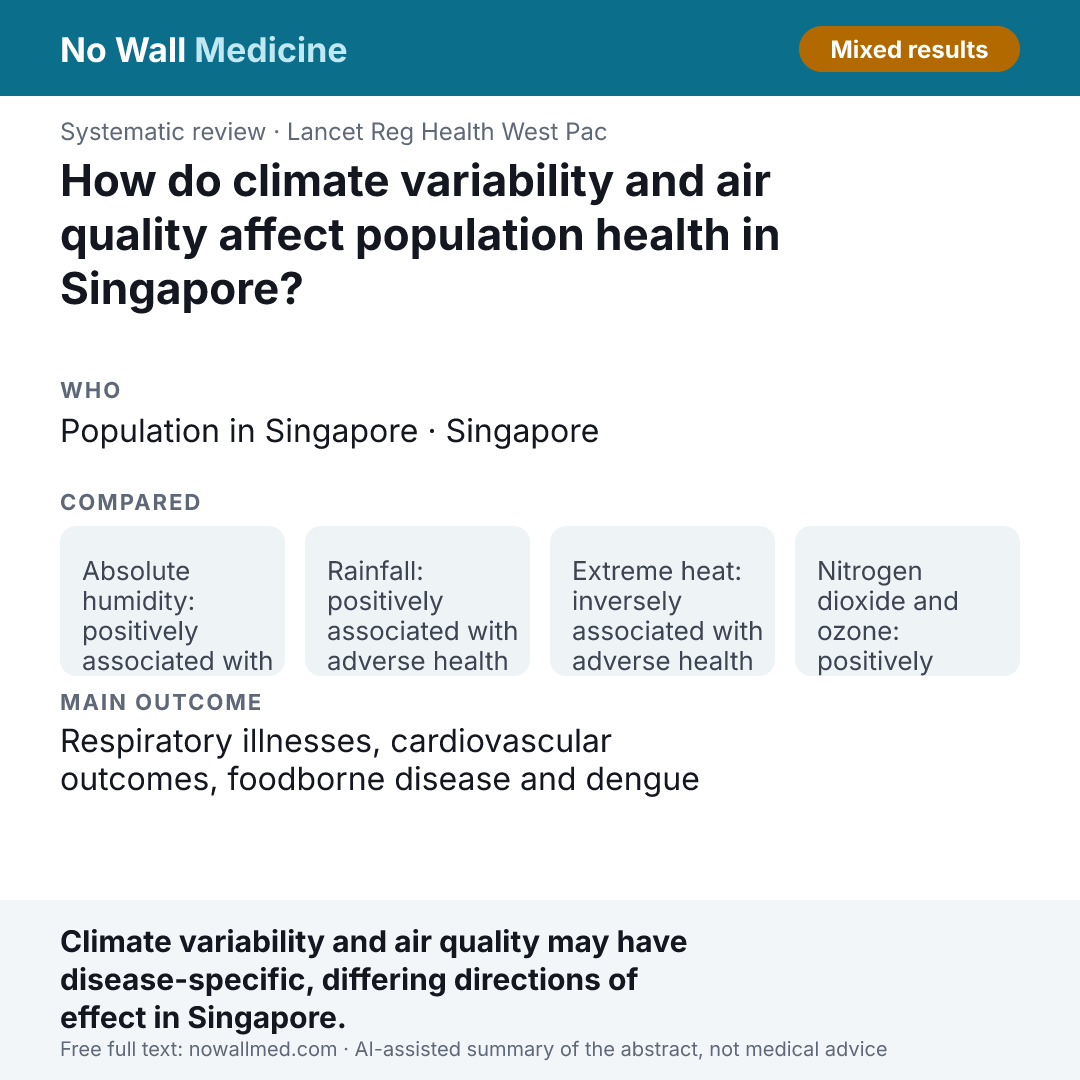
Climate change and population health in Singapore: a systematic review
Systematic reviewMixed results
How do climate variability and air quality affect population health in Singapore?
Who
Population in Singapore · Singapore
Compared
Absolute humidity: positively associated with adverse health
Rainfall: positively associated with adverse health
Extreme heat: inversely associated with adverse health
Nitrogen dioxide and ozone: positively associated with adverse health
Main outcome
Respiratory illnesses, cardiovascular outcomes, foodborne disease and dengue
Bottom line: Climate variability and air quality may have disease-specific, differing directions of effect in Singapore.
Lancet Reg Health West Pac · 2023-11-15 · Save PNG
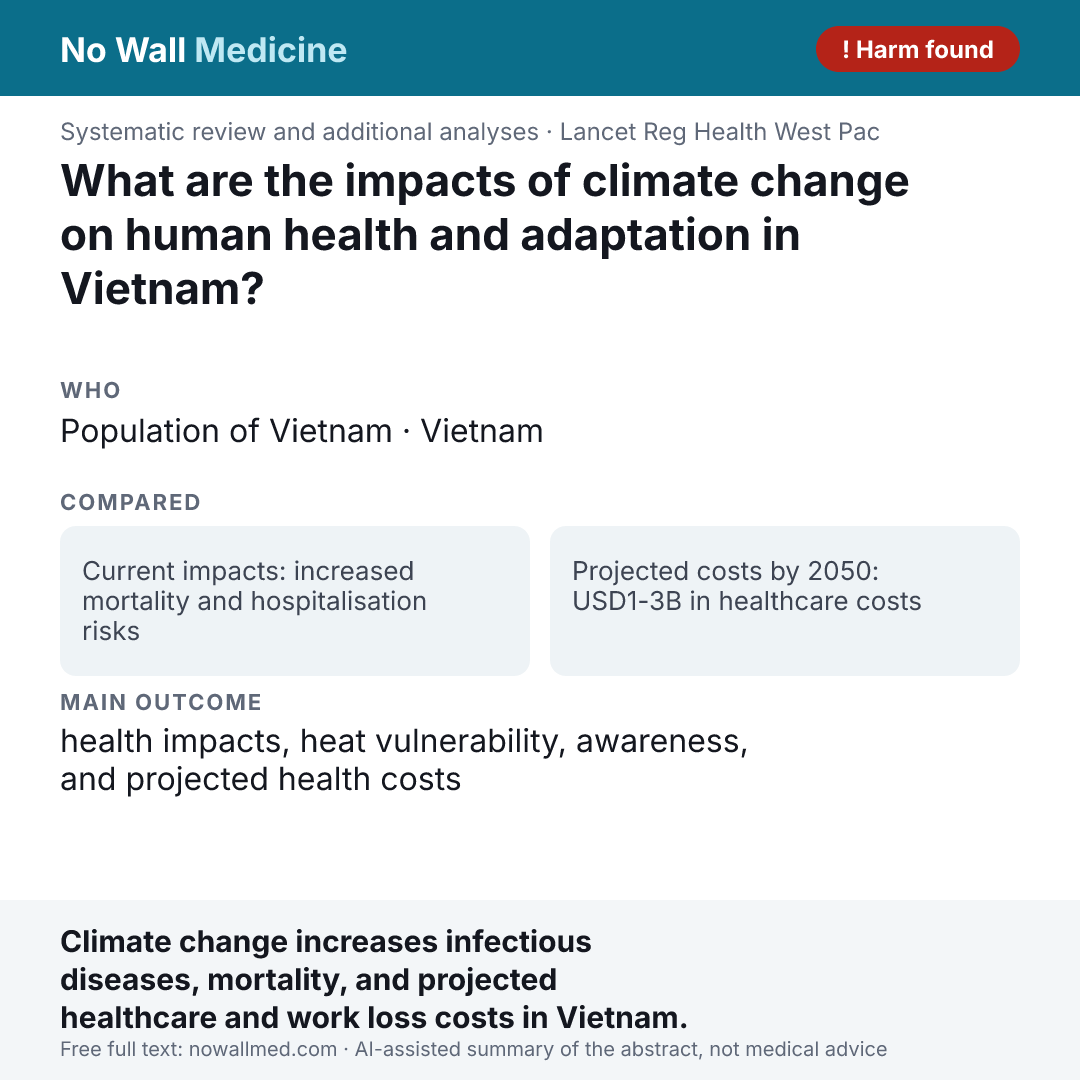
Climate change and human health in Vietnam: a systematic review and additional analyses on current impacts, future risk, and adaptation
Systematic review and additional analysesHarm found
What are the impacts of climate change on human health and adaptation in Vietnam?
Who
Population of Vietnam · Vietnam
Compared
Current impacts: increased mortality and hospitalisation risks
Projected costs by 2050: USD1-3B in healthcare costs
Main outcome
health impacts, heat vulnerability, awareness, and projected health costs
Bottom line: Climate change increases infectious diseases, mortality, and projected healthcare and work loss costs in Vietnam.
Limitation: Few studies addressing health cost, awareness, engagement, adaptation, and policy.
Lancet Reg Health West Pac · 2023-11-15 · Save PNG