Visual abstracts
New randomized trials and meta-analyses from leading journals at a glance: who was studied, what was compared, and what was found. Every paper is free to read in full.
All specialtiesCardiology 4765Oncology 4048Gastroenterology & Hepatology 1906Infectious Disease 3759Neurology 1874Psychiatry & Mental Health 2217Pulmonology 2046Critical Care 1323Endocrinology & Diabetes 2545Pediatrics 2891Surgery 2482Orthopedics & Sports Medicine 917Neurosurgery 526Cardiothoracic & Vascular Surgery 657Plastic & Reconstructive Surgery 574Nephrology 1108Rheumatology 810Hematology 1090Dermatology 611Ophthalmology 532Obstetrics & Gynecology 1646Public & Global Health 1037Radiology & Imaging 620Anesthesiology 958Urology 745ENT (Otolaryngology) 494Emergency Medicine 481Allergy & Immunology 309Geriatrics 973Family Medicine & Primary Care 534Medical Genetics & Genomics 659Pathology & Laboratory Medicine 156Physical Medicine & Rehabilitation 736Palliative Care 421Nutrition 1561Digital Health & AI 2136General Medicine 316
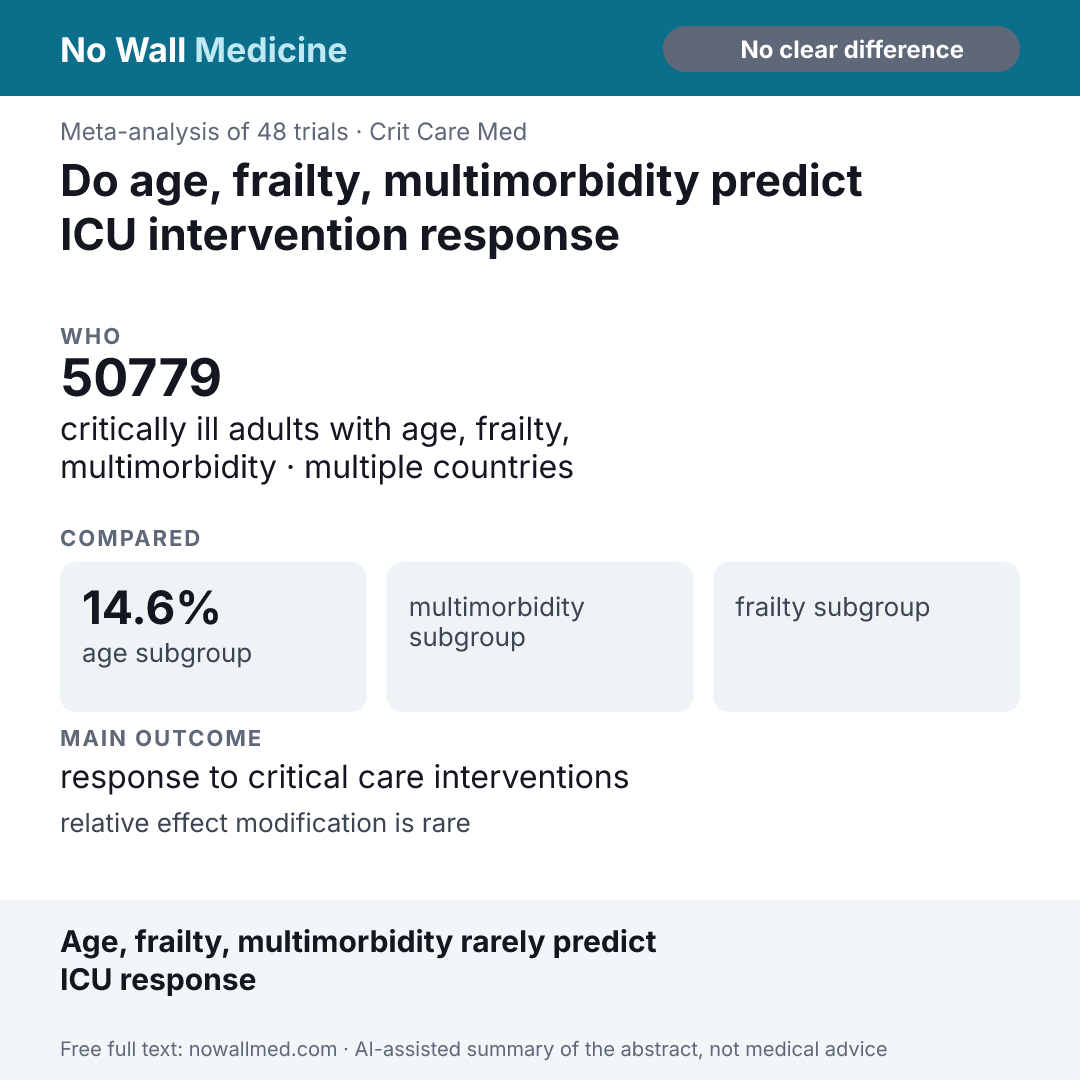
Exploring the Impact of Age, Frailty, and Multimorbidity on the Effect of ICU Interventions: A Systematic Review of Randomized Controlled Trials
Meta-analysis of 48 trialsNo clear difference
Do age, frailty, multimorbidity predict ICU intervention response
Who
50779
critically ill adults with age, frailty, multimorbidity · multiple countries
Compared
14.6%age subgroup
multimorbidity subgroup
frailty subgroup
Main outcome
response to critical care interventions
Result: relative effect modification is rare
Bottom line: Age, frailty, multimorbidity rarely predict ICU response
Limitation: subgroup credibility very low to moderate
Crit Care Med · 2024-04-25 · Save PNG
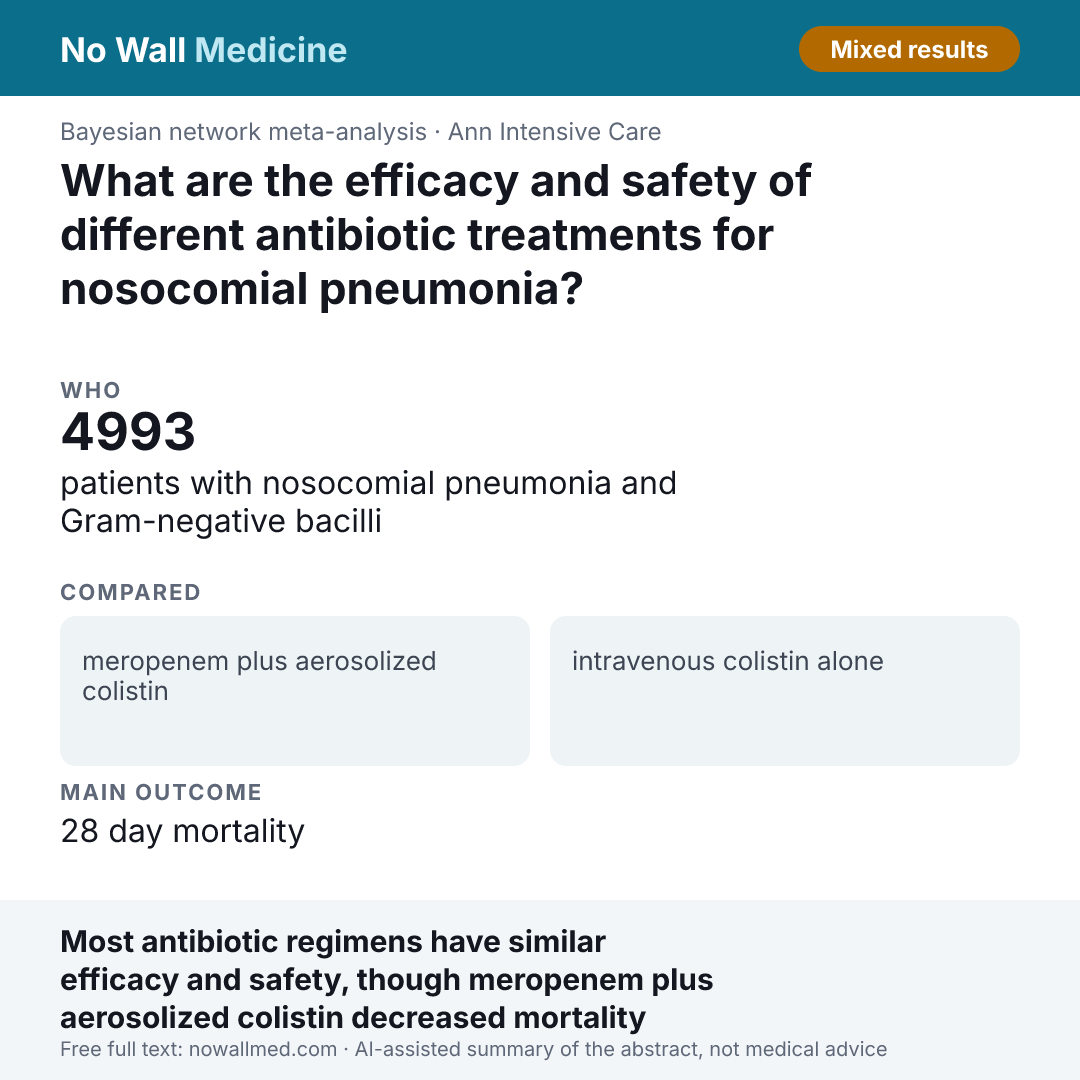
Efficacy and safety of antibiotics targeting Gram-negative bacteria in nosocomial pneumonia: a systematic review and Bayesian network meta-analysis
Bayesian network meta-analysisMixed results
What are the efficacy and safety of different antibiotic treatments for nosocomial pneumonia?
Who
4993
patients with nosocomial pneumonia and Gram-negative bacilli
Compared
meropenem plus aerosolized colistin
intravenous colistin alone
Main outcome
28 day mortality
Result: OR 0.43 (95% credible interval 0.17-0.94)
Bottom line: Most antibiotic regimens have similar efficacy and safety, though meropenem plus aerosolized colistin decreased mortality compared to intravenous colistin alone.
Ann Intensive Care · 2024-04-25 · Save PNG
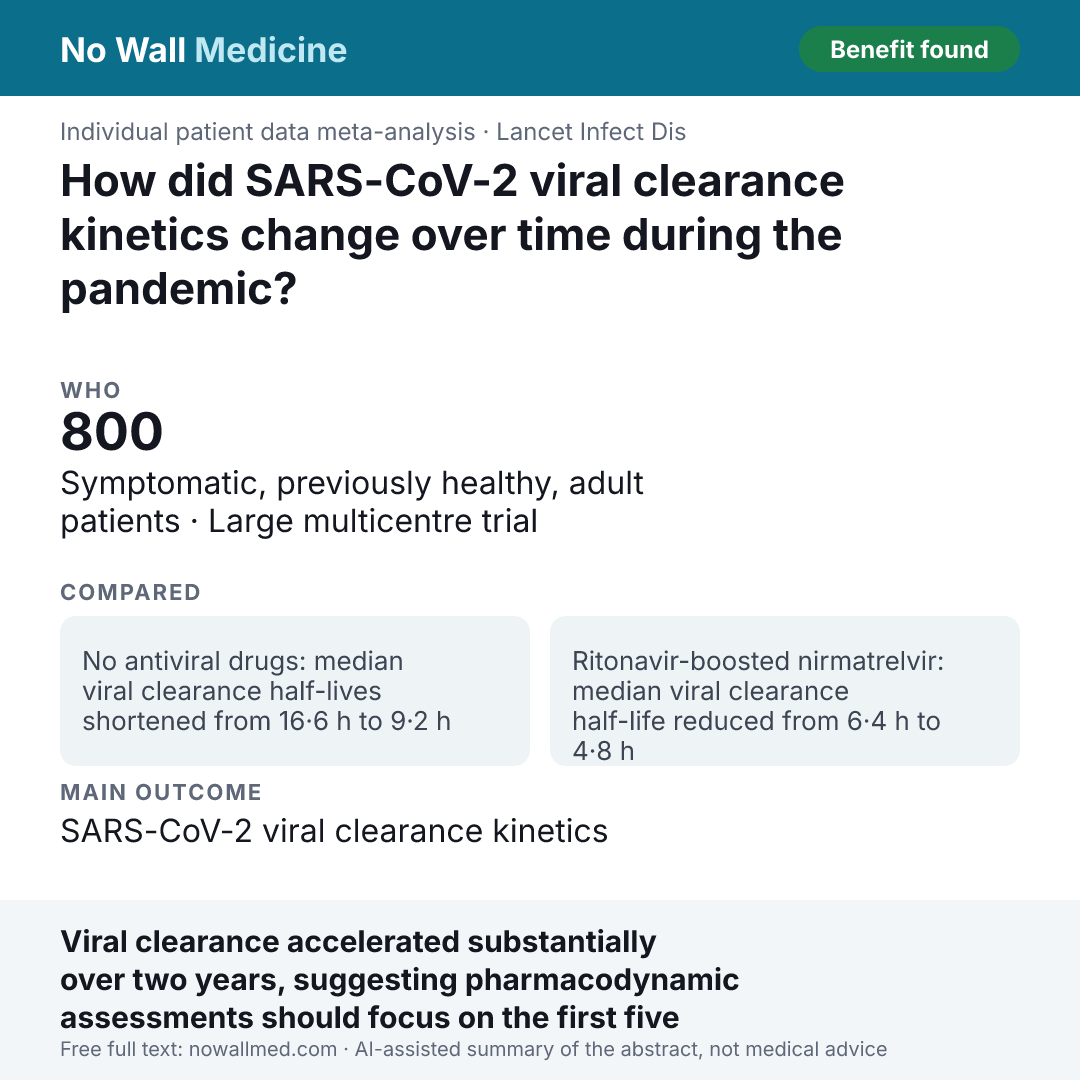
Temporal changes in SARS-CoV-2 clearance kinetics and the optimal design of antiviral pharmacodynamic studies: an individual patient data meta-analysis of a randomised, controlled, adaptive platform study (PLATCOV)
Individual patient data meta-analysisBenefit found
How did SARS-CoV-2 viral clearance kinetics change over time during the pandemic?
Who
800
Symptomatic, previously healthy, adult patients · Large multicentre trial
Compared
No antiviral drugs: median viral clearance half-lives shortened from 16·6 h to 9·2 h
Ritonavir-boosted nirmatrelvir: median viral clearance half-life reduced from 6·4 h to 4·8 h
Main outcome
SARS-CoV-2 viral clearance kinetics
Result: relative reduction of 44% (95% credible interval 19 to 64)
Bottom line: Viral clearance accelerated substantially over two years, suggesting pharmacodynamic assessments should focus on the first five days.
Funded by: Wellcome Trust
Lancet Infect Dis · 2024-04-24 · Save PNG
Incisional Wound Irrigation for the Prevention of Surgical Site Infection: A Systematic Review and Network Meta-Analysis
Systematic review and network meta-analysisBenefit found
Which incisional wound irrigation solutions best prevent surgical site infections?
Who
17188
Patients undergoing all types of surgery
Compared
7.7%No irrigation
Antiseptic solutions
Antibiotic solutions
Saline irrigation
Main outcome
Surgical site infection
Result: antiseptic solutions RR 0.60 (95% CI 0.44-0.81)
Bottom line: Antiseptic solutions significantly reduce surgical site infections compared to no irrigation with high certainty.
Limitation: Antibiotic solutions have a low level of certainty of evidence.
JAMA Surg · 2024-04-24 · Save PNG

Atrial Fibrillation Ablation in Heart Failure With Reduced vs Preserved Ejection Fraction: A Systematic Review and Meta-Analysis
Systematic review and meta-analysis of 12 randomized clinical trialsMixed results
Does catheter ablation reduce heart failure outcomes based on ejection fraction phenotype?
Who
2465
Patients with heart failure and paroxysmal or persistent atrial fibrillation
Compared
Heart failure with reduced ejection fraction: risk ratio 0.59 (95% CI, 0.48-0.72)
Heart failure with preserved ejection fraction: risk ratio 0.93 (95% CI, 0.65-1.32)
Main outcome
heart failure events
Result: risk ratio 0.59 (95% CI, 0.48-0.72) in HFrEF vs 0.93 (95% CI, 0.65-1.32) in HFpEF
Bottom line: Catheter ablation reduces heart failure events in reduced ejection fraction patients but shows no benefit in preserved ejection fraction patients.
Limitation: Results from ongoing trials may further elucidate the role of catheter ablation in preserved ejection fraction.
JAMA Cardiol · 2024-04-24 · Save PNG
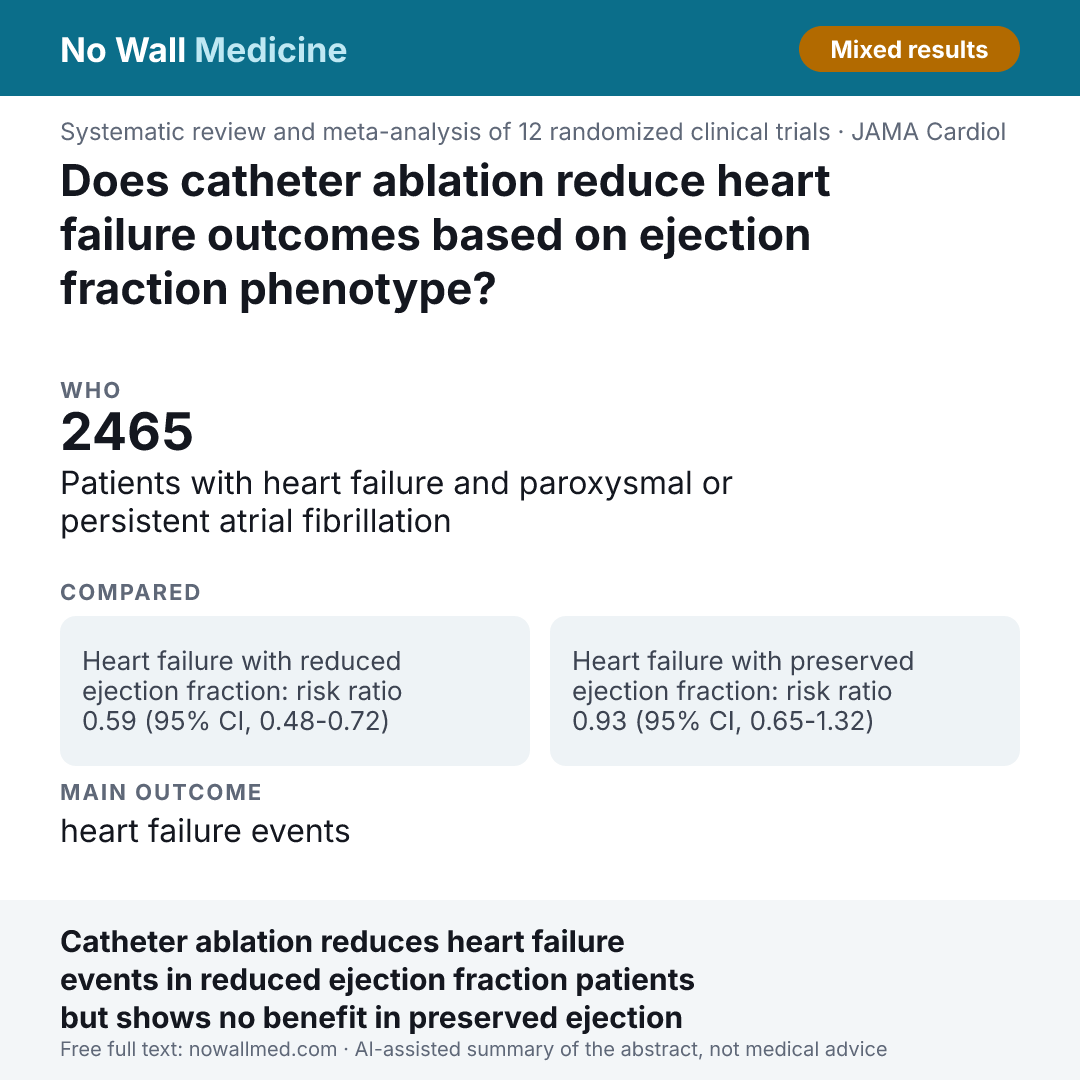
Barriers and motivators to undertaking physical activity in adults over 70-a systematic review of the quantitative literature
Systematic review of quantitative literatureMixed results
What are the barriers and motivators to physical activity in adults aged 70 and older?
Who
26,961
Adults aged 70 to 101 years
Compared
Barriers: concern about physical health/fitness (14 studies)
Motivators: support from family/friends (five studies)
Main outcome
Barriers and motivators to undertaking physical activity
Bottom line: Key barriers include health concerns and fear of falls, while social support and personal benefits act as motivators.
Limitation: Meta-analysis was not possible.
Age Ageing · 2024-04-23 · Save PNG
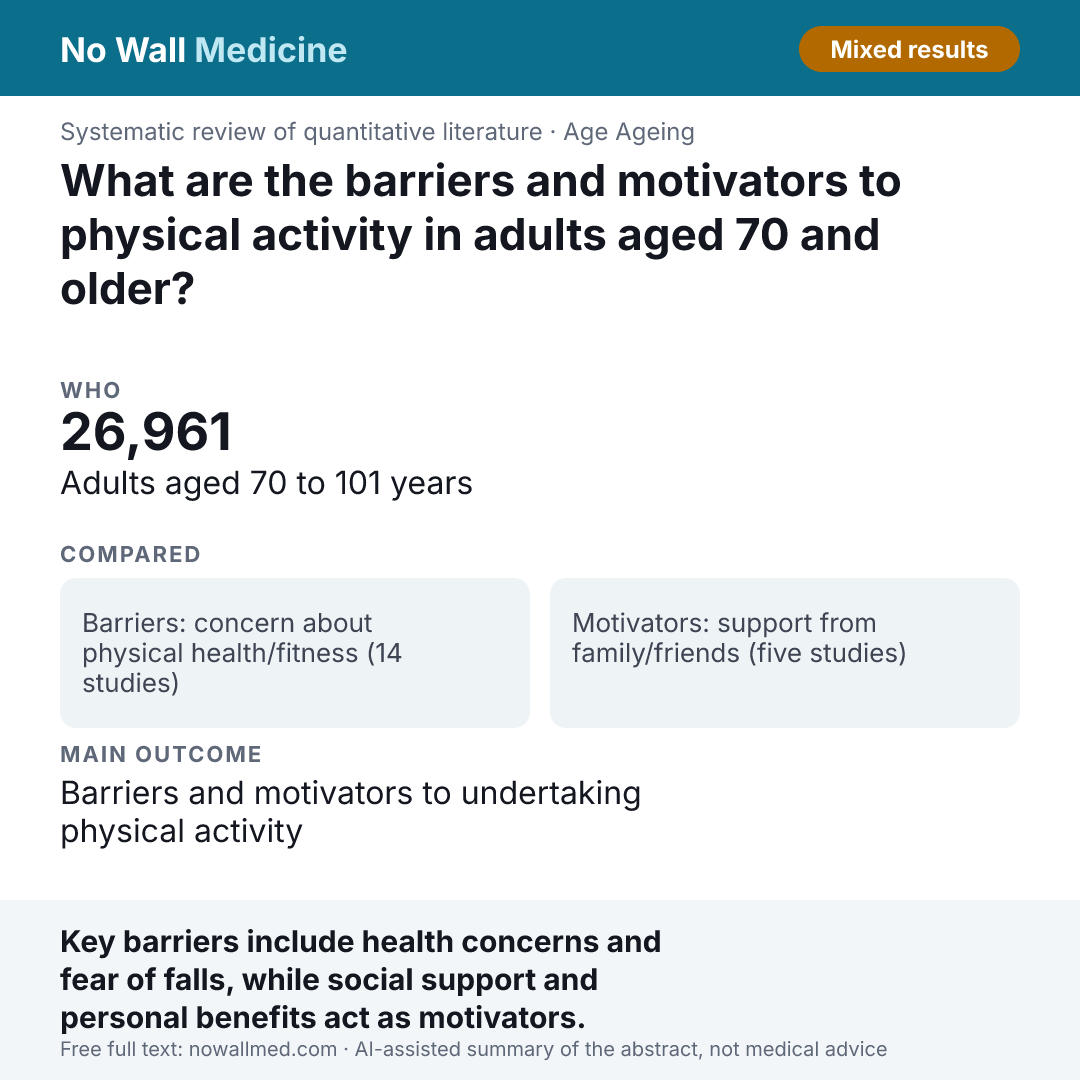
Genome-wide meta-analysis of short-tandem repeats for Parkinson's disease risk using genotype imputation
Genome-wide meta-analysisMixed results
Do short-tandem repeats increase the risk of Parkinson's disease?
Who
43844
Individuals with Parkinson's disease and controls
Compared
Short-tandem repeats
Control
Main outcome
Parkinson's disease risk
Bottom line: Meta-analysis identified seven novel suggestive short-tandem repeat risk loci, including one near MEIOSIN.
Limitation: Larger studies using short-tandem repeats from whole-sequencing data are needed.
Brain Commun · 2024-04-23 · Save PNG
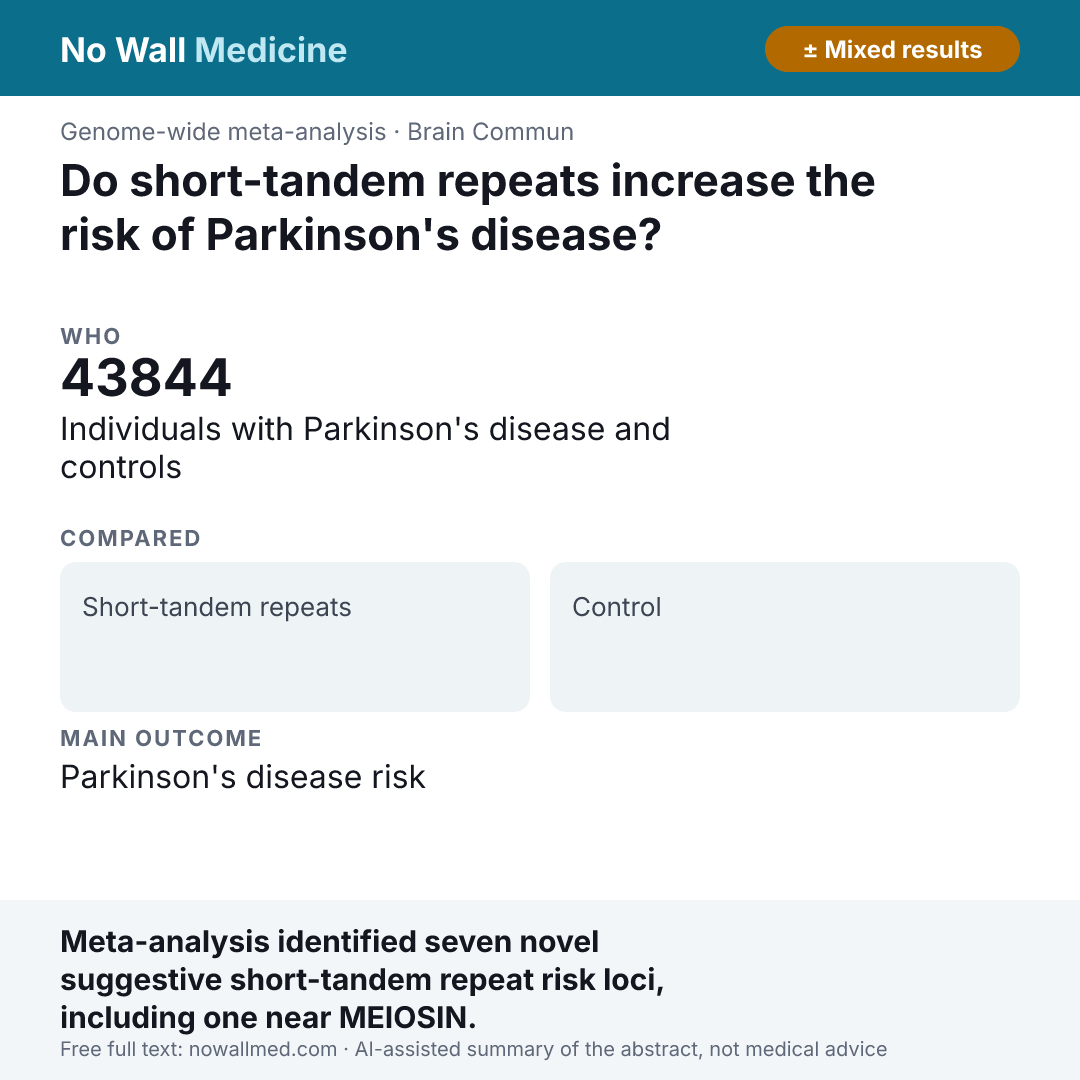
Electronic Media Use and Sleep Quality: Updated Systematic Review and Meta-Analysis
Meta-analysis of 55 papersHarm found
Electronic media use impact on sleep
Who
41716
people from over 20 countries · over 20 countries
Compared
0.28general use (95% CI 0.21-0.35)
0.33problematic use (95% CI 0.28-0.38)
Main outcome
sleep quality
Result: pooled effect size 0.28 to 0.33
Bottom line: Electronic media use harms sleep quality
Limitation: some variability
J Med Internet Res · 2024-04-23 · Save PNG
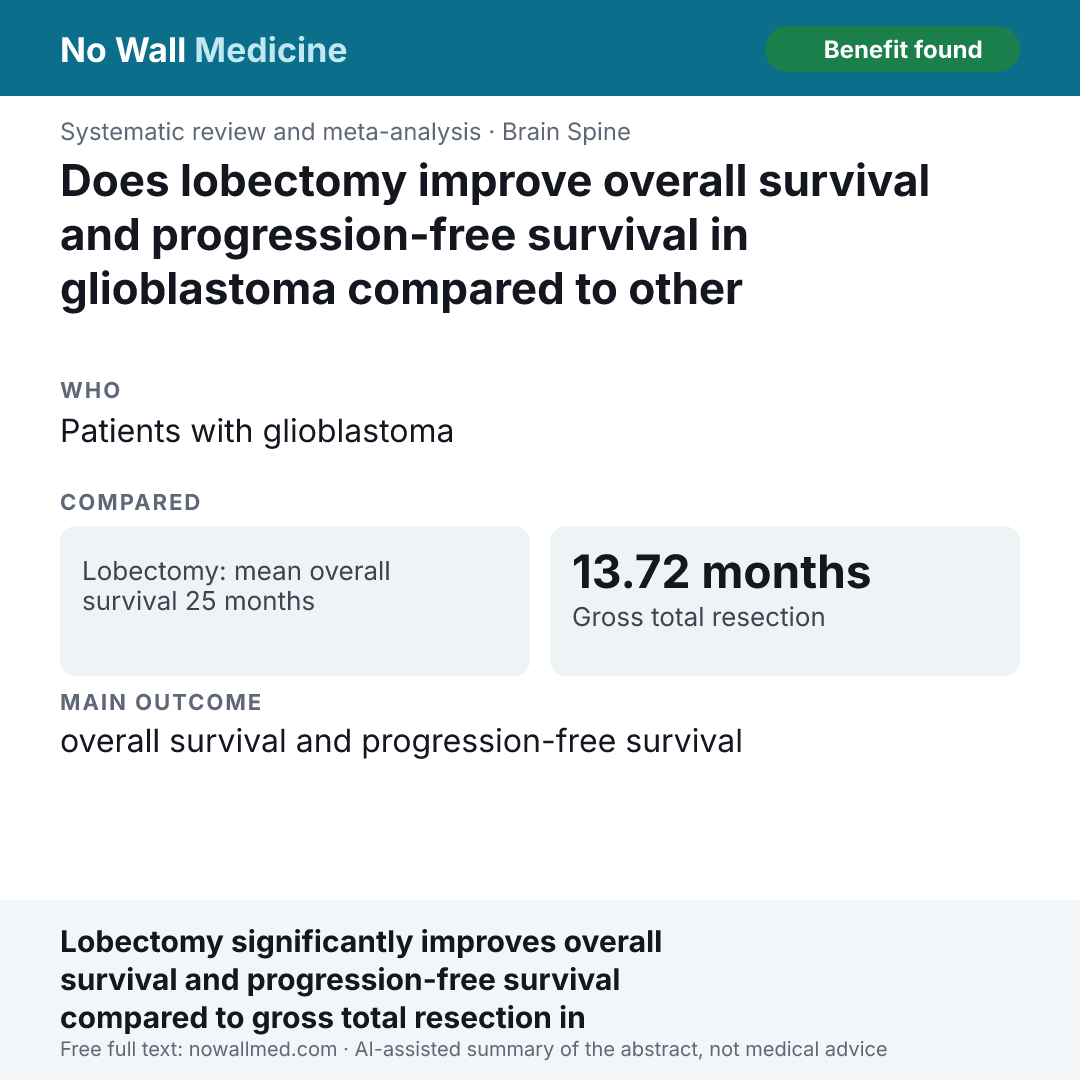
The role of lobectomy in glioblastoma management: A systematic review and meta-analysis
Systematic review and meta-analysisBenefit found
Does lobectomy improve overall survival and progression-free survival in glioblastoma compared to other techniques?
Who
Patients with glioblastoma
Compared
Lobectomy: mean overall survival 25 months
13.72 monthsGross total resection
Main outcome
overall survival and progression-free survival
Bottom line: Lobectomy significantly improves overall survival and progression-free survival compared to gross total resection in glioblastoma.
Limitation: limited amount of data regarding seizure management, length of stay, operation time, complications, and Karnofsky performance status
Brain Spine · 2024-04-23 · Save PNG
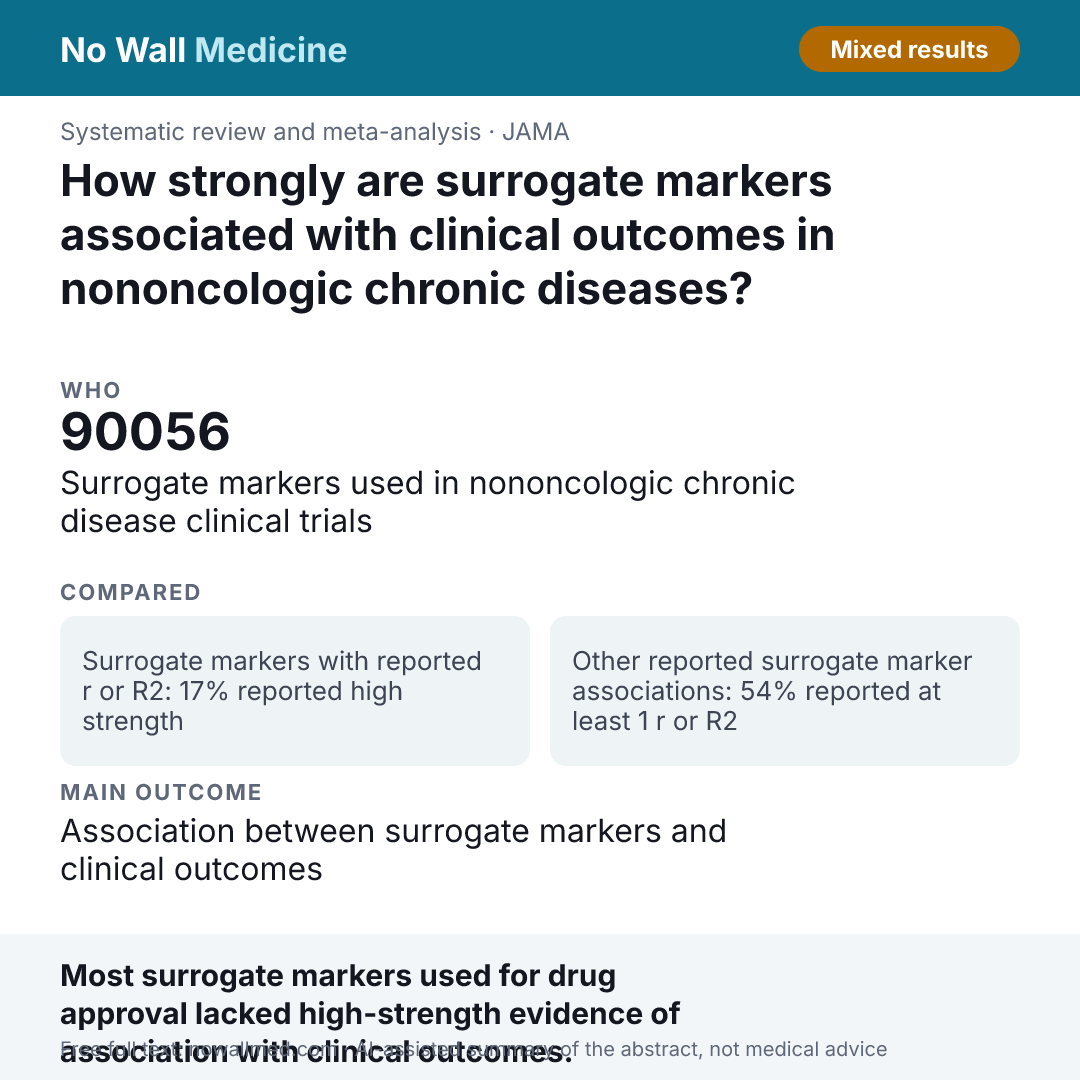
Associations Between Surrogate Markers and Clinical Outcomes for Nononcologic Chronic Disease Treatments
Systematic review and meta-analysisMixed results
How strongly are surrogate markers associated with clinical outcomes in nononcologic chronic diseases?
Who
90056
Surrogate markers used in nononcologic chronic disease clinical trials
Compared
Surrogate markers with reported r or R2: 17% reported high strength
Other reported surrogate marker associations: 54% reported at least 1 r or R2
Main outcome
Association between surrogate markers and clinical outcomes
Bottom line: Most surrogate markers used for drug approval lacked high-strength evidence of association with clinical outcomes.
JAMA · 2024-04-22 · Save PNG
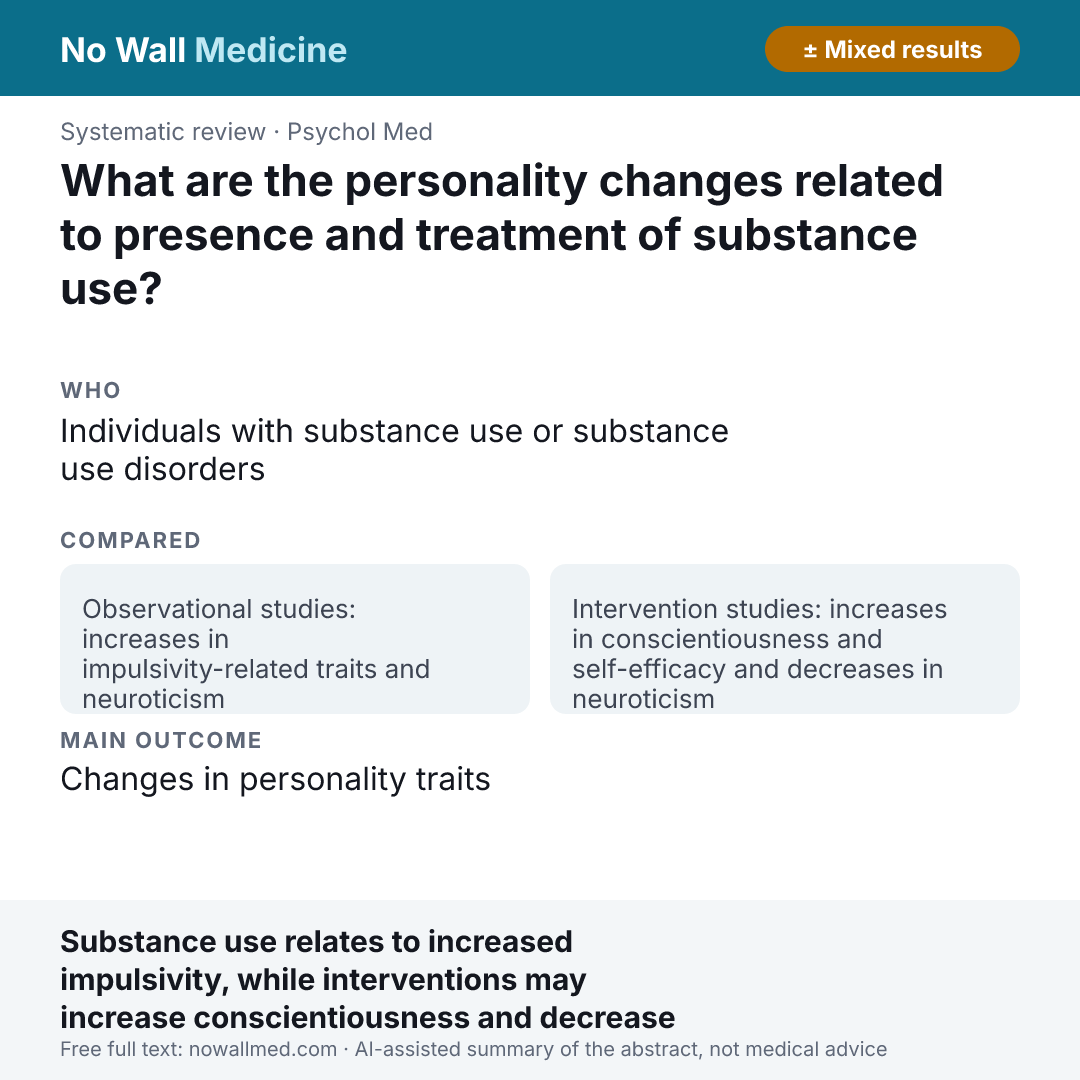
Personality changes related to presence and treatment of substance use (disorders): a systematic review
Systematic reviewMixed results
What are the personality changes related to presence and treatment of substance use?
Who
Individuals with substance use or substance use disorders
Compared
Observational studies: increases in impulsivity-related traits and neuroticism
Intervention studies: increases in conscientiousness and self-efficacy and decreases in neuroticism
Main outcome
Changes in personality traits
Bottom line: Substance use relates to increased impulsivity, while interventions may increase conscientiousness and decrease neuroticism.
Psychol Med · 2024-04-22 · Save PNG
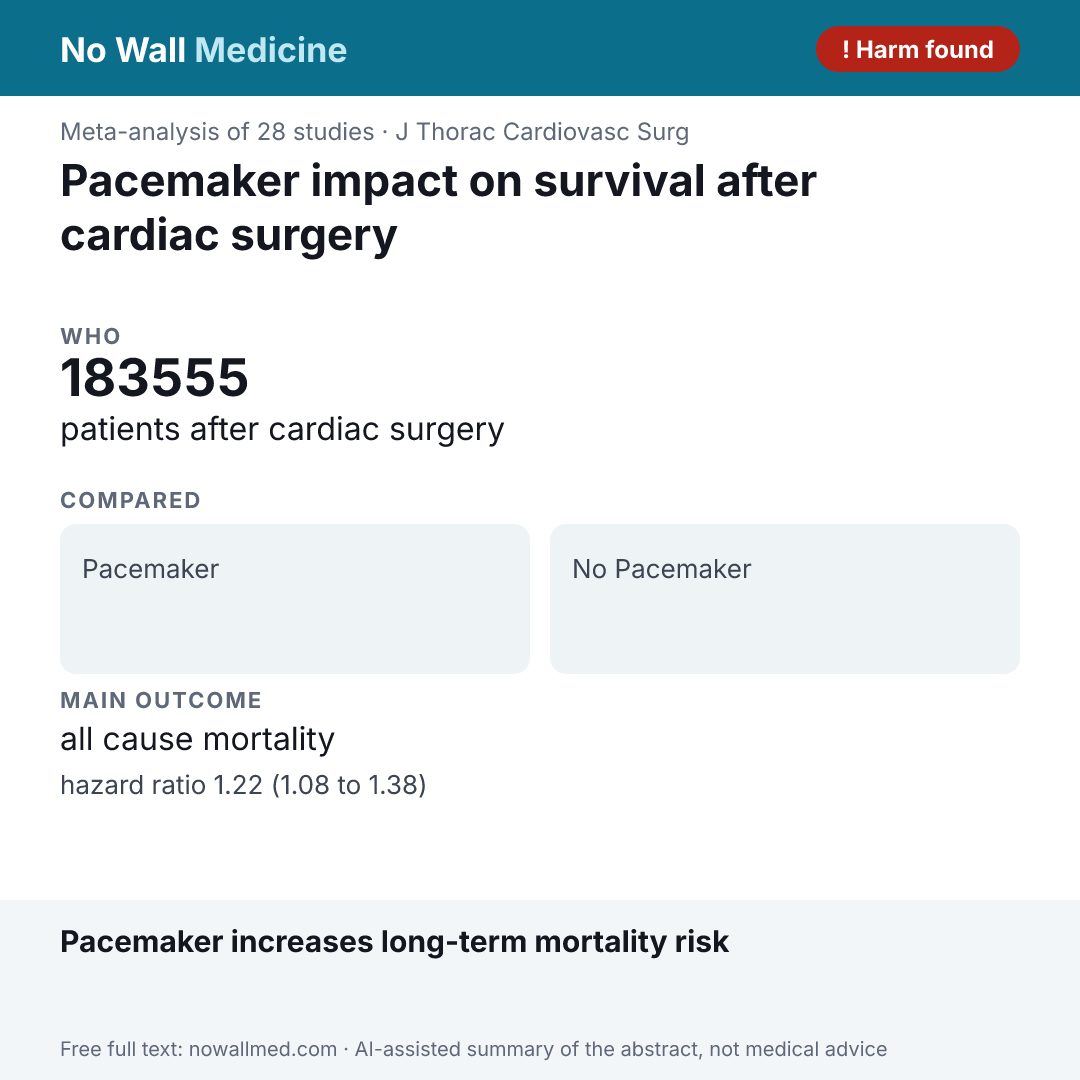
The impact of permanent pacemaker implantation on long-term survival after cardiac surgery: A systematic review and meta-analysis
Meta-analysis of 28 studiesHarm found
Pacemaker impact on survival after cardiac surgery
Who
183555
patients after cardiac surgery
Compared
Pacemaker
No Pacemaker
Main outcome
all cause mortality
Result: hazard ratio 1.22 (1.08 to 1.38)
Bottom line: Pacemaker increases long-term mortality risk
J Thorac Cardiovasc Surg · 2024-04-22 · Save PNG
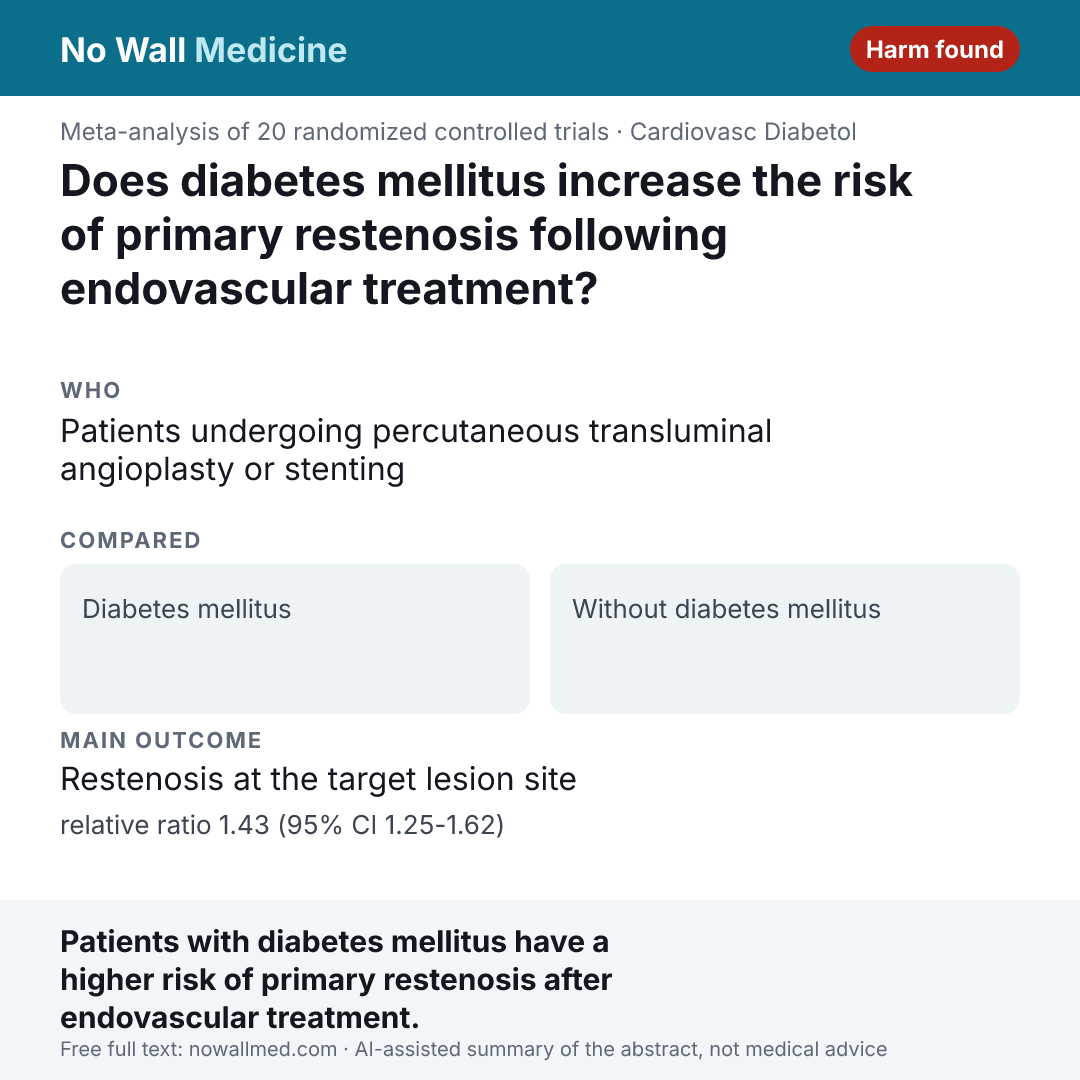
Association between diabetes mellitus and primary restenosis following endovascular treatment: a comprehensive meta-analysis of randomized controlled trials
Meta-analysis of 20 randomized controlled trialsHarm found
Does diabetes mellitus increase the risk of primary restenosis following endovascular treatment?
Who
Patients undergoing percutaneous transluminal angioplasty or stenting
Compared
Diabetes mellitus
Without diabetes mellitus
Main outcome
Restenosis at the target lesion site
Result: relative ratio 1.43 (95% CI 1.25-1.62)
Bottom line: Patients with diabetes mellitus have a higher risk of primary restenosis after endovascular treatment.
Cardiovasc Diabetol · 2024-04-22 · Save PNG
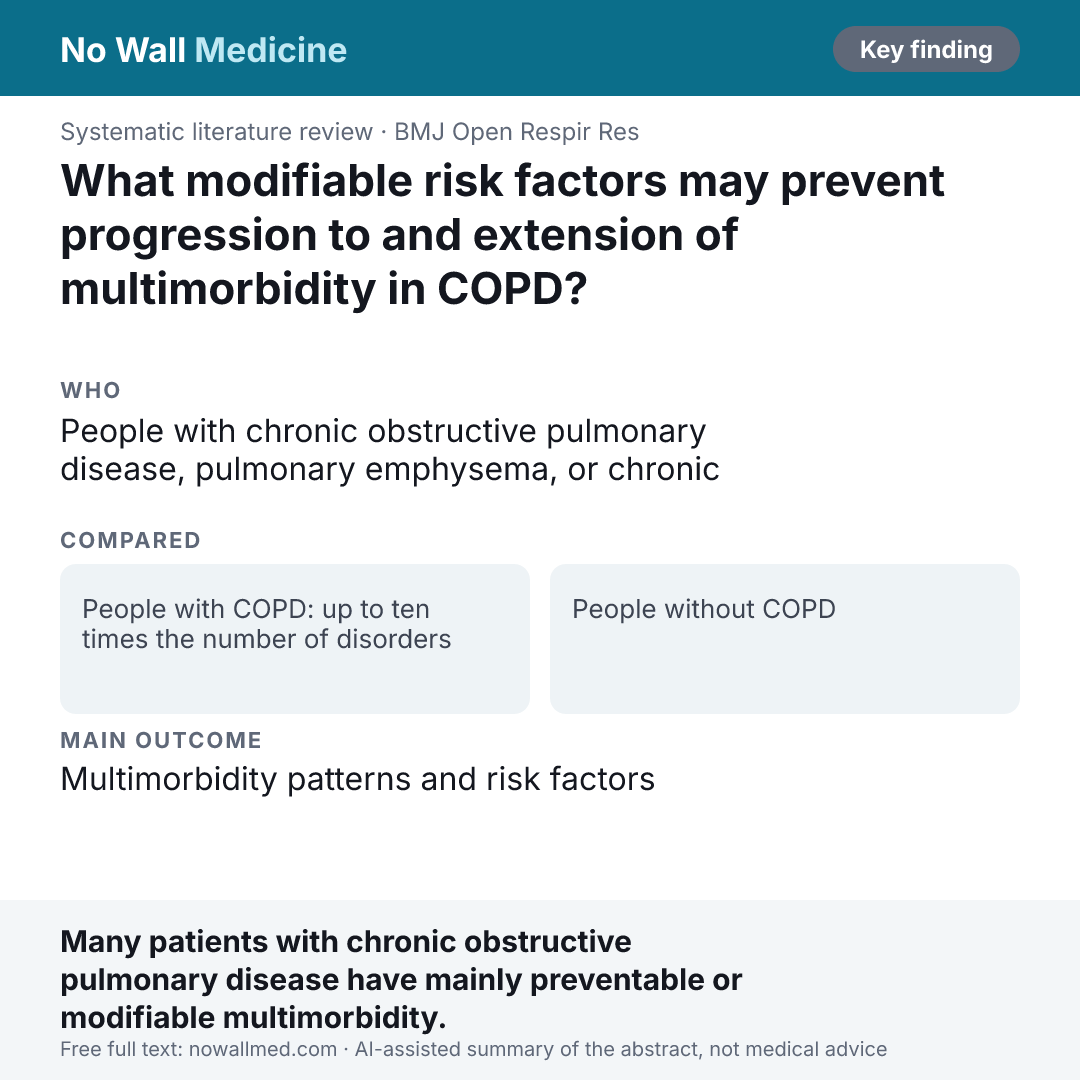
Modifiable risk factors that may be addressed in routine care to prevent progression to and extension of multimorbidity in people with COPD: a systematic literature review
Systematic literature reviewKey finding
What modifiable risk factors may prevent progression to and extension of multimorbidity in COPD?
Who
People with chronic obstructive pulmonary disease, pulmonary emphysema, or chronic bronchitis
Compared
People with COPD: up to ten times the number of disorders
People without COPD
Main outcome
Multimorbidity patterns and risk factors
Bottom line: Many patients with chronic obstructive pulmonary disease have mainly preventable or modifiable multimorbidity.
BMJ Open Respir Res · 2024-04-22 · Save PNG
Use of augmented and virtual reality in resuscitation training: A systematic review
Systematic reviewUnclear result
Are augmented and virtual reality effective for basic and advanced life support training?
Who
Lay people and healthcare professionals
Compared
Augmented reality: improved CPR performance compared to groups trained with no feedback
Virtual reality: majority of studies favoring other interventions or showing no difference
Main outcome
Knowledge, skills, performance, willingness to help, and patient survival
Bottom line: Current evidence does not clearly demonstrate a consistent benefit for augmented or virtual reality compared to other training methods.
Resusc Plus · 2024-04-22 · Save PNG

Ventilatory efficiency as a prognostic factor for postoperative complications in patients undergoing elective major surgery: a systematic review
Systematic reviewMixed results
Is ventilatory efficiency a prognostic factor for postoperative complications after elective major surgery?
Who
Patients undergoing elective major surgery
Compared
Ventilatory efficiency
Postoperative complications
Main outcome
Short-term complications and mid- to long-term mortality
Bottom line: Ventilatory efficiency predicts short-term complications after thoracic and abdominal surgery, but clinical decision-making data are lacking.
Limitation: Risk of bias in study confounding and statistical analysis; data-driven covariable selection.
Br J Anaesth · 2024-04-20 · Save PNG

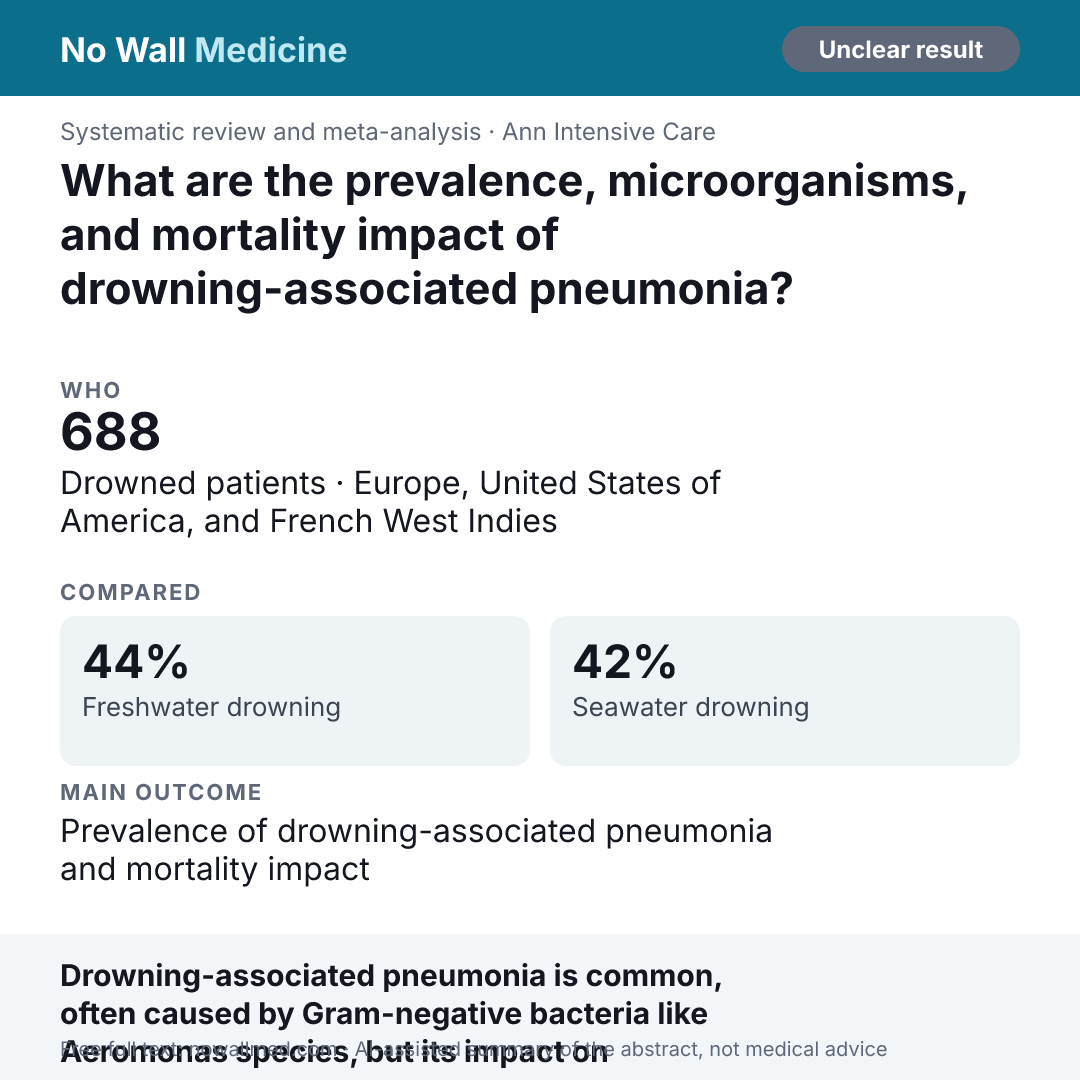
Microbiological features of drowning-associated pneumonia: a systematic review and meta-analysis
Systematic review and meta-analysisUnclear result
What are the prevalence, microorganisms, and mortality impact of drowning-associated pneumonia?
Who
688
Drowned patients · Europe, United States of America, and French West Indies
Compared
44%Freshwater drowning (95%CI 36-52)
42%Seawater drowning (95%CI 32-53)
Main outcome
Prevalence of drowning-associated pneumonia and mortality impact
Result: pooled odds ratio 1.43 (95%CI 0.56-3.67)
Bottom line: Drowning-associated pneumonia is common, often caused by Gram-negative bacteria like Aeromonas species, but its impact on mortality is unclear.
Limitation: The mortality impact estimation was based on two studies only.
Ann Intensive Care · 2024-04-20 · Save PNG
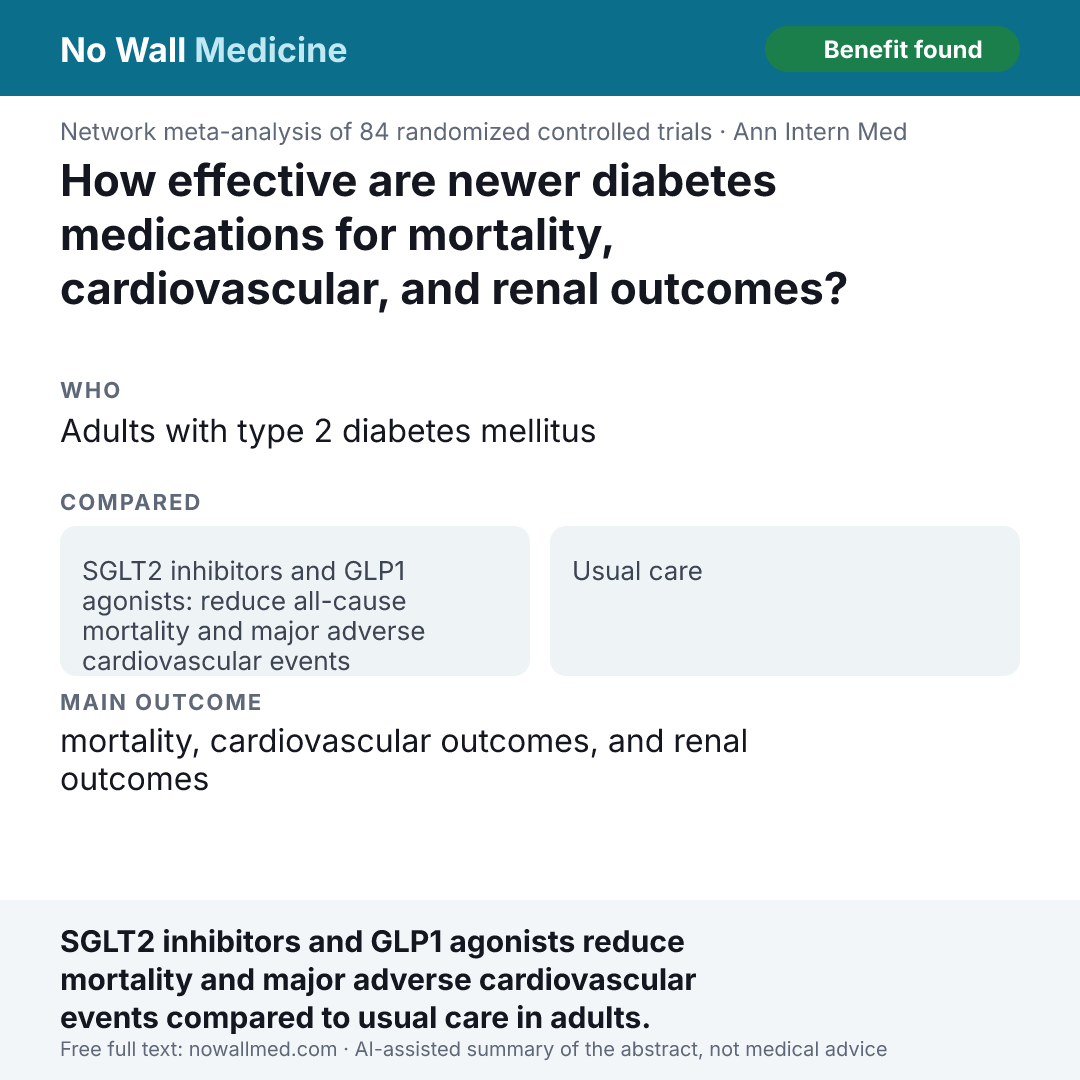
Newer Pharmacologic Treatments in Adults With Type 2 Diabetes: A Systematic Review and Network Meta-analysis for the American College of Physicians
Network meta-analysis of 84 randomized controlled trialsBenefit found
How effective are newer diabetes medications for mortality, cardiovascular, and renal outcomes?
Who
Adults with type 2 diabetes mellitus
Compared
SGLT2 inhibitors and GLP1 agonists: reduce all-cause mortality and major adverse cardiovascular events
Usual care
Main outcome
mortality, cardiovascular outcomes, and renal outcomes
Bottom line: SGLT2 inhibitors and GLP1 agonists reduce mortality and major adverse cardiovascular events compared to usual care in adults.
Limitation: Infrequent direct comparisons, sparse data, and insufficient data on predefined subgroups.
Funded by: American College of Physicians
Ann Intern Med · 2024-04-19 · Save PNG
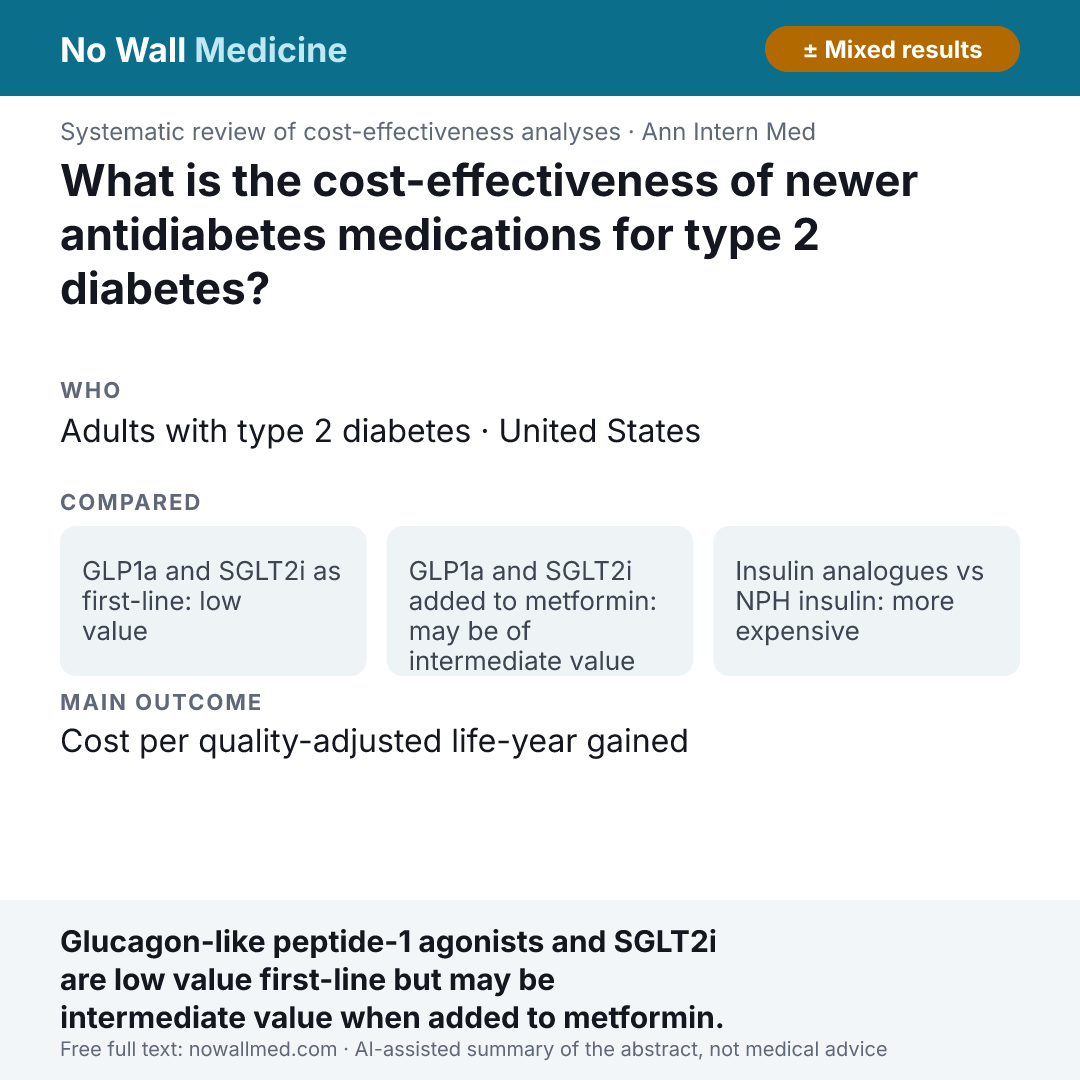
Cost-Effectiveness of Newer Pharmacologic Treatments in Adults With Type 2 Diabetes: A Systematic Review of Cost-Effectiveness Studies for the American College of Physicians
Systematic review of cost-effectiveness analysesMixed results
What is the cost-effectiveness of newer antidiabetes medications for type 2 diabetes?
Who
Adults with type 2 diabetes · United States
Compared
GLP1a and SGLT2i as first-line: low value
GLP1a and SGLT2i added to metformin: may be of intermediate value
Insulin analogues vs NPH insulin: more expensive
Main outcome
Cost per quality-adjusted life-year gained
Bottom line: Glucagon-like peptide-1 agonists and SGLT2i are low value first-line but may be intermediate value when added to metformin.
Limitation: Cost-effectiveness analyses varied in methodological approach, assumptions, and drug comparisons.
Funded by: American College of Physicians
Ann Intern Med · 2024-04-19 · Save PNG
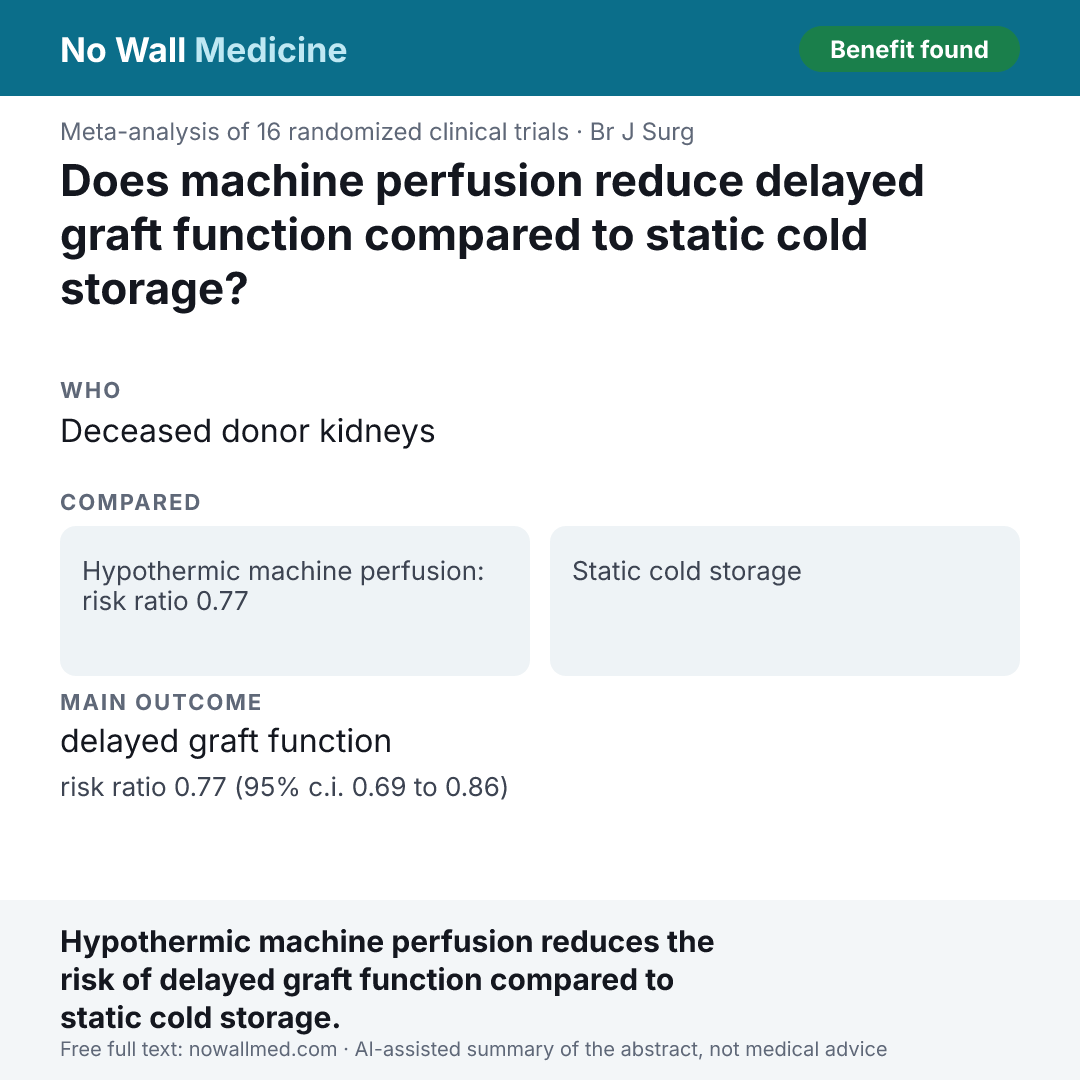
Ex vivo kidney machine perfusion: meta-analysis of randomized clinical trials
Meta-analysis of 16 randomized clinical trialsBenefit found
Does machine perfusion reduce delayed graft function compared to static cold storage?
Who
Deceased donor kidneys
Compared
Hypothermic machine perfusion: risk ratio 0.77
Static cold storage
Main outcome
delayed graft function
Result: risk ratio 0.77 (95% c.i. 0.69 to 0.86)
Bottom line: Hypothermic machine perfusion reduces the risk of delayed graft function compared to static cold storage.
Br J Surg · 2024-04-19 · Save PNG