Visual abstracts
New randomized trials and meta-analyses from leading journals at a glance: who was studied, what was compared, and what was found. Every paper is free to read in full.
All specialtiesCardiology 4763Oncology 4043Gastroenterology & Hepatology 1903Infectious Disease 3756Neurology 1872Psychiatry & Mental Health 2216Pulmonology 2044Critical Care 1319Endocrinology & Diabetes 2544Pediatrics 2889Surgery 2480Orthopedics & Sports Medicine 917Neurosurgery 525Cardiothoracic & Vascular Surgery 656Plastic & Reconstructive Surgery 574Nephrology 1107Rheumatology 810Hematology 1090Dermatology 611Ophthalmology 532Obstetrics & Gynecology 1645Public & Global Health 1037Radiology & Imaging 619Anesthesiology 958Urology 745ENT (Otolaryngology) 494Emergency Medicine 481Allergy & Immunology 309Geriatrics 972Family Medicine & Primary Care 534Medical Genetics & Genomics 659Pathology & Laboratory Medicine 156Physical Medicine & Rehabilitation 734Palliative Care 421Nutrition 1560Digital Health & AI 2137General Medicine 318
Antibiotic prophylaxis in emergency cholecystectomy for mild to moderate acute cholecystitis: a systematic review and meta-analysis of randomized controlled trials
Meta-analysis of seven randomized controlled trialsNo clear difference
Do prophylactic antibiotics reduce postoperative infectious complications in emergency cholecystectomy for mild to moderate acute cholecystitis?
Who
1747
Patients with mild to moderate acute cholecystitis undergoing emergency cholecystectomy
Compared
Antibiotics
Placebo
Main outcome
Total postoperative infectious complications
Result: risk ratio 0.84 (95% CI 0.63 to 1.12)
Bottom line: Perioperative antibiotics do not significantly reduce postoperative infectious complications after emergency cholecystectomy for mild to moderate acute cholecystitis.
Perioper Med · 2024-08-09 · Save PNG

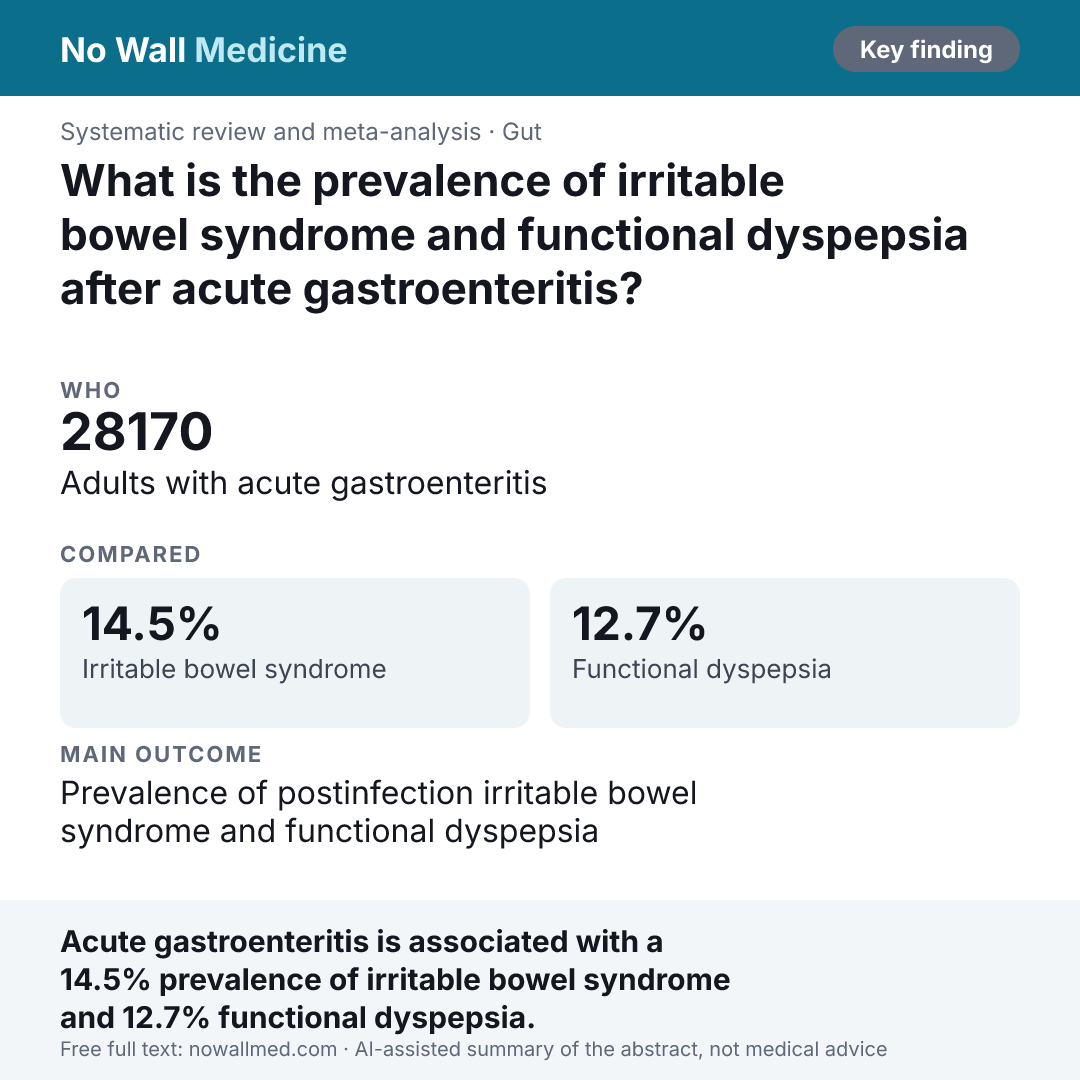
Prevalence of irritable bowel syndrome and functional dyspepsia after acute gastroenteritis: systematic review and meta-analysis
Systematic review and meta-analysisKey finding
What is the prevalence of irritable bowel syndrome and functional dyspepsia after acute gastroenteritis?
Who
28170
Adults with acute gastroenteritis
Compared
14.5%Irritable bowel syndrome
12.7%Functional dyspepsia
Main outcome
Prevalence of postinfection irritable bowel syndrome and functional dyspepsia
Result: odds ratio 4.3 for IBS and 3.0 for FD
Bottom line: Acute gastroenteritis is associated with a 14.5% prevalence of irritable bowel syndrome and 12.7% functional dyspepsia.
Gut · 2024-08-08 · Save PNG
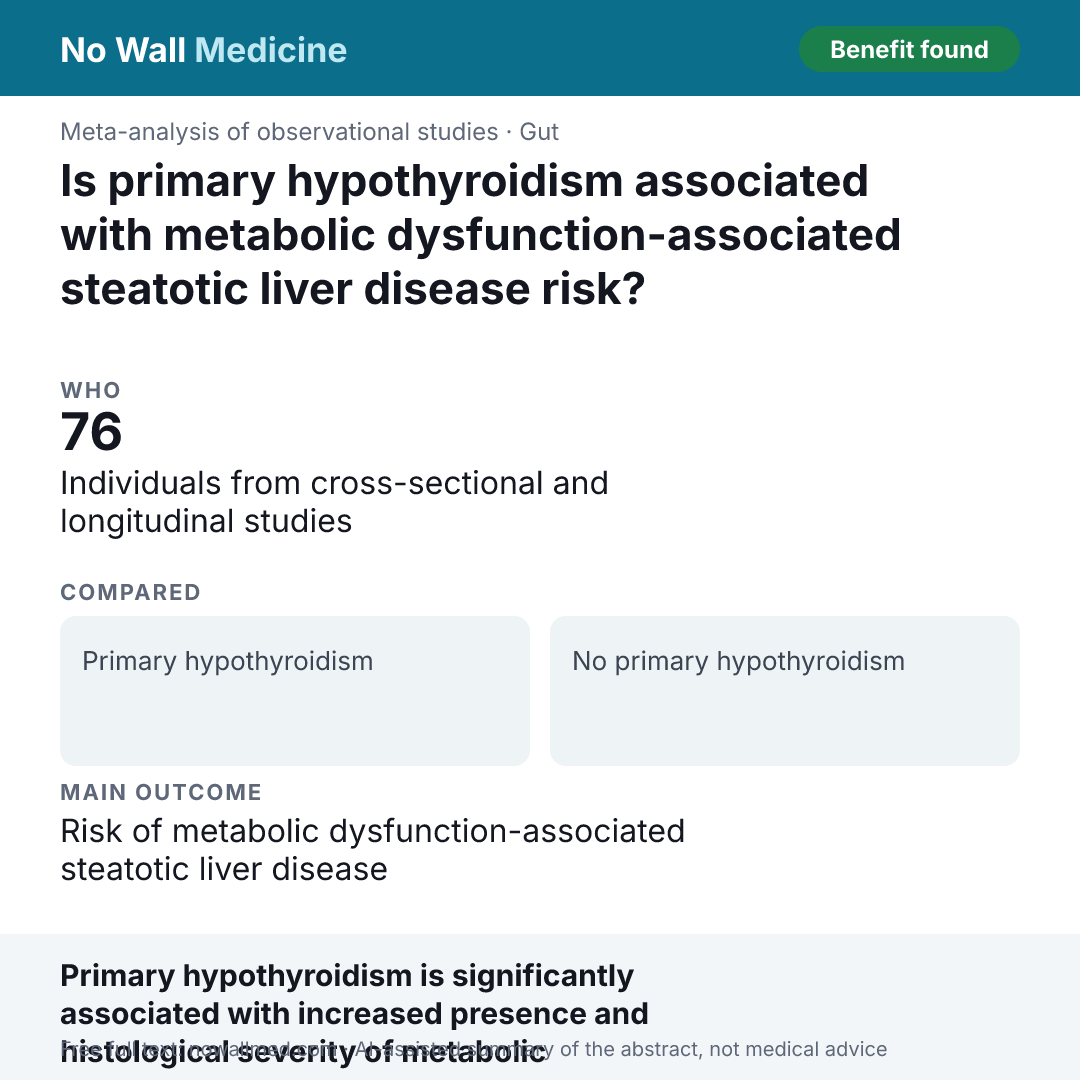
Association between primary hypothyroidism and metabolic dysfunction-associated steatotic liver disease: an updated meta-analysis
Meta-analysis of observational studiesBenefit found
Is primary hypothyroidism associated with metabolic dysfunction-associated steatotic liver disease risk?
Who
76
Individuals from cross-sectional and longitudinal studies
Compared
Primary hypothyroidism
No primary hypothyroidism
Main outcome
Risk of metabolic dysfunction-associated steatotic liver disease
Result: odds ratio 1.43 (95% CI 1.23 to 1.66)
Bottom line: Primary hypothyroidism is significantly associated with increased presence and histological severity of metabolic dysfunction-associated steatotic liver disease.
Gut · 2024-08-08 · Save PNG
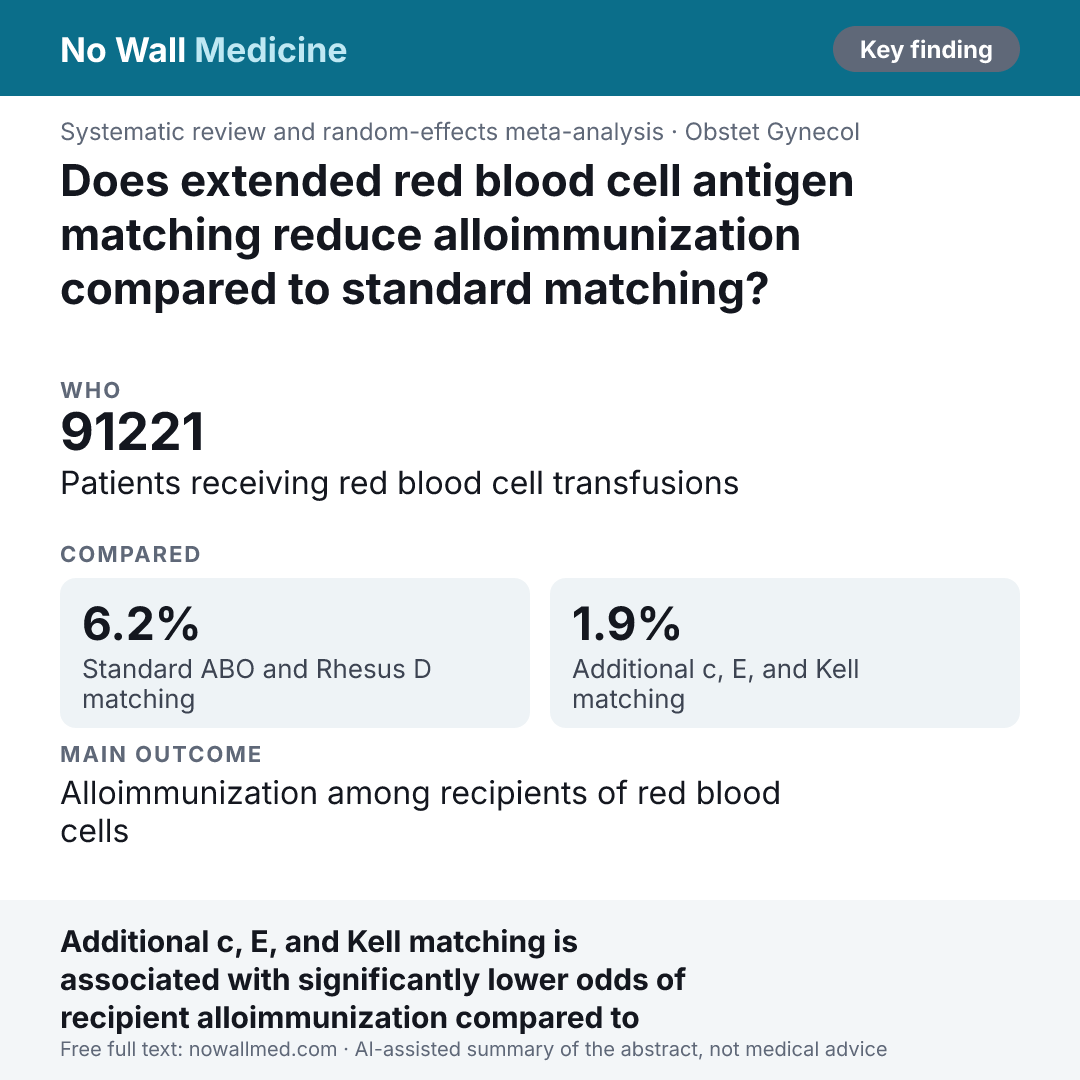
Standard Compared With Extended Red Blood Cell Antigen Matching for Prevention of Subsequent Hemolytic Disease of the Fetus and Newborn: A Systematic Review
Systematic review and random-effects meta-analysisKey finding
Does extended red blood cell antigen matching reduce alloimmunization compared to standard matching?
Who
91221
Patients receiving red blood cell transfusions
Compared
6.2%Standard ABO and Rhesus D matching (95% CI, 2.5-14.9%)
1.9%Additional c, E, and Kell matching (95% CI, 0.7-5.1%)
Main outcome
Alloimmunization among recipients of red blood cells
Result: odds ratio 0.37 (95% CI, 0.20-0.69)
Bottom line: Additional c, E, and Kell matching is associated with significantly lower odds of recipient alloimmunization compared to standard matching.
Obstet Gynecol · 2024-08-08 · Save PNG
A meta-analysis of genome-wide studies of resilience in the German population
Meta-analysis of genome-wide association studiesUnclear result
What are the genetic factors contributing to resilience in the German population?
Who
15822
German population cohorts · Germany
Compared
Variant-based analysis: no signals associated with resilience at the genome-wide level
Gene-based analysis: three genes associated with resilience at genome-wide level
Main outcome
Resilience Scale 11-item version scores
Bottom line: The study suggests low heritability of resilience and identified three genes associated with resilience at the genome-wide level.
Mol Psychiatry · 2024-08-08 · Save PNG

Global herpes zoster burden in adults with asthma: a systematic review and meta-analysis
Systematic review and meta-analysisHarm found
What is the herpes zoster burden in adults with asthma?
Who
Adults aged 18 years or older with asthma · Global
Compared
Adults aged <60 years: 4.20 (95% CI 3.09-5.70) per 1000 person-years
Adults aged ≥60 years: 10.33 (95% CI 9.17-11.64) per 1000 person-years
Main outcome
Herpes zoster incidence, risk, and complications
Result: rate ratio 1.23 (95% CI 1.11-1.35)
Bottom line: Adults with asthma have an increased risk of herpes zoster, especially in older age groups and certain treatments.
Eur Respir J · 2024-08-08 · Save PNG

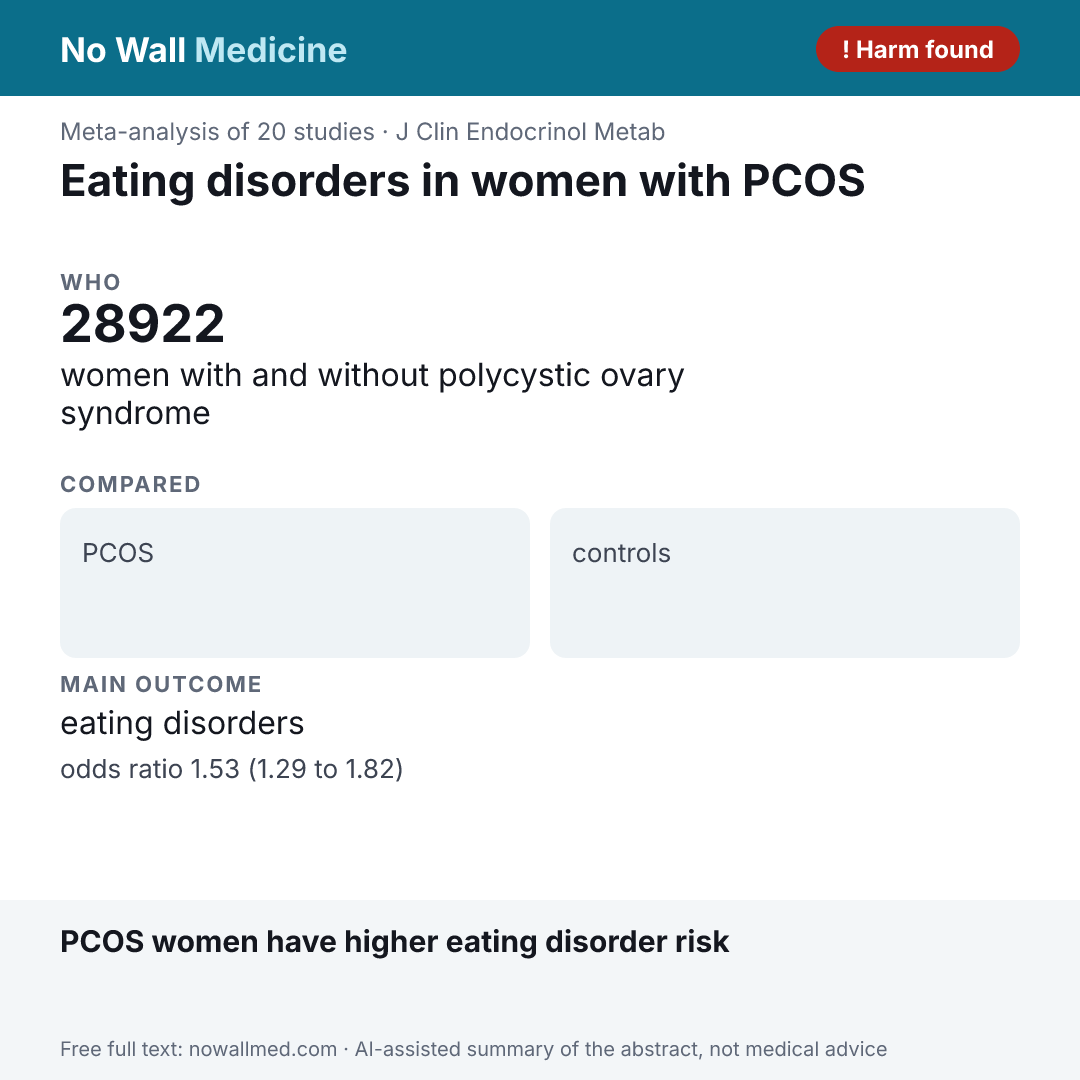
Increased Prevalence of Binge Eating Disorder and Bulimia Nervosa in Women With Polycystic Ovary Syndrome: A Systematic Review and Meta-Analysis
Meta-analysis of 20 studiesHarm found
Eating disorders in women with PCOS
Who
28922
women with and without polycystic ovary syndrome
Compared
PCOS
controls
Main outcome
eating disorders
Result: odds ratio 1.53 (1.29 to 1.82)
Bottom line: PCOS women have higher eating disorder risk
Limitation: small numbers in prior meta-analyses
J Clin Endocrinol Metab · 2024-08-08 · Save PNG
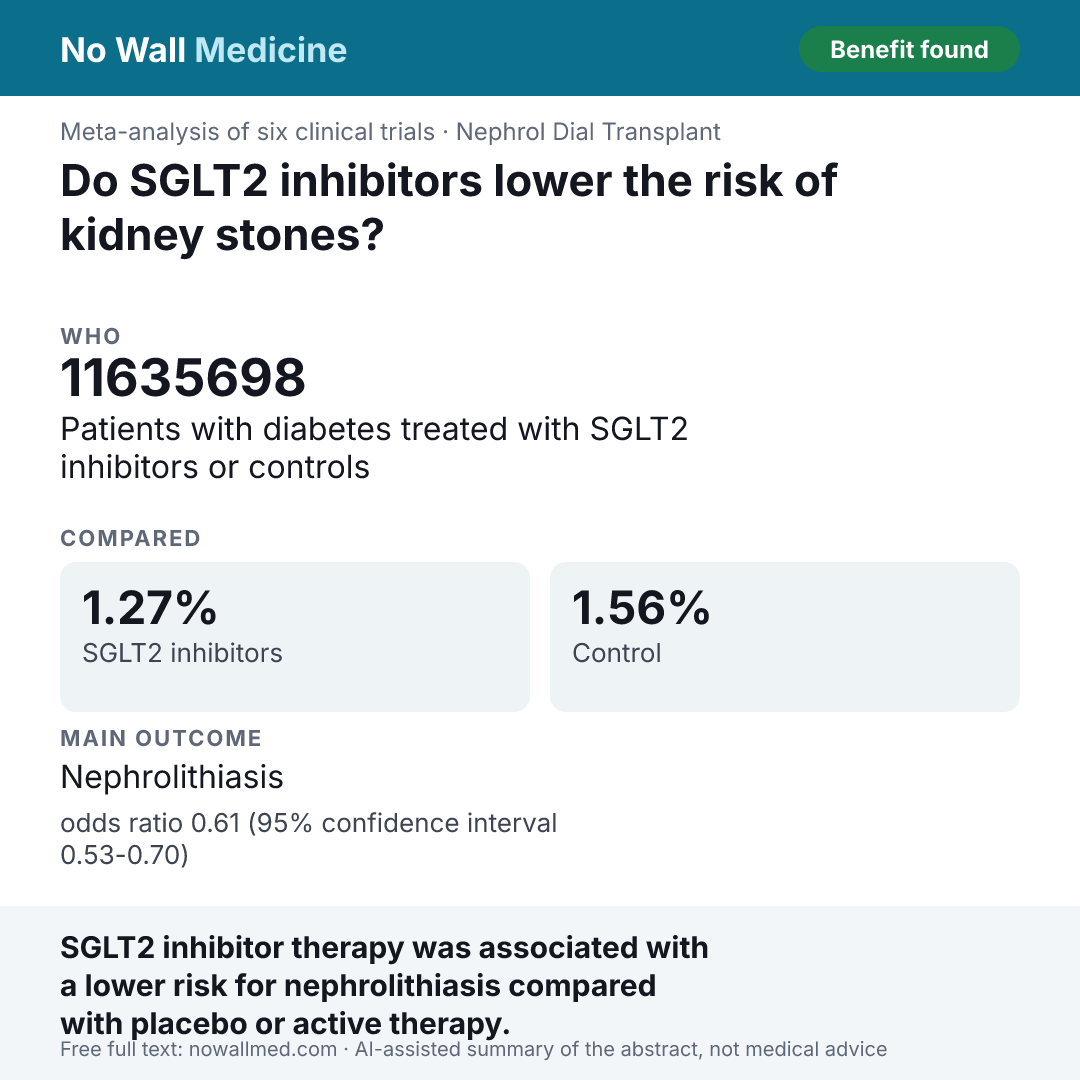
SGLT2 inhibitors and nephrolithiasis risk: a meta-analysis
Meta-analysis of six clinical trialsBenefit found
Do SGLT2 inhibitors lower the risk of kidney stones?
Who
11635698
Patients with diabetes treated with SGLT2 inhibitors or controls
Compared
1.27%SGLT2 inhibitors
1.56%Control
Main outcome
Nephrolithiasis
Result: odds ratio 0.61 (95% confidence interval 0.53-0.70)
Bottom line: SGLT2 inhibitor therapy was associated with a lower risk for nephrolithiasis compared with placebo or active therapy.
Nephrol Dial Transplant · 2024-08-08 · Save PNG
Validation of HAND OA US inflammatory and structural damage score (HOUSE) for thumb-base joints: systematic review on truth and discrimination
Systematic reviewUnclear result
Is HOUSE valid for thumb-base OA
Who
patients with thumb-base osteoarthritis
Compared
HOUSE scoring
existing methods
Main outcome
validity of HOUSE scoring
Bottom line: HOUSE scoring needs more validation
Limitation: methodological quality varied
Rheumatology · 2024-08-08 · Save PNG

Anticoagulation for splanchnic vein thrombosis in myeloproliferative neoplasms: a systematic review and meta-analysis
Systematic review and meta-analysisMixed results
What are the risks of bleeding and thrombosis recurrence with anticoagulation in MPN-SpVT?
Who
443
Adult patients with myeloproliferative neoplasms and splanchnic vein thrombosis
Compared
Anticoagulation: major bleeding 2.8 per 100 patient years
No anticoagulation: major bleeding 3.2 per 100 patient years
Main outcome
Incidence of bleeding and thrombosis recurrence
Bottom line: Anticoagulation in myeloproliferative neoplasms with splanchnic vein thrombosis carries risks for both major bleeding and thrombosis recurrence.
J Thromb Haemost · 2024-08-08 · Save PNG

Advanced neuroimaging of the trigeminal nerve and the whole brain in trigeminal neuralgia: a systematic review
Systematic reviewMixed results
What are the structural and microstructural changes in the trigeminal nerve and brain in trigeminal neuralgia?
Who
Patients with primary trigeminal neuralgia · PubMed
Compared
Trigeminal nerve: structural/microstructural alterations
Brain: changes in pain processing and emotional networks
Main outcome
Structural, microstructural, and functional magnetic resonance imaging changes
Bottom line: Quantitative magnetic resonance imaging shows nerve alterations and brain plasticity in patients with trigeminal neuralgia.
Pain · 2024-08-08 · Save PNG

Non-Breast Implantable Medical Devices and Associated Malignancies: A Systematic Review
Systematic reviewBenefit found
What is the prevalence and characteristics of malignancies associated with non-breast implantable medical devices?
Who
616
Patients with non-breast implantable medical devices
Compared
543Head and neck (88.1%)
57Lower extremity (9.6%)
9Thorax (1.4%)
3Abdomen (0.5%)
Main outcome
Prevalence and characteristics of malignancies associated with non-breast implantable medical devices
Bottom line: The overall oncologic risk of non-breast implantable medical devices is low.
Limitation: Risk of bias was highest with case reports.
Aesthet Surg J · 2024-08-08 · Save PNG

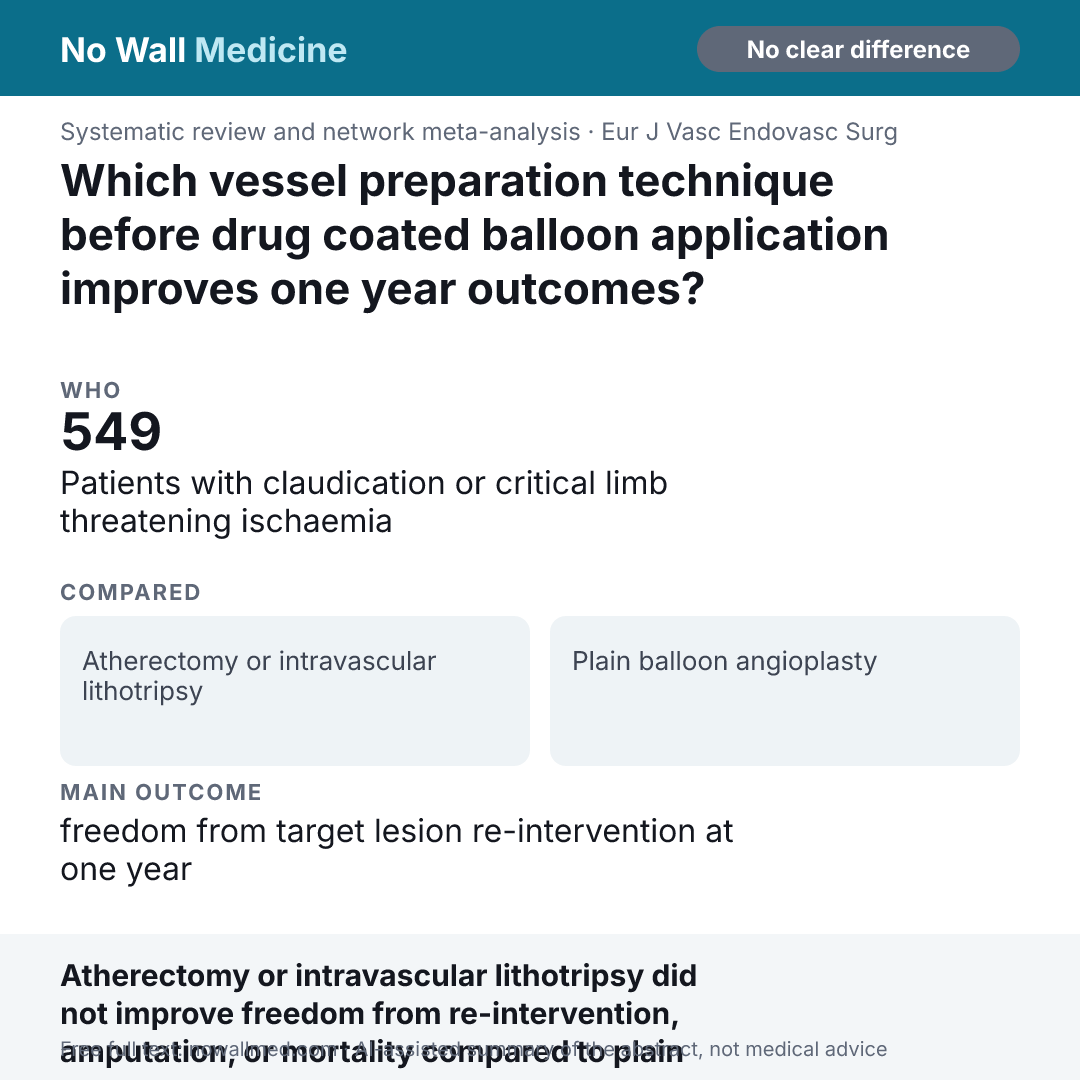
Systematic Review and Network Meta-analysis of Vessel Preparation Techniques With Plain Balloon Angioplasty, Atherectomy, or Intravascular Lithotripsy Before Application of a Drug Coated Balloon to Treat Atherosclerotic Femoropopliteal Disease
Systematic review and network meta-analysisNo clear difference
Which vessel preparation technique before drug coated balloon application improves one year outcomes?
Who
549
Patients with claudication or critical limb threatening ischaemia
Compared
Atherectomy or intravascular lithotripsy
Plain balloon angioplasty
Main outcome
freedom from target lesion re-intervention at one year
Result: relative risk 0.25 (95% CI 0.07 - 0.89) for bailout stenting
Bottom line: Atherectomy or intravascular lithotripsy did not improve freedom from re-intervention, amputation, or mortality compared to plain balloon angioplasty.
Limitation: Certainty of evidence was low for major amputation and moderate for mortality.
Eur J Vasc Endovasc Surg · 2024-08-08 · Save PNG
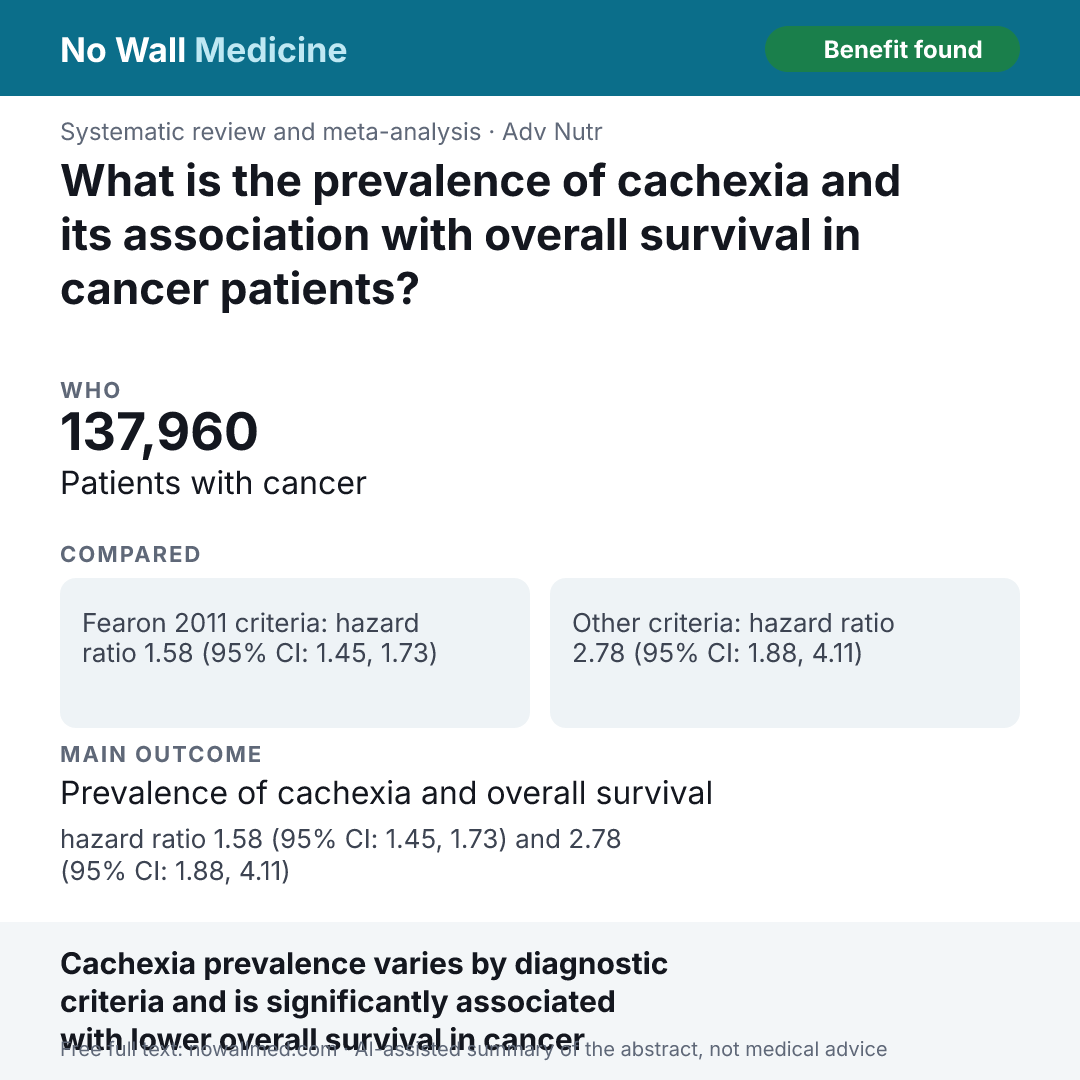
Prevalence of and Survival with Cachexia among Patients with Cancer: A Systematic Review and Meta-Analysis
Systematic review and meta-analysisBenefit found
What is the prevalence of cachexia and its association with overall survival in cancer patients?
Who
137,960
Patients with cancer
Compared
Fearon 2011 criteria: hazard ratio 1.58 (95% CI: 1.45, 1.73)
Other criteria: hazard ratio 2.78 (95% CI: 1.88, 4.11)
Main outcome
Prevalence of cachexia and overall survival
Result: hazard ratio 1.58 (95% CI: 1.45, 1.73) and 2.78 (95% CI: 1.88, 4.11)
Bottom line: Cachexia prevalence varies by diagnostic criteria and is significantly associated with lower overall survival in cancer patients.
Adv Nutr · 2024-08-08 · Save PNG
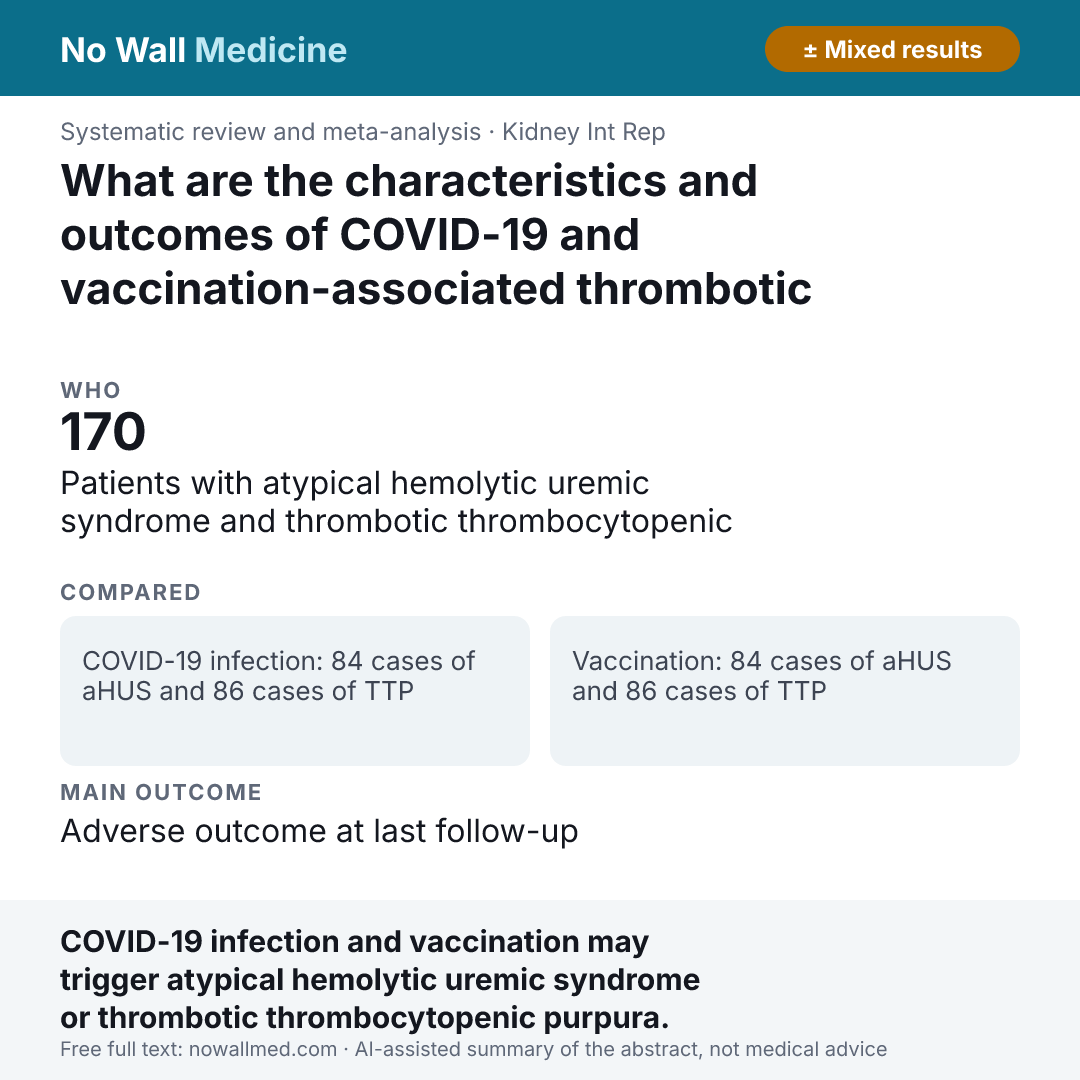
Systematic Review of Individual Patient Data COVID-19 Infection and Vaccination-Associated Thrombotic Microangiopathy
Systematic review and meta-analysisMixed results
What are the characteristics and outcomes of COVID-19 and vaccination-associated thrombotic microangiopathy?
Who
170
Patients with atypical hemolytic uremic syndrome and thrombotic thrombocytopenic purpura
Compared
COVID-19 infection: 84 cases of aHUS and 86 cases of TTP
Vaccination: 84 cases of aHUS and 86 cases of TTP
Main outcome
Adverse outcome at last follow-up
Bottom line: COVID-19 infection and vaccination may trigger atypical hemolytic uremic syndrome or thrombotic thrombocytopenic purpura.
Kidney Int Rep · 2024-08-08 · Save PNG
Ebola virus disease mathematical models and epidemiological parameters: a systematic review
Systematic reviewMixed results
What are the Ebola virus disease transmission models and epidemiological parameters?
Who
522
Ebola virus disease transmission models and parameters · PubMed and Web of Science
Compared
15·4 daysSerial interval (95% CI 13·2-17·5)
8·5 daysIncubation period (7·7-9·2)
9·3 daysSymptom-onset-to-death delay (8·5-10·1)
13·0 daysSymptom-onset-to-recovery (10·4-15·7)
Main outcome
Epidemiological parameters and transmission models
Bottom line: Epidemiological parameters for Ebola virus disease show high variability across different models and studies.
Lancet Infect Dis · 2024-08-07 · Save PNG

The intergenerational association of preterm birth: A systematic review and meta-analysis
Systematic review and meta-analysisHarm found
Is there an intergenerational association of preterm birth?
Who
2271612
Women with a family history of preterm birth
Compared
Women born preterm: odds ratio 1.44
Sibling born preterm: odds ratio 1.53
Partner born preterm: odds ratio 1.12
Main outcome
odds of giving preterm births
Result: odds ratio 1.44 (95% CI 1.34 to 1.54)
Bottom line: Women with a family history of preterm birth face an increased risk of giving preterm births.
BJOG · 2024-08-07 · Save PNG

The impact of PET imaging on triple negative breast cancer: an updated evidence-based perspective
Systematic reviewBenefit found
What is the role of positron emission tomography in triple negative breast cancer management?
Who
2870
Patients with triple negative breast cancer
Compared
Positron emission tomography
Standard management
Main outcome
Disease staging, treatment response, and prognostic value
Bottom line: Positron emission tomography is essential for staging and assessing treatment response in triple negative breast cancer.
Eur J Nucl Med Mol Imaging · 2024-08-07 · Save PNG

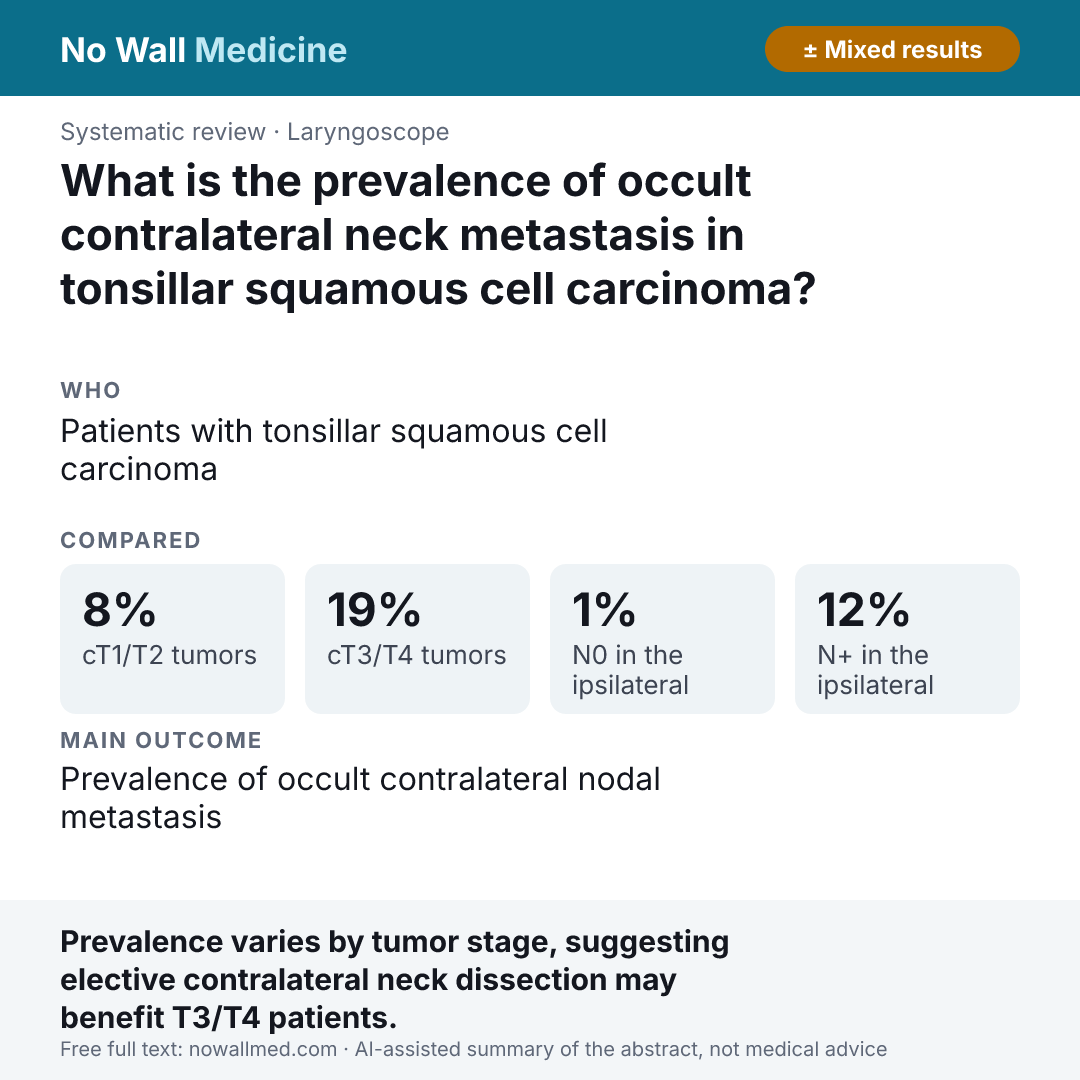
A Systematic Review of Occult Contralateral Neck Metastasis in Tonsillar Squamous Cell Carcinoma
Systematic reviewMixed results
What is the prevalence of occult contralateral neck metastasis in tonsillar squamous cell carcinoma?
Who
Patients with tonsillar squamous cell carcinoma
Compared
8%cT1/T2 tumors
19%cT3/T4 tumors
1%N0 in the ipsilateral neck
12%N+ in the ipsilateral neck
Main outcome
Prevalence of occult contralateral nodal metastasis
Bottom line: Prevalence varies by tumor stage, suggesting elective contralateral neck dissection may benefit T3/T4 patients.
Laryngoscope · 2024-08-07 · Save PNG
Phase-resolved MRI for measurement of pulmonary perfusion and ventilation defects in comparison with dynamic contrast-enhanced MRI and 129Xe MRI
Meta-analysis of 10 studiesBenefit found
How does phase-resolved functional lung MRI compare with DCE and 129Xe MRI?
Who
399
399 subjects
Compared
Perfusion defect percentage (QDP): mean difference -2.31% (-8.01% to 3.40%)
Ventilation defect percentage (VDP): mean difference 0.34% (-4.94% to 5.62%)
Main outcome
Perfusion and ventilation defect percentages
Result: QDP correlation 0.65 (95% CI 0.55 to 0.73); VDP correlation 0.72 (95% CI 0.61 to 0.80)
Bottom line: Phase-resolved functional lung MRI shows satisfactory agreement with dynamic contrast-enhanced and 129Xe MRI for assessing lung function.
BMJ Open Respir Res · 2024-08-07 · Save PNG