Visual abstracts
New randomized trials and meta-analyses from leading journals at a glance: who was studied, what was compared, and what was found. Every paper is free to read in full.
All specialtiesCardiology 302Oncology 227Gastroenterology & Hepatology 129Infectious Disease 236Neurology 131Psychiatry & Mental Health 201Pulmonology 130Critical Care 87Endocrinology & Diabetes 183Pediatrics 130Surgery 87Orthopedics & Sports Medicine 55Neurosurgery 17Cardiothoracic & Vascular Surgery 33Plastic & Reconstructive Surgery 61Nephrology 60Rheumatology 55Hematology 70Dermatology 28Ophthalmology 49Obstetrics & Gynecology 83Public & Global Health 89Radiology & Imaging 23Anesthesiology 47Urology 64ENT (Otolaryngology) 37Emergency Medicine 28Allergy & Immunology 30Geriatrics 88Family Medicine & Primary Care 41Medical Genetics & Genomics 28Pathology & Laboratory Medicine 5Physical Medicine & Rehabilitation 73Palliative Care 41Nutrition 108Digital Health & AI 255General Medicine 40
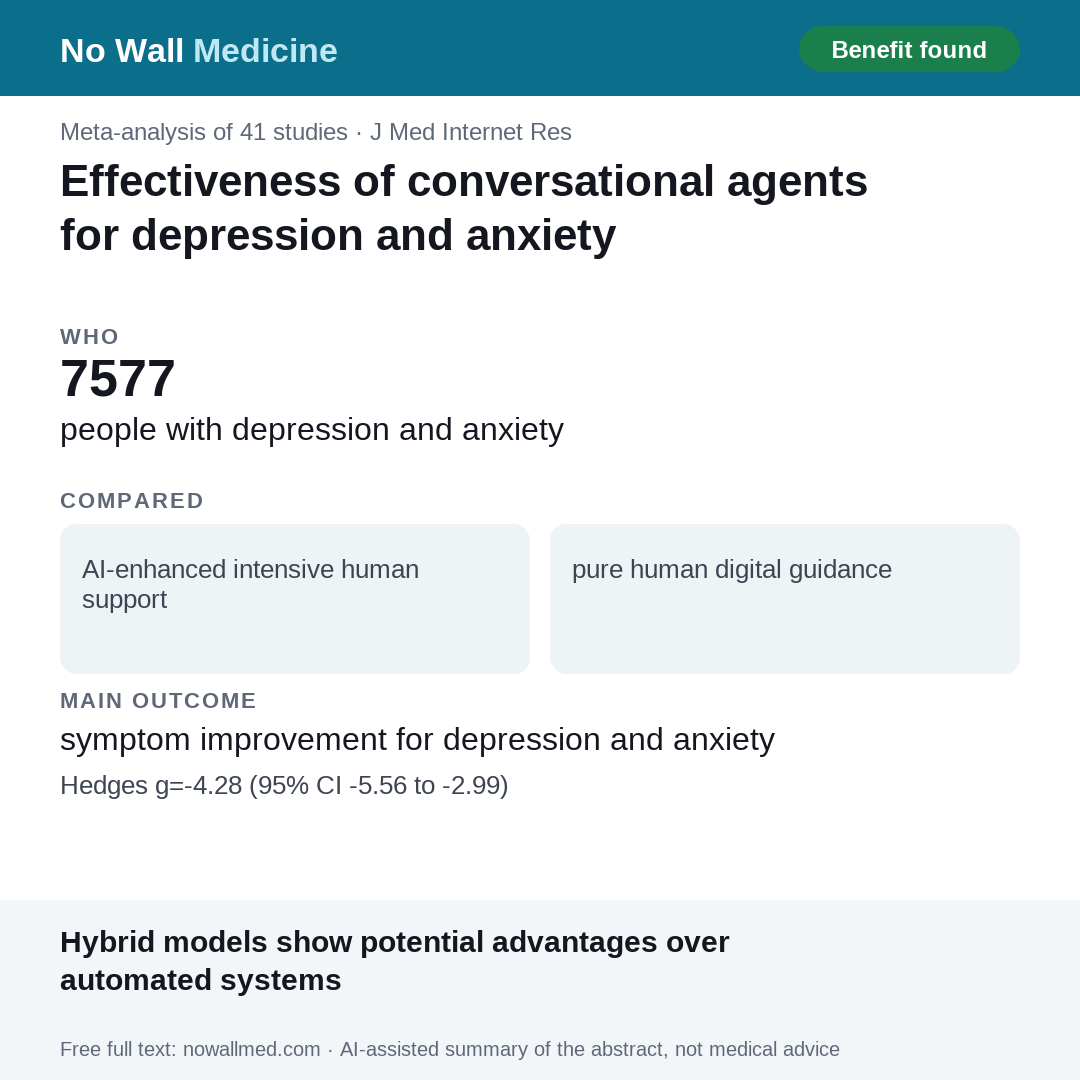
Effectiveness of Conversational Agents for Depression and Anxiety: Systematic Review and Network Dose-Response Meta-Analysis of Agent Types, Dose, and Human Support
Meta-analysis of 41 studiesBenefit found
Effectiveness of conversational agents for depression and anxiety
Who
7577
people with depression and anxiety
Compared
AI-enhanced intensive human support
pure human digital guidance
Main outcome
symptom improvement for depression and anxiety
Result: Hedges g=-4.28 (95% CI -5.56 to -2.99)
Bottom line: Hybrid models show potential advantages over automated systems
Limitation: very low certainty of evidence
J Med Internet Res · 2026-11-13Download image
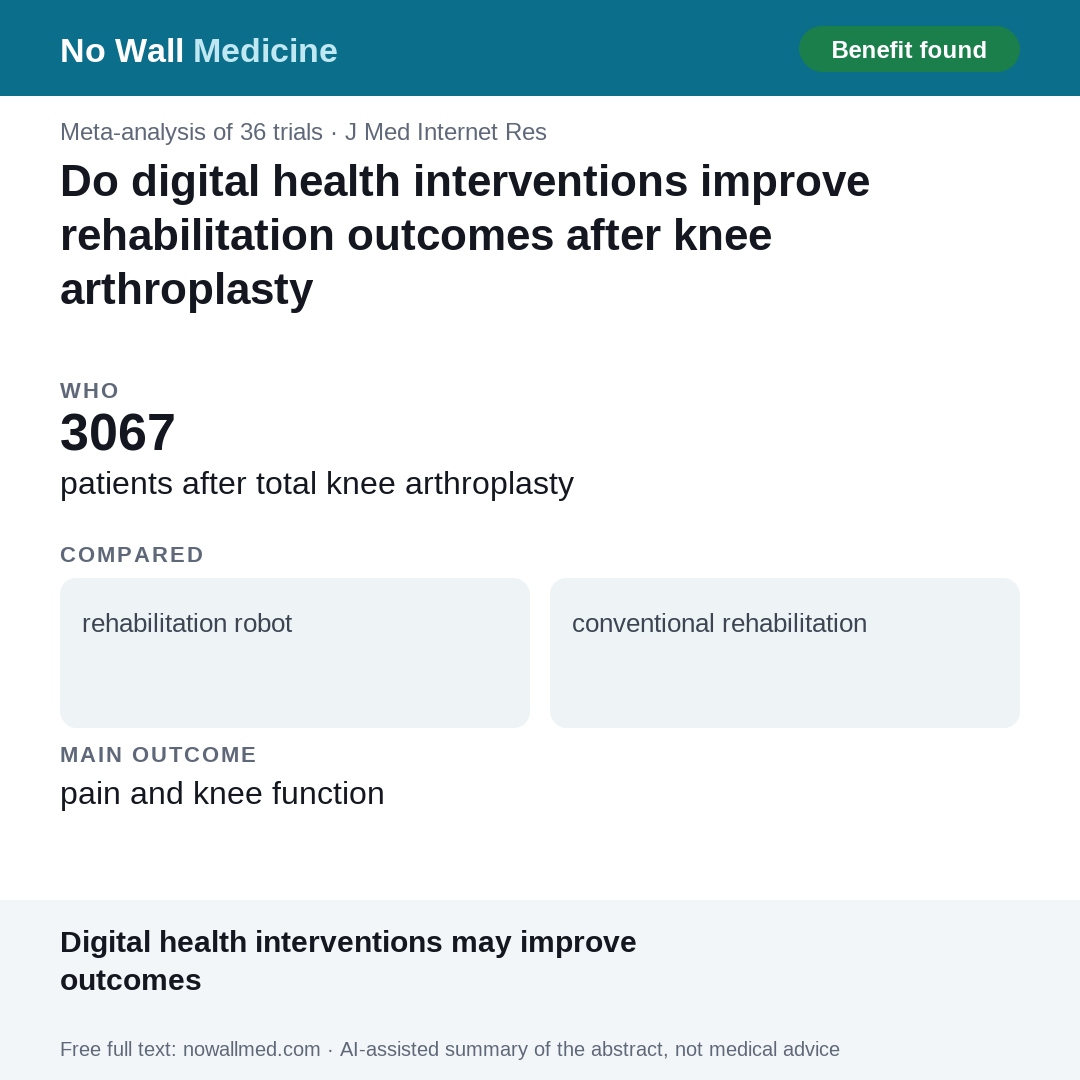
Effectiveness of Digital Health Interventions on Rehabilitation Outcomes in Patients After Total Knee Arthroplasty: Systematic Review and Network Meta-Analysis
Meta-analysis of 36 trialsBenefit found
Do digital health interventions improve rehabilitation outcomes after knee arthroplasty
Who
3067
patients after total knee arthroplasty
Compared
rehabilitation robot
conventional rehabilitation
Main outcome
pain and knee function
Bottom line: Digital health interventions may improve outcomes
Limitation: low or very low certainty of evidence
J Med Internet Res · 2026-11-13Download image
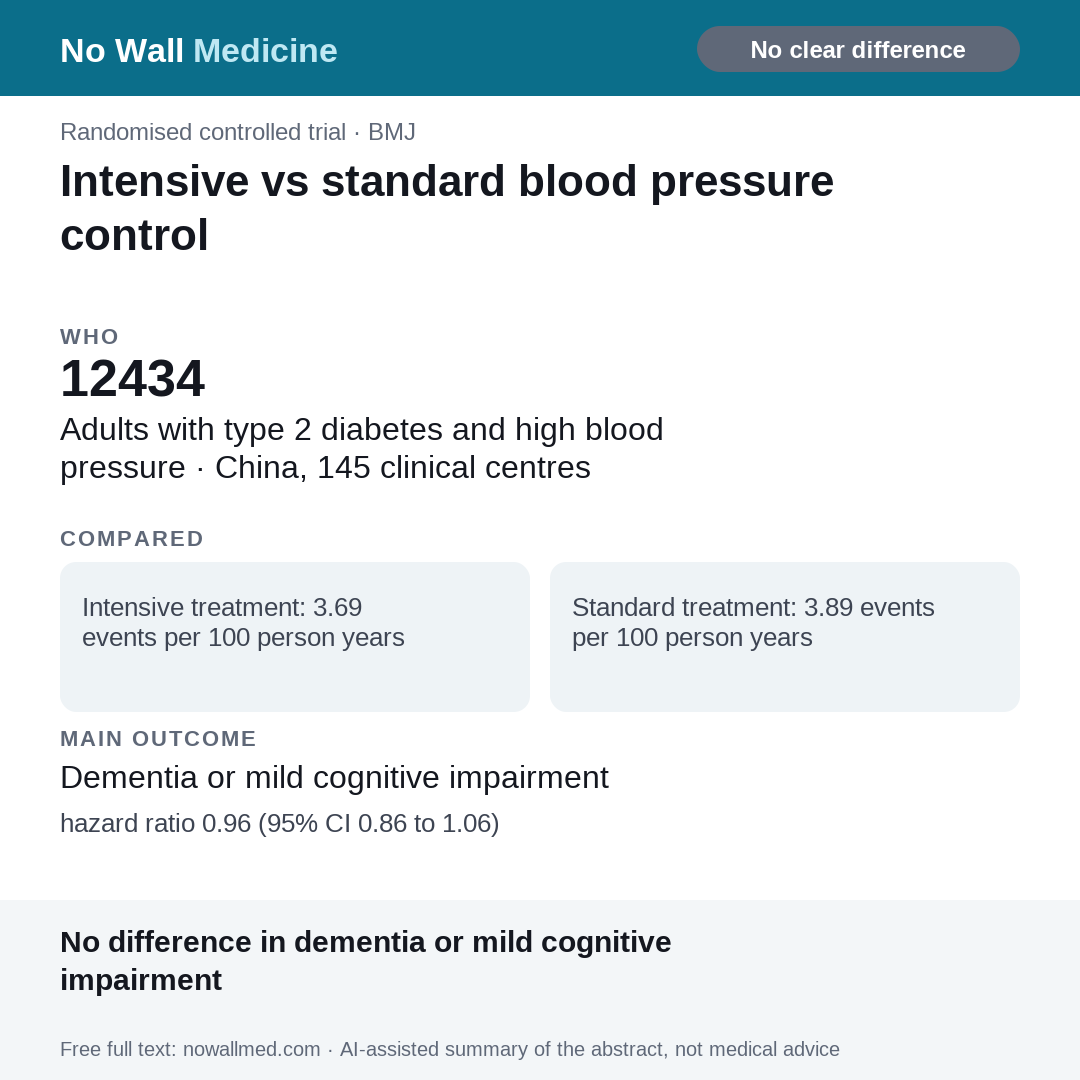
Effect of intensive blood pressure control on cognitive outcomes and brain structures in adults with type 2 diabetes: prespecified analysis of secondary outcomes of BPROAD randomised controlled trial
Randomised controlled trialNo clear difference
Intensive vs standard blood pressure control
Who
12434
Adults with type 2 diabetes and high blood pressure · China, 145 clinical centres
Compared
Intensive treatment: 3.69 events per 100 person years
Standard treatment: 3.89 events per 100 person years
Main outcome
Dementia or mild cognitive impairment
Result: hazard ratio 0.96 (95% CI 0.86 to 1.06)
Bottom line: No difference in dementia or mild cognitive impairment
BMJ · 2026-11-12Download image
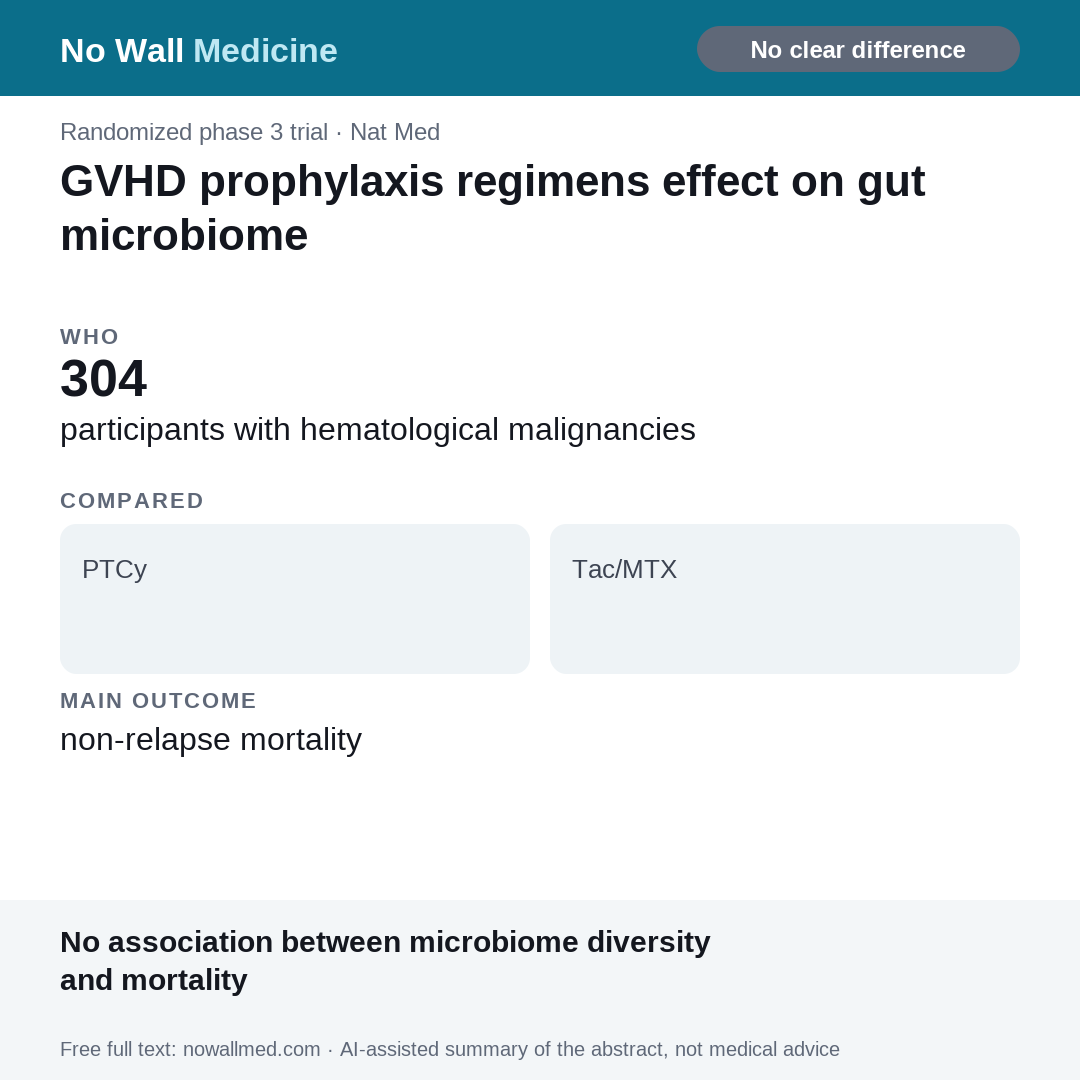
Effect of two common GVHD prophylaxis regimens on the gut microbiome in a randomized phase 3 trial
Randomized phase 3 trialNo clear difference
GVHD prophylaxis regimens effect on gut microbiome
Who
304
participants with hematological malignancies
Compared
PTCy
Tac/MTX
Main outcome
non-relapse mortality
Bottom line: No association between microbiome diversity and mortality
Nat Med · 2026-11-12Download image
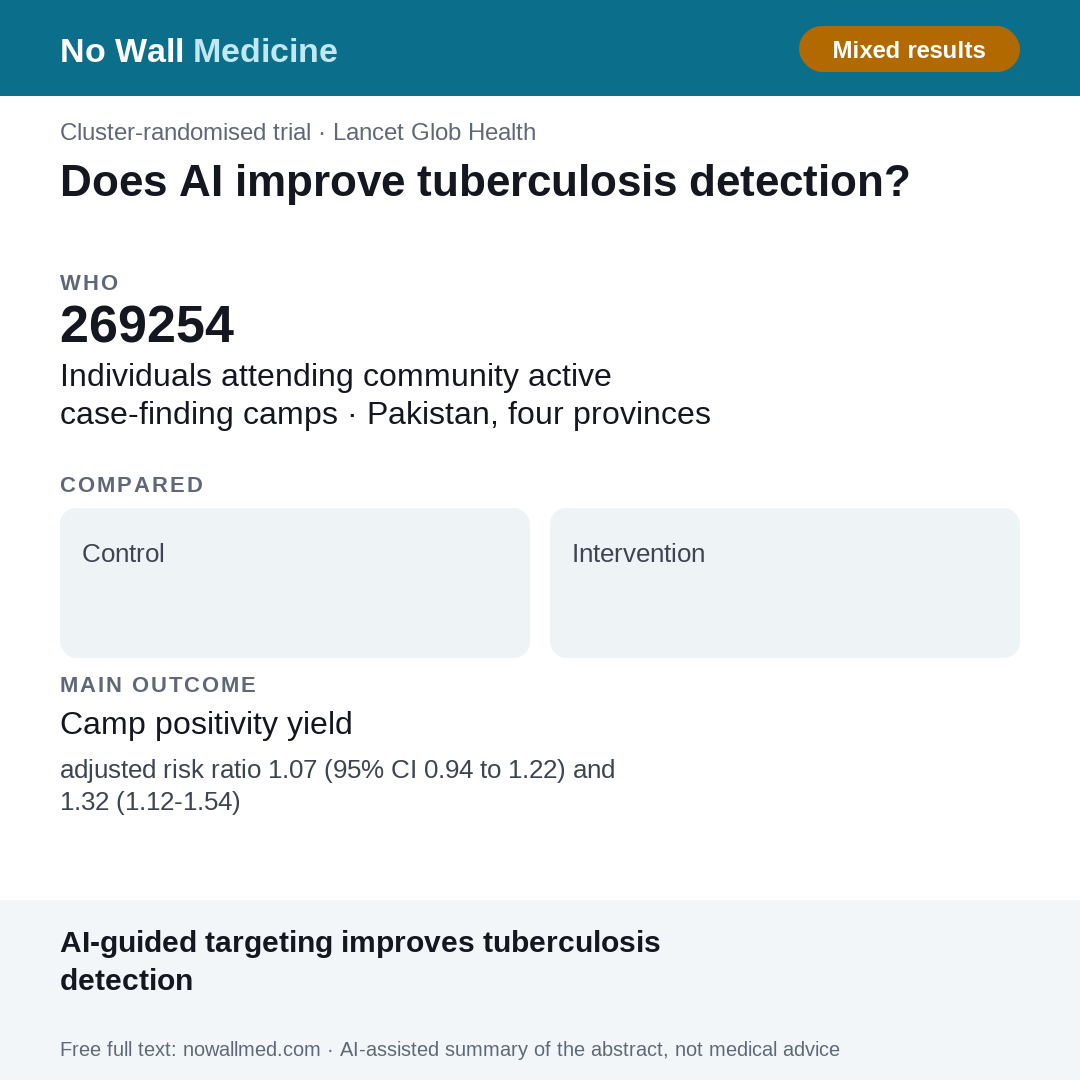
Geographical targeting of active case-finding for tuberculosis in Pakistan using artificial intelligence software (SPOT-TB): a pragmatic, stepped wedge, cluster-randomised control trial
Cluster-randomised trialMixed results
Does AI improve tuberculosis detection?
Who
269254
Individuals attending community active case-finding camps · Pakistan, four provinces
Compared
Control
Intervention
Main outcome
Camp positivity yield
Result: adjusted risk ratio 1.07 (95% CI 0.94 to 1.22) and 1.32 (1.12-1.54)
Bottom line: AI-guided targeting improves tuberculosis detection
Limitation: Routine data did not capture implementation indicators
Funded by: Gates Foundation, Global Fund
Lancet Glob Health · 2026-11-12Download image
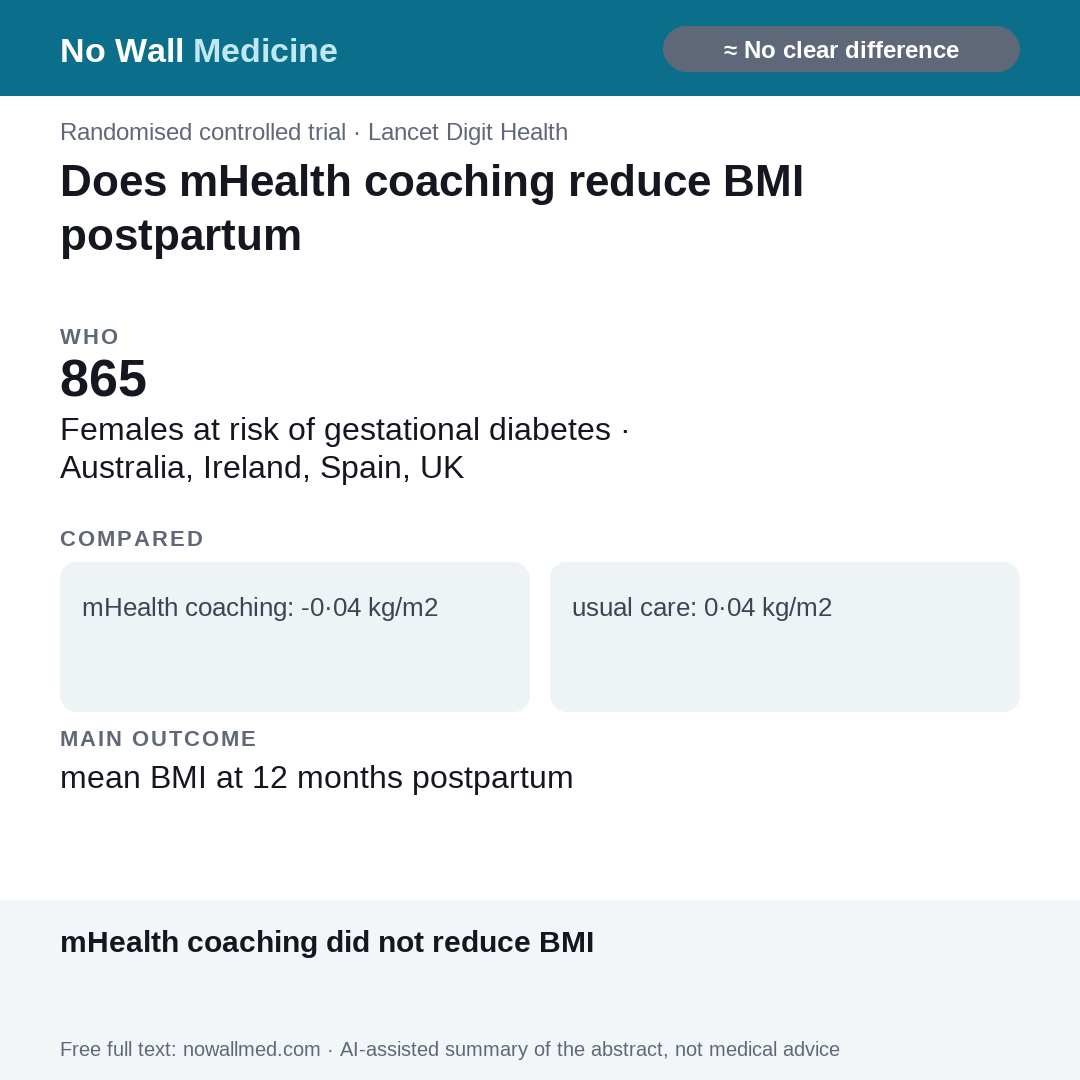
Personalised mobile health coaching from early pregnancy to 12-months postpartum for females at risk of gestational diabetes (Bump2Baby and Me): a multicentre, randomised controlled trial
Randomised controlled trialNo clear difference
Does mHealth coaching reduce BMI postpartum
Who
865
Females at risk of gestational diabetes · Australia, Ireland, Spain, UK
Compared
mHealth coaching: -0·04 kg/m2
usual care: 0·04 kg/m2
Main outcome
mean BMI at 12 months postpartum
Bottom line: mHealth coaching did not reduce BMI
Funded by: European Union Commission
Lancet Digit Health · 2026-11-12Download image
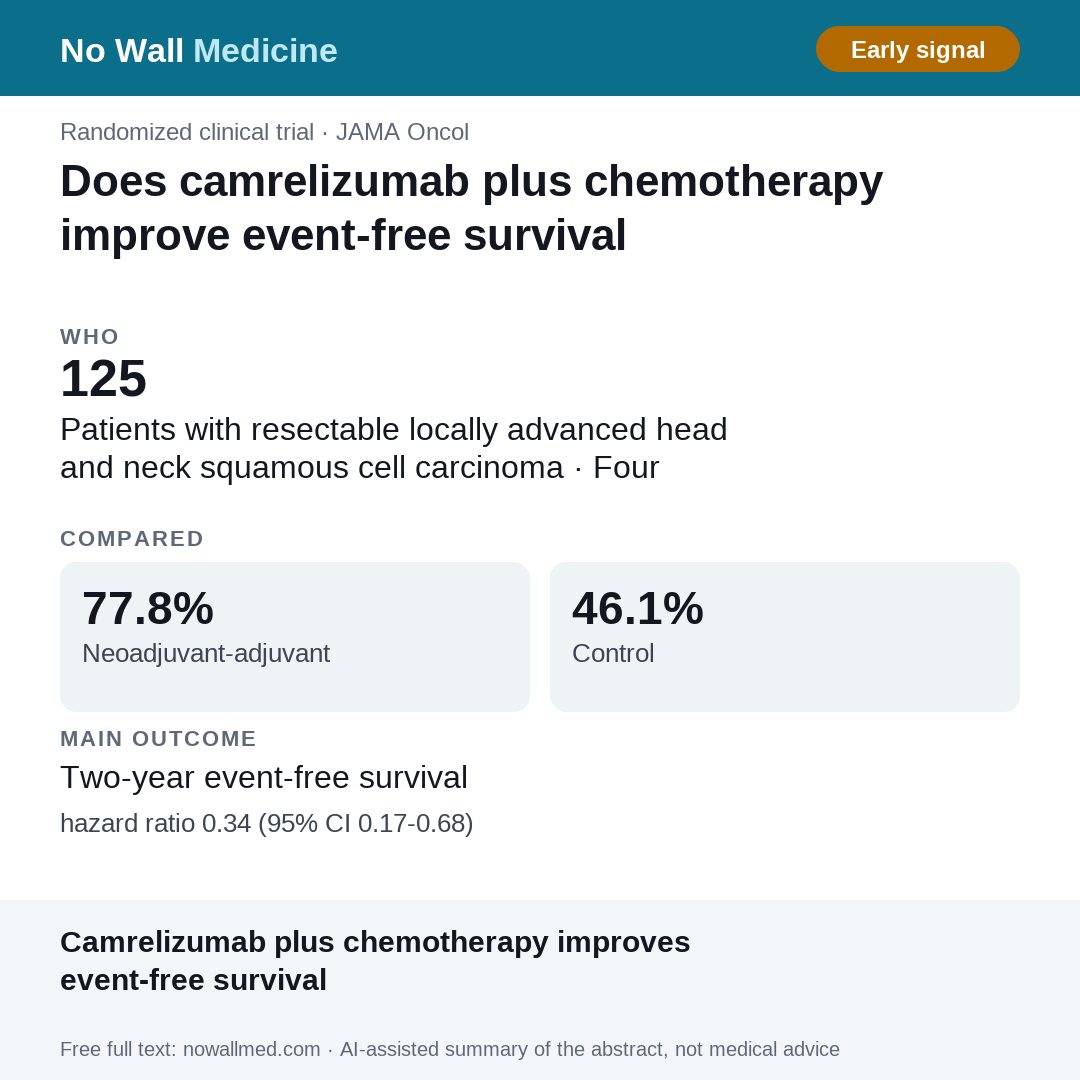
Perioperative Camrelizumab Plus Chemotherapy in Locally Advanced Head and Neck Squamous Cell Carcinoma: A Randomized Clinical Trial
Randomized clinical trialBenefit found
Does camrelizumab plus chemotherapy improve event-free survival
Who
125
Patients with resectable locally advanced head and neck squamous cell carcinoma · Four academic hospitals in China
Compared
77.8%Neoadjuvant-adjuvant (95% CI, 63.6-87.0)
46.1%Control (95% CI, 31.3-59.6)
Main outcome
Two-year event-free survival
Result: hazard ratio 0.34 (95% CI 0.17-0.68)
Bottom line: Camrelizumab plus chemotherapy improves event-free survival
JAMA Oncol · 2026-11-12Download image
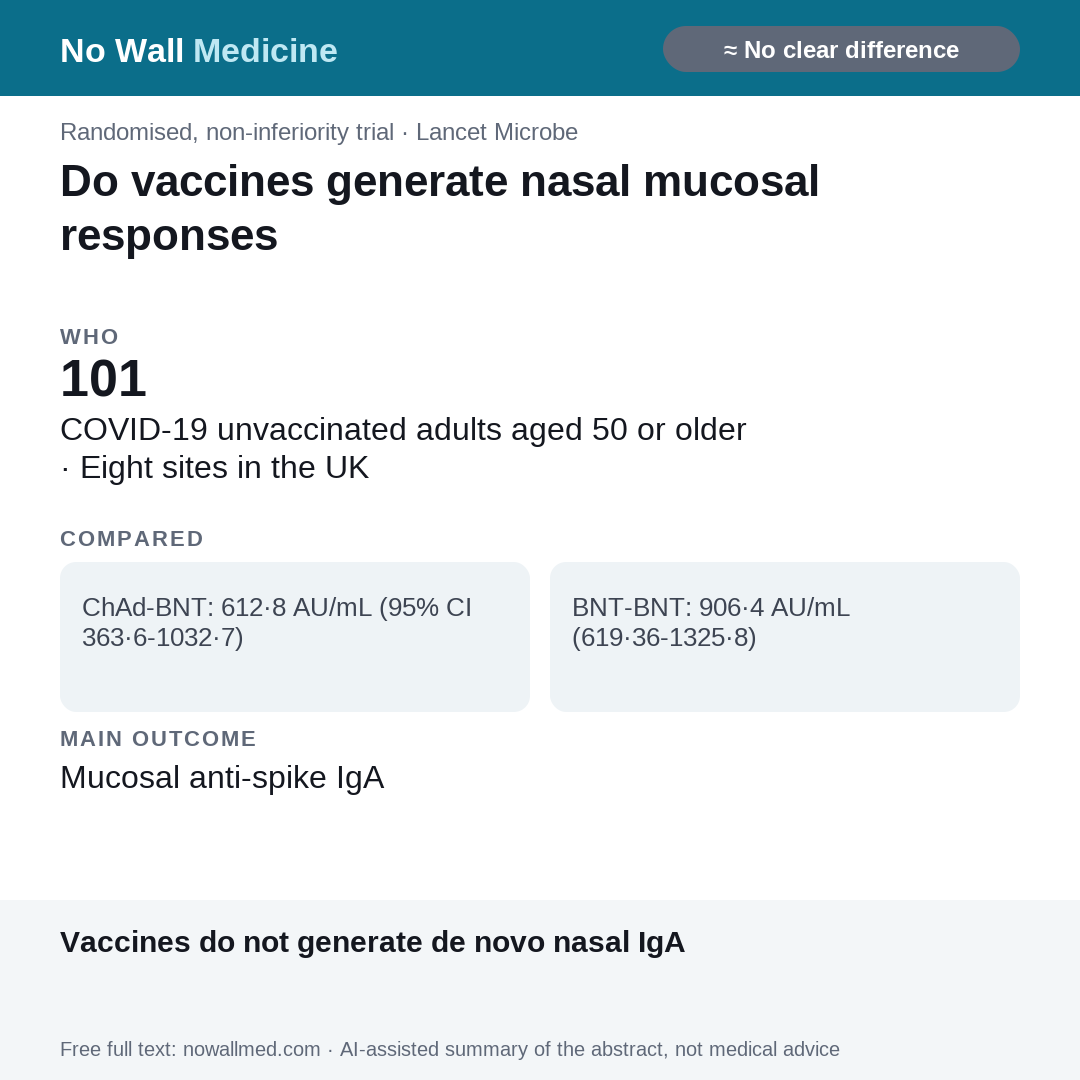
Nasal mucosal humoral responses to SARS-CoV-2 vaccination priming schedules in the UK: a substudy of the Com-COV single-blind, randomised, non-inferiority trial
Randomised, non-inferiority trialNo clear difference
Do vaccines generate nasal mucosal responses
Who
101
COVID-19 unvaccinated adults aged 50 or older · Eight sites in the UK
Compared
ChAd-BNT: 612·8 AU/mL (95% CI 363·6-1032·7)
BNT-BNT: 906·4 AU/mL (619·36-1325·8)
Main outcome
Mucosal anti-spike IgA
Bottom line: Vaccines do not generate de novo nasal IgA
Limitation: Asymptomatic community exposure
Funded by: National Institute for Health Research
Lancet Microbe · 2026-11-12Download image
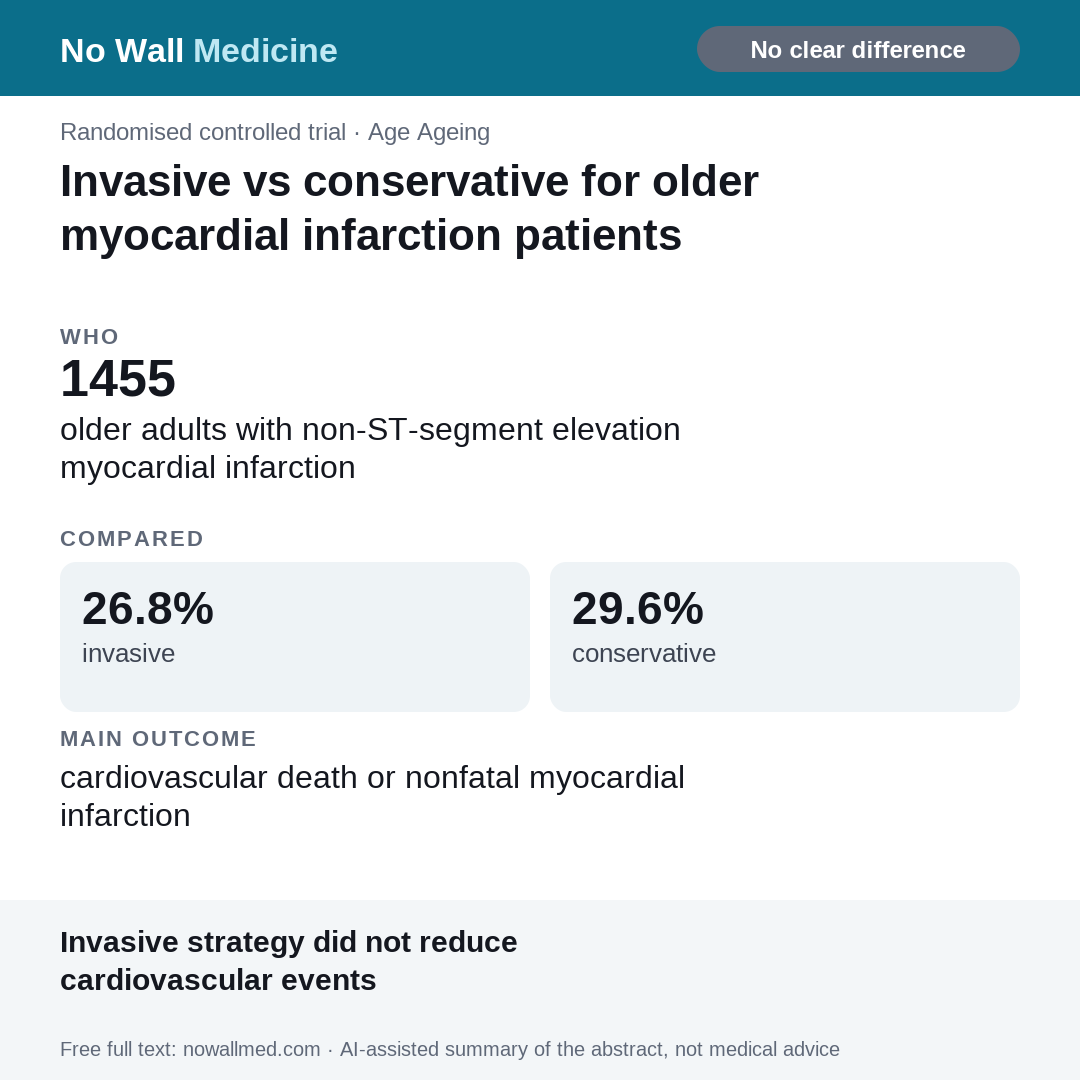
Invasive versus conservative strategy for older patients with myocardial infarction based on cognitive function: the SENIOR-RITA cognition analysis
Randomised controlled trialNo clear difference
Invasive vs conservative for older myocardial infarction patients
Who
1455
older adults with non-ST-segment elevation myocardial infarction
Compared
26.8%invasive (116)
29.6%conservative (141)
Main outcome
cardiovascular death or nonfatal myocardial infarction
Result: hazard ratio 0.85 (95% CI 0.66 to 1.10)
Bottom line: Invasive strategy did not reduce cardiovascular events
Age Ageing · 2026-11-12Download image
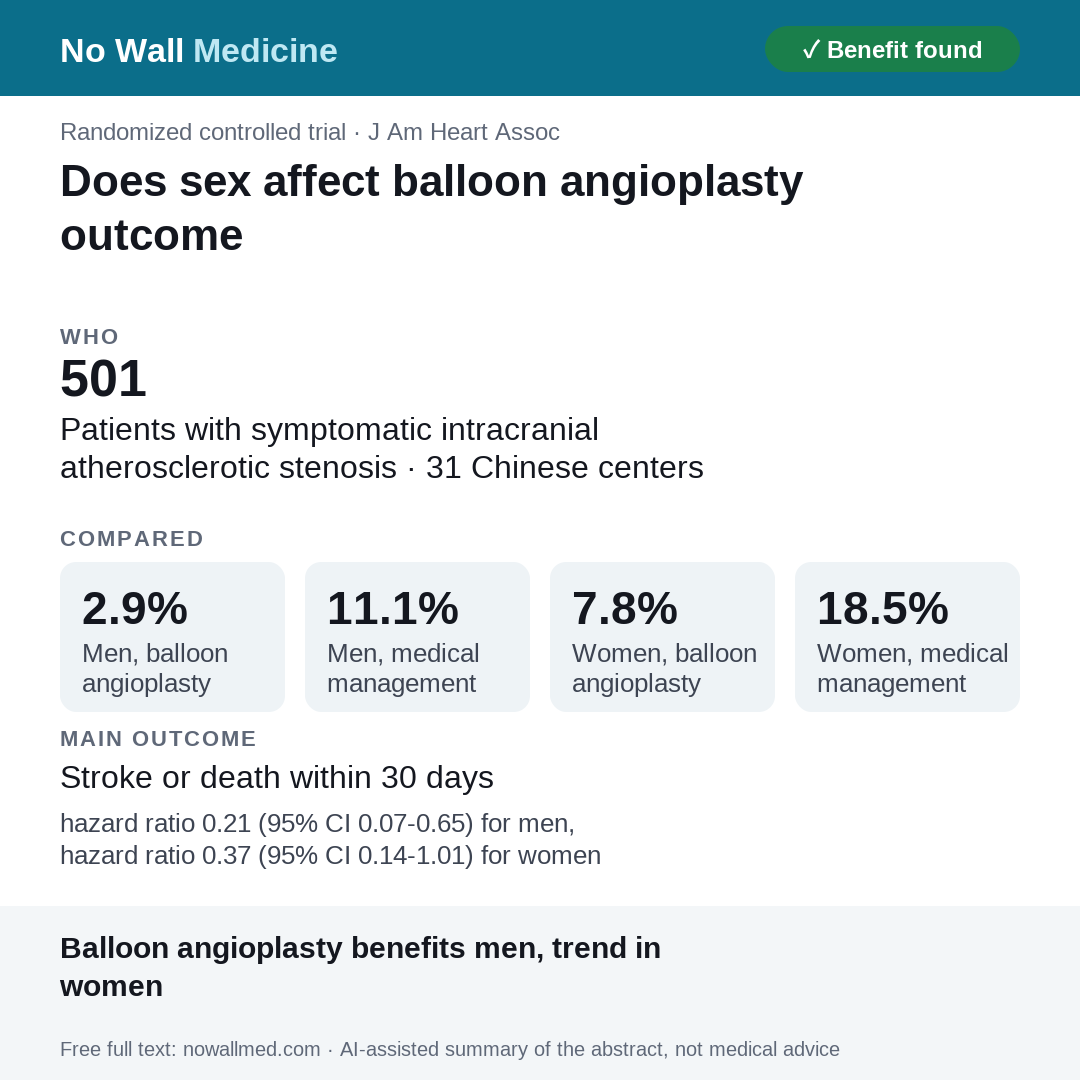
Sex-Stratified Outcomes in Balloon Angioplasty for Symptomatic Intracranial Artery Stenosis: The BASIS Subgroup Analysis
Randomized controlled trialBenefit found
Does sex affect balloon angioplasty outcome
Who
501
Patients with symptomatic intracranial atherosclerotic stenosis · 31 Chinese centers
Compared
2.9%Men, balloon angioplasty
11.1%Men, medical management
7.8%Women, balloon angioplasty
18.5%Women, medical management
Main outcome
Stroke or death within 30 days
Result: hazard ratio 0.21 (95% CI 0.07-0.65) for men, hazard ratio 0.37 (95% CI 0.14-1.01) for women
Bottom line: Balloon angioplasty benefits men, trend in women
Limitation: lacked power for definitive interaction testing
J Am Heart Assoc · 2026-11-12Download image
Rationale and Design of a Multicenter, Randomized Controlled Trial: LEAP-Block
Randomized controlled trialUnclear result
Left vs right ventricular pacing in atrioventricular block
Who
484
Patients with atrioventricular block and normal cardiac function · Multicenter
Compared
Left bundle-branch area pacing
Right ventricular pacing
Main outcome
Composite events of death, heart failure, and upgrade to therapy
Bottom line: Comparing left and right ventricular pacing outcomes
J Am Heart Assoc · 2026-11-12Download image
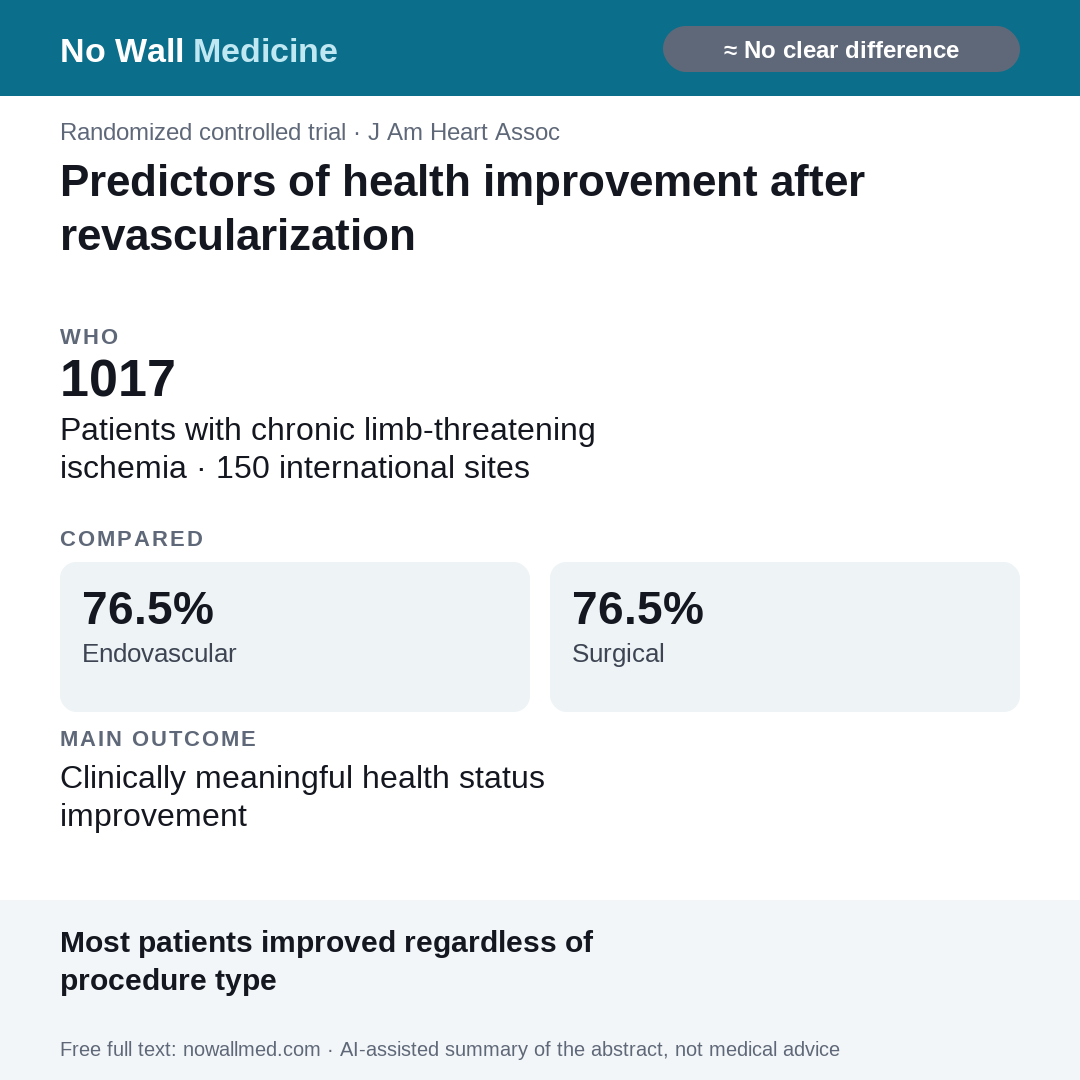
Predictors of Clinically Meaningful 1-Year Health Status Improvements Following Endovascular or Surgical Revascularization: Insights From the BEST-CLI Trial
Randomized controlled trialNo clear difference
Predictors of health improvement after revascularization
Who
1017
Patients with chronic limb-threatening ischemia · 150 international sites
Compared
76.5%Endovascular
76.5%Surgical
Main outcome
Clinically meaningful health status improvement
Result: odds ratio 1.059 (95% CI 0.91-1.23)
Bottom line: Most patients improved regardless of procedure type
J Am Heart Assoc · 2026-11-12Download image
Side Effects of Low-Dose Colchicine in Chronic Coronary Disease: A Post Hoc Analysis of the LoDoCo2 Trial
Randomized controlled trialNo clear difference
Low-dose colchicine side effects
Who
6519
Patients with chronic coronary disease
Compared
4.2%Colchicine
4.4%Placebo
Main outcome
Discontinuation due to side effects
Result: hazard ratio 0.95 (95% CI 0.73-1.22)
Bottom line: Discontinuation due to side effects was uncommon
J Am Heart Assoc · 2026-11-12Download image

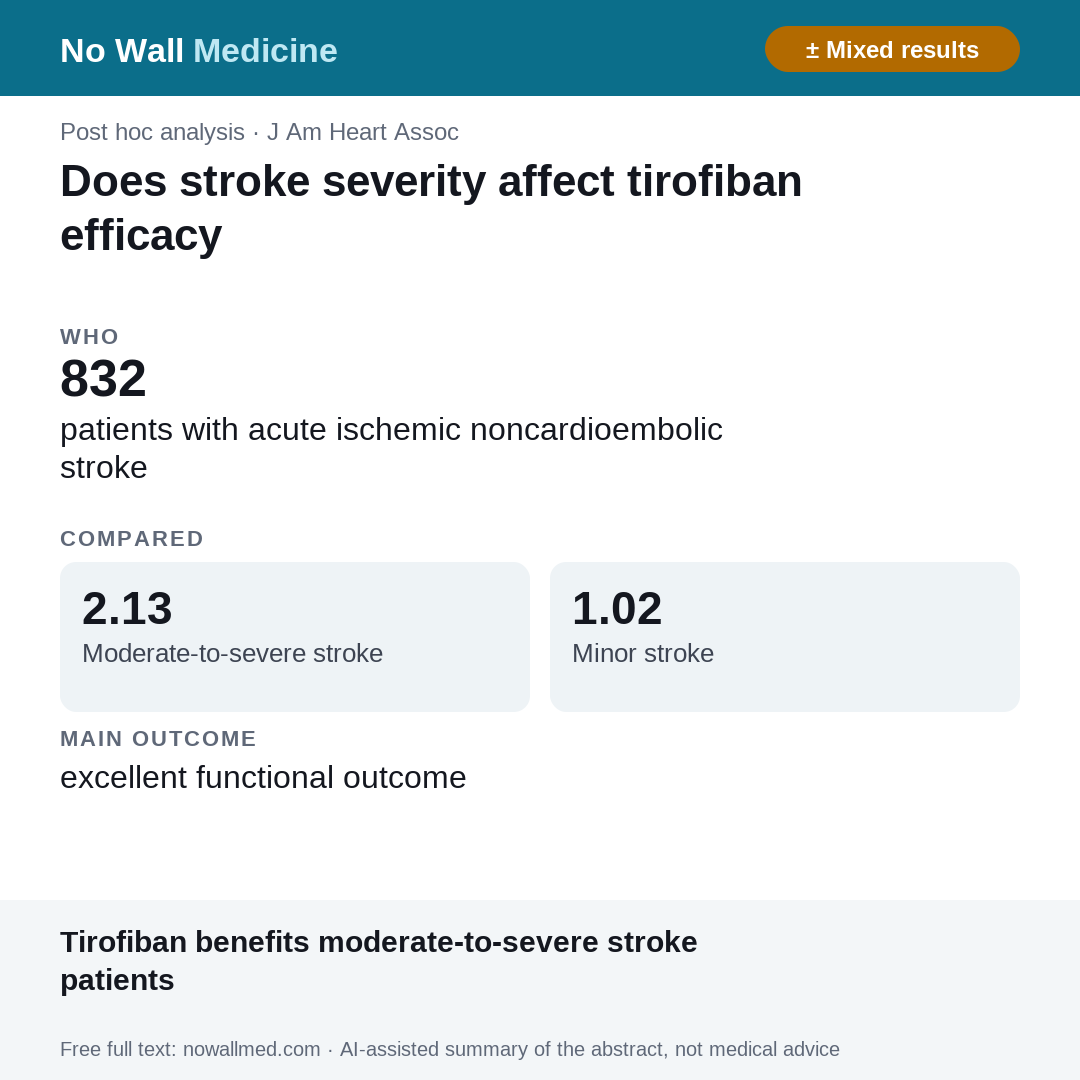
Association of Stroke Severity With Efficacy of Early Tirofiban Infusion After Intravenous Thrombolysis
Post hoc analysisMixed results
Tirofiban infusion efficacy in stroke patients
Who
832
Patients with acute ischemic noncardioembolic stroke
Compared
Minor stroke
Moderate-to-severe stroke
Main outcome
Excellent functional outcome
Bottom line: Tirofiban infusion benefits moderate-to-severe stroke
J Am Heart Assoc · 2026-11-12Download image
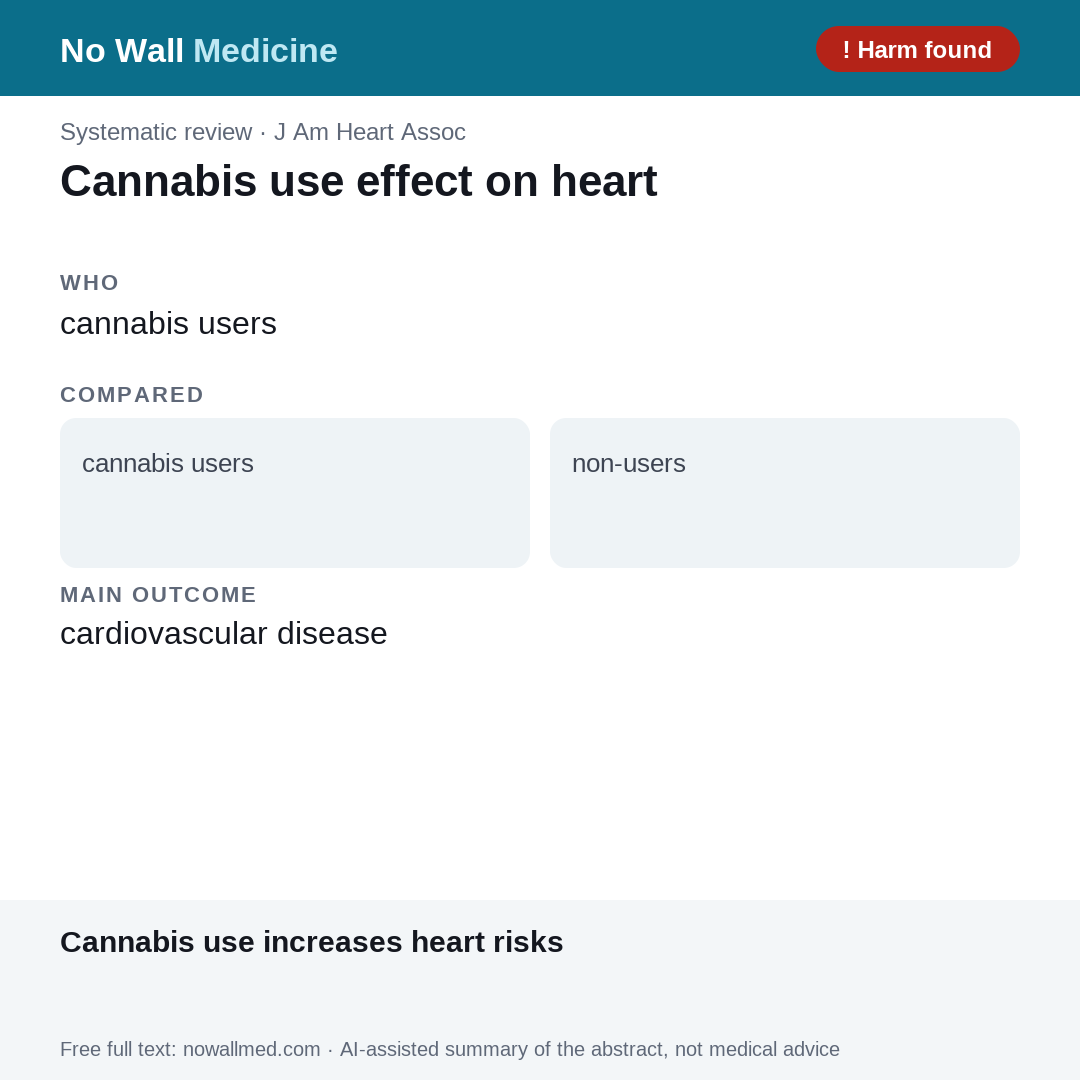
High on the Heart? Cannabis Use and Cardiovascular Disease: A Systematic Review
Systematic reviewHarm found
Cannabis use effect on heart
Who
cannabis users
Compared
cannabis users
non-users
Main outcome
cardiovascular disease
Bottom line: Cannabis use increases heart risks
J Am Heart Assoc · 2026-11-12Download image
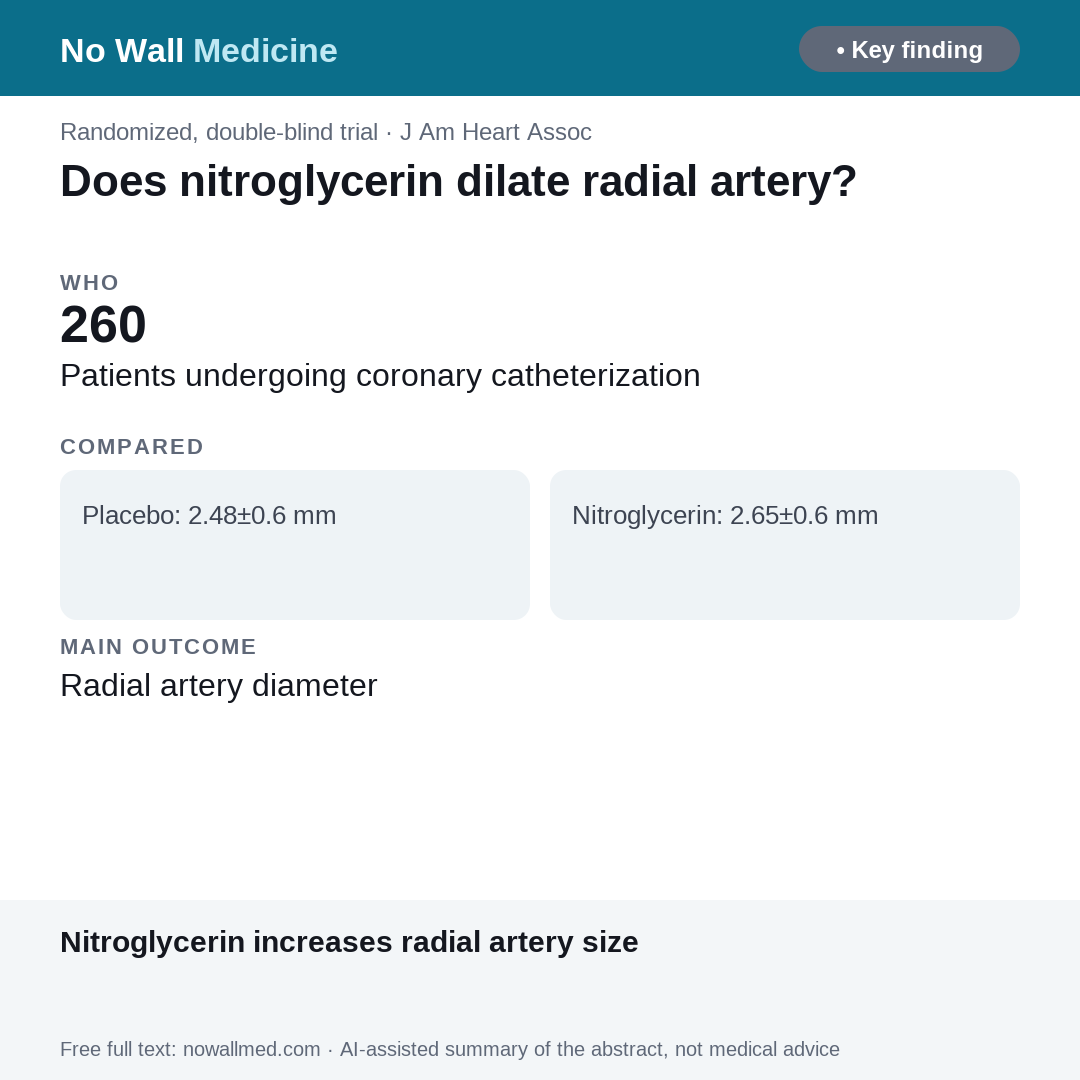
Safety and Efficacy of Topical Nitroglycerin for Radial Artery Dilation (The RADial Trial): A Randomized, Placebo-Controlled, Double-Blind Clinical Trial
Randomized, double-blind trialBenefit found
Does nitroglycerin dilate radial artery?
Who
260
Patients undergoing coronary catheterization
Compared
Placebo: 2.48±0.6 mm
Nitroglycerin: 2.65±0.6 mm
Main outcome
Radial artery diameter
Bottom line: Nitroglycerin increases radial artery size
J Am Heart Assoc · 2026-11-12Download image
Biomarker Synergy in Relapsing Multiple Sclerosis: Neurofilament Light Chain and B Cells in Relation to Disease Outcomes
Double-blind treatment periodHarm found
B cells relation to MS outcomes
Who
2370
people with relapsing multiple sclerosis
Compared
Ocrelizumab
Comparators
Main outcome
new or enlarging T2 lesions
Result: odds ratio: 3.8-4.9
Bottom line: Detectable B cells increase risk of lesions
Neurol Neuroimmunol Neuroinflamm · 2026-11-12Download image

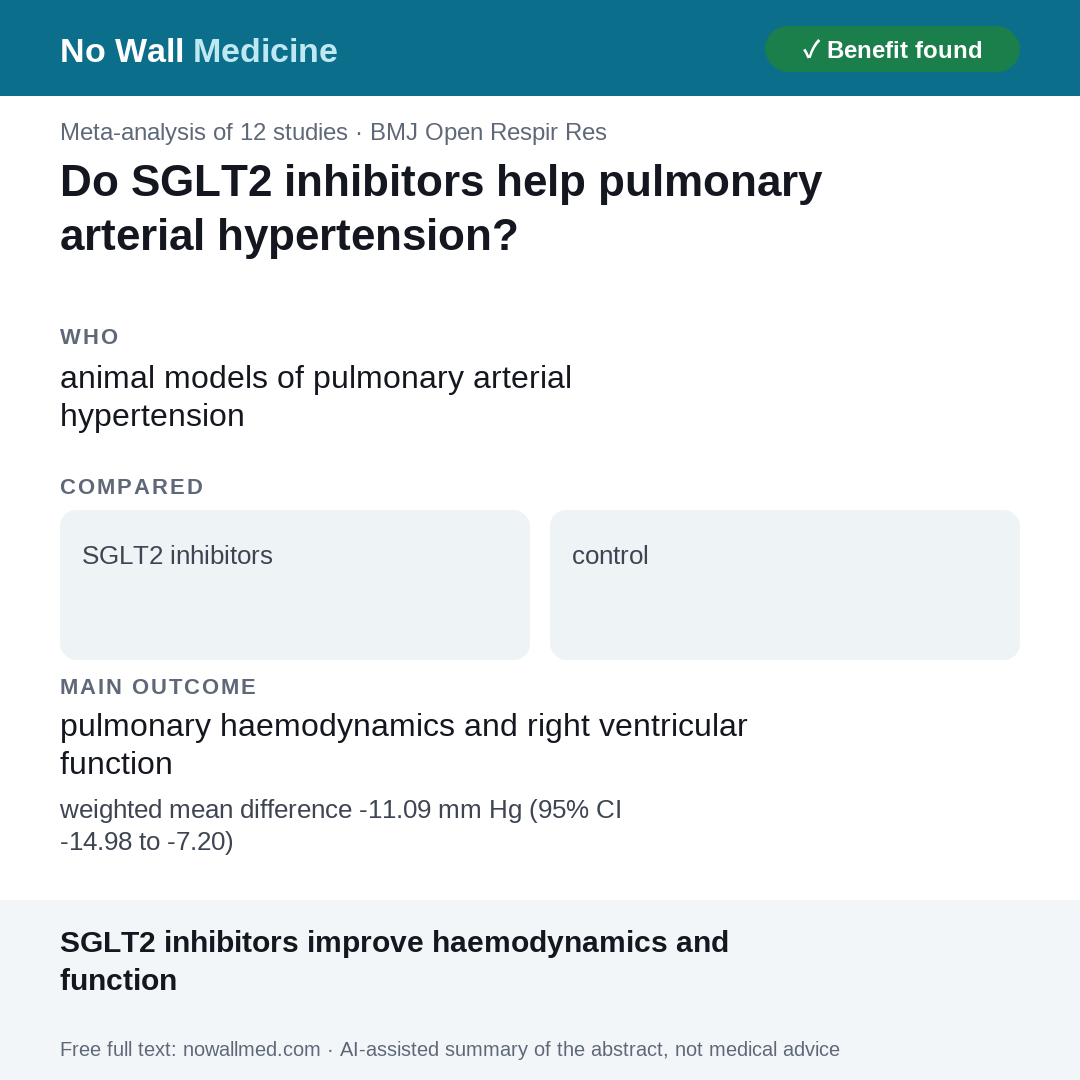
Efficacy of SGLT2 inhibitors in pulmonary arterial hypertension: a systematic review and meta-analysis of preclinical studies
Meta-analysis of 12 studiesBenefit found
Do SGLT2 inhibitors help pulmonary arterial hypertension?
Who
animal models of pulmonary arterial hypertension
Compared
SGLT2 inhibitors
control
Main outcome
pulmonary haemodynamics and right ventricular function
Result: weighted mean difference -11.09 mm Hg (95% CI -14.98 to -7.20)
Bottom line: SGLT2 inhibitors improve haemodynamics and function
BMJ Open Respir Res · 2026-11-12Download image
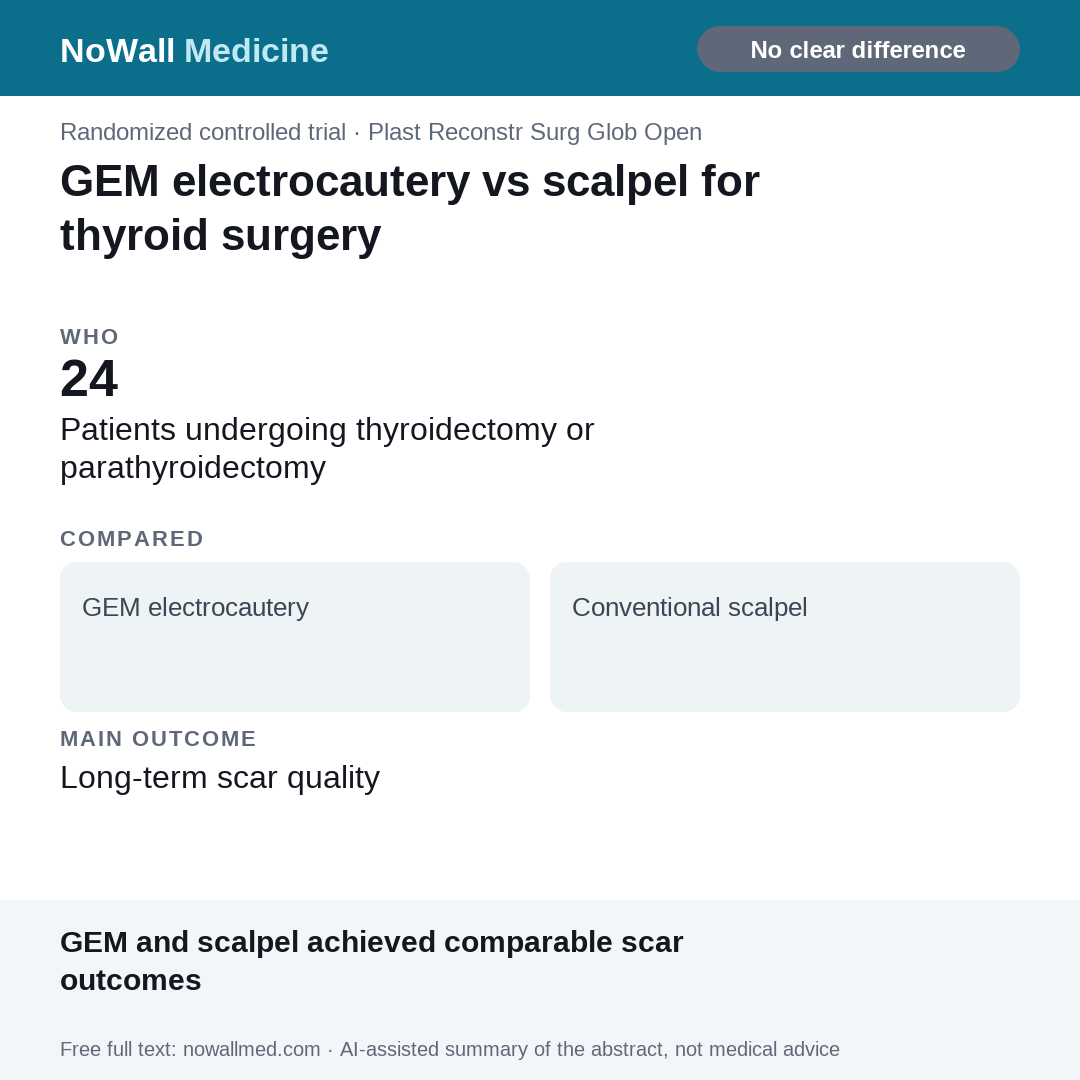
Scalpel Versus Geometric Electron Modulation Electrocautery in Thyroid and Parathyroid Surgery: A Randomized Controlled Trial
Randomized controlled trialNo clear difference
GEM electrocautery vs scalpel for thyroid surgery
Who
24
Patients undergoing thyroidectomy or parathyroidectomy
Compared
GEM electrocautery
Conventional scalpel
Main outcome
Long-term scar quality
Bottom line: GEM and scalpel achieved comparable scar outcomes
Limitation: Higher cost of GEM device
Plast Reconstr Surg Glob Open · 2026-11-12Download image
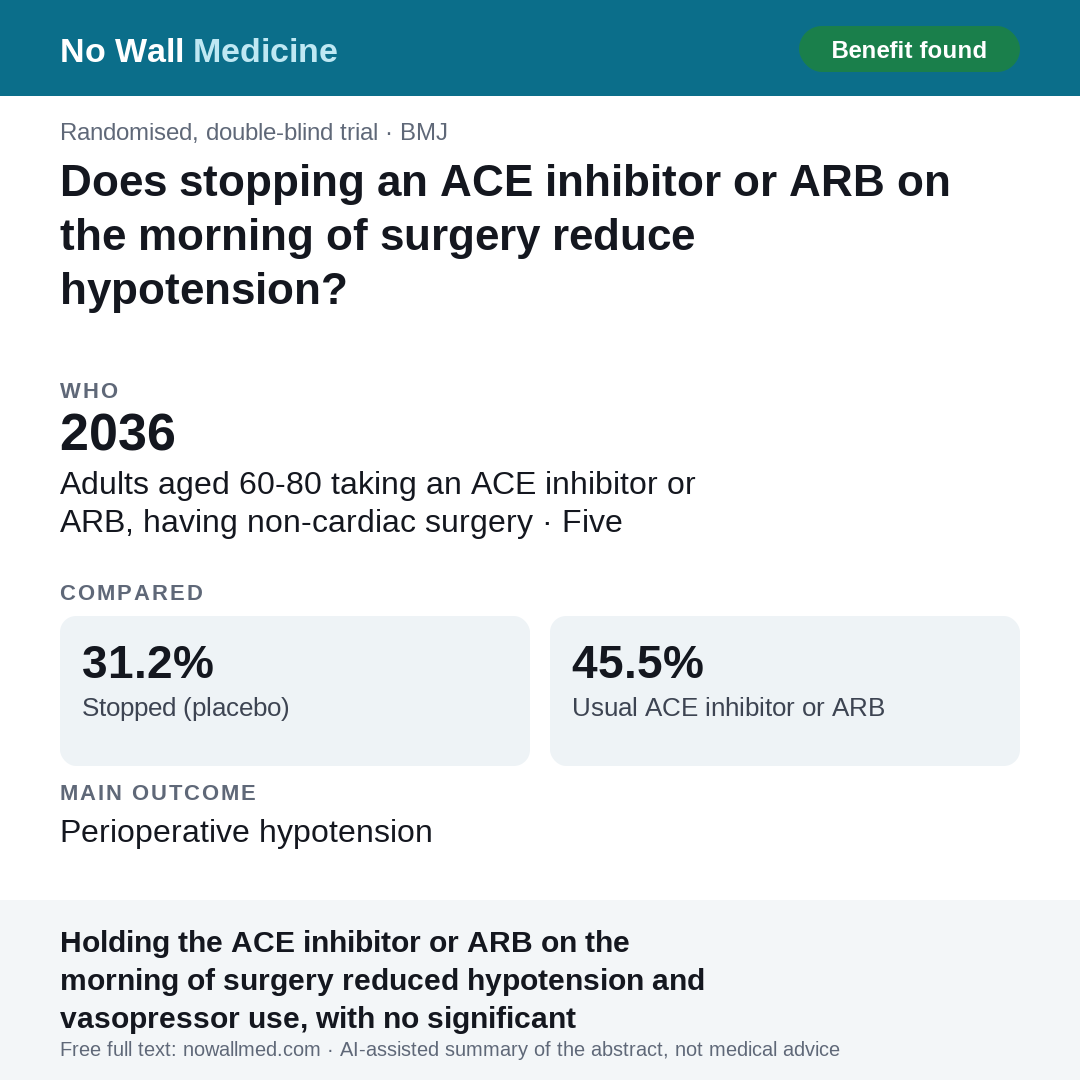
Effect of discontinuing antihypertensives on perioperative hypotension in older patients before non-cardiac surgery: multicentre, randomised, double blind, controlled trial
Randomized, double-blind trialBenefit found
Discontinuing antihypertensives reduce hypotension
Who
2036
older patients with hypertension · China, five hospitals
Compared
31.2%No antihypertensive (314/1008)
45.5%Antihypertensive (457/1004)
Main outcome
perioperative hypotension
Result: adjusted odds ratio 0.52 (95% CI 0.43 to 0.63)
Bottom line: Discontinuing antihypertensives reduces hypotension
BMJ · 2026-11-11Download image