Visual abstracts
New randomized trials and meta-analyses from leading journals at a glance: who was studied, what was compared, and what was found. Every paper is free to read in full.
All specialtiesCardiology 4833Oncology 4115Gastroenterology & Hepatology 1934Infectious Disease 3825Neurology 1901Psychiatry & Mental Health 2256Pulmonology 2082Critical Care 1346Endocrinology & Diabetes 2572Pediatrics 2940Surgery 2525Orthopedics & Sports Medicine 926Neurosurgery 534Cardiothoracic & Vascular Surgery 671Plastic & Reconstructive Surgery 591Nephrology 1124Rheumatology 823Hematology 1104Dermatology 620Ophthalmology 543Obstetrics & Gynecology 1684Public & Global Health 1056Radiology & Imaging 641Anesthesiology 962Urology 754ENT (Otolaryngology) 503Emergency Medicine 489Allergy & Immunology 313Geriatrics 982Family Medicine & Primary Care 541Medical Genetics & Genomics 675Pathology & Laboratory Medicine 157Physical Medicine & Rehabilitation 751Palliative Care 424Nutrition 1580Digital Health & AI 2195General Medicine 321
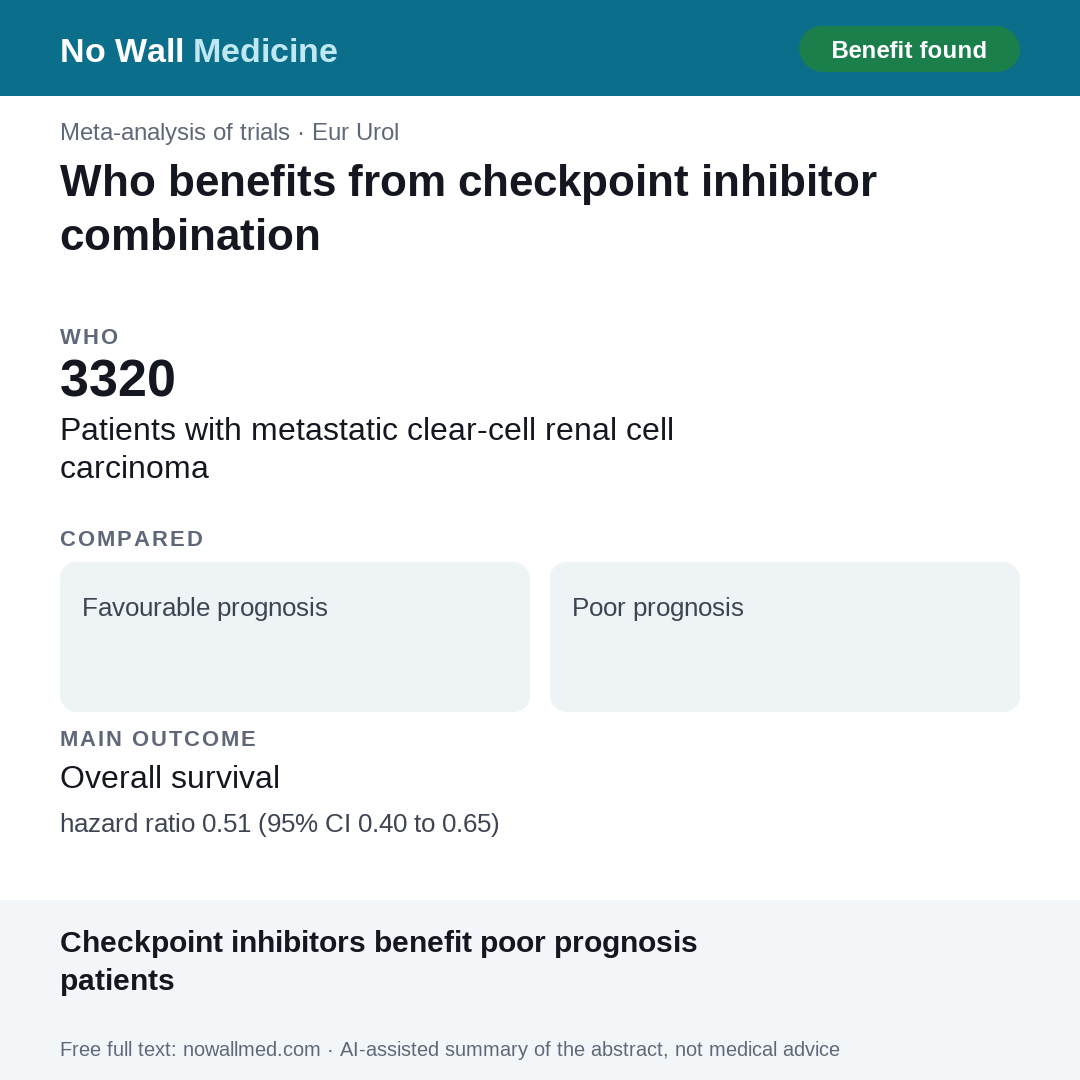
Which Patients with Advanced Clear Cell Renal Cell Carcinoma Benefit Most from First-line Checkpoint Inhibitor Combination Regimens: A Meta-analysis of Individual Patient Data and Aggregate Data from Randomised Trials
Meta-analysis of trialsBenefit found
Who benefits from checkpoint inhibitor combination
Who
3320
Patients with metastatic clear-cell renal cell carcinoma
Compared
Favourable prognosis
Poor prognosis
Main outcome
Overall survival
Result: hazard ratio 0.51 (95% CI 0.40 to 0.65)
Bottom line: Checkpoint inhibitors benefit poor prognosis patients
Eur Urol · 2026-11-16Download image
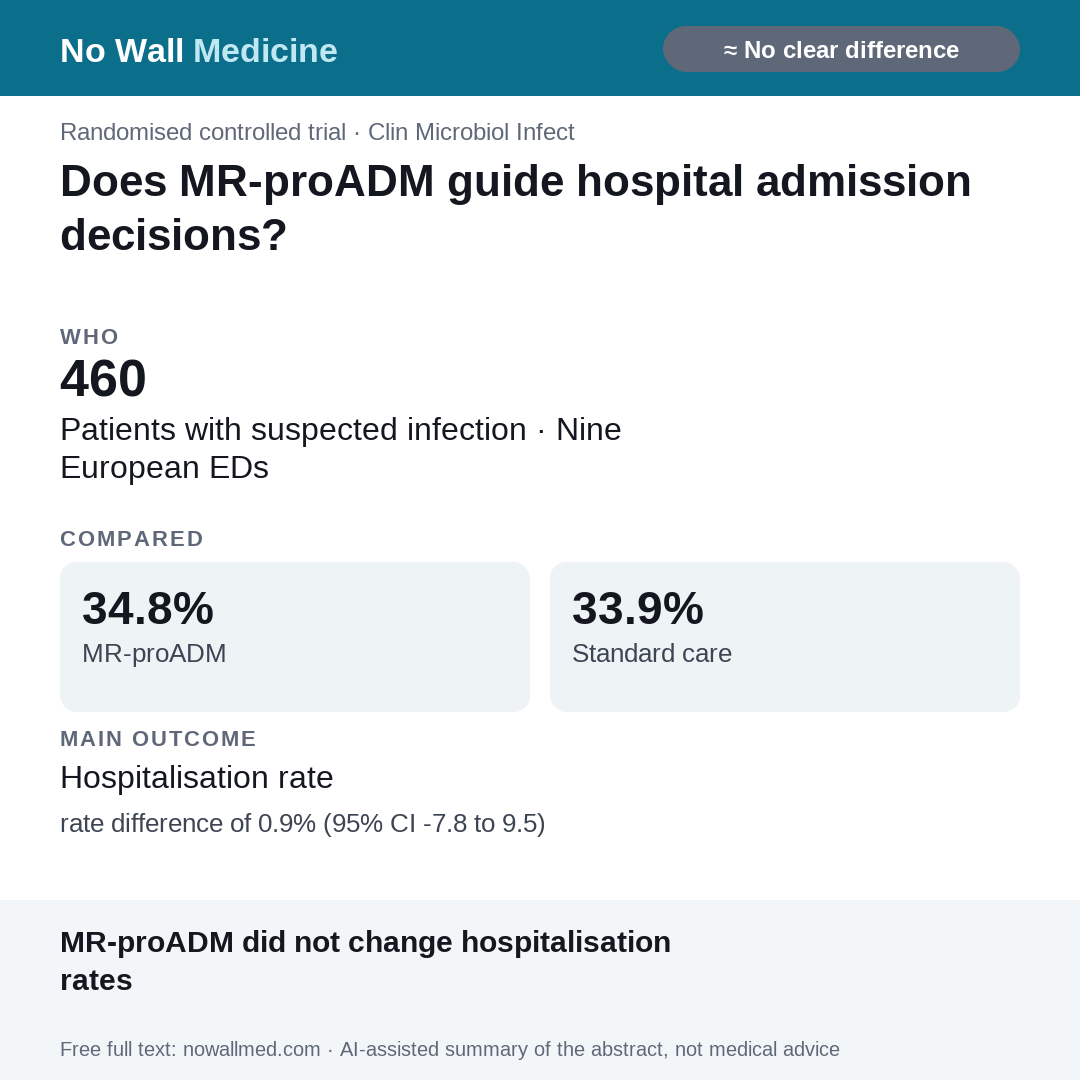
IDEntifying pAtients with suspicion of infection in the ED who have Low disease severity using midregional proadrenomedullin (MR-proADM) - A pragmatic pivotal randomised controlled trial
Randomised controlled trialNo clear difference
Does MR-proADM guide hospital admission decisions?
Who
460
Patients with suspected infection · Nine European EDs
Compared
34.8%MR-proADM (80/230)
33.9%Standard care (78/230)
Main outcome
Hospitalisation rate
Result: rate difference of 0.9% (95% CI -7.8 to 9.5)
Bottom line: MR-proADM did not change hospitalisation rates
Clin Microbiol Infect · 2026-11-16Download image
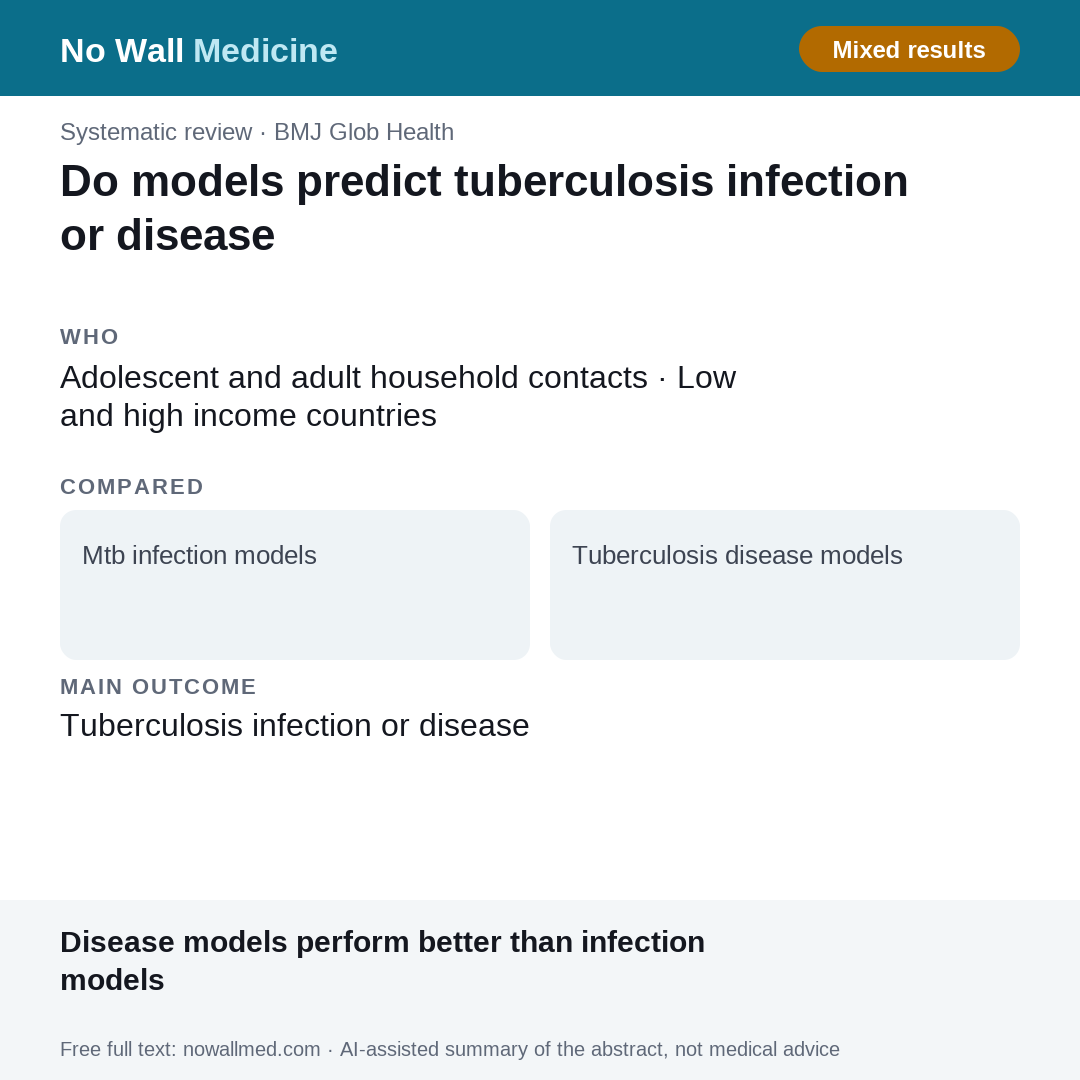
A systematic review of prediction models for tuberculosis infection and incident tuberculosis disease among adolescent and adult household contacts
Systematic reviewMixed results
Do models predict tuberculosis infection or disease
Who
Adolescent and adult household contacts · Low and high income countries
Compared
Mtb infection models
Tuberculosis disease models
Main outcome
Tuberculosis infection or disease
Bottom line: Disease models perform better than infection models
Limitation: Infection models have limited clinical utility
BMJ Glob Health · 2026-11-16Download image
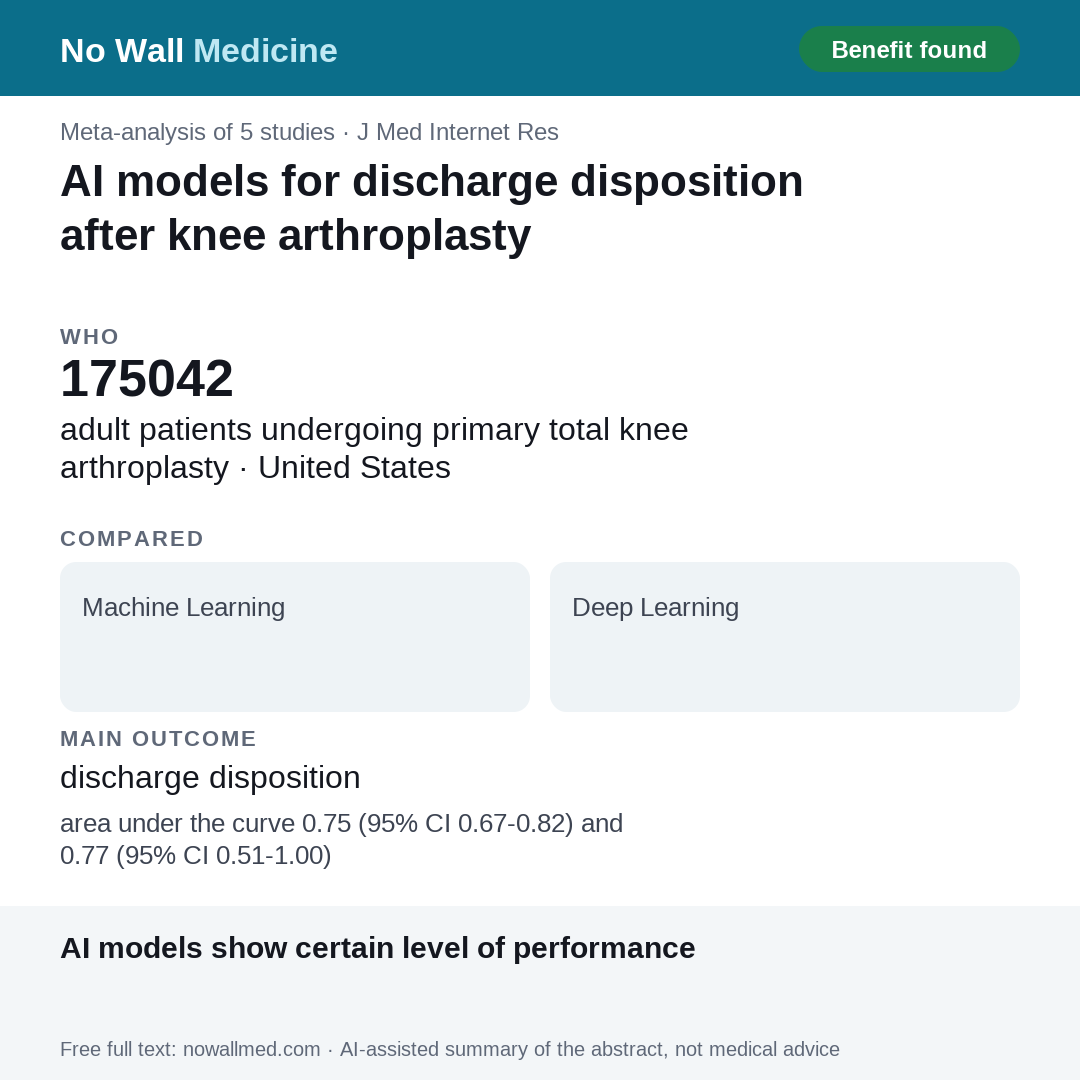
AI Predictive Models for Discharge Disposition in Patients Following Primary Total Knee Arthroplasty: Systematic Review and Meta-Analysis
Meta-analysis of 5 studiesBenefit found
AI models for discharge disposition after knee arthroplasty
Who
175042
adult patients undergoing primary total knee arthroplasty · United States
Compared
Machine Learning
Deep Learning
Main outcome
discharge disposition
Result: area under the curve 0.75 (95% CI 0.67-0.82) and 0.77 (95% CI 0.51-1.00)
Bottom line: AI models show certain level of performance
Limitation: high risk of bias and heterogeneity
J Med Internet Res · 2026-11-16Download image
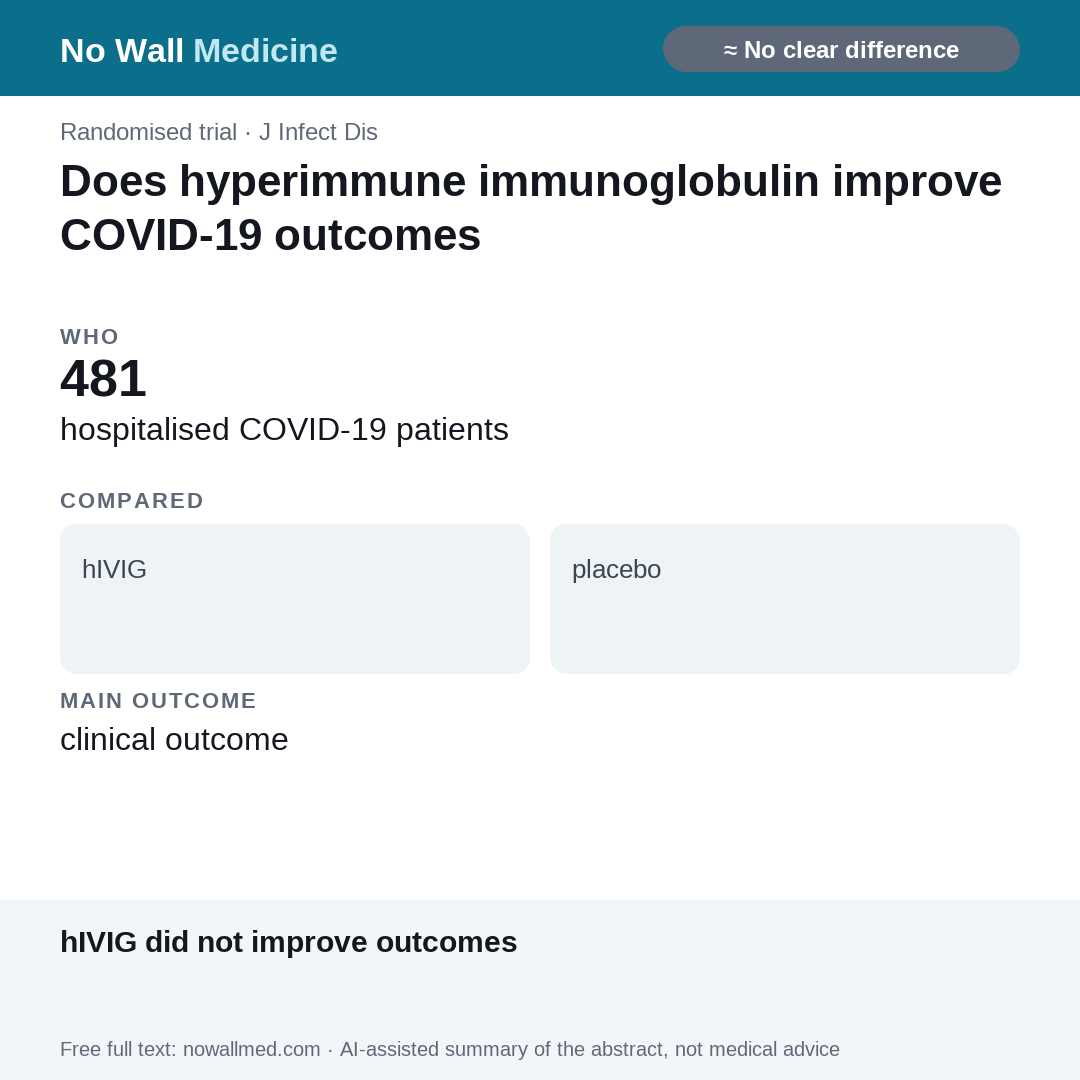
Randomised trial of hyperimmune immunoglobulin in hospitalised COVID-19: pre-therapy Fc receptor binding SARS-CoV-2 antibody associated with better outcomes
Randomised trialNo clear difference
Does hyperimmune immunoglobulin improve COVID-19 outcomes
Who
481
hospitalised COVID-19 patients
Compared
hIVIG
placebo
Main outcome
clinical outcome
Bottom line: hIVIG did not improve outcomes
J Infect Dis · 2026-11-14Download image
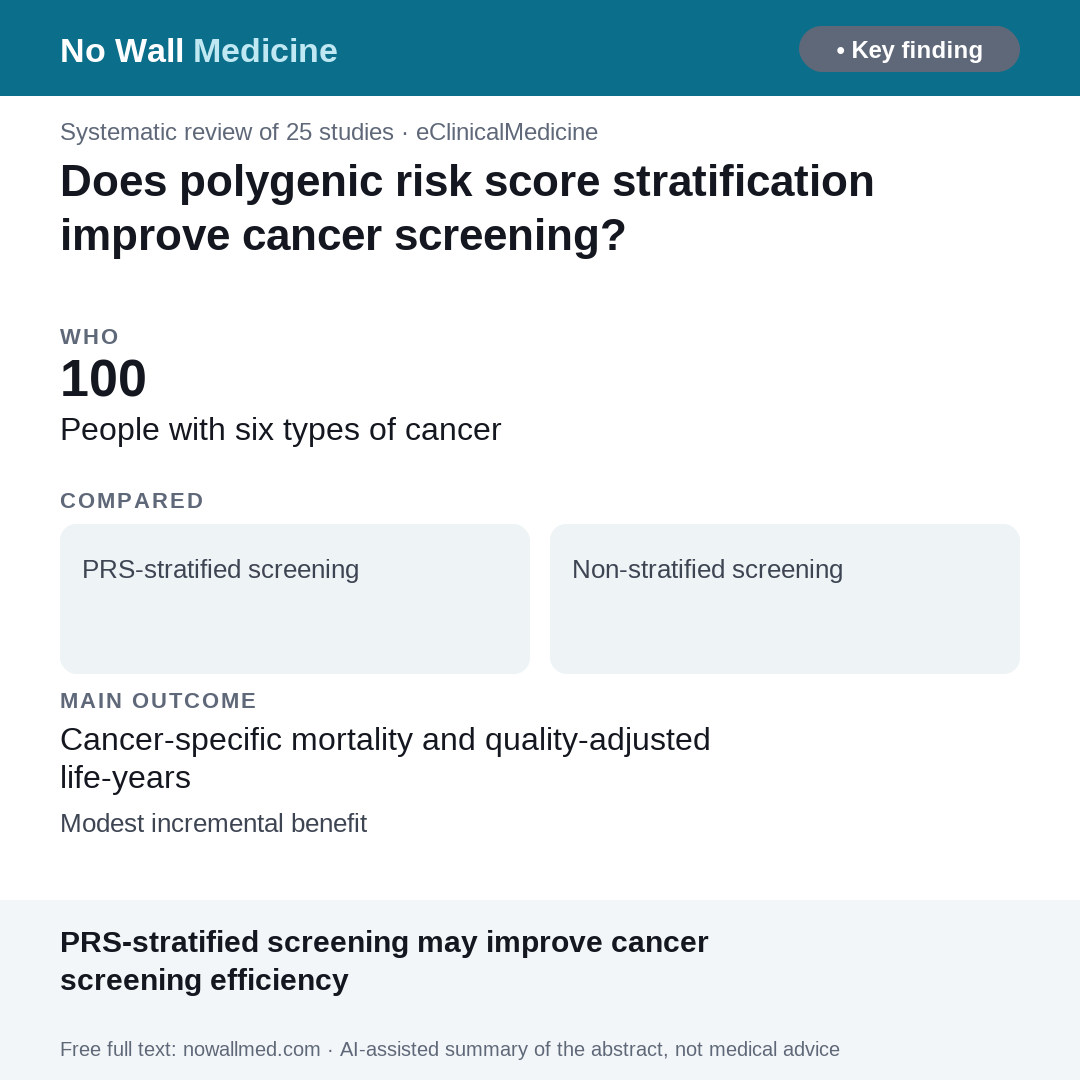
Projected clinical utility of polygenic risk score-stratified cancer screening: a systematic review
Systematic review of 25 studiesBenefit found
Does polygenic risk score stratification improve cancer screening?
Who
100
People with six types of cancer
Compared
PRS-stratified screening
Non-stratified screening
Main outcome
Cancer-specific mortality and quality-adjusted life-years
Result: Modest incremental benefit
Bottom line: PRS-stratified screening may improve cancer screening efficiency
Limitation: Very low certainty of evidence
Funded by: European Union
eClinicalMedicine · 2026-11-13Download image
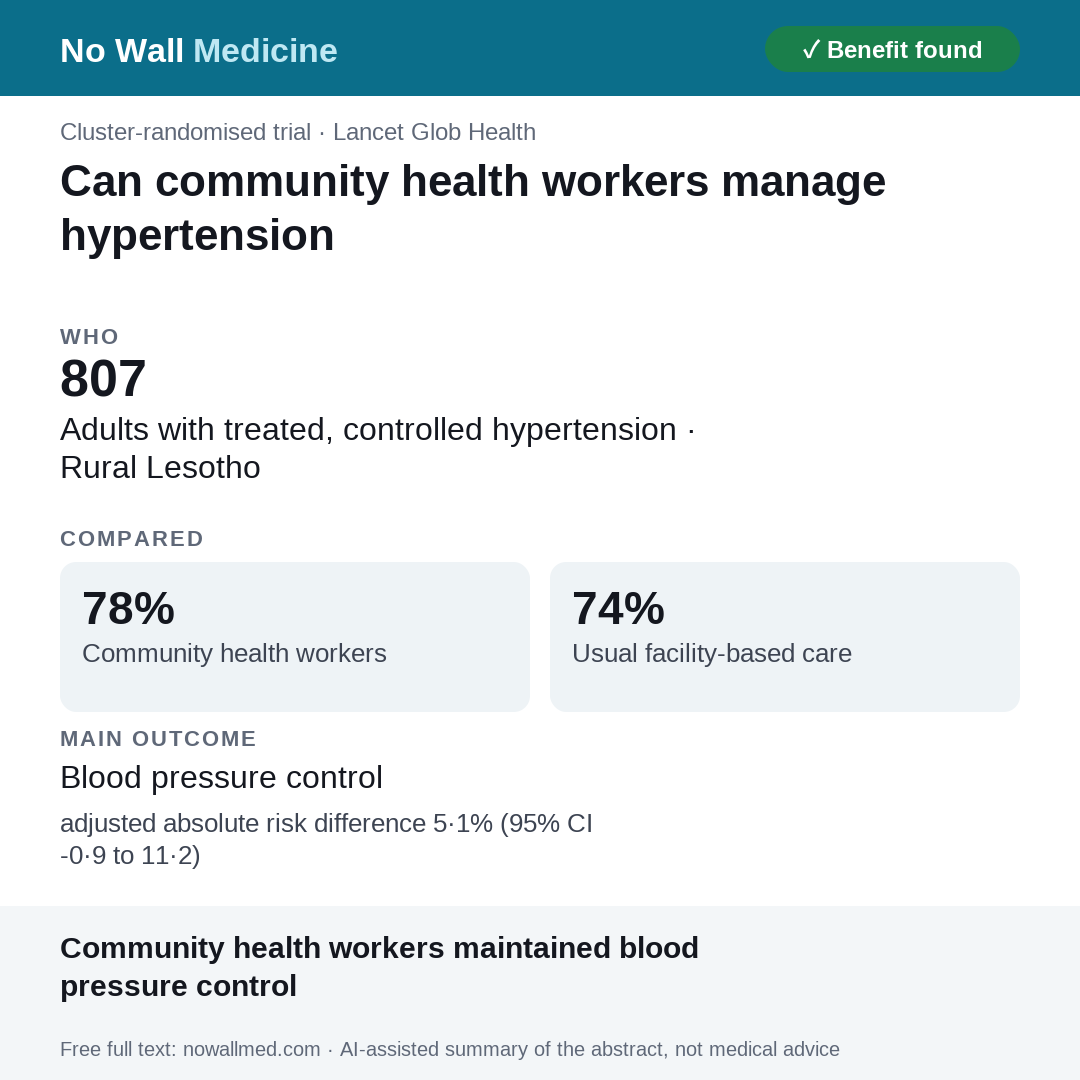
Community health worker-led hypertension management with independent prescribing in rural Lesotho: a cluster-randomised non-inferiority trial
Cluster-randomised trialBenefit found
Can community health workers manage hypertension
Who
807
Adults with treated, controlled hypertension · Rural Lesotho
Compared
78%Community health workers (300/386)
74%Usual facility-based care (303/412)
Main outcome
Blood pressure control
Result: adjusted absolute risk difference 5·1% (95% CI -0·9 to 11·2)
Bottom line: Community health workers maintained blood pressure control
Funded by: Swiss Agency for Development and Cooperation
Lancet Glob Health · 2026-11-13Download image
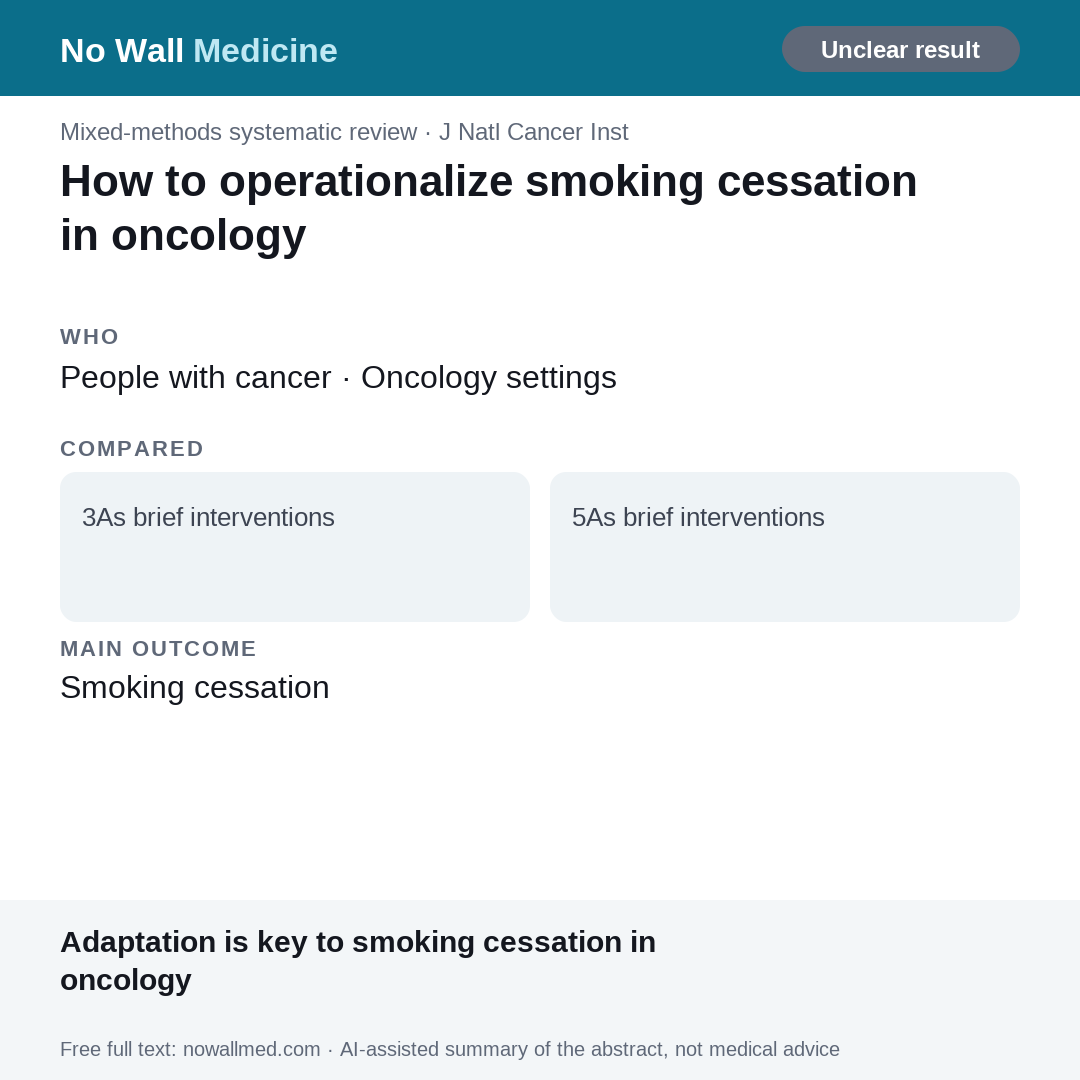
Operationalizing smoking cessation models of care in oncology settings: a mixed-methods systematic review
Mixed-methods systematic reviewUnclear result
How to operationalize smoking cessation in oncology
Who
People with cancer · Oncology settings
Compared
3As brief interventions
5As brief interventions
Main outcome
Smoking cessation
Bottom line: Adaptation is key to smoking cessation in oncology
Limitation: Limited reporting of implementation outcomes
J Natl Cancer Inst · 2026-11-13Download image
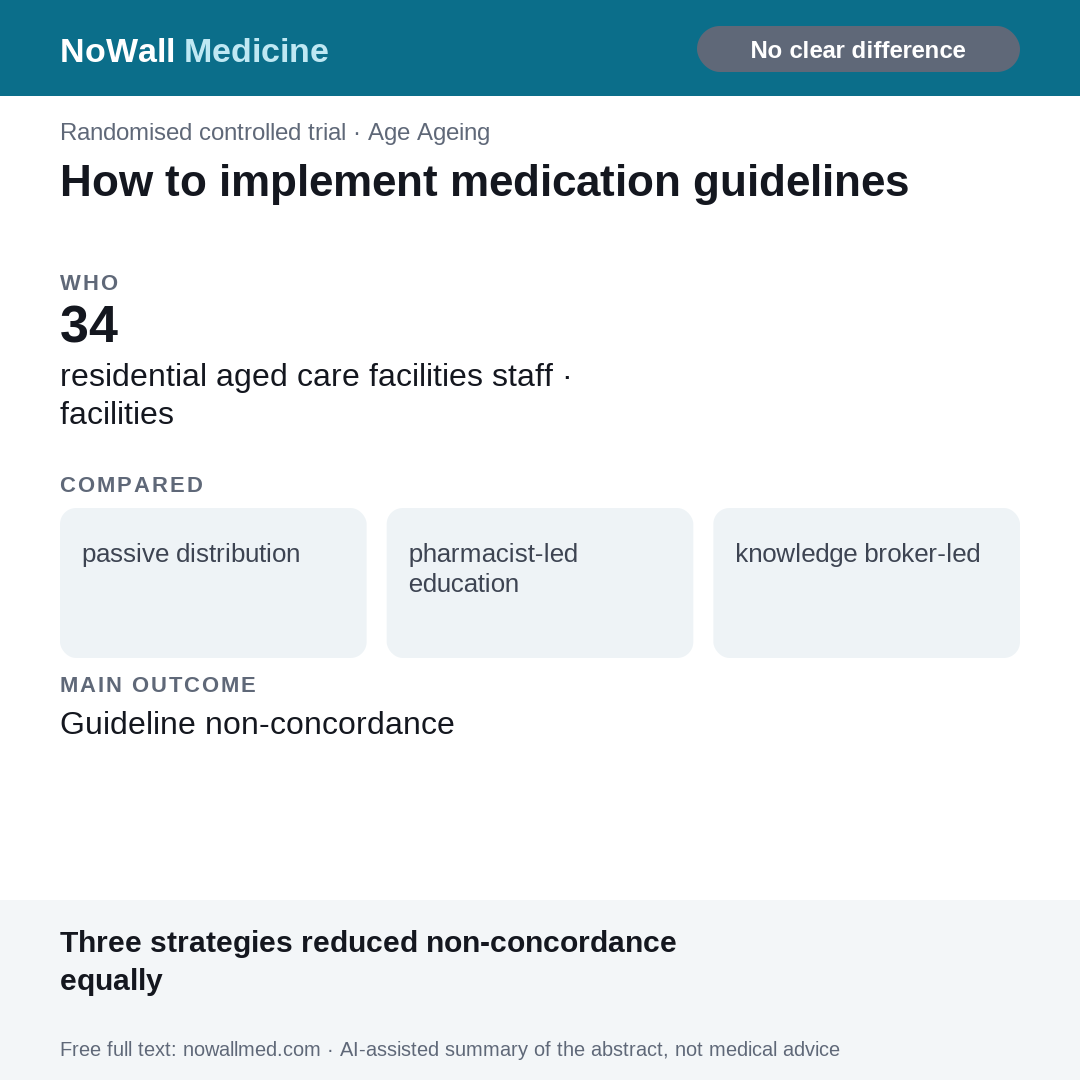
Mixed-method process evaluation of the Evidence-based Medication knowledge Brokers in Residential Aged CarE (EMBRACE) helix-counterbalanced randomised controlled trial
Randomised controlled trialNo clear difference
How to implement medication guidelines
Who
34
residential aged care facilities staff · facilities
Compared
passive distribution
pharmacist-led education
knowledge broker-led
Main outcome
Guideline non-concordance
Bottom line: Three strategies reduced non-concordance equally
Age Ageing · 2026-11-13Download image
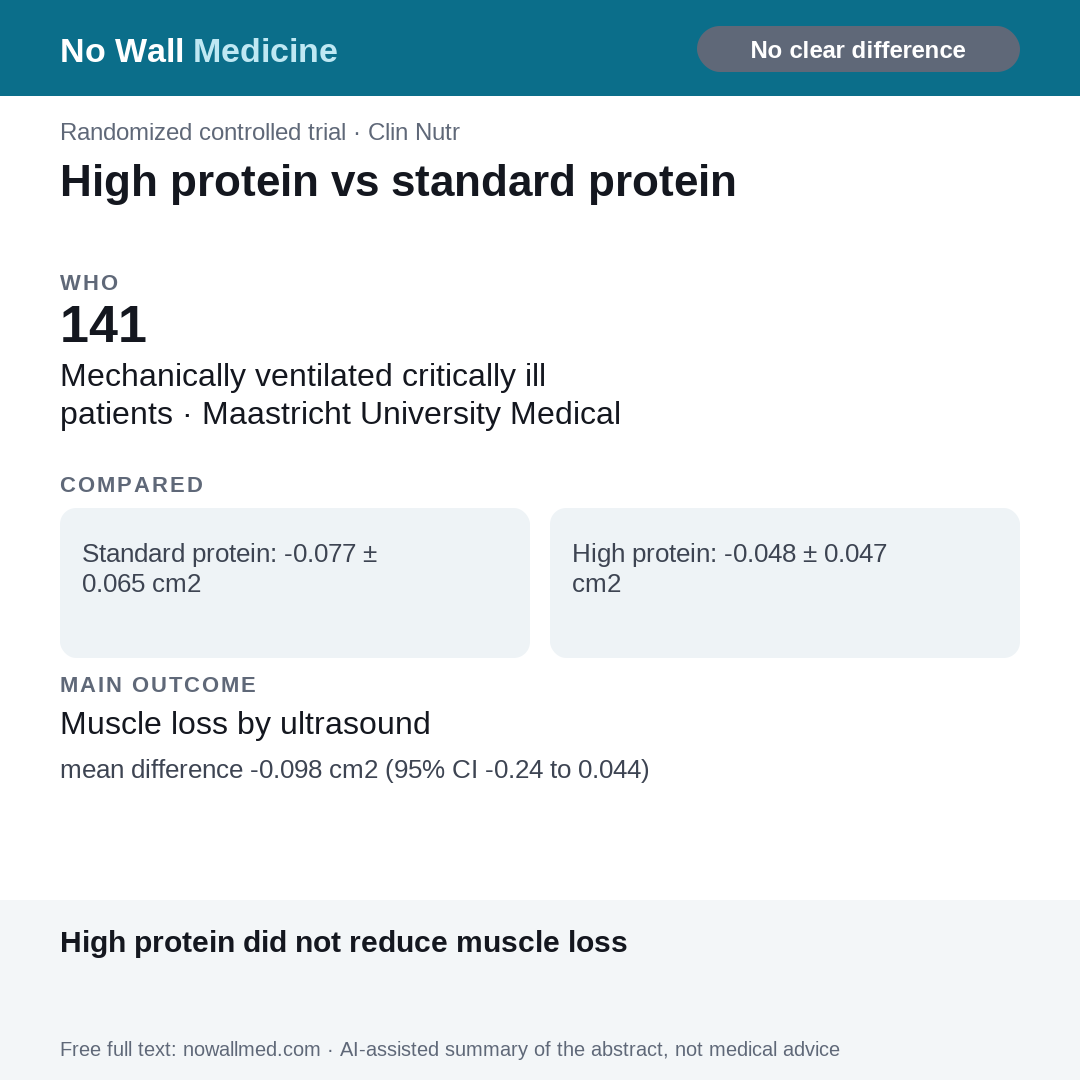
High versus standard-protein provision and muscle loss in critically ill patients assessed by muscle ultrasound: A prospective ancillary study of a randomised controlled trial
Randomized controlled trialNo clear difference
High protein vs standard protein
Who
141
Mechanically ventilated critically ill patients · Maastricht University Medical Centre
Compared
Standard protein: -0.077 ± 0.065 cm2
High protein: -0.048 ± 0.047 cm2
Main outcome
Muscle loss by ultrasound
Result: mean difference -0.098 cm2 (95% CI -0.24 to 0.044)
Bottom line: High protein did not reduce muscle loss
Limitation: single-centre
Clin Nutr · 2026-11-13Download image
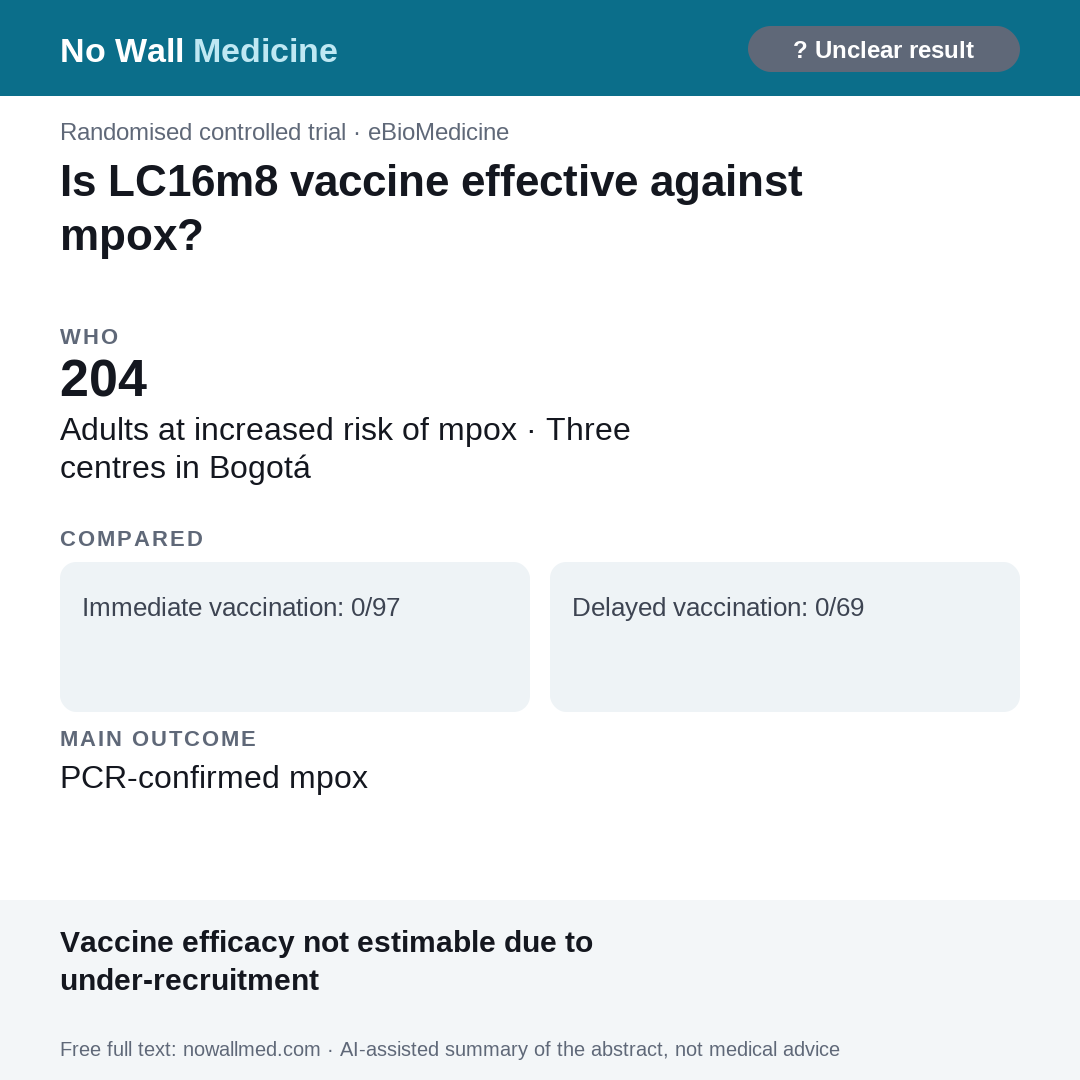
Safety and immunogenicity of the LC16m8 vaccine against mpox during outbreak deployment in Colombia: a hybrid, multicentre, open-label, randomised controlled trial and observational cohort study
Randomised controlled trialUnclear result
Is LC16m8 vaccine effective against mpox?
Who
204
Adults at increased risk of mpox · Three centres in Bogotá
Compared
Immediate vaccination: 0/97
Delayed vaccination: 0/69
Main outcome
PCR-confirmed mpox
Bottom line: Vaccine efficacy not estimable due to under-recruitment
Limitation: Substantial under-recruitment and small sample size
Funded by: Japan Agency for Medical Research and Development
eBioMedicine · 2026-11-13Download image
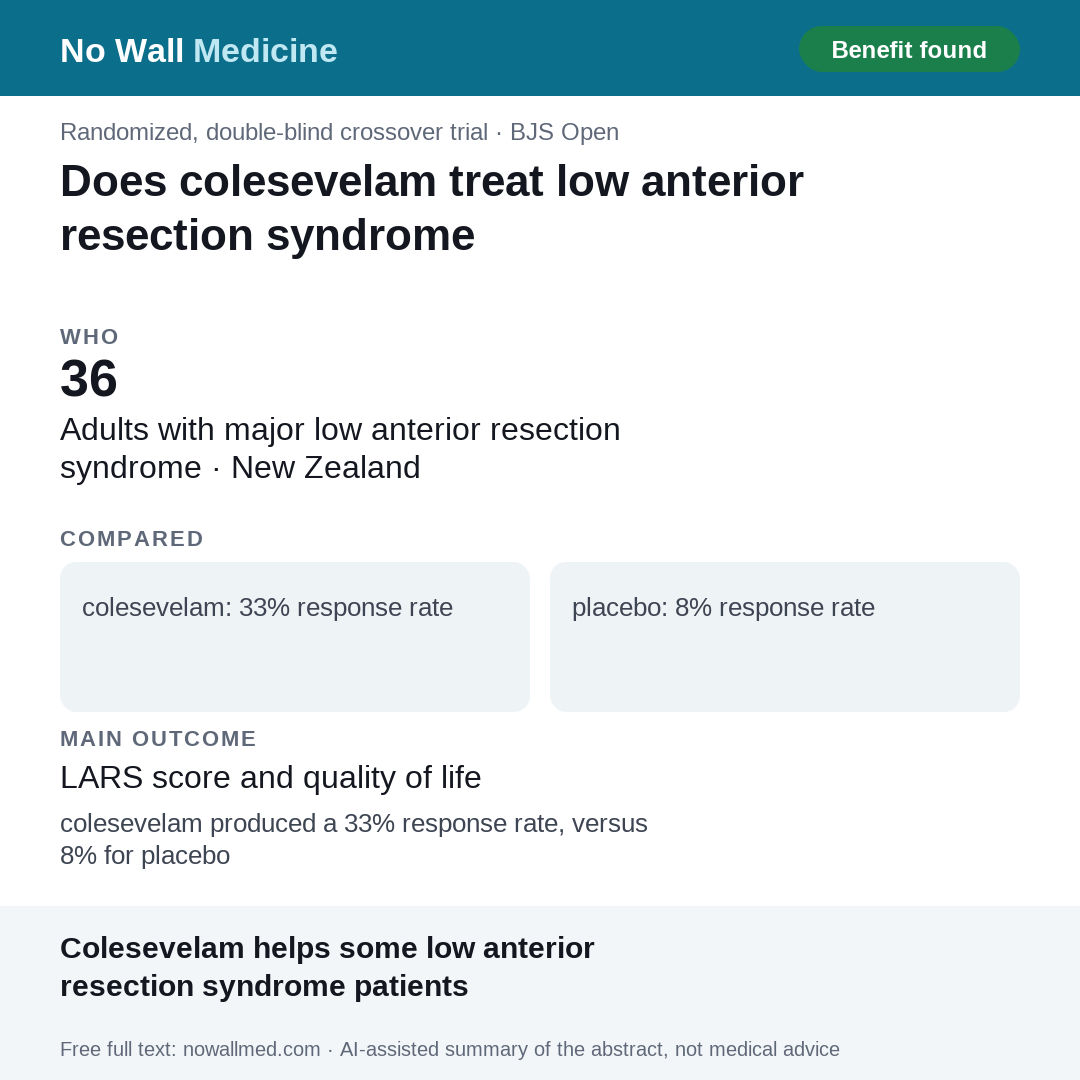
Pilot prospective crossover study assessing the role of bile acid malabsorption in the causation and treatment of major low anterior resection syndrome: randomized clinical trial
Randomized, double-blind crossover trialBenefit found
Does colesevelam treat low anterior resection syndrome
Who
36
Adults with major low anterior resection syndrome · New Zealand
Compared
colesevelam: 33% response rate
placebo: 8% response rate
Main outcome
LARS score and quality of life
Result: colesevelam produced a 33% response rate, versus 8% for placebo
Bottom line: Colesevelam helps some low anterior resection syndrome patients
Limitation: small study size
BJS Open · 2026-11-13Download image
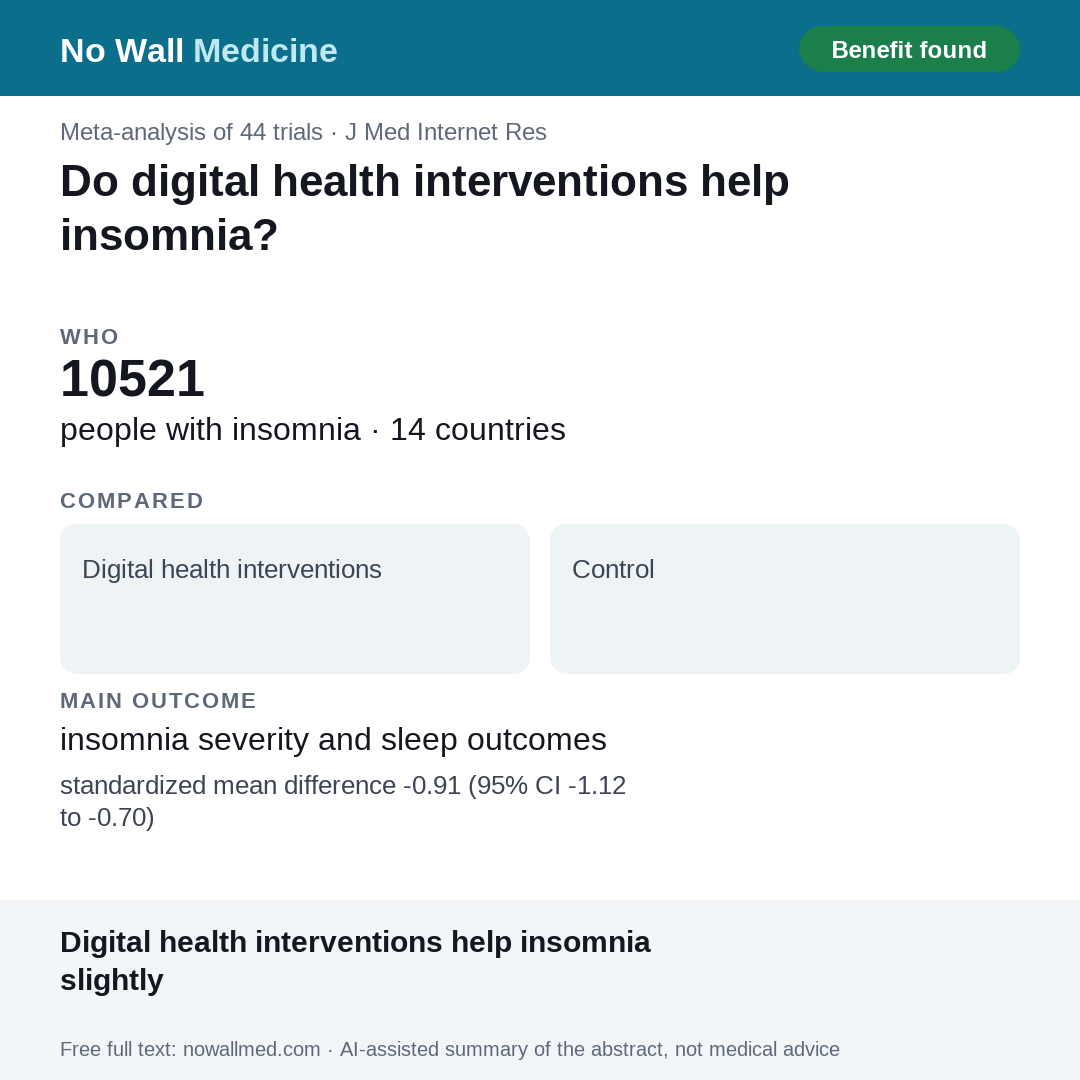
Efficacy of Digital Health Interventions for Insomnia: Systematic Review and Meta-Analysis of Randomized Controlled Trials
Meta-analysis of 44 trialsBenefit found
Do digital health interventions help insomnia?
Who
10521
people with insomnia · 14 countries
Compared
Digital health interventions
Control
Main outcome
insomnia severity and sleep outcomes
Result: standardized mean difference -0.91 (95% CI -1.12 to -0.70)
Bottom line: Digital health interventions help insomnia slightly
Limitation: very low to moderate certainty
J Med Internet Res · 2026-11-13Download image
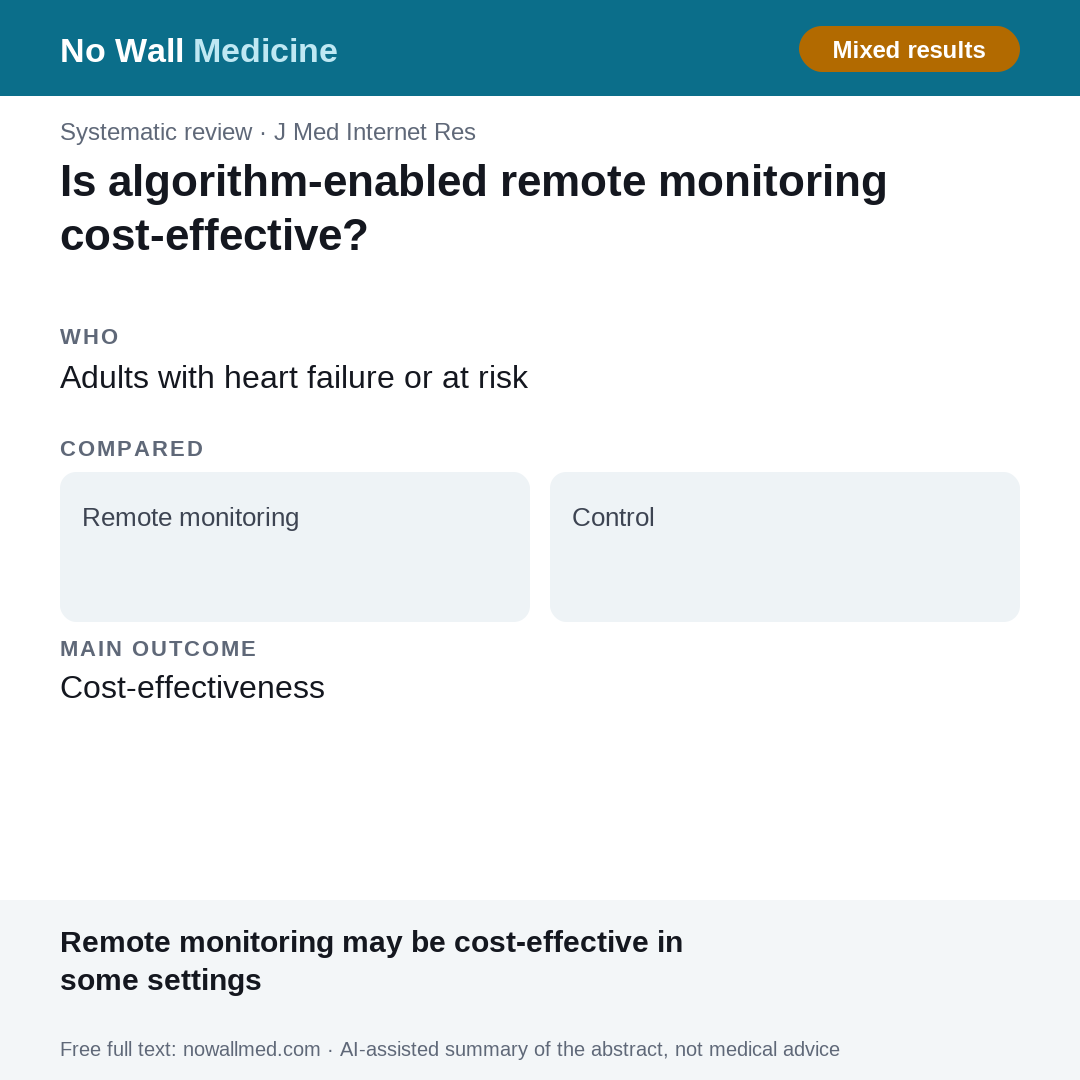
Economic Evaluations of Algorithm-Enabled Remote Monitoring of Cardiac Implantable Electronic Devices: Systematic Review
Systematic reviewMixed results
Is algorithm-enabled remote monitoring cost-effective?
Who
Adults with heart failure or at risk
Compared
Remote monitoring
Control
Main outcome
Cost-effectiveness
Bottom line: Remote monitoring may be cost-effective in some settings
Limitation: Methodologically heterogeneous
J Med Internet Res · 2026-11-13Download image
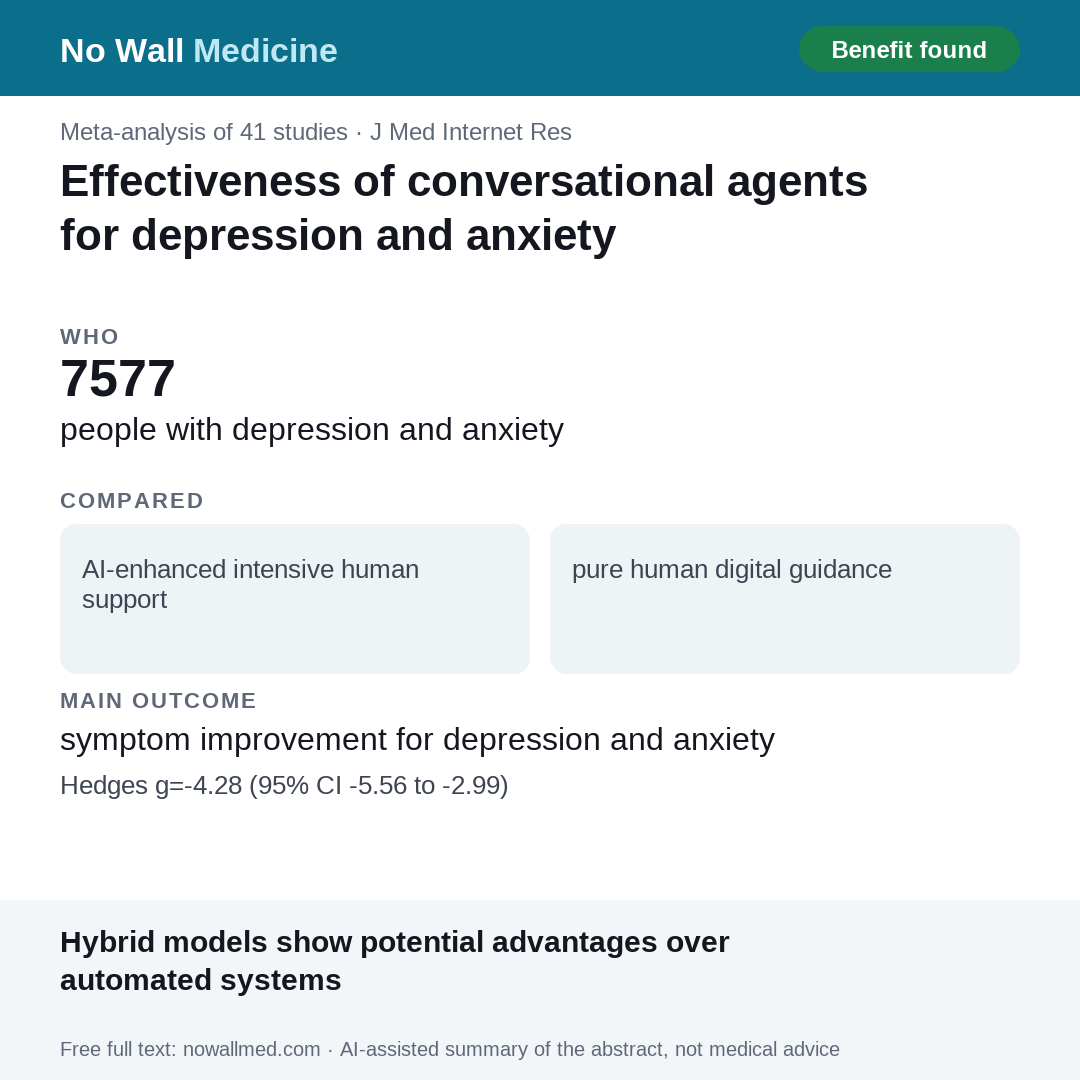
Effectiveness of Conversational Agents for Depression and Anxiety: Systematic Review and Network Dose-Response Meta-Analysis of Agent Types, Dose, and Human Support
Meta-analysis of 41 studiesBenefit found
Effectiveness of conversational agents for depression and anxiety
Who
7577
people with depression and anxiety
Compared
AI-enhanced intensive human support
pure human digital guidance
Main outcome
symptom improvement for depression and anxiety
Result: Hedges g=-4.28 (95% CI -5.56 to -2.99)
Bottom line: Hybrid models show potential advantages over automated systems
Limitation: very low certainty of evidence
J Med Internet Res · 2026-11-13Download image
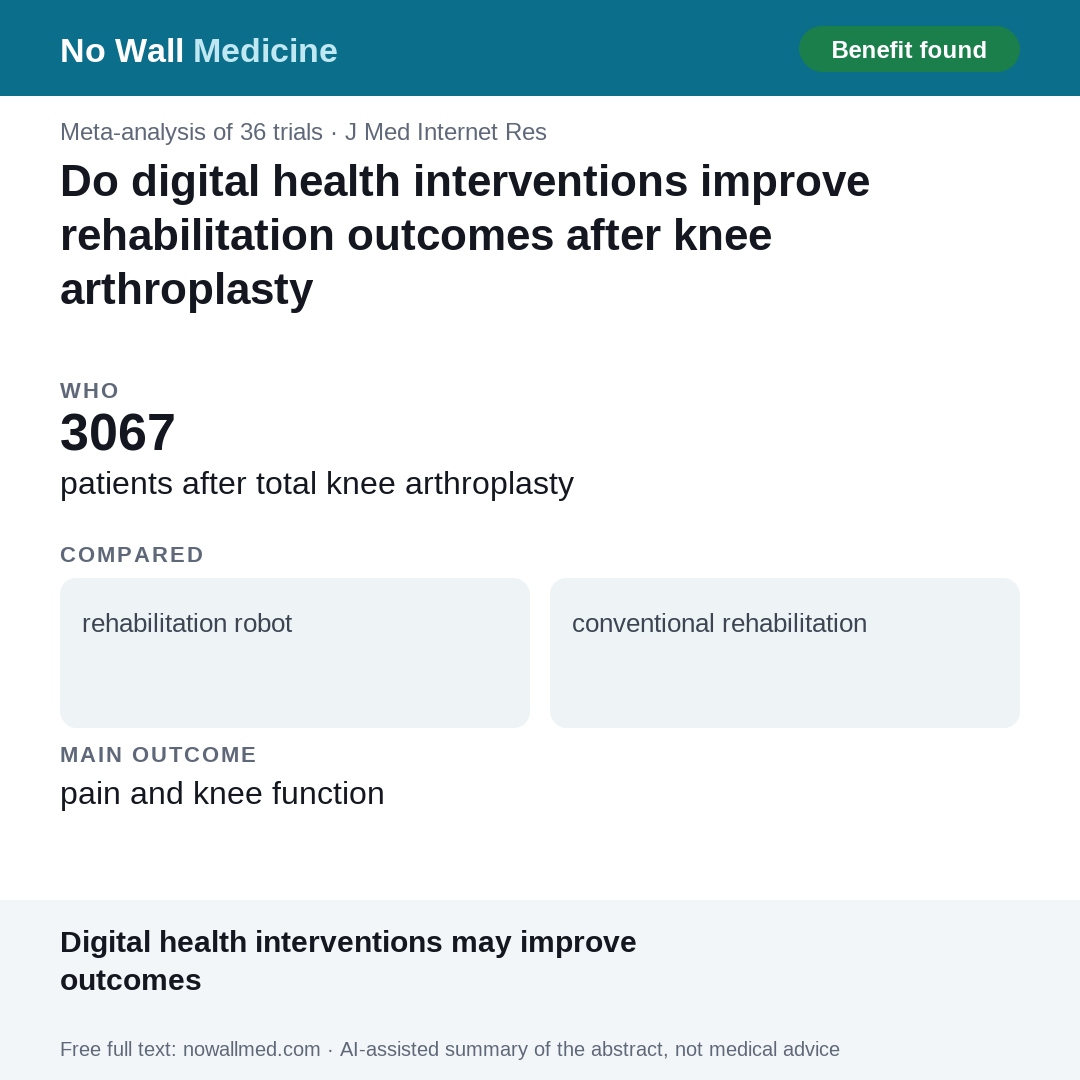
Effectiveness of Digital Health Interventions on Rehabilitation Outcomes in Patients After Total Knee Arthroplasty: Systematic Review and Network Meta-Analysis
Meta-analysis of 36 trialsBenefit found
Do digital health interventions improve rehabilitation outcomes after knee arthroplasty
Who
3067
patients after total knee arthroplasty
Compared
rehabilitation robot
conventional rehabilitation
Main outcome
pain and knee function
Bottom line: Digital health interventions may improve outcomes
Limitation: low or very low certainty of evidence
J Med Internet Res · 2026-11-13Download image
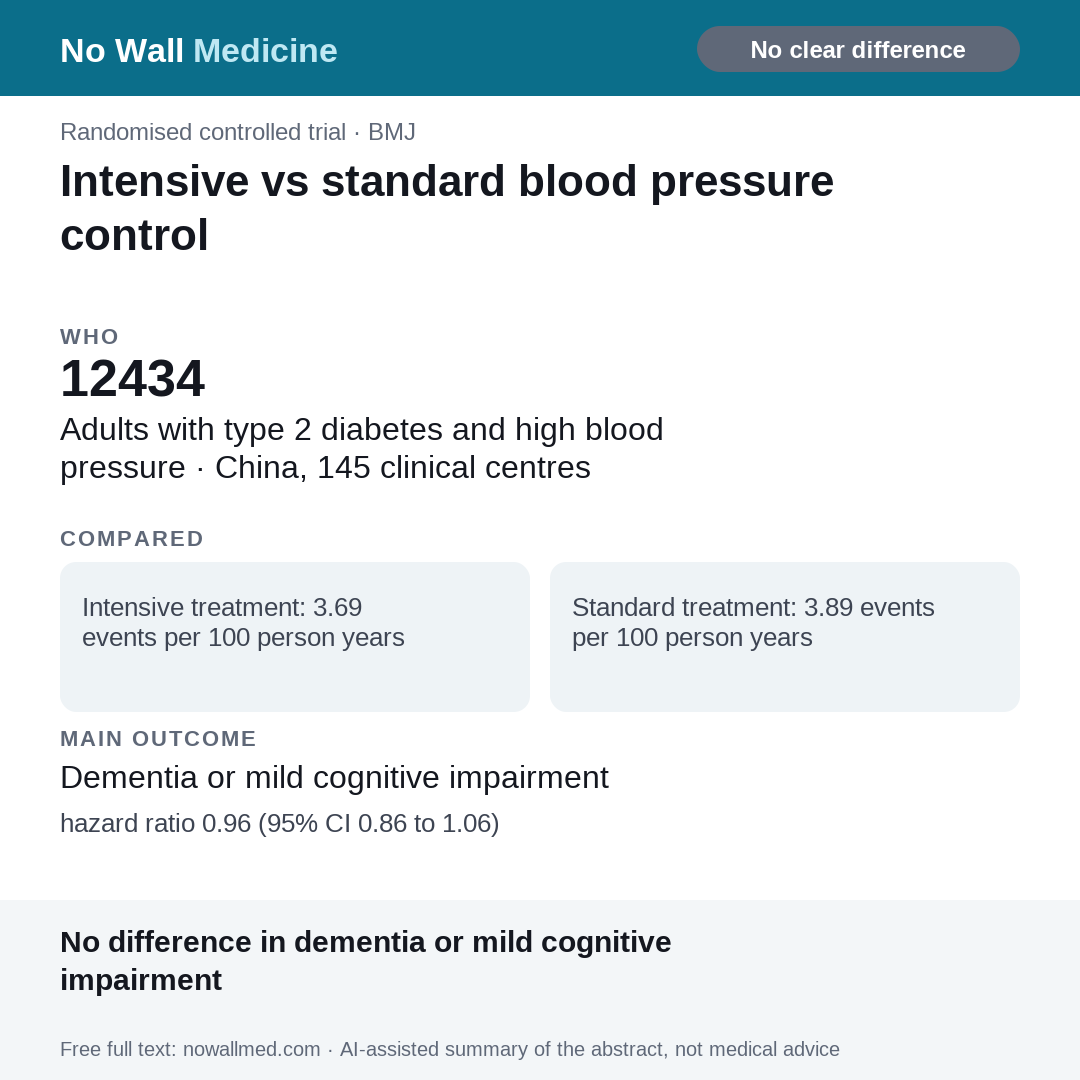
Effect of intensive blood pressure control on cognitive outcomes and brain structures in adults with type 2 diabetes: prespecified analysis of secondary outcomes of BPROAD randomised controlled trial
Randomised controlled trialNo clear difference
Intensive vs standard blood pressure control
Who
12434
Adults with type 2 diabetes and high blood pressure · China, 145 clinical centres
Compared
Intensive treatment: 3.69 events per 100 person years
Standard treatment: 3.89 events per 100 person years
Main outcome
Dementia or mild cognitive impairment
Result: hazard ratio 0.96 (95% CI 0.86 to 1.06)
Bottom line: No difference in dementia or mild cognitive impairment
BMJ · 2026-11-12Download image
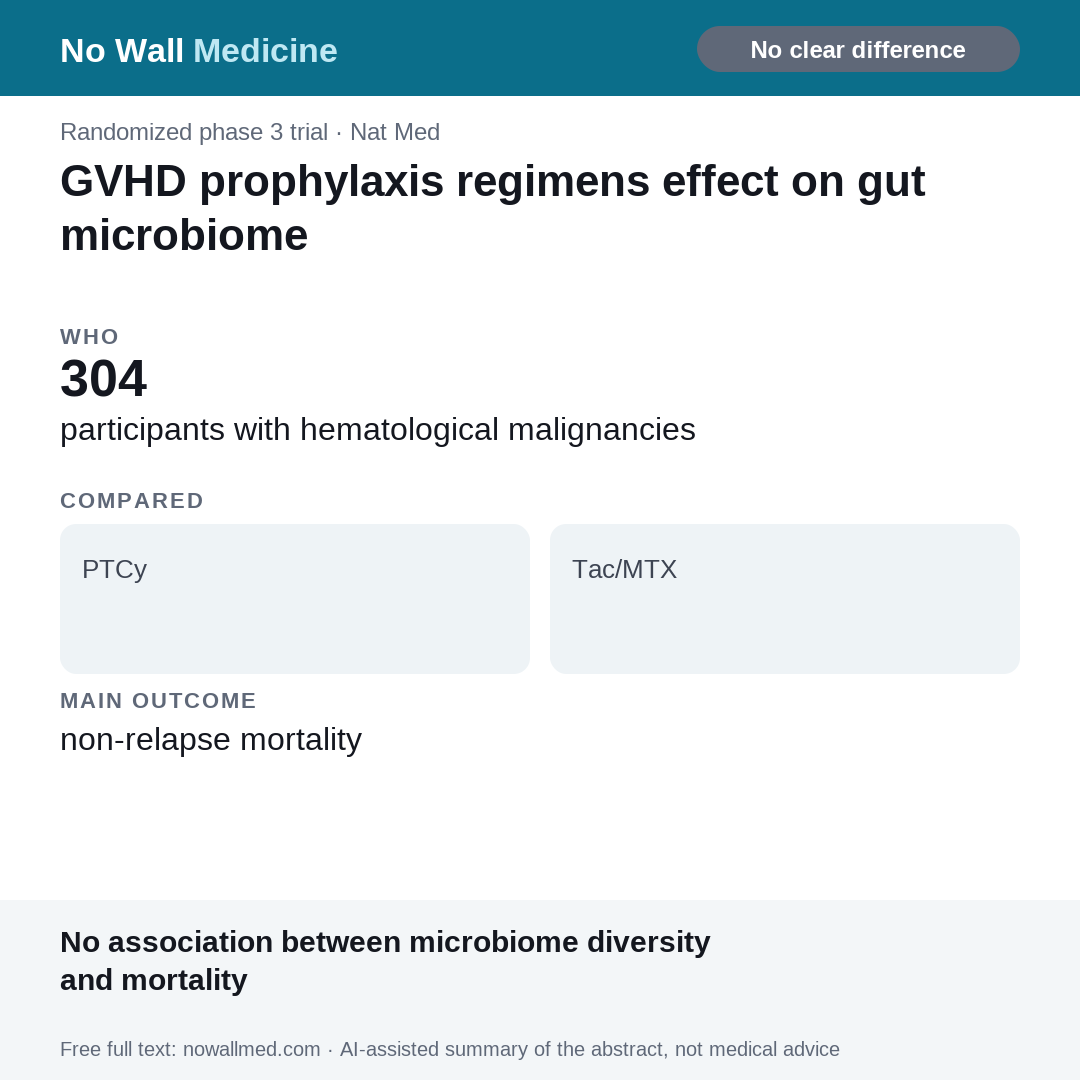
Effect of two common GVHD prophylaxis regimens on the gut microbiome in a randomized phase 3 trial
Randomized phase 3 trialNo clear difference
GVHD prophylaxis regimens effect on gut microbiome
Who
304
participants with hematological malignancies
Compared
PTCy
Tac/MTX
Main outcome
non-relapse mortality
Bottom line: No association between microbiome diversity and mortality
Nat Med · 2026-11-12Download image
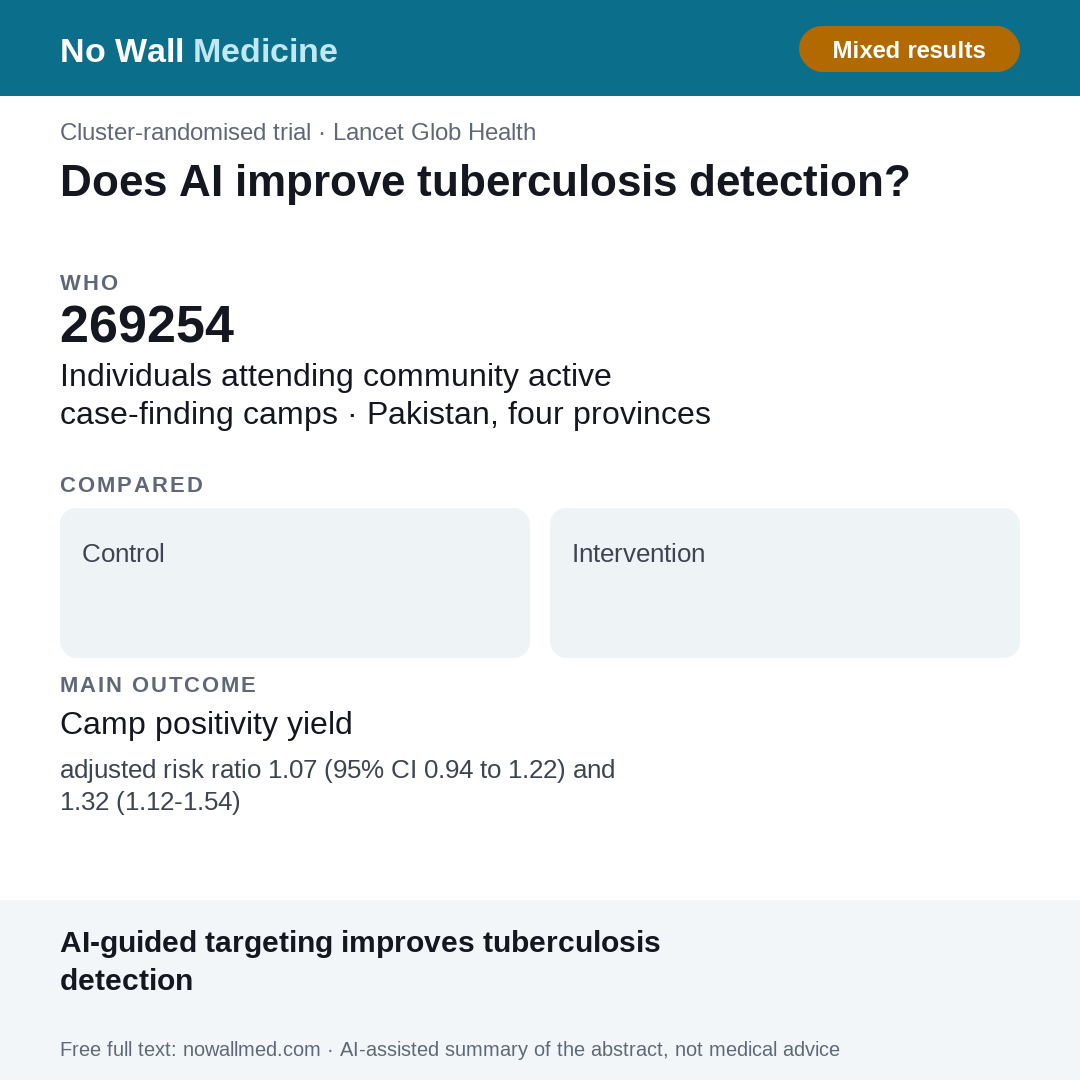
Geographical targeting of active case-finding for tuberculosis in Pakistan using artificial intelligence software (SPOT-TB): a pragmatic, stepped wedge, cluster-randomised control trial
Cluster-randomised trialMixed results
Does AI improve tuberculosis detection?
Who
269254
Individuals attending community active case-finding camps · Pakistan, four provinces
Compared
Conventional
AI-guided
Main outcome
Camp positivity yield
Result: adjusted risk ratio 1.07 (95% CI 0.94 to 1.22) and 1.32 (1.12-1.54)
Bottom line: AI-guided targeting improves tuberculosis detection
Limitation: Routine data did not capture implementation indicators
Funded by: Gates Foundation, Global Fund
Lancet Glob Health · 2026-11-12Download image
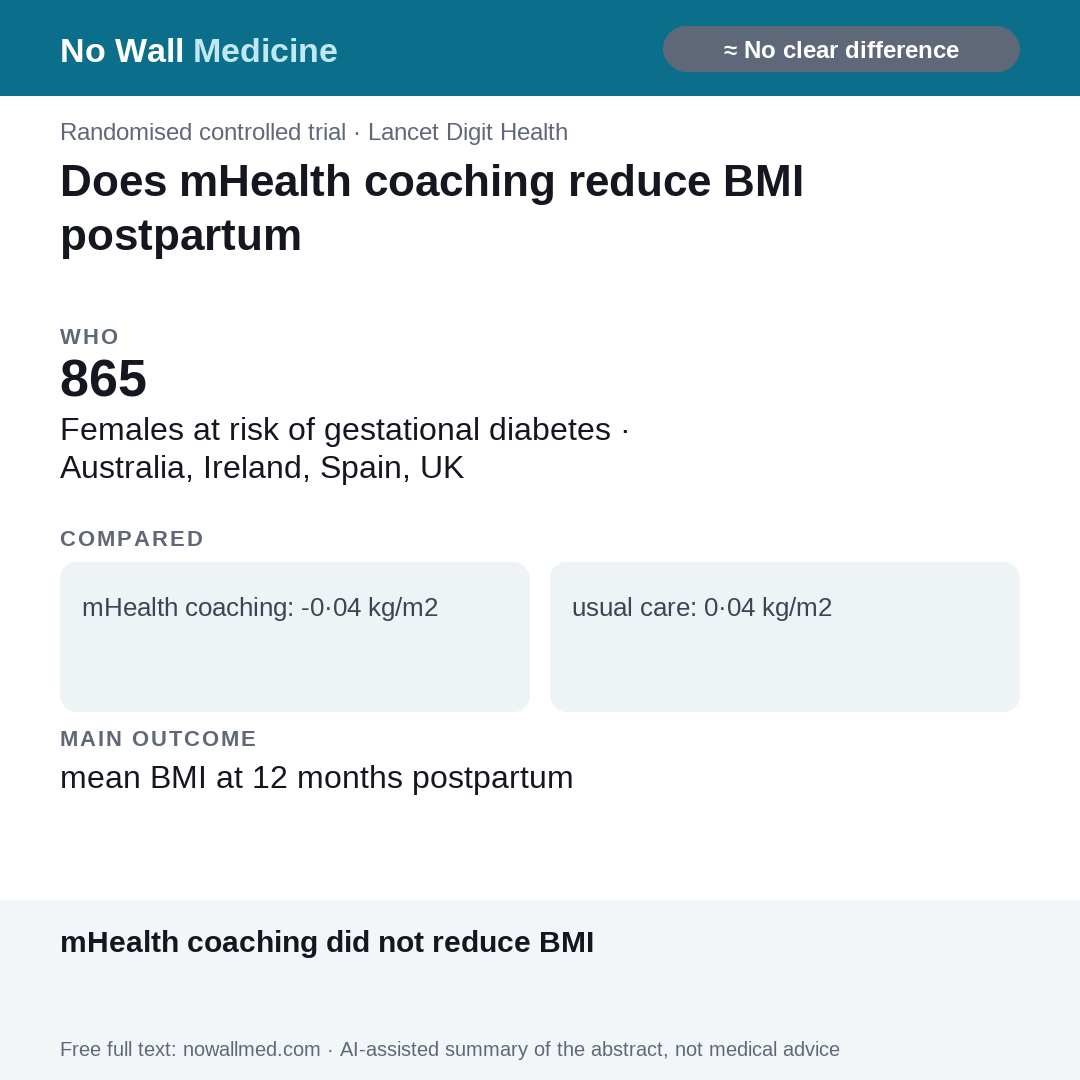
Personalised mobile health coaching from early pregnancy to 12-months postpartum for females at risk of gestational diabetes (Bump2Baby and Me): a multicentre, randomised controlled trial
Randomised controlled trialNo clear difference
Does mHealth coaching reduce BMI postpartum
Who
865
Females at risk of gestational diabetes · Australia, Ireland, Spain, UK
Compared
mHealth coaching: -0·04 kg/m2
usual care: 0·04 kg/m2
Main outcome
mean BMI at 12 months postpartum
Bottom line: mHealth coaching did not reduce BMI
Funded by: European Union Commission
Lancet Digit Health · 2026-11-12Download image