Visual abstracts
New randomized trials and meta-analyses from leading journals at a glance: who was studied, what was compared, and what was found. Every paper is free to read in full.
All specialtiesCardiology 4763Oncology 4042Gastroenterology & Hepatology 1902Infectious Disease 3756Neurology 1872Psychiatry & Mental Health 2214Pulmonology 2042Critical Care 1319Endocrinology & Diabetes 2544Pediatrics 2889Surgery 2479Orthopedics & Sports Medicine 917Neurosurgery 525Cardiothoracic & Vascular Surgery 656Plastic & Reconstructive Surgery 574Nephrology 1107Rheumatology 810Hematology 1090Dermatology 611Ophthalmology 532Obstetrics & Gynecology 1645Public & Global Health 1037Radiology & Imaging 617Anesthesiology 957Urology 745ENT (Otolaryngology) 494Emergency Medicine 481Allergy & Immunology 309Geriatrics 972Family Medicine & Primary Care 533Medical Genetics & Genomics 659Pathology & Laboratory Medicine 156Physical Medicine & Rehabilitation 734Palliative Care 421Nutrition 1560Digital Health & AI 2133General Medicine 318
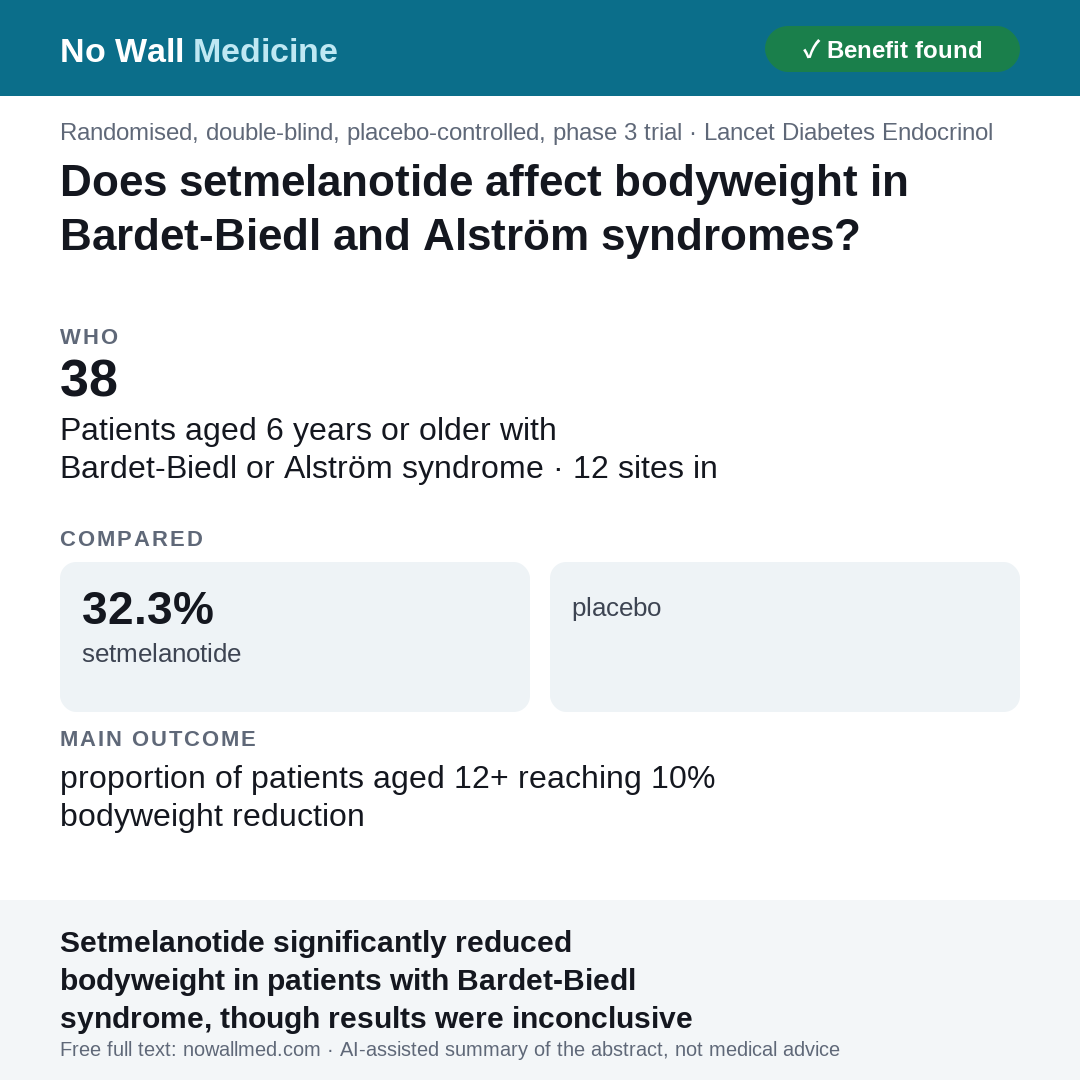
Efficacy and safety of setmelanotide, a melanocortin-4 receptor agonist, in patients with Bardet-Biedl syndrome and Alström syndrome: a multicentre, randomised, double-blind, placebo-controlled, phase 3 trial with an open-label period
Randomised, double-blind, placebo-controlled, phase 3 trialBenefit found
Does setmelanotide affect bodyweight in Bardet-Biedl and Alström syndromes?
Who
38
Patients aged 6 years or older with Bardet-Biedl or Alström syndrome · 12 sites in USA, Canada, UK, France, and Spain
Compared
32.3%setmelanotide (95% CI 16.7 to 51.4; p=0.0006)
placebo
Main outcome
proportion of patients aged 12+ reaching 10% bodyweight reduction
Bottom line: Setmelanotide significantly reduced bodyweight in patients with Bardet-Biedl syndrome, though results were inconclusive for Alström syndrome.
Limitation: results were inconclusive in patients with Alström syndrome
Funded by: Rhythm Pharmaceuticals
Lancet Diabetes Endocrinol · 2022-11-07Download image
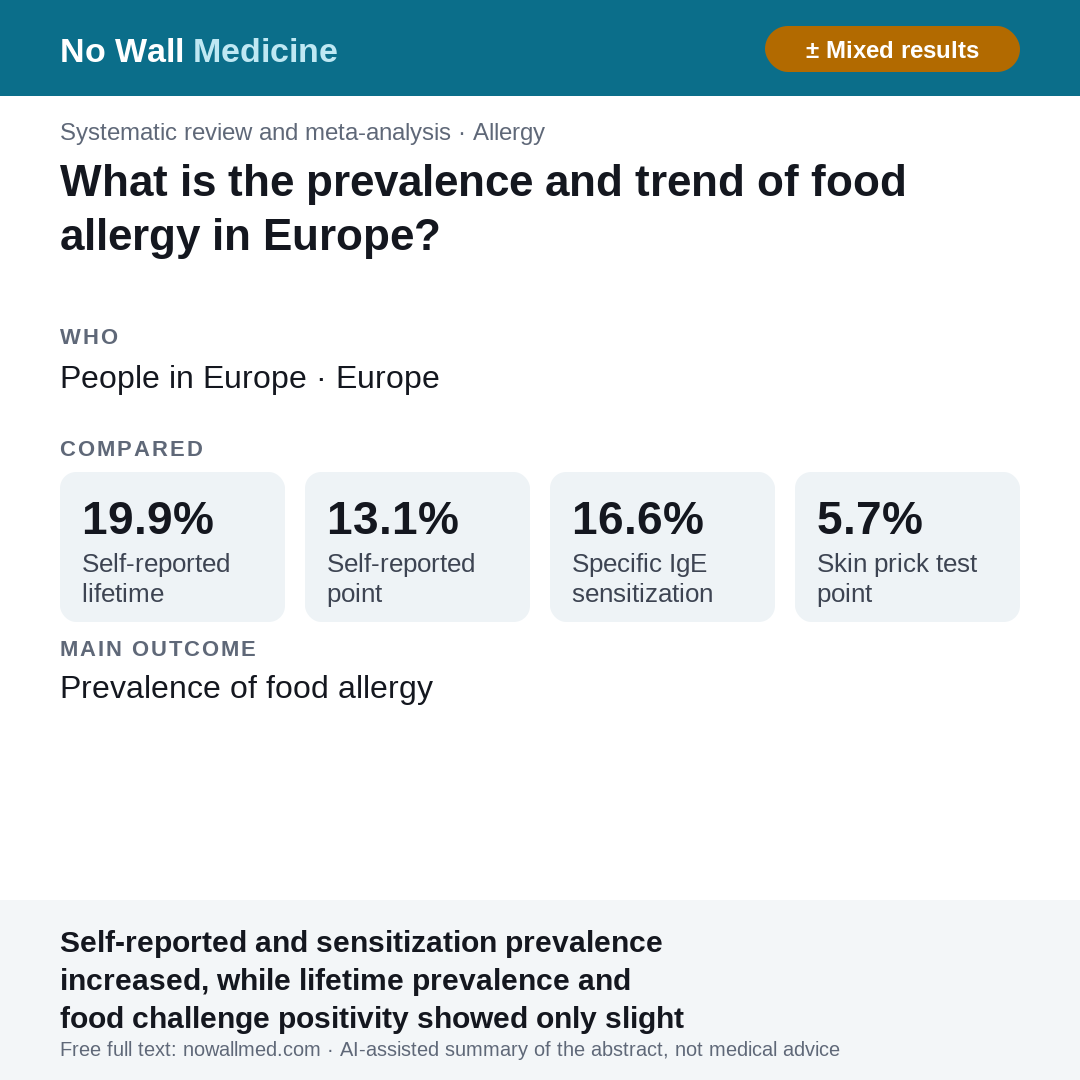
Frequency of food allergy in Europe: An updated systematic review and meta-analysis
Systematic review and meta-analysisMixed results
What is the prevalence and trend of food allergy in Europe?
Who
People in Europe · Europe
Compared
19.9%Self-reported lifetime prevalence (95% CI 16.6-23.3)
13.1%Self-reported point prevalence (95% CI 11.3-14.8)
16.6%Specific IgE sensitization point prevalence (95% CI 12.3-20.8)
5.7%Skin prick test point prevalence (95% CI 3.9-7.4)
Main outcome
Prevalence of food allergy
Bottom line: Self-reported and sensitization prevalence increased, while lifetime prevalence and food challenge positivity showed only slight changes.
Limitation: Most studies were graded as moderate risk of bias.
Allergy · 2022-11-07Download image
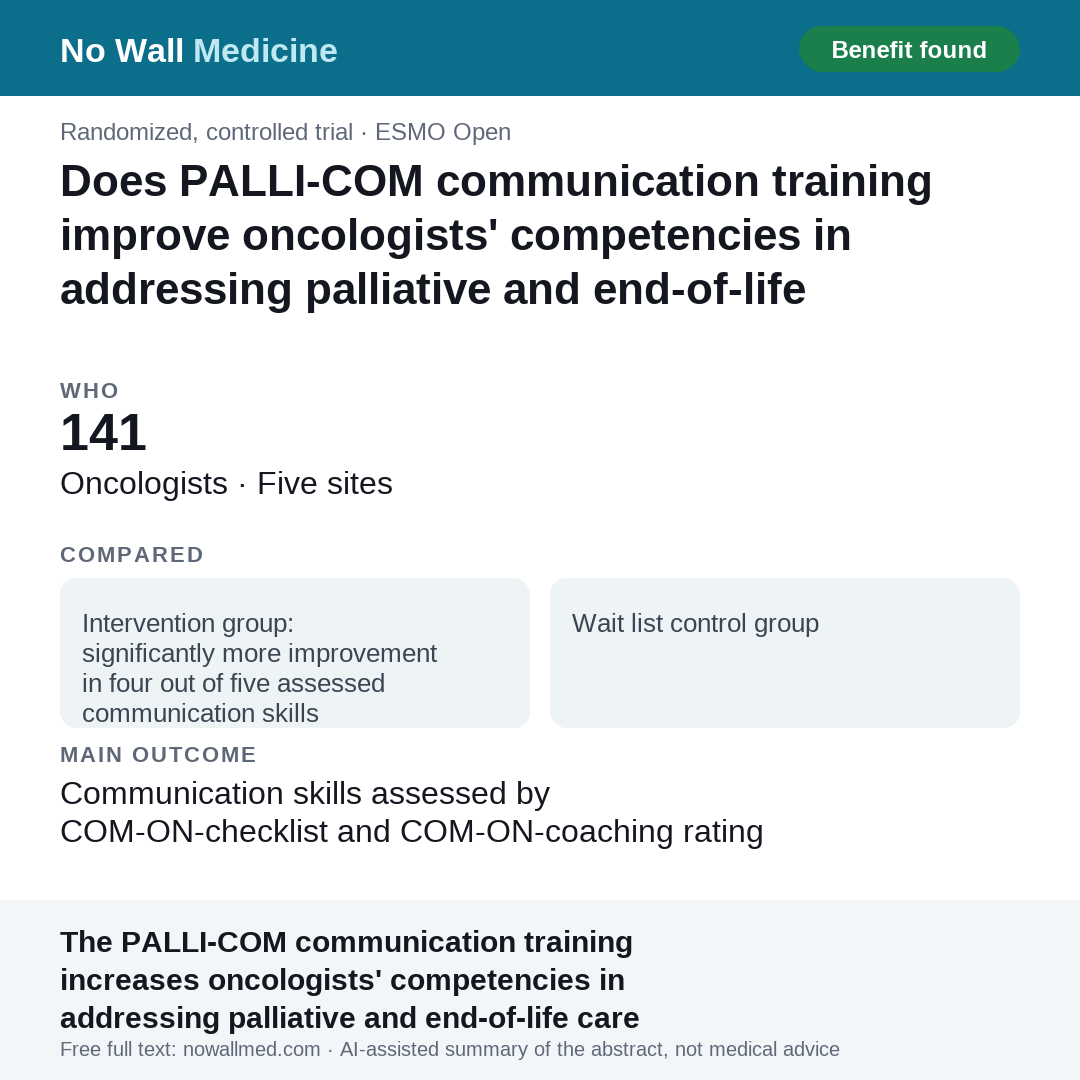
Effects of a communication training for oncologists on early addressing palliative and end-of-life care in advanced cancer care (PALLI-COM): a randomized, controlled trial
Randomized, controlled trialBenefit found
Does PALLI-COM communication training improve oncologists' competencies in addressing palliative and end-of-life care?
Who
141
Oncologists · Five sites
Compared
Intervention group: significantly more improvement in four out of five assessed communication skills
Wait list control group
Main outcome
Communication skills assessed by COM-ON-checklist and COM-ON-coaching rating scales
Bottom line: The PALLI-COM communication training increases oncologists' competencies in addressing palliative and end-of-life care issues.
ESMO Open · 2022-11-07Download image
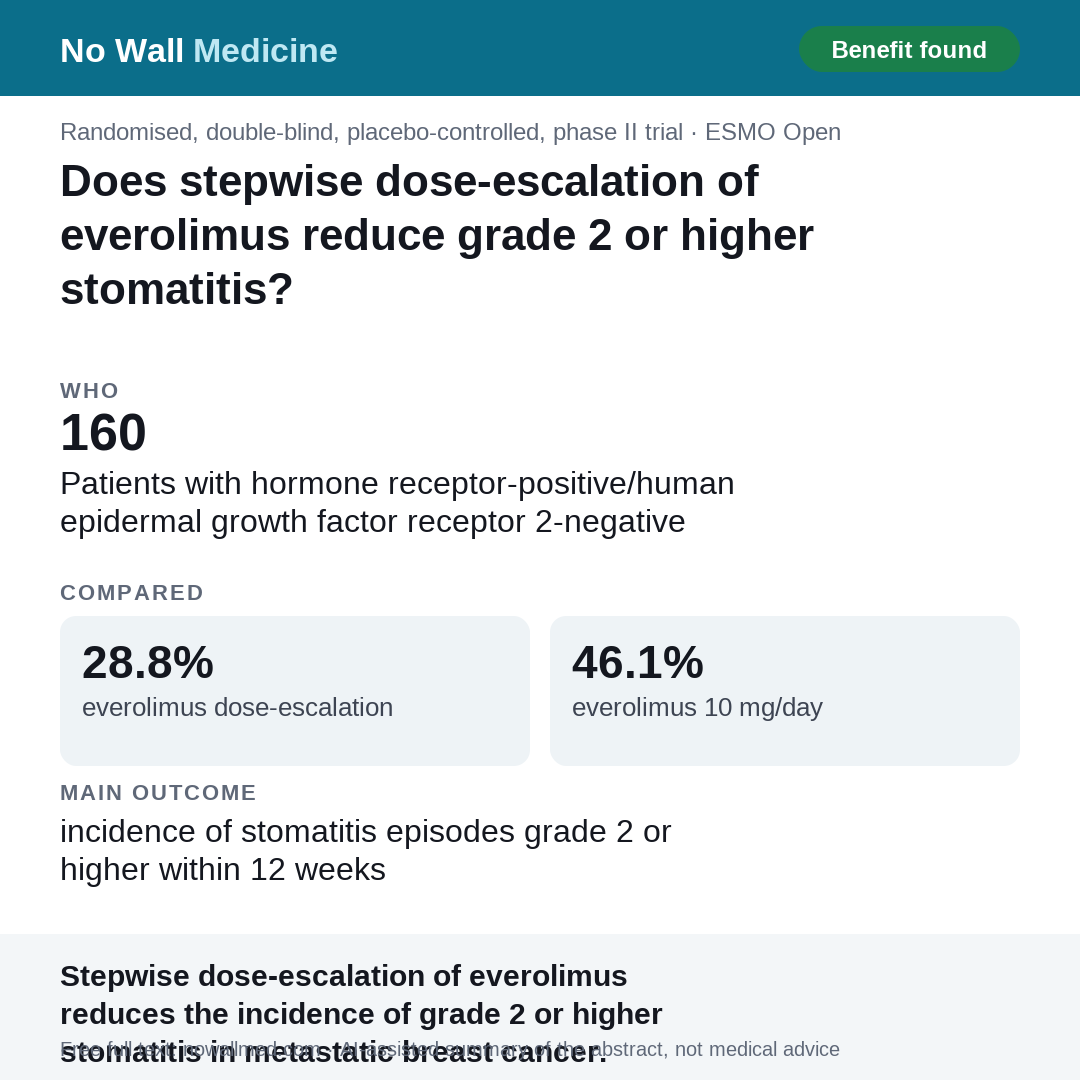
A multicentre, randomised, double-blind, phase II study to evaluate the tolerability of an induction dose escalation of everolimus in patients with metastatic breast cancer (DESIREE)
Randomised, double-blind, placebo-controlled, phase II trialEarly signal
Does stepwise dose-escalation of everolimus reduce grade 2 or higher stomatitis?
Who
160
Patients with hormone receptor-positive/human epidermal growth factor receptor 2-negative metastatic breast cancer · multicentre
Compared
28.8%everolimus dose-escalation
46.1%everolimus 10 mg/day
Main outcome
incidence of stomatitis episodes grade 2 or higher within 12 weeks
Result: odds ratio 0.47 (95% confidence interval 0.24-0.92)
Bottom line: Stepwise dose-escalation of everolimus reduces the incidence of grade 2 or higher stomatitis in metastatic breast cancer.
ESMO Open · 2022-11-07Download image
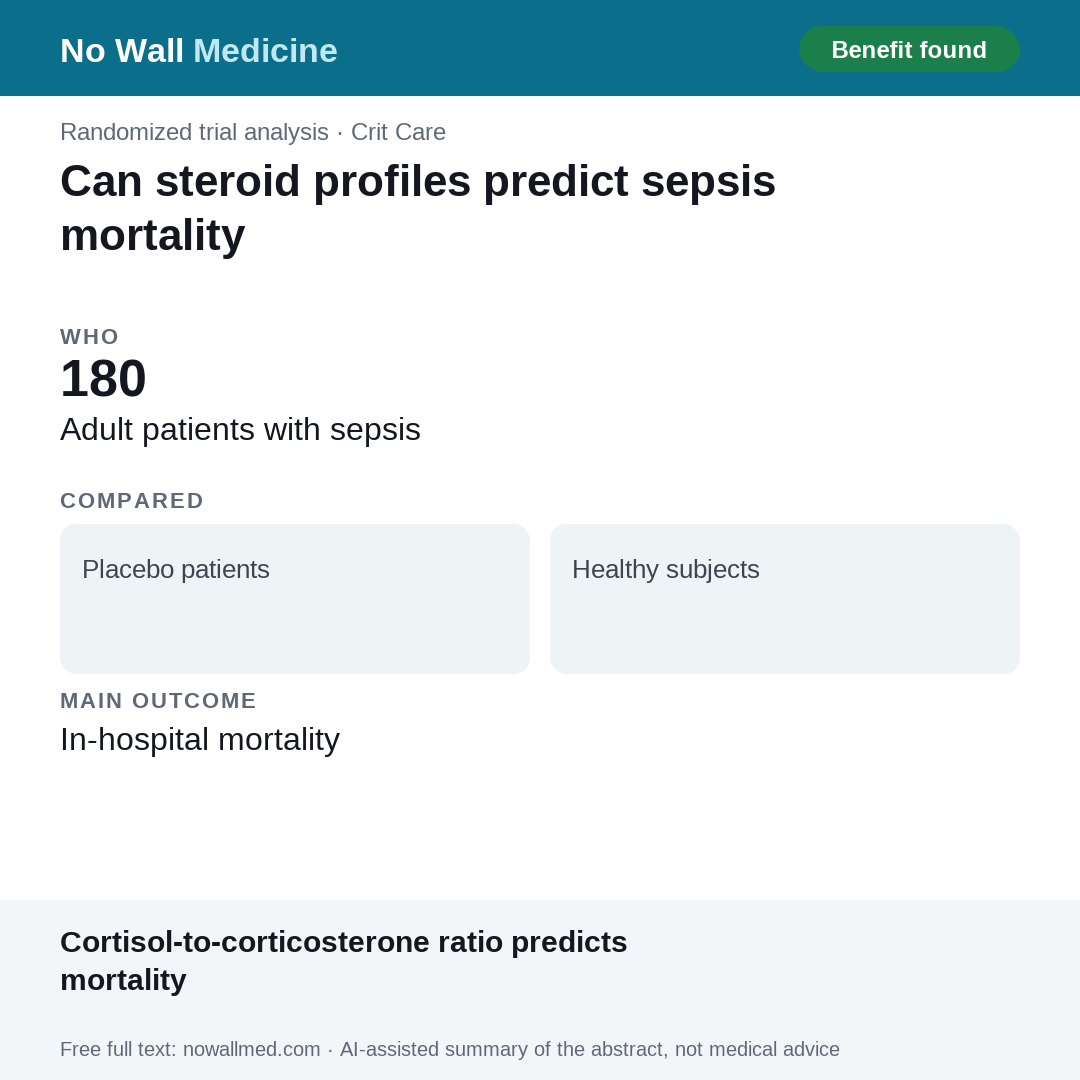
Corticotropin-stimulated steroid profiles to predict shock development and mortality in sepsis: From the HYPRESS study
Randomized trial analysisKey finding
Can steroid profiles predict sepsis mortality
Who
180
Adult patients with sepsis
Compared
Placebo patients
Healthy subjects
Main outcome
In-hospital mortality
Bottom line: Cortisol-to-corticosterone ratio predicts mortality
Crit Care · 2022-11-07Download image
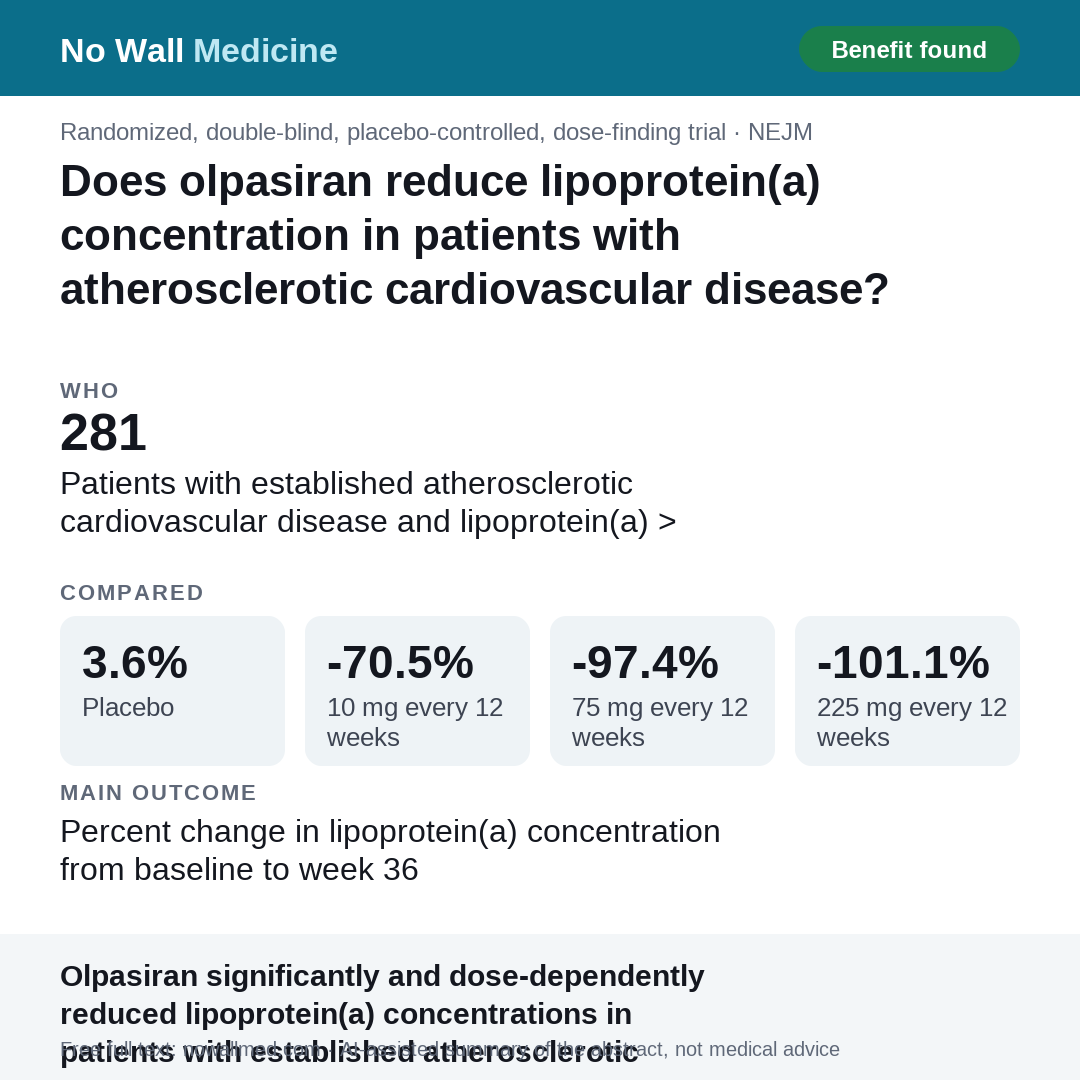
Small Interfering RNA to Reduce Lipoprotein(a) in Cardiovascular Disease
Randomized, double-blind, placebo-controlled, dose-finding trialBenefit found
Does olpasiran reduce lipoprotein(a) concentration in patients with atherosclerotic cardiovascular disease?
Who
281
Patients with established atherosclerotic cardiovascular disease and lipoprotein(a) > 150 nmol/L
Compared
3.6%Placebo
-70.5%10 mg every 12 weeks
-97.4%75 mg every 12 weeks
-101.1%225 mg every 12 weeks
Main outcome
Percent change in lipoprotein(a) concentration from baseline to week 36
Bottom line: Olpasiran significantly and dose-dependently reduced lipoprotein(a) concentrations in patients with established atherosclerotic cardiovascular disease.
Funded by: Amgen
NEJM · 2022-11-06Download image
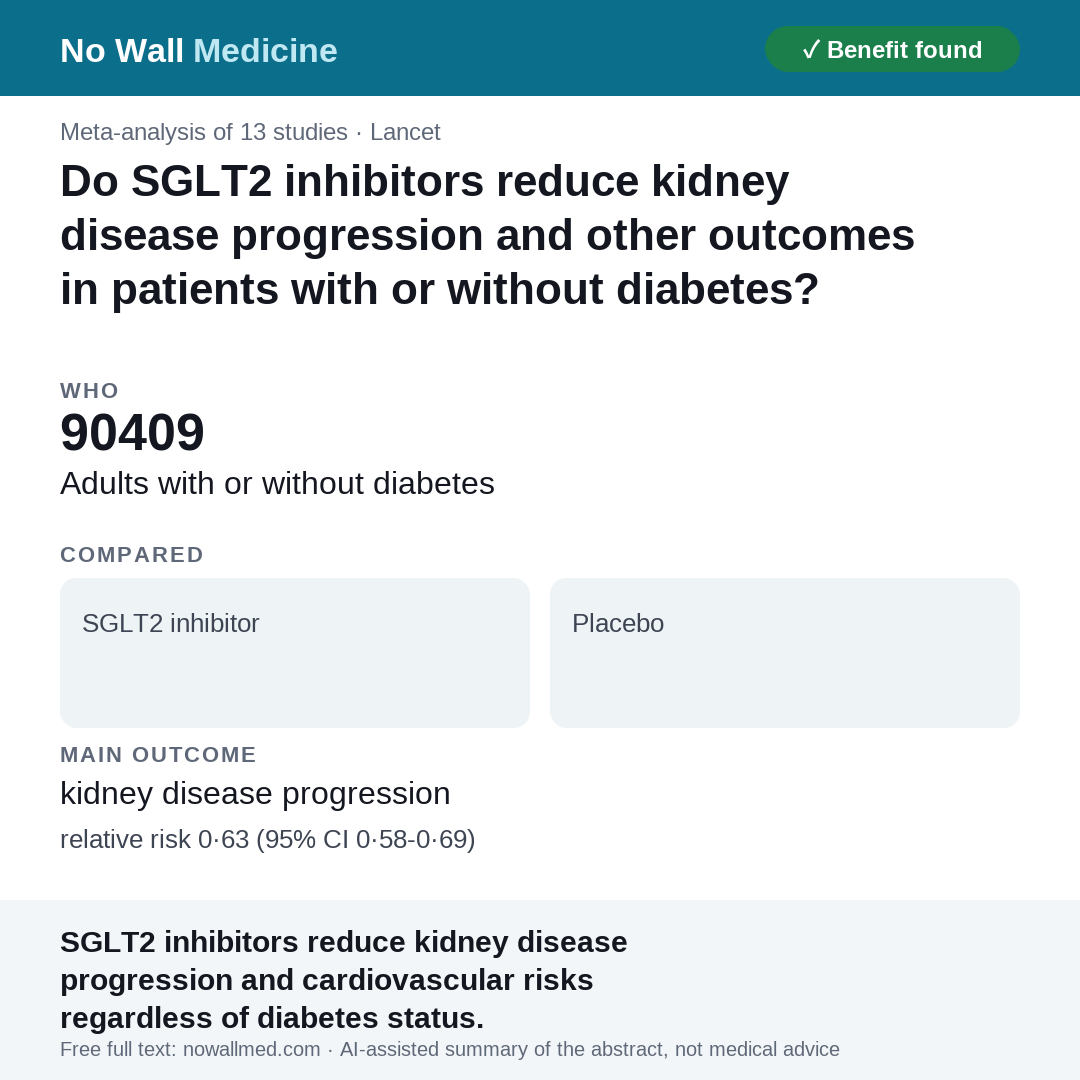
Impact of diabetes on the effects of sodium glucose co-transporter-2 inhibitors on kidney outcomes: collaborative meta-analysis of large placebo-controlled trials
Meta-analysis of 13 studiesBenefit found
Do SGLT2 inhibitors reduce kidney disease progression and other outcomes in patients with or without diabetes?
Who
90409
Adults with or without diabetes
Compared
SGLT2 inhibitor
Placebo
Main outcome
kidney disease progression
Result: relative risk 0·63 (95% CI 0·58-0·69)
Bottom line: SGLT2 inhibitors reduce kidney disease progression and cardiovascular risks regardless of diabetes status.
Funded by: UK Medical Research Council and Kidney Research UK
Lancet · 2022-11-06Download image
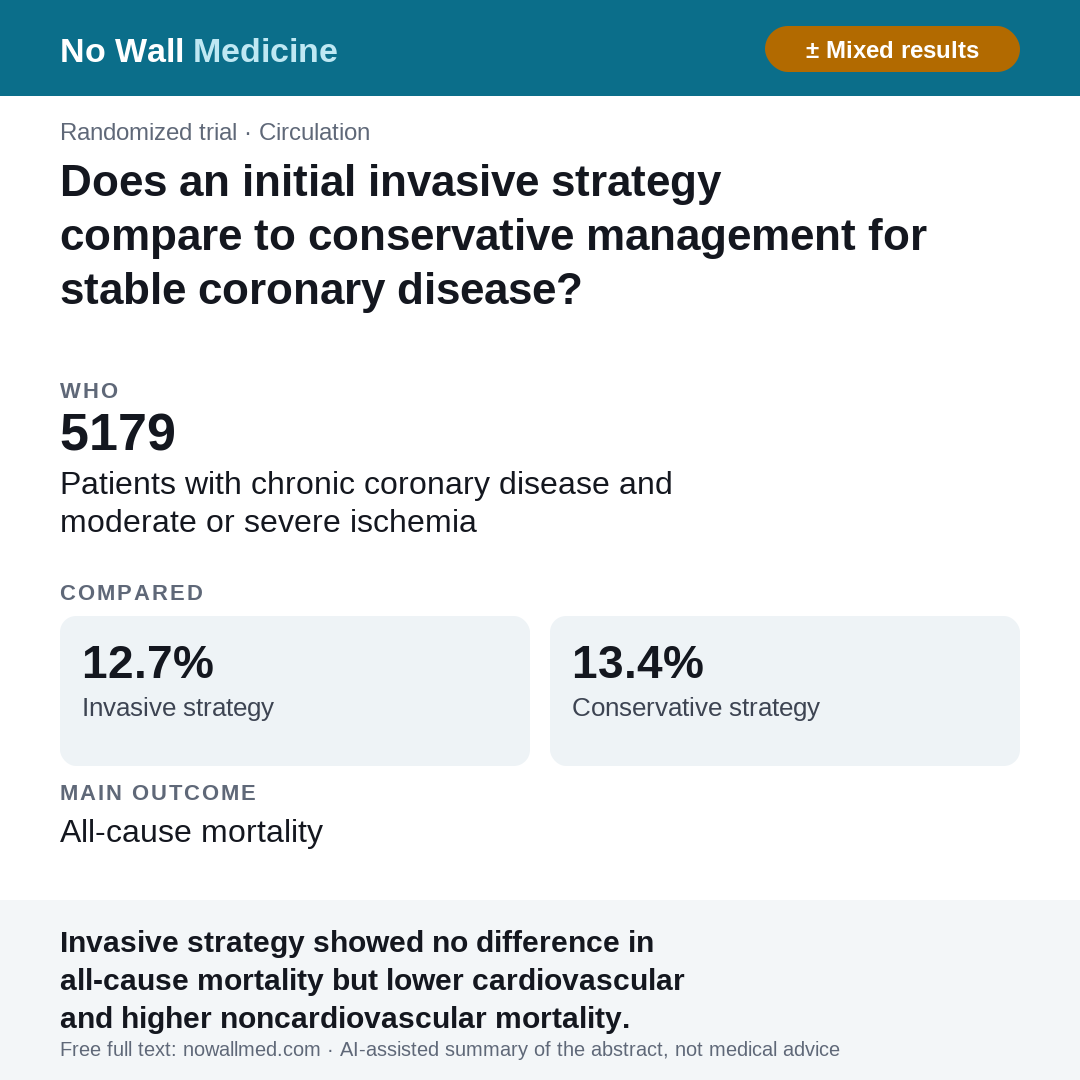
Survival After Invasive or Conservative Management of Stable Coronary Disease
Randomized trialMixed results
Does an initial invasive strategy compare to conservative management for stable coronary disease?
Who
5179
Patients with chronic coronary disease and moderate or severe ischemia
Compared
12.7%Invasive strategy
13.4%Conservative strategy
Main outcome
All-cause mortality
Result: adjusted hazard ratio 1.00 (95% CI 0.85-1.18)
Bottom line: Invasive strategy showed no difference in all-cause mortality but lower cardiovascular and higher noncardiovascular mortality.
Circulation · 2022-11-06Download image
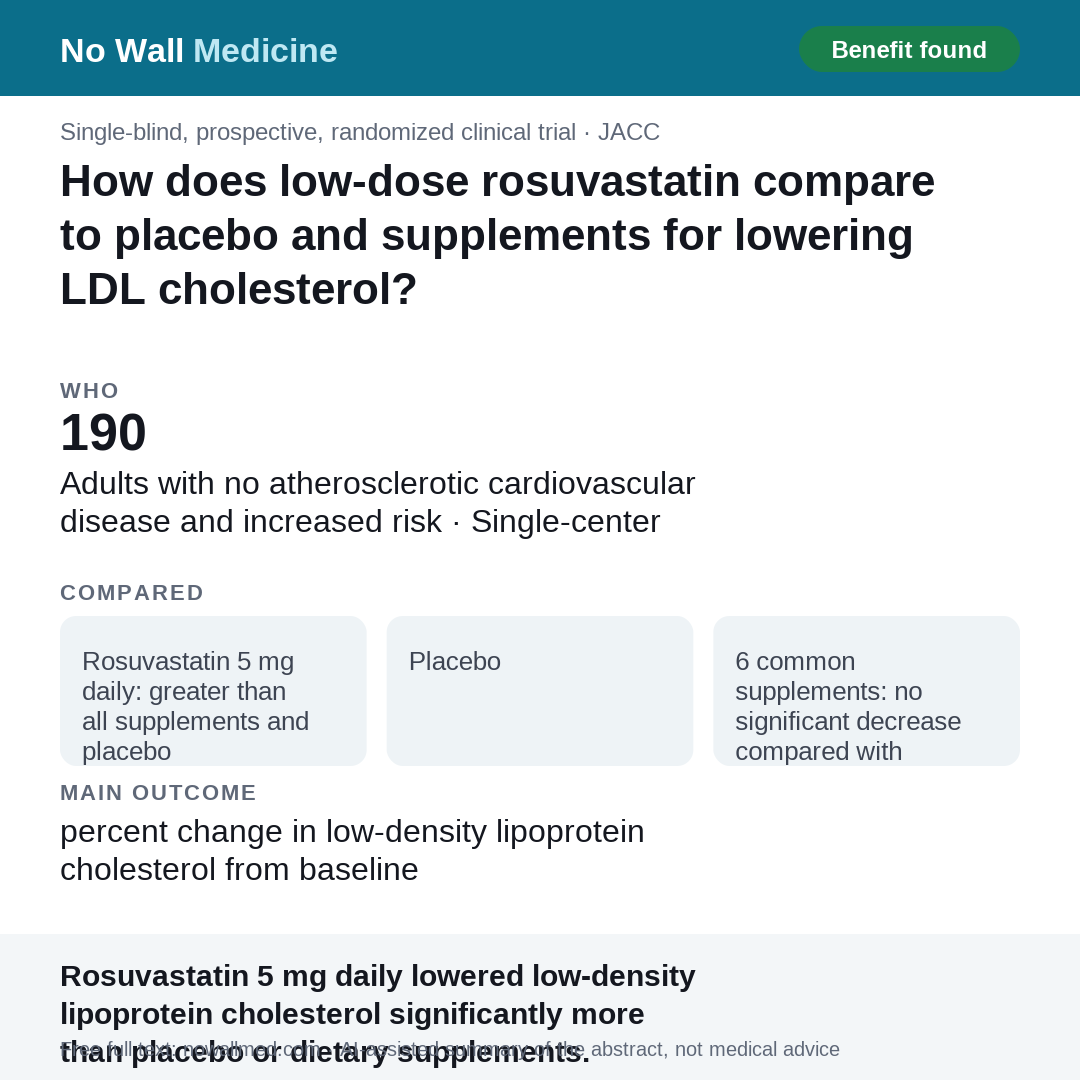
Comparative Effects of Low-Dose Rosuvastatin, Placebo, and Dietary Supplements on Lipids and Inflammatory Biomarkers
Single-blind, prospective, randomized clinical trialBenefit found
How does low-dose rosuvastatin compare to placebo and supplements for lowering LDL cholesterol?
Who
190
Adults with no atherosclerotic cardiovascular disease and increased risk · Single-center
Compared
Rosuvastatin 5 mg daily: greater than all supplements and placebo
Placebo
6 common supplements: no significant decrease compared with placebo
Main outcome
percent change in low-density lipoprotein cholesterol from baseline
Result: -35.2% (95% CI: -41.3% to -29.1%; P < 0.001)
Bottom line: Rosuvastatin 5 mg daily lowered low-density lipoprotein cholesterol significantly more than placebo or dietary supplements.
JACC · 2022-11-06Download image
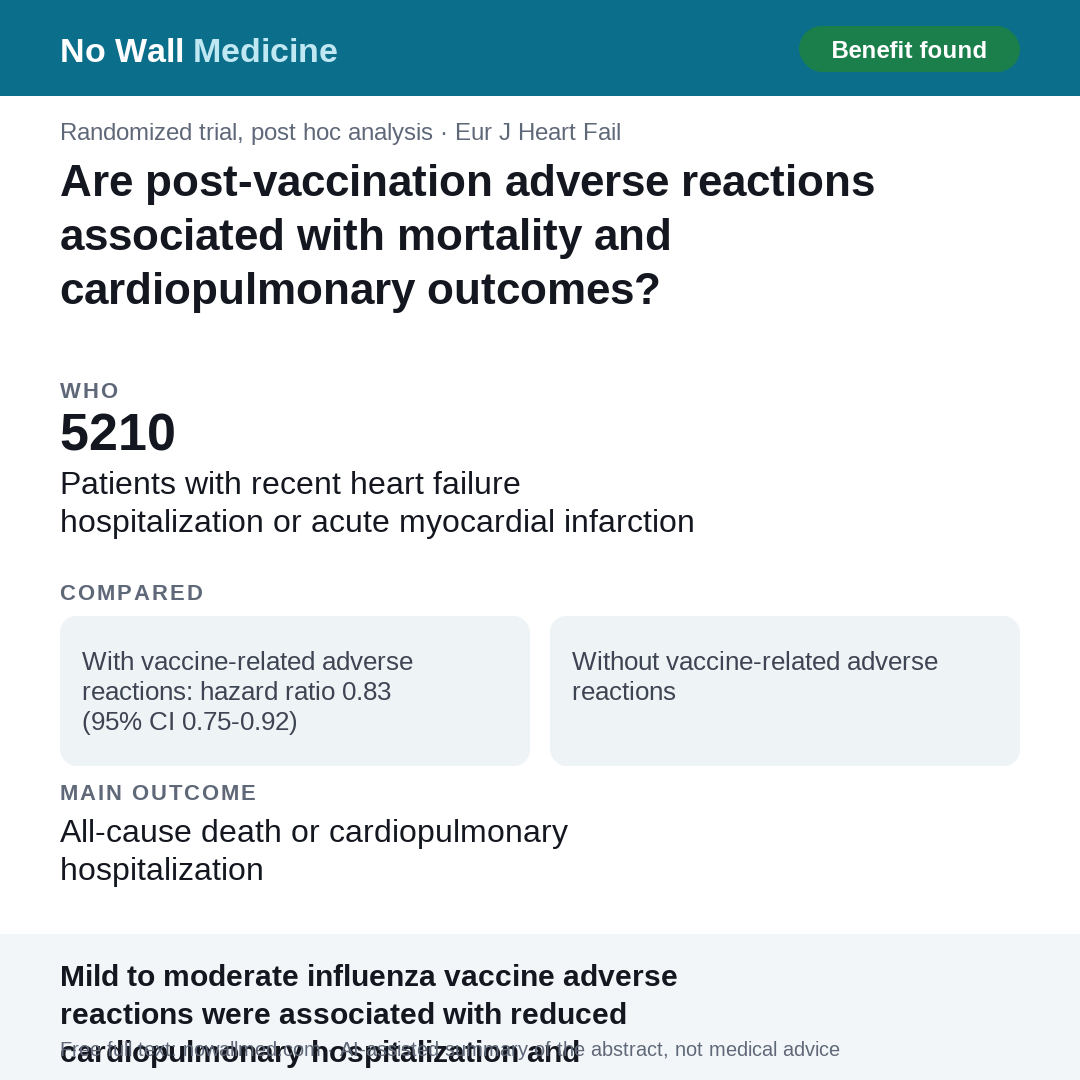
Association of post-vaccination adverse reactions after influenza vaccine with mortality and cardiopulmonary outcomes in patients with high-risk cardiovascular disease: the INVESTED trial
Randomized trial, post hoc analysisBenefit found
Are post-vaccination adverse reactions associated with mortality and cardiopulmonary outcomes?
Who
5210
Patients with recent heart failure hospitalization or acute myocardial infarction
Compared
With vaccine-related adverse reactions: hazard ratio 0.83 (95% CI 0.75-0.92)
Without vaccine-related adverse reactions
Main outcome
All-cause death or cardiopulmonary hospitalization
Result: hazard ratio 0.83 (95% CI 0.75-0.92)
Bottom line: Mild to moderate influenza vaccine adverse reactions were associated with reduced cardiopulmonary hospitalization and all-cause mortality risk.
Eur J Heart Fail · 2022-11-06Download image
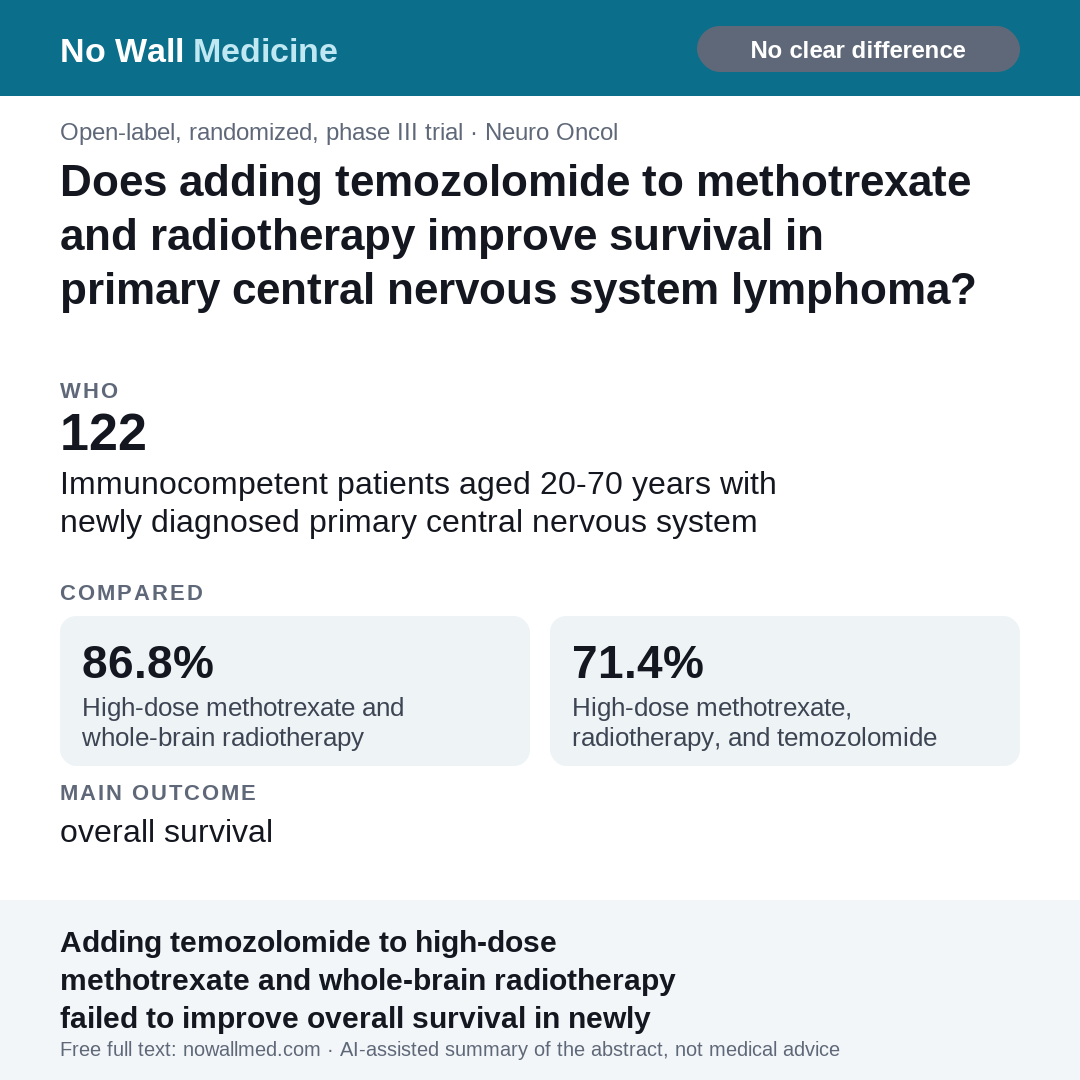
Randomized phase III study of high-dose methotrexate and whole-brain radiotherapy with/without temozolomide for newly diagnosed primary CNS lymphoma: JCOG1114C
Open-label, randomized, phase III trialNo clear difference
Does adding temozolomide to methotrexate and radiotherapy improve survival in primary central nervous system lymphoma?
Who
122
Immunocompetent patients aged 20-70 years with newly diagnosed primary central nervous system lymphoma · Japan
Compared
86.8%High-dose methotrexate and whole-brain radiotherapy (95% confidence interval 72.5-94.0%)
71.4%High-dose methotrexate, radiotherapy, and temozolomide (56.0-82.2%)
Main outcome
overall survival
Result: hazard ratio 2.18 (95% CI 0.95-4.98)
Bottom line: Adding temozolomide to high-dose methotrexate and whole-brain radiotherapy failed to improve overall survival in newly diagnosed primary central nervous system lymphoma.
Neuro Oncol · 2022-11-06Download image
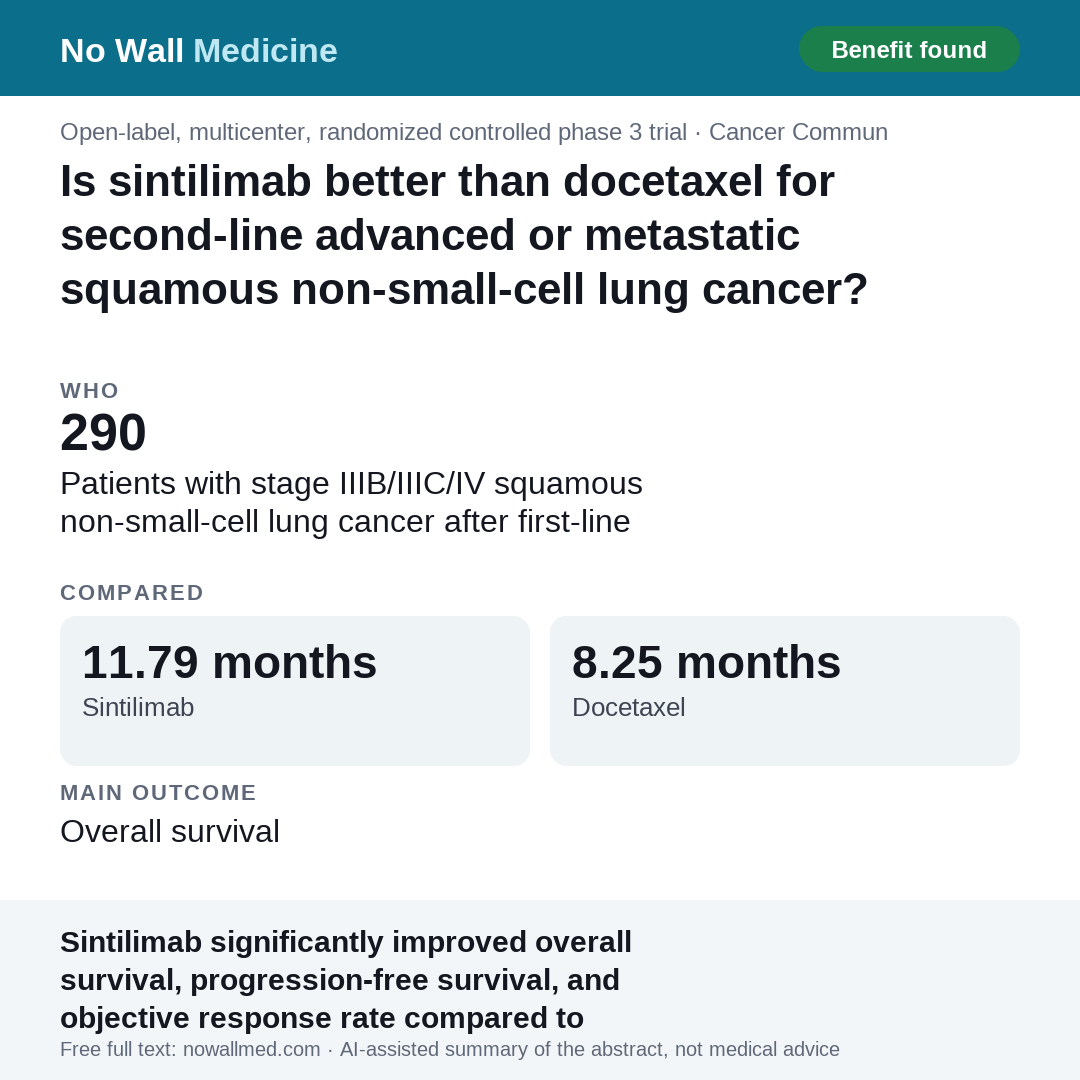
Sintilimab versus docetaxel as second-line treatment in advanced or metastatic squamous non-small-cell lung cancer: an open-label, randomized controlled phase 3 trial (ORIENT-3)
Open-label, multicenter, randomized controlled phase 3 trialBenefit found
Is sintilimab better than docetaxel for second-line advanced or metastatic squamous non-small-cell lung cancer?
Who
290
Patients with stage IIIB/IIIC/IV squamous non-small-cell lung cancer after first-line platinum-based chemotherapy · Multicenter
Compared
11.79 monthsSintilimab
8.25 monthsDocetaxel
Main outcome
Overall survival
Result: hazard ratio 0.74 (95% CI 0.56 to 0.96)
Bottom line: Sintilimab significantly improved overall survival, progression-free survival, and objective response rate compared to docetaxel.
Cancer Commun · 2022-11-06Download image
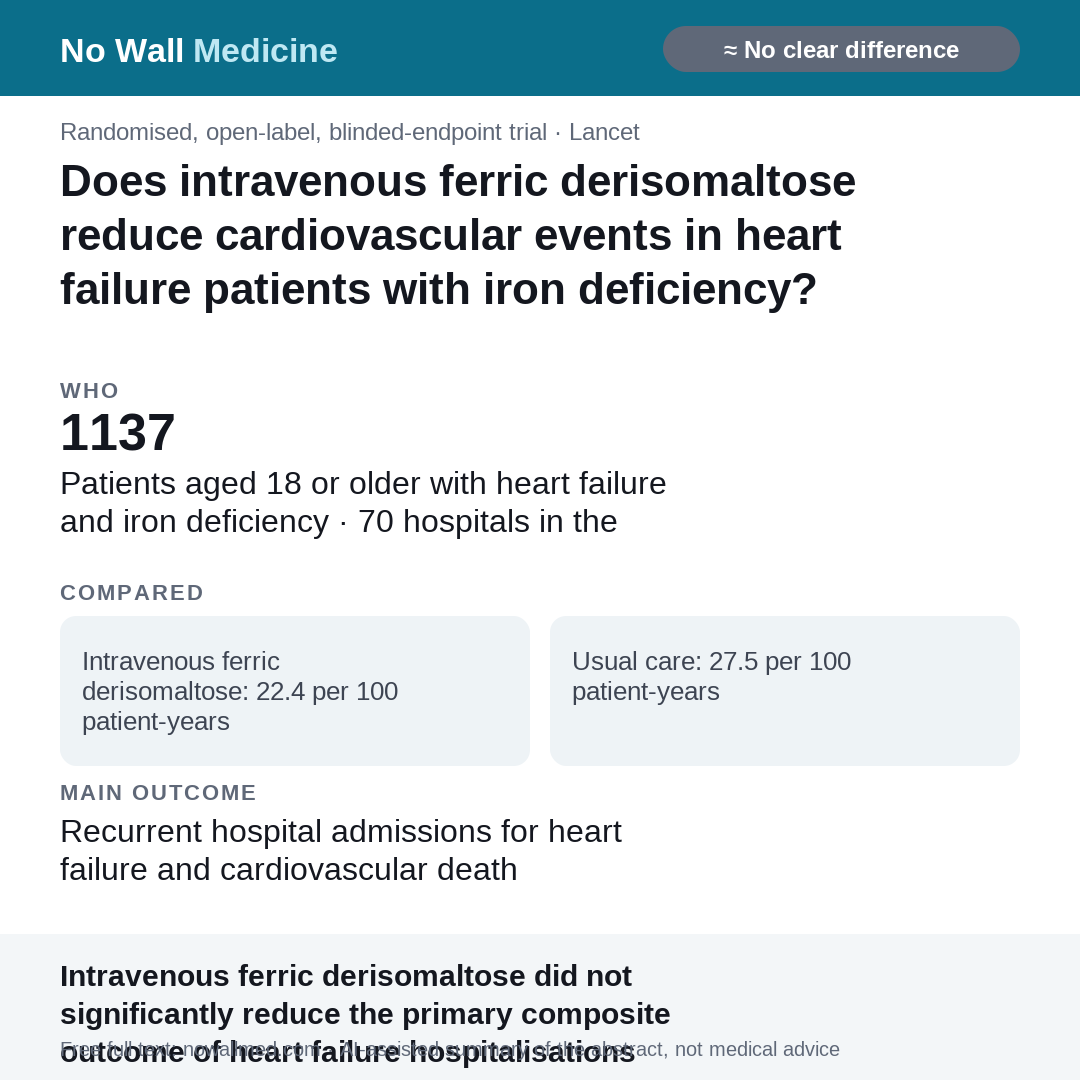
Intravenous ferric derisomaltose in patients with heart failure and iron deficiency in the UK (IRONMAN): an investigator-initiated, prospective, randomised, open-label, blinded-endpoint trial
Randomised, open-label, blinded-endpoint trialNo clear difference
Does intravenous ferric derisomaltose reduce cardiovascular events in heart failure patients with iron deficiency?
Who
1137
Patients aged 18 or older with heart failure and iron deficiency · 70 hospitals in the United Kingdom
Compared
Intravenous ferric derisomaltose: 22.4 per 100 patient-years
Usual care: 27.5 per 100 patient-years
Main outcome
Recurrent hospital admissions for heart failure and cardiovascular death
Result: rate ratio 0.82 (95% CI 0.66 to 1.02)
Bottom line: Intravenous ferric derisomaltose did not significantly reduce the primary composite outcome of heart failure hospitalisations and cardiovascular death.
Funded by: British Heart Foundation and Pharmacosmos
Lancet · 2022-11-05Download image
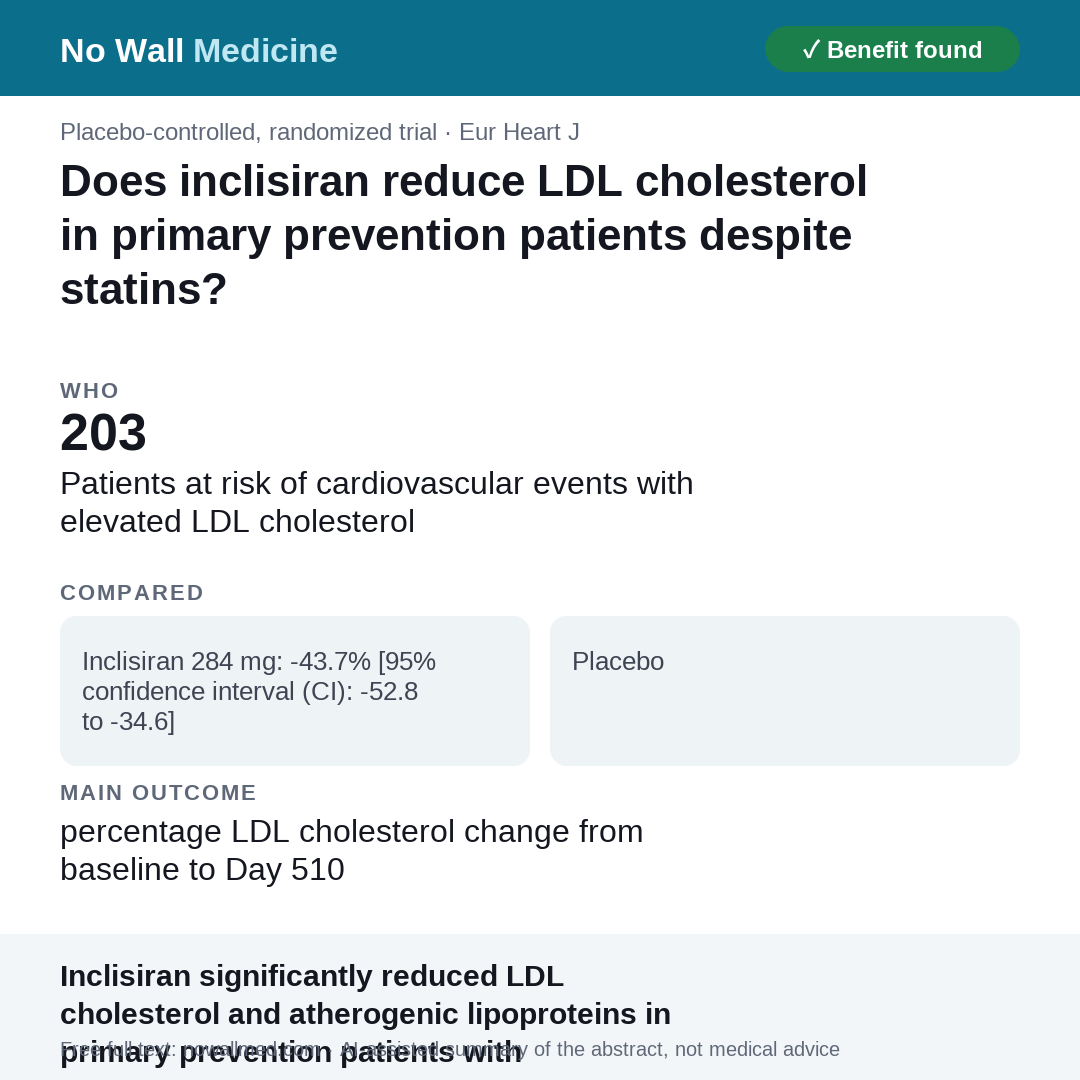
Effect of inclisiran on lipids in primary prevention: the ORION-11 trial
Placebo-controlled, randomized trialBenefit found
Does inclisiran reduce LDL cholesterol in primary prevention patients despite statins?
Who
203
Patients at risk of cardiovascular events with elevated LDL cholesterol
Compared
Inclisiran 284 mg: -43.7% [95% confidence interval (CI): -52.8 to -34.6]
Placebo
Main outcome
percentage LDL cholesterol change from baseline to Day 510
Result: -43.7% [95% confidence interval (CI): -52.8 to -34.6]
Bottom line: Inclisiran significantly reduced LDL cholesterol and atherogenic lipoproteins in primary prevention patients with twice-yearly dosing.
Eur Heart J · 2022-11-05Download image
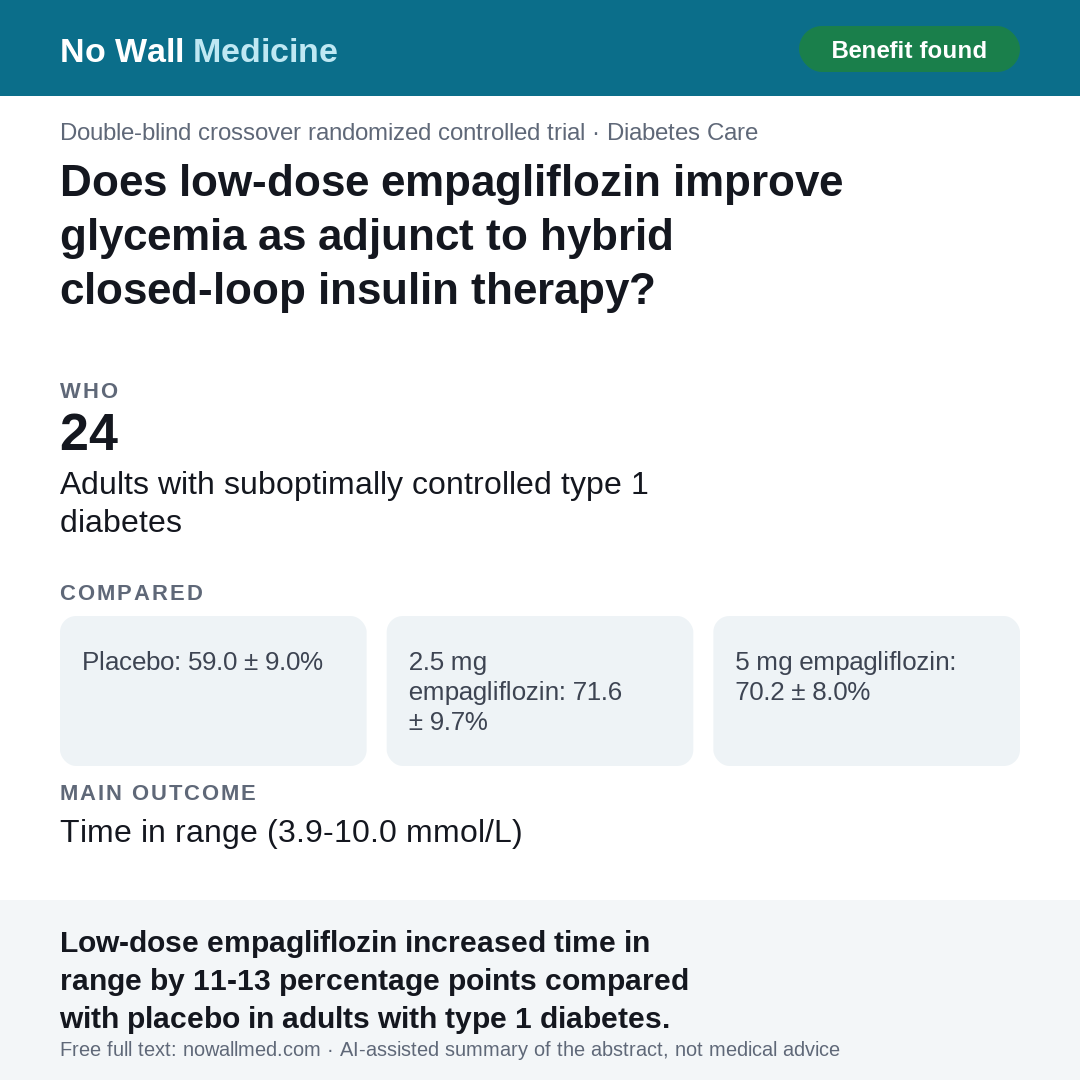
Low-Dose Empagliflozin as Adjunct to Hybrid Closed-Loop Insulin Therapy in Adults With Suboptimally Controlled Type 1 Diabetes: A Randomized Crossover Controlled Trial
Double-blind crossover randomized controlled trialBenefit found
Does low-dose empagliflozin improve glycemia as adjunct to hybrid closed-loop insulin therapy?
Who
24
Adults with suboptimally controlled type 1 diabetes
Compared
Placebo: 59.0 ± 9.0%
2.5 mg empagliflozin: 71.6 ± 9.7%
5 mg empagliflozin: 70.2 ± 8.0%
Main outcome
Time in range (3.9-10.0 mmol/L)
Bottom line: Low-dose empagliflozin increased time in range by 11-13 percentage points compared with placebo in adults with type 1 diabetes.
Diabetes Care · 2022-11-05Download image
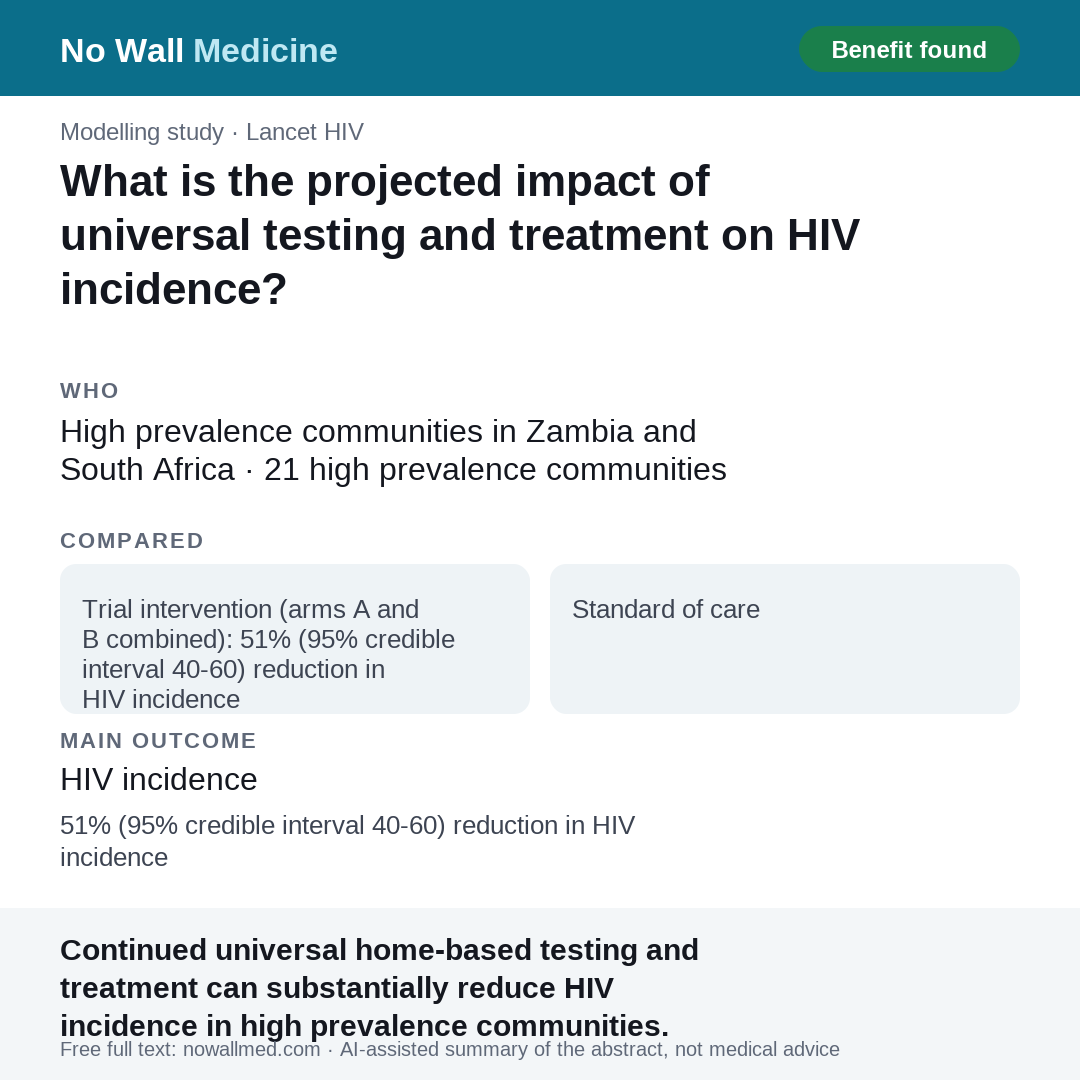
Projected outcomes of universal testing and treatment in a generalised HIV epidemic in Zambia and South Africa (the HPTN 071 [PopART] trial): a modelling study
Modelling studyBenefit found
What is the projected impact of universal testing and treatment on HIV incidence?
Who
High prevalence communities in Zambia and South Africa · 21 high prevalence communities in Zambia and South Africa
Compared
Trial intervention (arms A and B combined): 51% (95% credible interval 40-60) reduction in HIV incidence
Standard of care
Main outcome
HIV incidence
Result: 51% (95% credible interval 40-60) reduction in HIV incidence
Bottom line: Continued universal home-based testing and treatment can substantially reduce HIV incidence in high prevalence communities.
Funded by: National Institute of Allergy and Infectious Diseases and others
Lancet HIV · 2022-11-05Download image
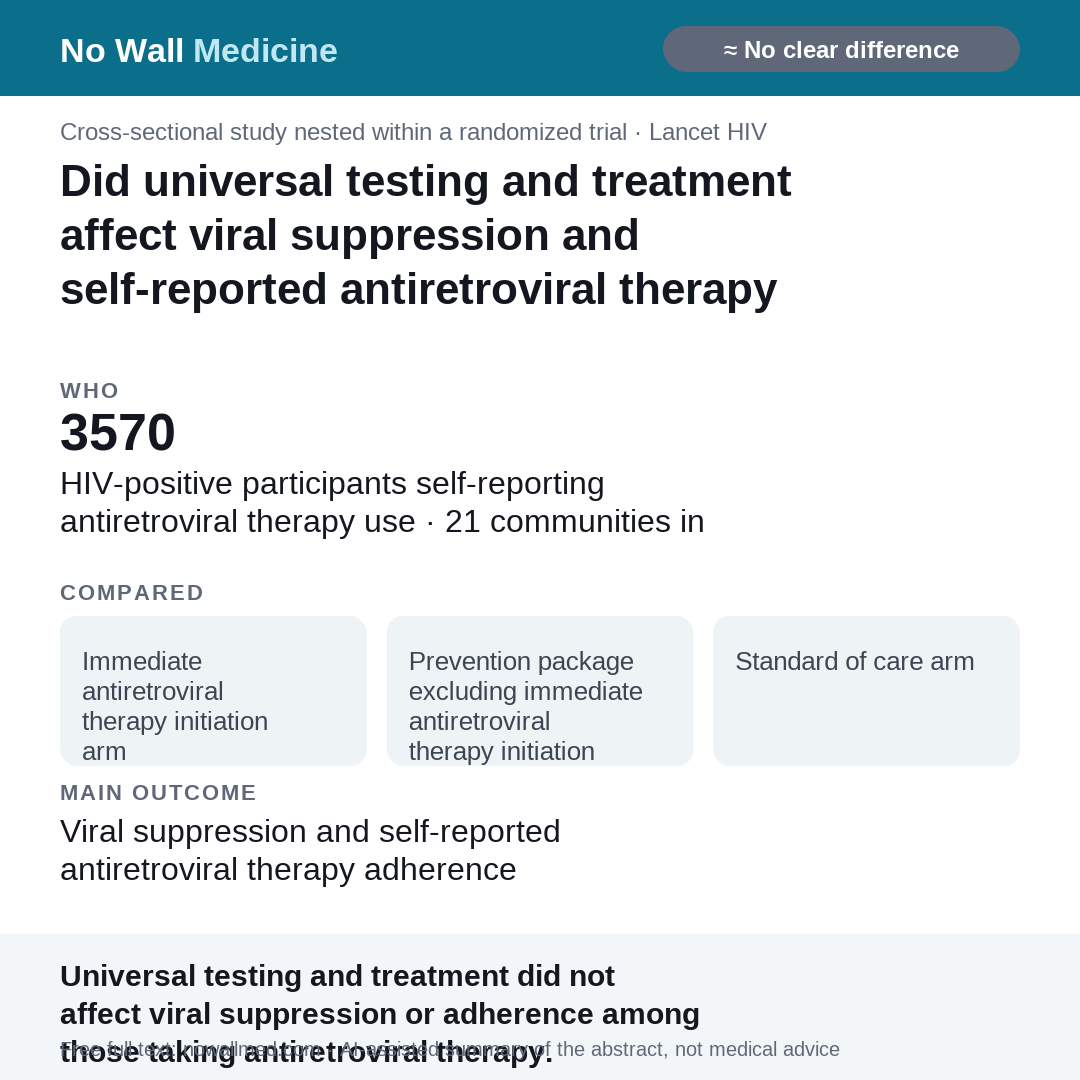
Viral suppression and self-reported ART adherence after 3 years of universal testing and treatment in the HPTN 071 (PopART) community-randomised trial in Zambia and South Africa: a cross-sectional analysis
Cross-sectional study nested within a randomized trialNo clear difference
Did universal testing and treatment affect viral suppression and self-reported antiretroviral therapy adherence?
Who
3570
HIV-positive participants self-reporting antiretroviral therapy use · 21 communities in Zambia and South Africa
Compared
Immediate antiretroviral therapy initiation arm
Prevention package excluding immediate antiretroviral therapy initiation arm
Standard of care arm
Main outcome
Viral suppression and self-reported antiretroviral therapy adherence
Bottom line: Universal testing and treatment did not affect viral suppression or adherence among those taking antiretroviral therapy.
Funded by: National Institute of Allergy and Infectious Diseases and others
Lancet HIV · 2022-11-05Download image
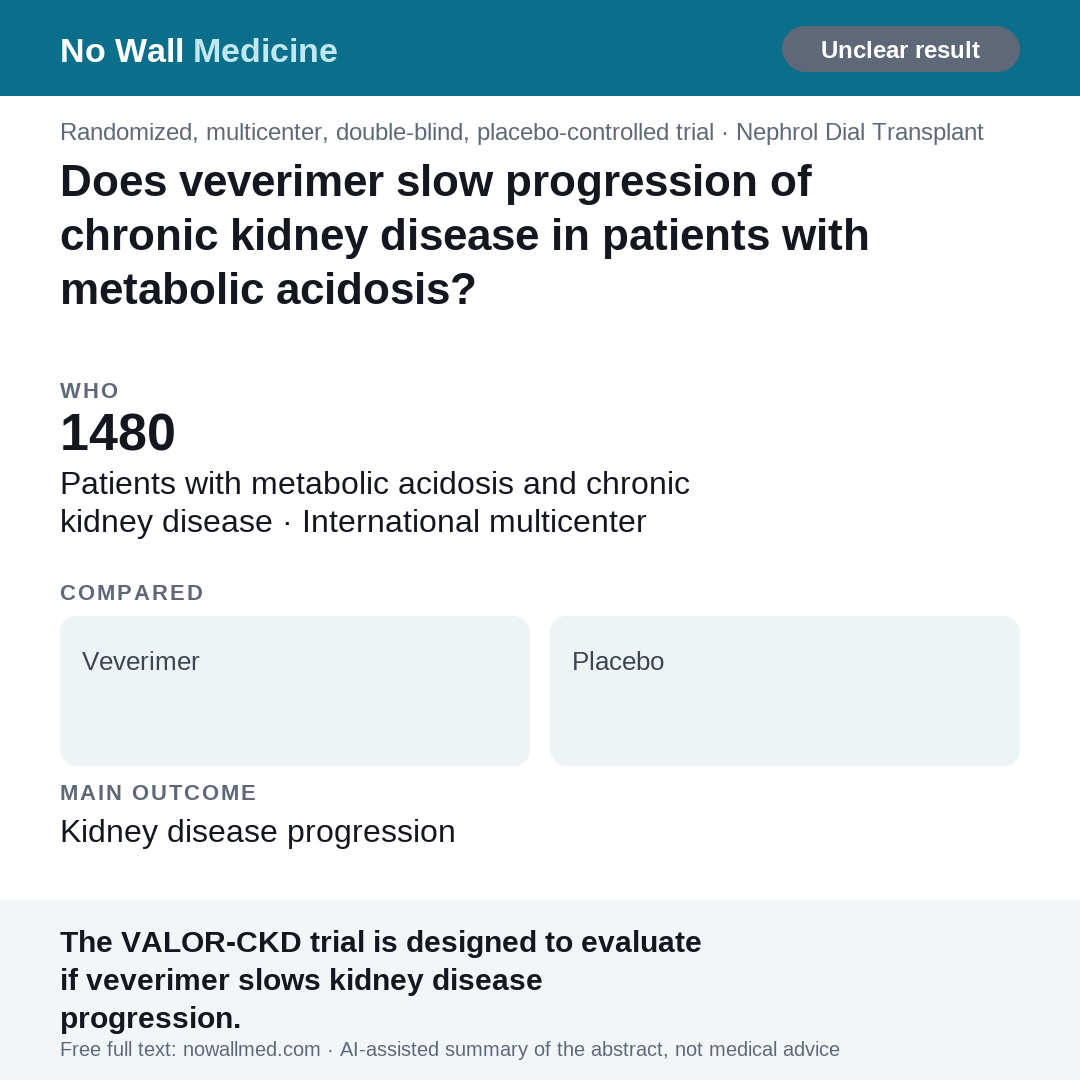
Design and population of the VALOR-CKD study: a multicenter, randomized, double-blind, placebo-controlled trial evaluating the efficacy and safety of veverimer in slowing progression of chronic kidney disease in patients with metabolic acidosis
Randomized, multicenter, double-blind, placebo-controlled trialUnclear result
Does veverimer slow progression of chronic kidney disease in patients with metabolic acidosis?
Who
1480
Patients with metabolic acidosis and chronic kidney disease · International multicenter study
Compared
Veverimer
Placebo
Main outcome
Kidney disease progression
Bottom line: The VALOR-CKD trial is designed to evaluate if veverimer slows kidney disease progression.
Nephrol Dial Transplant · 2022-11-05Download image
Scalp biomarkers during dupilumab treatment support Th2 pathway pathogenicity in alopecia areata
Randomized trialBenefit found
Do scalp biomarkers during dupilumab treatment support Th2 pathway pathogenicity in alopecia areata?
Who
Alopecia areata patients with and without concomitant atopy
Compared
Dupilumab: 48% and 97% improvements in lesional scalp profile
Placebo: 2% worsening in lesional scalp profile and 54% worsening in hair keratins
Main outcome
Changes in scalp biomarkers and clinical hair regrowth
Bottom line: Dupilumab suppresses Th2-related markers and increases hair keratins, supporting the role of Th2 cytokines in alopecia areata.
Allergy · 2022-11-05Download image

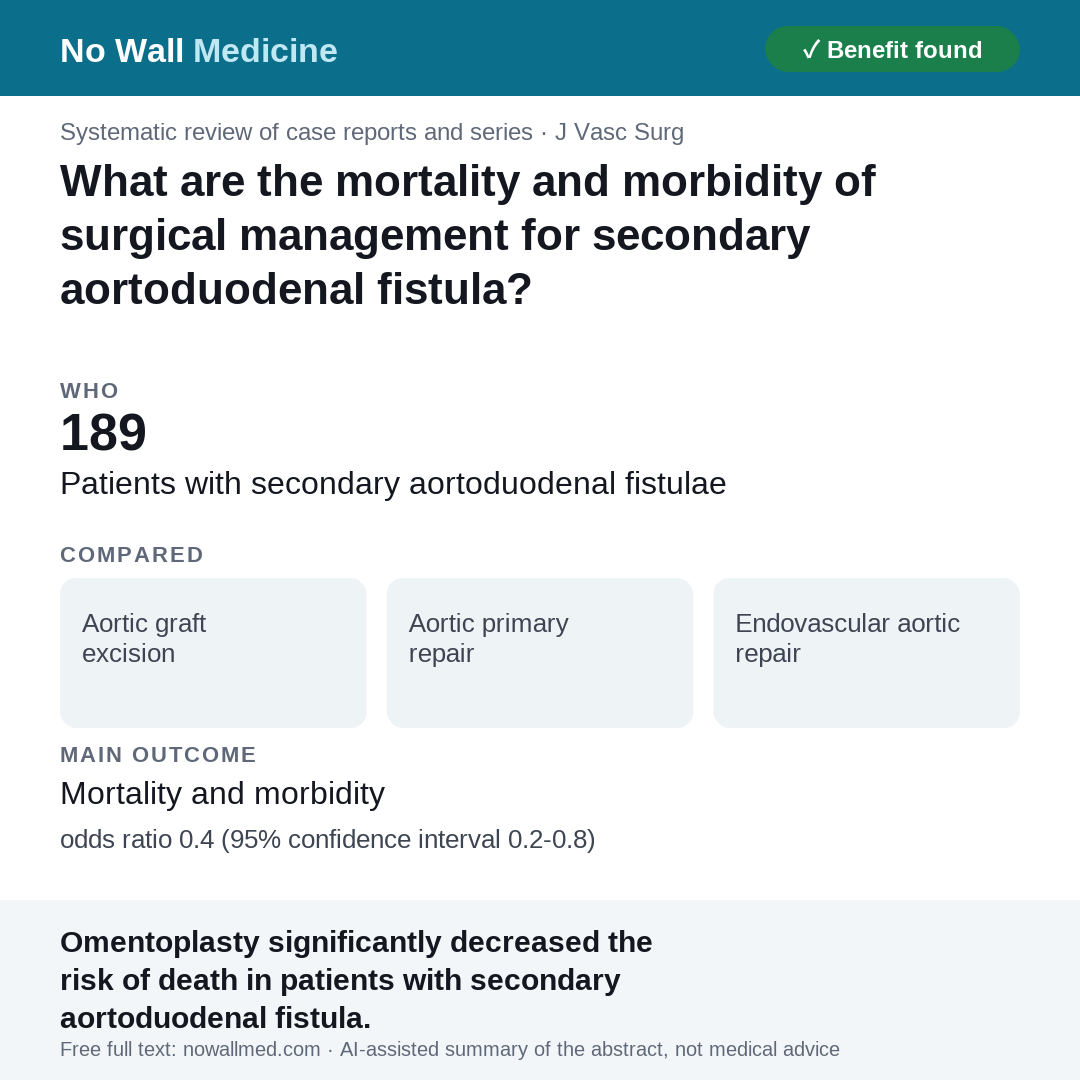
A systematic review of the surgical management of secondary aortoduodenal fistula
Systematic review of case reports and seriesBenefit found
What are the mortality and morbidity of surgical management for secondary aortoduodenal fistula?
Who
189
Patients with secondary aortoduodenal fistulae
Compared
Aortic graft excision
Aortic primary repair
Endovascular aortic repair
Main outcome
Mortality and morbidity
Result: odds ratio 0.4 (95% confidence interval 0.2-0.8)
Bottom line: Omentoplasty significantly decreased the risk of death in patients with secondary aortoduodenal fistula.
J Vasc Surg · 2022-11-05Download image