Visual abstracts
New randomized trials and meta-analyses from leading journals at a glance: who was studied, what was compared, and what was found. Every paper is free to read in full.
All specialtiesCardiology 4877Oncology 4138Gastroenterology & Hepatology 1942Infectious Disease 3837Neurology 1905Psychiatry & Mental Health 2273Pulmonology 2143Critical Care 1365Endocrinology & Diabetes 2580Pediatrics 2980Surgery 2559Orthopedics & Sports Medicine 931Neurosurgery 537Cardiothoracic & Vascular Surgery 674Plastic & Reconstructive Surgery 591Nephrology 1133Rheumatology 823Hematology 1109Dermatology 621Ophthalmology 543Obstetrics & Gynecology 1686Public & Global Health 1058Radiology & Imaging 648Anesthesiology 986Urology 764ENT (Otolaryngology) 503Emergency Medicine 511Allergy & Immunology 313Geriatrics 981Family Medicine & Primary Care 562Medical Genetics & Genomics 676Pathology & Laboratory Medicine 159Physical Medicine & Rehabilitation 757Palliative Care 444Nutrition 1588Digital Health & AI 2201General Medicine 321
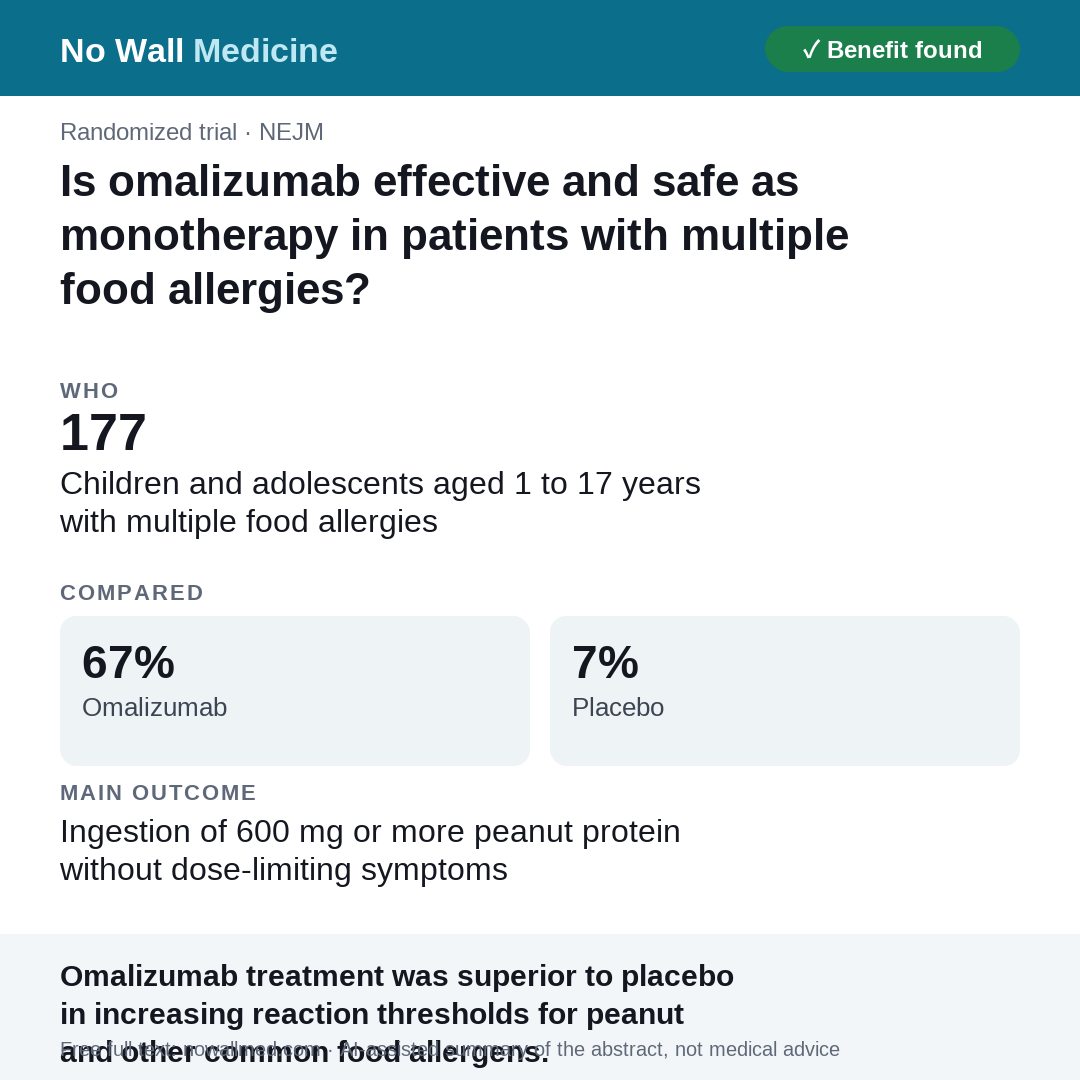
Omalizumab for the Treatment of Multiple Food Allergies
Randomized trialBenefit found
Is omalizumab effective and safe as monotherapy in patients with multiple food allergies?
Who
177
Children and adolescents aged 1 to 17 years with multiple food allergies
Compared
67%Omalizumab (79/118)
7%Placebo (4/59)
Main outcome
Ingestion of 600 mg or more peanut protein without dose-limiting symptoms
Bottom line: Omalizumab treatment was superior to placebo in increasing reaction thresholds for peanut and other common food allergens.
Funded by: National Institute of Allergy and Infectious Diseases and others
NEJM · 2024-02-25Download image
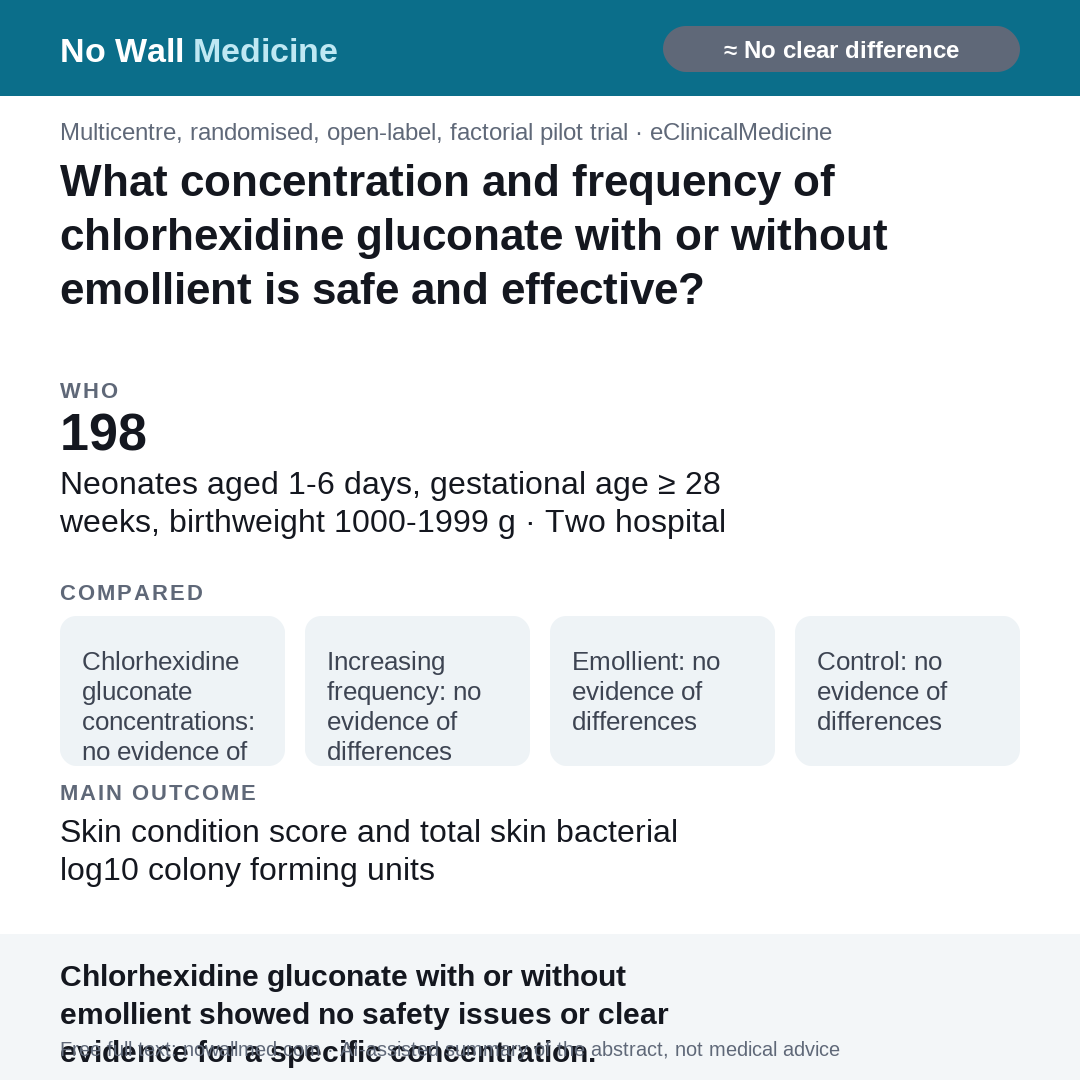
Safety and efficacy of whole-body chlorhexidine gluconate cleansing with or without emollient in hospitalised neonates (NeoCHG): a multicentre, randomised, open-label, factorial pilot trial
Multicentre, randomised, open-label, factorial pilot trialNo clear difference
What concentration and frequency of chlorhexidine gluconate with or without emollient is safe and effective?
Who
198
Neonates aged 1-6 days, gestational age ≥ 28 weeks, birthweight 1000-1999 g · Two hospital sites in South Africa and Bangladesh
Compared
Chlorhexidine gluconate concentrations: no evidence of differences
Increasing frequency: no evidence of differences
Emollient: no evidence of differences
Control: no evidence of differences
Main outcome
Skin condition score and total skin bacterial log10 colony forming units
Bottom line: Chlorhexidine gluconate with or without emollient showed no safety issues or clear evidence for a specific concentration.
Funded by: MRC, GARDP, MRC Clinical Trials Unit, St. George's, University of London
eClinicalMedicine · 2024-02-25Download image
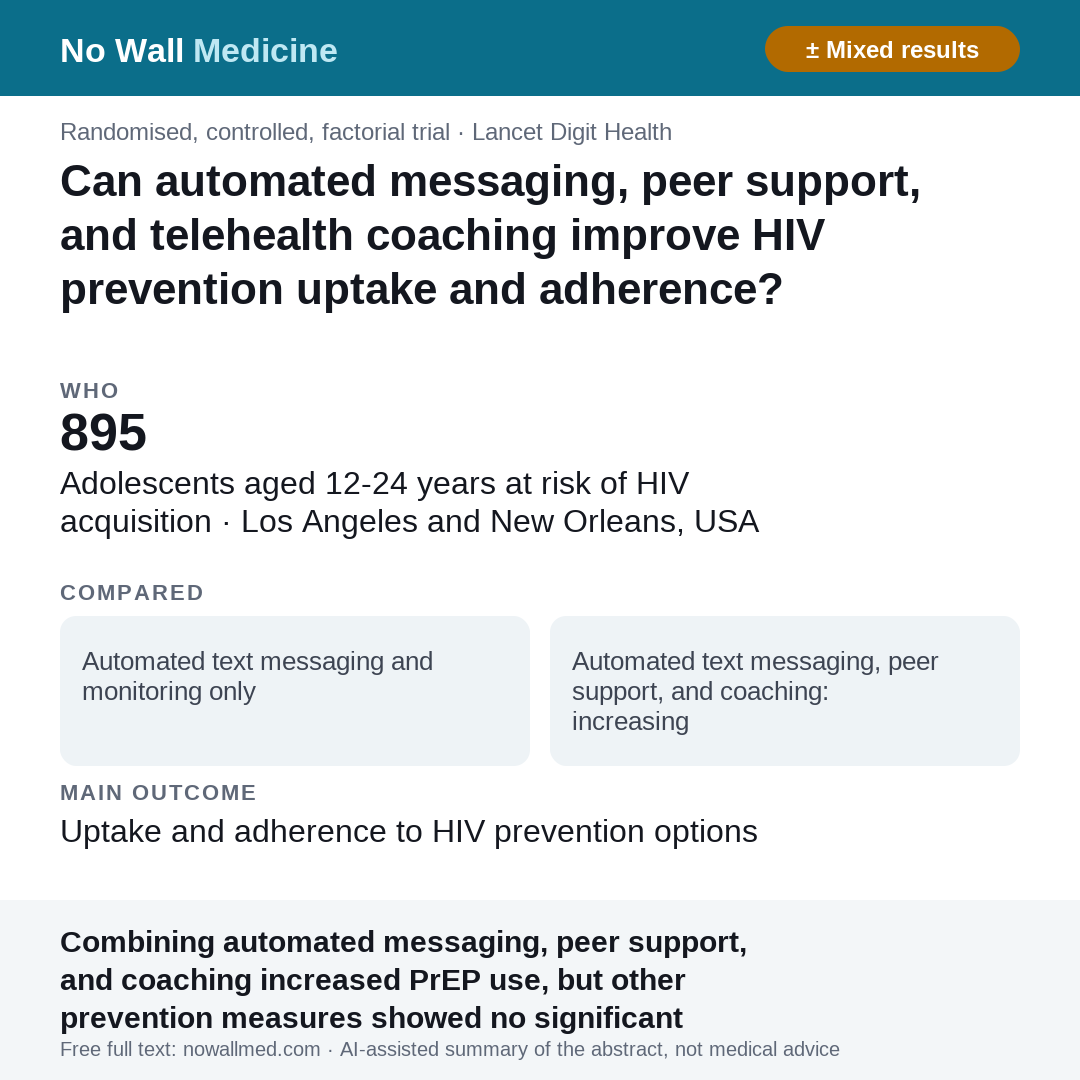
Optimal strategies to improve uptake of and adherence to HIV prevention among young people at risk for HIV acquisition in the USA (ATN 149): a randomised, controlled, factorial trial
Randomised, controlled, factorial trialMixed results
Can automated messaging, peer support, and telehealth coaching improve HIV prevention uptake and adherence?
Who
895
Adolescents aged 12-24 years at risk of HIV acquisition · Los Angeles and New Orleans, USA
Compared
Automated text messaging and monitoring only
Automated text messaging, peer support, and coaching: increasing
Main outcome
Uptake and adherence to HIV prevention options
Result: odds ratio 2·31, 95% CI 1·28-4·14
Bottom line: Combining automated messaging, peer support, and coaching increased PrEP use, but other prevention measures showed no significant improvement.
Lancet Digit Health · 2024-02-24Download image
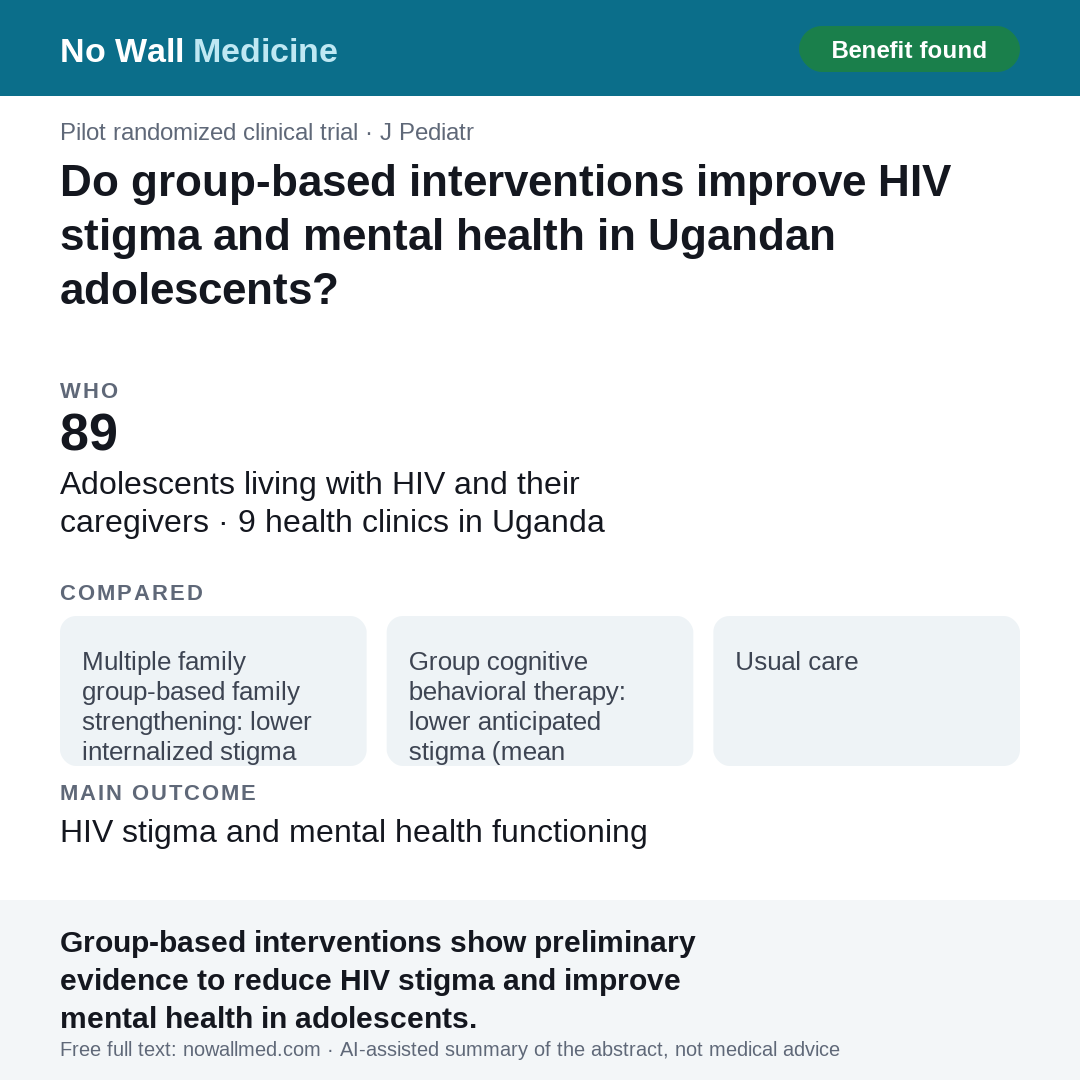
Preliminary Impact of Group-Based Interventions on Stigma, Mental Health, and Treatment Adherence Among Adolescents Living with Human Immunodeficiency Virus in Uganda
Pilot randomized clinical trialBenefit found
Do group-based interventions improve HIV stigma and mental health in Ugandan adolescents?
Who
89
Adolescents living with HIV and their caregivers · 9 health clinics in Uganda
Compared
Multiple family group-based family strengthening: lower internalized stigma (mean difference = -0.008, 95% CI = -0.015, -0.001)
Group cognitive behavioral therapy: lower anticipated stigma (mean difference = -0.039, 95% CI = -0.072, -0.006)
Usual care
Main outcome
HIV stigma and mental health functioning
Bottom line: Group-based interventions show preliminary evidence to reduce HIV stigma and improve mental health in adolescents.
J Pediatr · 2024-02-23Download image
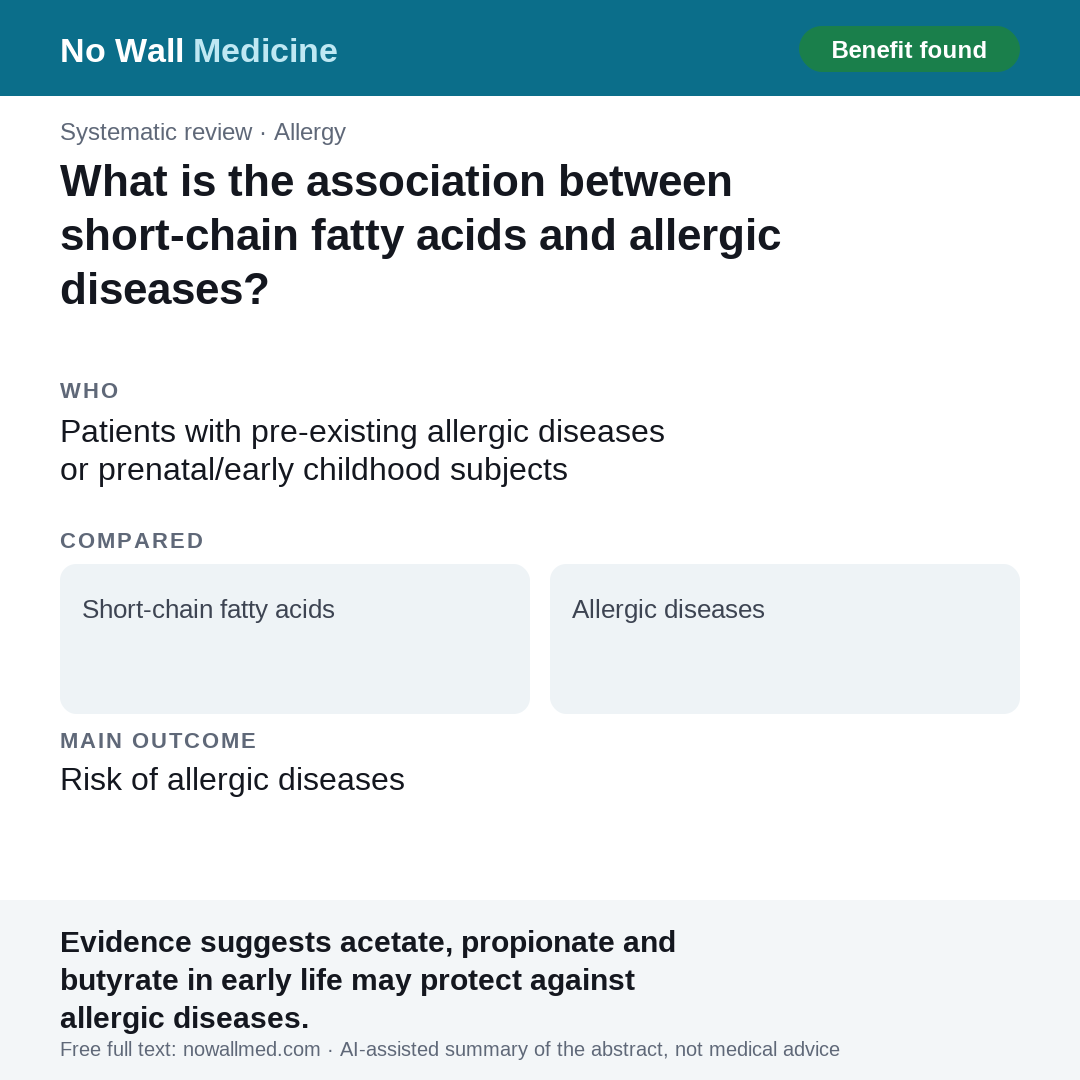
Systematic review of the association between short-chain fatty acids and allergic diseases
Systematic reviewBenefit found
What is the association between short-chain fatty acids and allergic diseases?
Who
Patients with pre-existing allergic diseases or prenatal/early childhood subjects
Compared
Short-chain fatty acids
Allergic diseases
Main outcome
Risk of allergic diseases
Bottom line: Evidence suggests acetate, propionate and butyrate in early life may protect against allergic diseases.
Allergy · 2024-02-23Download image
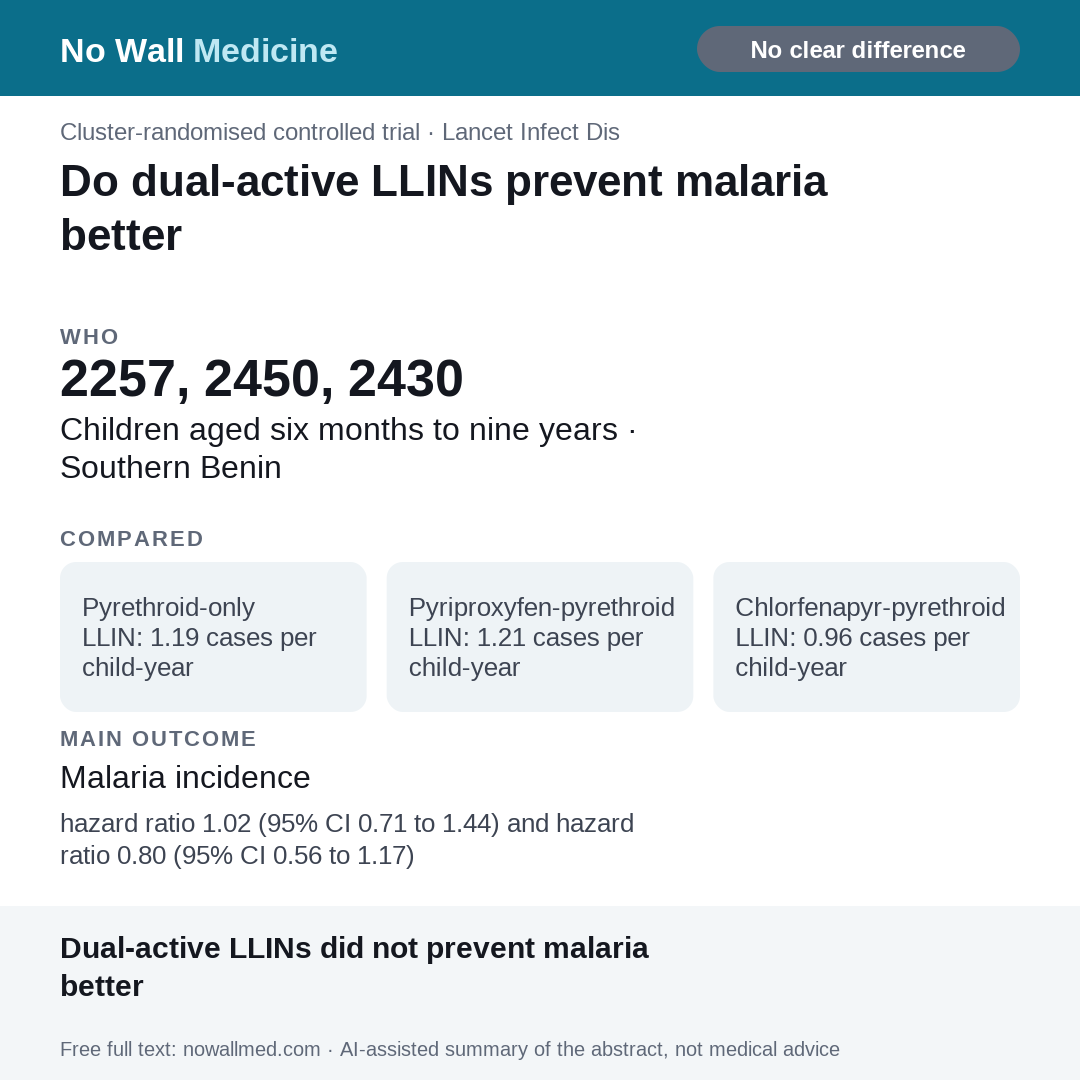
Effectiveness of pyriproxyfen-pyrethroid and chlorfenapyr-pyrethroid long-lasting insecticidal nets (LLINs) compared with pyrethroid-only LLINs for malaria control in the third year post-distribution: a secondary analysis of a cluster-randomised controlled trial in Benin
Cluster-randomised controlled trialNo clear difference
Do dual-active LLINs prevent malaria better
Who
2257, 2450, 2430
Children aged six months to nine years · Southern Benin
Compared
Pyrethroid-only LLIN: 1.19 cases per child-year
Pyriproxyfen-pyrethroid LLIN: 1.21 cases per child-year
Chlorfenapyr-pyrethroid LLIN: 0.96 cases per child-year
Main outcome
Malaria incidence
Result: hazard ratio 1.02 (95% CI 0.71 to 1.44) and hazard ratio 0.80 (95% CI 0.56 to 1.17)
Bottom line: Dual-active LLINs did not prevent malaria better
Limitation: lower study net use and declining insecticide concentration
Funded by: UNITAID, The Global Fund
Lancet Infect Dis · 2024-02-21Download image
Paediatric, maternal, and congenital mpox: a systematic review and meta-analysis
Systematic review and meta-analysisMixed results
What are the outcomes of paediatric, maternal, and congenital mpox?
Who
Paediatric, maternal, and congenital mpox cases · Global databases
Compared
Paediatric cases: 11% case fatality ratio
Pregnancies: half resulted in fetal death
Main outcome
Paediatric case fatality ratio
Result: 11% (95% CI 4-20)
Bottom line: The paediatric case fatality ratio was 11%, with significant knowledge gaps in prevention and treatment for these populations.
Lancet Glob Health · 2024-02-21Download image

Clinical care of childhood sexual abuse: a systematic review and critical appraisal of guidelines from European countries
Systematic review and critical appraisalHarm found
What is the quality and reporting of national clinical practice guidelines for childhood sexual abuse in Europe?
Who
National clinical practice guidelines from 34 COST Action 19106 Network Countries · European countries
Compared
National clinical practice guidelines: lacked many components compared to WHO reference standards
WHO reference standards
Main outcome
Quality and reporting of clinical practice guidelines
Bottom line: Many European countries lack guidelines, and existing ones often fall short in safety, risk assessment, and mental health interventions.
Funded by: International Centre for Missing and Exploited Children
Lancet Reg Health Eur · 2024-02-21Download image

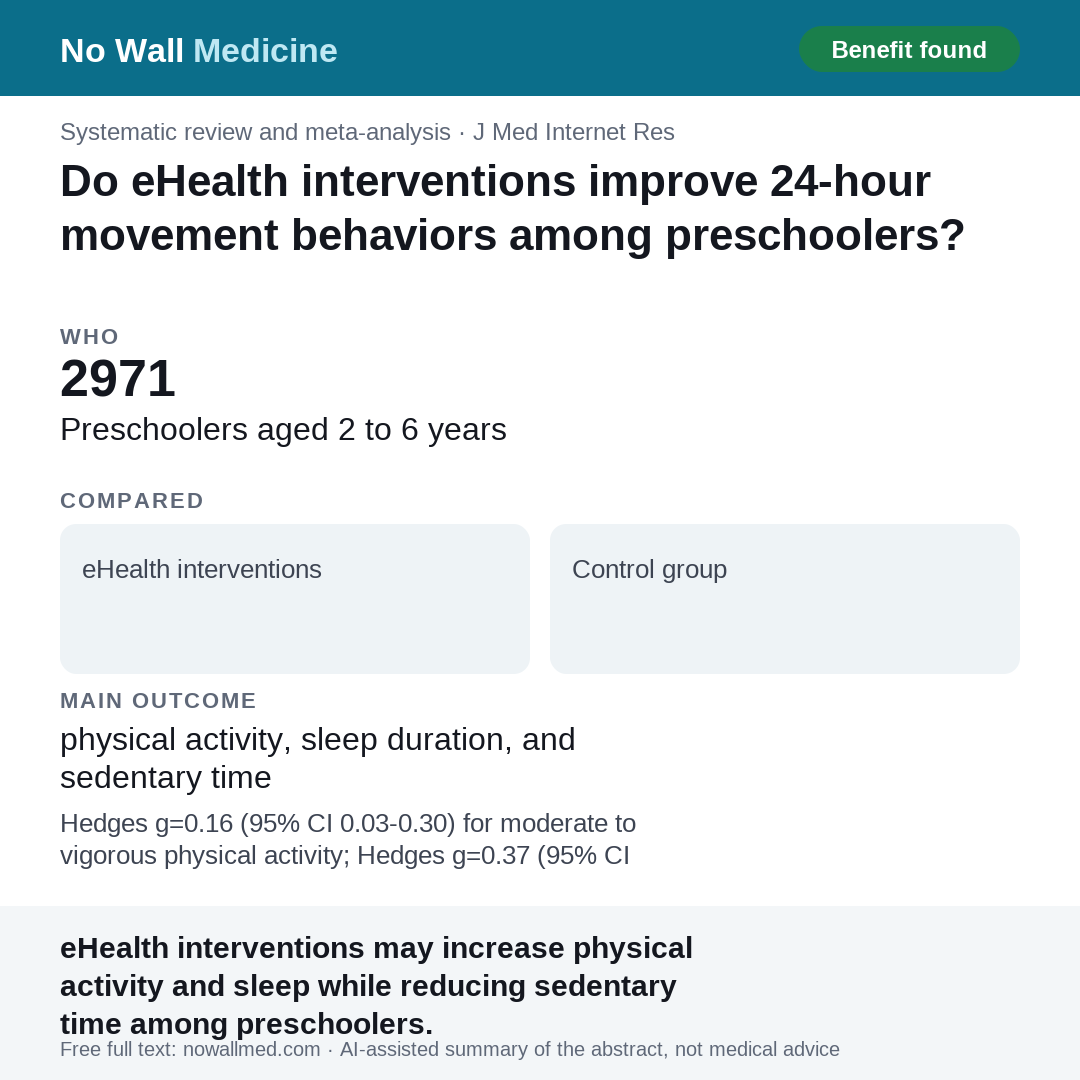
Effects of eHealth Interventions on 24-Hour Movement Behaviors Among Preschoolers: Systematic Review and Meta-Analysis
Systematic review and meta-analysisBenefit found
Do eHealth interventions improve 24-hour movement behaviors among preschoolers?
Who
2971
Preschoolers aged 2 to 6 years
Compared
eHealth interventions
Control group
Main outcome
physical activity, sleep duration, and sedentary time
Result: Hedges g=0.16 (95% CI 0.03-0.30) for moderate to vigorous physical activity; Hedges g=0.37 (95% CI 0.02-0.72) for total physical activity; Hedges g=-0.15 (95% CI -0.27 to -0.02) for sedentary time; Hedges g=0.47 (95% CI 0.18-0.75) for sleep duration
Bottom line: eHealth interventions may increase physical activity and sleep while reducing sedentary time among preschoolers.
Limitation: Need for larger sample sizes, more rigorous comparative trials, and exploration of long-term effects.
J Med Internet Res · 2024-02-21Download image
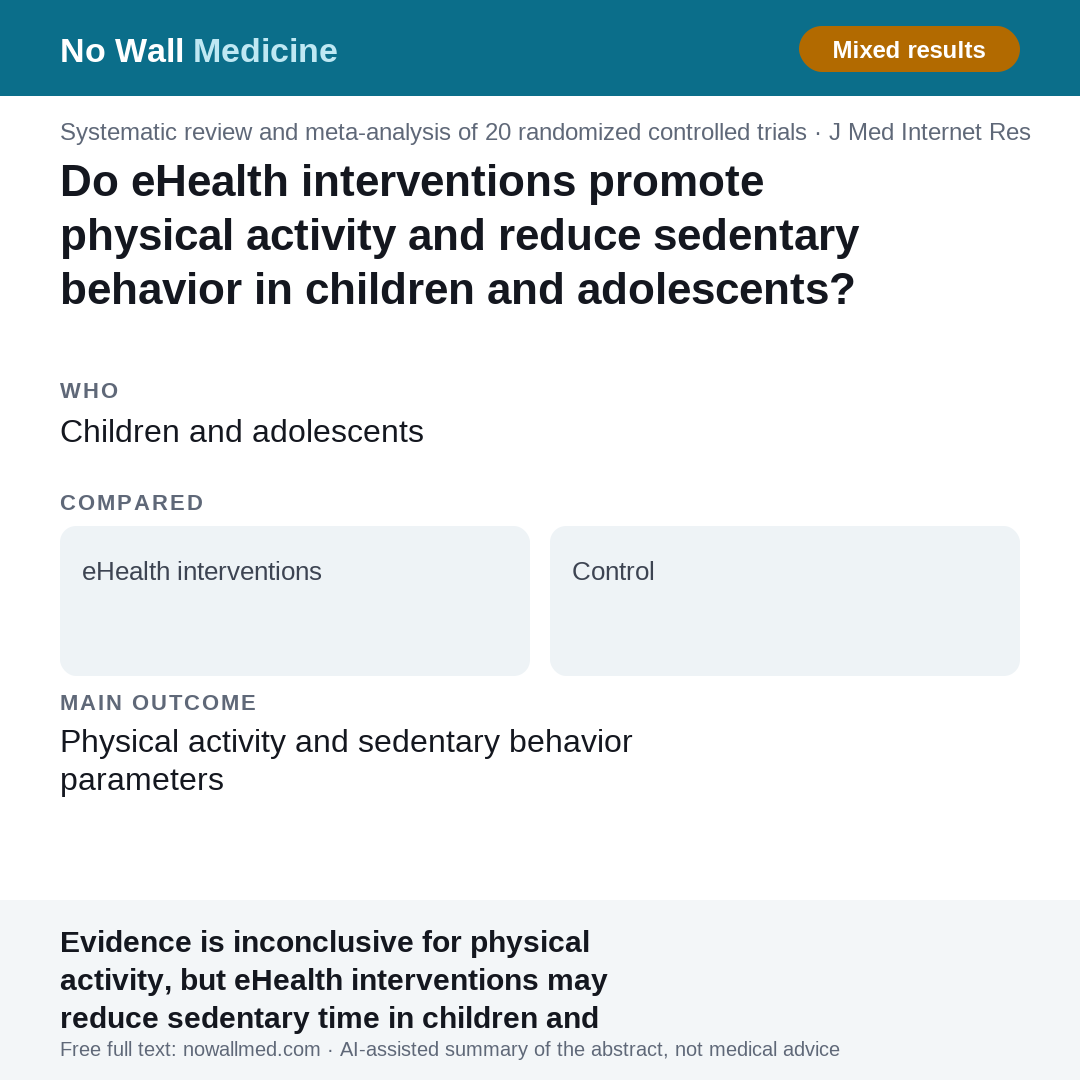
Effectiveness of eHealth Interventions Promoting Physical Activity in Children and Adolescents: Systematic Review and Meta-Analysis
Systematic review and meta-analysis of 20 randomized controlled trialsMixed results
Do eHealth interventions promote physical activity and reduce sedentary behavior in children and adolescents?
Who
Children and adolescents
Compared
eHealth interventions
Control
Main outcome
Physical activity and sedentary behavior parameters
Bottom line: Evidence is inconclusive for physical activity, but eHealth interventions may reduce sedentary time in children and adolescents.
Limitation: Scarcity of evidence, overall risk of bias, and low to very low certainty of evidence.
J Med Internet Res · 2024-02-21Download image
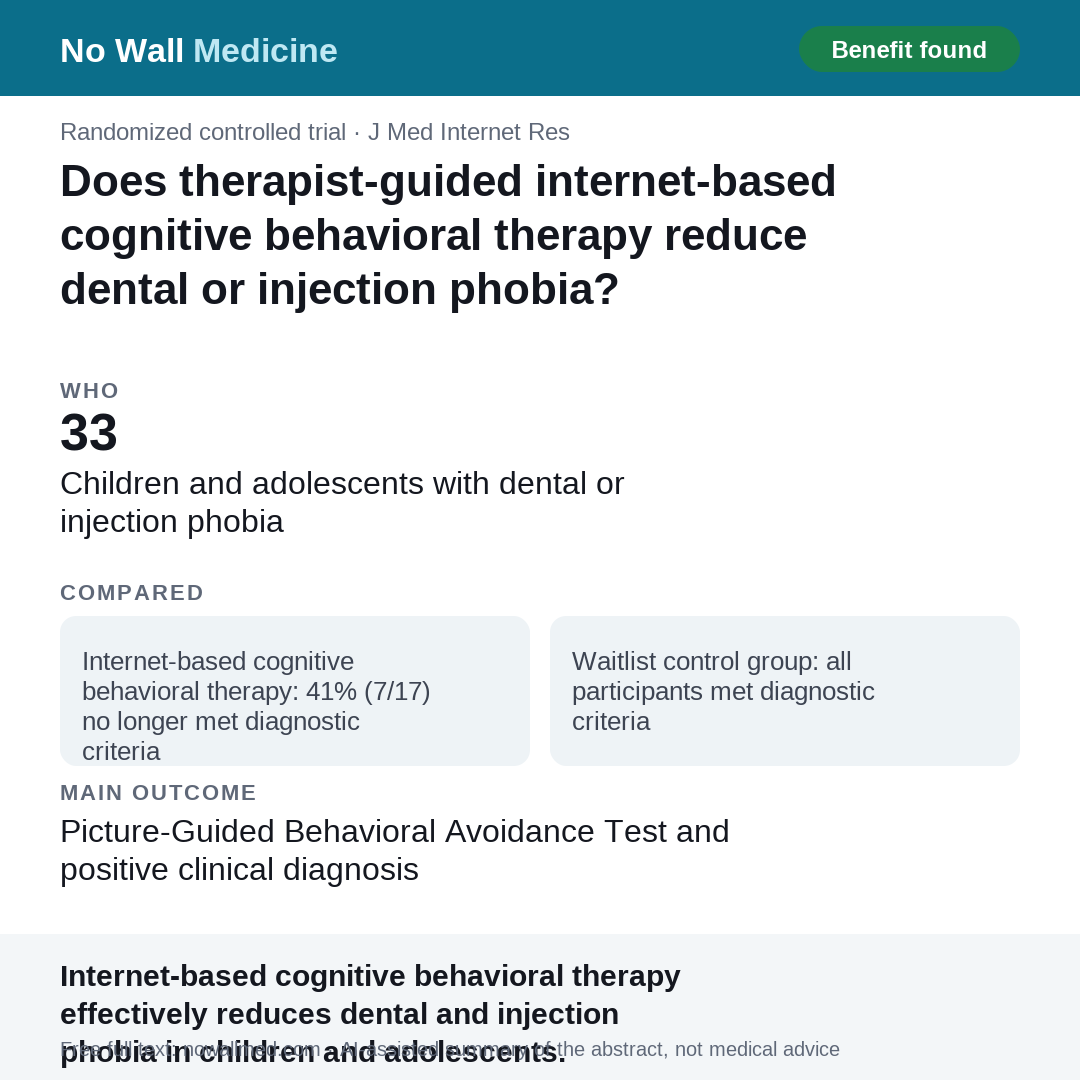
Internet-Based Cognitive Behavioral Therapy for Children and Adolescents With Dental or Injection Phobia: Randomized Controlled Trial
Randomized controlled trialBenefit found
Does therapist-guided internet-based cognitive behavioral therapy reduce dental or injection phobia?
Who
33
Children and adolescents with dental or injection phobia
Compared
Internet-based cognitive behavioral therapy: 41% (7/17) no longer met diagnostic criteria
Waitlist control group: all participants met diagnostic criteria
Main outcome
Picture-Guided Behavioral Avoidance Test and positive clinical diagnosis
Bottom line: Internet-based cognitive behavioral therapy effectively reduces dental and injection phobia in children and adolescents.
J Med Internet Res · 2024-02-21Download image
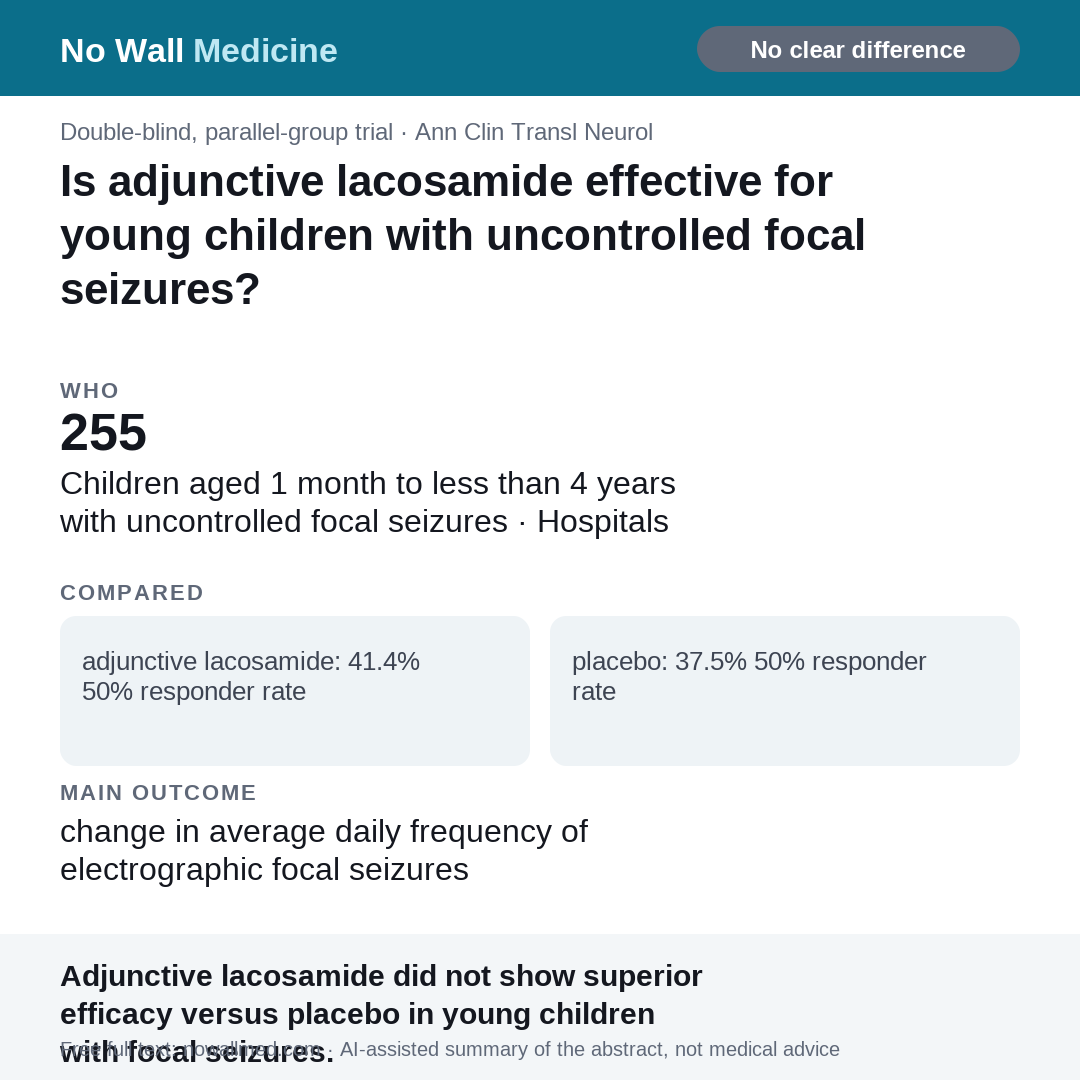
Efficacy and tolerability of adjunctive lacosamide in patients aged <4 years with focal seizures
Double-blind, parallel-group trialNo clear difference
Is adjunctive lacosamide effective for young children with uncontrolled focal seizures?
Who
255
Children aged 1 month to less than 4 years with uncontrolled focal seizures · Hospitals and clinics in 25 countries
Compared
adjunctive lacosamide: 41.4% 50% responder rate
placebo: 37.5% 50% responder rate
Main outcome
change in average daily frequency of electrographic focal seizures
Bottom line: Adjunctive lacosamide did not show superior efficacy versus placebo in young children with focal seizures.
Limitation: High variability and low reliability between readers in video-electroencephalogram interpretation.
Ann Clin Transl Neurol · 2024-02-20Download image
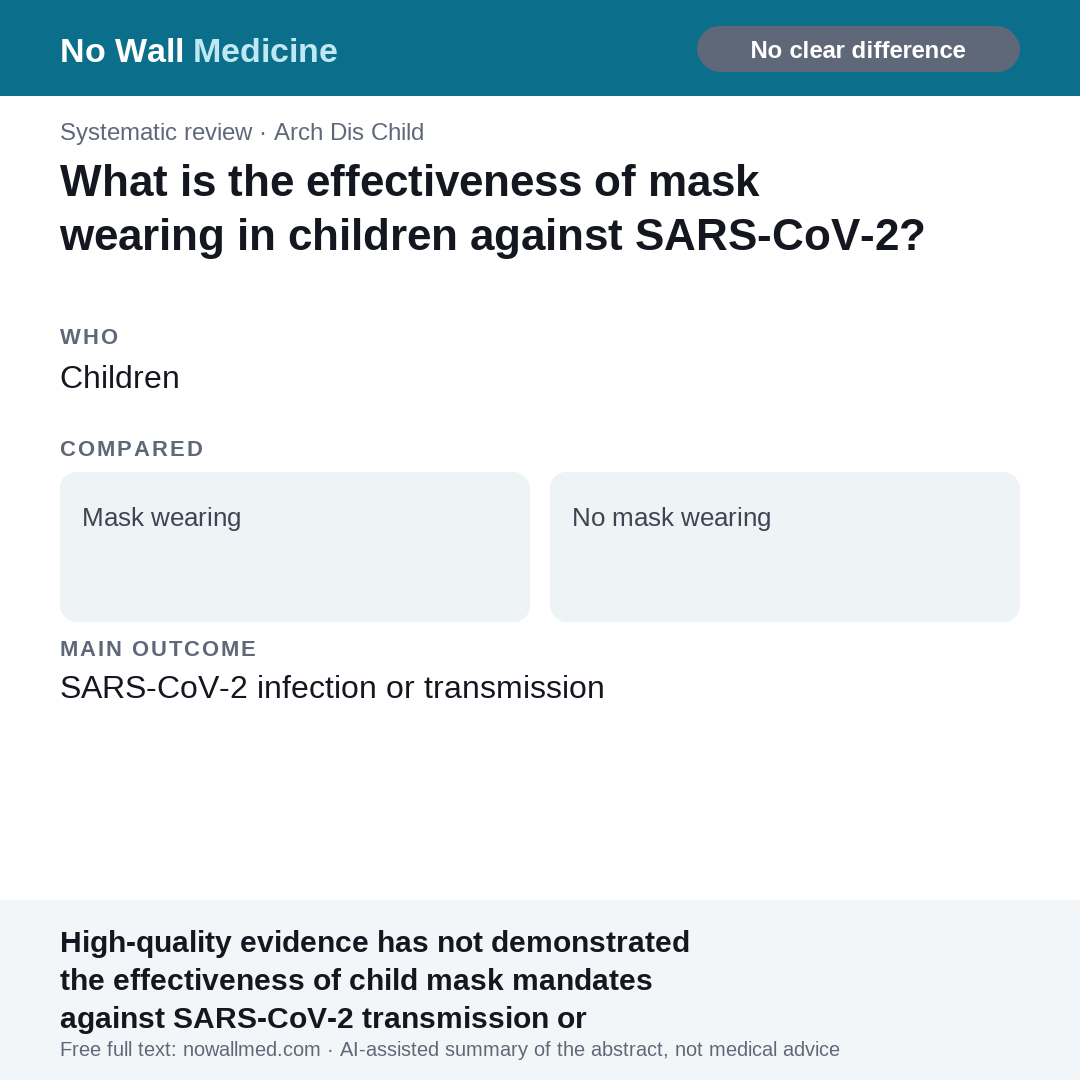
Child mask mandates for COVID-19: a systematic review
Systematic reviewNo clear difference
What is the effectiveness of mask wearing in children against SARS-CoV-2?
Who
Children
Compared
Mask wearing
No mask wearing
Main outcome
SARS-CoV-2 infection or transmission
Bottom line: High-quality evidence has not demonstrated the effectiveness of child mask mandates against SARS-CoV-2 transmission or infection.
Limitation: Included observational studies had critical or serious risk of bias and potential confounding.
Arch Dis Child · 2024-02-19Download image
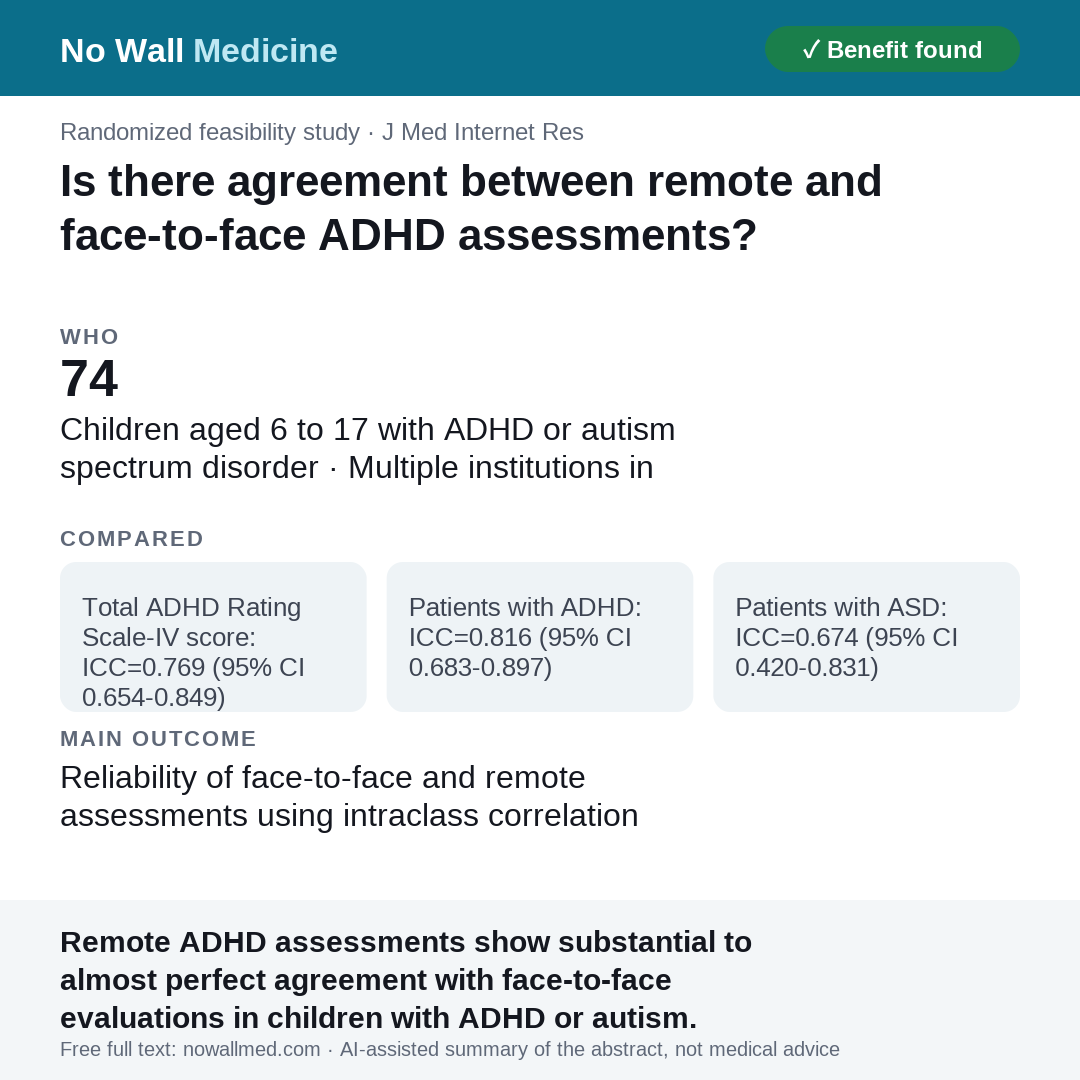
Reliability of Telepsychiatry Assessments Using the Attention-Deficit/Hyperactivity Disorder Rating Scale-IV for Children With Neurodevelopmental Disorders and Their Caregivers: Randomized Feasibility Study
Randomized feasibility studyBenefit found
Is there agreement between remote and face-to-face ADHD assessments?
Who
74
Children aged 6 to 17 with ADHD or autism spectrum disorder · Multiple institutions in Japan
Compared
Total ADHD Rating Scale-IV score: ICC=0.769 (95% CI 0.654-0.849)
Patients with ADHD: ICC=0.816 (95% CI 0.683-0.897)
Patients with ASD: ICC=0.674 (95% CI 0.420-0.831)
Main outcome
Reliability of face-to-face and remote assessments using intraclass correlation coefficient
Result: ICC=0.769 (95% CI 0.654-0.849)
Bottom line: Remote ADHD assessments show substantial to almost perfect agreement with face-to-face evaluations in children with ADHD or autism.
J Med Internet Res · 2024-02-19Download image
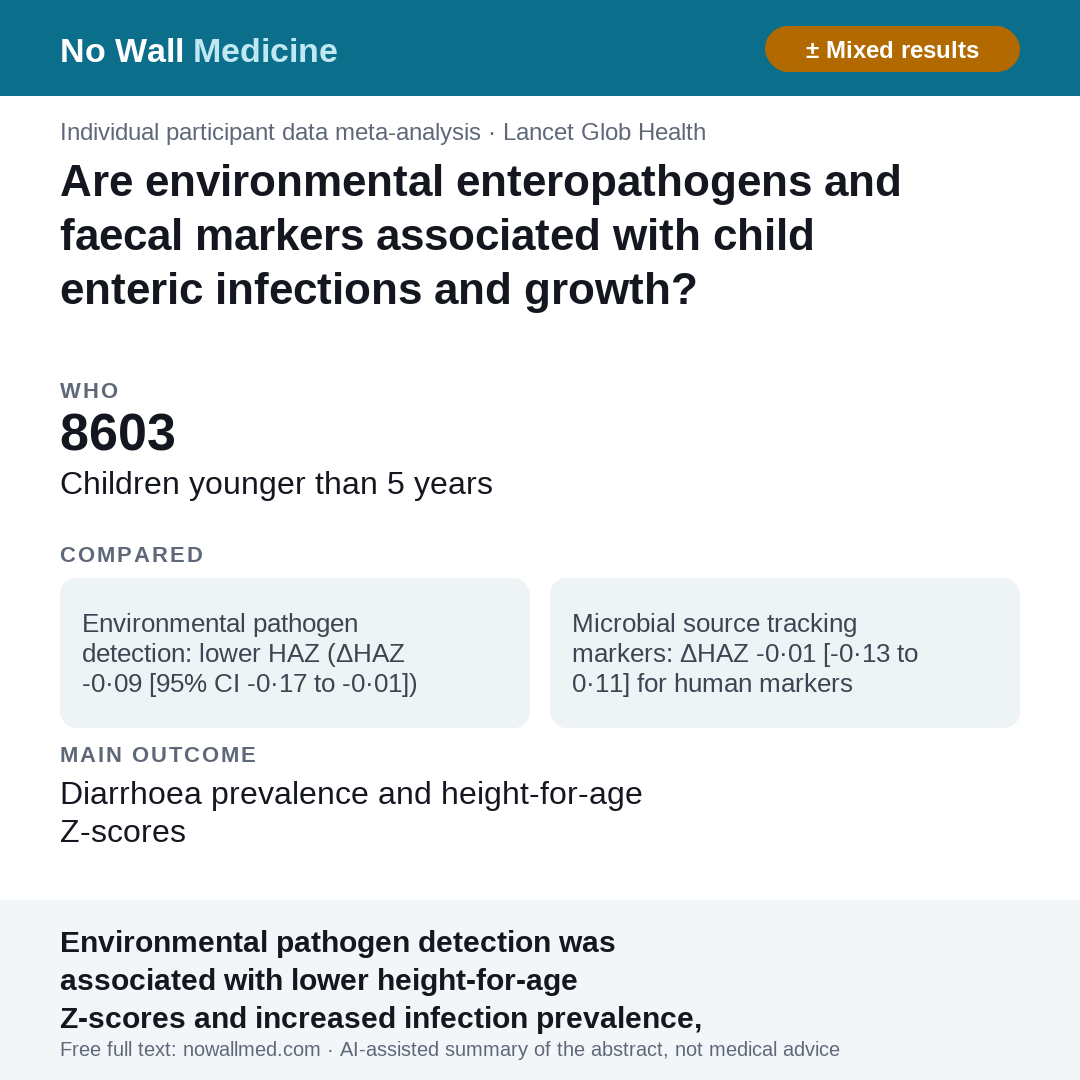
Is detection of enteropathogens and human or animal faecal markers in the environment associated with subsequent child enteric infections and growth: an individual participant data meta-analysis
Individual participant data meta-analysisMixed results
Are environmental enteropathogens and faecal markers associated with child enteric infections and growth?
Who
8603
Children younger than 5 years
Compared
Environmental pathogen detection: lower HAZ (ΔHAZ -0·09 [95% CI -0·17 to -0·01])
Microbial source tracking markers: ΔHAZ -0·01 [-0·13 to 0·11] for human markers
Main outcome
Diarrhoea prevalence and height-for-age Z-scores
Result: ΔHAZ -0·09 (95% CI -0·17 to -0·01)
Bottom line: Environmental pathogen detection was associated with lower height-for-age Z-scores and increased infection prevalence, but not diarrhoea.
Funded by: Bill & Melinda Gates Foundation and UK FCDO
Lancet Glob Health · 2024-02-17Download image
Effect of skin tone on the accuracy of the estimation of arterial oxygen saturation by pulse oximetry: a systematic review
Systematic reviewHarm found
Does skin tone affect the accuracy of pulse oximetry in estimating arterial oxygen saturation?
Who
222644
Adults and children
Compared
Participants with darker skin tones: overestimation of arterial oxygen saturation
Participants with lighter skin tones
Main outcome
Accuracy of pulse oximetry compared with co-oximetry arterial oxygen saturation
Bottom line: Pulse oximetry can overestimate true arterial oxygen saturation in people with darker skin tones.
Limitation: High risk of bias in 64% of studies and considerable heterogeneity.
Br J Anaesth · 2024-02-17Download image

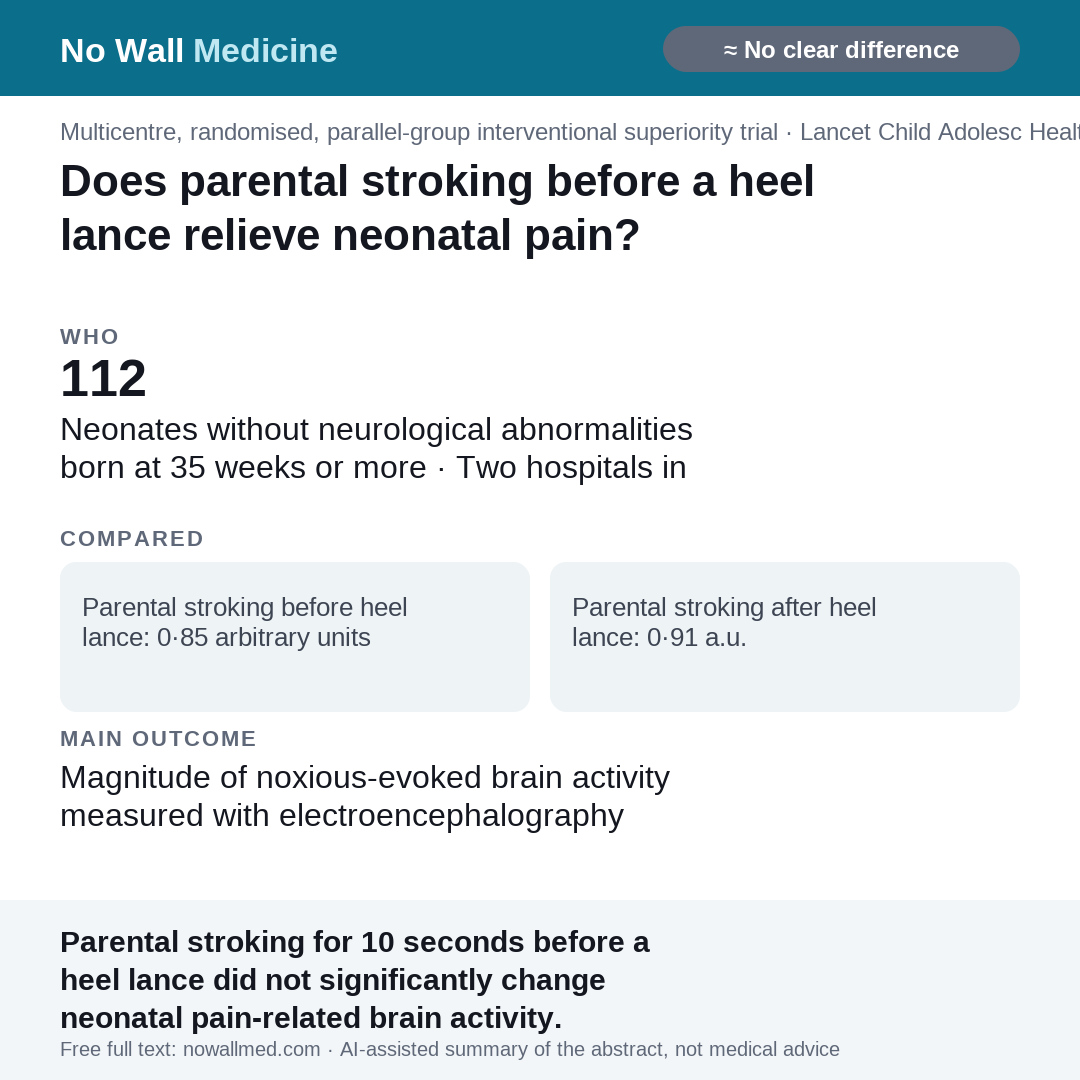
Effect of parental touch on relieving acute procedural pain in neonates and parental anxiety (Petal): a multicentre, randomised controlled trial in the UK
Multicentre, randomised, parallel-group interventional superiority trialNo clear difference
Does parental stroking before a heel lance relieve neonatal pain?
Who
112
Neonates without neurological abnormalities born at 35 weeks or more · Two hospitals in the United Kingdom
Compared
Parental stroking before heel lance: 0·85 arbitrary units
Parental stroking after heel lance: 0·91 a.u.
Main outcome
Magnitude of noxious-evoked brain activity measured with electroencephalography
Result: mean difference of -0·11 a.u. (95% CI -0·42 to 0·20)
Bottom line: Parental stroking for 10 seconds before a heel lance did not significantly change neonatal pain-related brain activity.
Funded by: Wellcome Trust and Bliss
Lancet Child Adolesc Health · 2024-02-16Download image
Are custodial-based mothers and children's units evaluated, effective and aligned with a human rights-based approach? - A systematic review of the evidence
Systematic reviewUnclear result
Are custody-based units effective
Who
incarcerated mothers and children
Compared
Mothers and children
Control
Main outcome
effectiveness of units
Bottom line: Evidence gaps found in custody-based units
Funded by: Corrective Services NSW
eClinicalMedicine · 2024-02-15Download image
The dementia care study (D-CARE): Recruitment strategies and demographic characteristics of participants in a pragmatic randomized trial of dementia care
Pragmatic randomized trialUnclear result
What were the recruitment strategies and demographic characteristics of participants?
Who
2176
Community-dwelling dyads of persons living with dementia and family caregivers · Four clinical trial sites
Compared
Persons living with dementia: mean age 80.6 years
Family caregivers: 75.8% were women
Main outcome
Recruitment strategies and demographic characteristics
Bottom line: Health systems can successfully enroll diverse dyads in a pragmatic clinical trial.
Alzheimers Dement · 2024-02-15Download image

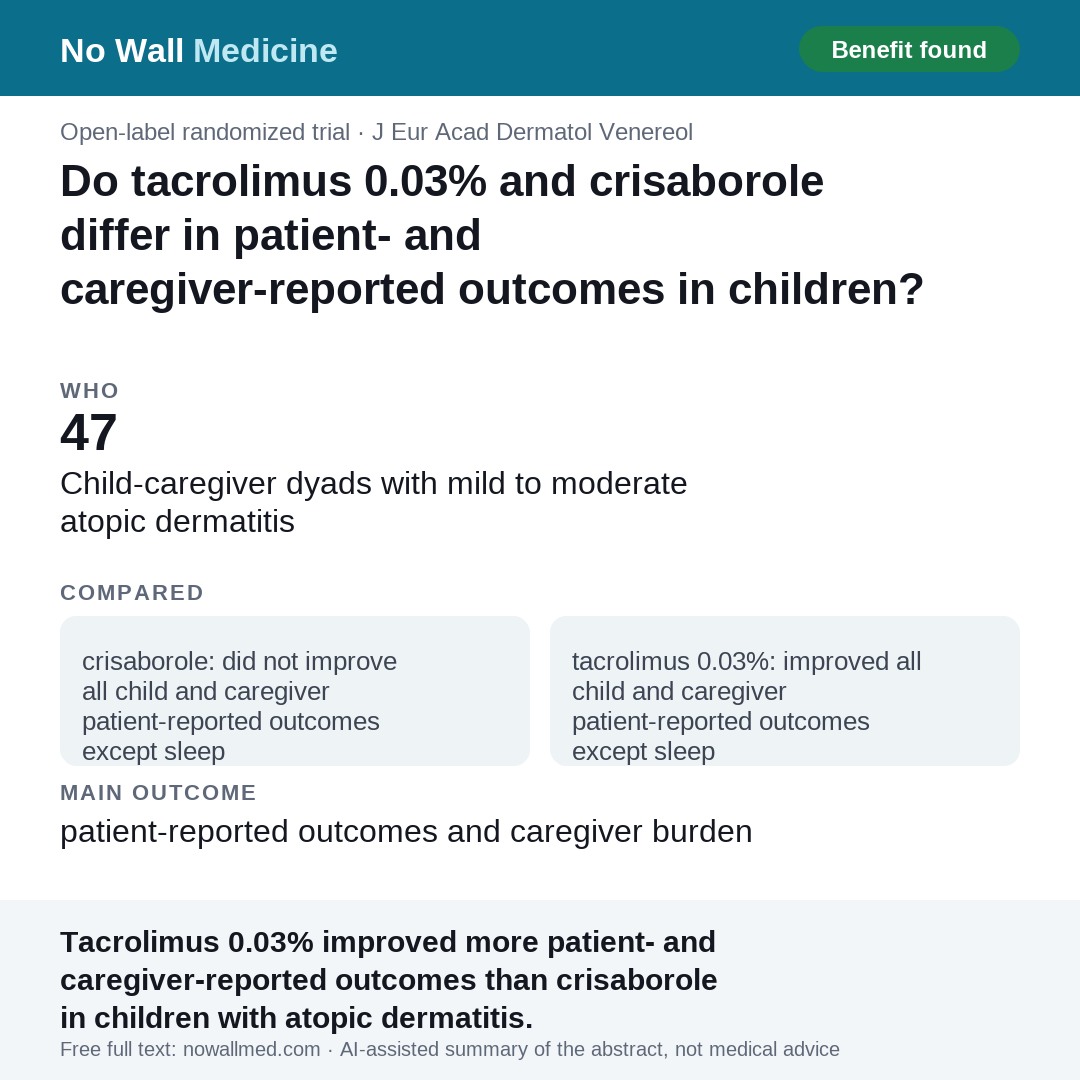
Improved patient- and caregiver-reported outcomes distinguish tacrolimus 0.03% from crisaborole in children with atopic dermatitis
Open-label randomized trialBenefit found
Do tacrolimus 0.03% and crisaborole differ in patient- and caregiver-reported outcomes in children?
Who
47
Child-caregiver dyads with mild to moderate atopic dermatitis
Compared
crisaborole: did not improve all child and caregiver patient-reported outcomes except sleep
tacrolimus 0.03%: improved all child and caregiver patient-reported outcomes except sleep
Main outcome
patient-reported outcomes and caregiver burden
Bottom line: Tacrolimus 0.03% improved more patient- and caregiver-reported outcomes than crisaborole in children with atopic dermatitis.
J Eur Acad Dermatol Venereol · 2024-02-15Download image