Visual abstracts
New randomized trials and meta-analyses from leading journals at a glance: who was studied, what was compared, and what was found. Every paper is free to read in full.
All specialtiesCardiology 242Oncology 193Gastroenterology & Hepatology 107Infectious Disease 189Neurology 112Psychiatry & Mental Health 161Pulmonology 110Critical Care 74Endocrinology & Diabetes 155Pediatrics 105Surgery 74Orthopedics & Sports Medicine 45Neurosurgery 10Cardiothoracic & Vascular Surgery 25Plastic & Reconstructive Surgery 53Nephrology 47Rheumatology 45Hematology 57Dermatology 25Ophthalmology 44Obstetrics & Gynecology 64Public & Global Health 74Radiology & Imaging 19Anesthesiology 37Urology 54ENT (Otolaryngology) 31Emergency Medicine 26Allergy & Immunology 19Geriatrics 74Family Medicine & Primary Care 32Medical Genetics & Genomics 27Pathology & Laboratory Medicine 5Physical Medicine & Rehabilitation 60Palliative Care 30Nutrition 85Digital Health & AI 215General Medicine 35
Neurobiological markers across joint profiles of subjective cognitive decline and objective cognitive function in older adults
Observational studyMixed results
How do neurobiological markers differ across joint subjective and objective cognitive profiles?
Who
648
Cognitively unimpaired older adults · Investigating Gains in Neurocognition in an Intervention Trial of Exercise
Compared
Concordant lower functioning profile: higher neurofilament light chain and lower volumetric Alzheimer's disease signature
Discordant profiles: higher brain-predicted age difference
Main outcome
Plasma and imaging neurobiological markers
Bottom line: Cognitive profiles show differential associations with neurofilament light chain, brain aging, and Alzheimer's disease signature.
Alzheimers Dement · 2026-08-11Download image

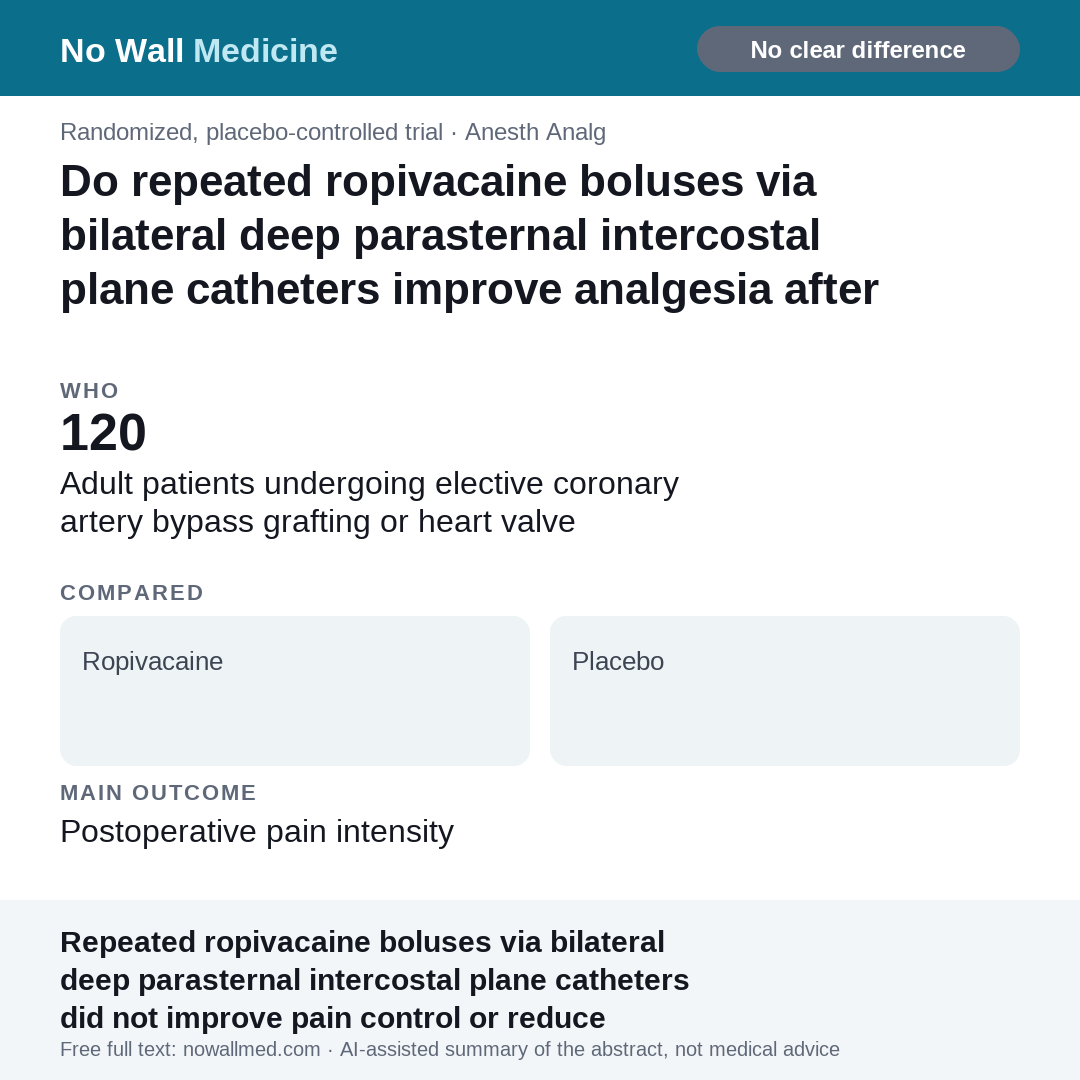
The Effect of Repeated Bilateral Deep Parasternal Intercostal Plane Catheter Boluses on Analgesia After Cardiac Surgery: A Randomized Controlled Trial
Randomized, placebo-controlled trialNo clear difference
Do repeated ropivacaine boluses via bilateral deep parasternal intercostal plane catheters improve analgesia after cardiac surgery?
Who
120
Adult patients undergoing elective coronary artery bypass grafting or heart valve replacement
Compared
Ropivacaine
Placebo
Main outcome
Postoperative pain intensity
Bottom line: Repeated ropivacaine boluses via bilateral deep parasternal intercostal plane catheters did not improve pain control or reduce opioid consumption.
Anesth Analg · 2026-08-11Download image
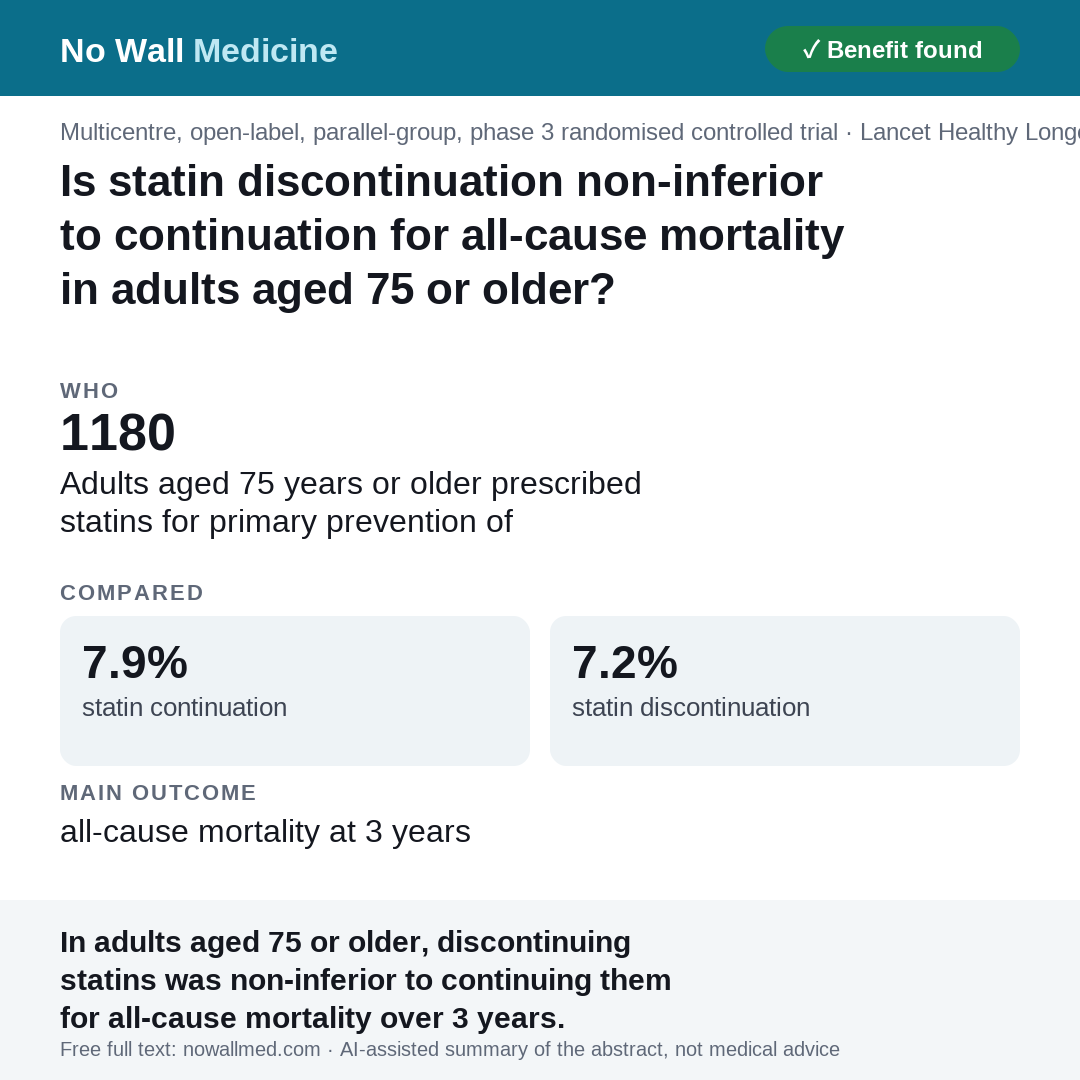
Discontinuation of statins for primary prevention of atherosclerotic cardiovascular disease in adults aged 75 years or older (SAGA/SITE): a multicentre, open-label, pragmatic, non-inferiority randomised trial
Multicentre, open-label, parallel-group, phase 3 randomised controlled trialBenefit found
Is statin discontinuation non-inferior to continuation for all-cause mortality in adults aged 75 or older?
Who
1180
Adults aged 75 years or older prescribed statins for primary prevention of atherosclerotic cardiovascular disease · 297 primary care offices
Compared
7.9%statin continuation (48/604)
7.2%statin discontinuation (35/484)
Main outcome
all-cause mortality at 3 years
Result: -0.68% (95% CI -3.95 to 2.60)
Bottom line: In adults aged 75 or older, discontinuing statins was non-inferior to continuing them for all-cause mortality over 3 years.
Limitation: masking was not done
Funded by: French Ministry of Health
Lancet Healthy Longev · 2026-08-11Download image
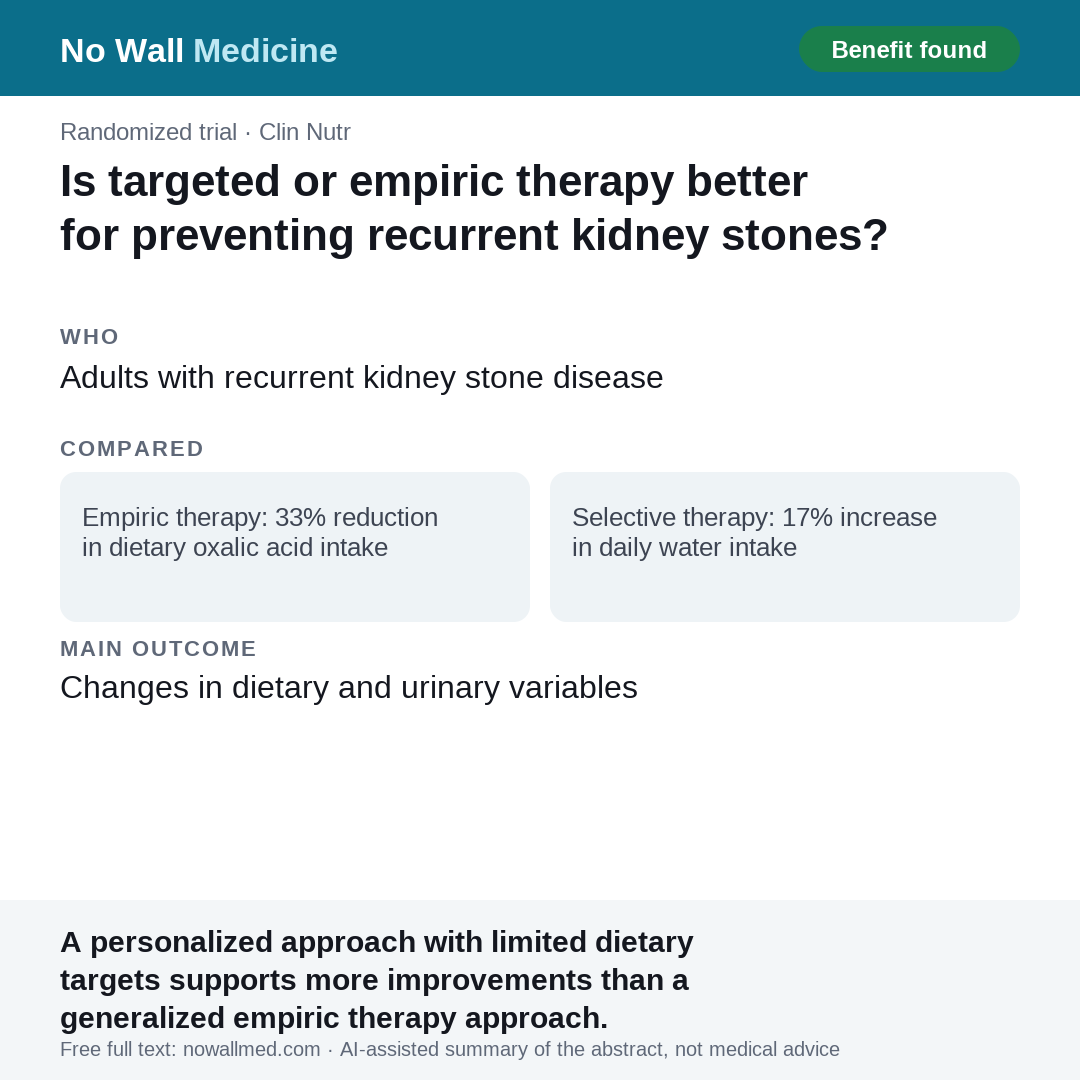
Targeted versus empiric approach for prevention of recurrent kidney stones: Insights on diet therapy from a randomized trial
Randomized trialBenefit found
Is targeted or empiric therapy better for preventing recurrent kidney stones?
Who
Adults with recurrent kidney stone disease
Compared
Empiric therapy: 33% reduction in dietary oxalic acid intake
Selective therapy: 17% increase in daily water intake
Main outcome
Changes in dietary and urinary variables
Bottom line: A personalized approach with limited dietary targets supports more improvements than a generalized empiric therapy approach.
Limitation: Adherence to dietary recommendations is particularly challenging in a lifelong condition.
Clin Nutr · 2026-08-11Download image
EQ-5D health utility gains with once-weekly semaglutide 2.4 mg in people with MASH and F2/F3 fibrosis: An analysis of ESSENCE
Randomized, double-blind, placebo-controlled trialBenefit found
Does once-weekly semaglutide 2.4 mg improve health utility in adults with MASH and F2/F3 fibrosis?
Who
800
Adults with biopsy-confirmed metabolic dysfunction-associated steatohepatitis and fibrosis stage F2 or F3
Compared
semaglutide 2.4 mg
placebo
Main outcome
mapped EuroQol 5-Dimension health utility
Result: estimated treatment difference 0.03 (95% CI 0.01-0.06)
Bottom line: Once-weekly semaglutide 2.4 mg was associated with statistically significant improvements in mapped health utility versus placebo.
Limitation: Use of mapped rather than directly measured utilities and the UK-specific tariff.
JHEP Rep · 2026-08-11Download image

Internet Attachment-Based Compassion Therapy for Adults With Chronic Medical Conditions: Randomized Controlled Trial
Randomized, parallel-group, exploratory controlled trialBenefit found
Does internet attachment-based compassion therapy improve quality of life and well-being in adults with chronic medical conditions?
Who
146
Adults with a chronic medical condition who read Spanish · Spain
Compared
Internet attachment-based compassion therapy: Cohen d=0.62 (95% CI 0.07-1.17) for quality of life
Waiting list control
Main outcome
Quality of life and well-being
Result: Cohen d=0.62 (95% CI 0.07-1.17)
Bottom line: Internet attachment-based compassion therapy may improve quality of life in adults with chronic medical conditions.
Limitation: High attrition, modest sample size, and no active control.
J Med Internet Res · 2026-08-11Download image

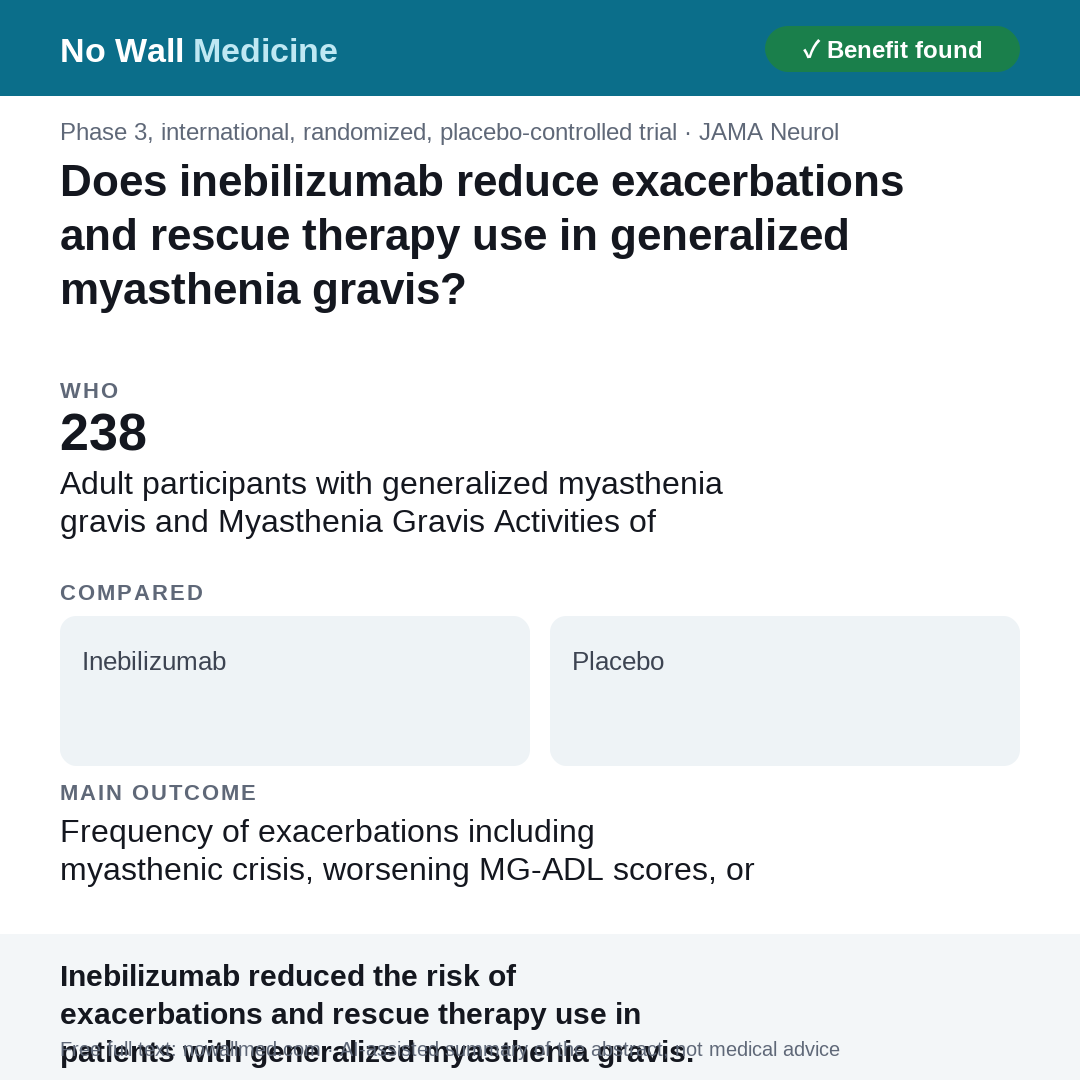
Management of Exacerbations and Rescue Therapy in the Phase 3 Myasthenia Gravis Inebilizumab Trial: A Prespecified Analysis of a Randomized Clinical Trial
Phase 3, international, randomized, placebo-controlled trialBenefit found
Does inebilizumab reduce exacerbations and rescue therapy use in generalized myasthenia gravis?
Who
238
Adult participants with generalized myasthenia gravis and Myasthenia Gravis Activities of Daily Life scores 6-10 · 81 sites in 18 countries
Compared
Inebilizumab
Placebo
Main outcome
Frequency of exacerbations including myasthenic crisis, worsening MG-ADL scores, or rescue therapy use
Result: hazard ratio 0.41 (95% CI 0.24-0.70)
Bottom line: Inebilizumab reduced the risk of exacerbations and rescue therapy use in patients with generalized myasthenia gravis.
JAMA Neurol · 2026-08-10Download image
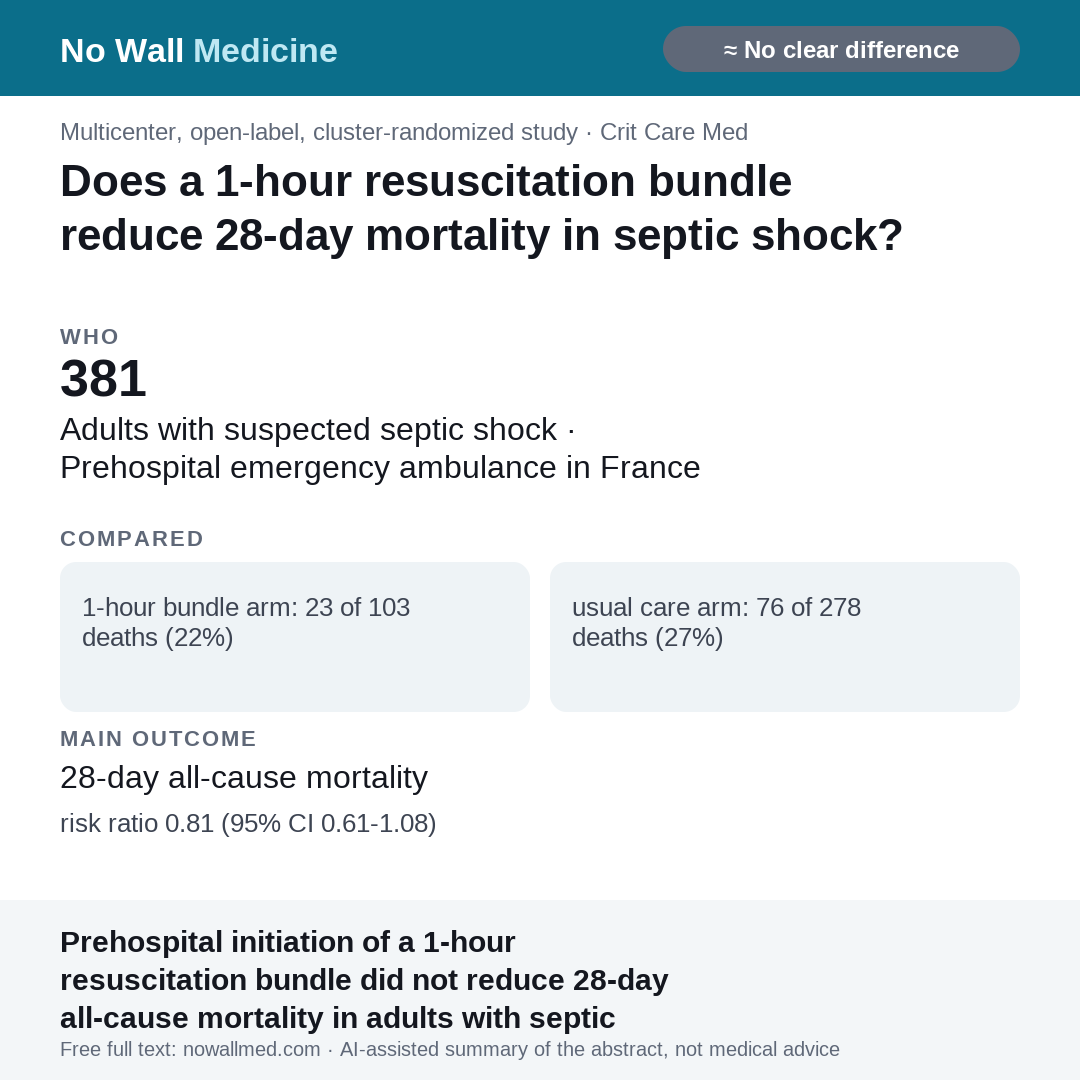
A 1-Hour Resuscitation Bundle for Prehospital Management of Septic Shock
Multicenter, open-label, cluster-randomized studyNo clear difference
Does a 1-hour resuscitation bundle reduce 28-day mortality in septic shock?
Who
381
Adults with suspected septic shock · Prehospital emergency ambulance in France
Compared
1-hour bundle arm: 23 of 103 deaths (22%)
usual care arm: 76 of 278 deaths (27%)
Main outcome
28-day all-cause mortality
Result: risk ratio 0.81 (95% CI 0.61-1.08)
Bottom line: Prehospital initiation of a 1-hour resuscitation bundle did not reduce 28-day all-cause mortality in adults with septic shock.
Crit Care Med · 2026-08-10Download image
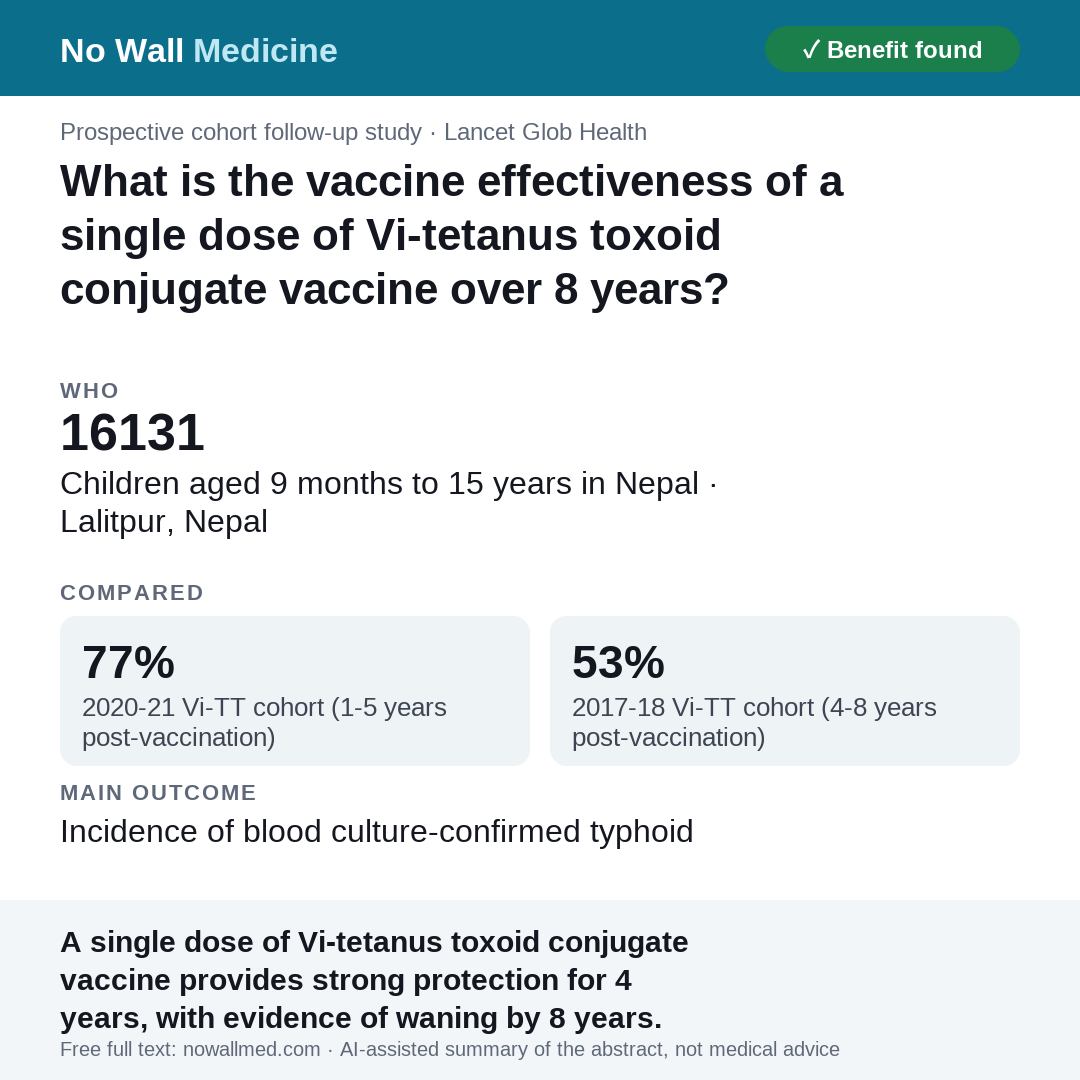
8-year vaccine protection following a single dose of Vi-tetanus toxoid conjugate vaccine in children in Nepal (TyVOID): a prospective cohort follow-up study of the TyVAC Nepal randomised controlled trial
Prospective cohort follow-up studyBenefit found
What is the vaccine effectiveness of a single dose of Vi-tetanus toxoid conjugate vaccine over 8 years?
Who
16131
Children aged 9 months to 15 years in Nepal · Lalitpur, Nepal
Compared
77%2020-21 Vi-TT cohort (1-5 years post-vaccination) (95% CI 46-90)
53%2017-18 Vi-TT cohort (4-8 years post-vaccination) (8-76)
Main outcome
Incidence of blood culture-confirmed typhoid
Bottom line: A single dose of Vi-tetanus toxoid conjugate vaccine provides strong protection for 4 years, with evidence of waning by 8 years.
Funded by: Gates Foundation and Wellcome Trust
Lancet Glob Health · 2026-08-10Download image
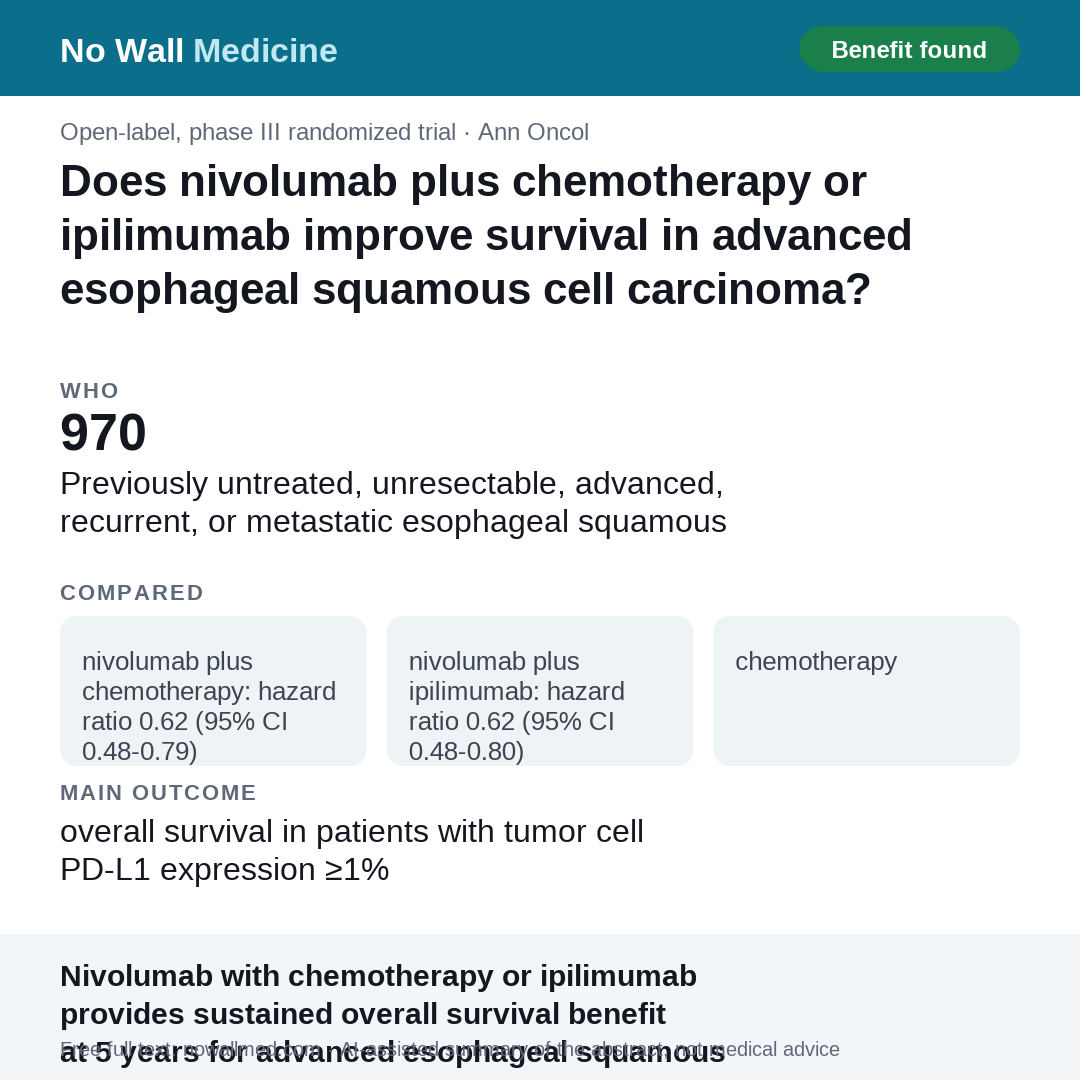
Nivolumab plus chemotherapy or ipilimumab versus chemotherapy as first-line treatment for advanced esophageal squamous cell carcinoma: 5-year follow-up results from CheckMate 648
Open-label, phase III randomized trialBenefit found
Is nivolumab plus chemotherapy or ipilimumab better than chemotherapy for advanced esophageal squamous cell carcinoma?
Who
970
Patients with untreated, unresectable, advanced, recurrent, or metastatic esophageal squamous cell carcinoma
Compared
nivolumab plus chemotherapy: hazard ratio 0.62 (95% CI 0.48-0.79)
nivolumab plus ipilimumab: hazard ratio 0.62 (95% CI 0.48-0.80)
chemotherapy
Main outcome
overall survival in patients with tumor cell PD-L1 expression ≥1%
Result: hazard ratio 0.62 (95% CI 0.48-0.79) and 0.62 (95% CI 0.48-0.80)
Bottom line: Nivolumab combinations with chemotherapy or ipilimumab provide continued overall survival benefits at 5-year follow-up.
Ann Oncol · 2026-08-10Download image
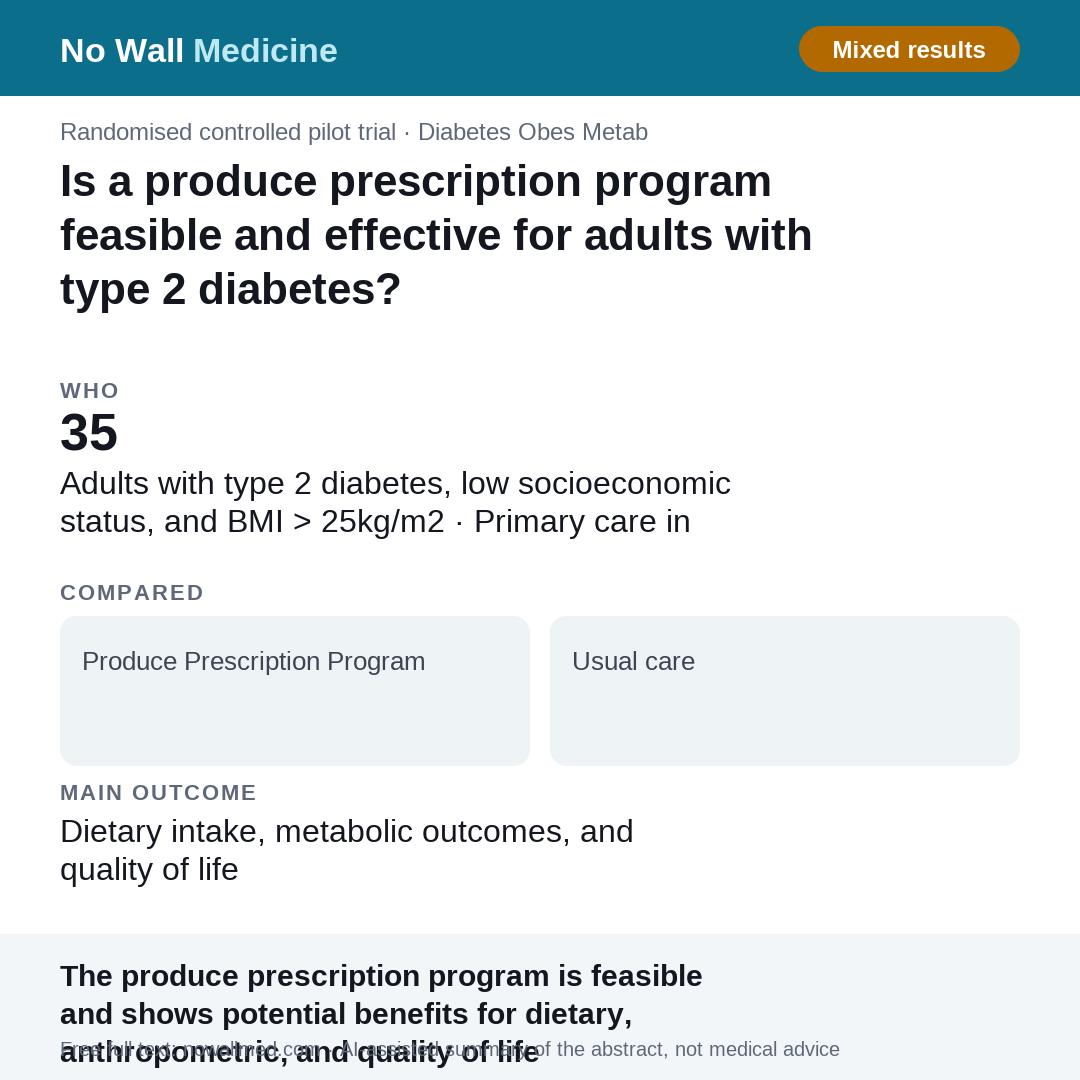
Feasibility and Effects of a Produce Prescription Program (PRx) in People With Type 2 Diabetes and Low Socioeconomic Status: A Randomised Controlled Pilot Trial
Randomised controlled pilot trialMixed results
Is a produce prescription program feasible and effective for adults with type 2 diabetes?
Who
35
Adults with type 2 diabetes, low socioeconomic status, and BMI > 25kg/m2 · Primary care in Rotterdam, the Netherlands
Compared
Produce Prescription Program
Usual care
Main outcome
Dietary intake, metabolic outcomes, and quality of life
Bottom line: The produce prescription program is feasible and shows potential benefits for dietary, anthropometric, and quality of life outcomes.
Diabetes Obes Metab · 2026-08-10Download image
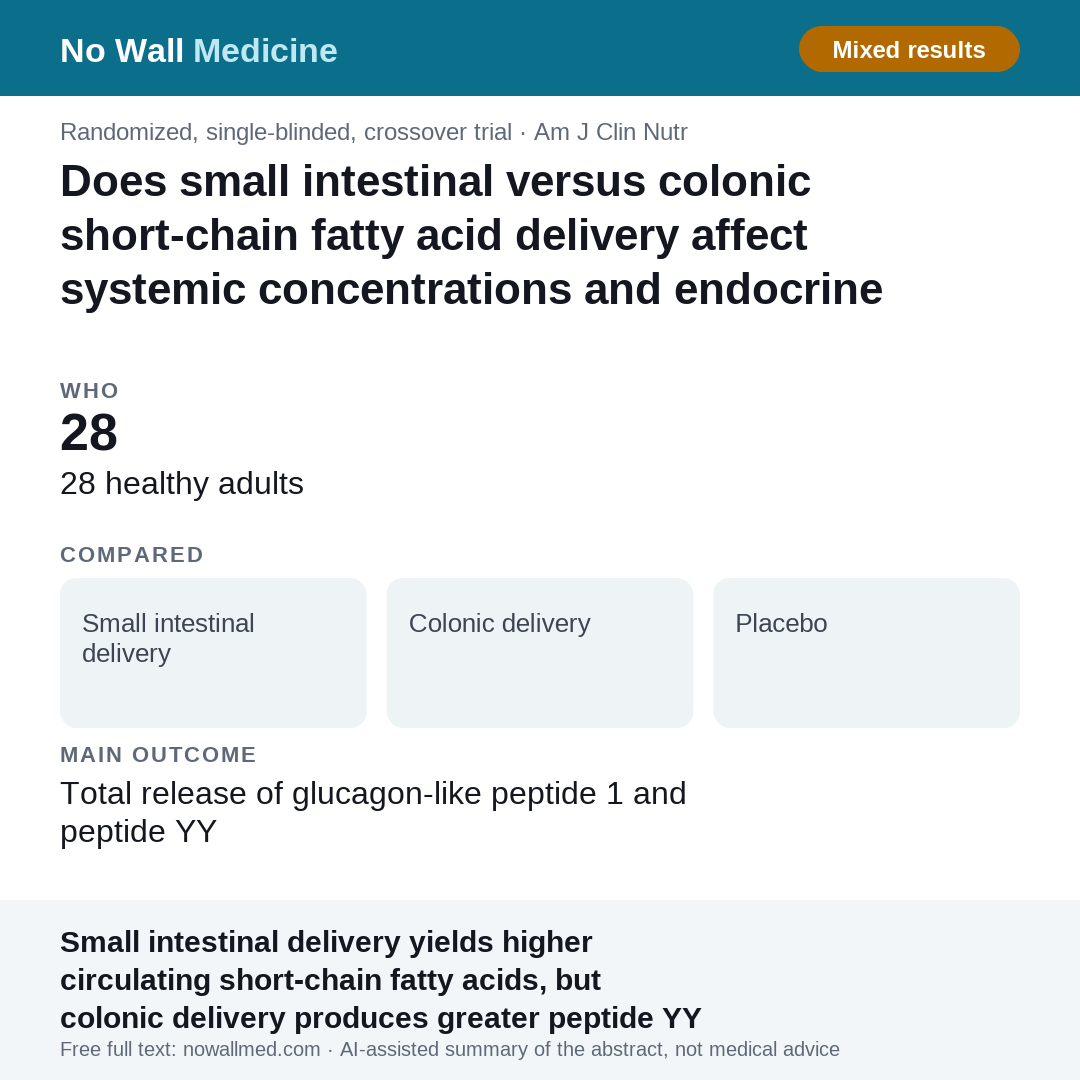
Small intestinal compared with colonic short-chain fatty acid delivery drives distinct systemic concentrations and endocrine responses in humans: a randomized, crossover trial
Randomized, single-blinded, crossover trialMixed results
Does small intestinal versus colonic short-chain fatty acid delivery affect systemic concentrations and endocrine responses?
Who
28
28 healthy adults
Compared
Small intestinal delivery
Colonic delivery
Placebo
Main outcome
Total release of glucagon-like peptide 1 and peptide YY
Result: PYY release difference: β = 111.46 (95% confidence interval: 4.33, 218.59) pg/mL.h
Bottom line: Small intestinal delivery yields higher circulating short-chain fatty acids, but colonic delivery produces greater peptide YY release.
Am J Clin Nutr · 2026-08-10Download image
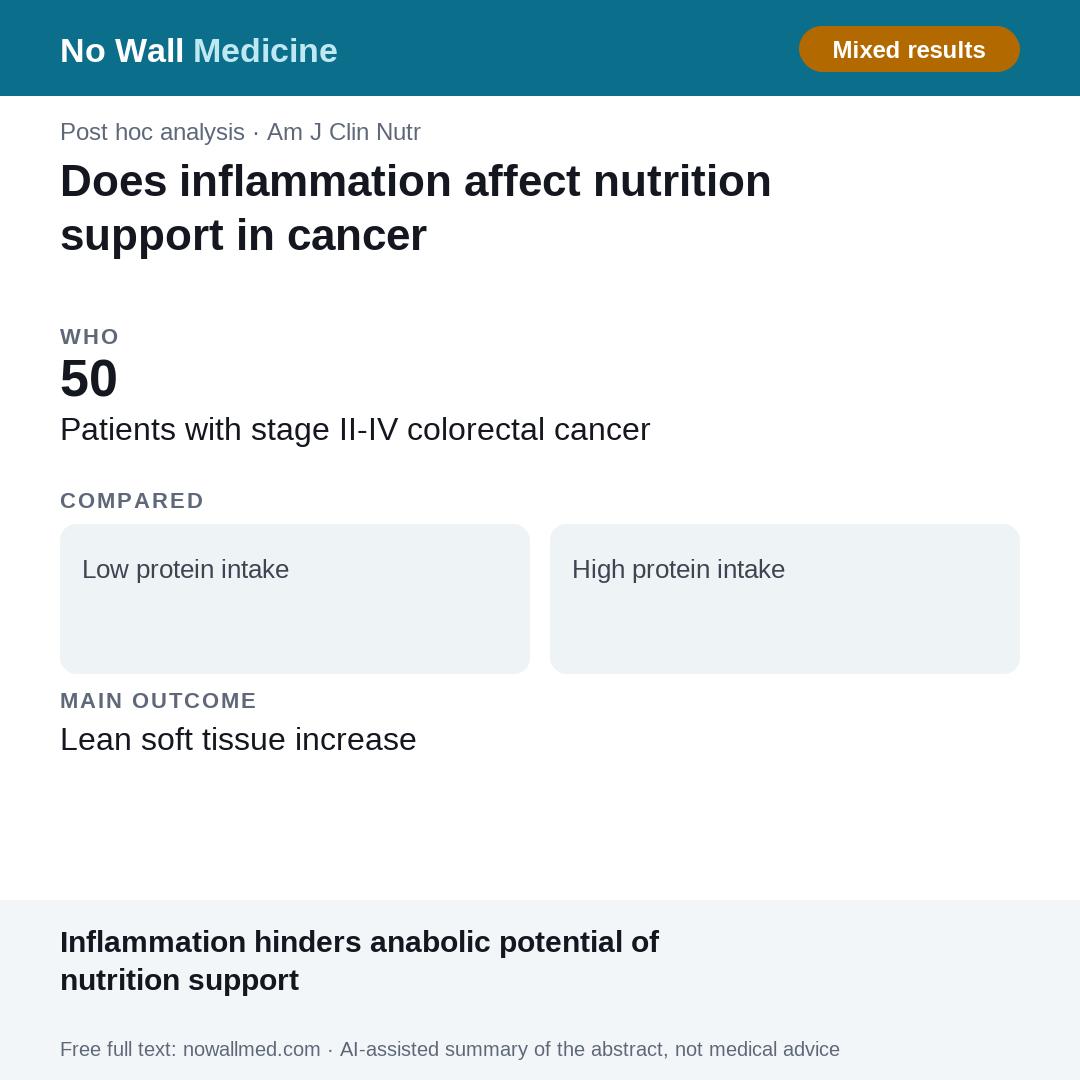
Inflammation hinders anabolic potential of nutritional support in cancer: findings from the Protein Recommendation to Increase Muscle (PRIMe) trial
Post hoc analysisMixed results
Does inflammation affect nutrition support in cancer
Who
50
Patients with stage II-IV colorectal cancer
Compared
Low protein intake
High protein intake
Main outcome
Lean soft tissue increase
Bottom line: Inflammation hinders anabolic potential of nutrition support
Am J Clin Nutr · 2026-08-10Download image
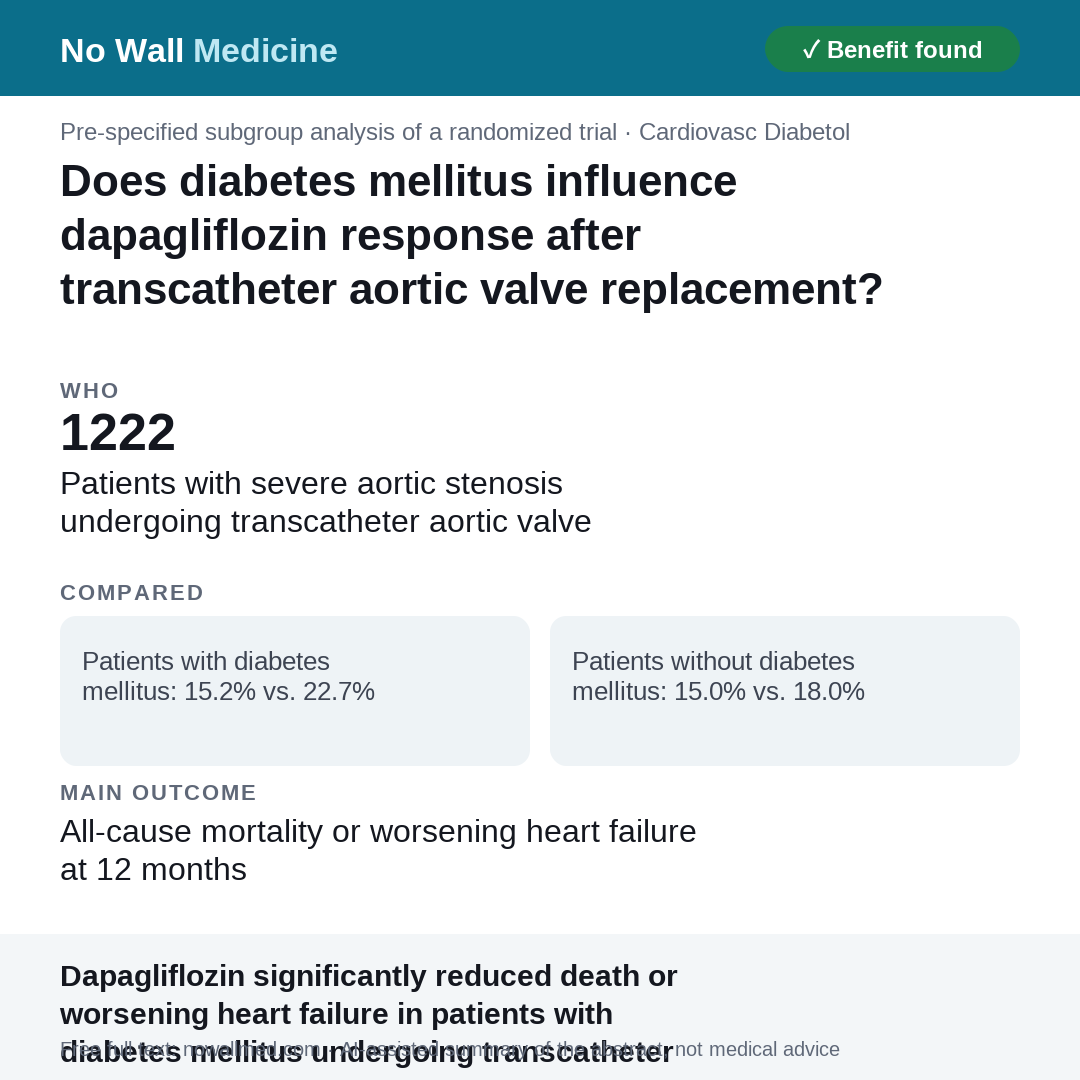
Influence of diabetes mellitus on dapagliflozin response after transcatheter aortic valve replacement (TAVR): insights from the DAPA-TAVI trial
Pre-specified subgroup analysis of a randomized trialBenefit found
Does diabetes mellitus influence dapagliflozin response after transcatheter aortic valve replacement?
Who
1222
Patients with severe aortic stenosis undergoing transcatheter aortic valve replacement · 39 centers in Spain
Compared
Patients with diabetes mellitus: 15.2% vs. 22.7%
Patients without diabetes mellitus: 15.0% vs. 18.0%
Main outcome
All-cause mortality or worsening heart failure at 12 months
Result: hazard ratio 0.580 (95% CI 0.389-0.866) in diabetes group
Bottom line: Dapagliflozin significantly reduced death or worsening heart failure in patients with diabetes mellitus undergoing transcatheter aortic valve replacement.
Cardiovasc Diabetol · 2026-08-10Download image
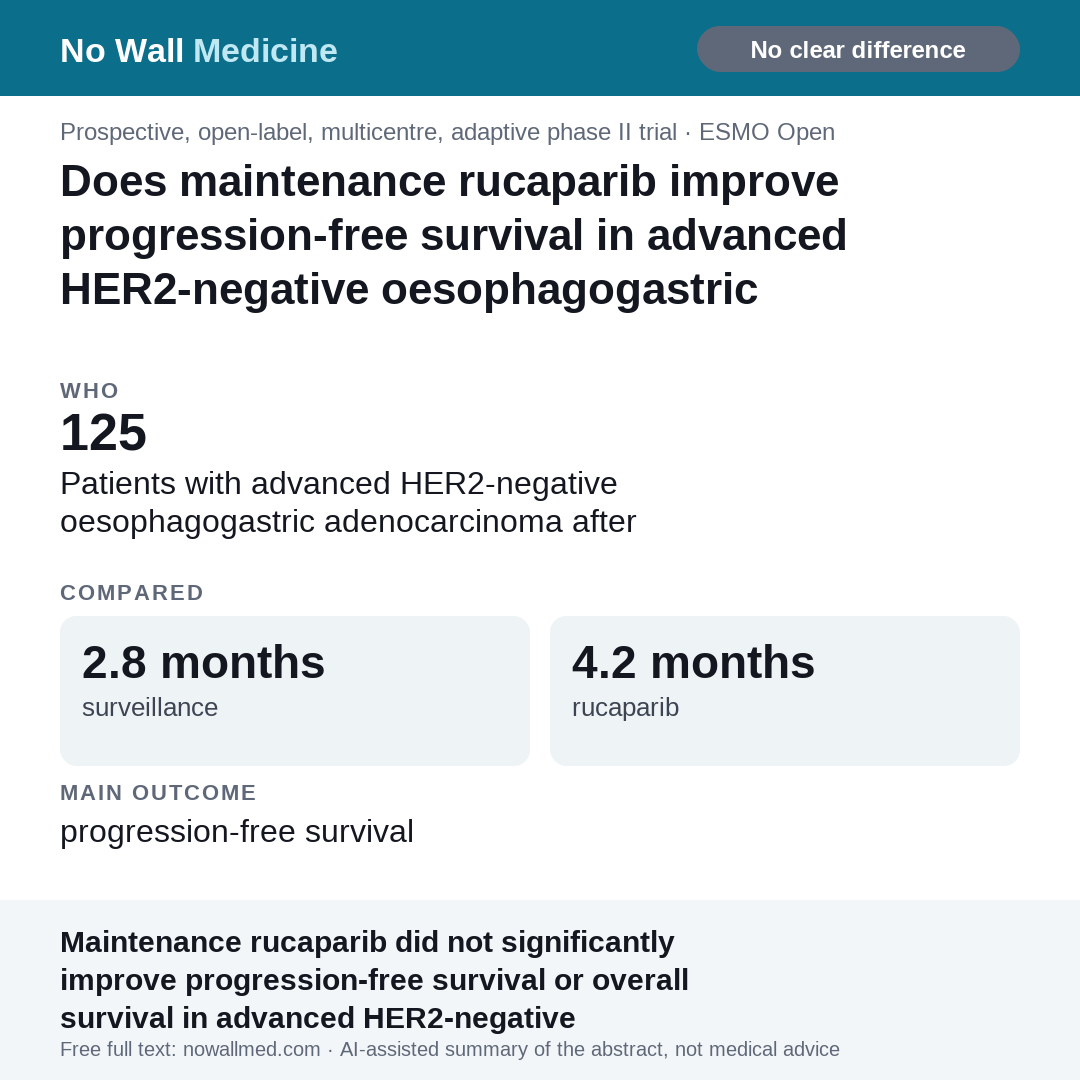
Maintenance rucaparib after first-line platinum-based chemotherapy in HER2-negative advanced oesophagogastric adenocarcinoma: results from the PLATFORM study
Prospective, open-label, multicentre, adaptive phase II trialNo clear difference
Does maintenance rucaparib improve progression-free survival in advanced HER2-negative oesophagogastric adenocarcinoma?
Who
125
Patients with advanced HER2-negative oesophagogastric adenocarcinoma after platinum-based chemotherapy · multicentre
Compared
2.8 monthssurveillance
4.2 monthsrucaparib
Main outcome
progression-free survival
Result: hazard ratio 0.70 (95% CI 0.49-1.02)
Bottom line: Maintenance rucaparib did not significantly improve progression-free survival or overall survival in advanced HER2-negative oesophagogastric adenocarcinoma.
Limitation: Translational analyses were limited by small sample size.
ESMO Open · 2026-08-10Download image
Circulating Thymidine Kinase Activity Predicts Survival and Optimal Treatment Sequencing in BRAF-Mutated Metastatic Melanoma in the SECOMBIT Trial
Randomized phase II trialBenefit found
Does circulating thymidine kinase activity predict survival in BRAF-mutated metastatic melanoma?
Who
Patients with BRAF V600-mutated metastatic melanoma
Compared
TKa-low: total progression-free survival 60.8%
TKa-high: total progression-free survival 35%
Main outcome
progression-free survival and overall survival
Bottom line: Low circulating thymidine kinase activity is associated with significantly better progression-free and overall survival.
Clin Cancer Res · 2026-08-09Download image
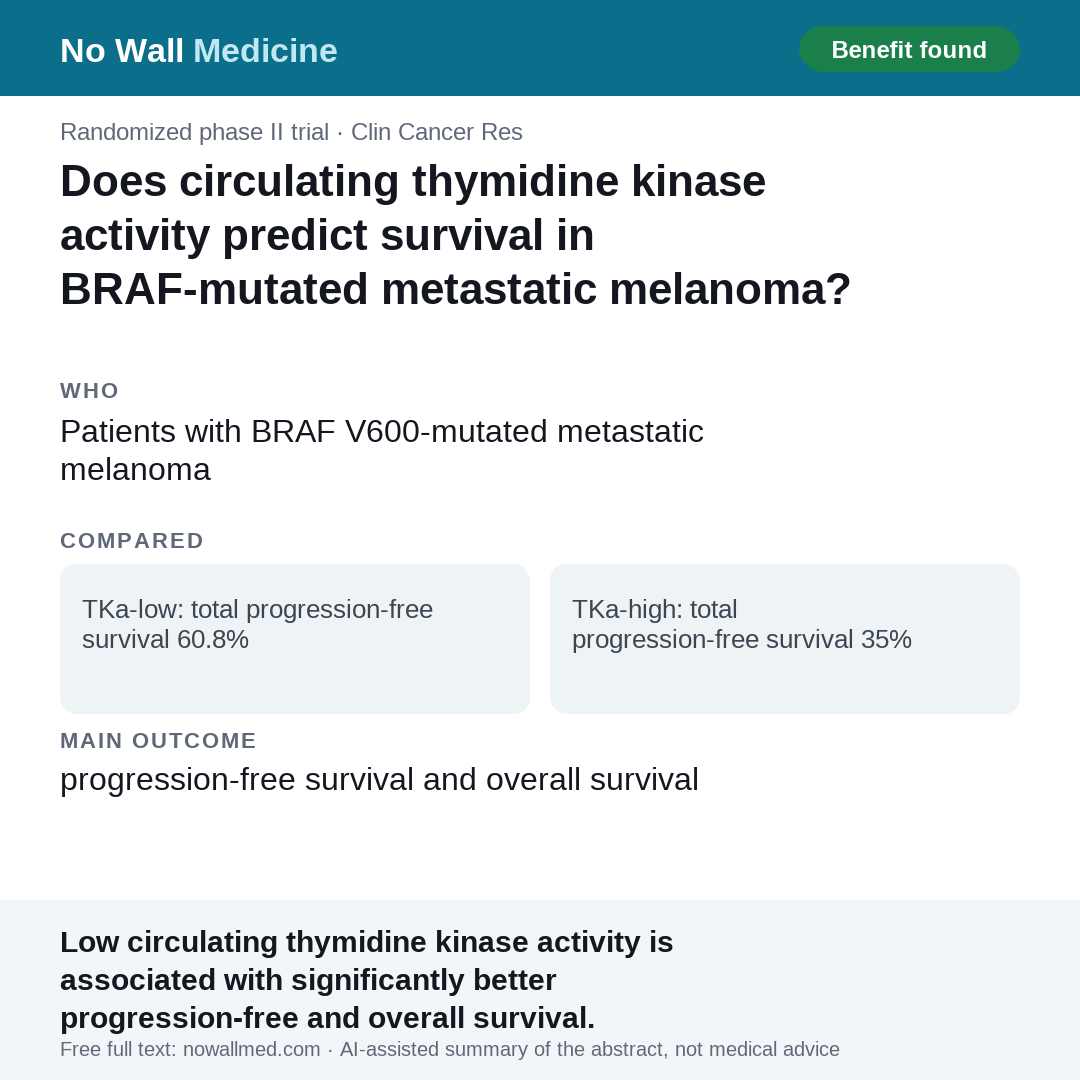
Nutritional intake and growth in very low birth weight infants: a comparison of standardized versus parent-led complementary feeding
Comparison of standardized and non-standardized prospective studiesNo clear difference
How do standardized versus parent-led complementary feeding strategies affect nutritional intake and growth?
Who
Very low birth weight infants with birth weight less than 1500 grams
Compared
Standardized, protocol-driven approach: higher iron and zinc intakes from 6 months corrected age onwards
Non-standardized, parent-led approach: higher intakes of protein, fat, arachidonic and docosahexaenoic acid
Main outcome
Nutritional intake and growth
Bottom line: Despite differences in nutrient intake, growth was similar between standardized and parent-led complementary feeding approaches.
Eur J Clin Nutr · 2026-08-08Download image
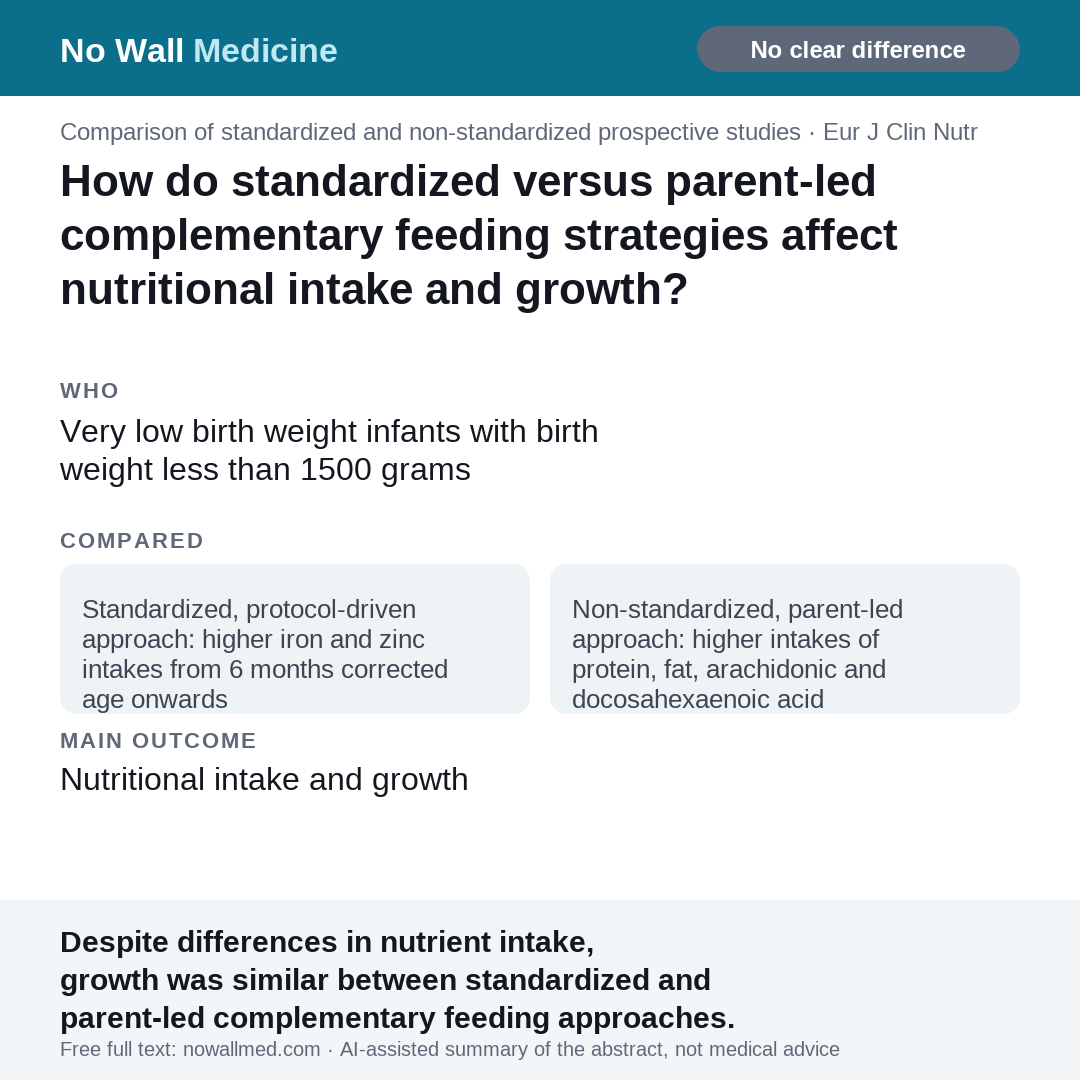
[177Lu]Lu-DOTA-TATE plus long-acting octreotide in patients with newly diagnosed, advanced, grade 2-3, gastroenteropancreatic neuroendocrine tumours: preplanned and post-hoc efficacy analyses from the randomised, phase 3 NETTER-2 trial
Open-label, parallel-group randomized trialBenefit found
Does 177Lu-DOTATATE plus octreotide improve progression-free survival in advanced grade 2-3 GEP-NETs?
Who
226
Patients with advanced, well-differentiated, higher grade 2-3, somatostatin receptor-positive gastroenteropancreatic neuroendocrine tumours · Nine countries
Compared
22.8 months177Lu-DOTATATE plus octreotide
8.5 monthsHigh-dose octreotide
Main outcome
Progression-free survival
Result: hazard ratio 0.31 (95% CI 0.18 to 0.53) for G2 NET
Bottom line: First-line 177Lu-DOTATATE plus octreotide significantly improved progression-free survival regardless of tumor grade or origin.
Funded by: Advanced Accelerator Applications, a Novartis Company
eClinicalMedicine · 2026-08-07Download image
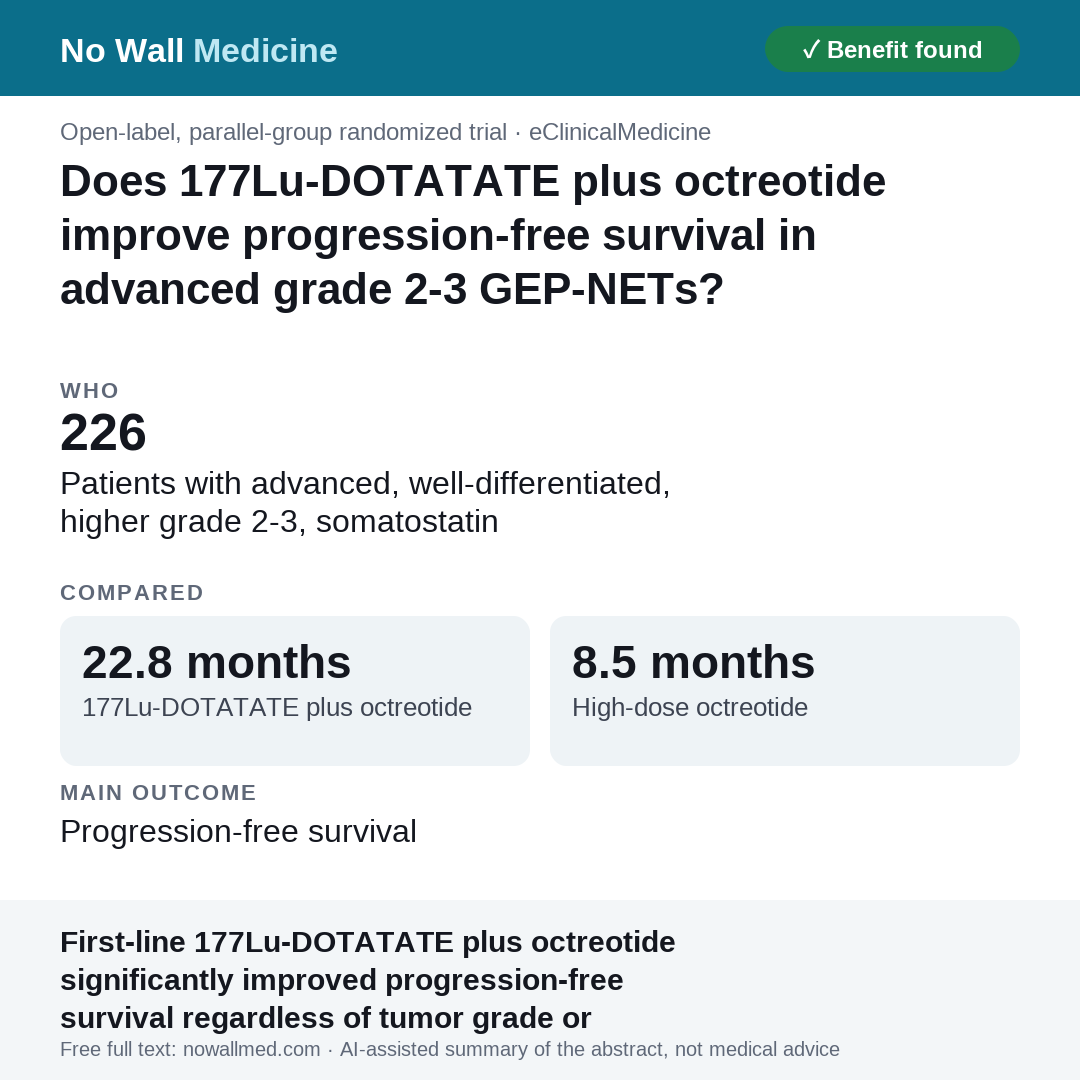
Efficacy and safety of deucravacitinib, an oral, selective tyrosine kinase 2 inhibitor, in patients with active psoriatic arthritis: 52-week results from the randomised, double-blind, placebo-controlled phase 3 POETYK PsA-1 trial
Randomised, double-blind, placebo-controlled, phase 3 trialBenefit found
Is deucravacitinib effective and safe in patients with active psoriatic arthritis?
Who
670
Adults with active psoriatic arthritis and radiographic erosions
Compared
54.2%deucravacitinib 6 mg once daily
34.1%placebo
Main outcome
American College of Rheumatology 20% improvement in response at week 16
Bottom line: Deucravacitinib demonstrated superiority versus placebo for clinical responses and structural damage inhibition in psoriatic arthritis.
Ann Rheum Dis · 2026-08-07Download image
Willingness to pay among individuals from the Dutch general population for artificial intelligence-based applications for skin cancer detection: a survey-based mixed-methods study
Survey-based mixed-methods studyBenefit found
What is the willingness to pay for artificial intelligence skin cancer detection applications?
Who
1953
Individuals from the Dutch general population · The Netherlands
Compared
Artificial intelligence alone: €5 (0-20)
Artificial intelligence with teledermatologist involvement: €20 (0-45)
Main outcome
Median willingness to pay in three hypothetical scenarios
Bottom line: People are willing to pay more for artificial intelligence combined with teledermatologist involvement than for artificial intelligence alone.
Limitation: Willingness to pay does not always reflect perceived importance.
Br J Dermatol · 2026-08-07Download image