Visual abstracts
New randomized trials and meta-analyses from leading journals at a glance: who was studied, what was compared, and what was found. Every paper is free to read in full.
All specialtiesCardiology 255Oncology 204Gastroenterology & Hepatology 115Infectious Disease 204Neurology 118Psychiatry & Mental Health 170Pulmonology 119Critical Care 78Endocrinology & Diabetes 170Pediatrics 114Surgery 78Orthopedics & Sports Medicine 46Neurosurgery 15Cardiothoracic & Vascular Surgery 27Plastic & Reconstructive Surgery 59Nephrology 54Rheumatology 46Hematology 59Dermatology 25Ophthalmology 48Obstetrics & Gynecology 71Public & Global Health 79Radiology & Imaging 21Anesthesiology 38Urology 57ENT (Otolaryngology) 35Emergency Medicine 28Allergy & Immunology 25Geriatrics 78Family Medicine & Primary Care 38Medical Genetics & Genomics 27Pathology & Laboratory Medicine 5Physical Medicine & Rehabilitation 66Palliative Care 39Nutrition 93Digital Health & AI 228General Medicine 38
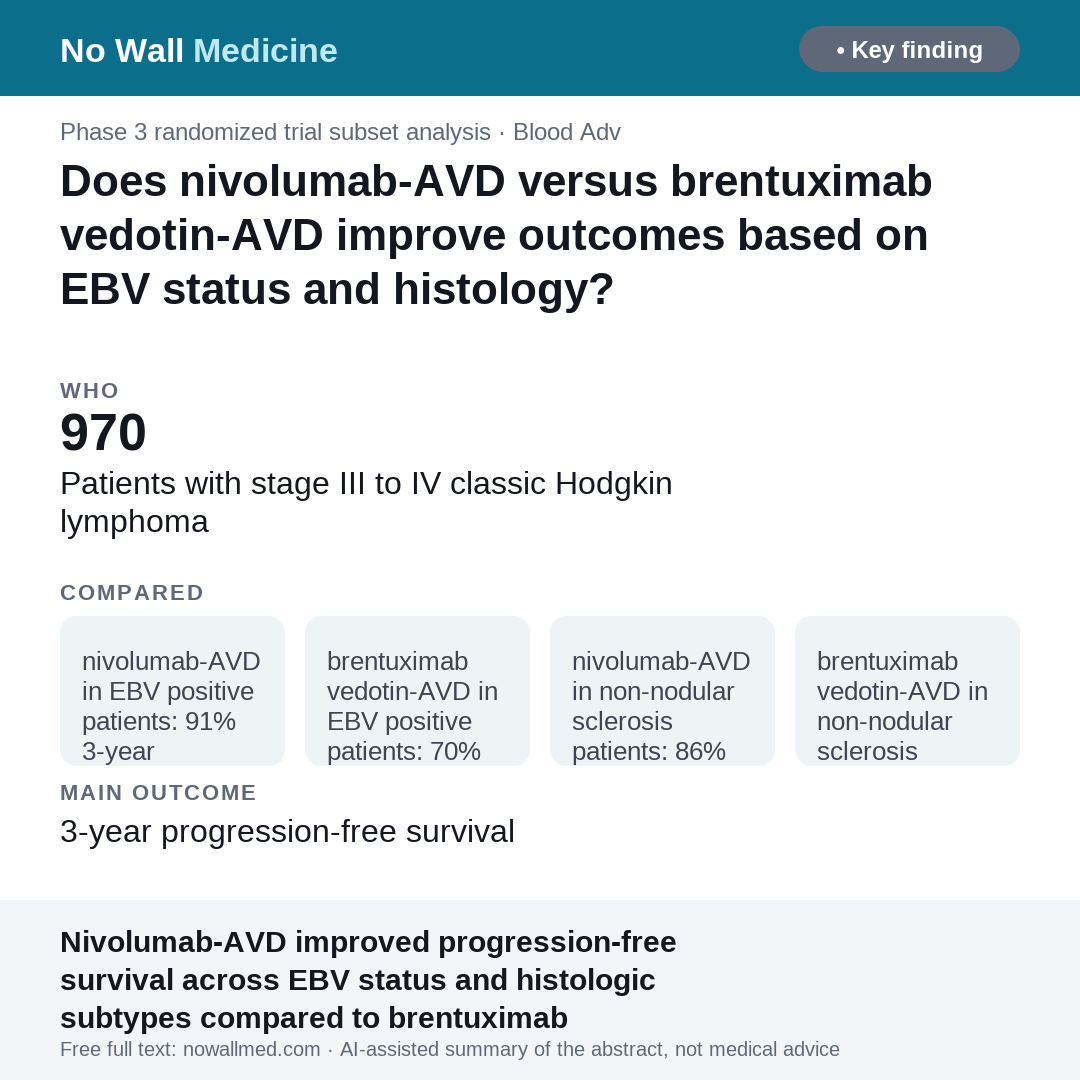
Impact of EBV status and histology on patient outcomes with nivolumab-AVD vs BV-AVD in advanced classic Hodgkin lymphoma (S1826)
Phase 3 randomized trial subset analysisBenefit found
Does nivolumab-AVD versus brentuximab vedotin-AVD improve outcomes based on EBV status and histology?
Who
970
Patients with stage III to IV classic Hodgkin lymphoma
Compared
nivolumab-AVD in EBV positive patients: 91% 3-year progression-free survival
brentuximab vedotin-AVD in EBV positive patients: 70% 3-year progression-free survival
nivolumab-AVD in non-nodular sclerosis patients: 86% 3-year progression-free survival
brentuximab vedotin-AVD in non-nodular sclerosis patients: 63% 3-year progression-free survival
Main outcome
3-year progression-free survival
Result: hazard ratio 0.30 (EBV+) and hazard ratio 0.33 (non-NS)
Bottom line: Nivolumab-AVD improved progression-free survival across EBV status and histologic subtypes compared to brentuximab vedotin-AVD.
Limitation: Subset analysis based on known EBV status and available histology slides.
Blood Adv · 2026-07-30Download image
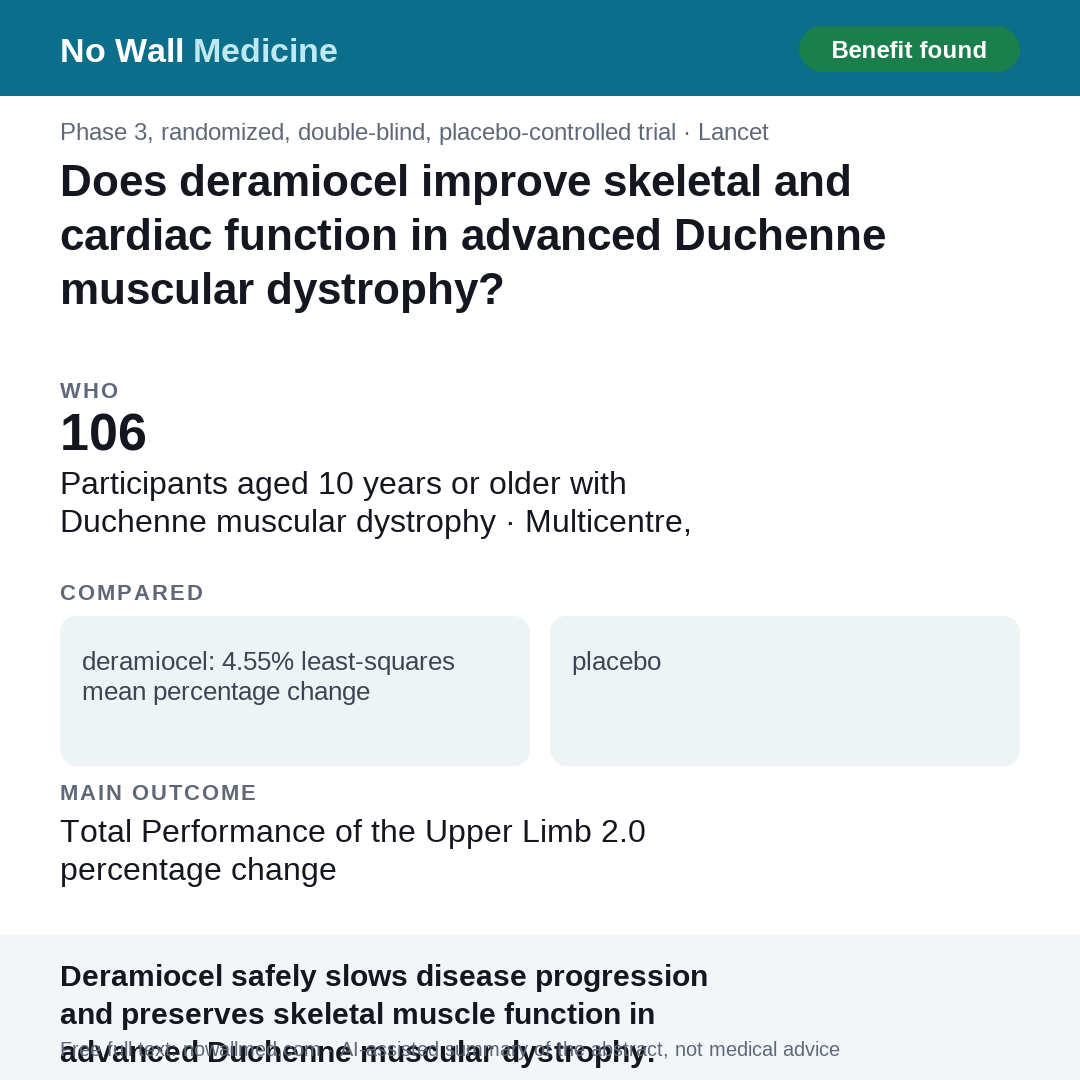
Deramiocel heart-derived cellular therapy in advanced Duchenne muscular dystrophy (HOPE-3): a phase 3, randomised, double-blind, placebo-controlled trial
Phase 3, randomized, double-blind, placebo-controlled trialBenefit found
Does deramiocel improve skeletal and cardiac function in advanced Duchenne muscular dystrophy?
Who
106
Participants aged 10 years or older with Duchenne muscular dystrophy · Multicentre, outpatient settings
Compared
deramiocel: 4.55% least-squares mean percentage change
placebo
Main outcome
Total Performance of the Upper Limb 2.0 percentage change
Result: 4.55% (95% CI 0.47-8.63; p=0.029)
Bottom line: Deramiocel safely slows disease progression and preserves skeletal muscle function in advanced Duchenne muscular dystrophy.
Funded by: Capricor Therapeutics
Lancet · 2026-07-29Download image
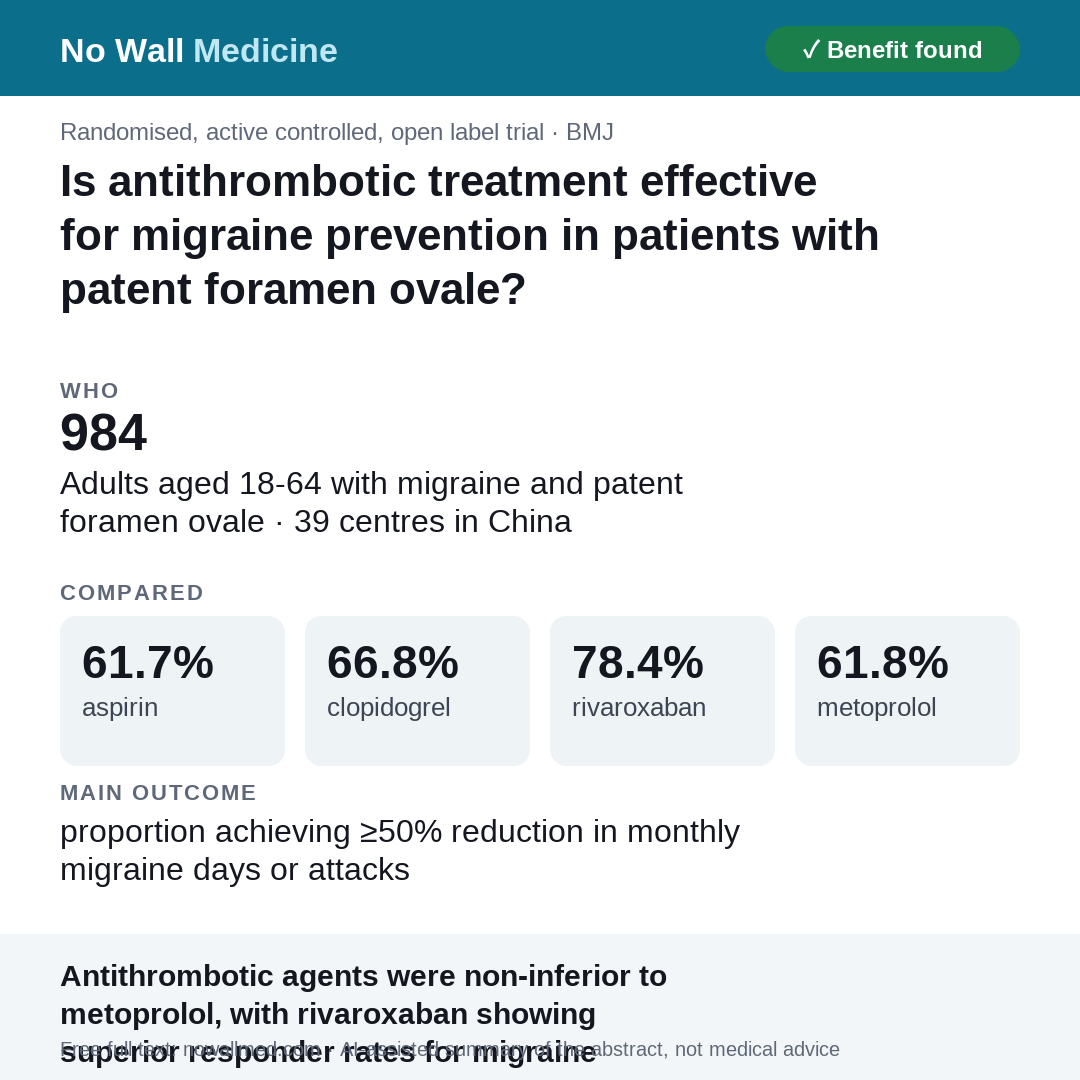
Antithrombotic treatment for migraine in patients with patent foramen ovale: multicentre, randomised, active controlled, open label trial
Multicentre, randomised, active controlled, open label trialBenefit found
Are antithrombotic treatments effective for migraine prevention in patients with patent foramen ovale?
Who
984
Adults aged 18-64 with migraine and patent foramen ovale · 39 centres in China
Compared
61.7%Aspirin (148/240)
66.8%Clopidogrel (157/235)
78.4%Rivaroxaban (185/236)
61.8%Metoprolol (144/233)
Main outcome
Proportion achieving ≥50% reduction in monthly migraine days or attacks
Result: absolute difference 16.2% (98.33% confidence interval 6.0 to 26.4)
Bottom line: Antithrombotic agents were non-inferior to metoprolol, with rivaroxaban showing superior responder rates.
BMJ · 2026-07-29Download image
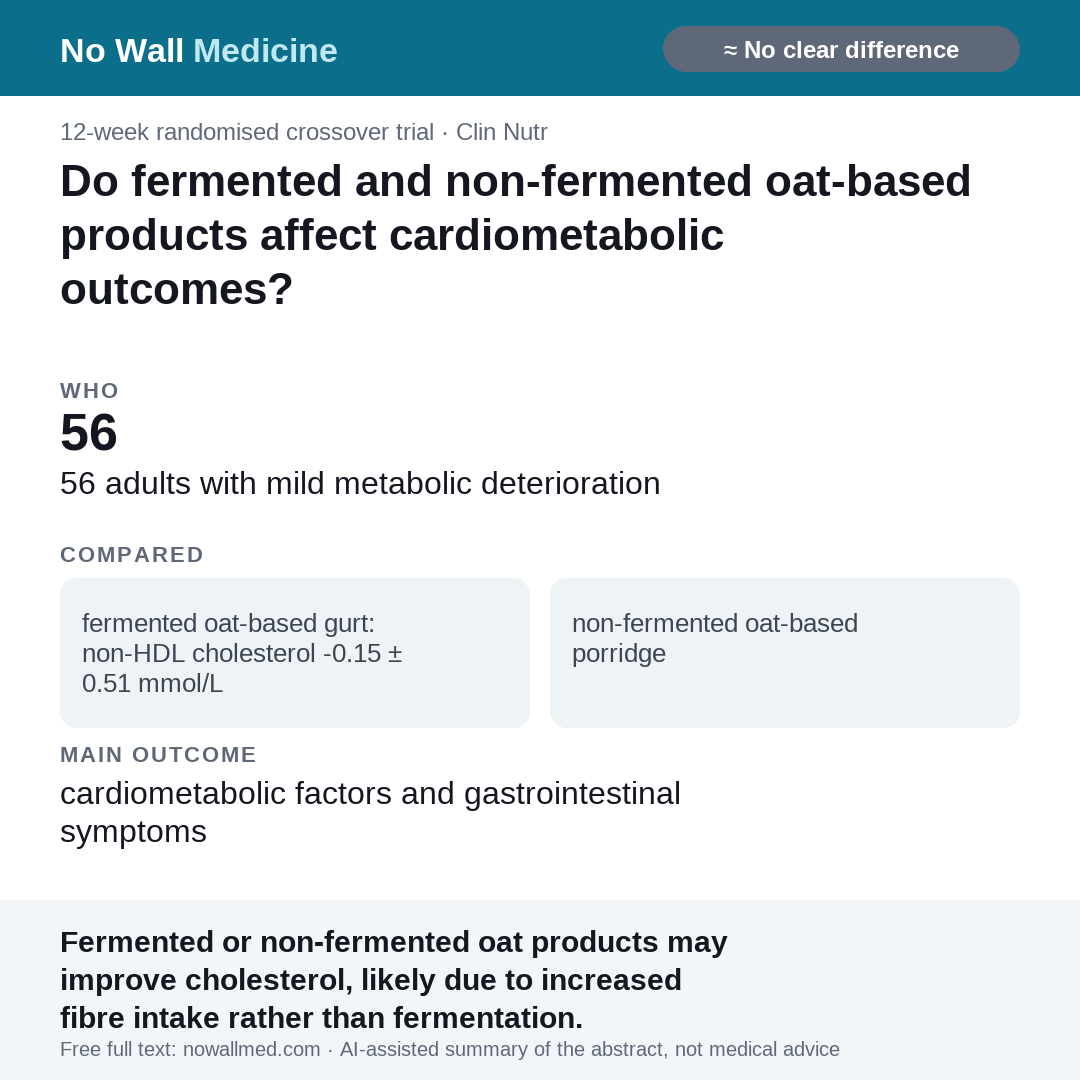
Role of bioprocessing in modifying cardiometabolic outcomes of an oat-based dairy alternative in a randomised controlled clinical intervention
12-week randomised crossover trialNo clear difference
Do fermented and non-fermented oat-based products affect cardiometabolic outcomes and gastrointestinal symptoms?
Who
56
56 adults with mild metabolic deterioration
Compared
fermented oat-based gurt: non-high-density lipoprotein cholesterol -0.15 ± 0.51 mmol/L
non-fermented oat-based porridge: non-high-density lipoprotein cholesterol not specified
Main outcome
cardiometabolic factors and gastrointestinal symptoms
Bottom line: Both fermented and non-fermented oat products may improve cholesterol and reduce ferritin, likely due to increased fibre intake.
Clin Nutr · 2026-07-29Download image
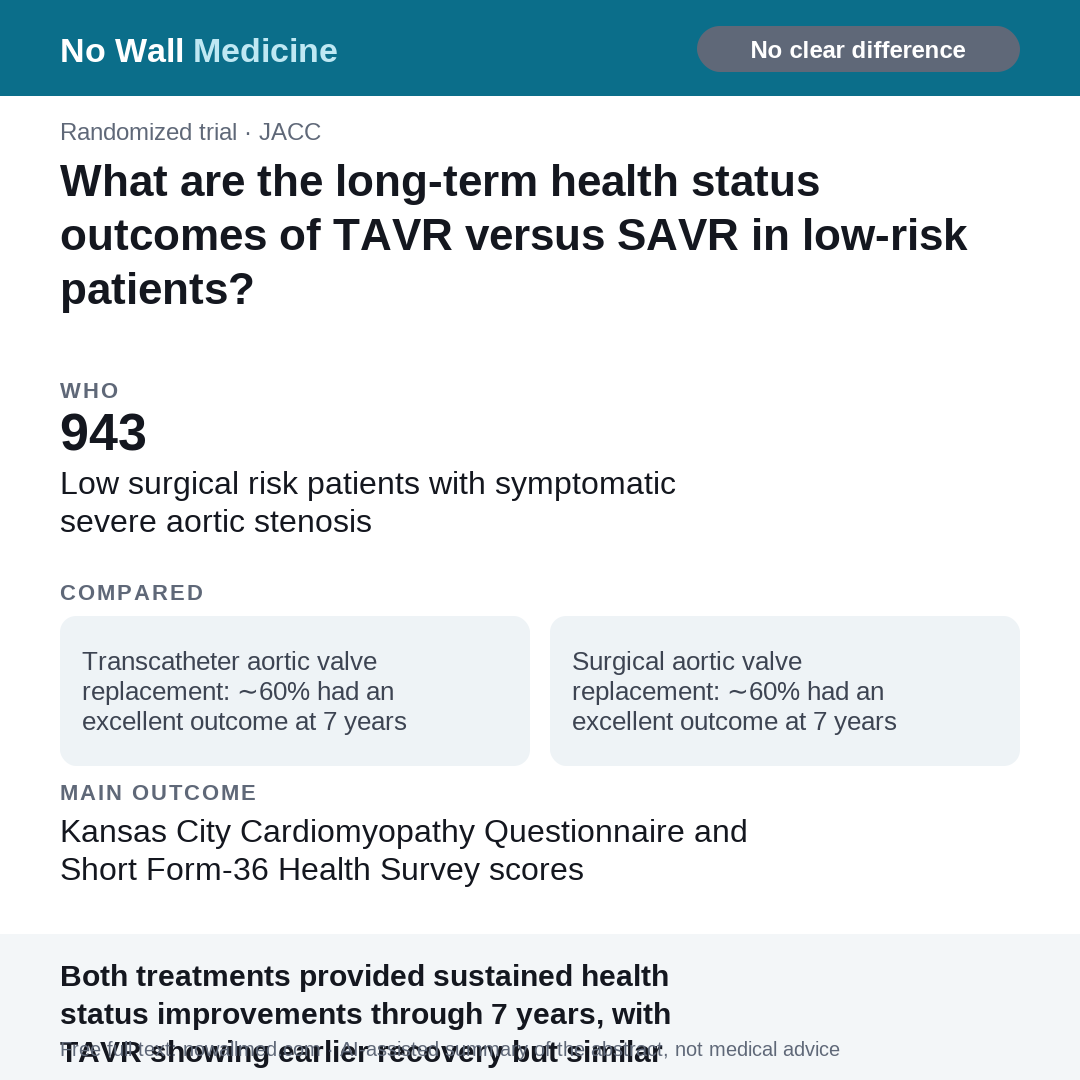
Health Status Outcomes 7 Years After Transcatheter or Surgical Aortic Valve Replacement in Low-Surgical Risk Patients With Aortic Stenosis
Randomized trialNo clear difference
What are the long-term health status outcomes of TAVR versus SAVR in low-risk patients?
Who
943
Low surgical risk patients with symptomatic severe aortic stenosis
Compared
Transcatheter aortic valve replacement: ∼60% had an excellent outcome at 7 years
Surgical aortic valve replacement: ∼60% had an excellent outcome at 7 years
Main outcome
Kansas City Cardiomyopathy Questionnaire and Short Form-36 Health Survey scores
Result: mean difference at 2 years: +1.9 points (95% CI 0.2-3.7)
Bottom line: Both treatments provided sustained health status improvements through 7 years, with TAVR showing earlier recovery but similar long-term outcomes.
JACC · 2026-07-29Download image
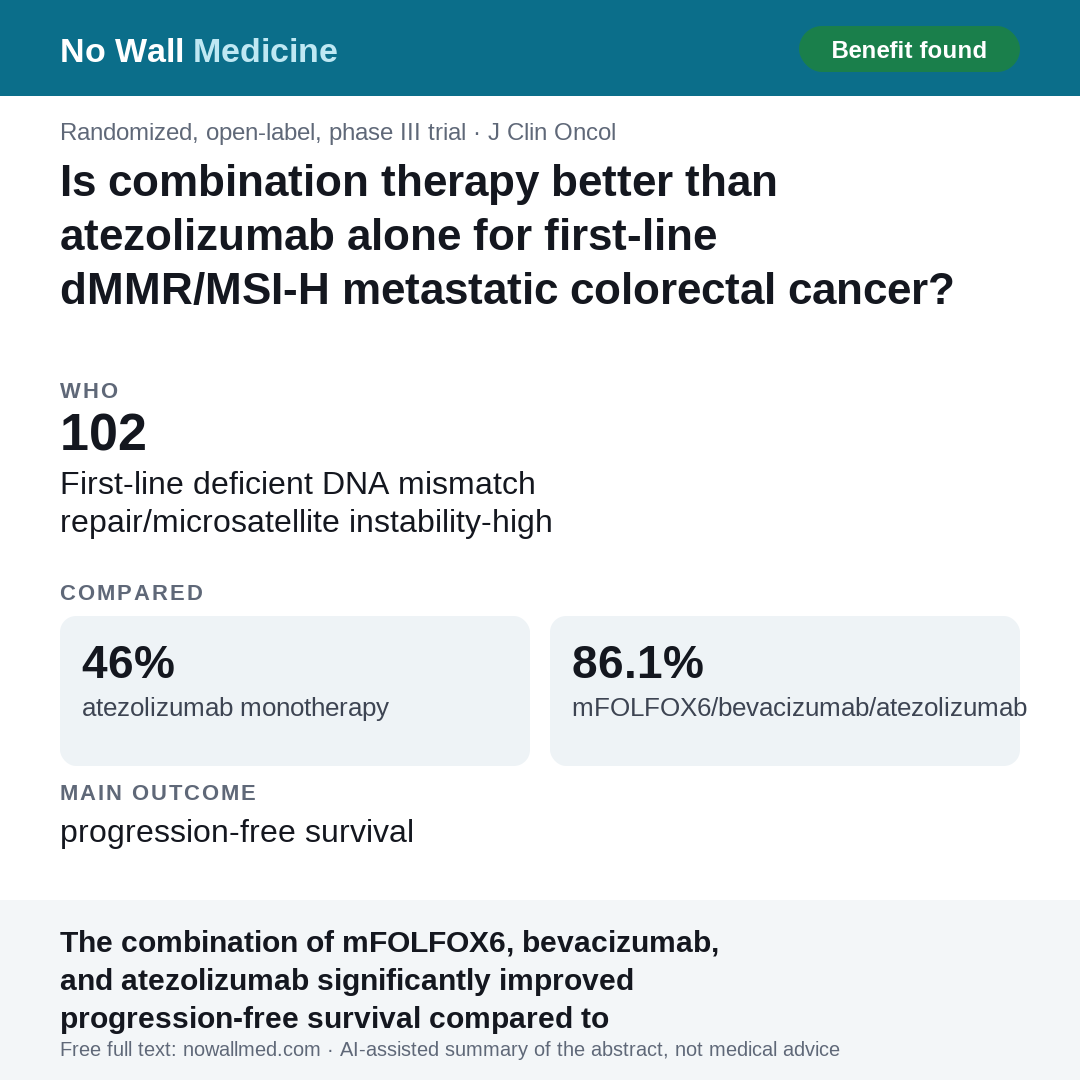
COMMIT: A Randomized Study of mFOLFOX6/Bevacizumab/Atezolizumab or Atezolizumab Alone as First-Line Treatment of Deficient DNA Mismatch Repair Metastatic Colorectal Cancer
Randomized, open-label, phase III trialBenefit found
Is combination therapy better than atezolizumab alone for first-line dMMR/MSI-H metastatic colorectal cancer?
Who
102
First-line deficient DNA mismatch repair/microsatellite instability-high metastatic colorectal cancer patients
Compared
46%atezolizumab monotherapy
86.1%mFOLFOX6/bevacizumab/atezolizumab
Main outcome
progression-free survival
Result: hazard ratio 0.439 (95% CI 0.23 to 0.84)
Bottom line: The combination of mFOLFOX6, bevacizumab, and atezolizumab significantly improved progression-free survival compared to atezolizumab alone.
J Clin Oncol · 2026-07-29Download image
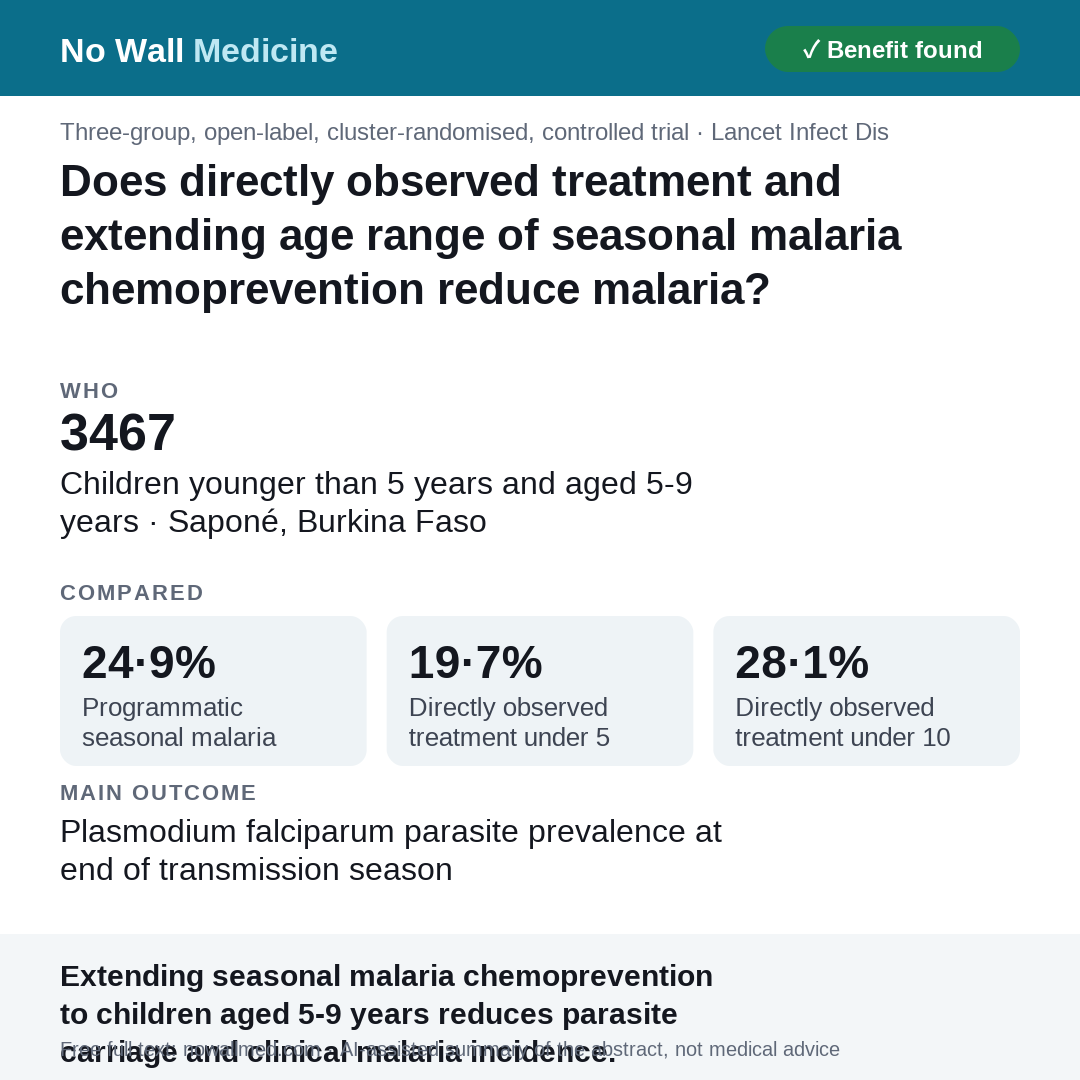
Impact of directly observed treatment and extended age range of seasonal malaria chemoprevention with sulfadoxine-pyrimethamine plus amodiaquine in Burkina Faso: a three-group, open-label, cluster-randomised, controlled trial
Three-group, open-label, cluster-randomised, controlled trialMixed results
Does directly observed treatment or extending age range of seasonal malaria chemoprevention reduce parasite prevalence?
Who
3467
Children younger than 5 and 5-9 years in Burkina Faso · Saponé, Burkina Faso
Compared
24.9%Programmatic SMC under 5 years (52 of 209 participants)
19.7%DOT SMC under 5 years (40 of 203 participants)
28.1%DOT SMC under 10 years (63 of 224 participants)
Main outcome
Plasmodium falciparum parasite prevalence at end of transmission season
Result: RR 0.56 (95% CI 0.43 to 0.74) for DOTu10 vs DOTu5 in 5-9 year olds
Bottom line: Extending seasonal malaria chemoprevention to children aged 5-9 years reduced parasite carriage, but directly observed treatment showed no significant difference for children under 5.
Funded by: Gates Foundation
Lancet Infect Dis · 2026-07-29Download image
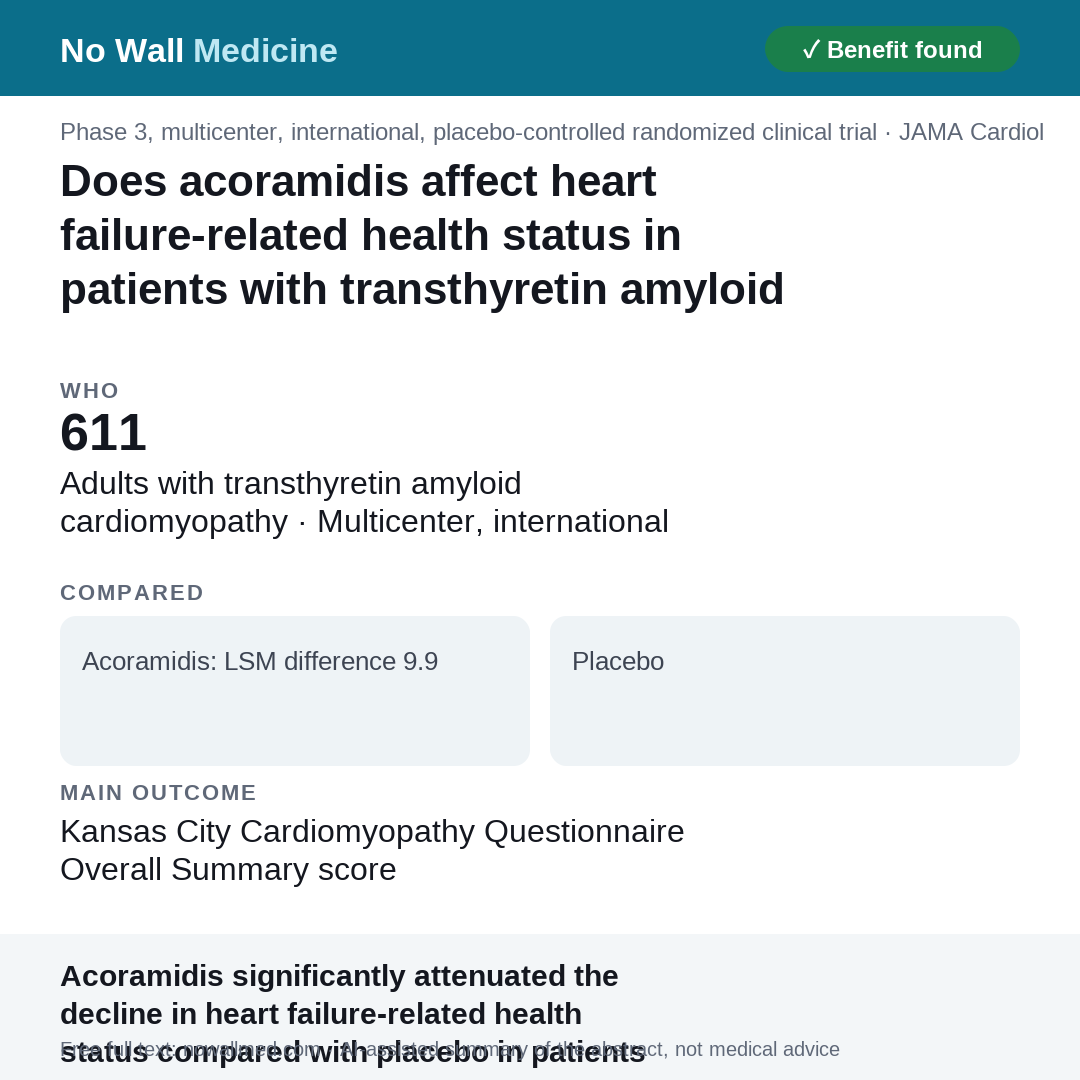
Effect of Acoramidis on Heart Failure-Related Health Status: A Secondary Analysis of the ATTRibute-CM Randomized Clinical Trial
Phase 3, multicenter, international, placebo-controlled randomized clinical trialBenefit found
Does acoramidis affect heart failure-related health status in patients with transthyretin amyloid cardiomyopathy?
Who
611
Adults with transthyretin amyloid cardiomyopathy · multicenter, international
Compared
acoramidis
placebo
Main outcome
Kansas City Cardiomyopathy Questionnaire Overall Summary score
Result: least-squares mean difference 9.9 (95% CI 6.0 to 13.9)
Bottom line: Acoramidis significantly attenuated the decline in heart failure-related health status compared with placebo in patients with transthyretin amyloid cardiomyopathy.
JAMA Cardiol · 2026-07-29Download image
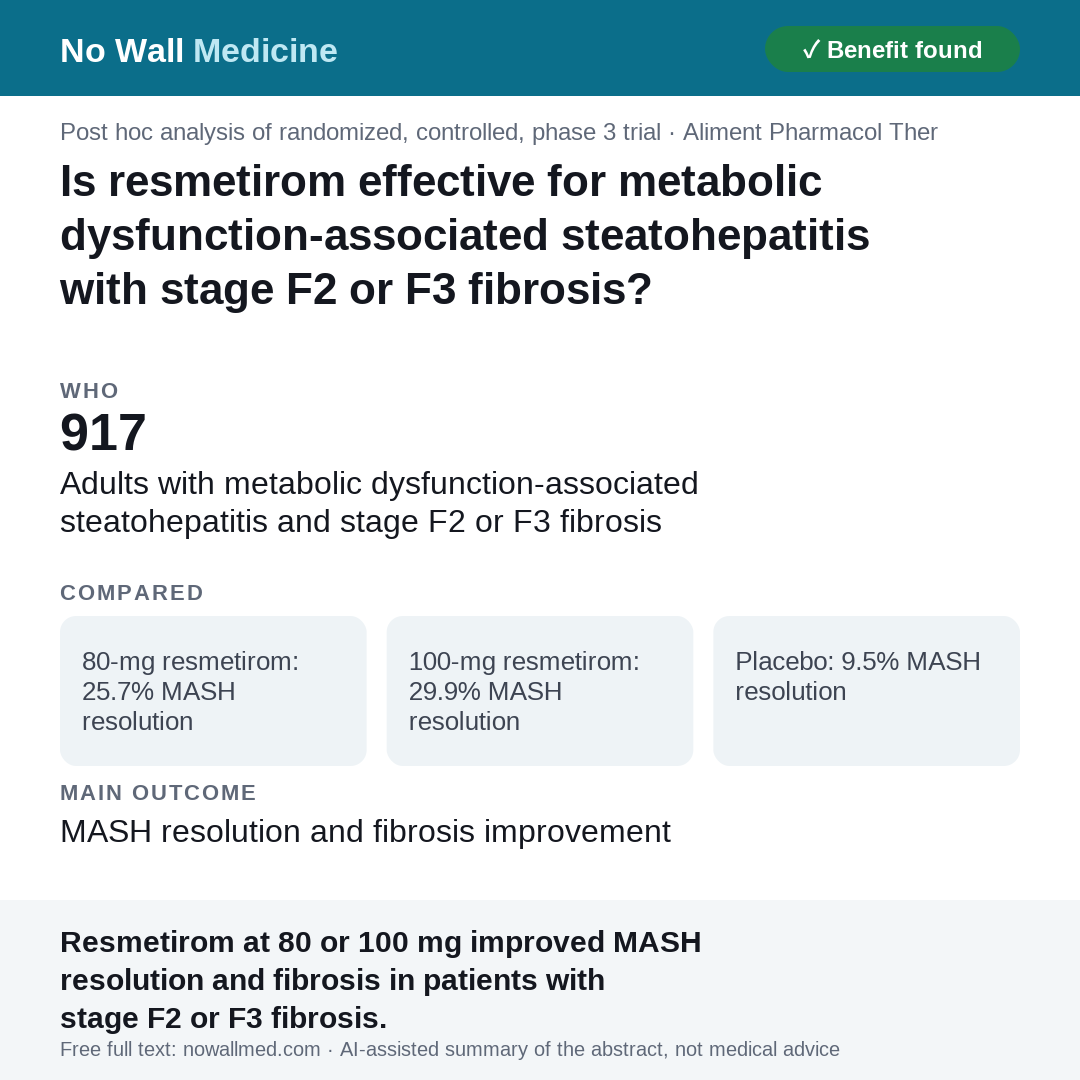
Clinical Trial: Phase 3 Trial of Resmetirom Versus Placebo in Metabolic Dysfunction-Associated Steatohepatitis-Reanalysis of Fibrosis Stage 2-3 Subset
Post hoc analysis of a randomized, controlled, phase 3 trialBenefit found
Is resmetirom effective for metabolic dysfunction-associated steatohepatitis in patients with stage F2 or F3 fibrosis?
Who
917
Adults with metabolic dysfunction-associated steatohepatitis and stage F2 or F3 fibrosis
Compared
25.7%80-mg resmetirom
29.9%100-mg resmetirom
9.5%Placebo
Main outcome
MASH resolution with no fibrosis worsening
Bottom line: Resmetirom demonstrated efficacy in achieving MASH resolution among patients with stage F2 or F3 fibrosis.
Aliment Pharmacol Ther · 2026-07-29Download image
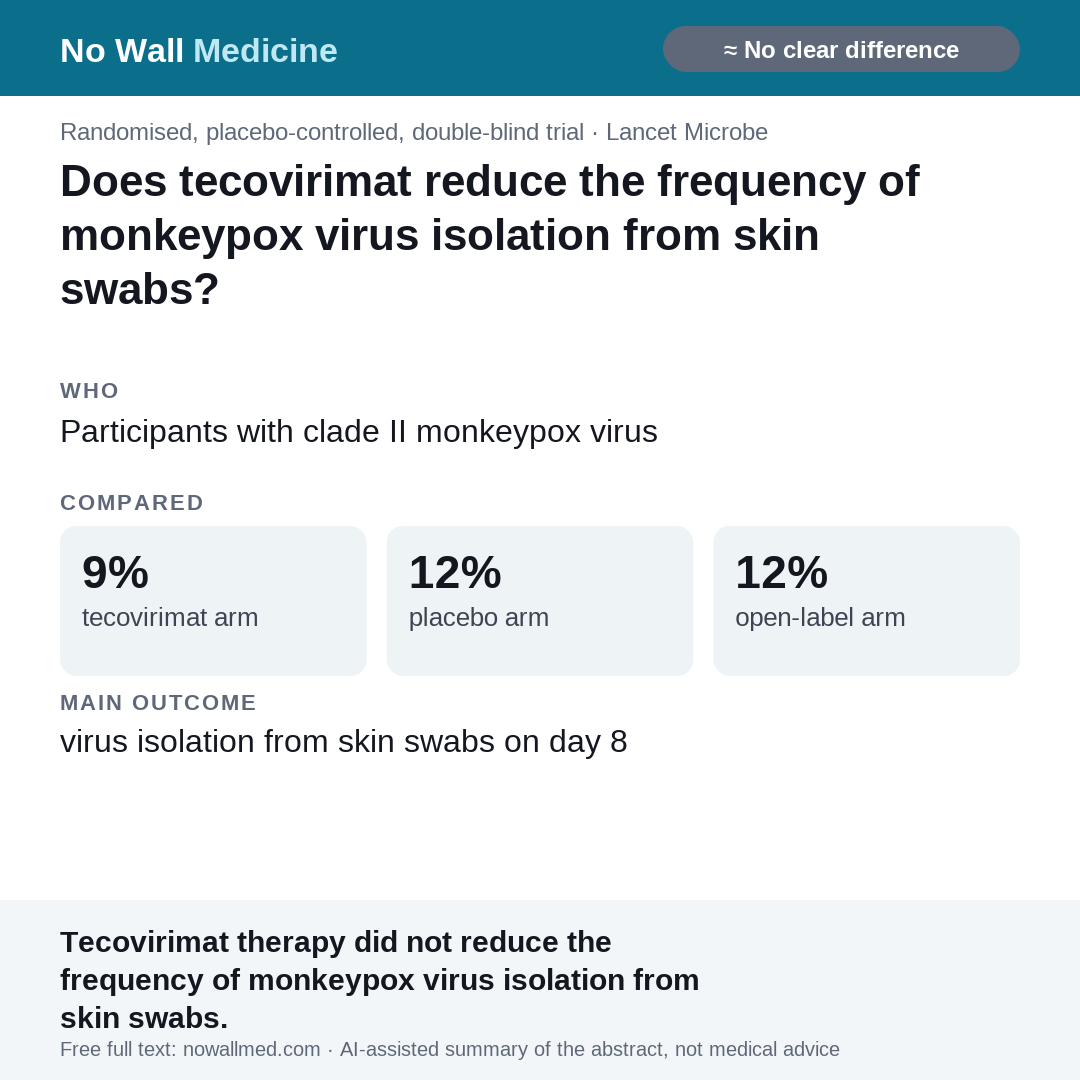
Tecovirimat treatment of clade II mpox: a virological analysis of a randomised, double-blind, phase 3 trial
Randomised, placebo-controlled, double-blind trialNo clear difference
Does tecovirimat reduce the frequency of monkeypox virus isolation from skin swabs?
Who
Participants with clade II monkeypox virus
Compared
9%tecovirimat arm (5/53)
12%placebo arm (3/25)
12%open-label arm (8/67)
Main outcome
virus isolation from skin swabs on day 8
Bottom line: Tecovirimat therapy did not reduce the frequency of monkeypox virus isolation from skin swabs.
Funded by: Advancing Clinical Therapeutics Globally and the National Institute of Allergy and Infectious Diseases
Lancet Microbe · 2026-07-29Download image
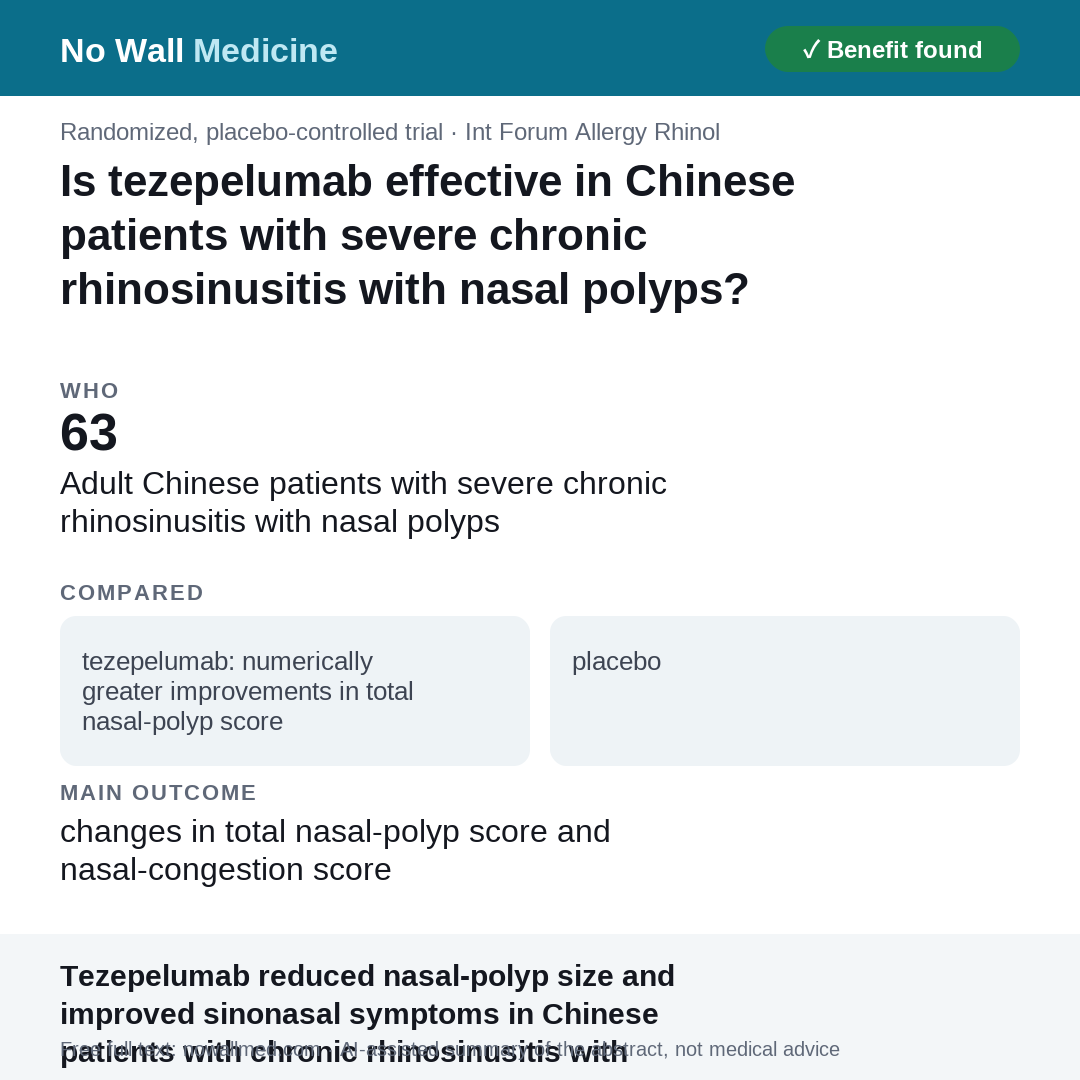
Tezepelumab in Chinese Patients With Severe Chronic Rhinosinusitis With Nasal Polyps: A Prespecified Subgroup Analysis of the Phase 3 WAYPOINT Trial
Randomized, placebo-controlled trialBenefit found
Is tezepelumab effective in Chinese patients with severe chronic rhinosinusitis with nasal polyps?
Who
63
Adult Chinese patients with severe chronic rhinosinusitis with nasal polyps
Compared
tezepelumab: numerically greater improvements in total nasal-polyp score
placebo
Main outcome
changes in total nasal-polyp score and nasal-congestion score
Result: least-squares mean difference vs. placebo [95% CI]: -2.03 [-2.88, -1.19]
Bottom line: Tezepelumab reduced nasal-polyp size and improved sinonasal symptoms in Chinese patients with chronic rhinosinusitis with nasal polyps.
Limitation: Further investigation is warranted to assess generalizability to the broader Chinese population.
Int Forum Allergy Rhinol · 2026-07-29Download image
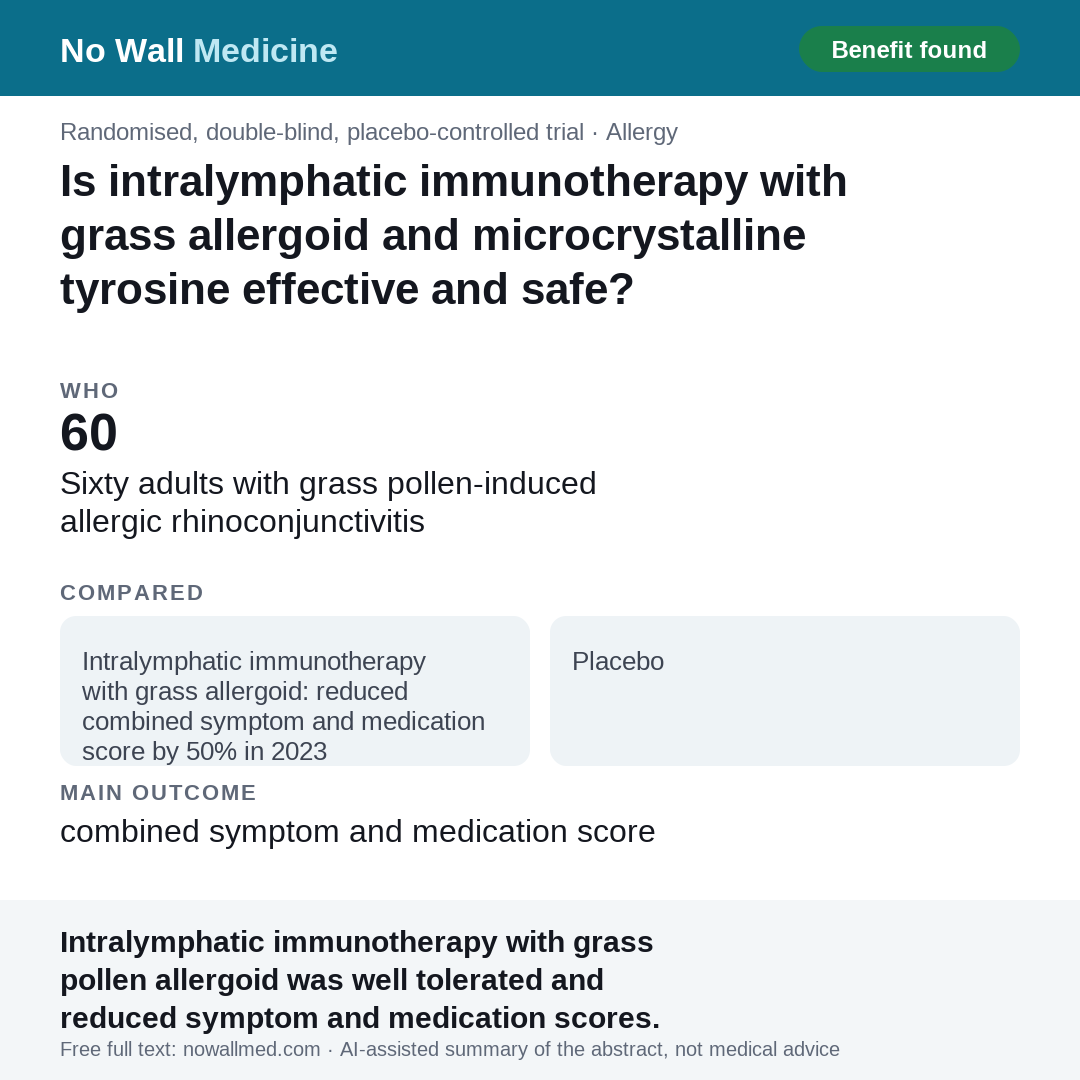
Efficacy and Safety of Intralymphatic Immunotherapy With Grass Allergoid and Microcrystalline Tyrosine: A Double-Blind Randomised Placebo-Controlled Trial
Randomised, double-blind, placebo-controlled trialBenefit found
Is intralymphatic immunotherapy with grass allergoid and microcrystalline tyrosine effective and safe?
Who
60
Adults with grass pollen-induced allergic rhinoconjunctivitis
Compared
Intralymphatic immunotherapy with grass allergoid: reduced combined symptom and medication score by 33% in 2022 and 50% in 2023
Placebo
Main outcome
combined symptom and medication score
Bottom line: Intralymphatic immunotherapy with grass pollen allergoid was well tolerated and reduced symptom and medication scores.
Allergy · 2026-07-29Download image
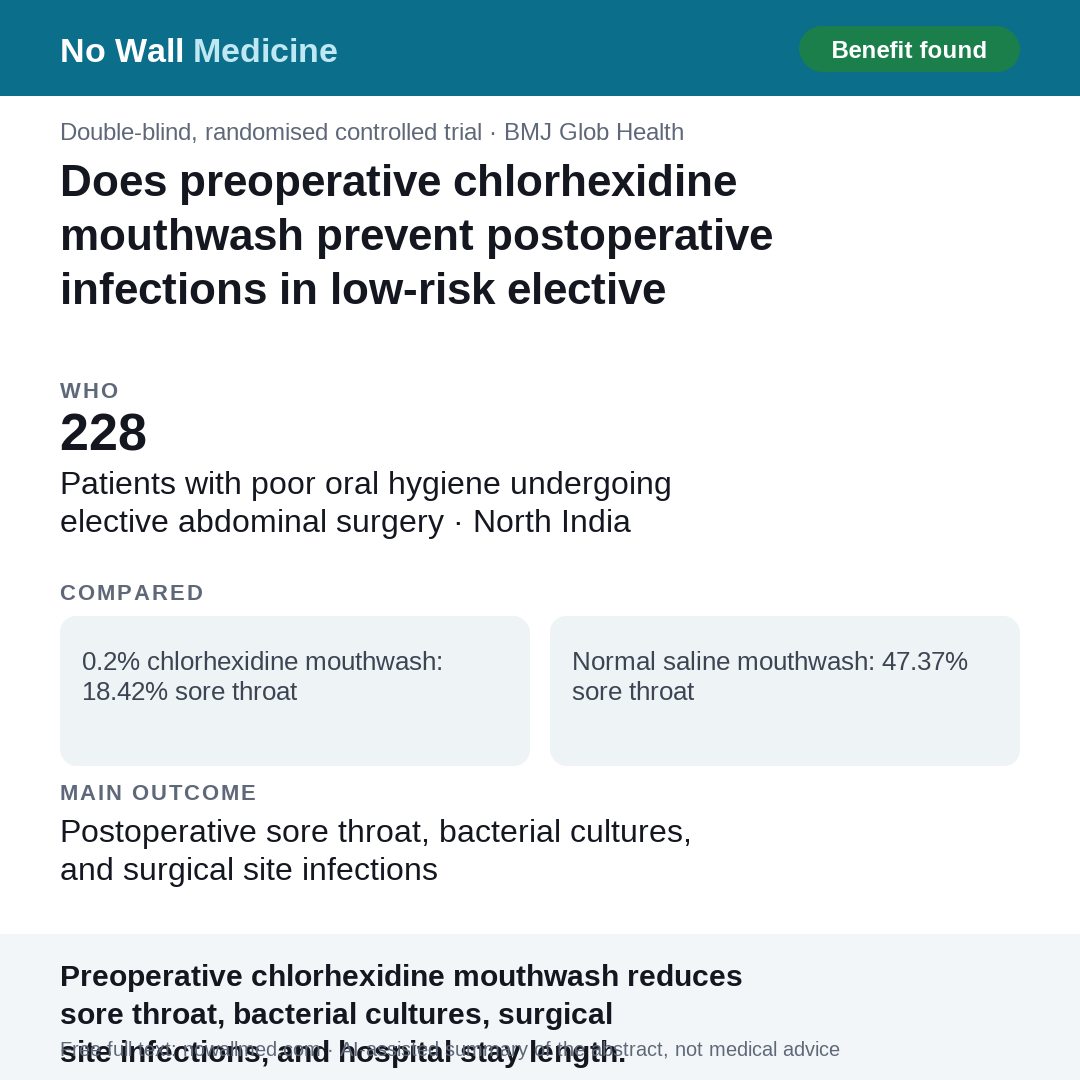
Preoperative chlorhexidine mouthwash to prevent postoperative infections in low-risk elective abdominal surgeries: a double-blind RCT from North India among patients with poor oral hygiene
Double-blind, randomised controlled trialBenefit found
Does preoperative chlorhexidine mouthwash prevent postoperative infections in low-risk elective abdominal surgeries?
Who
228
Patients with poor oral hygiene undergoing elective abdominal surgery · North India
Compared
18.42%Chlorhexidine mouthwash
47.37%Control
Main outcome
Postoperative sore throat
Bottom line: Preoperative chlorhexidine mouthwash significantly reduces postoperative sore throat and other complications in patients with poor oral hygiene.
BMJ Glob Health · 2026-07-29Download image
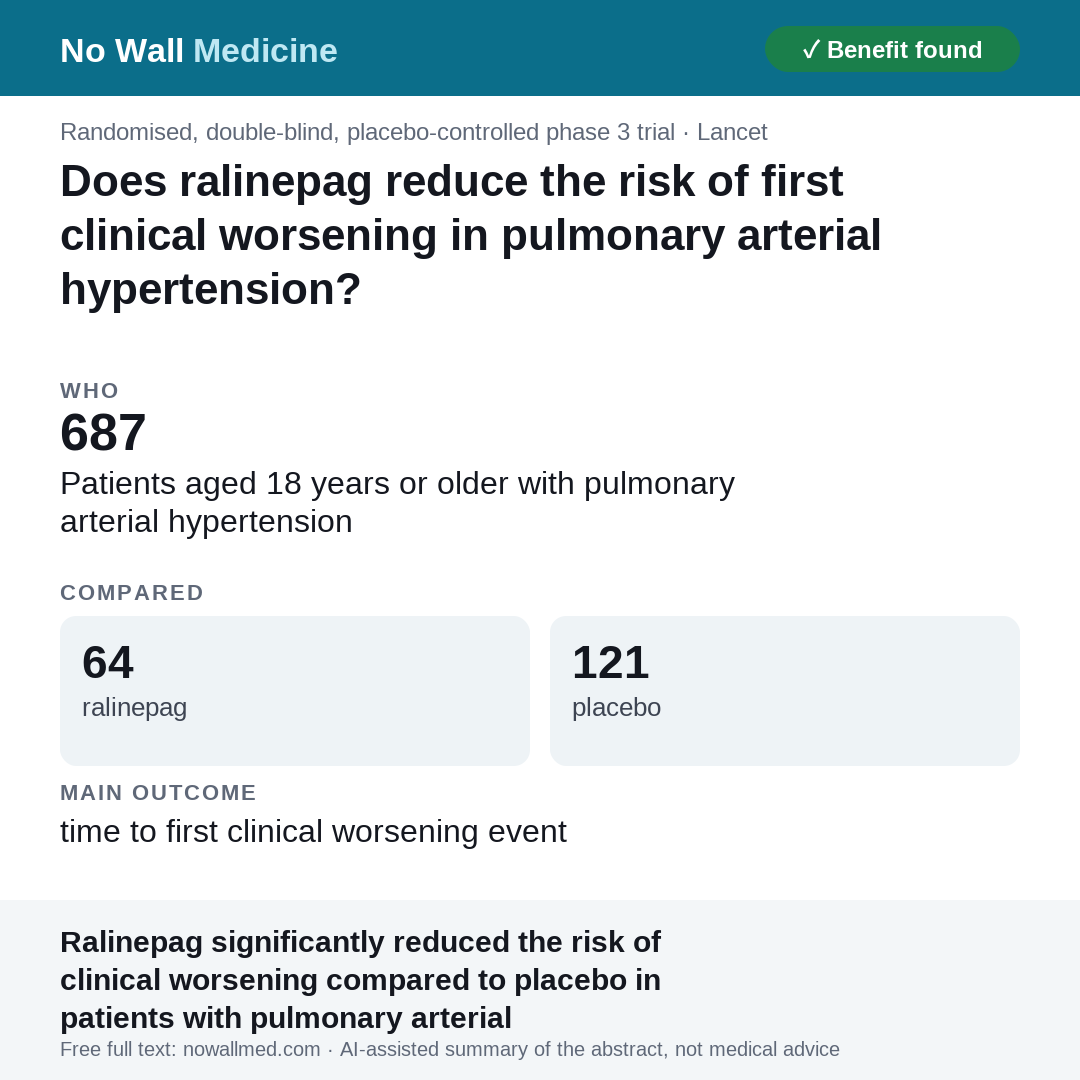
Ralinepag for the treatment of pulmonary arterial hypertension (ADVANCE OUTCOMES): a randomised, double-blind, placebo-controlled phase 3 study
Randomised, double-blind, placebo-controlled phase 3 trialBenefit found
Does ralinepag reduce the risk of first clinical worsening in patients with pulmonary arterial hypertension?
Who
687
Patients aged 18 years or older with pulmonary arterial hypertension
Compared
64ralinepag (18%)
121placebo (36%)
Main outcome
time to first clinical worsening event
Result: hazard ratio 0·45 (95% CI 0·33-0·62)
Bottom line: Ralinepag significantly reduced the risk of first clinical worsening compared with placebo in patients with pulmonary arterial hypertension.
Funded by: United Therapeutics Corporation
Lancet · 2026-07-28Download image
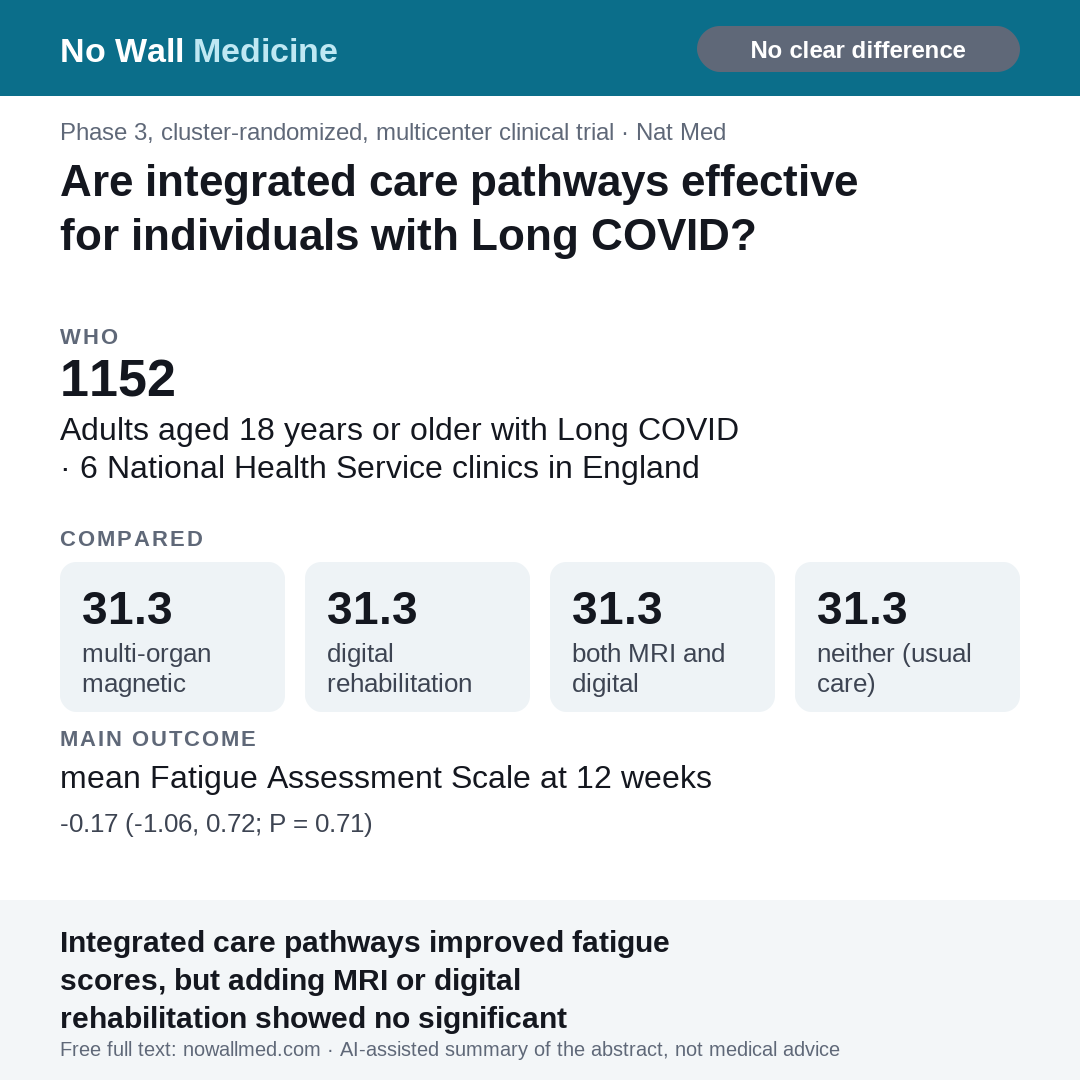
Integrated care pathway in individuals with Long COVID: STIMULATE-ICP, a cluster-randomized, phase 3 trial
Phase 3, cluster-randomized, multicenter clinical trialNo clear difference
Are integrated care pathways effective for individuals with Long COVID?
Who
1152
Adults aged 18 years or older with Long COVID · 6 National Health Service clinics in England
Compared
31.3multi-organ magnetic resonance imaging (s.d. 9.31)
31.3digital rehabilitation (s.d. 9.31)
31.3both MRI and digital rehabilitation (s.d. 9.31)
31.3neither (usual care) (s.d. 9.31)
Main outcome
mean Fatigue Assessment Scale at 12 weeks
Result: -0.17 (-1.06, 0.72; P = 0.71)
Bottom line: Integrated care pathways improved fatigue scores, but adding MRI or digital rehabilitation showed no significant difference over usual care.
Limitation: further trials are required
Nat Med · 2026-07-28Download image
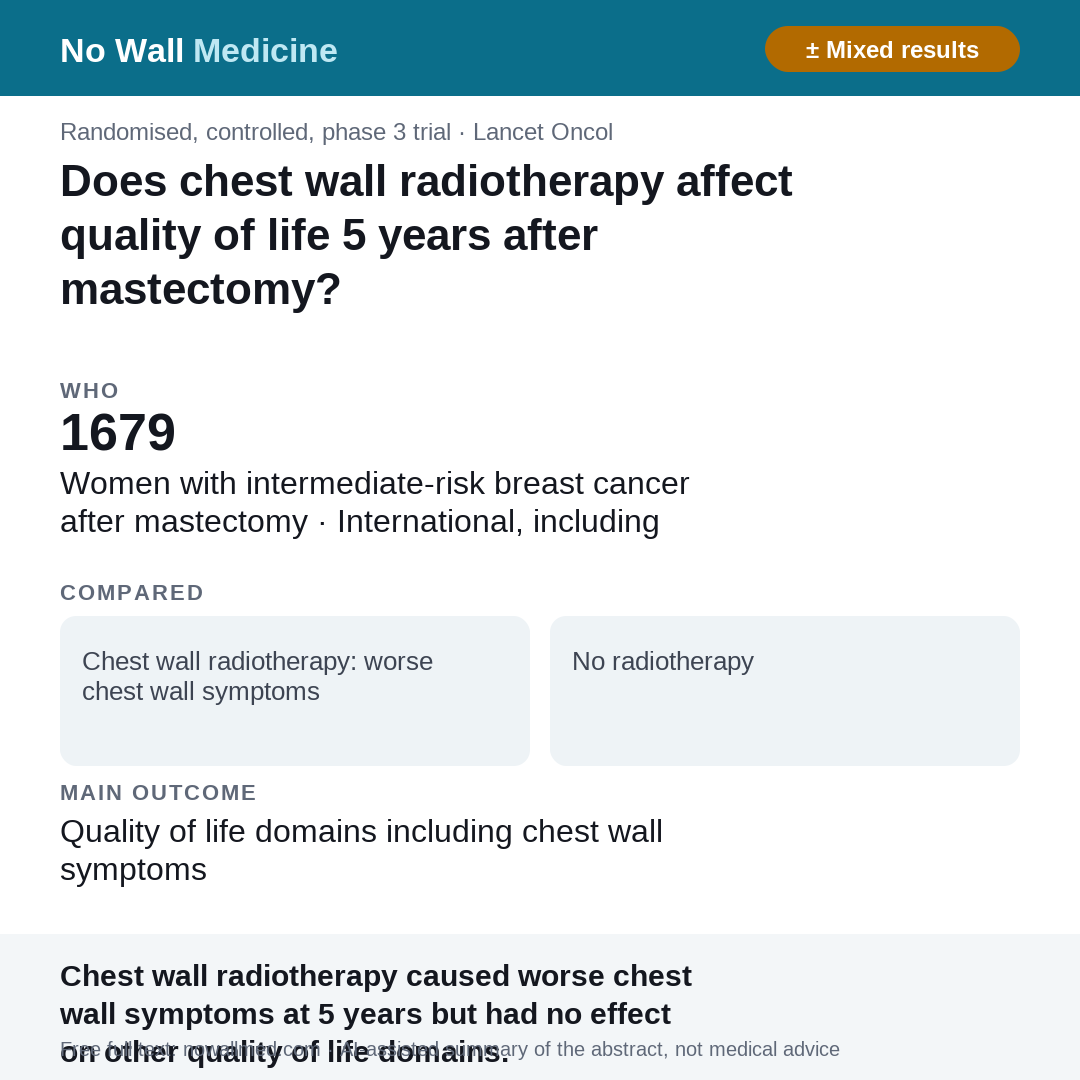
Postmastectomy chest wall radiotherapy for breast cancer (SUPREMO): 5-year quality-of-life results from a randomised, controlled, phase 3 trial
Randomised, controlled, phase 3 trialMixed results
Does chest wall radiotherapy affect quality of life 5 years after mastectomy?
Who
1679
Women with intermediate-risk breast cancer after mastectomy · International, including United Kingdom centres
Compared
Chest wall radiotherapy: worse chest wall symptoms
No radiotherapy
Main outcome
Quality of life domains including chest wall symptoms
Result: effect estimate 1·99 (95% CI 0·36-3·62)
Bottom line: Chest wall radiotherapy caused worse chest wall symptoms at 5 years but had no effect on other quality of life domains.
Funded by: UK Medical Research Council, National Institute for Health and Care Research, and others
Lancet Oncol · 2026-07-28Download image
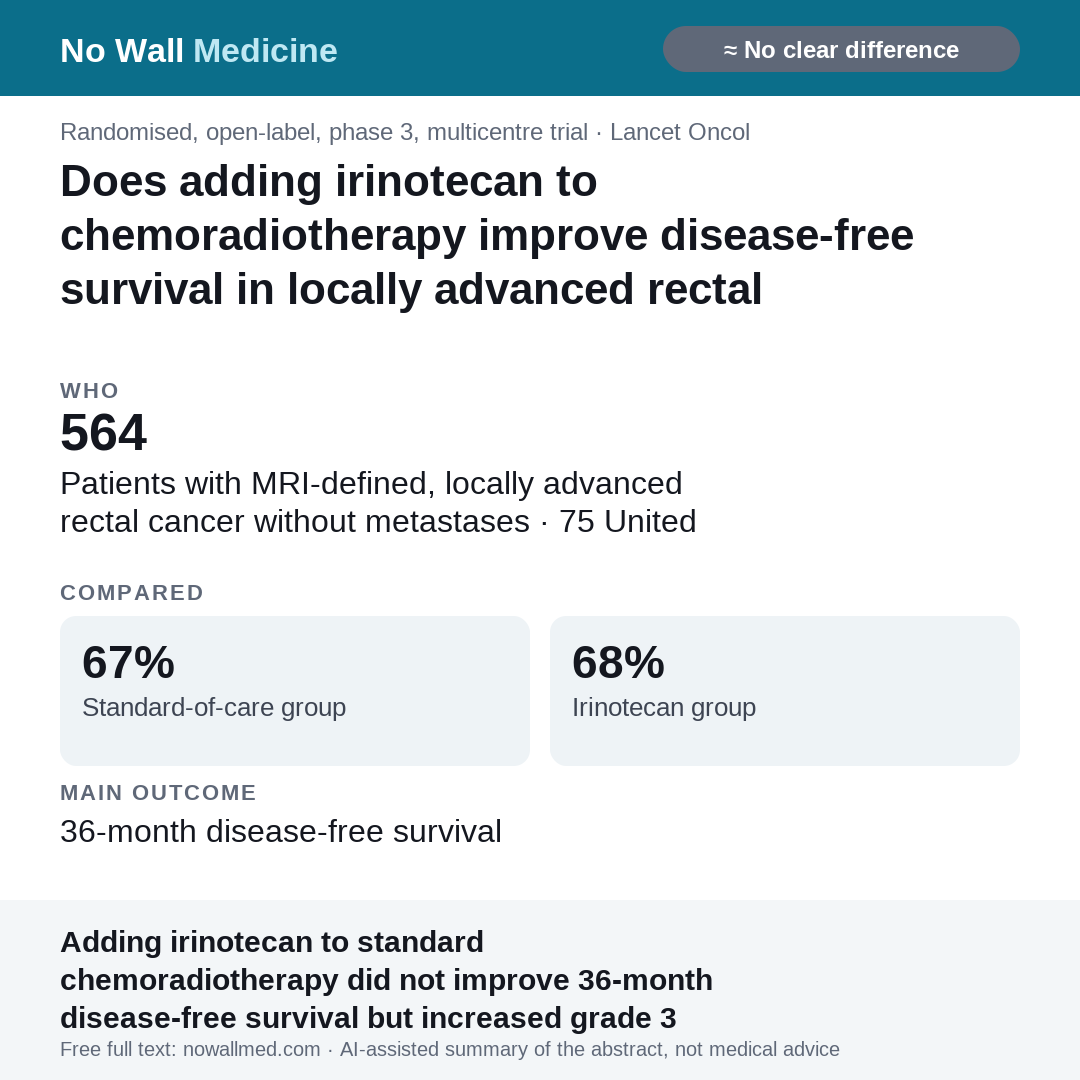
Addition of irinotecan to chemoradiotherapy as preoperative treatment for locally advanced rectal cancer (ARISTOTLE): a multicentre, open-label, phase 3, randomised controlled trial
Randomised, open-label, phase 3, multicentre trialNo clear difference
Does adding irinotecan to chemoradiotherapy improve disease-free survival in locally advanced rectal cancer?
Who
564
Patients with MRI-defined, locally advanced rectal cancer without metastases · 75 United Kingdom hospital sites
Compared
67%Standard-of-care group (95% CI 61-72)
68%Irinotecan group (95% CI 63-73)
Main outcome
36-month disease-free survival
Result: hazard ratio 0·91 (95% CI 0·68-1·23)
Bottom line: Adding irinotecan to standard chemoradiotherapy did not improve 36-month disease-free survival but increased grade 3 or worse adverse events.
Lancet Oncol · 2026-07-28Download image
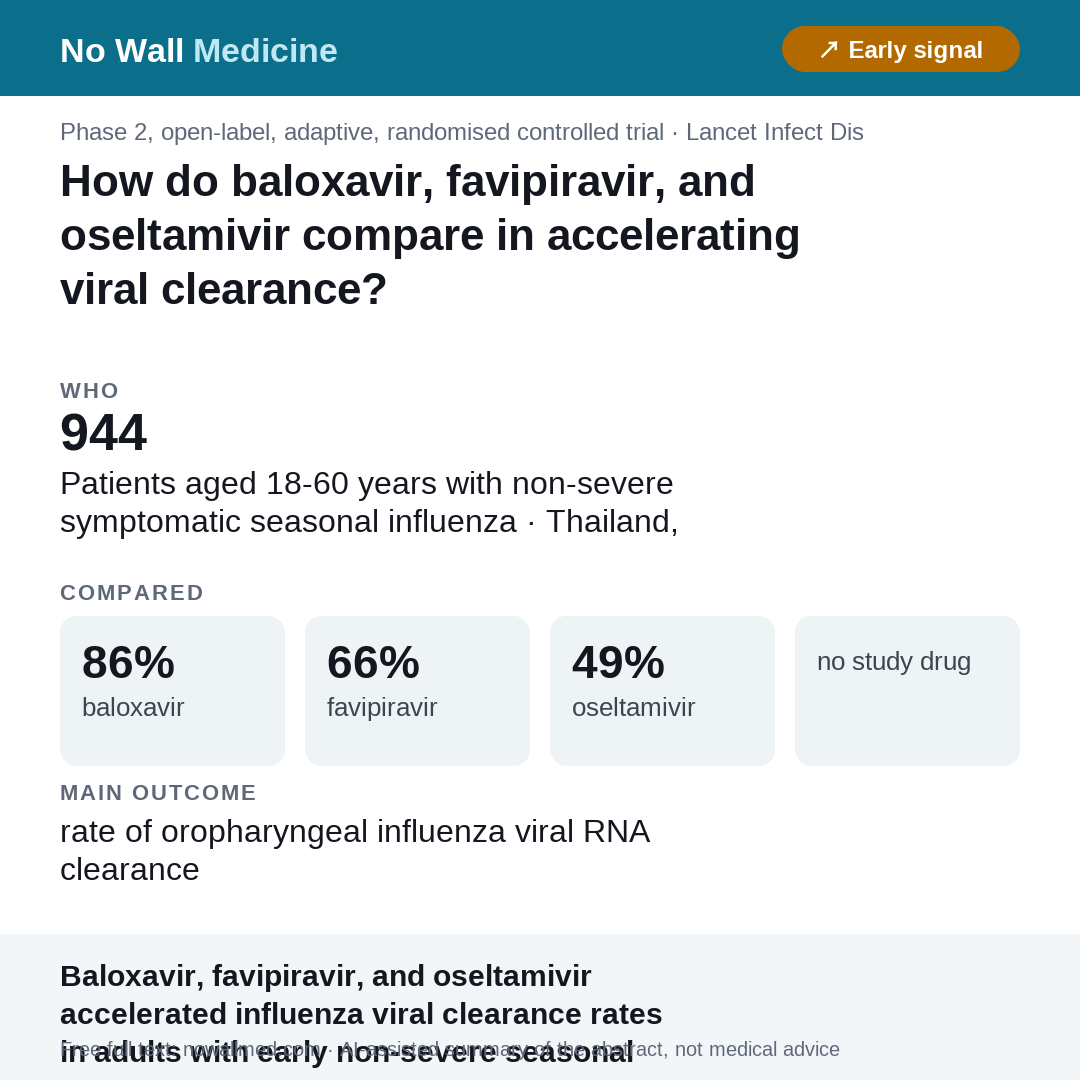
Baloxavir marboxil, favipiravir, or oseltamivir in patients with non-severe symptomatic seasonal influenza (AD ASTRA): a phase 2, open-label, adaptive, randomised controlled trial
Phase 2, open-label, adaptive, randomised controlled trialBenefit found
How do baloxavir, favipiravir, and oseltamivir compare in accelerating viral clearance?
Who
944
Patients aged 18-60 years with non-severe symptomatic seasonal influenza · Thailand, Laos, Nepal, and Brazil
Compared
86%Baloxavir (95% credible interval 60-117)
66%Favipiravir (45-94)
49%Oseltamivir (28-74)
No study drug
Main outcome
Acceleration of viral clearance rates
Result: oseltamivir was inferior (20% slower clearance, 95% CrI 6 to 32)
Bottom line: Baloxavir, favipiravir, and oseltamivir accelerated viral clearance in adults with non-severe seasonal influenza.
Funded by: Wellcome Trust
Lancet Infect Dis · 2026-07-28Download image
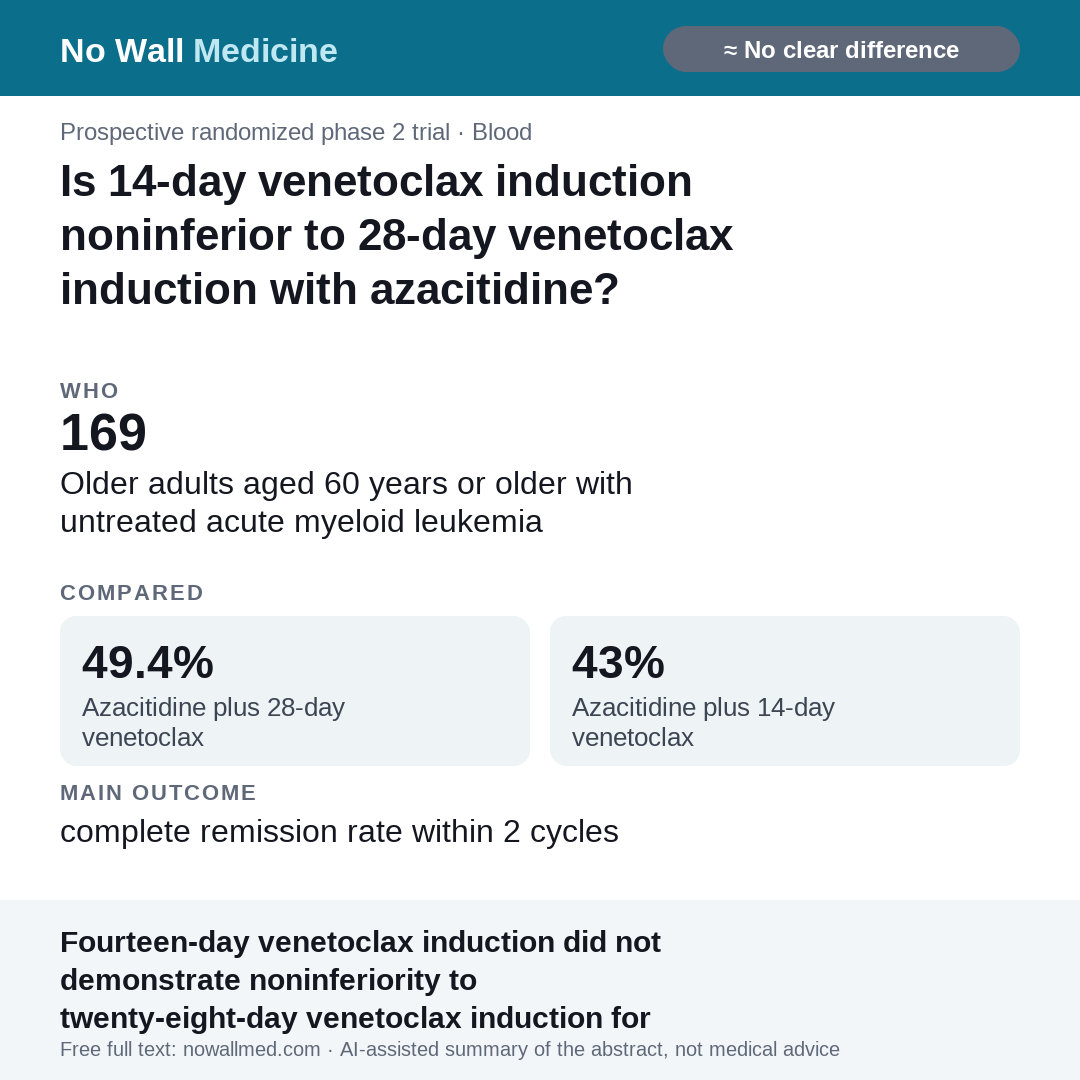
Prospective comparison of 28 vs 14 days of venetoclax induction with azacitidine in older adults with untreated AML: OPTI-AML trial
Prospective randomized phase 2 trialNo clear difference
Is 14-day venetoclax induction noninferior to 28-day venetoclax induction with azacitidine?
Who
169
Older adults aged 60 years or older with untreated acute myeloid leukemia
Compared
49.4%Azacitidine plus 28-day venetoclax
43%Azacitidine plus 14-day venetoclax
Main outcome
complete remission rate within 2 cycles
Result: difference of 6.4% (90% confidence interval: -6.1% to 19.0%)
Bottom line: Fourteen-day venetoclax induction did not demonstrate noninferiority to twenty-eight-day venetoclax induction for complete remission.
Blood · 2026-07-28Download image
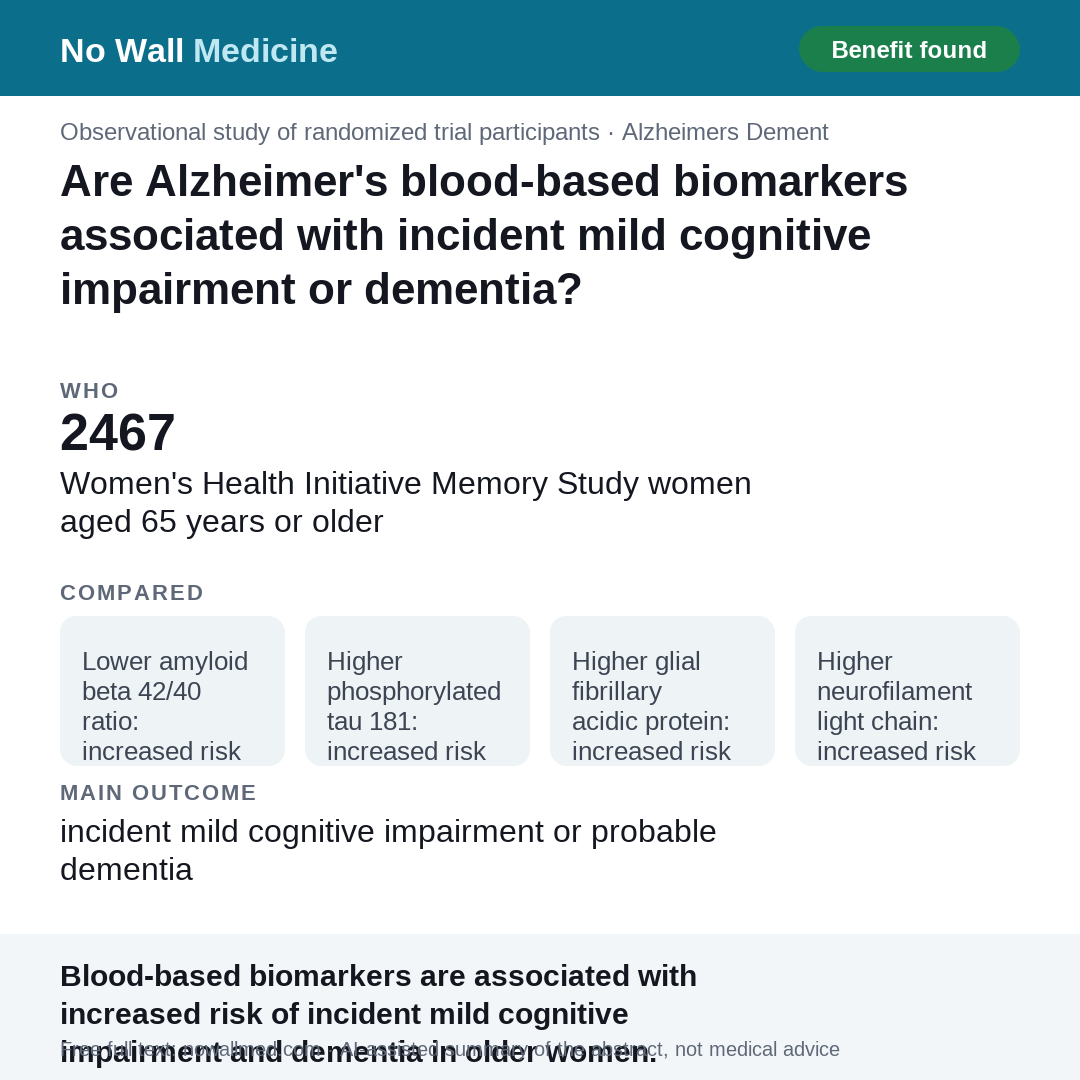
Alzheimer's blood-based biomarkers, incident dementia, and interactions with age, APOE status, and hormone therapy
Observational study of randomized trial participantsBenefit found
Are Alzheimer's blood-based biomarkers associated with incident mild cognitive impairment or dementia?
Who
2467
Women's Health Initiative Memory Study women aged 65 years or older
Compared
Lower amyloid beta 42/40 ratio: increased risk of MCI and dementia
Higher phosphorylated tau 181: increased risk of MCI and dementia
Higher glial fibrillary acidic protein: increased risk of MCI and dementia
Higher neurofilament light chain: increased risk of MCI and dementia
Main outcome
incident mild cognitive impairment or probable dementia
Bottom line: Blood-based biomarkers are associated with increased risk of incident mild cognitive impairment and dementia in older women.
Alzheimers Dement · 2026-07-28Download image