Visual abstracts
New randomized trials and meta-analyses from leading journals at a glance: who was studied, what was compared, and what was found. Every paper is free to read in full.
All specialtiesCardiology 128Oncology 94Gastroenterology & Hepatology 52Infectious Disease 99Neurology 47Psychiatry & Mental Health 63Pulmonology 46Critical Care 30Endocrinology & Diabetes 56Pediatrics 50Surgery 36Orthopedics & Sports Medicine 19Neurosurgery 4Cardiothoracic & Vascular Surgery 8Plastic & Reconstructive Surgery 23Nephrology 20Rheumatology 22Hematology 30Dermatology 12Ophthalmology 19Obstetrics & Gynecology 35Public & Global Health 36Radiology & Imaging 10Anesthesiology 18Urology 24ENT (Otolaryngology) 9Emergency Medicine 13Allergy & Immunology 9Geriatrics 33Family Medicine & Primary Care 7Medical Genetics & Genomics 12Pathology & Laboratory Medicine 1Physical Medicine & Rehabilitation 25Palliative Care 13Nutrition 39Digital Health & AI 109General Medicine 20
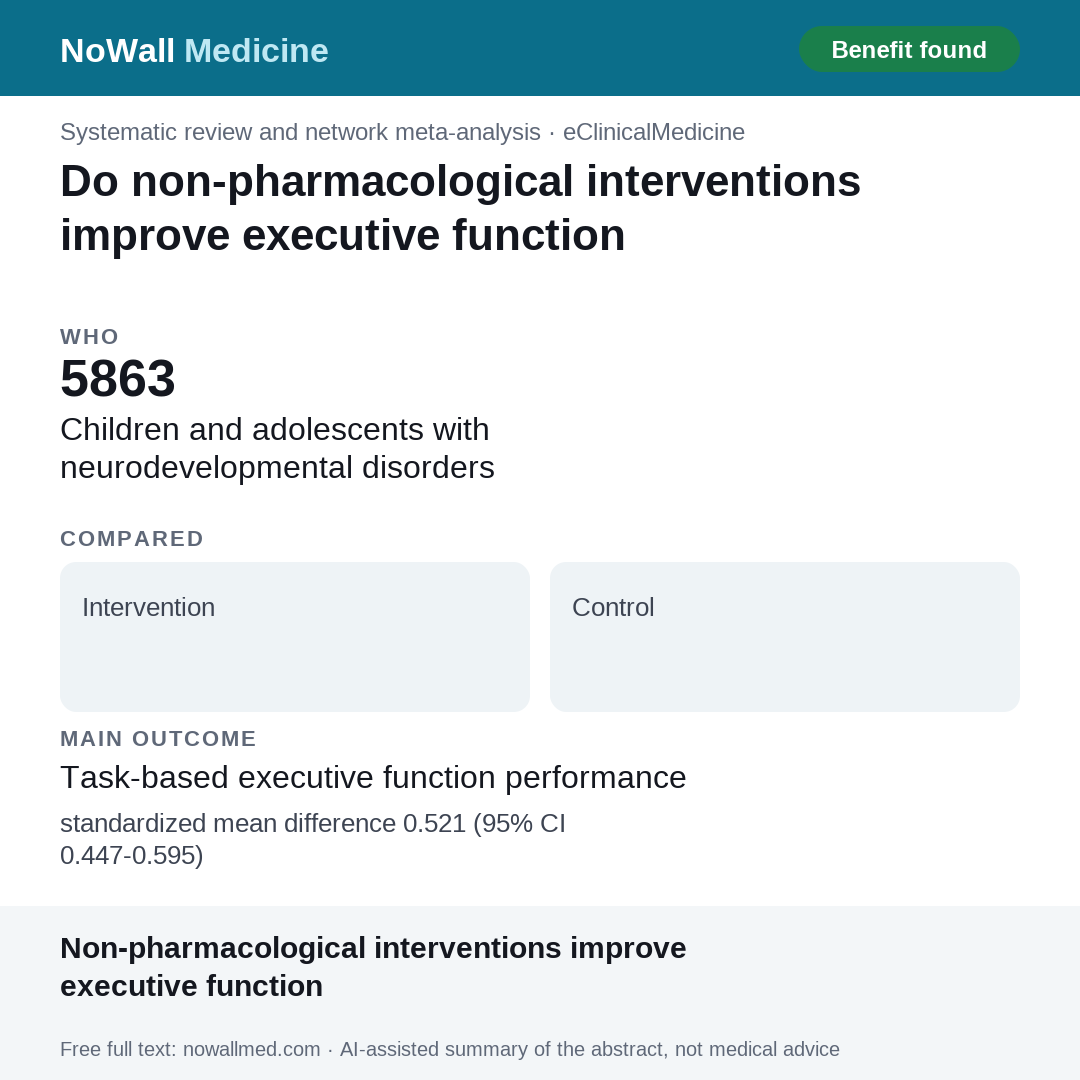
Non-pharmacological executive function interventions for children and adolescents with neurodevelopmental disorders: a systematic review and network meta-analysis
Systematic review and network meta-analysisBenefit found
Do non-pharmacological interventions improve executive function
Who
5863
Children and adolescents with neurodevelopmental disorders
Compared
Intervention
Control
Main outcome
Task-based executive function performance
Result: standardized mean difference 0.521 (95% CI 0.447-0.595)
Bottom line: Non-pharmacological interventions improve executive function
Limitation: Low certainty, heterogeneity, publication bias
eClinicalMedicine · 2026-09-28Download image
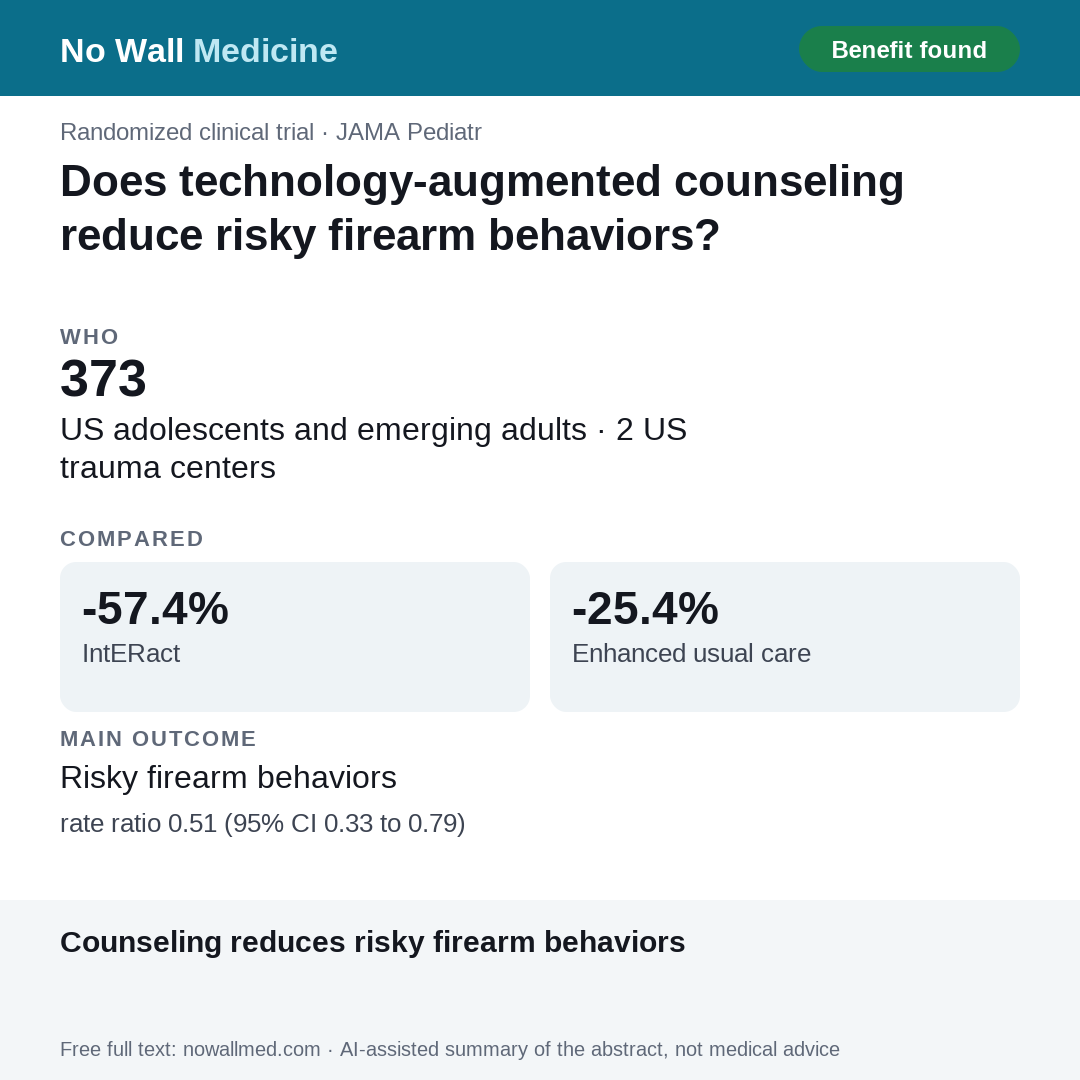
Efficacy of Technology-Augmented Behavioral Counseling for Risky Firearm Behaviors: A Randomized Clinical Trial
Randomized clinical trialBenefit found
Does technology-augmented counseling reduce risky firearm behaviors?
Who
373
US adolescents and emerging adults · 2 US trauma centers
Compared
-57.4%IntERact
-25.4%Enhanced usual care
Main outcome
Risky firearm behaviors
Result: rate ratio 0.51 (95% CI 0.33 to 0.79)
Bottom line: Counseling reduces risky firearm behaviors
JAMA Pediatr · 2026-09-28Download image
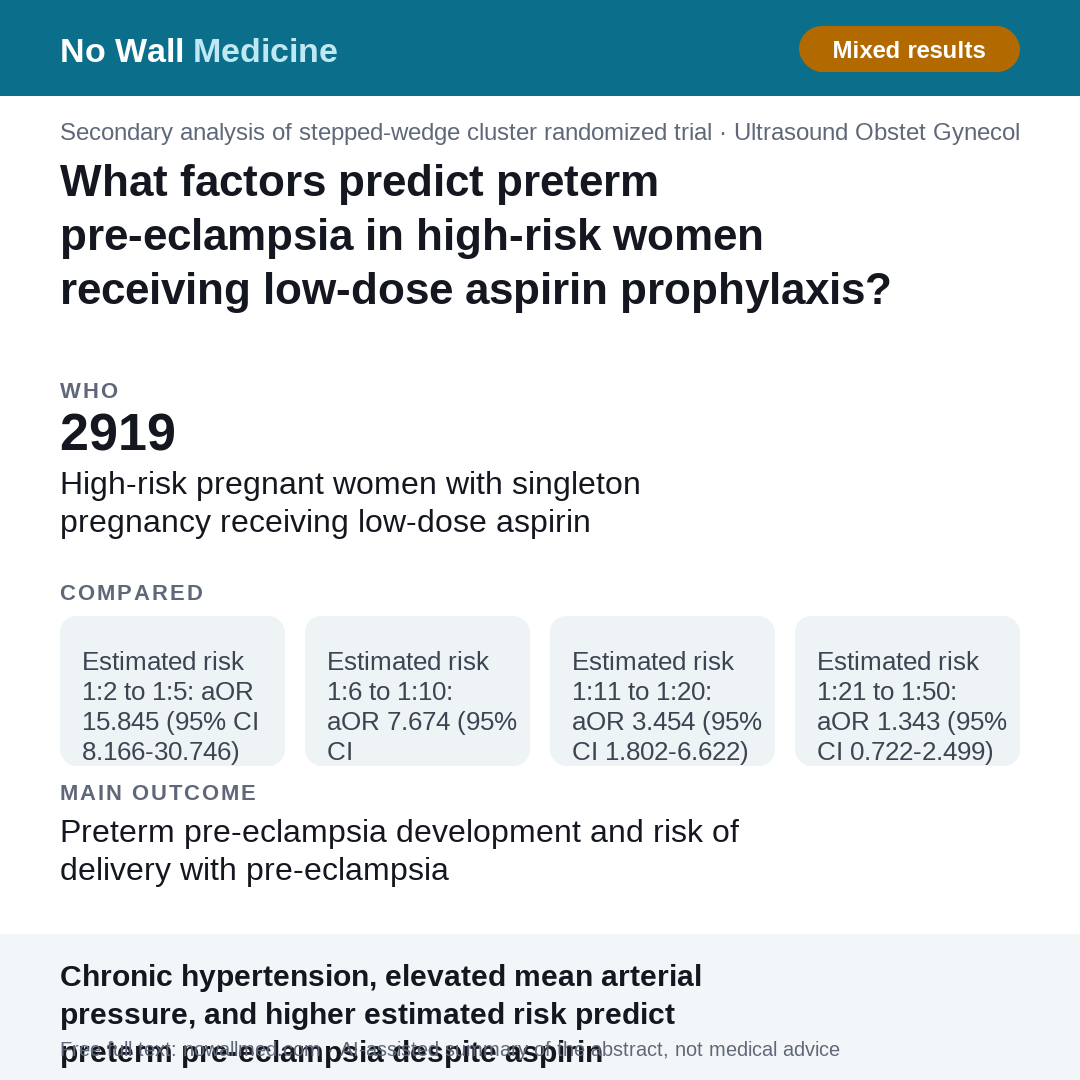
Determinants of preterm pre-eclampsia following low-dose aspirin prophylaxis: evidence from stepped-wedge cluster randomized trial in Asia
Secondary analysis of stepped-wedge cluster randomized trialMixed results
What factors predict preterm pre-eclampsia in high-risk women receiving low-dose aspirin prophylaxis?
Who
2919
High-risk pregnant women with singleton pregnancy receiving low-dose aspirin prophylaxis · 18 maternity/diagnostic units in 10 regions in Asia
Compared
Estimated risk 1:2 to 1:5: aOR 15.845 (95% CI 8.166-30.746)
Estimated risk 1:6 to 1:10: aOR 7.674 (95% CI 3.925-15.004)
Estimated risk 1:11 to 1:20: aOR 3.454 (95% CI 1.802-6.622)
Estimated risk 1:21 to 1:50: aOR 1.343 (95% CI 0.722-2.499)
Main outcome
Preterm pre-eclampsia development and risk of delivery with pre-eclampsia
Result: aOR 15.845 (95% CI 8.166-30.746) for highest risk group
Bottom line: Chronic hypertension, elevated mean arterial pressure, and higher estimated risk predict preterm pre-eclampsia despite aspirin prophylaxis.
Ultrasound Obstet Gynecol · 2026-09-27Download image
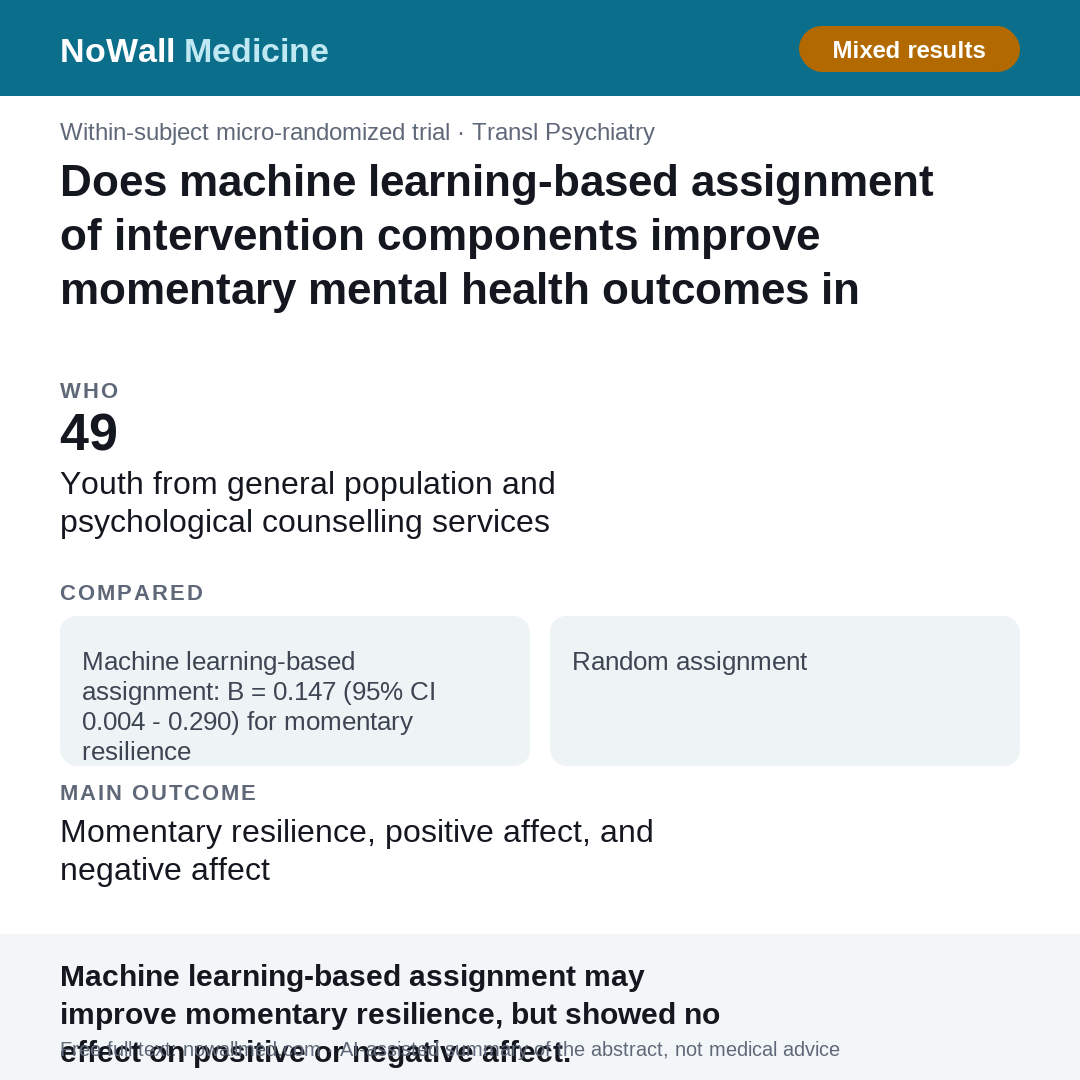
A machine learning-based ecological momentary intervention for mental health promotion in youth: a micro-randomized trial
Within-subject micro-randomized trialMixed results
Does machine learning-based assignment of intervention components improve momentary mental health outcomes in youth?
Who
49
Youth from general population and psychological counselling services
Compared
Machine learning-based assignment: B = 0.147 (95% CI 0.004 - 0.290) for momentary resilience
Random assignment
Main outcome
Momentary resilience, positive affect, and negative affect
Result: B = 0.147 (95% CI 0.004 - 0.290)
Bottom line: Machine learning-based assignment may improve momentary resilience, but showed no effect on positive or negative affect.
Transl Psychiatry · 2026-09-26Download image
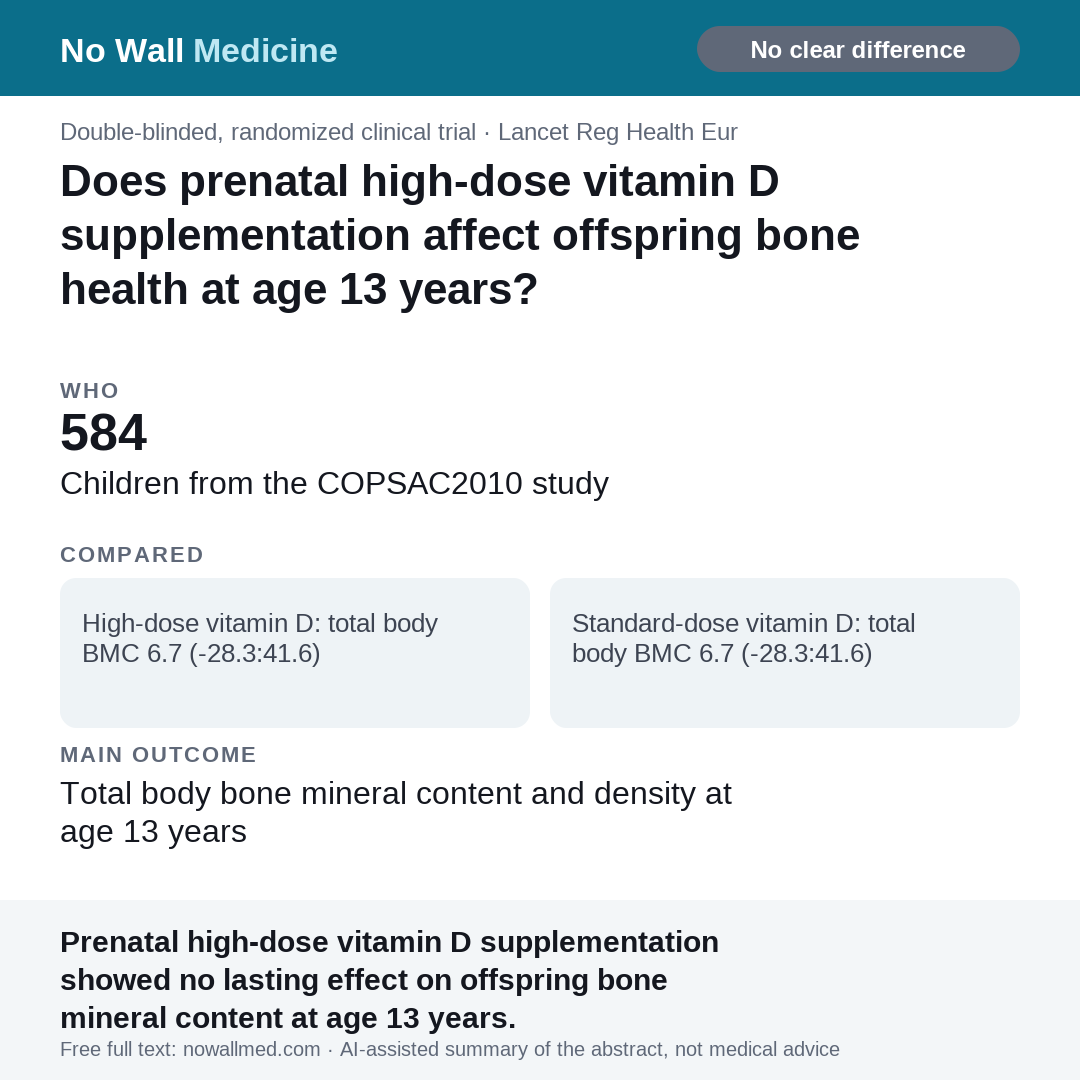
Prenatal high-dose vitamin D supplementation and offspring bone mineral content and density at age 13 years: a secondary analysis of a randomised clinical trial
Double-blinded, randomized clinical trialNo clear difference
Does prenatal high-dose vitamin D supplementation affect offspring bone health at age 13 years?
Who
584
Children from the COPSAC2010 study
Compared
High-dose vitamin D: total body BMC 6.7 (-28.3:41.6)
Standard-dose vitamin D: total body BMC 6.7 (-28.3:41.6)
Main outcome
Total body bone mineral content and density at age 13 years
Bottom line: Prenatal high-dose vitamin D supplementation showed no lasting effect on offspring bone mineral content at age 13 years.
Funded by: Thrasher Research Fund Award and Kong Christian IX and Dronning Louises Jubilæumslegat
Lancet Reg Health Eur · 2026-09-25Download image
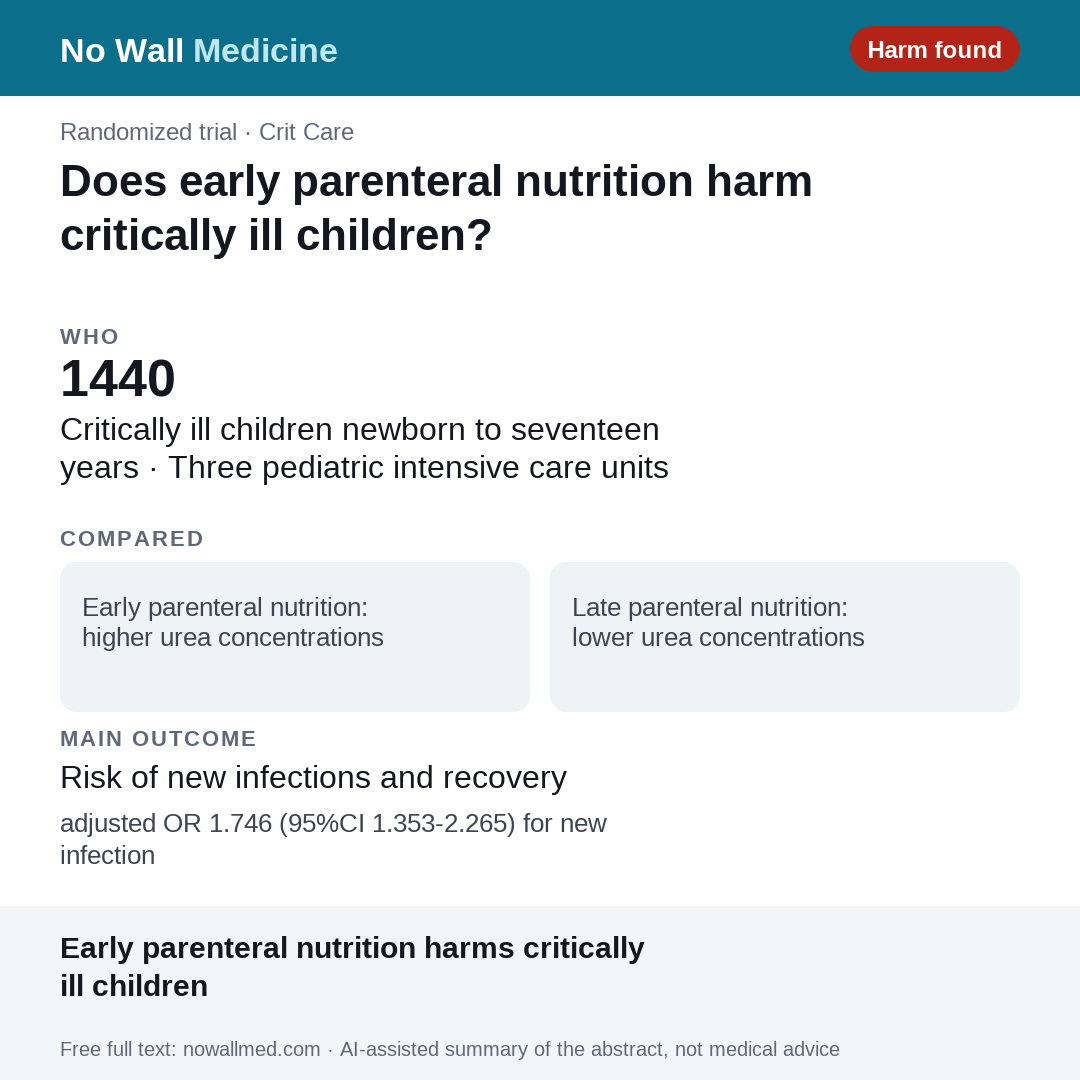
Increased ureagenesis revealing metabolic intolerance to enhanced nutrition in the PICU: a secondary analysis of the PEPaNIC RCT
Randomized trialHarm found
Does early parenteral nutrition harm critically ill children
Who
1440
Critically ill children in pediatric intensive care units · Leuven, Rotterdam, Edmonton
Compared
Early PN
Late PN
Main outcome
Risk of new infections
Result: adjusted OR 1.746 (95% CI 1.353 to 2.265)
Bottom line: Early parenteral nutrition harms critically ill children
Crit Care · 2026-09-25Download image
Accuracy of Artificial Intelligence in Diagnosing Obstructive Sleep Apnea Using Photoplethysmography: Systematic Review and Meta-Analysis
Systematic review and meta-analysisBenefit found
What is the diagnostic accuracy of artificial intelligence using photoplethysmography for obstructive sleep apnea?
Who
9983
Adults with obstructive sleep apnea
Compared
Artificial intelligence using photoplethysmography: sensitivity 79.6% (95% credible interval 55.5%-93.8%)
Conventional diagnosis
Main outcome
Diagnostic accuracy of photoplethysmography-based artificial intelligence models
Result: sensitivity 79.6% (95% credible interval 55.5%-93.8%) and specificity 76.5% (95% credible interval 48.2%-94.0%)
Bottom line: Artificial intelligence trained on photoplethysmography shows reasonable accuracy and may serve as a low-cost screening tool for obstructive sleep apnea.
Limitation: Small sample sizes, potential bias, underrepresentation of certain geographic regions, and influence of confounding factors.
J Med Internet Res · 2026-09-25Download image

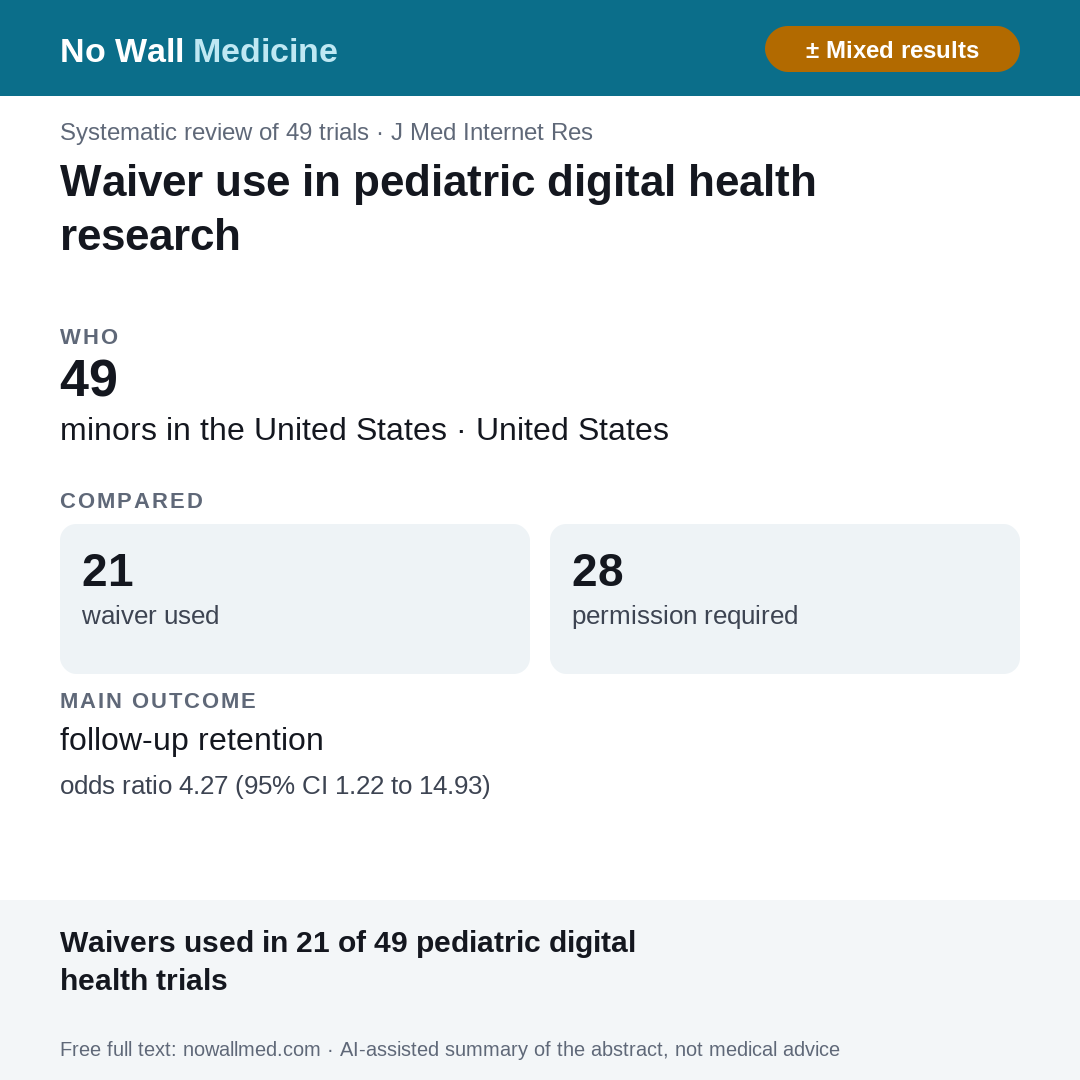
The Use of Waivers of Guardian Permission in the United States for Pediatric Digital Health Intervention Research Since 2020: Systematic Review
Systematic review of randomized controlled trialsNo clear difference
How are guardian permission waivers used in pediatric digital health intervention research?
Who
49
Minors in United States digital health intervention research · United States
Compared
Studies with waivers
Studies without waivers
Main outcome
Study characteristics and practices related to guardian permission
Result: odds ratio 4.27 (95% CI 1.22-14.93) for gender assessment
Bottom line: No significant differences in sample characteristics were found between studies using permission waivers and those requiring permission.
Limitation: Small sample sizes and variable reporting practices limited statistical power.
J Med Internet Res · 2026-09-25Download image
Evidence and Future Directions for Pediatric Health Care Chatbots: Systematic Review
Systematic reviewUnclear result
What is the evidence for pediatric health care chatbots evaluated for health-related outcomes?
Who
9
Children and caregivers
Compared
5Pediatric participants only (55.6%)
4Caregivers (44.4%)
Main outcome
Health and psychosocial outcomes
Bottom line: Current evidence for pediatric health care chatbots is limited and heterogeneous, with mixed health and psychosocial outcomes.
Limitation: Lack of active comparator groups, reliance on short-term metrics, and significant study heterogeneity.
J Med Internet Res · 2026-09-25Download image

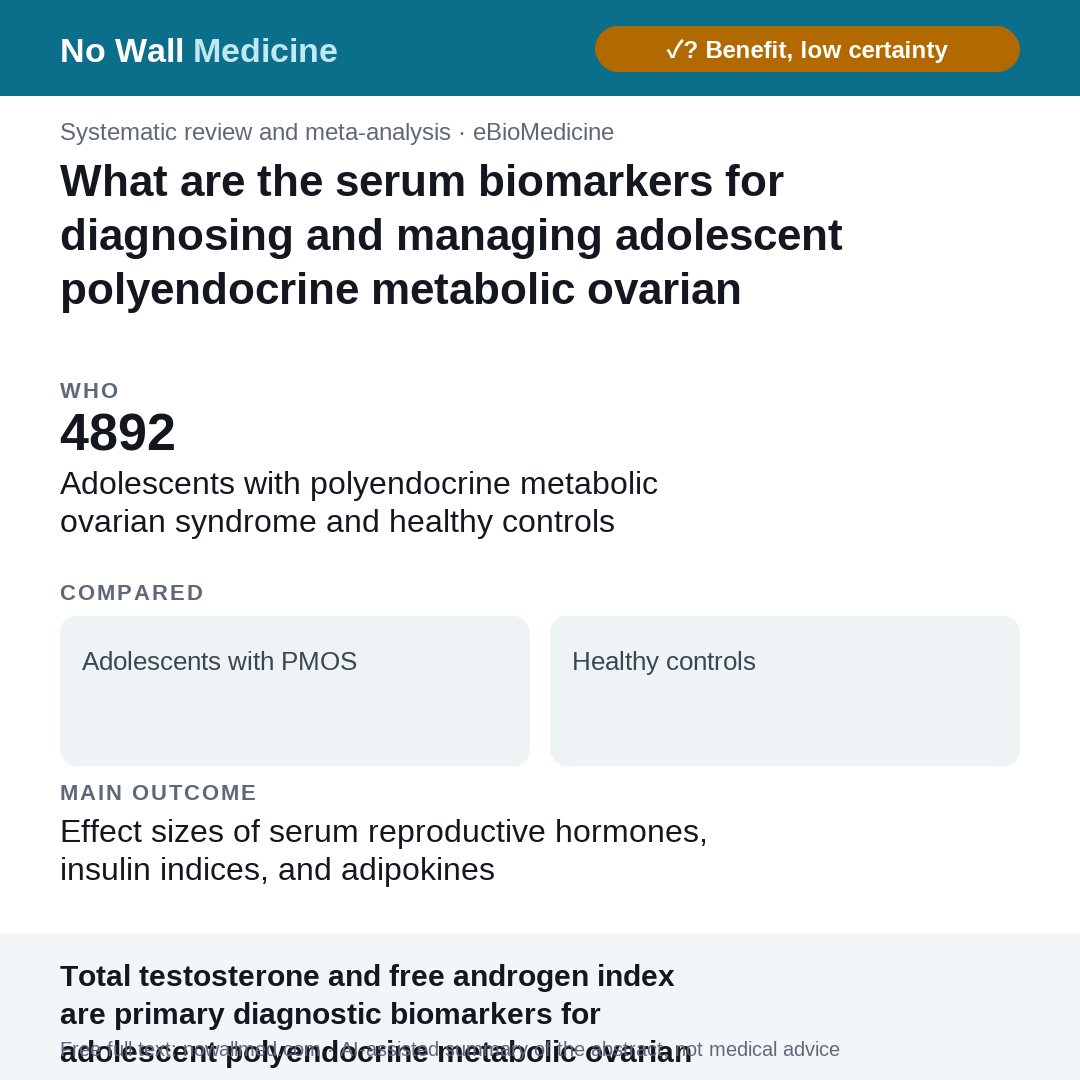
Serum biomarkers for the diagnosis and management of adolescent polyendocrine metabolic ovarian syndrome: a systematic review and meta-analysis
Systematic review and meta-analysisBenefit found
What are the serum biomarkers for diagnosing and managing adolescent polyendocrine metabolic ovarian syndrome?
Who
4892
Adolescents with polyendocrine metabolic ovarian syndrome and healthy controls
Compared
Adolescents with PMOS
Healthy controls
Main outcome
Effect sizes of serum reproductive hormones, insulin indices, and adipokines
Bottom line: Total testosterone and free androgen index are primary diagnostic biomarkers for adolescent polyendocrine metabolic ovarian syndrome.
Limitation: Certainty of evidence ranged from low to moderate.
Funded by: HMRF, CUHK, and Chulalongkorn University
eBioMedicine · 2026-09-24Download image
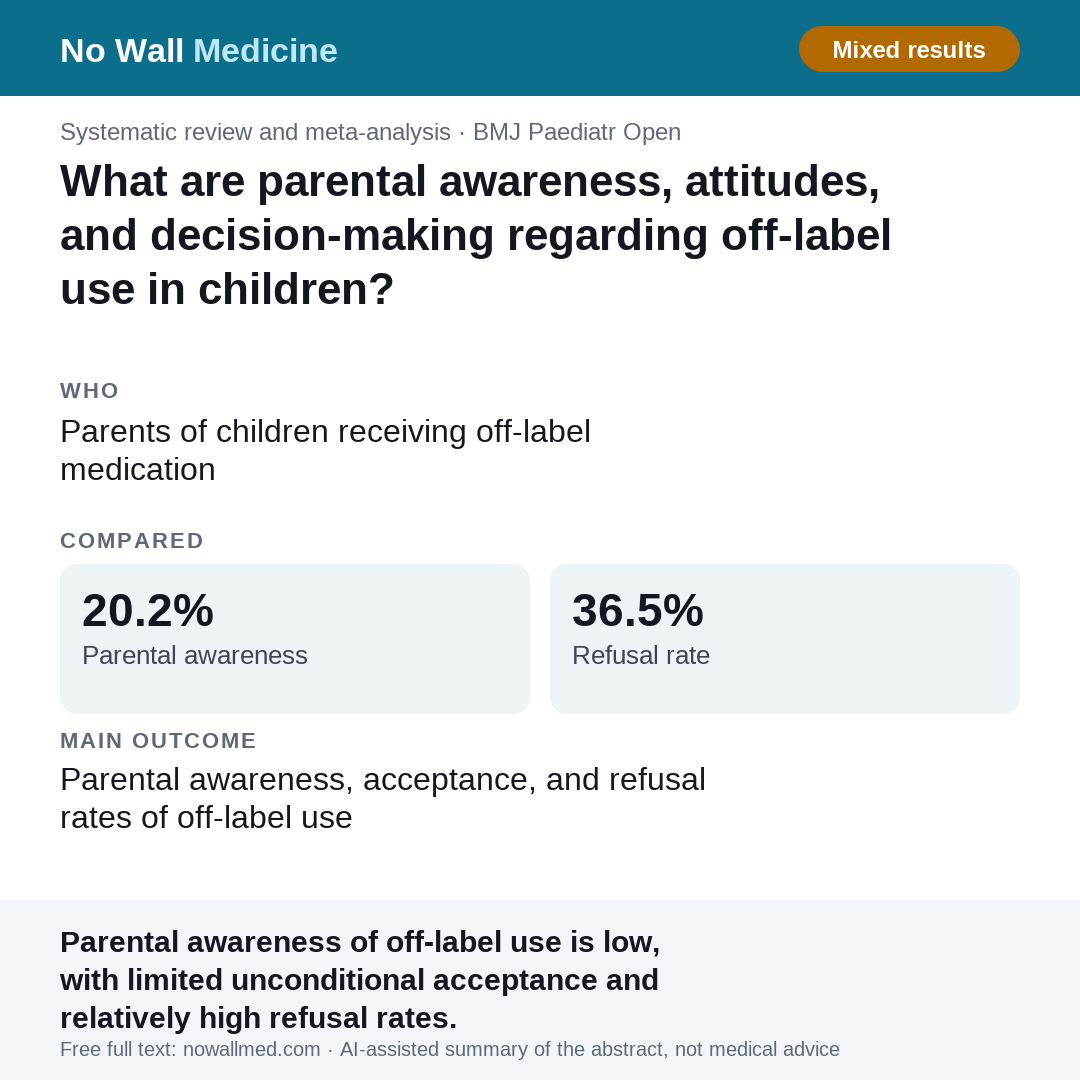
Parental awareness, attitudes and decision-making of off-label use in children: a systematic review and meta-analysis
Systematic review and meta-analysisMixed results
What are parental awareness, attitudes, and decision-making regarding off-label use in children?
Who
Parents of children receiving off-label medication
Compared
20.2%Parental awareness (95% CI: 10.6% to 31.9%)
36.5%Refusal rate (95% CI: 14.6% to 61.8%)
Main outcome
Parental awareness, acceptance, and refusal rates of off-label use
Bottom line: Parental awareness of off-label use is low, with limited unconditional acceptance and relatively high refusal rates.
Limitation: Extreme heterogeneity in operational definitions for conditional acceptance rates.
BMJ Paediatr Open · 2026-09-24Download image
Pediatric Literacy Promotion for Latino Families by Texts and Referrals: A 3-Arm RCT
effectiveness-implementation hybrid type 1 randomized trialMixed results
Do text messages and referrals enhance pediatric literacy promotion for Latino families?
Who
630
630 Latino caregiver-infant dyads aged 6 to 12 months
Compared
Literacy promotion only
Literacy promotion plus text messages: effect size 0.391
Literacy promotion, texts, and referral: effect size 0.267
Main outcome
child language, social-emotional development, and parenting behaviors
Bottom line: Text messages improved language scores, while texts plus referrals improved social-emotional development and verbal responsiveness.
Pediatrics · 2026-09-23Download image

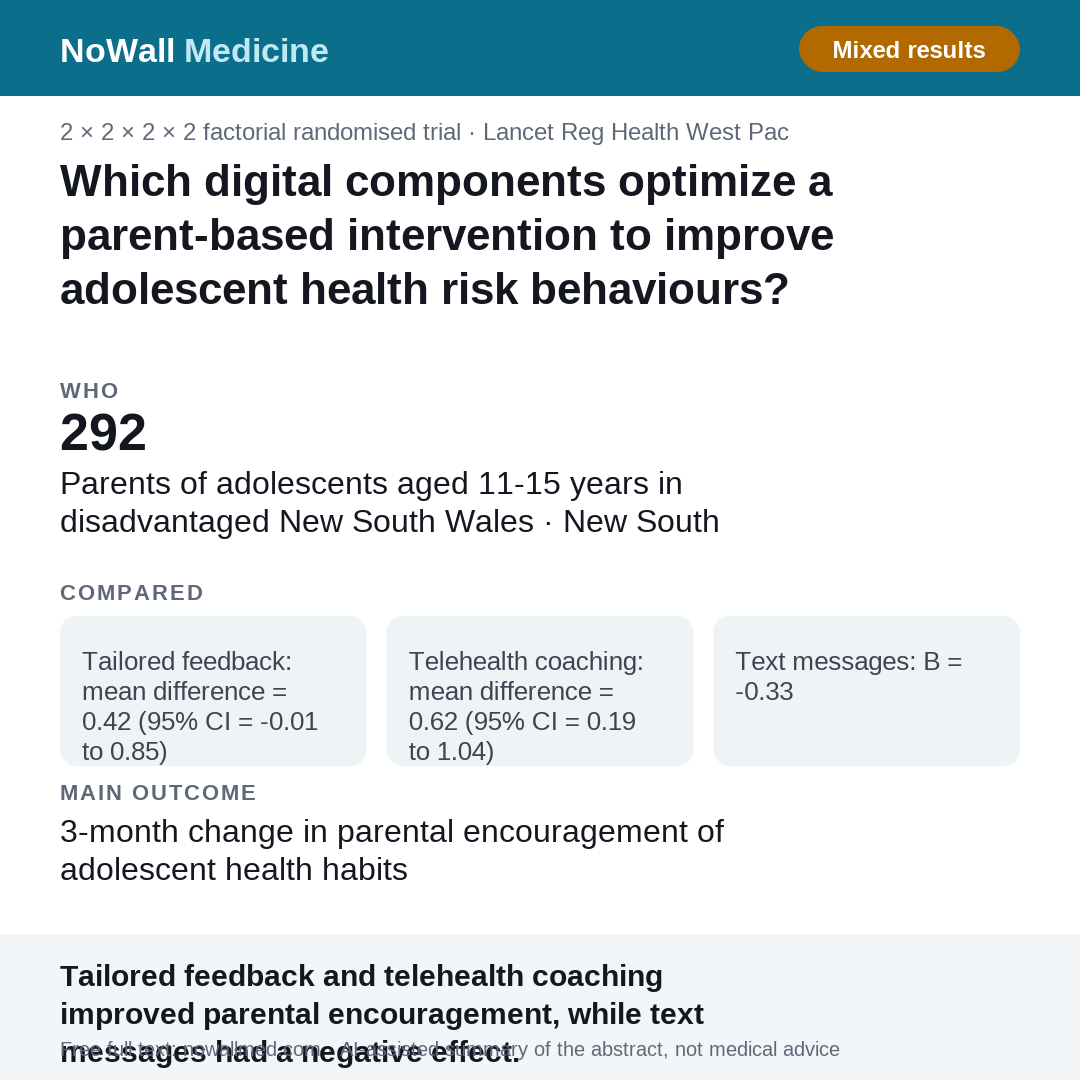
Optimising a digital parent-based intervention to improve adolescent health risk behaviours in families living in socio-economically disadvantaged communities: findings from the Health4Life Parents & Teens factorial randomised trial
2 × 2 × 2 × 2 factorial randomised trialMixed results
Which digital components optimize a parent-based intervention to improve adolescent health risk behaviours?
Who
292
Parents of adolescents aged 11-15 years in disadvantaged New South Wales · New South Wales, Australia
Compared
Tailored feedback: mean difference = 0.42 (95% CI = -0.01 to 0.85)
Telehealth coaching: mean difference = 0.62 (95% CI = 0.19 to 1.04)
Text messages: B = -0.33
Main outcome
3-month change in parental encouragement of adolescent health habits
Bottom line: Tailored feedback and telehealth coaching improved parental encouragement, while text messages had a negative effect.
Funded by: Medical Research Future Fund
Lancet Reg Health West Pac · 2026-09-23Download image
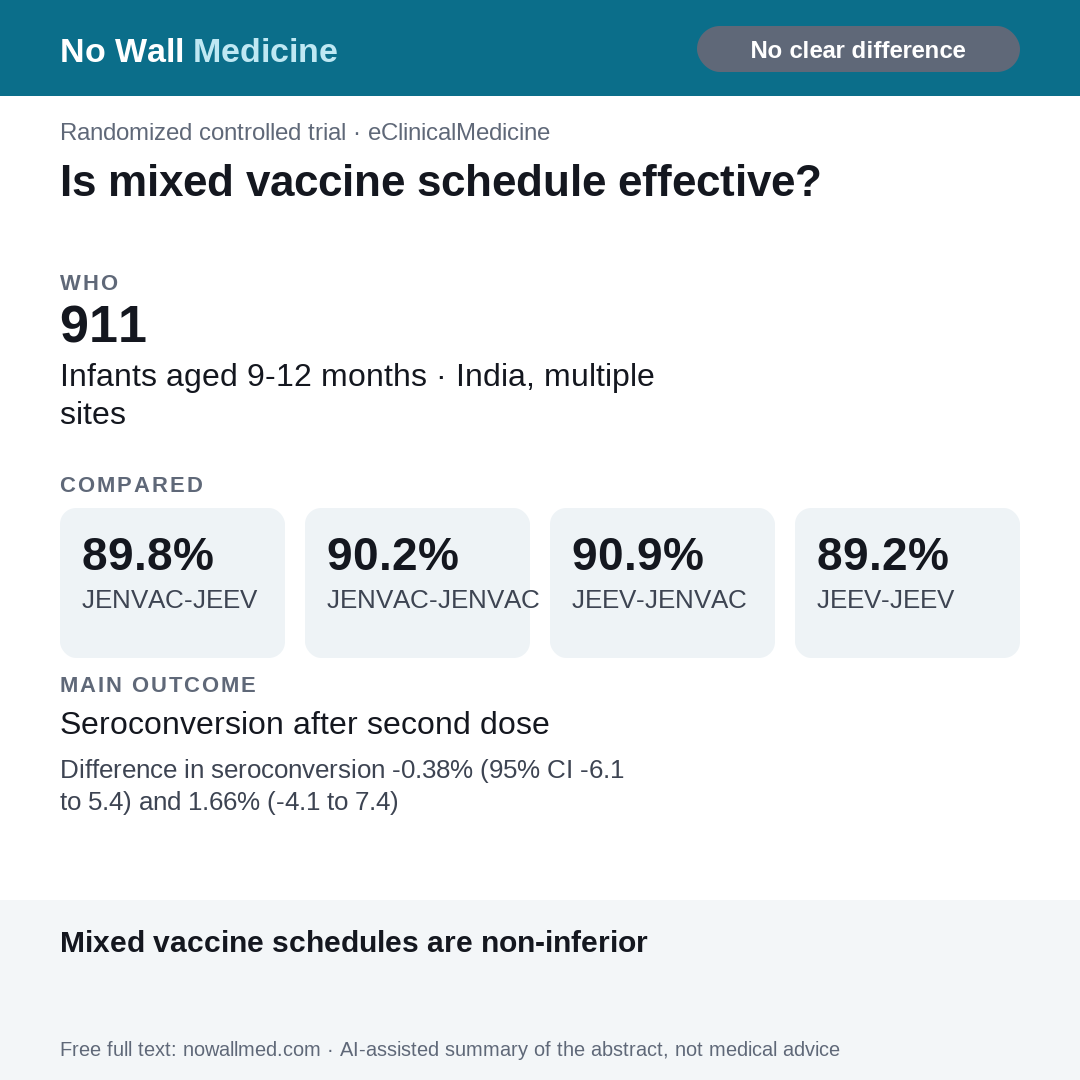
Immunogenicity and safety of an interchangeable vaccination schedule of two inactivated Japanese encephalitis vaccines: a multicentric, phase IV, open-label, randomized controlled trial
Randomized controlled trialNo clear difference
Is mixed vaccine schedule effective?
Who
911
Infants aged 9-12 months · India, multiple sites
Compared
89.8%JENVAC-JEEV (194/216)
90.2%JENVAC-JENVAC (184/204)
90.9%JEEV-JENVAC (189/208)
89.2%JEEV-JEEV (190/213)
Main outcome
Seroconversion after second dose
Result: Difference in seroconversion -0.38% (95% CI -6.1 to 5.4) and 1.66% (-4.1 to 7.4)
Bottom line: Mixed vaccine schedules are non-inferior
Funded by: Indian Council of Medical Research
eClinicalMedicine · 2026-09-22Download image
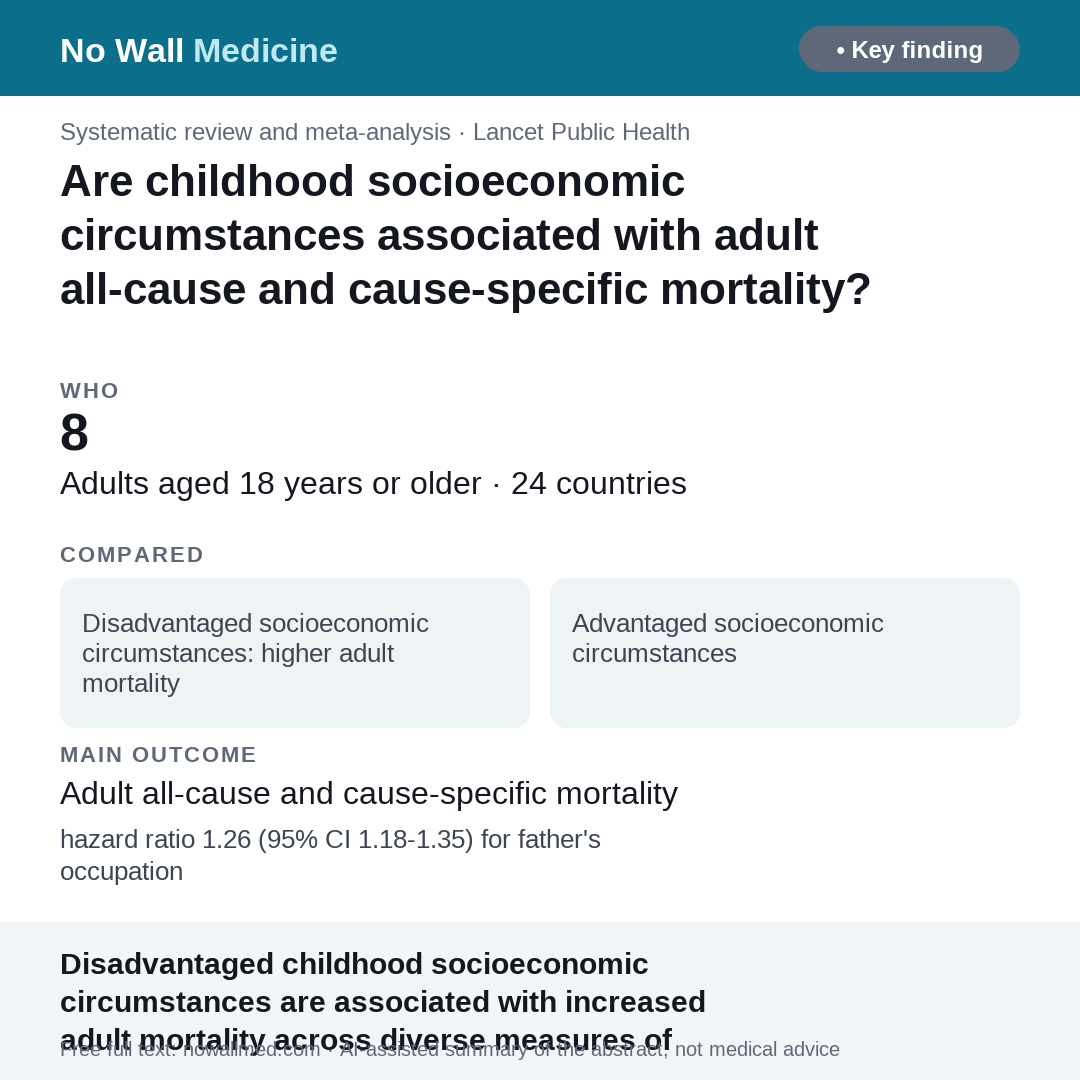
Childhood socioeconomic circumstances and adult mortality: a systematic review and meta-analysis
Systematic review and meta-analysisHarm found
Do childhood socioeconomic circumstances associate with adult all-cause and cause-specific mortality?
Who
8
Adults aged 18 years or older · 24 countries
Compared
Disadvantaged socioeconomic circumstances: higher adult mortality
All exposure types: harmful associations in 390 of 474 estimates (82%; 95% CI 79-86)
Main outcome
Adult all-cause and cause-specific mortality
Bottom line: Disadvantaged childhood socioeconomic circumstances are associated with increased adult mortality across diverse measures of disadvantage and causes of death.
Limitation: All included studies were observational longitudinal studies
Lancet Public Health · 2026-09-22Download image
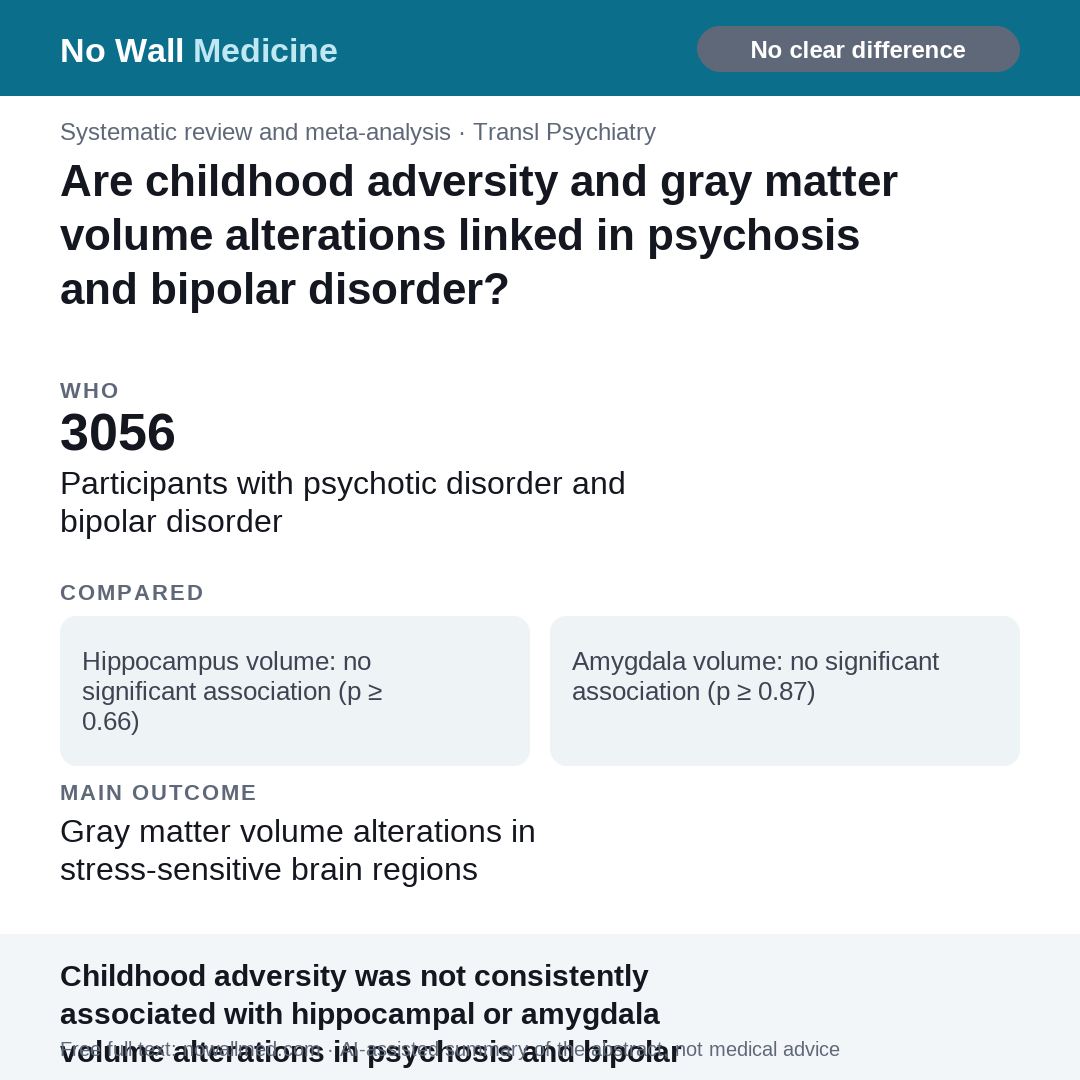
Revisiting the link between childhood adversity and stress-sensitive brain regions in psychosis and bipolar disorder: a systematic review and meta-analysis
Systematic review and meta-analysisNo clear difference
Are childhood adversity and gray matter volume alterations linked in psychosis and bipolar disorder?
Who
3056
Participants with psychotic disorder and bipolar disorder
Compared
Hippocampus volume: no significant association (p ≥ 0.66)
Amygdala volume: no significant association (p ≥ 0.87)
Main outcome
Gray matter volume alterations in stress-sensitive brain regions
Bottom line: Childhood adversity was not consistently associated with hippocampal or amygdala volume alterations in psychosis and bipolar disorder.
Transl Psychiatry · 2026-09-19Download image
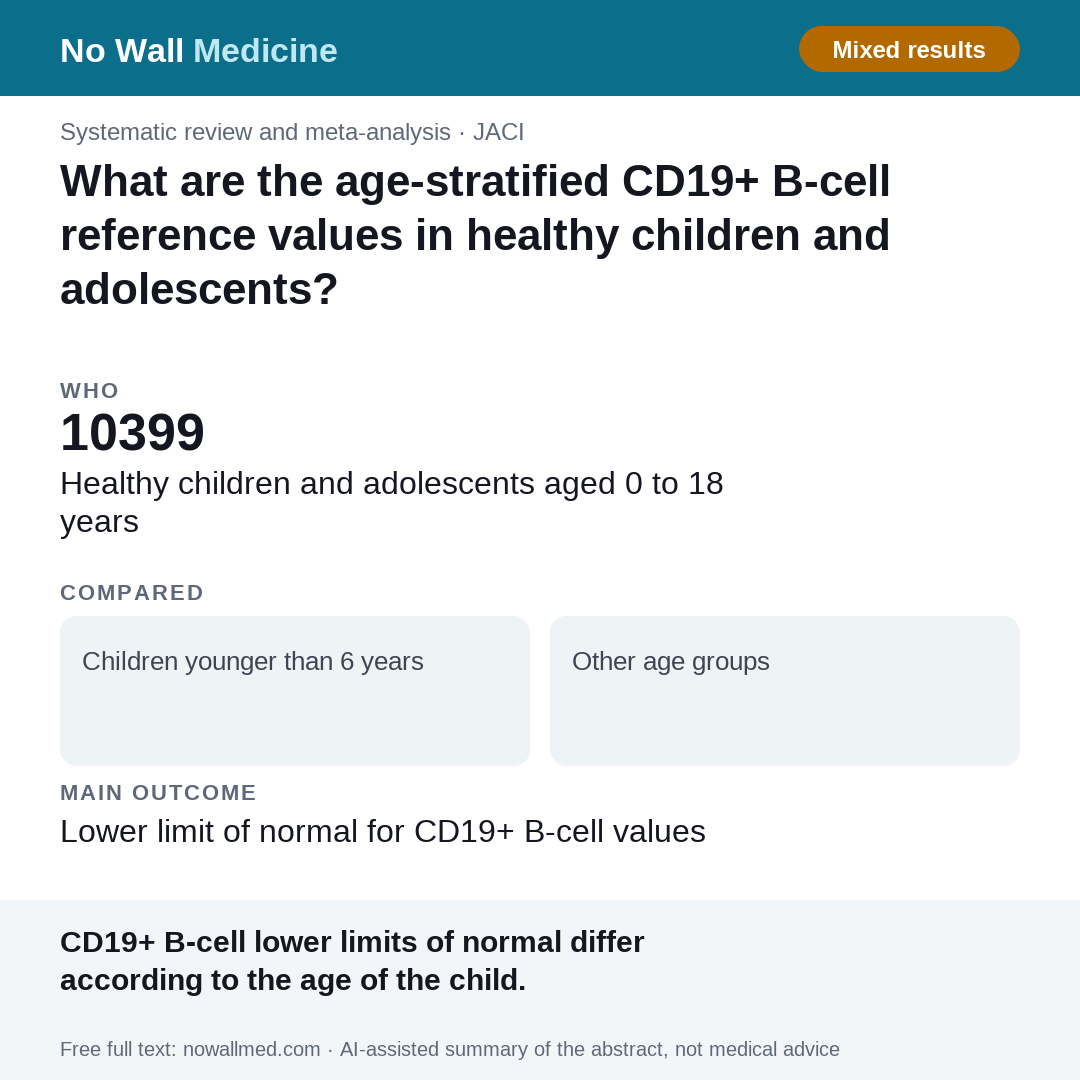
Age-stratified CD19+ B-cell reference values in children and adolescents-a systematic review and meta-analysis
Systematic review and meta-analysisMixed results
What are the age-stratified CD19+ B-cell reference values in healthy children and adolescents?
Who
10399
Healthy children and adolescents aged 0 to 18 years
Compared
Children younger than 6 years
Other age groups
Main outcome
Lower limit of normal for CD19+ B-cell values
Bottom line: CD19+ B-cell lower limits of normal differ according to the age of the child.
JACI · 2026-09-18Download image
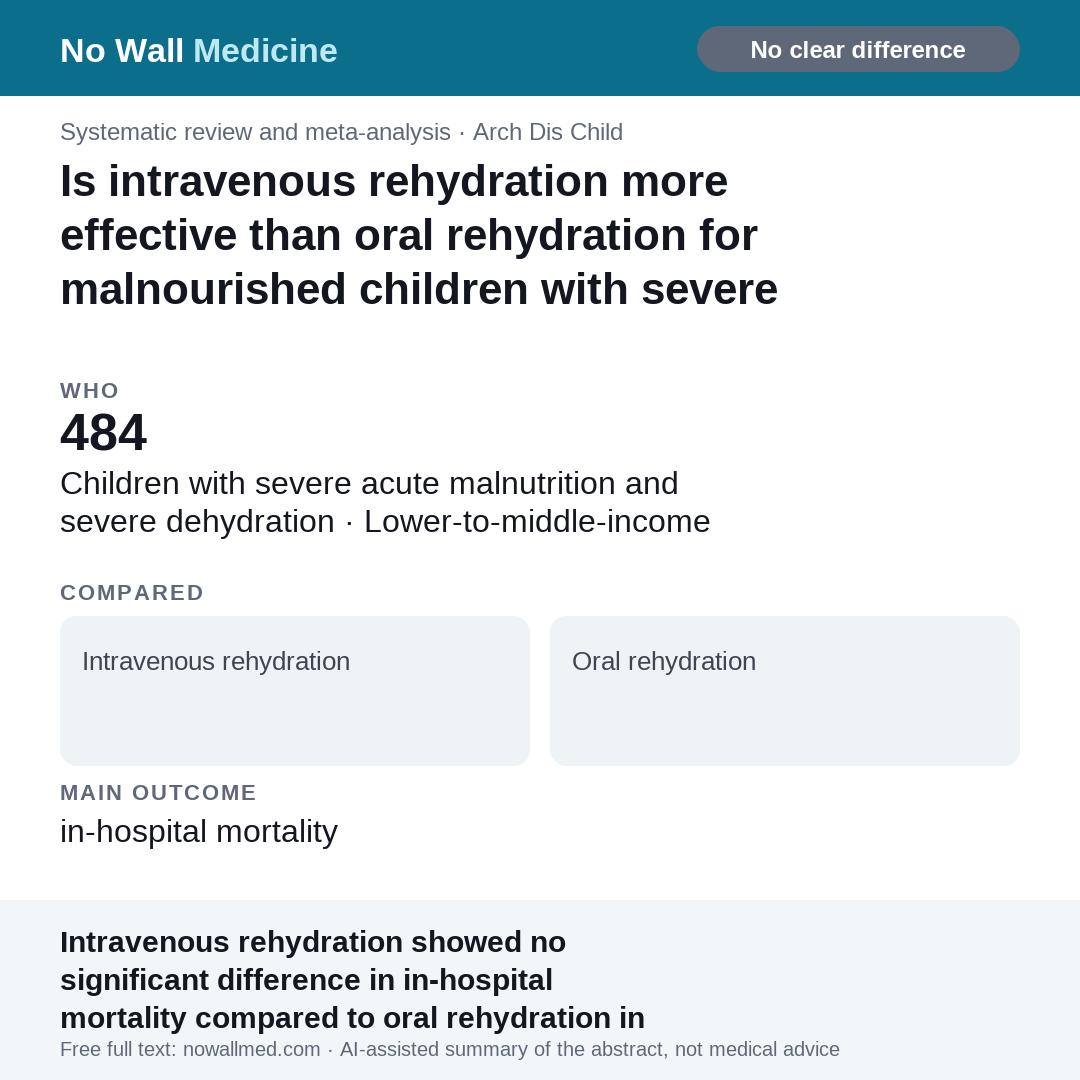
Intravenous rehydration in children with severe malnutrition and severe dehydration: a systematic review and meta-analysis
Systematic review and meta-analysisNo clear difference
Is intravenous rehydration more effective than oral rehydration for children with severe malnutrition?
Who
484
Children with severe acute malnutrition and severe dehydration · Lower-to-middle-income countries
Compared
Intravenous rehydration
Oral rehydration
Main outcome
In-hospital mortality
Result: risk ratio 0.71 (95% CI 0.46 to 1.10)
Bottom line: Intravenous rehydration showed no significant difference in in-hospital mortality compared to oral rehydration in children.
Limitation: Two trials had some risk of bias
Arch Dis Child · 2026-09-18Download image
Long-Term Outcomes of Expectant Management versus Early Ibuprofen for Patent Ductus Arteriosus: 24-Month Follow-Up of the BeNeDuctus Trial
International, multicenter trialNo clear difference
Does early ibuprofen treatment improve survival and neurodevelopmental outcomes compared to expectant management?
Who
273
Extremely preterm infants · International, multicenter
Compared
Expectant management: 51 of 104 patients (49%)
Early ibuprofen treatment: 47 of 96 (49%)
Main outcome
Survival without neurodevelopmental impairment at 24 months corrected age
Result: relative risk 1.00 (95% CI 0.76-1.33)
Bottom line: Early ibuprofen treatment showed no advantage for survival and neurodevelopmental outcomes compared to expectant management.
J Pediatr · 2026-09-17Download image

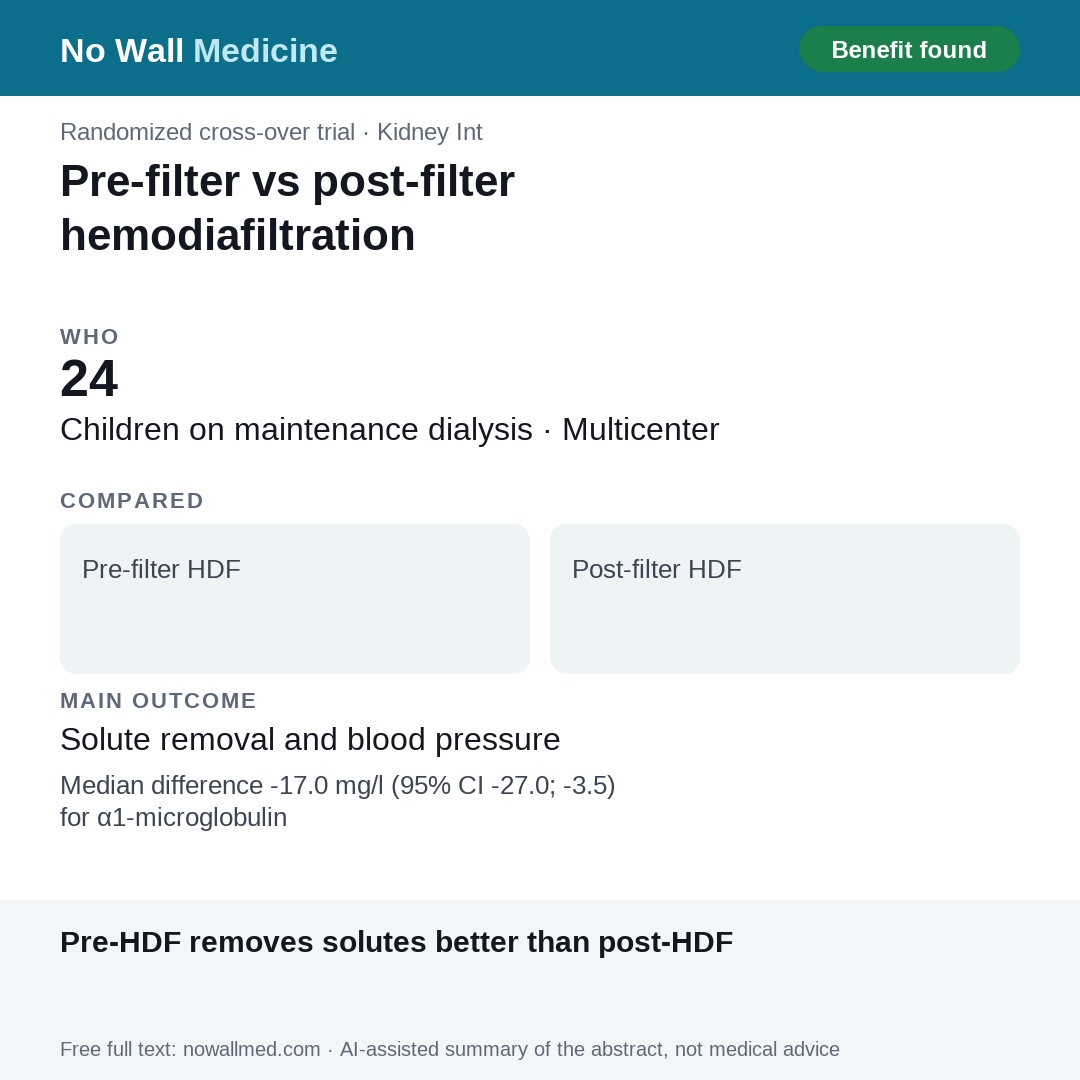
A randomized cross-over trial of pre- and post-filter hemodiafiltration modalities in children on maintenance dialysis - effects on solute removal and blood pressure
Randomized cross-over trialBenefit found
Pre-filter vs post-filter hemodiafiltration
Who
24
Children on maintenance dialysis · Multicenter
Compared
Pre-filter HDF
Post-filter HDF
Main outcome
Solute removal and blood pressure
Result: Median difference -17.0 mg/l (95% CI -27.0; -3.5) for α1-microglobulin
Bottom line: Pre-HDF removes solutes better than post-HDF
Limitation: Small sample size
Kidney Int · 2026-09-16Download image