Visual abstracts
New randomized trials and meta-analyses from leading journals at a glance: who was studied, what was compared, and what was found. Every paper is free to read in full.
All specialtiesCardiology 2119Oncology 1795Gastroenterology & Hepatology 793Infectious Disease 1317Neurology 854Psychiatry & Mental Health 1024Pulmonology 884Critical Care 592Endocrinology & Diabetes 1123Pediatrics 1227Surgery 1059Orthopedics & Sports Medicine 389Neurosurgery 257Cardiothoracic & Vascular Surgery 225Plastic & Reconstructive Surgery 316Nephrology 444Rheumatology 293Hematology 462Dermatology 241Ophthalmology 244Obstetrics & Gynecology 686Public & Global Health 394Radiology & Imaging 290Anesthesiology 415Urology 371ENT (Otolaryngology) 277Emergency Medicine 229Allergy & Immunology 132Geriatrics 443Family Medicine & Primary Care 246Medical Genetics & Genomics 226Pathology & Laboratory Medicine 72Physical Medicine & Rehabilitation 364Palliative Care 179Nutrition 567Digital Health & AI 1075General Medicine 162
Transcatheter Closure of Patent Foramen Ovale With a Novel Biodegradable Device: A Prospective, Multicenter, Randomized Controlled Clinical Trial
Multicenter, randomized, noninferiority trialBenefit found
Is a novel biodegradable device noninferior to nitinol devices for patent foramen ovale closure?
Who
190
Patients with patent foramen ovale · Multicenter
Compared
90.63%Biodegradable device
91.49%Nitinol device
Main outcome
Patent foramen ovale closure success rate at 6 months
Result: absolute difference lower limit 95% CI -8.98%
Bottom line: The novel biodegradable device is noninferior to traditional nitinol devices for patent foramen ovale closure success and safety.
Circulation · 2025-10-13Download image

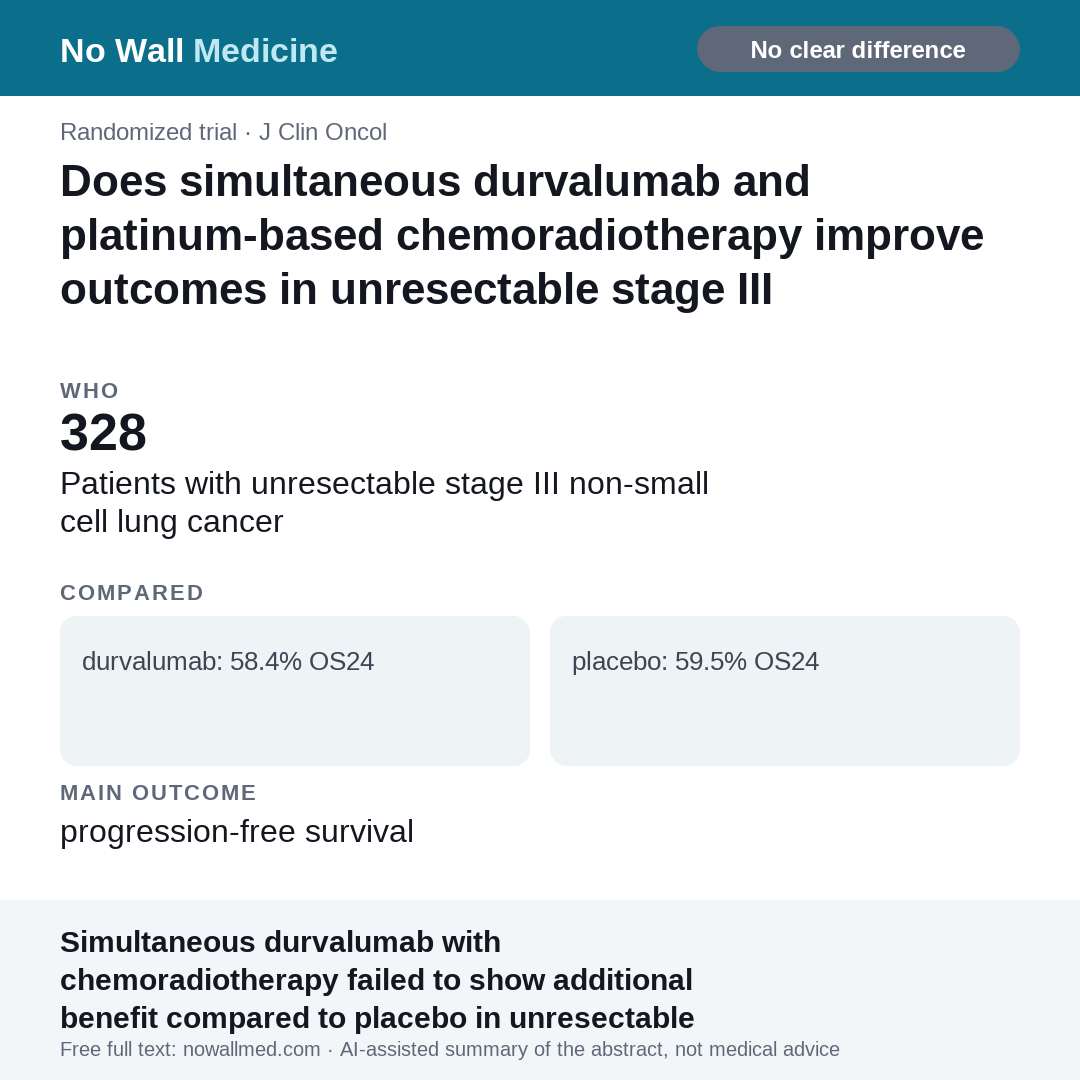
Simultaneous Durvalumab and Platinum-Based Chemoradiotherapy in Unresectable Stage III Non-Small Cell Lung Cancer: The Phase III PACIFIC-2 Study
Randomized trialNo clear difference
Does simultaneous durvalumab and platinum-based chemoradiotherapy improve outcomes in unresectable stage III non-small cell lung cancer?
Who
328
Patients with unresectable stage III non-small cell lung cancer
Compared
durvalumab: 58.4% OS24
placebo: 59.5% OS24
Main outcome
progression-free survival
Result: hazard ratio 0.85 (95% CI 0.65 to 1.12)
Bottom line: Simultaneous durvalumab with chemoradiotherapy failed to show additional benefit compared to placebo in unresectable stage III non-small cell lung cancer.
J Clin Oncol · 2025-10-13Download image
Quizartinib for Newly Diagnosed FLT3-Internal Tandem Duplication-Negative AML: The Randomized, Double-Blind, Placebo-Controlled, Phase II QUIWI Study
Randomized, double-blind, placebo-controlled, phase II trialBenefit found
Does quizartinib improve survival in newly diagnosed FLT3-internal tandem duplication-negative acute myeloid leukemia?
Who
273
Patients aged 18-70 years with newly diagnosed FLT3-ITD-negative acute myeloid leukemia
Compared
Quizartinib: median event-free survival 20.4 months
Placebo: median event-free survival 9.9 months
Main outcome
event-free survival
Bottom line: Adding quizartinib to standard chemotherapy significantly improved event-free survival and overall survival in patients with newly diagnosed FLT3-ITD-negative acute myeloid leukemia.
J Clin Oncol · 2025-10-13Download image

Sedation vs General Anesthesia for Endovascular Therapy in Acute Ischemic Stroke: The SEGA Randomized Clinical Trial
Multicenter randomized clinical trialNo clear difference
Is general anesthesia or moderate sedation better for endovascular therapy in acute ischemic stroke?
Who
260
Adult patients with acute ischemic stroke and large vessel occlusion · 10 comprehensive stroke centers in the US
Compared
General anesthesia
Moderate sedation
Main outcome
ordinal modified Rankin Scale score at 90 days
Result: odds ratio 1.22 (95% credible interval 0.79-1.87)
Bottom line: General anesthesia showed improved 90-day outcomes and reperfusion rates, but the difference was not statistically significant.
JAMA Neurol · 2025-10-13Download image

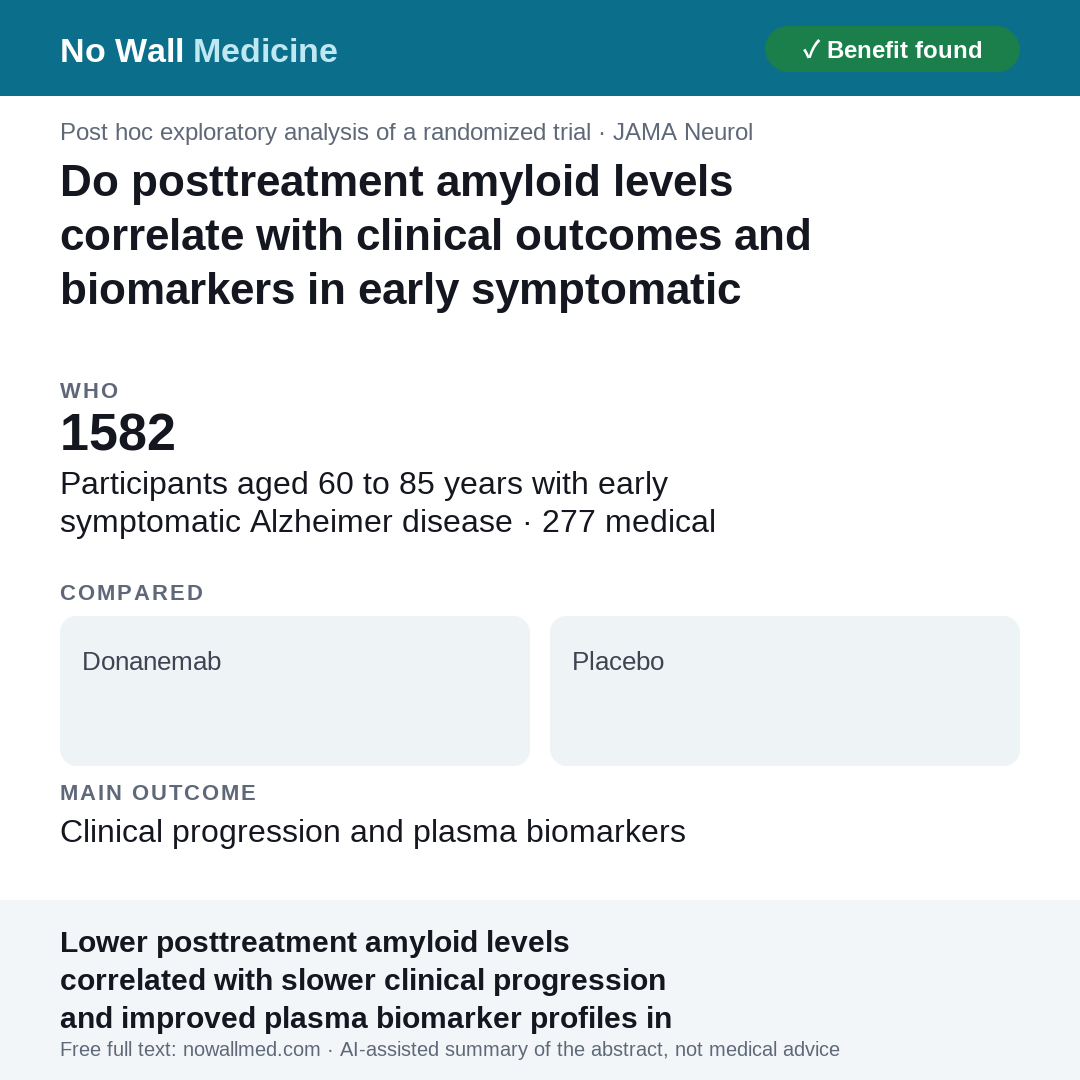
Posttreatment Amyloid Levels and Clinical Outcomes Following Donanemab for Early Symptomatic Alzheimer Disease: A Secondary Analysis of the TRAILBLAZER-ALZ 2 Randomized Clinical Trial
Post hoc exploratory analysis of a randomized trialBenefit found
Do posttreatment amyloid levels correlate with clinical outcomes and biomarkers in early symptomatic Alzheimer disease?
Who
1582
Participants aged 60 to 85 years with early symptomatic Alzheimer disease · 277 medical research centers in 8 countries
Compared
Donanemab
Placebo
Main outcome
Clinical progression and plasma biomarkers
Result: iADRS R2 0.73 (95% CI 0.37-0.97); CDR-SB R2 0.87 (95% CI 0.70-0.97)
Bottom line: Lower posttreatment amyloid levels correlated with slower clinical progression and improved plasma biomarker profiles in Alzheimer disease.
JAMA Neurol · 2025-10-13Download image
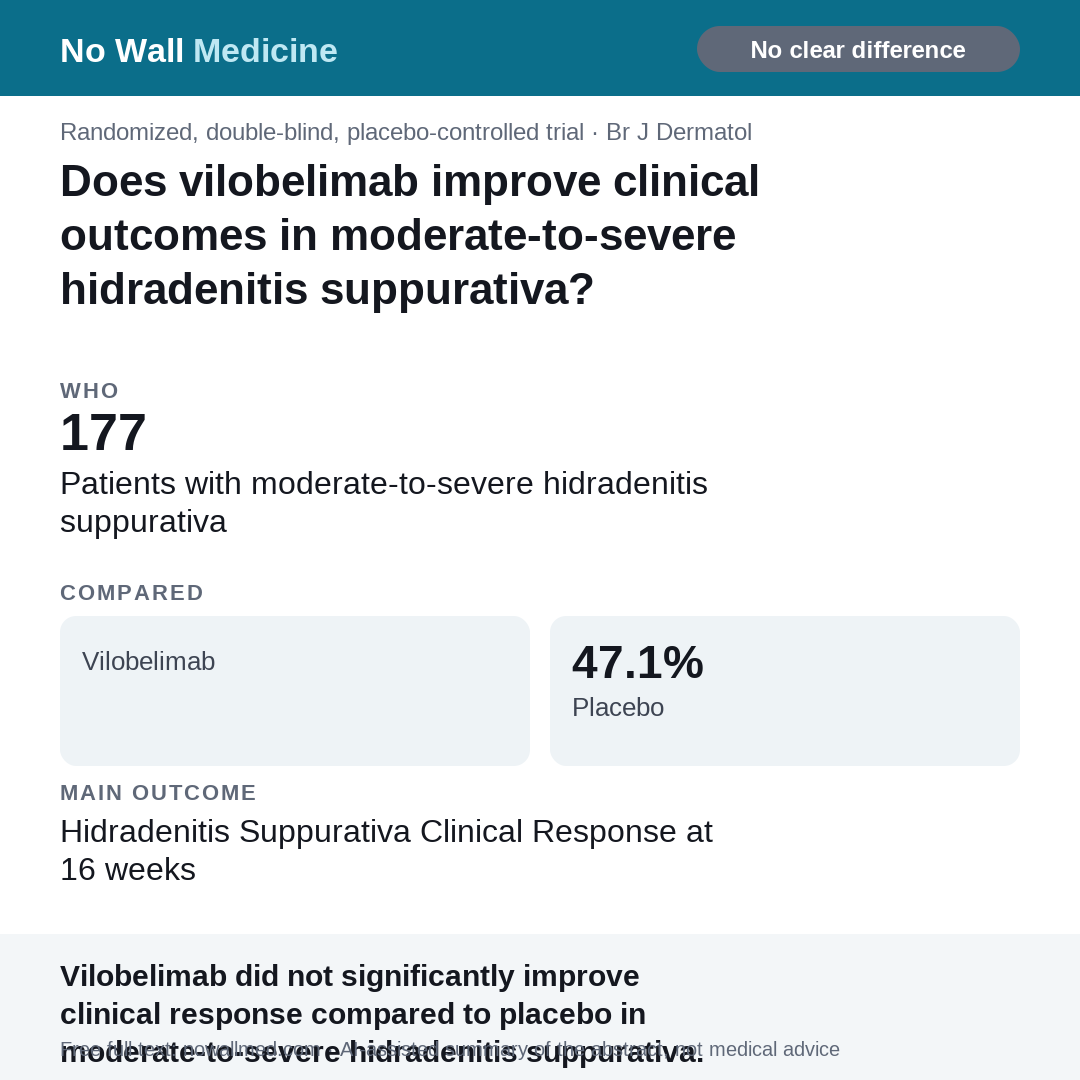
Vilobelimab to improve clinical outcomes in moderate-to-severe hidradenitis suppurativa through an adjunctive effect on draining tunnels: results of the SHINE double-blind placebo-controlled randomized trial
Randomized, double-blind, placebo-controlled trialNo clear difference
Does vilobelimab improve clinical outcomes in moderate-to-severe hidradenitis suppurativa?
Who
177
Patients with moderate-to-severe hidradenitis suppurativa
Compared
Vilobelimab
47.1%Placebo
Main outcome
Hidradenitis Suppurativa Clinical Response at 16 weeks
Bottom line: Vilobelimab did not significantly improve clinical response compared to placebo in moderate-to-severe hidradenitis suppurativa.
Br J Dermatol · 2025-10-13Download image
A Randomized Phase 1 Study Investigating Gut Microbiome Changes With Moxifloxacin vs Oral Vancomycin: Implications for Clostridioides difficile Risk
Phase 1, nonblinded, randomized clinical trialMixed results
How do moxifloxacin and oral vancomycin affect gut microbiome and metabolomic changes?
Who
Healthy volunteers aged 18 to 40 years
Compared
Moxifloxacin: minimal microbial disruption
Vancomycin: more significant changes in the microbiome
Main outcome
microbial taxonomic profile and metabolomic changes
Bottom line: Moxifloxacin causes specific microbiome and metabolomic changes, increasing risk for a shorter period than vancomycin.
J Infect Dis · 2025-10-13Download image

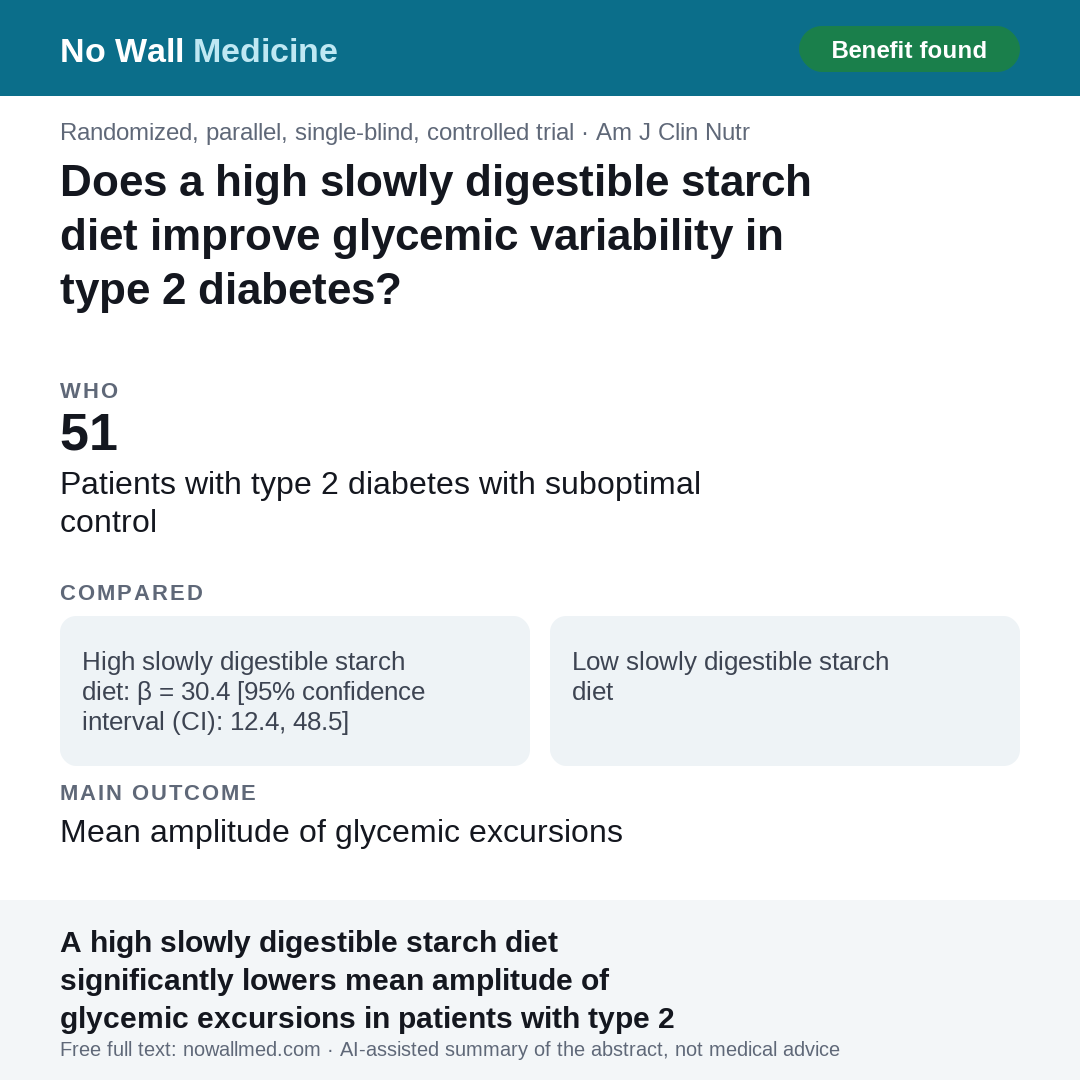
Optimizing glycemic variability in type 2 diabetes using simple dietary and culinary recommendations to modulate starch digestibility: a randomized controlled trial
Randomized, parallel, single-blind, controlled trialBenefit found
Does a high slowly digestible starch diet improve glycemic variability in type 2 diabetes?
Who
51
Patients with type 2 diabetes with suboptimal control
Compared
High slowly digestible starch diet: β = 30.4 [95% confidence interval (CI): 12.4, 48.5]
Low slowly digestible starch diet
Main outcome
Mean amplitude of glycemic excursions
Result: β = 30.4 [95% confidence interval (CI): 12.4, 48.5]
Bottom line: A high slowly digestible starch diet significantly lowers mean amplitude of glycemic excursions in patients with type 2 diabetes.
Am J Clin Nutr · 2025-10-13Download image
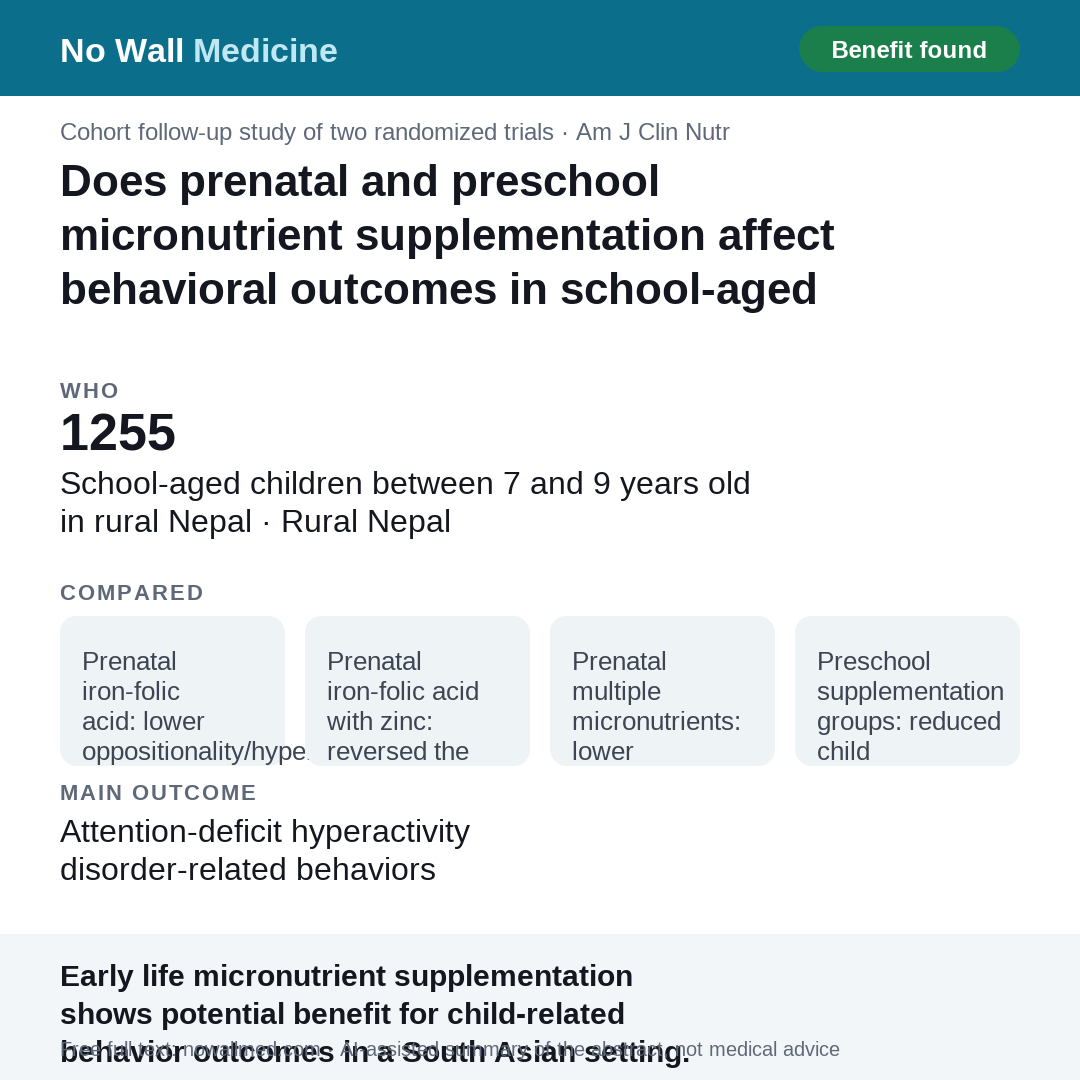
Prenatal and preschool micronutrient supplementation and behavioral outcomes in school-aged children in Nepal-a cohort study
Cohort follow-up study of two randomized trialsBenefit found
Does prenatal and preschool micronutrient supplementation affect behavioral outcomes in school-aged children?
Who
1255
School-aged children between 7 and 9 years old in rural Nepal · Rural Nepal
Compared
Prenatal iron-folic acid: lower oppositionality/hyperactivity and inattention scores
Prenatal iron-folic acid with zinc: reversed the positive effect seen with iron-folic acid
Prenatal multiple micronutrients: lower oppositionality and/or hyperactivity score
Preschool supplementation groups: reduced child inattention when assessed by parents
Main outcome
Attention-deficit hyperactivity disorder-related behaviors
Bottom line: Early life micronutrient supplementation shows potential benefit for child-related behavior outcomes in a South Asian setting.
Am J Clin Nutr · 2025-10-13Download image
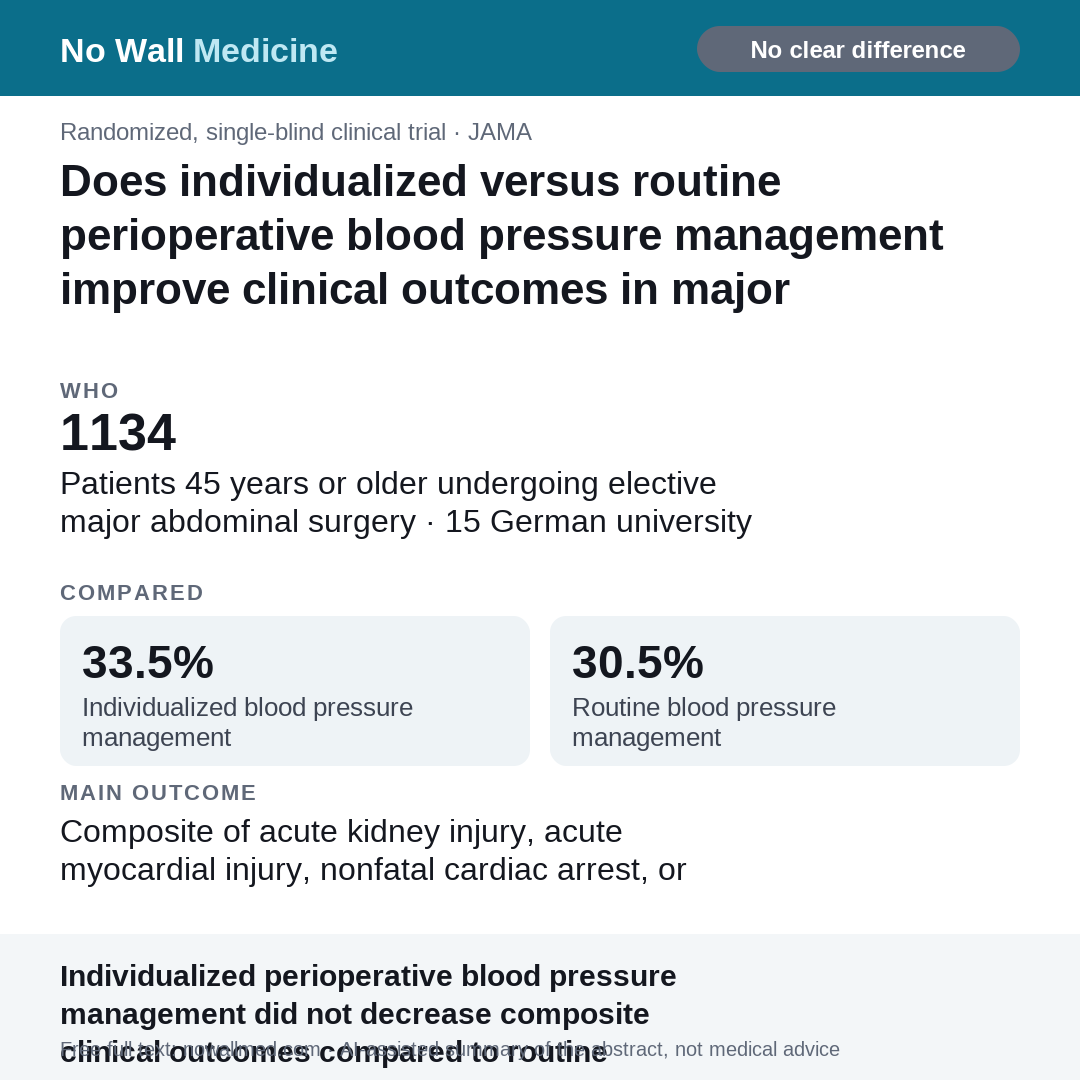
Individualized Perioperative Blood Pressure Management in Patients Undergoing Major Abdominal Surgery: The IMPROVE-multi Randomized Clinical Trial
Randomized, single-blind clinical trialNo clear difference
Does individualized versus routine perioperative blood pressure management improve clinical outcomes in major abdominal surgery?
Who
1134
Patients 45 years or older undergoing elective major abdominal surgery · 15 German university hospitals
Compared
33.5%Individualized blood pressure management (190/567)
30.5%Routine blood pressure management (173/567)
Main outcome
Composite of acute kidney injury, acute myocardial injury, nonfatal cardiac arrest, or death
Result: relative risk 1.10 (95% CI 0.93-1.30)
Bottom line: Individualized perioperative blood pressure management did not decrease composite clinical outcomes compared to routine management in high-risk abdominal surgery patients.
JAMA · 2025-10-12Download image
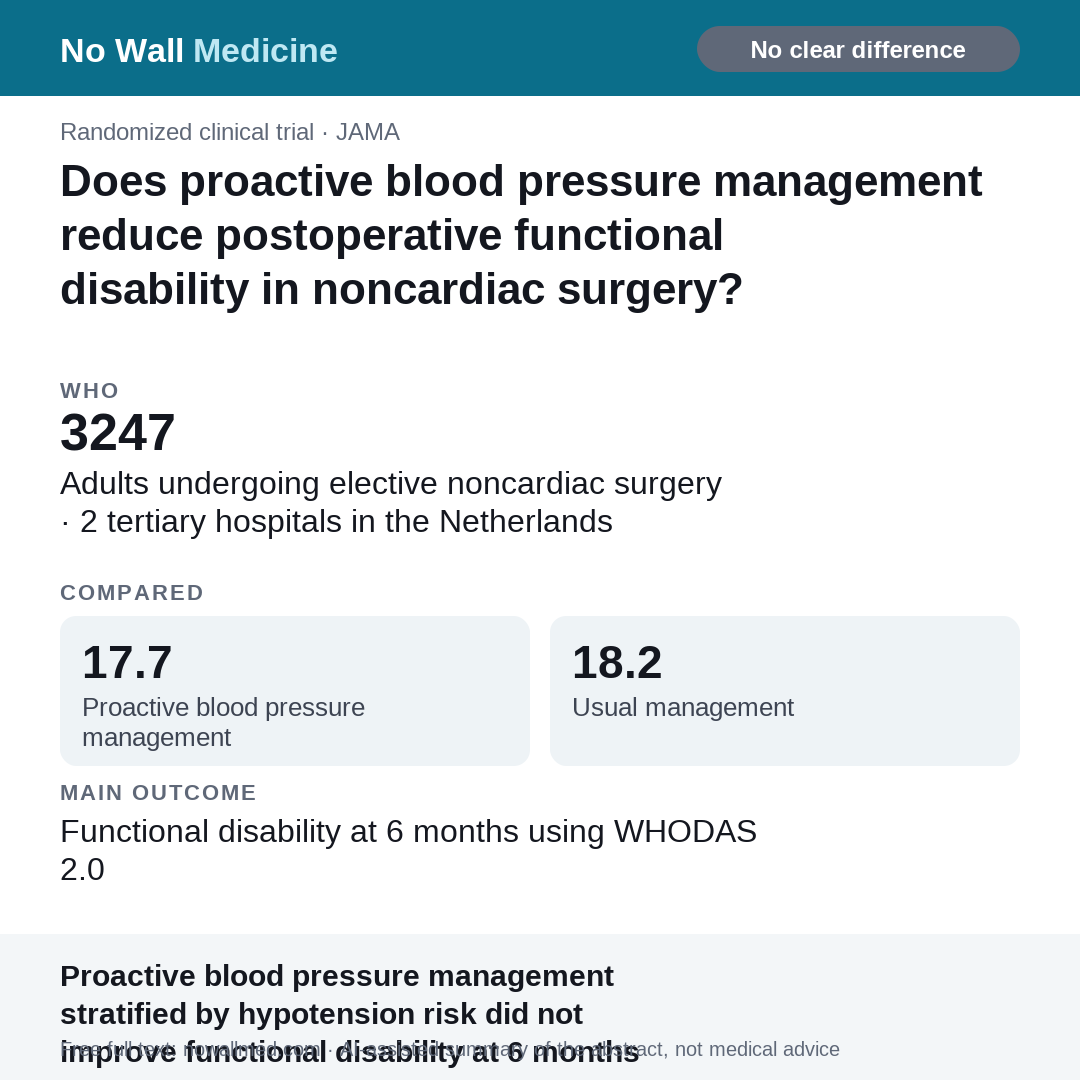
Proactive vs Reactive Treatment of Hypotension During Surgery: The PRETREAT Randomized Clinical Trial
Randomized clinical trialNo clear difference
Does proactive blood pressure management reduce postoperative functional disability in noncardiac surgery?
Who
3247
Adults undergoing elective noncardiac surgery · 2 tertiary hospitals in the Netherlands
Compared
17.7Proactive blood pressure management (20.1)
18.2Usual management (20.5)
Main outcome
Functional disability at 6 months using WHODAS 2.0
Result: mean difference -0.5 (95% credible interval, -1.9 to 0.9)
Bottom line: Proactive blood pressure management stratified by hypotension risk did not improve functional disability at 6 months compared to usual care.
JAMA · 2025-10-12Download image
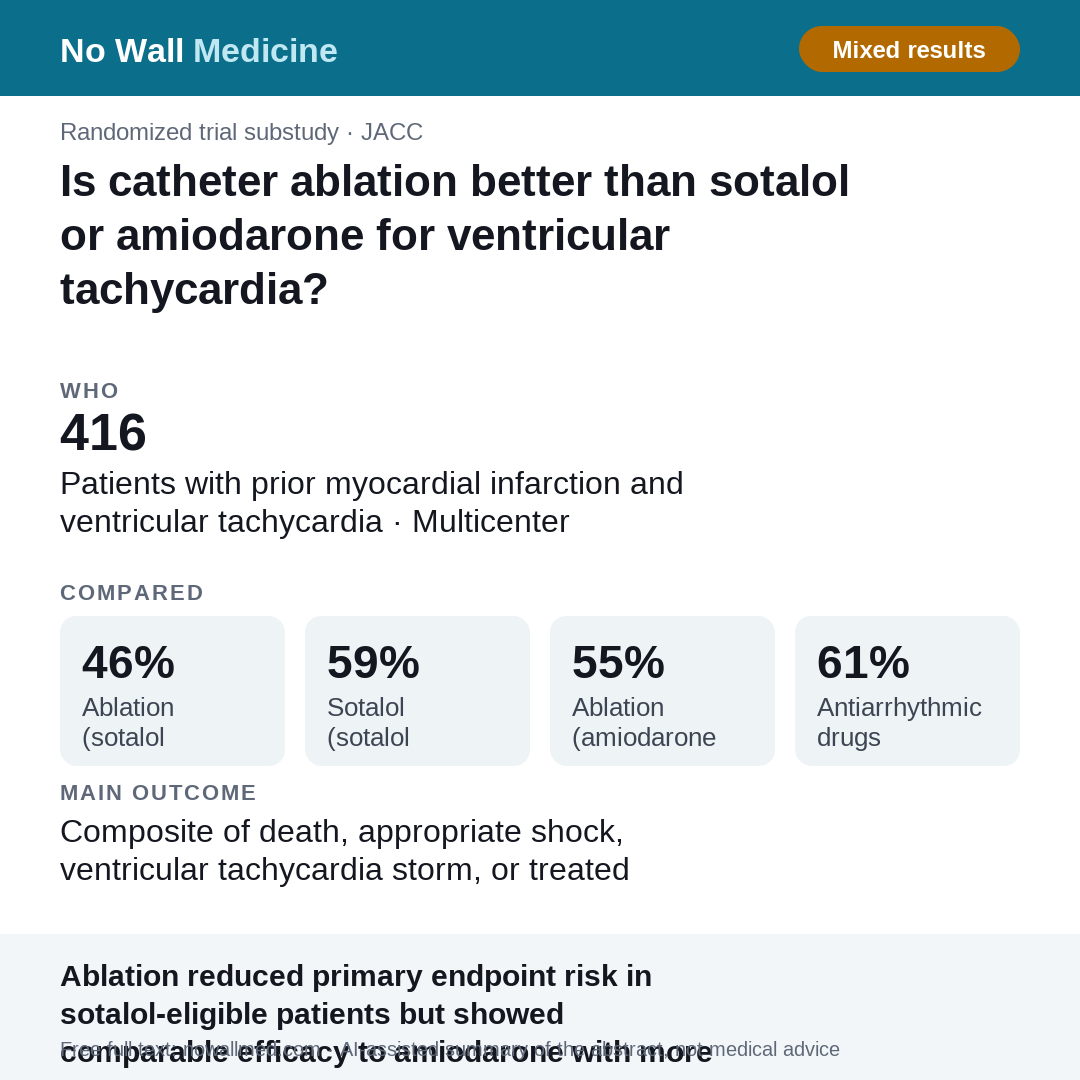
Catheter Ablation vs Sotalol or Amiodarone for Ventricular Tachycardia: A Substudy of the VANISH2 Trial
Randomized trial substudyMixed results
Is catheter ablation better than sotalol or amiodarone for ventricular tachycardia?
Who
416
Patients with prior myocardial infarction and ventricular tachycardia · Multicenter
Compared
46%Ablation (sotalol stratum)
59%Sotalol (sotalol stratum)
55%Ablation (amiodarone stratum)
61%Antiarrhythmic drugs (amiodarone stratum)
Main outcome
Composite of death, appropriate shock, ventricular tachycardia storm, or treated sustained ventricular tachycardia
Result: hazard ratio 0.64 (95% CI 0.43-0.94) for sotalol; hazard ratio 0.86 (95% CI 0.61-1.22) for amiodarone
Bottom line: Ablation reduced primary endpoint risk in sotalol-eligible patients but showed comparable efficacy to amiodarone with more adverse events.
JACC · 2025-10-11Download image
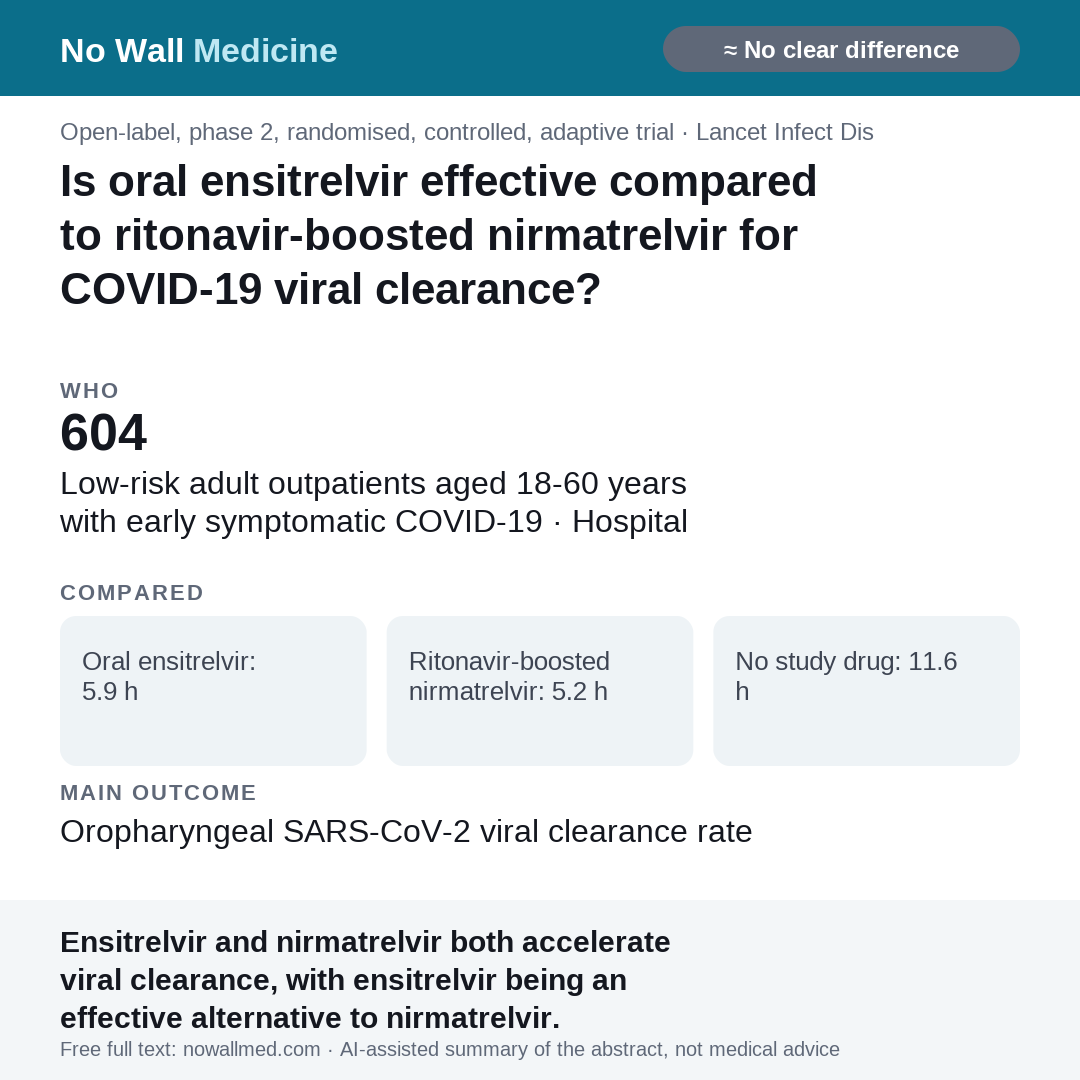
Antiviral efficacy of oral ensitrelvir versus oral ritonavir-boosted nirmatrelvir in COVID-19 (PLATCOV): an open-label, phase 2, randomised, controlled, adaptive trial
Open-label, phase 2, randomised, controlled, adaptive trialNo clear difference
Is oral ensitrelvir effective compared to ritonavir-boosted nirmatrelvir for COVID-19 viral clearance?
Who
604
Low-risk adult outpatients aged 18-60 years with early symptomatic COVID-19 · Hospital acute respiratory infection clinics in Thailand and Laos
Compared
Oral ensitrelvir: 5.9 h
Ritonavir-boosted nirmatrelvir: 5.2 h
No study drug: 11.6 h
Main outcome
Oropharyngeal SARS-CoV-2 viral clearance rate
Result: 16% slower (5-25) than ritonavir-boosted nirmatrelvir
Bottom line: Ensitrelvir and nirmatrelvir both accelerate viral clearance, with ensitrelvir being an effective alternative to nirmatrelvir.
Funded by: Wellcome Trust through the COVID-19 Therapeutics Accelerator
Lancet Infect Dis · 2025-10-11Download image
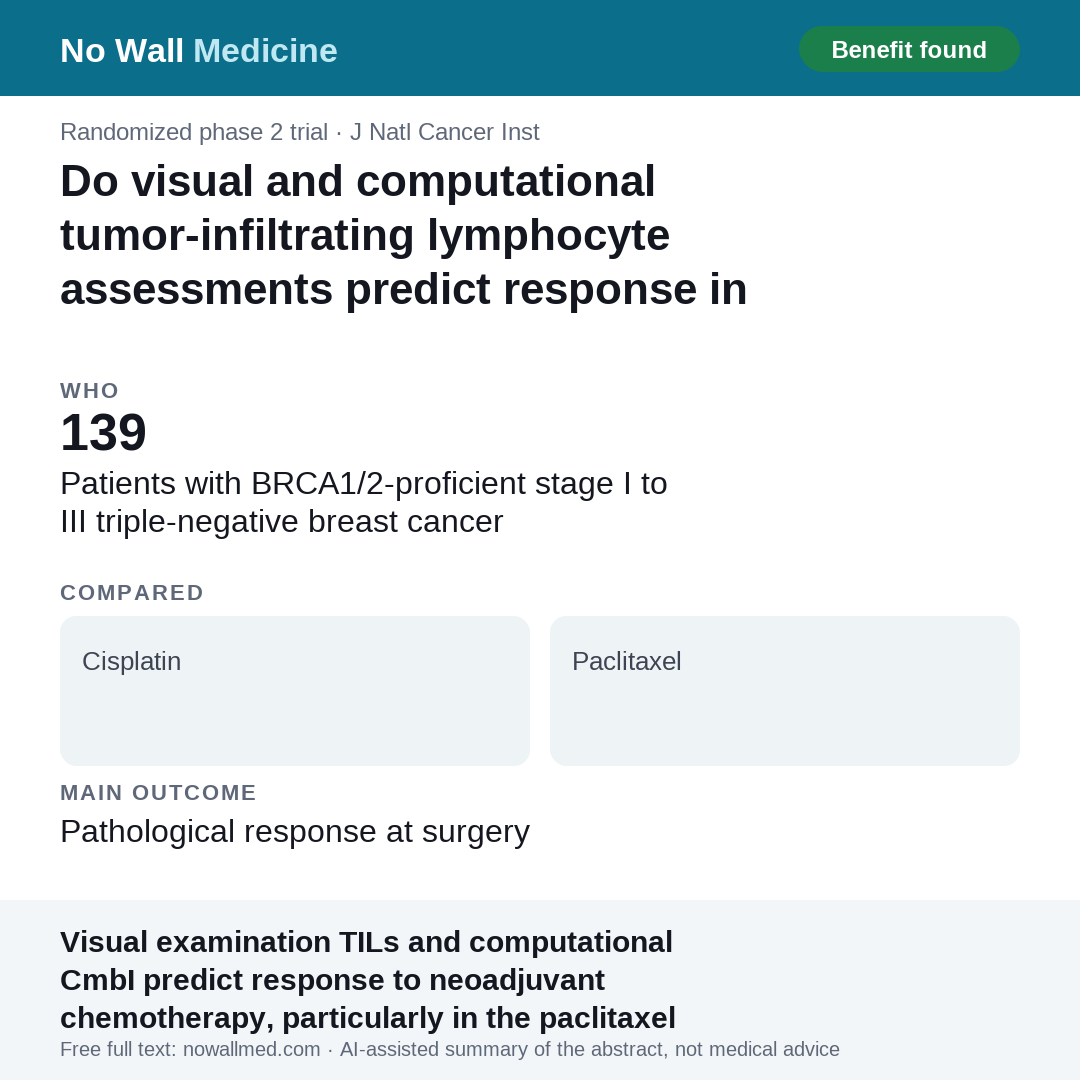
Prognostic value of visually and computationally assessed tumor-infiltrating lymphocytes in early-stage triple-negative breast cancer (TBCRC-030)
Randomized phase 2 trialBenefit found
Do visual and computational tumor-infiltrating lymphocyte assessments predict response in triple-negative breast cancer?
Who
139
Patients with BRCA1/2-proficient stage I to III triple-negative breast cancer
Compared
Cisplatin
Paclitaxel
Main outcome
Pathological response at surgery
Result: visual examination TILs odds ratio 1.86 (95% CI 1.24 to 2.87)
Bottom line: Visual examination TILs and computational CmbI predict response to neoadjuvant chemotherapy, particularly in the paclitaxel arm.
J Natl Cancer Inst · 2025-10-11Download image
Discriminatory Characteristics of Responders and Nonresponders of Patients With Sepsis to Neuromuscular Electrical Stimulation: A Subanalysis of a Randomized Controlled Double-Blinded Trial
Subanalysis of a randomized, controlled, double-blind trialMixed results
What characteristics distinguish responders and nonresponders to neuromuscular electrical stimulation in sepsis?
Who
15
Adult patients diagnosed with sepsis or septic shock · Intensive care unit at a private hospital
Compared
Responder group: De Morton Mobility Index increased from 19±20 points to 33±30 points
Nonresponder group: Rectus femoris thickness reduced by more than 10%
Main outcome
Ultrasonographic muscle characteristics and physical function variables
Bottom line: Surgical ICU Optimal Mobilization Score and De Morton Mobility Index characterize responders to neuromuscular electrical stimulation.
Arch Phys Med Rehabil · 2025-10-11Download image

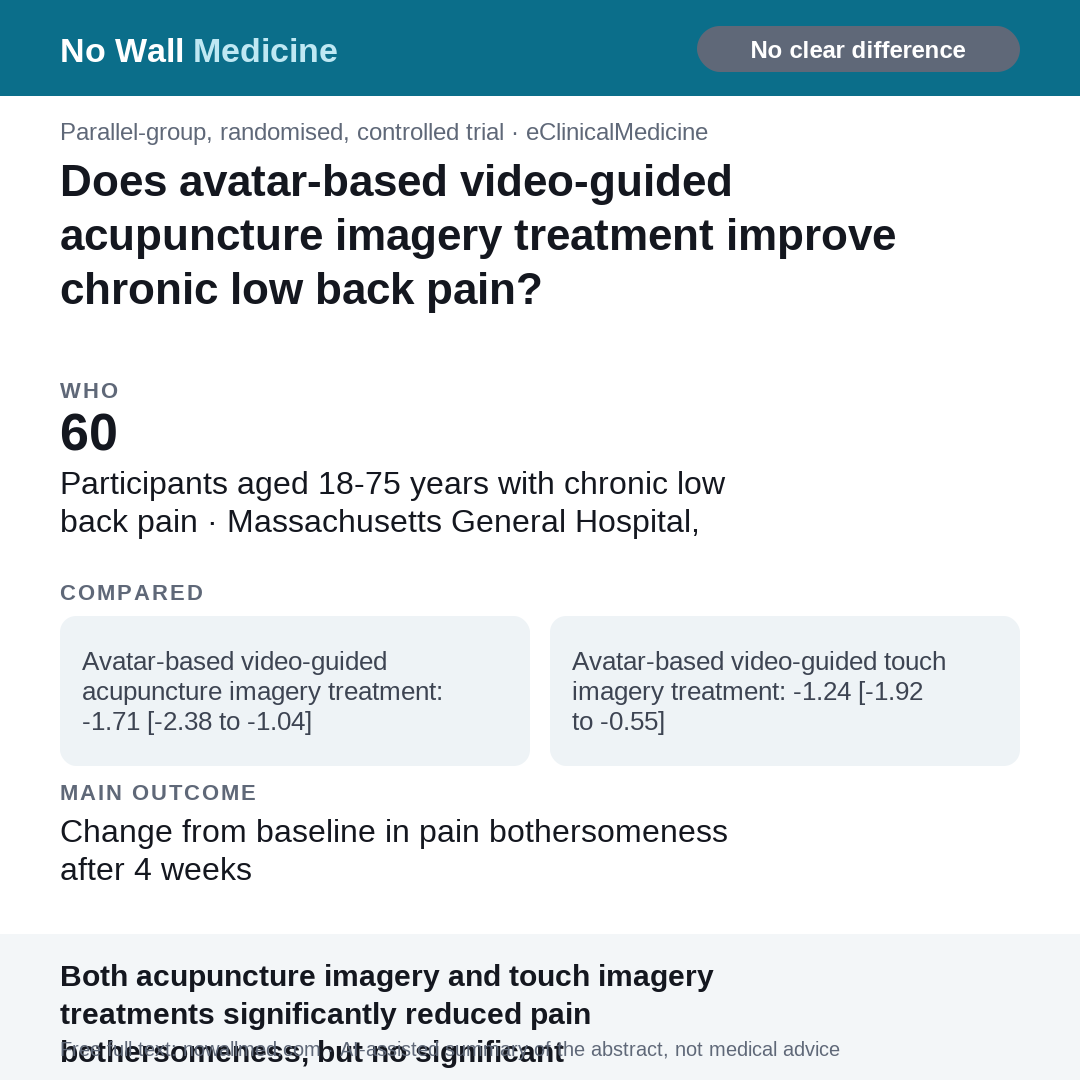
Novel avatar-based video-guided acupuncture imagery treatment for chronic low back pain: a randomised controlled trial in the USA
Parallel-group, randomised, controlled trialNo clear difference
Does avatar-based video-guided acupuncture imagery treatment improve chronic low back pain?
Who
60
Participants aged 18-75 years with chronic low back pain · Massachusetts General Hospital, USA
Compared
Avatar-based video-guided acupuncture imagery treatment: -1.71 [-2.38 to -1.04]
Avatar-based video-guided touch imagery treatment: -1.24 [-1.92 to -0.55]
Main outcome
Change from baseline in pain bothersomeness after 4 weeks
Result: -0.47 [-1.43 to 0.49]
Bottom line: Both acupuncture imagery and touch imagery treatments significantly reduced pain bothersomeness, but no significant difference was found between them.
Limitation: Short duration, limited treatment frequency, and small sample size may restrict generalisability.
Funded by: National Institutes of Health/National Center for Complementary and Integrative Health
eClinicalMedicine · 2025-10-10Download image
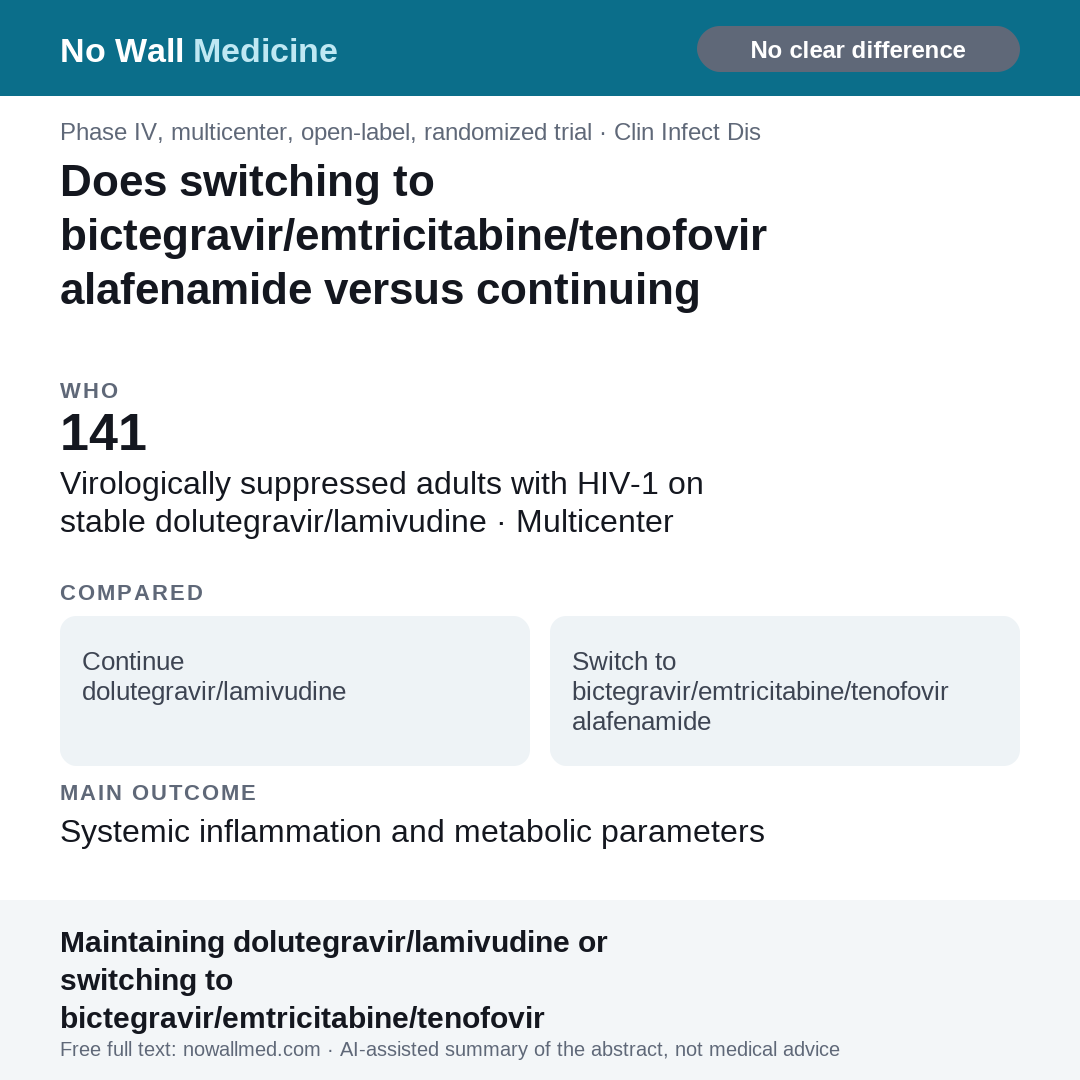
Comparable Inflammatory and Metabolic Outcomes After Switching to Bictegravir/Emtricitabine/Tenofovir Alafenamide Versus Continuing Dolutegravir/Lamivudine in Virologically Suppressed Adults With HIV (INSTINCT/GESIDA10918 Study)
Phase IV, multicenter, open-label, randomized trialNo clear difference
Does switching to bictegravir/emtricitabine/tenofovir alafenamide versus continuing dolutegravir/lamivudine affect inflammation and metabolism?
Who
141
Virologically suppressed adults with HIV-1 on stable dolutegravir/lamivudine · Multicenter
Compared
Continue dolutegravir/lamivudine
Switch to bictegravir/emtricitabine/tenofovir alafenamide
Main outcome
Systemic inflammation and metabolic parameters
Bottom line: Maintaining dolutegravir/lamivudine or switching to bictegravir/emtricitabine/tenofovir alafenamide showed equivalent inflammatory, metabolic, and immunologic profiles.
Clin Infect Dis · 2025-10-10Download image
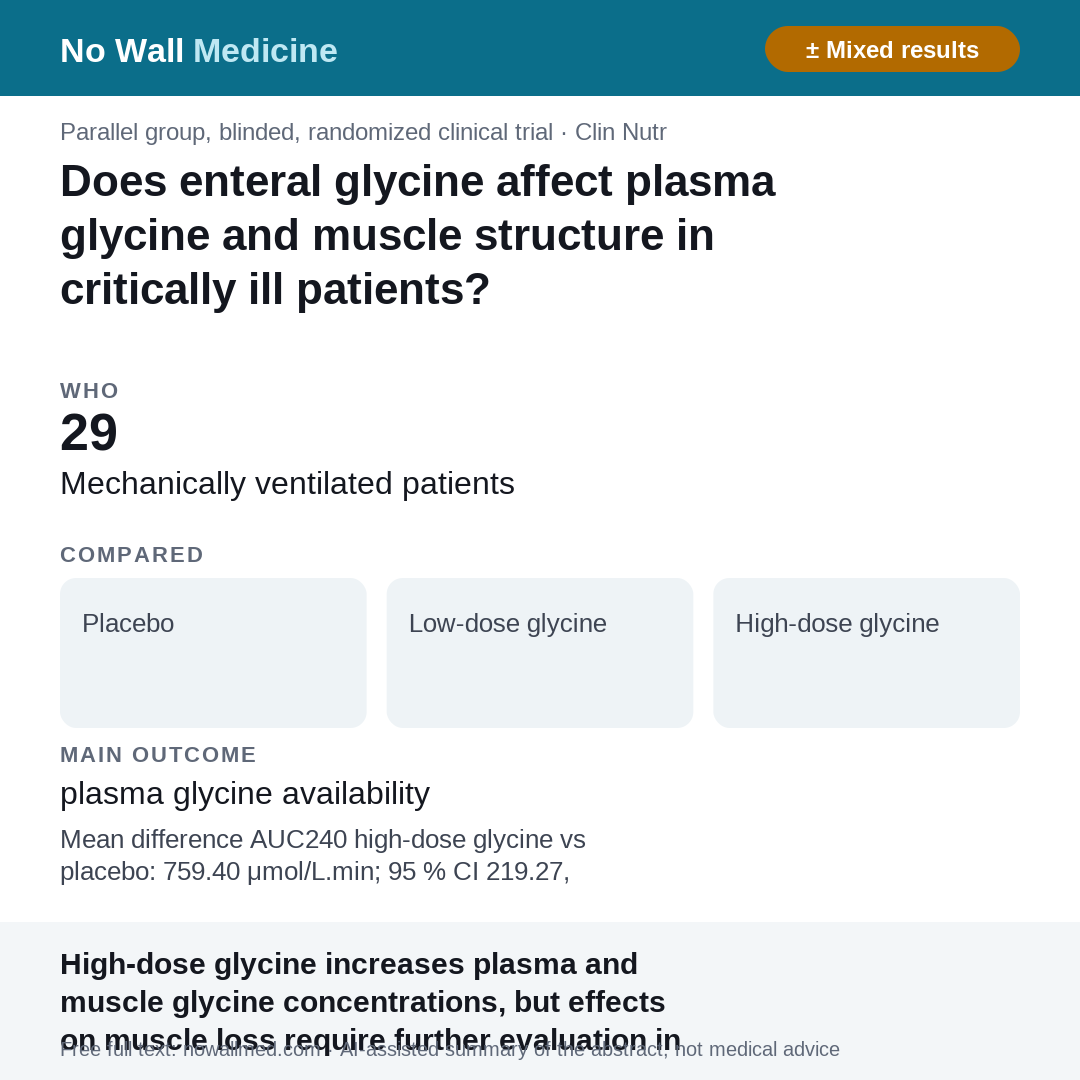
The effect of enteral glycine on plasma glycine and muscle structure, size, and function in the critically ill: A randomized controlled trial
Parallel group, blinded, randomized clinical trialMixed results
Does enteral glycine affect plasma glycine and muscle structure in critically ill patients?
Who
29
Mechanically ventilated patients
Compared
Placebo
Low-dose glycine
High-dose glycine
Main outcome
plasma glycine availability
Result: Mean difference AUC240 high-dose glycine vs placebo: 759.40 μmol/L.min; 95 % CI 219.27, 1299.54
Bottom line: High-dose glycine increases plasma and muscle glycine concentrations, but effects on muscle loss require further evaluation in larger studies.
Limitation: The effect of glycine on muscle loss warrants further evaluation in larger studies.
Clin Nutr · 2025-10-10Download image
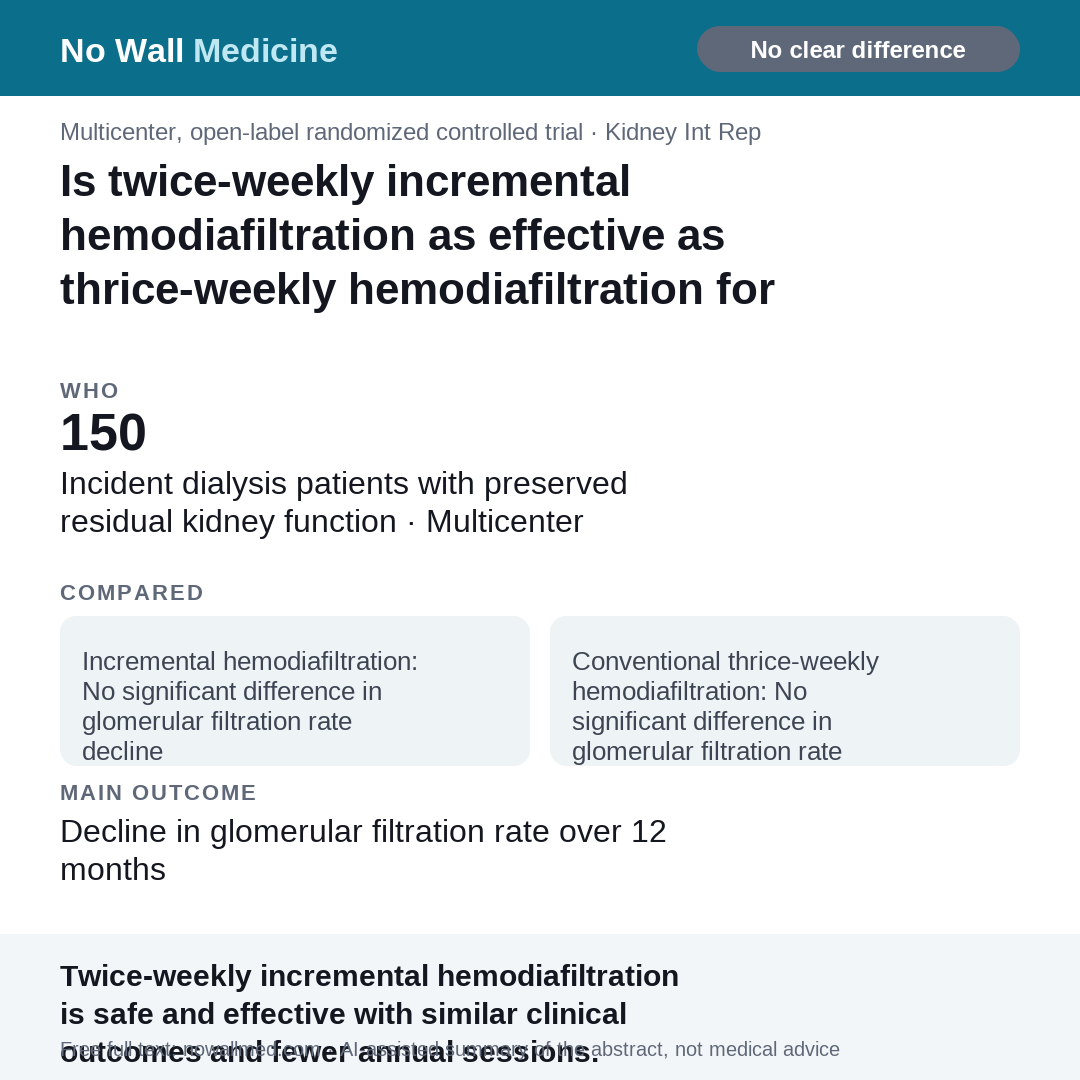
Randomized Trial of Twice-Weekly Versus Thrice-Weekly Hemodiafiltration for Initiation of Renal Replacement Therapy
Multicenter, open-label randomized controlled trialNo clear difference
Is twice-weekly incremental hemodiafiltration as effective as thrice-weekly hemodiafiltration for dialysis initiation?
Who
150
Incident dialysis patients with preserved residual kidney function · Multicenter
Compared
Incremental hemodiafiltration: No significant difference in glomerular filtration rate decline
Conventional thrice-weekly hemodiafiltration: No significant difference in glomerular filtration rate decline
Main outcome
Decline in glomerular filtration rate over 12 months
Bottom line: Twice-weekly incremental hemodiafiltration is safe and effective with similar clinical outcomes and fewer annual sessions.
Kidney Int Rep · 2025-10-10Download image
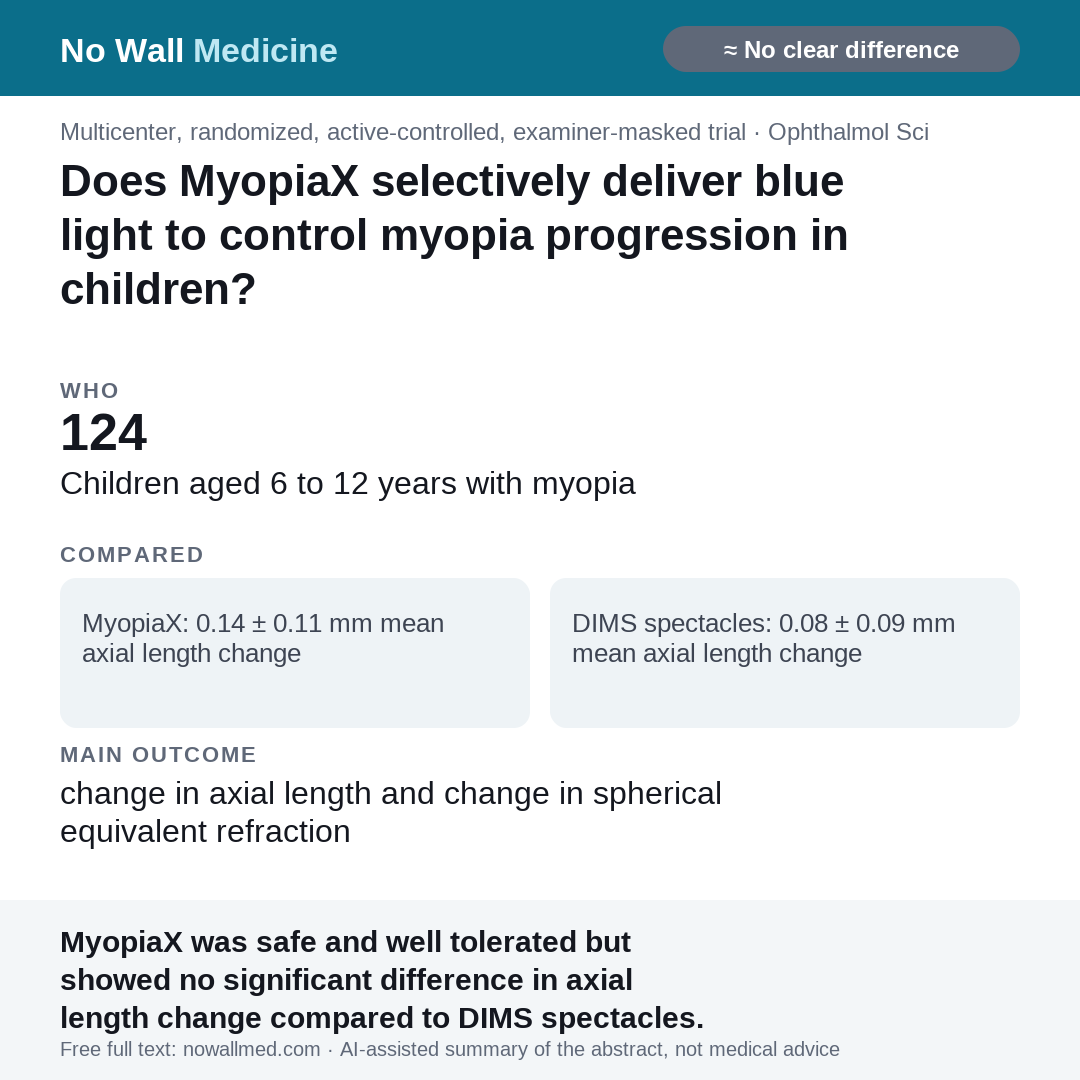
MyopiaX-1 Safety and Efficacy of a Novel Approach to Slow Juvenile Myopia Progression: A Multicenter, Randomized, Controlled Trial
Multicenter, randomized, active-controlled, examiner-masked trialNo clear difference
Does MyopiaX selectively deliver blue light to control myopia progression in children?
Who
124
Children aged 6 to 12 years with myopia
Compared
MyopiaX: 0.14 ± 0.11 mm mean axial length change
DIMS spectacles: 0.08 ± 0.09 mm mean axial length change
Main outcome
change in axial length and change in spherical equivalent refraction
Bottom line: MyopiaX was safe and well tolerated but showed no significant difference in axial length change compared to DIMS spectacles.
Ophthalmol Sci · 2025-10-10Download image