Visual abstracts
New randomized trials and meta-analyses from leading journals at a glance: who was studied, what was compared, and what was found. Every paper is free to read in full.
All specialtiesCardiology 4763Oncology 4042Gastroenterology & Hepatology 1902Infectious Disease 3756Neurology 1872Psychiatry & Mental Health 2214Pulmonology 2042Critical Care 1319Endocrinology & Diabetes 2544Pediatrics 2889Surgery 2479Orthopedics & Sports Medicine 917Neurosurgery 525Cardiothoracic & Vascular Surgery 656Plastic & Reconstructive Surgery 574Nephrology 1107Rheumatology 810Hematology 1090Dermatology 611Ophthalmology 532Obstetrics & Gynecology 1645Public & Global Health 1037Radiology & Imaging 617Anesthesiology 957Urology 745ENT (Otolaryngology) 494Emergency Medicine 481Allergy & Immunology 309Geriatrics 972Family Medicine & Primary Care 533Medical Genetics & Genomics 659Pathology & Laboratory Medicine 156Physical Medicine & Rehabilitation 734Palliative Care 421Nutrition 1560Digital Health & AI 2133General Medicine 318
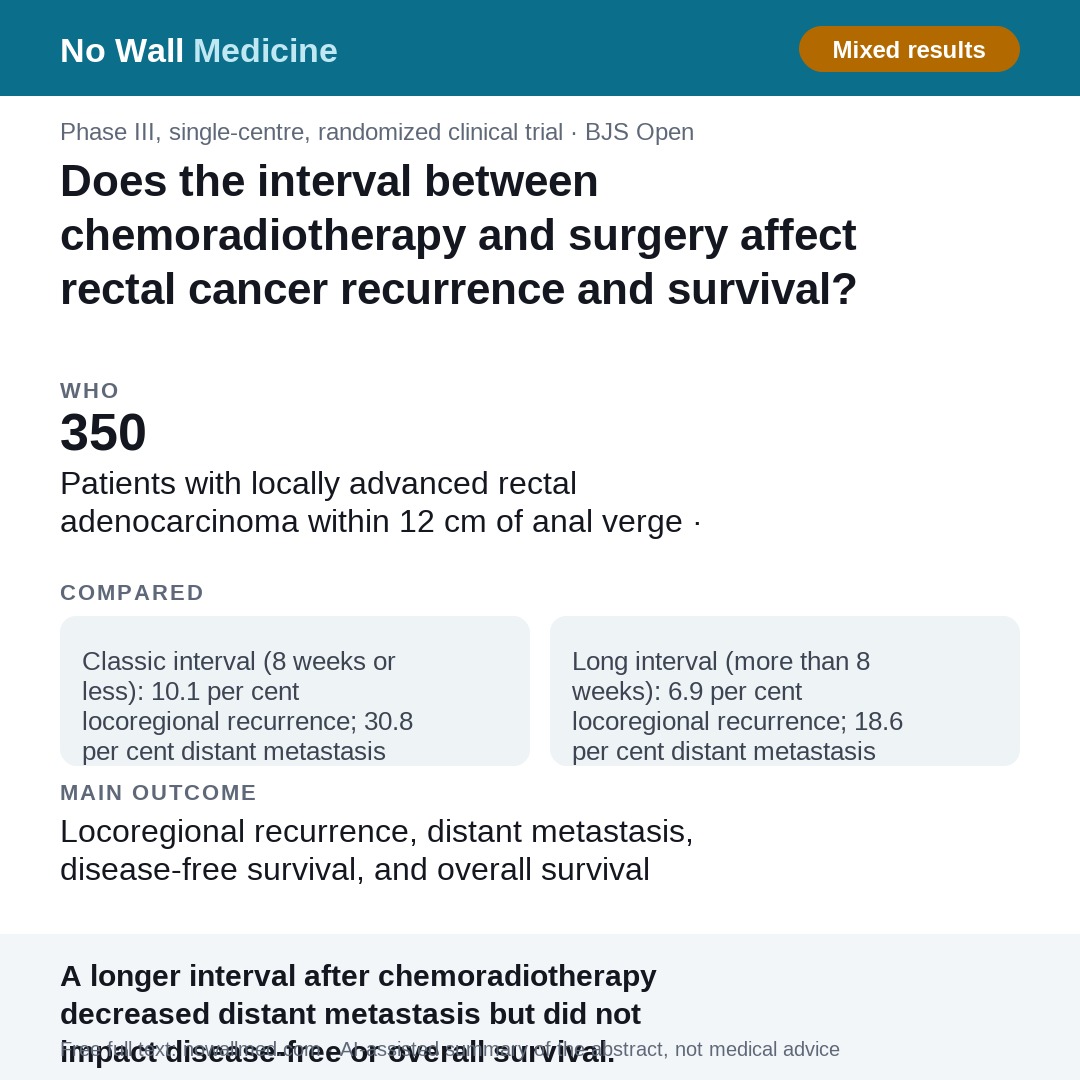
Effect of interval between neoadjuvant chemoradiotherapy and surgery on disease recurrence and survival in rectal cancer: long-term results of a randomized clinical trial
Phase III, single-centre, randomized clinical trialMixed results
Does the interval between chemoradiotherapy and surgery affect rectal cancer recurrence and survival?
Who
350
Patients with locally advanced rectal adenocarcinoma within 12 cm of anal verge · Single-centre
Compared
Classic interval (8 weeks or less): 10.1 per cent locoregional recurrence; 30.8 per cent distant metastasis
Long interval (more than 8 weeks): 6.9 per cent locoregional recurrence; 18.6 per cent distant metastasis
Main outcome
Locoregional recurrence, distant metastasis, disease-free survival, and overall survival
Result: sub-hazard ratio 1.78 (95 per cent c.i. 1.14 to 2.78)
Bottom line: A longer interval after chemoradiotherapy decreased distant metastasis but did not impact disease-free or overall survival.
BJS Open · 2022-10-18Download image
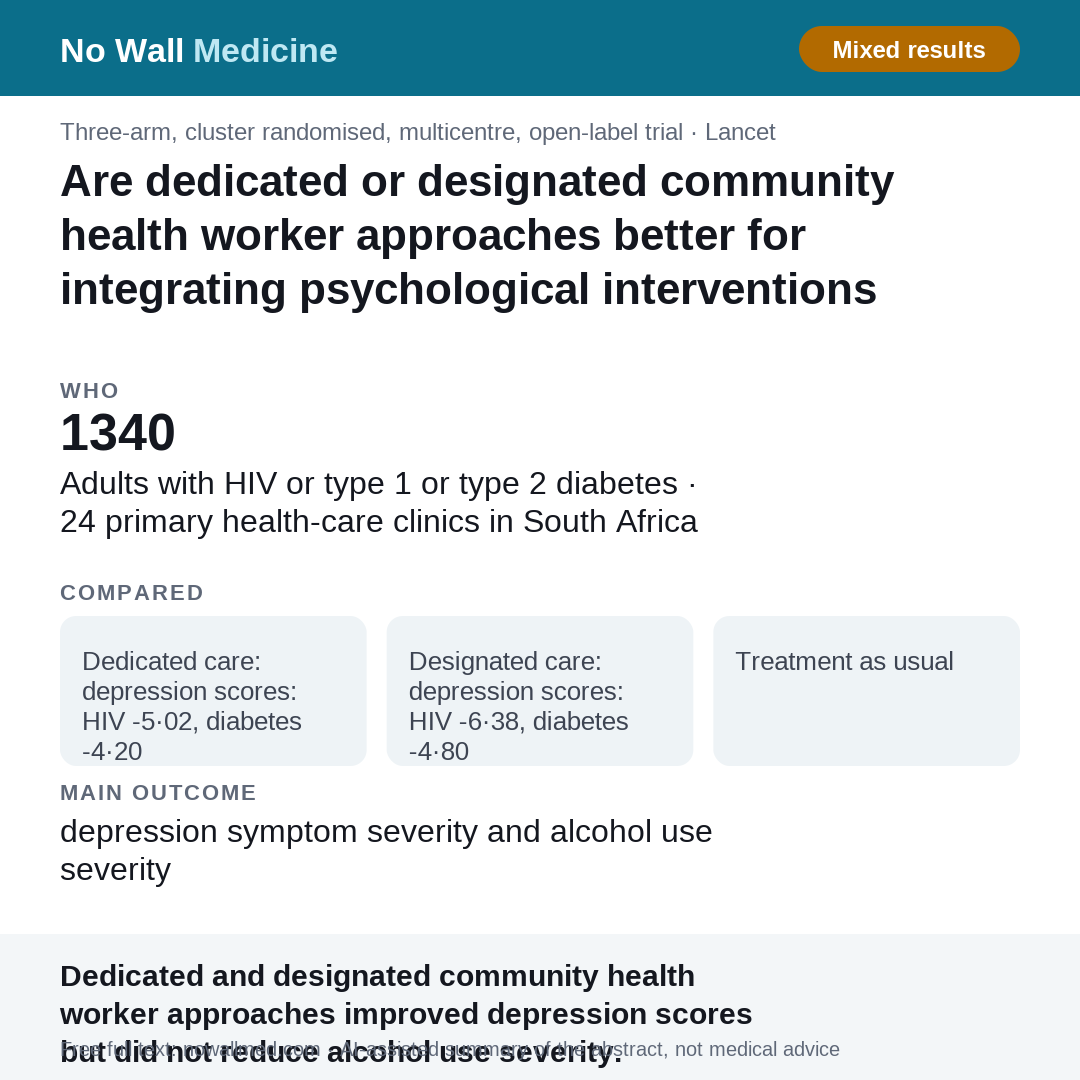
Comparing dedicated and designated approaches to integrating task-shared psychological interventions into chronic disease care in South Africa: a three-arm, cluster randomised, multicentre, open-label trial
Three-arm, cluster randomised, multicentre, open-label trialMixed results
Are dedicated or designated community health worker approaches better for integrating psychological interventions into chronic disease care?
Who
1340
Adults with HIV or type 1 or type 2 diabetes · 24 primary health-care clinics in South Africa
Compared
Dedicated care: depression scores: HIV -5·02, diabetes -4·20
Designated care: depression scores: HIV -6·38, diabetes -4·80
Treatment as usual
Main outcome
depression symptom severity and alcohol use severity
Bottom line: Dedicated and designated community health worker approaches improved depression scores but did not reduce alcohol use severity.
Lancet · 2022-10-17Download image
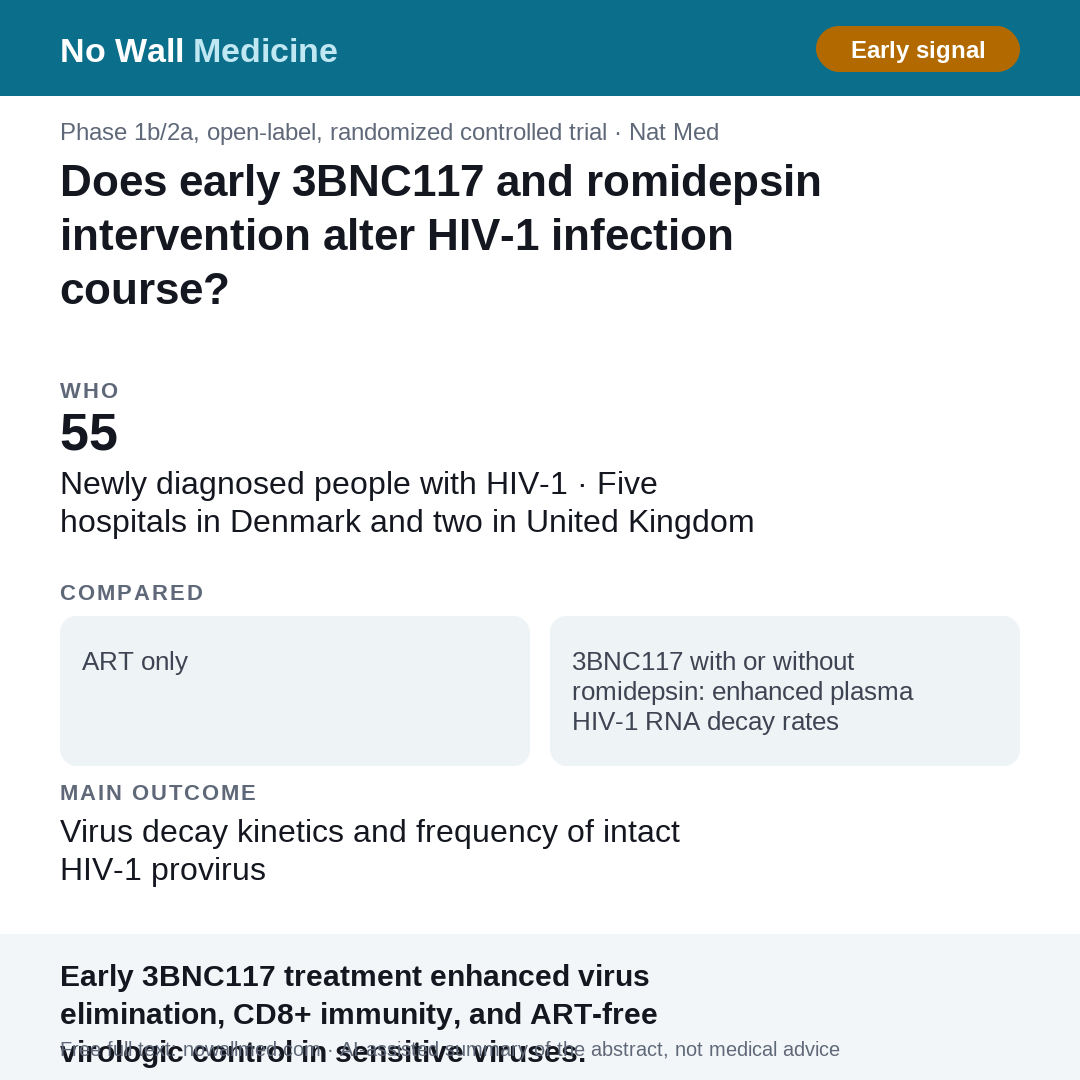
Early intervention with 3BNC117 and romidepsin at antiretroviral treatment initiation in people with HIV-1: a phase 1b/2a, randomized trial
Phase 1b/2a, open-label, randomized controlled trialEarly signal
Does early 3BNC117 and romidepsin intervention alter HIV-1 infection course?
Who
55
Newly diagnosed people with HIV-1 · Five hospitals in Denmark and two in United Kingdom
Compared
ART only
3BNC117 with or without romidepsin: enhanced plasma HIV-1 RNA decay rates
Main outcome
Virus decay kinetics and frequency of intact HIV-1 provirus
Bottom line: Early 3BNC117 treatment enhanced virus elimination, CD8+ immunity, and ART-free virologic control in sensitive viruses.
Nat Med · 2022-10-17Download image
Research priority setting in plastic and reconstructive surgery: A systematic review
Systematic reviewMixed results
How are research priorities set in plastic and reconstructive surgery?
Who
17
Priority setting initiatives in plastic and reconstructive surgery · National and high-income settings
Compared
Burns focus: 6/17
Hand surgery focus: 4/17
Main outcome
Appraisal of priority setting initiatives using REPRISE guideline
Bottom line: Priority setting initiatives lack representation from lower-income countries and often exclude patient and multidisciplinary stakeholders.
J Plast Reconstr Aesthet Surg · 2022-10-17Download image

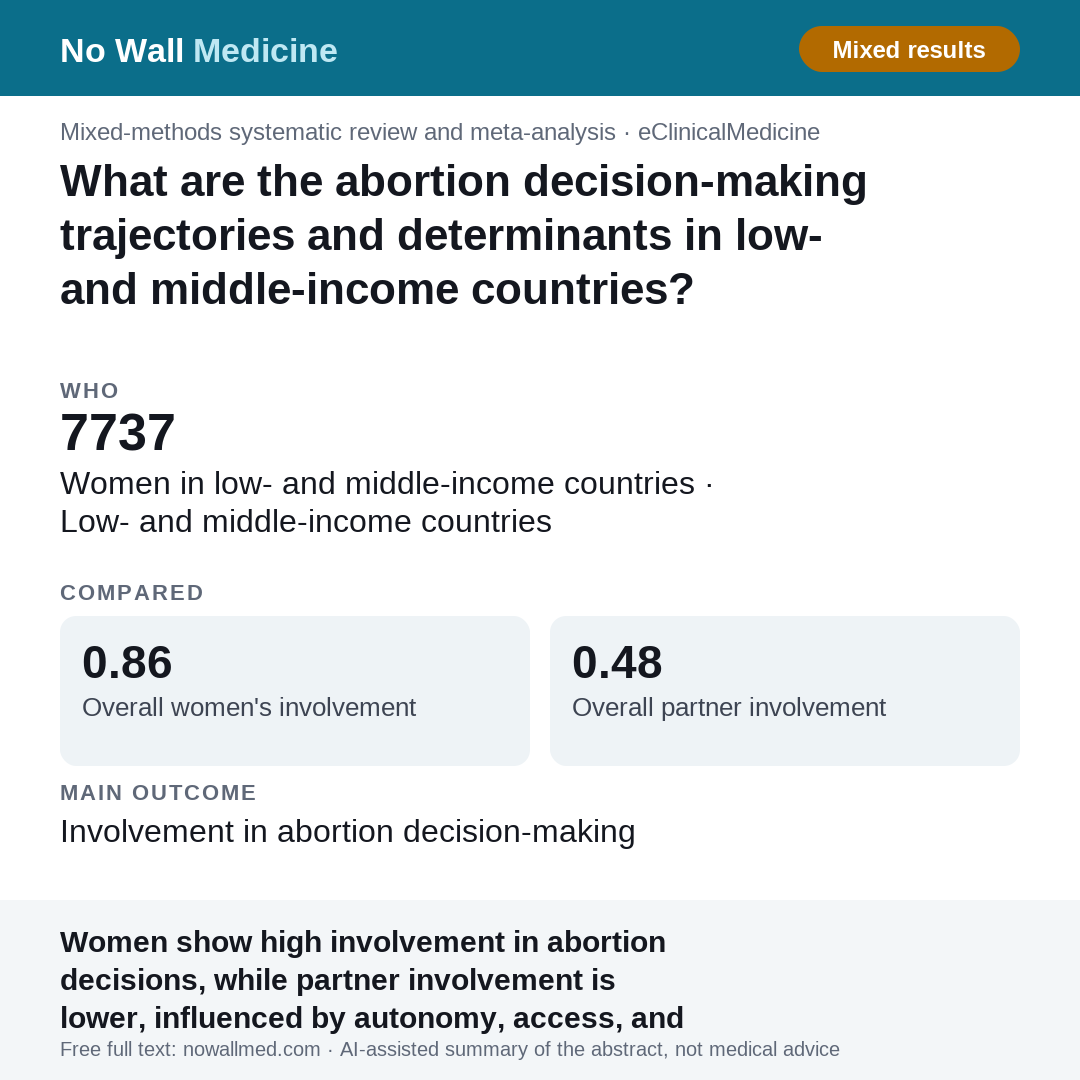
Abortion decision-making process trajectories and determinants in low- and middle-income countries: A mixed-methods systematic review and meta-analysis
Mixed-methods systematic review and meta-analysisMixed results
What are the abortion decision-making trajectories and determinants in low- and middle-income countries?
Who
7737
Women in low- and middle-income countries · Low- and middle-income countries
Compared
0.86Overall women's involvement (95% CI:0.73-0.95)
0.48Overall partner involvement (95% CI:0.29-0.68)
Main outcome
Involvement in abortion decision-making
Bottom line: Women show high involvement in abortion decisions, while partner involvement is lower, influenced by autonomy, access, and choice.
Limitation: Clinical heterogeneity in how studies defined the final decision-maker.
Funded by: Nuffield Department of Population Health and Medical Research Council
eClinicalMedicine · 2022-10-17Download image
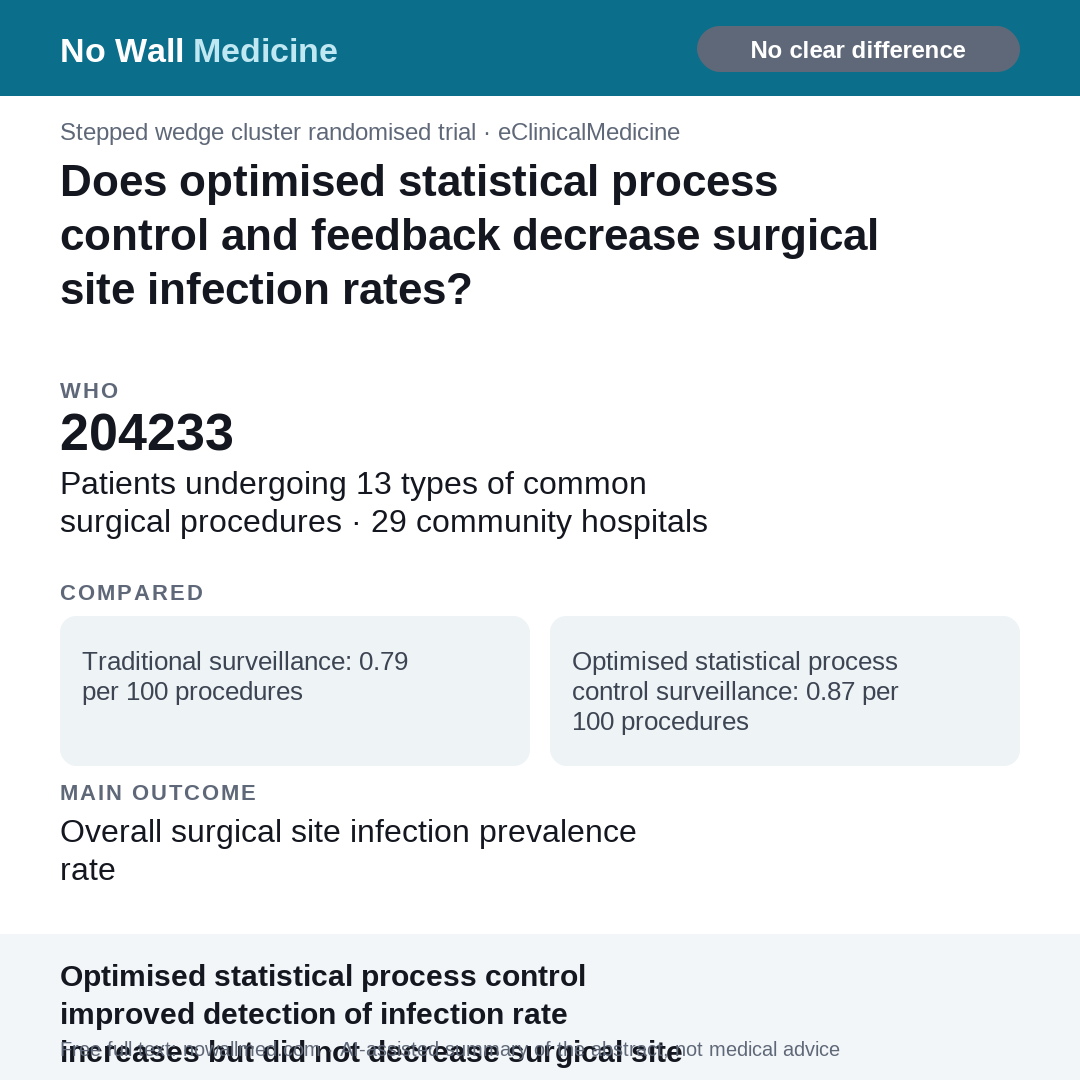
Early recognition and response to increases in surgical site infections using optimised statistical process control charts-The early 2RIS trial: A multicentre stepped wedge cluster randomised controlled trial
Stepped wedge cluster randomised trialNo clear difference
Does optimised statistical process control and feedback decrease surgical site infection rates?
Who
204233
Patients undergoing 13 types of common surgical procedures · 29 community hospitals in the Southeastern United States
Compared
Traditional surveillance: 0.79 per 100 procedures
Optimised statistical process control surveillance: 0.87 per 100 procedures
Main outcome
Overall surgical site infection prevalence rate
Result: model-based prevalence rate ratio 1.10 (95% CI 0.94-1.30)
Bottom line: Optimised statistical process control improved detection of infection rate increases but did not decrease surgical site infection rates.
Funded by: Agency for Healthcare Research and Quality
eClinicalMedicine · 2022-10-17Download image
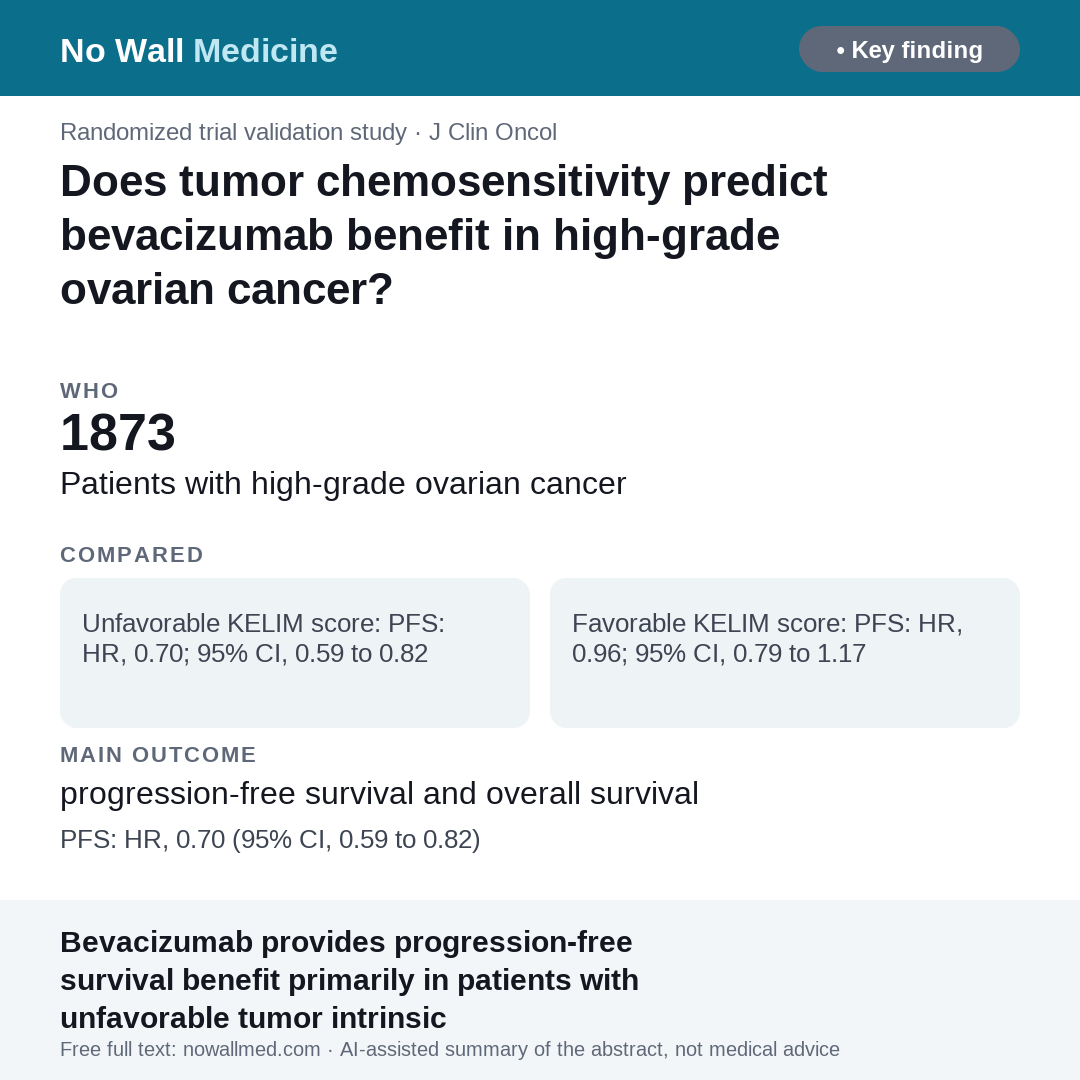
Identification of Patients With Ovarian Cancer Experiencing the Highest Benefit From Bevacizumab in the First-Line Setting on the Basis of Their Tumor-Intrinsic Chemosensitivity (KELIM): The GOG-0218 Validation Study
Randomized trial validation studyKey finding
Does tumor chemosensitivity predict bevacizumab benefit in high-grade ovarian cancer?
Who
1873
Patients with high-grade ovarian cancer
Compared
Unfavorable KELIM score: PFS: HR, 0.70; 95% CI, 0.59 to 0.82
Favorable KELIM score: PFS: HR, 0.96; 95% CI, 0.79 to 1.17
Main outcome
progression-free survival and overall survival
Result: PFS: HR, 0.70 (95% CI, 0.59 to 0.82)
Bottom line: Bevacizumab provides progression-free survival benefit primarily in patients with unfavorable tumor intrinsic chemosensitivity.
J Clin Oncol · 2022-10-17Download image
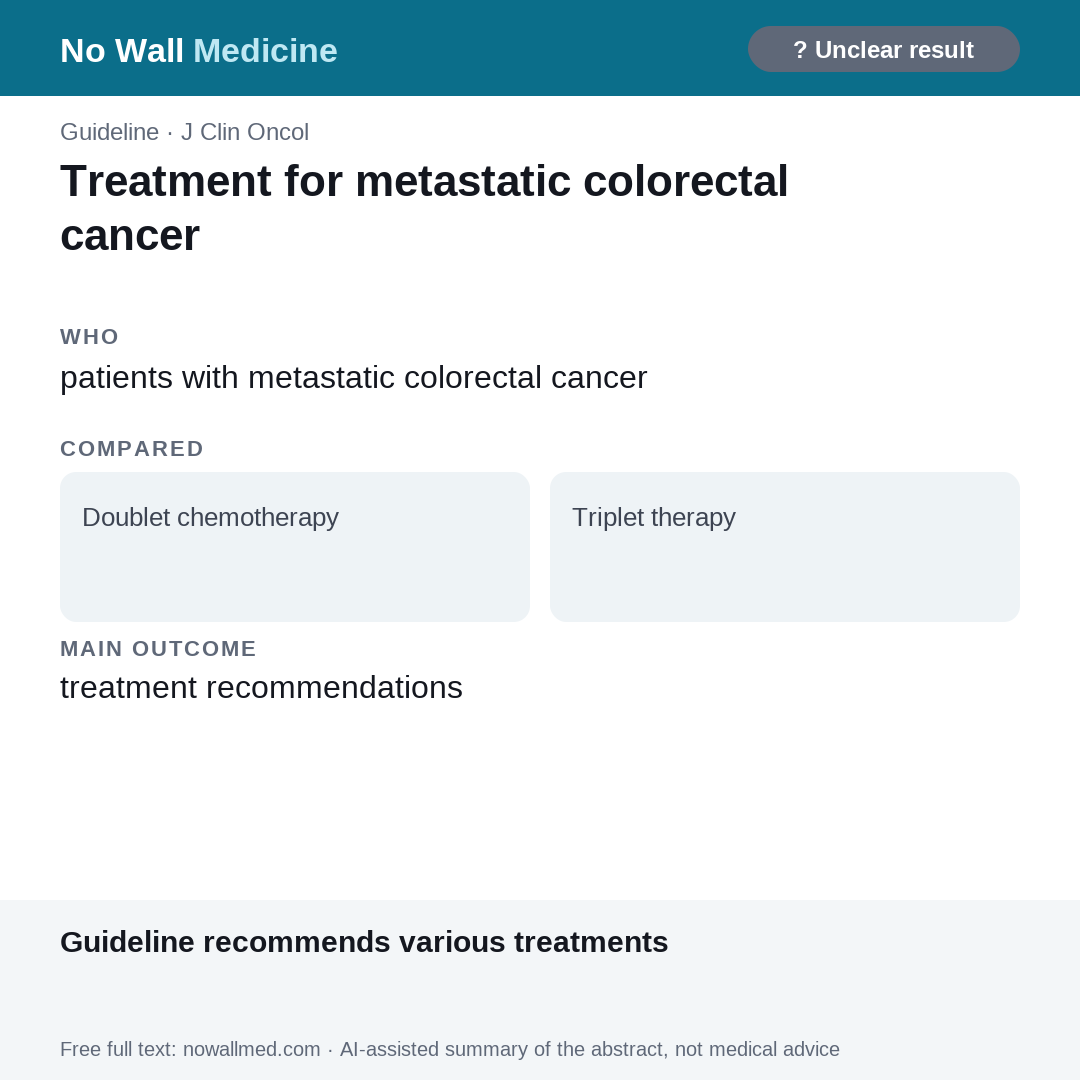
Treatment of Metastatic Colorectal Cancer: ASCO Guideline
GuidelineUnclear result
Treatment for metastatic colorectal cancer
Who
patients with metastatic colorectal cancer
Compared
Doublet chemotherapy
Triplet therapy
Main outcome
treatment recommendations
Bottom line: Guideline recommends various treatments
J Clin Oncol · 2022-10-17Download image
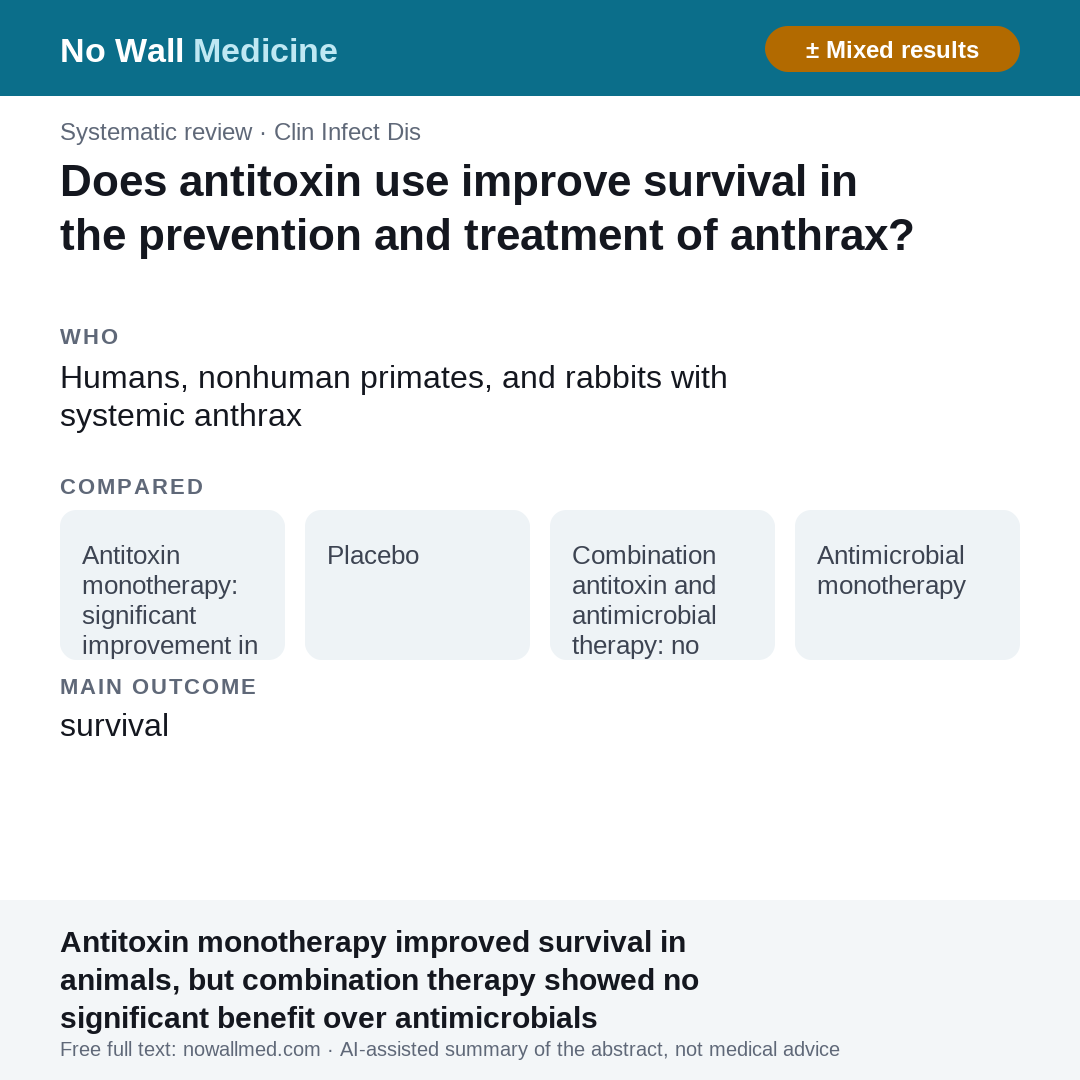
Antitoxin Use in the Prevention and Treatment of Anthrax Disease: A Systematic Review
Systematic reviewMixed results
Does antitoxin use improve survival in the prevention and treatment of anthrax?
Who
Humans, nonhuman primates, and rabbits with systemic anthrax
Compared
Antitoxin monotherapy: significant improvement in survival
Placebo
Combination antitoxin and antimicrobial therapy: no significant improvement in survival compared to antimicrobial monotherapy
Antimicrobial monotherapy
Main outcome
survival
Bottom line: Antitoxin monotherapy improved survival in animals, but combination therapy showed no significant benefit over antimicrobials alone.
Limitation: Limited human and animal evidence
Clin Infect Dis · 2022-10-17Download image
Algorithms for the Identification of Anthrax Meningitis During a Mass Casualty Event Based on a Systematic Review of Systemic Anthrax From 1880 Through 2018
Systematic review of historical dataBenefit found
Can algorithms identify anthrax meningitis during a mass casualty event?
Who
Patients with systemic anthrax from 1880 through 2018
Compared
Single algorithm: 86% sensitivity and 90% specificity
Paired algorithms with same symptoms: 99% specificity
Paired algorithms with differing symptoms: 92% specificity
Main outcome
Identification of anthrax meningitis using symptoms and signs
Bottom line: Algorithms using neurological symptoms can reliably identify anthrax meningitis during mass casualty events.
Limitation: Uses historical anthrax patient data from 1880 through 2018
Clin Infect Dis · 2022-10-17Download image

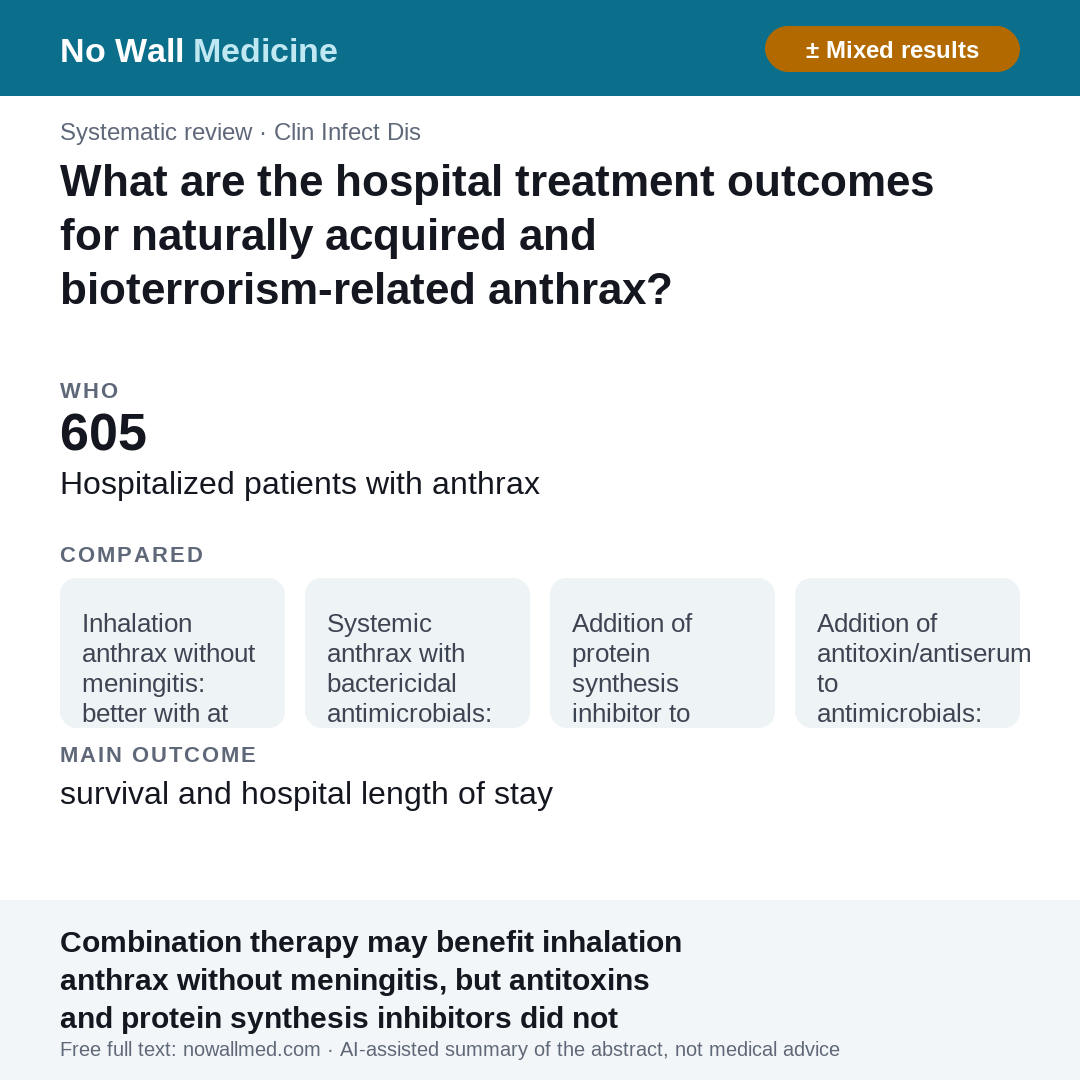
Systematic Review of Hospital Treatment Outcomes for Naturally Acquired and Bioterrorism-Related Anthrax, 1880-2018
Systematic reviewMixed results
What are the hospital treatment outcomes for naturally acquired and bioterrorism-related anthrax?
Who
605
Hospitalized patients with anthrax
Compared
Inhalation anthrax without meningitis: better with at least 2 antimicrobials
Systemic anthrax with bactericidal antimicrobials: effective
Addition of protein synthesis inhibitor to bactericidal antimicrobials: did not improve survival
Addition of antitoxin/antiserum to antimicrobials: did not improve survival
Main outcome
survival and hospital length of stay
Bottom line: Combination therapy may benefit inhalation anthrax without meningitis, but antitoxins and protein synthesis inhibitors did not improve survival.
Limitation: numbers were small for anthrax meningitis
Clin Infect Dis · 2022-10-17Download image
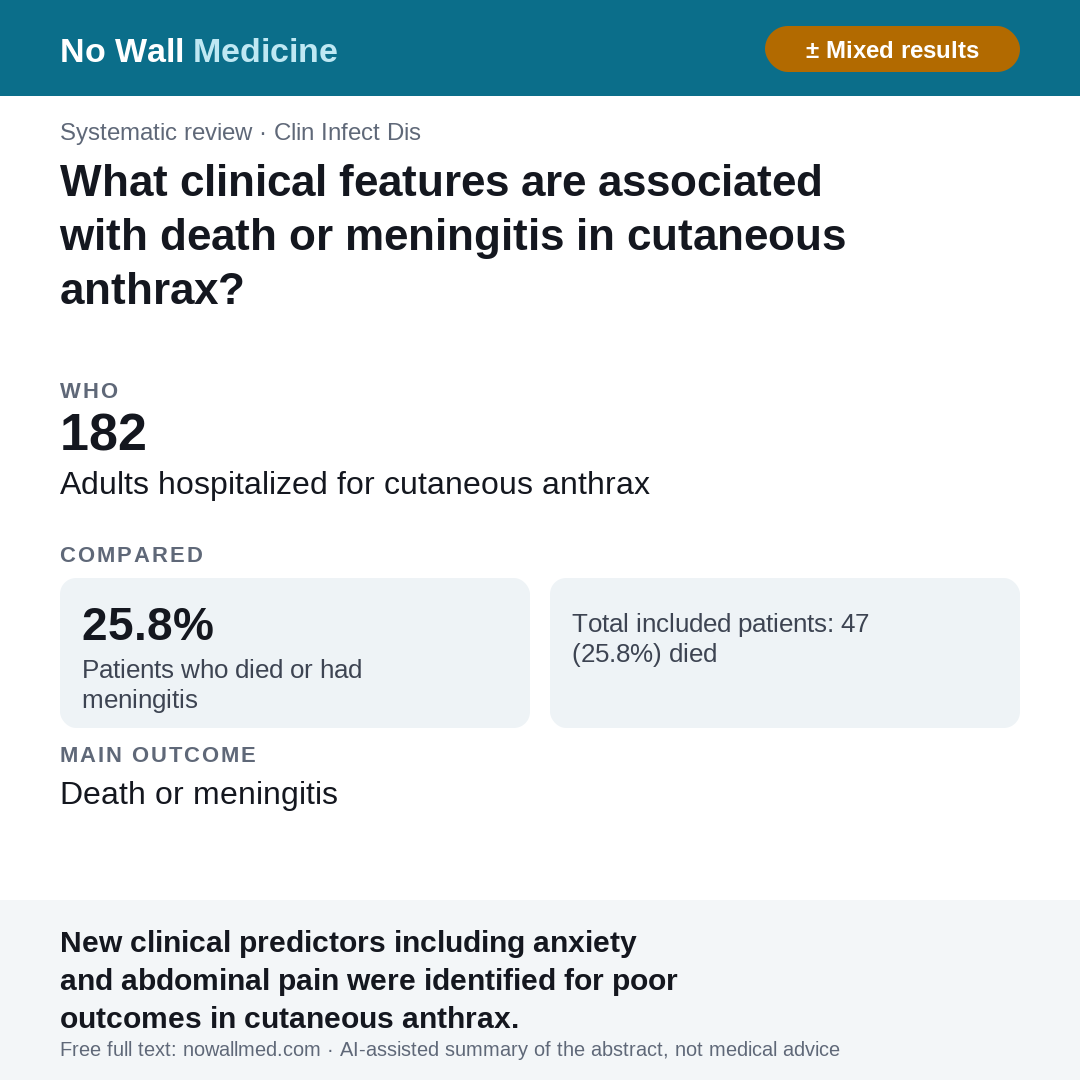
Risk Factors for Death or Meningitis in Adults Hospitalized for Cutaneous Anthrax, 1950-2018: A Systematic Review
Systematic reviewMixed results
What clinical features are associated with death or meningitis in cutaneous anthrax?
Who
182
Adults hospitalized for cutaneous anthrax
Compared
25.8%Patients who died or had meningitis
Total included patients: 47 (25.8%) died
Main outcome
Death or meningitis
Bottom line: New clinical predictors including anxiety and abdominal pain were identified for poor outcomes in cutaneous anthrax.
Clin Infect Dis · 2022-10-17Download image
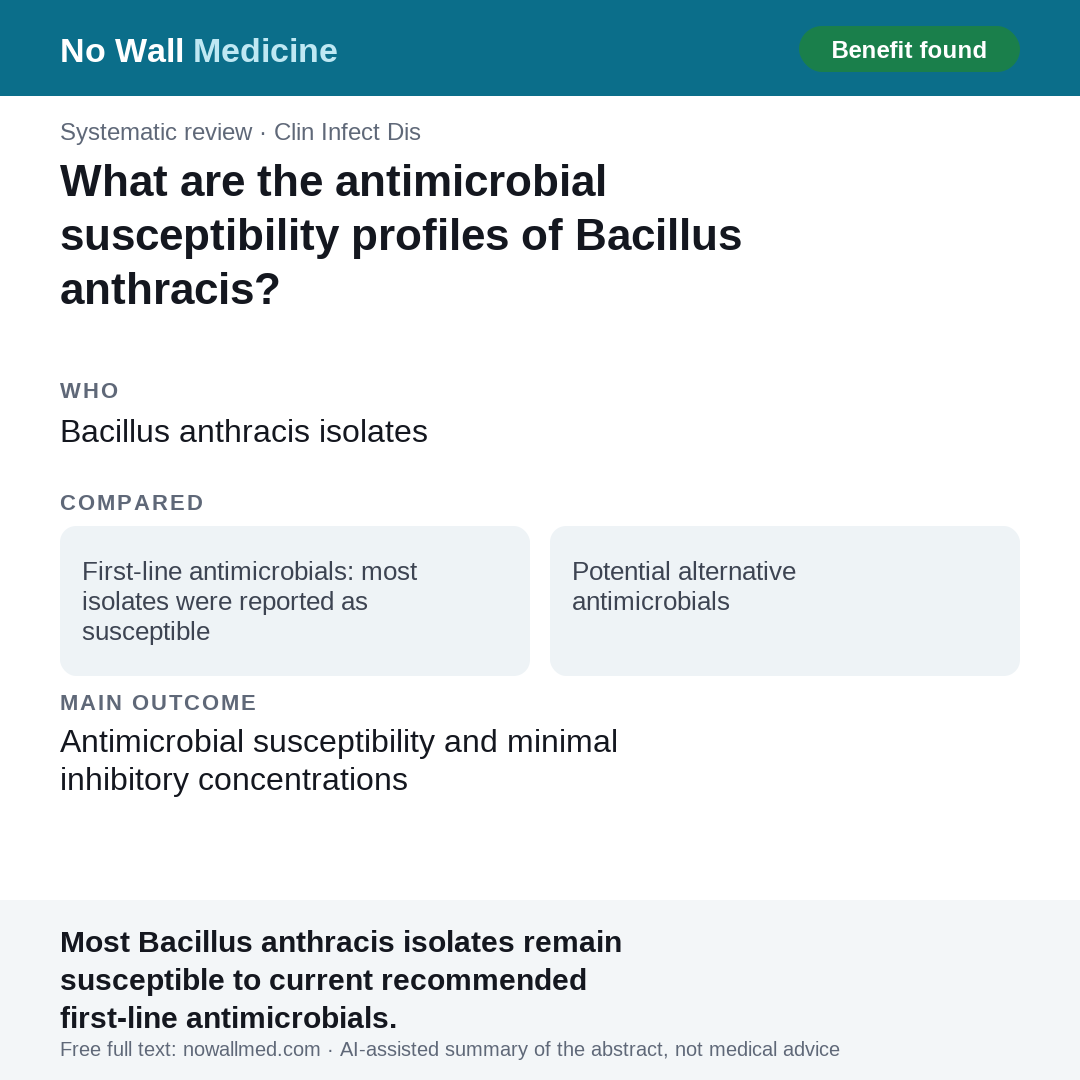
Systematic Review of In Vitro Antimicrobial Susceptibility Testing for Bacillus anthracis, 1947-2019
Systematic reviewBenefit found
What are the antimicrobial susceptibility profiles of Bacillus anthracis?
Who
Bacillus anthracis isolates
Compared
First-line antimicrobials: most isolates were reported as susceptible
Potential alternative antimicrobials
Main outcome
Antimicrobial susceptibility and minimal inhibitory concentrations
Bottom line: Most Bacillus anthracis isolates remain susceptible to current recommended first-line antimicrobials.
Clin Infect Dis · 2022-10-17Download image
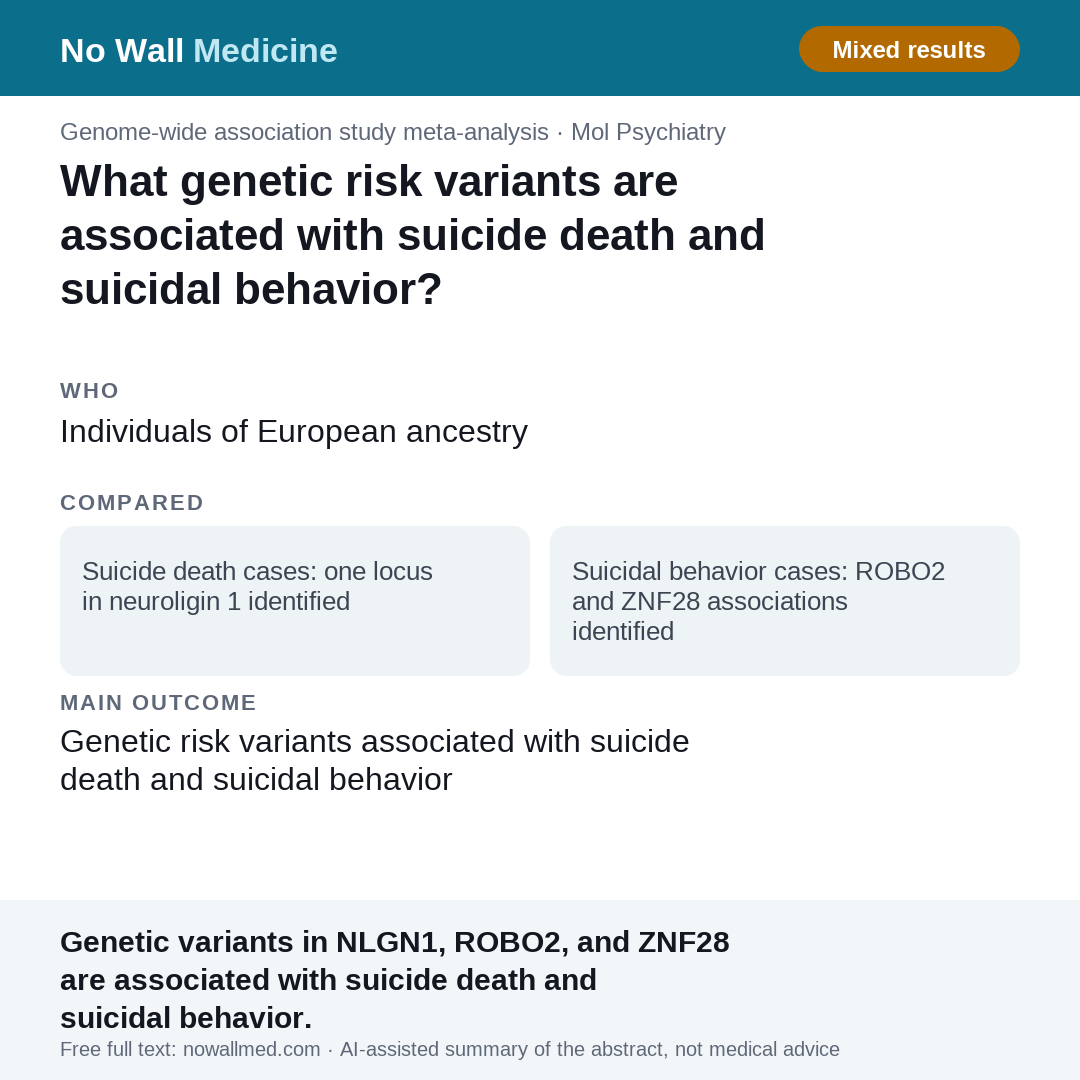
Postexposure Prophylaxis and Treatment of Bacillus anthracis Infections: A Systematic Review and Meta-analyses of Animal Models, 1947-2019
Systematic review and meta-analyses of animal modelsBenefit found
What are the effective antimicrobial postexposure prophylaxis and treatment options for anthrax in animals?
Who
3262
Animals with Bacillus anthracis infections
Compared
Susceptible Bacillus anthracis: effective monotherapy can be accomplished with fluoroquinolones, tetracyclines, beta-lactams, and lipopeptides or glycopeptides
Naturally occurring strains: ciprofloxacin, levofloxacin, and doxycycline adequately cover minimal inhibitory concentrations
Main outcome
survival outcome
Bottom line: Many antimicrobials are effective for anthrax, with ciprofloxacin, levofloxacin, and doxycycline being particularly robust choices.
Clin Infect Dis · 2022-10-17Download image
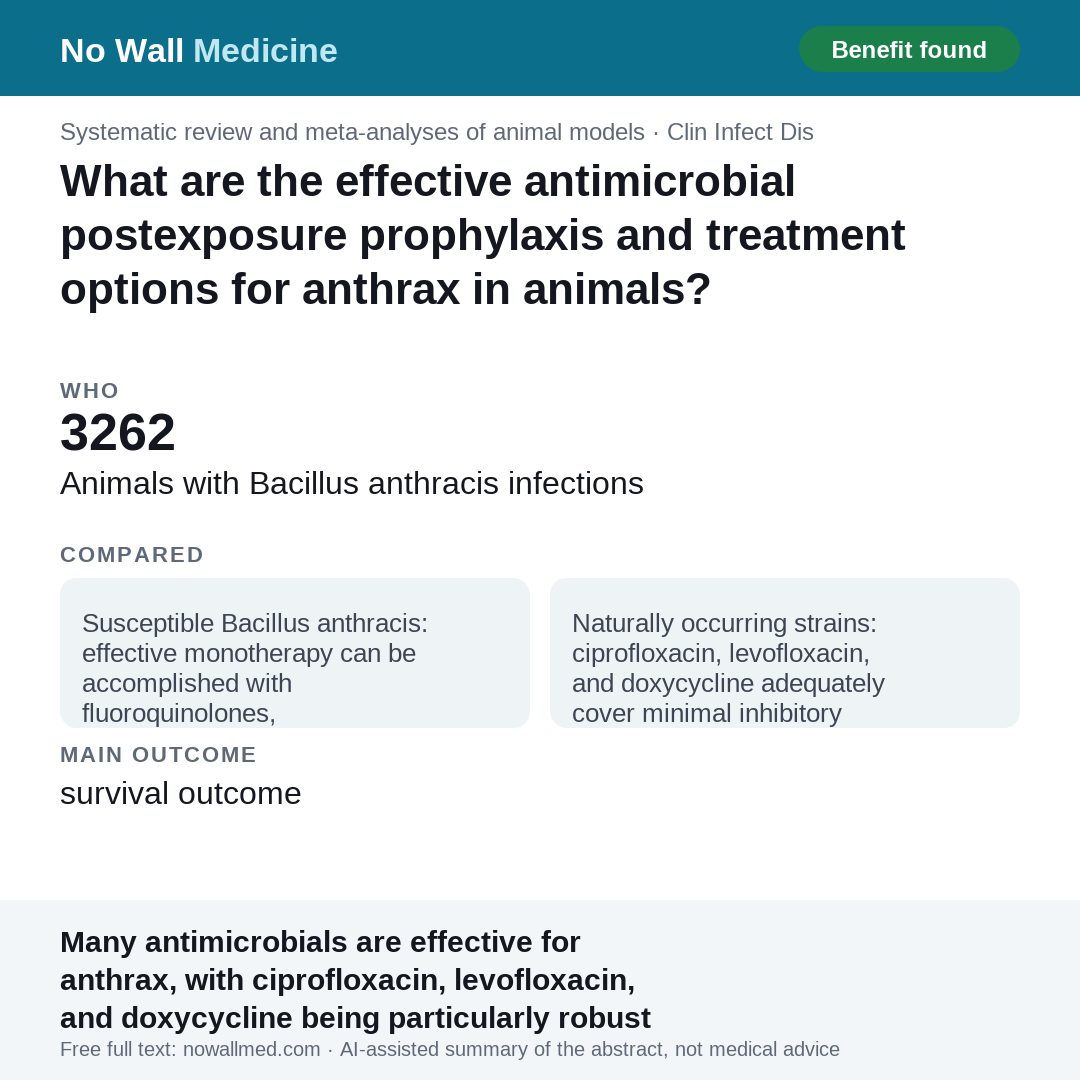
Contribution of Common Genetic Variants to Risk of Early-Onset Ischemic Stroke
Meta-analysis of 48 studiesMixed results
Genetic variants contribution to early stroke
Who
16730
people with early-onset ischemic stroke
Compared
Early-Onset Stroke
Late-Onset Stroke
Main outcome
ischemic stroke risk
Result: odds ratio 0.88 (95% CI: 0.85-0.91) and 1.16 (1.11-1.21)
Bottom line: Genetic factors contribute more to early stroke
Neurology · 2022-10-17Download image
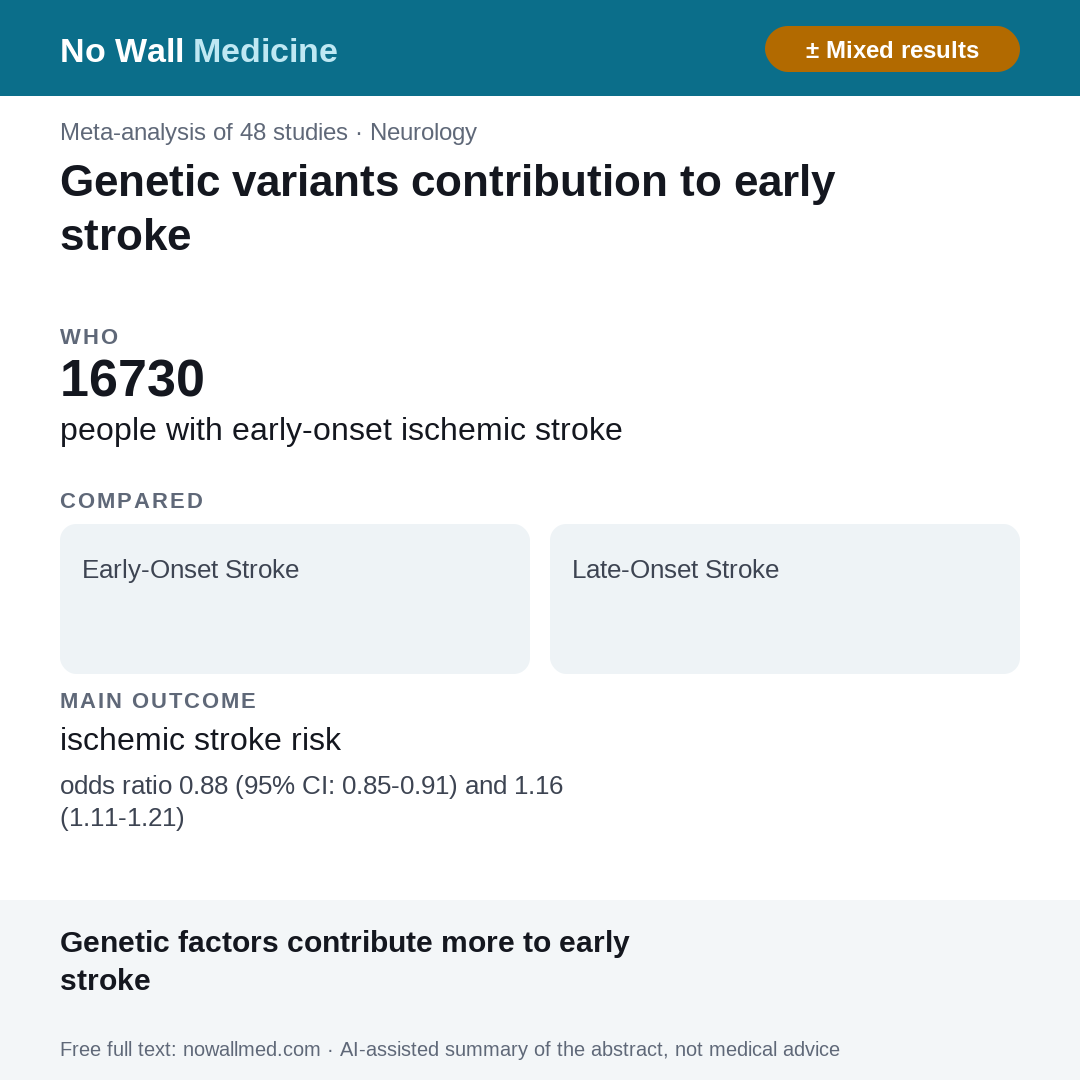
Antidepressants for the treatment of adults with major depressive disorder in the maintenance phase: a systematic review and network meta-analysis
Systematic review and network meta-analysisBenefit found
How effective and tolerable are antidepressants for maintenance treatment of major depressive disorder?
Who
9384
Adults with major depressive disorder in the maintenance phase
Compared
Antidepressants
Placebo
Main outcome
6-month relapse rate
Bottom line: Multiple antidepressants outperformed placebo in efficacy, with desvenlafaxine, paroxetine, venlafaxine, and vortioxetine showing reasonable efficacy, acceptability, and tolerability.
Mol Psychiatry · 2022-10-17Download image
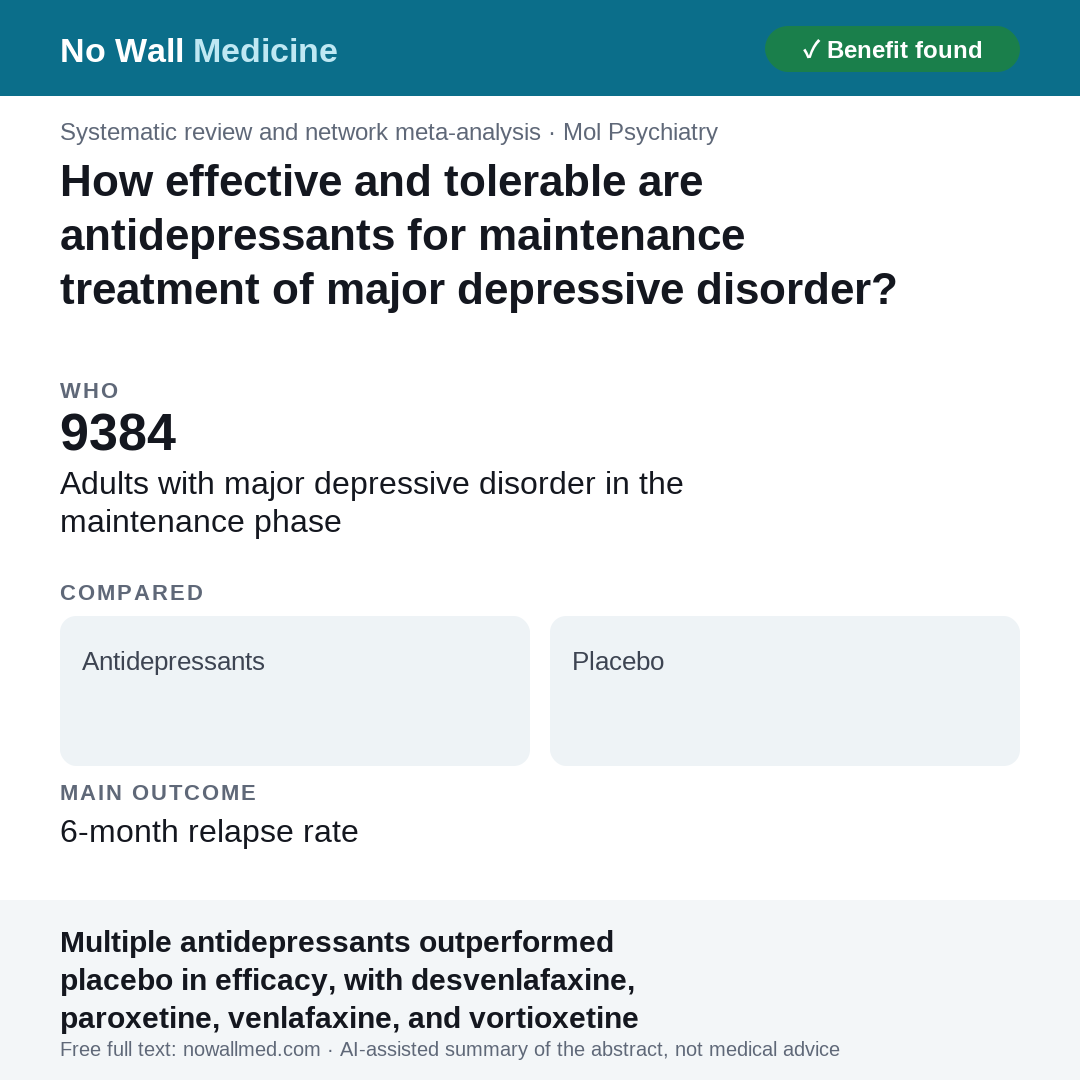
Genome-wide association study meta-analysis of suicide death and suicidal behavior
Genome-wide association study meta-analysisMixed results
What genetic risk variants are associated with suicide death and suicidal behavior?
Who
Individuals of European ancestry
Compared
Suicide death cases: one locus in neuroligin 1 identified
Suicidal behavior cases: ROBO2 and ZNF28 associations identified
Main outcome
Genetic risk variants associated with suicide death and suicidal behavior
Bottom line: Genetic variants in NLGN1, ROBO2, and ZNF28 are associated with suicide death and suicidal behavior.
Mol Psychiatry · 2022-10-17Download image
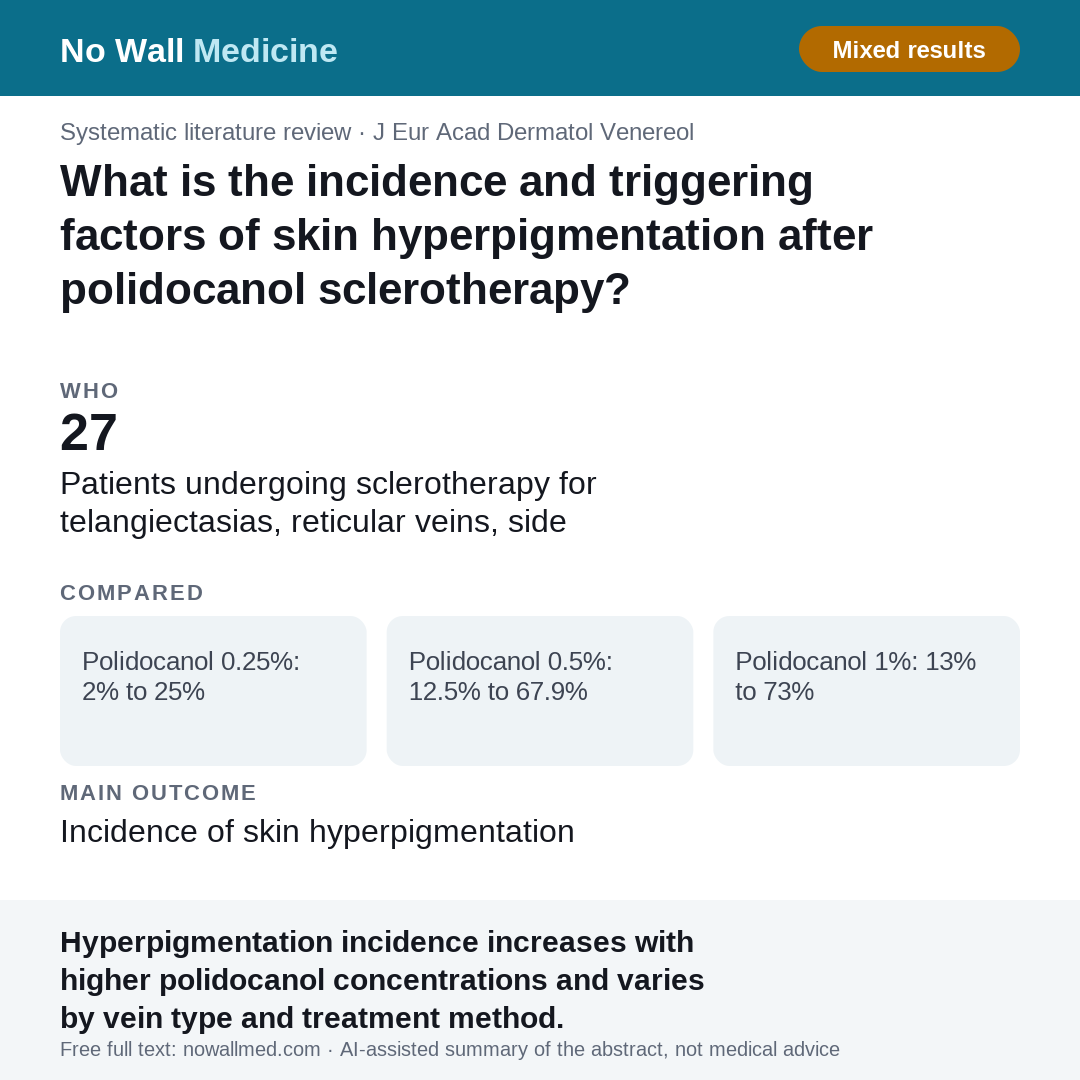
Skin hyperpigmentation after sclerotherapy with polidocanol: A systematic review
Systematic literature reviewMixed results
What is the incidence and triggering factors of skin hyperpigmentation after polidocanol sclerotherapy?
Who
Patients undergoing sclerotherapy for telangiectasias, reticular veins, side branches, and truncal varices
Compared
Polidocanol 0.25%: 2% to 25%
Polidocanol 0.5%: 12.5% to 67.9%
Polidocanol 1%: 13% to 73%
Main outcome
Incidence of skin hyperpigmentation
Bottom line: Hyperpigmentation incidence increases with higher polidocanol concentrations and varies by vein type and treatment method.
J Eur Acad Dermatol Venereol · 2022-10-17Download image
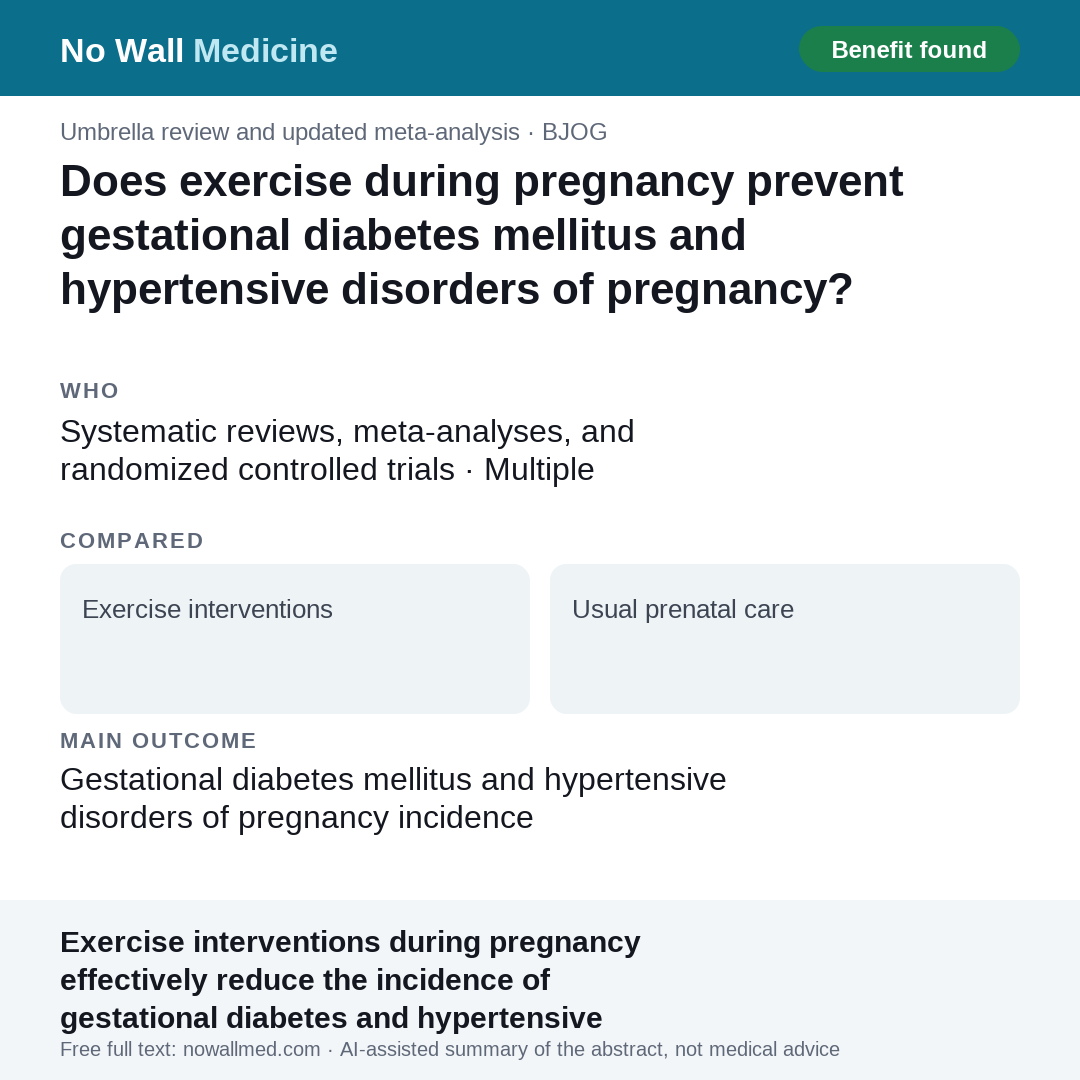
Exercise during pregnancy for preventing gestational diabetes mellitus and hypertensive disorders: An umbrella review of randomised controlled trials and an updated meta-analysis
Umbrella review and updated meta-analysisBenefit found
Does exercise during pregnancy prevent gestational diabetes mellitus and hypertensive disorders of pregnancy?
Who
Systematic reviews, meta-analyses, and randomized controlled trials · Multiple databases searched
Compared
Exercise interventions
Usual prenatal care
Main outcome
Gestational diabetes mellitus and hypertensive disorders of pregnancy incidence
Bottom line: Exercise interventions during pregnancy effectively reduce the incidence of gestational diabetes and hypertensive disorders.
BJOG · 2022-10-17Download image
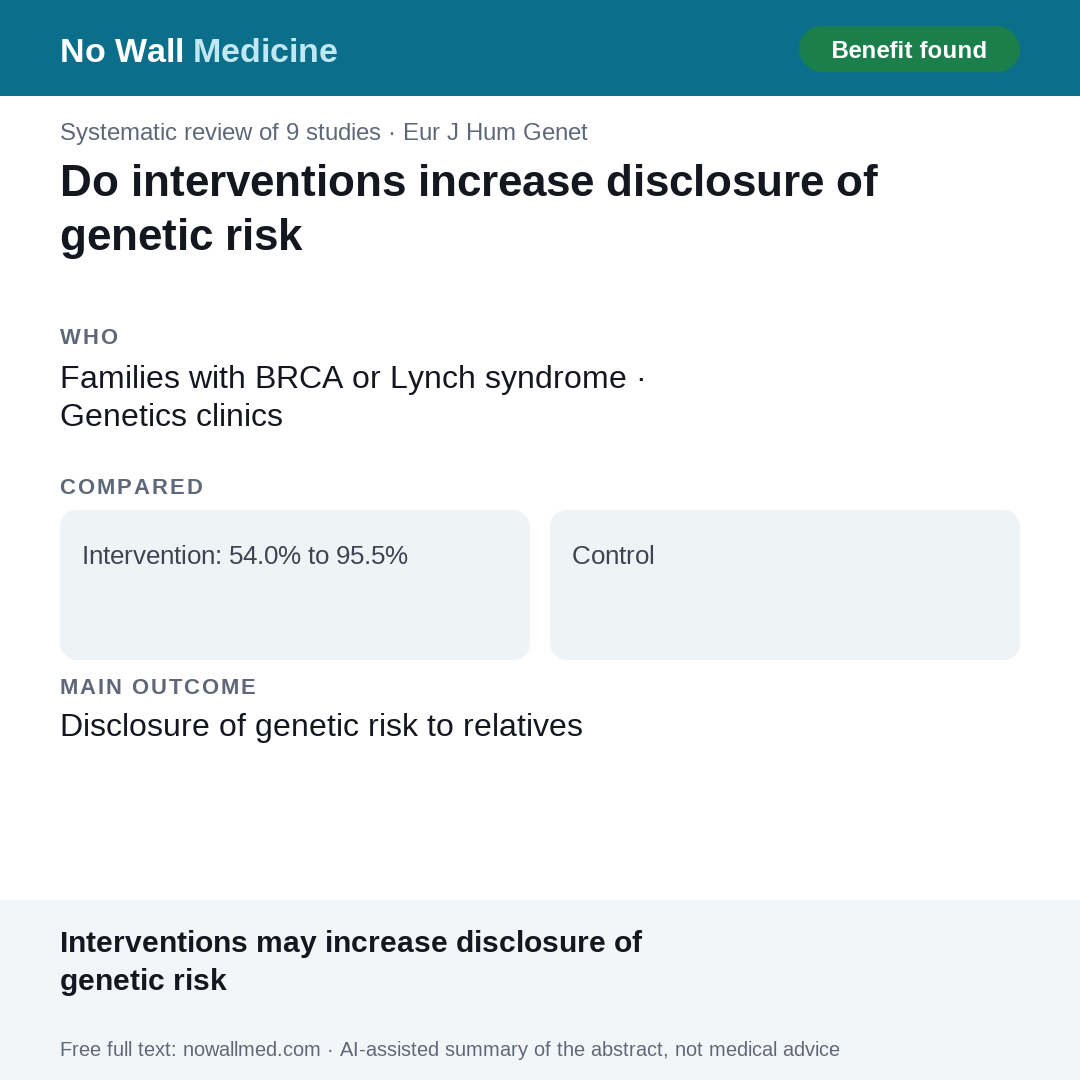
Proband-mediated interventions to increase disclosure of genetic risk in families with a BRCA or Lynch syndrome condition: a systematic review
Systematic review of 9 studiesKey finding
Do interventions increase disclosure of genetic risk
Who
Families with BRCA or Lynch syndrome · Genetics clinics
Compared
Intervention: 54.0% to 95.5%
Control
Main outcome
Disclosure of genetic risk to relatives
Bottom line: Interventions may increase disclosure of genetic risk
Eur J Hum Genet · 2022-10-17Download image