Visual abstracts
New randomized trials and meta-analyses from leading journals at a glance: who was studied, what was compared, and what was found. Every paper is free to read in full.
All specialtiesCardiology 4763Oncology 4042Gastroenterology & Hepatology 1902Infectious Disease 3756Neurology 1872Psychiatry & Mental Health 2214Pulmonology 2042Critical Care 1319Endocrinology & Diabetes 2544Pediatrics 2889Surgery 2479Orthopedics & Sports Medicine 917Neurosurgery 525Cardiothoracic & Vascular Surgery 656Plastic & Reconstructive Surgery 574Nephrology 1107Rheumatology 810Hematology 1090Dermatology 611Ophthalmology 532Obstetrics & Gynecology 1645Public & Global Health 1037Radiology & Imaging 617Anesthesiology 957Urology 745ENT (Otolaryngology) 494Emergency Medicine 481Allergy & Immunology 309Geriatrics 972Family Medicine & Primary Care 533Medical Genetics & Genomics 659Pathology & Laboratory Medicine 156Physical Medicine & Rehabilitation 734Palliative Care 421Nutrition 1560Digital Health & AI 2133General Medicine 318
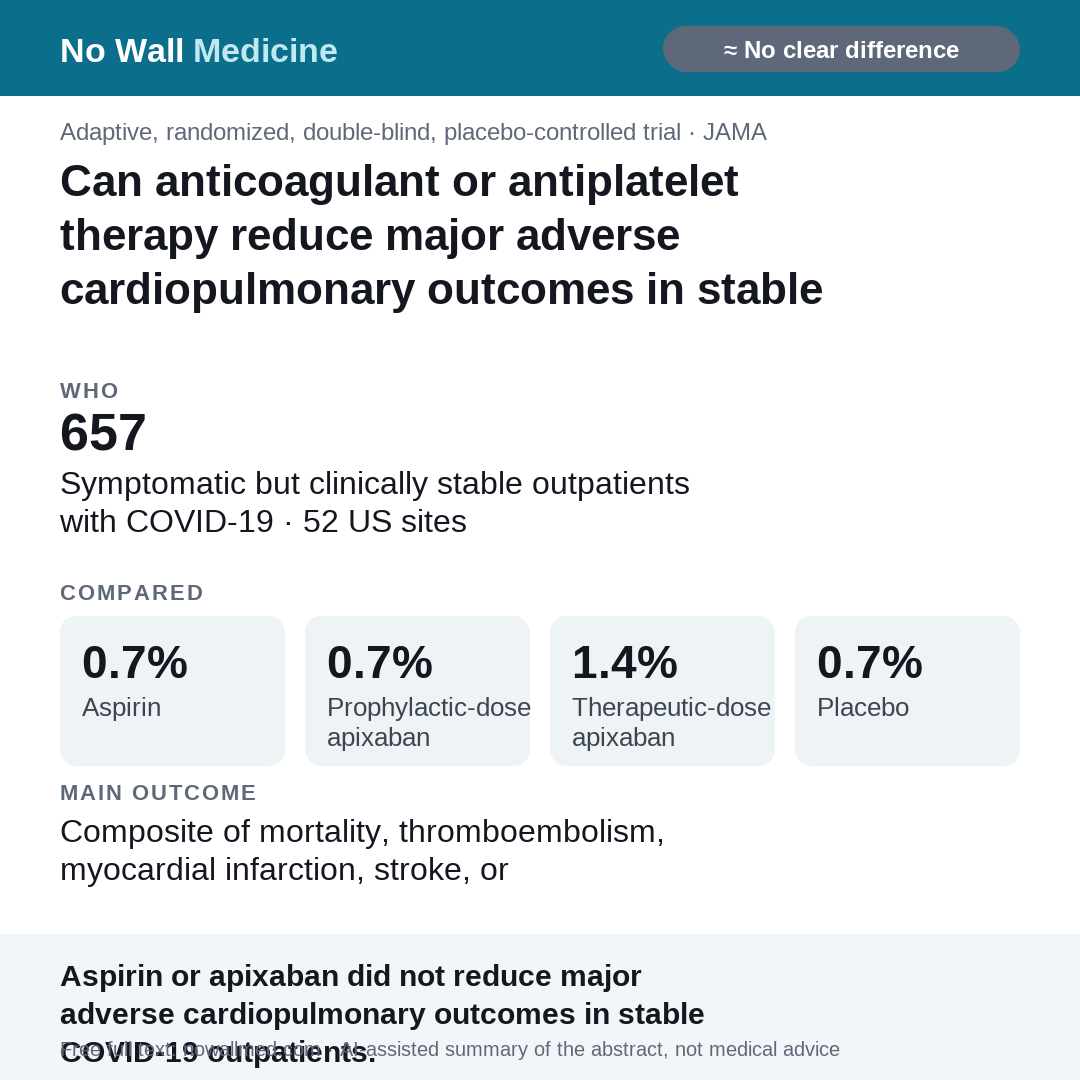
Effect of Antithrombotic Therapy on Clinical Outcomes in Outpatients With Clinically Stable Symptomatic COVID-19: The ACTIV-4B Randomized Clinical Trial
Adaptive, randomized, double-blind, placebo-controlled trialNo clear difference
Can anticoagulant or antiplatelet therapy reduce major adverse cardiopulmonary outcomes in stable COVID-19 outpatients?
Who
657
Symptomatic but clinically stable outpatients with COVID-19 · 52 US sites
Compared
0.7%Aspirin
0.7%Prophylactic-dose apixaban
1.4%Therapeutic-dose apixaban
0.7%Placebo
Main outcome
Composite of mortality, thromboembolism, myocardial infarction, stroke, or hospitalization
Result: risk difference 0.0% (95% CI not calculable), 0.7% (95% CI, -2.1% to 4.1%), and 1.4% (95% CI, -1.5% to 5.0%)
Bottom line: Aspirin or apixaban did not reduce major adverse cardiopulmonary outcomes in stable COVID-19 outpatients.
Limitation: The study was terminated after enrollment of 9% of participants because of lower than anticipated event rates.
JAMA · 2021-10-12Download image
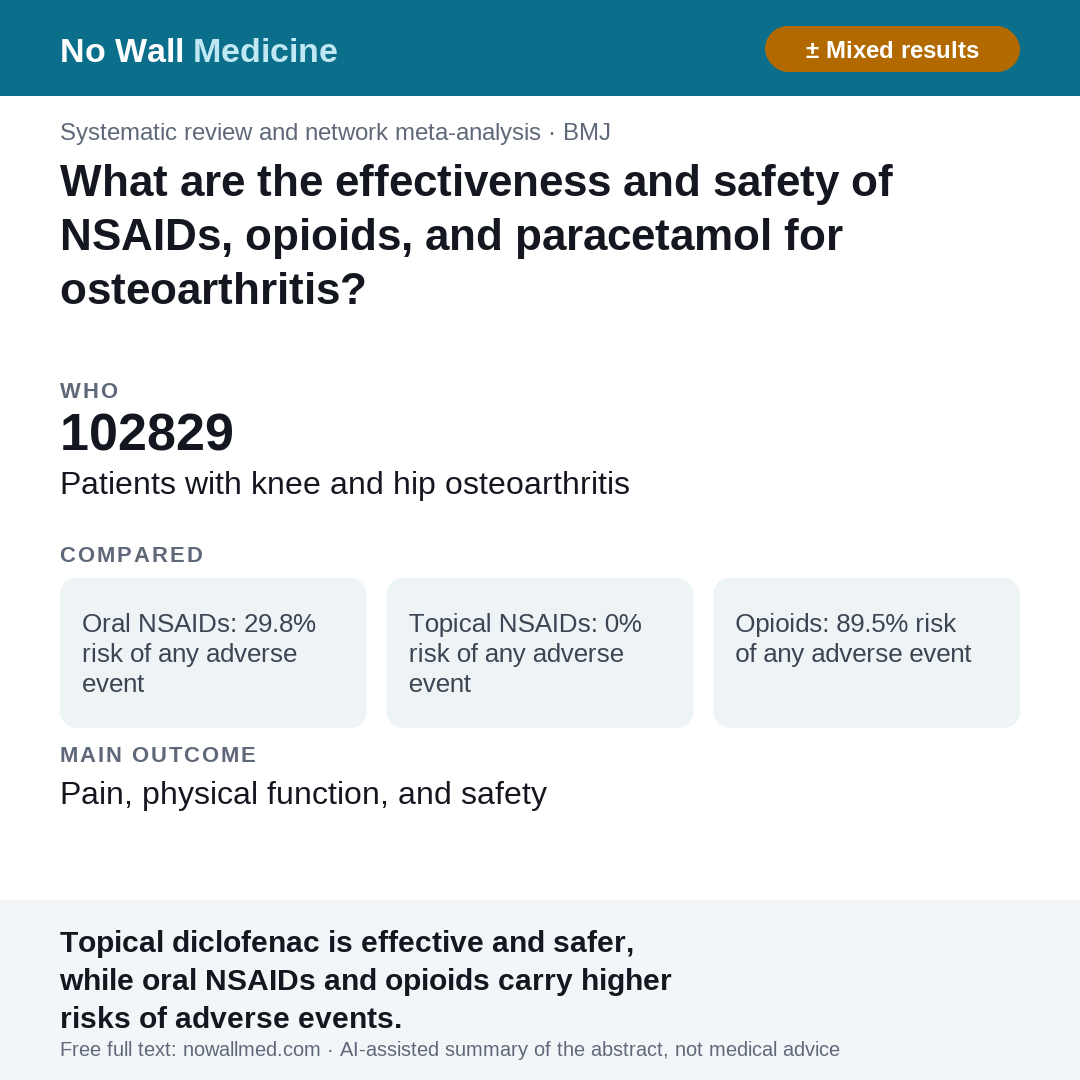
Effectiveness and safety of non-steroidal anti-inflammatory drugs and opioid treatment for knee and hip osteoarthritis: network meta-analysis
Systematic review and network meta-analysisMixed results
What are the effectiveness and safety of NSAIDs, opioids, and paracetamol for osteoarthritis?
Who
102829
Patients with knee and hip osteoarthritis
Compared
Oral NSAIDs: 29.8% risk of any adverse event
Topical NSAIDs: 0% risk of any adverse event
Opioids: 89.5% risk of any adverse event
Main outcome
Pain, physical function, and safety
Bottom line: Topical diclofenac is effective and safer, while oral NSAIDs and opioids carry higher risks of adverse events.
Limitation: Oral NSAIDs may not be appropriate for patients with comorbidities or long term use.
BMJ · 2021-10-12Download image
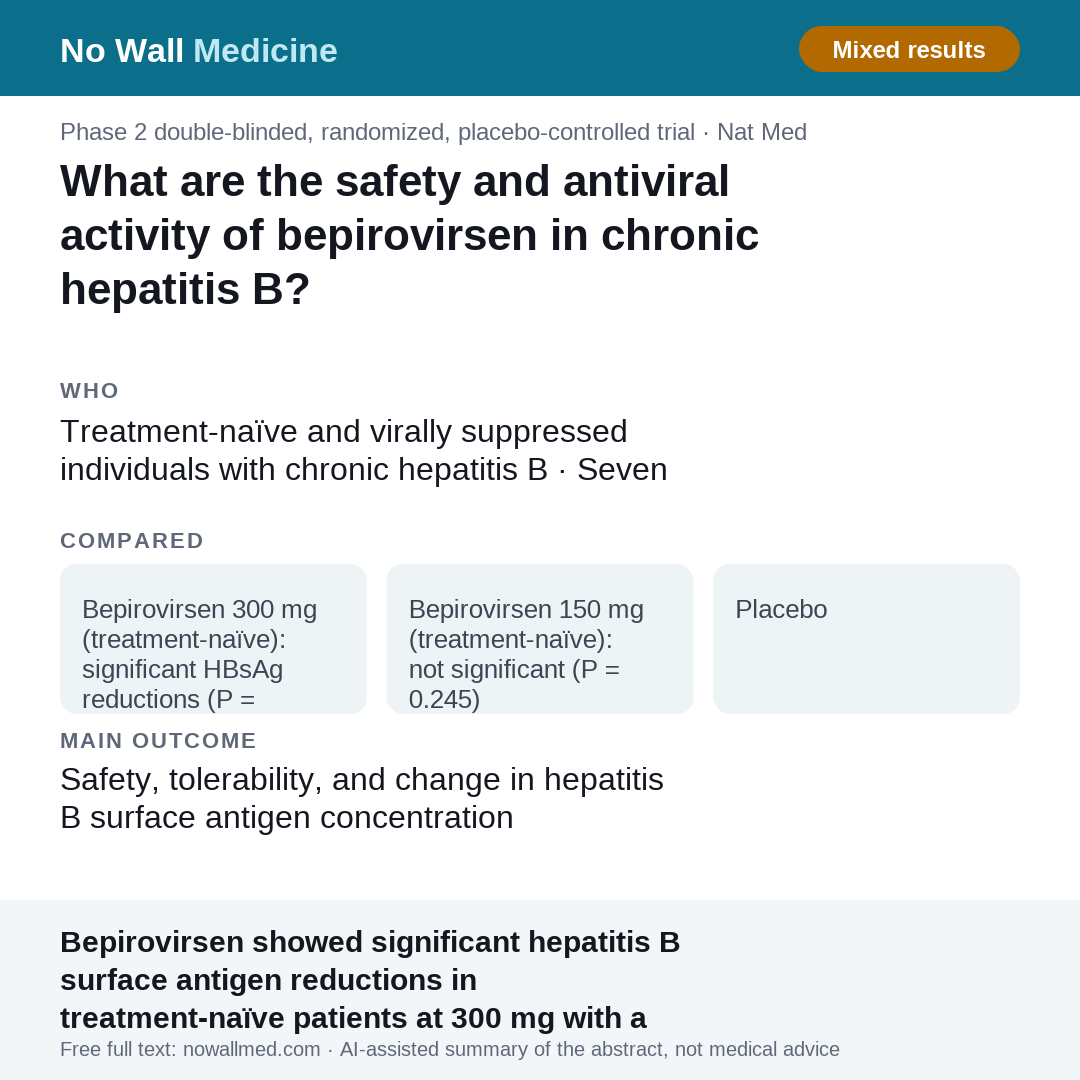
Safety, tolerability and antiviral activity of the antisense oligonucleotide bepirovirsen in patients with chronic hepatitis B: a phase 2 randomized controlled trial
Phase 2 double-blinded, randomized, placebo-controlled trialMixed results
What are the safety and antiviral activity of bepirovirsen in chronic hepatitis B?
Who
Treatment-naïve and virally suppressed individuals with chronic hepatitis B · Seven centers across Hong Kong and the Republic of Korea
Compared
Bepirovirsen 300 mg (treatment-naïve): significant HBsAg reductions (P = 0.001)
Bepirovirsen 150 mg (treatment-naïve): not significant (P = 0.245)
Placebo
Main outcome
Safety, tolerability, and change in hepatitis B surface antigen concentration
Bottom line: Bepirovirsen showed significant hepatitis B surface antigen reductions in treatment-naïve patients at 300 mg with a favorable safety profile.
Nat Med · 2021-10-12Download image
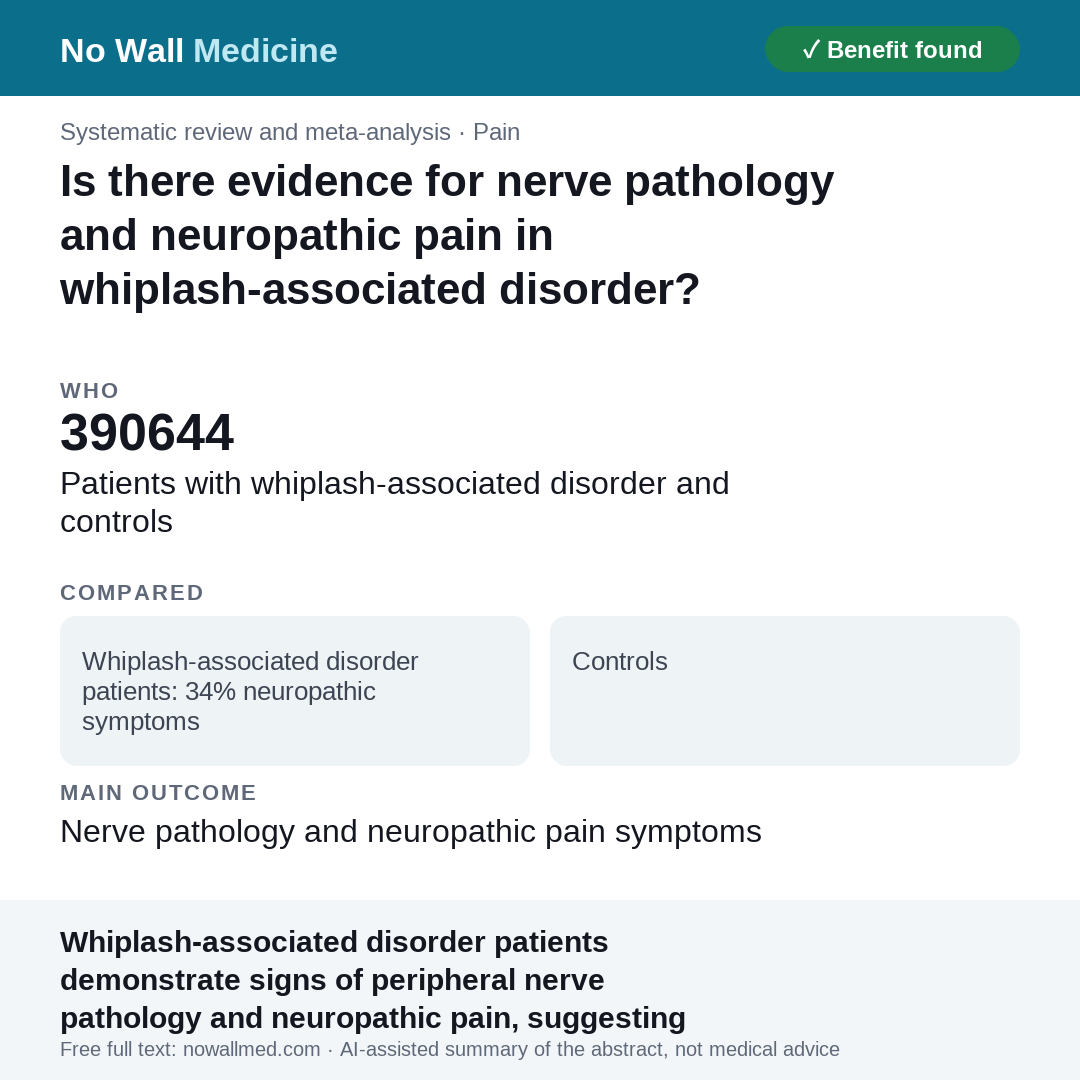
Nerve pathology and neuropathic pain after whiplash injury: a systematic review and meta-analysis
Systematic review and meta-analysisBenefit found
Is there evidence for nerve pathology and neuropathic pain in whiplash-associated disorder?
Who
390644
Patients with whiplash-associated disorder and controls
Compared
Whiplash-associated disorder patients: 34% neuropathic symptoms
Controls
Main outcome
Nerve pathology and neuropathic pain symptoms
Result: mechanical SMD 0.65 [0.30; 1.00], current SMD 0.82 [0.25; 1.39], cold SMD -0.43 [-0.73; -0.13], warm SMD 0.84 [0.25; 1.42]
Bottom line: Whiplash-associated disorder patients demonstrate signs of peripheral nerve pathology and neuropathic pain, suggesting traditional classifications may need reconsideration.
Limitation: There was heterogeneity among some studies
Pain · 2021-10-12Download image
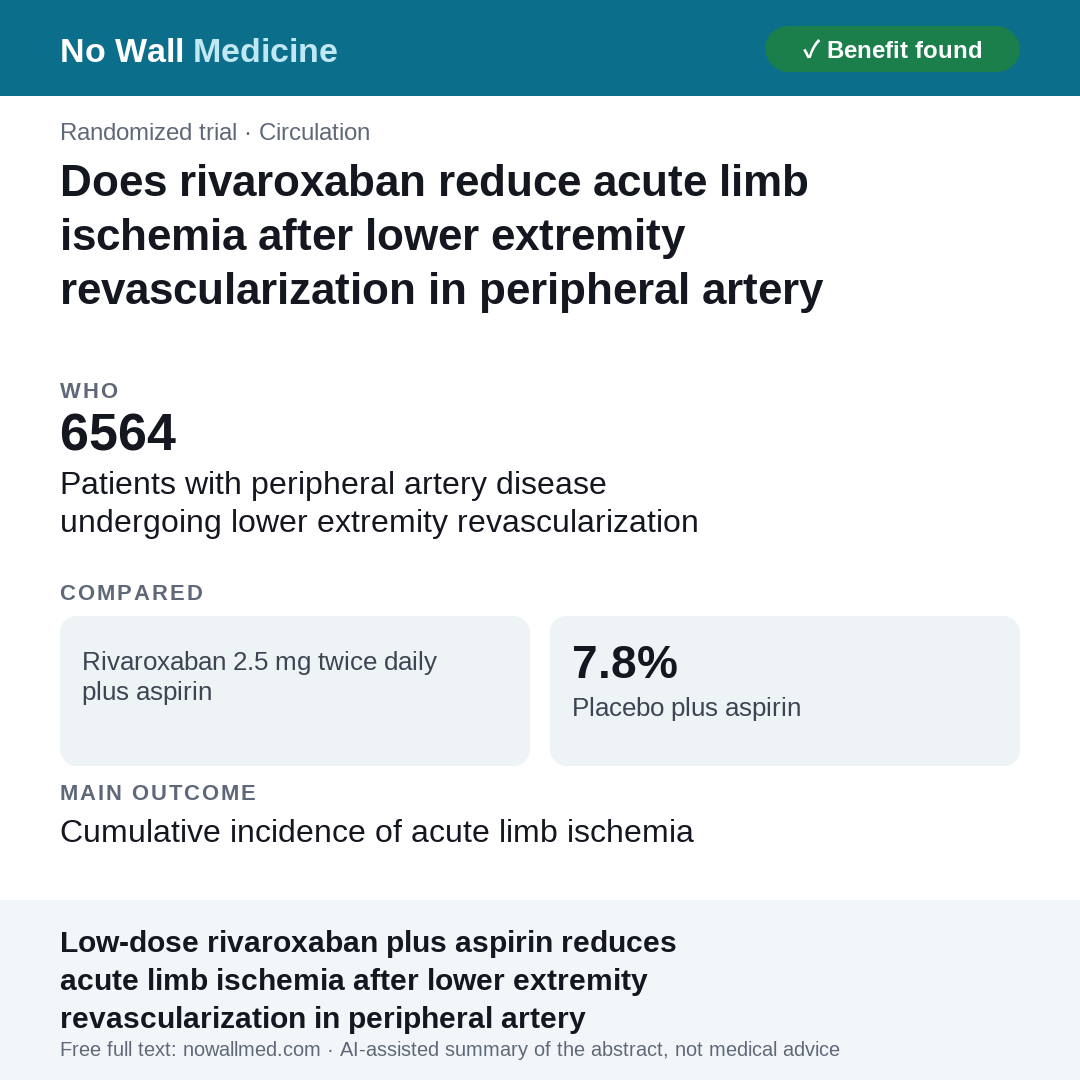
Reduction in Acute Limb Ischemia With Rivaroxaban Versus Placebo in Peripheral Artery Disease After Lower Extremity Revascularization: Insights From VOYAGER PAD
Randomized trialBenefit found
Does rivaroxaban reduce acute limb ischemia after lower extremity revascularization in peripheral artery disease?
Who
6564
Patients with peripheral artery disease undergoing lower extremity revascularization
Compared
Rivaroxaban 2.5 mg twice daily plus aspirin
7.8%Placebo plus aspirin
Main outcome
Cumulative incidence of acute limb ischemia
Result: hazard ratio 0.45 (95% CI 0.24 to 0.85)
Bottom line: Low-dose rivaroxaban plus aspirin reduces acute limb ischemia after lower extremity revascularization in peripheral artery disease patients.
Circulation · 2021-10-12Download image
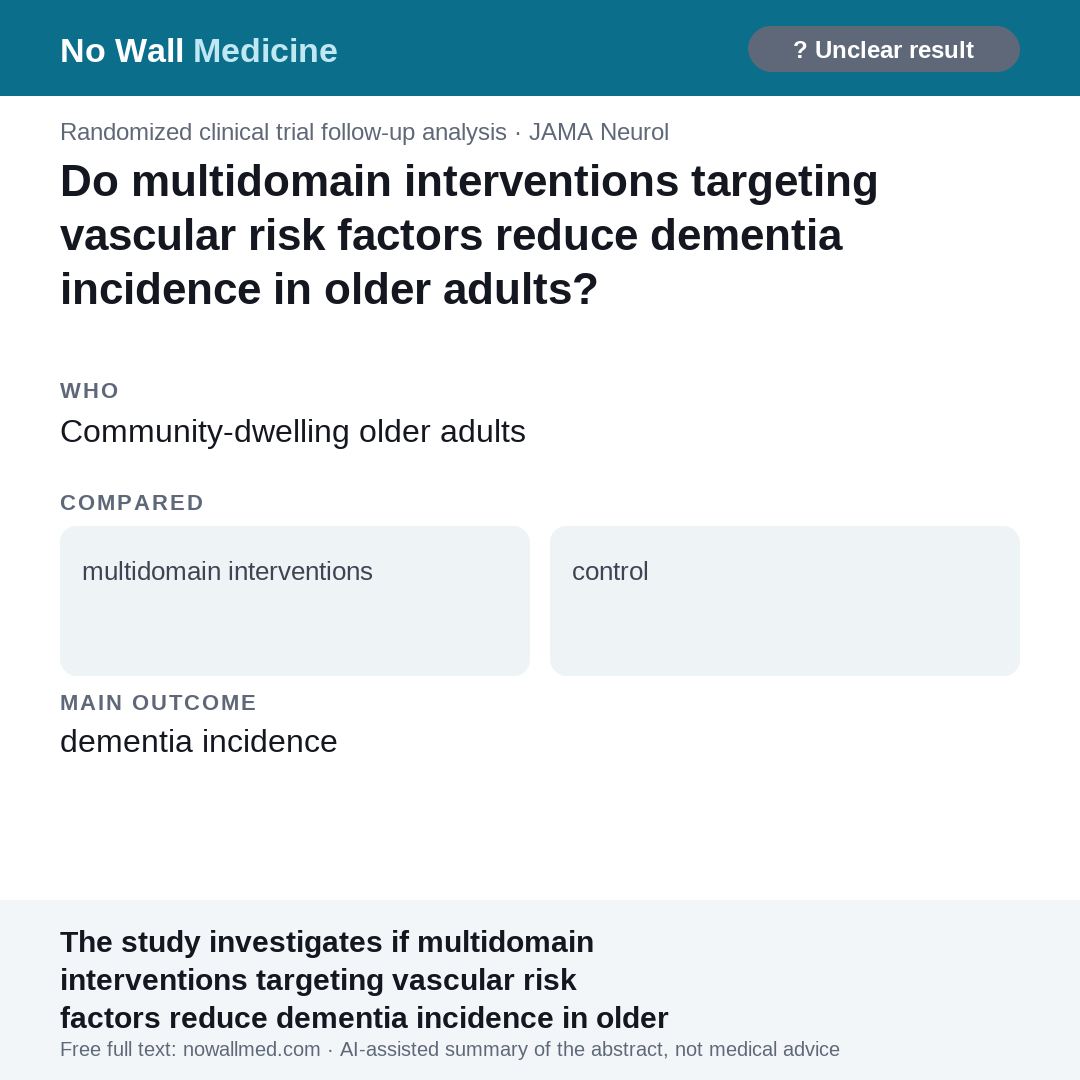
Targeting Vascular Risk Factors to Reduce Dementia Incidence in Old Age: Extended Follow-up of the Prevention of Dementia by Intensive Vascular Care (preDIVA) Randomized Clinical Trial
Randomized clinical trial follow-up analysisUnclear result
Do multidomain interventions targeting vascular risk factors reduce dementia incidence in older adults?
Who
Community-dwelling older adults
Compared
multidomain interventions
control
Main outcome
dementia incidence
Bottom line: The study investigates if multidomain interventions targeting vascular risk factors reduce dementia incidence in older adults.
JAMA Neurol · 2021-10-12Download image
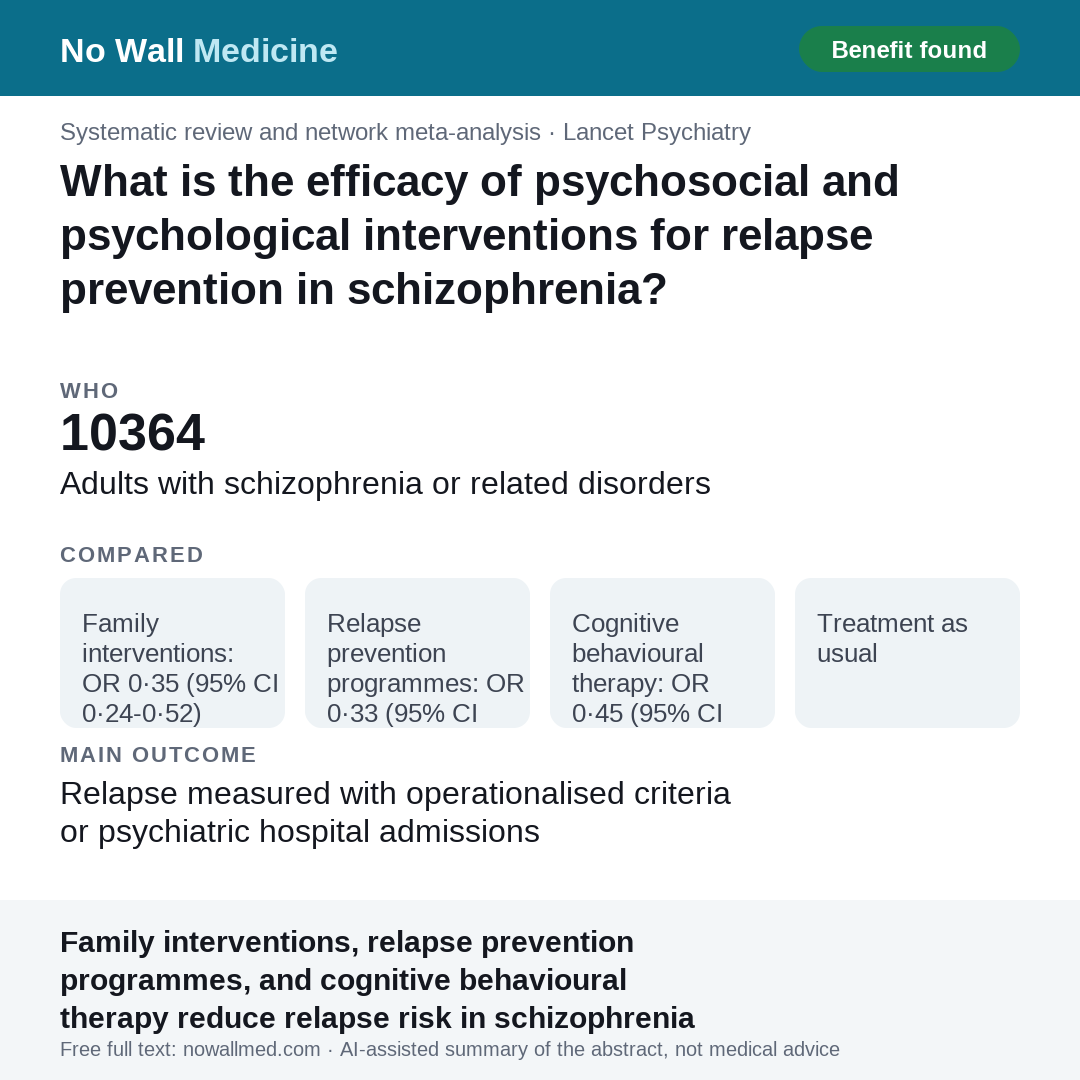
Psychosocial and psychological interventions for relapse prevention in schizophrenia: a systematic review and network meta-analysis
Systematic review and network meta-analysisBenefit found
What is the efficacy of psychosocial and psychological interventions for relapse prevention in schizophrenia?
Who
10364
Adults with schizophrenia or related disorders
Compared
Family interventions: OR 0·35 (95% CI 0·24-0·52)
Relapse prevention programmes: OR 0·33 (95% CI 0·14-0·79)
Cognitive behavioural therapy: OR 0·45 (95% CI 0·27-0·75)
Treatment as usual
Main outcome
Relapse measured with operationalised criteria or psychiatric hospital admissions
Bottom line: Family interventions, relapse prevention programmes, and cognitive behavioural therapy reduce relapse risk in schizophrenia more than treatment as usual.
Limitation: The confidence in the estimates ranged from moderate to very low.
Funded by: German Ministry for Education and Research
Lancet Psychiatry · 2021-10-12Download image
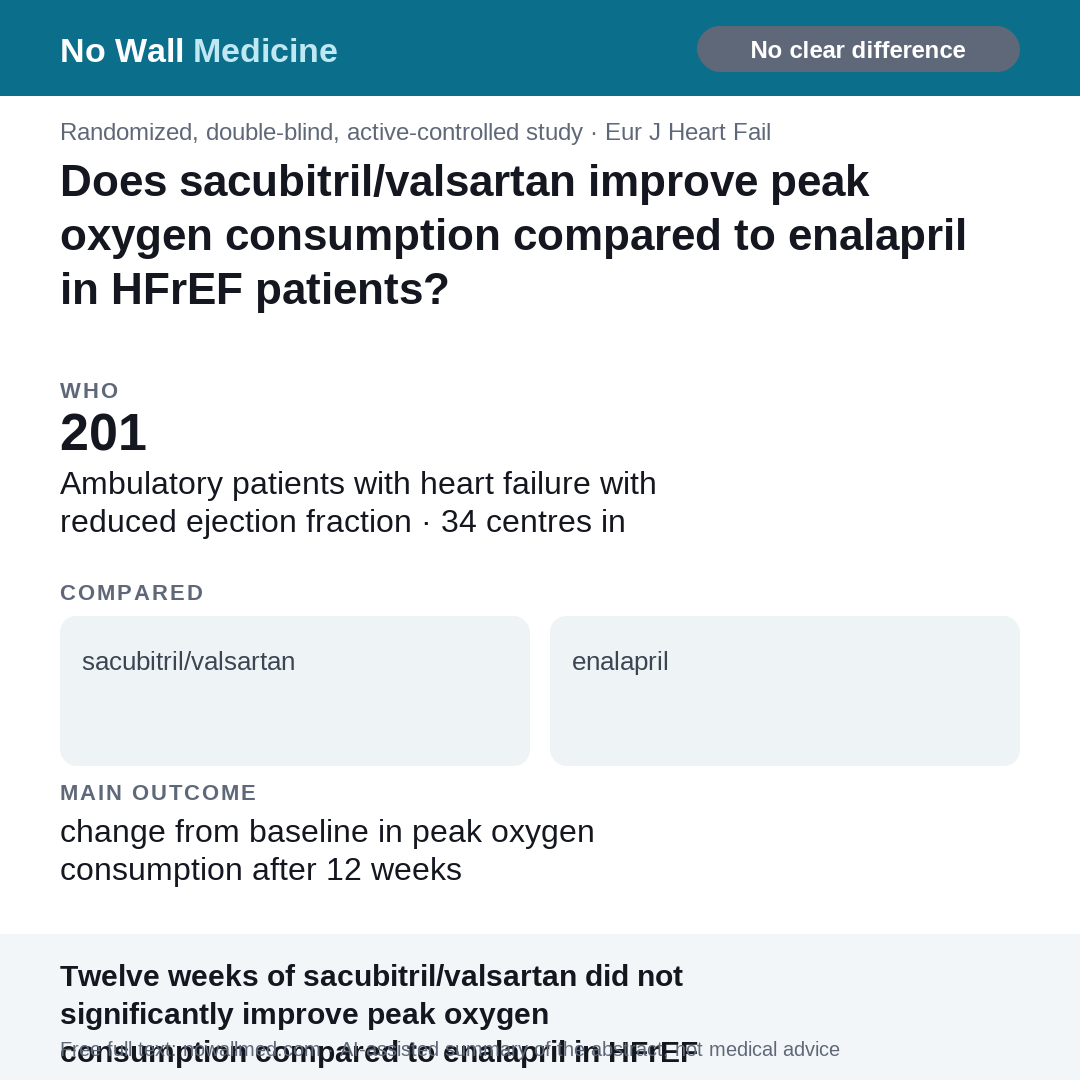
A randomized clinical trial on the short-term effects of 12-week sacubitril/valsartan vs. enalapril on peak oxygen consumption in patients with heart failure with reduced ejection fraction: results from the ACTIVITY-HF study
Randomized, double-blind, active-controlled studyNo clear difference
Does sacubitril/valsartan improve peak oxygen consumption compared to enalapril in HFrEF patients?
Who
201
Ambulatory patients with heart failure with reduced ejection fraction · 34 centres in Germany
Compared
sacubitril/valsartan
enalapril
Main outcome
change from baseline in peak oxygen consumption after 12 weeks
Result: least squares mean difference: 0.32 mL/min/kg (95% CI -0.21, 0.85)
Bottom line: Twelve weeks of sacubitril/valsartan did not significantly improve peak oxygen consumption compared to enalapril in HFrEF patients.
Eur J Heart Fail · 2021-10-12Download image
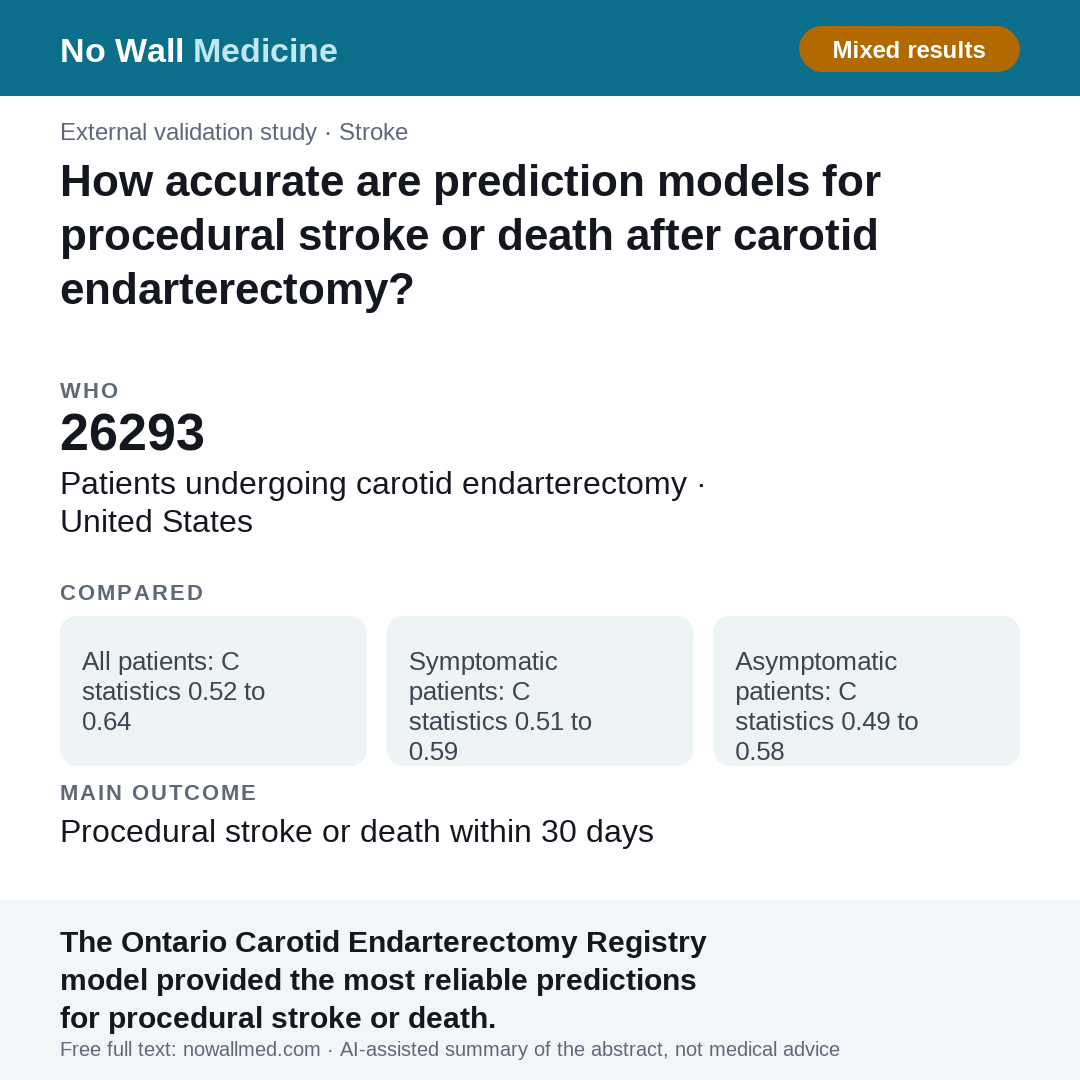
External Validation of Risk Prediction Models to Improve Selection of Patients for Carotid Endarterectomy
External validation studyMixed results
How accurate are prediction models for procedural stroke or death after carotid endarterectomy?
Who
26293
Patients undergoing carotid endarterectomy · United States
Compared
All patients: C statistics 0.52 to 0.64
Symptomatic patients: C statistics 0.51 to 0.59
Asymptomatic patients: C statistics 0.49 to 0.58
Main outcome
Procedural stroke or death within 30 days
Result: Ontario Carotid Endarterectomy Registry model C statistic 0.64
Bottom line: The Ontario Carotid Endarterectomy Registry model provided the most reliable predictions for procedural stroke or death.
Stroke · 2021-10-12Download image
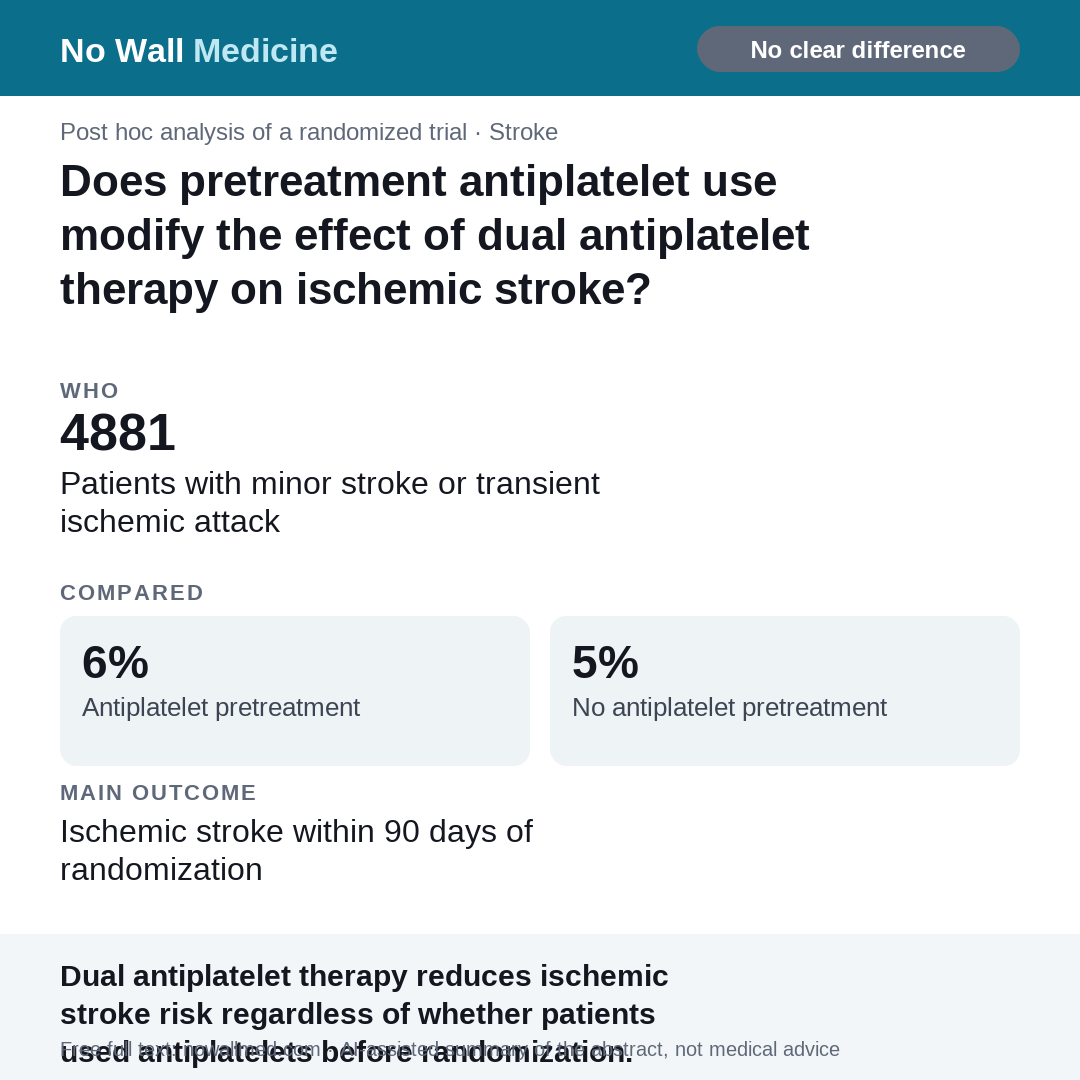
Antiplatelet Use and Ischemic Stroke Risk in Minor Stroke or Transient Ischemic Attack: A Post Hoc Analysis of the POINT Trial
Post hoc analysis of a randomized trialNo clear difference
Does pretreatment antiplatelet use modify the effect of dual antiplatelet therapy on ischemic stroke?
Who
4881
Patients with minor stroke or transient ischemic attack
Compared
6%Antiplatelet pretreatment
5%No antiplatelet pretreatment
Main outcome
Ischemic stroke within 90 days of randomization
Result: adjusted hazard ratio 1.05 (95% CI 0.81-137)
Bottom line: Dual antiplatelet therapy reduces ischemic stroke risk regardless of whether patients used antiplatelets before randomization.
Stroke · 2021-10-12Download image
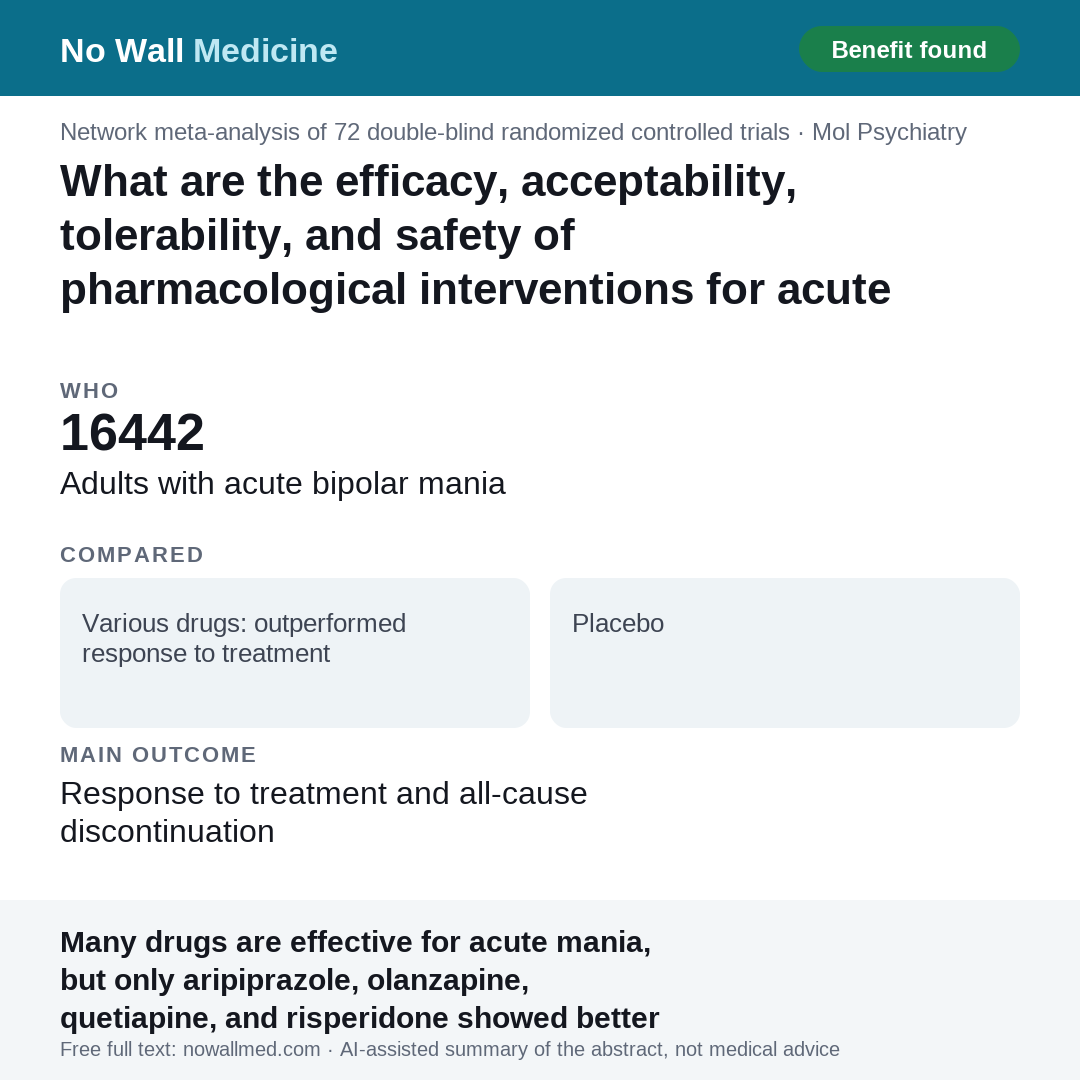
Pharmacological treatment for bipolar mania: a systematic review and network meta-analysis of double-blind randomized controlled trials
Network meta-analysis of 72 double-blind randomized controlled trialsBenefit found
What are the efficacy, acceptability, tolerability, and safety of pharmacological interventions for acute bipolar mania?
Who
16442
Adults with acute bipolar mania
Compared
Various drugs: outperformed response to treatment
Placebo
Main outcome
Response to treatment and all-cause discontinuation
Bottom line: Many drugs are effective for acute mania, but only aripiprazole, olanzapine, quetiapine, and risperidone showed better acceptability than placebo.
Mol Psychiatry · 2021-10-12Download image
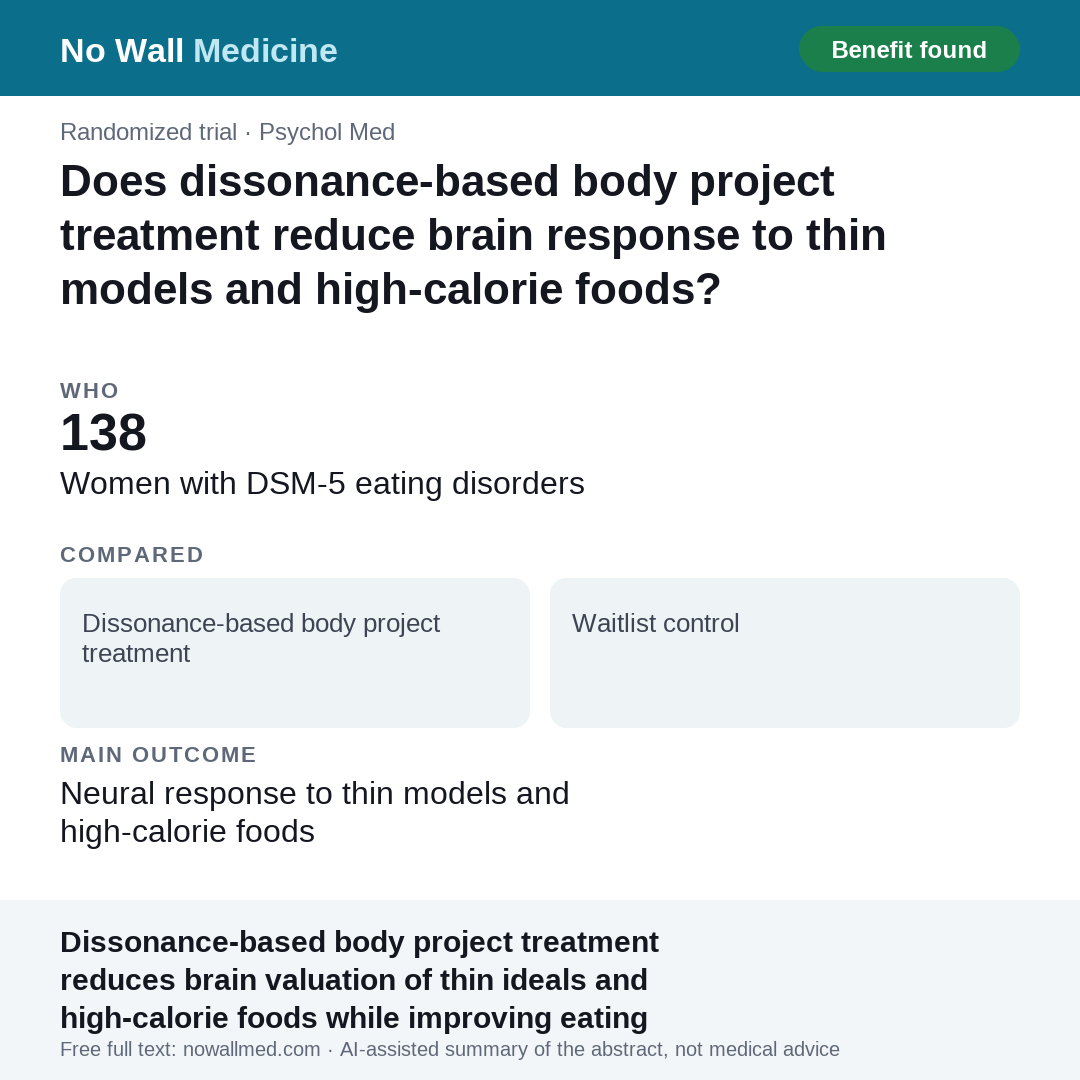
Evidence that a novel transdiagnostic eating disorder treatment reduces reward region response to the thin beauty ideal and high-calorie binge foods
Randomized trialBenefit found
Does dissonance-based body project treatment reduce brain response to thin models and high-calorie foods?
Who
138
Women with DSM-5 eating disorders
Compared
Dissonance-based body project treatment
Waitlist control
Main outcome
Neural response to thin models and high-calorie foods
Bottom line: Dissonance-based body project treatment reduces brain valuation of thin ideals and high-calorie foods while improving eating pathology.
Psychol Med · 2021-10-12Download image
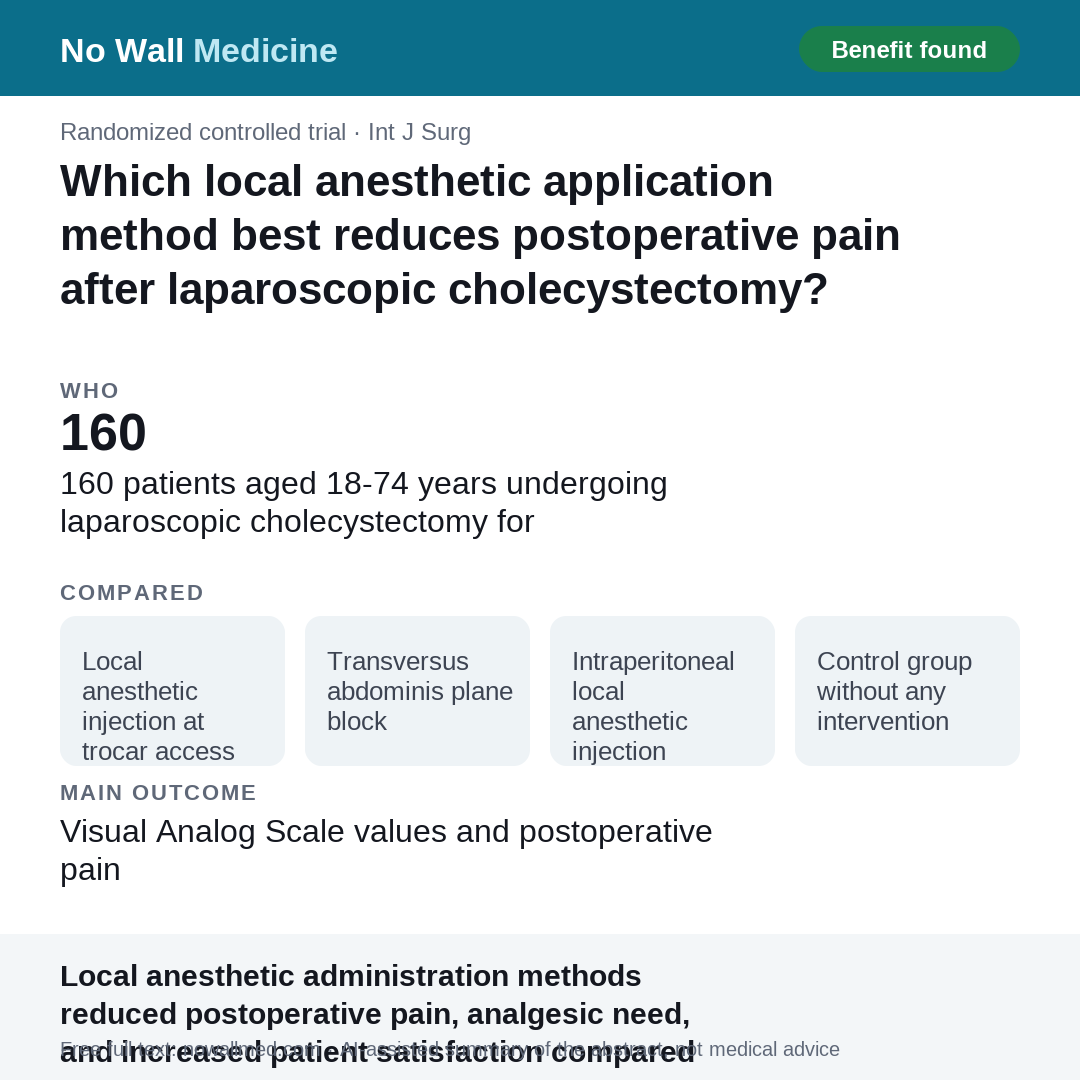
Effectiveness of local anesthetic application methods in postoperative pain control in laparoscopic cholecystectomies; a randomised controlled trial
Randomized controlled trialBenefit found
Which local anesthetic application method best reduces postoperative pain after laparoscopic cholecystectomy?
Who
160
160 patients aged 18-74 years undergoing laparoscopic cholecystectomy for cholelithiasis
Compared
Local anesthetic injection at trocar access points
Transversus abdominis plane block
Intraperitoneal local anesthetic injection
Control group without any intervention
Main outcome
Visual Analog Scale values and postoperative pain
Bottom line: Local anesthetic administration methods reduced postoperative pain, analgesic need, and increased patient satisfaction compared to no intervention.
Int J Surg · 2021-10-12Download image
The influence of the urban food environment on diet, nutrition and health outcomes in low-income and middle-income countries: a systematic review
Systematic reviewMixed results
How does the urban food environment influence diet, nutrition and health in low-income and middle-income countries?
Who
Urban populations in low-income and middle-income countries · Urban low-income and middle-income countries
Compared
Neighborhood food availability: associated with dietary behaviour (14 studies)
Neighborhood food accessibility: associated with diet (10 of 11 studies)
Main outcome
Diet, nutrition and health outcomes
Bottom line: Neighborhood food availability and accessibility are associated with diet, but evidence for health outcomes is mixed or contradictory.
BMJ Glob Health · 2021-10-12Download image

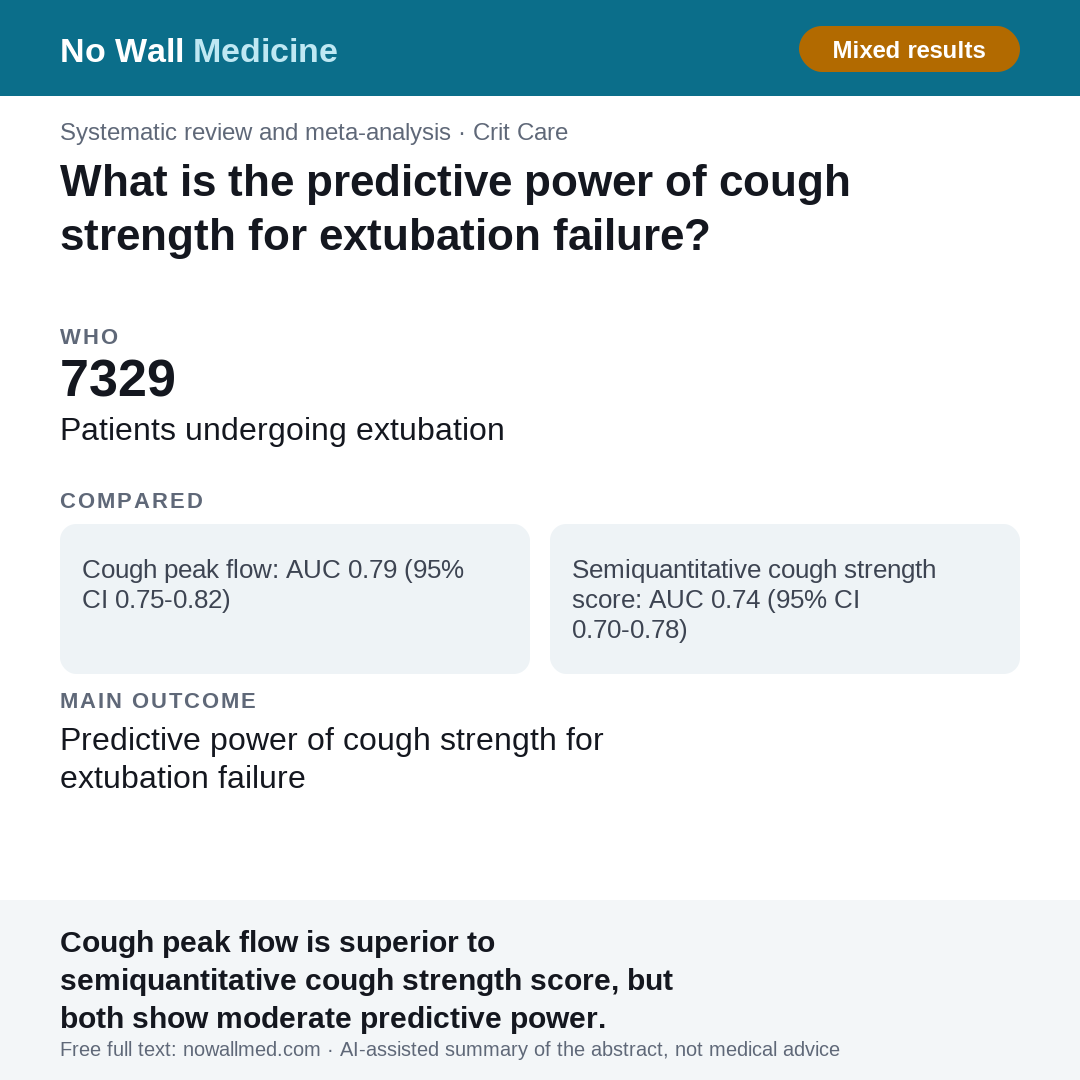
Predictive power of extubation failure diagnosed by cough strength: a systematic review and meta-analysis
Systematic review and meta-analysisMixed results
What is the predictive power of cough strength for extubation failure?
Who
7329
Patients undergoing extubation
Compared
Cough peak flow: AUC 0.79 (95% CI 0.75-0.82)
Semiquantitative cough strength score: AUC 0.74 (95% CI 0.70-0.78)
Main outcome
Predictive power of cough strength for extubation failure
Bottom line: Cough peak flow is superior to semiquantitative cough strength score, but both show moderate predictive power.
Crit Care · 2021-10-12Download image
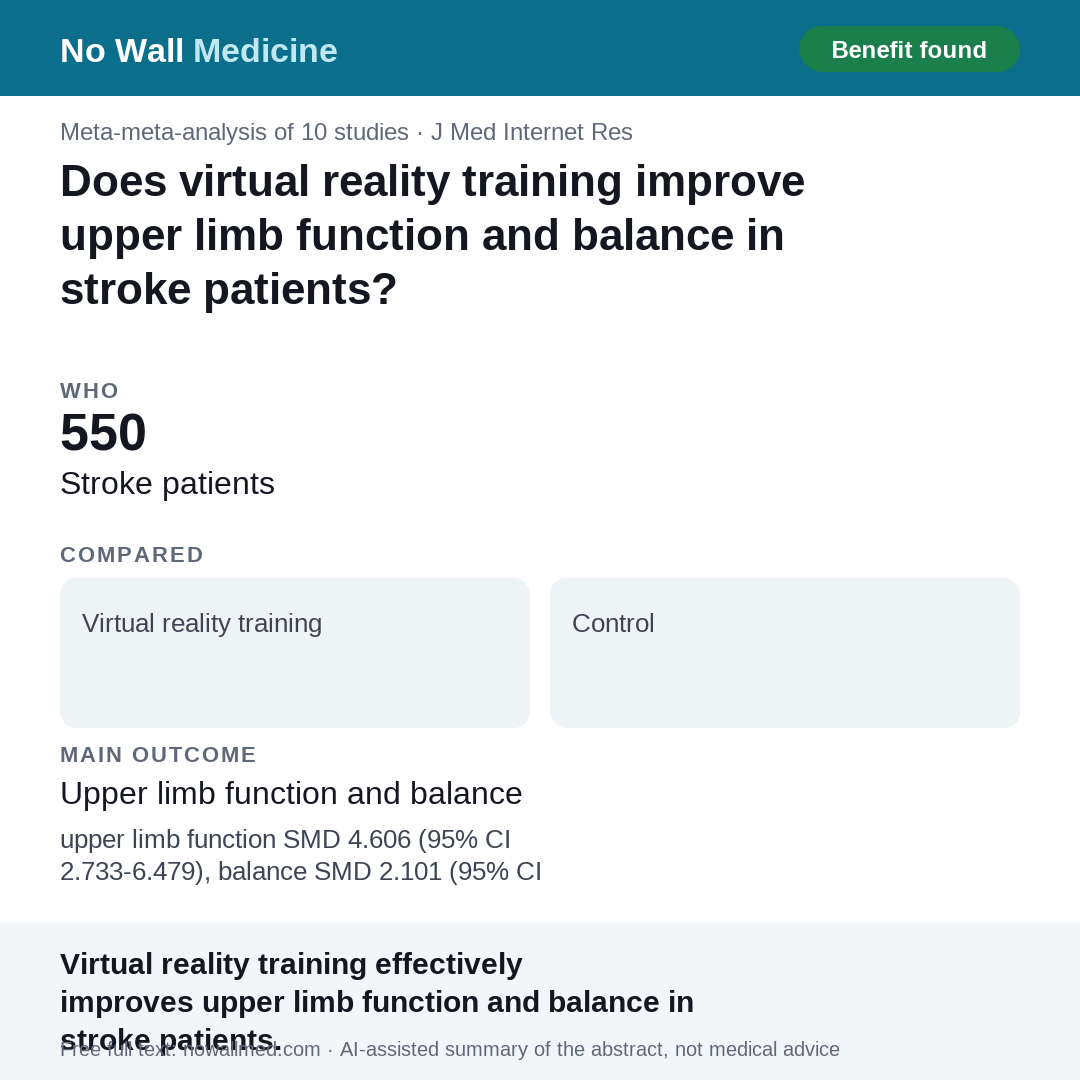
Effects of Virtual Reality Training on Upper Limb Function and Balance in Stroke Patients: Systematic Review and Meta-Meta-Analysis
Meta-meta-analysis of 10 studiesBenefit found
Does virtual reality training improve upper limb function and balance in stroke patients?
Who
550
Stroke patients
Compared
Virtual reality training
Control
Main outcome
Upper limb function and balance
Result: upper limb function SMD 4.606 (95% CI 2.733-6.479), balance SMD 2.101 (95% CI 0.202-4.000)
Bottom line: Virtual reality training effectively improves upper limb function and balance in stroke patients.
Limitation: The results showed considerable heterogeneity and may need to be treated with caution.
J Med Internet Res · 2021-10-12Download image
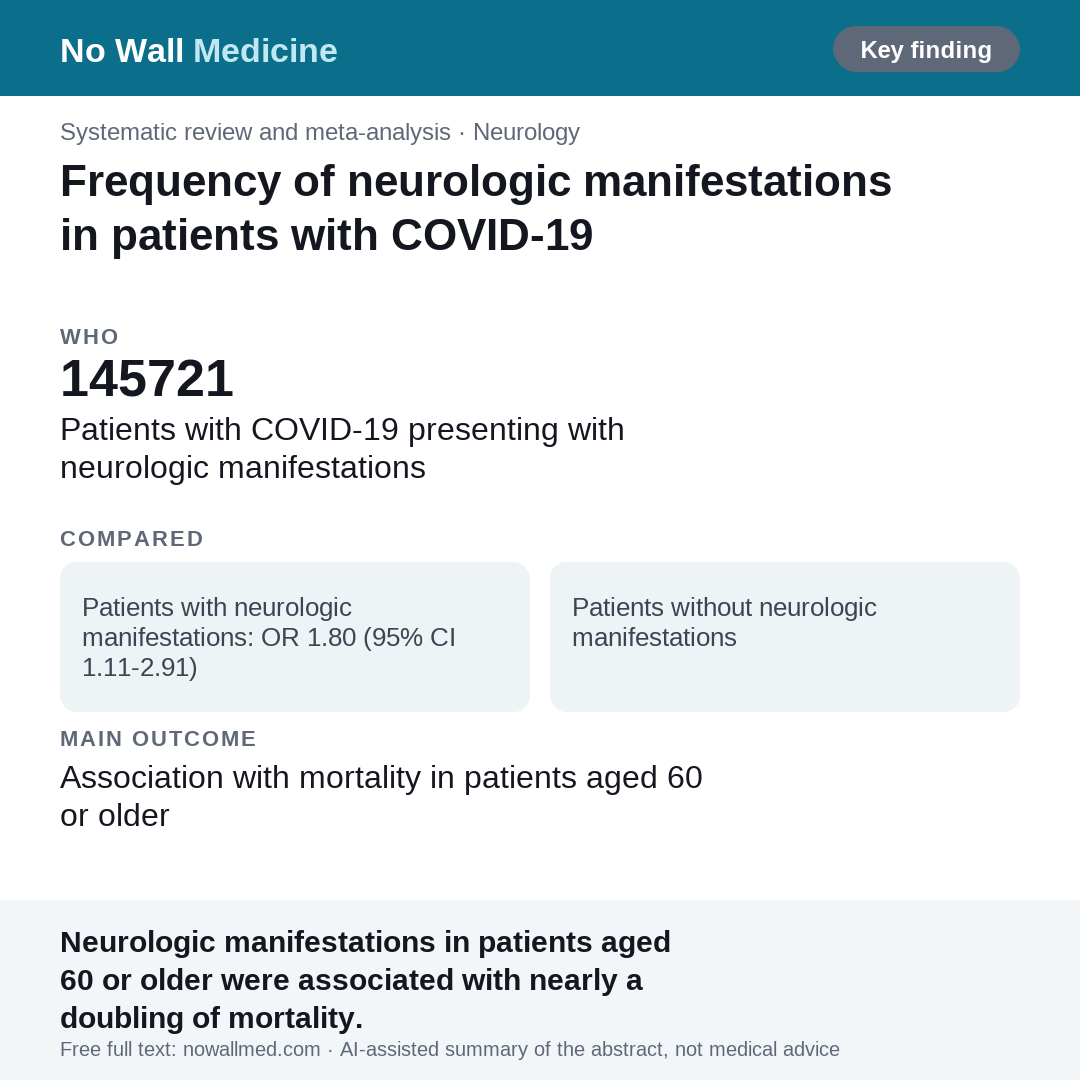
Frequency of Neurologic Manifestations in COVID-19: A Systematic Review and Meta-analysis
Systematic review and meta-analysisKey finding
Frequency of neurologic manifestations in patients with COVID-19
Who
145721
Patients with COVID-19 presenting with neurologic manifestations
Compared
Patients with neurologic manifestations: OR 1.80 (95% CI 1.11-2.91)
Patients without neurologic manifestations
Main outcome
Association with mortality in patients aged 60 or older
Result: OR 1.80 (95% CI 1.11-2.91)
Bottom line: Neurologic manifestations in patients aged 60 or older were associated with nearly a doubling of mortality.
Limitation: Limitations of observational studies and associated bias
Neurology · 2021-10-11Download image
Phenotypic and Genotypic Associations Between Migraine and Lipoprotein Subfractions
Phenotypic and genetic association studyBenefit found
What are the phenotypic and genetic relationships between migraine and lipoprotein subfractions?
Who
Women of European ancestry · Women's Genome Health Study and International Headache Genetics Consortium
Compared
Migraine
Triglyceride-rich lipoproteins
Main outcome
Phenotypic and genetic associations between migraine and lipoprotein subfractions
Result: odds ratio 1.27 (95% confidence interval 1.12-1.44)
Bottom line: Migraine is significantly associated with certain lipoprotein subfractions, specifically triglyceride-rich lipoproteins, through shared genetic components.
Neurology · 2021-10-11Download image

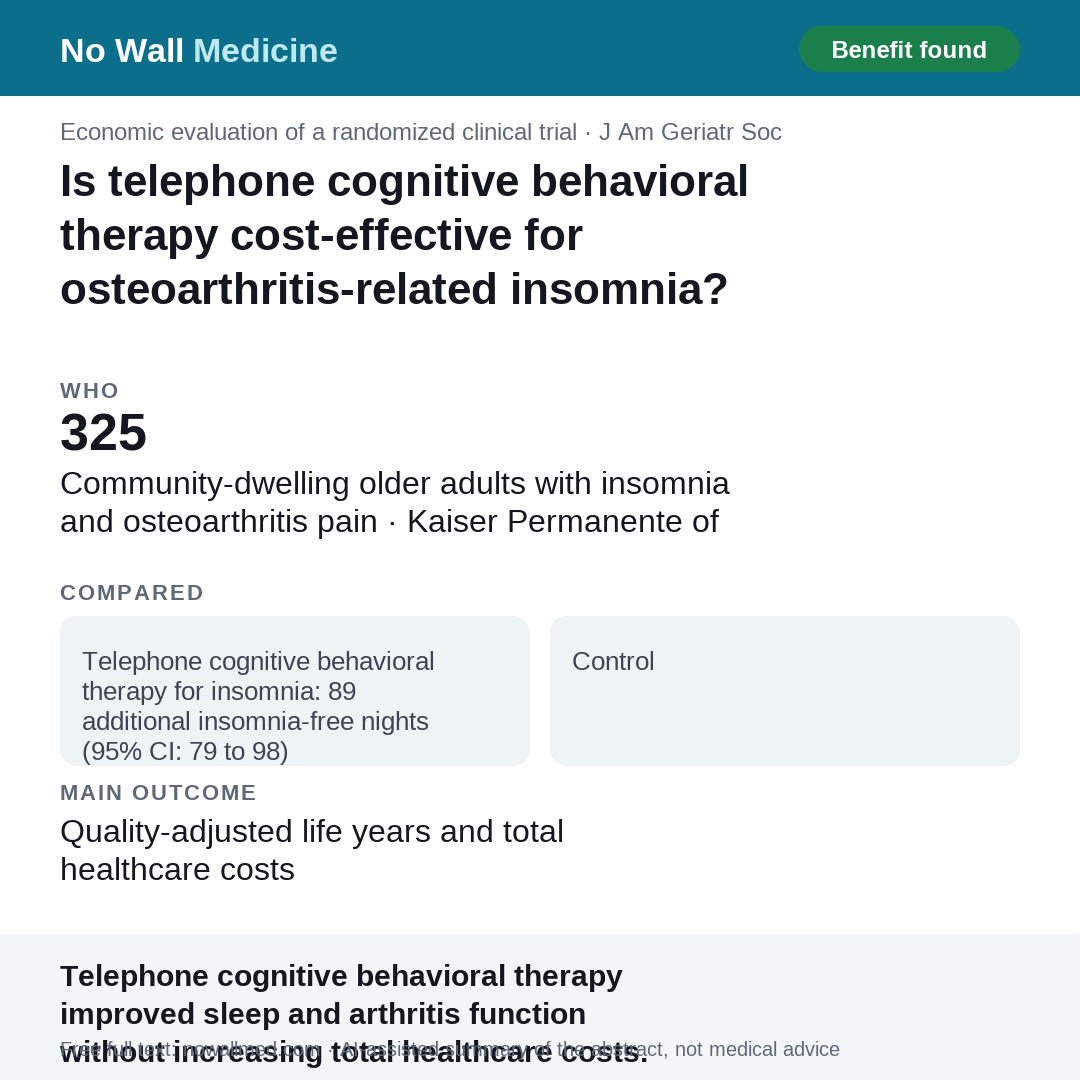
Cost-effectiveness of telephone cognitive behavioral therapy for osteoarthritis-related insomnia
Economic evaluation of a randomized clinical trialBenefit found
Is telephone cognitive behavioral therapy cost-effective for osteoarthritis-related insomnia?
Who
325
Community-dwelling older adults with insomnia and osteoarthritis pain · Kaiser Permanente of Washington State
Compared
Telephone cognitive behavioral therapy for insomnia: 89 additional insomnia-free nights (95% CI: 79 to 98)
Control
Main outcome
Quality-adjusted life years and total healthcare costs
Result: net monetary benefit of $369 (95% CI: -$1737 to $2270)
Bottom line: Telephone cognitive behavioral therapy improved sleep and arthritis function without increasing total healthcare costs.
Limitation: General quality of life measures may not effectively assess sleep and arthritis interventions.
J Am Geriatr Soc · 2021-10-11Download image
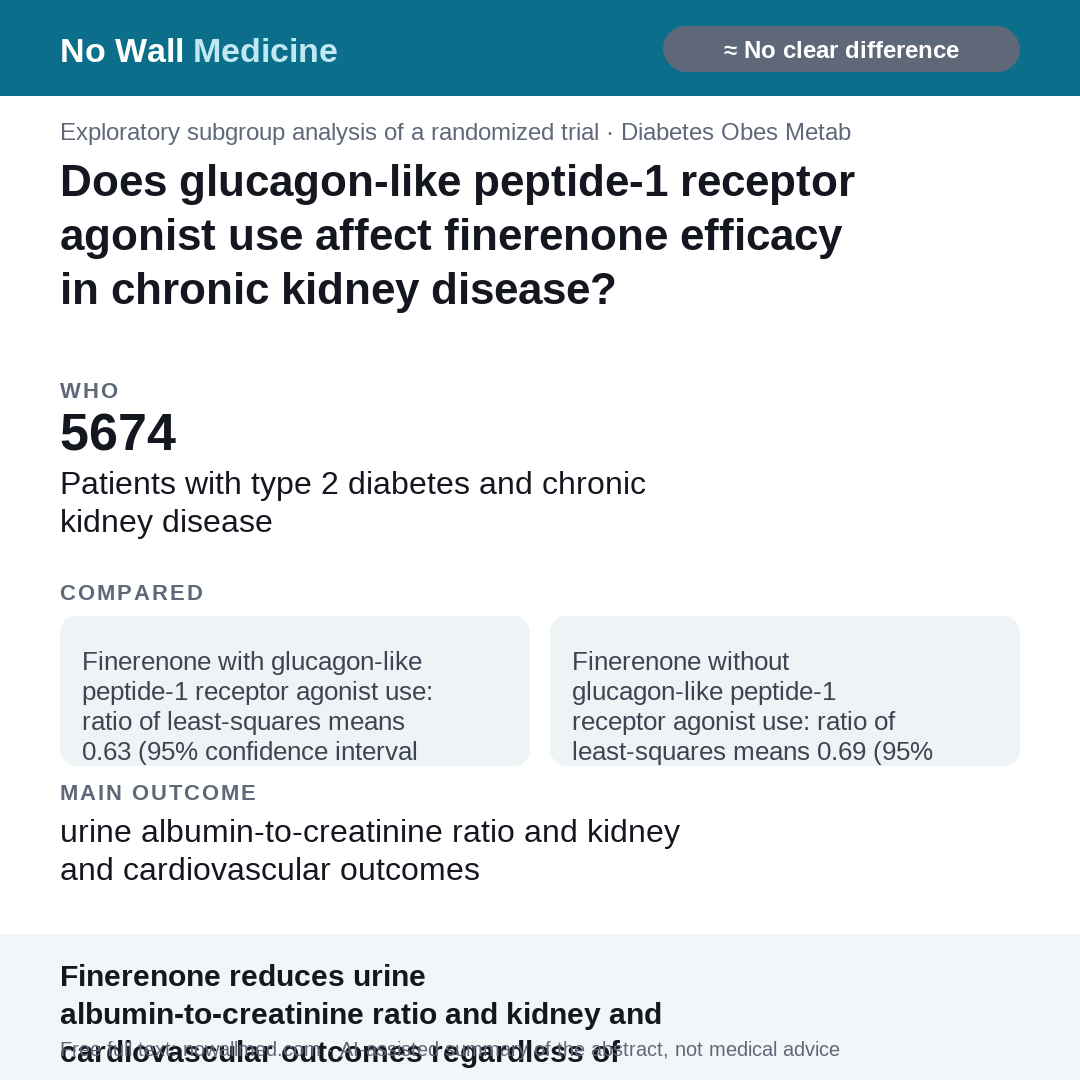
Efficacy and safety of finerenone in patients with chronic kidney disease and type 2 diabetes by GLP-1RA treatment: A subgroup analysis from the FIDELIO-DKD trial
Exploratory subgroup analysis of a randomized trialNo clear difference
Does glucagon-like peptide-1 receptor agonist use affect finerenone efficacy in chronic kidney disease?
Who
5674
Patients with type 2 diabetes and chronic kidney disease
Compared
Finerenone with glucagon-like peptide-1 receptor agonist use: ratio of least-squares means 0.63 (95% confidence interval 0.56, 0.70)
Finerenone without glucagon-like peptide-1 receptor agonist use: ratio of least-squares means 0.69 (95% confidence interval 0.67, 0.72)
Main outcome
urine albumin-to-creatinine ratio and kidney and cardiovascular outcomes
Bottom line: Finerenone reduces urine albumin-to-creatinine ratio and kidney and cardiovascular outcomes regardless of glucagon-like peptide-1 receptor agonist use.
Diabetes Obes Metab · 2021-10-11Download image