Visual abstracts
New randomized trials and meta-analyses from leading journals at a glance: who was studied, what was compared, and what was found. Every paper is free to read in full.
All specialtiesCardiology 4763Oncology 4043Gastroenterology & Hepatology 1903Infectious Disease 3756Neurology 1872Psychiatry & Mental Health 2216Pulmonology 2044Critical Care 1319Endocrinology & Diabetes 2544Pediatrics 2889Surgery 2480Orthopedics & Sports Medicine 917Neurosurgery 525Cardiothoracic & Vascular Surgery 656Plastic & Reconstructive Surgery 574Nephrology 1107Rheumatology 810Hematology 1090Dermatology 611Ophthalmology 532Obstetrics & Gynecology 1645Public & Global Health 1037Radiology & Imaging 619Anesthesiology 958Urology 745ENT (Otolaryngology) 494Emergency Medicine 481Allergy & Immunology 309Geriatrics 972Family Medicine & Primary Care 534Medical Genetics & Genomics 659Pathology & Laboratory Medicine 156Physical Medicine & Rehabilitation 734Palliative Care 421Nutrition 1560Digital Health & AI 2137General Medicine 318
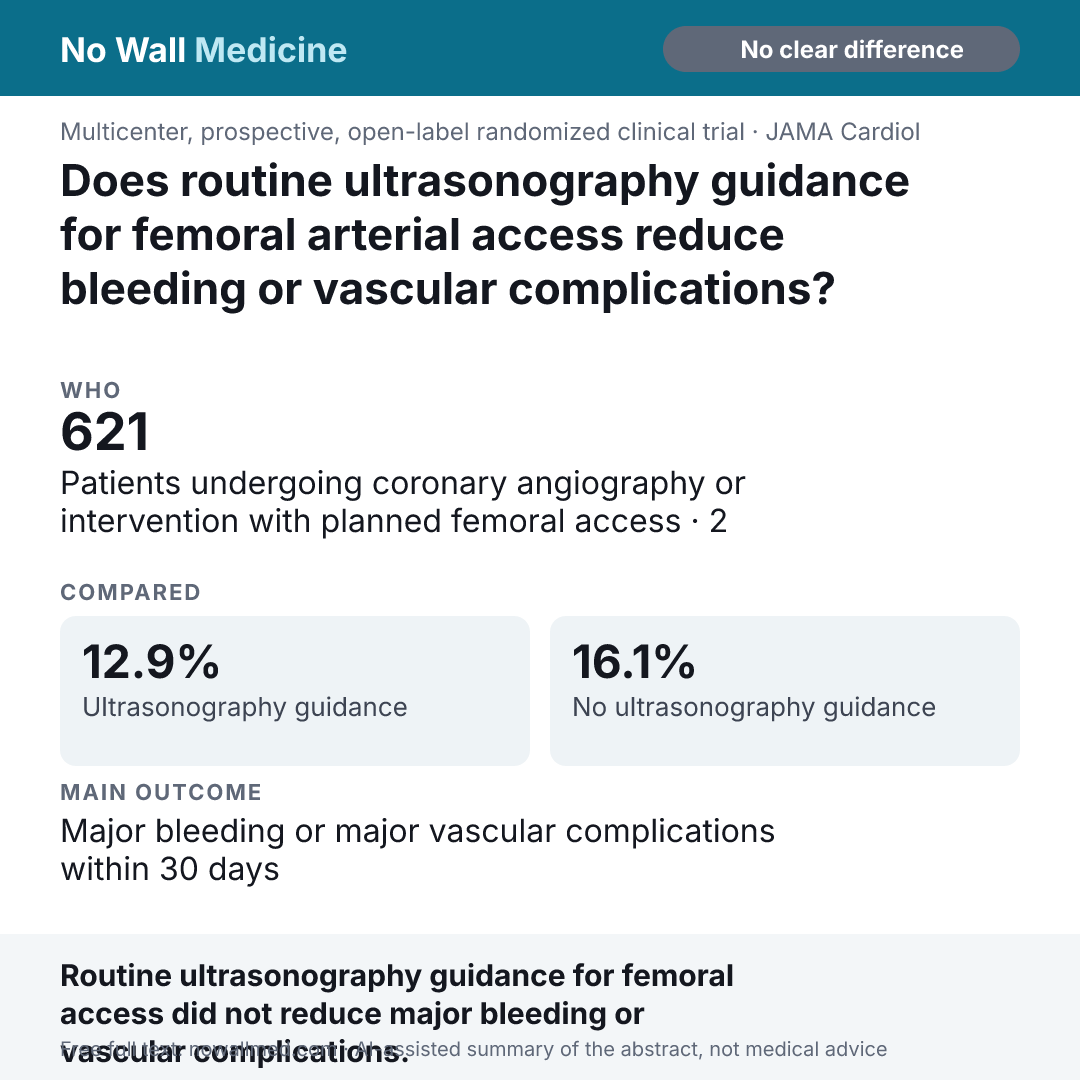
Routine Ultrasonography Guidance for Femoral Vascular Access for Cardiac Procedures: The UNIVERSAL Randomized Clinical Trial
Multicenter, prospective, open-label randomized clinical trialNo clear difference
Does routine ultrasonography guidance for femoral arterial access reduce bleeding or vascular complications?
Who
621
Patients undergoing coronary angiography or intervention with planned femoral access · 2 centers in Canada
Compared
12.9%Ultrasonography guidance
16.1%No ultrasonography guidance
Main outcome
Major bleeding or major vascular complications within 30 days
Result: odds ratio 0.77 (95% CI 0.49-1.20)
Bottom line: Routine ultrasonography guidance for femoral access did not reduce major bleeding or vascular complications.
Limitation: Larger trials may be required to demonstrate additional potential benefits.
JAMA Cardiol · 2022-09-19 · Save PNG
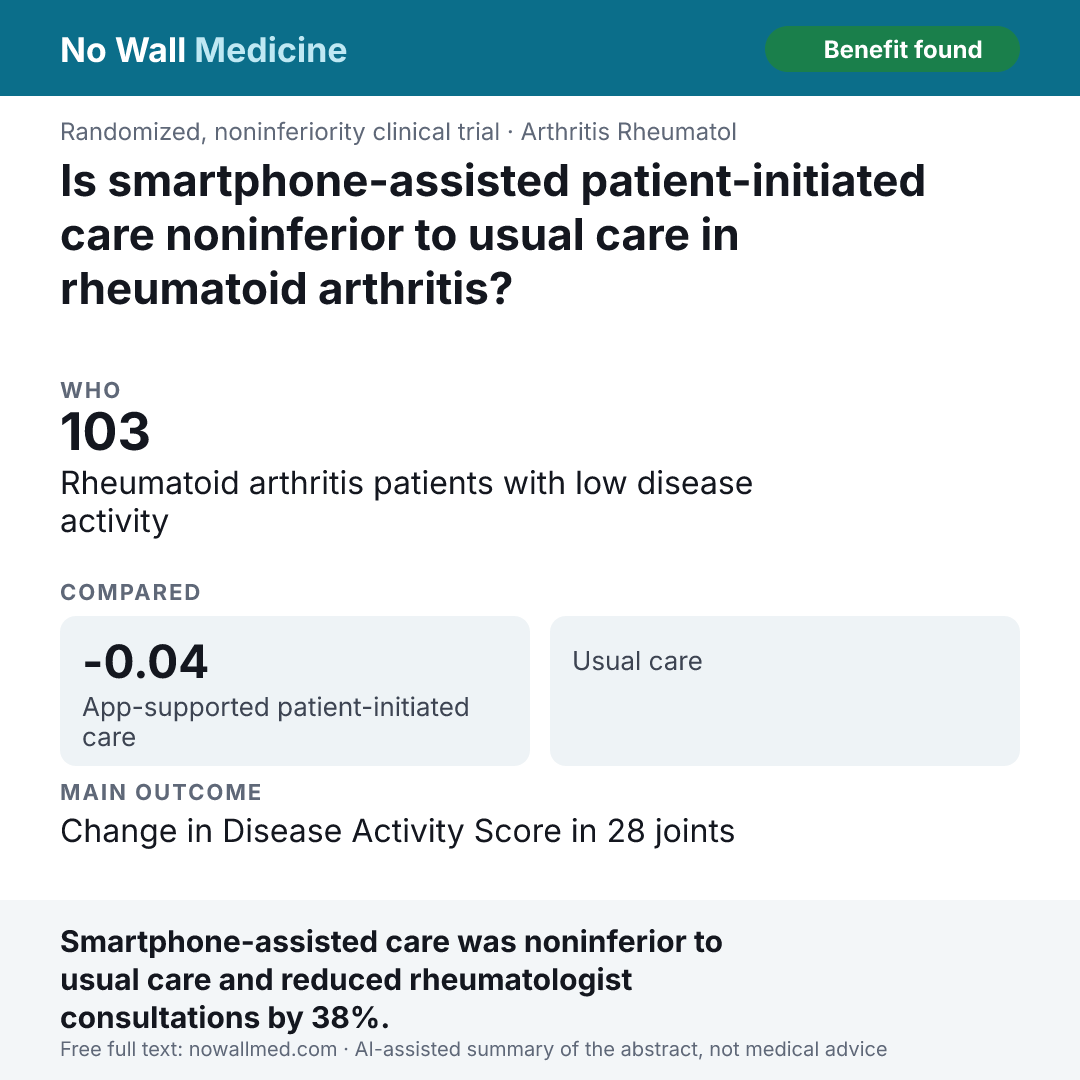
Smartphone-Assisted Patient-Initiated Care Versus Usual Care in Patients With Rheumatoid Arthritis and Low Disease Activity: A Randomized Controlled Trial
Randomized, noninferiority clinical trialBenefit found
Is smartphone-assisted patient-initiated care noninferior to usual care in rheumatoid arthritis?
Who
103
Rheumatoid arthritis patients with low disease activity
Compared
-0.04App-supported patient-initiated care
Usual care
Main outcome
Change in Disease Activity Score in 28 joints
Result: -0.04 (95% CI -0.39, 0.30)
Bottom line: Smartphone-assisted care was noninferior to usual care and reduced rheumatologist consultations by 38%.
Arthritis Rheumatol · 2022-09-19 · Save PNG
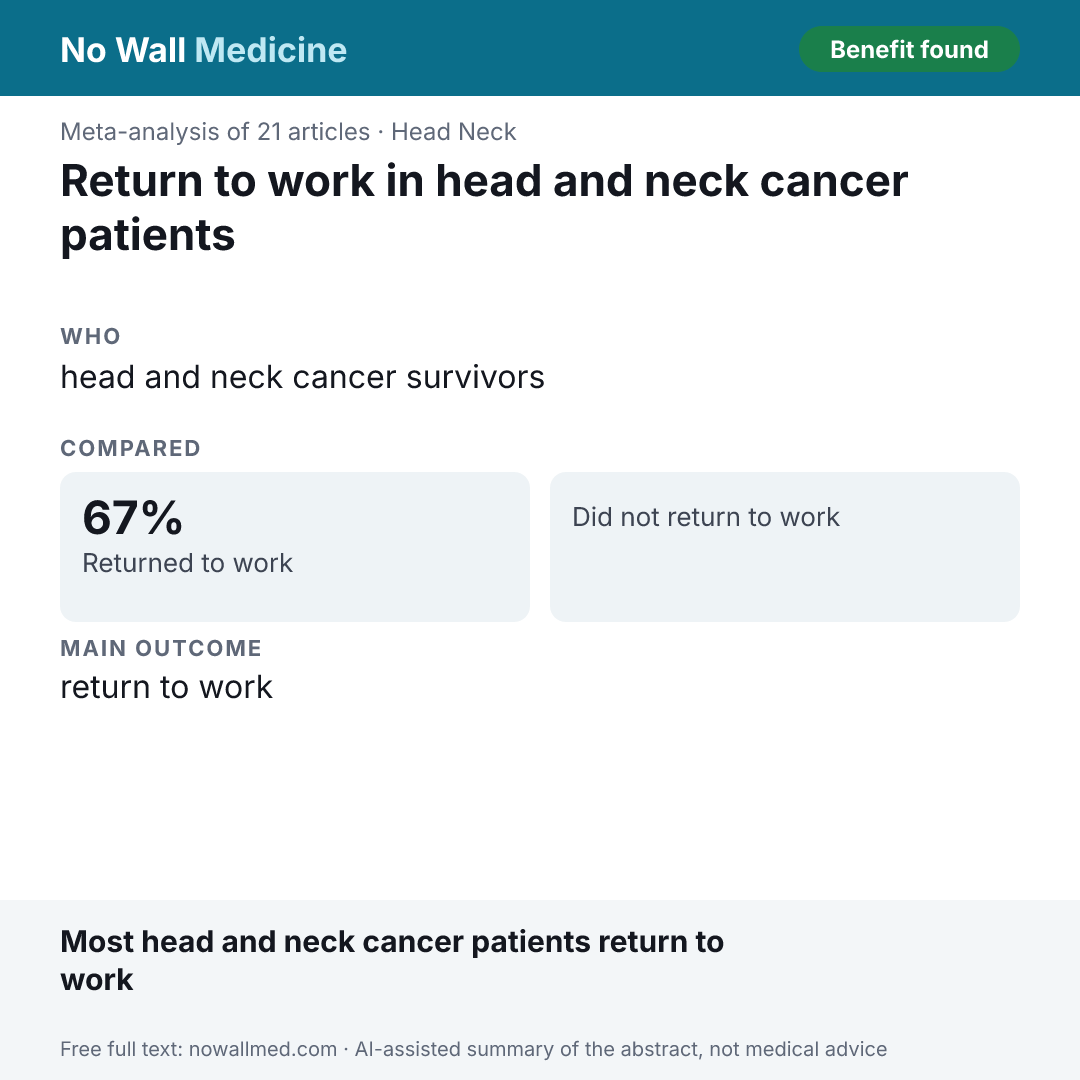
Return to work in patients with head and neck cancer: Systematic review and meta-analysis
Meta-analysis of 21 articlesBenefit found
Return to work in head and neck cancer patients
Who
head and neck cancer survivors
Compared
67%Returned to work (95% CI 62%-73%)
Did not return to work
Main outcome
return to work
Bottom line: Most head and neck cancer patients return to work
Head Neck · 2022-09-19 · Save PNG
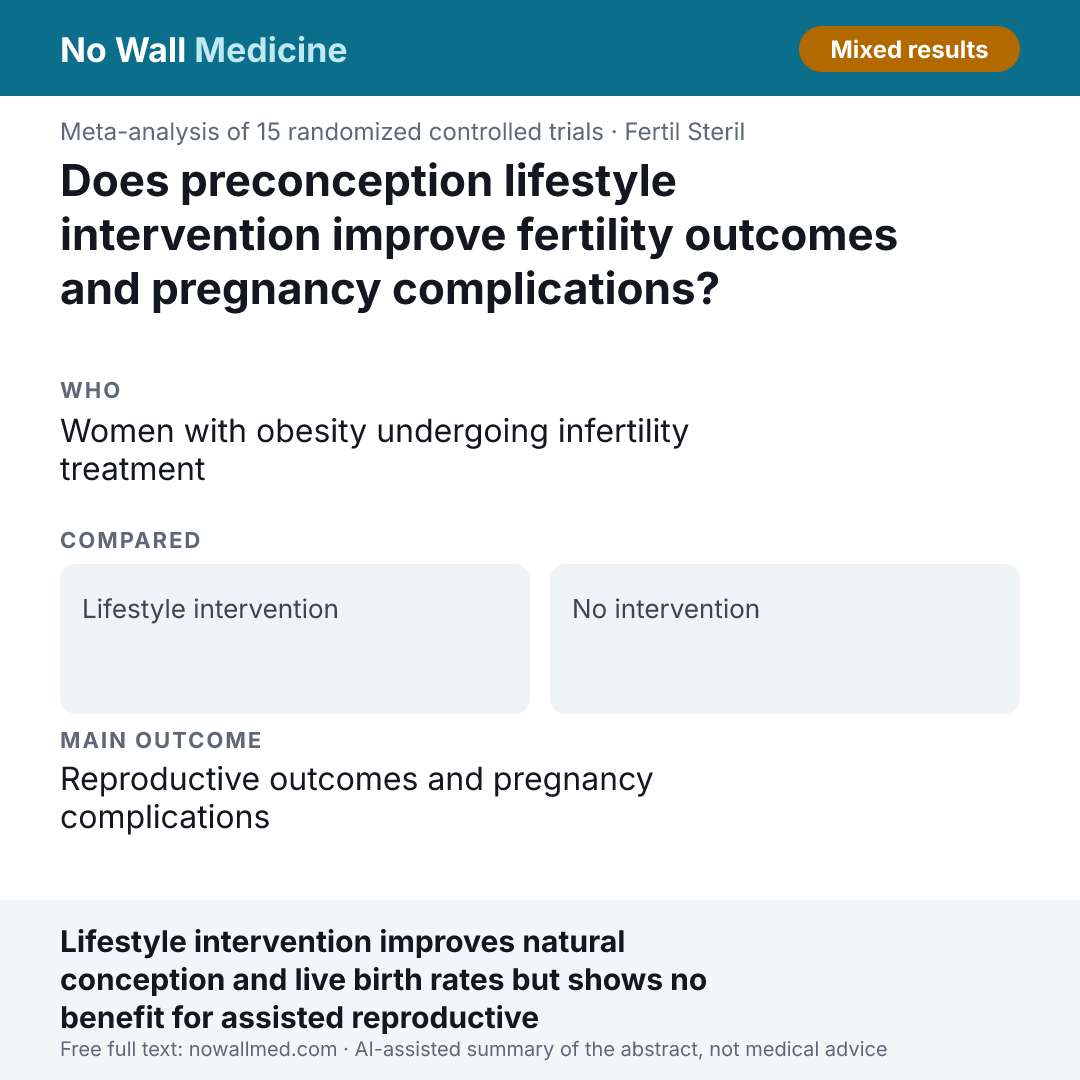
Effects of preconception weight loss after lifestyle intervention on fertility outcomes and pregnancy complications
Meta-analysis of 15 randomized controlled trialsMixed results
Does preconception lifestyle intervention improve fertility outcomes and pregnancy complications?
Who
Women with obesity undergoing infertility treatment
Compared
Lifestyle intervention
No intervention
Main outcome
Reproductive outcomes and pregnancy complications
Bottom line: Lifestyle intervention improves natural conception and live birth rates but shows no benefit for assisted reproductive technology.
Limitation: Pregnancy complications are underreported in most studies and require further analysis.
Fertil Steril · 2022-09-18 · Save PNG
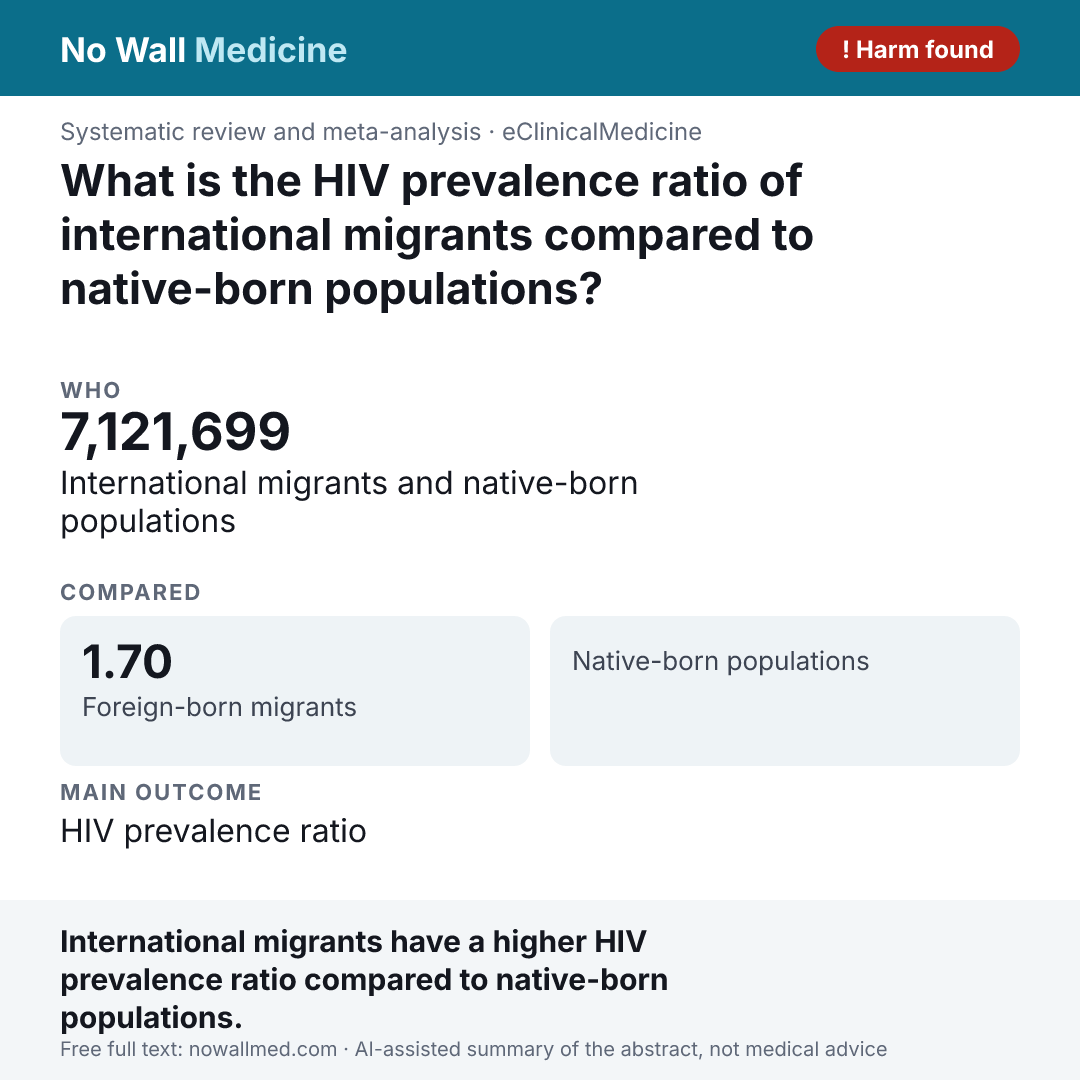
HIV prevalence ratio of international migrants compared to their native-born counterparts: A systematic review and meta-analysis
Systematic review and meta-analysisHarm found
What is the HIV prevalence ratio of international migrants compared to native-born populations?
Who
7,121,699
International migrants and native-born populations
Compared
1.70Foreign-born migrants
Native-born populations
Main outcome
HIV prevalence ratio
Result: prevalence ratio 1.70 (95% CI 1.11 - 2.61)
Bottom line: International migrants have a higher HIV prevalence ratio compared to native-born populations.
Funded by: Australian National Health and Medical Research Council
eClinicalMedicine · 2022-09-17 · Save PNG
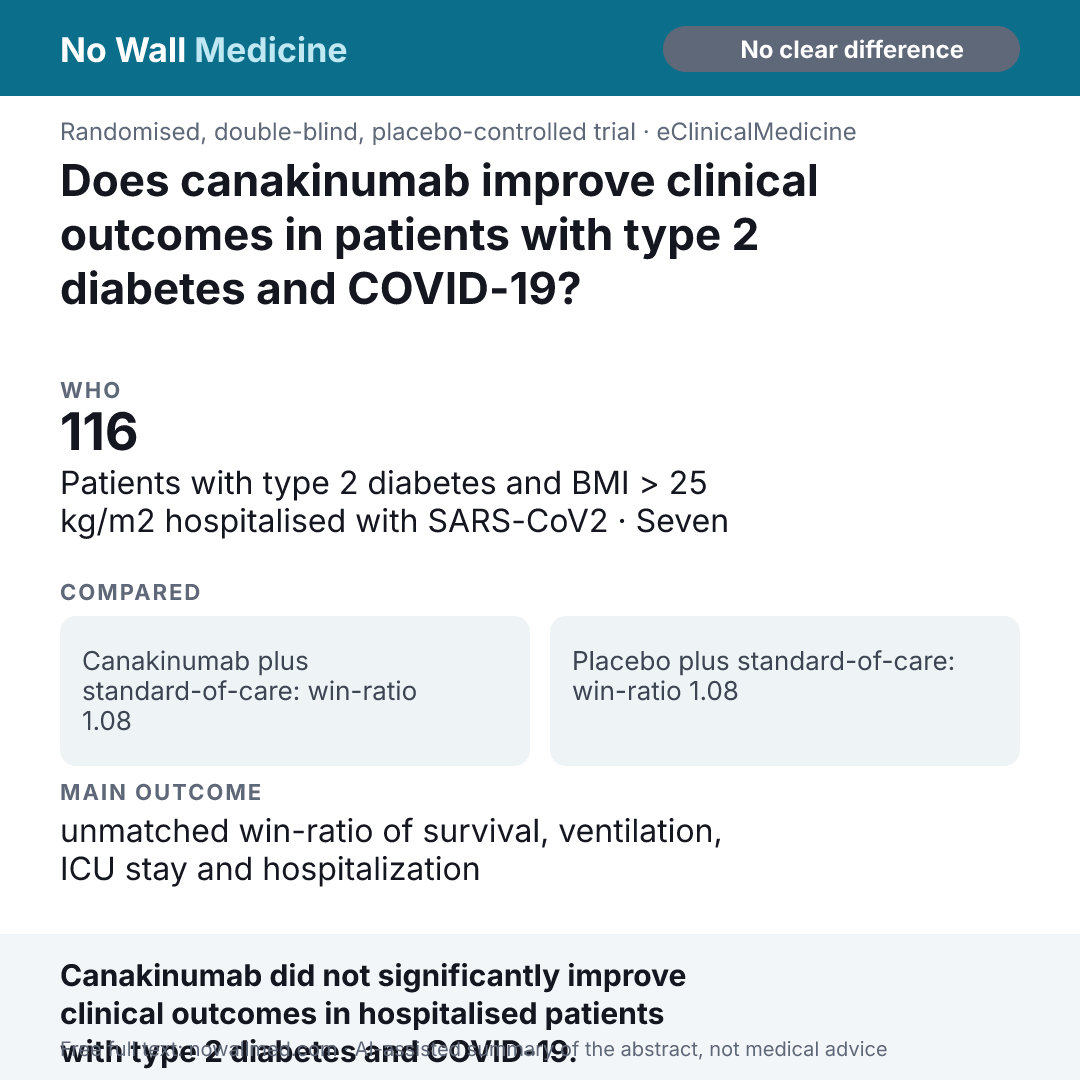
Canakinumab in patients with COVID-19 and type 2 diabetes - A multicentre, randomised, double-blind, placebo-controlled trial
Randomised, double-blind, placebo-controlled trialNo clear difference
Does canakinumab improve clinical outcomes in patients with type 2 diabetes and COVID-19?
Who
116
Patients with type 2 diabetes and BMI > 25 kg/m2 hospitalised with SARS-CoV2 · Seven tertiary hospitals in Switzerland
Compared
Canakinumab plus standard-of-care: win-ratio 1.08
Placebo plus standard-of-care: win-ratio 1.08
Main outcome
unmatched win-ratio of survival, ventilation, ICU stay and hospitalization
Result: win-ratio 1.08 (95 % CI 0.69-1.69)
Bottom line: Canakinumab did not significantly improve clinical outcomes in hospitalised patients with type 2 diabetes and COVID-19.
Funded by: Swiss National Science Foundation and University of Basel
eClinicalMedicine · 2022-09-17 · Save PNG
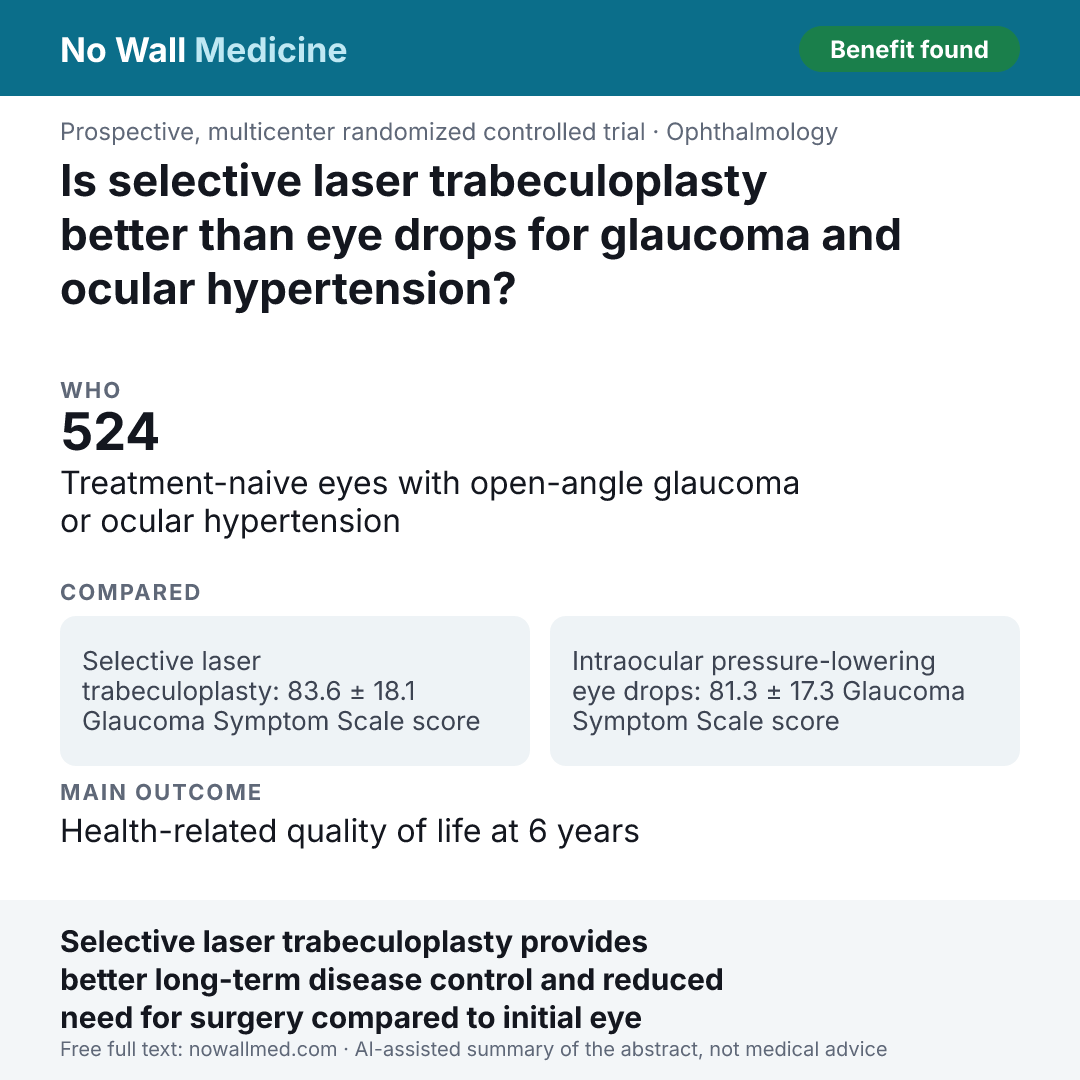
Laser in Glaucoma and Ocular Hypertension (LiGHT) Trial: Six-Year Results of Primary Selective Laser Trabeculoplasty versus Eye Drops for the Treatment of Glaucoma and Ocular Hypertension
Prospective, multicenter randomized controlled trialBenefit found
Is selective laser trabeculoplasty better than eye drops for glaucoma and ocular hypertension?
Who
524
Treatment-naive eyes with open-angle glaucoma or ocular hypertension
Compared
Selective laser trabeculoplasty: 83.6 ± 18.1 Glaucoma Symptom Scale score
Intraocular pressure-lowering eye drops: 81.3 ± 17.3 Glaucoma Symptom Scale score
Main outcome
Health-related quality of life at 6 years
Bottom line: Selective laser trabeculoplasty provides better long-term disease control and reduced need for surgery compared to initial eye drop therapy.
Ophthalmology · 2022-09-17 · Save PNG
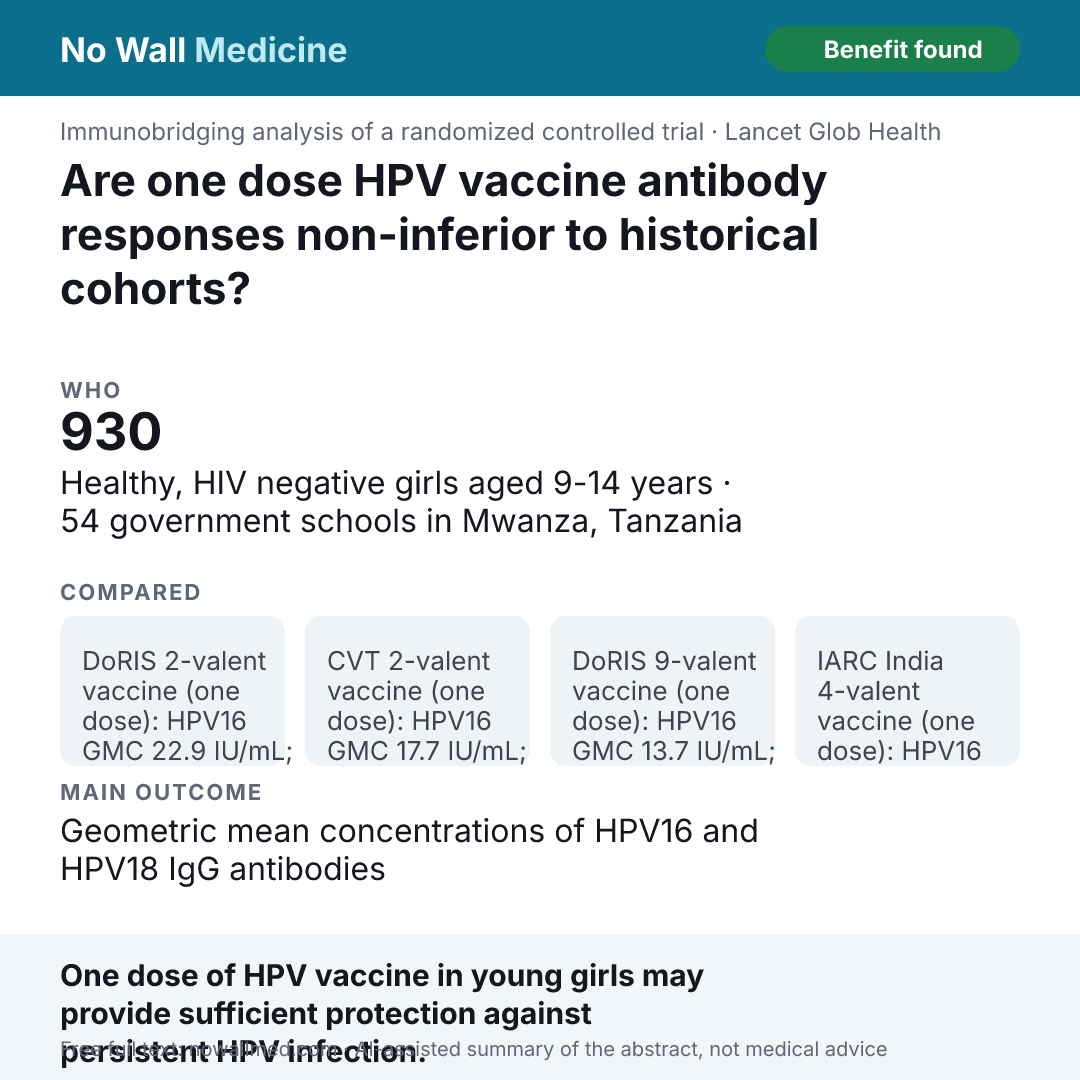
Comparing one dose of HPV vaccine in girls aged 9-14 years in Tanzania (DoRIS) with one dose of HPV vaccine in historical cohorts: an immunobridging analysis of a randomised controlled trial
Immunobridging analysis of a randomized controlled trialBenefit found
Are one dose HPV vaccine antibody responses non-inferior to historical cohorts?
Who
930
Healthy, HIV negative girls aged 9-14 years · 54 government schools in Mwanza, Tanzania
Compared
DoRIS 2-valent vaccine (one dose): HPV16 GMC 22.9 IU/mL; HPV18 GMC 9.9 IU/mL
CVT 2-valent vaccine (one dose): HPV16 GMC 17.7 IU/mL; HPV18 GMC 8.0 IU/mL
DoRIS 9-valent vaccine (one dose): HPV16 GMC 13.7 IU/mL; HPV18 GMC 5.7 IU/mL
IARC India 4-valent vaccine (one dose): HPV16 GMC 6.7 IU/mL; HPV18 GMC 2.2 IU/mL
Main outcome
Geometric mean concentrations of HPV16 and HPV18 IgG antibodies
Result: non-inferiority met for each vaccine for both HPV16 and HPV18
Bottom line: One dose of HPV vaccine in young girls may provide sufficient protection against persistent HPV infection.
Funded by: UK DFID, UK MRC, Wellcome Trust, Bill & Melinda Gates Foundation, US NCI
Lancet Glob Health · 2022-09-17 · Save PNG
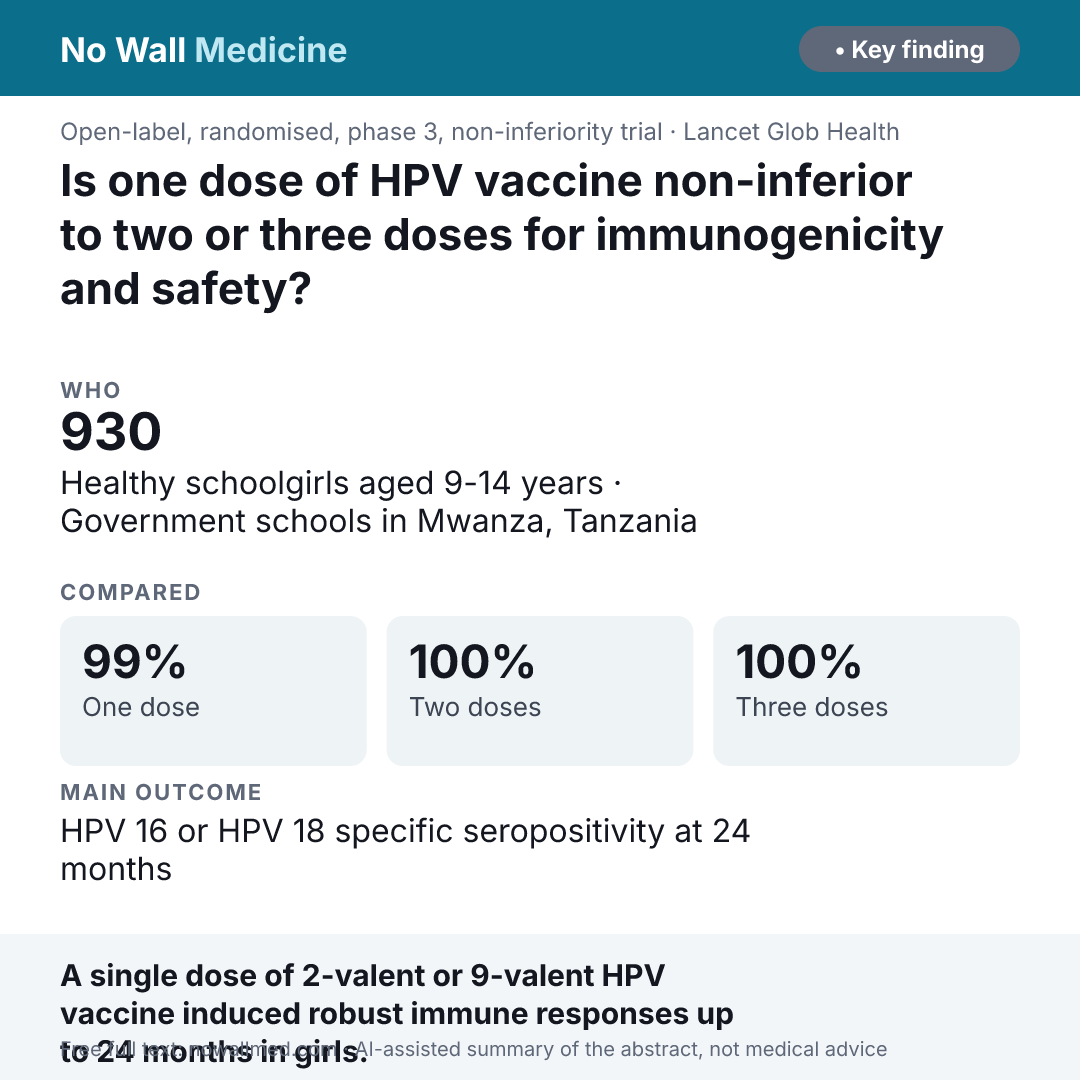
Immunogenicity and safety of one-dose human papillomavirus vaccine compared with two or three doses in Tanzanian girls (DoRIS): an open-label, randomised, non-inferiority trial
Open-label, randomised, phase 3, non-inferiority trialKey finding
Is one dose of HPV vaccine non-inferior to two or three doses for immunogenicity and safety?
Who
930
Healthy schoolgirls aged 9-14 years · Government schools in Mwanza, Tanzania
Compared
99%One dose (HPV 16 IgG seropositivity)
100%Two doses (HPV 16 IgG seropositivity)
100%Three doses (HPV 16 IgG seropositivity)
Main outcome
HPV 16 or HPV 18 specific seropositivity at 24 months
Bottom line: A single dose of 2-valent or 9-valent HPV vaccine induced robust immune responses up to 24 months in girls.
Funded by: UK DFID, UK MRC, Wellcome Trust, Bill & Melinda Gates Foundation, US NCI
Lancet Glob Health · 2022-09-17 · Save PNG
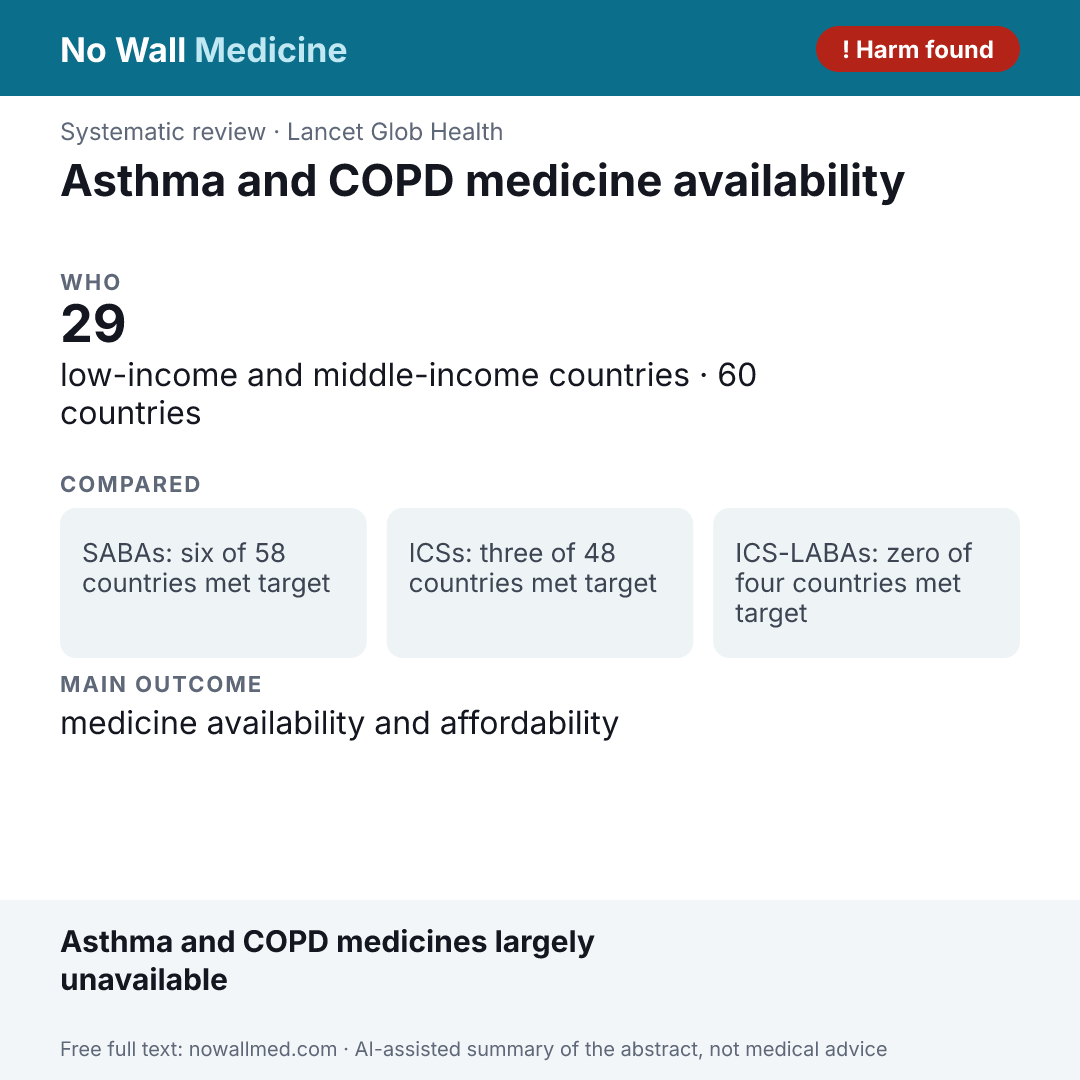
The availability, cost, and affordability of essential medicines for asthma and COPD in low-income and middle-income countries: a systematic review
Systematic reviewHarm found
Asthma and COPD medicine availability
Who
29
low-income and middle-income countries · 60 countries
Compared
SABAs: six of 58 countries met target
ICSs: three of 48 countries met target
ICS-LABAs: zero of four countries met target
Main outcome
medicine availability and affordability
Bottom line: Asthma and COPD medicines largely unavailable
Limitation: heterogeneity of included studies
Funded by: WHO and Wellcome Trust
Lancet Glob Health · 2022-09-17 · Save PNG
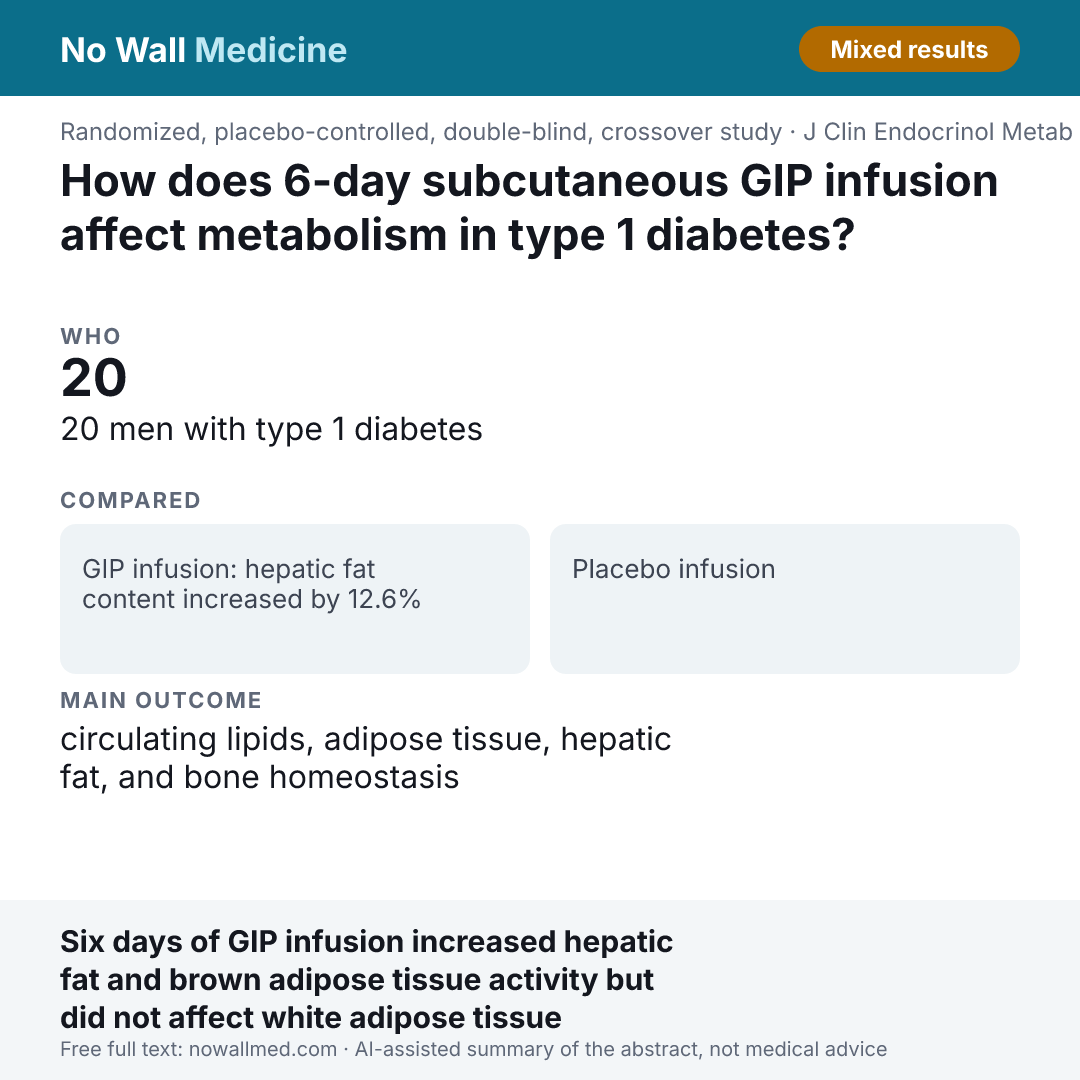
GIP Affects Hepatic Fat and Brown Adipose Tissue Thermogenesis but Not White Adipose Tissue Transcriptome in Type 1 Diabetes
Randomized, placebo-controlled, double-blind, crossover studyMixed results
How does 6-day subcutaneous GIP infusion affect metabolism in type 1 diabetes?
Who
20
20 men with type 1 diabetes
Compared
GIP infusion: hepatic fat content increased by 12.6%
Placebo infusion
Main outcome
circulating lipids, adipose tissue, hepatic fat, and bone homeostasis
Bottom line: Six days of GIP infusion increased hepatic fat and brown adipose tissue activity but did not affect white adipose tissue transcriptomics.
J Clin Endocrinol Metab · 2022-09-17 · Save PNG
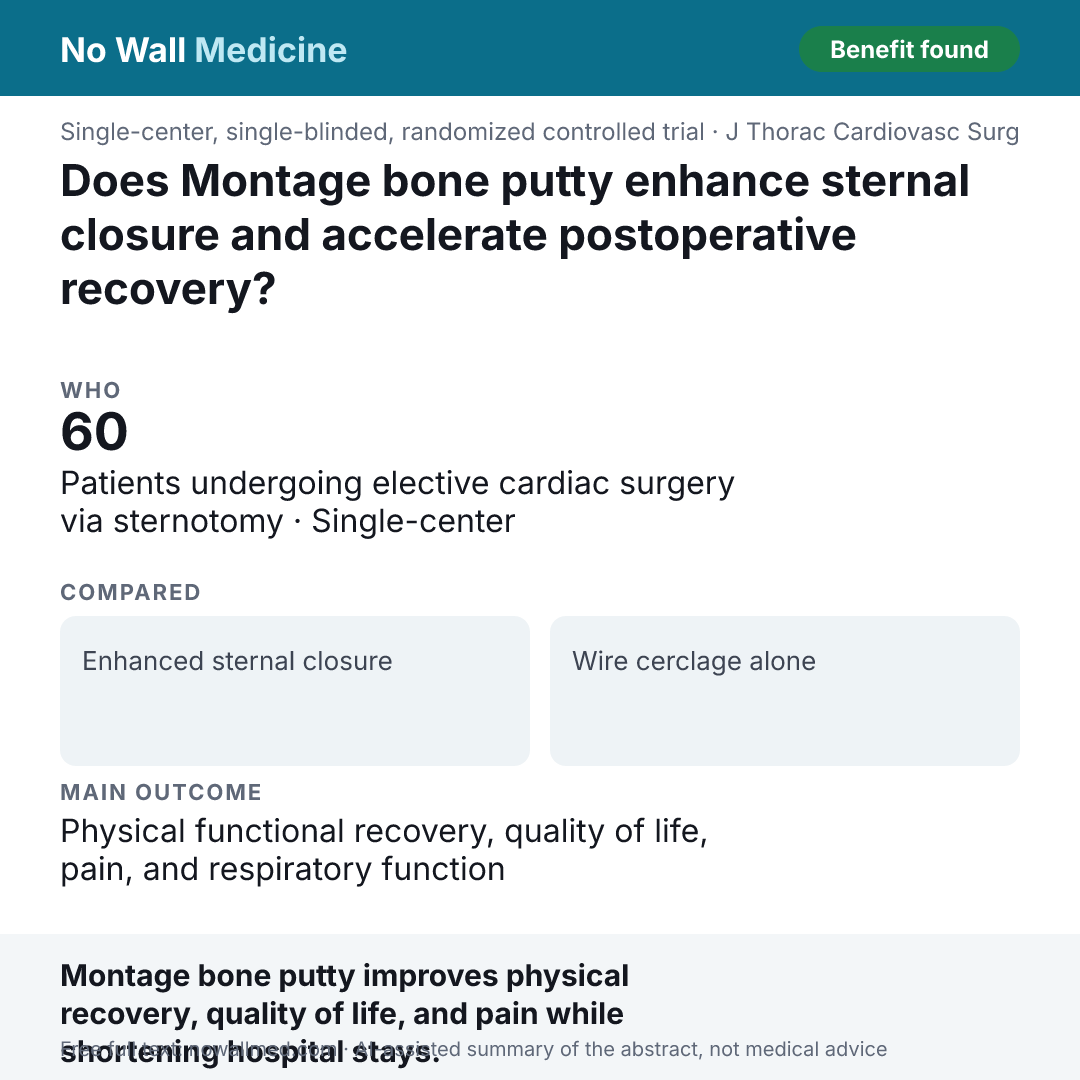
Novel hardening bone putty enhances sternal closure and accelerates postoperative recovery
Single-center, single-blinded, randomized controlled trialBenefit found
Does Montage bone putty enhance sternal closure and accelerate postoperative recovery?
Who
60
Patients undergoing elective cardiac surgery via sternotomy · Single-center
Compared
Enhanced sternal closure
Wire cerclage alone
Main outcome
Physical functional recovery, quality of life, pain, and respiratory function
Bottom line: Montage bone putty improves physical recovery, quality of life, and pain while shortening hospital stays.
J Thorac Cardiovasc Surg · 2022-09-17 · Save PNG
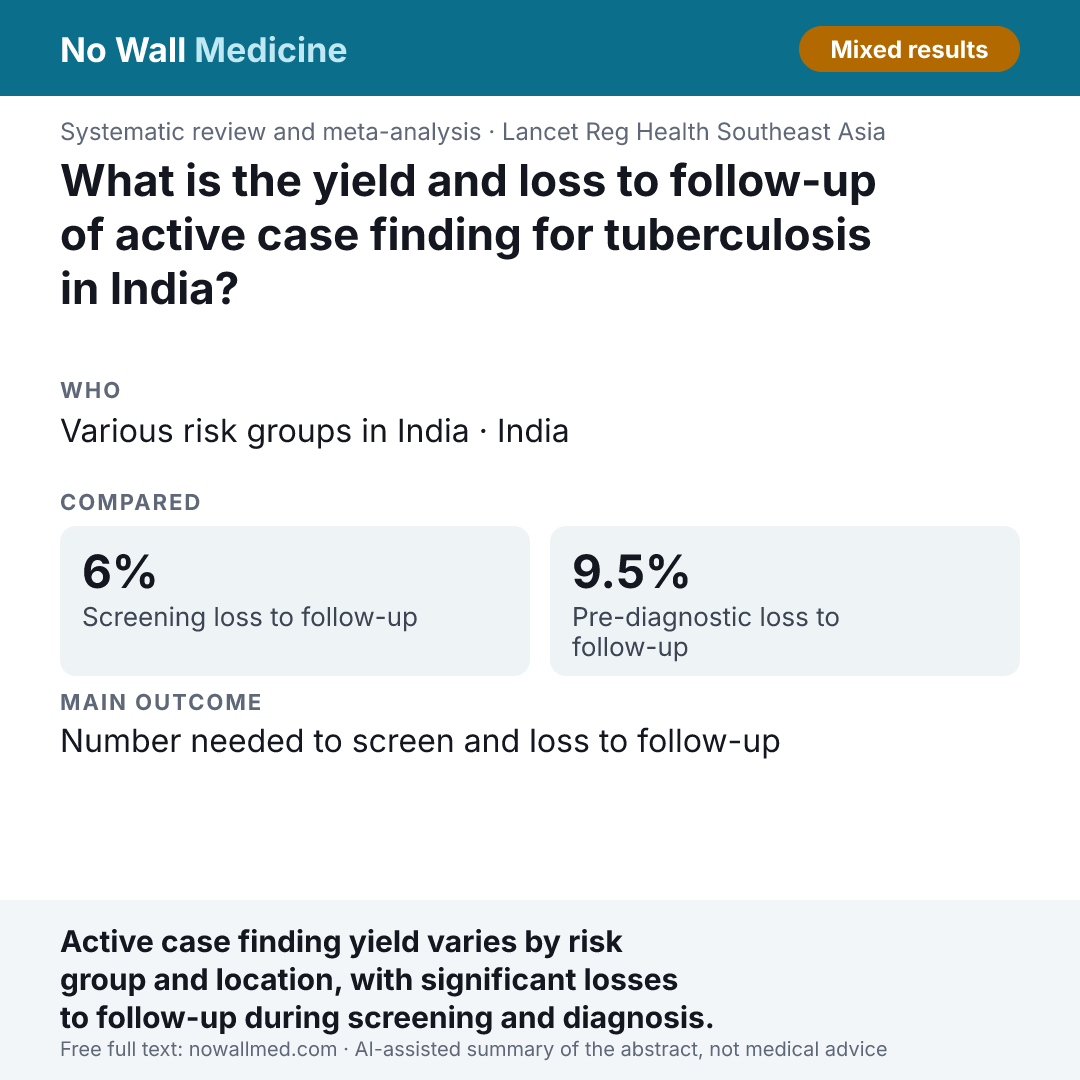
A systematic review and meta-analysis of active case finding for tuberculosis in India
Systematic review and meta-analysisMixed results
What is the yield and loss to follow-up of active case finding for tuberculosis in India?
Who
Various risk groups in India · India
Compared
6%Screening loss to follow-up (IQR 4.1%, 11.3%, range 0-32.5%)
9.5%Pre-diagnostic loss to follow-up (IQR 2.4%, 34.4%, range 0-86.9%)
Main outcome
Number needed to screen and loss to follow-up
Bottom line: Active case finding yield varies by risk group and location, with significant losses to follow-up during screening and diagnosis.
Limitation: The narrow evidence base available currently is insufficient for effectively targeting active case finding programming.
Funded by: WHO Global TB Programme
Lancet Reg Health Southeast Asia · 2022-09-17 · Save PNG
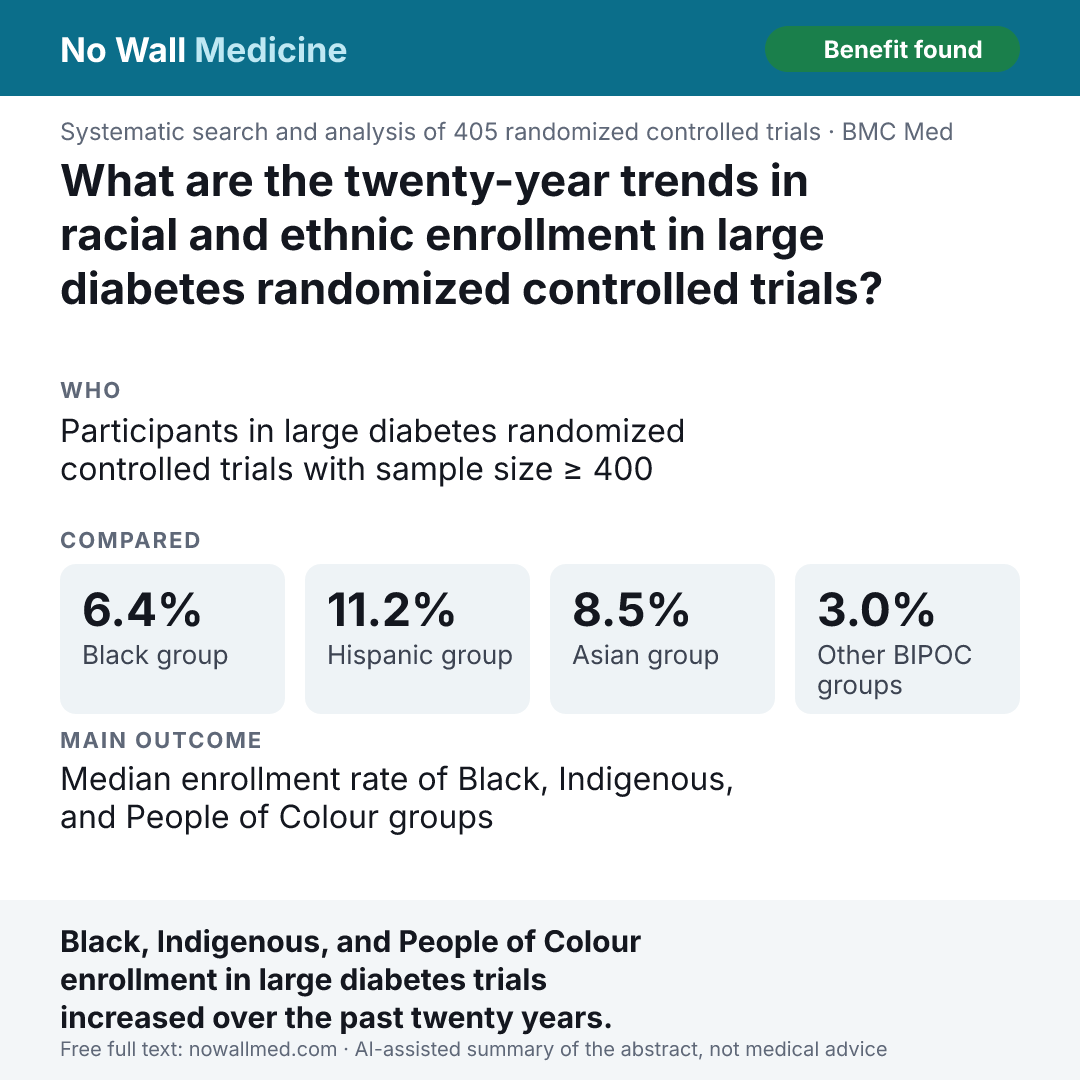
Twenty-year trends in racial and ethnic enrollment in large diabetes randomized controlled trials
Systematic search and analysis of 405 randomized controlled trialsBenefit found
What are the twenty-year trends in racial and ethnic enrollment in large diabetes randomized controlled trials?
Who
Participants in large diabetes randomized controlled trials with sample size ≥ 400
Compared
6.4%Black group
11.2%Hispanic group
8.5%Asian group
3.0%Other BIPOC groups
Main outcome
Median enrollment rate of Black, Indigenous, and People of Colour groups
Result: BIPOC enrollment increased from 20.1 to 28.4% (P for trend = 0.041)
Bottom line: Black, Indigenous, and People of Colour enrollment in large diabetes trials increased over the past twenty years.
BMC Med · 2022-09-16 · Save PNG
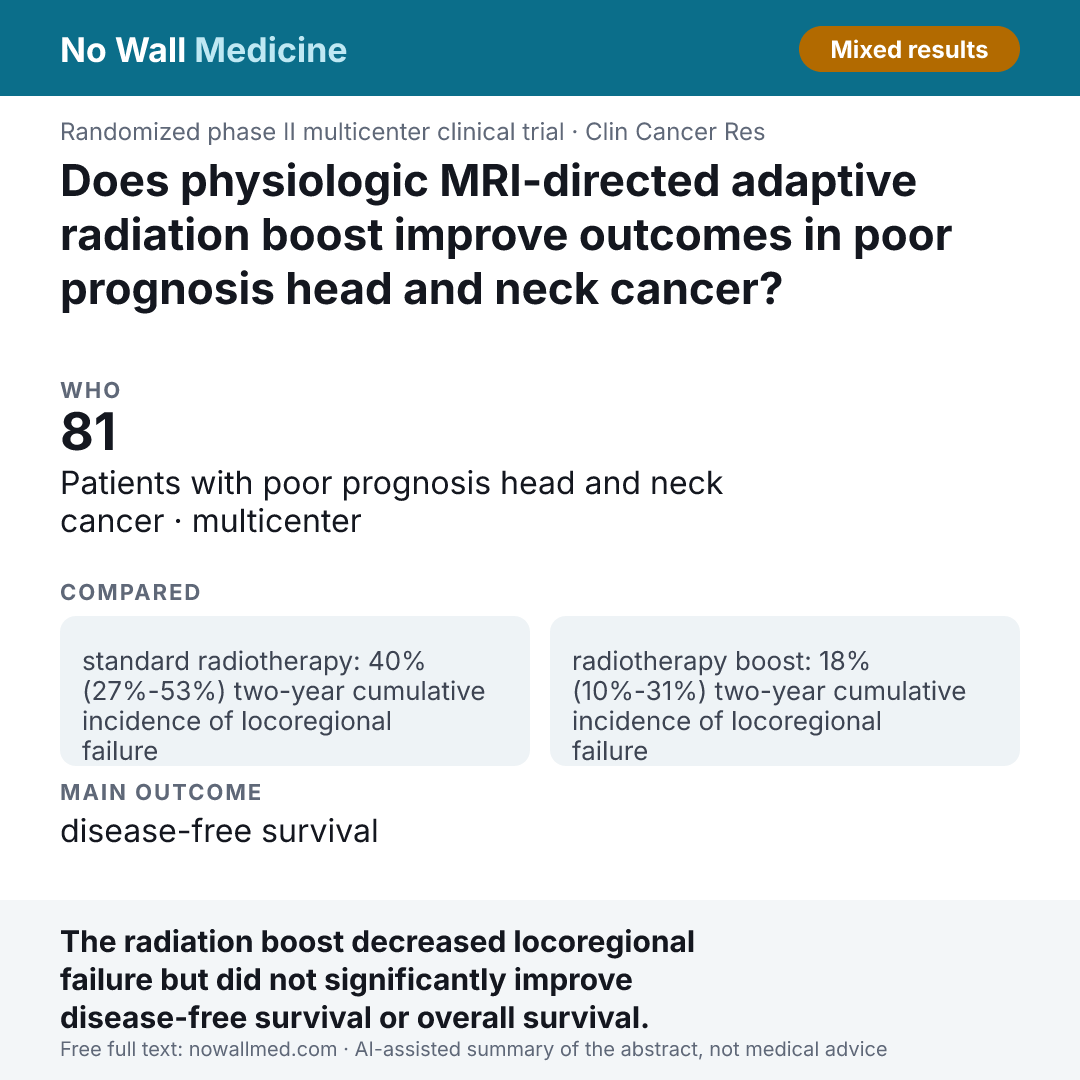
Randomized Phase II Study of Physiologic MRI-Directed Adaptive Radiation Boost in Poor Prognosis Head and Neck Cancer
Randomized phase II multicenter clinical trialMixed results
Does physiologic MRI-directed adaptive radiation boost improve outcomes in poor prognosis head and neck cancer?
Who
81
Patients with poor prognosis head and neck cancer · multicenter
Compared
standard radiotherapy: 40% (27%-53%) two-year cumulative incidence of locoregional failure
radiotherapy boost: 18% (10%-31%) two-year cumulative incidence of locoregional failure
Main outcome
disease-free survival
Result: hazard ratio 0.43 (P = 0.047) for locoregional failure
Bottom line: The radiation boost decreased locoregional failure but did not significantly improve disease-free survival or overall survival.
Limitation: Additional improvements in systemic therapy are likely necessary to realize improvements in disease-free survival and overall survival.
Clin Cancer Res · 2022-09-16 · Save PNG
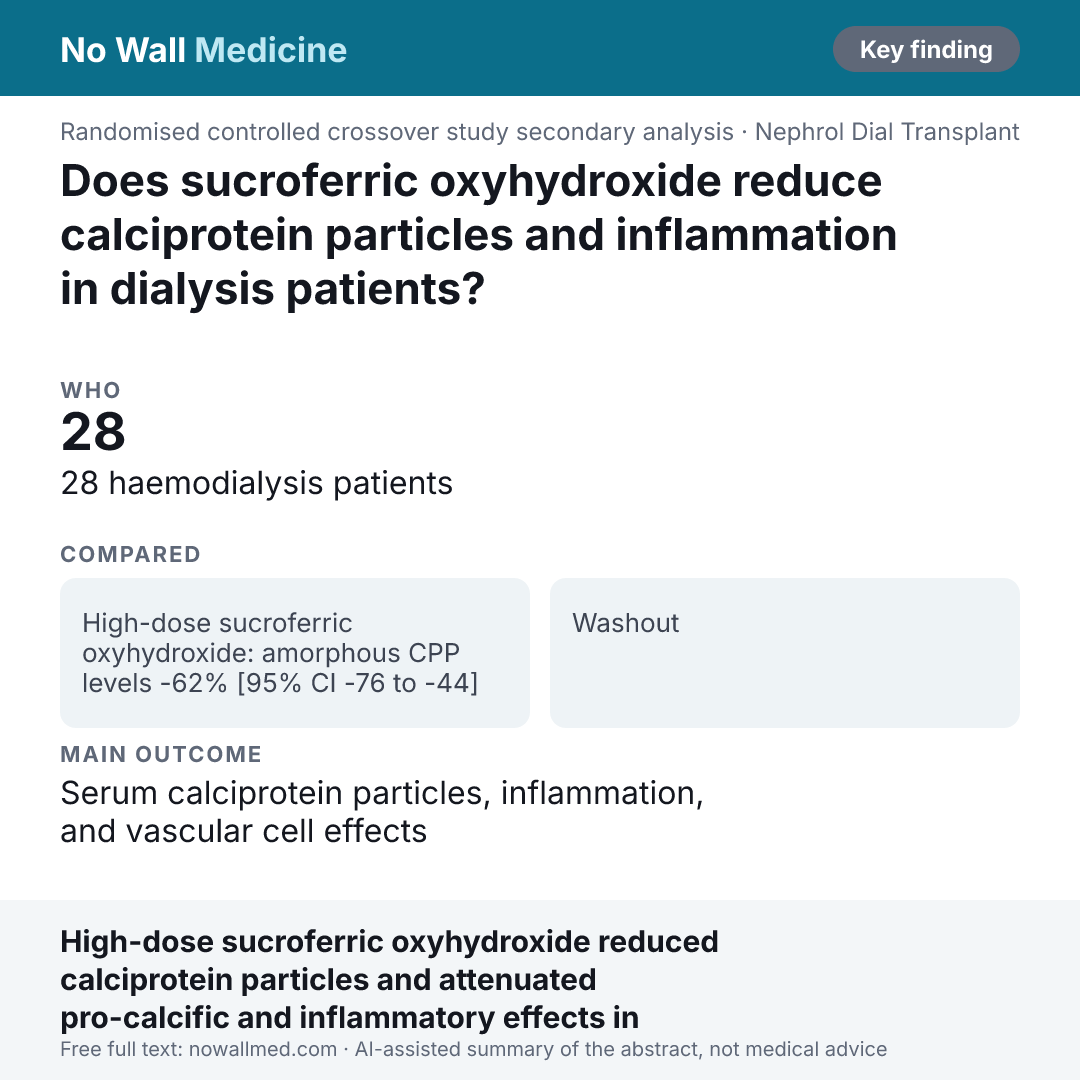
Effect of the phosphate binder sucroferric oxyhydroxide in dialysis patients on endogenous calciprotein particles, inflammation, and vascular cells
Randomised controlled crossover study secondary analysisKey finding
Does sucroferric oxyhydroxide reduce calciprotein particles and inflammation in dialysis patients?
Who
28
28 haemodialysis patients
Compared
High-dose sucroferric oxyhydroxide: amorphous CPP levels -62% [95% CI -76 to -44]
Washout
Main outcome
Serum calciprotein particles, inflammation, and vascular cell effects
Bottom line: High-dose sucroferric oxyhydroxide reduced calciprotein particles and attenuated pro-calcific and inflammatory effects in dialysis patients.
Nephrol Dial Transplant · 2022-09-16 · Save PNG
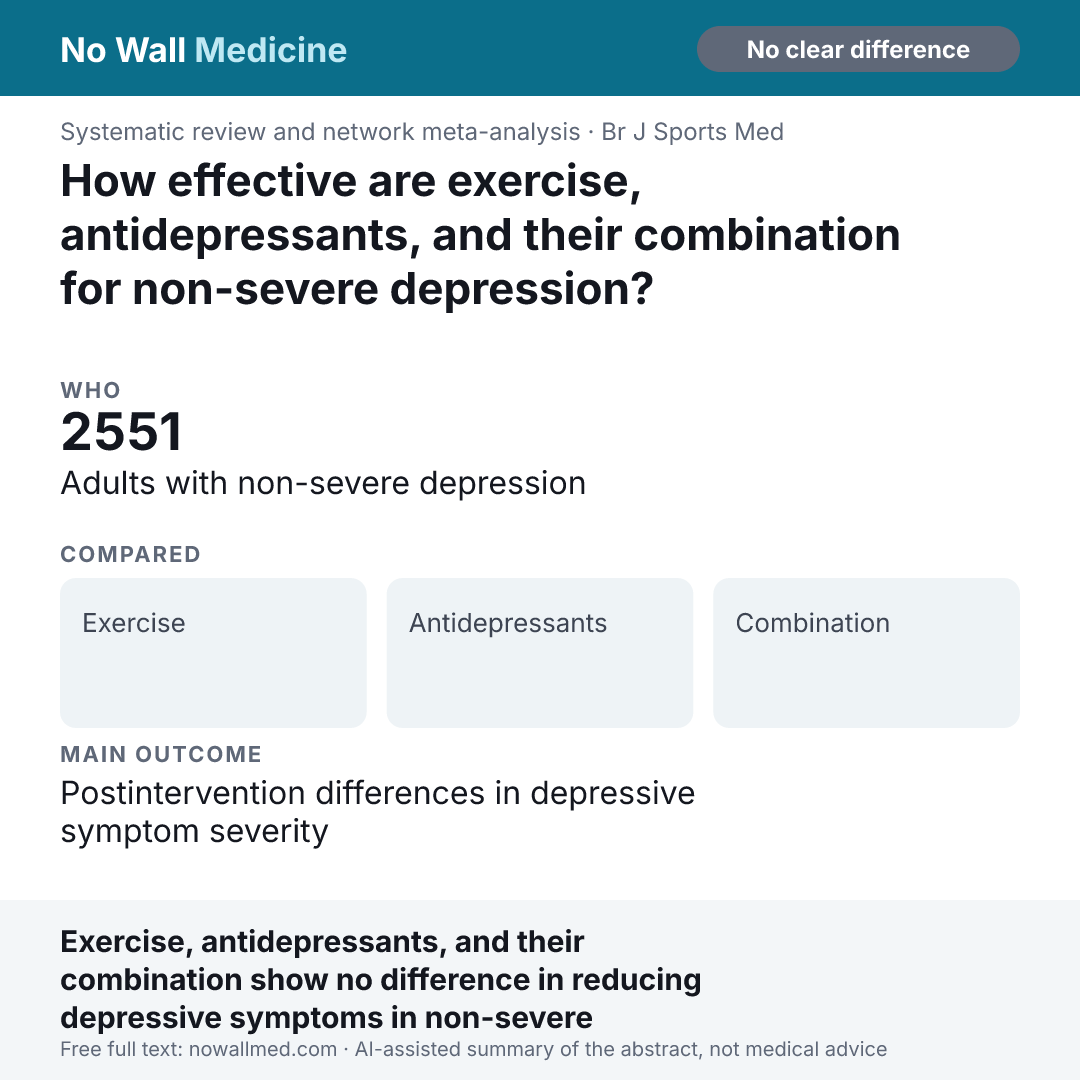
Comparative effectiveness of exercise, antidepressants and their combination in treating non-severe depression: a systematic review and network meta-analysis of randomised controlled trials
Systematic review and network meta-analysisNo clear difference
How effective are exercise, antidepressants, and their combination for non-severe depression?
Who
2551
Adults with non-severe depression
Compared
Exercise
Antidepressants
Combination
Main outcome
Postintervention differences in depressive symptom severity
Result: standardised mean differences: exercise vs antidepressants -0.12 (95% CI -0.33 to 0.10)
Bottom line: Exercise, antidepressants, and their combination show no difference in reducing depressive symptoms in non-severe depression.
Br J Sports Med · 2022-09-16 · Save PNG
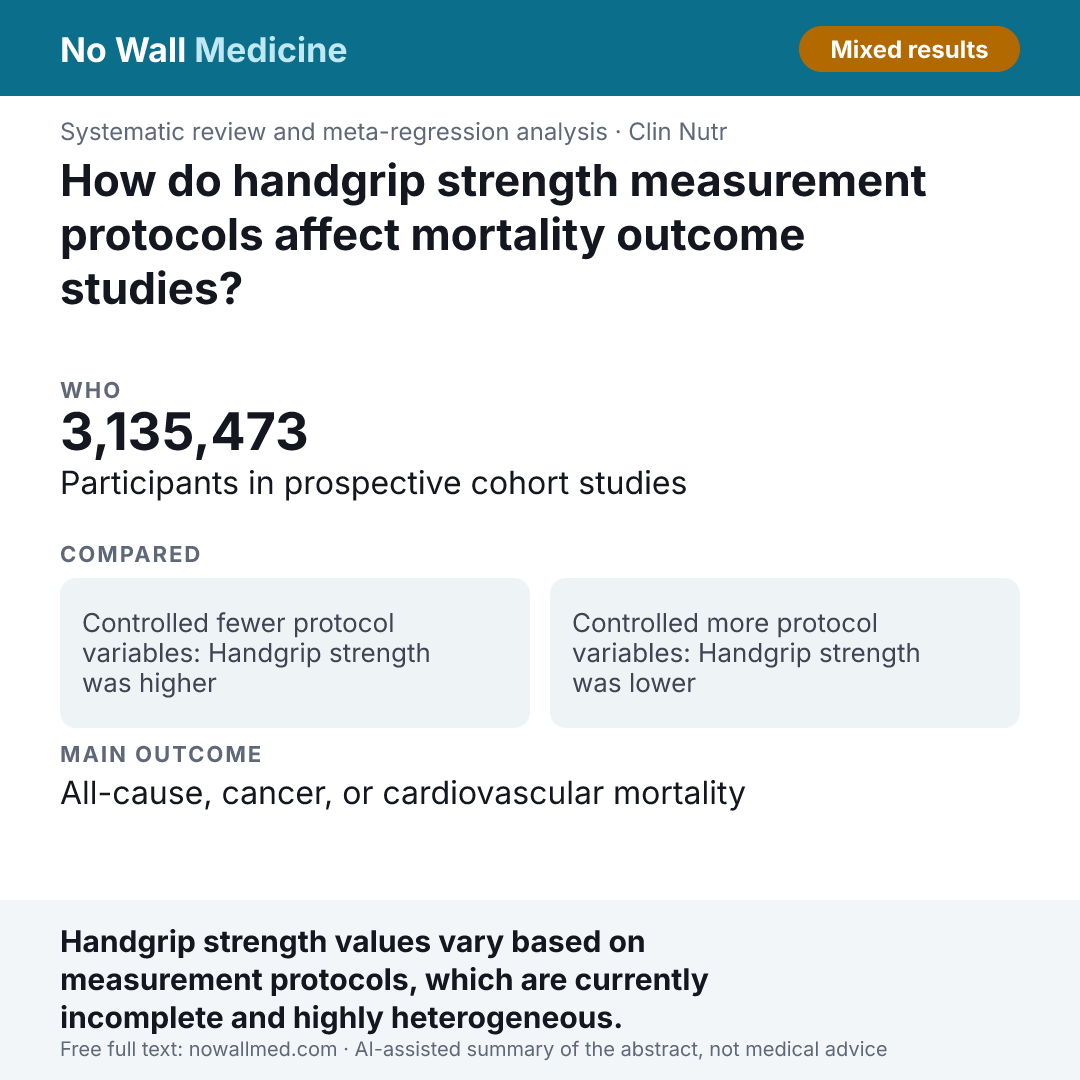
Handgrip strength measurement protocols for all-cause and cause-specific mortality outcomes in more than 3 million participants: A systematic review and meta-regression analysis
Systematic review and meta-regression analysisMixed results
How do handgrip strength measurement protocols affect mortality outcome studies?
Who
3,135,473
Participants in prospective cohort studies
Compared
Controlled fewer protocol variables: Handgrip strength was higher
Controlled more protocol variables: Handgrip strength was lower
Main outcome
All-cause, cancer, or cardiovascular mortality
Bottom line: Handgrip strength values vary based on measurement protocols, which are currently incomplete and highly heterogeneous.
Limitation: The number of measurements, laterality, and estimation methods varied considerably between study protocols.
Clin Nutr · 2022-09-16 · Save PNG
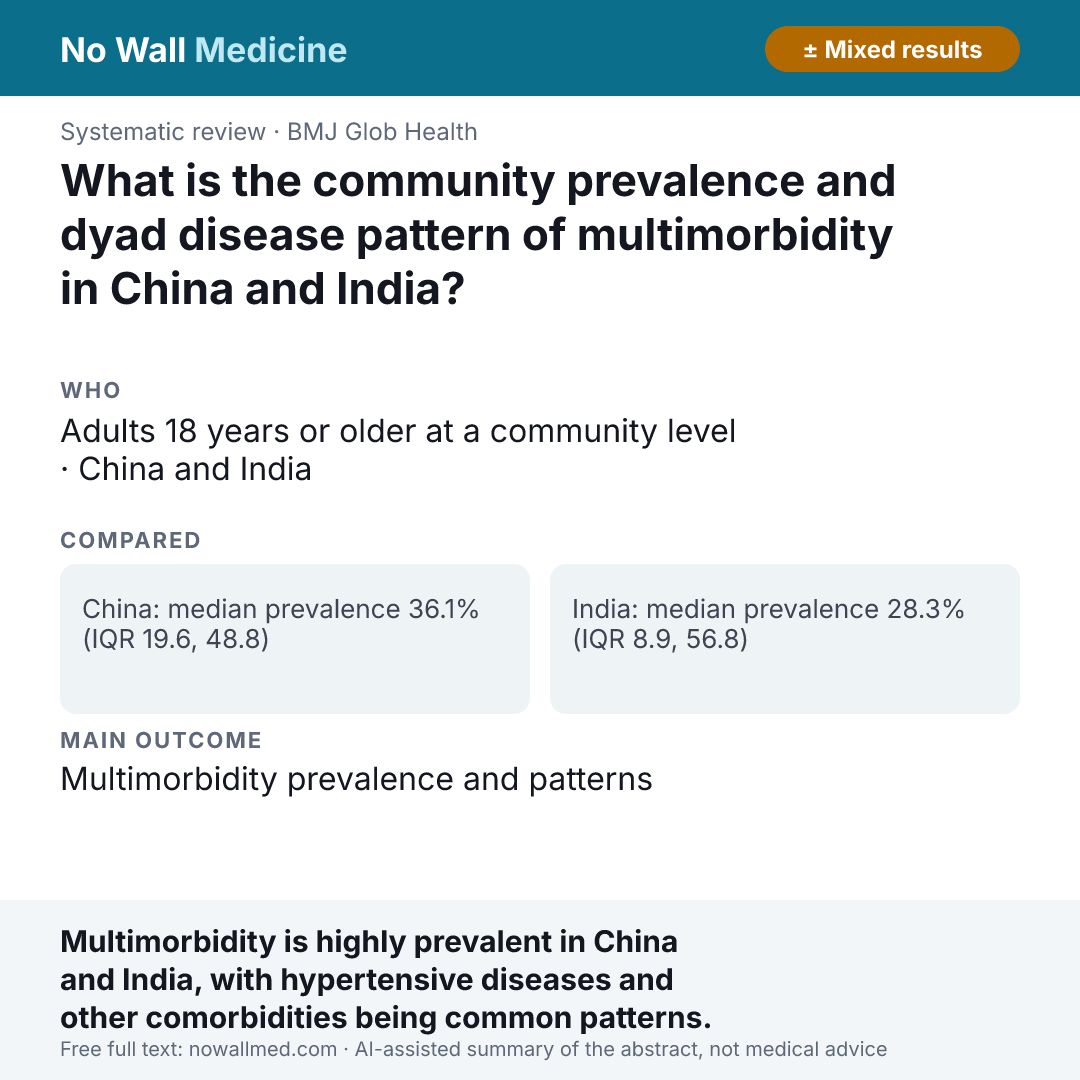
Community prevalence and dyad disease pattern of multimorbidity in China and India: a systematic review
Systematic reviewMixed results
What is the community prevalence and dyad disease pattern of multimorbidity in China and India?
Who
Adults 18 years or older at a community level · China and India
Compared
China: median prevalence 36.1% (IQR 19.6, 48.8)
India: median prevalence 28.3% (IQR 8.9, 56.8)
Main outcome
Multimorbidity prevalence and patterns
Bottom line: Multimorbidity is highly prevalent in China and India, with hypertensive diseases and other comorbidities being common patterns.
BMJ Glob Health · 2022-09-16 · Save PNG
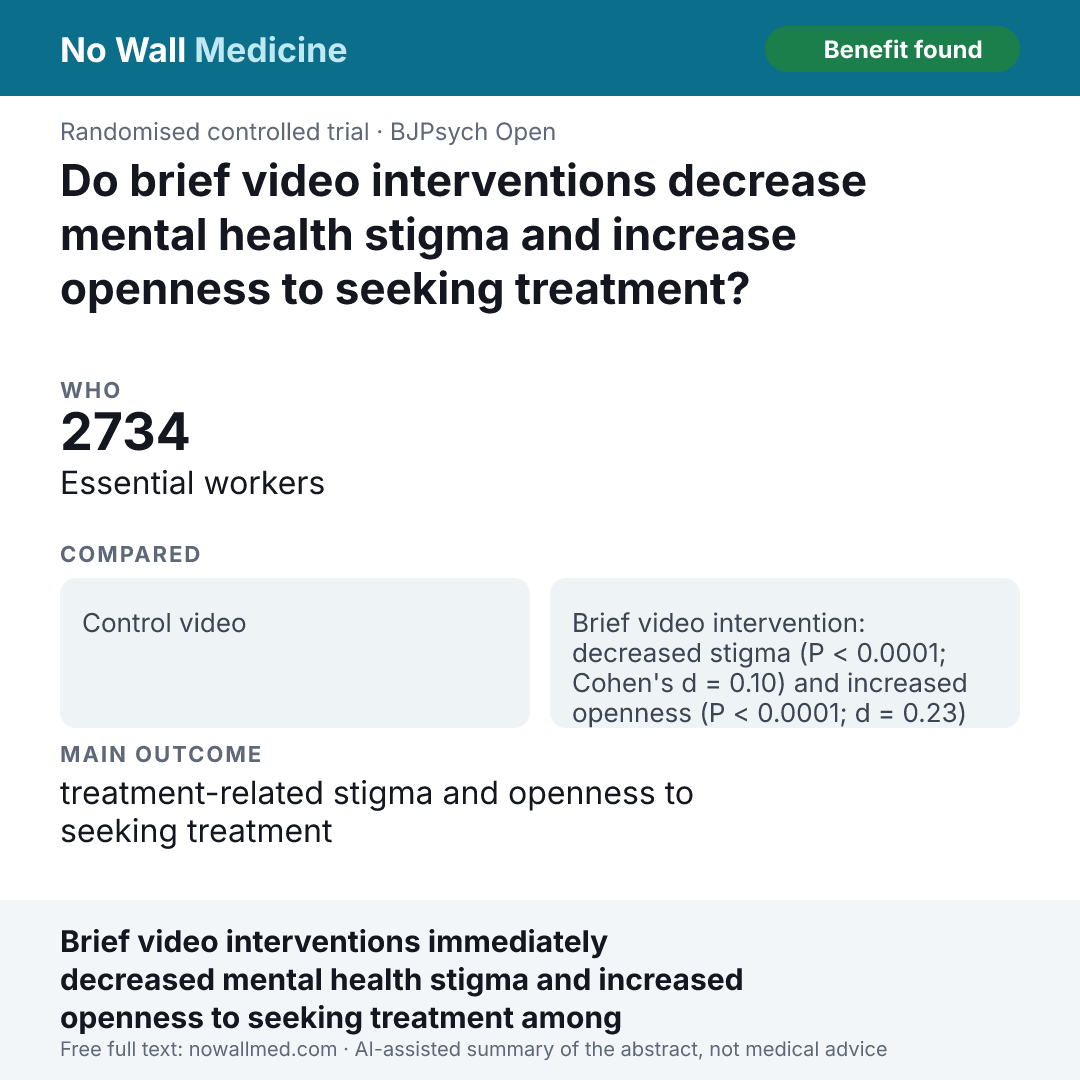
Destigmatising mental health treatment and increasing openness to seeking treatment: randomised controlled trial of brief video interventions
Randomised controlled trialBenefit found
Do brief video interventions decrease mental health stigma and increase openness to seeking treatment?
Who
2734
Essential workers
Compared
Control video
Brief video intervention: decreased stigma (P < 0.0001; Cohen's d = 0.10) and increased openness (P < 0.0001; d = 0.23)
Main outcome
treatment-related stigma and openness to seeking treatment
Bottom line: Brief video interventions immediately decreased mental health stigma and increased openness to seeking treatment among essential workers.
BJPsych Open · 2022-09-16 · Save PNG