Visual abstracts
New randomized trials and meta-analyses from leading journals at a glance: who was studied, what was compared, and what was found. Every paper is free to read in full.
All specialtiesCardiology 4763Oncology 4042Gastroenterology & Hepatology 1902Infectious Disease 3756Neurology 1872Psychiatry & Mental Health 2214Pulmonology 2042Critical Care 1319Endocrinology & Diabetes 2544Pediatrics 2889Surgery 2479Orthopedics & Sports Medicine 917Neurosurgery 525Cardiothoracic & Vascular Surgery 656Plastic & Reconstructive Surgery 574Nephrology 1107Rheumatology 810Hematology 1090Dermatology 611Ophthalmology 532Obstetrics & Gynecology 1645Public & Global Health 1037Radiology & Imaging 617Anesthesiology 957Urology 745ENT (Otolaryngology) 494Emergency Medicine 481Allergy & Immunology 309Geriatrics 972Family Medicine & Primary Care 533Medical Genetics & Genomics 659Pathology & Laboratory Medicine 156Physical Medicine & Rehabilitation 734Palliative Care 421Nutrition 1560Digital Health & AI 2133General Medicine 318
Ranibizumab versus laser therapy for the treatment of very low birthweight infants with retinopathy of prematurity (RAINBOW): five-year outcomes of a randomised trial
Open label randomised trialNo clear difference
Are ranibizumab or laser therapy better for five-year outcomes in retinopathy of prematurity?
Who
180
Very low birthweight infants weighing less than 1500 grams
Compared
Ranibizumab 0.2 mg: 66.8 (62.9-70.7) letter score
Ranibizumab 0.1 mg: 64.6 (60.6-68.5) letter score
Laser therapy: 62.1 (57.8-66.4) letter score
Main outcome
Visual acuity in the better-seeing eye
Result: differences in means: ranibizumab 0.2 mg v laser: 4.7 (95% CI: -1.1, 10.5)
Bottom line: Five-year visual acuity was similar between ranibizumab and laser therapy, with ranibizumab showing reduced high myopia frequency.
Funded by: Novartis Pharma AG
eClinicalMedicine · 2024-04-11Download image

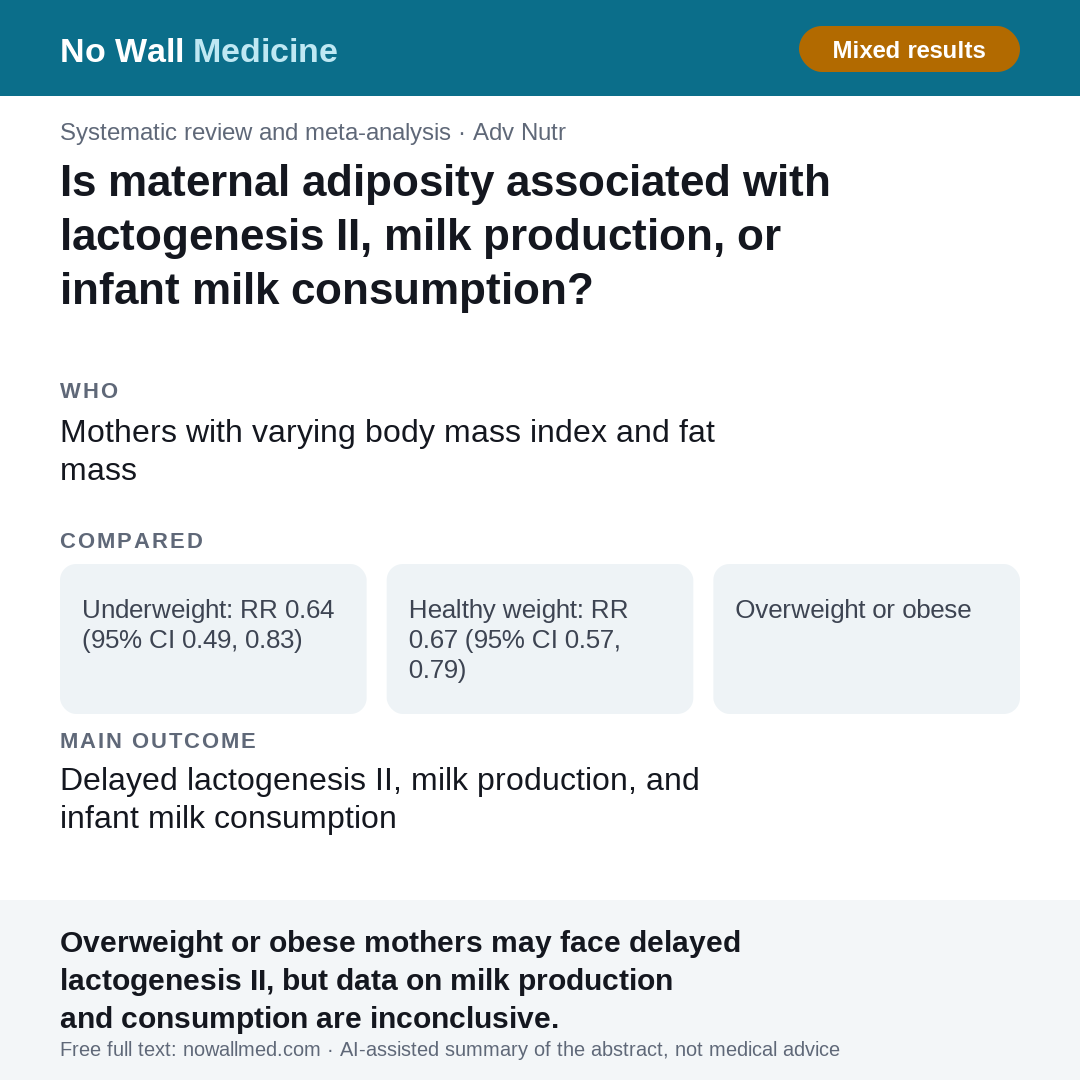
Is Maternal Body Weight or Composition Associated with Onset of Lactogenesis II, Human Milk Production, or Infant Consumption of Mother's Own Milk? A Systematic Review and Meta-Analysis
Systematic review and meta-analysisMixed results
Is maternal adiposity associated with lactogenesis II, milk production, or infant milk consumption?
Who
Mothers with varying body mass index and fat mass
Compared
Underweight: RR 0.64 (95% CI 0.49, 0.83)
Healthy weight: RR 0.67 (95% CI 0.57, 0.79)
Overweight or obese
Main outcome
Delayed lactogenesis II, milk production, and infant milk consumption
Result: RR 0.64 (95% CI 0.49, 0.83) for underweight vs overweight/obese
Bottom line: Overweight or obese mothers may face delayed lactogenesis II, but data on milk production and consumption are inconclusive.
Limitation: The included studies do not adequately represent mothers with obesity and certainty of evidence was very low.
Adv Nutr · 2024-04-11Download image
Evidence-based brief interventions targeting acute mental health presentations for children and adolescents: systematic review
Systematic reviewBenefit found
Are brief interventions effective for children and adolescents with acute mental health conditions?
Who
Children and young people aged 0 to 17 years
Compared
Brief interventions
Control
Main outcome
Mental health outcomes
Bottom line: Brief interventions may reduce hospital length of stay and emergency department readmission rates.
BJPsych Open · 2024-04-11Download image

Clinical and nutritional correlates of bacterial diarrhoea aetiology in young children: a secondary cross-sectional analysis of the ABCD trial
Secondary cross-sectional analysisKey finding
What nutritional and clinical characteristics associate with bacterial diarrhoea in young children?
Who
6692
Children under 2 years with moderate to severe diarrhoea · Multicentre cohort
Compared
Moderate acute malnutrition: adjusted odds ratio 1.56 (95% CI 1.18 to 2.08)
Some or severe dehydration: adjusted odds ratio 1.66 (95% CI 1.25 to 2.22)
Both malnutrition and dehydration: adjusted odds ratio 2.21 (95% CI 1.61 to 3.06)
Main outcome
Likely bacterial diarrhoea aetiology
Bottom line: Malnutrition, dehydration, and high stool frequency may help identify children with bacterial diarrhoea who might benefit from antibiotics.
BMJ Paediatr Open · 2024-04-11Download image

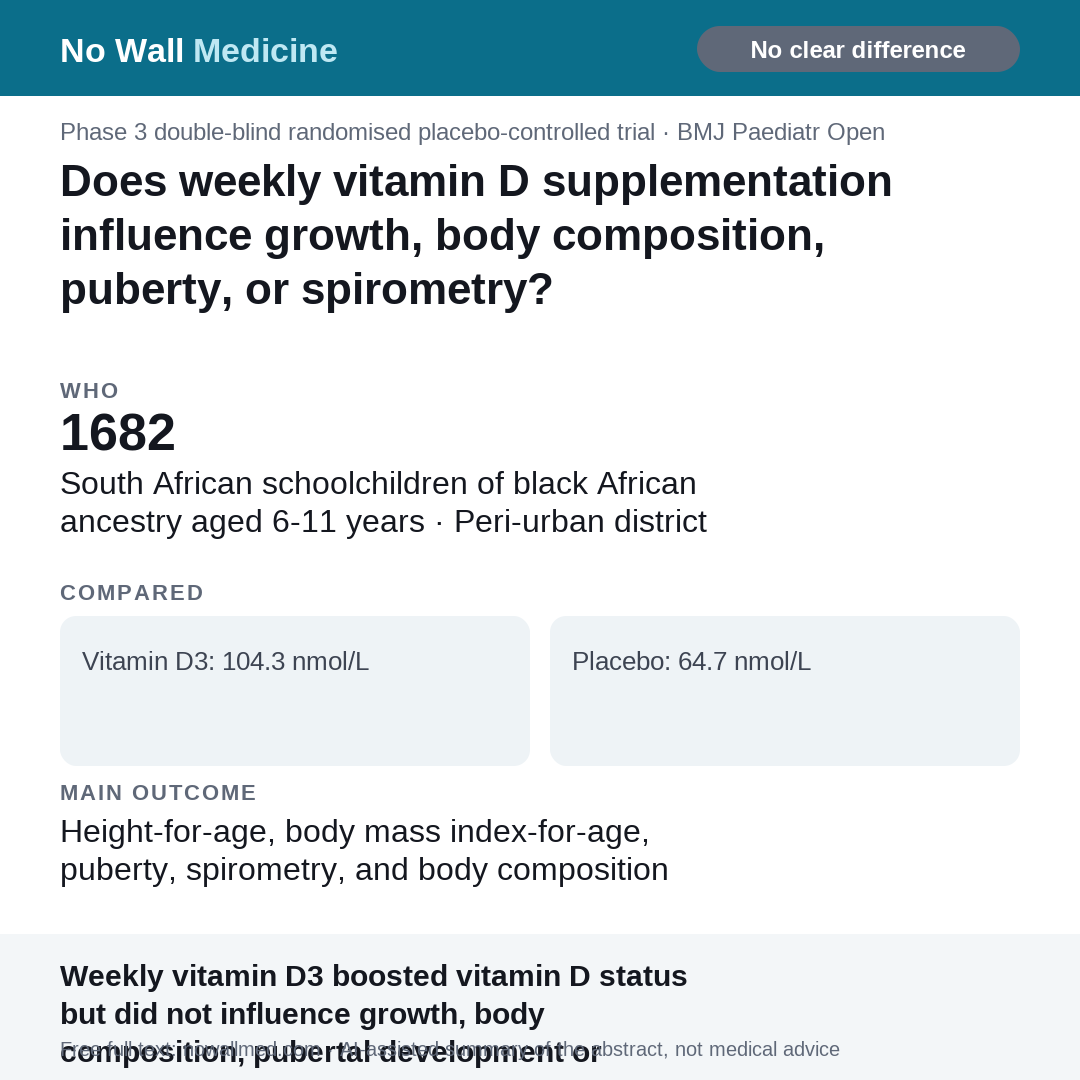
Influence of vitamin D supplementation on growth, body composition, pubertal development and spirometry in South African schoolchildren: a randomised controlled trial (ViDiKids)
Phase 3 double-blind randomised placebo-controlled trialNo clear difference
Does weekly vitamin D supplementation influence growth, body composition, puberty, or spirometry?
Who
1682
South African schoolchildren of black African ancestry aged 6-11 years · Peri-urban district of Cape Town, South Africa
Compared
Vitamin D3: 104.3 nmol/L
Placebo: 64.7 nmol/L
Main outcome
Height-for-age, body mass index-for-age, puberty, spirometry, and body composition
Result: adjusted mean difference -0.08 (95% CI -0.19 to 0.03) for height-for-age
Bottom line: Weekly vitamin D3 boosted vitamin D status but did not influence growth, body composition, pubertal development or spirometric outcomes.
BMJ Paediatr Open · 2024-04-10Download image
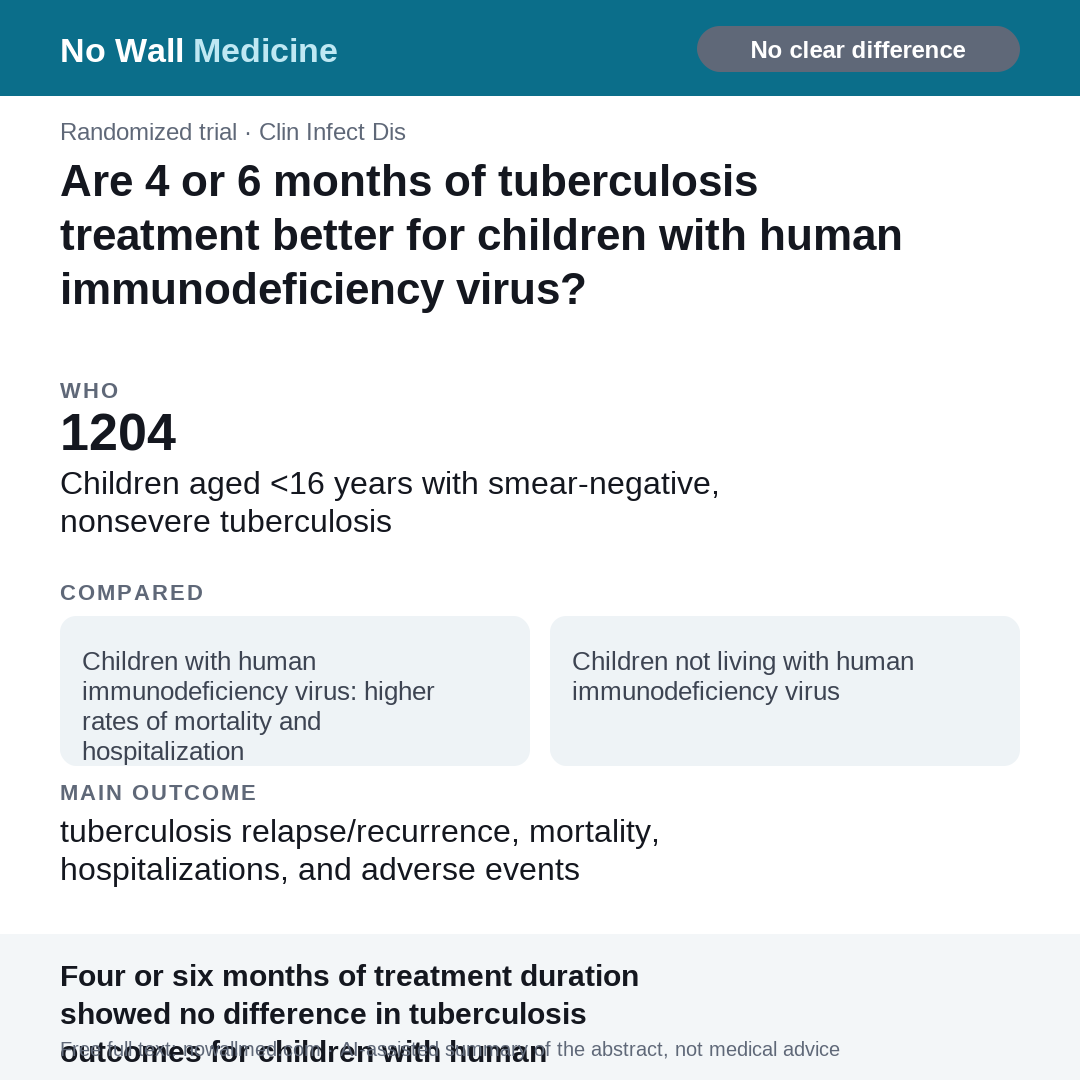
Clinical Outcomes in Children With Human Immunodeficiency Virus Treated for Nonsevere Tuberculosis in the SHINE Trial
Randomized trialNo clear difference
Are 4 or 6 months of tuberculosis treatment better for children with human immunodeficiency virus?
Who
1204
Children aged <16 years with smear-negative, nonsevere tuberculosis
Compared
Children with human immunodeficiency virus: higher rates of mortality and hospitalization
Children not living with human immunodeficiency virus
Main outcome
tuberculosis relapse/recurrence, mortality, hospitalizations, and adverse events
Bottom line: Four or six months of treatment duration showed no difference in tuberculosis outcomes for children with human immunodeficiency virus.
Clin Infect Dis · 2024-04-09Download image
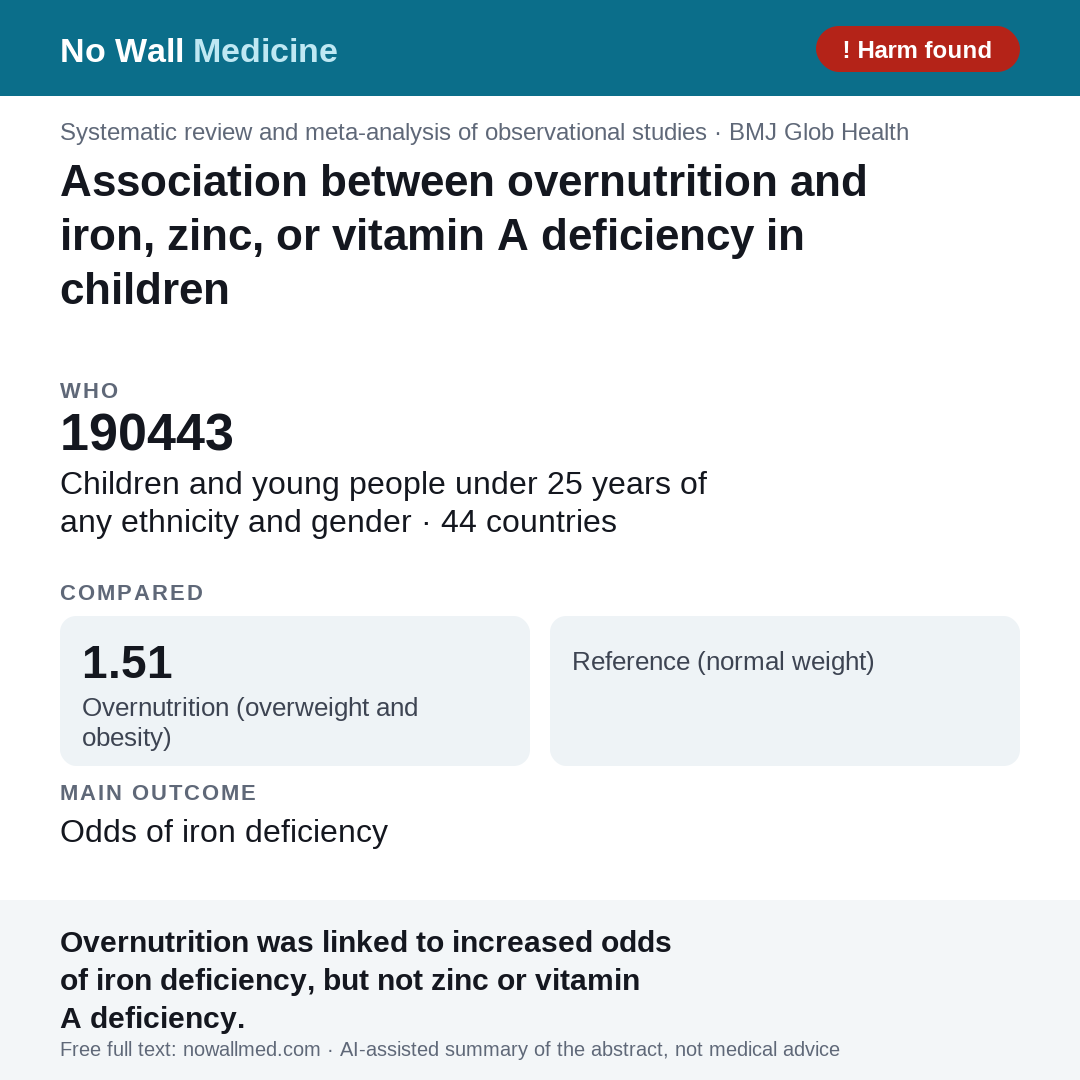
Overnutrition is a risk factor for iron, but not for zinc or vitamin A deficiency in children and young people: a systematic review and meta-analysis
Systematic review and meta-analysis of observational studiesHarm found
Association between overnutrition and iron, zinc, or vitamin A deficiency in children
Who
190443
Children and young people under 25 years of any ethnicity and gender · 44 countries
Compared
1.51Overnutrition (overweight and obesity) (1.20 to 1.82)
Reference (normal weight)
Main outcome
Odds of iron deficiency
Result: OR (95% CI): 1.51 (1.20 to 1.82)
Bottom line: Overnutrition was linked to increased odds of iron deficiency, but not zinc or vitamin A deficiency.
Limitation: Inflammation status was rarely adequately accounted for
BMJ Glob Health · 2024-04-09Download image
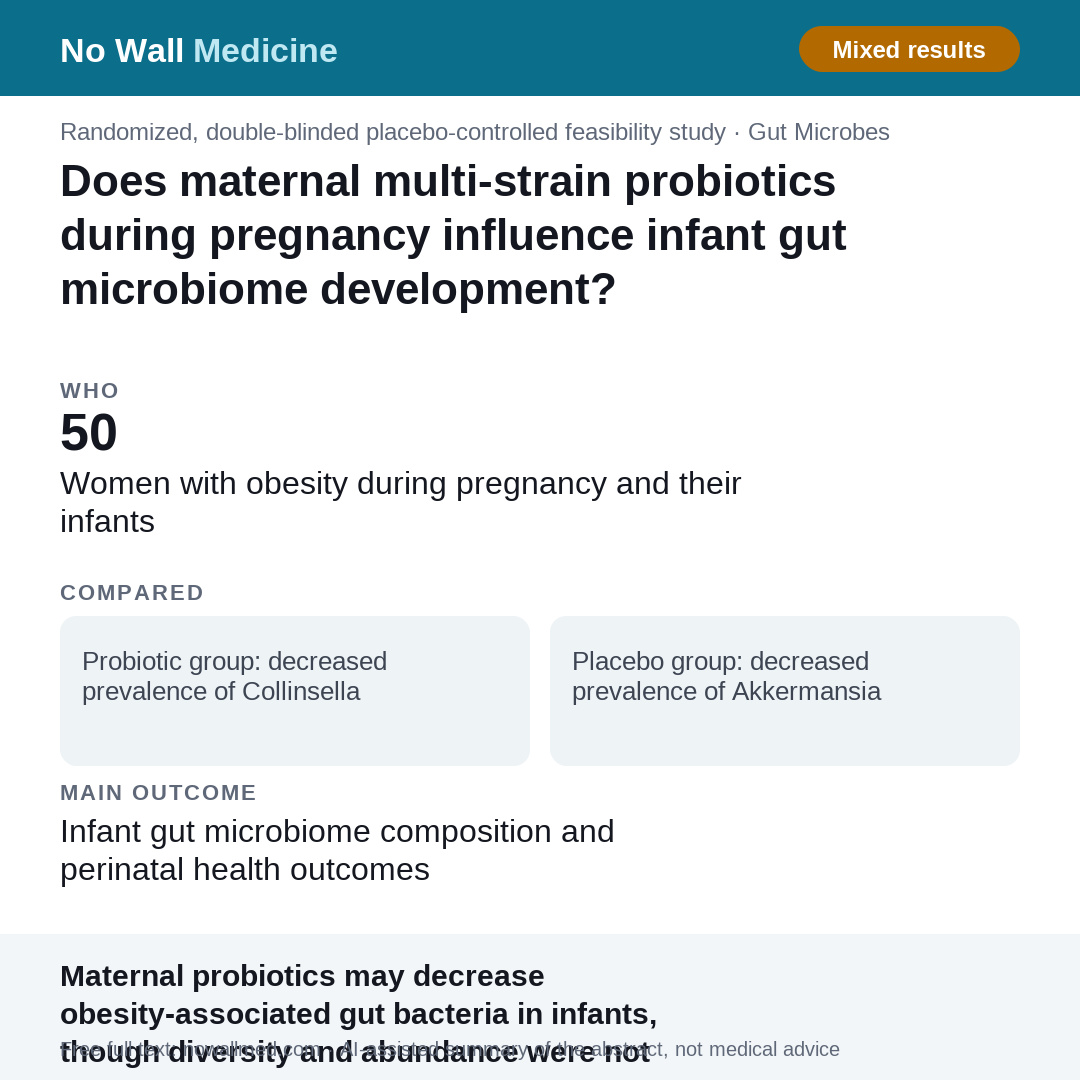
Multi-strain probiotics during pregnancy in women with obesity influence infant gut microbiome development: results from a randomized, double-blind placebo-controlled study
Randomized, double-blinded placebo-controlled feasibility studyMixed results
Does maternal multi-strain probiotics during pregnancy influence infant gut microbiome development?
Who
50
Women with obesity during pregnancy and their infants
Compared
Probiotic group: decreased prevalence of Collinsella
Placebo group: decreased prevalence of Akkermansia
Main outcome
Infant gut microbiome composition and perinatal health outcomes
Bottom line: Maternal probiotics may decrease obesity-associated gut bacteria in infants, though diversity and abundance were not significantly altered.
Limitation: This was a feasibility study.
Gut Microbes · 2024-04-09Download image
Effect of antipsychotics and mood stabilisers on metabolism in bipolar disorder: a network meta-analysis of randomised-controlled trials
Network meta-analysis of randomised-controlled trialsMixed results
What are the metabolic effects of antipsychotics and mood stabilisers in bipolar disorder?
Who
11678
Patients with bipolar disorder
Compared
Antipsychotics
Mood stabilisers
Main outcome
Twelve metabolic indicators
Bottom line: Antipsychotics are effective for bipolar disorder but more likely to disturb metabolism than mood stabilisers.
Funded by: National Key Research and Development Program of China
eClinicalMedicine · 2024-04-05Download image

Maternal education and its influence on child growth and nutritional status during the first two years of life: a systematic review and meta-analysis
Systematic review and meta-analysisMixed results
How does maternal education influence child growth and nutritional status during the first two years?
Who
Healthy children aged two years and under and their mothers
Compared
High maternal education
Low maternal education
Main outcome
Child growth and nutritional outcomes
Bottom line: Maternal education's association with child growth varies based on country income and existing education levels.
Funded by: Tehran University of Medical Sciences
eClinicalMedicine · 2024-04-04Download image

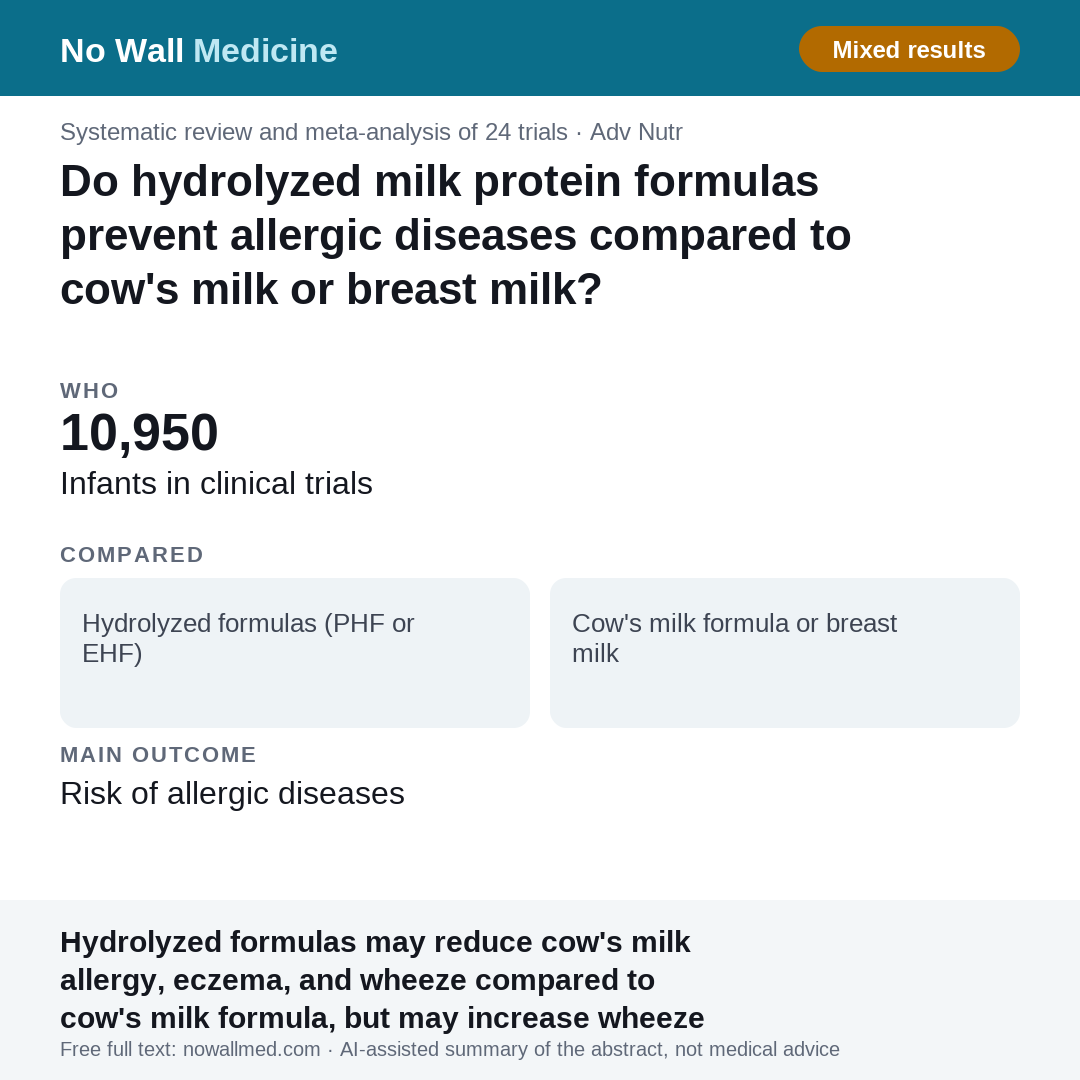
Infant Formulas With Partially or Extensively Hydrolyzed Milk Proteins for the Prevention of Allergic Diseases: A Systematic Review and Meta-Analysis of Clinical Trials
Systematic review and meta-analysis of 24 trialsMixed results
Do hydrolyzed milk protein formulas prevent allergic diseases compared to cow's milk or breast milk?
Who
10,950
Infants in clinical trials
Compared
Hydrolyzed formulas (PHF or EHF)
Cow's milk formula or breast milk
Main outcome
Risk of allergic diseases
Bottom line: Hydrolyzed formulas may reduce cow's milk allergy, eczema, and wheeze compared to cow's milk formula, but may increase wheeze risk versus breast milk.
Limitation: Most trials included only high-risk infants, so more research on non-high-risk infants is warranted.
Adv Nutr · 2024-04-04Download image
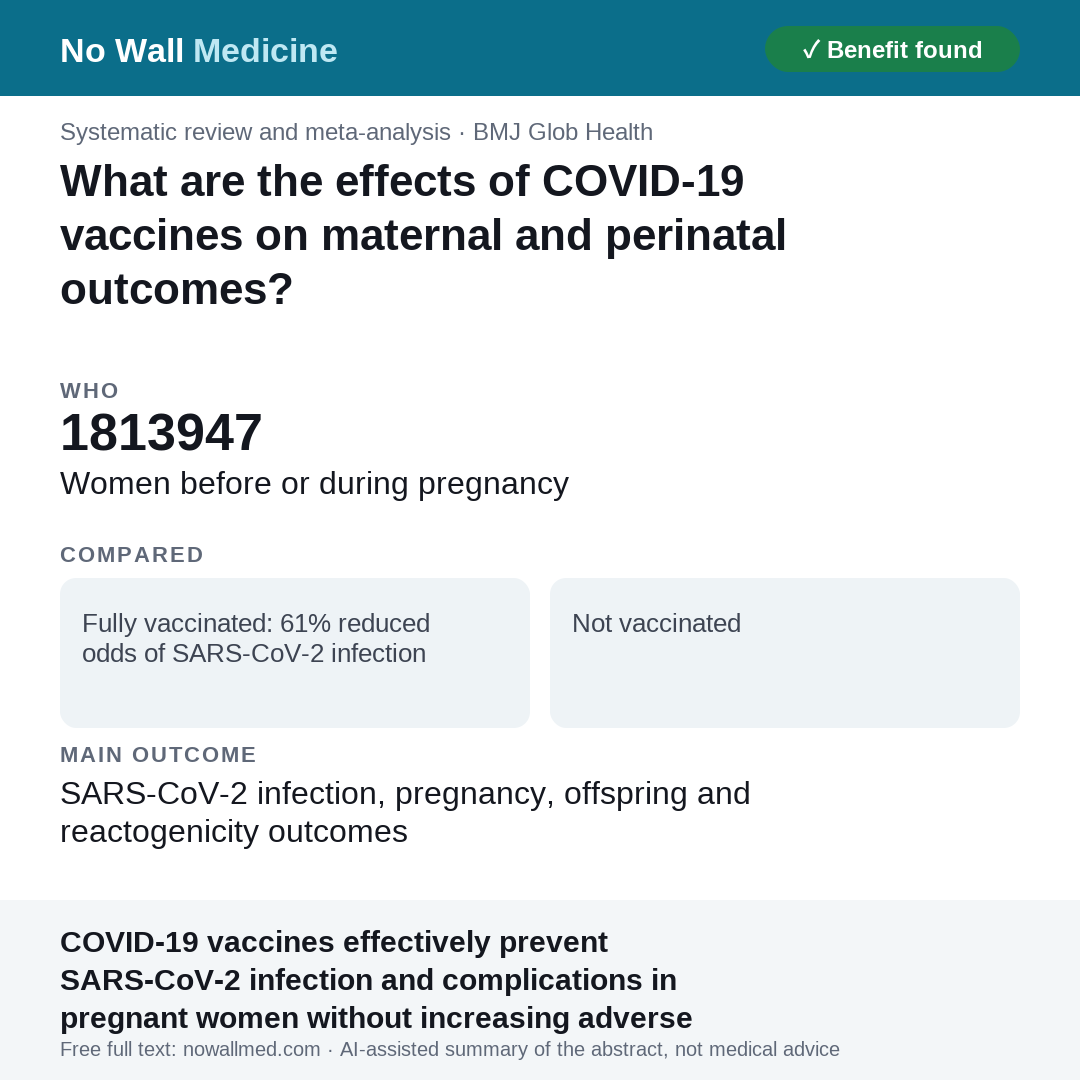
Effectiveness and safety of COVID-19 vaccines on maternal and perinatal outcomes: a systematic review and meta-analysis
Systematic review and meta-analysisBenefit found
What are the effects of COVID-19 vaccines on maternal and perinatal outcomes?
Who
1813947
Women before or during pregnancy
Compared
Fully vaccinated: 61% reduced odds of SARS-CoV-2 infection
Not vaccinated
Main outcome
SARS-CoV-2 infection, pregnancy, offspring and reactogenicity outcomes
Result: OR 0.39, 95% CI 0.21 to 0.75
Bottom line: COVID-19 vaccines effectively prevent SARS-CoV-2 infection and complications in pregnant women without increasing adverse pregnancy or perinatal risks.
BMJ Glob Health · 2024-04-04Download image
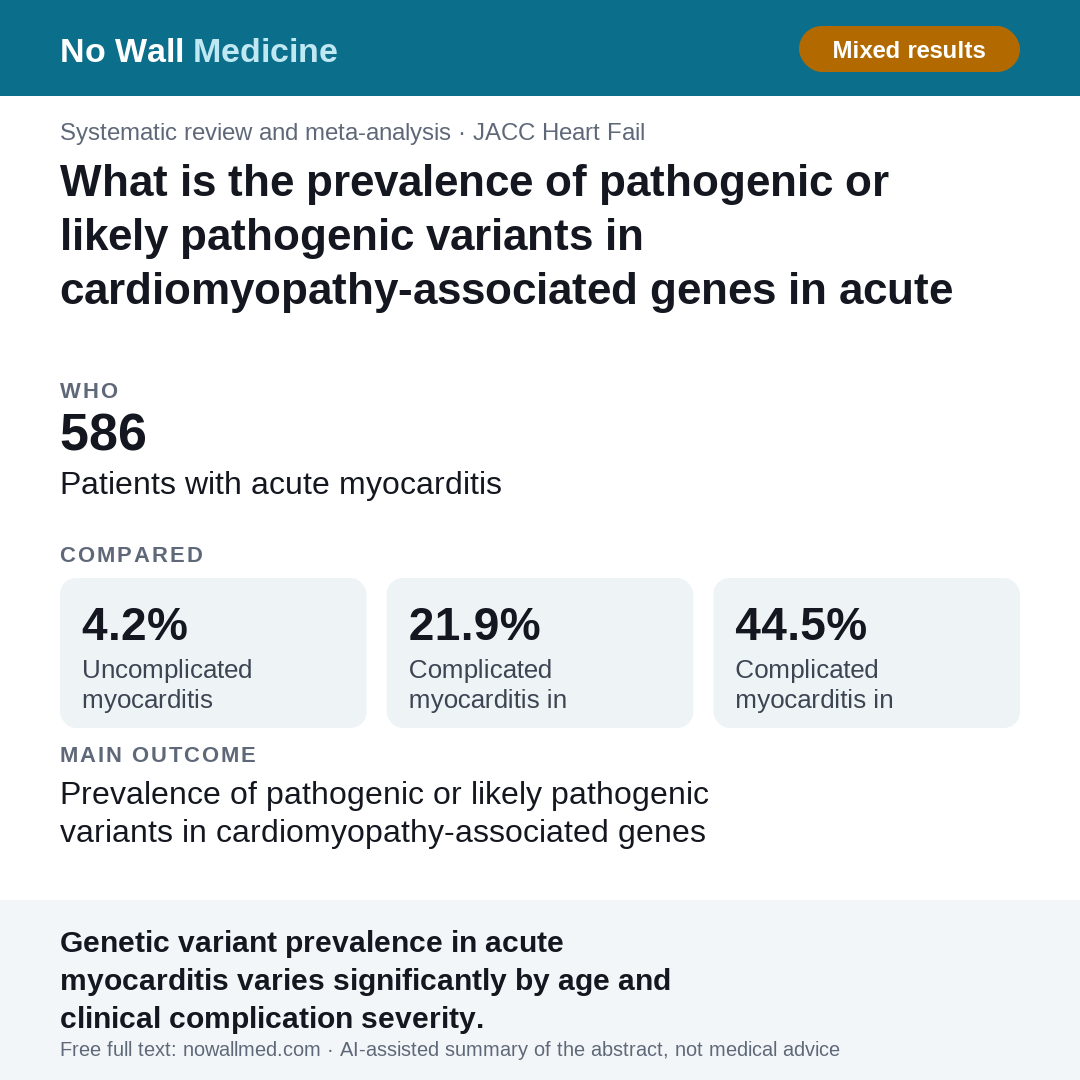
Prevalence of Pathogenic Variants in Cardiomyopathy-Associated Genes in Acute Myocarditis: A Systematic Review and Meta-Analysis
Systematic review and meta-analysisMixed results
What is the prevalence of pathogenic or likely pathogenic variants in cardiomyopathy-associated genes in acute myocarditis?
Who
586
Patients with acute myocarditis
Compared
4.2%Uncomplicated myocarditis (95% CI: 1.8%-7.4%)
21.9%Complicated myocarditis in adults (95% CI: 14.3%-30.5%)
44.5%Complicated myocarditis in children (95% CI: 22.7%-67.4%)
Main outcome
Prevalence of pathogenic or likely pathogenic variants in cardiomyopathy-associated genes
Bottom line: Genetic variant prevalence in acute myocarditis varies significantly by age and clinical complication severity.
JACC Heart Fail · 2024-04-03Download image
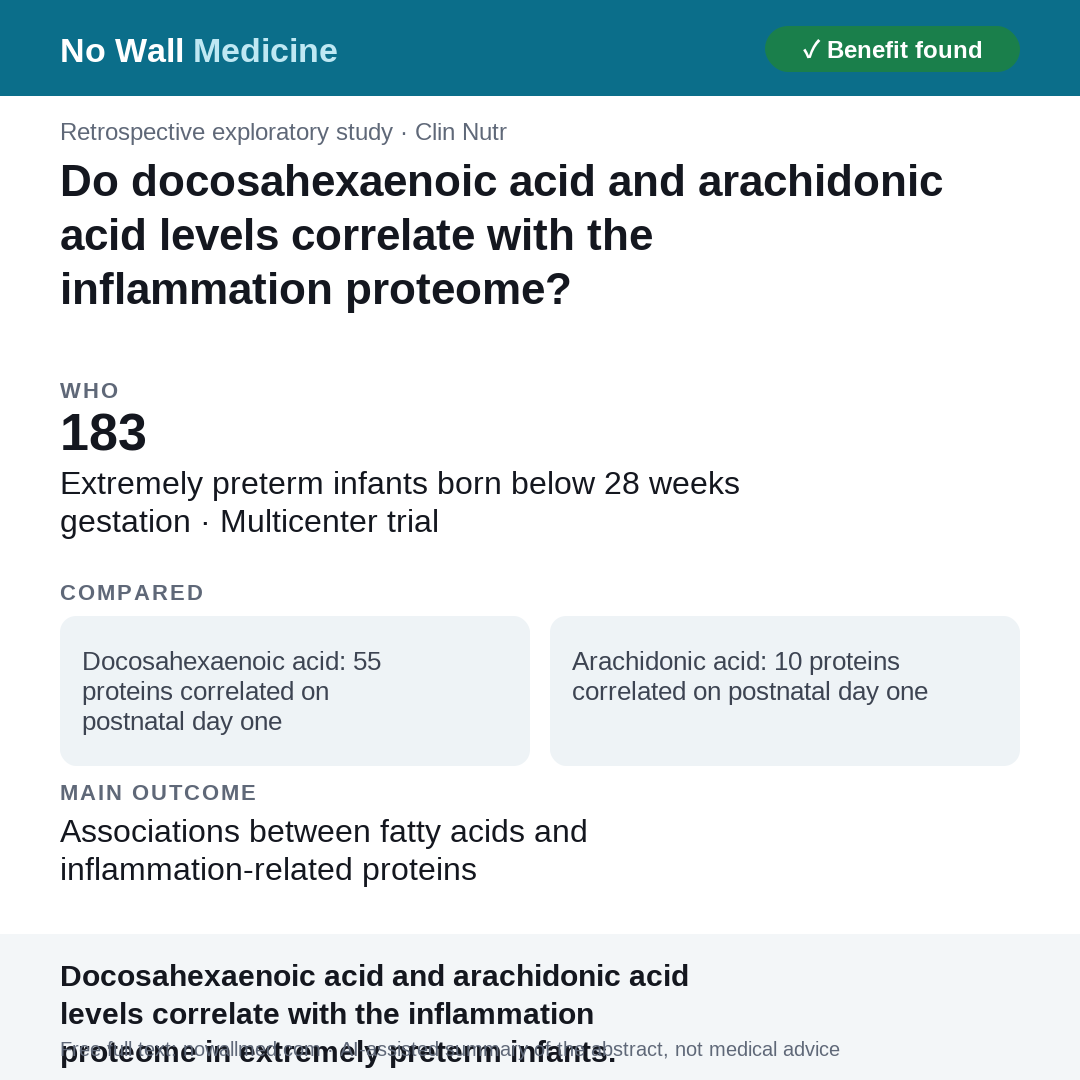
Arachidonic acid and docosahexaenoic acid levels correlate with the inflammation proteome in extremely preterm infants
Retrospective exploratory studyBenefit found
Do docosahexaenoic acid and arachidonic acid levels correlate with the inflammation proteome?
Who
183
Extremely preterm infants born below 28 weeks gestation · Multicenter trial
Compared
Docosahexaenoic acid: 55 proteins correlated on postnatal day one
Arachidonic acid: 10 proteins correlated on postnatal day one
Main outcome
Associations between fatty acids and inflammation-related proteins
Bottom line: Docosahexaenoic acid and arachidonic acid levels correlate with the inflammation proteome in extremely preterm infants.
Clin Nutr · 2024-04-03Download image
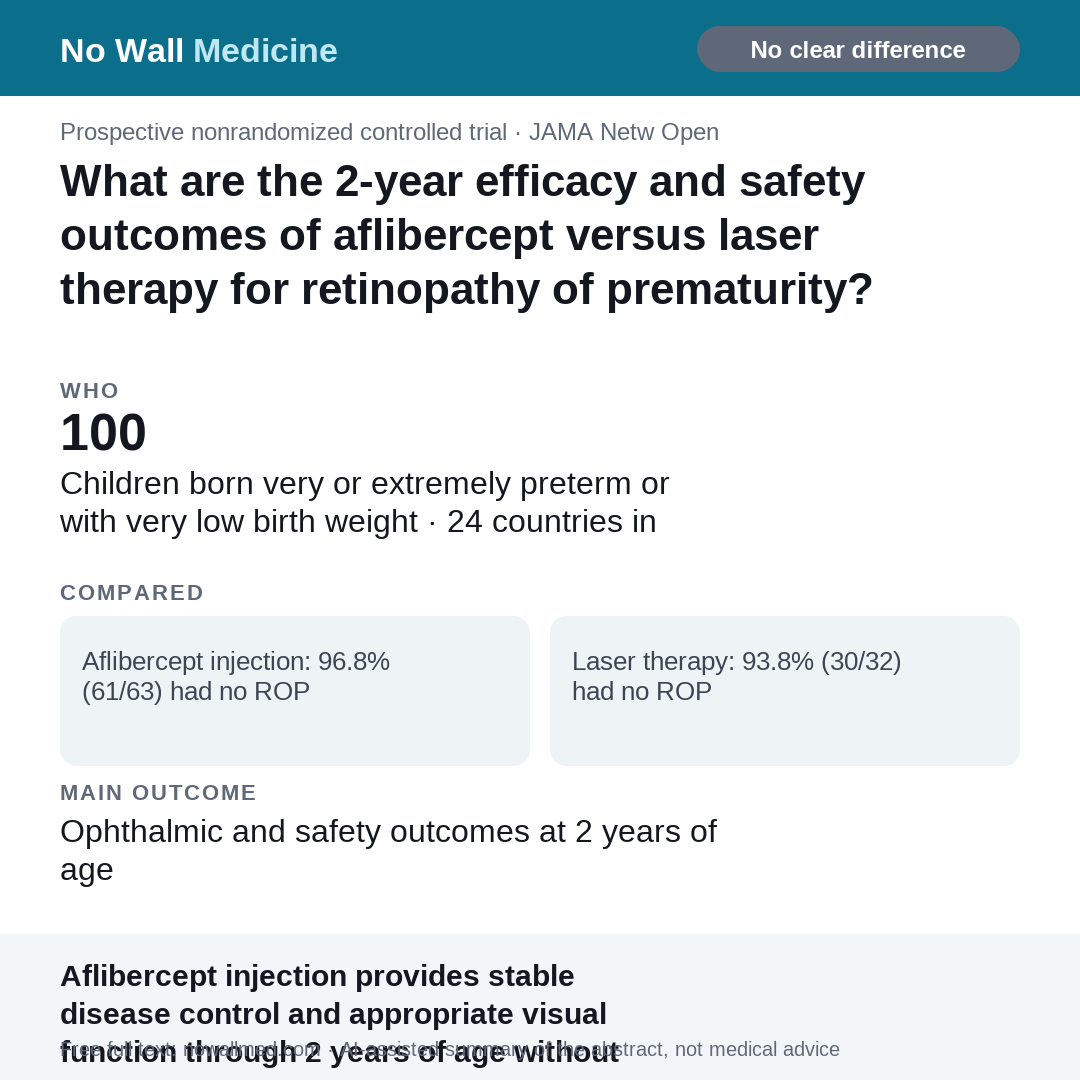
Intravitreal Aflibercept vs Laser Therapy for Retinopathy of Prematurity: Two-Year Efficacy and Safety Outcomes in the Nonrandomized Controlled Trial FIREFLEYE next
Prospective nonrandomized controlled trialNo clear difference
What are the 2-year efficacy and safety outcomes of aflibercept versus laser therapy for retinopathy of prematurity?
Who
100
Children born very or extremely preterm or with very low birth weight · 24 countries in Asia, Europe, and South America
Compared
Aflibercept injection: 96.8% (61/63) had no ROP
Laser therapy: 93.8% (30/32) had no ROP
Main outcome
Ophthalmic and safety outcomes at 2 years of age
Bottom line: Aflibercept injection provides stable disease control and appropriate visual function through 2 years of age without affecting neurodevelopment.
JAMA Netw Open · 2024-04-01Download image
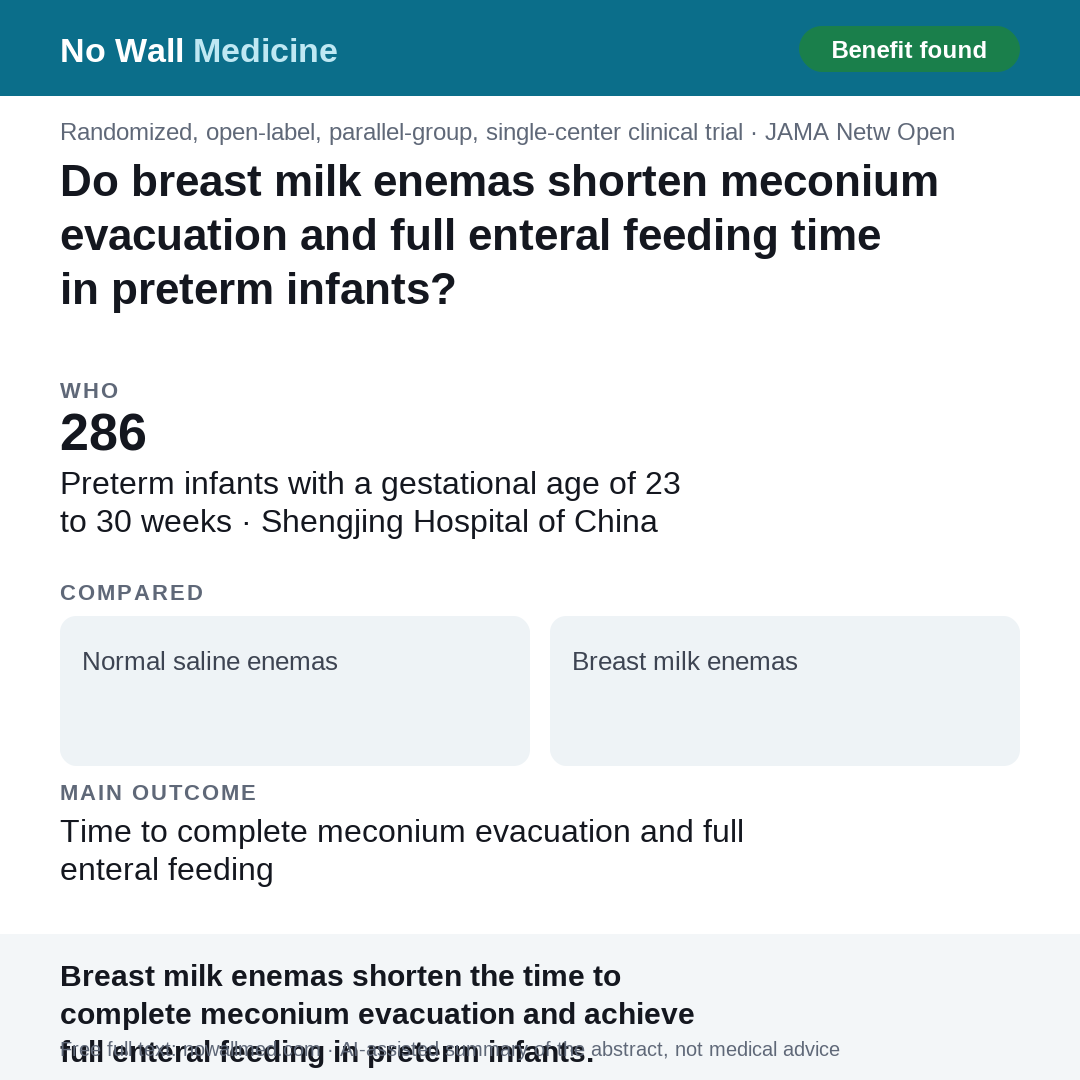
Breast Milk Enema and Meconium Evacuation Among Preterm Infants: A Randomized Clinical Trial
Randomized, open-label, parallel-group, single-center clinical trialBenefit found
Do breast milk enemas shorten meconium evacuation and full enteral feeding time in preterm infants?
Who
286
Preterm infants with a gestational age of 23 to 30 weeks · Shengjing Hospital of China Medical University in Shenyang
Compared
Normal saline enemas
Breast milk enemas
Main outcome
Time to complete meconium evacuation and full enteral feeding
Result: -2.2 days (95% CI, -3.2 to -1.2 days) for meconium evacuation
Bottom line: Breast milk enemas shorten the time to complete meconium evacuation and achieve full enteral feeding in preterm infants.
JAMA Netw Open · 2024-04-01Download image
Mosquito Bed Net Use and Burkitt Lymphoma Incidence in Sub-Saharan Africa: A Systematic Review and Meta-Analysis
Systematic review and meta-analysisBenefit found
Does insecticide-treated bed net rollout associate with Burkitt lymphoma incidence in sub-Saharan Africa?
Who
5226
Children and adolescents aged 0 to 15 years · 17 sub-Saharan African countries
Compared
Before insecticide-treated bed net introduction: 1.36 (95% CI, 0.88-2.10) per 100 000 person-years
After insecticide-treated bed net introduction: 0.76 (95% CI, 0.50-1.16) per 100 000 person-years
Main outcome
Burkitt lymphoma incidence rates
Result: 2% (95% CI, 1%-4%) reduction per 1-percentage point increase in mean insecticide-treated bed net use
Bottom line: Large-scale insecticide-treated bed net rollout was associated with a reduction in Burkitt lymphoma burden among children.
Limitation: Published data may not be representative of all incidence rates across sub-Saharan Africa.
JAMA Netw Open · 2024-04-01Download image

Visual Impairment and Suicide Risk: A Systematic Review and Meta-Analysis
Systematic review and meta-analysisKey finding
Is visual impairment associated with increased risk of suicide and suicidal behavior?
Who
5692769
5,692,769 unique individuals from 31 population-based studies
Compared
Individuals with visual impairment: OR 2.49 (95% CI, 1.71-3.63) for suicidal behavior
Individuals without visual impairment
Main outcome
Odds ratio of suicidal behavior, ideation, and suicide death
Result: odds ratio 2.49 (95% CI, 1.71-3.63) for suicidal behavior
Bottom line: Visual impairment is associated with increased risk of suicidal behavior, ideation, and suicide death, especially among adolescents.
Limitation: High heterogeneity was observed for suicidal behavior and suicidal ideation.
JAMA Netw Open · 2024-04-01Download image

Treatments and Outcomes Among Patients with Sydenham Chorea: A Meta-Analysis
Meta-analysisBenefit found
What are the clinical characteristics and treatment factors associated with Sydenham chorea outcomes?
Who
1479
Patients with a final diagnosis of Sydenham chorea
Compared
Immunotherapy: hazard ratio for chorea resolution, 1.51 (95% CI, 1.05-2.19)
2.8 monthsNo corticosteroids (95% CI, 2.0-3.0)
1.2 months1 or more months of corticosteroids (95% CI, 1.2-2.0)
Main outcome
chorea duration, monophasic course, and functional outcome
Result: hazard ratio 1.51 (95% CI 1.05-2.19)
Bottom line: Immunotherapy and corticosteroids are associated with faster chorea resolution and a monophasic disease course.
Limitation: This synthesis of retrospective data
JAMA Netw Open · 2024-04-01Download image

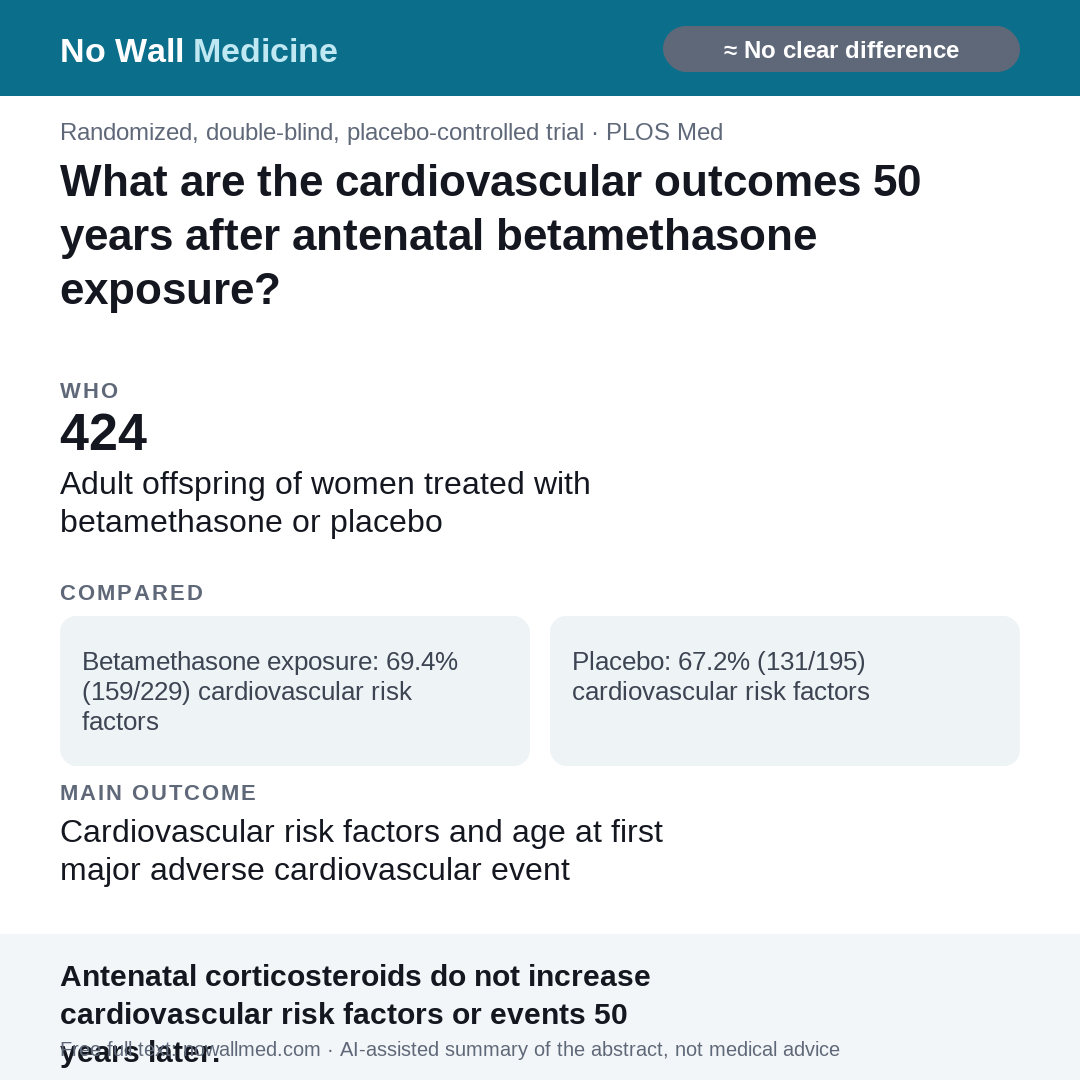
Cardiovascular outcomes 50 years after antenatal exposure to betamethasone: Follow-up of a randomised double-blind, placebo-controlled trial
Randomized, double-blind, placebo-controlled trialNo clear difference
What are the cardiovascular outcomes 50 years after antenatal betamethasone exposure?
Who
424
Adult offspring of women treated with betamethasone or placebo
Compared
Betamethasone exposure: 69.4% (159/229) cardiovascular risk factors
Placebo: 67.2% (131/195) cardiovascular risk factors
Main outcome
Cardiovascular risk factors and age at first major adverse cardiovascular event
Result: adjusted relative risk 1.02 (95% CI 0.89 to 1.18)
Bottom line: Antenatal corticosteroids do not increase cardiovascular risk factors or events 50 years later.
Limitation: Follow-up rate and lack of in-person assessments.
PLOS Med · 2024-04-01Download image