Visual abstracts
New randomized trials and meta-analyses from leading journals at a glance: who was studied, what was compared, and what was found. Every paper is free to read in full.
All specialtiesCardiology 3453Oncology 2968Gastroenterology & Hepatology 1356Infectious Disease 2386Neurology 1395Psychiatry & Mental Health 1637Pulmonology 1474Critical Care 991Endocrinology & Diabetes 1754Pediatrics 2099Surgery 1838Orthopedics & Sports Medicine 639Neurosurgery 410Cardiothoracic & Vascular Surgery 409Plastic & Reconstructive Surgery 483Nephrology 748Rheumatology 549Hematology 779Dermatology 427Ophthalmology 382Obstetrics & Gynecology 1181Public & Global Health 662Radiology & Imaging 489Anesthesiology 705Urology 575ENT (Otolaryngology) 378Emergency Medicine 373Allergy & Immunology 215Geriatrics 727Family Medicine & Primary Care 401Medical Genetics & Genomics 437Pathology & Laboratory Medicine 112Physical Medicine & Rehabilitation 538Palliative Care 318Nutrition 1034Digital Health & AI 1630General Medicine 249
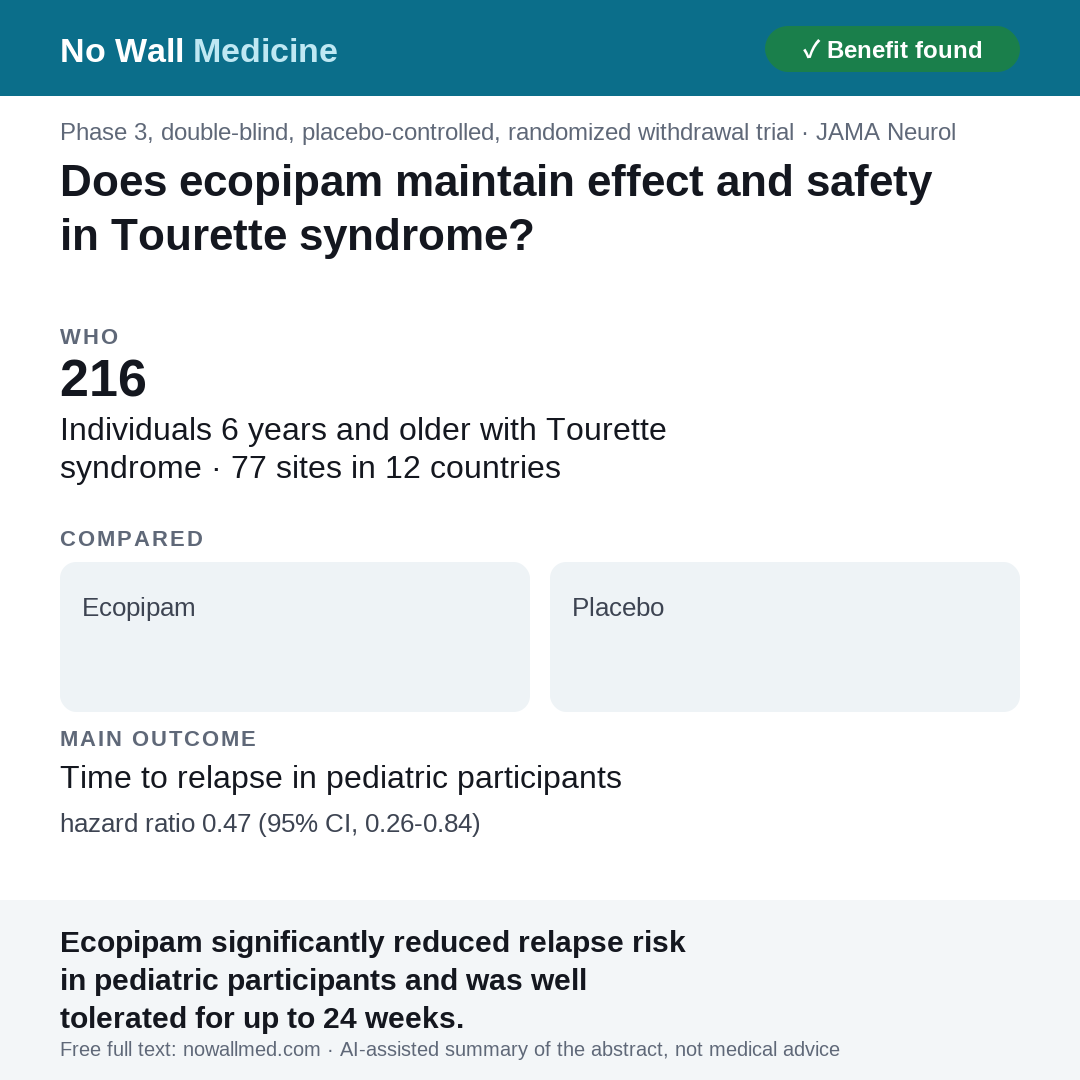
Intrapartum and Early Postpartum Use of Automated Insulin Delivery in Type 1 Diabetes: A Prespecified Analysis of the CIRCUIT Randomized Controlled Trial
Prespecified analysis of a randomized controlled trialBenefit found
Does automated insulin delivery improve glycemic effectiveness and safety intrapartum and early postpartum?
Who
Participants with type 1 diabetes
Compared
Closed-loop: 79.6% time in pregnancy-specific glucose range
Standard-care: 64.8% time in pregnancy-specific glucose range
Main outcome
Percentage of time in pregnancy-specific glucose range
Result: mean adjusted difference 13.2 percentage points (95% CI 5.2, 21.2)
Bottom line: Automated insulin delivery resulted in superior intrapartum and early postpartum glycemia compared with standard care without safety concerns.
Diabetes Care · 2026-05-27Download image
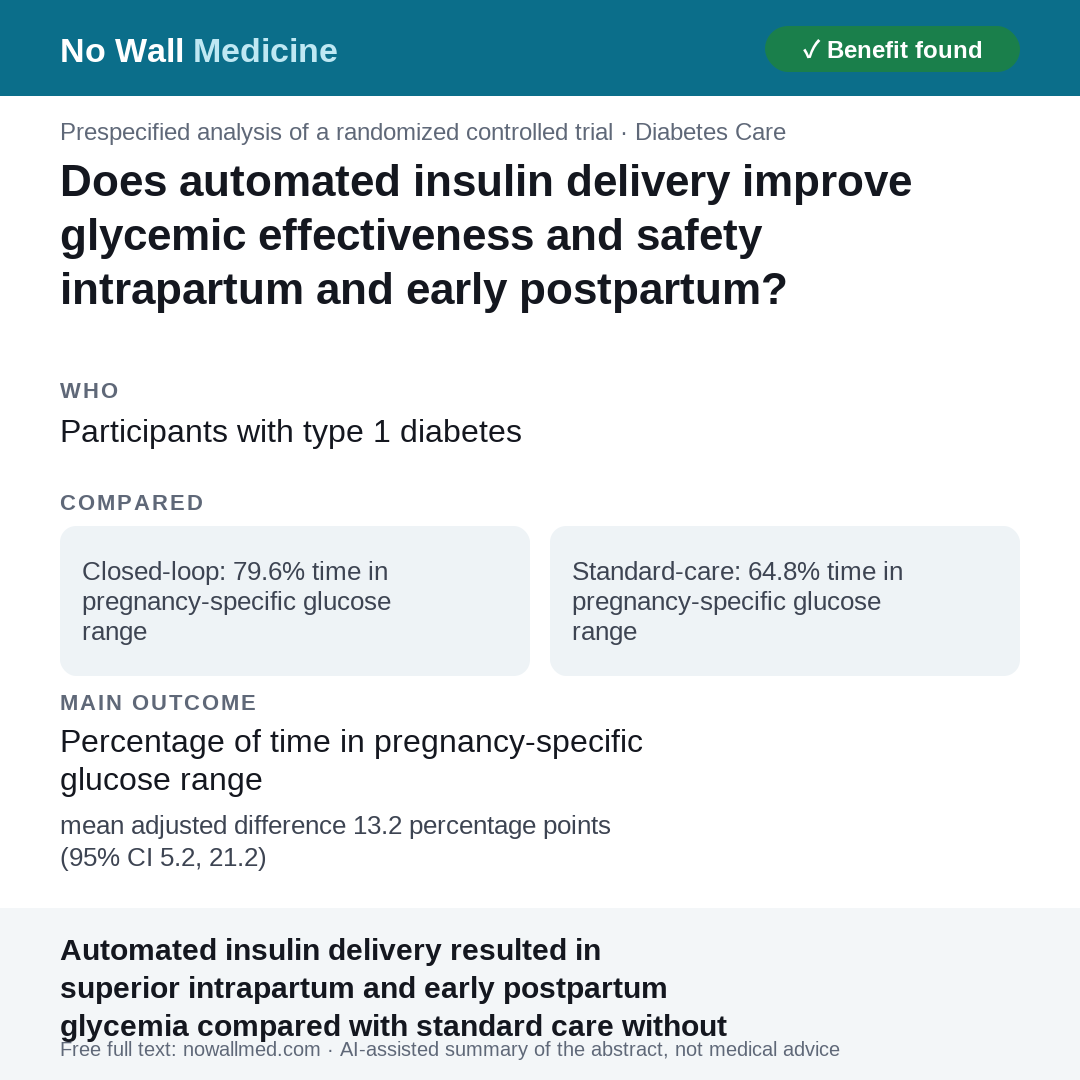
DiaBetter Together: Outcomes of a Randomized Controlled Trial Evaluating a Peer Mentor Behavioral Intervention for Young Adults With Type 1 Diabetes During the Transfer From Pediatric to Adult Care
Single-site randomized clinical trialMixed results
Does a peer mentor behavioral intervention improve outcomes for young adults transitioning to adult diabetes care?
Who
100
Young adults aged 17-25 years with type 1 diabetes · Single site
Compared
DiaBetter Together intervention
Usual care
Main outcome
Glycemic control (HbA1c), psychosocial outcomes, and transfer to adult care
Bottom line: Peer mentor intervention improved psychosocial outcomes but did not significantly improve glycemic control or transfer to adult care.
Limitation: Reduced sample size due to the coronavirus disease 2019 pandemic may have limited power.
Diabetes Care · 2026-05-27Download image
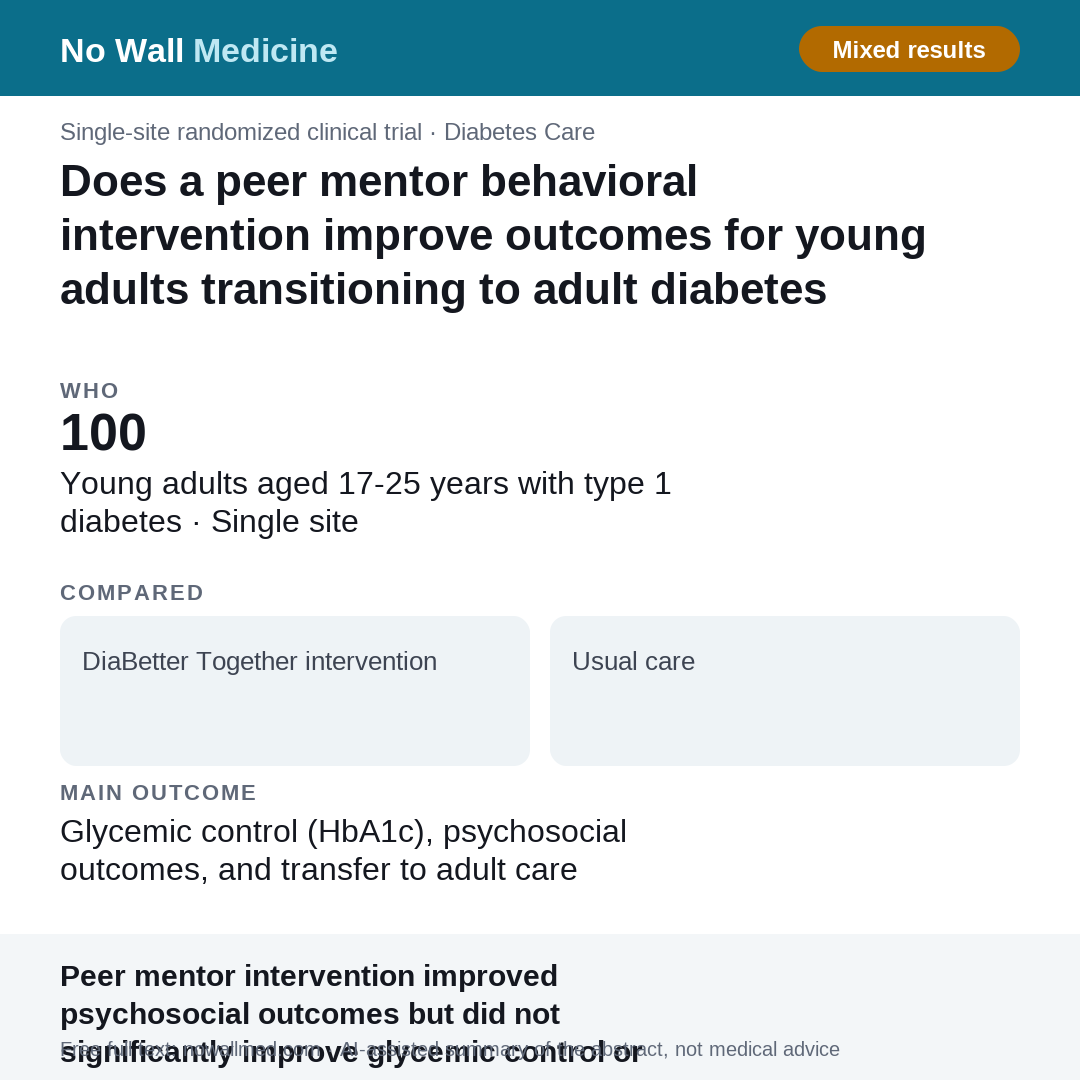
Portal-Venous Hypothermic Oxygenated Perfusion for Liver Transplant: A Randomized Clinical Trial
Multicenter, randomized, open-label trialBenefit found
Does portal-venous hypothermic oxygenated perfusion impact outcomes after liver transplant?
Who
219
Recipients of extended-criteria donor livers after brain death or circulatory death · 15 US liver transplant centers
Compared
20.2%Hypothermic oxygenated perfusion after static cold storage (22/109)
37.3%Static cold storage only (41/110)
Main outcome
Early allograft dysfunction
Result: rate difference, -17.1%; 95% CI, -27.2 to -7.0
Bottom line: Portal-venous hypothermic oxygenated perfusion reduced early allograft dysfunction, improved model for early allograft function scores, and shortened hospital stay.
JAMA Surg · 2026-05-27Download image
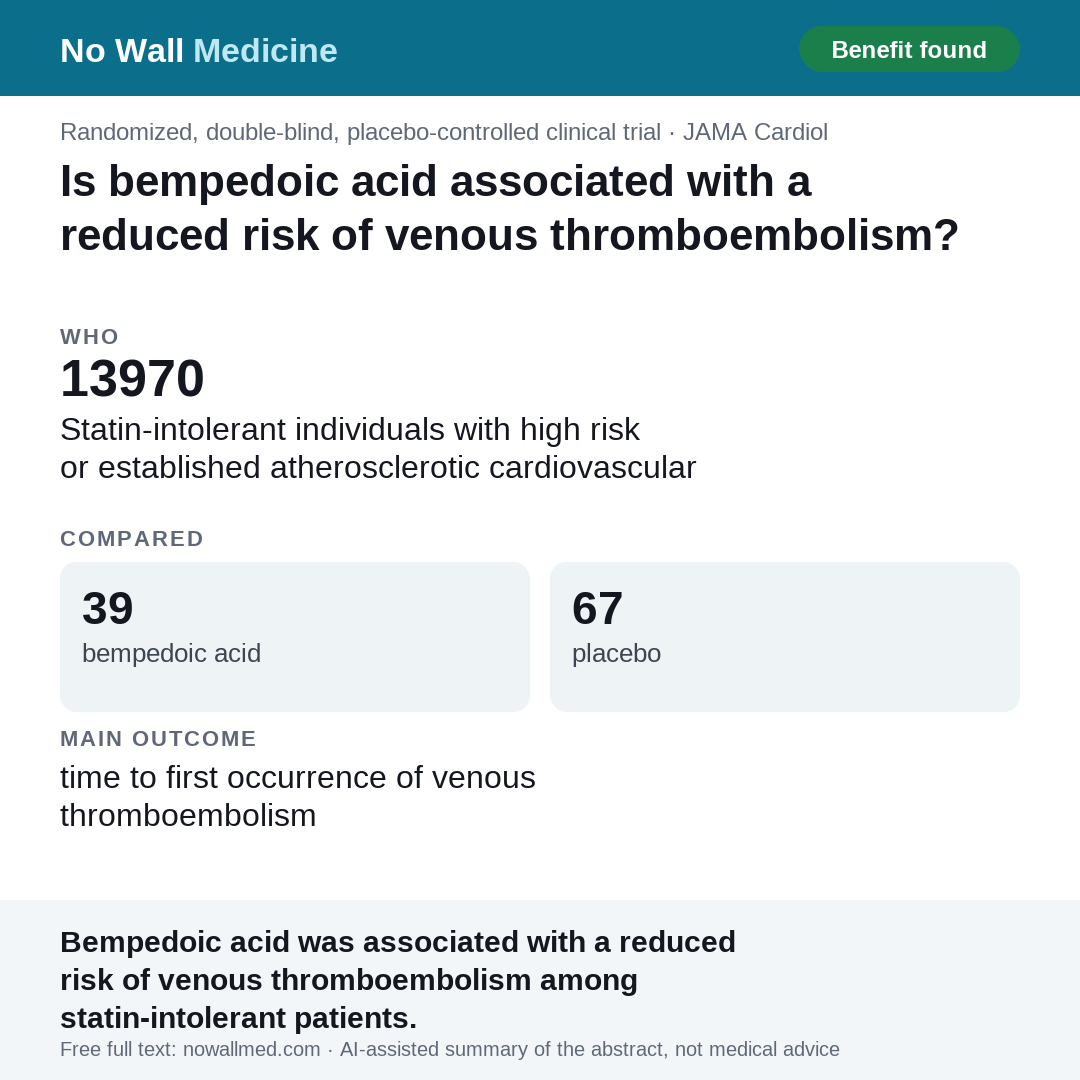
Bempedoic Acid and Venous Thromboembolism Risk Among Statin-Intolerant Patients: A Post Hoc Analysis of the CLEAR Outcomes Randomized Clinical Trial
Randomized, double-blind, placebo-controlled clinical trialBenefit found
Is bempedoic acid associated with a reduced risk of venous thromboembolism?
Who
13970
Statin-intolerant individuals with high risk or established atherosclerotic cardiovascular disease · 1250 centers across 32 countries
Compared
39bempedoic acid
67placebo
Main outcome
time to first occurrence of venous thromboembolism
Result: hazard ratio 0.58 (95% CI, 0.39-0.86)
Bottom line: Bempedoic acid was associated with a reduced risk of venous thromboembolism among statin-intolerant patients.
JAMA Cardiol · 2026-05-27Download image
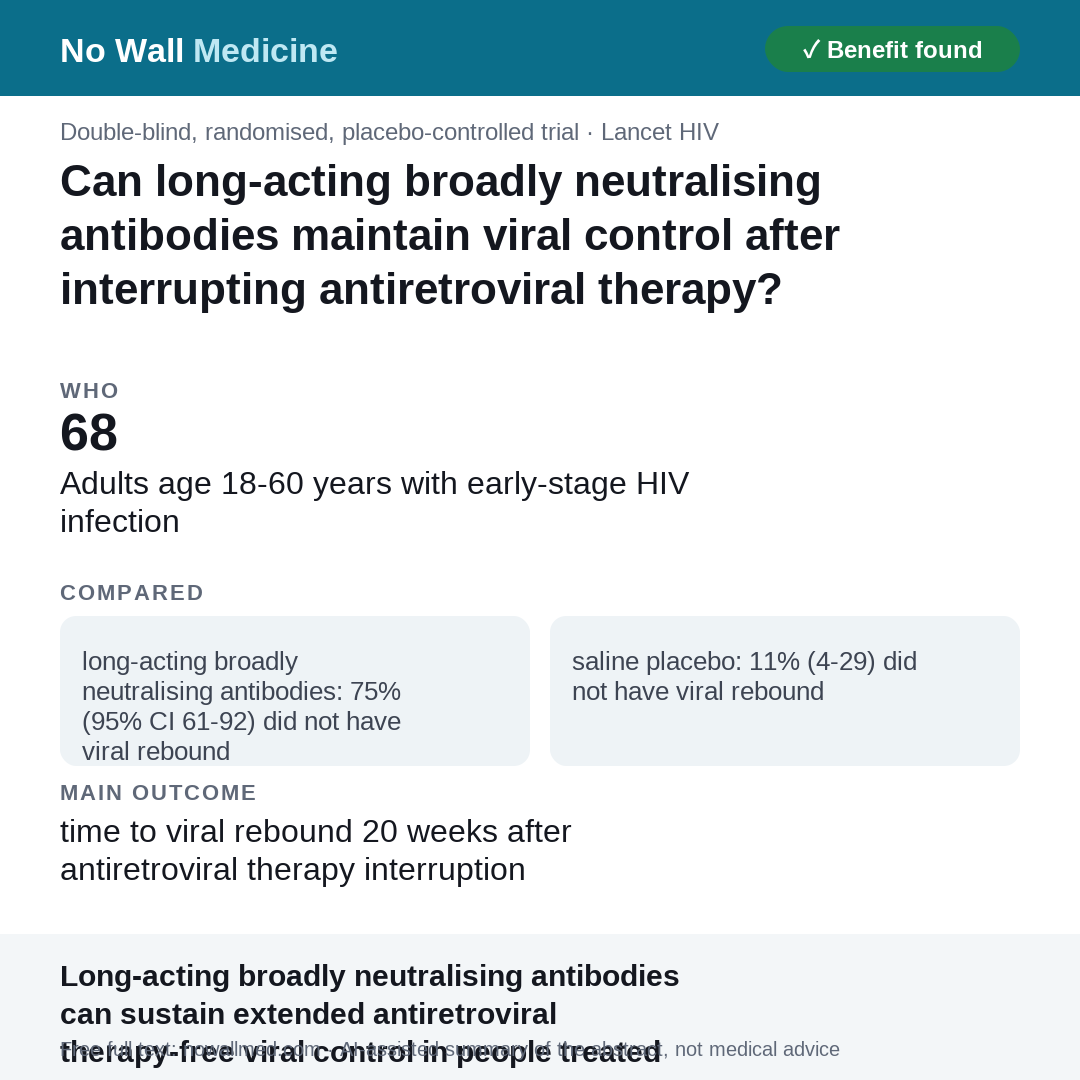
Time to HIV rebound after infusion of long-acting broadly neutralising antibodies 3BNC117-LS and 10-1074-LS and analytical treatment interruption (the RIO trial): a double-blind, randomised, placebo-controlled trial
Double-blind, randomised, placebo-controlled trialBenefit found
Can long-acting broadly neutralising antibodies maintain viral control after interrupting antiretroviral therapy?
Who
68
Adults age 18-60 years with early-stage HIV infection
Compared
long-acting broadly neutralising antibodies: 75% (95% CI 61-92) did not have viral rebound
saline placebo: 11% (4-29) did not have viral rebound
Main outcome
time to viral rebound 20 weeks after antiretroviral therapy interruption
Result: hazard ratio 0·09 (95% CI 0·04-0·21)
Bottom line: Long-acting broadly neutralising antibodies can sustain extended antiretroviral therapy-free viral control in people treated during early-stage HIV.
Funded by: Gates Foundation
Lancet HIV · 2026-05-27Download image
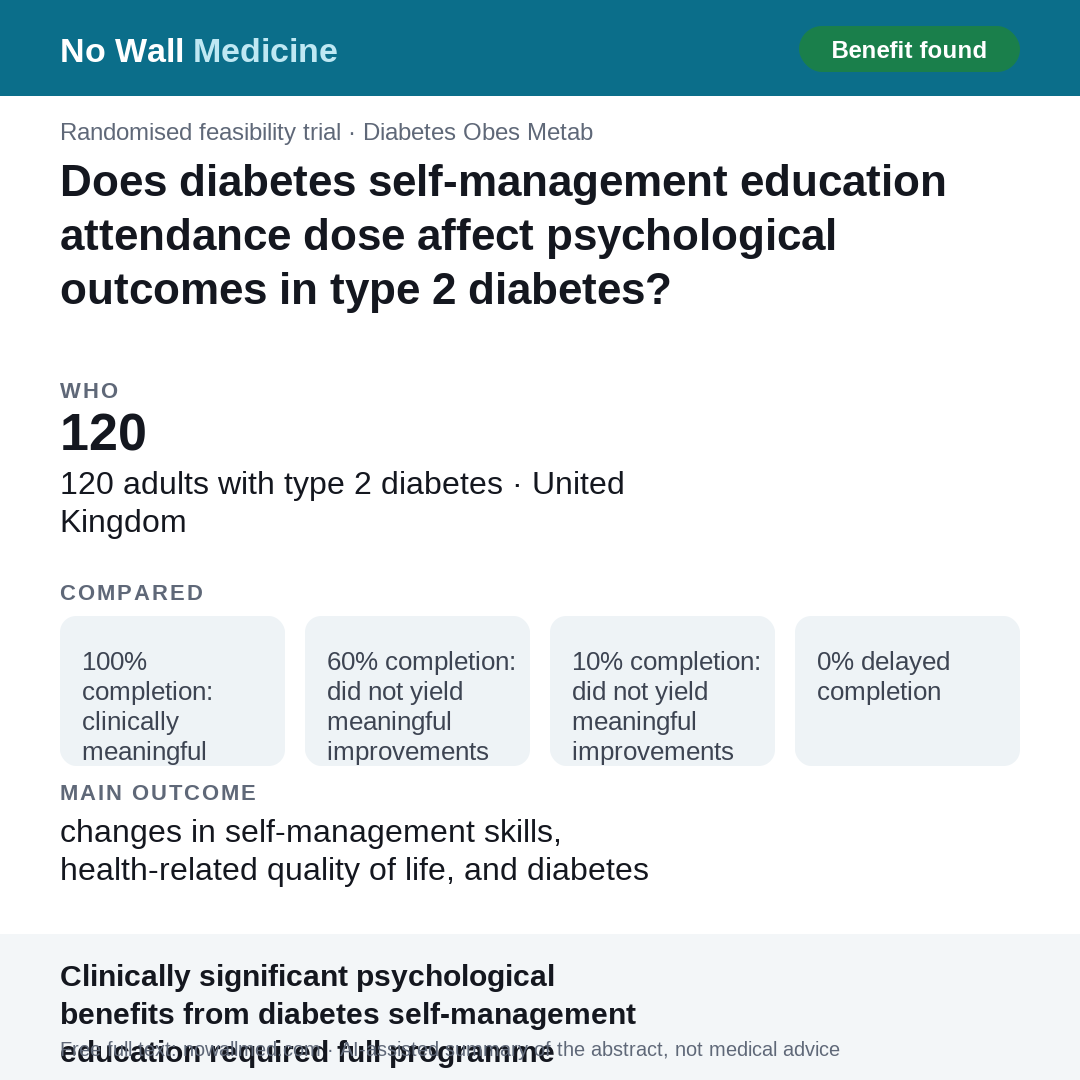
Randomised Controlled Feasibility Trial of Face-To-Face Diabetes Self-Management Education Shows High Completion Rates Are Needed to Improve Patient-Reported Outcomes
Randomised feasibility trialBenefit found
Does diabetes self-management education attendance dose affect psychological outcomes in type 2 diabetes?
Who
120
120 adults with type 2 diabetes · United Kingdom
Compared
100% completion: clinically meaningful improvements across all psychological domains
60% completion: did not yield meaningful improvements
10% completion: did not yield meaningful improvements
0% delayed completion
Main outcome
changes in self-management skills, health-related quality of life, and diabetes distress
Result: ηp 2 = 0.16-0.17 (95% CI [0.04, 0.27])
Bottom line: Clinically significant psychological benefits from diabetes self-management education required full programme completion.
Diabetes Obes Metab · 2026-05-27Download image
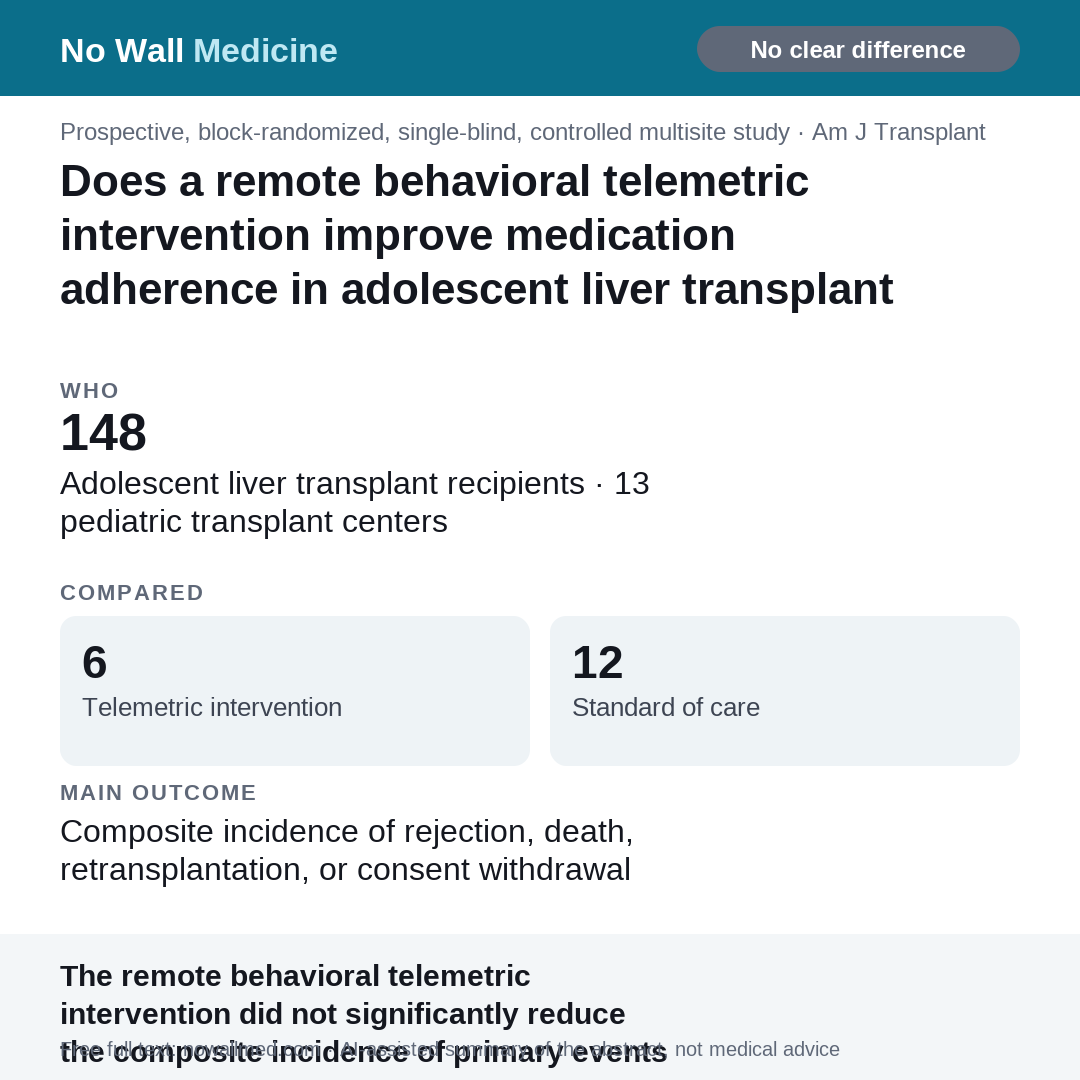
A remote intervention to improve medication nonadherence guided by a marker of risk derived from the electronic health records of adolescent transplant recipients
Prospective, block-randomized, single-blind, controlled multisite studyNo clear difference
Does a remote behavioral telemetric intervention improve medication adherence in adolescent liver transplant recipients?
Who
148
Adolescent liver transplant recipients · 13 pediatric transplant centers
Compared
6Telemetric intervention (8.3%)
12Standard of care (15.8%)
Main outcome
Composite incidence of rejection, death, retransplantation, or consent withdrawal
Result: relative risk 0.57 (95% confidence interval 0.24-1.35)
Bottom line: The remote behavioral telemetric intervention did not significantly reduce the composite incidence of primary events compared to standard care.
Am J Transplant · 2026-05-27Download image
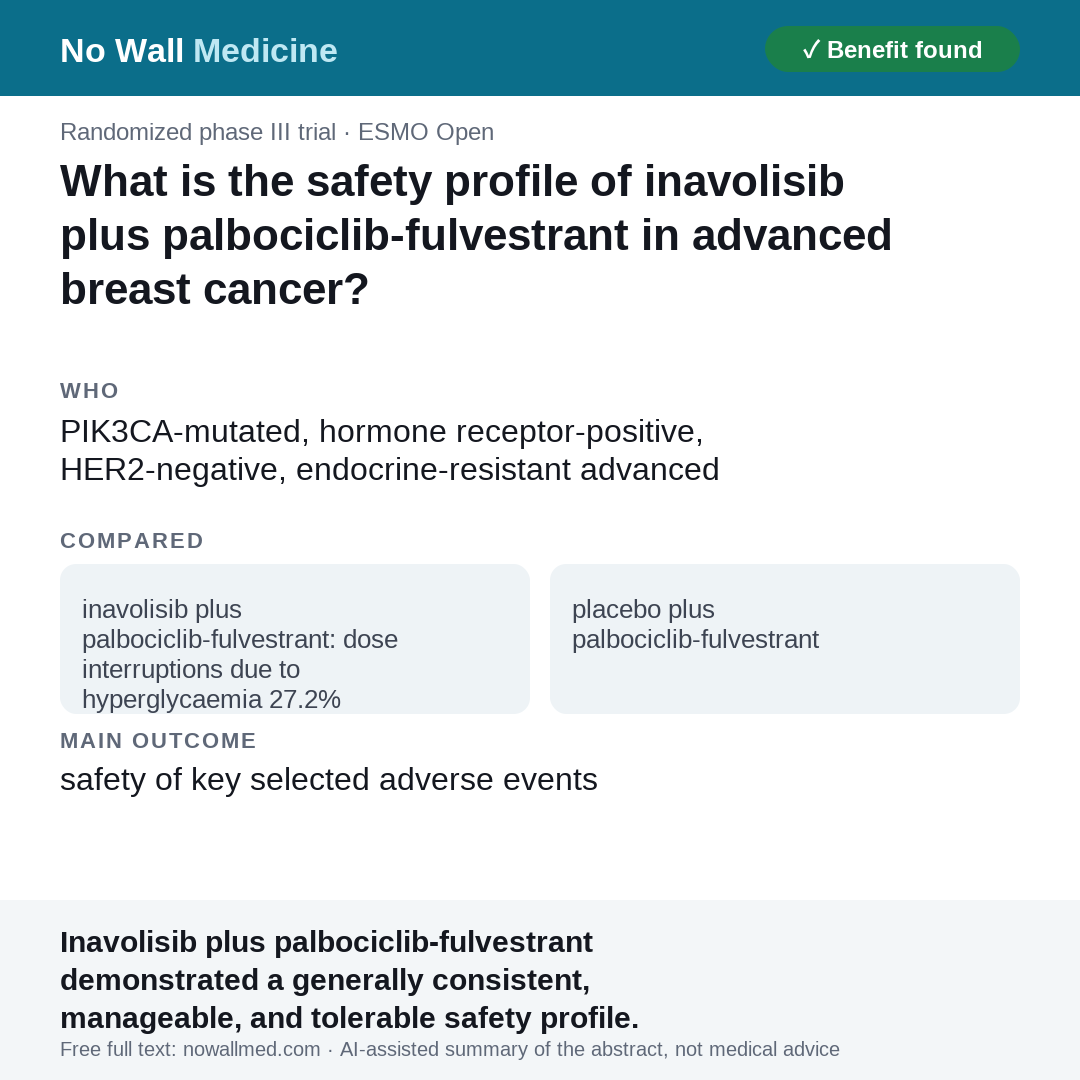
Safety analyses of the INAVO120 randomised phase III trial of inavolisib or placebo with palbociclib-fulvestrant in patients with PIK3CA-mutated, hormone receptor-positive, HER2-negative, endocrine-resistant advanced breast cancer
Randomized phase III trialBenefit found
What is the safety profile of inavolisib plus palbociclib-fulvestrant in advanced breast cancer?
Who
PIK3CA-mutated, hormone receptor-positive, HER2-negative, endocrine-resistant advanced breast cancer
Compared
inavolisib plus palbociclib-fulvestrant: dose interruptions due to hyperglycaemia 27.2%
placebo plus palbociclib-fulvestrant
Main outcome
safety of key selected adverse events
Bottom line: Inavolisib plus palbociclib-fulvestrant demonstrated a generally consistent, manageable, and tolerable safety profile.
ESMO Open · 2026-05-27Download image
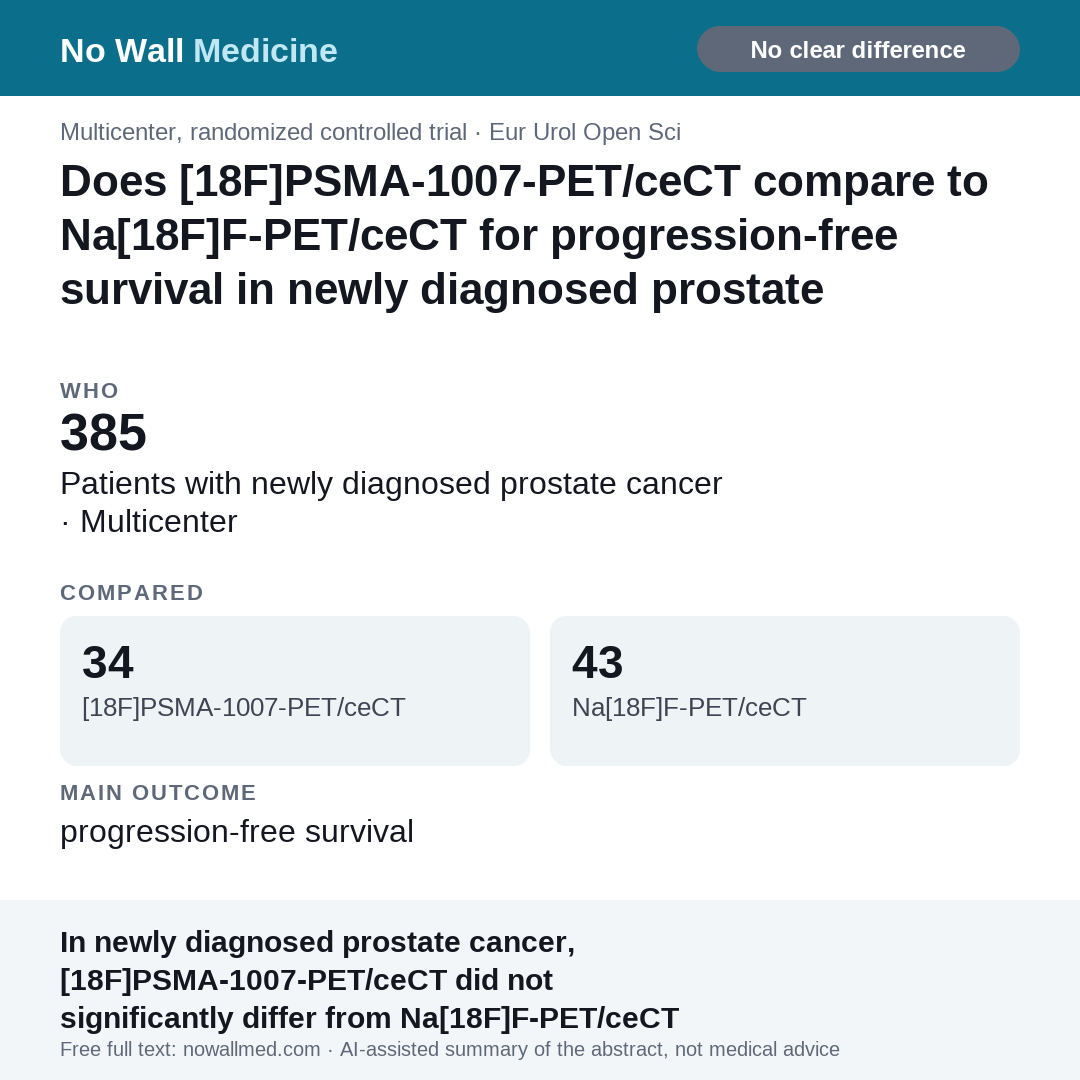
Progression-free Survival Following Primary Staging with [18F]PSMA-1007-PET/ceCT Versus Na[18F]F-PET/ceCT in Prostate Cancer: Results from the PRISMA-PET Randomized Controlled Trial
Multicenter, randomized controlled trialNo clear difference
Does [18F]PSMA-1007-PET/ceCT compare to Na[18F]F-PET/ceCT for progression-free survival in newly diagnosed prostate cancer?
Who
385
Patients with newly diagnosed prostate cancer · Multicenter
Compared
34[18F]PSMA-1007-PET/ceCT (18%)
43Na[18F]F-PET/ceCT (23%)
Main outcome
progression-free survival
Result: hazard ratio 0.74 (95% CI 0.47-1.16)
Bottom line: In newly diagnosed prostate cancer, [18F]PSMA-1007-PET/ceCT did not significantly differ from Na[18F]F-PET/ceCT regarding progression-free survival.
Limitation: The main limitation was the variation in types of progression-free survival events between the two groups.
Eur Urol Open Sci · 2026-05-27Download image
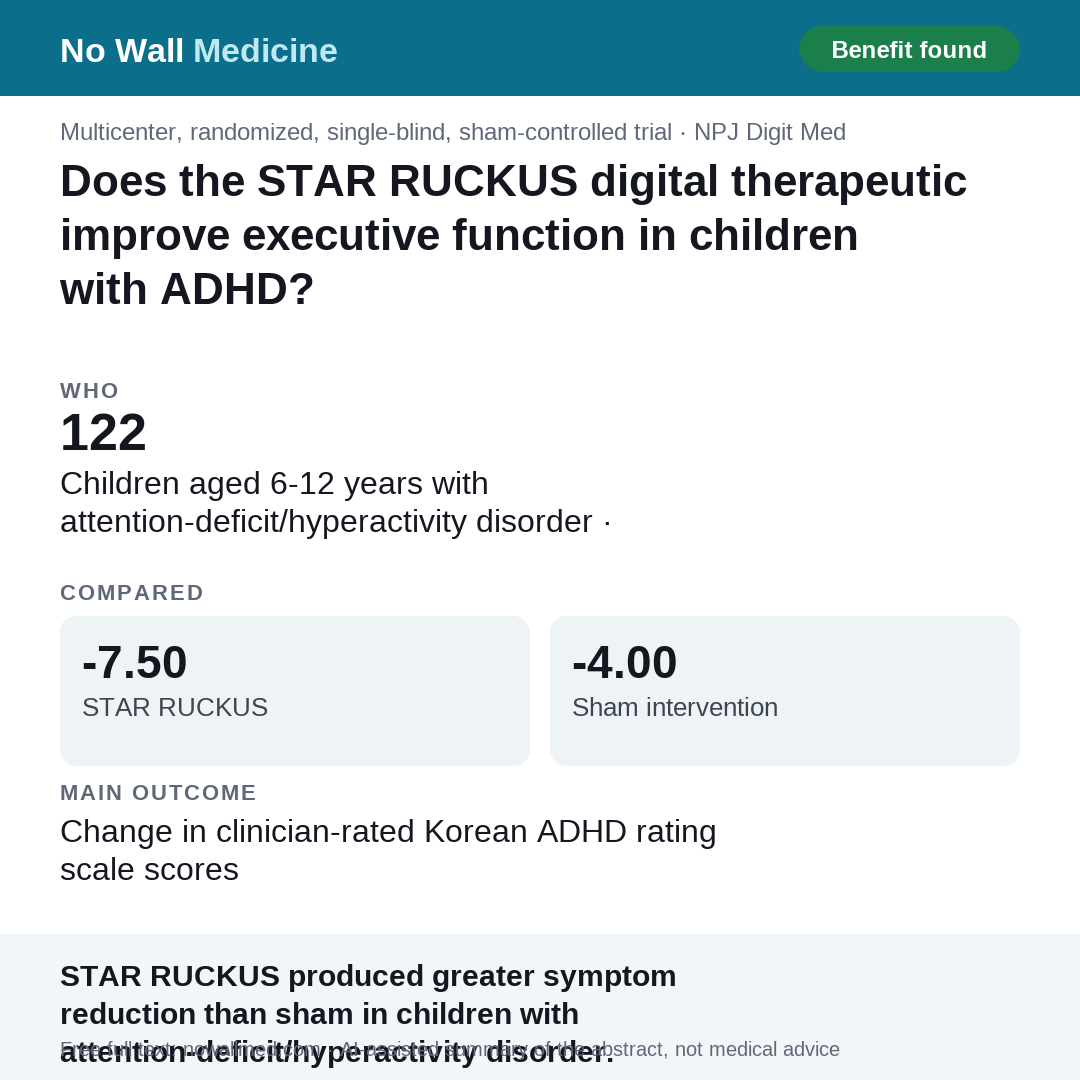
Multicenter randomized trial of a digital therapeutic game for executive function in children with ADHD
Multicenter, randomized, single-blind, sham-controlled trialBenefit found
Does the STAR RUCKUS digital therapeutic improve executive function in children with ADHD?
Who
122
Children aged 6-12 years with attention-deficit/hyperactivity disorder · Multicenter
Compared
-7.50STAR RUCKUS
-4.00Sham intervention
Main outcome
Change in clinician-rated Korean ADHD rating scale scores
Bottom line: STAR RUCKUS produced greater symptom reduction than sham in children with attention-deficit/hyperactivity disorder.
NPJ Digit Med · 2026-05-27Download image
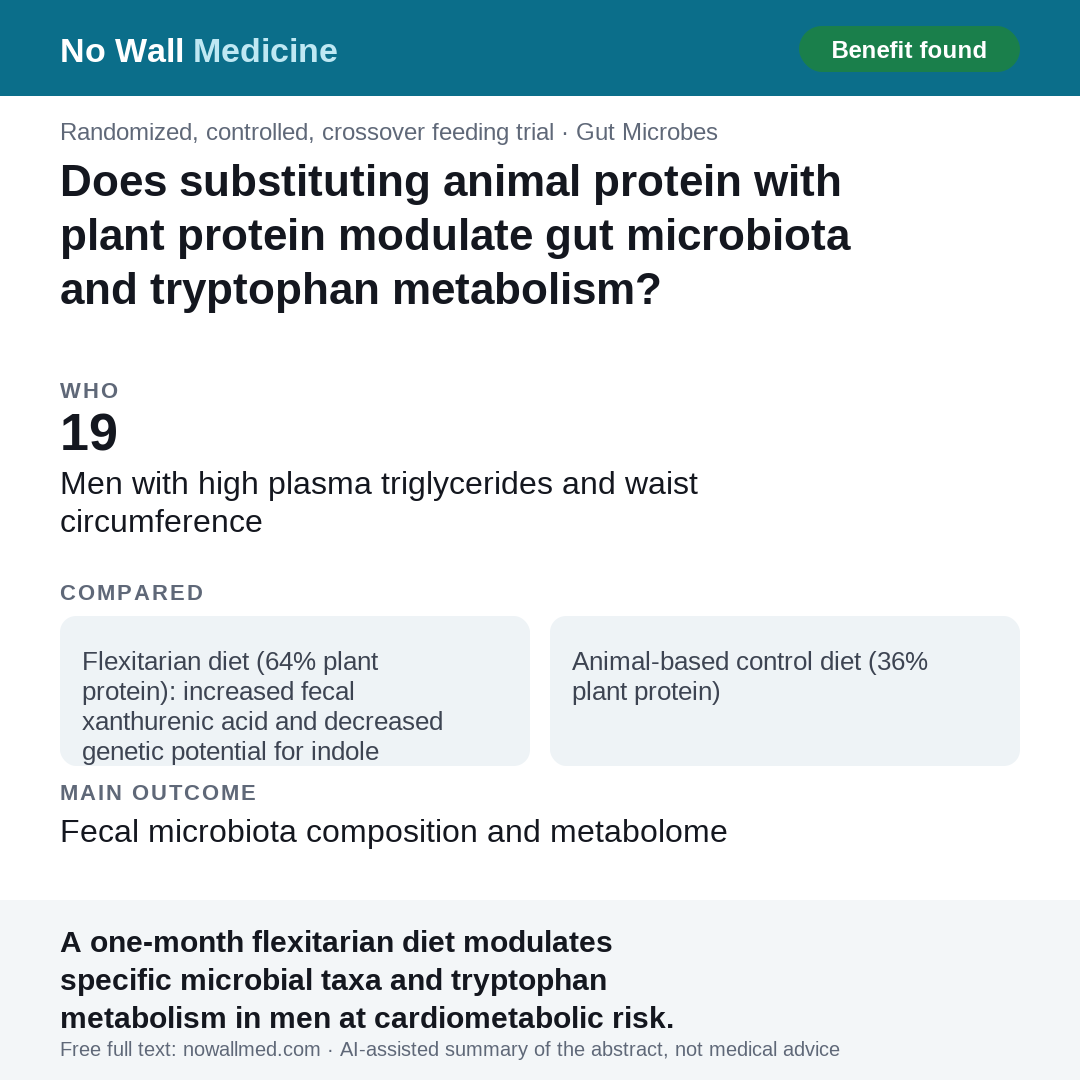
Increasing plant protein sources in the diet modulates gut microbiota and tryptophan metabolism in men at cardiometabolic risk
Randomized, controlled, crossover feeding trialBenefit found
Does substituting animal protein with plant protein modulate gut microbiota and tryptophan metabolism?
Who
19
Men with high plasma triglycerides and waist circumference
Compared
Flexitarian diet (64% plant protein): increased fecal xanthurenic acid and decreased genetic potential for indole production
Animal-based control diet (36% plant protein)
Main outcome
Fecal microbiota composition and metabolome
Bottom line: A one-month flexitarian diet modulates specific microbial taxa and tryptophan metabolism in men at cardiometabolic risk.
Gut Microbes · 2026-05-27Download image
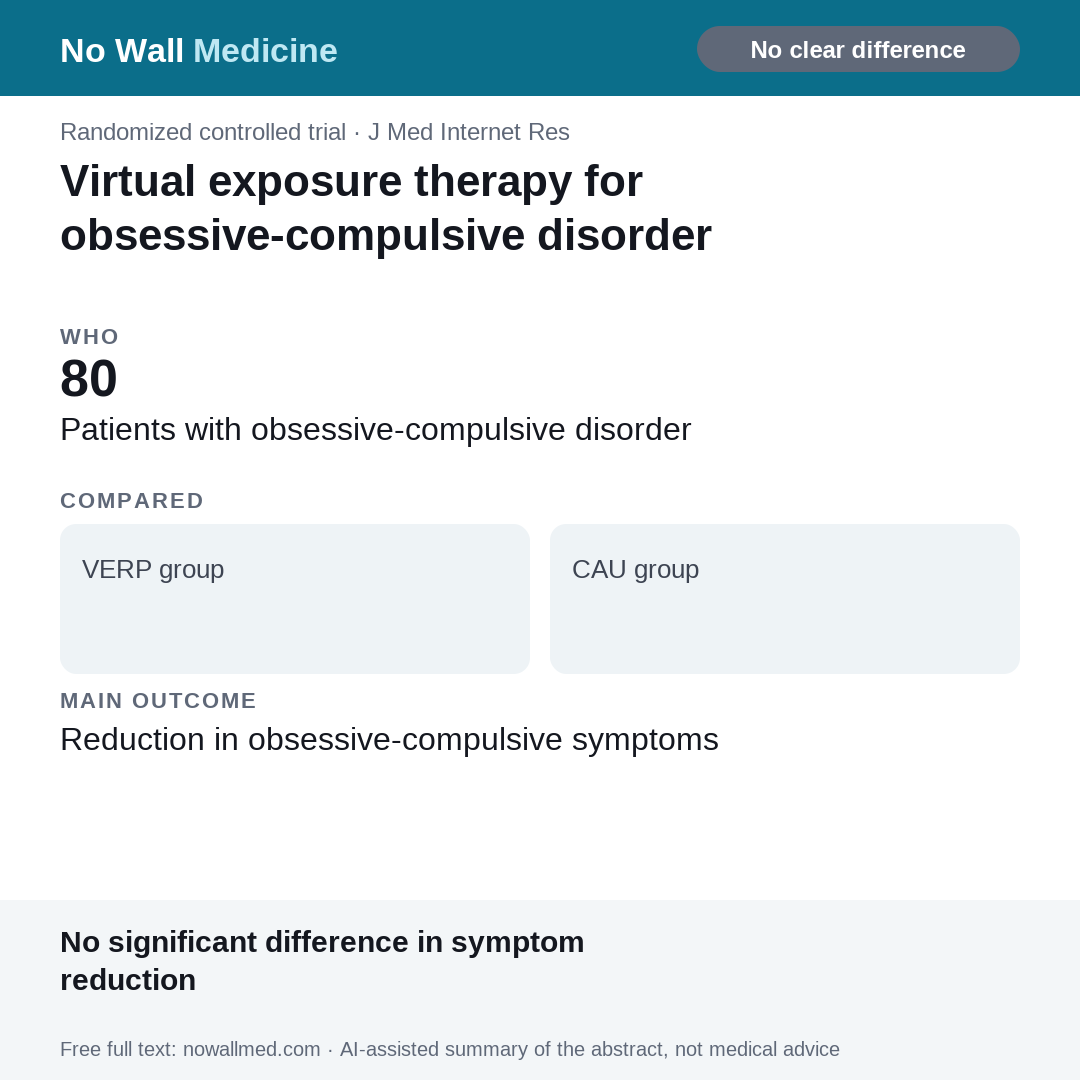
Virtual Exposure With Response Prevention for Obsessive-Compulsive Disorder: Randomized Controlled Trial
Randomized controlled trialNo clear difference
Virtual exposure therapy for obsessive-compulsive disorder
Who
80
Patients with obsessive-compulsive disorder
Compared
VERP group
CAU group
Main outcome
Reduction in obsessive-compulsive symptoms
Bottom line: No significant difference in symptom reduction
J Med Internet Res · 2026-05-27Download image
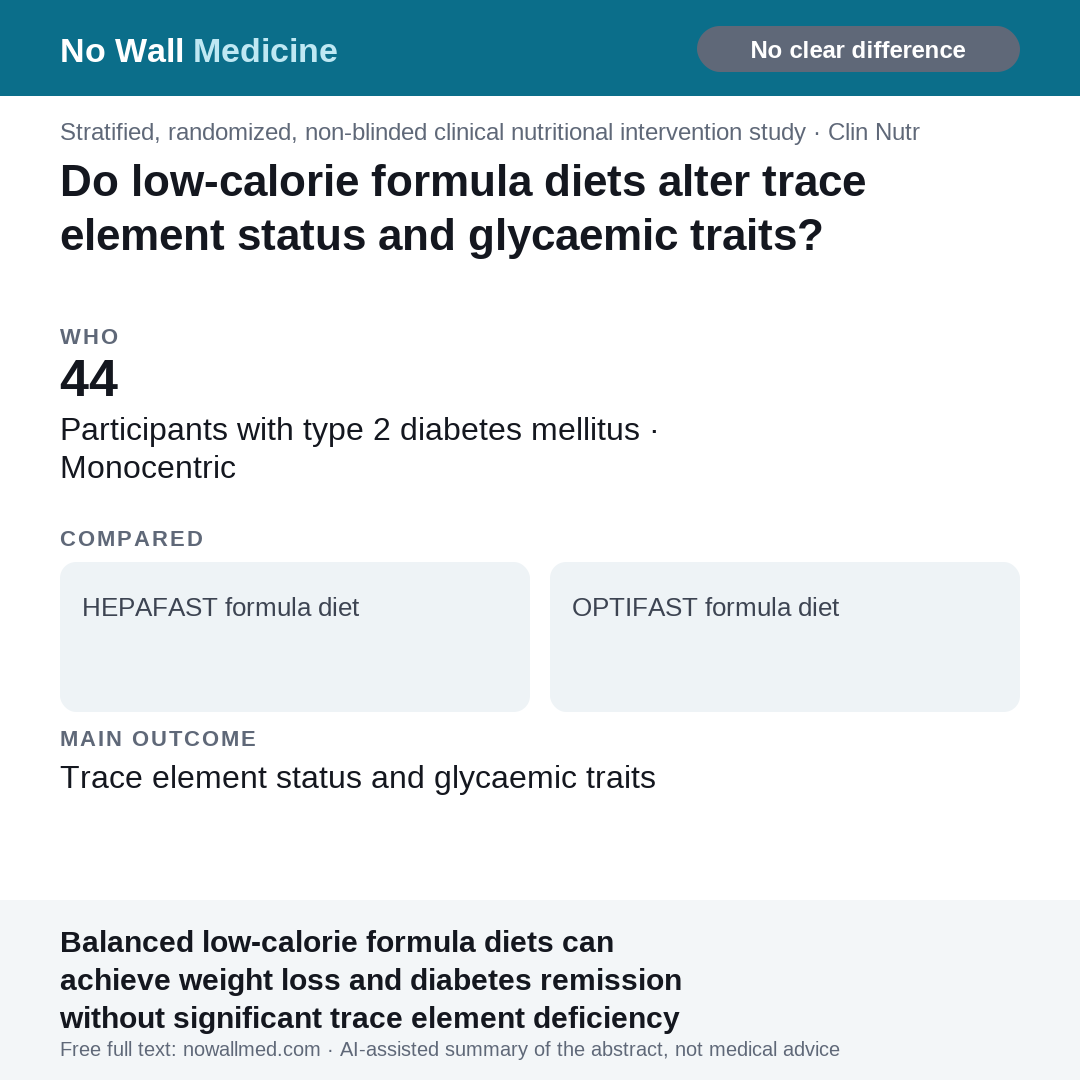
Trace element dynamics following low-calorie formula diet and their association with glycaemic traits
Stratified, randomized, non-blinded clinical nutritional intervention studyBenefit found
How do low-calorie formula diets affect trace element status and glycaemic traits?
Who
44
Participants with type 2 diabetes mellitus · monocentric
Compared
HEPAFAST® formula diet: selenoprotein P (p = 0.049) and ceruloplasmin (p = 0.020) increased
OPTIFAST® formula diet: copper (p = 0.046), selenium (p = 0.002), selenoprotein P (p = 0.002) and ceruloplasmin (p = 0.001) increased
Main outcome
trace element status and glycaemic traits
Bottom line: Balanced formula diets achieve weight loss and diabetes remission without significant risk of trace element deficiency or excess.
Limitation: The present study on trace elements is a subset of the FAIR study
Clin Nutr · 2026-05-26Download image
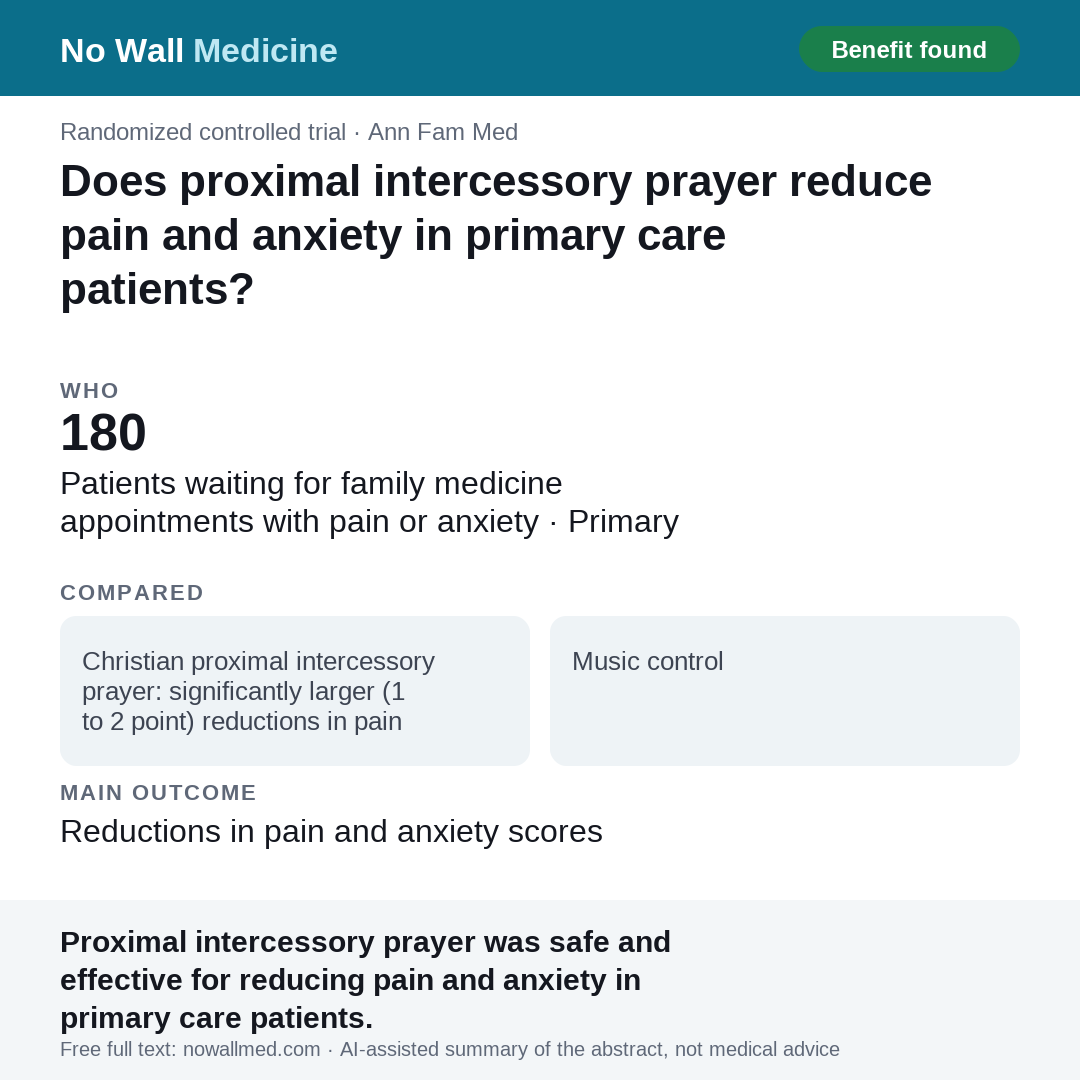
Prayer for Pain and Anxiety in a Primary Care Setting: A Randomized Controlled Trial
Randomized controlled trialBenefit found
Does proximal intercessory prayer reduce pain and anxiety in primary care patients?
Who
180
Patients waiting for family medicine appointments with pain or anxiety · Primary care setting
Compared
Christian proximal intercessory prayer: significantly larger (1 to 2 point) reductions in pain
Music control
Main outcome
Reductions in pain and anxiety scores
Bottom line: Proximal intercessory prayer was safe and effective for reducing pain and anxiety in primary care patients.
Ann Fam Med · 2026-05-26Download image
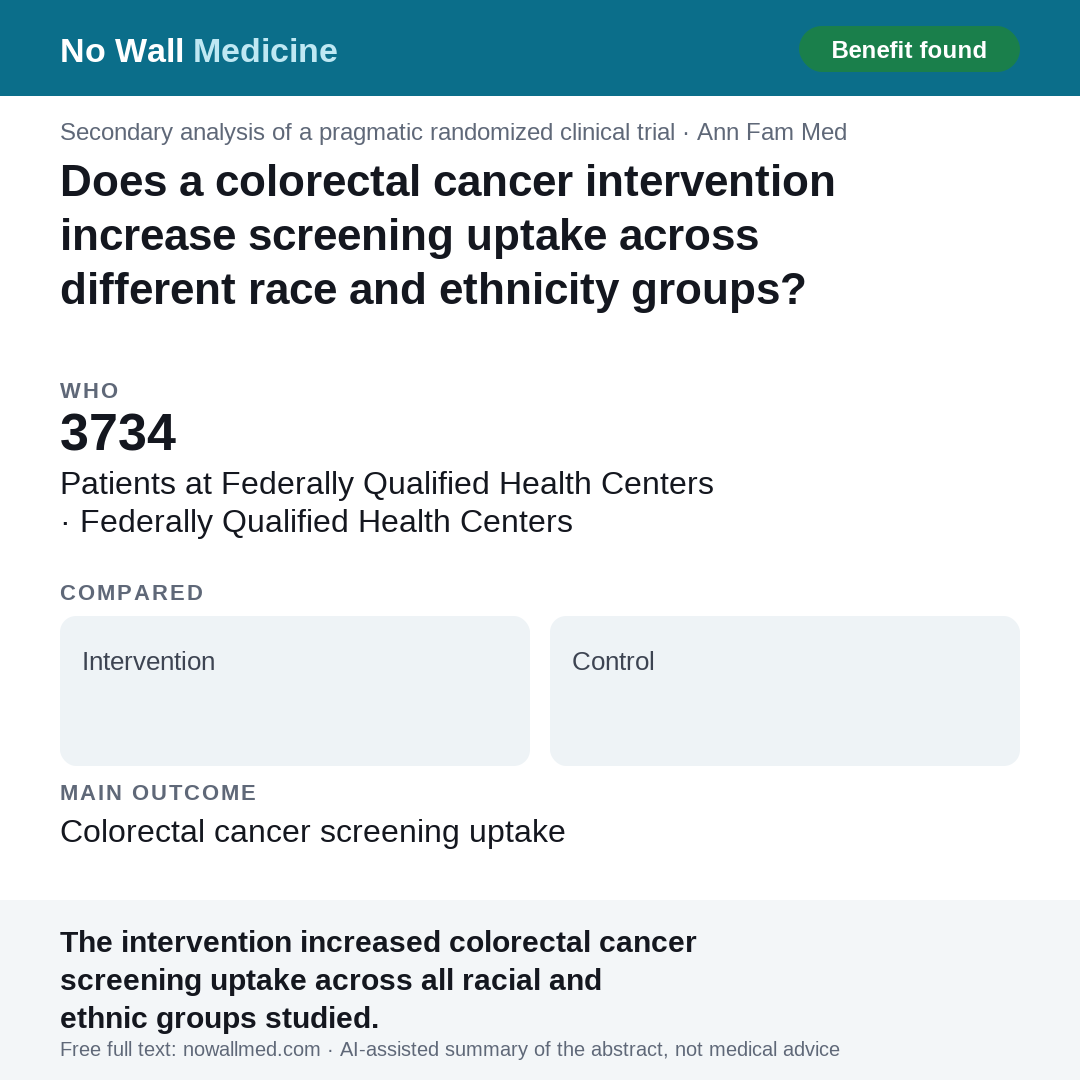
Equity Evaluation of an Intervention to Increase Colorectal Cancer Screening at Federally Qualified Health Centers
Secondary analysis of a pragmatic randomized clinical trialBenefit found
Does a colorectal cancer intervention increase screening uptake across different race and ethnicity groups?
Who
3734
Patients at Federally Qualified Health Centers · Federally Qualified Health Centers
Compared
Intervention
Control
Main outcome
Colorectal cancer screening uptake
Result: risk difference 18.3% (95% CI, 15.6%-20.9%)
Bottom line: The intervention increased colorectal cancer screening uptake across all racial and ethnic groups studied.
Ann Fam Med · 2026-05-26Download image
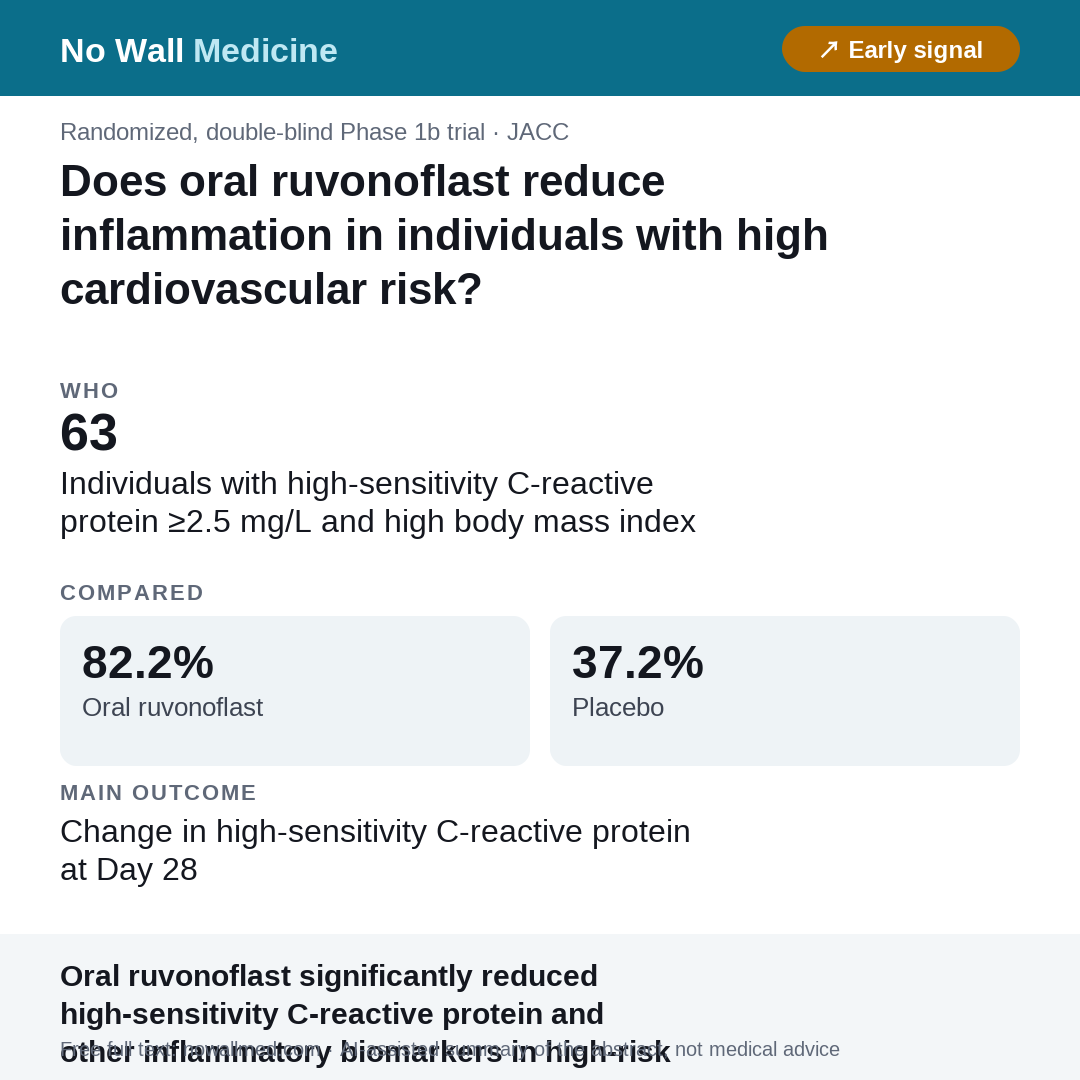
Anti-Inflammatory Effects of Oral NLRP3 Inhibition With Ruvonoflast Among Individuals at Elevated Cardiovascular Risk
Randomized, double-blind Phase 1b trialBenefit found
Does oral ruvonoflast reduce inflammation in individuals with high cardiovascular risk?
Who
63
Individuals with high-sensitivity C-reactive protein ≥2.5 mg/L and high body mass index
Compared
82.2%Oral ruvonoflast (95% CI: 75.9%-86.8%)
37.2%Placebo (95% CI: 7.0%-57.6%)
Main outcome
Change in high-sensitivity C-reactive protein at Day 28
Result: geometric least-squares mean reduction in hsCRP was 82.2% (95% CI: 75.9%-86.8%) with ruvonoflast vs 37.2% (95% CI: 7.0%-57.6%) with placebo
Bottom line: Oral ruvonoflast significantly reduced high-sensitivity C-reactive protein and other inflammatory biomarkers in high-risk individuals.
JACC · 2026-05-26Download image
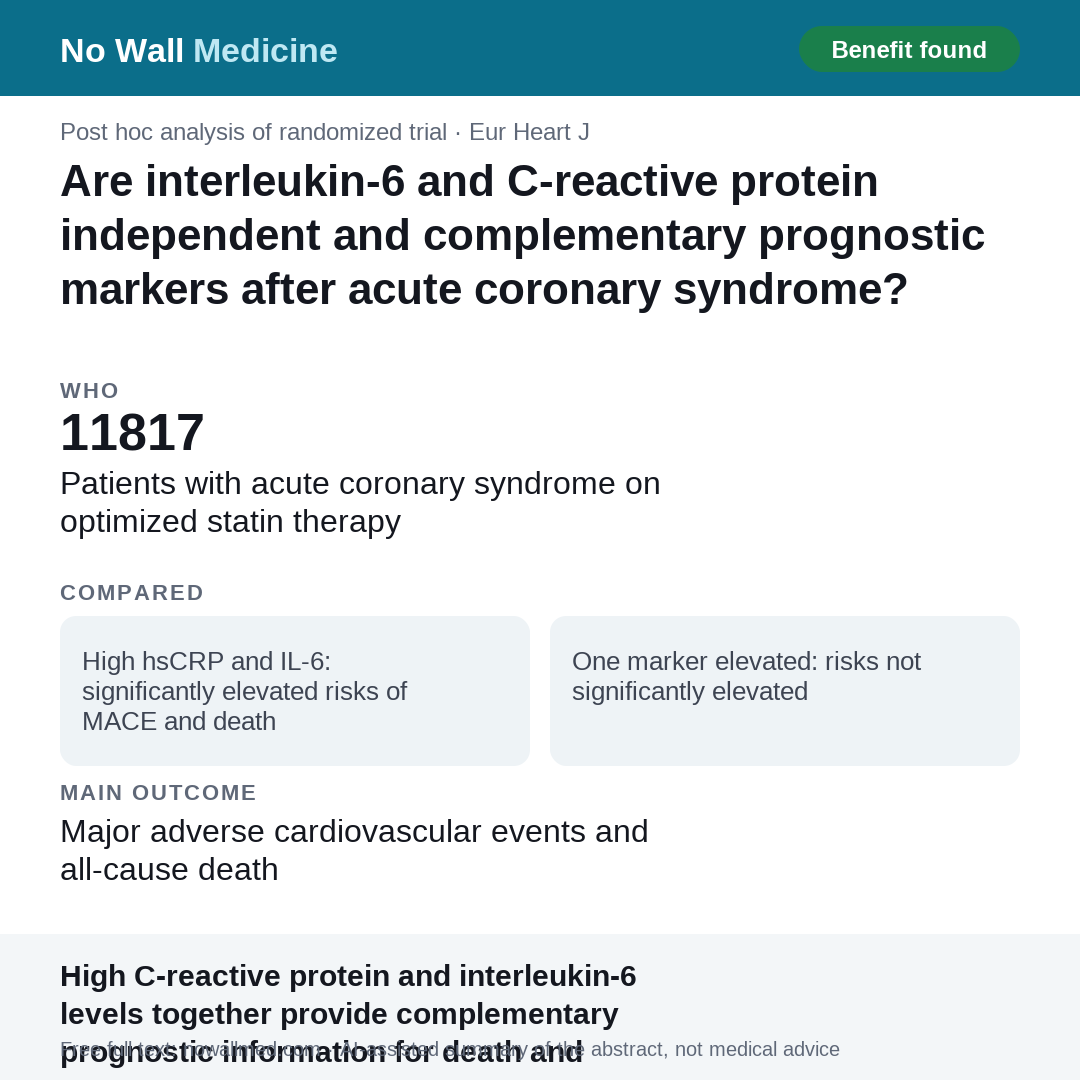
Interleukin-6 and C-reactive protein prognostic value following acute coronary syndrome
Post hoc analysis of randomized trialBenefit found
Are interleukin-6 and C-reactive protein independent and complementary prognostic markers after acute coronary syndrome?
Who
11817
Patients with acute coronary syndrome on optimized statin therapy
Compared
High hsCRP and IL-6: significantly elevated risks of MACE and death
One marker elevated: risks not significantly elevated
Main outcome
Major adverse cardiovascular events and all-cause death
Bottom line: High C-reactive protein and interleukin-6 levels together provide complementary prognostic information for death and cardiovascular events.
Eur Heart J · 2026-05-26Download image
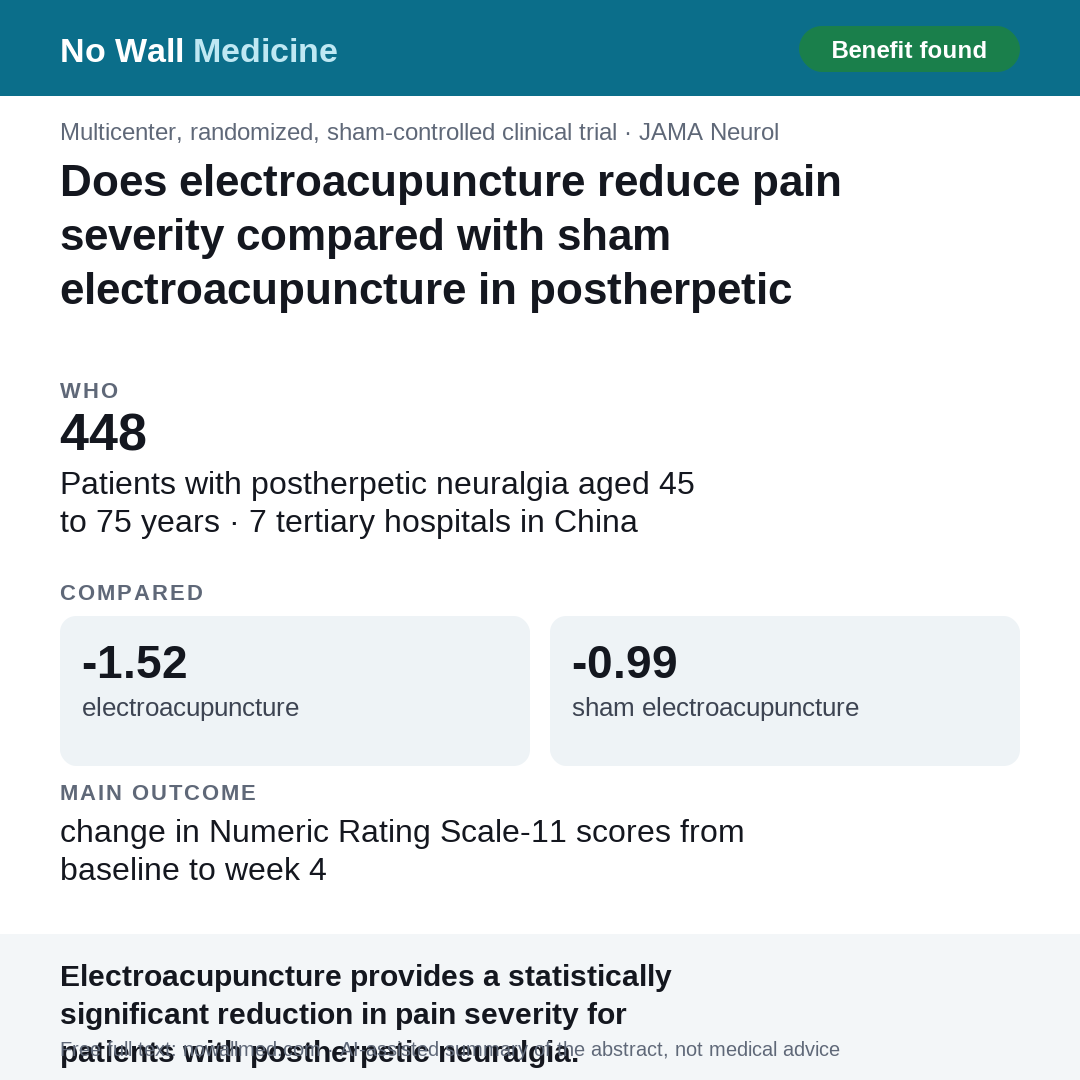
Effect of Electroacupuncture on Postherpetic Neuralgia: A Randomized Clinical Trial
Multicenter, randomized, sham-controlled clinical trialBenefit found
Does electroacupuncture reduce pain severity compared with sham electroacupuncture in postherpetic neuralgia patients?
Who
448
Patients with postherpetic neuralgia aged 45 to 75 years · 7 tertiary hospitals in China
Compared
46.68%Electroacupuncture
24.28%Sham electroacupuncture
Main outcome
Change in Numeric Rating Scale-11 scores from baseline to week 4
Result: adjusted risk difference, 22.40%; 95% CI, 13.02%-31.79%
Bottom line: Electroacupuncture significantly reduced pain severity and increased responder rates in patients with postherpetic neuralgia compared to sham electroacupuncture.
JAMA Neurol · 2026-05-26Download image
Neurological Teleconsultations in General Practice: A Stepped-Wedge Cluster Randomized Clinical Trial
Stepped-wedge cluster randomized clinical trialMixed results
Did teleneurology services increase patients managed solely in general practice?
Who
983
Patients aged 18 years or older with neurological symptoms · 41 general practitioner practices in northeast Germany
Compared
38.3%Teleconsultations
50.7%Standard care
Main outcome
Proportion of patients managed solely within general practice
Result: adjusted odds ratio, 0.58 (95% CI, 0.38-0.88)
Bottom line: Teleconsultations helped triage patients to other specialists or hospitals but did not increase management solely within general practice.
Limitation: Inability to blind general practitioners to the randomization may have introduced selection effects.
JAMA Neurol · 2026-05-26Download image

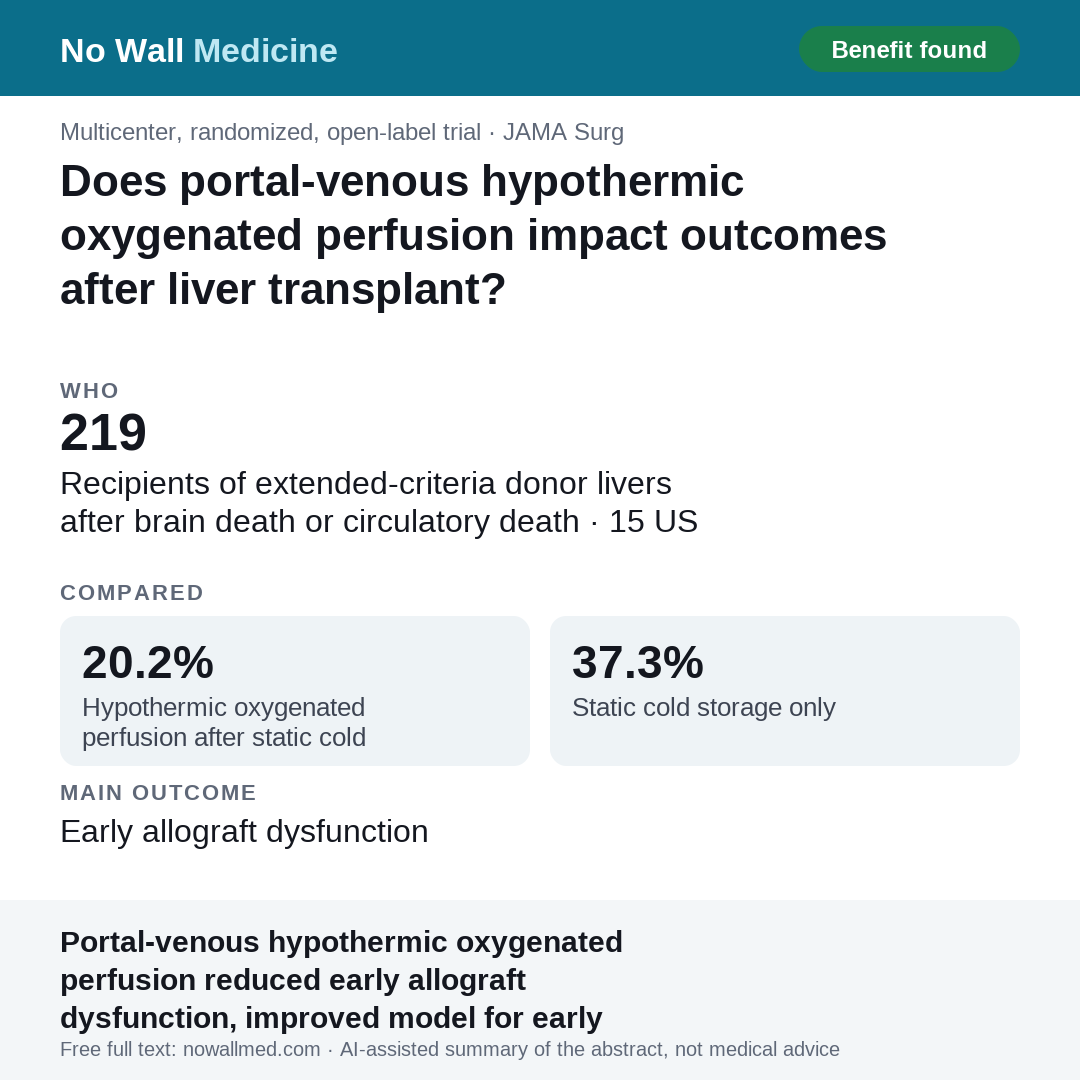
Efficacy and Safety of Ecopipam for Tourette Syndrome: A Phase 3 Randomized Clinical Trial
Phase 3, double-blind, placebo-controlled, randomized withdrawal trialBenefit found
Does ecopipam maintain effect and safety in Tourette syndrome?
Who
216
Individuals 6 years and older with Tourette syndrome · 77 sites in 12 countries
Compared
Ecopipam
Placebo
Main outcome
Time to relapse in pediatric participants
Result: hazard ratio 0.47 (95% CI, 0.26-0.84)
Bottom line: Ecopipam significantly reduced relapse risk in pediatric participants and was well tolerated for up to 24 weeks.
JAMA Neurol · 2026-05-26Download image