Visual abstracts
New randomized trials and meta-analyses from leading journals at a glance: who was studied, what was compared, and what was found. Every paper is free to read in full.
All specialtiesCardiology 361Oncology 283Gastroenterology & Hepatology 148Infectious Disease 276Neurology 164Psychiatry & Mental Health 230Pulmonology 166Critical Care 110Endocrinology & Diabetes 212Pediatrics 157Surgery 106Orthopedics & Sports Medicine 66Neurosurgery 21Cardiothoracic & Vascular Surgery 36Plastic & Reconstructive Surgery 68Nephrology 71Rheumatology 69Hematology 82Dermatology 34Ophthalmology 60Obstetrics & Gynecology 103Public & Global Health 105Radiology & Imaging 29Anesthesiology 61Urology 78ENT (Otolaryngology) 44Emergency Medicine 34Allergy & Immunology 39Geriatrics 100Family Medicine & Primary Care 55Medical Genetics & Genomics 32Pathology & Laboratory Medicine 5Physical Medicine & Rehabilitation 88Palliative Care 55Nutrition 121Digital Health & AI 303General Medicine 42
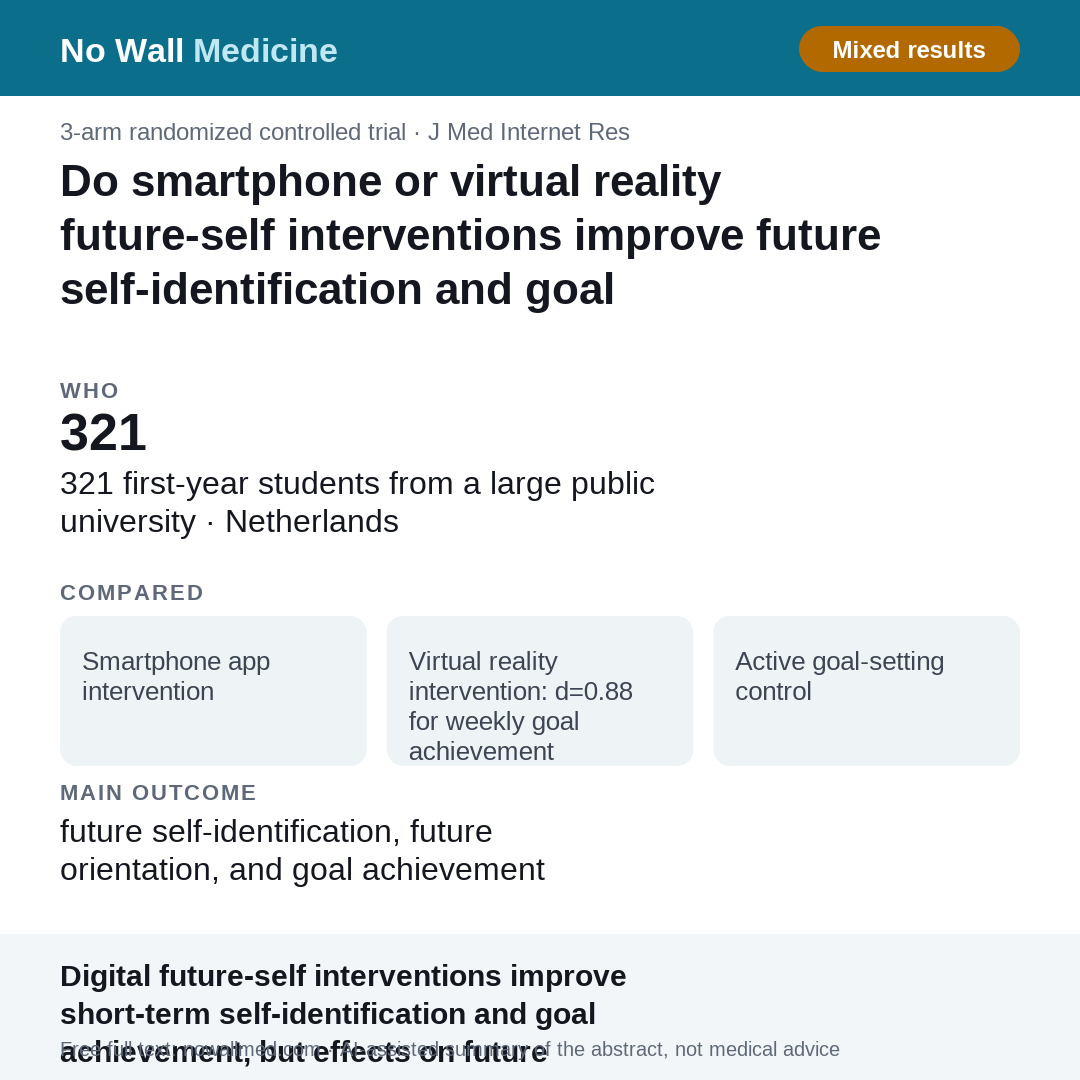
Stimulating Future-Oriented Thinking and Goal-Achievement Through the Future Self Using Virtual Reality and a Smartphone App: Randomized Controlled Trial
3-arm randomized controlled trialMixed results
Do smartphone or virtual reality future-self interventions improve future self-identification and goal achievement?
Who
321
321 first-year students from a large public university · Netherlands
Compared
Smartphone app intervention
Virtual reality intervention: d=0.88 for weekly goal achievement
Active goal-setting control
Main outcome
future self-identification, future orientation, and goal achievement
Bottom line: Digital future-self interventions improve short-term self-identification and goal achievement, but effects on future orientation were not sustained.
Limitation: Due to the nature of the intervention, blinding was not possible.
J Med Internet Res · 2026-05-13Download image
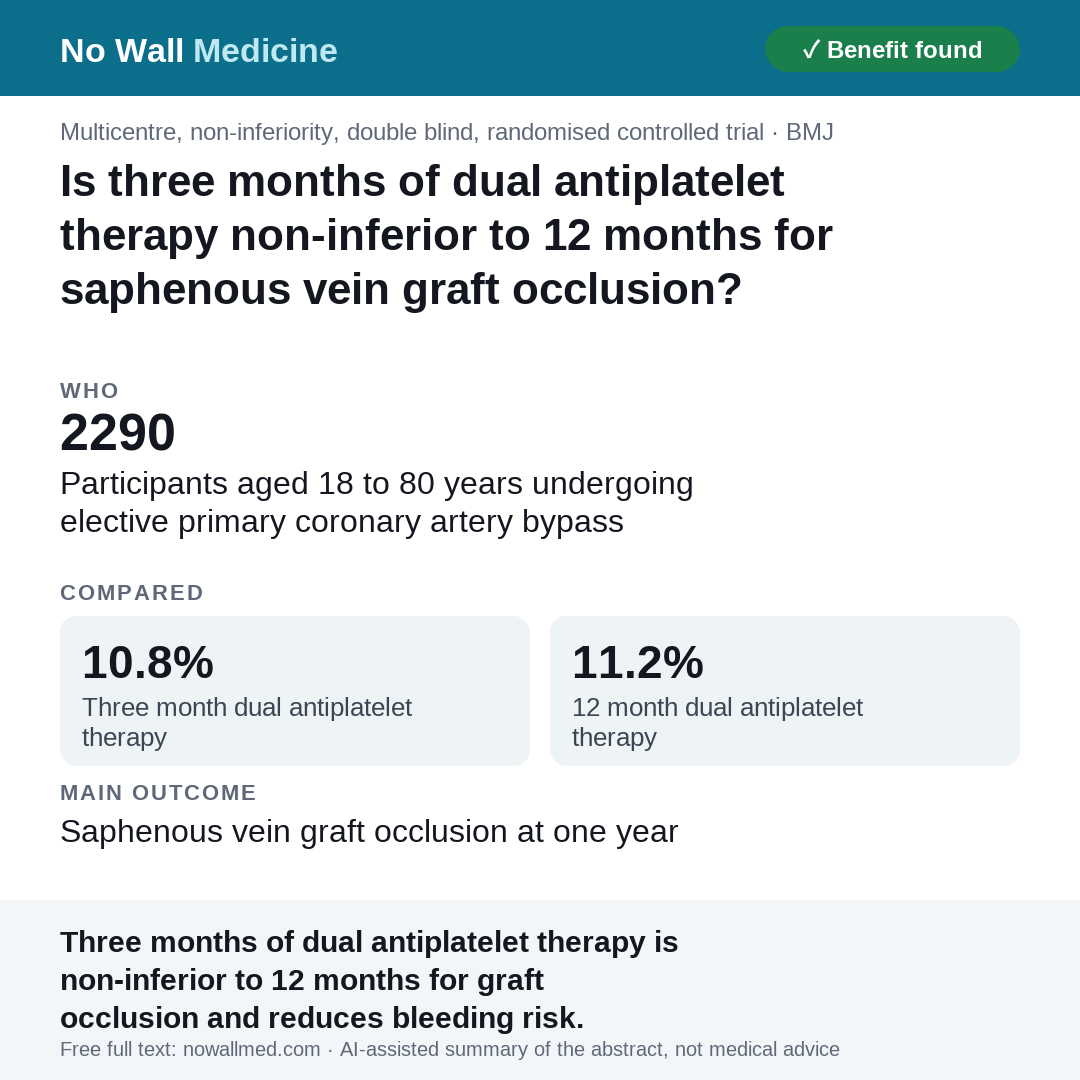
Efficacy of dual antiplatelet therapy for three months versus 12 months after coronary artery bypass grafting: multicentre, double blinded, randomised controlled trial
Multicentre, non-inferiority, double blind, randomised controlled trialBenefit found
Is three months of dual antiplatelet therapy non-inferior to 12 months for saphenous vein graft occlusion?
Who
2290
Participants aged 18 to 80 years undergoing elective primary coronary artery bypass grafting · 13 cardiac surgery centres in China
Compared
10.8%Three month dual antiplatelet therapy (280/2596)
11.2%12 month dual antiplatelet therapy (283/2529)
Main outcome
Saphenous vein graft occlusion at one year
Result: absolute difference -0.31%, 95% confidence interval -3.13% to 2.52%
Bottom line: Three months of dual antiplatelet therapy is non-inferior to 12 months for graft occlusion and reduces bleeding risk.
BMJ · 2026-05-12Download image
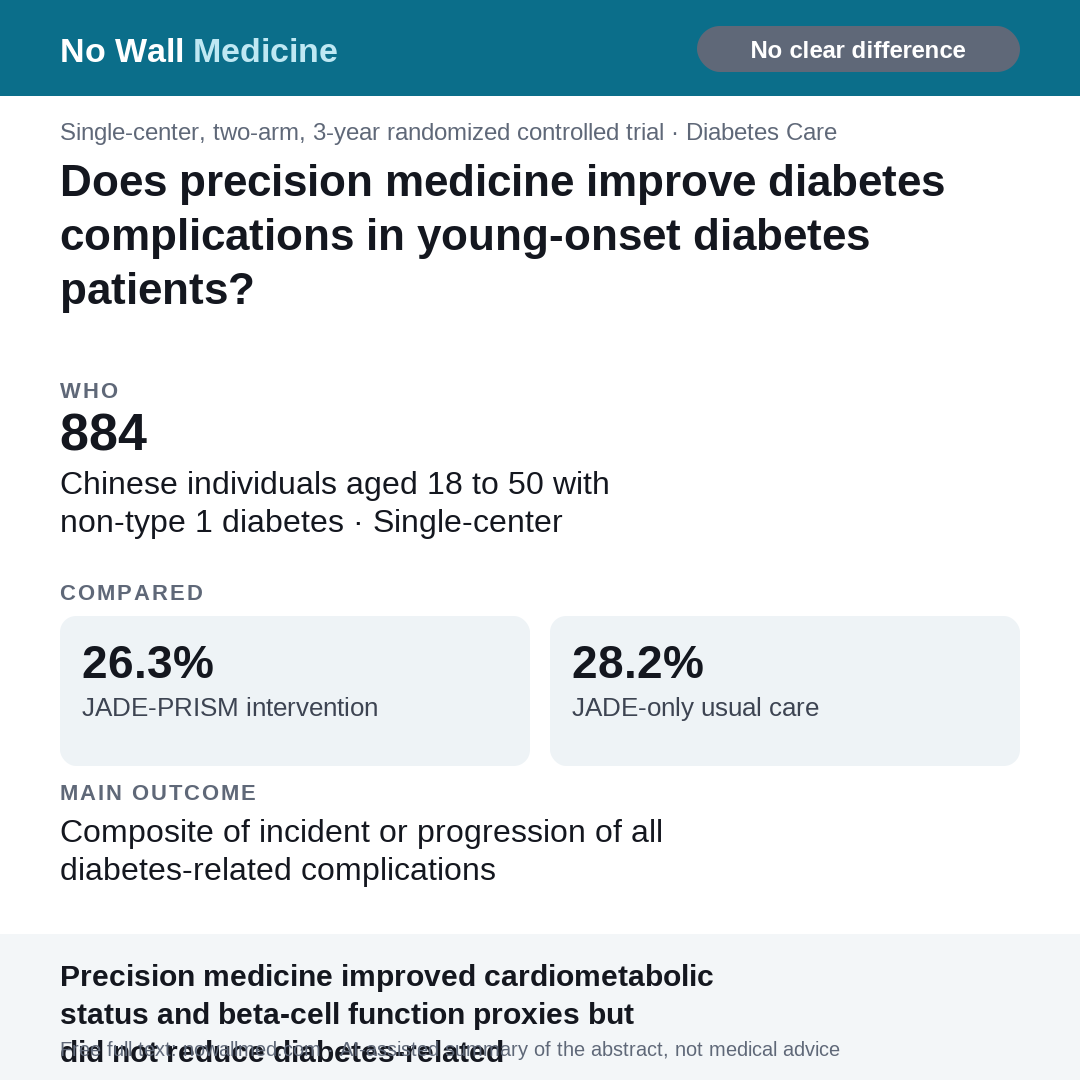
Precision Medicine to Redefine Insulin Secretion and Monogenic Diabetes (PRISM): A Randomized Controlled Trial in Chinese Patients With Young-Onset Diabetes
Single-center, two-arm, 3-year randomized controlled trialNo clear difference
Does precision medicine improve diabetes complications in young-onset diabetes patients?
Who
884
Chinese individuals aged 18 to 50 with non-type 1 diabetes · Single-center
Compared
26.3%JADE-PRISM intervention
28.2%JADE-only usual care
Main outcome
Composite of incident or progression of all diabetes-related complications
Result: odds ratio 0.908 (95% CI 0.675-1.221)
Bottom line: Precision medicine improved cardiometabolic status and beta-cell function proxies but did not reduce diabetes-related complications.
Diabetes Care · 2026-05-12Download image
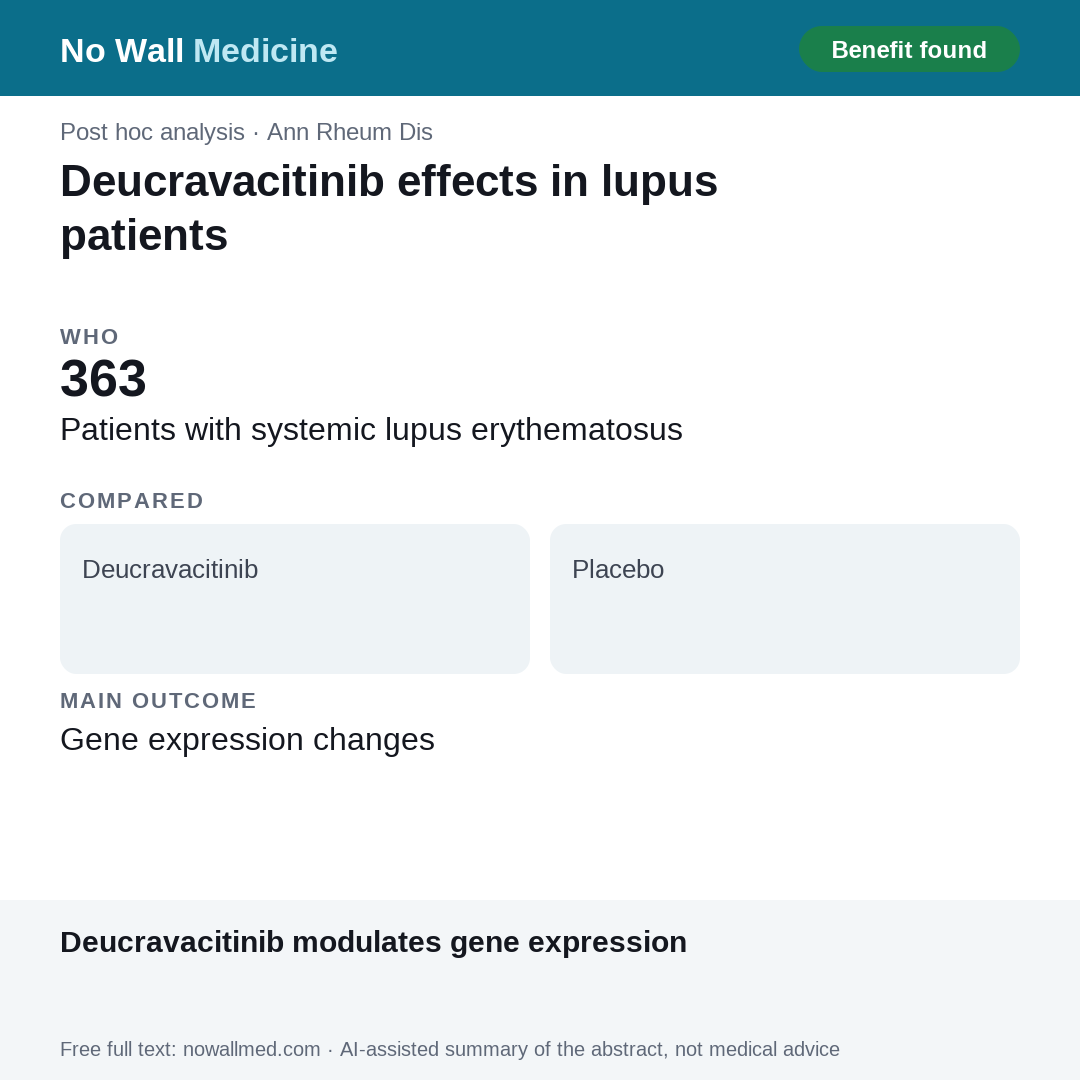
Whole blood transcriptome profiling in patients treated with deucravacitinib and novel mechanistic insights into TYK2 inhibition in lupus: results from a post hoc analysis of the PAISLEY SLE phase 2 trial
Post hoc analysisBenefit found
Deucravacitinib effects in lupus patients
Who
363
Patients with systemic lupus erythematosus
Compared
Deucravacitinib
Placebo
Main outcome
Gene expression changes
Bottom line: Deucravacitinib modulates gene expression
Ann Rheum Dis · 2026-05-12Download image
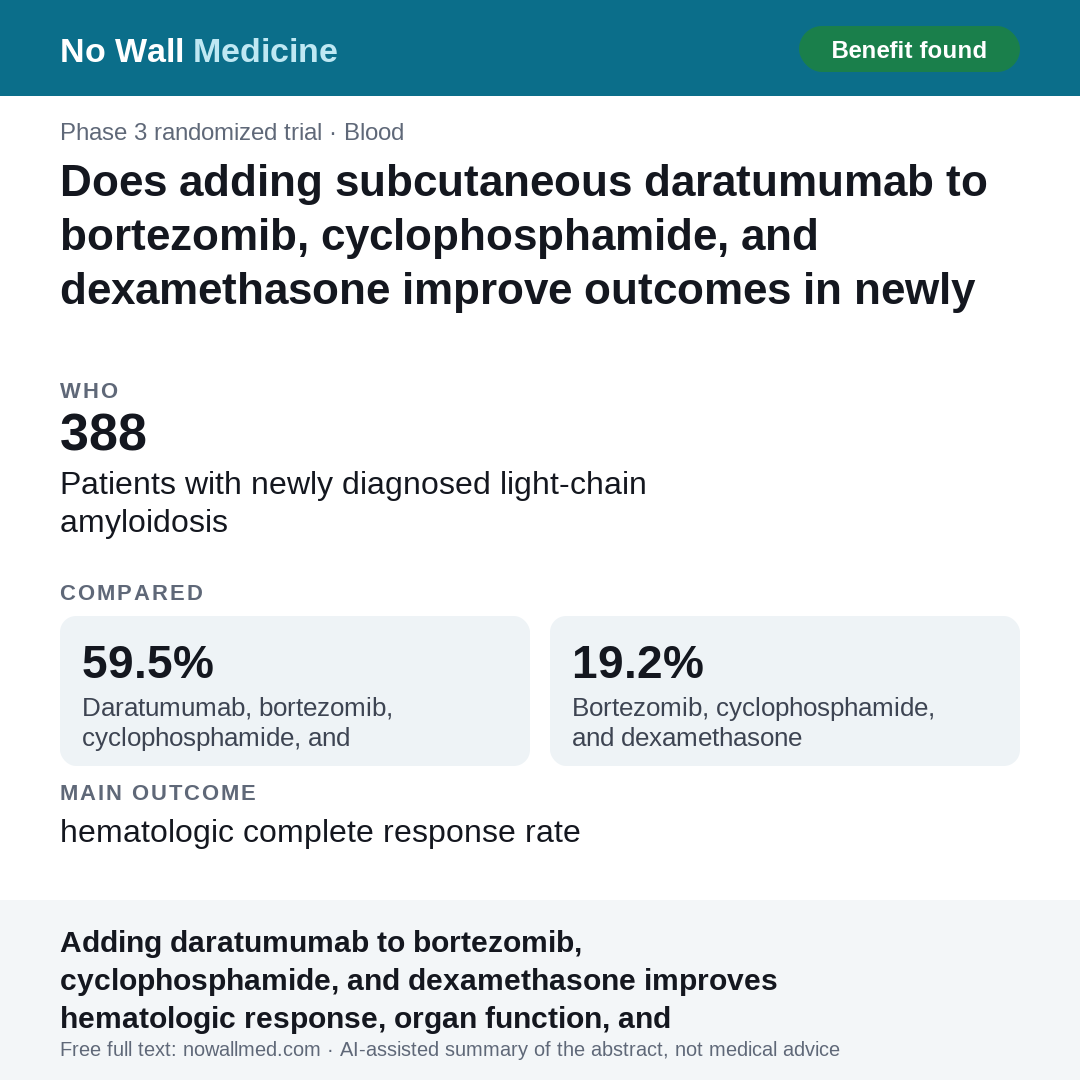
Daratumumab-bortezomib-cyclophosphamide-dexamethasone for newly diagnosed amyloidosis: ANDROMEDA final survival analysis
Phase 3 randomized trialBenefit found
Does adding subcutaneous daratumumab to bortezomib, cyclophosphamide, and dexamethasone improve outcomes in newly diagnosed AL amyloidosis?
Who
388
Patients with newly diagnosed light-chain amyloidosis
Compared
59.5%Daratumumab, bortezomib, cyclophosphamide, and dexamethasone
19.2%Bortezomib, cyclophosphamide, and dexamethasone
Main outcome
hematologic complete response rate
Result: hazard ratio 0.62 (95% CI 0.42-0.90)
Bottom line: Adding daratumumab to bortezomib, cyclophosphamide, and dexamethasone improves hematologic response, organ function, and overall survival.
Blood · 2026-05-12Download image
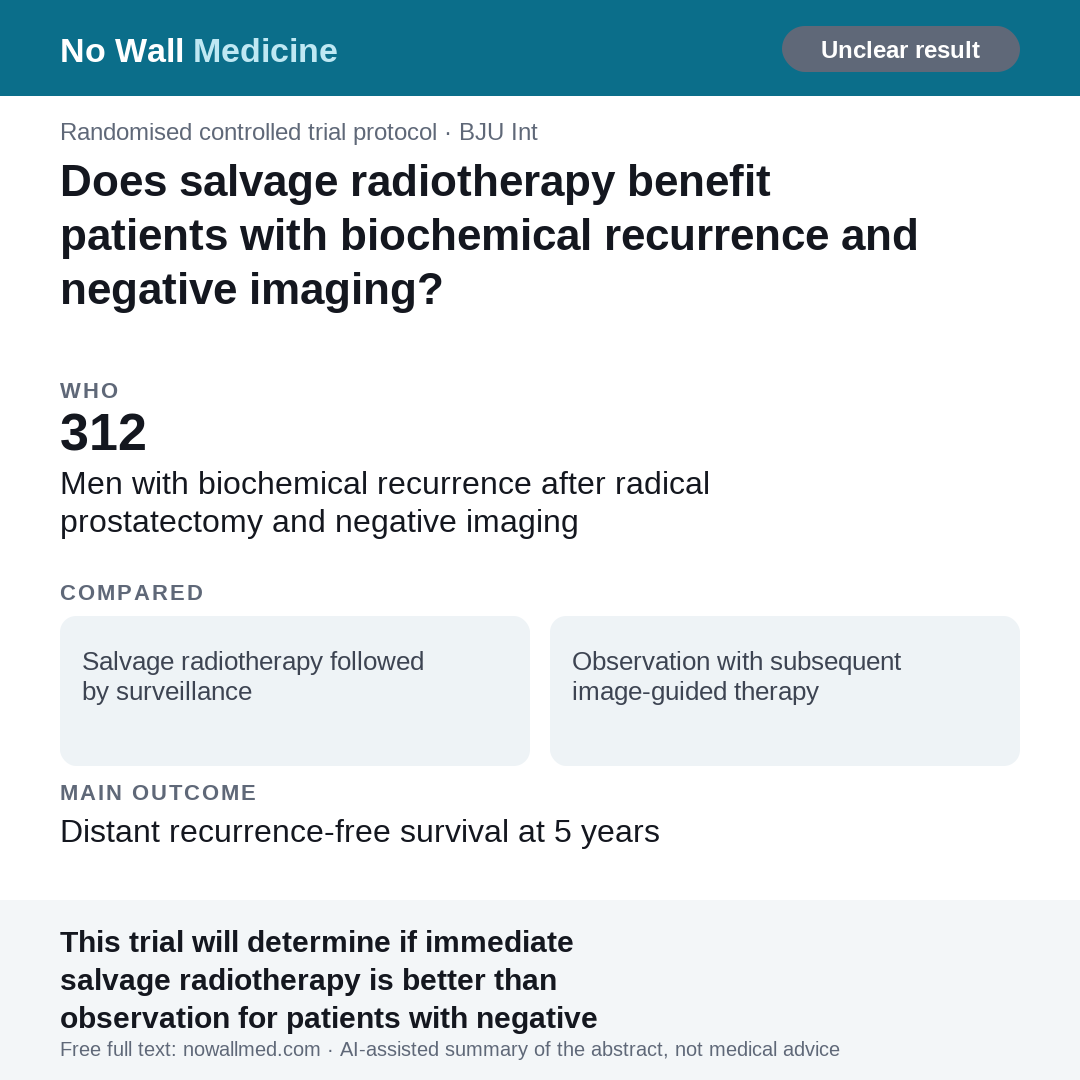
Biochemical Recurrence Irradiation or Observation (BRIO) in patients with prostate cancer: protocol for a randomised control trial
Randomised controlled trial protocolUnclear result
Does salvage radiotherapy benefit patients with biochemical recurrence and negative imaging?
Who
312
Men with biochemical recurrence after radical prostatectomy and negative imaging
Compared
Salvage radiotherapy followed by surveillance
Observation with subsequent image-guided therapy
Main outcome
Distant recurrence-free survival at 5 years
Bottom line: This trial will determine if immediate salvage radiotherapy is better than observation for patients with negative imaging.
BJU Int · 2026-05-12Download image
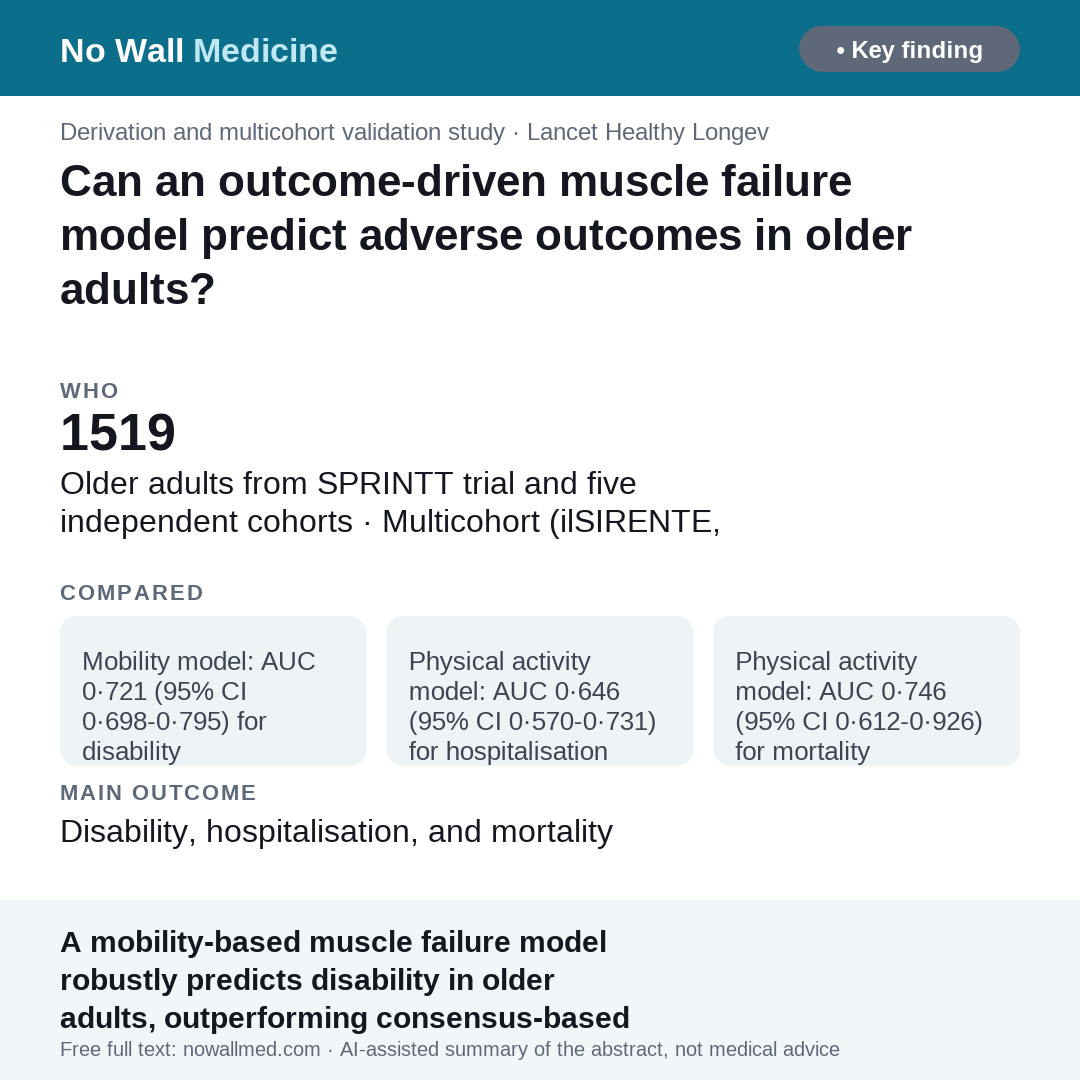
Muscle failure and risk of adverse outcomes in older adults: a derivation and multicohort validation study
Derivation and multicohort validation studyBenefit found
Can an outcome-driven muscle failure model predict adverse outcomes in older adults?
Who
1519
Older adults from SPRINTT trial and five independent cohorts · Multicohort (ilSIRENTE, NHANES, HRS, ELSA, and CHARLS)
Compared
Mobility model: AUC 0·721 (95% CI 0·698-0·795) for disability
Physical activity model: AUC 0·646 (95% CI 0·570-0·731) for hospitalisation
Physical activity model: AUC 0·746 (95% CI 0·612-0·926) for mortality
Main outcome
Disability, hospitalisation, and mortality
Result: AUC 0·721 (95% CI 0·698-0·795) for disability prediction
Bottom line: A mobility-based muscle failure model robustly predicts disability in older adults, outperforming consensus-based sarcopenia definitions.
Lancet Healthy Longev · 2026-05-12Download image
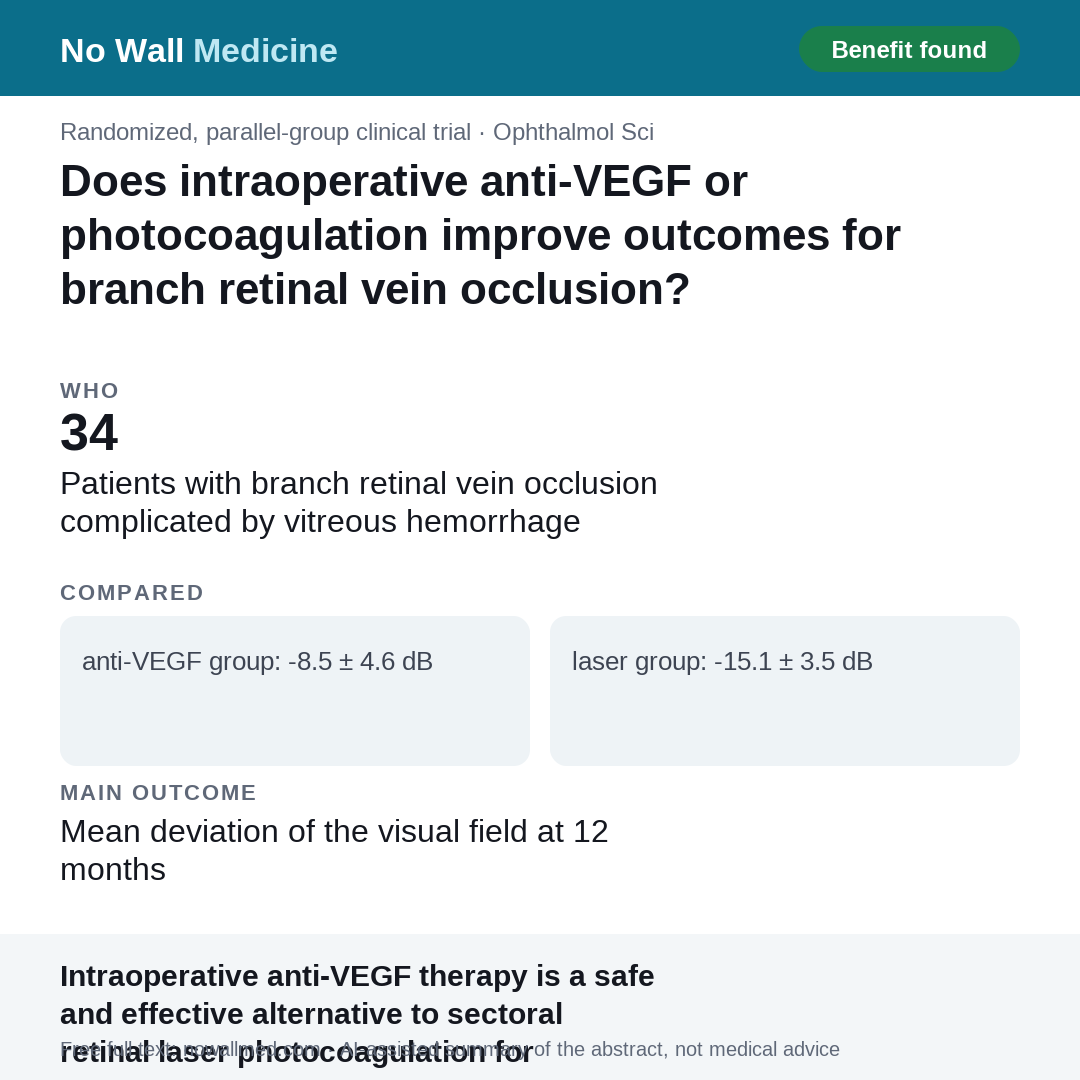
Intraoperative Anti-VEGF vs. Photocoagulation during Vitrectomy for Branch Retinal Vein Occlusion with Vitreous Hemorrhage: A Randomized Clinical Trial
Randomized, parallel-group clinical trialBenefit found
Does intraoperative anti-VEGF or photocoagulation improve outcomes for branch retinal vein occlusion?
Who
34
Patients diagnosed with branch retinal vein occlusion complicated by vitreous hemorrhage
Compared
anti-VEGF group: -8.5 ± 4.6 dB
laser group: -15.1 ± 3.5 dB
Main outcome
Mean deviation of the visual field at 12 months
Result: P < 0.01
Bottom line: Intraoperative anti-VEGF therapy preserves the visual field better than sectoral retinal laser photocoagulation after vitrectomy.
Ophthalmol Sci · 2026-05-12Download image
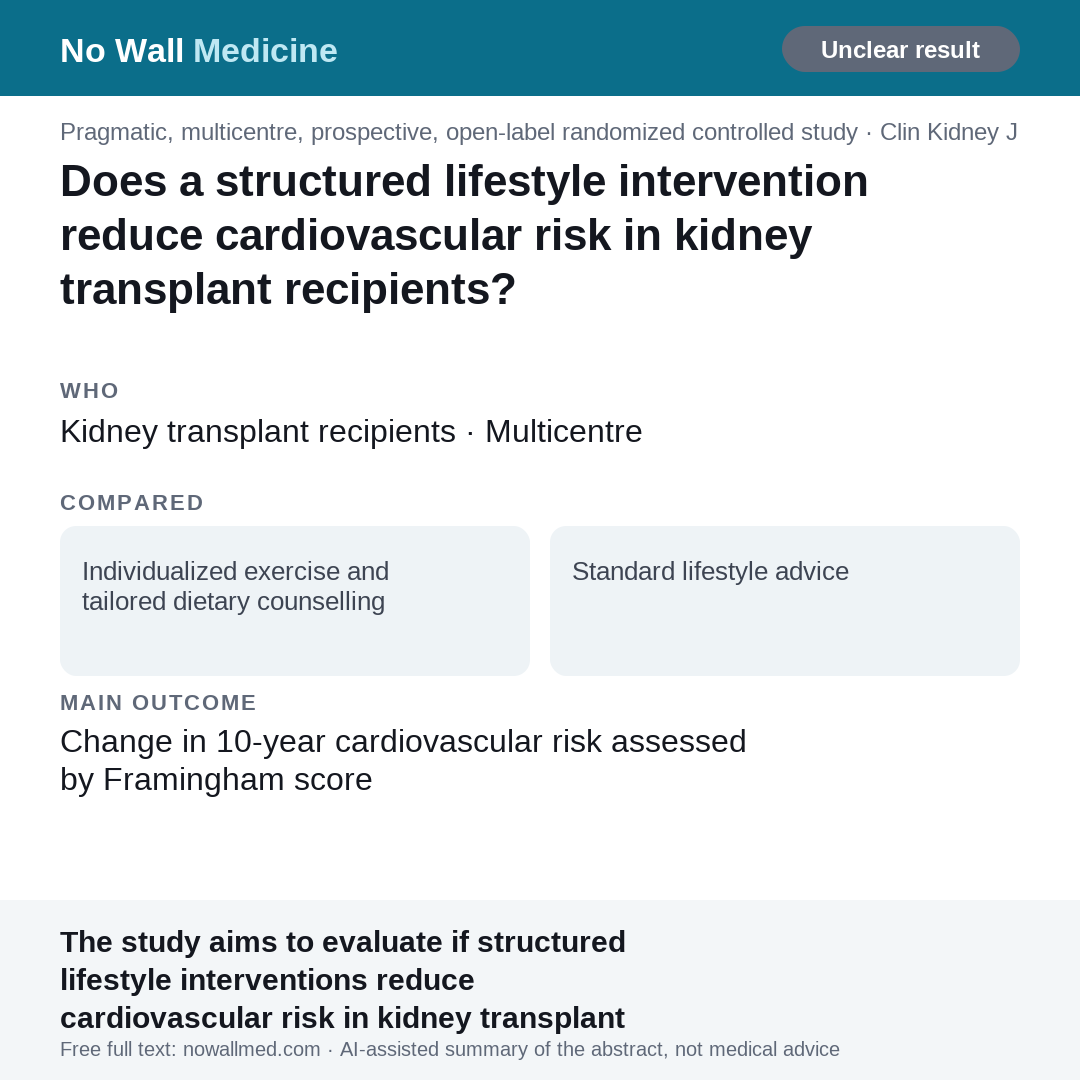
Lifestyle intervention to reduce cardiovascular risk in kidney transplant recipients: the KT-LIFESTYLE multicentre randomized controlled trial
Pragmatic, multicentre, prospective, open-label randomized controlled studyUnclear result
Does a structured lifestyle intervention reduce cardiovascular risk in kidney transplant recipients?
Who
Kidney transplant recipients · Multicentre
Compared
Individualized exercise and tailored dietary counselling
Standard lifestyle advice
Main outcome
Change in 10-year cardiovascular risk assessed by Framingham score
Bottom line: The study aims to evaluate if structured lifestyle interventions reduce cardiovascular risk in kidney transplant recipients.
Clin Kidney J · 2026-05-12Download image
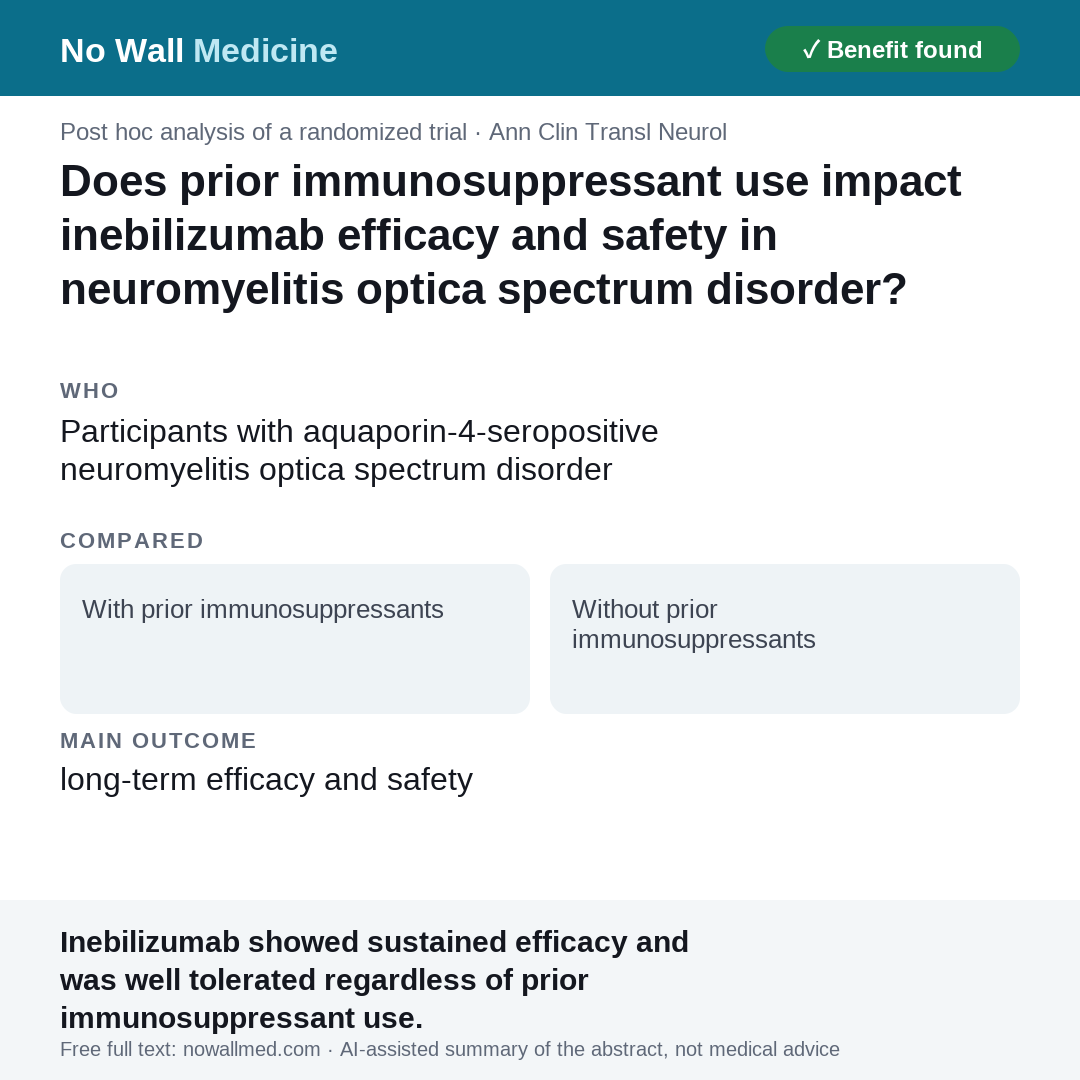
Efficacy of Inebilizumab in N-MOmentum Trial Participants With or Without Prior Immunosuppressants
Post hoc analysis of a randomized trialBenefit found
Does prior immunosuppressant use impact inebilizumab efficacy and safety in neuromyelitis optica spectrum disorder?
Who
Participants with aquaporin-4-seropositive neuromyelitis optica spectrum disorder
Compared
With prior immunosuppressants
Without prior immunosuppressants
Main outcome
long-term efficacy and safety
Bottom line: Inebilizumab showed sustained efficacy and was well tolerated regardless of prior immunosuppressant use.
Ann Clin Transl Neurol · 2026-05-12Download image
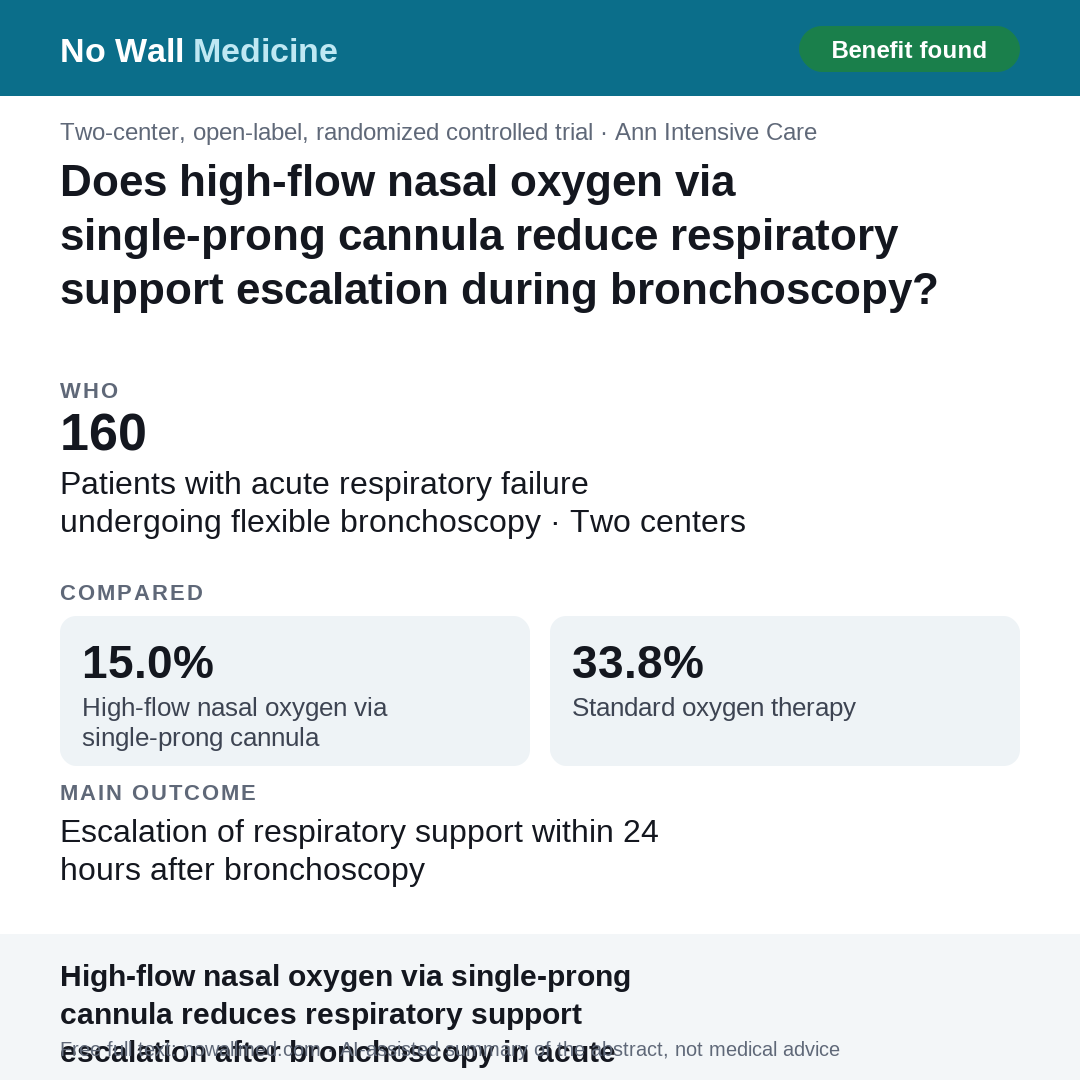
High-flow nasal oxygen therapy via a single-prong cannula interface during bronchoscopy in patients with acute respiratory failure: a two-center, open-label, randomized controlled trial
Two-center, open-label, randomized controlled trialBenefit found
Does high-flow nasal oxygen via single-prong cannula reduce respiratory support escalation during bronchoscopy?
Who
160
Patients with acute respiratory failure undergoing flexible bronchoscopy · Two centers
Compared
15.0%High-flow nasal oxygen via single-prong cannula
33.8%Standard oxygen therapy
Main outcome
Escalation of respiratory support within 24 hours after bronchoscopy
Bottom line: High-flow nasal oxygen via single-prong cannula reduces respiratory support escalation after bronchoscopy in acute respiratory failure patients.
Ann Intensive Care · 2026-05-12Download image
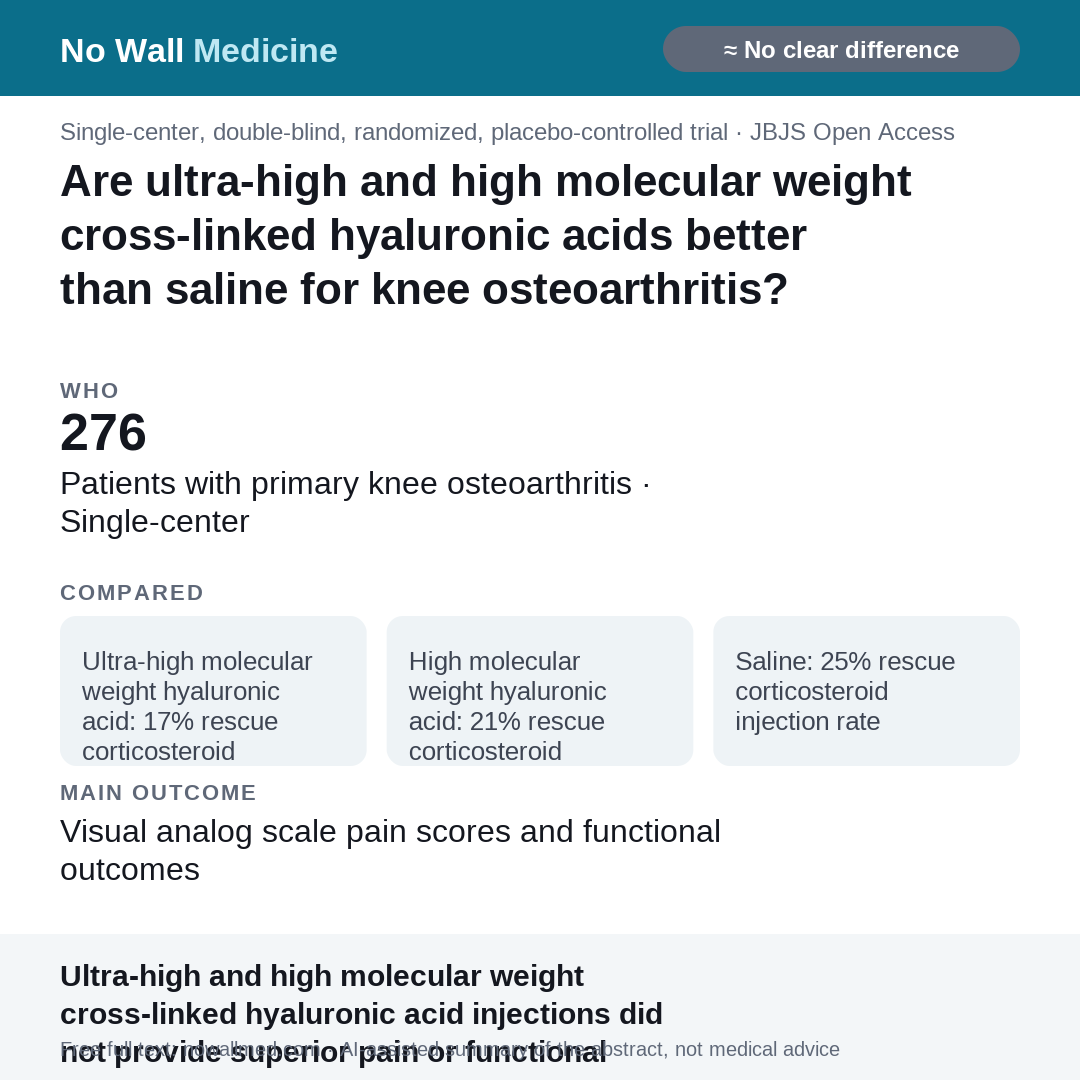
Efficacy of Ultra-high and High Molecular Weight Cross-Linked Hyaluronic Acids Compared with Saline in Knee Osteoarthritis: A Randomized Controlled Trial
Single-center, double-blind, randomized, placebo-controlled trialNo clear difference
Are ultra-high and high molecular weight cross-linked hyaluronic acids better than saline for knee osteoarthritis?
Who
276
Patients with primary knee osteoarthritis · Single-center
Compared
Ultra-high molecular weight hyaluronic acid: 17% rescue corticosteroid injection rate
High molecular weight hyaluronic acid: 21% rescue corticosteroid injection rate
Saline: 25% rescue corticosteroid injection rate
Main outcome
Visual analog scale pain scores and functional outcomes
Bottom line: Ultra-high and high molecular weight cross-linked hyaluronic acid injections did not provide superior pain or functional outcomes compared with saline.
JBJS Open Access · 2026-05-12Download image
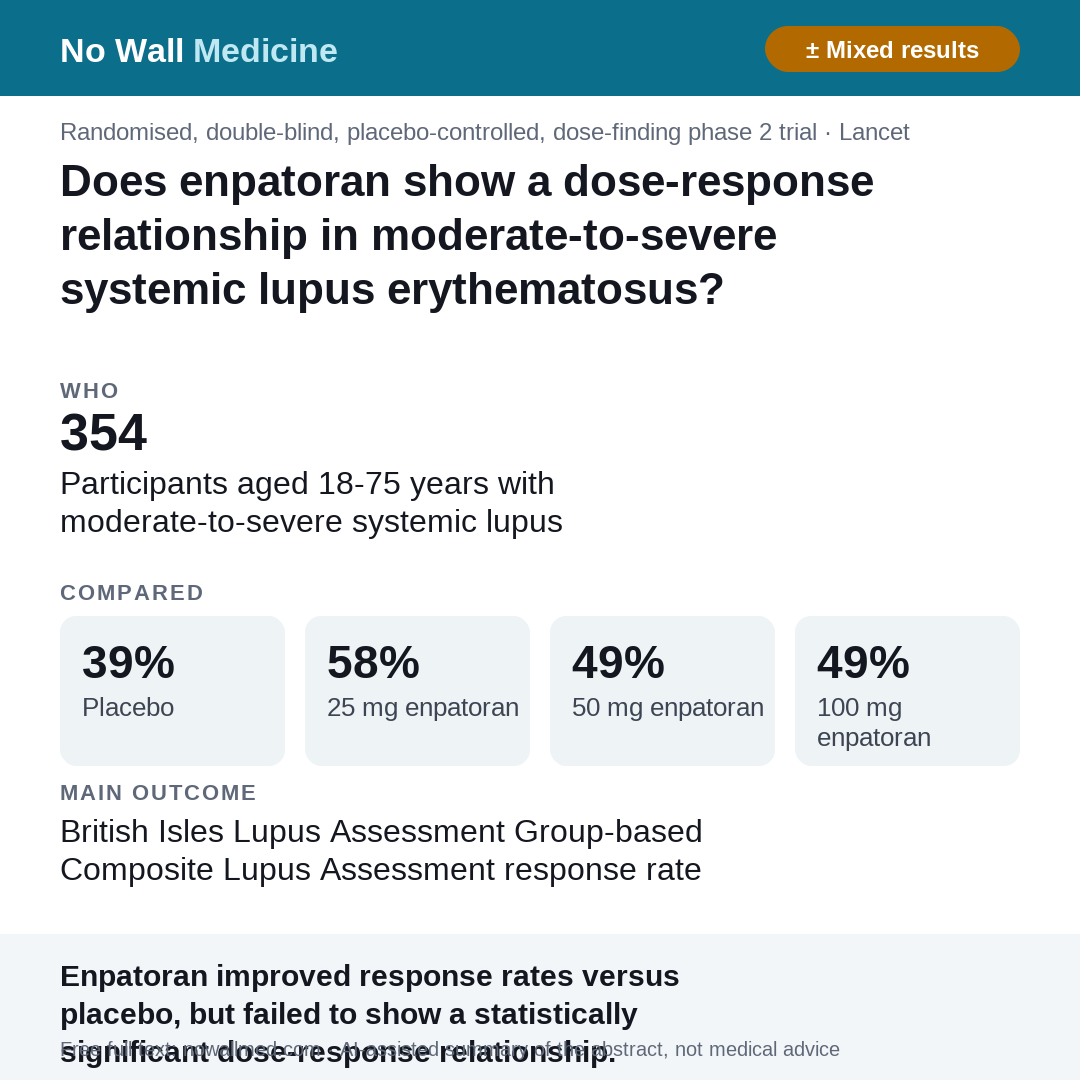
Enpatoran, a Toll-like receptor 7/8 inhibitor, in moderate-to-severe systemic lupus erythematosus: findings from Cohort B of a multicentre, international, double-blind, placebo-controlled dose-finding phase 2 trial
Randomised, double-blind, placebo-controlled, dose-finding phase 2 trialMixed results
Does enpatoran show a dose-response relationship in moderate-to-severe systemic lupus erythematosus?
Who
354
Participants aged 18-75 years with moderate-to-severe systemic lupus erythematosus · 132 centres in 22 countries
Compared
39%Placebo
58%25 mg enpatoran
49%50 mg enpatoran
49%100 mg enpatoran
Main outcome
British Isles Lupus Assessment Group-based Composite Lupus Assessment response rate
Result: p=0·14
Bottom line: Enpatoran improved response rates versus placebo, but failed to show a statistically significant dose-response relationship.
Funded by: Merck Healthcare
Lancet · 2026-05-11Download image
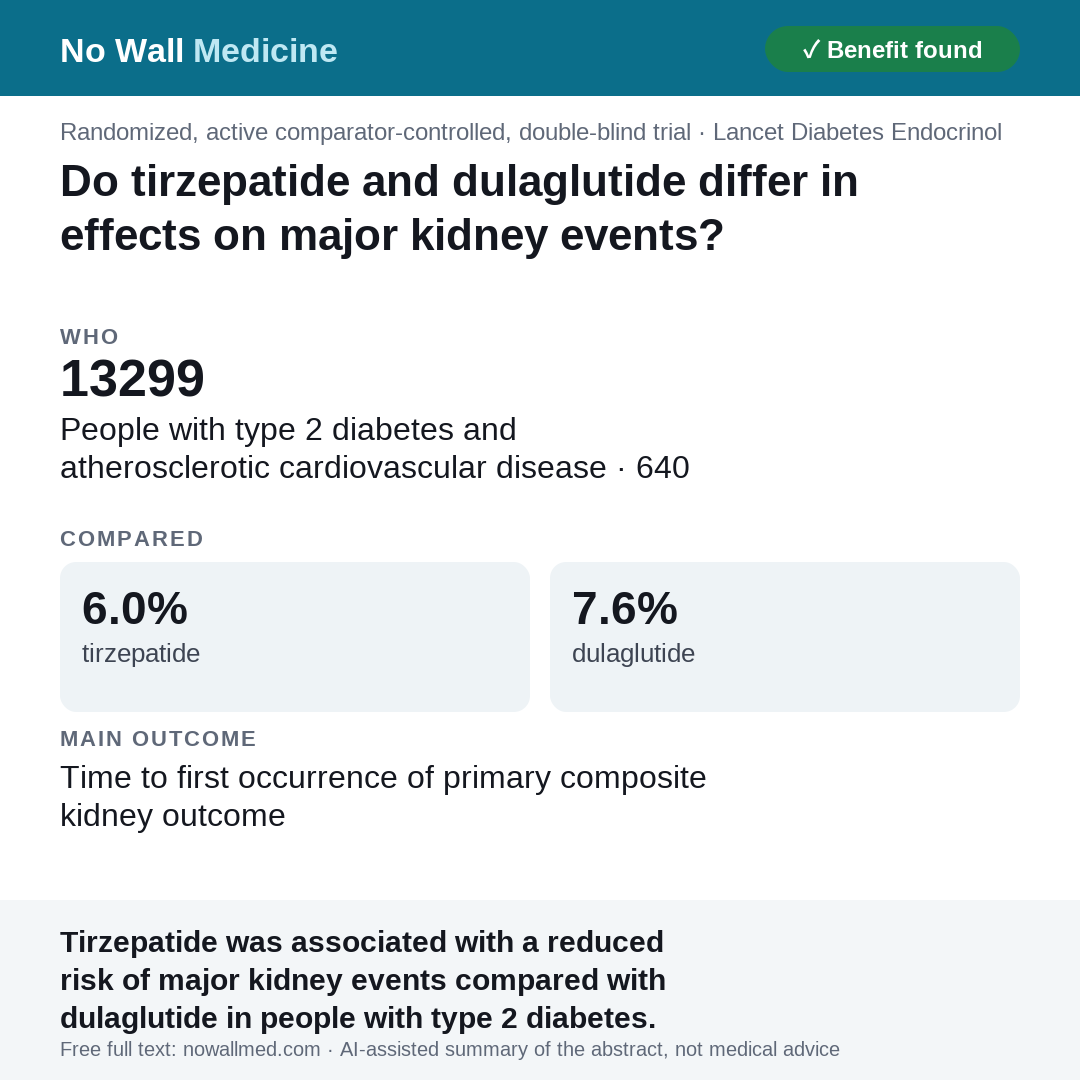
A comparison of the effects of tirzepatide and dulaglutide on major kidney events in people with type 2 diabetes: pre-specified exploratory analyses of the SURPASS-CVOT trial
Randomized, active comparator-controlled, double-blind trialBenefit found
Do tirzepatide and dulaglutide differ in effects on major kidney events?
Who
13299
People with type 2 diabetes and atherosclerotic cardiovascular disease · 640 sites in 30 countries
Compared
6.0%tirzepatide
7.6%dulaglutide
Main outcome
Time to first occurrence of primary composite kidney outcome
Result: hazard ratio 0.77 (95% CI 0.68 to 0.88)
Bottom line: Tirzepatide was associated with a reduced risk of major kidney events compared with dulaglutide in people with type 2 diabetes.
Lancet Diabetes Endocrinol · 2026-05-11Download image
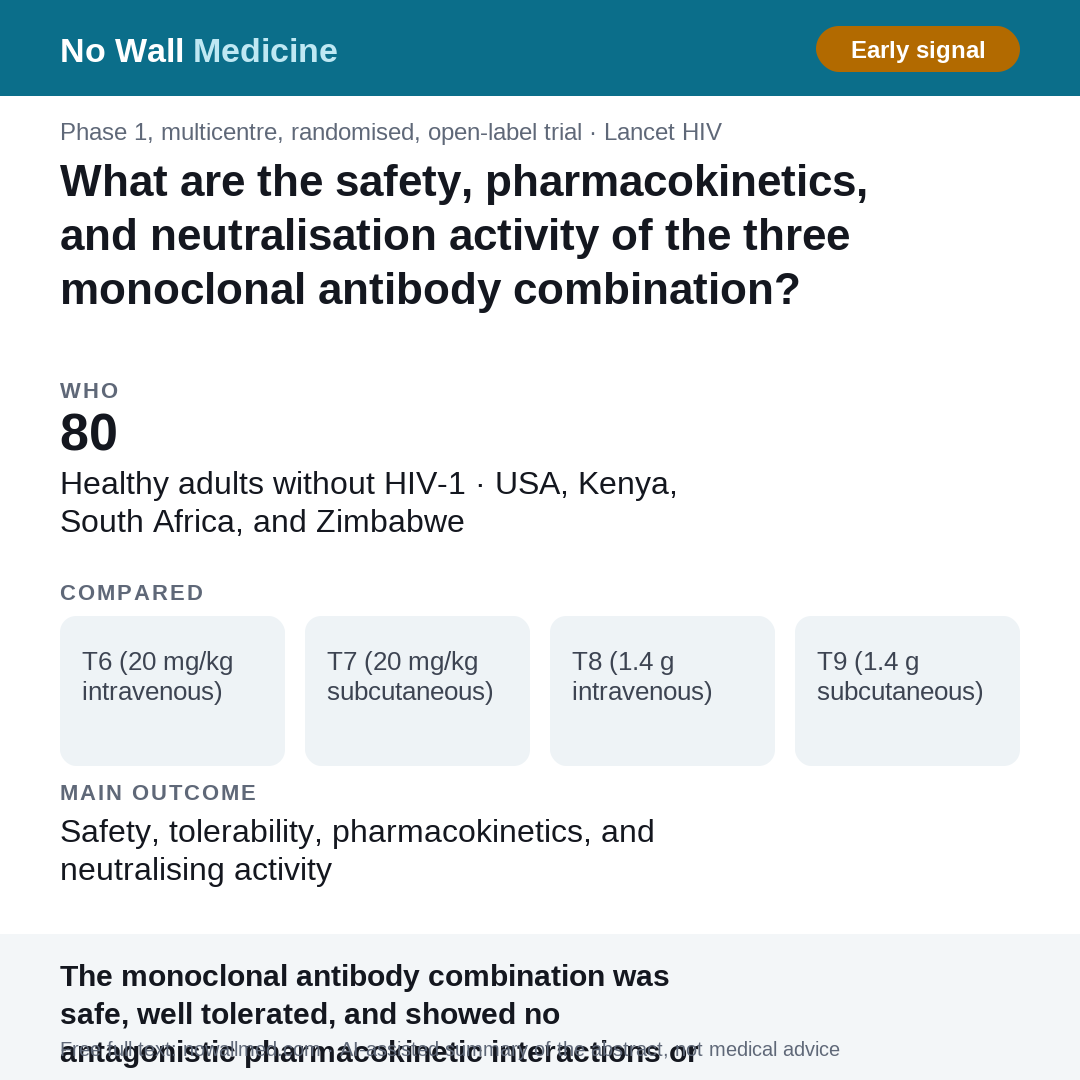
Safety, pharmacokinetics, and neutralisation activity of PGDM1400LS, VRC07-523LS, and PGT121.414.LS infused intravenously or subcutaneously (HVTN 140/HPTN 101 part B): a phase 1, randomised trial
Phase 1, multicentre, randomised, open-label trialBenefit found
What are the safety, pharmacokinetics, and neutralisation activity of the three monoclonal antibody combination?
Who
80
Healthy adults without HIV-1 · USA, Kenya, South Africa, and Zimbabwe
Compared
T6 (20 mg/kg intravenous)
T7 (20 mg/kg subcutaneous)
T8 (1.4 g intravenous)
T9 (1.4 g subcutaneous)
Main outcome
Safety, tolerability, pharmacokinetics, and neutralising activity
Bottom line: The monoclonal antibody combination was safe, well tolerated, and showed no antagonistic pharmacokinetic interactions or loss of neutralisation activity.
Funded by: National Institute of Allergy and Infectious Diseases-National Institutes of Health
Lancet HIV · 2026-05-11Download image
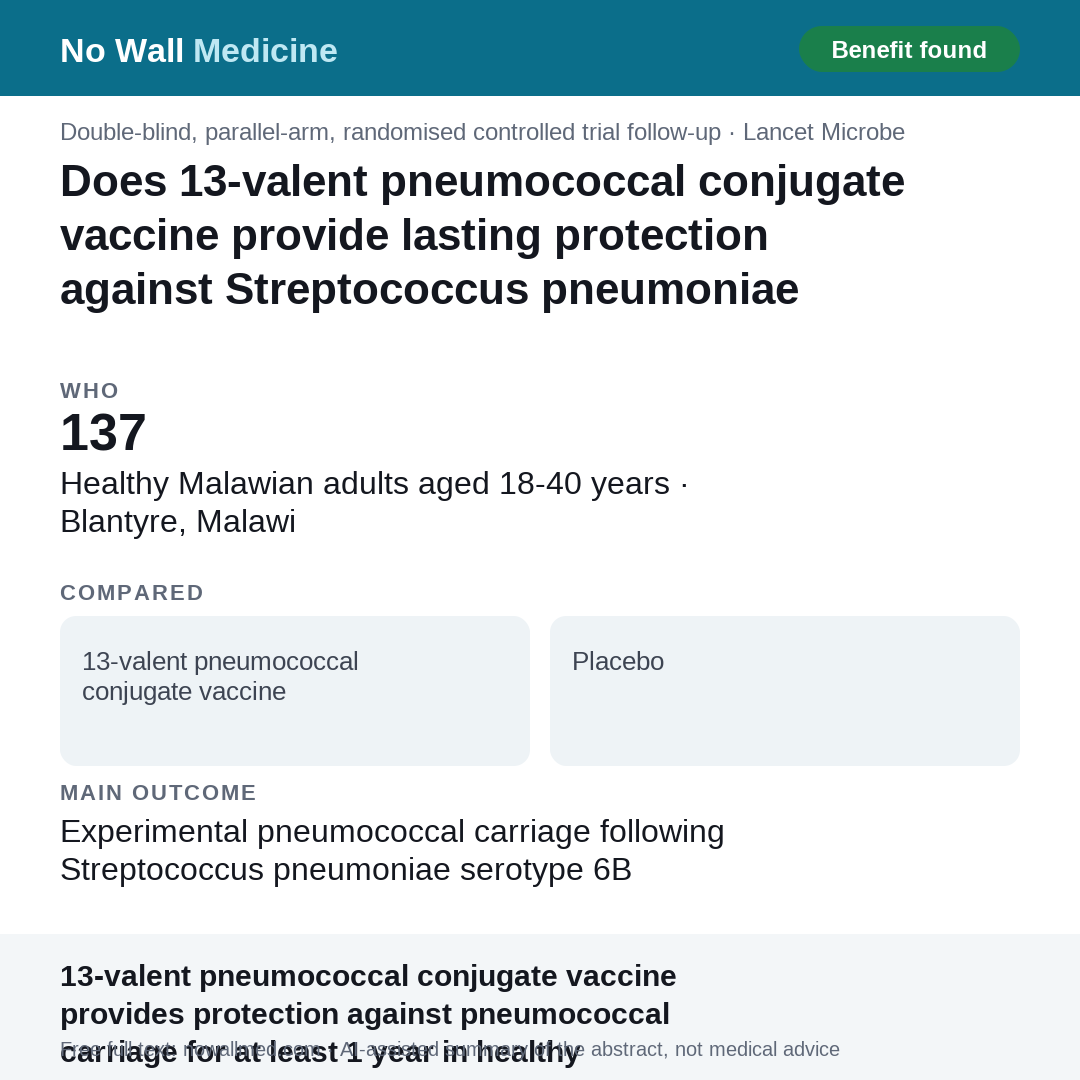
Effect of 13-valent pneumococcal conjugate vaccine on experimental carriage at 1-year post-vaccination on rechallenge with Streptococcus pneumoniae serotype 6B in Blantyre, Malawi: a controlled human infection study and longitudinal follow-up of a randomised controlled trial
Double-blind, parallel-arm, randomised controlled trial follow-upBenefit found
Does 13-valent pneumococcal conjugate vaccine provide lasting protection against Streptococcus pneumoniae serotype 6B carriage?
Who
137
Healthy Malawian adults aged 18-40 years · Blantyre, Malawi
Compared
13-valent pneumococcal conjugate vaccine
Placebo
Main outcome
Experimental pneumococcal carriage following Streptococcus pneumoniae serotype 6B rechallenge
Result: relative risk 0·27 (95% CI 0·08-0·98)
Bottom line: 13-valent pneumococcal conjugate vaccine provides protection against pneumococcal carriage for at least 1 year in healthy adults.
Funded by: Wellcome Trust
Lancet Microbe · 2026-05-11Download image
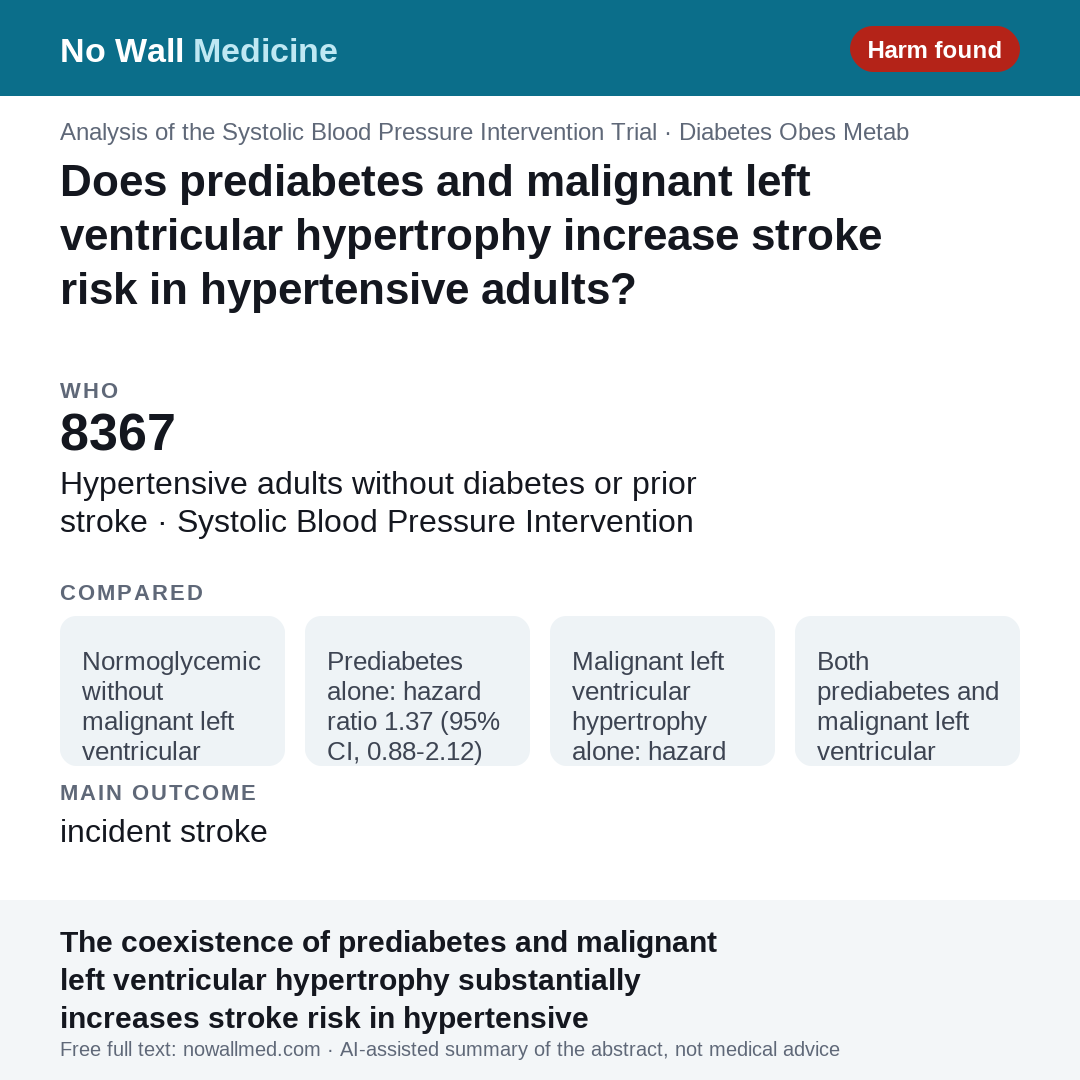
Prediabetes, Malignant Ventricular Hypertrophy and Stroke: The SPRINT Trial
Analysis of the Systolic Blood Pressure Intervention TrialHarm found
Does prediabetes and malignant left ventricular hypertrophy increase stroke risk in hypertensive adults?
Who
8367
Hypertensive adults without diabetes or prior stroke · Systolic Blood Pressure Intervention Trial
Compared
Normoglycemic without malignant left ventricular hypertrophy
Prediabetes alone: hazard ratio 1.37 (95% CI, 0.88-2.12)
Malignant left ventricular hypertrophy alone: hazard ratio 1.94 (95% CI, 1.06-3.53)
Both prediabetes and malignant left ventricular hypertrophy: hazard ratio 3.07 (95% CI, 1.66-5.70)
Main outcome
incident stroke
Result: hazard ratio 3.07 (95% CI, 1.66-5.70) for both conditions
Bottom line: The coexistence of prediabetes and malignant left ventricular hypertrophy substantially increases stroke risk in hypertensive adults.
Diabetes Obes Metab · 2026-05-11Download image
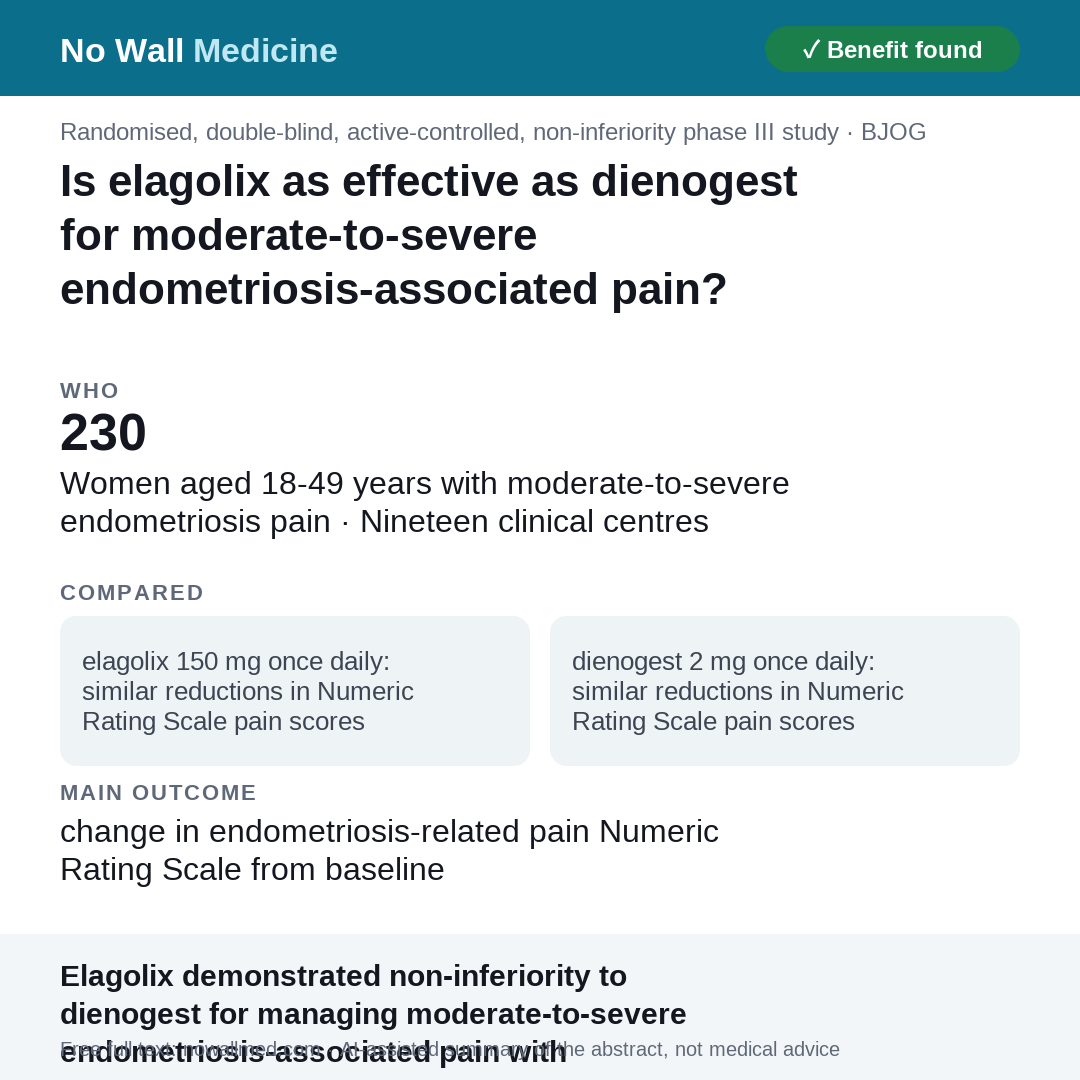
Efficacy and Safety of Elagolix Versus Dienogest for Treatment of Moderate-to-Severe Endometriosis Pain: A Phase III, Multicentric, Double-Blind, Active-Controlled, Non-Inferiority Study
Randomised, double-blind, active-controlled, non-inferiority phase III studyBenefit found
Is elagolix as effective as dienogest for moderate-to-severe endometriosis-associated pain?
Who
230
Women aged 18-49 years with moderate-to-severe endometriosis pain · Nineteen clinical centres across India
Compared
elagolix 150 mg once daily: similar reductions in Numeric Rating Scale pain scores
dienogest 2 mg once daily: similar reductions in Numeric Rating Scale pain scores
Main outcome
change in endometriosis-related pain Numeric Rating Scale from baseline
Result: treatment difference 0.04 (95% CI: -0.3, 0.37)
Bottom line: Elagolix demonstrated non-inferiority to dienogest for managing moderate-to-severe endometriosis-associated pain with acceptable safety.
BJOG · 2026-05-11Download image
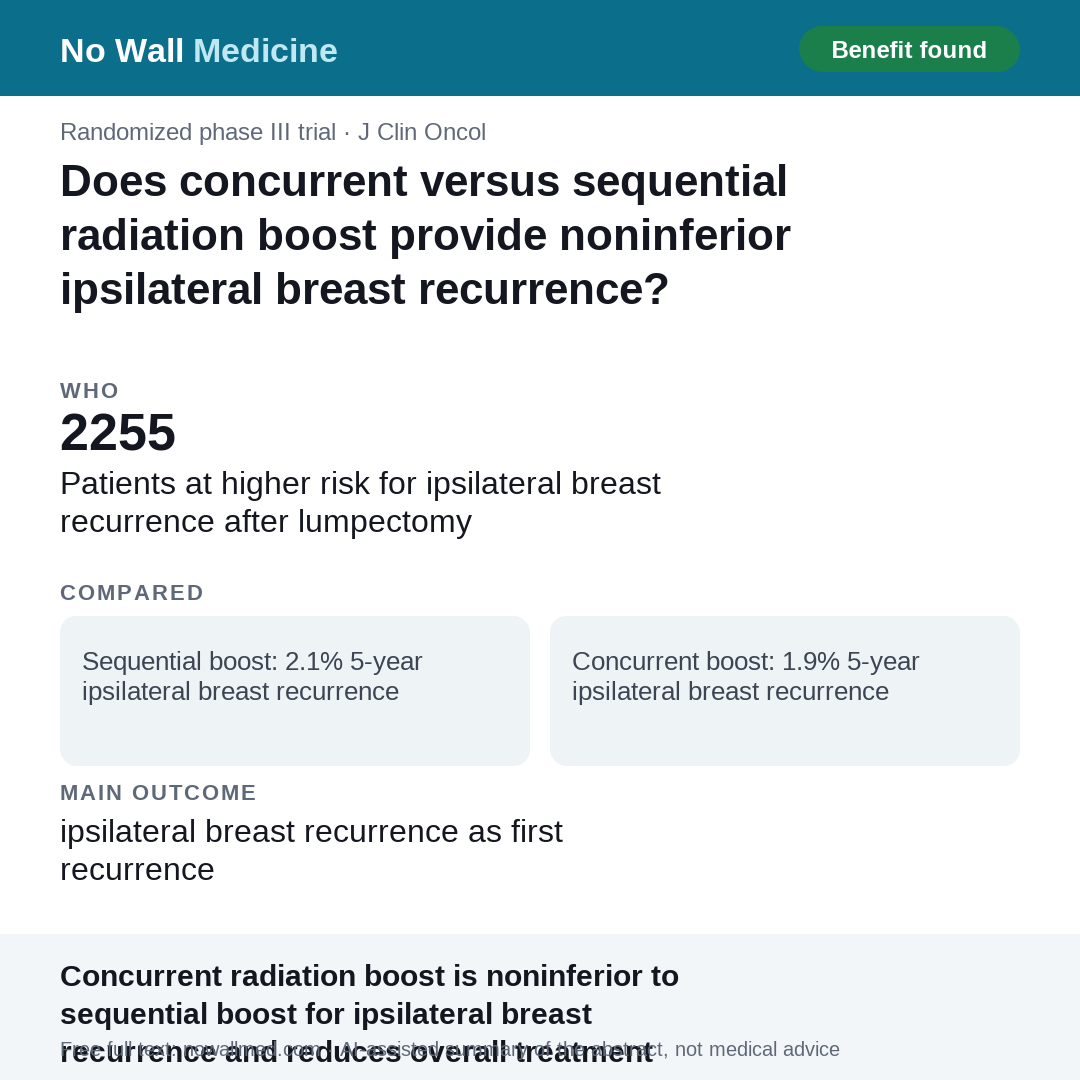
Concurrent Versus Sequential Radiation Dose Escalation to the Surgical Cavity for Conservative Treatment of High-Risk Early Breast Cancer: NRG/RTOG 1005 Phase III Trial
Randomized phase III trialBenefit found
Does concurrent versus sequential radiation boost provide noninferior ipsilateral breast recurrence?
Who
2255
Patients at higher risk for ipsilateral breast recurrence after lumpectomy
Compared
Sequential boost: 2.1% 5-year ipsilateral breast recurrence
Concurrent boost: 1.9% 5-year ipsilateral breast recurrence
Main outcome
ipsilateral breast recurrence as first recurrence
Result: hazard ratio 1.31 (90% CI 0.84 to 2.04)
Bottom line: Concurrent radiation boost is noninferior to sequential boost for ipsilateral breast recurrence and reduces overall treatment time.
J Clin Oncol · 2026-05-11Download image
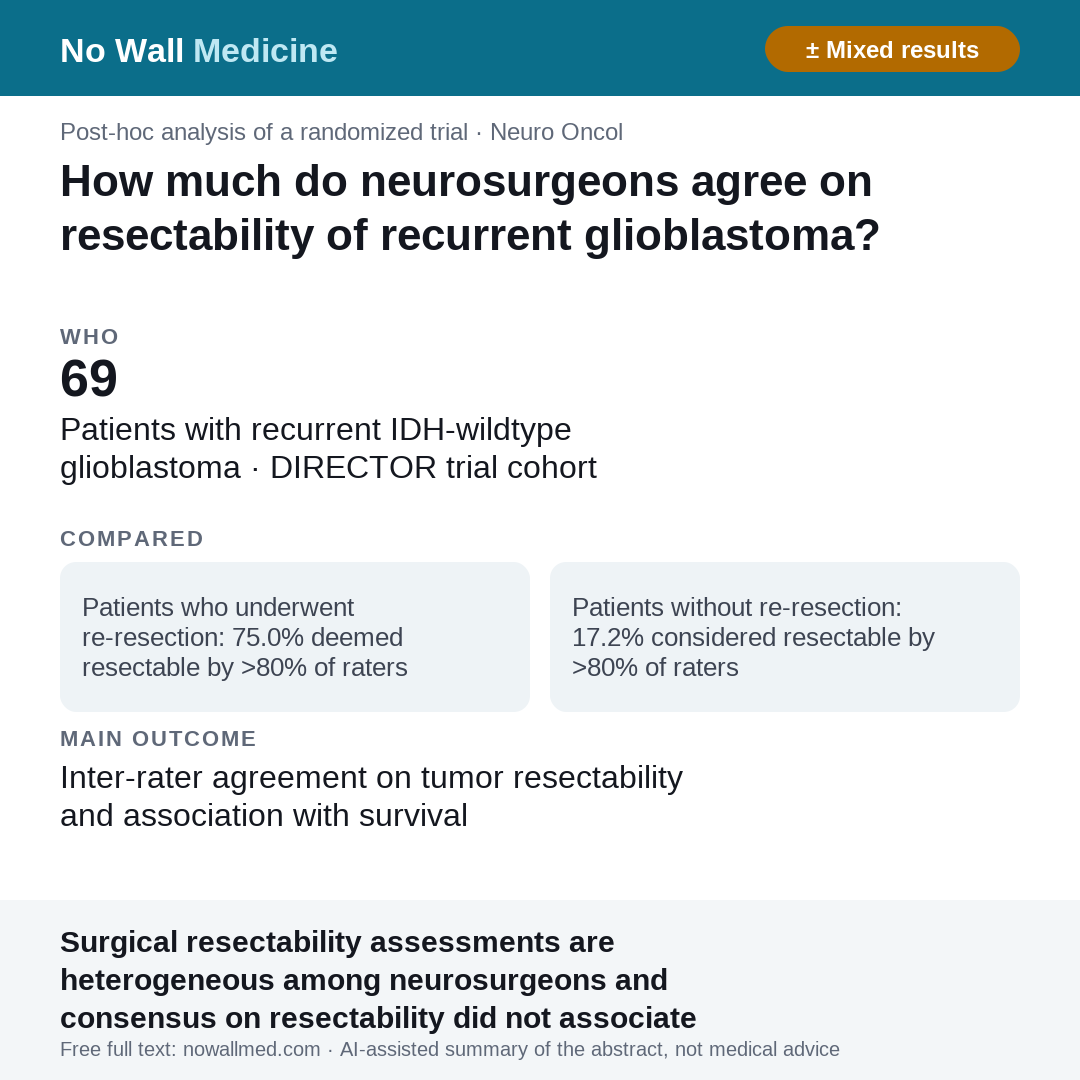
Discrepancies in inter-rater agreement on resectability of recurrent glioblastoma: Complementary post-hoc analysis of the prospective, randomized DIRECTOR trial
Post-hoc analysis of a randomized trialMixed results
How much do neurosurgeons agree on resectability of recurrent glioblastoma?
Who
69
Patients with recurrent IDH-wildtype glioblastoma · DIRECTOR trial cohort
Compared
Patients who underwent re-resection: 75.0% deemed resectable by >80% of raters
Patients without re-resection: 17.2% considered resectable by >80% of raters
Main outcome
Inter-rater agreement on tumor resectability and association with survival
Bottom line: Surgical resectability assessments are heterogeneous among neurosurgeons and consensus on resectability did not associate with prolonged overall survival.
Limitation: Findings are limited by the number of surgical raters and the size of the cohort.
Neuro Oncol · 2026-05-11Download image