Visual abstracts
New randomized trials and meta-analyses from leading journals at a glance: who was studied, what was compared, and what was found. Every paper is free to read in full.
All specialtiesCardiology 361Oncology 283Gastroenterology & Hepatology 148Infectious Disease 276Neurology 164Psychiatry & Mental Health 230Pulmonology 166Critical Care 110Endocrinology & Diabetes 212Pediatrics 157Surgery 106Orthopedics & Sports Medicine 66Neurosurgery 21Cardiothoracic & Vascular Surgery 36Plastic & Reconstructive Surgery 68Nephrology 71Rheumatology 69Hematology 82Dermatology 34Ophthalmology 60Obstetrics & Gynecology 103Public & Global Health 105Radiology & Imaging 29Anesthesiology 61Urology 78ENT (Otolaryngology) 44Emergency Medicine 34Allergy & Immunology 39Geriatrics 100Family Medicine & Primary Care 55Medical Genetics & Genomics 32Pathology & Laboratory Medicine 5Physical Medicine & Rehabilitation 88Palliative Care 55Nutrition 121Digital Health & AI 303General Medicine 42
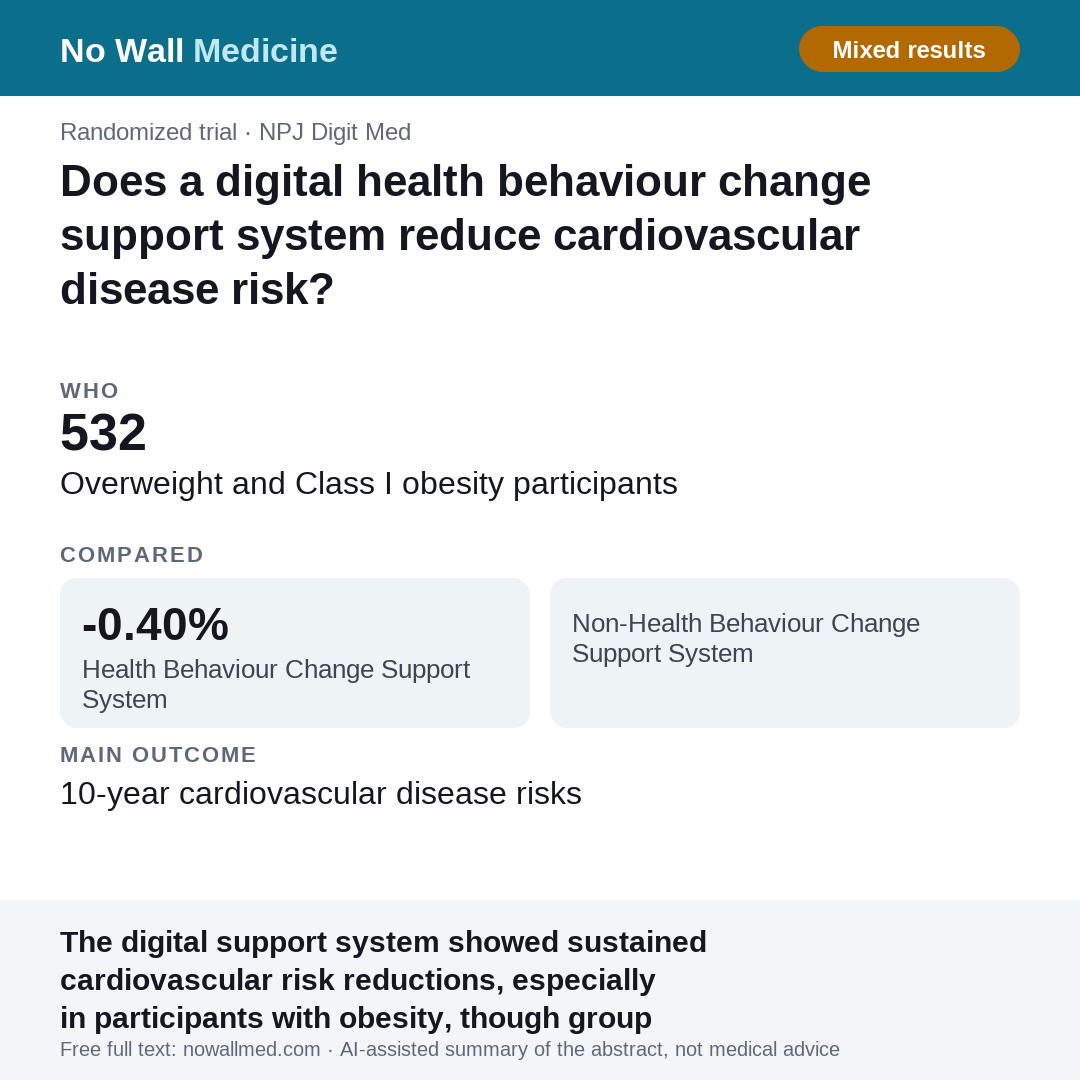
Effect of a digital health behaviour change support system on cardiovascular disease risk in a randomized weight loss trial
Randomized trialMixed results
Does a digital health behaviour change support system reduce cardiovascular disease risk?
Who
532
Overweight and Class I obesity participants
Compared
-0.40%Health Behaviour Change Support System
Non-Health Behaviour Change Support System
Main outcome
10-year cardiovascular disease risks
Bottom line: The digital support system showed sustained cardiovascular risk reductions, especially in participants with obesity, though group differences were not significant.
Limitation: Differences between groups were not significant in any analyses conducted.
NPJ Digit Med · 2026-05-11Download image
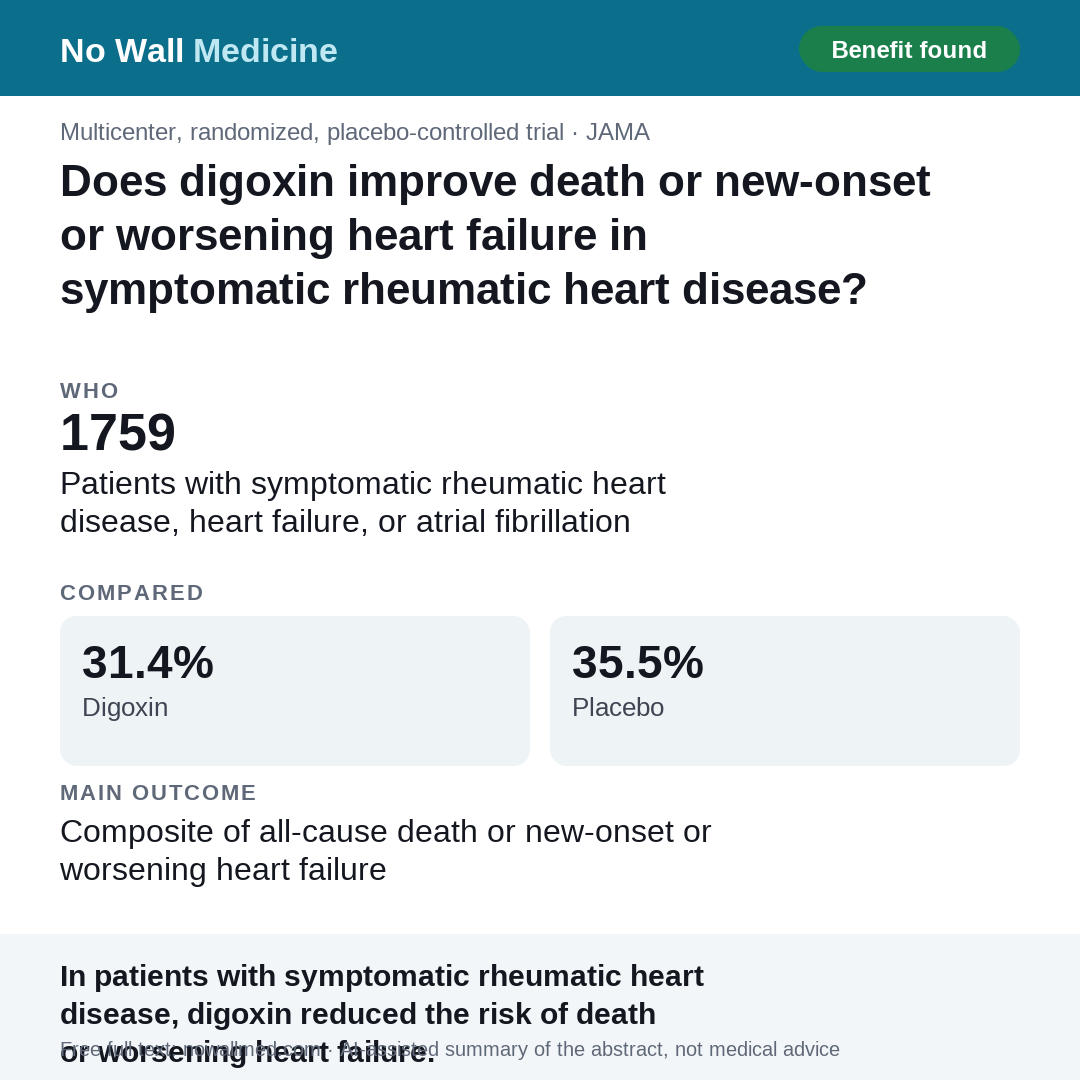
Digoxin in Patients With Symptomatic Rheumatic Heart Disease: A Randomized Clinical Trial
Multicenter, randomized, placebo-controlled trialBenefit found
Does digoxin improve death or new-onset or worsening heart failure in symptomatic rheumatic heart disease?
Who
1759
Patients with symptomatic rheumatic heart disease, heart failure, or atrial fibrillation · 12 tertiary care hospitals in India
Compared
31.4%Digoxin
35.5%Placebo
Main outcome
Composite of all-cause death or new-onset or worsening heart failure
Result: hazard ratio 0.82 (95% CI 0.70-0.97)
Bottom line: In patients with symptomatic rheumatic heart disease, digoxin reduced the risk of death or worsening heart failure.
JAMA · 2026-05-10Download image
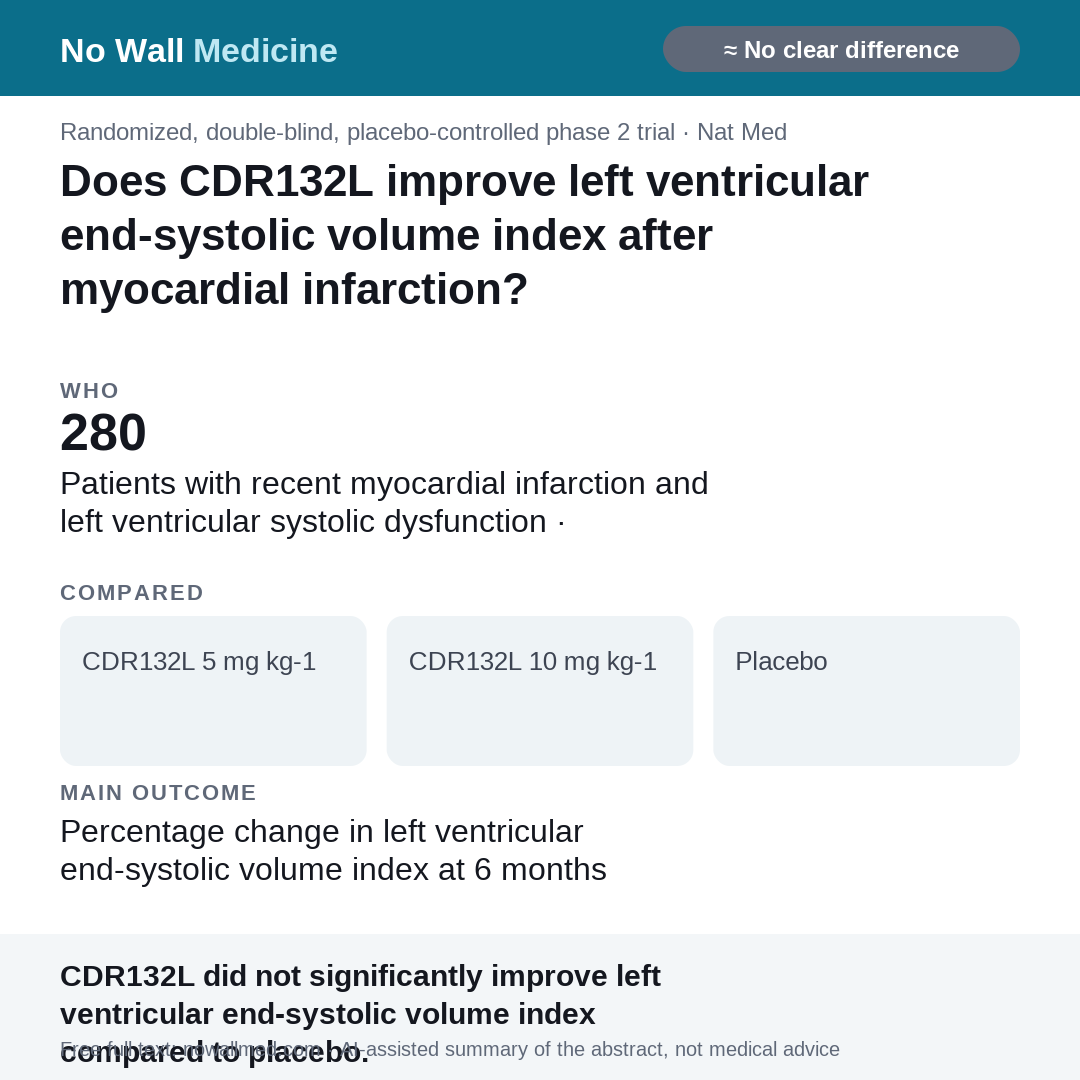
The microRNA inhibitor CDR132L in patients with reduced left ventricular ejection fraction after myocardial infarction: a randomized phase 2 trial
Randomized, double-blind, placebo-controlled phase 2 trialNo clear difference
Does CDR132L improve left ventricular end-systolic volume index after myocardial infarction?
Who
280
Patients with recent myocardial infarction and left ventricular systolic dysfunction · Multinational
Compared
CDR132L 5 mg kg-1
CDR132L 10 mg kg-1
Placebo
Main outcome
Percentage change in left ventricular end-systolic volume index at 6 months
Bottom line: CDR132L did not significantly improve left ventricular end-systolic volume index compared to placebo.
Nat Med · 2026-05-10Download image
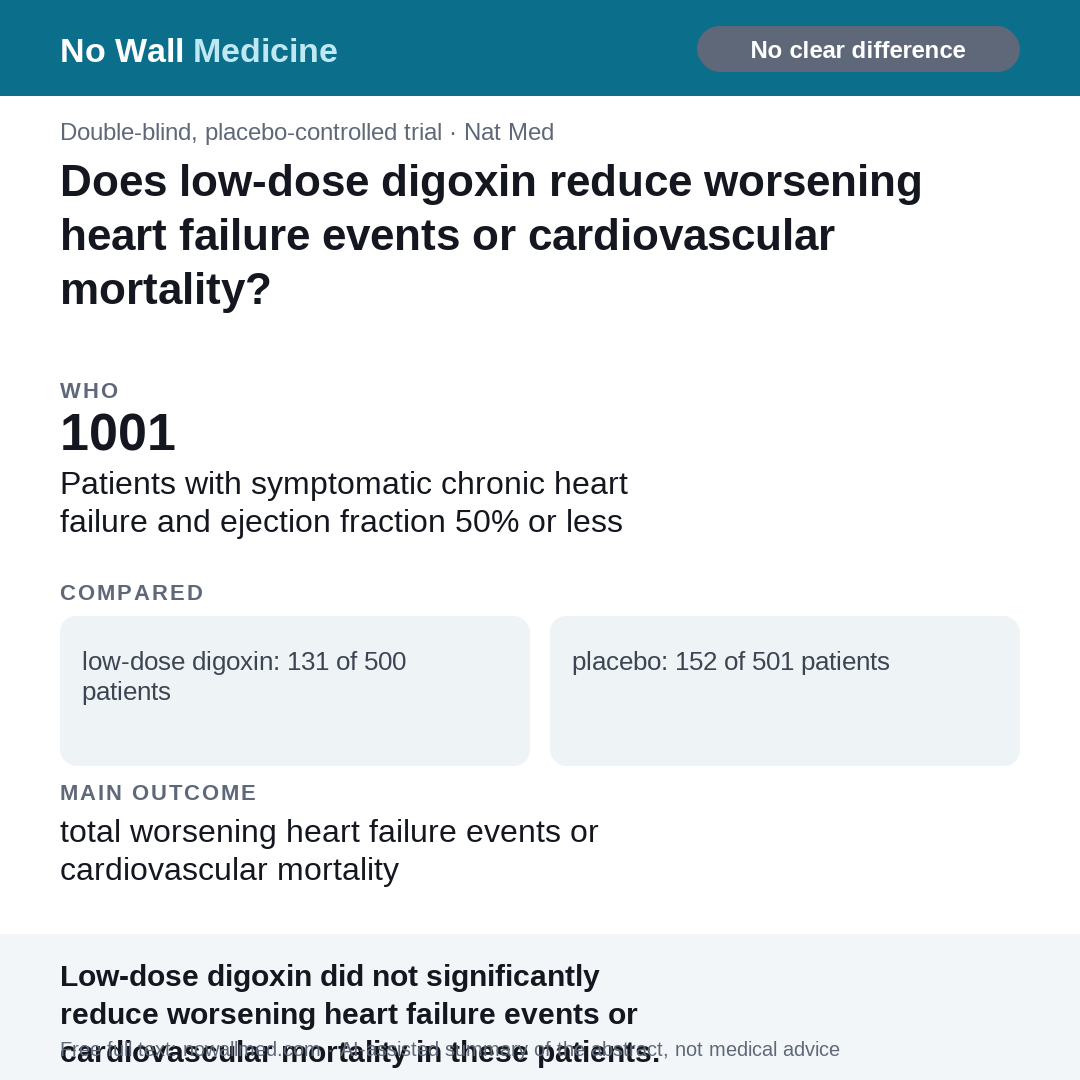
Low-dose digoxin in patients with heart failure with reduced or mildly reduced ejection fraction: a randomized controlled trial
Double-blind, placebo-controlled trialNo clear difference
Does low-dose digoxin reduce worsening heart failure events or cardiovascular mortality?
Who
1001
Patients with symptomatic chronic heart failure and ejection fraction 50% or less
Compared
low-dose digoxin: 131 of 500 patients
placebo: 152 of 501 patients
Main outcome
total worsening heart failure events or cardiovascular mortality
Result: rate ratio 0.81 (95% CI 0.61-1.07)
Bottom line: Low-dose digoxin did not significantly reduce worsening heart failure events or cardiovascular mortality in these patients.
Nat Med · 2026-05-10Download image
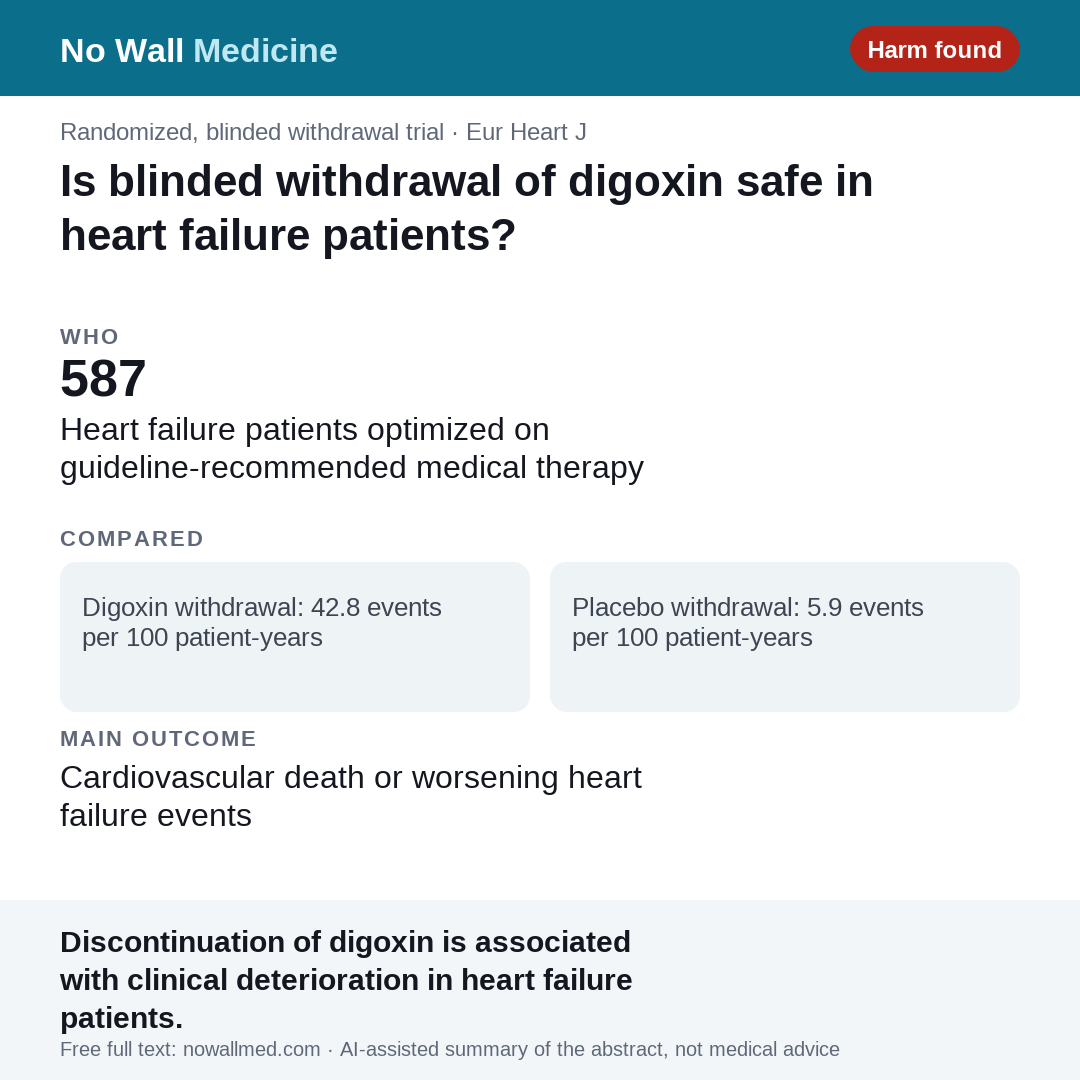
Blinded withdrawal of randomized treatment with low-dose digoxin or placebo in heart failure: the DECISION trial
Randomized, blinded withdrawal trialHarm found
Is blinded withdrawal of digoxin safe in heart failure patients?
Who
587
Heart failure patients optimized on guideline-recommended medical therapy
Compared
Digoxin withdrawal: 42.8 events per 100 patient-years
Placebo withdrawal: 5.9 events per 100 patient-years
Main outcome
Cardiovascular death or worsening heart failure events
Result: rate ratio 7.37 (95% CI 1.56-34.88)
Bottom line: Discontinuation of digoxin is associated with clinical deterioration in heart failure patients.
Eur Heart J · 2026-05-10Download image
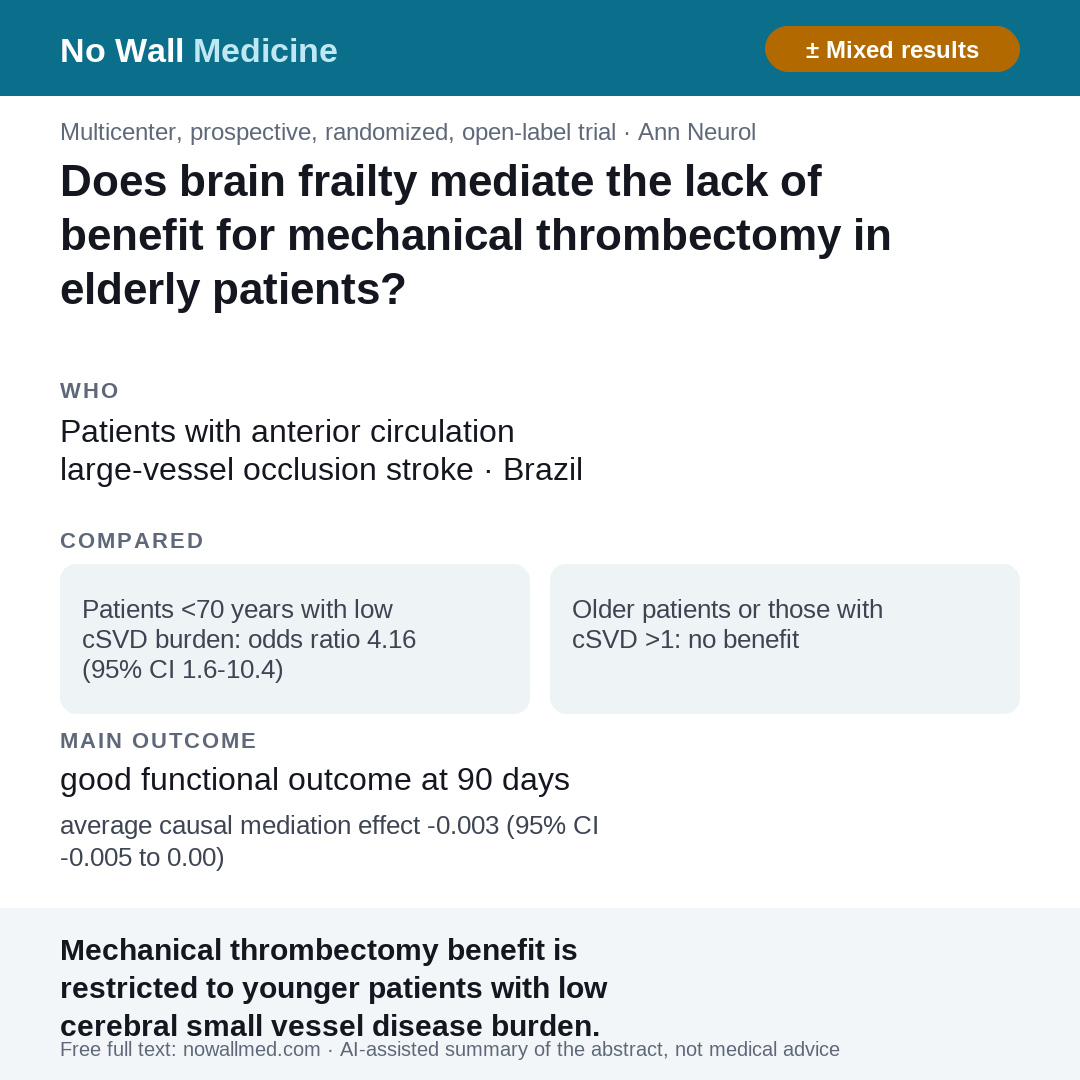
Brain Frailty Rather than Age Alone Mediates the Lack of Benefit for Endovascular Thrombectomy in the Elderly Population of the RESILIENT Trial
Multicenter, prospective, randomized, open-label trialMixed results
Does brain frailty mediate the lack of benefit for mechanical thrombectomy in elderly patients?
Who
Patients with anterior circulation large-vessel occlusion stroke · Brazil
Compared
Patients <70 years with low cSVD burden: odds ratio 4.16 (95% CI 1.6-10.4)
Older patients or those with cSVD >1: no benefit
Main outcome
good functional outcome at 90 days
Result: average causal mediation effect -0.003 (95% CI -0.005 to 0.00)
Bottom line: Mechanical thrombectomy benefit is restricted to younger patients with low cerebral small vessel disease burden.
Ann Neurol · 2026-05-10Download image
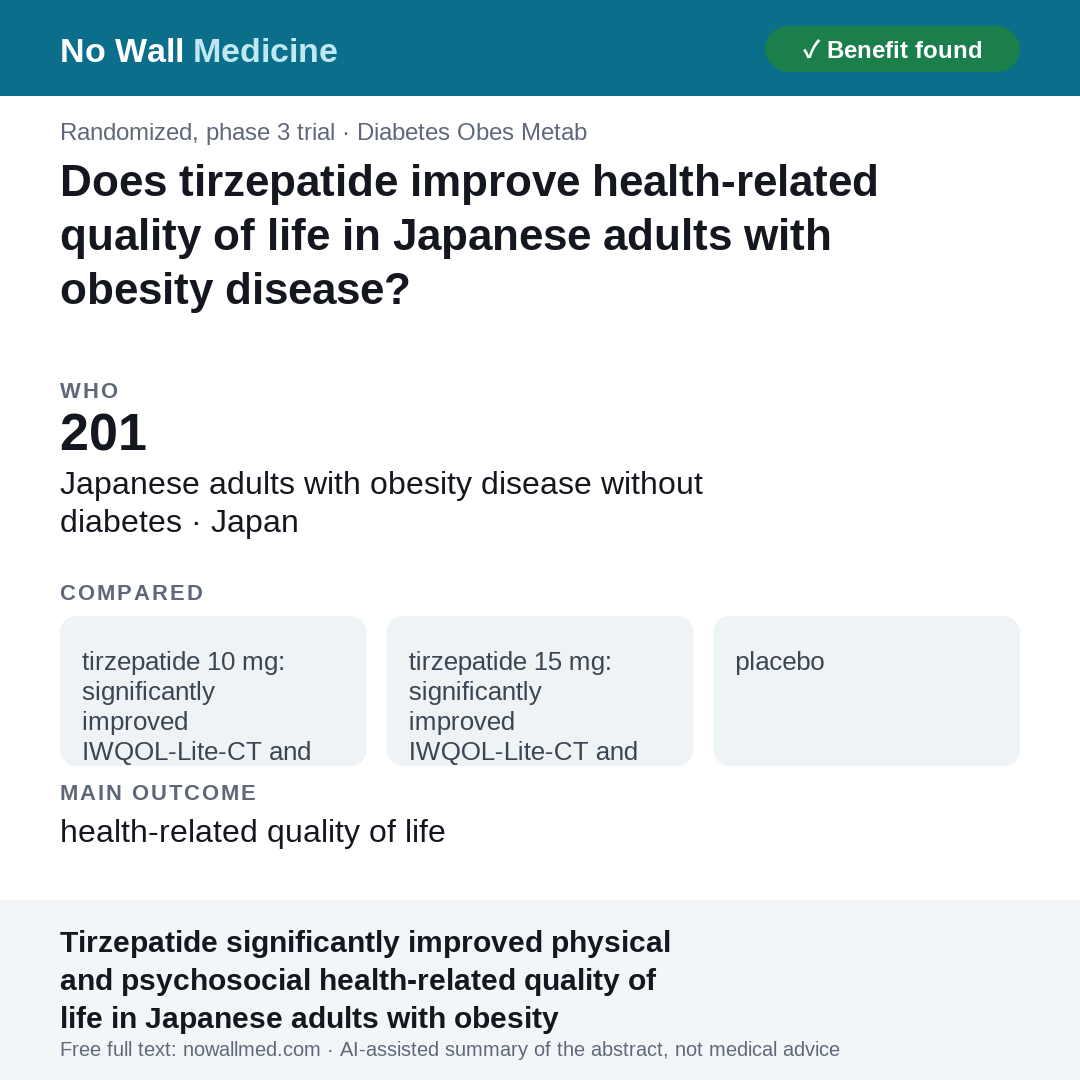
Effect of Tirzepatide on Health-Related Quality of Life in Japanese Patients With Obesity Disease: Patient-Reported Outcomes From the SURMOUNT-J Study
Randomized, phase 3 trialBenefit found
Does tirzepatide improve health-related quality of life in Japanese adults with obesity disease?
Who
201
Japanese adults with obesity disease without diabetes · Japan
Compared
tirzepatide 10 mg: significantly improved IWQOL-Lite-CT and SF-36v2 scores
tirzepatide 15 mg: significantly improved IWQOL-Lite-CT and SF-36v2 scores
placebo
Main outcome
health-related quality of life
Bottom line: Tirzepatide significantly improved physical and psychosocial health-related quality of life in Japanese adults with obesity disease.
Diabetes Obes Metab · 2026-05-10Download image
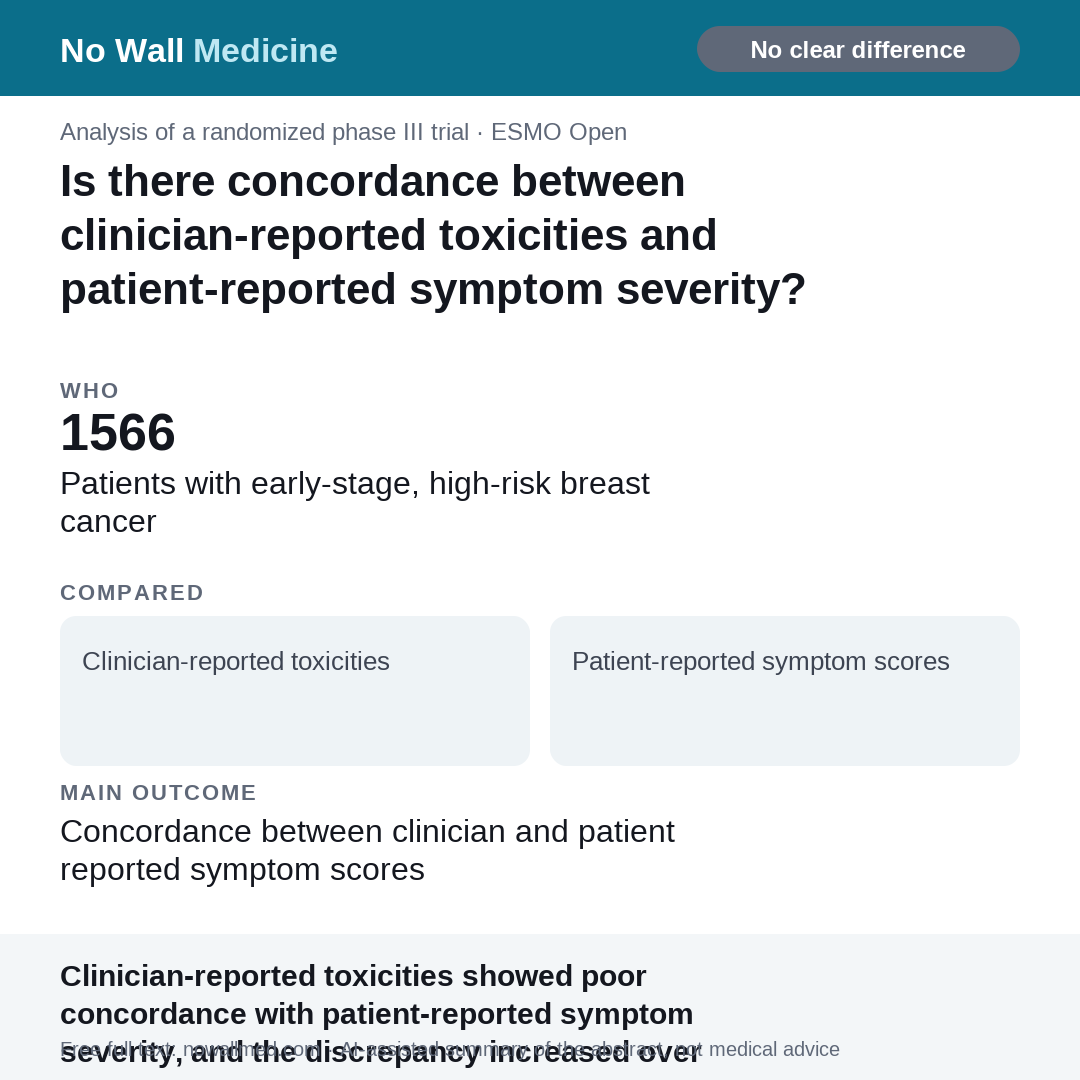
Concordance between clinician-reported toxicities and patient-reported symptom severity in early-stage breast cancer: an analysis of the randomized phase III PANTHER trial
Analysis of a randomized phase III trialNo clear difference
Is there concordance between clinician-reported toxicities and patient-reported symptom severity?
Who
1566
Patients with early-stage, high-risk breast cancer
Compared
Clinician-reported toxicities
Patient-reported symptom scores
Main outcome
Concordance between clinician and patient reported symptom scores
Result: kappa = 0.07-0.34
Bottom line: Clinician-reported toxicities showed poor concordance with patient-reported symptom severity, and the discrepancy increased over time.
ESMO Open · 2026-05-09Download image
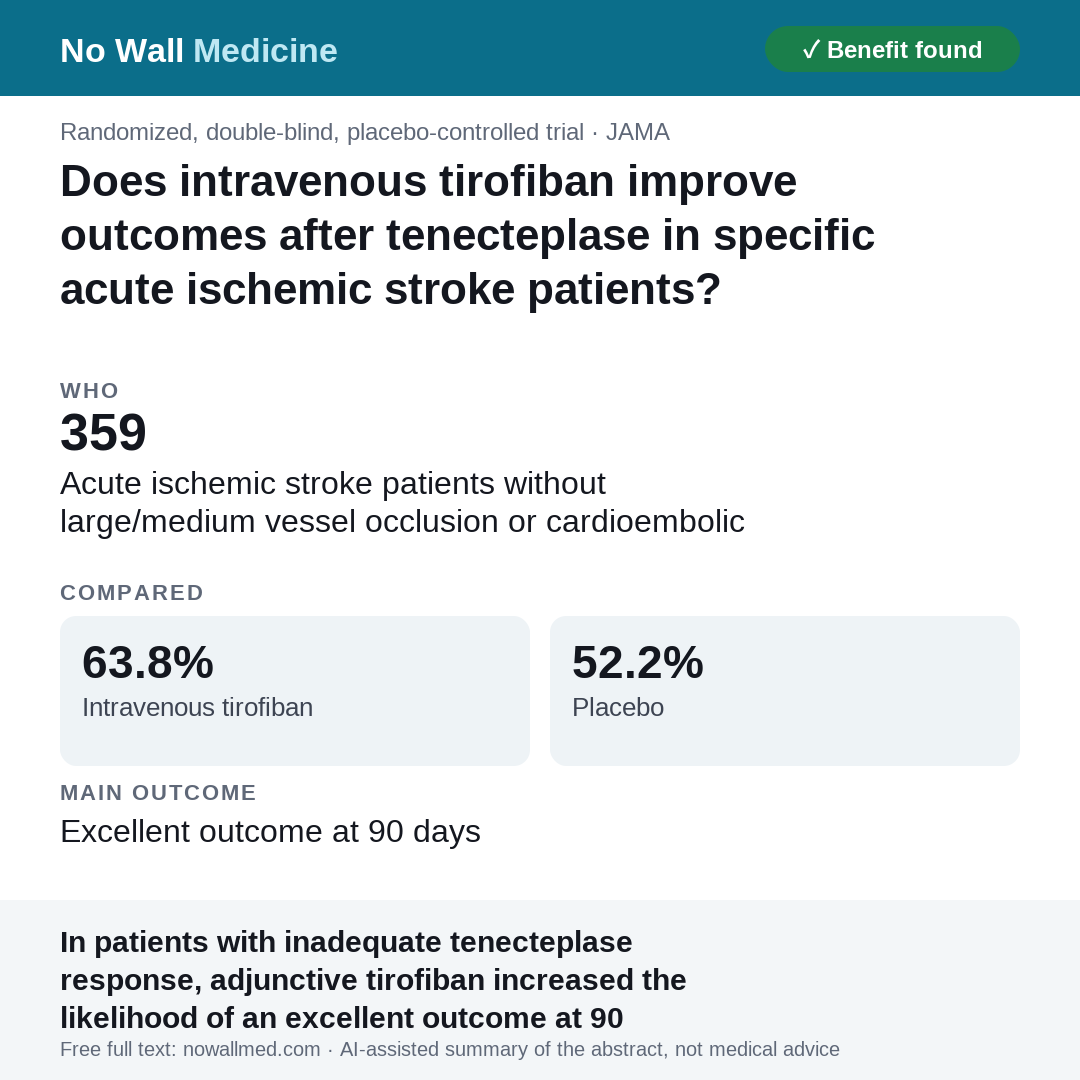
Intravenous Tirofiban After Tenecteplase in Acute Ischemic Stroke: The INSTANT Randomized Clinical Trial
Randomized, double-blind, placebo-controlled trialBenefit found
Does intravenous tirofiban improve outcomes after tenecteplase in specific acute ischemic stroke patients?
Who
359
Acute ischemic stroke patients without large/medium vessel occlusion or cardioembolic source · 37 hospitals in China
Compared
63.8%Intravenous tirofiban
52.2%Placebo
Main outcome
Excellent outcome at 90 days
Result: risk ratio 1.22 (95% CI 1.02-1.46)
Bottom line: In patients with inadequate tenecteplase response, adjunctive tirofiban increased the likelihood of an excellent outcome at 90 days.
JAMA · 2026-05-08Download image
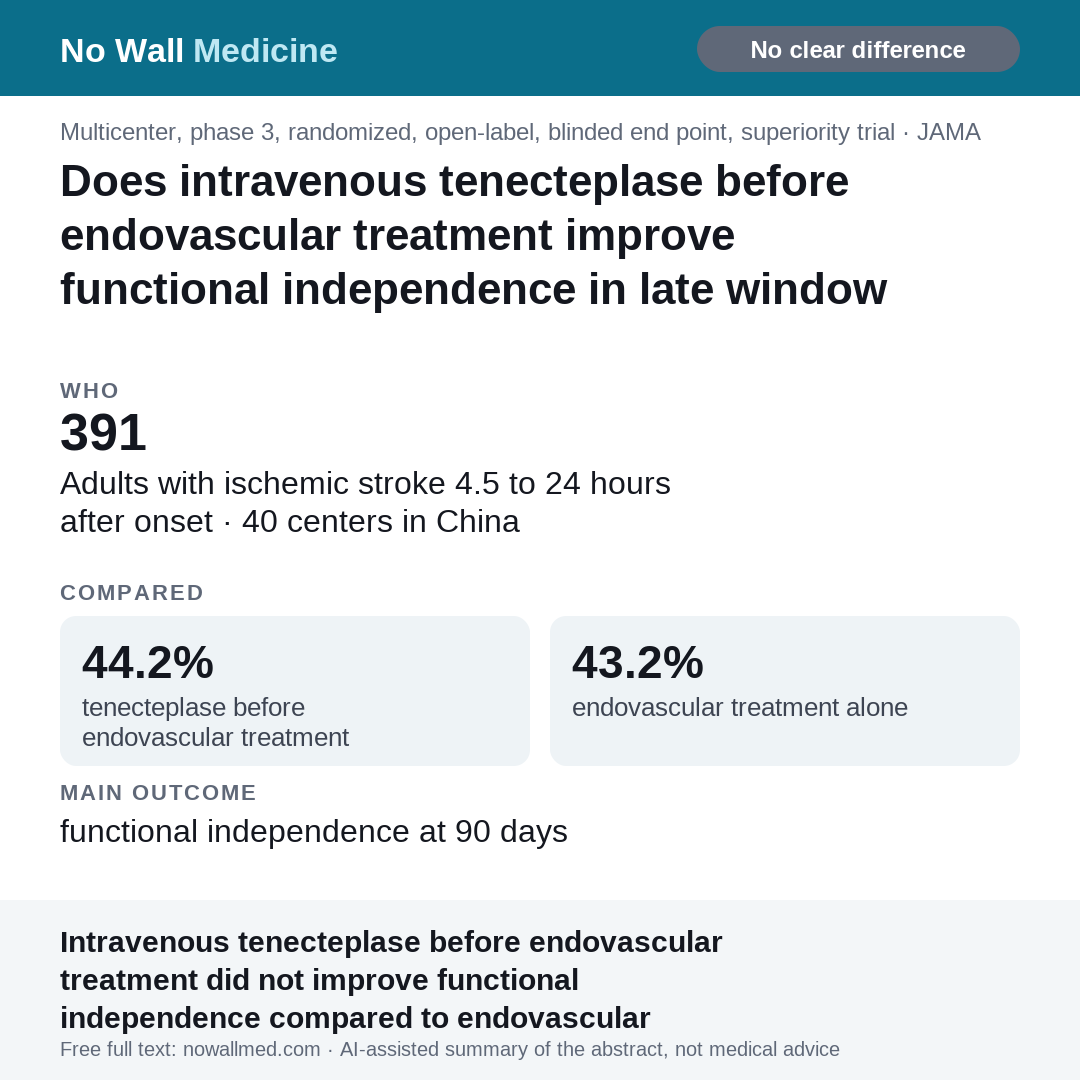
Intravenous Tenecteplase Prior to Endovascular Treatment for Ischemic Stroke at 4.5 to 24 Hours: The TNK-PLUS Randomized Clinical Trial
Multicenter, phase 3, randomized, open-label, blinded end point, superiority trialNo clear difference
Does intravenous tenecteplase before endovascular treatment improve functional independence in late window ischemic stroke?
Who
391
Adults with ischemic stroke 4.5 to 24 hours after onset · 40 centers in China
Compared
44.2%tenecteplase before endovascular treatment
43.2%endovascular treatment alone
Main outcome
functional independence at 90 days
Result: adjusted relative rate, 1.01 (95% CI, 0.83-1.24)
Bottom line: Intravenous tenecteplase before endovascular treatment did not improve functional independence compared to endovascular treatment alone.
JAMA · 2026-05-08Download image
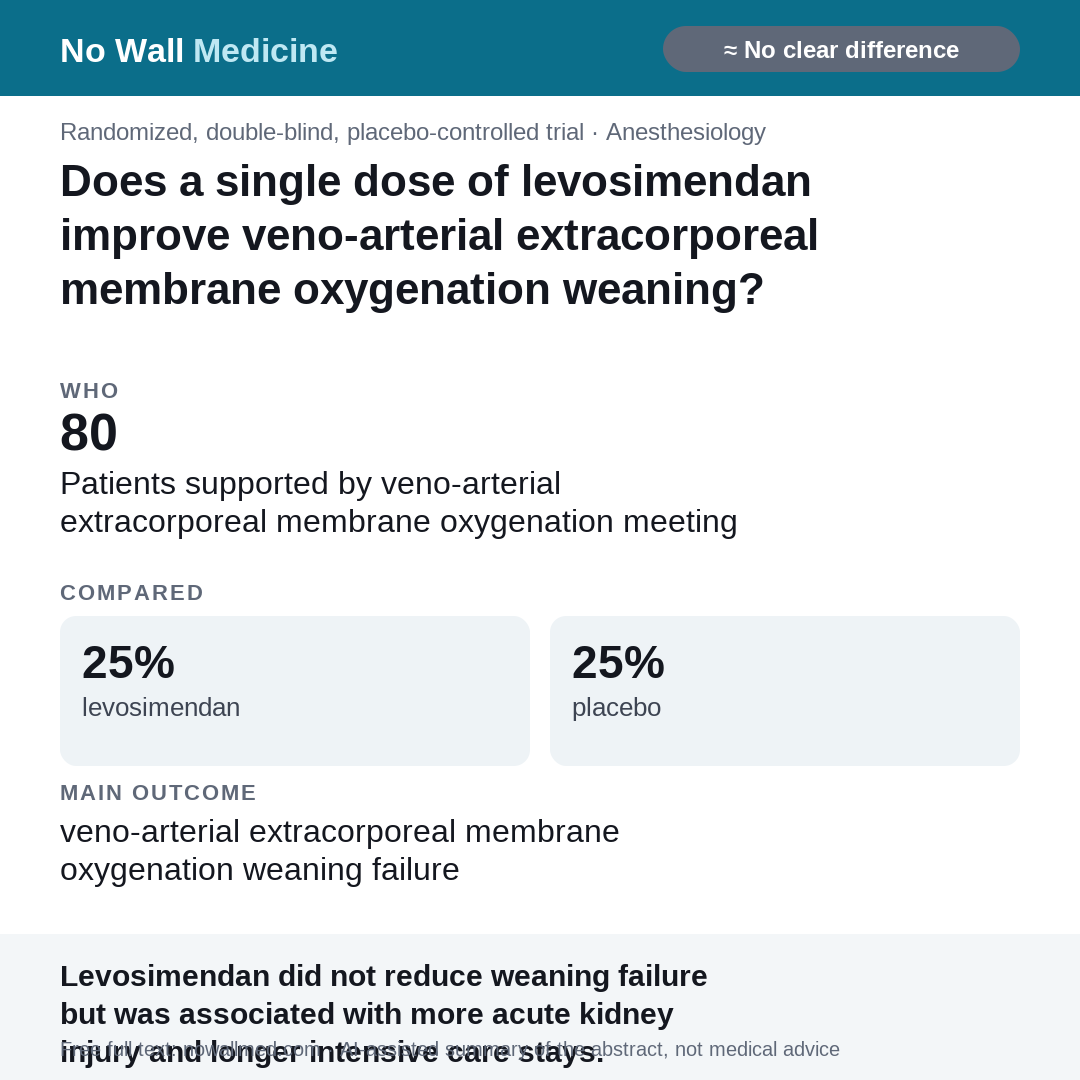
Short- and Long-term Efficacy and Safety of Levosimendan in Veno-arterial Extracorporeal Membrane Oxygenation Weaning: The WEANILEVO Randomized Double-blind Multicenter Trial
Randomized, double-blind, placebo-controlled trialNo clear difference
Does a single dose of levosimendan improve veno-arterial extracorporeal membrane oxygenation weaning?
Who
80
Patients supported by veno-arterial extracorporeal membrane oxygenation meeting weaning criteria · Five French centers
Compared
25%levosimendan
25%placebo
Main outcome
veno-arterial extracorporeal membrane oxygenation weaning failure
Result: odds ratio, 1.00 (95% CI, 0.36 to 2.75)
Bottom line: Levosimendan did not reduce weaning failure but was associated with more acute kidney injury and longer intensive care stays.
Limitation: The planned number of patients could not be recruited due to halted funding.
Anesthesiology · 2026-05-08Download image
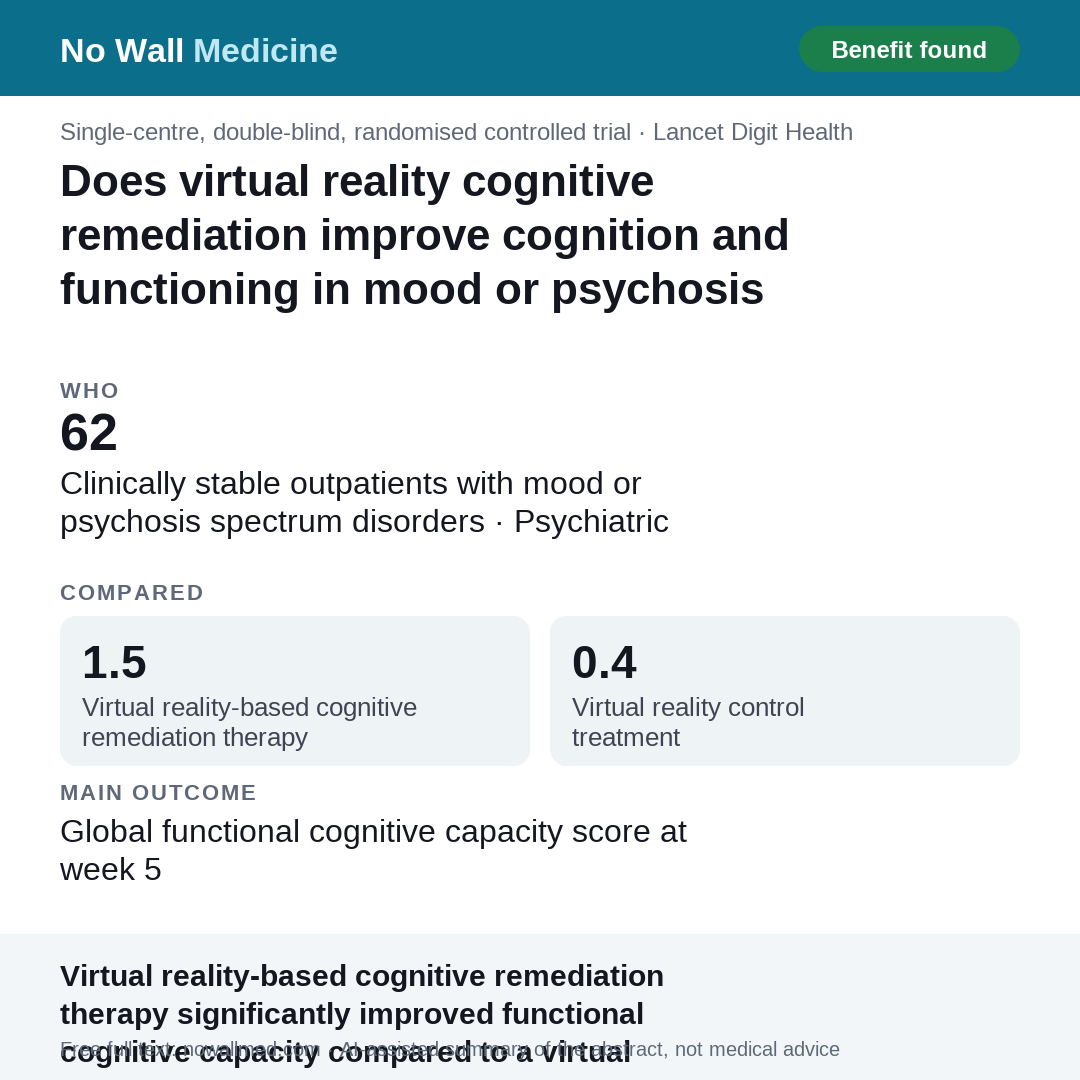
Virtual reality-based cognitive remediation versus virtual reality control in people with mood or psychosis spectrum disorders in Denmark: a single-centre, double-blind, randomised controlled trial
Single-centre, double-blind, randomised controlled trialBenefit found
Does virtual reality cognitive remediation improve cognition and functioning in mood or psychosis spectrum disorders?
Who
62
Clinically stable outpatients with mood or psychosis spectrum disorders · Psychiatric Centre Copenhagen in Denmark
Compared
1.5Virtual reality-based cognitive remediation therapy (SD 0.6)
0.4Virtual reality control treatment (0.8)
Main outcome
Global functional cognitive capacity score at week 5
Result: treatment effect 0.98 (95% CI 0.65-1.32)
Bottom line: Virtual reality-based cognitive remediation therapy significantly improved functional cognitive capacity compared to a virtual reality control group.
Funded by: TrygFonden, Axel Muusfeldts Foundation, Jascha Foundation, Ivan Nielsen Foundation, and Familien Hede Nielsen Foundation
Lancet Digit Health · 2026-05-08Download image
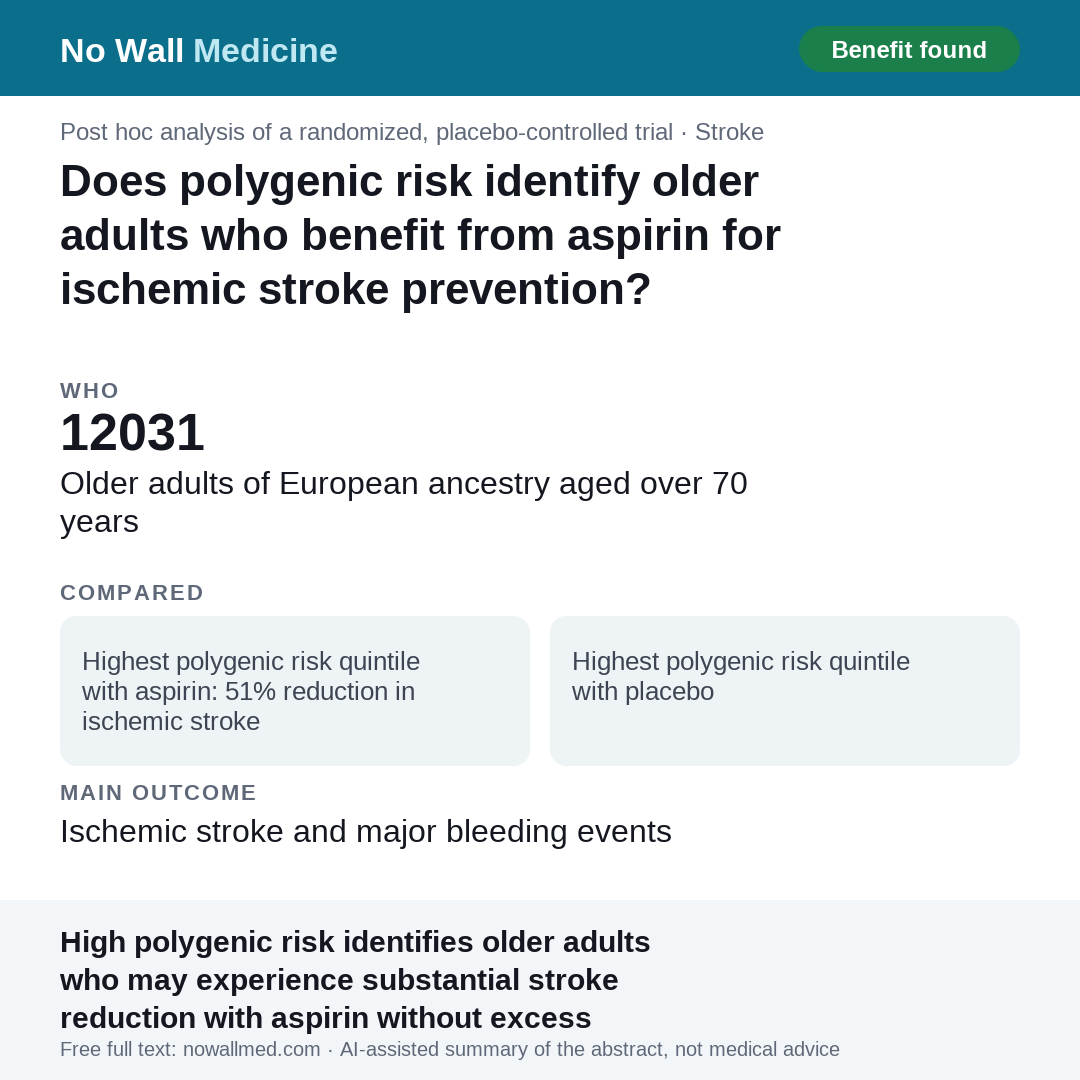
Polygenic Risk Identifies Older Adults Who May Benefit From Aspirin for the Primary Prevention of Ischemic Stroke
Post hoc analysis of a randomized, placebo-controlled trialBenefit found
Does polygenic risk identify older adults who benefit from aspirin for ischemic stroke prevention?
Who
12031
Older adults of European ancestry aged over 70 years
Compared
Highest polygenic risk quintile with aspirin: 51% reduction in ischemic stroke
Highest polygenic risk quintile with placebo
Main outcome
Ischemic stroke and major bleeding events
Result: hazard ratio 0.49 (95% CI 0.28-0.85)
Bottom line: High polygenic risk identifies older adults who may experience substantial stroke reduction with aspirin without excess bleeding.
Stroke · 2026-05-08Download image
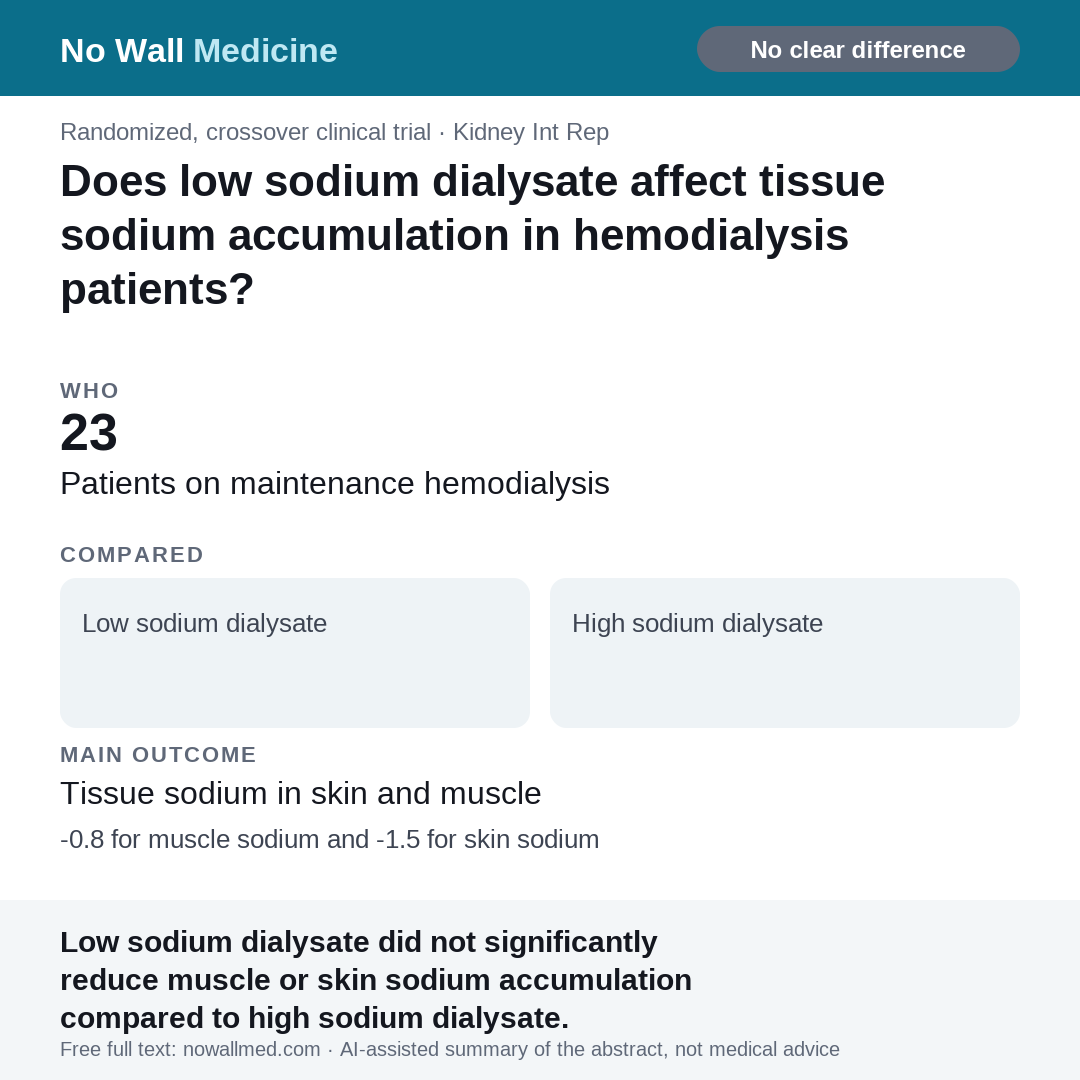
Randomized Crossover Trial of Low Sodium Dialysate on Tissue Sodium Accumulation in Hemodialysis
Randomized, crossover clinical trialNo clear difference
Does low sodium dialysate affect tissue sodium accumulation in hemodialysis patients?
Who
23
Patients on maintenance hemodialysis
Compared
Low sodium dialysate
High sodium dialysate
Main outcome
Tissue sodium in skin and muscle
Result: -0.8 for muscle sodium and -1.5 for skin sodium
Bottom line: Low sodium dialysate did not significantly reduce muscle or skin sodium accumulation compared to high sodium dialysate.
Kidney Int Rep · 2026-05-08Download image
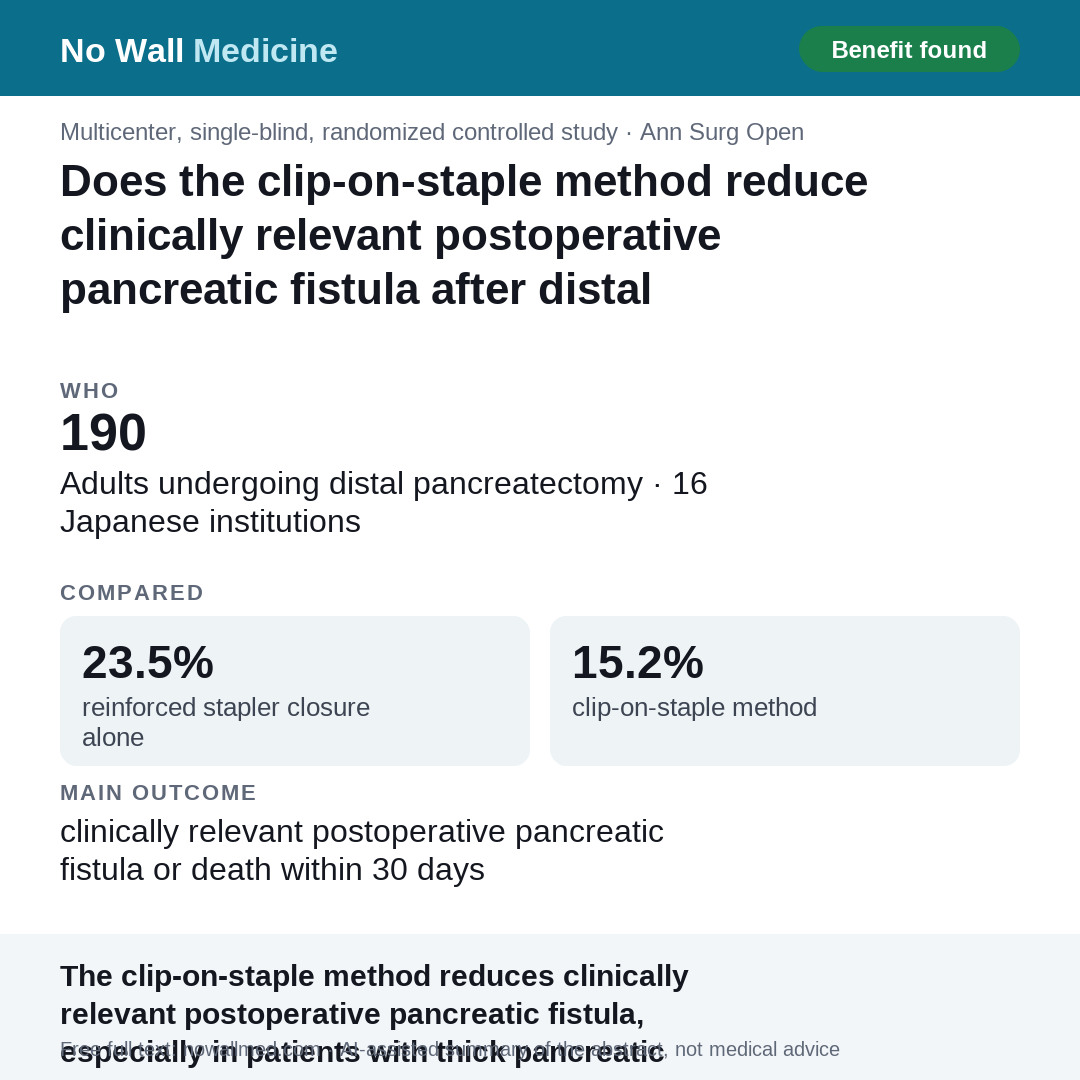
A Multicenter, Single-Blind, Randomized Trial Comparing Stapler Closure With Clip-on-Staple Method Versus Stapler Closure Alone During Distal Pancreatectomy (CLIP-DP Trial)
Multicenter, single-blind, randomized controlled studyBenefit found
Does the clip-on-staple method reduce clinically relevant postoperative pancreatic fistula after distal pancreatectomy?
Who
190
Adults undergoing distal pancreatectomy · 16 Japanese institutions
Compared
23.5%reinforced stapler closure alone
15.2%clip-on-staple method
Main outcome
clinically relevant postoperative pancreatic fistula or death within 30 days
Bottom line: The clip-on-staple method reduces clinically relevant postoperative pancreatic fistula, especially in patients with thick pancreatic parenchyma.
Ann Surg Open · 2026-05-08Download image
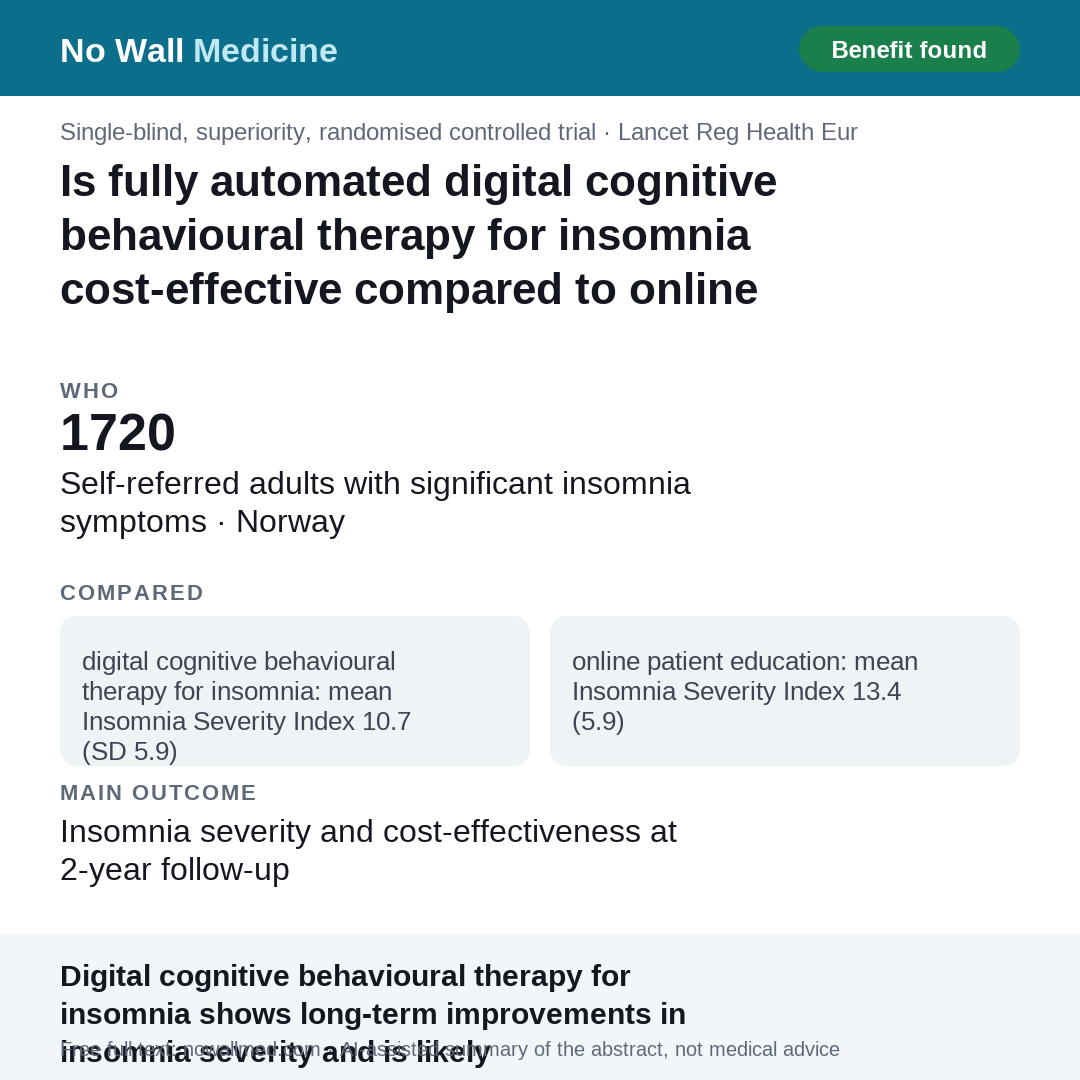
Long-term clinical and cost-effectiveness of a fully automated digital cognitive behavioural therapy for insomnia: 2-year follow-up of a single-blind, superiority, randomised controlled trial
Single-blind, superiority, randomised controlled trialBenefit found
Is fully automated digital cognitive behavioural therapy for insomnia cost-effective compared to online patient education?
Who
1720
Self-referred adults with significant insomnia symptoms · Norway
Compared
digital cognitive behavioural therapy for insomnia: mean Insomnia Severity Index 10.7 (SD 5.9)
online patient education: mean Insomnia Severity Index 13.4 (5.9)
Main outcome
Insomnia severity and cost-effectiveness at 2-year follow-up
Result: estimated difference: -1.77 (95% CI: -2.65 to -0.90)
Bottom line: Digital cognitive behavioural therapy for insomnia shows long-term improvements in insomnia severity and is likely cost-effective.
Limitation: Effects attenuated over time and long-term certainty is limited by attrition.
Funded by: Norwegian Council of Research; Liaison Committee for Education, Research and Innovation
Lancet Reg Health Eur · 2026-05-08Download image
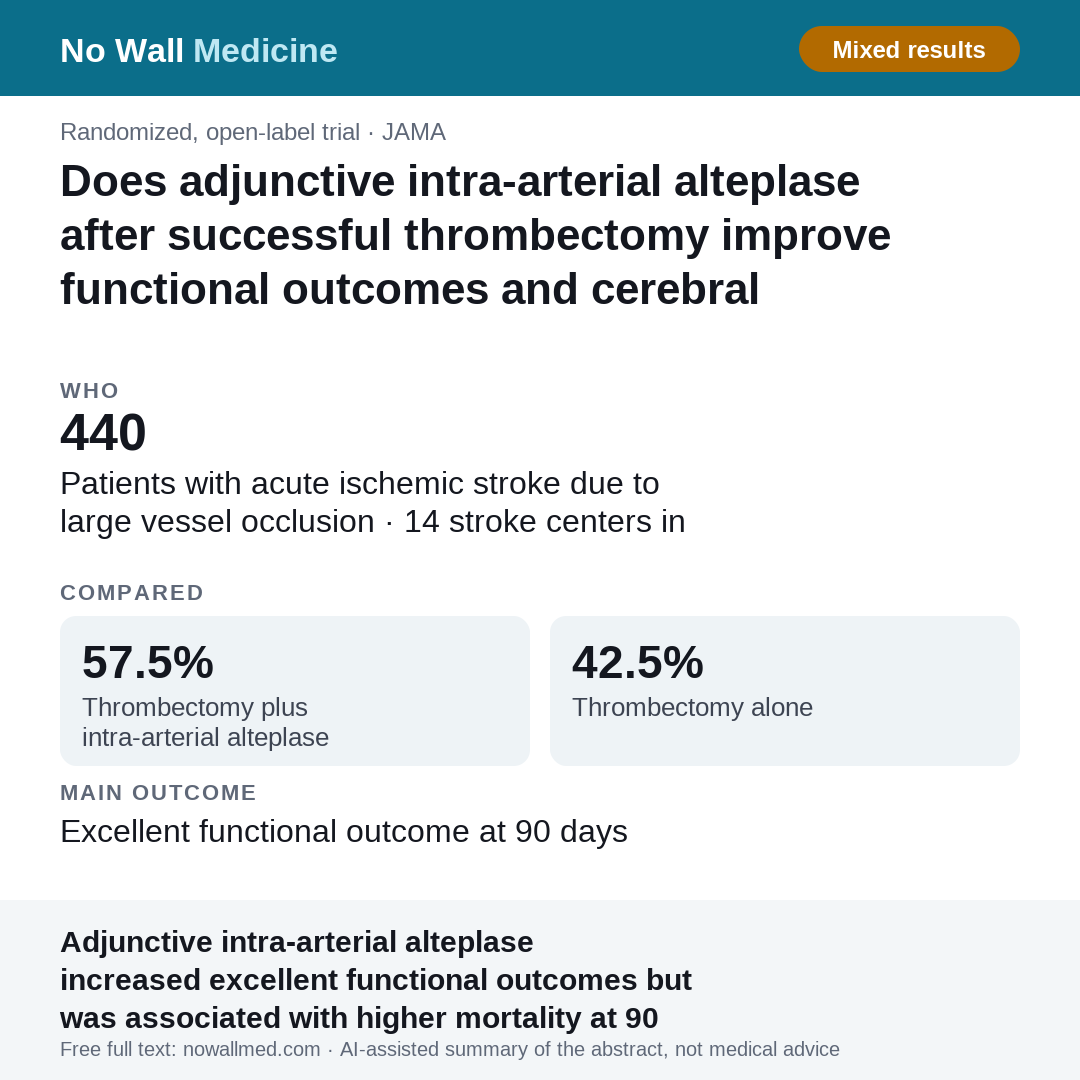
Adjunctive Intra-Arterial Alteplase After Successful Thrombectomy for Acute Ischemic Stroke: The CHOICE-2 Randomized Clinical Trial
Randomized, open-label trialMixed results
Does adjunctive intra-arterial alteplase after successful thrombectomy improve functional outcomes and cerebral reperfusion?
Who
440
Patients with acute ischemic stroke due to large vessel occlusion · 14 stroke centers in Spain
Compared
57.5%Thrombectomy plus intra-arterial alteplase (123/214)
42.5%Thrombectomy alone (93/219)
Main outcome
Excellent functional outcome at 90 days
Result: adjusted risk difference, 15.0% (95% CI, 5.7% to 24.3%)
Bottom line: Adjunctive intra-arterial alteplase increased excellent functional outcomes but was associated with higher mortality at 90 days.
JAMA · 2026-05-07Download image
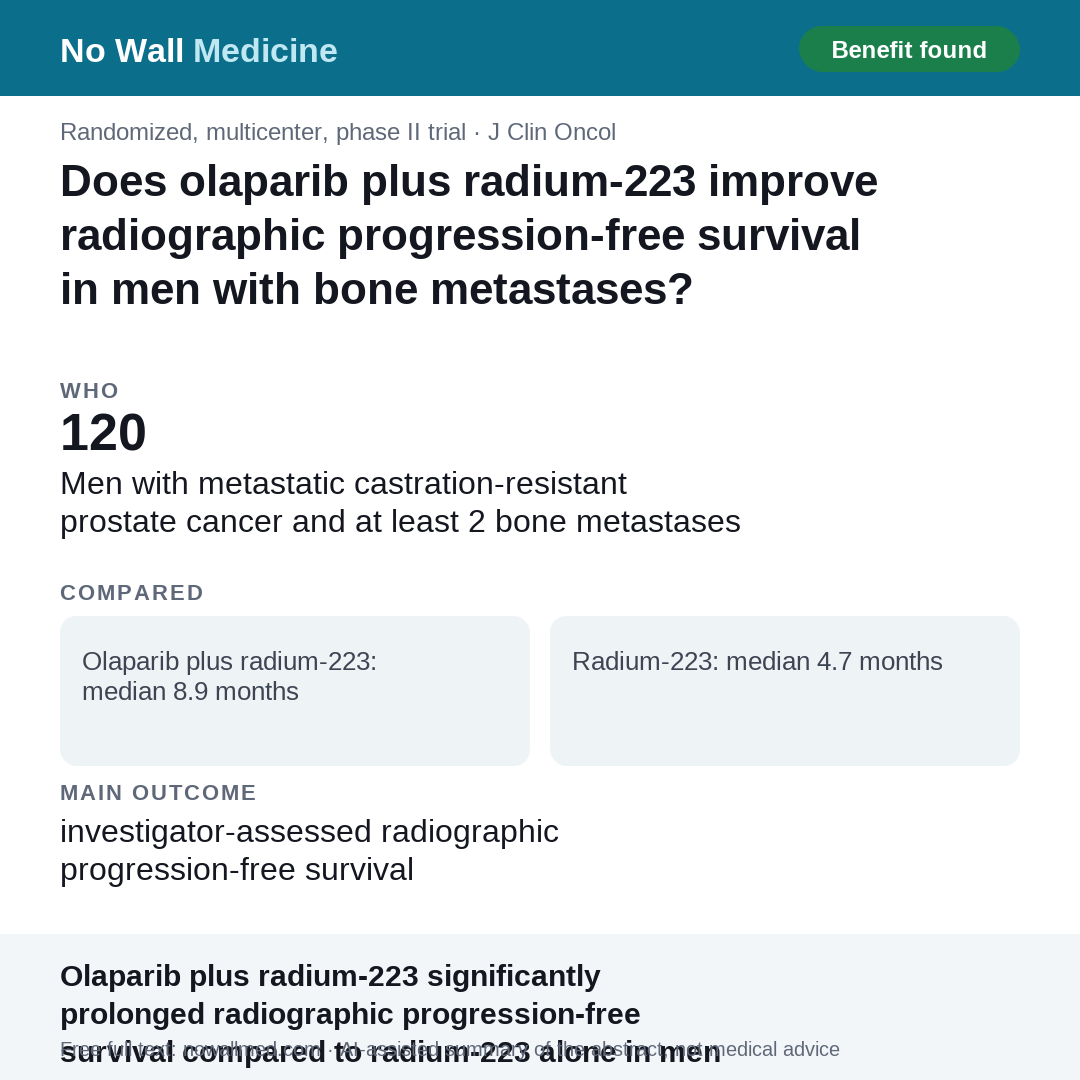
Multicenter, Randomized, Phase II Trial of Olaparib Plus Radium-223 Versus Radium-223 in Men With Castration-Resistant Prostate Cancer With Bone Metastases (COMRADE)
Randomized, multicenter, phase II trialBenefit found
Does olaparib plus radium-223 improve radiographic progression-free survival in men with bone metastases?
Who
120
Men with metastatic castration-resistant prostate cancer and at least 2 bone metastases
Compared
Olaparib plus radium-223: median 8.9 months
Radium-223: median 4.7 months
Main outcome
investigator-assessed radiographic progression-free survival
Result: hazard ratio 0.50 (one-sided 90% CI 0.35 to 0.70)
Bottom line: Olaparib plus radium-223 significantly prolonged radiographic progression-free survival compared to radium-223 alone in men with bone metastases.
J Clin Oncol · 2026-05-07Download image
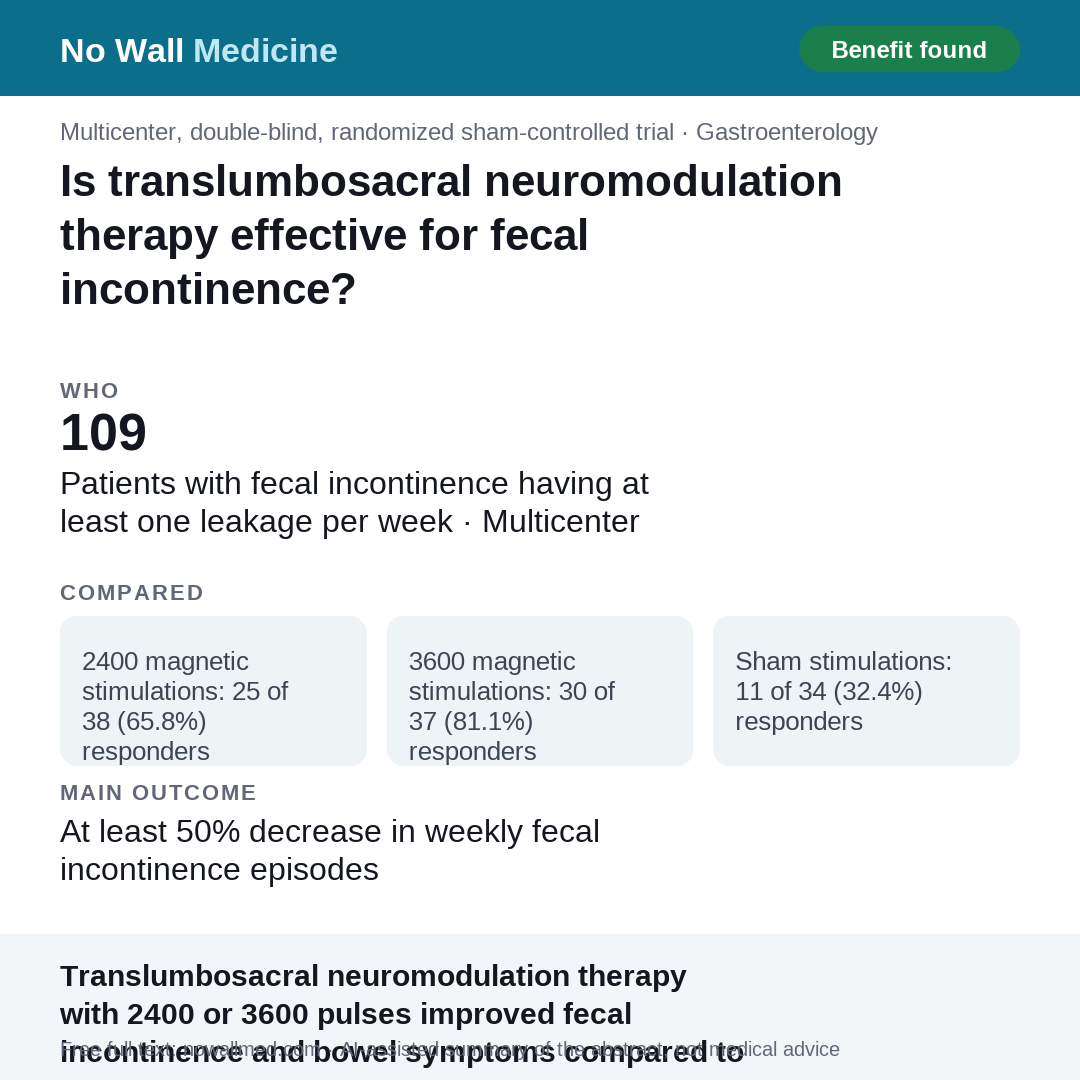
Randomized Sham-Controlled Trial of Translumbosacral Neuromodulation Therapy for Fecal Incontinence
Multicenter, double-blind, randomized sham-controlled trialBenefit found
Is translumbosacral neuromodulation therapy effective for fecal incontinence?
Who
109
Patients with fecal incontinence having one or more leakages per week
Compared
2400 magnetic stimulations: 25 of 38 (65.8%) responders
3600 magnetic stimulations: 30 of 37 (81.1%) responders
Sham stimulations: 11 of 34 (32.4%) responders
Main outcome
A 50% decrease in weekly fecal incontinence episodes
Result: odds ratio 3.91 (95% CI 1.48-10.91) for 2400 vs sham; 8.53 (95% CI 2.96-27.47) for 3600 vs sham
Bottom line: Translumbosacral neuromodulation therapy with 2400 or 3600 pulses significantly improved fecal incontinence and bowel symptoms compared to sham.
Gastroenterology · 2026-05-07Download image
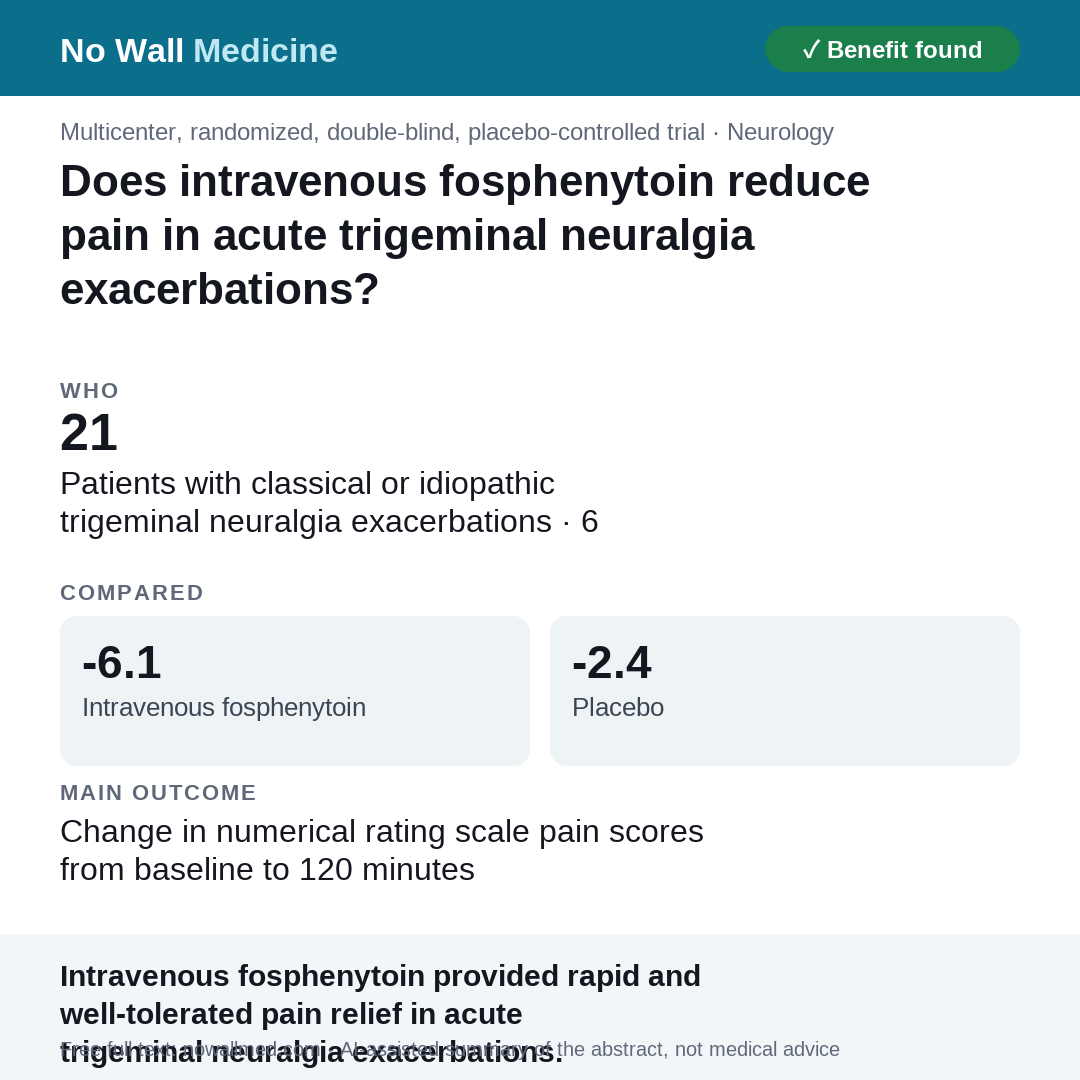
IV Fosphenytoin for Acute Trigeminal Neuralgia: A Multicenter, Randomized, Double-Blind, Placebo-Controlled Trial
Multicenter, randomized, double-blind, placebo-controlled trialBenefit found
Does intravenous fosphenytoin reduce pain in acute trigeminal neuralgia exacerbations?
Who
21
Patients with classical or idiopathic trigeminal neuralgia exacerbations · 6 institutions
Compared
-6.1Intravenous fosphenytoin
-2.4Placebo
Main outcome
Change in numerical rating scale pain scores from baseline to 120 minutes
Result: between-group difference -3.8 (95% CI -6.4 to -1.1)
Bottom line: Intravenous fosphenytoin provided rapid and well-tolerated pain relief in acute trigeminal neuralgia exacerbations.
Limitation: findings are preliminary because of the small sample size
Neurology · 2026-05-07Download image