Visual abstracts
New randomized trials and meta-analyses from leading journals at a glance: who was studied, what was compared, and what was found. Every paper is free to read in full.
All specialtiesCardiology 3494Oncology 3005Gastroenterology & Hepatology 1379Infectious Disease 2448Neurology 1414Psychiatry & Mental Health 1655Pulmonology 1498Critical Care 1004Endocrinology & Diabetes 1784Pediatrics 2130Surgery 1855Orthopedics & Sports Medicine 648Neurosurgery 415Cardiothoracic & Vascular Surgery 416Plastic & Reconstructive Surgery 489Nephrology 760Rheumatology 558Hematology 788Dermatology 431Ophthalmology 388Obstetrics & Gynecology 1200Public & Global Health 669Radiology & Imaging 492Anesthesiology 711Urology 580ENT (Otolaryngology) 384Emergency Medicine 380Allergy & Immunology 217Geriatrics 738Family Medicine & Primary Care 405Medical Genetics & Genomics 447Pathology & Laboratory Medicine 113Physical Medicine & Rehabilitation 545Palliative Care 322Nutrition 1047Digital Health & AI 1643General Medicine 252
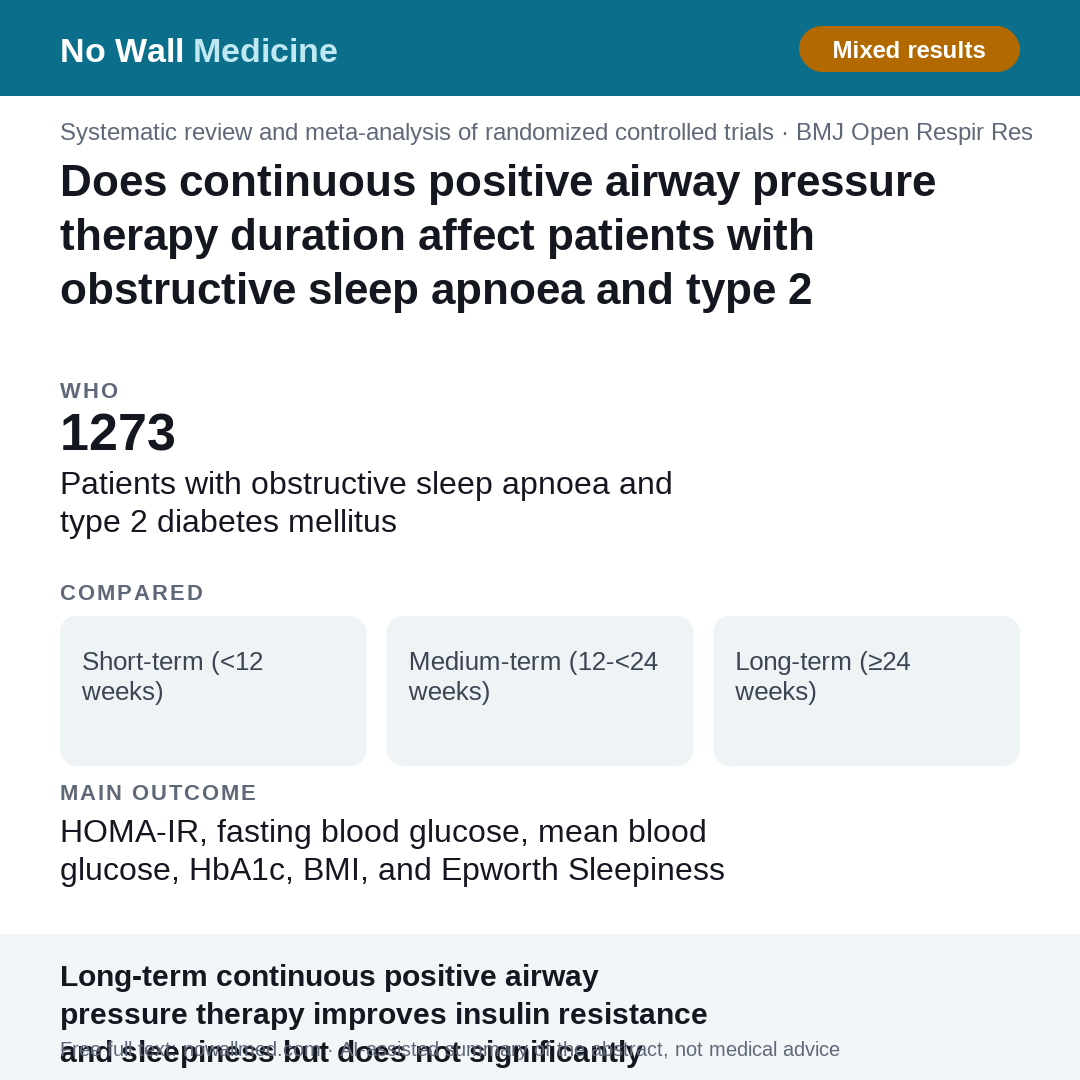
Effects of continuous positive airway pressure therapy duration on patients with obstructive sleep apnoea and type 2 diabetes mellitus: a systematic review and meta-analysis
Systematic review and meta-analysis of randomized controlled trialsMixed results
Does continuous positive airway pressure therapy duration affect patients with obstructive sleep apnoea and type 2 diabetes mellitus?
Who
1273
Patients with obstructive sleep apnoea and type 2 diabetes mellitus
Compared
Short-term (<12 weeks)
Medium-term (12-<24 weeks)
Long-term (≥24 weeks)
Main outcome
HOMA-IR, fasting blood glucose, mean blood glucose, HbA1c, BMI, and Epworth Sleepiness Scale
Result: MD -1.67 (95% CI -2.57 to -0.77) for HOMA-IR in long-term intervention
Bottom line: Long-term continuous positive airway pressure therapy improves insulin resistance and sleepiness but does not significantly affect glycaemic markers.
BMJ Open Respir Res · 2026-03-13Download image
The Performance of Artificial Intelligence in Classifying Molecular Markers in Adult-Type Gliomas Using Histopathological Images: Systematic Review
Systematic reviewBenefit found
How well does artificial intelligence classify molecular markers in adult-type gliomas using histopathological images?
Who
22
Adult-type gliomas
Compared
IDH mutation detection: accuracy 86.13%
1p/19q codeletion detection: accuracy 81.63%
Main outcome
performance in detecting IDH mutation status and 1p/19q gene codeletion
Bottom line: Artificial intelligence shows strong potential for molecular classification of adult-type gliomas using histopathology images, especially for IDH mutation detection.
Limitation: Limited number of studies, focus on adult-type gliomas, lack of meta-analysis, and English-language restriction.
J Med Internet Res · 2026-03-13Download image

Factors associated with participation in advance care planning among people with different degrees of cognitive impairment: a systematic review
Systematic reviewUnclear result
What influences advance care planning participation
Who
People with cognitive impairment
Compared
Mild cognitive impairment
Mild to moderate dementia
Moderate to severe dementia
Main outcome
Advance care planning participation
Bottom line: Factors influence advance care planning participation
BMC Palliat Care · 2026-03-13Download image

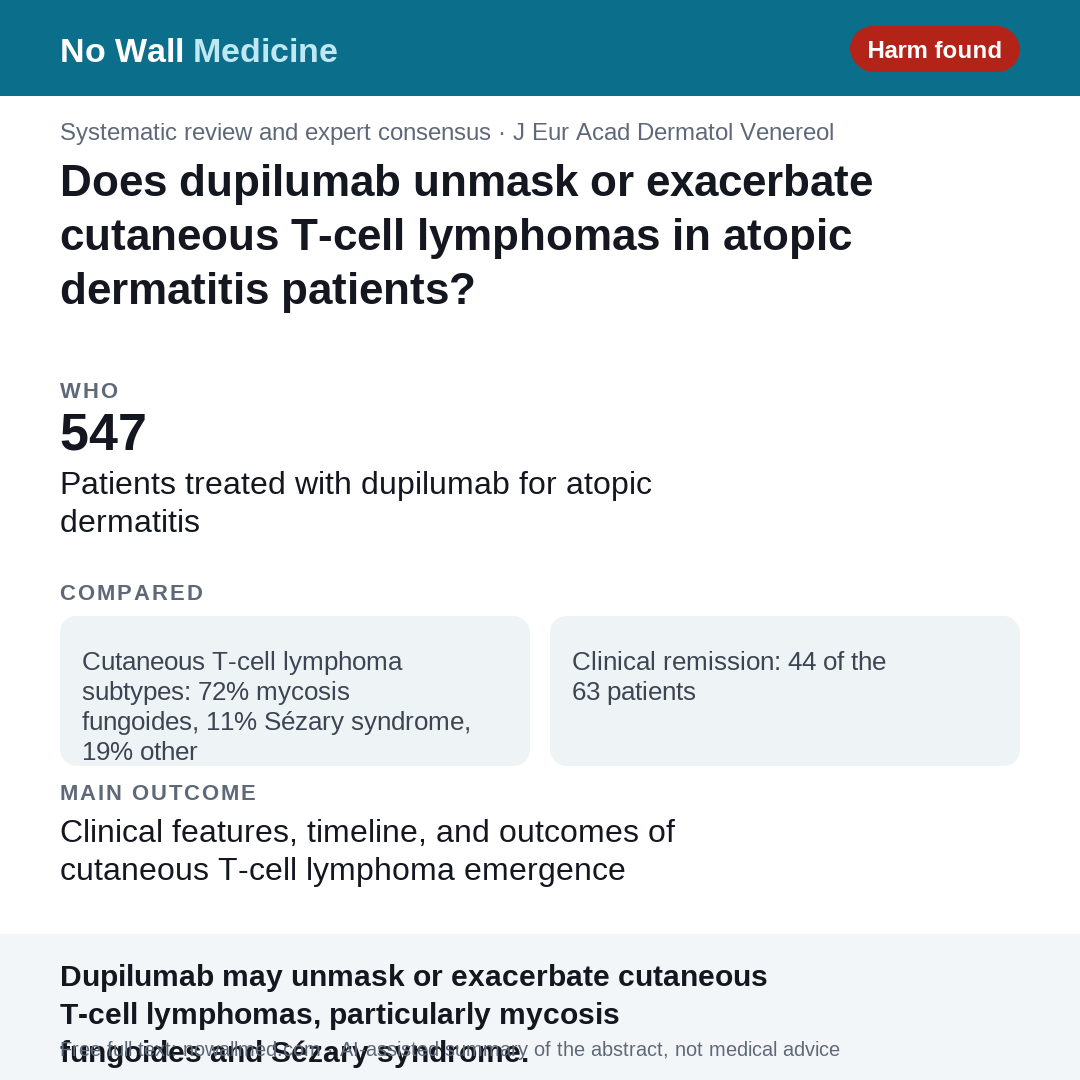
Cutaneous T-cell lymphomas and dupilumab for atopic dermatitis: A systematic review and expert consensus
Systematic review and expert consensusHarm found
Does dupilumab unmask or exacerbate cutaneous T-cell lymphomas in atopic dermatitis patients?
Who
547
Patients treated with dupilumab for atopic dermatitis
Compared
Cutaneous T-cell lymphoma subtypes: 72% mycosis fungoides, 11% Sézary syndrome, 19% other
Clinical remission: 44 of the 63 patients
Main outcome
Clinical features, timeline, and outcomes of cutaneous T-cell lymphoma emergence
Bottom line: Dupilumab may unmask or exacerbate cutaneous T-cell lymphomas, particularly mycosis fungoides and Sézary syndrome.
J Eur Acad Dermatol Venereol · 2026-03-12Download image
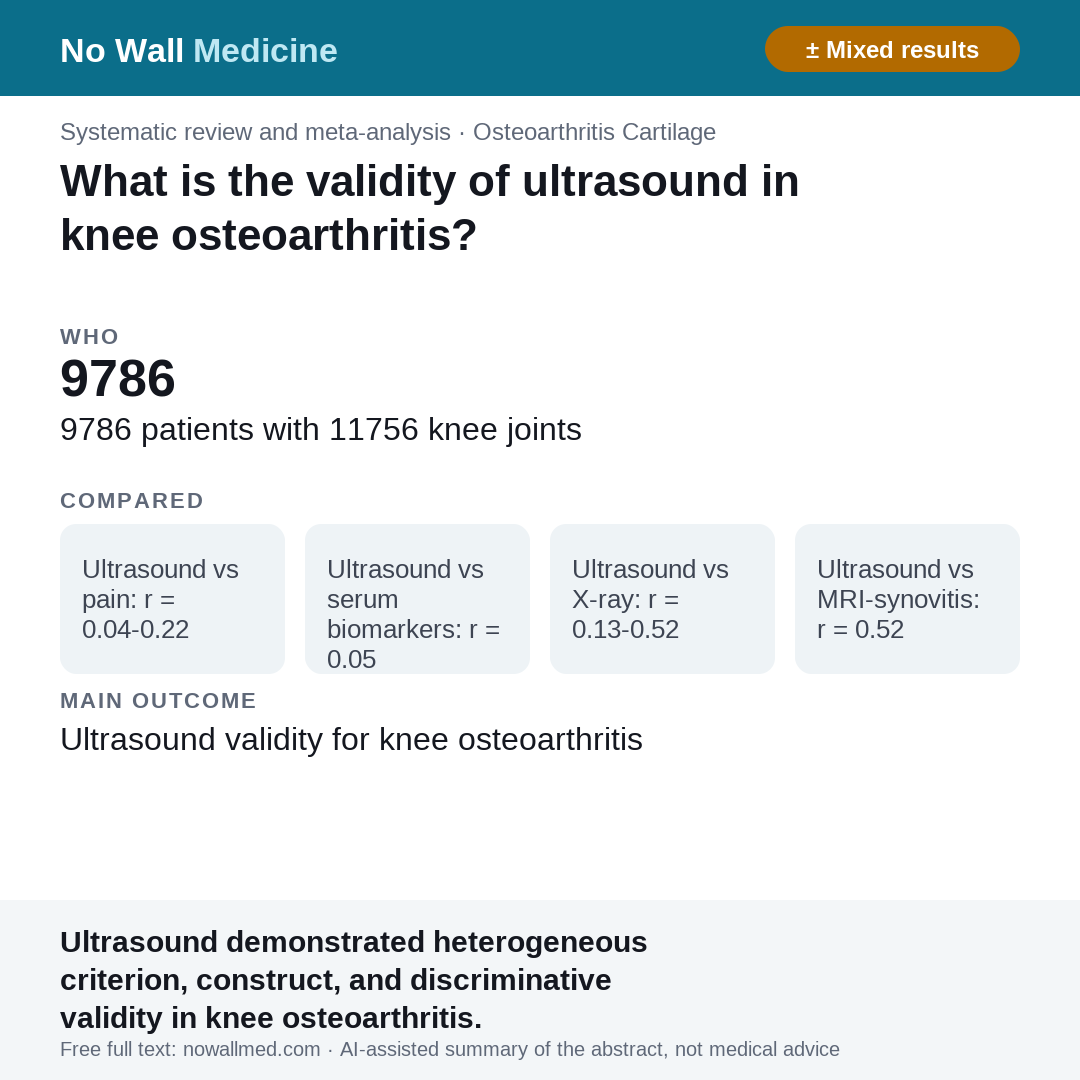
Validity of ultrasound in knee osteoarthritis - A systematic review and meta-analysis
Systematic review and meta-analysisMixed results
What is the validity of ultrasound in knee osteoarthritis?
Who
9786
9786 patients with 11756 knee joints
Compared
Ultrasound vs pain: r = 0.04-0.22
Ultrasound vs serum biomarkers: r = 0.05
Ultrasound vs X-ray: r = 0.13-0.52
Ultrasound vs MRI-synovitis: r = 0.52
Main outcome
Ultrasound validity for knee osteoarthritis
Bottom line: Ultrasound demonstrated heterogeneous criterion, construct, and discriminative validity in knee osteoarthritis.
Osteoarthritis Cartilage · 2026-03-12Download image
Meta-analysis of computerised working memory training: behavioural gains, training parameters, transfer mechanisms, and neural correlates
Meta-analysis of 45 neuroimaging studiesBenefit found
Does computerised working memory training improve cognitive task performance and modulate brain activation?
Who
Not specified
Compared
Computerised working memory training
Controls
Main outcome
Behavioural cognitive task performance
Result: Hedges' g = 0.503 (95% CI 0.363 to 0.642)
Bottom line: Computerised working memory training provides moderate behavioural benefits and reproducible modulation of task-related brain activation.
NPJ Digit Med · 2026-03-12Download image

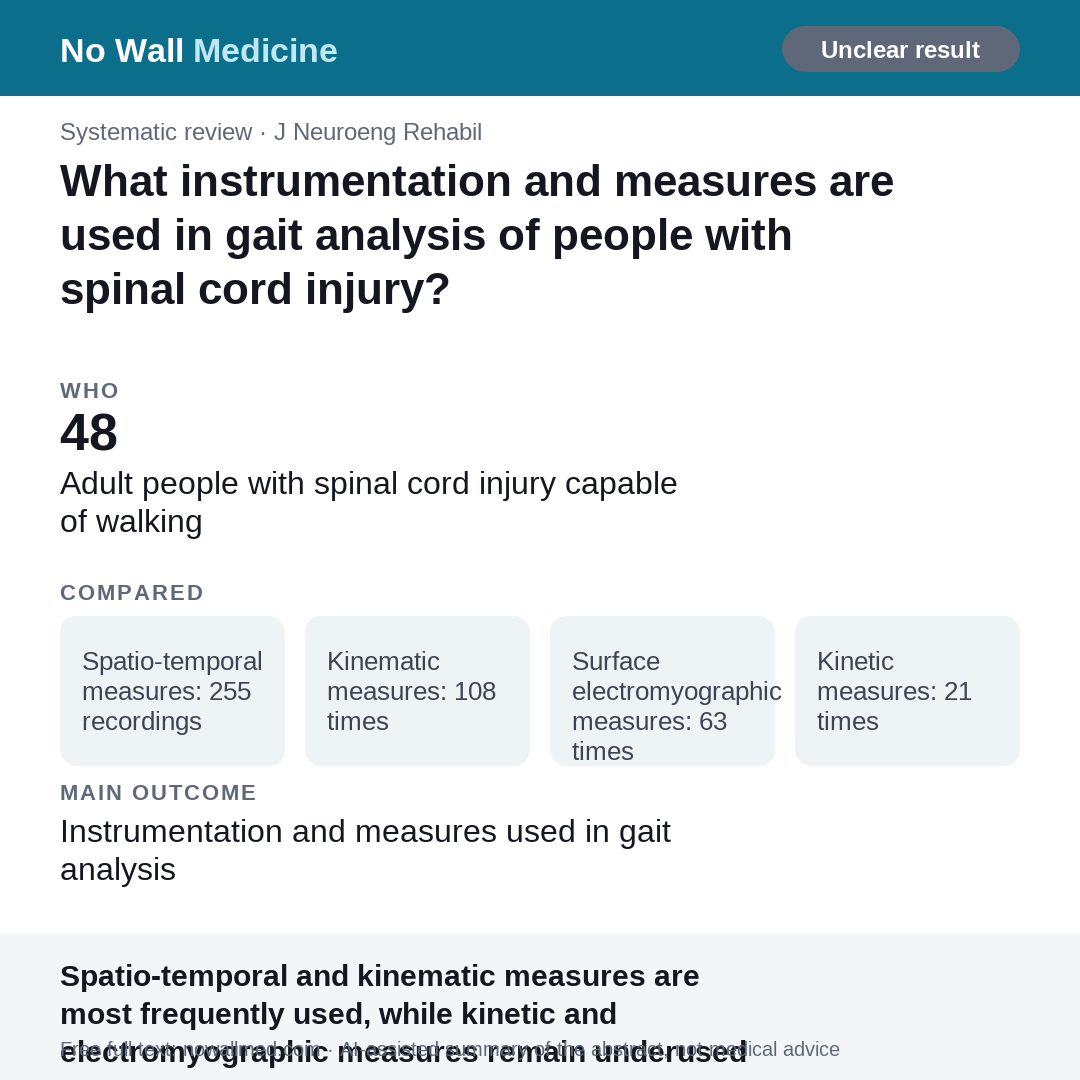
Gait analysis methods in people with spinal cord injury: a systematic review
Systematic reviewUnclear result
What instrumentation and measures are used in gait analysis of people with spinal cord injury?
Who
48
Adult people with spinal cord injury capable of walking
Compared
Spatio-temporal measures: 255 recordings
Kinematic measures: 108 times
Surface electromyographic measures: 63 times
Kinetic measures: 21 times
Main outcome
Instrumentation and measures used in gait analysis
Bottom line: Spatio-temporal and kinematic measures are most frequently used, while kinetic and electromyographic measures remain underused in spinal cord injury gait analysis.
Limitation: Over half of studies were fair quality and nearly half had level of evidence 2.
J Neuroeng Rehabil · 2026-03-12Download image
Ethical perspectives in palliative care for chronic patients: a systematic review of nurses' experiences in home and hospital settings
Systematic reviewMixed results
What are nurses' ethical perspectives, challenges, and supporting interventions in palliative care?
Who
Nurses providing palliative care for patients with chronic diseases · Hospital and home settings
Compared
Clinical decision-making and autonomy
Justice and resource allocation
Beneficence and patient-centered care
Non-maleficence and moral distress
Main outcome
Nurses' ethical perspectives, challenges, and professional interventions
Bottom line: Nurses face substantial ethical challenges including decision-making dilemmas, resource scarcity, and moral distress in palliative care settings.
BMC Palliat Care · 2026-03-12Download image

Effects of Digital Health Interventions on Functional and Psychological Outcomes in Older Patients With Hip Fractures: Systematic Review and Meta-Analysis of Randomized Controlled Trials
Systematic review and meta-analysis of randomized controlled trialsBenefit found
Do digital health interventions improve functional and psychological outcomes in older patients with hip fractures?
Who
Adults aged 60 years and older with hip fractures
Compared
Digital health interventions
Control
Main outcome
functional and psychological outcomes
Result: standardized mean difference 0.80 (95% CI 0.33-1.26) for hip function
Bottom line: Digital health interventions may improve hip function and functional independence in older adults with hip fractures.
Limitation: substantial heterogeneity indicated by a wide 95% prediction interval spanning positive or negative values
J Med Internet Res · 2026-03-12Download image

The Effects of Digital Health Interventions on Motor Symptoms, Nonmotor Symptoms, and Quality of Life in Patients With Parkinson Disease: Systematic Review and Meta-Analysis of Randomized Controlled Trials
Systematic review and meta-analysis of randomized controlled trialsMixed results
Do digital health interventions improve motor, nonmotor symptoms, and quality of life in Parkinson disease?
Who
5594
Patients with Parkinson disease
Compared
Digital health interventions
Control
Main outcome
motor symptoms, nonmotor symptoms, and quality of life
Result: motor symptoms SMD=-0.39 (95% CI -0.60 to -0.18)
Bottom line: Digital health interventions improved motor and nonmotor symptoms, but showed no significant effect on quality of life.
Limitation: low to very low certainty of evidence, wide prediction intervals, high risk of bias, and substantial heterogeneity
J Med Internet Res · 2026-03-12Download image

Spherical Equivalent Refraction Versus Axial Length for Monitoring Childhood Myopia and Estimating Disease Risk: A Systematic Review and Meta-Analysis
Systematic review and meta-analysisMixed results
Is spherical equivalent refraction or axial length better for monitoring myopia and predicting pathology?
Who
Population-based observational studies with at least 200 eyes · PubMed and Embase searched from 1990 to July 2025
Compared
Axial length: retinal pathology odds ratio 3.85 per +1 mm
Spherical equivalent refraction: cataract odds ratio 3.09 to 4.58
Main outcome
monitoring myopia progression and predicting myopia-related pathology
Bottom line: Axial length identifies high retinal risk, but spherical equivalent refraction better captures cataract and glaucoma risk across most patients.
Limitation: Certainty of evidence was lower for incidence and descriptive blocks.
Am J Ophthalmol · 2026-03-11Download image

Study Design Complexity and Participant Completion in Dietary Trials for Inflammatory Bowel Disease: A Systematic Review and Metaresearch Study
Systematic review and meta-analysisNo clear difference
Do dietary trials completion rates vary
Who
3523
Patients with inflammatory bowel disease
Compared
0.84Dietary intervention
Control
Main outcome
Completion rate
Result: pooled completion rate 0.84 (95% CI: 0.80, 0.87)
Bottom line: High completion rates in dietary trials
Adv Nutr · 2026-03-11Download image

Antibiotic Exposure in Early Life and Risk of Type 1 Diabetes: A Meta-Analysis
Meta-analysis of 20 studiesBenefit found
Does early-life antibiotic use increase the risk of childhood type 1 diabetes?
Who
Children exposed to prenatal and postnatal antibiotics
Compared
Prenatal antibiotic exposure
Postnatal antibiotic exposure
Main outcome
Risk of childhood type 1 diabetes
Result: postnatal exposure 1.07 (95% CI 1.01-1.14)
Bottom line: Postnatal antibiotic use is associated with increased type 1 diabetes risk, especially with broad-spectrum agents and repeated courses.
Limitation: Variability in study design, exposure definitions, and potential confounding by indication.
Diabetes Obes Metab · 2026-03-11Download image

Quality indicators for structure and process in peri-operative care: a systematic review
Systematic reviewMixed results
What are the available structure and process quality indicators for peri-operative care?
Who
Adults
Compared
505Indicators with evidence (82%)
110Indicators lacking clear evidence (18%)
Main outcome
Identification and evidence assessment of structure and process indicators
Bottom line: A large number of peri-operative indicators exist, but many lack validation and standardized definitions.
Anaesthesia · 2026-03-11Download image

Determining the Conclusiveness of Systematic Review Evidence : A Scoping Review of Methodological Approaches
Scoping reviewUnclear result
What methods exist for determining the conclusiveness of systematic review evidence?
Who
Documents describing methods for determining systematic review conclusiveness · Medline, Embase, and Web of Science
Compared
Mathematical approaches for meta-analyses: 29 methods
Mathematical approaches for cumulative meta-analyses: 15 methods
Nonmathematical approaches: 18 methods
Main outcome
Methods related to assessing the conclusiveness of systematic reviews
Bottom line: Sixty-two methods were identified across three approaches to assess the conclusiveness of systematic reviews.
Limitation: No assessment of which methods perform better and not all methods strictly aimed to determine conclusiveness.
Funded by: Western Norway University of Applied Sciences
Ann Intern Med · 2026-03-10Download image

Guidelines and tools to assess appropriateness of diuretic prescribing and aid deprescribing: a systematic review
Systematic reviewMixed results
What guidelines and tools exist to assess diuretic prescribing and aid deprescribing?
Who
Adults with inappropriate chronic diuretic use · International
Compared
Total resources identified: 41 resources (14 guidelines, 27 tools)
Actionable recommendations: 16 recommendations
Main outcome
Recommendations on inappropriate chronic diuretic use and deprescribing
Bottom line: Most deprescribing guidance is sparse and lacks practical how-to pathways for clinicians.
Lancet Healthy Longev · 2026-03-10Download image

Systematic Review of Trial Design and End Points in Lupus Nephritis
Systematic review of 15 randomized controlled trialsMixed results
What are the variations in trial design and end points in lupus nephritis trials?
Who
Patients with lupus nephritis
Compared
Investigational agent: 4 trials demonstrated superiority over standard therapy
Standard therapy
Main outcome
Trial design, methodology, and end points
Bottom line: Substantial heterogeneity in trial design and reporting hampers fair comparison of new lupus nephritis therapies.
Kidney Int Rep · 2026-03-10Download image

eHealth Literacy and Type 2 Diabetes Prevention Among At-Risk Populations: Mechanistic Systematic Review Using Theory-Driven Thematic Analysis
Systematic review of 28 studiesBenefit found
Does eHealth literacy support type 2 diabetes prevention
Who
13100
At-risk populations for type 2 diabetes
Compared
eHealth literacy
Control
Main outcome
Type 2 diabetes prevention
Bottom line: eHealth literacy supports type 2 diabetes prevention
Limitation: Substantial variation across studies
J Med Internet Res · 2026-03-10Download image

Functional and clinical outcomes of propeller flaps in lower extremity reconstruction: A systematic review
Systematic reviewMixed results
What are the functional and clinical outcomes of propeller perforator flaps in lower extremity reconstruction?
Who
1474
Patients undergoing lower extremity reconstruction with propeller perforator flaps
Compared
47%Complete flap survival
28%Partial necrosis
10%Total flap loss
Main outcome
Flap survival, necrosis, venous congestion, infection, reoperation, functional recovery, and quality of life
Bottom line: Propeller perforator flaps are a feasible reconstructive option, though clinical outcomes remain variable.
Limitation: Functional outcomes were inconsistently reported and further prospective, comparative studies are needed.
JPRAS Open · 2026-03-10Download image

Healthcare Resource Utilisation and Cost of Obesity and Related Complications in the United States: A Systematic Literature Review
Systematic literature reviewHarm found
What are the healthcare resource utilisation and costs of obesity and related complications?
Who
Adults living with obesity or overweight with or without complications · United States
Compared
People with obesity or overweight and complications: higher direct and indirect healthcare costs and healthcare resource utilisation
People without obesity
Main outcome
Healthcare resource utilisation and direct and indirect costs
Bottom line: Obesity and related complications increase healthcare resource utilisation and costs in the United States.
Diabetes Obes Metab · 2026-03-09Download image