Visual abstracts
New randomized trials and meta-analyses from leading journals at a glance: who was studied, what was compared, and what was found. Every paper is free to read in full.
All specialtiesCardiology 4763Oncology 4043Gastroenterology & Hepatology 1903Infectious Disease 3756Neurology 1872Psychiatry & Mental Health 2216Pulmonology 2044Critical Care 1319Endocrinology & Diabetes 2544Pediatrics 2889Surgery 2480Orthopedics & Sports Medicine 917Neurosurgery 525Cardiothoracic & Vascular Surgery 656Plastic & Reconstructive Surgery 574Nephrology 1107Rheumatology 810Hematology 1090Dermatology 611Ophthalmology 532Obstetrics & Gynecology 1645Public & Global Health 1037Radiology & Imaging 619Anesthesiology 958Urology 745ENT (Otolaryngology) 494Emergency Medicine 481Allergy & Immunology 309Geriatrics 972Family Medicine & Primary Care 534Medical Genetics & Genomics 659Pathology & Laboratory Medicine 156Physical Medicine & Rehabilitation 734Palliative Care 421Nutrition 1560Digital Health & AI 2137General Medicine 318
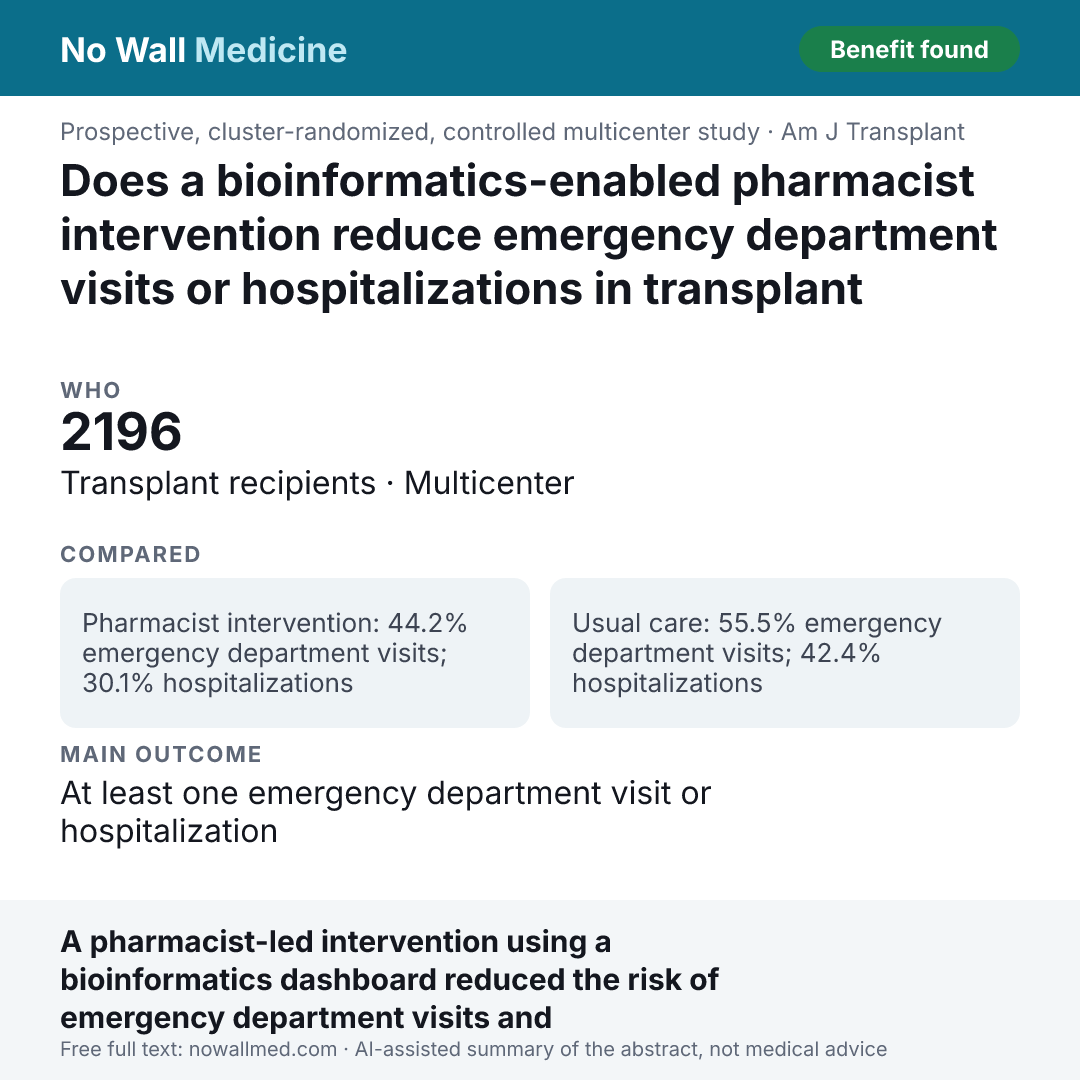
Results of a multicenter cluster-randomized controlled clinical trial testing the effectiveness of a bioinformatics-enabled pharmacist intervention in transplant recipients
Prospective, cluster-randomized, controlled multicenter studyBenefit found
Does a bioinformatics-enabled pharmacist intervention reduce emergency department visits or hospitalizations in transplant recipients?
Who
2196
Transplant recipients · Multicenter
Compared
Pharmacist intervention: 44.2% emergency department visits; 30.1% hospitalizations
Usual care: 55.5% emergency department visits; 42.4% hospitalizations
Main outcome
At least one emergency department visit or hospitalization
Result: absolute risk reduction 11.3% (95% confidence interval, 7.1%-15.5%) for emergency department visits
Bottom line: A pharmacist-led intervention using a bioinformatics dashboard reduced the risk of emergency department visits and hospitalizations.
Am J Transplant · 2023-08-09 · Save PNG
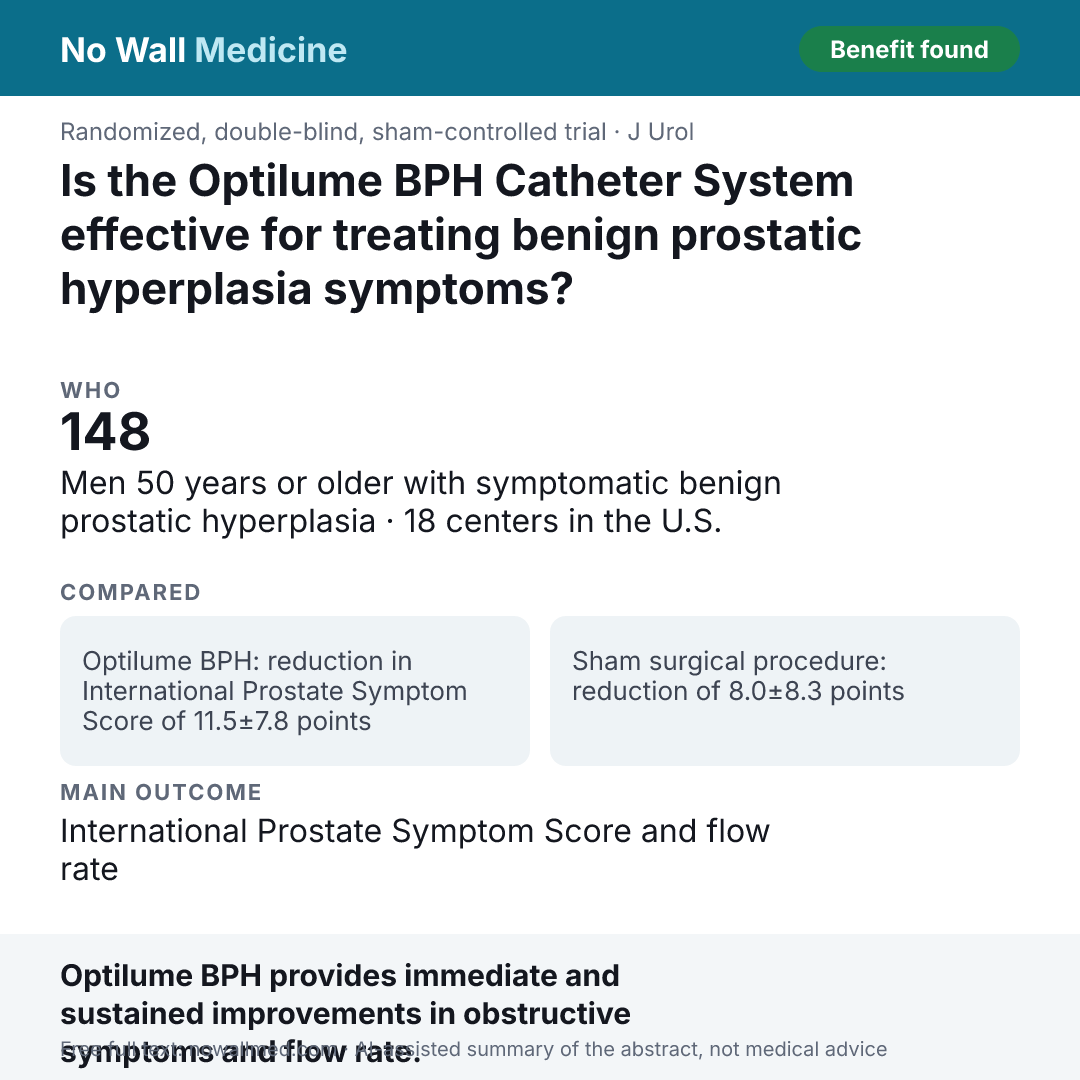
The PINNACLE Study: A Double-blind, Randomized, Sham-controlled Study Evaluating the Optilume BPH Catheter System for the Treatment of Lower Urinary Tract Symptoms Secondary to Benign Prostatic Hyperplasia
Randomized, double-blind, sham-controlled trialBenefit found
Is the Optilume BPH Catheter System effective for treating benign prostatic hyperplasia symptoms?
Who
148
Men 50 years or older with symptomatic benign prostatic hyperplasia · 18 centers in the U.S. and Canada
Compared
Optilume BPH: reduction in International Prostate Symptom Score of 11.5±7.8 points
Sham surgical procedure: reduction of 8.0±8.3 points
Main outcome
International Prostate Symptom Score and flow rate
Bottom line: Optilume BPH provides immediate and sustained improvements in obstructive symptoms and flow rate.
J Urol · 2023-08-09 · Save PNG
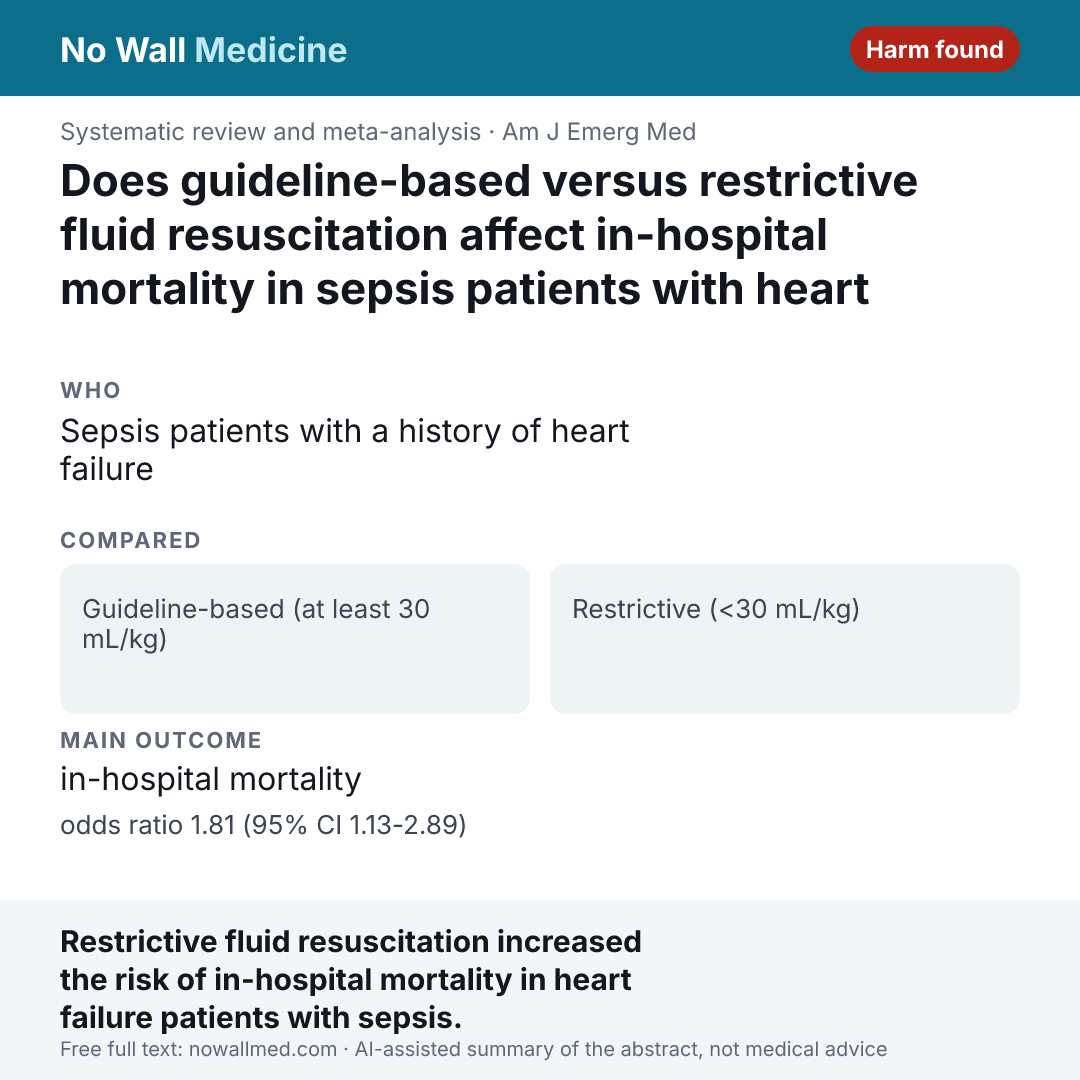
Guideline-based and restricted fluid resuscitation strategy in sepsis patients with heart failure: A systematic review and meta-analysis
Systematic review and meta-analysisHarm found
Does guideline-based versus restrictive fluid resuscitation affect in-hospital mortality in sepsis patients with heart failure?
Who
Sepsis patients with a history of heart failure
Compared
Guideline-based (at least 30 mL/kg)
Restrictive (<30 mL/kg)
Main outcome
in-hospital mortality
Result: odds ratio 1.81 (95% CI 1.13-2.89)
Bottom line: Restrictive fluid resuscitation increased the risk of in-hospital mortality in heart failure patients with sepsis.
Limitation: More rigorous research is required to determine the optimal fluid resuscitation strategy.
Am J Emerg Med · 2023-08-09 · Save PNG
A Novel Approach to Managing Thirst and Dry Mouth in Palliative Care: A Prospective Randomized Cross-Over Trial
Randomized cross-over trialBenefit found
Do mini mint ice cubes reduce thirst and dry mouth more than plain ice chips?
Who
Palliative and end-of-life care patients
Compared
mini mint ice cubes: dry mouth decreased 3.7; thirst decreased 3.4
plain ice chips: dry mouth decreased 1.6; thirst decreased 1.7
Main outcome
dry mouth and thirst intensity on a numeric rating scale
Bottom line: Mini mint ice cubes provided a greater reduction in dry mouth and thirst intensity compared to plain ice chips.
J Pain Symptom Manage · 2023-08-09 · Save PNG
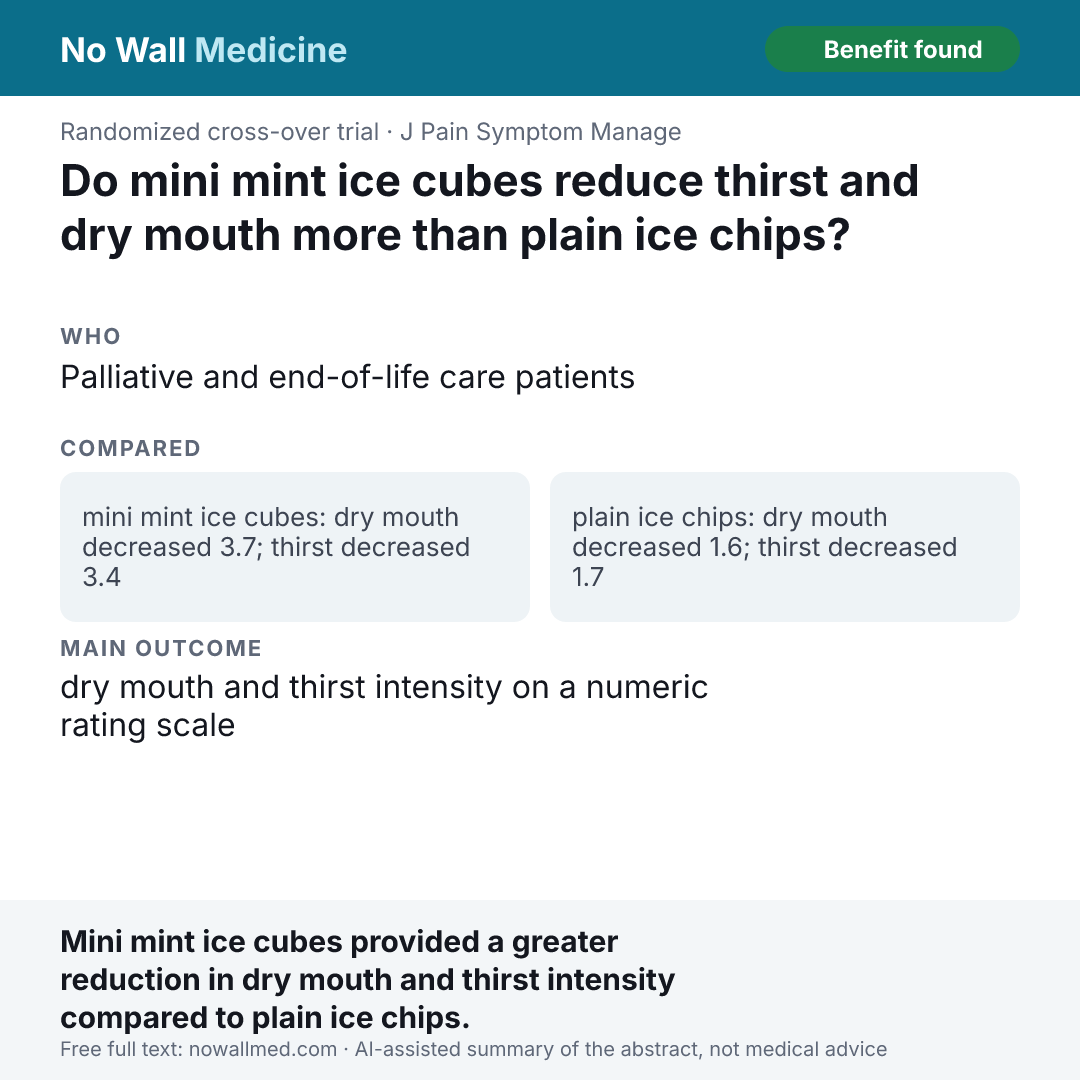
Safety of Supplementation of Omega-3 Polyunsaturated Fatty Acids: A Systematic Review and Meta-Analysis of Randomized Controlled Trials
Systematic review and meta-analysis of randomized controlled trialsMixed results
Are omega-3 polyunsaturated fatty acids safe and tolerable in human subjects?
Who
Human subjects receiving omega-3 polyunsaturated fatty acids
Compared
omega-3 polyunsaturated fatty acids: higher odds of diarrhea, dysgeusia, and bleeding tendency
placebo or standard treatment
Main outcome
adverse effects related to omega-3 polyunsaturated fatty acid prescription
Result: diarrhea OR 1.257, dysgeusia OR 3.478, bleeding tendency OR 1.260
Bottom line: Omega-3 supplementation increases odds of diarrhea, dysgeusia, and bleeding but decreases back pain, with no serious adverse events reported.
Adv Nutr · 2023-08-09 · Save PNG
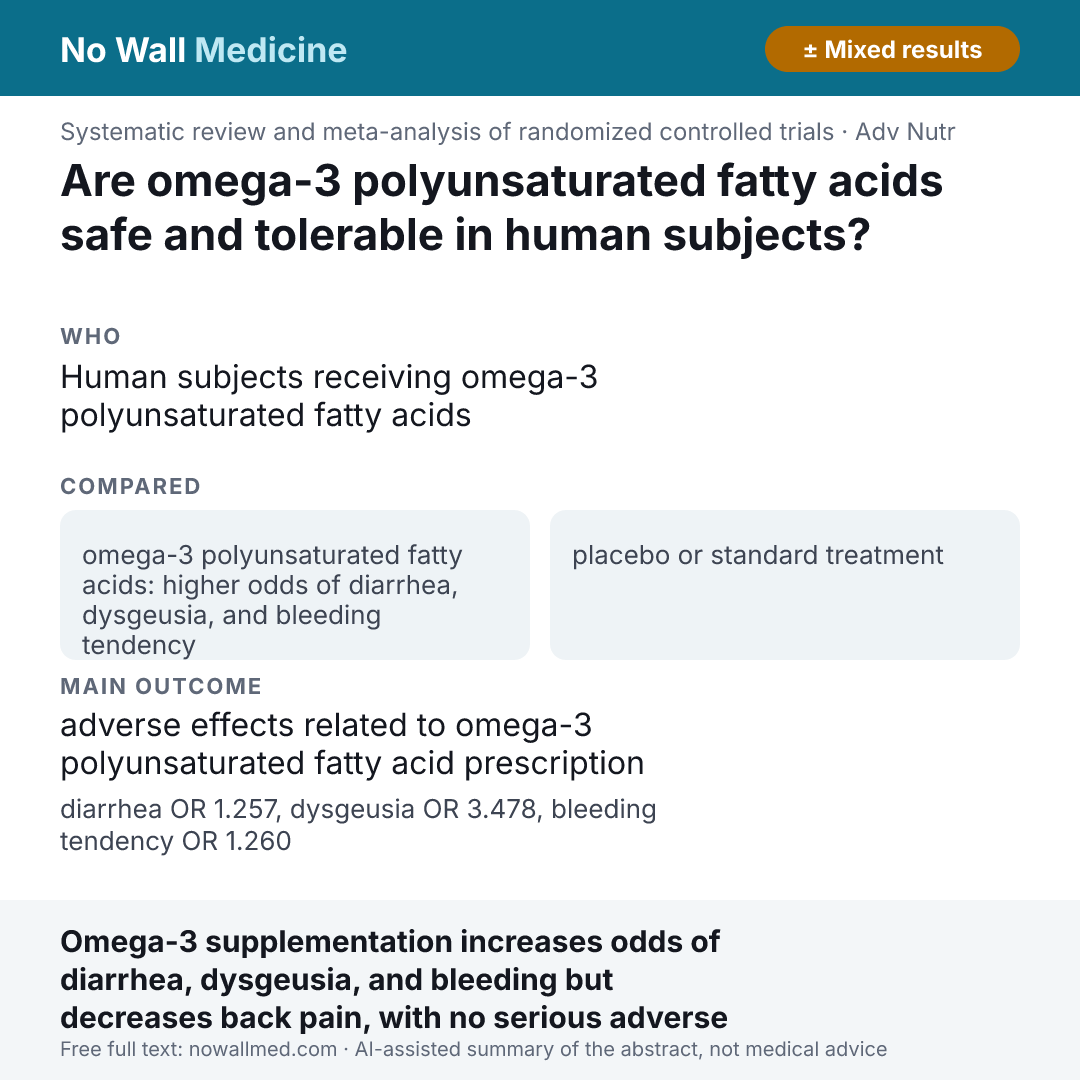
Delabeling, safety, and impact of β-lactam allergy testing: A systematic review
Systematic reviewBenefit found
What is the effectiveness, safety, and impact of beta-lactam allergy testing and delabeling?
Who
98,316
Individuals undergoing beta-lactam allergy testing and delabeling
Compared
Provocation testing: 95.6% delabeled
No skin testing before challenge: 15.9% anaphylaxis
Skin testing before challenge: 2.7% anaphylaxis
Main outcome
Delabeling success, safety, and adherence to prescribing recommendations
Bottom line: Penicillin allergy testing is safe and effective for delabeling most individuals, though adherence to new prescribing habits varies.
JACI Glob · 2023-08-09 · Save PNG
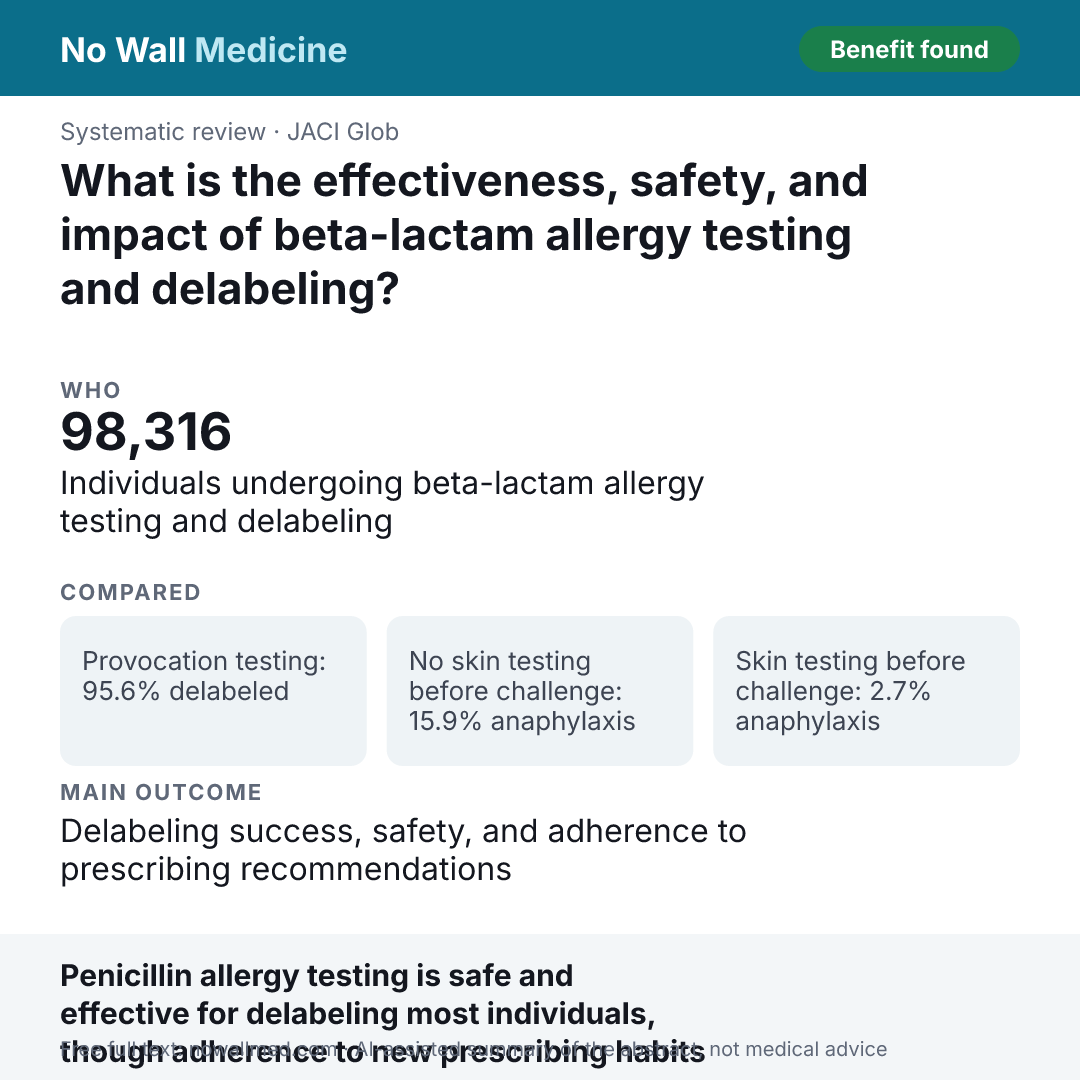
Atorvastatin for Anthracycline-Associated Cardiac Dysfunction: The STOP-CA Randomized Clinical Trial
Double-blind randomized clinical trialBenefit found
Does atorvastatin reduce cardiac dysfunction in lymphoma patients receiving anthracyclines?
Who
300
300 patients with lymphoma scheduled for anthracycline-based chemotherapy · 9 academic medical centers in the US and Canada
Compared
9%atorvastatin (13/150)
22%placebo (33/150)
Main outcome
proportion with absolute decline in left ventricular ejection fraction ≥10% to <55%
Result: odds ratio 2.9 (95% CI 1.4-6.4)
Bottom line: In lymphoma patients receiving anthracyclines, atorvastatin reduced the incidence of cardiac dysfunction.
JAMA · 2023-08-08 · Save PNG
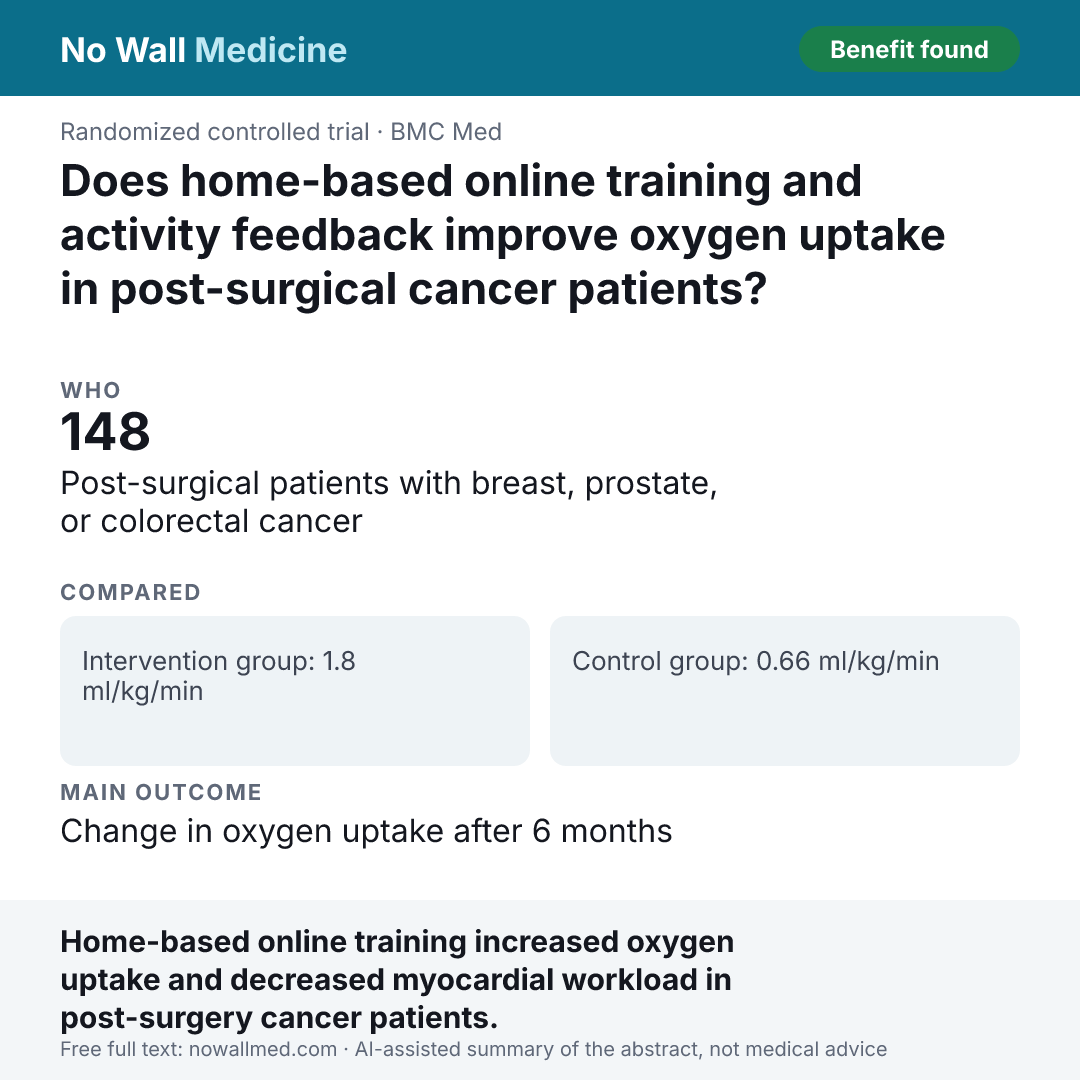
Effect of home-based online training and activity feedback on oxygen uptake in patients after surgical cancer therapy: a randomized controlled trial
Randomized controlled trialBenefit found
Does home-based online training and activity feedback improve oxygen uptake in post-surgical cancer patients?
Who
148
Post-surgical patients with breast, prostate, or colorectal cancer
Compared
Intervention group: 1.8 ml/kg/min
Control group: 0.66 ml/kg/min
Main outcome
Change in oxygen uptake after 6 months
Result: estimated difference 1.24; 95% CI 0.23 to 2.55
Bottom line: Home-based online training increased oxygen uptake and decreased myocardial workload in post-surgery cancer patients.
BMC Med · 2023-08-08 · Save PNG
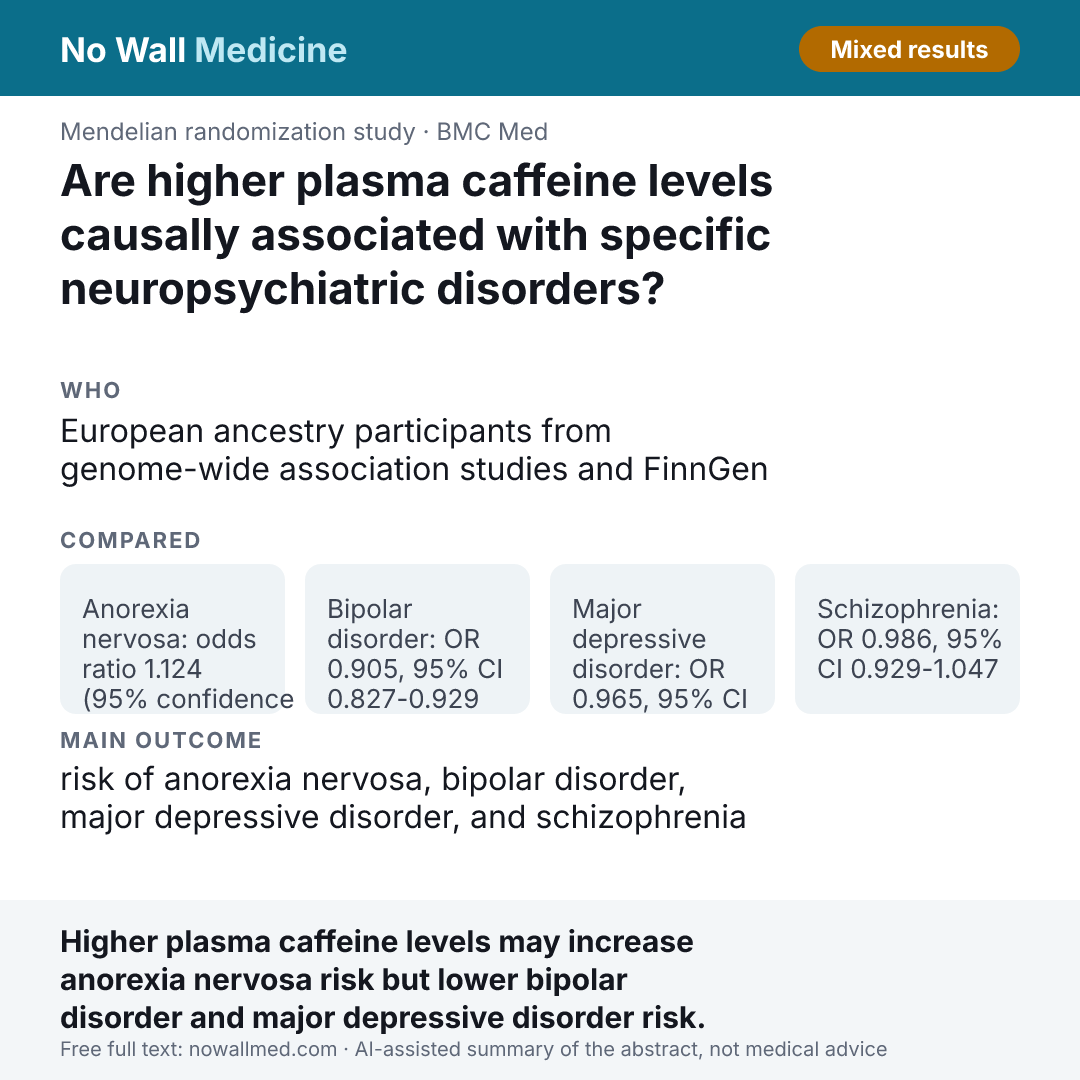
Appraising the causal relationship between plasma caffeine levels and neuropsychiatric disorders through Mendelian randomization
Mendelian randomization studyMixed results
Are higher plasma caffeine levels causally associated with specific neuropsychiatric disorders?
Who
European ancestry participants from genome-wide association studies and FinnGen
Compared
Anorexia nervosa: odds ratio 1.124 (95% confidence interval 1.024-1.238)
Bipolar disorder: OR 0.905, 95% CI 0.827-0.929
Major depressive disorder: OR 0.965, 95% CI 0.937-0.995
Schizophrenia: OR 0.986, 95% CI 0.929-1.047
Main outcome
risk of anorexia nervosa, bipolar disorder, major depressive disorder, and schizophrenia
Bottom line: Higher plasma caffeine levels may increase anorexia nervosa risk but lower bipolar disorder and major depressive disorder risk.
BMC Med · 2023-08-08 · Save PNG
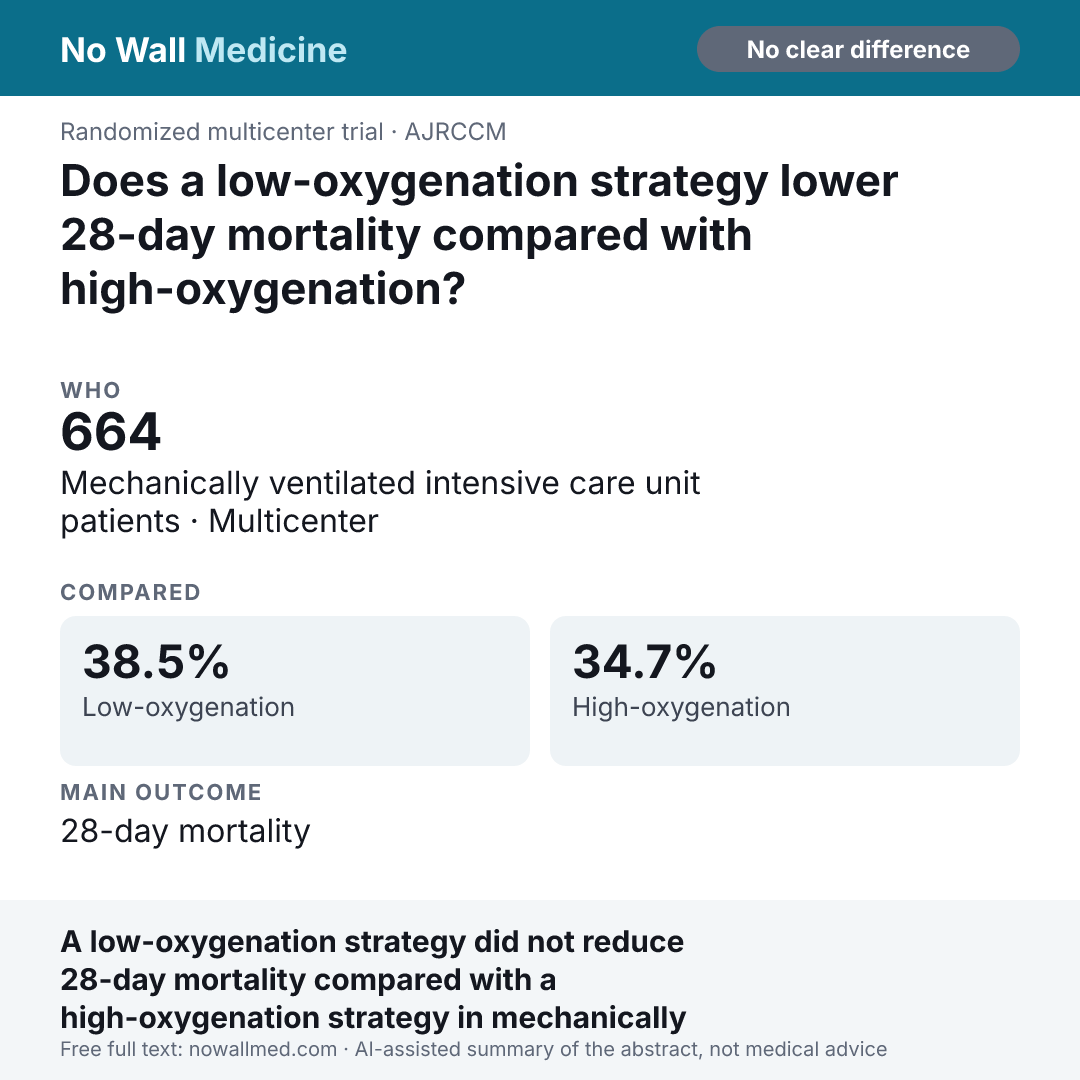
Conservative versus Liberal Oxygenation Targets in Intensive Care Unit Patients (ICONIC): A Randomized Clinical Trial
Randomized multicenter trialNo clear difference
Does a low-oxygenation strategy lower 28-day mortality compared with high-oxygenation?
Who
664
Mechanically ventilated intensive care unit patients · Multicenter
Compared
38.5%Low-oxygenation
34.7%High-oxygenation
Main outcome
28-day mortality
Result: risk ratio 1.11 (95% confidence interval, 0.9-1.4)
Bottom line: A low-oxygenation strategy did not reduce 28-day mortality compared with a high-oxygenation strategy in mechanically ventilated patients.
AJRCCM · 2023-08-08 · Save PNG
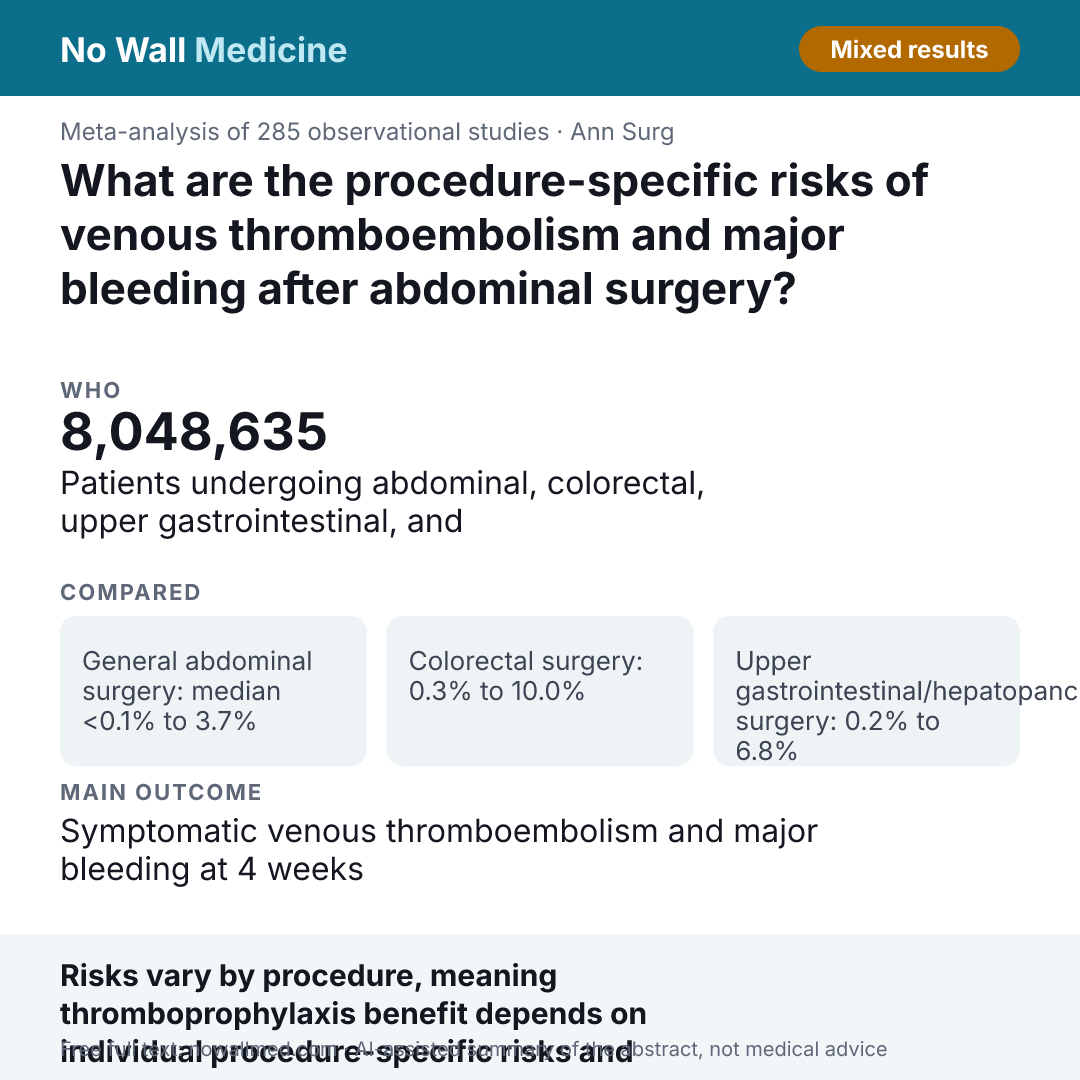
Systematic Reviews and Meta-analyses of the Procedure-specific Risks of Thrombosis and Bleeding in General Abdominal, Colorectal, Upper Gastrointestinal, and Hepatopancreatobiliary Surgery
Meta-analysis of 285 observational studiesMixed results
What are the procedure-specific risks of venous thromboembolism and major bleeding after abdominal surgery?
Who
8,048,635
Patients undergoing abdominal, colorectal, upper gastrointestinal, and hepatopancreatobiliary surgery
Compared
General abdominal surgery: median <0.1% to 3.7%
Colorectal surgery: 0.3% to 10.0%
Upper gastrointestinal/hepatopancreatobiliary surgery: 0.2% to 6.8%
Main outcome
Symptomatic venous thromboembolism and major bleeding at 4 weeks
Bottom line: Risks vary by procedure, meaning thromboprophylaxis benefit depends on individual procedure-specific risks and patient preferences.
Ann Surg · 2023-08-08 · Save PNG
Baseline Intraoperative Left Ventricular Diastolic Function Is Associated with Postoperative Atrial Fibrillation after Cardiac Surgery
Post hoc analysis of a randomized trialKey finding
Is intraoperative left ventricular diastolic function associated with postoperative atrial fibrillation?
Who
402
Patients undergoing cardiac surgery with available transesophageal echocardiography data
Compared
Postoperative atrial fibrillation: 75.0% [n = 161 of 303] abnormal diastolic function
No postoperative atrial fibrillation: 57.5% [n = 69 of 99] abnormal diastolic function
Main outcome
Postoperative atrial fibrillation
Result: odds ratio 2.02 (95% CI 1.15 to 3.63)
Bottom line: Baseline abnormal left ventricular diastolic function is independently associated with postoperative atrial fibrillation after cardiac surgery.
Anesthesiology · 2023-08-08 · Save PNG
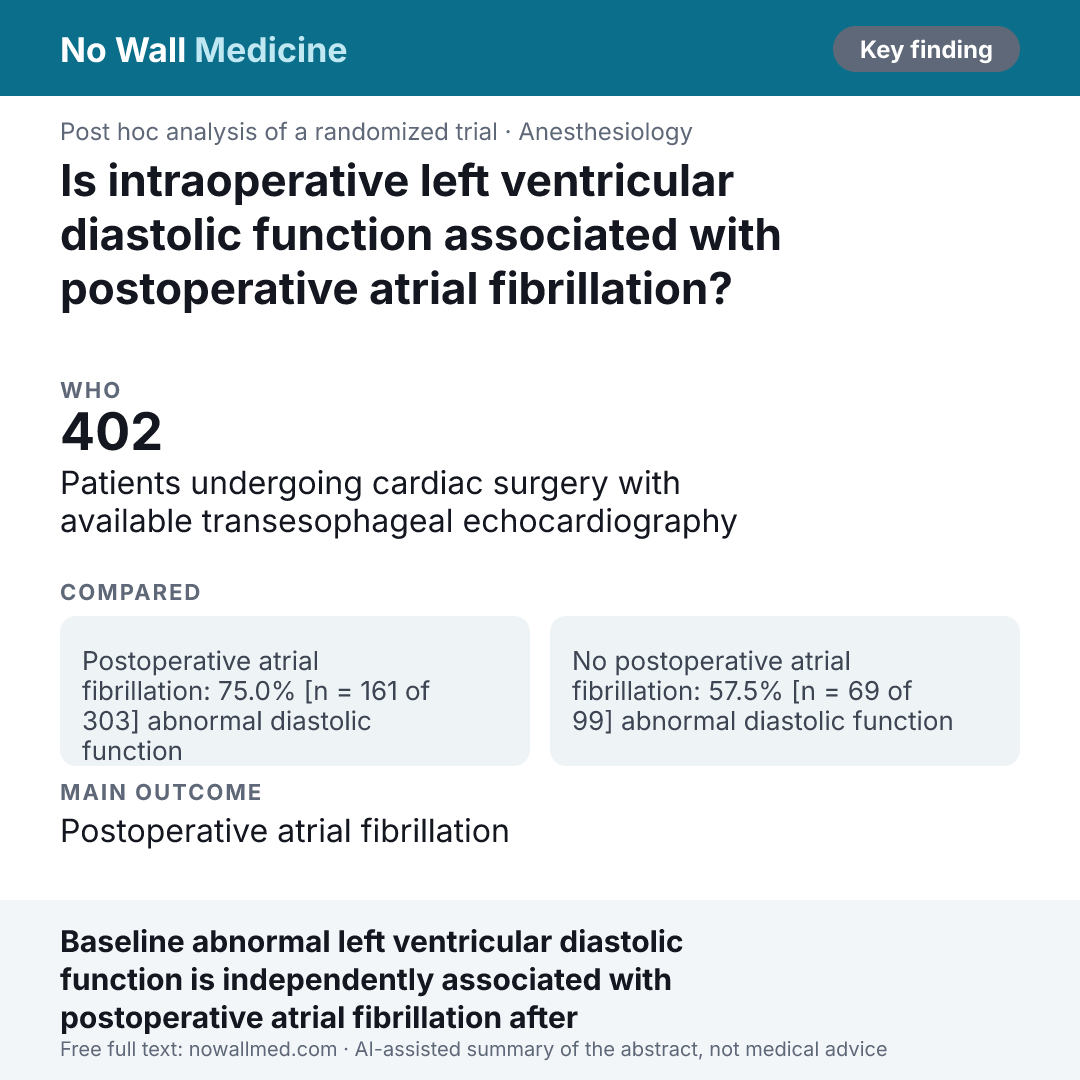
Associations of inner retinal layers with risk of incident dementia: An individual participant data analysis of four prospective cohort studies
Individual participant data meta-analysisKey finding
Are inner retinal layer thicknesses associated with incident dementia and Alzheimer's disease risk?
Who
69955
69,955 participants from four prospective cohort studies
Compared
Lower macular retinal nerve fiber layer thickness: 10% higher incidence of all-cause dementia
Lower macular retinal nerve fiber layer thickness: 11% higher incidence of Alzheimer's disease
Lower macular ganglion cell-inner plexiform layer thickness: not significantly associated
Main outcome
Incident all-cause dementia and Alzheimer's disease
Bottom line: Lower retinal nerve fiber layer thickness is associated with higher risk of dementia and Alzheimer's disease.
Alzheimers Dement · 2023-08-08 · Save PNG
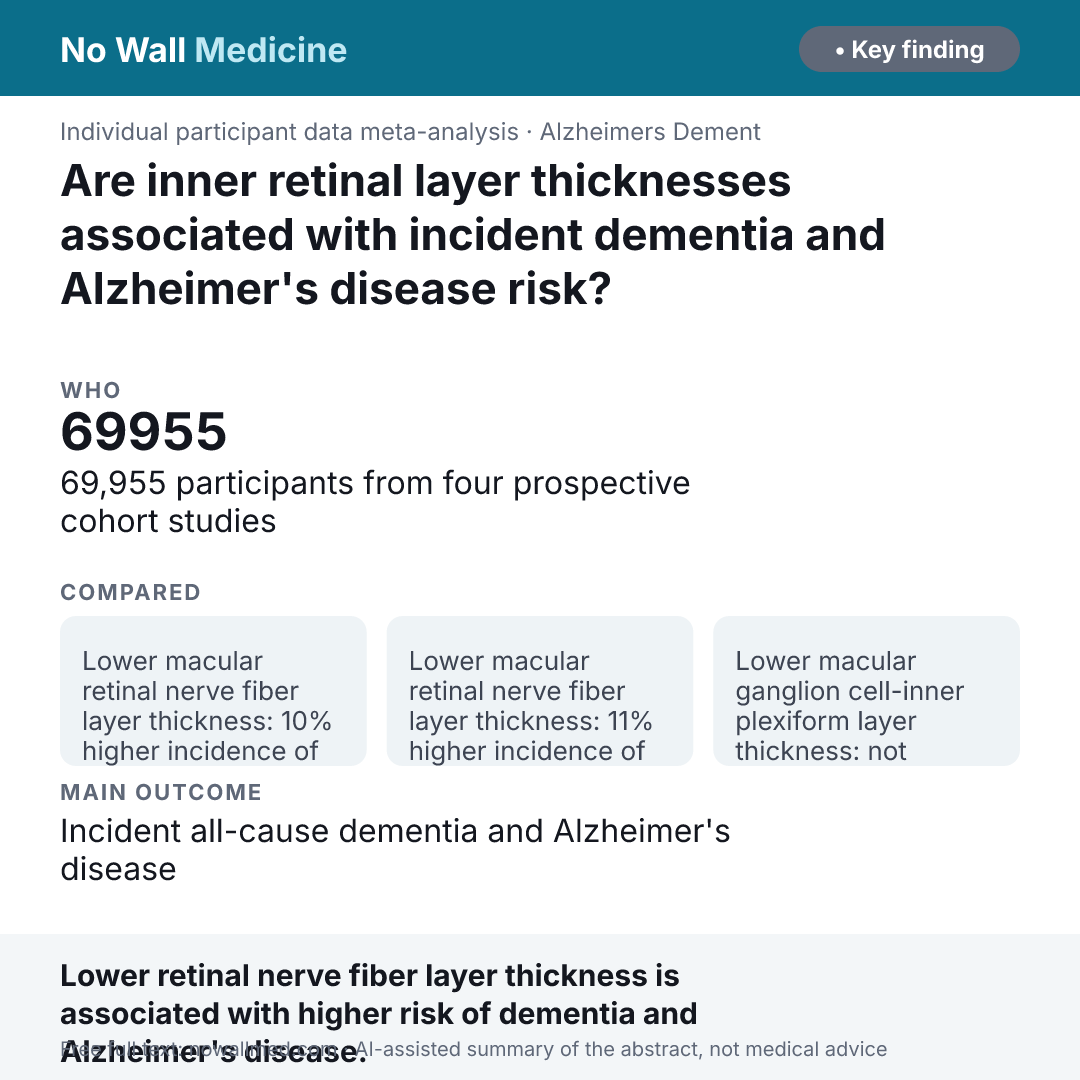
Virtual Multidisciplinary Stroke Care Clinic for Community-Dwelling Stroke Survivors: A Randomized Controlled Trial
Randomized controlled trialBenefit found
Does a virtual multidisciplinary stroke care clinic improve health and self-management outcomes?
Who
335
Community-dwelling stroke survivors · 10 hospitals
Compared
Virtual Multidisciplinary Stroke Care Clinic: B=4.60 [95% CI, 0.16 to 9.05] for self-efficacy
Usual care
Main outcome
Self-efficacy, self-management behaviors, social participation, and depression
Result: Hedges' g effect sizes 0.19 to 0.36
Bottom line: The virtual clinic showed small to medium improvements in self-efficacy, social participation, and depression.
Limitation: Baseline levels favored the control group, so intervention effects might be overestimated.
Stroke · 2023-08-08 · Save PNG
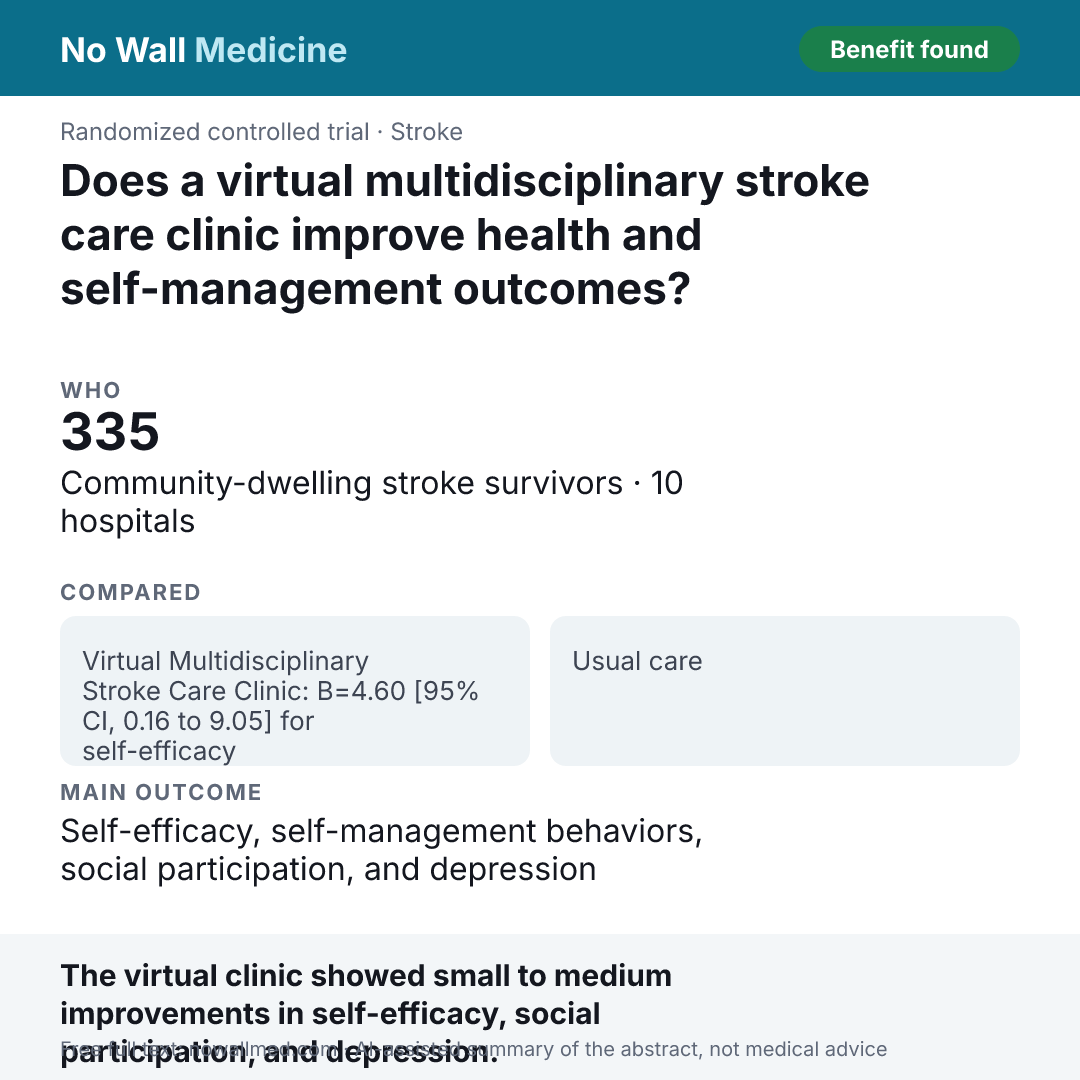
The Weight-loss Effect of GLP-1RAs Glucagon-Like Peptide-1 Receptor Agonists in Non-diabetic Individuals with Overweight or Obesity: A Systematic Review with Meta-Analysis and Trial Sequential Analysis of Randomized Controlled Trials
Systematic review and meta-analysisBenefit found
What are the weight-loss effects of glucagon-like peptide-1 receptor agonists in non-diabetic individuals?
Who
15135
Patients with overweight or obesity without diabetes
Compared
Glucagon-like peptide-1 receptor agonists: MD -5.319 kg
Controls
Main outcome
Body weight, body mass index, waist circumference, waist-to-hip ratio, total body fat
Result: MD -5.319 kg (95% CI: -6.465, -4.174)
Bottom line: Glucagon-like peptide-1 receptor agonists provide conclusive evidence for weight loss in patients with overweight or obesity without diabetes.
Am J Clin Nutr · 2023-08-08 · Save PNG
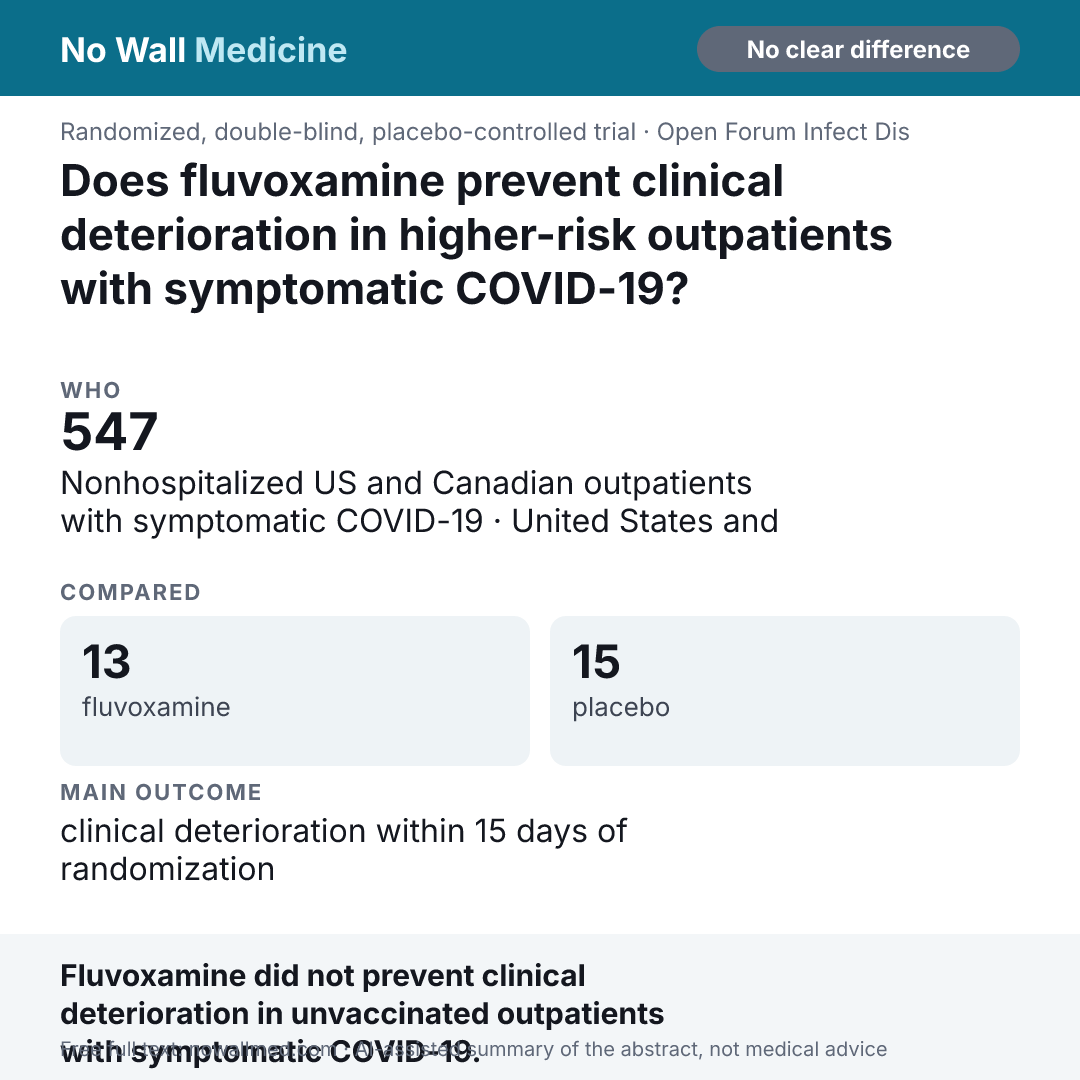
The STOP COVID 2 Study: Fluvoxamine vs Placebo for Outpatients With Symptomatic COVID-19, a Fully Remote Randomized Controlled Trial
Randomized, double-blind, placebo-controlled trialNo clear difference
Does fluvoxamine prevent clinical deterioration in higher-risk outpatients with symptomatic COVID-19?
Who
547
Nonhospitalized US and Canadian outpatients with symptomatic COVID-19 · United States and Canada
Compared
13fluvoxamine (4.8%)
15placebo (5.5%)
Main outcome
clinical deterioration within 15 days of randomization
Result: absolute difference 0.68% (95% CI, -3.0% to 4.4%)
Bottom line: Fluvoxamine did not prevent clinical deterioration in unvaccinated outpatients with symptomatic COVID-19.
Open Forum Infect Dis · 2023-08-08 · Save PNG
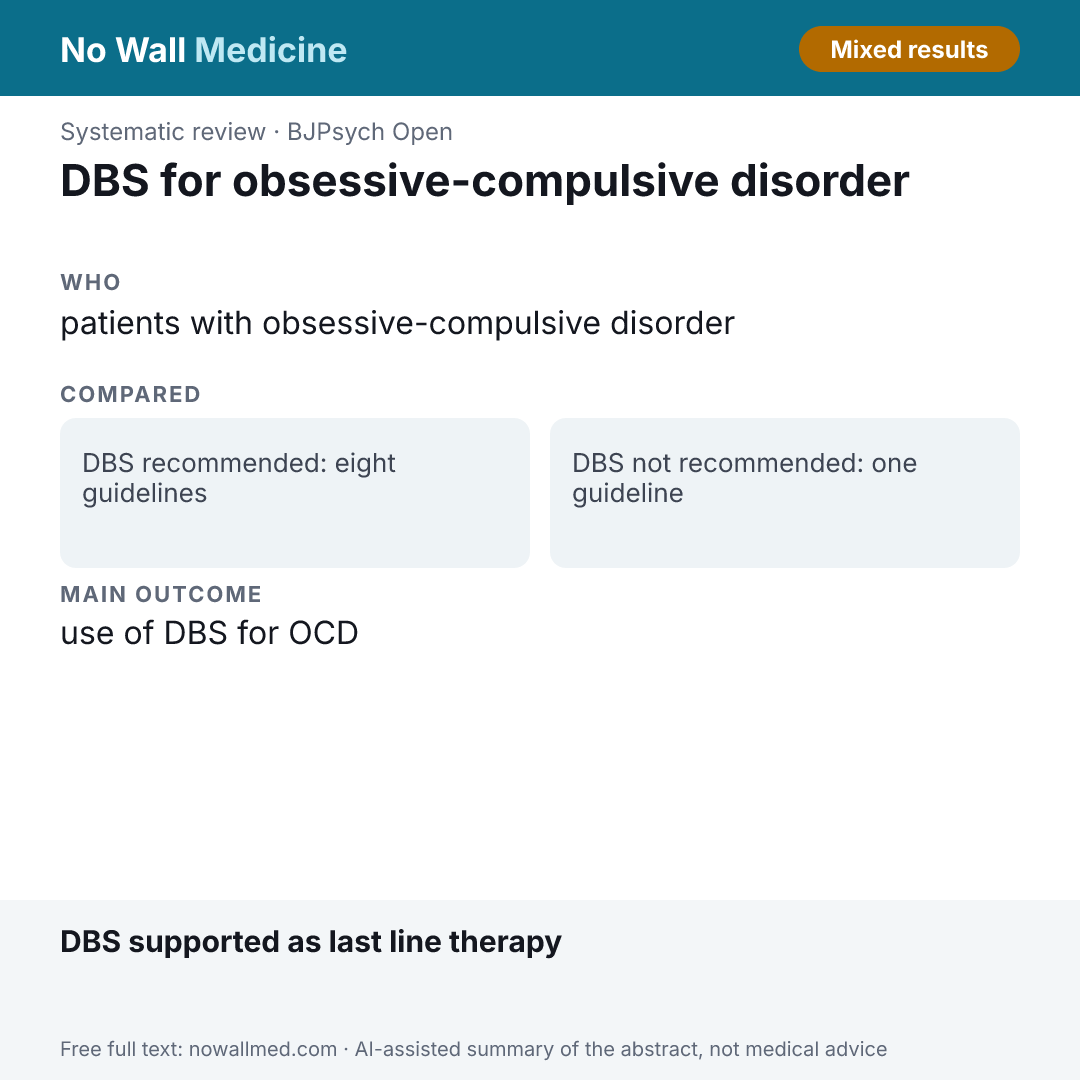
Clinical practice guidelines on the use of deep brain stimulation for the treatment of obsessive-compulsive disorder: systematic review
Systematic reviewMixed results
DBS for obsessive-compulsive disorder
Who
patients with obsessive-compulsive disorder
Compared
DBS recommended: eight guidelines
DBS not recommended: one guideline
Main outcome
use of DBS for OCD
Bottom line: DBS supported as last line therapy
Limitation: limited evidence base
BJPsych Open · 2023-08-08 · Save PNG
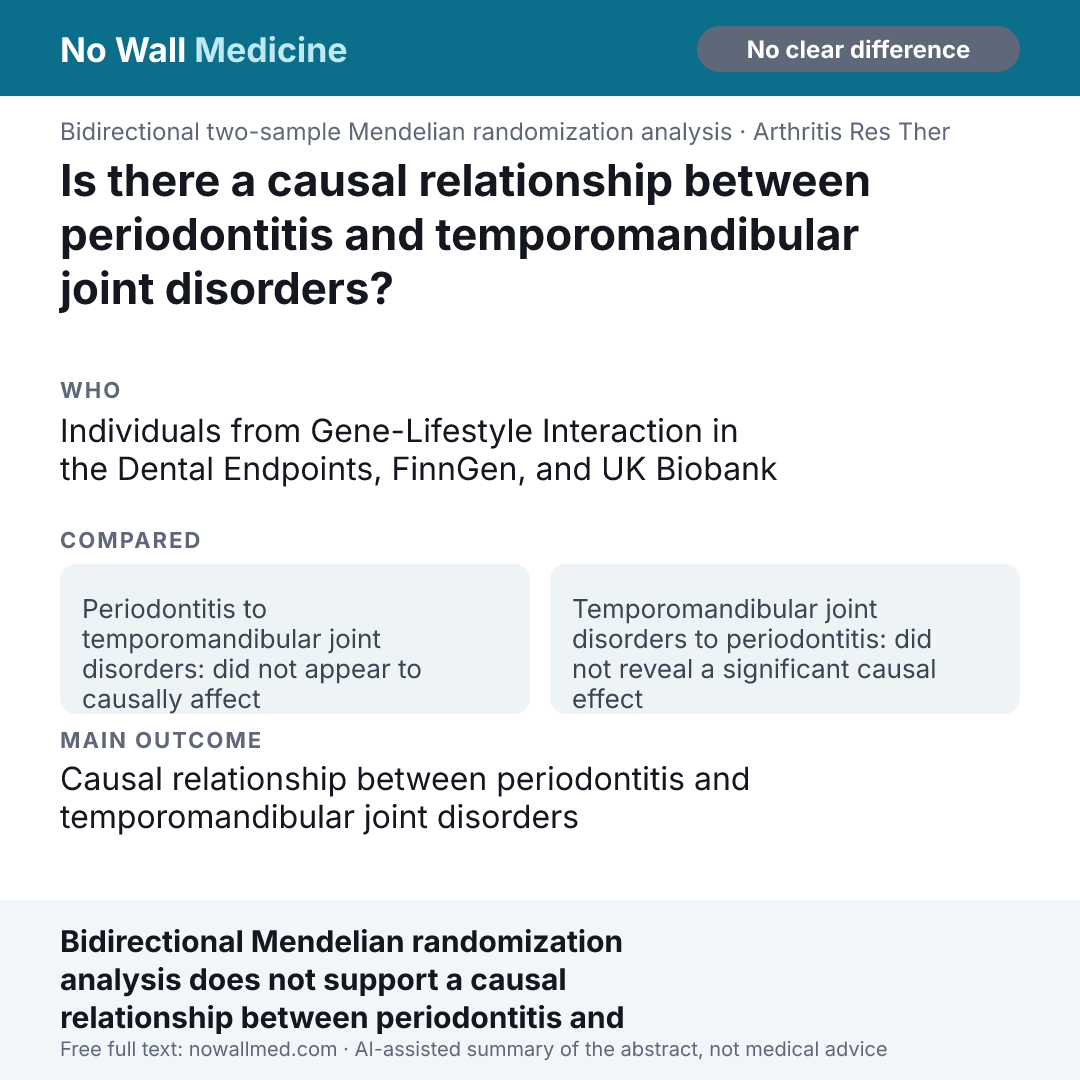
Association between periodontitis and temporomandibular joint disorders
Bidirectional two-sample Mendelian randomization analysisNo clear difference
Is there a causal relationship between periodontitis and temporomandibular joint disorders?
Who
Individuals from Gene-Lifestyle Interaction in the Dental Endpoints, FinnGen, and UK Biobank
Compared
Periodontitis to temporomandibular joint disorders: did not appear to causally affect
Temporomandibular joint disorders to periodontitis: did not reveal a significant causal effect
Main outcome
Causal relationship between periodontitis and temporomandibular joint disorders
Bottom line: Bidirectional Mendelian randomization analysis does not support a causal relationship between periodontitis and temporomandibular joint disorders.
Arthritis Res Ther · 2023-08-08 · Save PNG
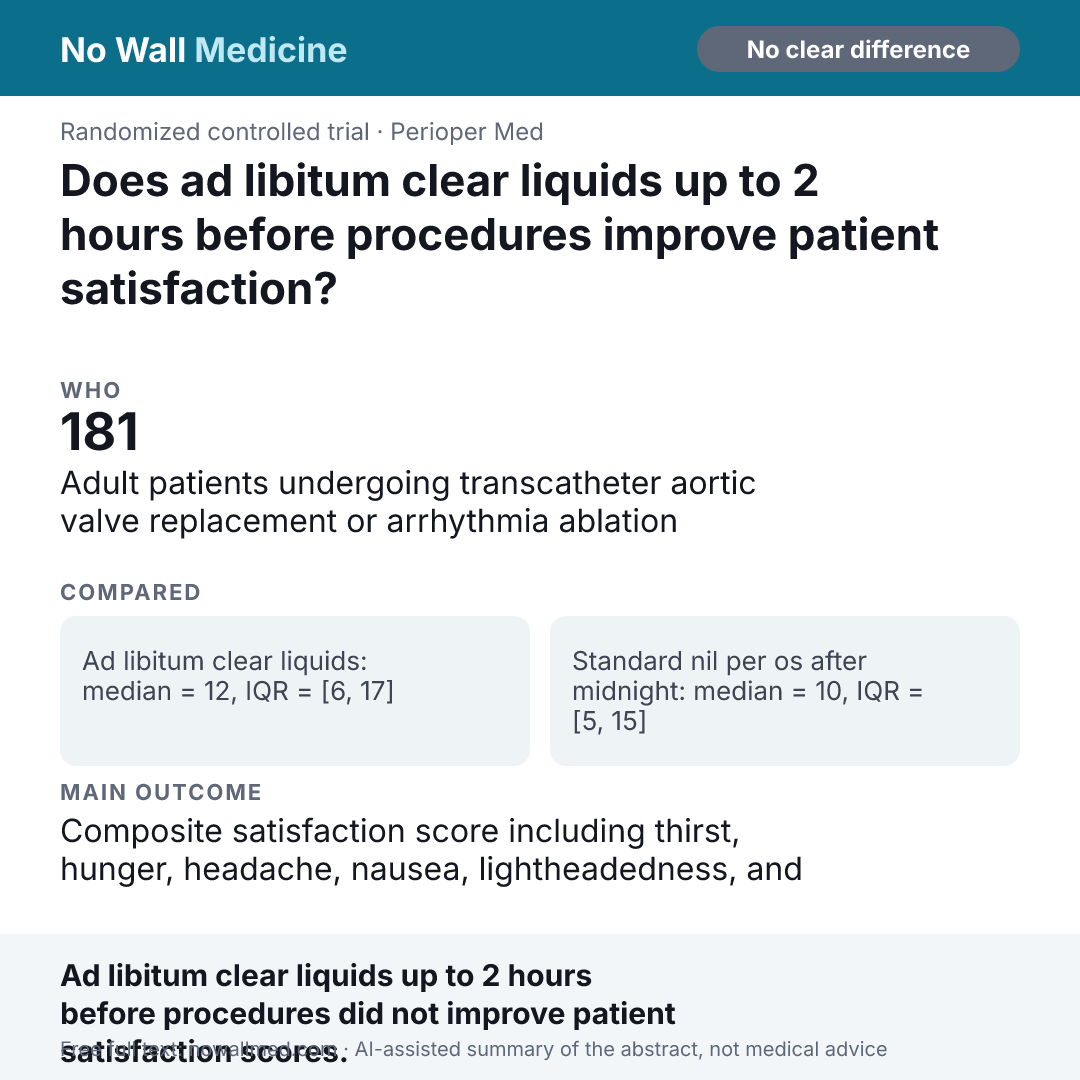
Randomized controlled trial of liberal vs. standard fasting instructions in percutaneous cardiac procedures
Randomized controlled trialNo clear difference
Does ad libitum clear liquids up to 2 hours before procedures improve patient satisfaction?
Who
181
Adult patients undergoing transcatheter aortic valve replacement or arrhythmia ablation
Compared
Ad libitum clear liquids: median = 12, IQR = [6, 17]
Standard nil per os after midnight: median = 10, IQR = [5, 15]
Main outcome
Composite satisfaction score including thirst, hunger, headache, nausea, lightheadedness, and anxiousness
Result: 95% CI = [-1, 4]
Bottom line: Ad libitum clear liquids up to 2 hours before procedures did not improve patient satisfaction scores.
Perioper Med · 2023-08-08 · Save PNG
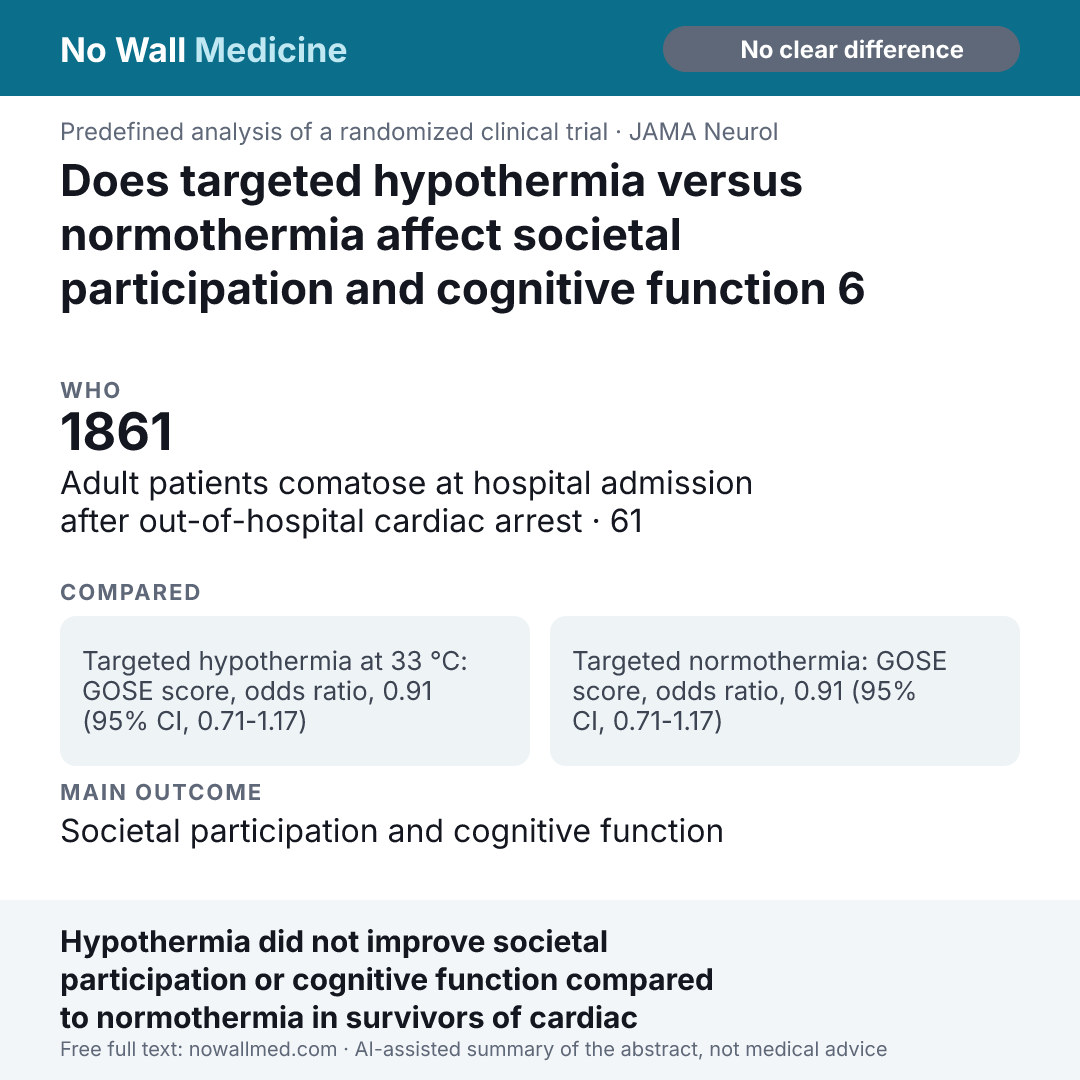
Effects of Hypothermia vs Normothermia on Societal Participation and Cognitive Function at 6 Months in Survivors After Out-of-Hospital Cardiac Arrest: A Predefined Analysis of the TTM2 Randomized Clinical Trial
Predefined analysis of a randomized clinical trialNo clear difference
Does targeted hypothermia versus normothermia affect societal participation and cognitive function 6 months after cardiac arrest?
Who
1861
Adult patients comatose at hospital admission after out-of-hospital cardiac arrest · 61 hospitals in 14 countries
Compared
Targeted hypothermia at 33 °C: GOSE score, odds ratio, 0.91 (95% CI, 0.71-1.17)
Targeted normothermia: GOSE score, odds ratio, 0.91 (95% CI, 0.71-1.17)
Main outcome
Societal participation and cognitive function
Result: odds ratio 0.91 (95% CI 0.71 to 1.17)
Bottom line: Hypothermia did not improve societal participation or cognitive function compared to normothermia in survivors of cardiac arrest.
Limitation: Limitations in societal participation were common regardless of intervention.
JAMA Neurol · 2023-08-07 · Save PNG