Visual abstracts
New randomized trials and meta-analyses from leading journals at a glance: who was studied, what was compared, and what was found. Every paper is free to read in full.
All specialtiesCardiology 4763Oncology 4043Gastroenterology & Hepatology 1903Infectious Disease 3756Neurology 1872Psychiatry & Mental Health 2216Pulmonology 2044Critical Care 1319Endocrinology & Diabetes 2544Pediatrics 2889Surgery 2480Orthopedics & Sports Medicine 917Neurosurgery 525Cardiothoracic & Vascular Surgery 656Plastic & Reconstructive Surgery 574Nephrology 1107Rheumatology 810Hematology 1090Dermatology 611Ophthalmology 532Obstetrics & Gynecology 1645Public & Global Health 1037Radiology & Imaging 619Anesthesiology 958Urology 745ENT (Otolaryngology) 494Emergency Medicine 481Allergy & Immunology 309Geriatrics 972Family Medicine & Primary Care 534Medical Genetics & Genomics 659Pathology & Laboratory Medicine 156Physical Medicine & Rehabilitation 734Palliative Care 421Nutrition 1560Digital Health & AI 2137General Medicine 318
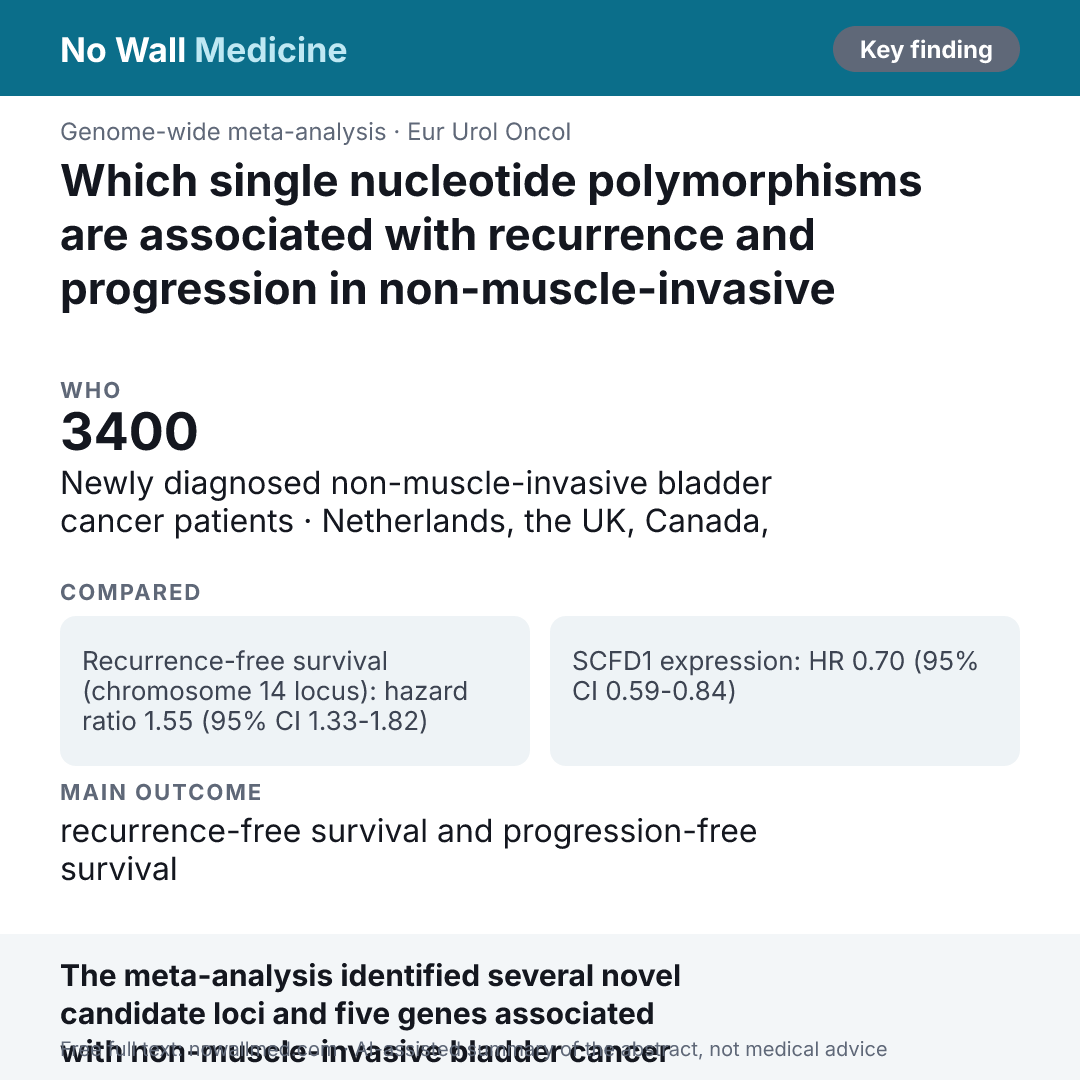
Genome-wide Meta-analysis Identifies Novel Genes Associated with Recurrence and Progression in Non-muscle-invasive Bladder Cancer
Genome-wide meta-analysisKey finding
Which single nucleotide polymorphisms are associated with recurrence and progression in non-muscle-invasive bladder cancer?
Who
3400
Newly diagnosed non-muscle-invasive bladder cancer patients · Netherlands, the UK, Canada, and Spain
Compared
Recurrence-free survival (chromosome 14 locus): hazard ratio 1.55 (95% CI 1.33-1.82)
SCFD1 expression: HR 0.70 (95% CI 0.59-0.84)
Main outcome
recurrence-free survival and progression-free survival
Result: hazard ratio 1.55 (95% CI 1.33-1.82)
Bottom line: The meta-analysis identified several novel candidate loci and five genes associated with non-muscle-invasive bladder cancer recurrence or progression.
Limitation: The roles and mechanisms of these genes should be investigated in future studies.
Eur Urol Oncol · 2021-08-02 · Save PNG
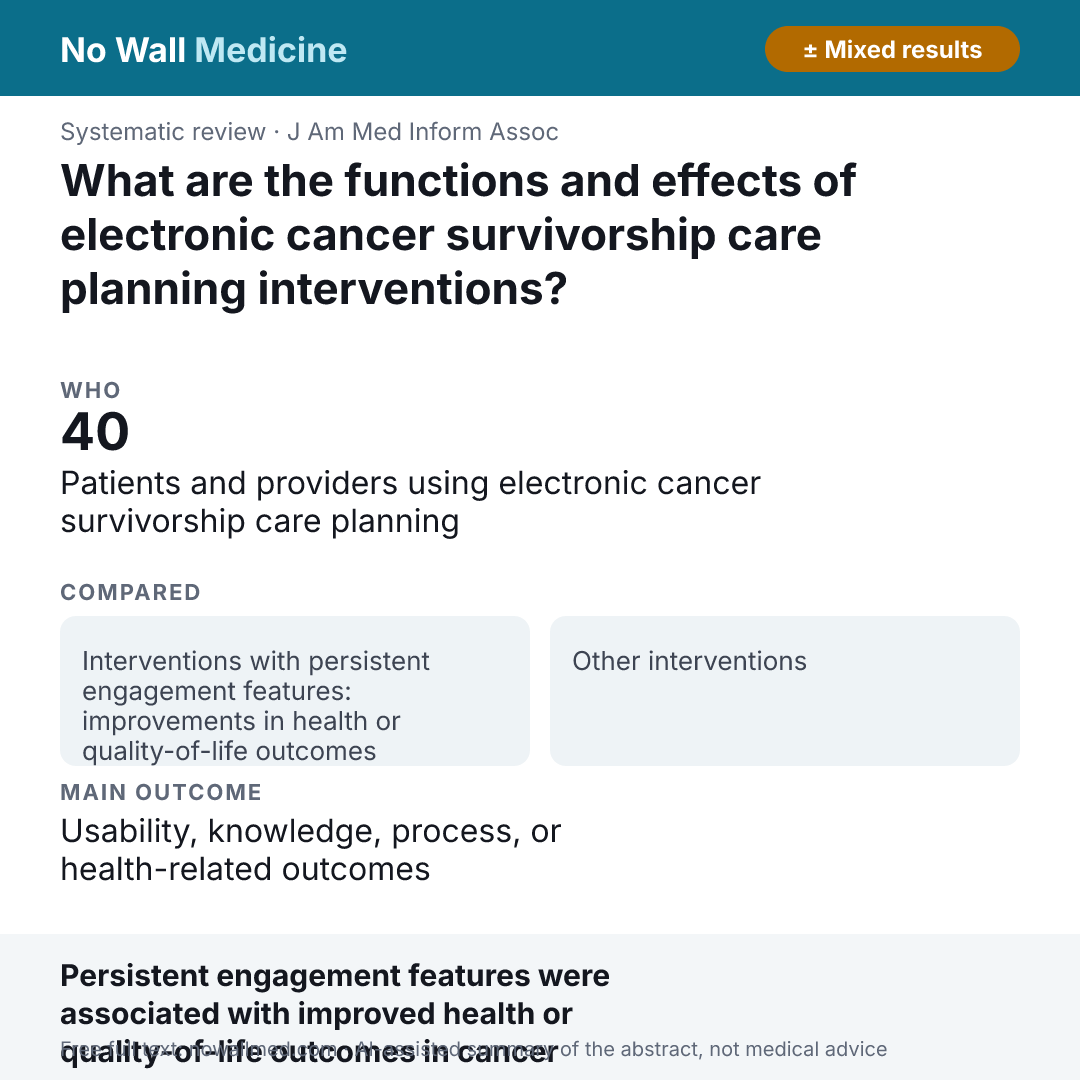
Health information technology to support cancer survivorship care planning: A systematic review
Systematic reviewMixed results
What are the functions and effects of electronic cancer survivorship care planning interventions?
Who
40
Patients and providers using electronic cancer survivorship care planning
Compared
Interventions with persistent engagement features: improvements in health or quality-of-life outcomes
Other interventions
Main outcome
Usability, knowledge, process, or health-related outcomes
Bottom line: Persistent engagement features were associated with improved health or quality-of-life outcomes in cancer survivorship care planning.
J Am Med Inform Assoc · 2021-08-02 · Save PNG
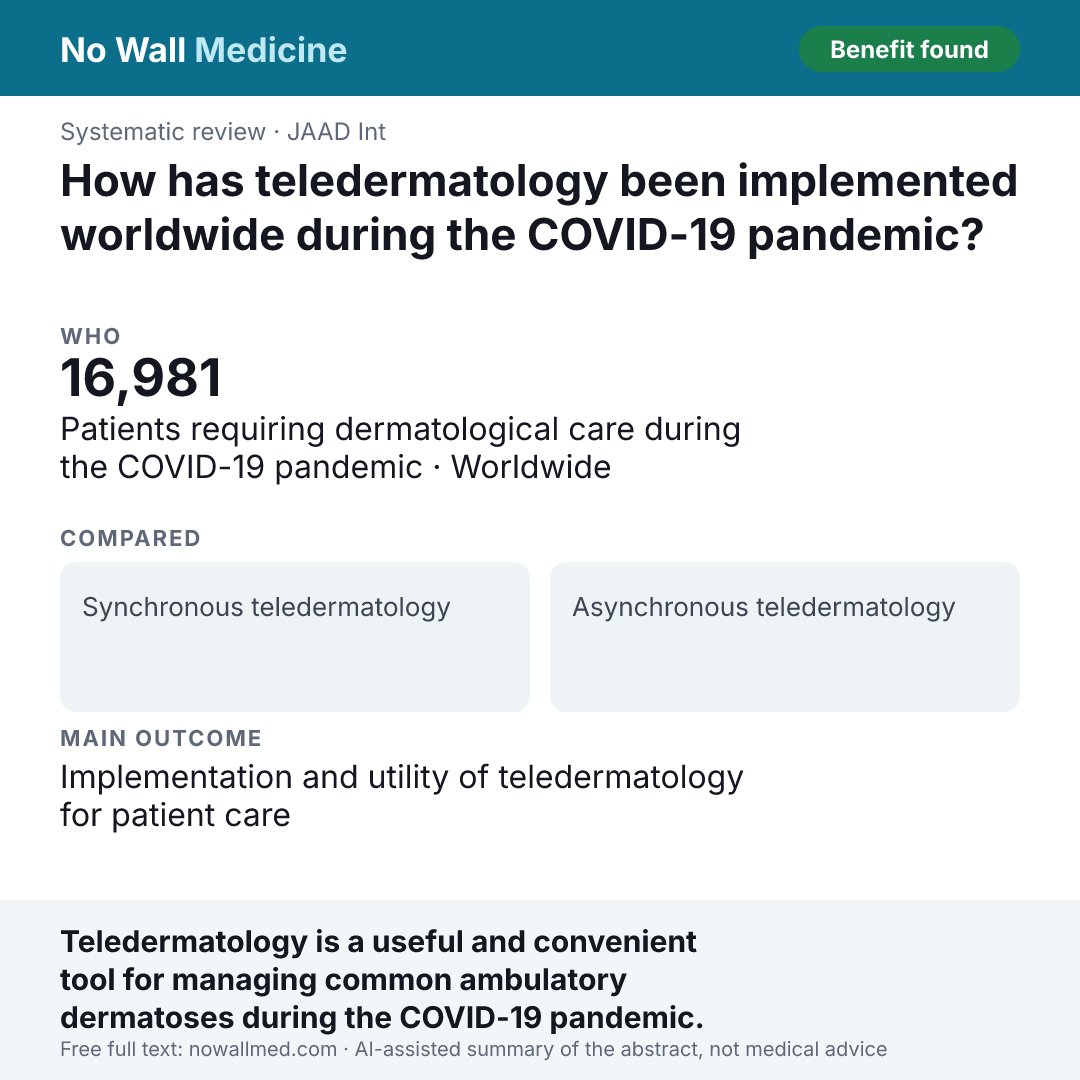
Teledermatology in the COVID-19 pandemic: A systematic review
Systematic reviewBenefit found
How has teledermatology been implemented worldwide during the COVID-19 pandemic?
Who
16,981
Patients requiring dermatological care during the COVID-19 pandemic · Worldwide
Compared
Synchronous teledermatology
Asynchronous teledermatology
Main outcome
Implementation and utility of teledermatology for patient care
Bottom line: Teledermatology is a useful and convenient tool for managing common ambulatory dermatoses during the COVID-19 pandemic.
Limitation: A pooled analysis of all relevant outcomes was not always possible due to heterogeneity.
JAAD Int · 2021-08-02 · Save PNG
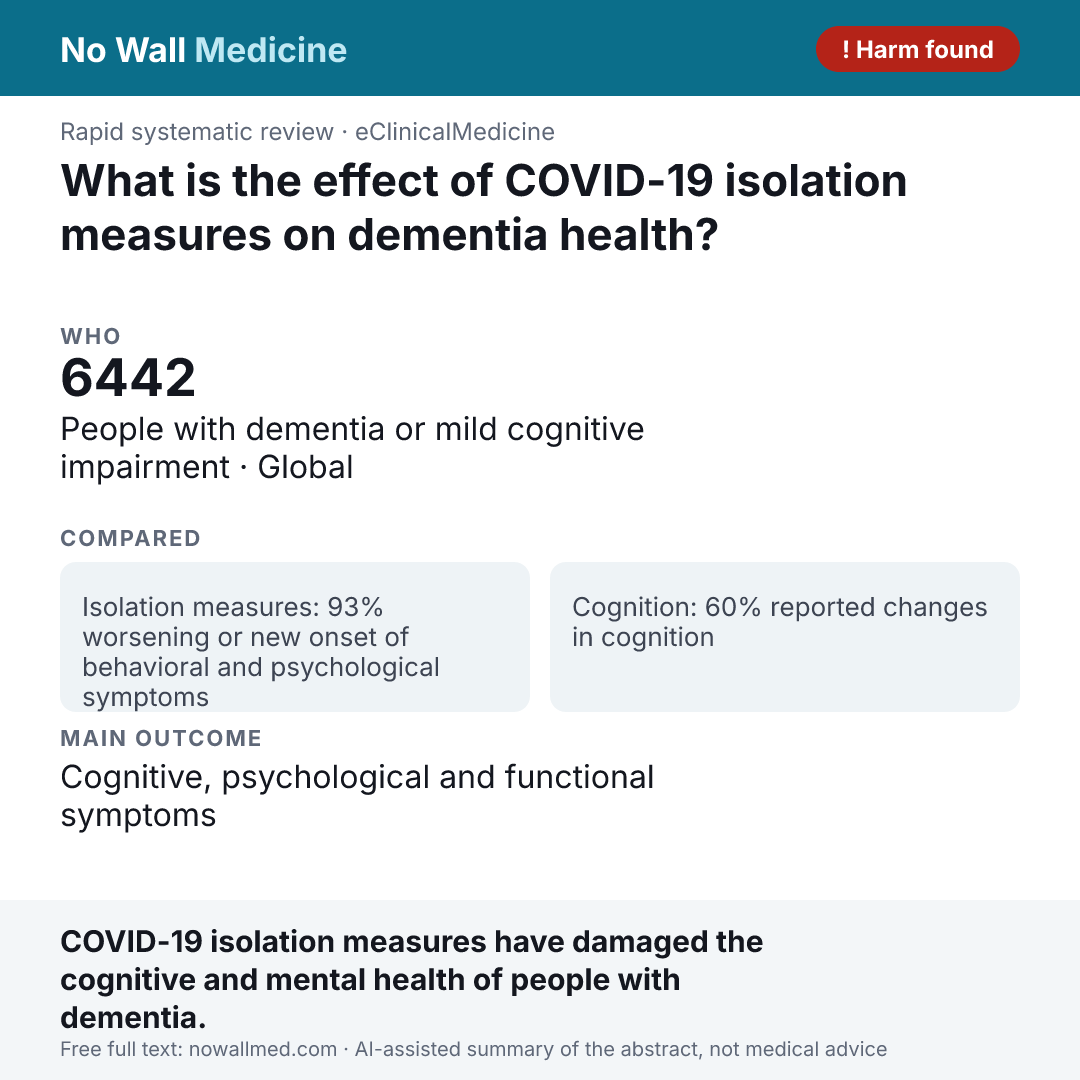
Adjunctive Volasertib in Patients With Acute Myeloid Leukemia not Eligible for Standard Induction Therapy: A Randomized, Phase 3 Trial
Randomized, phase 3 trialNo clear difference
Does volasertib plus low-dose cytarabine improve outcomes in acute myeloid leukemia patients?
Who
666
Older patients with acute myeloid leukemia ineligible for intensive chemotherapy
Compared
Volasertib plus low-dose cytarabine: ORR 25.2%
Low-dose cytarabine plus placebo: ORR 16.8%
Main outcome
objective response rate and overall survival
Result: hazard ratio 0.97 (95% CI 0.8-1.2)
Bottom line: Volasertib plus low-dose cytarabine did not improve overall survival compared to low-dose cytarabine plus placebo.
HemaSphere · 2021-08-02 · Save PNG
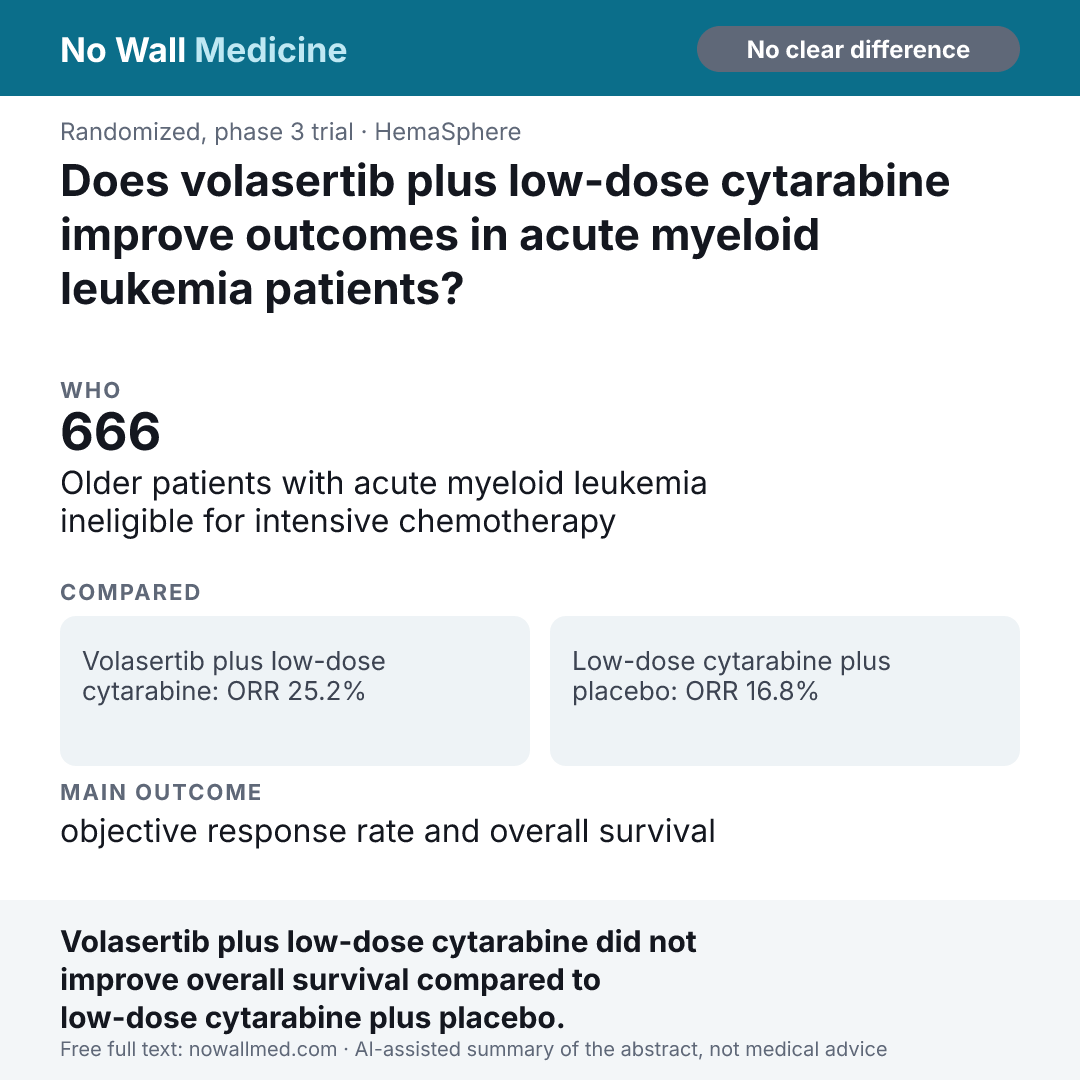
Interoceptive training to target anxiety in autistic adults (ADIE): A single-center, superiority randomized controlled trial
Superiority randomized controlled trialBenefit found
Does Aligning Dimensions of Interoceptive Experience reduce anxiety in autistic adults?
Who
121
Autistic adults aged 18 to 65 years · Clinical and community settings in Southern England
Compared
Aligning Dimensions of Interoceptive Experience: 31% meeting trial criteria for recovery
Prosody control therapy: 16% meeting trial criteria for recovery
Main outcome
Spielberger Trait Anxiety Score at 3-months post-intervention
Result: estimated mean difference 3•23 (95% CI 1•13 to 5•29)
Bottom line: Aligning Dimensions of Interoceptive Experience significantly reduced trait anxiety in autistic adults compared to an active control.
Funded by: Transforming Mental Health PsyImpact Grant
eClinicalMedicine · 2021-08-01 · Save PNG
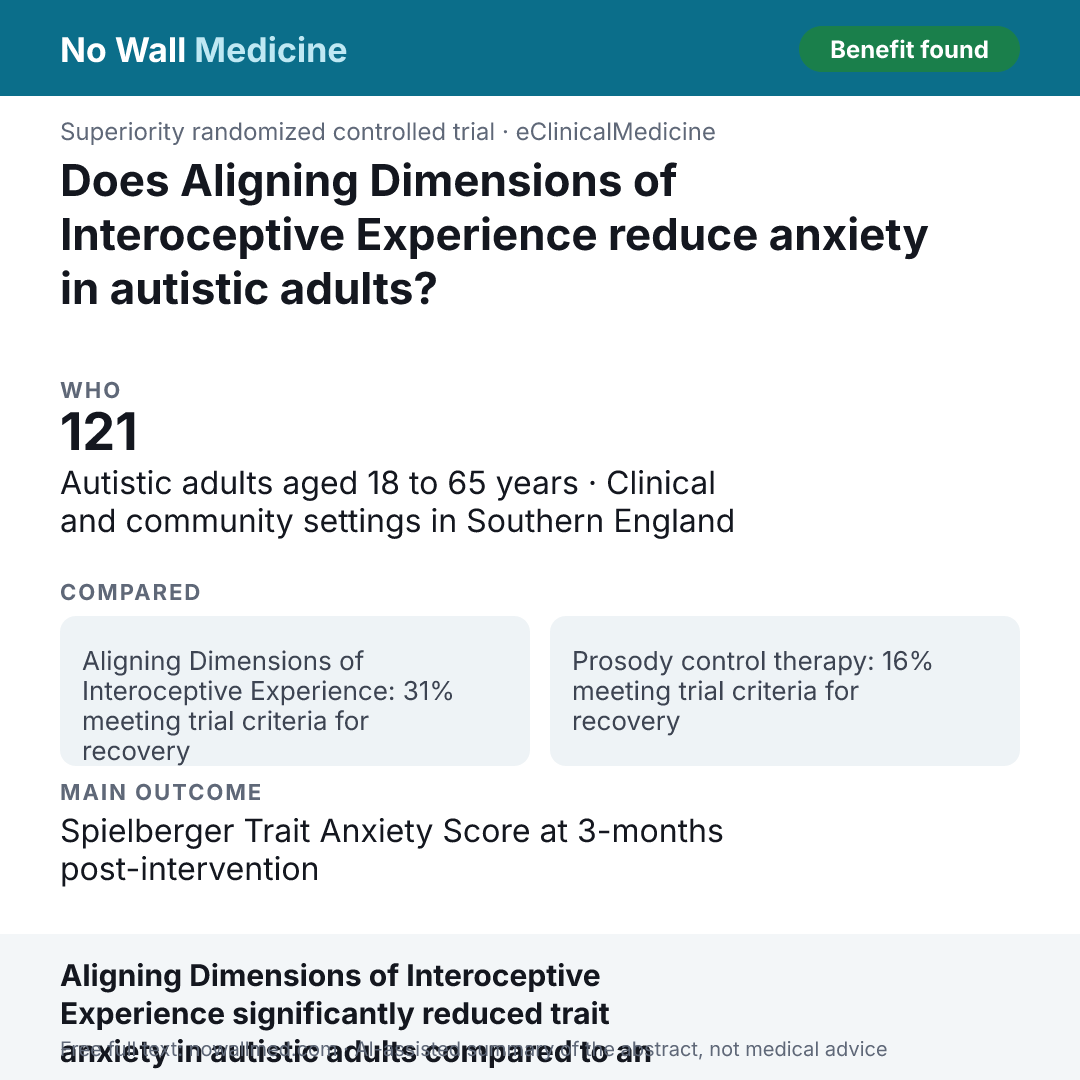
Role of cardiac magnetic resonance strain analysis in patients with hypoplastic left heart syndrome in evaluating right ventricular (dys)function: a systematic review
Systematic reviewKey finding
Can cardiac magnetic resonance feature tracking evaluate right ventricular function in hypoplastic left heart syndrome?
Who
608
Patients with hypoplastic left heart syndrome
Compared
Hybrid procedure and conduit: reduced global strain
Modified Blalock-Taussig shunt
Fontan patients: significantly impaired global longitudinal and circumferential strain
Main outcome
Right ventricular function via cardiac magnetic resonance feature tracking strain
Bottom line: Cardiac magnetic resonance feature tracking can evaluate right ventricular strain and detect dysfunction in hypoplastic left heart syndrome patients.
Eur J Cardiothorac Surg · 2021-08-01 · Save PNG
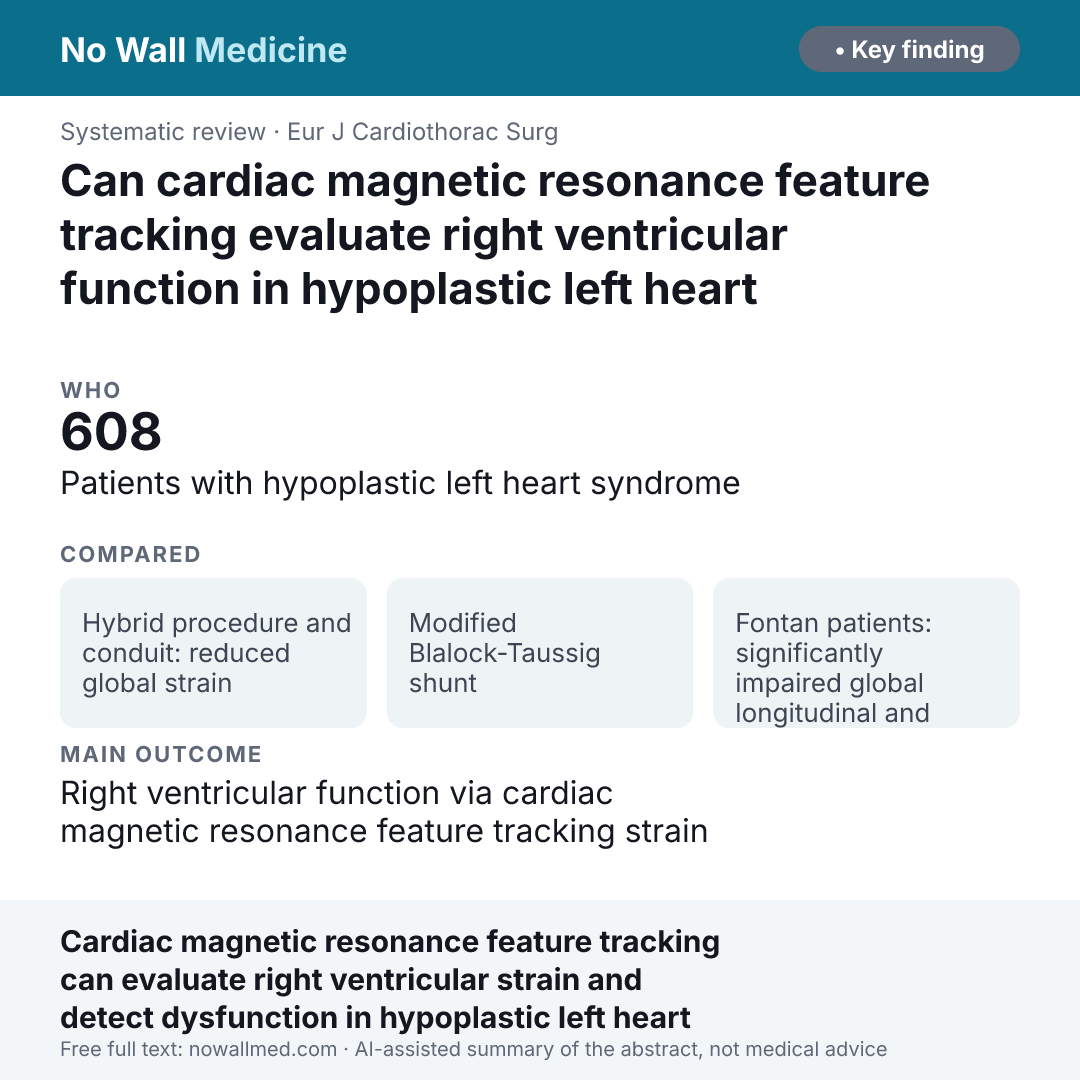
The effect of COVID-19 isolation measures on the cognition and mental health of people living with dementia: A rapid systematic review of one year of quantitative evidence
Rapid systematic reviewHarm found
What is the effect of COVID-19 isolation measures on dementia health?
Who
6442
People with dementia or mild cognitive impairment · Global
Compared
Isolation measures: 93% worsening or new onset of behavioral and psychological symptoms
Cognition: 60% reported changes in cognition
Main outcome
Cognitive, psychological and functional symptoms
Bottom line: COVID-19 isolation measures have damaged the cognitive and mental health of people with dementia.
eClinicalMedicine · 2021-07-31 · Save PNG
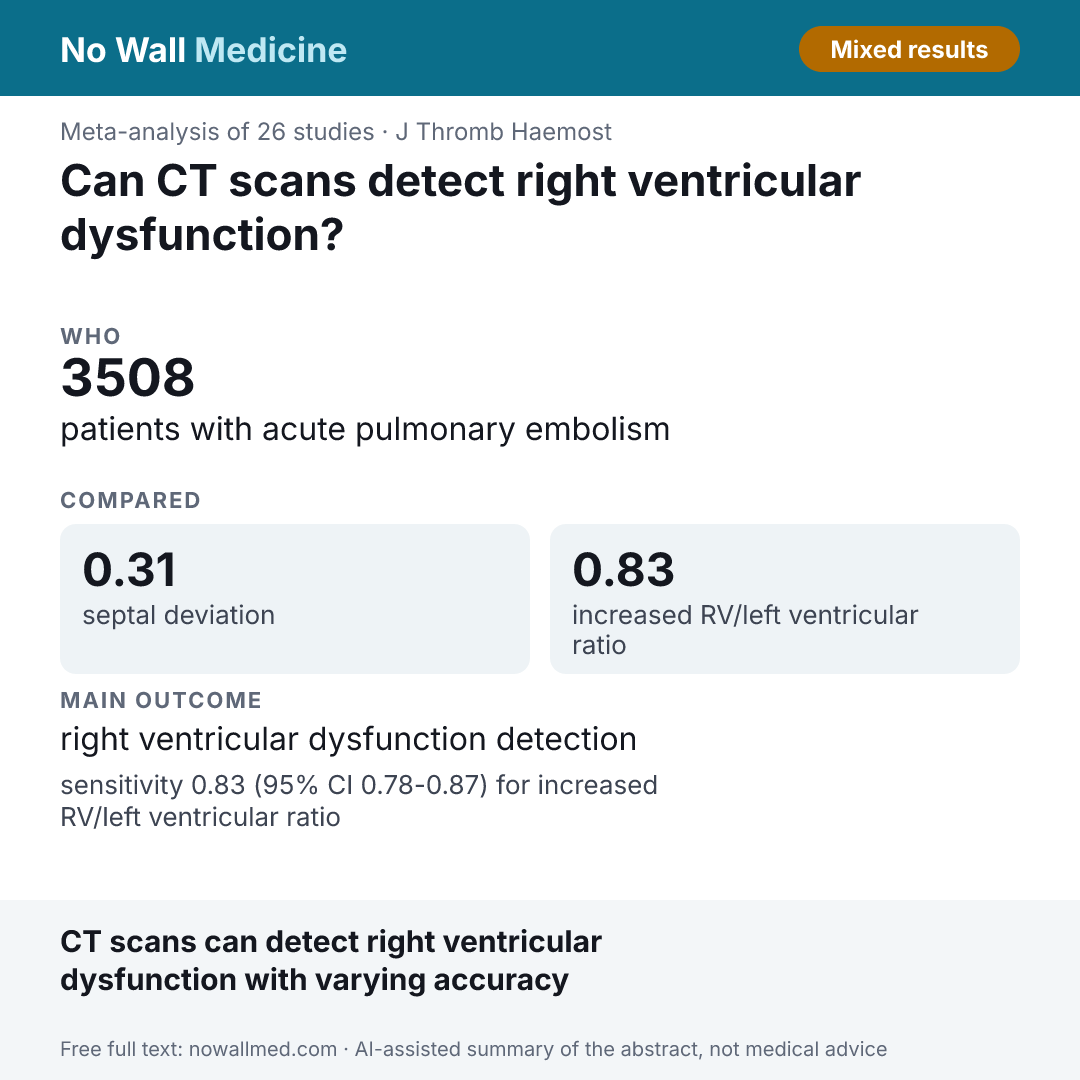
Detection of right ventricular dysfunction in acute pulmonary embolism by computed tomography or echocardiography: A systematic review and meta-analysis
Meta-analysis of 26 studiesMixed results
Can CT scans detect right ventricular dysfunction?
Who
3508
patients with acute pulmonary embolism
Compared
0.31septal deviation (95% CI 0.25-0.38)
0.83increased RV/left ventricular ratio (95% CI 0.78-0.87)
Main outcome
right ventricular dysfunction detection
Result: sensitivity 0.83 (95% CI 0.78-0.87) for increased RV/left ventricular ratio
Bottom line: CT scans can detect right ventricular dysfunction with varying accuracy
J Thromb Haemost · 2021-07-31 · Save PNG
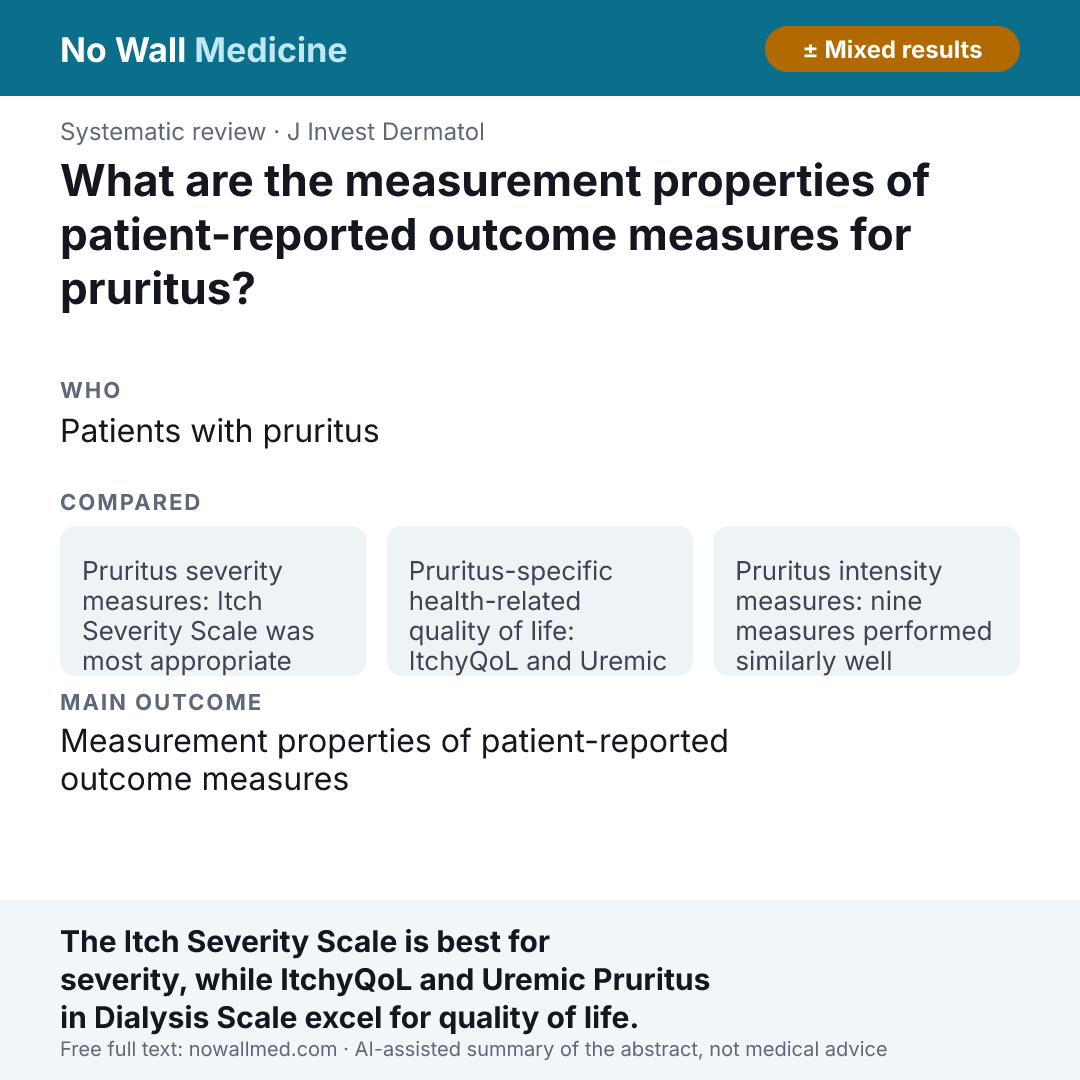
Measurement Properties of Patient-Reported Outcome Measures for Pruritus: An Updated Systematic Review
Systematic reviewMixed results
What are the measurement properties of patient-reported outcome measures for pruritus?
Who
Patients with pruritus
Compared
Pruritus severity measures: Itch Severity Scale was most appropriate
Pruritus-specific health-related quality of life: ItchyQoL and Uremic Pruritus in Dialysis Scale most promising
Pruritus intensity measures: nine measures performed similarly well
Main outcome
Measurement properties of patient-reported outcome measures
Bottom line: The Itch Severity Scale is best for severity, while ItchyQoL and Uremic Pruritus in Dialysis Scale excel for quality of life.
J Invest Dermatol · 2021-07-31 · Save PNG
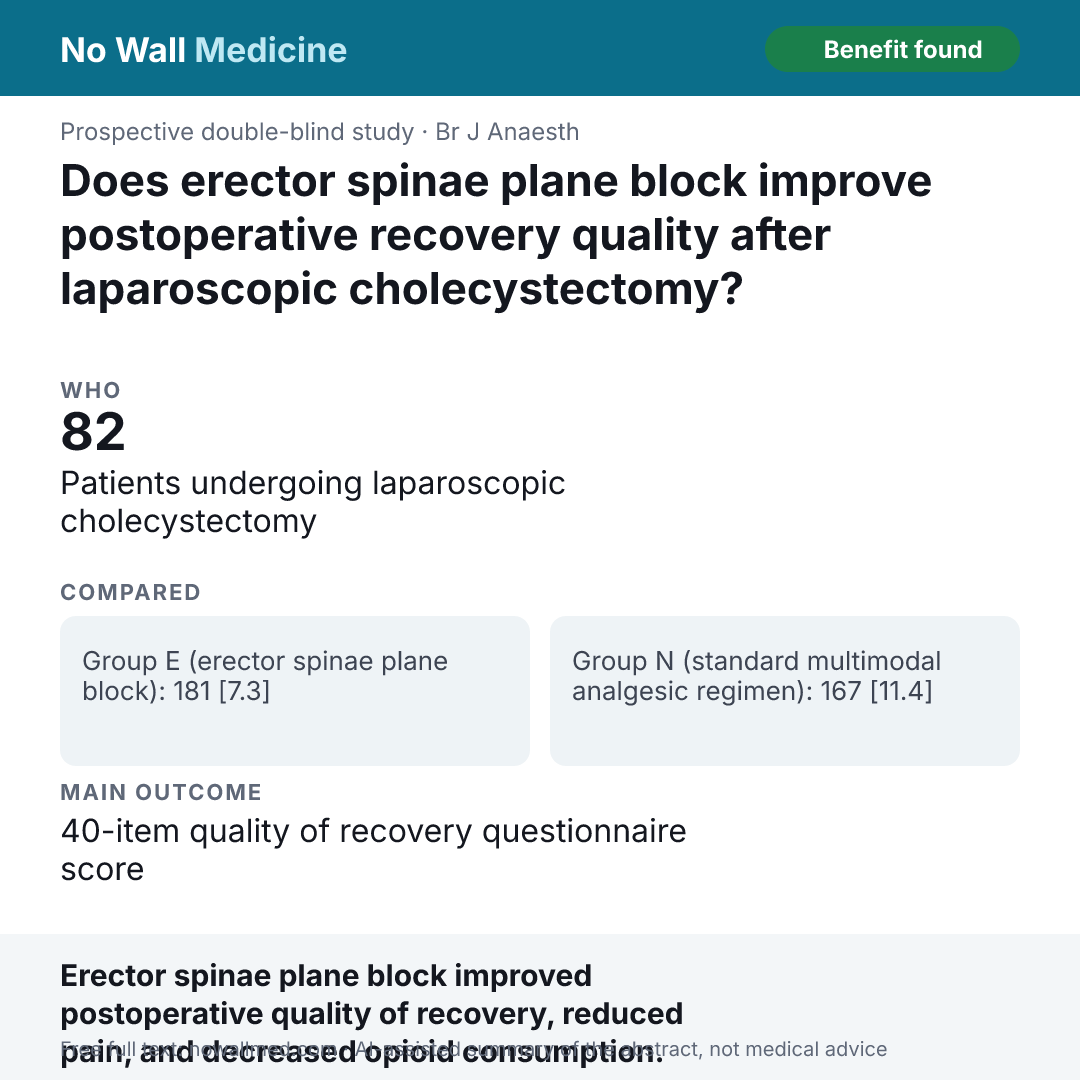
Effect of erector spinae plane block on the postoperative quality of recovery after laparoscopic cholecystectomy: a prospective double-blind study
Prospective double-blind studyBenefit found
Does erector spinae plane block improve postoperative recovery quality after laparoscopic cholecystectomy?
Who
82
Patients undergoing laparoscopic cholecystectomy
Compared
Group E (erector spinae plane block): 181 [7.3]
Group N (standard multimodal analgesic regimen): 167 [11.4]
Main outcome
40-item quality of recovery questionnaire score
Bottom line: Erector spinae plane block improved postoperative quality of recovery, reduced pain, and decreased opioid consumption.
Br J Anaesth · 2021-07-31 · Save PNG
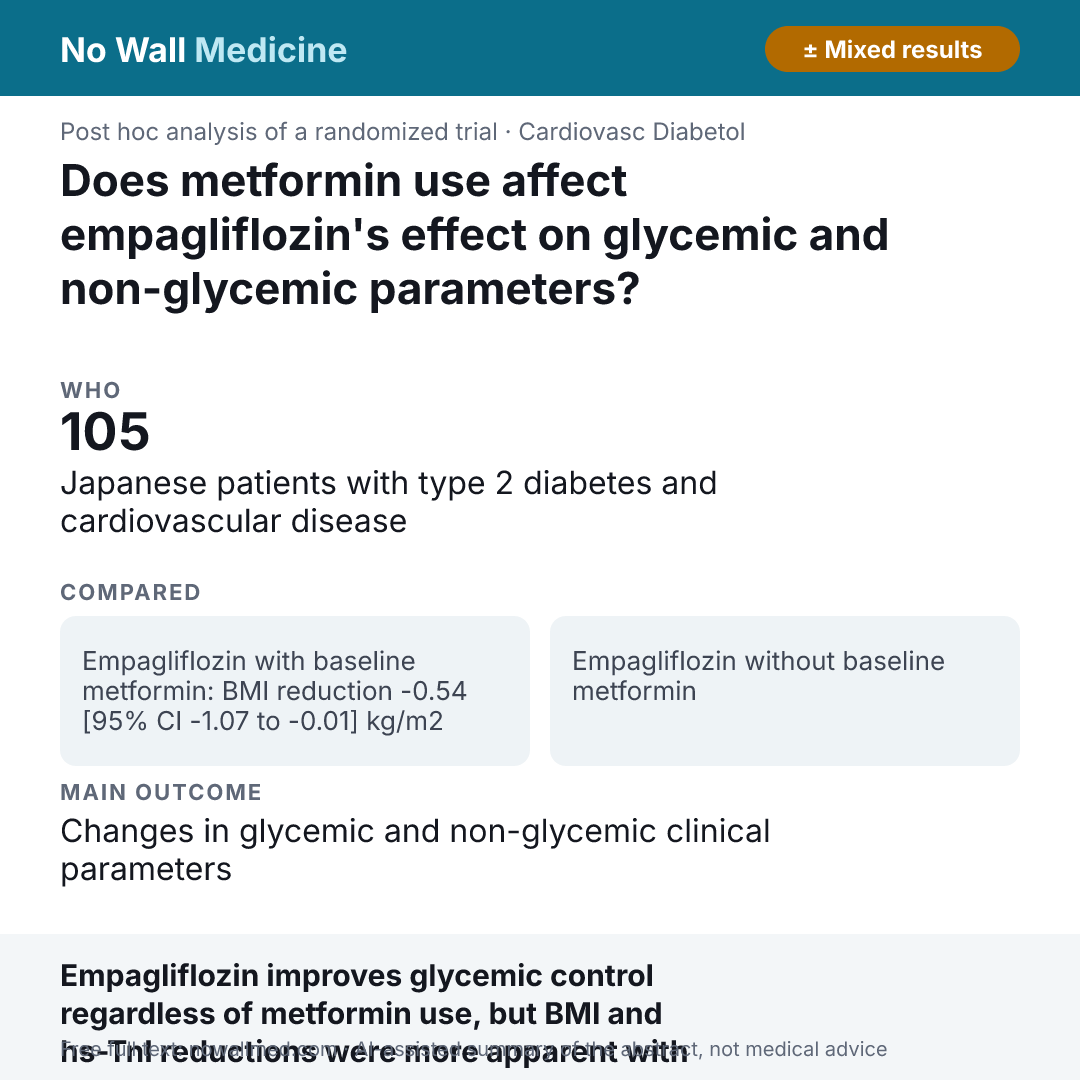
Comparison of the clinical effect of empagliflozin on glycemic and non-glycemic parameters in Japanese patients with type 2 diabetes and cardiovascular disease treated with or without baseline metformin
Post hoc analysis of a randomized trialMixed results
Does metformin use affect empagliflozin's effect on glycemic and non-glycemic parameters?
Who
105
Japanese patients with type 2 diabetes and cardiovascular disease
Compared
Empagliflozin with baseline metformin: BMI reduction -0.54 [95% CI -1.07 to -0.01] kg/m2
Empagliflozin without baseline metformin
Main outcome
Changes in glycemic and non-glycemic clinical parameters
Result: group ratio of hs-TnI changes 0.74 (95% CI 0.59 to 0.92)
Bottom line: Empagliflozin improves glycemic control regardless of metformin use, but BMI and hs-TnI reductions were more apparent with metformin.
Limitation: This was a post hoc analysis of the EMBLEM trial
Cardiovasc Diabetol · 2021-07-31 · Save PNG
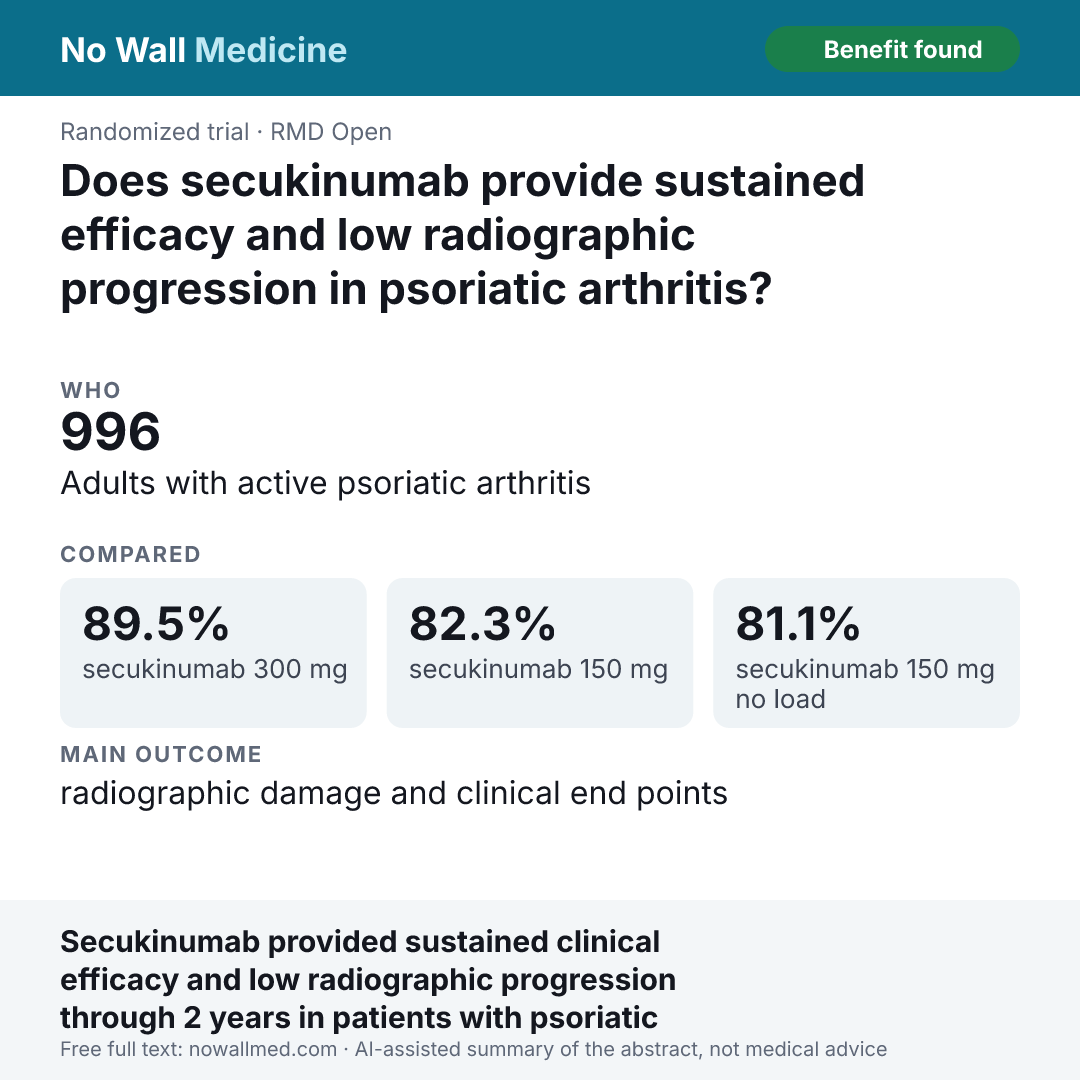
Secukinumab provides sustained improvement in signs and symptoms and low radiographic progression in patients with psoriatic arthritis: 2-year (end-of-study) results from the FUTURE 5 study
Randomized trialBenefit found
Does secukinumab provide sustained efficacy and low radiographic progression in psoriatic arthritis?
Who
996
Adults with active psoriatic arthritis
Compared
89.5%secukinumab 300 mg (no radiographic progression)
82.3%secukinumab 150 mg (no radiographic progression)
81.1%secukinumab 150 mg no load (no radiographic progression)
Main outcome
radiographic damage and clinical end points
Bottom line: Secukinumab provided sustained clinical efficacy and low radiographic progression through 2 years in patients with psoriatic arthritis.
RMD Open · 2021-07-31 · Save PNG
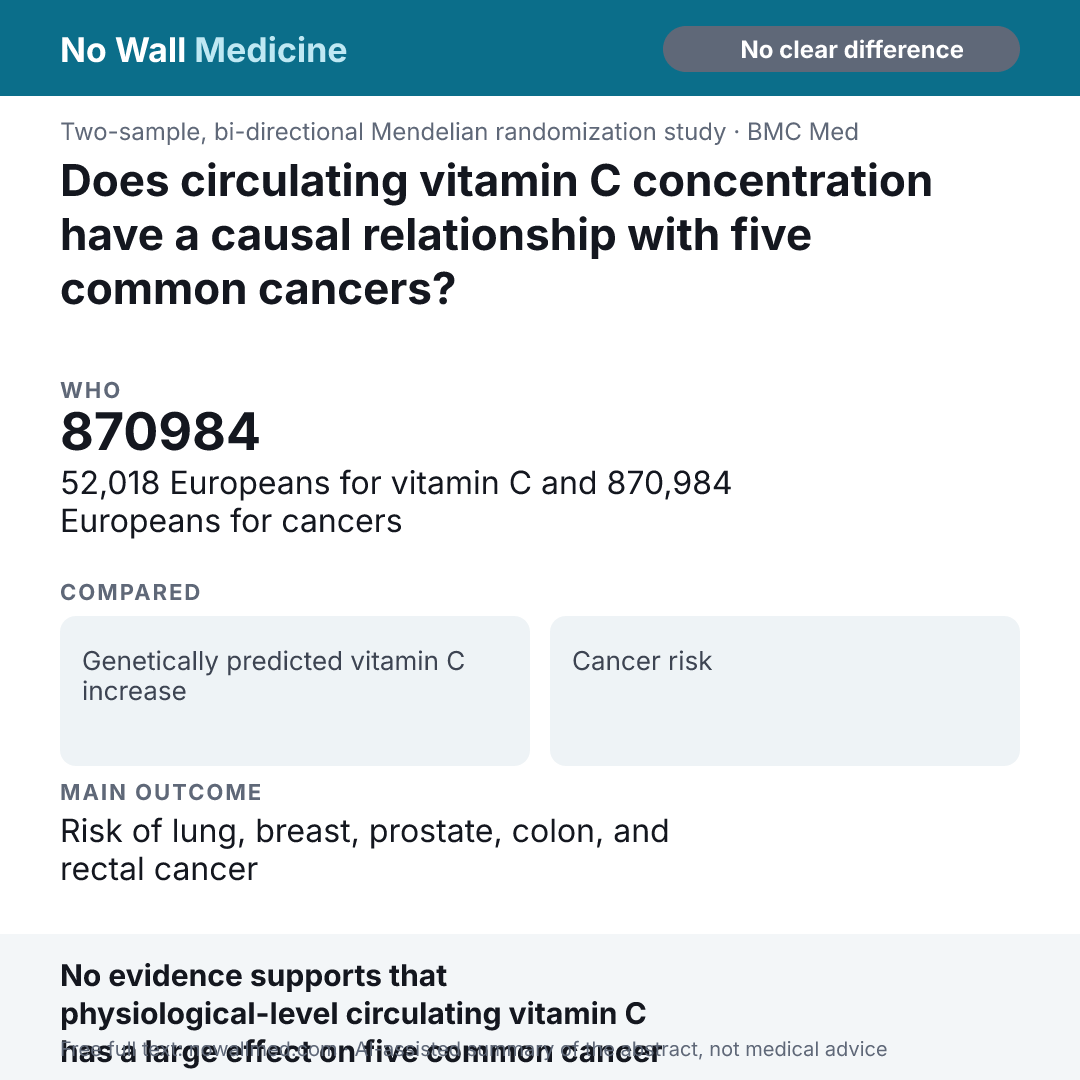
Circulating vitamin C concentration and risk of cancers: a Mendelian randomization study
Two-sample, bi-directional Mendelian randomization studyNo clear difference
Does circulating vitamin C concentration have a causal relationship with five common cancers?
Who
870984
52,018 Europeans for vitamin C and 870,984 Europeans for cancers
Compared
Genetically predicted vitamin C increase
Cancer risk
Main outcome
Risk of lung, breast, prostate, colon, and rectal cancer
Bottom line: No evidence supports that physiological-level circulating vitamin C has a large effect on five common cancer risks.
Limitation: The study cannot rule out very small effect sizes.
BMC Med · 2021-07-30 · Save PNG
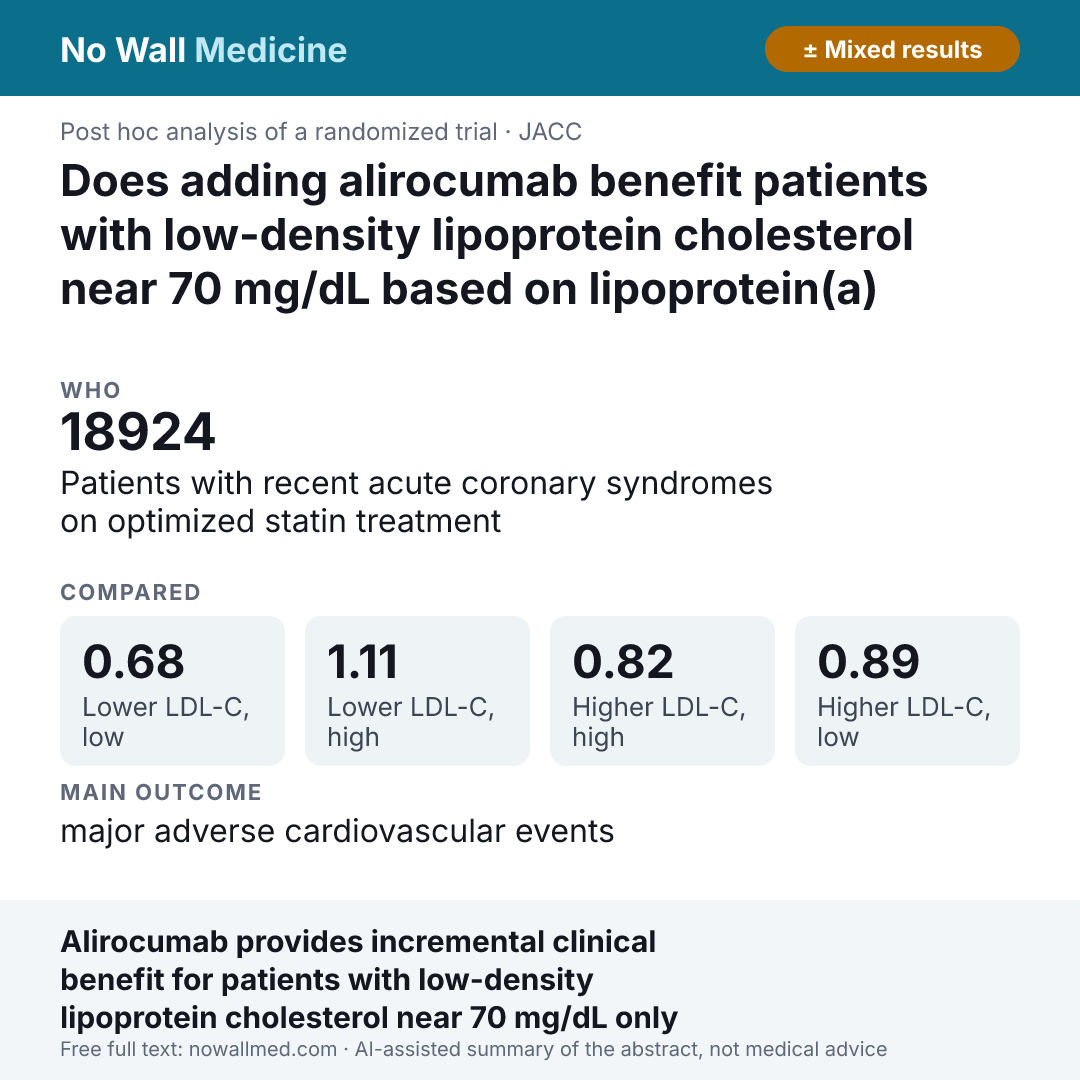
Lipoprotein(a) and Benefit of PCSK9 Inhibition in Patients With Nominally Controlled LDL Cholesterol
Post hoc analysis of a randomized trialMixed results
Does adding alirocumab benefit patients with low-density lipoprotein cholesterol near 70 mg/dL based on lipoprotein(a) levels?
Who
18924
Patients with recent acute coronary syndromes on optimized statin treatment
Compared
0.68Lower LDL-C, low lipoprotein(a) (95% CI 0.52-0.90)
1.11Lower LDL-C, high lipoprotein(a) (95% CI 0.83-1.49)
0.82Higher LDL-C, high lipoprotein(a) (95% CI 0.72-0.92)
0.89Higher LDL-C, low lipoprotein(a) (95% CI 0.75-1.06)
Main outcome
major adverse cardiovascular events
Result: hazard ratio 0.68 (95% CI 0.52-0.90) for low LDL-C and low lipoprotein(a)
Bottom line: Alirocumab provides incremental clinical benefit for patients with low-density lipoprotein cholesterol near 70 mg/dL only if lipoprotein(a) is elevated.
JACC · 2021-07-30 · Save PNG
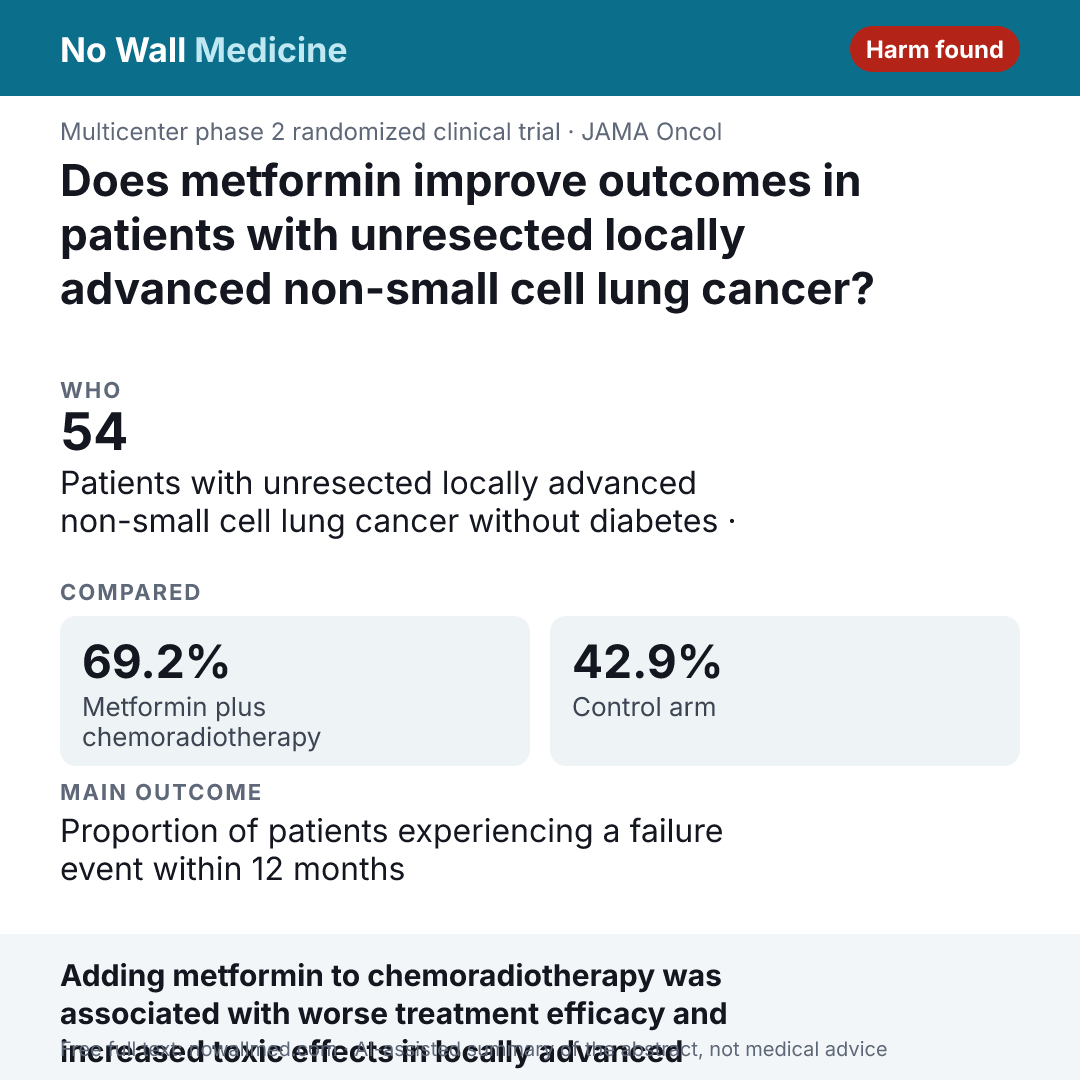
Metformin in Combination With Chemoradiotherapy in Locally Advanced Non-Small Cell Lung Cancer: The OCOG-ALMERA Randomized Clinical Trial
Multicenter phase 2 randomized clinical trialHarm found
Does metformin improve outcomes in patients with unresected locally advanced non-small cell lung cancer?
Who
54
Patients with unresected locally advanced non-small cell lung cancer without diabetes · Multicenter
Compared
69.2%Metformin plus chemoradiotherapy
42.9%Control arm
Main outcome
Proportion of patients experiencing a failure event within 12 months
Result: hazard ratio 2.42; 95% CI, 1.14-5.10
Bottom line: Adding metformin to chemoradiotherapy was associated with worse treatment efficacy and increased toxic effects in locally advanced non-small cell lung cancer.
JAMA Oncol · 2021-07-30 · Save PNG
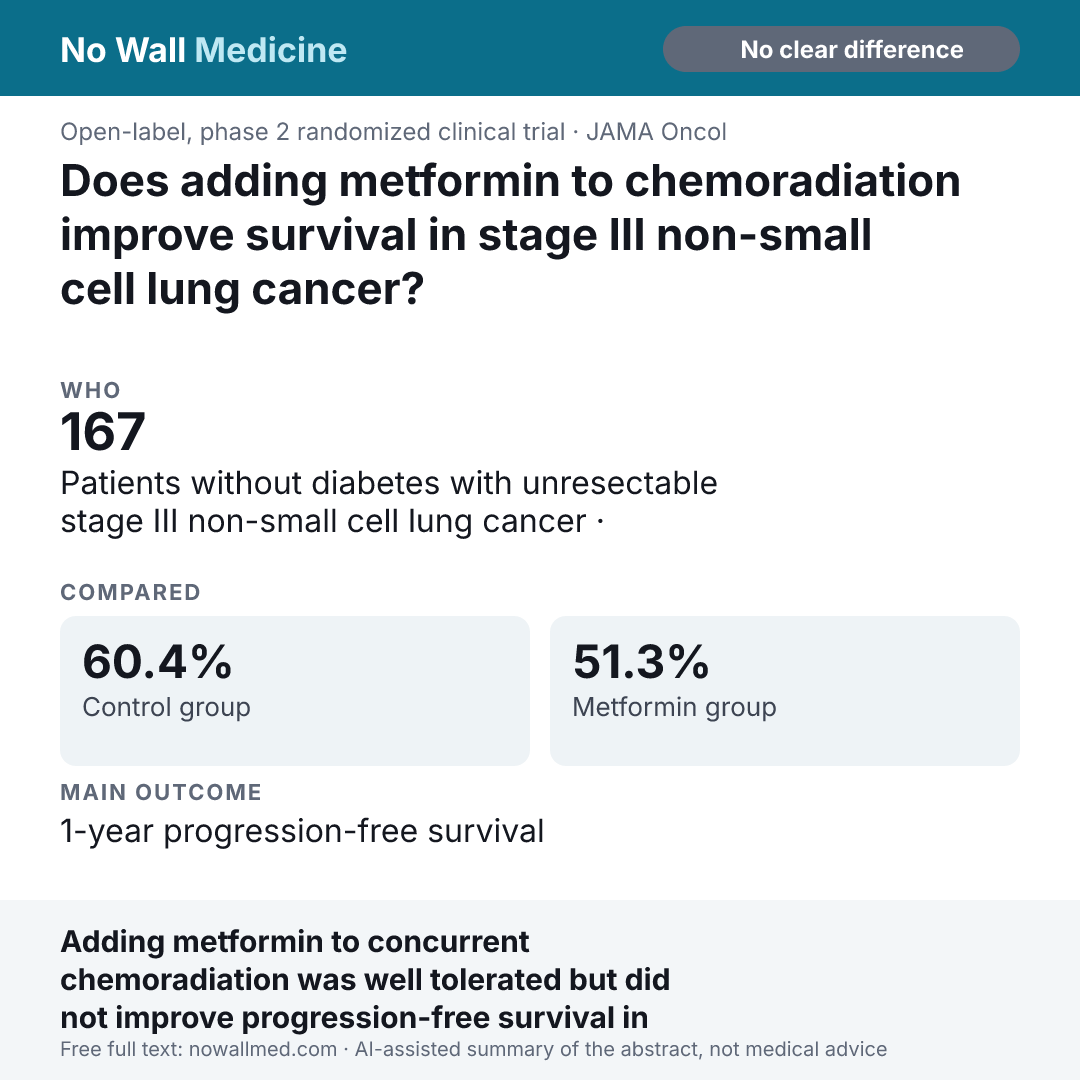
Addition of Metformin to Concurrent Chemoradiation in Patients With Locally Advanced Non-Small Cell Lung Cancer: The NRG-LU001 Phase 2 Randomized Clinical Trial
Open-label, phase 2 randomized clinical trialNo clear difference
Does adding metformin to chemoradiation improve survival in stage III non-small cell lung cancer?
Who
167
Patients without diabetes with unresectable stage III non-small cell lung cancer · International and multi-institutional
Compared
60.4%Control group (95% CI, 48.5%-70.4%)
51.3%Metformin group (95% CI, 39.8%-61.7%)
Main outcome
1-year progression-free survival
Result: hazard ratio 1.15 (95% CI, 0.77-1.73)
Bottom line: Adding metformin to concurrent chemoradiation was well tolerated but did not improve progression-free survival in stage III non-small cell lung cancer.
JAMA Oncol · 2021-07-30 · Save PNG
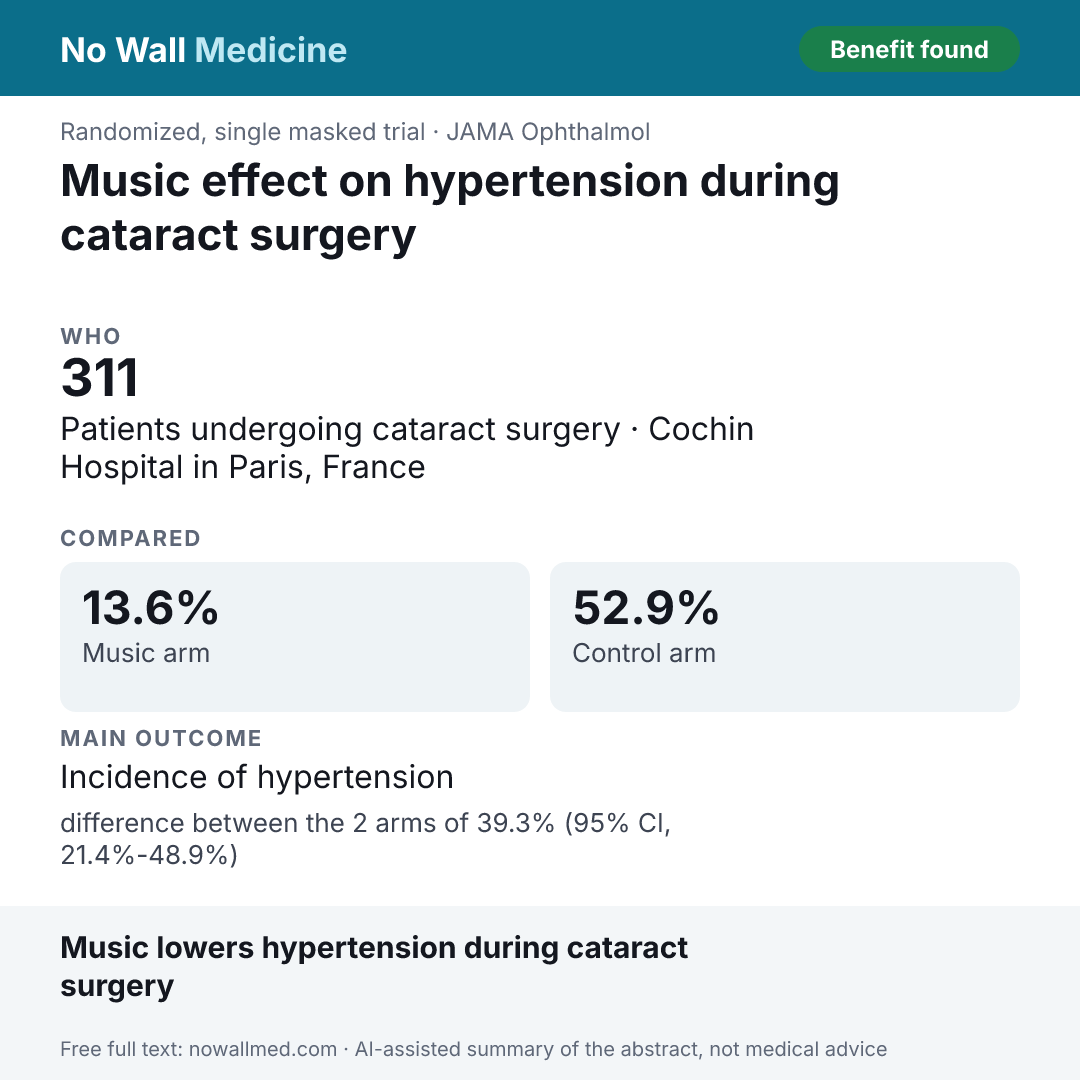
Efficacy of a Web App-Based Music Intervention During Cataract Surgery: A Randomized Clinical Trial
Randomized, single masked trialBenefit found
Music effect on hypertension during cataract surgery
Who
311
Patients undergoing cataract surgery · Cochin Hospital in Paris, France
Compared
13.6%Music arm (21/155)
52.9%Control arm (82/155)
Main outcome
Incidence of hypertension
Result: difference between the 2 arms of 39.3% (95% CI, 21.4%-48.9%)
Bottom line: Music lowers hypertension during cataract surgery
JAMA Ophthalmol · 2021-07-30 · Save PNG
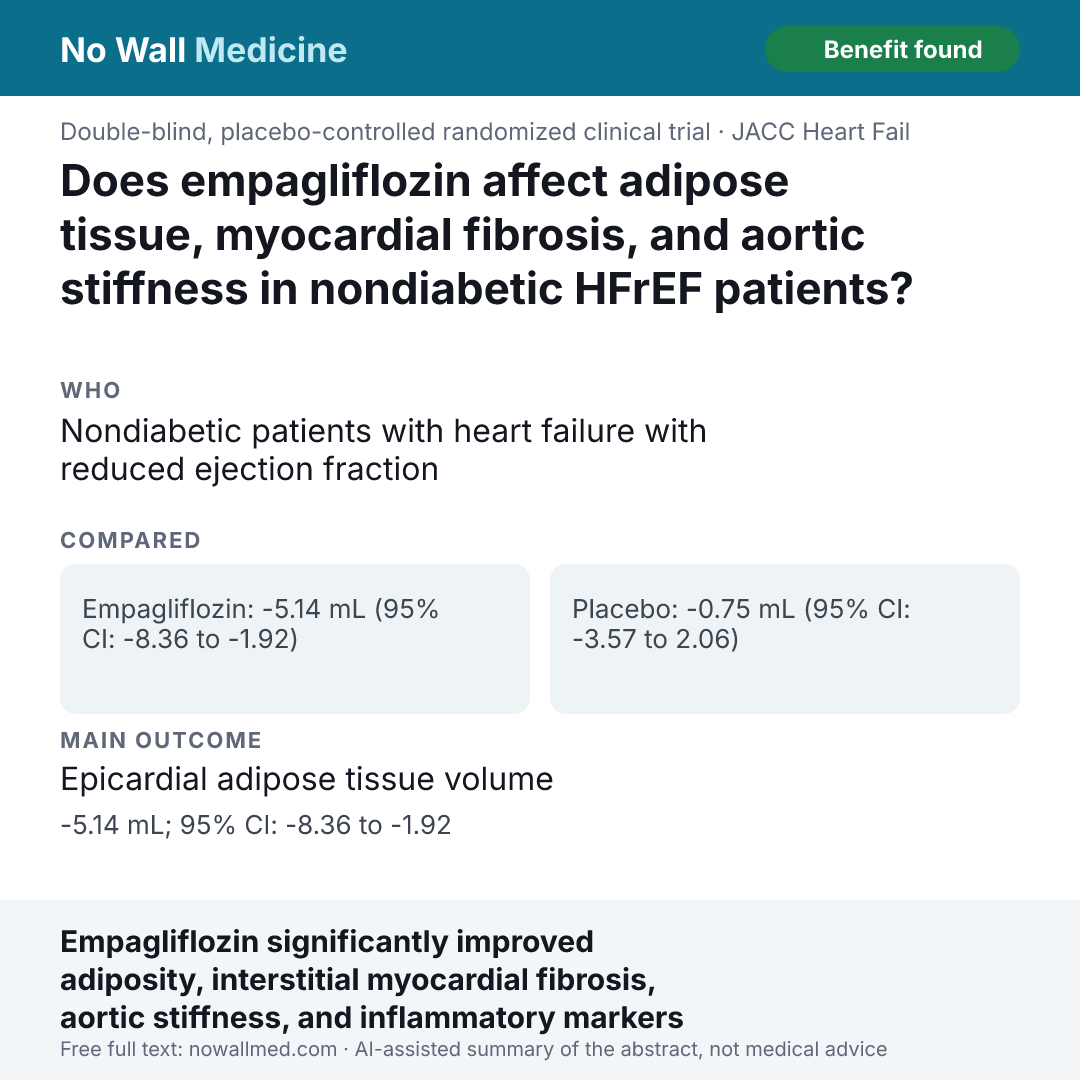
Mechanistic Insights of Empagliflozin in Nondiabetic Patients With HFrEF: From the EMPA-TROPISM Study
Double-blind, placebo-controlled randomized clinical trialBenefit found
Does empagliflozin affect adipose tissue, myocardial fibrosis, and aortic stiffness in nondiabetic HFrEF patients?
Who
Nondiabetic patients with heart failure with reduced ejection fraction
Compared
Empagliflozin: -5.14 mL (95% CI: -8.36 to -1.92)
Placebo: -0.75 mL (95% CI: -3.57 to 2.06)
Main outcome
Epicardial adipose tissue volume
Result: -5.14 mL; 95% CI: -8.36 to -1.92
Bottom line: Empagliflozin significantly improved adiposity, interstitial myocardial fibrosis, aortic stiffness, and inflammatory markers in nondiabetic patients with heart failure.
JACC Heart Fail · 2021-07-30 · Save PNG
Patient Phenotypes and SGLT-2 Inhibition in Type 2 Diabetes: Insights From the EMPA-REG OUTCOME Trial
Post hoc analysis of a randomized trialBenefit found
How does empagliflozin affect cardiovascular death or heart failure hospitalization across different patient phenotypes?
Who
7,020
Participants with type 2 diabetes and cardiovascular disease
Compared
Phenotype group 1
Phenotype group 2
Phenotype group 3
Main outcome
cardiovascular death or hospitalization for heart failure
Bottom line: Empagliflozin consistently reduces cardiovascular death or heart failure hospitalization across three identified patient phenotypes.
Limitation: This was a post hoc analysis of the EMPA-REG OUTCOME trial.
JACC Heart Fail · 2021-07-30 · Save PNG
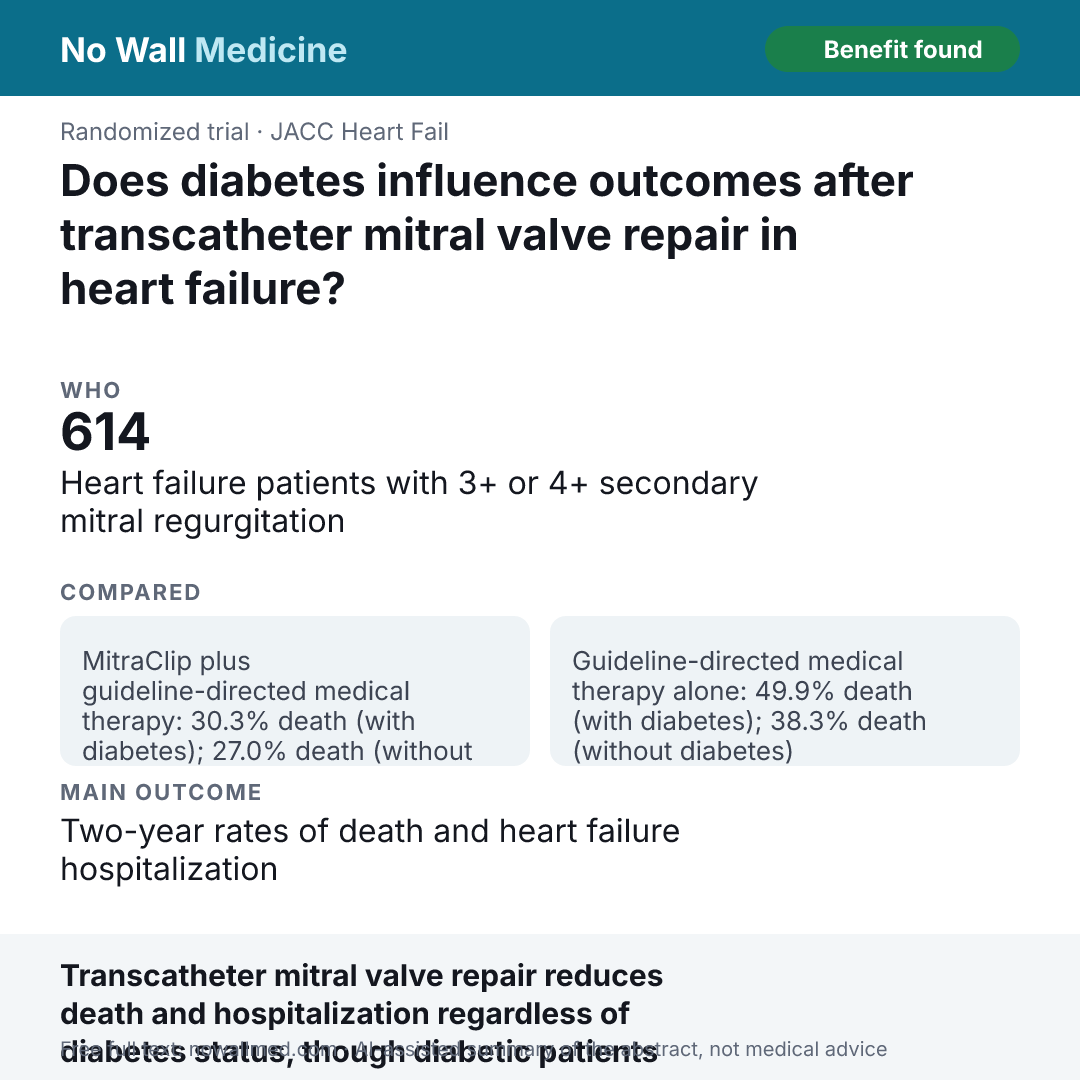
Impact of Diabetes on Outcomes After Transcatheter Mitral Valve Repair in Heart Failure: COAPT Trial
Randomized trialBenefit found
Does diabetes influence outcomes after transcatheter mitral valve repair in heart failure?
Who
614
Heart failure patients with 3+ or 4+ secondary mitral regurgitation
Compared
MitraClip plus guideline-directed medical therapy: 30.3% death (with diabetes); 27.0% death (without diabetes)
Guideline-directed medical therapy alone: 49.9% death (with diabetes); 38.3% death (without diabetes)
Main outcome
Two-year rates of death and heart failure hospitalization
Result: adjusted HR 0.51 (95% CI 0.32 to 0.81) with diabetes; adjusted HR 0.57 (95% CI 0.39-0.84) without diabetes
Bottom line: Transcatheter mitral valve repair reduces death and hospitalization regardless of diabetes status, though diabetic patients have worse prognosis.
JACC Heart Fail · 2021-07-30 · Save PNG