Visual abstracts
New randomized trials and meta-analyses from leading journals at a glance: who was studied, what was compared, and what was found. Every paper is free to read in full.
All specialtiesCardiology 4763Oncology 4043Gastroenterology & Hepatology 1903Infectious Disease 3756Neurology 1872Psychiatry & Mental Health 2216Pulmonology 2044Critical Care 1319Endocrinology & Diabetes 2544Pediatrics 2889Surgery 2480Orthopedics & Sports Medicine 917Neurosurgery 525Cardiothoracic & Vascular Surgery 656Plastic & Reconstructive Surgery 574Nephrology 1107Rheumatology 810Hematology 1090Dermatology 611Ophthalmology 532Obstetrics & Gynecology 1645Public & Global Health 1037Radiology & Imaging 619Anesthesiology 958Urology 745ENT (Otolaryngology) 494Emergency Medicine 481Allergy & Immunology 309Geriatrics 972Family Medicine & Primary Care 534Medical Genetics & Genomics 659Pathology & Laboratory Medicine 156Physical Medicine & Rehabilitation 734Palliative Care 421Nutrition 1560Digital Health & AI 2137General Medicine 318
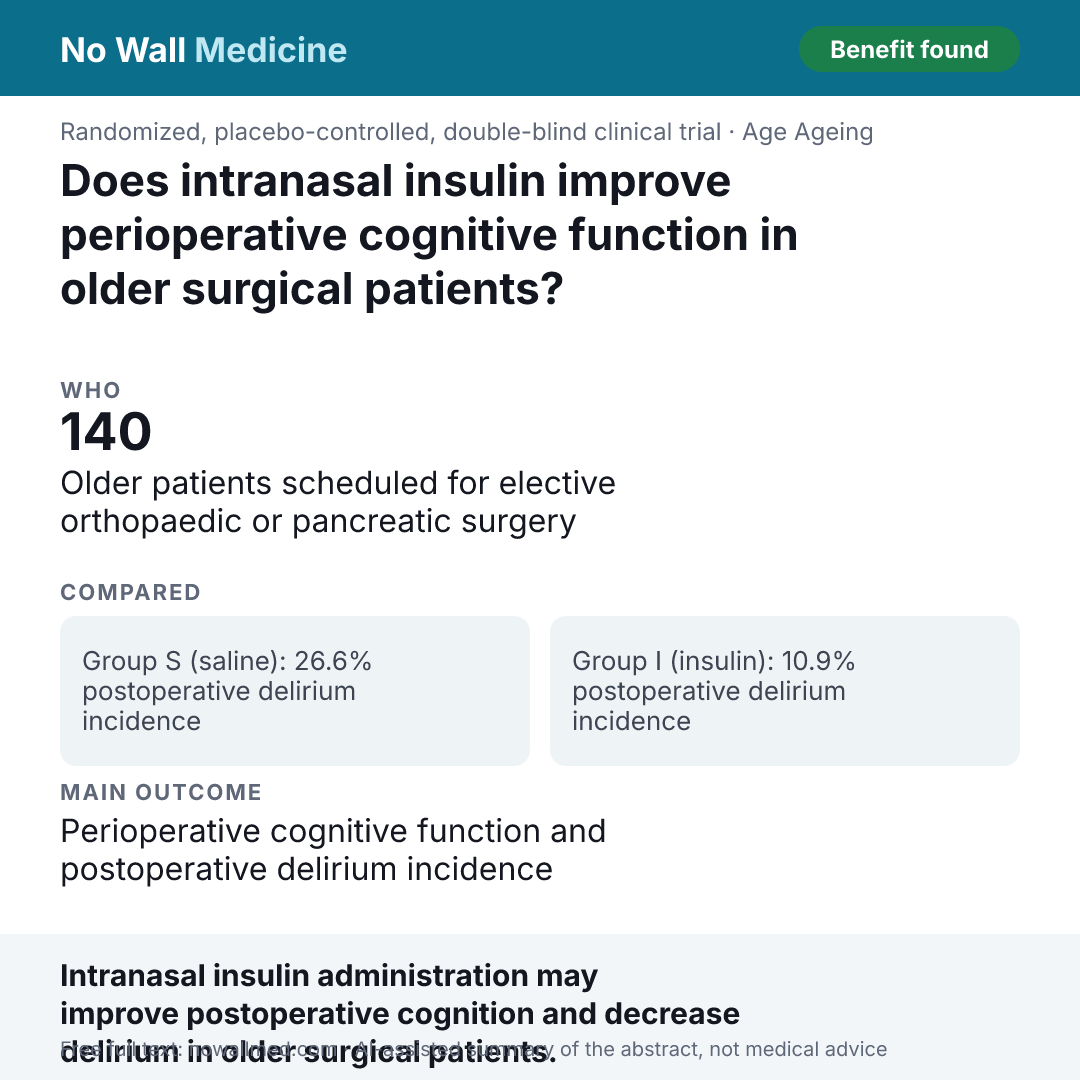
Effect of intranasal insulin on perioperative cognitive function in older adults: a randomized, placebo-controlled, double-blind clinical trial
Randomized, placebo-controlled, double-blind clinical trialBenefit found
Does intranasal insulin improve perioperative cognitive function in older surgical patients?
Who
140
Older patients scheduled for elective orthopaedic or pancreatic surgery
Compared
Group S (saline): 26.6% postoperative delirium incidence
Group I (insulin): 10.9% postoperative delirium incidence
Main outcome
Perioperative cognitive function and postoperative delirium incidence
Bottom line: Intranasal insulin administration may improve postoperative cognition and decrease delirium in older surgical patients.
Limitation: A more standardized multi-centre, large-sample study is needed to validate results.
Age Ageing · 2024-09-01 · Save PNG
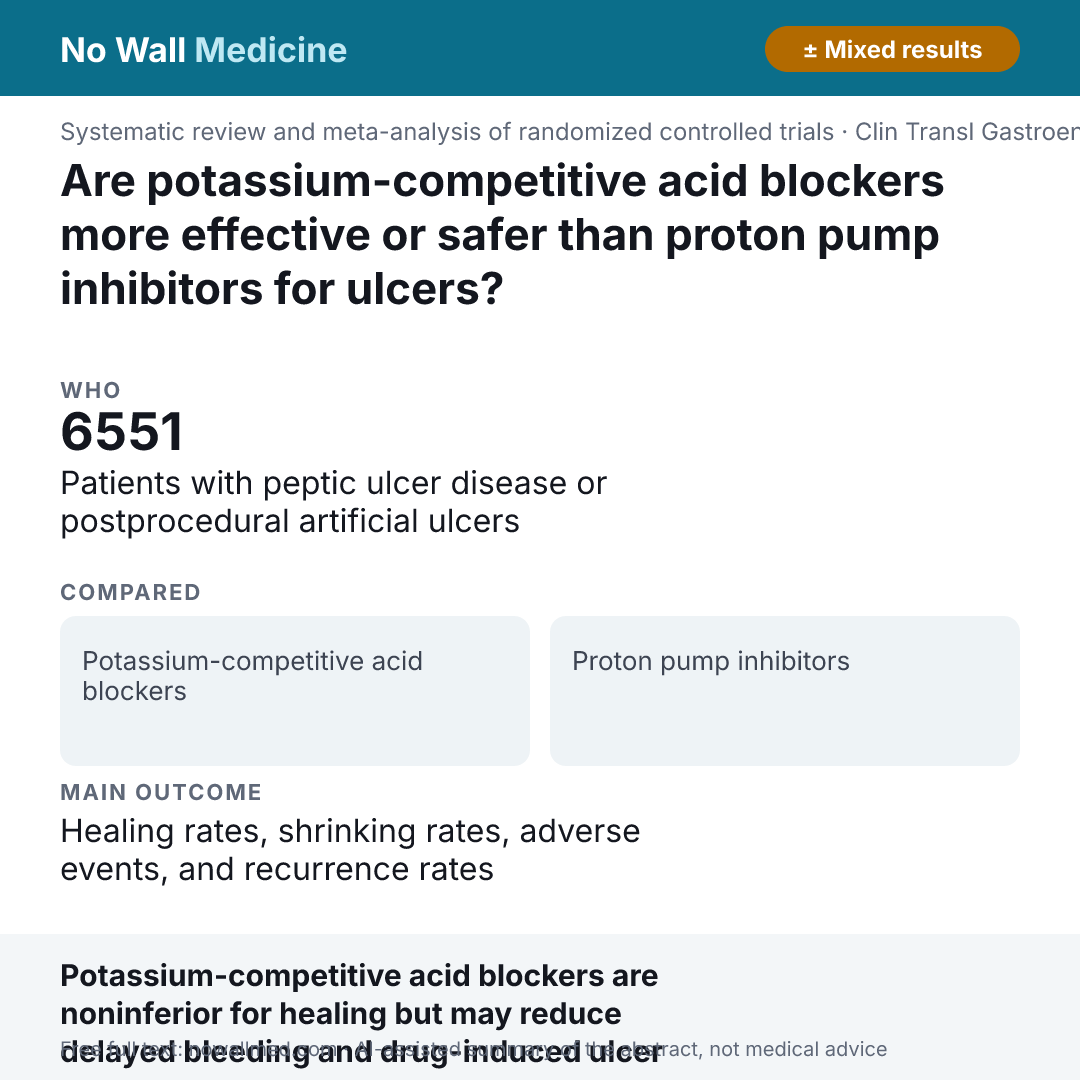
Efficacy and Safety of Potassium-Competitive Acid Blockers vs Proton Pump Inhibitors for Peptic Ulcer Disease or Postprocedural Artificial Ulcers: A Systematic Review and Meta-analysis
Systematic review and meta-analysis of randomized controlled trialsMixed results
Are potassium-competitive acid blockers more effective or safer than proton pump inhibitors for ulcers?
Who
6551
Patients with peptic ulcer disease or postprocedural artificial ulcers
Compared
Potassium-competitive acid blockers
Proton pump inhibitors
Main outcome
Healing rates, shrinking rates, adverse events, and recurrence rates
Result: RR 1.01 (95% CI 0.98-1.04) for PUD healing rate
Bottom line: Potassium-competitive acid blockers are noninferior for healing but may reduce delayed bleeding and drug-induced ulcer recurrence.
Limitation: More standardized experiments are needed for further applications and more precise conclusions.
Clin Transl Gastroenterol · 2024-09-01 · Save PNG
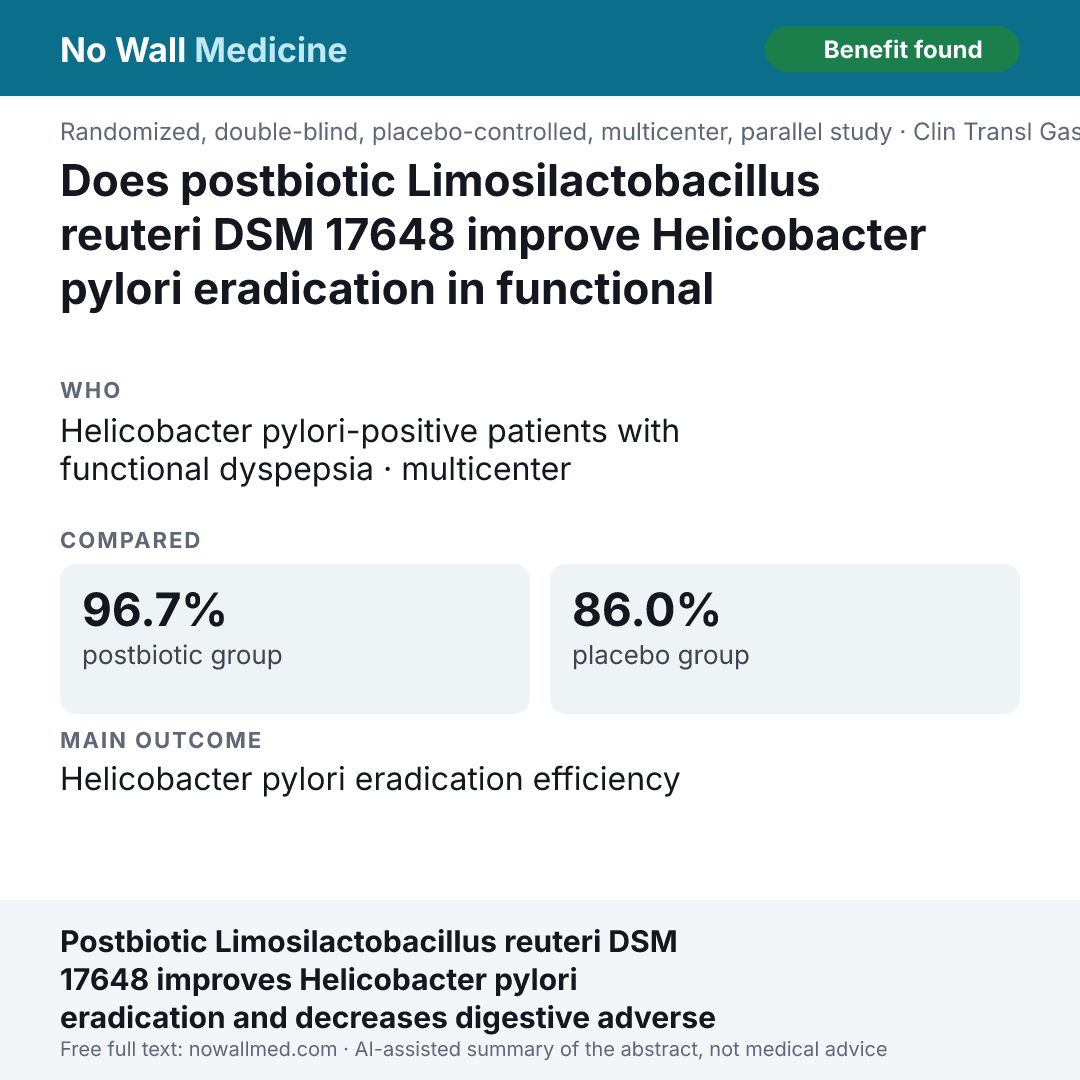
Efficacy and Safety of Postbiotic Contained Inactivated Lactobacillus reuteri ( Limosilactobacillus reuteri ) DSM 17648 as Adjuvant Therapy in the Eradication of Helicobacter pylori in Adults With Functional Dyspepsia: A Randomized Double-Blind Placebo-Controlled Trial
Randomized, double-blind, placebo-controlled, multicenter, parallel studyBenefit found
Does postbiotic Limosilactobacillus reuteri DSM 17648 improve Helicobacter pylori eradication in functional dyspepsia?
Who
Helicobacter pylori-positive patients with functional dyspepsia · multicenter
Compared
96.7%postbiotic group
86.0%placebo group
Main outcome
Helicobacter pylori eradication efficiency
Bottom line: Postbiotic Limosilactobacillus reuteri DSM 17648 improves Helicobacter pylori eradication and decreases digestive adverse effects.
Clin Transl Gastroenterol · 2024-09-01 · Save PNG
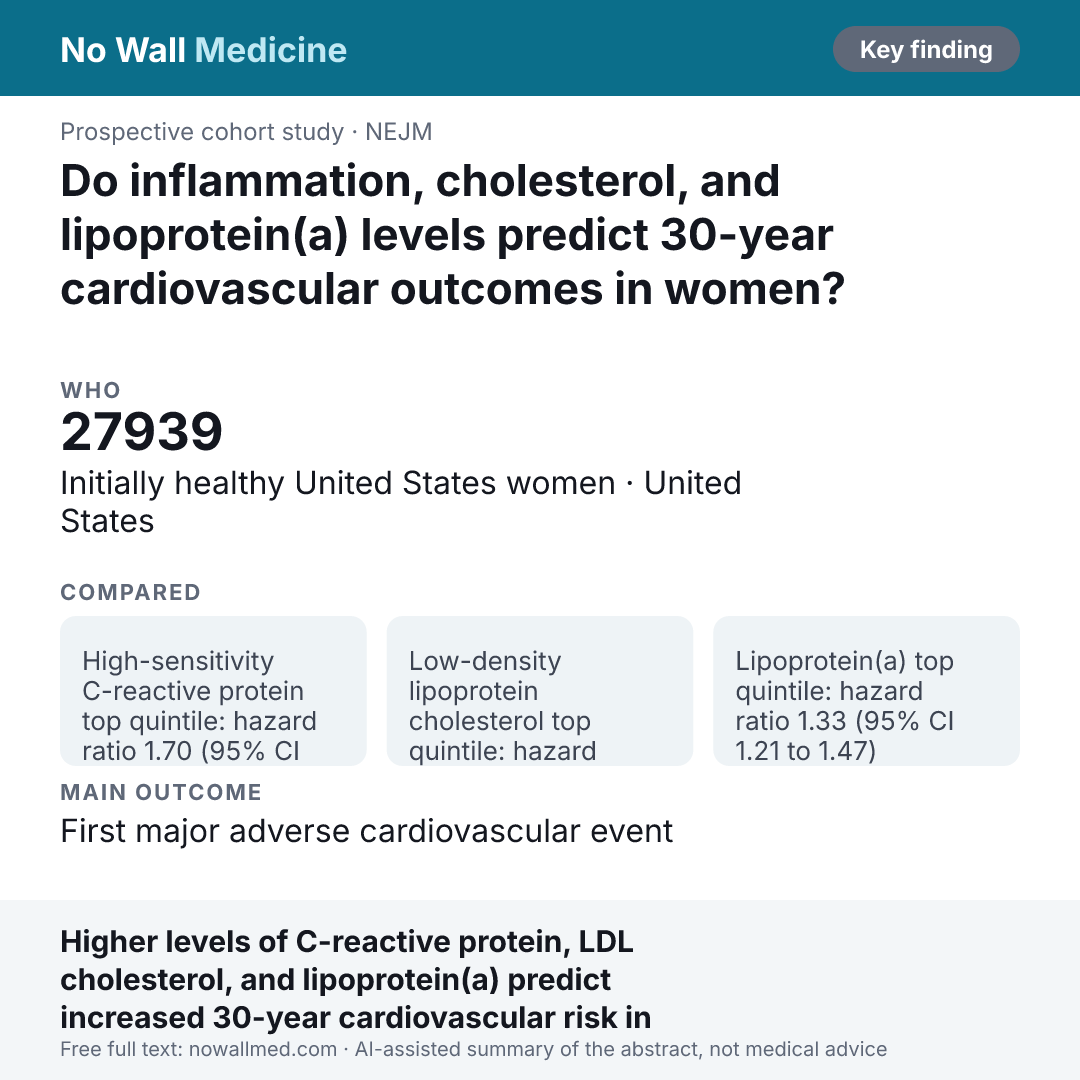
Inflammation, Cholesterol, Lipoprotein(a), and 30-Year Cardiovascular Outcomes in Women
Prospective cohort studyKey finding
Do inflammation, cholesterol, and lipoprotein(a) levels predict 30-year cardiovascular outcomes in women?
Who
27939
Initially healthy United States women · United States
Compared
High-sensitivity C-reactive protein top quintile: hazard ratio 1.70 (95% CI 1.52 to 1.90)
Low-density lipoprotein cholesterol top quintile: hazard ratio 1.36 (95% CI 1.23 to 1.52)
Lipoprotein(a) top quintile: hazard ratio 1.33 (95% CI 1.21 to 1.47)
Main outcome
First major adverse cardiovascular event
Bottom line: Higher levels of C-reactive protein, LDL cholesterol, and lipoprotein(a) predict increased 30-year cardiovascular risk in healthy women.
Funded by: National Institutes of Health
NEJM · 2024-08-31 · Save PNG
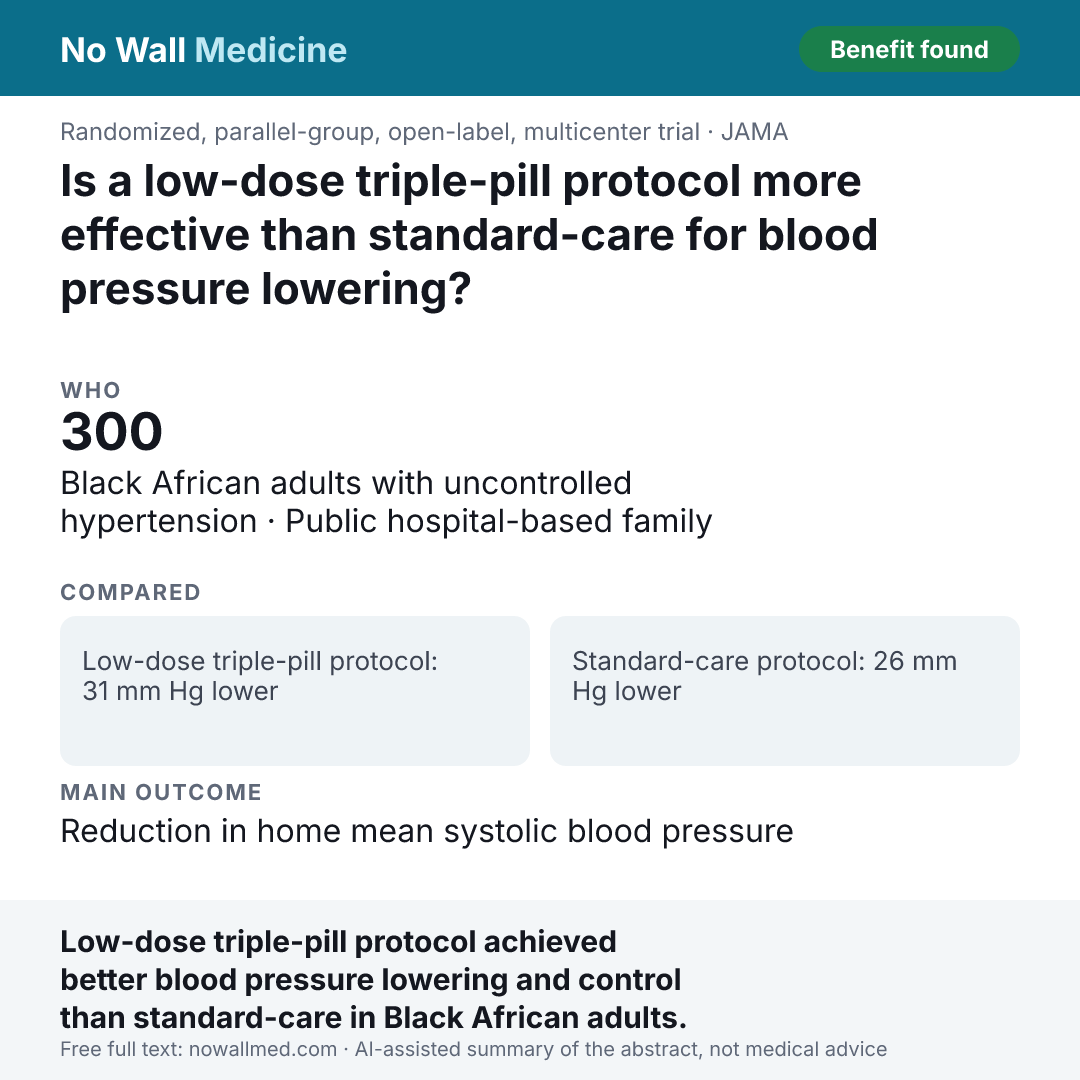
Low-Dose Triple-Pill vs Standard-Care Protocols for Hypertension Treatment in Nigeria: A Randomized Clinical Trial
Randomized, parallel-group, open-label, multicenter trialBenefit found
Is a low-dose triple-pill protocol more effective than standard-care for blood pressure lowering?
Who
300
Black African adults with uncontrolled hypertension · Public hospital-based family medicine clinics in Nigeria
Compared
Low-dose triple-pill protocol: 31 mm Hg lower
Standard-care protocol: 26 mm Hg lower
Main outcome
Reduction in home mean systolic blood pressure
Result: adjusted difference, -5.8 mm Hg (95% CI, -8.0 to -3.6)
Bottom line: Low-dose triple-pill protocol achieved better blood pressure lowering and control than standard-care in Black African adults.
JAMA · 2024-08-31 · Save PNG
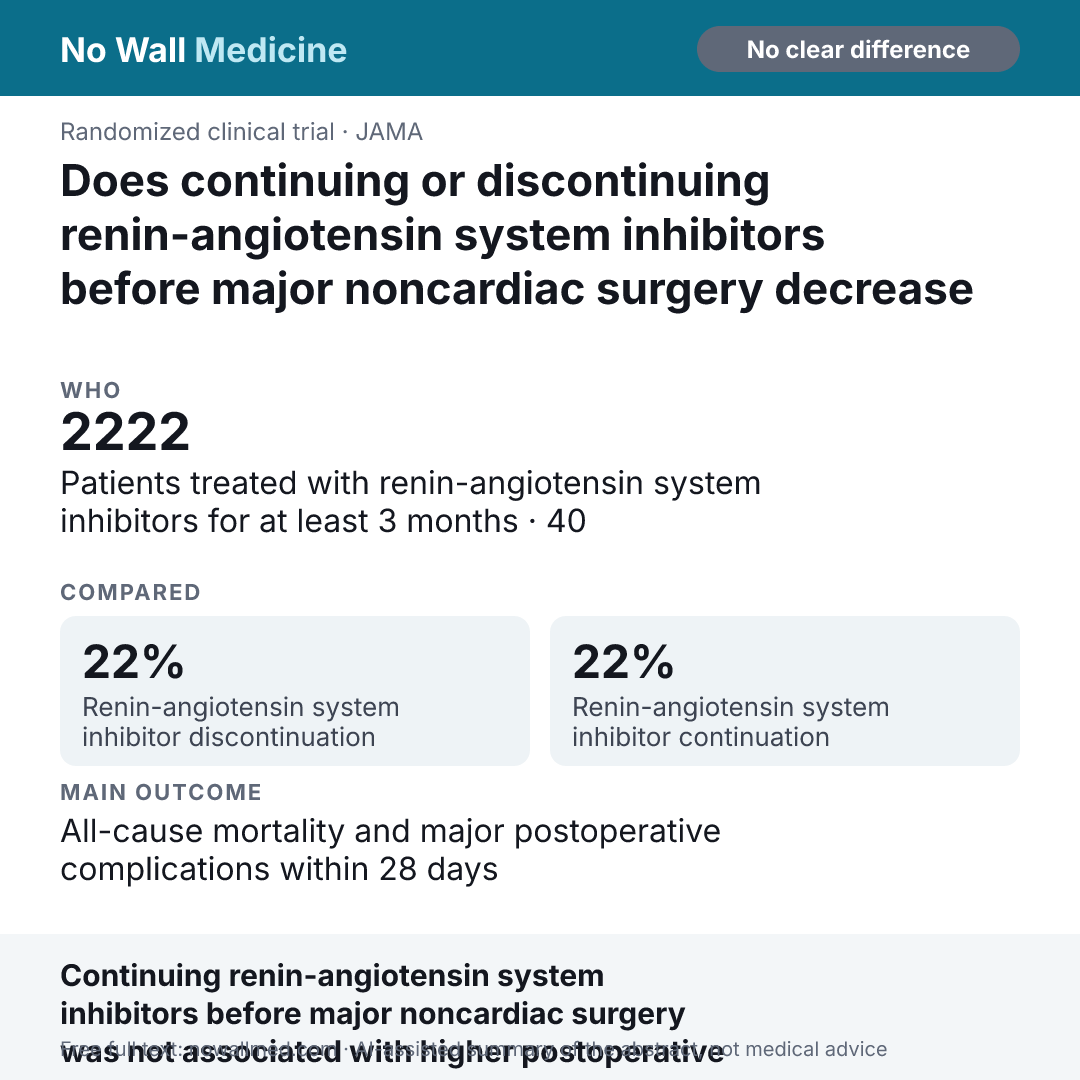
Continuation vs Discontinuation of Renin-Angiotensin System Inhibitors Before Major Noncardiac Surgery: The Stop-or-Not Randomized Clinical Trial
Randomized clinical trialNo clear difference
Does continuing or discontinuing renin-angiotensin system inhibitors before major noncardiac surgery decrease complications?
Who
2222
Patients treated with renin-angiotensin system inhibitors for at least 3 months · 40 hospitals in France
Compared
22%Renin-angiotensin system inhibitor discontinuation (245 of 1115 patients)
22%Renin-angiotensin system inhibitor continuation (247 of 1107 patients)
Main outcome
All-cause mortality and major postoperative complications within 28 days
Result: risk ratio 1.02 (95% CI 0.87-1.19)
Bottom line: Continuing renin-angiotensin system inhibitors before major noncardiac surgery was not associated with higher postoperative complications than discontinuation.
JAMA · 2024-08-31 · Save PNG
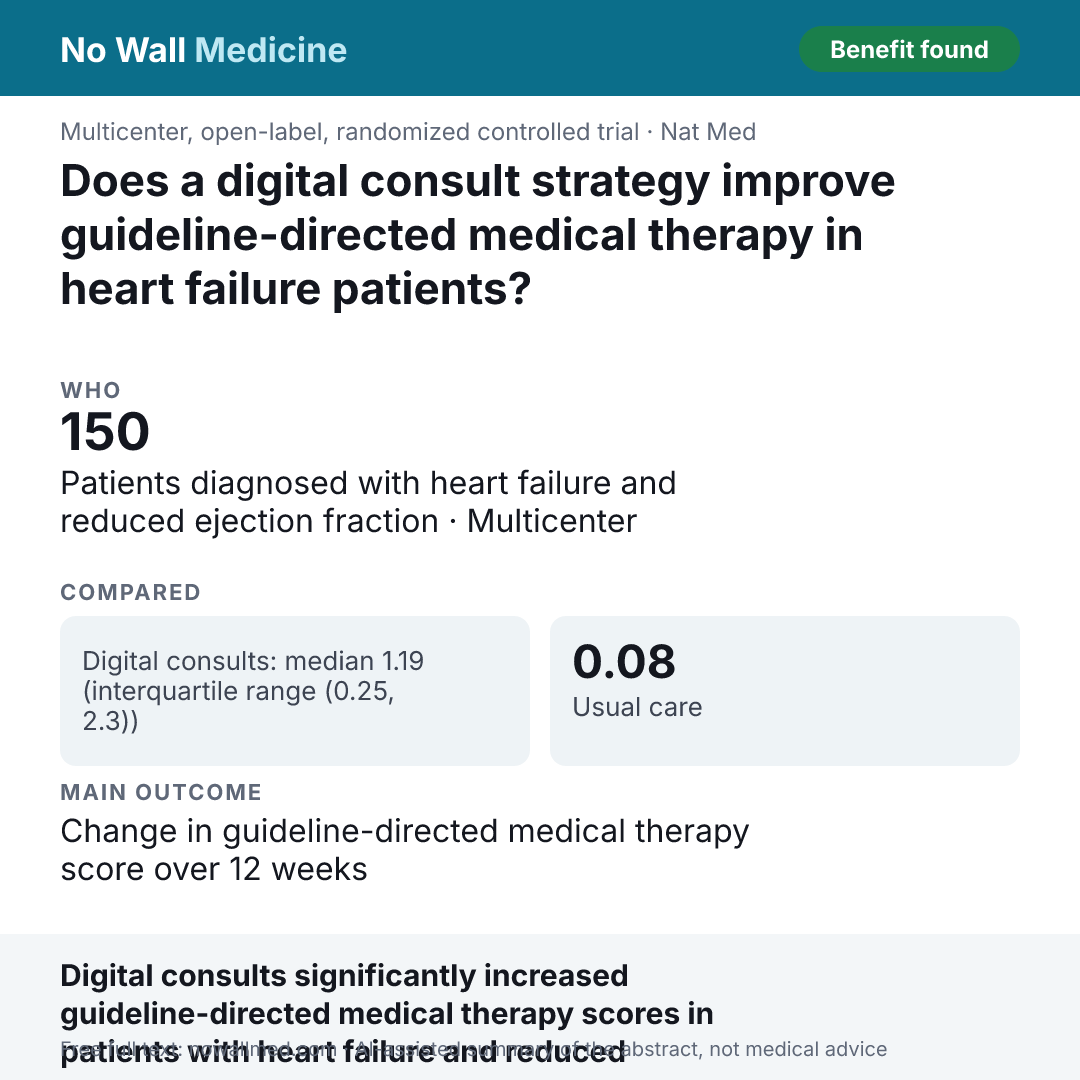
Digital consults in heart failure care: a randomized controlled trial
Multicenter, open-label, randomized controlled trialBenefit found
Does a digital consult strategy improve guideline-directed medical therapy in heart failure patients?
Who
150
Patients diagnosed with heart failure and reduced ejection fraction · Multicenter
Compared
Digital consults: median 1.19 (interquartile range (0.25, 2.3))
0.08Usual care (0.00, 1.00)
Main outcome
Change in guideline-directed medical therapy score over 12 weeks
Result: P < 0.001
Bottom line: Digital consults significantly increased guideline-directed medical therapy scores in patients with heart failure and reduced ejection fraction.
Nat Med · 2024-08-31 · Save PNG
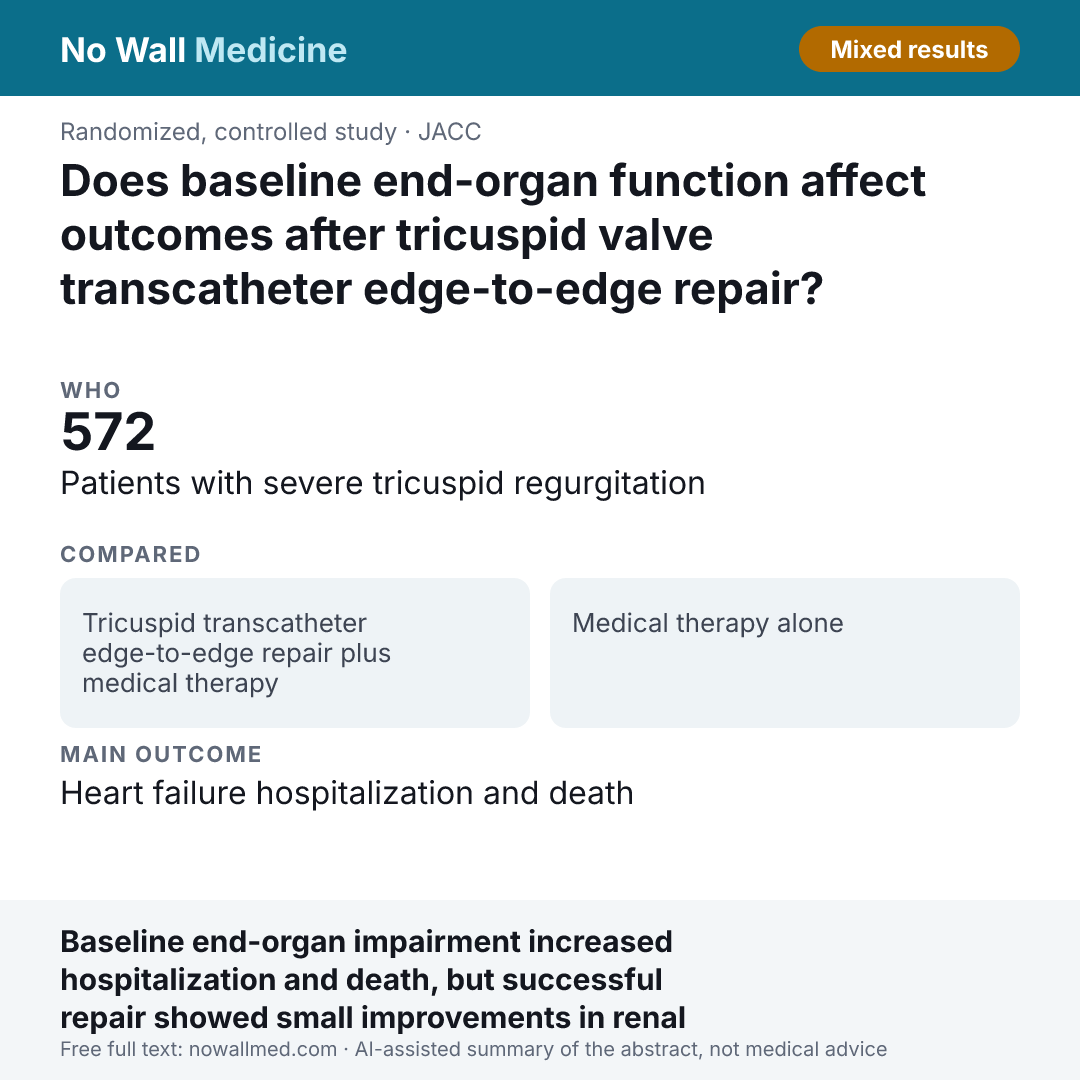
Impact of Renal and Liver Function on Clinical Outcomes Following Tricuspid Valve Transcatheter Edge-to-Edge Repair
Randomized, controlled studyMixed results
Does baseline end-organ function affect outcomes after tricuspid valve transcatheter edge-to-edge repair?
Who
572
Patients with severe tricuspid regurgitation
Compared
Tricuspid transcatheter edge-to-edge repair plus medical therapy
Medical therapy alone
Main outcome
Heart failure hospitalization and death
Bottom line: Baseline end-organ impairment increased hospitalization and death, but successful repair showed small improvements in renal and liver function.
JACC · 2024-08-31 · Save PNG
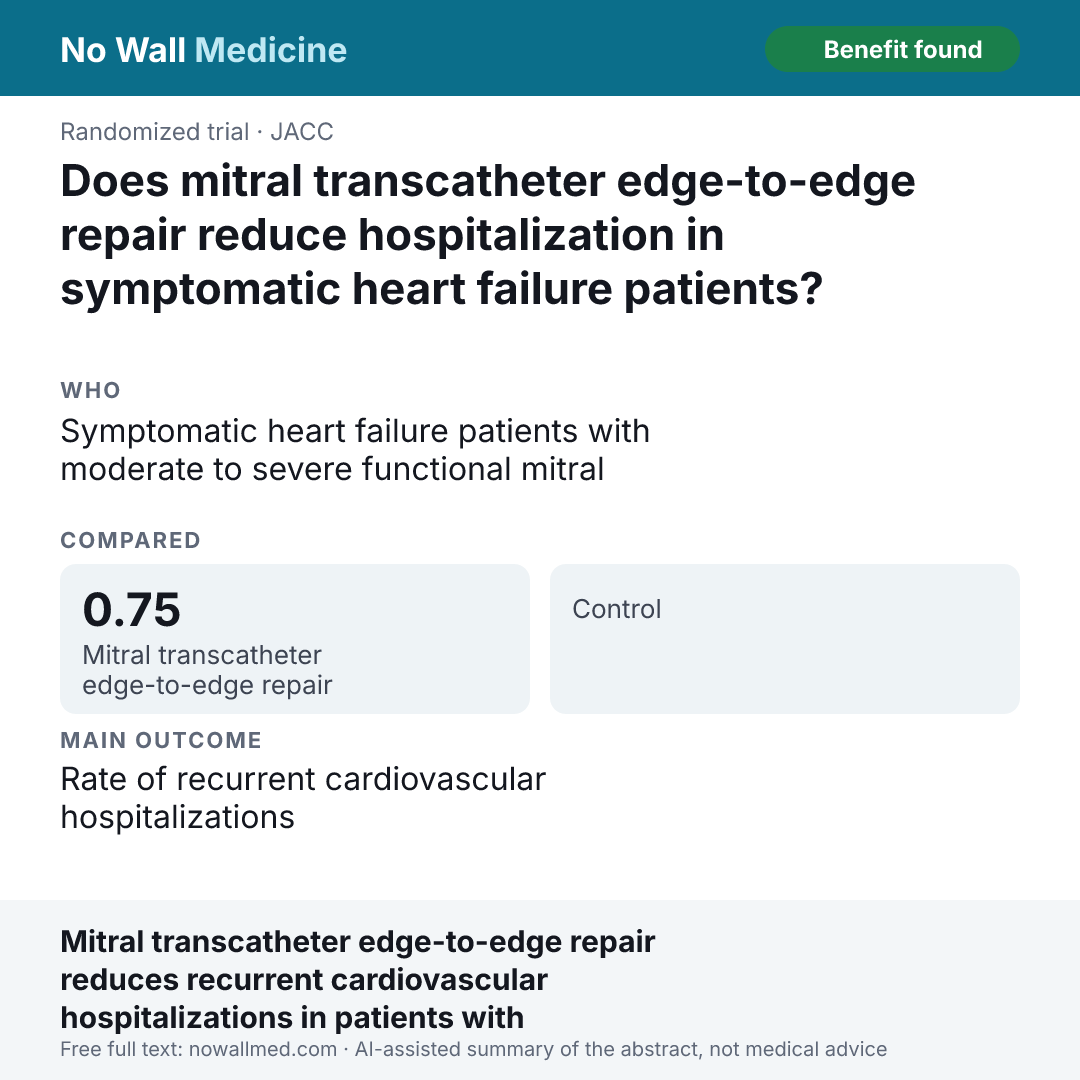
Hospitalization of Symptomatic Patients With Heart Failure and Moderate to Severe Functional Mitral Regurgitation Treated With MitraClip: Insights From RESHAPE-HF2
Randomized trialBenefit found
Does mitral transcatheter edge-to-edge repair reduce hospitalization in symptomatic heart failure patients?
Who
Symptomatic heart failure patients with moderate to severe functional mitral regurgitation
Compared
0.75Mitral transcatheter edge-to-edge repair (rate ratio)
Control
Main outcome
Rate of recurrent cardiovascular hospitalizations
Result: rate ratio 0.75 (95% CI 0.57 to 0.99)
Bottom line: Mitral transcatheter edge-to-edge repair reduces recurrent cardiovascular hospitalizations in patients with symptomatic heart failure.
JACC · 2024-08-31 · Save PNG
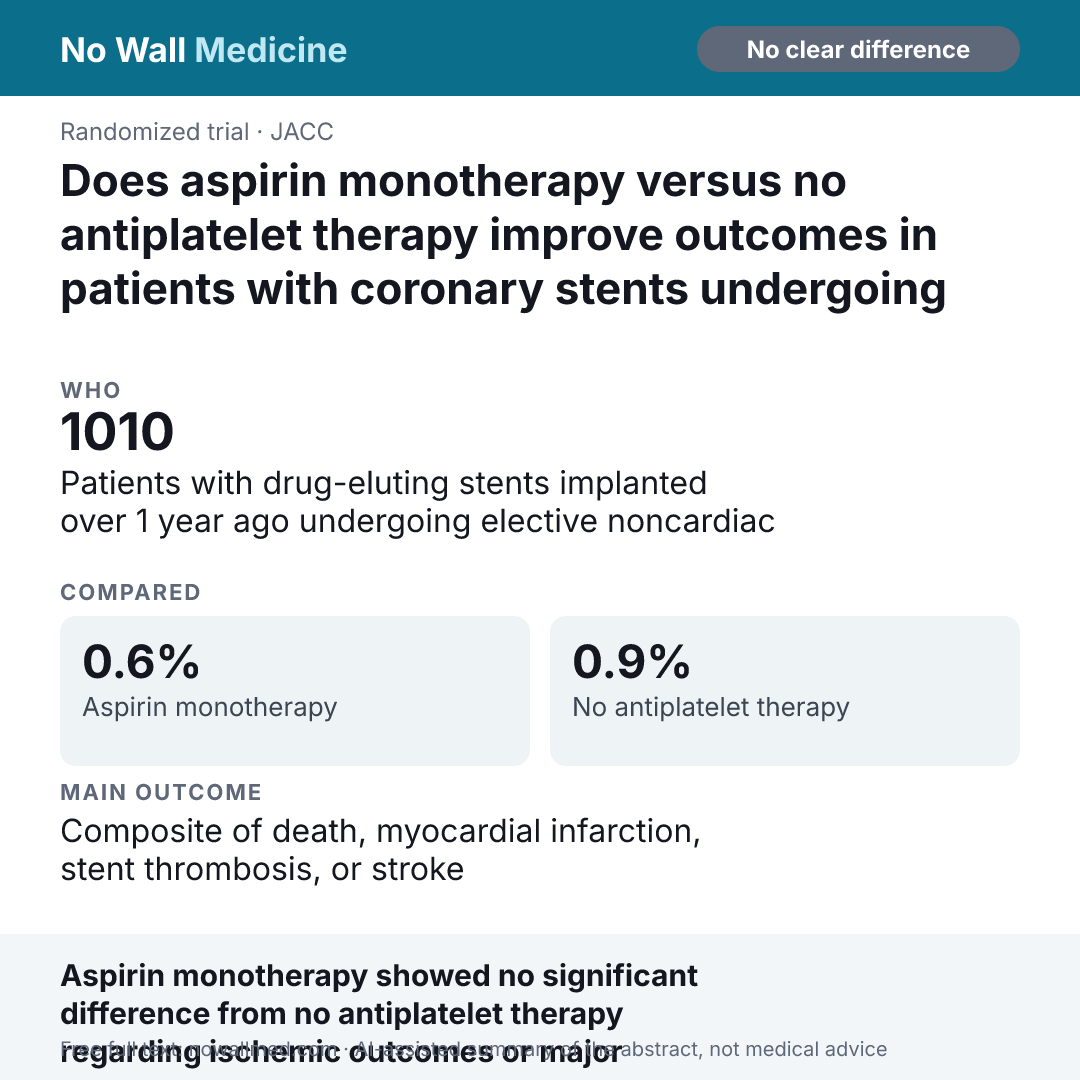
Aspirin Monotherapy vs No Antiplatelet Therapy in Stable Patients With Coronary Stents Undergoing Low-to-Intermediate Risk Noncardiac Surgery
Randomized trialNo clear difference
Does aspirin monotherapy versus no antiplatelet therapy improve outcomes in patients with coronary stents undergoing surgery?
Who
1010
Patients with drug-eluting stents implanted over 1 year ago undergoing elective noncardiac surgery
Compared
0.6%Aspirin monotherapy
0.9%No antiplatelet therapy
Main outcome
Composite of death, myocardial infarction, stent thrombosis, or stroke
Result: difference, -0.2 percentage points; 95% CI: -1.3 to 0.9
Bottom line: Aspirin monotherapy showed no significant difference from no antiplatelet therapy regarding ischemic outcomes or major bleeding.
Limitation: The study occurred in the setting of lower-than-expected event rates.
JACC · 2024-08-31 · Save PNG
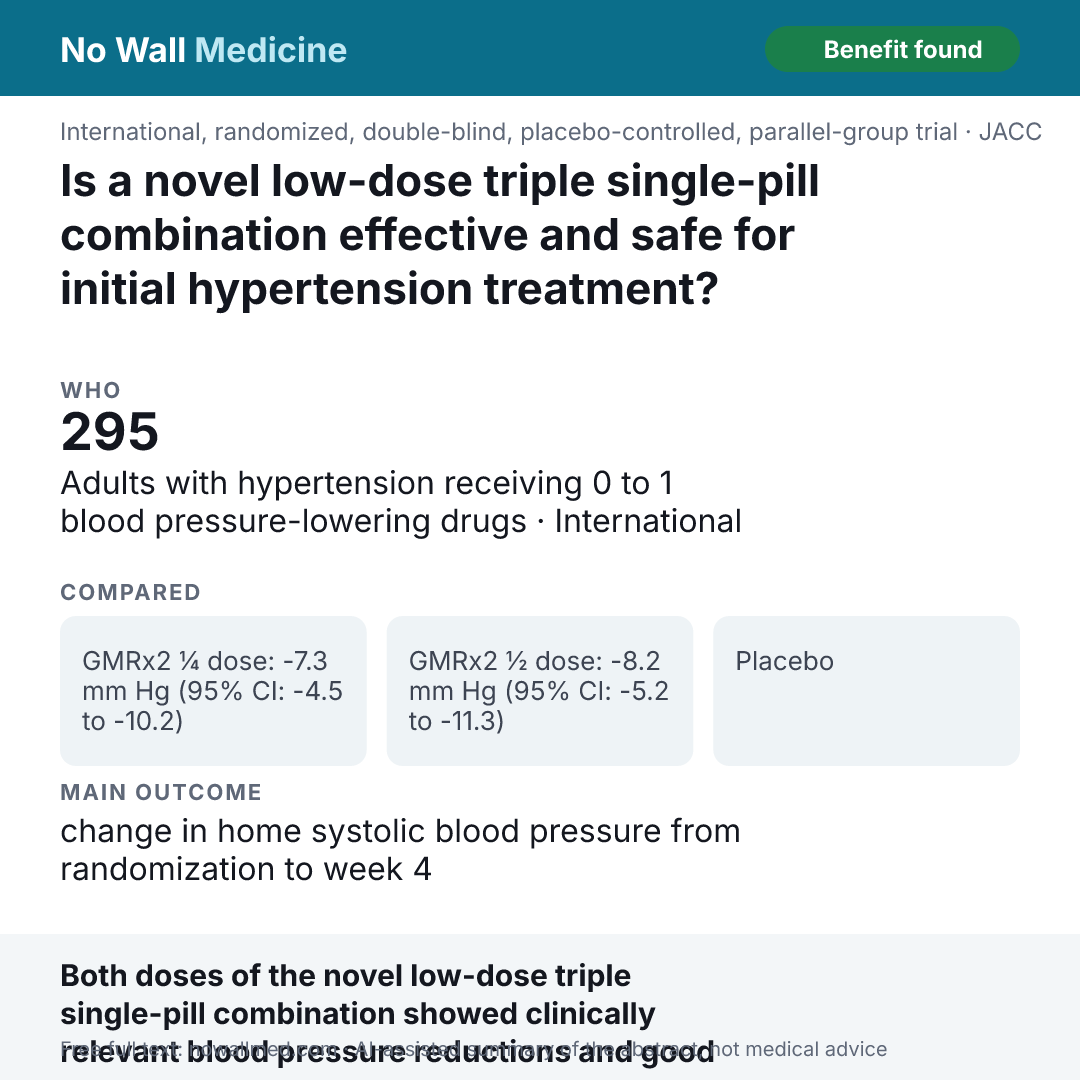
Efficacy and Safety of a Novel Low-Dose Triple Single-Pill Combination Compared With Placebo for Initial Treatment of Hypertension
International, randomized, double-blind, placebo-controlled, parallel-group trialBenefit found
Is a novel low-dose triple single-pill combination effective and safe for initial hypertension treatment?
Who
295
Adults with hypertension receiving 0 to 1 blood pressure-lowering drugs · International
Compared
GMRx2 ¼ dose: -7.3 mm Hg (95% CI: -4.5 to -10.2)
GMRx2 ½ dose: -8.2 mm Hg (95% CI: -5.2 to -11.3)
Placebo
Main outcome
change in home systolic blood pressure from randomization to week 4
Bottom line: Both doses of the novel low-dose triple single-pill combination showed clinically relevant blood pressure reductions and good tolerability.
JACC · 2024-08-31 · Save PNG
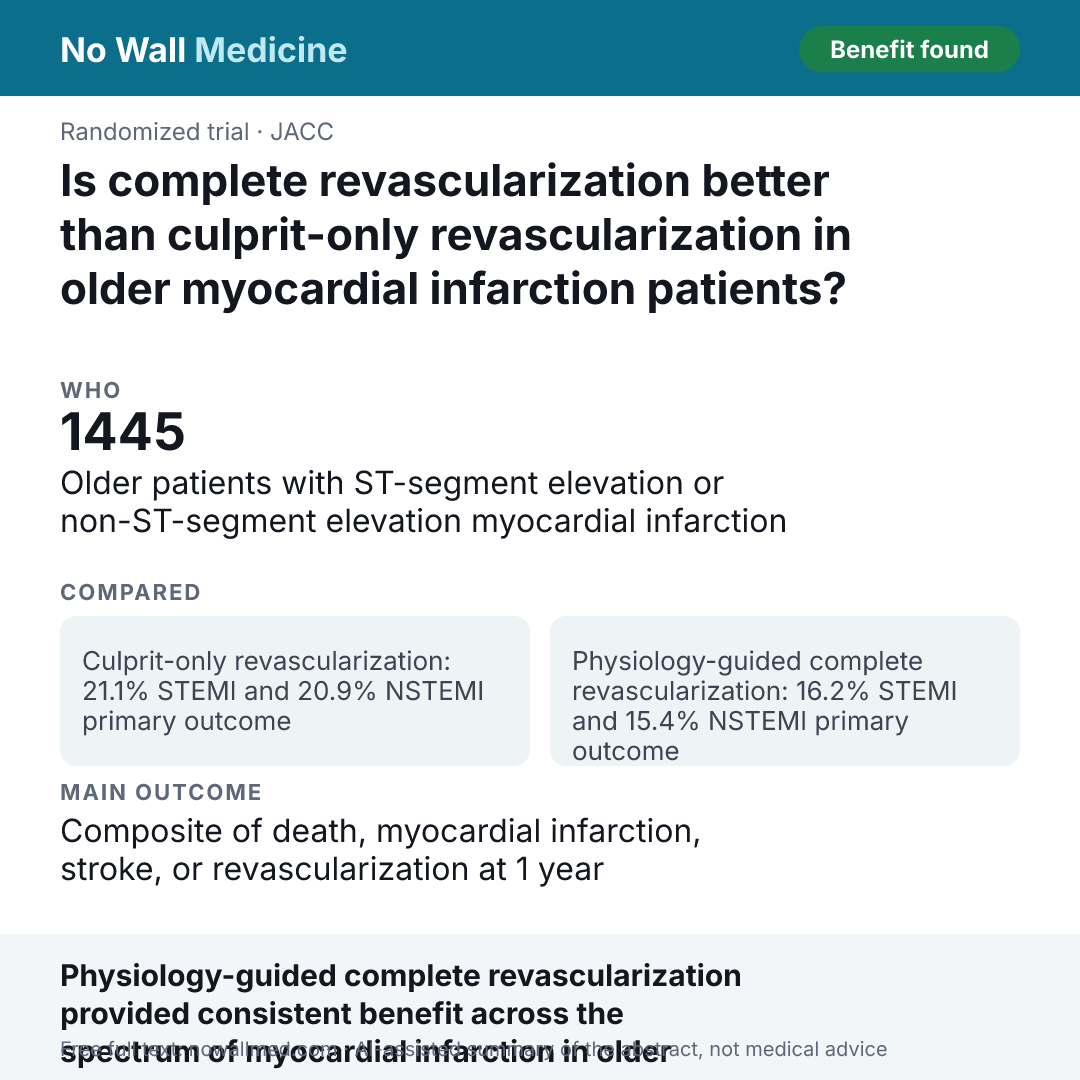
Complete vs Culprit-Only Revascularization in Older Patients With Myocardial Infarction With or Without ST-Segment Elevation
Randomized trialBenefit found
Is complete revascularization better than culprit-only revascularization in older myocardial infarction patients?
Who
1445
Older patients with ST-segment elevation or non-ST-segment elevation myocardial infarction
Compared
Culprit-only revascularization: 21.1% STEMI and 20.9% NSTEMI primary outcome
Physiology-guided complete revascularization: 16.2% STEMI and 15.4% NSTEMI primary outcome
Main outcome
Composite of death, myocardial infarction, stroke, or revascularization at 1 year
Result: hazard ratio 0.71 (95% CI 0.53 to 0.97) for NSTEMI
Bottom line: Physiology-guided complete revascularization provided consistent benefit across the spectrum of myocardial infarction in older patients.
JACC · 2024-08-31 · Save PNG
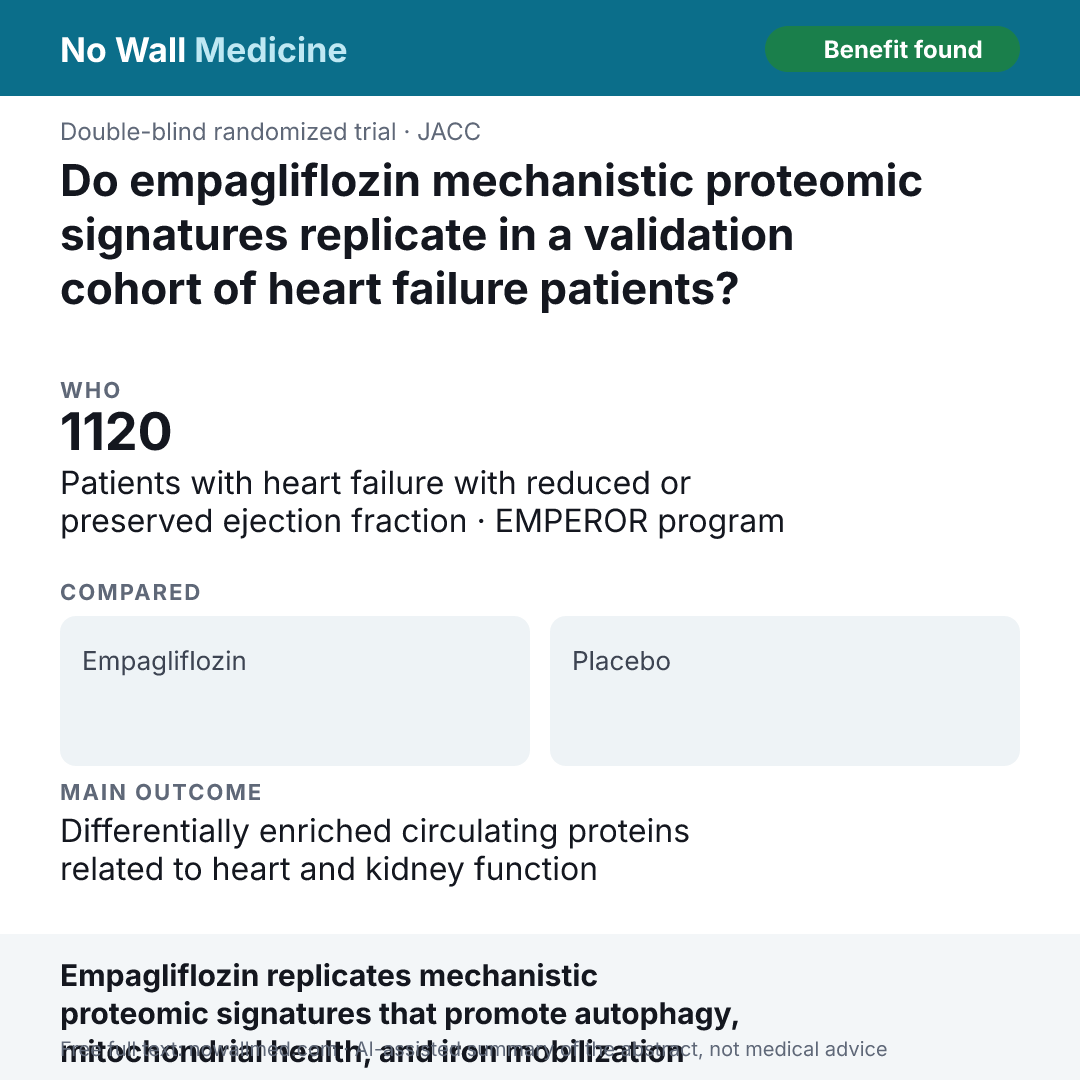
Reaffirmation of Mechanistic Proteomic Signatures Accompanying SGLT2 Inhibition in Patients With Heart Failure: A Validation Cohort of the EMPEROR Program
Double-blind randomized trialBenefit found
Do empagliflozin mechanistic proteomic signatures replicate in a validation cohort of heart failure patients?
Who
1120
Patients with heart failure with reduced or preserved ejection fraction · EMPEROR program
Compared
Empagliflozin
Placebo
Main outcome
Differentially enriched circulating proteins related to heart and kidney function
Bottom line: Empagliflozin replicates mechanistic proteomic signatures that promote autophagy, mitochondrial health, and iron mobilization in heart failure patients.
JACC · 2024-08-31 · Save PNG
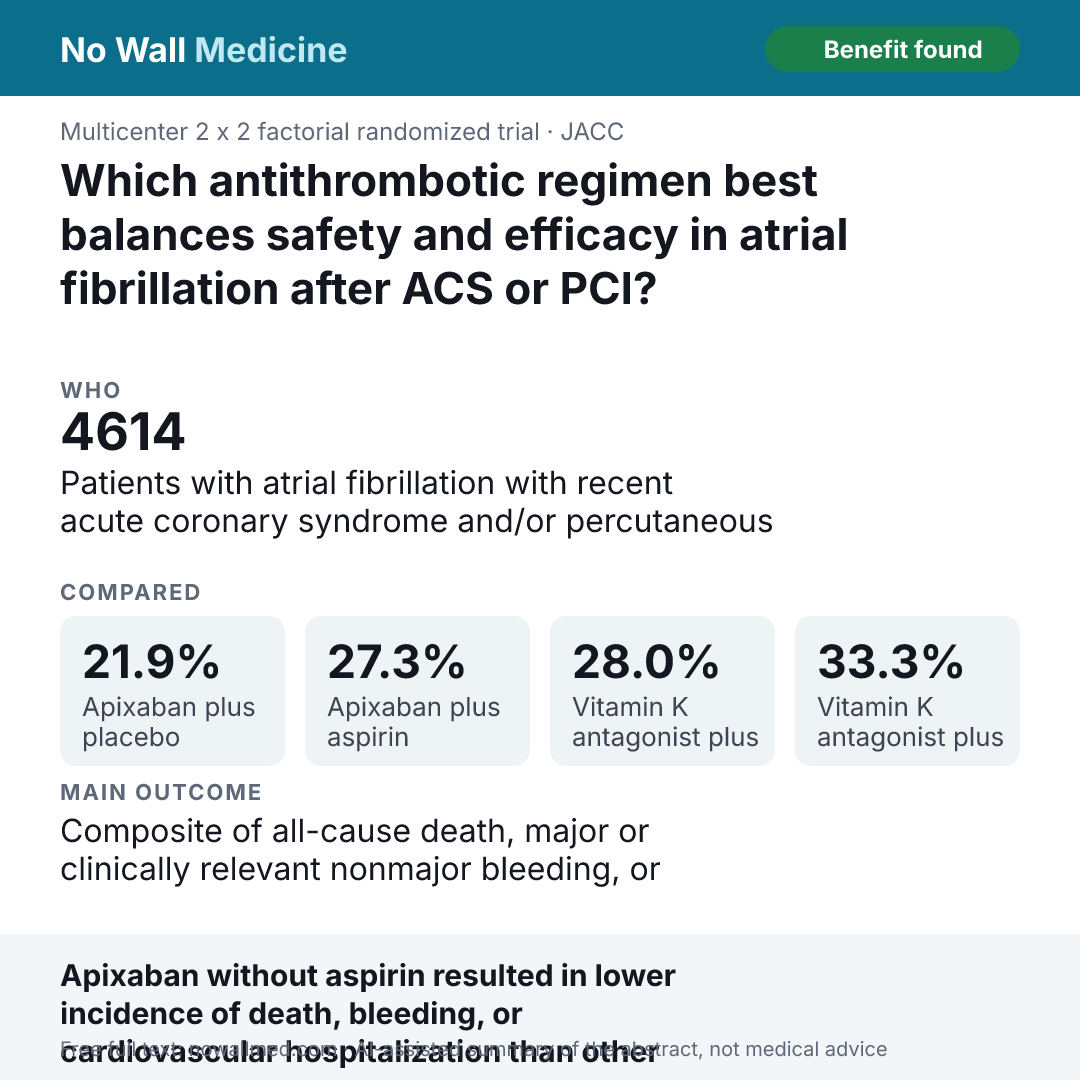
Antithrombotic Strategies in Atrial Fibrillation After ACS and/or PCI: A 4-Way Comparison From AUGUSTUS
Multicenter 2 x 2 factorial randomized trialBenefit found
Which antithrombotic regimen best balances safety and efficacy in atrial fibrillation after ACS or PCI?
Who
4614
Patients with atrial fibrillation with recent acute coronary syndrome and/or percutaneous coronary intervention · Multicenter
Compared
21.9%Apixaban plus placebo
27.3%Apixaban plus aspirin
28.0%Vitamin K antagonist plus placebo
33.3%Vitamin K antagonist plus aspirin
Main outcome
Composite of all-cause death, major or clinically relevant nonmajor bleeding, or cardiovascular hospitalization
Bottom line: Apixaban without aspirin resulted in lower incidence of death, bleeding, or cardiovascular hospitalization than other regimens.
JACC · 2024-08-31 · Save PNG
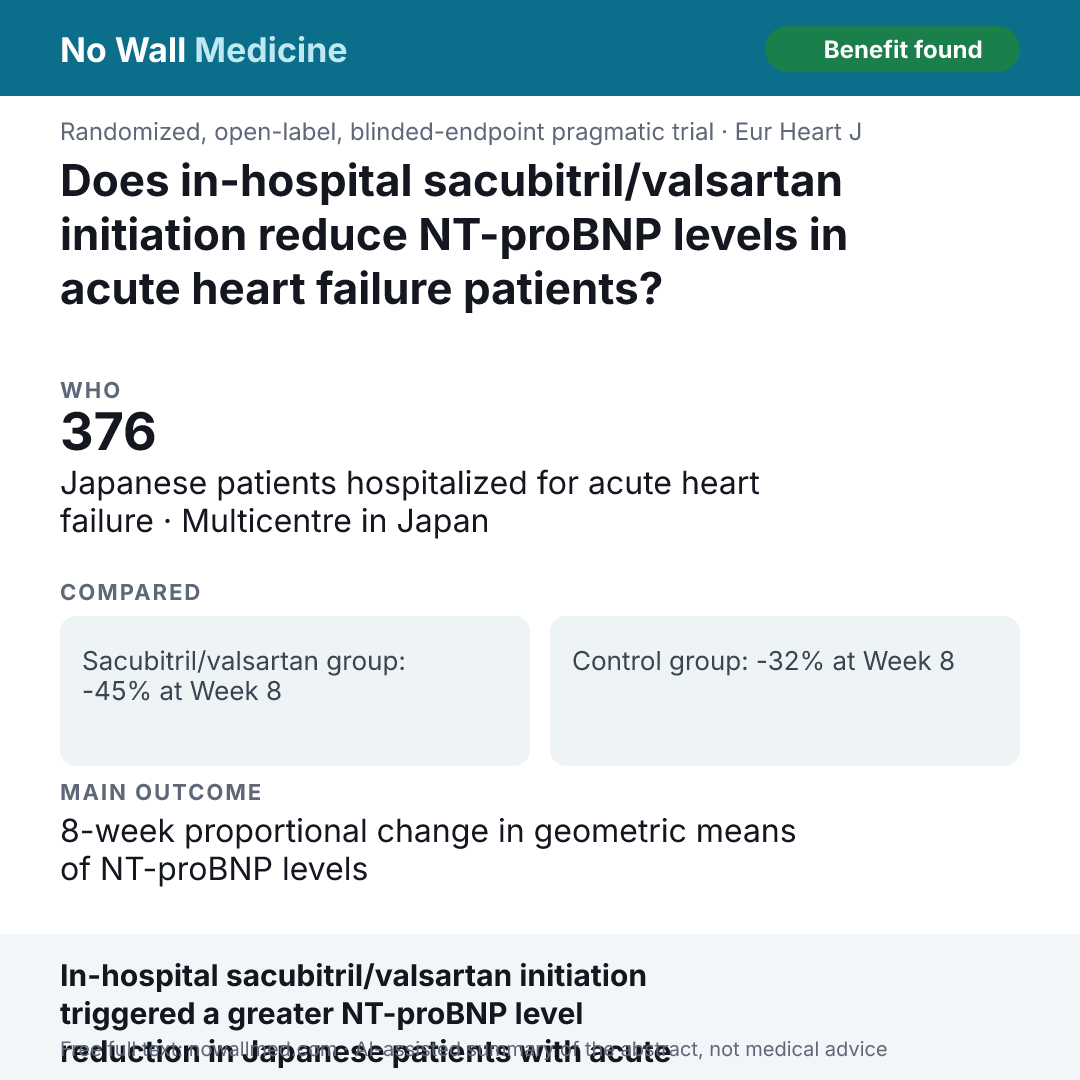
In-hospital initiation of angiotensin receptor-neprilysin inhibition in acute heart failure: the PREMIER trial
Randomized, open-label, blinded-endpoint pragmatic trialBenefit found
Does in-hospital sacubitril/valsartan initiation reduce NT-proBNP levels in acute heart failure patients?
Who
376
Japanese patients hospitalized for acute heart failure · Multicentre in Japan
Compared
Sacubitril/valsartan group: -45% at Week 8
Control group: -32% at Week 8
Main outcome
8-week proportional change in geometric means of NT-proBNP levels
Result: group ratio 0.81 (95% confidence interval 0.68-0.95)
Bottom line: In-hospital sacubitril/valsartan initiation triggered a greater NT-proBNP level reduction in Japanese patients with acute heart failure.
Eur Heart J · 2024-08-31 · Save PNG
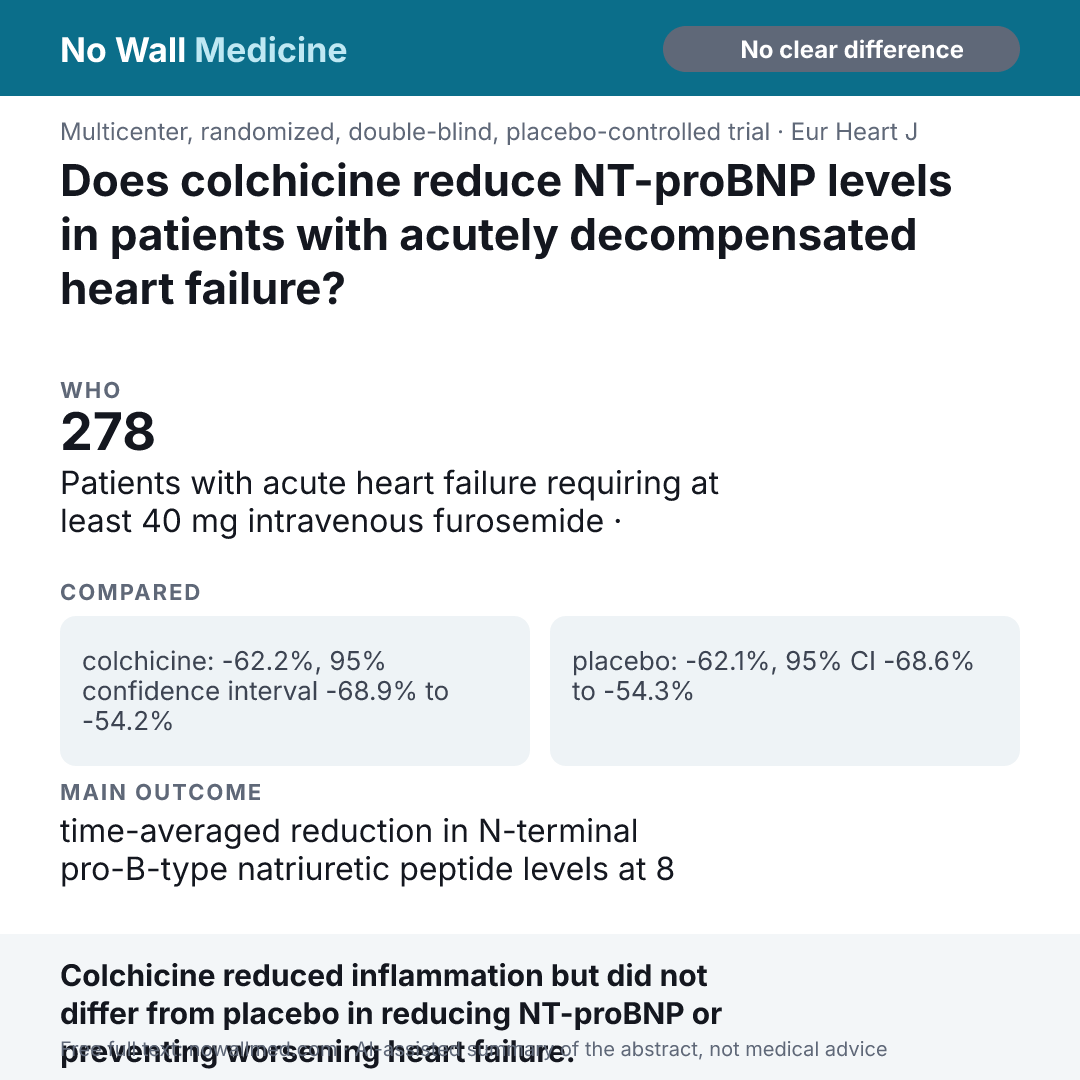
Colchicine in acutely decompensated heart failure: the COLICA trial
Multicenter, randomized, double-blind, placebo-controlled trialNo clear difference
Does colchicine reduce NT-proBNP levels in patients with acutely decompensated heart failure?
Who
278
Patients with acute heart failure requiring at least 40 mg intravenous furosemide · Multicenter
Compared
colchicine: -62.2%, 95% confidence interval -68.9% to -54.2%
placebo: -62.1%, 95% CI -68.6% to -54.3%
Main outcome
time-averaged reduction in N-terminal pro-B-type natriuretic peptide levels at 8 weeks
Result: ratio of change 1.0
Bottom line: Colchicine reduced inflammation but did not differ from placebo in reducing NT-proBNP or preventing worsening heart failure.
Eur Heart J · 2024-08-31 · Save PNG
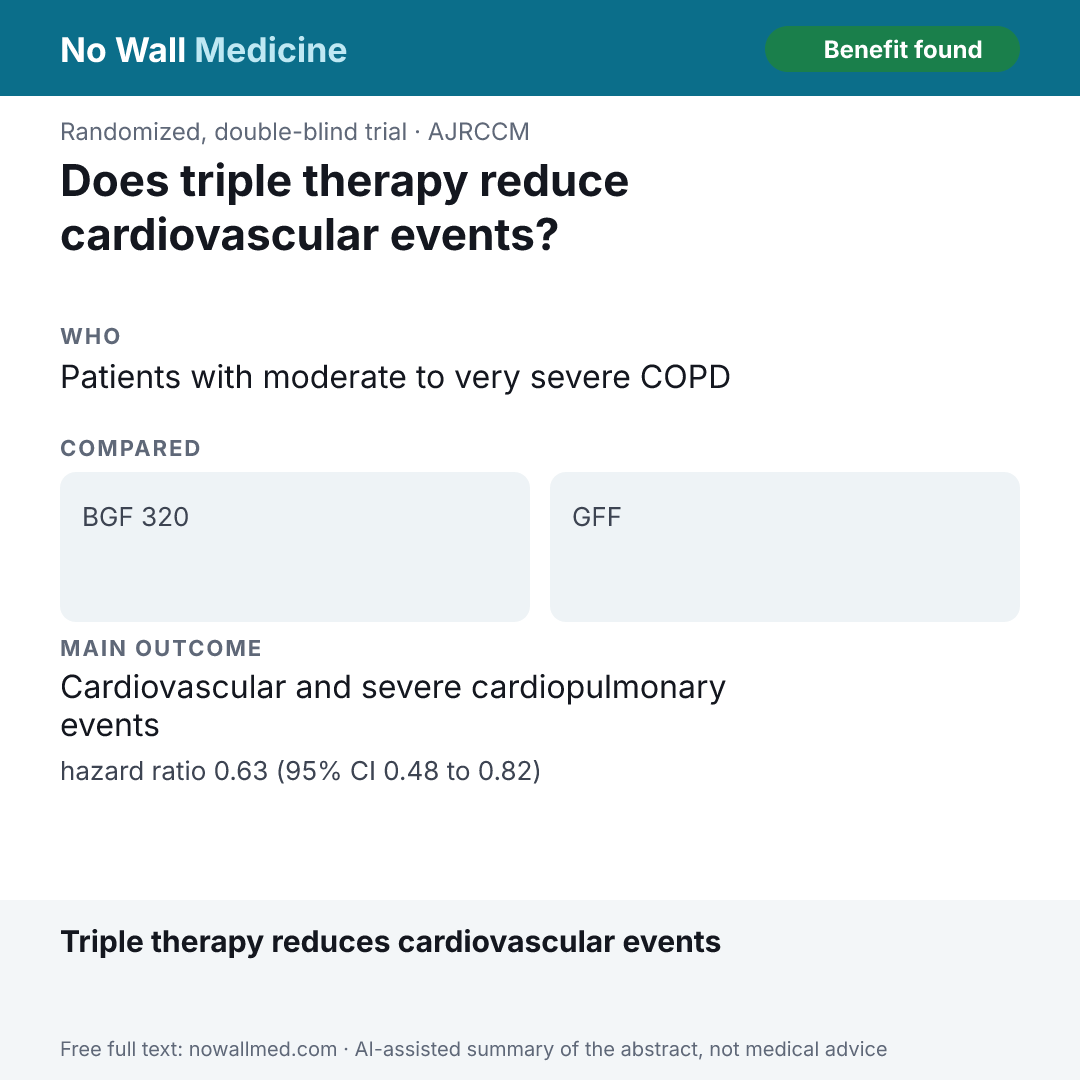
Effect of Triple Therapy on Cardiovascular and Severe Cardiopulmonary Events in Chronic Obstructive Pulmonary Disease: A Post Hoc Analysis of a Randomized, Double-Blind, Phase 3 Clinical Trial (ETHOS)
Randomized, double-blind trialBenefit found
Does triple therapy reduce cardiovascular events?
Who
Patients with moderate to very severe COPD
Compared
BGF 320
GFF
Main outcome
Cardiovascular and severe cardiopulmonary events
Result: hazard ratio 0.63 (95% CI 0.48 to 0.82)
Bottom line: Triple therapy reduces cardiovascular events
AJRCCM · 2024-08-31 · Save PNG
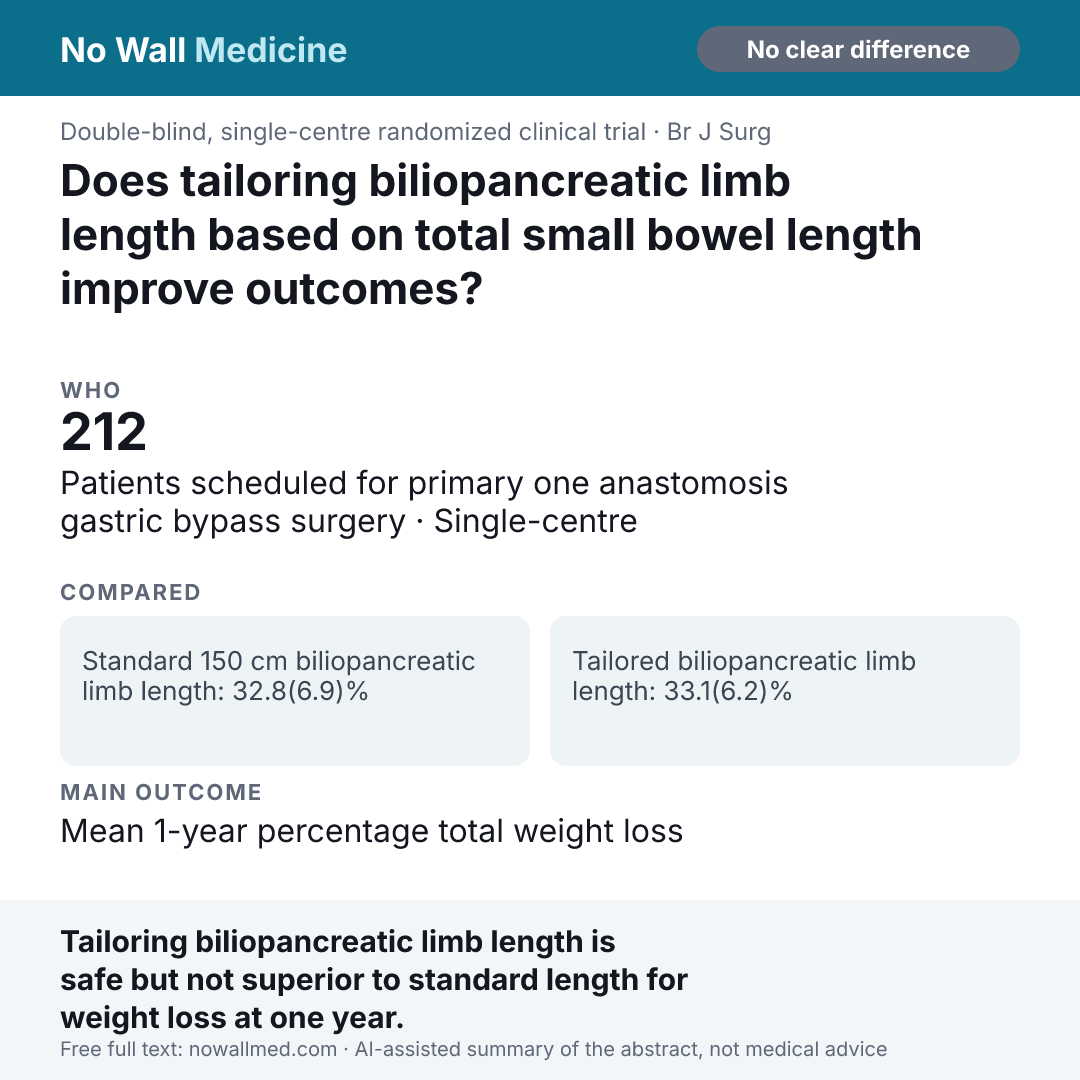
Effect of tailoring biliopancreatic limb length based on total small bowel length versus standard limb length in one anastomosis gastric bypass: 1-year outcomes of the TAILOR randomized clinical superiority trial
Double-blind, single-centre randomized clinical trialNo clear difference
Does tailoring biliopancreatic limb length based on total small bowel length improve outcomes?
Who
212
Patients scheduled for primary one anastomosis gastric bypass surgery · Single-centre
Compared
Standard 150 cm biliopancreatic limb length: 32.8(6.9)%
Tailored biliopancreatic limb length: 33.1(6.2)%
Main outcome
Mean 1-year percentage total weight loss
Result: P = 0.787
Bottom line: Tailoring biliopancreatic limb length is safe but not superior to standard length for weight loss at one year.
Br J Surg · 2024-08-31 · Save PNG
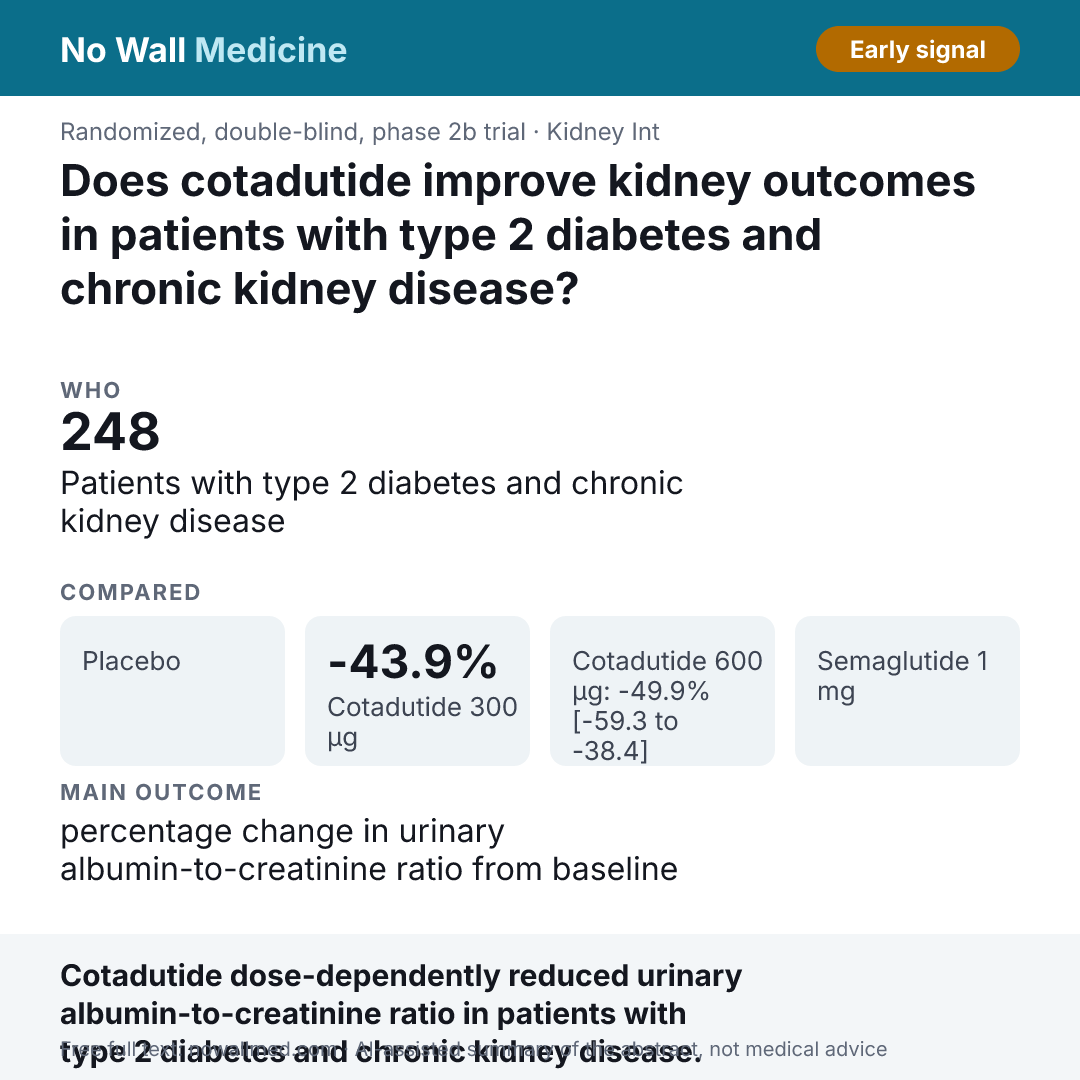
A randomized phase 2b trial examined the effects of the glucagon-like peptide-1 and glucagon receptor agonist cotadutide on kidney outcomes in patients with diabetic kidney disease
Randomized, double-blind, phase 2b trialEarly signal
Does cotadutide improve kidney outcomes in patients with type 2 diabetes and chronic kidney disease?
Who
248
Patients with type 2 diabetes and chronic kidney disease
Compared
Placebo
-43.9%Cotadutide 300 μg (95% confidence interval -54.7 to -30.6)
Cotadutide 600 μg: -49.9% [-59.3 to -38.4]
Semaglutide 1 mg
Main outcome
percentage change in urinary albumin-to-creatinine ratio from baseline
Bottom line: Cotadutide dose-dependently reduced urinary albumin-to-creatinine ratio in patients with type 2 diabetes and chronic kidney disease.
Kidney Int · 2024-08-31 · Save PNG
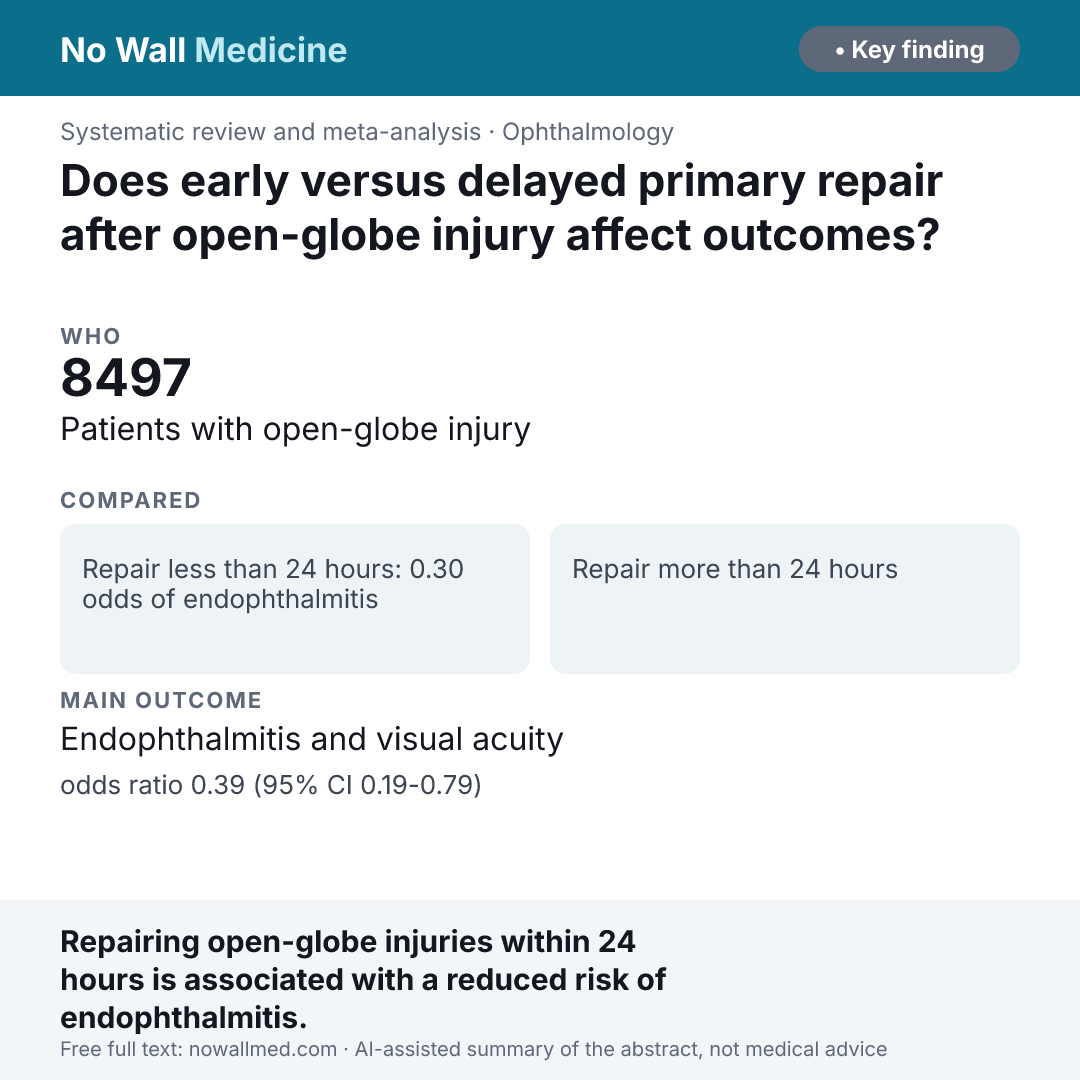
Early versus Delayed Timing of Primary Repair after Open-Globe Injury: A Systematic Review and Meta-analysis
Systematic review and meta-analysisKey finding
Does early versus delayed primary repair after open-globe injury affect outcomes?
Who
8497
Patients with open-globe injury
Compared
Repair less than 24 hours: 0.30 odds of endophthalmitis
Repair more than 24 hours
Main outcome
Endophthalmitis and visual acuity
Result: odds ratio 0.39 (95% CI 0.19-0.79)
Bottom line: Repairing open-globe injuries within 24 hours is associated with a reduced risk of endophthalmitis.
Limitation: All included studies were retrospective and nonrandomized, demonstrating low certainty of evidence.
Ophthalmology · 2024-08-31 · Save PNG