Visual abstracts
New randomized trials and meta-analyses from leading journals at a glance: who was studied, what was compared, and what was found. Every paper is free to read in full.
All specialtiesCardiology 4763Oncology 4042Gastroenterology & Hepatology 1902Infectious Disease 3756Neurology 1872Psychiatry & Mental Health 2214Pulmonology 2042Critical Care 1319Endocrinology & Diabetes 2544Pediatrics 2889Surgery 2479Orthopedics & Sports Medicine 917Neurosurgery 525Cardiothoracic & Vascular Surgery 656Plastic & Reconstructive Surgery 574Nephrology 1107Rheumatology 810Hematology 1090Dermatology 611Ophthalmology 532Obstetrics & Gynecology 1645Public & Global Health 1037Radiology & Imaging 617Anesthesiology 957Urology 745ENT (Otolaryngology) 494Emergency Medicine 481Allergy & Immunology 309Geriatrics 972Family Medicine & Primary Care 533Medical Genetics & Genomics 659Pathology & Laboratory Medicine 156Physical Medicine & Rehabilitation 734Palliative Care 421Nutrition 1560Digital Health & AI 2133General Medicine 318
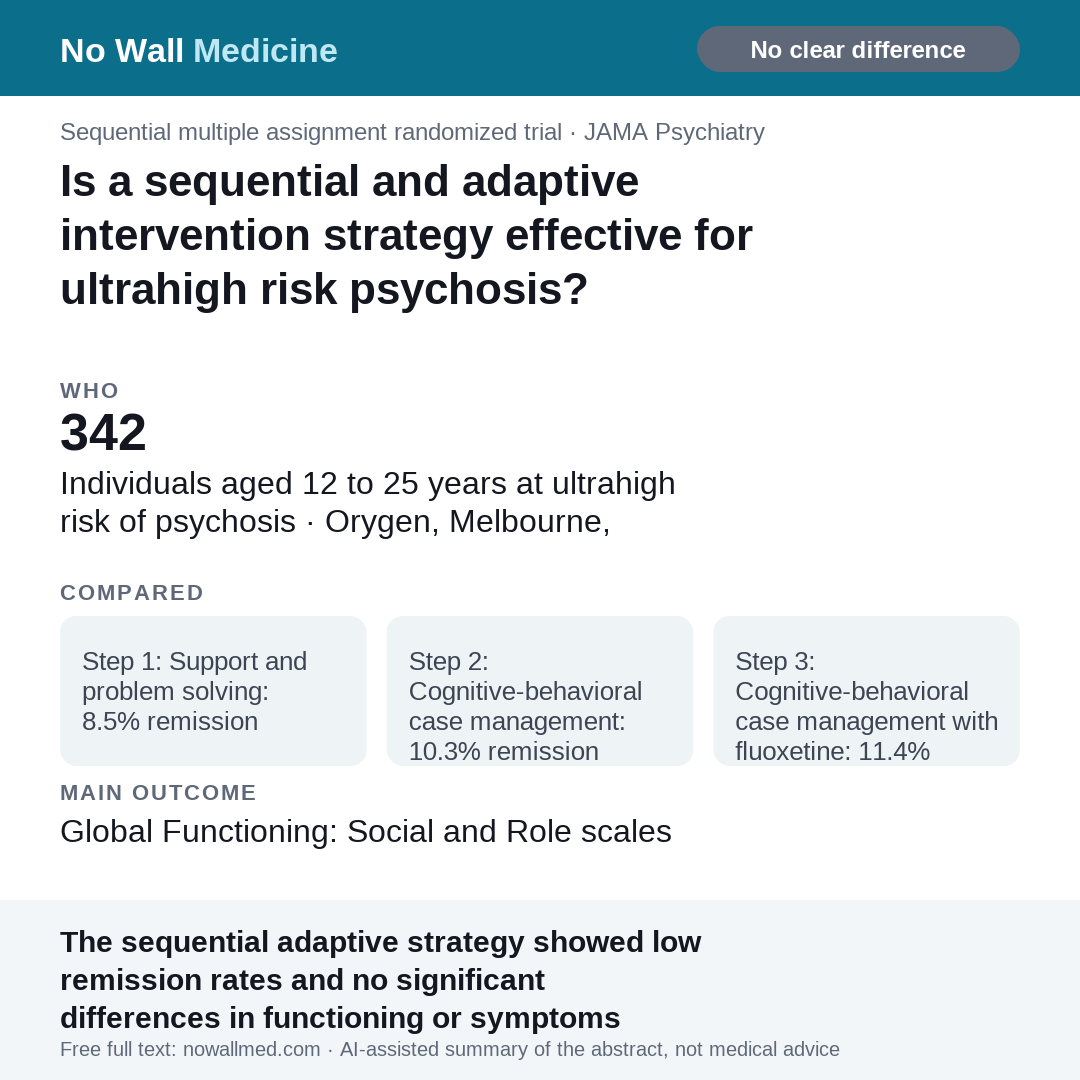
A Sequential Adaptive Intervention Strategy Targeting Remission and Functional Recovery in Young People at Ultrahigh Risk of Psychosis: The Staged Treatment in Early Psychosis (STEP) Sequential Multiple Assignment Randomized Trial
Sequential multiple assignment randomized trialNo clear difference
Is a sequential and adaptive intervention strategy effective for ultrahigh risk psychosis?
Who
342
Individuals aged 12 to 25 years at ultrahigh risk of psychosis · Orygen, Melbourne, Australia
Compared
Step 1: Support and problem solving: 8.5% remission
Step 2: Cognitive-behavioral case management: 10.3% remission
Step 3: Cognitive-behavioral case management with fluoxetine: 11.4% remission
Main outcome
Global Functioning: Social and Role scales
Bottom line: The sequential adaptive strategy showed low remission rates and no significant differences in functioning or symptoms between treatment arms.
JAMA Psychiatry · 2023-06-28Download image
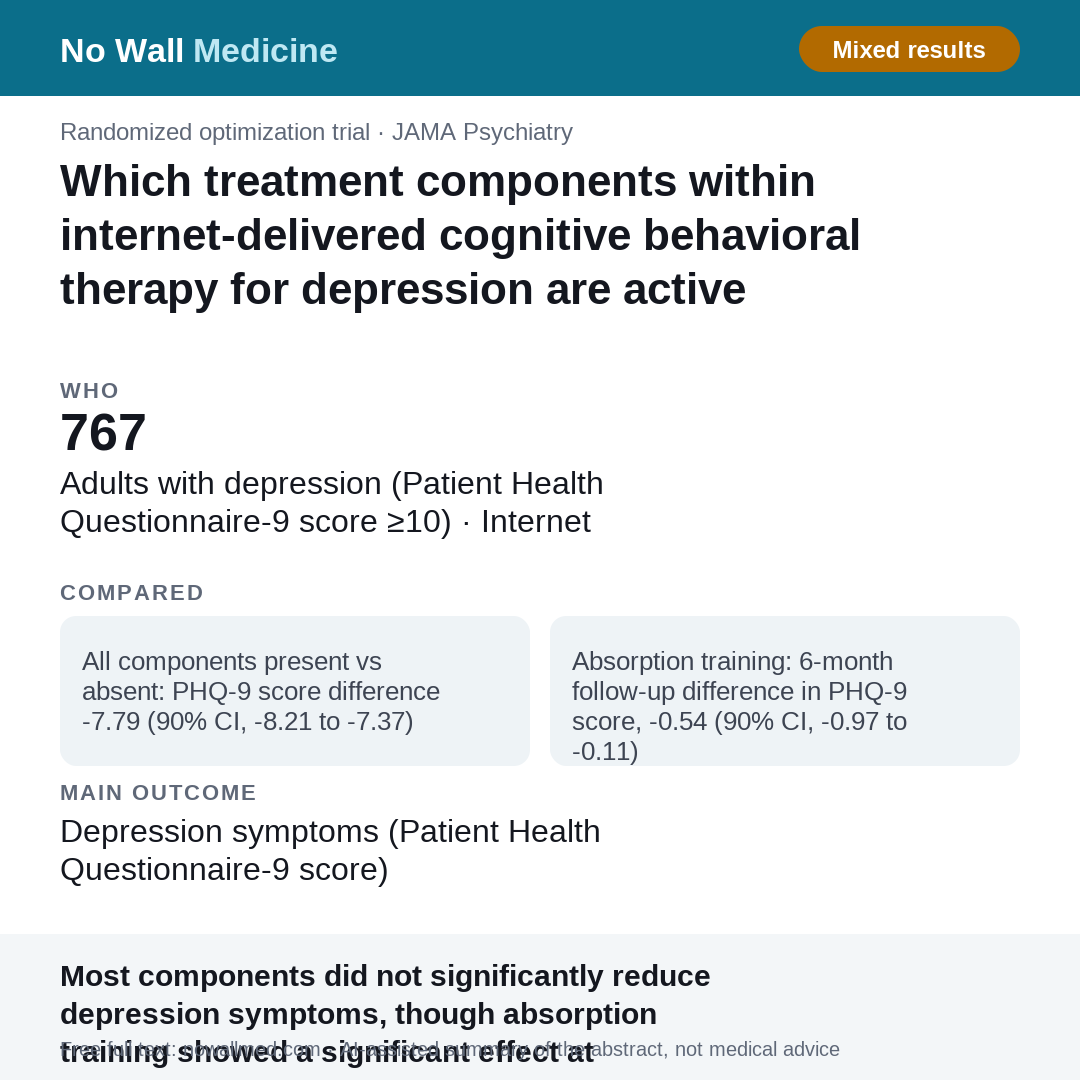
Investigation of Active Ingredients Within Internet-Delivered Cognitive Behavioral Therapy for Depression: A Randomized Optimization Trial
Randomized optimization trialMixed results
Which treatment components within internet-delivered cognitive behavioral therapy for depression are active ingredients?
Who
767
Adults with depression (Patient Health Questionnaire-9 score ≥10) · Internet advertising and UK National Health Service
Compared
All components present vs absent: PHQ-9 score difference -7.79 (90% CI, -8.21 to -7.37)
Absorption training: 6-month follow-up difference in PHQ-9 score, -0.54 (90% CI, -0.97 to -0.11)
Main outcome
Depression symptoms (Patient Health Questionnaire-9 score)
Result: 6-month follow-up difference in PHQ-9 score, -0.54 (90% CI, -0.97 to -0.11)
Bottom line: Most components did not significantly reduce depression symptoms, though absorption training showed a significant effect at 6-month follow-up.
JAMA Psychiatry · 2023-06-28Download image
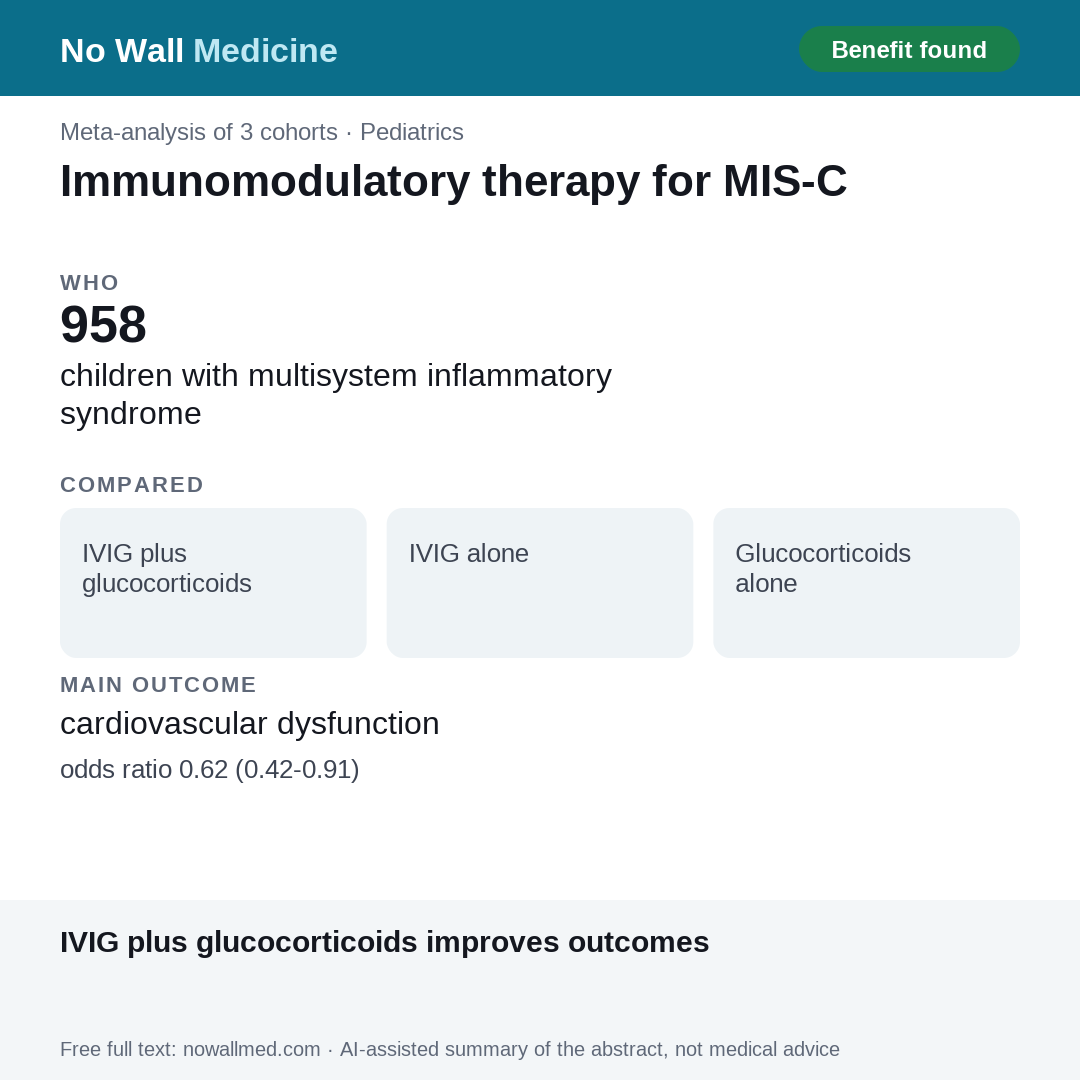
Immunomodulatory Therapy for MIS-C
Meta-analysis of 3 nonrandomized cohortsKey finding
Which initial therapy improves cardiovascular dysfunction in MIS-C patients?
Who
958
Children under 21 years with multisystem inflammatory syndrome in children
Compared
IVIG plus glucocorticoids: OR 0.62 [0.42-0.91]
IVIG alone
Main outcome
Cardiovascular dysfunction
Result: odds ratio [OR] 0.62 [0.42-0.91]
Bottom line: IVIG plus glucocorticoids was associated with improved cardiovascular dysfunction compared with IVIG alone.
Limitation: Nonrandomized nature of included studies.
Pediatrics · 2023-06-28Download image
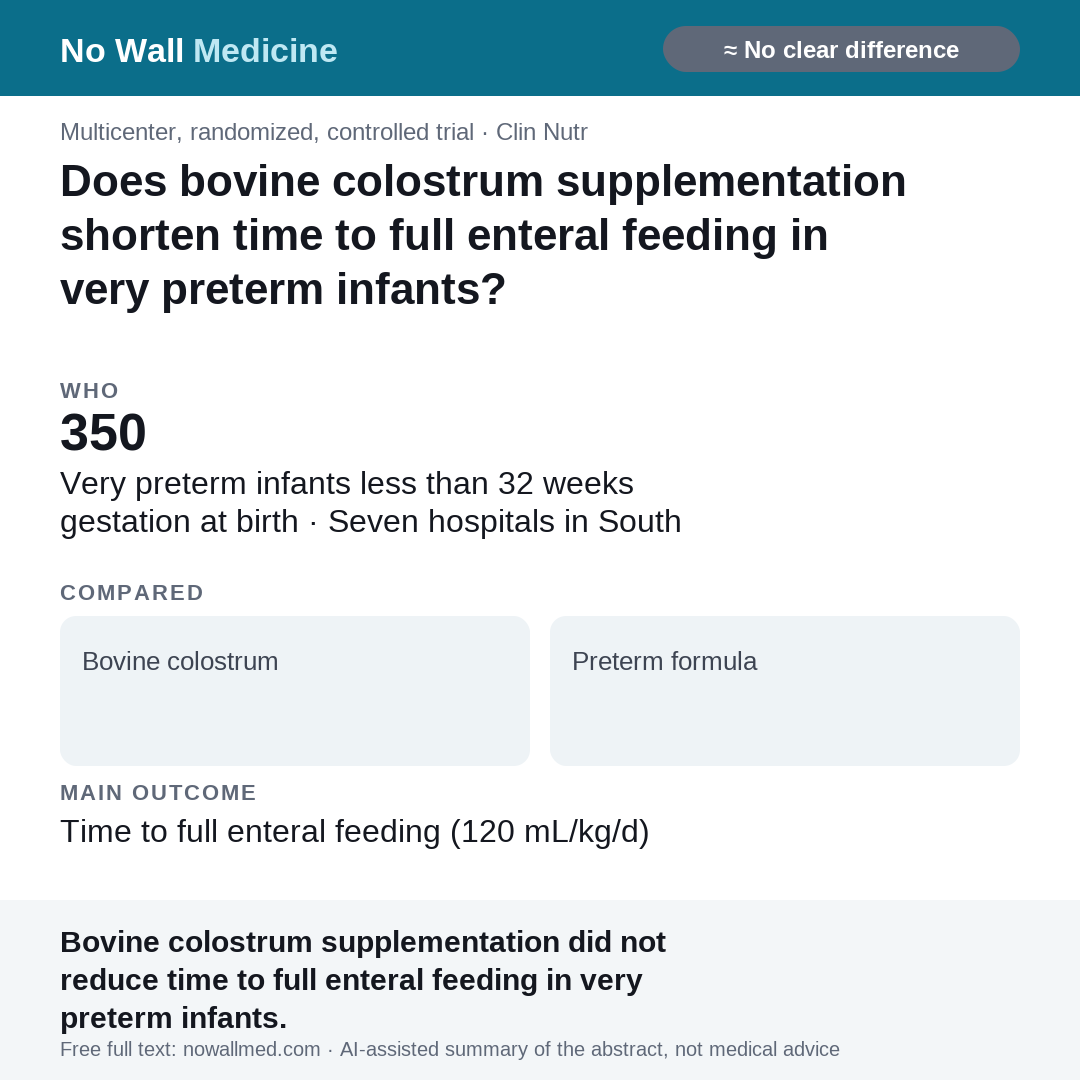
Bovine colostrum to supplement the first feeding of very preterm infants: The PreColos randomized controlled trial
Multicenter, randomized, controlled trialNo clear difference
Does bovine colostrum supplementation shorten time to full enteral feeding in very preterm infants?
Who
350
Very preterm infants less than 32 weeks gestation at birth · Seven hospitals in South China
Compared
Bovine colostrum
Preterm formula
Main outcome
Time to full enteral feeding (120 mL/kg/d)
Result: adjusted hazard ratio 0.82 (95% CI 0.64, 1.06)
Bottom line: Bovine colostrum supplementation did not reduce time to full enteral feeding in very preterm infants.
Clin Nutr · 2023-06-28Download image
The genetic epidemiology of obsessive-compulsive disorder: a systematic review and meta-analysis
Systematic review and meta-analysisKey finding
What is the genetic epidemiology and heritability of obsessive-compulsive disorder?
Who
First-degree relatives of obsessive-compulsive disorder or control probands and co-twins
Compared
Monozygotic twins: higher obsessive-compulsive symptoms correlations
Dizygotic twins: lower obsessive-compulsive symptoms correlations
Main outcome
Familial recurrence rates and twin correlations
Result: phenotypic heritability of around 50%
Bottom line: Obsessive-compulsive disorder is a highly familial disorder with approximately 50% phenotypic heritability.
Transl Psychiatry · 2023-06-28Download image

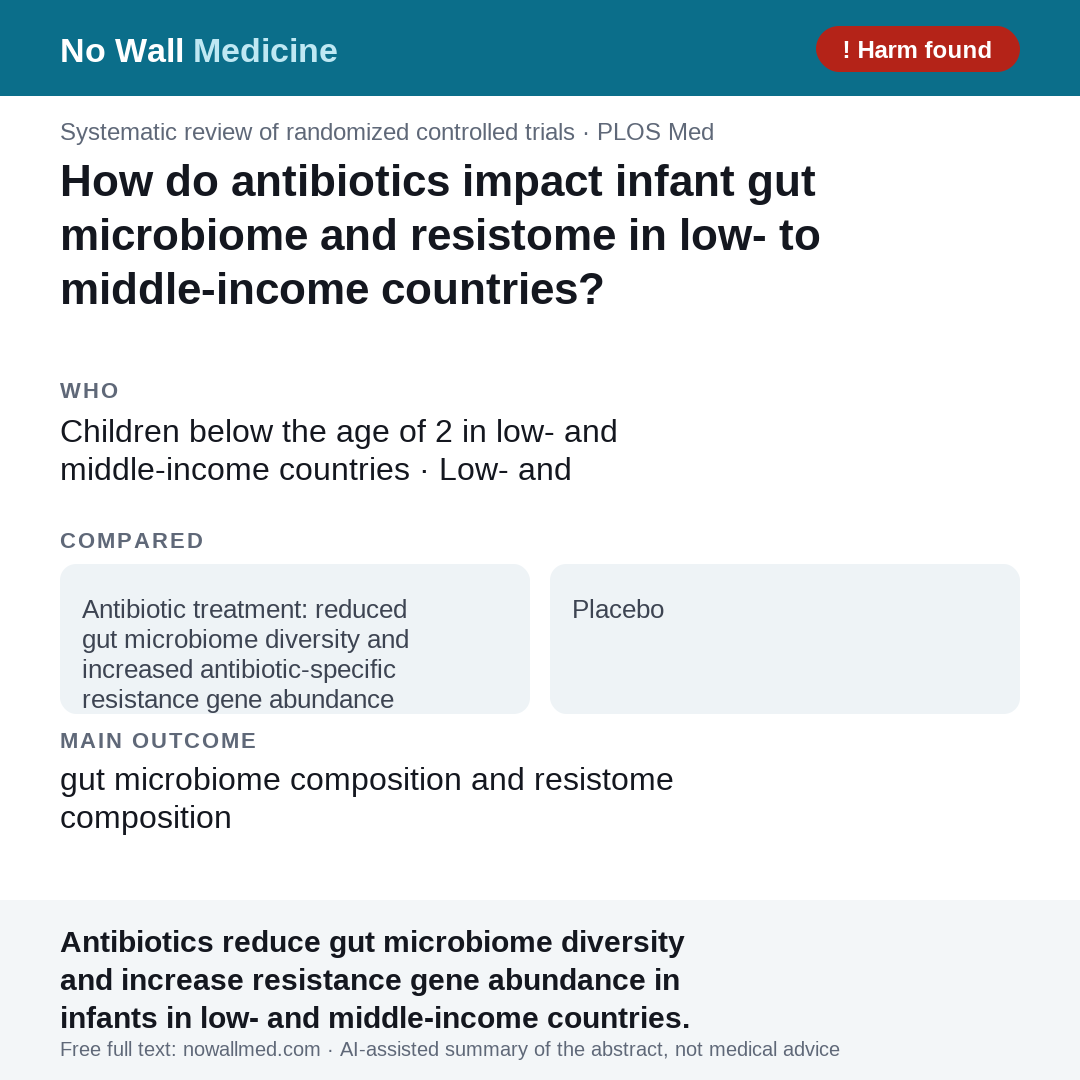
Impact of antibiotics on gut microbiome composition and resistome in the first years of life in low- to middle-income countries: A systematic review
Systematic review of randomized controlled trialsHarm found
How do antibiotics impact infant gut microbiome and resistome in low- to middle-income countries?
Who
Children below the age of 2 in low- and middle-income countries · Low- and middle-income countries
Compared
Antibiotic treatment: reduced gut microbiome diversity and increased antibiotic-specific resistance gene abundance
Placebo
Main outcome
gut microbiome composition and resistome composition
Bottom line: Antibiotics reduce gut microbiome diversity and increase resistance gene abundance in infants in low- and middle-income countries.
Limitation: Paucity of available studies and limited range of antibiotics assessed.
PLOS Med · 2023-06-27Download image
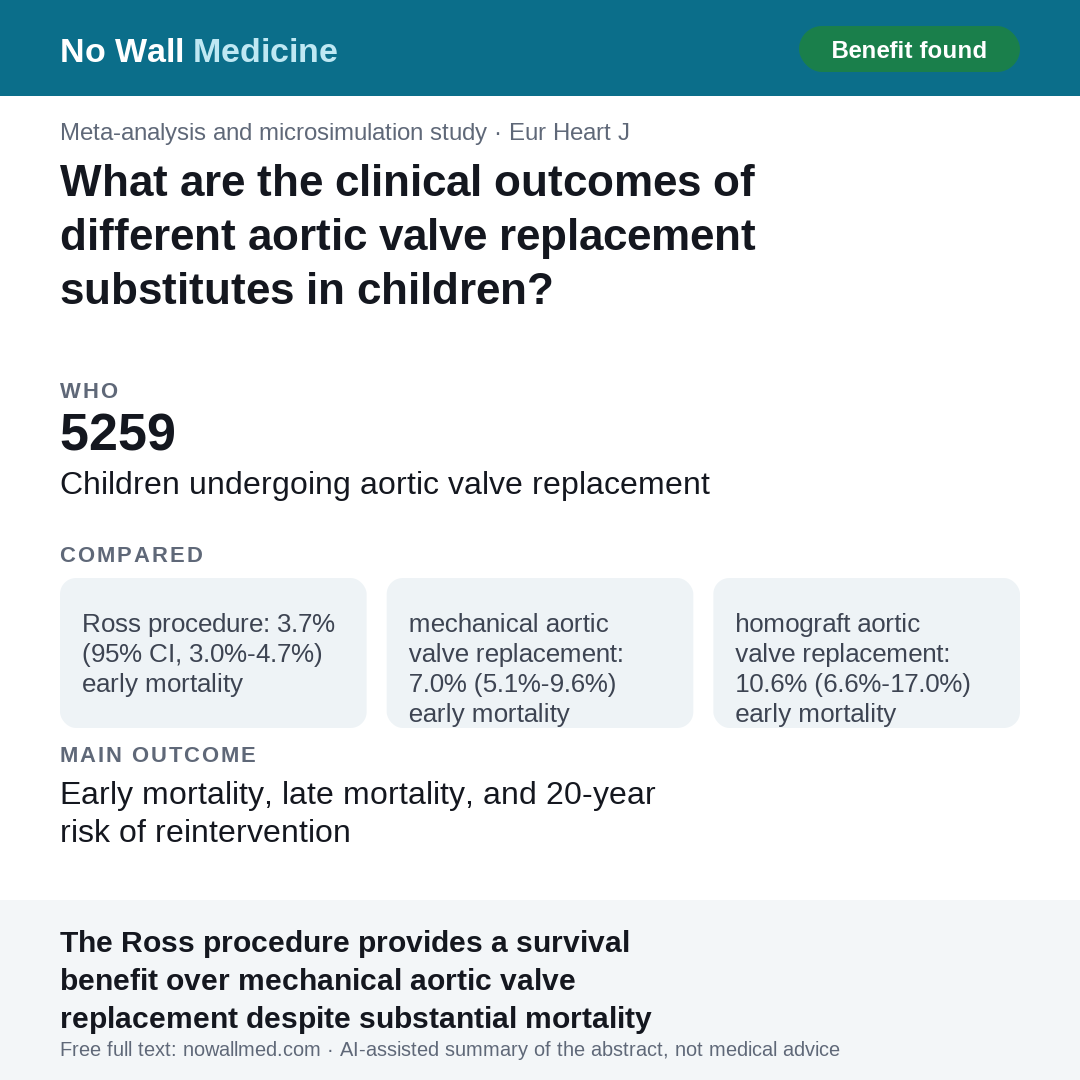
Paediatric aortic valve replacement: a meta-analysis and microsimulation study
Meta-analysis and microsimulation studyKey finding
What are the clinical outcomes of different aortic valve replacement substitutes in children?
Who
5259
Children undergoing aortic valve replacement
Compared
Ross procedure: 3.7% (95% CI, 3.0%-4.7%) early mortality
mechanical aortic valve replacement: 7.0% (5.1%-9.6%) early mortality
homograft aortic valve replacement: 10.6% (6.6%-17.0%) early mortality
Main outcome
Early mortality, late mortality, and 20-year risk of reintervention
Bottom line: The Ross procedure provides a survival benefit over mechanical aortic valve replacement despite substantial mortality and reintervention hazards.
Eur Heart J · 2023-06-27Download image
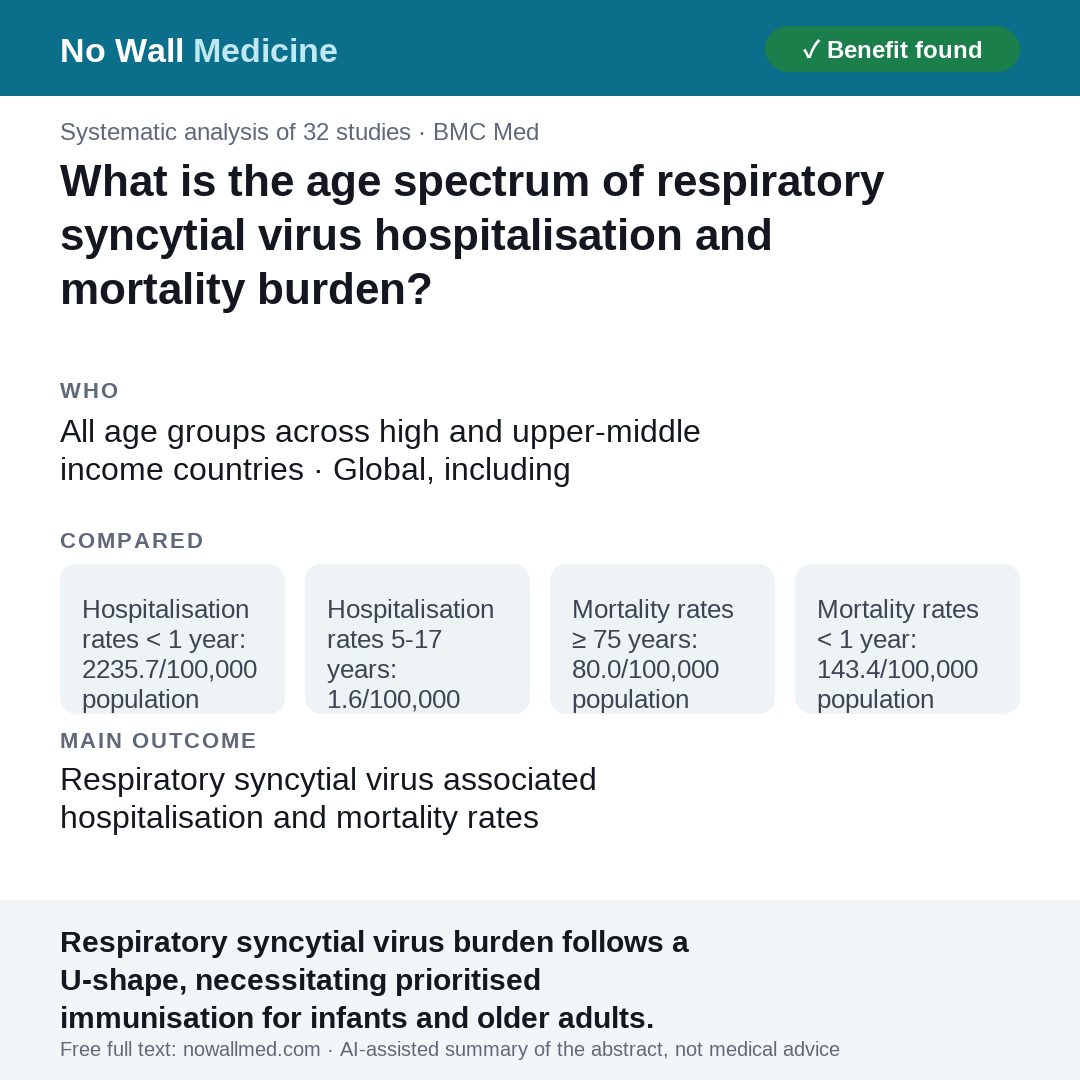
Understanding the age spectrum of respiratory syncytial virus associated hospitalisation and mortality burden based on statistical modelling methods: a systematic analysis
Systematic analysis of 32 studiesBenefit found
What is the age spectrum of respiratory syncytial virus hospitalisation and mortality burden?
Who
All age groups across high and upper-middle income countries · Global, including high-income and upper-middle income countries
Compared
Hospitalisation rates < 1 year: 2235.7/100,000 population
Hospitalisation rates 5-17 years: 1.6/100,000 population
Mortality rates ≥ 75 years: 80.0/100,000 population
Mortality rates < 1 year: 143.4/100,000 population
Main outcome
Respiratory syncytial virus associated hospitalisation and mortality rates
Bottom line: Respiratory syncytial virus burden follows a U-shape, necessitating prioritised immunisation for infants and older adults.
BMC Med · 2023-06-26Download image
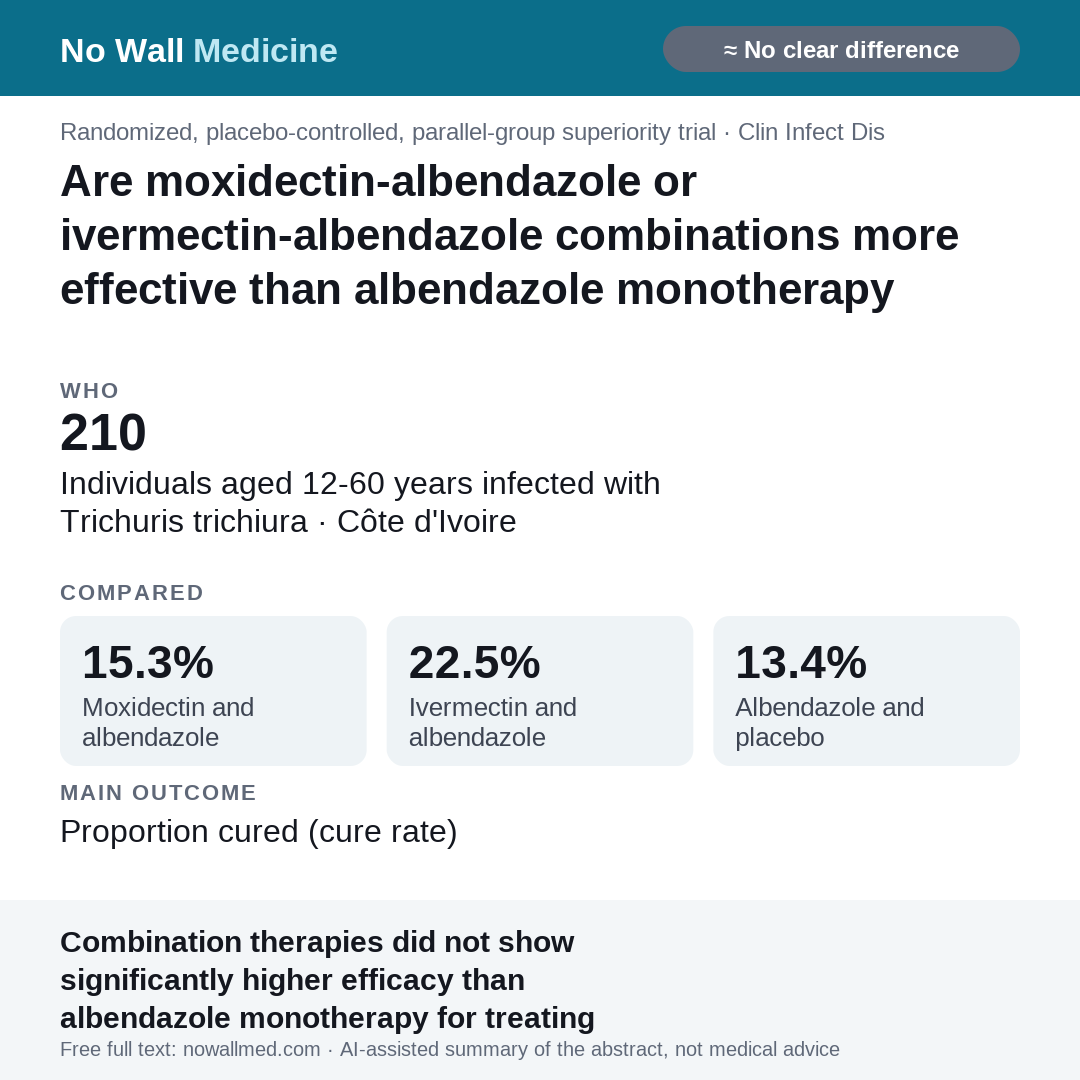
Efficacy and Safety of Moxidectin-Albendazole and Ivermectin-Albendazole Combination Therapy Compared to Albendazole Monotherapy in Adolescents and Adults Infected with Trichuris trichiura: A Randomized, Controlled Superiority Trial
Randomized, placebo-controlled, parallel-group superiority trialNo clear difference
Are moxidectin-albendazole or ivermectin-albendazole combinations more effective than albendazole monotherapy for Trichuris trichiura?
Who
210
Individuals aged 12-60 years infected with Trichuris trichiura · Côte d'Ivoire
Compared
15.3%Moxidectin and albendazole
22.5%Ivermectin and albendazole
13.4%Albendazole and placebo
Main outcome
Proportion cured (cure rate)
Result: differences: 1.8%-points [95% confidence interval: -10.1 to 13.6] and 9.1%-points [-3.9 to 21.8]
Bottom line: Combination therapies did not show significantly higher efficacy than albendazole monotherapy for treating trichuriasis in Côte d'Ivoire.
Clin Infect Dis · 2023-06-26Download image
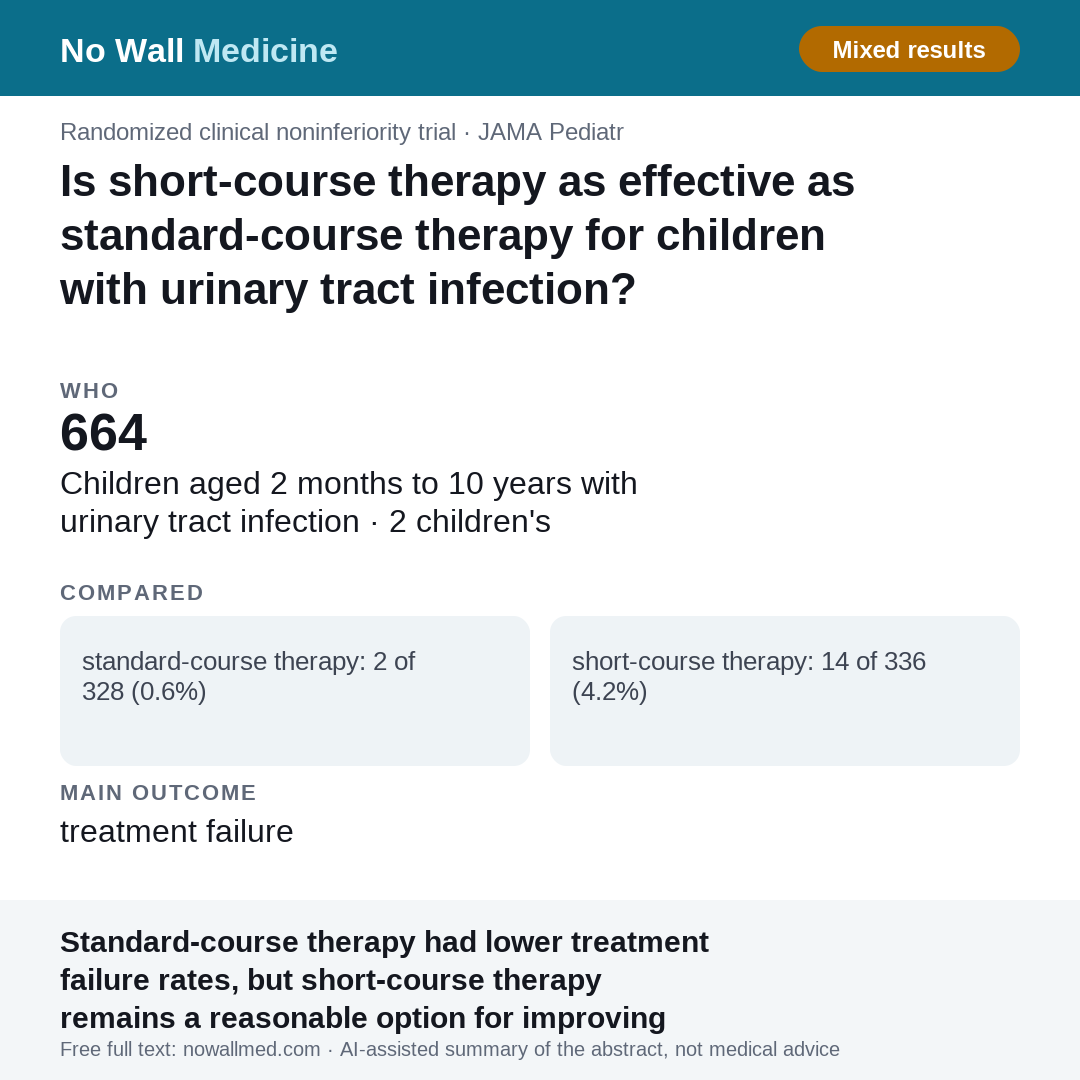
Short-Course Therapy for Urinary Tract Infections in Children: The SCOUT Randomized Clinical Trial
Randomized clinical noninferiority trialMixed results
Is short-course therapy as effective as standard-course therapy for children with urinary tract infection?
Who
664
Children aged 2 months to 10 years with urinary tract infection · 2 children's hospitals outpatient clinics and emergency departments
Compared
standard-course therapy: 2 of 328 (0.6%)
short-course therapy: 14 of 336 (4.2%)
Main outcome
treatment failure
Result: absolute difference of 3.6% with upper bound 95% CI of 5.5%
Bottom line: Standard-course therapy had lower treatment failure rates, but short-course therapy remains a reasonable option for improving children.
JAMA Pediatr · 2023-06-26Download image
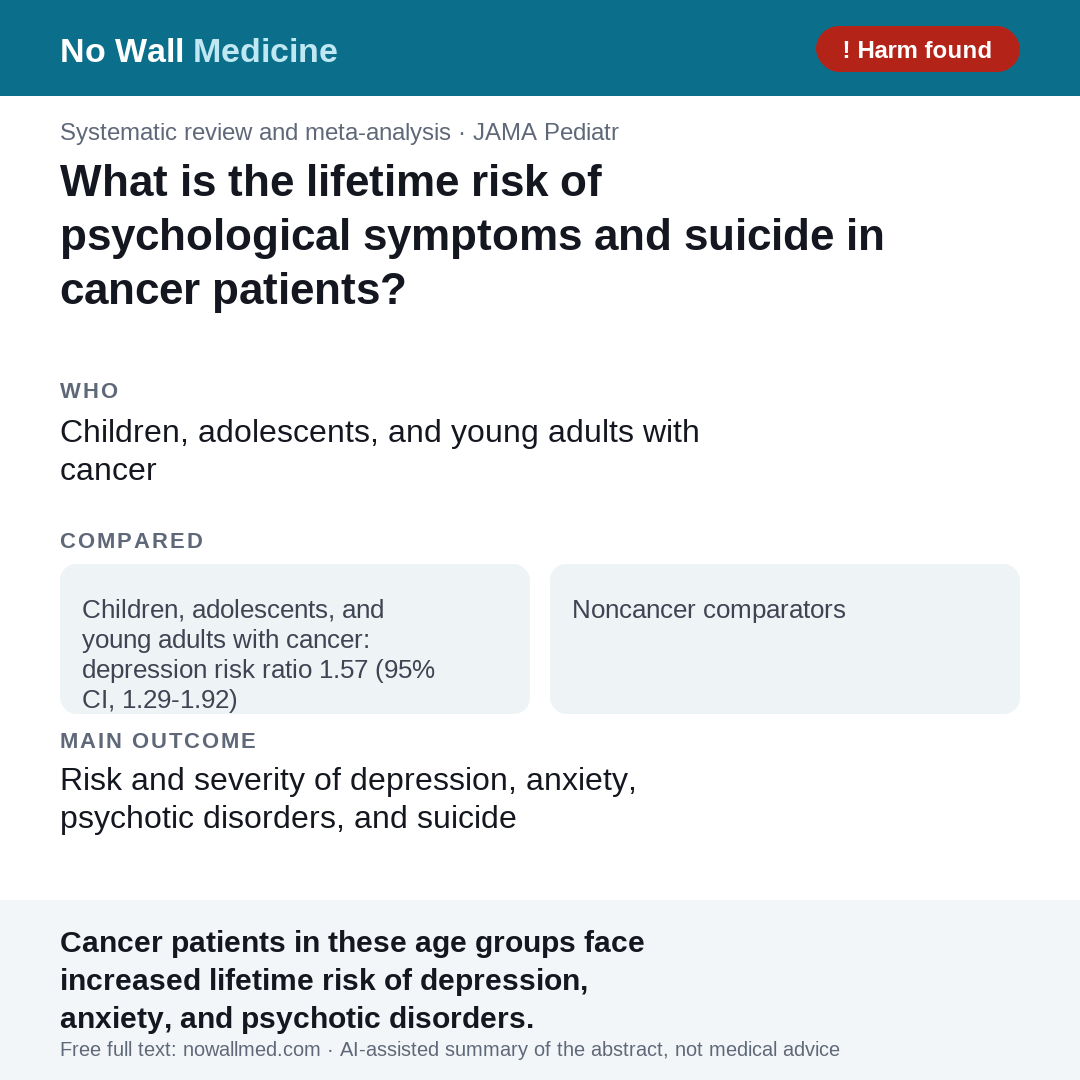
Lifetime Burden of Psychological Symptoms, Disorders, and Suicide Due to Cancer in Childhood, Adolescent, and Young Adult Years: A Systematic Review and Meta-analysis
Systematic review and meta-analysisHarm found
What is the lifetime risk of psychological symptoms and suicide in cancer patients?
Who
Children, adolescents, and young adults with cancer
Compared
Children, adolescents, and young adults with cancer: depression risk ratio 1.57 (95% CI, 1.29-1.92)
Noncancer comparators
Main outcome
Risk and severity of depression, anxiety, psychotic disorders, and suicide
Result: depression risk ratio 1.57 (95% CI, 1.29-1.92)
Bottom line: Cancer patients in these age groups face increased lifetime risk of depression, anxiety, and psychotic disorders.
JAMA Pediatr · 2023-06-22Download image
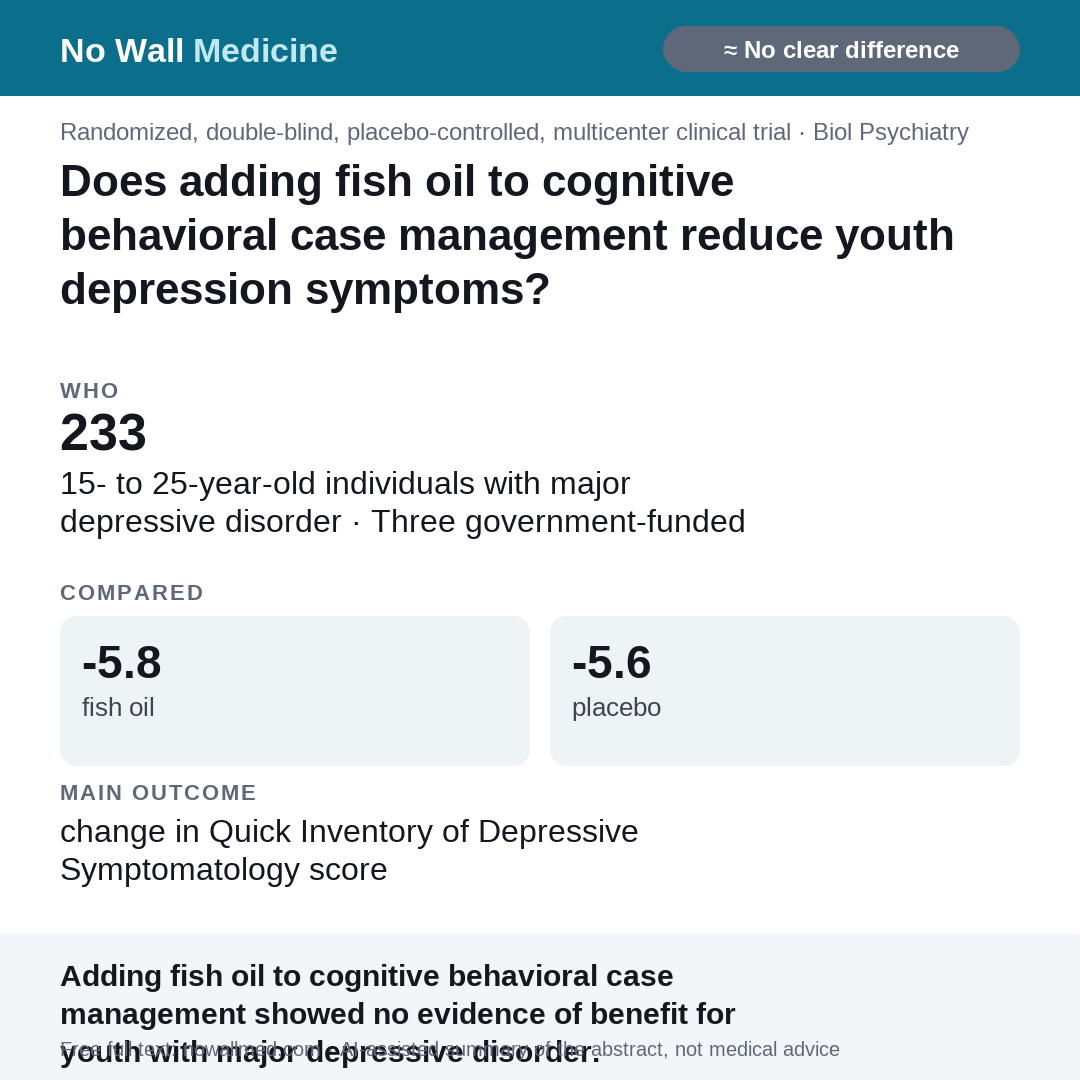
The Addition of Fish Oil to Cognitive Behavioral Case Management for Youth Depression: A Randomized, Double-Blind, Placebo-Controlled, Multicenter Clinical Trial
Randomized, double-blind, placebo-controlled, multicenter clinical trialNo clear difference
Does adding fish oil to cognitive behavioral case management reduce youth depression symptoms?
Who
233
15- to 25-year-old individuals with major depressive disorder · Three government-funded mental health services in Australia
Compared
-5.8fish oil
-5.6placebo
Main outcome
change in Quick Inventory of Depressive Symptomatology score
Result: mean difference, 0.2 (95% CI, -1.1 to 1.5)
Bottom line: Adding fish oil to cognitive behavioral case management showed no evidence of benefit for youth with major depressive disorder.
Biol Psychiatry · 2023-06-22Download image
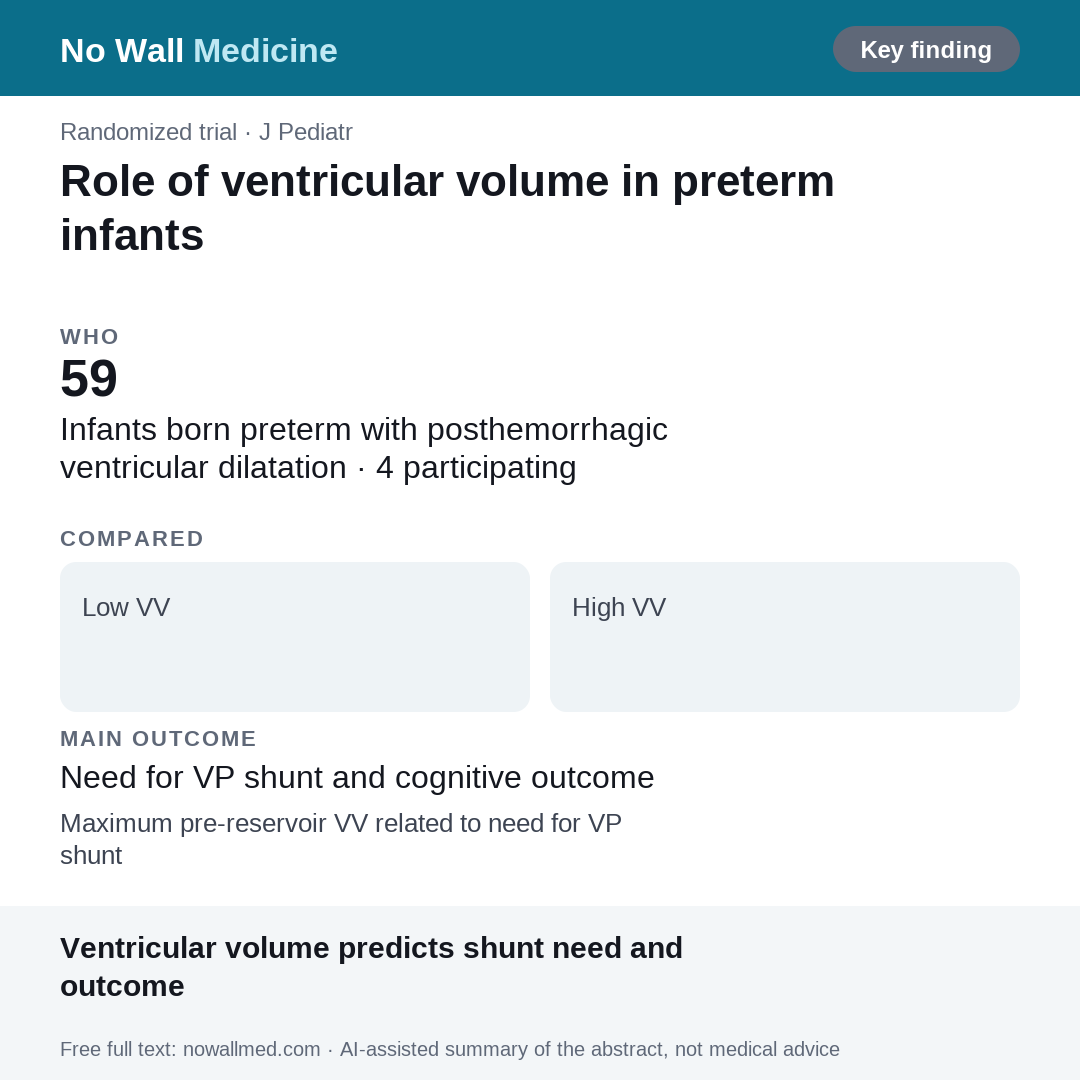
Ultrasonographic Estimation of Ventricular Volume in Infants Born Preterm with Posthemorrhagic Ventricular Dilatation: A Nested Substudy of the Randomized Controlled Early Versus Late Ventricular Intervention Study (ELVIS) Trial
Randomized trialKey finding
Role of ventricular volume in preterm infants
Who
59
Infants born preterm with posthemorrhagic ventricular dilatation · 4 participating centers
Compared
Low VV
High VV
Main outcome
Need for VP shunt and cognitive outcome
Result: Maximum pre-reservoir VV related to need for VP shunt
Bottom line: Ventricular volume predicts shunt need and outcome
J Pediatr · 2023-06-22Download image
The Role of Social Determinants of Health in Cardiovascular Diseases: An Umbrella Review
Umbrella reviewBenefit found
Role of social health in heart disease
Who
people with cardiovascular disease
Compared
economic circumstances
early childhood development
Main outcome
cardiovascular disease risk
Bottom line: Social health affects heart disease risk
J Am Heart Assoc · 2023-06-22Download image

Psychiatric in-patients who are parents: what interventions are tailored to their needs and how do they experience care? A systematic review and data synthesis
Systematic review and data synthesisMixed results
What interventions support psychiatric in-patients who are parents and how do they experience care?
Who
Psychiatric in-patients who are parents with children aged 1-18 years · Not specified
Compared
Intervention studies: Very few robust reports found
Parent experience studies: Hospital admission had a negative impact on parenting
Main outcome
Interventions to support parenting and experiences of psychiatric in-patient care
Bottom line: Parents in psychiatric in-patient care report negative impacts on parenting, but few robust interventions exist to support them.
BJPsych Open · 2023-06-22Download image

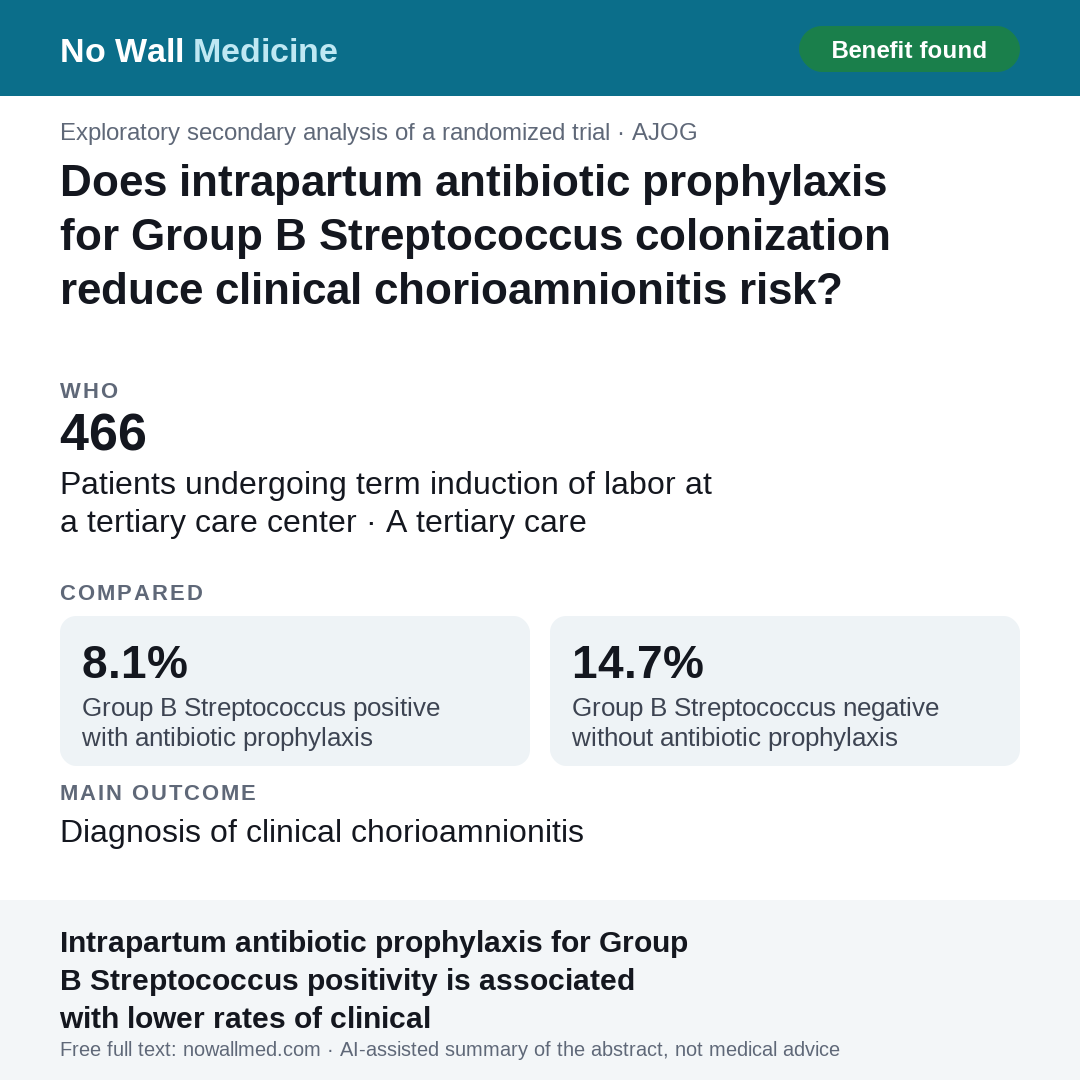
Association between intrapartum antibiotic prophylaxis for Group B Streptococcus colonization and clinical chorioamnionitis among patients undergoing induction of labor at term
Exploratory secondary analysis of a randomized trialBenefit found
Does intrapartum antibiotic prophylaxis for Group B Streptococcus colonization reduce clinical chorioamnionitis risk?
Who
466
Patients undergoing term induction of labor at a tertiary care center · A tertiary care center
Compared
8.1%Group B Streptococcus positive with antibiotic prophylaxis
14.7%Group B Streptococcus negative without antibiotic prophylaxis
Main outcome
Diagnosis of clinical chorioamnionitis
Result: odds ratio, 0.51
Bottom line: Intrapartum antibiotic prophylaxis for Group B Streptococcus positivity is associated with lower rates of clinical chorioamnionitis and peripartum infectious morbidity.
AJOG · 2023-06-21Download image
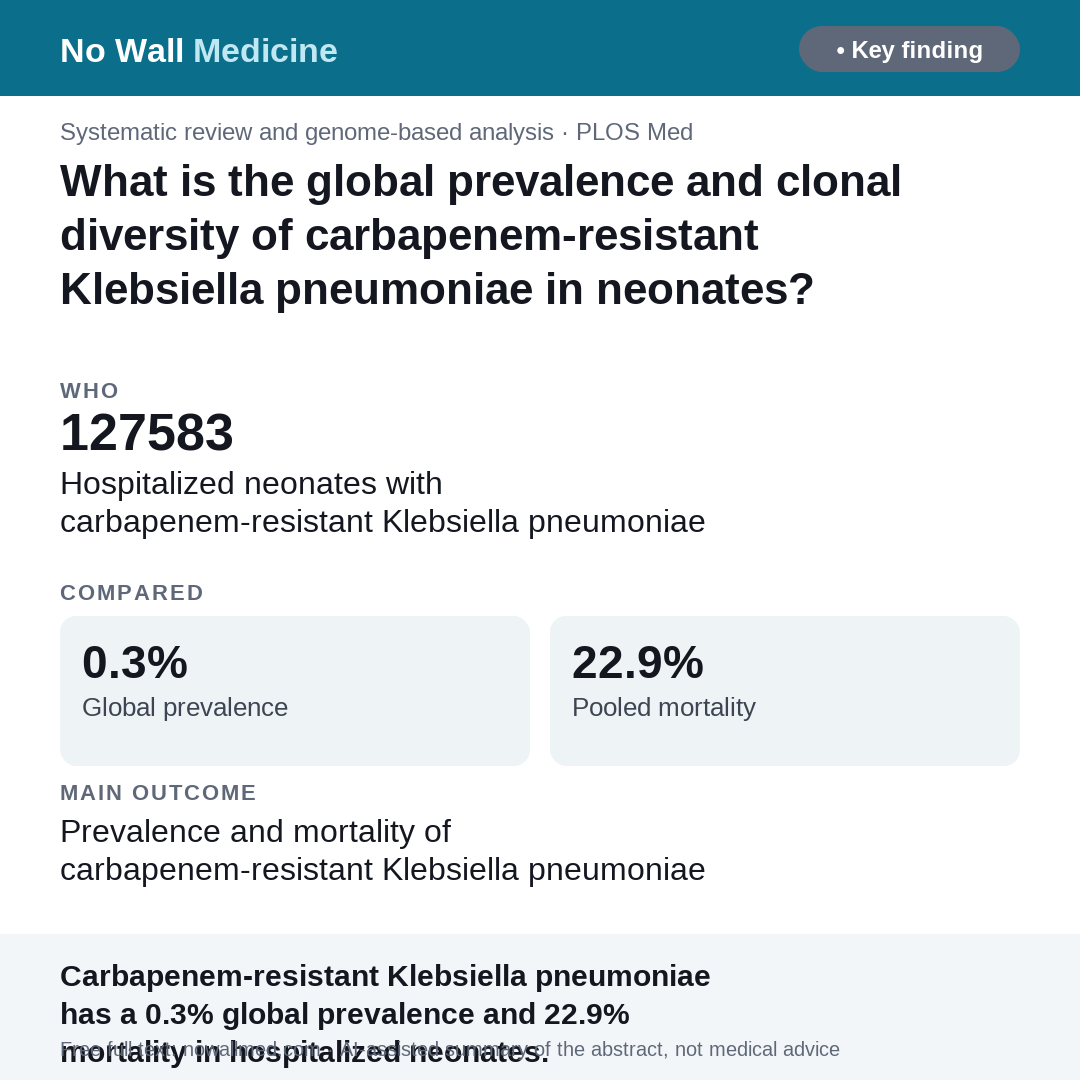
Prevalence and clonal diversity of carbapenem-resistant Klebsiella pneumoniae causing neonatal infections: A systematic review of 128 articles across 30 countries
Systematic review and genome-based analysisKey finding
What is the global prevalence and clonal diversity of carbapenem-resistant Klebsiella pneumoniae in neonates?
Who
127583
Hospitalized neonates with carbapenem-resistant Klebsiella pneumoniae infections · 30 countries including 21 low- and middle-income countries
Compared
0.3%Global prevalence (95% CI, 0.2% to 0.3%)
22.9%Pooled mortality (95% CI, 13.0% to 32.9%)
Main outcome
Prevalence and mortality of carbapenem-resistant Klebsiella pneumoniae infections
Bottom line: Carbapenem-resistant Klebsiella pneumoniae has a 0.3% global prevalence and 22.9% mortality in hospitalized neonates.
Limitation: Absence or scarcity of data from North America, South America, and Oceania.
PLOS Med · 2023-06-20Download image
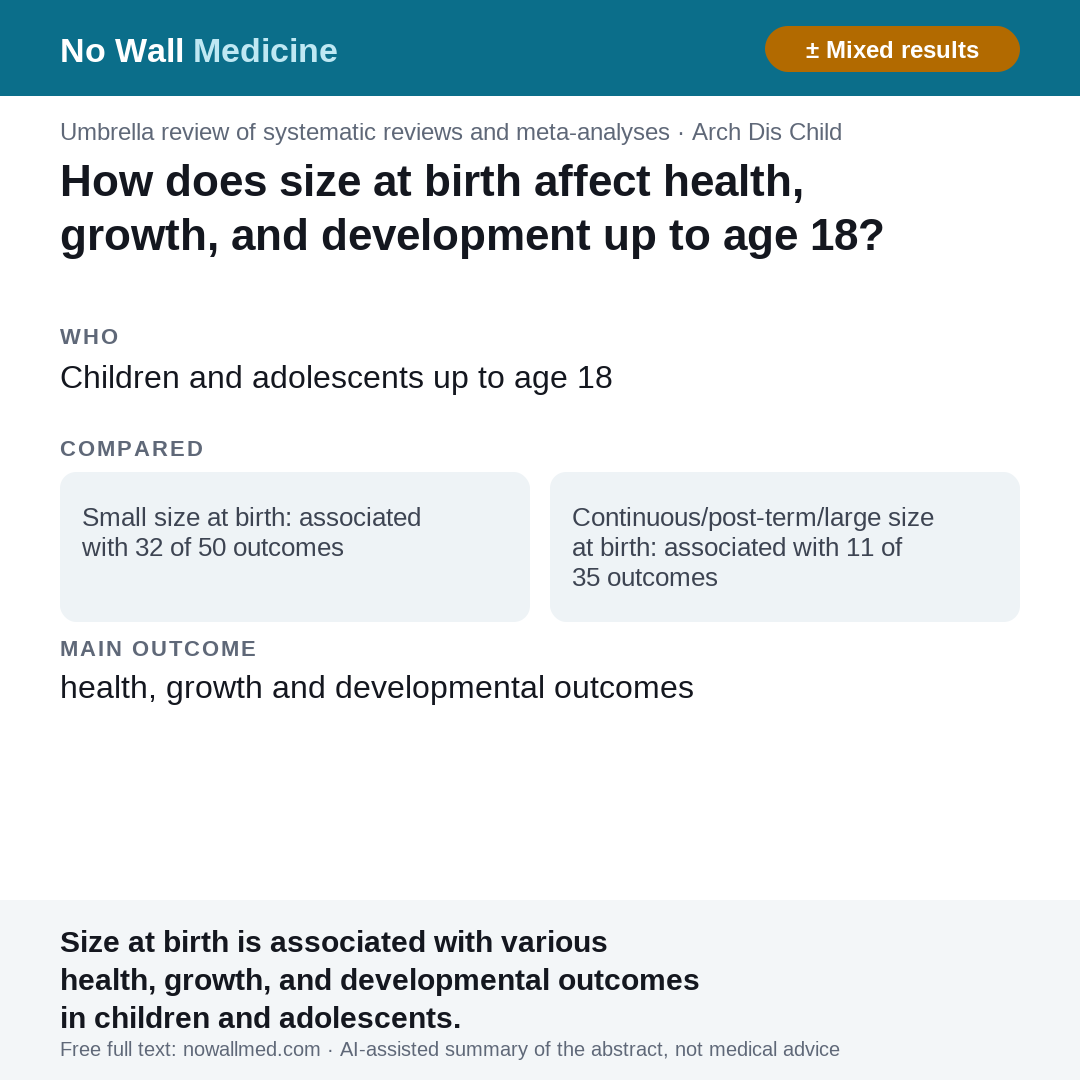
Effects of size at birth on health, growth and developmental outcomes in children up to age 18: an umbrella review
Umbrella review of systematic reviews and meta-analysesMixed results
How does size at birth affect health, growth, and development up to age 18?
Who
Children and adolescents up to age 18
Compared
Small size at birth: associated with 32 of 50 outcomes
Continuous/post-term/large size at birth: associated with 11 of 35 outcomes
Main outcome
health, growth and developmental outcomes
Bottom line: Size at birth is associated with various health, growth, and developmental outcomes in children and adolescents.
Arch Dis Child · 2023-06-20Download image
High-volume patient-controlled epidural vs. programmed intermittent epidural bolus for labour analgesia: a randomised controlled study
Randomised, multicentre non-inferiority trialBenefit found
Is patient-controlled epidural analgesia non-inferior to programmed intermittent epidural bolus for labour analgesia?
Who
360
Nulliparous women · Multicentre
Compared
Patient-controlled epidural analgesia-only: 11.2% breakthrough pain
Programmed intermittent epidural bolus: 10.8% breakthrough pain
Main outcome
Breakthrough pain and total analgesic intake
Result: mean difference 15.3 mg for total ropivacaine consumption
Bottom line: Patient-controlled epidural analgesia is non-inferior to programmed intermittent epidural bolus and uses less local anaesthetic.
Anaesthesia · 2023-06-20Download image

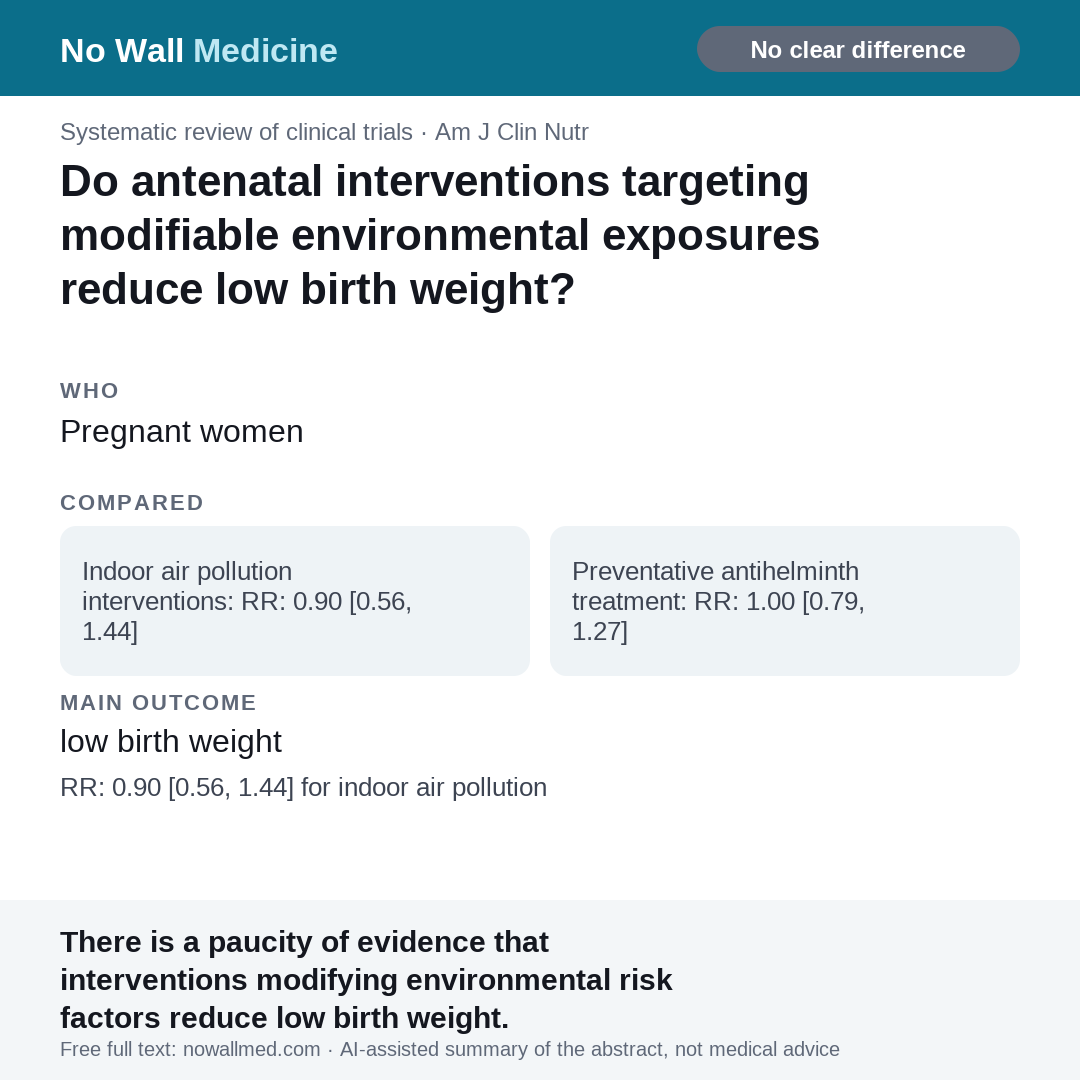
A modular systematic review of antenatal interventions targeting modifiable environmental exposures in improving low birth weight
Systematic review of clinical trialsNo clear difference
Do antenatal interventions targeting modifiable environmental exposures reduce low birth weight?
Who
Pregnant women
Compared
Indoor air pollution interventions: RR: 0.90 [0.56, 1.44]
Preventative antihelminth treatment: RR: 1.00 [0.79, 1.27]
Main outcome
low birth weight
Result: RR: 0.90 [0.56, 1.44] for indoor air pollution
Bottom line: There is a paucity of evidence that interventions modifying environmental risk factors reduce low birth weight.
Am J Clin Nutr · 2023-06-19Download image