Visual abstracts
New randomized trials and meta-analyses from leading journals at a glance: who was studied, what was compared, and what was found. Every paper is free to read in full.
All specialtiesCardiology 4763Oncology 4043Gastroenterology & Hepatology 1903Infectious Disease 3756Neurology 1872Psychiatry & Mental Health 2216Pulmonology 2044Critical Care 1319Endocrinology & Diabetes 2544Pediatrics 2889Surgery 2480Orthopedics & Sports Medicine 917Neurosurgery 525Cardiothoracic & Vascular Surgery 656Plastic & Reconstructive Surgery 574Nephrology 1107Rheumatology 810Hematology 1090Dermatology 611Ophthalmology 532Obstetrics & Gynecology 1645Public & Global Health 1037Radiology & Imaging 619Anesthesiology 958Urology 745ENT (Otolaryngology) 494Emergency Medicine 481Allergy & Immunology 309Geriatrics 972Family Medicine & Primary Care 534Medical Genetics & Genomics 659Pathology & Laboratory Medicine 156Physical Medicine & Rehabilitation 734Palliative Care 421Nutrition 1560Digital Health & AI 2137General Medicine 318
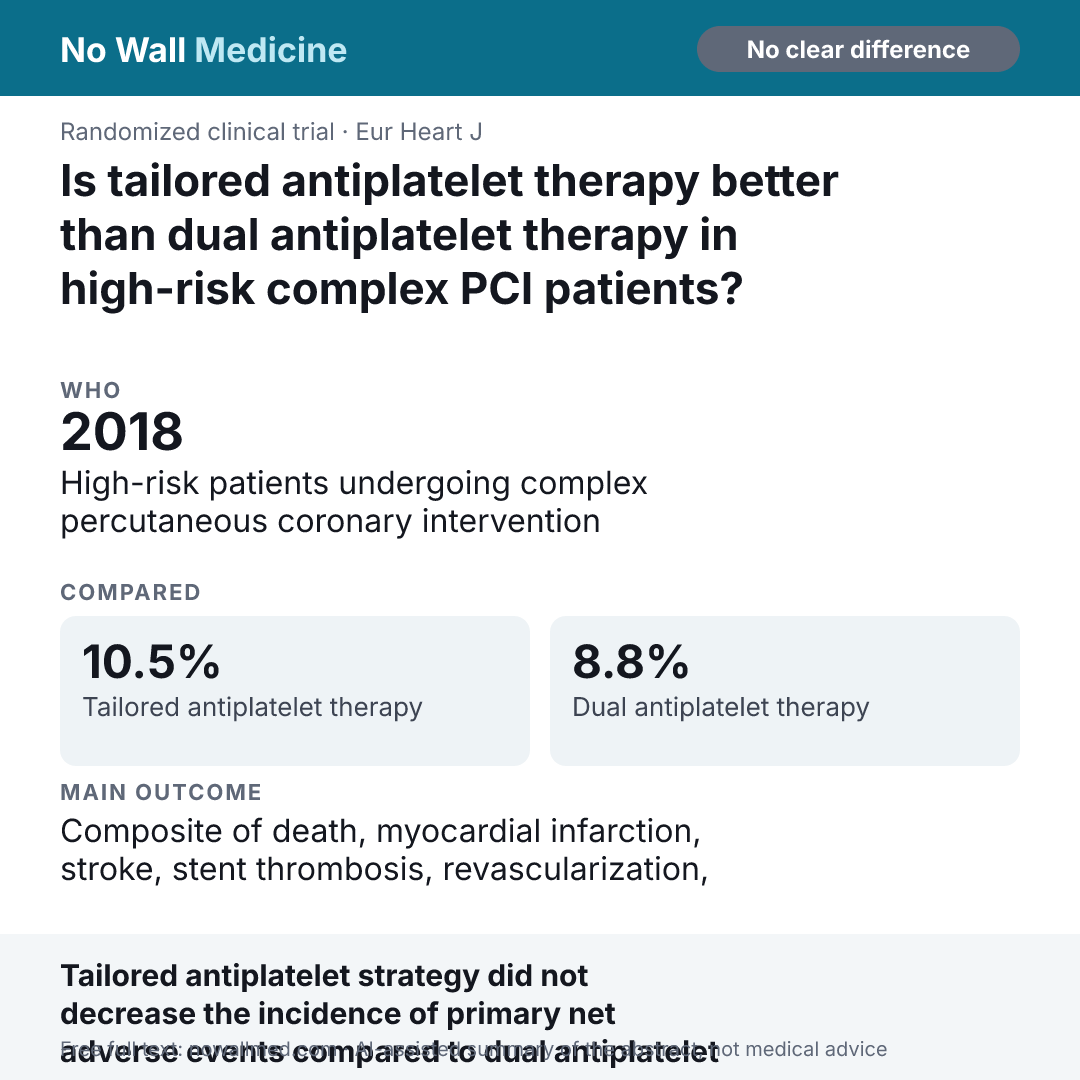
Temporal modulation of antiplatelet therapy in high-risk patients undergoing complex percutaneous coronary intervention: the TAILORED-CHIP randomized clinical trial
Randomized clinical trialNo clear difference
Is tailored antiplatelet therapy better than dual antiplatelet therapy in high-risk complex PCI patients?
Who
2018
High-risk patients undergoing complex percutaneous coronary intervention
Compared
10.5%Tailored antiplatelet therapy
8.8%Dual antiplatelet therapy
Main outcome
Composite of death, myocardial infarction, stroke, stent thrombosis, revascularization, and bleeding
Result: hazard ratio 1.19 (95% CI 0.90-1.58)
Bottom line: Tailored antiplatelet strategy did not decrease the incidence of primary net adverse events compared to dual antiplatelet therapy.
Eur Heart J · 2025-08-31 · Save PNG
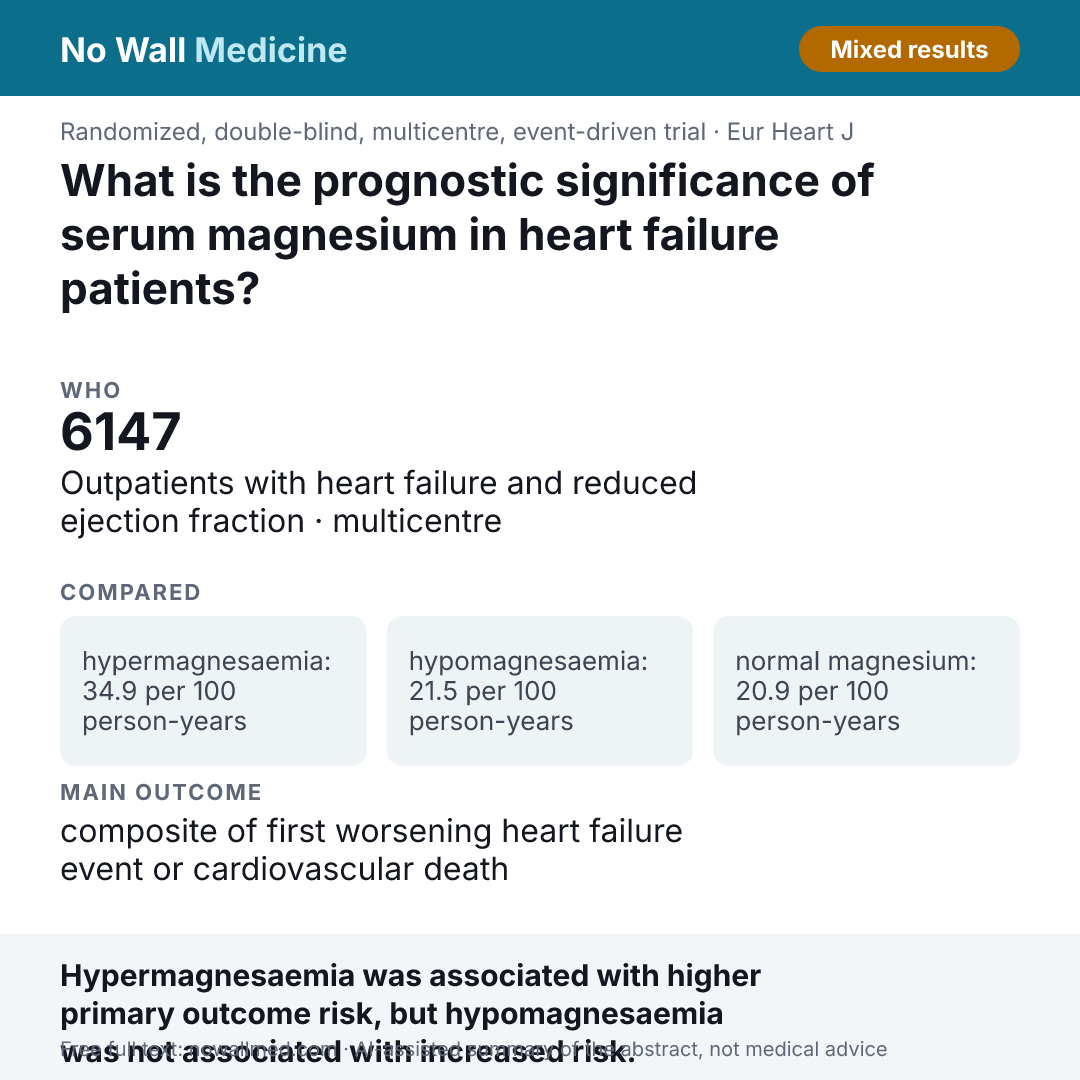
Serum magnesium and outcomes in heart failure with reduced ejection fraction: the GALACTIC-HF trial
Randomized, double-blind, multicentre, event-driven trialMixed results
What is the prognostic significance of serum magnesium in heart failure patients?
Who
6147
Outpatients with heart failure and reduced ejection fraction · multicentre
Compared
hypermagnesaemia: 34.9 per 100 person-years
hypomagnesaemia: 21.5 per 100 person-years
normal magnesium: 20.9 per 100 person-years
Main outcome
composite of first worsening heart failure event or cardiovascular death
Bottom line: Hypermagnesaemia was associated with higher primary outcome risk, but hypomagnesaemia was not associated with increased risk.
Eur Heart J · 2025-08-31 · Save PNG
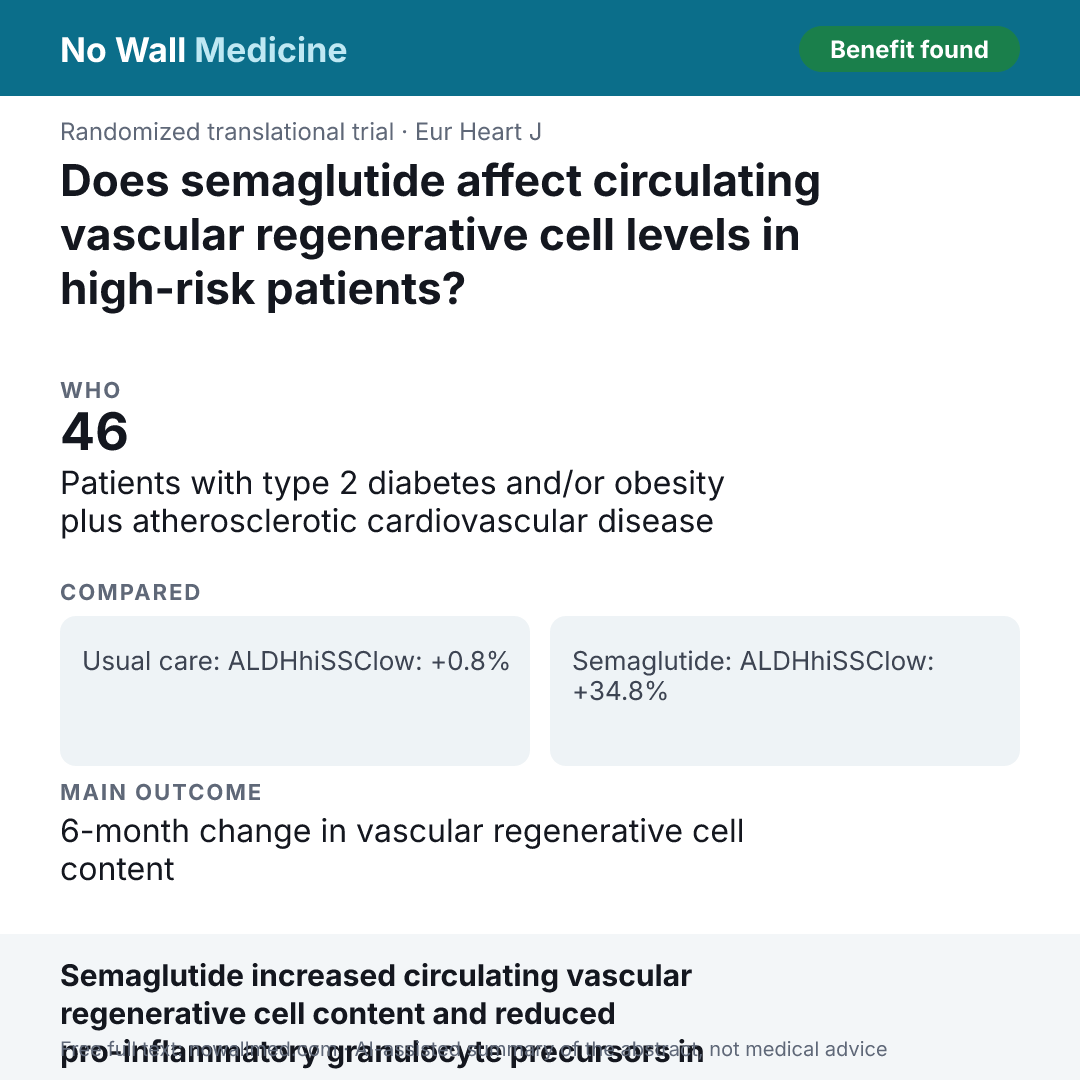
Semaglutide promotes bone marrow-derived progenitor cell flux towards an anti-inflammatory and pro-regenerative profile in high-risk patients: the SEMA-VR CardioLink-15 trial
Randomized translational trialBenefit found
Does semaglutide affect circulating vascular regenerative cell levels in high-risk patients?
Who
46
Patients with type 2 diabetes and/or obesity plus atherosclerotic cardiovascular disease
Compared
Usual care: ALDHhiSSClow: +0.8%
Semaglutide: ALDHhiSSClow: +34.8%
Main outcome
6-month change in vascular regenerative cell content
Bottom line: Semaglutide increased circulating vascular regenerative cell content and reduced pro-inflammatory granulocyte precursors in high-risk patients.
Eur Heart J · 2025-08-31 · Save PNG
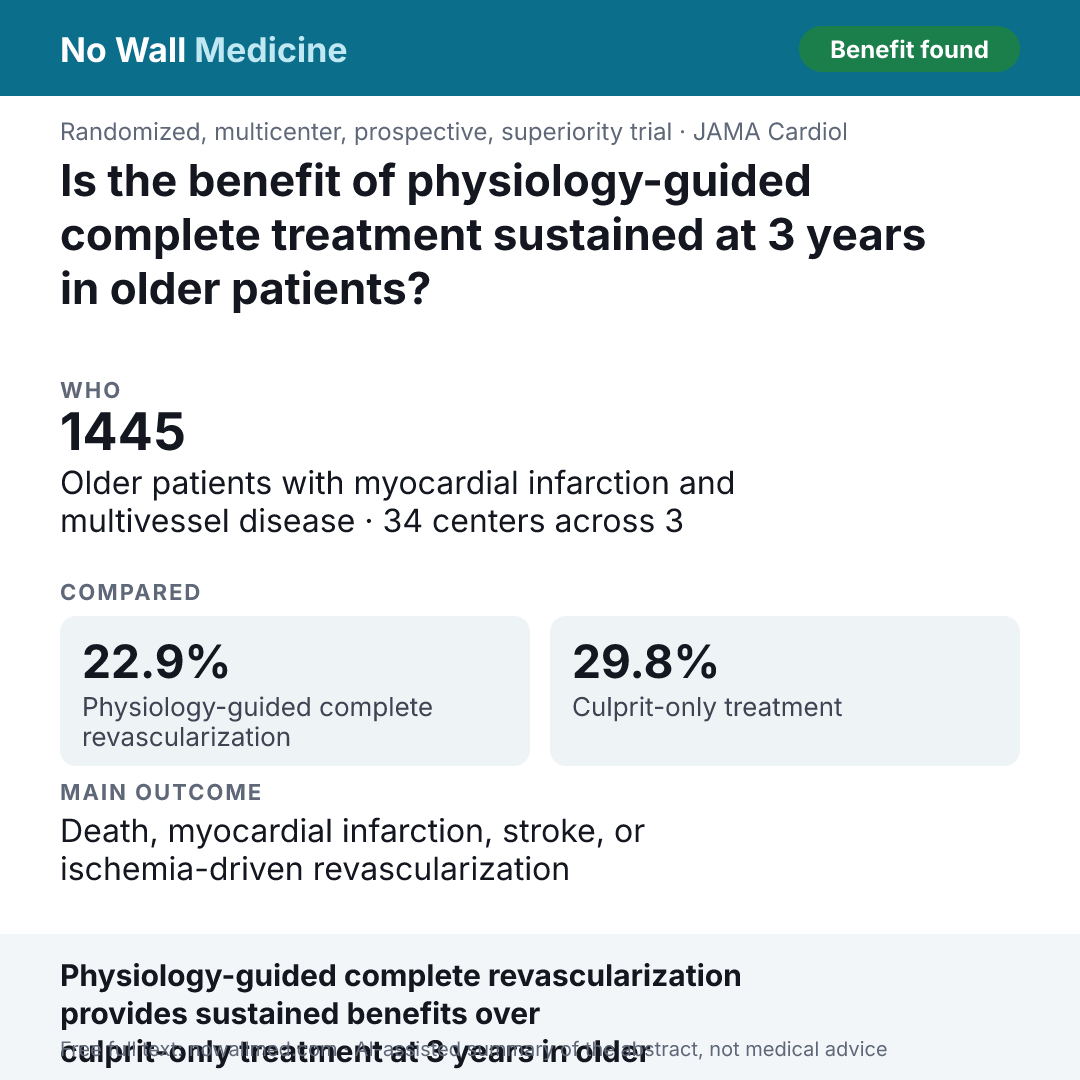
Physiology-Guided Complete Revascularization in Older Patients With Myocardial Infarction: Three-Year Outcomes of a Randomized Clinical Trial
Randomized, multicenter, prospective, superiority trialBenefit found
Is the benefit of physiology-guided complete treatment sustained at 3 years in older patients?
Who
1445
Older patients with myocardial infarction and multivessel disease · 34 centers across 3 countries
Compared
22.9%Physiology-guided complete revascularization
29.8%Culprit-only treatment
Main outcome
Death, myocardial infarction, stroke, or ischemia-driven revascularization
Result: hazard ratio 0.72 (95% CI 0.58-0.88)
Bottom line: Physiology-guided complete revascularization provides sustained benefits over culprit-only treatment at 3 years in older patients.
JAMA Cardiol · 2025-08-31 · Save PNG
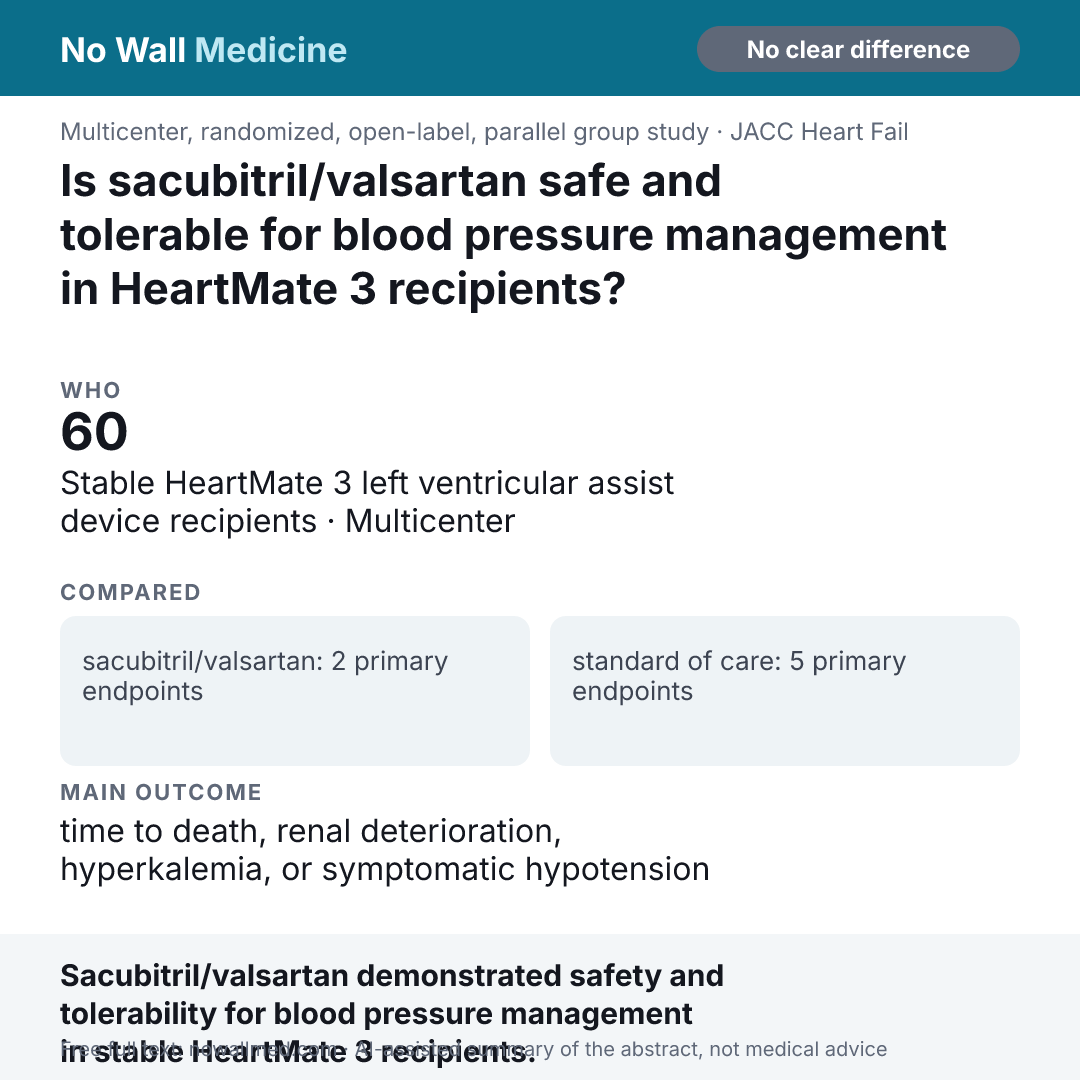
Angiotensin-Neprilysin Inhibition and Left Ventricular Assist Device Therapy: Primary Results of the ENVAD-HF Trial
Multicenter, randomized, open-label, parallel group studyNo clear difference
Is sacubitril/valsartan safe and tolerable for blood pressure management in HeartMate 3 recipients?
Who
60
Stable HeartMate 3 left ventricular assist device recipients · Multicenter
Compared
sacubitril/valsartan: 2 primary endpoints
standard of care: 5 primary endpoints
Main outcome
time to death, renal deterioration, hyperkalemia, or symptomatic hypotension
Result: hazard ratio 0.42 (95% CI: 0.08-2.18)
Bottom line: Sacubitril/valsartan demonstrated safety and tolerability for blood pressure management in stable HeartMate 3 recipients.
JACC Heart Fail · 2025-08-31 · Save PNG
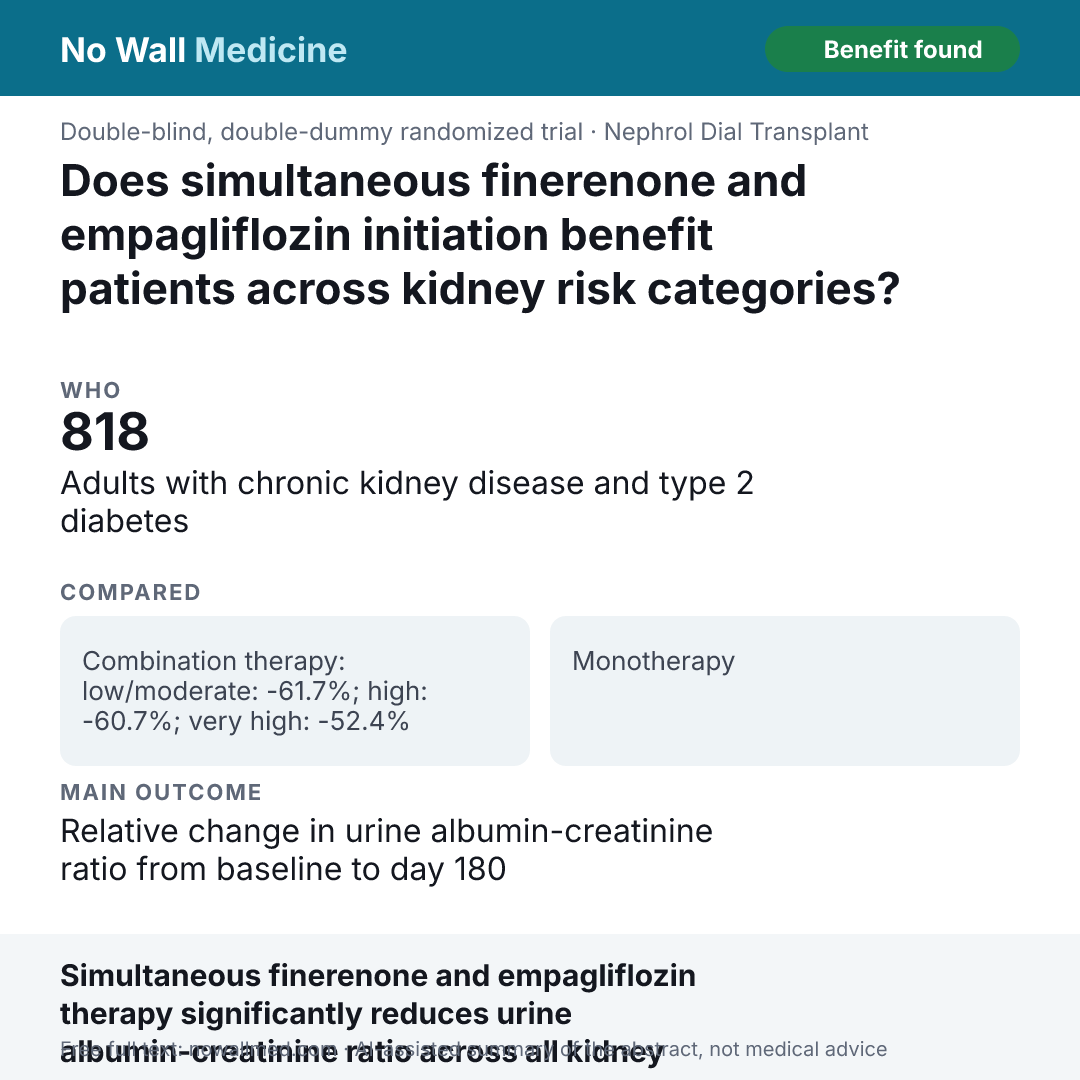
Simultaneous initiation of finerenone and empagliflozin across the spectrum of kidney risk in the CONFIDENCE trial
Double-blind, double-dummy randomized trialBenefit found
Does simultaneous finerenone and empagliflozin initiation benefit patients across kidney risk categories?
Who
818
Adults with chronic kidney disease and type 2 diabetes
Compared
Combination therapy: low/moderate: -61.7%; high: -60.7%; very high: -52.4%
Monotherapy
Main outcome
Relative change in urine albumin-creatinine ratio from baseline to day 180
Bottom line: Simultaneous finerenone and empagliflozin therapy significantly reduces urine albumin-creatinine ratio across all kidney disease risk categories.
Nephrol Dial Transplant · 2025-08-31 · Save PNG
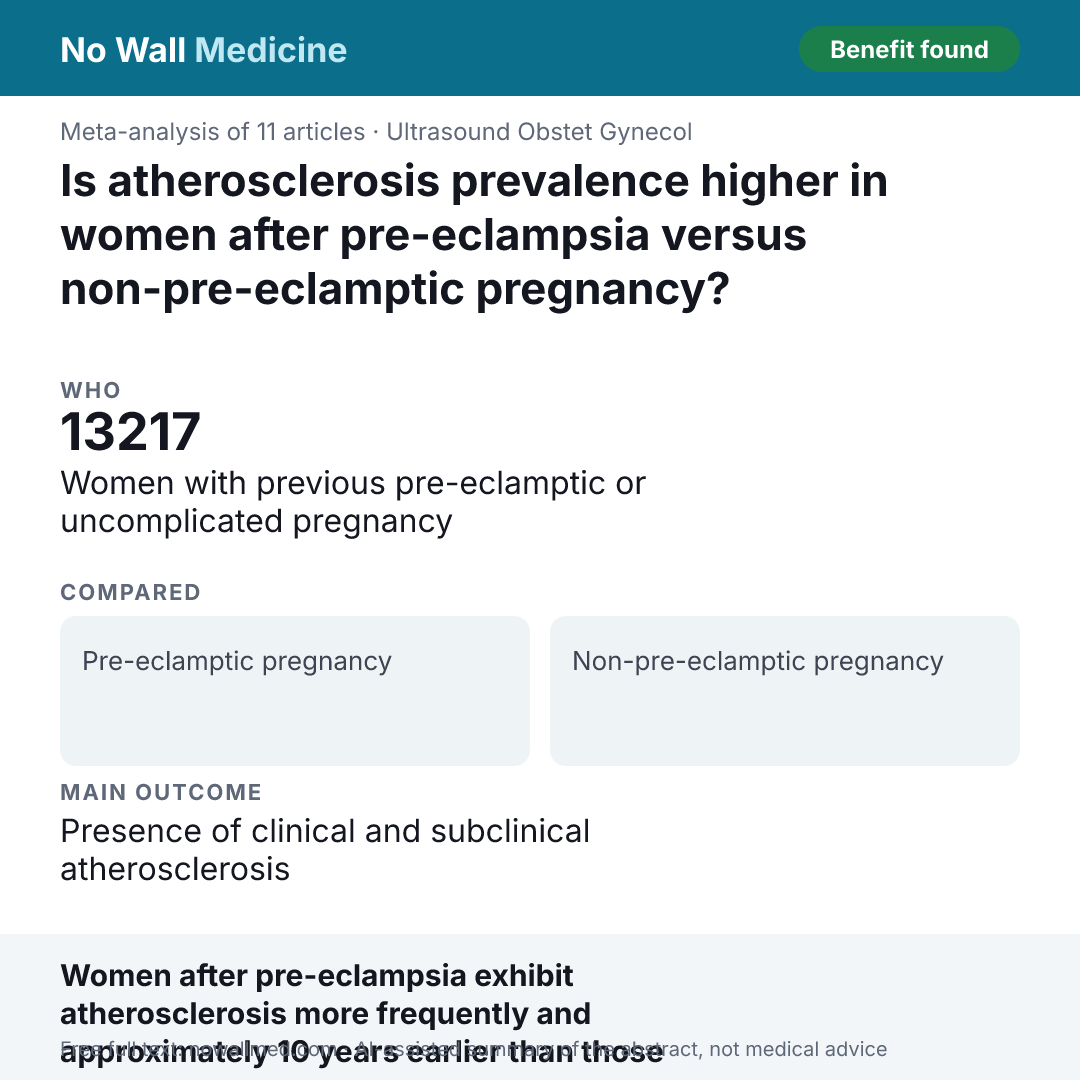
Atherosclerosis after pre-eclampsia: systematic review and meta-analysis
Meta-analysis of 11 articlesBenefit found
Is atherosclerosis prevalence higher in women after pre-eclampsia versus non-pre-eclamptic pregnancy?
Who
13217
Women with previous pre-eclamptic or uncomplicated pregnancy
Compared
Pre-eclamptic pregnancy
Non-pre-eclamptic pregnancy
Main outcome
Presence of clinical and subclinical atherosclerosis
Result: odds ratio 1.57 (95% CI 1.39-1.78)
Bottom line: Women after pre-eclampsia exhibit atherosclerosis more frequently and approximately 10 years earlier than those with uncomplicated pregnancies.
Ultrasound Obstet Gynecol · 2025-08-31 · Save PNG
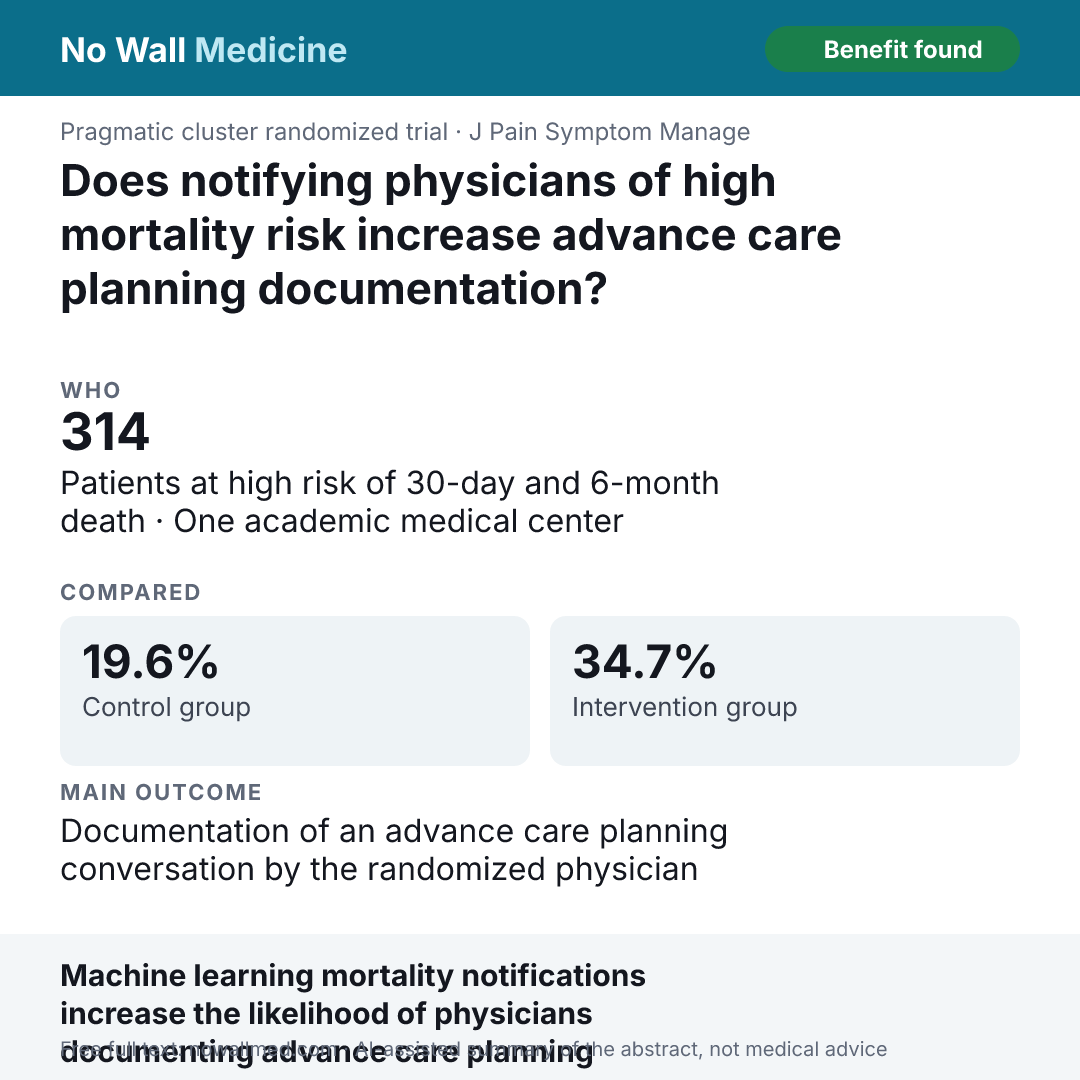
Impact of Prognostic Notifications on Inpatient Advance Care Planning: A Cluster Randomized Trial
Pragmatic cluster randomized trialBenefit found
Does notifying physicians of high mortality risk increase advance care planning documentation?
Who
314
Patients at high risk of 30-day and 6-month death · One academic medical center
Compared
19.6%Control group
34.7%Intervention group
Main outcome
Documentation of an advance care planning conversation by the randomized physician
Result: odds ratio 2.04 (95% CI 1.16-3.59)
Bottom line: Machine learning mortality notifications increase the likelihood of physicians documenting advance care planning conversations during hospitalization.
J Pain Symptom Manage · 2025-08-31 · Save PNG
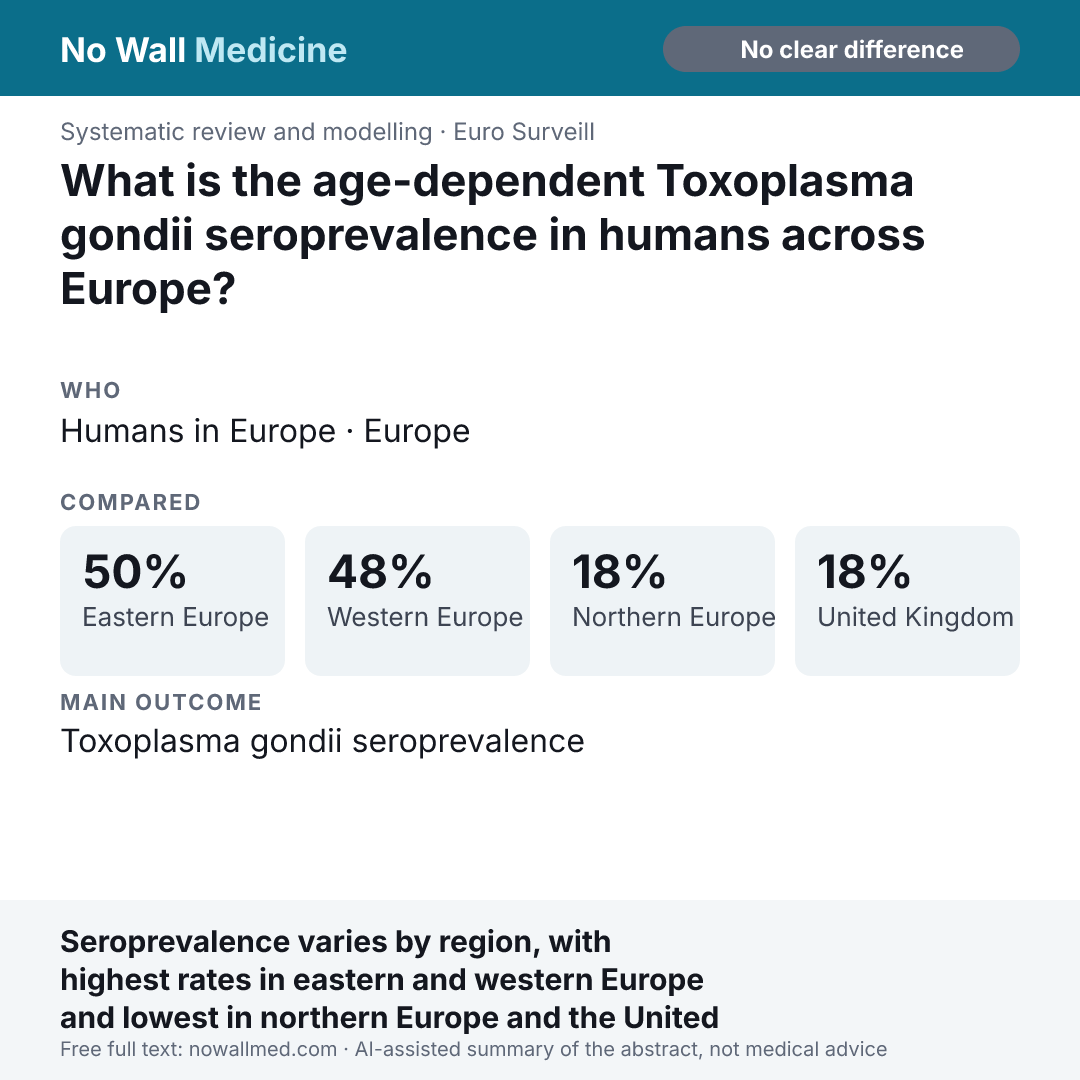
Systematic review and modelling of Toxoplasma gondii seroprevalence in humans, Europe, 2000 to 2021
Systematic review and modellingNo clear difference
What is the age-dependent Toxoplasma gondii seroprevalence in humans across Europe?
Who
Humans in Europe · Europe
Compared
50%Eastern Europe
48%Western Europe
18%Northern Europe
18%United Kingdom
Main outcome
Toxoplasma gondii seroprevalence
Bottom line: Seroprevalence varies by region, with highest rates in eastern and western Europe and lowest in northern Europe and the United Kingdom.
Euro Surveill · 2025-08-31 · Save PNG
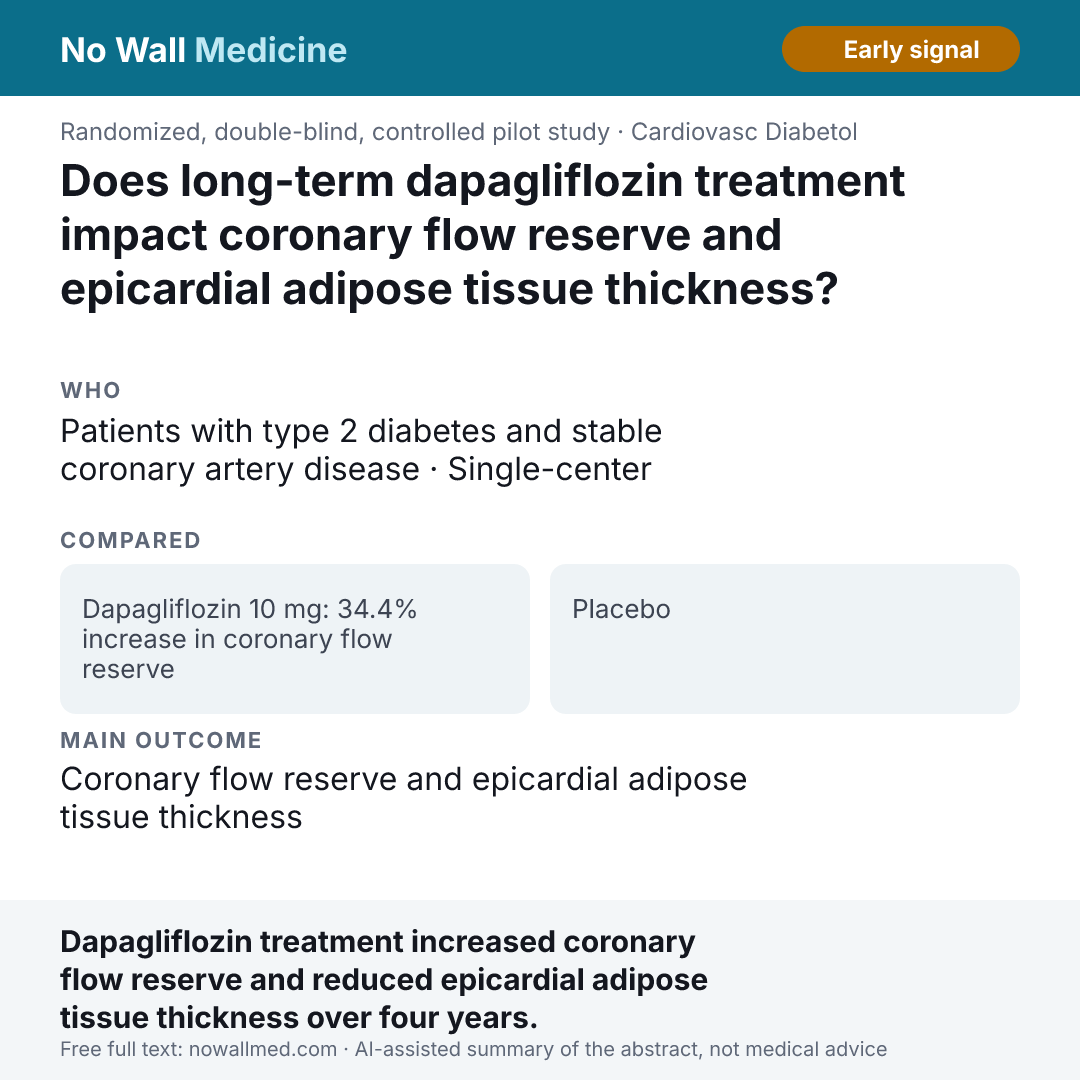
Coronary flow reserve increase after 4-year dapagliflozin treatment in patients with type 2 diabetes: the DAPAHEART follow-up study
Randomized, double-blind, controlled pilot studyEarly signal
Does long-term dapagliflozin treatment impact coronary flow reserve and epicardial adipose tissue thickness?
Who
Patients with type 2 diabetes and stable coronary artery disease · Single-center
Compared
Dapagliflozin 10 mg: 34.4% increase in coronary flow reserve
Placebo
Main outcome
Coronary flow reserve and epicardial adipose tissue thickness
Bottom line: Dapagliflozin treatment increased coronary flow reserve and reduced epicardial adipose tissue thickness over four years.
Limitation: This was a pilot study.
Cardiovasc Diabetol · 2025-08-31 · Save PNG
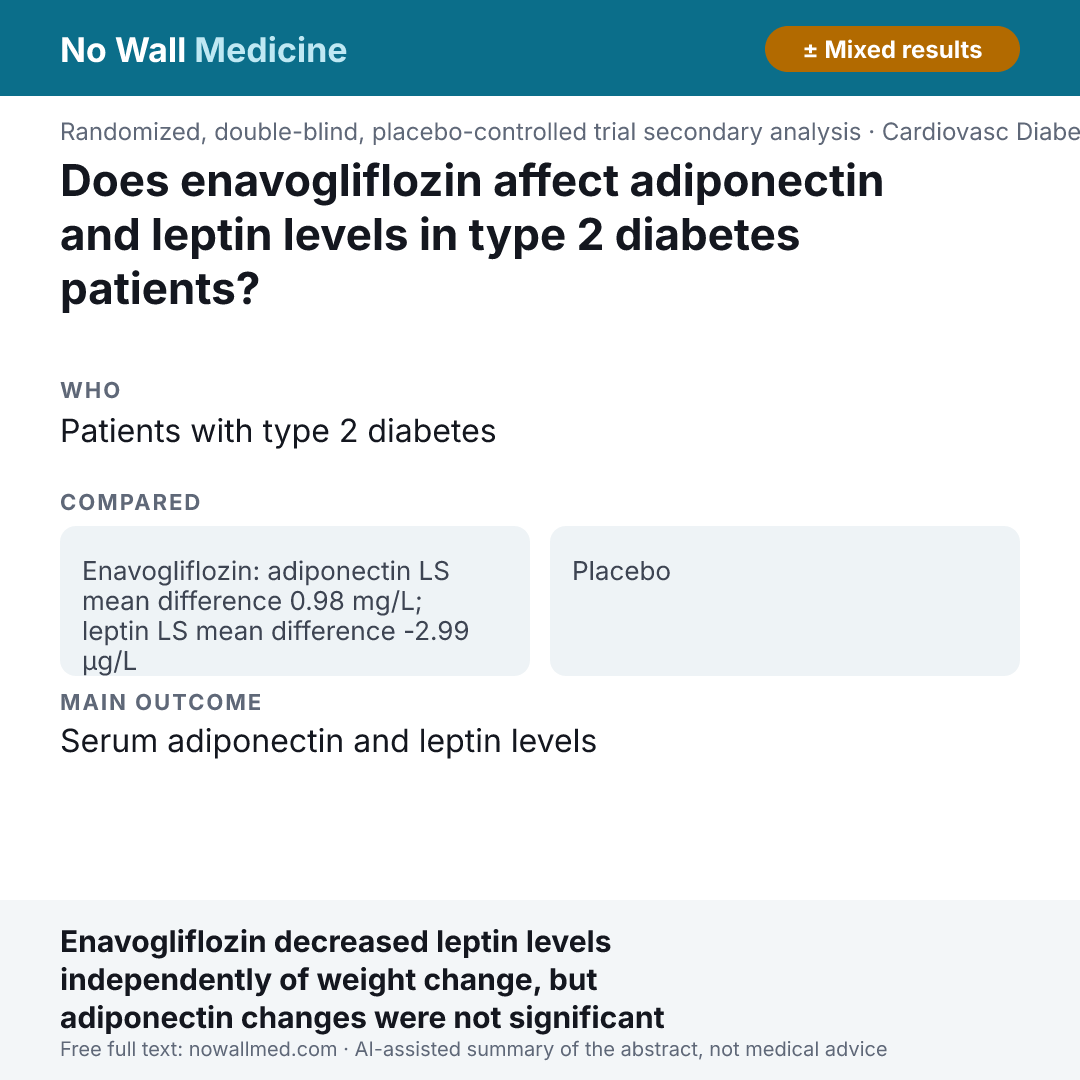
Weight-independent amelioration of adipokine profile by enavogliflozin, a selective SGLT2 inhibitor, in patients with type 2 diabetes
Randomized, double-blind, placebo-controlled trial secondary analysisMixed results
Does enavogliflozin affect adiponectin and leptin levels in type 2 diabetes patients?
Who
Patients with type 2 diabetes
Compared
Enavogliflozin: adiponectin LS mean difference 0.98 mg/L; leptin LS mean difference -2.99 µg/L
Placebo
Main outcome
Serum adiponectin and leptin levels
Bottom line: Enavogliflozin decreased leptin levels independently of weight change, but adiponectin changes were not significant after adjusting for weight.
Limitation: This was a secondary analysis of a phase III trial.
Cardiovasc Diabetol · 2025-08-31 · Save PNG
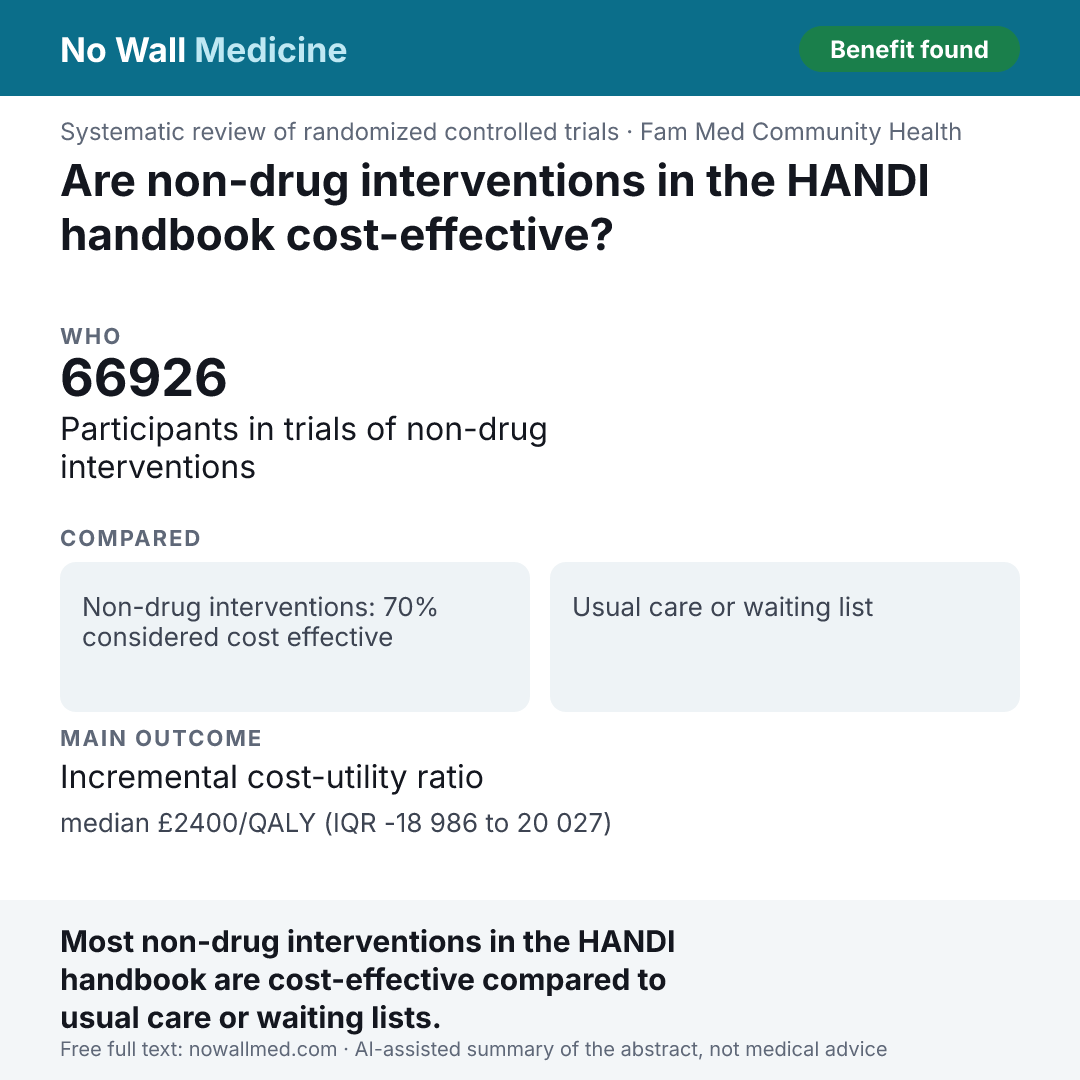
Trial-based economic evaluations of non-drug interventions in the Royal Australian College of General Practitioners (RACGP) Handbook of Non-Drug Interventions in primary care: a systemic review
Systematic review of randomized controlled trialsBenefit found
Are non-drug interventions in the HANDI handbook cost-effective?
Who
66926
Participants in trials of non-drug interventions
Compared
Non-drug interventions: 70% considered cost effective
Usual care or waiting list
Main outcome
Incremental cost-utility ratio
Result: median £2400/QALY (IQR -18 986 to 20 027)
Bottom line: Most non-drug interventions in the HANDI handbook are cost-effective compared to usual care or waiting lists.
Fam Med Community Health · 2025-08-31 · Save PNG
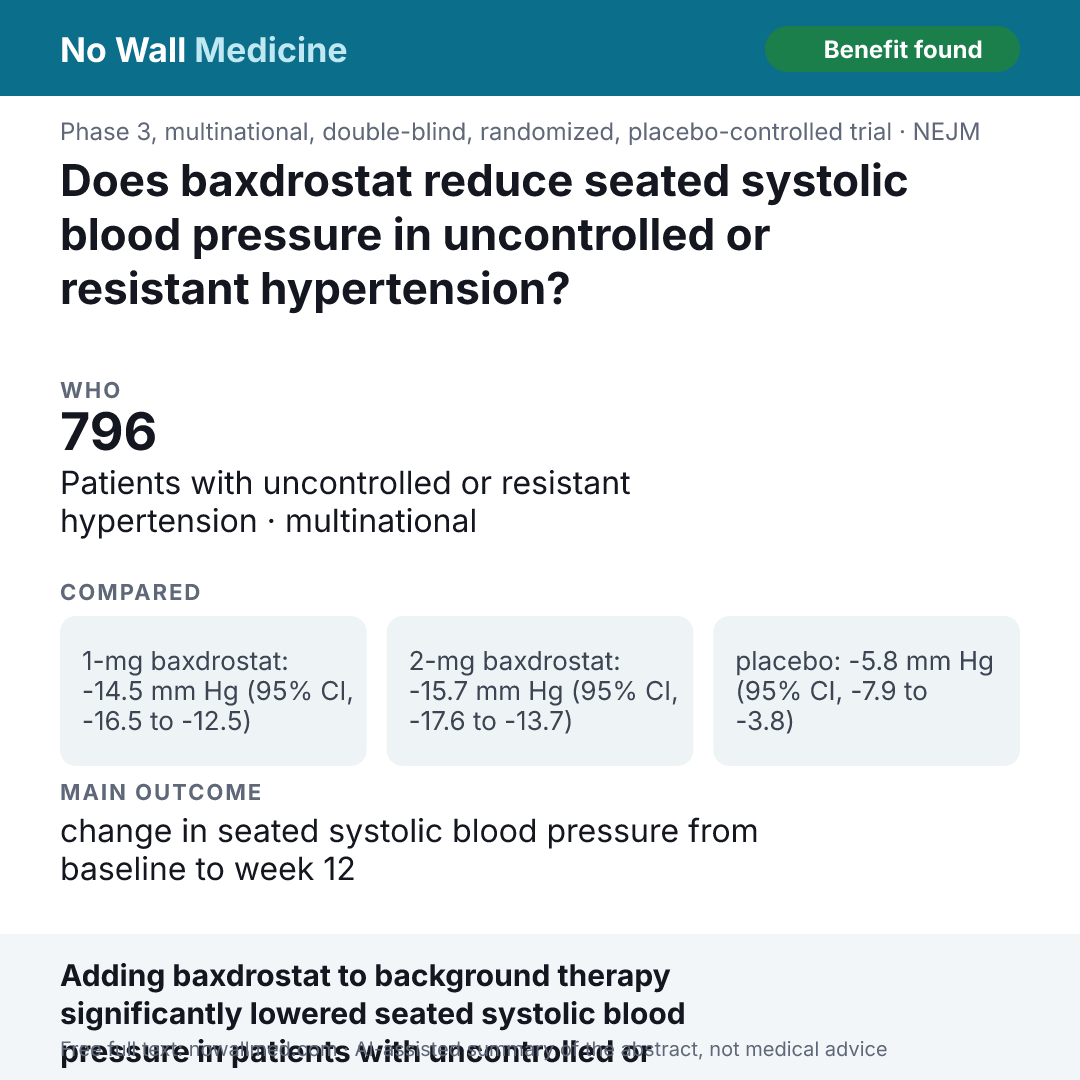
Efficacy and Safety of Baxdrostat in Uncontrolled and Resistant Hypertension
Phase 3, multinational, double-blind, randomized, placebo-controlled trialBenefit found
Does baxdrostat reduce seated systolic blood pressure in uncontrolled or resistant hypertension?
Who
796
Patients with uncontrolled or resistant hypertension · multinational
Compared
1-mg baxdrostat: -14.5 mm Hg (95% CI, -16.5 to -12.5)
2-mg baxdrostat: -15.7 mm Hg (95% CI, -17.6 to -13.7)
placebo: -5.8 mm Hg (95% CI, -7.9 to -3.8)
Main outcome
change in seated systolic blood pressure from baseline to week 12
Result: -8.7 mm Hg (95% CI, -11.5 to -5.8) with 1-mg and -9.8 mm Hg (95% CI, -12.6 to -7.0) with 2-mg
Bottom line: Adding baxdrostat to background therapy significantly lowered seated systolic blood pressure in patients with uncontrolled or resistant hypertension.
Funded by: AstraZeneca and others
NEJM · 2025-08-30 · Save PNG
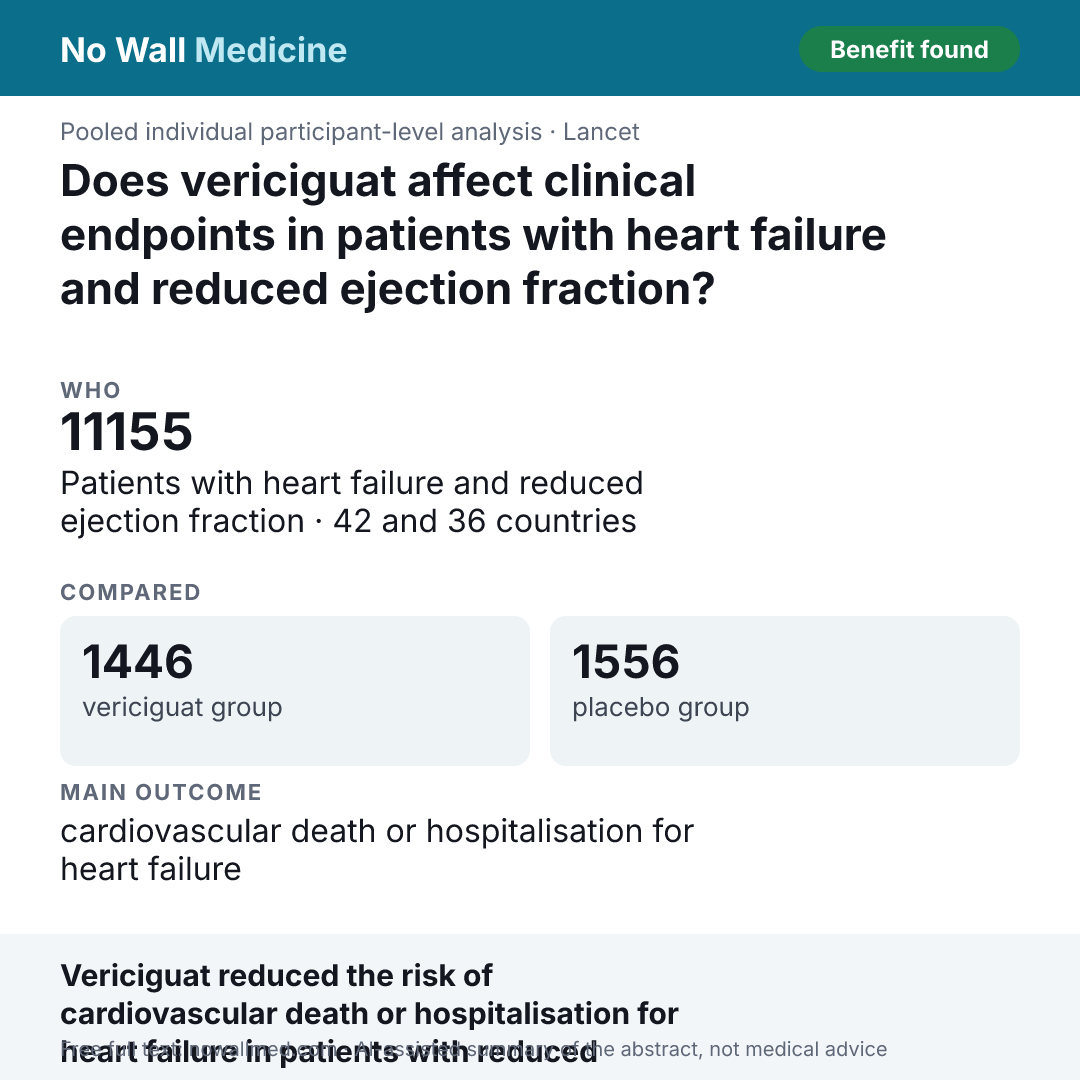
Vericiguat for patients with heart failure and reduced ejection fraction across the risk spectrum: an individual participant data analysis of the VICTORIA and VICTOR trials
Pooled individual participant-level analysisBenefit found
Does vericiguat affect clinical endpoints in patients with heart failure and reduced ejection fraction?
Who
11155
Patients with heart failure and reduced ejection fraction · 42 and 36 countries
Compared
1446vericiguat group (25·9%)
1556placebo group (27·9%)
Main outcome
cardiovascular death or hospitalisation for heart failure
Result: hazard ratio 0·91 (95% CI 0·85-0·98)
Bottom line: Vericiguat reduced the risk of cardiovascular death or hospitalisation for heart failure in patients with reduced ejection fraction.
Funded by: Merck Sharp & Dohme and Bayer
Lancet · 2025-08-30 · Save PNG
Provision of gender-affirming hormones for trans and gender-diverse adults: a systematic review of health and quality of life outcomes, values and preferences, and costs
Systematic reviewBenefit, low certainty
What are the health, quality of life, values, preferences, and cost outcomes of gender-affirming hormones?
Who
Transgender and gender-diverse adults
Compared
Received gender-affirming hormones
Did not receive gender-affirming hormones
Main outcome
Health, quality of life, values, preferences, and costs
Bottom line: Gender-affirming hormones may improve mental health and quality of life with no evidence of substantive harms.
Limitation: Uncontrolled longitudinal studies had serious to critical risk of bias.
Funded by: World Health Organization, Elton John AIDS Foundation, Bill and Melinda Gates Foundation
eClinicalMedicine · 2025-08-30 · Save PNG

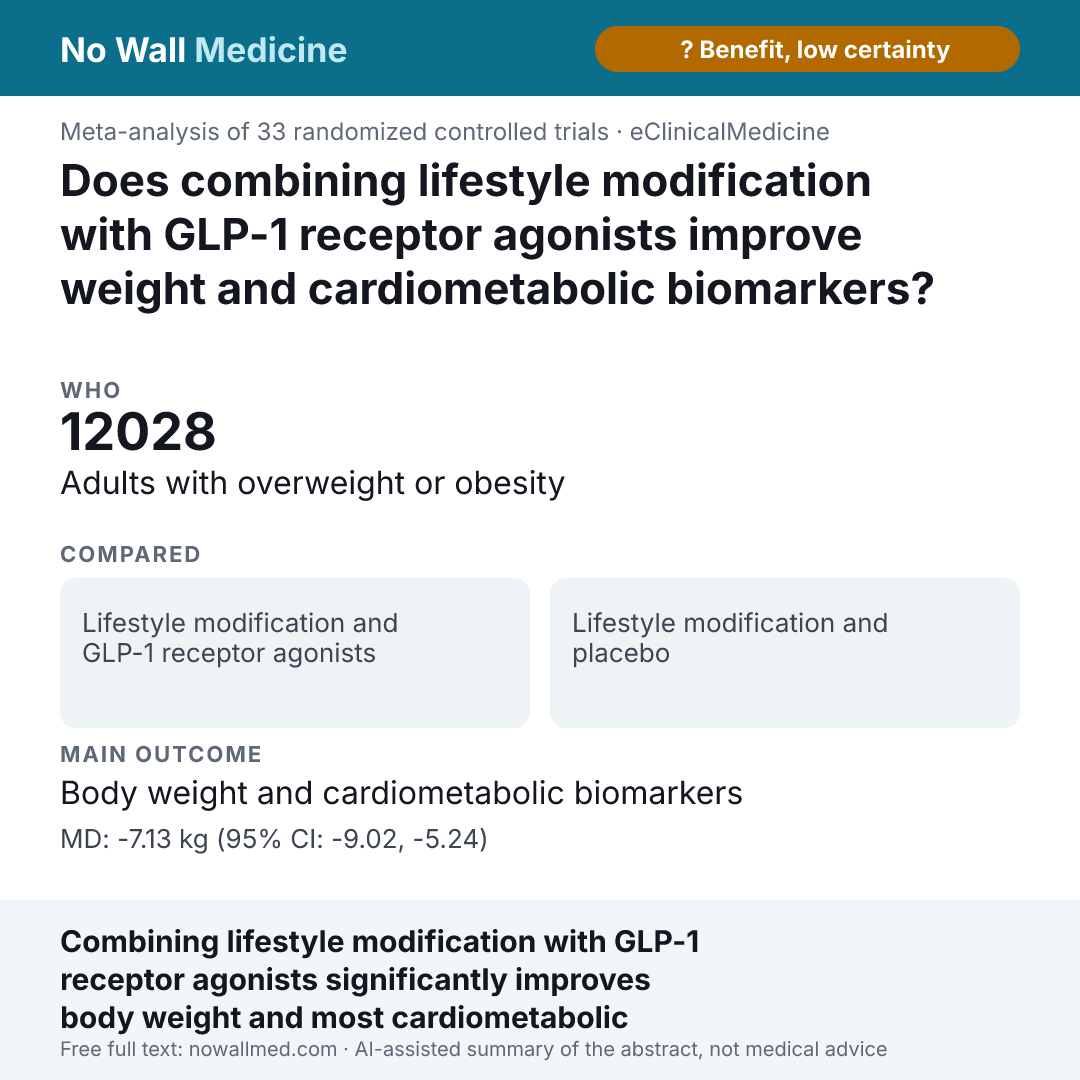
Efficacy of lifestyle modification combined with GLP-1 receptor agonists on body weight and cardiometabolic biomarkers in individuals with overweight or obesity: a systematic review and meta-analysis
Meta-analysis of 33 randomized controlled trialsBenefit, low certainty
Does combining lifestyle modification with GLP-1 receptor agonists improve weight and cardiometabolic biomarkers?
Who
12028
Adults with overweight or obesity
Compared
Lifestyle modification and GLP-1 receptor agonists
Lifestyle modification and placebo
Main outcome
Body weight and cardiometabolic biomarkers
Result: MD: -7.13 kg (95% CI: -9.02, -5.24)
Bottom line: Combining lifestyle modification with GLP-1 receptor agonists significantly improves body weight and most cardiometabolic biomarkers.
Limitation: Certainty of evidence varied from low to high, influenced by heterogeneity and potential publication bias.
Funded by: Shanghai Jiao Tong University
eClinicalMedicine · 2025-08-30 · Save PNG
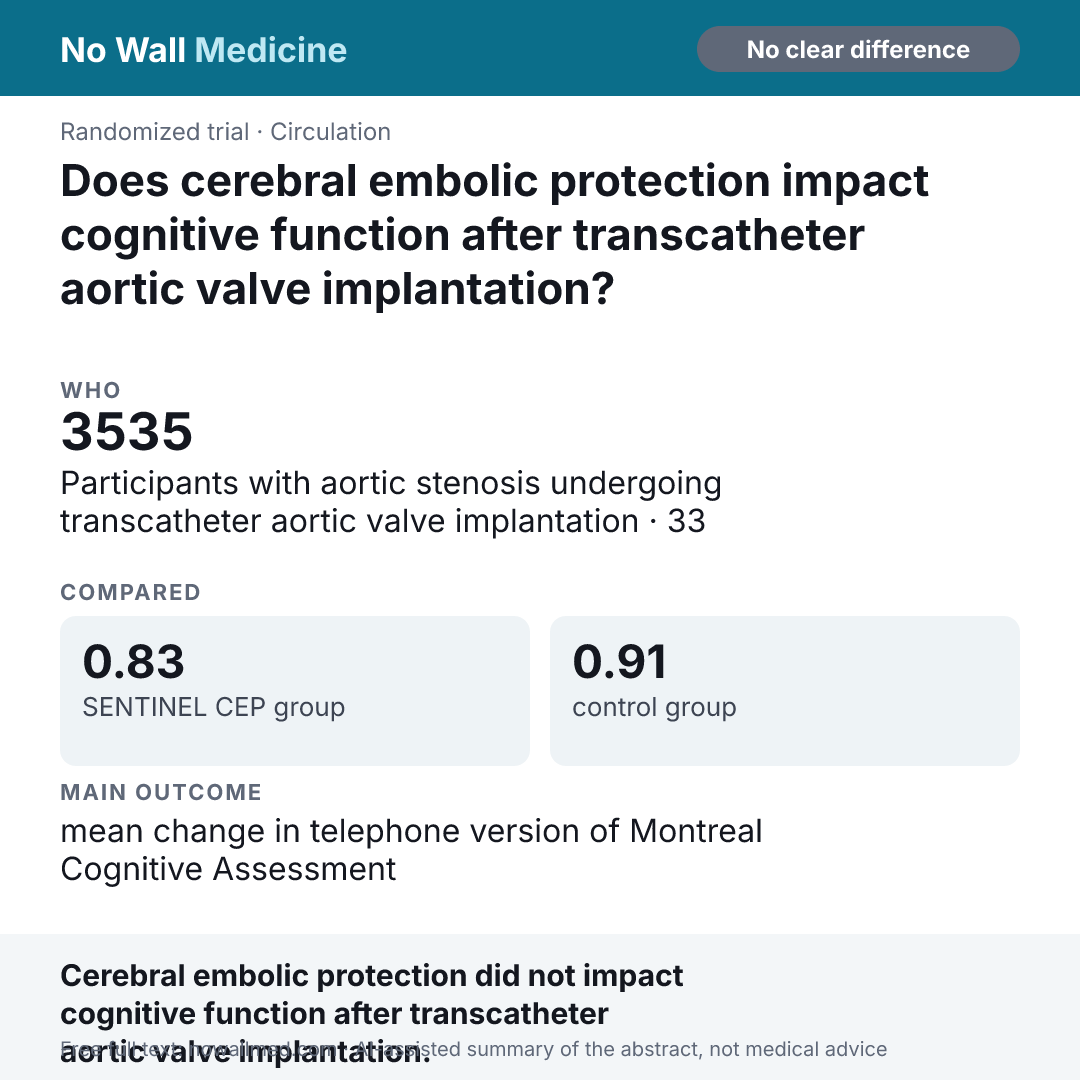
Impact of Cerebral Embolic Protection on Cognitive Function After Transcatheter Aortic Valve Implantation: Data From the BHF PROTECT-TAVI Randomized Trial
Randomized trialNo clear difference
Does cerebral embolic protection impact cognitive function after transcatheter aortic valve implantation?
Who
3535
Participants with aortic stenosis undergoing transcatheter aortic valve implantation · 33 centers in the United Kingdom
Compared
0.83SENTINEL CEP group (95% CI, 0.70-0.96)
0.91control group (95% CI, 0.79-1.04)
Main outcome
mean change in telephone version of Montreal Cognitive Assessment
Result: -0.07 (95% CI, -0.22 to 0.09)
Bottom line: Cerebral embolic protection did not impact cognitive function after transcatheter aortic valve implantation.
Circulation · 2025-08-30 · Save PNG
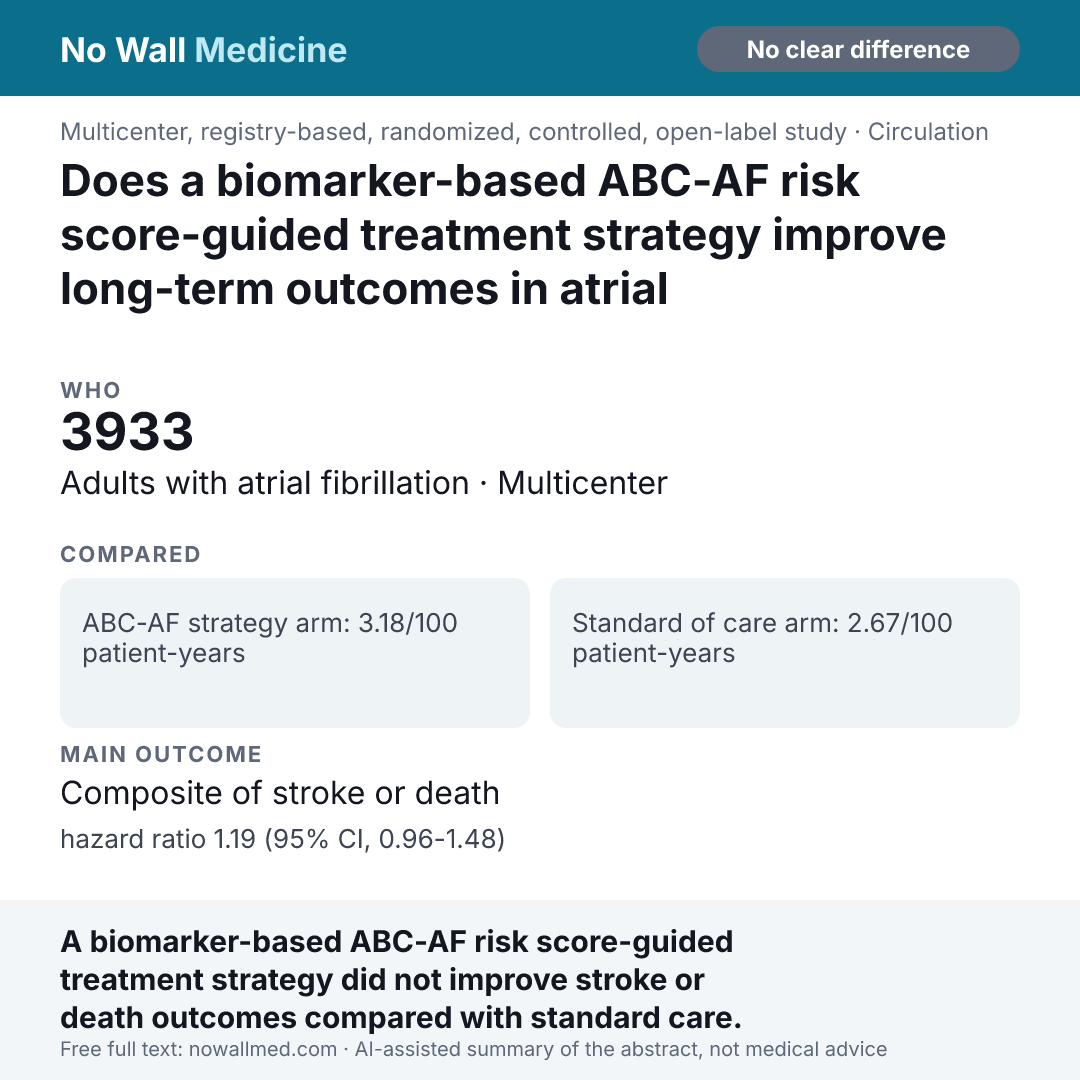
Biomarker-Based ABC-AF Risk Scores for Personalized Treatment to Reduce Stroke or Death in Atrial Fibrillation: A Registry-Based, Multicenter, Randomized, Controlled Study
Multicenter, registry-based, randomized, controlled, open-label studyNo clear difference
Does a biomarker-based ABC-AF risk score-guided treatment strategy improve long-term outcomes in atrial fibrillation?
Who
3933
Adults with atrial fibrillation · Multicenter
Compared
ABC-AF strategy arm: 3.18/100 patient-years
Standard of care arm: 2.67/100 patient-years
Main outcome
Composite of stroke or death
Result: hazard ratio 1.19 (95% CI, 0.96-1.48)
Bottom line: A biomarker-based ABC-AF risk score-guided treatment strategy did not improve stroke or death outcomes compared with standard care.
Circulation · 2025-08-30 · Save PNG
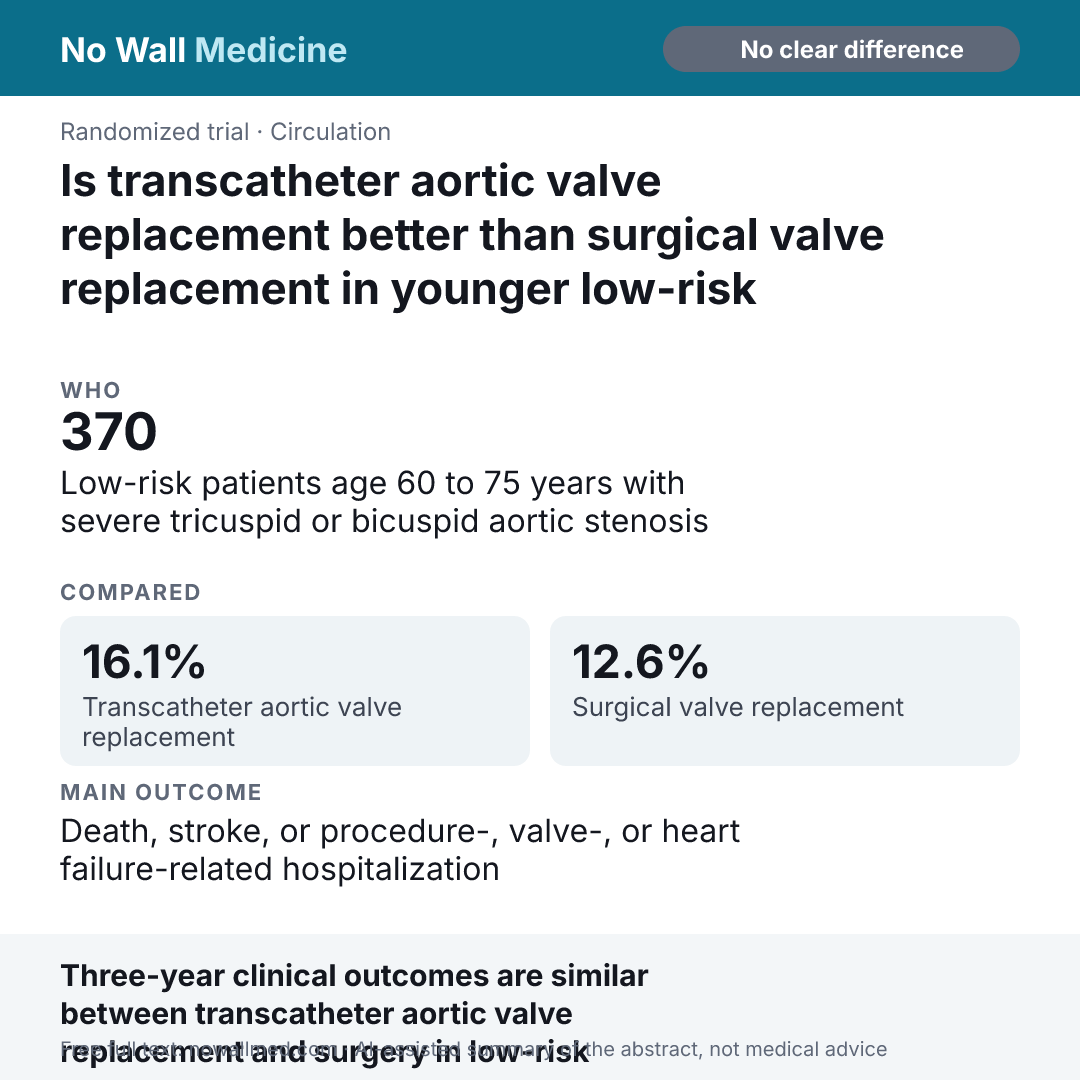
Three-Year Follow-Up of the NOTION-2 Trial: TAVR Versus SAVR to Treat Younger Low-Risk Patients With Tricuspid or Bicuspid Aortic Stenosis
Randomized trialNo clear difference
Is transcatheter aortic valve replacement better than surgical valve replacement in younger low-risk patients?
Who
370
Low-risk patients age 60 to 75 years with severe tricuspid or bicuspid aortic stenosis
Compared
16.1%Transcatheter aortic valve replacement
12.6%Surgical valve replacement
Main outcome
Death, stroke, or procedure-, valve-, or heart failure-related hospitalization
Result: hazard ratio 1.3 (95% CI 0.8-2.2%)
Bottom line: Three-year clinical outcomes are similar between transcatheter aortic valve replacement and surgery in low-risk patients.
Circulation · 2025-08-30 · Save PNG
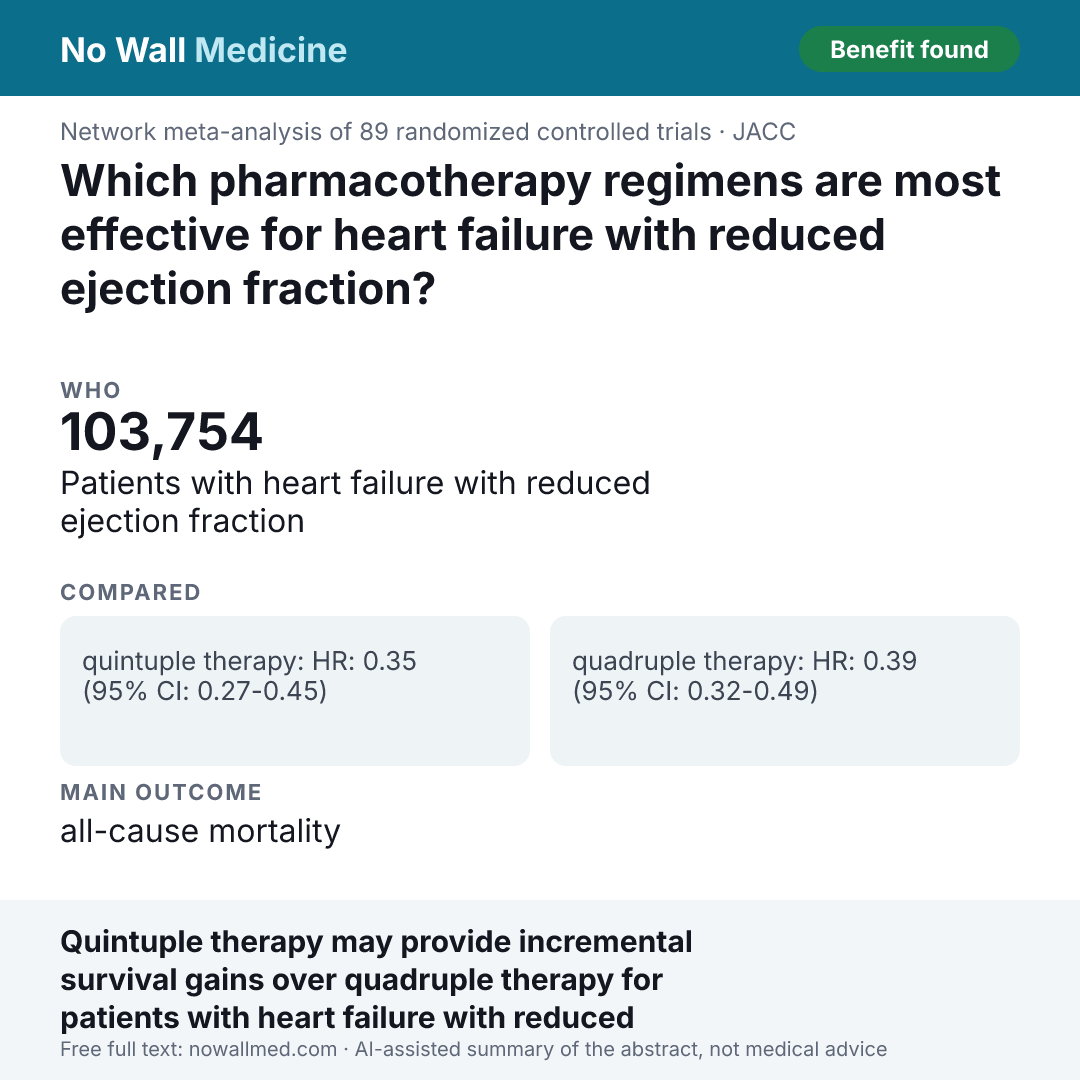
Pharmacologic Treatment of Heart Failure With Reduced Ejection Fraction: An Updated Systematic Review and Network Meta-Analysis
Network meta-analysis of 89 randomized controlled trialsBenefit found
Which pharmacotherapy regimens are most effective for heart failure with reduced ejection fraction?
Who
103,754
Patients with heart failure with reduced ejection fraction
Compared
quintuple therapy: HR: 0.35 (95% CI: 0.27-0.45)
quadruple therapy: HR: 0.39 (95% CI: 0.32-0.49)
Main outcome
all-cause mortality
Result: HR: 0.35 (95% CI: 0.27-0.45) for quintuple therapy
Bottom line: Quintuple therapy may provide incremental survival gains over quadruple therapy for patients with heart failure with reduced ejection fraction.
Limitation: results are exploratory as they are derived from a secondary endpoint of a single trial
JACC · 2025-08-30 · Save PNG