Visual abstracts
New randomized trials and meta-analyses from leading journals at a glance: who was studied, what was compared, and what was found. Every paper is free to read in full.
All specialtiesCardiology 4877Oncology 4138Gastroenterology & Hepatology 1942Infectious Disease 3837Neurology 1905Psychiatry & Mental Health 2273Pulmonology 2143Critical Care 1365Endocrinology & Diabetes 2580Pediatrics 2980Surgery 2559Orthopedics & Sports Medicine 931Neurosurgery 537Cardiothoracic & Vascular Surgery 674Plastic & Reconstructive Surgery 591Nephrology 1133Rheumatology 823Hematology 1109Dermatology 621Ophthalmology 543Obstetrics & Gynecology 1686Public & Global Health 1058Radiology & Imaging 648Anesthesiology 986Urology 764ENT (Otolaryngology) 503Emergency Medicine 511Allergy & Immunology 313Geriatrics 981Family Medicine & Primary Care 562Medical Genetics & Genomics 676Pathology & Laboratory Medicine 159Physical Medicine & Rehabilitation 757Palliative Care 444Nutrition 1588Digital Health & AI 2201General Medicine 321
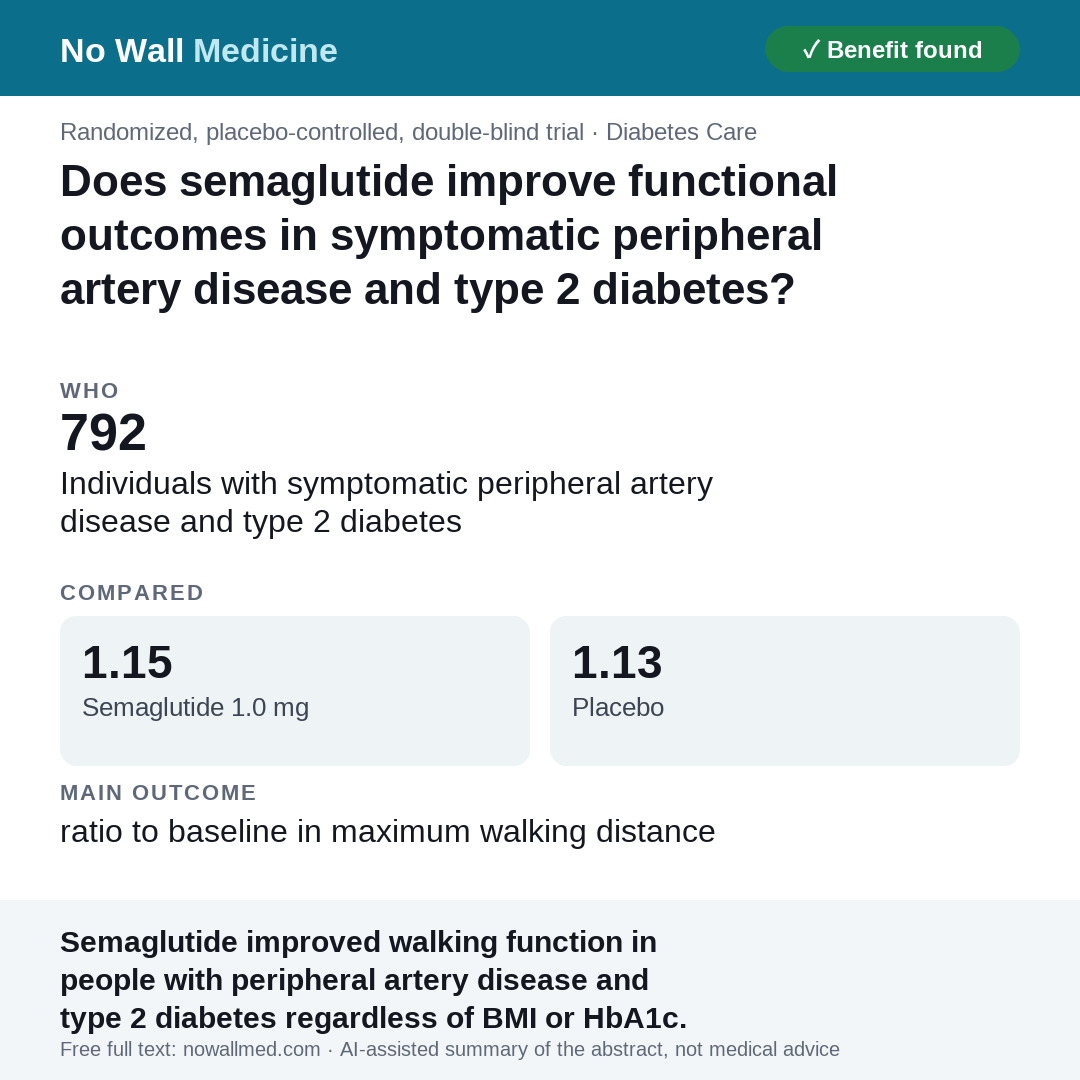
Benefit of Semaglutide in Symptomatic Peripheral Artery Disease by Baseline Type 2 Diabetes Characteristics: Insights From STRIDE, a Randomized, Placebo-Controlled, Double-Blind Trial
Randomized, placebo-controlled, double-blind trialBenefit found
Does semaglutide improve functional outcomes in symptomatic peripheral artery disease and type 2 diabetes?
Who
792
Individuals with symptomatic peripheral artery disease and type 2 diabetes
Compared
1.15Semaglutide 1.0 mg (ETR of maximum walking distance for <10 years diabetes duration)
1.13Placebo (ETR of maximum walking distance for ≥10 years diabetes duration)
Main outcome
ratio to baseline in maximum walking distance
Bottom line: Semaglutide improved walking function in people with peripheral artery disease and type 2 diabetes regardless of BMI or HbA1c.
Diabetes Care · 2025-06-21Download image
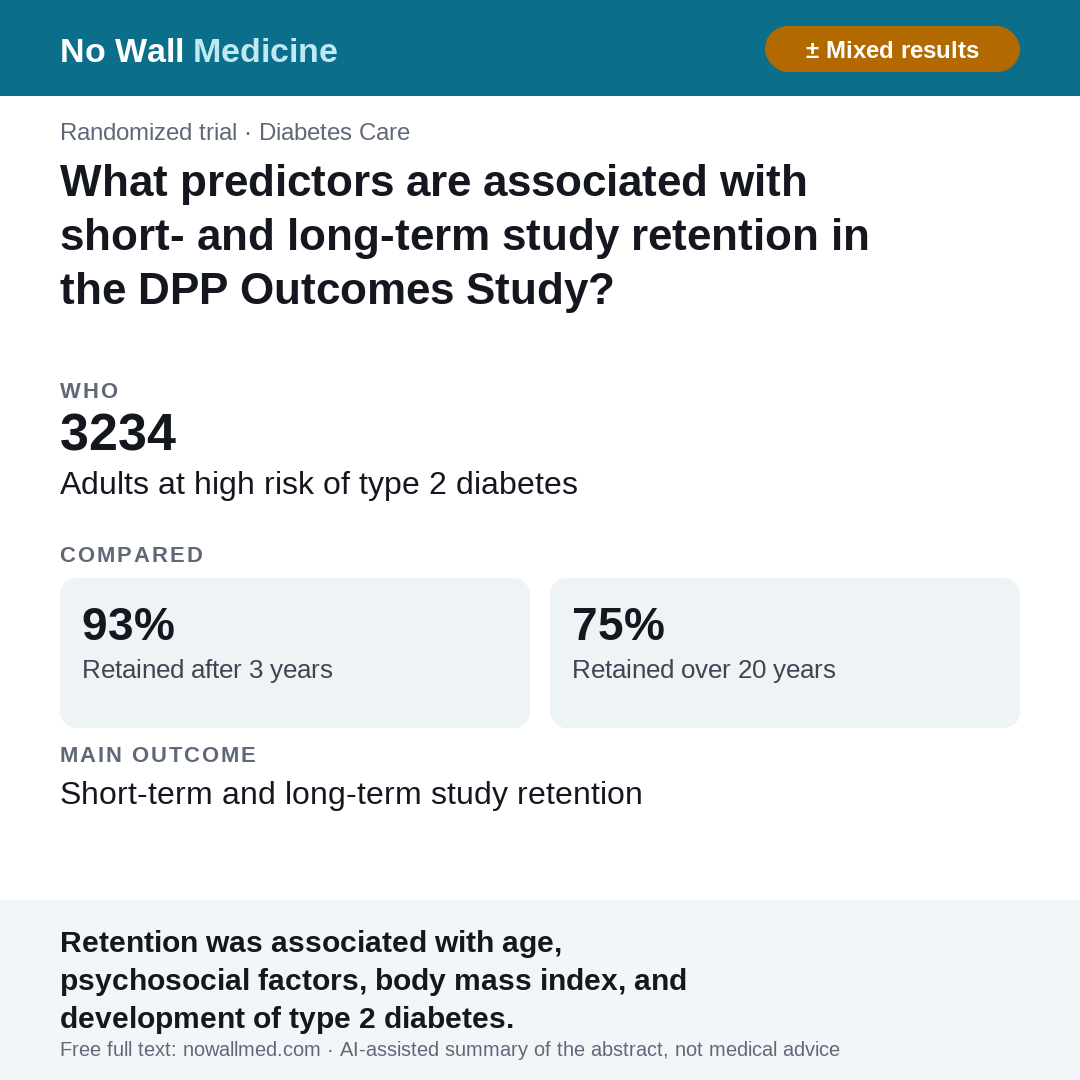
Sociodemographic, Clinical, and Psychosocial Predictors of Short- and Long-term Study Retention in the Diabetes Prevention Program (DPP) Outcomes Study (DPPOS)
Randomized trialMixed results
What predictors are associated with short- and long-term study retention in the DPP Outcomes Study?
Who
3234
Adults at high risk of type 2 diabetes
Compared
93%Retained after 3 years
75%Retained over 20 years
Main outcome
Short-term and long-term study retention
Bottom line: Retention was associated with age, psychosocial factors, body mass index, and development of type 2 diabetes.
Diabetes Care · 2025-06-21Download image
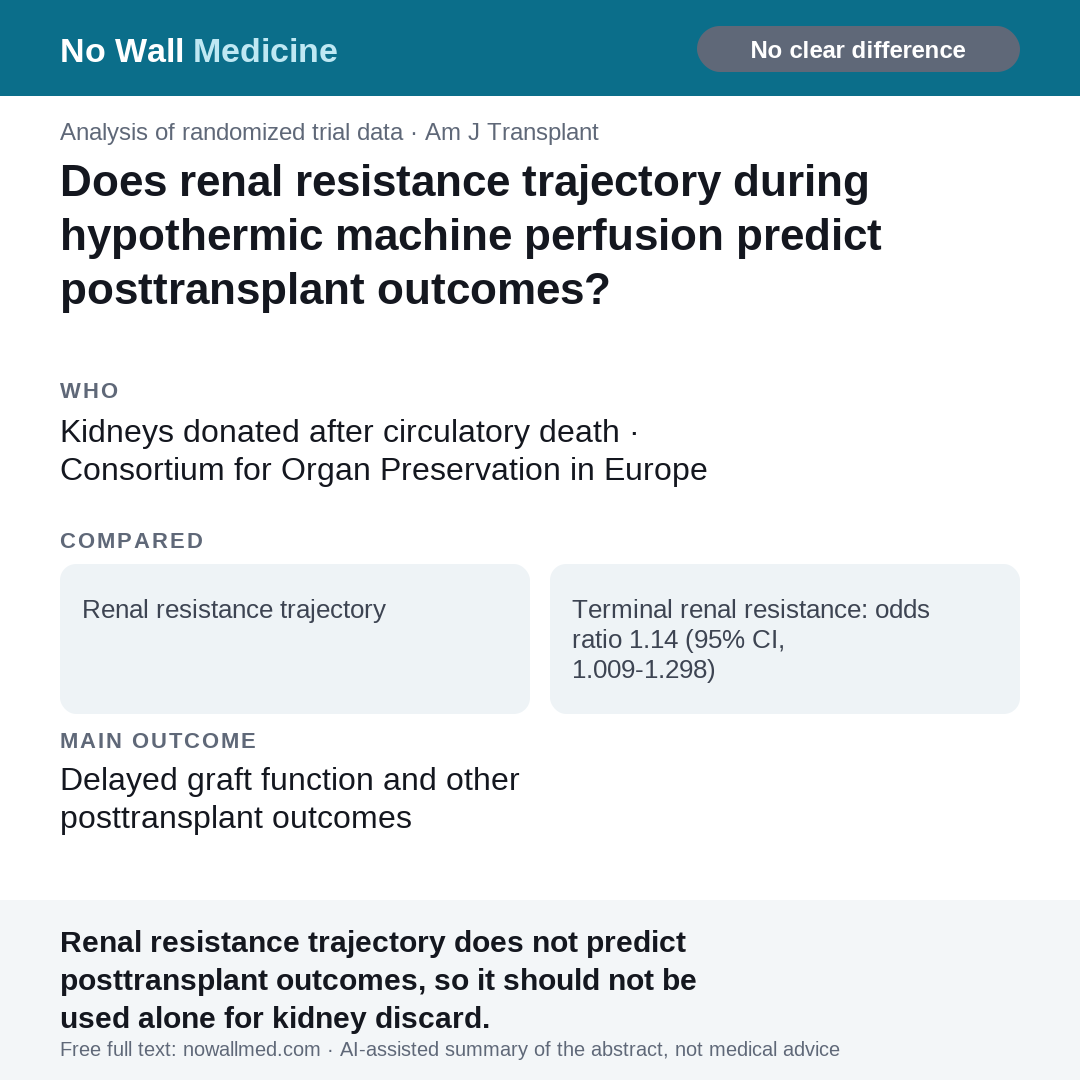
Renal resistance trajectories during hypothermic machine perfusion in kidneys donated after circulatory death: Associations with donor characteristics and posttransplant outcomes-An analysis of COMPARE trial data
Analysis of randomized trial dataNo clear difference
Does renal resistance trajectory during hypothermic machine perfusion predict posttransplant outcomes?
Who
Kidneys donated after circulatory death · Consortium for Organ Preservation in Europe
Compared
Renal resistance trajectory
Terminal renal resistance: odds ratio 1.14 (95% CI, 1.009-1.298)
Main outcome
Delayed graft function and other posttransplant outcomes
Result: odds ratio 1.14 (95% CI, 1.009-1.298)
Bottom line: Renal resistance trajectory does not predict posttransplant outcomes, so it should not be used alone for kidney discard.
Limitation: Findings call for further validation in larger, more diverse cohorts.
Am J Transplant · 2025-06-21Download image
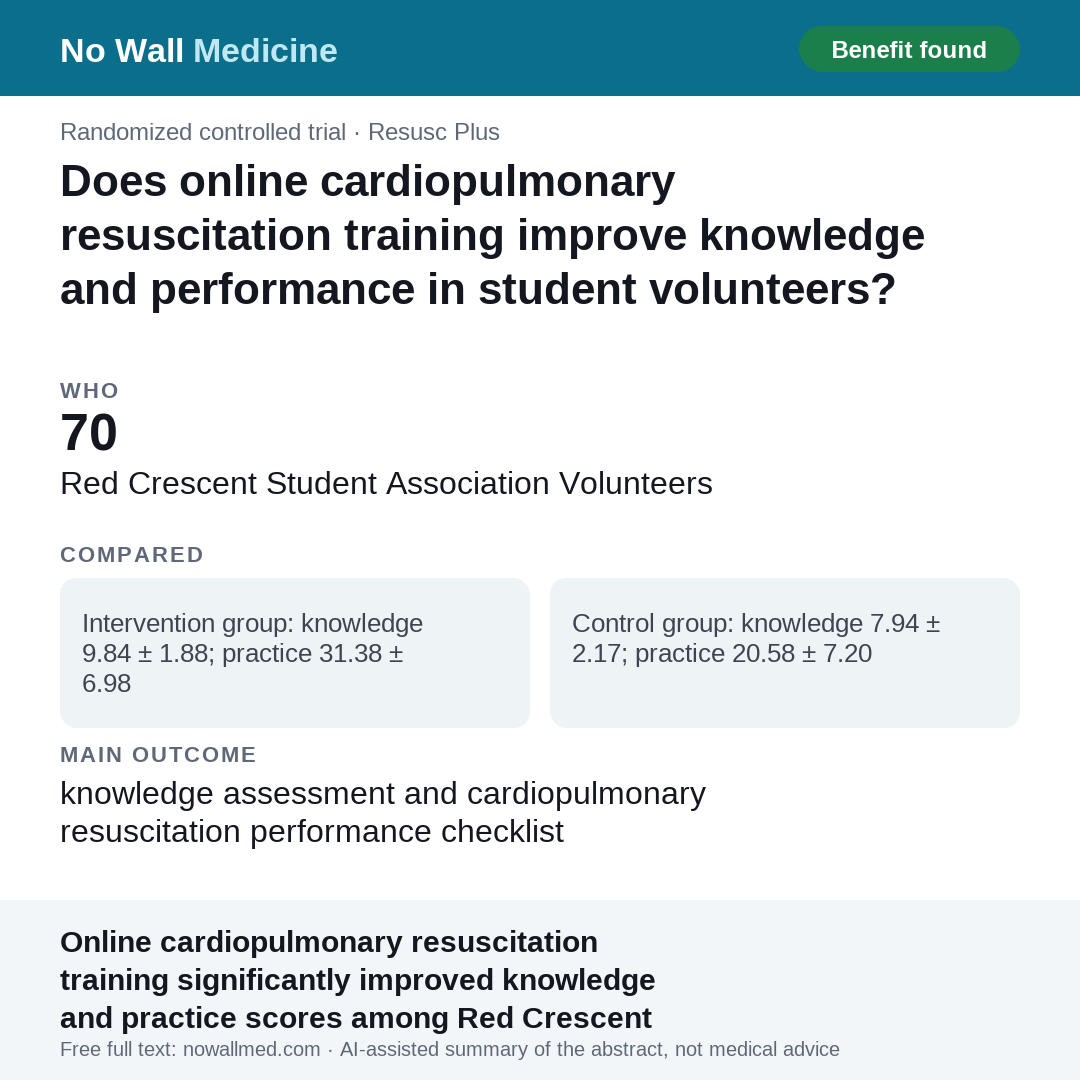
The effect of online CPR training on the knowledge and practice of the Red Crescent Student Association Volunteers during the COVID-19 pandemic: A randomized clinical trial study
Randomized controlled trialBenefit found
Does online cardiopulmonary resuscitation training improve knowledge and performance in student volunteers?
Who
70
Red Crescent Student Association Volunteers
Compared
Intervention group: knowledge 9.84 ± 1.88; practice 31.38 ± 6.98
Control group: knowledge 7.94 ± 2.17; practice 20.58 ± 7.20
Main outcome
knowledge assessment and cardiopulmonary resuscitation performance checklist
Bottom line: Online cardiopulmonary resuscitation training significantly improved knowledge and practice scores among Red Crescent Student Association Volunteers.
Resusc Plus · 2025-06-21Download image
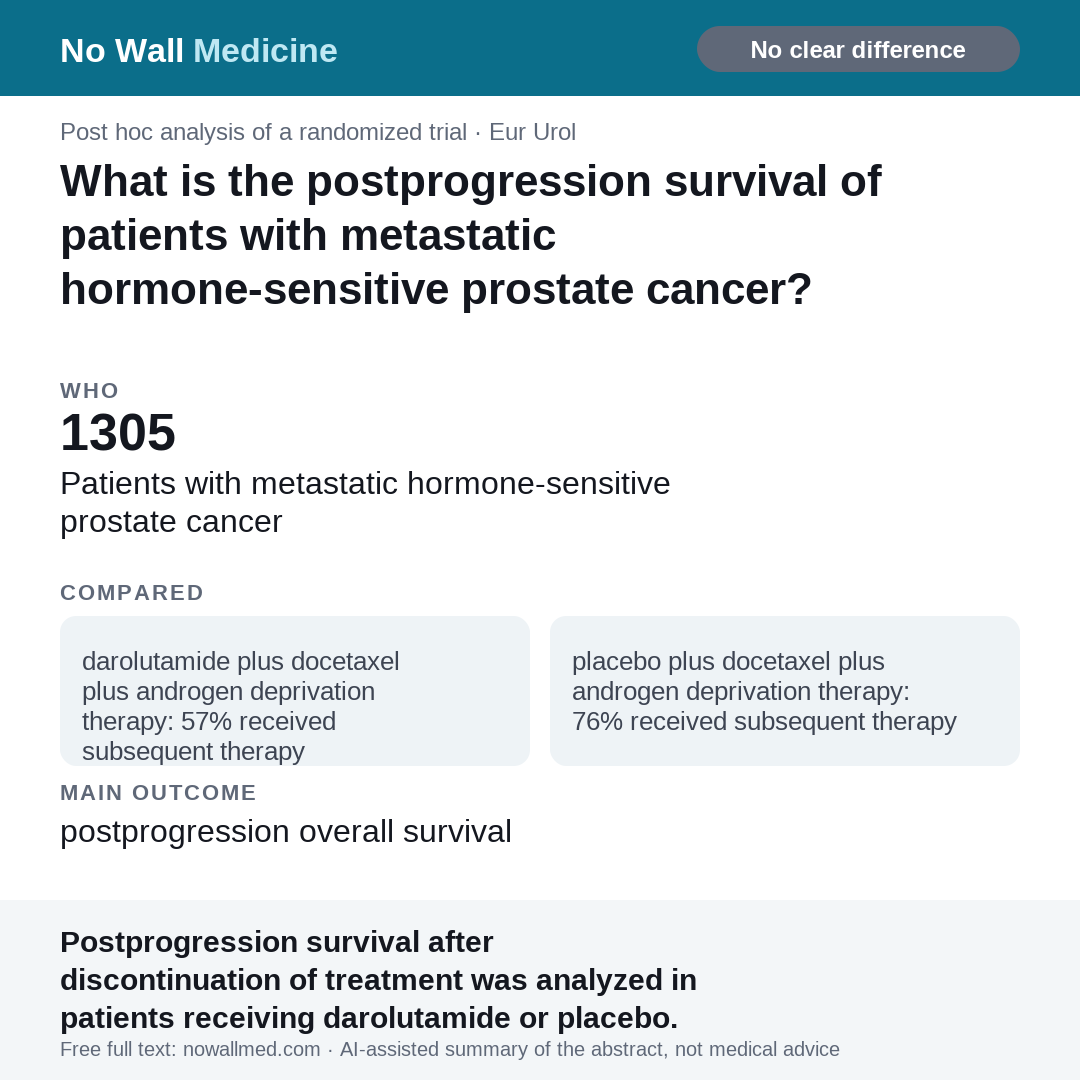
Postprogression Survival of Patients with Metastatic Hormone-sensitive Prostate Cancer who Received Darolutamide or Placebo in Combination with Docetaxel and Androgen Deprivation Therapy: Post Hoc Analysis of the Phase 3 ARASENS Trial
Post hoc analysis of a randomized trialNo clear difference
What is the postprogression survival of patients with metastatic hormone-sensitive prostate cancer?
Who
1305
Patients with metastatic hormone-sensitive prostate cancer
Compared
darolutamide plus docetaxel plus androgen deprivation therapy: 57% received subsequent therapy
placebo plus docetaxel plus androgen deprivation therapy: 76% received subsequent therapy
Main outcome
postprogression overall survival
Bottom line: Postprogression survival after discontinuation of treatment was analyzed in patients receiving darolutamide or placebo.
Limitation: The main limitation of these analyses is their post hoc nature.
Eur Urol · 2025-06-20Download image
Implantable cardioverter-defibrillators in ischaemic versus non-ischaemic heart failure: Insights from the VICTORIA trial
Propensity-score adjusted model analysisMixed results
Does a pre-existing implantable cardioverter-defibrillator reduce sudden cardiac death in heart failure?
Who
5040
Participants with heart failure with reduced ejection fraction and recent decompensation
Compared
Pre-existing implantable cardioverter-defibrillator: aHR 0.64 (95% CI 0.43-0.96) for sudden cardiac death
No pre-existing implantable cardioverter-defibrillator
Main outcome
sudden cardiac death, cardiovascular death, and all-cause death
Result: adjusted hazard ratio 0.64 (95% CI 0.43-0.96) for sudden cardiac death
Bottom line: Implantable cardioverter-defibrillators reduced sudden cardiac death but did not reduce cardiovascular or all-cause death.
Limitation: Future research is required to evaluate which patients benefit from implantation.
Eur J Heart Fail · 2025-06-20Download image

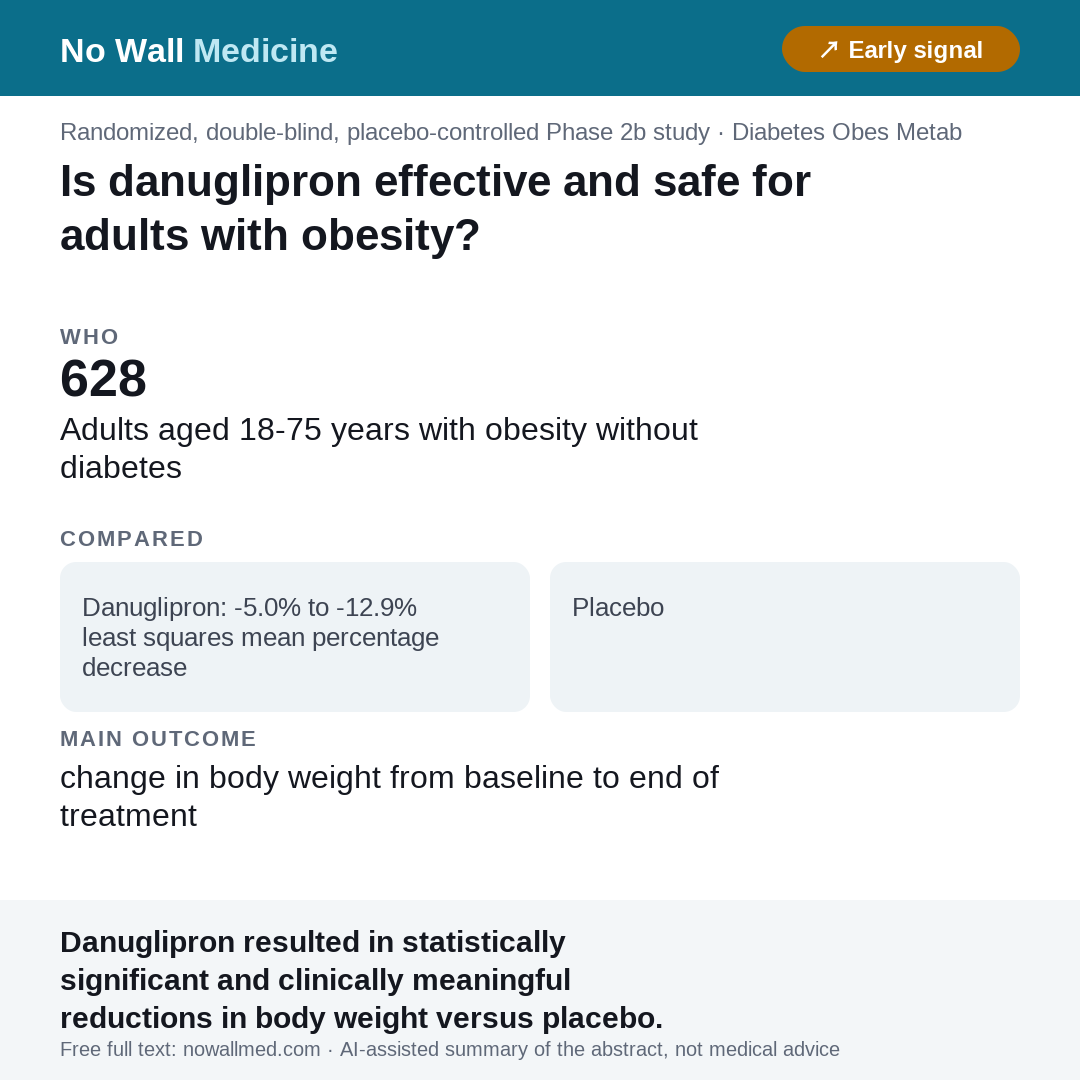
Efficacy and safety of danuglipron (PF-06882961) in adults with obesity: A randomized, placebo-controlled, dose-ranging phase 2b study
Randomized, double-blind, placebo-controlled Phase 2b studyBenefit found
Is danuglipron effective and safe for adults with obesity?
Who
628
Adults aged 18-75 years with obesity without diabetes
Compared
Danuglipron: -5.0% to -12.9% least squares mean percentage decrease
Placebo
Main outcome
change in body weight from baseline to end of treatment
Bottom line: Danuglipron resulted in statistically significant and clinically meaningful reductions in body weight versus placebo.
Diabetes Obes Metab · 2025-06-20Download image
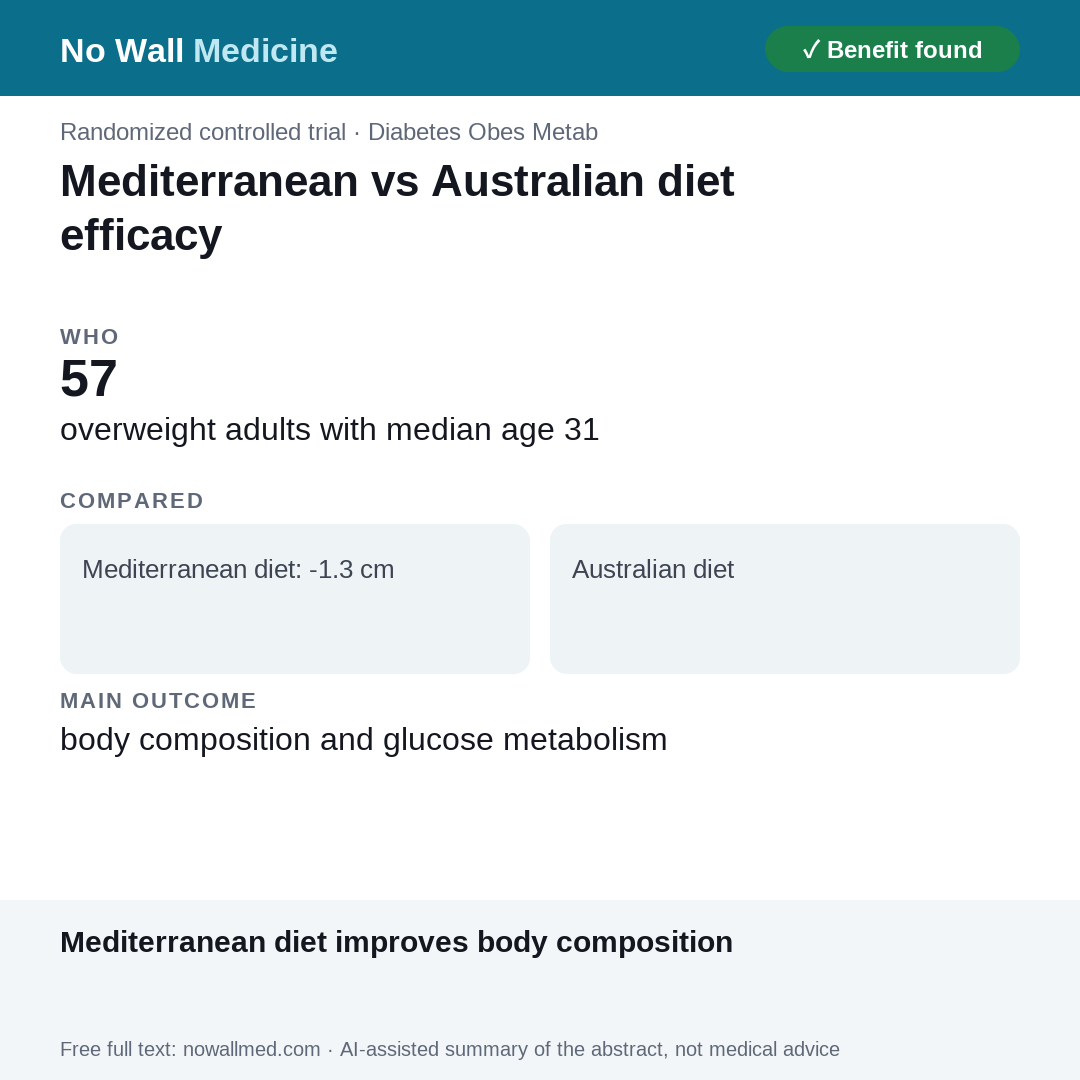
Mediterranean diet vs. the Australian guide to healthy eating (AGHE) on body composition and glucose metabolism: A randomized controlled trial
Randomized controlled trialBenefit found
Mediterranean vs Australian diet efficacy
Who
57
overweight adults with median age 31
Compared
Mediterranean diet: -1.3 cm
Australian diet
Main outcome
body composition and glucose metabolism
Bottom line: Mediterranean diet improves body composition
Limitation: small trial size
Diabetes Obes Metab · 2025-06-20Download image
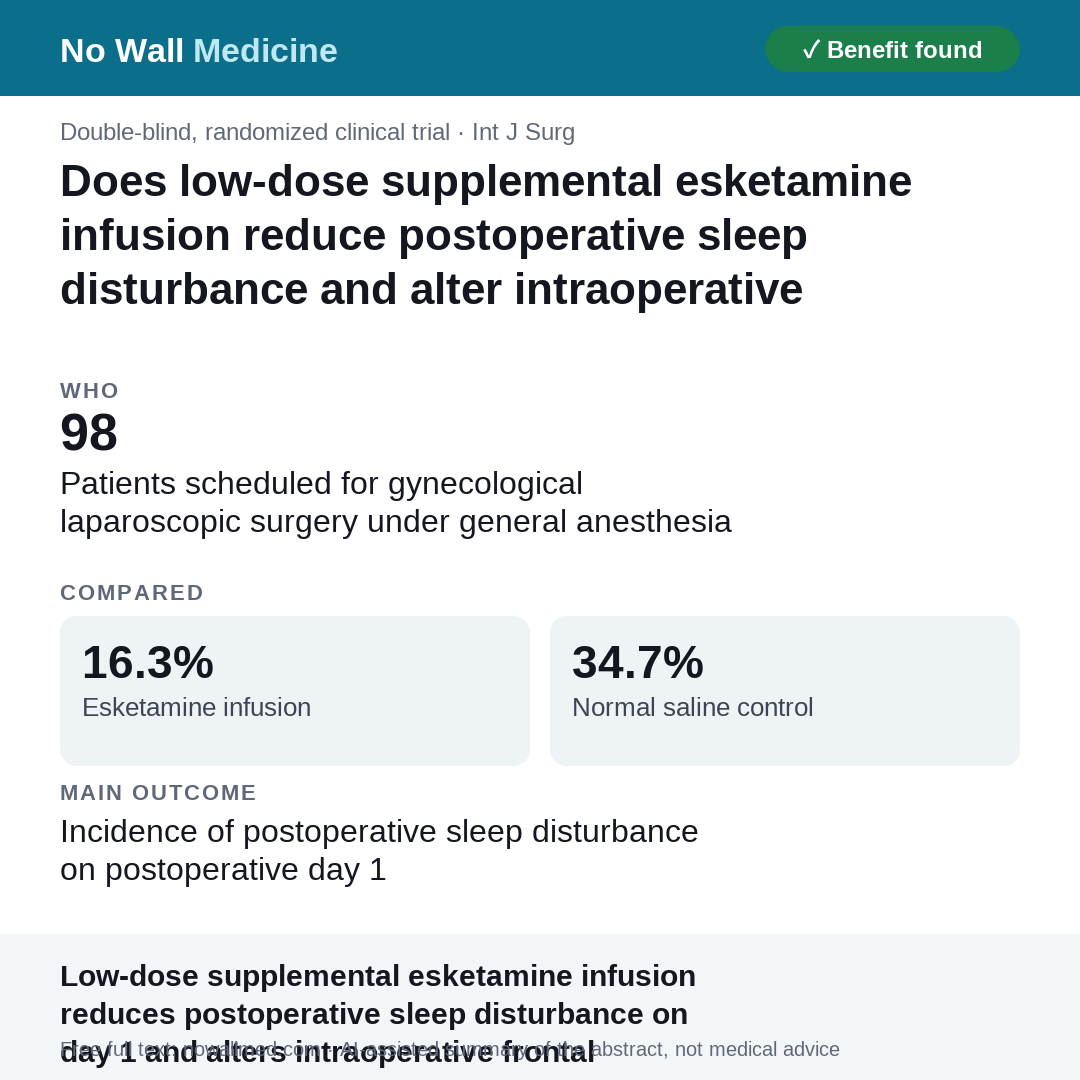
Effect of low-dose supplemental esketamine infusion on the intraoperative frontal electroencephalography dynamics and postoperative sleep disturbance during gynecological laparoscopic surgery: a double-blind, randomized clinical trial
Double-blind, randomized clinical trialBenefit found
Does low-dose supplemental esketamine infusion reduce postoperative sleep disturbance and alter intraoperative frontal electroencephalography?
Who
98
Patients scheduled for gynecological laparoscopic surgery under general anesthesia
Compared
16.3%Esketamine infusion
34.7%Normal saline control
Main outcome
Incidence of postoperative sleep disturbance on postoperative day 1
Result: relative risk 0.47 (95% CI 0.22-0.99)
Bottom line: Low-dose supplemental esketamine infusion reduces postoperative sleep disturbance on day 1 and alters intraoperative frontal electroencephalography patterns.
Int J Surg · 2025-06-20Download image
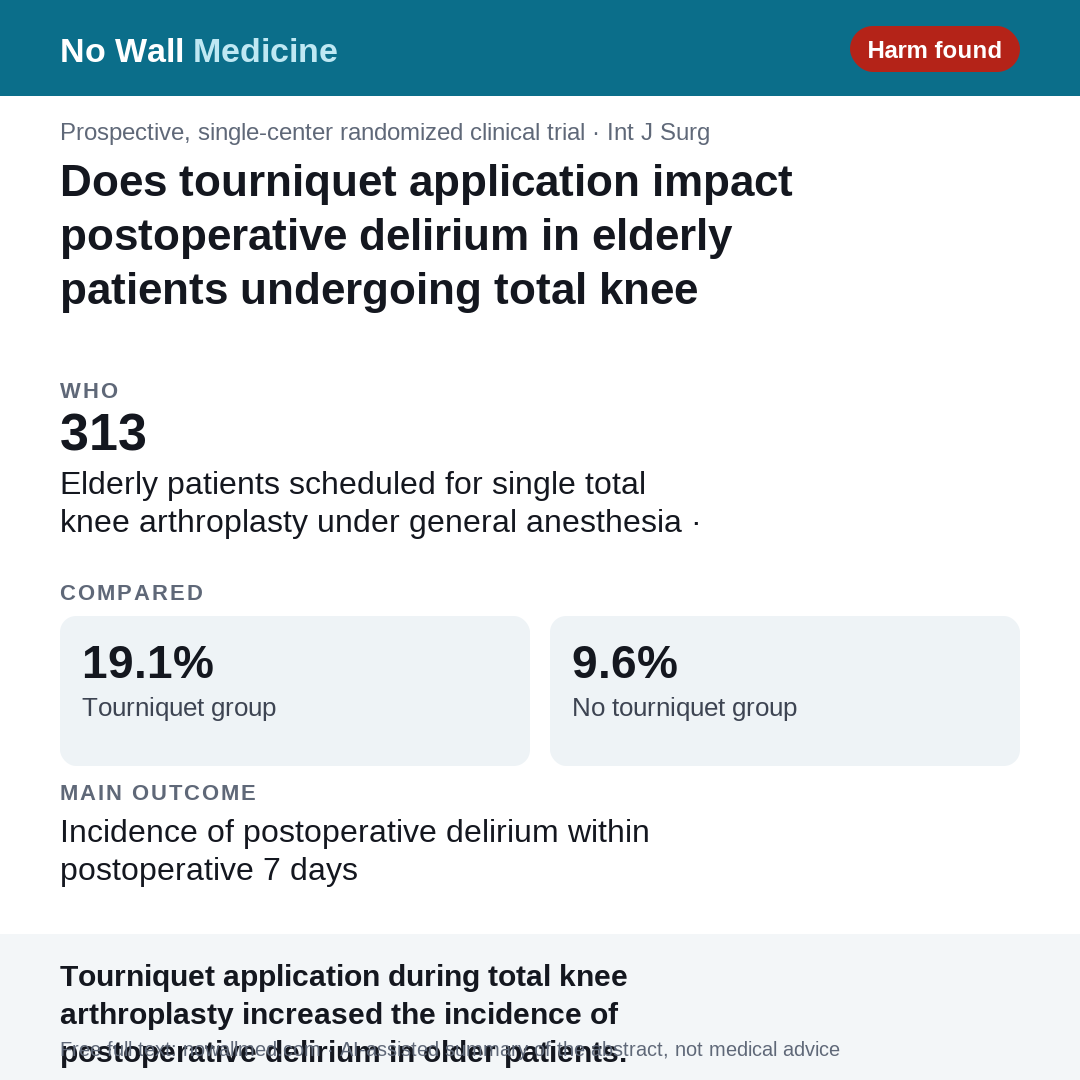
Impact of tourniquet application on postoperative delirium in elderly patients undergoing total knee arthroplasty: a randomized clinical trial
Prospective, single-center randomized clinical trialHarm found
Does tourniquet application impact postoperative delirium in elderly patients undergoing total knee arthroplasty?
Who
313
Elderly patients scheduled for single total knee arthroplasty under general anesthesia · Single-center
Compared
19.1%Tourniquet group
9.6%No tourniquet group
Main outcome
Incidence of postoperative delirium within postoperative 7 days
Result: relative risk 1.12 (95% confidence interval: 1.02-1.23)
Bottom line: Tourniquet application during total knee arthroplasty increased the incidence of postoperative delirium in older patients.
Int J Surg · 2025-06-20Download image
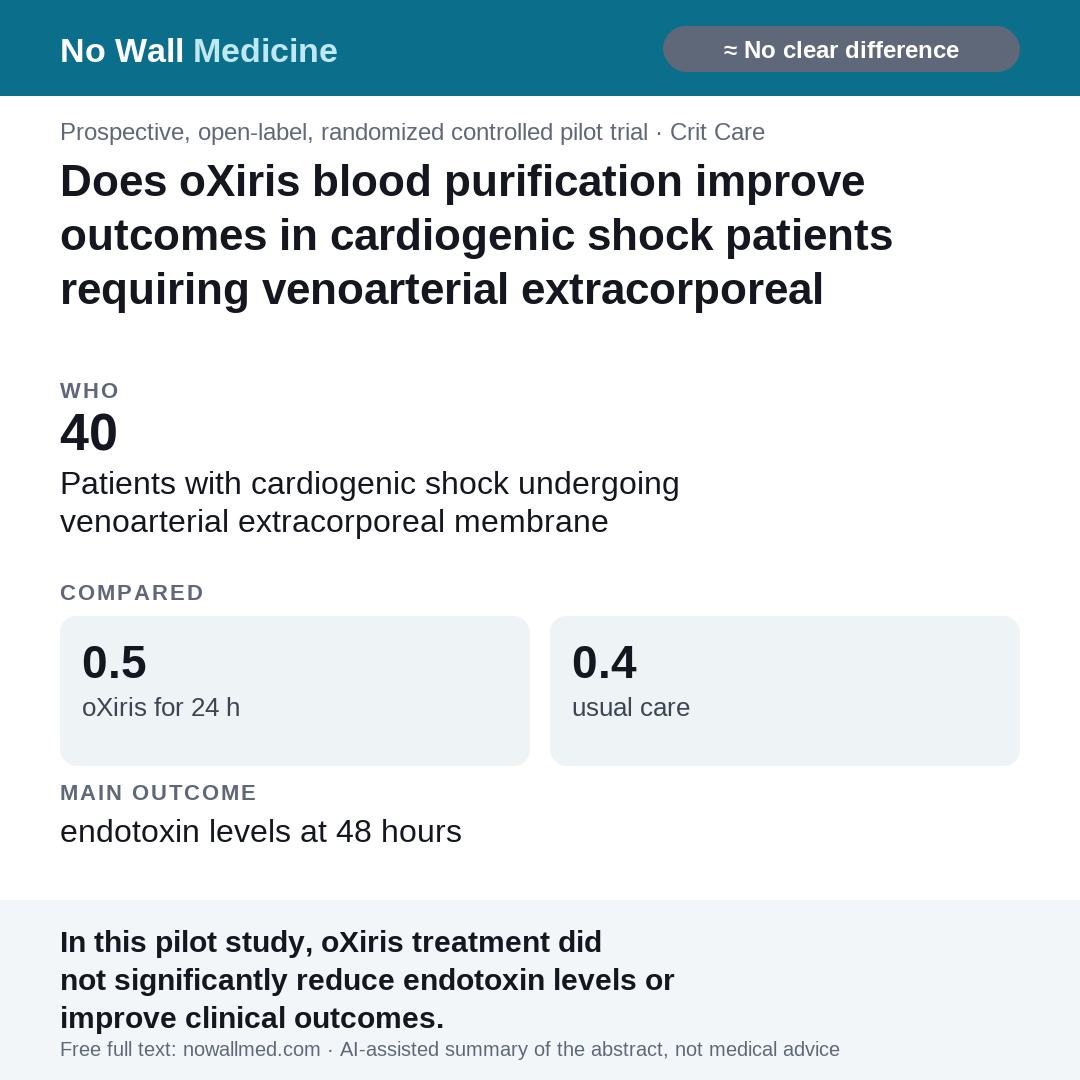
The effects of extracorporeal blood purification (oXiris®) in patients with cardiogenic shock who require VA-ECMO (CLEAN ECMO): a prospective, open-label, randomized controlled pilot study
Prospective, open-label, randomized controlled pilot trialNo clear difference
Does oXiris blood purification improve outcomes in cardiogenic shock patients requiring venoarterial extracorporeal membrane oxygenation?
Who
40
Patients with cardiogenic shock undergoing venoarterial extracorporeal membrane oxygenation · single-center
Compared
0.5oXiris for 24 h (IQR 0.4-1.0)
0.4usual care (IQR 0.2-0.5)
Main outcome
endotoxin levels at 48 hours
Bottom line: In this pilot study, oXiris treatment did not significantly reduce endotoxin levels or improve clinical outcomes.
Crit Care · 2025-06-20Download image
Impact of Virtual Reality-Based Biofeedback on Sleep Quality Among Individuals With Depressive Symptoms, Anxiety Symptoms, or Both: 4-Week Randomized Controlled Study
3-arm randomized controlled trialNo clear difference
Does virtual reality-based biofeedback improve sleep quality compared to conventional biofeedback?
Who
118
individuals with depressive symptoms, anxiety symptoms, or both
Compared
-2.50virtual reality-based biofeedback with depressive or anxiety symptoms (SD 2.89)
-3.39conventional biofeedback with depressive or anxiety symptoms (SD 2.80)
-0.95healthy control receiving virtual reality-based biofeedback (SD 2.09)
Main outcome
Pittsburgh Sleep Quality Index scores
Bottom line: Both virtual reality-based biofeedback and conventional biofeedback improve sleep quality in individuals with depressive or anxiety symptoms.
J Med Internet Res · 2025-06-20Download image

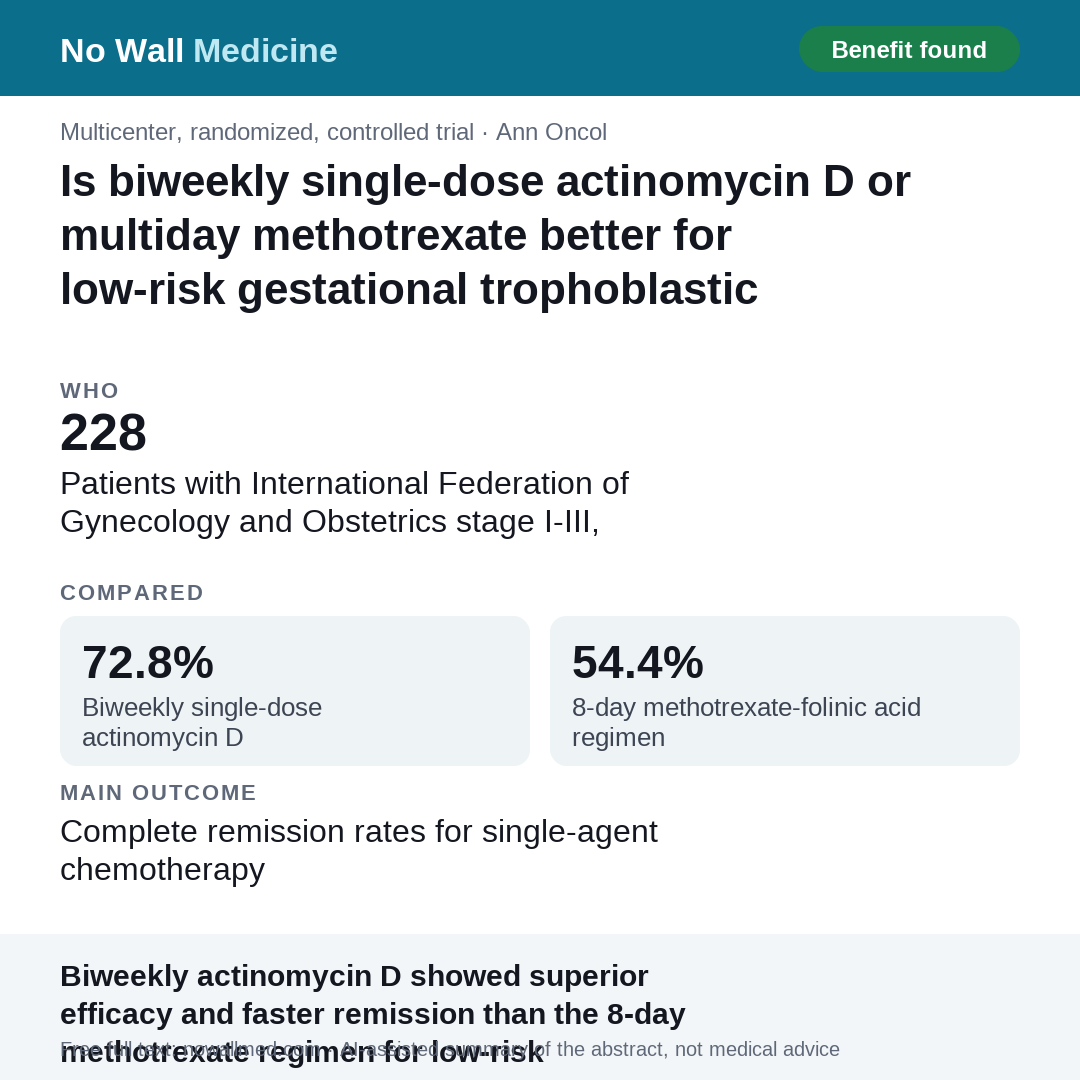
Efficacy and safety of biweekly single-dose actinomycin D versus multiday methotrexate in low-risk gestational trophoblastic neoplasia: a prospective multicenter randomized trial
Multicenter, randomized, controlled trialBenefit found
Is biweekly single-dose actinomycin D or multiday methotrexate better for low-risk gestational trophoblastic neoplasia?
Who
228
Patients with International Federation of Gynecology and Obstetrics stage I-III, low-risk gestational trophoblastic neoplasia · Eight centers in China
Compared
72.8%Biweekly single-dose actinomycin D
54.4%8-day methotrexate-folinic acid regimen
Main outcome
Complete remission rates for single-agent chemotherapy
Bottom line: Biweekly actinomycin D showed superior efficacy and faster remission than the 8-day methotrexate regimen for low-risk gestational trophoblastic neoplasia.
Ann Oncol · 2025-06-19Download image
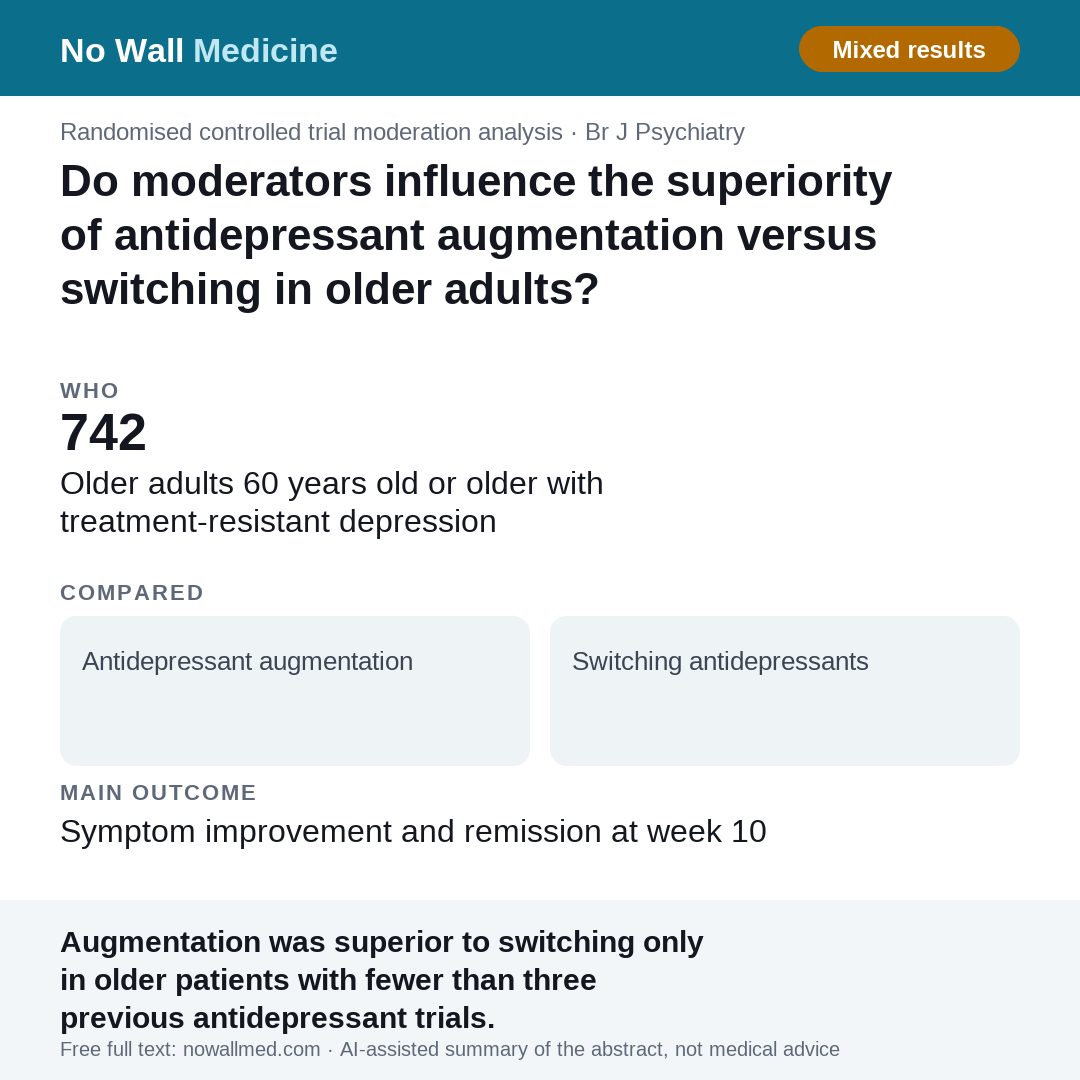
Moderators of antidepressant augmentation versus switch in the OPTIMUM randomised controlled trial
Randomised controlled trial moderation analysisMixed results
Do moderators influence the superiority of antidepressant augmentation versus switching in older adults?
Who
742
Older adults 60 years old or older with treatment-resistant depression
Compared
Antidepressant augmentation
Switching antidepressants
Main outcome
Symptom improvement and remission at week 10
Result: b = -1.6, t = -2.1, P = 0.033, 95% CI [-3.0, -0.1]
Bottom line: Augmentation was superior to switching only in older patients with fewer than three previous antidepressant trials.
Br J Psychiatry · 2025-06-19Download image
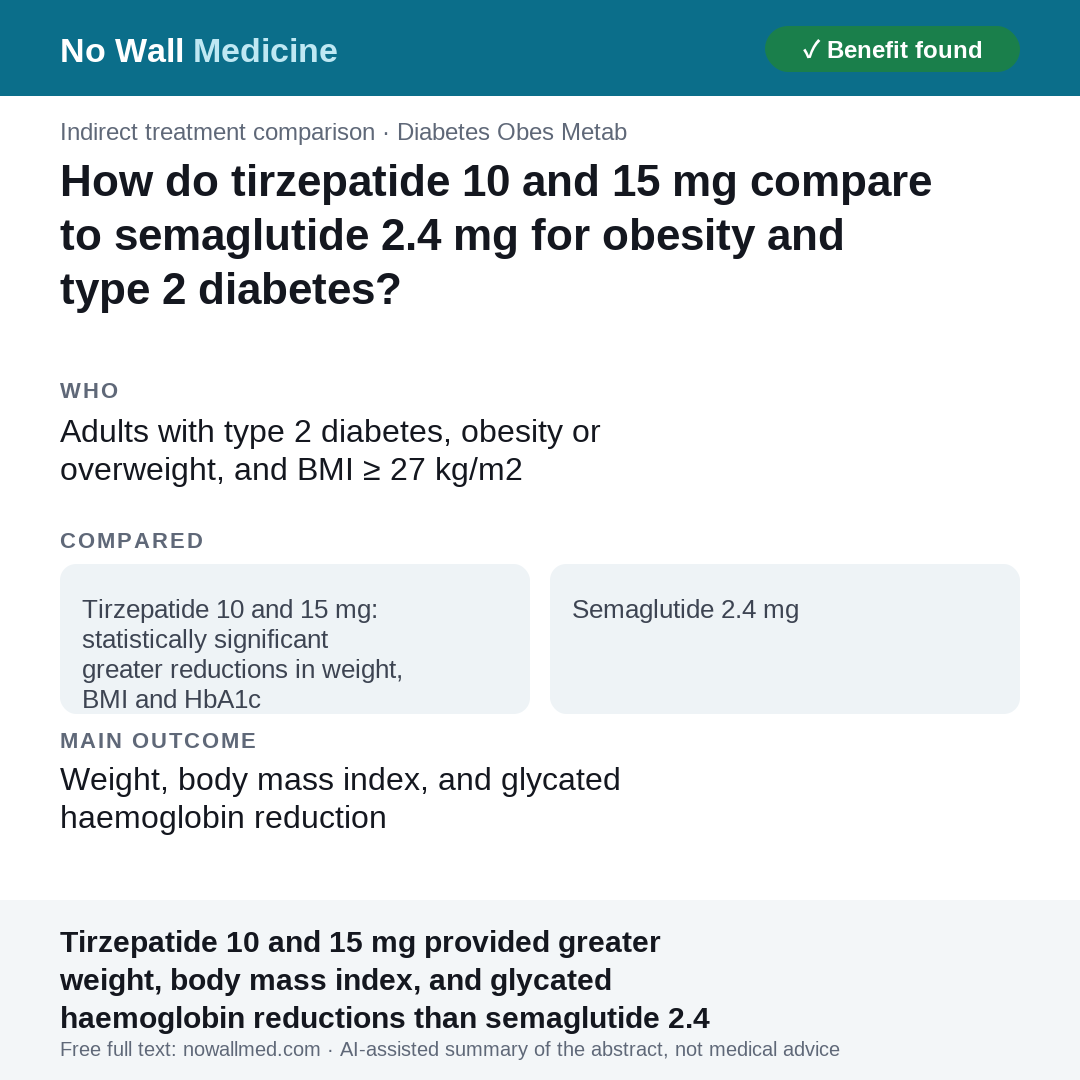
Indirect comparative efficacy and safety of tirzepatide 10 and 15 mg versus semaglutide 2.4 mg for the management of obesity and overweight in patients with type 2 diabetes
Indirect treatment comparisonBenefit found
How do tirzepatide 10 and 15 mg compare to semaglutide 2.4 mg for obesity and type 2 diabetes?
Who
Adults with type 2 diabetes, obesity or overweight, and BMI ≥ 27 kg/m2
Compared
Tirzepatide 10 and 15 mg: statistically significant greater reductions in weight, BMI and HbA1c
Semaglutide 2.4 mg
Main outcome
Weight, body mass index, and glycated haemoglobin reduction
Bottom line: Tirzepatide 10 and 15 mg provided greater weight, body mass index, and glycated haemoglobin reductions than semaglutide 2.4 mg.
Limitation: No clinical trials directly comparing tirzepatide and semaglutide were available, requiring indirect comparison.
Diabetes Obes Metab · 2025-06-19Download image
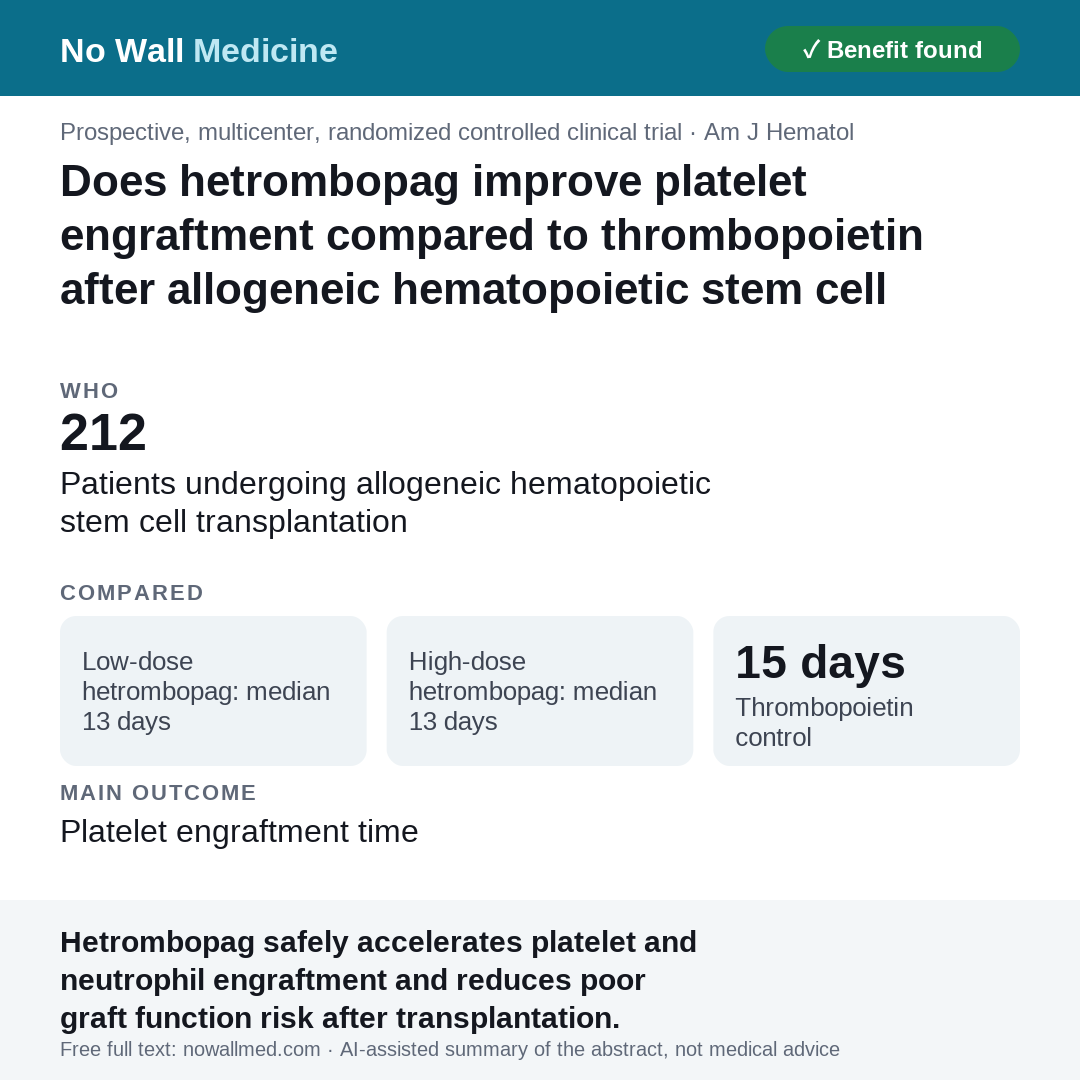
Efficacy and Safety of Hetrombopag Versus Thrombopoietin in Promoting Platelet Engraftment After Allogeneic Hematopoietic Stem Cell Transplantation: A Prospective, Multicenter, Randomized Controlled Clinical Trial
Prospective, multicenter, randomized controlled clinical trialBenefit found
Does hetrombopag improve platelet engraftment compared to thrombopoietin after allogeneic hematopoietic stem cell transplantation?
Who
212
Patients undergoing allogeneic hematopoietic stem cell transplantation
Compared
Low-dose hetrombopag: median 13 days
High-dose hetrombopag: median 13 days
15 daysThrombopoietin control
Main outcome
Platelet engraftment time
Bottom line: Hetrombopag safely accelerates platelet and neutrophil engraftment and reduces poor graft function risk after transplantation.
Am J Hematol · 2025-06-19Download image
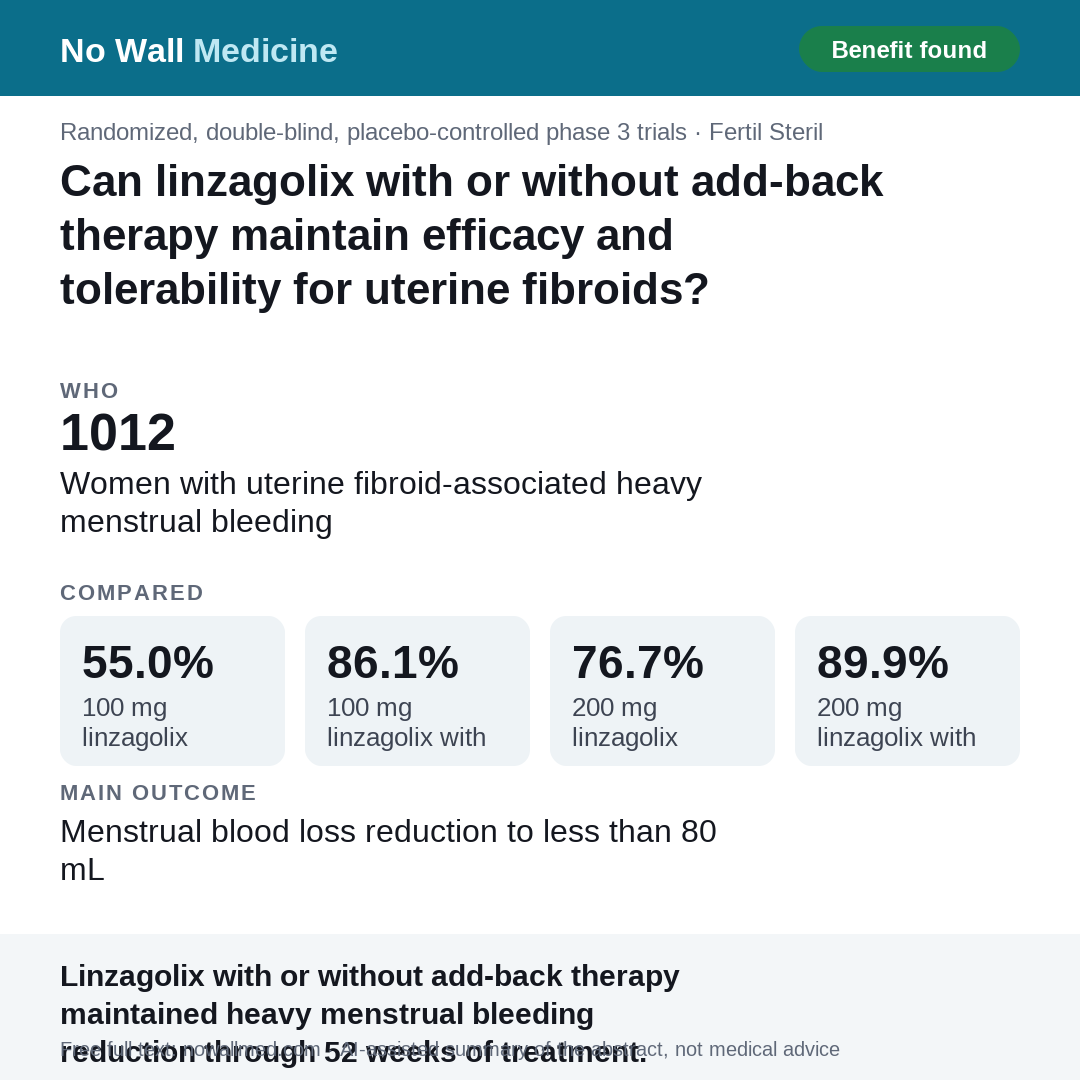
Linzagolix with and without hormonal add-back therapy for symptomatic uterine fibroids: PRIMROSE 1 & 2 long-term extension and withdrawal study
Randomized, double-blind, placebo-controlled phase 3 trialsBenefit found
Can linzagolix with or without add-back therapy maintain efficacy and tolerability for uterine fibroids?
Who
1012
Women with uterine fibroid-associated heavy menstrual bleeding
Compared
55.0%100 mg linzagolix alone
86.1%100 mg linzagolix with add-back therapy
76.7%200 mg linzagolix alone or with add-back therapy
89.9%200 mg linzagolix with add-back therapy
Main outcome
Menstrual blood loss reduction to less than 80 mL
Bottom line: Linzagolix with or without add-back therapy maintained heavy menstrual bleeding reduction through 52 weeks of treatment.
Fertil Steril · 2025-06-19Download image
Gut microbial community and host intestinal gene expression with combined fish oil and soluble corn fiber compared with corn oil and maltodextrin: A randomized crossover trial in healthy older individuals
Randomized controlled crossover pilot studyMixed results
Do fish oil and soluble corn fiber affect gut transcription and microbiome composition?
Who
30
30 healthy adults aged 50 to 75 years
Compared
soluble corn fiber and fish oil
maltodextrin and corn oil
Main outcome
gut transcriptional profiles and microbiome composition
Bottom line: Combined fish oil and fiber shifted intestinal cell pathways and gut microbial community structure in older adults.
Limitation: This was a pilot study
Am J Clin Nutr · 2025-06-19Download image

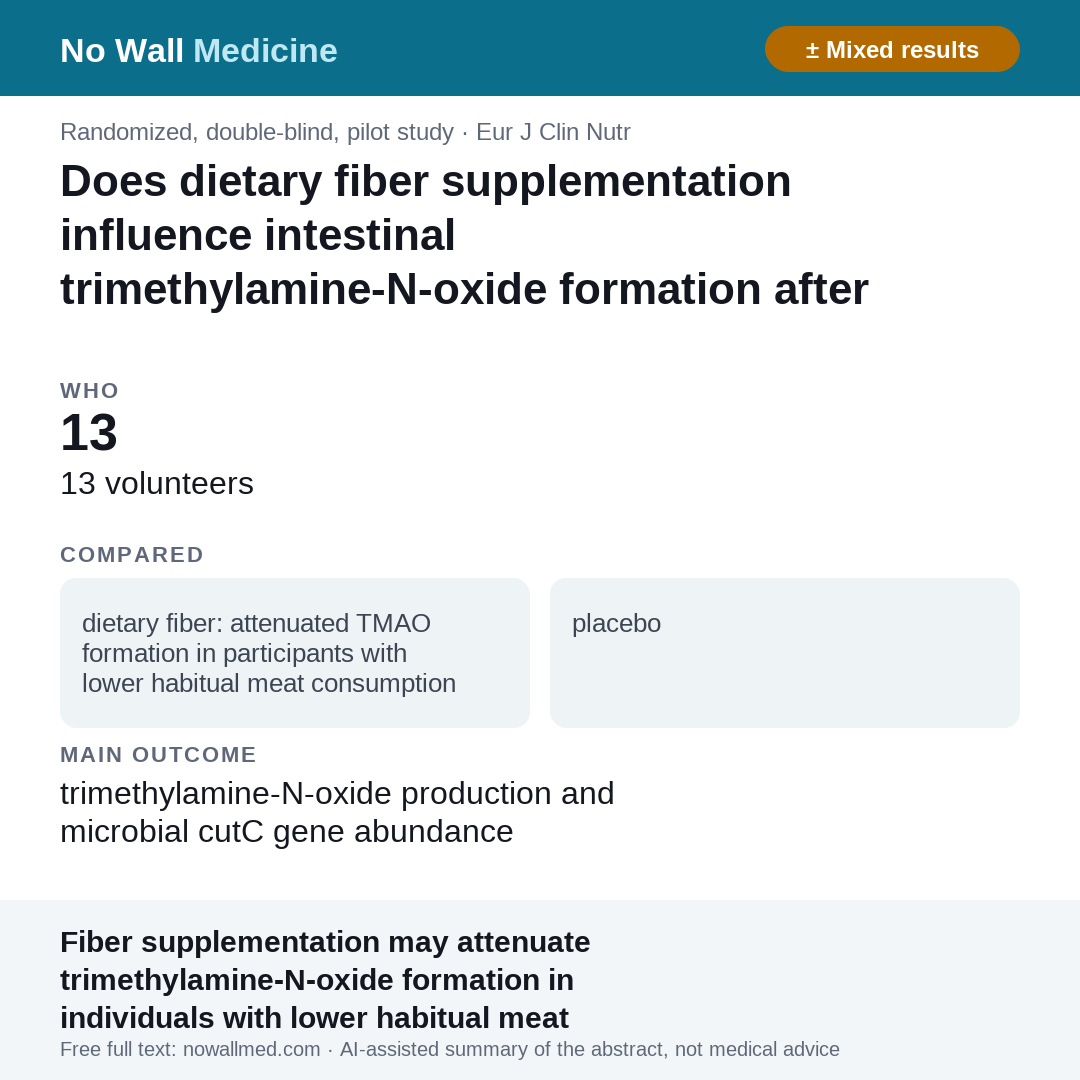
Effect of dietary fiber on trimethylamine-N-oxide production after beef consumption and on gut microbiota: MEATMARK - a randomized cross-over study
Randomized, double-blind, pilot studyMixed results
Does dietary fiber supplementation influence intestinal trimethylamine-N-oxide formation after beef consumption?
Who
13
13 volunteers
Compared
dietary fiber: attenuated TMAO formation in participants with lower habitual meat consumption
placebo
Main outcome
trimethylamine-N-oxide production and microbial cutC gene abundance
Bottom line: Fiber supplementation may attenuate trimethylamine-N-oxide formation in individuals with lower habitual meat consumption.
Eur J Clin Nutr · 2025-06-19Download image
Impact of age and sex on the efficacy and safety of ramucirumab plus paclitaxel as switch maintenance versus continuation of first-line oxaliplatin-based chemotherapy: a subgroup analysis of the ARMANI phase III trial
Subgroup analysis of a phase III randomized trialBenefit found
Does age and sex affect efficacy and safety of ramucirumab plus paclitaxel switch maintenance?
Who
Patients with advanced human epidermal growth factor receptor 2-negative gastric or gastro-oesophageal junction cancer
Compared
Ramucirumab plus paclitaxel switch maintenance
Continuation of first-line oxaliplatin and fluoropyrimidine
Main outcome
Progression-free survival, overall survival, and overall response rates
Bottom line: The switch maintenance strategy benefit was consistent regardless of patient age or sex.
ESMO Open · 2025-06-19Download image