Visual abstracts
New randomized trials and meta-analyses from leading journals at a glance: who was studied, what was compared, and what was found. Every paper is free to read in full.
All specialtiesCardiology 842Oncology 763Gastroenterology & Hepatology 307Infectious Disease 626Neurology 350Psychiatry & Mental Health 430Pulmonology 366Critical Care 245Endocrinology & Diabetes 480Pediatrics 536Surgery 324Orthopedics & Sports Medicine 162Neurosurgery 93Cardiothoracic & Vascular Surgery 87Plastic & Reconstructive Surgery 124Nephrology 197Rheumatology 108Hematology 182Dermatology 80Ophthalmology 97Obstetrics & Gynecology 261Public & Global Health 167Radiology & Imaging 98Anesthesiology 114Urology 162ENT (Otolaryngology) 91Emergency Medicine 73Allergy & Immunology 58Geriatrics 160Family Medicine & Primary Care 111Medical Genetics & Genomics 91Pathology & Laboratory Medicine 24Physical Medicine & Rehabilitation 148Palliative Care 81Nutrition 223Digital Health & AI 460General Medicine 101
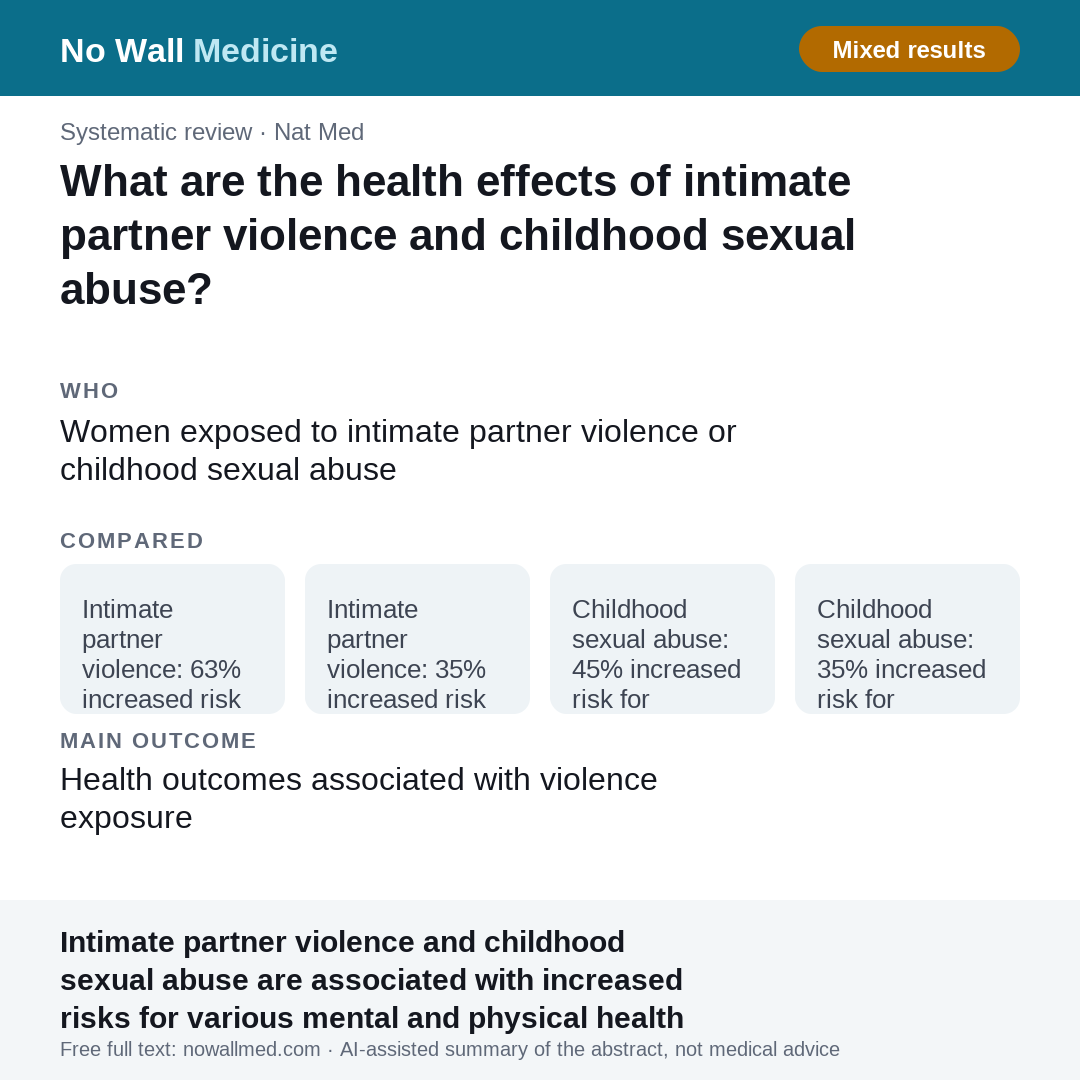
Health effects associated with exposure to intimate partner violence against women and childhood sexual abuse: a burden of proof study
Systematic reviewMixed results
What are the health effects of intimate partner violence and childhood sexual abuse?
Who
Women exposed to intimate partner violence or childhood sexual abuse
Compared
Intimate partner violence: 63% increased risk for major depressive disorder
Intimate partner violence: 35% increased risk for maternal abortion and miscarriage
Childhood sexual abuse: 45% increased risk for alcohol use disorders
Childhood sexual abuse: 35% increased risk for self-harm
Main outcome
Health outcomes associated with violence exposure
Bottom line: Intimate partner violence and childhood sexual abuse are associated with increased risks for various mental and physical health outcomes.
Limitation: Understanding remains limited by data scarcity.
Nat Med · 2023-12-11Download image
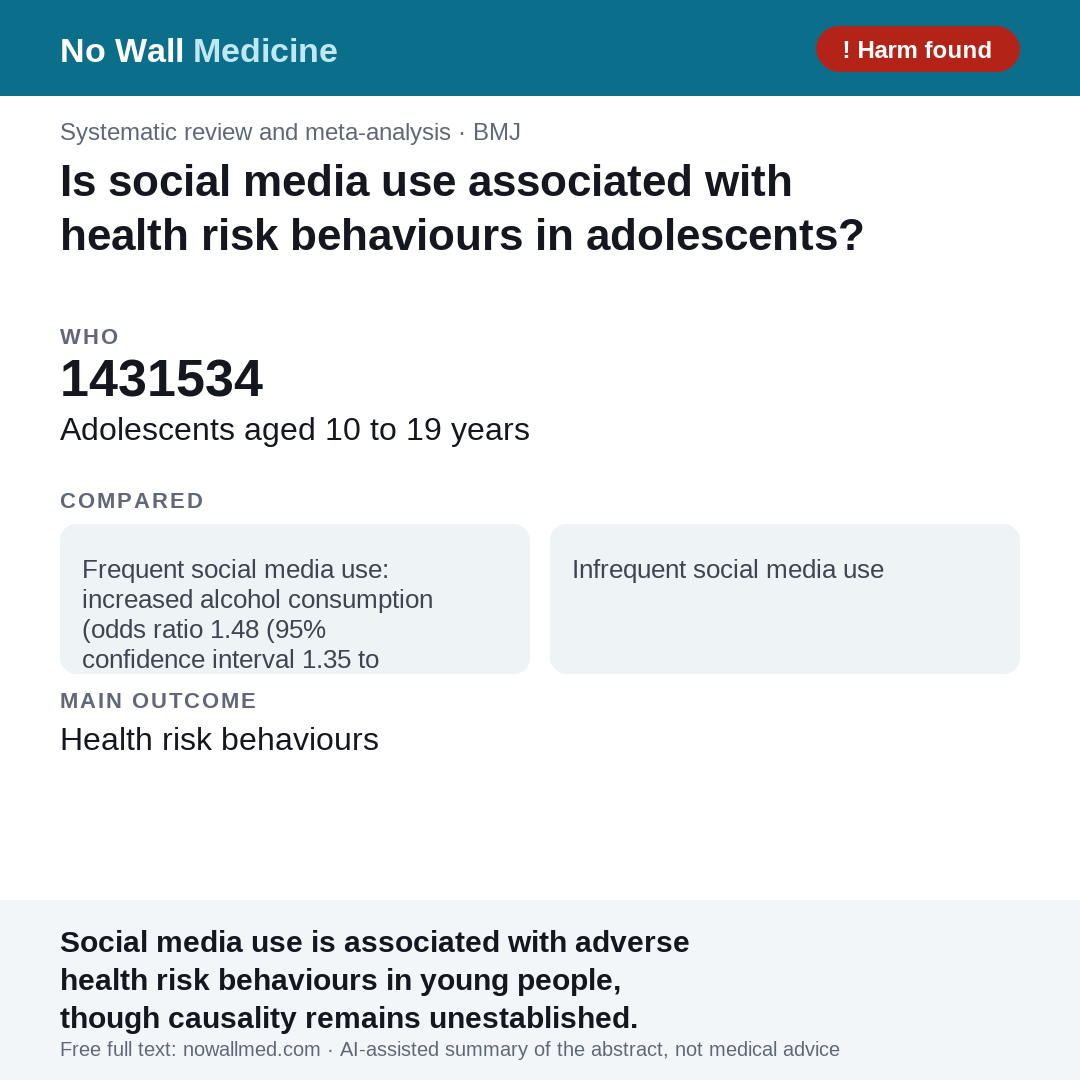
Social media use and health risk behaviours in young people: systematic review and meta-analysis
Systematic review and meta-analysisHarm found
Is social media use associated with health risk behaviours in adolescents?
Who
1431534
Adolescents aged 10 to 19 years
Compared
Frequent social media use: increased alcohol consumption (odds ratio 1.48 (95% confidence interval 1.35 to 1.62))
Infrequent social media use
Main outcome
Health risk behaviours
Bottom line: Social media use is associated with adverse health risk behaviours in young people, though causality remains unestablished.
Limitation: Further high quality research is needed to establish causality and understand effects on health inequalities.
BMJ · 2023-11-29Download image
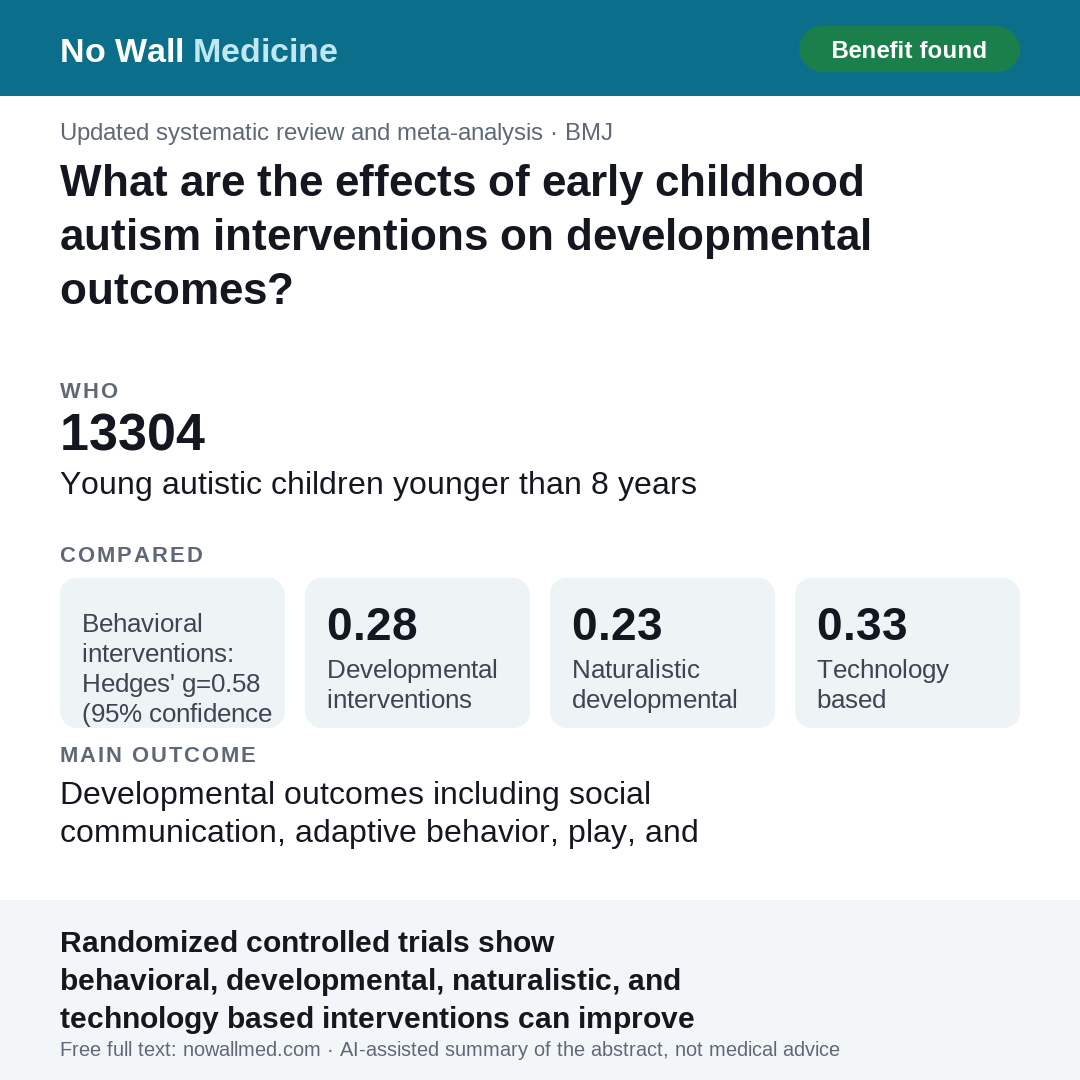
Autism intervention meta-analysis of early childhood studies (Project AIM): updated systematic review and secondary analysis
Updated systematic review and meta-analysisBenefit found
What are the effects of early childhood autism interventions on developmental outcomes?
Who
13304
Young autistic children younger than 8 years
Compared
Behavioral interventions: Hedges' g=0.58 (95% confidence interval 0.11 to 1.06)
0.28Developmental interventions (95% confidence interval 0.12 to 0.44)
0.23Naturalistic developmental behavioral interventions (95% confidence interval 0.02 to 0.43)
0.33Technology based interventions (95% confidence interval 0.02 to 0.64)
Main outcome
Developmental outcomes including social communication, adaptive behavior, play, and language
Bottom line: Randomized controlled trials show behavioral, developmental, naturalistic, and technology based interventions can improve various developmental outcomes in young autistic children.
Limitation: Adverse events were poorly monitored, but possibly common.
BMJ · 2023-11-14Download image
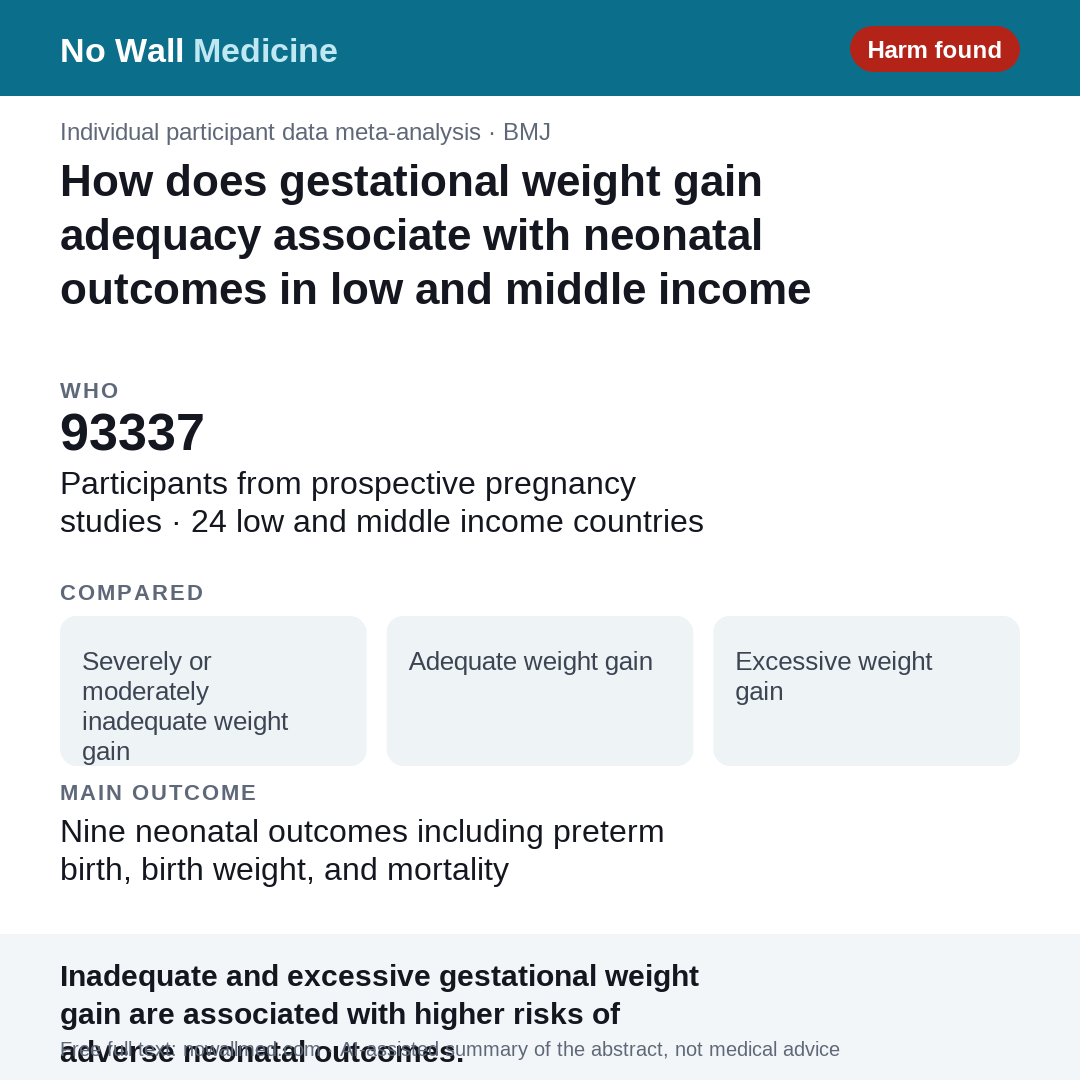
Suboptimal gestational weight gain and neonatal outcomes in low and middle income countries: individual participant data meta-analysis
Individual participant data meta-analysisHarm found
How does gestational weight gain adequacy associate with neonatal outcomes in low and middle income countries?
Who
93337
Participants from prospective pregnancy studies · 24 low and middle income countries
Compared
Severely or moderately inadequate weight gain
Adequate weight gain
Excessive weight gain
Main outcome
Nine neonatal outcomes including preterm birth, birth weight, and mortality
Bottom line: Inadequate and excessive gestational weight gain are associated with higher risks of adverse neonatal outcomes.
Limitation: Further research is needed to assess optimal weight gain ranges for low and middle income countries.
BMJ · 2023-09-21Download image
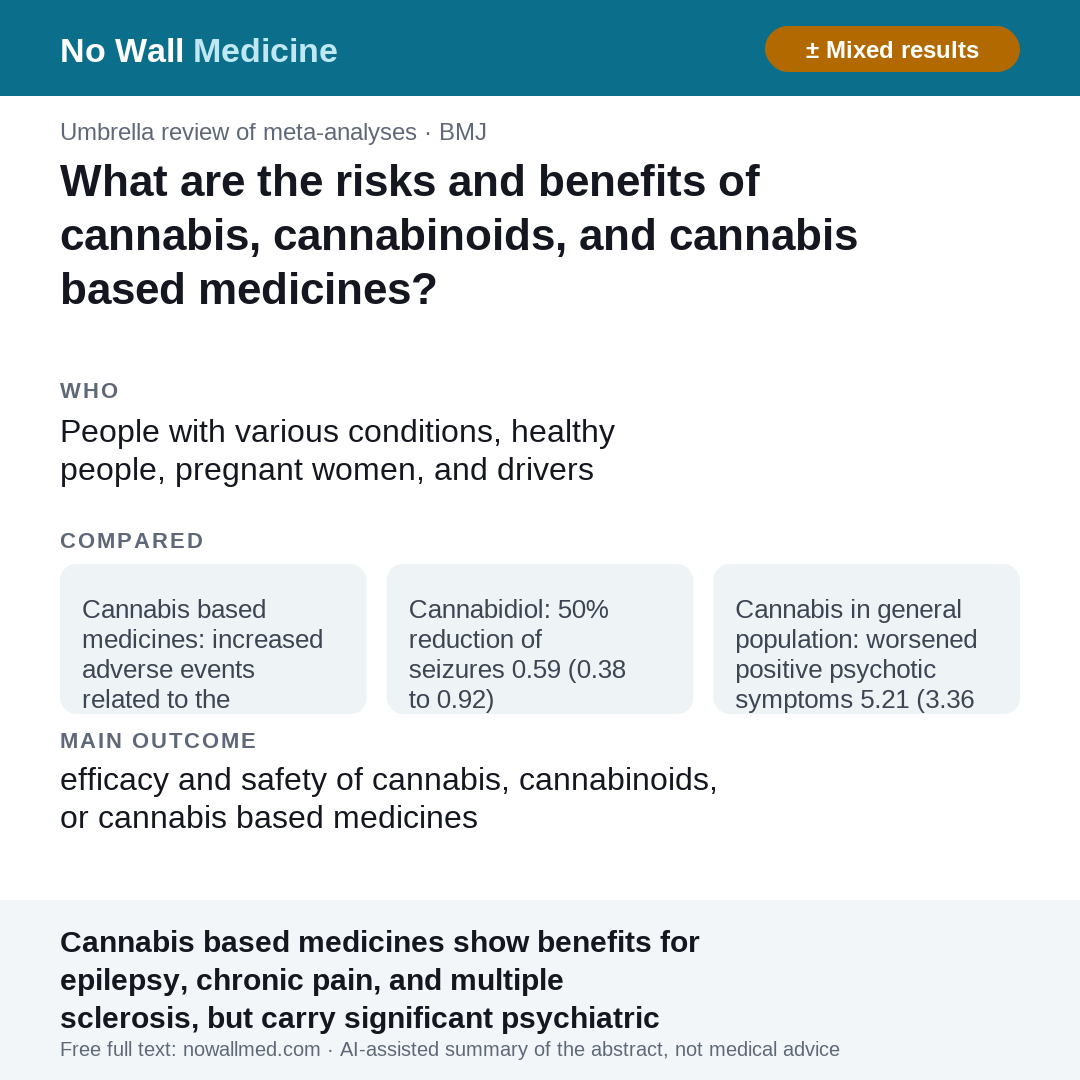
Balancing risks and benefits of cannabis use: umbrella review of meta-analyses of randomised controlled trials and observational studies
Umbrella review of meta-analysesMixed results
What are the risks and benefits of cannabis, cannabinoids, and cannabis based medicines?
Who
People with various conditions, healthy people, pregnant women, and drivers
Compared
Cannabis based medicines: increased adverse events related to the central nervous system 2.84 (95% confidence interval 2.16 to 3.73)
Cannabidiol: 50% reduction of seizures 0.59 (0.38 to 0.92)
Cannabis in general population: worsened positive psychotic symptoms 5.21 (3.36 to 8.01)
Main outcome
efficacy and safety of cannabis, cannabinoids, or cannabis based medicines
Bottom line: Cannabis based medicines show benefits for epilepsy, chronic pain, and multiple sclerosis, but carry significant psychiatric and physical risks.
BMJ · 2023-08-30Download image
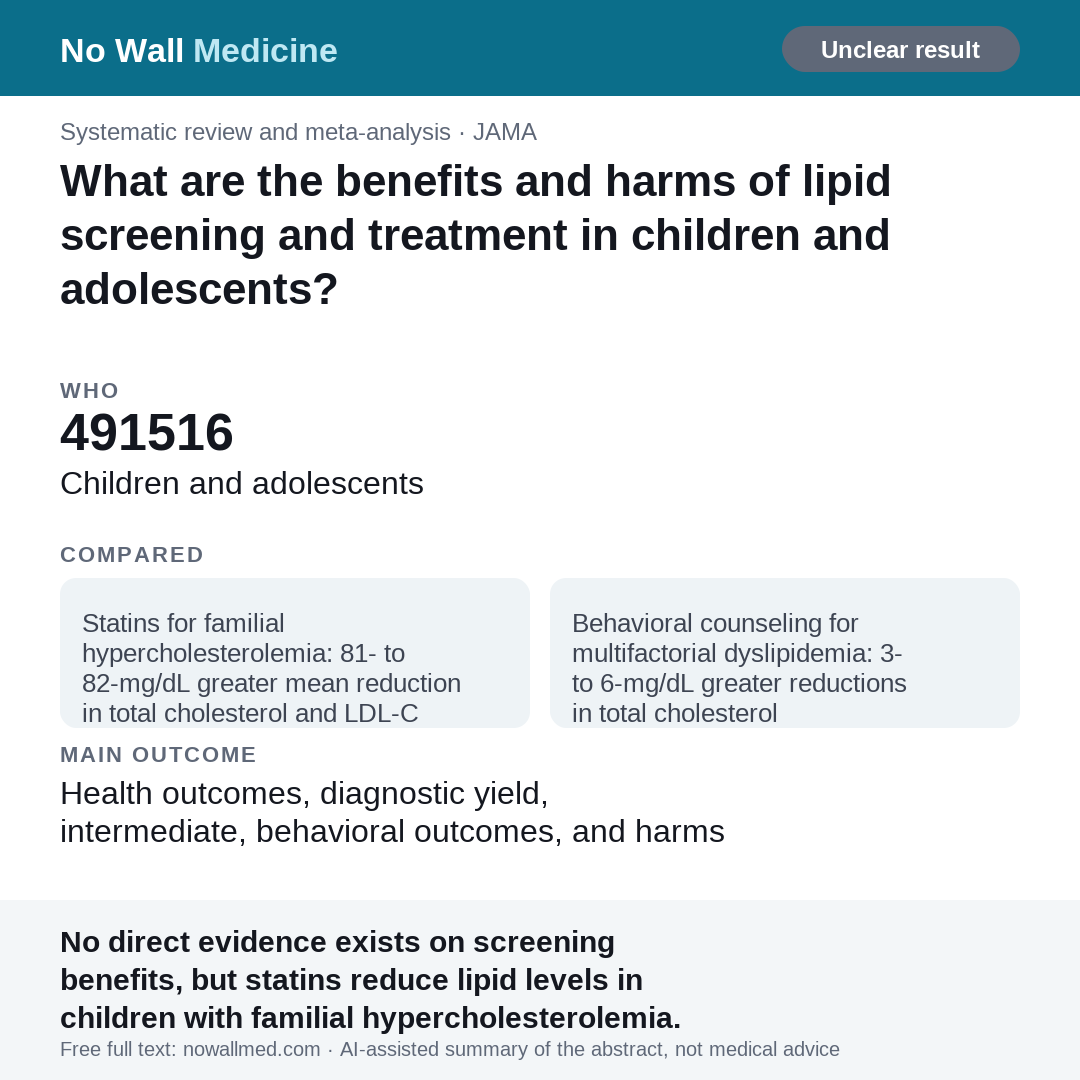
Screening for Lipid Disorders in Children and Adolescents: Updated Evidence Report and Systematic Review for the US Preventive Services Task Force
Systematic review and meta-analysisUnclear result
What are the benefits and harms of lipid screening and treatment in children and adolescents?
Who
491516
Children and adolescents
Compared
Statins for familial hypercholesterolemia: 81- to 82-mg/dL greater mean reduction in total cholesterol and LDL-C
Behavioral counseling for multifactorial dyslipidemia: 3- to 6-mg/dL greater reductions in total cholesterol
Main outcome
Health outcomes, diagnostic yield, intermediate, behavioral outcomes, and harms
Bottom line: No direct evidence exists on screening benefits, but statins reduce lipid levels in children with familial hypercholesterolemia.
JAMA · 2023-07-18Download image
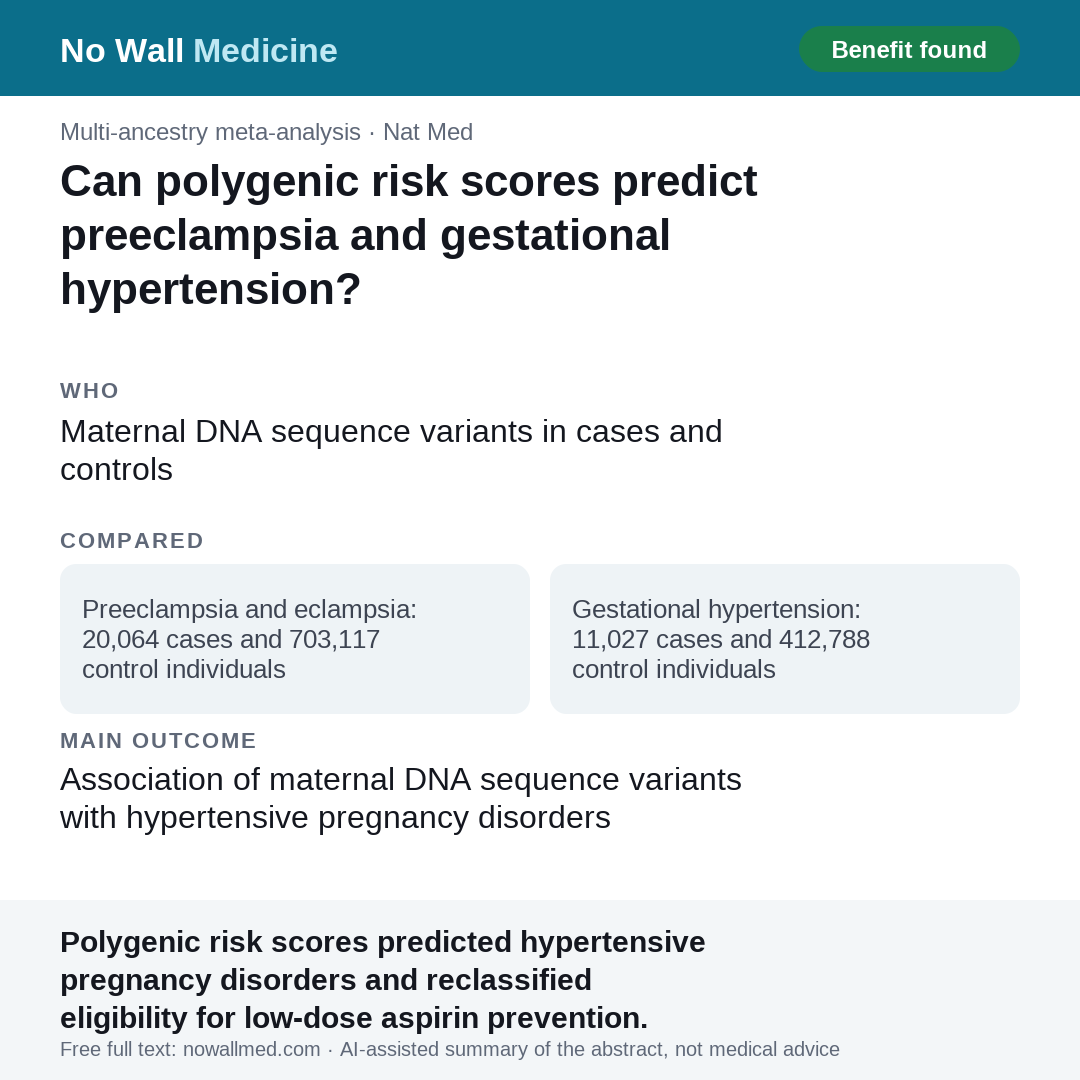
Polygenic prediction of preeclampsia and gestational hypertension
Multi-ancestry meta-analysisBenefit found
Can polygenic risk scores predict preeclampsia and gestational hypertension?
Who
Maternal DNA sequence variants in cases and controls
Compared
Preeclampsia and eclampsia: 20,064 cases and 703,117 control individuals
Gestational hypertension: 11,027 cases and 412,788 control individuals
Main outcome
Association of maternal DNA sequence variants with hypertensive pregnancy disorders
Bottom line: Polygenic risk scores predicted hypertensive pregnancy disorders and reclassified eligibility for low-dose aspirin prevention.
Nat Med · 2023-05-29Download image