Visual abstracts
New randomized trials and meta-analyses from leading journals at a glance: who was studied, what was compared, and what was found. Every paper is free to read in full.
All specialtiesCardiology 4877Oncology 4138Gastroenterology & Hepatology 1942Infectious Disease 3837Neurology 1905Psychiatry & Mental Health 2273Pulmonology 2143Critical Care 1365Endocrinology & Diabetes 2580Pediatrics 2980Surgery 2559Orthopedics & Sports Medicine 931Neurosurgery 537Cardiothoracic & Vascular Surgery 674Plastic & Reconstructive Surgery 591Nephrology 1133Rheumatology 823Hematology 1109Dermatology 621Ophthalmology 543Obstetrics & Gynecology 1686Public & Global Health 1058Radiology & Imaging 648Anesthesiology 986Urology 764ENT (Otolaryngology) 503Emergency Medicine 511Allergy & Immunology 313Geriatrics 981Family Medicine & Primary Care 562Medical Genetics & Genomics 676Pathology & Laboratory Medicine 159Physical Medicine & Rehabilitation 757Palliative Care 444Nutrition 1588Digital Health & AI 2201General Medicine 321
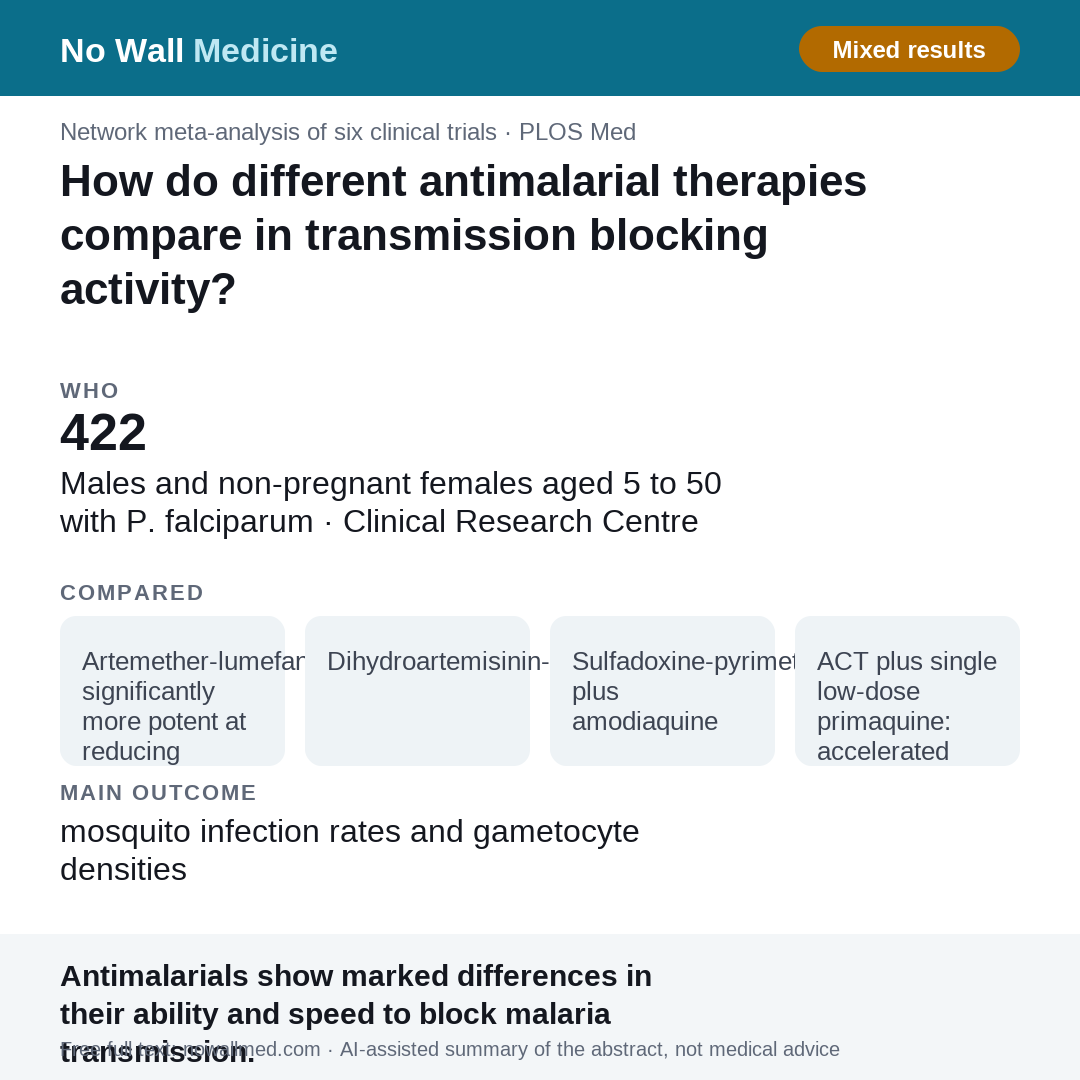
The transmission blocking activity of artemisinin-combination, non-artemisinin, and 8-aminoquinoline antimalarial therapies: A pooled analysis of individual participant data
Network meta-analysis of six clinical trialsMixed results
How do different antimalarial therapies compare in transmission blocking activity?
Who
422
Males and non-pregnant females aged 5 to 50 with P. falciparum · Clinical Research Centre in Mali
Compared
Artemether-lumefantrine: significantly more potent at reducing mosquito infection rates within 48 h
Dihydroartemisinin-piperaquine
Sulfadoxine-pyrimethamine plus amodiaquine
ACT plus single low-dose primaquine: accelerated gametocyte clearance and greater reduction in mosquito infection rate
Main outcome
mosquito infection rates and gametocyte densities
Bottom line: Antimalarials show marked differences in their ability and speed to block malaria transmission.
Limitation: Inclusion of highly infectious individuals and small sample sizes in some treatment groups.
PLOS Med · 2025-08-14Download image
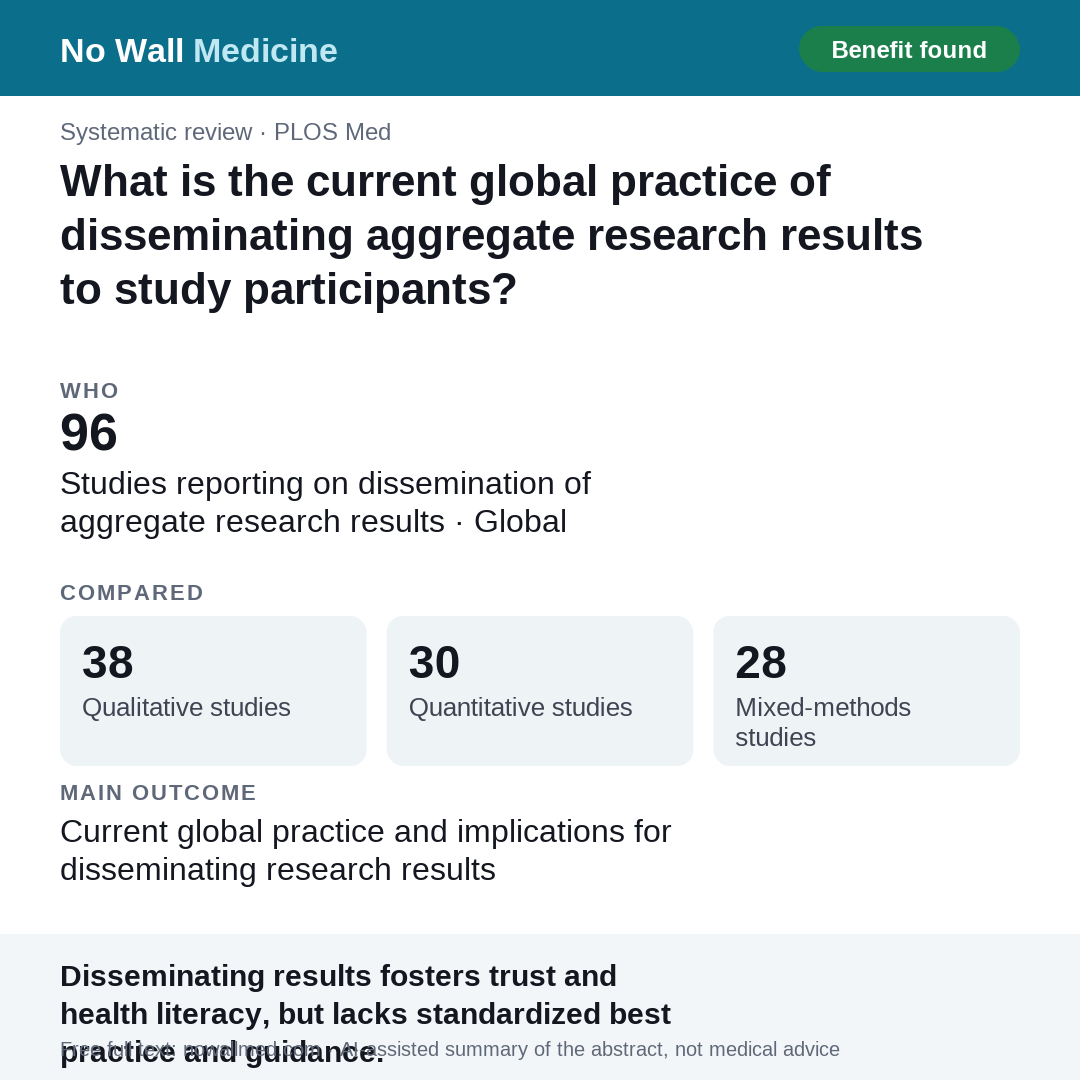
Current global practice and implications for future research on disseminating health research results to study participants: A systematic review
Systematic reviewBenefit found
What is the current global practice of disseminating aggregate research results to study participants?
Who
96
Studies reporting on dissemination of aggregate research results · Global
Compared
38Qualitative studies
30Quantitative studies
28Mixed-methods studies
Main outcome
Current global practice and implications for disseminating research results
Bottom line: Disseminating results fosters trust and health literacy, but lacks standardized best practice and guidance.
Limitation: Synthesis of the literature is challenging given the heterogeneity of the studies included.
PLOS Med · 2025-08-14Download image
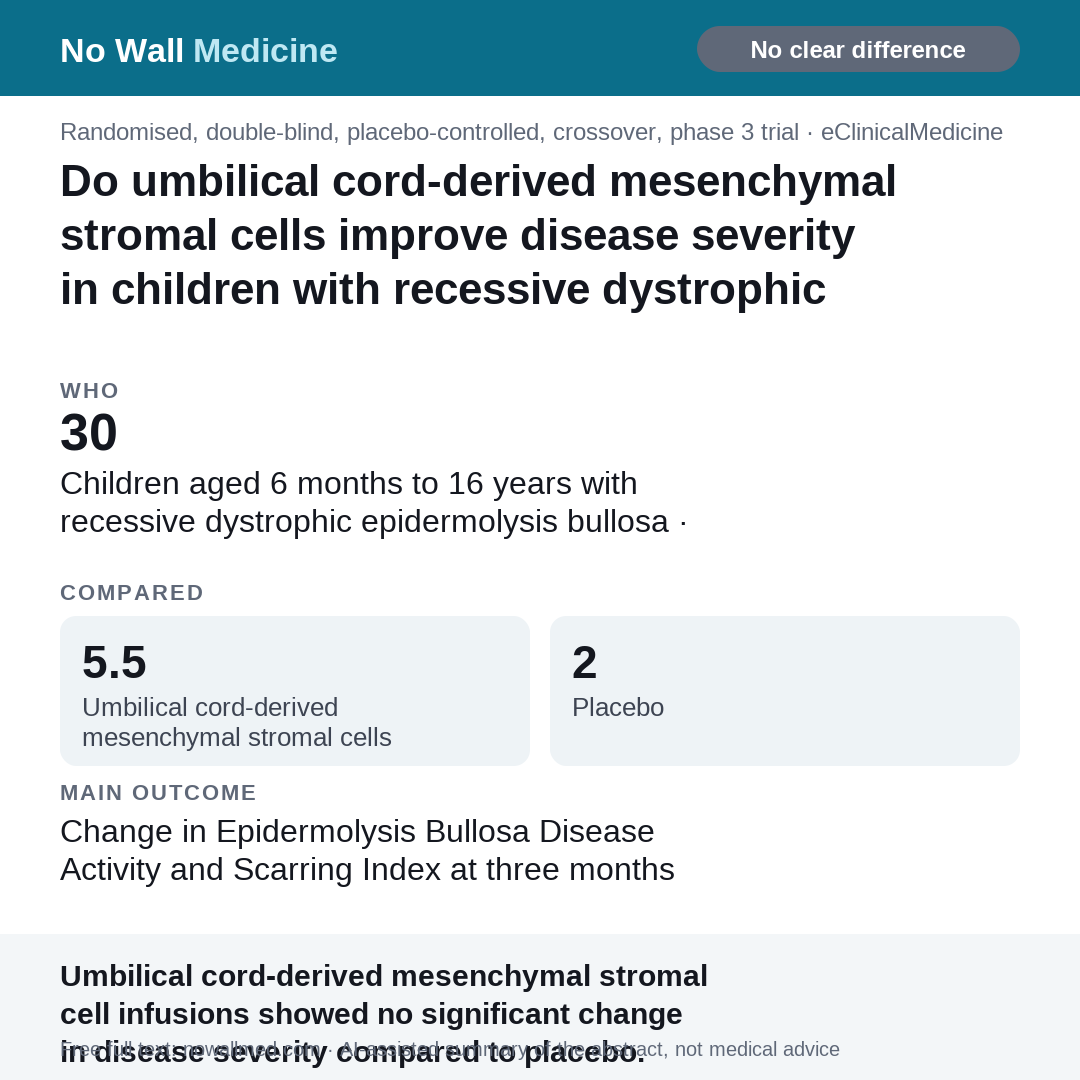
Mesenchymal stromal cell infusions of umbilical cord-derived mesenchymal stromal cells in children with recessive dystrophic epidermolysis bullosa (MissionEB): a randomised, double-blind, placebo controlled, crossover, phase 3 trial with an internal phase 1 dose de-escalation phase
Randomised, double-blind, placebo-controlled, crossover, phase 3 trialNo clear difference
Do umbilical cord-derived mesenchymal stromal cells improve disease severity in children with recessive dystrophic epidermolysis bullosa?
Who
30
Children aged 6 months to 16 years with recessive dystrophic epidermolysis bullosa · Two United Kingdom specialist centres
Compared
5.5Umbilical cord-derived mesenchymal stromal cells (95% CI -2.53 to 13.53)
2Placebo (95% CI -5.33 to 9.33)
Main outcome
Change in Epidermolysis Bullosa Disease Activity and Scarring Index at three months
Result: 3.75 point difference (95% CI -1.46 to 8.96) in favour of placebo
Bottom line: Umbilical cord-derived mesenchymal stromal cell infusions showed no significant change in disease severity compared to placebo.
eClinicalMedicine · 2025-08-14Download image
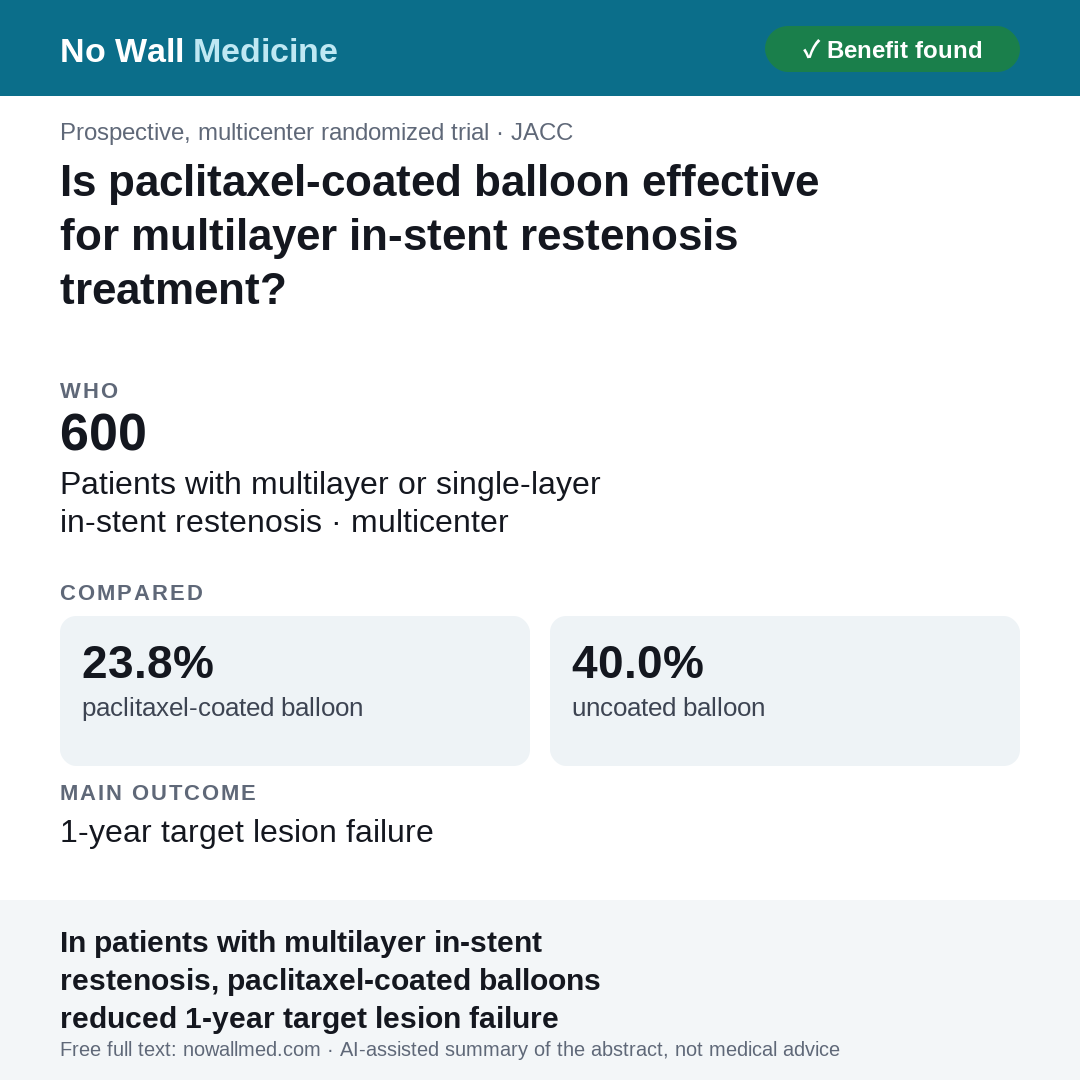
Paclitaxel-Coated Balloon for the Treatment of Multilayer In-Stent Restenosis: AGENT IDE Subgroup Analysis
Prospective, multicenter randomized trialBenefit found
Is paclitaxel-coated balloon effective for multilayer in-stent restenosis treatment?
Who
600
Patients with multilayer or single-layer in-stent restenosis · multicenter
Compared
23.8%paclitaxel-coated balloon
40.0%uncoated balloon
Main outcome
1-year target lesion failure
Result: hazard ratio 0.55 (95% CI 0.34-0.87)
Bottom line: In patients with multilayer in-stent restenosis, paclitaxel-coated balloons reduced 1-year target lesion failure compared to uncoated balloons.
JACC · 2025-08-14Download image
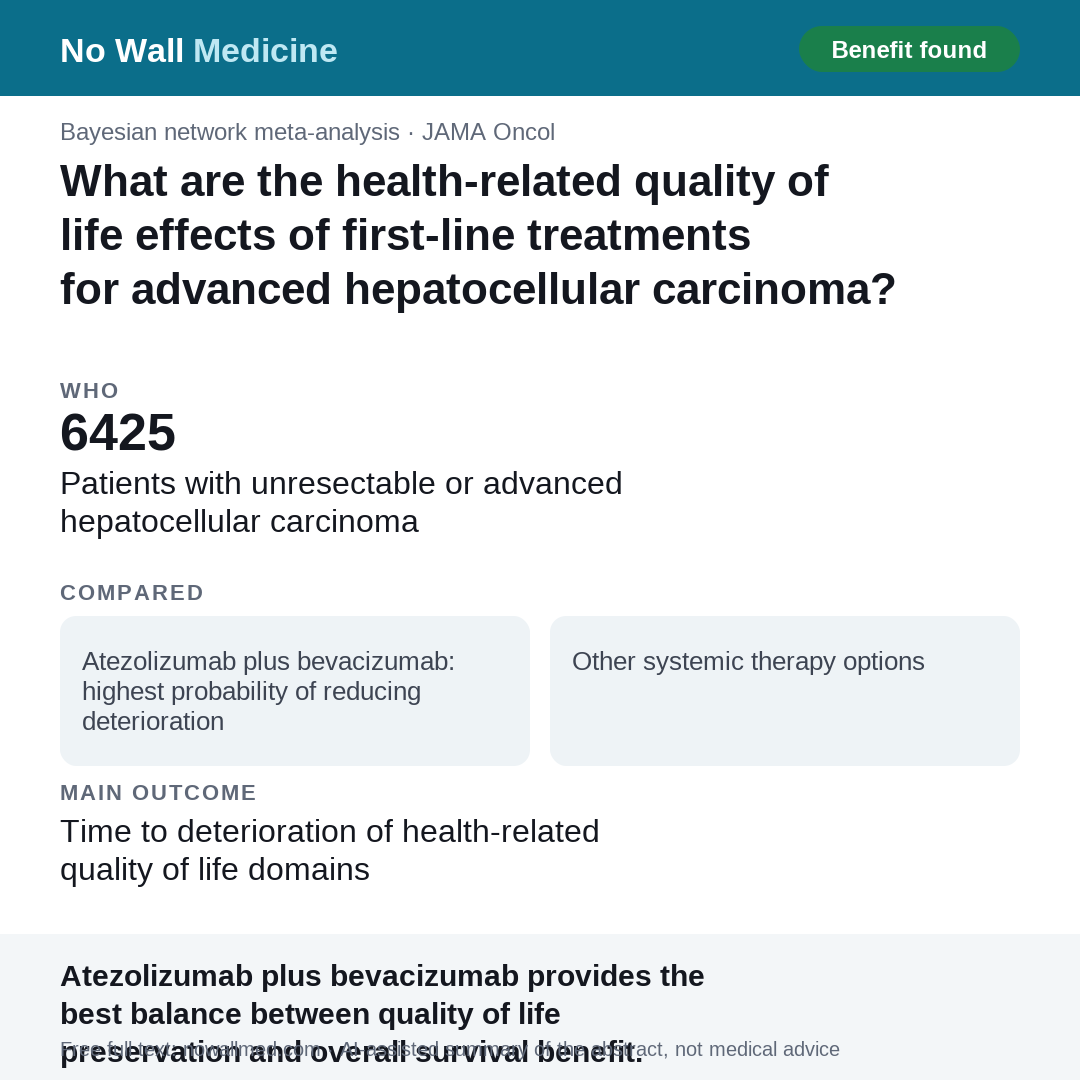
Integrating Quality of Life and Survival in Systemic Therapy for Advanced Hepatocellular Carcinoma: A Network Meta-Analysis
Bayesian network meta-analysisBenefit found
What are the health-related quality of life effects of first-line treatments for advanced hepatocellular carcinoma?
Who
6425
Patients with unresectable or advanced hepatocellular carcinoma
Compared
Atezolizumab plus bevacizumab: highest probability of reducing deterioration
Other systemic therapy options
Main outcome
Time to deterioration of health-related quality of life domains
Bottom line: Atezolizumab plus bevacizumab provides the best balance between quality of life preservation and overall survival benefit.
JAMA Oncol · 2025-08-14Download image
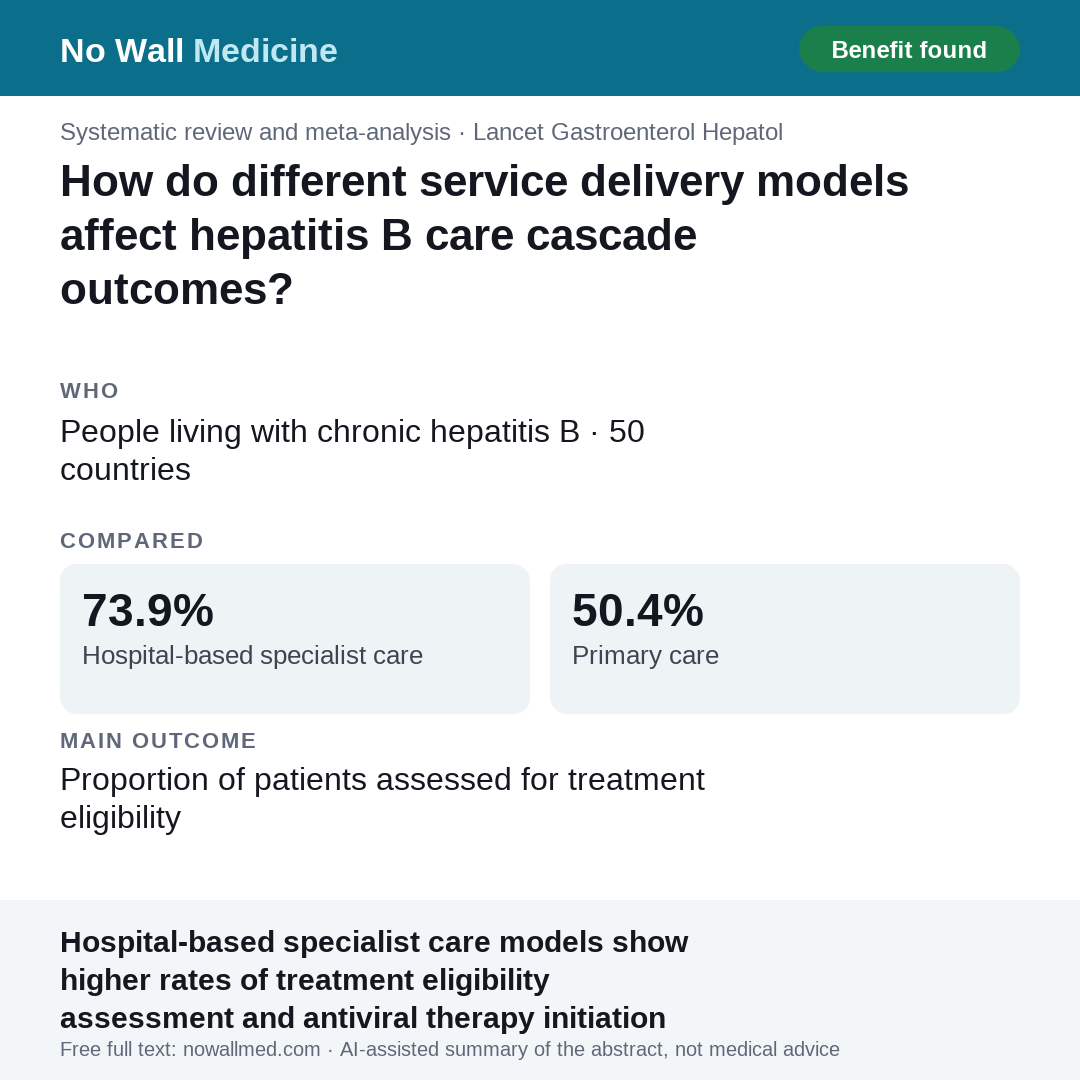
Service delivery models and care cascade outcomes for people living with chronic hepatitis B: a global systematic review and meta-analysis
Systematic review and meta-analysisBenefit found
How do different service delivery models affect hepatitis B care cascade outcomes?
Who
People living with chronic hepatitis B · 50 countries
Compared
73.9%Hospital-based specialist care (95% CI 65.8-80.6)
50.4%Primary care (25.9-74.8)
Main outcome
Proportion of patients assessed for treatment eligibility
Result: risk ratio 2.07 (95% CI 1.65-2.59)
Bottom line: Hospital-based specialist care models show higher rates of treatment eligibility assessment and antiviral therapy initiation compared to primary care.
Lancet Gastroenterol Hepatol · 2025-08-14Download image
Ocular Adverse Events With Semaglutide: A Systematic Review and Meta-Analysis
Systematic review and meta-analysisMixed results
What is the risk of ocular adverse events with semaglutide treatment?
Who
73640
Adults treated with semaglutide
Compared
Semaglutide
Active comparator or placebo
Main outcome
Eye disorders, diabetic retinopathy, and nonarteritic anterior ischemic optic neuropathy
Result: odds ratio 3.92 (95% CI 1.02-15.02) for nonarteritic anterior ischemic optic neuropathy
Bottom line: Semaglutide was not associated with increased eye disorders or diabetic retinopathy, but evidence for nonarteritic anterior ischemic optic neuropathy is insufficient.
Limitation: Sample size was insufficient to avoid missing alternative results for nonarteritic anterior ischemic optic neuropathy.
JAMA Ophthalmol · 2025-08-14Download image

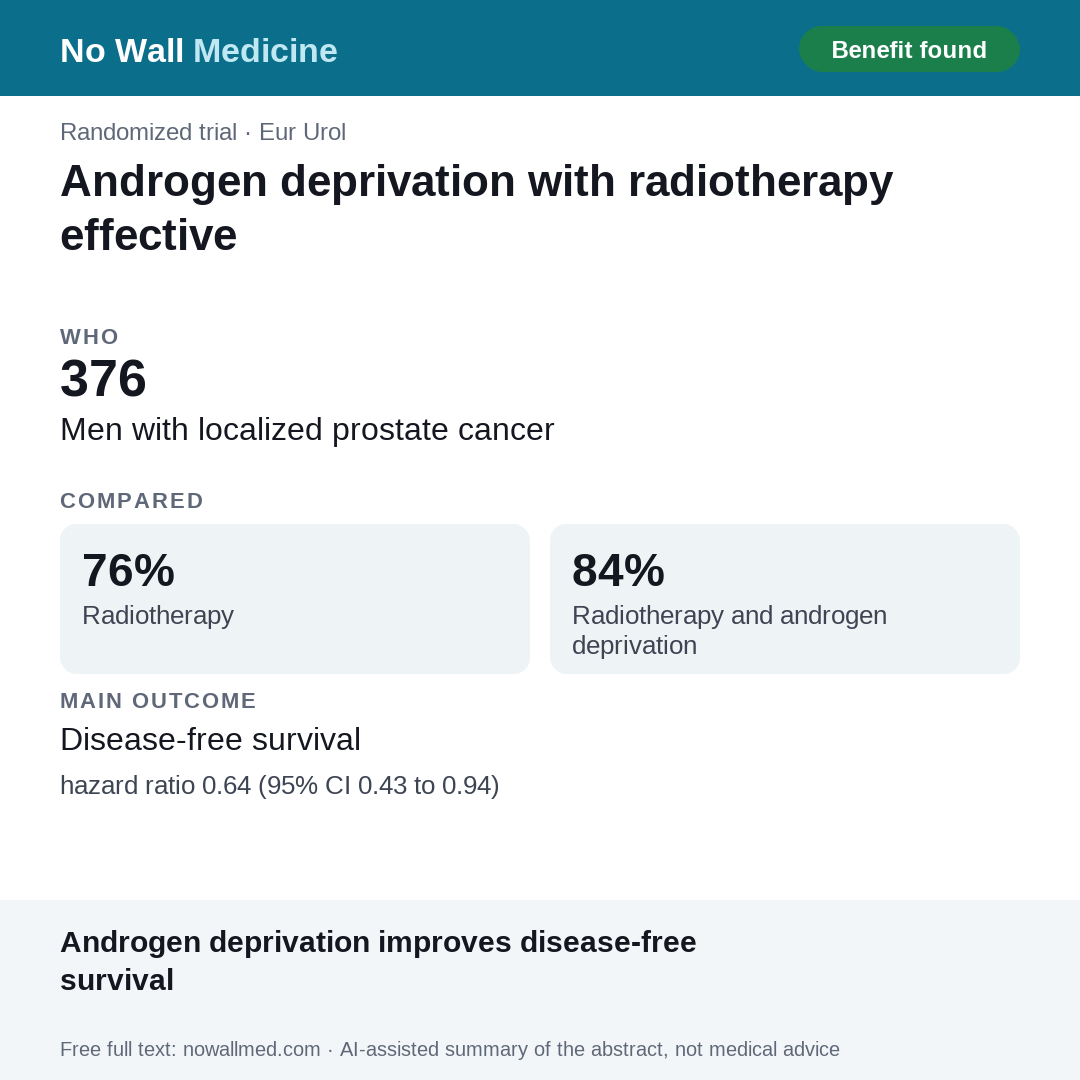
Short-term Androgen Deprivation Therapy and High-dose Radiotherapy in Intermediate- and High-risk Localized Prostate Cancer: Results from the GETUG 14 Randomized Phase 3 Trial
Randomized trialBenefit found
Androgen deprivation with radiotherapy effective
Who
376
Men with localized prostate cancer
Compared
76%Radiotherapy
84%Radiotherapy and androgen deprivation
Main outcome
Disease-free survival
Result: hazard ratio 0.64 (95% CI 0.43 to 0.94)
Bottom line: Androgen deprivation improves disease-free survival
Eur Urol · 2025-08-14Download image
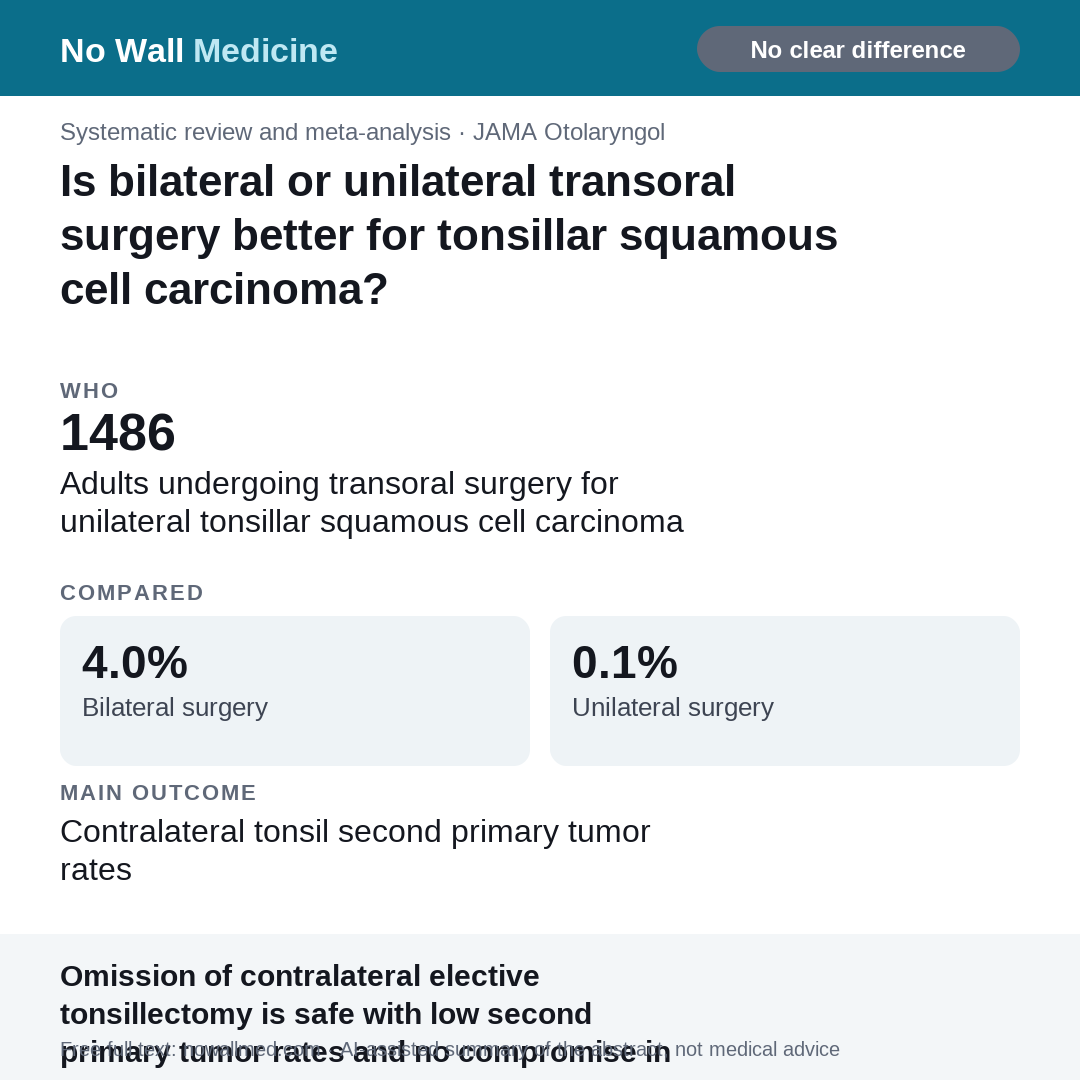
Unilateral vs Bilateral Transoral Surgery for Tonsillar Squamous Cell Carcinoma: A Systematic Review and Meta-Analysis
Systematic review and meta-analysisNo clear difference
Is bilateral or unilateral transoral surgery better for tonsillar squamous cell carcinoma?
Who
1486
Adults undergoing transoral surgery for unilateral tonsillar squamous cell carcinoma
Compared
4.0%Bilateral surgery (95% CI, 2.0%-5.0%)
0.1%Unilateral surgery (95% CI, 0%-1%)
Main outcome
Contralateral tonsil second primary tumor rates
Bottom line: Omission of contralateral elective tonsillectomy is safe with low second primary tumor rates and no compromise in survival.
JAMA Otolaryngol · 2025-08-14Download image
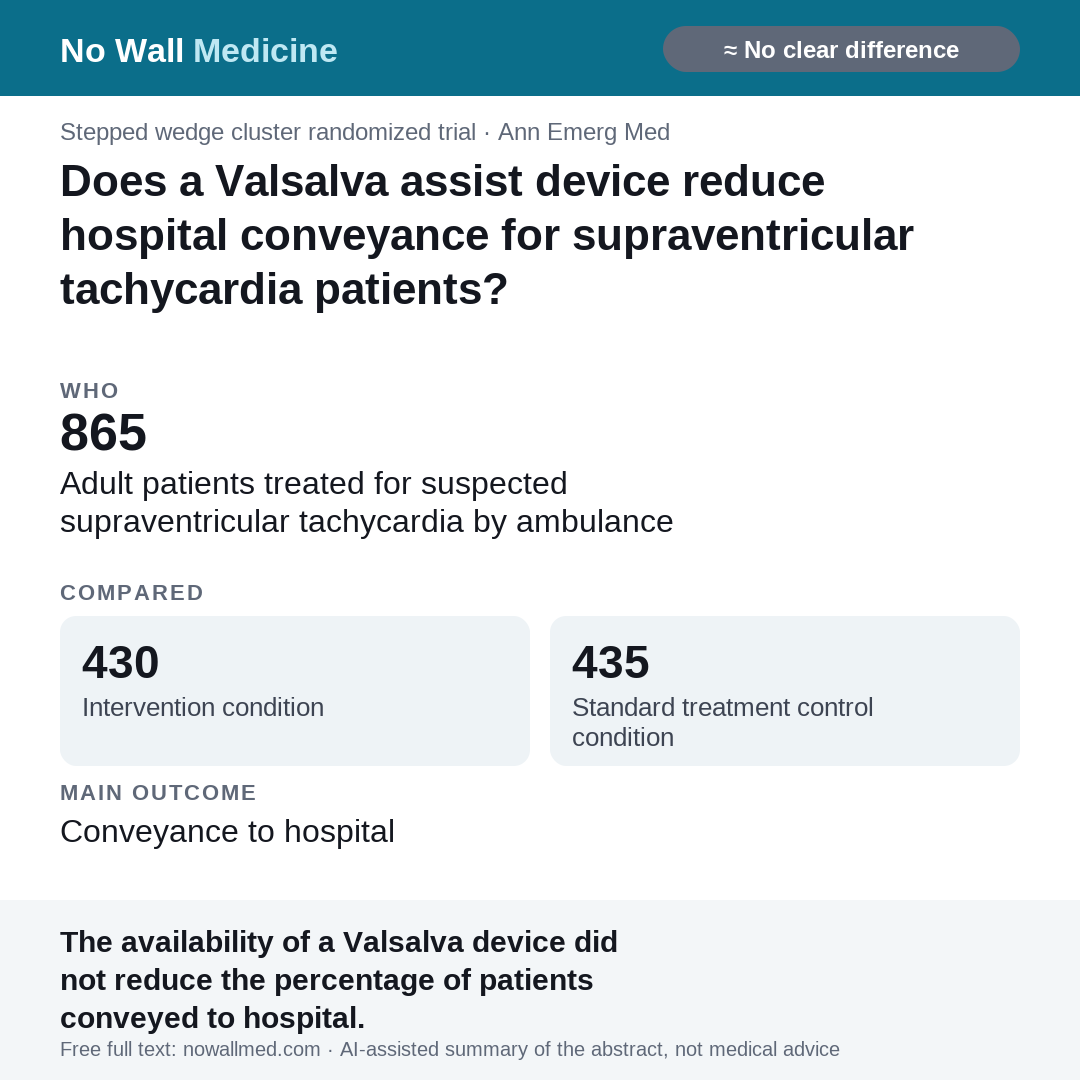
Evaluation of Out-of-Hospital Use of a Valsalva Assist Device in the Emergency Treatment of Supraventricular Tachycardia
Stepped wedge cluster randomized trialNo clear difference
Does a Valsalva assist device reduce hospital conveyance for supraventricular tachycardia patients?
Who
865
Adult patients treated for suspected supraventricular tachycardia by ambulance services · United Kingdom ambulance service
Compared
430Intervention condition
435Standard treatment control condition
Main outcome
Conveyance to hospital
Result: adjusted odds ratio 1.37 (95% CI 0.75 to 2.49)
Bottom line: The availability of a Valsalva device did not reduce the percentage of patients conveyed to hospital.
Ann Emerg Med · 2025-08-14Download image
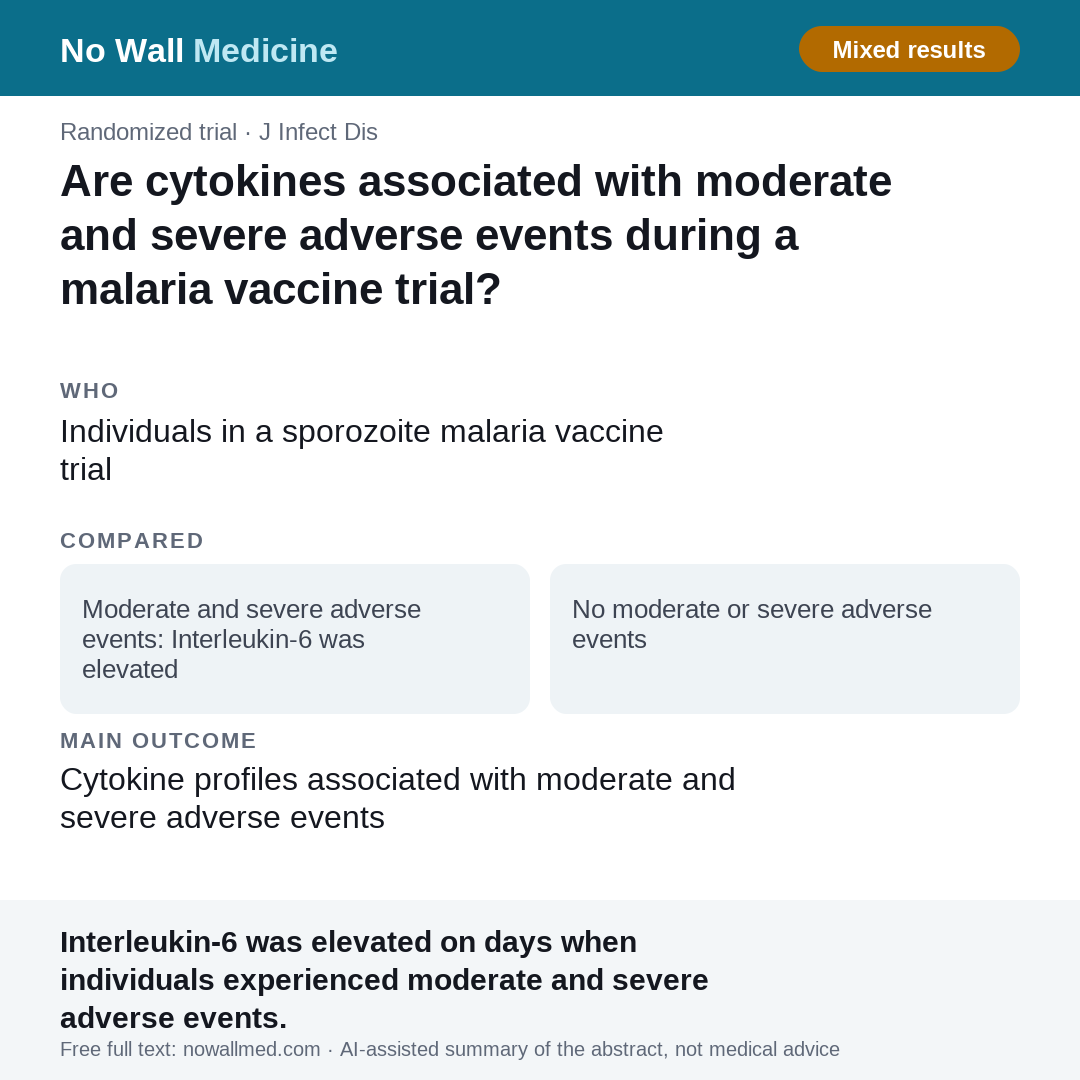
Cytokines Associated With Moderate and Severe Adverse Events During a Sporozoite Malaria Vaccine Trial With Controlled Human Malaria Infection
Randomized trialMixed results
Are cytokines associated with moderate and severe adverse events during a malaria vaccine trial?
Who
Individuals in a sporozoite malaria vaccine trial
Compared
Moderate and severe adverse events: Interleukin-6 was elevated
No moderate or severe adverse events
Main outcome
Cytokine profiles associated with moderate and severe adverse events
Bottom line: Interleukin-6 was elevated on days when individuals experienced moderate and severe adverse events.
J Infect Dis · 2025-08-14Download image
Informal caregiving for people with dementia and hearing or vision impairment: A systematic review
Systematic reviewUnclear result
Challenges of caregiving for dementia and sensory impairment
Who
Caregivers of people with dementia and sensory impairment · Five countries
Compared
Dementia and sensory impairment
Comparison group
Main outcome
Caregivers' challenges and needs
Bottom line: Caregivers face increased challenges with dual impairments
Alzheimers Dement · 2025-08-14Download image

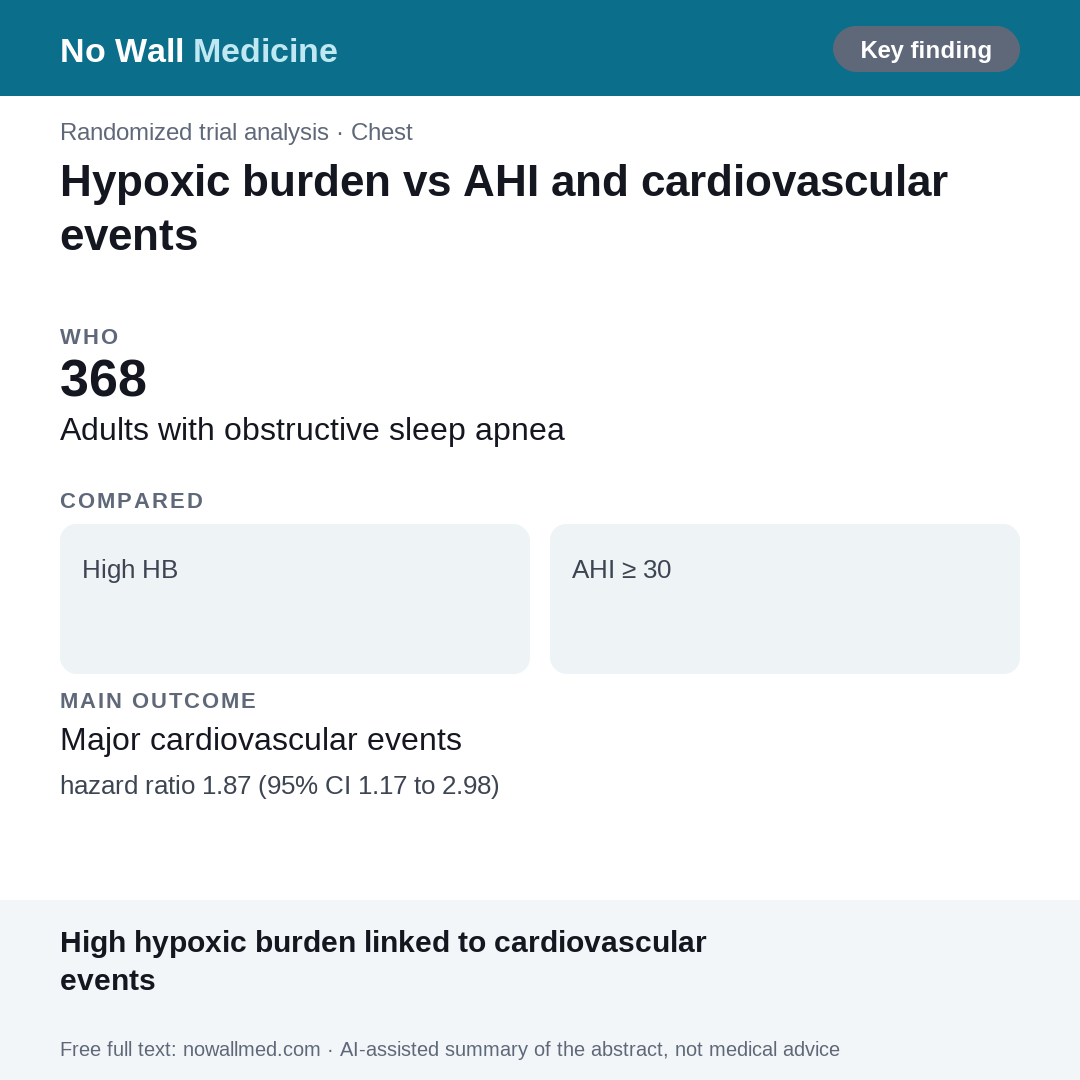
Association of Hypoxic Burden With Cardiovascular Events: A Risk Stratification Analysis of the Randomized Intervention With CPAP in Coronary Artery Disease and Sleep Apnea Cohort
Randomized trial analysisHarm found
Hypoxic burden vs AHI and cardiovascular events
Who
368
Adults with obstructive sleep apnea
Compared
High HB
AHI ≥ 30
Main outcome
Major cardiovascular events
Result: hazard ratio 1.87 (95% CI 1.17 to 2.98)
Bottom line: High hypoxic burden linked to cardiovascular events
Chest · 2025-08-14Download image
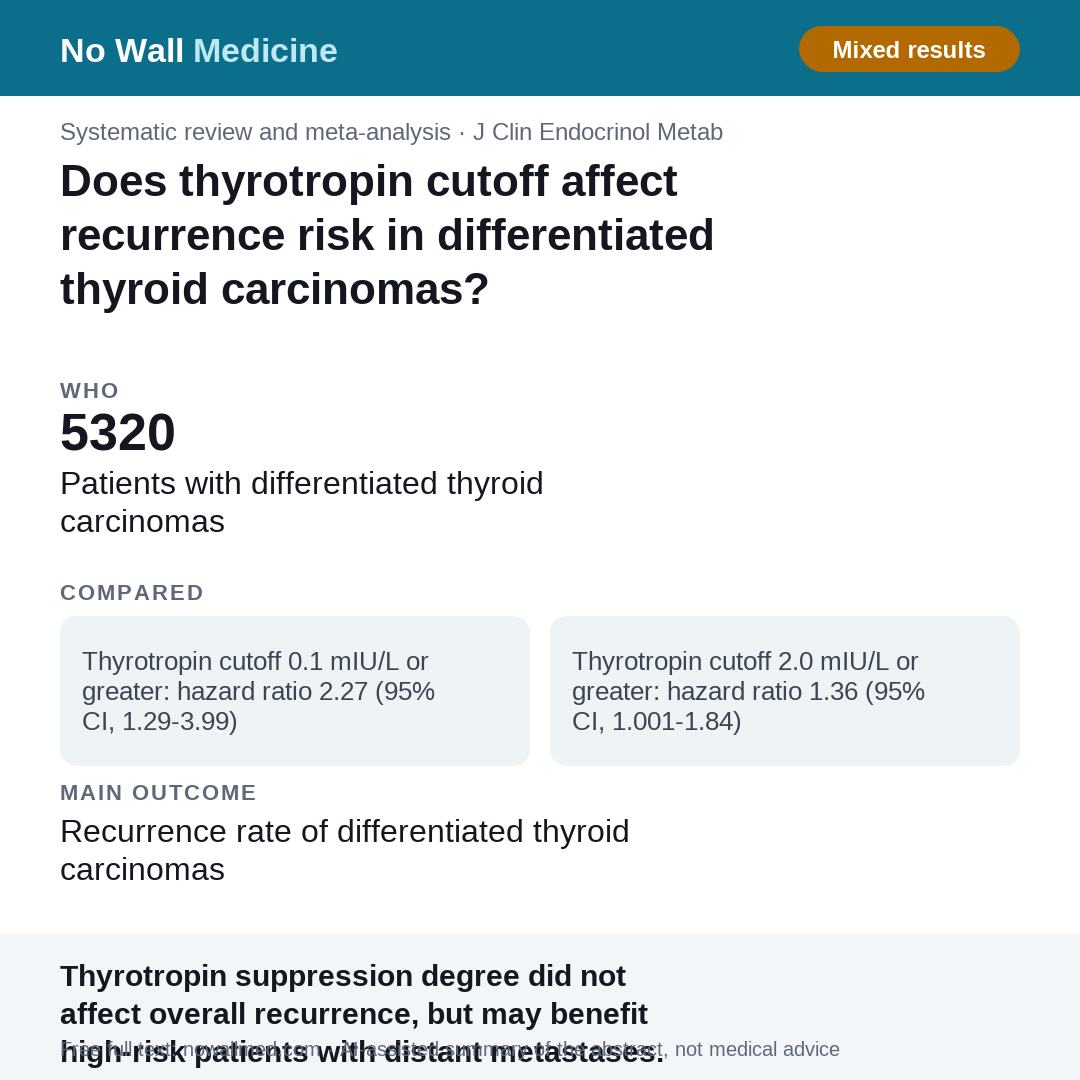
TSH Cutoffs and Recurrence Risk in Differentiated Thyroid Carcinomas: A Systematic Review and Meta-Analysis
Systematic review and meta-analysisMixed results
Does thyrotropin cutoff affect recurrence risk in differentiated thyroid carcinomas?
Who
5320
Patients with differentiated thyroid carcinomas
Compared
Thyrotropin cutoff 0.1 mIU/L or greater: hazard ratio 2.27 (95% CI, 1.29-3.99)
Thyrotropin cutoff 2.0 mIU/L or greater: hazard ratio 1.36 (95% CI, 1.001-1.84)
Main outcome
Recurrence rate of differentiated thyroid carcinomas
Result: hazard ratio 2.27 (95% CI, 1.29-3.99)
Bottom line: Thyrotropin suppression degree did not affect overall recurrence, but may benefit high-risk patients with distant metastases.
J Clin Endocrinol Metab · 2025-08-14Download image
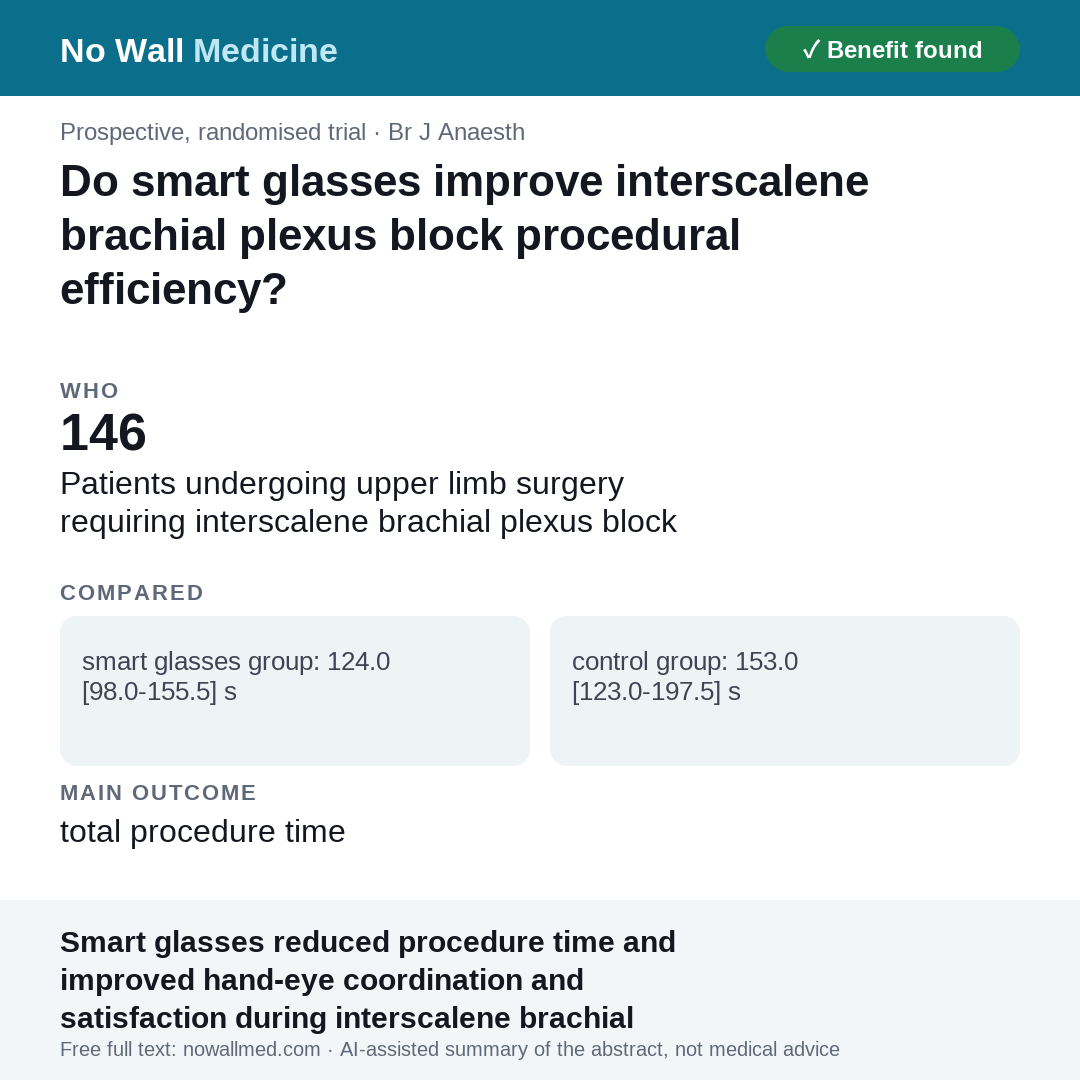
Use of smart glasses imaging for interscalene brachial plexus block: a randomised clinical trial
Prospective, randomised trialBenefit found
Do smart glasses improve interscalene brachial plexus block procedural efficiency?
Who
146
Patients undergoing upper limb surgery requiring interscalene brachial plexus block
Compared
smart glasses group: 124.0 [98.0-155.5] s
control group: 153.0 [123.0-197.5] s
Main outcome
total procedure time
Bottom line: Smart glasses reduced procedure time and improved hand-eye coordination and satisfaction during interscalene brachial plexus blocks.
Br J Anaesth · 2025-08-14Download image
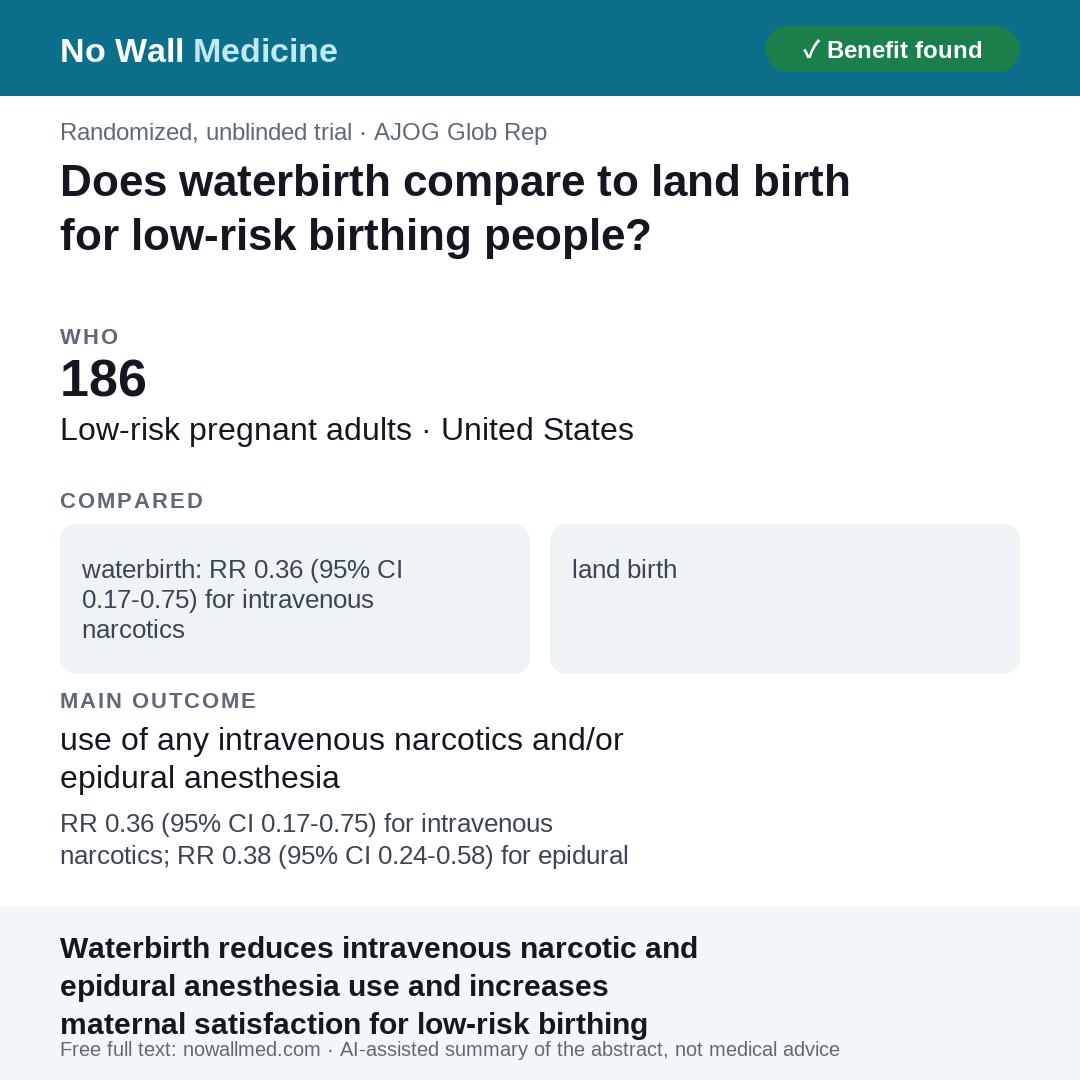
Hospital waterbirth for low-risk birthing people: findings of a randomized controlled trial
Randomized, unblinded trialBenefit found
Does waterbirth compare to land birth for low-risk birthing people?
Who
186
Low-risk pregnant adults · United States
Compared
waterbirth: RR 0.36 (95% CI 0.17-0.75) for intravenous narcotics
land birth
Main outcome
use of any intravenous narcotics and/or epidural anesthesia
Result: RR 0.36 (95% CI 0.17-0.75) for intravenous narcotics; RR 0.38 (95% CI 0.24-0.58) for epidural analgesia
Bottom line: Waterbirth reduces intravenous narcotic and epidural anesthesia use and increases maternal satisfaction for low-risk birthing people.
Limitation: Attrition was 39%.
AJOG Glob Rep · 2025-08-14Download image
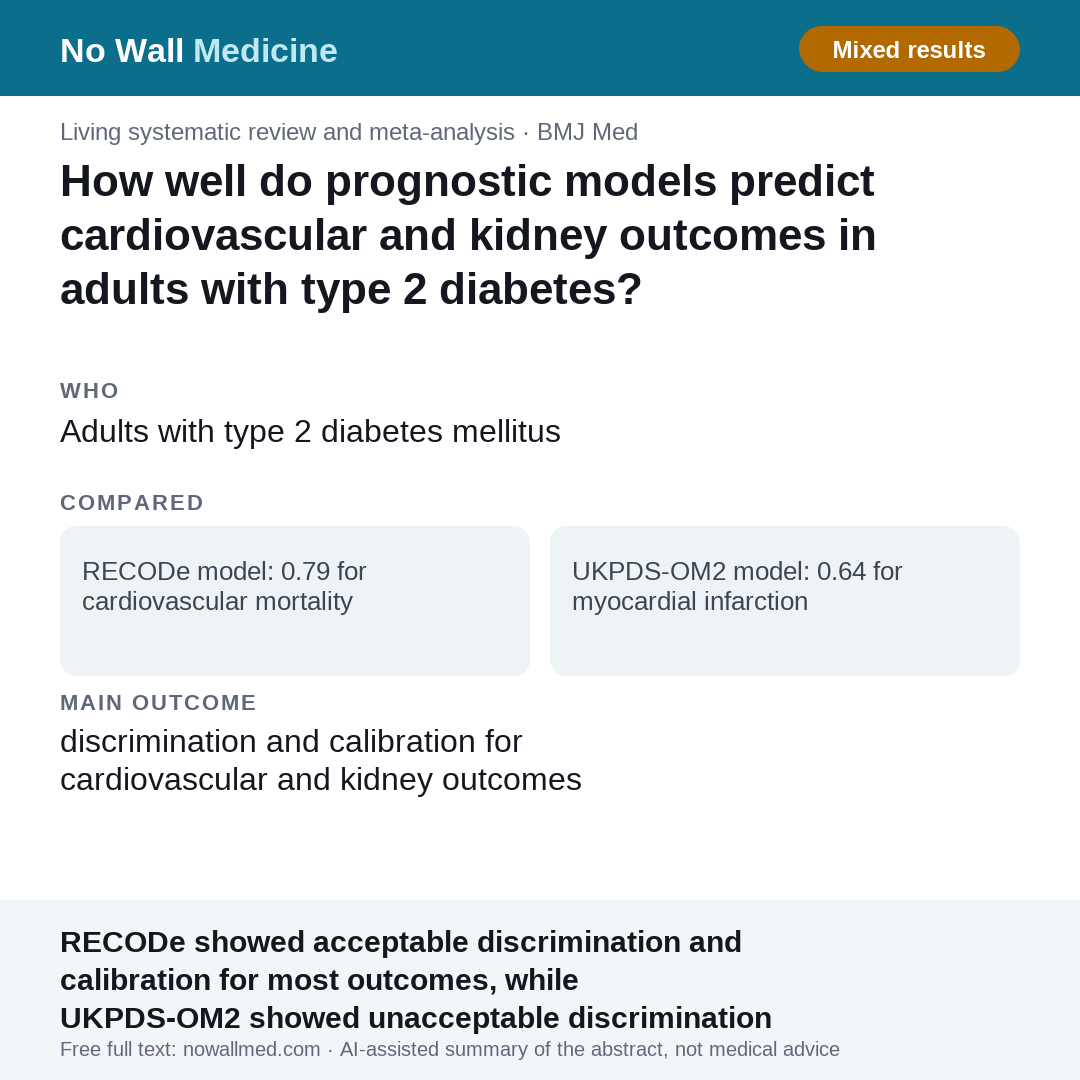
Prognostic models for cardiovascular and kidney outcomes in people with type 2 diabetes: living systematic review and meta-analysis of observational studies
Living systematic review and meta-analysisMixed results
How well do prognostic models predict cardiovascular and kidney outcomes in adults with type 2 diabetes?
Who
35
Adults with type 2 diabetes mellitus
Compared
RECODe model: 0.79 for cardiovascular mortality
UKPDS-OM2 model: 0.64 for myocardial infarction
Main outcome
discrimination and calibration for cardiovascular and kidney outcomes
Bottom line: RECODe showed acceptable discrimination and calibration for most outcomes, while UKPDS-OM2 showed unacceptable discrimination for some outcomes.
Limitation: additional studies directly comparing models are needed
BMJ Med · 2025-08-14Download image
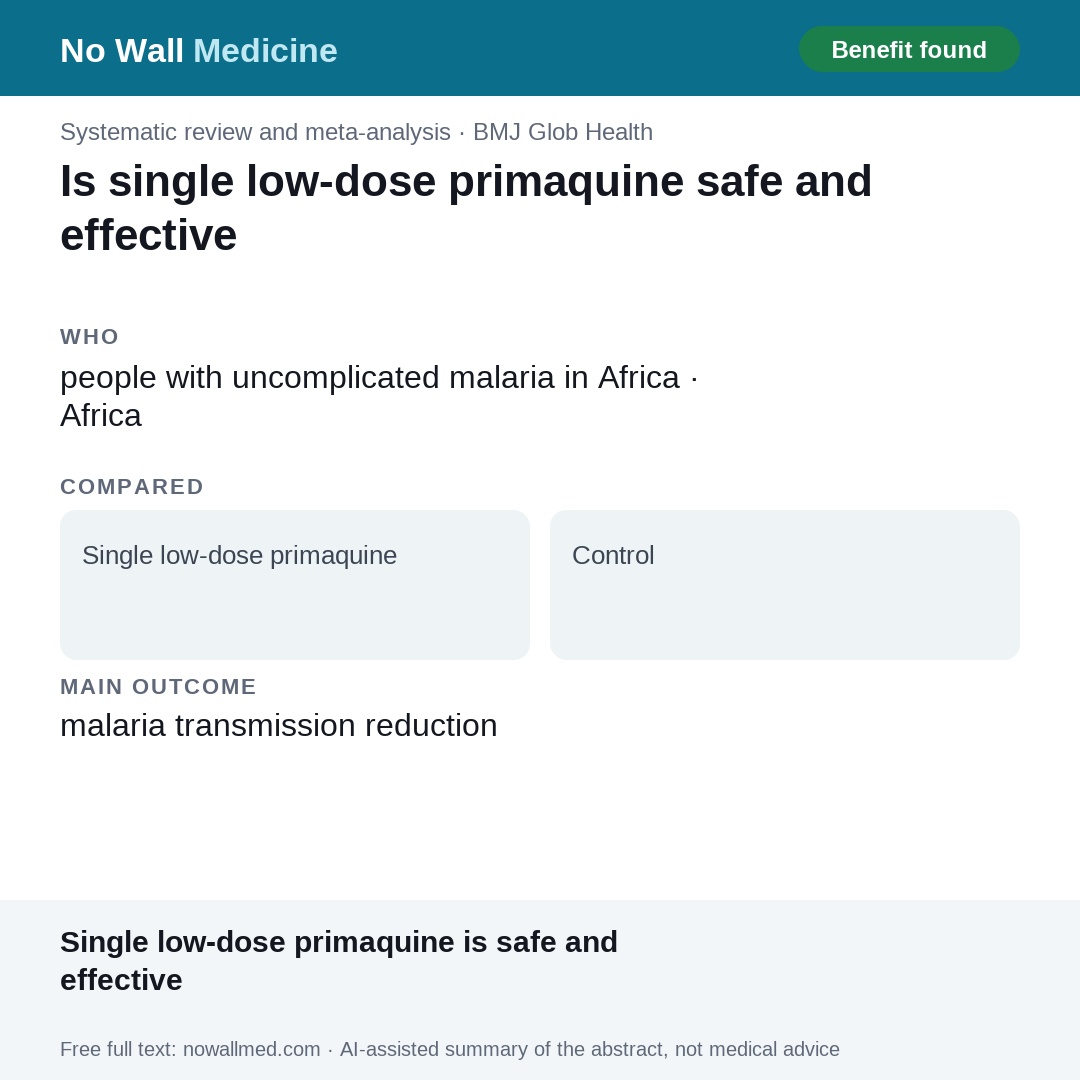
Single low-dose primaquine for malaria control in Africa: a systematic review of safety, efficacy and implementation barriers
Systematic review and meta-analysisBenefit found
Is single low-dose primaquine safe and effective
Who
people with uncomplicated malaria in Africa · Africa
Compared
Single low-dose primaquine
Control
Main outcome
malaria transmission reduction
Bottom line: Single low-dose primaquine is safe and effective
Limitation: evidence on community-level impact limited
BMJ Glob Health · 2025-08-14Download image
Corticosteroids for reducing tuberculosis mortality in persons living with HIV: a systematic review and meta-analysis using reconstructed individual patient data
Systematic review and meta-analysisBenefit found
Do adjunctive corticosteroids reduce mortality in persons living with HIV treated for tuberculosis?
Who
873
Persons living with HIV being treated for tuberculosis
Compared
Corticosteroids
Placebo
Main outcome
All-cause mortality
Result: hazard ratio 0.33 (95% CI 0.26 to 0.41)
Bottom line: Adjunctive corticosteroids were associated with reduced mortality among persons living with HIV treated for tuberculosis.
BMJ Glob Health · 2025-08-14Download image

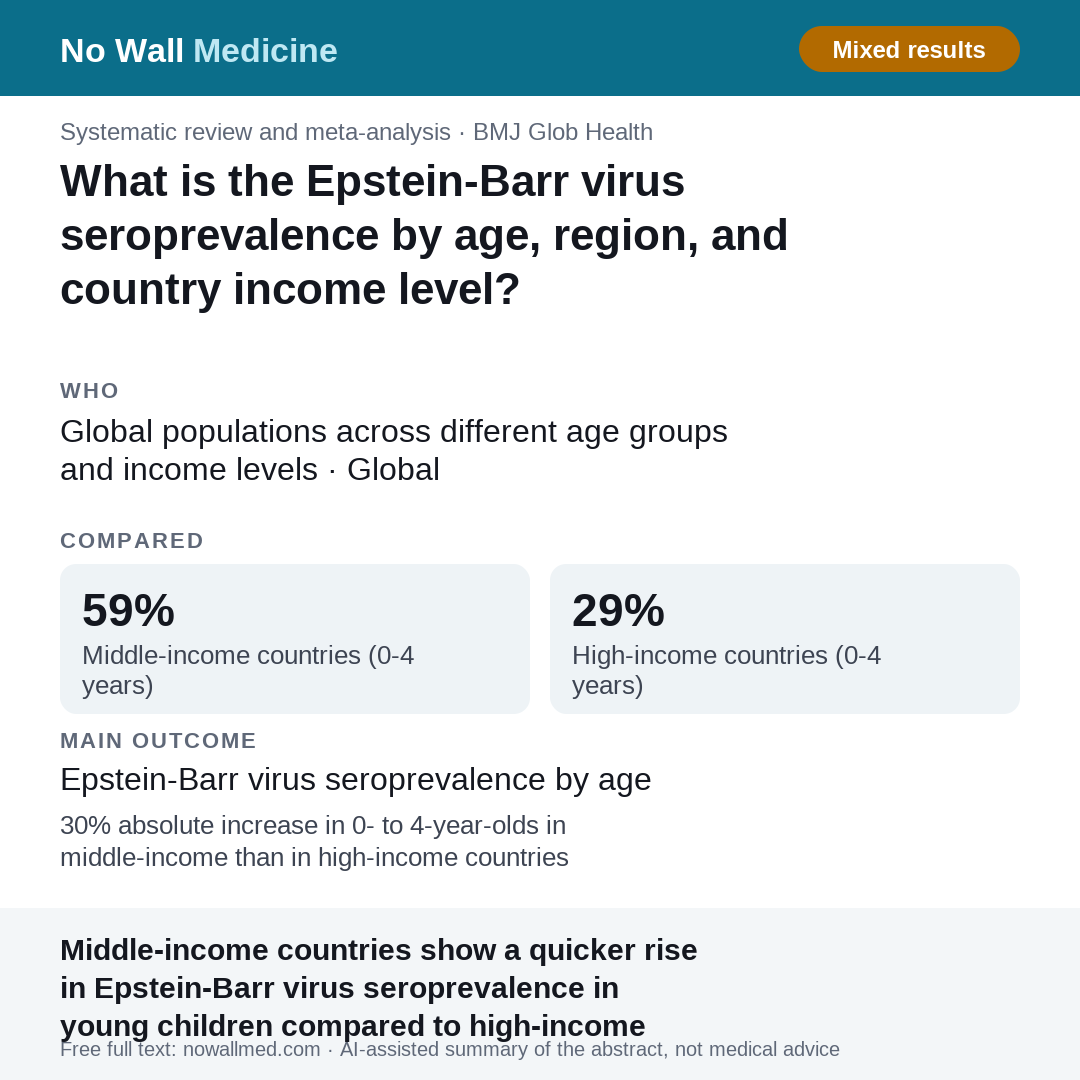
Equity in protection: bridging global data gaps for an EBV vaccine-a systematic review and meta-analysis
Systematic review and meta-analysisMixed results
What is the Epstein-Barr virus seroprevalence by age, region, and country income level?
Who
Global populations across different age groups and income levels · Global
Compared
59%Middle-income countries (0-4 years) (95% CI 28 to 91%, I2=99%)
29%High-income countries (0-4 years) (95% CI 16 to 41%, I2=99%)
Main outcome
Epstein-Barr virus seroprevalence by age
Result: 30% absolute increase in 0- to 4-year-olds in middle-income than in high-income countries
Bottom line: Middle-income countries show a quicker rise in Epstein-Barr virus seroprevalence in young children compared to high-income countries.
Limitation: Data variability and limited consistency of methodologies and seroprevalence measurements hindered comprehensive meta-analyses.
BMJ Glob Health · 2025-08-14Download image