Visual abstracts
New randomized trials and meta-analyses from leading journals at a glance: who was studied, what was compared, and what was found. Every paper is free to read in full.
All specialtiesCardiology 1341Oncology 1205Gastroenterology & Hepatology 483Infectious Disease 880Neurology 556Psychiatry & Mental Health 671Pulmonology 578Critical Care 398Endocrinology & Diabetes 746Pediatrics 802Surgery 638Orthopedics & Sports Medicine 259Neurosurgery 182Cardiothoracic & Vascular Surgery 151Plastic & Reconstructive Surgery 212Nephrology 283Rheumatology 179Hematology 283Dermatology 142Ophthalmology 153Obstetrics & Gynecology 426Public & Global Health 261Radiology & Imaging 173Anesthesiology 257Urology 251ENT (Otolaryngology) 182Emergency Medicine 147Allergy & Immunology 90Geriatrics 281Family Medicine & Primary Care 171Medical Genetics & Genomics 144Pathology & Laboratory Medicine 41Physical Medicine & Rehabilitation 233Palliative Care 122Nutrition 353Digital Health & AI 696General Medicine 123
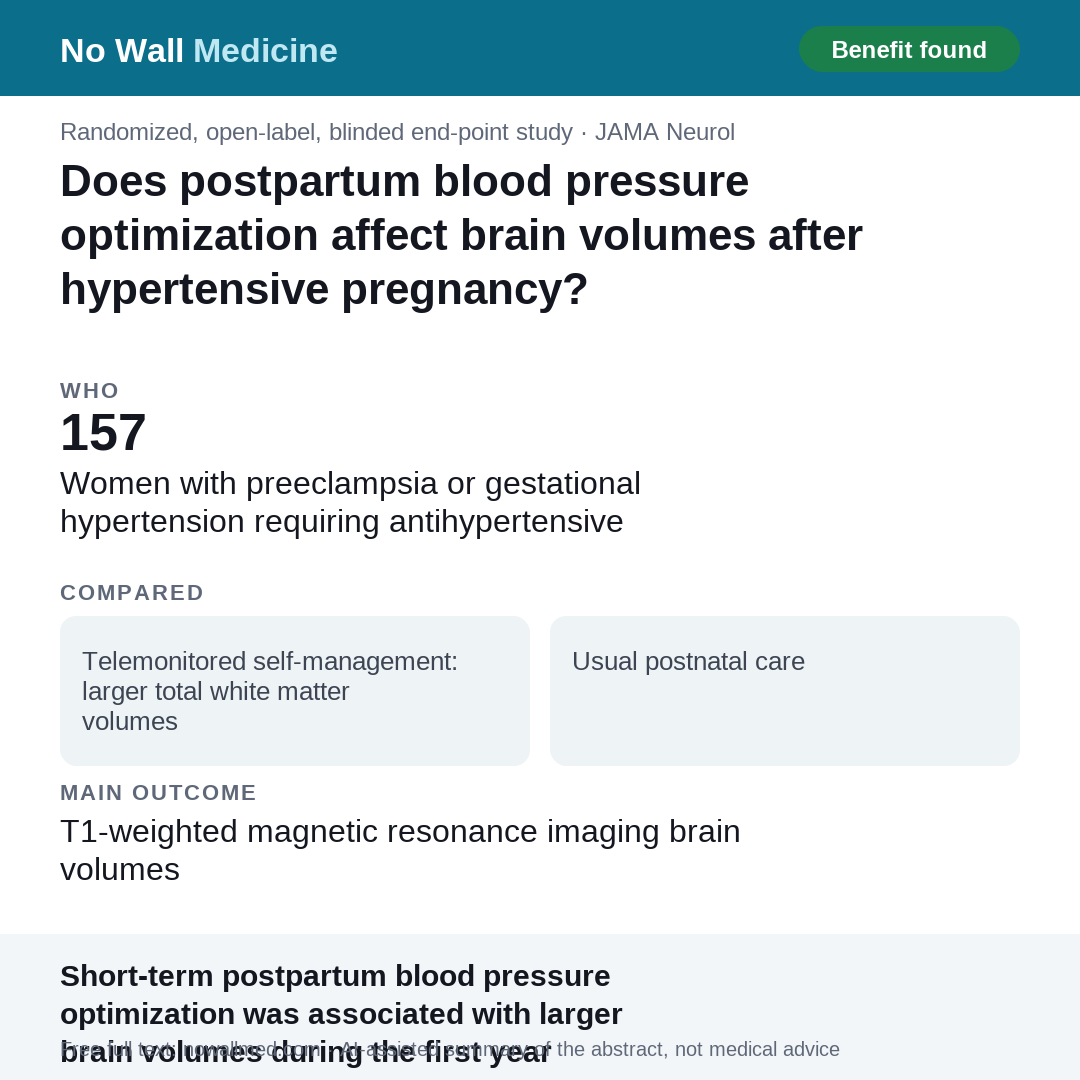
Brain Volumes After Hypertensive Pregnancy and Postpartum Blood Pressure Management: A POP-HT Randomized Clinical Trial Imaging Substudy
Randomized, open-label, blinded end-point studyBenefit found
Does postpartum blood pressure optimization affect brain volumes after hypertensive pregnancy?
Who
157
Women with preeclampsia or gestational hypertension requiring antihypertensive treatment · Single tertiary center in the UK
Compared
Telemonitored self-management: larger total white matter volumes
Usual postnatal care
Main outcome
T1-weighted magnetic resonance imaging brain volumes
Result: adjusted mean difference 11.50 cm3 (95% CI 2.04 to 20.96)
Bottom line: Short-term postpartum blood pressure optimization was associated with larger brain volumes during the first year postpartum.
JAMA Neurol · 2026-01-06Download image
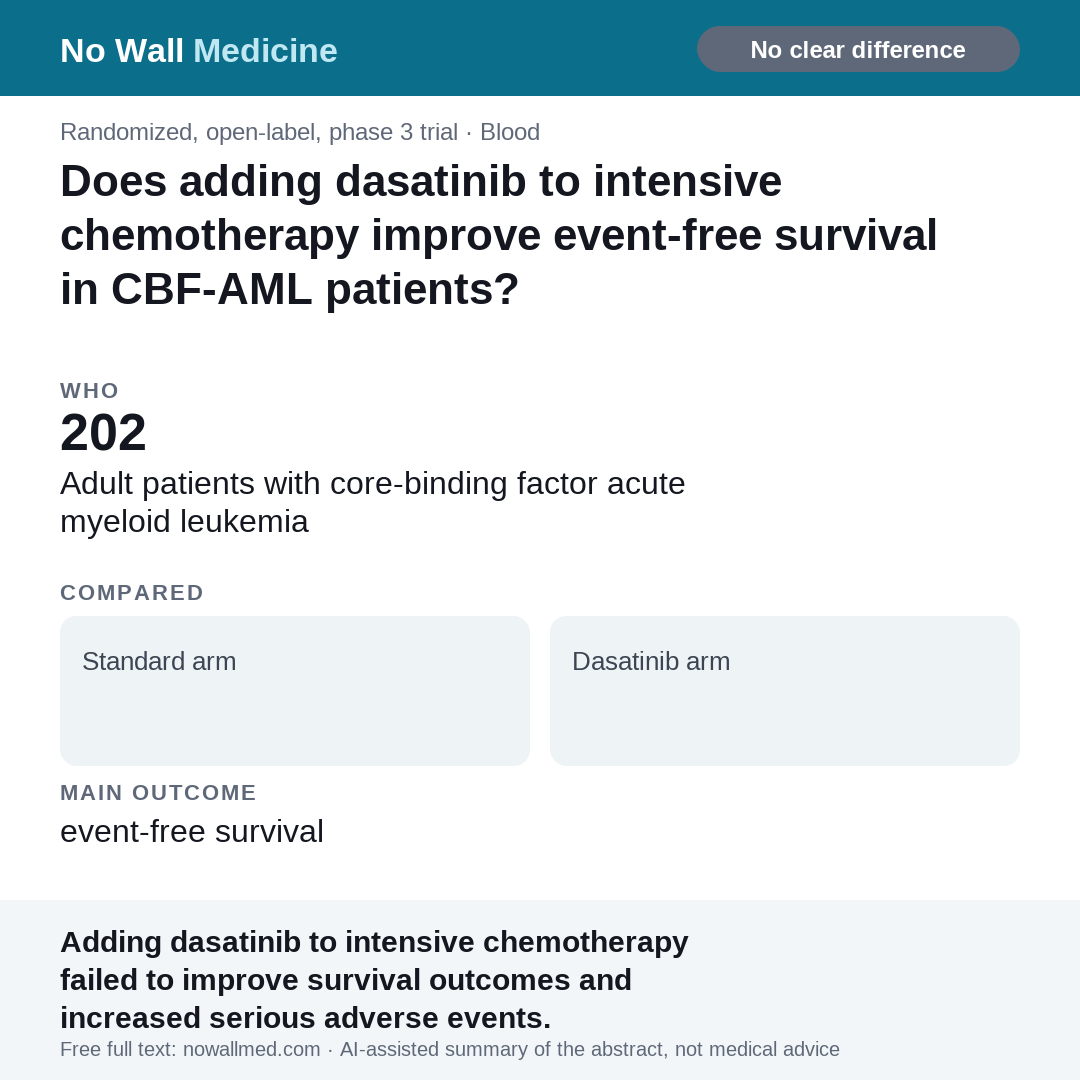
A phase 3 study of intensive chemotherapy with or without dasatinib in core-binding factor acute myeloid leukemia
Randomized, open-label, phase 3 trialNo clear difference
Does adding dasatinib to intensive chemotherapy improve event-free survival in CBF-AML patients?
Who
202
Adult patients with core-binding factor acute myeloid leukemia
Compared
Standard arm
Dasatinib arm
Main outcome
event-free survival
Result: hazard ratio 0.92 (95% confidence interval, 0.63-1.33)
Bottom line: Adding dasatinib to intensive chemotherapy failed to improve survival outcomes and increased serious adverse events.
Blood · 2026-01-06Download image
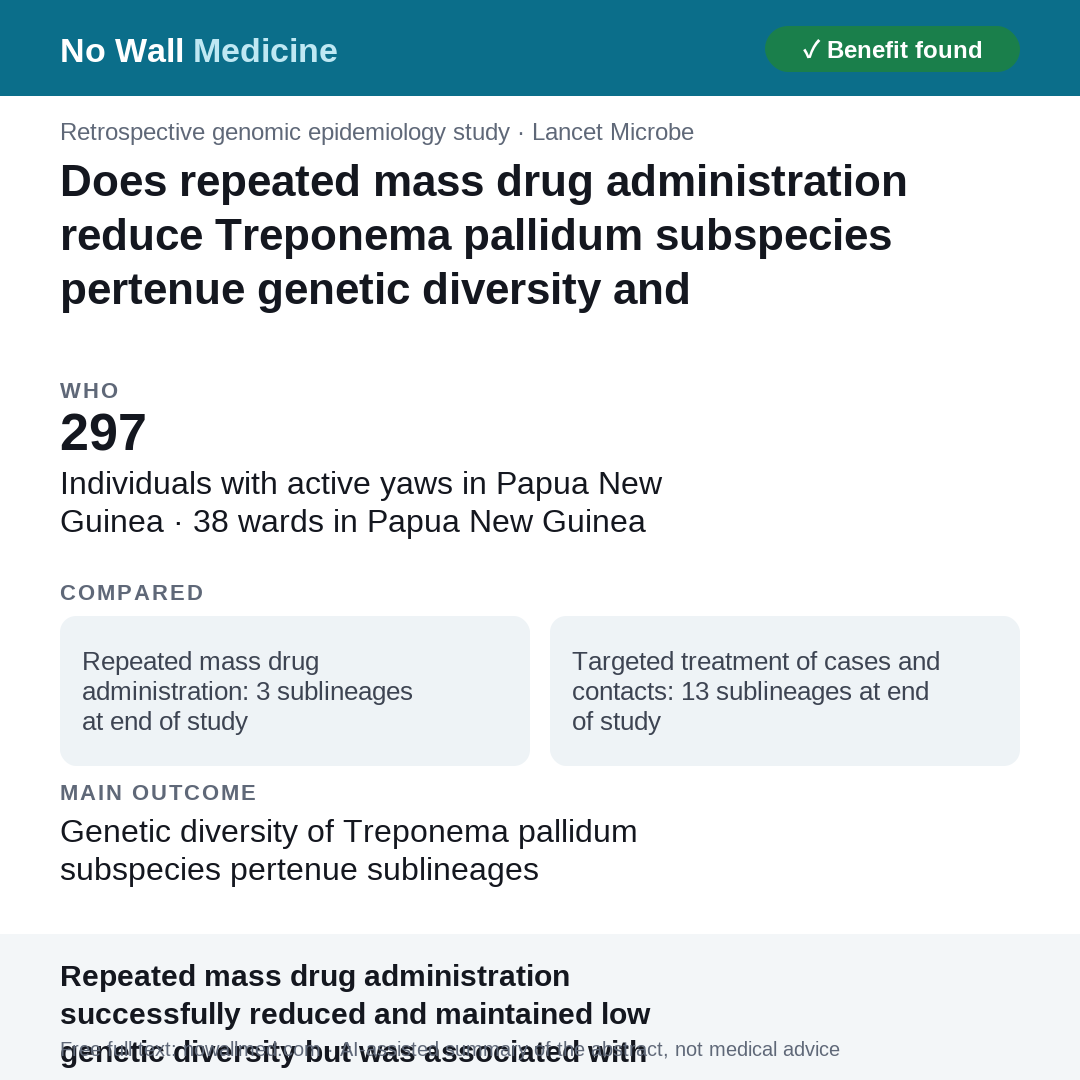
Effect of repeated mass drug administration on the transmission of yaws: a retrospective genomic epidemiology study
Retrospective genomic epidemiology studyBenefit found
Does repeated mass drug administration reduce Treponema pallidum subspecies pertenue genetic diversity and transmission?
Who
297
Individuals with active yaws in Papua New Guinea · 38 wards in Papua New Guinea
Compared
Repeated mass drug administration: 3 sublineages at end of study
Targeted treatment of cases and contacts: 13 sublineages at end of study
Main outcome
Genetic diversity of Treponema pallidum subspecies pertenue sublineages
Bottom line: Repeated mass drug administration successfully reduced and maintained low genetic diversity but was associated with macrolide resistance development.
Funded by: European Research Council, EU, Barcelona, Barberà Solidària, Wellcome, Fundació la Caixa
Lancet Microbe · 2026-01-06Download image
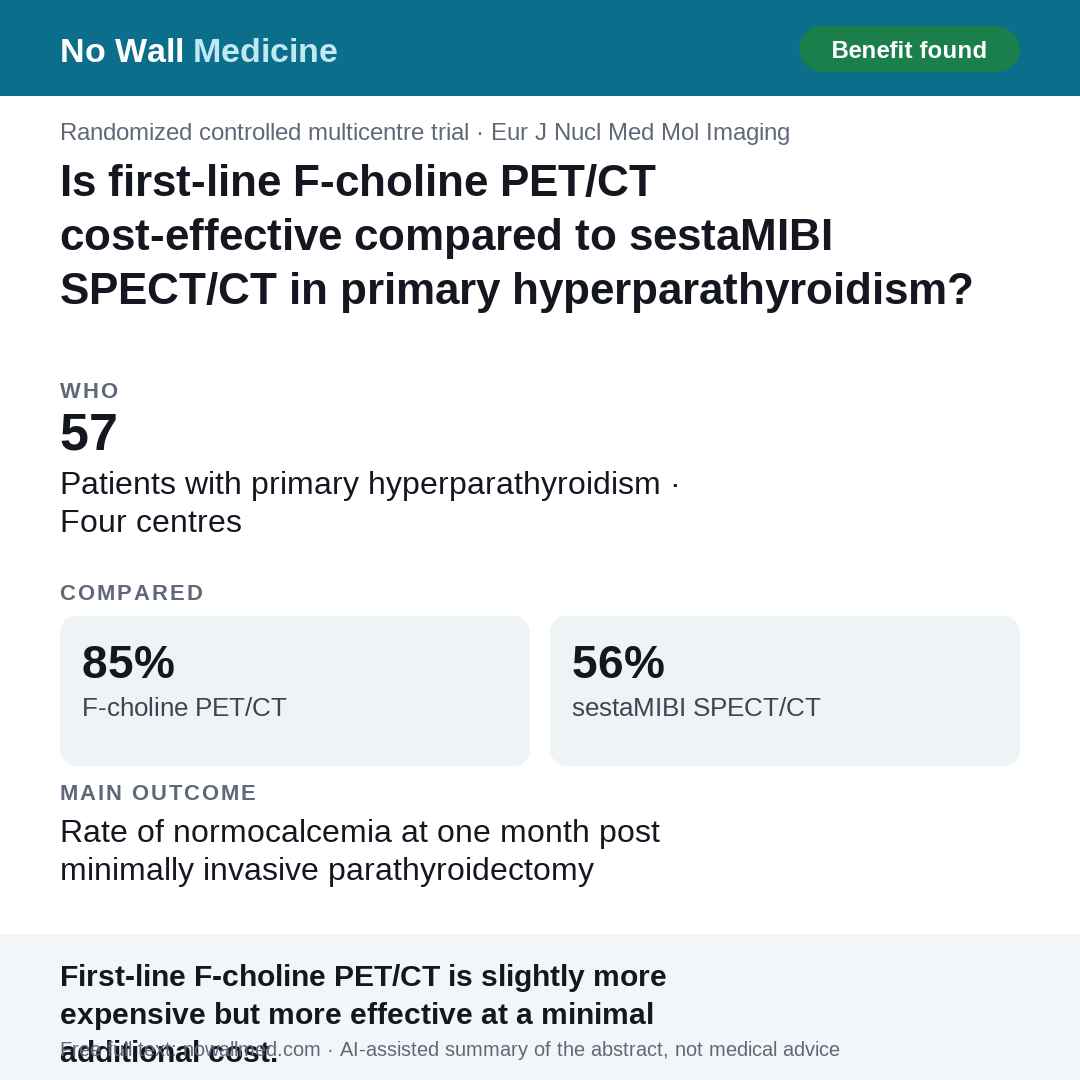
First-line [18F]F-choline PET/CT in primary hyperparathyroidism: a cost-effectiveness study from the diagnostic randomized APACH2 trial
Randomized controlled multicentre trialBenefit found
Is first-line F-choline PET/CT cost-effective compared to sestaMIBI SPECT/CT in primary hyperparathyroidism?
Who
57
Patients with primary hyperparathyroidism · Four centres
Compared
85%F-choline PET/CT (95% CI: 0.71-0.99)
56%sestaMIBI SPECT/CT (95% CI: 0.36-0.76)
Main outcome
Rate of normocalcemia at one month post minimally invasive parathyroidectomy
Result: ICER €471 for referring one additional patient to normocalcemia
Bottom line: First-line F-choline PET/CT is slightly more expensive but more effective at a minimal additional cost.
Eur J Nucl Med Mol Imaging · 2026-01-06Download image
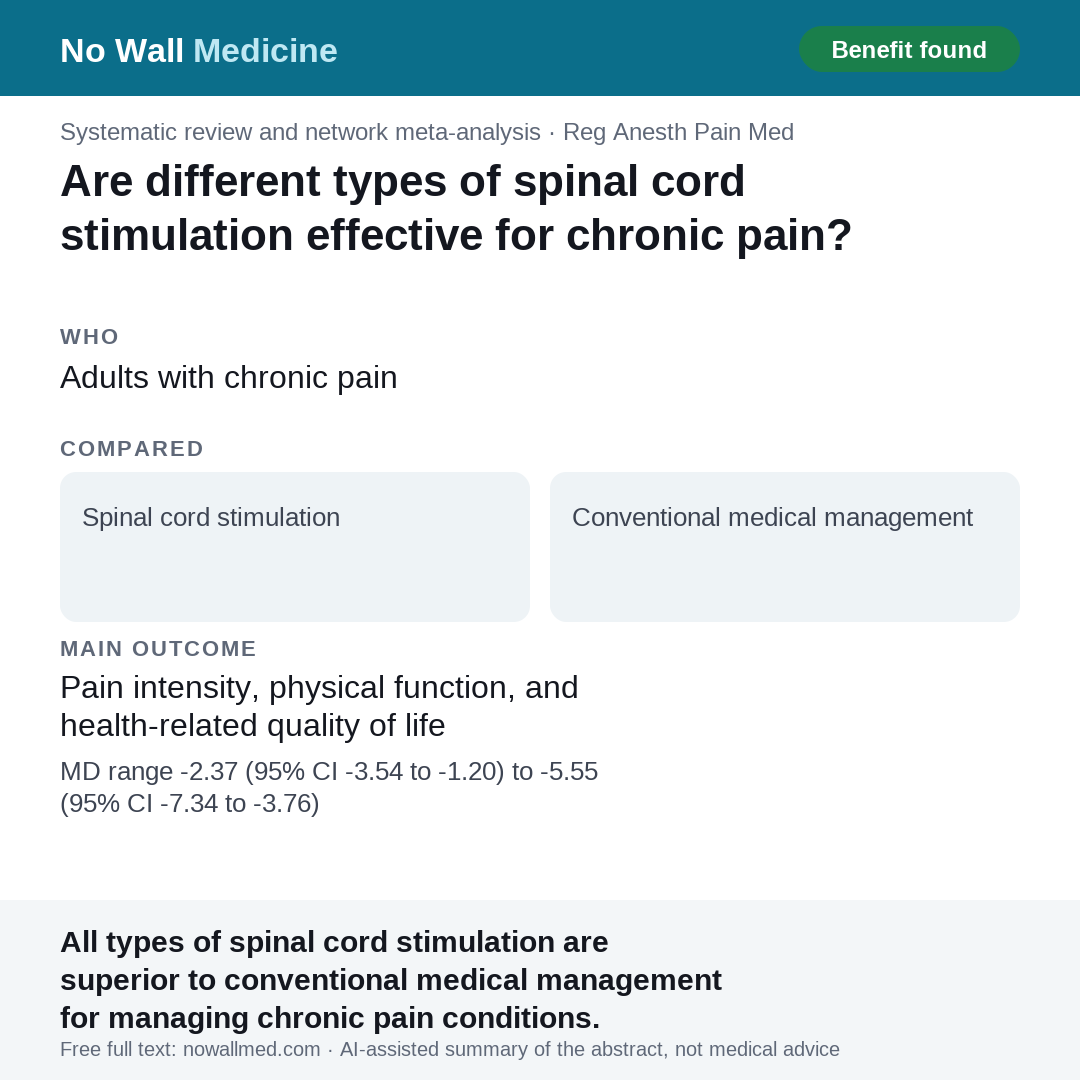
Systematic review and network meta-analysis of randomized trial evidence of spinal cord stimulation for chronic pain
Systematic review and network meta-analysisBenefit found
Are different types of spinal cord stimulation effective for chronic pain?
Who
Adults with chronic pain
Compared
Spinal cord stimulation
Conventional medical management
Main outcome
Pain intensity, physical function, and health-related quality of life
Result: MD range -2.37 (95% CI -3.54 to -1.20) to -5.55 (95% CI -7.34 to -3.76)
Bottom line: All types of spinal cord stimulation are superior to conventional medical management for managing chronic pain conditions.
Limitation: All but one trial was assessed as having a high risk of bias.
Reg Anesth Pain Med · 2026-01-06Download image
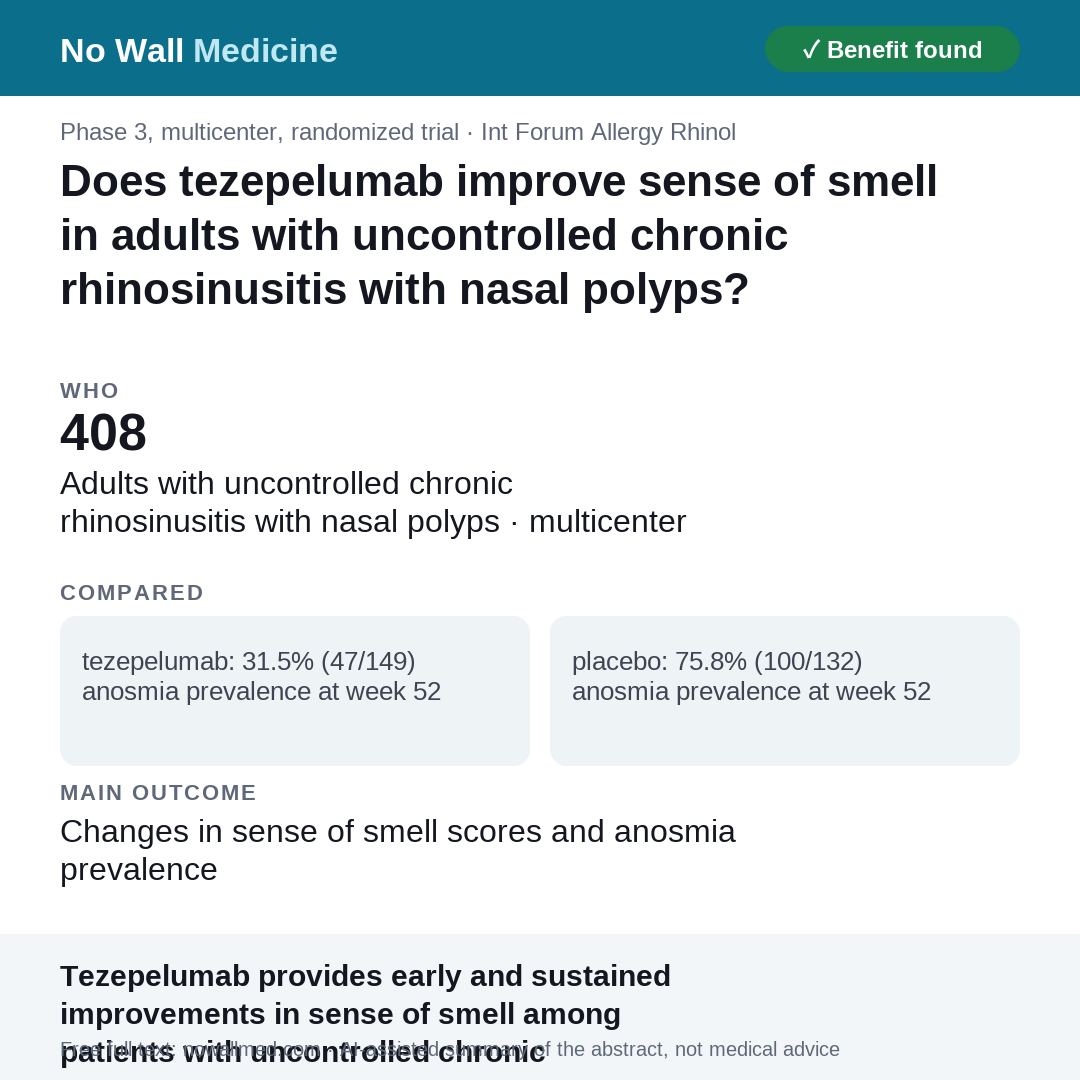
Early and Sustained Improvements in Sense of Smell With Tezepelumab Treatment in Patients With Chronic Rhinosinusitis With Nasal Polyps (WAYPOINT)
Phase 3, multicenter, randomized trialBenefit found
Does tezepelumab improve sense of smell in adults with uncontrolled chronic rhinosinusitis with nasal polyps?
Who
408
Adults with uncontrolled chronic rhinosinusitis with nasal polyps · multicenter
Compared
tezepelumab: 31.5% (47/149) anosmia prevalence at week 52
placebo: 75.8% (100/132) anosmia prevalence at week 52
Main outcome
Changes in sense of smell scores and anosmia prevalence
Result: LSM treatment difference in UPSIT at week 52: 9.50 (95% CI 7.84 to 11.16)
Bottom line: Tezepelumab provides early and sustained improvements in sense of smell among patients with uncontrolled chronic rhinosinusitis with nasal polyps.
Int Forum Allergy Rhinol · 2026-01-06Download image
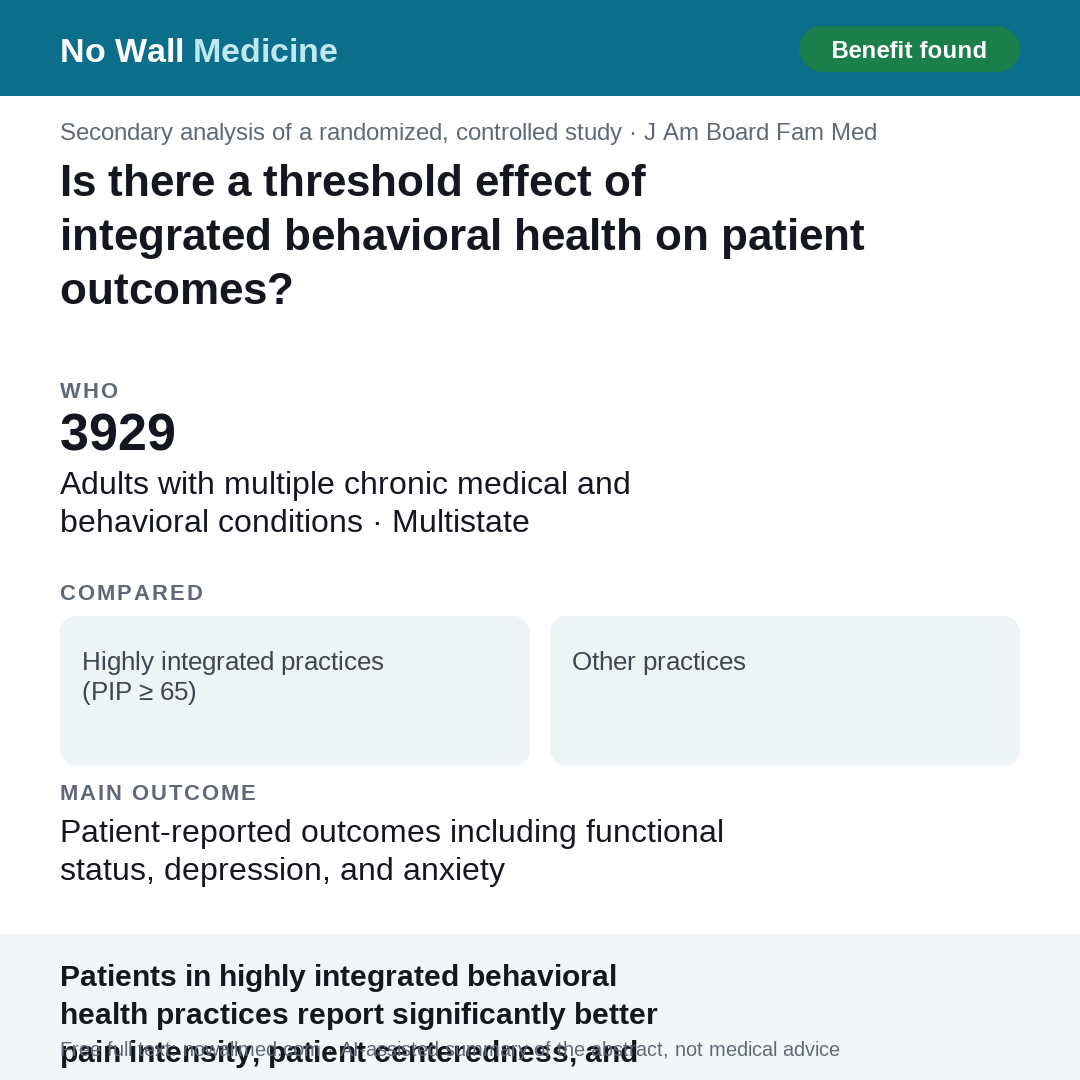
Degree of Behavioral Health Integration and Patient Outcomes
Secondary analysis of a randomized, controlled studyBenefit found
Is there a threshold effect of integrated behavioral health on patient outcomes?
Who
3929
Adults with multiple chronic medical and behavioral conditions · Multistate
Compared
Highly integrated practices (PIP ≥ 65)
Other practices
Main outcome
Patient-reported outcomes including functional status, depression, and anxiety
Result: Pain Intensity -0.51 (95% CI -0.97, 0.04), patient centeredness 2.52 (95% CI 0.88, 4.16), CARE 1.62 (95% CI 0.62, 2.61)
Bottom line: Patients in highly integrated behavioral health practices report significantly better pain intensity, patient centeredness, and empathy outcomes.
J Am Board Fam Med · 2026-01-06Download image
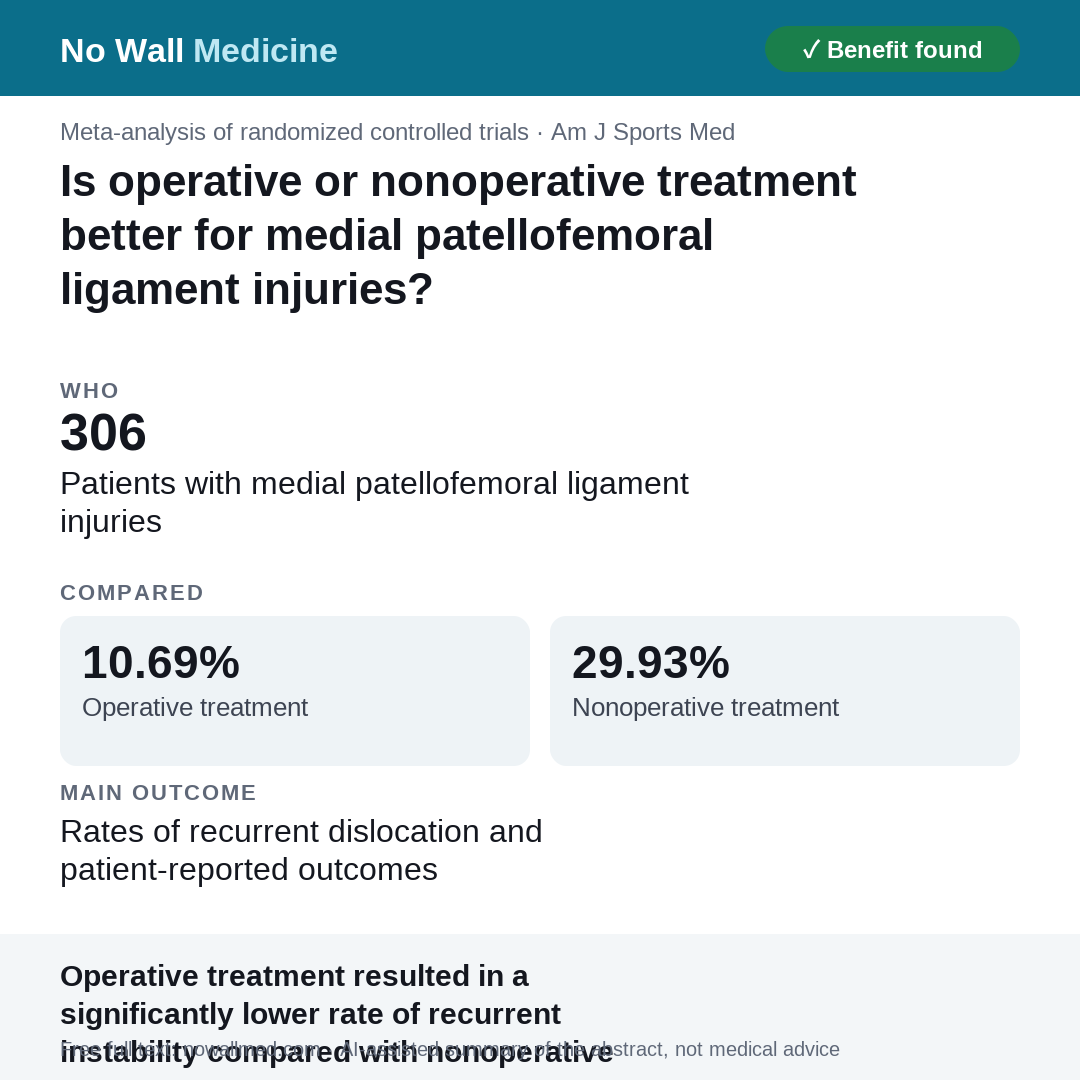
Operative Versus Nonoperative Treatment of Medial Patellofemoral Ligament Injuries: A Systematic Review and Meta-analysis of Randomized Controlled Trials With Trial Sequential Analysis
Meta-analysis of randomized controlled trialsBenefit found
Is operative or nonoperative treatment better for medial patellofemoral ligament injuries?
Who
306
Patients with medial patellofemoral ligament injuries
Compared
10.69%Operative treatment
29.93%Nonoperative treatment
Main outcome
Rates of recurrent dislocation and patient-reported outcomes
Result: relative risk 2.49 (95% CI 1.34-4.61)
Bottom line: Operative treatment resulted in a significantly lower rate of recurrent instability compared with nonoperative treatment.
Limitation: Trial sequential analysis suggested current volume of data is not sufficient for definitive conclusions.
Am J Sports Med · 2026-01-06Download image
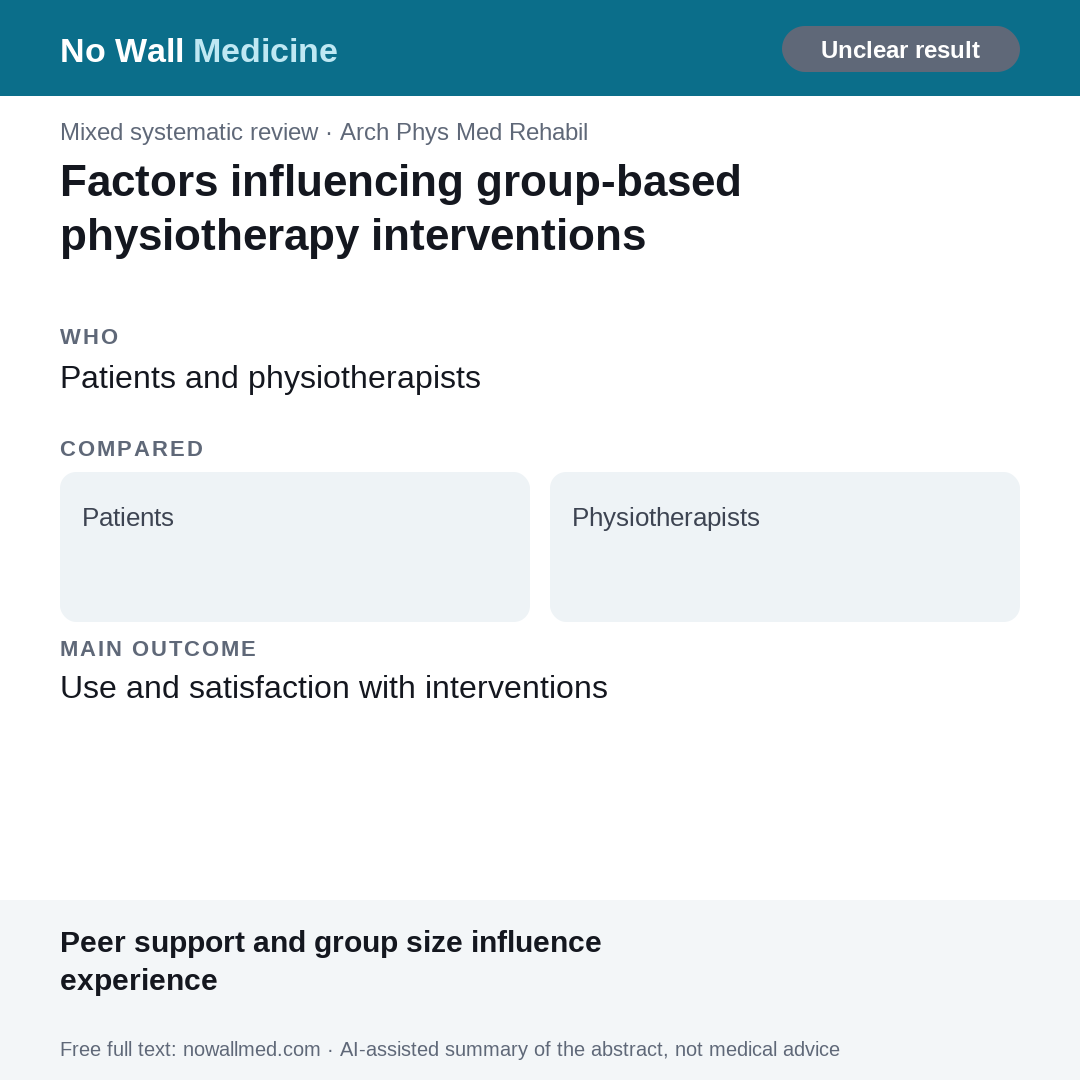
Patients' and Physiotherapists' Perspectives on Group-Based Interventions: A Mixed Systematic Review
Mixed systematic reviewUnclear result
Factors influencing group-based physiotherapy interventions
Who
Patients and physiotherapists
Compared
Patients
Physiotherapists
Main outcome
Use and satisfaction with interventions
Bottom line: Peer support and group size influence experience
Arch Phys Med Rehabil · 2026-01-06Download image
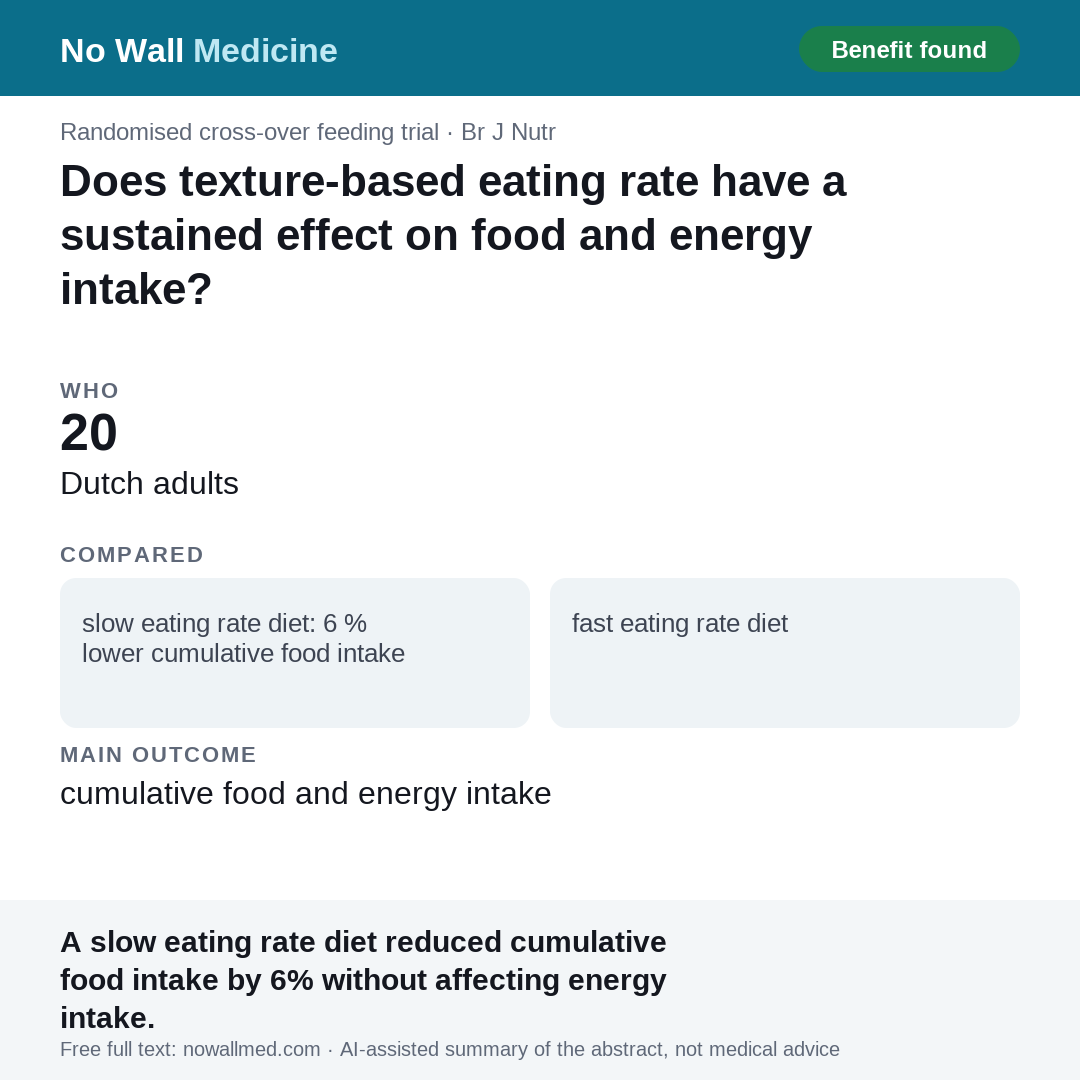
The sustained effect of texture-based eating rate on food intake in an 11-d randomised controlled trial
Randomised cross-over feeding trialBenefit found
Does texture-based eating rate have a sustained effect on food and energy intake?
Who
20
Dutch adults
Compared
slow eating rate diet: 6 % lower cumulative food intake
fast eating rate diet
Main outcome
cumulative food and energy intake
Bottom line: A slow eating rate diet reduced cumulative food intake by 6% without affecting energy intake.
Br J Nutr · 2026-01-06Download image
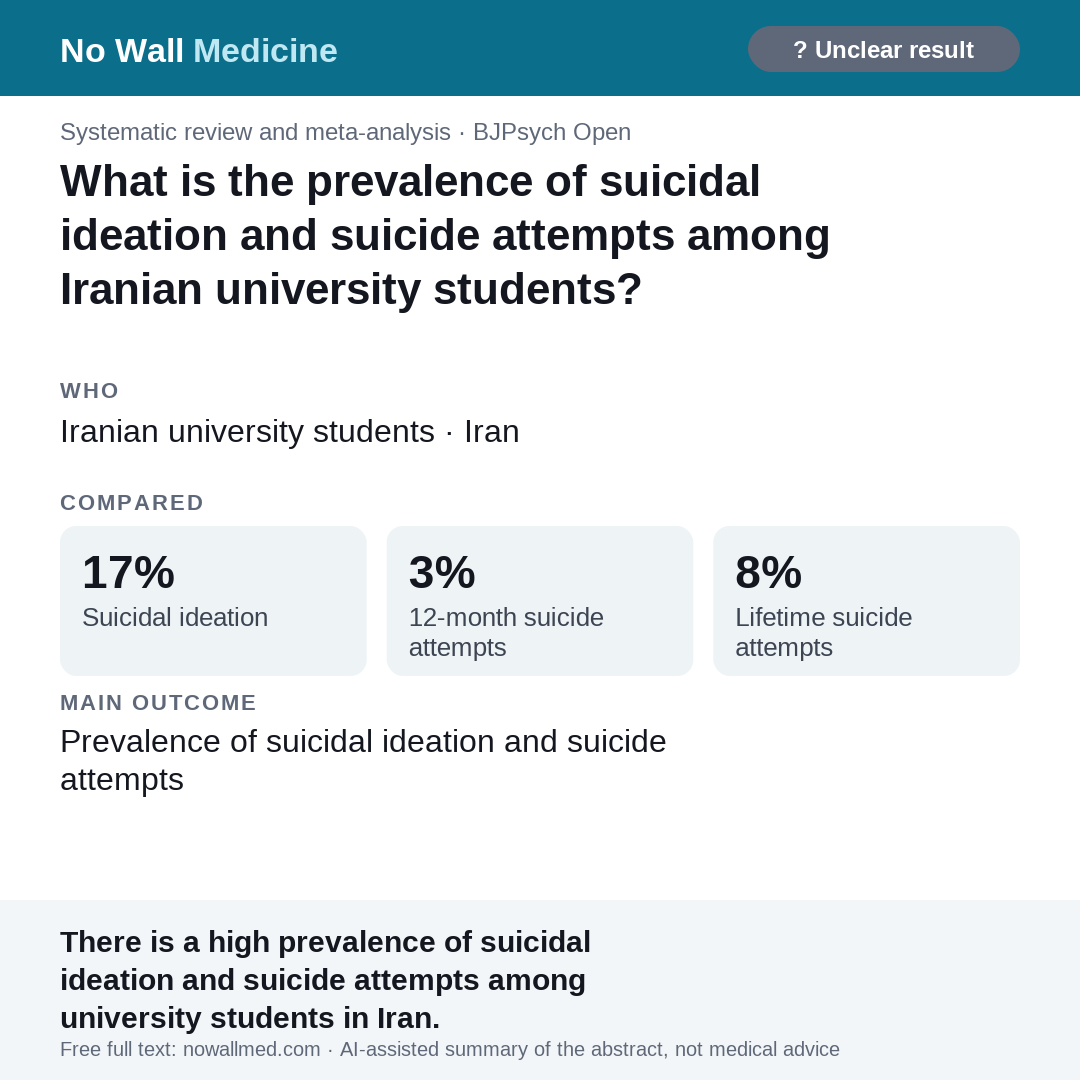
Prevalence of suicidal ideation and suicide attempts among Iranian university students: systematic review and meta-analysis
Systematic review and meta-analysisUnclear result
What is the prevalence of suicidal ideation and suicide attempts among Iranian university students?
Who
Iranian university students · Iran
Compared
17%Suicidal ideation (95% CI: 13-21%)
3%12-month suicide attempts (95% CI: 2-4%)
8%Lifetime suicide attempts (95% CI: 6-10%)
Main outcome
Prevalence of suicidal ideation and suicide attempts
Bottom line: There is a high prevalence of suicidal ideation and suicide attempts among university students in Iran.
BJPsych Open · 2026-01-06Download image
Yoga Outcomes Get Assessed in Cystic Fibrosis (YOGA-CF): protocol of a multicentre interventional randomised controlled clinical trial-investigating effects of a 12-week yoga intervention for adults with cystic fibrosis
Multicentre randomised controlled trialUnclear result
Does a 12-week online yoga intervention improve quality of life in adults with cystic fibrosis?
Who
314
Adults with cystic fibrosis · United Kingdom
Compared
Usual care
12-week online bespoke yoga programme
Main outcome
Respiratory-related quality of life measured using the Cystic Fibrosis Questionnaire-Revised
Bottom line: This protocol describes a trial investigating if a 12-week yoga intervention improves respiratory-related quality of life.
BMJ Open Respir Res · 2026-01-06Download image

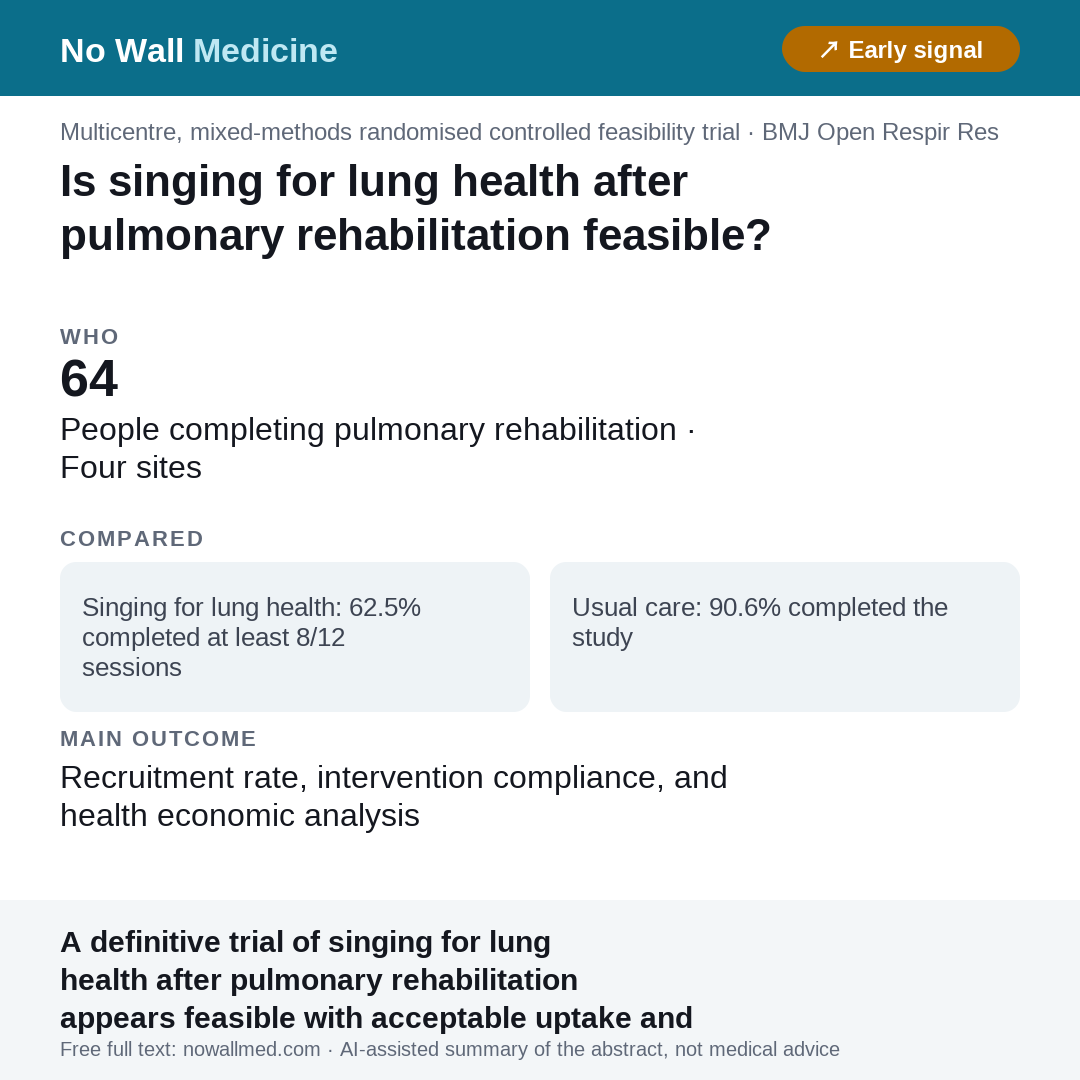
Singing for lung health following completion of pulmonary rehabilitation: feasibility of a randomised controlled trial
Multicentre, mixed-methods randomised controlled feasibility trialBenefit found
Is singing for lung health after pulmonary rehabilitation feasible?
Who
64
People completing pulmonary rehabilitation · Four sites
Compared
Singing for lung health: 62.5% completed at least 8/12 sessions
Usual care: 90.6% completed the study
Main outcome
Recruitment rate, intervention compliance, and health economic analysis
Bottom line: A definitive trial of singing for lung health after pulmonary rehabilitation appears feasible with acceptable uptake and completion rates.
BMJ Open Respir Res · 2026-01-06Download image
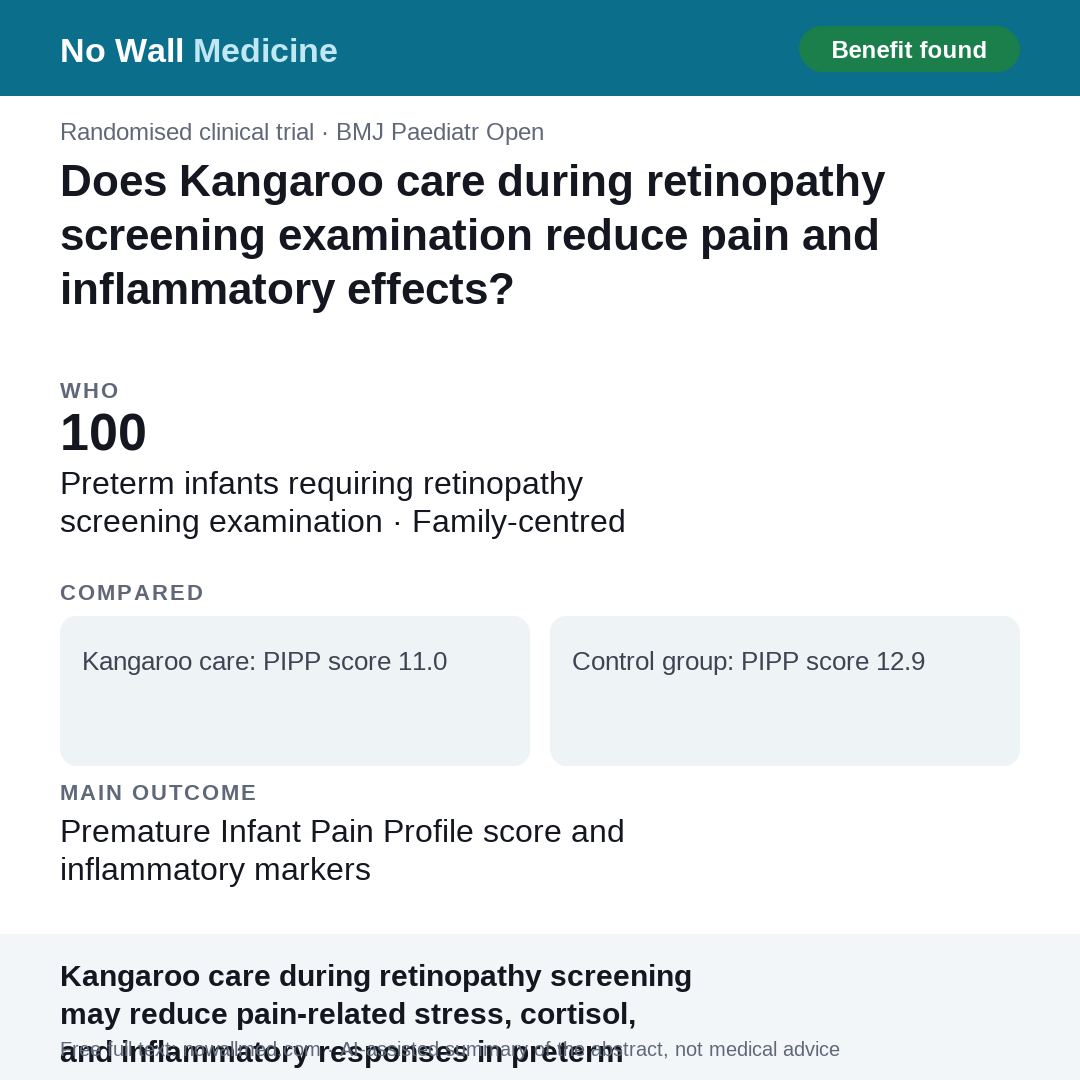
Effects of Kangaroo care during retinopathy screening examination: a randomised clinical trial
Randomised clinical trialBenefit found
Does Kangaroo care during retinopathy screening examination reduce pain and inflammatory effects?
Who
100
Preterm infants requiring retinopathy screening examination · Family-centred neonatal intensive care unit
Compared
Kangaroo care: PIPP score 11.0
Control group: PIPP score 12.9
Main outcome
Premature Infant Pain Profile score and inflammatory markers
Bottom line: Kangaroo care during retinopathy screening may reduce pain-related stress, cortisol, and inflammatory responses in preterm infants.
BMJ Paediatr Open · 2026-01-06Download image
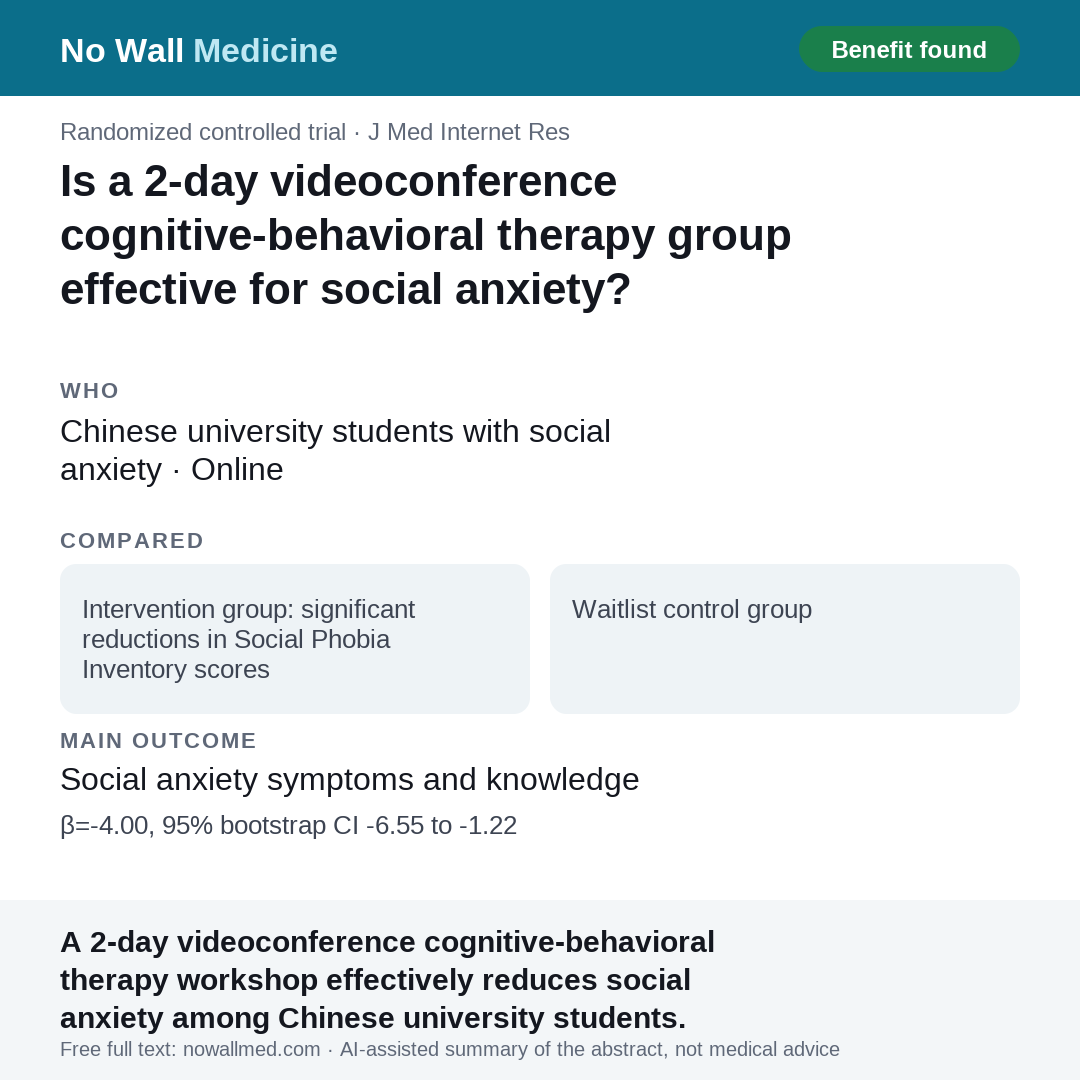
Cognitive-Behavioral Therapy-Based Massed Brief Psychoeducational Group via Videoconference for Social Anxiety: Randomized Controlled Trial
Randomized controlled trialBenefit found
Is a 2-day videoconference cognitive-behavioral therapy group effective for social anxiety?
Who
Chinese university students with social anxiety · Online
Compared
Intervention group: significant reductions in Social Phobia Inventory scores
Waitlist control group
Main outcome
Social anxiety symptoms and knowledge
Result: β=-4.00, 95% bootstrap CI -6.55 to -1.22
Bottom line: A 2-day videoconference cognitive-behavioral therapy workshop effectively reduces social anxiety among Chinese university students.
Limitation: Future research with larger and more diverse samples is recommended.
J Med Internet Res · 2026-01-06Download image
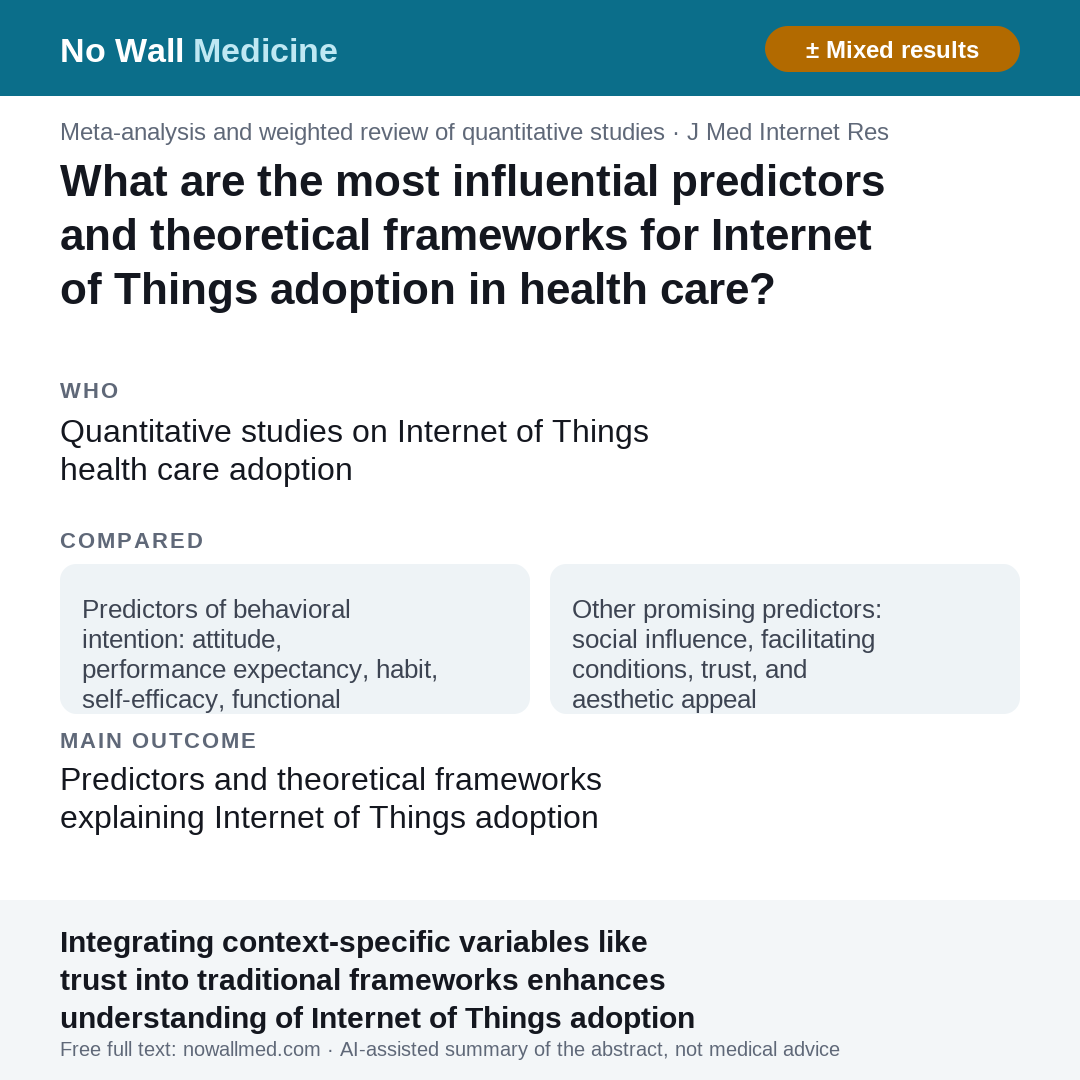
Adoption of Internet of Things in Health Care: Weighted and Meta-Analytical Review of Theoretical Frameworks and Predictors
Meta-analysis and weighted review of quantitative studiesMixed results
What are the most influential predictors and theoretical frameworks for Internet of Things adoption in health care?
Who
115
Quantitative studies on Internet of Things health care adoption
Compared
Predictors of behavioral intention: attitude, performance expectancy, habit, self-efficacy, functional congruence, and benefits
Other promising predictors: social influence, facilitating conditions, trust, and aesthetic appeal
Main outcome
Predictors and theoretical frameworks explaining Internet of Things adoption
Bottom line: Integrating context-specific variables like trust into traditional frameworks enhances understanding of Internet of Things adoption in health care.
Limitation: High level of heterogeneity suggests a need to refine theoretical models for regional contexts.
J Med Internet Res · 2026-01-06Download image
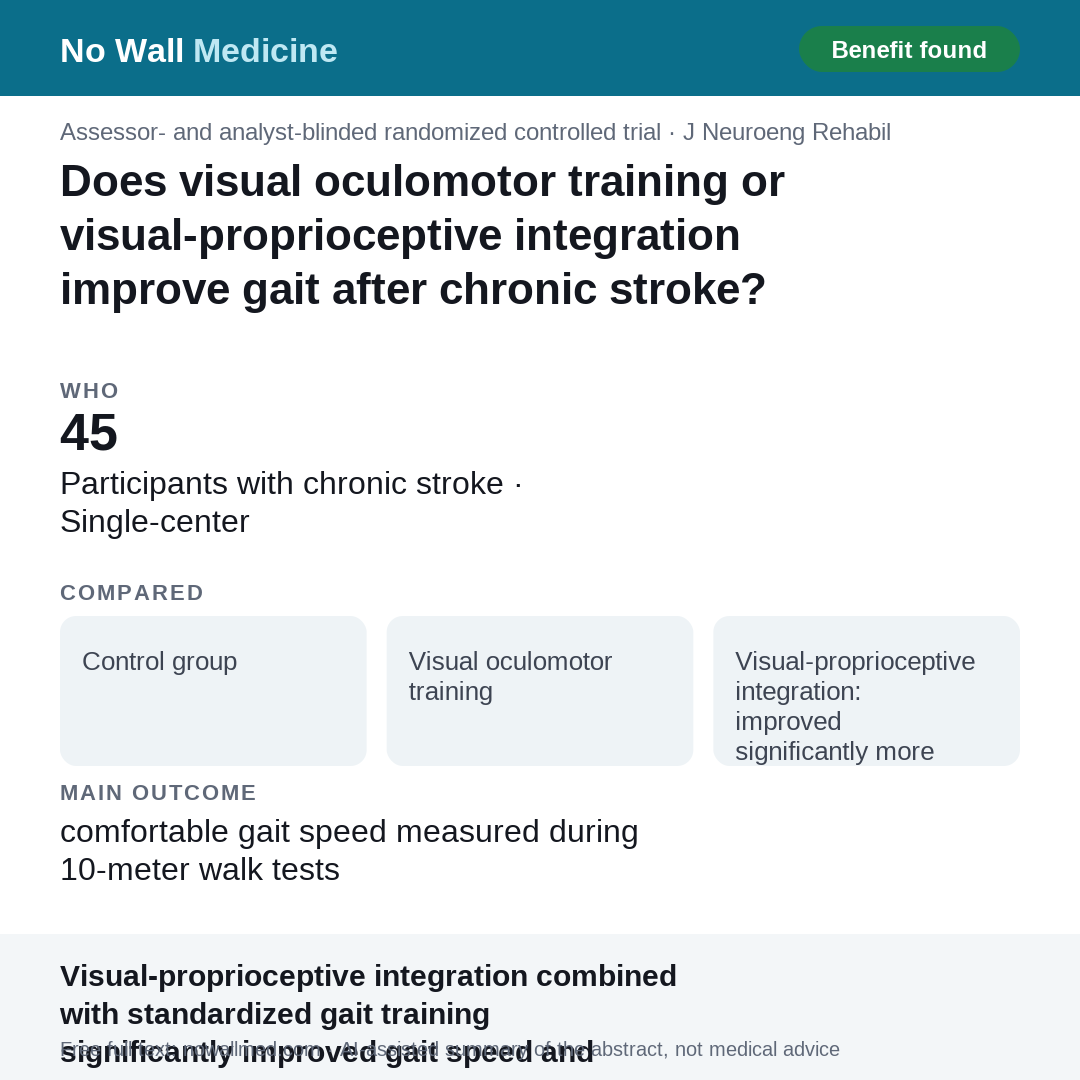
Visual and visual-proprioceptive training improve gait via sensory reweighting after chronic stroke: a randomized controlled trial
Assessor- and analyst-blinded randomized controlled trialBenefit found
Does visual oculomotor training or visual-proprioceptive integration improve gait after chronic stroke?
Who
45
Participants with chronic stroke · Single-center
Compared
Control group
Visual oculomotor training
Visual-proprioceptive integration: improved significantly more than control group (P = 0.018)
Main outcome
comfortable gait speed measured during 10-meter walk tests
Bottom line: Visual-proprioceptive integration combined with standardized gait training significantly improved gait speed and symmetry in chronic stroke patients.
J Neuroeng Rehabil · 2026-01-06Download image
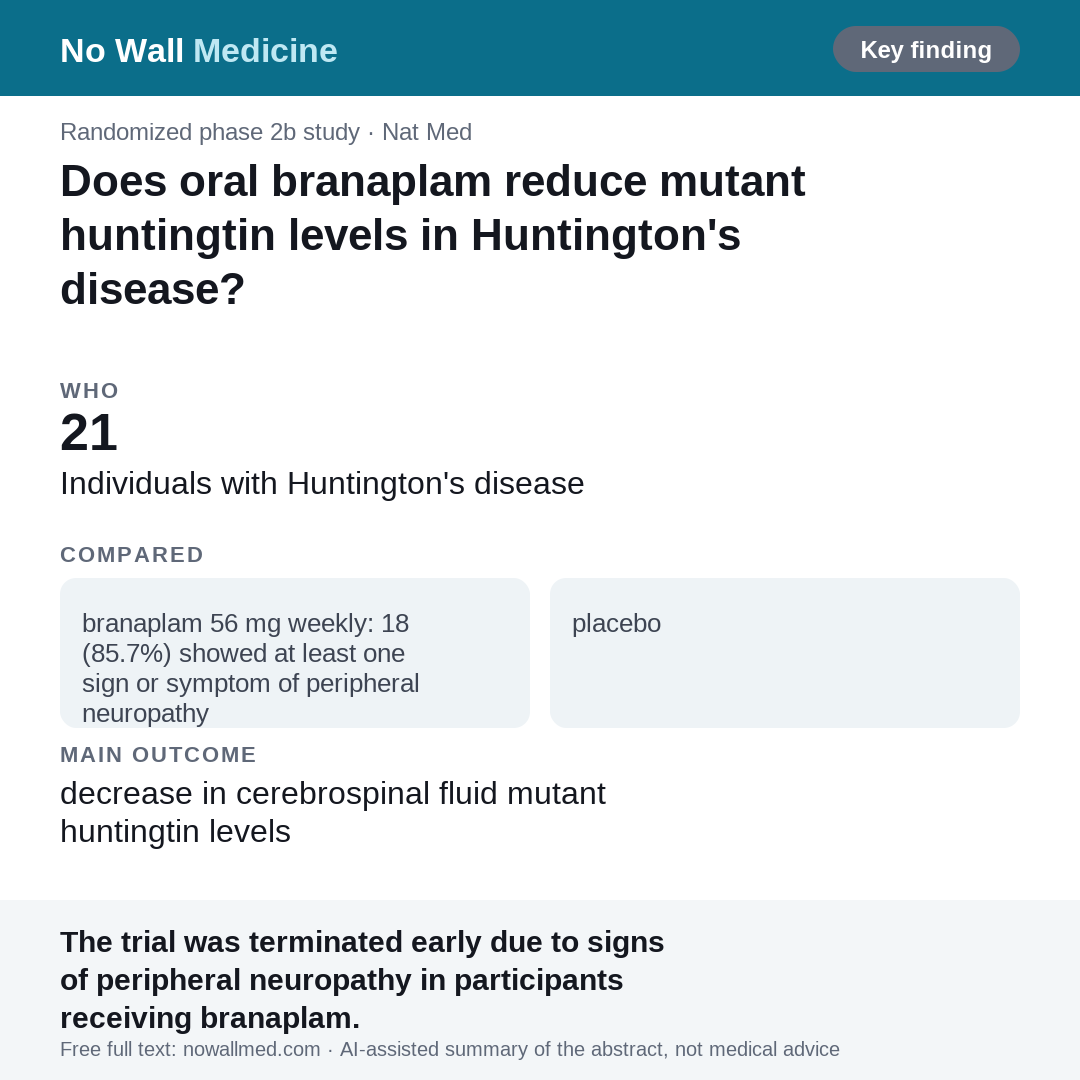
Oral splicing modulator branaplam in Huntington's disease: a phase 2 randomized controlled trial
Randomized phase 2b studyHarm found
Does oral branaplam reduce mutant huntingtin levels in Huntington's disease?
Who
21
Individuals with Huntington's disease
Compared
branaplam 56 mg weekly: 18 (85.7%) showed at least one sign or symptom of peripheral neuropathy
placebo
Main outcome
decrease in cerebrospinal fluid mutant huntingtin levels
Bottom line: The trial was terminated early due to signs of peripheral neuropathy in participants receiving branaplam.
Nat Med · 2026-01-05Download image
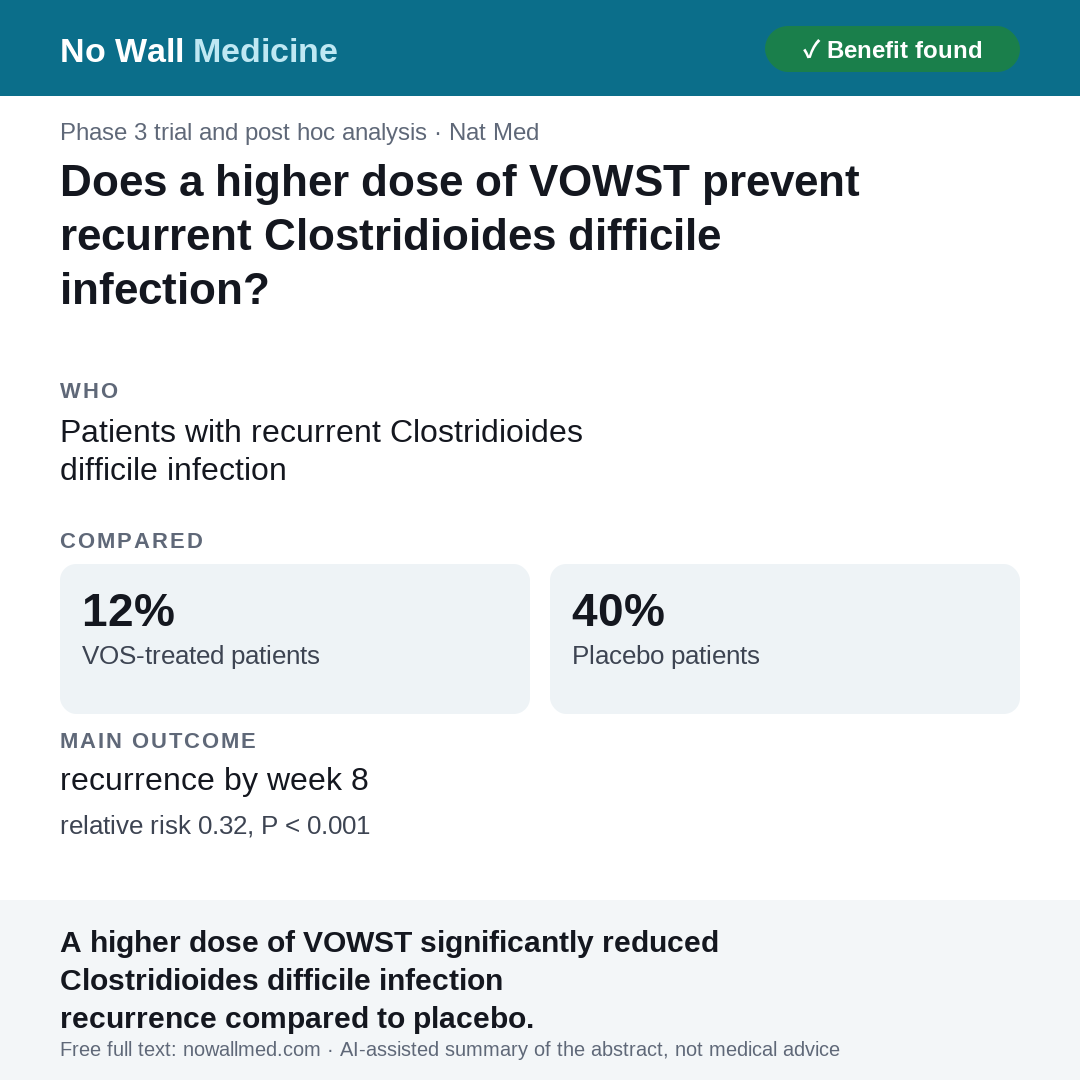
The impact of an oral purified microbiome therapeutic on the gastrointestinal microbiome
Phase 3 trial and post hoc analysisBenefit found
Does a higher dose of VOWST prevent recurrent Clostridioides difficile infection?
Who
Patients with recurrent Clostridioides difficile infection
Compared
12%VOS-treated patients
40%Placebo patients
Main outcome
recurrence by week 8
Result: relative risk 0.32, P < 0.001
Bottom line: A higher dose of VOWST significantly reduced Clostridioides difficile infection recurrence compared to placebo.
Nat Med · 2026-01-05Download image
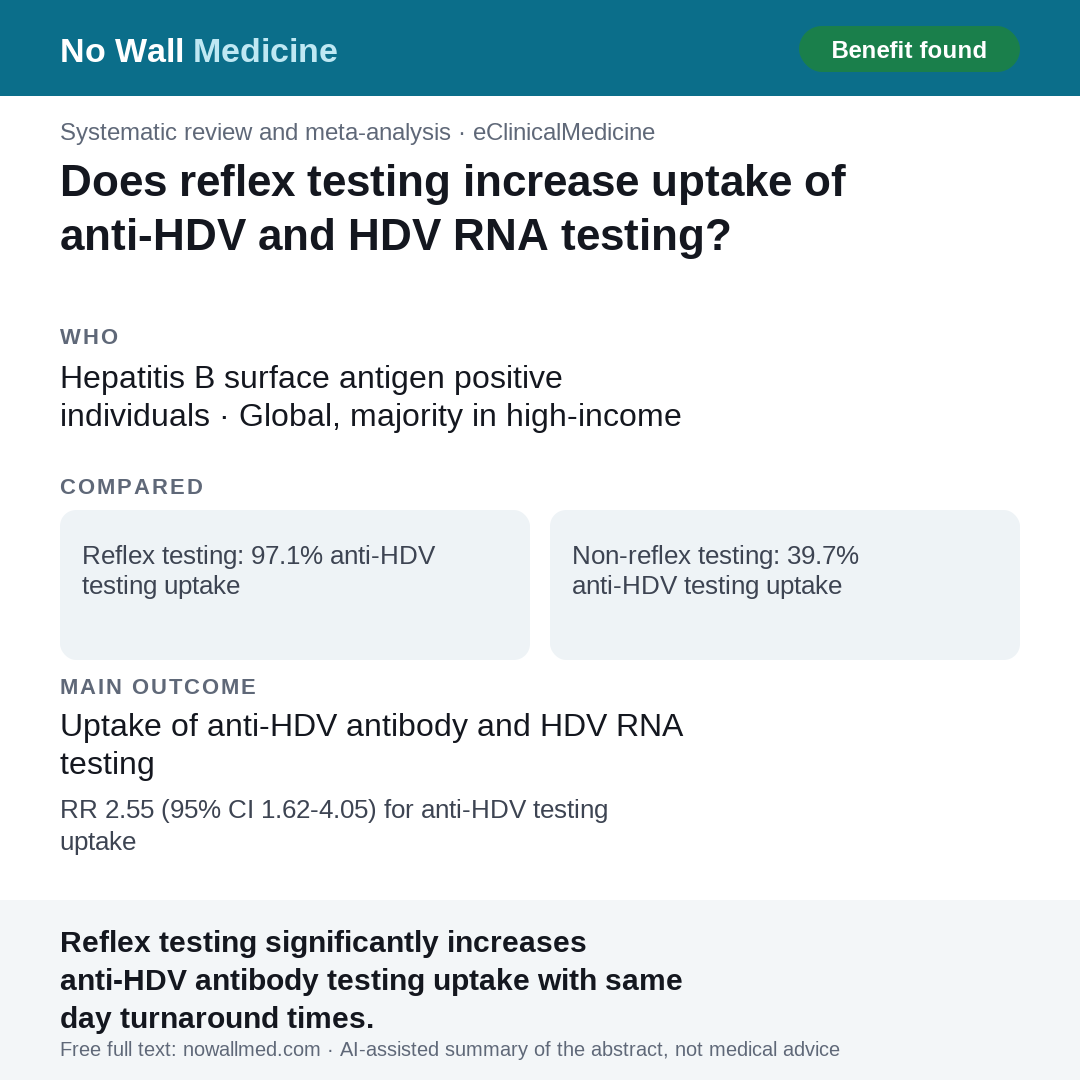
Double reflex testing for anti-HDV antibody following an HBsAg-positive test result and HDV RNA in those anti-HDV positive: a global systematic review and meta-analysis
Systematic review and meta-analysisBenefit found
Does reflex testing increase uptake of anti-HDV and HDV RNA testing?
Who
Hepatitis B surface antigen positive individuals · Global, majority in high-income countries
Compared
Reflex testing: 97.1% anti-HDV testing uptake
Non-reflex testing: 39.7% anti-HDV testing uptake
Main outcome
Uptake of anti-HDV antibody and HDV RNA testing
Result: RR 2.55 (95% CI 1.62-4.05) for anti-HDV testing uptake
Bottom line: Reflex testing significantly increases anti-HDV antibody testing uptake with same day turnaround times.
Funded by: Guangzhou Science and Technology Project; National Key R&D Program; NIH; UNC; WHO
eClinicalMedicine · 2026-01-05Download image