Visual abstracts
New randomized trials and meta-analyses from leading journals at a glance: who was studied, what was compared, and what was found. Every paper is free to read in full.
All specialtiesCardiology 4877Oncology 4138Gastroenterology & Hepatology 1942Infectious Disease 3837Neurology 1905Psychiatry & Mental Health 2273Pulmonology 2143Critical Care 1365Endocrinology & Diabetes 2580Pediatrics 2980Surgery 2559Orthopedics & Sports Medicine 931Neurosurgery 537Cardiothoracic & Vascular Surgery 674Plastic & Reconstructive Surgery 591Nephrology 1133Rheumatology 823Hematology 1109Dermatology 621Ophthalmology 543Obstetrics & Gynecology 1686Public & Global Health 1058Radiology & Imaging 648Anesthesiology 986Urology 764ENT (Otolaryngology) 503Emergency Medicine 511Allergy & Immunology 313Geriatrics 981Family Medicine & Primary Care 562Medical Genetics & Genomics 676Pathology & Laboratory Medicine 159Physical Medicine & Rehabilitation 757Palliative Care 444Nutrition 1588Digital Health & AI 2201General Medicine 321
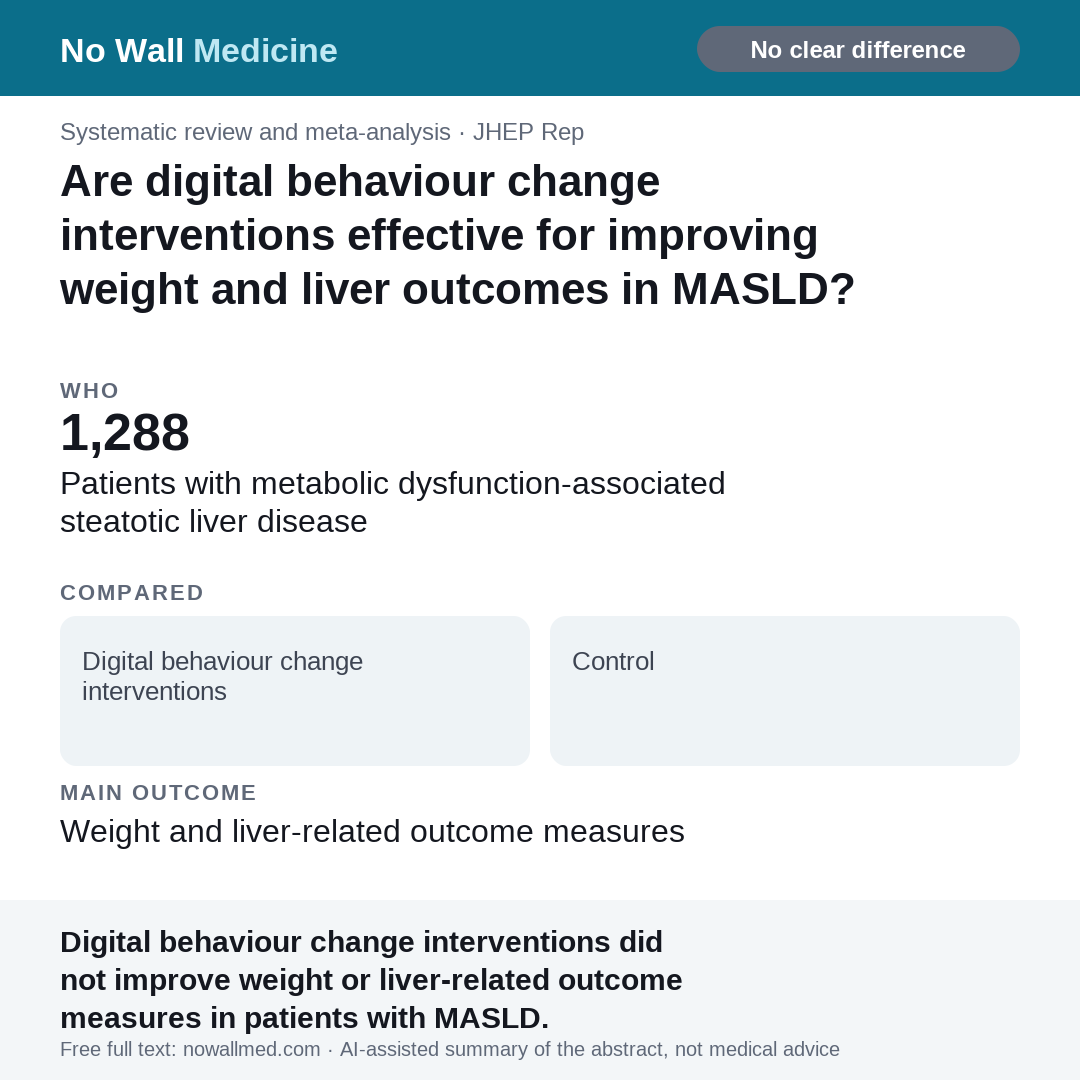
Effectiveness and active ingredients of digital behaviour change interventions for MASLD: A systematic review and meta-analysis
Systematic review and meta-analysisNo clear difference
Are digital behaviour change interventions effective for improving weight and liver outcomes in MASLD?
Who
1,288
Patients with metabolic dysfunction-associated steatotic liver disease
Compared
Digital behaviour change interventions
Control
Main outcome
Weight and liver-related outcome measures
Result: weighted mean difference -2.07 kg [-6.08 to 1.94 kg]
Bottom line: Digital behaviour change interventions did not improve weight or liver-related outcome measures in patients with MASLD.
Limitation: Significant heterogeneity between interventions in delivery, content, duration, and frequency.
JHEP Rep · 2025-07-02Download image
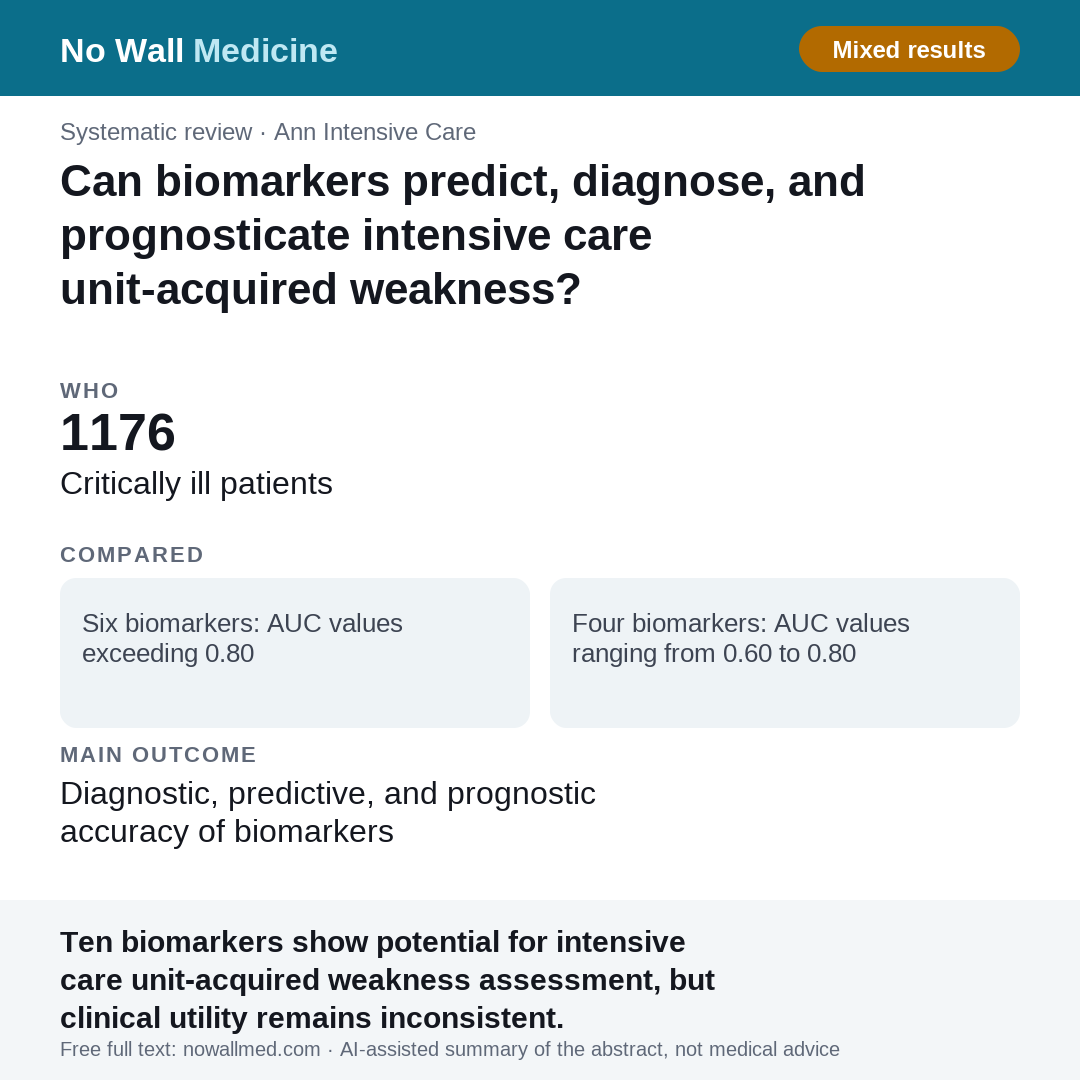
Biomarkers for intensive care unit-acquired weakness: a systematic review for prediction, diagnosis and prognosis
Systematic reviewMixed results
Can biomarkers predict, diagnose, and prognosticate intensive care unit-acquired weakness?
Who
1176
Critically ill patients
Compared
Six biomarkers: AUC values exceeding 0.80
Four biomarkers: AUC values ranging from 0.60 to 0.80
Main outcome
Diagnostic, predictive, and prognostic accuracy of biomarkers
Bottom line: Ten biomarkers show potential for intensive care unit-acquired weakness assessment, but clinical utility remains inconsistent.
Ann Intensive Care · 2025-07-02Download image
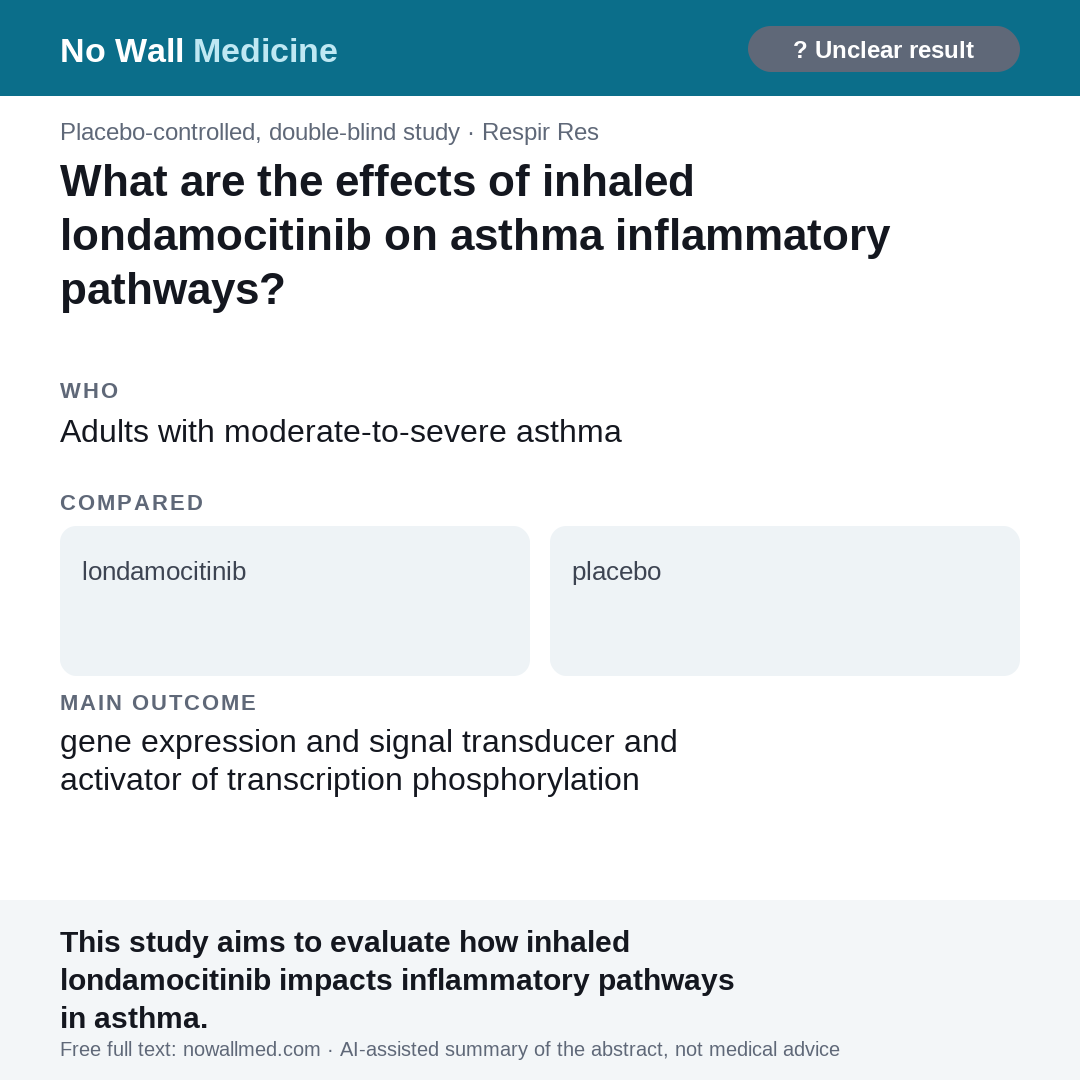
ARTEMISIA: a mechanistic study of a novel Janus kinase 1 inhibitor to advance molecular understanding and precision medicine in asthma
Placebo-controlled, double-blind studyUnclear result
What are the effects of inhaled londamocitinib on asthma inflammatory pathways?
Who
Adults with moderate-to-severe asthma
Compared
londamocitinib
placebo
Main outcome
gene expression and signal transducer and activator of transcription phosphorylation
Bottom line: This study aims to evaluate how inhaled londamocitinib impacts inflammatory pathways in asthma.
Respir Res · 2025-07-02Download image
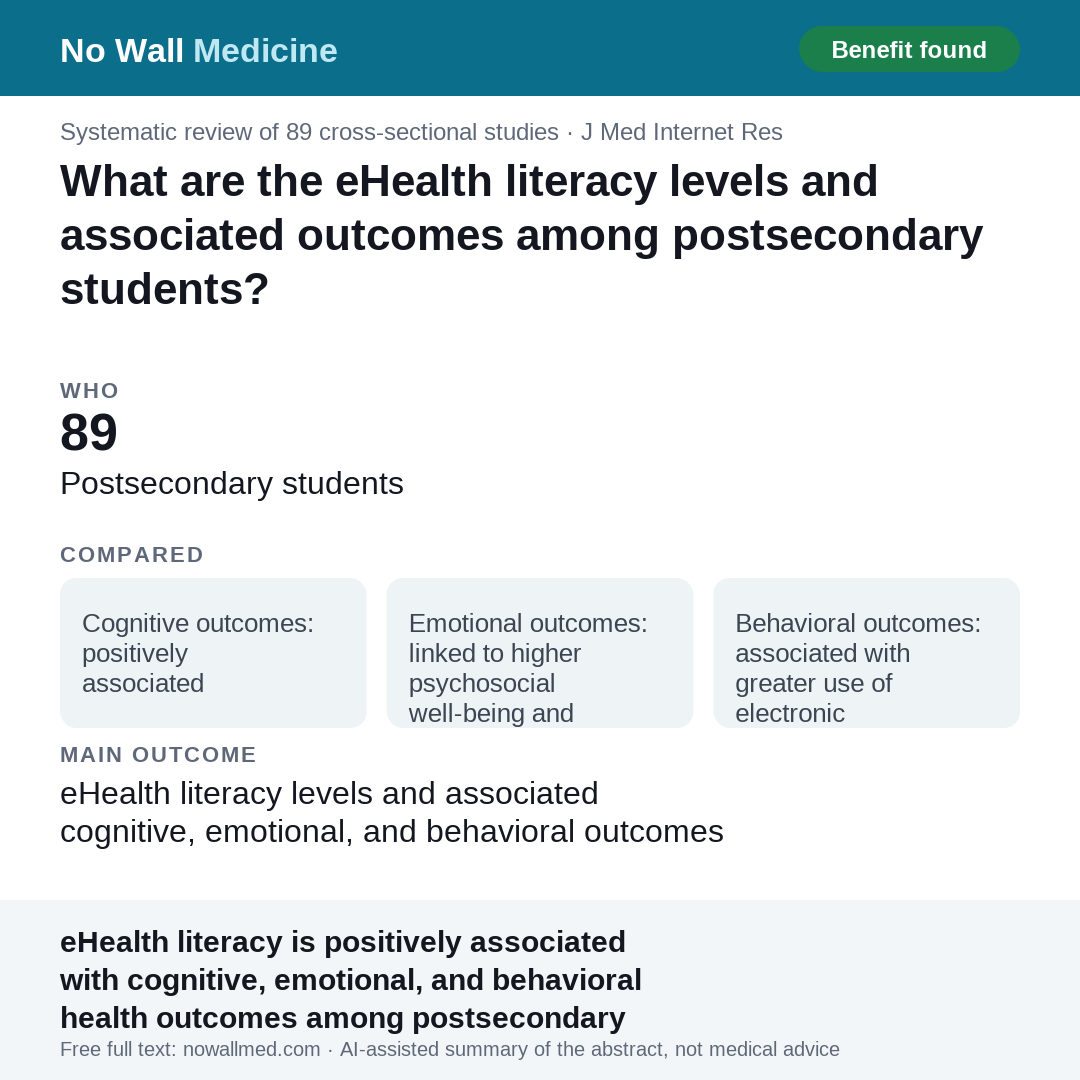
eHealth Literacy and Its Outcomes Among Postsecondary Students: Systematic Review
Systematic review of 89 cross-sectional studiesBenefit found
What are the eHealth literacy levels and associated outcomes among postsecondary students?
Who
89
Postsecondary students
Compared
Cognitive outcomes: positively associated
Emotional outcomes: linked to higher psychosocial well-being and positive emotions
Behavioral outcomes: associated with greater use of electronic information and disease prevention
Main outcome
eHealth literacy levels and associated cognitive, emotional, and behavioral outcomes
Bottom line: eHealth literacy is positively associated with cognitive, emotional, and behavioral health outcomes among postsecondary students.
Limitation: Variations in results due to inconsistent assessment tools.
J Med Internet Res · 2025-07-02Download image
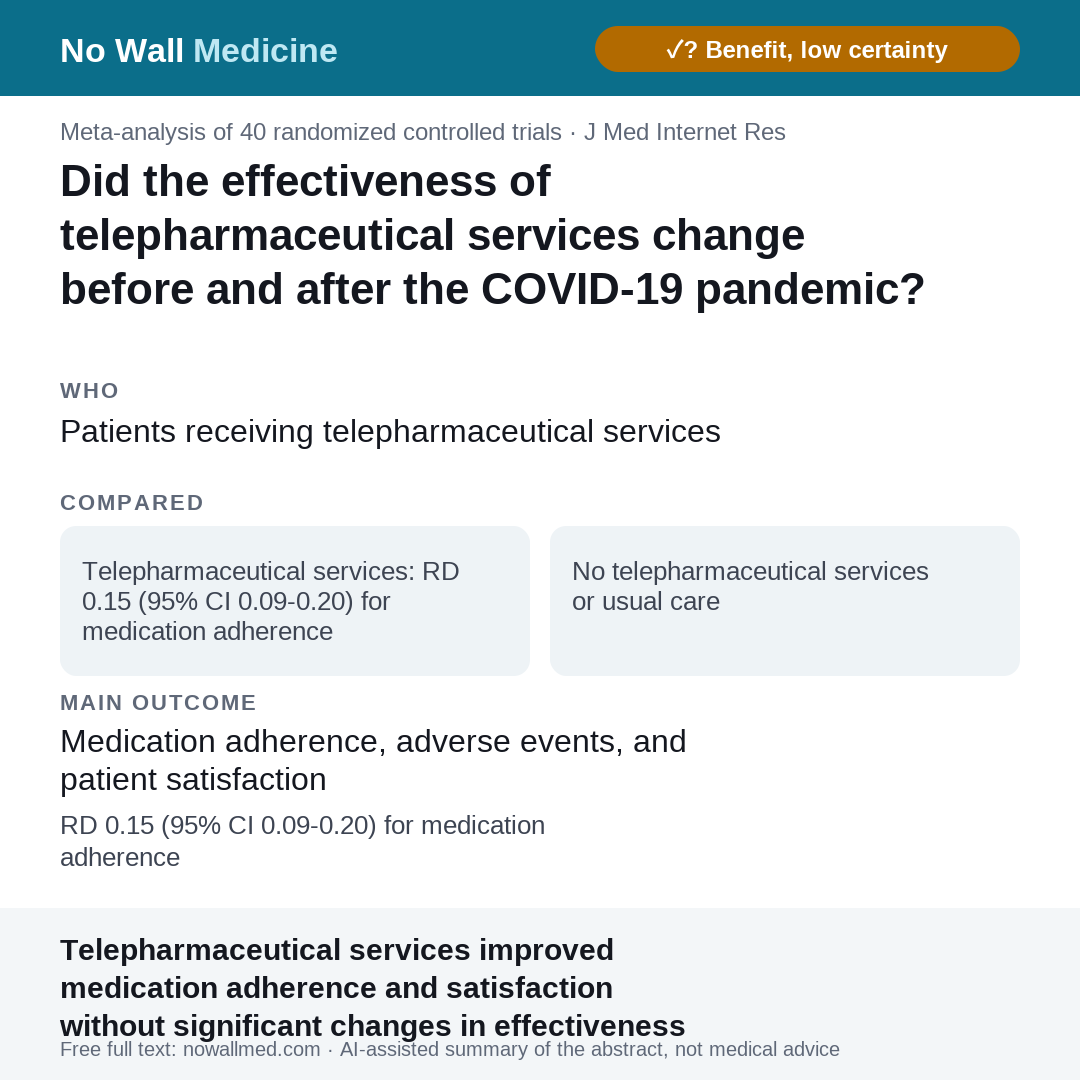
Evaluating the Impact of the COVID-19 Pandemic on Telepharmaceutical Service Effectiveness: Systematic Review and Meta-Analysis
Meta-analysis of 40 randomized controlled trialsBenefit found
Did the effectiveness of telepharmaceutical services change before and after the COVID-19 pandemic?
Who
Patients receiving telepharmaceutical services
Compared
Telepharmaceutical services: RD 0.15 (95% CI 0.09-0.20) for medication adherence
No telepharmaceutical services or usual care
Main outcome
Medication adherence, adverse events, and patient satisfaction
Result: RD 0.15 (95% CI 0.09-0.20) for medication adherence
Bottom line: Telepharmaceutical services improved medication adherence and satisfaction without significant changes in effectiveness after the COVID-19 pandemic outbreak.
J Med Internet Res · 2025-07-02Download image
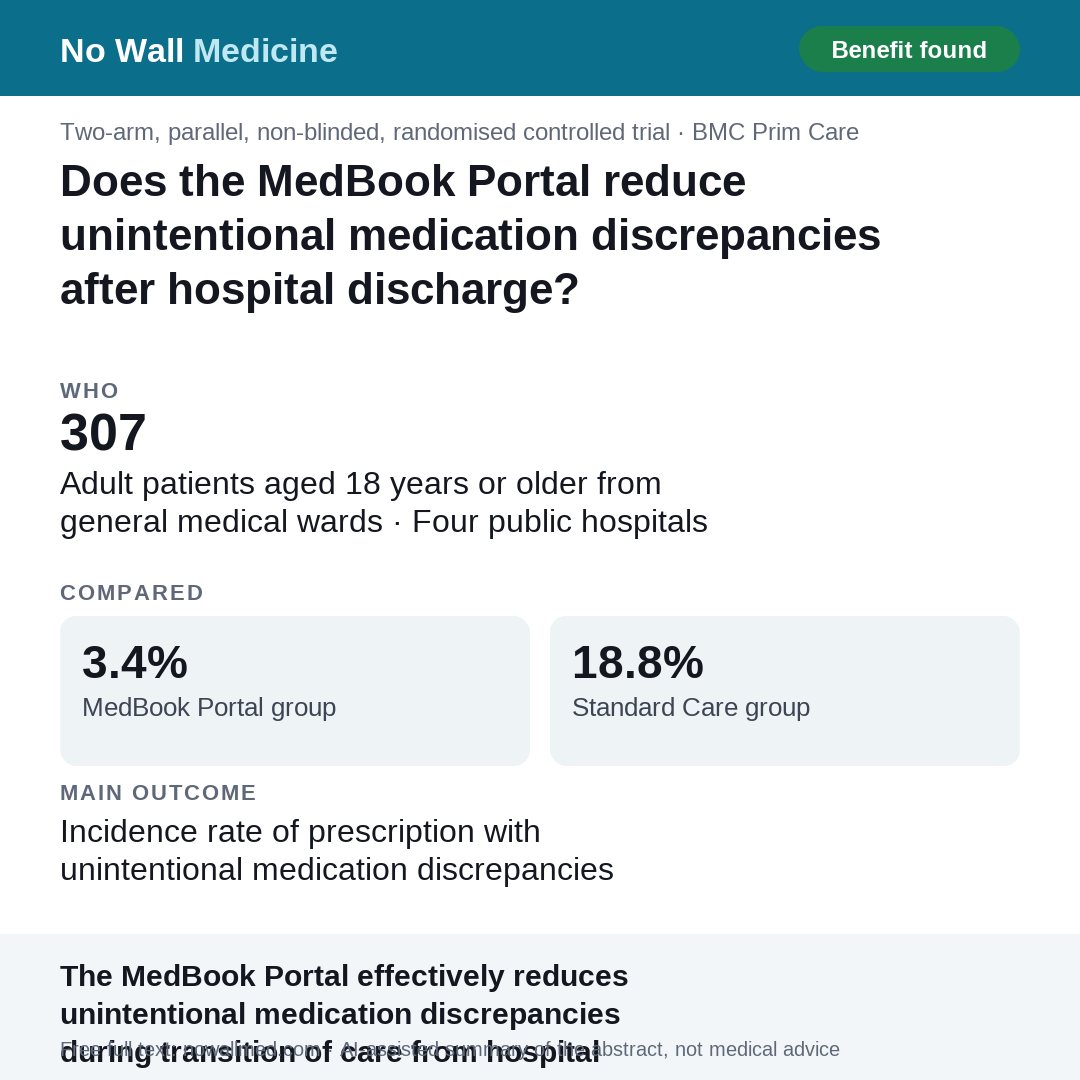
Effectiveness of digital platform in reducing unintentional medication discrepancies at transition of care from hospital discharge to primary healthcare settings: a randomised controlled trial
Two-arm, parallel, non-blinded, randomised controlled trialBenefit found
Does the MedBook Portal reduce unintentional medication discrepancies after hospital discharge?
Who
307
Adult patients aged 18 years or older from general medical wards · Four public hospitals and ten public primary health clinics, Malaysia
Compared
3.4%MedBook Portal group
18.8%Standard Care group
Main outcome
Incidence rate of prescription with unintentional medication discrepancies
Result: adjusted odds ratio 0.134 (95% CI 0.049-0.336)
Bottom line: The MedBook Portal effectively reduces unintentional medication discrepancies during transition of care from hospital discharge to primary health clinics.
BMC Prim Care · 2025-07-02Download image
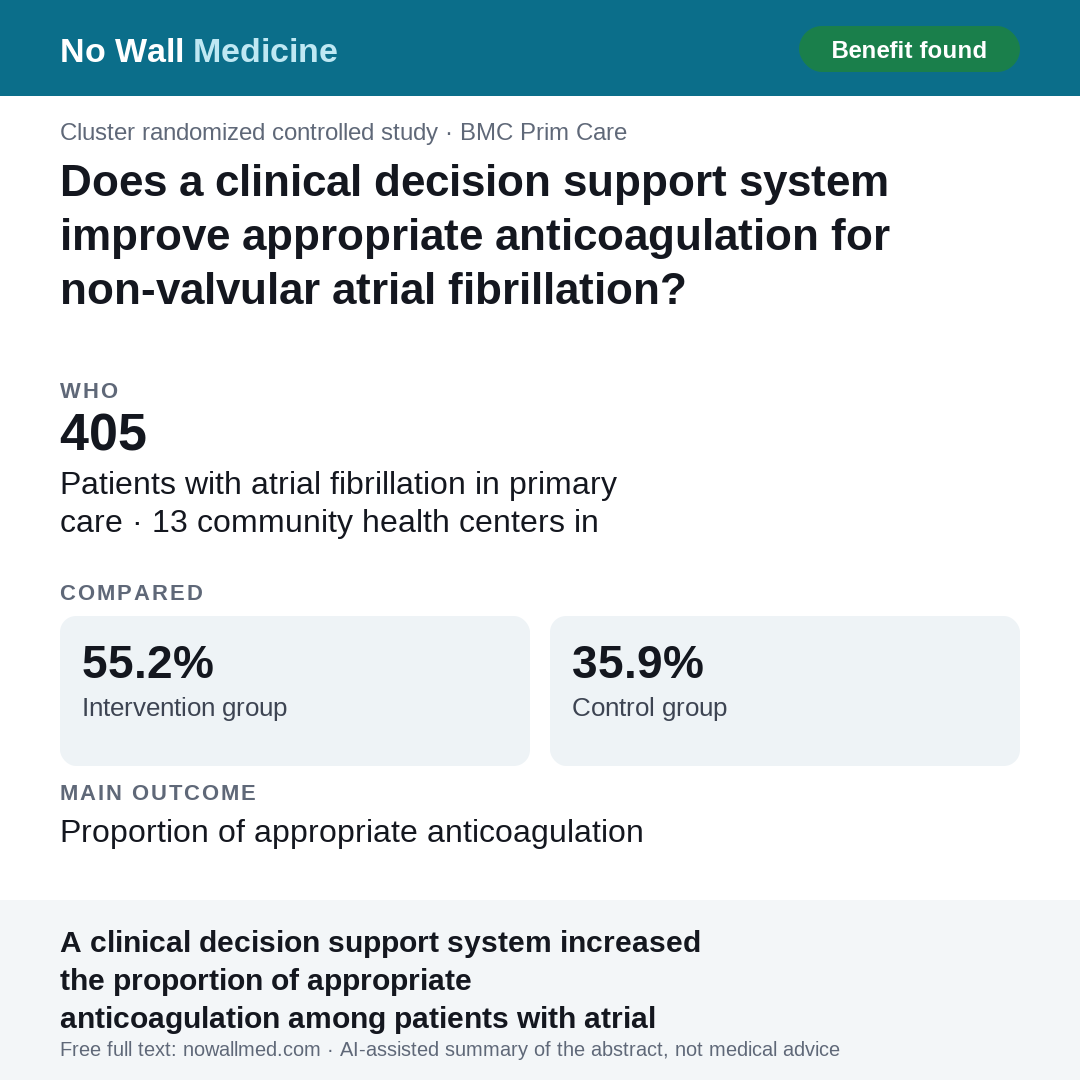
Effect of a clinical decision support system for non-valvular atrial fibrillation on improving appropriate anticoagulation treatment in China's primary care: a cluster randomized controlled trial
Cluster randomized controlled studyBenefit found
Does a clinical decision support system improve appropriate anticoagulation for non-valvular atrial fibrillation?
Who
405
Patients with atrial fibrillation in primary care · 13 community health centers in Shanghai, China
Compared
55.2%Intervention group
35.9%Control group
Main outcome
Proportion of appropriate anticoagulation
Result: relative risk 1.441 (95% CI 1.429-1.453)
Bottom line: A clinical decision support system increased the proportion of appropriate anticoagulation among patients with atrial fibrillation in primary care.
BMC Prim Care · 2025-07-02Download image
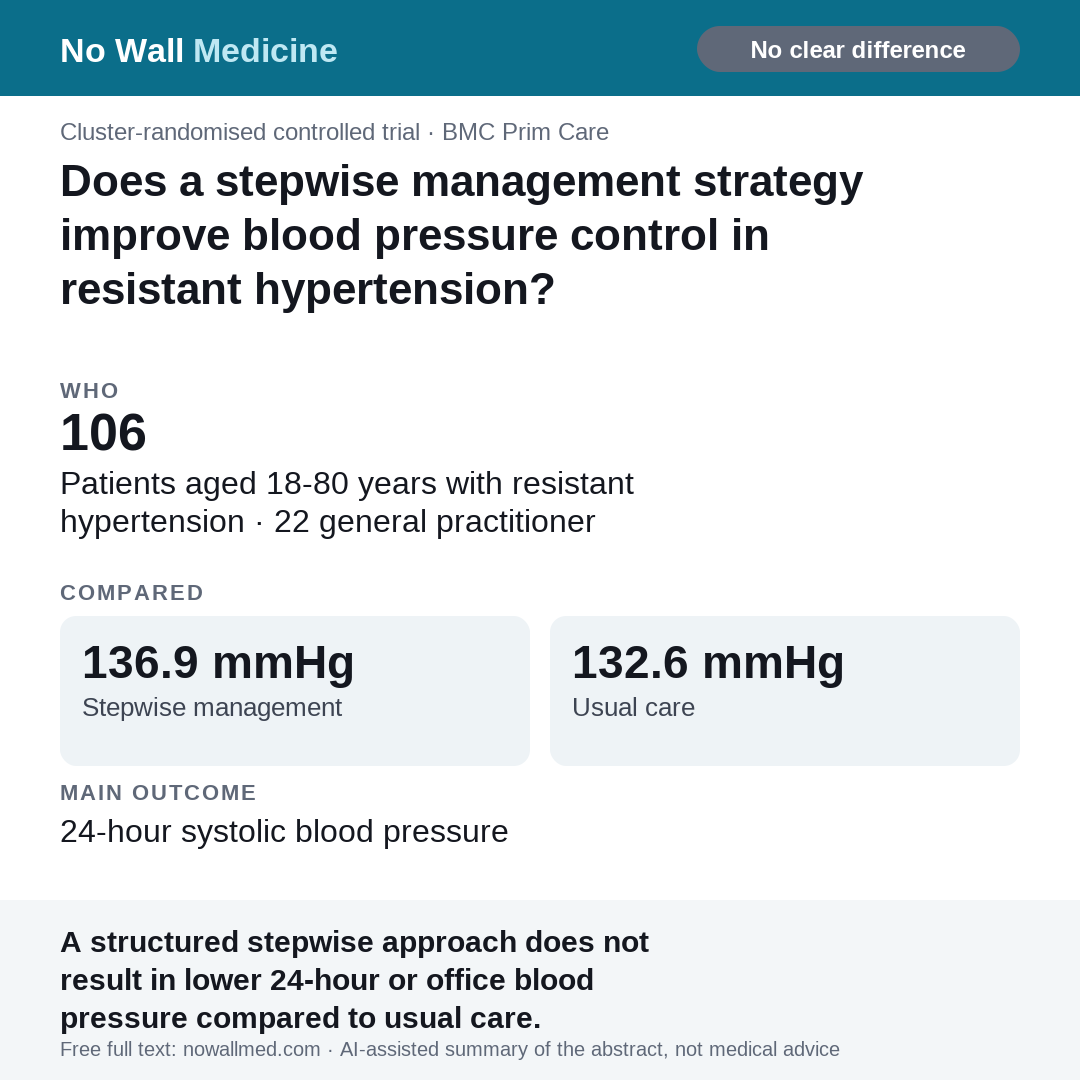
STEPWISE management of clinically apparent resistant hypertension in primary care: a cluster randomised controlled trial
Cluster-randomised controlled trialNo clear difference
Does a stepwise management strategy improve blood pressure control in resistant hypertension?
Who
106
Patients aged 18-80 years with resistant hypertension · 22 general practitioner practices
Compared
136.9 mmHgStepwise management
132.6 mmHgUsual care
Main outcome
24-hour systolic blood pressure
Bottom line: A structured stepwise approach does not result in lower 24-hour or office blood pressure compared to usual care.
BMC Prim Care · 2025-07-02Download image
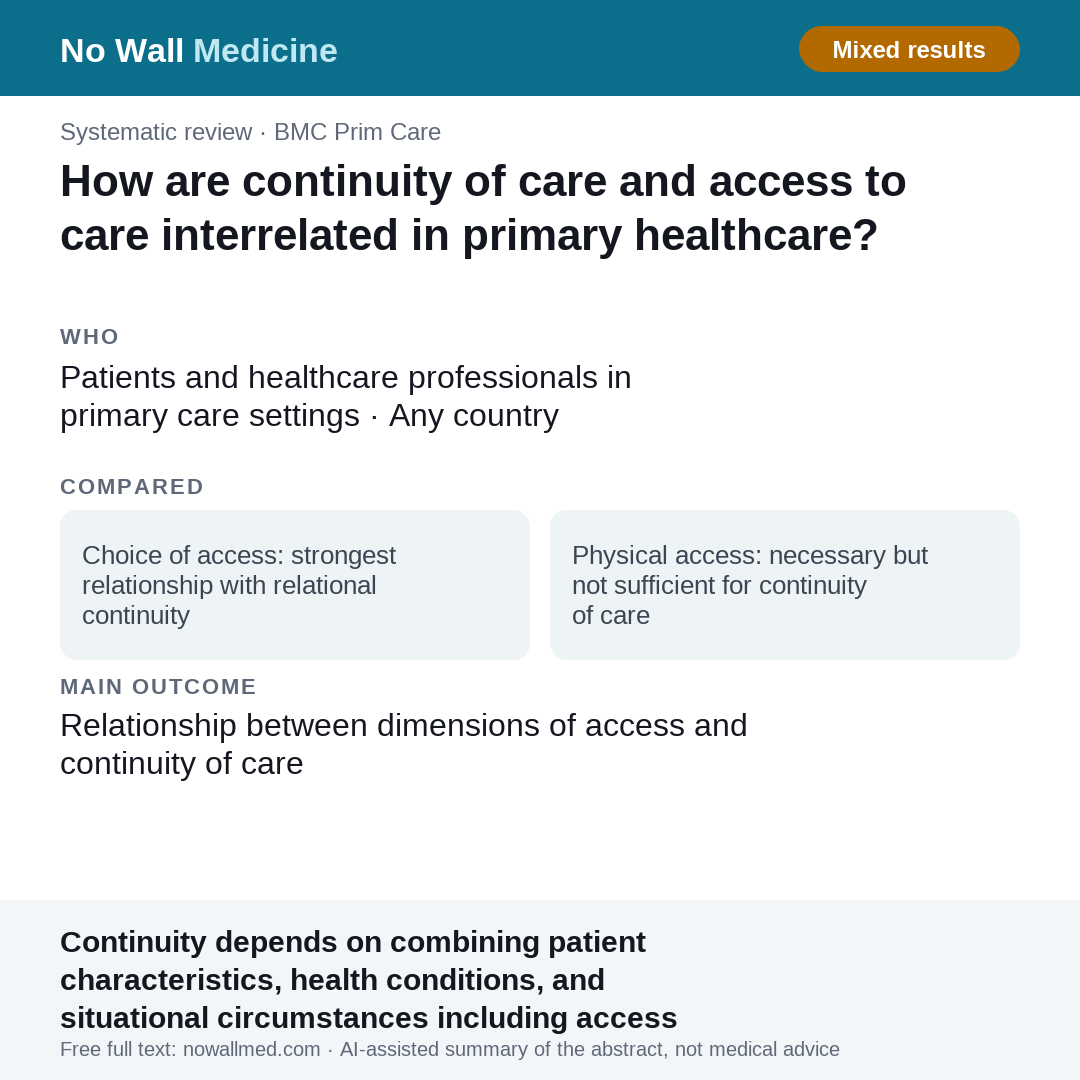
Access or continuity: a zero sum game? A systematic review of the literature examining the relationship between access and continuity in primary healthcare
Systematic reviewMixed results
How are continuity of care and access to care interrelated in primary healthcare?
Who
Patients and healthcare professionals in primary care settings · Any country
Compared
Choice of access: strongest relationship with relational continuity
Physical access: necessary but not sufficient for continuity of care
Main outcome
Relationship between dimensions of access and continuity of care
Bottom line: Continuity depends on combining patient characteristics, health conditions, and situational circumstances including access dimensions.
BMC Prim Care · 2025-07-02Download image
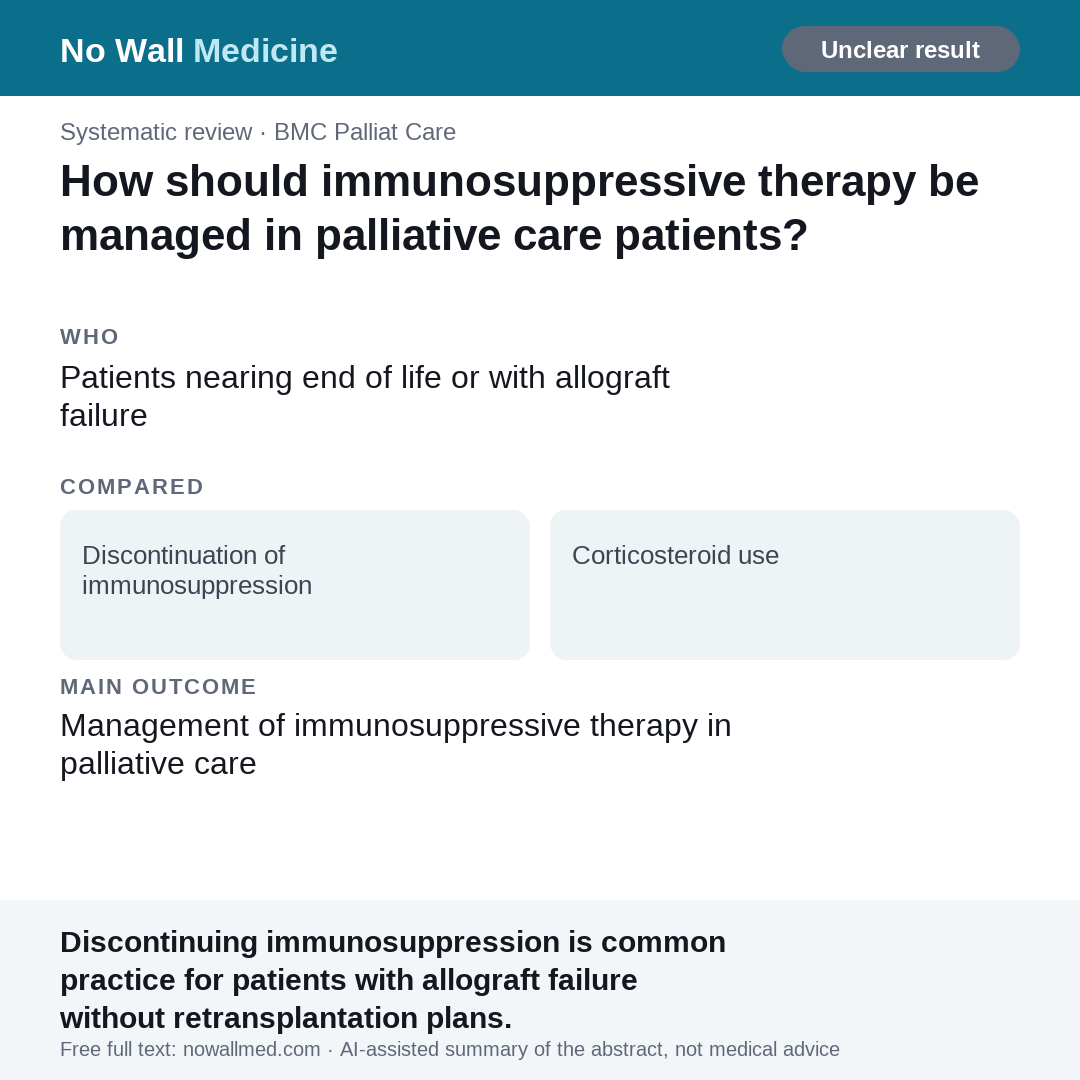
Immunosuppressant management in palliative care: a systematic review
Systematic reviewUnclear result
How should immunosuppressive therapy be managed in palliative care patients?
Who
Patients nearing end of life or with allograft failure
Compared
Discontinuation of immunosuppression
Corticosteroid use
Main outcome
Management of immunosuppressive therapy in palliative care
Bottom line: Discontinuing immunosuppression is common practice for patients with allograft failure without retransplantation plans.
BMC Palliat Care · 2025-07-02Download image
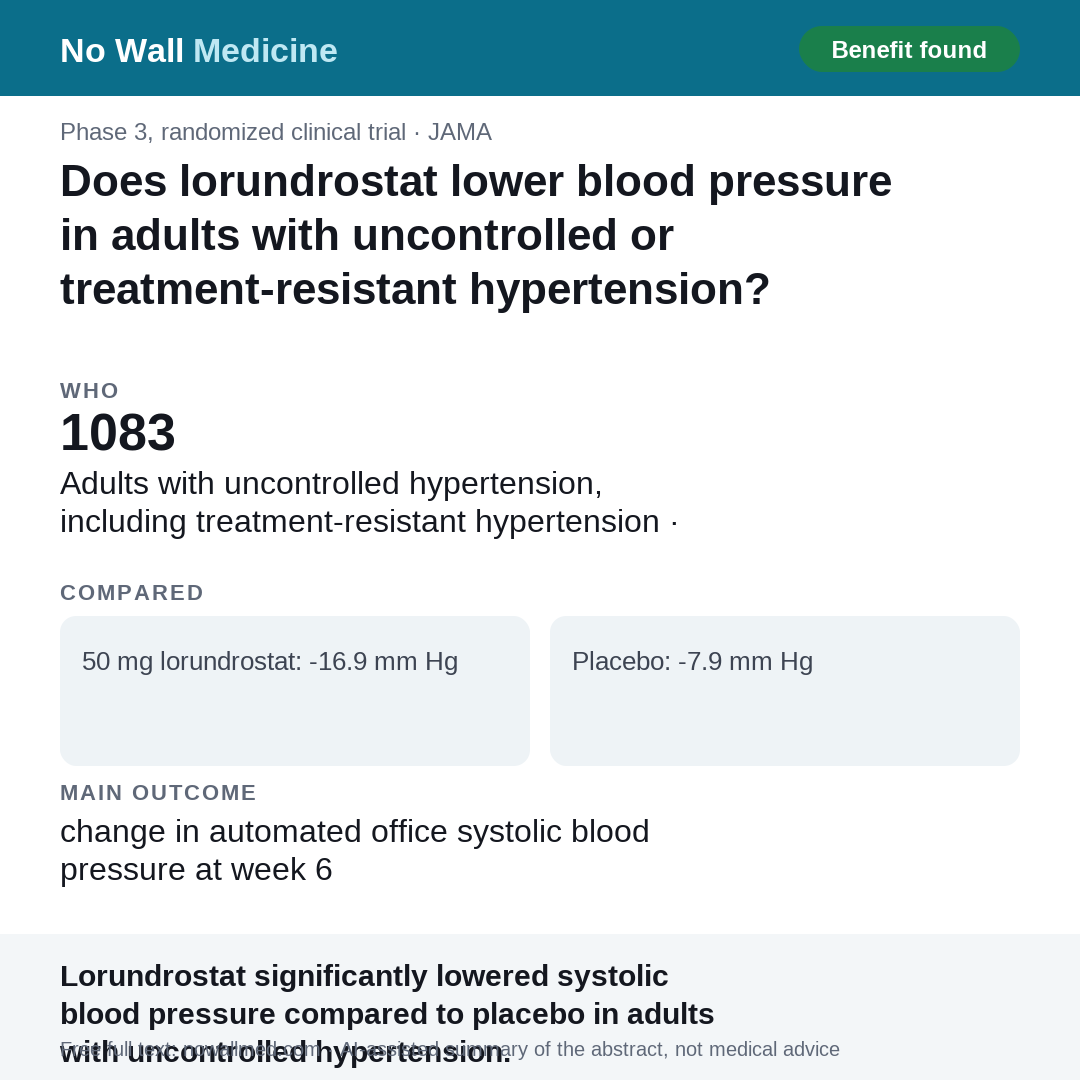
Lorundrostat in Participants With Uncontrolled Hypertension and Treatment-Resistant Hypertension: The Launch-HTN Randomized Clinical Trial
Phase 3, randomized clinical trialBenefit found
Does lorundrostat lower blood pressure in adults with uncontrolled or treatment-resistant hypertension?
Who
1083
Adults with uncontrolled hypertension, including treatment-resistant hypertension · 159 clinic sites across 13 countries
Compared
50 mg lorundrostat: -16.9 mm Hg
Placebo: -7.9 mm Hg
Main outcome
change in automated office systolic blood pressure at week 6
Result: least-squares mean difference, -9.1 mm Hg (95% CI, -13.3 to -4.9 mm Hg)
Bottom line: Lorundrostat significantly lowered systolic blood pressure compared to placebo in adults with uncontrolled hypertension.
JAMA · 2025-07-01Download image
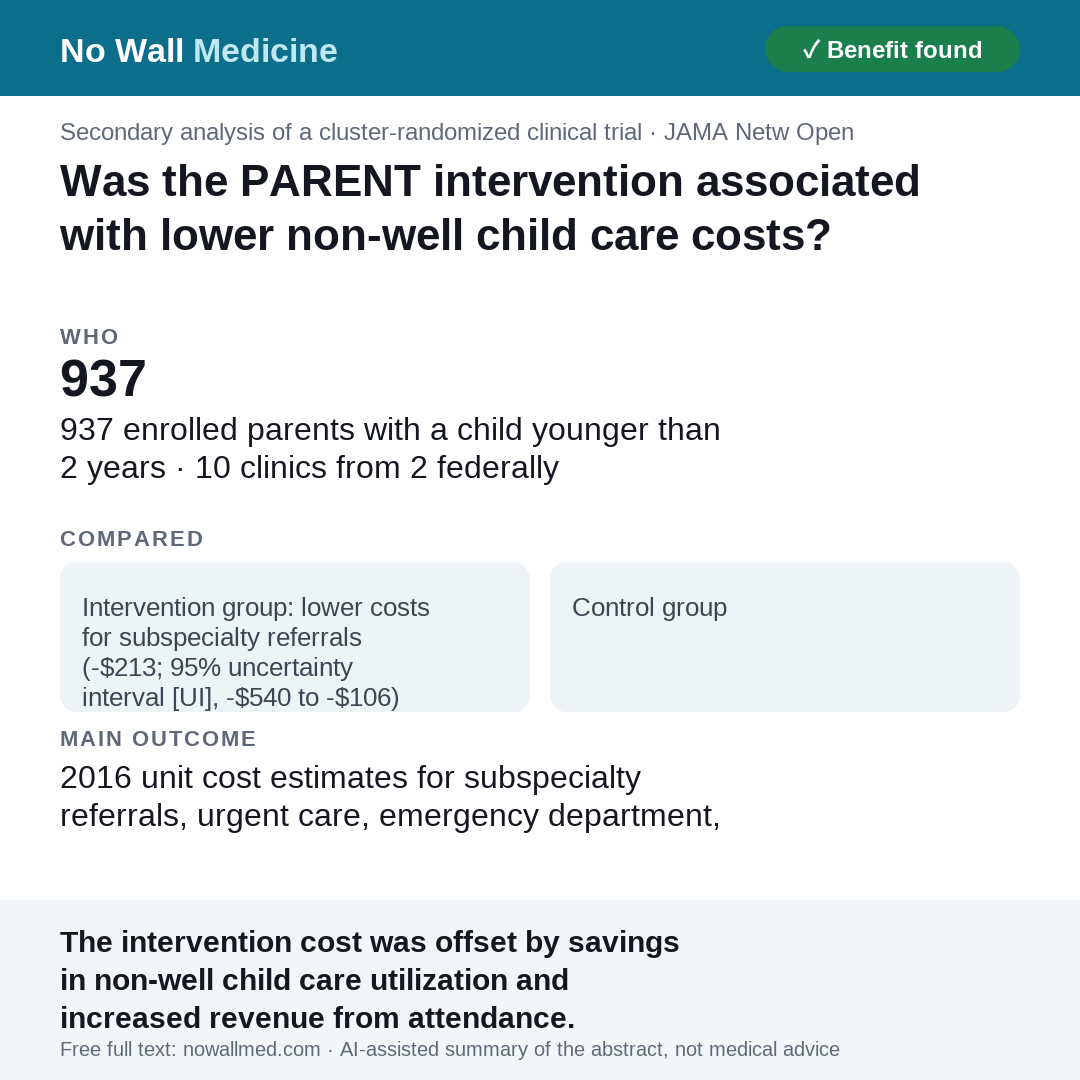
Cost Analysis of the PARENT Trial of Community Health Workers in Early Childhood Preventive Care: A Secondary Analysis of a Cluster-Randomized Clinical Trial
Secondary analysis of a cluster-randomized clinical trialBenefit found
Was the PARENT intervention associated with lower non-well child care costs?
Who
937
937 enrolled parents with a child younger than 2 years · 10 clinics from 2 federally qualified health centers
Compared
Intervention group: lower costs for subspecialty referrals (-$213; 95% uncertainty interval [UI], -$540 to -$106)
Control group
Main outcome
2016 unit cost estimates for subspecialty referrals, urgent care, emergency department, and hospitalizations
Result: -$70; 95% UI, -$150 to -$13 for total cost of urgent care, emergency department, and hospitalizations
Bottom line: The intervention cost was offset by savings in non-well child care utilization and increased revenue from attendance.
JAMA Netw Open · 2025-07-01Download image
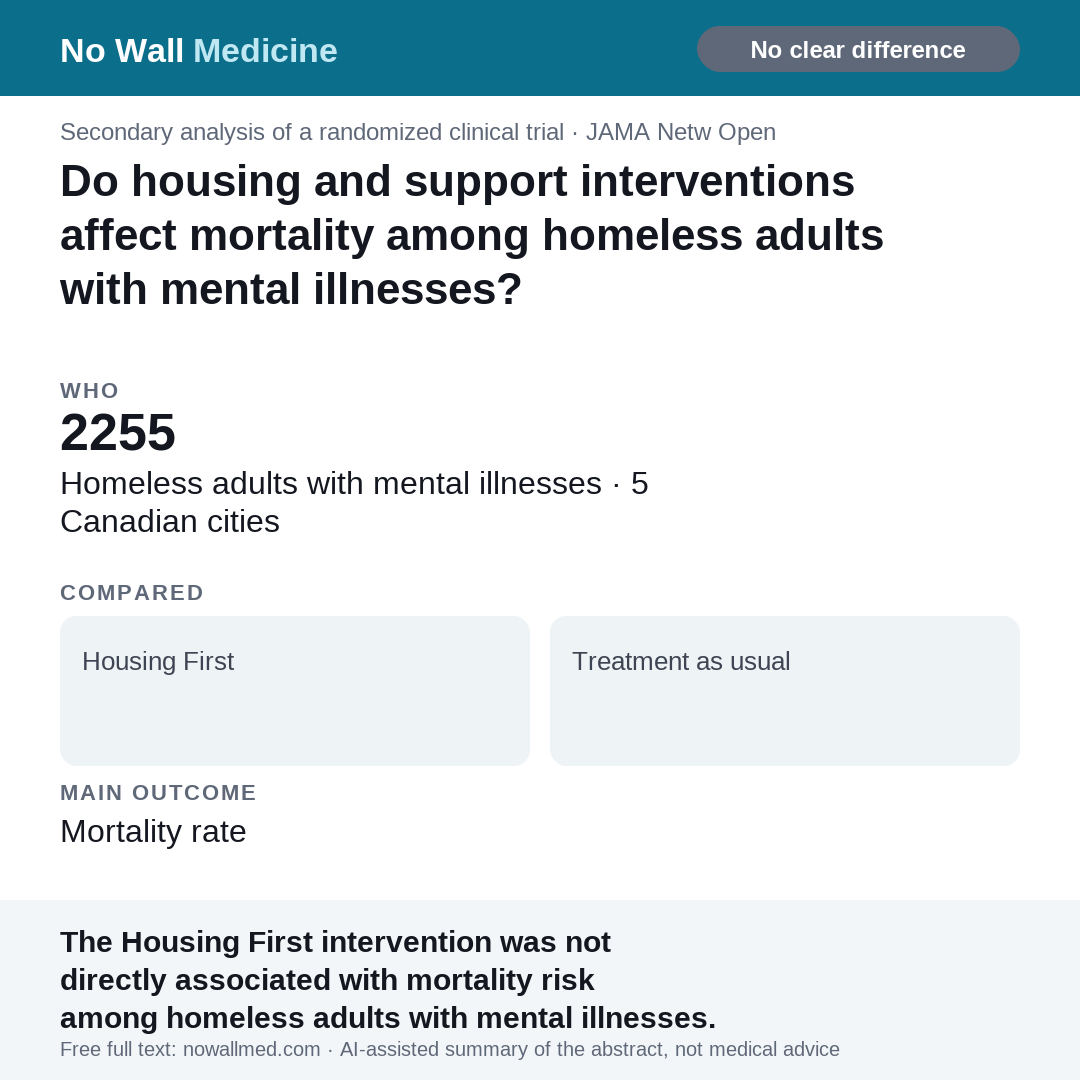
Housing and Support Intervention and Mortality Among Homeless Adults With Mental Illnesses: A Secondary Analysis of a Randomized Clinical Trial
Secondary analysis of a randomized clinical trialNo clear difference
Do housing and support interventions affect mortality among homeless adults with mental illnesses?
Who
2255
Homeless adults with mental illnesses · 5 Canadian cities
Compared
Housing First
Treatment as usual
Main outcome
Mortality rate
Result: adjusted hazard ratio 0.83 (95% CI 0.43-1.22)
Bottom line: The Housing First intervention was not directly associated with mortality risk among homeless adults with mental illnesses.
JAMA Netw Open · 2025-07-01Download image
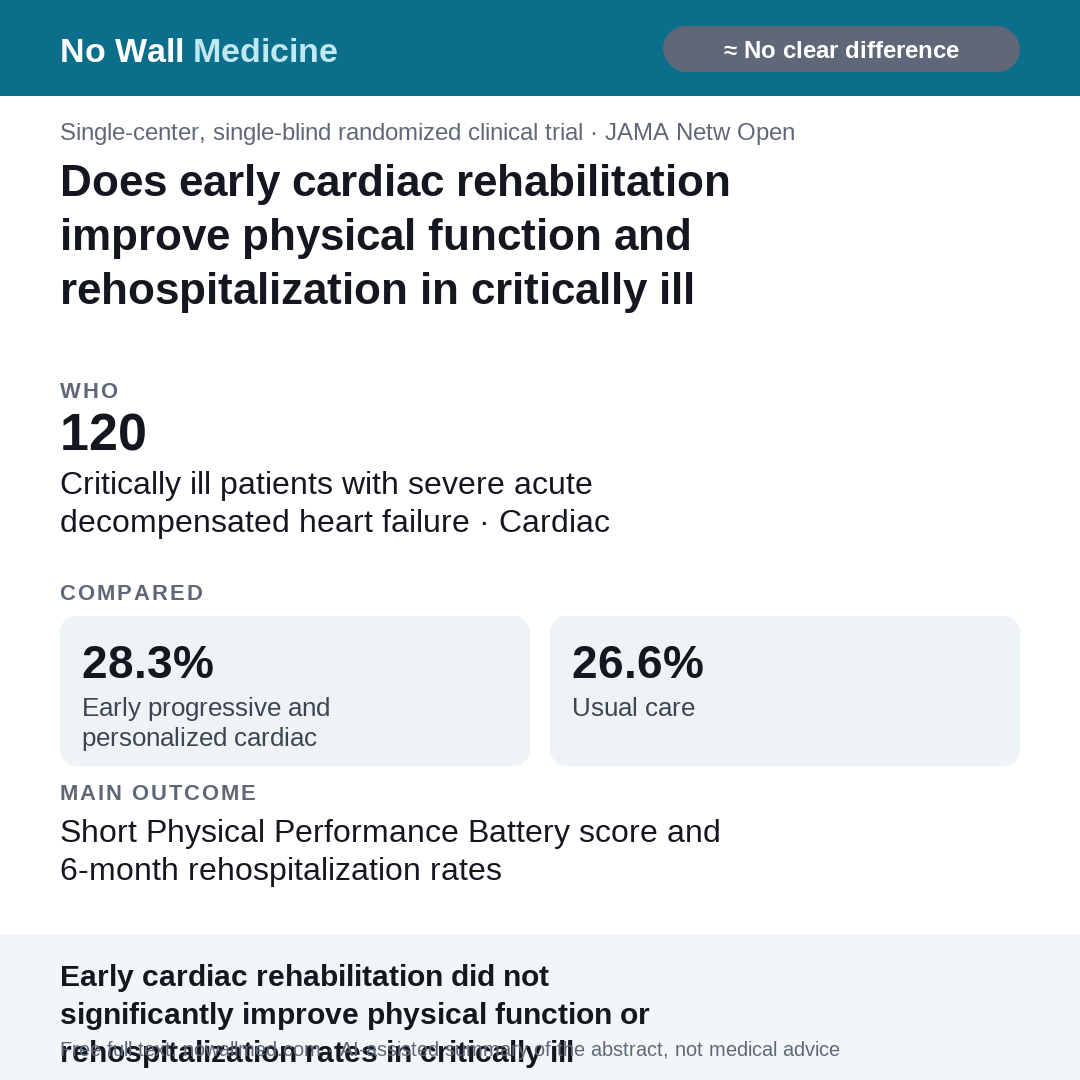
Early Cardiac Rehabilitation for Critically Ill Patients With Acute Decompensated Heart Failure: A Randomized Clinical Trial
Single-center, single-blind randomized clinical trialNo clear difference
Does early cardiac rehabilitation improve physical function and rehospitalization in critically ill heart failure patients?
Who
120
Critically ill patients with severe acute decompensated heart failure · Cardiac intensive care unit in China
Compared
28.3%Early progressive and personalized cardiac rehabilitation
26.6%Usual care
Main outcome
Short Physical Performance Battery score and 6-month rehospitalization rates
Result: hazard ratio 1.00 (95% CI 0.51-1.99)
Bottom line: Early cardiac rehabilitation did not significantly improve physical function or rehospitalization rates in critically ill heart failure patients.
JAMA Netw Open · 2025-07-01Download image
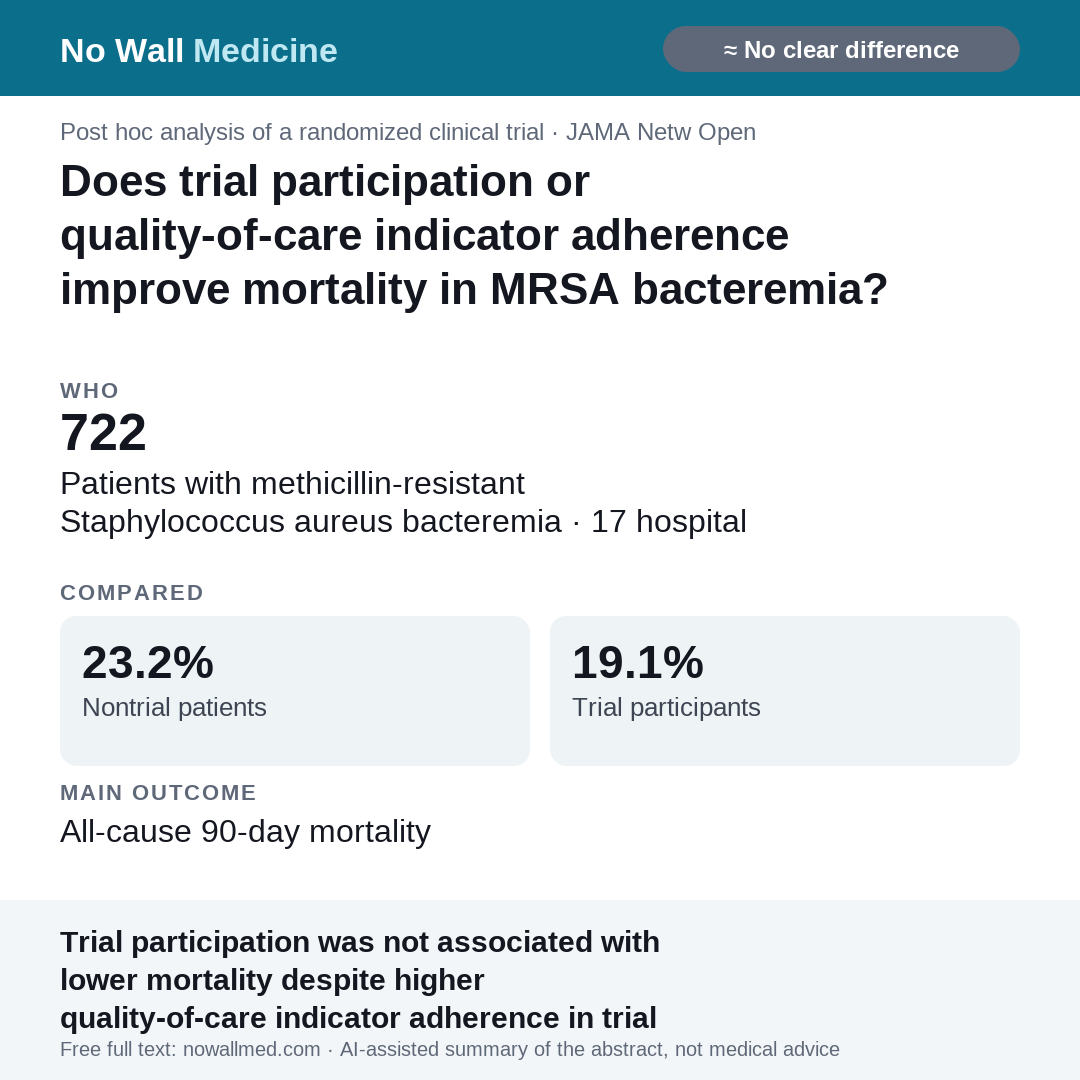
Adherence to Quality-of-Care Indicators and Mortality Outcomes in Patients With MRSA Bacteremia: A Post Hoc Analysis of the CAMERA2 Randomized Clinical Trial
Post hoc analysis of a randomized clinical trialNo clear difference
Does trial participation or quality-of-care indicator adherence improve mortality in MRSA bacteremia?
Who
722
Patients with methicillin-resistant Staphylococcus aureus bacteremia · 17 hospital sites from 4 countries
Compared
23.2%Nontrial patients (106 of 457)
19.1%Trial participants (48 of 251)
Main outcome
All-cause 90-day mortality
Result: adjusted hazard ratio 1.08 (95% CI 0.73 to 1.61)
Bottom line: Trial participation was not associated with lower mortality despite higher quality-of-care indicator adherence in trial groups.
JAMA Netw Open · 2025-07-01Download image
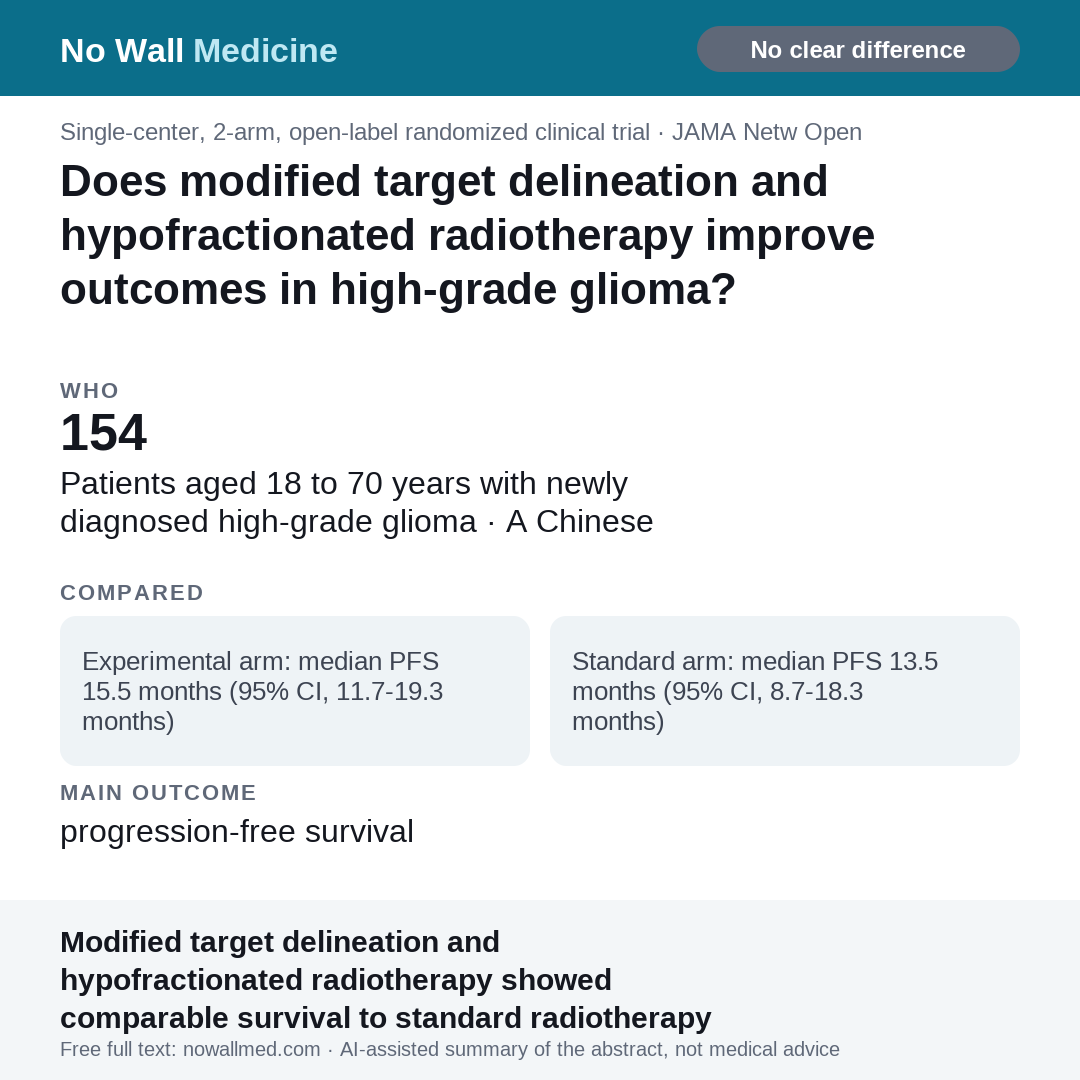
Modified Target Delineation and Moderately Hypofractionated Radiotherapy for High-Grade Glioma: A Randomized Clinical Trial
Single-center, 2-arm, open-label randomized clinical trialNo clear difference
Does modified target delineation and hypofractionated radiotherapy improve outcomes in high-grade glioma?
Who
154
Patients aged 18 to 70 years with newly diagnosed high-grade glioma · A Chinese medical center
Compared
Experimental arm: median PFS 15.5 months (95% CI, 11.7-19.3 months)
Standard arm: median PFS 13.5 months (95% CI, 8.7-18.3 months)
Main outcome
progression-free survival
Bottom line: Modified target delineation and hypofractionated radiotherapy showed comparable survival to standard radiotherapy with significantly smaller irradiation volumes.
JAMA Netw Open · 2025-07-01Download image
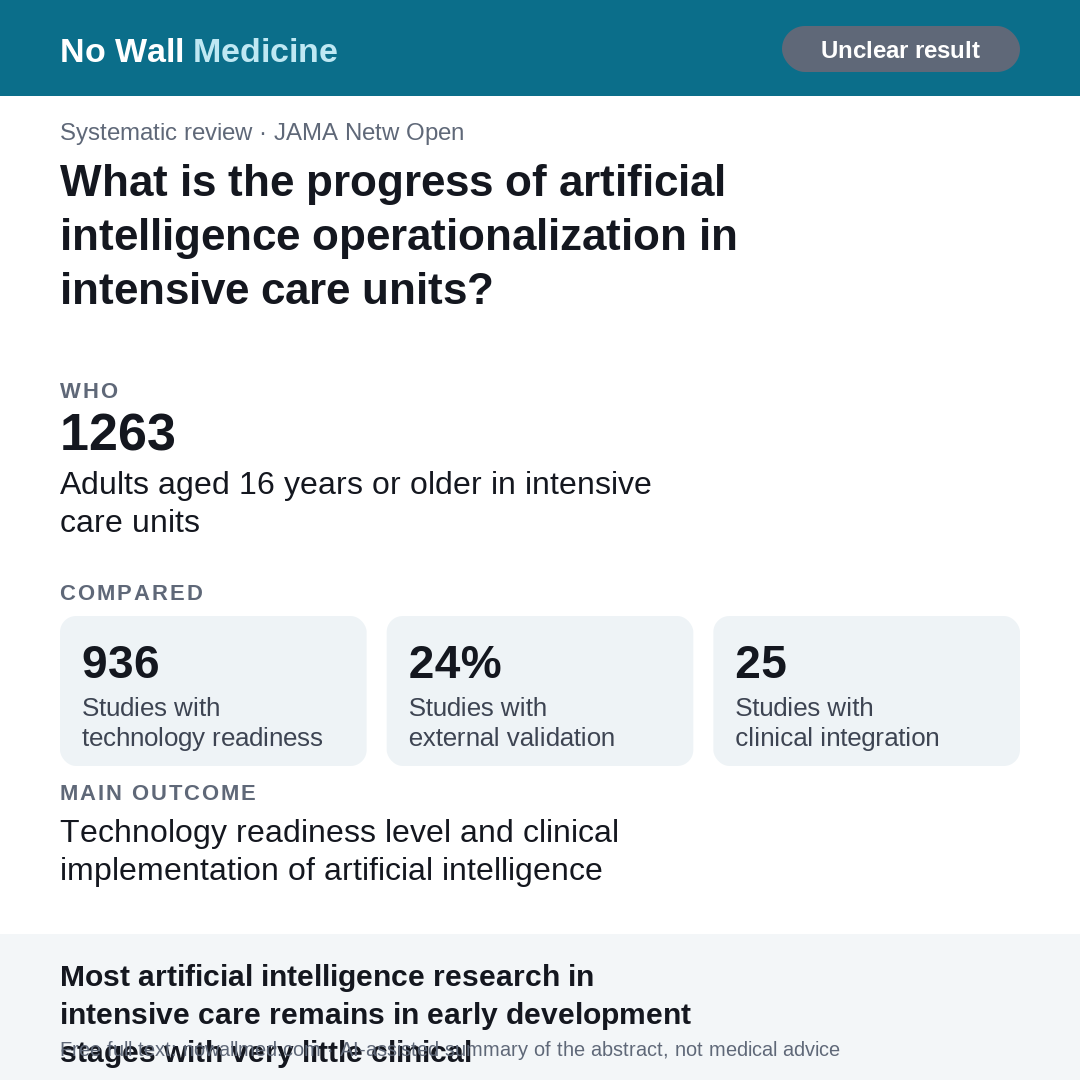
Operationalization of Artificial Intelligence Applications in the Intensive Care Unit: A Systematic Review
Systematic reviewUnclear result
What is the progress of artificial intelligence operationalization in intensive care units?
Who
1263
Adults aged 16 years or older in intensive care units
Compared
936Studies with technology readiness level 4 or below (74%)
24%Studies with external validation
25Studies with clinical integration (2%)
Main outcome
Technology readiness level and clinical implementation of artificial intelligence
Bottom line: Most artificial intelligence research in intensive care remains in early development stages with very little clinical implementation.
Limitation: High risk of bias was identified in 53% of studies due to methodological shortcomings.
JAMA Netw Open · 2025-07-01Download image
Guidelines on Placenta Accreta Spectrum Disorders: A Systematic Review
Systematic reviewMixed results
What are the areas of consensus and gaps in placenta accreta spectrum clinical practice guidelines?
Who
Clinical practice guidelines for placenta accreta spectrum · Global, including high-income and low- to middle-income countries
Compared
High agreement areas: specialized expertise (100%), antenatal management (88.9%), diagnosis (76.9%), and epidemiology (75.0%)
Poor consensus areas: cesarean hysterectomy management (38.5% insufficient evidence and 23.0% disagreement)
Main outcome
Consensus and evidence levels in clinical practice guidelines
Bottom line: Guidelines show high consensus in diagnosis and antenatal management but significant gaps in hemorrhage and postnatal management evidence.
Limitation: Only 5.6% of articles specifically addressed low- to middle-income countries.
JAMA Netw Open · 2025-07-01Download image

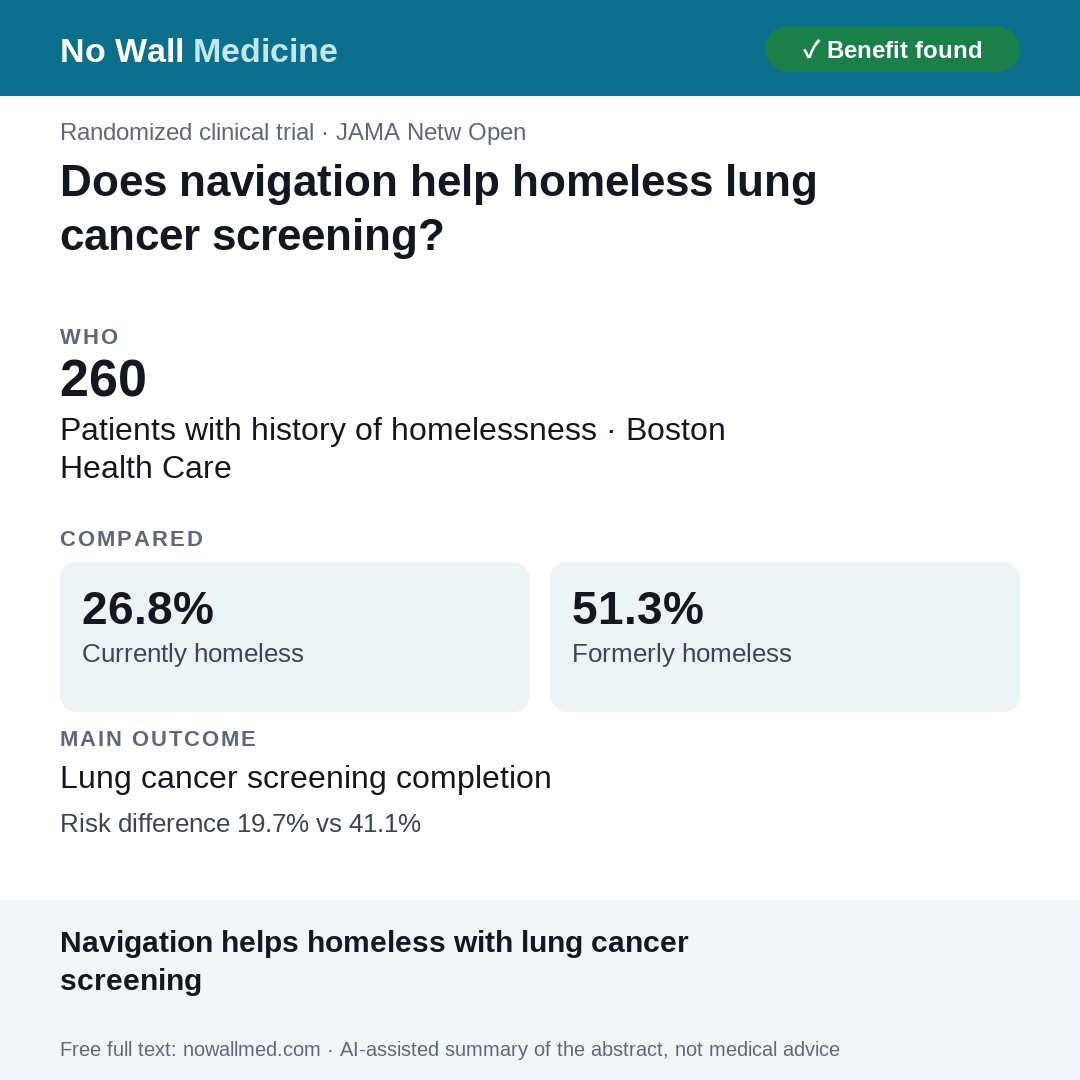
Homelessness, Patient Navigation, and Lung Cancer Screening in a Health Center Setting: A Subgroup Analysis of a Randomized Clinical Trial
Randomized clinical trialBenefit found
Does navigation help homeless lung cancer screening?
Who
260
Patients with history of homelessness · Boston Health Care
Compared
26.8%Currently homeless (15/56)
51.3%Formerly homeless (60/117)
Main outcome
Lung cancer screening completion
Result: Risk difference 19.7% vs 41.1%
Bottom line: Navigation helps homeless with lung cancer screening
Limitation: Communication challenges with currently homeless
JAMA Netw Open · 2025-07-01Download image
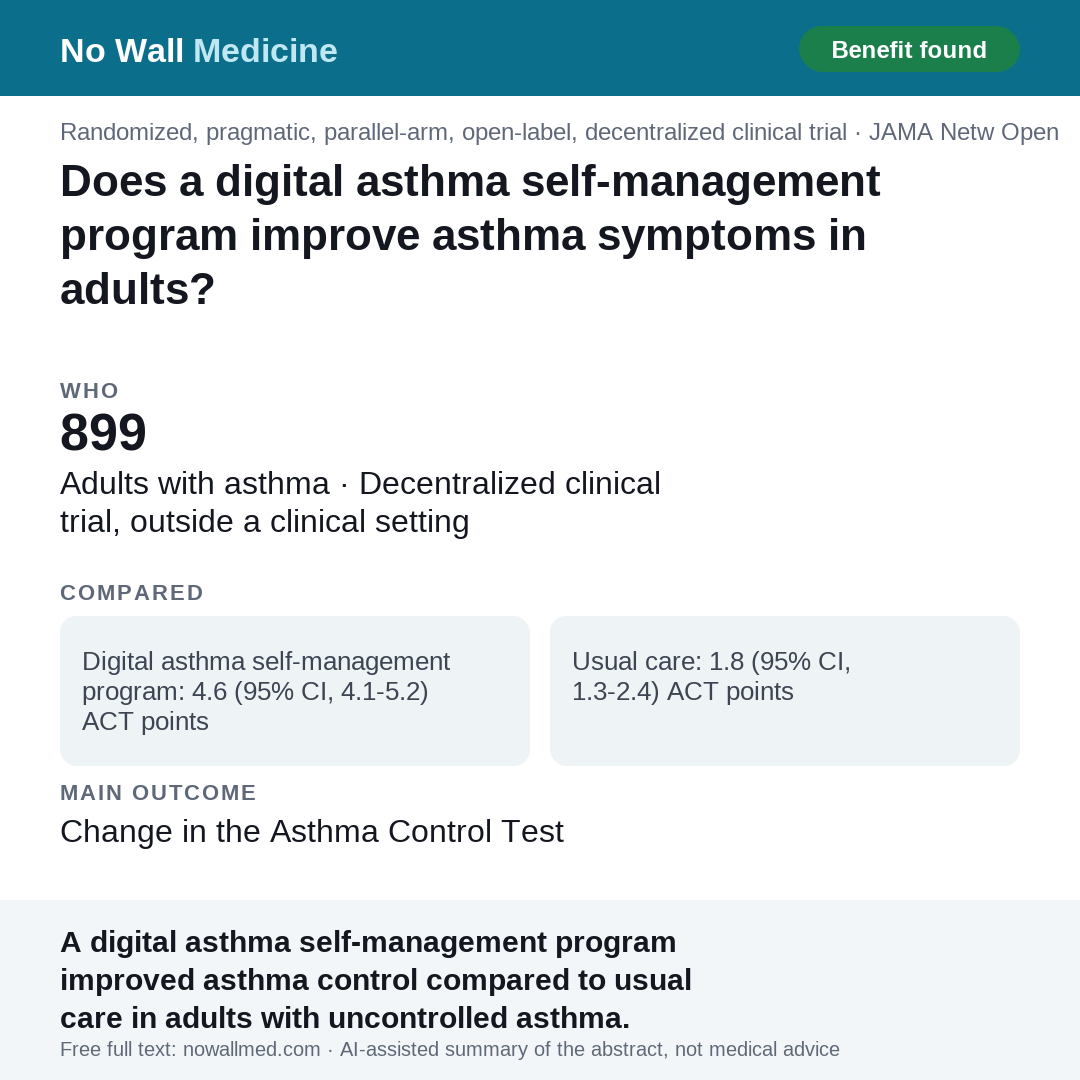
A Digital Asthma Self-Management Program for Adults: A Randomized Clinical Trial
Randomized, pragmatic, parallel-arm, open-label, decentralized clinical trialBenefit found
Does a digital asthma self-management program improve asthma symptoms in adults?
Who
899
Adults with asthma · Decentralized clinical trial, outside a clinical setting
Compared
Digital asthma self-management program: 4.6 (95% CI, 4.1-5.2) ACT points
Usual care: 1.8 (95% CI, 1.3-2.4) ACT points
Main outcome
Change in the Asthma Control Test
Result: adjusted difference, 2.8 (95% CI, 2.0-3.6) points
Bottom line: A digital asthma self-management program improved asthma control compared to usual care in adults with uncontrolled asthma.
Limitation: Race moderated the effect of the program on asthma control.
JAMA Netw Open · 2025-07-01Download image