Visual abstracts
New randomized trials and meta-analyses from leading journals at a glance: who was studied, what was compared, and what was found. Every paper is free to read in full.
All specialtiesCardiology 2165Oncology 1850Gastroenterology & Hepatology 815Infectious Disease 1349Neurology 876Psychiatry & Mental Health 1042Pulmonology 904Critical Care 603Endocrinology & Diabetes 1148Pediatrics 1260Surgery 1091Orthopedics & Sports Medicine 403Neurosurgery 266Cardiothoracic & Vascular Surgery 231Plastic & Reconstructive Surgery 325Nephrology 457Rheumatology 298Hematology 470Dermatology 250Ophthalmology 252Obstetrics & Gynecology 704Public & Global Health 403Radiology & Imaging 300Anesthesiology 423Urology 379ENT (Otolaryngology) 281Emergency Medicine 237Allergy & Immunology 135Geriatrics 453Family Medicine & Primary Care 249Medical Genetics & Genomics 233Pathology & Laboratory Medicine 74Physical Medicine & Rehabilitation 376Palliative Care 186Nutrition 577Digital Health & AI 1097General Medicine 164
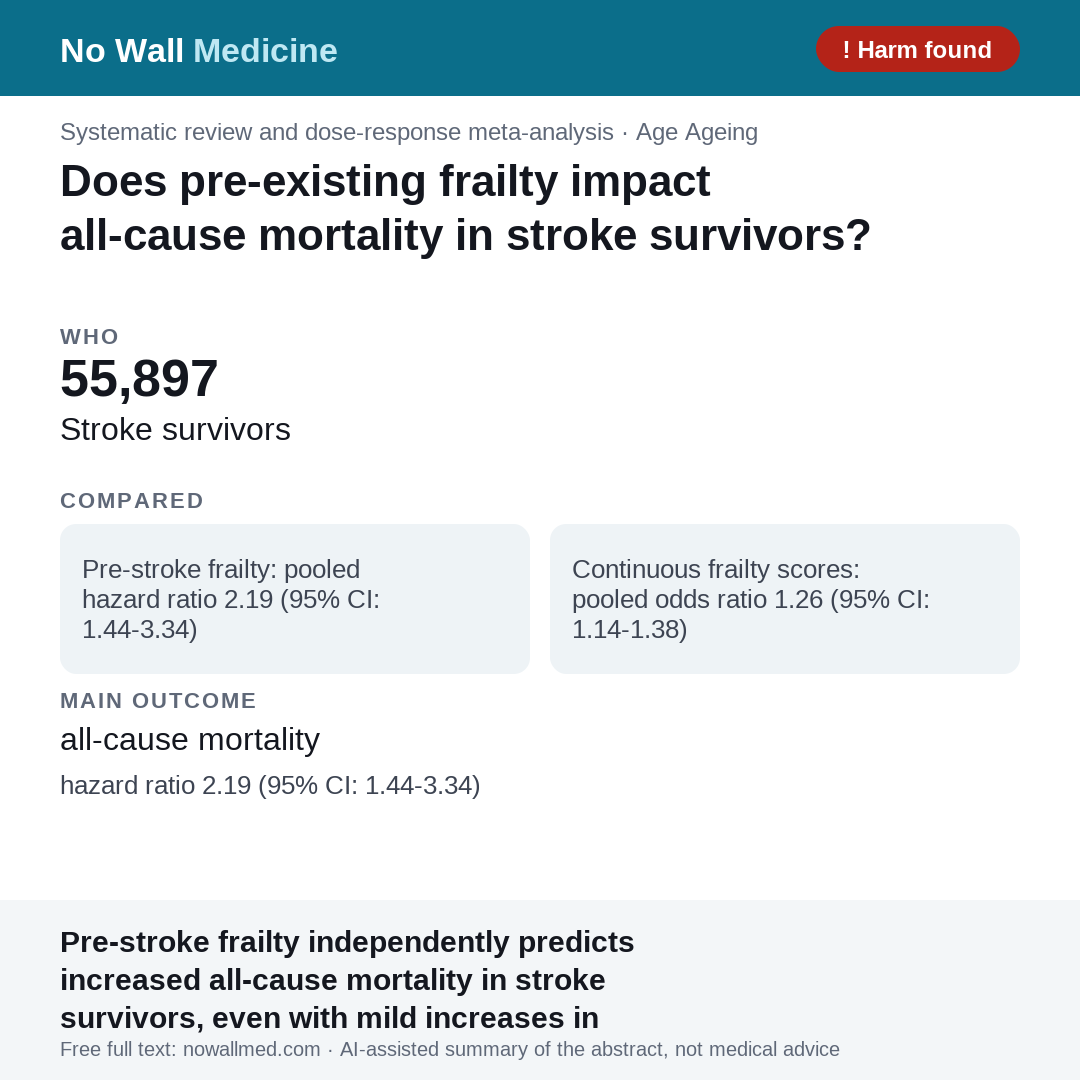
Impact of pre-existing frailty on all-cause mortality in stroke survivors: a systematic review and dose-response meta-analysis
Systematic review and dose-response meta-analysisHarm found
Does pre-existing frailty impact all-cause mortality in stroke survivors?
Who
55,897
Stroke survivors
Compared
Pre-stroke frailty: pooled hazard ratio 2.19 (95% CI: 1.44-3.34)
Continuous frailty scores: pooled odds ratio 1.26 (95% CI: 1.14-1.38)
Main outcome
all-cause mortality
Result: hazard ratio 2.19 (95% CI: 1.44-3.34)
Bottom line: Pre-stroke frailty independently predicts increased all-cause mortality in stroke survivors, even with mild increases in frailty burden.
Age Ageing · 2025-09-27Download image
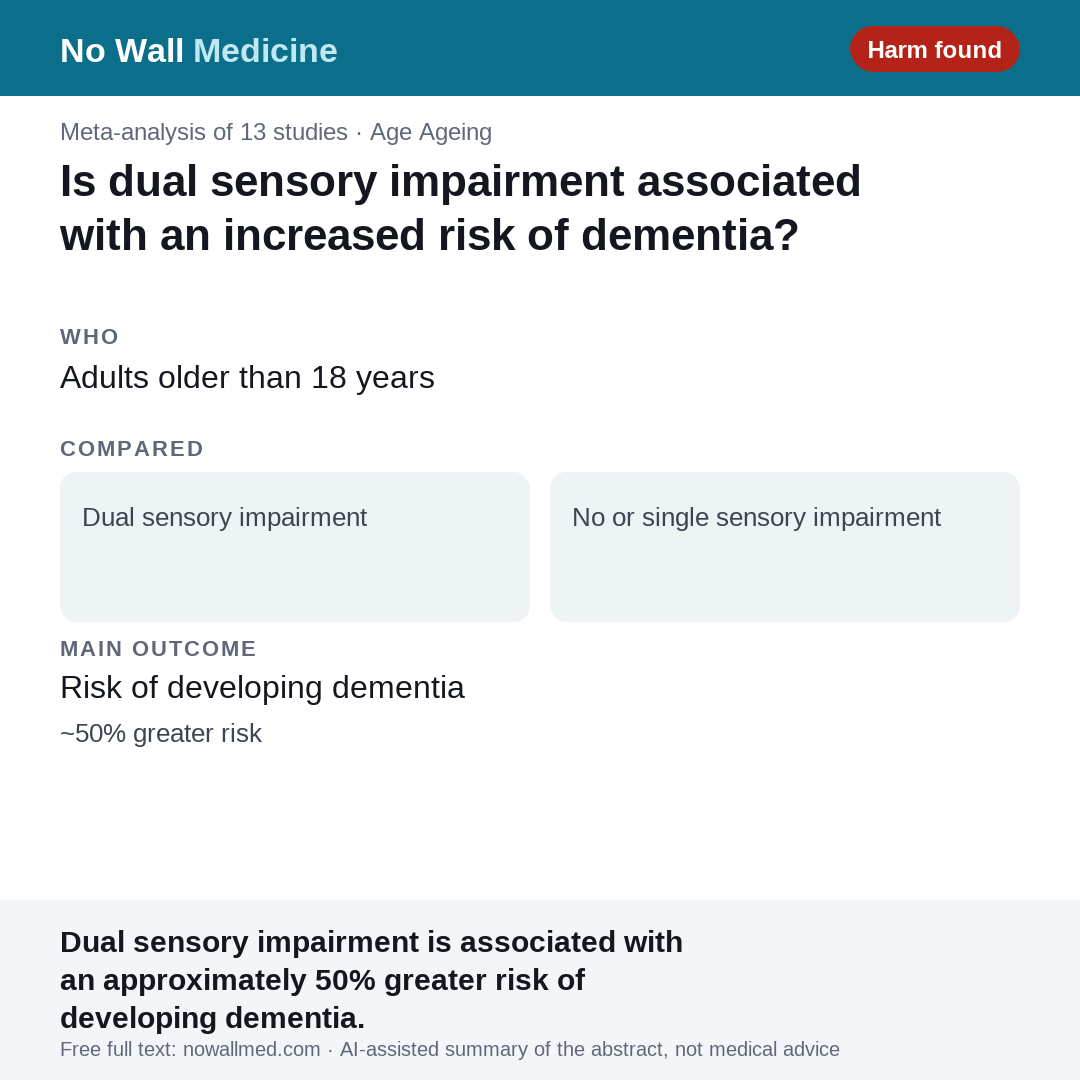
The association between dual sensory impairment and dementia: a meta-analysis and systematic review of the literature
Meta-analysis of 13 studiesHarm found
Is dual sensory impairment associated with an increased risk of dementia?
Who
Adults older than 18 years
Compared
Dual sensory impairment
No or single sensory impairment
Main outcome
Risk of developing dementia
Result: ~50% greater risk
Bottom line: Dual sensory impairment is associated with an approximately 50% greater risk of developing dementia.
Age Ageing · 2025-09-27Download image
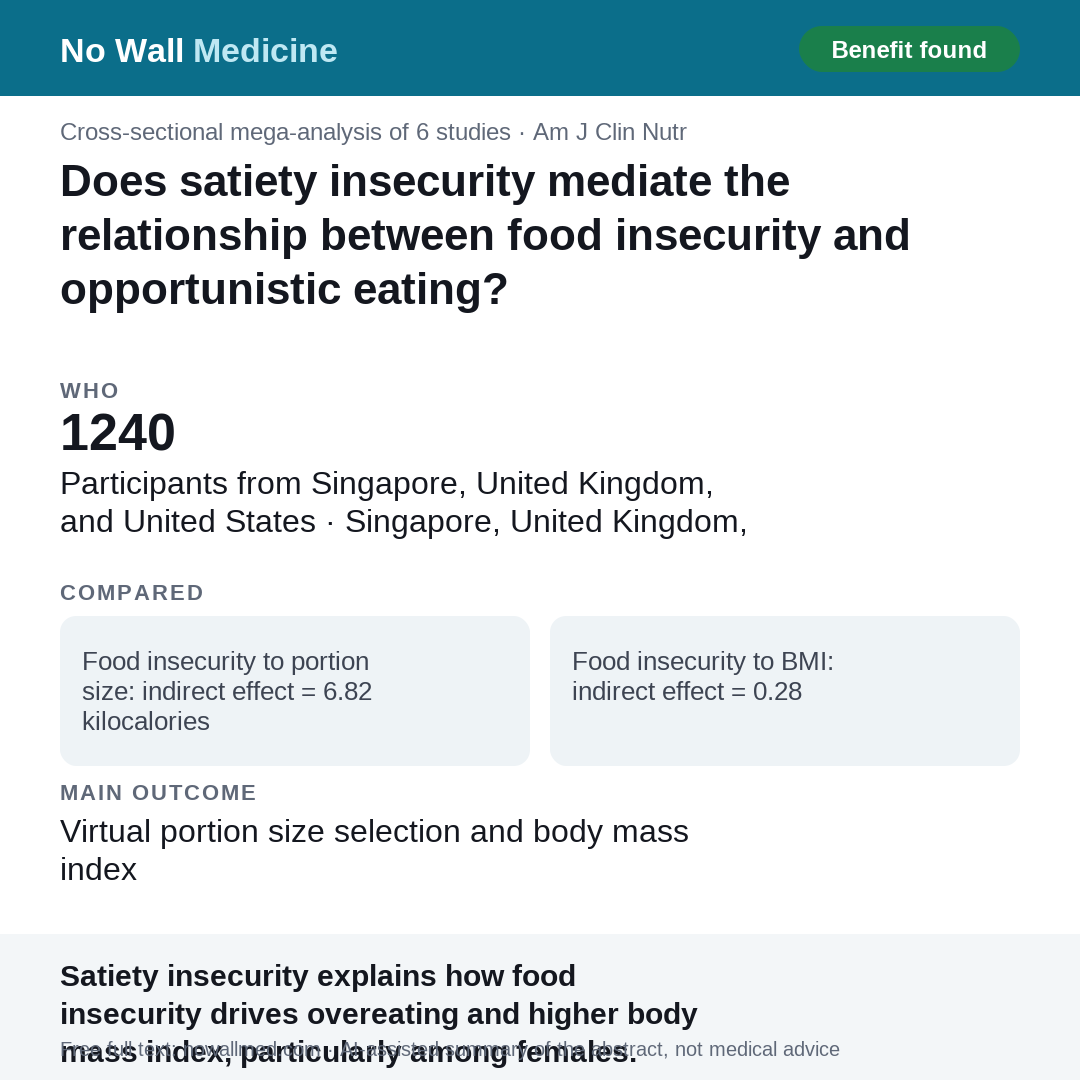
Food insecurity may promote opportunistic eating through heightened satiety insecurity: A cross-sectional mega-analysis study
Cross-sectional mega-analysis of 6 studiesBenefit found
Does satiety insecurity mediate the relationship between food insecurity and opportunistic eating?
Who
1240
Participants from Singapore, United Kingdom, and United States · Singapore, United Kingdom, and United States
Compared
Food insecurity to portion size: indirect effect = 6.82 kilocalories
Food insecurity to BMI: indirect effect = 0.28
Main outcome
Virtual portion size selection and body mass index
Result: indirect effect 6.82 kilocalories (95% CI 4.15, 9.50); indirect effect 0.28 (95% CI 0.14, 0.42)
Bottom line: Satiety insecurity explains how food insecurity drives overeating and higher body mass index, particularly among females.
Am J Clin Nutr · 2025-09-27Download image
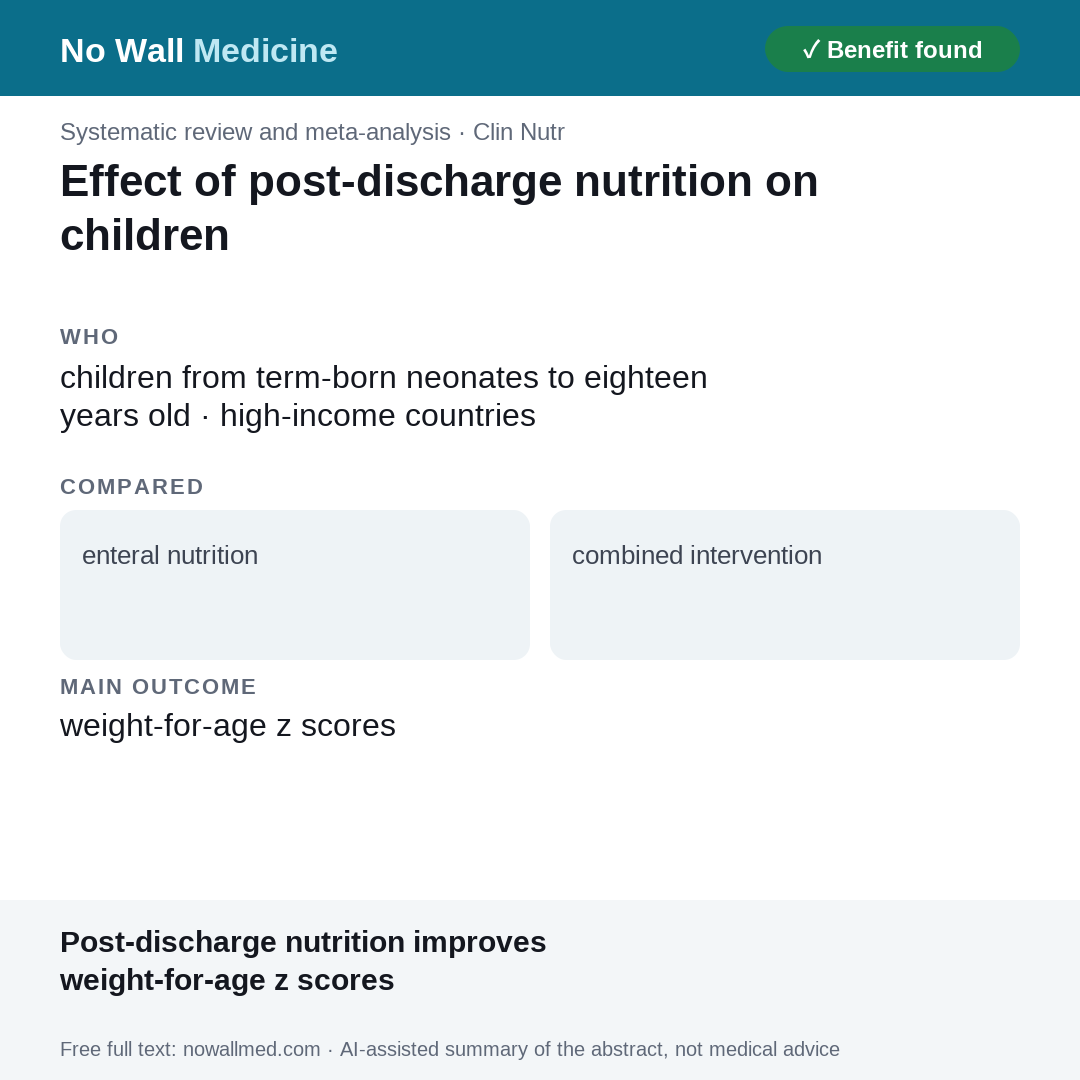
Pediatric enteral nutrition after hospital discharge: A systematic review and toolbox for clinical practice
Systematic review and meta-analysisBenefit found
Effect of post-discharge nutrition on children
Who
children from term-born neonates to eighteen years old · high-income countries
Compared
enteral nutrition
combined intervention
Main outcome
weight-for-age z scores
Bottom line: Post-discharge nutrition improves weight-for-age z scores
Clin Nutr · 2025-09-27Download image
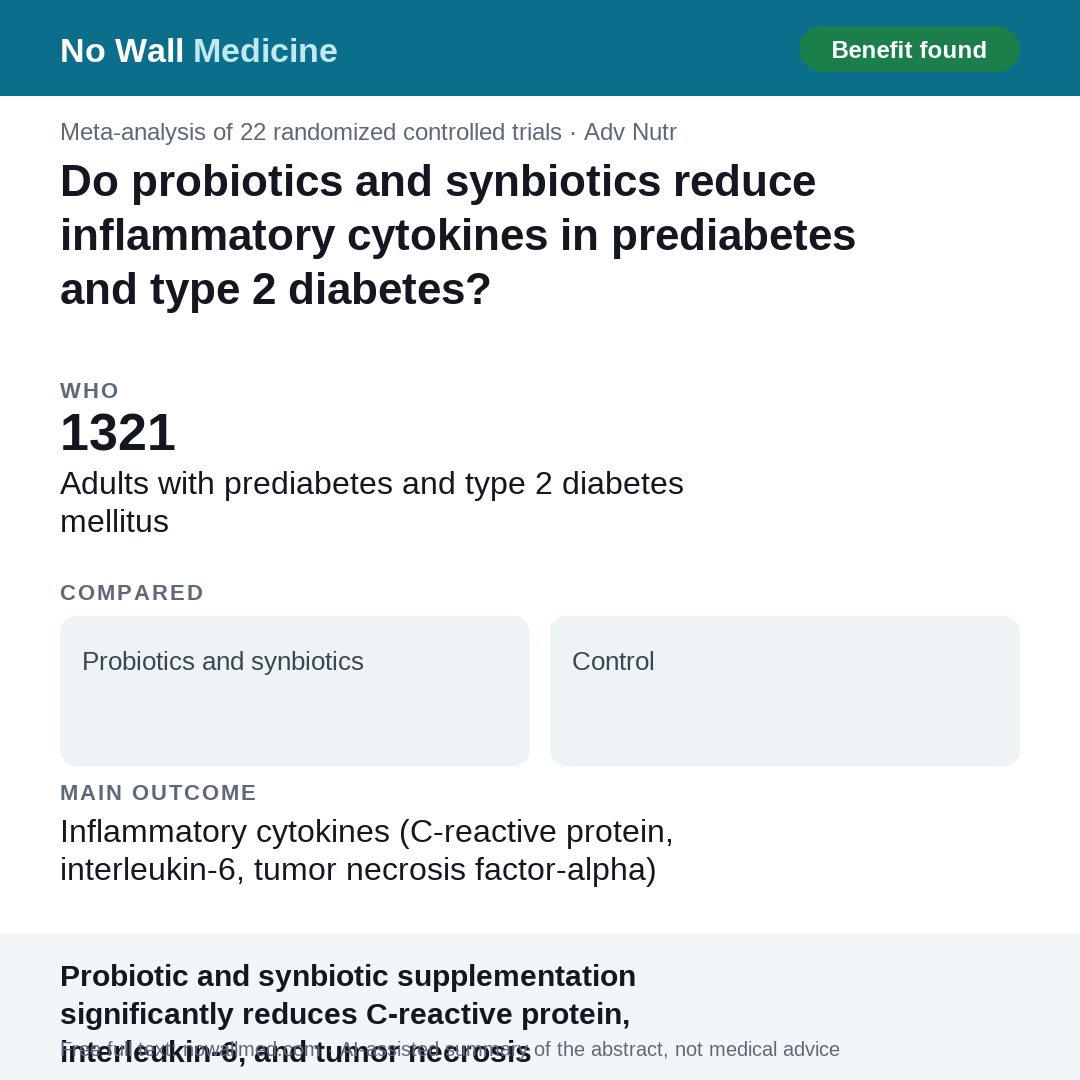
Probiotics and Synbiotics Supplementation Reduce Inflammatory Cytokines in Individuals with Prediabetes and Type 2 Diabetes Mellitus: Findings from a Systematic Review Meta-analysis
Meta-analysis of 22 randomized controlled trialsBenefit found
Do probiotics and synbiotics reduce inflammatory cytokines in prediabetes and type 2 diabetes?
Who
1321
Adults with prediabetes and type 2 diabetes mellitus
Compared
Probiotics and synbiotics
Control
Main outcome
Inflammatory cytokines (C-reactive protein, interleukin-6, tumor necrosis factor-alpha)
Result: WMD: -0.46 mg/L (95% CI: [-0.77, -0.15]) for CRP; -0.43 pg/ml (95% CI: [-0.76, -0.09]) for IL-6; -1.42 pg/ml (95% CI: [-2.15, -0.69]) for TNF-alpha
Bottom line: Probiotic and synbiotic supplementation significantly reduces C-reactive protein, interleukin-6, and tumor necrosis factor-alpha in prediabetes and type 2 diabetes.
Adv Nutr · 2025-09-27Download image
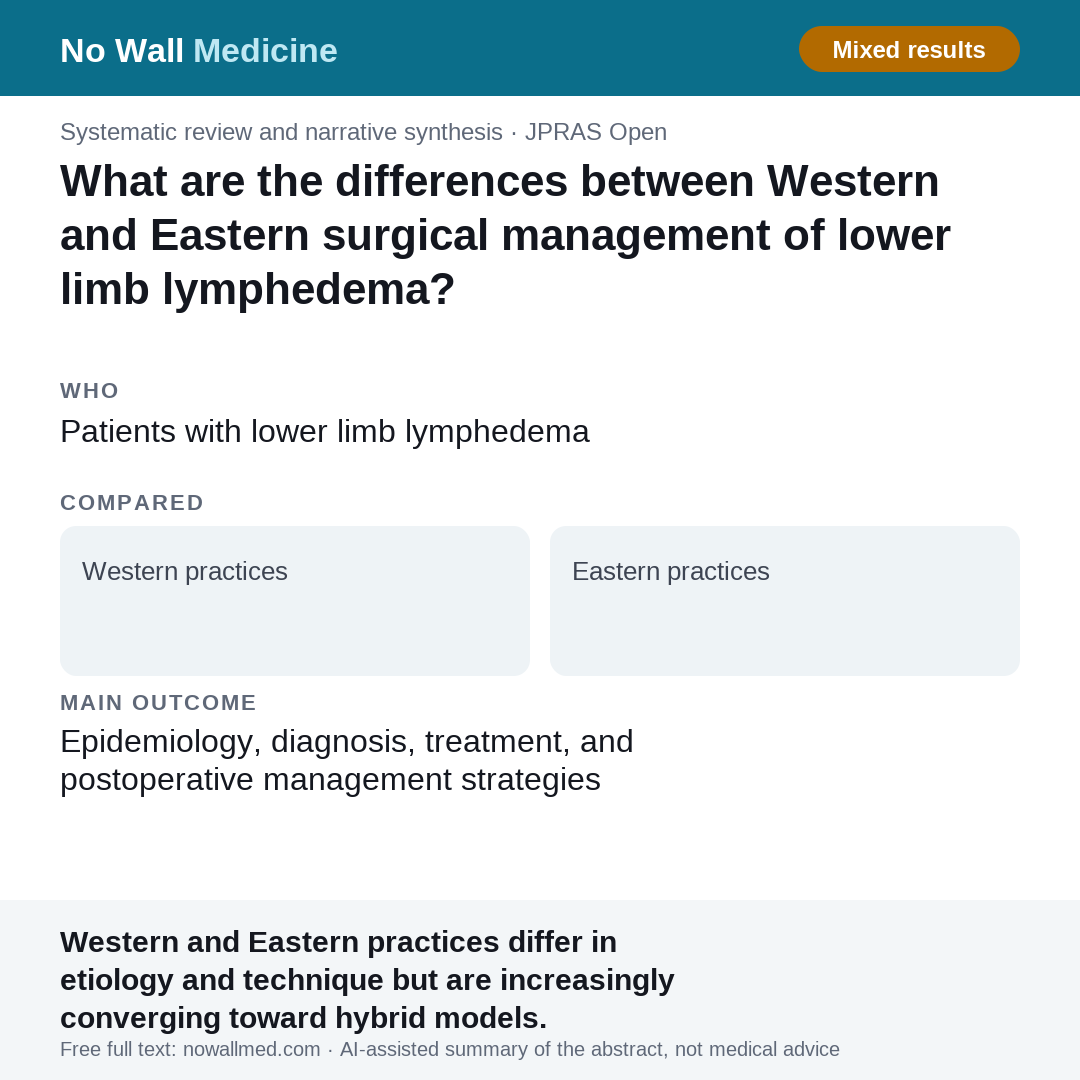
Insights and contrasts between Western and Eastern practices of surgical management of lower limb lymphedema: A systematic review and narrative synthesis
Systematic review and narrative synthesisMixed results
What are the differences between Western and Eastern surgical management of lower limb lymphedema?
Who
58
Patients with lower limb lymphedema
Compared
Western practices
Eastern practices
Main outcome
Epidemiology, diagnosis, treatment, and postoperative management strategies
Bottom line: Western and Eastern practices differ in etiology and technique but are increasingly converging toward hybrid models.
JPRAS Open · 2025-09-27Download image
The effect of disease-modifying therapies on brain volume loss and disability accumulation in multiple sclerosis: a systematic review and network meta-analysis
Systematic review and network meta-analysisBenefit found
How do disease-modifying therapies compare in reducing brain volume loss and disability in multiple sclerosis?
Who
26,247
Adults with multiple sclerosis
Compared
Disease-modifying therapies
Placebo
Main outcome
Brain volume loss
Bottom line: Several disease-modifying therapies significantly reduce brain volume loss, which correlates with reduced disability accumulation in multiple sclerosis.
Lancet Reg Health Eur · 2025-09-27Download image

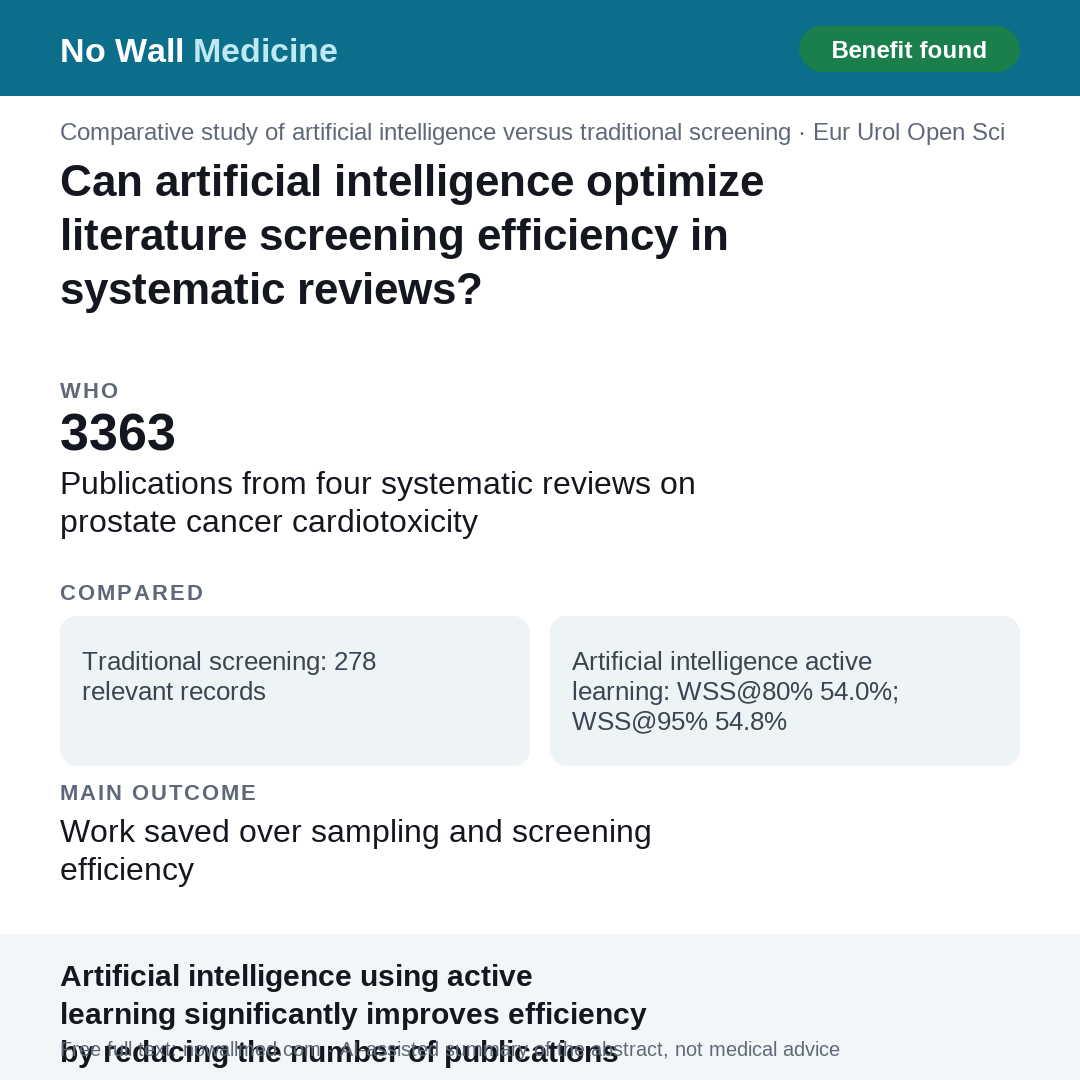
Using Artificial Intelligence for Text Screening in a Systematic Review of Cardiotoxicity
Comparative study of artificial intelligence versus traditional screeningBenefit found
Can artificial intelligence optimize literature screening efficiency in systematic reviews?
Who
3363
Publications from four systematic reviews on prostate cancer cardiotoxicity
Compared
Traditional screening: 278 relevant records
Artificial intelligence active learning: WSS@80% 54.0%; WSS@95% 54.8%
Main outcome
Work saved over sampling and screening efficiency
Bottom line: Artificial intelligence using active learning significantly improves efficiency by reducing the number of publications required for screening.
Eur Urol Open Sci · 2025-09-27Download image
Indications for surgery versus conservative treatment in the management of lumbar disc herniations: A systematic review
Systematic reviewUnclear result
What are the surgical indications and transition criteria for lumbar disc herniations?
Who
Patients with lumbar disc herniations
Compared
Early surgery: >90 % recovery rates
Delayed surgery: prolonged symptoms and poorer outcomes
Main outcome
Recovery rates and clinical outcomes
Bottom line: Surgical indications and transition criteria lack standardization despite early surgery showing superior recovery for certain motor deficits.
Limitation: Significant heterogeneity in surgical indications, timing, and decision-making criteria.
Brain Spine · 2025-09-27Download image

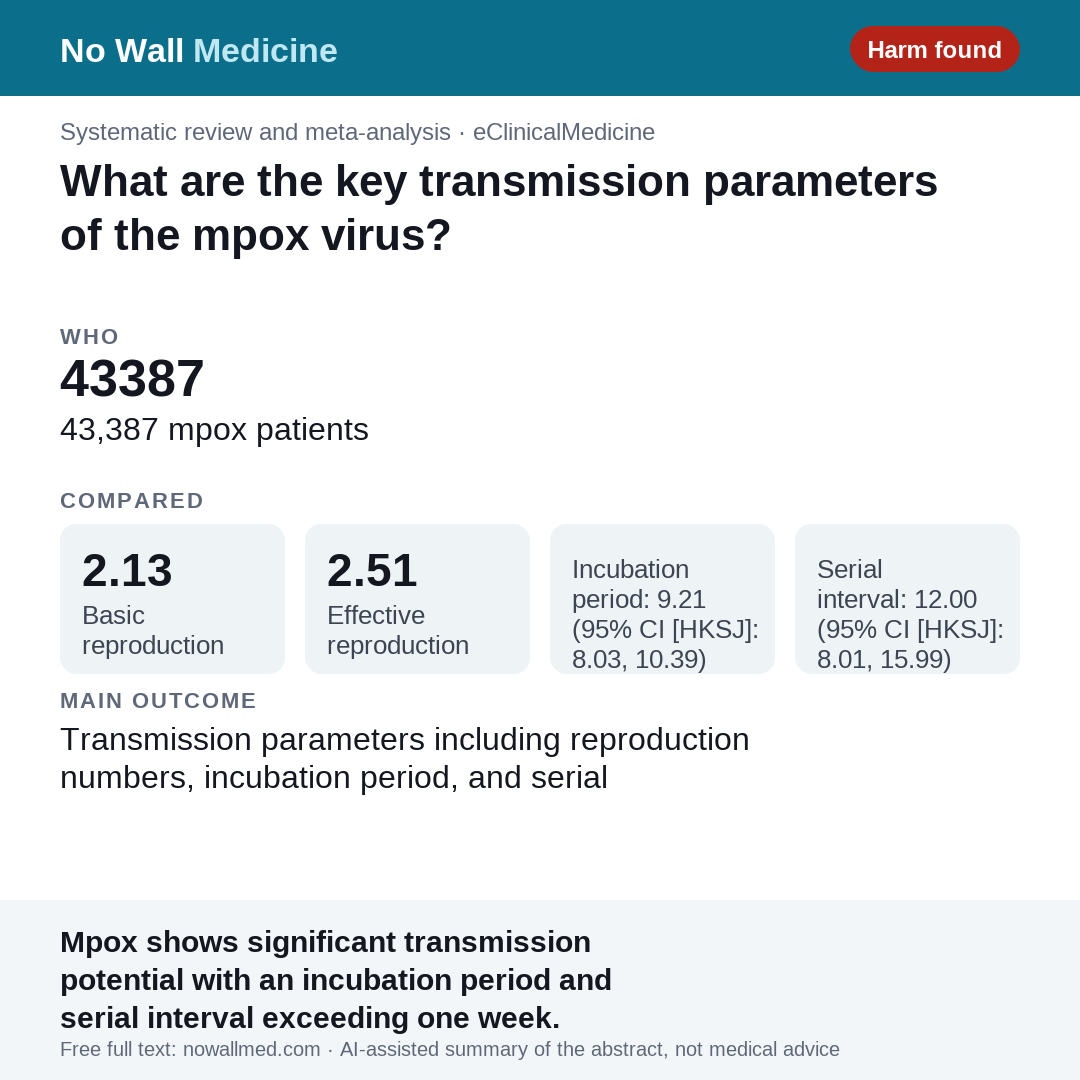
Global transmission characteristics of mpox outbreaks: a systematic review and meta-analysis
Systematic review and meta-analysisHarm found
What are the key transmission parameters of the mpox virus?
Who
43387
43,387 mpox patients
Compared
2.13Basic reproduction number (95% CI [HKSJ]: 1.63, 2.62)
2.51Effective reproduction number (95% CI [HKSJ]: 2.05, 2.97)
Incubation period: 9.21 (95% CI [HKSJ]: 8.03, 10.39) days
Serial interval: 12.00 (95% CI [HKSJ]: 8.01, 15.99) days
Main outcome
Transmission parameters including reproduction numbers, incubation period, and serial interval
Bottom line: Mpox shows significant transmission potential with an incubation period and serial interval exceeding one week.
eClinicalMedicine · 2025-09-26Download image
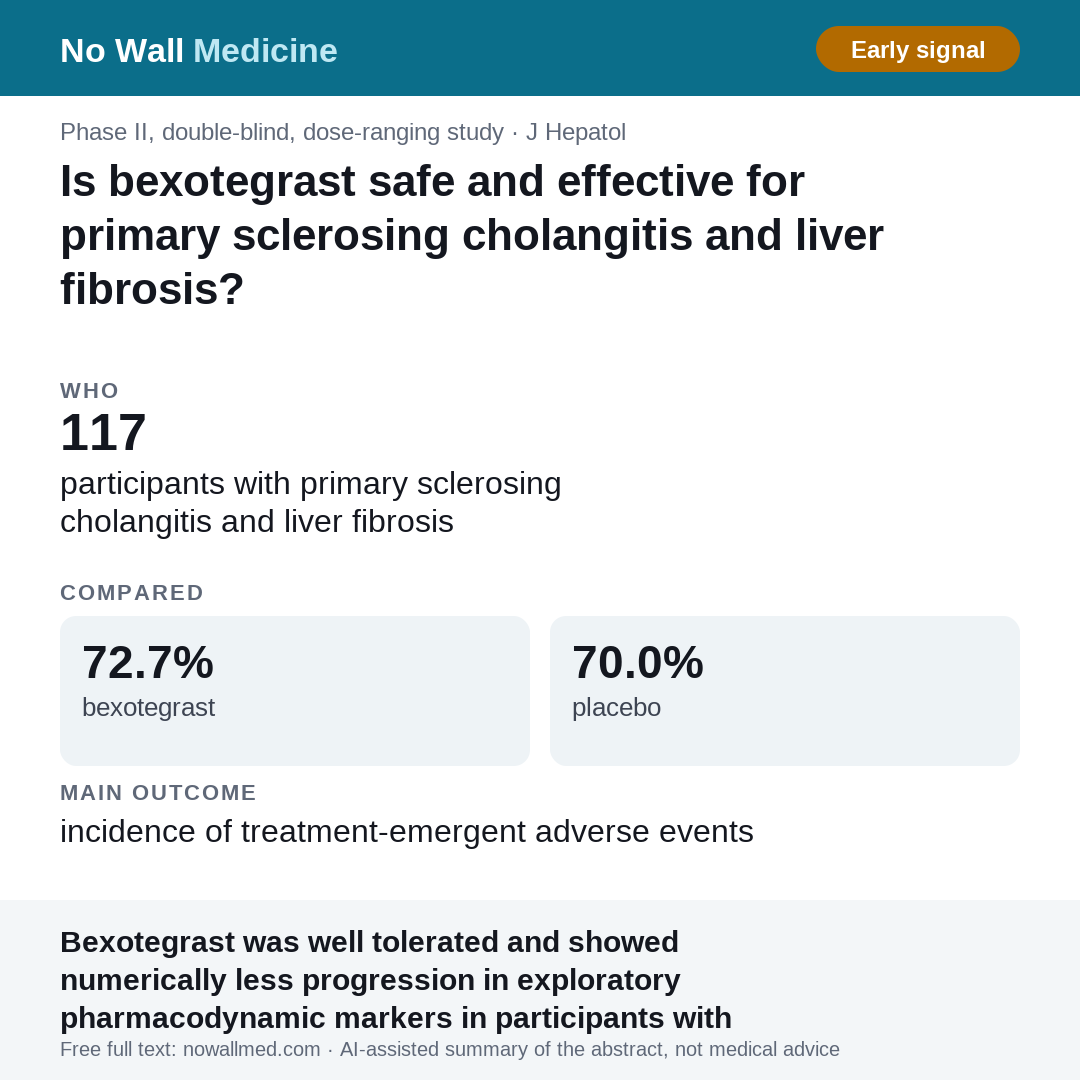
Phase II INTEGRIS-PSC trial of bexotegrast, an αvβ6/αvβ1 integrin inhibitor, in primary sclerosing cholangitis
Phase II, double-blind, dose-ranging studyBenefit found
Is bexotegrast safe and effective for primary sclerosing cholangitis and liver fibrosis?
Who
117
participants with primary sclerosing cholangitis and liver fibrosis
Compared
72.7%bexotegrast
70.0%placebo
Main outcome
incidence of treatment-emergent adverse events
Bottom line: Bexotegrast was well tolerated and showed numerically less progression in exploratory pharmacodynamic markers in participants with primary sclerosing cholangitis.
J Hepatol · 2025-09-26Download image
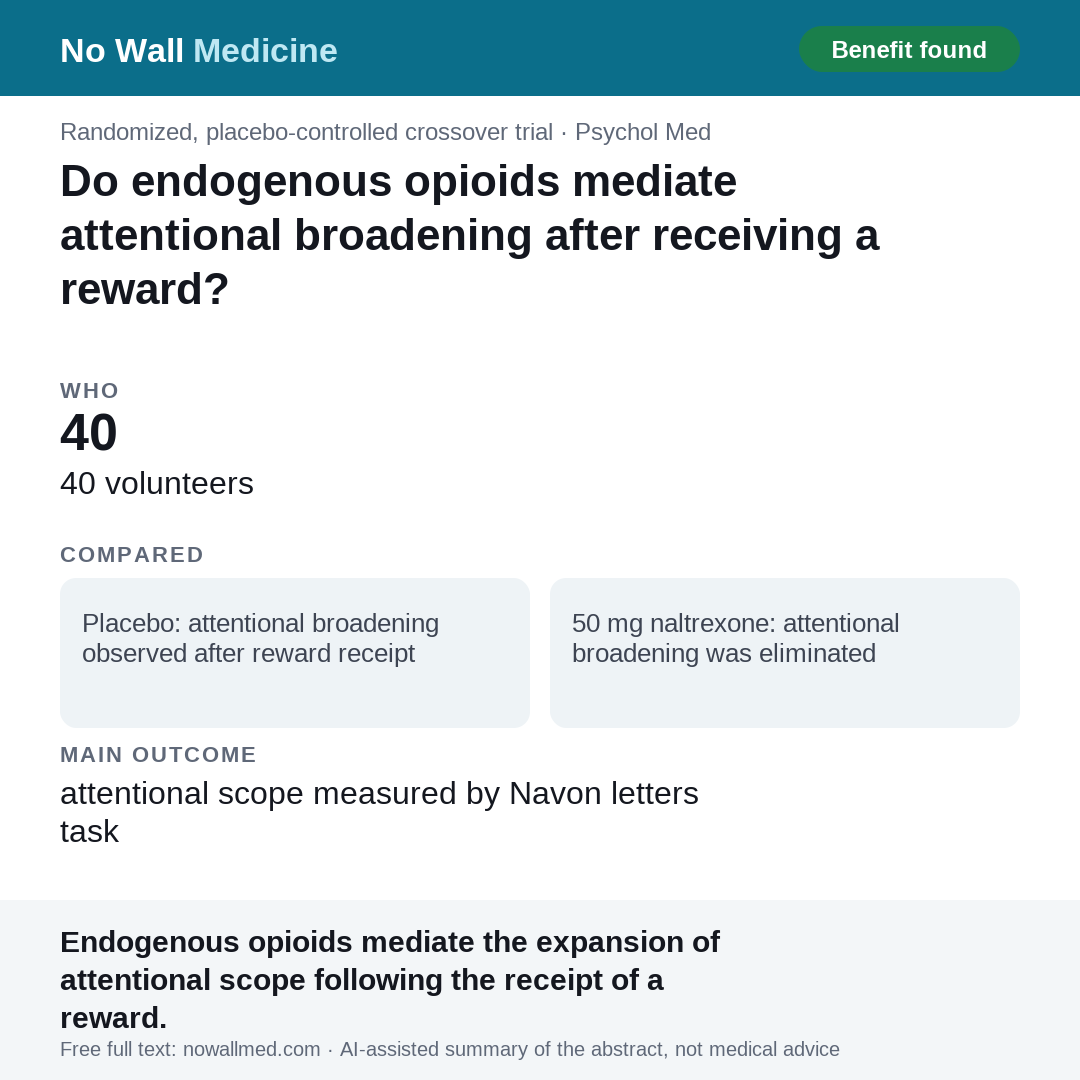
Seeing the bigger picture: endogenous opioids mediate attentional broadening after reward receipt
Randomized, placebo-controlled crossover trialBenefit found
Do endogenous opioids mediate attentional broadening after receiving a reward?
Who
40
40 volunteers
Compared
Placebo: attentional broadening observed after reward receipt
50 mg naltrexone: attentional broadening was eliminated
Main outcome
attentional scope measured by Navon letters task
Bottom line: Endogenous opioids mediate the expansion of attentional scope following the receipt of a reward.
Psychol Med · 2025-09-26Download image
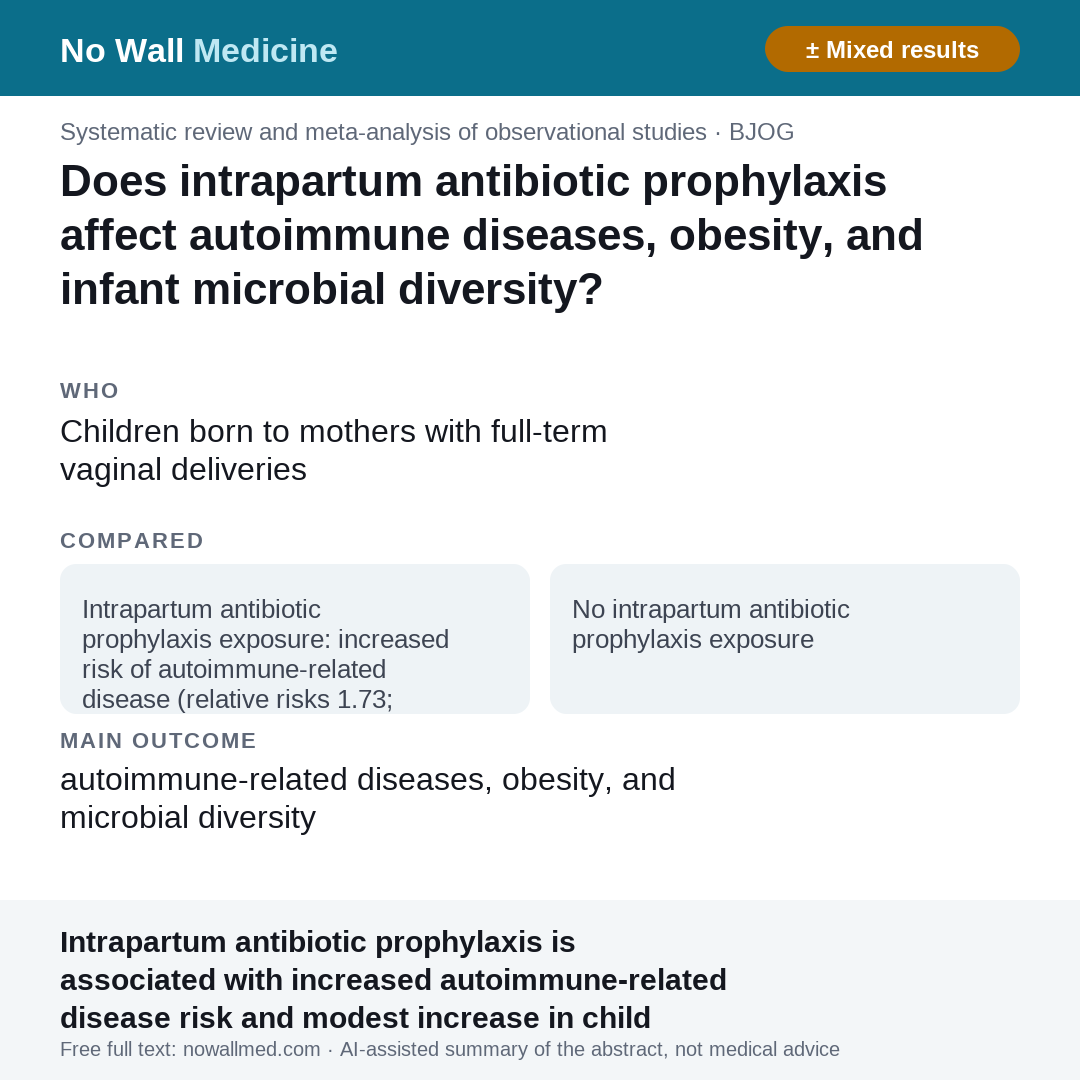
Intrapartum Antibiotic Prophylaxis and Child Health Outcomes: A Systematic Review and Meta-Analysis of Observational Studies
Systematic review and meta-analysis of observational studiesMixed results
Does intrapartum antibiotic prophylaxis affect autoimmune diseases, obesity, and infant microbial diversity?
Who
Children born to mothers with full-term vaginal deliveries
Compared
Intrapartum antibiotic prophylaxis exposure: increased risk of autoimmune-related disease (relative risks 1.73; 95% CI: 1.08-2.78)
No intrapartum antibiotic prophylaxis exposure
Main outcome
autoimmune-related diseases, obesity, and microbial diversity
Result: relative risks 1.73 (95% CI 1.08-2.78)
Bottom line: Intrapartum antibiotic prophylaxis is associated with increased autoimmune-related disease risk and modest increase in child BMI.
BJOG · 2025-09-26Download image
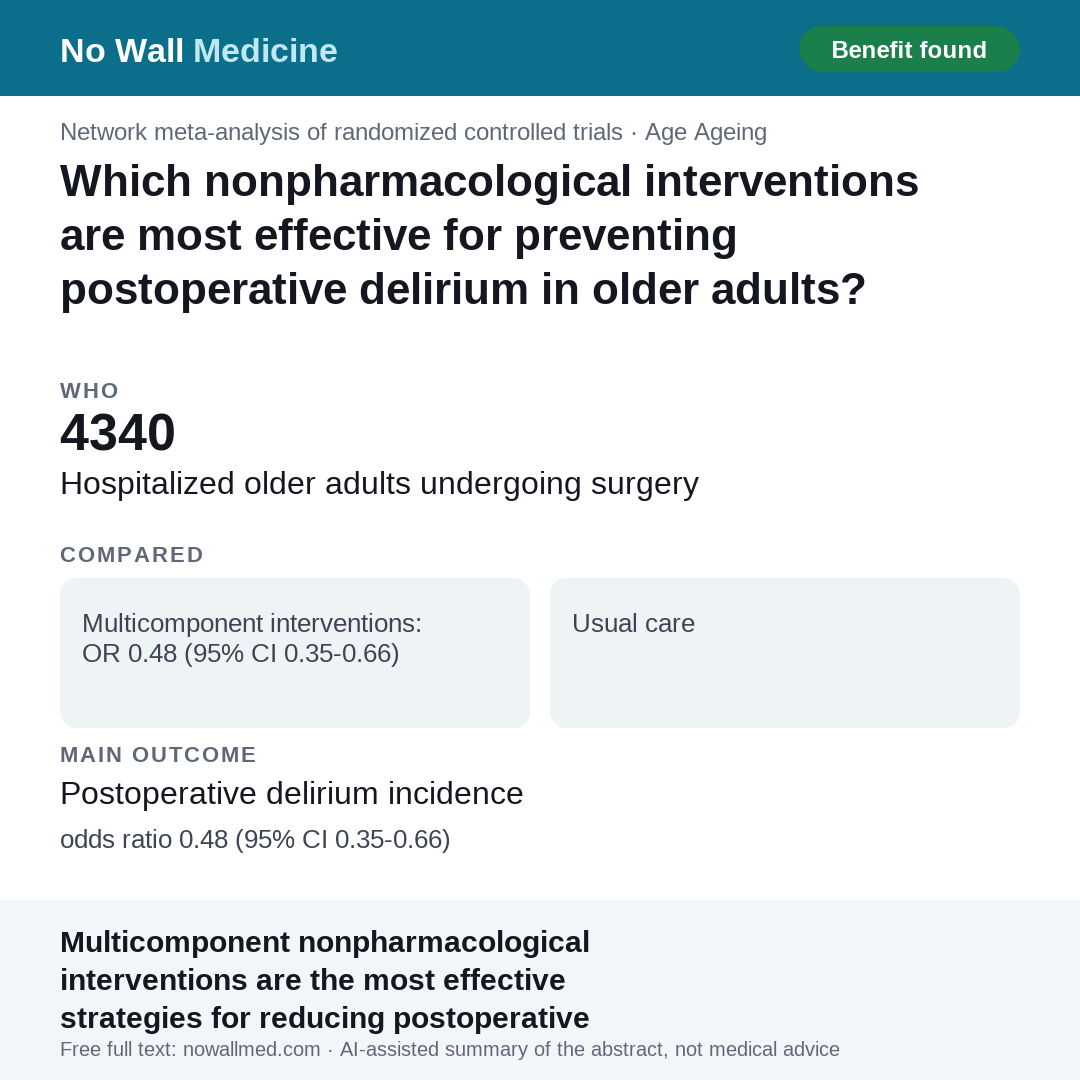
Comparative efficacy of nonpharmacological interventions for preventing postoperative delirium in hospitalized older adults: a systematic review and network meta-analysis
Network meta-analysis of randomized controlled trialsBenefit found
Which nonpharmacological interventions are most effective for preventing postoperative delirium in older adults?
Who
4340
Hospitalized older adults undergoing surgery
Compared
Multicomponent interventions: OR 0.48 (95% CI 0.35-0.66)
Usual care
Main outcome
Postoperative delirium incidence
Result: odds ratio 0.48 (95% CI 0.35-0.66)
Bottom line: Multicomponent nonpharmacological interventions are the most effective strategies for reducing postoperative delirium incidence in hospitalized older adults.
Age Ageing · 2025-09-26Download image
The Effect of Community-based Group Activities on Psychological Well-Being in People Living With Dementia: A Systematic Review
Systematic reviewBenefit found
Do community-based group activities improve psychological well-being in people living with dementia?
Who
18
People living with dementia in community settings · Community settings
Compared
Community-based group activities
Control
Main outcome
Psychological well-being
Bottom line: Community-based group activities show a positive trend in improving psychological well-being for people living with dementia.
Limitation: Limited research and need for more high-quality research to understand effectiveness.
J Am Med Dir Assoc · 2025-09-26Download image

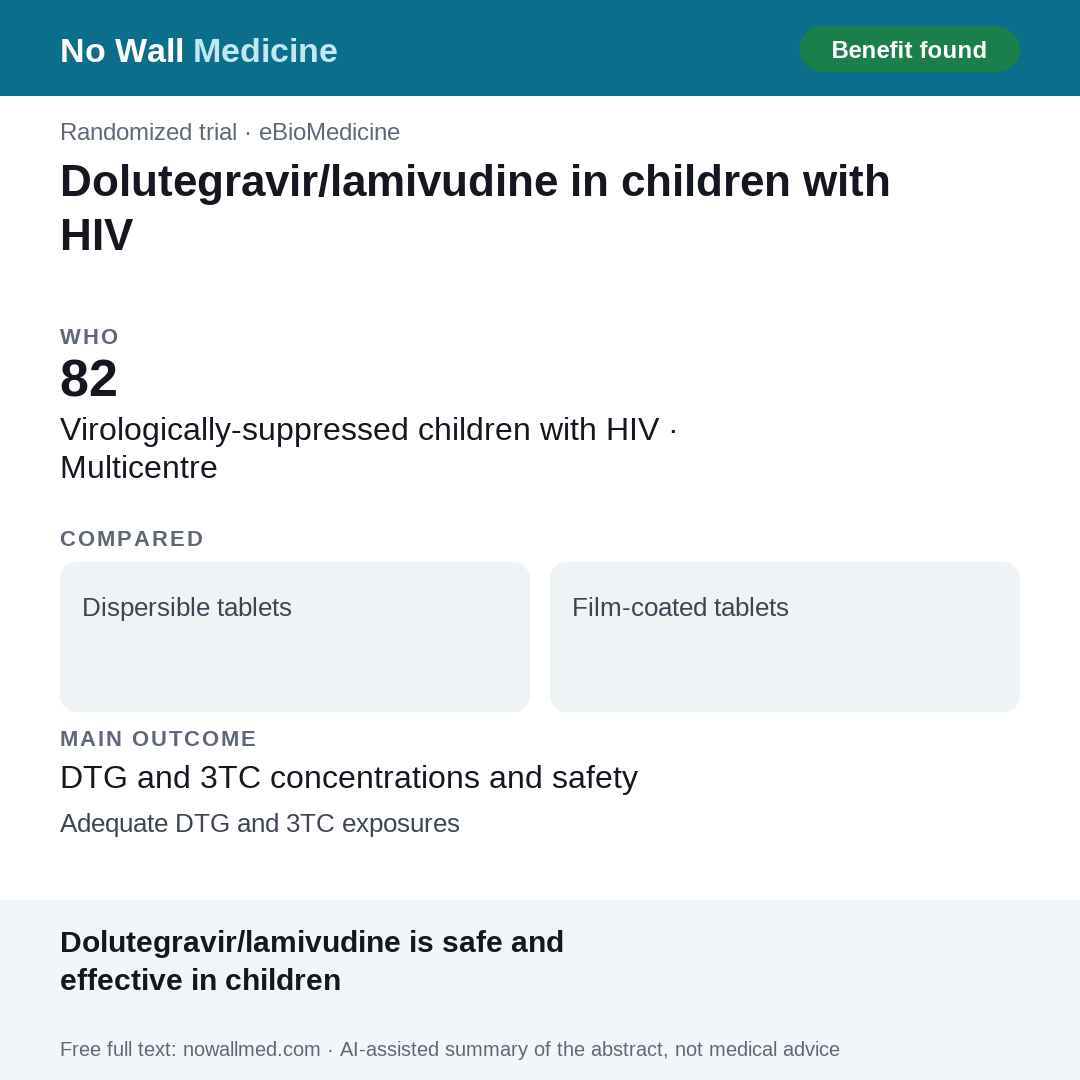
Once-daily dolutegravir/lamivudine fixed-dose formulations in children living with HIV: a pharmacokinetic and safety sub-study nested in the open-label, multicentre, randomised, non-inferiority D3/PENTA 21 trial
Randomized trialBenefit found
Dolutegravir/lamivudine in children with HIV
Who
82
Virologically-suppressed children with HIV · Multicentre
Compared
Dispersible tablets
Film-coated tablets
Main outcome
DTG and 3TC concentrations and safety
Result: Adequate DTG and 3TC exposures
Bottom line: Dolutegravir/lamivudine is safe and effective in children
Funded by: ViiV Healthcare
eBioMedicine · 2025-09-26Download image
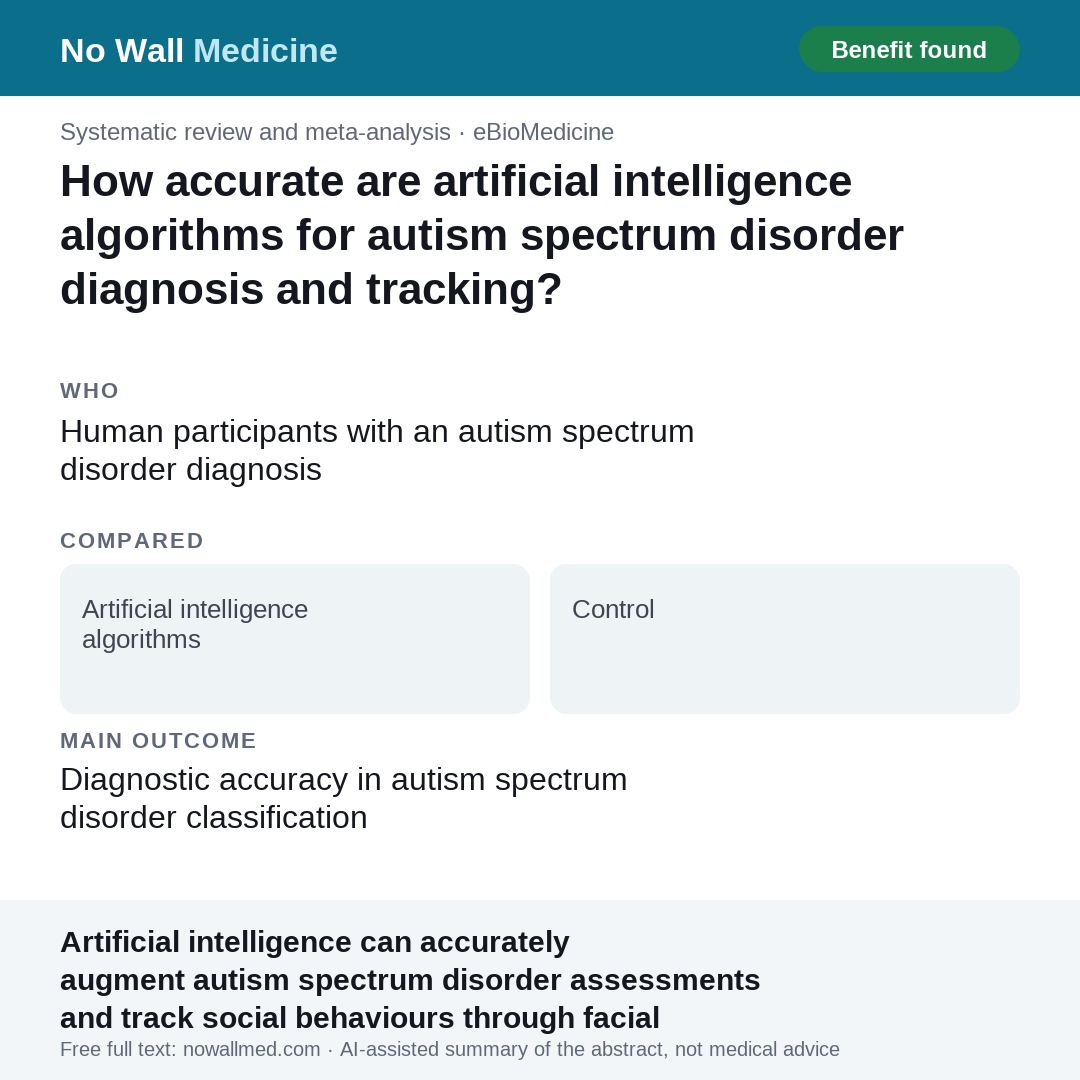
Artificial intelligence for tracking social behaviours and supporting an autism spectrum disorder diagnosis: systematic review and meta-analysis
Systematic review and meta-analysisBenefit found
How accurate are artificial intelligence algorithms for autism spectrum disorder diagnosis and tracking?
Who
Human participants with an autism spectrum disorder diagnosis
Compared
Artificial intelligence algorithms
Control
Main outcome
Diagnostic accuracy in autism spectrum disorder classification
Result: diagnostic odds ratio 15.917 (95% CI 4.775 to 53.059)
Bottom line: Artificial intelligence can accurately augment autism spectrum disorder assessments and track social behaviours through facial information.
Limitation: Further validation in diverse populations is needed to ensure clinical applicability and ethical use.
eBioMedicine · 2025-09-26Download image
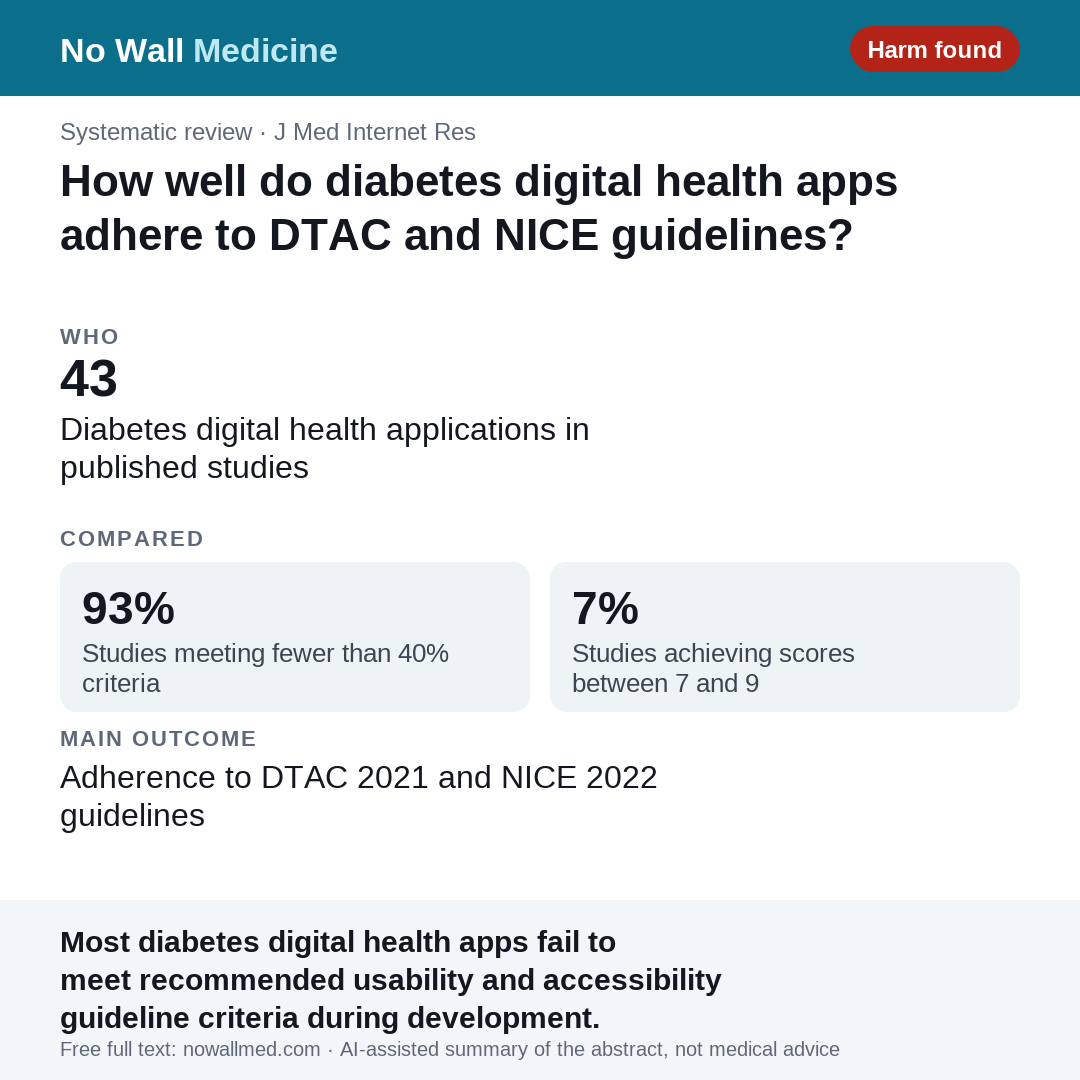
Adherence to Usability and Accessibility Principles in Digital Health Applications for Patients With Diabetes: Systematic Review
Systematic reviewHarm found
How well do diabetes digital health apps adhere to DTAC and NICE guidelines?
Who
43
Diabetes digital health applications in published studies
Compared
93%Studies meeting fewer than 40% criteria (n=40)
7%Studies achieving scores between 7 and 9 (3)
Main outcome
Adherence to DTAC 2021 and NICE 2022 guidelines
Bottom line: Most diabetes digital health apps fail to meet recommended usability and accessibility guideline criteria during development.
J Med Internet Res · 2025-09-26Download image
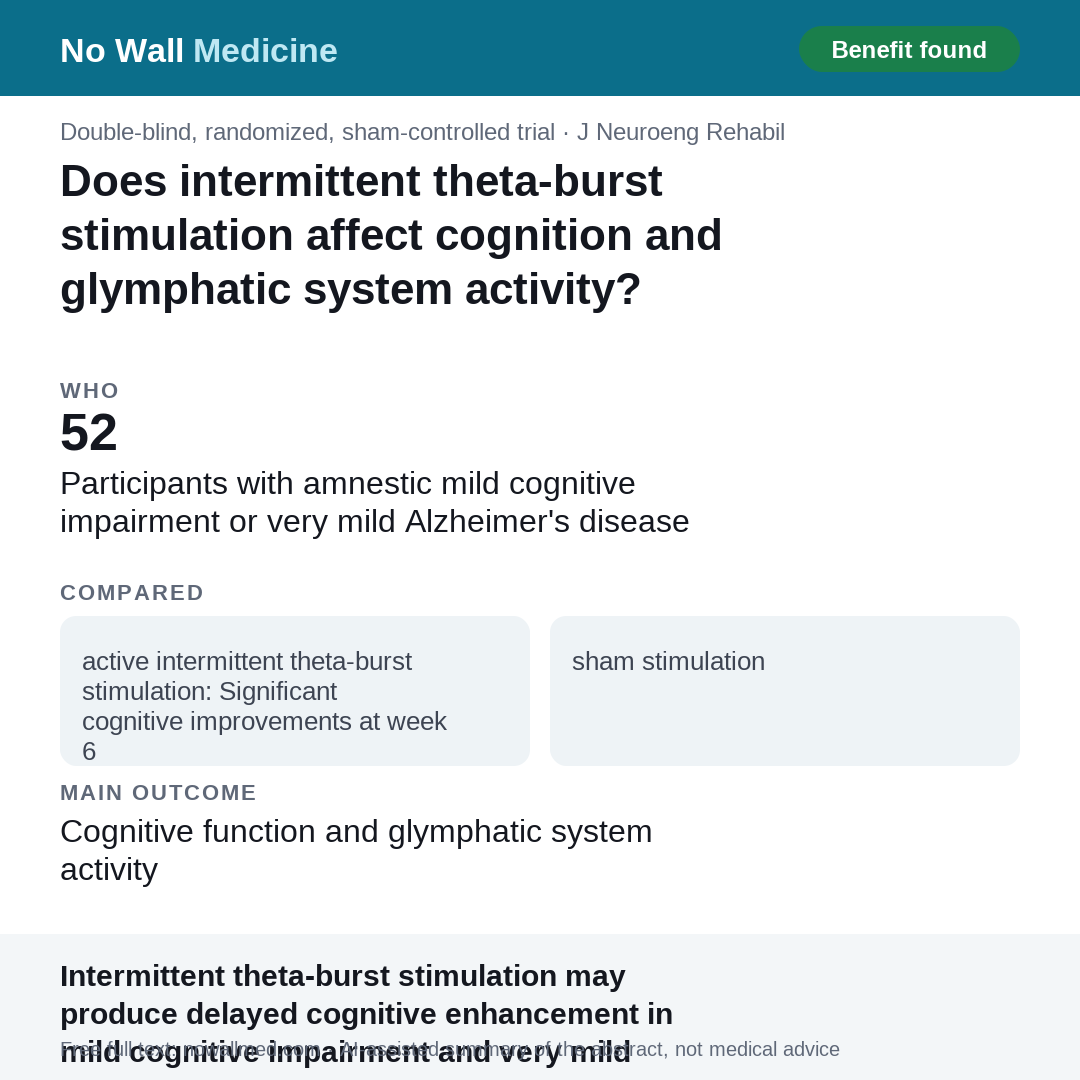
Effects of intermittent theta-burst stimulation on cognition and glymphatic system activity in mild cognitive impairment and very mild Alzheimer's disease: a randomized controlled trial
Double-blind, randomized, sham-controlled trialBenefit found
Does intermittent theta-burst stimulation affect cognition and glymphatic system activity?
Who
52
Participants with amnestic mild cognitive impairment or very mild Alzheimer's disease
Compared
active intermittent theta-burst stimulation: Significant cognitive improvements at week 6
sham stimulation
Main outcome
Cognitive function and glymphatic system activity
Bottom line: Intermittent theta-burst stimulation may produce delayed cognitive enhancement in mild cognitive impairment and very mild Alzheimer's disease.
J Neuroeng Rehabil · 2025-09-26Download image
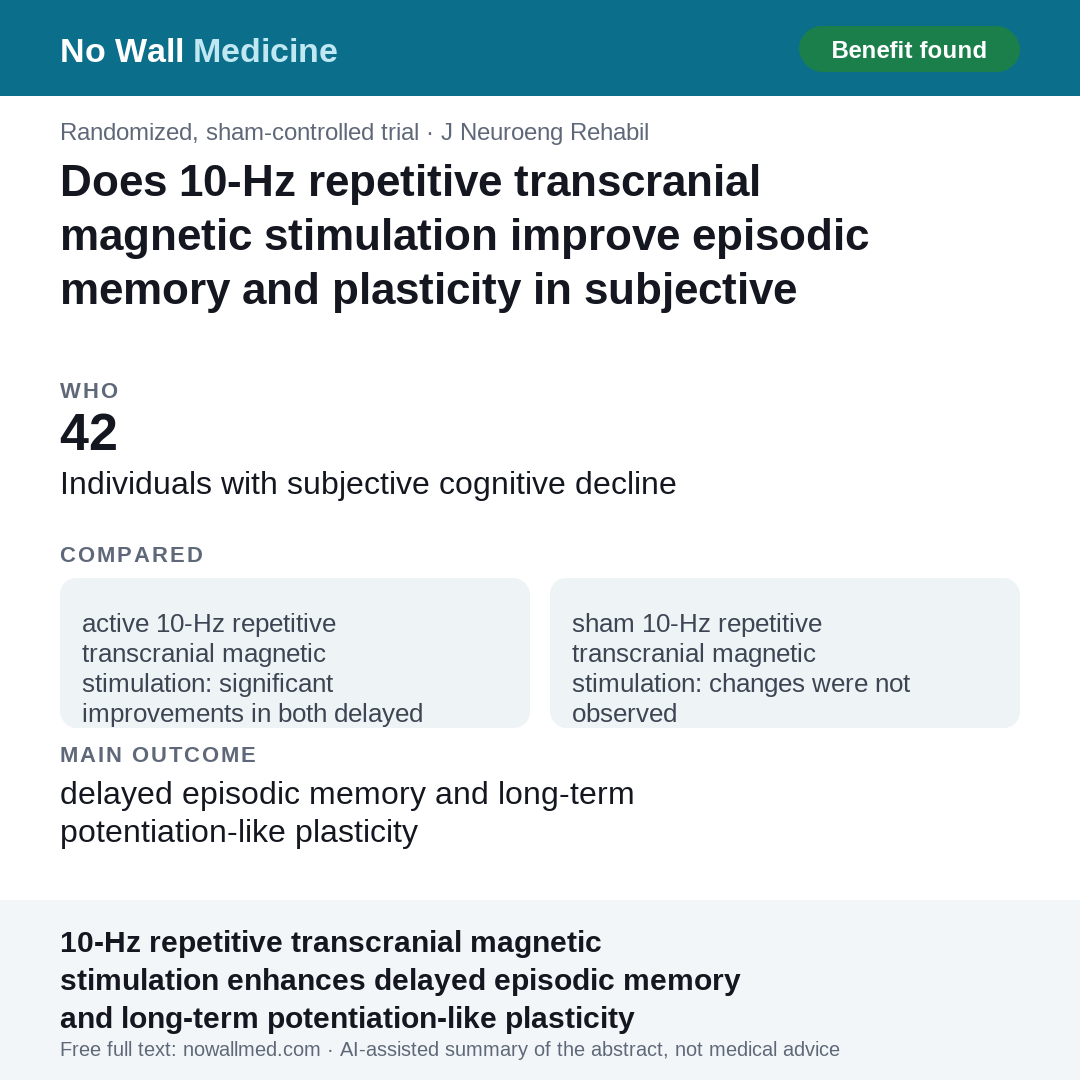
Enhanced episodic memory and LTP-like plasticity in subjective cognitive decline following 10-Hz repetitive transcranial magnetic stimulation
Randomized, sham-controlled trialBenefit found
Does 10-Hz repetitive transcranial magnetic stimulation improve episodic memory and plasticity in subjective cognitive decline?
Who
42
Individuals with subjective cognitive decline
Compared
active 10-Hz repetitive transcranial magnetic stimulation: significant improvements in both delayed episodic memory (AVLT-N5) and MEP amplitudes
sham 10-Hz repetitive transcranial magnetic stimulation: changes were not observed
Main outcome
delayed episodic memory and long-term potentiation-like plasticity
Bottom line: 10-Hz repetitive transcranial magnetic stimulation enhances delayed episodic memory and long-term potentiation-like plasticity in individuals with subjective cognitive decline.
J Neuroeng Rehabil · 2025-09-26Download image