Visual abstracts
New randomized trials and meta-analyses from leading journals at a glance: who was studied, what was compared, and what was found. Every paper is free to read in full.
All specialtiesCardiology 919Oncology 824Gastroenterology & Hepatology 340Infectious Disease 656Neurology 375Psychiatry & Mental Health 451Pulmonology 393Critical Care 272Endocrinology & Diabetes 501Pediatrics 575Surgery 370Orthopedics & Sports Medicine 168Neurosurgery 117Cardiothoracic & Vascular Surgery 88Plastic & Reconstructive Surgery 145Nephrology 205Rheumatology 111Hematology 196Dermatology 87Ophthalmology 107Obstetrics & Gynecology 279Public & Global Health 184Radiology & Imaging 111Anesthesiology 136Urology 172ENT (Otolaryngology) 117Emergency Medicine 104Allergy & Immunology 63Geriatrics 168Family Medicine & Primary Care 116Medical Genetics & Genomics 93Pathology & Laboratory Medicine 28Physical Medicine & Rehabilitation 149Palliative Care 82Nutrition 229Digital Health & AI 466General Medicine 105
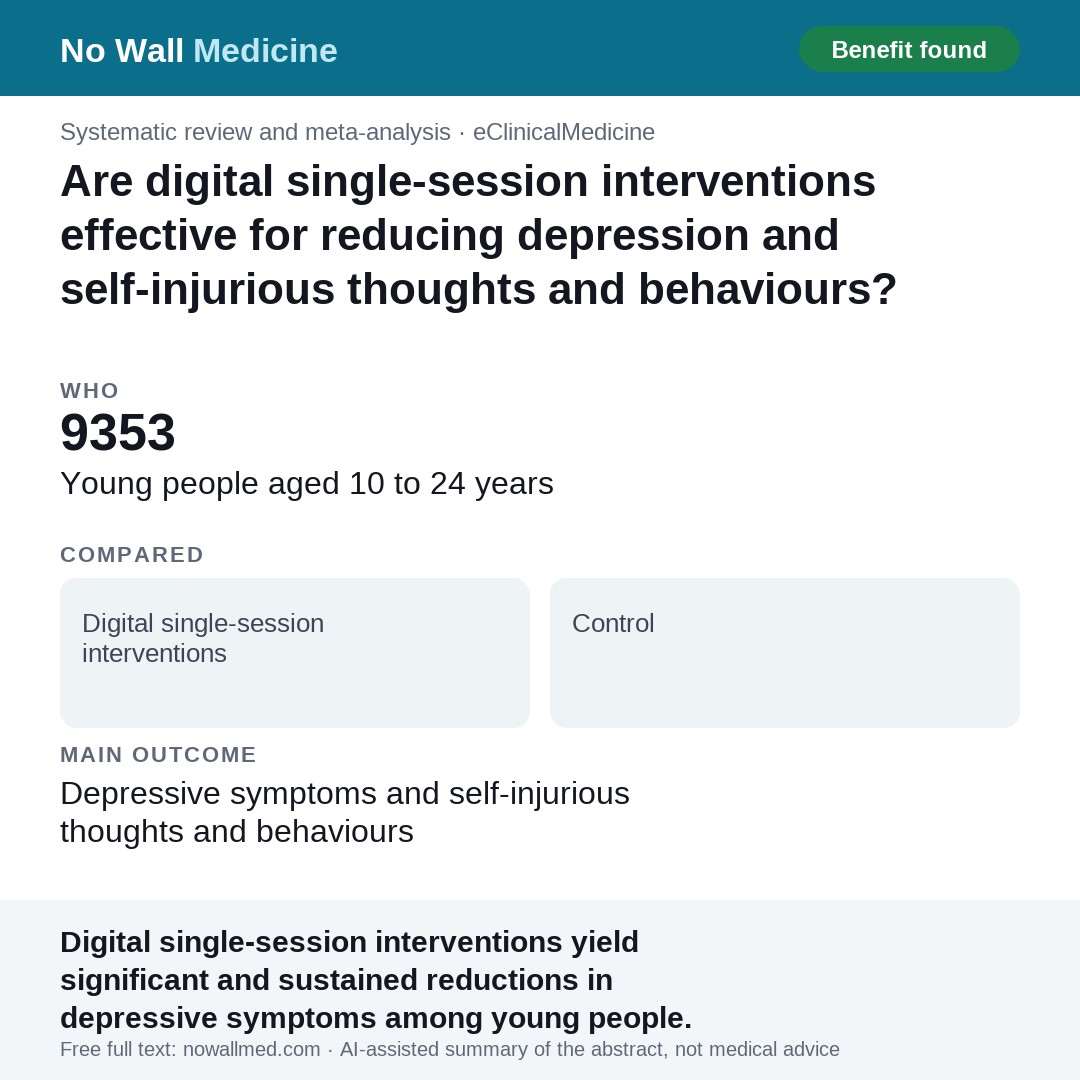
Digital single-session interventions for depression and self-injurious thoughts and behaviours in young people: a systematic review and meta-analysis
Systematic review and meta-analysisBenefit found
Are digital single-session interventions effective for reducing depression and self-injurious thoughts and behaviours?
Who
9353
Young people aged 10 to 24 years
Compared
Digital single-session interventions
Control
Main outcome
Depressive symptoms and self-injurious thoughts and behaviours
Result: Hedge's g = -0.18 (95% CI -0.24 to -0.11)
Bottom line: Digital single-session interventions yield significant and sustained reductions in depressive symptoms among young people.
Limitation: Limited studies reported on outcomes for depressive symptoms post-intervention and limited evidence for self-injurious thoughts and behaviours.
Funded by: Suicide Prevention Australia and NHMRC
eClinicalMedicine · 2025-10-30Download image
Early stoppage of empirical antibiotic therapy in paediatric acute leukaemia with high-risk febrile neutropenia: a randomized, open-label, phase 3, non-inferiority trial
Randomized, open-label, phase 3, non-inferiority trialBenefit found
Is early discontinuation of empirical antibiotic therapy non-inferior to continuation in paediatric high-risk febrile neutropenia?
Who
278
Children aged 2-18 years with acute leukaemia and high-risk febrile neutropenia
Compared
52.1%stop empirical antibiotic therapy (73/170)
47.1%continue empirical antibiotic therapy (65/138)
Main outcome
proportion of fever recurrence
Result: 5.0 percentage points (90% CI: -4.8 to 14.8 percentage points)
Bottom line: Early discontinuation of empirical antibiotic therapy was non-inferior to continuation until neutrophil recovery in paediatric acute leukaemia.
eClinicalMedicine · 2025-10-30Download image

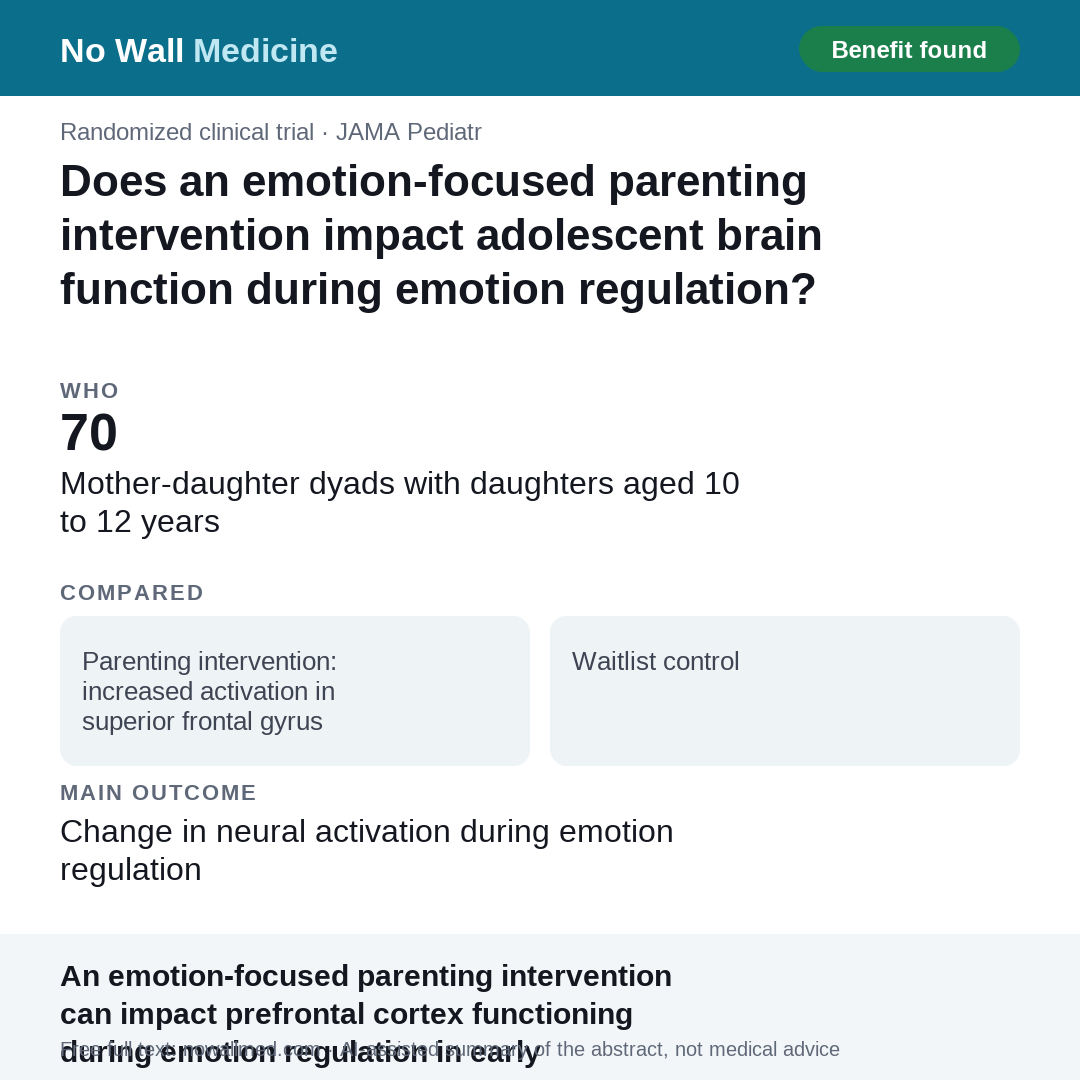
Brain Changes After a Parenting Intervention in Adolescent Girls With Internalizing Symptoms: A Randomized Clinical Trial
Randomized clinical trialBenefit found
Does an emotion-focused parenting intervention impact adolescent brain function during emotion regulation?
Who
70
Mother-daughter dyads with daughters aged 10 to 12 years
Compared
Parenting intervention: increased activation in superior frontal gyrus
Waitlist control
Main outcome
Change in neural activation during emotion regulation
Result: B = 1.75 (95% CI, 0.95-2.54)
Bottom line: An emotion-focused parenting intervention can impact prefrontal cortex functioning during emotion regulation in early adolescent girls.
JAMA Pediatr · 2025-10-27Download image
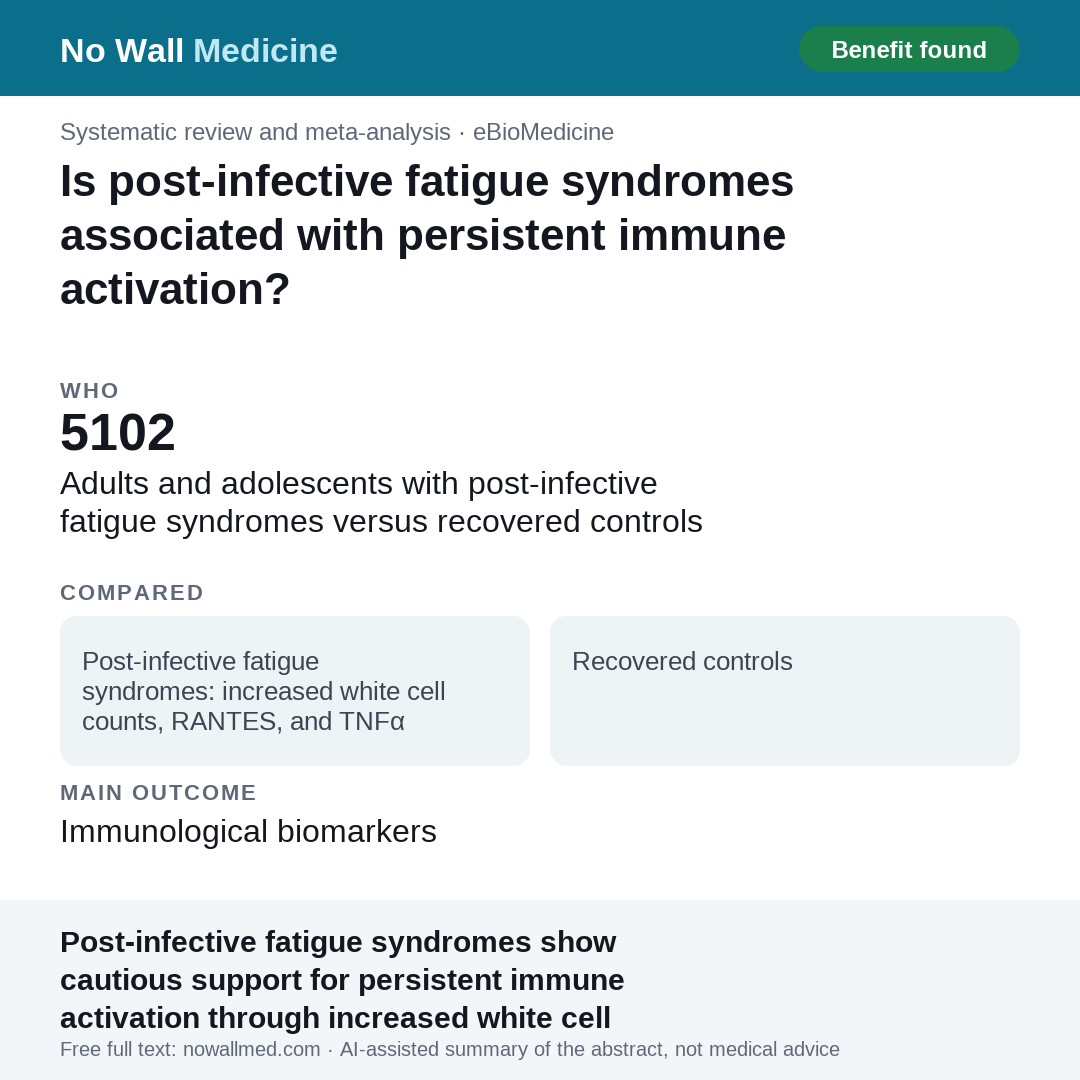
Immunological associations in post-infective fatigue syndromes including Long COVID-a systematic review and meta-analysis
Systematic review and meta-analysisBenefit found
Is post-infective fatigue syndromes associated with persistent immune activation?
Who
5102
Adults and adolescents with post-infective fatigue syndromes versus recovered controls
Compared
Post-infective fatigue syndromes: increased white cell counts, RANTES, and TNFα
Recovered controls
Main outcome
Immunological biomarkers
Result: white cell counts Cohen's d: 0.41 (95% CI 0.09-0.74); RANTES Cohen's d: 0.45 (95% CI 0.16-0.73); TNFα Cohen's d: 0.30 (95% CI 0.04-0.57)
Bottom line: Post-infective fatigue syndromes show cautious support for persistent immune activation through increased white cell counts and specific cytokines.
eBioMedicine · 2025-10-27Download image
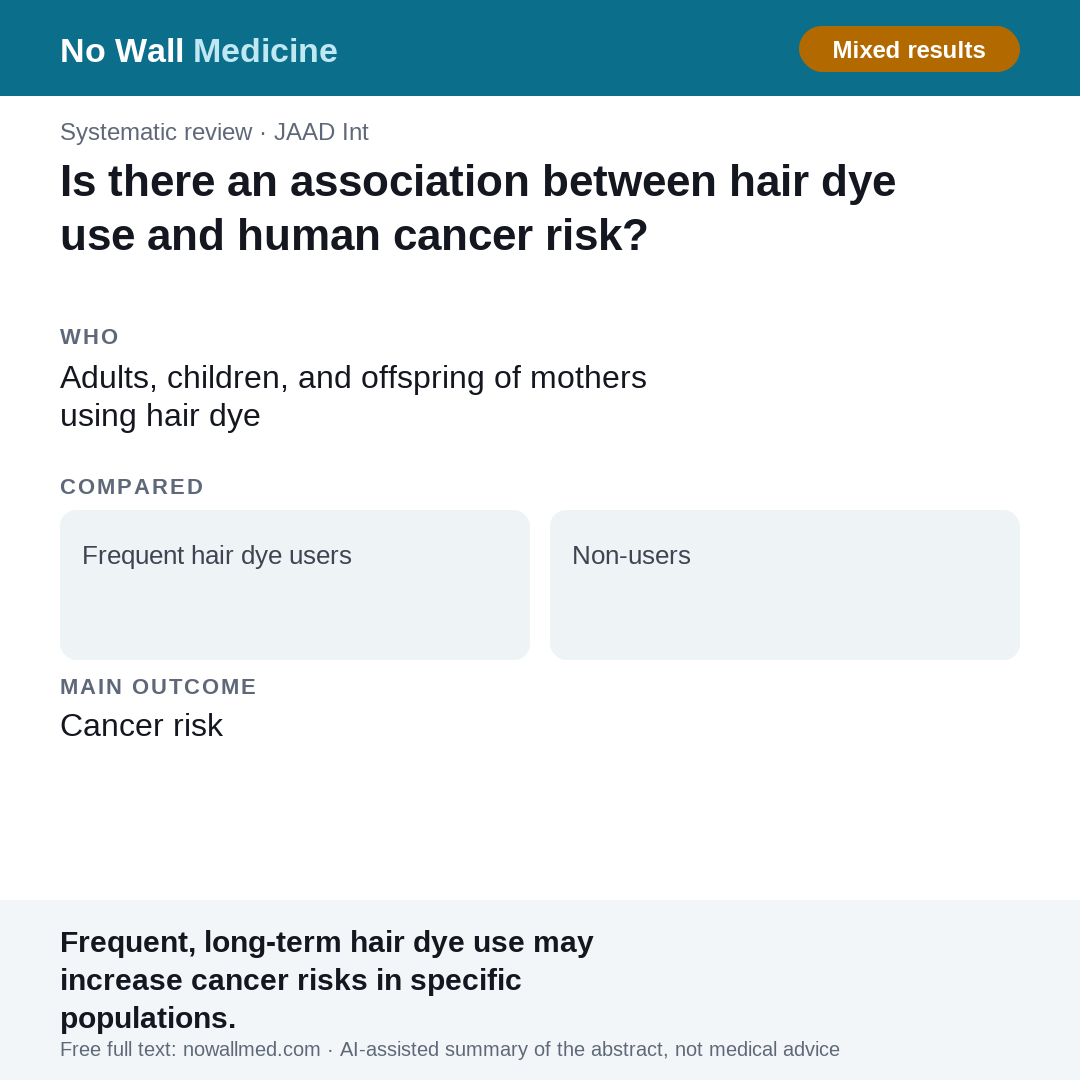
Association between hair dye use and human cancers: A systematic review
Systematic reviewMixed results
Is there an association between hair dye use and human cancer risk?
Who
Adults, children, and offspring of mothers using hair dye
Compared
Frequent hair dye users
Non-users
Main outcome
Cancer risk
Bottom line: Frequent, long-term hair dye use may increase cancer risks in specific populations.
Limitation: Elements of study design, study populations, and confounders.
JAAD Int · 2025-10-25Download image
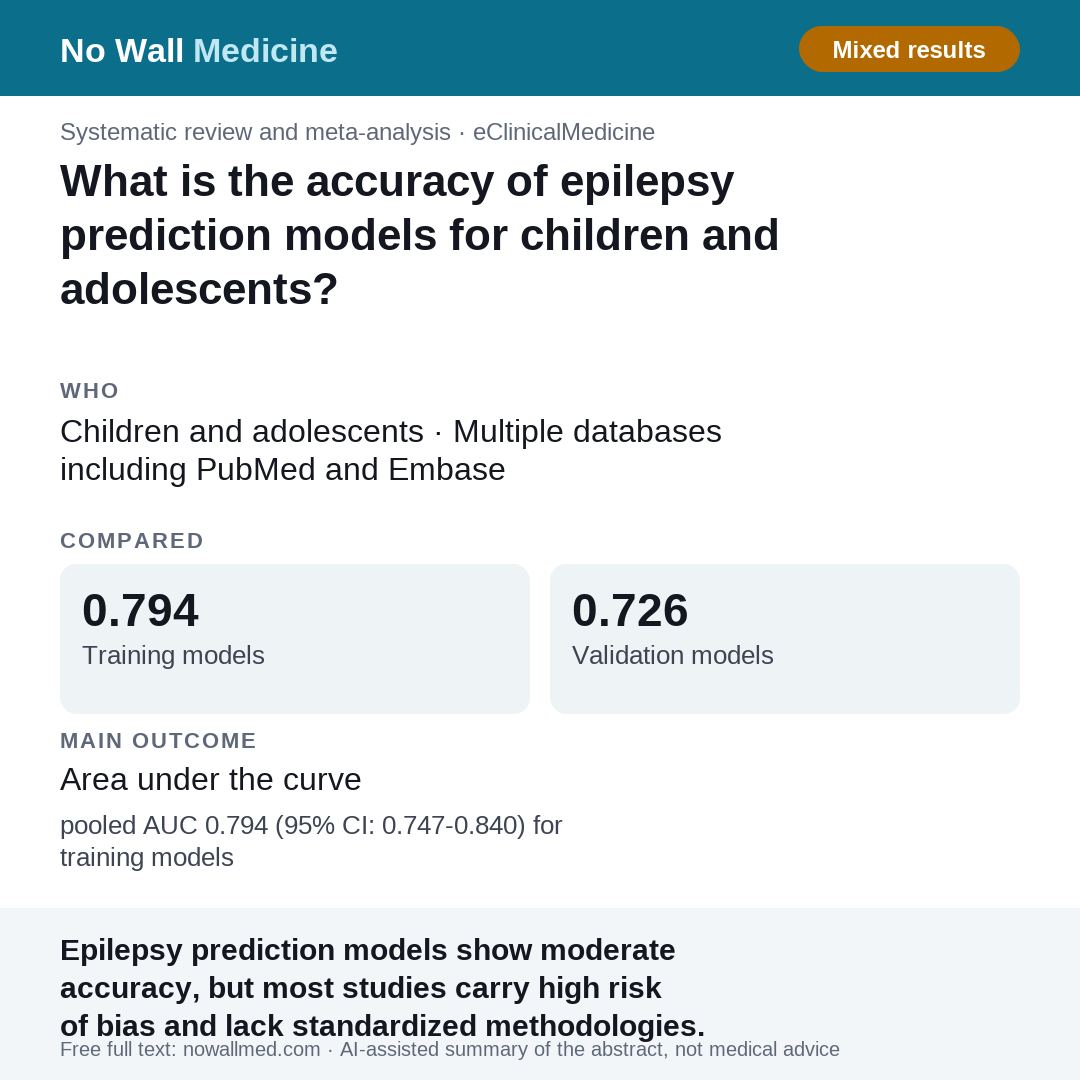
Epilepsy prediction models for children and adolescents: a systematic review and meta-analysis
Systematic review and meta-analysisMixed results
What is the accuracy of epilepsy prediction models for children and adolescents?
Who
Children and adolescents · Multiple databases including PubMed and Embase
Compared
0.794Training models (95% CI: 0.747-0.840)
0.726Validation models (95% CI: 0.659-0.792)
Main outcome
Area under the curve
Result: pooled AUC 0.794 (95% CI: 0.747-0.840) for training models
Bottom line: Epilepsy prediction models show moderate accuracy, but most studies carry high risk of bias and lack standardized methodologies.
Limitation: Most studies carry a high risk of bias and rarely undergo validation.
Funded by: Natural Science Foundation of Hunan Province
eClinicalMedicine · 2025-10-24Download image
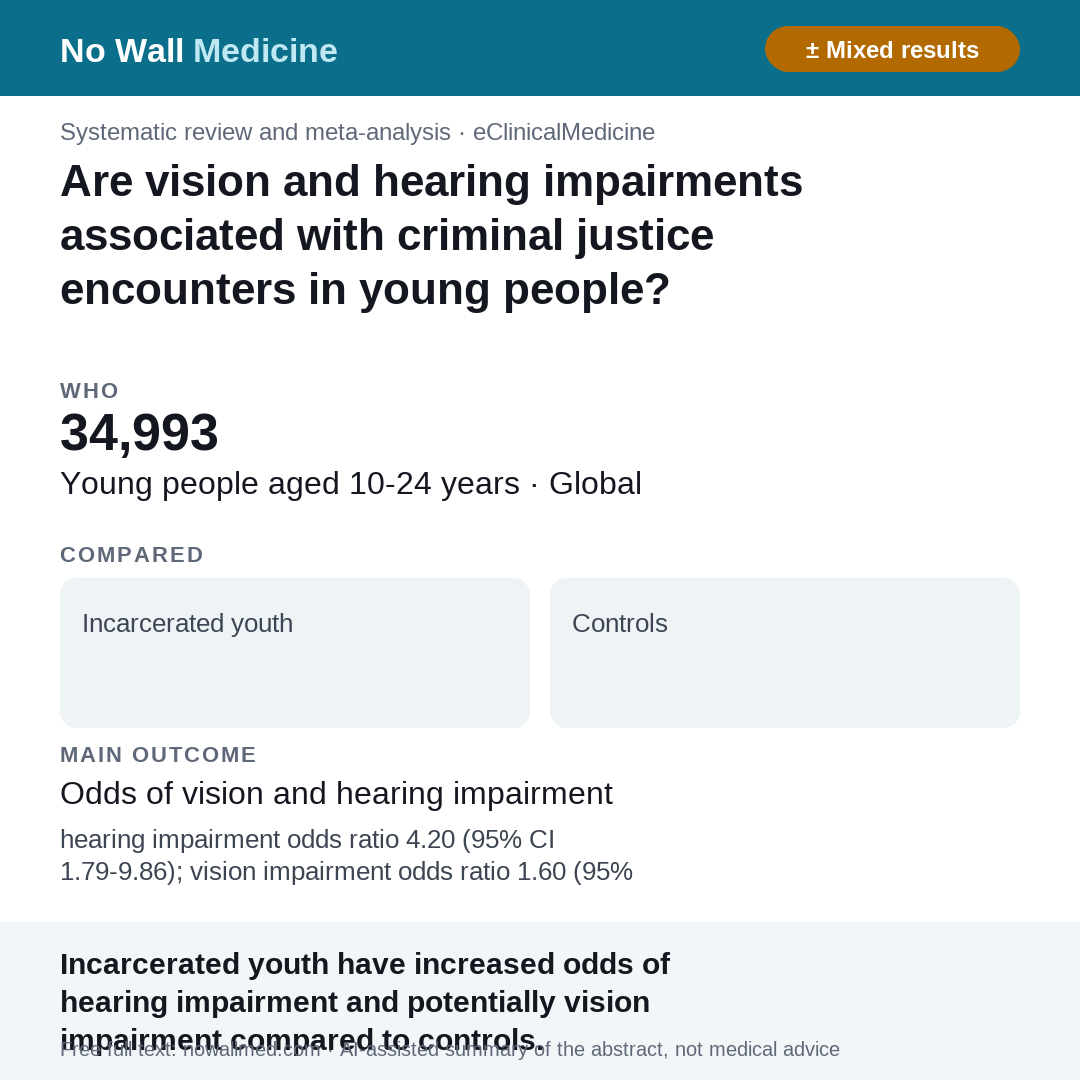
Association of vision impairment and hearing impairment with encounters in the criminal justice system among children and young people: a systematic review and meta-analysis
Systematic review and meta-analysisMixed results
Are vision and hearing impairments associated with criminal justice encounters in young people?
Who
34,993
Young people aged 10-24 years · Global
Compared
Incarcerated youth
Controls
Main outcome
Odds of vision and hearing impairment
Result: hearing impairment odds ratio 4.20 (95% CI 1.79-9.86); vision impairment odds ratio 1.60 (95% CI 0.95-2·70)
Bottom line: Incarcerated youth have increased odds of hearing impairment and potentially vision impairment compared to controls.
Limitation: High heterogeneity in reported prevalence rates
Funded by: Wellcome Trust United Kingdom, NIH, and Duke Hubert Yeargan Center
eClinicalMedicine · 2025-10-23Download image
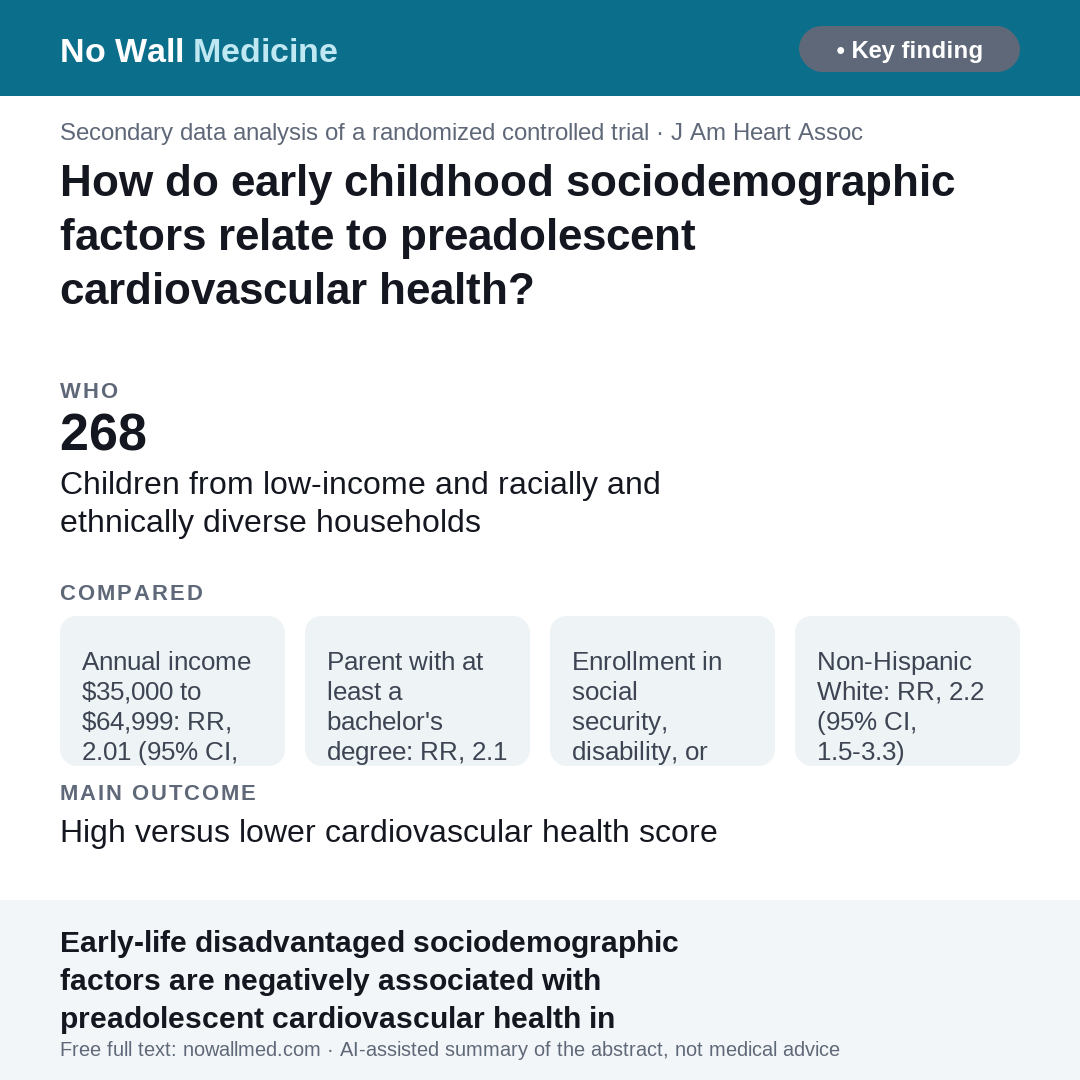
Early-Life Sociodemographic Factors and Cardiovascular Health in Preadolescence Among Low-Income and Racially and Ethnically Diverse Children
Secondary data analysis of a randomized controlled trialHarm found
How do early childhood sociodemographic factors relate to preadolescent cardiovascular health?
Who
268
Children from low-income and racially and ethnically diverse households
Compared
Annual income $35,000 to $64,999: RR, 2.01 (95% CI, 1.3-3.0)
Parent with at least a bachelor's degree: RR, 2.1 (95% CI, 1.3-3.3)
Enrollment in social security, disability, or unemployment: RR, 1.6 (95% CI, 1.0-2.4)
Non-Hispanic White: RR, 2.2 (95% CI, 1.5-3.3)
Main outcome
High versus lower cardiovascular health score
Bottom line: Early-life disadvantaged sociodemographic factors are negatively associated with preadolescent cardiovascular health in diverse, low-income children.
J Am Heart Assoc · 2025-10-23Download image
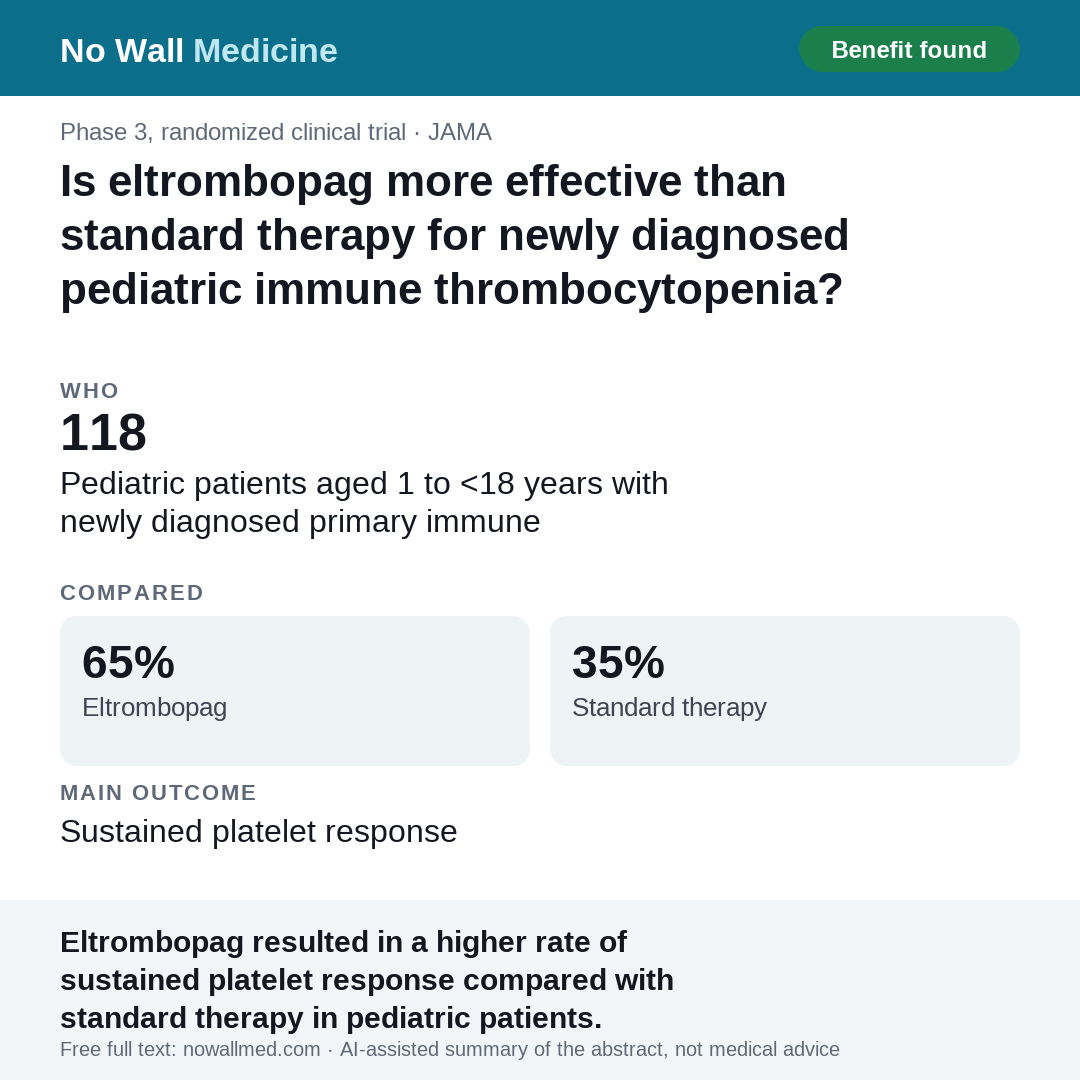
Eltrombopag for Newly Diagnosed Pediatric Immune Thrombocytopenia Requiring Treatment: The PINES Randomized Clinical Trial
Phase 3, randomized clinical trialBenefit found
Is eltrombopag more effective than standard therapy for newly diagnosed pediatric immune thrombocytopenia?
Who
118
Pediatric patients aged 1 to <18 years with newly diagnosed primary immune thrombocytopenia · 23 centers in the Pediatric ITP Consortium of North America
Compared
65%Eltrombopag (46/71)
35%Standard therapy (13/37)
Main outcome
Sustained platelet response
Result: between-group difference, 30% (95% CI 11%-49%)
Bottom line: Eltrombopag resulted in a higher rate of sustained platelet response compared with standard therapy in pediatric patients.
JAMA · 2025-10-22Download image
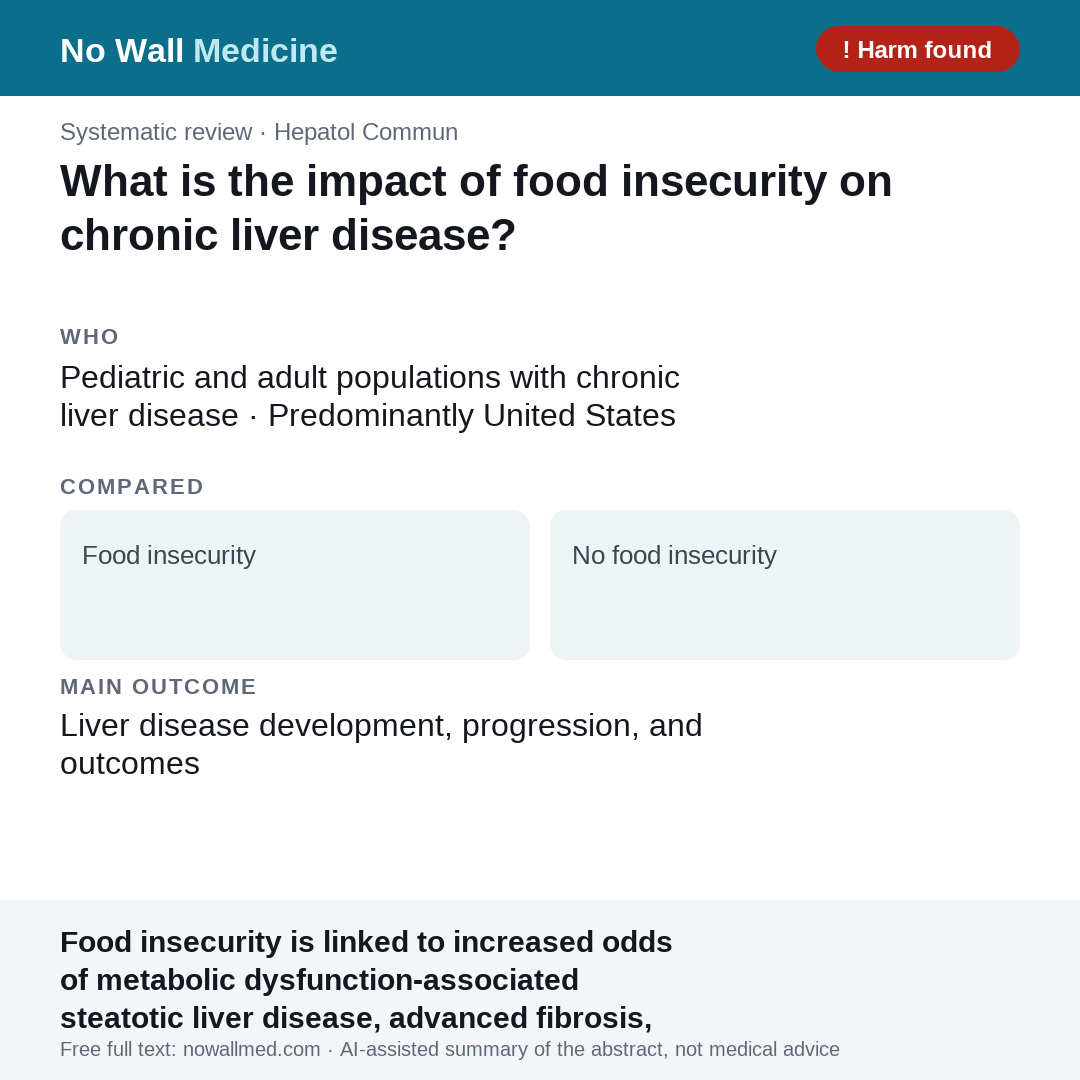
The impact of food insecurity on chronic liver disease: A systematic review of the literature
Systematic reviewHarm found
What is the impact of food insecurity on chronic liver disease?
Who
Pediatric and adult populations with chronic liver disease · Predominantly United States
Compared
Food insecurity
No food insecurity
Main outcome
Liver disease development, progression, and outcomes
Bottom line: Food insecurity is linked to increased odds of metabolic dysfunction-associated steatotic liver disease, advanced fibrosis, and mortality.
Hepatol Commun · 2025-10-21Download image
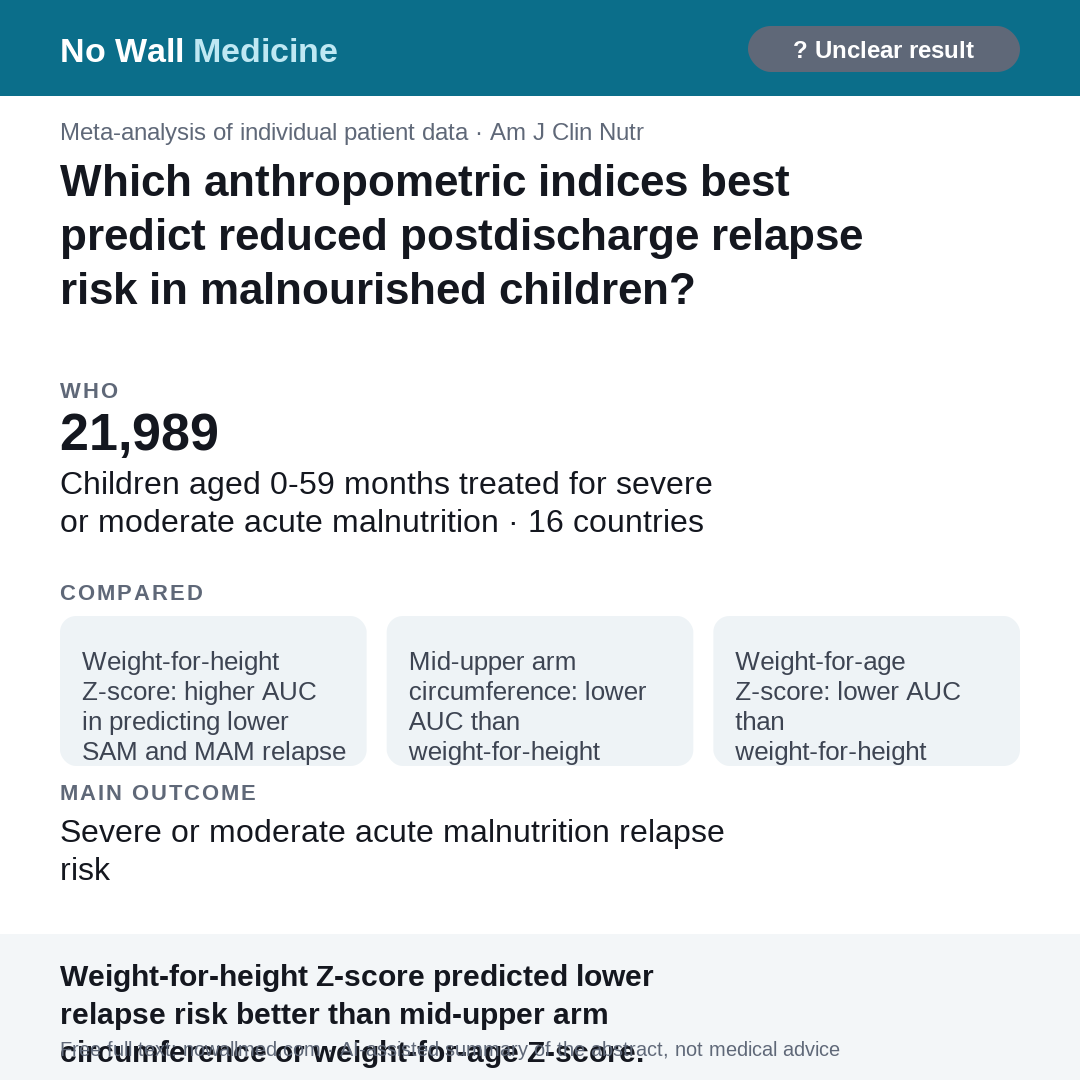
Optimal anthropometric discharge criteria from treatment of wasting: meta-analysis of individual patient data from 34 studies
Meta-analysis of individual patient dataUnclear result
Which anthropometric indices best predict reduced postdischarge relapse risk in malnourished children?
Who
21,989
Children aged 0-59 months treated for severe or moderate acute malnutrition · 16 countries
Compared
Weight-for-height Z-score: higher AUC in predicting lower SAM and MAM relapse risk
Mid-upper arm circumference: lower AUC than weight-for-height Z-score
Weight-for-age Z-score: lower AUC than weight-for-height Z-score
Main outcome
Severe or moderate acute malnutrition relapse risk
Bottom line: Weight-for-height Z-score predicted lower relapse risk better than mid-upper arm circumference or weight-for-age Z-score.
Am J Clin Nutr · 2025-10-20Download image
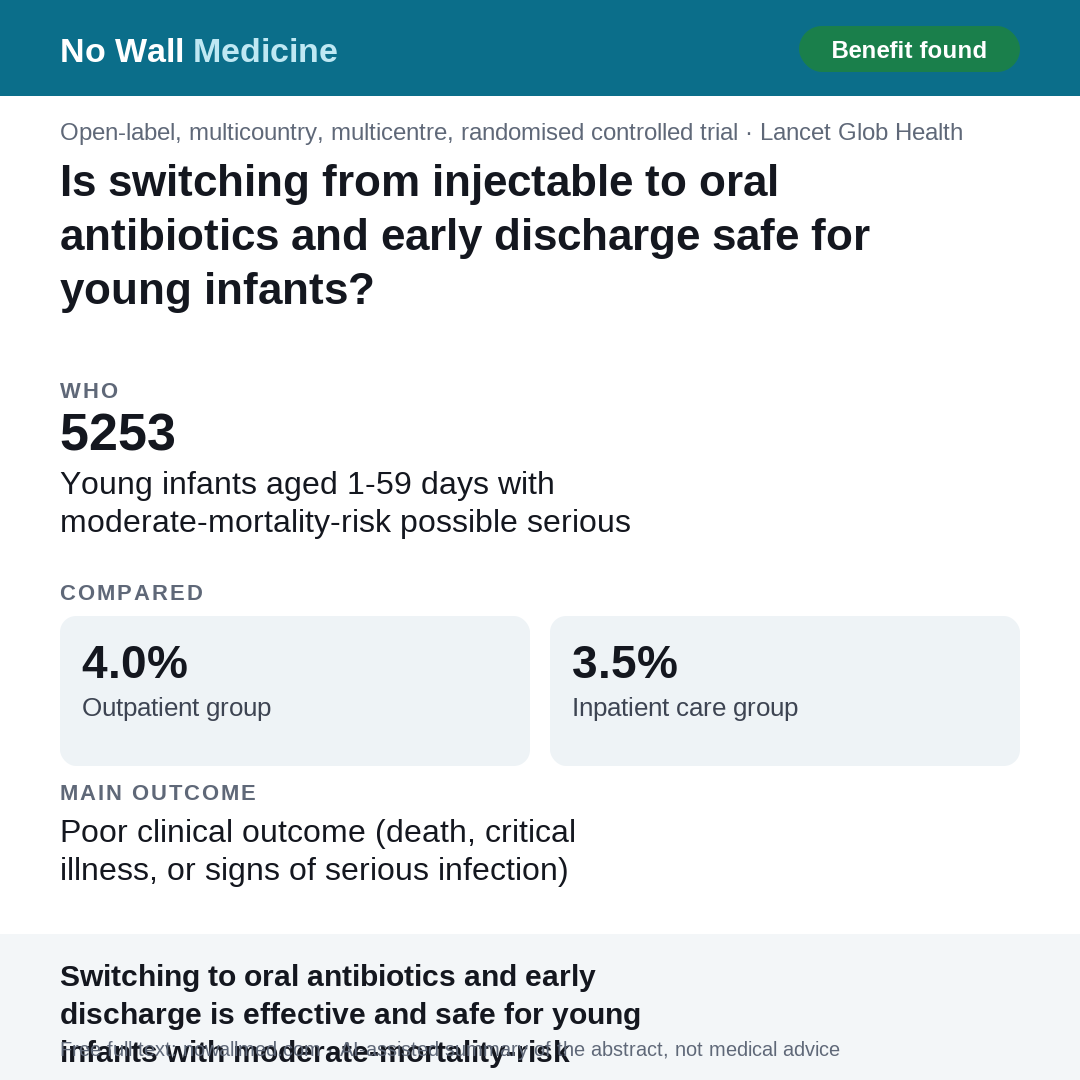
Switching antibiotic therapy from injectable to oral to optimise the duration of inpatient care for young infants presenting with moderate-mortality-risk signs of possible serious bacterial infection: an open-label, multicountry, randomised controlled trial
Open-label, multicountry, multicentre, randomised controlled trialBenefit found
Is switching from injectable to oral antibiotics and early discharge safe for young infants?
Who
5253
Young infants aged 1-59 days with moderate-mortality-risk possible serious bacterial infection signs · Bangladesh, Ethiopia, India, Nigeria, Pakistan, and Tanzania
Compared
4.0%Outpatient group (105 of 2616)
3.5%Inpatient care group (90 of 2603)
Main outcome
Poor clinical outcome (death, critical illness, or signs of serious infection)
Result: risk difference 0.0056 (95% CI -0.0047 to 0.0158)
Bottom line: Switching to oral antibiotics and early discharge is effective and safe for young infants with moderate-mortality-risk possible serious bacterial infection.
Funded by: Gates Foundation
Lancet Glob Health · 2025-10-19Download image
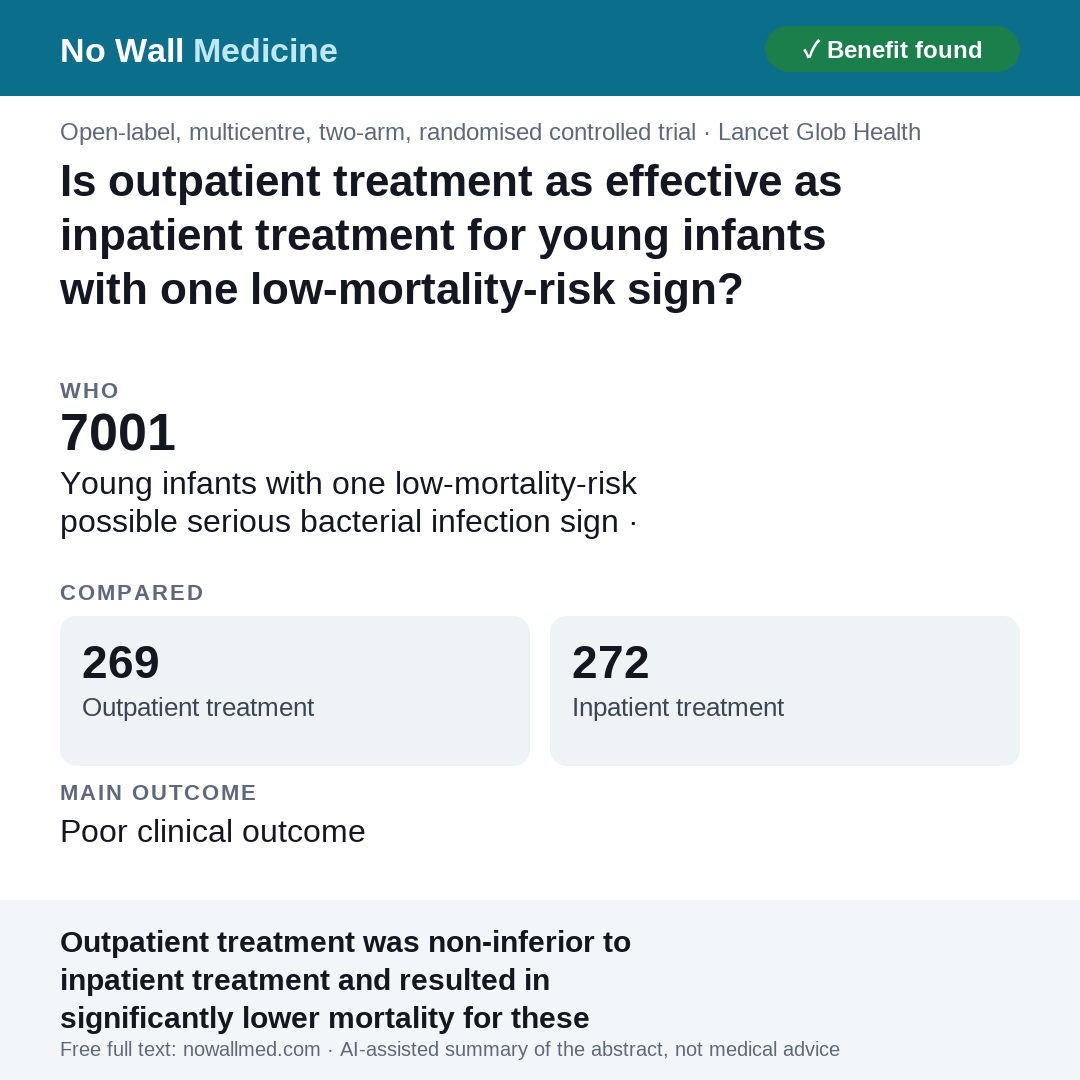
Inpatient versus outpatient management of young infants with a single low-mortality-risk sign of possible serious bacterial infection in sub-Saharan Africa and south Asia: an open-label, multicentre, two-arm, randomised controlled trial
Open-label, multicentre, two-arm, randomised controlled trialBenefit found
Is outpatient treatment as effective as inpatient treatment for young infants with one low-mortality-risk sign?
Who
7001
Young infants with one low-mortality-risk possible serious bacterial infection sign · Seven sites in Bangladesh, Ethiopia, India, Nigeria, Pakistan, and Tanzania
Compared
269Outpatient treatment (7·7%)
272Inpatient treatment (7·8%)
Main outcome
Poor clinical outcome
Result: risk difference -0·0009 (95% CI -0·0134 to 0·0116)
Bottom line: Outpatient treatment was non-inferior to inpatient treatment and resulted in significantly lower mortality for these infants.
Funded by: Bill and Melinda Gates Foundation
Lancet Glob Health · 2025-10-19Download image
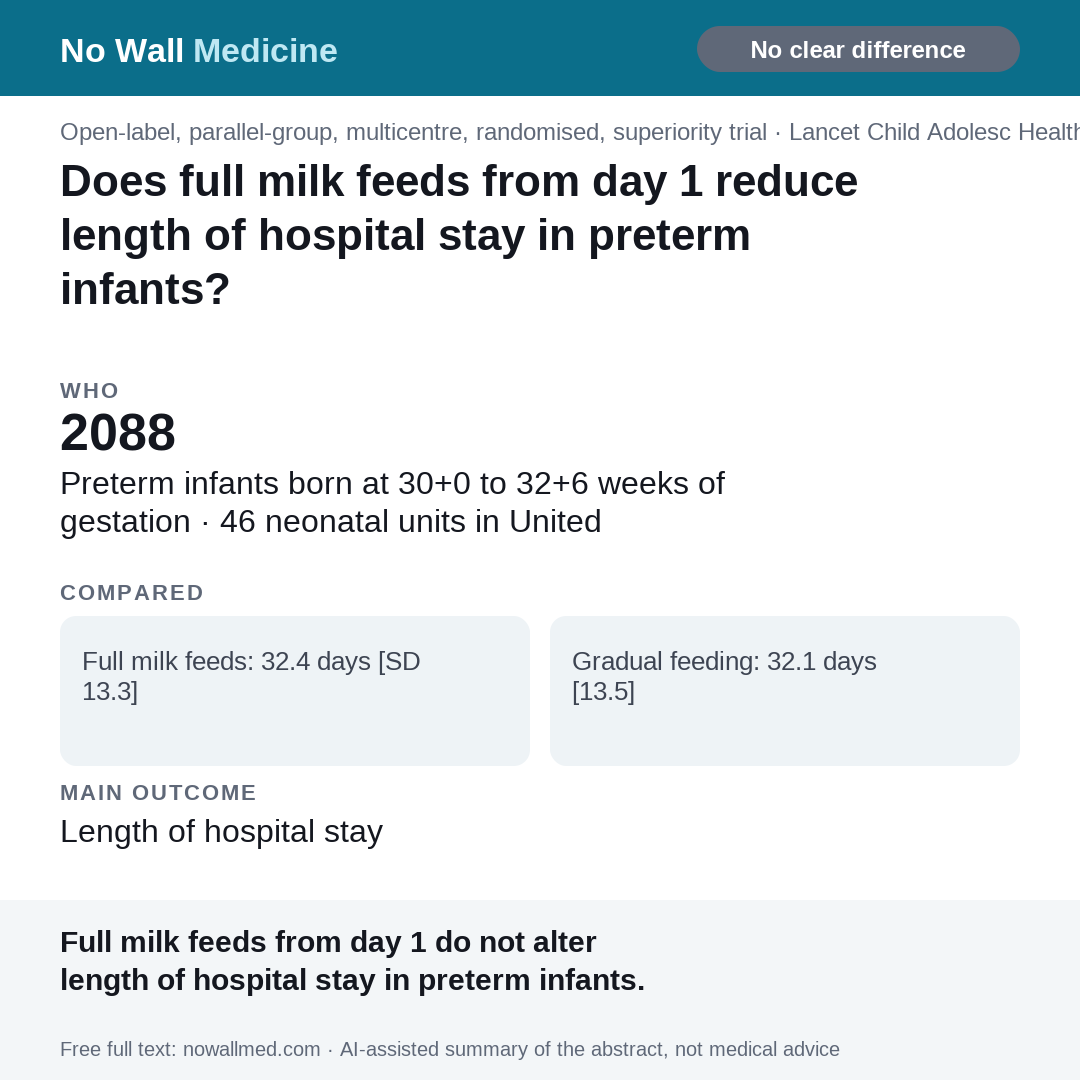
Full exclusively enteral fluids from day 1 versus gradual feeding in preterm infants (FEED1): a open-label, parallel-group, multicentre, randomised, superiority trial
Open-label, parallel-group, multicentre, randomised, superiority trialNo clear difference
Does full milk feeds from day 1 reduce length of hospital stay in preterm infants?
Who
2088
Preterm infants born at 30+0 to 32+6 weeks of gestation · 46 neonatal units in United Kingdom hospitals
Compared
Full milk feeds: 32.4 days [SD 13.3]
Gradual feeding: 32.1 days [13.5]
Main outcome
Length of hospital stay
Result: adjusted difference between means -0.02 days (95% CI -1.07 to 1.03)
Bottom line: Full milk feeds from day 1 do not alter length of hospital stay in preterm infants.
Funded by: UK National Institute of Health and Care Research
Lancet Child Adolesc Health · 2025-10-17Download image
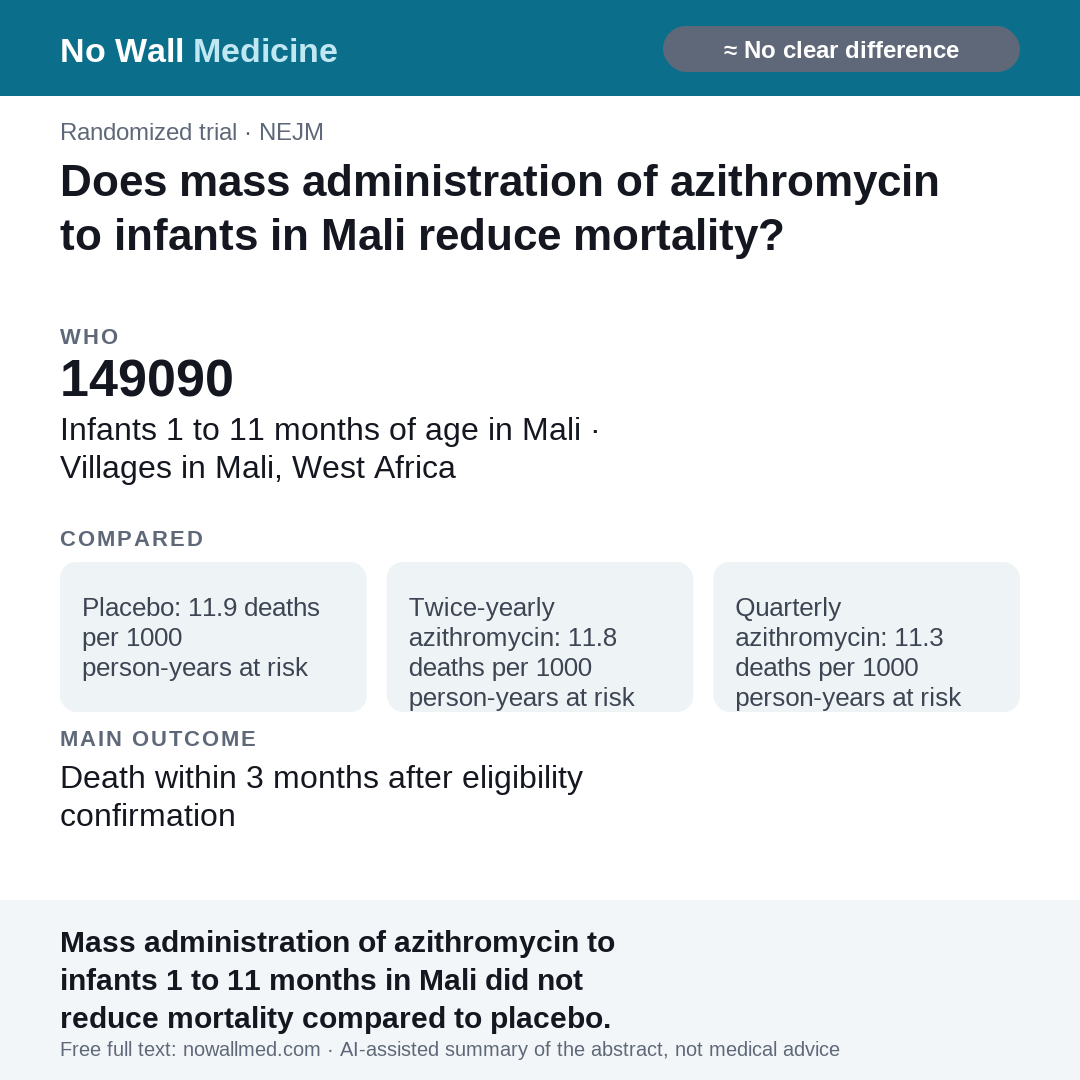
Mass Administration of Azithromycin to Infants in Mali to Reduce Mortality
Randomized trialNo clear difference
Does mass administration of azithromycin to infants in Mali reduce mortality?
Who
149090
Infants 1 to 11 months of age in Mali · Villages in Mali, West Africa
Compared
Placebo: 11.9 deaths per 1000 person-years at risk
Twice-yearly azithromycin: 11.8 deaths per 1000 person-years at risk
Quarterly azithromycin: 11.3 deaths per 1000 person-years at risk
Main outcome
Death within 3 months after eligibility confirmation
Result: incidence rate ratio 1.00 (95% CI 0.83 to 1.19) and 0.93 (95% CI 0.75 to 1.15)
Bottom line: Mass administration of azithromycin to infants 1 to 11 months in Mali did not reduce mortality compared to placebo.
Funded by: Gates Foundation
NEJM · 2025-10-15Download image
Ruxolitinib Versus Best Available Therapy in Patients With Steroid-Refractory Acute Graft-Versus-Host Disease: Final Analysis From the Randomized Phase III REACH2 Trial
Randomized trialBenefit found
Ruxolitinib vs best therapy for graft disease
Who
Patients with steroid-refractory acute graft-versus-host disease
Compared
Ruxolitinib
Best Available Therapy
Main outcome
Overall survival and failure-free survival
Result: hazard ratio null, median failure-free survival 4.86 v 1.02 months
Bottom line: Ruxolitinib improves survival over best therapy
J Clin Oncol · 2025-10-15Download image

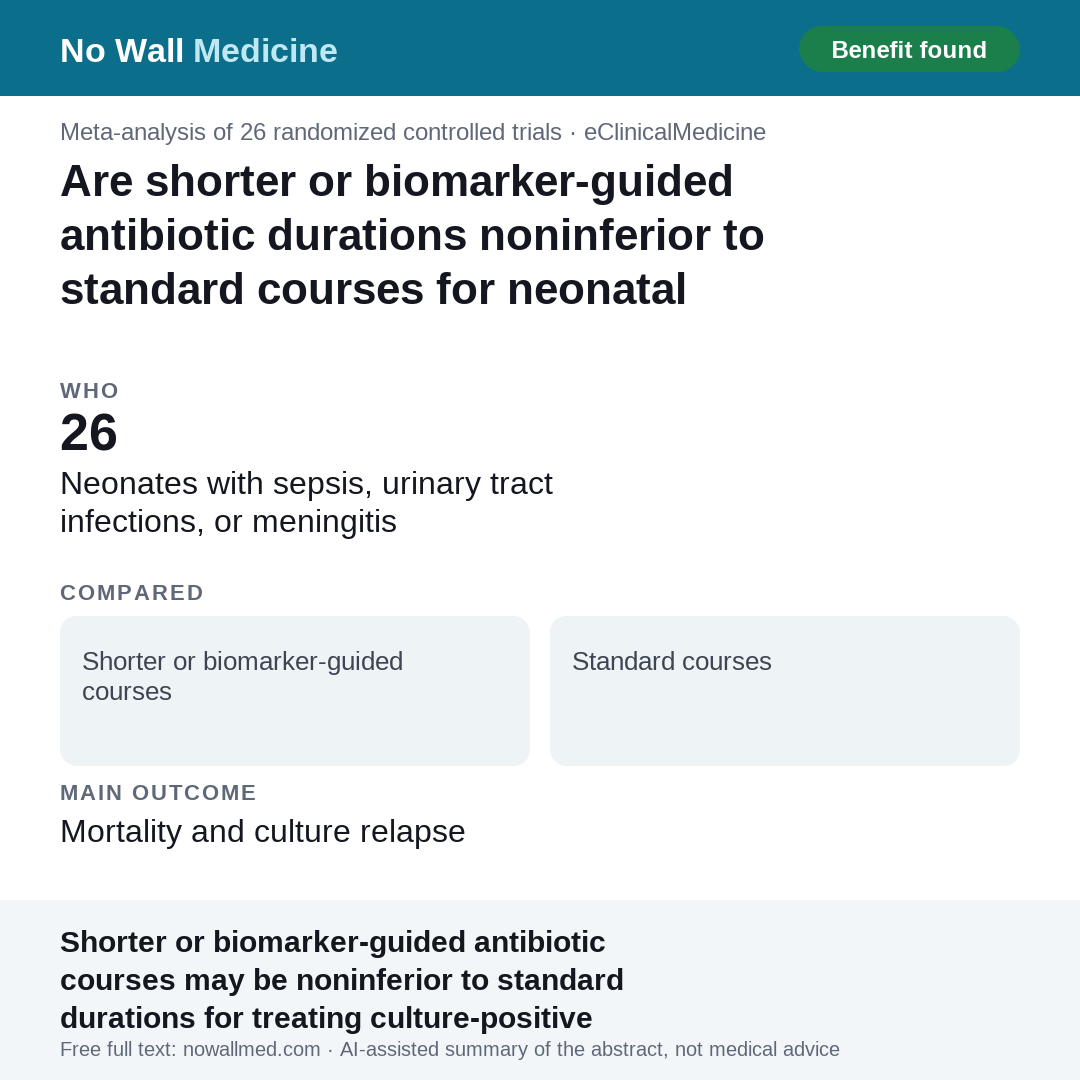
Shorter or biomarker-guided antibiotic durations for common serious neonatal infections: a collection of non-inferiority meta-analyses
Meta-analysis of 26 randomized controlled trialsBenefit found
Are shorter or biomarker-guided antibiotic durations noninferior to standard courses for neonatal infections?
Who
26
Neonates with sepsis, urinary tract infections, or meningitis
Compared
Shorter or biomarker-guided courses
Standard courses
Main outcome
Mortality and culture relapse
Bottom line: Shorter or biomarker-guided antibiotic courses may be noninferior to standard durations for treating culture-positive neonatal sepsis.
Limitation: Low to very low certainty of evidence across most outcomes.
eClinicalMedicine · 2025-10-14Download image
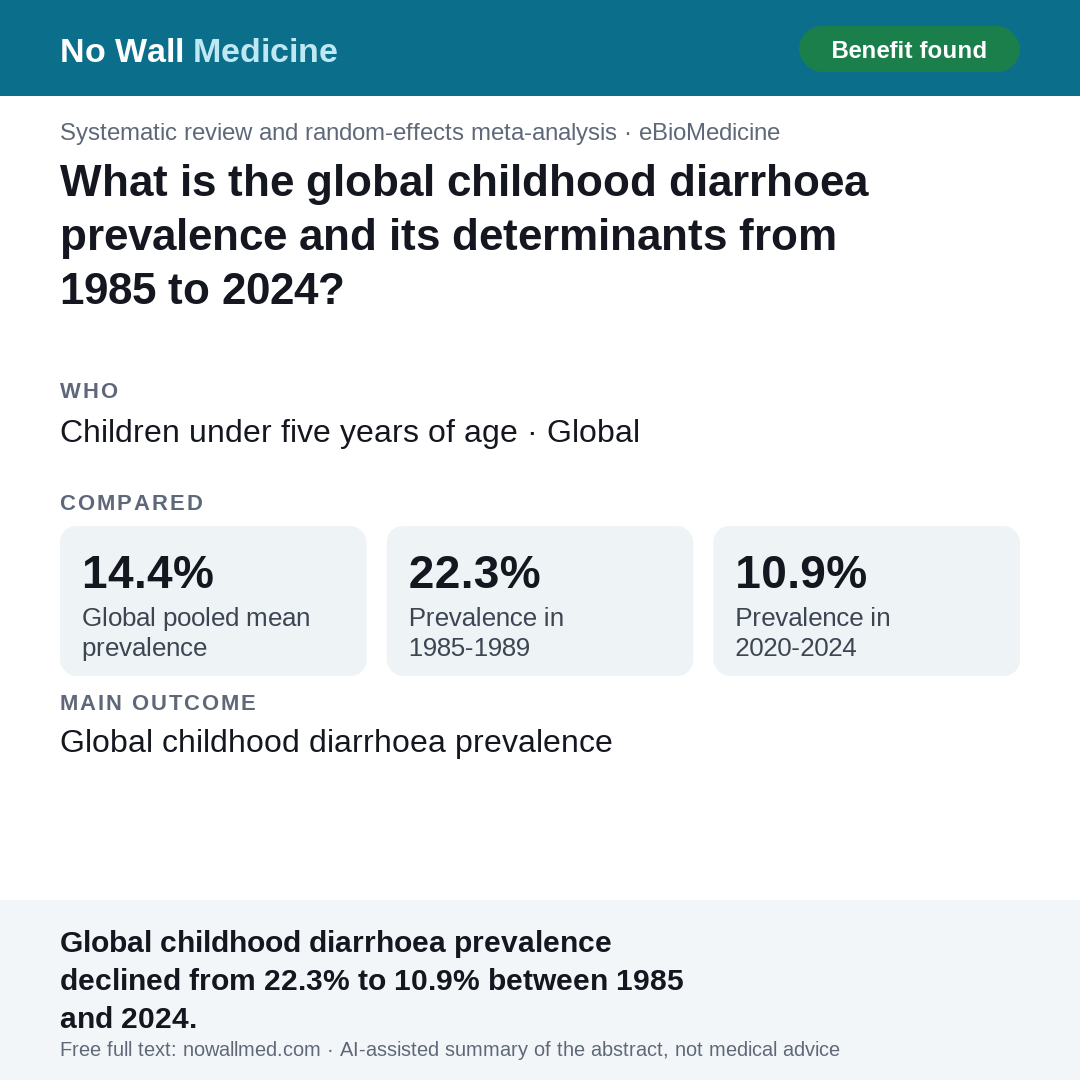
Global childhood diarrhoea prevalence and its determinants: a systematic meta-analytic assessment, 1985-2024
Systematic review and random-effects meta-analysisBenefit found
What is the global childhood diarrhoea prevalence and its determinants from 1985 to 2024?
Who
Children under five years of age · Global
Compared
14.4%Global pooled mean prevalence (95% CI: 13.8-15.0%)
22.3%Prevalence in 1985-1989
10.9%Prevalence in 2020-2024
Main outcome
Global childhood diarrhoea prevalence
Bottom line: Global childhood diarrhoea prevalence declined from 22.3% to 10.9% between 1985 and 2024.
Funded by: Weill Cornell Medicine-Qatar
eBioMedicine · 2025-10-14Download image
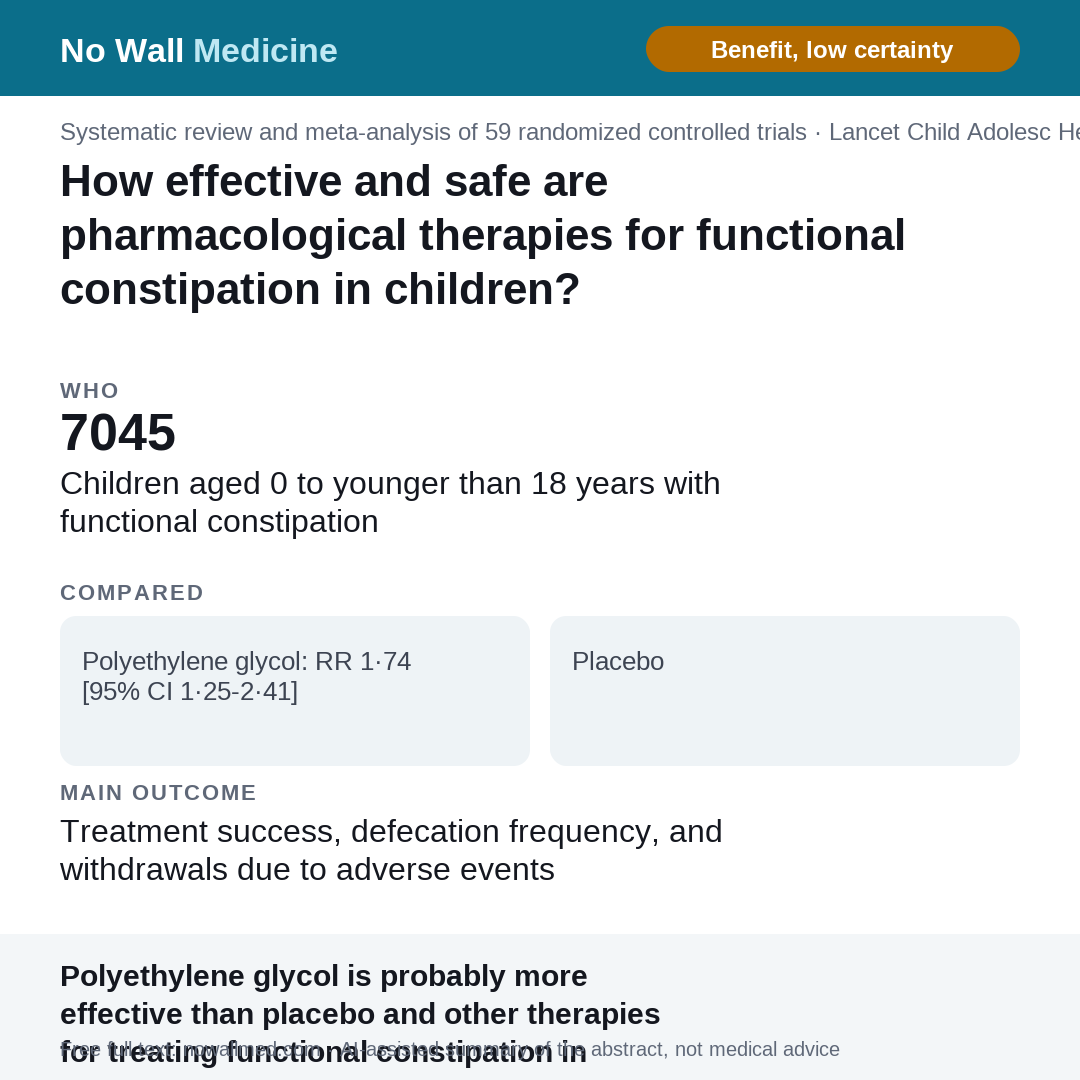
Efficacy and safety of pharmacological therapies for functional constipation in children: a systematic review and meta-analysis
Systematic review and meta-analysis of 59 randomized controlled trialsBenefit found
How effective and safe are pharmacological therapies for functional constipation in children?
Who
7045
Children aged 0 to younger than 18 years with functional constipation
Compared
Polyethylene glycol: RR 1·74 [95% CI 1·25-2·41]
Placebo
Main outcome
Treatment success, defecation frequency, and withdrawals due to adverse events
Result: RR 1·74 [95% CI 1·25-2·41]
Bottom line: Polyethylene glycol is probably more effective than placebo and other therapies for treating functional constipation in children.
Lancet Child Adolesc Health · 2025-10-13Download image
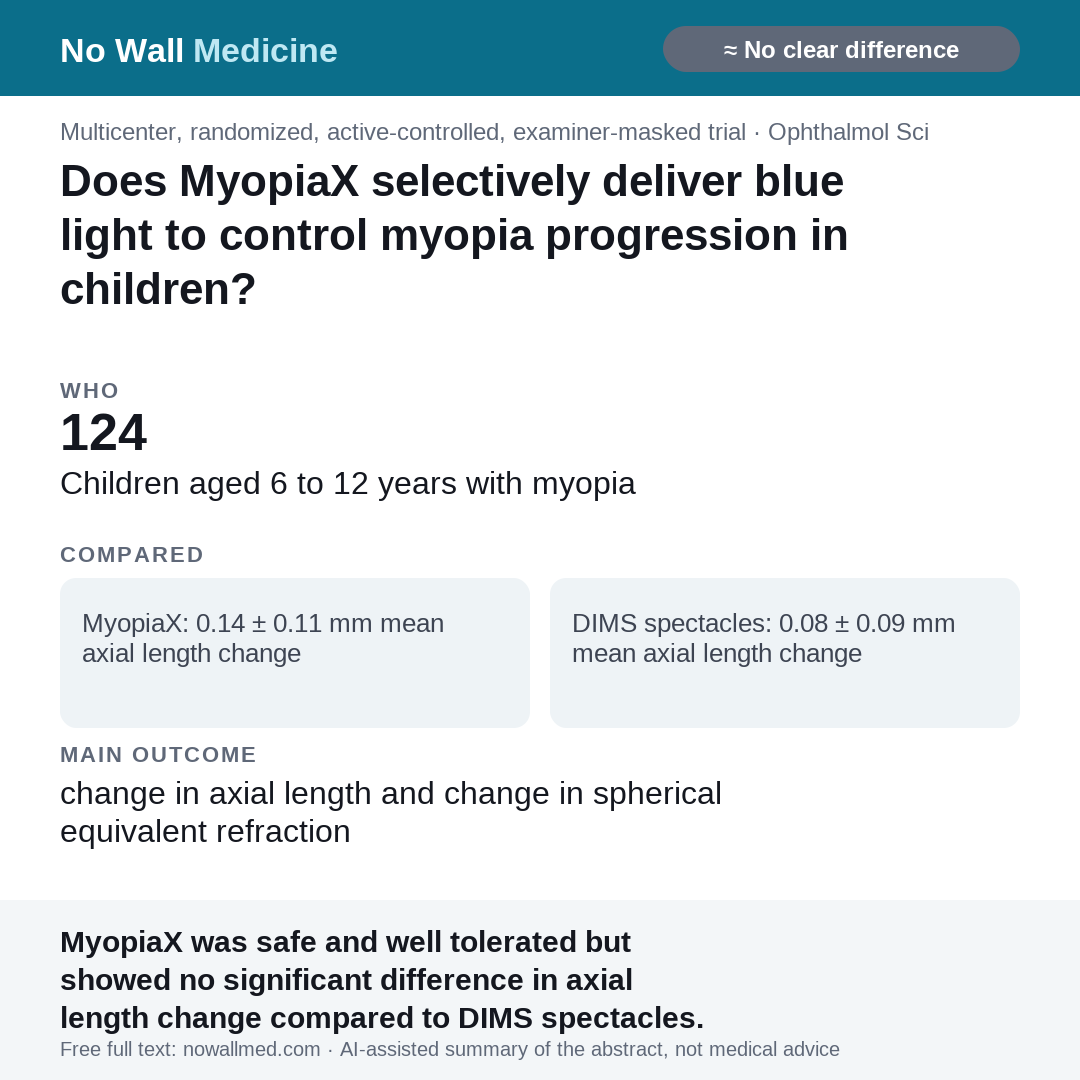
MyopiaX-1 Safety and Efficacy of a Novel Approach to Slow Juvenile Myopia Progression: A Multicenter, Randomized, Controlled Trial
Multicenter, randomized, active-controlled, examiner-masked trialNo clear difference
Does MyopiaX selectively deliver blue light to control myopia progression in children?
Who
124
Children aged 6 to 12 years with myopia
Compared
MyopiaX: 0.14 ± 0.11 mm mean axial length change
DIMS spectacles: 0.08 ± 0.09 mm mean axial length change
Main outcome
change in axial length and change in spherical equivalent refraction
Bottom line: MyopiaX was safe and well tolerated but showed no significant difference in axial length change compared to DIMS spectacles.
Ophthalmol Sci · 2025-10-10Download image