Visual abstracts
New randomized trials and meta-analyses from leading journals at a glance: who was studied, what was compared, and what was found. Every paper is free to read in full.
All specialtiesCardiology 4877Oncology 4138Gastroenterology & Hepatology 1942Infectious Disease 3837Neurology 1905Psychiatry & Mental Health 2273Pulmonology 2143Critical Care 1365Endocrinology & Diabetes 2580Pediatrics 2980Surgery 2559Orthopedics & Sports Medicine 931Neurosurgery 537Cardiothoracic & Vascular Surgery 674Plastic & Reconstructive Surgery 591Nephrology 1133Rheumatology 823Hematology 1109Dermatology 621Ophthalmology 543Obstetrics & Gynecology 1686Public & Global Health 1058Radiology & Imaging 648Anesthesiology 986Urology 764ENT (Otolaryngology) 503Emergency Medicine 511Allergy & Immunology 313Geriatrics 981Family Medicine & Primary Care 562Medical Genetics & Genomics 676Pathology & Laboratory Medicine 159Physical Medicine & Rehabilitation 757Palliative Care 444Nutrition 1588Digital Health & AI 2201General Medicine 321
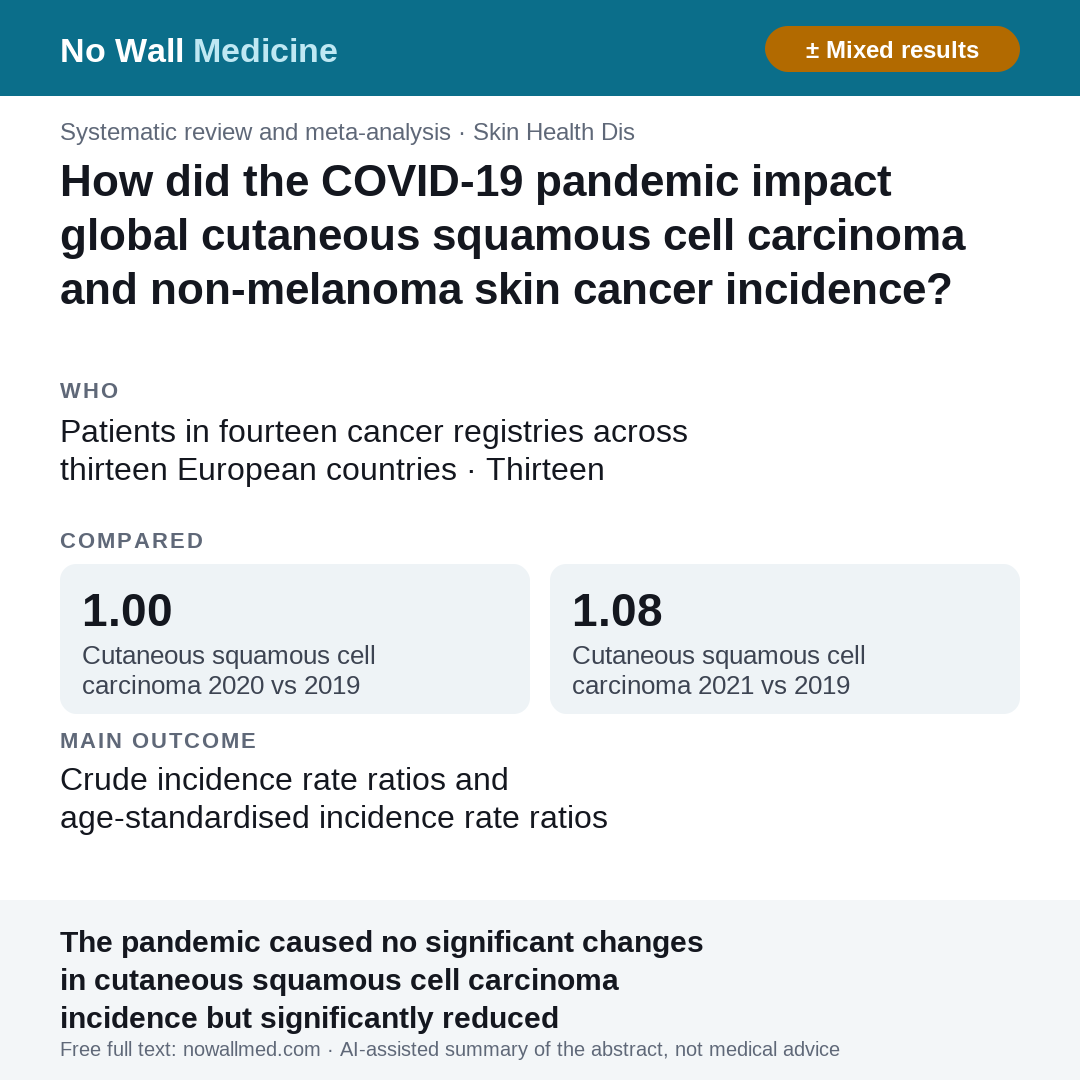
Impact of the COVID-19 pandemic on international cutaneous squamous cell carcinoma incidence: A systematic review and meta-analysis
Systematic review and meta-analysisMixed results
How did the COVID-19 pandemic impact global cutaneous squamous cell carcinoma and non-melanoma skin cancer incidence?
Who
Patients in fourteen cancer registries across thirteen European countries · Thirteen countries across Europe
Compared
1.00Cutaneous squamous cell carcinoma 2020 vs 2019 (95% confidence interval 0.94-1.06)
1.08Cutaneous squamous cell carcinoma 2021 vs 2019 (95% CI 0.98-1.19)
Main outcome
Crude incidence rate ratios and age-standardised incidence rate ratios
Result: cSCC-CIRR 1.00 (95% confidence interval 0.94-1.06)
Bottom line: The pandemic caused no significant changes in cutaneous squamous cell carcinoma incidence but significantly reduced non-melanoma skin cancer incidence.
Skin Health Dis · 2024-06-15Download image
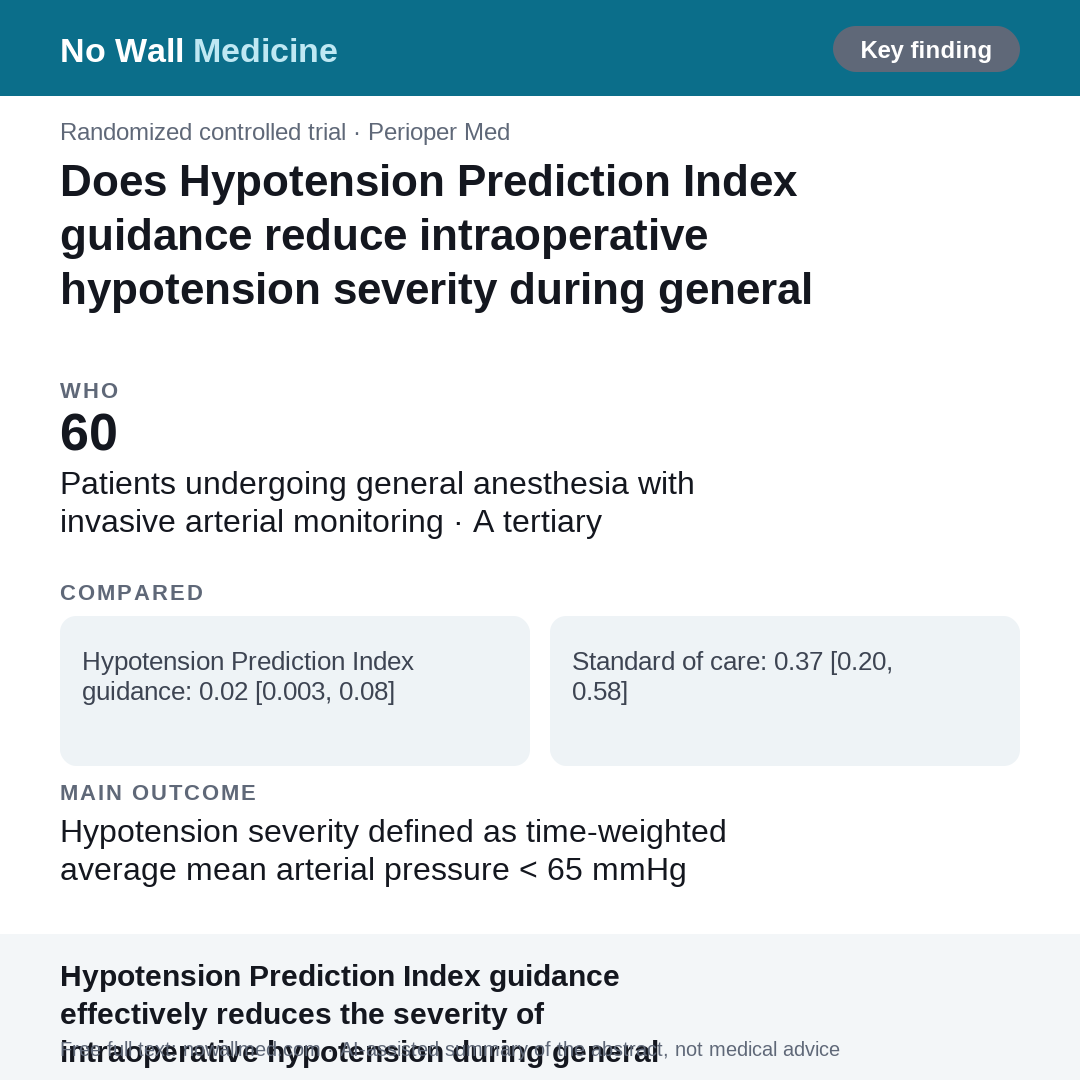
Hypotension prediction index for prevention of intraoperative hypotension in patients undergoing general anesthesia: a randomized controlled trial
Randomized controlled trialBenefit found
Does Hypotension Prediction Index guidance reduce intraoperative hypotension severity during general anesthesia?
Who
60
Patients undergoing general anesthesia with invasive arterial monitoring · A tertiary referral hospital
Compared
Hypotension Prediction Index guidance: 0.02 [0.003, 0.08]
Standard of care: 0.37 [0.20, 0.58]
Main outcome
Hypotension severity defined as time-weighted average mean arterial pressure < 65 mmHg
Bottom line: Hypotension Prediction Index guidance effectively reduces the severity of intraoperative hypotension during general anesthesia.
Perioper Med · 2024-06-15Download image
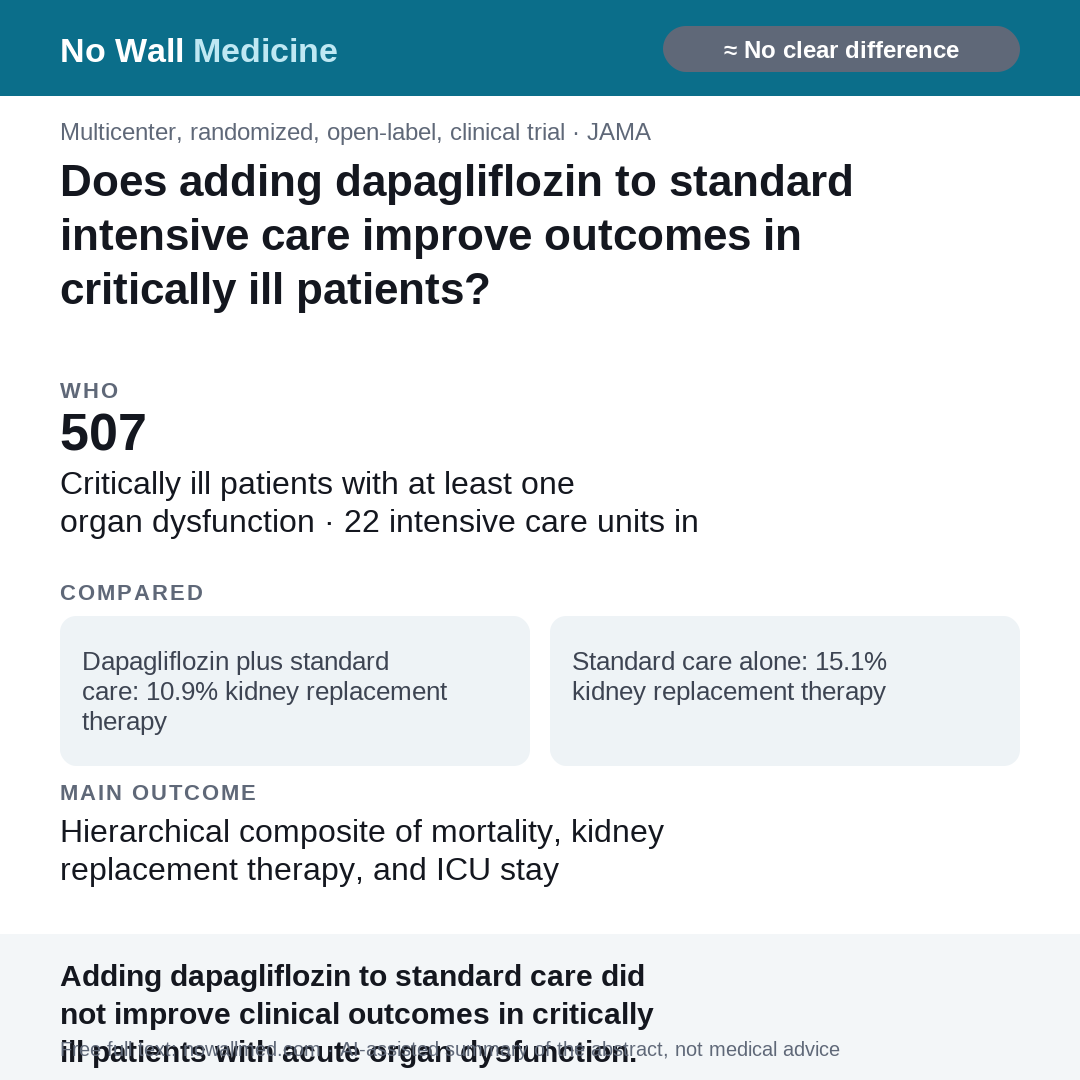
Dapagliflozin for Critically Ill Patients With Acute Organ Dysfunction: The DEFENDER Randomized Clinical Trial
Multicenter, randomized, open-label, clinical trialNo clear difference
Does adding dapagliflozin to standard intensive care improve outcomes in critically ill patients?
Who
507
Critically ill patients with at least one organ dysfunction · 22 intensive care units in Brazil
Compared
Dapagliflozin plus standard care: 10.9% kidney replacement therapy
Standard care alone: 15.1% kidney replacement therapy
Main outcome
Hierarchical composite of mortality, kidney replacement therapy, and ICU stay
Result: win ratio 1.01 (95% CI 0.90 to 1.13)
Bottom line: Adding dapagliflozin to standard care did not improve clinical outcomes in critically ill patients with acute organ dysfunction.
Limitation: Wide confidence intervals could not exclude relevant benefits or harms.
JAMA · 2024-06-14Download image
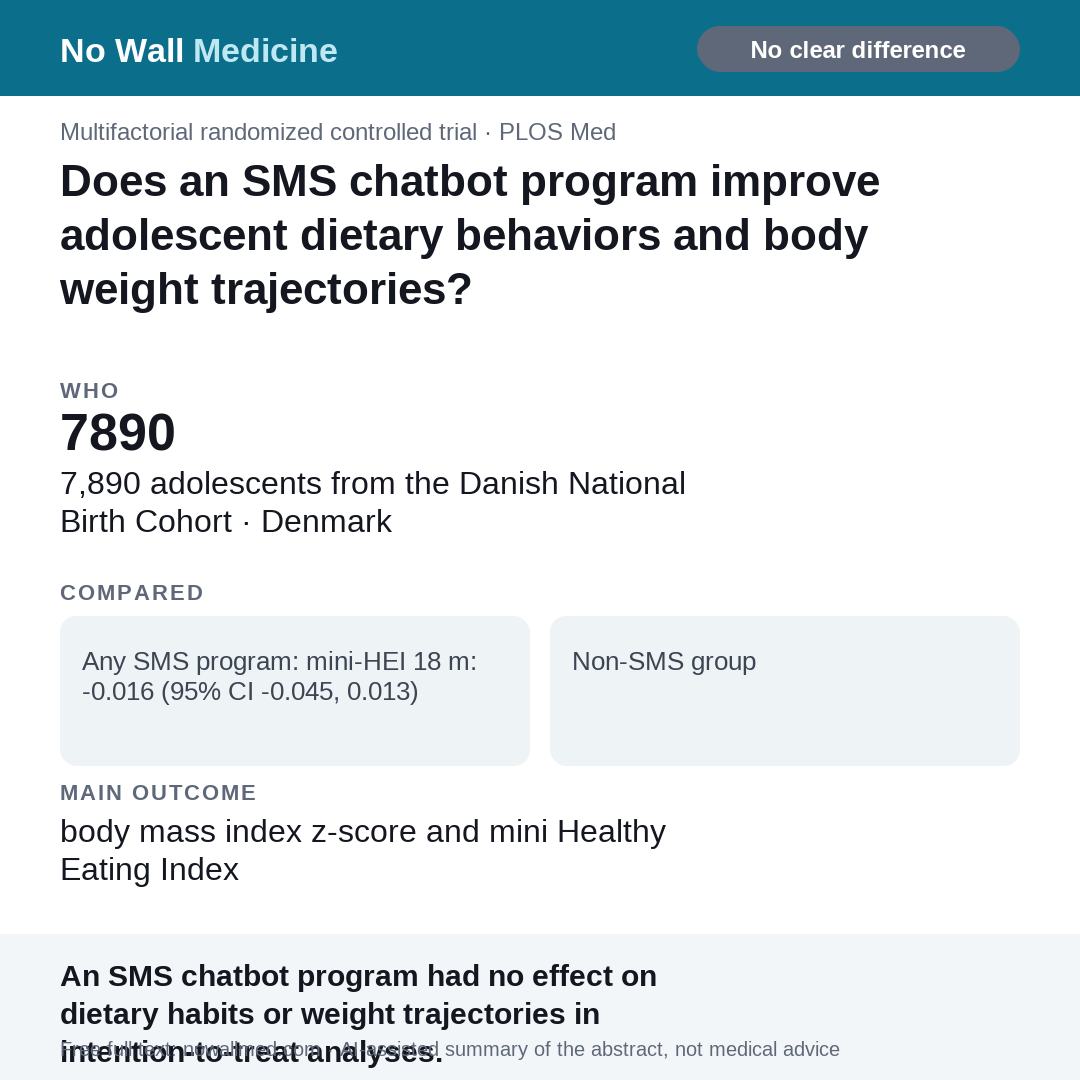
An SMS chatbot digital educational program to increase healthy eating behaviors in adolescence: A multifactorial randomized controlled trial among 7,890 participants in the Danish National Birth Cohort
Multifactorial randomized controlled trialNo clear difference
Does an SMS chatbot program improve adolescent dietary behaviors and body weight trajectories?
Who
7890
7,890 adolescents from the Danish National Birth Cohort · Denmark
Compared
Any SMS program: mini-HEI 18 m: -0.016 (95% CI -0.045, 0.013)
Non-SMS group
Main outcome
body mass index z-score and mini Healthy Eating Index
Result: BMI z-score 18 m: 0.002 (95% CI -0.029, 0.033)
Bottom line: An SMS chatbot program had no effect on dietary habits or weight trajectories in intention-to-treat analyses.
Limitation: Participants tend to have higher socioeconomic status than average and outcome measures were self-reported.
PLOS Med · 2024-06-14Download image
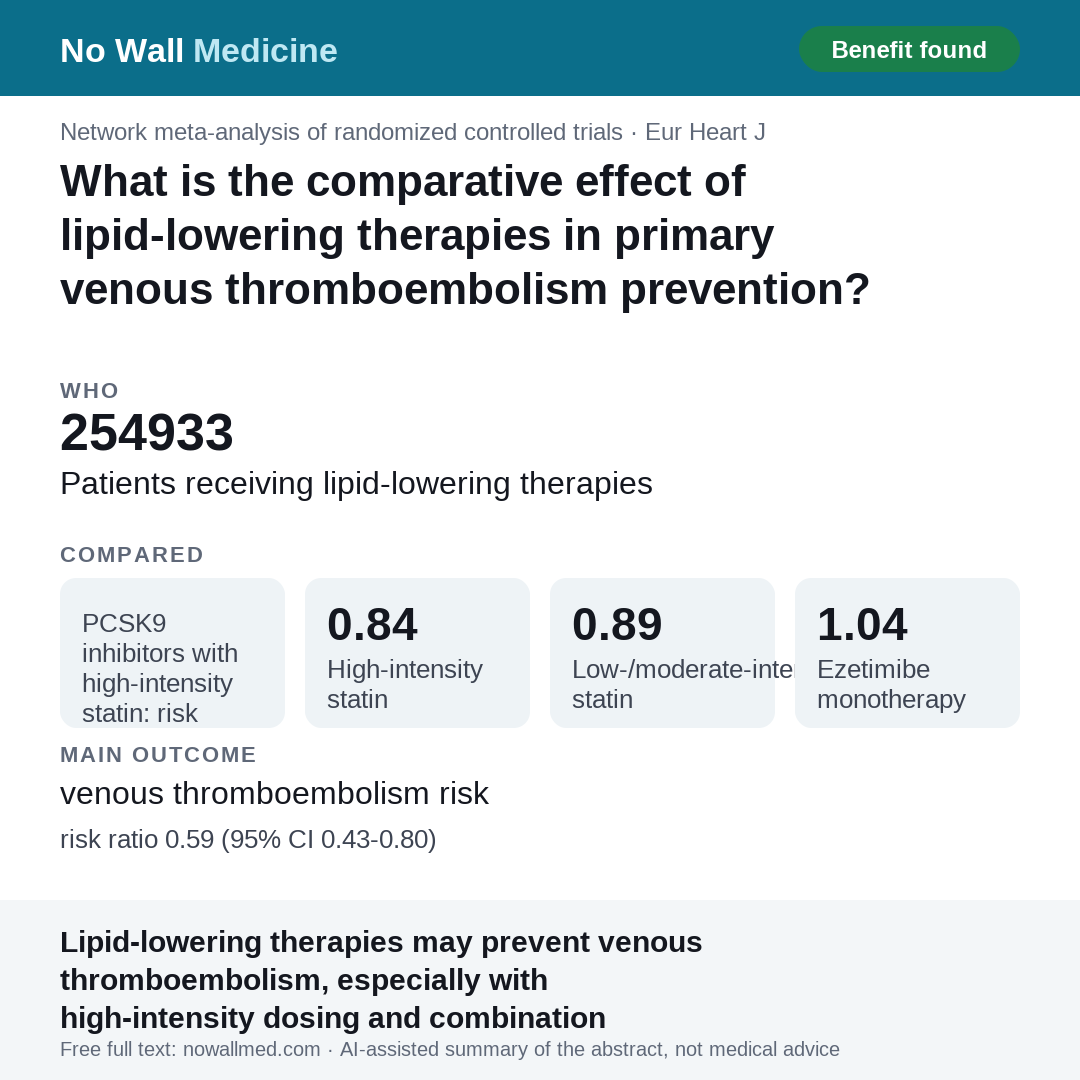
Lipid lowering for prevention of venous thromboembolism: a network meta-analysis
Network meta-analysis of randomized controlled trialsBenefit found
What is the comparative effect of lipid-lowering therapies in primary venous thromboembolism prevention?
Who
254933
Patients receiving lipid-lowering therapies
Compared
PCSK9 inhibitors with high-intensity statin: risk ratio 0.59 (95% CI 0.43-0.80)
0.84High-intensity statin monotherapy (0.70-1.02)
0.89Low-/moderate-intensity statin monotherapy (0.79-1.00)
1.04Ezetimibe monotherapy (0.83-1.30)
Main outcome
venous thromboembolism risk
Result: risk ratio 0.59 (95% CI 0.43-0.80)
Bottom line: Lipid-lowering therapies may prevent venous thromboembolism, especially with high-intensity dosing and combination therapy.
Eur Heart J · 2024-06-14Download image
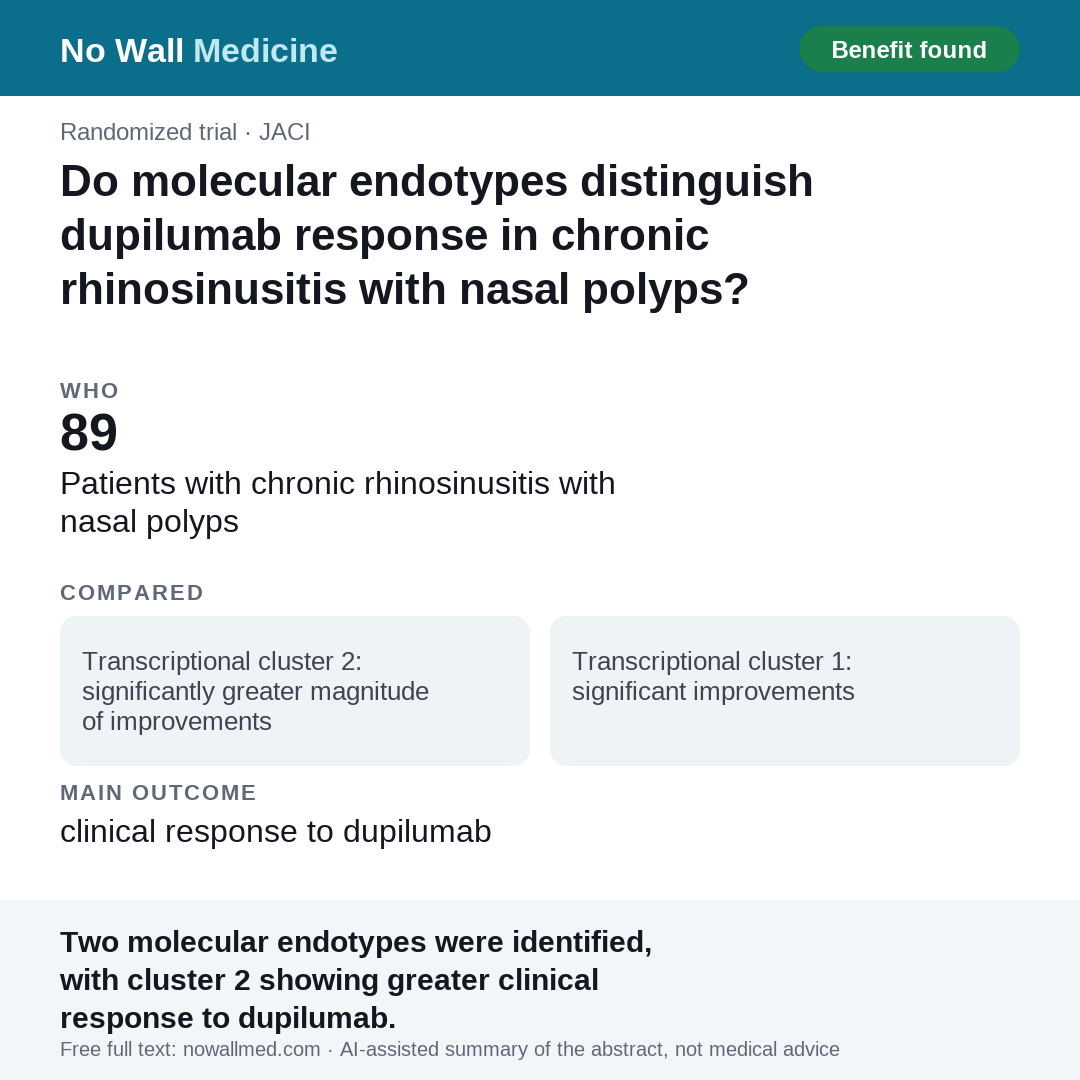
Nasal brushing molecular endotyping distinguishes patients with chronic rhinosinusitis with nasal polyps with better response to dupilumab
Randomized trialBenefit found
Do molecular endotypes distinguish dupilumab response in chronic rhinosinusitis with nasal polyps?
Who
89
Patients with chronic rhinosinusitis with nasal polyps
Compared
Transcriptional cluster 2: significantly greater magnitude of improvements
Transcriptional cluster 1: significant improvements
Main outcome
clinical response to dupilumab
Bottom line: Two molecular endotypes were identified, with cluster 2 showing greater clinical response to dupilumab.
JACI · 2024-06-14Download image
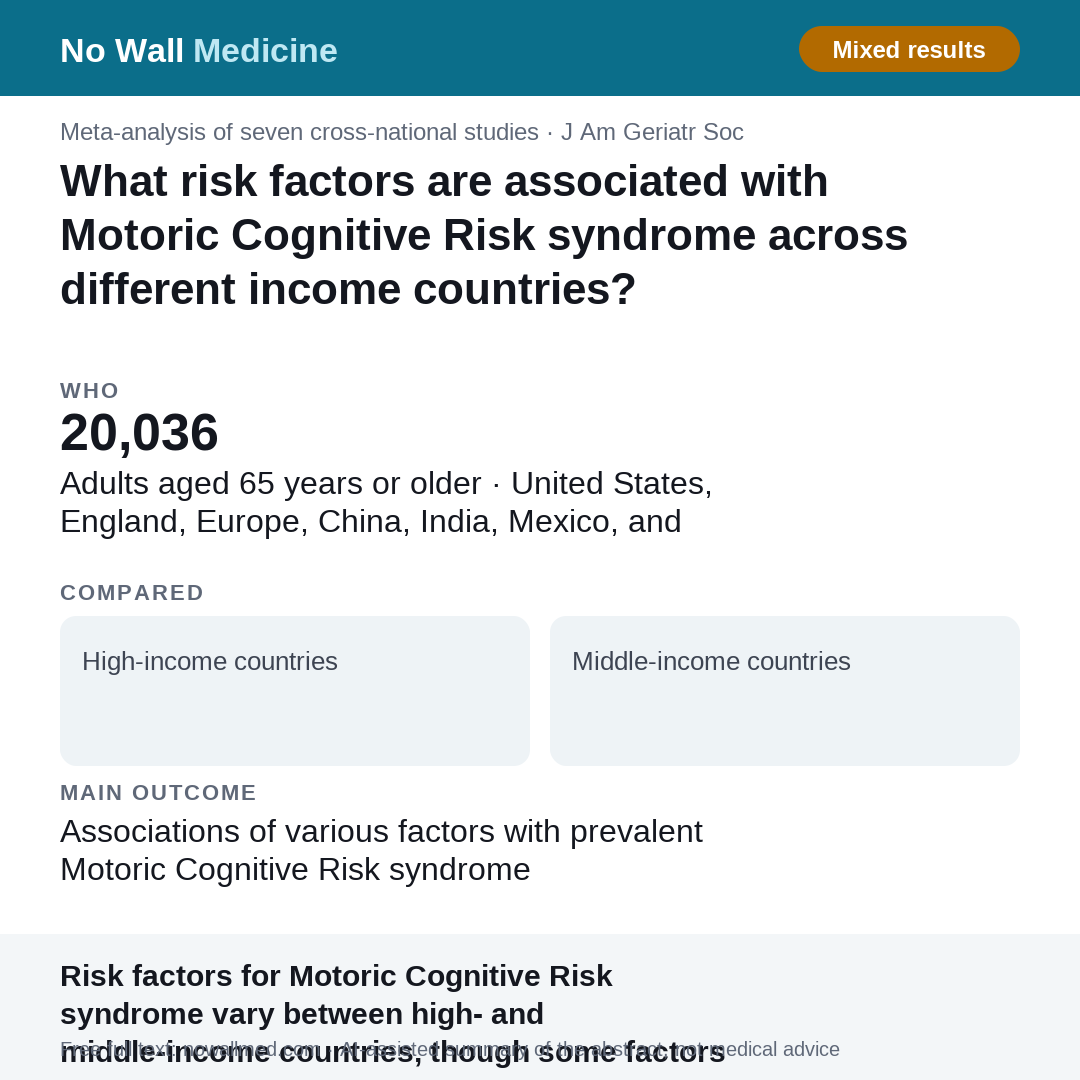
Risk factors associated with the Motoric Cognitive Risk syndrome: A meta-analysis of data from a cross-national study
Meta-analysis of seven cross-national studiesMixed results
What risk factors are associated with Motoric Cognitive Risk syndrome across different income countries?
Who
20,036
Adults aged 65 years or older · United States, England, Europe, China, India, Mexico, and Brazil
Compared
High-income countries
Middle-income countries
Main outcome
Associations of various factors with prevalent Motoric Cognitive Risk syndrome
Bottom line: Risk factors for Motoric Cognitive Risk syndrome vary between high- and middle-income countries, though some factors like education are shared.
J Am Geriatr Soc · 2024-06-14Download image
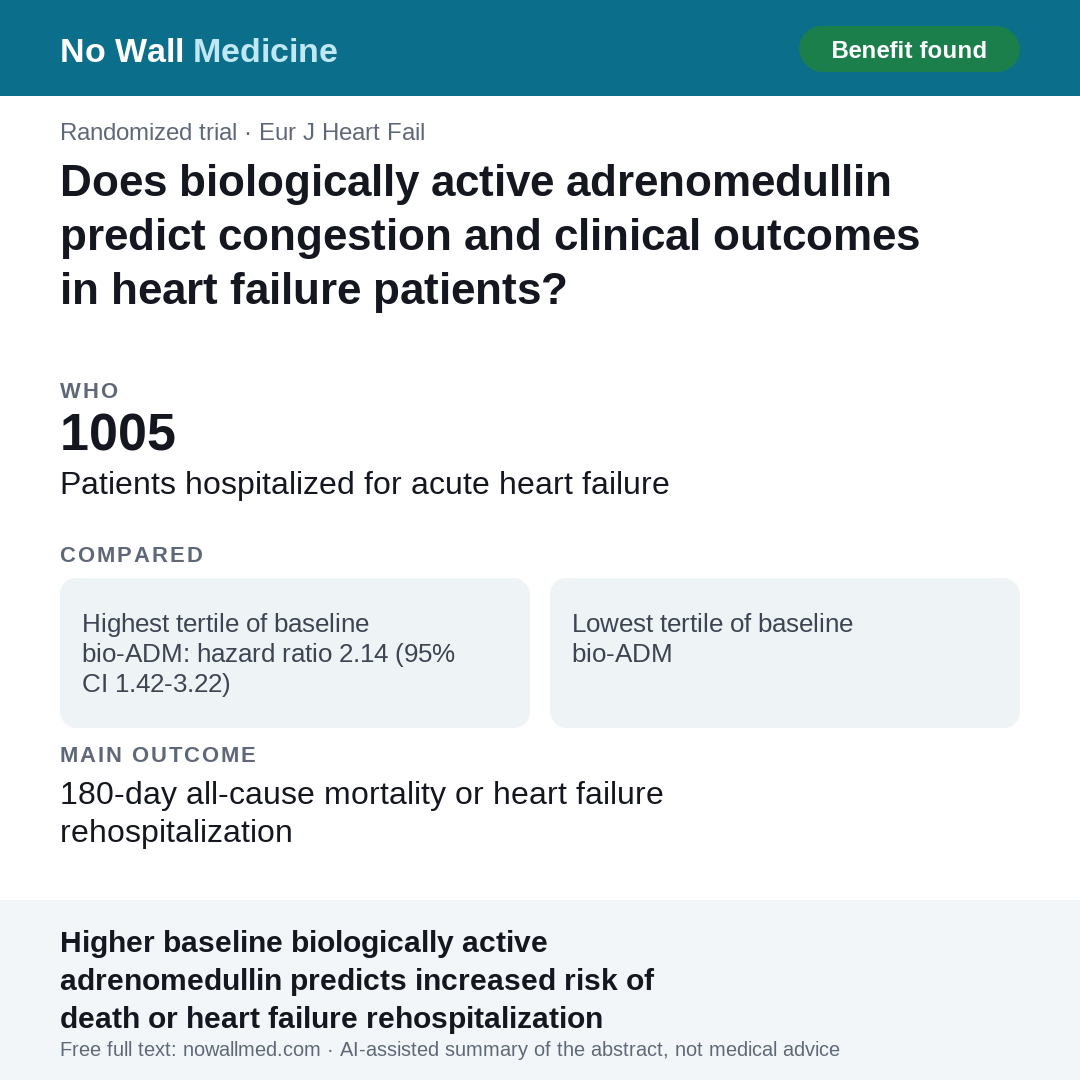
Biologically active adrenomedullin as a marker for residual congestion and early rehospitalization in patients hospitalized for acute heart failure: Data from STRONG-HF
Randomized trialBenefit found
Does biologically active adrenomedullin predict congestion and clinical outcomes in heart failure patients?
Who
1005
Patients hospitalized for acute heart failure
Compared
Highest tertile of baseline bio-ADM: hazard ratio 2.14 (95% CI 1.42-3.22)
Lowest tertile of baseline bio-ADM
Main outcome
180-day all-cause mortality or heart failure rehospitalization
Result: hazard ratio 2.14 (95% CI 1.42-3.22)
Bottom line: Higher baseline biologically active adrenomedullin predicts increased risk of death or heart failure rehospitalization within 180 days.
Eur J Heart Fail · 2024-06-14Download image
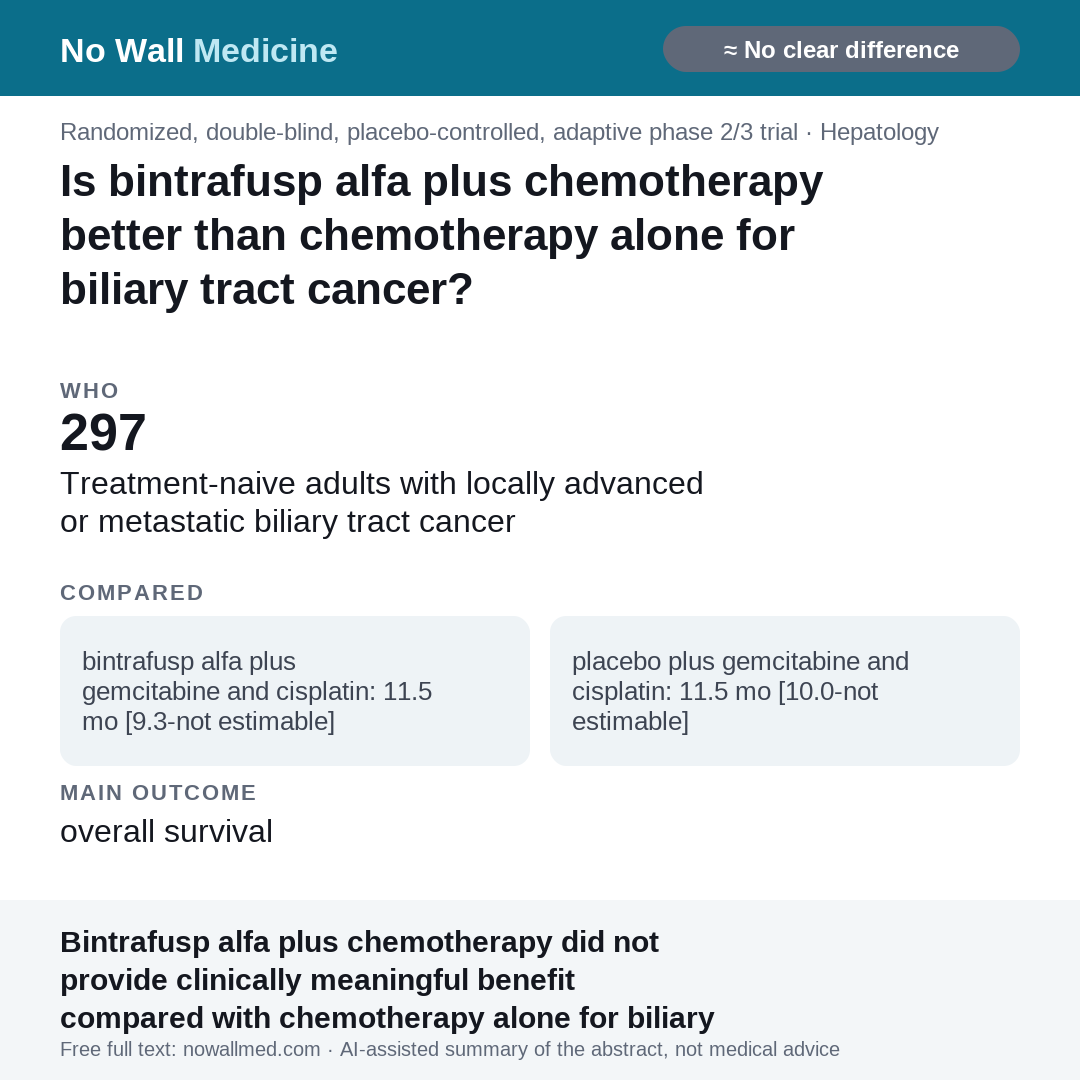
Bintrafusp alfa and chemotherapy as first-line treatment in biliary tract cancer: A randomized phase 2/3 trial
Randomized, double-blind, placebo-controlled, adaptive phase 2/3 trialNo clear difference
Is bintrafusp alfa plus chemotherapy better than chemotherapy alone for biliary tract cancer?
Who
297
Treatment-naive adults with locally advanced or metastatic biliary tract cancer
Compared
bintrafusp alfa plus gemcitabine and cisplatin: 11.5 mo [9.3-not estimable]
placebo plus gemcitabine and cisplatin: 11.5 mo [10.0-not estimable]
Main outcome
overall survival
Result: hazard ratio 1.23 (95% CI 0.66-2.28)
Bottom line: Bintrafusp alfa plus chemotherapy did not provide clinically meaningful benefit compared with chemotherapy alone for biliary tract cancer.
Hepatology · 2024-06-14Download image
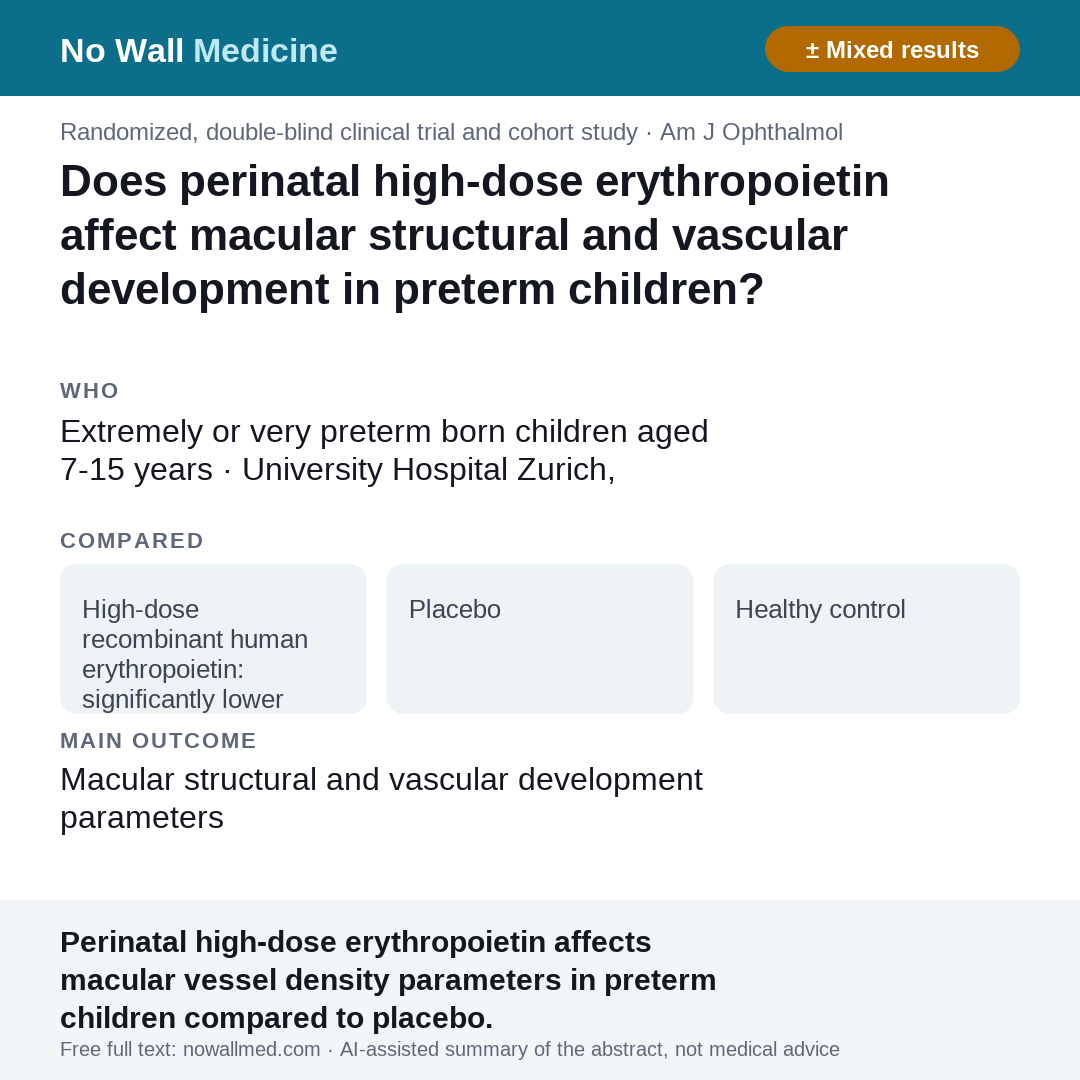
The Effect of Perinatal High-Dose Erythropoietin on Retinal Structural and Vascular Characteristics in Children Born Preterm
Randomized, double-blind clinical trial and cohort studyMixed results
Does perinatal high-dose erythropoietin affect macular structural and vascular development in preterm children?
Who
Extremely or very preterm born children aged 7-15 years · University Hospital Zurich, Switzerland
Compared
High-dose recombinant human erythropoietin: significantly lower macular vessel density parameters
Placebo
Healthy control
Main outcome
Macular structural and vascular development parameters
Bottom line: Perinatal high-dose erythropoietin affects macular vessel density parameters in preterm children compared to placebo.
Am J Ophthalmol · 2024-06-14Download image
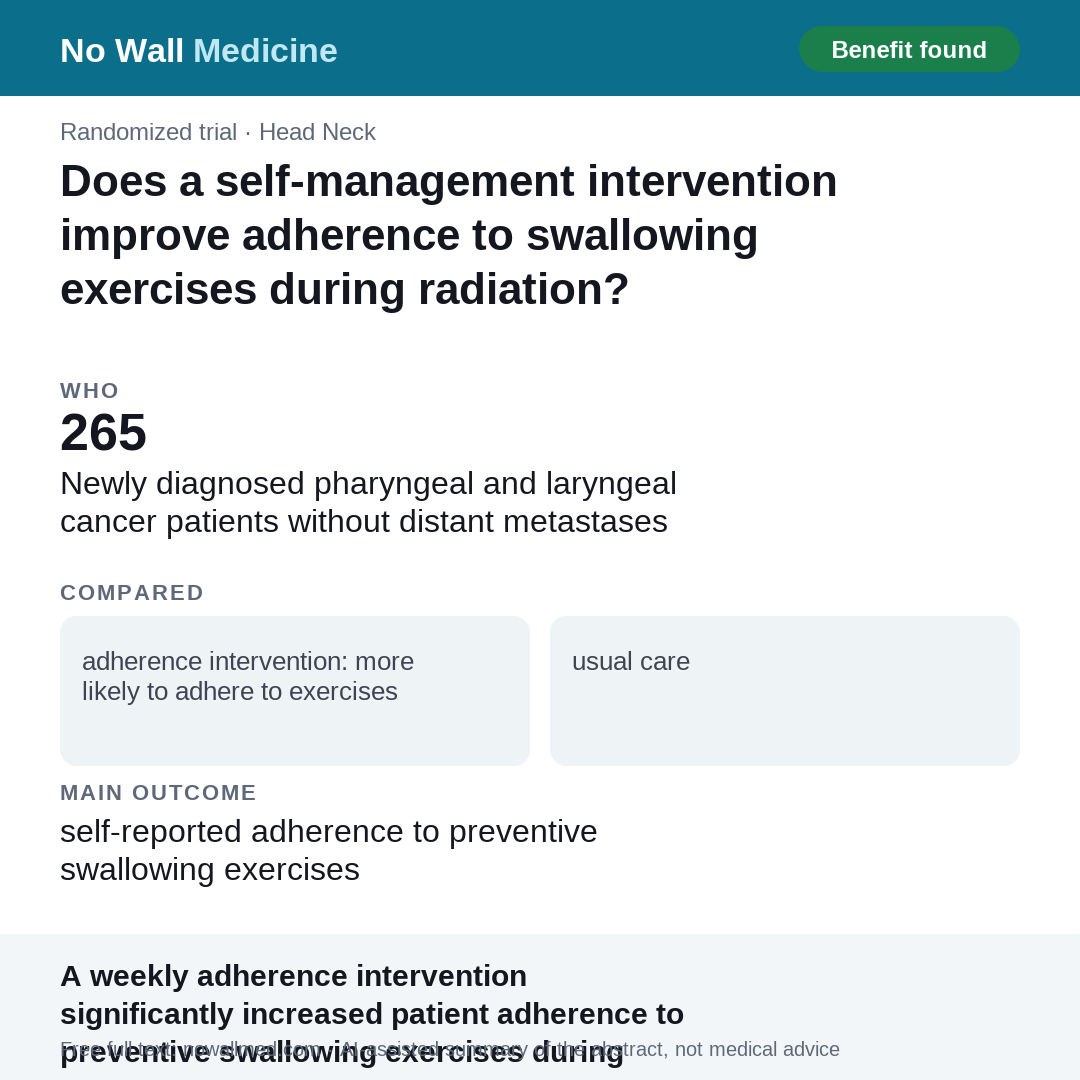
Self-management intervention improves patient adherence to swallowing exercises during radiation for head and neck cancer
Randomized trialBenefit found
Does a self-management intervention improve adherence to swallowing exercises during radiation?
Who
265
Newly diagnosed pharyngeal and laryngeal cancer patients without distant metastases
Compared
adherence intervention: more likely to adhere to exercises
usual care
Main outcome
self-reported adherence to preventive swallowing exercises
Bottom line: A weekly adherence intervention significantly increased patient adherence to preventive swallowing exercises during radiation.
Head Neck · 2024-06-14Download image
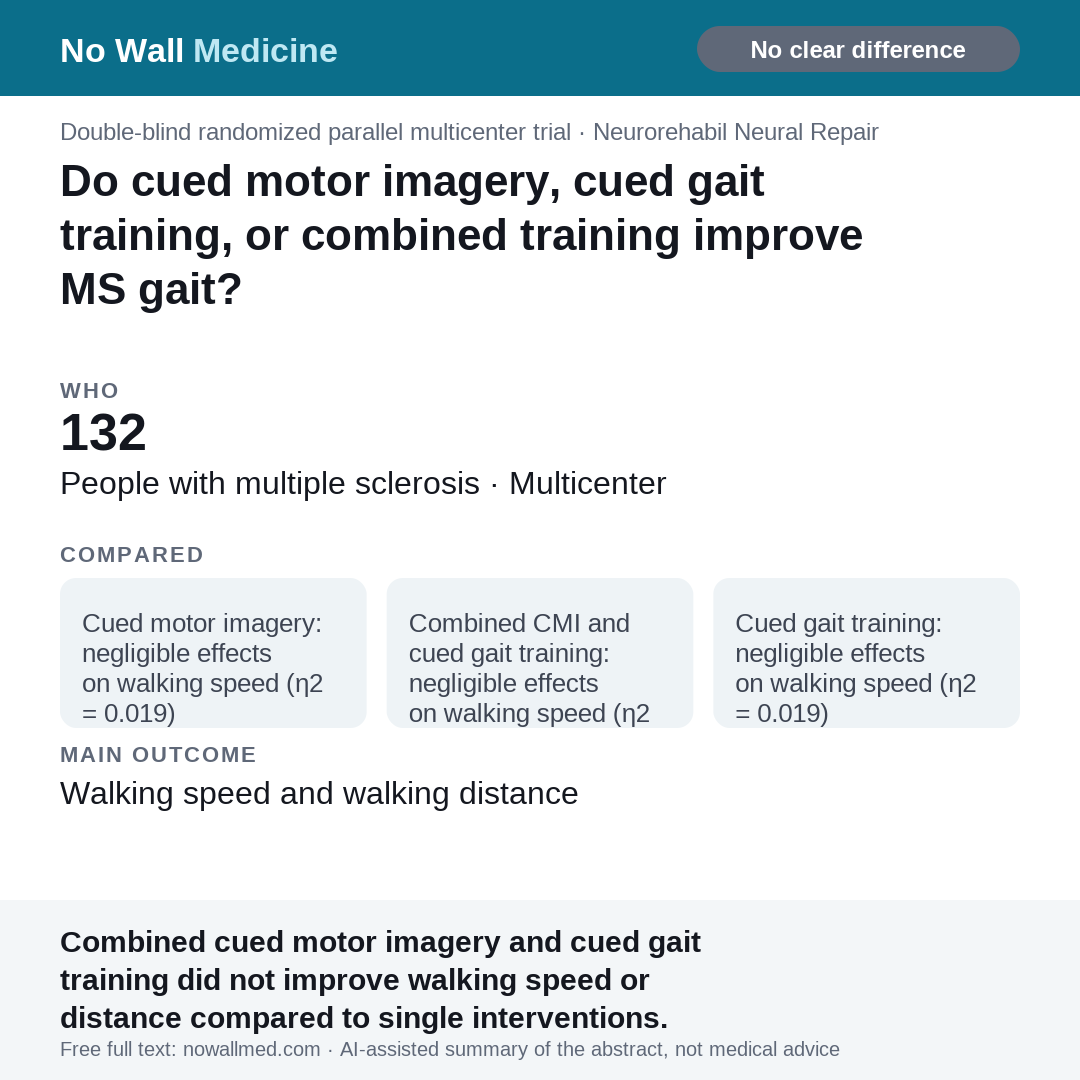
Actual and Imagined Music-Cued Gait Training in People with Multiple Sclerosis: A Double-Blind Randomized Parallel Multicenter Trial
Double-blind randomized parallel multicenter trialNo clear difference
Do cued motor imagery, cued gait training, or combined training improve MS gait?
Who
132
People with multiple sclerosis · Multicenter
Compared
Cued motor imagery: negligible effects on walking speed (η2 = 0.019)
Combined CMI and cued gait training: negligible effects on walking speed (η2 = 0.019)
Cued gait training: negligible effects on walking speed (η2 = 0.019)
Main outcome
Walking speed and walking distance
Bottom line: Combined cued motor imagery and cued gait training did not improve walking speed or distance compared to single interventions.
Limitation: Lack of a true control group represents a study limitation.
Neurorehabil Neural Repair · 2024-06-14Download image
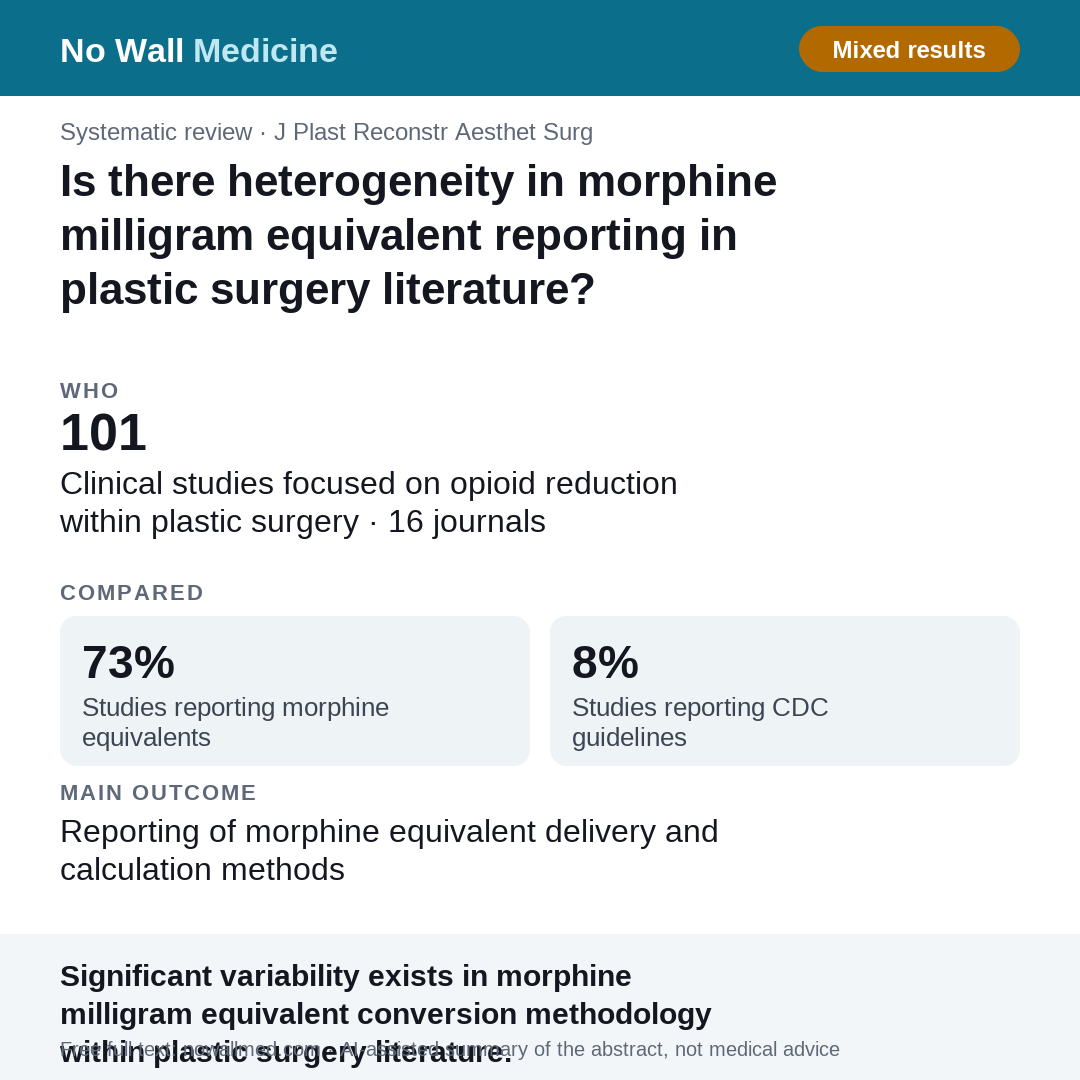
A systematic review of morphine equivalent conversions in plastic surgery: Current methods and future directions
Systematic reviewMixed results
Is there heterogeneity in morphine milligram equivalent reporting in plastic surgery literature?
Who
101
Clinical studies focused on opioid reduction within plastic surgery · 16 journals
Compared
73%Studies reporting morphine equivalents
8%Studies reporting CDC guidelines
Main outcome
Reporting of morphine equivalent delivery and calculation methods
Bottom line: Significant variability exists in morphine milligram equivalent conversion methodology within plastic surgery literature.
J Plast Reconstr Aesthet Surg · 2024-06-14Download image
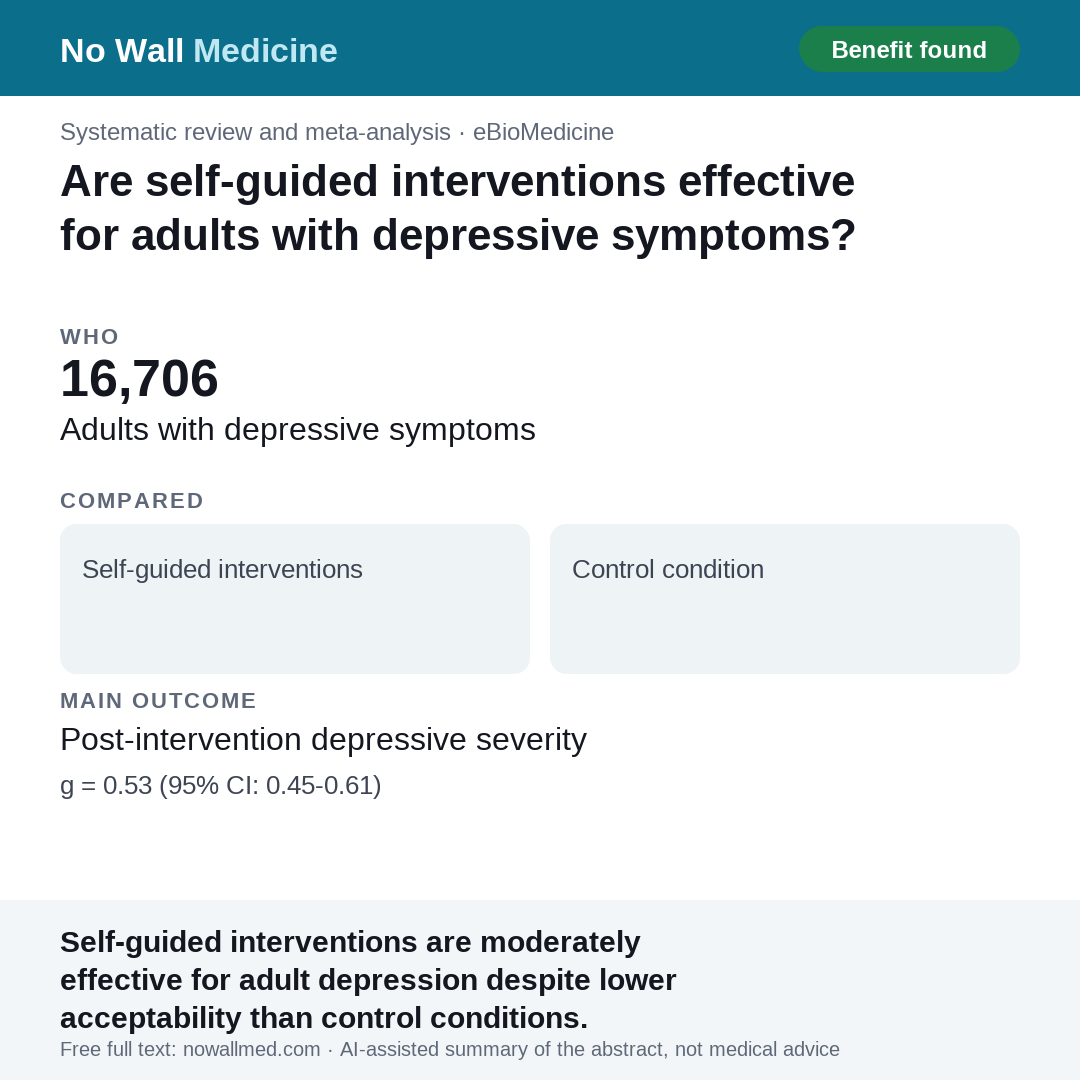
The effectiveness of self-guided interventions in adults with depressive symptoms: a systematic review and meta-analysis
Systematic review and meta-analysisBenefit found
Are self-guided interventions effective for adults with depressive symptoms?
Who
16,706
Adults with depressive symptoms
Compared
Self-guided interventions
Control condition
Main outcome
Post-intervention depressive severity
Result: g = 0.53 (95% CI: 0.45-0.61)
Bottom line: Self-guided interventions are moderately effective for adult depression despite lower acceptability than control conditions.
Limitation: Most studies showed a moderate to high risk of bias.
eBioMedicine · 2024-06-14Download image
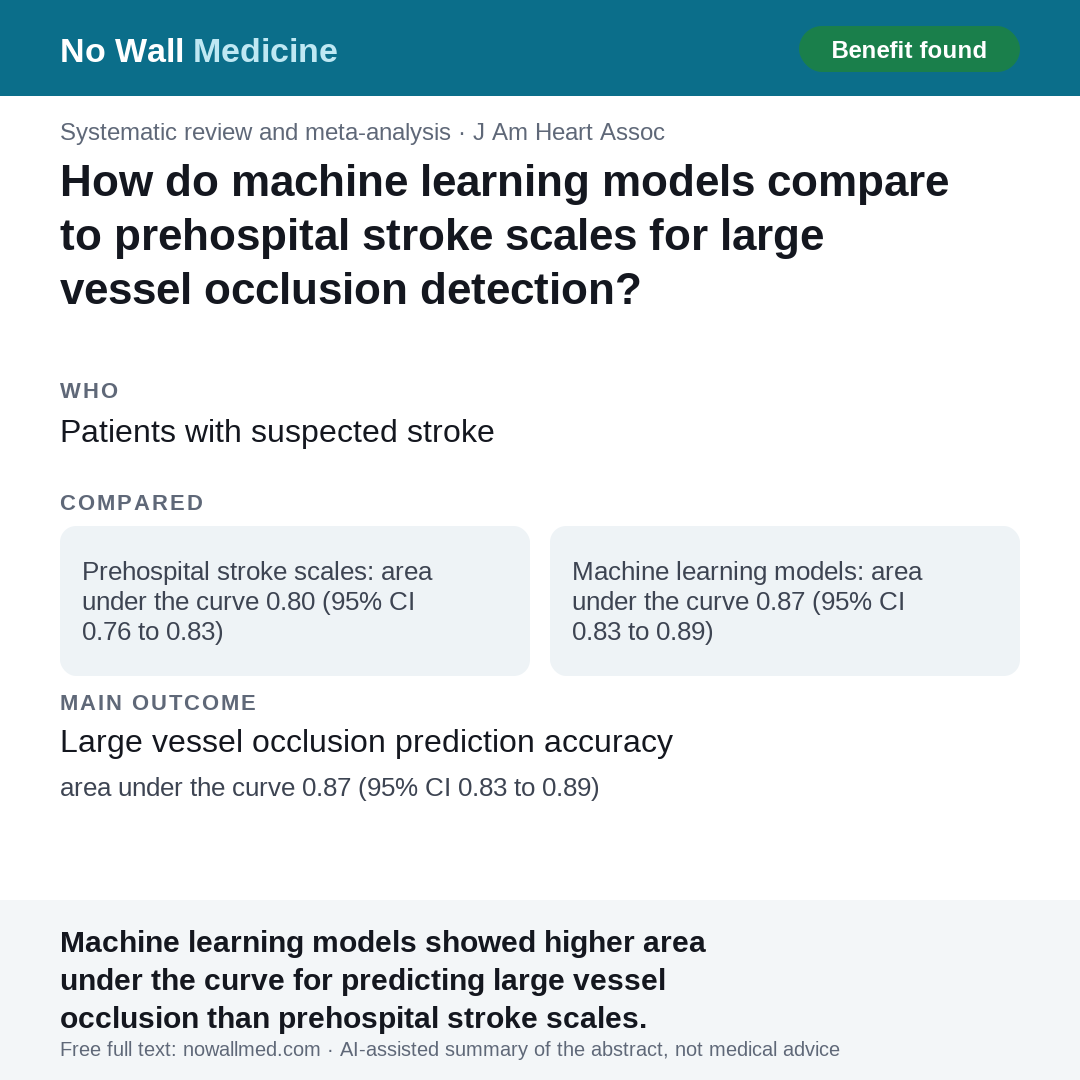
Systematic Review and Meta-Analysis of Prehospital Machine Learning Scores as Screening Tools for Early Detection of Large Vessel Occlusion in Patients With Suspected Stroke
Systematic review and meta-analysisBenefit found
How do machine learning models compare to prehospital stroke scales for large vessel occlusion detection?
Who
Patients with suspected stroke
Compared
Prehospital stroke scales: area under the curve 0.80 (95% CI 0.76 to 0.83)
Machine learning models: area under the curve 0.87 (95% CI 0.83 to 0.89)
Main outcome
Large vessel occlusion prediction accuracy
Result: area under the curve 0.87 (95% CI 0.83 to 0.89)
Bottom line: Machine learning models showed higher area under the curve for predicting large vessel occlusion than prehospital stroke scales.
Limitation: Absence of prospective external validation, limited sample sizes, and lack of real-world performance data.
J Am Heart Assoc · 2024-06-14Download image
Toxin for Treating Raynaud Conditions in Hands (The TORCH Study): A Systematic Review and Meta-analysis
Systematic review and meta-analysisBenefit found
Is botulinum toxin type A effective for treating primary and secondary Raynaud disease?
Who
Patients with primary or secondary Raynaud disease
Compared
Botulinum toxin type A intervention: 81.95% pain visual analog scale score improvement
Botulinum toxin type A intervention: 79.37% digital ulcer healing
Main outcome
Pain visual analog scale score improvement and digital ulcer healing
Result: pain improvement 81.95% (95% CI 74.12-87.81); digital ulcer healing 79.37% (95% CI 62.45-89.9)
Bottom line: Botulinum toxin type A may effectively manage primary and secondary Raynaud disease by improving pain and healing digital ulcers.
Plast Reconstr Surg Glob Open · 2024-06-14Download image

Effect of remimazolam versus propofol anesthesia on postoperative delirium in neurovascular surgery: study protocol for a randomized controlled, non-inferiority trial
Randomized, double-blind, non-inferiority trialUnclear result
Is remimazolam non-inferior to propofol for postoperative delirium in neurovascular surgery?
Who
696
Adult patients undergoing elective neurovascular surgery
Compared
remimazolam
propofol-based total intravenous anesthesia
Main outcome
incidence of postoperative delirium within 5 days after surgery
Bottom line: This study protocol outlines a trial to compare remimazolam and propofol regarding postoperative delirium.
Perioper Med · 2024-06-14Download image

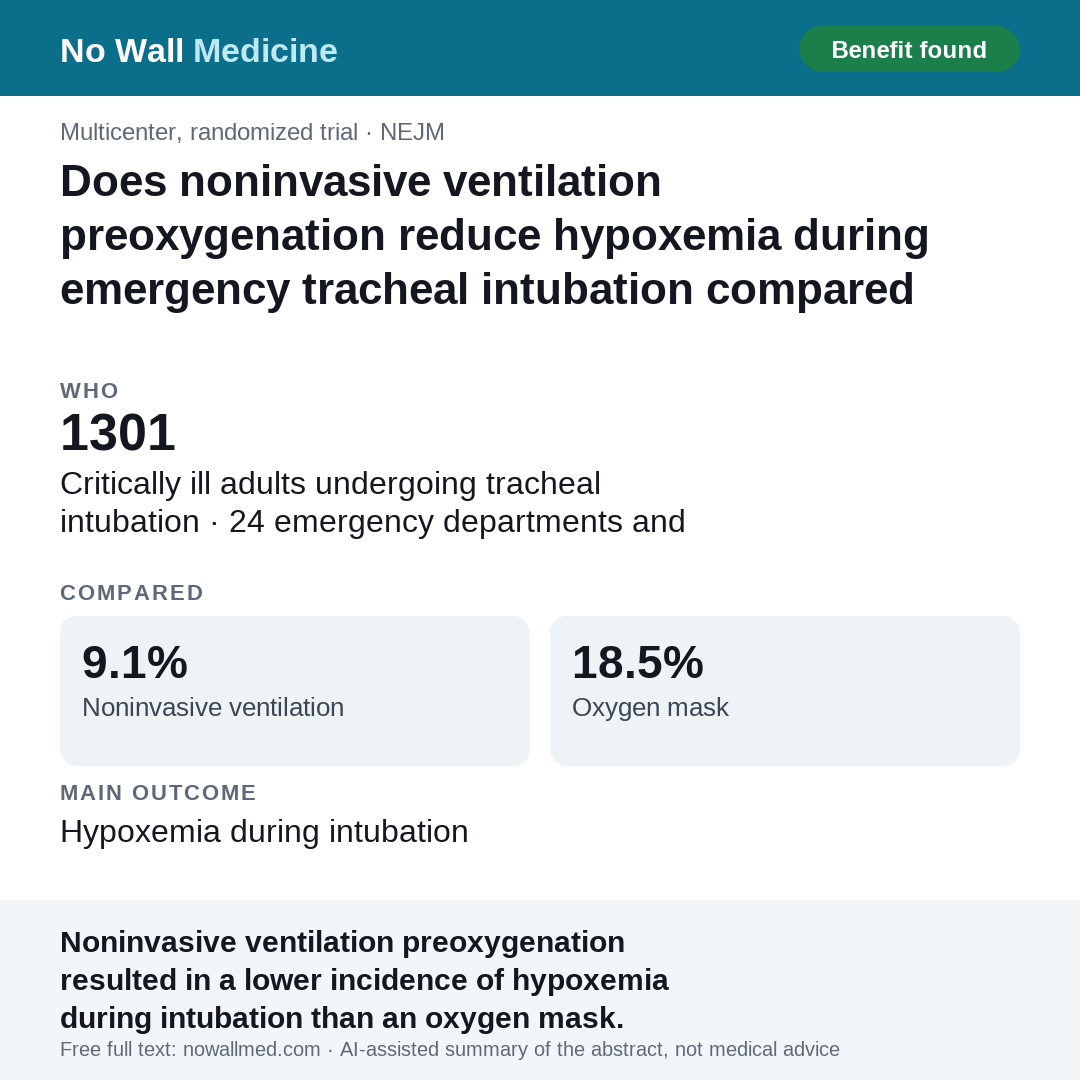
Noninvasive Ventilation for Preoxygenation during Emergency Intubation
Multicenter, randomized trialBenefit found
Does noninvasive ventilation preoxygenation reduce hypoxemia during emergency tracheal intubation compared to an oxygen mask?
Who
1301
Critically ill adults undergoing tracheal intubation · 24 emergency departments and intensive care units in the United States
Compared
9.1%Noninvasive ventilation (57/624)
18.5%Oxygen mask (118/637)
Main outcome
Hypoxemia during intubation
Result: difference, -9.4 percentage points (95% CI, -13.2 to -5.6)
Bottom line: Noninvasive ventilation preoxygenation resulted in a lower incidence of hypoxemia during intubation than an oxygen mask.
Funded by: U.S. Department of Defense
NEJM · 2024-06-13Download image
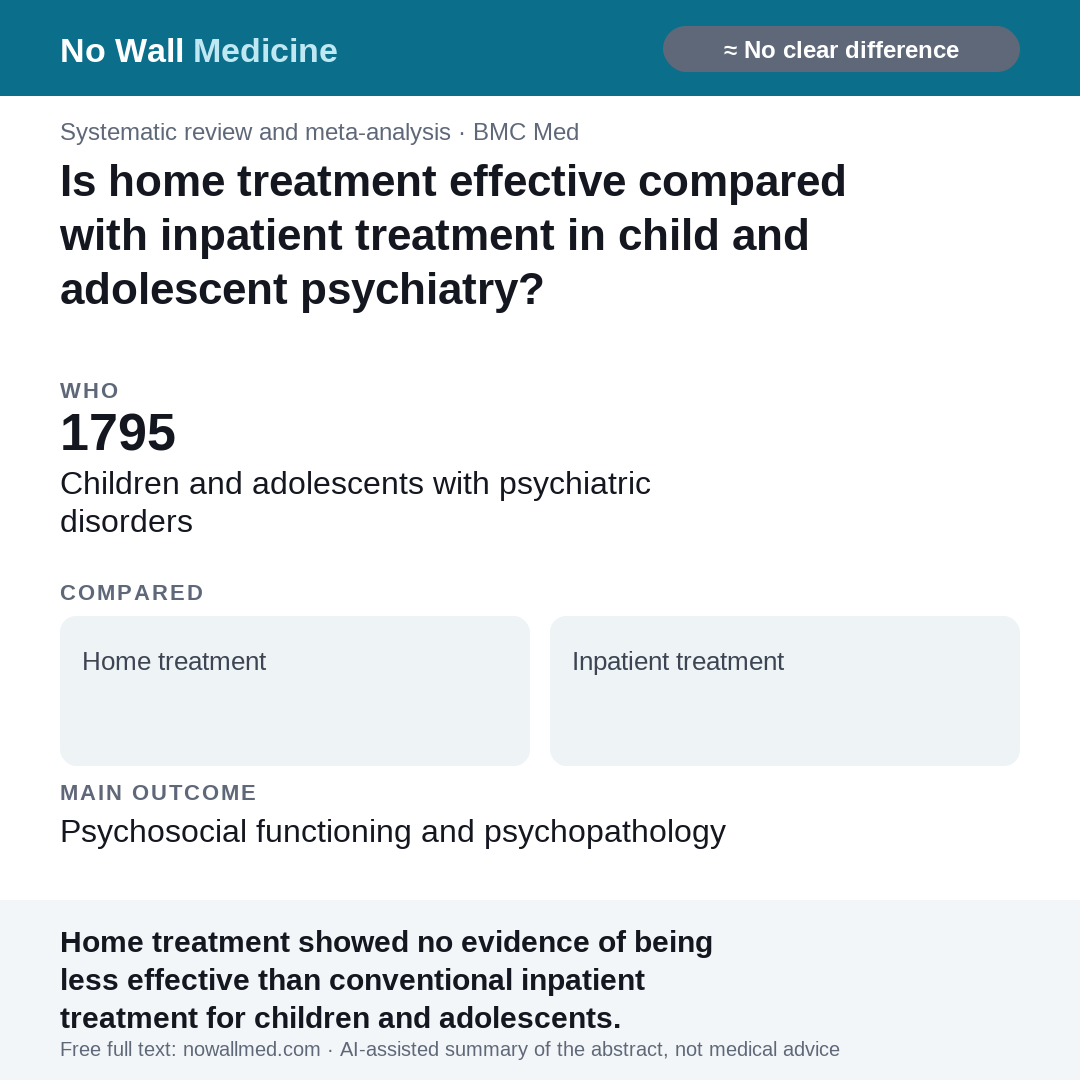
Effectiveness of home treatment in children and adolescents with psychiatric disorders-systematic review and meta-analysis
Systematic review and meta-analysisNo clear difference
Is home treatment effective compared with inpatient treatment in child and adolescent psychiatry?
Who
1795
Children and adolescents with psychiatric disorders
Compared
Home treatment
Inpatient treatment
Main outcome
Psychosocial functioning and psychopathology
Result: SMD 0.05 [-0.18; 0.30] for psychosocial functioning and SMD 0.10 [-0.17; 0.37] for psychopathology
Bottom line: Home treatment showed no evidence of being less effective than conventional inpatient treatment for children and adolescents.
Limitation: Generalisability is reduced by limitations in the existing literature.
BMC Med · 2024-06-13Download image
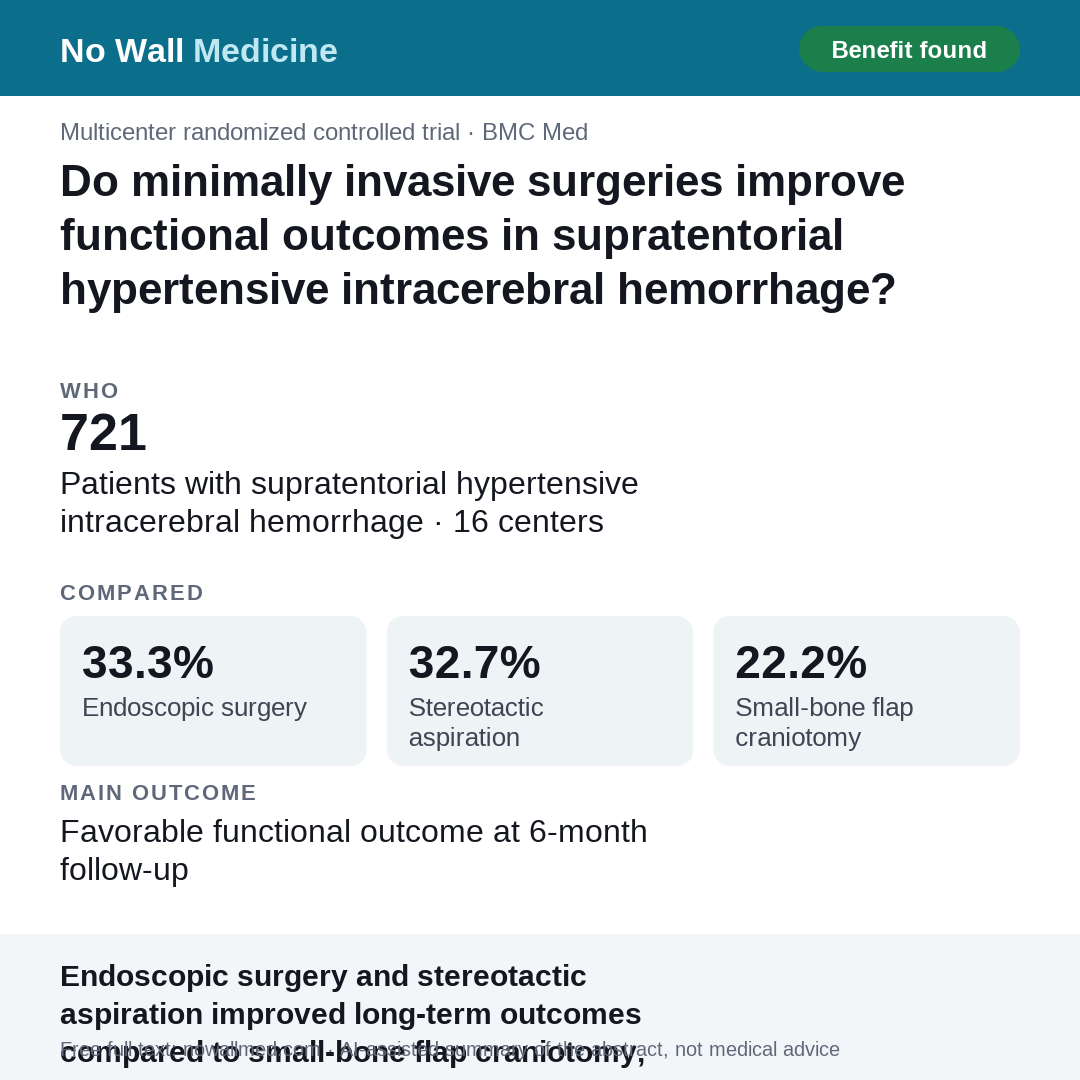
Minimally invasive surgeries for spontaneous hypertensive intracerebral hemorrhage (MISICH): a multicenter randomized controlled trial
Multicenter randomized controlled trialBenefit found
Do minimally invasive surgeries improve functional outcomes in supratentorial hypertensive intracerebral hemorrhage?
Who
721
Patients with supratentorial hypertensive intracerebral hemorrhage · 16 centers
Compared
33.3%Endoscopic surgery (73 of 219)
32.7%Stereotactic aspiration (72 of 220)
22.2%Small-bone flap craniotomy (47 of 212)
Main outcome
Favorable functional outcome at 6-month follow-up
Bottom line: Endoscopic surgery and stereotactic aspiration improved long-term outcomes compared to small-bone flap craniotomy, especially for deep hemorrhages.
BMC Med · 2024-06-13Download image