Visual abstracts
New randomized trials and meta-analyses from leading journals at a glance: who was studied, what was compared, and what was found. Every paper is free to read in full.
All specialtiesCardiology 4877Oncology 4138Gastroenterology & Hepatology 1942Infectious Disease 3837Neurology 1905Psychiatry & Mental Health 2273Pulmonology 2143Critical Care 1365Endocrinology & Diabetes 2580Pediatrics 2980Surgery 2559Orthopedics & Sports Medicine 931Neurosurgery 537Cardiothoracic & Vascular Surgery 674Plastic & Reconstructive Surgery 591Nephrology 1133Rheumatology 823Hematology 1109Dermatology 621Ophthalmology 543Obstetrics & Gynecology 1686Public & Global Health 1058Radiology & Imaging 648Anesthesiology 986Urology 764ENT (Otolaryngology) 503Emergency Medicine 511Allergy & Immunology 313Geriatrics 981Family Medicine & Primary Care 562Medical Genetics & Genomics 676Pathology & Laboratory Medicine 159Physical Medicine & Rehabilitation 757Palliative Care 444Nutrition 1588Digital Health & AI 2201General Medicine 321
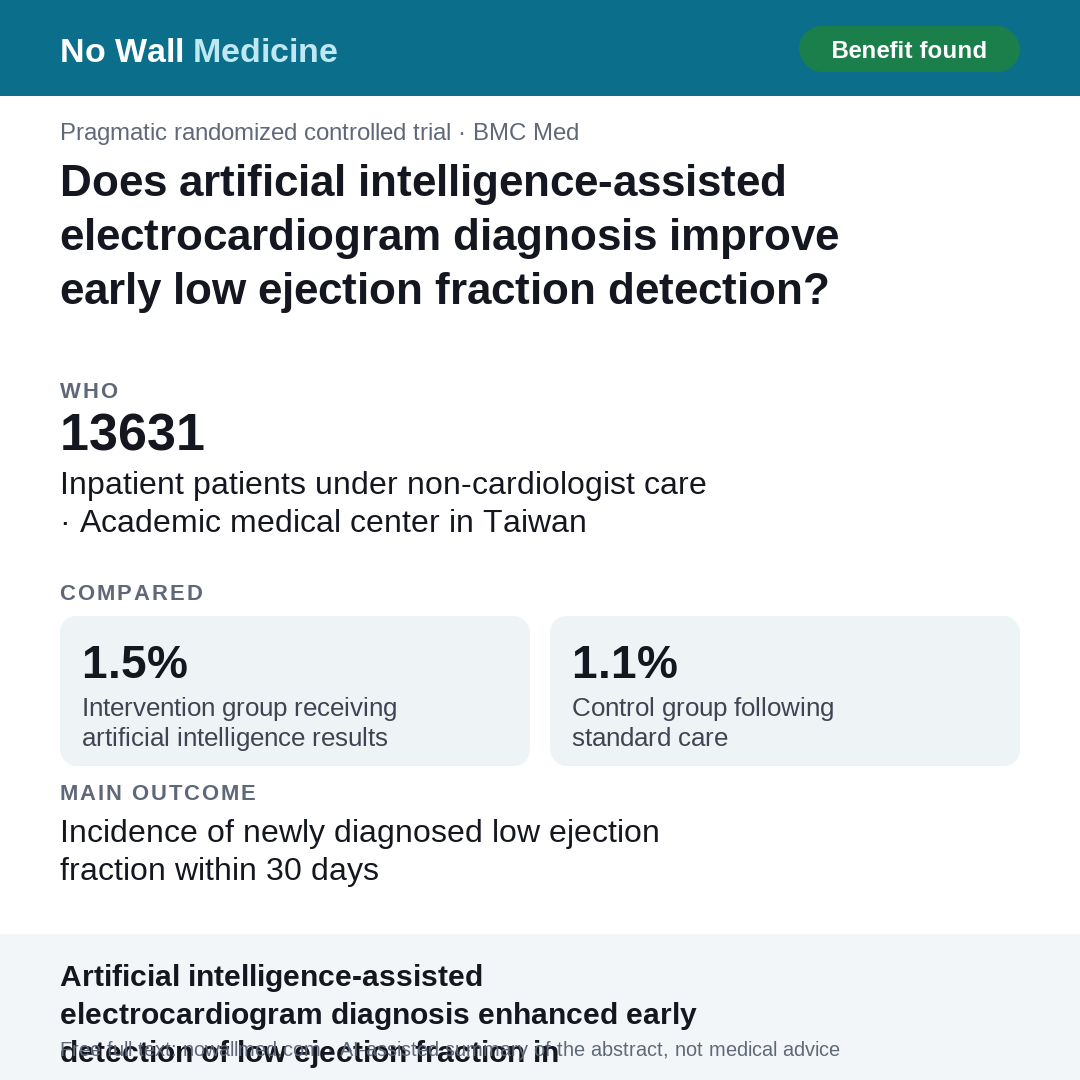
Artificial intelligence-assisted diagnosis and prognostication in low ejection fraction using electrocardiograms in inpatient department: a pragmatic randomized controlled trial
Pragmatic randomized controlled trialBenefit found
Does artificial intelligence-assisted electrocardiogram diagnosis improve early low ejection fraction detection?
Who
13631
Inpatient patients under non-cardiologist care · Academic medical center in Taiwan
Compared
1.5%Intervention group receiving artificial intelligence results
1.1%Control group following standard care
Main outcome
Incidence of newly diagnosed low ejection fraction within 30 days
Result: hazard ratio 1.50 (95% CI 1.11-2.03)
Bottom line: Artificial intelligence-assisted electrocardiogram diagnosis enhanced early detection of low ejection fraction in inpatient settings.
BMC Med · 2025-06-09Download image
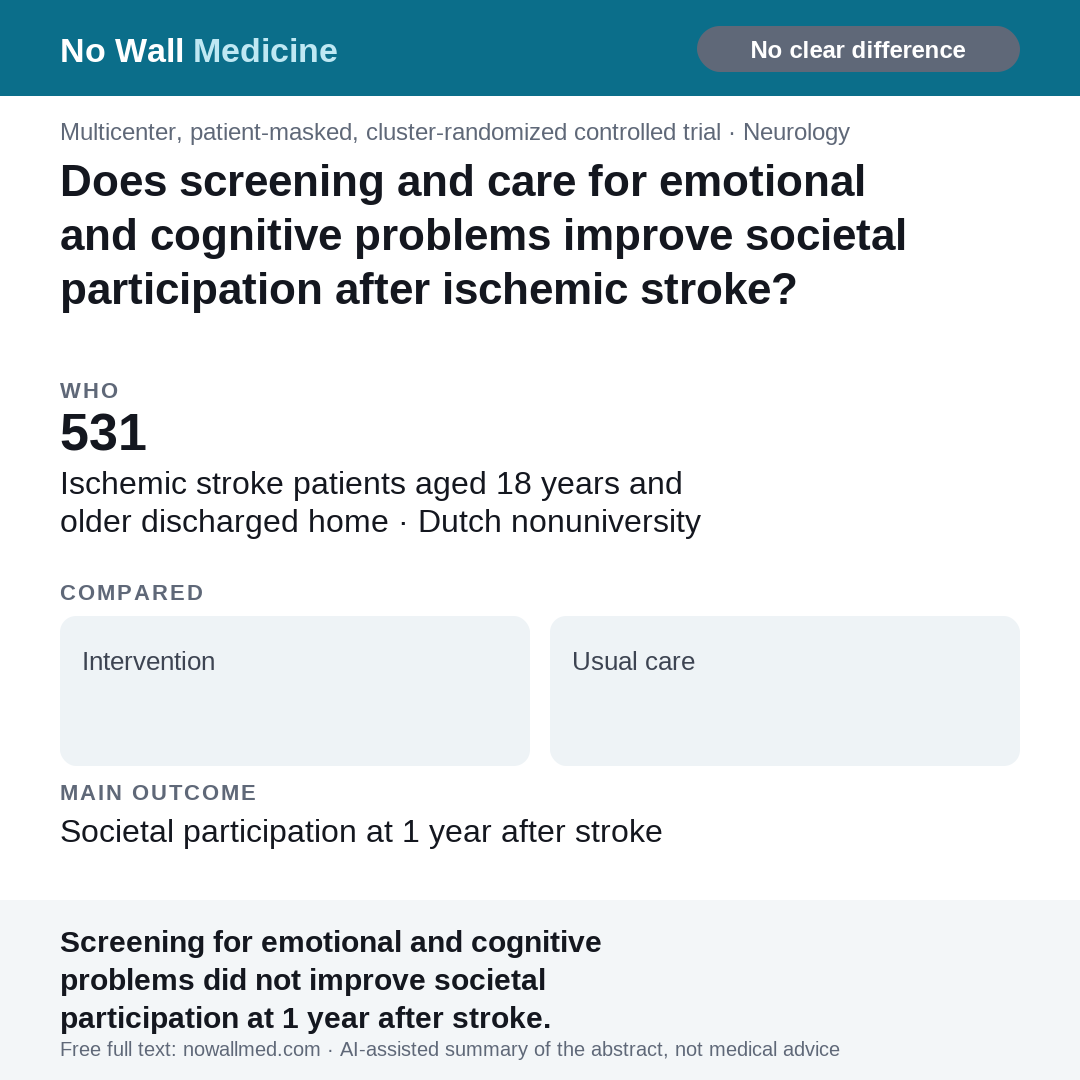
Screening and Care for Emotional and Cognitive Problems After Ischemic Stroke: Results of a Multicenter, Cluster-Randomized Controlled Trial
Multicenter, patient-masked, cluster-randomized controlled trialNo clear difference
Does screening and care for emotional and cognitive problems improve societal participation after ischemic stroke?
Who
531
Ischemic stroke patients aged 18 years and older discharged home · Dutch nonuniversity hospitals with a stroke unit
Compared
Intervention
Usual care
Main outcome
Societal participation at 1 year after stroke
Result: mean difference 0.77 (95% CI -2.46 to 4.06)
Bottom line: Screening for emotional and cognitive problems did not improve societal participation at 1 year after stroke.
Neurology · 2025-06-09Download image
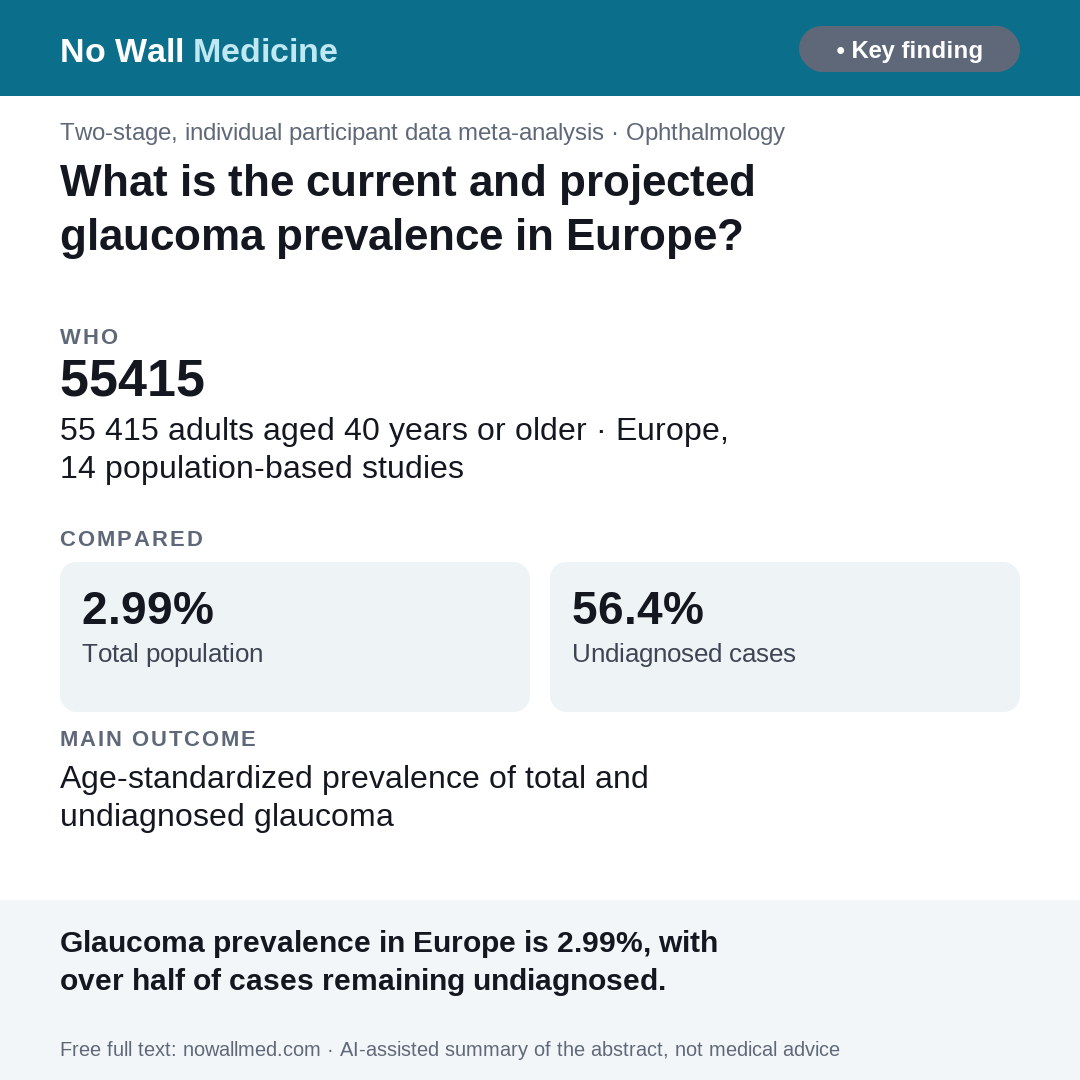
Prevalence of Glaucoma in Europe and Projections to 2050: Findings from the European Eye Epidemiology Consortium
Two-stage, individual participant data meta-analysisHarm found
What is the current and projected glaucoma prevalence in Europe?
Who
55415
55 415 adults aged 40 years or older · Europe, 14 population-based studies
Compared
2.99%Total population (95% CI 2.86%-3.12%)
56.4%Undiagnosed cases
Main outcome
Age-standardized prevalence of total and undiagnosed glaucoma
Bottom line: Glaucoma prevalence in Europe is 2.99%, with over half of cases remaining undiagnosed.
Ophthalmology · 2025-06-09Download image
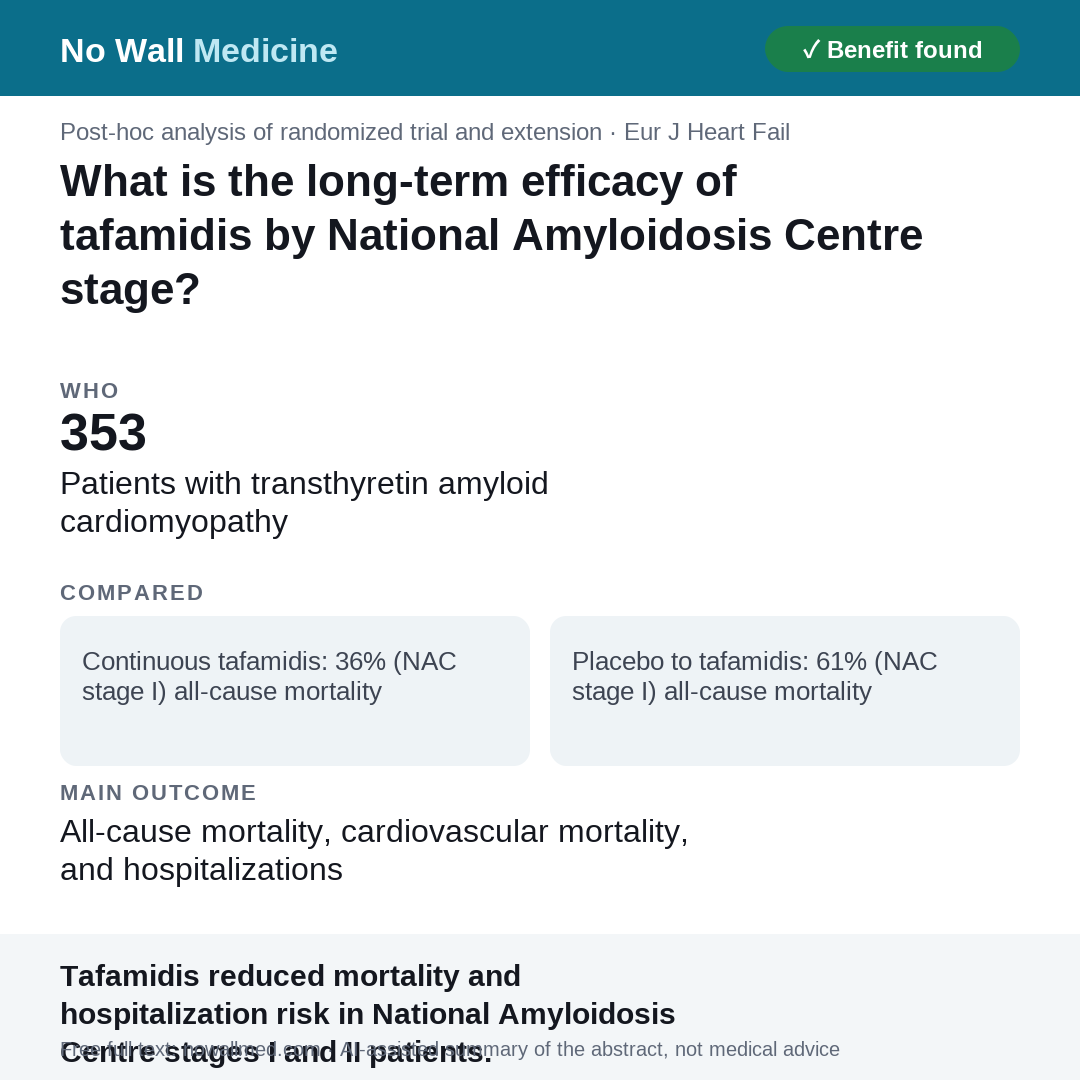
Long-term efficacy of tafamidis in patients with transthyretin amyloid cardiomyopathy by National Amyloidosis Centre stage
Post-hoc analysis of randomized trial and extensionBenefit found
What is the long-term efficacy of tafamidis by National Amyloidosis Centre stage?
Who
353
Patients with transthyretin amyloid cardiomyopathy
Compared
Continuous tafamidis: 36% (NAC stage I) all-cause mortality
Placebo to tafamidis: 61% (NAC stage I) all-cause mortality
Main outcome
All-cause mortality, cardiovascular mortality, and hospitalizations
Result: hazard ratio 0.43 (NAC stage I); hazard ratio 0.51 (NAC stage II)
Bottom line: Tafamidis reduced mortality and hospitalization risk in National Amyloidosis Centre stages I and II patients.
Eur J Heart Fail · 2025-06-09Download image
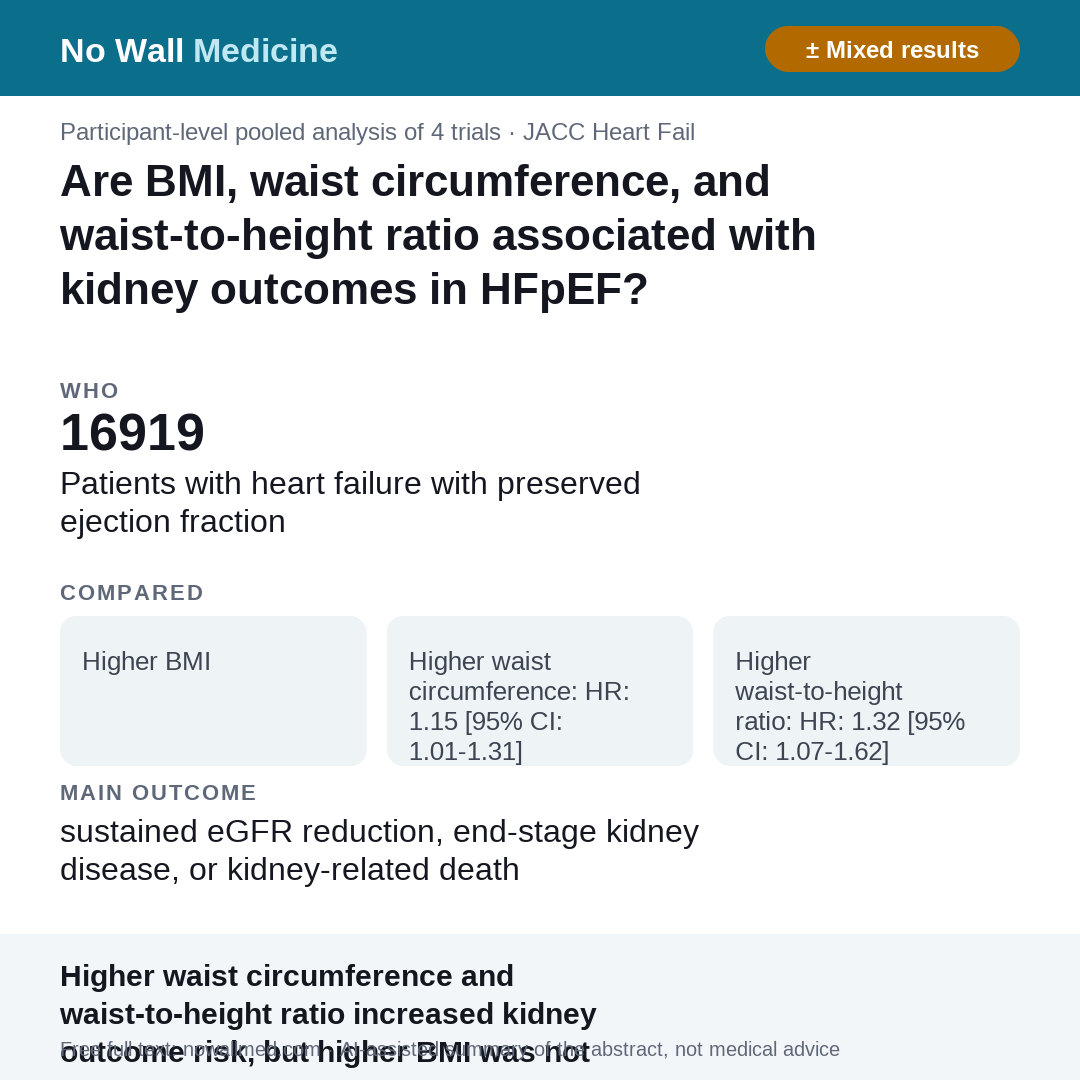
Obesity and Risk of Kidney Outcomes in Heart Failure With Preserved Ejection Fraction: A Participant-Level Pooled Analysis of 4 Contemporary Trials
Participant-level pooled analysis of 4 trialsMixed results
Are BMI, waist circumference, and waist-to-height ratio associated with kidney outcomes in HFpEF?
Who
16919
Patients with heart failure with preserved ejection fraction
Compared
Higher BMI
Higher waist circumference: HR: 1.15 [95% CI: 1.01-1.31]
Higher waist-to-height ratio: HR: 1.32 [95% CI: 1.07-1.62]
Main outcome
sustained eGFR reduction, end-stage kidney disease, or kidney-related death
Result: BMI HR: 0.99 (95% CI: 0.96-1.02)
Bottom line: Higher waist circumference and waist-to-height ratio increased kidney outcome risk, but higher BMI was not associated with risk.
JACC Heart Fail · 2025-06-09Download image
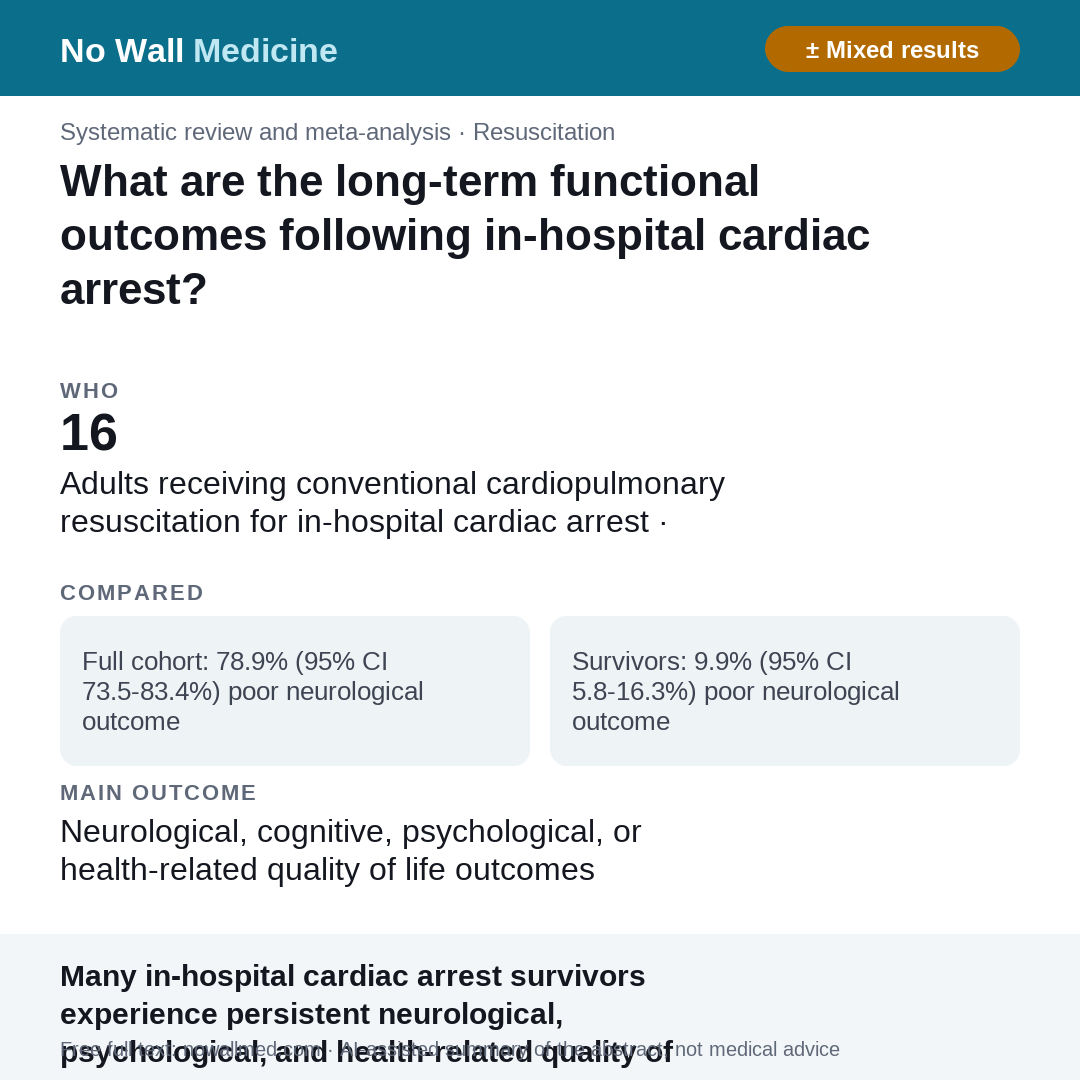
Long-term functional outcomes and health-related quality of life following in-hospital cardiac arrest (IHCA): A systematic review
Systematic review and meta-analysisMixed results
What are the long-term functional outcomes following in-hospital cardiac arrest?
Who
16
Adults receiving conventional cardiopulmonary resuscitation for in-hospital cardiac arrest · 21 countries
Compared
Full cohort: 78.9% (95% CI 73.5-83.4%) poor neurological outcome
Survivors: 9.9% (95% CI 5.8-16.3%) poor neurological outcome
Main outcome
Neurological, cognitive, psychological, or health-related quality of life outcomes
Bottom line: Many in-hospital cardiac arrest survivors experience persistent neurological, psychological, and health-related quality of life impairments.
Limitation: Wide variation in outcome measures, follow-up duration, and reporting methods limited synthesis.
Resuscitation · 2025-06-09Download image
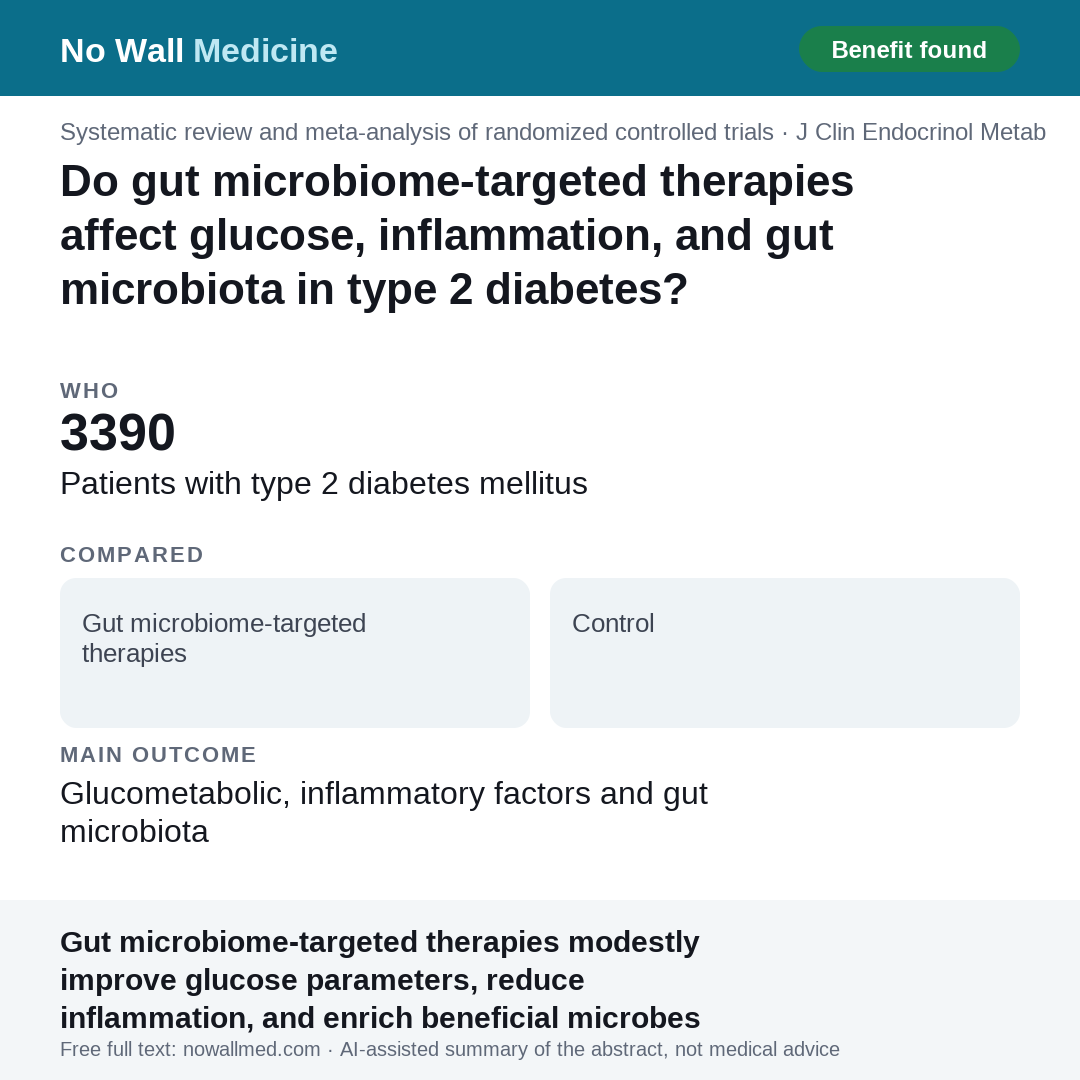
Glucose Parameters, Inflammation Markers, and Gut Microbiota Changes of Gut Microbiome-Targeted Therapies in Type 2 Diabetes Mellitus: A Systematic Review and Meta-Analysis of Randomized Controlled Trials
Systematic review and meta-analysis of randomized controlled trialsBenefit found
Do gut microbiome-targeted therapies affect glucose, inflammation, and gut microbiota in type 2 diabetes?
Who
3390
Patients with type 2 diabetes mellitus
Compared
Gut microbiome-targeted therapies
Control
Main outcome
Glucometabolic, inflammatory factors and gut microbiota
Result: HbA1c MD -0.28% (95% CI -0.39, -0.17)
Bottom line: Gut microbiome-targeted therapies modestly improve glucose parameters, reduce inflammation, and enrich beneficial microbes in type 2 diabetes patients.
Limitation: Heterogeneity and limited long-term data
J Clin Endocrinol Metab · 2025-06-09Download image
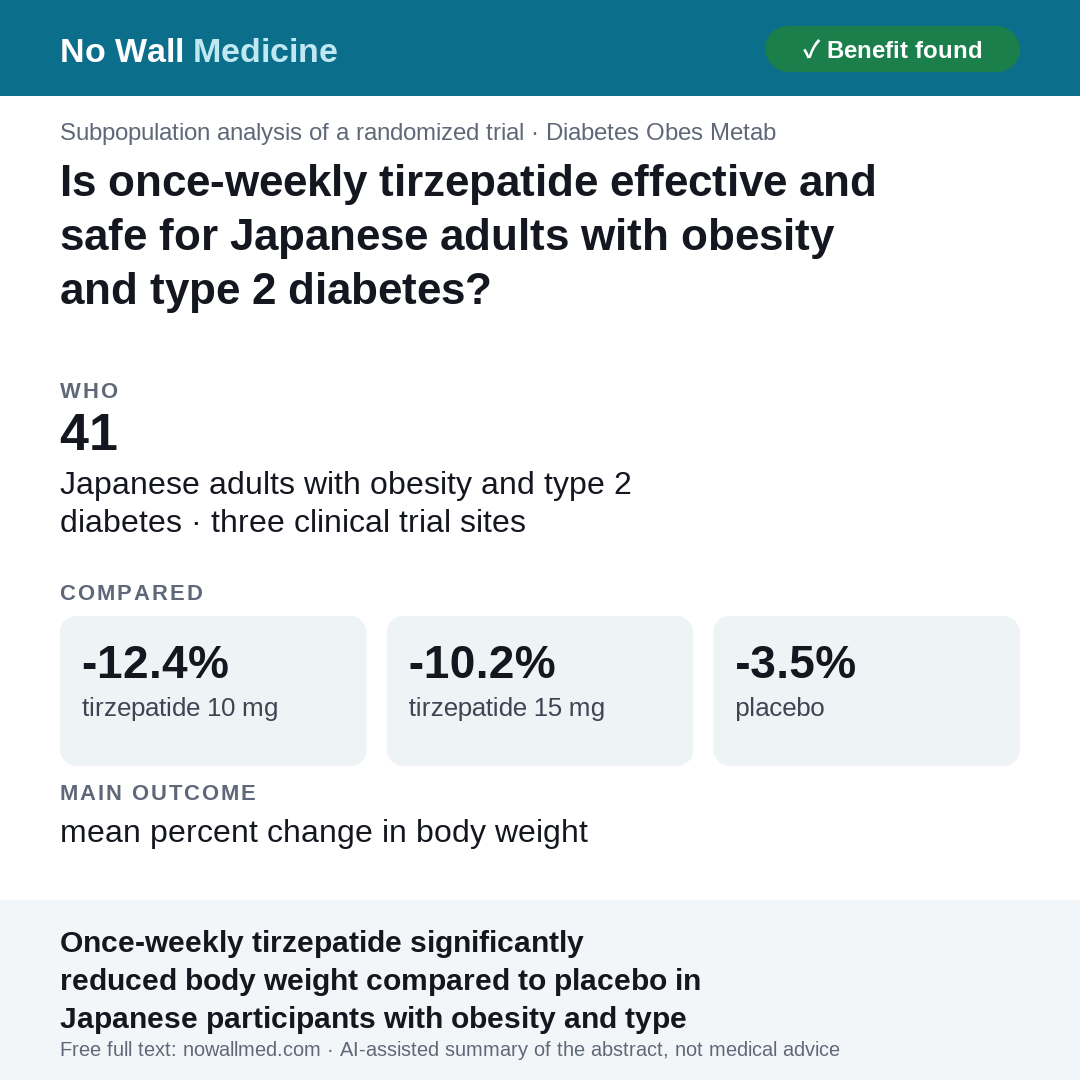
Efficacy and safety of once-weekly tirzepatide in Japanese participants with type 2 diabetes who have obesity or overweight: Subpopulation analysis of the SURMOUNT-2 trial
Subpopulation analysis of a randomized trialBenefit found
Is once-weekly tirzepatide effective and safe for Japanese adults with obesity and type 2 diabetes?
Who
41
Japanese adults with obesity and type 2 diabetes · three clinical trial sites
Compared
-12.4%tirzepatide 10 mg (1.8%)
-10.2%tirzepatide 15 mg (1.8%)
-3.5%placebo (1.8%)
Main outcome
mean percent change in body weight
Bottom line: Once-weekly tirzepatide significantly reduced body weight compared to placebo in Japanese participants with obesity and type 2 diabetes.
Diabetes Obes Metab · 2025-06-09Download image
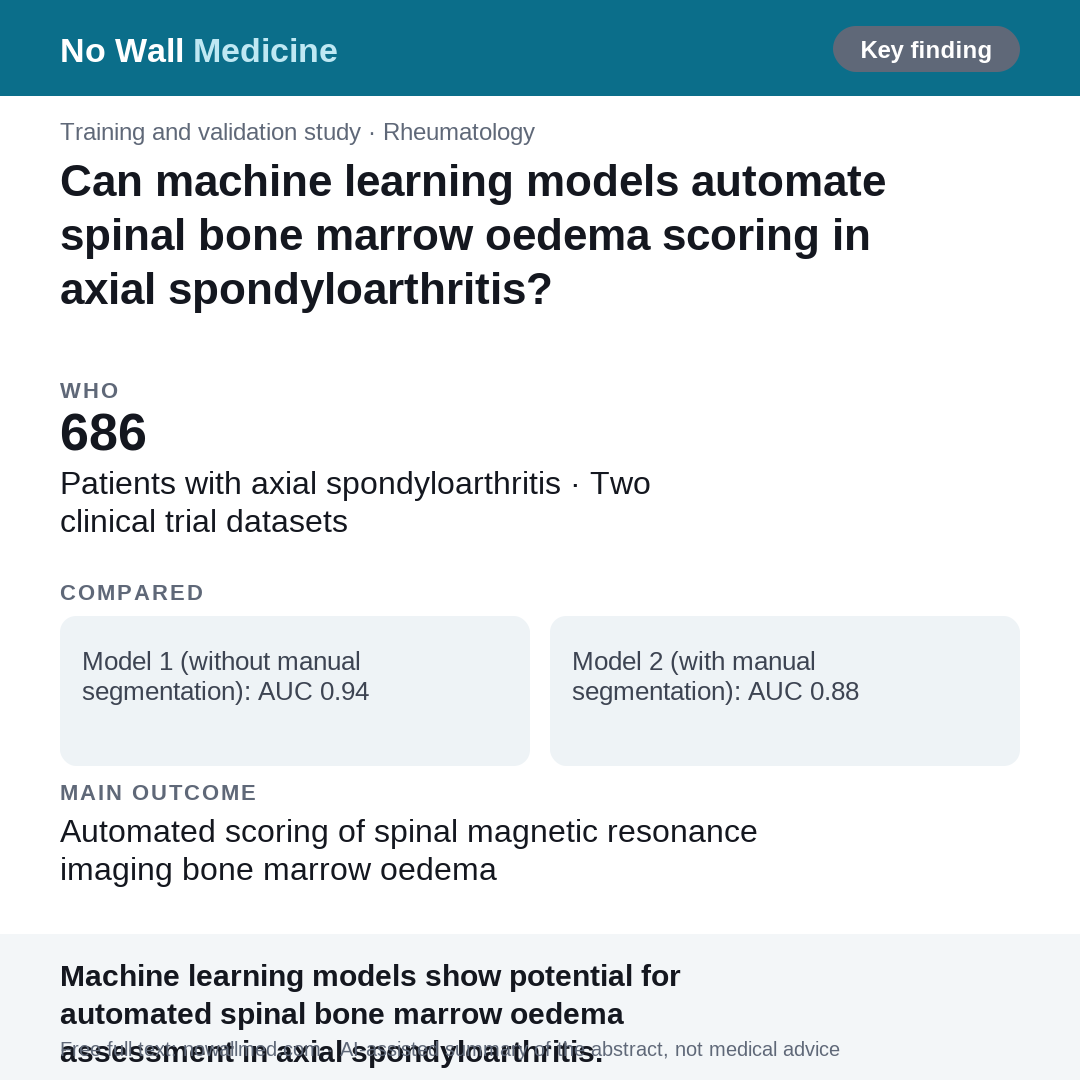
Automated detection of spinal bone marrow oedema in axial spondyloarthritis: training and validation using two large phase 3 trial datasets
Training and validation studyBenefit found
Can machine learning models automate spinal bone marrow oedema scoring in axial spondyloarthritis?
Who
686
Patients with axial spondyloarthritis · Two clinical trial datasets
Compared
Model 1 (without manual segmentation): AUC 0.94
Model 2 (with manual segmentation): AUC 0.88
Main outcome
Automated scoring of spinal magnetic resonance imaging bone marrow oedema
Bottom line: Machine learning models show potential for automated spinal bone marrow oedema assessment in axial spondyloarthritis.
Rheumatology · 2025-06-09Download image
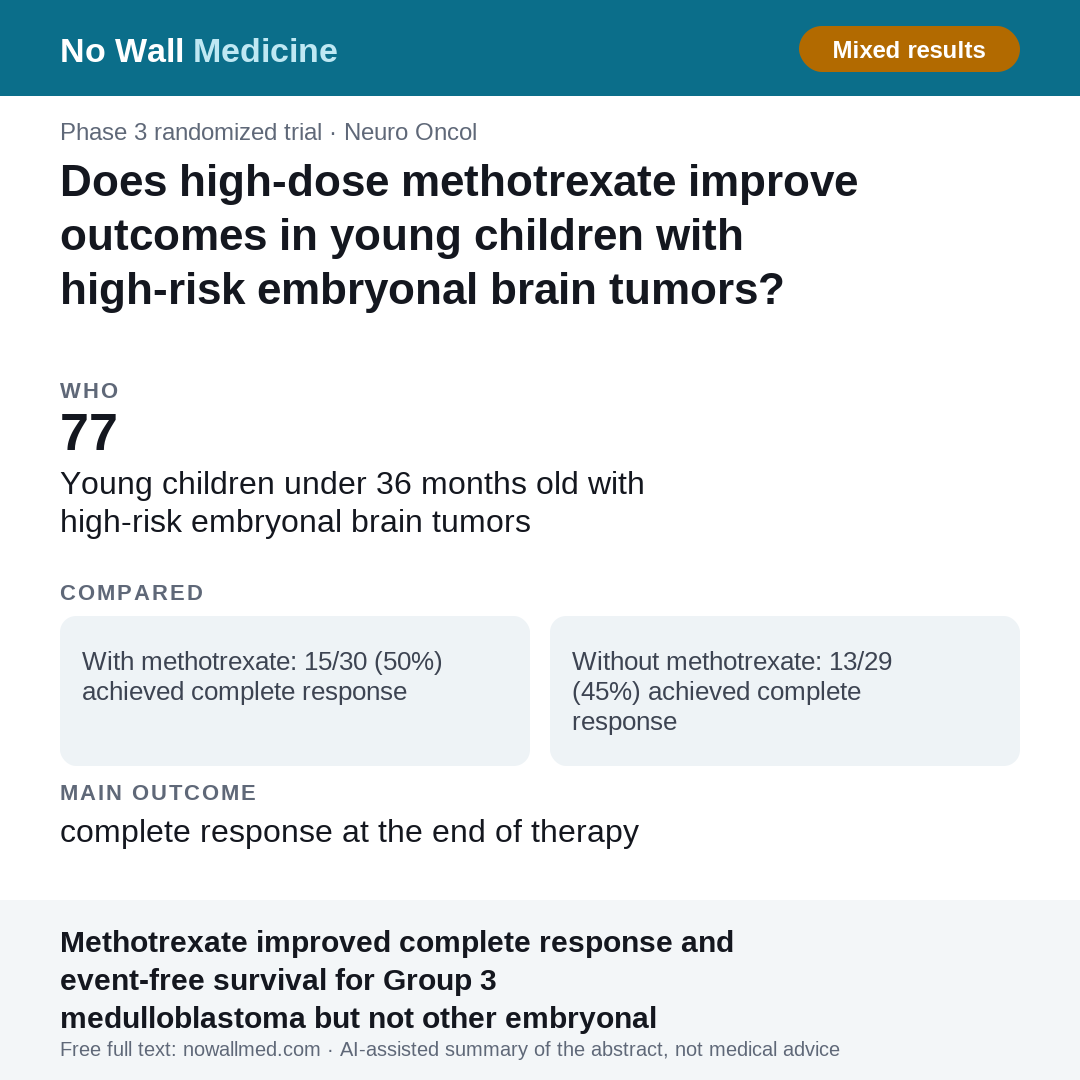
Phase 3 randomized trial of high-dose methotrexate for young children with high-risk embryonal brain tumors: A report from the Children's Oncology Group
Phase 3 randomized trialMixed results
Does high-dose methotrexate improve outcomes in young children with high-risk embryonal brain tumors?
Who
77
Young children under 36 months old with high-risk embryonal brain tumors
Compared
With methotrexate: 15/30 (50%) achieved complete response
Without methotrexate: 13/29 (45%) achieved complete response
Main outcome
complete response at the end of therapy
Bottom line: Methotrexate improved complete response and event-free survival for Group 3 medulloblastoma but not other embryonal tumor diagnoses.
Neuro Oncol · 2025-06-09Download image
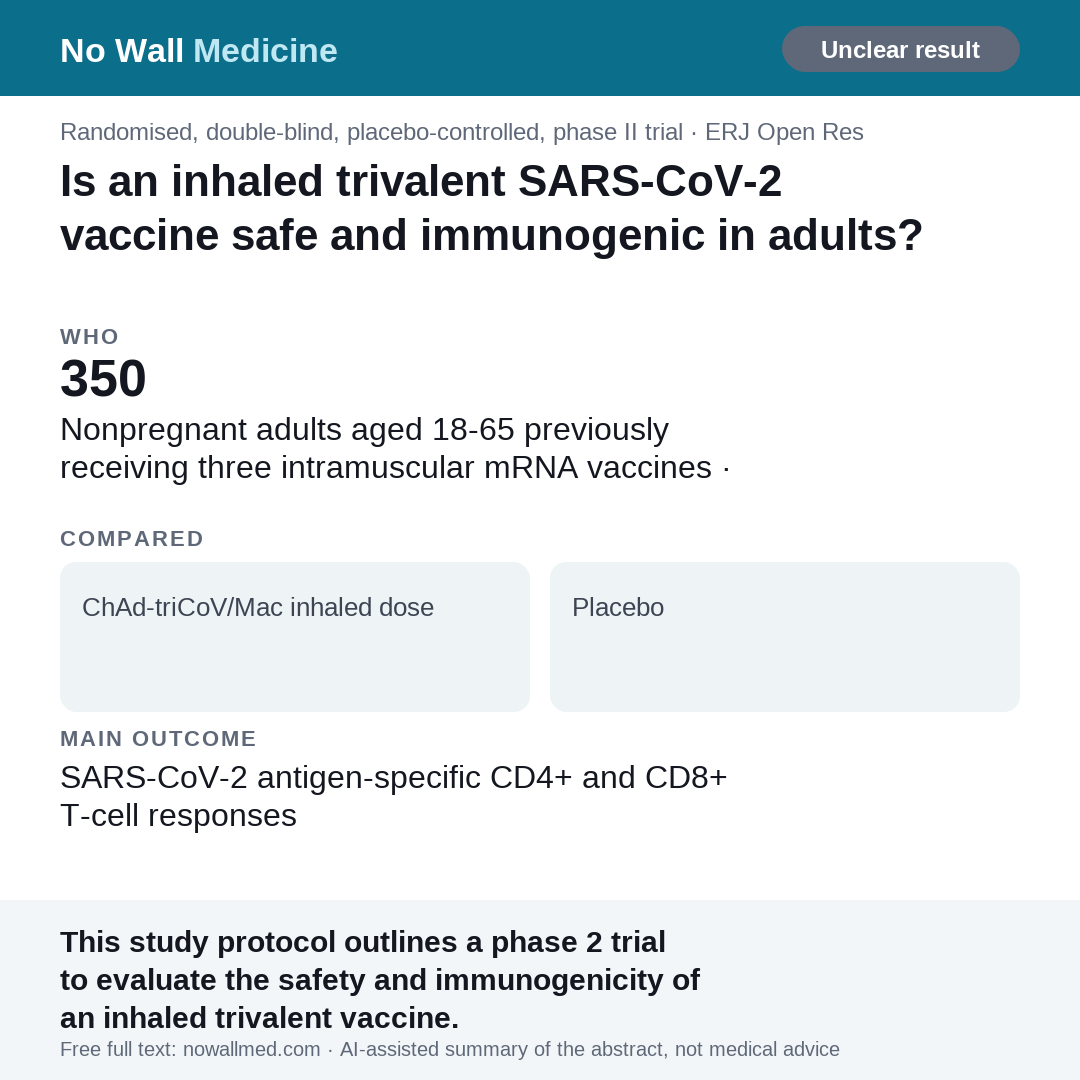
AeroVax: study protocol for a randomised, double-blind, placebo-controlled, phase 2 trial to evaluate safety and immunogenicity of a next-generation COVID-19 vaccine delivered by inhaled aerosol to humans
Randomised, double-blind, placebo-controlled, phase II trialUnclear result
Is an inhaled trivalent SARS-CoV-2 vaccine safe and immunogenic in adults?
Who
350
Nonpregnant adults aged 18-65 previously receiving three intramuscular mRNA vaccines · Multicentre
Compared
ChAd-triCoV/Mac inhaled dose
Placebo
Main outcome
SARS-CoV-2 antigen-specific CD4+ and CD8+ T-cell responses
Bottom line: This study protocol outlines a phase 2 trial to evaluate the safety and immunogenicity of an inhaled trivalent vaccine.
ERJ Open Res · 2025-06-09Download image
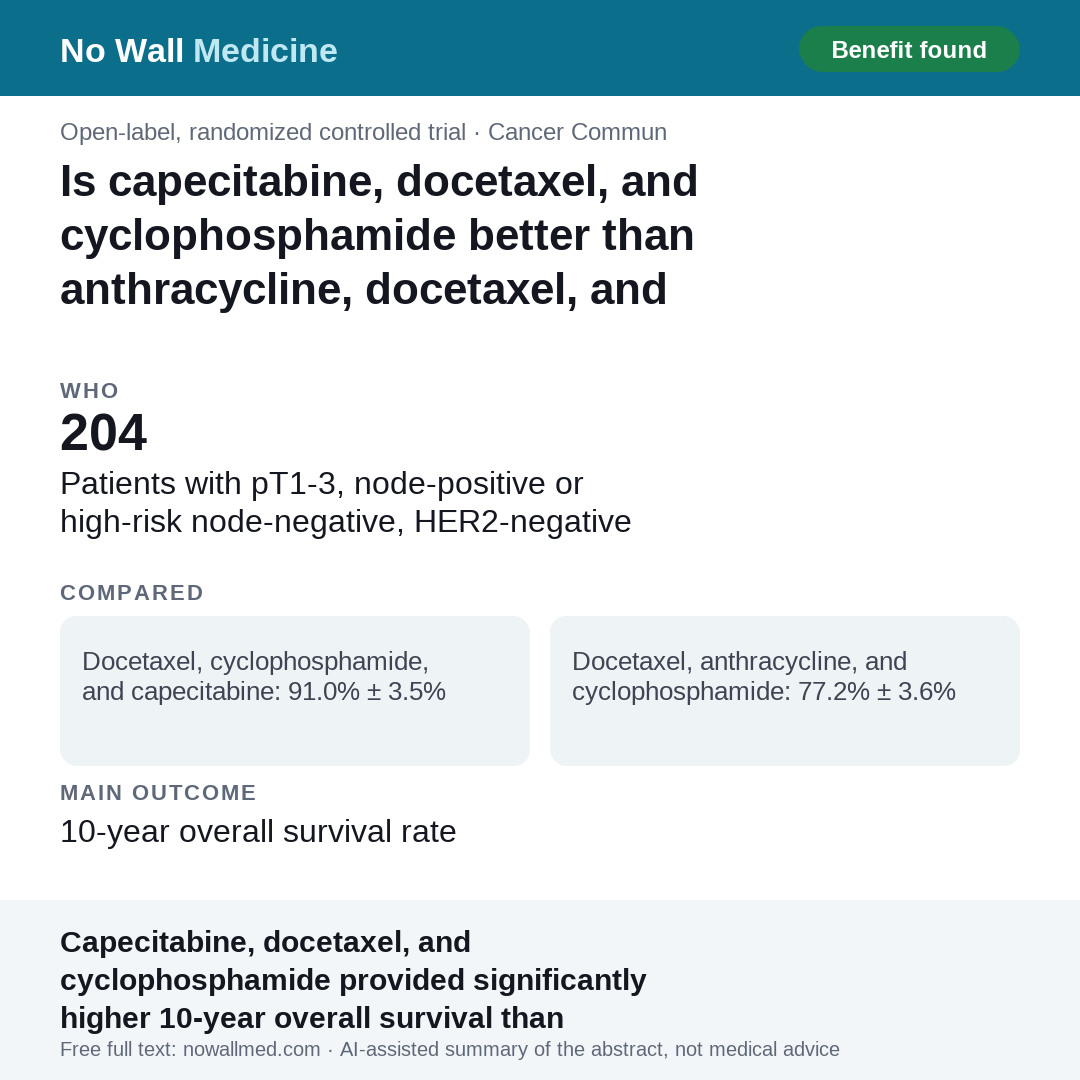
Adjuvant capecitabine in combination with docetaxel and cyclophosphamide versus anthracycline plus docetaxel and cyclophosphamide regimen in women with high-risk, HER2-negative breast cancer: An open-label, randomized controlled trial
Open-label, randomized controlled trialBenefit found
Is capecitabine, docetaxel, and cyclophosphamide better than anthracycline, docetaxel, and cyclophosphamide for high-risk HER2-negative breast cancer?
Who
204
Patients with pT1-3, node-positive or high-risk node-negative, HER2-negative early-stage breast cancer
Compared
Docetaxel, cyclophosphamide, and capecitabine: 91.0% ± 3.5%
Docetaxel, anthracycline, and cyclophosphamide: 77.2% ± 3.6%
Main outcome
10-year overall survival rate
Bottom line: Capecitabine, docetaxel, and cyclophosphamide provided significantly higher 10-year overall survival than anthracycline-based regimens.
Limitation: The study warrants further investigation in larger cohorts.
Cancer Commun · 2025-06-09Download image
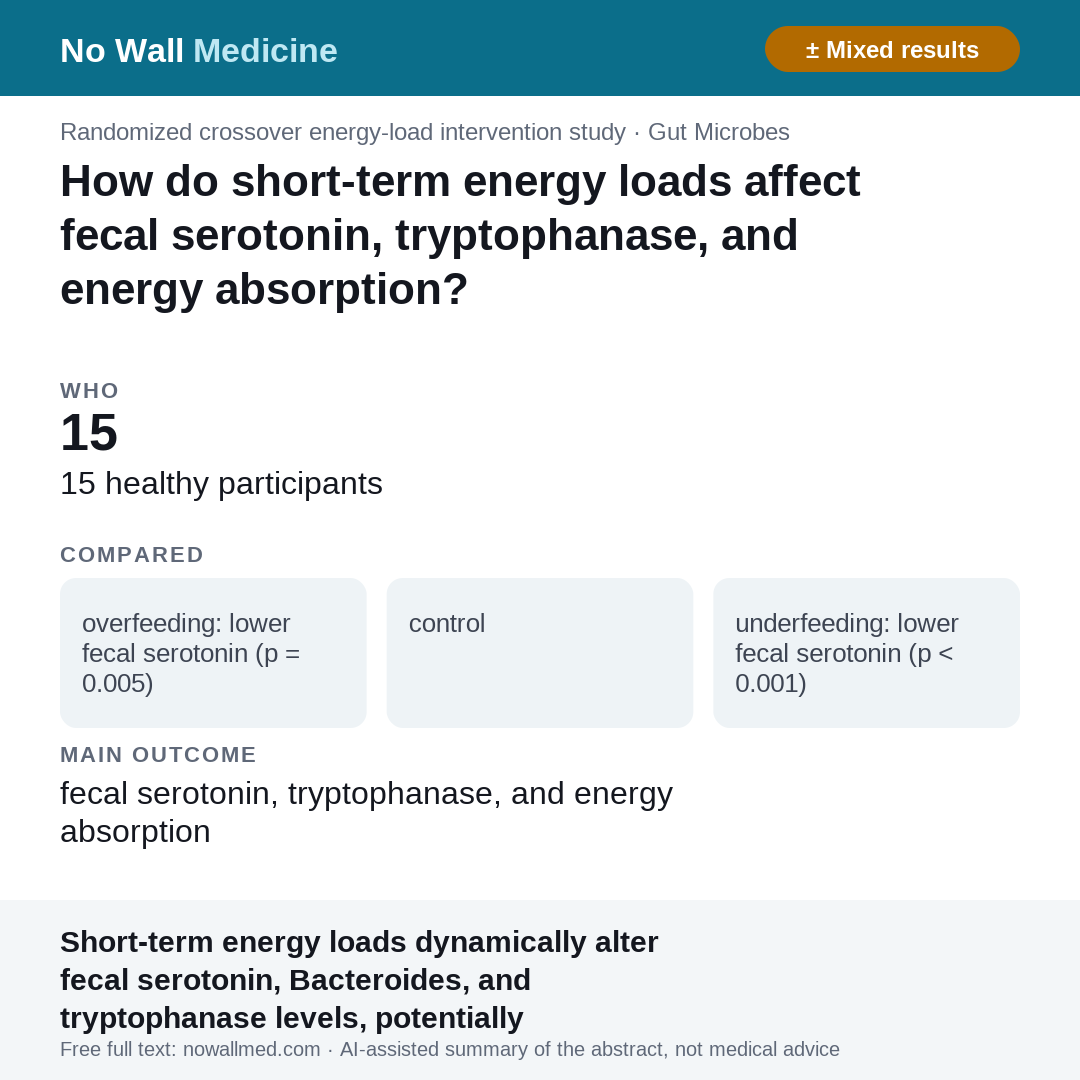
Effect of short-term dietary intervention on fecal serotonin, gut microbiome-derived tryptophanase, and energy absorption in a randomized crossover trial: an exploratory analysis
Randomized crossover energy-load intervention studyMixed results
How do short-term energy loads affect fecal serotonin, tryptophanase, and energy absorption?
Who
15
15 healthy participants
Compared
overfeeding: lower fecal serotonin (p = 0.005)
control
underfeeding: lower fecal serotonin (p < 0.001)
Main outcome
fecal serotonin, tryptophanase, and energy absorption
Bottom line: Short-term energy loads dynamically alter fecal serotonin, Bacteroides, and tryptophanase levels, potentially influencing energy absorption.
Gut Microbes · 2025-06-09Download image
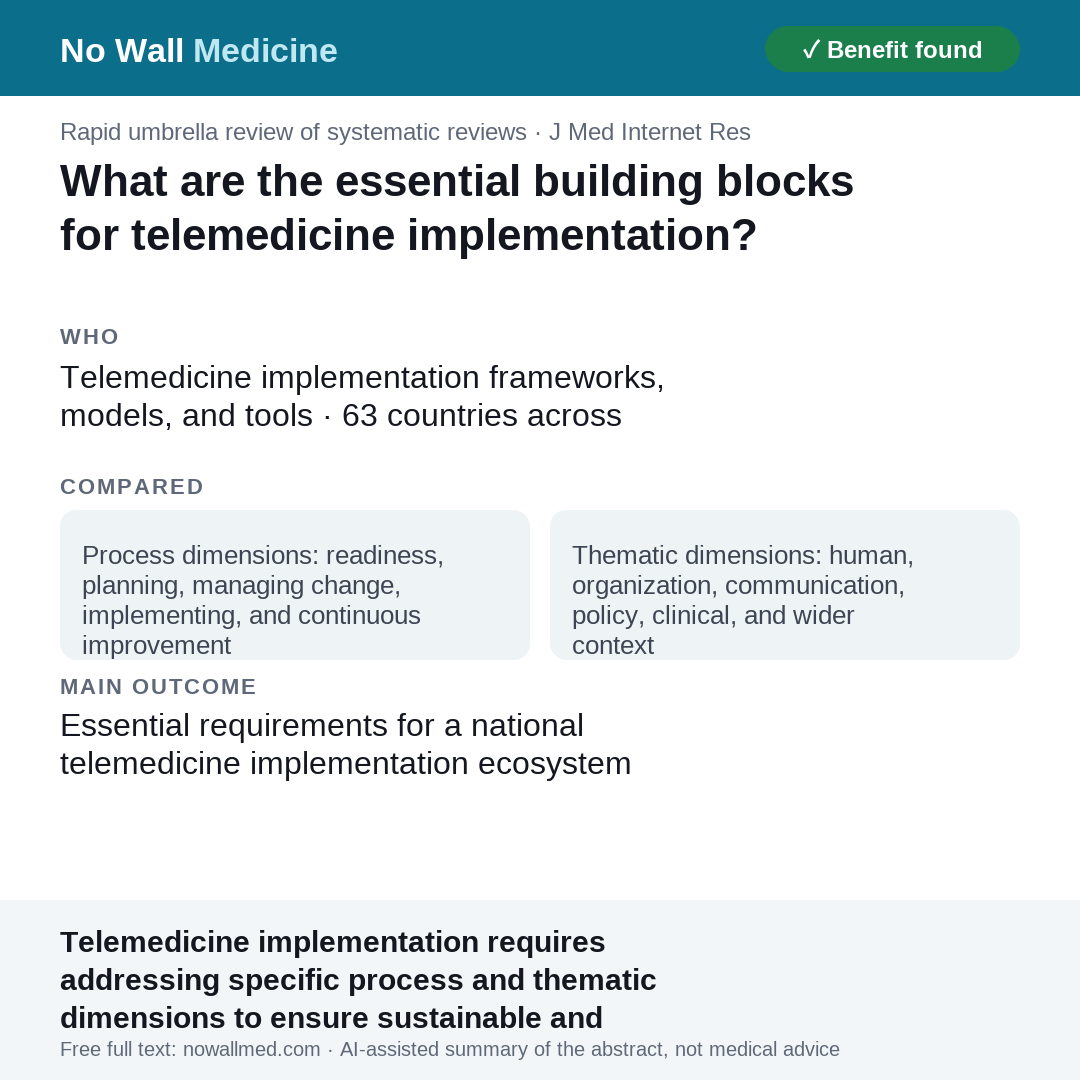
The State of the Art of Telemedicine Implementation Architecture: Rapid Umbrella Review of Systematic Reviews
Rapid umbrella review of systematic reviewsBenefit found
What are the essential building blocks for telemedicine implementation?
Who
973
Telemedicine implementation frameworks, models, and tools · 63 countries across multiple continents
Compared
Process dimensions: readiness, planning, managing change, implementing, and continuous improvement
Thematic dimensions: human, organization, communication, policy, clinical, and wider context
Main outcome
Essential requirements for a national telemedicine implementation ecosystem
Bottom line: Telemedicine implementation requires addressing specific process and thematic dimensions to ensure sustainable and scalable systems.
Limitation: Future research should focus on field-testing tools to evaluate usability and adaptability.
J Med Internet Res · 2025-06-09Download image
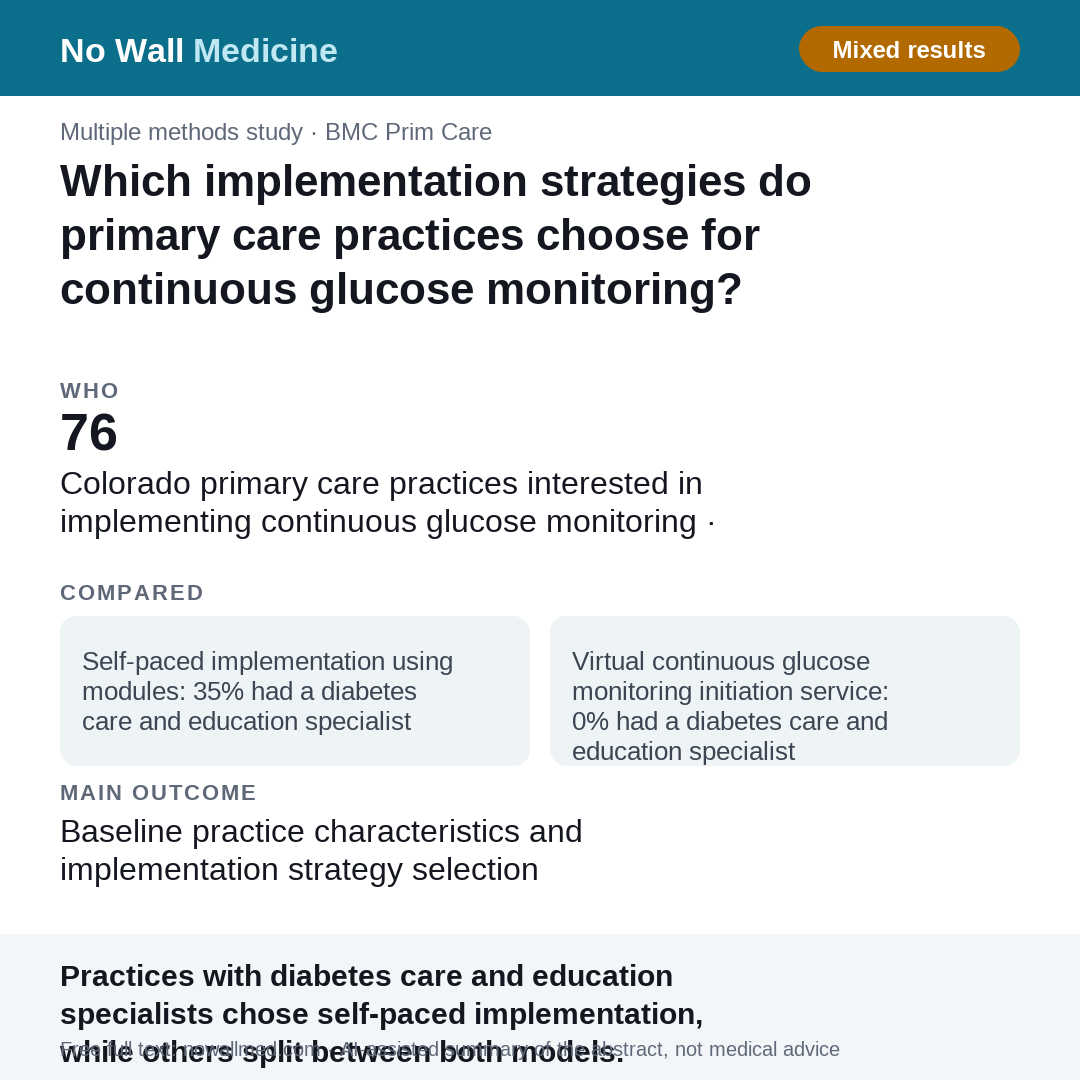
Primary care practices' choice of implementation strategy for continuous glucose monitoring for patients with diabetes: a multiple methods study within a larger hybrid type-3 effectiveness-implementation study
Multiple methods studyMixed results
Which implementation strategies do primary care practices choose for continuous glucose monitoring?
Who
76
Colorado primary care practices interested in implementing continuous glucose monitoring · Colorado
Compared
Self-paced implementation using modules: 35% had a diabetes care and education specialist
Virtual continuous glucose monitoring initiation service: 0% had a diabetes care and education specialist
Main outcome
Baseline practice characteristics and implementation strategy selection
Bottom line: Practices with diabetes care and education specialists chose self-paced implementation, while others split between both models.
BMC Prim Care · 2025-06-09Download image
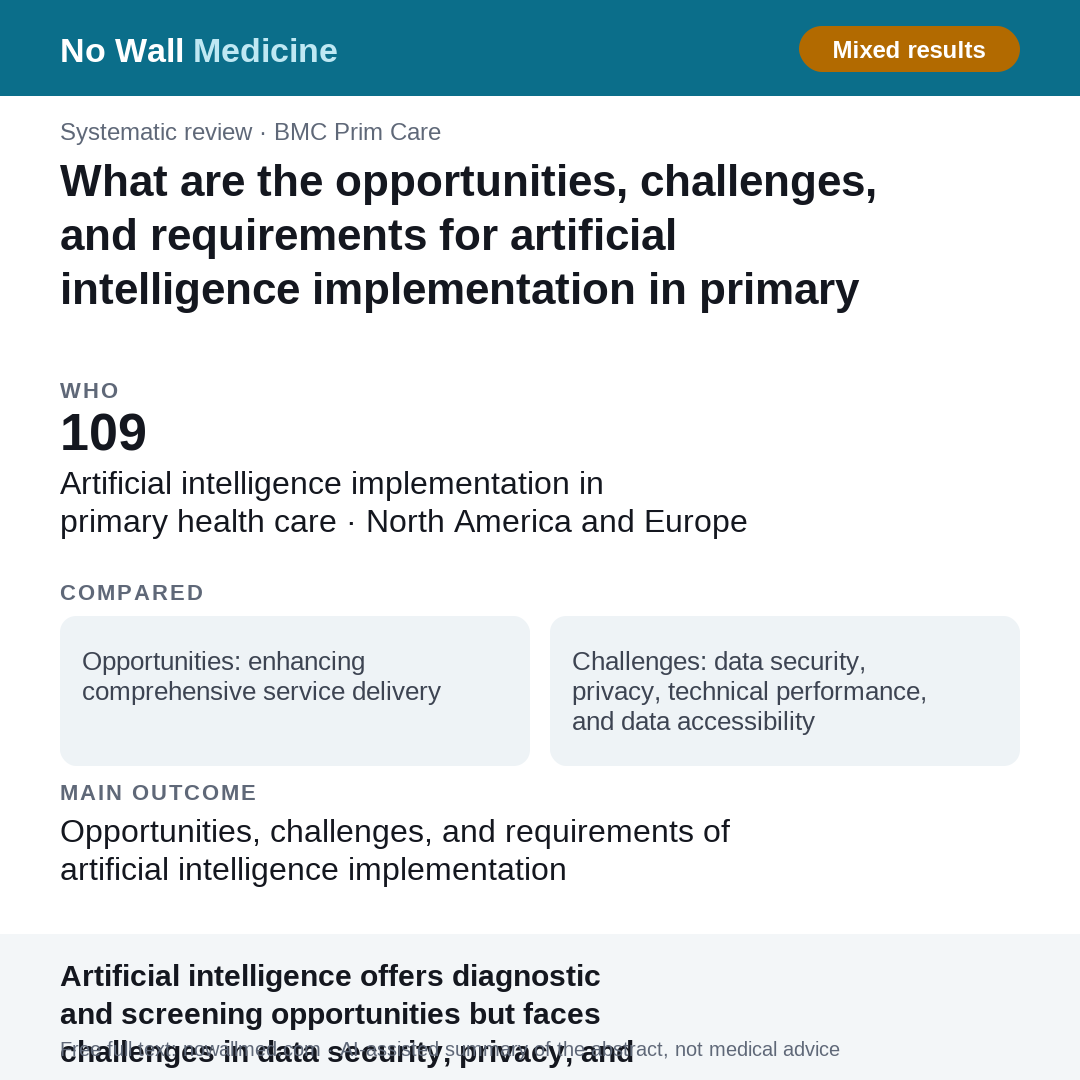
Opportunities, challenges, and requirements for Artificial Intelligence (AI) implementation in Primary Health Care (PHC): a systematic review
Systematic reviewMixed results
What are the opportunities, challenges, and requirements for artificial intelligence implementation in primary health care?
Who
109
Artificial intelligence implementation in primary health care · North America and Europe
Compared
Opportunities: enhancing comprehensive service delivery
Challenges: data security, privacy, technical performance, and data accessibility
Main outcome
Opportunities, challenges, and requirements of artificial intelligence implementation
Bottom line: Artificial intelligence offers diagnostic and screening opportunities but faces challenges in data security, privacy, and technical performance.
BMC Prim Care · 2025-06-09Download image
Civil society and perilous medicine in Africa: a systematic review
Systematic reviewUnclear result
Civil society role in conflict and health in Africa
Who
14
African communities in conflict · Africa
Compared
Civil society organisations
Government organisations
Main outcome
Health and conflict
Bottom line: CSOs play various roles in conflict and health
BMJ Glob Health · 2025-06-08Download image

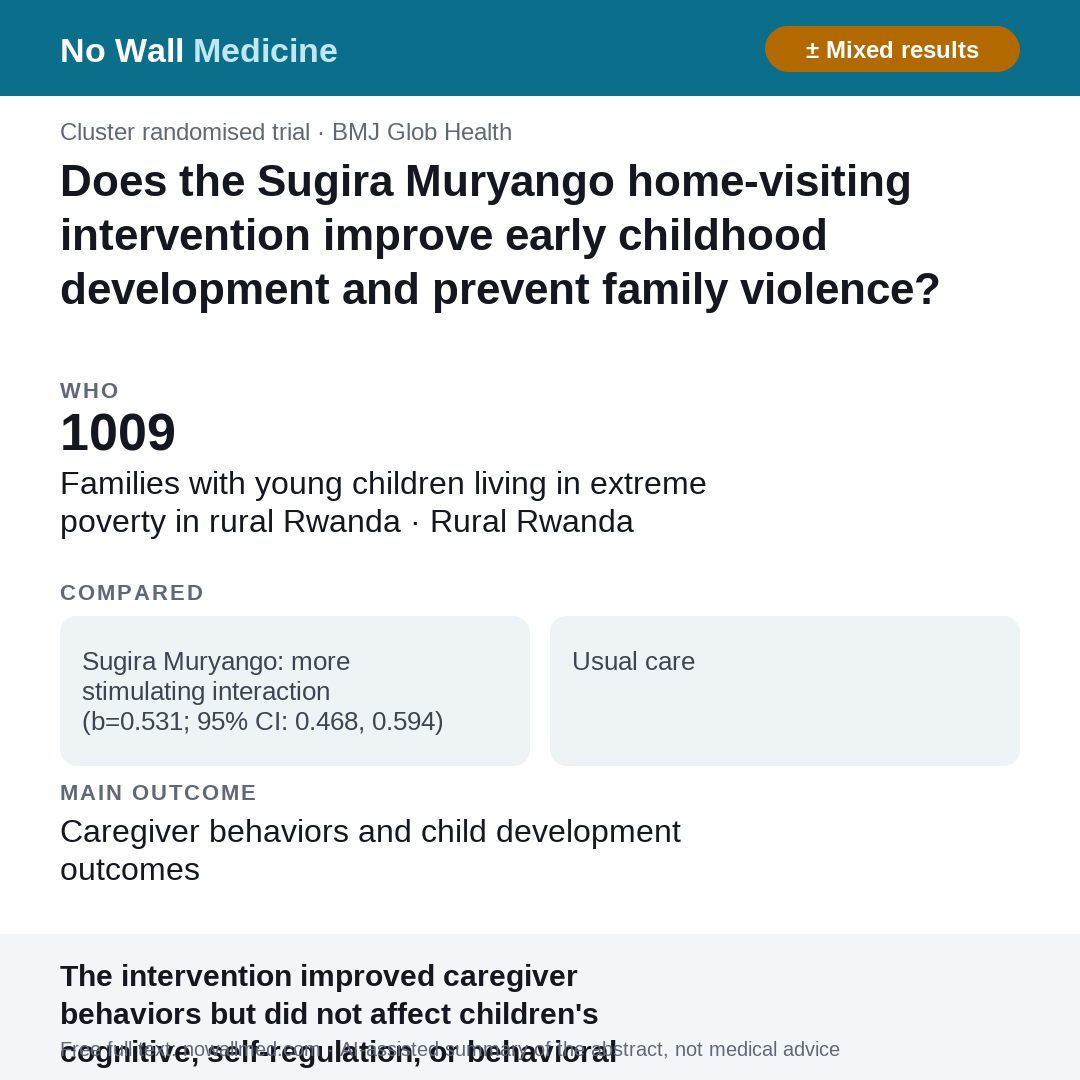
Four-year follow-up to a home-visiting intervention to promote early childhood development and prevent family violence in rural Rwanda: the Sugira Muryango cluster randomised trial
Cluster randomised trialMixed results
Does the Sugira Muryango home-visiting intervention improve early childhood development and prevent family violence?
Who
1009
Families with young children living in extreme poverty in rural Rwanda · Rural Rwanda
Compared
Sugira Muryango: more stimulating interaction (b=0.531; 95% CI: 0.468, 0.594)
Usual care
Main outcome
Caregiver behaviors and child development outcomes
Bottom line: The intervention improved caregiver behaviors but did not affect children's cognitive, self-regulation, or behavioral outcomes.
BMJ Glob Health · 2025-06-08Download image
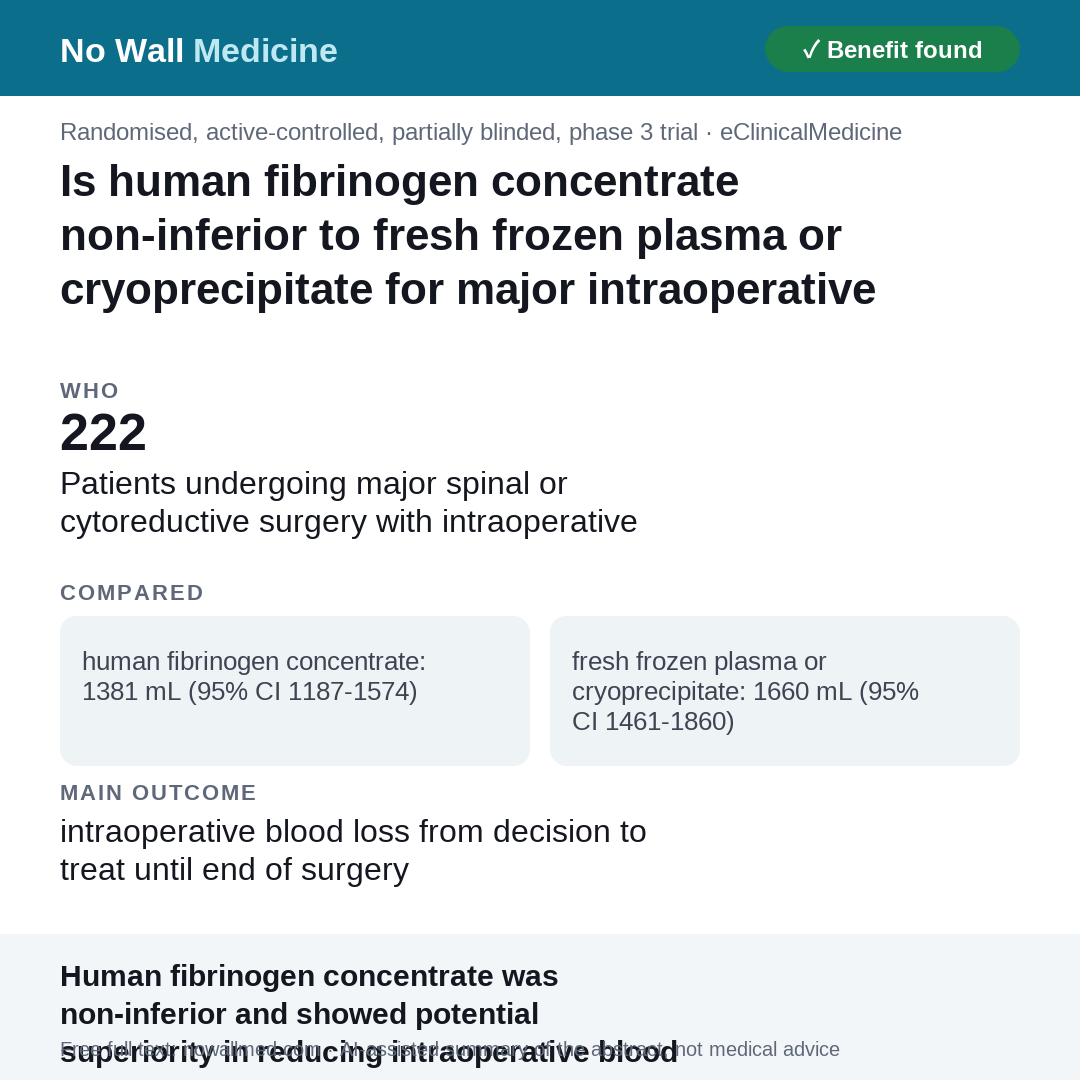
Efficacy and safety of human fibrinogen concentrate (BT524) in patients with major haemorrhage undergoing major orthopaedic or abdominal surgery (AdFIrst): a randomised, active-controlled, multicentre, partially blinded, phase 3 non-inferiority trial
Randomised, active-controlled, partially blinded, phase 3 trialBenefit found
Is human fibrinogen concentrate non-inferior to fresh frozen plasma or cryoprecipitate for major intraoperative bleeding?
Who
222
Patients undergoing major spinal or cytoreductive surgery with intraoperative blood loss · 15 hospitals in Europe
Compared
human fibrinogen concentrate: 1381 mL (95% CI 1187-1574)
fresh frozen plasma or cryoprecipitate: 1660 mL (95% CI 1461-1860)
Main outcome
intraoperative blood loss from decision to treat until end of surgery
Result: -279 mL (95% CI -552 to -6, p < 0·0001)
Bottom line: Human fibrinogen concentrate was non-inferior and showed potential superiority in reducing intraoperative blood loss compared to fresh frozen plasma or cryoprecipitate.
Funded by: Biotest AG, Germany
eClinicalMedicine · 2025-06-07Download image
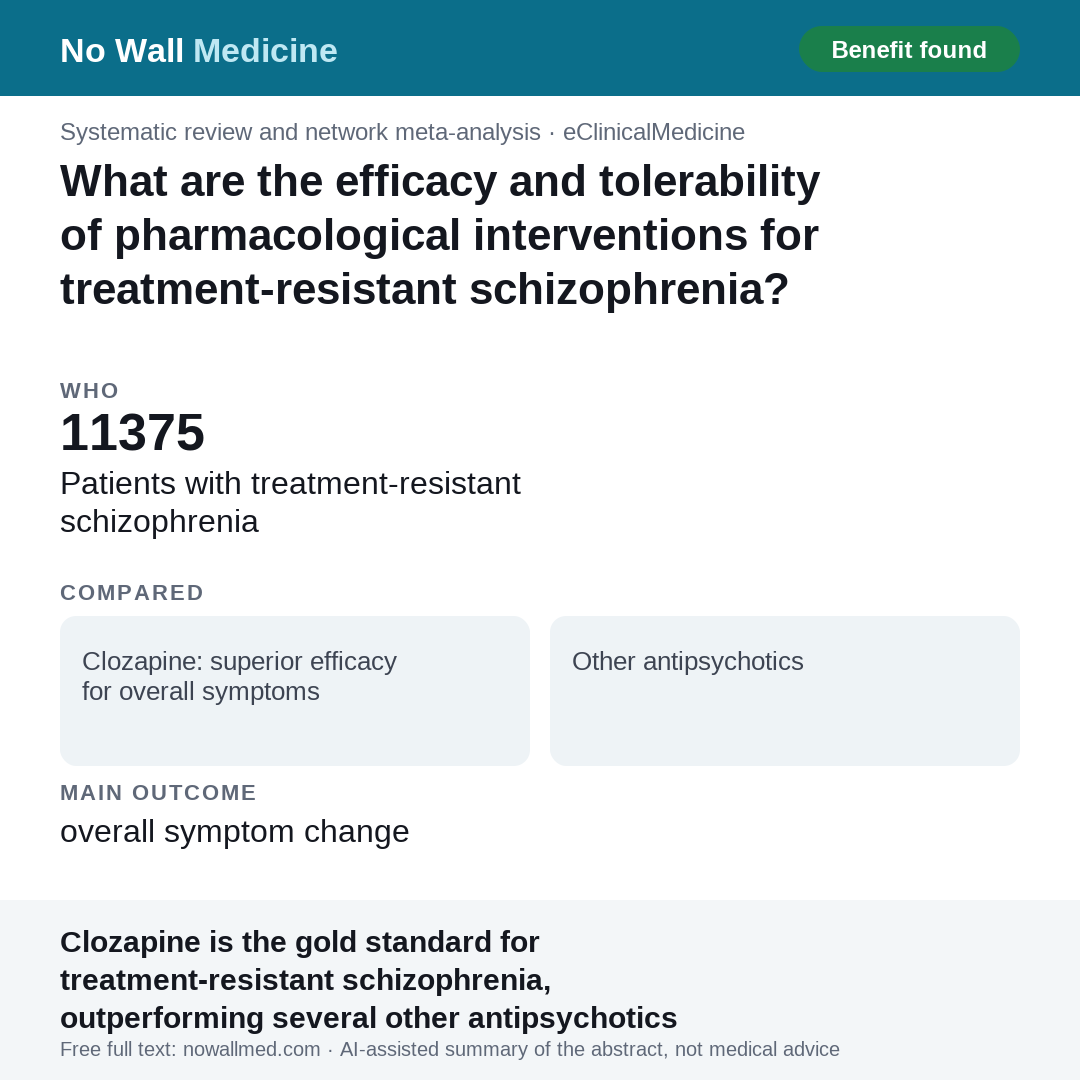
Efficacy and tolerability of pharmacological interventions for schizophrenia non-responsive to prior treatment: a systematic review and network meta-analysis
Systematic review and network meta-analysisBenefit found
What are the efficacy and tolerability of pharmacological interventions for treatment-resistant schizophrenia?
Who
11375
Patients with treatment-resistant schizophrenia
Compared
Clozapine: superior efficacy for overall symptoms
Other antipsychotics
Main outcome
overall symptom change
Bottom line: Clozapine is the gold standard for treatment-resistant schizophrenia, outperforming several other antipsychotics and certain combinations.
Limitation: Confidence in most estimates was low or very low and network sparsity increases chance findings.
eClinicalMedicine · 2025-06-07Download image