Visual abstracts
New randomized trials and meta-analyses from leading journals at a glance: who was studied, what was compared, and what was found. Every paper is free to read in full.
All specialtiesCardiology 1310Oncology 1141Gastroenterology & Hepatology 465Infectious Disease 855Neurology 534Psychiatry & Mental Health 649Pulmonology 561Critical Care 386Endocrinology & Diabetes 727Pediatrics 768Surgery 611Orthopedics & Sports Medicine 249Neurosurgery 176Cardiothoracic & Vascular Surgery 147Plastic & Reconstructive Surgery 205Nephrology 277Rheumatology 174Hematology 273Dermatology 135Ophthalmology 144Obstetrics & Gynecology 407Public & Global Health 252Radiology & Imaging 168Anesthesiology 244Urology 240ENT (Otolaryngology) 179Emergency Medicine 142Allergy & Immunology 89Geriatrics 270Family Medicine & Primary Care 164Medical Genetics & Genomics 139Pathology & Laboratory Medicine 40Physical Medicine & Rehabilitation 226Palliative Care 119Nutrition 340Digital Health & AI 667General Medicine 121
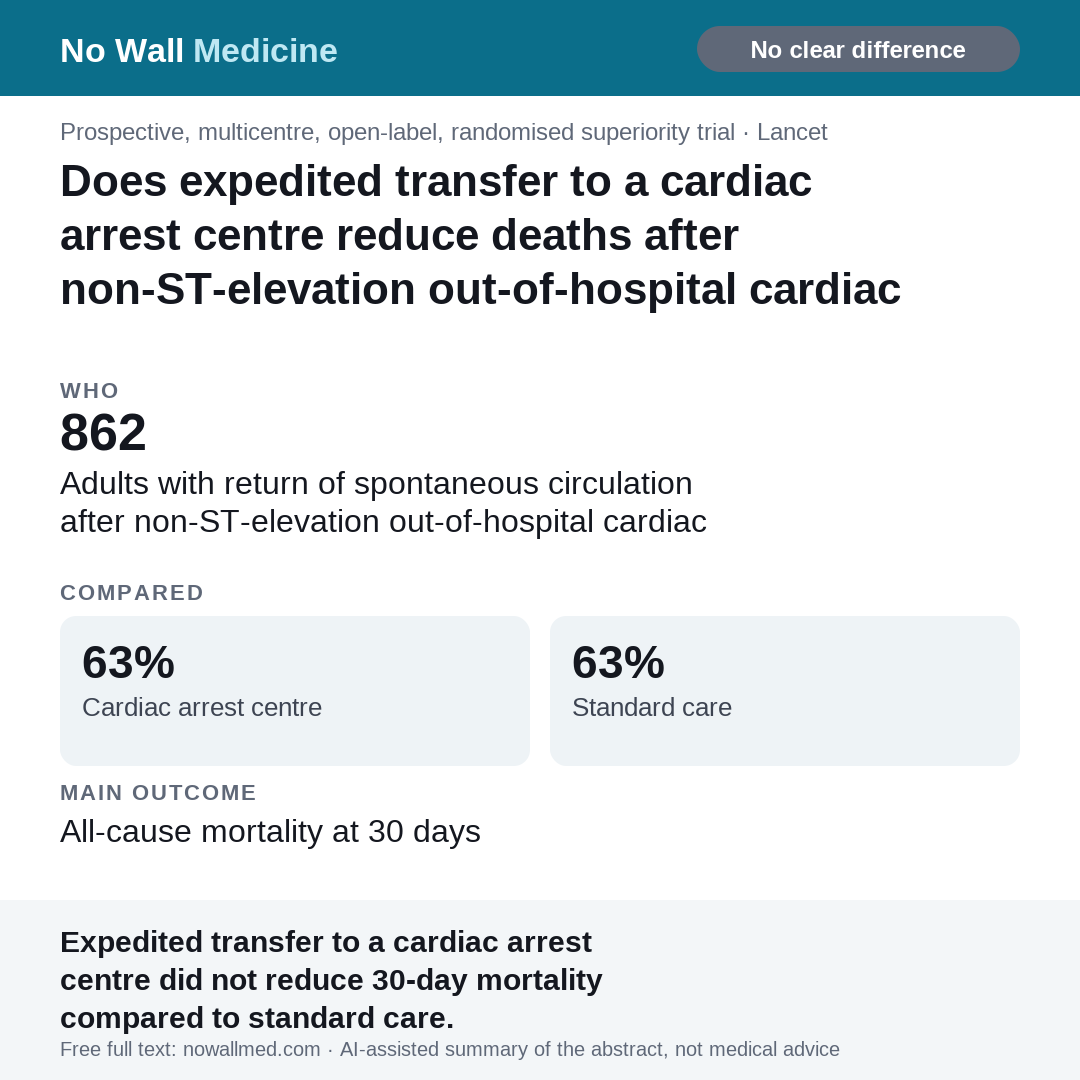
Expedited transfer to a cardiac arrest centre for non-ST-elevation out-of-hospital cardiac arrest (ARREST): a UK prospective, multicentre, parallel, randomised clinical trial
Prospective, multicentre, open-label, randomised superiority trialNo clear difference
Does expedited transfer to a cardiac arrest centre reduce deaths after non-ST-elevation out-of-hospital cardiac arrest?
Who
862
Adults with return of spontaneous circulation after non-ST-elevation out-of-hospital cardiac arrest · London, United Kingdom
Compared
63%Cardiac arrest centre (258/411)
63%Standard care (258/412)
Main outcome
All-cause mortality at 30 days
Result: unadjusted risk ratio for survival 1·00 (95% CI 0·90-1·11)
Bottom line: Expedited transfer to a cardiac arrest centre did not reduce 30-day mortality compared to standard care.
Funded by: British Heart Foundation
Lancet · 2023-08-27Download image
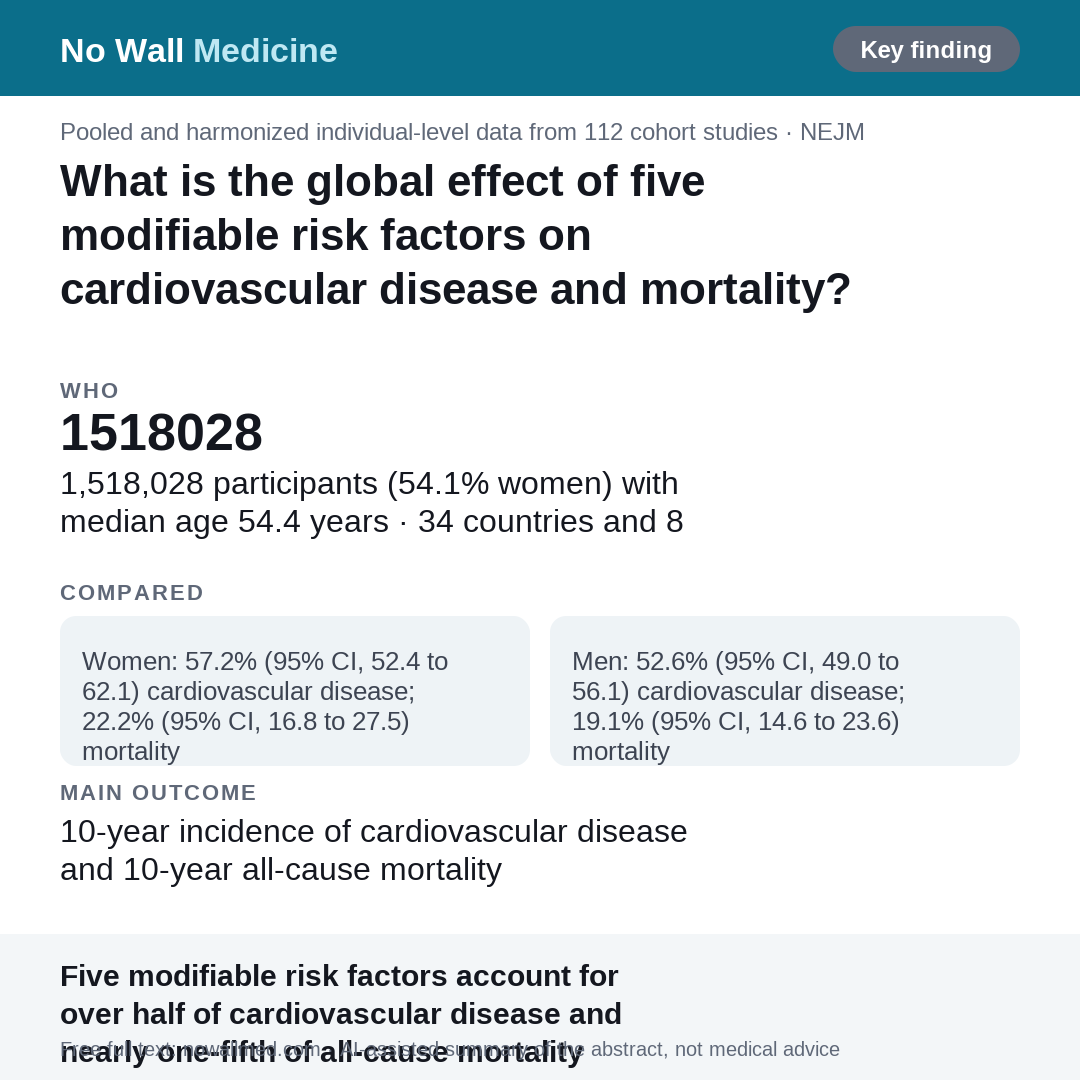
Global Effect of Modifiable Risk Factors on Cardiovascular Disease and Mortality
Pooled and harmonized individual-level data from 112 cohort studiesBenefit found
What is the global effect of five modifiable risk factors on cardiovascular disease and mortality?
Who
1518028
1,518,028 participants (54.1% women) with median age 54.4 years · 34 countries and 8 geographic regions
Compared
Women: 57.2% (95% CI, 52.4 to 62.1) cardiovascular disease; 22.2% (95% CI, 16.8 to 27.5) mortality
Men: 52.6% (95% CI, 49.0 to 56.1) cardiovascular disease; 19.1% (95% CI, 14.6 to 23.6) mortality
Main outcome
10-year incidence of cardiovascular disease and 10-year all-cause mortality
Bottom line: Five modifiable risk factors account for over half of cardiovascular disease and nearly one-fifth of all-cause mortality globally.
Funded by: German Center for Cardiovascular Research (DZHK)
NEJM · 2023-08-26Download image
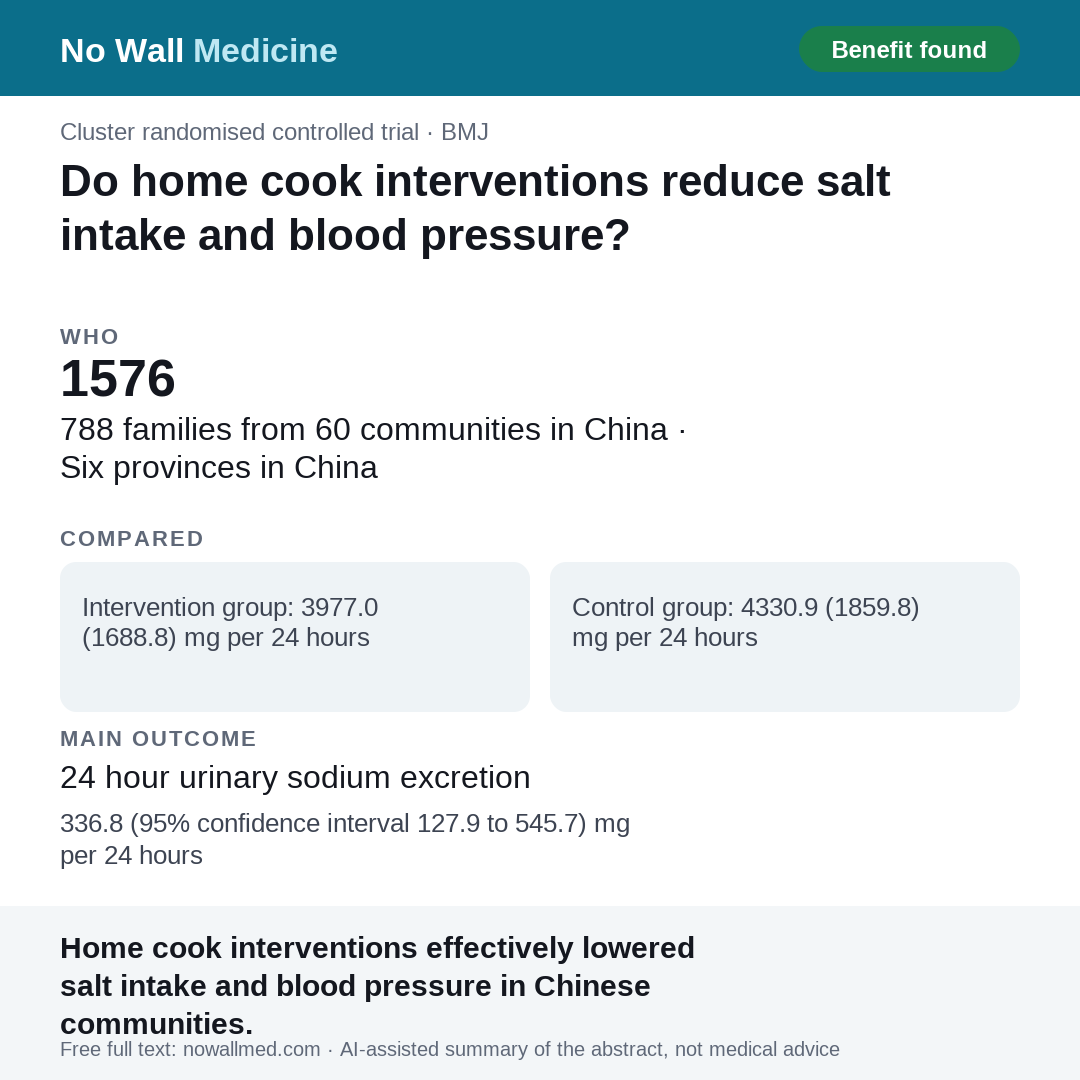
Effect of home cook interventions for salt reduction in China: cluster randomised controlled trial
Cluster randomised controlled trialBenefit found
Do home cook interventions reduce salt intake and blood pressure?
Who
1576
788 families from 60 communities in China · Six provinces in China
Compared
Intervention group: 3977.0 (1688.8) mg per 24 hours
Control group: 4330.9 (1859.8) mg per 24 hours
Main outcome
24 hour urinary sodium excretion
Result: 336.8 (95% confidence interval 127.9 to 545.7) mg per 24 hours
Bottom line: Home cook interventions effectively lowered salt intake and blood pressure in Chinese communities.
BMJ · 2023-08-24Download image
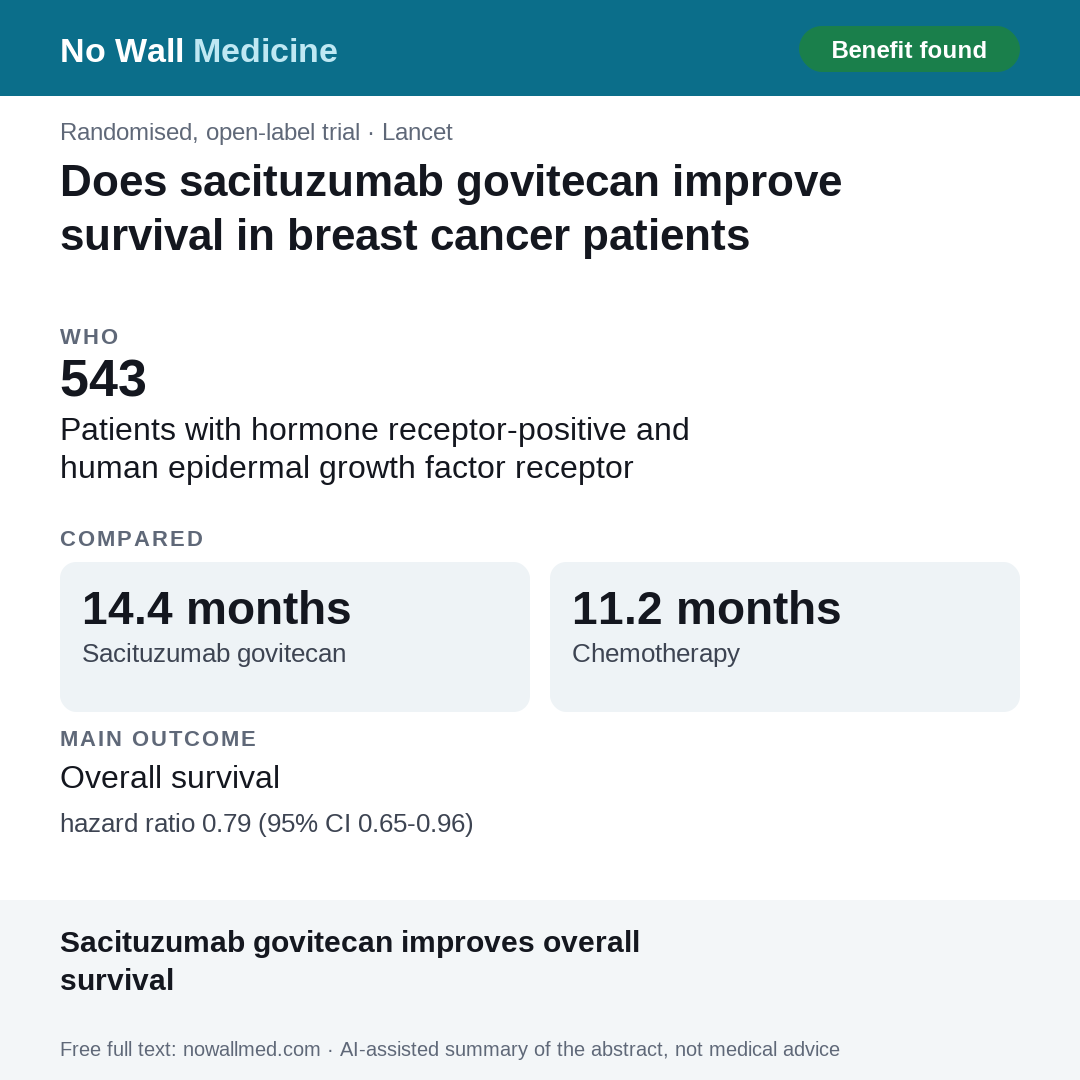
Overall survival with sacituzumab govitecan in hormone receptor-positive and human epidermal growth factor receptor 2-negative metastatic breast cancer (TROPiCS-02): a randomised, open-label, multicentre, phase 3 trial
Randomised, open-label trialBenefit found
Does sacituzumab govitecan improve survival in breast cancer patients
Who
543
Patients with hormone receptor-positive and human epidermal growth factor receptor 2-negative metastatic breast cancer · Ninety-one centres across North America and Europe
Compared
14.4 monthsSacituzumab govitecan (95% CI 13.0-15.7)
11.2 monthsChemotherapy (10.1-12.7)
Main outcome
Overall survival
Result: hazard ratio 0.79 (95% CI 0.65-0.96)
Bottom line: Sacituzumab govitecan improves overall survival
Funded by: Gilead Sciences
Lancet · 2023-08-23Download image
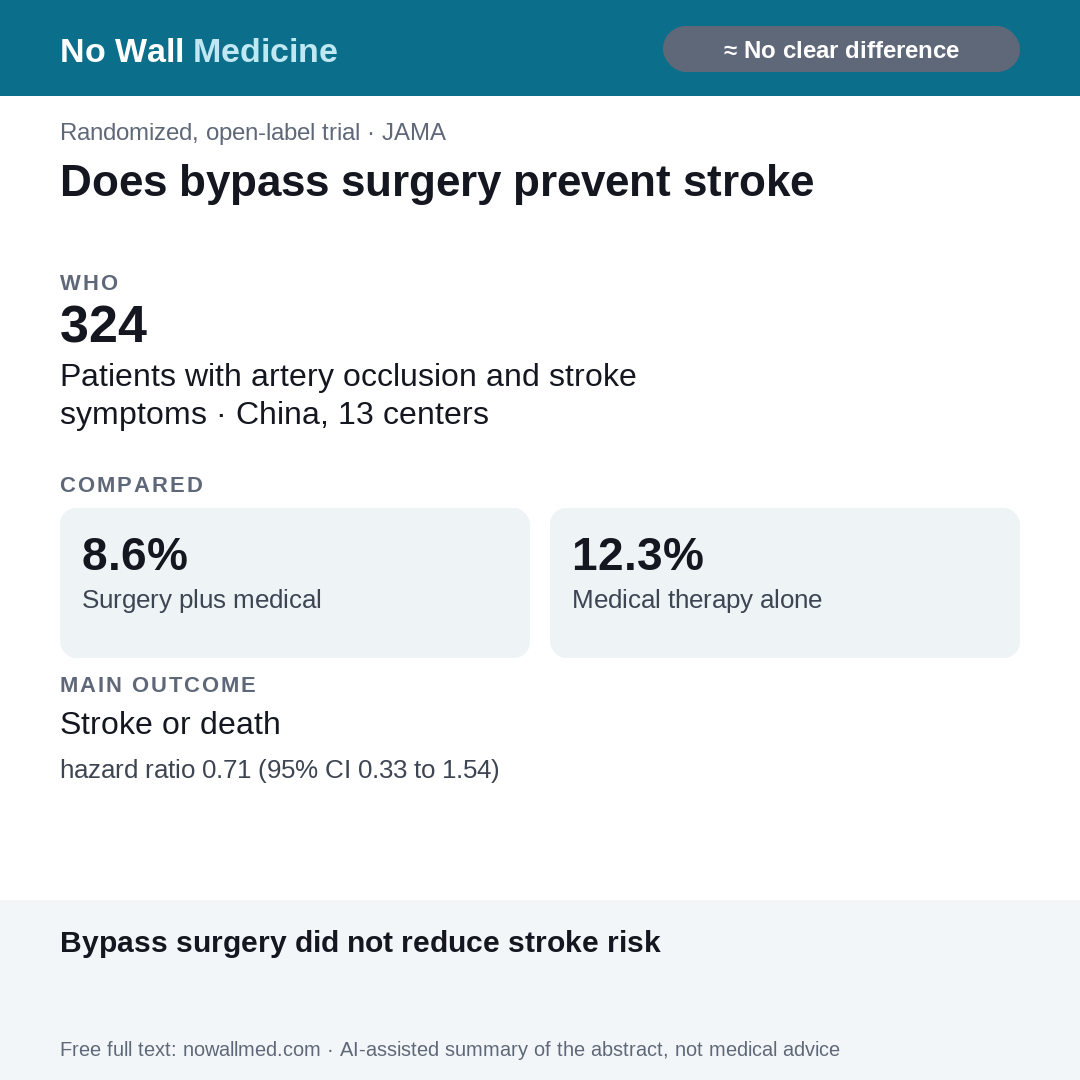
Extracranial-Intracranial Bypass and Risk of Stroke and Death in Patients With Symptomatic Artery Occlusion: The CMOSS Randomized Clinical Trial
Randomized, open-label trialNo clear difference
Does bypass surgery prevent stroke
Who
324
Patients with artery occlusion and stroke symptoms · China, 13 centers
Compared
8.6%Surgery plus medical (13/151)
12.3%Medical therapy alone (19/155)
Main outcome
Stroke or death
Result: hazard ratio 0.71 (95% CI 0.33 to 1.54)
Bottom line: Bypass surgery did not reduce stroke risk
JAMA · 2023-08-22Download image
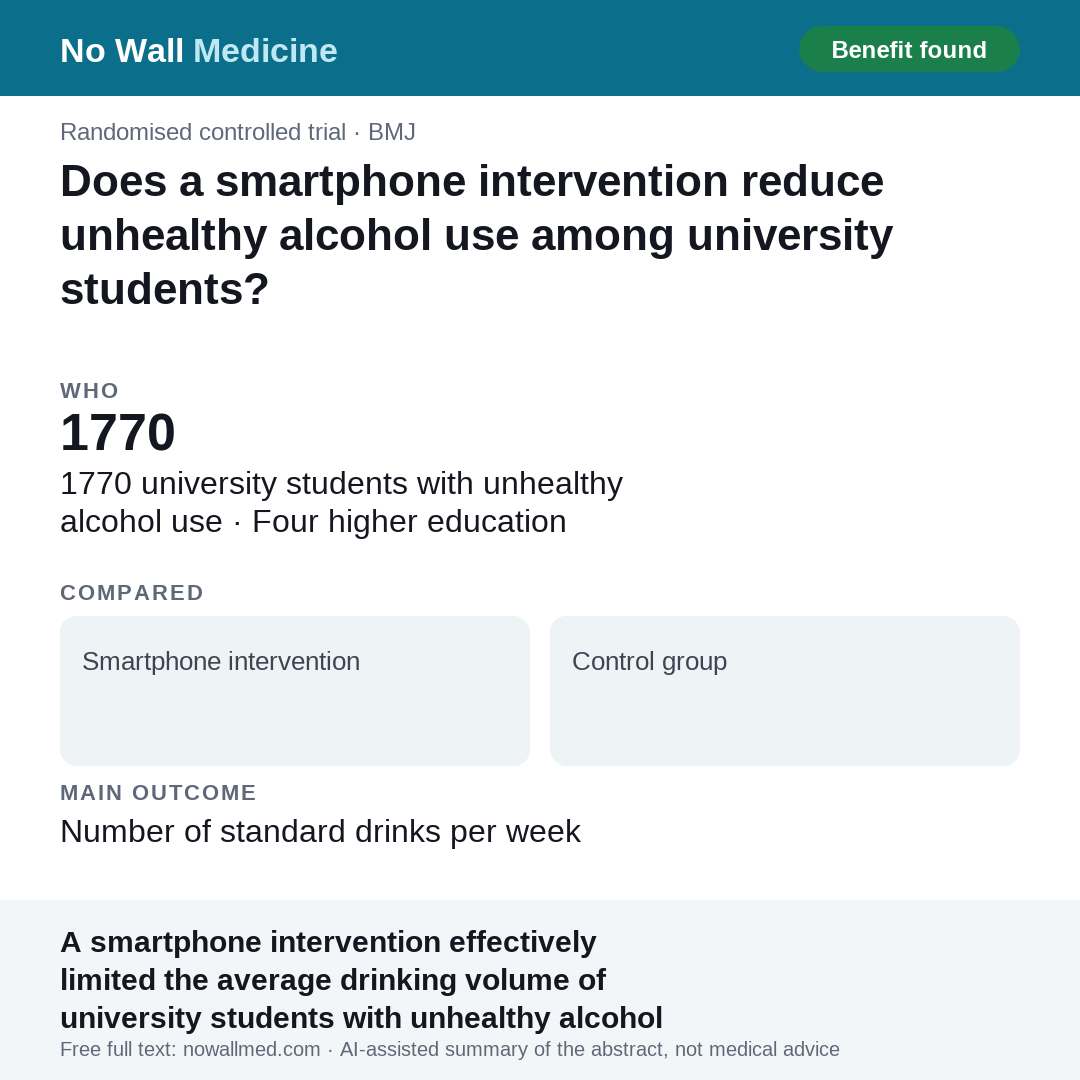
Effect of a smartphone intervention as a secondary prevention for use among university students with unhealthy alcohol use: randomised controlled trial
Randomised controlled trialBenefit found
Does a smartphone intervention reduce unhealthy alcohol use among university students?
Who
1770
1770 university students with unhealthy alcohol use · Four higher education institutions in Switzerland
Compared
Smartphone intervention
Control group
Main outcome
Number of standard drinks per week
Result: incidence rate ratio 0.90 (95% confidence interval 0.85 to 0.96)
Bottom line: A smartphone intervention effectively limited the average drinking volume of university students with unhealthy alcohol use.
BMJ · 2023-08-16Download image
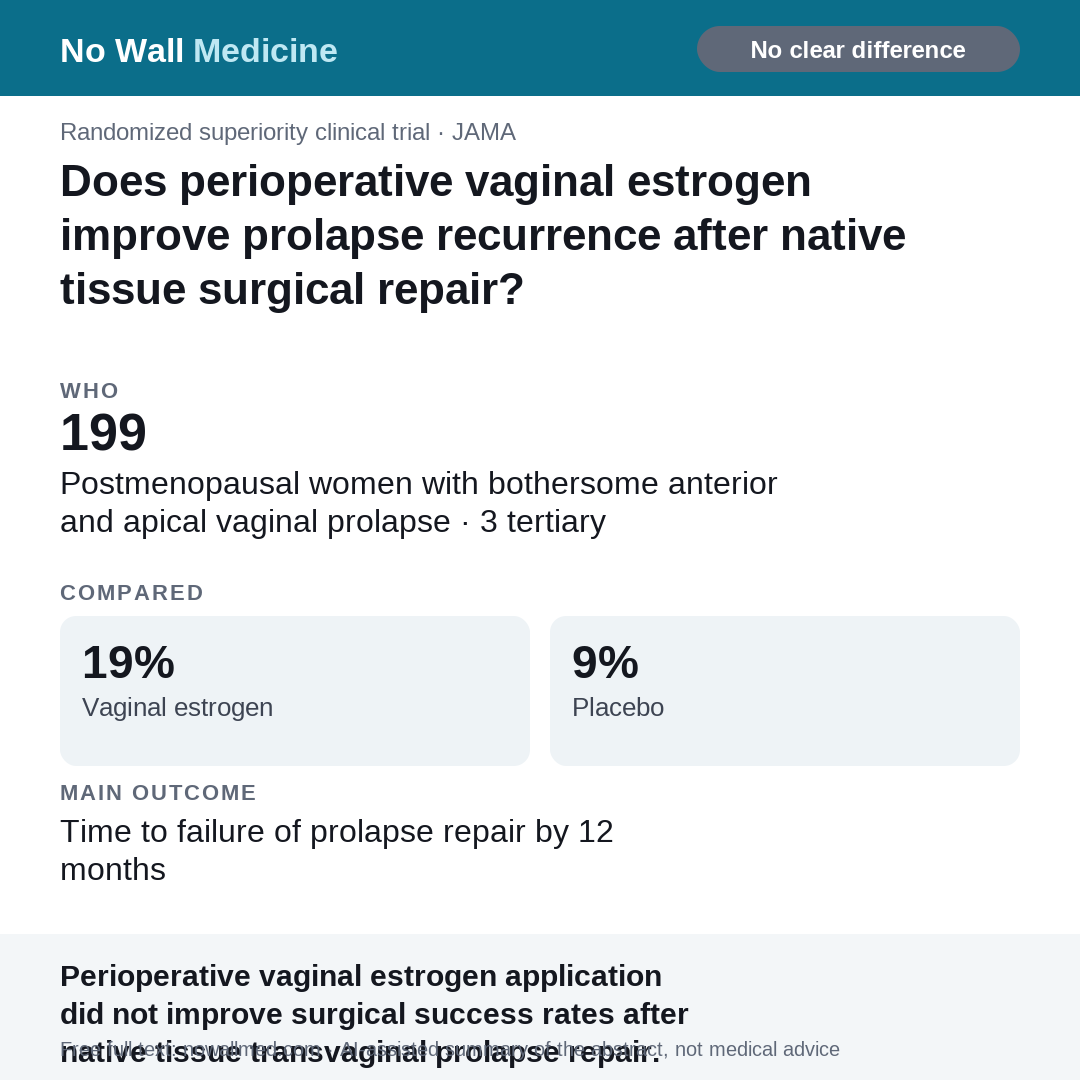
Perioperative Vaginal Estrogen as Adjunct to Native Tissue Vaginal Apical Prolapse Repair: A Randomized Clinical Trial
Randomized superiority clinical trialNo clear difference
Does perioperative vaginal estrogen improve prolapse recurrence after native tissue surgical repair?
Who
199
Postmenopausal women with bothersome anterior and apical vaginal prolapse · 3 tertiary United States clinical sites
Compared
19%Vaginal estrogen (n=20)
9%Placebo (n=10)
Main outcome
Time to failure of prolapse repair by 12 months
Result: adjusted hazard ratio 1.97 (95% CI 0.92-4.22)
Bottom line: Perioperative vaginal estrogen application did not improve surgical success rates after native tissue transvaginal prolapse repair.
JAMA · 2023-08-15Download image
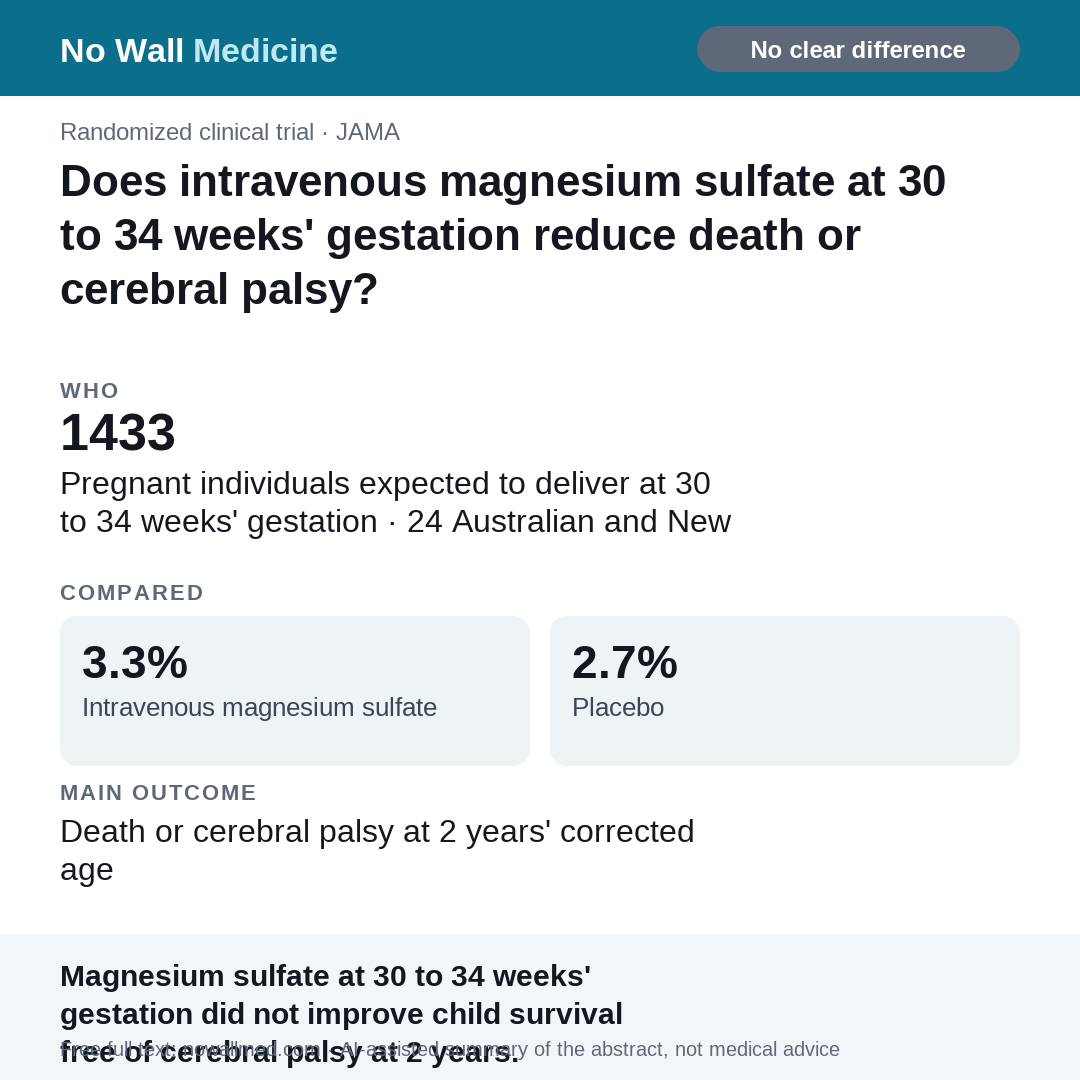
Prenatal Intravenous Magnesium at 30-34 Weeks' Gestation and Neurodevelopmental Outcomes in Offspring: The MAGENTA Randomized Clinical Trial
Randomized clinical trialNo clear difference
Does intravenous magnesium sulfate at 30 to 34 weeks' gestation reduce death or cerebral palsy?
Who
1433
Pregnant individuals expected to deliver at 30 to 34 weeks' gestation · 24 Australian and New Zealand hospitals
Compared
3.3%Intravenous magnesium sulfate (23 of 691 children)
2.7%Placebo (18 of 674 children)
Main outcome
Death or cerebral palsy at 2 years' corrected age
Result: risk difference 0.61% (95% CI -1.27% to 2.50%)
Bottom line: Magnesium sulfate at 30 to 34 weeks' gestation did not improve child survival free of cerebral palsy at 2 years.
Limitation: The study had limited power to detect small between-group differences.
JAMA · 2023-08-15Download image
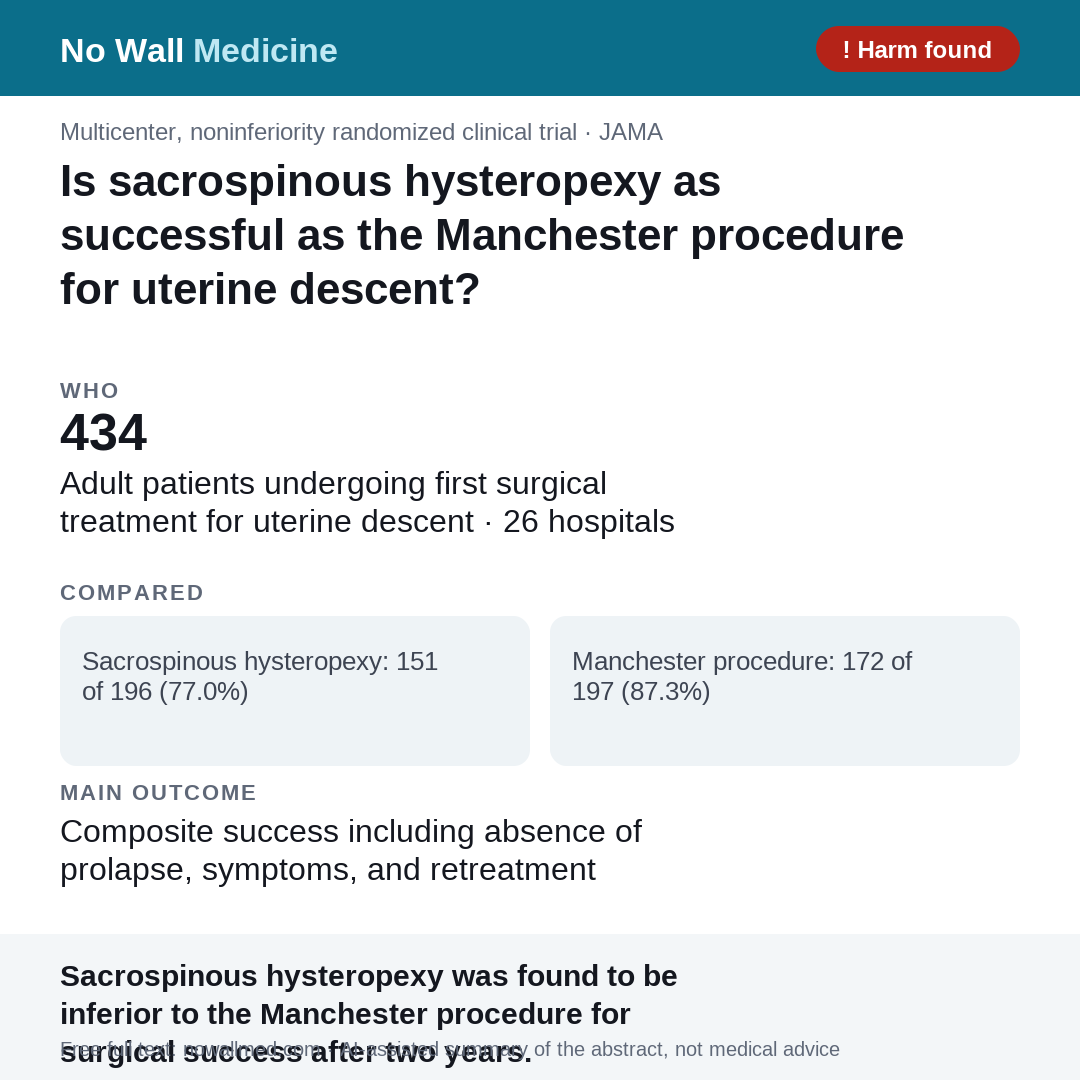
Manchester Procedure vs Sacrospinous Hysteropexy for Treatment of Uterine Descent: A Randomized Clinical Trial
Multicenter, noninferiority randomized clinical trialHarm found
Is sacrospinous hysteropexy as successful as the Manchester procedure for uterine descent?
Who
434
Adult patients undergoing first surgical treatment for uterine descent · 26 hospitals in the Netherlands
Compared
Sacrospinous hysteropexy: 151 of 196 (77.0%)
Manchester procedure: 172 of 197 (87.3%)
Main outcome
Composite success including absence of prolapse, symptoms, and retreatment
Result: risk difference, -10.3%; 95% CI, -17.8% to -2.8%
Bottom line: Sacrospinous hysteropexy was found to be inferior to the Manchester procedure for surgical success after two years.
JAMA · 2023-08-15Download image
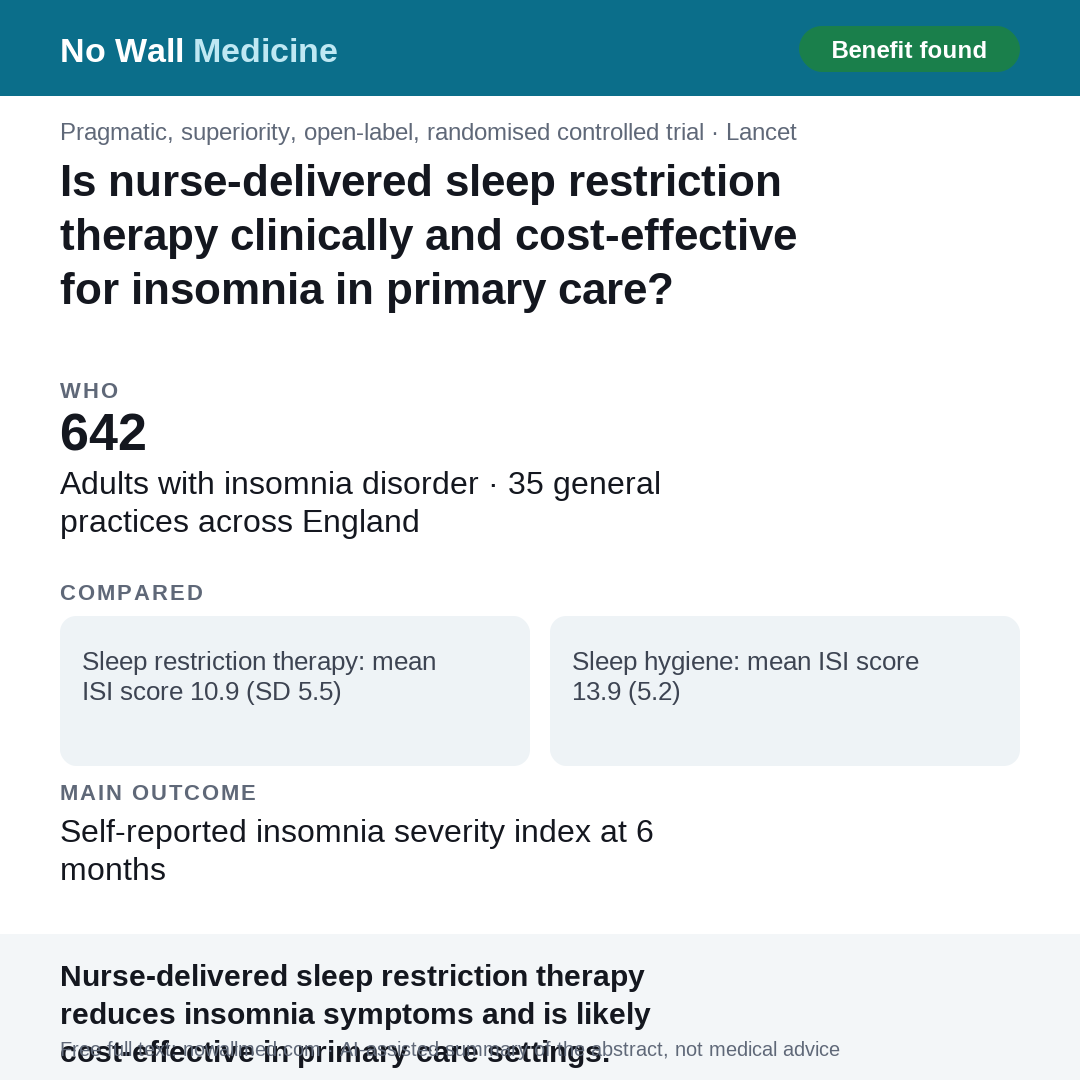
Clinical and cost-effectiveness of nurse-delivered sleep restriction therapy for insomnia in primary care (HABIT): a pragmatic, superiority, open-label, randomised controlled trial
Pragmatic, superiority, open-label, randomised controlled trialBenefit found
Is nurse-delivered sleep restriction therapy clinically and cost-effective for insomnia in primary care?
Who
642
Adults with insomnia disorder · 35 general practices across England
Compared
Sleep restriction therapy: mean ISI score 10.9 (SD 5.5)
Sleep hygiene: mean ISI score 13.9 (5.2)
Main outcome
Self-reported insomnia severity index at 6 months
Result: adjusted mean difference -3.05 (95% CI -3.83 to -2.28)
Bottom line: Nurse-delivered sleep restriction therapy reduces insomnia symptoms and is likely cost-effective in primary care settings.
Funded by: National Institute for Health and Care Research
Lancet · 2023-08-10Download image
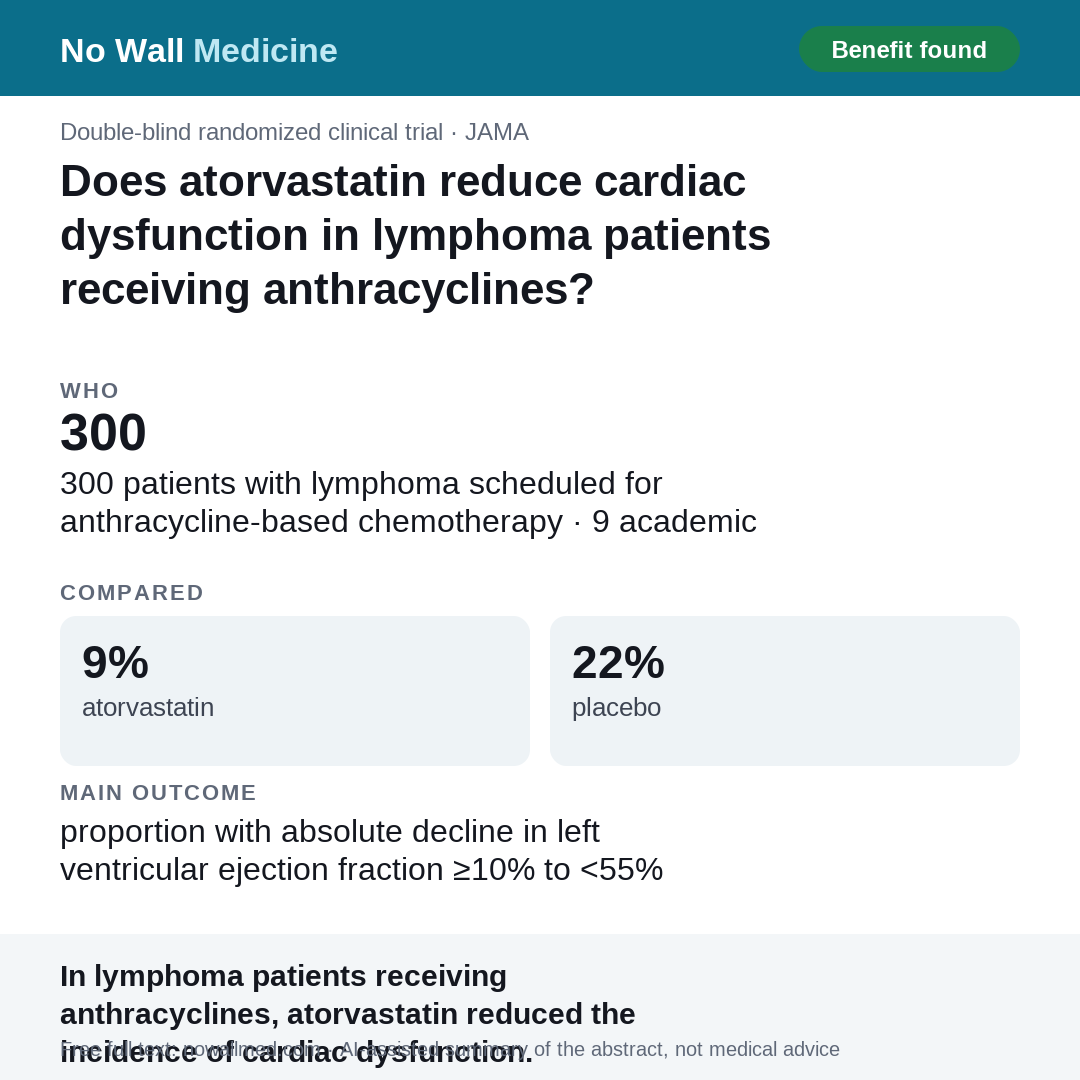
Atorvastatin for Anthracycline-Associated Cardiac Dysfunction: The STOP-CA Randomized Clinical Trial
Double-blind randomized clinical trialBenefit found
Does atorvastatin reduce cardiac dysfunction in lymphoma patients receiving anthracyclines?
Who
300
300 patients with lymphoma scheduled for anthracycline-based chemotherapy · 9 academic medical centers in the US and Canada
Compared
9%atorvastatin (13/150)
22%placebo (33/150)
Main outcome
proportion with absolute decline in left ventricular ejection fraction ≥10% to <55%
Result: odds ratio 2.9 (95% CI 1.4-6.4)
Bottom line: In lymphoma patients receiving anthracyclines, atorvastatin reduced the incidence of cardiac dysfunction.
JAMA · 2023-08-08Download image
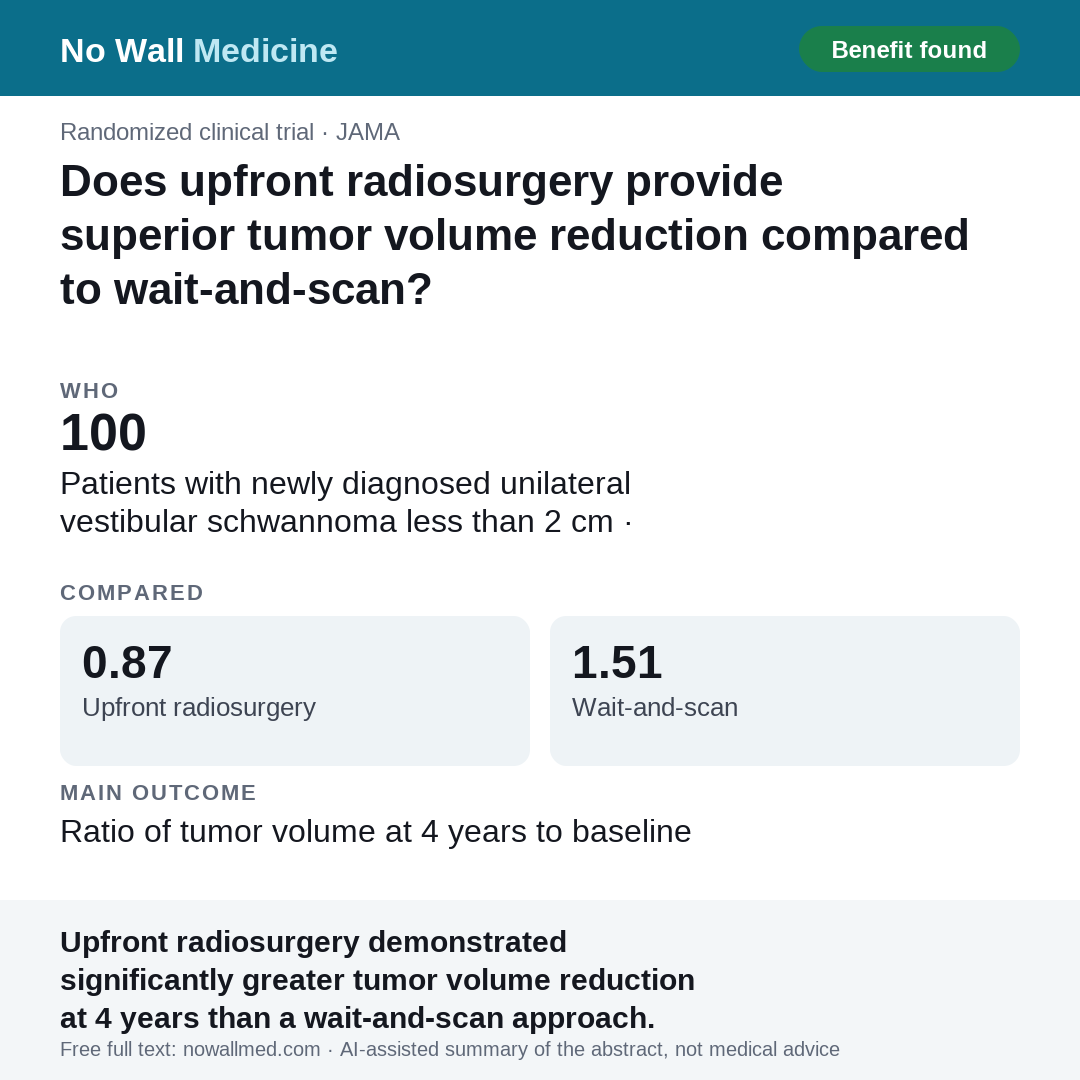
Upfront Radiosurgery vs a Wait-and-Scan Approach for Small- or Medium-Sized Vestibular Schwannoma: The V-REX Randomized Clinical Trial
Randomized clinical trialBenefit found
Does upfront radiosurgery provide superior tumor volume reduction compared to wait-and-scan?
Who
100
Patients with newly diagnosed unilateral vestibular schwannoma less than 2 cm · Norwegian National Unit for Vestibular Schwannoma
Compared
0.87Upfront radiosurgery (95% CI, 0.66-1.15)
1.51Wait-and-scan (95% CI, 1.23-1.84)
Main outcome
Ratio of tumor volume at 4 years to baseline
Result: ratio 1.73 (95% CI, 1.23-2.44)
Bottom line: Upfront radiosurgery demonstrated significantly greater tumor volume reduction at 4 years than a wait-and-scan approach.
JAMA · 2023-08-01Download image
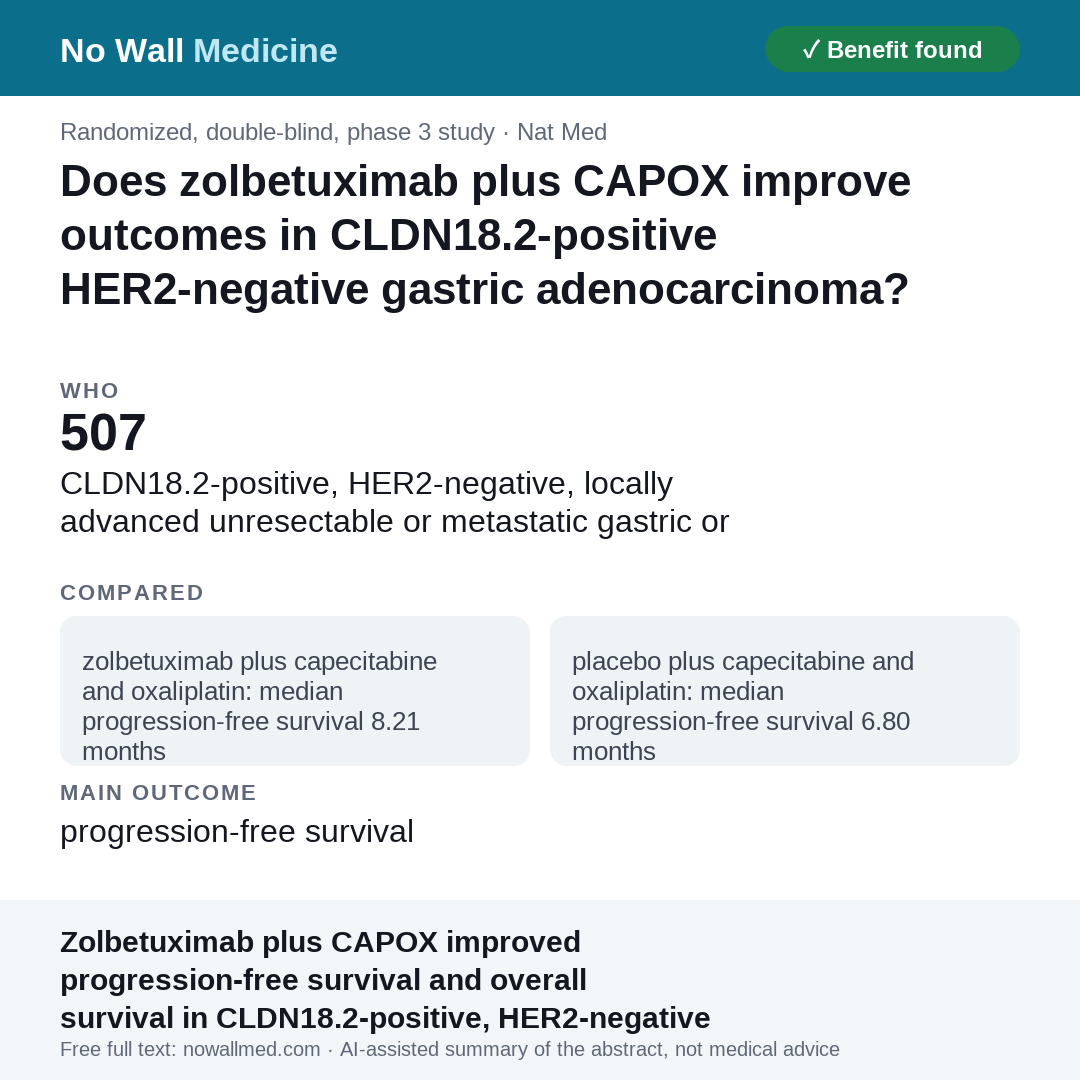
Zolbetuximab plus CAPOX in CLDN18.2-positive gastric or gastroesophageal junction adenocarcinoma: the randomized, phase 3 GLOW trial
Randomized, double-blind, phase 3 studyBenefit found
Does zolbetuximab plus CAPOX improve outcomes in CLDN18.2-positive HER2-negative gastric adenocarcinoma?
Who
507
CLDN18.2-positive, HER2-negative, locally advanced unresectable or metastatic gastric or gastroesophageal junction adenocarcinoma · global
Compared
zolbetuximab plus capecitabine and oxaliplatin: median progression-free survival 8.21 months
placebo plus capecitabine and oxaliplatin: median progression-free survival 6.80 months
Main outcome
progression-free survival
Result: hazard ratio 0.687 (95% CI 0.544-0.866)
Bottom line: Zolbetuximab plus CAPOX improved progression-free survival and overall survival in CLDN18.2-positive, HER2-negative gastric adenocarcinoma.
Nat Med · 2023-07-31Download image
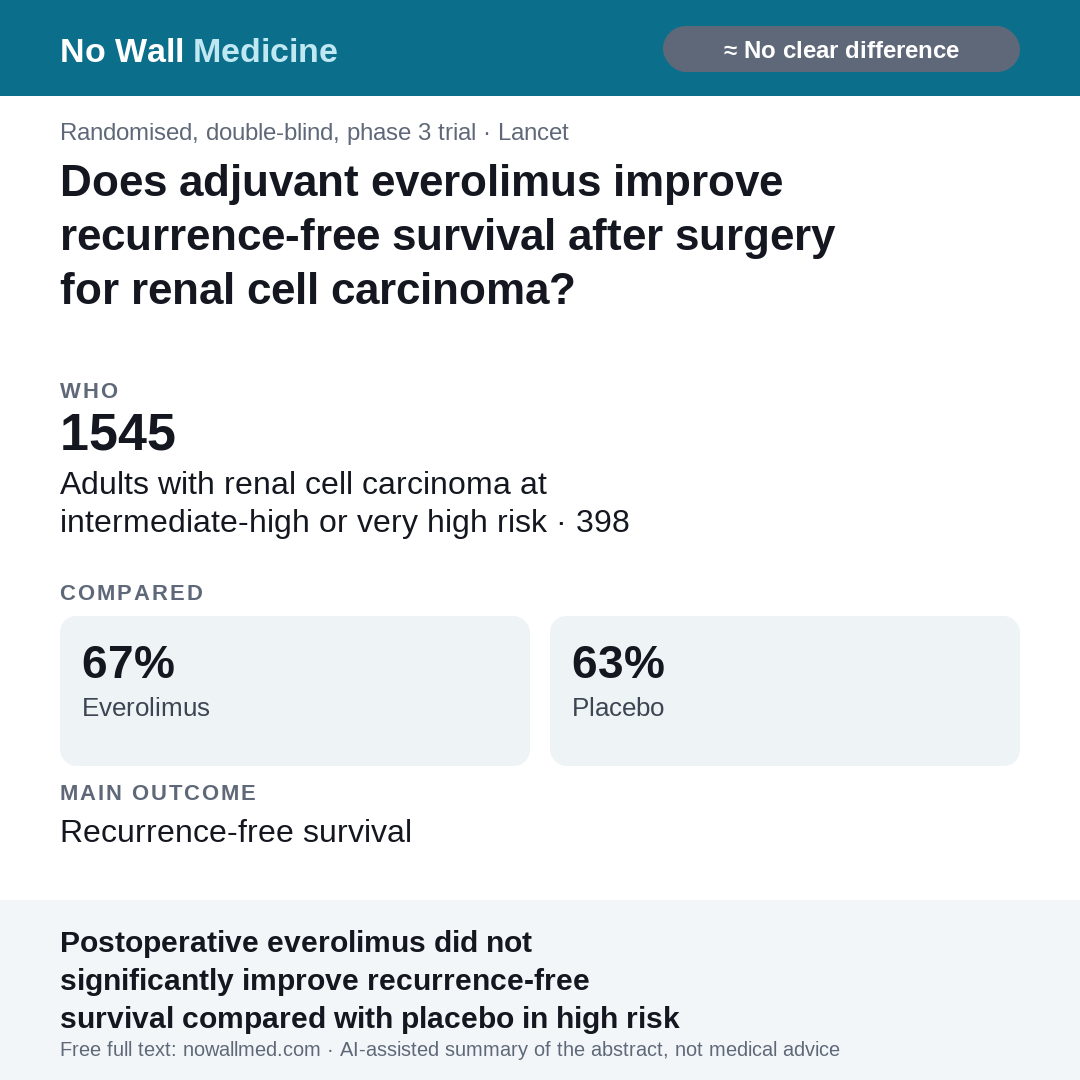
Adjuvant everolimus after surgery for renal cell carcinoma (EVEREST): a double-blind, placebo-controlled, randomised, phase 3 trial
Randomised, double-blind, phase 3 trialNo clear difference
Does adjuvant everolimus improve recurrence-free survival after surgery for renal cell carcinoma?
Who
1545
Adults with renal cell carcinoma at intermediate-high or very high risk · 398 academic and community institution centres in the USA
Compared
67%Everolimus (5-year recurrence-free survival)
63%Placebo (5-year recurrence-free survival)
Main outcome
Recurrence-free survival
Result: hazard ratio 0.85, 95% CI 0.72-1.00
Bottom line: Postoperative everolimus did not significantly improve recurrence-free survival compared with placebo in high risk renal cell carcinoma patients.
Funded by: US National Institutes of Health, National Cancer Institute, Novartis Pharmaceuticals Corporation
Lancet · 2023-07-28Download image
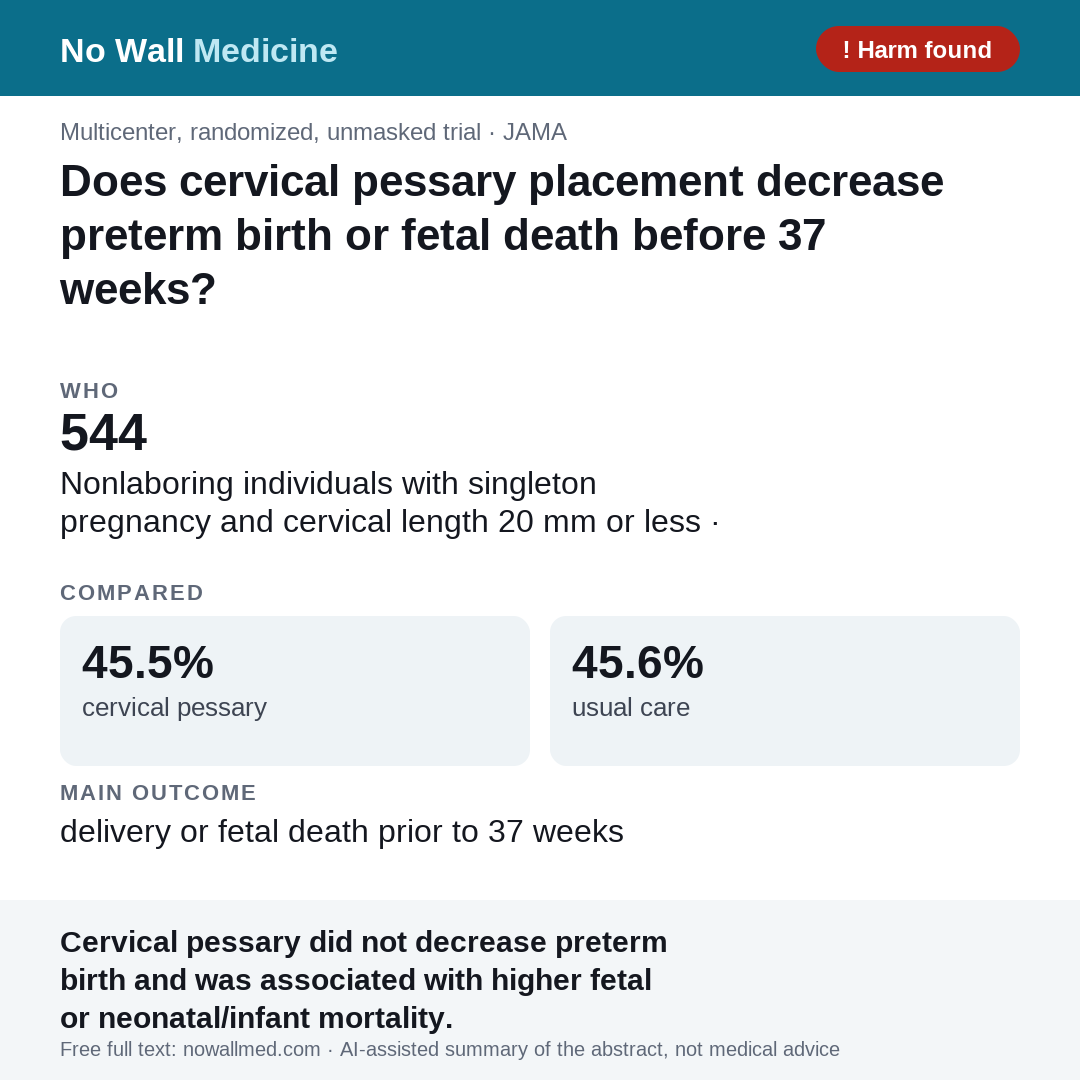
Cervical Pessary for Prevention of Preterm Birth in Individuals With a Short Cervix: The TOPS Randomized Clinical Trial
Multicenter, randomized, unmasked trialHarm found
Does cervical pessary placement decrease preterm birth or fetal death before 37 weeks?
Who
544
Nonlaboring individuals with singleton pregnancy and cervical length 20 mm or less · 12 centers in the United States
Compared
45.5%cervical pessary
45.6%usual care
Main outcome
delivery or fetal death prior to 37 weeks
Result: relative risk 1.00 (95% CI, 0.83-1.20)
Bottom line: Cervical pessary did not decrease preterm birth and was associated with higher fetal or neonatal/infant mortality.
JAMA · 2023-07-25Download image
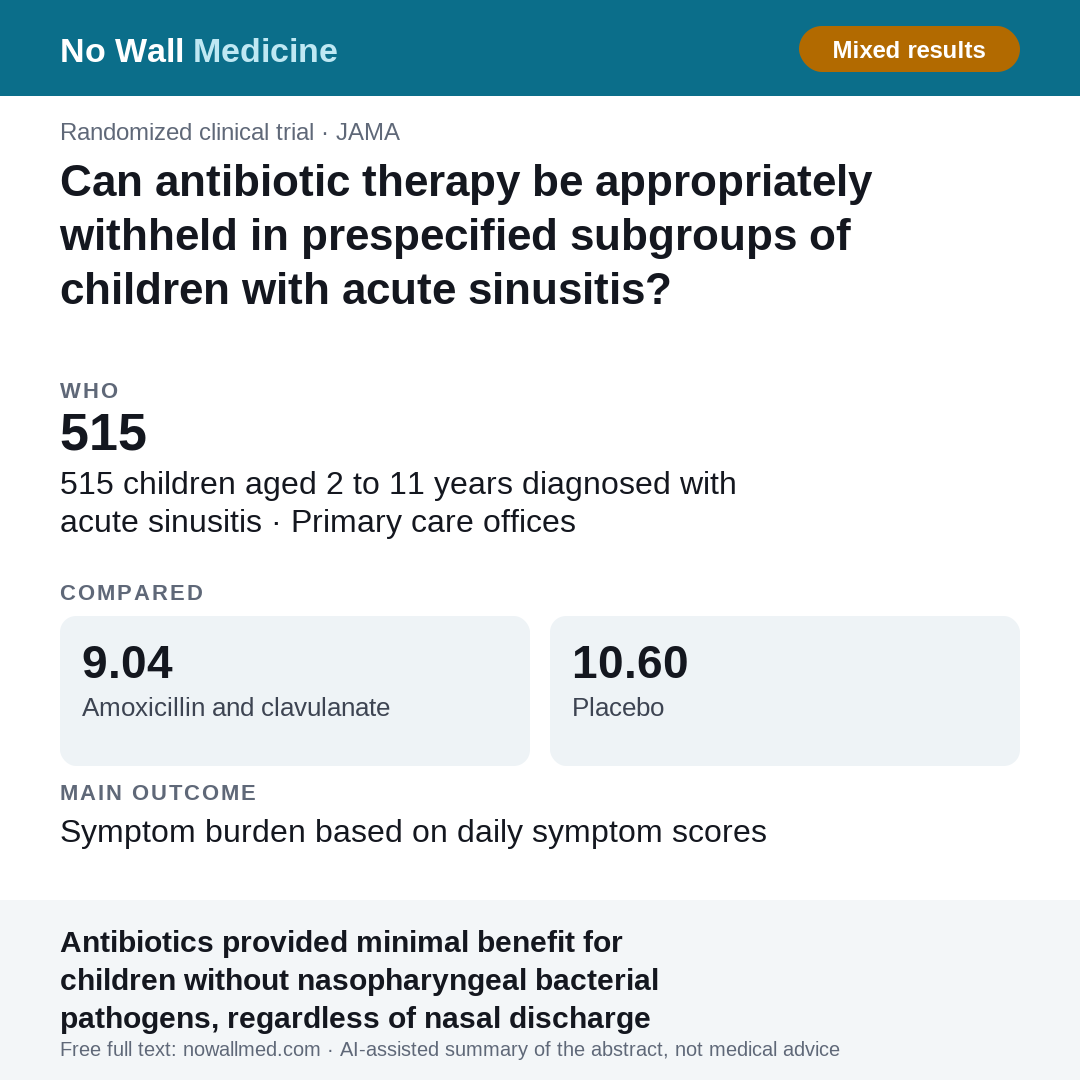
Identifying Children Likely to Benefit From Antibiotics for Acute Sinusitis: A Randomized Clinical Trial
Randomized clinical trialMixed results
Can antibiotic therapy be appropriately withheld in prespecified subgroups of children with acute sinusitis?
Who
515
515 children aged 2 to 11 years diagnosed with acute sinusitis · Primary care offices affiliated with 6 US institutions
Compared
9.04Amoxicillin and clavulanate (95% CI, 8.71 to 9.37)
10.60Placebo (95% CI, 10.27 to 10.93)
Main outcome
Symptom burden based on daily symptom scores
Result: -1.69 (95% CI, -2.07 to -1.31)
Bottom line: Antibiotics provided minimal benefit for children without nasopharyngeal bacterial pathogens, regardless of nasal discharge color.
JAMA · 2023-07-25Download image
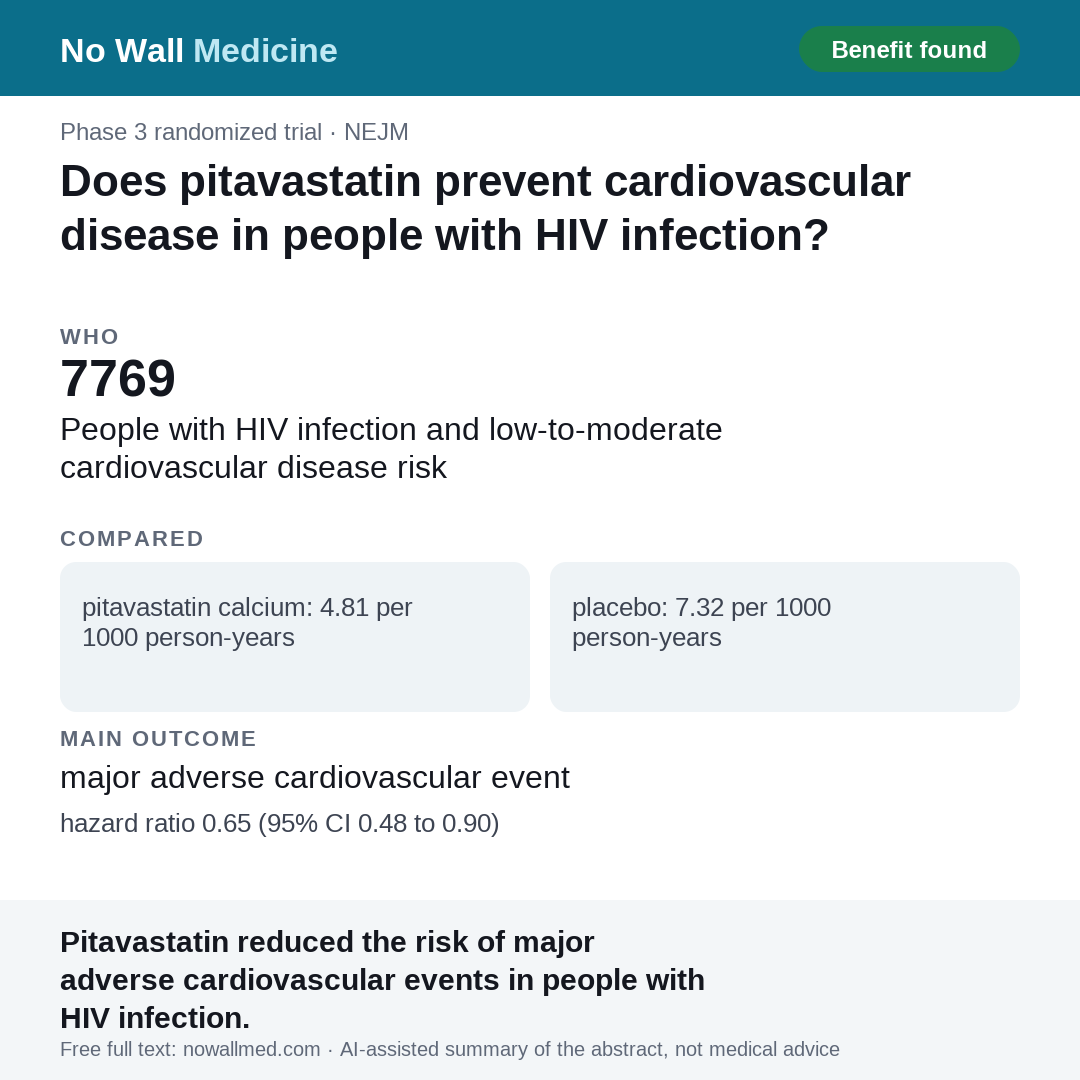
Pitavastatin to Prevent Cardiovascular Disease in HIV Infection
Phase 3 randomized trialBenefit found
Does pitavastatin prevent cardiovascular disease in people with HIV infection?
Who
7769
People with HIV infection and low-to-moderate cardiovascular disease risk
Compared
pitavastatin calcium: 4.81 per 1000 person-years
placebo: 7.32 per 1000 person-years
Main outcome
major adverse cardiovascular event
Result: hazard ratio 0.65 (95% CI 0.48 to 0.90)
Bottom line: Pitavastatin reduced the risk of major adverse cardiovascular events in people with HIV infection.
Funded by: National Institutes of Health and others
NEJM · 2023-07-23Download image
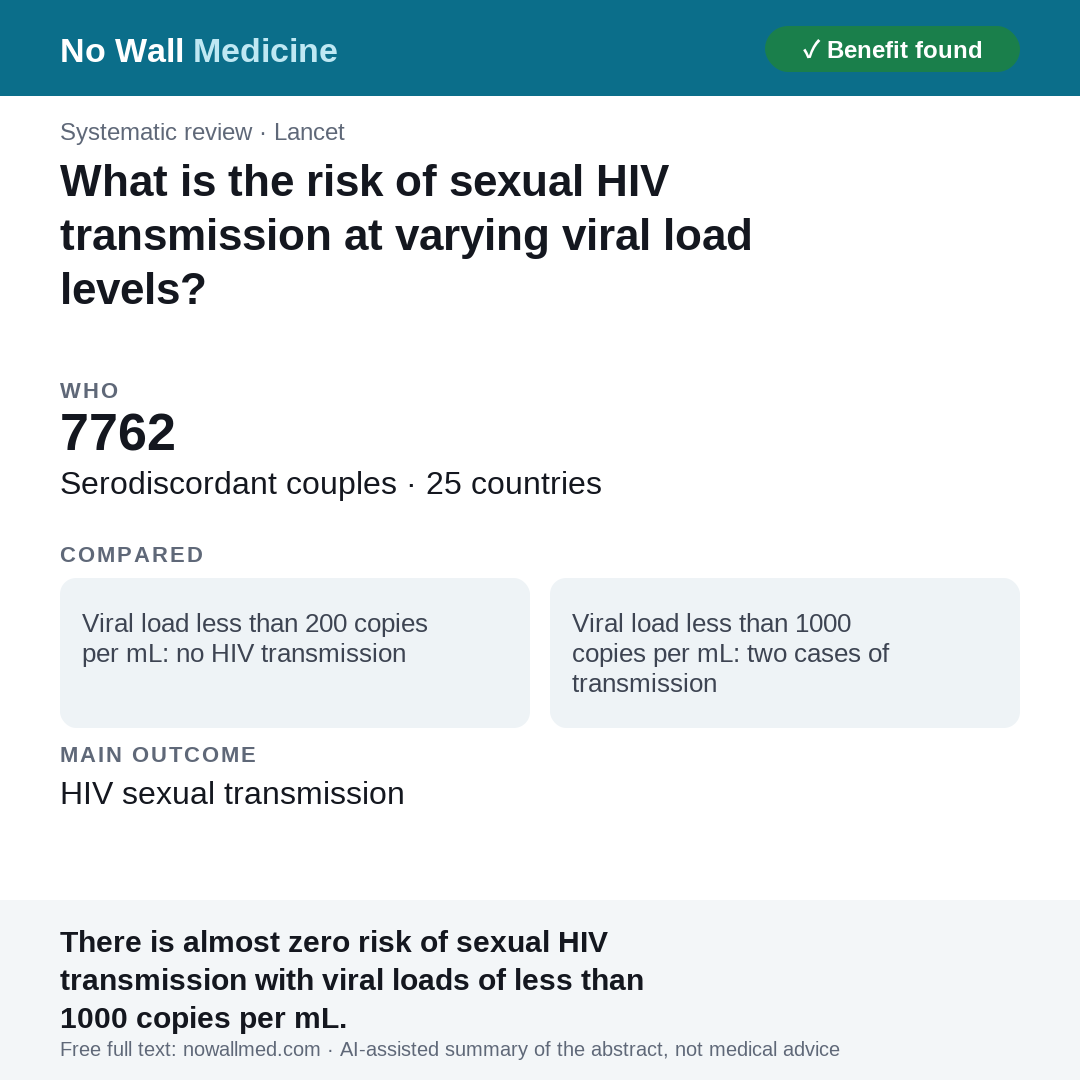
The risk of sexual transmission of HIV in individuals with low-level HIV viraemia: a systematic review
Systematic reviewBenefit found
What is the risk of sexual HIV transmission at varying viral load levels?
Who
7762
Serodiscordant couples · 25 countries
Compared
Viral load less than 200 copies per mL: no HIV transmission
Viral load less than 1000 copies per mL: two cases of transmission
Main outcome
HIV sexual transmission
Bottom line: There is almost zero risk of sexual HIV transmission with viral loads of less than 1000 copies per mL.
Limitation: Interpretation of transmission cases was complicated by long intervals between transmission and the most recent viral load result.
Funded by: Bill & Melinda Gates Foundation
Lancet · 2023-07-22Download image
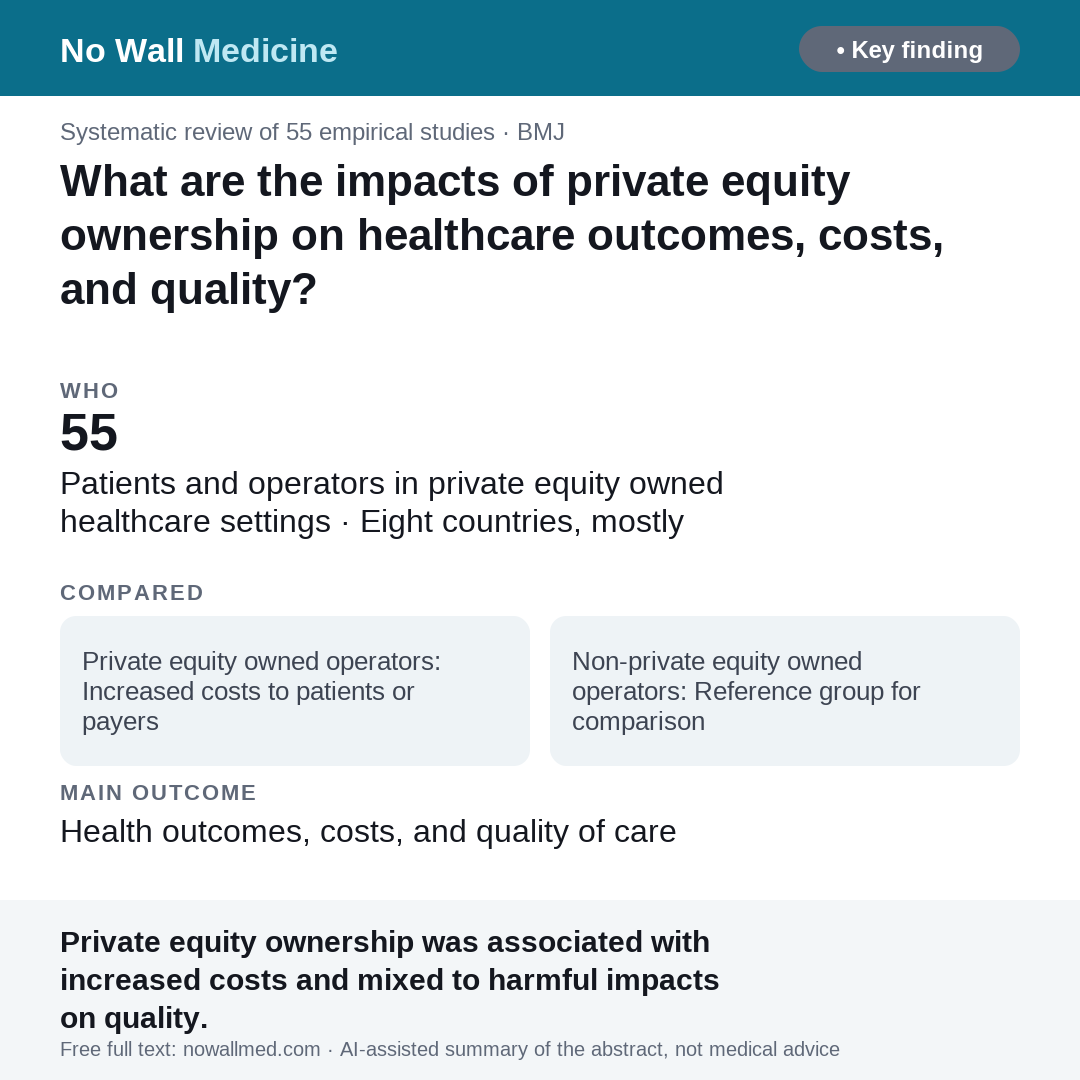
Evaluating trends in private equity ownership and impacts on health outcomes, costs, and quality: systematic review
Systematic reviewHarm found
What are the trends and impacts of private equity ownership on healthcare?
Who
55
Healthcare operators across various settings · Eight countries, mostly in the United States
Compared
Private equity ownership: increases in costs to patients or payers
Private equity ownership: mixed to harmful impacts on quality
Main outcome
Health outcomes, costs, and quality
Bottom line: Private equity ownership rapidly increased and is associated with higher costs and mixed to harmful quality impacts.
Limitation: Risk of bias and frequent geographic focus on the United States may limit international generalizability.
BMJ · 2023-07-19Download image
Trial of the MIND Diet for Prevention of Cognitive Decline in Older Persons
Randomized, controlled trialNo clear difference
Does the MIND diet prevent cognitive decline in older adults with dementia family history?
Who
604
Older adults without cognitive impairment, family history of dementia, and suboptimal diet · Two-site trial
Compared
MIND diet group: 0.205 standardized units increase
Control diet group: 0.170 standardized units increase
Main outcome
Change from baseline in global cognition score
Result: mean difference 0.035 standardized units (95% CI -0.022 to 0.092)
Bottom line: The MIND diet did not significantly improve cognitive performance compared to a control diet over three years.
Limitation: MRI outcomes were measured in a nonrandom sample of participants
Funded by: National Institute on Aging
NEJM · 2023-07-18Download image