Visual abstracts
New randomized trials and meta-analyses from leading journals at a glance: who was studied, what was compared, and what was found. Every paper is free to read in full.
All specialtiesCardiology 1795Oncology 1543Gastroenterology & Hepatology 673Infectious Disease 1141Neurology 741Psychiatry & Mental Health 878Pulmonology 767Critical Care 523Endocrinology & Diabetes 967Pediatrics 1066Surgery 903Orthopedics & Sports Medicine 335Neurosurgery 226Cardiothoracic & Vascular Surgery 199Plastic & Reconstructive Surgery 278Nephrology 370Rheumatology 253Hematology 396Dermatology 198Ophthalmology 214Obstetrics & Gynecology 584Public & Global Health 351Radiology & Imaging 243Anesthesiology 358Urology 312ENT (Otolaryngology) 243Emergency Medicine 201Allergy & Immunology 116Geriatrics 381Family Medicine & Primary Care 218Medical Genetics & Genomics 194Pathology & Laboratory Medicine 56Physical Medicine & Rehabilitation 321Palliative Care 163Nutrition 477Digital Health & AI 945General Medicine 139
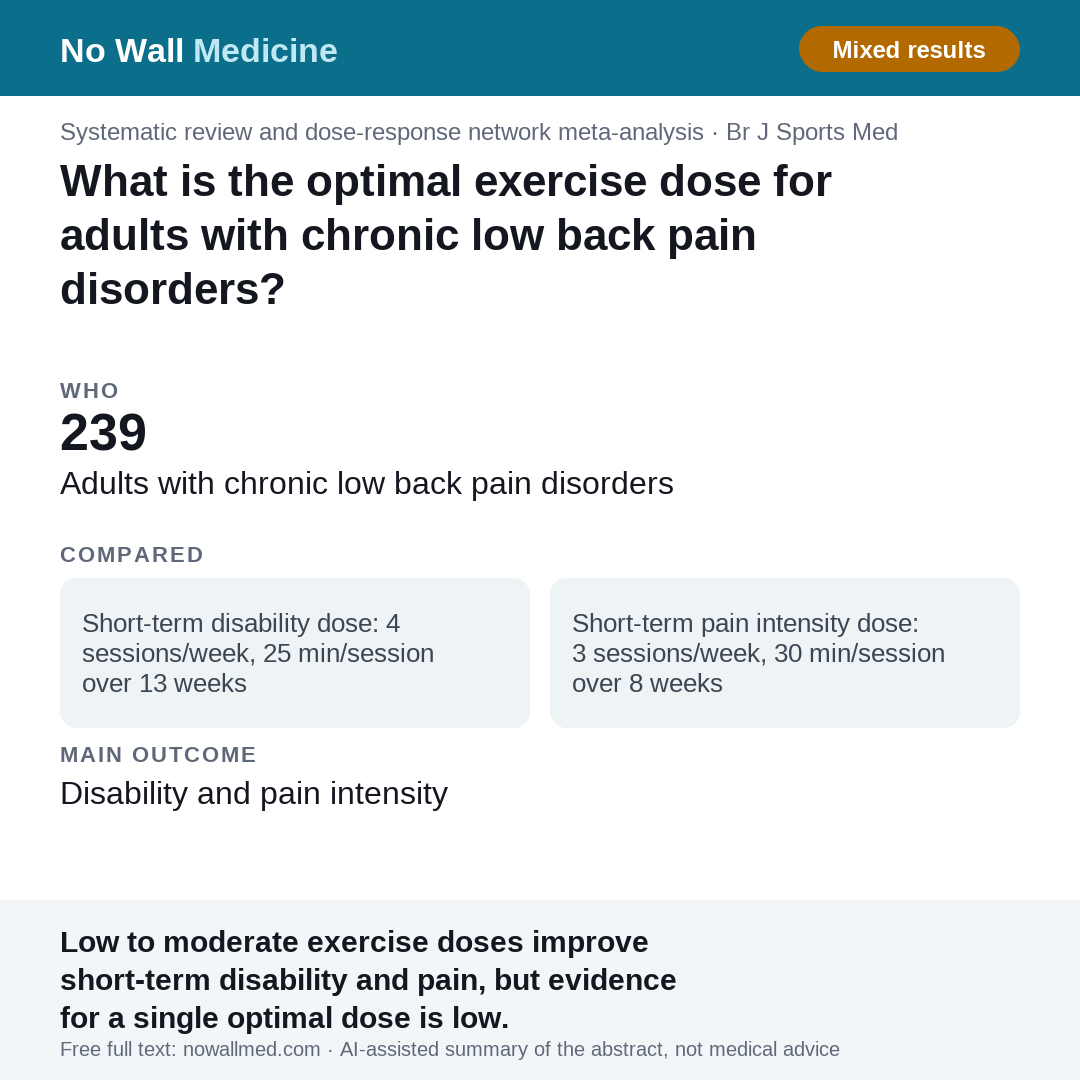
Optimal exercise dose in adults with chronic low back pain disorders: systematic review with dose-response network meta-analysis
Systematic review and dose-response network meta-analysisMixed results
What is the optimal exercise dose for adults with chronic low back pain disorders?
Who
239
Adults with chronic low back pain disorders
Compared
Short-term disability optimal dose: 4 sessions/week, 25 min/session over 13 weeks
Short-term pain intensity optimal dose: 3 sessions/week, 30 min/session over 8 weeks
Main outcome
Disability and pain intensity
Bottom line: Low to moderate exercise doses improve short-term disability and pain, but evidence for a single optimal dose is limited.
Limitation: 84% of trials were at high risk of bias and certainty was very low to low.
Br J Sports Med · 2026-09-24Download image
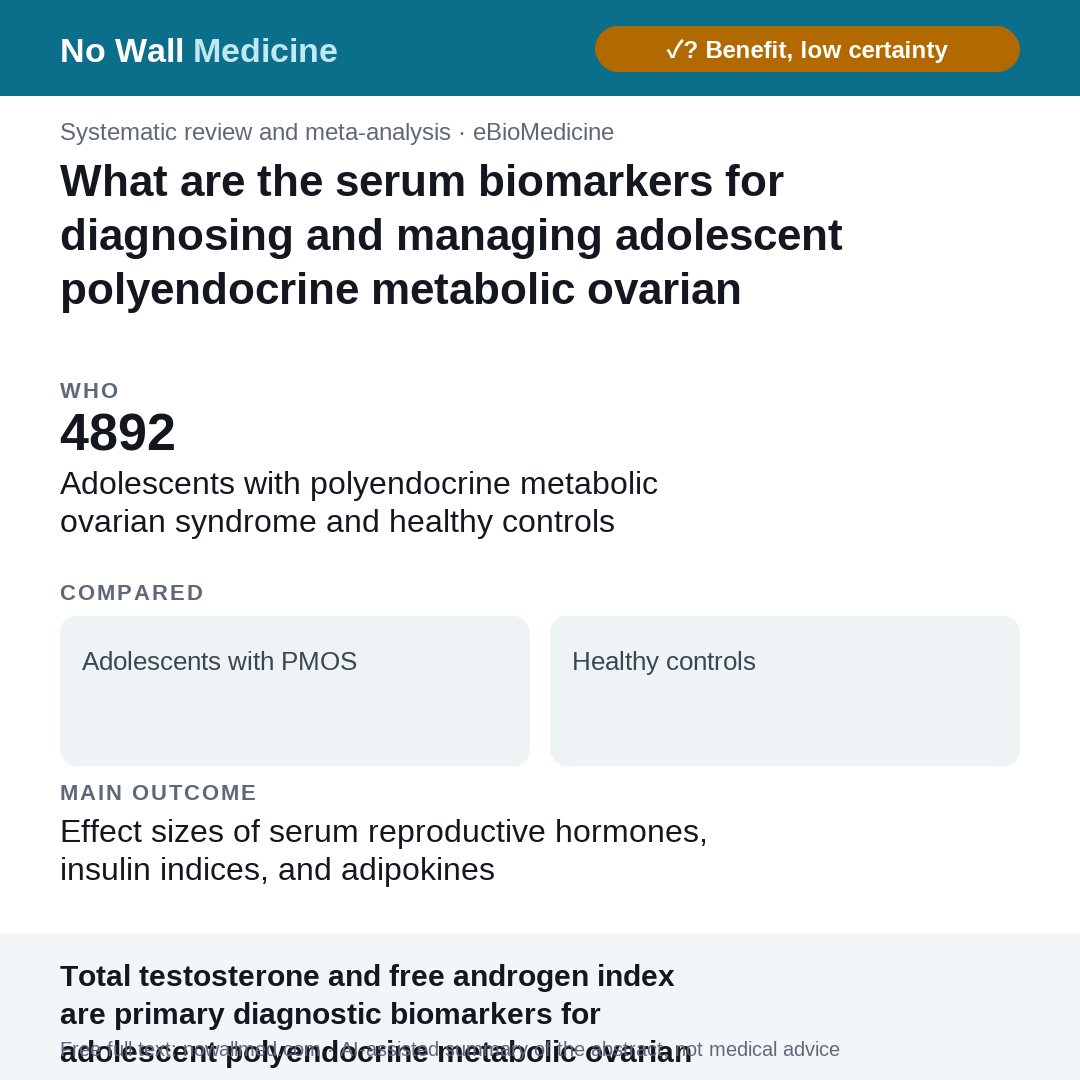
Serum biomarkers for the diagnosis and management of adolescent polyendocrine metabolic ovarian syndrome: a systematic review and meta-analysis
Systematic review and meta-analysisBenefit found
What are the serum biomarkers for diagnosing and managing adolescent polyendocrine metabolic ovarian syndrome?
Who
4892
Adolescents with polyendocrine metabolic ovarian syndrome and healthy controls
Compared
Adolescents with PMOS
Healthy controls
Main outcome
Effect sizes of serum reproductive hormones, insulin indices, and adipokines
Bottom line: Total testosterone and free androgen index are primary diagnostic biomarkers for adolescent polyendocrine metabolic ovarian syndrome.
Limitation: LH/FSH and dehydroepiandrosterone sulphate showed significant publication bias.
Funded by: HMRF, CUHK direct grant, and other collaborative funds
eBioMedicine · 2026-09-24Download image
Clinical Outcomes of Left Atrial Appendage Occlusion During Cardiac Surgery in Patients Without Atrial Fibrillation: A Systematic Review and Meta-Analysis
Systematic review and meta-analysisMixed results
Does surgical left atrial appendage occlusion reduce risks in patients without atrial fibrillation?
Who
12145
Patients in sinus rhythm undergoing cardiac surgery
Compared
Surgical left atrial appendage occlusion
No left atrial appendage occlusion
Main outcome
new-onset transient ischemic attack, stroke, postoperative atrial fibrillation, and all-cause death
Result: odds ratio 0.75 (95% CI 0.62-0.90) for new-onset TIA/stroke
Bottom line: Surgical occlusion reduces transient ischemic attack, stroke, and bleeding but increases postoperative atrial fibrillation risk.
Limitation: low to moderate certainty of evidence
J Am Heart Assoc · 2026-09-24Download image

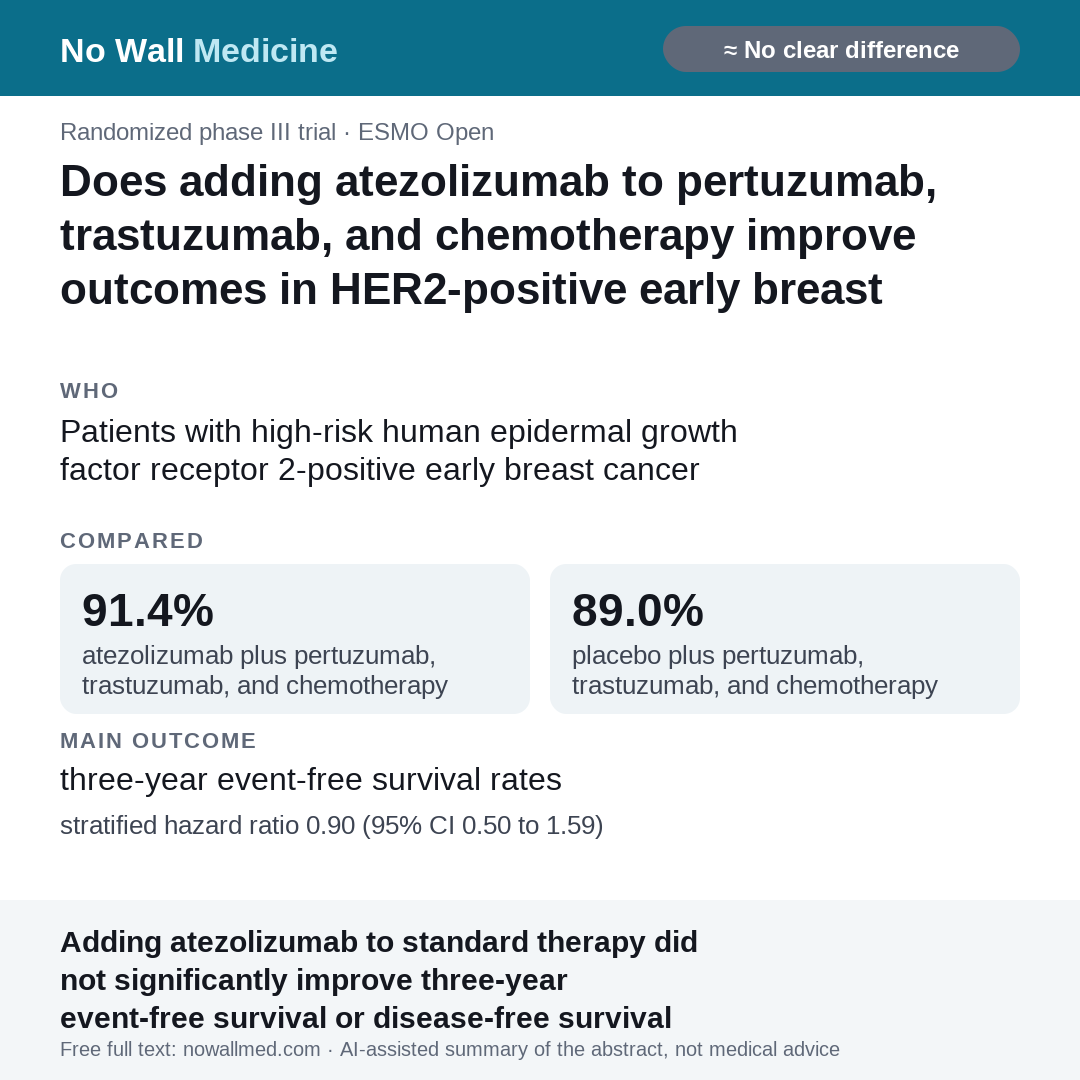
Atezolizumab plus pertuzumab, trastuzumab, and chemotherapy in HER2-positive early breast cancer: final results of the phase III IMpassion050 trial
Randomized phase III trialNo clear difference
Does adding atezolizumab to pertuzumab, trastuzumab, and chemotherapy improve outcomes in HER2-positive early breast cancer?
Who
Patients with high-risk human epidermal growth factor receptor 2-positive early breast cancer
Compared
91.4%atezolizumab plus pertuzumab, trastuzumab, and chemotherapy
89.0%placebo plus pertuzumab, trastuzumab, and chemotherapy
Main outcome
three-year event-free survival rates
Result: stratified hazard ratio 0.90 (95% CI 0.50 to 1.59)
Bottom line: Adding atezolizumab to standard therapy did not significantly improve three-year event-free survival or disease-free survival rates.
ESMO Open · 2026-09-24Download image
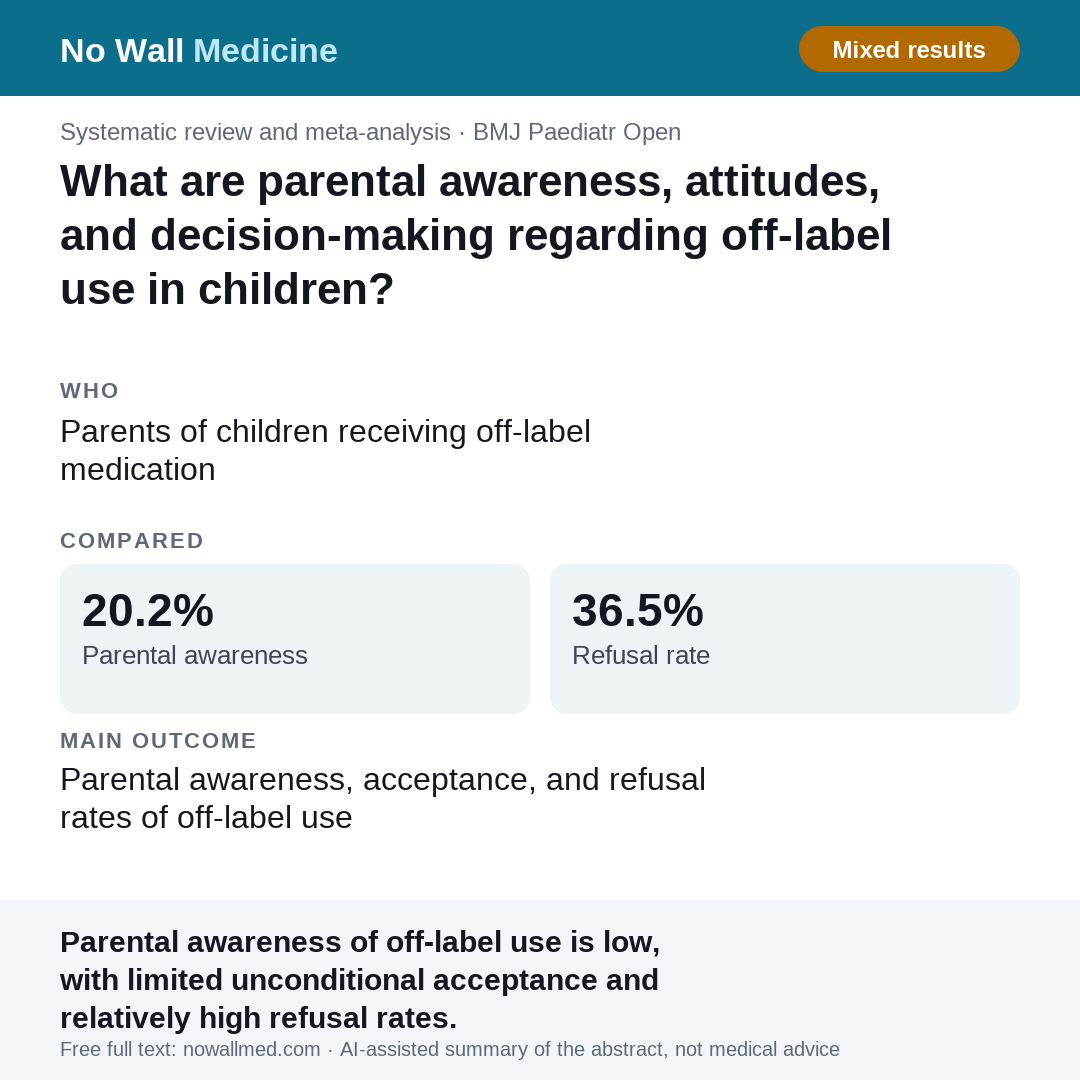
Parental awareness, attitudes and decision-making of off-label use in children: a systematic review and meta-analysis
Systematic review and meta-analysisMixed results
What are parental awareness, attitudes, and decision-making regarding off-label use in children?
Who
Parents of children receiving off-label medication
Compared
20.2%Parental awareness (95% CI: 10.6% to 31.9%)
36.5%Refusal rate (95% CI: 14.6% to 61.8%)
Main outcome
Parental awareness, acceptance, and refusal rates of off-label use
Bottom line: Parental awareness of off-label use is low, with limited unconditional acceptance and relatively high refusal rates.
Limitation: Extreme heterogeneity in operational definitions for conditional acceptance rates.
BMJ Paediatr Open · 2026-09-24Download image
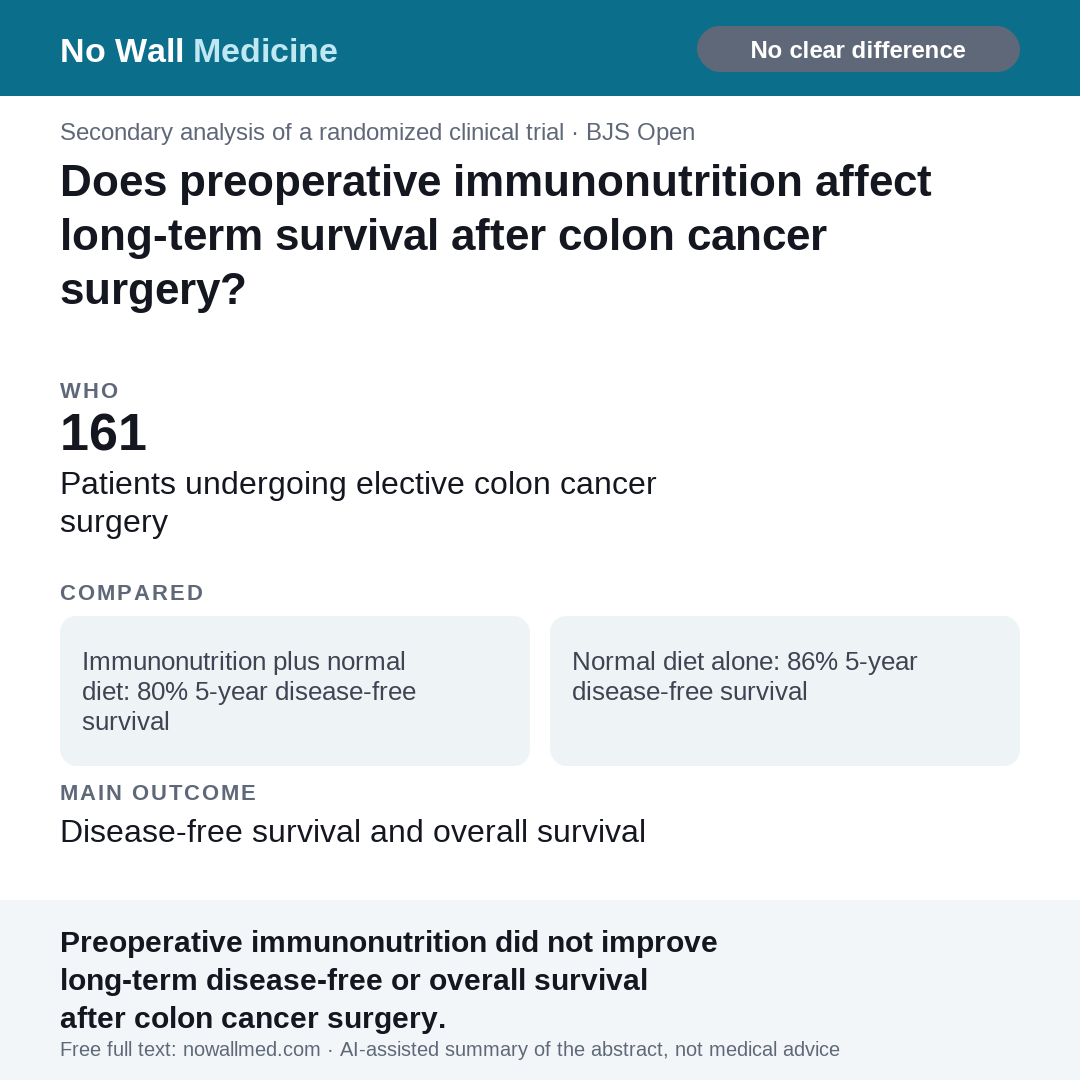
Effect of immunonutrition on postoperative infectious complications and survival after colon cancer surgery: long-term follow up of randomized clinical trial
Secondary analysis of a randomized clinical trialNo clear difference
Does preoperative immunonutrition affect long-term survival after colon cancer surgery?
Who
161
Patients undergoing elective colon cancer surgery
Compared
Immunonutrition plus normal diet: 80% 5-year disease-free survival
Normal diet alone: 86% 5-year disease-free survival
Main outcome
Disease-free survival and overall survival
Bottom line: Preoperative immunonutrition did not improve long-term disease-free or overall survival after colon cancer surgery.
BJS Open · 2026-09-24Download image
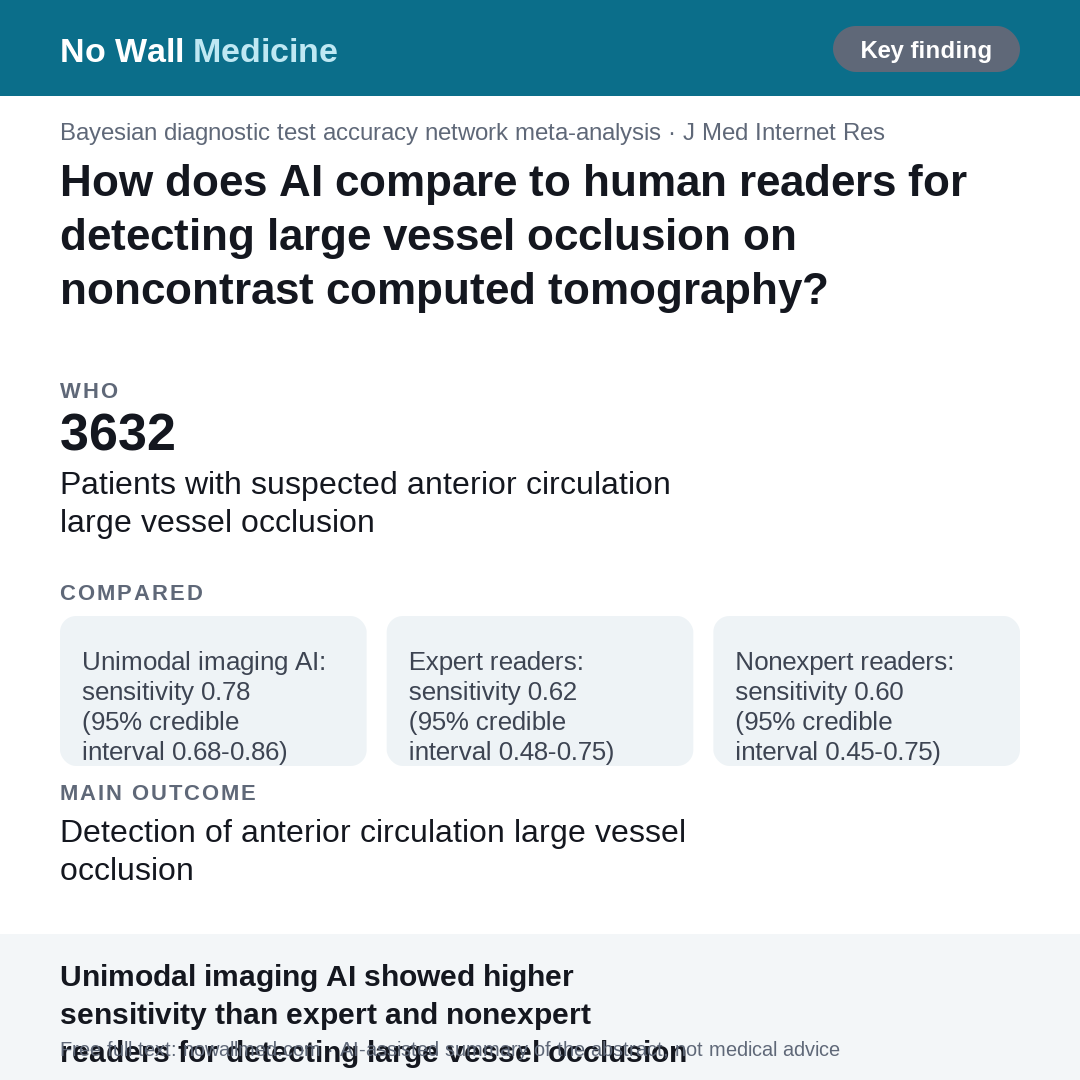
AI Decision Support for Emergency Triage of Large Vessel Occlusion Using Noncontrast Computed Tomography: Systematic Review and Bayesian Diagnostic Test Accuracy Network Meta-Analysis
Bayesian diagnostic test accuracy network meta-analysisBenefit found
How does AI compare to human readers for detecting large vessel occlusion on noncontrast computed tomography?
Who
3632
Patients with suspected anterior circulation large vessel occlusion
Compared
Unimodal imaging AI: sensitivity 0.78 (95% credible interval 0.68-0.86)
Expert readers: sensitivity 0.62 (95% credible interval 0.48-0.75)
Nonexpert readers: sensitivity 0.60 (95% credible interval 0.45-0.75)
Main outcome
Detection of anterior circulation large vessel occlusion
Result: sensitivity difference 0.16 (95% credible interval 0.03-0.29) vs experts
Bottom line: Unimodal imaging AI showed higher sensitivity than expert and nonexpert readers for detecting large vessel occlusion in retrospective studies.
Limitation: Evidence is accuracy based and does not establish workflow effectiveness or functional outcome benefit.
J Med Internet Res · 2026-09-24Download image
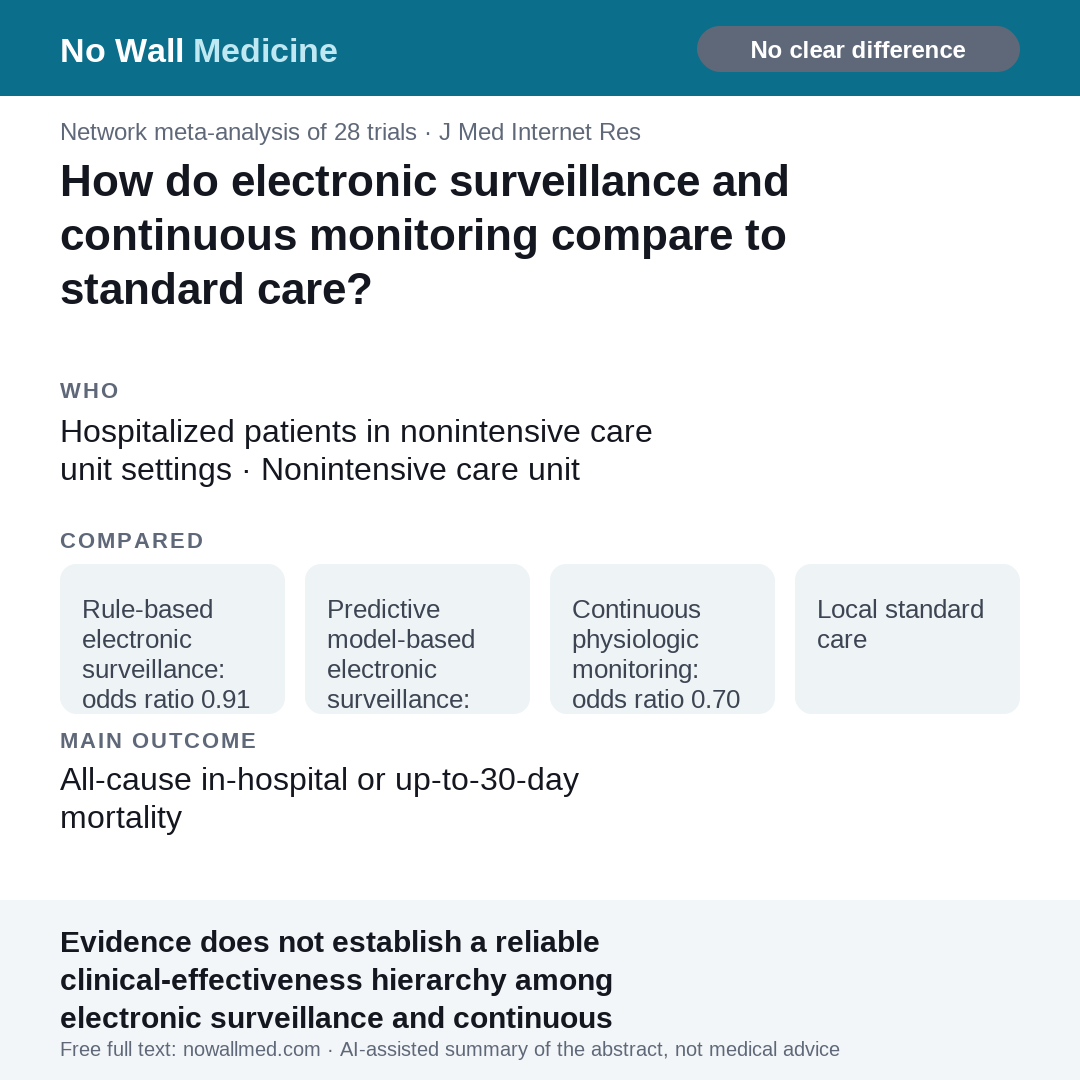
Clinical Surveillance Technologies in Nonintensive Care Unit Hospital Settings: Systematic Review and Bayesian Network Meta-Analysis of Randomized Trials
Network meta-analysis of 28 trialsNo clear difference
How do electronic surveillance and continuous monitoring compare to standard care?
Who
Hospitalized patients in nonintensive care unit settings · Nonintensive care unit hospital settings
Compared
Rule-based electronic surveillance: odds ratio 0.91 (95% credible interval 0.35-2.30)
Predictive model-based electronic surveillance: odds ratio 1.22 (95% credible interval 0.61-2.31)
Continuous physiologic monitoring: odds ratio 0.70 (95% credible interval 0.36-1.29)
Local standard care
Main outcome
All-cause in-hospital or up-to-30-day mortality
Bottom line: Evidence does not establish a reliable clinical-effectiveness hierarchy among electronic surveillance and continuous monitoring technologies.
Limitation: Confidence in all network comparisons was very low.
J Med Internet Res · 2026-09-24Download image
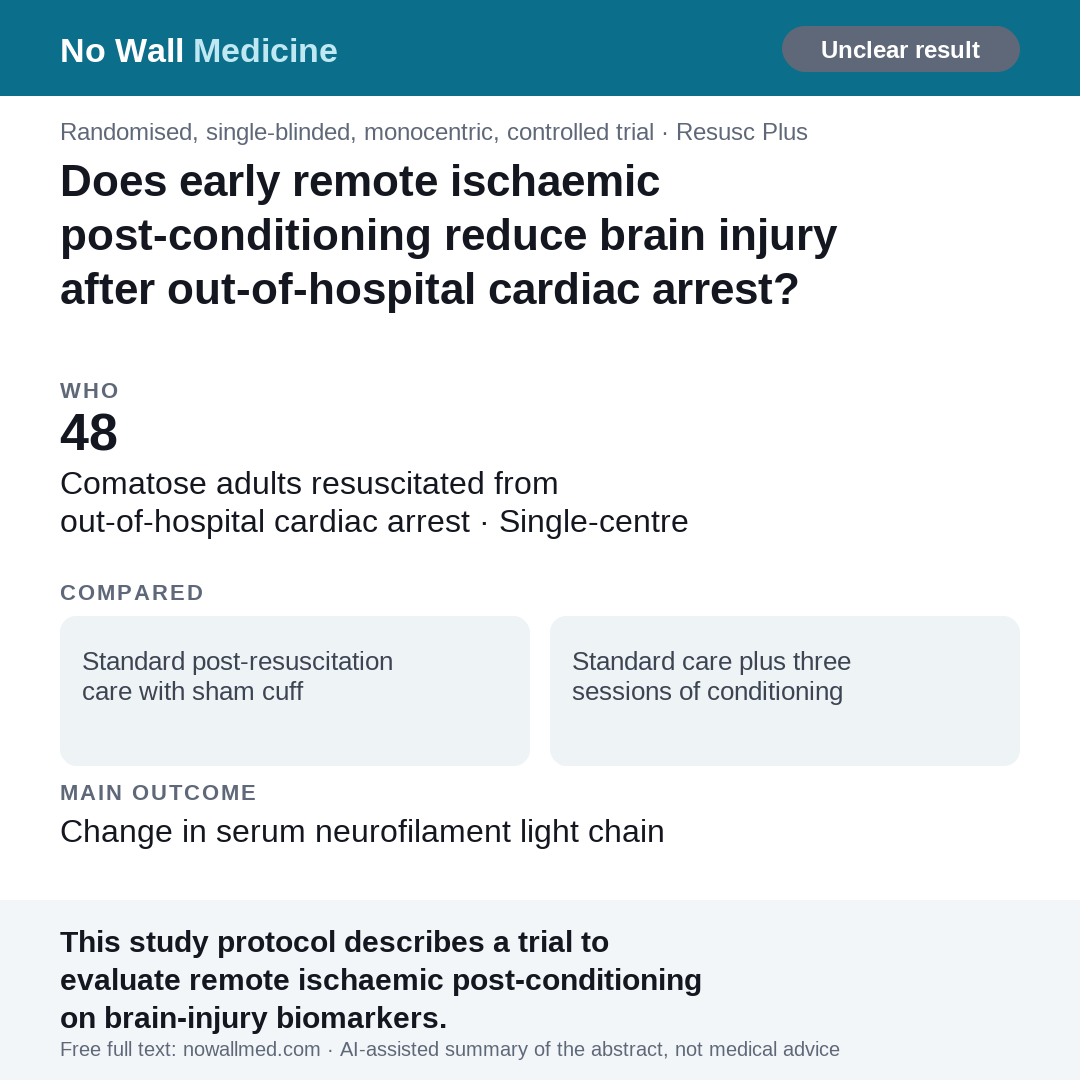
Neuroprotective effect of early remote ischaemic post-conditioning after out-of-hospital cardiac arrest (RIPOST-CA): study protocol for a randomised, single-blinded, monocentric, controlled trial
Randomised, single-blinded, monocentric, controlled trialUnclear result
Does early remote ischaemic post-conditioning reduce brain injury after out-of-hospital cardiac arrest?
Who
48
Comatose adults resuscitated from out-of-hospital cardiac arrest · Single-centre
Compared
Standard post-resuscitation care with sham cuff
Standard care plus three sessions of conditioning
Main outcome
Change in serum neurofilament light chain
Bottom line: This study protocol describes a trial to evaluate remote ischaemic post-conditioning on brain-injury biomarkers.
Resusc Plus · 2026-09-24Download image
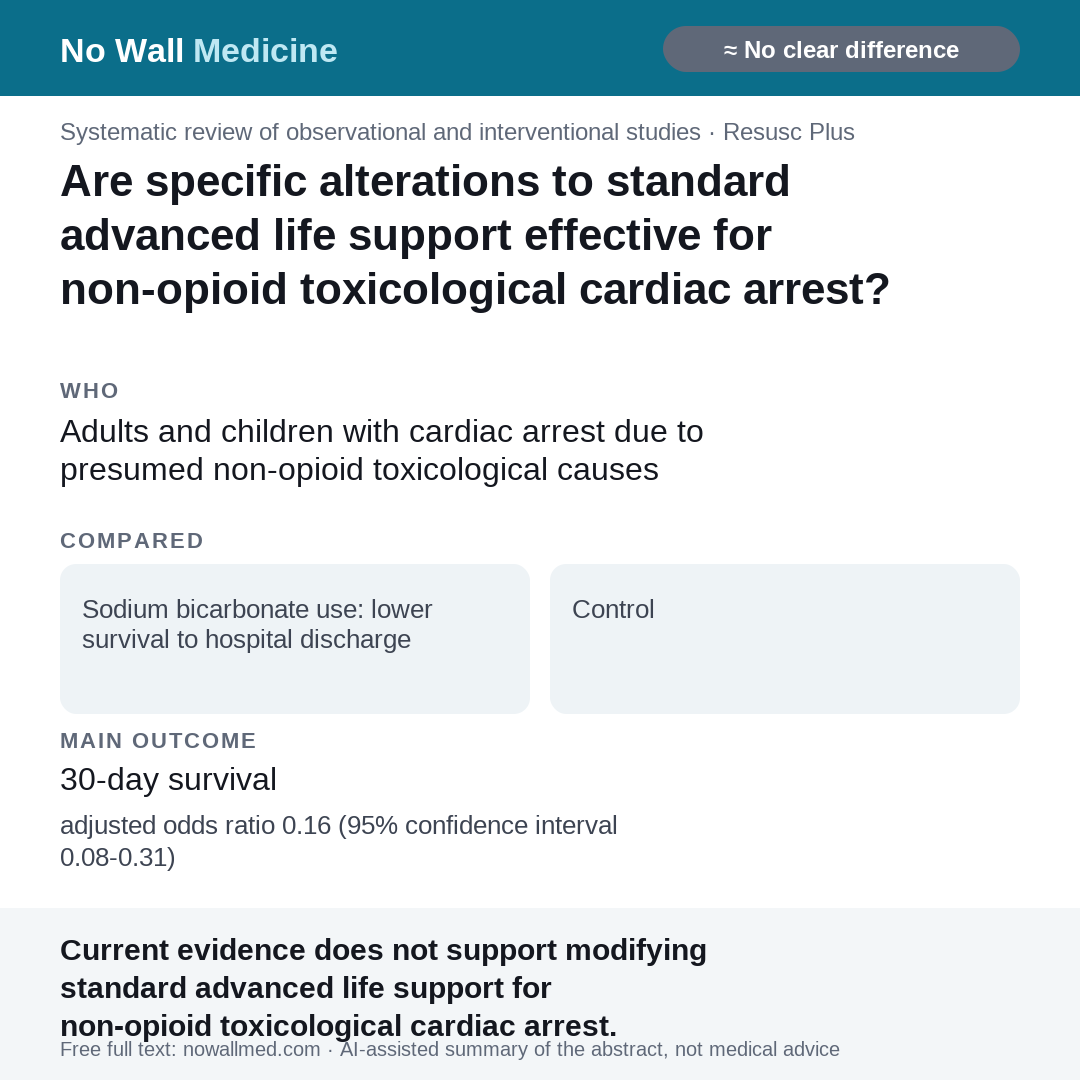
Intra-arrest strategies to treat cardiac arrest due to a non-opioid toxicological causes in adults and children: a systematic review
Systematic review of observational and interventional studiesNo clear difference
Are specific alterations to standard advanced life support effective for non-opioid toxicological cardiac arrest?
Who
Adults and children with cardiac arrest due to presumed non-opioid toxicological causes
Compared
Sodium bicarbonate use: lower survival to hospital discharge
Control
Main outcome
30-day survival
Result: adjusted odds ratio 0.16 (95% confidence interval 0.08-0.31)
Bottom line: Current evidence does not support modifying standard advanced life support for non-opioid toxicological cardiac arrest.
Limitation: All four included observational studies were at critical risk of bias.
Resusc Plus · 2026-09-24Download image
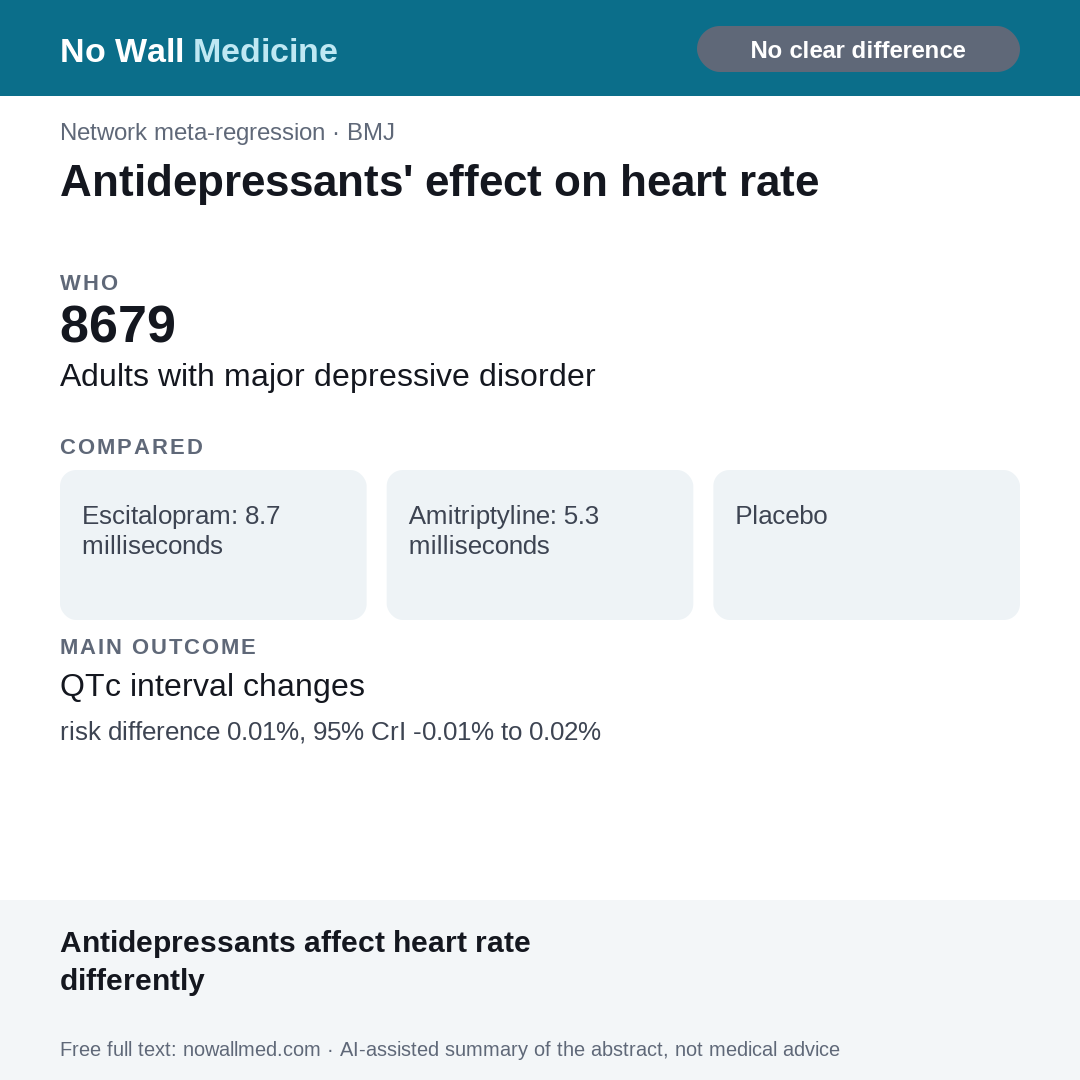
QTc changes and early major adverse cardiovascular events associated with antidepressant treatment for major depressive disorder in adults: individual participant data network meta-regression of double blind randomised trials
Network meta-regressionNo clear difference
Antidepressants' effect on heart rate
Who
8679
Adults with major depressive disorder
Compared
Escitalopram: 8.7 milliseconds
Amitriptyline: 5.3 milliseconds
Placebo
Main outcome
QTc interval changes
Result: risk difference 0.01%, 95% CrI -0.01% to 0.02%
Bottom line: Antidepressants affect heart rate differently
BMJ · 2026-09-23Download image
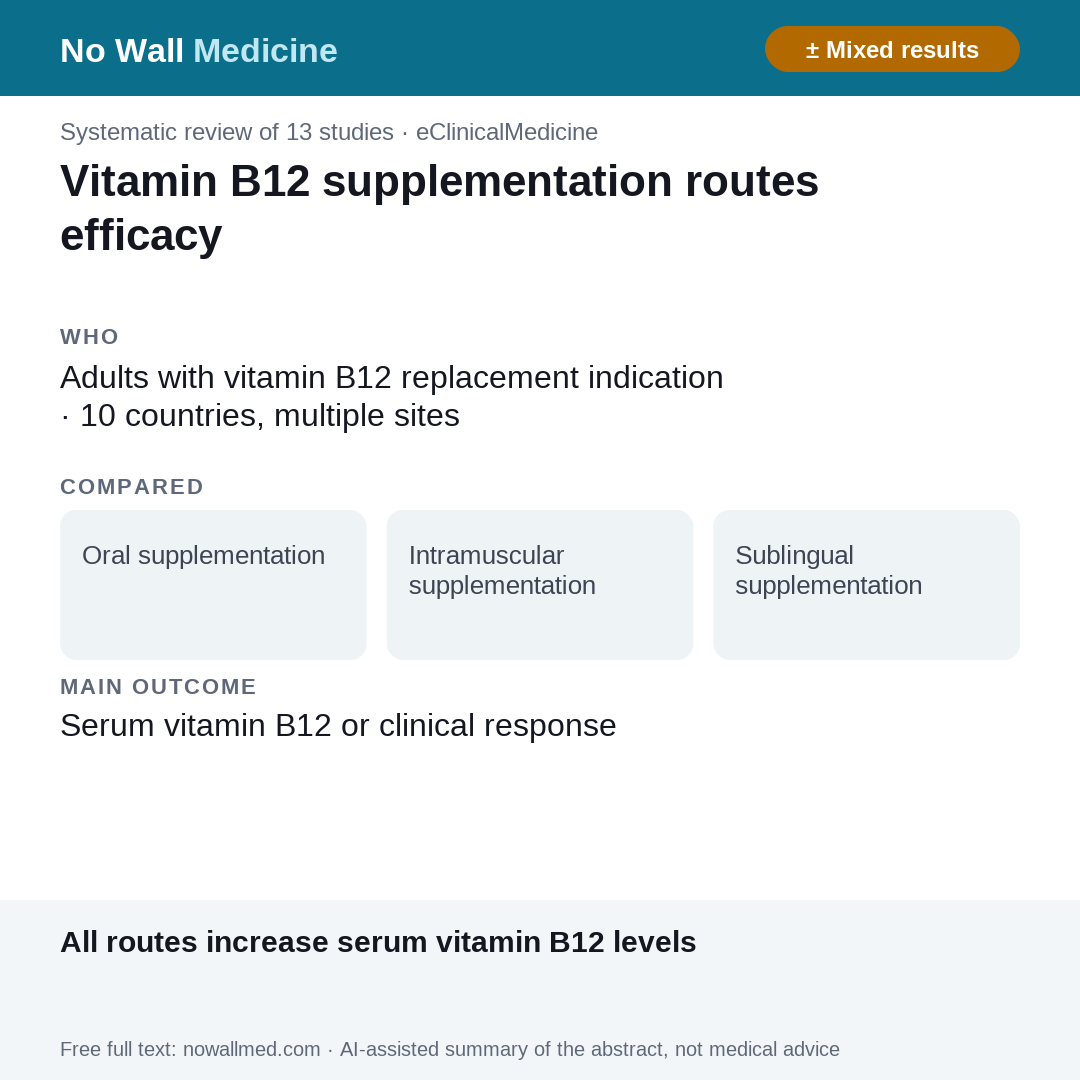
Comparative efficacy of vitamin B12 supplementation routes in adults with replacement indication: a systematic review
Systematic review of 13 studiesMixed results
Vitamin B12 supplementation routes efficacy
Who
Adults with vitamin B12 replacement indication · 10 countries, multiple sites
Compared
Oral supplementation
Intramuscular supplementation
Sublingual supplementation
Main outcome
Serum vitamin B12 or clinical response
Bottom line: All routes increase serum vitamin B12 levels
Limitation: Risk of bias in included studies
Funded by: Myralis Industria Farmacêutica Ltda
eClinicalMedicine · 2026-09-23Download image
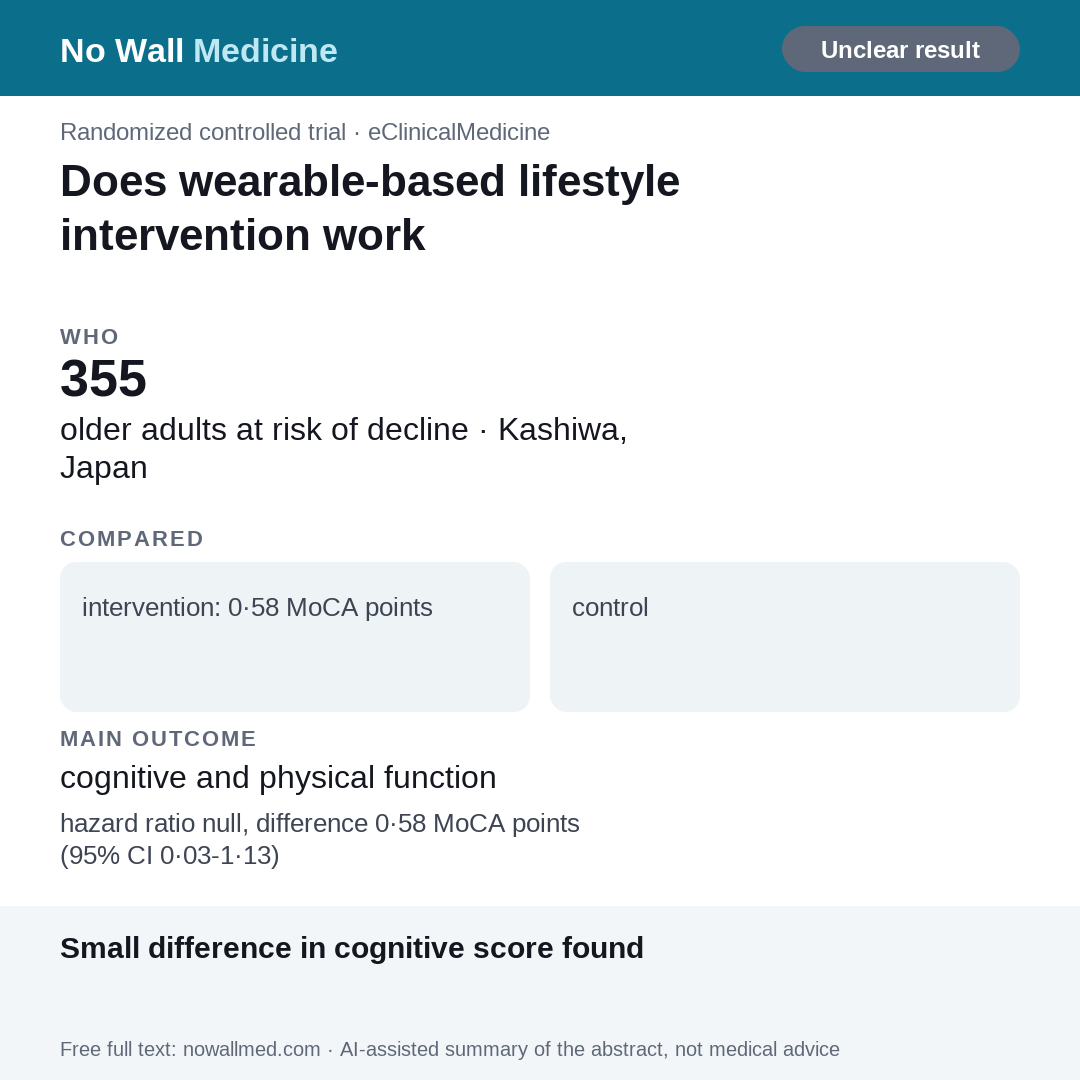
Effect of a wearable-based individualised multidomain lifestyle intervention on cognitive and physical function in older adults at risk of decline (INSPIOR): a single-centre, open-label, randomised controlled trial
Randomized controlled trialUnclear result
Does wearable-based lifestyle intervention work
Who
355
older adults at risk of decline · Kashiwa, Japan
Compared
intervention: 0·58 MoCA points
control
Main outcome
cognitive and physical function
Result: hazard ratio null, difference 0·58 MoCA points (95% CI 0·03-1·13)
Bottom line: Small difference in cognitive score found
Funded by: University of Tokyo, Google, Mitsui Fudosan
eClinicalMedicine · 2026-09-23Download image
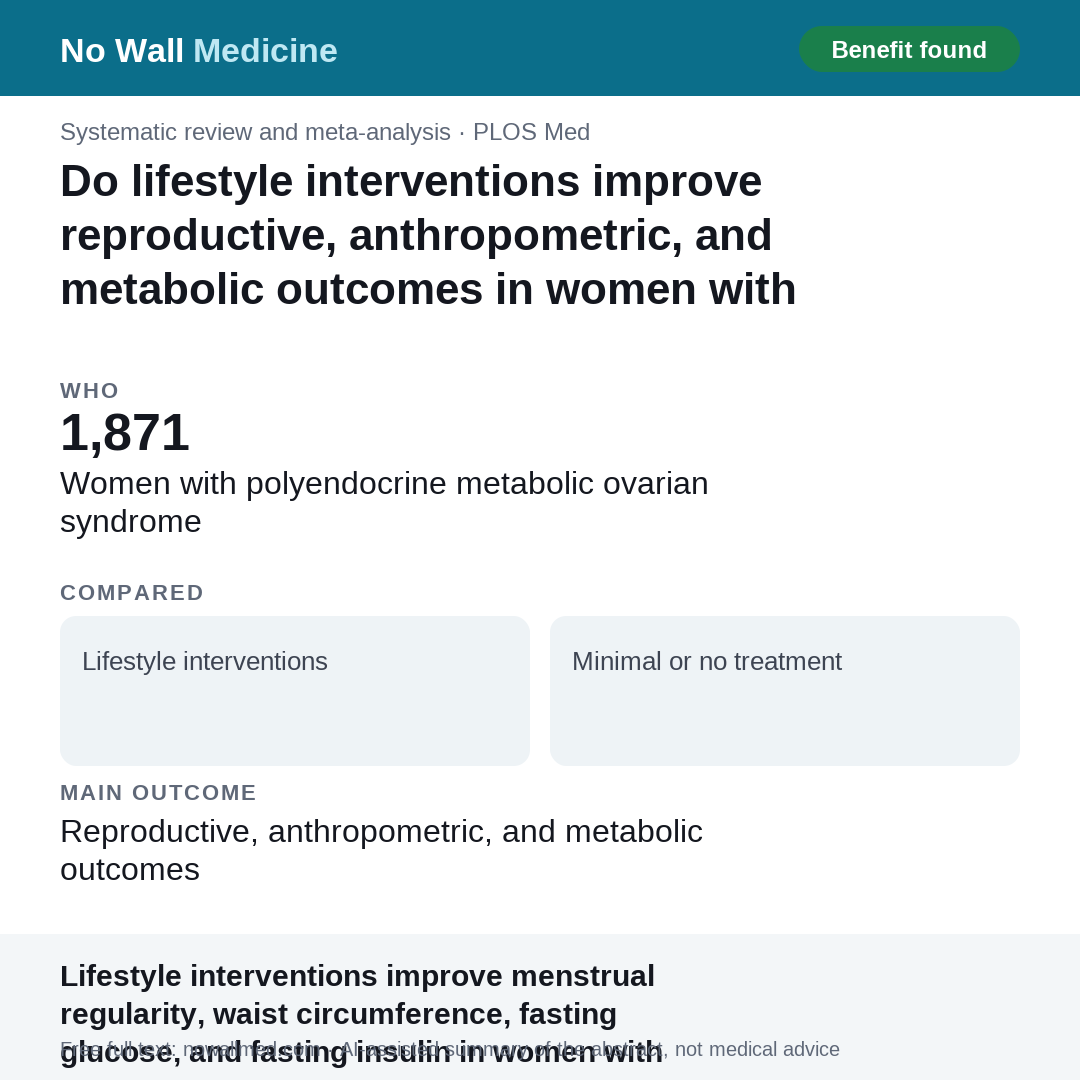
The effect of lifestyle interventions in women with polyendocrine metabolic ovarian syndrome: A systematic review and meta-analysis
Systematic review and meta-analysisBenefit found
Do lifestyle interventions improve reproductive, anthropometric, and metabolic outcomes in women with polyendocrine metabolic ovarian syndrome?
Who
1,871
Women with polyendocrine metabolic ovarian syndrome
Compared
Lifestyle interventions
Minimal or no treatment
Main outcome
Reproductive, anthropometric, and metabolic outcomes
Result: odds ratio 4.03 (95% CI 1.16 to 14.05) for regular menstrual cycles
Bottom line: Lifestyle interventions improve menstrual regularity, waist circumference, fasting glucose, and fasting insulin in women with polyendocrine metabolic ovarian syndrome.
Limitation: High between-study heterogeneity in pooled estimates across many outcomes.
PLOS Med · 2026-09-23Download image
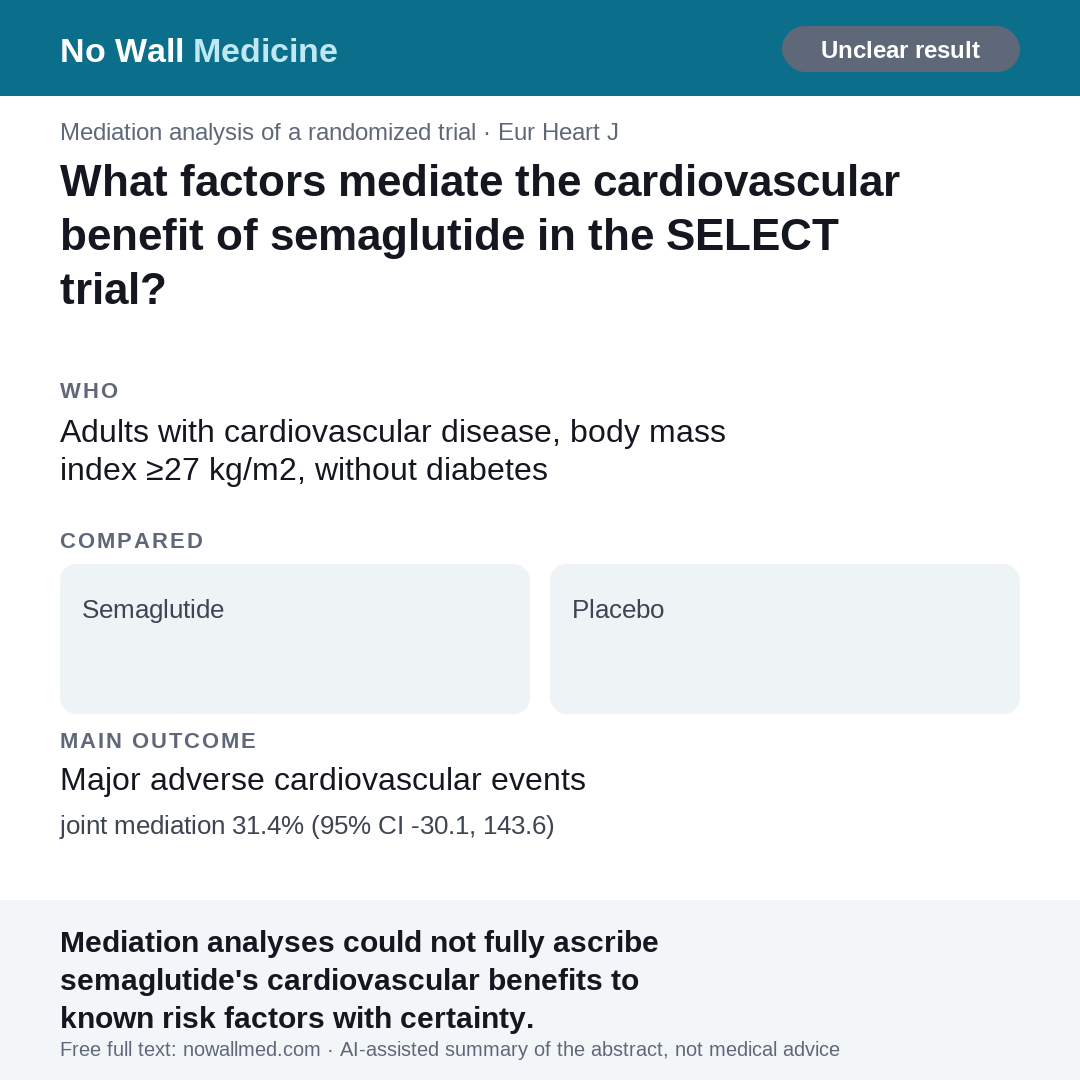
Semaglutide and cardiovascular risk reduction: a mediation analysis of the SELECT trial
Mediation analysis of a randomized trialUnclear result
What factors mediate the cardiovascular benefit of semaglutide in the SELECT trial?
Who
Adults with cardiovascular disease, body mass index ≥27 kg/m2, without diabetes
Compared
Semaglutide
Placebo
Main outcome
Major adverse cardiovascular events
Result: joint mediation 31.4% (95% CI -30.1, 143.6)
Bottom line: Mediation analyses could not fully ascribe semaglutide's cardiovascular benefits to known risk factors with certainty.
Eur Heart J · 2026-09-23Download image
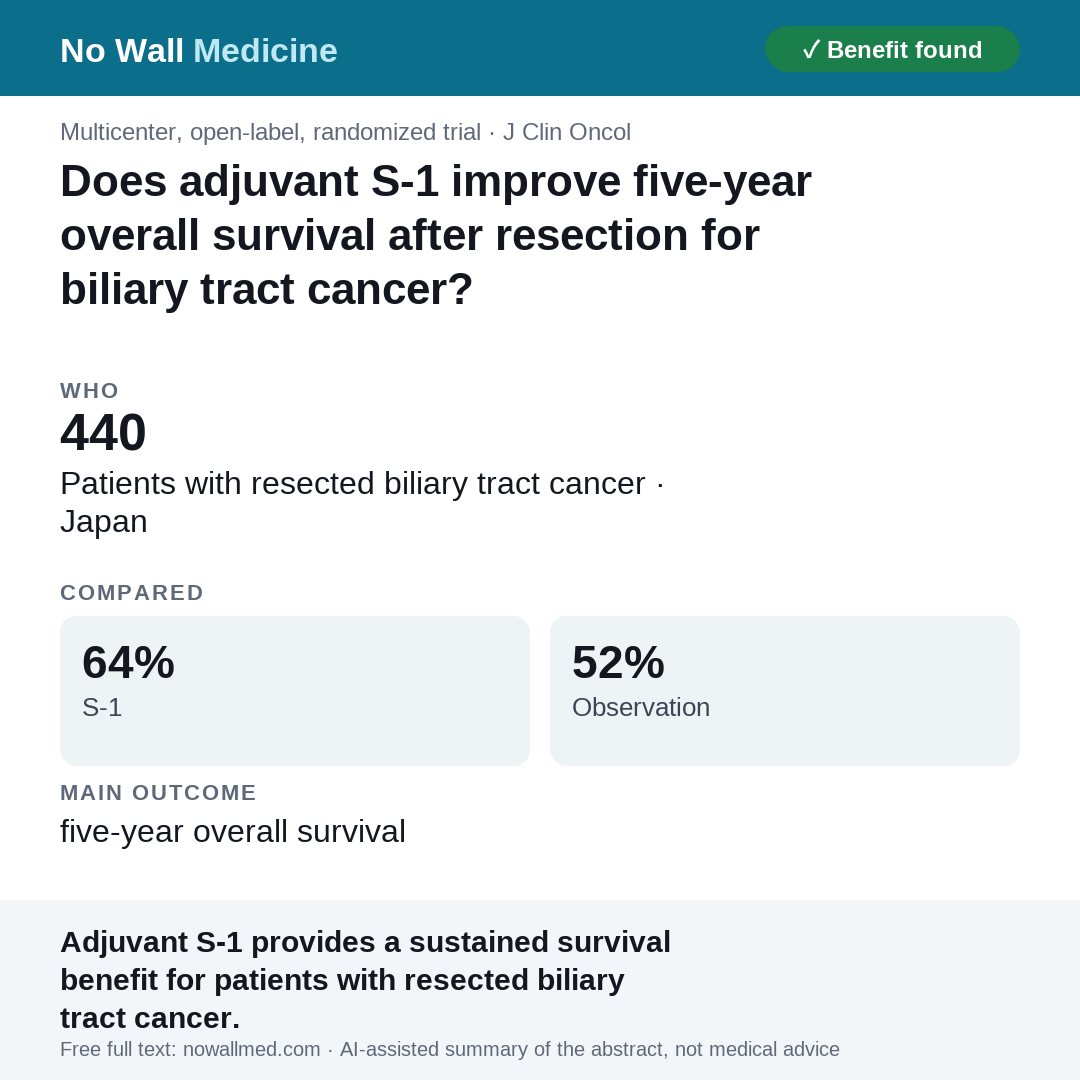
Five-Year Follow-Up of the Phase III ASCOT Trial of Adjuvant S-1 After Resection for Biliary Tract Cancer
Multicenter, open-label, randomized trialBenefit found
Does adjuvant S-1 improve five-year overall survival after resection for biliary tract cancer?
Who
440
Patients with resected biliary tract cancer · Japan
Compared
64%S-1
52%Observation
Main outcome
five-year overall survival
Result: hazard ratio 0.72 (95% CI 0.55 to 0.95)
Bottom line: Adjuvant S-1 provides a sustained survival benefit for patients with resected biliary tract cancer.
J Clin Oncol · 2026-09-23Download image
Pediatric Literacy Promotion for Latino Families by Texts and Referrals: A 3-Arm RCT
effectiveness-implementation hybrid type 1 randomized trialBenefit found
Do text messages and community referrals enhance pediatric literacy promotion for Latino families?
Who
630
630 Latino caregiver-infant dyads aged 6 to 12 months
Compared
Literacy promotion only
Literacy promotion plus text messages: ES = 0.391
Literacy promotion, texts, plus referral: ES = 0.267
Main outcome
child language, social-emotional development, and parenting behaviors
Bottom line: Text messages and community referrals can enhance child language, social-emotional development, and parenting behaviors in Latino families.
Pediatrics · 2026-09-23Download image

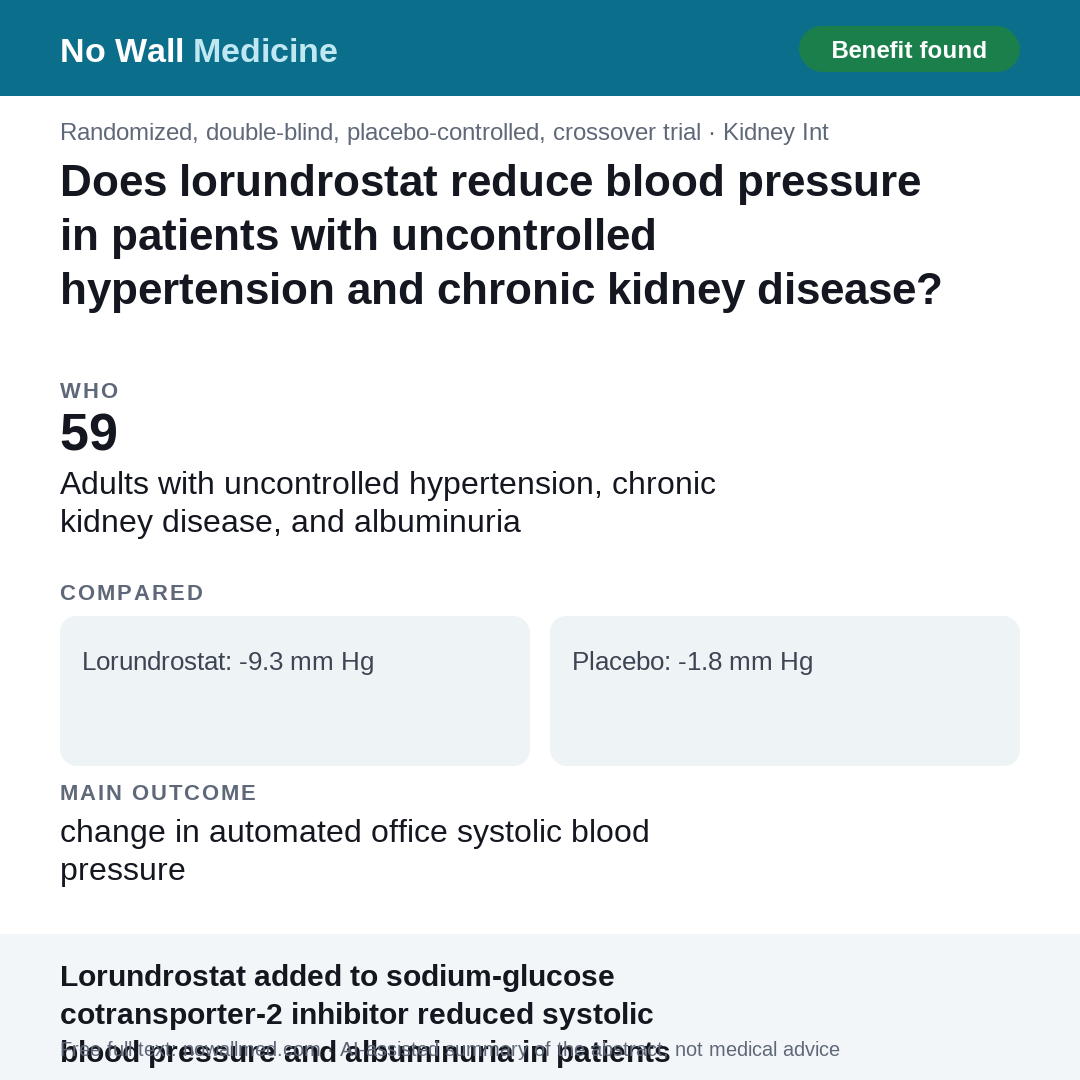
Results from the Phase 2 Explore-CKD Trial of lorundrostat, a novel aldosterone synthase inhibitor, in participants with uncontrolled hypertension, chronic kidney disease, and albuminuria
Randomized, double-blind, placebo-controlled, crossover trialBenefit found
Does lorundrostat reduce blood pressure in patients with uncontrolled hypertension and chronic kidney disease?
Who
59
Adults with uncontrolled hypertension, chronic kidney disease, and albuminuria
Compared
Lorundrostat: -9.3 mm Hg
Placebo: -1.8 mm Hg
Main outcome
change in automated office systolic blood pressure
Result: -7.5 mm Hg (-12.3, -2.7)
Bottom line: Lorundrostat added to sodium-glucose cotransporter-2 inhibitor reduced systolic blood pressure and albuminuria in patients with chronic kidney disease.
Limitation: Longer-term studies are needed to determine if findings translate into durable kidney or cardiovascular outcomes.
Kidney Int · 2026-09-23Download image
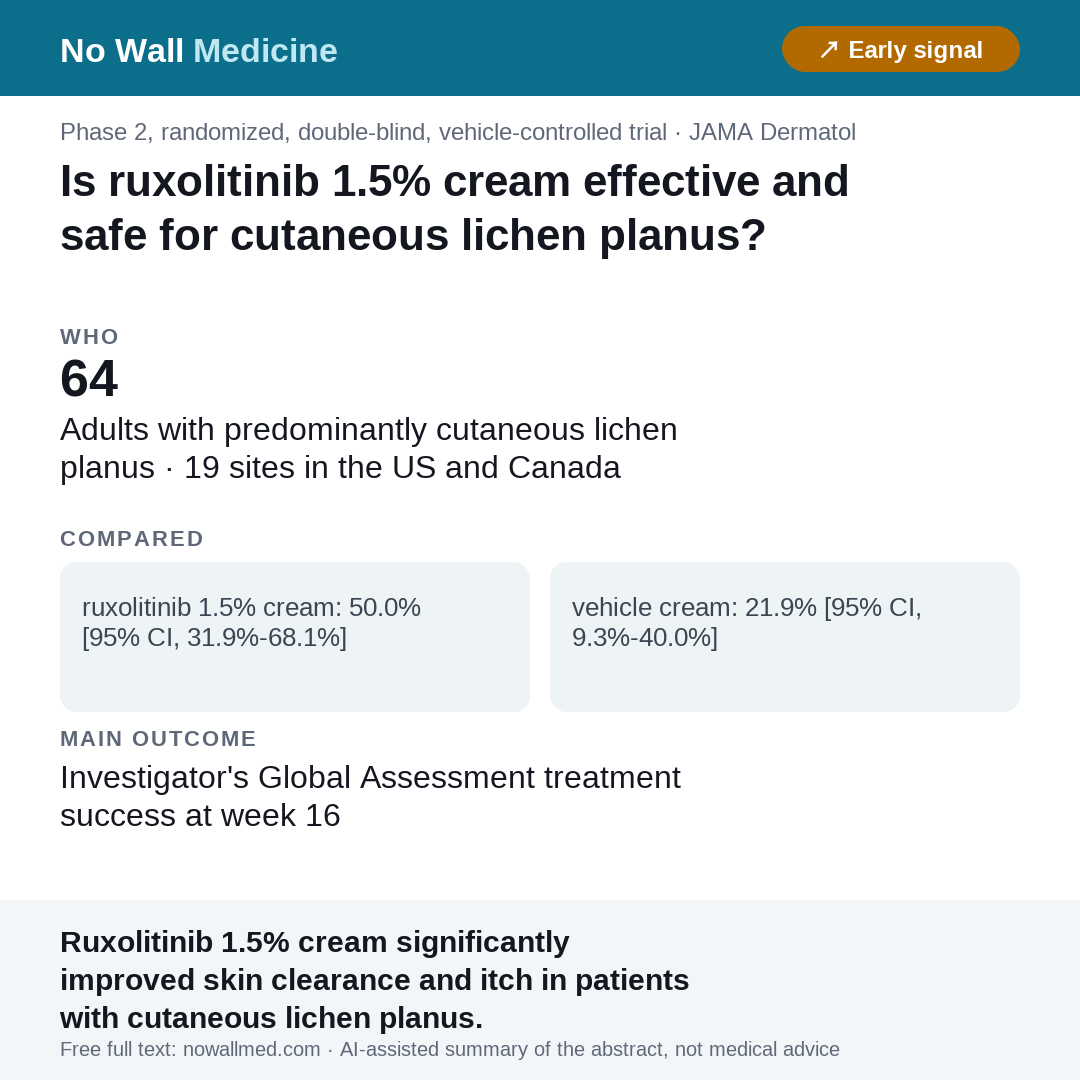
Efficacy and Safety of Ruxolitinib Cream in Patients With Cutaneous Lichen Planus: A Randomized Clinical Trial
Phase 2, randomized, double-blind, vehicle-controlled trialBenefit found
Is ruxolitinib 1.5% cream effective and safe for cutaneous lichen planus?
Who
64
Adults with predominantly cutaneous lichen planus · 19 sites in the US and Canada
Compared
ruxolitinib 1.5% cream: 50.0% [95% CI, 31.9%-68.1%]
vehicle cream: 21.9% [95% CI, 9.3%-40.0%]
Main outcome
Investigator's Global Assessment treatment success at week 16
Result: response rate difference, 29.4% [95% CI, 7.6%-51.3%]
Bottom line: Ruxolitinib 1.5% cream significantly improved skin clearance and itch in patients with cutaneous lichen planus.
JAMA Dermatol · 2026-09-23Download image
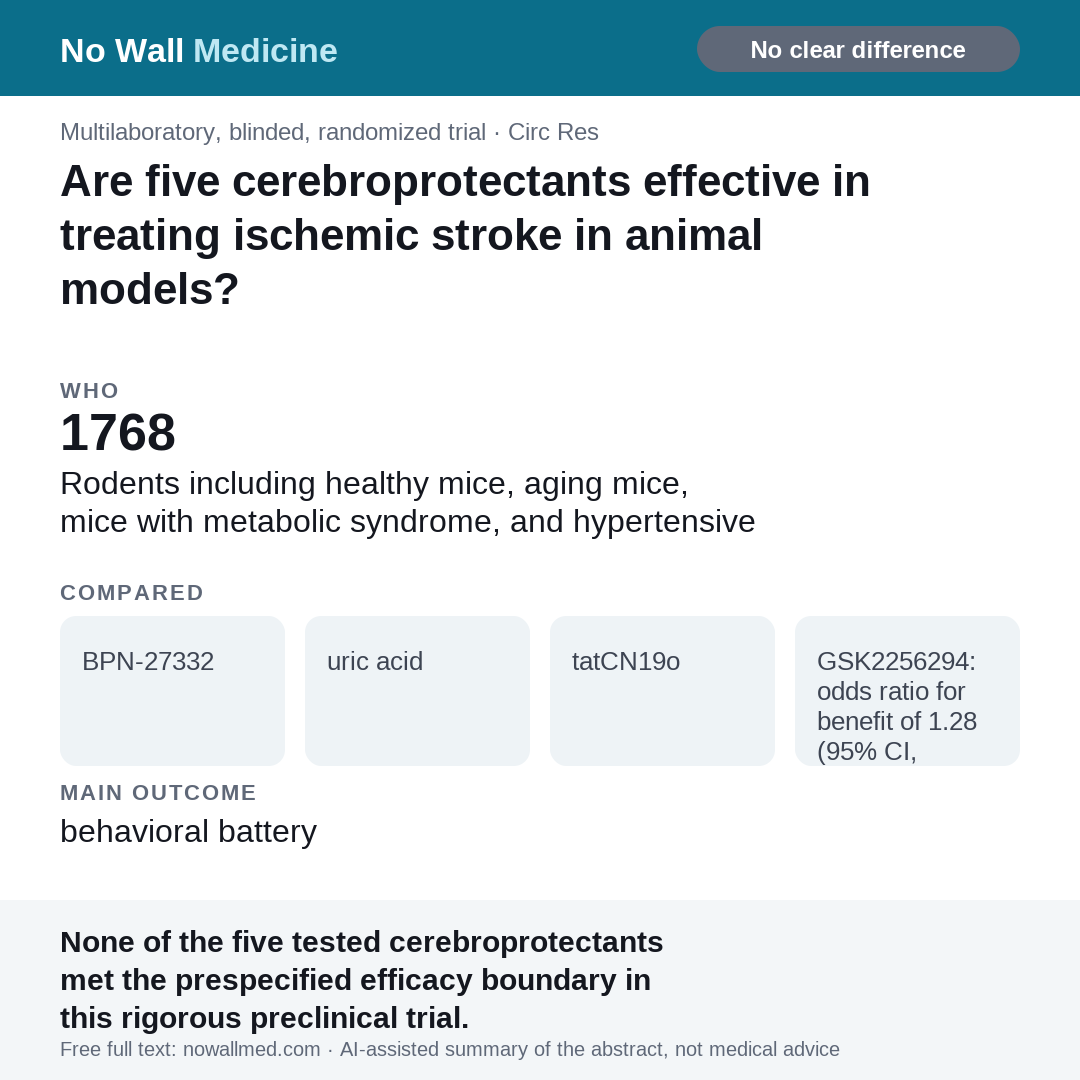
Multilaboratory, Blinded, Randomized Trial of Five Cerebroprotectants in Ischemic Stroke
Multilaboratory, blinded, randomized trialNo clear difference
Are five cerebroprotectants effective in treating ischemic stroke in animal models?
Who
1768
Rodents including healthy mice, aging mice, mice with metabolic syndrome, and hypertensive rats · 6 research laboratories and 1 coordinating center
Compared
BPN-27332
uric acid
tatCN19o
GSK2256294: odds ratio for benefit of 1.28 (95% CI, 0.99-1.65)
Main outcome
behavioral battery
Result: odds ratio 1.28 (95% CI 0.99-1.65)
Bottom line: None of the five tested cerebroprotectants met the prespecified efficacy boundary in this rigorous preclinical trial.
Circ Res · 2026-09-23Download image