Visual abstracts
New randomized trials and meta-analyses from leading journals at a glance: who was studied, what was compared, and what was found. Every paper is free to read in full.
All specialtiesCardiology 2138Oncology 1813Gastroenterology & Hepatology 799Infectious Disease 1325Neurology 868Psychiatry & Mental Health 1029Pulmonology 889Critical Care 596Endocrinology & Diabetes 1130Pediatrics 1241Surgery 1068Orthopedics & Sports Medicine 395Neurosurgery 260Cardiothoracic & Vascular Surgery 227Plastic & Reconstructive Surgery 321Nephrology 449Rheumatology 295Hematology 464Dermatology 247Ophthalmology 248Obstetrics & Gynecology 697Public & Global Health 400Radiology & Imaging 293Anesthesiology 416Urology 375ENT (Otolaryngology) 278Emergency Medicine 232Allergy & Immunology 134Geriatrics 449Family Medicine & Primary Care 246Medical Genetics & Genomics 230Pathology & Laboratory Medicine 72Physical Medicine & Rehabilitation 370Palliative Care 182Nutrition 572Digital Health & AI 1087General Medicine 162
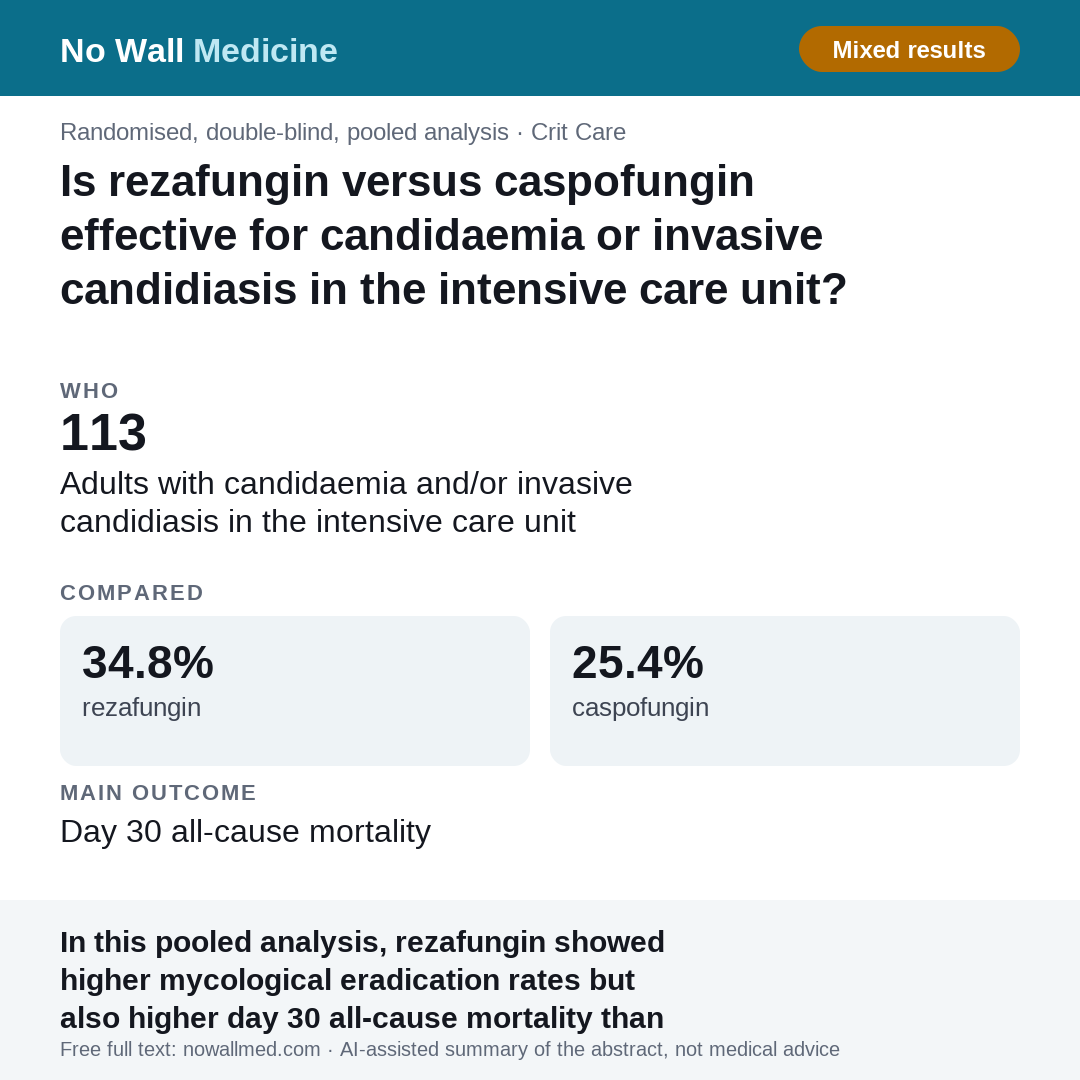
Rezafungin versus caspofungin for patients with candidaemia or invasive candidiasis in the intensive care unit: pooled analyses of the ReSTORE and STRIVE randomised trials
Randomised, double-blind, pooled analysisMixed results
Is rezafungin versus caspofungin effective for candidaemia or invasive candidiasis in the intensive care unit?
Who
113
Adults with candidaemia and/or invasive candidiasis in the intensive care unit
Compared
34.8%rezafungin
25.4%caspofungin
Main outcome
Day 30 all-cause mortality
Bottom line: In this pooled analysis, rezafungin showed higher mycological eradication rates but also higher day 30 all-cause mortality than caspofungin.
Crit Care · 2024-10-28Download image
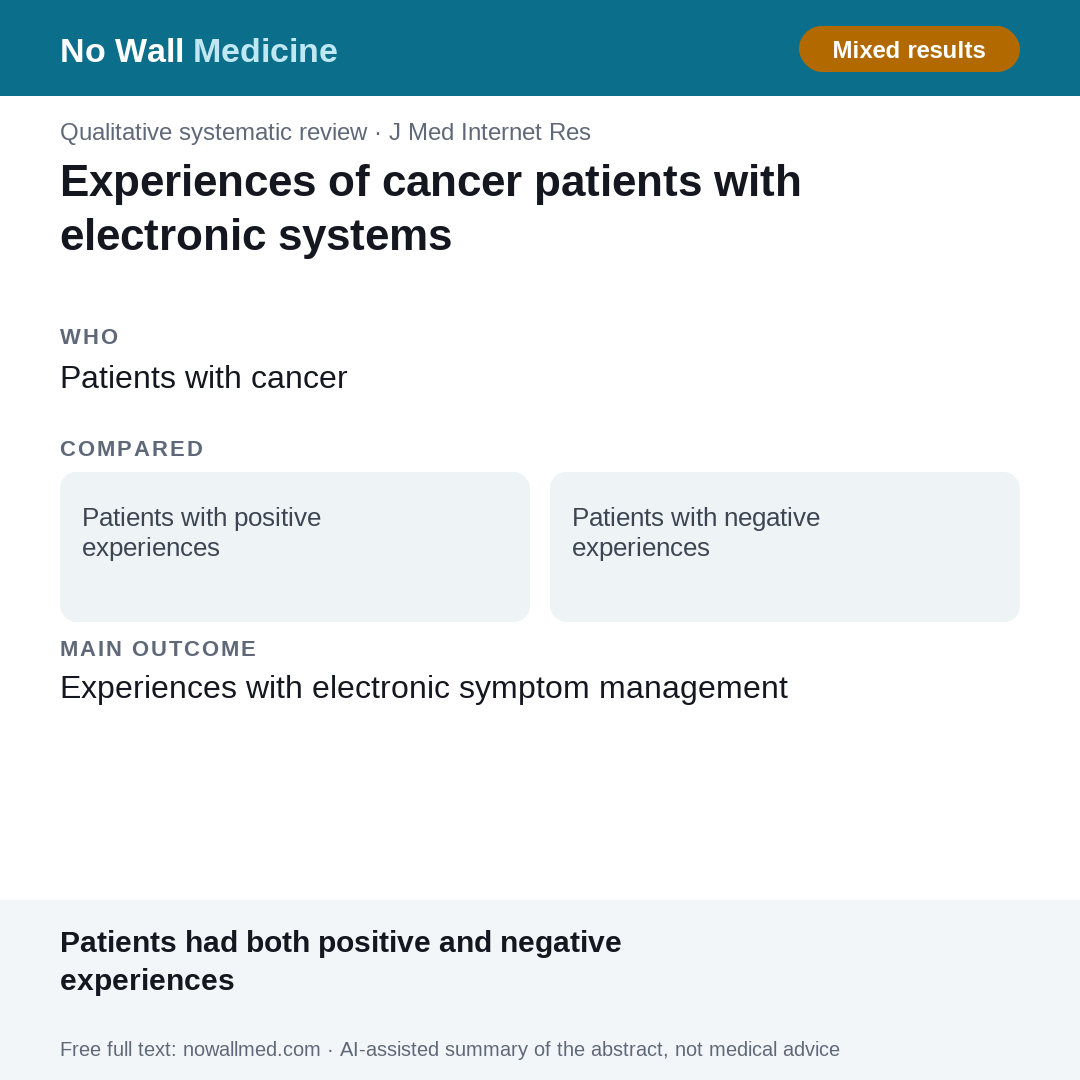
Experiences of Patients With Cancer Using Electronic Symptom Management Systems: Qualitative Systematic Review and Meta-Synthesis
Qualitative systematic reviewMixed results
Experiences of cancer patients with electronic systems
Who
Patients with cancer
Compared
Patients with positive experiences
Patients with negative experiences
Main outcome
Experiences with electronic symptom management
Bottom line: Patients had both positive and negative experiences
J Med Internet Res · 2024-10-28Download image
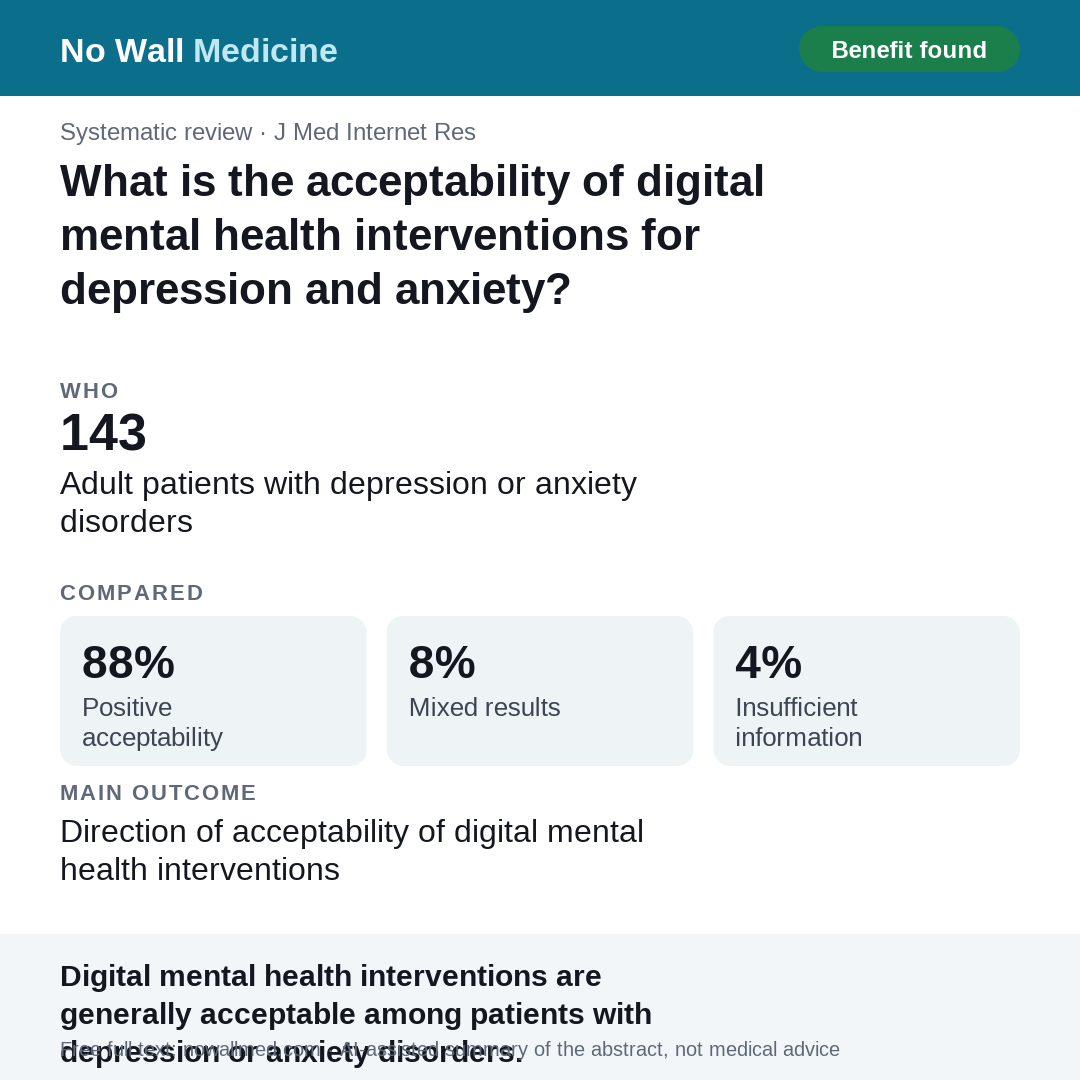
Acceptability of Digital Mental Health Interventions for Depression and Anxiety: Systematic Review
Systematic reviewBenefit found
What is the acceptability of digital mental health interventions for depression and anxiety?
Who
143
Adult patients with depression or anxiety disorders
Compared
88%Positive acceptability (126/143)
8%Mixed results (11/143)
4%Insufficient information (6/143)
Main outcome
Direction of acceptability of digital mental health interventions
Bottom line: Digital mental health interventions are generally acceptable among patients with depression or anxiety disorders.
Limitation: Consistent use of validated measures for acceptability would enhance the quality of evidence.
J Med Internet Res · 2024-10-28Download image
Effects of virtual reality rehabilitation after spinal cord injury: a systematic review and meta-analysis
Systematic review and meta-analysisBenefit found
Does virtual reality intervention improve functional performance in spinal cord injury?
Who
248
Individuals with spinal cord injury
Compared
Virtual reality intervention
Control
Main outcome
Functional performance including walking and balance
Bottom line: Virtual reality shows promise in enhancing walking ability and balance function in individuals with spinal cord injury.
Limitation: Existing evidence for virtual reality interventions in spinal cord injury patients remains limited.
J Neuroeng Rehabil · 2024-10-28Download image

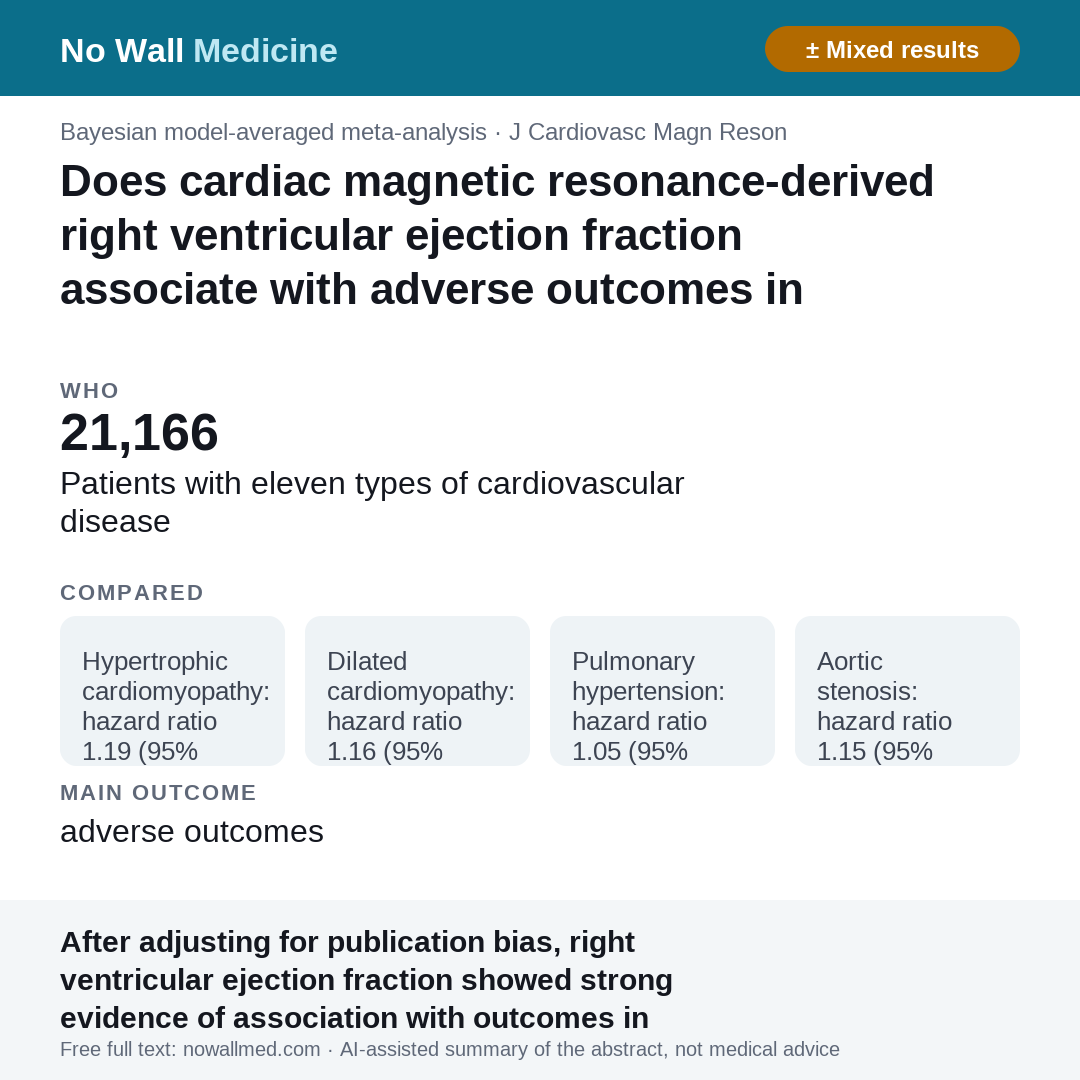
Impact of cardiovascular magnetic resonance-derived right ventricular ejection fraction on adverse outcomes: A robust Bayesian model-averaged meta-analysis
Bayesian model-averaged meta-analysisMixed results
Does cardiac magnetic resonance-derived right ventricular ejection fraction associate with adverse outcomes in cardiovascular diseases?
Who
21,166
Patients with eleven types of cardiovascular disease
Compared
Hypertrophic cardiomyopathy: hazard ratio 1.19 (95% credible interval 0.98-1.42)
Dilated cardiomyopathy: hazard ratio 1.16 (95% credible interval 1-1.22)
Pulmonary hypertension: hazard ratio 1.05 (95% credible interval 1-1.12)
Aortic stenosis: hazard ratio 1.15 (95% credible interval 0.97-1.34)
Main outcome
adverse outcomes
Bottom line: After adjusting for publication bias, right ventricular ejection fraction showed strong evidence of association with outcomes in only four diseases.
Limitation: Additional data may strengthen evidence regarding other cardiovascular diseases.
J Cardiovasc Magn Reson · 2024-10-28Download image
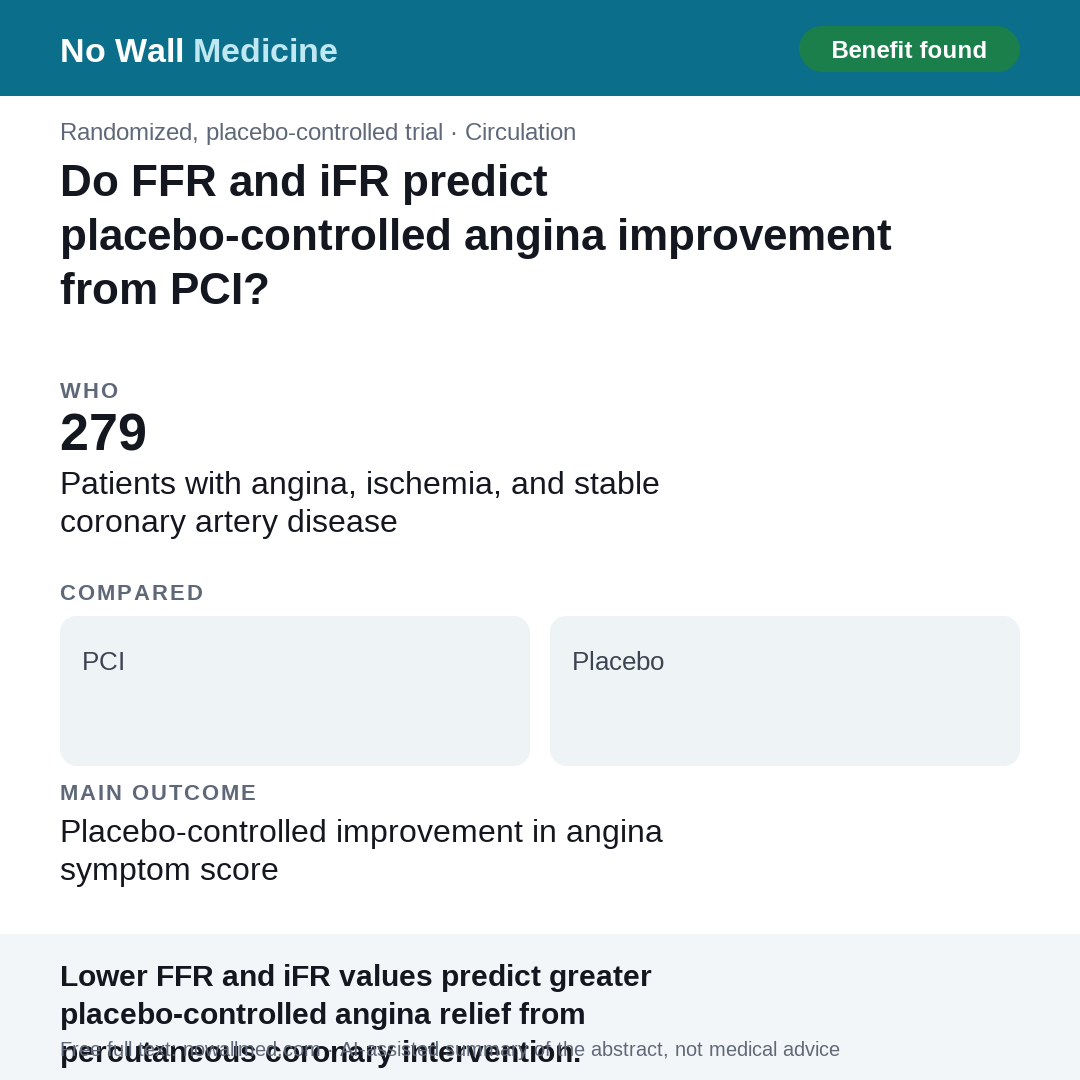
Fractional Flow Reserve and Instantaneous Wave-Free Ratio as Predictors of the Placebo-Controlled Response to Percutaneous Coronary Intervention in Stable Coronary Artery Disease
Randomized, placebo-controlled trialBenefit found
Do FFR and iFR predict placebo-controlled angina improvement from PCI?
Who
279
Patients with angina, ischemia, and stable coronary artery disease
Compared
PCI
Placebo
Main outcome
Placebo-controlled improvement in angina symptom score
Result: odds ratio 2.01 (95% credible interval 1.79-2.26) for FFR
Bottom line: Lower FFR and iFR values predict greater placebo-controlled angina relief from percutaneous coronary intervention.
Circulation · 2024-10-27Download image
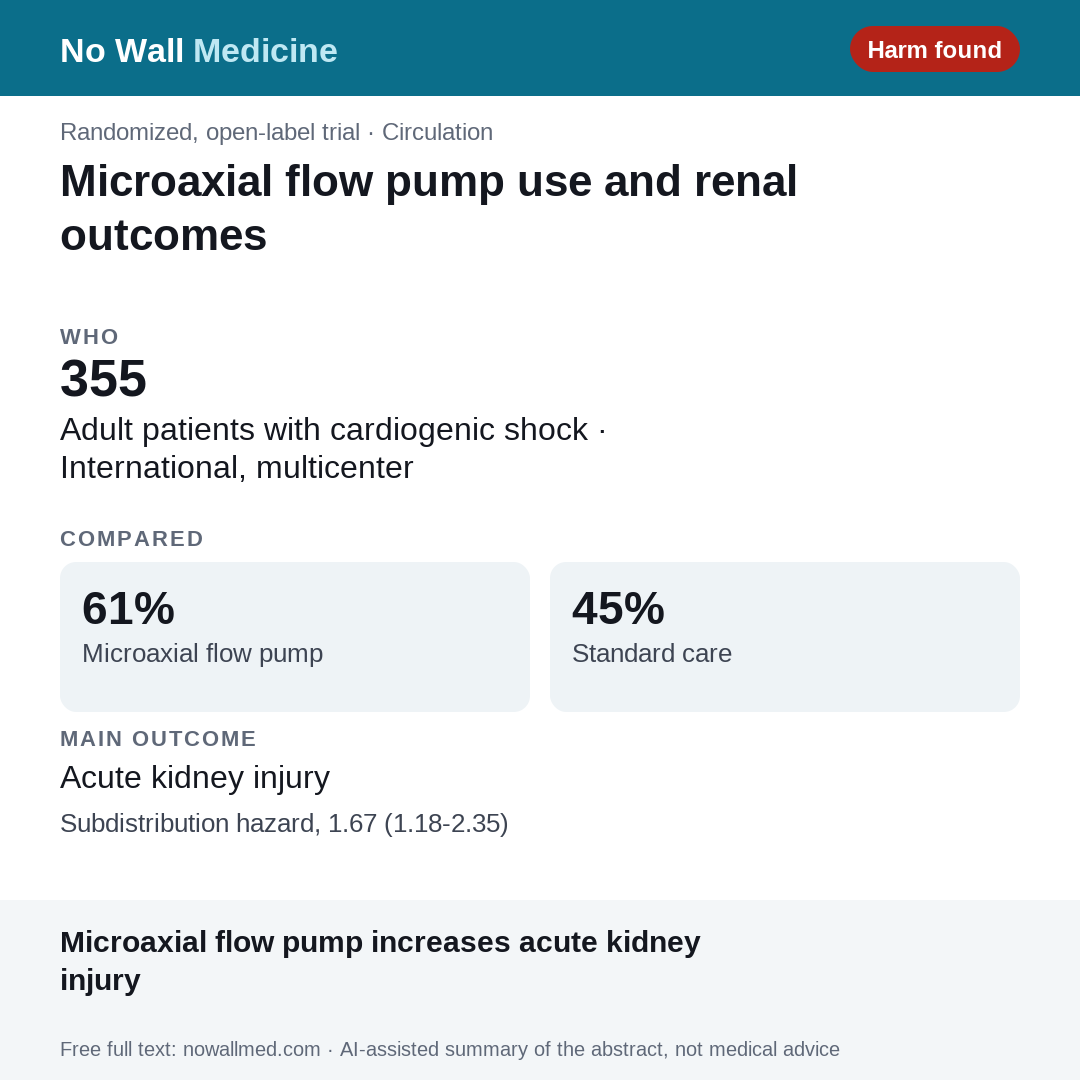
Microaxial Flow Pump Use and Renal Outcomes in Infarct-Related Cardiogenic Shock: A Secondary Analysis of the DanGer Shock Trial
Randomized, open-label trialHarm found
Microaxial flow pump use and renal outcomes
Who
355
Adult patients with cardiogenic shock · International, multicenter
Compared
61%Microaxial flow pump (110/179)
45%Standard care (79/176)
Main outcome
Acute kidney injury
Result: Subdistribution hazard, 1.67 (1.18-2.35)
Bottom line: Microaxial flow pump increases acute kidney injury
Circulation · 2024-10-27Download image
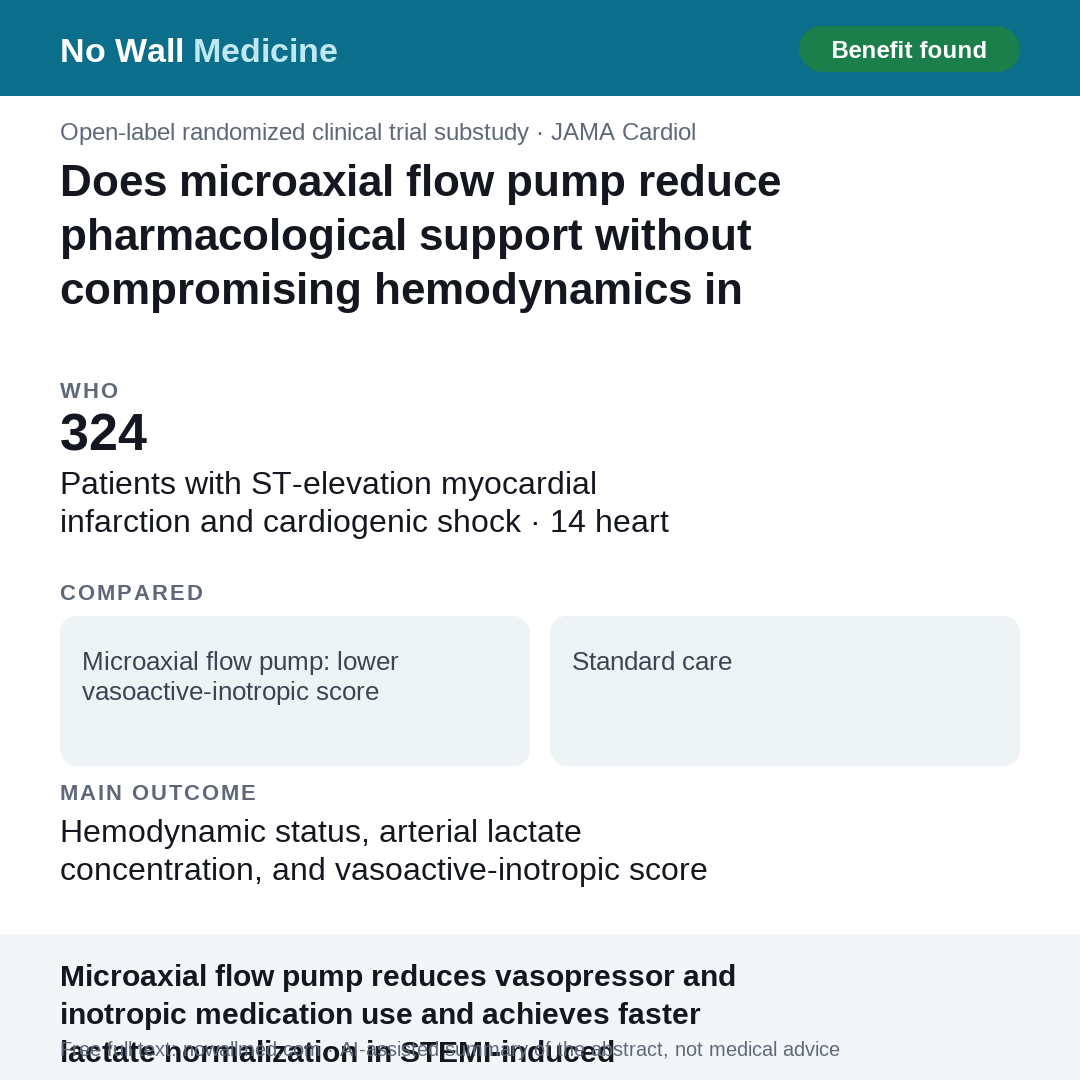
Microaxial Flow Pump Hemodynamic and Metabolic Effects in Infarct-Related Cardiogenic Shock: A Substudy of the DanGer Shock Randomized Clinical Trial
Open-label randomized clinical trial substudyBenefit found
Does microaxial flow pump reduce pharmacological support without compromising hemodynamics in STEMI-induced cardiogenic shock?
Who
324
Patients with ST-elevation myocardial infarction and cardiogenic shock · 14 heart centers in Denmark, Germany, and the UK
Compared
Microaxial flow pump: lower vasoactive-inotropic score
Standard care
Main outcome
Hemodynamic status, arterial lactate concentration, and vasoactive-inotropic score
Result: mean difference in arterial lactate 1.3 mmol/L (95% CI, 0.7-1.9 mmol/L)
Bottom line: Microaxial flow pump reduces vasopressor and inotropic medication use and achieves faster lactate normalization in STEMI-induced cardiogenic shock.
JAMA Cardiol · 2024-10-27Download image
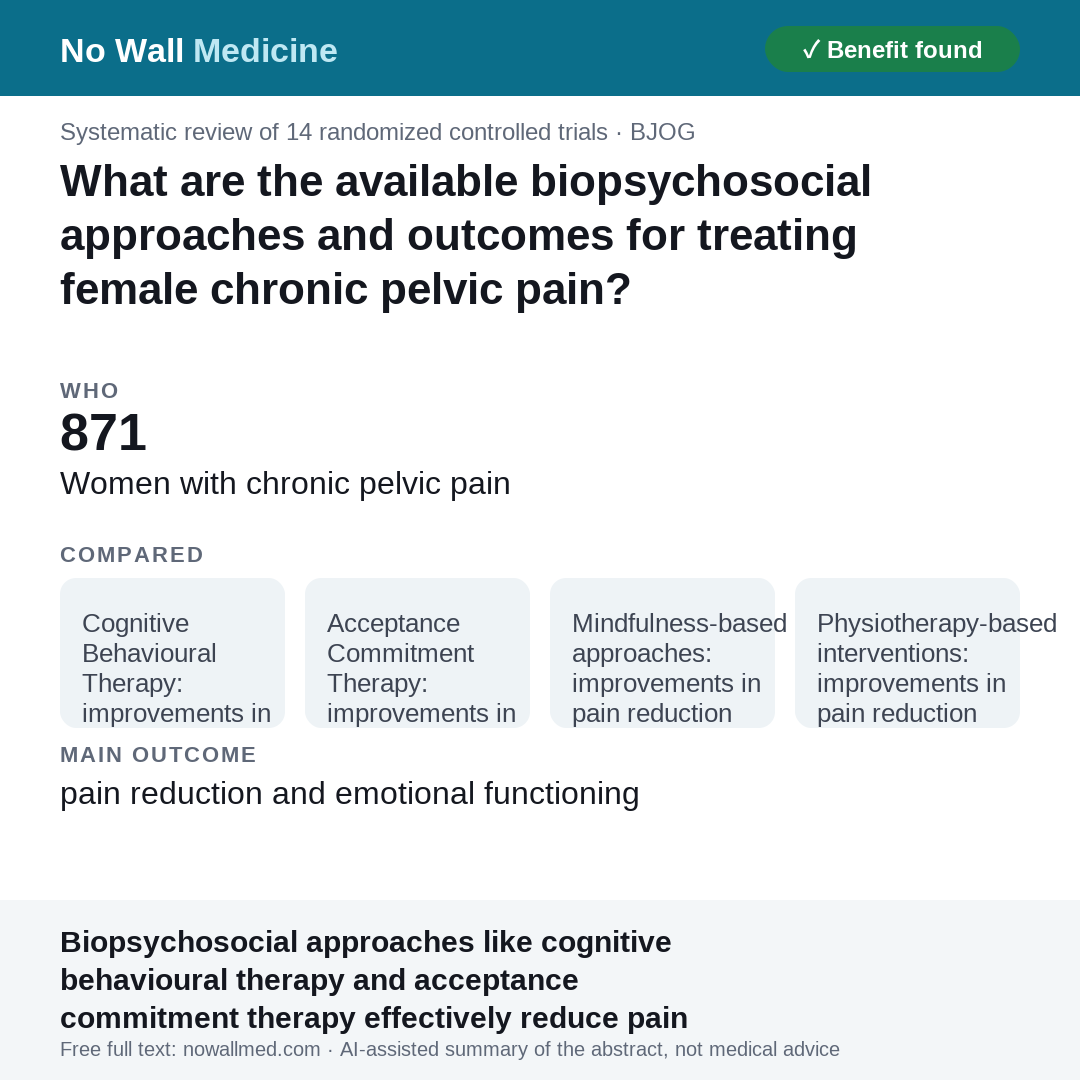
Biopsychosocial Approaches for the Management of Female Chronic Pelvic Pain: A Systematic Review
Systematic review of 14 randomized controlled trialsBenefit found
What are the available biopsychosocial approaches and outcomes for treating female chronic pelvic pain?
Who
871
Women with chronic pelvic pain
Compared
Cognitive Behavioural Therapy: improvements in pain reduction and emotional functioning
Acceptance Commitment Therapy: improvements in pain reduction and emotional functioning
Mindfulness-based approaches: improvements in pain reduction and emotional functioning
Physiotherapy-based interventions: improvements in pain reduction and emotional functioning
Main outcome
pain reduction and emotional functioning
Bottom line: Biopsychosocial approaches like cognitive behavioural therapy and acceptance commitment therapy effectively reduce pain and improve emotional functioning.
Limitation: Heterogeneity in outcomes prevented efficacy comparison and high risk of bias was identified in six studies.
BJOG · 2024-10-27Download image
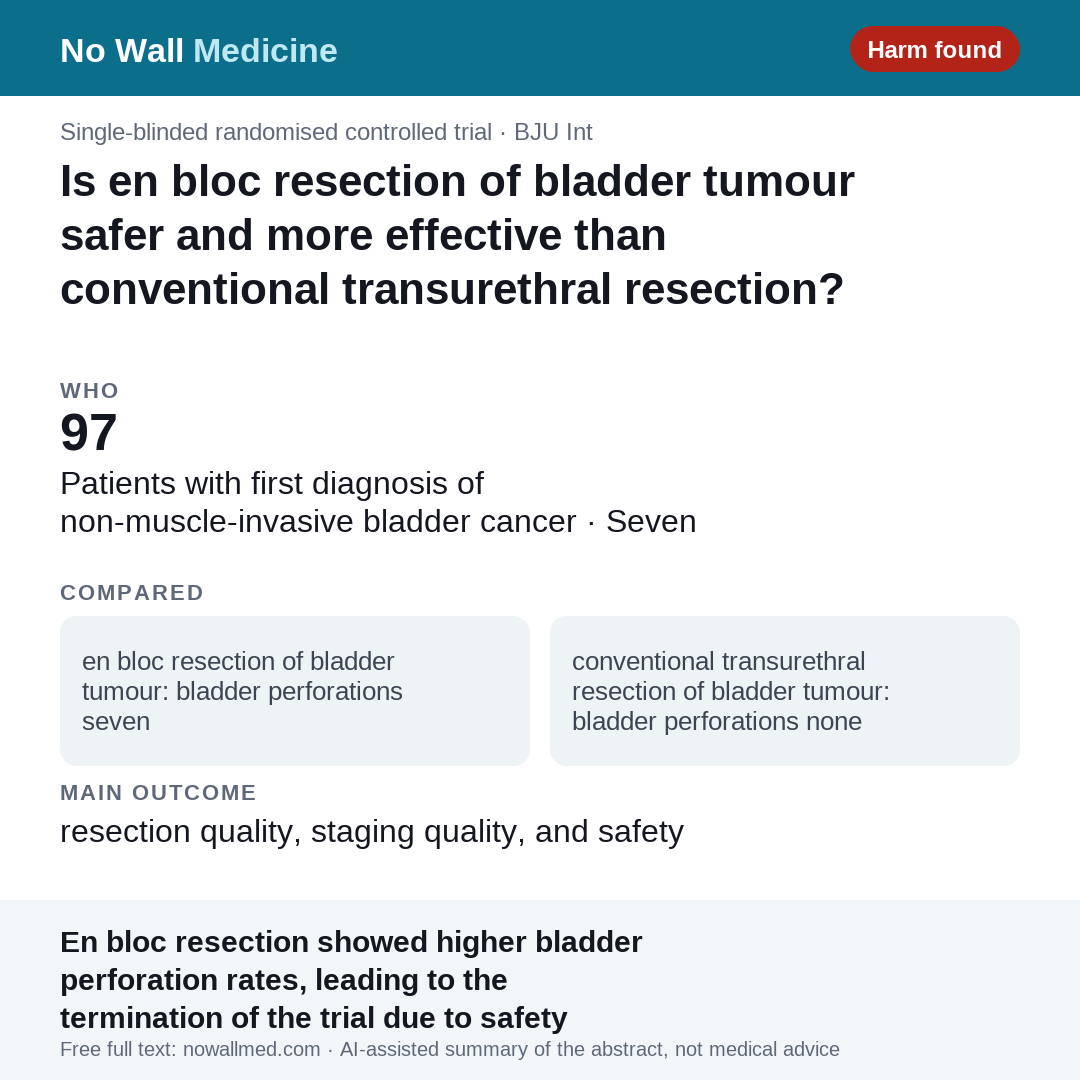
An international multicentre randomised controlled trial of en bloc resection of bladder tumour vs conventional transurethral resection of bladder tumour: first results of the en bloc resection of urothelium carcinoma of the bladder (EBRUC) II trial
Single-blinded randomised controlled trialHarm found
Is en bloc resection of bladder tumour safer and more effective than conventional transurethral resection?
Who
97
Patients with first diagnosis of non-muscle-invasive bladder cancer · Seven European hospitals
Compared
en bloc resection of bladder tumour: bladder perforations seven
conventional transurethral resection of bladder tumour: bladder perforations none
Main outcome
resection quality, staging quality, and safety
Bottom line: En bloc resection showed higher bladder perforation rates, leading to the termination of the trial due to safety concerns.
BJU Int · 2024-10-27Download image
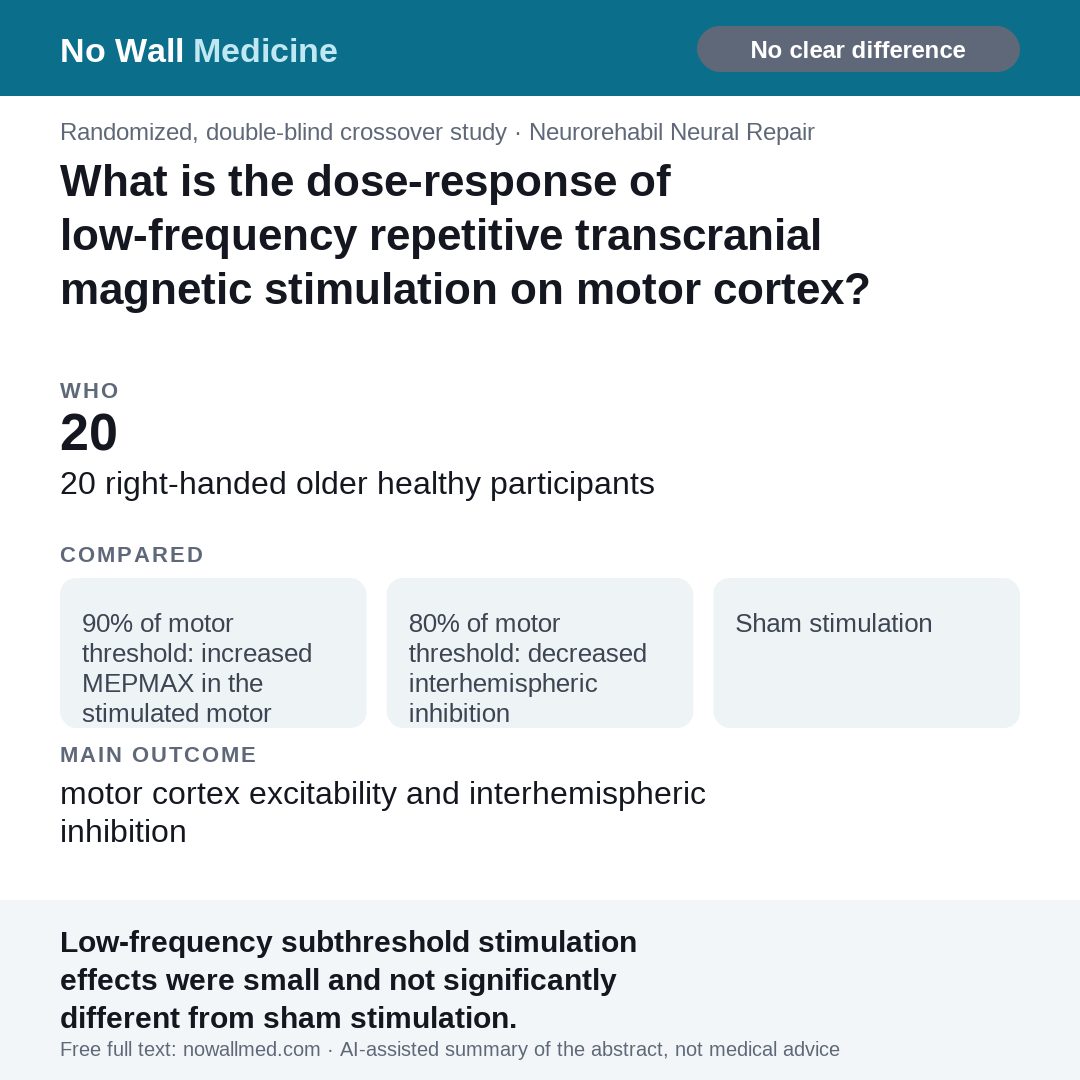
Intensity-Dependent Effects of Low-Frequency Subthreshold rTMS on Primary Motor Cortex Excitability and Interhemispheric Inhibition in Elderly Participants: A Randomized Trial
Randomized, double-blind crossover studyNo clear difference
What is the dose-response of low-frequency repetitive transcranial magnetic stimulation on motor cortex?
Who
20
20 right-handed older healthy participants
Compared
90% of motor threshold: increased MEPMAX in the stimulated motor cortex
80% of motor threshold: decreased interhemispheric inhibition
Sham stimulation
Main outcome
motor cortex excitability and interhemispheric inhibition
Bottom line: Low-frequency subthreshold stimulation effects were small and not significantly different from sham stimulation.
Neurorehabil Neural Repair · 2024-10-27Download image
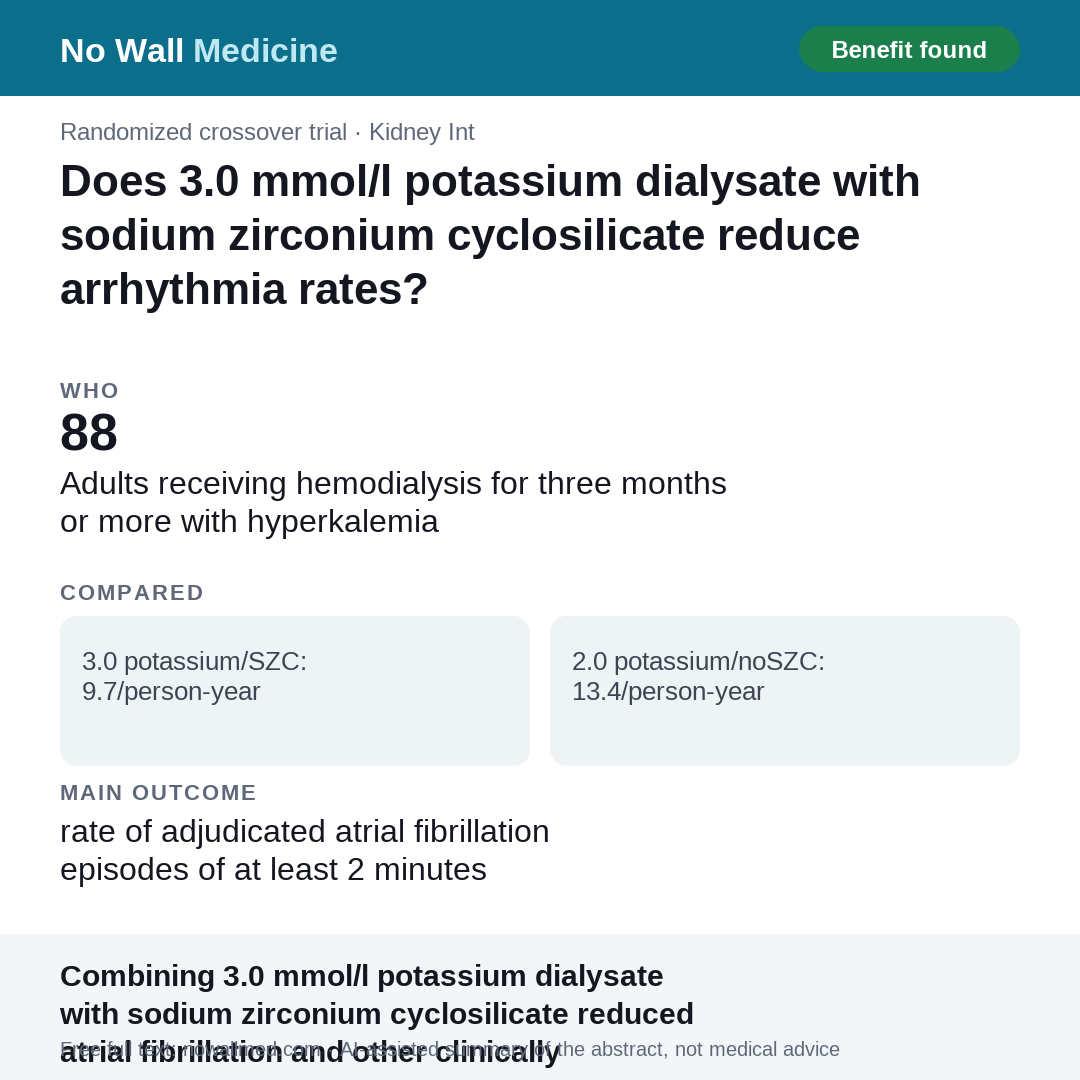
Effects of dialysate potassium concentration of 3.0 mmol/l with sodium zirconium cyclosilicate on dialysis-free days versus dialysate potassium concentration of 2.0 mmol/l alone on rates of cardiac arrhythmias in hemodialysis patients with hyperkalemia
Randomized crossover trialBenefit found
Does 3.0 mmol/l potassium dialysate with sodium zirconium cyclosilicate reduce arrhythmia rates?
Who
88
Adults receiving hemodialysis for three months or more with hyperkalemia
Compared
3.0 potassium/SZC: 9.7/person-year
2.0 potassium/noSZC: 13.4/person-year
Main outcome
rate of adjudicated atrial fibrillation episodes of at least 2 minutes
Result: modeled rate ratio 0.52 (95% confidence interval 0.41-0.65)
Bottom line: Combining 3.0 mmol/l potassium dialysate with sodium zirconium cyclosilicate reduced atrial fibrillation and other clinically significant arrhythmia rates.
Kidney Int · 2024-10-26Download image
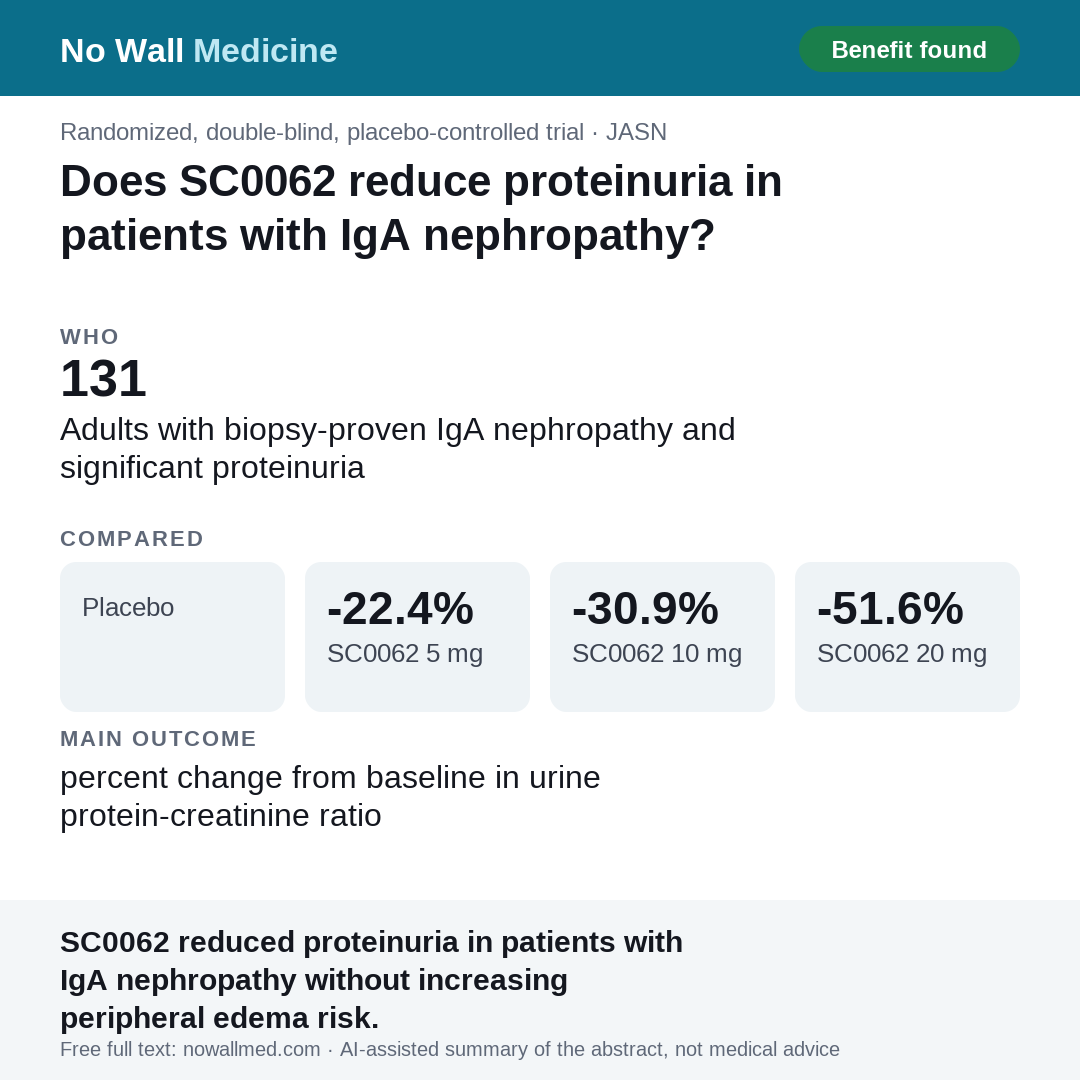
The Selective Endothelin Receptor Antagonist SC0062 in IgA Nephropathy: A Randomized Double-Blind Placebo-Controlled Clinical Trial
Randomized, double-blind, placebo-controlled trialBenefit found
Does SC0062 reduce proteinuria in patients with IgA nephropathy?
Who
131
Adults with biopsy-proven IgA nephropathy and significant proteinuria
Compared
Placebo
-22.4%SC0062 5 mg (-42.2 to 4.3)
-30.9%SC0062 10 mg (-48.6 to -7.0)
-51.6%SC0062 20 mg (-64.2 to -34.6)
Main outcome
percent change from baseline in urine protein-creatinine ratio
Bottom line: SC0062 reduced proteinuria in patients with IgA nephropathy without increasing peripheral edema risk.
JASN · 2024-10-26Download image
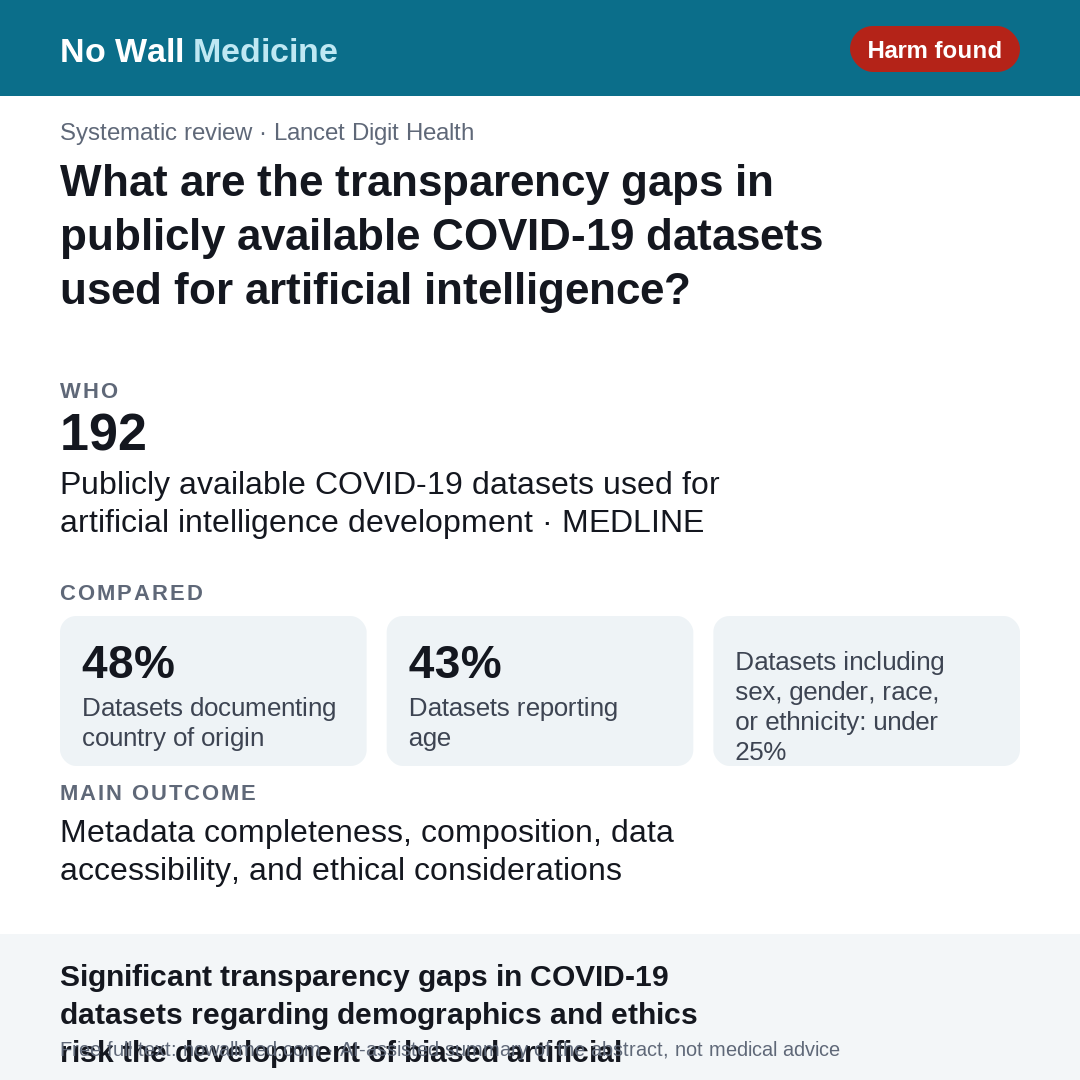
Revealing transparency gaps in publicly available COVID-19 datasets used for medical artificial intelligence development-a systematic review
Systematic reviewHarm found
What are the transparency gaps in publicly available COVID-19 datasets used for artificial intelligence?
Who
192
Publicly available COVID-19 datasets used for artificial intelligence development · MEDLINE and Google Dataset Search
Compared
48%Datasets documenting country of origin
43%Datasets reporting age
Datasets including sex, gender, race, or ethnicity: under 25%
Main outcome
Metadata completeness, composition, data accessibility, and ethical considerations
Bottom line: Significant transparency gaps in COVID-19 datasets regarding demographics and ethics risk the development of biased artificial intelligence models.
Lancet Digit Health · 2024-10-26Download image
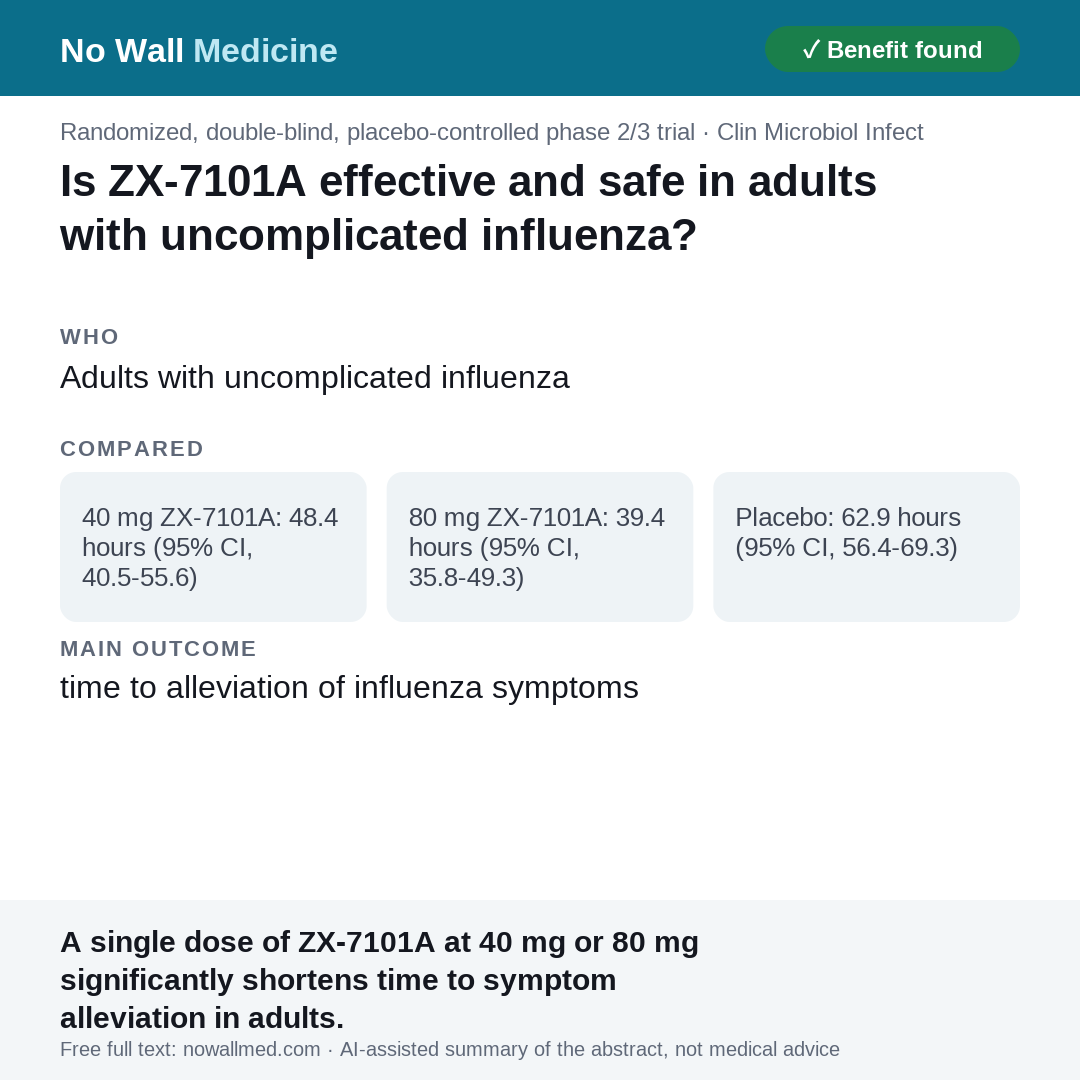
Efficacy and safety of ZX-7101A, an inhibitor of influenza cap-dependent endonuclease, in adults with uncomplicated influenza: a randomized, double-blind, placebo-controlled phase 2/3 trial
Randomized, double-blind, placebo-controlled phase 2/3 trialBenefit found
Is ZX-7101A effective and safe in adults with uncomplicated influenza?
Who
Adults with uncomplicated influenza
Compared
40 mg ZX-7101A: 48.4 hours (95% CI, 40.5-55.6)
80 mg ZX-7101A: 39.4 hours (95% CI, 35.8-49.3)
Placebo: 62.9 hours (95% CI, 56.4-69.3)
Main outcome
time to alleviation of influenza symptoms
Bottom line: A single dose of ZX-7101A at 40 mg or 80 mg significantly shortens time to symptom alleviation in adults.
Clin Microbiol Infect · 2024-10-26Download image
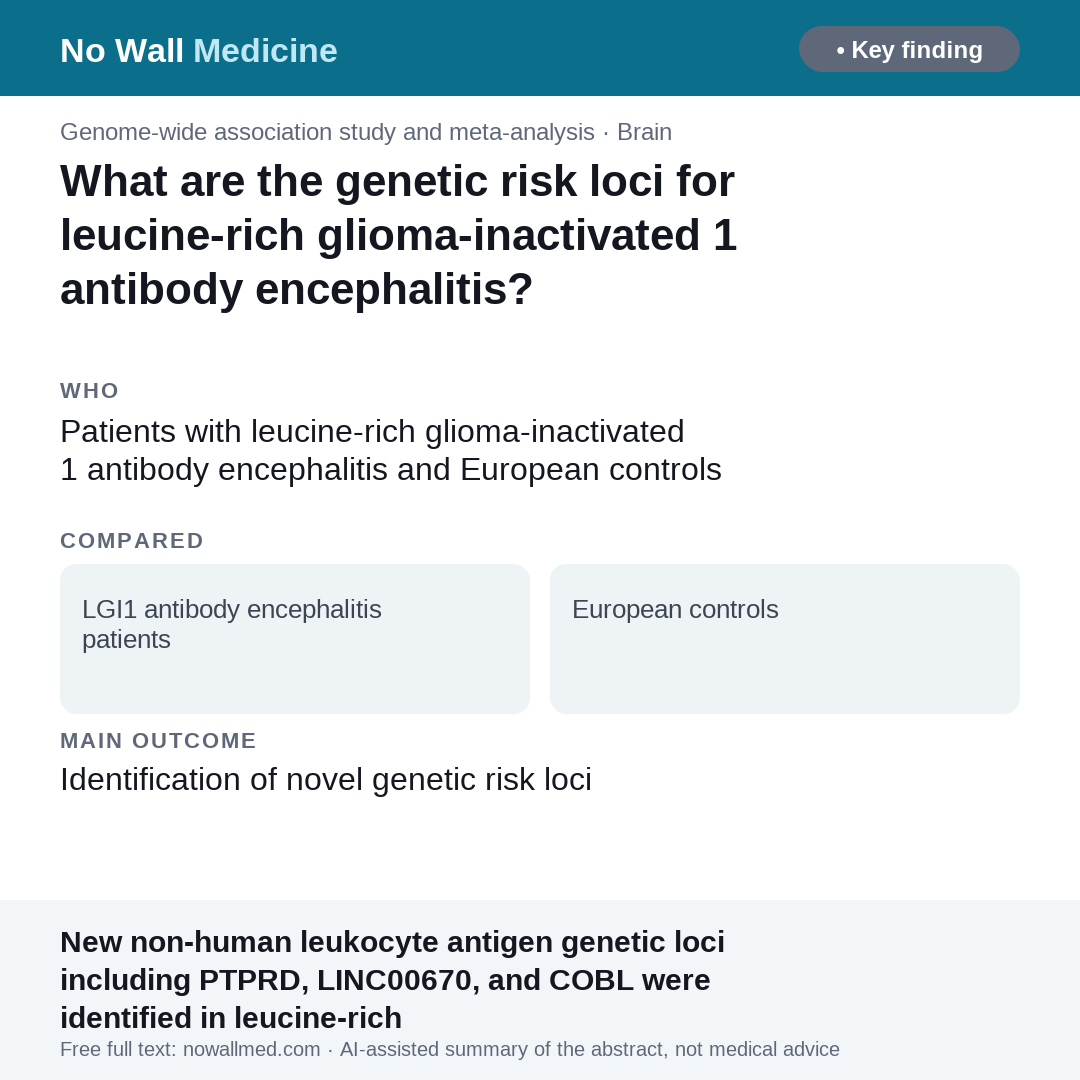
Novel risk loci in LGI1-antibody encephalitis: genome-wide association study discovery and validation cohorts
Genome-wide association study and meta-analysisBenefit found
What are the genetic risk loci for leucine-rich glioma-inactivated 1 antibody encephalitis?
Who
Patients with leucine-rich glioma-inactivated 1 antibody encephalitis and European controls · France, United States, Britain, and Ireland
Compared
LGI1 antibody encephalitis patients
European controls
Main outcome
Identification of novel genetic risk loci
Bottom line: New non-human leukocyte antigen genetic loci including PTPRD, LINC00670, and COBL were identified in leucine-rich glioma-inactivated 1 antibody encephalitis.
Brain · 2024-10-26Download image
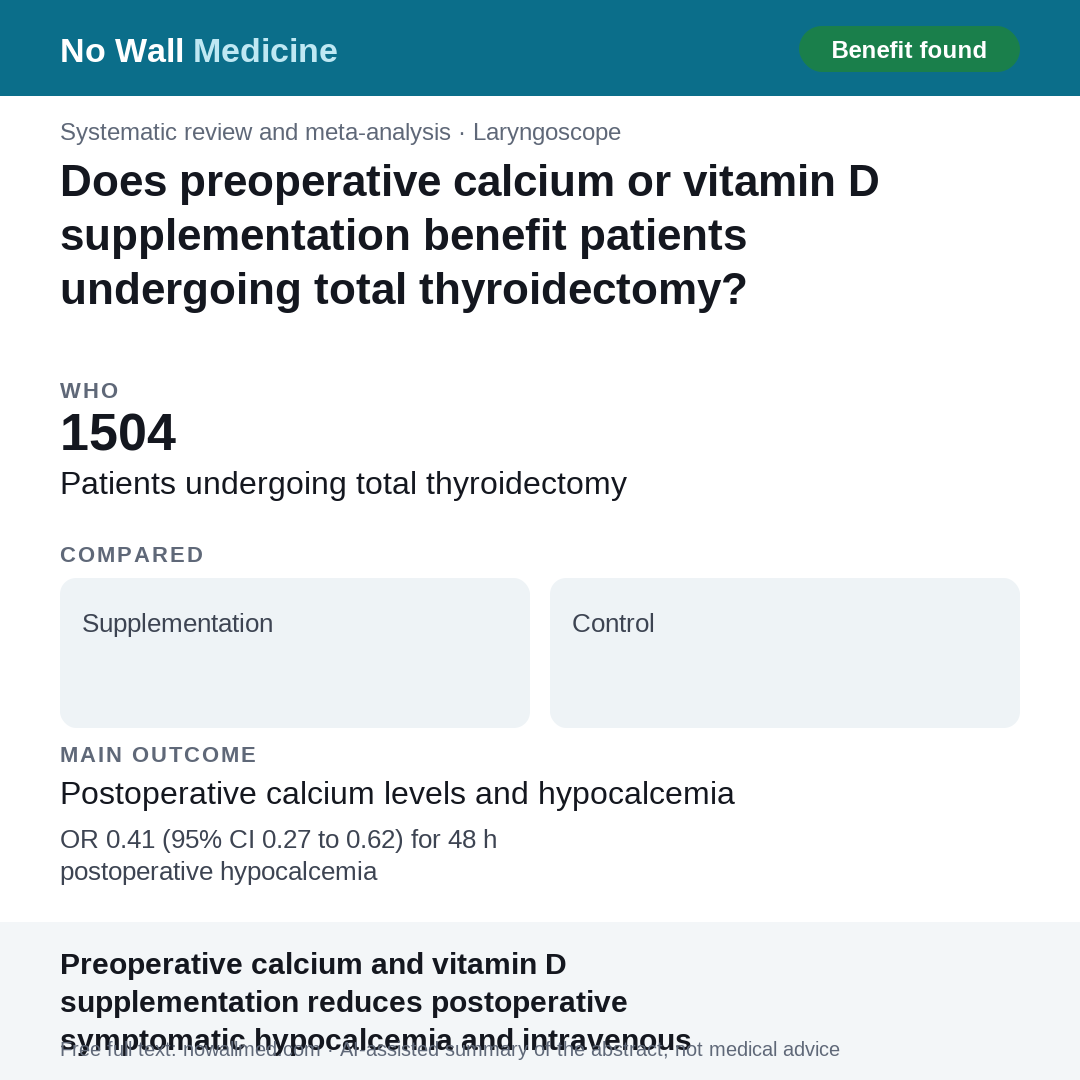
Preoperative Calcium or Vitamin D Supplement in Thyroidectomy: A Systematic Review and Meta-Analysis
Systematic review and meta-analysisBenefit found
Does preoperative calcium or vitamin D supplementation benefit patients undergoing total thyroidectomy?
Who
1504
Patients undergoing total thyroidectomy
Compared
Supplementation
Control
Main outcome
Postoperative calcium levels and hypocalcemia
Result: OR 0.41 (95% CI 0.27 to 0.62) for 48 h postoperative hypocalcemia
Bottom line: Preoperative calcium and vitamin D supplementation reduces postoperative symptomatic hypocalcemia and intravenous calcium supplementation needs.
Laryngoscope · 2024-10-26Download image
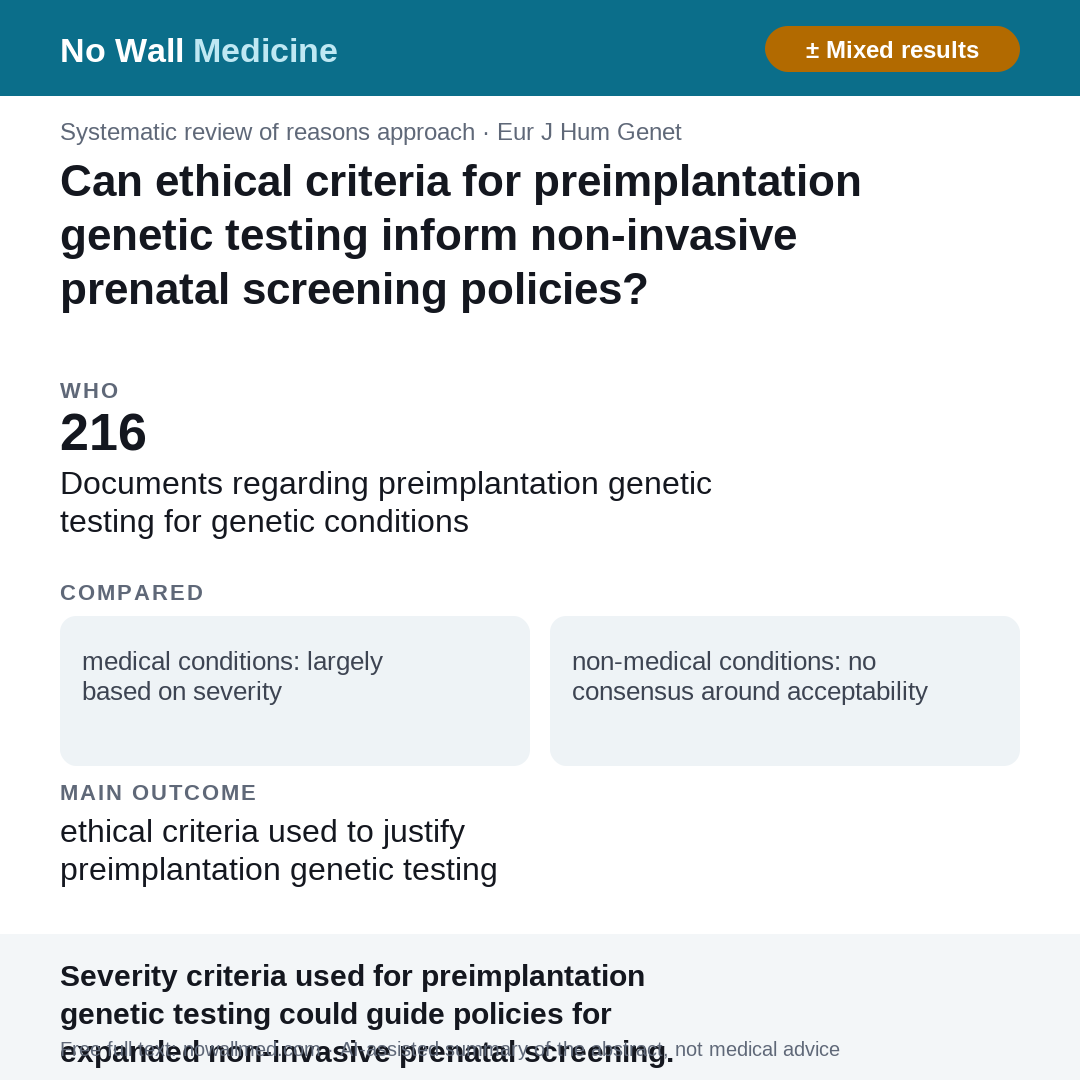
Defining ethical criteria to guide the expanded use of Noninvasive Prenatal Screening (NIPS): Lessons about severity from preimplantation genetic testing
Systematic review of reasons approachMixed results
Can ethical criteria for preimplantation genetic testing inform non-invasive prenatal screening policies?
Who
216
Documents regarding preimplantation genetic testing for genetic conditions
Compared
medical conditions: largely based on severity
non-medical conditions: no consensus around acceptability
Main outcome
ethical criteria used to justify preimplantation genetic testing
Bottom line: Severity criteria used for preimplantation genetic testing could guide policies for expanded non-invasive prenatal screening.
Eur J Hum Genet · 2024-10-26Download image
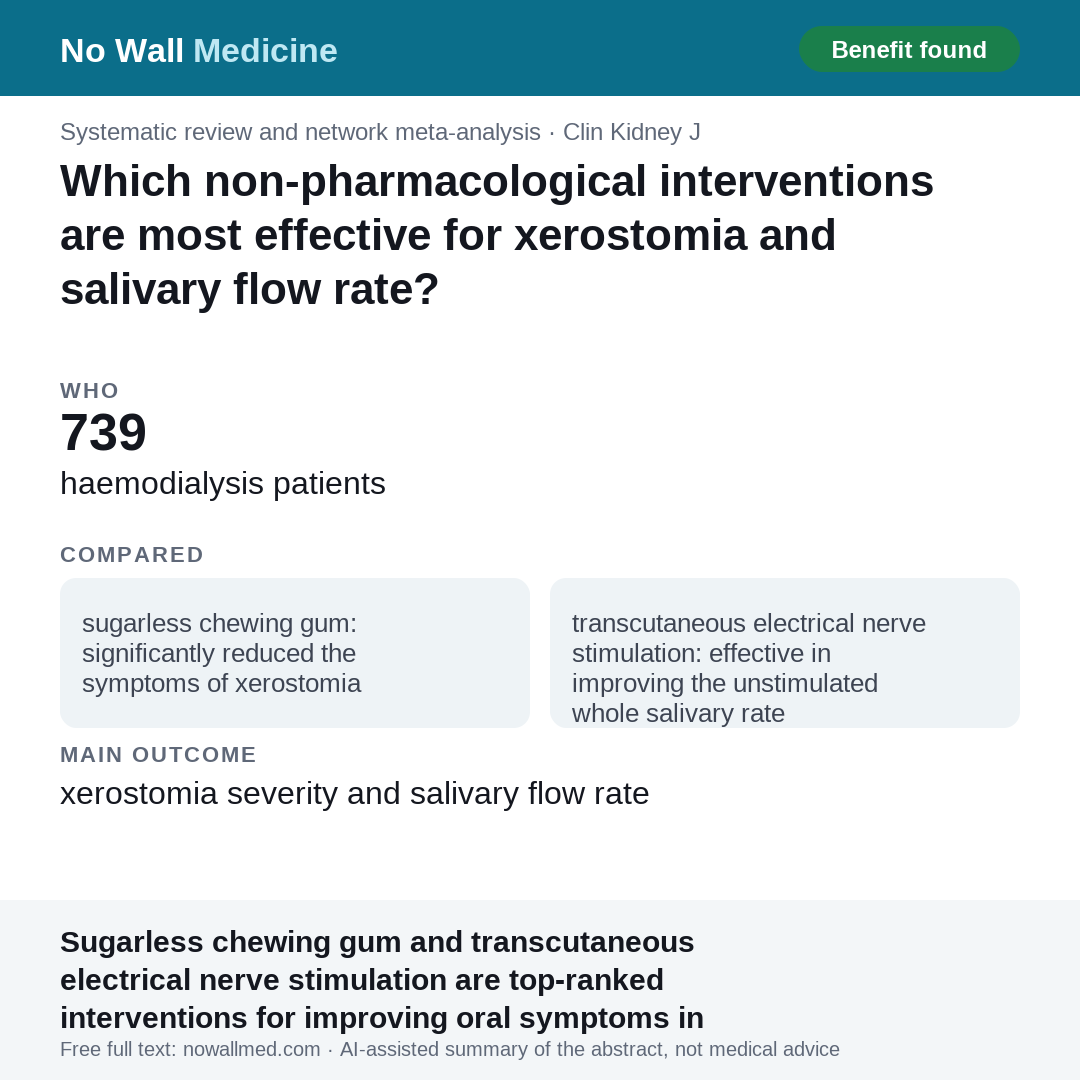
Comparative efficacy of non-pharmacological interventions on xerostomia and salivary flow rate among haemodialysis patients: A systematic review and network meta-analysis
Systematic review and network meta-analysisBenefit found
Which non-pharmacological interventions are most effective for xerostomia and salivary flow rate?
Who
739
haemodialysis patients
Compared
sugarless chewing gum: significantly reduced the symptoms of xerostomia
transcutaneous electrical nerve stimulation: effective in improving the unstimulated whole salivary rate
Main outcome
xerostomia severity and salivary flow rate
Bottom line: Sugarless chewing gum and transcutaneous electrical nerve stimulation are top-ranked interventions for improving oral symptoms in dialysis patients.
Clin Kidney J · 2024-10-26Download image
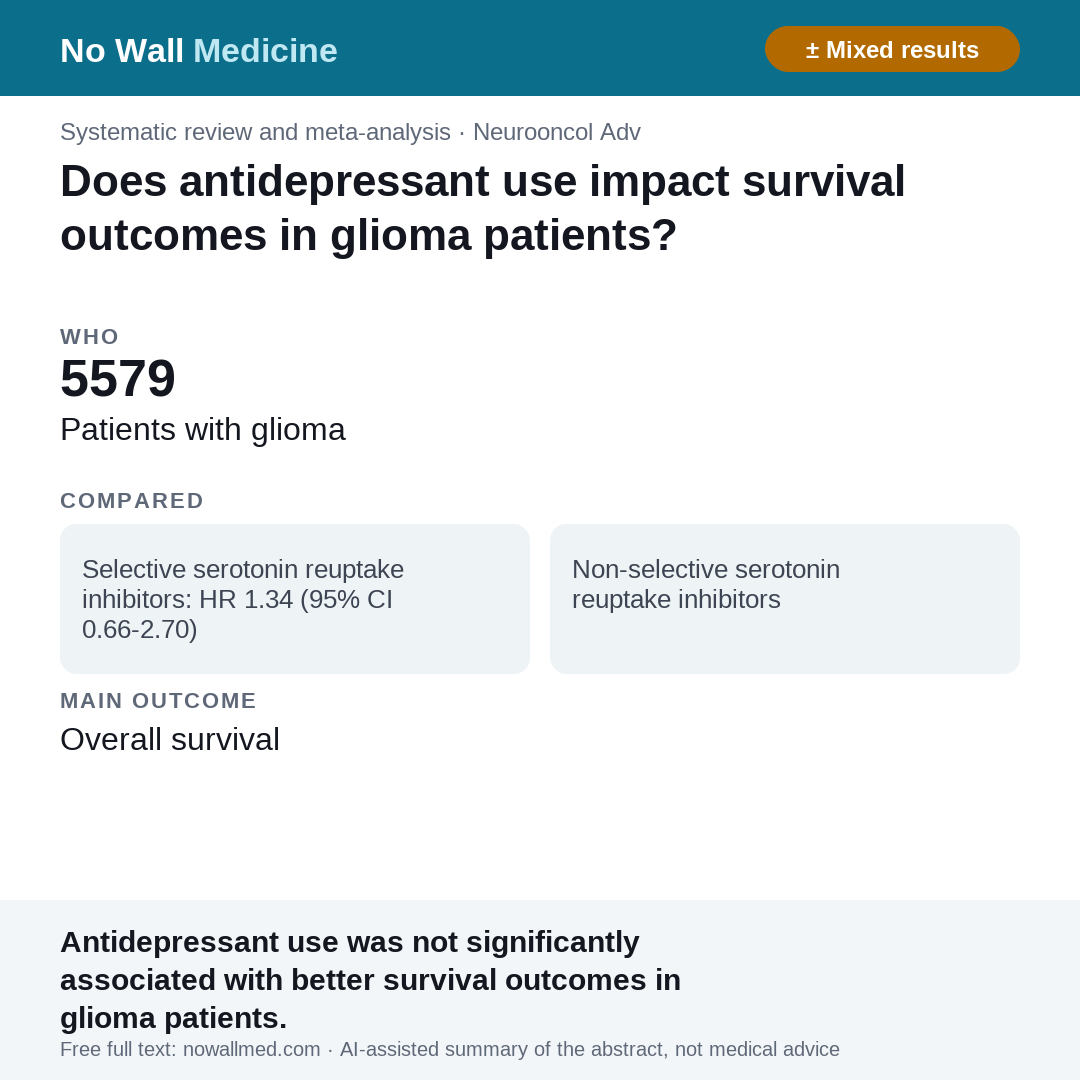
Impact of antidepressant use on survival outcomes in glioma patients: A systematic review and meta-analysis
Systematic review and meta-analysisMixed results
Does antidepressant use impact survival outcomes in glioma patients?
Who
5579
Patients with glioma
Compared
Selective serotonin reuptake inhibitors: HR 1.34 (95% CI 0.66-2.70)
Non-selective serotonin reuptake inhibitors
Main outcome
Overall survival
Bottom line: Antidepressant use was not significantly associated with better survival outcomes in glioma patients.
Limitation: Future clinical research should address patient heterogeneity to clarify effects.
Neurooncol Adv · 2024-10-26Download image