Visual abstracts
New randomized trials and meta-analyses from leading journals at a glance: who was studied, what was compared, and what was found. Every paper is free to read in full.
All specialtiesCardiology 4131Oncology 3538Gastroenterology & Hepatology 1640Infectious Disease 3108Neurology 1645Psychiatry & Mental Health 1945Pulmonology 1790Critical Care 1170Endocrinology & Diabetes 2136Pediatrics 2494Surgery 2189Orthopedics & Sports Medicine 777Neurosurgery 467Cardiothoracic & Vascular Surgery 521Plastic & Reconstructive Surgery 545Nephrology 931Rheumatology 685Hematology 926Dermatology 524Ophthalmology 450Obstetrics & Gynecology 1444Public & Global Health 831Radiology & Imaging 551Anesthesiology 844Urology 663ENT (Otolaryngology) 445Emergency Medicine 443Allergy & Immunology 259Geriatrics 857Family Medicine & Primary Care 488Medical Genetics & Genomics 579Pathology & Laboratory Medicine 142Physical Medicine & Rehabilitation 634Palliative Care 374Nutrition 1274Digital Health & AI 1913General Medicine 287
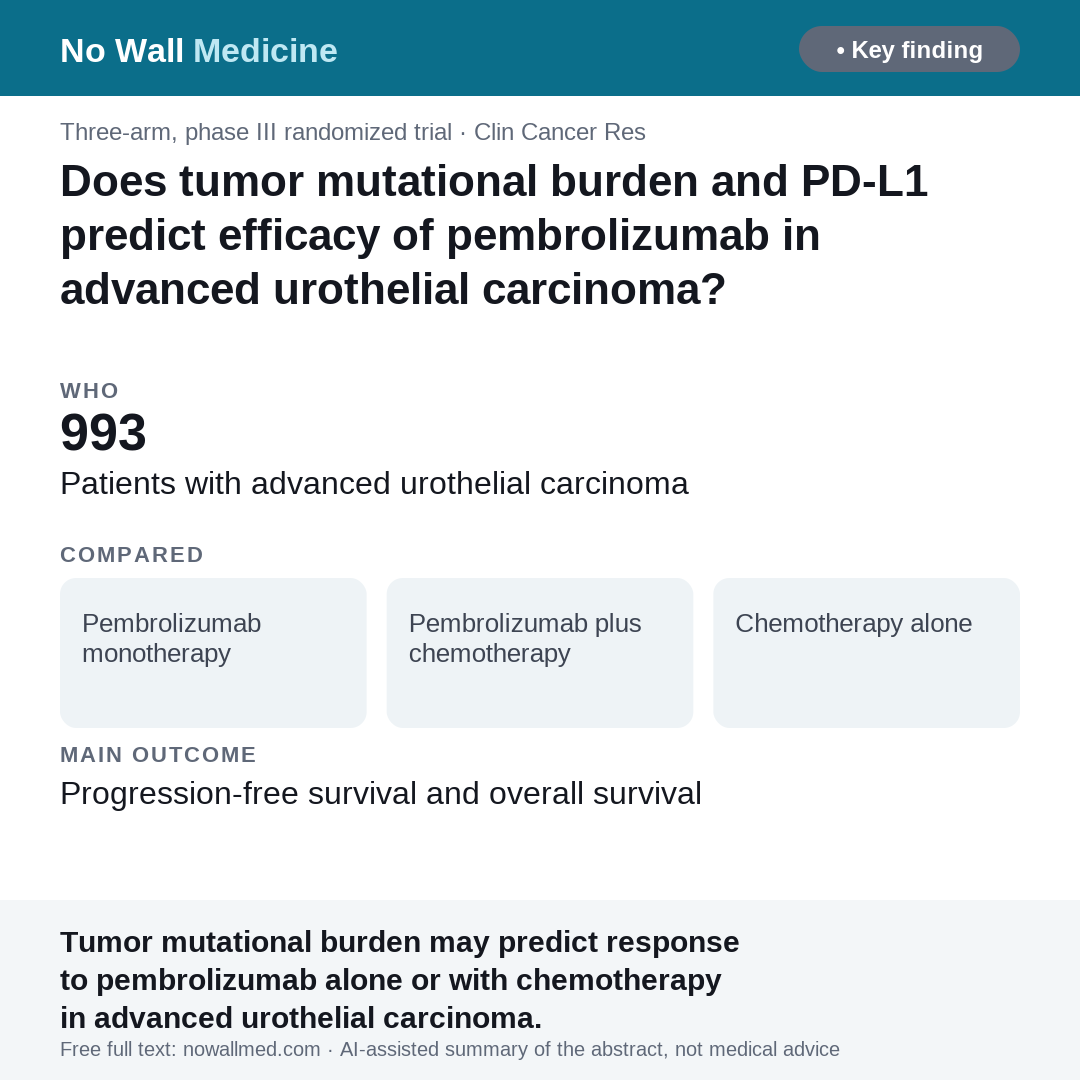
Association of Tumor Mutational Burden and PD-L1 with the Efficacy of Pembrolizumab with or without Chemotherapy versus Chemotherapy in Advanced Urothelial Carcinoma
Three-arm, phase III randomized trialBenefit found
Does tumor mutational burden and PD-L1 predict efficacy of pembrolizumab in advanced urothelial carcinoma?
Who
993
Patients with advanced urothelial carcinoma
Compared
Pembrolizumab monotherapy
Pembrolizumab plus chemotherapy
Chemotherapy alone
Main outcome
Progression-free survival and overall survival
Bottom line: Tumor mutational burden may predict response to pembrolizumab alone or with chemotherapy in advanced urothelial carcinoma.
Clin Cancer Res · 2024-10-30Download image
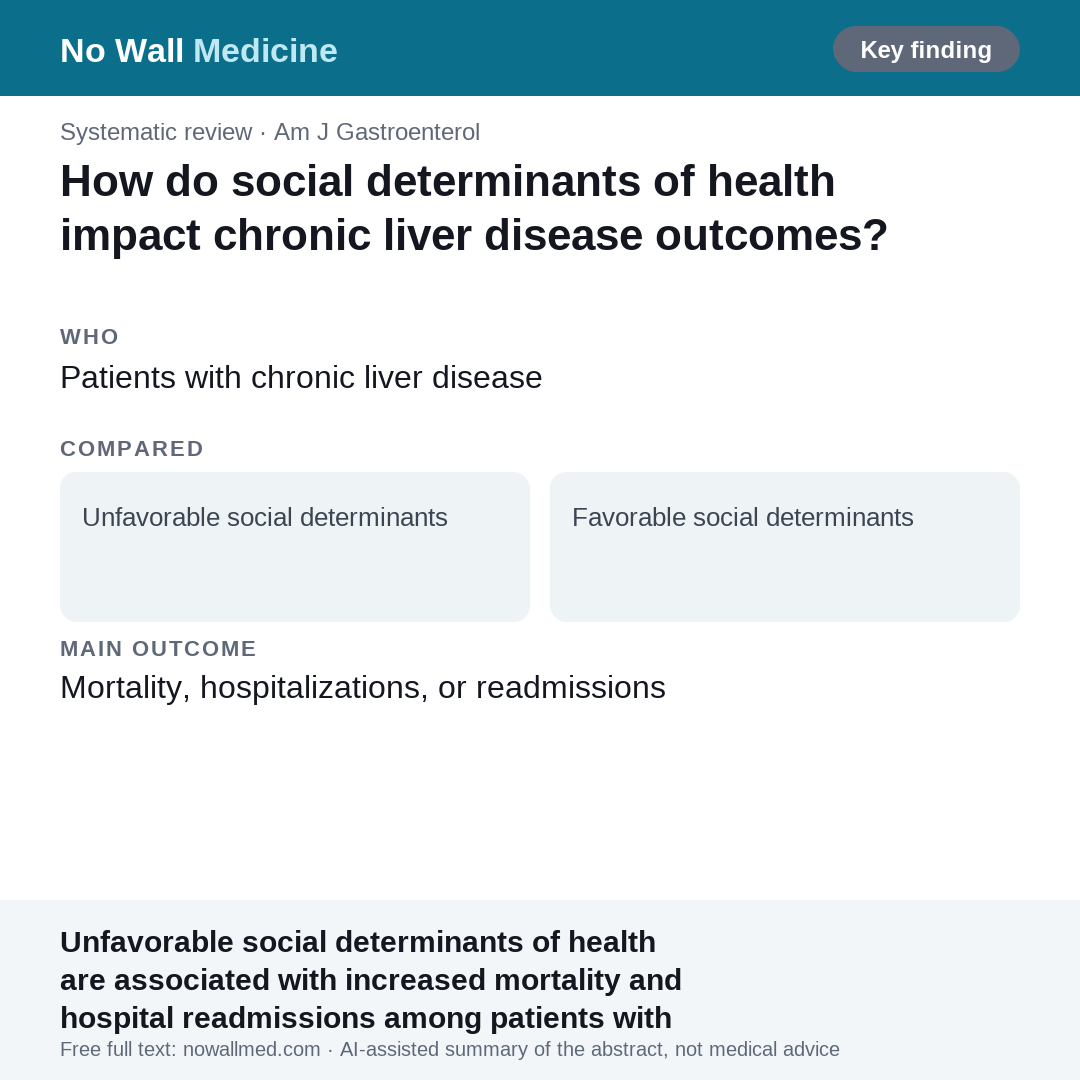
Social Disadvantage and Disparities in Chronic Liver Disease: A Systematic Review
Systematic reviewHarm found
How do social determinants of health impact chronic liver disease outcomes?
Who
27
Patients with chronic liver disease
Compared
Unfavorable social determinants
Favorable social determinants
Main outcome
Mortality, hospitalizations, or readmissions
Bottom line: Unfavorable social determinants of health are associated with increased mortality and hospital readmissions among patients with chronic liver disease.
Limitation: Most included studies had some concern or high risk of bias.
Am J Gastroenterol · 2024-10-30Download image
Vasopressor or advanced airway first in cardiac arrest?
Randomized trialNo clear difference
Does vasopressor or advanced airway administration first improve out-of-hospital cardiac arrest outcomes?
Who
2404
Patients with out-of-hospital cardiac arrest
Compared
Vasopressor-first
Advanced airway-first
Main outcome
72-hour survival, return of spontaneous circulation, and hospital survival
Result: adjusted OR 0.96 (95% CI: 0.71-1.31) for 72-hour survival
Bottom line: The sequence of vasopressor or advanced airway administration did not affect out-of-hospital cardiac arrest outcomes or CPR quality.
Resuscitation · 2024-10-30Download image

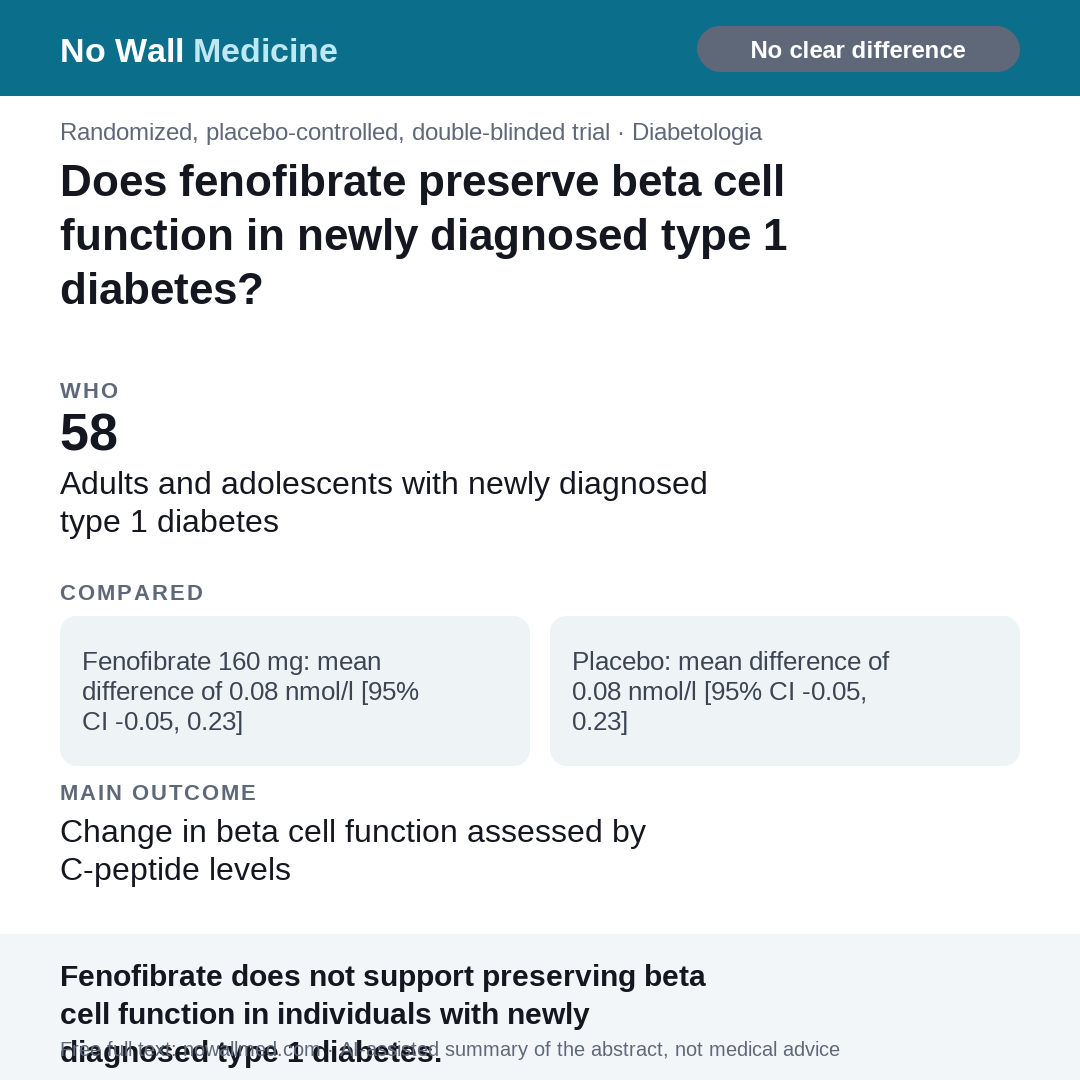
Effect of fenofibrate on residual beta cell function in adults and adolescents with newly diagnosed type 1 diabetes: a randomised clinical trial
Randomized, placebo-controlled, double-blinded trialNo clear difference
Does fenofibrate preserve beta cell function in newly diagnosed type 1 diabetes?
Who
58
Adults and adolescents with newly diagnosed type 1 diabetes
Compared
Fenofibrate 160 mg: mean difference of 0.08 nmol/l [95% CI -0.05, 0.23]
Placebo: mean difference of 0.08 nmol/l [95% CI -0.05, 0.23]
Main outcome
Change in beta cell function assessed by C-peptide levels
Result: mean difference of 0.08 nmol/l [95% CI -0.05, 0.23]
Bottom line: Fenofibrate does not support preserving beta cell function in individuals with newly diagnosed type 1 diabetes.
Funded by: Sehested Hansens Foundation
Diabetologia · 2024-10-30Download image
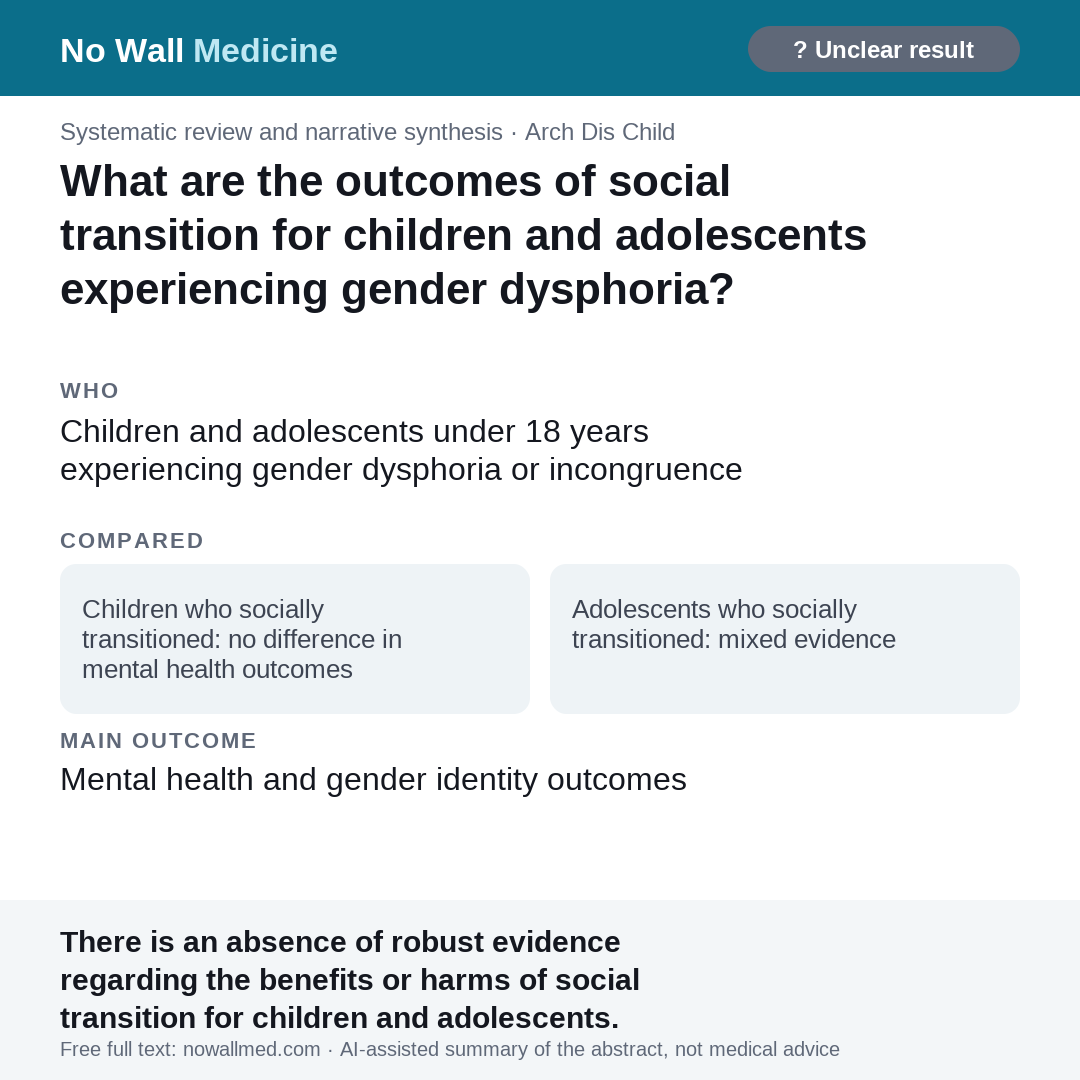
Impact of social transition in relation to gender for children and adolescents: a systematic review
Systematic review and narrative synthesisUnclear result
What are the outcomes of social transition for children and adolescents experiencing gender dysphoria?
Who
Children and adolescents under 18 years experiencing gender dysphoria or incongruence · Primarily United States
Compared
Children who socially transitioned: no difference in mental health outcomes
Adolescents who socially transitioned: mixed evidence
Main outcome
Mental health and gender identity outcomes
Bottom line: There is an absence of robust evidence regarding the benefits or harms of social transition for children and adolescents.
Arch Dis Child · 2024-10-30Download image
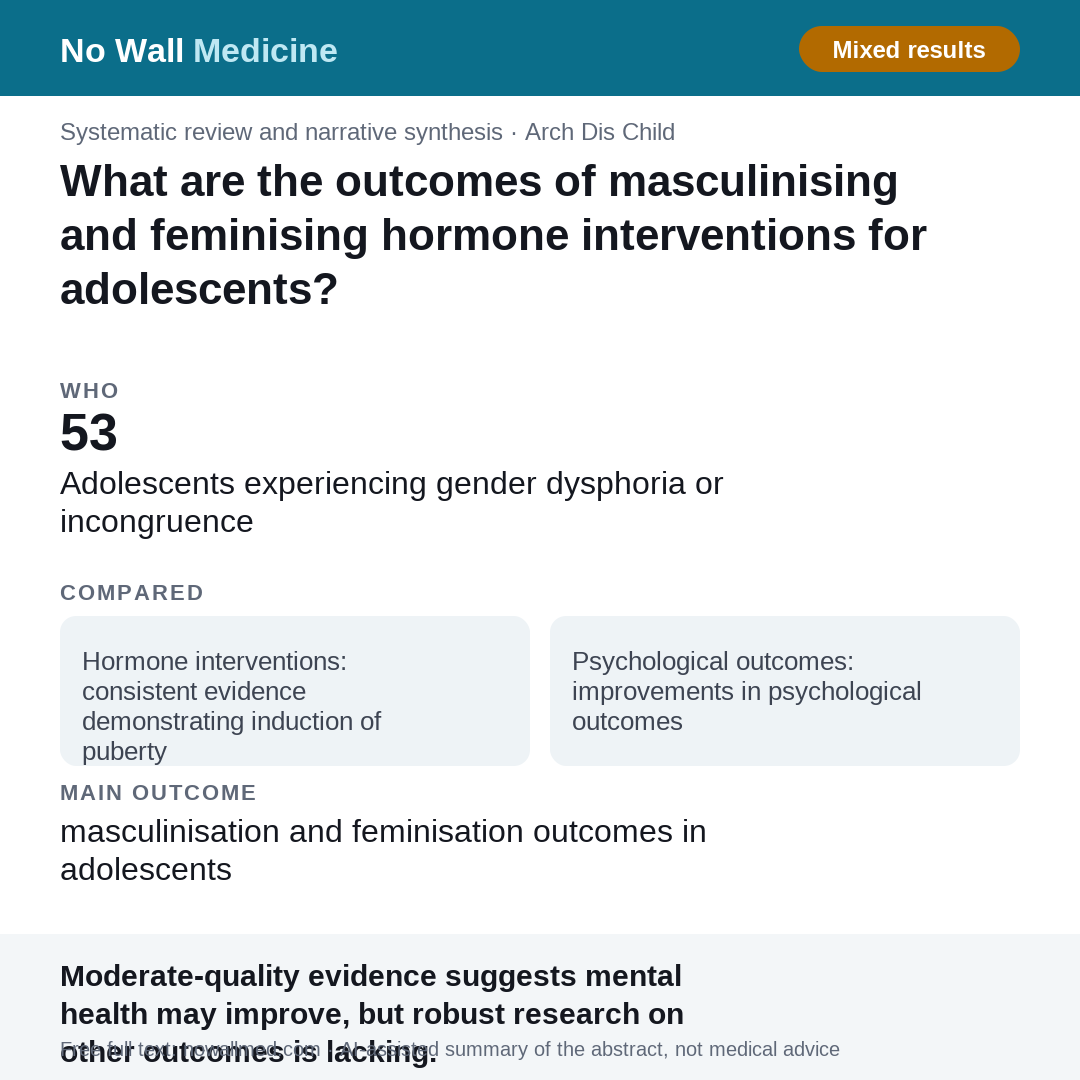
Masculinising and feminising hormone interventions for adolescents experiencing gender dysphoria or incongruence: a systematic review
Systematic review and narrative synthesisMixed results
What are the outcomes of masculinising and feminising hormone interventions for adolescents?
Who
53
Adolescents experiencing gender dysphoria or incongruence
Compared
Hormone interventions: consistent evidence demonstrating induction of puberty
Psychological outcomes: improvements in psychological outcomes
Main outcome
masculinisation and feminisation outcomes in adolescents
Bottom line: Moderate-quality evidence suggests mental health may improve, but robust research on other outcomes is lacking.
Limitation: Most studies included adolescents receiving puberty suppression, making it difficult to determine hormone effects alone.
Arch Dis Child · 2024-10-30Download image
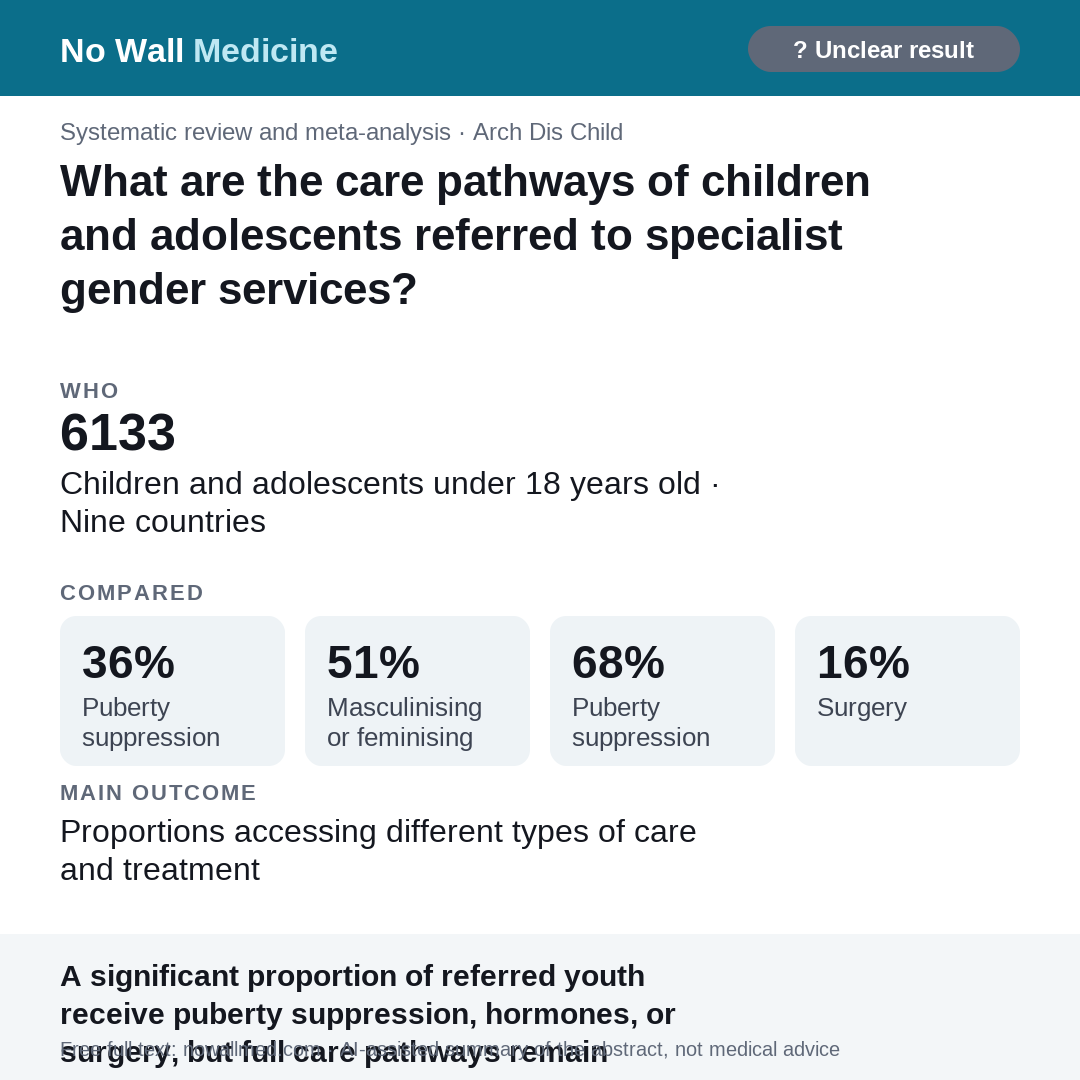
Care pathways of children and adolescents referred to specialist gender services: a systematic review
Systematic review and meta-analysisUnclear result
What are the care pathways of children and adolescents referred to specialist gender services?
Who
6133
Children and adolescents under 18 years old · Nine countries
Compared
36%Puberty suppression (95% CI 27% to 45%)
51%Masculinising or feminising hormones (95% CI 40% to 62%)
68%Puberty suppression and/or hormones (95% CI 57% to 77%)
16%Surgery (95% CI 10% to 24%)
Main outcome
Proportions accessing different types of care and treatment
Bottom line: A significant proportion of referred youth receive puberty suppression, hormones, or surgery, but full care pathways remain unknown.
Limitation: No study systematically reported information about the full pathway or psychological care received.
Arch Dis Child · 2024-10-30Download image
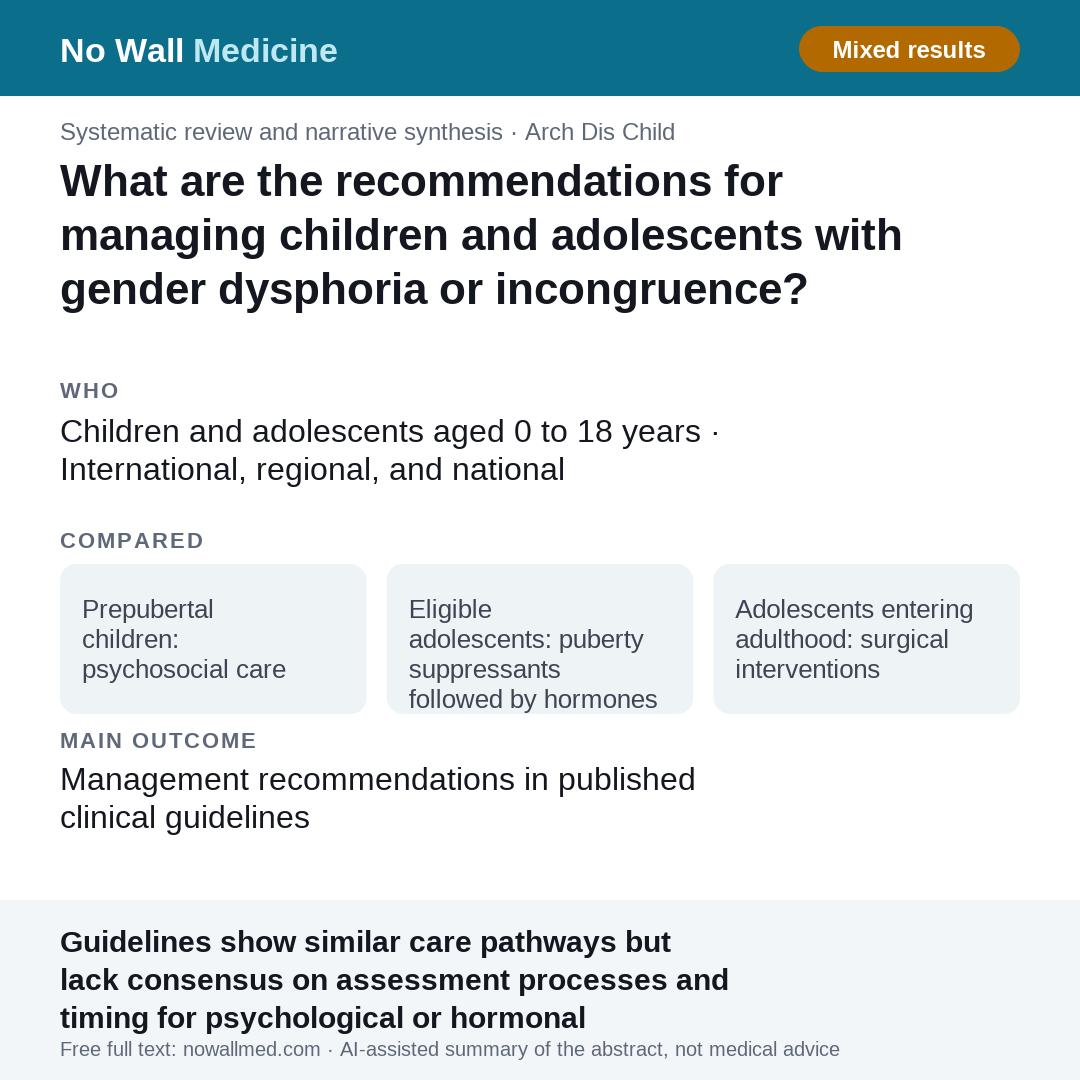
Clinical guidelines for children and adolescents experiencing gender dysphoria or incongruence: a systematic review of recommendations (part 2)
Systematic review and narrative synthesisMixed results
What are the recommendations for managing children and adolescents with gender dysphoria or incongruence?
Who
Children and adolescents aged 0 to 18 years · International, regional, and national guidelines
Compared
Prepubertal children: psychosocial care
Eligible adolescents: puberty suppressants followed by hormones
Adolescents entering adulthood: surgical interventions
Main outcome
Management recommendations in published clinical guidelines
Bottom line: Guidelines show similar care pathways but lack consensus on assessment processes and timing for psychological or hormonal interventions.
Limitation: Limited guidance on psychological care, prepubertal management, or non-binary gender identity.
Arch Dis Child · 2024-10-30Download image
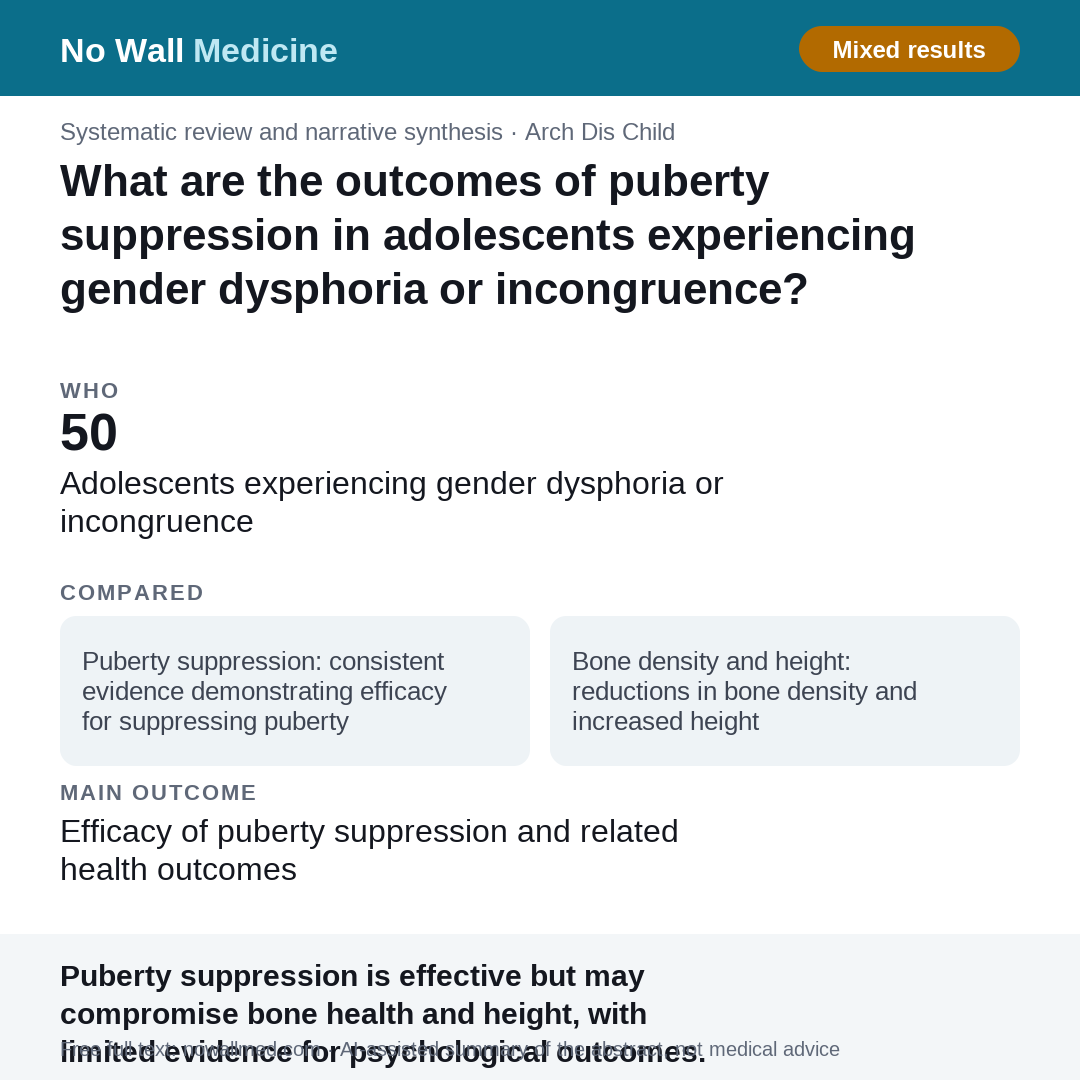
Interventions to suppress puberty in adolescents experiencing gender dysphoria or incongruence: a systematic review
Systematic review and narrative synthesisMixed results
What are the outcomes of puberty suppression in adolescents experiencing gender dysphoria or incongruence?
Who
50
Adolescents experiencing gender dysphoria or incongruence
Compared
Puberty suppression: consistent evidence demonstrating efficacy for suppressing puberty
Bone density and height: reductions in bone density and increased height
Main outcome
Efficacy of puberty suppression and related health outcomes
Bottom line: Puberty suppression is effective but may compromise bone health and height, with limited evidence for psychological outcomes.
Limitation: Lack of high-quality research assessing various health and psychological impacts.
Arch Dis Child · 2024-10-30Download image
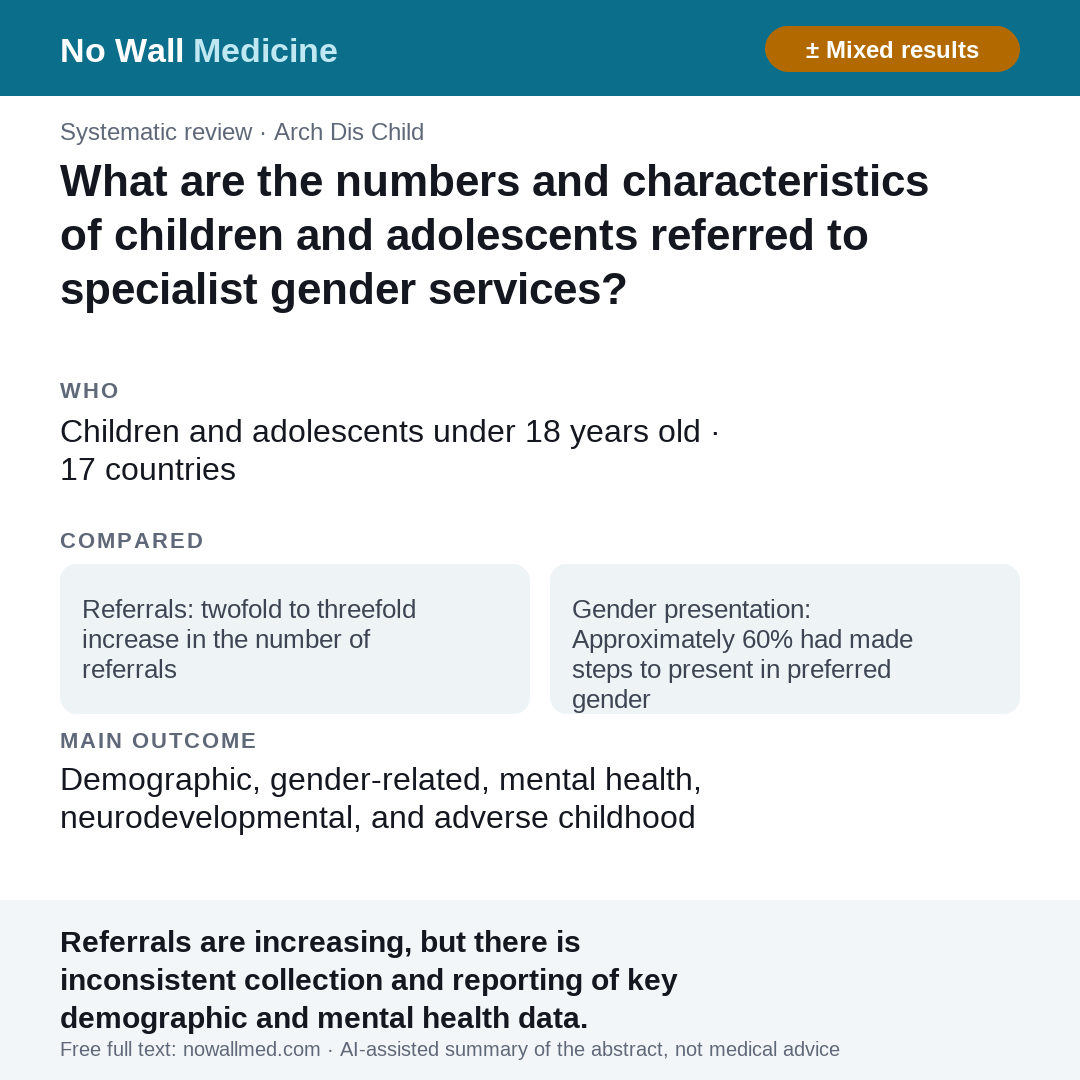
Characteristics of children and adolescents referred to specialist gender services: a systematic review
Systematic reviewMixed results
What are the numbers and characteristics of children and adolescents referred to specialist gender services?
Who
Children and adolescents under 18 years old · 17 countries
Compared
Referrals: twofold to threefold increase in the number of referrals
Gender presentation: Approximately 60% had made steps to present in preferred gender
Main outcome
Demographic, gender-related, mental health, neurodevelopmental, and adverse childhood experience data
Bottom line: Referrals are increasing, but there is inconsistent collection and reporting of key demographic and mental health data.
Arch Dis Child · 2024-10-30Download image
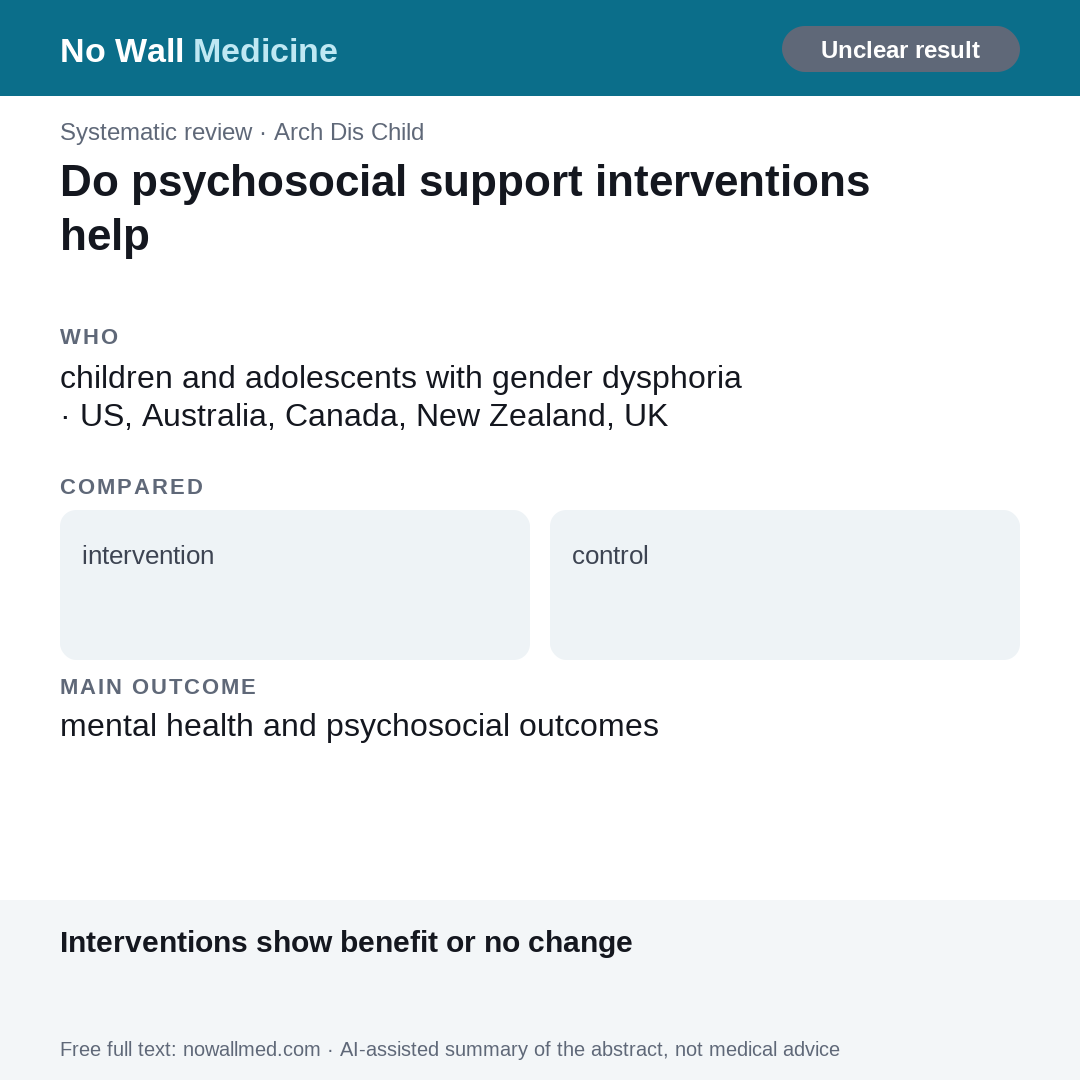
Psychosocial support interventions for children and adolescents experiencing gender dysphoria or incongruence: a systematic review
Systematic reviewUnclear result
Do psychosocial support interventions help
Who
children and adolescents with gender dysphoria · US, Australia, Canada, New Zealand, UK
Compared
intervention
control
Main outcome
mental health and psychosocial outcomes
Bottom line: Interventions show benefit or no change
Limitation: small number of low-quality studies
Arch Dis Child · 2024-10-30Download image
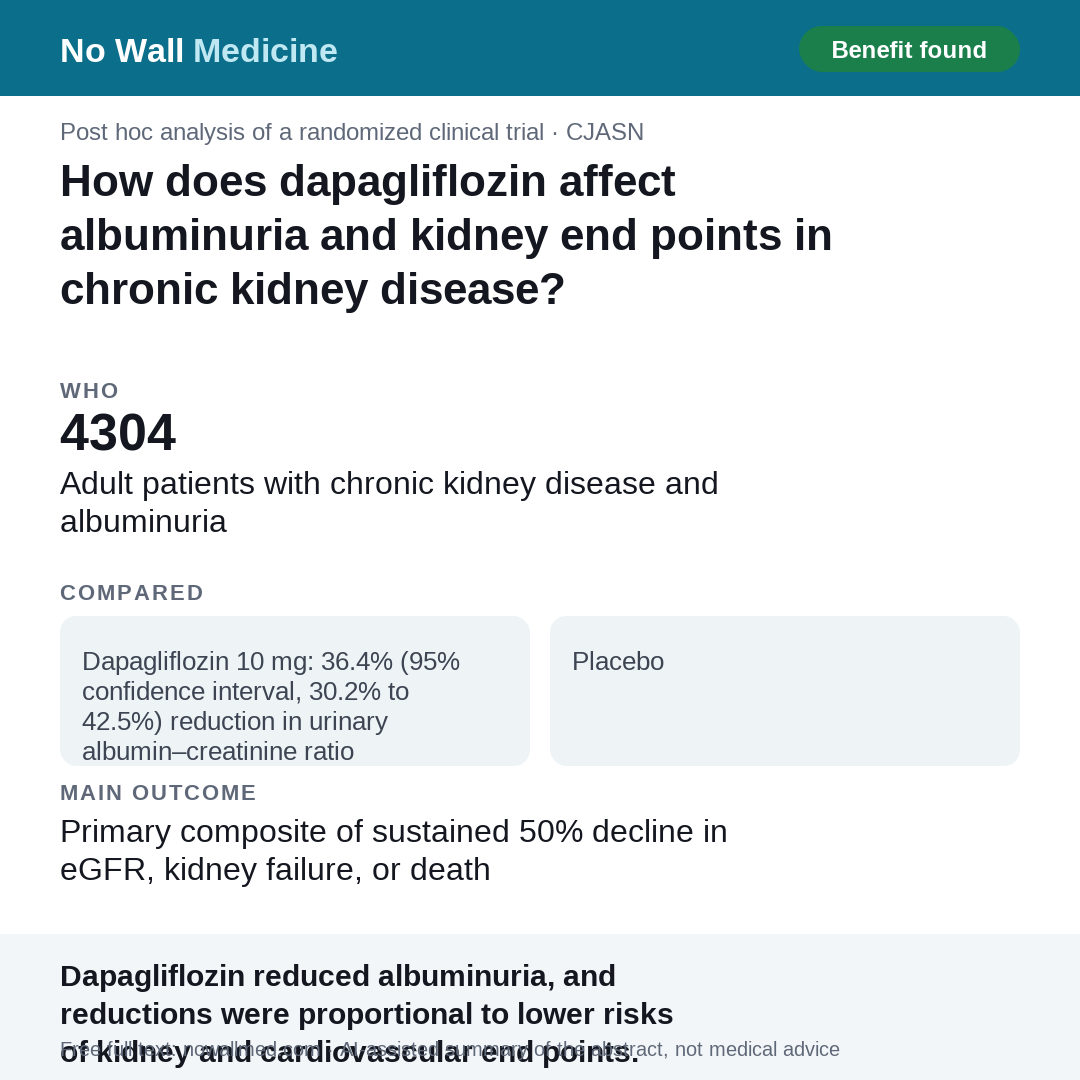
Baseline, Early Changes, and Residual Albuminuria: Post Hoc Analysis of a Randomized Clinical Trial of Dapagliflozin in Chronic Kidney Disease
Post hoc analysis of a randomized clinical trialBenefit found
How does dapagliflozin affect albuminuria and kidney end points in chronic kidney disease?
Who
4304
Adult patients with chronic kidney disease and albuminuria
Compared
Dapagliflozin 10 mg: 36.4% (95% confidence interval, 30.2% to 42.5%) reduction in urinary albumin–creatinine ratio
Placebo
Main outcome
Primary composite of sustained 50% decline in eGFR, kidney failure, or death
Bottom line: Dapagliflozin reduced albuminuria, and reductions were proportional to lower risks of kidney and cardiovascular end points.
CJASN · 2024-10-30Download image
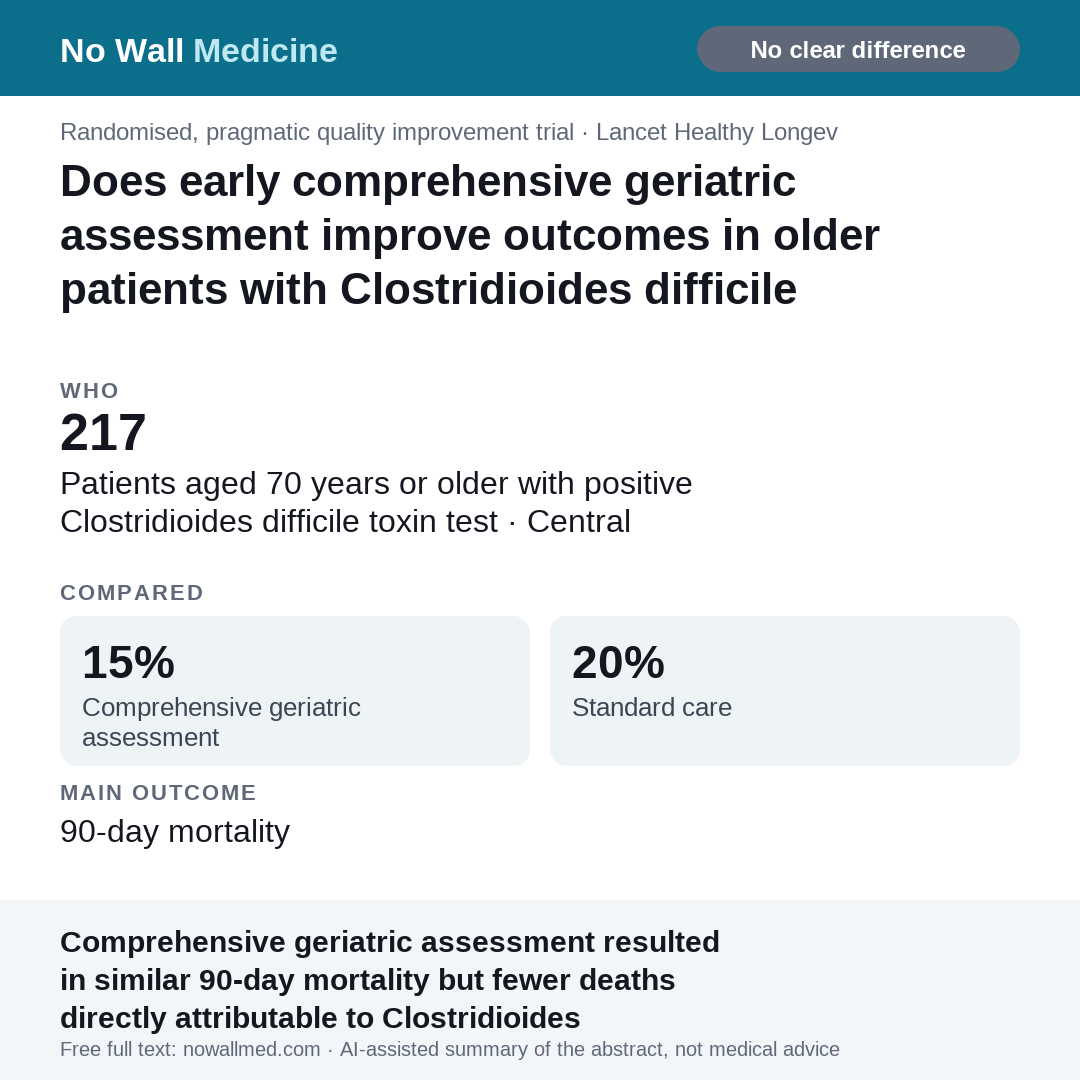
Early geriatric assessment and management in older patients with Clostridioides difficile infection in Denmark (CLODIfrail): a randomised trial
Randomised, pragmatic quality improvement trialNo clear difference
Does early comprehensive geriatric assessment improve outcomes in older patients with Clostridioides difficile infection?
Who
217
Patients aged 70 years or older with positive Clostridioides difficile toxin test · Central Denmark Region
Compared
15%Comprehensive geriatric assessment (16/109)
20%Standard care (22/108)
Main outcome
90-day mortality
Result: odds ratio 0·66, 95% CI 0·32-1·38
Bottom line: Comprehensive geriatric assessment resulted in similar 90-day mortality but fewer deaths directly attributable to Clostridioides difficile infection.
Funded by: Innovation Fund Denmark, Novo Nordisk Foundation, and Helsefonden
Lancet Healthy Longev · 2024-10-30Download image
IncobotulinumtoxinA in the Treatment of Upper Facial Lines: Results From Two Randomized, Double-Blind, Placebo-Controlled, Phase III Studies
Randomized, double-blind trialsBenefit found
IncobotulinumtoxinA for upper facial lines
Who
362, 368
Healthy participants with facial lines · United States, Germany
Compared
IncobotulinumtoxinA
Placebo
Main outcome
Proportions of responders
Bottom line: IncobotulinumtoxinA improved facial lines
Aesthet Surg J · 2024-10-30Download image

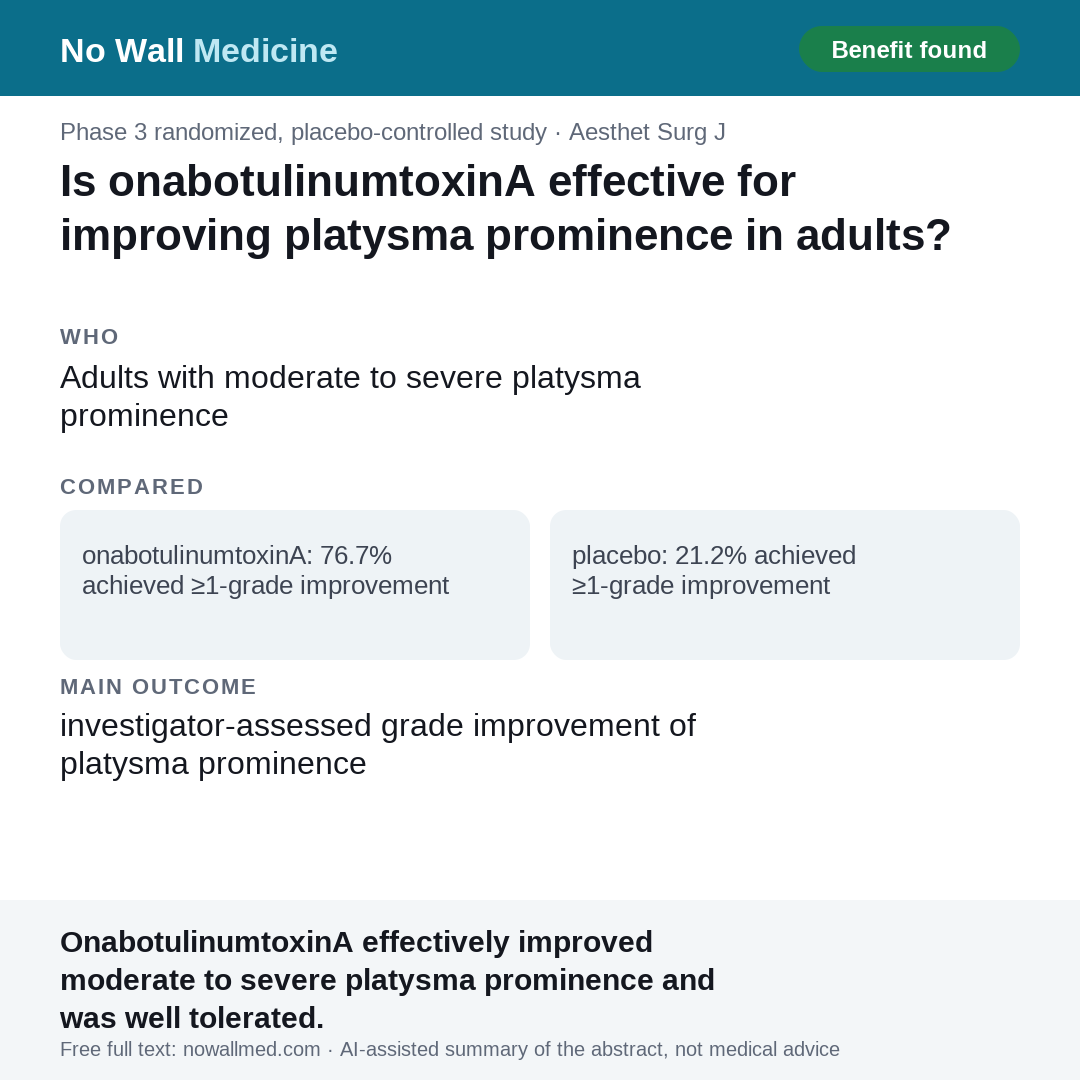
Improving Neck and Jawline Aesthetics With OnabotulinumtoxinA by Minimizing Platysma Muscle Contraction Effects: Efficacy and Safety Results in a Phase 3 Randomized, Placebo-Controlled Study
Phase 3 randomized, placebo-controlled studyBenefit found
Is onabotulinumtoxinA effective for improving platysma prominence in adults?
Who
Adults with moderate to severe platysma prominence
Compared
onabotulinumtoxinA: 76.7% achieved ≥1-grade improvement
placebo: 21.2% achieved ≥1-grade improvement
Main outcome
investigator-assessed grade improvement of platysma prominence
Bottom line: OnabotulinumtoxinA effectively improved moderate to severe platysma prominence and was well tolerated.
Aesthet Surg J · 2024-10-30Download image
Cost and cost-effectiveness of digital technologies for support of tuberculosis treatment adherence: a systematic review
Systematic reviewMixed results
What are the costs and cost-effectiveness of digital technologies for tuberculosis treatment adherence?
Who
Patients with tuberculosis infection or disease · Various settings including high-income countries
Compared
Digital adherence technologies
Healthcare provider directly observed therapy
Main outcome
Costs and cost-effectiveness of digital technologies
Bottom line: Digital technologies may be cost saving or cost-effective, particularly in high-income settings, but findings are highly variable.
Limitation: Only eight studies adequately reported most Consolidated Health Economic Evaluation Reporting Standards elements.
BMJ Glob Health · 2024-10-30Download image

Plasma exchange with albumin replacement for Alzheimer's disease treatment induced changes in serum and cerebrospinal fluid inflammatory mediator levels
Randomized trialBenefit found
Does plasma exchange with albumin replacement impact inflammatory mediator levels in Alzheimer's disease?
Who
142
Alzheimer's disease patients · AMBAR trial
Compared
plasma exchange with albumin replacement: significantly reduced IFN-γ, eotaxin, MIP-1α and ICAM-1 in serum, and eotaxin-3 and MIP-1β in CSF
placebo
Main outcome
serum and cerebrospinal fluid inflammatory mediator levels
Bottom line: Plasma exchange with albumin replacement reduces inflammatory mediators in serum and cerebrospinal fluid in Alzheimer's disease patients.
Ann Clin Transl Neurol · 2024-10-30Download image

Health Care Professionals' Experience of Using AI: Systematic Review With Narrative Synthesis
Systematic review with narrative synthesisMixed results
What are the experiences of health care professionals using non-knowledge-based artificial intelligence tools?
Who
25
Health care professionals using non-knowledge-based artificial intelligence tools · 9 different countries
Compared
Qualitative studies
Quantitative studies
Mixed methods studies
Main outcome
Experiences of using non-knowledge-based artificial intelligence for clinical decision-making
Bottom line: Health care professionals reported varied opinions on artificial intelligence value, with concerns regarding understanding and trust.
J Med Internet Res · 2024-10-30Download image

Evaluating the Impact of a Game (Inner Dragon) on User Engagement Within a Leading Smartphone App for Smoking Cessation: Randomized Controlled Trial
Randomized controlled trialBenefit found
Does the Inner Dragon game increase user engagement in a smoking cessation app?
Who
500
Adults smoking at least 1 cigarette daily planning to quit · United States
Compared
Treated group with Inner Dragon game: mean 29.6, SD 36.5 sessions
Control group with core features: mean 24.3, SD 37.9 sessions
Main outcome
User engagement with the app
Bottom line: The Inner Dragon game increased user engagement and program adherence in a smoking cessation app.
Limitation: Additional refinements may clarify whether the game increases abstinence rates.
J Med Internet Res · 2024-10-30Download image

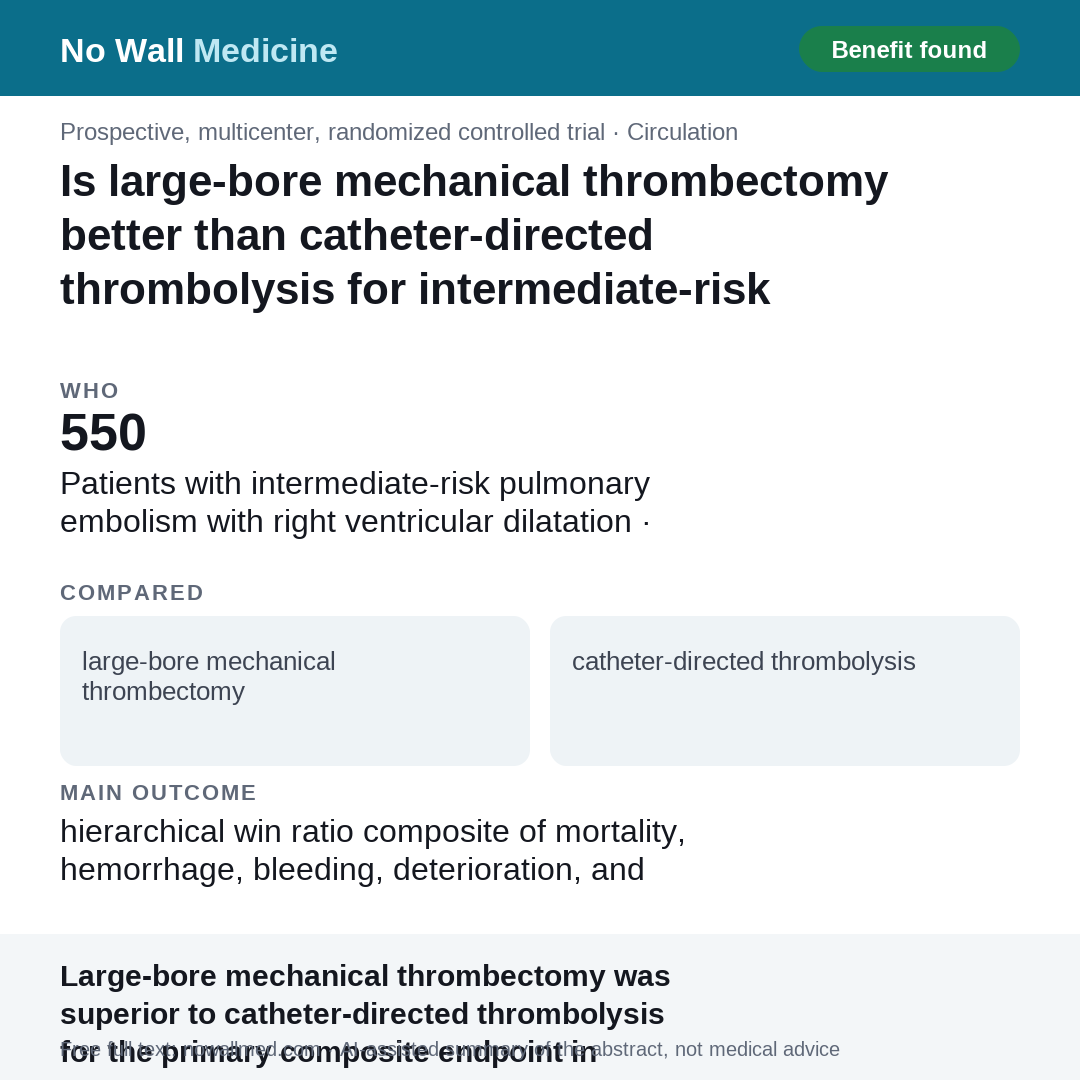
Large-Bore Mechanical Thrombectomy Versus Catheter-Directed Thrombolysis in the Management of Intermediate-Risk Pulmonary Embolism: Primary Results of the PEERLESS Randomized Controlled Trial
Prospective, multicenter, randomized controlled trialBenefit found
Is large-bore mechanical thrombectomy better than catheter-directed thrombolysis for intermediate-risk pulmonary embolism?
Who
550
Patients with intermediate-risk pulmonary embolism with right ventricular dilatation · multicenter
Compared
large-bore mechanical thrombectomy
catheter-directed thrombolysis
Main outcome
hierarchical win ratio composite of mortality, hemorrhage, bleeding, deterioration, and intensive care use
Result: win ratio 5.01 (95% CI 3.68-6.97)
Bottom line: Large-bore mechanical thrombectomy was superior to catheter-directed thrombolysis for the primary composite endpoint in intermediate-risk pulmonary embolism.
Circulation · 2024-10-29Download image