Visual abstracts
New randomized trials and meta-analyses from leading journals at a glance: who was studied, what was compared, and what was found. Every paper is free to read in full.
All specialtiesCardiology 4877Oncology 4138Gastroenterology & Hepatology 1942Infectious Disease 3837Neurology 1905Psychiatry & Mental Health 2273Pulmonology 2143Critical Care 1365Endocrinology & Diabetes 2580Pediatrics 2980Surgery 2559Orthopedics & Sports Medicine 931Neurosurgery 537Cardiothoracic & Vascular Surgery 674Plastic & Reconstructive Surgery 591Nephrology 1133Rheumatology 823Hematology 1109Dermatology 621Ophthalmology 543Obstetrics & Gynecology 1686Public & Global Health 1058Radiology & Imaging 648Anesthesiology 986Urology 764ENT (Otolaryngology) 503Emergency Medicine 511Allergy & Immunology 313Geriatrics 981Family Medicine & Primary Care 562Medical Genetics & Genomics 676Pathology & Laboratory Medicine 159Physical Medicine & Rehabilitation 757Palliative Care 444Nutrition 1588Digital Health & AI 2201General Medicine 321
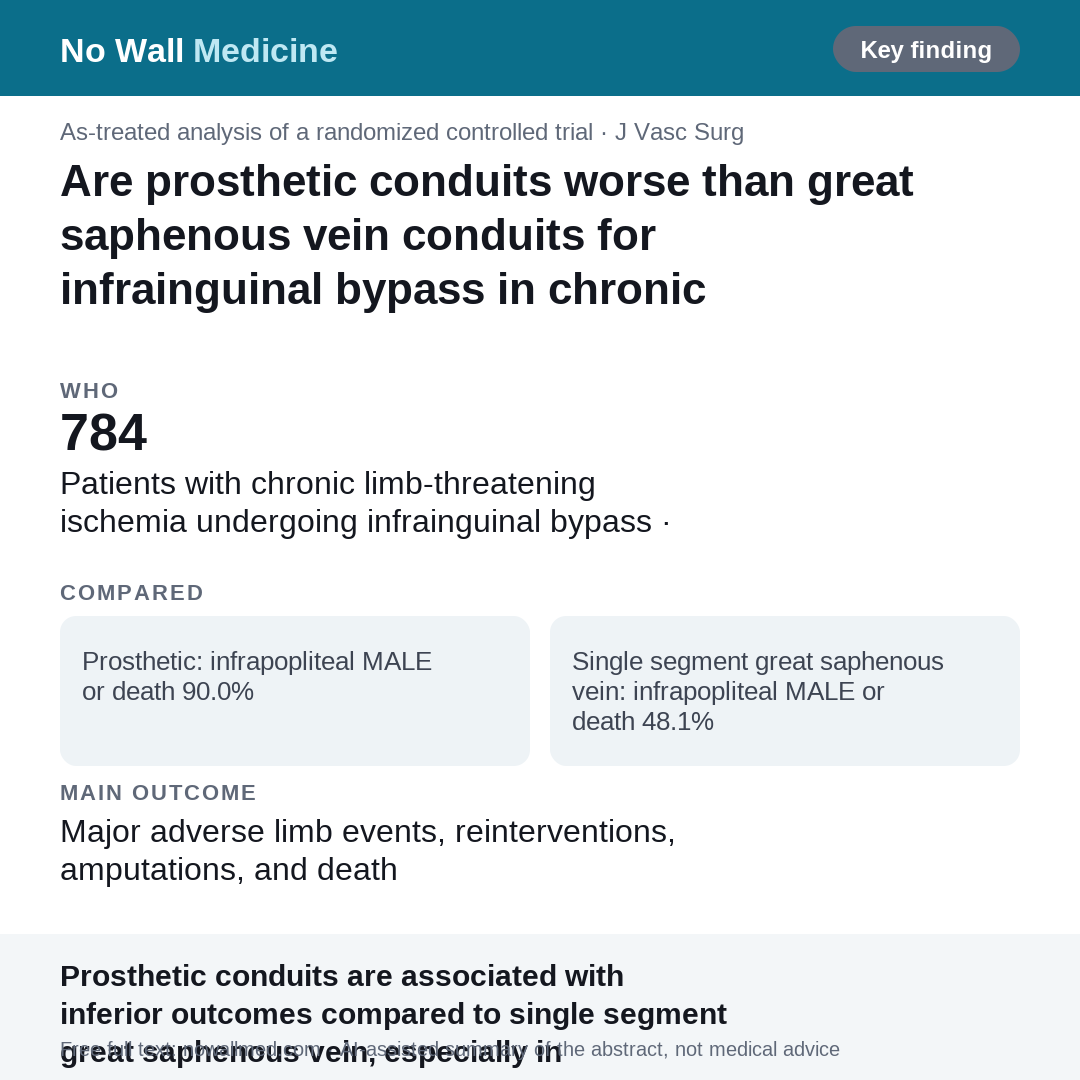
Prosthetic conduits have worse outcomes compared with great saphenous vein conduits in femoropopliteal and infrapopliteal bypass in patients with chronic limb-threatening ischemia
As-treated analysis of a randomized controlled trialHarm found
Are prosthetic conduits worse than great saphenous vein conduits for infrainguinal bypass in chronic limb-threatening ischemia?
Who
784
Patients with chronic limb-threatening ischemia undergoing infrainguinal bypass · Multicenter
Compared
Prosthetic: infrapopliteal MALE or death 90.0%
Single segment great saphenous vein: infrapopliteal MALE or death 48.1%
Main outcome
Major adverse limb events, reinterventions, amputations, and death
Result: hazard ratio 3.59 (95% CI 1.64 to 7.86)
Bottom line: Prosthetic conduits are associated with inferior outcomes compared to single segment great saphenous vein, especially in infrapopliteal bypass.
J Vasc Surg · 2024-09-23Download image
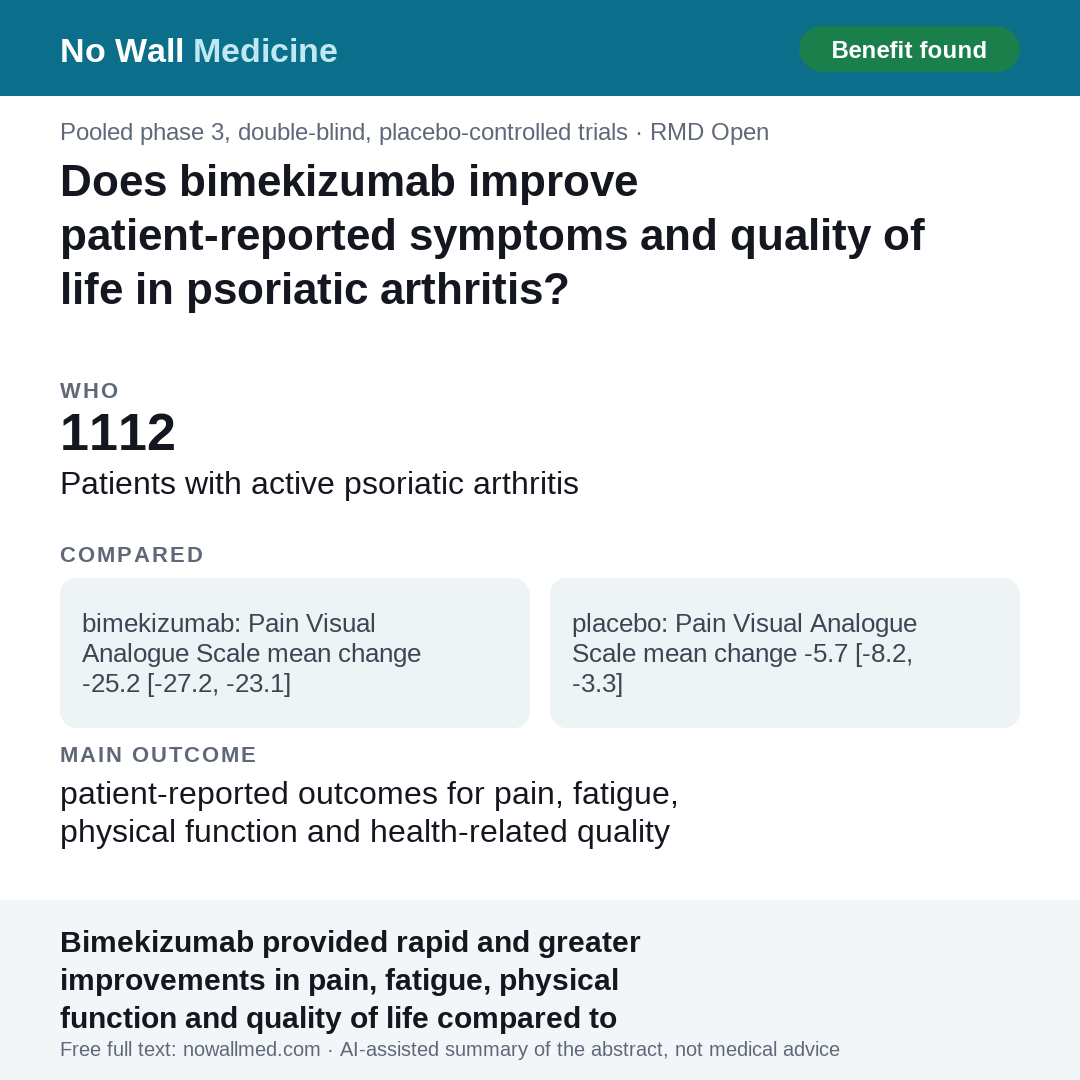
Bimekizumab provided rapid improvements in patient-reported symptoms and health-related quality of life in patients with active psoriatic arthritis: pooled 16-week results from two phase 3 studies
Pooled phase 3, double-blind, placebo-controlled trialsBenefit found
Does bimekizumab improve patient-reported symptoms and quality of life in psoriatic arthritis?
Who
1112
Patients with active psoriatic arthritis
Compared
bimekizumab: Pain Visual Analogue Scale mean change -25.2 [-27.2, -23.1]
placebo: Pain Visual Analogue Scale mean change -5.7 [-8.2, -3.3]
Main outcome
patient-reported outcomes for pain, fatigue, physical function and health-related quality of life
Bottom line: Bimekizumab provided rapid and greater improvements in pain, fatigue, physical function and quality of life compared to placebo.
RMD Open · 2024-09-23Download image
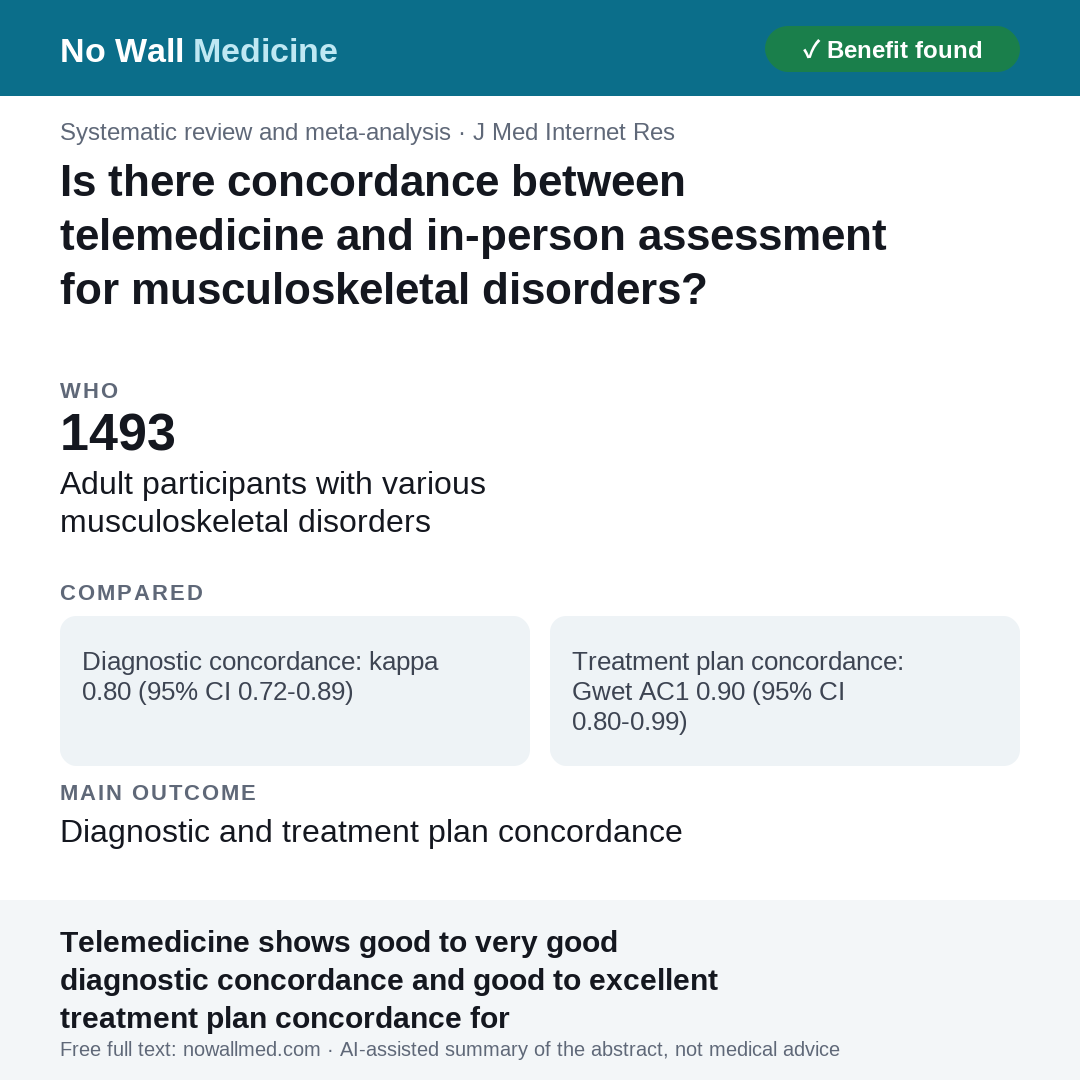
Investigating the Use of Telemedicine by Health Care Providers to Diagnose and Manage Patients With Musculoskeletal Disorders: Systematic Review and Meta-Analysis
Systematic review and meta-analysisBenefit found
Is there concordance between telemedicine and in-person assessment for musculoskeletal disorders?
Who
1493
Adult participants with various musculoskeletal disorders
Compared
Diagnostic concordance: kappa 0.80 (95% CI 0.72-0.89)
Treatment plan concordance: Gwet AC1 0.90 (95% CI 0.80-0.99)
Main outcome
Diagnostic and treatment plan concordance
Result: kappa 0.80 (95% CI 0.72-0.89)
Bottom line: Telemedicine shows good to very good diagnostic concordance and good to excellent treatment plan concordance for musculoskeletal disorders.
Limitation: Studies evaluating red and yellow flag detection and healthcare resource use are needed.
J Med Internet Res · 2024-09-23Download image
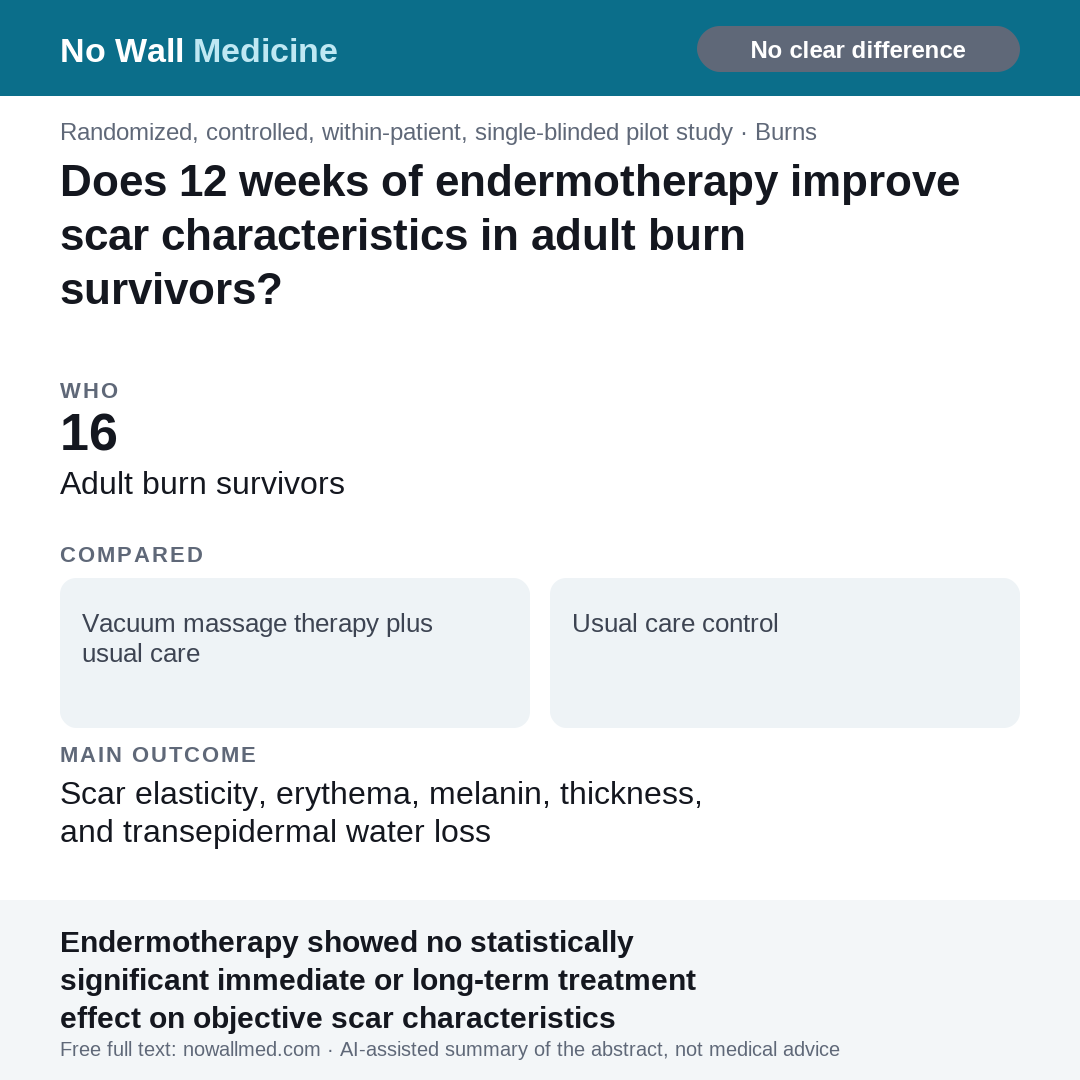
Randomized, controlled, within-patient, single-blinded pilot study to evaluate the efficacy of 12-weeks of endermotherapy with adult burn survivors
Randomized, controlled, within-patient, single-blinded pilot studyNo clear difference
Does 12 weeks of endermotherapy improve scar characteristics in adult burn survivors?
Who
16
Adult burn survivors
Compared
Vacuum massage therapy plus usual care
Usual care control
Main outcome
Scar elasticity, erythema, melanin, thickness, and transepidermal water loss
Bottom line: Endermotherapy showed no statistically significant immediate or long-term treatment effect on objective scar characteristics compared to usual care.
Limitation: Limited to a pilot study due to COVID-19 restrictions.
Burns · 2024-09-22Download image
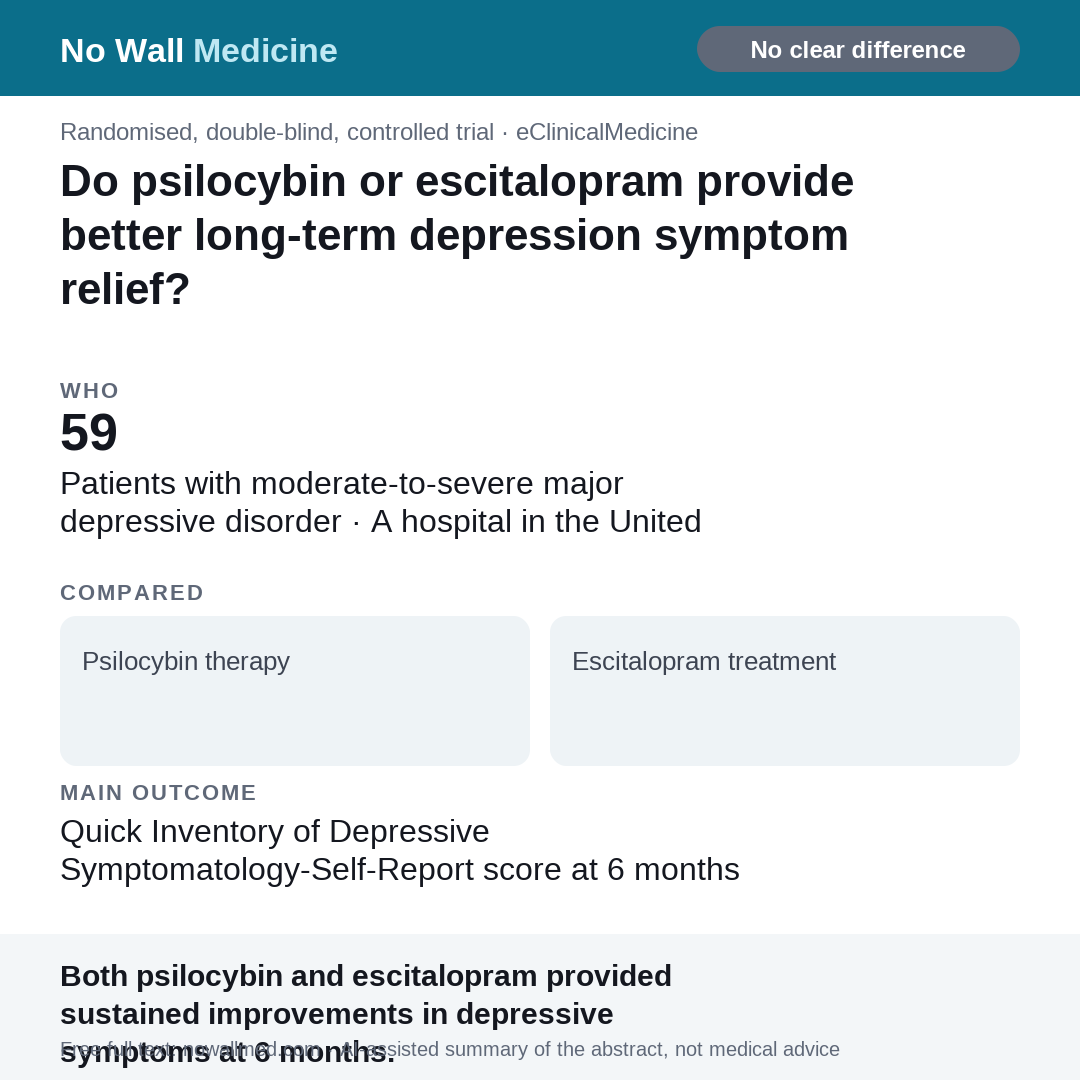
Effect of psilocybin versus escitalopram on depression symptom severity in patients with moderate-to-severe major depressive disorder: observational 6-month follow-up of a phase 2, double-blind, randomised, controlled trial
Randomised, double-blind, controlled trialNo clear difference
Do psilocybin or escitalopram provide better long-term depression symptom relief?
Who
59
Patients with moderate-to-severe major depressive disorder · A hospital in the United Kingdom
Compared
Psilocybin therapy
Escitalopram treatment
Main outcome
Quick Inventory of Depressive Symptomatology-Self-Report score at 6 months
Result: mean between-condition difference 1.51 (95% CI: -1.35, 4.38)
Bottom line: Both psilocybin and escitalopram provided sustained improvements in depressive symptoms at 6 months.
Limitation: Suboptimal power, missing data, potential additional interventions, and reliance on self-reported assessments.
Funded by: Alexander Mosley Charitable Trust and Imperial College London
eClinicalMedicine · 2024-09-21Download image
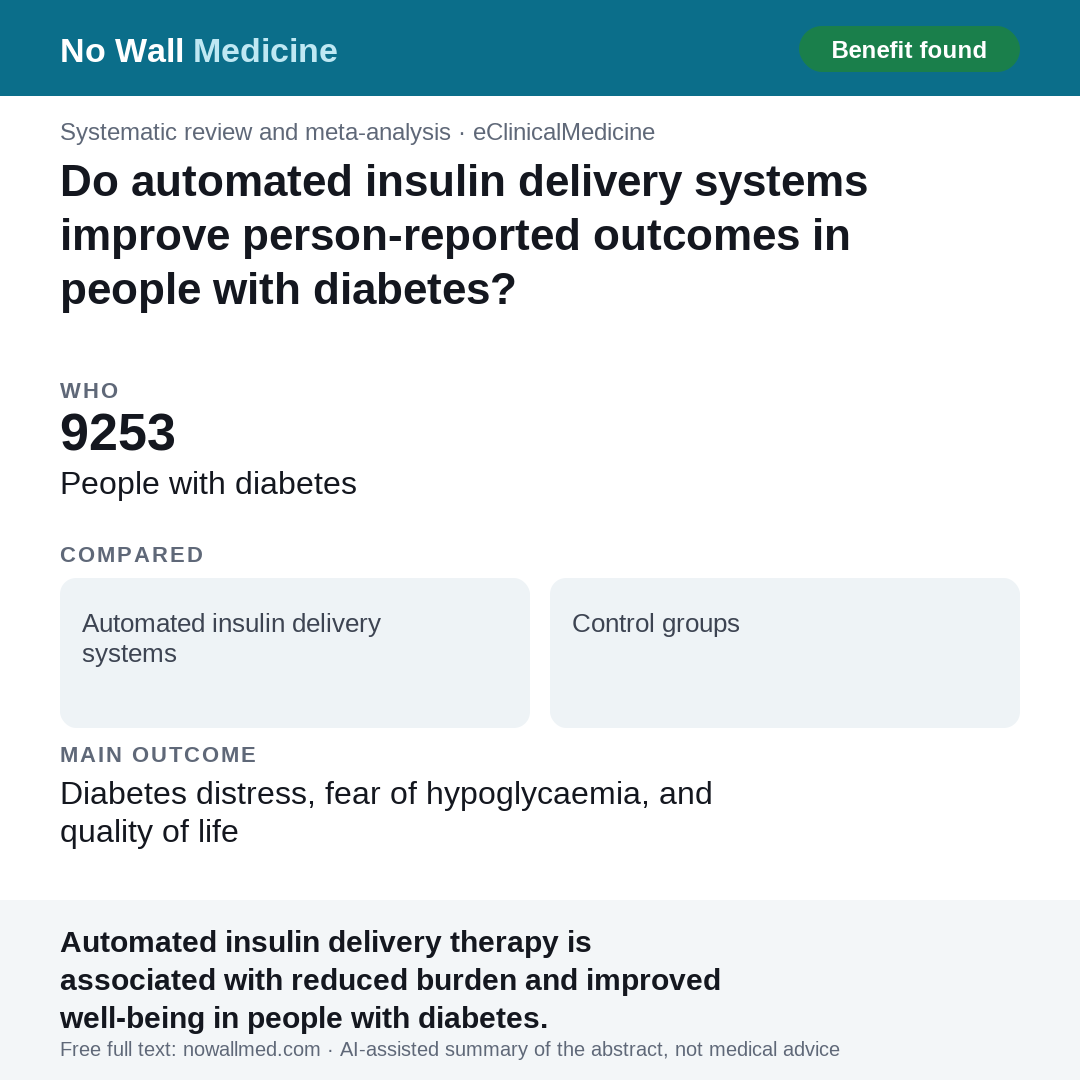
Effect of automated insulin delivery systems on person-reported outcomes in people with diabetes: a systematic review and meta-analysis
Systematic review and meta-analysisBenefit found
Do automated insulin delivery systems improve person-reported outcomes in people with diabetes?
Who
9253
People with diabetes
Compared
Automated insulin delivery systems
Control groups
Main outcome
Diabetes distress, fear of hypoglycaemia, and quality of life
Result: standardised mean difference [-0.159 (-0.309, -0.010) to 0.347 (0.134, 0.560)]
Bottom line: Automated insulin delivery therapy is associated with reduced burden and improved well-being in people with diabetes.
Limitation: Limited number of studies pooled for some outcomes and large heterogeneity in questionnaires used.
eClinicalMedicine · 2024-09-21Download image
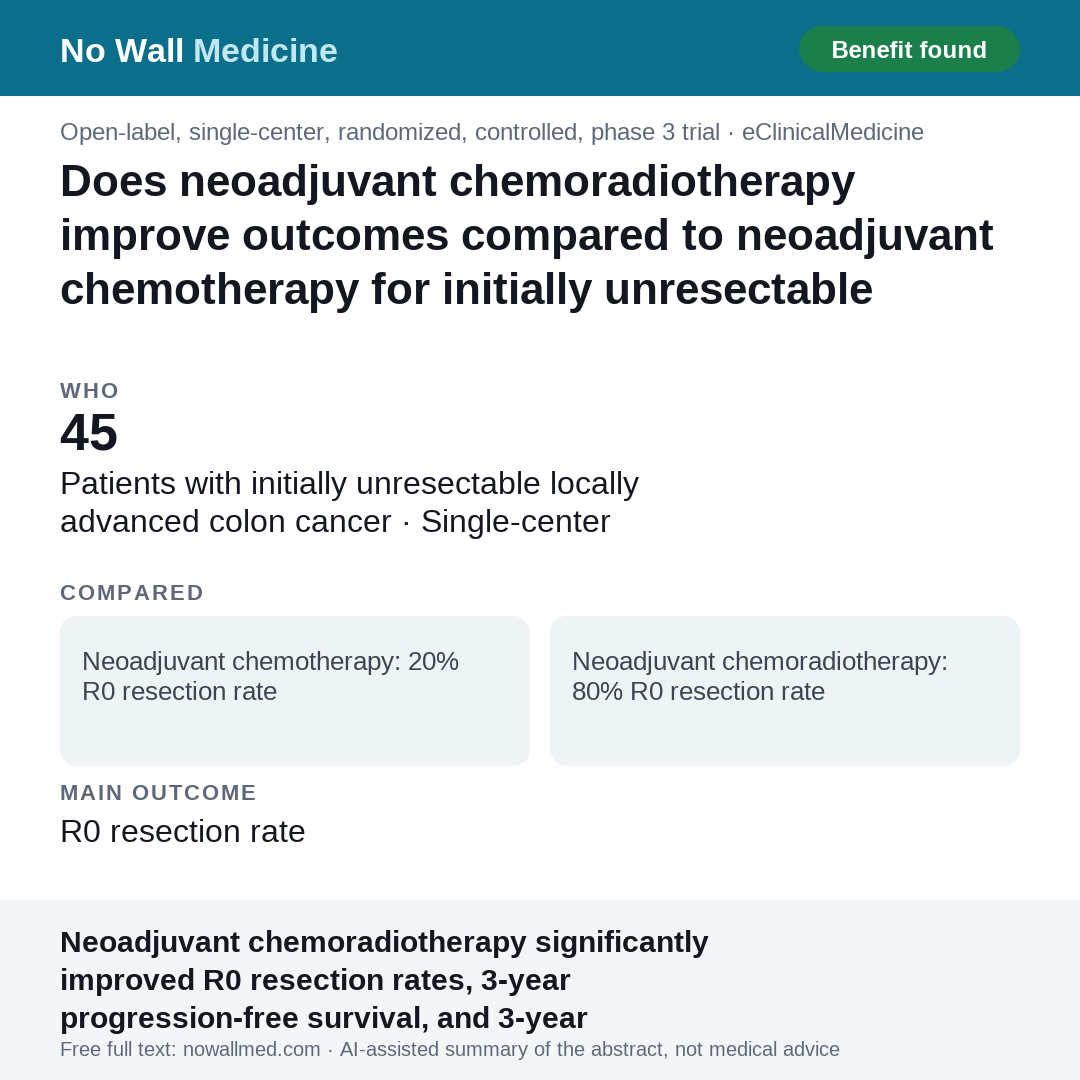
Neoadjuvant chemoradiotherapy versus neoadjuvant chemotherapy for initially unresectable locally advanced colon cancer: short-term outcomes of an open-label, single-centre, randomised, controlled, phase 3 trial
Open-label, single-center, randomized, controlled, phase 3 trialBenefit found
Does neoadjuvant chemoradiotherapy improve outcomes compared to neoadjuvant chemotherapy for initially unresectable locally advanced colon cancer?
Who
45
Patients with initially unresectable locally advanced colon cancer · Single-center
Compared
Neoadjuvant chemotherapy: 20% R0 resection rate
Neoadjuvant chemoradiotherapy: 80% R0 resection rate
Main outcome
R0 resection rate
Bottom line: Neoadjuvant chemoradiotherapy significantly improved R0 resection rates, 3-year progression-free survival, and 3-year overall survival compared to neoadjuvant chemotherapy.
Funded by: National Natural Science Foundation of China and Natural Science Foundation of Guangdong Province
eClinicalMedicine · 2024-09-21Download image
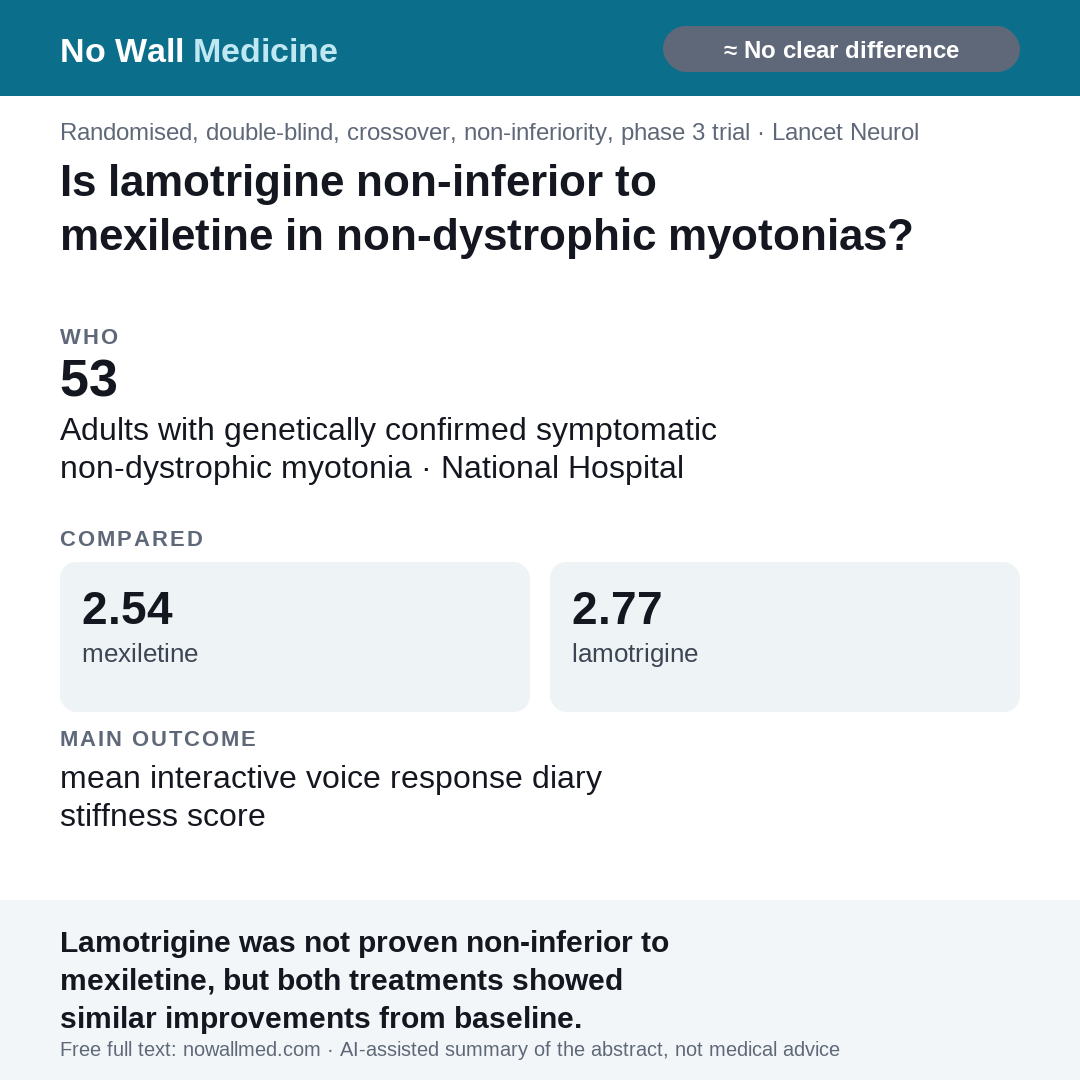
Mexiletine versus lamotrigine in non-dystrophic myotonias: a randomised, double-blind, head-to-head, crossover, non-inferiority, phase 3 trial
Randomised, double-blind, crossover, non-inferiority, phase 3 trialNo clear difference
Is lamotrigine non-inferior to mexiletine in non-dystrophic myotonias?
Who
53
Adults with genetically confirmed symptomatic non-dystrophic myotonia · National Hospital for Neurology and Neurosurgery (London, UK)
Compared
2.54mexiletine (95% CI 1.98 to 3.10)
2.77lamotrigine (2.21 to 3.32)
Main outcome
mean interactive voice response diary stiffness score
Result: mean mexiletine-lamotrigine difference -0.23 (95% CI -0.63 to 0.17)
Bottom line: Lamotrigine was not proven non-inferior to mexiletine, but both treatments showed similar improvements from baseline.
Funded by: Neuromuscular Study Group, Jon Moulton Charity Trust, UCLH BRC
Lancet Neurol · 2024-09-21Download image
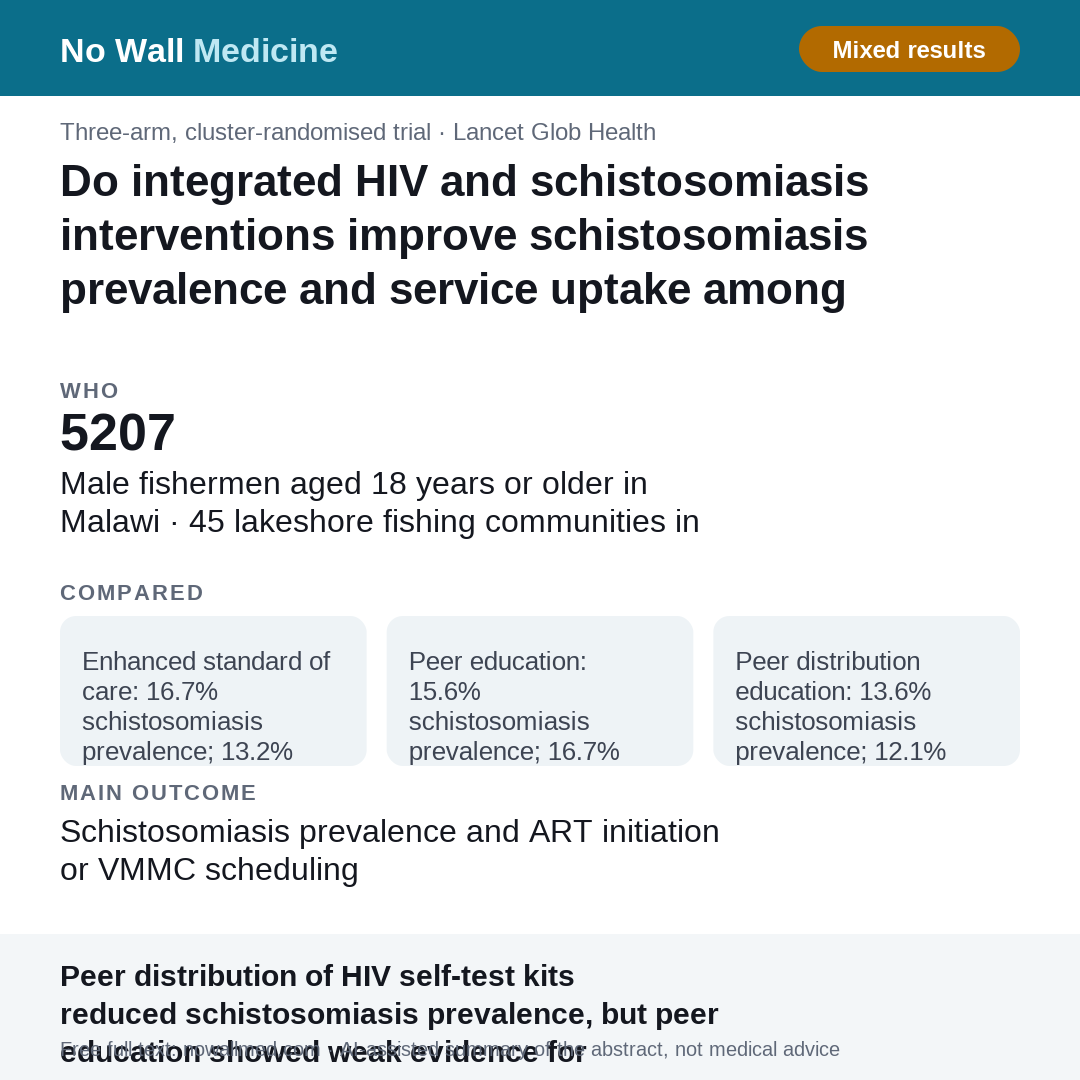
Combined interventions for the testing and treatment of HIV and schistosomiasis among fishermen in Malawi: a three-arm, cluster-randomised trial
Three-arm, cluster-randomised trialMixed results
Do integrated HIV and schistosomiasis interventions improve schistosomiasis prevalence and service uptake among fishermen?
Who
5207
Male fishermen aged 18 years or older in Malawi · 45 lakeshore fishing communities in Mangochi, Malawi
Compared
Enhanced standard of care: 16.7% schistosomiasis prevalence; 13.2% ART or VMMC uptake
Peer education: 15.6% schistosomiasis prevalence; 16.7% ART or VMMC uptake
Peer distribution education: 13.6% schistosomiasis prevalence; 12.1% ART or VMMC uptake
Main outcome
Schistosomiasis prevalence and ART initiation or VMMC scheduling
Result: adjusted risk ratio 0.80 (95% CI 0.69-0.94) for schistosomiasis in PDE
Bottom line: Peer distribution of HIV self-test kits reduced schistosomiasis prevalence, but peer education showed weak evidence for increasing HIV service uptake.
Funded by: Wellcome Trust and the UK National Institute for Health Research
Lancet Glob Health · 2024-09-21Download image
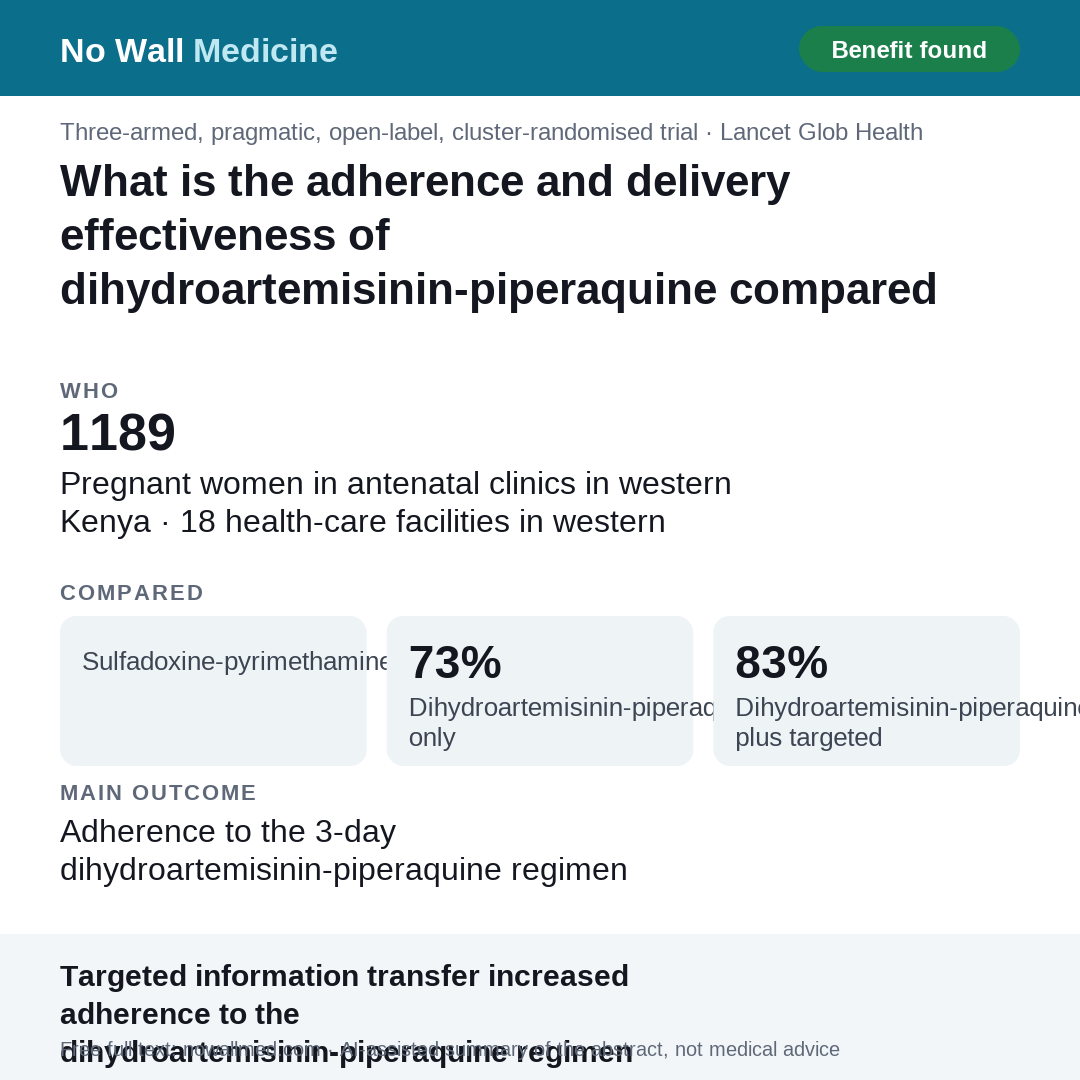
Delivery effectiveness of and adherence to intermittent preventive treatment for malaria in pregnancy with dihydroartemisinin-piperaquine with or without targeted information transfer or sulfadoxine-pyrimethamine in western Kenya: a three-armed, pragmatic, open-label, cluster-randomised trial
Three-armed, pragmatic, open-label, cluster-randomised trialBenefit found
What is the adherence and delivery effectiveness of dihydroartemisinin-piperaquine compared to sulfadoxine-pyrimethamine?
Who
1189
Pregnant women in antenatal clinics in western Kenya · 18 health-care facilities in western Kenya
Compared
Sulfadoxine-pyrimethamine
73%Dihydroartemisinin-piperaquine only (196/267)
83%Dihydroartemisinin-piperaquine plus targeted information transfer (266/319)
Main outcome
Adherence to the 3-day dihydroartemisinin-piperaquine regimen
Result: adjusted relative risk 1·16 (95% CI 1·03-1·31)
Bottom line: Targeted information transfer increased adherence to the dihydroartemisinin-piperaquine regimen compared to dihydroartemisinin-piperaquine alone.
Limitation: Masking was not possible.
Lancet Glob Health · 2024-09-21Download image
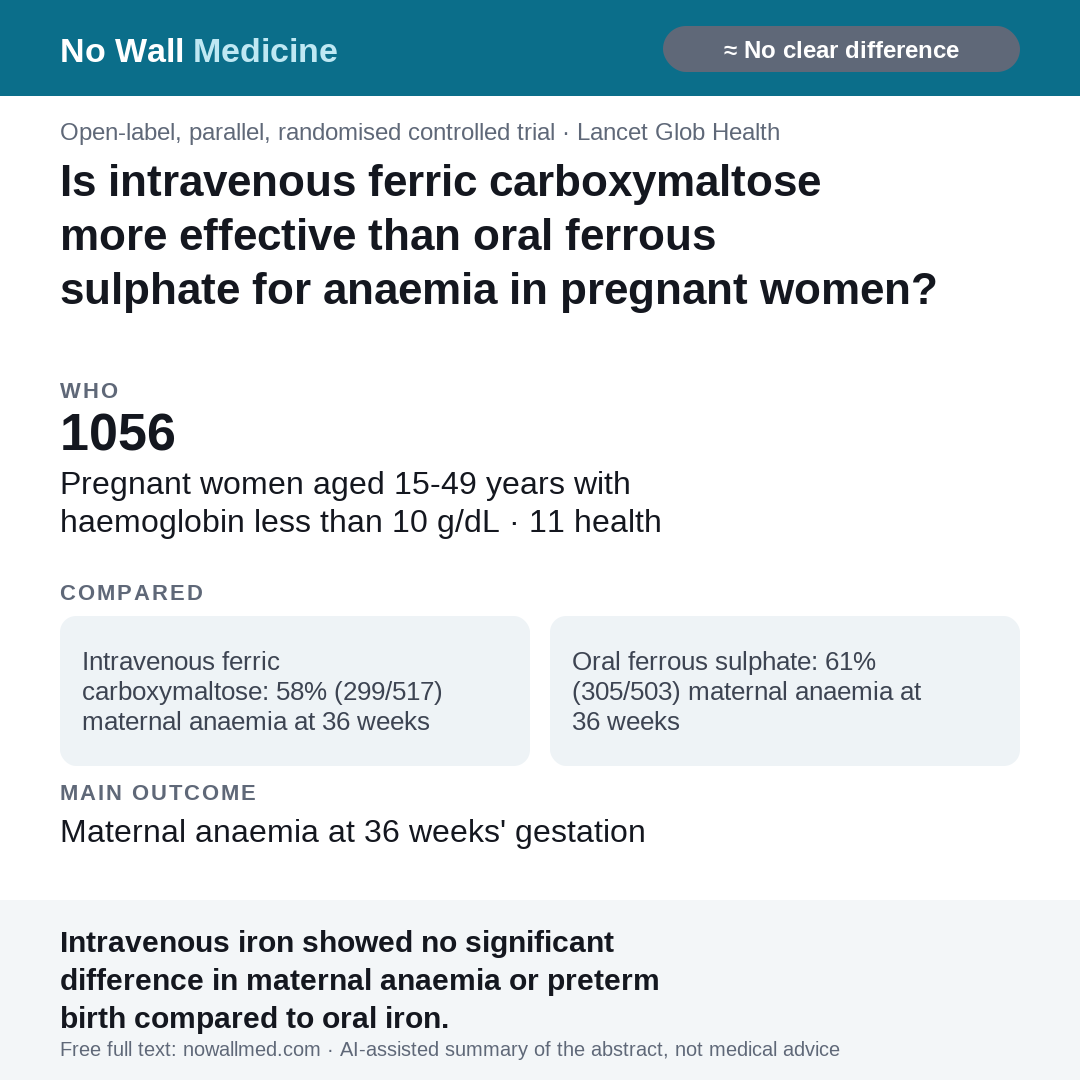
Intravenous versus oral iron for anaemia among pregnant women in Nigeria (IVON): an open-label, randomised controlled trial
Open-label, parallel, randomised controlled trialNo clear difference
Is intravenous ferric carboxymaltose more effective than oral ferrous sulphate for anaemia in pregnant women?
Who
1056
Pregnant women aged 15-49 years with haemoglobin less than 10 g/dL · 11 health facilities in Nigeria
Compared
Intravenous ferric carboxymaltose: 58% (299/517) maternal anaemia at 36 weeks
Oral ferrous sulphate: 61% (305/503) maternal anaemia at 36 weeks
Main outcome
Maternal anaemia at 36 weeks' gestation
Result: risk ratio 0·95, 95% CI 0·85-1·06
Bottom line: Intravenous iron showed no significant difference in maternal anaemia or preterm birth compared to oral iron.
Funded by: Bill & Melinda Gates Foundation
Lancet Glob Health · 2024-09-21Download image
Acquired gene alterations in patients treated with ribociclib plus endocrine therapy or endocrine therapy alone using baseline and end-of-treatment circulating tumor DNA samples in the MONALEESA-2, -3, and -7 trials
Analysis of paired circulating tumor DNA samplesMixed results
What are the acquired gene alterations in patients treated with ribociclib plus endocrine therapy versus placebo?
Who
523
Hormone receptor-positive/human epidermal growth factor receptor-2 negative advanced breast cancer patients · MONALEESA-2, -3, and -7 trials
Compared
ribociclib plus endocrine therapy: increased prevalence of RB1, SPEN, TPR, PCDH15, and FGFR2 alterations
placebo plus endocrine therapy: increased prevalence of PBRM1 alterations
both arms: increased prevalence of ESR1 alterations
Main outcome
Acquired gene alterations in circulating tumor DNA
Bottom line: Ribociclib plus endocrine therapy was associated with specific acquired RB1 and SPEN alterations compared to placebo.
Ann Oncol · 2024-09-21Download image
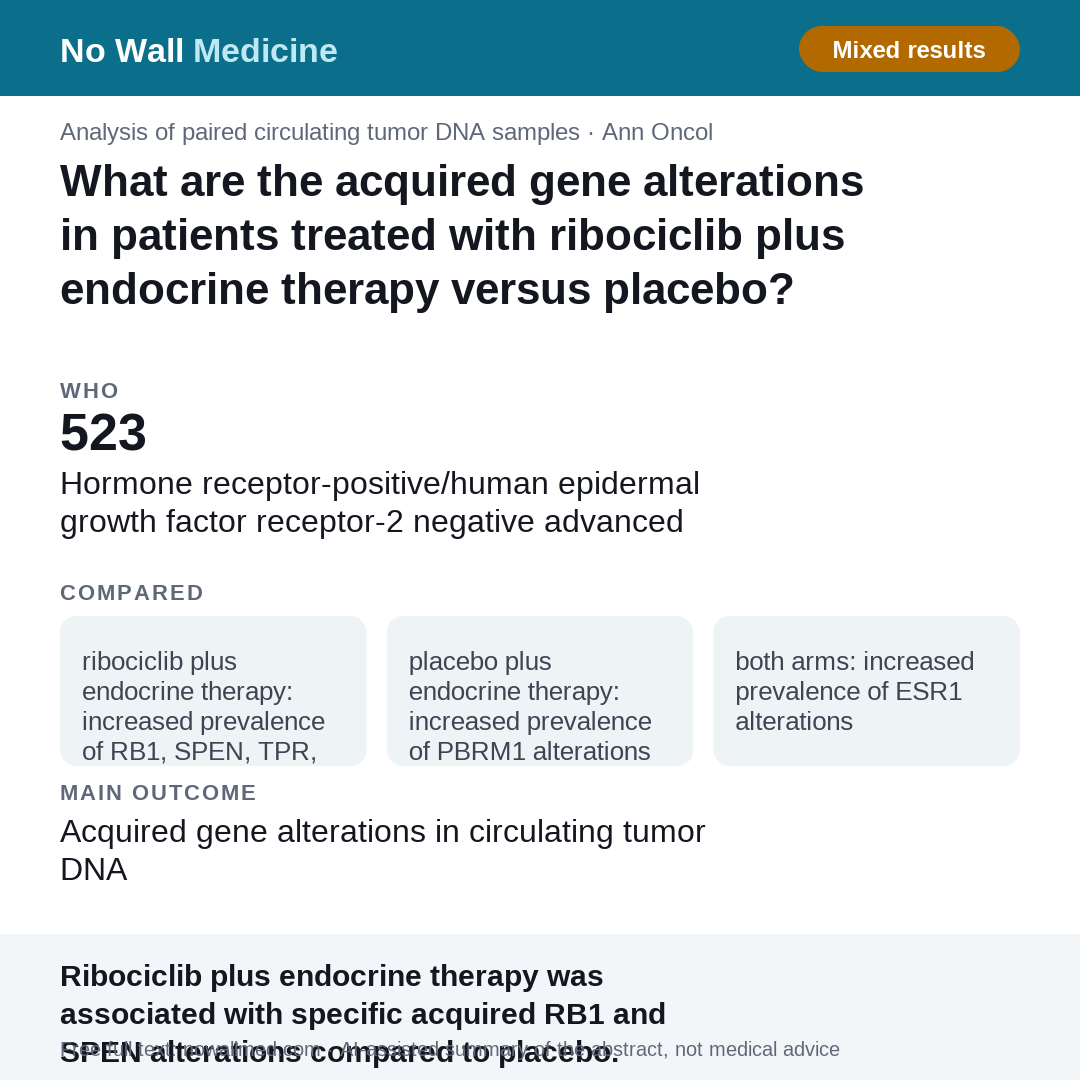
A whole-food, plant-based intensive lifestyle intervention improves glycaemic control and reduces medications in individuals with type 2 diabetes: a randomised controlled trial
Randomised controlled trialBenefit found
Does a whole-food, plant-based intervention improve glycaemic control and reduce medications in type 2 diabetes?
Who
169
Adults aged 18-75 years with type 2 diabetes · Marshall Islands
Compared
Whole-food, plant-based intervention with moderate exercise: -16 mmol/mol [-1.4%] at week 24
Standard medical care: -8 mmol/mol [-0.7%] at week 24
Main outcome
Glycaemic control and glucose-lowering medication use
Bottom line: A whole-food, plant-based lifestyle intervention improved glycaemic control and reduced diabetes and cardiovascular medication use.
Funded by: Department of the Army
Diabetologia · 2024-09-21Download image
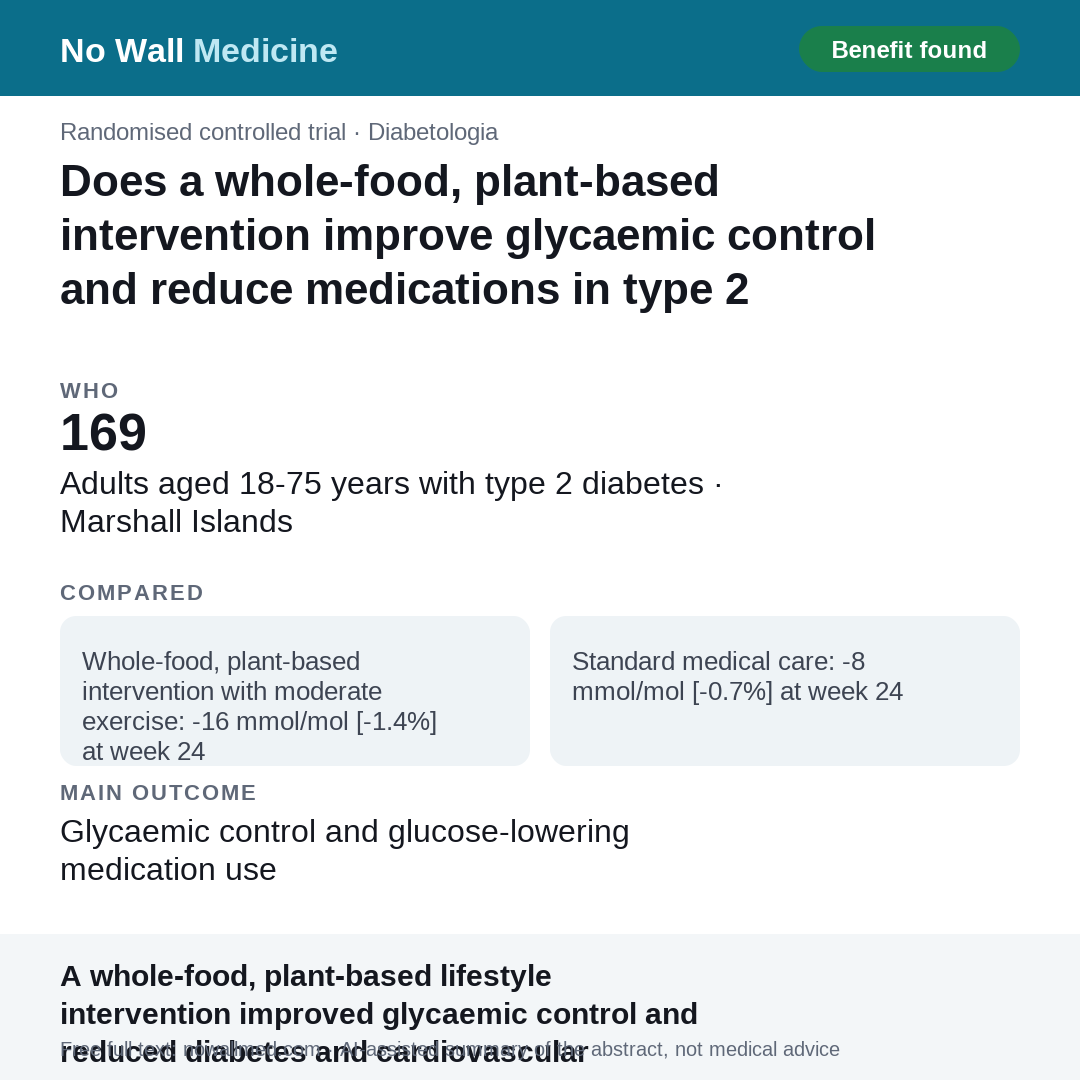
Canagliflozin and iron metabolism in the CREDENCE trial
Post hoc analysis of a randomized trialBenefit found
How does canagliflozin affect iron metabolism and cardiorenal outcomes in chronic kidney disease?
Who
4401
Patients with type 2 diabetes and chronic kidney disease
Compared
Canagliflozin: increased TIBC by 2.1% and decreased ferritin by 11.5%
Placebo
Main outcome
Iron markers, hemoglobin, and cardiorenal outcomes
Result: hazard ratio 0.70 (95% CI 0.56, 0.87)
Bottom line: Canagliflozin increases iron utilization and improves hemoglobin and clinical outcomes regardless of baseline iron deficiency status.
Nephrol Dial Transplant · 2024-09-21Download image
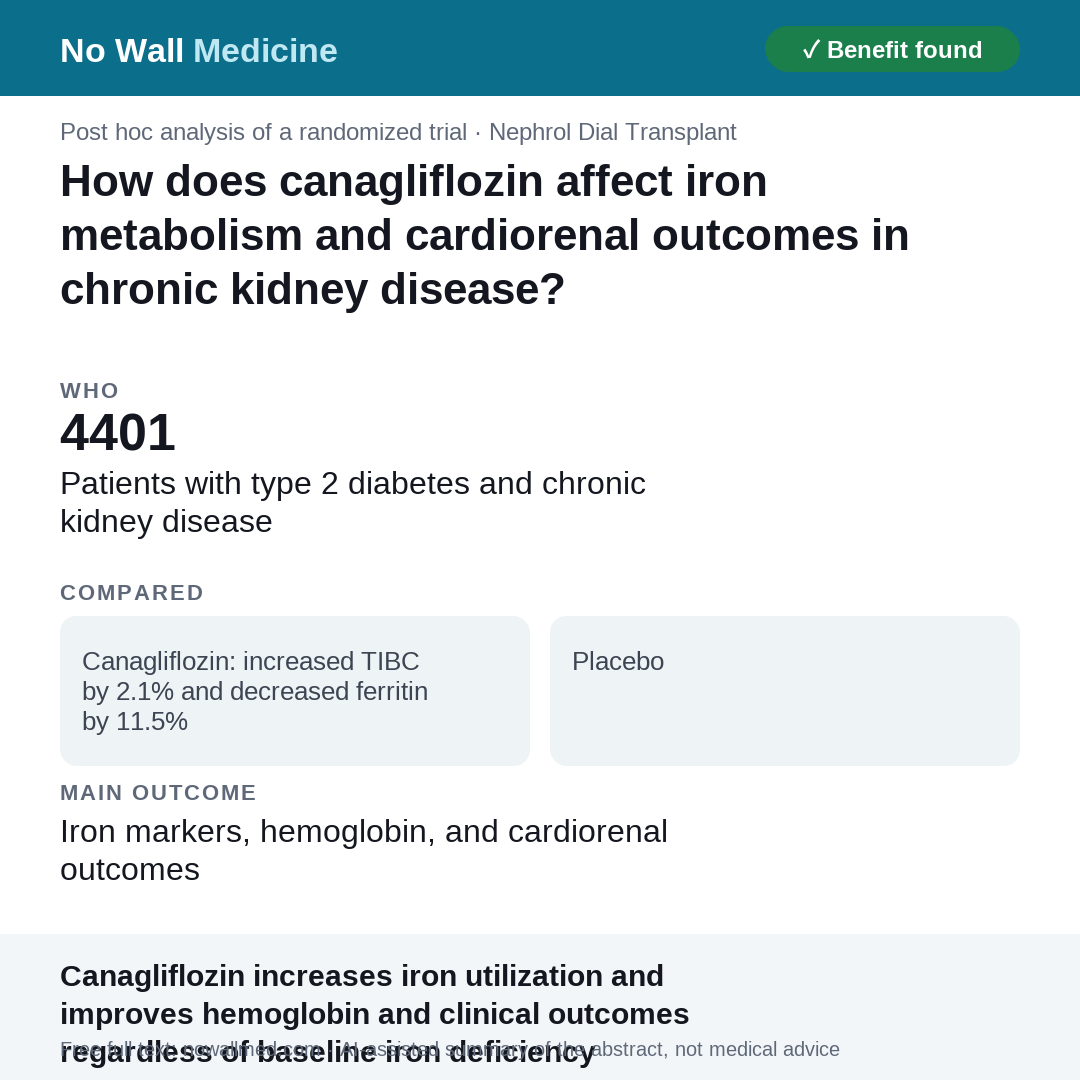
Alcohol consumption and frailty risk: a dose-response meta-analysis of cohort studies
Dose-response meta-analysis of cohort studiesNo clear difference
Does alcohol consumption affect the risk of prefrailty and frailty in adults?
Who
64769
Adults
Compared
Each 12g increase in alcohol intake (prefrailty): RR: 1.08, 95% CI 0.89, 1.31
Each 12g increase in alcohol intake (frailty): RR: 0.94, 95% CI 0.88, 1.00
Main outcome
Risk of developing prefrailty and frailty
Bottom line: Each 12g increase in alcohol intake was not significantly associated with prefrailty or frailty risks.
Limitation: Eight studies were rated to have a serious risk of bias and evidence quality was low.
Age Ageing · 2024-09-21Download image
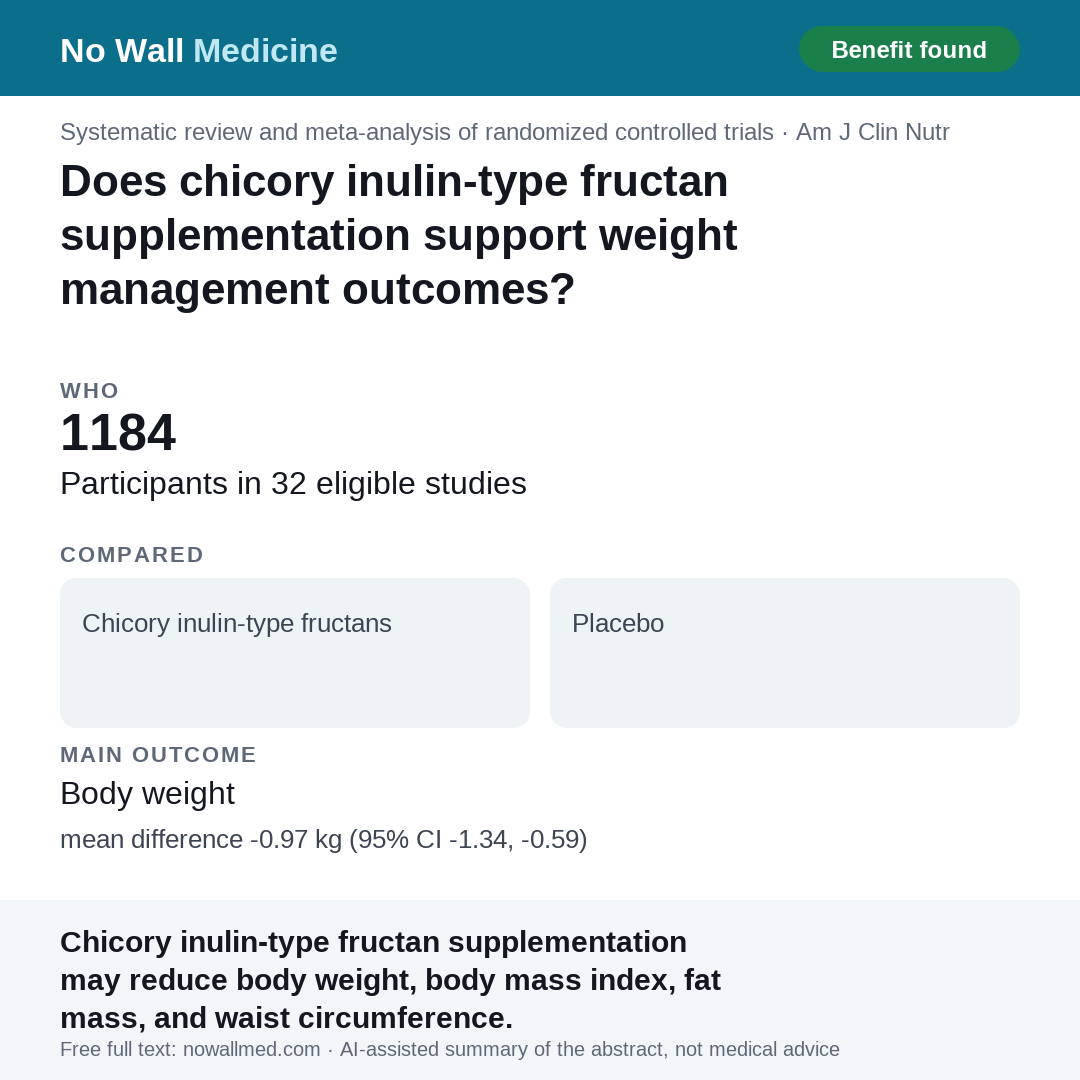
The effects of chicory inulin-type fructans supplementation on weight management outcomes: systematic review, meta-analysis, and meta-regression of randomized controlled trials
Systematic review and meta-analysis of randomized controlled trialsBenefit found
Does chicory inulin-type fructan supplementation support weight management outcomes?
Who
1184
Participants in 32 eligible studies
Compared
Chicory inulin-type fructans
Placebo
Main outcome
Body weight
Result: mean difference -0.97 kg (95% CI -1.34, -0.59)
Bottom line: Chicory inulin-type fructan supplementation may reduce body weight, body mass index, fat mass, and waist circumference.
Am J Clin Nutr · 2024-09-21Download image
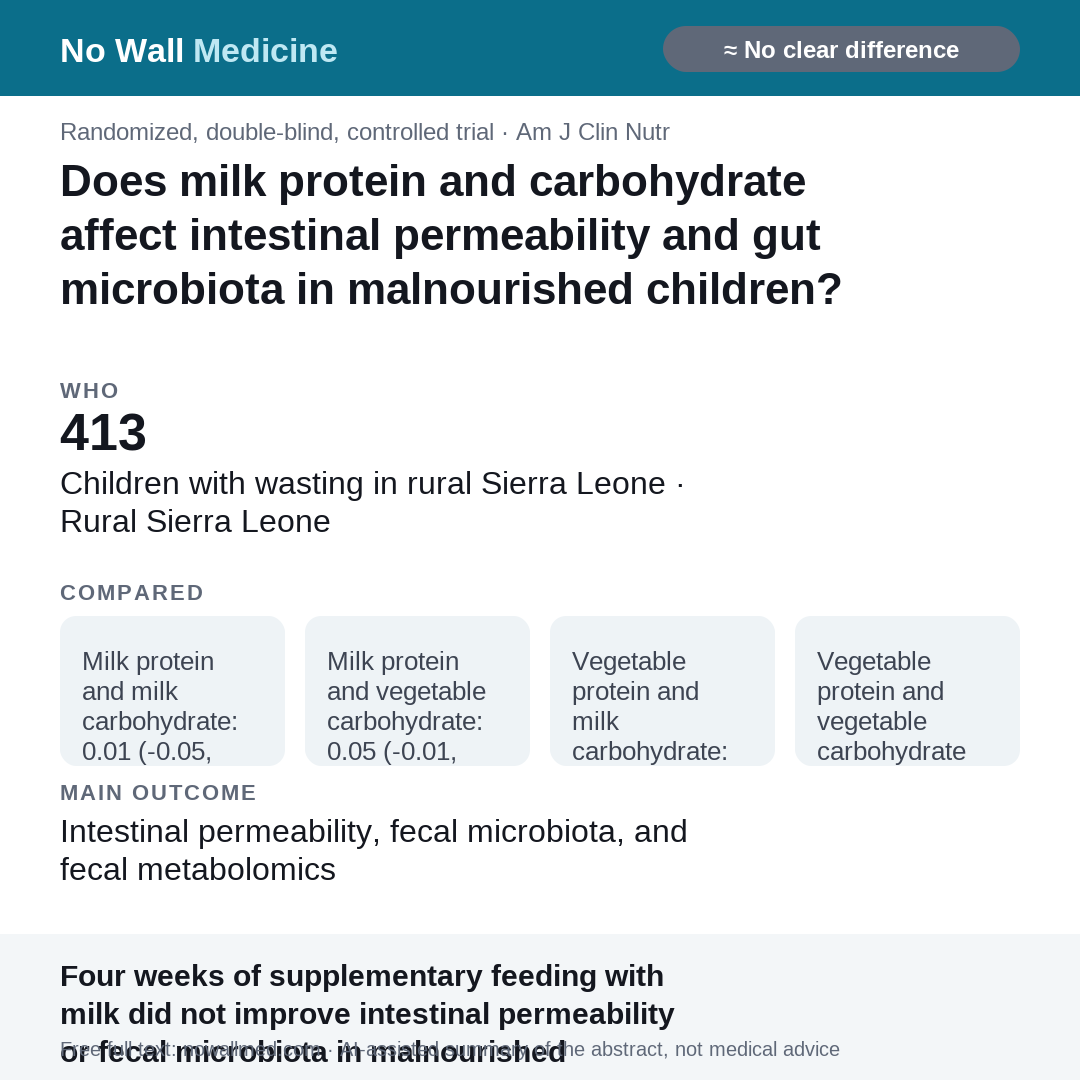
The Impact of Milk on Gut Permeability, Fecal 16S rRNA Gene Microbiota Profiling, and Fecal Metabolomics in Children with Moderate Malnutrition in Sierra Leone: A Double-Blind, Randomized Controlled Trial
Randomized, double-blind, controlled trialNo clear difference
Does milk protein and carbohydrate affect intestinal permeability and gut microbiota in malnourished children?
Who
413
Children with wasting in rural Sierra Leone · Rural Sierra Leone
Compared
Milk protein and milk carbohydrate: 0.01 (-0.05, 0.07) %L excretion
Milk protein and vegetable carbohydrate: 0.05 (-0.01, 0.11) %L excretion
Vegetable protein and milk carbohydrate: 0.01 (-0.05, 0.07) %L excretion
Vegetable protein and vegetable carbohydrate
Main outcome
Intestinal permeability, fecal microbiota, and fecal metabolomics
Bottom line: Four weeks of supplementary feeding with milk did not improve intestinal permeability or fecal microbiota in malnourished children.
Am J Clin Nutr · 2024-09-21Download image
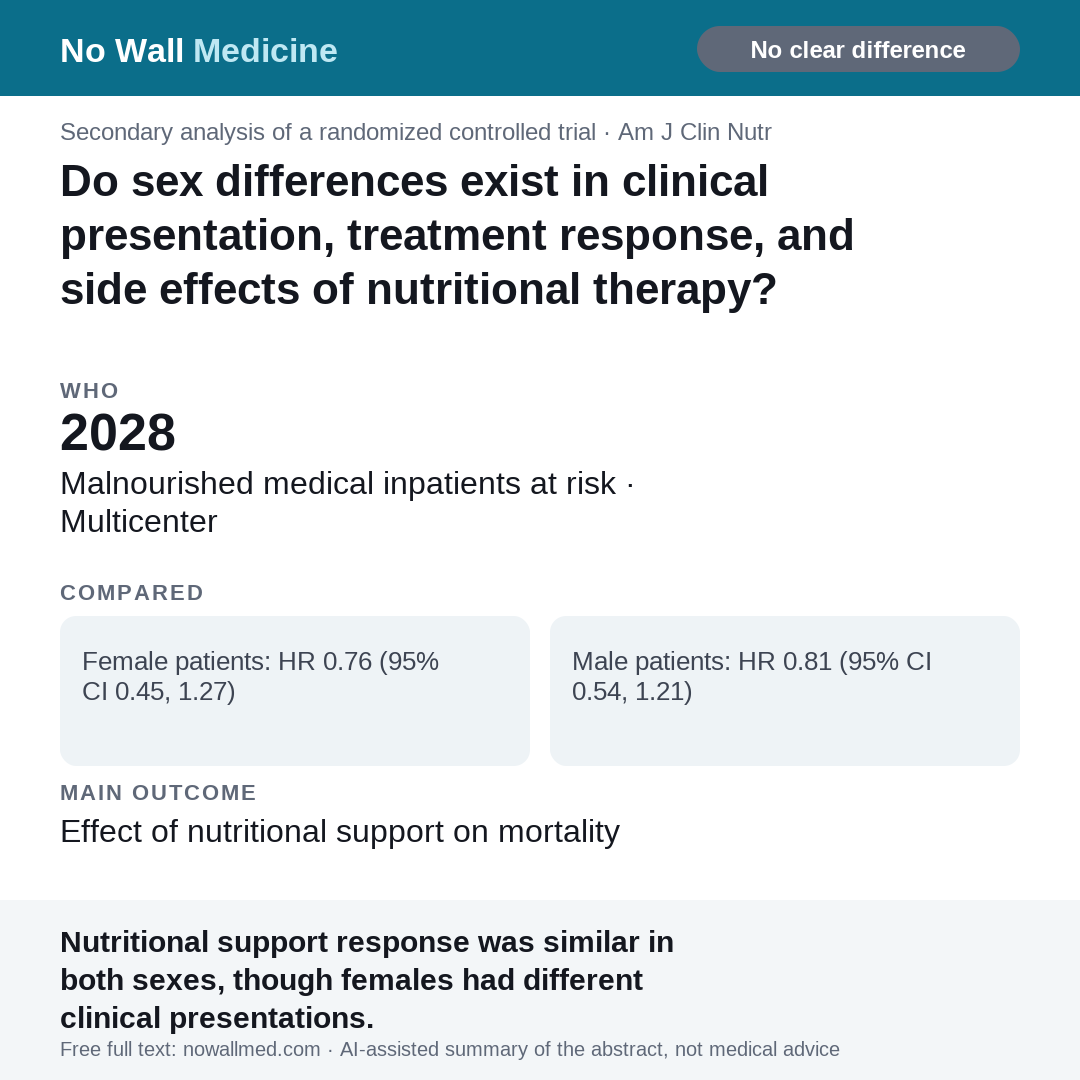
Sex differences in clinical presentation, treatment response, and side effects of nutritional therapy among patients at nutritional risk: a secondary analysis of the randomized clinical trial EFFORT
Secondary analysis of a randomized controlled trialNo clear difference
Do sex differences exist in clinical presentation, treatment response, and side effects of nutritional therapy?
Who
2028
Malnourished medical inpatients at risk · Multicenter
Compared
Female patients: HR 0.76 (95% CI 0.45, 1.27)
Male patients: HR 0.81 (95% CI 0.54, 1.21)
Main outcome
Effect of nutritional support on mortality
Result: HR 0.76 (95% CI 0.45, 1.27) vs HR 0.81 (95% CI 0.54, 1.21)
Bottom line: Nutritional support response was similar in both sexes, though females had different clinical presentations.
Am J Clin Nutr · 2024-09-21Download image
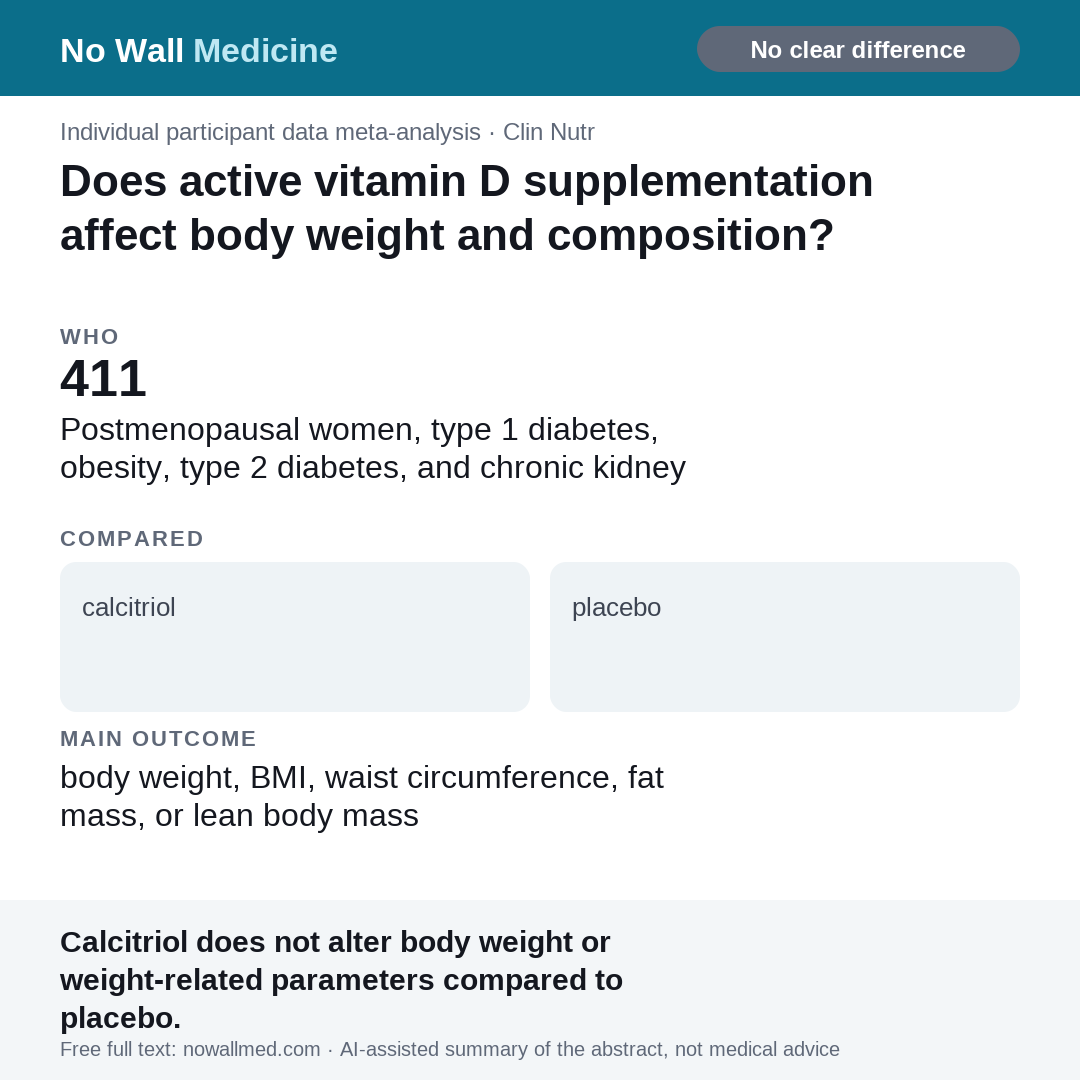
The effect of active vitamin D supplementation on body weight and composition: A meta-analysis of individual participant data
Individual participant data meta-analysisNo clear difference
Does active vitamin D supplementation affect body weight and composition?
Who
411
Postmenopausal women, type 1 diabetes, obesity, type 2 diabetes, and chronic kidney disease
Compared
calcitriol
placebo
Main outcome
body weight, BMI, waist circumference, fat mass, or lean body mass
Bottom line: Calcitriol does not alter body weight or weight-related parameters compared to placebo.
Limitation: Whether calcitriol lowers body weight in vitamin D-sufficient people with obesity remains to be elucidated.
Clin Nutr · 2024-09-21Download image
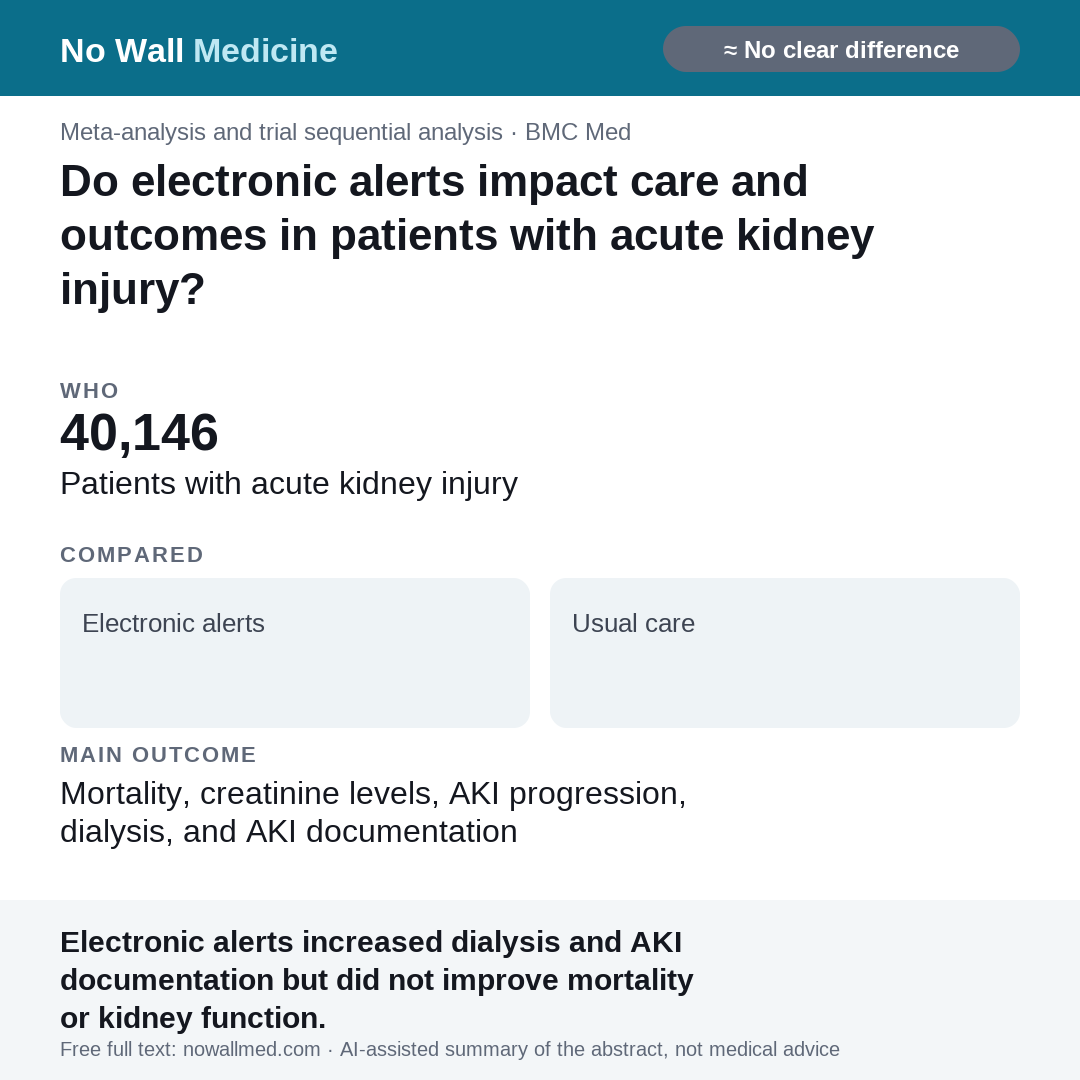
Effect of electronic alerts on the care and outcomes in patients with acute kidney injury: a meta-analysis and trial sequential analysis
Meta-analysis and trial sequential analysisNo clear difference
Do electronic alerts impact care and outcomes in patients with acute kidney injury?
Who
40,146
Patients with acute kidney injury
Compared
Electronic alerts
Usual care
Main outcome
Mortality, creatinine levels, AKI progression, dialysis, and AKI documentation
Result: relative risk 1.02 (95% CI 0.97-1.08)
Bottom line: Electronic alerts increased dialysis and AKI documentation but did not improve mortality or kidney function.
Limitation: Trial sequential analysis could not confirm increased odds of dialysis and AKI documentation.
BMC Med · 2024-09-20Download image