Visual abstracts
New randomized trials and meta-analyses from leading journals at a glance: who was studied, what was compared, and what was found. Every paper is free to read in full.
All specialtiesCardiology 1245Oncology 1086Gastroenterology & Hepatology 438Infectious Disease 816Neurology 513Psychiatry & Mental Health 626Pulmonology 527Critical Care 368Endocrinology & Diabetes 691Pediatrics 740Surgery 560Orthopedics & Sports Medicine 234Neurosurgery 167Cardiothoracic & Vascular Surgery 136Plastic & Reconstructive Surgery 191Nephrology 261Rheumatology 165Hematology 257Dermatology 126Ophthalmology 138Obstetrics & Gynecology 387Public & Global Health 244Radiology & Imaging 163Anesthesiology 225Urology 228ENT (Otolaryngology) 172Emergency Medicine 135Allergy & Immunology 86Geriatrics 253Family Medicine & Primary Care 151Medical Genetics & Genomics 130Pathology & Laboratory Medicine 39Physical Medicine & Rehabilitation 214Palliative Care 109Nutrition 321Digital Health & AI 628General Medicine 115
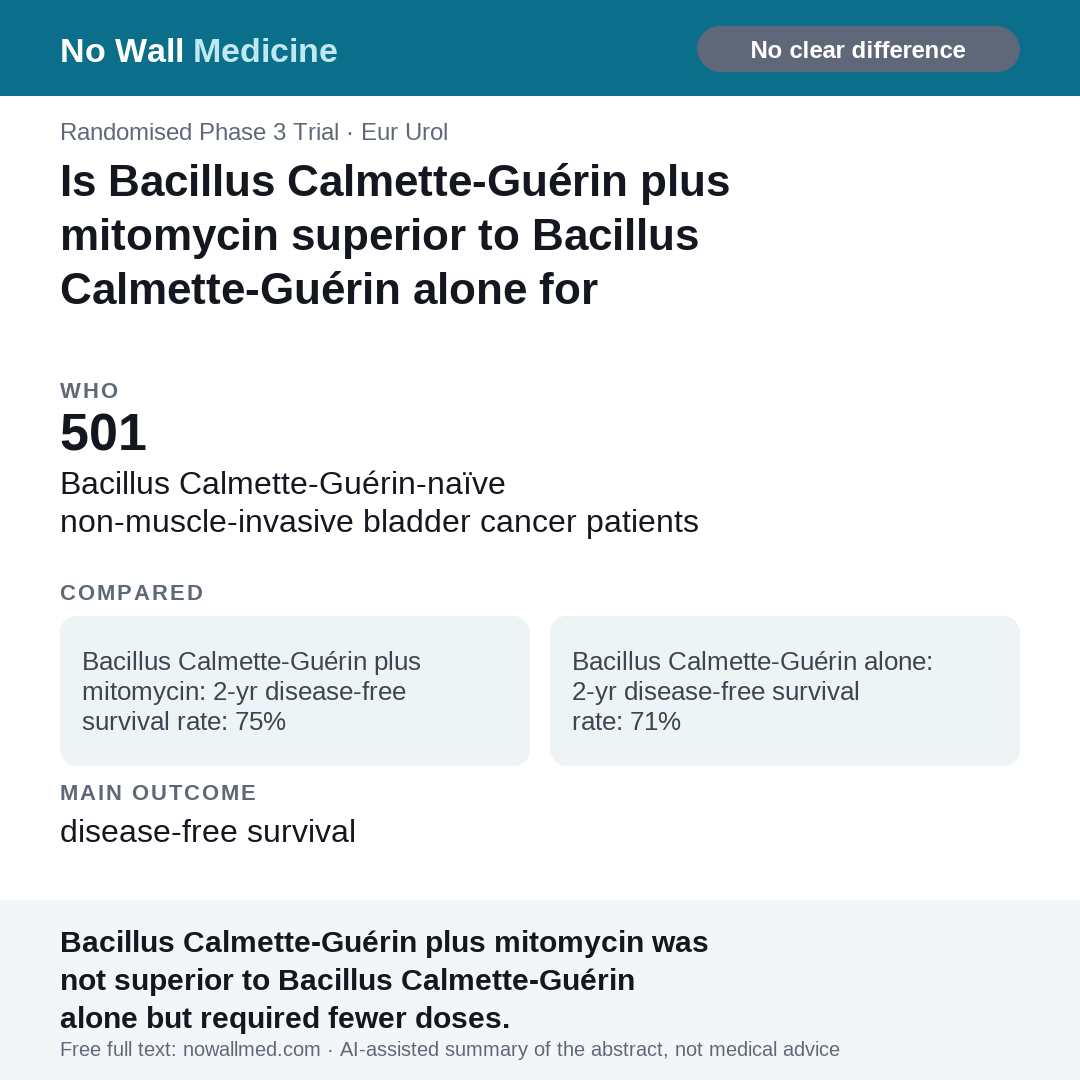
Bacillus Calmette-Guérin Plus Mitomycin Versus Bacillus Calmette-Guérin Alone for Bacillus Calmette-Guérin-naïve Non-muscle-invasive Bladder Cancer: A Randomised Phase 3 Trial (ANZUP 1301)
Randomised Phase 3 TrialNo clear difference
Is Bacillus Calmette-Guérin plus mitomycin superior to Bacillus Calmette-Guérin alone for non-muscle-invasive bladder cancer?
Who
501
Bacillus Calmette-Guérin-naïve non-muscle-invasive bladder cancer patients
Compared
Bacillus Calmette-Guérin plus mitomycin: 2-yr disease-free survival rate: 75%
Bacillus Calmette-Guérin alone: 2-yr disease-free survival rate: 71%
Main outcome
disease-free survival
Result: hazard ratio 0.87 (95% confidence interval 0.65-1.16)
Bottom line: Bacillus Calmette-Guérin plus mitomycin was not superior to Bacillus Calmette-Guérin alone but required fewer doses.
Eur Urol · 2026-02-02Download image
Rationale and design of a parallel randomised trial of a plant-based intensive lifestyle intervention for diabetes remission: The REmission of diabetes using a PlAnt-based weight loss InteRvention (REPAIR) trial
Randomised, 2-arm, open-label, blinded-endpoint efficacy trialUnclear result
Is a 52-week plant-based intensive lifestyle intervention effective for diabetes remission?
Who
160
Adults with early type 2 diabetes and living with obesity · Canada
Compared
Standard of care
Plant-based intensive lifestyle intervention
Main outcome
Diabetes remission
Bottom line: This trial will assess if a plant-based intensive lifestyle intervention achieves diabetes remission.
Diabetes Obes Metab · 2026-02-02Download image

Clinical Warning Signs in Detecting Inborn Errors of Immunity in Children: A Diagnostic Accuracy Systematic Review
Systematic reviewMixed results
What is the diagnostic accuracy of clinical warning signs for detecting inborn errors of immunity?
Who
7000
Children aged 0 to 18 years with suspected inborn errors of immunity · 8 countries
Compared
Individual warning signs: high specificity but low sensitivity
Jeffrey Modell Foundation criteria: up to one-third of children with IEI did not meet any criteria
Main outcome
Diagnostic accuracy of clinical warning signs and established criteria
Bottom line: Clinical warning signs have good rule-in but poor rule-out value for pediatric inborn errors of immunity.
Limitation: Diagnostic performance was highly heterogeneous and pooled estimates are exploratory.
J Allergy Clin Immunol Pract · 2026-02-02Download image

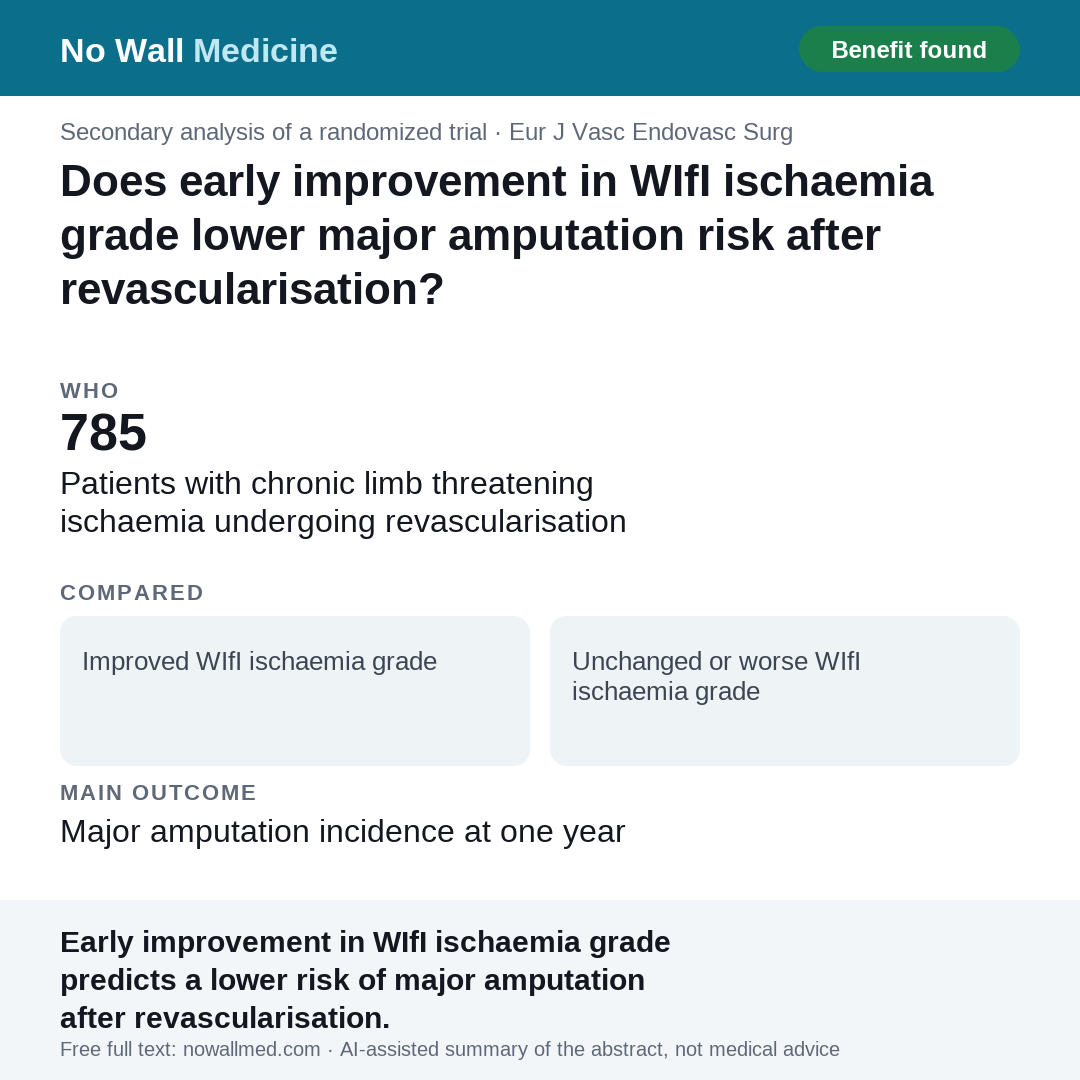
Editor's Choice - Early Improvement in Wound, Ischaemia, and foot Infection (WIfI) Ischaemia Grade Lowers Risk of Major Amputation following Revascularisation for Chronic Limb Threatening Ischaemia
Secondary analysis of a randomized trialBenefit found
Does early improvement in WIfI ischaemia grade lower major amputation risk after revascularisation?
Who
785
Patients with chronic limb threatening ischaemia undergoing revascularisation
Compared
Improved WIfI ischaemia grade
Unchanged or worse WIfI ischaemia grade
Main outcome
Major amputation incidence at one year
Result: hazard ratio 0.27 (95% confidence interval 0.18-0.41)
Bottom line: Early improvement in WIfI ischaemia grade predicts a lower risk of major amputation after revascularisation.
Eur J Vasc Endovasc Surg · 2026-02-02Download image
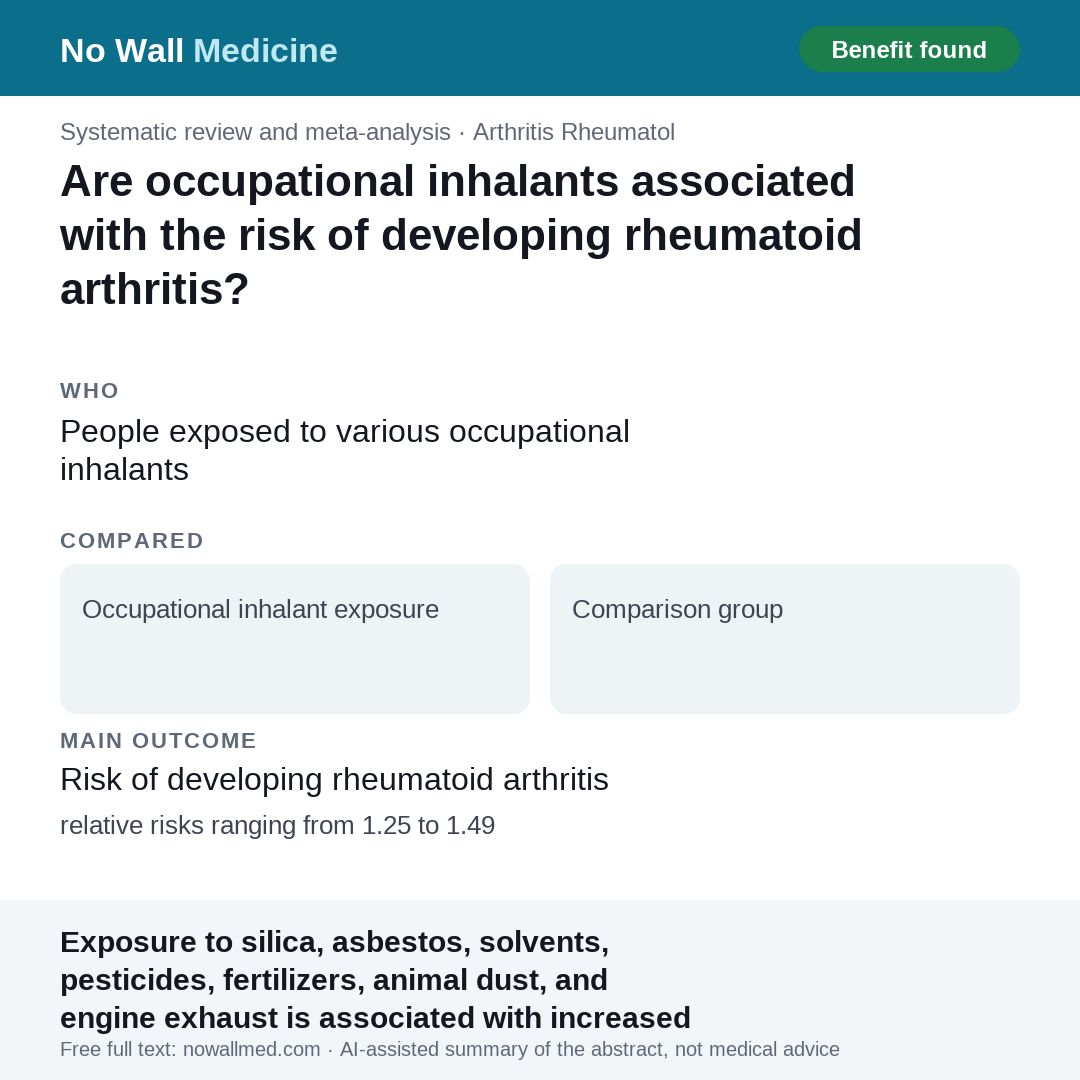
Exposure to Occupational Inhalants and the Risk of Developing Rheumatoid Arthritis: A Systematic Review and Meta-Analysis
Systematic review and meta-analysisBenefit found
Are occupational inhalants associated with the risk of developing rheumatoid arthritis?
Who
People exposed to various occupational inhalants
Compared
Occupational inhalant exposure
Comparison group
Main outcome
Risk of developing rheumatoid arthritis
Result: relative risks ranging from 1.25 to 1.49
Bottom line: Exposure to silica, asbestos, solvents, pesticides, fertilizers, animal dust, and engine exhaust is associated with increased rheumatoid arthritis risk.
Limitation: Moderate-to-high heterogeneity was observed in seven meta-analyses.
Arthritis Rheumatol · 2026-02-02Download image
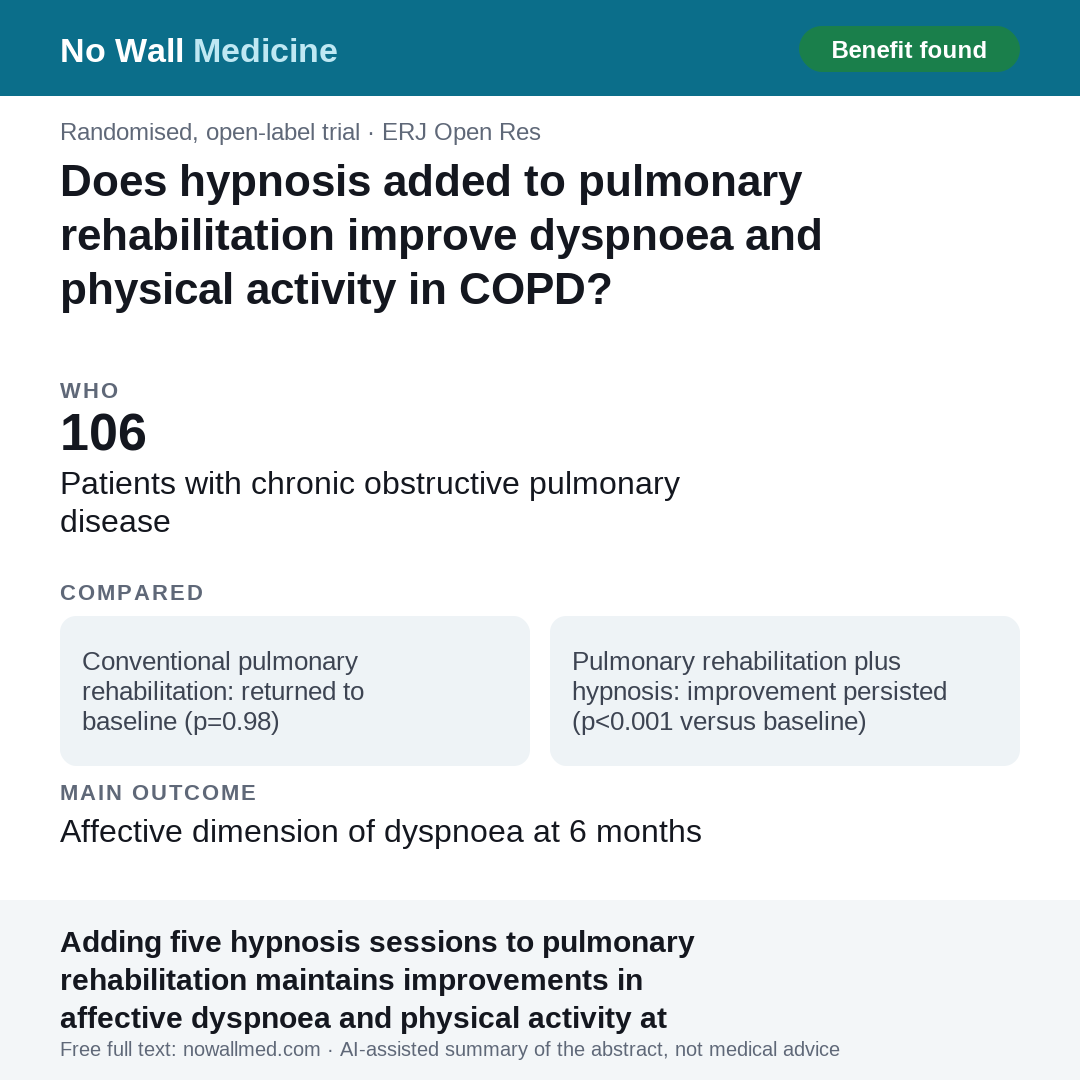
Effect of dyspnoea-oriented hypnosis as an adjunct to pulmonary rehabilitation on the affective dimension of dyspnoea and physical activity level: a randomised controlled trial
Randomised, open-label trialBenefit found
Does hypnosis added to pulmonary rehabilitation improve dyspnoea and physical activity in COPD?
Who
106
Patients with chronic obstructive pulmonary disease
Compared
Conventional pulmonary rehabilitation: returned to baseline (p=0.98)
Pulmonary rehabilitation plus hypnosis: improvement persisted (p<0.001 versus baseline)
Main outcome
Affective dimension of dyspnoea at 6 months
Bottom line: Adding five hypnosis sessions to pulmonary rehabilitation maintains improvements in affective dyspnoea and physical activity at 6 months.
ERJ Open Res · 2026-02-02Download image
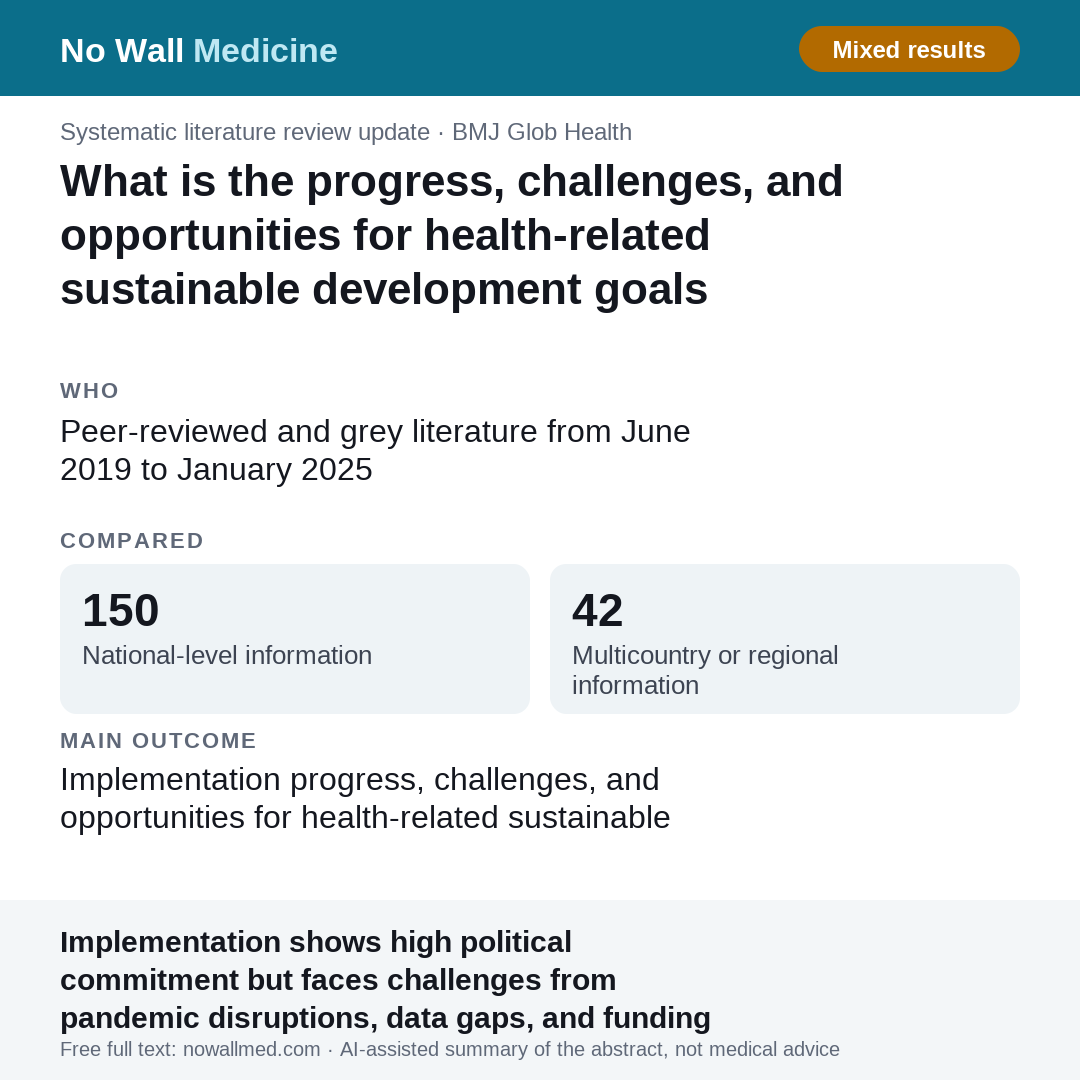
Implementation of health and health-related sustainable development goals: progress, challenges and opportunities-a systematic literature review update
Systematic literature review updateMixed results
What is the progress, challenges, and opportunities for health-related sustainable development goals implementation?
Who
192
Peer-reviewed and grey literature from June 2019 to January 2025
Compared
150National-level information
42Multicountry or regional information
Main outcome
Implementation progress, challenges, and opportunities for health-related sustainable development goals
Bottom line: Implementation shows high political commitment but faces challenges from pandemic disruptions, data gaps, and funding needs.
BMJ Glob Health · 2026-02-02Download image
Diagnostic accuracy of transcranial Doppler for cerebral vasospasm in aneurysmal subarachnoid hemorrhage: a systematic review and meta-analysis
Meta-analysis of 32 studiesBenefit found
Is transcranial Doppler accurate for cerebral vasospasm
Who
3594
patients with aneurysmal subarachnoid hemorrhage
Compared
76%TCD (sensitivity)
77%control (specificity)
Main outcome
cerebral vasospasm detection
Bottom line: TCD is promising for detecting cerebral vasospasm
Crit Care · 2026-02-02Download image

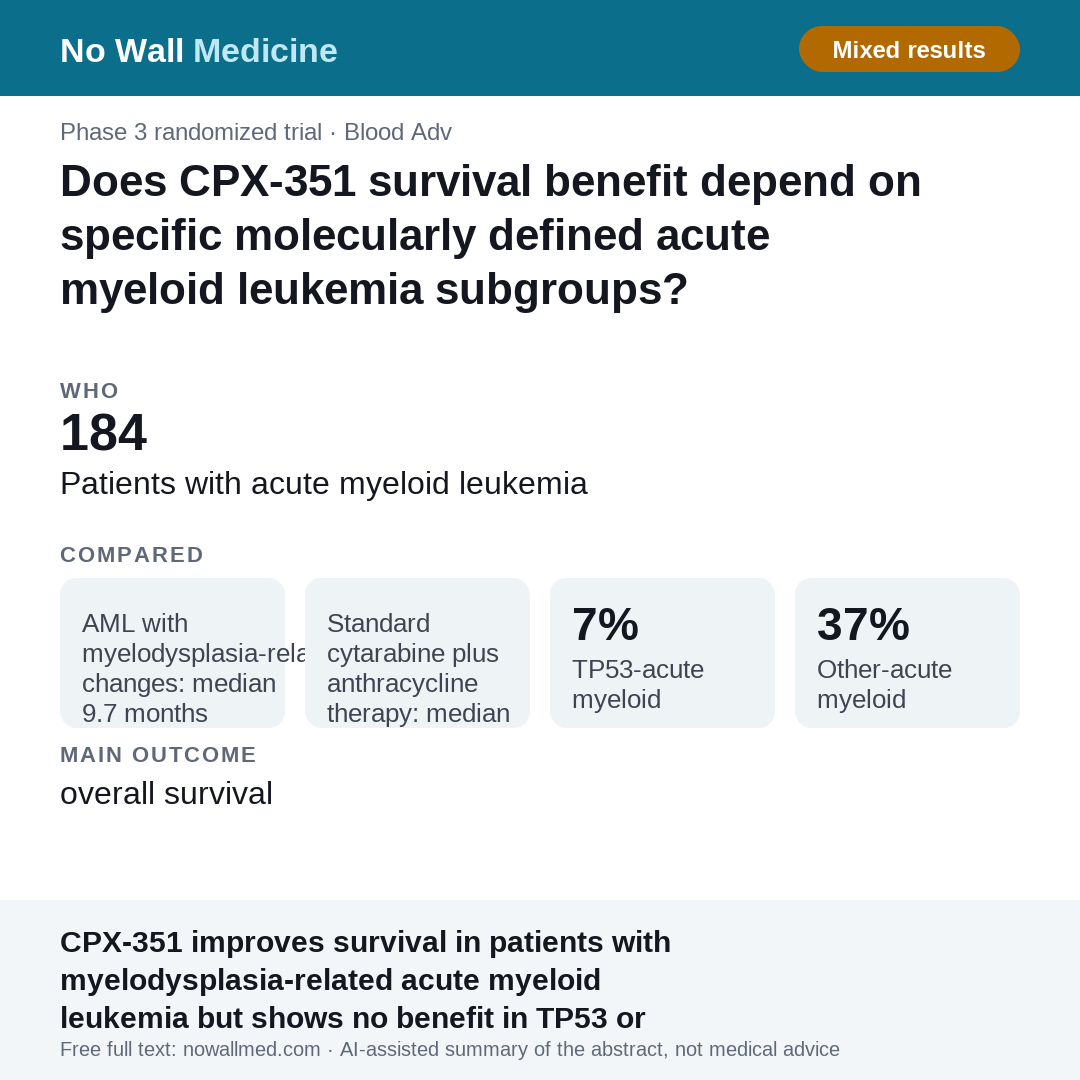
CPX-351 selectively benefits patients with AML and myelodysplasia-related mutations in the pivotal randomized trial
Phase 3 randomized trialMixed results
Does CPX-351 survival benefit depend on specific molecularly defined acute myeloid leukemia subgroups?
Who
184
Patients with acute myeloid leukemia
Compared
AML with myelodysplasia-related changes: median 9.7 months
Standard cytarabine plus anthracycline therapy: median 6.8 months
7%TP53-acute myeloid leukemia
37%Other-acute myeloid leukemia
Main outcome
overall survival
Bottom line: CPX-351 improves survival in patients with myelodysplasia-related acute myeloid leukemia but shows no benefit in TP53 or other subgroups.
Blood Adv · 2026-02-02Download image
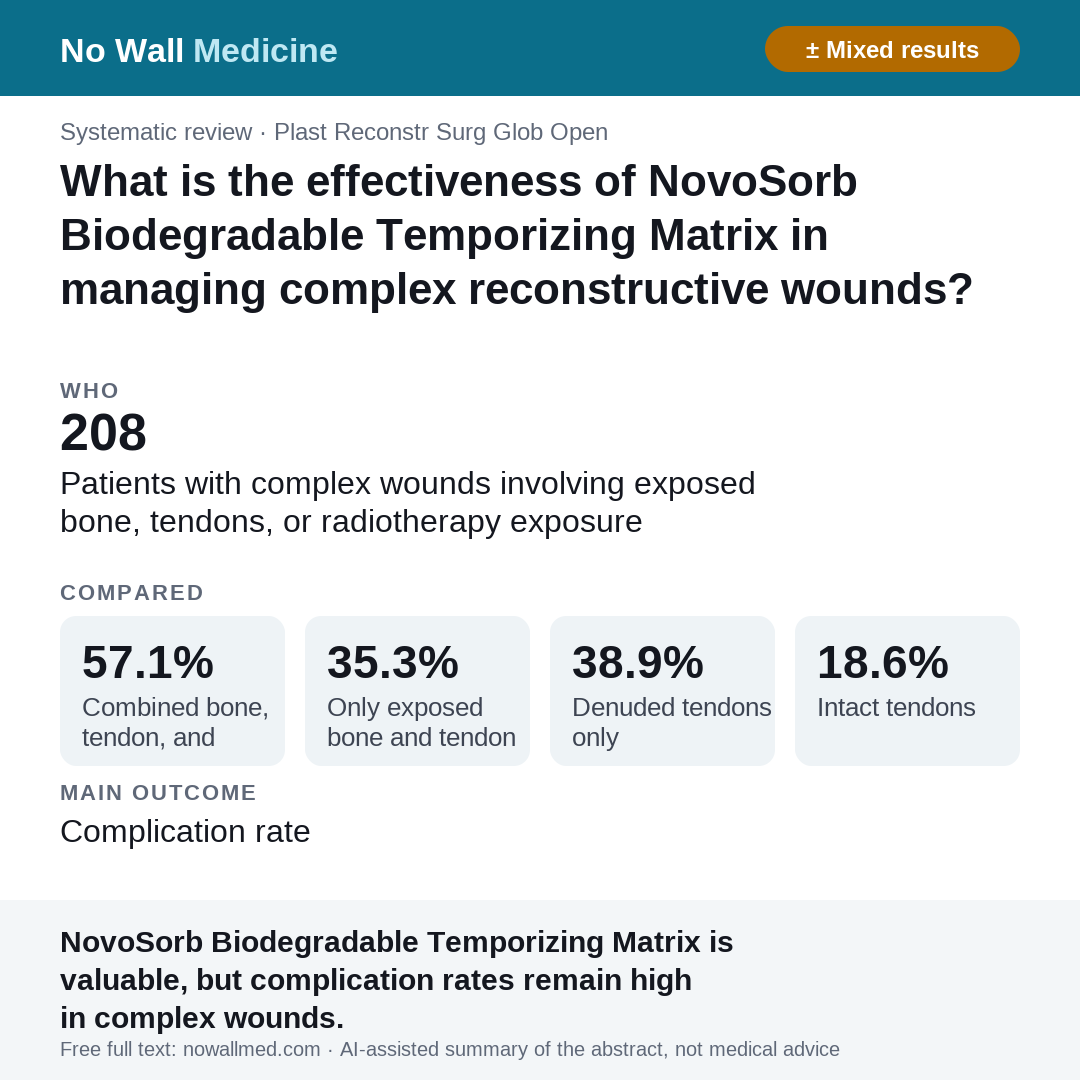
The Role and Efficacy of NovoSorb Biodegradable Temporizing Matrix in Complex Reconstructive Wounds: A Systematic Review
Systematic reviewMixed results
What is the effectiveness of NovoSorb Biodegradable Temporizing Matrix in managing complex reconstructive wounds?
Who
208
Patients with complex wounds involving exposed bone, tendons, or radiotherapy exposure
Compared
57.1%Combined bone, tendon, and periosteal/paratenon exposure
35.3%Only exposed bone and tendon
38.9%Denuded tendons only
18.6%Intact tendons
Main outcome
Complication rate
Bottom line: NovoSorb Biodegradable Temporizing Matrix is valuable, but complication rates remain high in complex wounds.
Plast Reconstr Surg Glob Open · 2026-02-02Download image
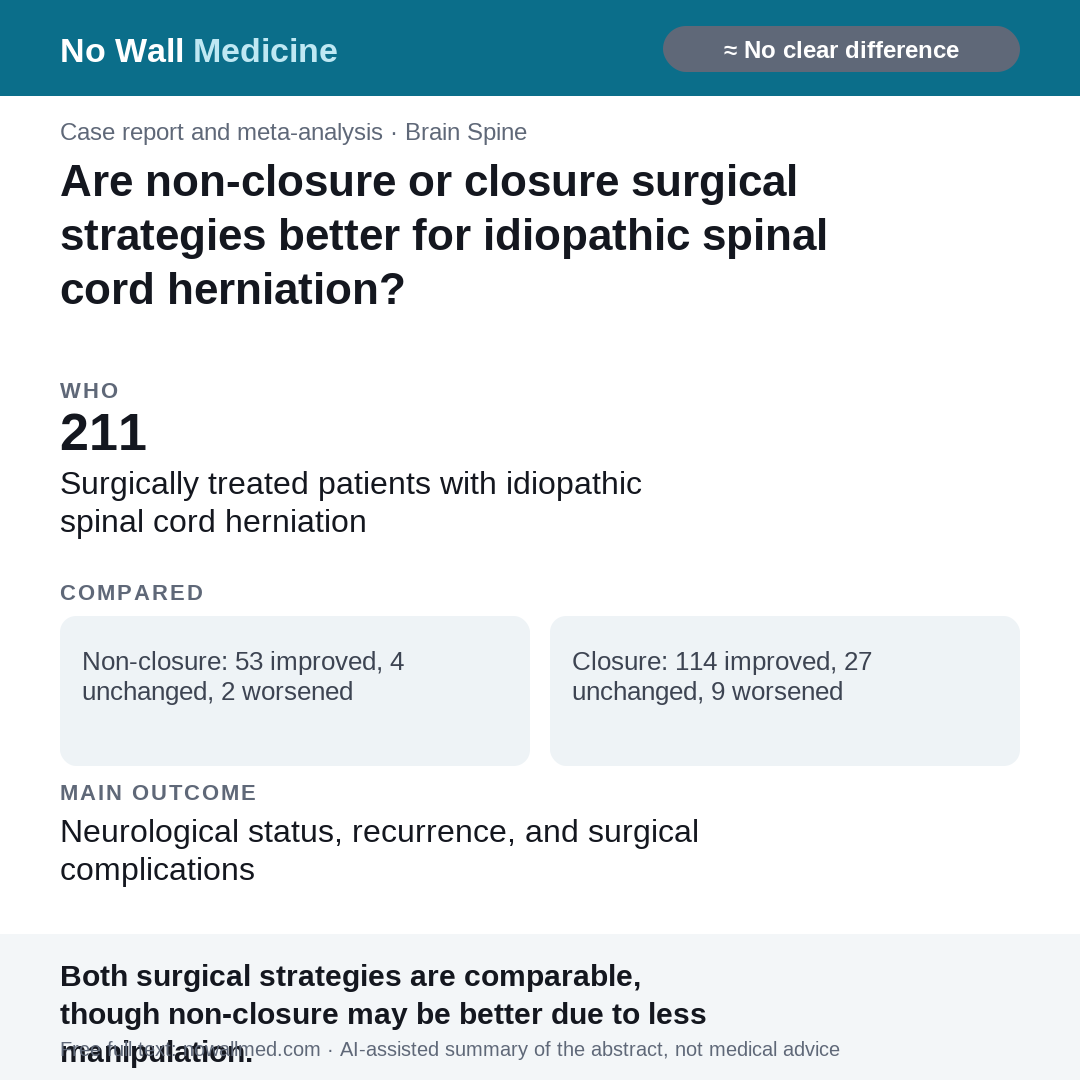
Surgical Treatment of Idiopathic spinal cord herniation: A Case Report under Neuromonitoring and Meta-analysis of 211 reviewed Cases
Case report and meta-analysisNo clear difference
Are non-closure or closure surgical strategies better for idiopathic spinal cord herniation?
Who
211
Surgically treated patients with idiopathic spinal cord herniation
Compared
Non-closure: 53 improved, 4 unchanged, 2 worsened
Closure: 114 improved, 27 unchanged, 9 worsened
Main outcome
Neurological status, recurrence, and surgical complications
Result: adjusted POR 2.53 (95% CI 0.69-9.31)
Bottom line: Both surgical strategies are comparable, though non-closure may be better due to less manipulation.
Brain Spine · 2026-02-02Download image
The effect of postoperative rehabilitation on outcomes in patients with degenerative cervical myelopathy (DCM): A systematic review
Systematic reviewBenefit found
What are the effects of postoperative rehabilitation on clinical outcomes following degenerative cervical myelopathy surgery?
Who
766
Patients undergoing degenerative cervical myelopathy surgery
Compared
Mixed rehabilitation interventions: consistent improvements in neurological function, quality of life, and self-efficacy
Other rehabilitation interventions
Main outcome
clinical outcomes including function, pain, and neurological recovery
Bottom line: Mixed rehabilitation interventions show promise for improving neurological function and quality of life after surgery.
Limitation: High risk of bias, poor methodological detail, and lack of standardization.
Brain Spine · 2026-02-02Download image

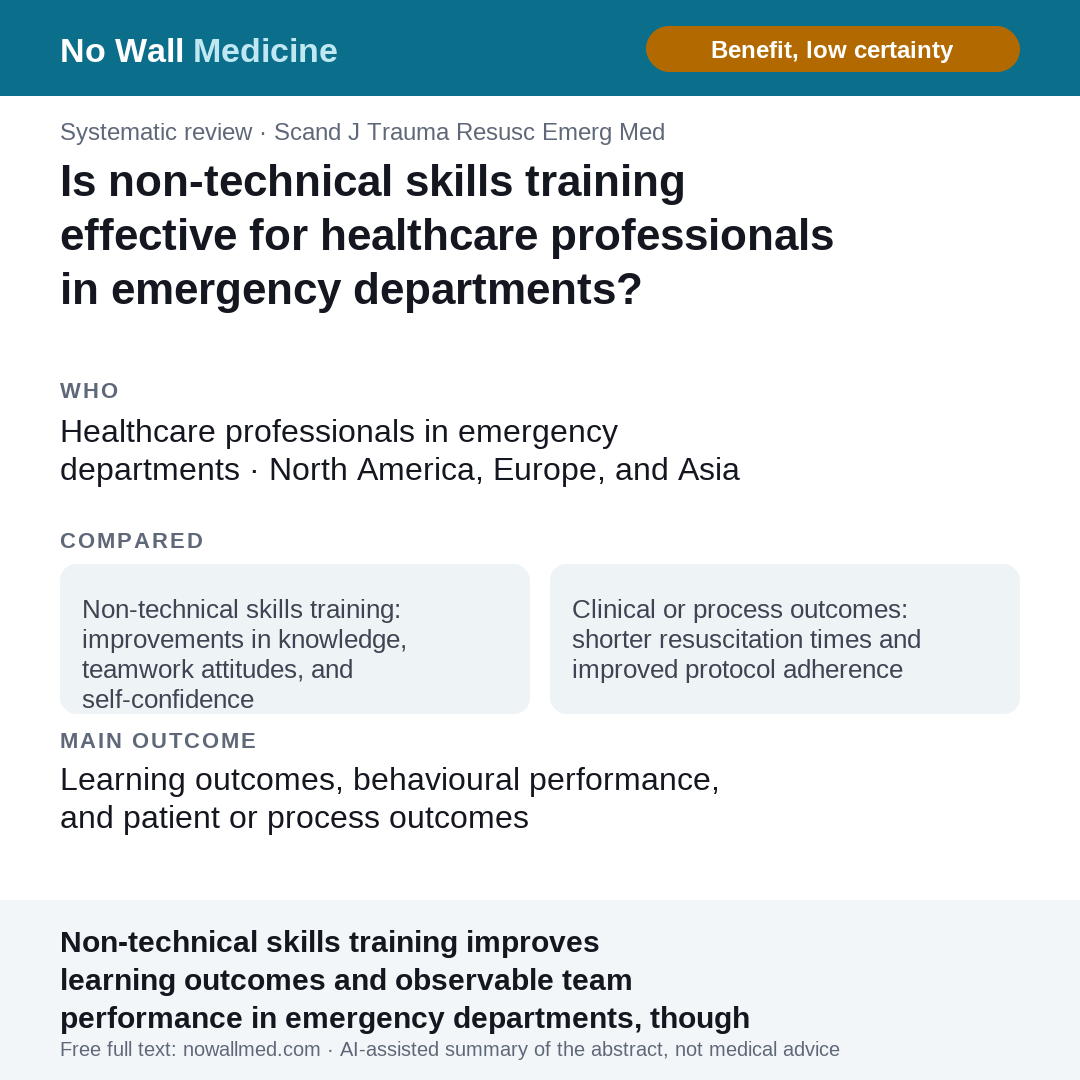
Effectiveness of non-technical skills training for healthcare professionals in emergency departments: a systematic review
Systematic reviewBenefit found
Is non-technical skills training effective for healthcare professionals in emergency departments?
Who
Healthcare professionals in emergency departments · North America, Europe, and Asia
Compared
Non-technical skills training: improvements in knowledge, teamwork attitudes, and self-confidence
Clinical or process outcomes: shorter resuscitation times and improved protocol adherence
Main outcome
Learning outcomes, behavioural performance, and patient or process outcomes
Bottom line: Non-technical skills training improves learning outcomes and observable team performance in emergency departments, though patient outcome evidence is limited.
Limitation: Methodological heterogeneity and limited evidence for clinical or process outcomes.
Scand J Trauma Resusc Emerg Med · 2026-02-02Download image
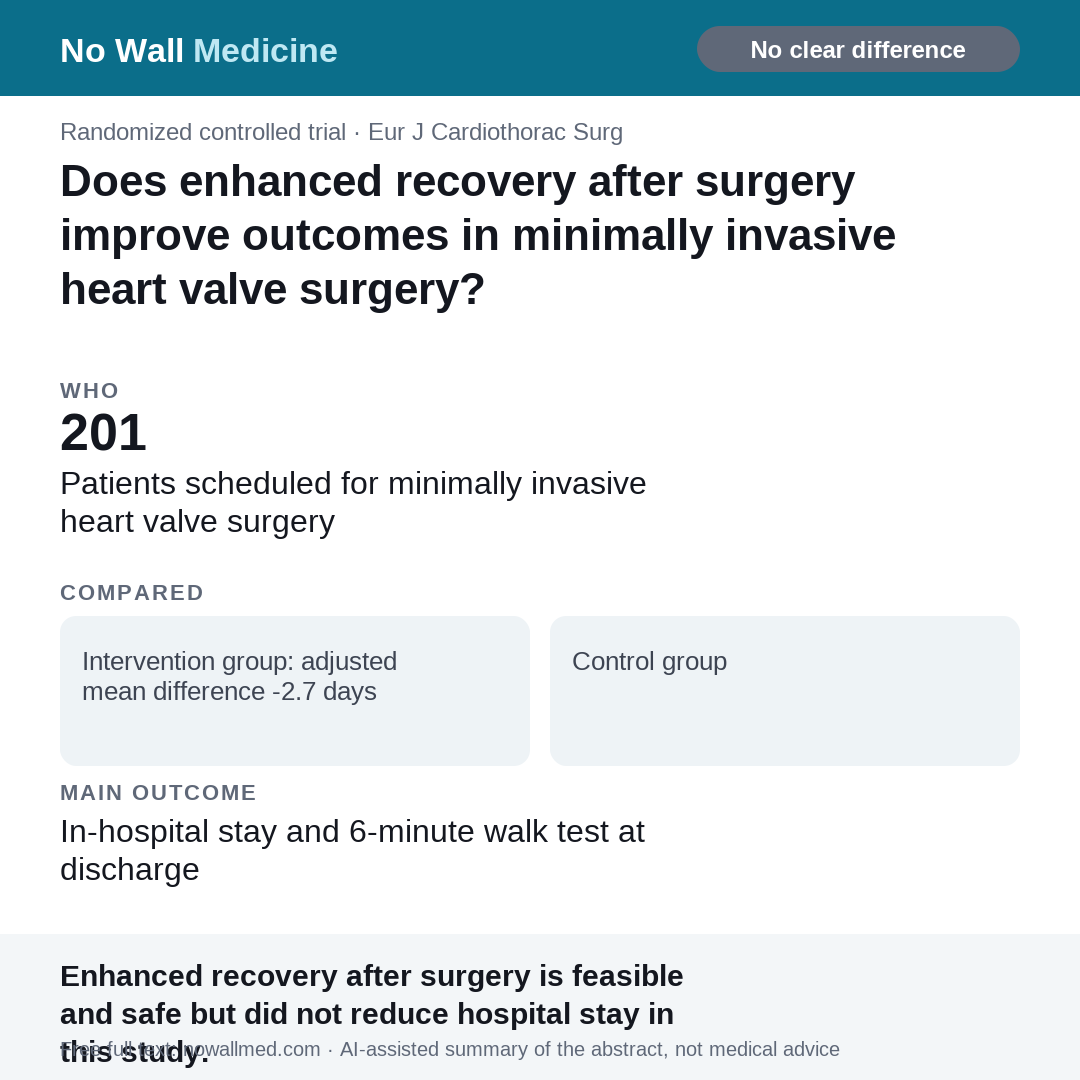
Interdisciplinary and Cross-Sectoral Perioperative Care Model in Cardiac Surgery: ERAS Implementation in the Setting of Minimally Invasive Heart Valve Surgery (INCREASE)-Results of a Randomized Controlled Trial
Randomized controlled trialNo clear difference
Does enhanced recovery after surgery improve outcomes in minimally invasive heart valve surgery?
Who
201
Patients scheduled for minimally invasive heart valve surgery
Compared
Intervention group: adjusted mean difference -2.7 days
Control group
Main outcome
In-hospital stay and 6-minute walk test at discharge
Result: adjusted mean difference -2.7 days, 95% confidence interval (-6.3, 0.9)
Bottom line: Enhanced recovery after surgery is feasible and safe but did not reduce hospital stay in this study.
Eur J Cardiothorac Surg · 2026-02-01Download image
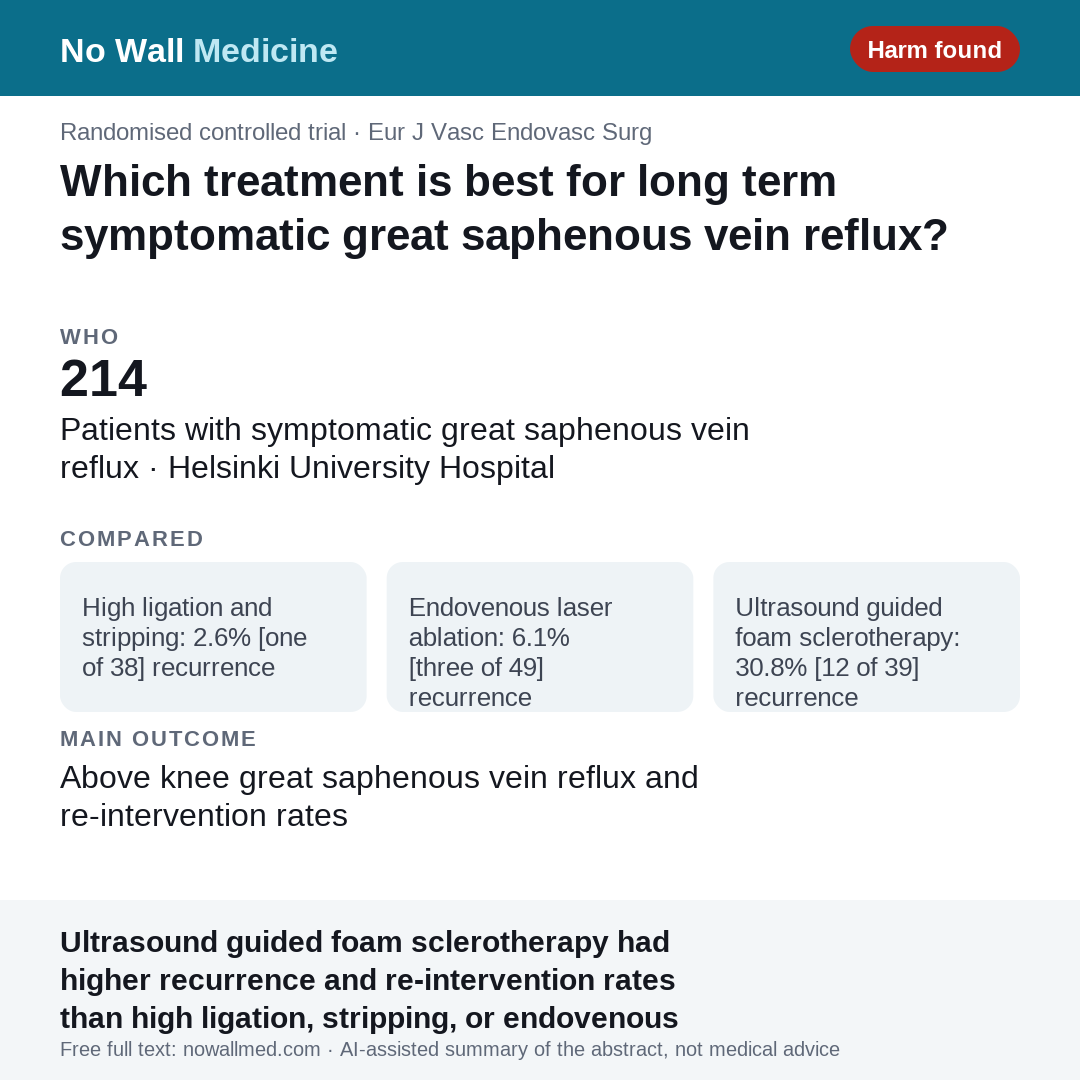
Fourteen Year Outcomes of a Randomised Controlled Trial Comparing Endovenous Laser Ablation, High Ligation and Stripping, and Ultrasound Guided Foam Sclerotherapy for Great Saphenous Varicose Veins
Randomised controlled trialHarm found
Which treatment is best for long term symptomatic great saphenous vein reflux?
Who
214
Patients with symptomatic great saphenous vein reflux · Helsinki University Hospital
Compared
High ligation and stripping: 2.6% [one of 38] recurrence
Endovenous laser ablation: 6.1% [three of 49] recurrence
Ultrasound guided foam sclerotherapy: 30.8% [12 of 39] recurrence
Main outcome
Above knee great saphenous vein reflux and re-intervention rates
Result: risk ratio 11.7 (95% CI 1.6 - 85.6) vs HLS; risk ratio 5.0 (95% CI 1.5 - 16.6) vs EVLA
Bottom line: Ultrasound guided foam sclerotherapy had higher recurrence and re-intervention rates than high ligation, stripping, or endovenous laser ablation.
Eur J Vasc Endovasc Surg · 2026-02-01Download image
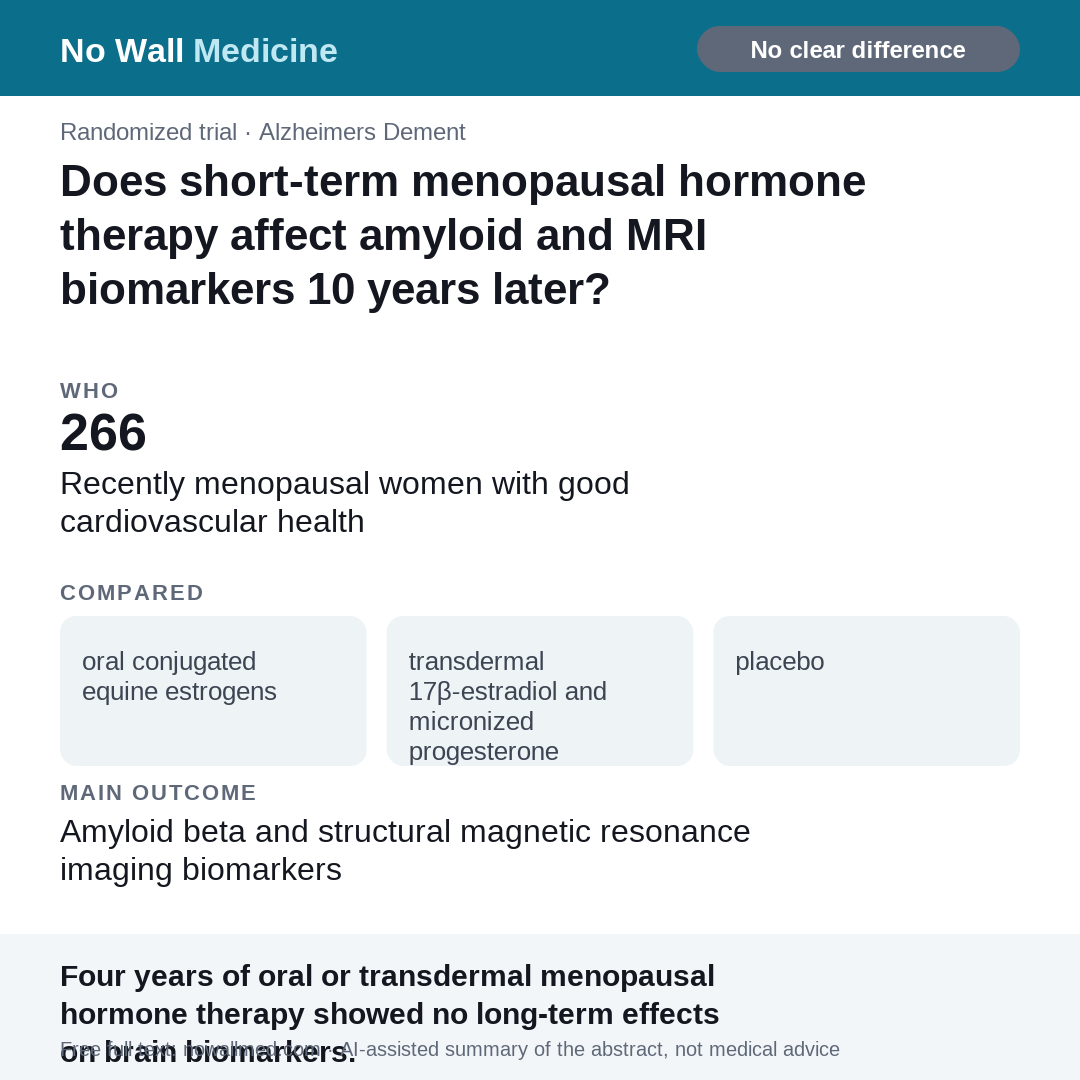
Long-term amyloid PET and MRI outcomes in a menopausal hormone therapy trial
Randomized trialNo clear difference
Does short-term menopausal hormone therapy affect amyloid and MRI biomarkers 10 years later?
Who
266
Recently menopausal women with good cardiovascular health
Compared
oral conjugated equine estrogens
transdermal 17β-estradiol and micronized progesterone
placebo
Main outcome
Amyloid beta and structural magnetic resonance imaging biomarkers
Bottom line: Four years of oral or transdermal menopausal hormone therapy showed no long-term effects on brain biomarkers.
Alzheimers Dement · 2026-01-31Download image
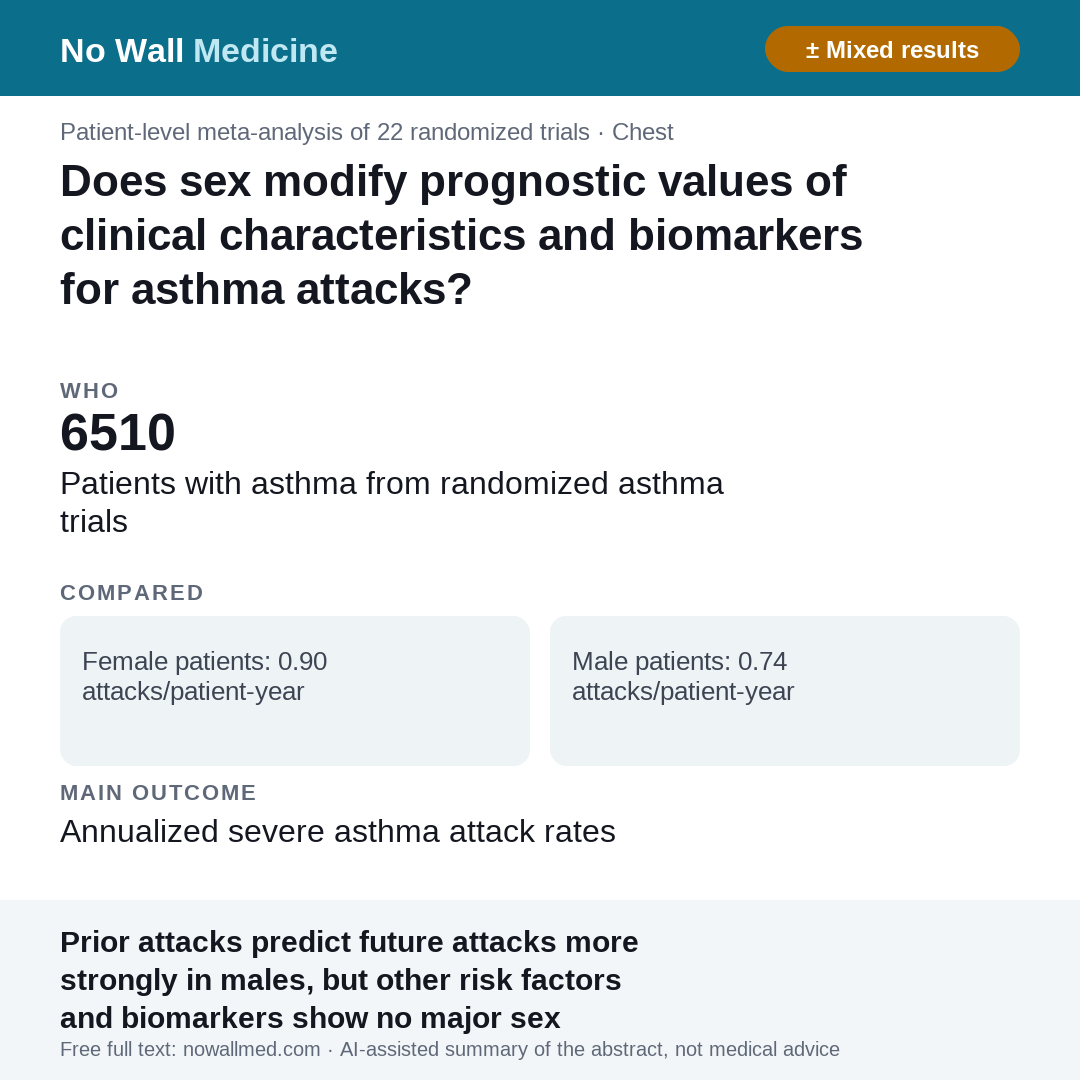
Impact of Sex on Prediction of Asthma Attacks by Clinical Risk Factors and Type 2 Biomarkers
Patient-level meta-analysis of 22 randomized trialsMixed results
Does sex modify prognostic values of clinical characteristics and biomarkers for asthma attacks?
Who
6510
Patients with asthma from randomized asthma trials
Compared
Female patients: 0.90 attacks/patient-year
Male patients: 0.74 attacks/patient-year
Main outcome
Annualized severe asthma attack rates
Bottom line: Prior attacks predict future attacks more strongly in males, but other risk factors and biomarkers show no major sex differences.
Chest · 2026-01-31Download image
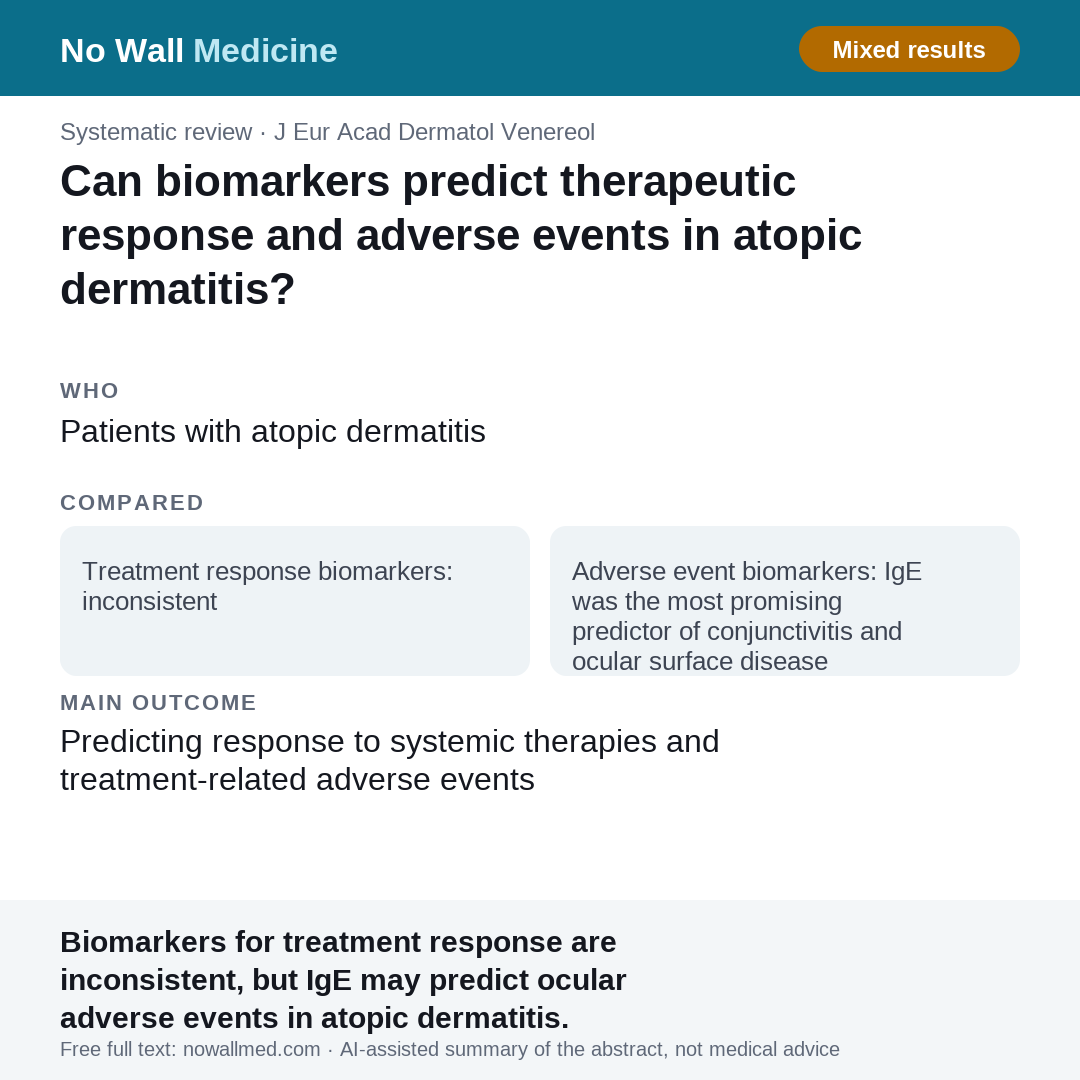
Biomarkers for therapeutic response and adverse outcomes in atopic dermatitis: A systematic review
Systematic reviewMixed results
Can biomarkers predict therapeutic response and adverse events in atopic dermatitis?
Who
Patients with atopic dermatitis
Compared
Treatment response biomarkers: inconsistent
Adverse event biomarkers: IgE was the most promising predictor of conjunctivitis and ocular surface disease
Main outcome
Predicting response to systemic therapies and treatment-related adverse events
Bottom line: Biomarkers for treatment response are inconsistent, but IgE may predict ocular adverse events in atopic dermatitis.
Limitation: Clinical heterogeneity and multifactorial aetiology complicate finding robust predictive biomarkers.
J Eur Acad Dermatol Venereol · 2026-01-31Download image
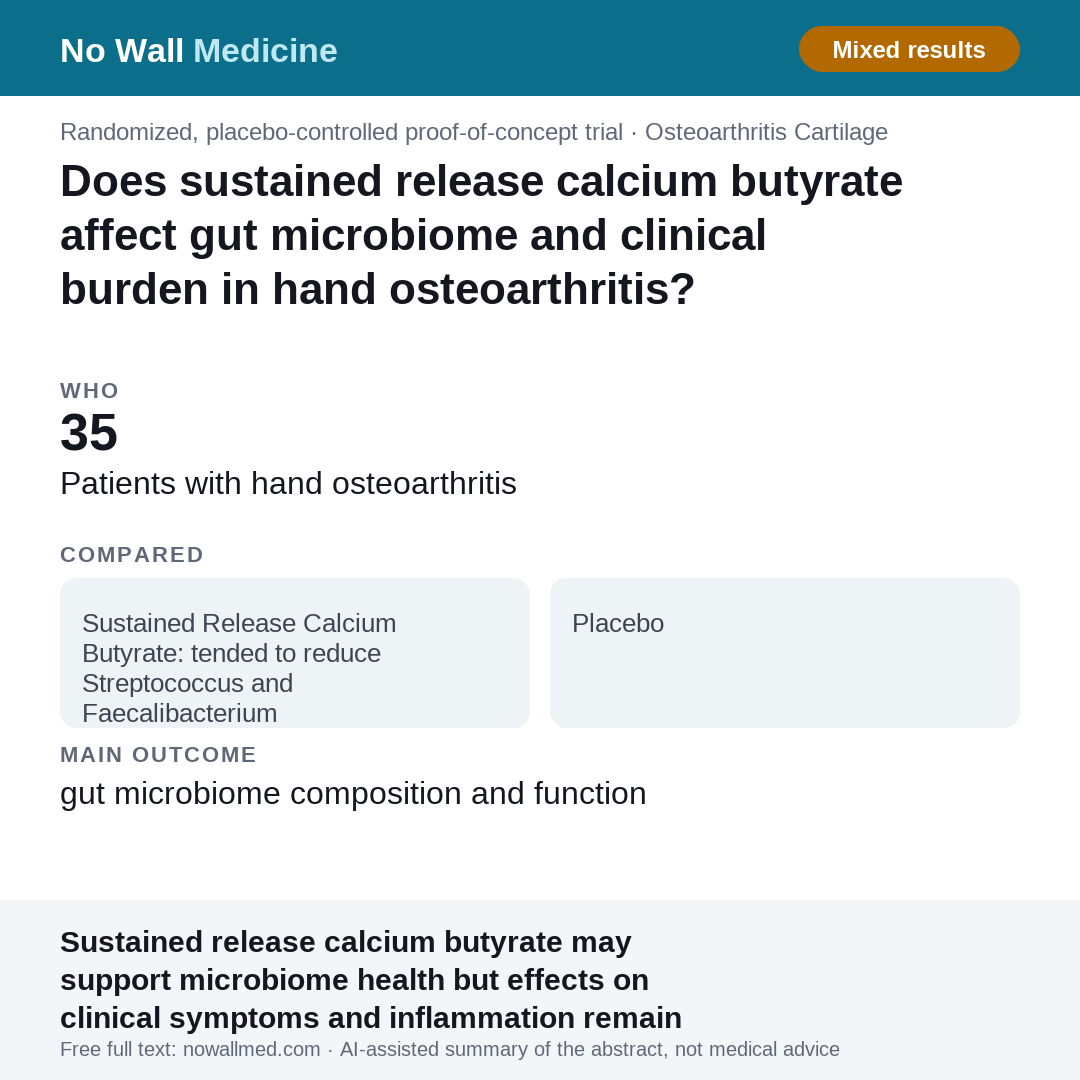
Effectiveness of Sustained Release Calcium Butyrate on the microbiome and clinical burden in osteoarthritis of the hand: A proof-of-concept placebo-controlled randomized trial
Randomized, placebo-controlled proof-of-concept trialMixed results
Does sustained release calcium butyrate affect gut microbiome and clinical burden in hand osteoarthritis?
Who
35
Patients with hand osteoarthritis
Compared
Sustained Release Calcium Butyrate: tended to reduce Streptococcus and Faecalibacterium
Placebo
Main outcome
gut microbiome composition and function
Bottom line: Sustained release calcium butyrate may support microbiome health but effects on clinical symptoms and inflammation remain unclear.
Osteoarthritis Cartilage · 2026-01-31Download image
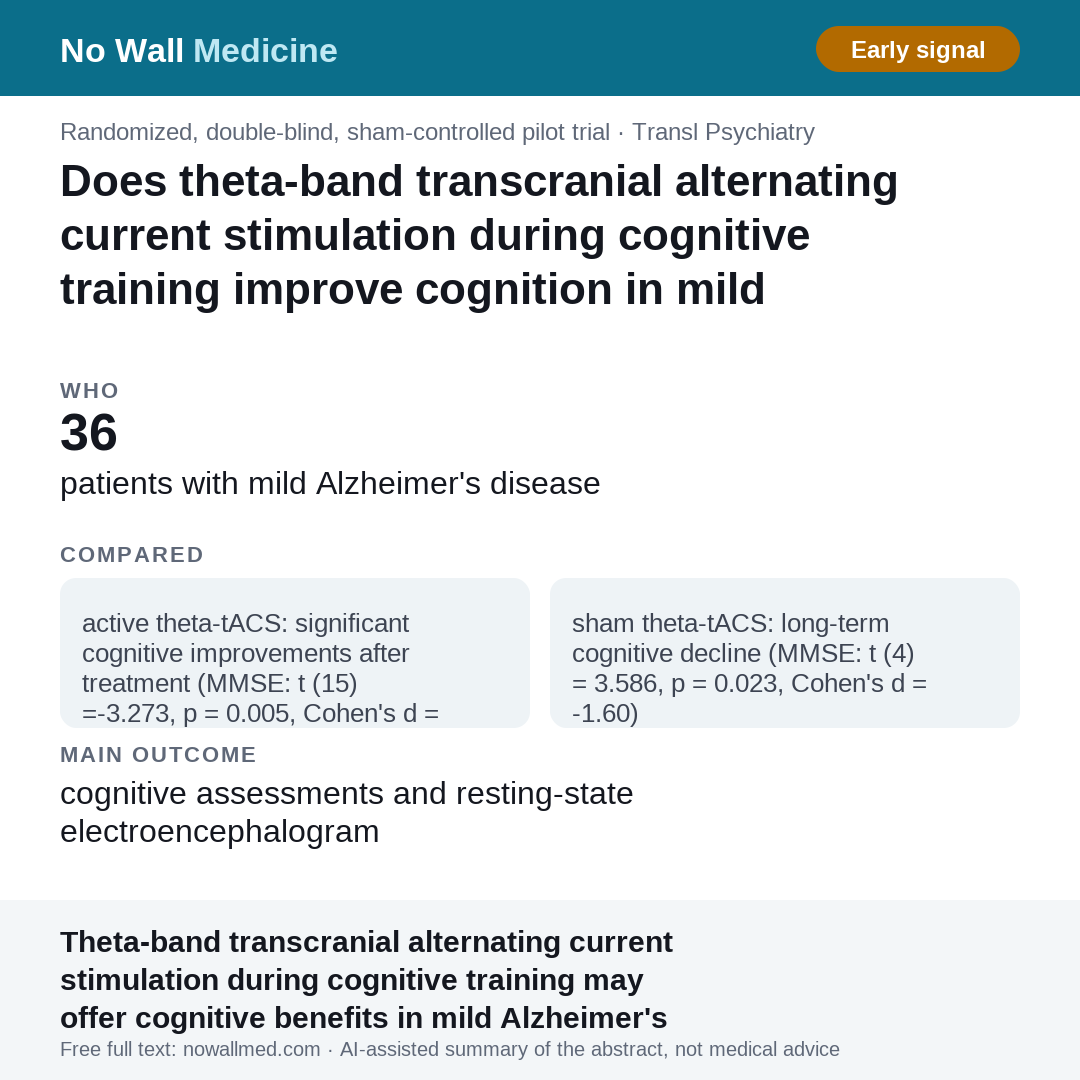
Randomized, double-blind, sham-controlled pilot trial of theta-band transcranial alternating current stimulation during cognitive training in mild Alzheimer's disease
Randomized, double-blind, sham-controlled pilot trialBenefit found
Does theta-band transcranial alternating current stimulation during cognitive training improve cognition in mild Alzheimer's disease?
Who
36
patients with mild Alzheimer's disease
Compared
active theta-tACS: significant cognitive improvements after treatment (MMSE: t (15) =-3.273, p = 0.005, Cohen's d = 0.82)
sham theta-tACS: long-term cognitive decline (MMSE: t (4) = 3.586, p = 0.023, Cohen's d = -1.60)
Main outcome
cognitive assessments and resting-state electroencephalogram
Bottom line: Theta-band transcranial alternating current stimulation during cognitive training may offer cognitive benefits in mild Alzheimer's disease.
Transl Psychiatry · 2026-01-31Download image