Visual abstracts
New randomized trials and meta-analyses from leading journals at a glance: who was studied, what was compared, and what was found. Every paper is free to read in full.
All specialtiesCardiology 921Oncology 826Gastroenterology & Hepatology 341Infectious Disease 656Neurology 377Psychiatry & Mental Health 451Pulmonology 398Critical Care 272Endocrinology & Diabetes 501Pediatrics 581Surgery 377Orthopedics & Sports Medicine 169Neurosurgery 117Cardiothoracic & Vascular Surgery 89Plastic & Reconstructive Surgery 145Nephrology 205Rheumatology 112Hematology 196Dermatology 87Ophthalmology 110Obstetrics & Gynecology 279Public & Global Health 185Radiology & Imaging 113Anesthesiology 145Urology 173ENT (Otolaryngology) 117Emergency Medicine 104Allergy & Immunology 63Geriatrics 168Family Medicine & Primary Care 116Medical Genetics & Genomics 93Pathology & Laboratory Medicine 28Physical Medicine & Rehabilitation 149Palliative Care 82Nutrition 229Digital Health & AI 467General Medicine 105
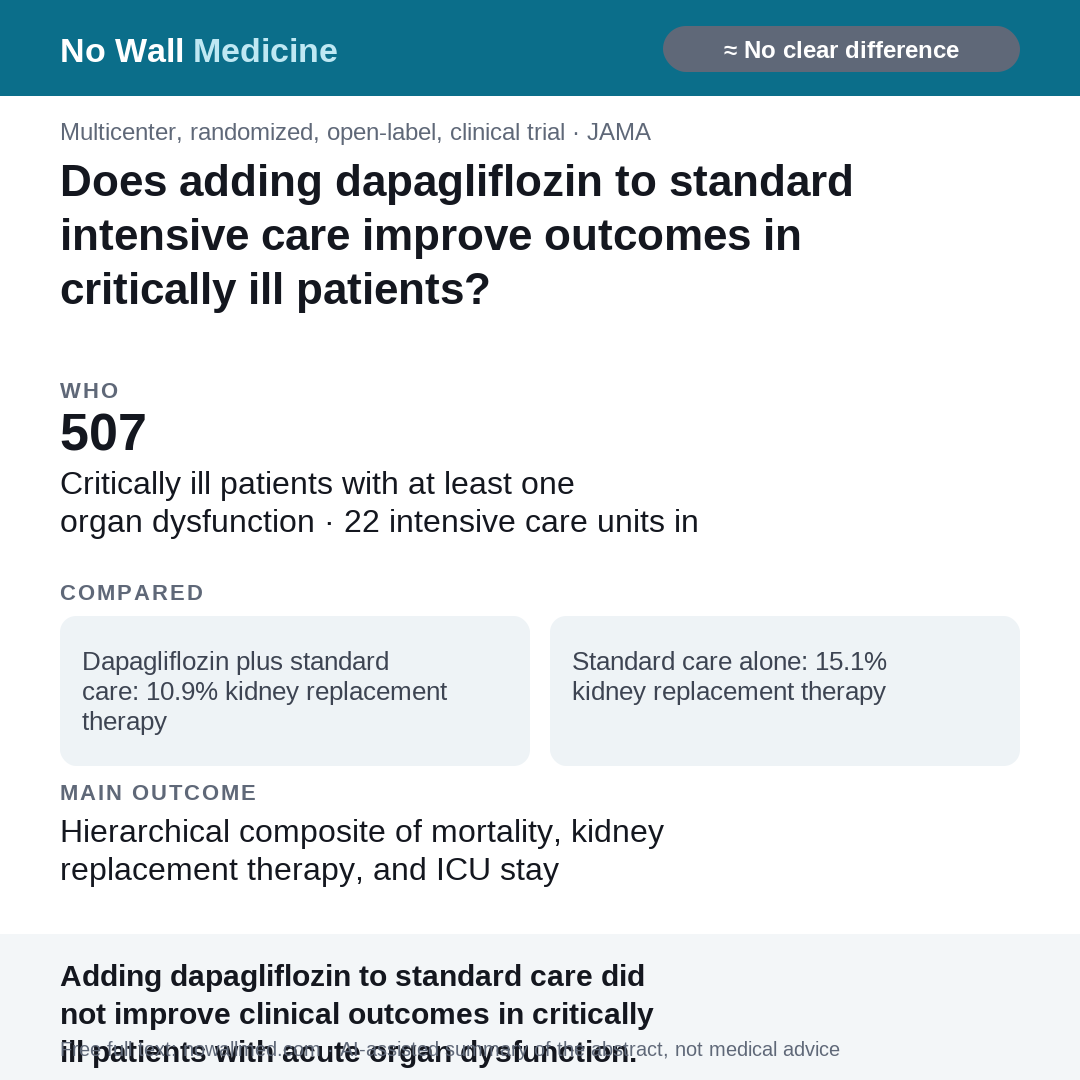
Dapagliflozin for Critically Ill Patients With Acute Organ Dysfunction: The DEFENDER Randomized Clinical Trial
Multicenter, randomized, open-label, clinical trialNo clear difference
Does adding dapagliflozin to standard intensive care improve outcomes in critically ill patients?
Who
507
Critically ill patients with at least one organ dysfunction · 22 intensive care units in Brazil
Compared
Dapagliflozin plus standard care: 10.9% kidney replacement therapy
Standard care alone: 15.1% kidney replacement therapy
Main outcome
Hierarchical composite of mortality, kidney replacement therapy, and ICU stay
Result: win ratio 1.01 (95% CI 0.90 to 1.13)
Bottom line: Adding dapagliflozin to standard care did not improve clinical outcomes in critically ill patients with acute organ dysfunction.
Limitation: Wide confidence intervals could not exclude relevant benefits or harms.
JAMA · 2024-06-14Download image
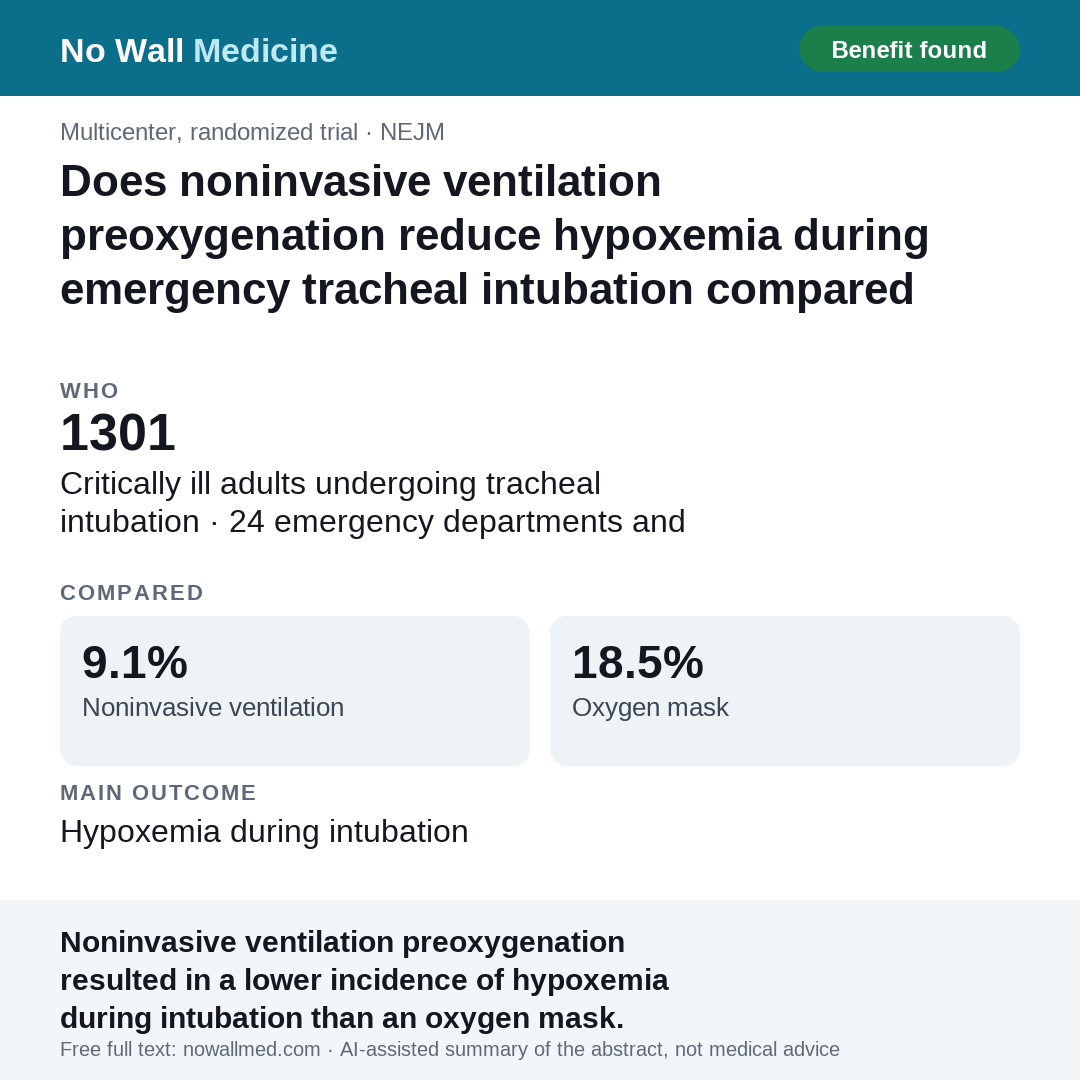
Noninvasive Ventilation for Preoxygenation during Emergency Intubation
Multicenter, randomized trialBenefit found
Does noninvasive ventilation preoxygenation reduce hypoxemia during emergency tracheal intubation compared to an oxygen mask?
Who
1301
Critically ill adults undergoing tracheal intubation · 24 emergency departments and intensive care units in the United States
Compared
9.1%Noninvasive ventilation (57/624)
18.5%Oxygen mask (118/637)
Main outcome
Hypoxemia during intubation
Result: difference, -9.4 percentage points (95% CI, -13.2 to -5.6)
Bottom line: Noninvasive ventilation preoxygenation resulted in a lower incidence of hypoxemia during intubation than an oxygen mask.
Funded by: U.S. Department of Defense
NEJM · 2024-06-13Download image
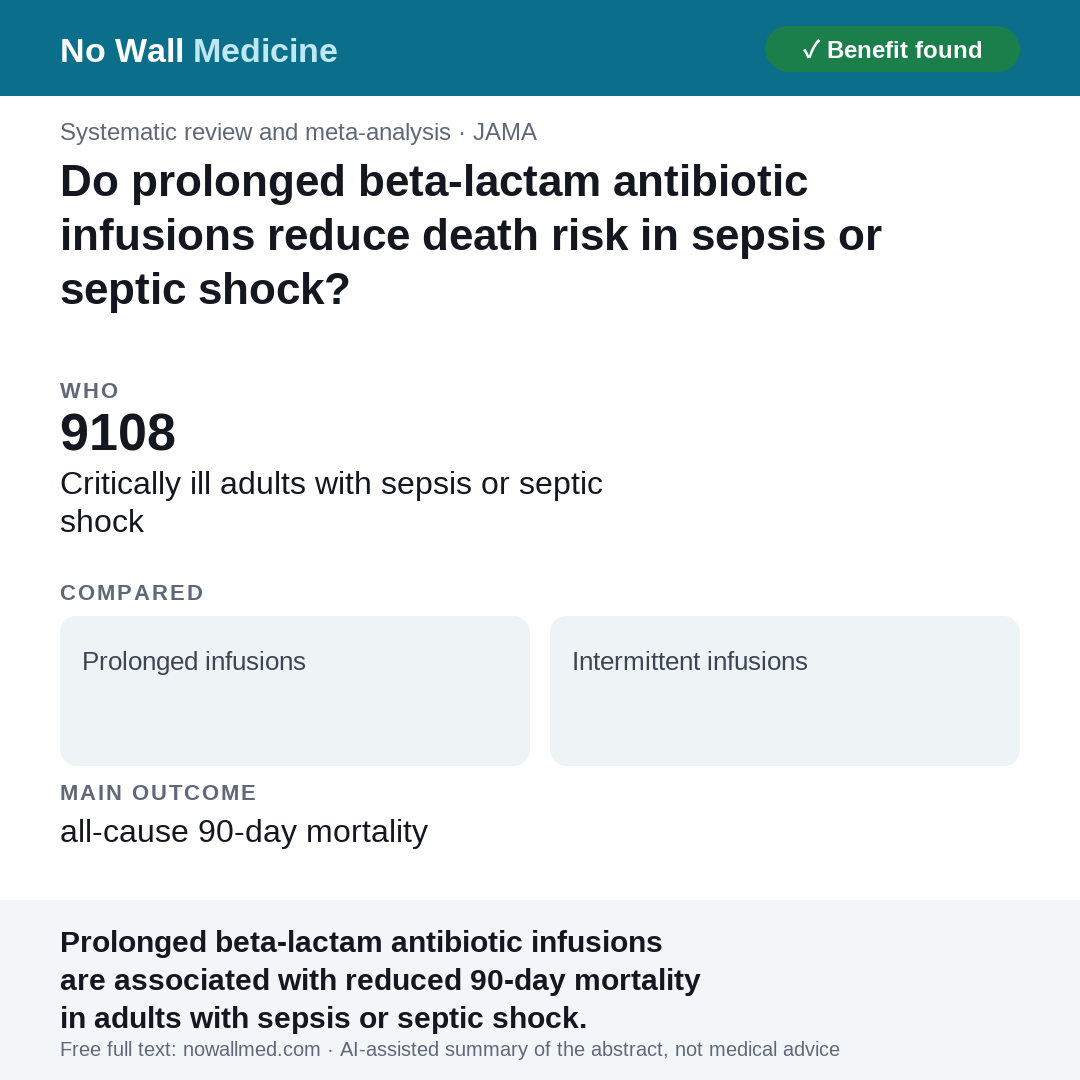
Prolonged vs Intermittent Infusions of β-Lactam Antibiotics in Adults With Sepsis or Septic Shock: A Systematic Review and Meta-Analysis
Systematic review and meta-analysisBenefit found
Do prolonged beta-lactam antibiotic infusions reduce death risk in sepsis or septic shock?
Who
9108
Critically ill adults with sepsis or septic shock
Compared
Prolonged infusions
Intermittent infusions
Main outcome
all-cause 90-day mortality
Result: risk ratio 0.86 (95% credible interval, 0.72-0.98)
Bottom line: Prolonged beta-lactam antibiotic infusions are associated with reduced 90-day mortality in adults with sepsis or septic shock.
JAMA · 2024-06-12Download image
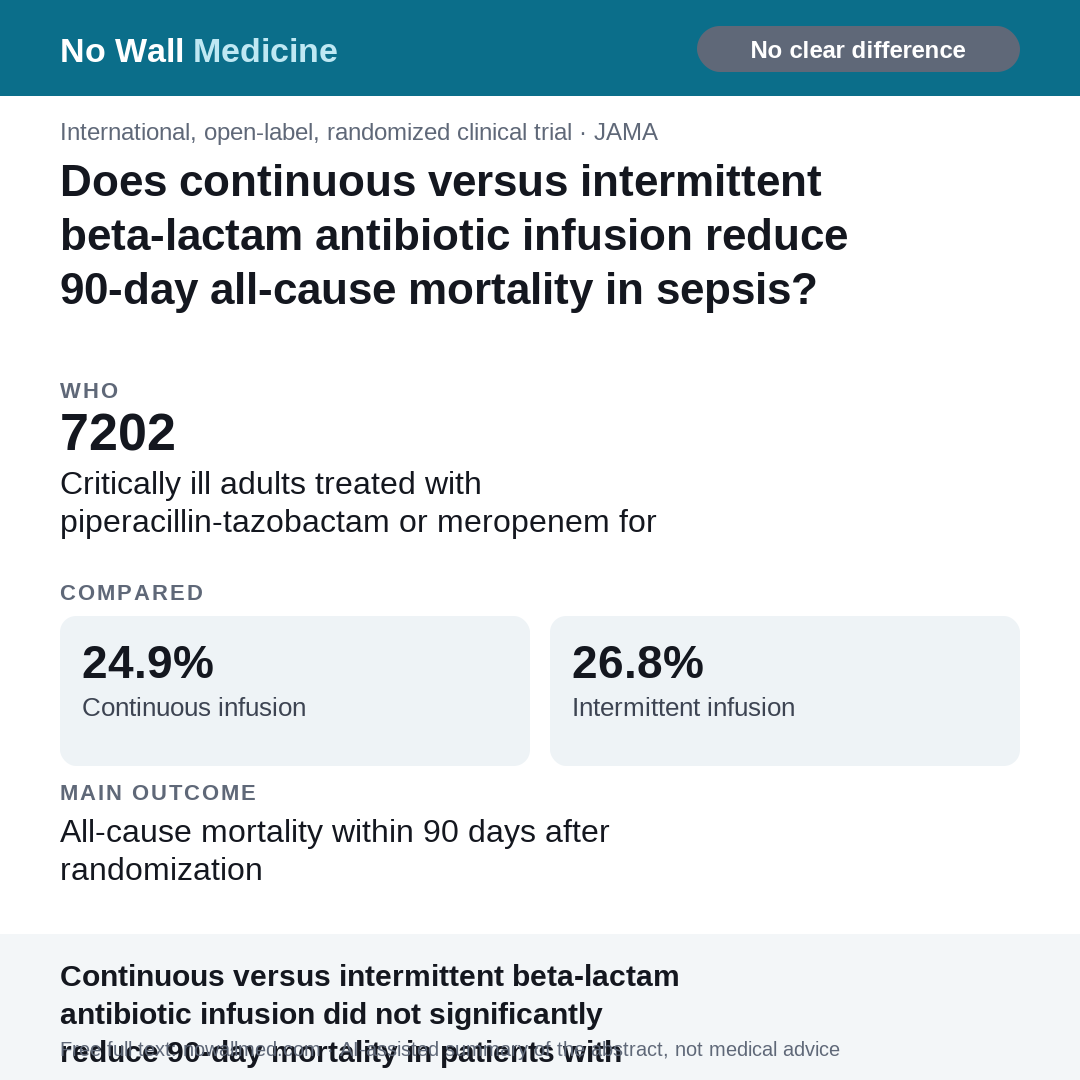
Continuous vs Intermittent β-Lactam Antibiotic Infusions in Critically Ill Patients With Sepsis: The BLING III Randomized Clinical Trial
International, open-label, randomized clinical trialNo clear difference
Does continuous versus intermittent beta-lactam antibiotic infusion reduce 90-day all-cause mortality in sepsis?
Who
7202
Critically ill adults treated with piperacillin-tazobactam or meropenem for sepsis · 104 intensive care units in seven countries
Compared
24.9%Continuous infusion (864/3474)
26.8%Intermittent infusion (939/3507)
Main outcome
All-cause mortality within 90 days after randomization
Result: odds ratio 0.91 (95% CI 0.81 to 1.01)
Bottom line: Continuous versus intermittent beta-lactam antibiotic infusion did not significantly reduce 90-day mortality in patients with sepsis.
Limitation: The confidence interval includes the possibility of both no important effect and a clinically important benefit.
JAMA · 2024-06-12Download image
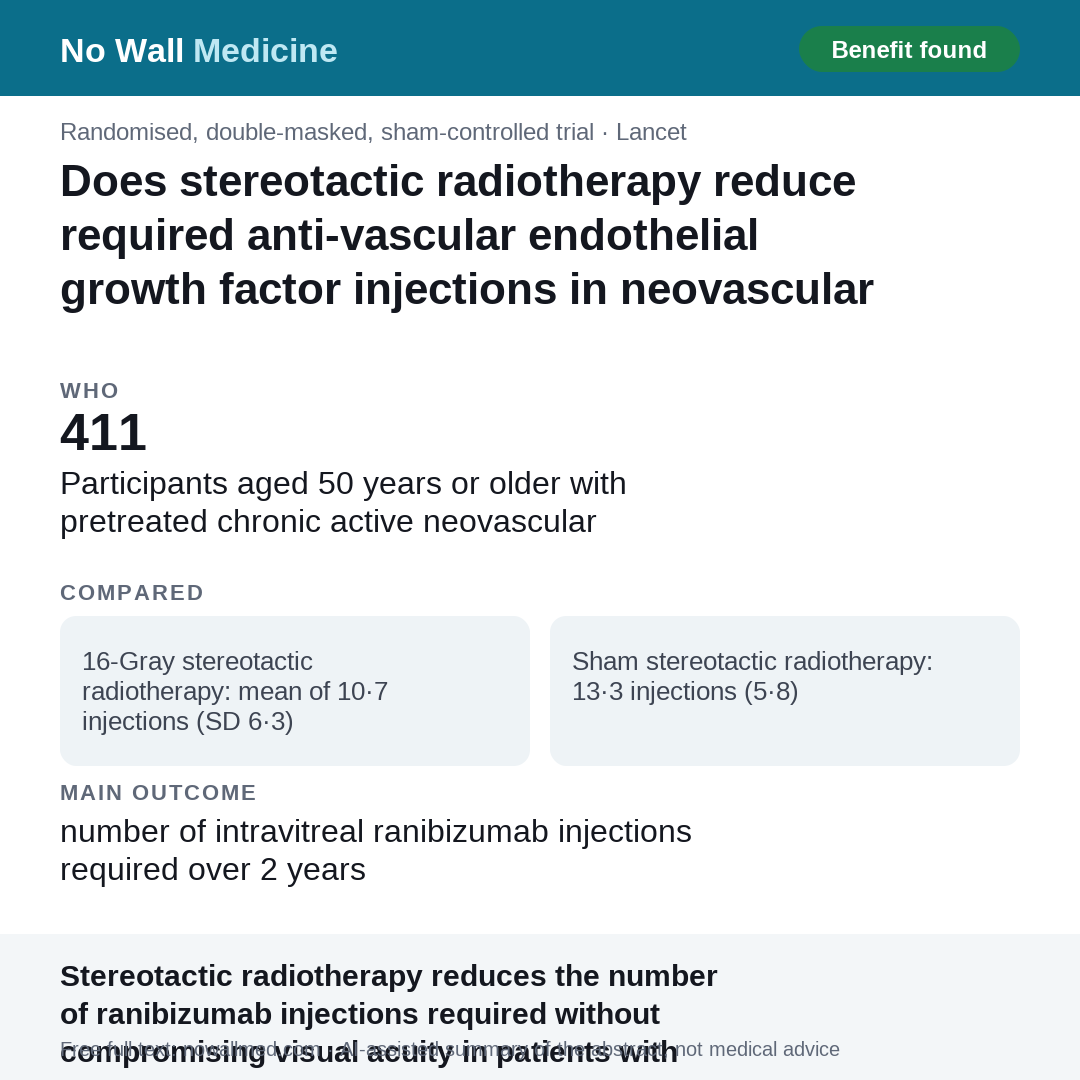
Stereotactic radiotherapy for neovascular age-related macular degeneration (STAR): a pivotal, randomised, double-masked, sham-controlled device trial
Randomised, double-masked, sham-controlled trialBenefit found
Does stereotactic radiotherapy reduce required anti-vascular endothelial growth factor injections in neovascular age-related macular degeneration?
Who
411
Participants aged 50 years or older with pretreated chronic active neovascular age-related macular degeneration · 30 UK hospitals
Compared
16-Gray stereotactic radiotherapy: mean of 10·7 injections (SD 6·3)
Sham stereotactic radiotherapy: 13·3 injections (5·8)
Main outcome
number of intravitreal ranibizumab injections required over 2 years
Result: reduction of 2·9 injections (95% CI -4·2 to -1·6)
Bottom line: Stereotactic radiotherapy reduces the number of ranibizumab injections required without compromising visual acuity in patients with neovascular age-related macular degeneration.
Funded by: Medical Research Council and National Institute for Health and Care Research
Lancet · 2024-06-11Download image
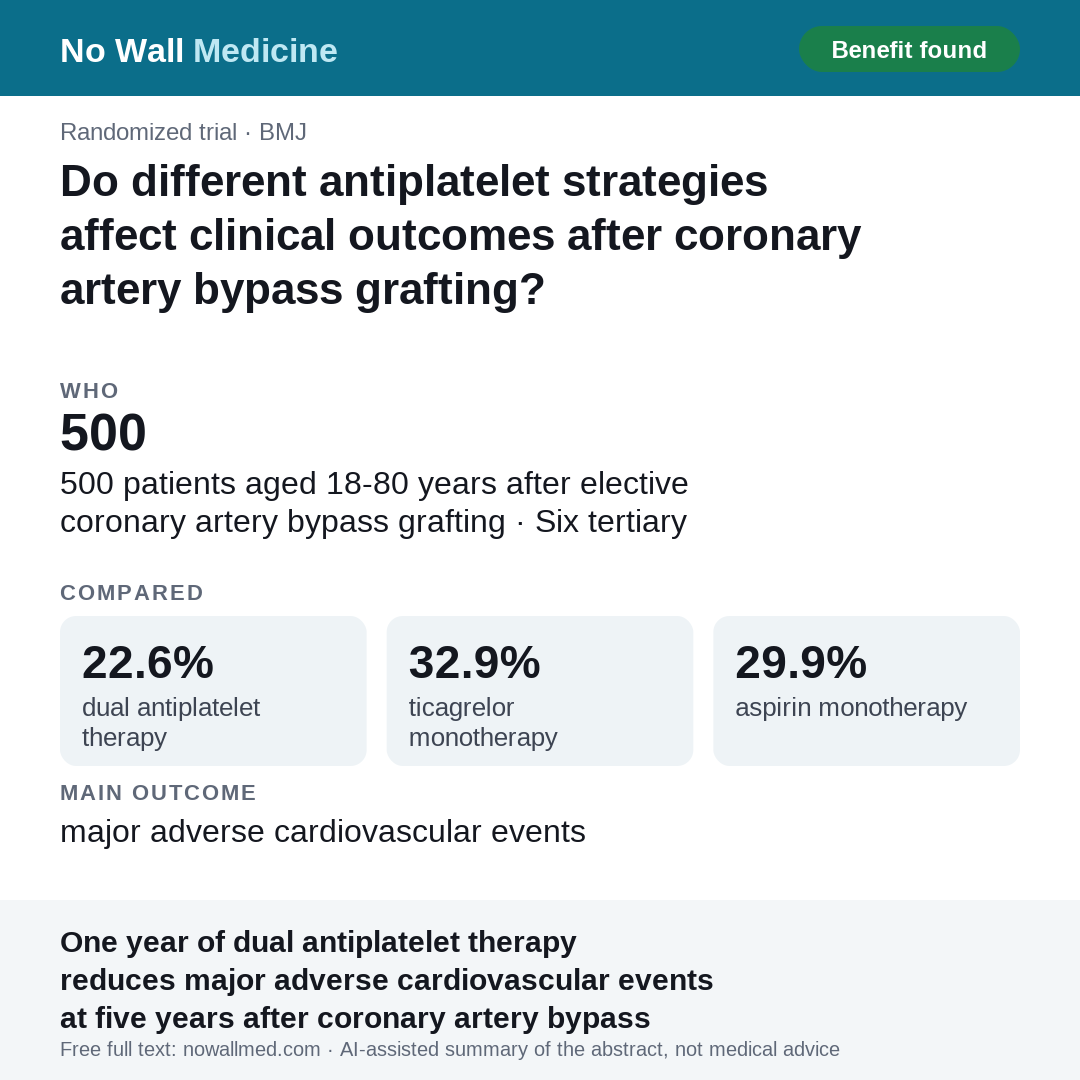
Antiplatelet therapy after coronary artery bypass surgery: five year follow-up of randomised DACAB trial
Randomized trialBenefit found
Do different antiplatelet strategies affect clinical outcomes after coronary artery bypass grafting?
Who
500
500 patients aged 18-80 years after elective coronary artery bypass grafting · Six tertiary hospitals in China
Compared
22.6%dual antiplatelet therapy
32.9%ticagrelor monotherapy
29.9%aspirin monotherapy
Main outcome
major adverse cardiovascular events
Result: hazard ratio 0.65 (95% confidence interval 0.43 to 0.99)
Bottom line: One year of dual antiplatelet therapy reduces major adverse cardiovascular events at five years after coronary artery bypass grafting.
BMJ · 2024-06-11Download image
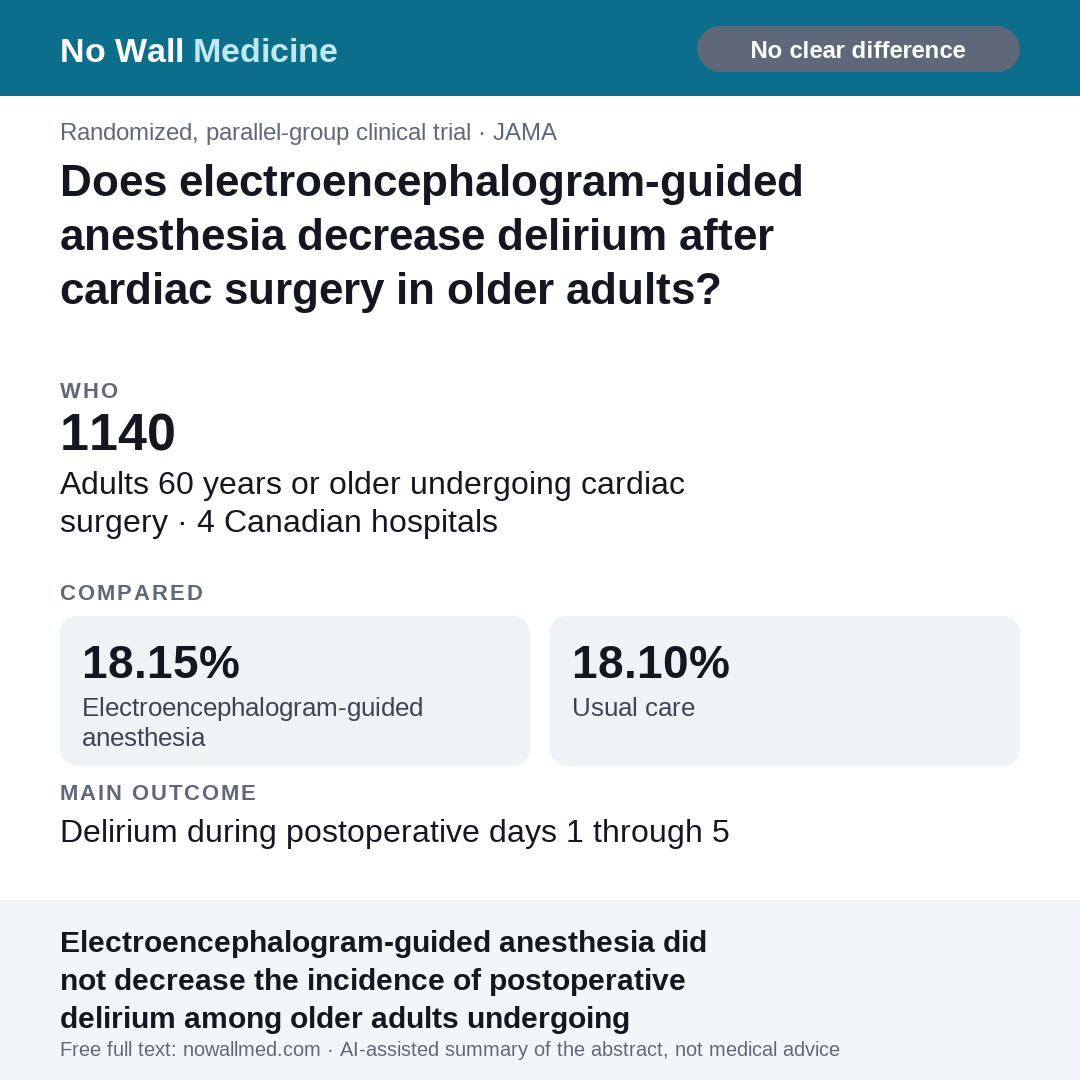
Electroencephalography-Guided Anesthesia and Delirium in Older Adults After Cardiac Surgery: The ENGAGES-Canada Randomized Clinical Trial
Randomized, parallel-group clinical trialNo clear difference
Does electroencephalogram-guided anesthesia decrease delirium after cardiac surgery in older adults?
Who
1140
Adults 60 years or older undergoing cardiac surgery · 4 Canadian hospitals
Compared
18.15%Electroencephalogram-guided anesthesia (102/562)
18.10%Usual care (103/569)
Main outcome
Delirium during postoperative days 1 through 5
Result: difference, 0.05% (95% CI, -4.57% to 4.67%)
Bottom line: Electroencephalogram-guided anesthesia did not decrease the incidence of postoperative delirium among older adults undergoing cardiac surgery.
JAMA · 2024-06-10Download image
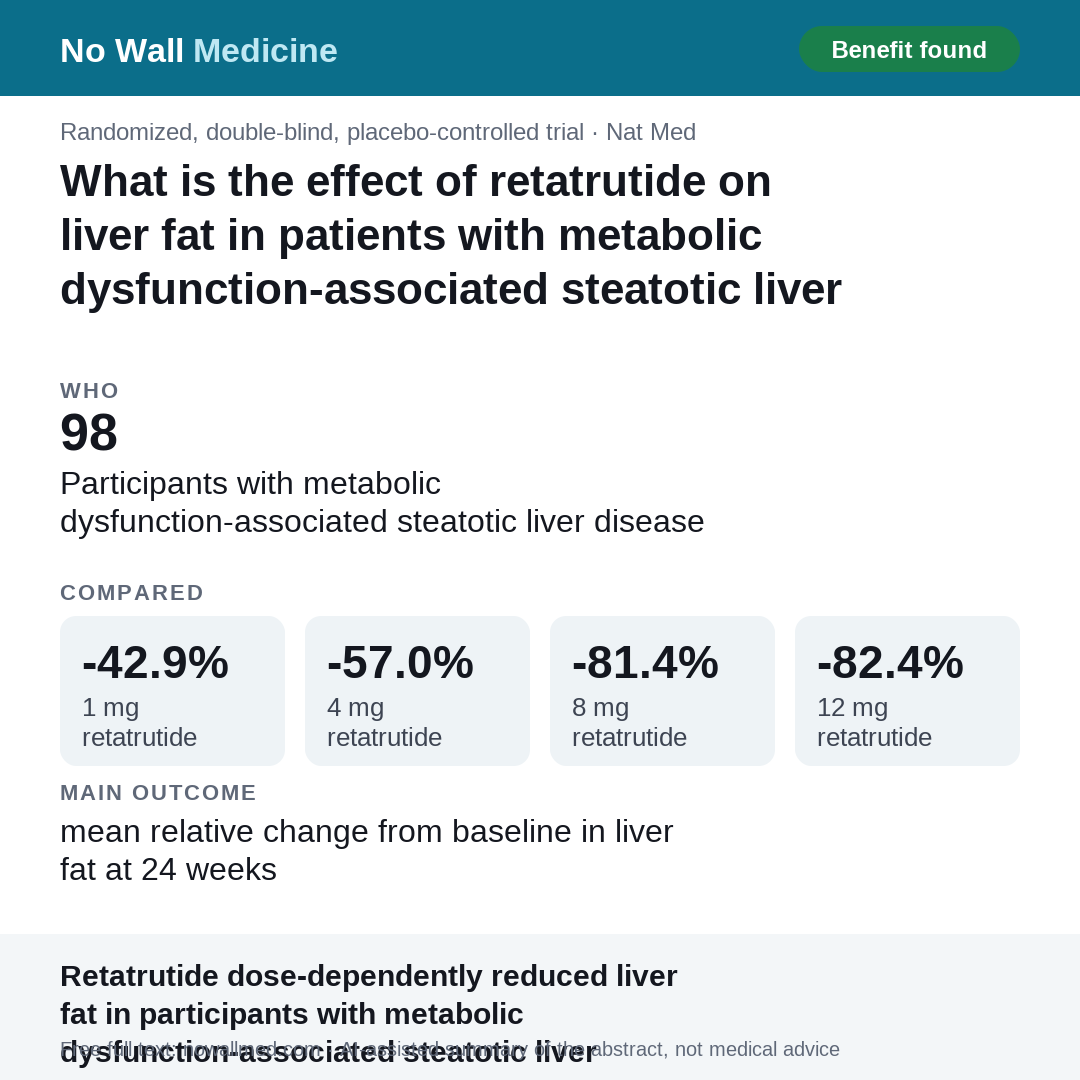
Triple hormone receptor agonist retatrutide for metabolic dysfunction-associated steatotic liver disease: a randomized phase 2a trial
Randomized, double-blind, placebo-controlled trialBenefit found
What is the effect of retatrutide on liver fat in patients with metabolic dysfunction-associated steatotic liver disease?
Who
98
Participants with metabolic dysfunction-associated steatotic liver disease and at least 10% liver fat
Compared
-42.9%1 mg retatrutide
-57.0%4 mg retatrutide
-81.4%8 mg retatrutide
-82.4%12 mg retatrutide
Main outcome
mean relative change from baseline in liver fat at 24 weeks
Bottom line: Retatrutide dose-dependently reduced liver fat in participants with metabolic dysfunction-associated steatotic liver disease.
Nat Med · 2024-06-10Download image
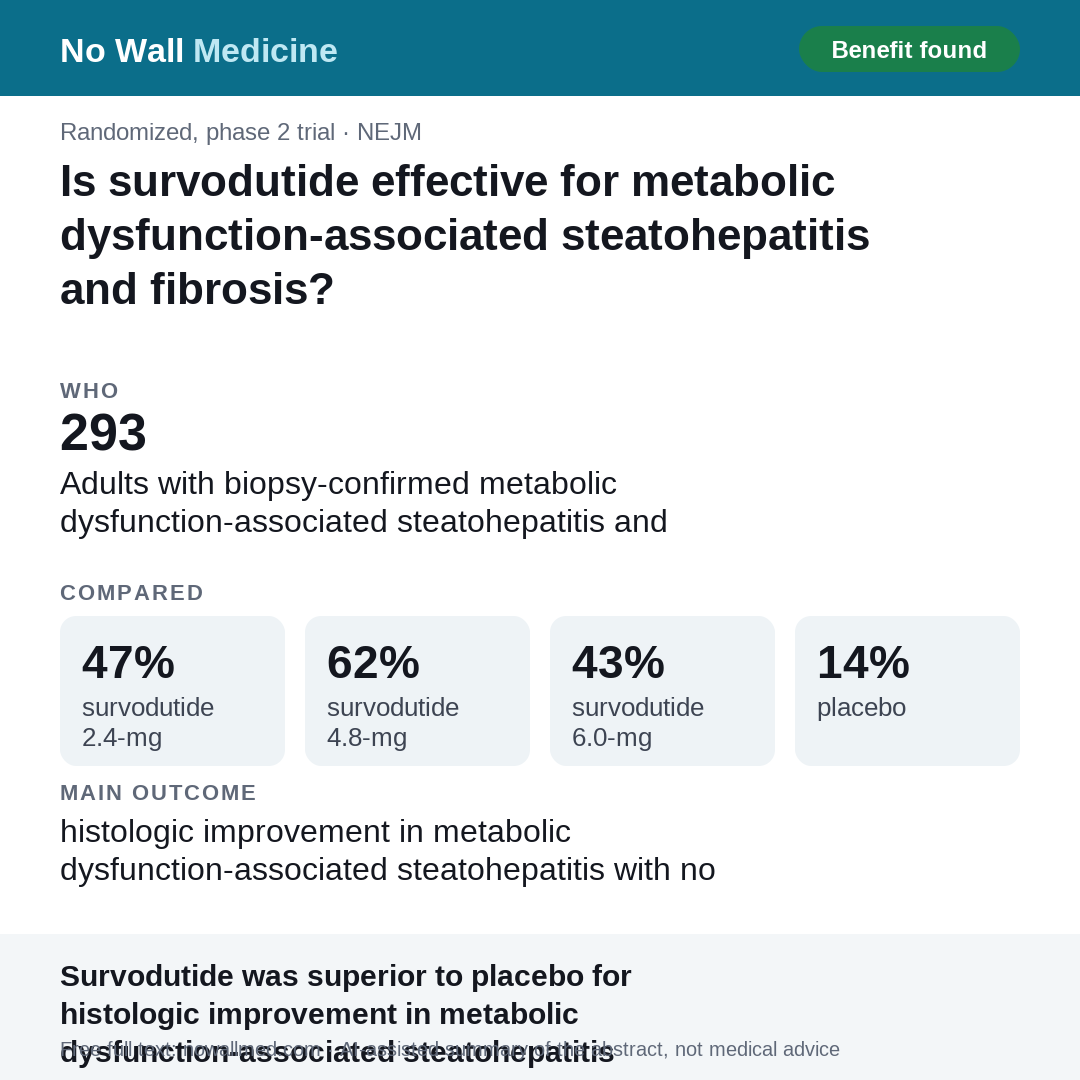
A Phase 2 Randomized Trial of Survodutide in MASH and Fibrosis
Randomized, phase 2 trialBenefit found
Is survodutide effective for metabolic dysfunction-associated steatohepatitis and fibrosis?
Who
293
Adults with biopsy-confirmed metabolic dysfunction-associated steatohepatitis and fibrosis stage F1 through F3
Compared
47%survodutide 2.4-mg
62%survodutide 4.8-mg
43%survodutide 6.0-mg
14%placebo
Main outcome
histologic improvement in metabolic dysfunction-associated steatohepatitis with no worsening of fibrosis
Bottom line: Survodutide was superior to placebo for histologic improvement in metabolic dysfunction-associated steatohepatitis without worsening of fibrosis.
Funded by: Boehringer Ingelheim
NEJM · 2024-06-07Download image
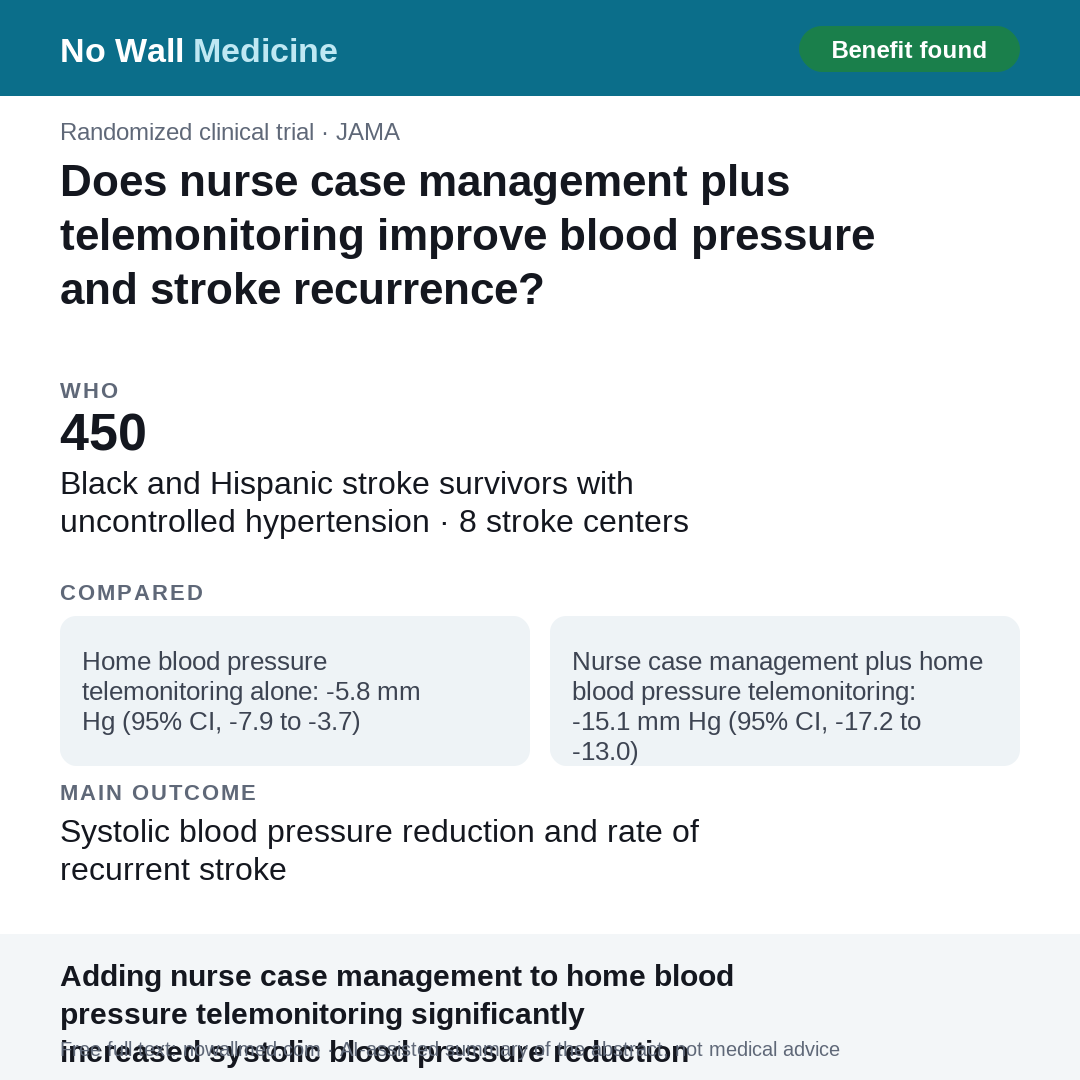
Home Blood Pressure Telemonitoring and Nurse Case Management in Black and Hispanic Patients With Stroke: A Randomized Clinical Trial
Randomized clinical trialBenefit found
Does nurse case management plus telemonitoring improve blood pressure and stroke recurrence?
Who
450
Black and Hispanic stroke survivors with uncontrolled hypertension · 8 stroke centers and ambulatory practices in New York City
Compared
Home blood pressure telemonitoring alone: -5.8 mm Hg (95% CI, -7.9 to -3.7)
Nurse case management plus home blood pressure telemonitoring: -15.1 mm Hg (95% CI, -17.2 to -13.0)
Main outcome
Systolic blood pressure reduction and rate of recurrent stroke
Result: -8.1 mm Hg (95% CI, -11.2 to -5.0)
Bottom line: Adding nurse case management to home blood pressure telemonitoring significantly increased systolic blood pressure reduction in Black and Hispanic stroke survivors.
Limitation: Additional studies are needed to understand long-term clinical outcomes, cost-effectiveness, and generalizability.
JAMA · 2024-06-06Download image
A cost-effectiveness analysis of early detection and bundled treatment of postpartum hemorrhage alongside the E-MOTIVE trial
Parallel cluster-randomized trial and economic evaluationBenefit found
Is early detection and bundled treatment of postpartum hemorrhage cost-effective?
Who
210132
Women undergoing vaginal delivery · 78 secondary-level hospitals in Kenya, Nigeria, South Africa and Tanzania
Compared
Usual care
E-MOTIVE intervention
Main outcome
Cost per severe postpartum hemorrhage avoided and disability-adjusted life-years averted
Bottom line: Early detection with a blood-collection drape and bundled treatment is cost-effective for postpartum hemorrhage.
Nat Med · 2024-06-06Download image
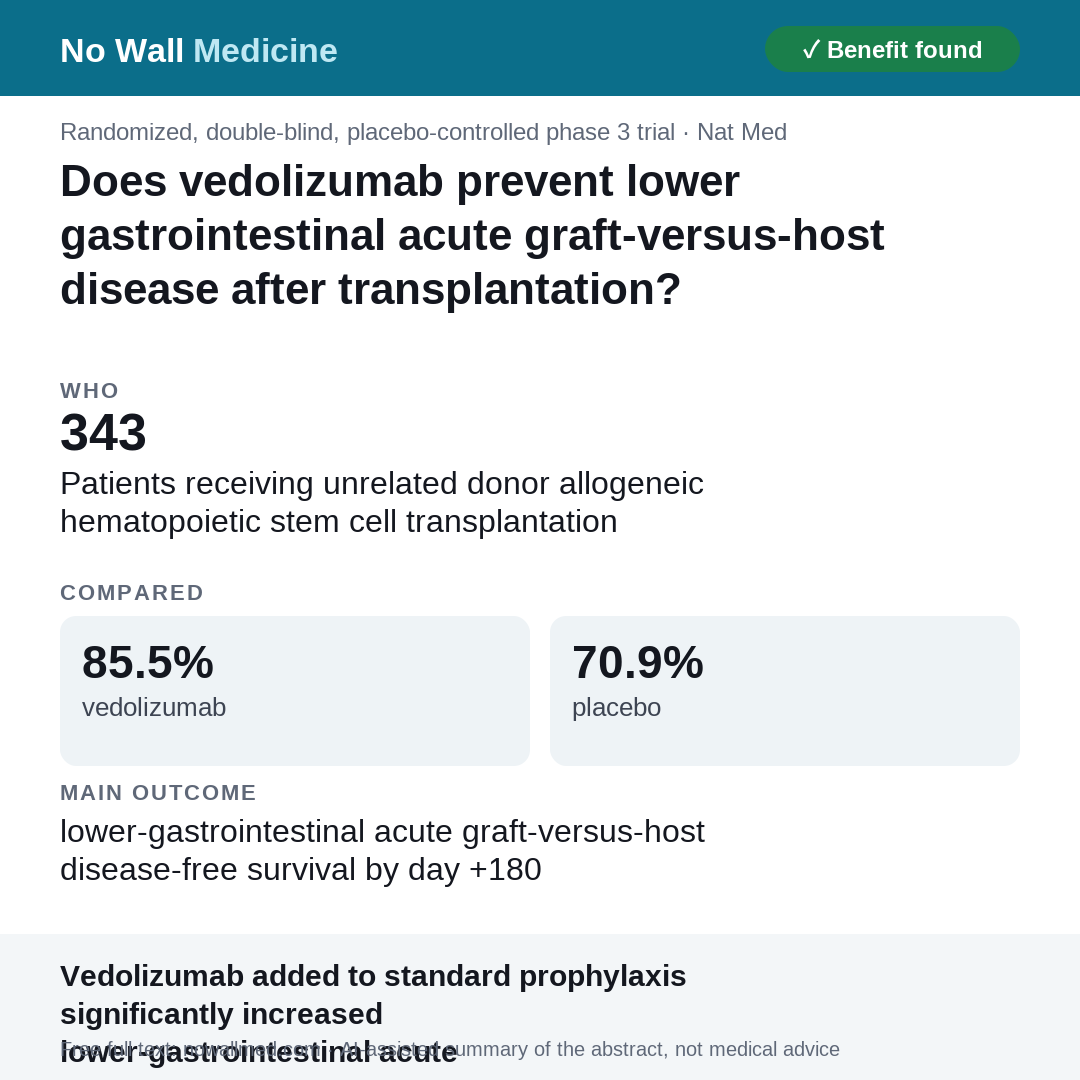
Vedolizumab for the prevention of intestinal acute GVHD after allogeneic hematopoietic stem cell transplantation: a randomized phase 3 trial
Randomized, double-blind, placebo-controlled phase 3 trialBenefit found
Does vedolizumab prevent lower gastrointestinal acute graft-versus-host disease after transplantation?
Who
343
Patients receiving unrelated donor allogeneic hematopoietic stem cell transplantation
Compared
85.5%vedolizumab (79.2-90.1)
70.9%placebo (63.2-77.2)
Main outcome
lower-gastrointestinal acute graft-versus-host disease-free survival by day +180
Result: hazard ratio 0.45 (95% confidence interval 0.27-0.73)
Bottom line: Vedolizumab added to standard prophylaxis significantly increased lower-gastrointestinal acute graft-versus-host disease-free survival after transplantation.
Nat Med · 2024-06-06Download image
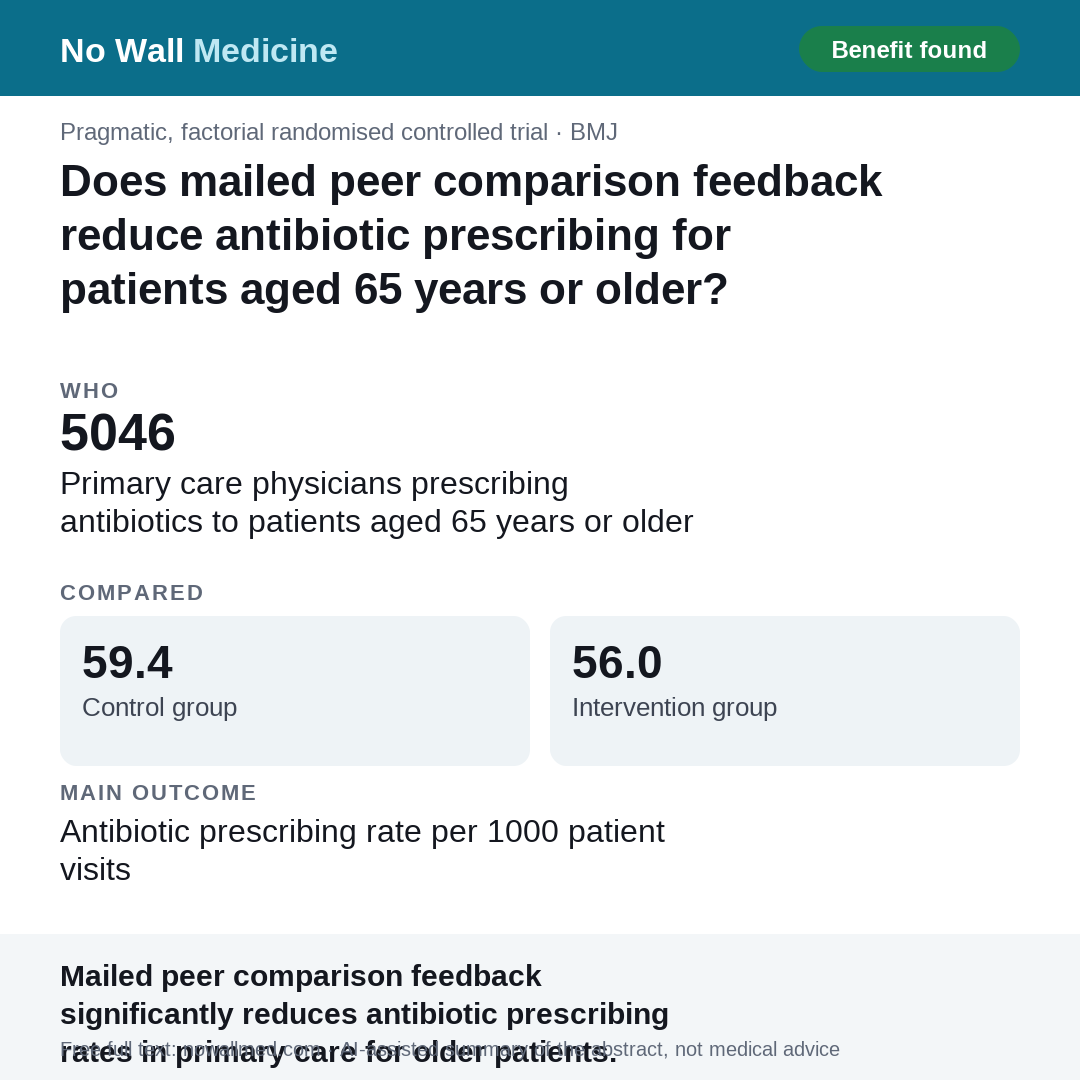
Mailed feedback to primary care physicians on antibiotic prescribing for patients aged 65 years and older: pragmatic, factorial randomised controlled trial
Pragmatic, factorial randomised controlled trialBenefit found
Does mailed peer comparison feedback reduce antibiotic prescribing for patients aged 65 years or older?
Who
5046
Primary care physicians prescribing antibiotics to patients aged 65 years or older · Ontario, Canada
Compared
59.4Control group (standard deviation 42.0)
56.0Intervention group (39.2)
Main outcome
Antibiotic prescribing rate per 1000 patient visits
Result: relative rate 0.95 (95% confidence interval 0.94 to 0.96)
Bottom line: Mailed peer comparison feedback significantly reduces antibiotic prescribing rates in primary care for older patients.
BMJ · 2024-06-05Download image
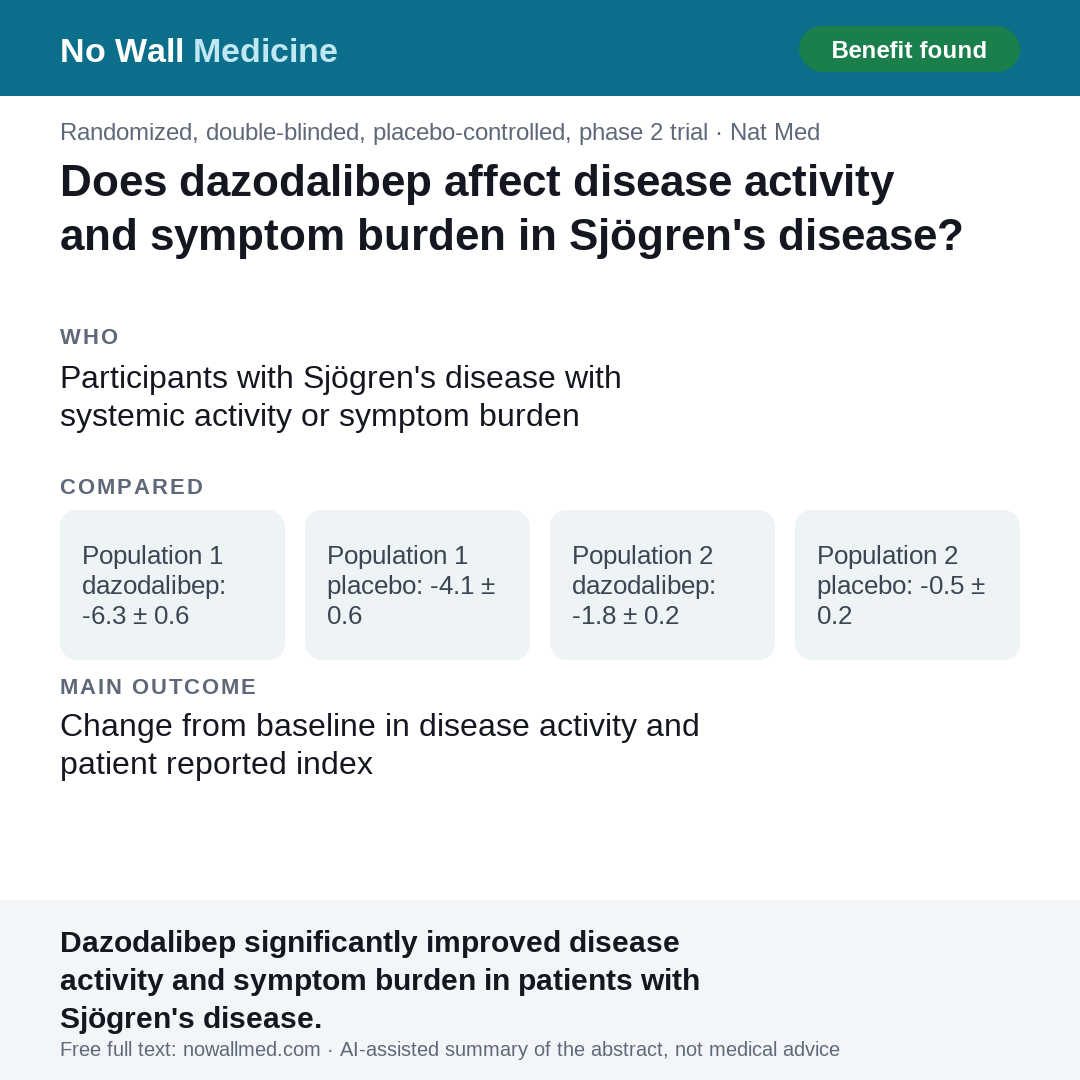
CD40 ligand antagonist dazodalibep in Sjögren's disease: a randomized, double-blinded, placebo-controlled, phase 2 trial
Randomized, double-blinded, placebo-controlled, phase 2 trialBenefit found
Does dazodalibep affect disease activity and symptom burden in Sjögren's disease?
Who
Participants with Sjögren's disease with systemic activity or symptom burden
Compared
Population 1 dazodalibep: -6.3 ± 0.6
Population 1 placebo: -4.1 ± 0.6
Population 2 dazodalibep: -1.8 ± 0.2
Population 2 placebo: -0.5 ± 0.2
Main outcome
Change from baseline in disease activity and patient reported index
Bottom line: Dazodalibep significantly improved disease activity and symptom burden in patients with Sjögren's disease.
Nat Med · 2024-06-05Download image
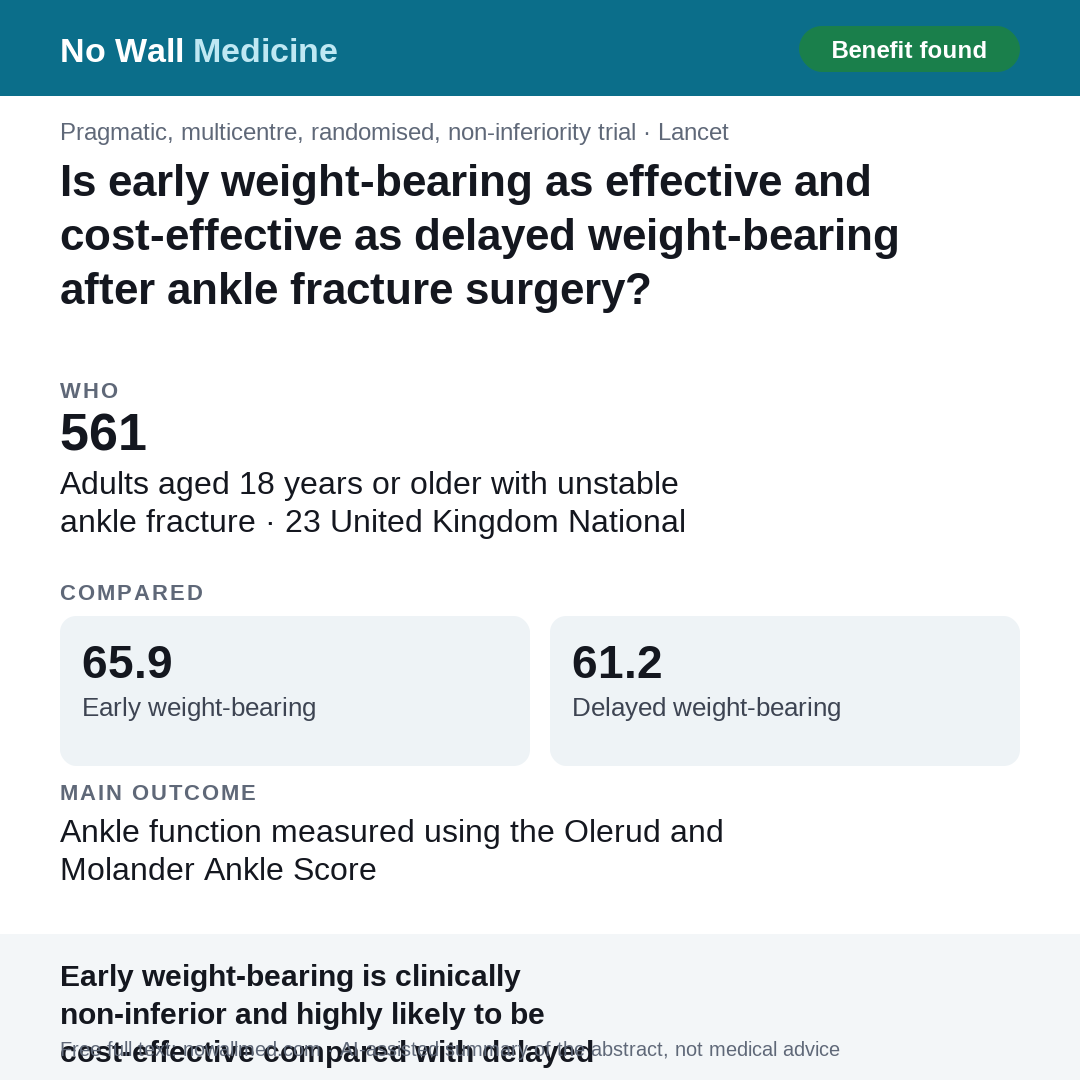
Early versus delayed weight-bearing following operatively treated ankle fracture (WAX): a non-inferiority, multicentre, randomised controlled trial
Pragmatic, multicentre, randomised, non-inferiority trialBenefit found
Is early weight-bearing as effective and cost-effective as delayed weight-bearing after ankle fracture surgery?
Who
561
Adults aged 18 years or older with unstable ankle fracture · 23 United Kingdom National Health Service hospitals
Compared
65.9Early weight-bearing
61.2Delayed weight-bearing
Main outcome
Ankle function measured using the Olerud and Molander Ankle Score
Result: adjusted mean difference 4.47 (95% CI 0.58 to 8.37)
Bottom line: Early weight-bearing is clinically non-inferior and highly likely to be cost-effective compared with delayed weight-bearing.
Funded by: National Institute for Health and Care Research
Lancet · 2024-06-04Download image
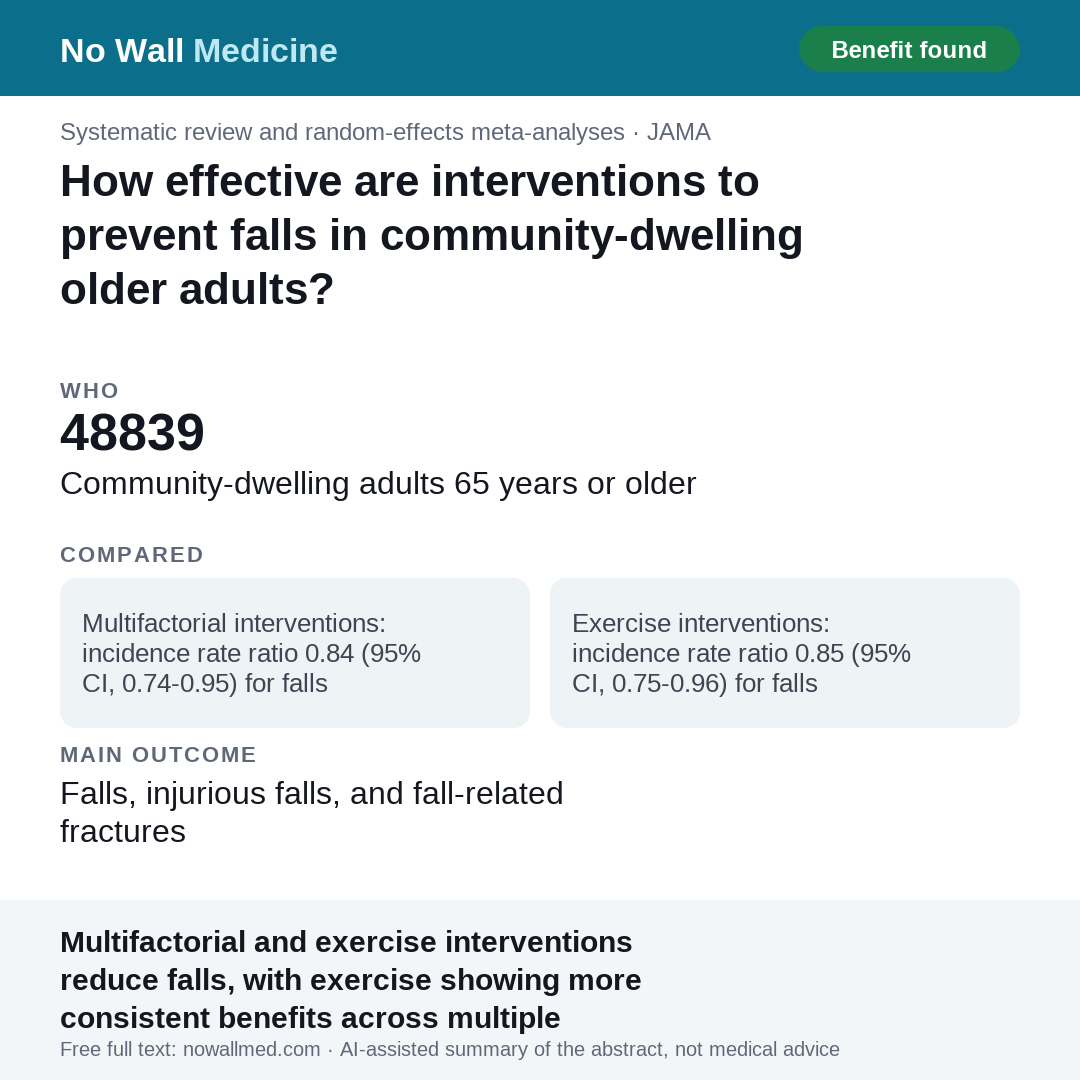
Interventions to Prevent Falls in Older Adults: Updated Evidence Report and Systematic Review for the US Preventive Services Task Force
Systematic review and random-effects meta-analysesBenefit found
How effective are interventions to prevent falls in community-dwelling older adults?
Who
48839
Community-dwelling adults 65 years or older
Compared
Multifactorial interventions: incidence rate ratio 0.84 (95% CI, 0.74-0.95) for falls
Exercise interventions: incidence rate ratio 0.85 (95% CI, 0.75-0.96) for falls
Main outcome
Falls, injurious falls, and fall-related fractures
Bottom line: Multifactorial and exercise interventions reduce falls, with exercise showing more consistent benefits across multiple outcomes.
JAMA · 2024-06-04Download image
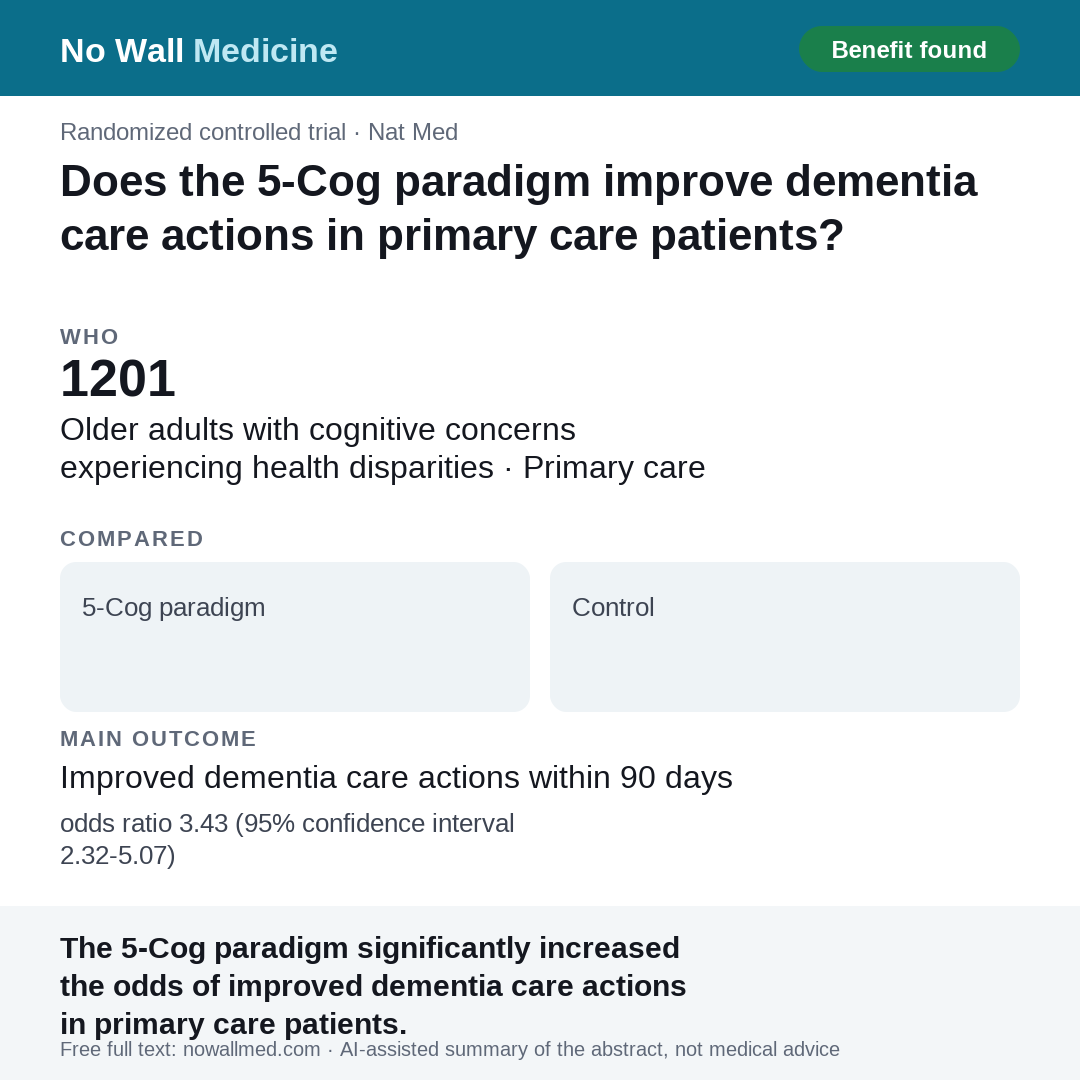
Non-literacy biased, culturally fair cognitive detection tool in primary care patients with cognitive concerns: a randomized controlled trial
Randomized controlled trialBenefit found
Does the 5-Cog paradigm improve dementia care actions in primary care patients?
Who
1201
Older adults with cognitive concerns experiencing health disparities · Primary care
Compared
5-Cog paradigm
Control
Main outcome
Improved dementia care actions within 90 days
Result: odds ratio 3.43 (95% confidence interval 2.32-5.07)
Bottom line: The 5-Cog paradigm significantly increased the odds of improved dementia care actions in primary care patients.
Nat Med · 2024-06-04Download image
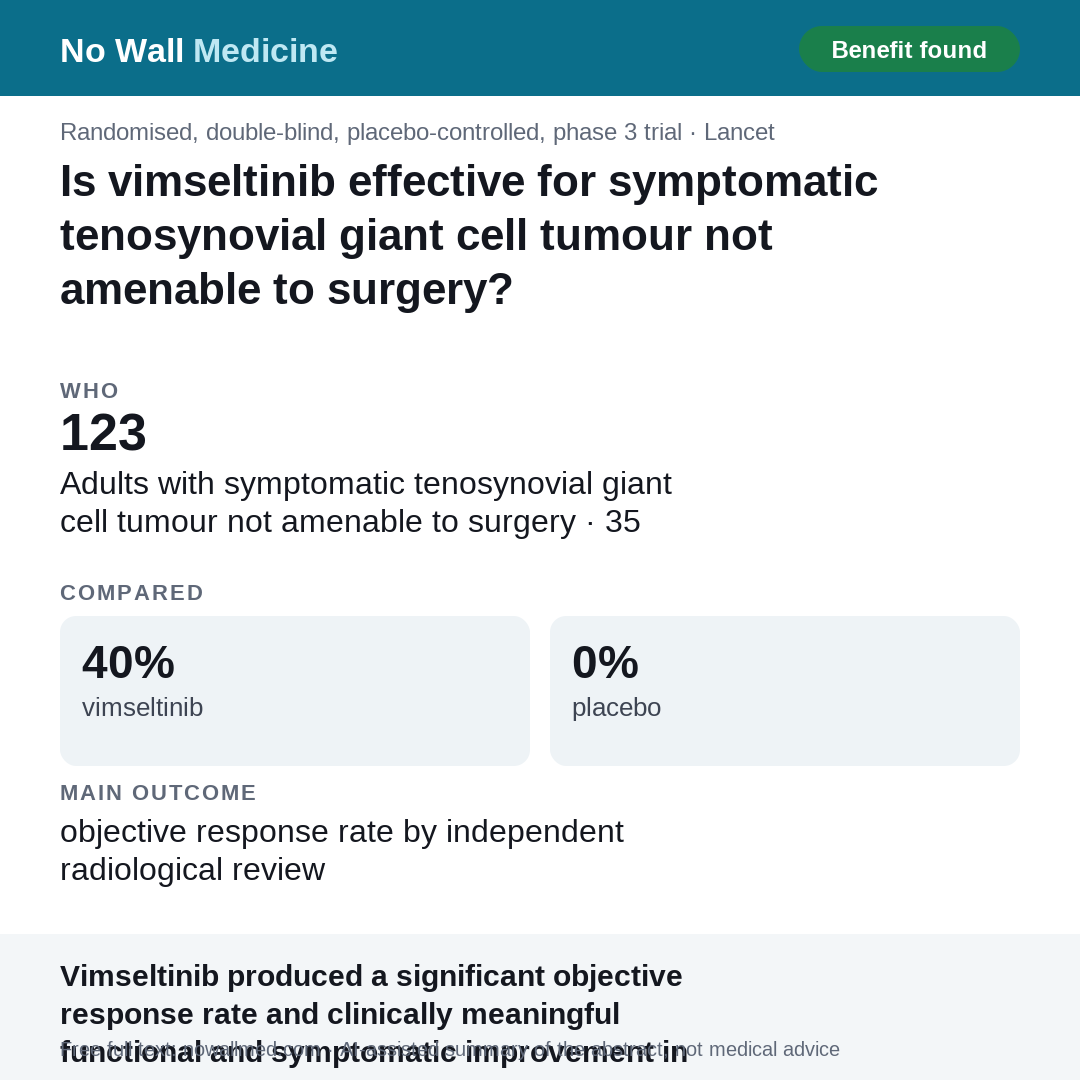
Vimseltinib versus placebo for tenosynovial giant cell tumour (MOTION): a multicentre, randomised, double-blind, placebo-controlled, phase 3 trial
Randomised, double-blind, placebo-controlled, phase 3 trialBenefit found
Is vimseltinib effective for symptomatic tenosynovial giant cell tumour not amenable to surgery?
Who
123
Adults with symptomatic tenosynovial giant cell tumour not amenable to surgery · 35 specialised hospitals in 13 countries
Compared
40%vimseltinib (33 of 83 patients)
0%placebo (none of 40)
Main outcome
objective response rate by independent radiological review
Result: difference 40% (95% CI 29-51)
Bottom line: Vimseltinib produced a significant objective response rate and clinically meaningful functional and symptomatic improvement in patients with tenosynovial giant cell tumour.
Funded by: Deciphera Pharmaceuticals
Lancet · 2024-06-03Download image
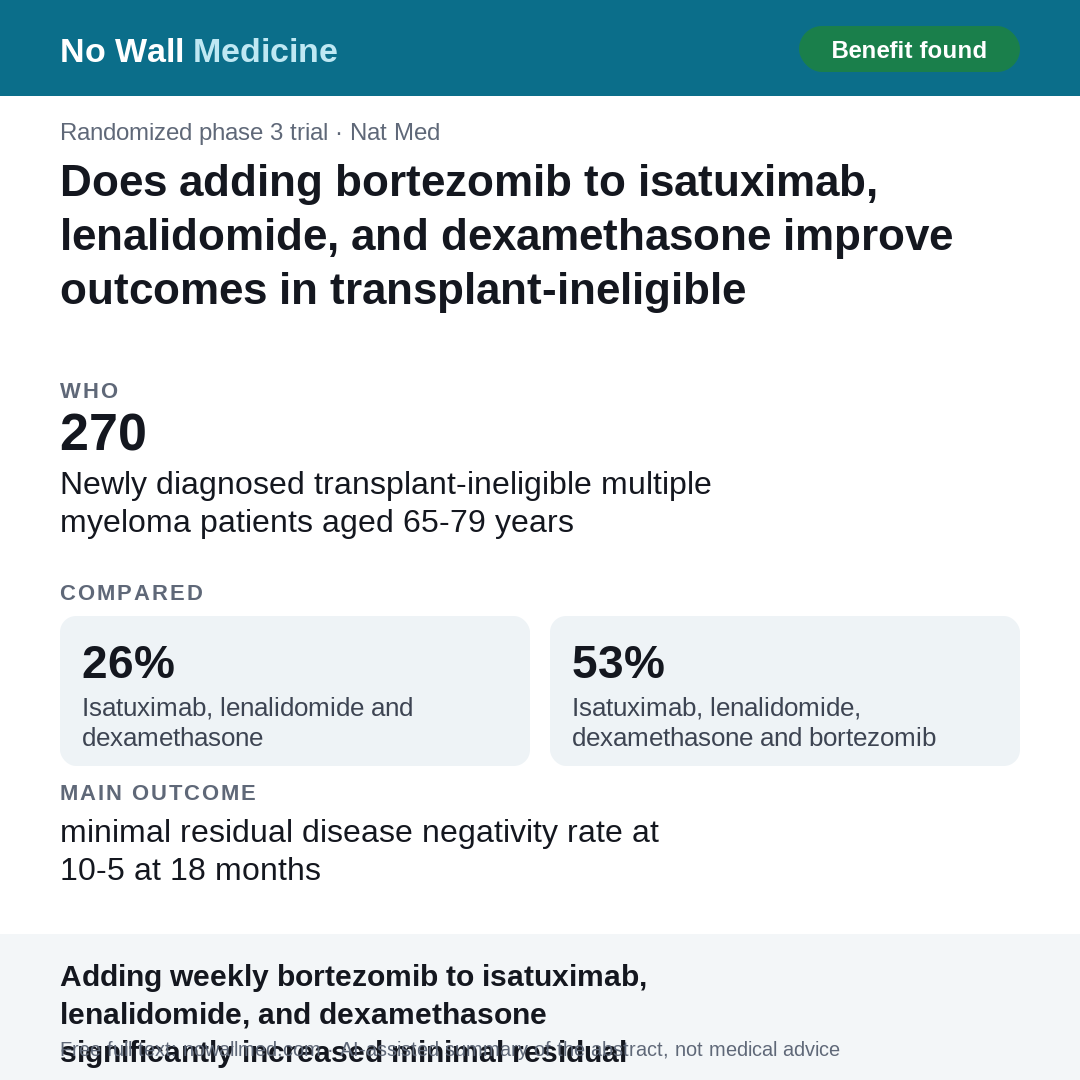
Isatuximab, lenalidomide, dexamethasone and bortezomib in transplant-ineligible multiple myeloma: the randomized phase 3 BENEFIT trial
Randomized phase 3 trialBenefit found
Does adding bortezomib to isatuximab, lenalidomide, and dexamethasone improve outcomes in transplant-ineligible multiple myeloma?
Who
270
Newly diagnosed transplant-ineligible multiple myeloma patients aged 65-79 years
Compared
26%Isatuximab, lenalidomide and dexamethasone (95% CI 19-34)
53%Isatuximab, lenalidomide, dexamethasone and bortezomib (95% CI 44-61)
Main outcome
minimal residual disease negativity rate at 10-5 at 18 months
Result: odds ratio 3.16 (95% CI 1.89-5.28)
Bottom line: Adding weekly bortezomib to isatuximab, lenalidomide, and dexamethasone significantly increased minimal residual disease negativity rates.
Nat Med · 2024-06-03Download image
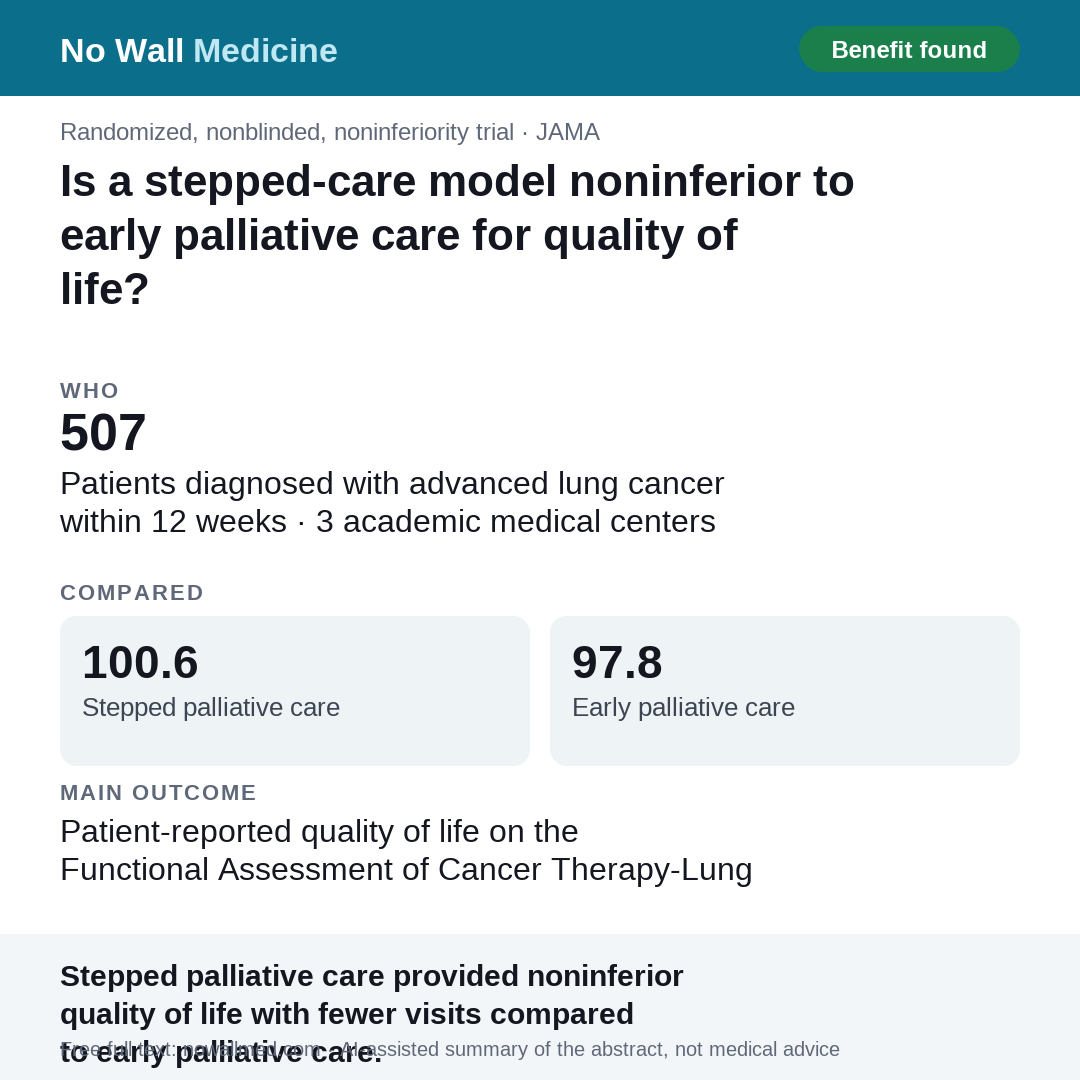
Stepped Palliative Care for Patients With Advanced Lung Cancer: A Randomized Clinical Trial
Randomized, nonblinded, noninferiority trialBenefit found
Is a stepped-care model noninferior to early palliative care for quality of life?
Who
507
Patients diagnosed with advanced lung cancer within 12 weeks · 3 academic medical centers in Massachusetts, Pennsylvania, and North Carolina
Compared
100.6Stepped palliative care
97.8Early palliative care
Main outcome
Patient-reported quality of life on the Functional Assessment of Cancer Therapy-Lung
Result: difference 2.9; lower 1-sided 95% confidence limit, -0.1
Bottom line: Stepped palliative care provided noninferior quality of life with fewer visits compared to early palliative care.
Limitation: Noninferiority was not demonstrated for days in hospice.
JAMA · 2024-06-02Download image