Visual abstracts
New randomized trials and meta-analyses from leading journals at a glance: who was studied, what was compared, and what was found. Every paper is free to read in full.
All specialtiesCardiology 4877Oncology 4138Gastroenterology & Hepatology 1942Infectious Disease 3837Neurology 1905Psychiatry & Mental Health 2273Pulmonology 2143Critical Care 1365Endocrinology & Diabetes 2580Pediatrics 2980Surgery 2559Orthopedics & Sports Medicine 931Neurosurgery 537Cardiothoracic & Vascular Surgery 674Plastic & Reconstructive Surgery 591Nephrology 1133Rheumatology 823Hematology 1109Dermatology 621Ophthalmology 543Obstetrics & Gynecology 1686Public & Global Health 1058Radiology & Imaging 648Anesthesiology 986Urology 764ENT (Otolaryngology) 503Emergency Medicine 511Allergy & Immunology 313Geriatrics 981Family Medicine & Primary Care 562Medical Genetics & Genomics 676Pathology & Laboratory Medicine 159Physical Medicine & Rehabilitation 757Palliative Care 444Nutrition 1588Digital Health & AI 2201General Medicine 321
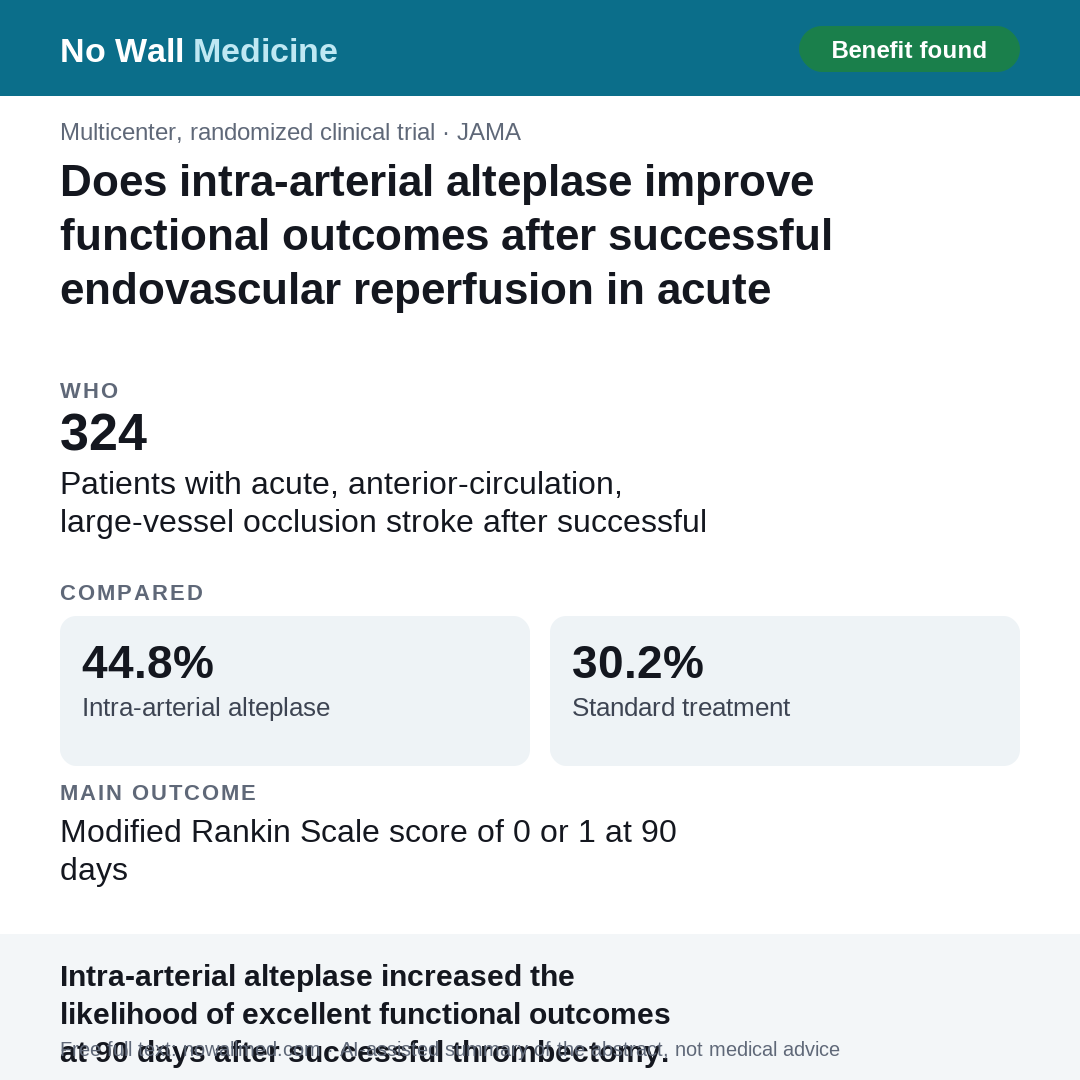
Intra-Arterial Alteplase After Successful Endovascular Reperfusion in Acute Stroke: The PEARL Randomized Clinical Trial
Multicenter, randomized clinical trialBenefit found
Does intra-arterial alteplase improve functional outcomes after successful endovascular reperfusion in acute stroke?
Who
324
Patients with acute, anterior-circulation, large-vessel occlusion stroke after successful reperfusion · 28 hospitals in China
Compared
44.8%Intra-arterial alteplase (73/163)
30.2%Standard treatment (48/159)
Main outcome
Modified Rankin Scale score of 0 or 1 at 90 days
Result: adjusted risk ratio 1.45 (95% CI 1.08-1.96)
Bottom line: Intra-arterial alteplase increased the likelihood of excellent functional outcomes at 90 days after successful thrombectomy.
JAMA · 2025-10-13Download image
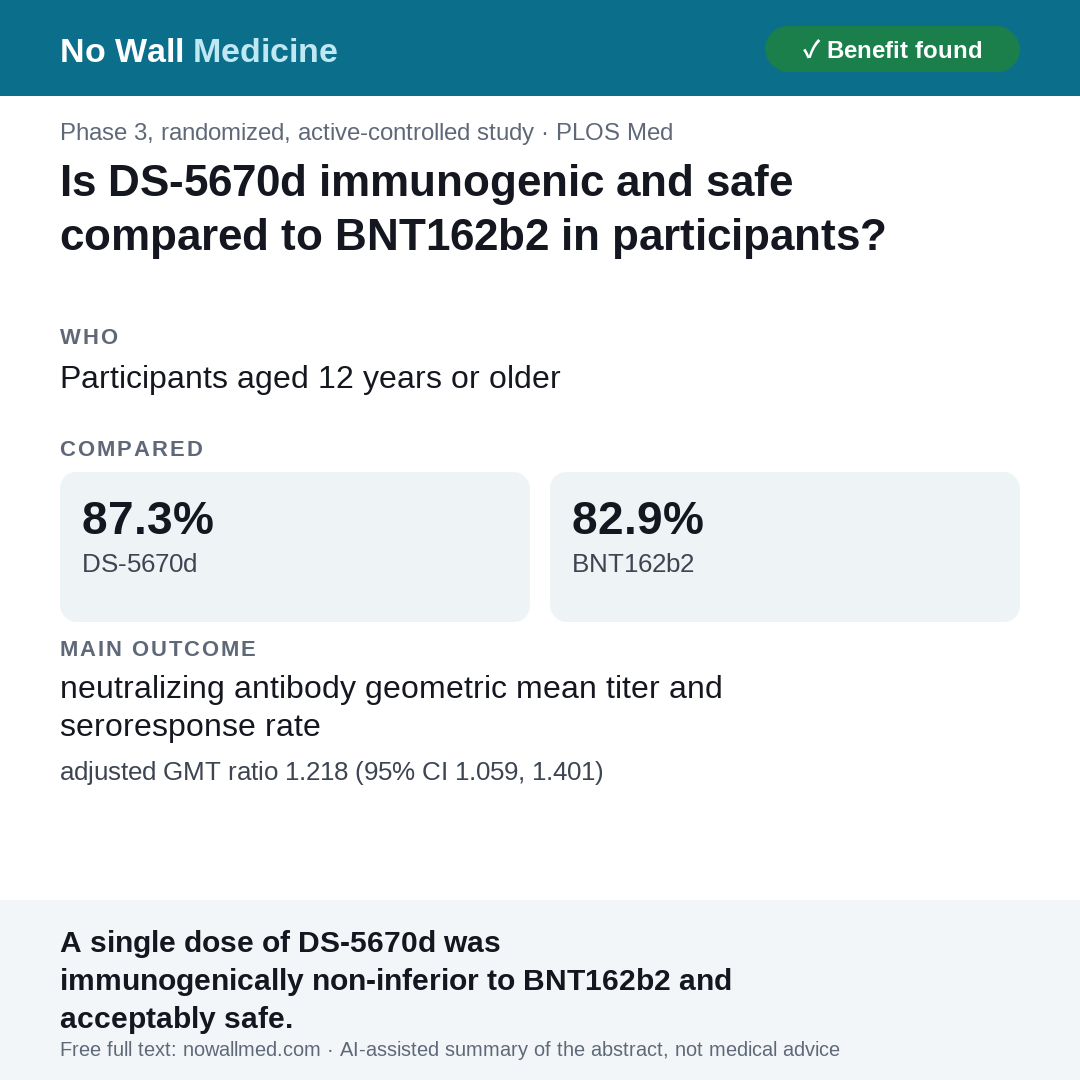
Immunogenicity and safety of DS-5670d, an omicron XBB.1.5-targeting COVID-19 mRNA vaccine: A phase 3, randomized, active-controlled study
Phase 3, randomized, active-controlled studyBenefit found
Is DS-5670d immunogenic and safe compared to BNT162b2 in participants?
Who
Participants aged 12 years or older
Compared
87.3%DS-5670d
82.9%BNT162b2
Main outcome
neutralizing antibody geometric mean titer and seroresponse rate
Result: adjusted GMT ratio 1.218 (95% CI 1.059, 1.401)
Bottom line: A single dose of DS-5670d was immunogenically non-inferior to BNT162b2 and acceptably safe.
Limitation: The main study limitation was the short duration of follow-up.
PLOS Med · 2025-10-13Download image
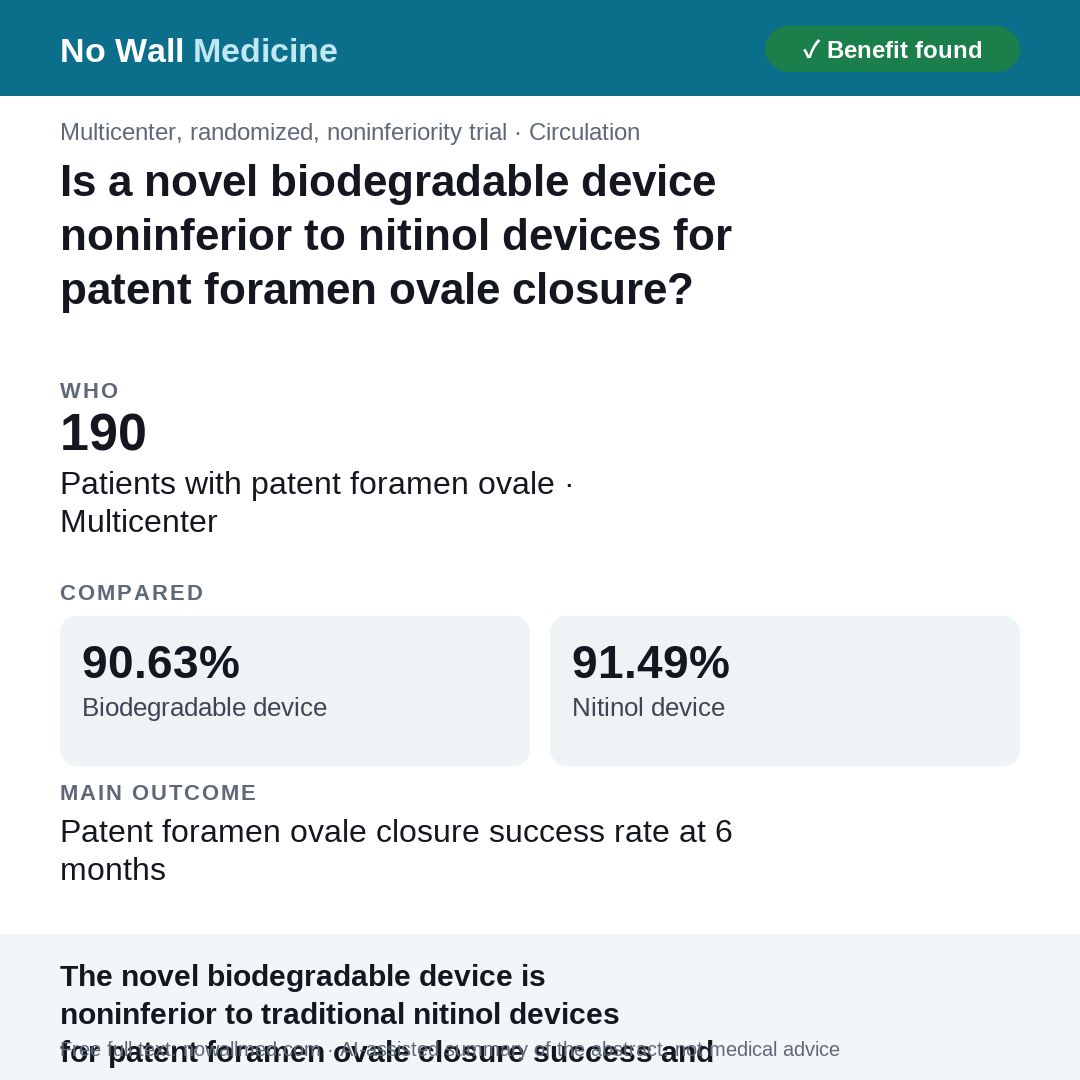
Transcatheter Closure of Patent Foramen Ovale With a Novel Biodegradable Device: A Prospective, Multicenter, Randomized Controlled Clinical Trial
Multicenter, randomized, noninferiority trialBenefit found
Is a novel biodegradable device noninferior to nitinol devices for patent foramen ovale closure?
Who
190
Patients with patent foramen ovale · Multicenter
Compared
90.63%Biodegradable device
91.49%Nitinol device
Main outcome
Patent foramen ovale closure success rate at 6 months
Result: absolute difference lower limit 95% CI -8.98%
Bottom line: The novel biodegradable device is noninferior to traditional nitinol devices for patent foramen ovale closure success and safety.
Circulation · 2025-10-13Download image
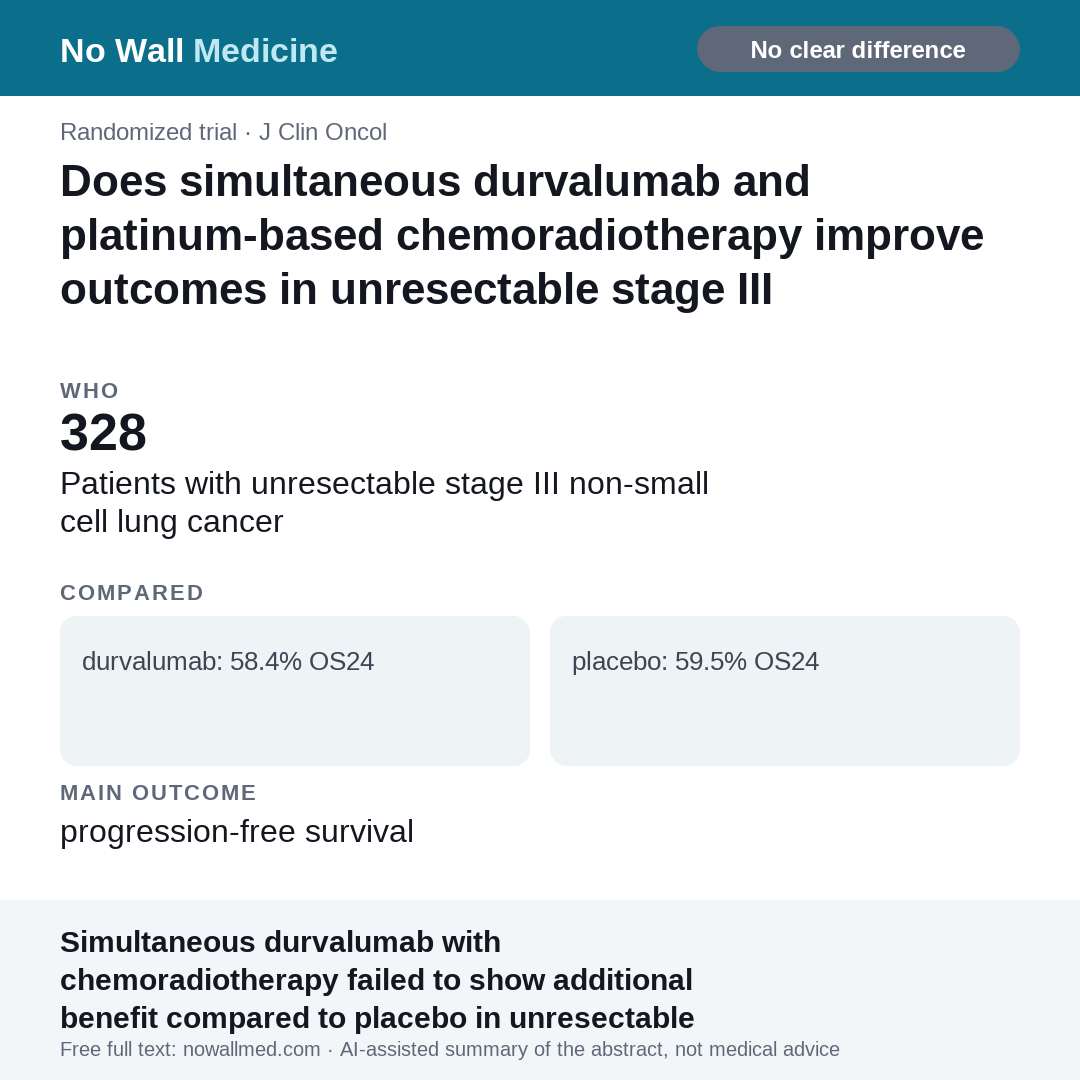
Simultaneous Durvalumab and Platinum-Based Chemoradiotherapy in Unresectable Stage III Non-Small Cell Lung Cancer: The Phase III PACIFIC-2 Study
Randomized trialNo clear difference
Does simultaneous durvalumab and platinum-based chemoradiotherapy improve outcomes in unresectable stage III non-small cell lung cancer?
Who
328
Patients with unresectable stage III non-small cell lung cancer
Compared
durvalumab: 58.4% OS24
placebo: 59.5% OS24
Main outcome
progression-free survival
Result: hazard ratio 0.85 (95% CI 0.65 to 1.12)
Bottom line: Simultaneous durvalumab with chemoradiotherapy failed to show additional benefit compared to placebo in unresectable stage III non-small cell lung cancer.
J Clin Oncol · 2025-10-13Download image
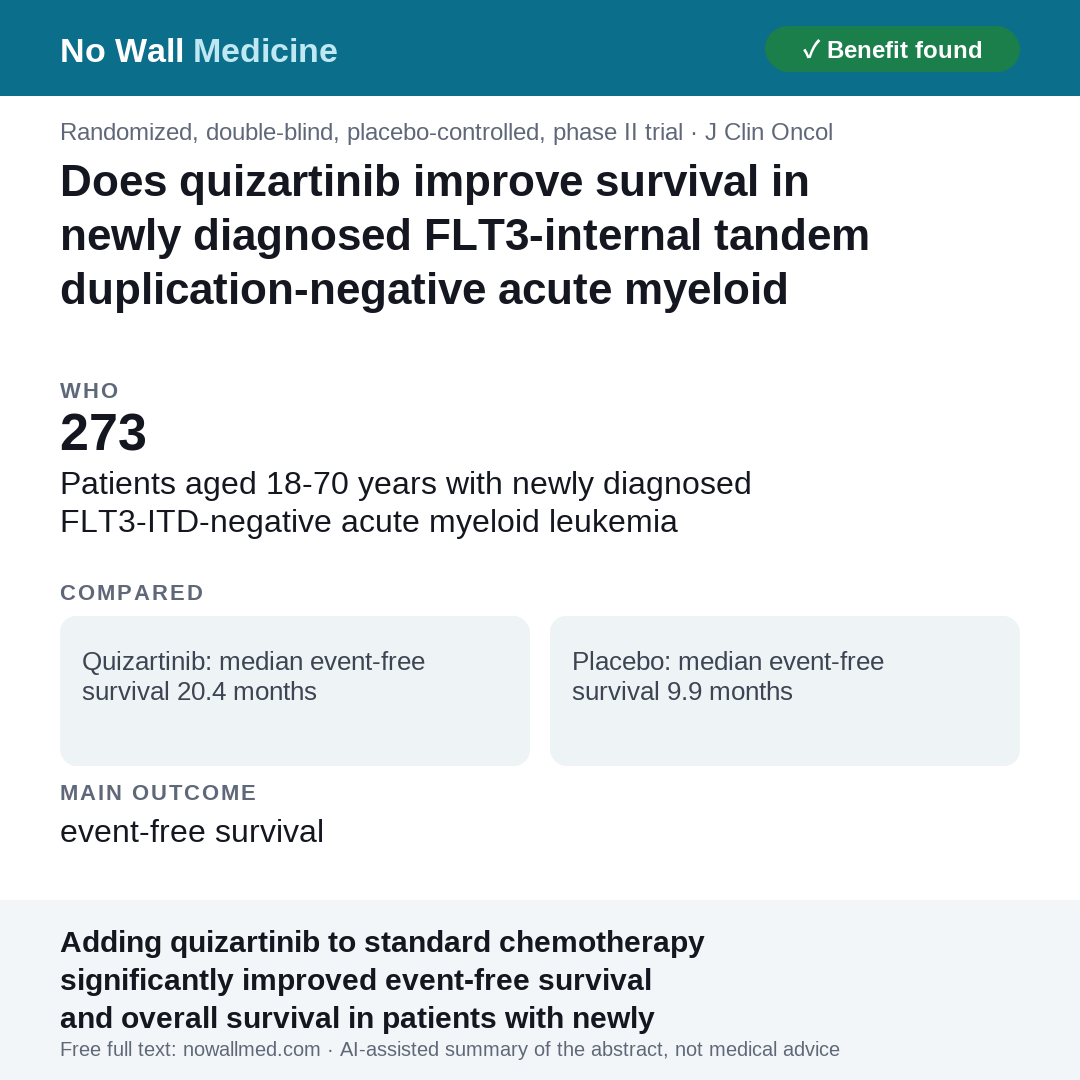
Quizartinib for Newly Diagnosed FLT3-Internal Tandem Duplication-Negative AML: The Randomized, Double-Blind, Placebo-Controlled, Phase II QUIWI Study
Randomized, double-blind, placebo-controlled, phase II trialBenefit found
Does quizartinib improve survival in newly diagnosed FLT3-internal tandem duplication-negative acute myeloid leukemia?
Who
273
Patients aged 18-70 years with newly diagnosed FLT3-ITD-negative acute myeloid leukemia
Compared
Quizartinib: median event-free survival 20.4 months
Placebo: median event-free survival 9.9 months
Main outcome
event-free survival
Bottom line: Adding quizartinib to standard chemotherapy significantly improved event-free survival and overall survival in patients with newly diagnosed FLT3-ITD-negative acute myeloid leukemia.
J Clin Oncol · 2025-10-13Download image
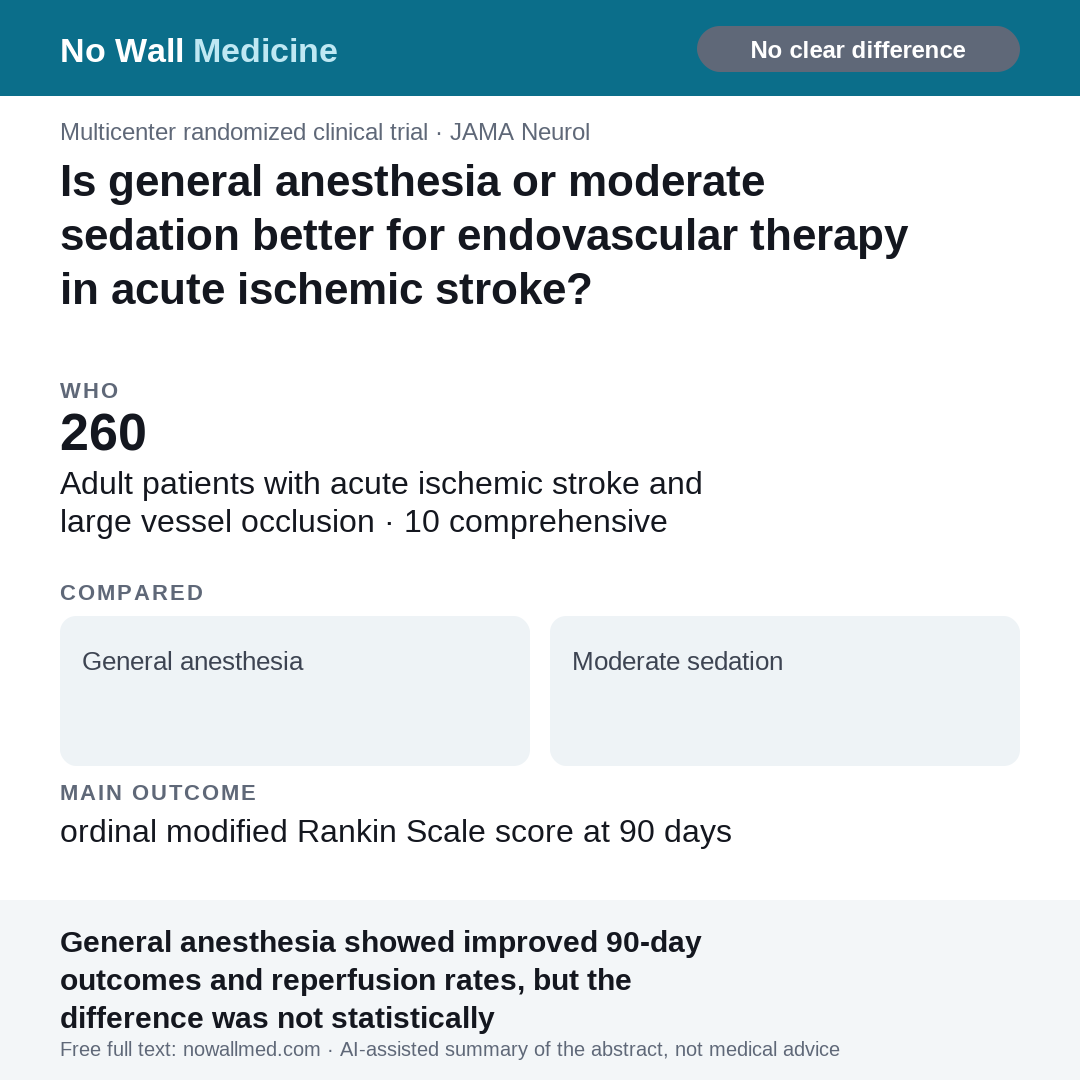
Sedation vs General Anesthesia for Endovascular Therapy in Acute Ischemic Stroke: The SEGA Randomized Clinical Trial
Multicenter randomized clinical trialNo clear difference
Is general anesthesia or moderate sedation better for endovascular therapy in acute ischemic stroke?
Who
260
Adult patients with acute ischemic stroke and large vessel occlusion · 10 comprehensive stroke centers in the US
Compared
General anesthesia
Moderate sedation
Main outcome
ordinal modified Rankin Scale score at 90 days
Result: odds ratio 1.22 (95% credible interval 0.79-1.87)
Bottom line: General anesthesia showed improved 90-day outcomes and reperfusion rates, but the difference was not statistically significant.
JAMA Neurol · 2025-10-13Download image
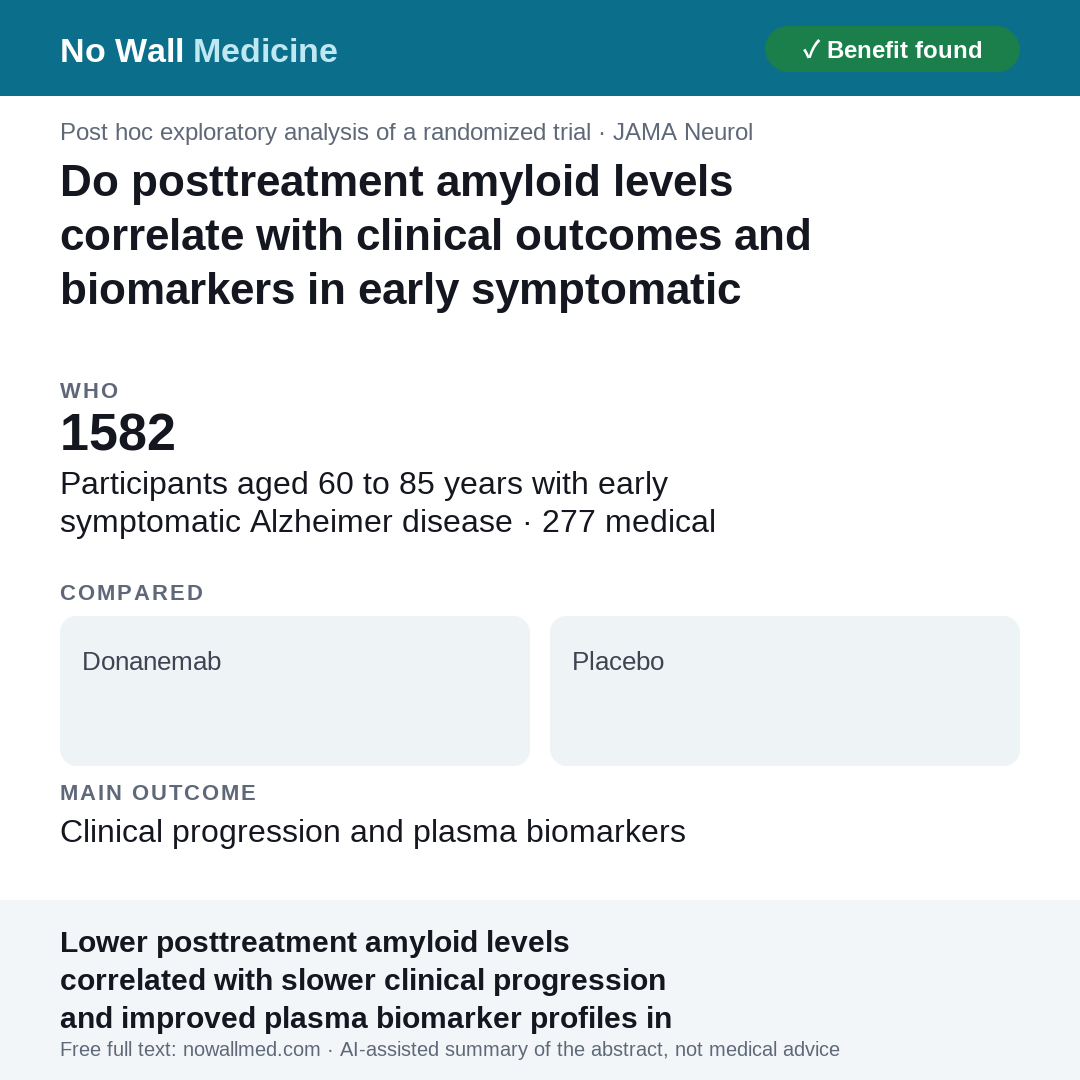
Posttreatment Amyloid Levels and Clinical Outcomes Following Donanemab for Early Symptomatic Alzheimer Disease: A Secondary Analysis of the TRAILBLAZER-ALZ 2 Randomized Clinical Trial
Post hoc exploratory analysis of a randomized trialBenefit found
Do posttreatment amyloid levels correlate with clinical outcomes and biomarkers in early symptomatic Alzheimer disease?
Who
1582
Participants aged 60 to 85 years with early symptomatic Alzheimer disease · 277 medical research centers in 8 countries
Compared
Donanemab
Placebo
Main outcome
Clinical progression and plasma biomarkers
Result: iADRS R2 0.73 (95% CI 0.37-0.97); CDR-SB R2 0.87 (95% CI 0.70-0.97)
Bottom line: Lower posttreatment amyloid levels correlated with slower clinical progression and improved plasma biomarker profiles in Alzheimer disease.
JAMA Neurol · 2025-10-13Download image
Efficacy and safety of pharmacological therapies for functional constipation in children: a systematic review and meta-analysis
Systematic review and meta-analysis of 59 randomized controlled trialsBenefit found
How effective and safe are pharmacological therapies for functional constipation in children?
Who
7045
Children aged 0 to younger than 18 years with functional constipation
Compared
Polyethylene glycol: RR 1·74 [95% CI 1·25-2·41]
Placebo
Main outcome
Treatment success, defecation frequency, and withdrawals due to adverse events
Result: RR 1·74 [95% CI 1·25-2·41]
Bottom line: Polyethylene glycol is probably more effective than placebo and other therapies for treating functional constipation in children.
Lancet Child Adolesc Health · 2025-10-13Download image

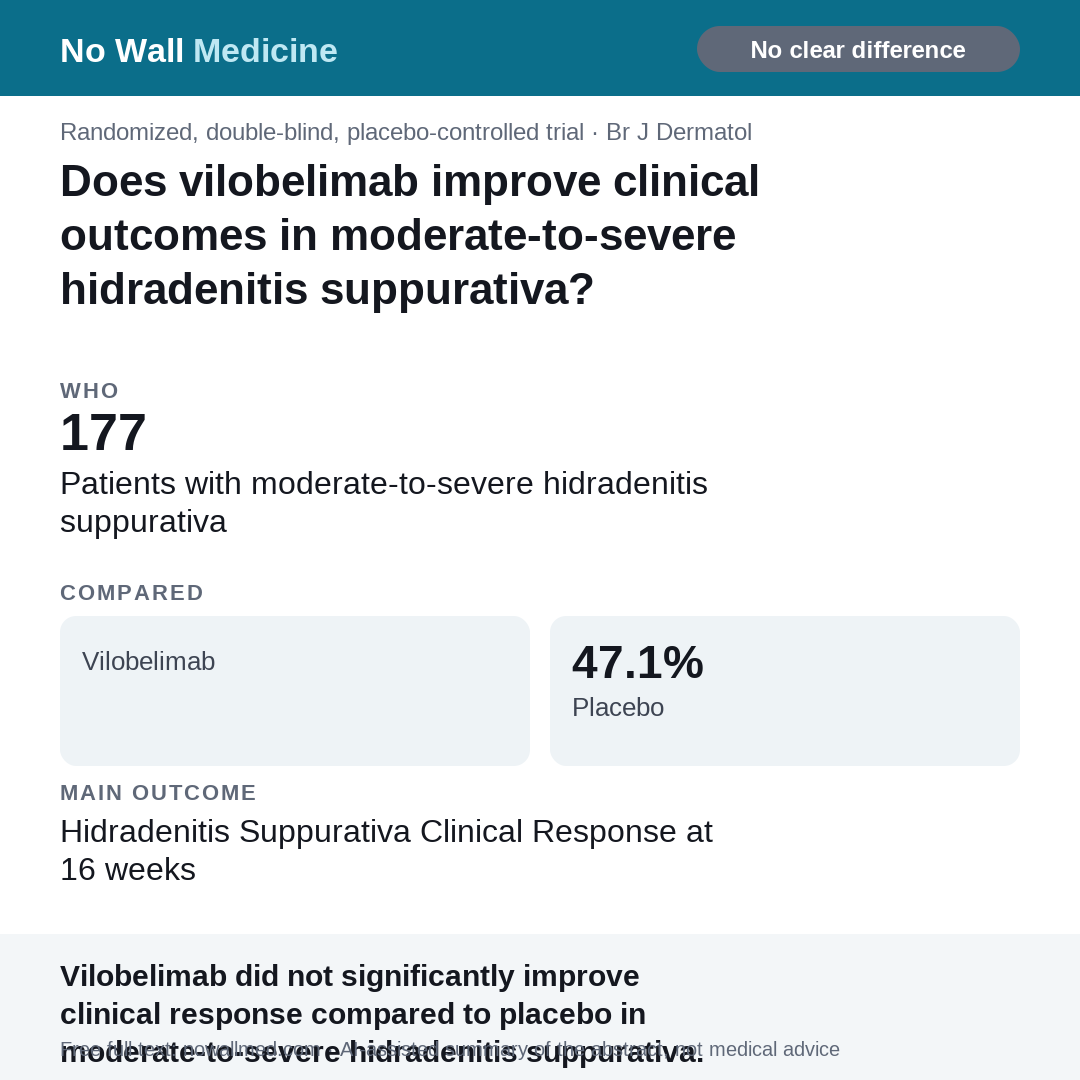
Vilobelimab to improve clinical outcomes in moderate-to-severe hidradenitis suppurativa through an adjunctive effect on draining tunnels: results of the SHINE double-blind placebo-controlled randomized trial
Randomized, double-blind, placebo-controlled trialNo clear difference
Does vilobelimab improve clinical outcomes in moderate-to-severe hidradenitis suppurativa?
Who
177
Patients with moderate-to-severe hidradenitis suppurativa
Compared
Vilobelimab
47.1%Placebo
Main outcome
Hidradenitis Suppurativa Clinical Response at 16 weeks
Bottom line: Vilobelimab did not significantly improve clinical response compared to placebo in moderate-to-severe hidradenitis suppurativa.
Br J Dermatol · 2025-10-13Download image
A Randomized Phase 1 Study Investigating Gut Microbiome Changes With Moxifloxacin vs Oral Vancomycin: Implications for Clostridioides difficile Risk
Phase 1, nonblinded, randomized clinical trialMixed results
How do moxifloxacin and oral vancomycin affect gut microbiome and metabolomic changes?
Who
Healthy volunteers aged 18 to 40 years
Compared
Moxifloxacin: minimal microbial disruption
Vancomycin: more significant changes in the microbiome
Main outcome
microbial taxonomic profile and metabolomic changes
Bottom line: Moxifloxacin causes specific microbiome and metabolomic changes, increasing risk for a shorter period than vancomycin.
J Infect Dis · 2025-10-13Download image

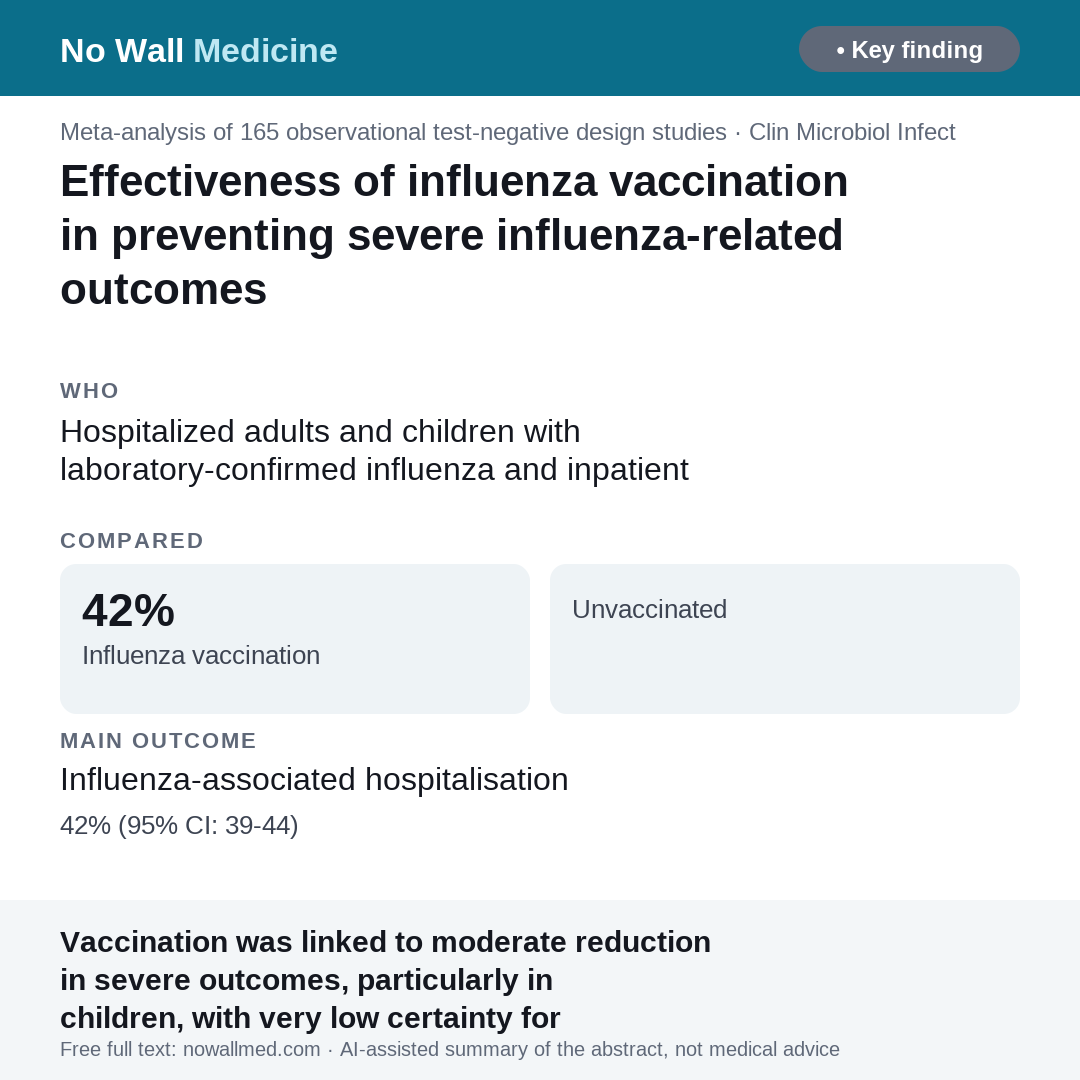
Effectiveness of influenza vaccination to prevent severe disease: a systematic review and meta-analysis of test-negative design studies
Meta-analysis of 165 test-negative design studiesBenefit found
Is influenza vaccination effective in preventing severe influenza-related outcomes?
Who
Hospitalized adults and children with laboratory-confirmed influenza
Compared
Influenza vaccination
No vaccination
Main outcome
Severe influenza-related outcomes
Result: 42% (95% CI: 39-44) against influenza-associated hospitalisation
Bottom line: Influenza vaccination moderately reduces severe outcomes, particularly in children and against influenza A(H1N1).
Limitation: Certainty of evidence was low to very low for most outcomes.
Clin Microbiol Infect · 2025-10-13Download image
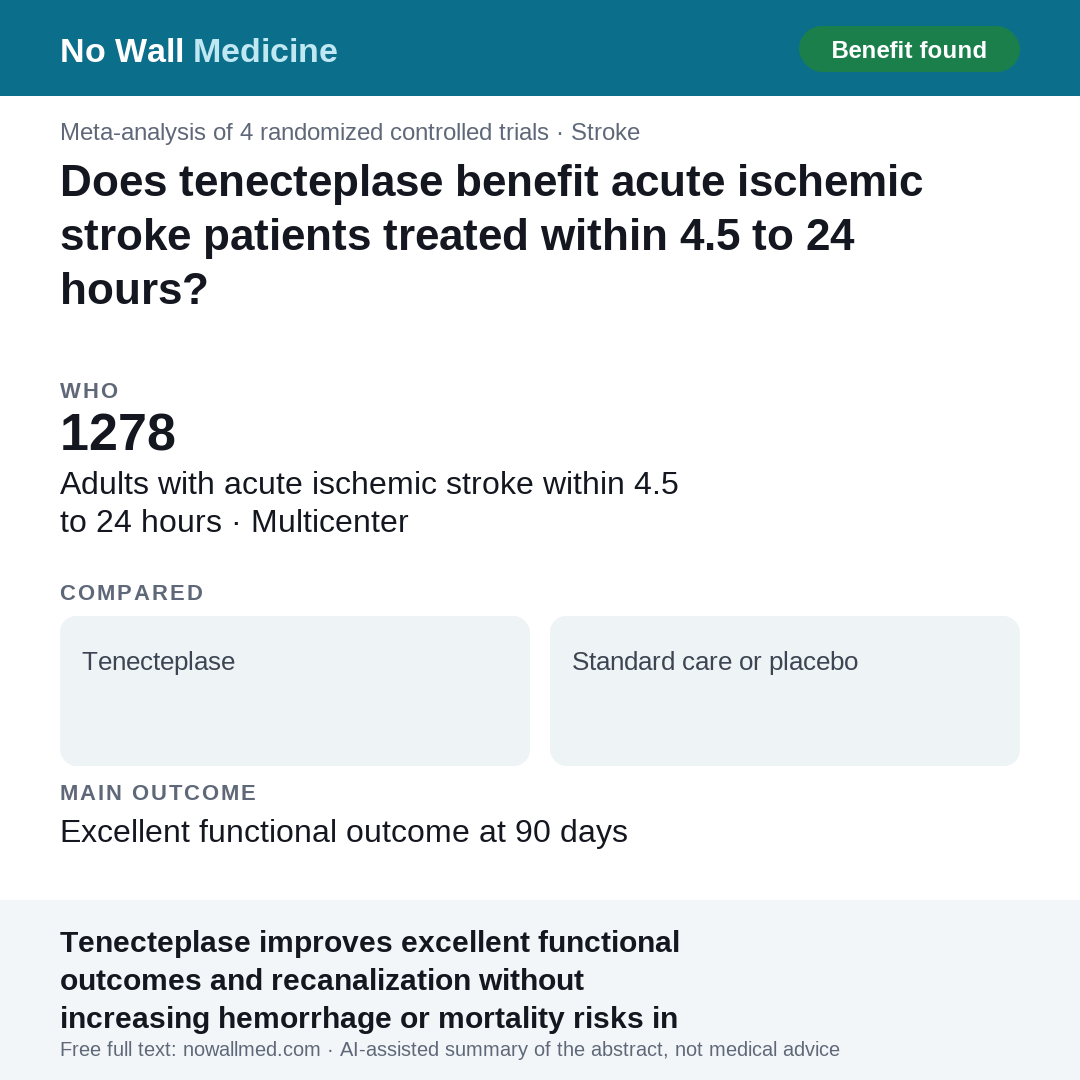
Tenecteplase for Acute Ischemic Stroke at 4.5 to 24 Hours: A Meta-Analysis of Randomized Controlled Trials
Meta-analysis of 4 randomized controlled trialsBenefit found
Does tenecteplase benefit acute ischemic stroke patients treated within 4.5 to 24 hours?
Who
1278
Adults with acute ischemic stroke within 4.5 to 24 hours · Multicenter
Compared
Tenecteplase
Standard care or placebo
Main outcome
Excellent functional outcome at 90 days
Result: odds ratio 1.34 (95% CI 1.06-1.71)
Bottom line: Tenecteplase improves excellent functional outcomes and recanalization without increasing hemorrhage or mortality risks in the extended window.
Stroke · 2025-10-13Download image
Malignant Transformation of Oral Leukoplakia and Proliferative Verrucous Leukoplakia and Its Biomarker Predictors: A Systematic Umbrella Review
Umbrella review of systematic reviews and meta-analysesMixed results
What are the malignant transformation rates and predictive biomarkers for oral leukoplakia?
Who
125,000
Patients with oral leukoplakia and proliferative verrucous leukoplakia
Compared
48%Proliferative verrucous leukoplakia
6%Oral leukoplakia
Main outcome
Malignant transformation prevalence and predictive biomarkers
Bottom line: Proliferative verrucous leukoplakia has higher transformation rates than oral leukoplakia, with DNA aneuploidy as a promising biomarker.
Head Neck · 2025-10-13Download image

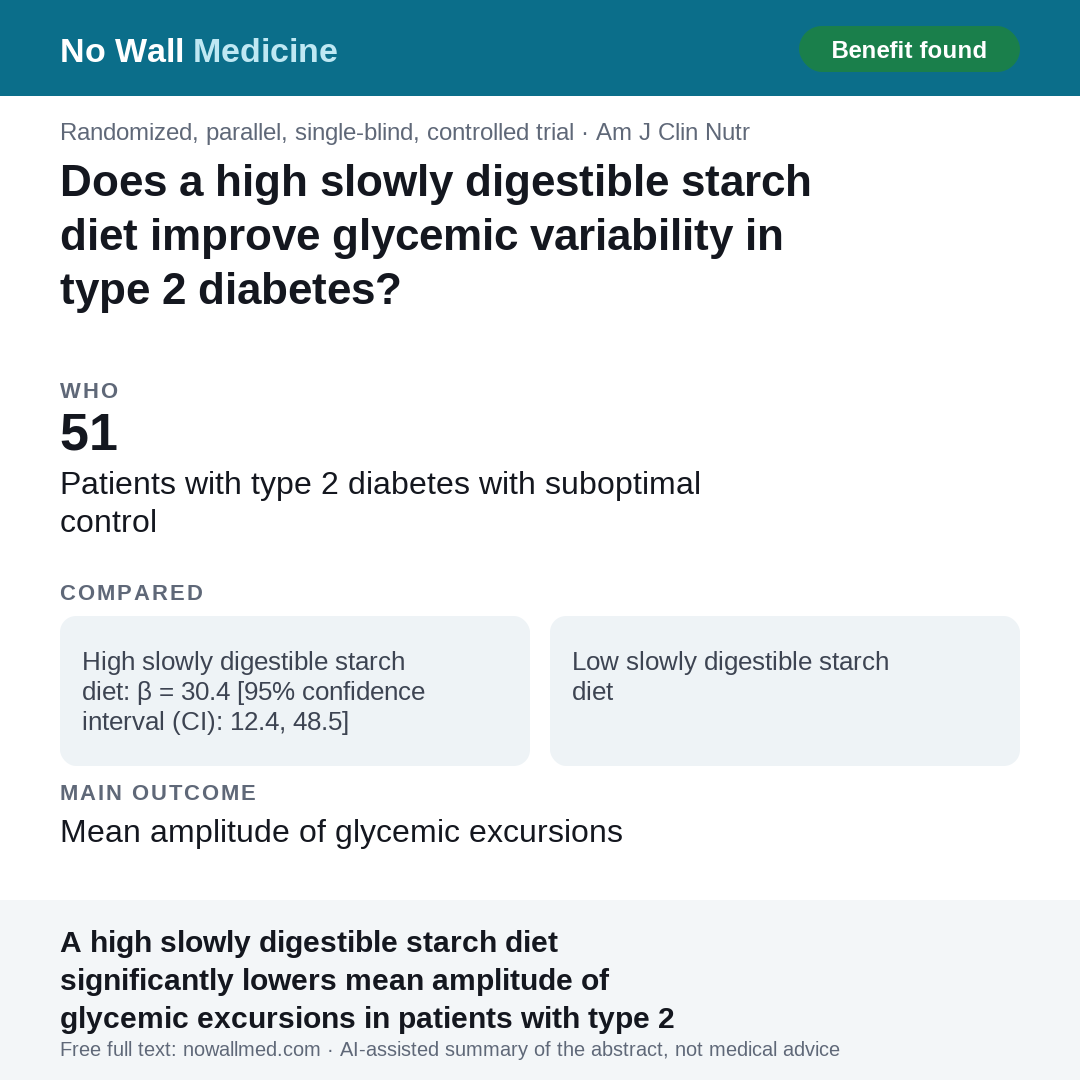
Optimizing glycemic variability in type 2 diabetes using simple dietary and culinary recommendations to modulate starch digestibility: a randomized controlled trial
Randomized, parallel, single-blind, controlled trialBenefit found
Does a high slowly digestible starch diet improve glycemic variability in type 2 diabetes?
Who
51
Patients with type 2 diabetes with suboptimal control
Compared
High slowly digestible starch diet: β = 30.4 [95% confidence interval (CI): 12.4, 48.5]
Low slowly digestible starch diet
Main outcome
Mean amplitude of glycemic excursions
Result: β = 30.4 [95% confidence interval (CI): 12.4, 48.5]
Bottom line: A high slowly digestible starch diet significantly lowers mean amplitude of glycemic excursions in patients with type 2 diabetes.
Am J Clin Nutr · 2025-10-13Download image
Prenatal and preschool micronutrient supplementation and behavioral outcomes in school-aged children in Nepal-a cohort study
Cohort follow-up study of two randomized trialsBenefit found
Does prenatal and preschool micronutrient supplementation affect behavioral outcomes in school-aged children?
Who
1255
School-aged children between 7 and 9 years old in rural Nepal · Rural Nepal
Compared
Prenatal iron-folic acid: lower oppositionality/hyperactivity and inattention scores
Prenatal iron-folic acid with zinc: reversed the positive effect seen with iron-folic acid
Prenatal multiple micronutrients: lower oppositionality and/or hyperactivity score
Preschool supplementation groups: reduced child inattention when assessed by parents
Main outcome
Attention-deficit hyperactivity disorder-related behaviors
Bottom line: Early life micronutrient supplementation shows potential benefit for child-related behavior outcomes in a South Asian setting.
Am J Clin Nutr · 2025-10-13Download image
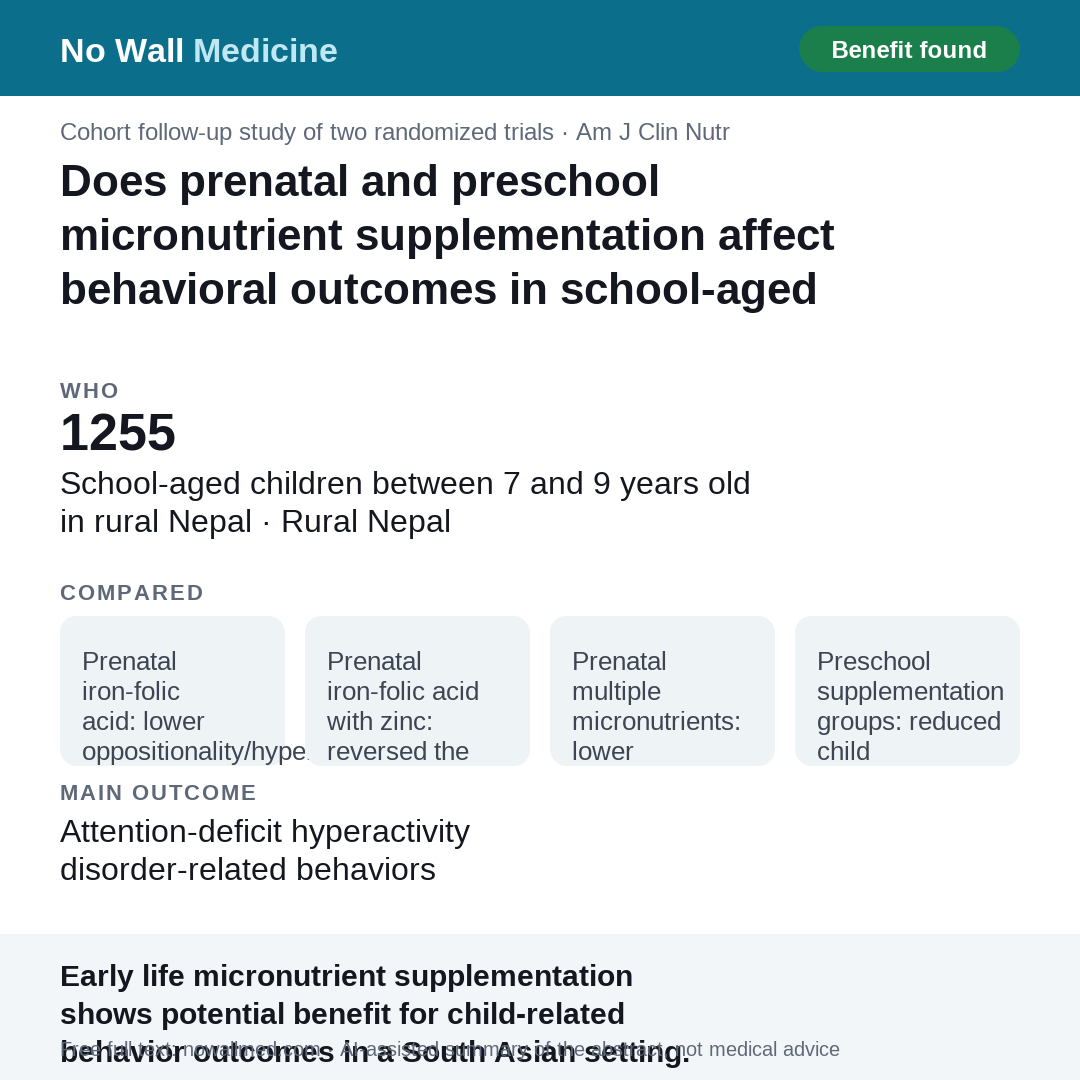
The impact of loneliness on healthcare costs and service utilisation and the cost-effectiveness of loneliness interventions: systematic review
Systematic reviewUnclear result
What are the impacts of loneliness on healthcare costs and intervention cost-effectiveness?
Who
53
Studies on loneliness impacts and interventions
Compared
Loneliness impact on costs and service use: inconsistent
Loneliness interventions economic evaluation: can be cost-effective
Main outcome
healthcare costs, service utilisation, and cost-effectiveness of interventions
Bottom line: Findings on loneliness impacts on healthcare systems and intervention economic evaluations were varied and inconsistent.
BJPsych Open · 2025-10-13Download image
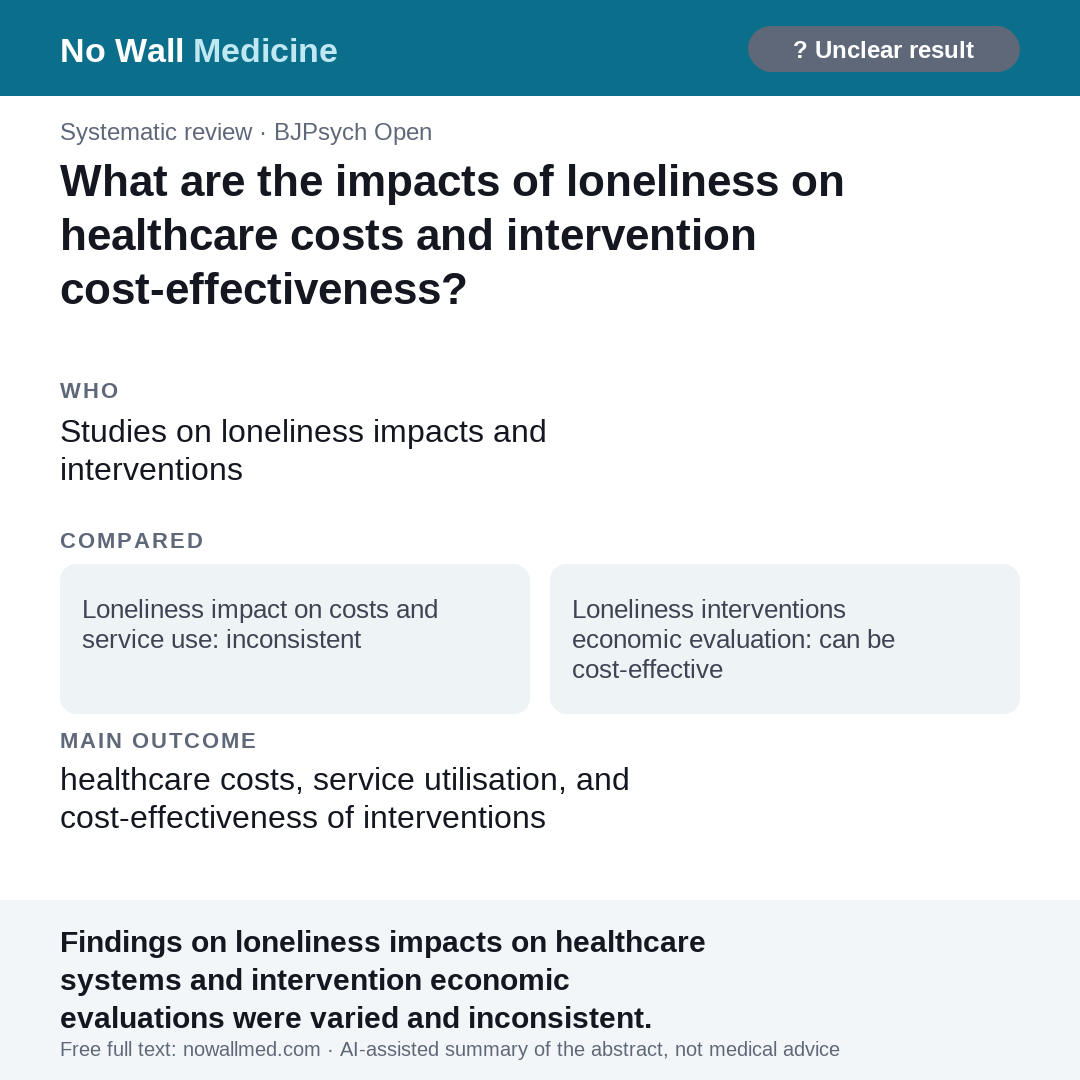
Application Effect of Different Robotic Surgery Systems in Radical Prostatectomy: A Comparative Study Based on a Network Meta-analysis
Network meta-analysisNo clear difference
Which robotic surgical system is most effective for radical prostatectomy in prostate cancer?
Who
2064
Patients undergoing radical prostatectomy for prostate cancer
Compared
Da Vinci: shortest operative time (surface under the cumulative ranking curve score: 90.7)
KangDuo: longest operative time
Hugo: lowest complication rate (surface under the cumulative ranking curve score: 84.3)
Hinotori
Main outcome
operative time, blood loss, hospital stay, complications, and functional outcomes
Bottom line: All robotic systems provided similar safety profiles, though Da Vinci was most efficient for operative time.
Eur Urol Open Sci · 2025-10-13Download image
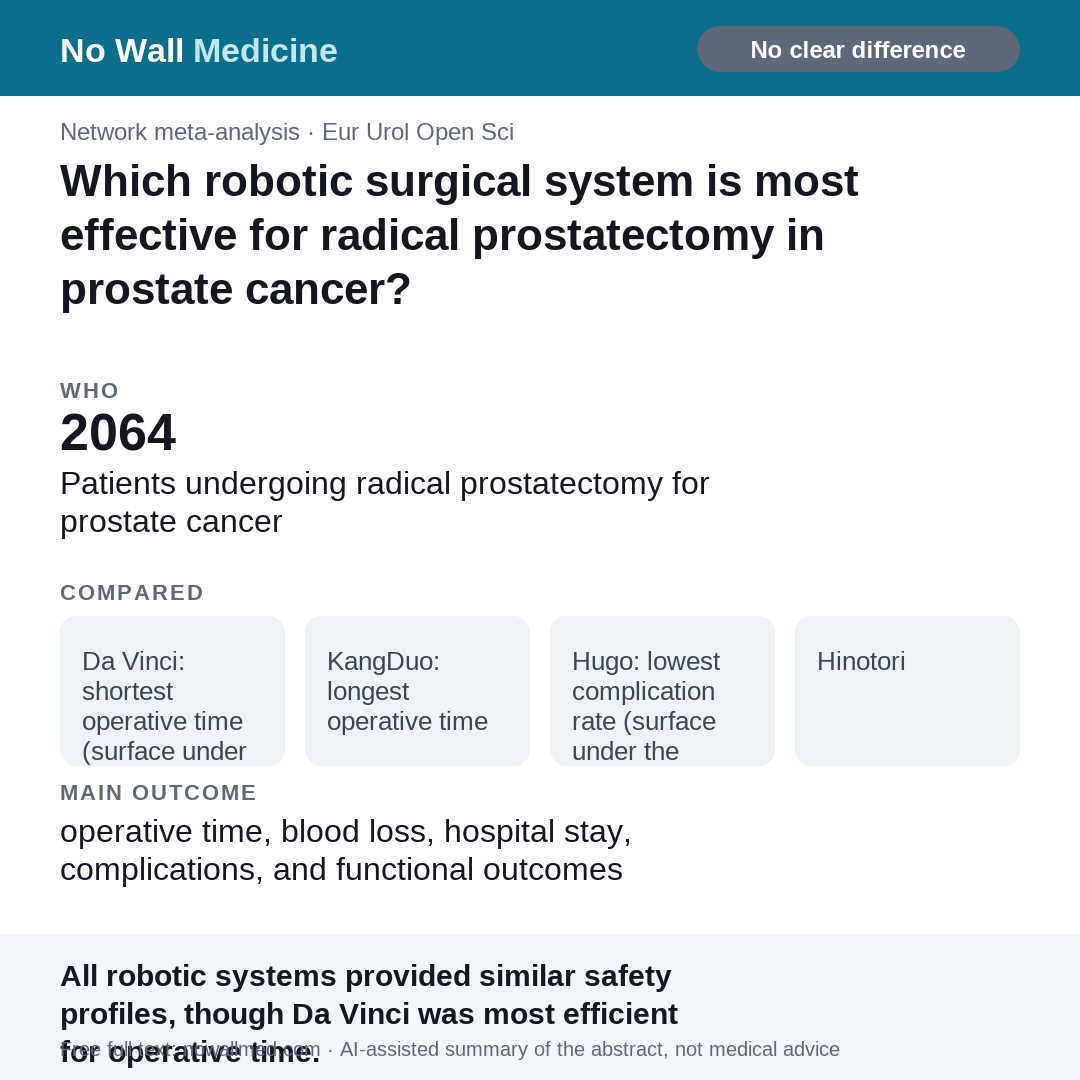
Individualized Perioperative Blood Pressure Management in Patients Undergoing Major Abdominal Surgery: The IMPROVE-multi Randomized Clinical Trial
Randomized, single-blind clinical trialNo clear difference
Does individualized versus routine perioperative blood pressure management improve clinical outcomes in major abdominal surgery?
Who
1134
Patients 45 years or older undergoing elective major abdominal surgery · 15 German university hospitals
Compared
33.5%Individualized blood pressure management (190/567)
30.5%Routine blood pressure management (173/567)
Main outcome
Composite of acute kidney injury, acute myocardial injury, nonfatal cardiac arrest, or death
Result: relative risk 1.10 (95% CI 0.93-1.30)
Bottom line: Individualized perioperative blood pressure management did not decrease composite clinical outcomes compared to routine management in high-risk abdominal surgery patients.
JAMA · 2025-10-12Download image
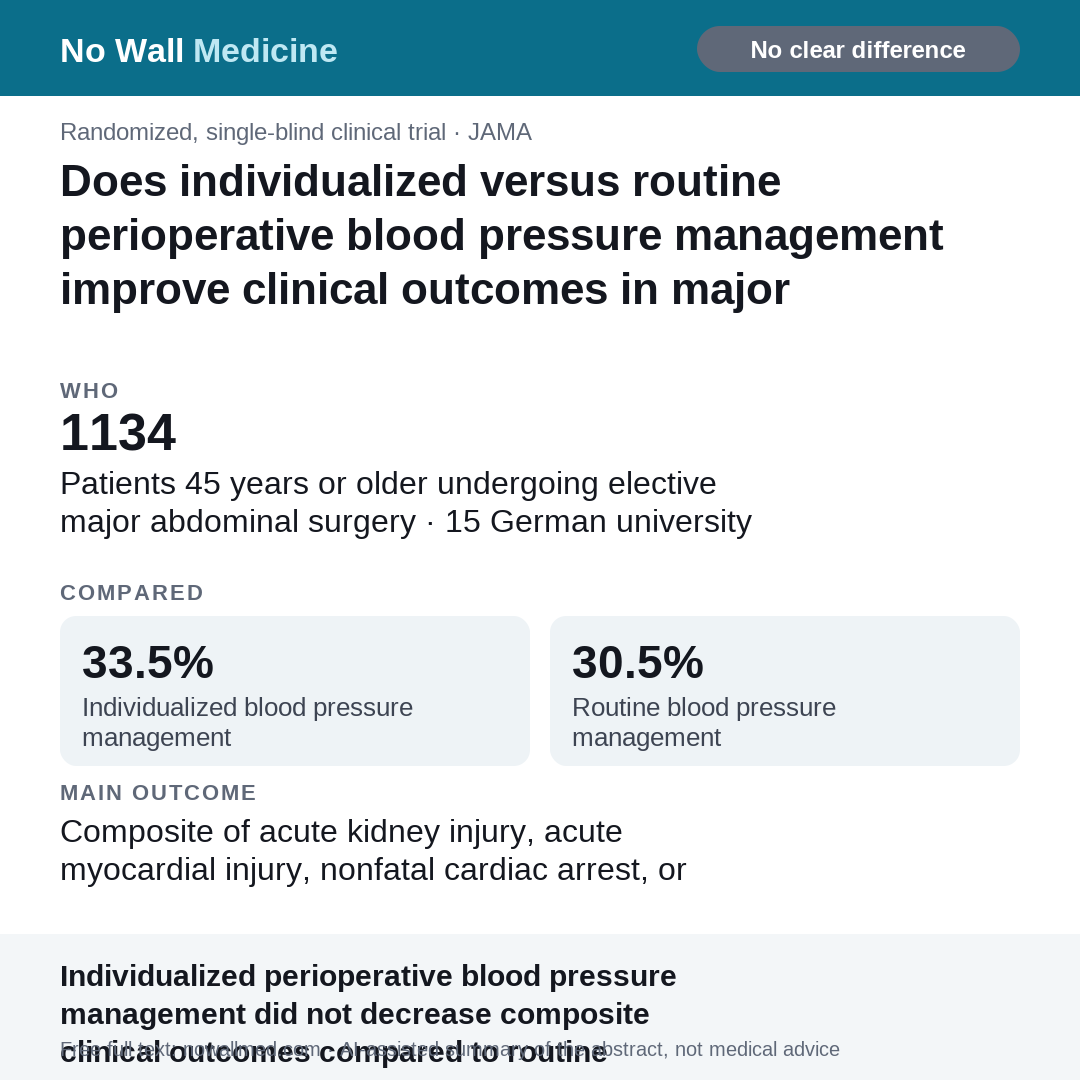
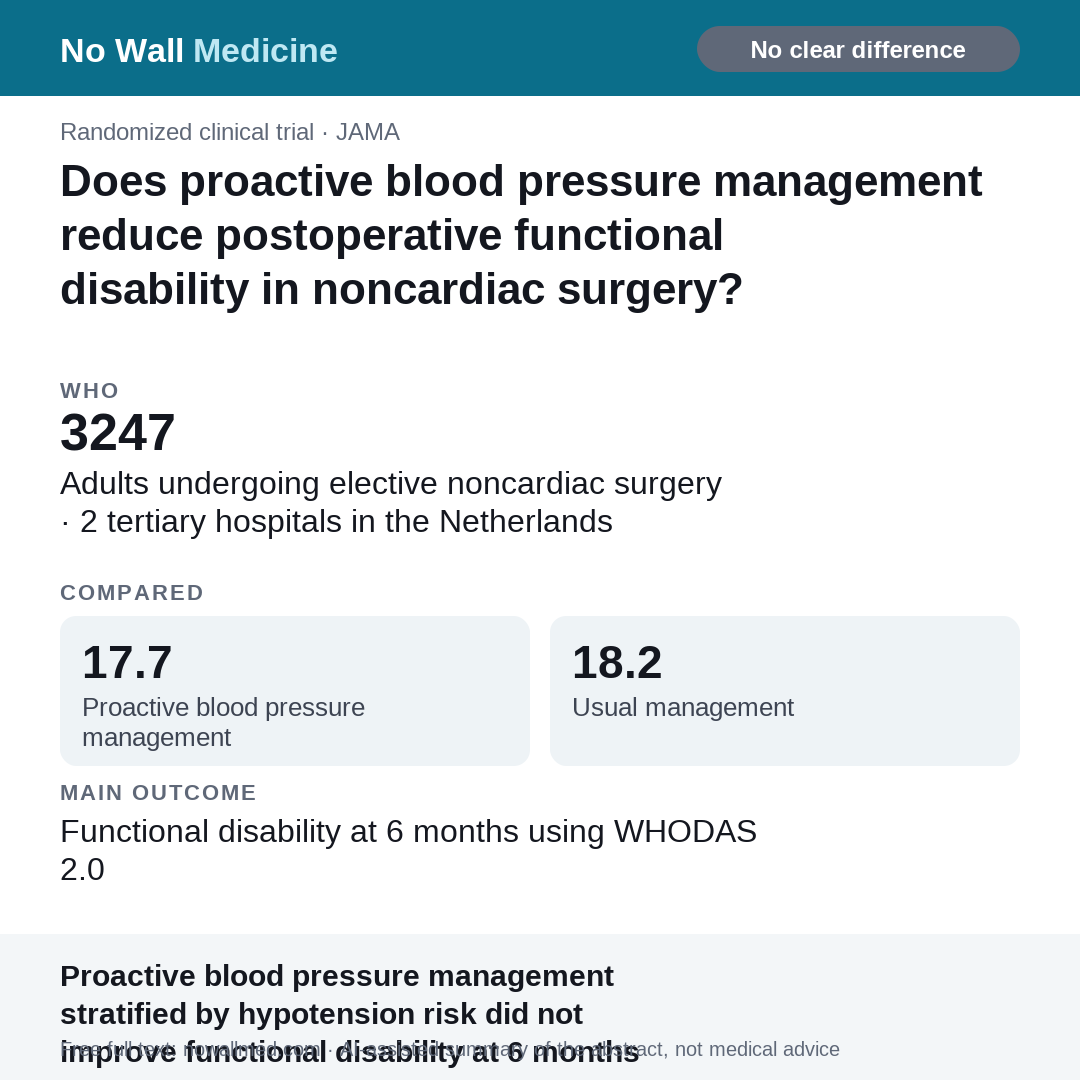
Proactive vs Reactive Treatment of Hypotension During Surgery: The PRETREAT Randomized Clinical Trial
Randomized clinical trialNo clear difference
Does proactive blood pressure management reduce postoperative functional disability in noncardiac surgery?
Who
3247
Adults undergoing elective noncardiac surgery · 2 tertiary hospitals in the Netherlands
Compared
17.7Proactive blood pressure management (20.1)
18.2Usual management (20.5)
Main outcome
Functional disability at 6 months using WHODAS 2.0
Result: mean difference -0.5 (95% credible interval, -1.9 to 0.9)
Bottom line: Proactive blood pressure management stratified by hypotension risk did not improve functional disability at 6 months compared to usual care.
JAMA · 2025-10-12Download image
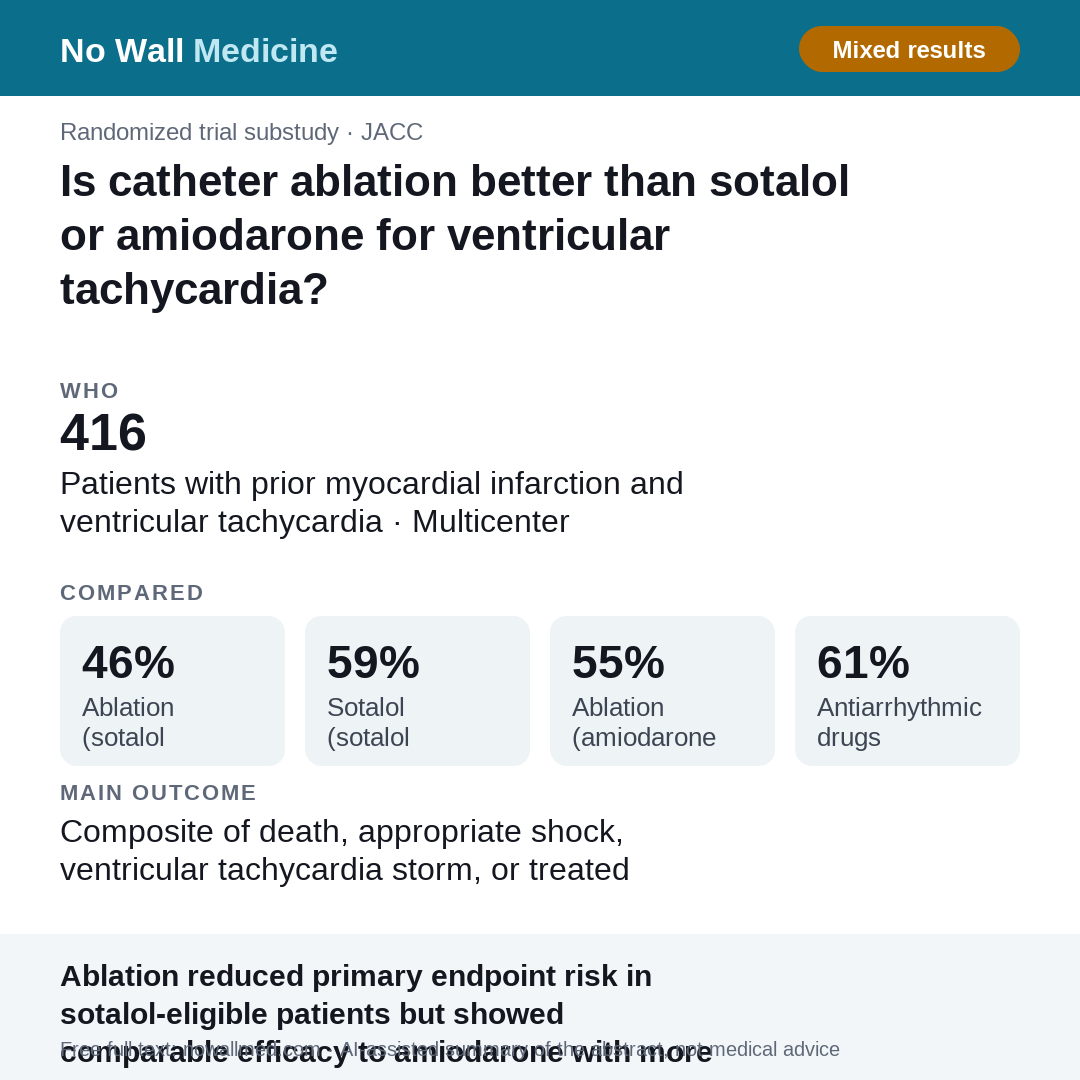
Catheter Ablation vs Sotalol or Amiodarone for Ventricular Tachycardia: A Substudy of the VANISH2 Trial
Randomized trial substudyMixed results
Is catheter ablation better than sotalol or amiodarone for ventricular tachycardia?
Who
416
Patients with prior myocardial infarction and ventricular tachycardia · Multicenter
Compared
46%Ablation (sotalol stratum)
59%Sotalol (sotalol stratum)
55%Ablation (amiodarone stratum)
61%Antiarrhythmic drugs (amiodarone stratum)
Main outcome
Composite of death, appropriate shock, ventricular tachycardia storm, or treated sustained ventricular tachycardia
Result: hazard ratio 0.64 (95% CI 0.43-0.94) for sotalol; hazard ratio 0.86 (95% CI 0.61-1.22) for amiodarone
Bottom line: Ablation reduced primary endpoint risk in sotalol-eligible patients but showed comparable efficacy to amiodarone with more adverse events.
JACC · 2025-10-11Download image