Visual abstracts
New randomized trials and meta-analyses from leading journals at a glance: who was studied, what was compared, and what was found. Every paper is free to read in full.
All specialtiesCardiology 3180Oncology 2710Gastroenterology & Hepatology 1242Infectious Disease 2122Neurology 1272Psychiatry & Mental Health 1510Pulmonology 1338Critical Care 892Endocrinology & Diabetes 1601Pediatrics 1897Surgery 1689Orthopedics & Sports Medicine 567Neurosurgery 375Cardiothoracic & Vascular Surgery 371Plastic & Reconstructive Surgery 457Nephrology 671Rheumatology 496Hematology 705Dermatology 383Ophthalmology 353Obstetrics & Gynecology 1058Public & Global Health 599Radiology & Imaging 450Anesthesiology 654Urology 542ENT (Otolaryngology) 349Emergency Medicine 351Allergy & Immunology 198Geriatrics 667Family Medicine & Primary Care 363Medical Genetics & Genomics 385Pathology & Laboratory Medicine 105Physical Medicine & Rehabilitation 501Palliative Care 280Nutrition 905Digital Health & AI 1521General Medicine 221
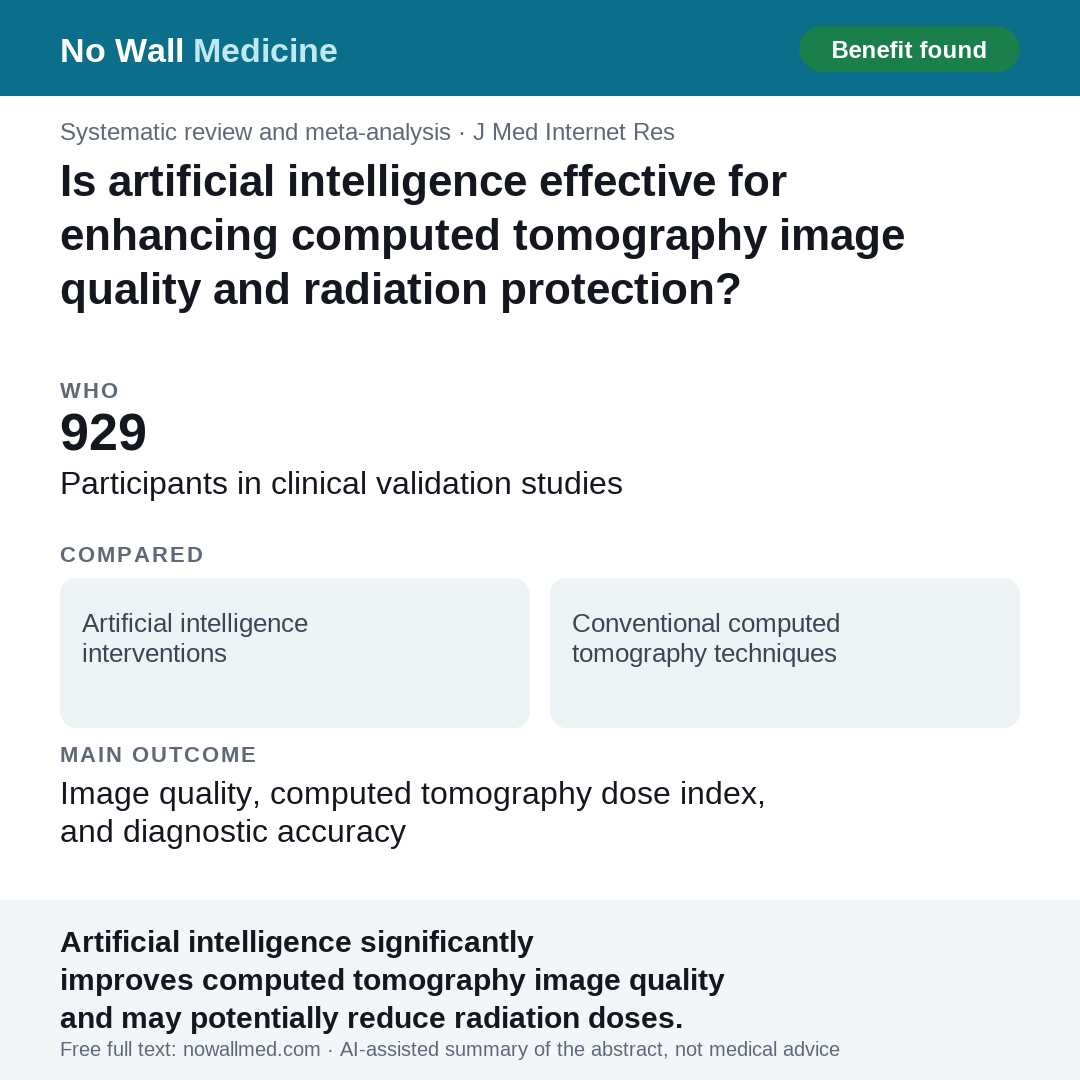
Effectiveness of AI for Enhancing Computed Tomography Image Quality and Radiation Protection in Radiology: Systematic Review and Meta-Analysis
Systematic review and meta-analysisBenefit found
Is artificial intelligence effective for enhancing computed tomography image quality and radiation protection?
Who
929
Participants in clinical validation studies
Compared
Artificial intelligence interventions
Conventional computed tomography techniques
Main outcome
Image quality, computed tomography dose index, and diagnostic accuracy
Result: mean difference 0.70 (95% CI 0.43-0.96) for image quality
Bottom line: Artificial intelligence significantly improves computed tomography image quality and may potentially reduce radiation doses.
Limitation: Limited number of studies and variability in artificial intelligence algorithms.
J Med Internet Res · 2025-02-27Download image
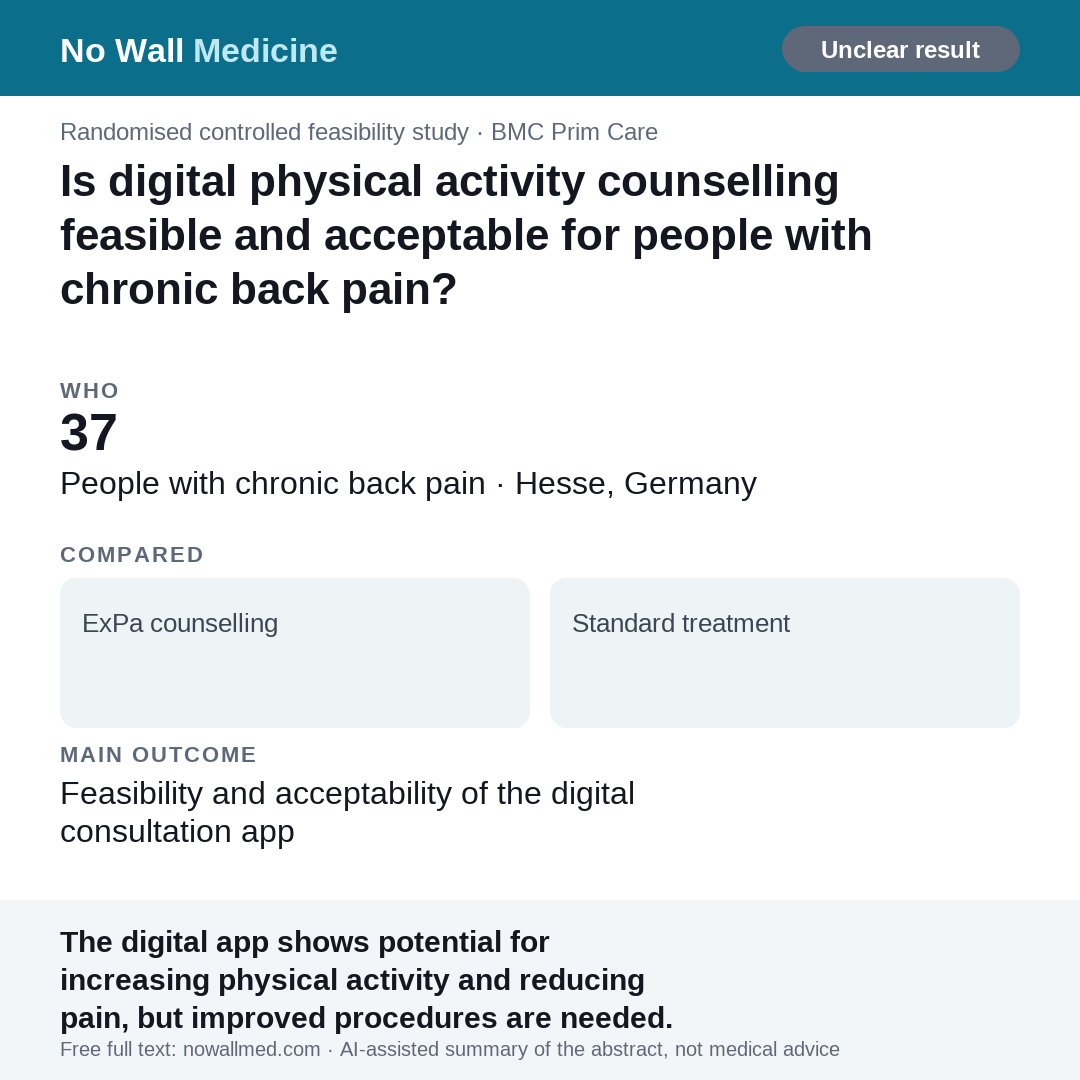
Digitally supported physical activity counselling for people with chronic back pain: a randomised controlled parallel feasibility study
Randomised controlled feasibility studyUnclear result
Is digital physical activity counselling feasible and acceptable for people with chronic back pain?
Who
37
People with chronic back pain · Hesse, Germany
Compared
ExPa counselling
Standard treatment
Main outcome
Feasibility and acceptability of the digital consultation app
Bottom line: The digital app shows potential for increasing physical activity and reducing pain, but improved procedures are needed.
Limitation: Study procedures took more time and dropouts as well as missing data presented challenges.
BMC Prim Care · 2025-02-27Download image
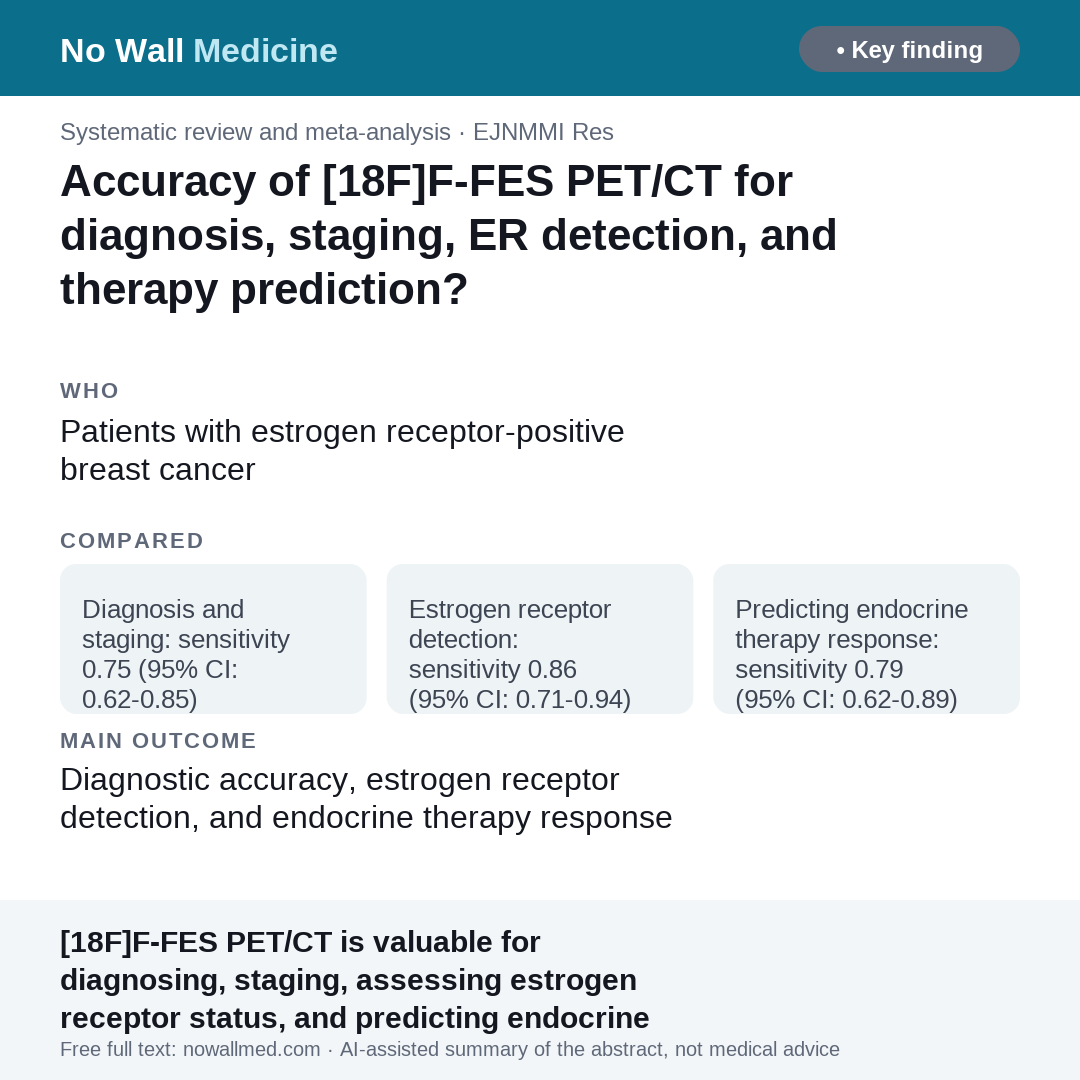
[18F]F-FES PET for diagnosis, staging, and endocrine therapy prediction in ER-positive breast cancer: a systematic review and meta-analysis
Systematic review and meta-analysisBenefit found
Accuracy of [18F]F-FES PET/CT for diagnosis, staging, ER detection, and therapy prediction?
Who
Patients with estrogen receptor-positive breast cancer
Compared
Diagnosis and staging: sensitivity 0.75 (95% CI: 0.62-0.85)
Estrogen receptor detection: sensitivity 0.86 (95% CI: 0.71-0.94)
Predicting endocrine therapy response: sensitivity 0.79 (95% CI: 0.62-0.89)
Main outcome
Diagnostic accuracy, estrogen receptor detection, and endocrine therapy response prediction
Bottom line: [18F]F-FES PET/CT is valuable for diagnosing, staging, assessing estrogen receptor status, and predicting endocrine therapy response.
EJNMMI Res · 2025-02-27Download image
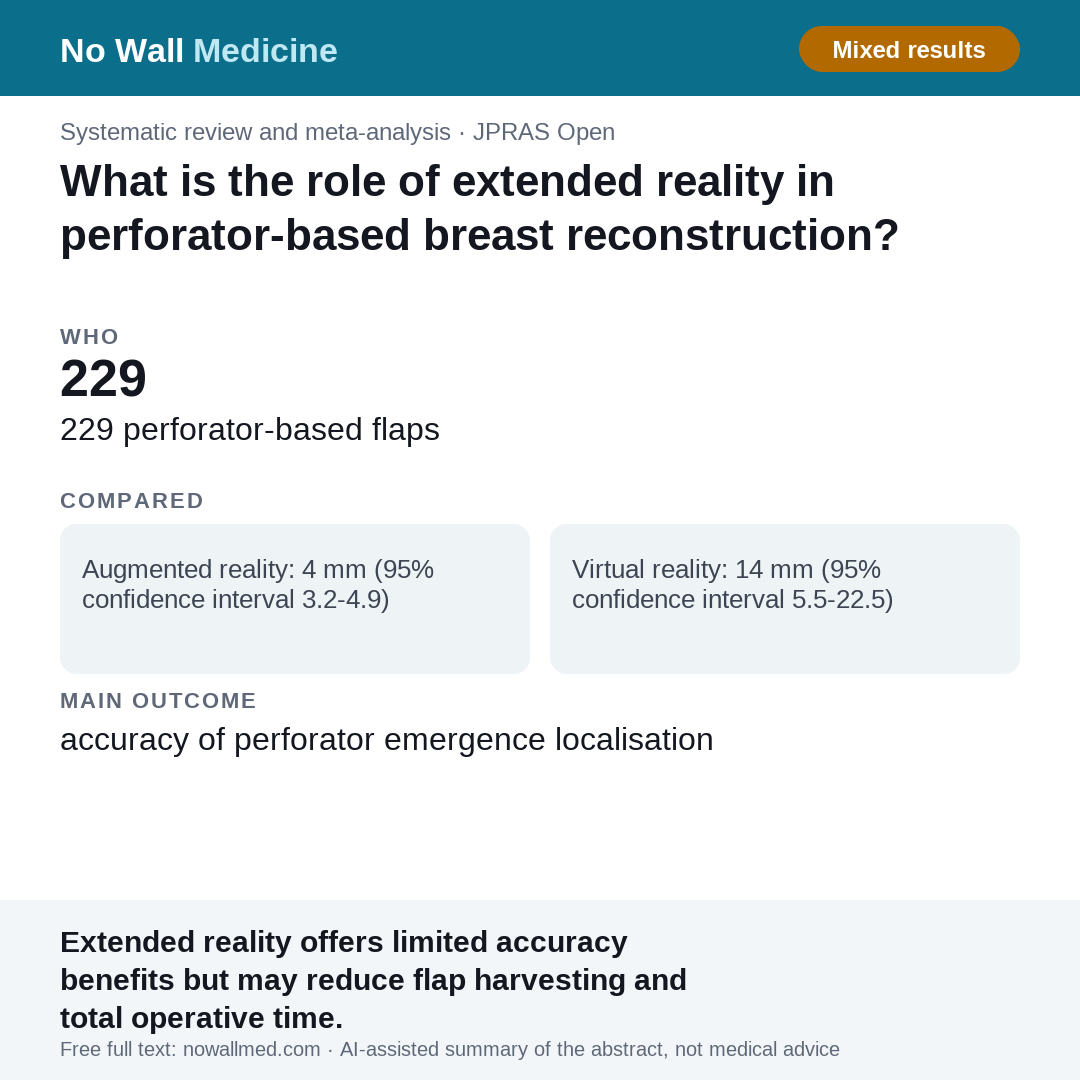
Extended reality for mapping perforator-based flaps in breast reconstruction: a systematic review and meta-analysis
Systematic review and meta-analysisMixed results
What is the role of extended reality in perforator-based breast reconstruction?
Who
229
229 perforator-based flaps
Compared
Augmented reality: 4 mm (95% confidence interval 3.2-4.9)
Virtual reality: 14 mm (95% confidence interval 5.5-22.5)
Main outcome
accuracy of perforator emergence localisation
Bottom line: Extended reality offers limited accuracy benefits but may reduce flap harvesting and total operative time.
Limitation: heterogeneity and quality of the included studies
JPRAS Open · 2025-02-27Download image
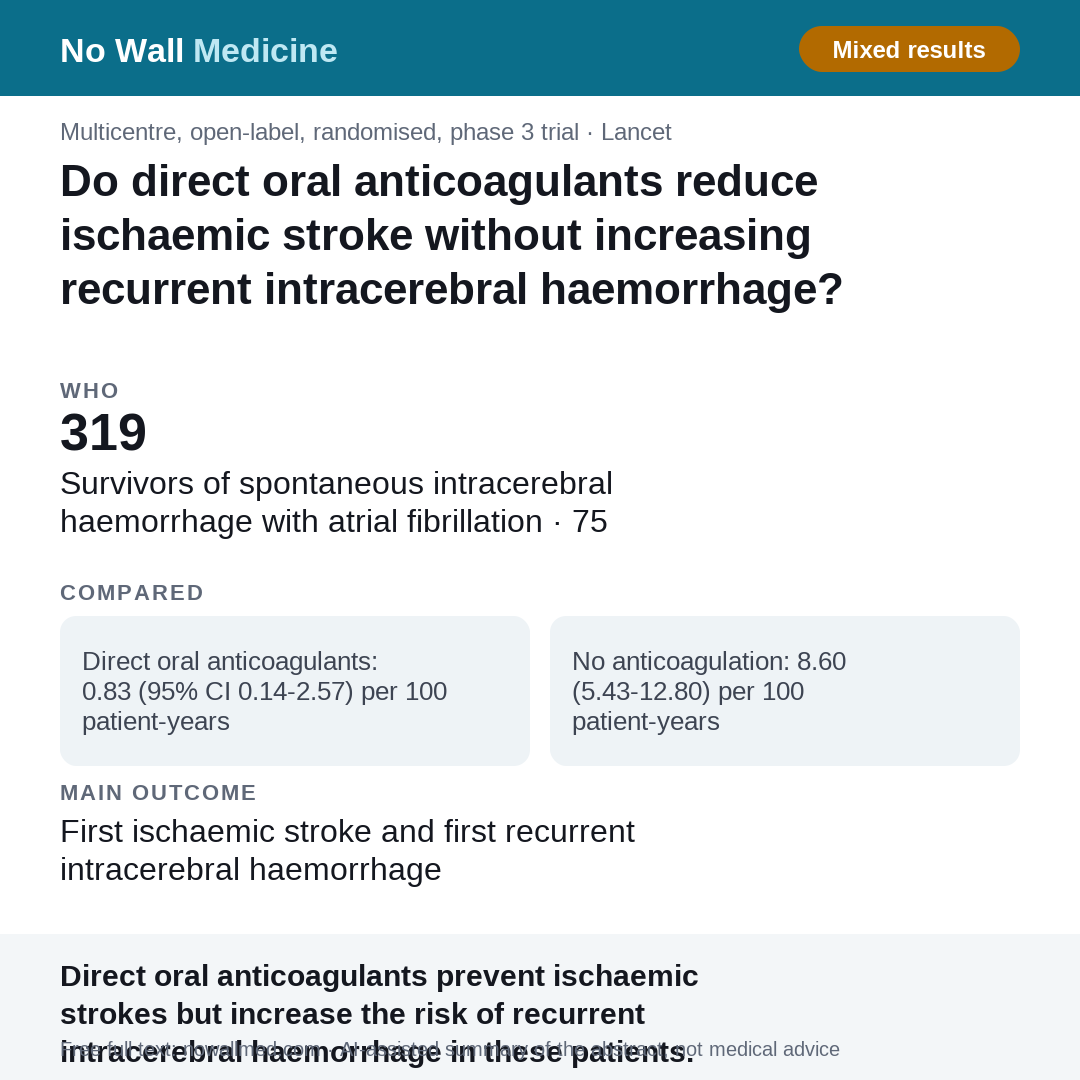
Direct oral anticoagulants versus no anticoagulation for the prevention of stroke in survivors of intracerebral haemorrhage with atrial fibrillation (PRESTIGE-AF): a multicentre, open-label, randomised, phase 3 trial
Multicentre, open-label, randomised, phase 3 trialMixed results
Do direct oral anticoagulants reduce ischaemic stroke without increasing recurrent intracerebral haemorrhage?
Who
319
Survivors of spontaneous intracerebral haemorrhage with atrial fibrillation · 75 hospitals in six European countries
Compared
Direct oral anticoagulants: 0.83 (95% CI 0.14-2.57) per 100 patient-years
No anticoagulation: 8.60 (5.43-12.80) per 100 patient-years
Main outcome
First ischaemic stroke and first recurrent intracerebral haemorrhage
Result: hazard ratio 0.05 (95% CI 0.01-0.36)
Bottom line: Direct oral anticoagulants prevent ischaemic strokes but increase the risk of recurrent intracerebral haemorrhage in these patients.
Funded by: European Commission
Lancet · 2025-02-26Download image
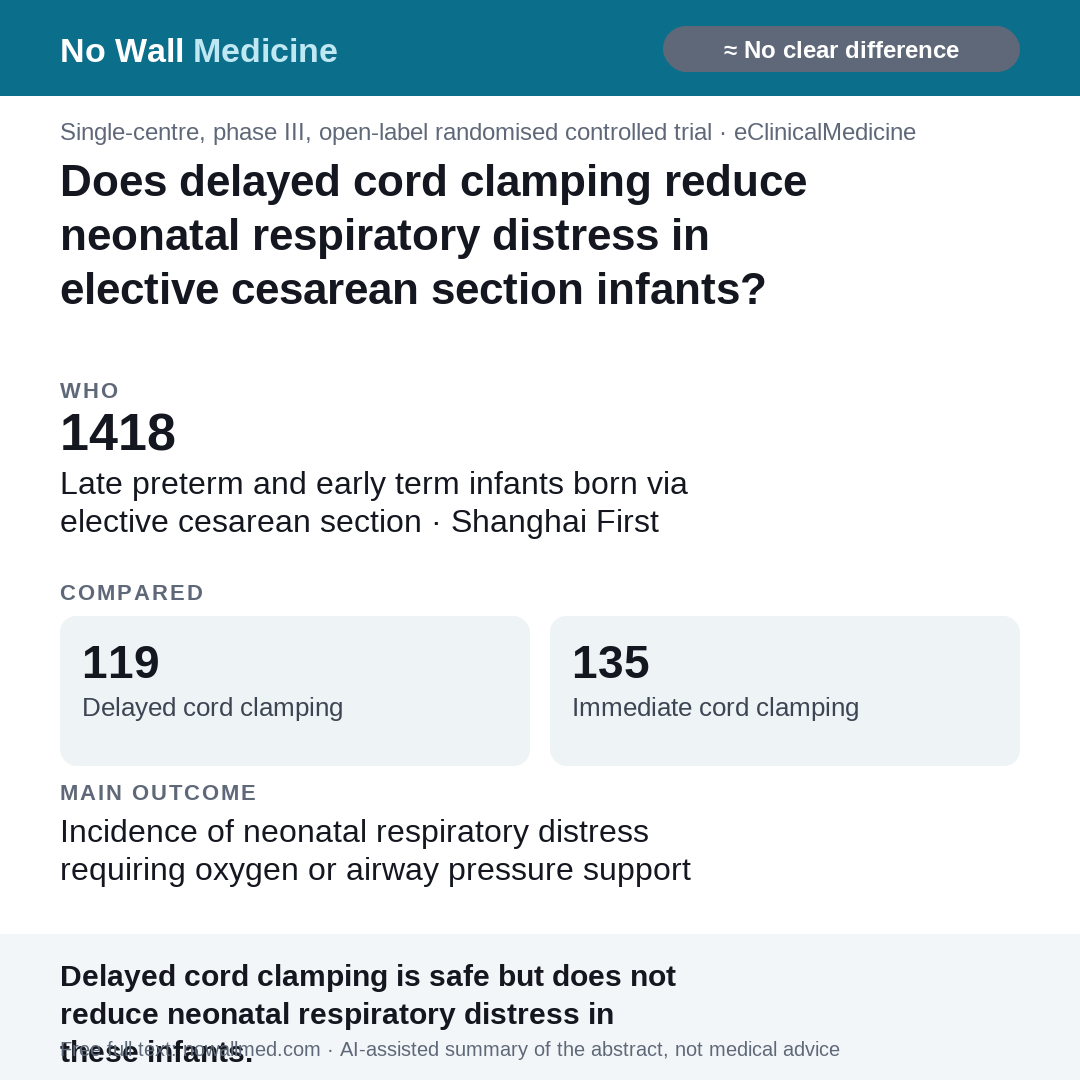
Impact of delayed cord clamping on respiratory distress in late preterm and early term infants in elective cesarean section: a single centre, phase Ⅲ, randomised controlled trial
Single-centre, phase III, open-label randomised controlled trialNo clear difference
Does delayed cord clamping reduce neonatal respiratory distress in elective cesarean section infants?
Who
1418
Late preterm and early term infants born via elective cesarean section · Shanghai First Maternity and Infant Hospital
Compared
119Delayed cord clamping (8.4%)
135Immediate cord clamping (9.5%)
Main outcome
Incidence of neonatal respiratory distress requiring oxygen or airway pressure support
Result: adjusted relative risk 0.93 (95% CI 0.75-1.14)
Bottom line: Delayed cord clamping is safe but does not reduce neonatal respiratory distress in these infants.
Funded by: Shanghai Municipal Health Commission and National Natural Science Foundation of China
eClinicalMedicine · 2025-02-26Download image
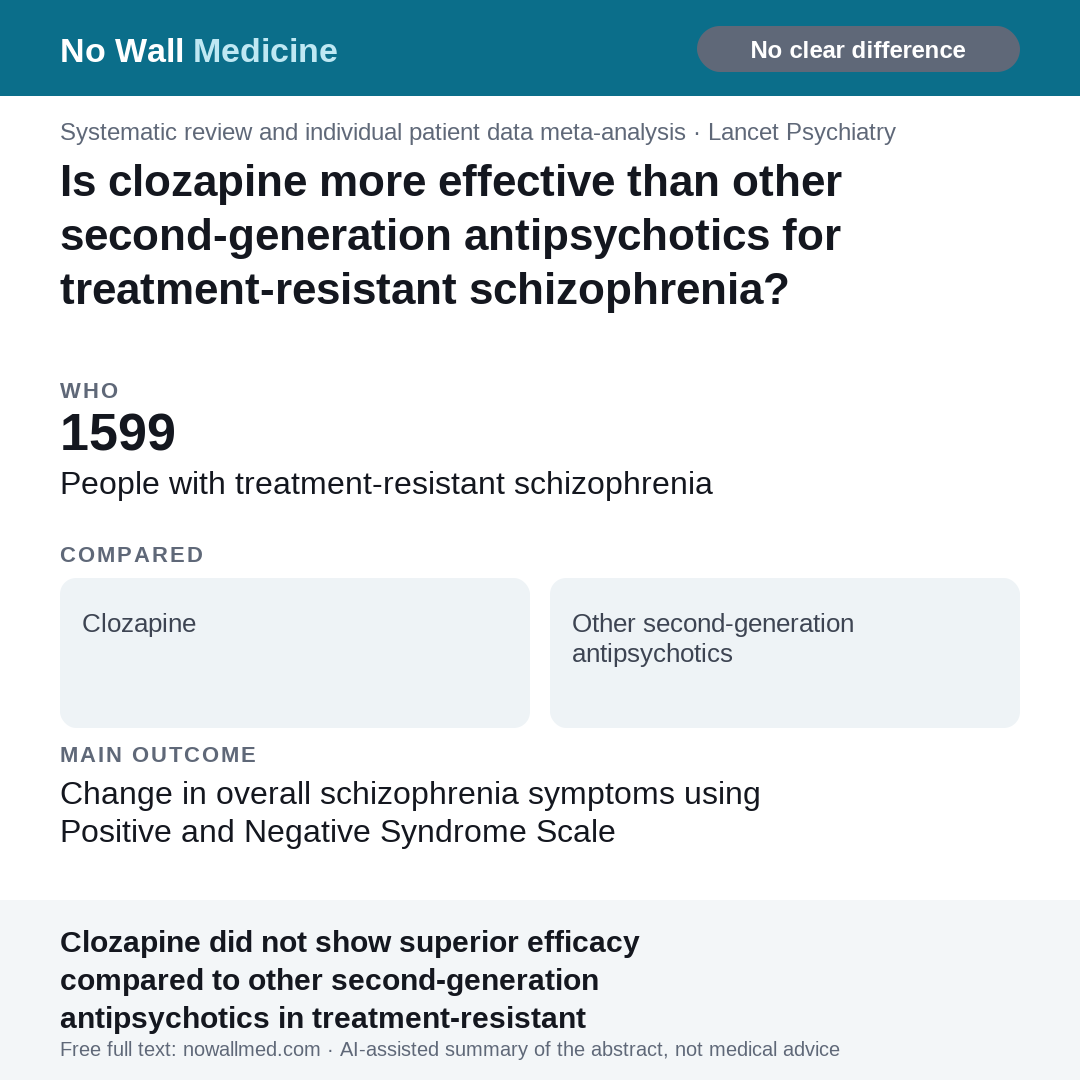
Efficacy of clozapine versus second-generation antipsychotics in people with treatment-resistant schizophrenia: a systematic review and individual patient data meta-analysis
Systematic review and individual patient data meta-analysisNo clear difference
Is clozapine more effective than other second-generation antipsychotics for treatment-resistant schizophrenia?
Who
1599
People with treatment-resistant schizophrenia
Compared
Clozapine
Other second-generation antipsychotics
Main outcome
Change in overall schizophrenia symptoms using Positive and Negative Syndrome Scale
Result: mean difference -0·64 points (95% CrI -3·97 to 2·63)
Bottom line: Clozapine did not show superior efficacy compared to other second-generation antipsychotics in treatment-resistant schizophrenia.
Limitation: Unavailability of individual patient data for some studies and uncertainty due to premature study discontinuation.
Funded by: German Ministry of Education and Research
Lancet Psychiatry · 2025-02-26Download image
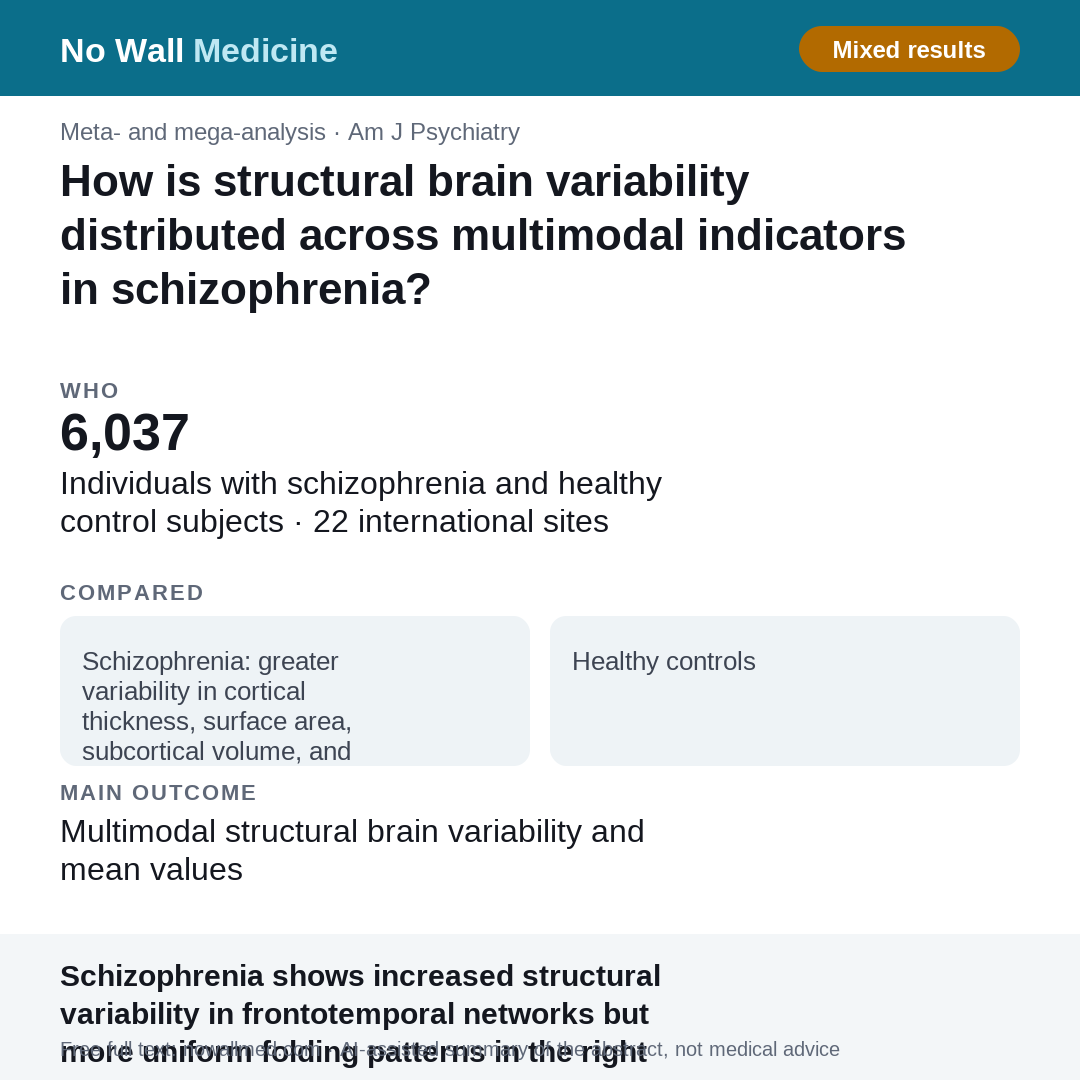
Estimating Multimodal Structural Brain Variability in Schizophrenia Spectrum Disorders: A Worldwide ENIGMA Study
Meta- and mega-analysisMixed results
How is structural brain variability distributed across multimodal indicators in schizophrenia?
Who
6,037
Individuals with schizophrenia and healthy control subjects · 22 international sites
Compared
Schizophrenia: greater variability in cortical thickness, surface area, subcortical volume, and fractional anisotropy
Healthy controls
Main outcome
Multimodal structural brain variability and mean values
Bottom line: Schizophrenia shows increased structural variability in frontotemporal networks but more uniform folding patterns in the right caudal anterior cingulate.
Am J Psychiatry · 2025-02-26Download image
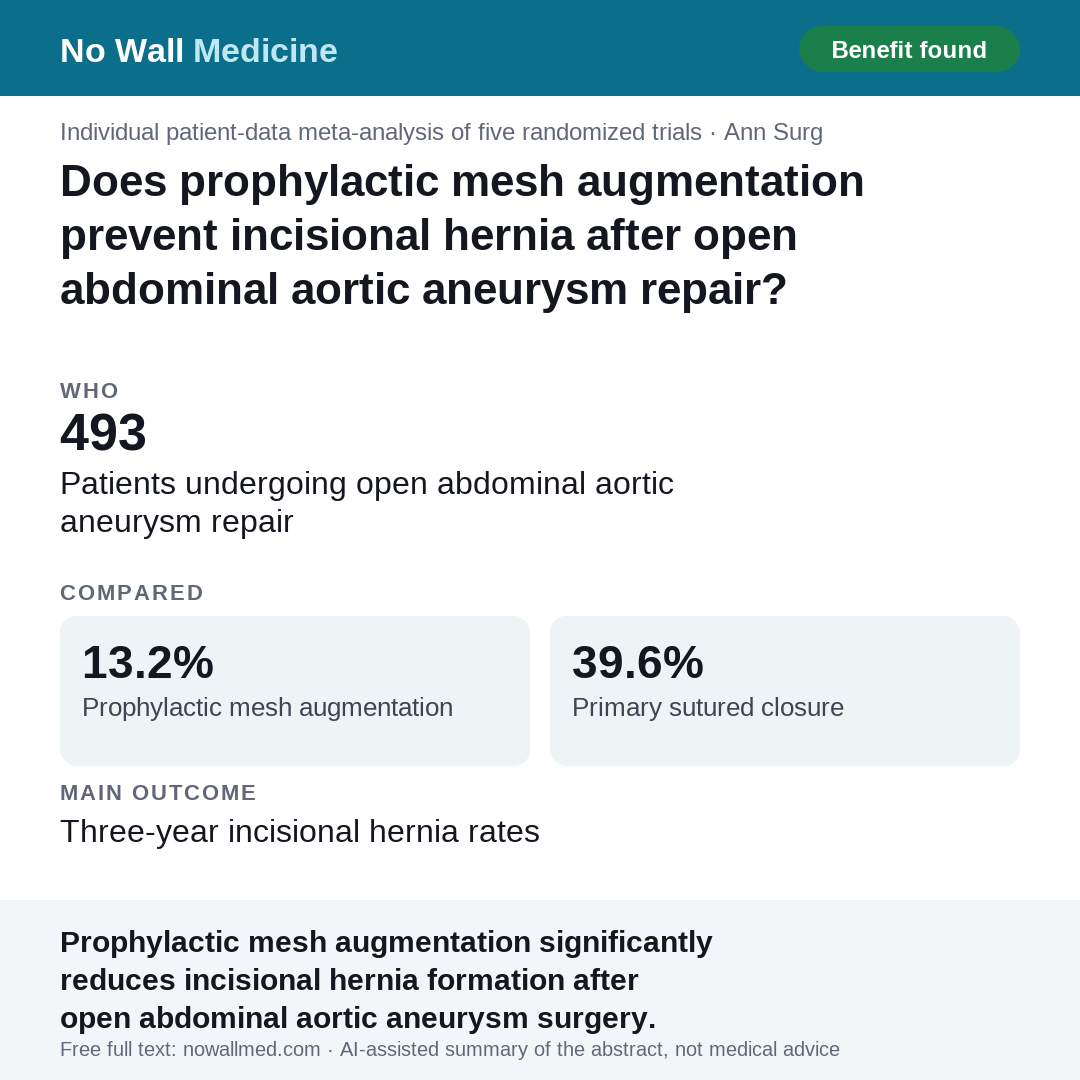
A Systematic Review and Independent Patient Data Meta-Analysis of Prophylactic Mesh Augmentation for Incisional Hernia Prevention After Abdominal Aortic Aneurysm Surgery (I-PREVENT-AAA) A Collaborative European Hernia Society Project
Individual patient-data meta-analysis of five randomized trialsBenefit found
Does prophylactic mesh augmentation prevent incisional hernia after open abdominal aortic aneurysm repair?
Who
493
Patients undergoing open abdominal aortic aneurysm repair
Compared
13.2%Prophylactic mesh augmentation
39.6%Primary sutured closure
Main outcome
Three-year incisional hernia rates
Result: hazard ratio 0.25 (95% CI: 0.12-0.50)
Bottom line: Prophylactic mesh augmentation significantly reduces incisional hernia formation after open abdominal aortic aneurysm surgery.
Ann Surg · 2025-02-26Download image
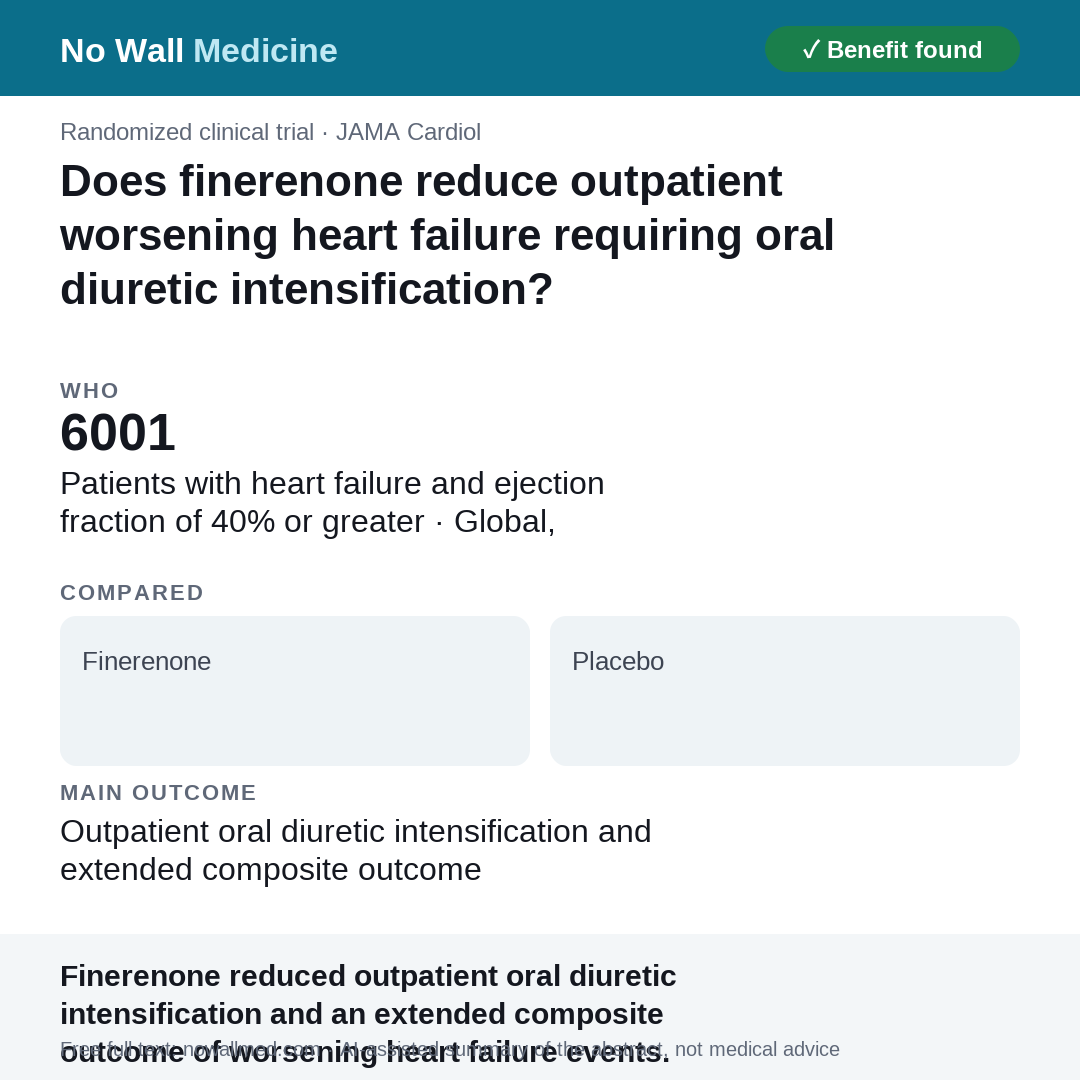
Finerenone and Outpatient Worsening Heart Failure With Mildly Reduced or Preserved Ejection Fraction: A Secondary Analysis of the FINEARTS-HF Randomized Clinical Trial
Randomized clinical trialBenefit found
Does finerenone reduce outpatient worsening heart failure requiring oral diuretic intensification?
Who
6001
Patients with heart failure and ejection fraction of 40% or greater · Global, multicenter
Compared
Finerenone
Placebo
Main outcome
Outpatient oral diuretic intensification and extended composite outcome
Result: hazard ratio 0.85 (95% CI 0.78 to 0.92)
Bottom line: Finerenone reduced outpatient oral diuretic intensification and an extended composite outcome of worsening heart failure events.
JAMA Cardiol · 2025-02-26Download image
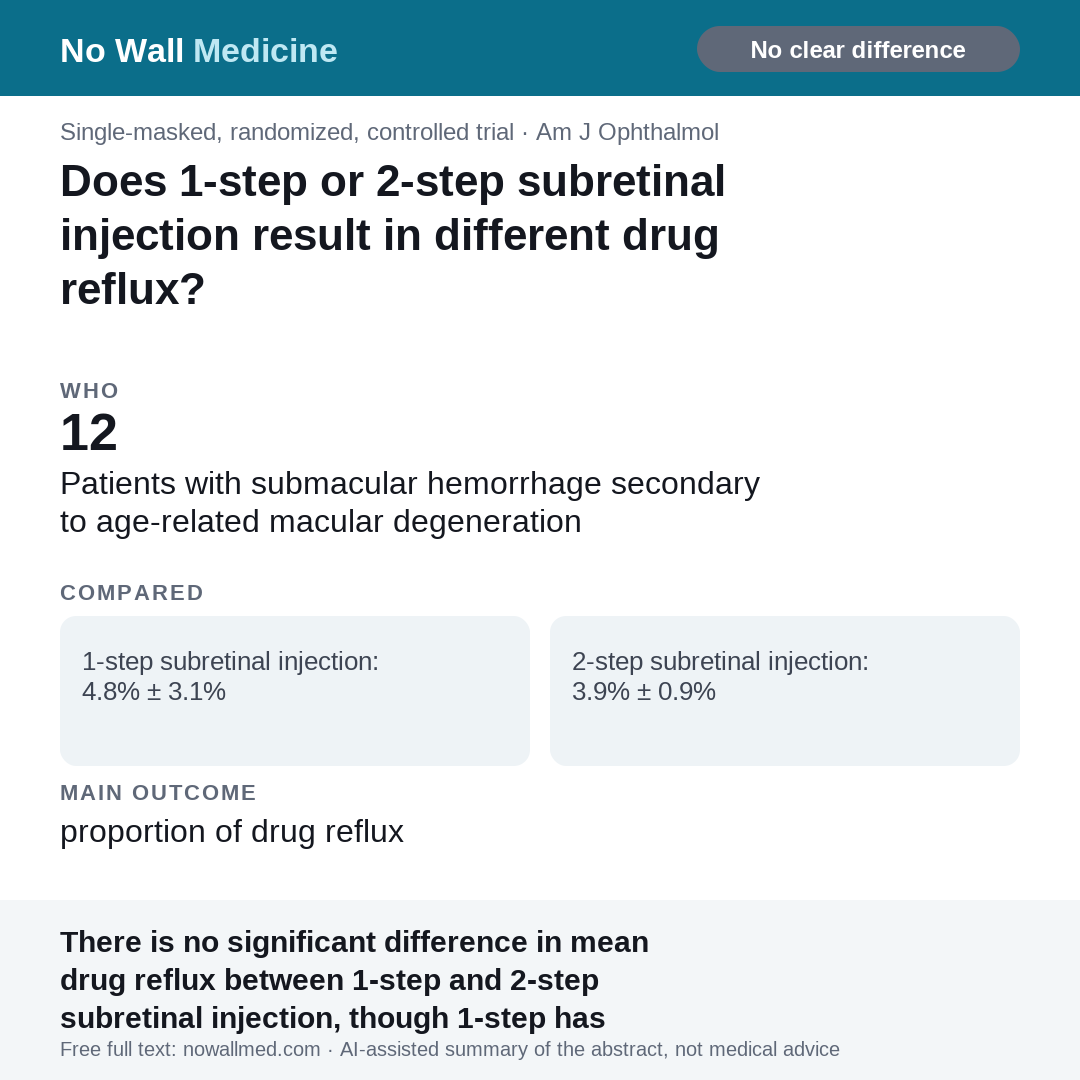
The 1-Step Versus 2-Step Subretinal Injection Trial (1,2-SIT)-A Randomized Controlled Trial to Compare Drug Reflux Following Subretinal Injection
Single-masked, randomized, controlled trialNo clear difference
Does 1-step or 2-step subretinal injection result in different drug reflux?
Who
12
Patients with submacular hemorrhage secondary to age-related macular degeneration
Compared
1-step subretinal injection: 4.8% ± 3.1%
2-step subretinal injection: 3.9% ± 0.9%
Main outcome
proportion of drug reflux
Bottom line: There is no significant difference in mean drug reflux between 1-step and 2-step subretinal injection, though 1-step has greater variability.
Am J Ophthalmol · 2025-02-26Download image
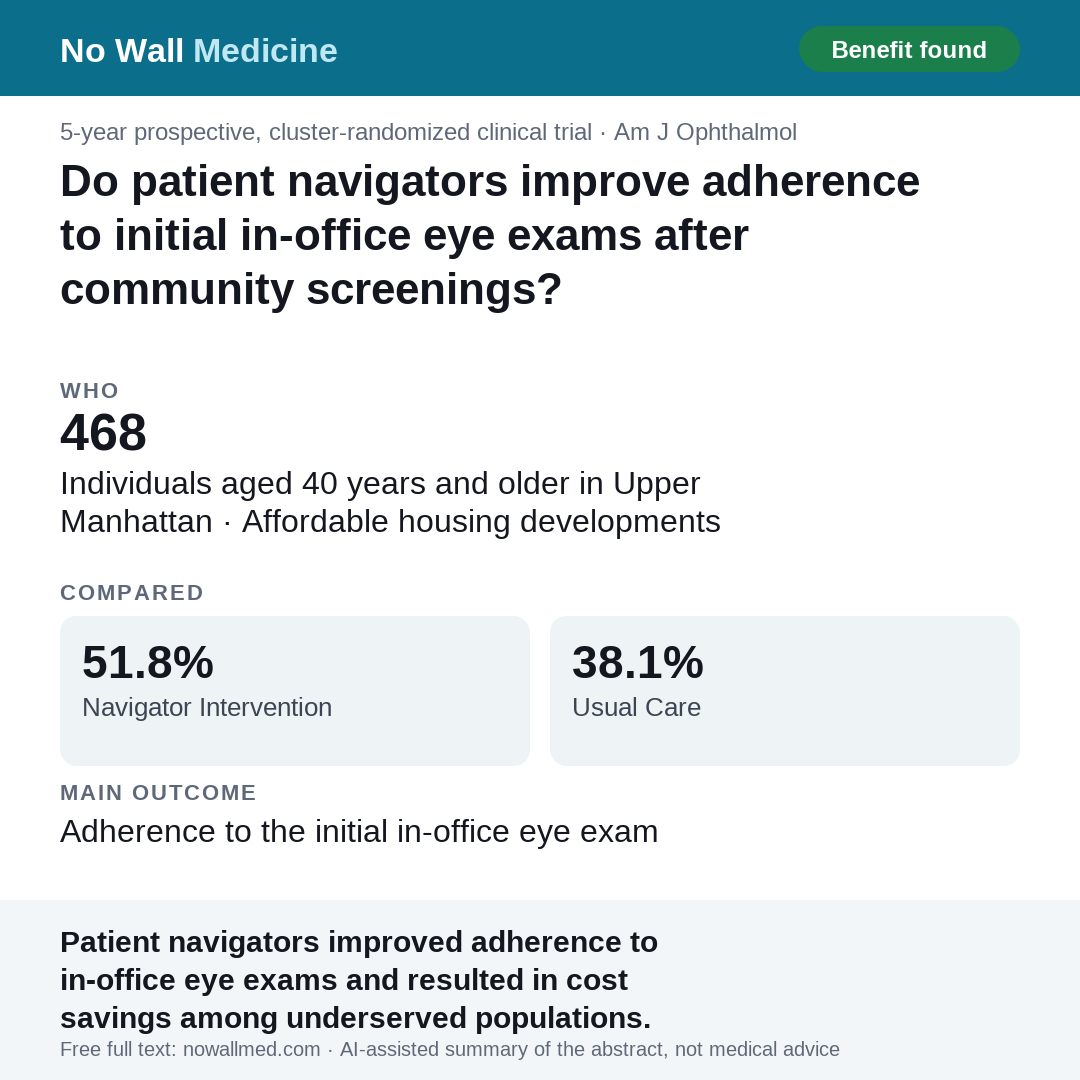
Patient Navigators Improve In-Office Eye Exam Adherence After Community Eye Screenings in a Randomized Clinical Trial: NYC-SIGHT Study
5-year prospective, cluster-randomized clinical trialBenefit found
Do patient navigators improve adherence to initial in-office eye exams after community screenings?
Who
468
Individuals aged 40 years and older in Upper Manhattan · Affordable housing developments and senior centers in Upper Manhattan
Compared
51.8%Navigator Intervention
38.1%Usual Care
Main outcome
Adherence to the initial in-office eye exam
Result: odds ratio 1.529 (95% CI 1.023, 2.285)
Bottom line: Patient navigators improved adherence to in-office eye exams and resulted in cost savings among underserved populations.
Am J Ophthalmol · 2025-02-26Download image
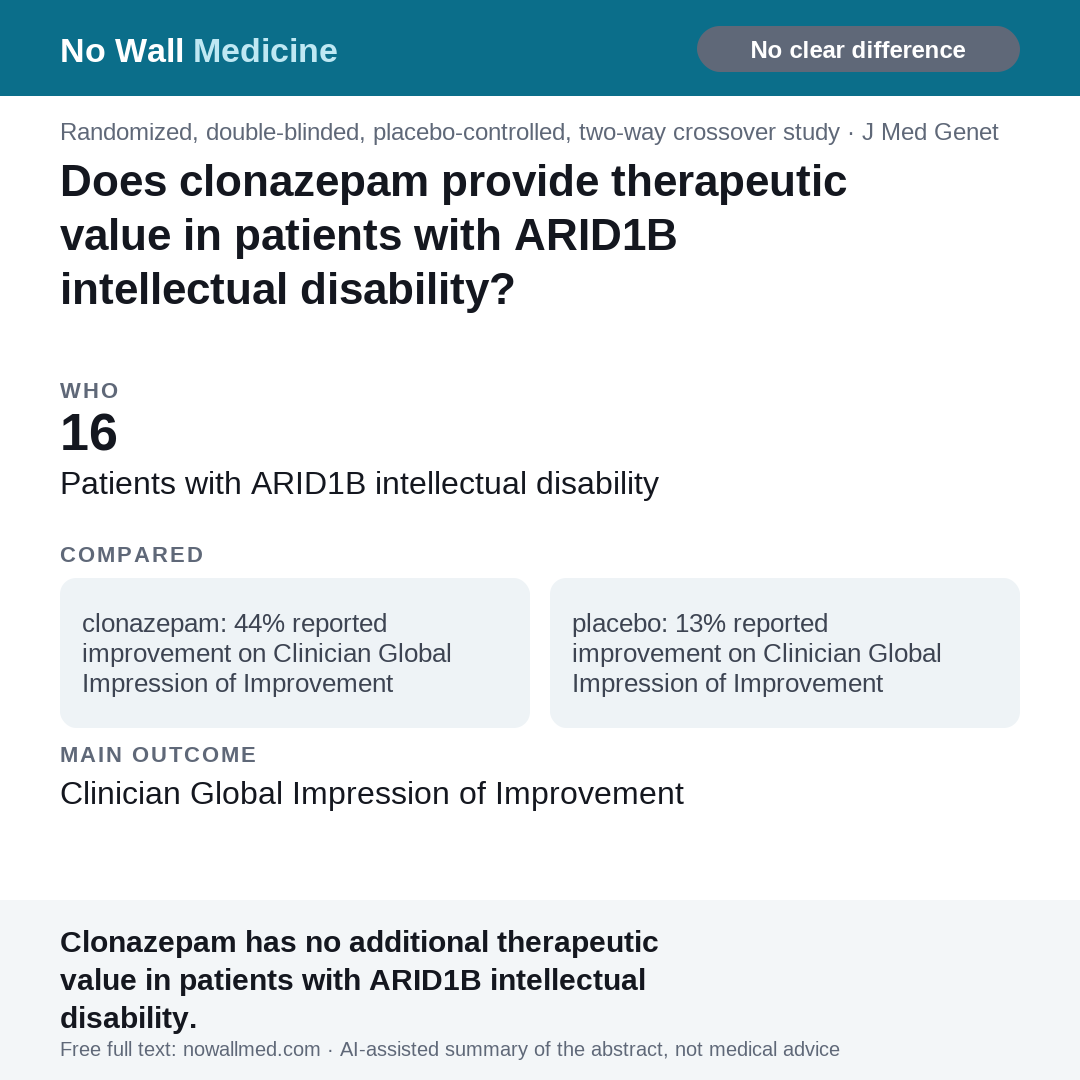
Clonazepam repurposing in ARID1B patients through conventional RCT and N-of-1 trials: an experimental strategy for orphan disease development
Randomized, double-blinded, placebo-controlled, two-way crossover studyNo clear difference
Does clonazepam provide therapeutic value in patients with ARID1B intellectual disability?
Who
16
Patients with ARID1B intellectual disability
Compared
clonazepam: 44% reported improvement on Clinician Global Impression of Improvement
placebo: 13% reported improvement on Clinician Global Impression of Improvement
Main outcome
Clinician Global Impression of Improvement
Bottom line: Clonazepam has no additional therapeutic value in patients with ARID1B intellectual disability.
Limitation: Low prevalence and patient phenotype variability in rare disorders.
J Med Genet · 2025-02-26Download image
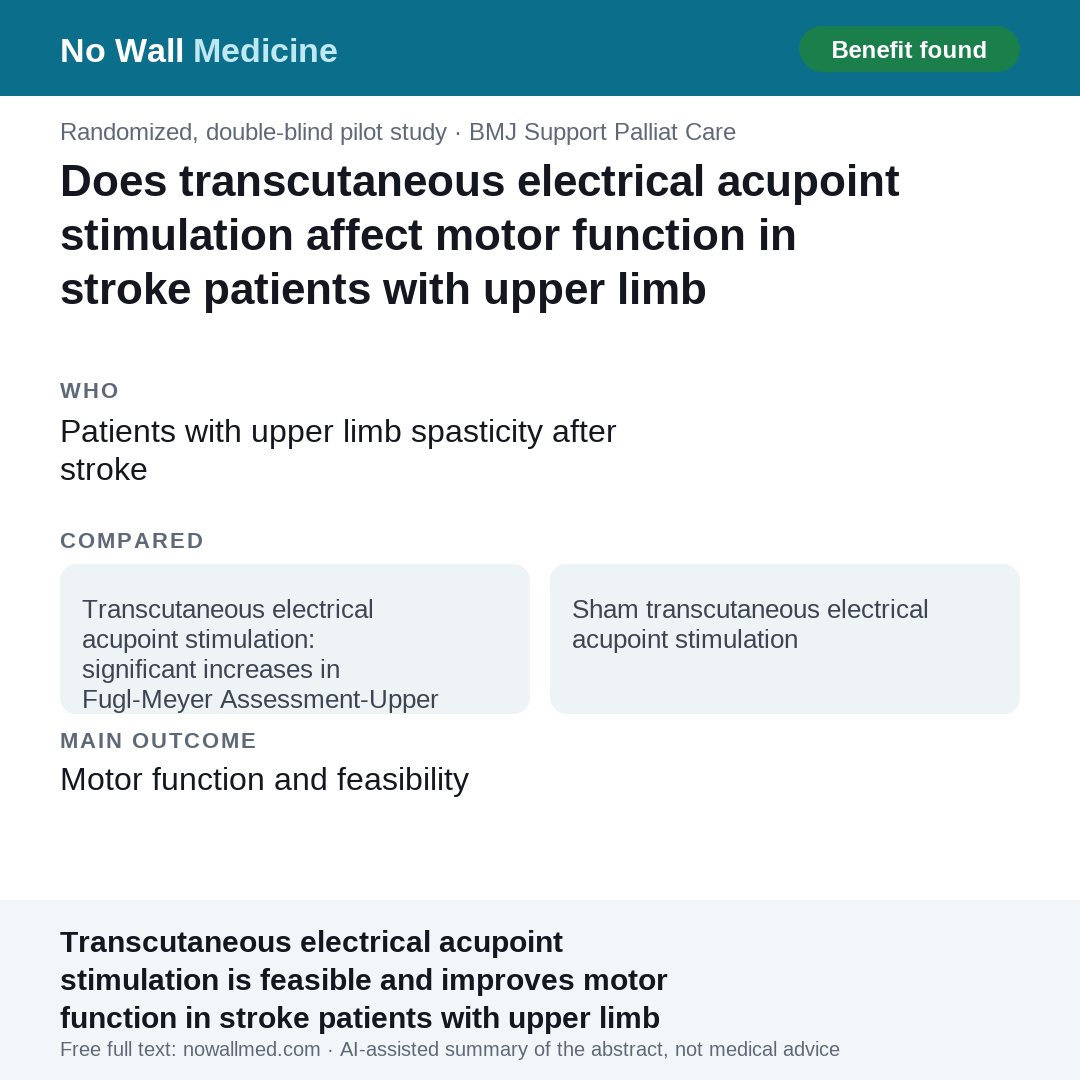
Transcutaneous electrical acupoint stimulation for upper limb spasticity after stroke: effect and feasibility-a randomised pilot study
Randomized, double-blind pilot studyBenefit found
Does transcutaneous electrical acupoint stimulation affect motor function in stroke patients with upper limb spasticity?
Who
Patients with upper limb spasticity after stroke
Compared
Transcutaneous electrical acupoint stimulation: significant increases in Fugl-Meyer Assessment-Upper Extremity score (P value=0.013)
Sham transcutaneous electrical acupoint stimulation
Main outcome
Motor function and feasibility
Bottom line: Transcutaneous electrical acupoint stimulation is feasible and improves motor function in stroke patients with upper limb spasticity.
Limitation: This was a pilot study
BMJ Support Palliat Care · 2025-02-26Download image
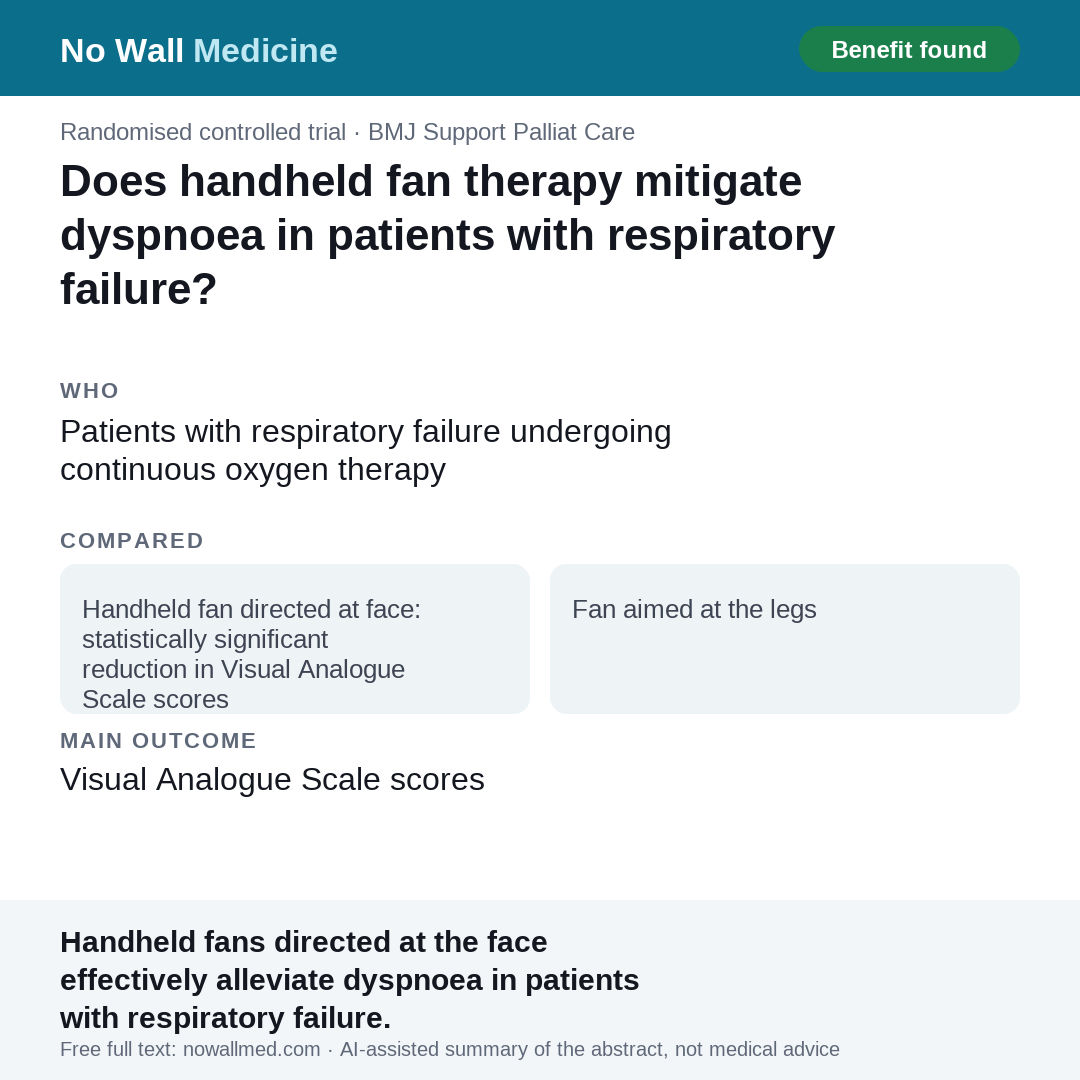
Handheld fans for dyspnoea in respiratory failure: randomised controlled trial
Randomised controlled trialBenefit found
Does handheld fan therapy mitigate dyspnoea in patients with respiratory failure?
Who
Patients with respiratory failure undergoing continuous oxygen therapy
Compared
Handheld fan directed at face: statistically significant reduction in Visual Analogue Scale scores
Fan aimed at the legs
Main outcome
Visual Analogue Scale scores
Bottom line: Handheld fans directed at the face effectively alleviate dyspnoea in patients with respiratory failure.
BMJ Support Palliat Care · 2025-02-26Download image
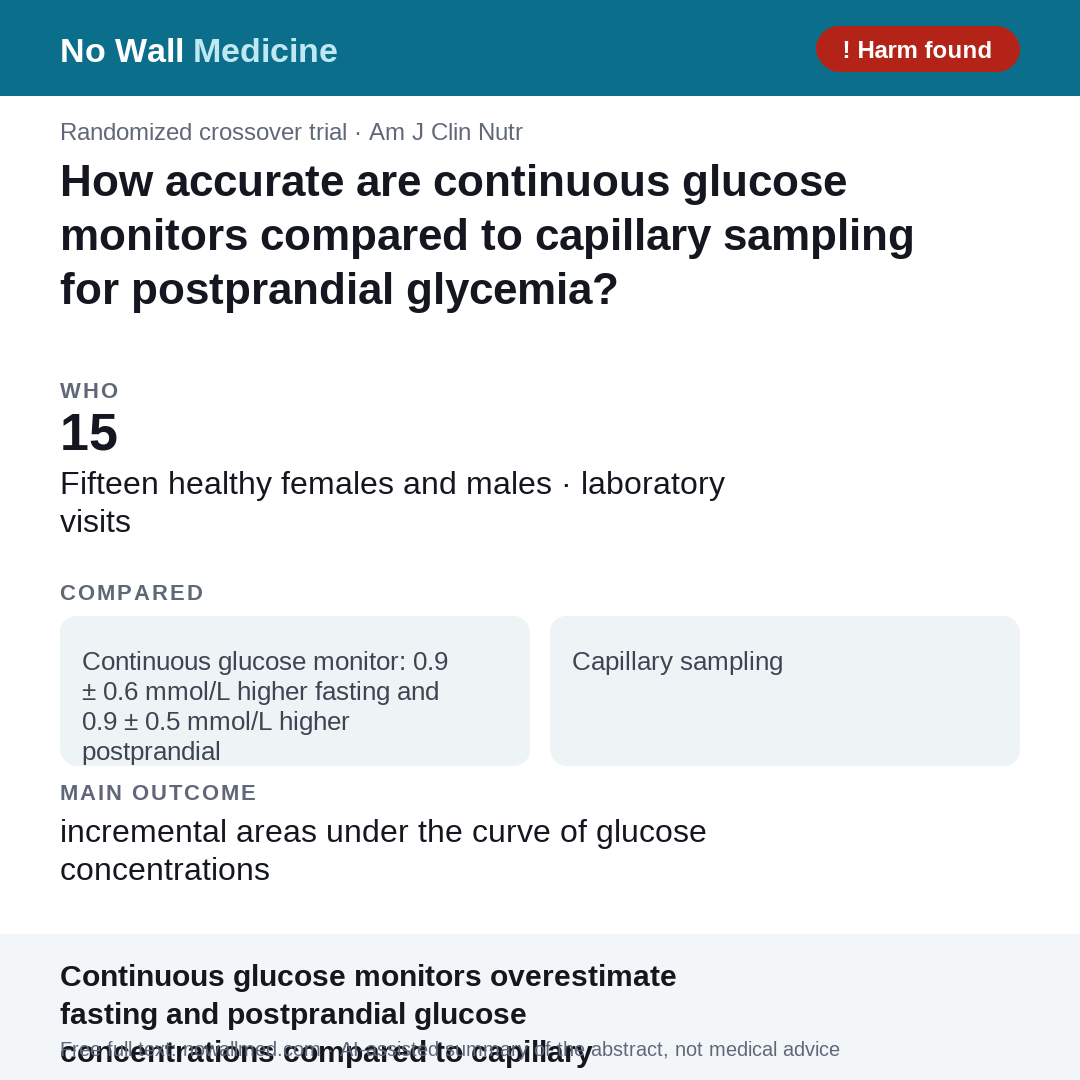
Continuous glucose monitor overestimates glycemia, with the magnitude of bias varying by postprandial test and individual - a randomized crossover trial
Randomized crossover trialHarm found
How accurate are continuous glucose monitors compared to capillary sampling for postprandial glycemia?
Who
15
Fifteen healthy females and males · laboratory visits
Compared
Continuous glucose monitor: 0.9 ± 0.6 mmol/L higher fasting and 0.9 ± 0.5 mmol/L higher postprandial
Capillary sampling
Main outcome
incremental areas under the curve of glucose concentrations
Bottom line: Continuous glucose monitors overestimate fasting and postprandial glucose concentrations compared to capillary sampling across various carbohydrate challenges.
Am J Clin Nutr · 2025-02-26Download image
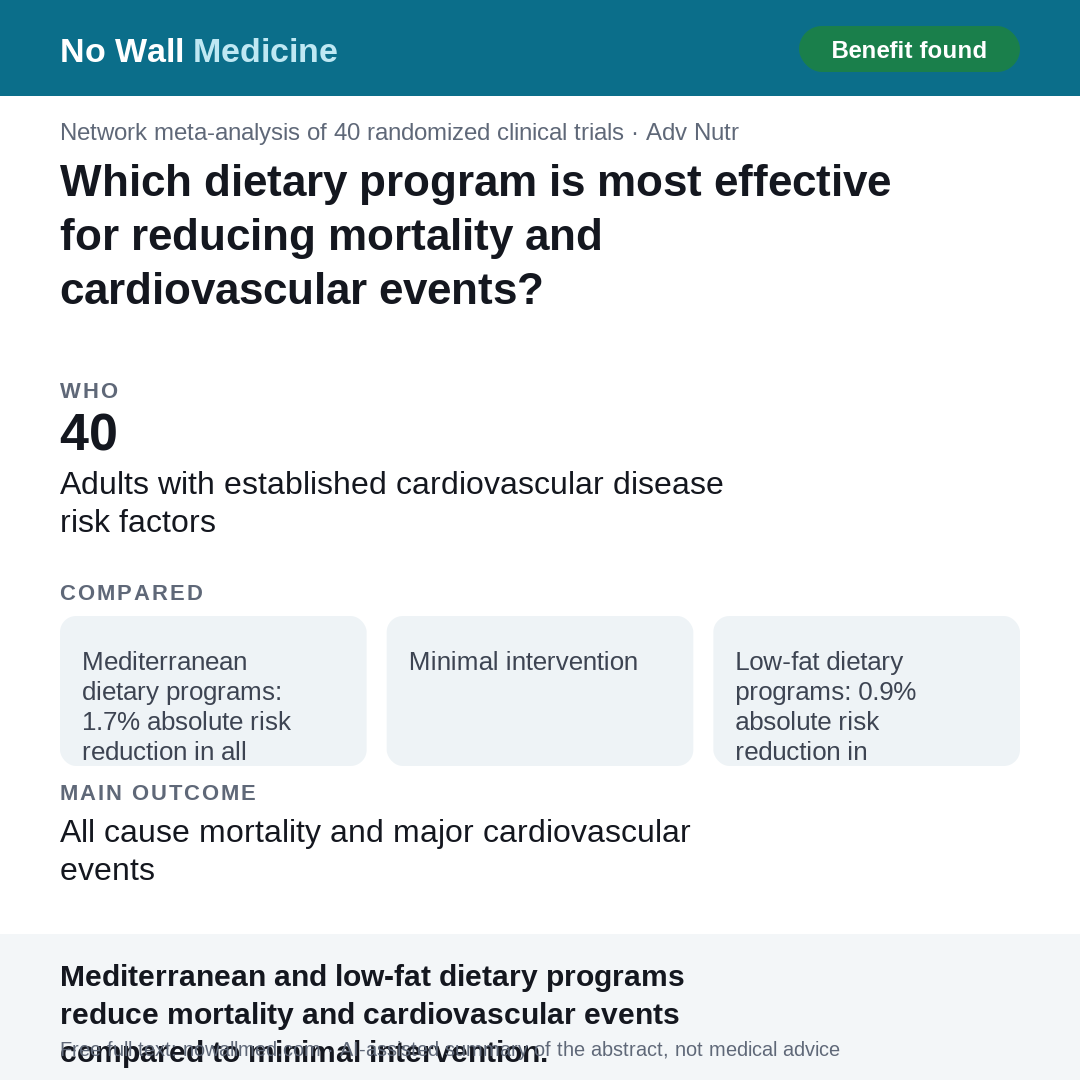
Medical Nutrition Therapy (MNT) Evidence Update: Comparative Effectiveness of Dietary Programs for Reducing Mortality and Cardiovascular Events in Adults with Increased Cardiovascular Disease Risk
Network meta-analysis of 40 randomized clinical trialsBenefit found
Which dietary program is most effective for reducing mortality and cardiovascular events?
Who
40
Adults with established cardiovascular disease risk factors
Compared
Mediterranean dietary programs: 1.7% absolute risk reduction in all cause mortality
Minimal intervention
Low-fat dietary programs: 0.9% absolute risk reduction in all-cause mortality
Main outcome
All cause mortality and major cardiovascular events
Bottom line: Mediterranean and low-fat dietary programs reduce mortality and cardiovascular events compared to minimal intervention.
Adv Nutr · 2025-02-26Download image
Early-life growth and emotional, behavior and cognitive outcomes in childhood and adolescence in the EU child cohort network: individual participant data meta-analysis of over 109,000 individuals
Individual participant data meta-analysisMixed results
How do birth characteristics and early life growth associate with childhood and adolescent outcomes?
Who
109481
109,481 children from 8 European birth cohorts · 8 European birth cohorts
Compared
Preterm birth: difference 3·43 (95% CI 2·52, 4·33) internalizing problems
Term birth
Small size for gestational age: difference 4·88 (95% CI 3·87, 5·90) ADHD symptoms
Appropriate size for gestational age
Main outcome
emotional, behavior and cognitive outcomes
Bottom line: Fetal and early childhood growth are associated with emotional, behavioral and cognitive outcomes throughout childhood and adolescence.
Funded by: European Union's Horizon 2020 research and innovation programme
Lancet Reg Health Eur · 2025-02-26Download image

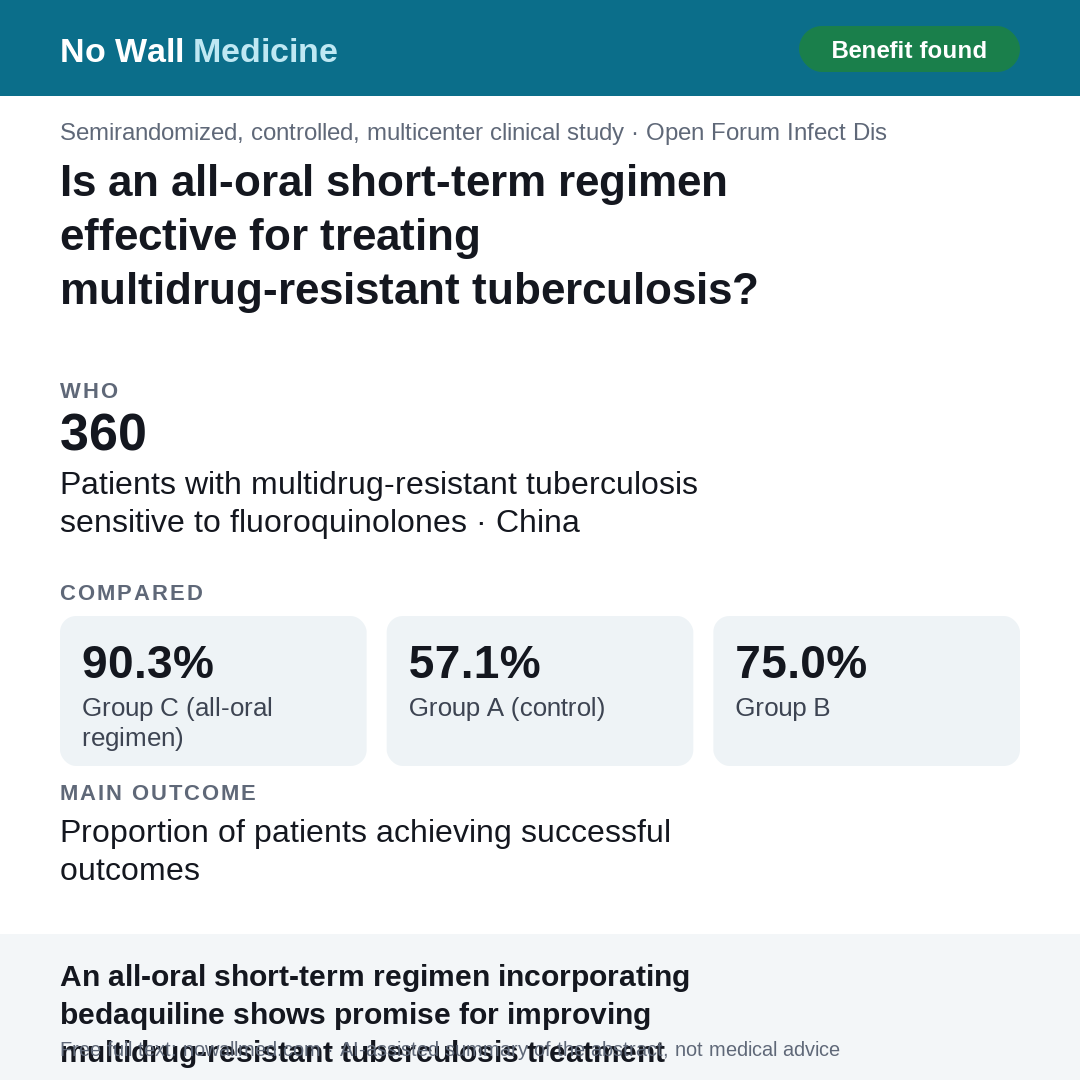
New All-Oral Short-term Regimen for Multidrug-Resistant Tuberculosis: A Semi-randomized Controlled Trial Conducted in China
Semirandomized, controlled, multicenter clinical studyBenefit found
Is an all-oral short-term regimen effective for treating multidrug-resistant tuberculosis?
Who
360
Patients with multidrug-resistant tuberculosis sensitive to fluoroquinolones · China
Compared
90.3%Group C (all-oral regimen)
57.1%Group A (control)
75.0%Group B
Main outcome
Proportion of patients achieving successful outcomes
Bottom line: An all-oral short-term regimen incorporating bedaquiline shows promise for improving multidrug-resistant tuberculosis treatment outcomes.
Open Forum Infect Dis · 2025-02-26Download image
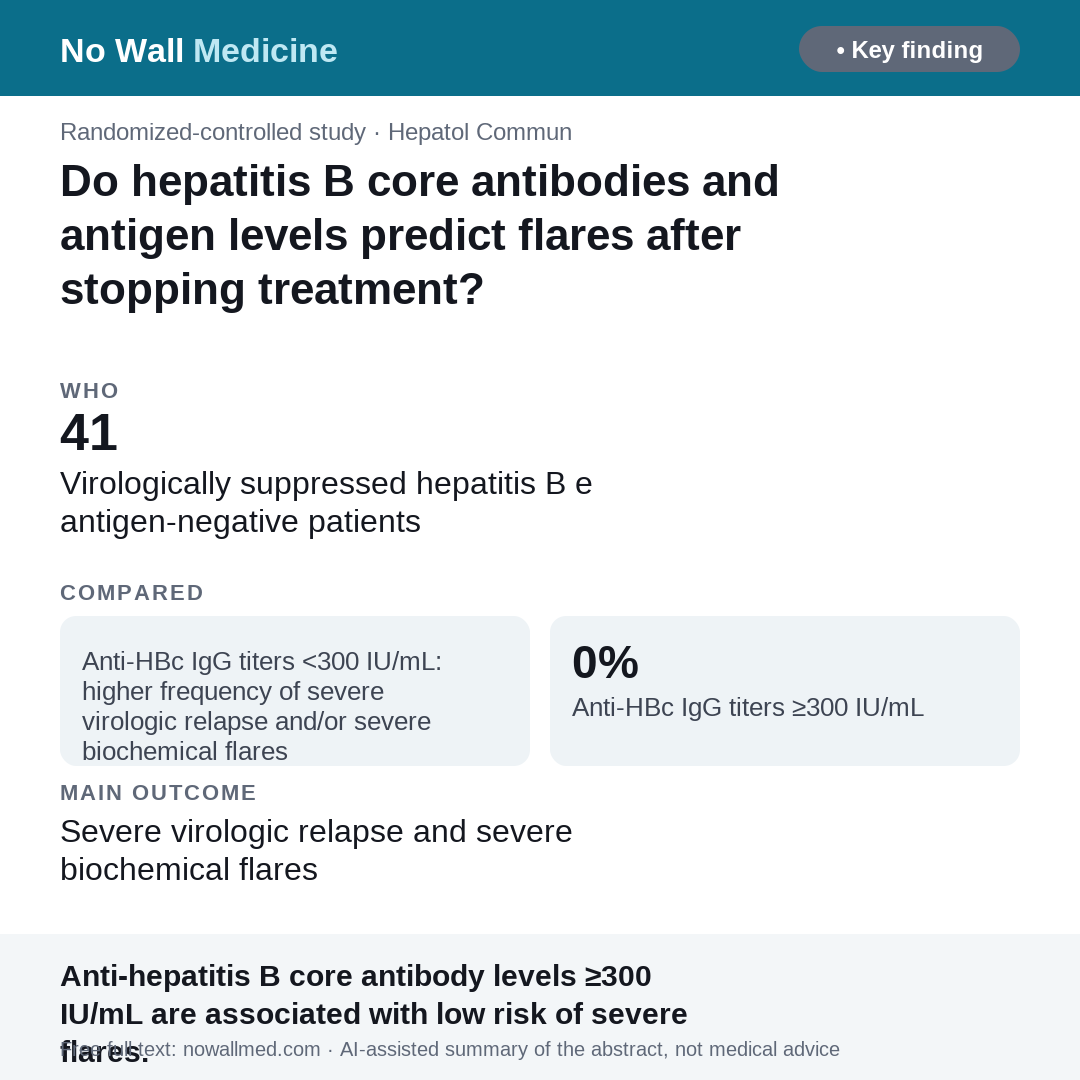
Serum levels of hepatitis B core antibodies and hepatitis B core-related antigen at the time of nucleos(t)ide analog cessation and risk of severe flares in patients with chronic hepatitis B
Randomized-controlled studyBenefit found
Do hepatitis B core antibodies and antigen levels predict flares after stopping treatment?
Who
41
Virologically suppressed hepatitis B e antigen-negative patients
Compared
Anti-HBc IgG titers <300 IU/mL: higher frequency of severe virologic relapse and/or severe biochemical flares
0%Anti-HBc IgG titers ≥300 IU/mL
Main outcome
Severe virologic relapse and severe biochemical flares
Bottom line: Anti-hepatitis B core antibody levels ≥300 IU/mL are associated with low risk of severe flares.
Hepatol Commun · 2025-02-26Download image