Visual abstracts
New randomized trials and meta-analyses from leading journals at a glance: who was studied, what was compared, and what was found. Every paper is free to read in full.
All specialtiesCardiology 1682Oncology 1462Gastroenterology & Hepatology 628Infectious Disease 1074Neurology 696Psychiatry & Mental Health 842Pulmonology 730Critical Care 492Endocrinology & Diabetes 915Pediatrics 993Surgery 834Orthopedics & Sports Medicine 315Neurosurgery 213Cardiothoracic & Vascular Surgery 191Plastic & Reconstructive Surgery 265Nephrology 344Rheumatology 231Hematology 371Dermatology 184Ophthalmology 199Obstetrics & Gynecology 551Public & Global Health 327Radiology & Imaging 230Anesthesiology 338Urology 302ENT (Otolaryngology) 225Emergency Medicine 192Allergy & Immunology 110Geriatrics 365Family Medicine & Primary Care 208Medical Genetics & Genomics 180Pathology & Laboratory Medicine 53Physical Medicine & Rehabilitation 299Palliative Care 152Nutrition 448Digital Health & AI 894General Medicine 135
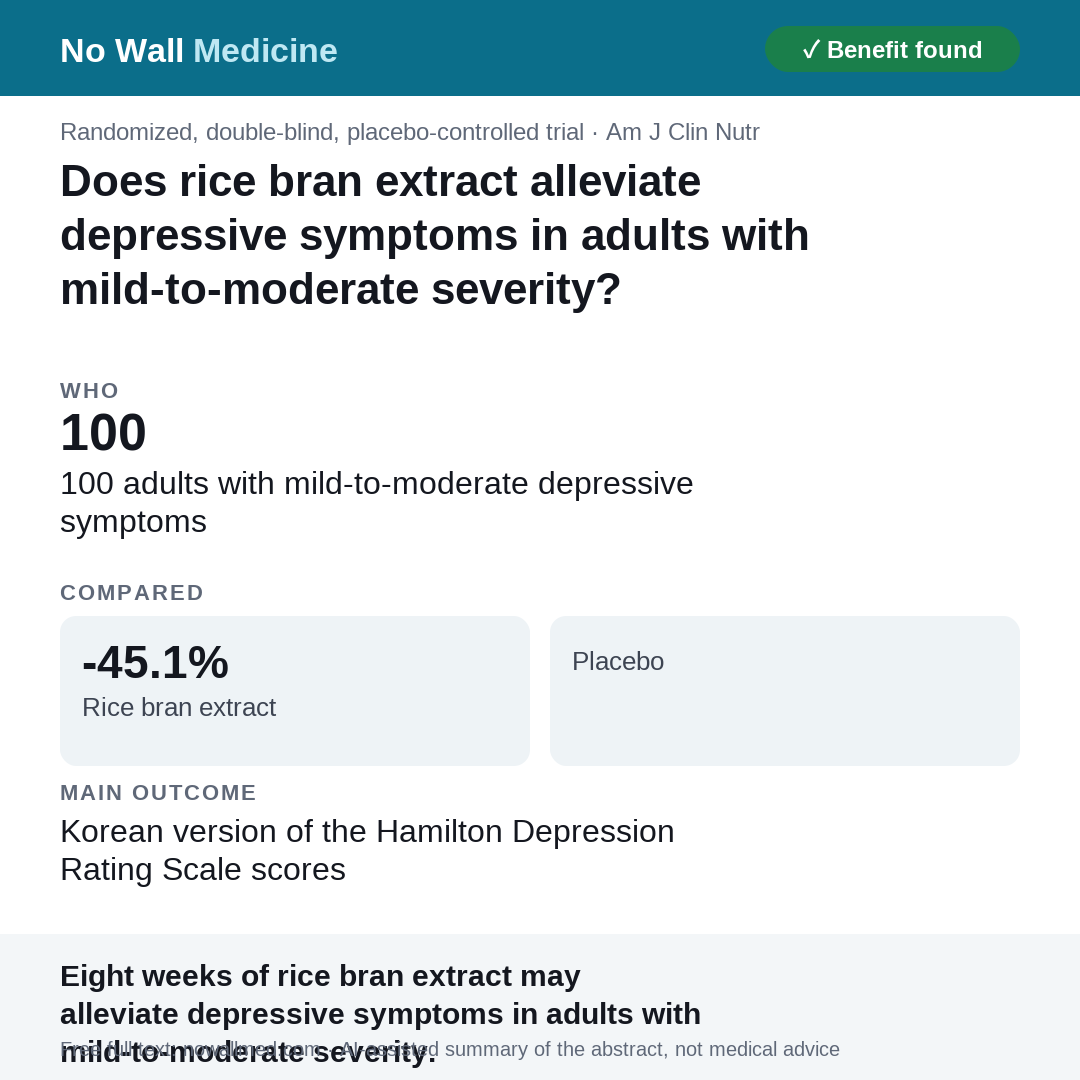
Efficacy of rice bran extract for alleviating depressive symptoms in adults: a randomized, double-blind, placebo-controlled trial
Randomized, double-blind, placebo-controlled trialBenefit found
Does rice bran extract alleviate depressive symptoms in adults with mild-to-moderate severity?
Who
100
100 adults with mild-to-moderate depressive symptoms
Compared
-45.1%Rice bran extract (ITT)
Placebo
Main outcome
Korean version of the Hamilton Depression Rating Scale scores
Result: adjusted differences of -5.73 [95% confidence interval (CI): -7.07, -4.39; intention-to-treat analysis (ITT)]
Bottom line: Eight weeks of rice bran extract may alleviate depressive symptoms in adults with mild-to-moderate severity.
Am J Clin Nutr · 2025-05-21Download image
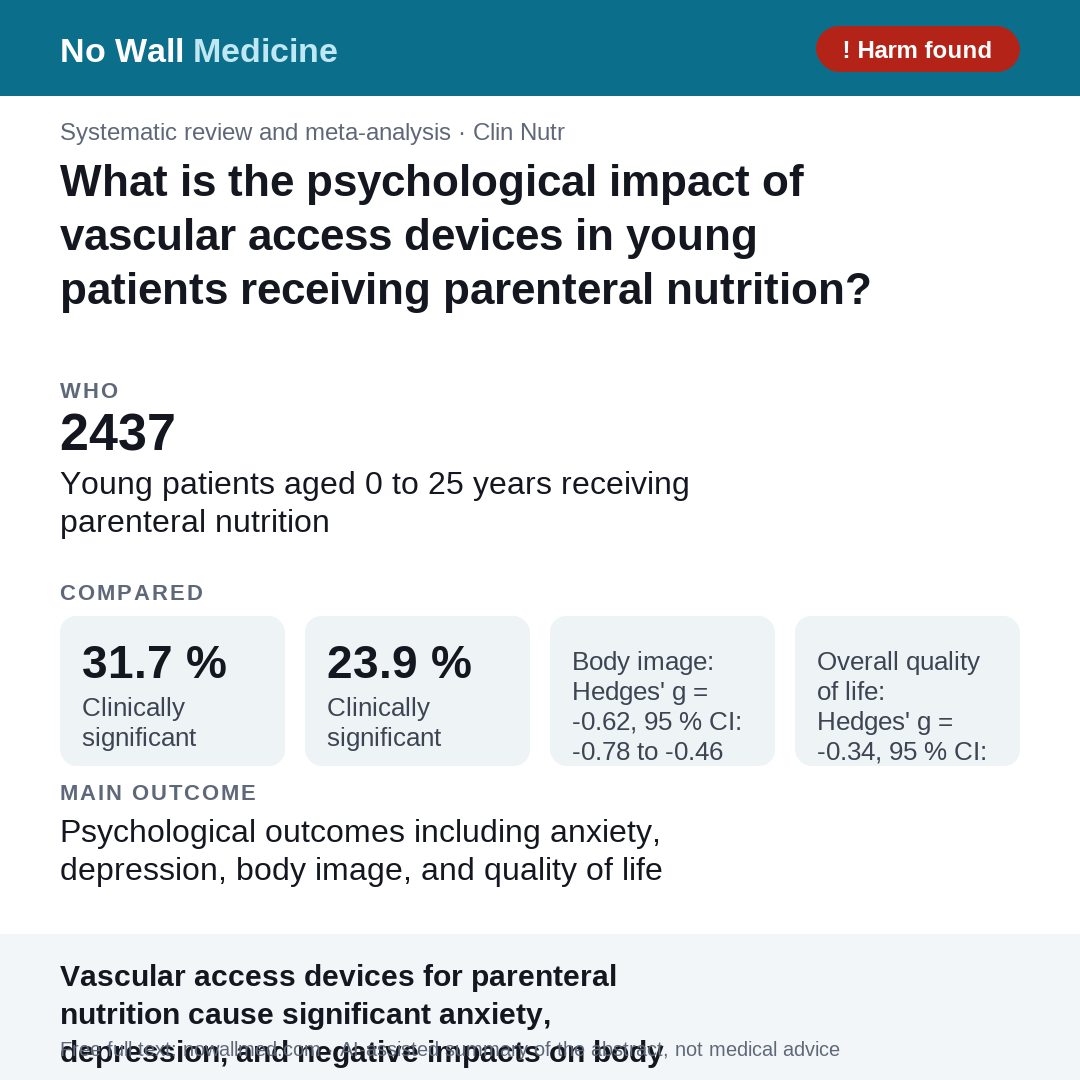
Psychological impact of vascular access devices in young patients receiving parenteral nutrition: A meta-analysis
Systematic review and meta-analysisHarm found
What is the psychological impact of vascular access devices in young patients receiving parenteral nutrition?
Who
2437
Young patients aged 0 to 25 years receiving parenteral nutrition
Compared
31.7 %Clinically significant anxiety (95 % CI: 26.4-37.5 %)
23.9 %Clinically significant depression (95 % CI: 19.2-29.3 %)
Body image: Hedges' g = -0.62, 95 % CI: -0.78 to -0.46
Overall quality of life: Hedges' g = -0.34, 95 % CI: -0.47 to -0.21
Main outcome
Psychological outcomes including anxiety, depression, body image, and quality of life
Bottom line: Vascular access devices for parenteral nutrition cause significant anxiety, depression, and negative impacts on body image and quality of life.
Clin Nutr · 2025-05-21Download image
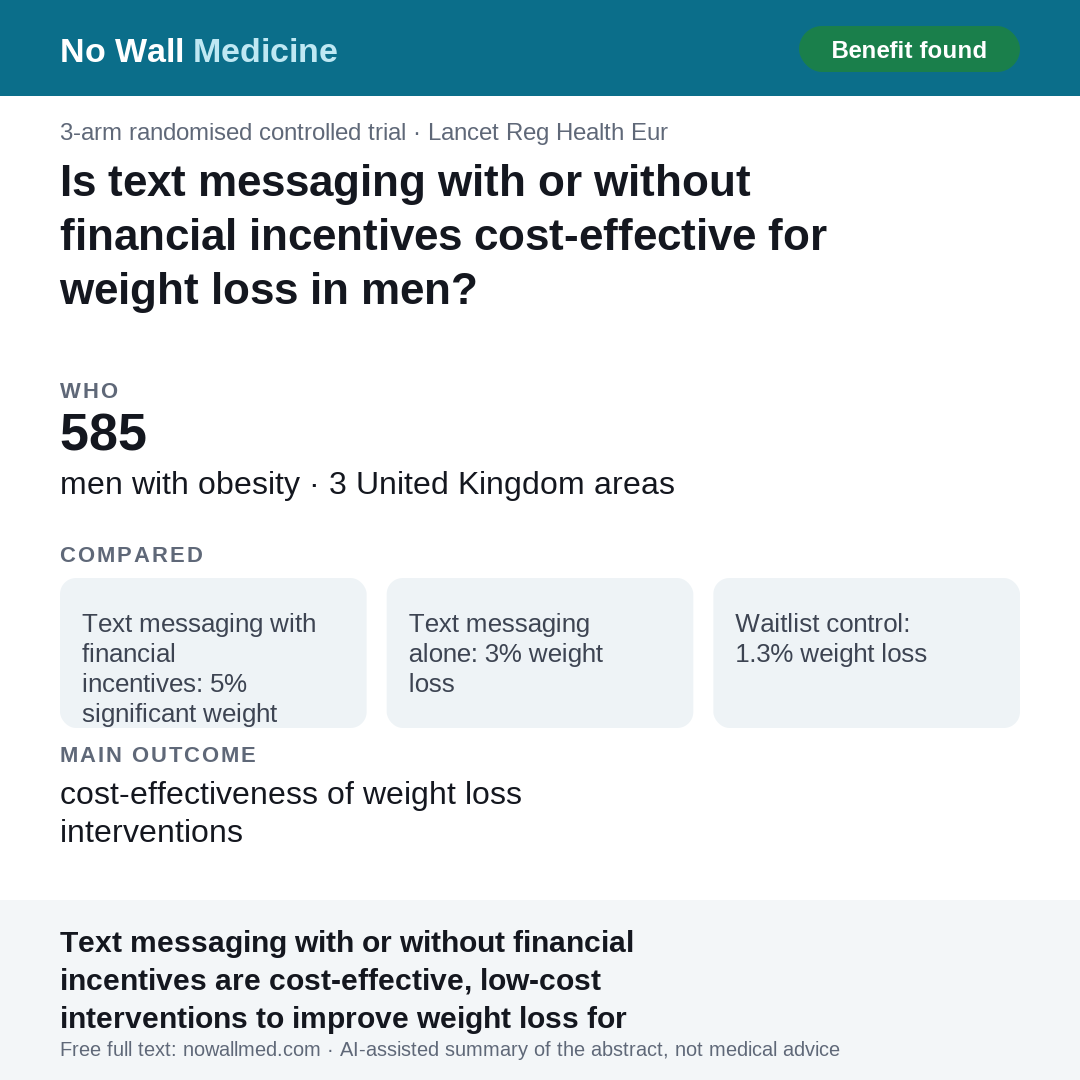
Text messaging with or without financial incentives versus a waitlist control for weight loss in men: cost-effectiveness analysis of the Game of Stones randomised controlled trial
3-arm randomised controlled trialBenefit found
Is text messaging with or without financial incentives cost-effective for weight loss in men?
Who
585
men with obesity · 3 United Kingdom areas
Compared
Text messaging with financial incentives: 5% significant weight loss
Text messaging alone: 3% weight loss
Waitlist control: 1.3% weight loss
Main outcome
cost-effectiveness of weight loss interventions
Result: ICER £9748 (£7,705, £11,791) for incentives versus control
Bottom line: Text messaging with or without financial incentives are cost-effective, low-cost interventions to improve weight loss for men.
Funded by: National Institute for Health and Care Research
Lancet Reg Health Eur · 2025-05-21Download image
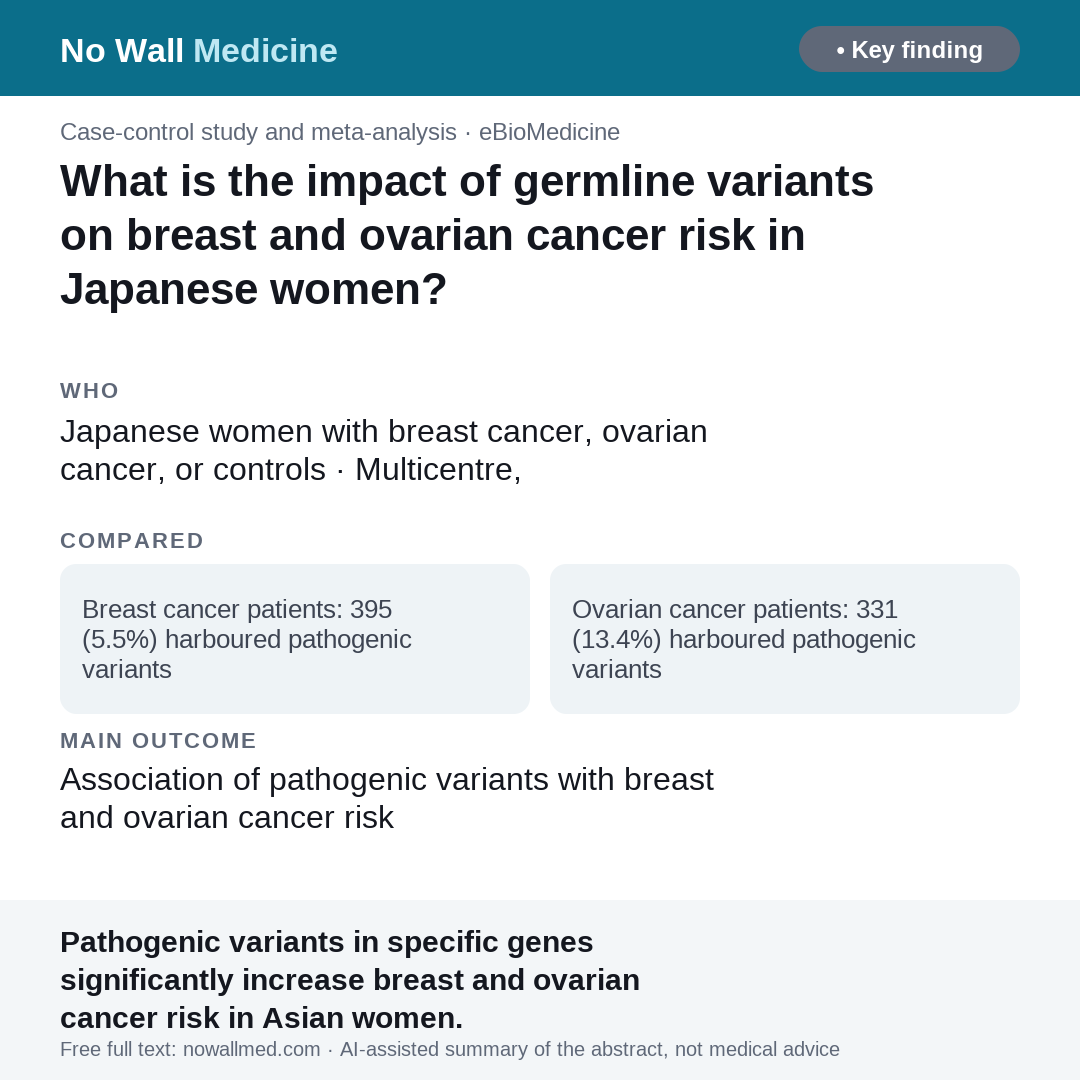
Impact of germline variants on breast and ovarian cancer risk in Japanese women: an original cohort study and meta-analysis
Case-control study and meta-analysisBenefit found
What is the impact of germline variants on breast and ovarian cancer risk in Japanese women?
Who
Japanese women with breast cancer, ovarian cancer, or controls · Multicentre, hospital-based registry in Japan
Compared
Breast cancer patients: 395 (5.5%) harboured pathogenic variants
Ovarian cancer patients: 331 (13.4%) harboured pathogenic variants
Main outcome
Association of pathogenic variants with breast and ovarian cancer risk
Bottom line: Pathogenic variants in specific genes significantly increase breast and ovarian cancer risk in Asian women.
Funded by: AMED, Health Labour Sciences Research Grant, JSPS KAKENHI, and Yamanashi Prefecture
eBioMedicine · 2025-05-21Download image
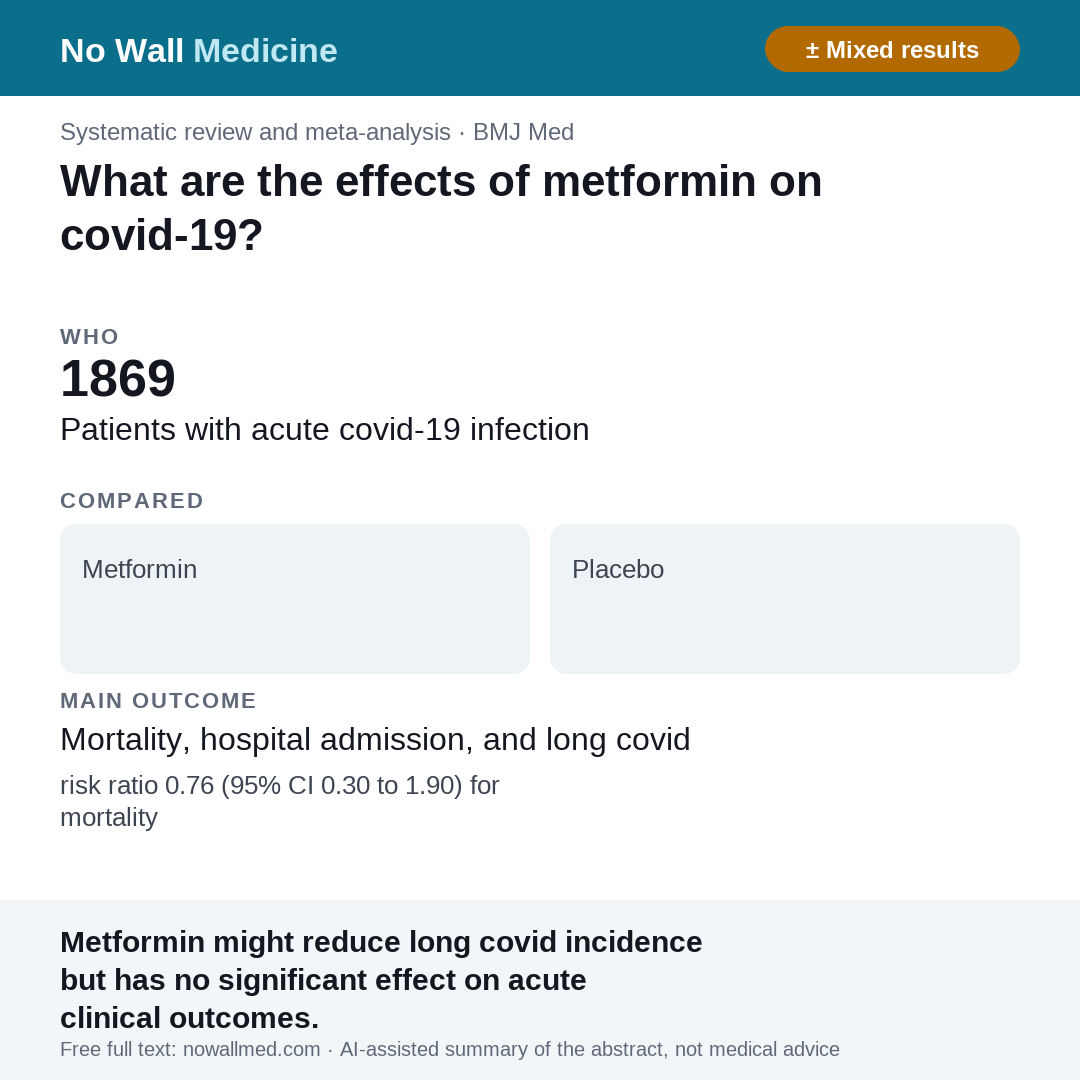
Metformin for covid-19: systematic review and meta-analysis of randomised controlled trials
Systematic review and meta-analysisMixed results
What are the effects of metformin on covid-19?
Who
1869
Patients with acute covid-19 infection
Compared
Metformin
Placebo
Main outcome
Mortality, hospital admission, and long covid
Result: risk ratio 0.76 (95% CI 0.30 to 1.90) for mortality
Bottom line: Metformin might reduce long covid incidence but has no significant effect on acute clinical outcomes.
Limitation: Low certainty evidence and high risk of bias in the single trial for long covid.
BMJ Med · 2025-05-21Download image
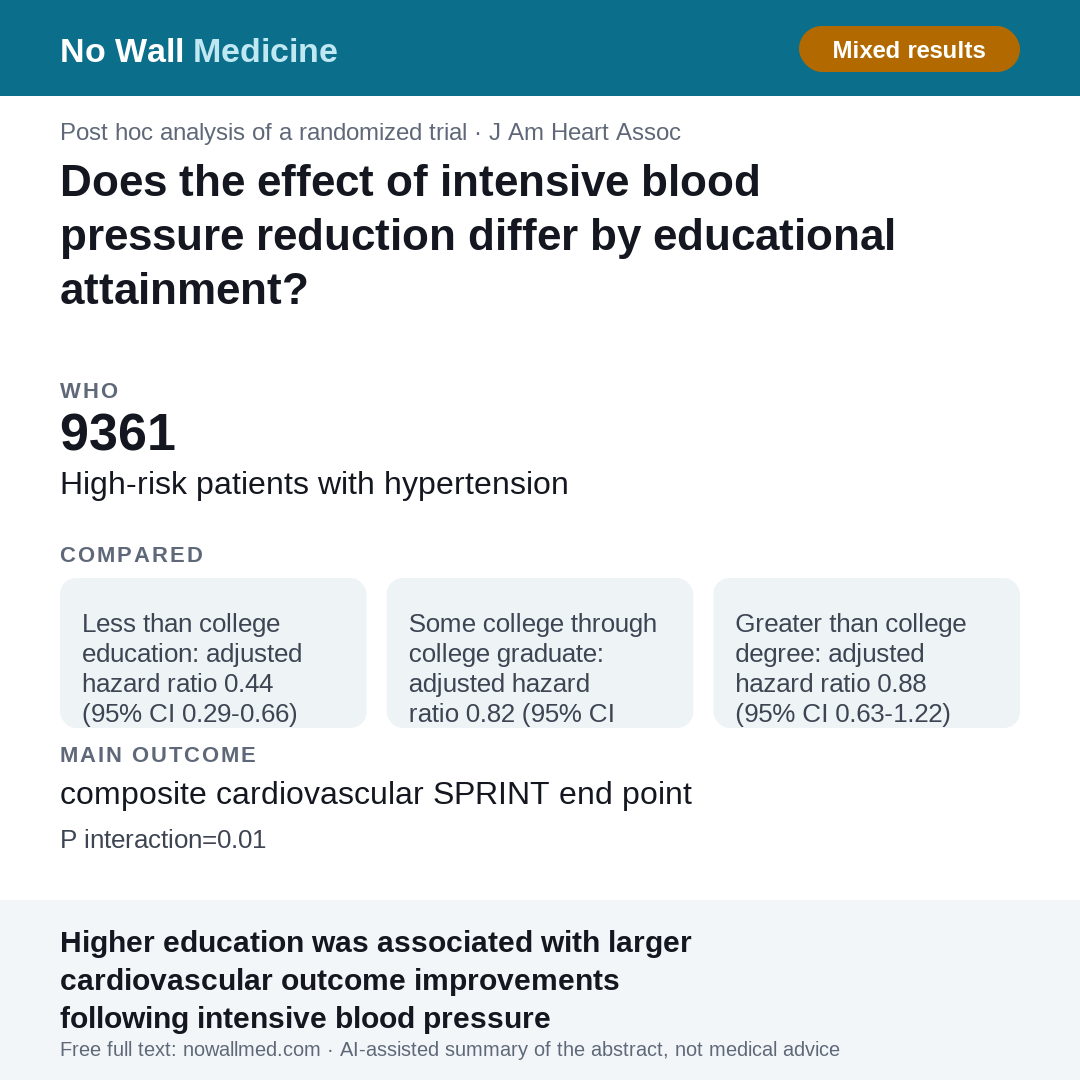
Educational Attainment and the Effect of Intensive Blood Pressure Reduction: A Post Hoc Analysis of the SPRINT Study
Post hoc analysis of a randomized trialMixed results
Does the effect of intensive blood pressure reduction differ by educational attainment?
Who
9361
High-risk patients with hypertension
Compared
Less than college education: adjusted hazard ratio 0.44 (95% CI 0.29-0.66)
Some college through college graduate: adjusted hazard ratio 0.82 (95% CI 0.60-1.12)
Greater than college degree: adjusted hazard ratio 0.88 (95% CI 0.63-1.22)
Main outcome
composite cardiovascular SPRINT end point
Result: P interaction=0.01
Bottom line: Higher education was associated with larger cardiovascular outcome improvements following intensive blood pressure reduction, particularly among non-Black individuals.
Limitation: The findings highlight the relevance of social factors in the generalizability of clinical trials.
J Am Heart Assoc · 2025-05-21Download image
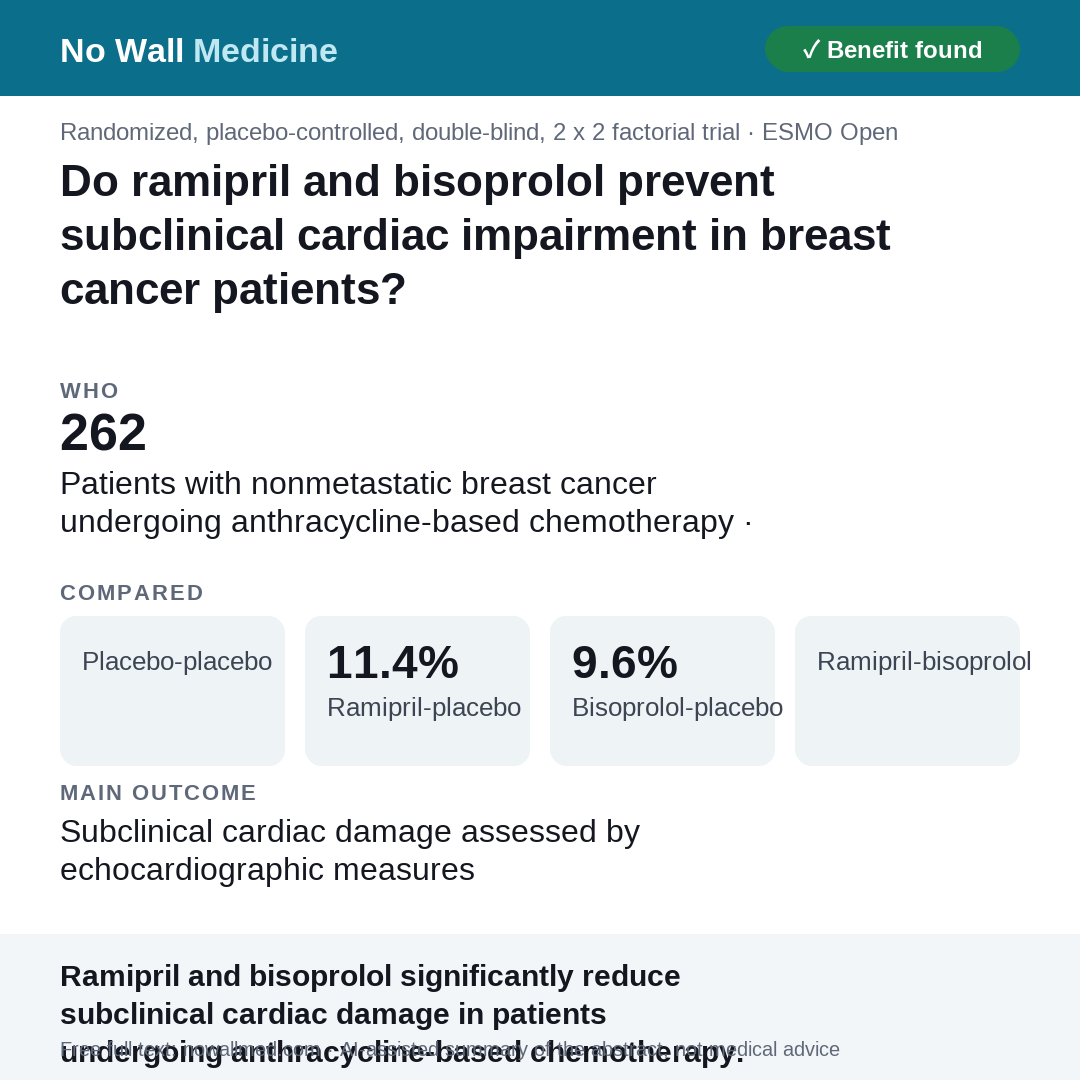
Cardioprotection in patients with anthracycline-treated breast cancer: final analysis from the 2 × 2 randomized, placebo-controlled, double-blind SAFE trial
Randomized, placebo-controlled, double-blind, 2 x 2 factorial trialBenefit found
Do ramipril and bisoprolol prevent subclinical cardiac impairment in breast cancer patients?
Who
262
Patients with nonmetastatic breast cancer undergoing anthracycline-based chemotherapy · Multicenter
Compared
Placebo-placebo
11.4%Ramipril-placebo
9.6%Bisoprolol-placebo
Ramipril-bisoprolol
Main outcome
Subclinical cardiac damage assessed by echocardiographic measures
Bottom line: Ramipril and bisoprolol significantly reduce subclinical cardiac damage in patients undergoing anthracycline-based chemotherapy.
ESMO Open · 2025-05-21Download image
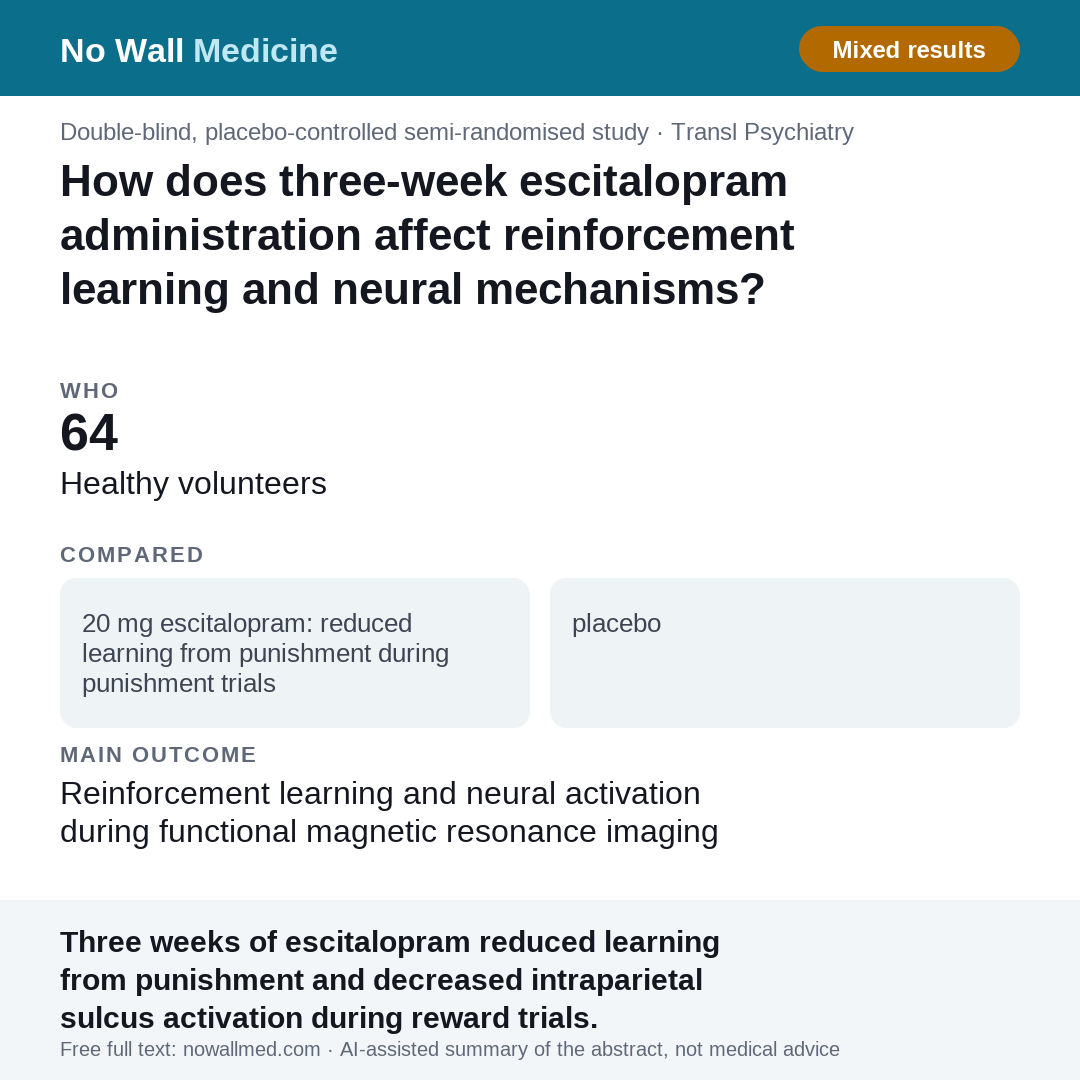
Computational modelling and neural correlates of reinforcement learning following three-week escitalopram: a double-blind, placebo-controlled semi-randomised study
Double-blind, placebo-controlled semi-randomised studyMixed results
How does three-week escitalopram administration affect reinforcement learning and neural mechanisms?
Who
64
Healthy volunteers
Compared
20 mg escitalopram: reduced learning from punishment during punishment trials
placebo
Main outcome
Reinforcement learning and neural activation during functional magnetic resonance imaging
Bottom line: Three weeks of escitalopram reduced learning from punishment and decreased intraparietal sulcus activation during reward trials.
Transl Psychiatry · 2025-05-21Download image
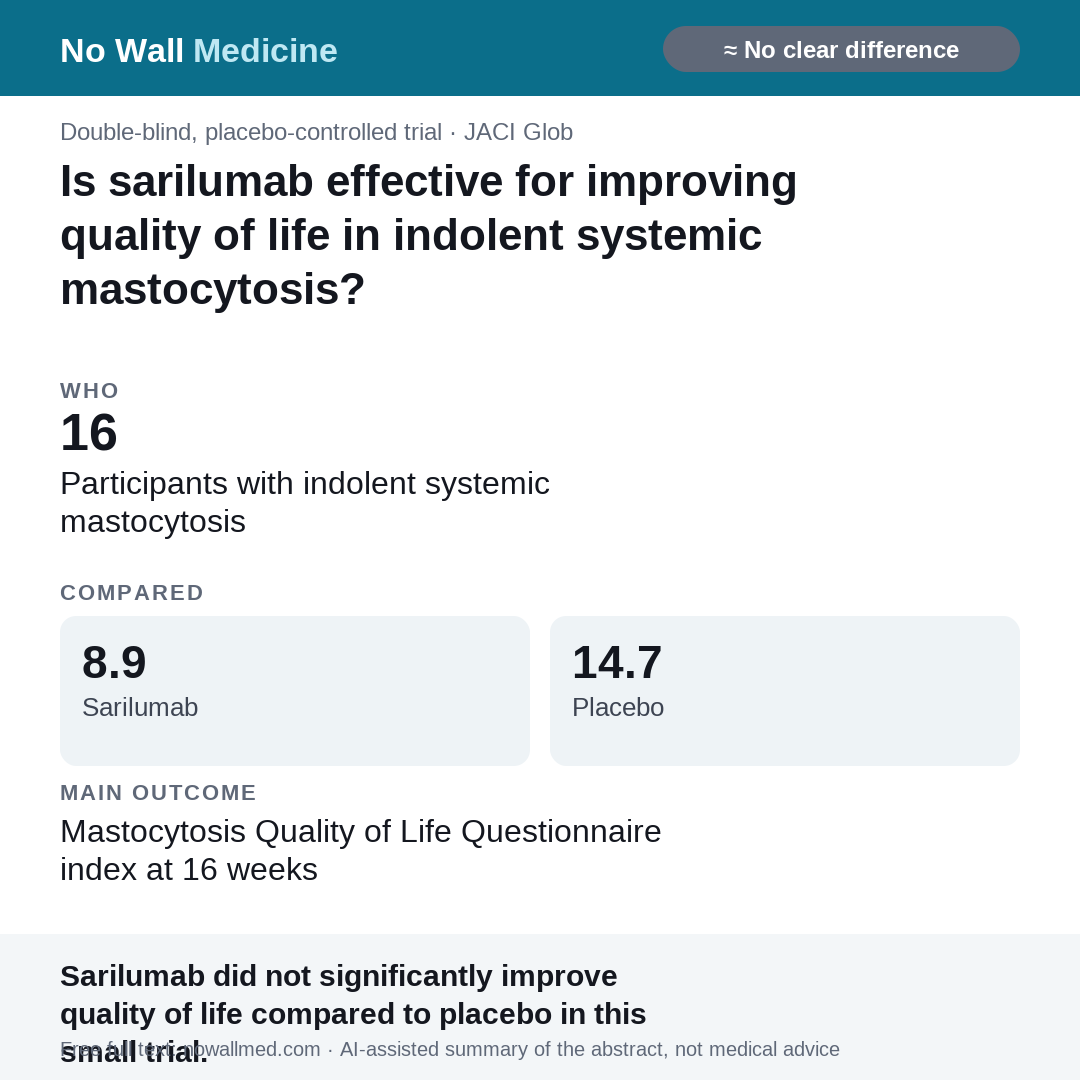
Treatment of indolent systemic mastocytosis with sarilumab is not supported in a randomized trial
Double-blind, placebo-controlled trialNo clear difference
Is sarilumab effective for improving quality of life in indolent systemic mastocytosis?
Who
16
Participants with indolent systemic mastocytosis
Compared
8.9Sarilumab
14.7Placebo
Main outcome
Mastocytosis Quality of Life Questionnaire index at 16 weeks
Result: 6.0-unit advantage of placebo (95% confidence interval, -8.9, 20.8)
Bottom line: Sarilumab did not significantly improve quality of life compared to placebo in this small trial.
JACI Glob · 2025-05-21Download image
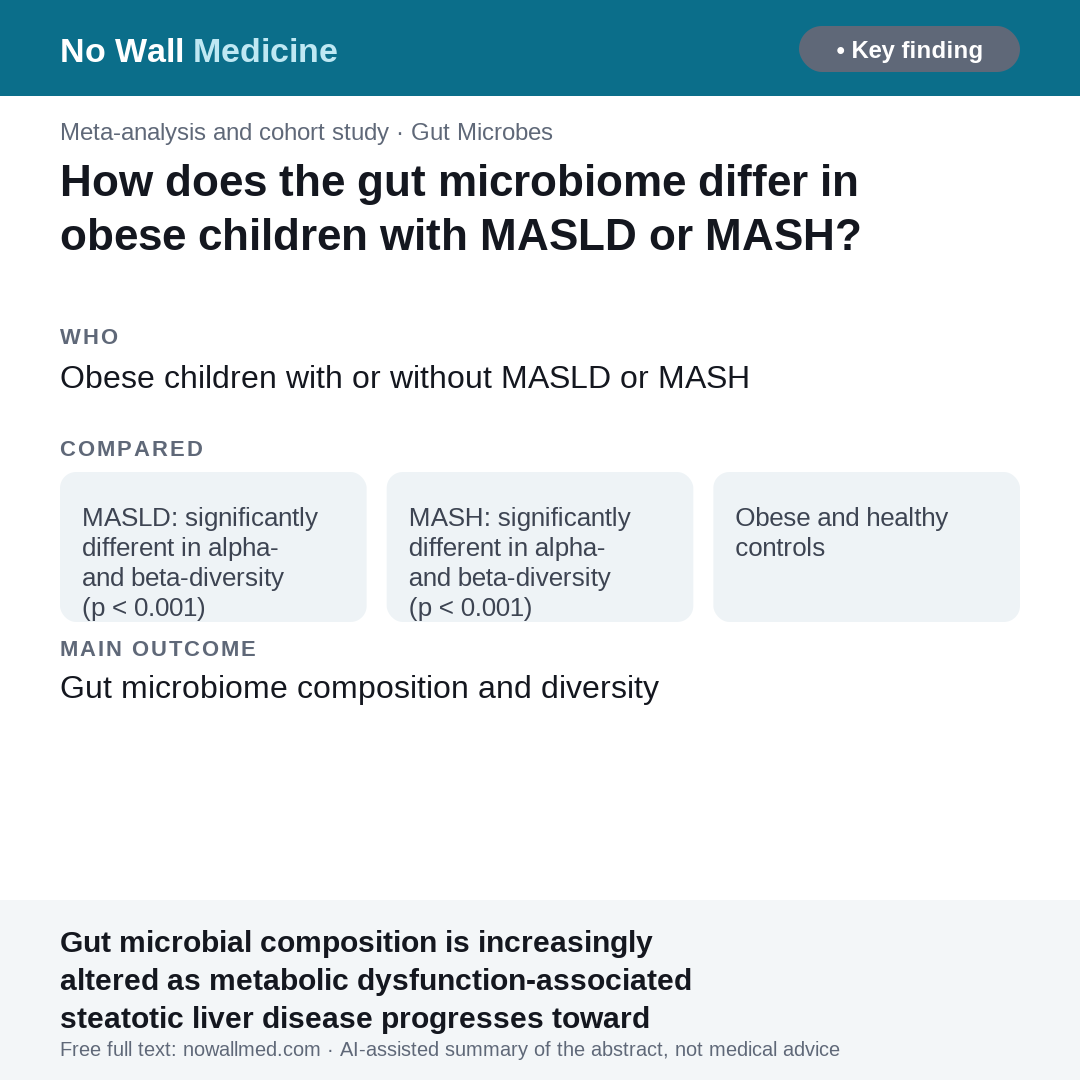
Meta-analysis of shotgun sequencing of gut microbiota in obese children with MASLD or MASH
Meta-analysis and cohort studyBenefit found
How does the gut microbiome differ in obese children with MASLD or MASH?
Who
Obese children with or without MASLD or MASH
Compared
MASLD: significantly different in alpha- and beta-diversity (p < 0.001)
MASH: significantly different in alpha- and beta-diversity (p < 0.001)
Obese and healthy controls
Main outcome
Gut microbiome composition and diversity
Bottom line: Gut microbial composition is increasingly altered as metabolic dysfunction-associated steatotic liver disease progresses toward steatohepatitis.
Gut Microbes · 2025-05-21Download image
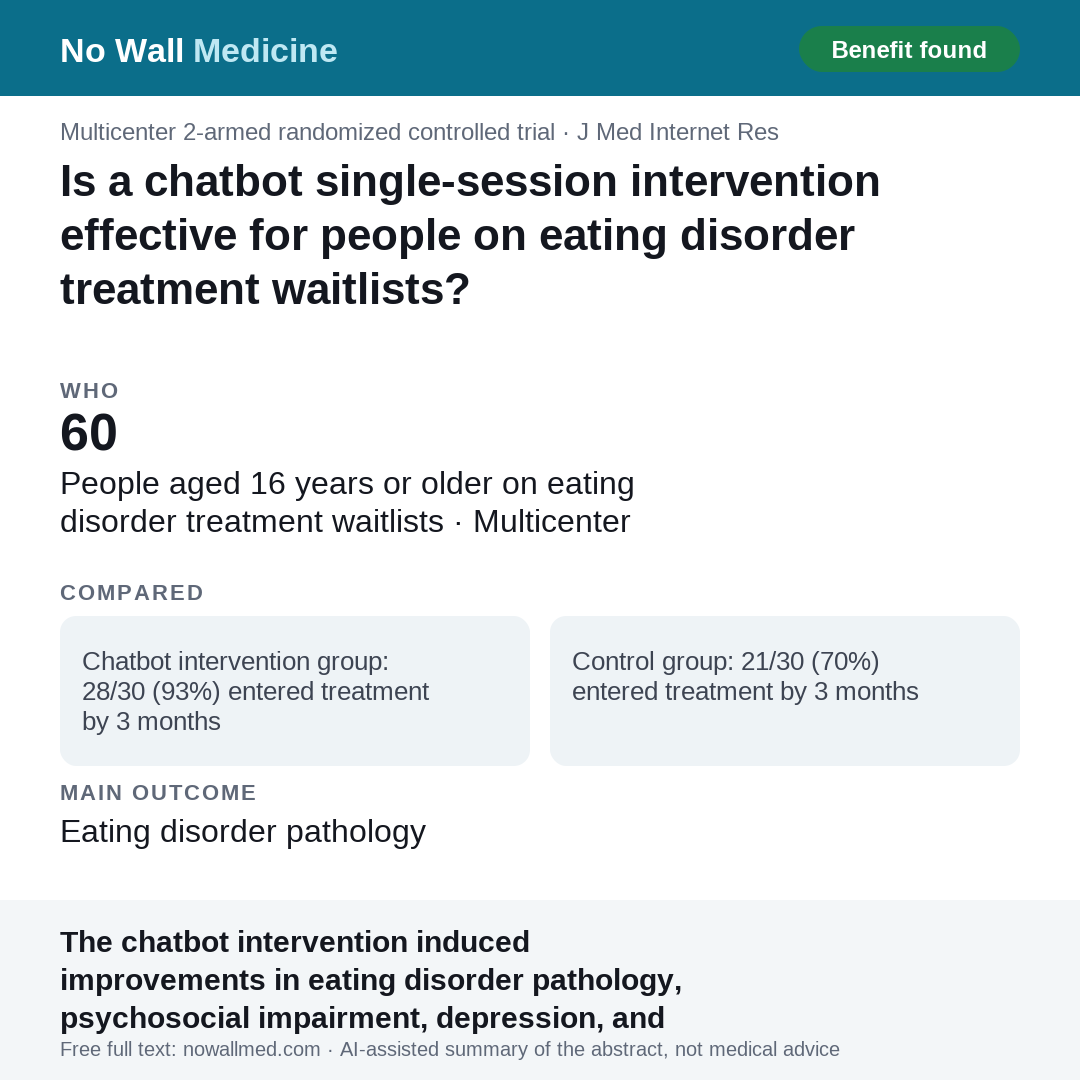
The Effectiveness of a Chatbot Single-Session Intervention for People on Waitlists for Eating Disorder Treatment: Randomized Controlled Trial
Multicenter 2-armed randomized controlled trialBenefit found
Is a chatbot single-session intervention effective for people on eating disorder treatment waitlists?
Who
60
People aged 16 years or older on eating disorder treatment waitlists · Multicenter
Compared
Chatbot intervention group: 28/30 (93%) entered treatment by 3 months
Control group: 21/30 (70%) entered treatment by 3 months
Main outcome
Eating disorder pathology
Result: Cohen d=0.15-0.53
Bottom line: The chatbot intervention induced improvements in eating disorder pathology, psychosocial impairment, depression, and anxiety maintained up to 3 months.
Limitation: Further research is needed to determine the longer-term effectiveness of ED ESSI.
J Med Internet Res · 2025-05-21Download image
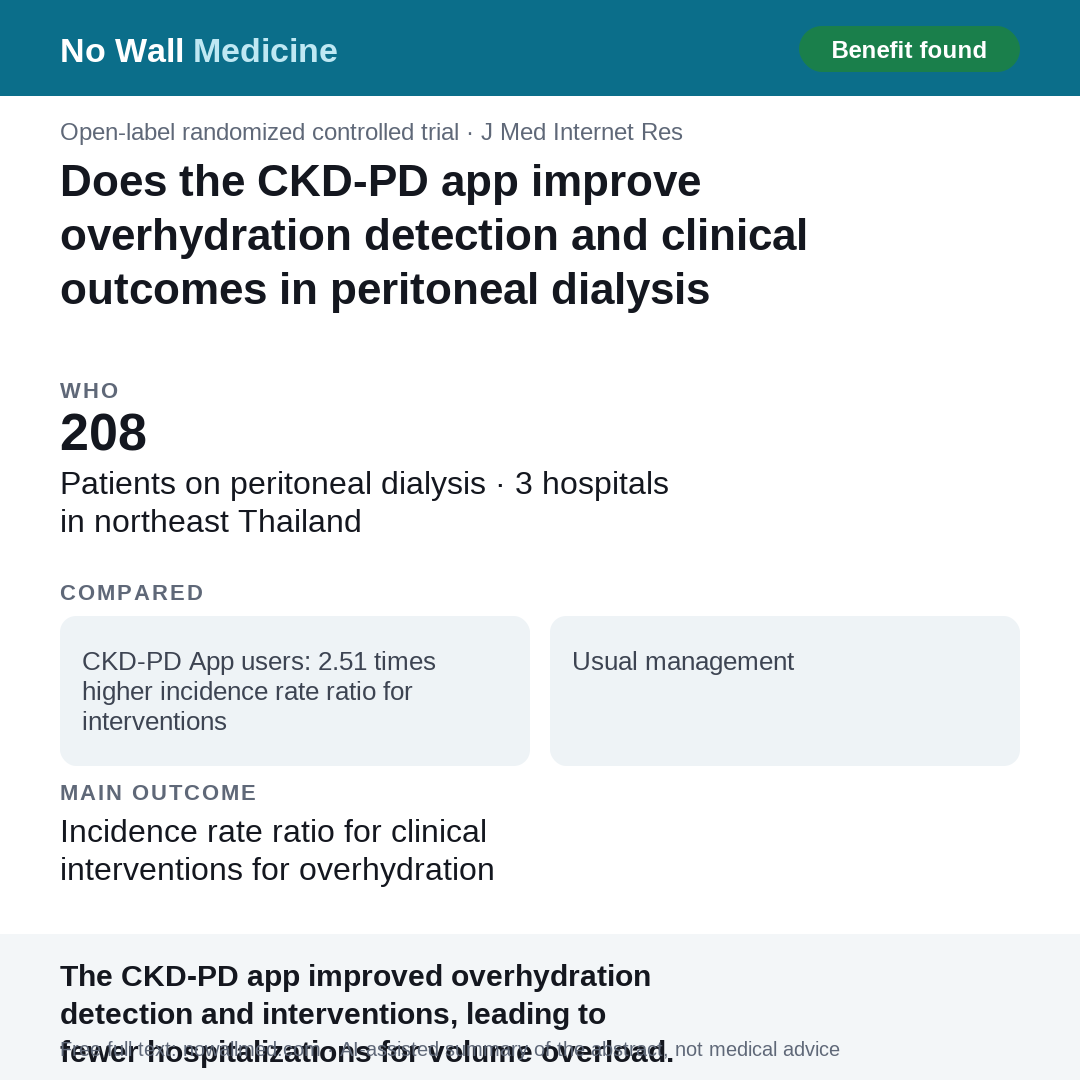
Effect of the Chronic Kidney Disease-Peritoneal Dialysis (CKD-PD) App on Improvement of Overhydration Treatment in Patients on Peritoneal Dialysis: Randomized Controlled Trial
Open-label randomized controlled trialBenefit found
Does the CKD-PD app improve overhydration detection and clinical outcomes in peritoneal dialysis patients?
Who
208
Patients on peritoneal dialysis · 3 hospitals in northeast Thailand
Compared
CKD-PD App users: 2.51 times higher incidence rate ratio for interventions
Usual management
Main outcome
Incidence rate ratio for clinical interventions for overhydration
Result: incidence rate ratio 2.51 (95% CI 2.18-2.89)
Bottom line: The CKD-PD app improved overhydration detection and interventions, leading to fewer hospitalizations for volume overload.
J Med Internet Res · 2025-05-21Download image
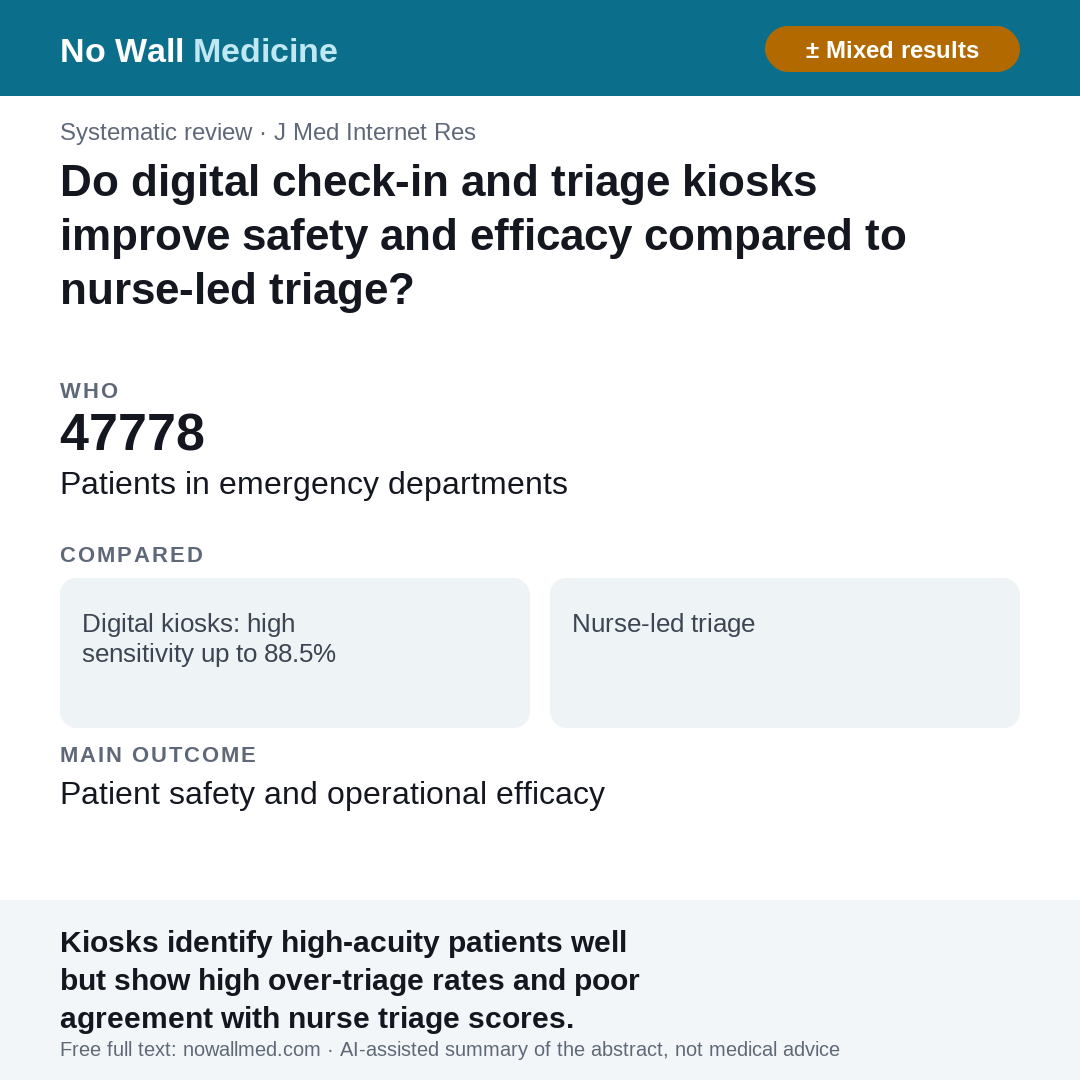
Safety and Efficacy of Digital Check-in and Triage Kiosks in Emergency Departments: Systematic Review
Systematic reviewMixed results
Do digital check-in and triage kiosks improve safety and efficacy compared to nurse-led triage?
Who
47778
Patients in emergency departments
Compared
Digital kiosks: high sensitivity up to 88.5%
Nurse-led triage
Main outcome
Patient safety and operational efficacy
Bottom line: Kiosks identify high-acuity patients well but show high over-triage rates and poor agreement with nurse triage scores.
Limitation: Evidence remains sparse and based on a limited number of studies.
J Med Internet Res · 2025-05-21Download image
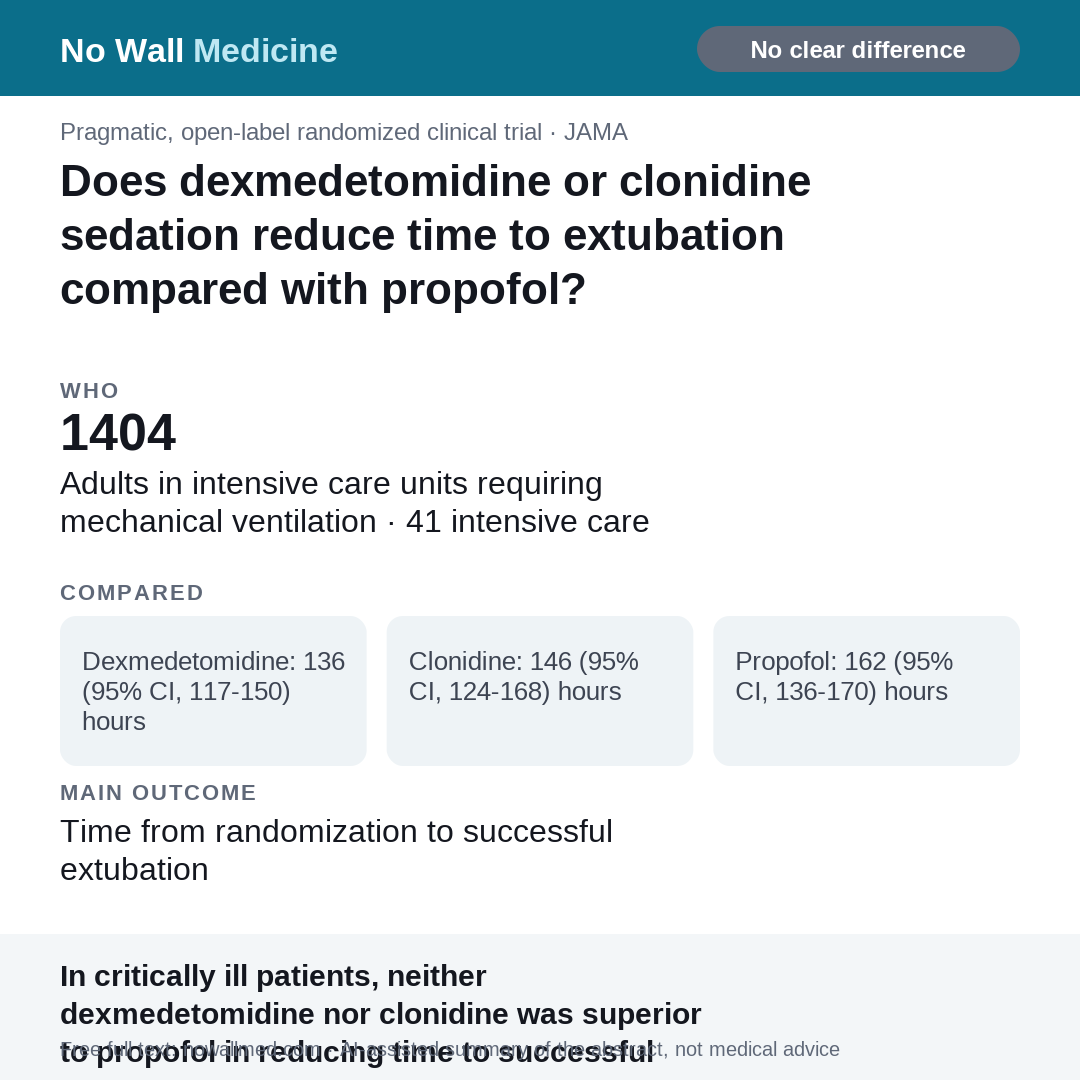
Dexmedetomidine- or Clonidine-Based Sedation Compared With Propofol in Critically Ill Patients: The A2B Randomized Clinical Trial
Pragmatic, open-label randomized clinical trialNo clear difference
Does dexmedetomidine or clonidine sedation reduce time to extubation compared with propofol?
Who
1404
Adults in intensive care units requiring mechanical ventilation · 41 intensive care units in the United Kingdom
Compared
Dexmedetomidine: 136 (95% CI, 117-150) hours
Clonidine: 146 (95% CI, 124-168) hours
Propofol: 162 (95% CI, 136-170) hours
Main outcome
Time from randomization to successful extubation
Result: subdistribution hazard ratio 1.09 (95% CI, 0.96-1.25) for dexmedetomidine vs propofol
Bottom line: In critically ill patients, neither dexmedetomidine nor clonidine was superior to propofol in reducing time to successful extubation.
JAMA · 2025-05-20Download image
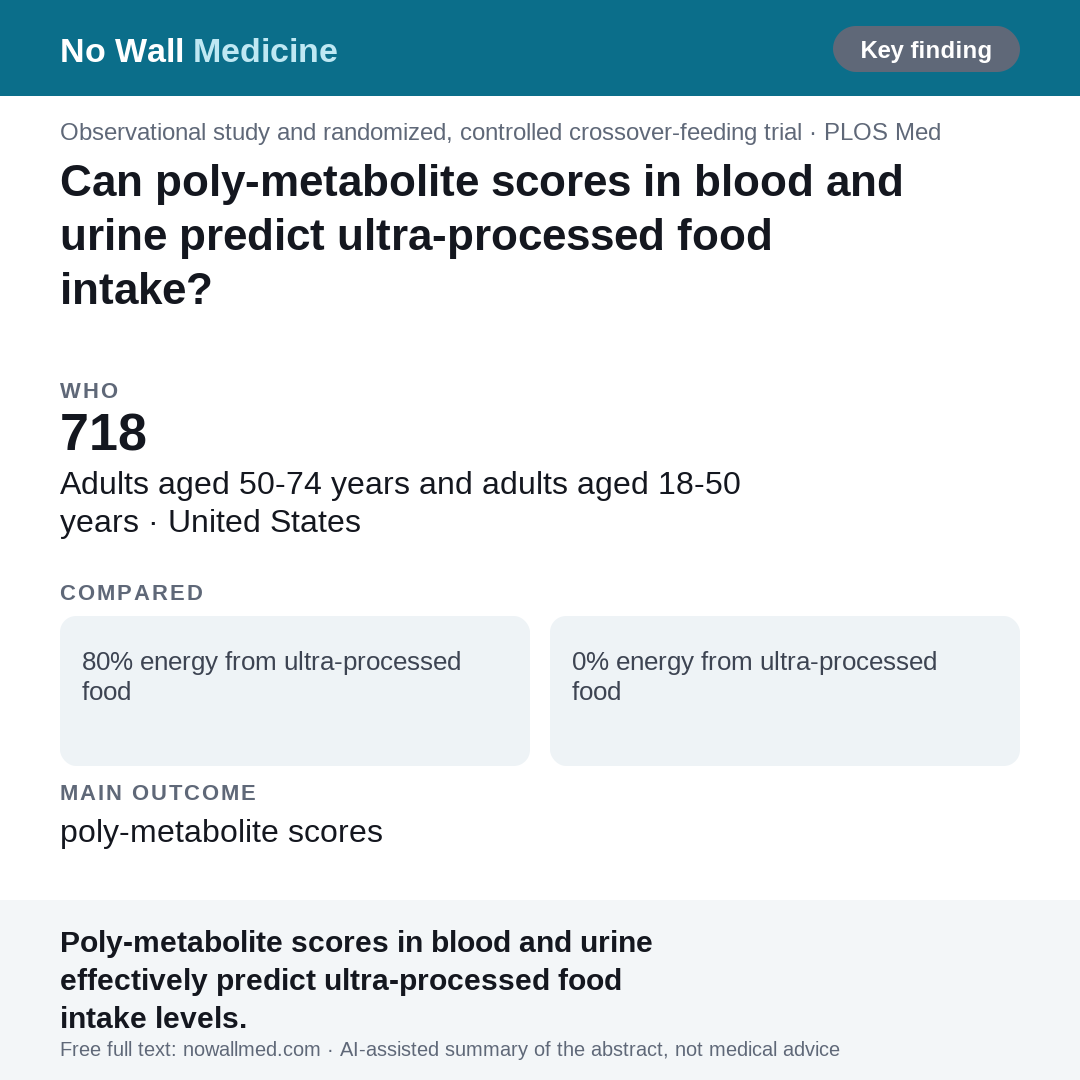
Identification and validation of poly-metabolite scores for diets high in ultra-processed food: An observational study and post-hoc randomized controlled crossover-feeding trial
Observational study and randomized, controlled crossover-feeding trialBenefit found
Can poly-metabolite scores in blood and urine predict ultra-processed food intake?
Who
718
Adults aged 50-74 years and adults aged 18-50 years · United States
Compared
80% energy from ultra-processed food
0% energy from ultra-processed food
Main outcome
poly-metabolite scores
Bottom line: Poly-metabolite scores in blood and urine effectively predict ultra-processed food intake levels.
PLOS Med · 2025-05-20Download image
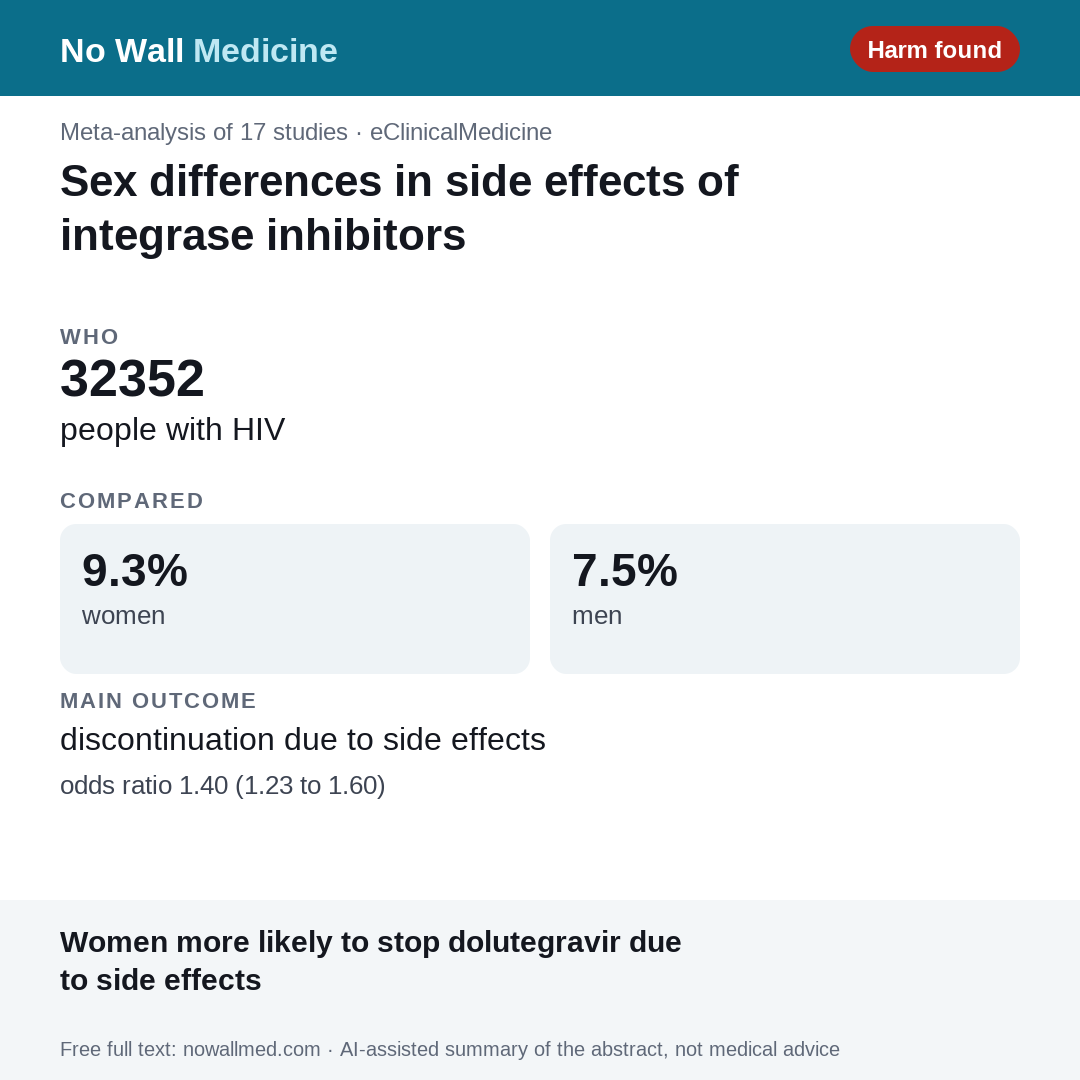
Sex differences in discontinuations due to side effects of second-generation integrase strand transfer inhibitors: a systematic review and meta-analysis
Meta-analysis of 17 studiesHarm found
Sex differences in side effects of integrase inhibitors
Who
32352
people with HIV
Compared
9.3%women
7.5%men
Main outcome
discontinuation due to side effects
Result: odds ratio 1.40 (1.23 to 1.60)
Bottom line: Women more likely to stop dolutegravir due to side effects
Limitation: lack of sex-disaggregated reporting
eClinicalMedicine · 2025-05-20Download image
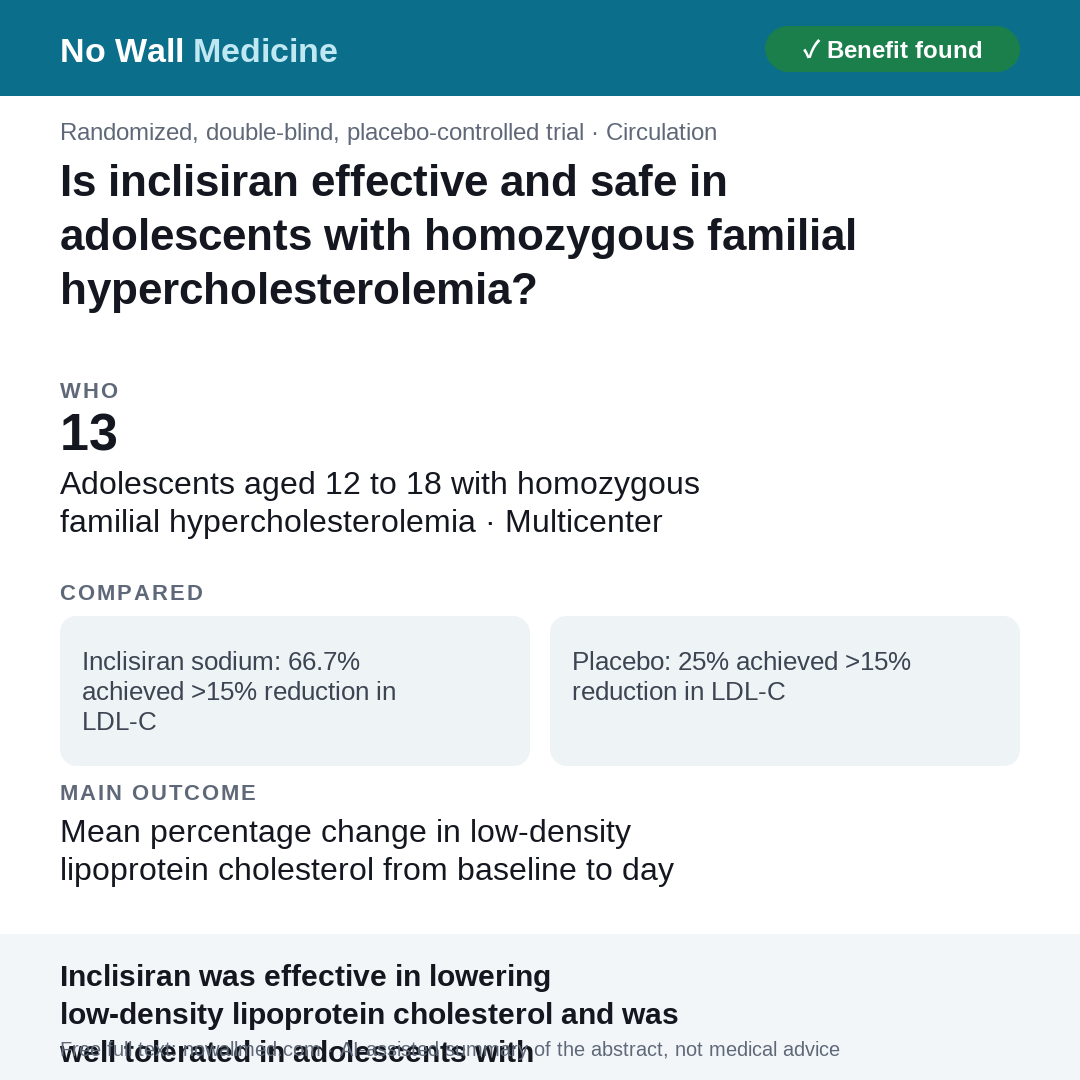
Efficacy and Safety of Inclisiran in Adolescents With Genetically Confirmed Homozygous Familial Hypercholesterolemia: Results From the Double-Blind, Placebo-Controlled Part of the ORION-13 Randomized Trial
Randomized, double-blind, placebo-controlled trialBenefit found
Is inclisiran effective and safe in adolescents with homozygous familial hypercholesterolemia?
Who
13
Adolescents aged 12 to 18 with homozygous familial hypercholesterolemia · Multicenter study
Compared
Inclisiran sodium: 66.7% achieved >15% reduction in LDL-C
Placebo: 25% achieved >15% reduction in LDL-C
Main outcome
Mean percentage change in low-density lipoprotein cholesterol from baseline to day 330
Result: -33.3% (-59.2% to -7.3%)
Bottom line: Inclisiran was effective in lowering low-density lipoprotein cholesterol and was well tolerated in adolescents with homozygous familial hypercholesterolemia.
Circulation · 2025-05-20Download image
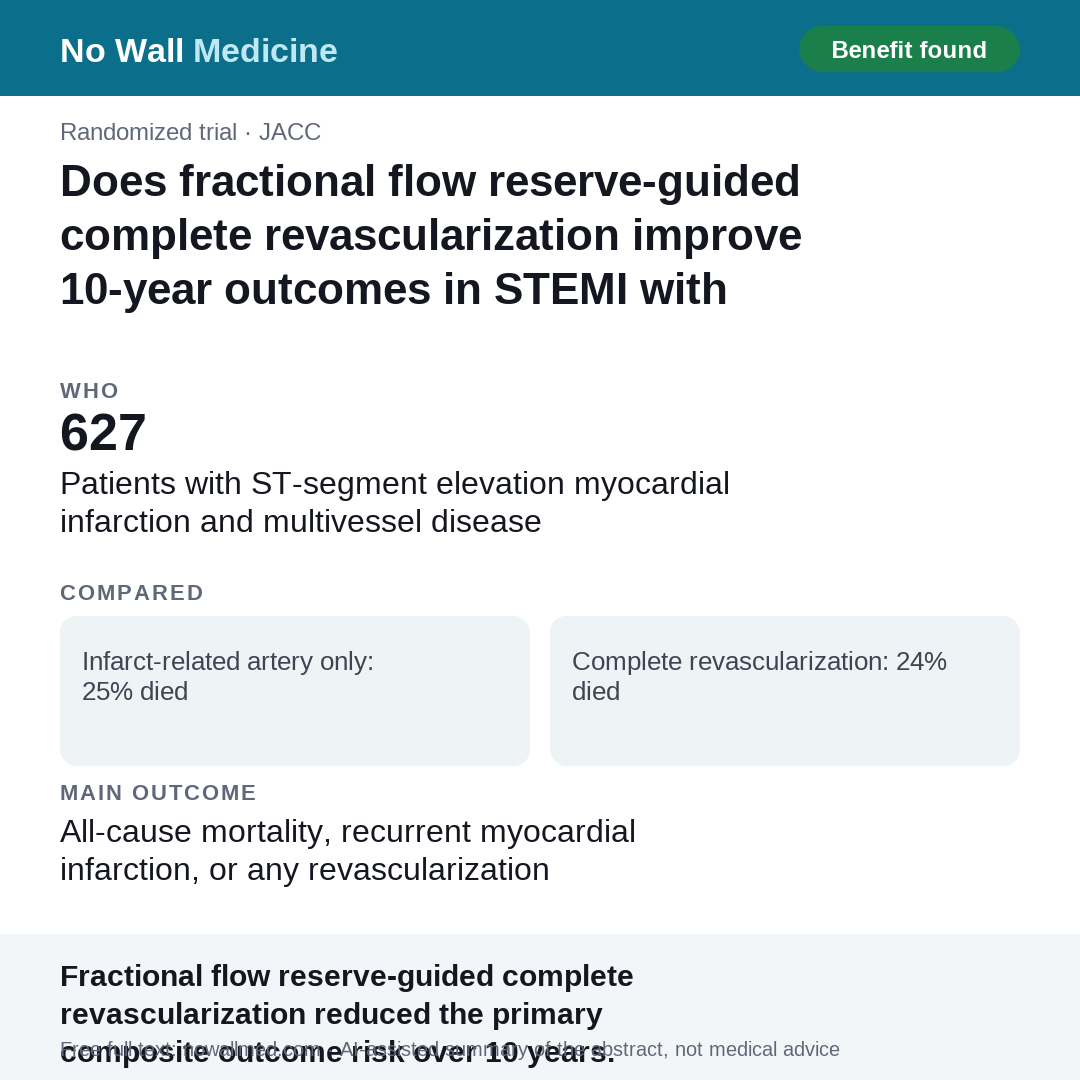
10-Year Outcome of Complete or Infarct Artery-Only Revascularization in STEMI With Multivessel Disease: The DANAMI-3-PRIMULTI Study
Randomized trialBenefit found
Does fractional flow reserve-guided complete revascularization improve 10-year outcomes in STEMI with multivessel disease?
Who
627
Patients with ST-segment elevation myocardial infarction and multivessel disease
Compared
Infarct-related artery only: 25% died
Complete revascularization: 24% died
Main outcome
All-cause mortality, recurrent myocardial infarction, or any revascularization
Result: hazard ratio 0.76 (95% CI 0.60-0.94)
Bottom line: Fractional flow reserve-guided complete revascularization reduced the primary composite outcome risk over 10 years.
JACC · 2025-05-20Download image
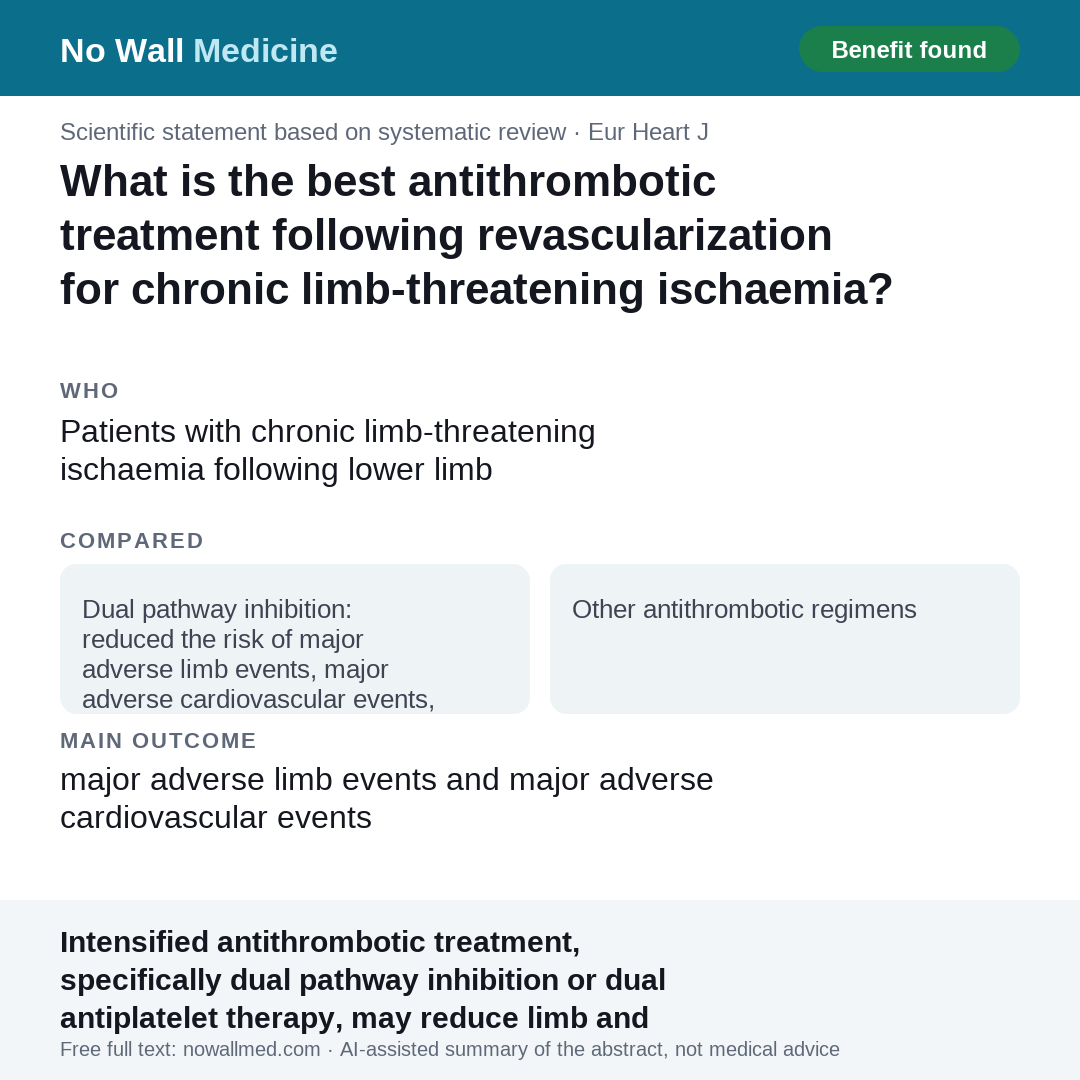
Antithrombotic treatment following revascularization for chronic limb-threatening ischaemia: a scientific statement of the European Society of Cardiology Working Group on Aorta and Peripheral Vascular Diseases and the European Society of Cardiology Working Group on Cardiovascular Pharmacotherapy
Scientific statement based on systematic reviewBenefit found
What is the best antithrombotic treatment following revascularization for chronic limb-threatening ischaemia?
Who
Patients with chronic limb-threatening ischaemia following lower limb revascularization
Compared
Dual pathway inhibition: reduced the risk of major adverse limb events, major adverse cardiovascular events, and unplanned target limb revascularization
Other antithrombotic regimens
Main outcome
major adverse limb events and major adverse cardiovascular events
Bottom line: Intensified antithrombotic treatment, specifically dual pathway inhibition or dual antiplatelet therapy, may reduce limb and cardiovascular events.
Eur Heart J · 2025-05-20Download image
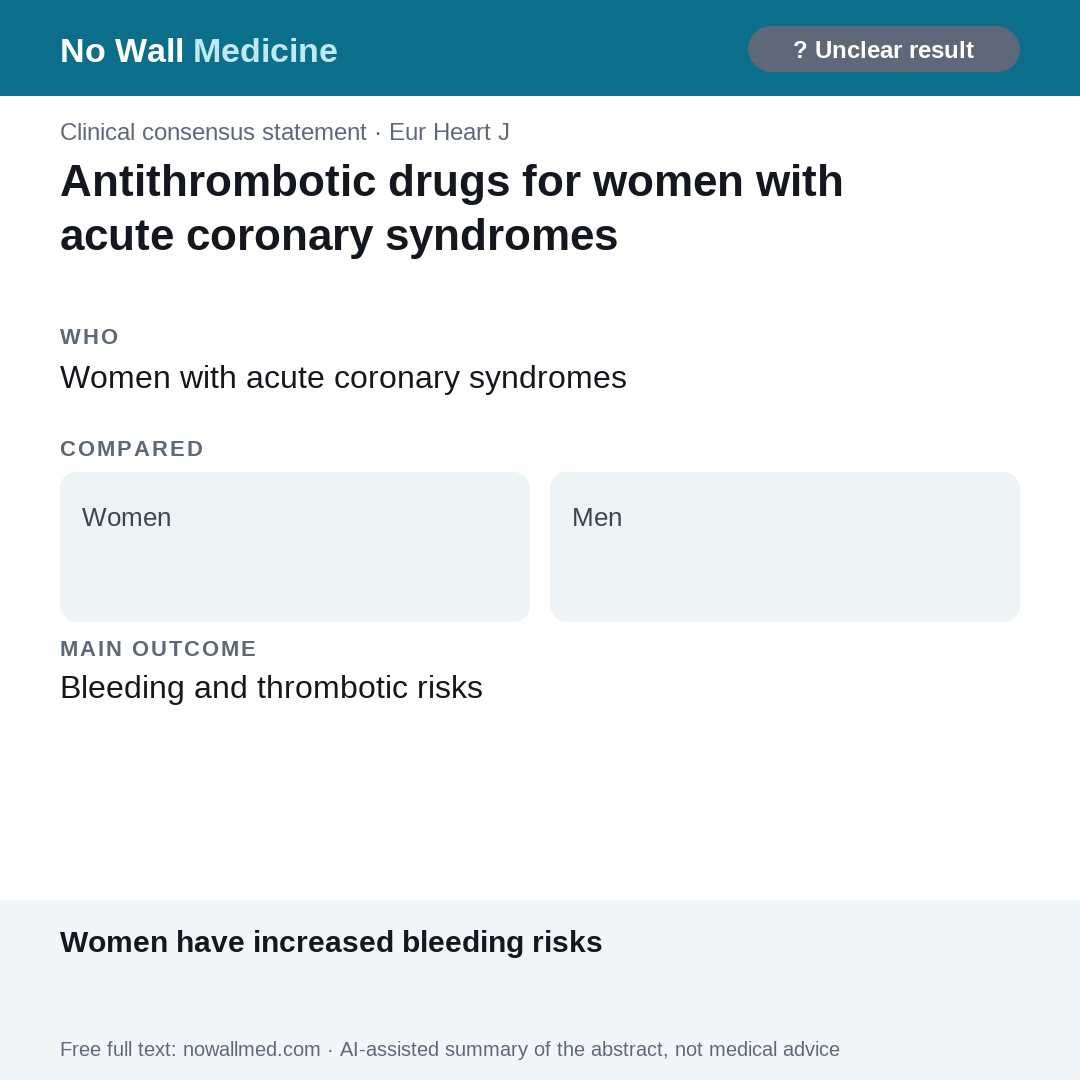
Antithrombotic drugs for acute coronary syndromes in women: sex-adjusted treatment and female representation in randomised clinical trials. A clinical consensus statement of the European Association of Percutaneous Cardiovascular Interventions (EAPCI) and the ESC Working Group on Thrombosis
Clinical consensus statementUnclear result
Antithrombotic drugs for women with acute coronary syndromes
Who
Women with acute coronary syndromes
Compared
Women
Men
Main outcome
Bleeding and thrombotic risks
Bottom line: Women have increased bleeding risks
Limitation: Underrepresentation of women in trials
Eur Heart J · 2025-05-20Download image