Visual abstracts
New randomized trials and meta-analyses from leading journals at a glance: who was studied, what was compared, and what was found. Every paper is free to read in full.
All specialtiesCardiology 4256Oncology 3620Gastroenterology & Hepatology 1698Infectious Disease 3236Neurology 1693Psychiatry & Mental Health 1999Pulmonology 1849Critical Care 1206Endocrinology & Diabetes 2207Pediatrics 2577Surgery 2251Orthopedics & Sports Medicine 804Neurosurgery 479Cardiothoracic & Vascular Surgery 552Plastic & Reconstructive Surgery 556Nephrology 956Rheumatology 705Hematology 958Dermatology 538Ophthalmology 467Obstetrics & Gynecology 1467Public & Global Health 861Radiology & Imaging 571Anesthesiology 866Urology 677ENT (Otolaryngology) 453Emergency Medicine 450Allergy & Immunology 264Geriatrics 877Family Medicine & Primary Care 502Medical Genetics & Genomics 592Pathology & Laboratory Medicine 143Physical Medicine & Rehabilitation 652Palliative Care 382Nutrition 1320Digital Health & AI 1974General Medicine 294
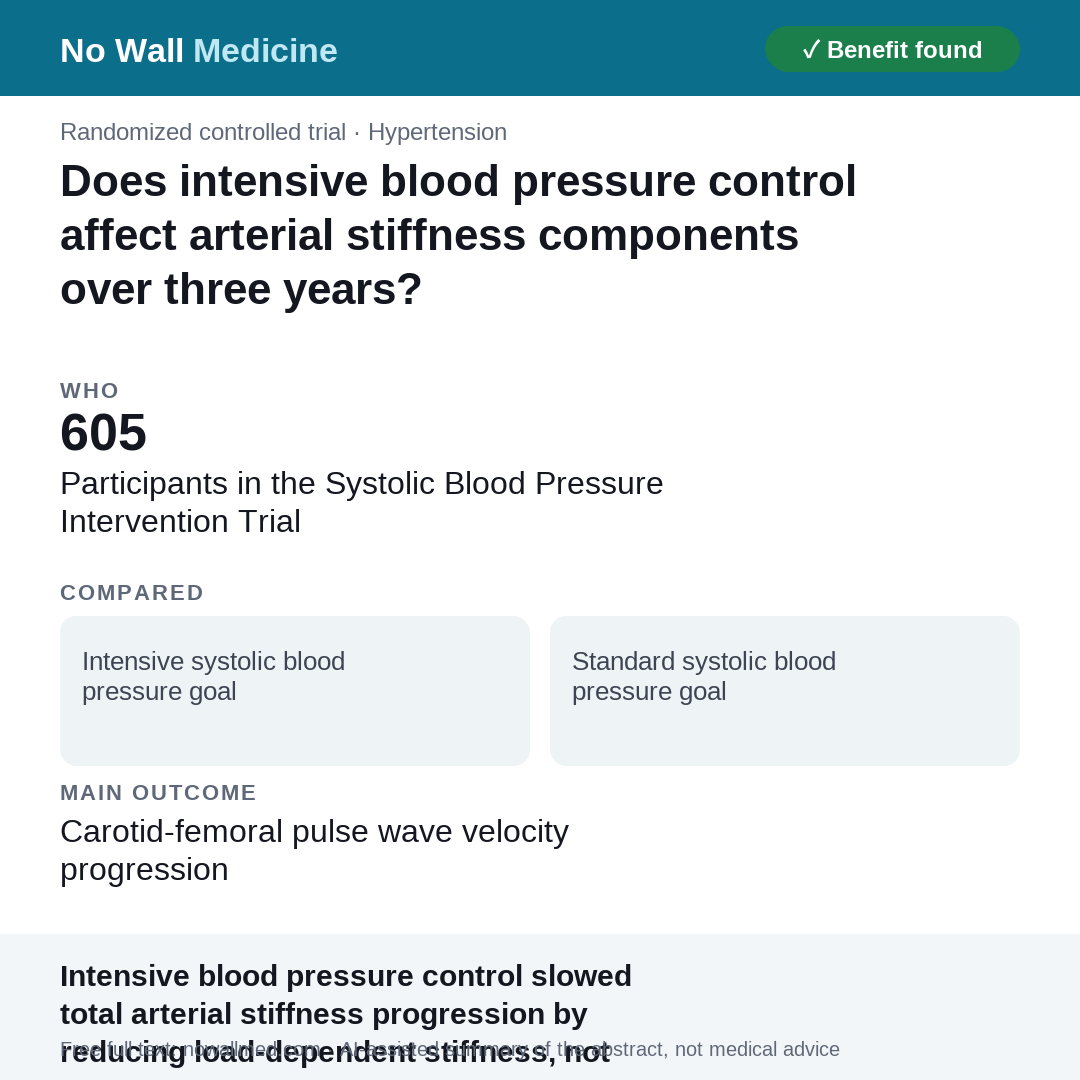
Effects of Blood Pressure Control on Arterial Stiffness Mechanisms in SPRINT: A Randomized Controlled Trial
Randomized controlled trialBenefit found
Does intensive blood pressure control affect arterial stiffness components over three years?
Who
605
Participants in the Systolic Blood Pressure Intervention Trial
Compared
Intensive systolic blood pressure goal
Standard systolic blood pressure goal
Main outcome
Carotid-femoral pulse wave velocity progression
Result: -0.49 [-0.02 to -0.96] m/s
Bottom line: Intensive blood pressure control slowed total arterial stiffness progression by reducing load-dependent stiffness, not structural stiffness.
Hypertension · 2025-04-22Download image
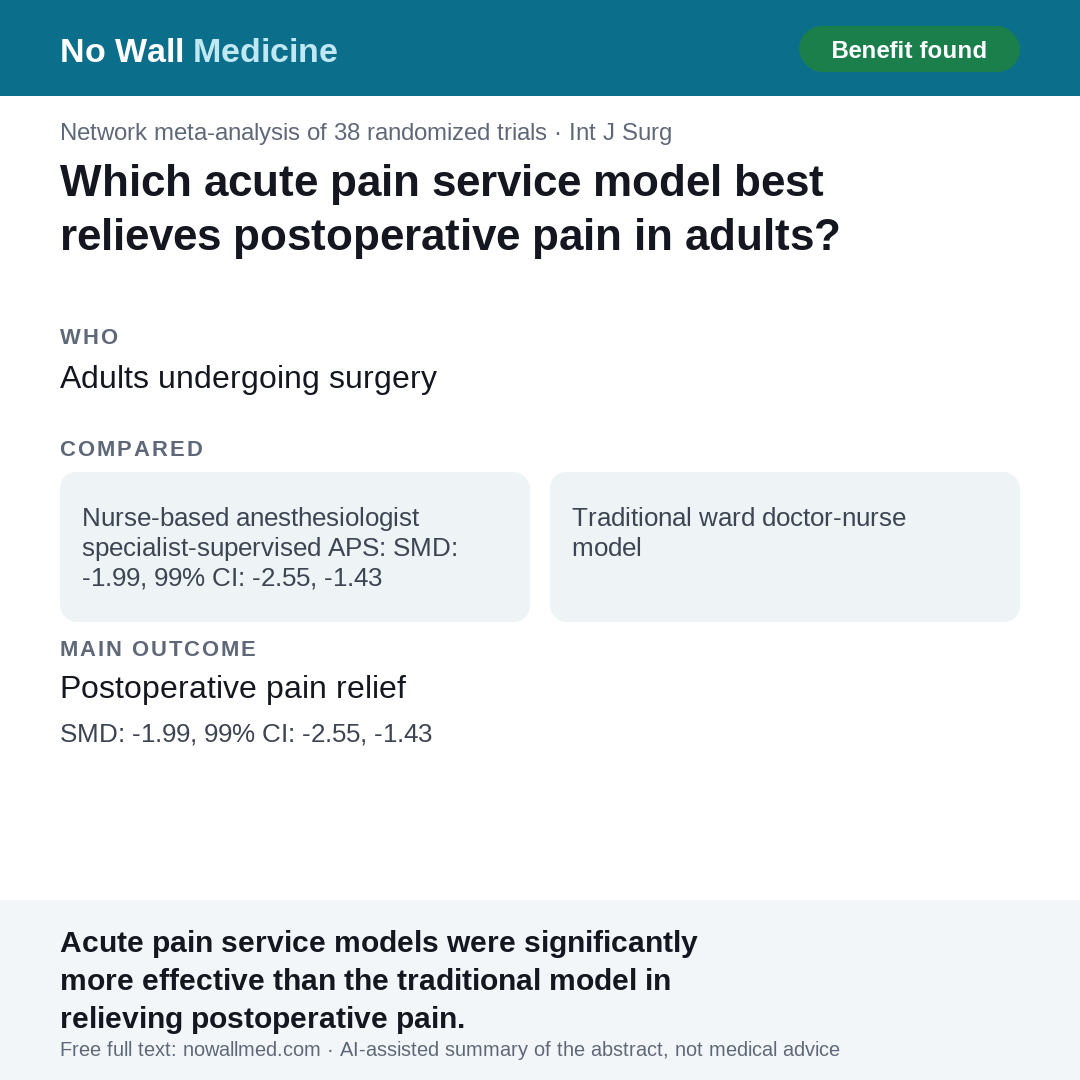
Acute pain service for postoperative pain in adults: a network meta-analysis
Network meta-analysis of 38 randomized controlled trialsBenefit found
Which acute pain service models are most effective for alleviating postoperative pain?
Who
Adult patients undergoing surgery
Compared
Traditional ward doctor-nurse model
Nurse-based anesthesiologist specialist-supervised acute pain service: SMD: -1.99
Nurse-based anesthesiologist-supervised acute pain service: SMD: -1.44
Pain management multidisciplinary team: SMD: -1.31
Main outcome
Alleviation of postoperative pain
Bottom line: All acute pain service models are more effective than traditional models, with nurse-based anesthesiologist specialist-supervised services being most promising.
Int J Surg · 2025-04-22Download image
Application of Biomaterials for the Prevention of Pharyngeal Fistulae: A Systematic Review
Systematic reviewBenefit found
Can biomaterials prevent pharyngocutaneous fistulae after pharyngeal surgery?
Who
Patients undergoing pharyngeal surgery
Compared
Biomaterial to cover mucosal sutures
Biomaterial to replace mucosal defect
Main outcome
Pharyngocutaneous fistulae rate
Bottom line: Biomaterials can decrease pharyngocutaneous fistulae rates when used to cover pharyngeal sutures.
Head Neck · 2025-04-22Download image

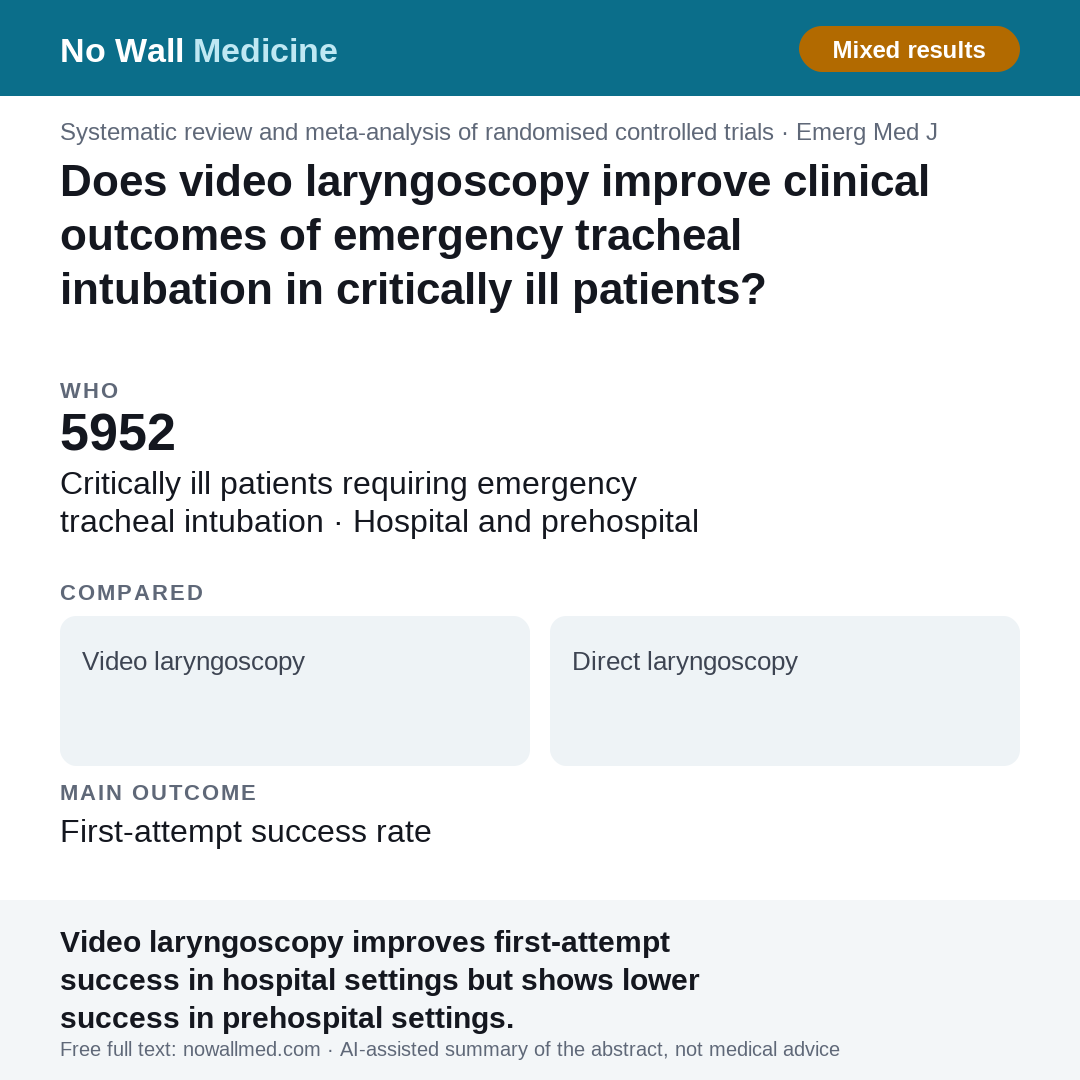
Video laryngoscopy may improve the intubation outcomes in critically ill patients: a systematic review and meta-analysis of randomised controlled trials
Systematic review and meta-analysis of randomised controlled trialsMixed results
Does video laryngoscopy improve clinical outcomes of emergency tracheal intubation in critically ill patients?
Who
5952
Critically ill patients requiring emergency tracheal intubation · Hospital and prehospital settings
Compared
Video laryngoscopy
Direct laryngoscopy
Main outcome
First-attempt success rate
Result: RR 1.05, 95% CI 0.97 to 1.13
Bottom line: Video laryngoscopy improves first-attempt success in hospital settings but shows lower success in prehospital settings.
Limitation: High heterogeneity was observed in several outcomes (I2 up to 95%).
Emerg Med J · 2025-04-22Download image
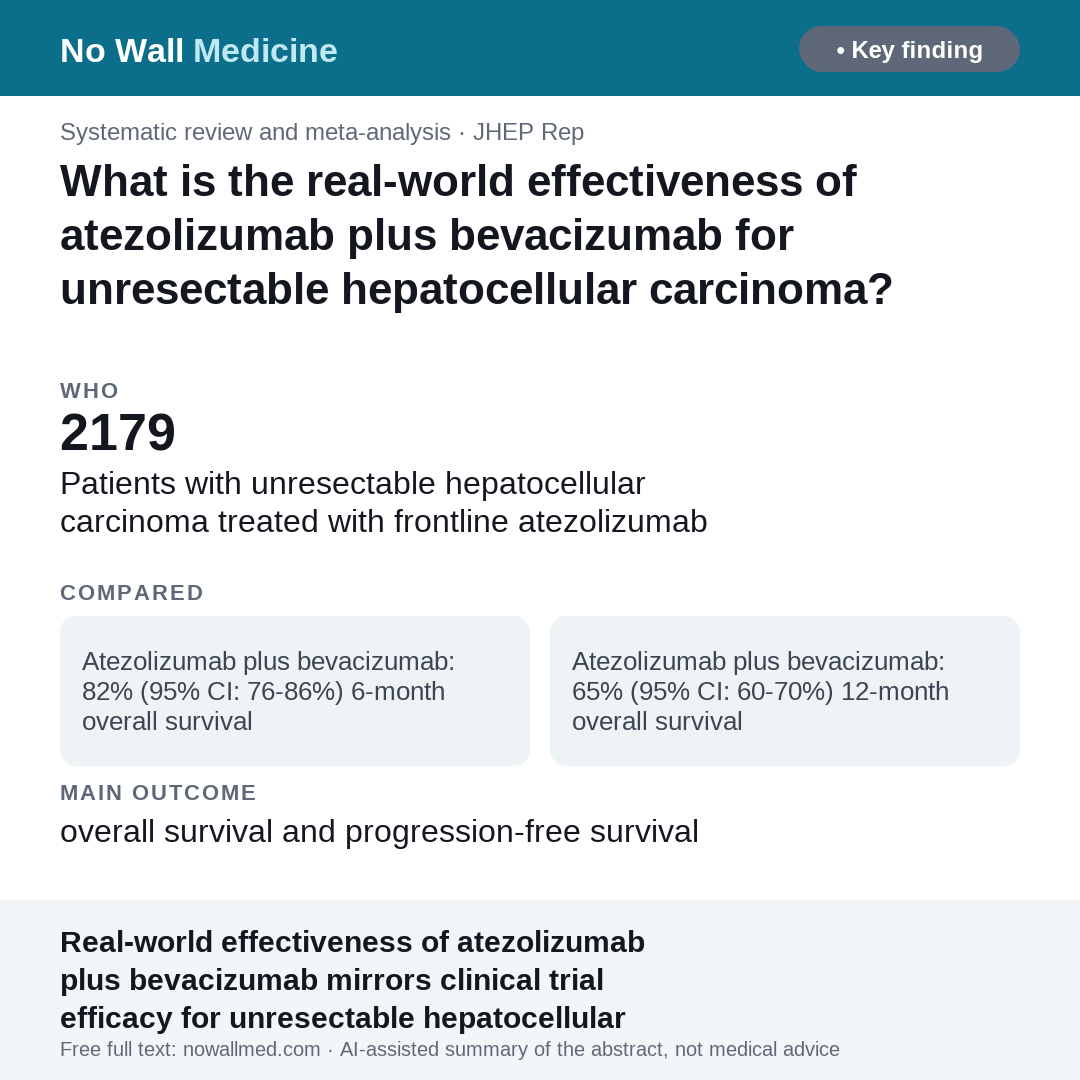
Efficacy of atezolizumab plus bevacizumab for unresectable HCC: Systematic review and meta-analysis of real-world evidence
Systematic review and meta-analysisBenefit found
What is the real-world effectiveness of atezolizumab plus bevacizumab for unresectable hepatocellular carcinoma?
Who
2179
Patients with unresectable hepatocellular carcinoma treated with frontline atezolizumab plus bevacizumab
Compared
Atezolizumab plus bevacizumab: 82% (95% CI: 76-86%) 6-month overall survival
Atezolizumab plus bevacizumab: 65% (95% CI: 60-70%) 12-month overall survival
Main outcome
overall survival and progression-free survival
Bottom line: Real-world effectiveness of atezolizumab plus bevacizumab mirrors clinical trial efficacy for unresectable hepatocellular carcinoma.
Limitation: results should be interpreted with caution because of potential variability in patient populations.
JHEP Rep · 2025-04-22Download image
Metacognitive training for psychosis (MCT): a systematic meta-review of its effectiveness
Systematic meta-reviewBenefit found
Is metacognitive training effective for core symptom features in schizophrenia?
Who
People with schizophrenia
Compared
Metacognitive training
Control
Main outcome
Positive symptoms, delusions, hallucinations, negative symptoms, and overall psychotic symptoms
Bottom line: Metacognitive training shows consistent evidence for ameliorating positive symptoms and delusions in schizophrenia.
Limitation: None of the meta-analyses met criteria for suggestive or convincing evidence or moderate to high methodological quality.
Transl Psychiatry · 2025-04-22Download image

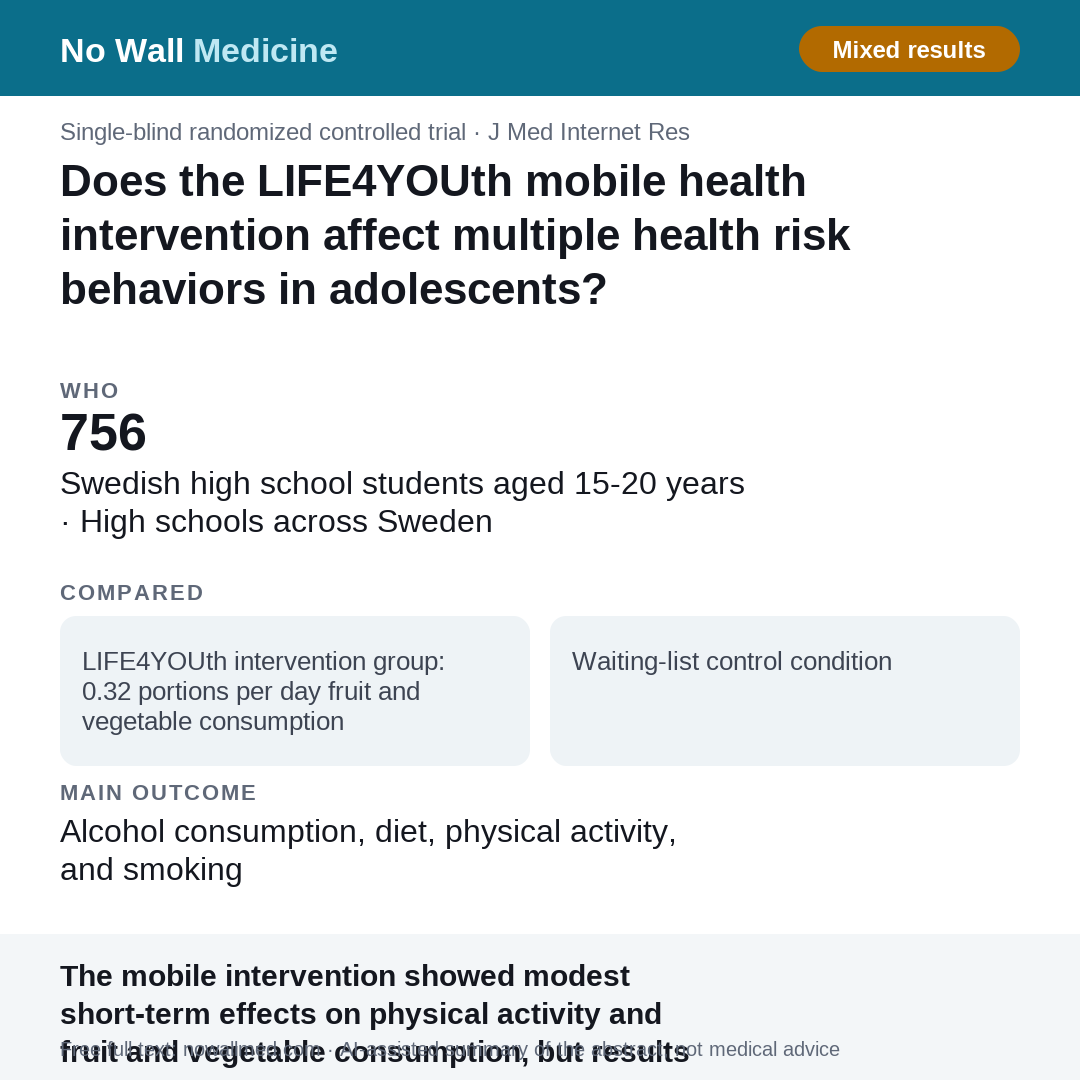
Effectiveness of a Mobile Phone-Delivered Multiple Health Behavior Change Intervention (LIFE4YOUth) in Adolescents: Randomized Controlled Trial
Single-blind randomized controlled trialMixed results
Does the LIFE4YOUth mobile health intervention affect multiple health risk behaviors in adolescents?
Who
756
Swedish high school students aged 15-20 years · High schools across Sweden
Compared
LIFE4YOUth intervention group: 0.32 portions per day fruit and vegetable consumption
Waiting-list control condition
Main outcome
Alcohol consumption, diet, physical activity, and smoking
Bottom line: The mobile intervention showed modest short-term effects on physical activity and fruit and vegetable consumption, but results for other behaviors were inconclusive.
J Med Internet Res · 2025-04-22Download image
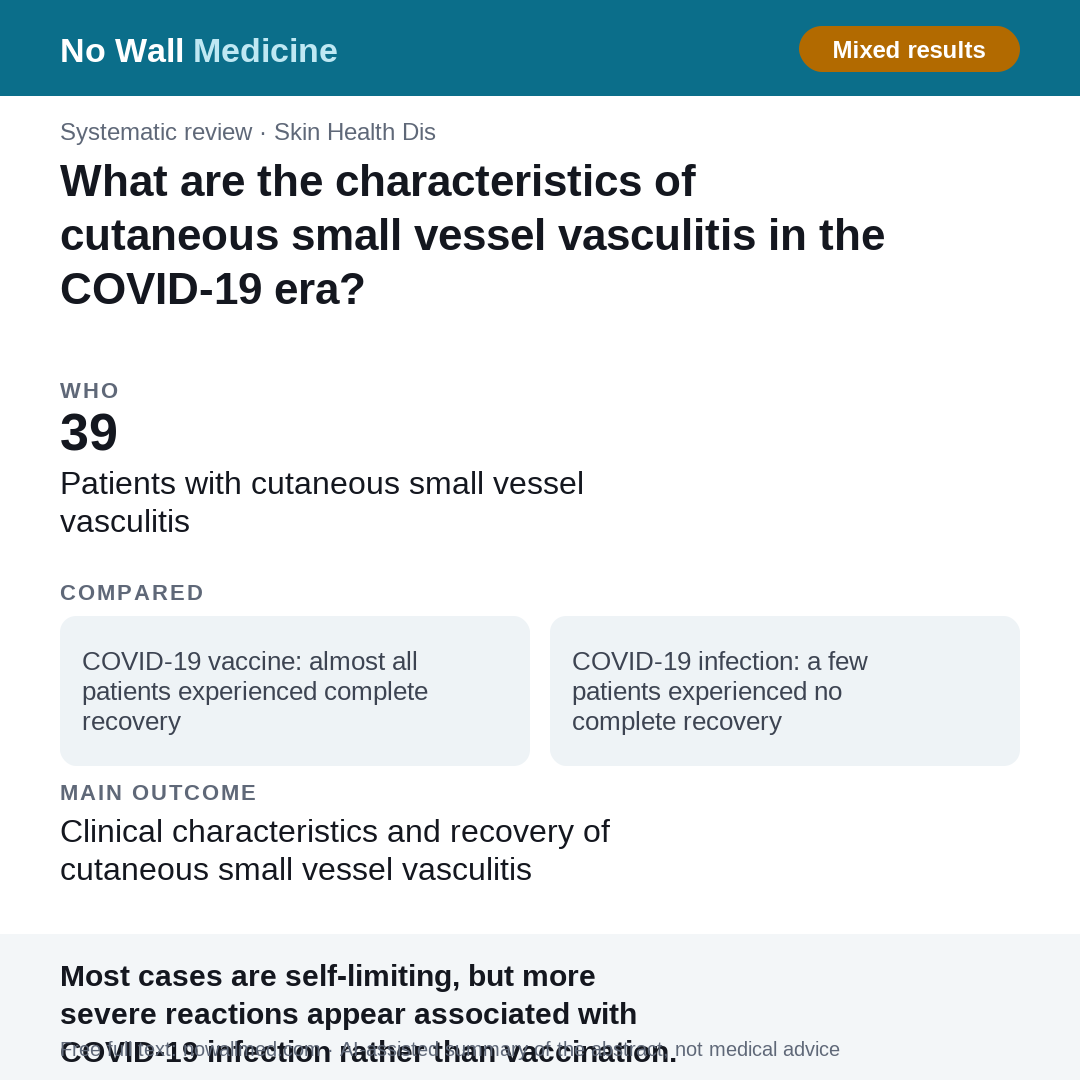
Cutaneous small vessel vasculitis in the COVID-19 era: a systematic review
Systematic reviewMixed results
What are the characteristics of cutaneous small vessel vasculitis in the COVID-19 era?
Who
39
Patients with cutaneous small vessel vasculitis
Compared
COVID-19 vaccine: almost all patients experienced complete recovery
COVID-19 infection: a few patients experienced no complete recovery
Main outcome
Clinical characteristics and recovery of cutaneous small vessel vasculitis
Bottom line: Most cases are self-limiting, but more severe reactions appear associated with COVID-19 infection rather than vaccination.
Limitation: Included only case reports, case series, correspondence articles, and letters to the editor.
Skin Health Dis · 2025-04-22Download image
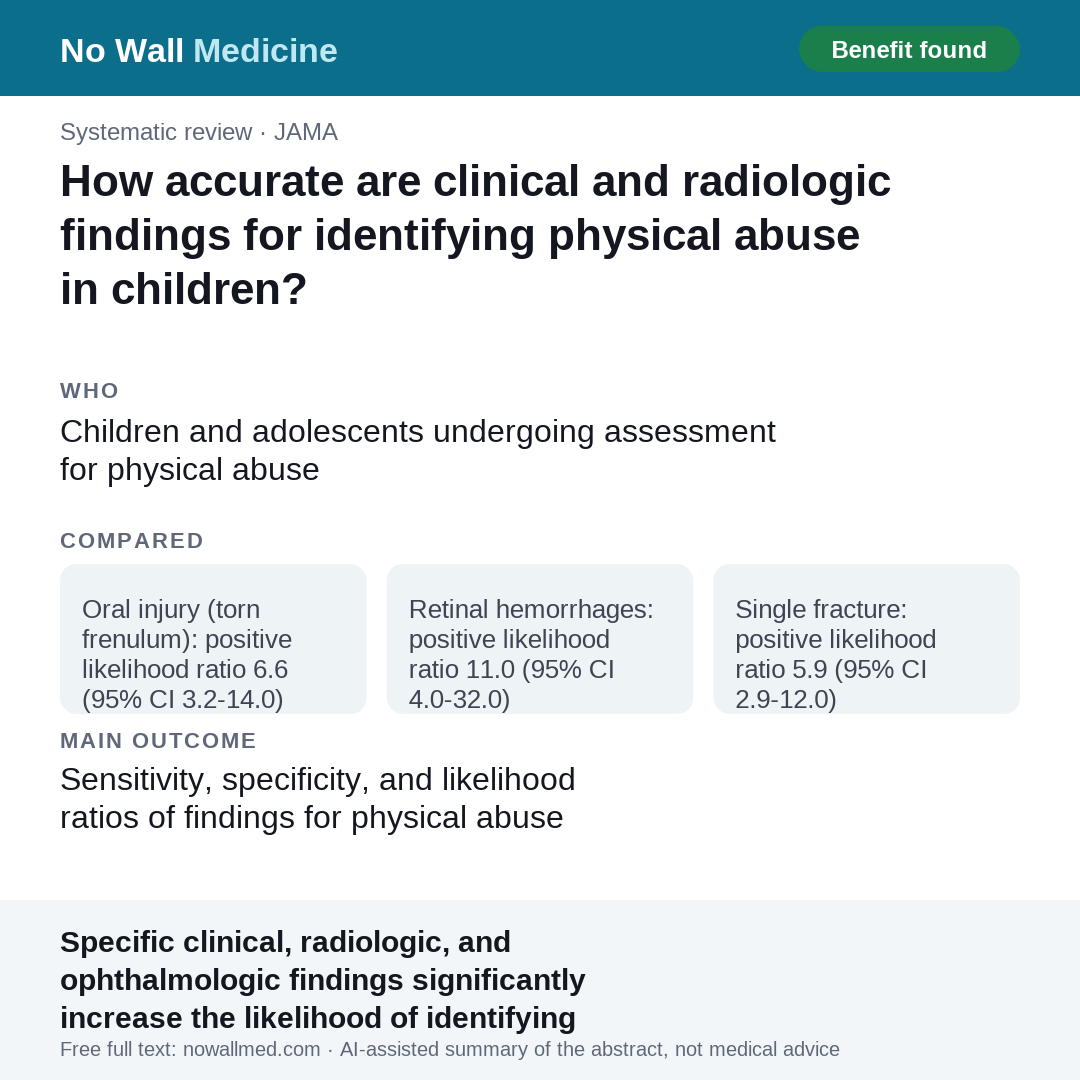
Has This Child Experienced Physical Abuse?: The Rational Clinical Examination Systematic Review
Systematic reviewBenefit found
How accurate are clinical and radiologic findings for identifying physical abuse in children?
Who
Children and adolescents undergoing assessment for physical abuse
Compared
Oral injury (torn frenulum): positive likelihood ratio 6.6 (95% CI 3.2-14.0)
Retinal hemorrhages: positive likelihood ratio 11.0 (95% CI 4.0-32.0)
Single fracture: positive likelihood ratio 5.9 (95% CI 2.9-12.0)
Main outcome
Sensitivity, specificity, and likelihood ratios of findings for physical abuse
Bottom line: Specific clinical, radiologic, and ophthalmologic findings significantly increase the likelihood of identifying physical abuse in children.
JAMA · 2025-04-21Download image
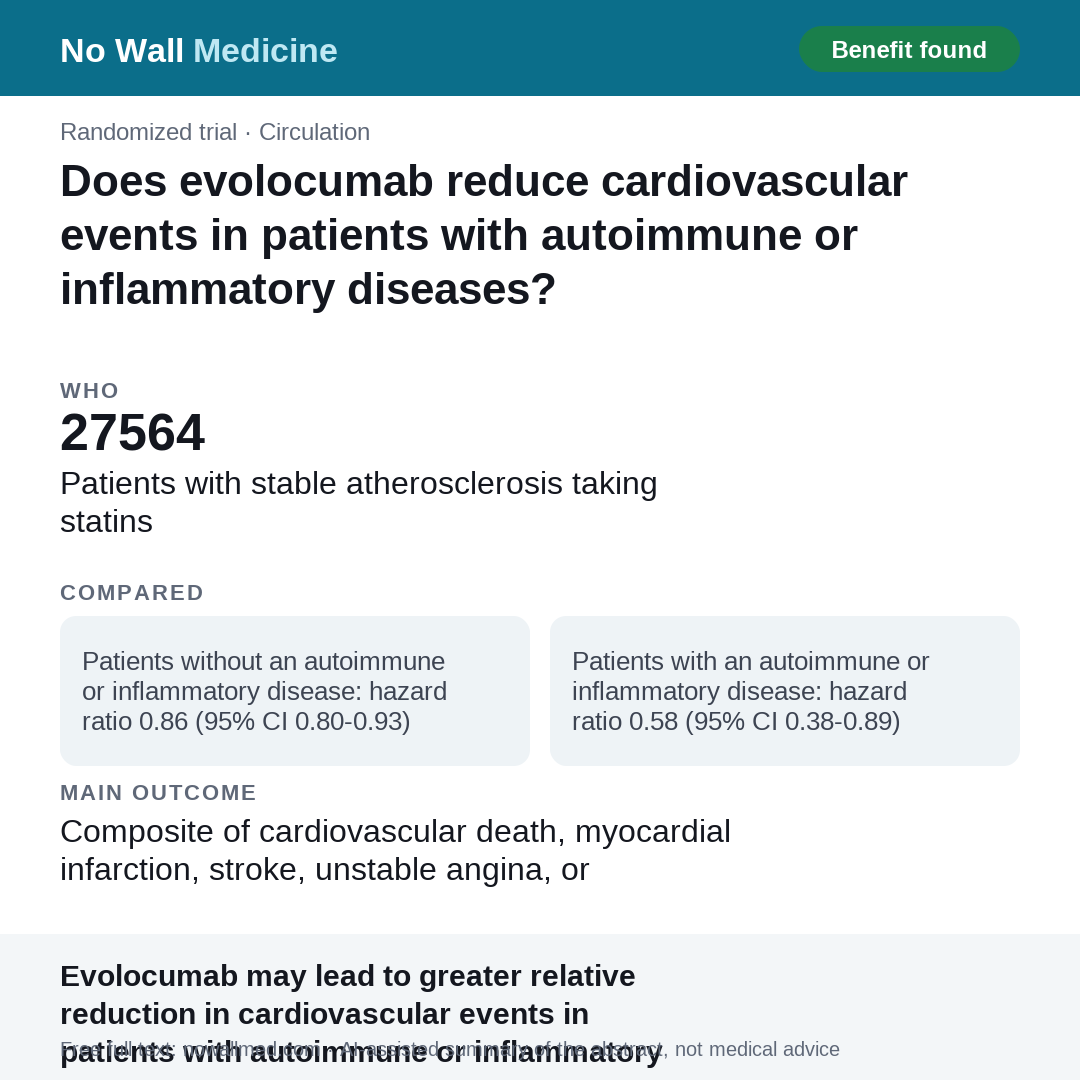
Intensive Lowering of LDL Cholesterol Levels With Evolocumab in Autoimmune or Inflammatory Diseases: An Analysis of the FOURIER Trial
Randomized trialBenefit found
Does evolocumab reduce cardiovascular events in patients with autoimmune or inflammatory diseases?
Who
27564
Patients with stable atherosclerosis taking statins
Compared
Patients without an autoimmune or inflammatory disease: hazard ratio 0.86 (95% CI 0.80-0.93)
Patients with an autoimmune or inflammatory disease: hazard ratio 0.58 (95% CI 0.38-0.89)
Main outcome
Composite of cardiovascular death, myocardial infarction, stroke, unstable angina, or coronary revascularization
Result: hazard ratio 0.58 (95% CI 0.38-0.89) in patients with AIID
Bottom line: Evolocumab may lead to greater relative reduction in cardiovascular events in patients with autoimmune or inflammatory diseases.
Circulation · 2025-04-21Download image
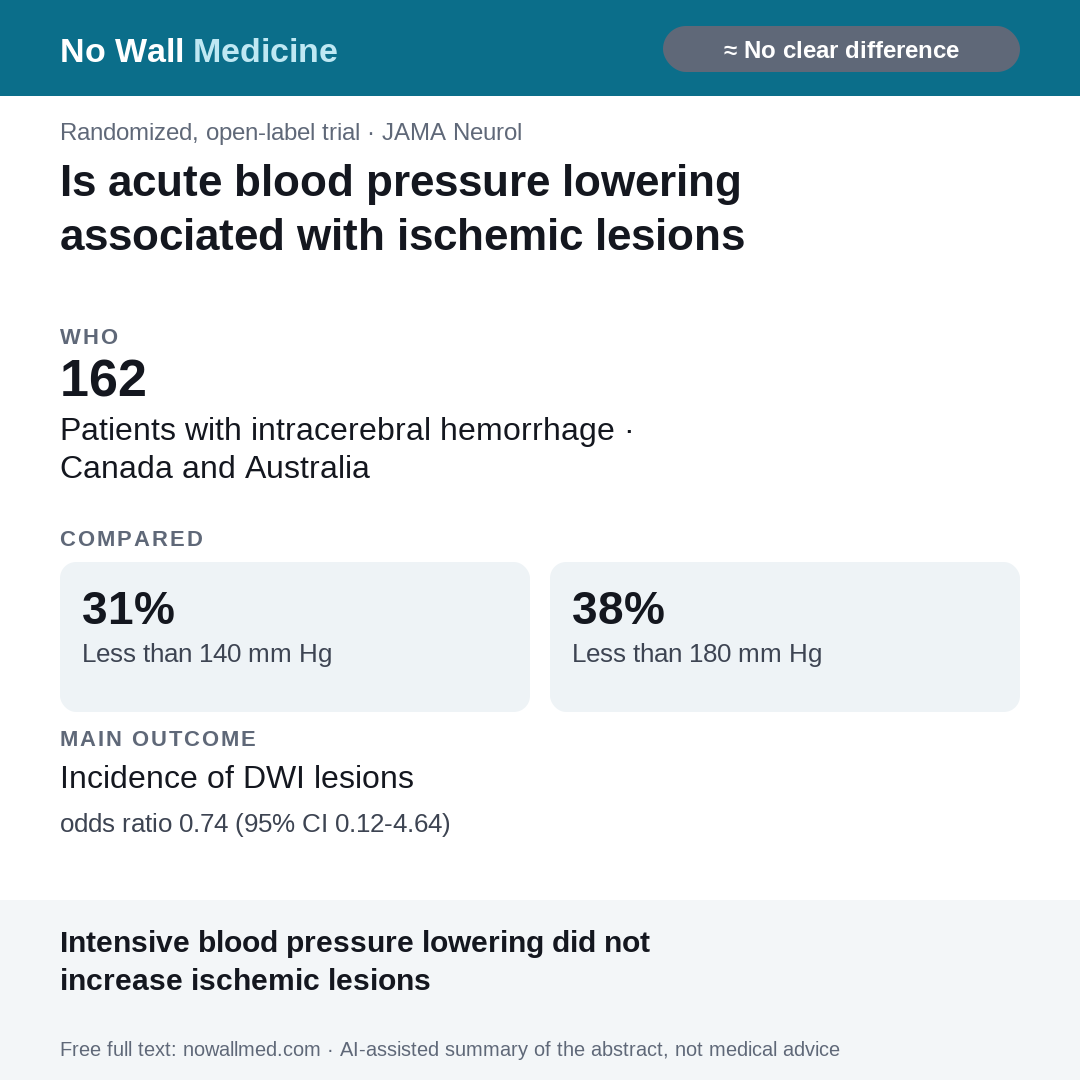
Acute Blood Pressure Lowering and Risk of Ischemic Lesions on MRI After Intracerebral Hemorrhage
Randomized, open-label trialNo clear difference
Is acute blood pressure lowering associated with ischemic lesions
Who
162
Patients with intracerebral hemorrhage · Canada and Australia
Compared
31%Less than 140 mm Hg (13/42)
38%Less than 180 mm Hg (14/37)
Main outcome
Incidence of DWI lesions
Result: odds ratio 0.74 (95% CI 0.12-4.64)
Bottom line: Intensive blood pressure lowering did not increase ischemic lesions
JAMA Neurol · 2025-04-21Download image
EEG-Guided Titration of Sevoflurane and Pediatric Anesthesia Emergence Delirium: A Randomized Clinical Trial
Single-center, parallel-group, 2-arm, superiority randomized clinical trialBenefit found
Does electroencephalography monitoring reduce pediatric anesthesia emergence delirium by minimizing sevoflurane exposure?
Who
177
Children aged 1 to younger than 6 years · Academic tertiary pediatric hospital in Japan
Compared
21%Electroencephalography-guided titration
35%Standard 1.0-minimum alveolar concentration sevoflurane
Main outcome
Proportion of patients who developed pediatric anesthesia emergence delirium
Result: difference, 14%; 96.65% CI, -0.0019% to 28%; 95% CI, 0.92% to 27%
Bottom line: Electroencephalography-guided anesthesia management reduced sevoflurane exposure and emergence delirium in children while speeding up emergence.
JAMA Pediatr · 2025-04-21Download image

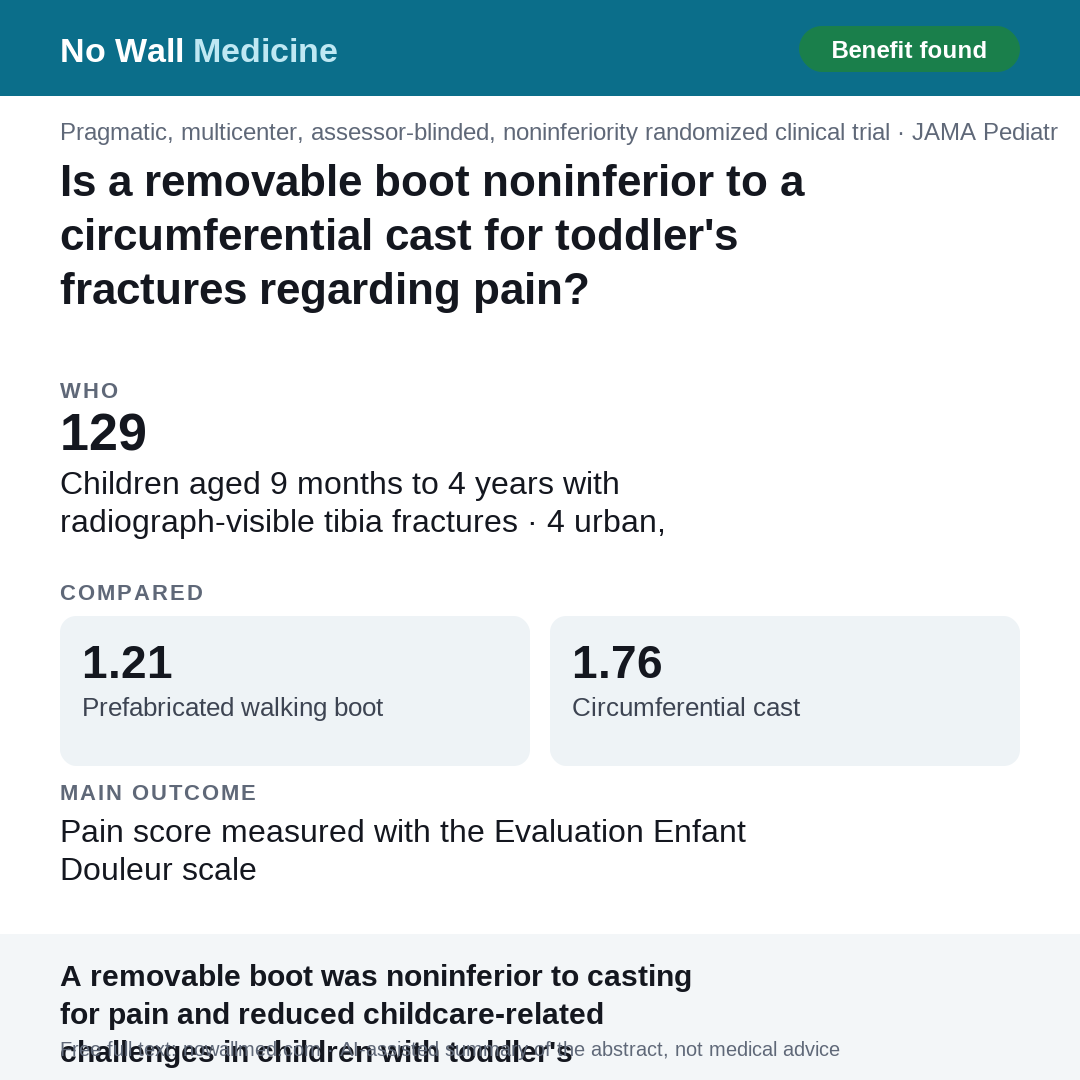
Removable Boot vs Casting of Toddler's Fractures: A Randomized Clinical Trial
Pragmatic, multicenter, assessor-blinded, noninferiority randomized clinical trialBenefit found
Is a removable boot noninferior to a circumferential cast for toddler's fractures regarding pain?
Who
129
Children aged 9 months to 4 years with radiograph-visible tibia fractures · 4 urban, tertiary care, pediatric Canadian emergency departments
Compared
1.21Prefabricated walking boot (1.54)
1.76Circumferential cast (2.13)
Main outcome
Pain score measured with the Evaluation Enfant Douleur scale
Result: difference, -0.55; 95% CI, -1.23 to 0.13
Bottom line: A removable boot was noninferior to casting for pain and reduced childcare-related challenges in children with toddler's fractures.
Limitation: There was a clinically relevant but not statistically significant trend toward more skin complications in the boot group.
JAMA Pediatr · 2025-04-21Download image
Cognitive Biases and Heuristics in Surgical Settings: A Systematic Review
Systematic reviewHarm found
Cognitive biases in surgeons
Who
surgeons in operative settings
Compared
with biases
without biases
Main outcome
surgical outcomes and patient care
Bottom line: Biases harm patient care
Limitation: moderate risk of bias
Ann Surg · 2025-04-21Download image

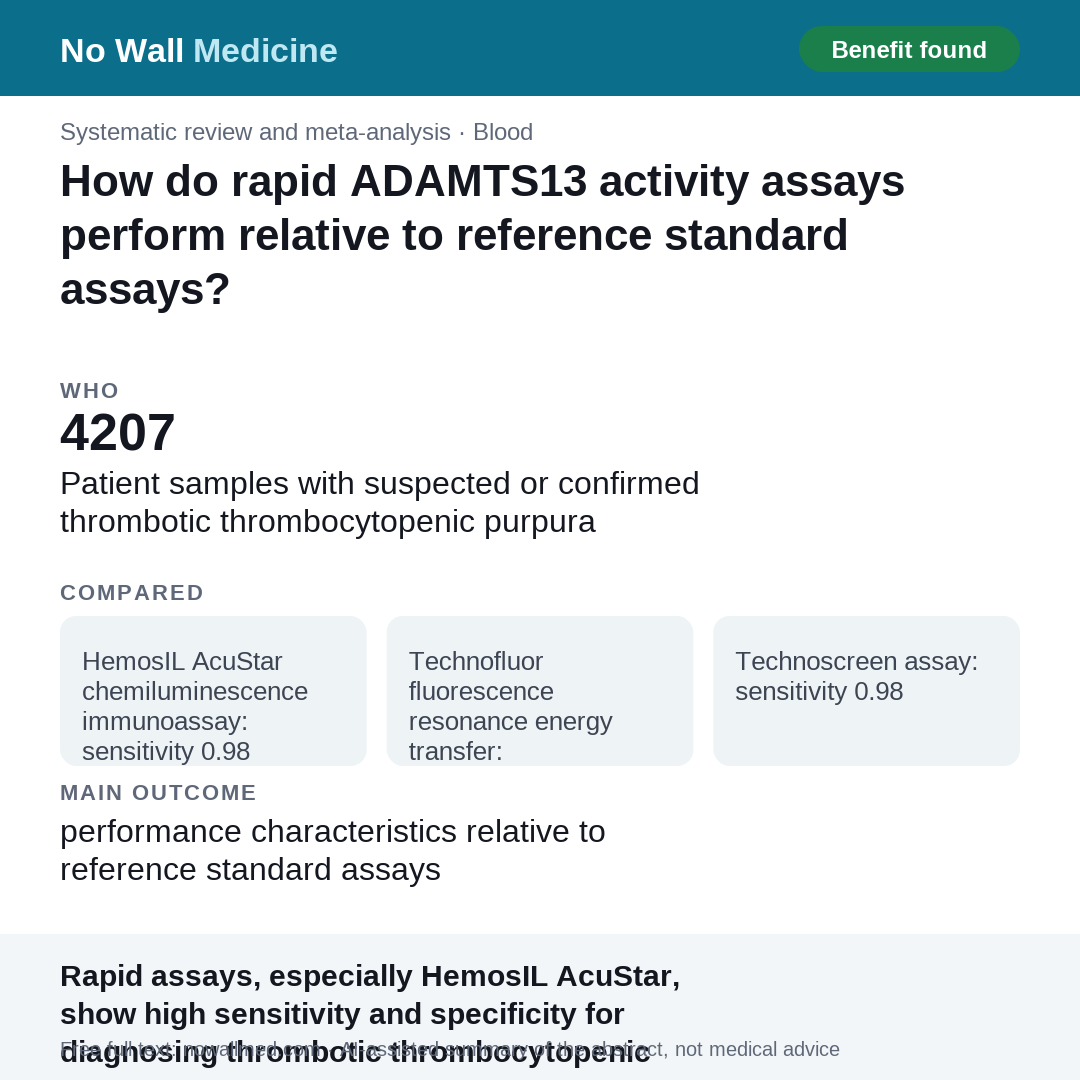
Rapid ADAMTS13 activity assays for thrombotic thrombocytopenic purpura: a systematic review and meta-analysis
Systematic review and meta-analysisBenefit found
How do rapid ADAMTS13 activity assays perform relative to reference standard assays?
Who
4207
Patient samples with suspected or confirmed thrombotic thrombocytopenic purpura
Compared
HemosIL AcuStar chemiluminescence immunoassay: sensitivity 0.98
Technofluor fluorescence resonance energy transfer: sensitivity 0.93
Technoscreen assay: sensitivity 0.98
Main outcome
performance characteristics relative to reference standard assays
Bottom line: Rapid assays, especially HemosIL AcuStar, show high sensitivity and specificity for diagnosing thrombotic thrombocytopenic purpura.
Blood · 2025-04-21Download image
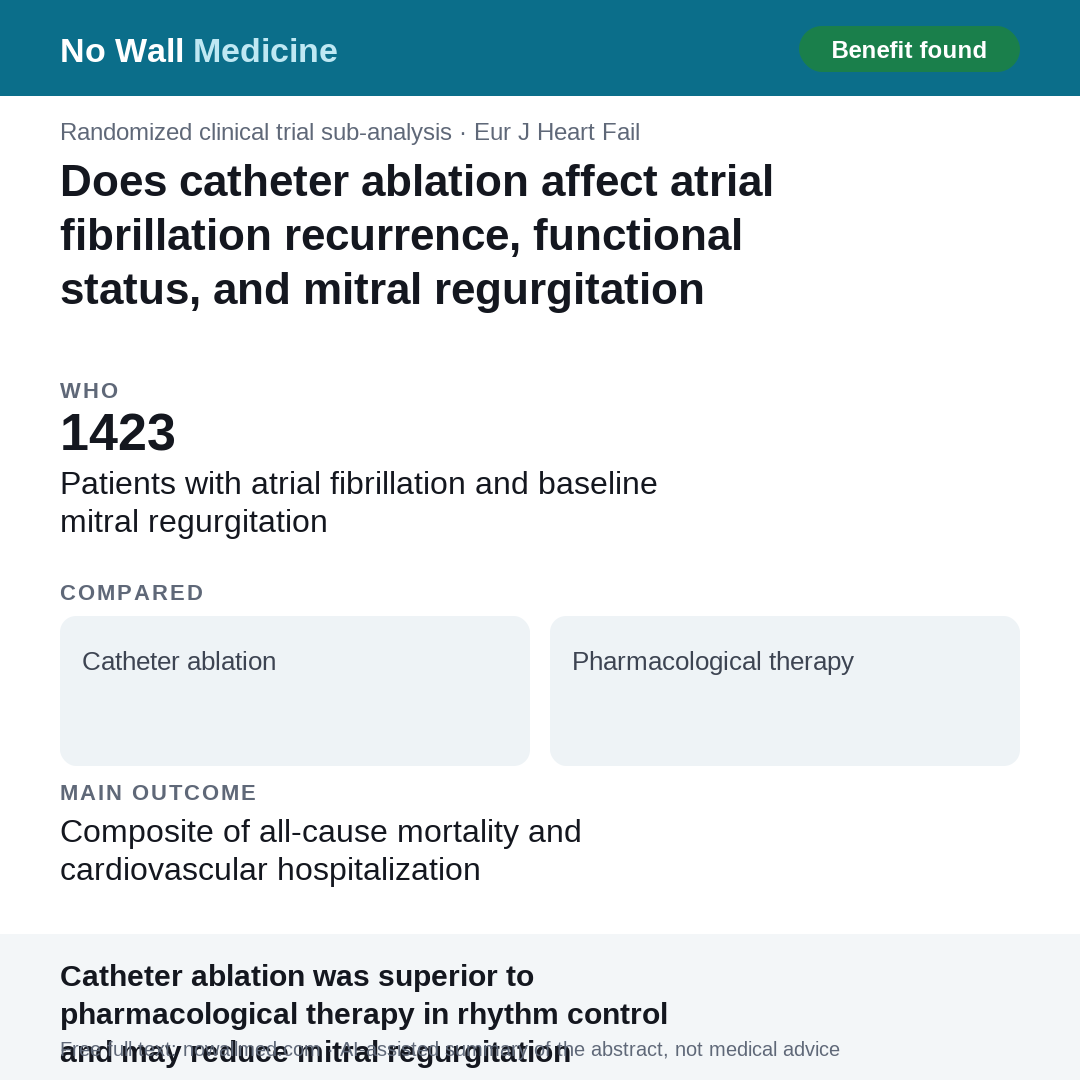
The interaction between atrial fibrillation and mitral regurgitation: Insights from the CABANA randomized clinical trial
Randomized clinical trial sub-analysisBenefit found
Does catheter ablation affect atrial fibrillation recurrence, functional status, and mitral regurgitation severity?
Who
1423
Patients with atrial fibrillation and baseline mitral regurgitation
Compared
Catheter ablation
Pharmacological therapy
Main outcome
Composite of all-cause mortality and cardiovascular hospitalization
Bottom line: Catheter ablation was superior to pharmacological therapy in rhythm control and may reduce mitral regurgitation severity.
Limitation: Findings require specifically designed clinical trials.
Eur J Heart Fail · 2025-04-21Download image
Therapeutic drug monitoring in anti-tuberculosis treatment: a systematic review
Systematic review of 35 observational studiesBenefit found
Is therapeutic drug monitoring effective for anti-tuberculosis treatment?
Who
Adults, children, and patients with MDR-TB, XDR-TB, or HIV co-infection · 21 countries
Compared
Therapeutic drug monitoring
Standard treatment
Main outcome
Treatment efficacy and safety
Bottom line: Therapeutic drug monitoring improves treatment efficacy and safety by individualizing drug dosages for tuberculosis patients.
J Antimicrob Chemother · 2025-04-21Download image

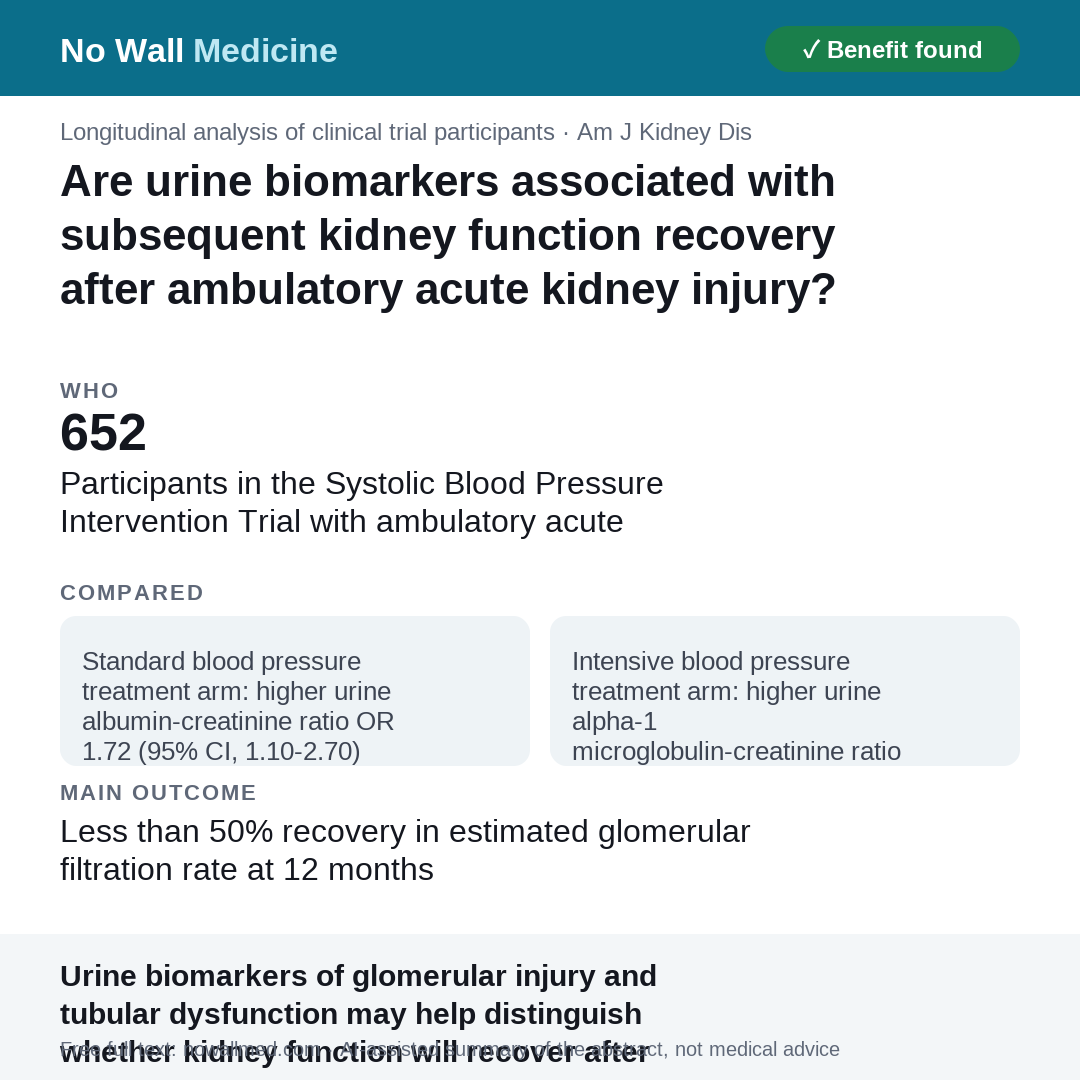
Associations of Urine Biomarkers During Ambulatory Acute Kidney Injury With Subsequent Recovery in Kidney Function: Findings From the SPRINT Study
Longitudinal analysis of clinical trial participantsBenefit found
Are urine biomarkers associated with subsequent kidney function recovery after ambulatory acute kidney injury?
Who
652
Participants in the Systolic Blood Pressure Intervention Trial with ambulatory acute kidney injury · Not specified
Compared
Standard blood pressure treatment arm: higher urine albumin-creatinine ratio OR 1.72 (95% CI, 1.10-2.70)
Intensive blood pressure treatment arm: higher urine alpha-1 microglobulin-creatinine ratio OR 1.45 (95% CI, 1.09-1.92)
Main outcome
Less than 50% recovery in estimated glomerular filtration rate at 12 months
Bottom line: Urine biomarkers of glomerular injury and tubular dysfunction may help distinguish whether kidney function will recover after ambulatory acute kidney injury.
Limitation: Persons with diabetes and proteinuria greater than 1 gram per day were excluded.
Am J Kidney Dis · 2025-04-21Download image
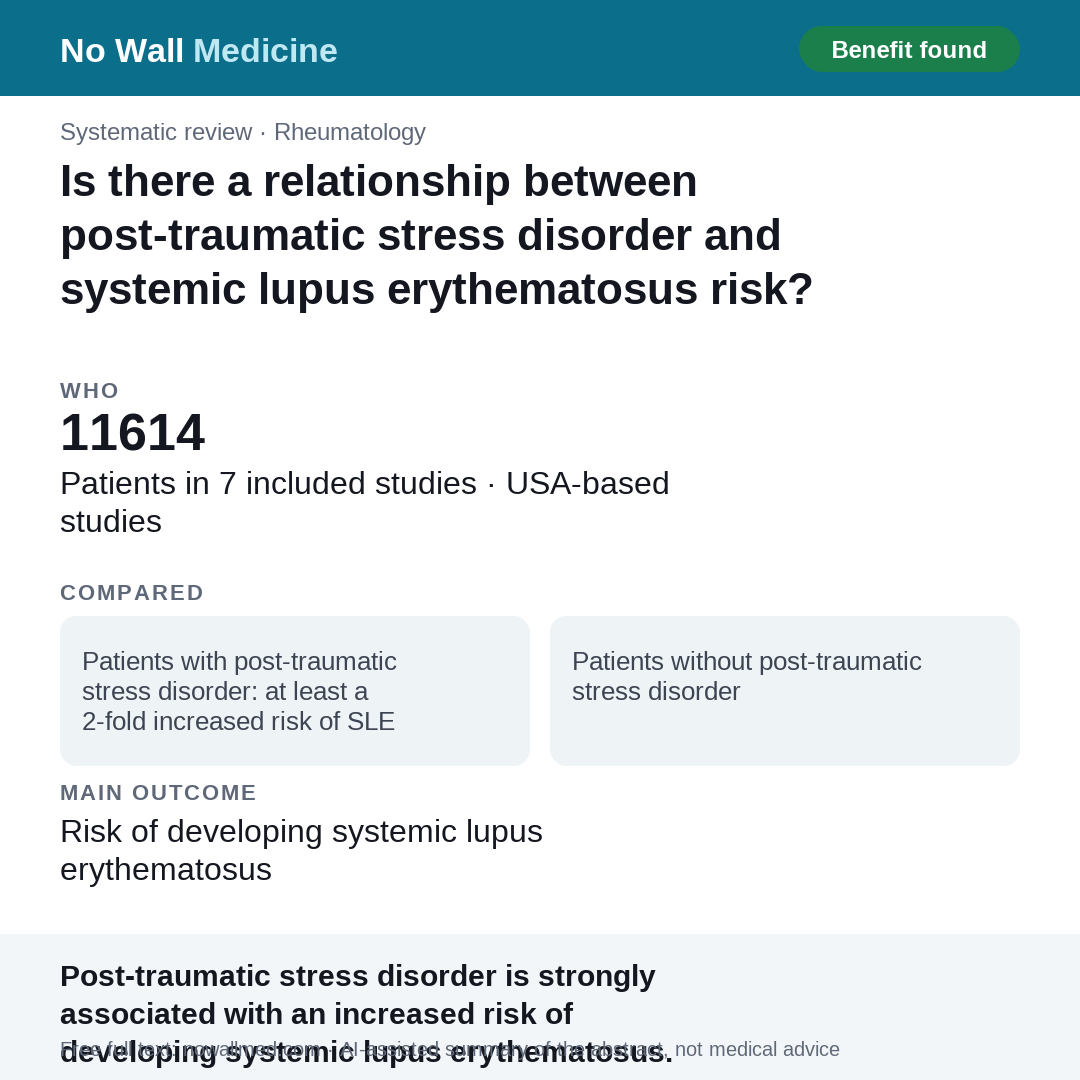
Post-traumatic stress disorder and systemic lupus erythematosus: insights from a systematic review
Systematic reviewBenefit found
Is there a relationship between post-traumatic stress disorder and systemic lupus erythematosus risk?
Who
11614
Patients in 7 included studies · USA-based studies
Compared
Patients with post-traumatic stress disorder: at least a 2-fold increased risk of SLE
Patients without post-traumatic stress disorder
Main outcome
Risk of developing systemic lupus erythematosus
Bottom line: Post-traumatic stress disorder is strongly associated with an increased risk of developing systemic lupus erythematosus.
Rheumatology · 2025-04-21Download image
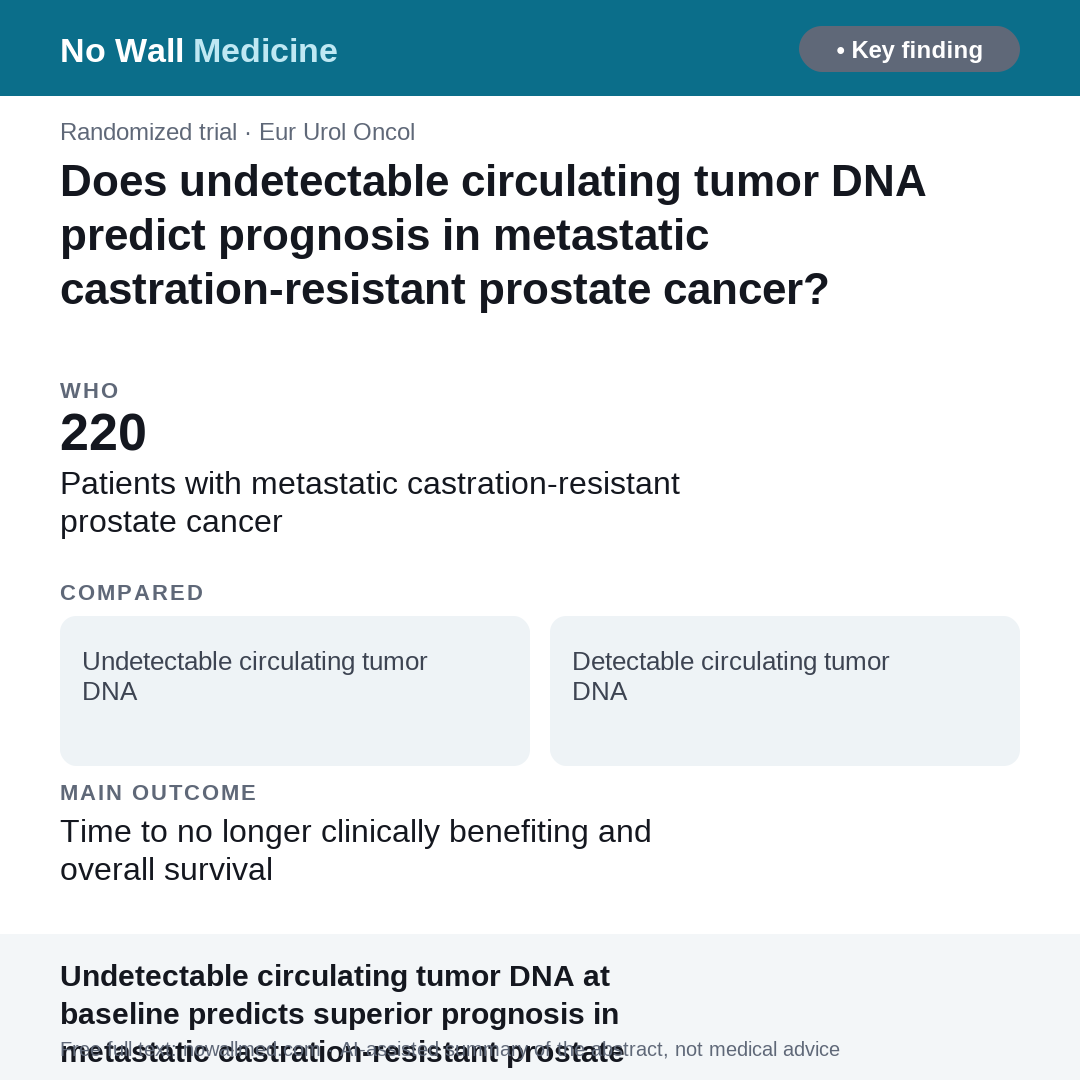
Prognostic Value of the Circulating Tumor DNA Fraction in Metastatic Castration-resistant Prostate Cancer: Results from the ProBio Platform Trial
Randomized trialBenefit found
Does undetectable circulating tumor DNA predict prognosis in metastatic castration-resistant prostate cancer?
Who
220
Patients with metastatic castration-resistant prostate cancer
Compared
Undetectable circulating tumor DNA
Detectable circulating tumor DNA
Main outcome
Time to no longer clinically benefiting and overall survival
Result: STR 0.40 (90% CrI 0.31-0.51) for time to no longer clinically benefiting
Bottom line: Undetectable circulating tumor DNA at baseline predicts superior prognosis in metastatic castration-resistant prostate cancer.
Eur Urol Oncol · 2025-04-21Download image